EP3844909B1 - Determining a suitability of network nodes for rf-based presence and/or location detection - Google Patents
Determining a suitability of network nodes for rf-based presence and/or location detection Download PDFInfo
- Publication number
- EP3844909B1 EP3844909B1 EP19755921.4A EP19755921A EP3844909B1 EP 3844909 B1 EP3844909 B1 EP 3844909B1 EP 19755921 A EP19755921 A EP 19755921A EP 3844909 B1 EP3844909 B1 EP 3844909B1
- Authority
- EP
- European Patent Office
- Prior art keywords
- devices
- network
- nodes
- zigbee
- sensing
- Prior art date
- Legal status (The legal status is an assumption and is not a legal conclusion. Google has not performed a legal analysis and makes no representation as to the accuracy of the status listed.)
- Active
Links
Images




Classifications
-
- G—PHYSICS
- G01—MEASURING; TESTING
- G01S—RADIO DIRECTION-FINDING; RADIO NAVIGATION; DETERMINING DISTANCE OR VELOCITY BY USE OF RADIO WAVES; LOCATING OR PRESENCE-DETECTING BY USE OF THE REFLECTION OR RERADIATION OF RADIO WAVES; ANALOGOUS ARRANGEMENTS USING OTHER WAVES
- G01S7/00—Details of systems according to groups G01S13/00, G01S15/00, G01S17/00
- G01S7/003—Transmission of data between radar, sonar or lidar systems and remote stations
- G01S7/006—Transmission of data between radar, sonar or lidar systems and remote stations using shared front-end circuitry, e.g. antennas
-
- H—ELECTRICITY
- H04—ELECTRIC COMMUNICATION TECHNIQUE
- H04W—WIRELESS COMMUNICATION NETWORKS
- H04W4/00—Services specially adapted for wireless communication networks; Facilities therefor
- H04W4/02—Services making use of location information
- H04W4/029—Location-based management or tracking services
-
- H—ELECTRICITY
- H04—ELECTRIC COMMUNICATION TECHNIQUE
- H04W—WIRELESS COMMUNICATION NETWORKS
- H04W4/00—Services specially adapted for wireless communication networks; Facilities therefor
- H04W4/80—Services using short range communication, e.g. near-field communication [NFC], radio-frequency identification [RFID] or low energy communication
-
- H—ELECTRICITY
- H04—ELECTRIC COMMUNICATION TECHNIQUE
- H04W—WIRELESS COMMUNICATION NETWORKS
- H04W64/00—Locating users or terminals or network equipment for network management purposes, e.g. mobility management
- H04W64/003—Locating users or terminals or network equipment for network management purposes, e.g. mobility management locating network equipment
-
- H—ELECTRICITY
- H04—ELECTRIC COMMUNICATION TECHNIQUE
- H04W—WIRELESS COMMUNICATION NETWORKS
- H04W84/00—Network topologies
- H04W84/18—Self-organising networks, e.g. ad-hoc networks or sensor networks
-
- G—PHYSICS
- G08—SIGNALLING
- G08B—SIGNALLING SYSTEMS, e.g. PERSONAL CALLING SYSTEMS; ORDER TELEGRAPHS; ALARM SYSTEMS
- G08B29/00—Checking or monitoring of signalling or alarm systems; Prevention or correction of operating errors, e.g. preventing unauthorised operation
- G08B29/18—Prevention or correction of operating errors
-
- H—ELECTRICITY
- H04—ELECTRIC COMMUNICATION TECHNIQUE
- H04W—WIRELESS COMMUNICATION NETWORKS
- H04W52/00—Power management, e.g. Transmission Power Control [TPC] or power classes
- H04W52/04—Transmission power control [TPC]
- H04W52/06—TPC algorithms
- H04W52/14—Separate analysis of uplink or downlink
- H04W52/143—Downlink power control
-
- H—ELECTRICITY
- H04—ELECTRIC COMMUNICATION TECHNIQUE
- H04W—WIRELESS COMMUNICATION NETWORKS
- H04W52/00—Power management, e.g. Transmission Power Control [TPC] or power classes
- H04W52/04—Transmission power control [TPC]
- H04W52/18—TPC being performed according to specific parameters
- H04W52/22—TPC being performed according to specific parameters taking into account previous information or commands
- H04W52/226—TPC being performed according to specific parameters taking into account previous information or commands using past references to control power, e.g. look-up-table
-
- H—ELECTRICITY
- H04—ELECTRIC COMMUNICATION TECHNIQUE
- H04W—WIRELESS COMMUNICATION NETWORKS
- H04W52/00—Power management, e.g. Transmission Power Control [TPC] or power classes
- H04W52/04—Transmission power control [TPC]
- H04W52/18—TPC being performed according to specific parameters
- H04W52/28—TPC being performed according to specific parameters using user profile, e.g. mobile speed, priority or network state, e.g. standby, idle or non-transmission
- H04W52/283—Power depending on the position of the mobile
-
- H—ELECTRICITY
- H05—ELECTRIC TECHNIQUES NOT OTHERWISE PROVIDED FOR
- H05B—ELECTRIC HEATING; ELECTRIC LIGHT SOURCES NOT OTHERWISE PROVIDED FOR; CIRCUIT ARRANGEMENTS FOR ELECTRIC LIGHT SOURCES, IN GENERAL
- H05B47/00—Circuit arrangements for operating light sources in general, i.e. where the type of light source is not relevant
- H05B47/10—Controlling the light source
- H05B47/175—Controlling the light source by remote control
- H05B47/19—Controlling the light source by remote control via wireless transmission
-
- Y—GENERAL TAGGING OF NEW TECHNOLOGICAL DEVELOPMENTS; GENERAL TAGGING OF CROSS-SECTIONAL TECHNOLOGIES SPANNING OVER SEVERAL SECTIONS OF THE IPC; TECHNICAL SUBJECTS COVERED BY FORMER USPC CROSS-REFERENCE ART COLLECTIONS [XRACs] AND DIGESTS
- Y02—TECHNOLOGIES OR APPLICATIONS FOR MITIGATION OR ADAPTATION AGAINST CLIMATE CHANGE
- Y02B—CLIMATE CHANGE MITIGATION TECHNOLOGIES RELATED TO BUILDINGS, e.g. HOUSING, HOUSE APPLIANCES OR RELATED END-USER APPLICATIONS
- Y02B20/00—Energy efficient lighting technologies, e.g. halogen lamps or gas discharge lamps
- Y02B20/40—Control techniques providing energy savings, e.g. smart controller or presence detection
Definitions
- the invention relates to a system, a method and a computer program for RF-based presence detection and/or localization.
- the invention relates to a system for selecting one or more devices in a wireless network for transmitting, receiving and/or processing a radio frequency signal for presence and/or location detection, a method of selecting one or more devices in a wireless network for transmitting, receiving and/or processing a radio frequency signal for presence and/or location detection and a computer program product enabling a computer system to perform such a method.
- RF-based presence detection is a promising technology that may replace or enhance PIR-based presence detection.
- RF-based localization allows devices to be located indoors.
- RF-based presence detection is disclosed in US 2017/0359804 A1 , for example.
- US 2017/0359804 A1 discloses a first wireless network device communicating wireless network traffic on a first subset of wireless communication channels in a wireless network.
- the first wireless network device receives motion detection signals transmitted through a space by a second wireless network device.
- the motion detection signals are received on a second subset of wireless communication channels.
- the motion detection signals are processed to detect motion of an object in the space.
- all devices capable of performing RF-based presence detection and/or localization would be configured to help perform this RF-based presence detection and/or localization in the system of US 2017/0359804 A1 .
- performing this task reduces a device's capacity to communicate wireless network traffic and configuring all capable devices to perform RF-based presence detection and/or localization might not be optimal use of resources in certain applications.
- US20100178929A1 discloses a system and method in a wireless communication system having plural base stations and a MSC with a network overlay geo-location system.
- US20170132909A1 discloses a system which are provided for security system re-arming.
- Input invoking restricted credentials may be received.
- the security system of an environment may be changed from a first mode to a second mode based on the restricted credentials.
- the restricted credentials used to change the security system to the second mode may be determined to be near expiration based on an expiration condition of the restricted credentials.
- a notification may be sent to a person associated with the restricted credentials including a reminder to use the restricted credentials to change the security system to the first mode before the restricted credentials expire.
- many devices can determine the RSSI based on the same single signal sent by the first device. For instance, in a commercial office setting, messages of a light close to a normally open firewall door interconnecting two office sub-spaces may be heard by many more lights in both subspaces as another light in vicinity of the firewall but farther away. It may be advantageous to select as second device a device which can hear as many other devices in the vicinity as possible.
- the groups may be pairs, for example.
- a piece of office furniture may be shifted, worsening the detection performance of the original detection pair of lights, a device may be regularly depowered, or a device may suffer interference from a nearby WiFi access point during office hours (which likely won't be detected at the time of installation in a building since at that moment WiFi might not yet be installed and certainly not heavily used by the employees).
- Said at least one processor may be configured to determine at least part of said suitability of a device of said plurality of devices based on an amount of time available to said device for transmitting or receiving said radio frequency signal.
- the method of selecting one or more devices in a wireless network for transmitting, receiving and/or processing a radio frequency signal for presence and/or location detection comprises determining a suitability of each of a plurality of devices for transmitting, receiving and/or processing a radio frequency signal for presence and/or location detection, selecting a subset of devices from said plurality of devices based on said suitability determined for each of said plurality of devices, and instructing at least one of said subset of devices to act as a device for transmitting, receiving and/or processing a radio frequency signal for presence and/or location detection.
- Said method may be performed by software running on a programmable device. This software may be provided as a computer program product.
- a computer program for carrying out the methods described herein, as well as a non-transitory computer readable storage-medium storing the computer program are provided.
- a computer program may, for example, be downloaded by or uploaded to an existing device or be stored upon manufacturing of these systems.
- a non-transitory computer-readable storage medium stores at least a software code portion, the software code portion, when executed or processed by a computer, being configured to perform executable operations comprising: determining a suitability of each of a plurality of devices for transmitting, receiving and/or processing a radio frequency signal for presence and/or location detection, selecting a subset of devices from said plurality of devices based on said suitability determined for each of said plurality of devices, and instructing at least one of said subset of devices to act as a device for transmitting, receiving and/or processing a radio frequency signal for presence and/or location detection.
- aspects of the present invention may be embodied as a device, a method or a computer program product. Accordingly, aspects of the present invention may take the form of an entirely hardware embodiment, an entirely software embodiment (including firmware, resident software, microcode, etc.) or an embodiment combining software and hardware aspects that may all generally be referred to herein as a "circuit", "module” or “system.” Functions described in this disclosure may be implemented as an algorithm executed by a processor/microprocessor of a computer. Furthermore, aspects of the present invention may take the form of a computer program product embodied in one or more computer readable medium(s) having computer readable program code embodied, e.g., stored, thereon.
- the computer readable medium may be a computer readable signal medium or a computer readable storage medium.
- a computer readable storage medium may be, for example, but not limited to, an electronic, magnetic, optical, electromagnetic, infrared, or semiconductor system, apparatus, or device, or any suitable combination of the foregoing.
- Program code embodied on a computer readable medium may be transmitted using any appropriate medium, including but not limited to wireless, wireline, optical fiber, cable, RF, etc., or any suitable combination of the foregoing.
- Computer program code for carrying out operations for aspects of the present invention may be written in any combination of one or more programming languages, including an object oriented programming language such as Java(TM), Smalltalk, C++ or the like, conventional procedural programming languages, such as the "C" programming language or similar programming languages, and functional programming languages such as Scala, Haskell or the like.
- the program code may execute entirely on the user's computer, partly on the user's computer, as a stand-alone software package, partly on the user's computer and partly on a remote computer, or entirely on the remote computer or server.
- the remote computer may be connected to the user's computer through any type of network, including a local area network (LAN) or a wide area network (WAN), or the connection may be made to an external computer (for example, through the Internet using an Internet Service Provider).
- LAN local area network
- WAN wide area network
- Internet Service Provider an Internet Service Provider
- These computer program instructions may be provided to a processor, in particular a microprocessor or a central processing unit (CPU), of a general purpose computer, special purpose computer, or other programmable data processing apparatus to produce a machine, such that the instructions, which execute via the processor of the computer, other programmable data processing apparatus, or other devices create means for implementing the functions/acts specified in the flowchart and/or block diagram block or blocks.
- a processor in particular a microprocessor or a central processing unit (CPU), of a general purpose computer, special purpose computer, or other programmable data processing apparatus to produce a machine, such that the instructions, which execute via the processor of the computer, other programmable data processing apparatus, or other devices create means for implementing the functions/acts specified in the flowchart and/or block diagram block or blocks.
- These computer program instructions may also be stored in a computer readable medium that can direct a computer, other programmable data processing apparatus, or other devices to function in a particular manner, such that the instructions stored in the computer readable medium produce an article of manufacture including instructions which implement the function/act specified in the flowchart and/or block diagram block or blocks.
- the computer program instructions may also be loaded onto a computer, other programmable data processing apparatus, or other devices to cause a series of operational steps to be performed on the computer, other programmable apparatus or other devices to produce a computer implemented process such that the instructions which execute on the computer or other programmable apparatus provide processes for implementing the functions/acts specified in the flowchart and/or block diagram block or blocks.
- each block in the flowchart or block diagrams may represent a module, segment, or portion of code, which comprises one or more executable instructions for implementing the specified logical function(s).
- the functions noted in the blocks may occur out of the order noted in the figures. For example, two blocks shown in succession may, in fact, be executed substantially concurrently, or the blocks may sometimes be executed in the reverse order, depending upon the functionality involved.
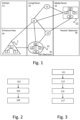
- Fig. 1 shows embodiments of the systems and the electronic device of the invention.
- the bridge 1 combines the functionality of the system for controlling message routing within a wireless network of the invention and the system for selecting one or more devices in a wireless network for transmitting, receiving and/or processing a radio frequency signal for presence and/or location detection of the invention.
- the bridge 1 only implements one of these two functionalities.
- the systems are implemented in different types of devices. Each system may comprise one or multiple devices.
- Fig. 1 two electronic devices of the invention are shown: lighting devices 11 and 12. Three other lighting devices are shown in Fig. 1 : lighting devices 13, 14 and 15.
- the lighting device 11 is a Hue go luminaire
- the lighting device 12 comprises LED strips
- the lighting device 13 is a ceiling lamp
- the lighting device 14 is a floor-standing lamp
- lighting device 15 is a table lamp.
- Lighting devices 13-15 are not configured to perform RF-based sensing or asset tracking in a first part of a period and obtain network messages in a second part of this period, unlike lighting devices 11 and 12.
- lighting devices 13-15 are, similar to lighting devices 11 and 12, also configured to perform RF-based sensing or asset tracking in a first part of a period and obtain network messages in a second part of this period.
- Bridge 1 and lighting devices 11-15 form a wireless mesh network and are also referred to as nodes.
- the bridge 1 comprises a processor 5, a transceiver 3, and a memory 7.
- the processor 5 is configured to determine a first subset of the lighting devices 11-15.
- the first subset comprises one or more devices that are assigned a radio frequency-based presence and/or location detection function.
- the processor 5 is further configured to determine a plurality of routes from a source node to a destination node. At least one of the plurality of routes comprises one or more intermediate nodes.
- the processor 5 is further configured to select one of the plurality of routes based on how many of the intermediate nodes of each of the plurality of routes are part of the first subset of the plurality of nodes and use the transceiver 3 to transmit one or more messages to cause the wireless mesh network to perform message routing according to the selected route.
- various routing mechanisms can be available and/or active. Some of these are determined by the sending device (source routing: the sender instructs the path to be used for the message), some of these are determined in a distributed fashion (AODV routing) where the nodes in the Zigbee network build up routing tables based on sent and received messages.
- source routing the sender instructs the path to be used for the message
- AODV routing a distributed fashion
- the processor 5 can instruct (e.g. via Manufacturer Specific messages) a sending device to use a specific route.
- the processor 5 could influence the routing e.g.
- the lighting devices 11 and 12 comprise a processor 25, a transceiver 23, a memory 27, and a light source 29.
- the processor 25 is configured to use a first protocol to transmit and/or receive a radio frequency signal during a first part of each of a plurality of periods.
- the radio frequency signal is used for presence and/or location detection.
- the processor 25 is further configured to obtain network messages transmitted wirelessly using a second protocol during a second part of each of the plurality of periods.
- the second part does not overlap with the first part.
- a duration of the first part varies between at least two of the plurality of periods and/or a duration of the second part varies between at least two of the plurality of periods.
- RF-based presence detection is also referred to as RF-based sensing.
- RF-based sensing may be used if a target needs to be detected that does not carry a dedicated transmitter or receiver and does not transmit or receive any signal.
- RF-based localization or location detection
- RF-based asset tracking is also referred to as RF-based asset tracking (the asset may be an object, animal or person, for example).
- RF-based asset tracking may be used if a target/asset needs to be detected and/or located that carries or incorporates a dedicated transmitter or receiver.
- the asset being tracked may receive or transmit BLE beacons, for example.
- RF-based sensing offers the possibility to detect motion or presence by analyzing the dynamic variation of diagnostic data and communication parameters of a wireless communication system, such as e.g. received signal strength or other network diagnostics data (e.g. number of retries until a message is successfully delivered) changes on the wireless links between different nodes of a network.
- the bridge 1 comprises one processor 5.
- the bridge 1 comprises multiple processors.
- the processor 5 of the bridge 1 may be a general-purpose processor, e.g. ARM-based, or an application-specific processor.
- the processor 5 of the bridge 1 may run a Unix-based operating system for example.
- the memory 7 may comprise one or more memory units.
- the memory 7 may comprise one or more hard disks and/or solid-state memory, for example.
- the memory 7 may be used to store a table of connected lights, for example.
- the transceiver 3 may use one or more communication technologies to communicate with the light devices, e.g. Zigbee, Thread and/or Bluetooth, and/or one or more wired or wireless communication technologies to communicate with a wireless LAN/Internet access point (not shown), e.g. Ethernet or Wi-Fi.
- multiple transceivers are used instead of a single transceiver.
- a receiver and a transmitter have been combined into a transceiver 3.
- one or more separate receiver components and one or more separate transmitter components are used.
- the bridge 1 may comprise other components typical for a network device such as a power connector.
- the invention may be implemented using a computer program running on one or more processors.
- Some of the functions performed by the bridge 1 in the embodiment of Fig. 1 are performed by an Internet server in an alternative embodiment. This is especially beneficial for more sophisticated RF-based presence detection algorithms or RF-based people counting. For security class use cases, a longer latency (e.g. 10 seconds) is typically acceptable, while for lighting class use cases (e.g. switching the lights on) a latency of 0.5 seconds or less is desirable, making a round trip to an Internet server potentially problematic.
- a longer latency e.g. 10 seconds
- lighting class use cases e.g. switching the lights on
- a receiver and a transmitter have been combined into a transceiver 23.
- one or more separate receiver components and one or more separate transmitter components are used.
- multiple transceivers are used instead of a single transceiver.
- the transceiver 23 may use one or more wireless communication technologies to communicate with bridge 1, e.g. Zigbee, Thread and/or Bluetooth.
- the lighting devices 11 and 12 may comprise other components typical for a lighting device such as a power connector.
- the two electronic devices of the invention are lighting devices.
- the electronic devices of the invention are other types of devices, e.g. non-lighting devices which are related to the lighting system (such as wireless sensors and switches that could be used for the presence/location detection), or other non-lighting devices.
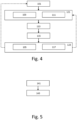
- a first embodiment of the method of selecting one or more devices for transmitting, receiving and/or processing a radio frequency signal is shown in Fig. 2 .
- a step 101 comprises determining a suitability of each of a plurality of devices for transmitting, receiving and/or processing a radio frequency signal for presence and/or location detection.
- a step 103 comprises selecting a subset of devices from the plurality of devices based on the suitability determined for each of the plurality of devices.
- a step 105 comprises instructing at least one of the subset of devices to act as a device for transmitting, receiving and/or processing a radio frequency signal for presence and/or location detection. Step 105 may further comprise instructing at least one of the subset of devices to transmit network messages, e.g. messages of a lighting control system (e.g. reporting of power consumption).
- network messages e.g. messages of a lighting control system (e.g. reporting of power consumption).
- Fig.4 Second embodiments of the method of selecting one or more devices for transmitting, receiving and/or processing a radio frequency signal and the method of controlling message routing is shown in Fig.4 .
- the methods of Figs. 2 and 3 are combined.
- a step 121 is performed which comprises both step 103 of Fig. 2 and step 111 of Fig. 3 .
- Step 111 may be the same step as step 103 or step 111 may comprise selecting an even narrower subset of devices from the subset determined in step 103, for example.
- steps 113 and 115 as shown in Fig. 3 , are performed.
- step 123 is performed, which comprises both step 105 of Fig. 2 and step 117 of Fig. 3 .
- Step 105 may be the same as step 117, i.e. the one or more messages instruct the at least one of the subset of devices to act as a device for transmitting, receiving and/or processing a radio frequency signal for presence and/or location detection.
- a single message both instructing a device to perform (or not to perform) RF-based sensing or asset tracking and comprising routing instructions may be transmitted to a single device.
- step 117 may comprise transmitting different messages, e.g. to change the routing protocol of one or more network nodes.
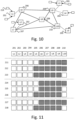
- a first embodiment of the method of obtaining network messages of the invention is shown in Fig. 5 .
- a step 141 comprises using a first protocol to transmit and/or receive a radio frequency signal during a first part of each of a plurality of periods.
- the radio frequency signal is used for presence and/or location detection.
- a step 143 comprises obtaining network messages transmitted wirelessly using a second protocol during a second part of each of the plurality of periods. The second part does not overlap with the first part.
- a duration of the first part varies between at least two of the plurality of periods and/or a duration of the second part varies between at least two of the plurality of periods.
- This method may be performed by lighting devices 11 and 12 of Fig. 1 , for example.
- the system of the invention e.g. bridge 1 of Fig. 1
- This instruction may be transmitted as part of step 123 of Fig. 4 , for example.
- none of the network nodes perform the method of Fig. 5 .
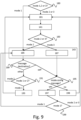
- FIG. 6 A third embodiment of the method of selecting one or more devices for transmitting, receiving and/or processing a radio frequency signal is shown in Fig. 6 .
- This third embodiment is used in an RF-based sensing (presence detection) application.
- one or more of the following criteria may be assessed to determine the suitability of each individual device in step 101 during commissioning:
- Participation in RF-based sensing typically requires the transmitter to send extra wireless messages and the receiver to perform RSSI (Received Signal Strength Indication) analytics and storage. This requires additional processing and memory resources and it is therefore beneficial to assess available processing and memory resources.
- RSSI Receiveived Signal Strength Indication
- the first generation of Philips Hue light bulbs uses a less powerful microcontroller than the newest generation of Philips Hue light bulbs.
- the latter has more memory and processing resources to be able to run algorithms for RF-based sensing and store more signatures (these signatures allow the changes in RSSI to be classified, e.g. to determine the presence of a human) or run several detection algorithms in parallel (e.g. a first algorithm is lighting-grade occupancy detection with low latency, while a second algorithm is a security-grade algorithm with high confidence, which alerts the home owner that someone is present in the house while the owner is away).
- Two identical hue bulbs located in the same area may still have different operational use.
- a first lamp has just one scene stored on it and therefore more free memory compared to a second lamp with 30 scenes stored on it.
- the number of scenes on a lamp is not a static parameter and typically changes over life of the lamp since the user/system may change it.
- the amount of available memory may change with software updates of the lamp.
- lights that are too close to each other are not included in the same group (of transmitting device and one or more receiving devices).
- the same group of transmitting device and one or more receiving devices.
- Reachability refers to the link status between two devices which sometimes can communicate directly and sometimes not - e.g. due to a metal door between them being closed or open. Such links are not preferred for RF-based sensing unless the RF-based sensing is used to monitor whether the automatic fire door is closed or open (which has value to prevent the spread of a fire).
- a trigger from such a luminaire may be used as a first step in a two-step occupancy detection process (e.g. the first trigger is generated by a luminaire close to the corridor and this first trigger lowers the detection threshold of a luminaire which is located further within the room but still close to the first luminaire; this two-step process enables detecting of people entering the room well).
- different weights may be assigned to such a luminaire so that only a larger motion than the one needed inside the room can trigger a detection outside.
- the wireless beam is oriented to the target area, e.g. using a millimeter wave (EHF) radio or a WiFi radio with (multiple) directional antenna(s), and other RF characteristics are suitable as well, the hue lamp in the luminaire may be suited for RF-based sensing, whereas if the beam is pointing to the ceiling the same lamp may not be suitable (even if other RF characteristics are suitable).
- Mobile luminaires may offer the user different orientations of the luminaire (e.g. a cube-shape luminaire for decorative lighting), which result in different RF characteristics, e.g. RF-beams, depending on where the radio is at that moment located. These orientations can be easily detected internally e.g. with onboard sensors like gyroscopes or externally e.g. by the use of cameras.
- the suitability of a device is also determined by determining a suitability per group of devices. This is performed in sub steps 161-164 of step 101.
- Each group comprises at least two devices, typically a transmitting device and one or more, e.g. two to four, receiving devices.
- Step 161 comprises selecting a plurality of groups of devices. All devices which were selected after assessing the above-mentioned criteria may potentially be included in a group. All selected devices within a certain distance of each other may be grouped. Several devices may collaborate with each other. These devices then record the RSSI of RF signals transmitted by some or all of the other devices in the same group. In this case, the RSSI of the devices in the group are assessed in order to decide whether a space is occupied or not.
- a group comprises 2+ devices where some or all 1:1 connections ('pairs') between those devices might be used.
- More devices than immediately required may be selected. These spare devices may be selected in/for one or more detection areas where nodes are likely to be depowered, such as an area of table lights with on/off switch. For example, six devices may be employed to cooperate for the RF-based sensing instead of four devices. While this results in higher network load and higher uC load, this will ensure that the detection area still works when one or two devices, e.g. lights, are depowered (it is not known upfront which device will be depowered in the next event).
- Step 162 comprises determining whether there are two groups of the plurality of groups that have a device in common and target a same or adjacent sensing area. In other words, step 162 comprises determining/picking mutually exclusive devices, e.g. luminaire, groups. If this determination is positive, one of the two groups is determined not to be suitable.
- RF-based sensing is that a person is in room A near the wall to room B causes wireless disturbance also in room B. Hence, in prior art RF-based sensing the confidence for allocating the user to the correct one of the two rooms suffers.
- the two groups of lights used for RF-based sensing in adjacent rooms are mutually exclusive groups (i.e. one light can only be part in one of the two adjacent RF-based sensing group).
- Picking mutually exclusive luminaire groups ensures that the RF-based sensing signals of the two different groups of lights look as different as possible. This reduces the likelihood that a poor detection in room A gets "stolen” by room B and hence reduces ambiguity and false occupancy detection positives.
- groups comprise more than two lights, e.g. one transmitting light and multiple receiving lights.
- the same light should not be the controller performing all the RF-based sensing algorithmic processing for multiple groups in order to better share the load.
- a non-controller node which (a) records the RSSI of the messages it hears and (b) reports out the RSSI, may participate concurrently in two different groups. In this case it not just reports out the RSSI of RF signals received by the first group of lights but also the RSSI of the second group of lights.
- the communication quality may be considered to be below the certain threshold when a change in the static signal path has resulted in a broken detection path between the pair of devices, e.g. lamps 1 and lamp 2.
- the system may compare a current RF signature of a room with an RF signature of that room somewhere late at night (e.g. 2am) when it is very likely that there is no contribution from people present in the detection area or when it is known that all occupants are out of home.
- the communication quality may be below the certain threshold even when normally, devices are able to communication with each other. If the signal is weak, a potential temporary obstruction such as provided by a human body in the way would then mean that the path effectively breaks temporarily. It is therefore beneficial to measure/estimate the communication quality while taking into account the worst-case scenario, which would also include the obstruction provided by a human body.
- the devices of the remaining (i.e. suitable) groups are determined to be suitable. Step 162 may be performed during commissioning and after commissioning and step 163 may be performed after commissioning, for example.
- step 166 the normal operation of the system may start, i.e. RF-based presence and/or location detection may be performed in step 166 by the at least one device instructed in step 105.
- step 167 it is checked whether a certain time has passed and/or another criterium has been met and therefore the suitability of the devices needs to be re-evaluated (i.e. after commissioning). If not, then RF-based presence and/or location detection may be continued in step 166. If so, then step 101 may be performed again.
- step 167 it may be checked in step 167 whether the weather has (significantly) changed. For instance, if RF-based sensing is applied in the exterior garden lighting (e.g. for people counting) and the system knows there is snow falling now, which may influence the transmission of wireless signals, it may be beneficial to select different lights for the RF-based sensing.
- the mains powered light mounted on the wall of the house 5 meters away from the garden door may be used to do RF-based sensing.
- the battery operated garden light which is located right next to the garden door may be used to do RF-based sensing. Similar, fog or rain are known to attenuate wireless signals.
- the suitability of the devices may also be re-evaluated when the RF-based sensing mode is switched, e.g. between people counting, people locating, detecting human entrance into an empty room, and security.
- people counting is not a time critical feature. It is normally perfectly acceptable to spend e.g. 10-30 seconds to conclude that there are three persons in a room. Based on certain selection criteria, it might be concluded at a first moment that luminaires 1,2,3,4 are the best for lighting control as they are the ones that provide immediate detection when people enter the room.
- the system can be configured in layers, such that the application's goal is first to determine if there's someone in the room (to switch on the lights) and only later to count how many people there are.
- the easiest way is to have the system constantly running in motion sensing mode as that leads to the lowest latency.
- the system can automatically switch over to people counting mode, as that provides the richest information.
- lights 1,2,3,4 are not the ideal ones for people counting as e.g. they are not in the center of the room but close to the entrance.
- the system can then select luminaires to e.g. 3,4,5,6,7 for RF-based sensing, as they are the ones optimized for people counting. The same applies to switching over between lighting control mode (e.g. during day) and security mode (at night or during weekends and holidays).
- step 101 (which is performed after commissioning), a further suitability of each of the plurality of devices for transmitting, receiving and/or processing the radio frequency signal is determined.
- step 103 a further subset of devices is selected from the plurality of devices based on the further suitability determined for each of the plurality of devices.
- step 105 at least one of the further subset of devices is instructed to act as a device for transmitting, receiving and/or processing a radio frequency signal for presence and/or location detection.
- one or more of the following criteria may be assessed to determine the suitability of each individual device in step 101 after commissioning:
- Assessing the history on network reachability makes it possible to avoid assigning lamps with bad history on network-reachability the task of performing RF-based sensing.
- lamp 2 is a critical light for RF-based sensing.
- lamp 2 may still be good to select lamp 2 as RF-based sensing node.
- lamp 2 is suitable as RF-based sensing device, it may be assigned to the RF-based sensing task less of its time than other devices.
- Lamp 2 may thus be considered suitable, but less suitable than other devices, and the degree of RF-based sensing performed by a device may depend on its degree of suitability.
- the time spent by lamp 2 on RF-based sensing may depend on whether it is used for streaming of light commands to accompany audio and/or video content.
- Assessing whether a device is controlled by a motion sensor, battery operated switch, or mains powered wireless (e.g. Zigbee) switch makes it possible to favor lights as RF-based sensing nodes which are controlled by either a motion sensor, battery operated switch, or mains powered Zigbee switch. It is less likely that these lights are switched off by a user than those lights using a legacy wall switch, which disrupts the power to the wireless lamp.
- a motion sensor battery operated switch
- mains powered wireless e.g. Zigbee
- a large Zigbee network comprising hundreds of lights
- the traffic caused by the Zigbee router devices sending their link status every 15 seconds may already consume 15% of the total Zigbee airtime budget.
- this immediately leads for large-scale networks to a shortage of bandwidth whenever the system has to perform a new temporary task on top of the normal basic system tasks (e.g. OTAU firmware update, running a dynamic tunable white lighting scene, high-resolution RF-based sensing, entertainment streaming).
- OTAU firmware update running a dynamic tunable white lighting scene, high-resolution RF-based sensing, entertainment streaming.
- less devices may be selected for RF-based sensing roles and suitability requirements are preferably applied stricter and based on accurate information.
- For smaller networks e.g. a network comprising 30 wireless lights
- more airtime headroom is available for the lights performing additional tasks such as RF-based sensing.
Landscapes
- Engineering & Computer Science (AREA)
- Computer Networks & Wireless Communication (AREA)
- Signal Processing (AREA)
- Radar, Positioning & Navigation (AREA)
- Remote Sensing (AREA)
- Physics & Mathematics (AREA)
- General Physics & Mathematics (AREA)
- Mobile Radio Communication Systems (AREA)
- Circuit Arrangement For Electric Light Sources In General (AREA)
- Position Fixing By Use Of Radio Waves (AREA)
Applications Claiming Priority (5)
| Application Number | Priority Date | Filing Date | Title |
|---|---|---|---|
| EP18191015 | 2018-08-27 | ||
| EP19157431 | 2019-02-15 | ||
| EP19157425 | 2019-02-15 | ||
| EP19157438 | 2019-02-15 | ||
| PCT/EP2019/072478 WO2020043592A1 (en) | 2018-08-27 | 2019-08-22 | Determining a suitability of network nodes for rf-based presence and/or location detection |
Publications (2)
| Publication Number | Publication Date |
|---|---|
| EP3844909A1 EP3844909A1 (en) | 2021-07-07 |
| EP3844909B1 true EP3844909B1 (en) | 2025-04-02 |
Family
ID=67667875
Family Applications (1)
| Application Number | Title | Priority Date | Filing Date |
|---|---|---|---|
| EP19755921.4A Active EP3844909B1 (en) | 2018-08-27 | 2019-08-22 | Determining a suitability of network nodes for rf-based presence and/or location detection |
Country Status (6)
| Country | Link |
|---|---|
| US (2) | US11523254B2 (enExample) |
| EP (1) | EP3844909B1 (enExample) |
| JP (1) | JP7331086B2 (enExample) |
| CN (1) | CN112585907B (enExample) |
| ES (1) | ES3030704T3 (enExample) |
| WO (1) | WO2020043592A1 (enExample) |
Families Citing this family (63)
| Publication number | Priority date | Publication date | Assignee | Title |
|---|---|---|---|---|
| US11847519B2 (en) | 2022-05-16 | 2023-12-19 | Bluicity Inc. | System and method for tracking tags over bluetooth low energy |
| US11592723B2 (en) | 2009-12-22 | 2023-02-28 | View, Inc. | Automated commissioning of controllers in a window network |
| US12498609B2 (en) | 2011-03-16 | 2025-12-16 | View Operating Corporation | Commissioning window networks |
| EP3426874B1 (en) | 2016-03-09 | 2022-07-13 | View, Inc. | Method of commissioning electrochromic windows |
| JP6966216B2 (ja) * | 2017-04-21 | 2021-11-10 | 株式会社日立製作所 | 在宅判定システム |
| EP4055407A1 (en) * | 2019-11-04 | 2022-09-14 | Signify Holding B.V. | Pair-assignment of rf-sensing nodes for a rf context-sensing arrangement |
| EP4013085B1 (en) * | 2019-12-09 | 2025-10-01 | Google LLC | Relay device for voice commands to be processed by a voice assistant, voice assistant and wireless network |
| TW202206925A (zh) | 2020-03-26 | 2022-02-16 | 美商視野公司 | 多用戶端網路中之存取及傳訊 |
| US11322252B2 (en) * | 2020-04-28 | 2022-05-03 | Phoenix Children's Hospital, Inc. | System and methods for asset tracking |
| PL4158921T3 (pl) * | 2020-05-29 | 2026-08-10 | Signify Holding B.V. | Wykonywanie polecenia sterowania w zależności od wykrycia obecności |
| CN115606203A (zh) * | 2020-06-01 | 2023-01-13 | 昕诺飞控股有限公司(Nl) | 用于配置射频感测网络的网络设备的配置模块 |
| US11496159B2 (en) * | 2020-06-02 | 2022-11-08 | Honeywell International Inc. | Mesh-network multimode system with a software definable radio |
| WO2021245019A1 (en) | 2020-06-02 | 2021-12-09 | Signify Holding B.V. | Reliable and security-aware communication in a hybrid wireless network |
| EP3962120B1 (en) * | 2020-09-01 | 2023-07-12 | Signify Holding B.V. | A network controlling device for controlling a network performing radiofrequency sensing |
| US12562874B2 (en) | 2020-09-14 | 2026-02-24 | Signify Holding B.V. | Single- and multi-channel radio frequency based sensing |
| WO2022058244A1 (en) | 2020-09-17 | 2022-03-24 | Signify Holding B.V. | Allocating nodes in groups in rf system |
| EP4223018B1 (en) * | 2020-09-29 | 2025-12-03 | Signify Holding B.V. | Mains powered device which rebroadcasts a beacon signal multiple times |
| CN116324472A (zh) | 2020-10-07 | 2023-06-23 | 昕诺飞控股有限公司 | 用于密集节点布置的基于射频的感测 |
| JP7378013B2 (ja) * | 2020-10-30 | 2023-11-10 | シグニファイ ホールディング ビー ヴィ | Rfメッセージを見逃す原因の決定 |
| US11949927B2 (en) * | 2020-10-30 | 2024-04-02 | Stryker Corporation | Methods and systems for hybrid and concurrent video distribution for healthcare campuses |
| CN116391331A (zh) | 2020-11-05 | 2023-07-04 | 昕诺飞控股有限公司 | 在基于单信道和多信道射频的感测之间切换 |
| EP4275365B1 (en) * | 2021-01-07 | 2026-02-11 | Signify Holding B.V. | Orchestrated radio frequency based sensing in multiple sensing areas |
| EP4275361A1 (en) | 2021-01-07 | 2023-11-15 | Signify Holding B.V. | Rf-based sensing using rssi and csi |
| CN116868558A (zh) * | 2021-01-14 | 2023-10-10 | 昕诺飞控股有限公司 | 优化基于射频的感测的检测性能 |
| US20240069160A1 (en) * | 2021-01-14 | 2024-02-29 | Signify Holding B.V. | Optimizing detection performance of radio frequency based sensing |
| EP4285615B1 (en) | 2021-01-27 | 2024-11-20 | Signify Holding B.V. | Rf-based sensing with consistent latency |
| WO2022178333A1 (en) * | 2021-02-19 | 2022-08-25 | Noodle Technology, Inc | Compute device with antenna combination |
| EP4302495A1 (en) | 2021-03-03 | 2024-01-10 | Signify Holding B.V. | Assigning a sensing node to a group based on a current access point of said node |
| US11334138B1 (en) | 2021-03-17 | 2022-05-17 | Lenovo (Singapore) Pte. Ltd. | Unlocking and/or awakening device based on ultra-wideband location tracking |
| US11430274B1 (en) * | 2021-03-17 | 2022-08-30 | Lenovo (Singapore) Pte. Ltd. | Unlocking lock on device based on ultra-wideband location tracking |
| US12388836B2 (en) | 2021-03-17 | 2025-08-12 | Lenovo (Singapore) Pte. Ltd. | Ultra-wideband-based device use restrictions |
| US11705124B2 (en) | 2021-03-18 | 2023-07-18 | Lenovo (Singapore) Pte. Ltd. | Ultra-wideband location tracking to perform voice input operation |
| US11622355B2 (en) * | 2021-03-29 | 2023-04-04 | Cisco Technology, Inc. | Wireless fidelity uplink non-orthogonal multiple access |
| US11276284B1 (en) | 2021-04-13 | 2022-03-15 | Honeywell International Inc. | System and method for detecting events in a system |
| WO2022243152A1 (en) | 2021-05-21 | 2022-11-24 | Signify Holding B.V. | A control device for reconfiguring a radiofrequency-based sensing system and a method thereof |
| JP7709190B2 (ja) * | 2021-06-21 | 2025-07-16 | アイリスオーヤマ株式会社 | 管理システム、照明装置および無線タグ |
| WO2022269841A1 (ja) * | 2021-06-23 | 2022-12-29 | 日本電信電話株式会社 | 制御装置、通信システム、制御方法、及びプログラム |
| CA3227980A1 (en) | 2021-08-24 | 2024-03-02 | Matthew Wootton | Systems and methods for distinguishing persons from other entities using network presence sensing |
| JP7881697B2 (ja) * | 2021-08-30 | 2026-06-29 | ナミ エーアイ プライベート リミテッド | WiFi感知メッシュネットワーク |
| US12546875B2 (en) * | 2021-09-08 | 2026-02-10 | Nami Ai Pte Ltd. | Onboarding a sensing system |
| WO2023057317A1 (en) | 2021-10-04 | 2023-04-13 | Signify Holding B.V. | Monitoring expected electromagnetic interference |
| CN118401858A (zh) | 2021-12-13 | 2024-07-26 | 昕诺飞控股有限公司 | 一种用于控制基于射频的感测系统的控制设备及其方法 |
| US11997581B2 (en) | 2022-02-11 | 2024-05-28 | Apple Inc. | End device communication |
| FI20225198A1 (en) | 2022-03-04 | 2023-09-05 | Nokia Solutions & Networks Oy | Resource allocation in combined communication and perception |
| US20250301356A1 (en) * | 2022-04-25 | 2025-09-25 | Lenovo (Singapore) Pte. Ltd. | Configuring participation in a radio sensing operation |
| US20250347772A1 (en) | 2022-05-19 | 2025-11-13 | Signify Holding B.V. | A controller for controlling a radio frequency, rf, based sensing system and a method thereof |
| CN119790671A (zh) * | 2022-08-18 | 2025-04-08 | 昕诺飞控股有限公司 | 用于将分布式网络中的节点迁移到集中式网络的方法 |
| WO2024080595A1 (ko) * | 2022-10-12 | 2024-04-18 | 삼성전자주식회사 | 스레드 네트워크 내에서 외부 전자 장치와의 연결을 제어하기 위한 전자 장치 및 방법 |
| US12439225B2 (en) * | 2022-11-03 | 2025-10-07 | Chorusview, Inc. | Coordination of beacon signal scanning in an object tracking system |
| CN116015811A (zh) * | 2022-12-16 | 2023-04-25 | 中国电信股份有限公司 | 评估网络安全的方法、装置、存储介质以及电子设备 |
| WO2024191695A1 (en) * | 2023-03-16 | 2024-09-19 | View, Inc. | Commissioning optically switchable windows |
| US12681161B2 (en) * | 2023-04-03 | 2026-07-14 | Samsung Electronics Co., Ltd. | Wi-fi based human presence and motion detection |
| US12695664B2 (en) * | 2023-05-17 | 2026-07-28 | Apple Inc. | Systems and methods for establishing a preferred network |
| CN121488169A (zh) * | 2023-07-10 | 2026-02-06 | 联想(新加坡)私人有限公司 | 感测节点切换过程 |
| CN117580167B (zh) * | 2023-11-29 | 2024-05-07 | 宜所(广东)智能科技有限公司 | 一种基于风道全空气系统的无线频谱管理方法及系统 |
| EP4583550A1 (en) * | 2024-01-08 | 2025-07-09 | Nami Ai Pte Ltd | Wi-fi sensing module |
| US20250227605A1 (en) * | 2024-01-08 | 2025-07-10 | Nami Ai Pte Ltd. | Wi-fi sensing device |
| WO2025252416A1 (en) * | 2024-06-04 | 2025-12-11 | Signify Holding B.V. | Method and system for performing a radiofrequency-based sensing task |
| WO2026041490A1 (en) * | 2024-08-19 | 2026-02-26 | Signify Holding B.V. | Radio frequency sensing system and method for performing a radio frequency sensing task |
| WO2026104220A1 (en) | 2024-11-13 | 2026-05-21 | Signify Holding B.V. | A method for deriving placement information of an elongated lighting device |
| WO2026109423A1 (en) | 2024-11-19 | 2026-05-28 | Signify Holding B.V. | Lighting device selection for rf-based sensing |
| CN119182419B (zh) * | 2024-11-25 | 2025-02-18 | 深圳友讯达科技股份有限公司 | 基于跳频通信的信道传输方法、装置、设备及存储介质 |
| US20260169952A1 (en) * | 2024-12-12 | 2026-06-18 | International Business Machines Corporation | Selective controller rebroadcast |
Citations (2)
| Publication number | Priority date | Publication date | Assignee | Title |
|---|---|---|---|---|
| US20100060514A1 (en) * | 2008-09-05 | 2010-03-11 | Lg Electronics Inc. | Network assisted positioning |
| EP2534929B1 (en) * | 2010-02-09 | 2019-03-13 | Signify Holding B.V. | Presence detection system and lighting system comprising such system |
Family Cites Families (20)
| Publication number | Priority date | Publication date | Assignee | Title |
|---|---|---|---|---|
| WO2004036934A1 (en) * | 2002-10-16 | 2004-04-29 | Andrew Corporation | Network overlay geo-location system with smart antennas |
| GB0320432D0 (en) | 2003-08-30 | 2003-10-01 | Koninkl Philips Electronics Nv | Method for operating a wireless network |
| US7110756B2 (en) | 2003-10-03 | 2006-09-19 | Cognio, Inc. | Automated real-time site survey in a shared frequency band environment |
| US8059009B2 (en) | 2006-09-15 | 2011-11-15 | Itron, Inc. | Uplink routing without routing table |
| US8718561B2 (en) | 2007-11-20 | 2014-05-06 | Aruba Networks, Inc. | Method and apparatus for detecting and avoiding interference in a communications network |
| US9002522B2 (en) | 2008-09-10 | 2015-04-07 | Enlighted, Inc. | Logical groupings of intelligent building fixtures |
| JP4340925B1 (ja) | 2008-09-24 | 2009-10-07 | 株式会社共和電子製作所 | ネットワーク蛍光灯型led照明システムおよびそれに用いられる蛍光灯型led照明体 |
| CN102083236A (zh) * | 2009-11-27 | 2011-06-01 | 中国科学院自动化研究所 | 一种基于通信网络的井下定位与安全监控系统 |
| US8737244B2 (en) * | 2010-11-29 | 2014-05-27 | Rosemount Inc. | Wireless sensor network access point and device RF spectrum analysis system and method |
| US9148935B2 (en) | 2011-09-21 | 2015-09-29 | Enlighted, Inc. | Dual-technology occupancy detection |
| US9910153B2 (en) | 2012-08-28 | 2018-03-06 | Philips Lighting Holding B.V. | Communication channel through presence detection |
| US9456293B2 (en) | 2013-03-26 | 2016-09-27 | Sensity Systems Inc. | Sensor nodes with multicast transmissions in lighting sensory network |
| US10039172B2 (en) | 2014-01-30 | 2018-07-31 | Philips Lighting Holding B.V. | Controlling a lighting system using a mobile terminal |
| US9565657B2 (en) * | 2014-07-22 | 2017-02-07 | Honeywell International Inc. | IOT enabled wireless one-go/all-go platform sensor network solution for connected home security systems |
| JP7126351B2 (ja) * | 2014-08-12 | 2022-08-26 | シグニファイ ホールディング ビー ヴィ | モバイル機器の位置特定のための方法及び装置 |
| US10462625B2 (en) * | 2015-02-24 | 2019-10-29 | Signify Holding B.V. | Time-multiplex transmission of localisation beacon signals and control-related signals |
| JP6518103B2 (ja) | 2015-03-24 | 2019-05-22 | 学校法人 関西大学 | 情報収集装置、センサーノードおよびそれらを備えた情報収集システム |
| US9870698B2 (en) | 2015-11-10 | 2018-01-16 | Google Llc | Security system re-arming |
| CN105657639B (zh) | 2015-12-25 | 2019-06-28 | 泰凌微电子(上海)有限公司 | 双模设备及其实现同时通信的方法 |
| US10129853B2 (en) | 2016-06-08 | 2018-11-13 | Cognitive Systems Corp. | Operating a motion detection channel in a wireless communication network |
-
2019
- 2019-08-22 JP JP2021510978A patent/JP7331086B2/ja active Active
- 2019-08-22 EP EP19755921.4A patent/EP3844909B1/en active Active
- 2019-08-22 CN CN201980056631.6A patent/CN112585907B/zh active Active
- 2019-08-22 ES ES19755921T patent/ES3030704T3/es active Active
- 2019-08-22 WO PCT/EP2019/072478 patent/WO2020043592A1/en not_active Ceased
- 2019-08-22 US US17/272,298 patent/US11523254B2/en active Active
-
2022
- 2022-11-03 US US17/979,918 patent/US12041513B2/en active Active
Patent Citations (2)
| Publication number | Priority date | Publication date | Assignee | Title |
|---|---|---|---|---|
| US20100060514A1 (en) * | 2008-09-05 | 2010-03-11 | Lg Electronics Inc. | Network assisted positioning |
| EP2534929B1 (en) * | 2010-02-09 | 2019-03-13 | Signify Holding B.V. | Presence detection system and lighting system comprising such system |
Also Published As
| Publication number | Publication date |
|---|---|
| JP2021535566A (ja) | 2021-12-16 |
| US12041513B2 (en) | 2024-07-16 |
| US11523254B2 (en) | 2022-12-06 |
| WO2020043592A1 (en) | 2020-03-05 |
| CN112585907A (zh) | 2021-03-30 |
| CN112585907B (zh) | 2023-12-22 |
| ES3030704T3 (en) | 2025-07-01 |
| US20210185485A1 (en) | 2021-06-17 |
| EP3844909A1 (en) | 2021-07-07 |
| JP7331086B2 (ja) | 2023-08-22 |
| US20230048423A1 (en) | 2023-02-16 |
Similar Documents
| Publication | Publication Date | Title |
|---|---|---|
| US12041513B2 (en) | Determining a suitability of network nodes for RF-based presence and/or location detection | |
| EP3925161B1 (en) | Determining a network route which avoids nodes with a rf-based presence and/or location detection function | |
| EP3925159B1 (en) | Time-varying allocation to rf-based presence detection and/or localization and message reception | |
| US12273256B2 (en) | Assigning router devices in a mesh network | |
| US9804024B2 (en) | Light measurement and/or control translation for daylighting | |
| CN115462125A (zh) | 无线控制系统的高效入网初始化 | |
| WO2023011917A1 (en) | A wireless control system comprising a dual-mode node | |
| Dandelski et al. | Scalability of dense wireless lighting control networks | |
| US20250347772A1 (en) | A controller for controlling a radio frequency, rf, based sensing system and a method thereof | |
| JP2023501854A (ja) | ノードの位置に基づくワイヤレスパラメータの調整 | |
| EP4054295B1 (en) | Sharing lighting control network status information | |
| US11405869B2 (en) | Energy optimized wireless communication for RF-enabled devices | |
| US20240373351A1 (en) | Configuring radiofrequency sensing nodes | |
| CN117119618B (zh) | 室内大规模实时无线传感网络组网系统及计算机设备 | |
| US20250274343A1 (en) | Updating roles and/or relationships of devices in a mesh network |
Legal Events
| Date | Code | Title | Description |
|---|---|---|---|
| STAA | Information on the status of an ep patent application or granted ep patent |
Free format text: STATUS: UNKNOWN |
|
| STAA | Information on the status of an ep patent application or granted ep patent |
Free format text: STATUS: THE INTERNATIONAL PUBLICATION HAS BEEN MADE |
|
| STAA | Information on the status of an ep patent application or granted ep patent |
Free format text: STATUS: REQUEST FOR EXAMINATION WAS MADE |
|
| PUAI | Public reference made under article 153(3) epc to a published international application that has entered the european phase |
Free format text: ORIGINAL CODE: 0009012 |
|
| 17P | Request for examination filed |
Effective date: 20210329 |
|
| AK | Designated contracting states |
Kind code of ref document: A1 Designated state(s): AL AT BE BG CH CY CZ DE DK EE ES FI FR GB GR HR HU IE IS IT LI LT LU LV MC MK MT NL NO PL PT RO RS SE SI SK SM TR |
|
| STAA | Information on the status of an ep patent application or granted ep patent |
Free format text: STATUS: EXAMINATION IS IN PROGRESS |
|
| 17Q | First examination report despatched |
Effective date: 20211011 |
|
| 17Q | First examination report despatched |
Effective date: 20211026 |
|
| DAV | Request for validation of the european patent (deleted) | ||
| DAX | Request for extension of the european patent (deleted) | ||
| REG | Reference to a national code |
Ref country code: DE Ref country code: DE Ref legal event code: R079 Ref document number: 602019068109 Country of ref document: DE Free format text: PREVIOUS MAIN CLASS: H04L0012240000 Ipc: H04W0040020000 |
|
| GRAP | Despatch of communication of intention to grant a patent |
Free format text: ORIGINAL CODE: EPIDOSNIGR1 |
|
| STAA | Information on the status of an ep patent application or granted ep patent |
Free format text: STATUS: GRANT OF PATENT IS INTENDED |
|
| RIC1 | Information provided on ipc code assigned before grant |
Ipc: H04W 52/28 20090101ALN20241014BHEP Ipc: H04W 52/22 20090101ALN20241014BHEP Ipc: H04W 52/14 20090101ALN20241014BHEP Ipc: G08B 29/18 20060101ALN20241014BHEP Ipc: G01S 7/00 20060101ALI20241014BHEP Ipc: H04W 4/80 20180101ALI20241014BHEP Ipc: H04W 4/029 20180101ALI20241014BHEP Ipc: H04W 84/18 20090101ALI20241014BHEP Ipc: H04W 64/00 20090101ALI20241014BHEP Ipc: H04W 4/02 20180101ALI20241014BHEP Ipc: H04W 40/02 20090101AFI20241014BHEP |
|
| INTG | Intention to grant announced |
Effective date: 20241029 |
|
| GRAS | Grant fee paid |
Free format text: ORIGINAL CODE: EPIDOSNIGR3 |
|
| P01 | Opt-out of the competence of the unified patent court (upc) registered |
Free format text: CASE NUMBER: APP_3570/2025 Effective date: 20250122 |
|
| GRAA | (expected) grant |
Free format text: ORIGINAL CODE: 0009210 |
|
| STAA | Information on the status of an ep patent application or granted ep patent |
Free format text: STATUS: THE PATENT HAS BEEN GRANTED |
|
| AK | Designated contracting states |
Kind code of ref document: B1 Designated state(s): AL AT BE BG CH CY CZ DE DK EE ES FI FR GB GR HR HU IE IS IT LI LT LU LV MC MK MT NL NO PL PT RO RS SE SI SK SM TR |
|
| REG | Reference to a national code |
Ref country code: GB Ref legal event code: FG4D |
|
| REG | Reference to a national code |
Ref country code: CH Ref legal event code: EP |
|
| REG | Reference to a national code |
Ref country code: IE Ref legal event code: FG4D |
|
| REG | Reference to a national code |
Ref country code: DE Ref legal event code: R096 Ref document number: 602019068109 Country of ref document: DE |
|
| REG | Reference to a national code |
Ref country code: ES Ref legal event code: FG2A Ref document number: 3030704 Country of ref document: ES Kind code of ref document: T3 Effective date: 20250701 |
|
| REG | Reference to a national code |
Ref country code: NL Ref legal event code: MP Effective date: 20250402 |
|
| PG25 | Lapsed in a contracting state [announced via postgrant information from national office to epo] |
Ref country code: NL Free format text: LAPSE BECAUSE OF FAILURE TO SUBMIT A TRANSLATION OF THE DESCRIPTION OR TO PAY THE FEE WITHIN THE PRESCRIBED TIME-LIMIT Effective date: 20250402 |
|
| REG | Reference to a national code |
Ref country code: AT Ref legal event code: MK05 Ref document number: 1782518 Country of ref document: AT Kind code of ref document: T Effective date: 20250402 |
|
| PG25 | Lapsed in a contracting state [announced via postgrant information from national office to epo] |
Ref country code: PT Free format text: LAPSE BECAUSE OF FAILURE TO SUBMIT A TRANSLATION OF THE DESCRIPTION OR TO PAY THE FEE WITHIN THE PRESCRIBED TIME-LIMIT Effective date: 20250804 Ref country code: FI Free format text: LAPSE BECAUSE OF FAILURE TO SUBMIT A TRANSLATION OF THE DESCRIPTION OR TO PAY THE FEE WITHIN THE PRESCRIBED TIME-LIMIT Effective date: 20250402 |
|
| PGFP | Annual fee paid to national office [announced via postgrant information from national office to epo] |
Ref country code: ES Payment date: 20250916 Year of fee payment: 7 |
|
| REG | Reference to a national code |
Ref country code: LT Ref legal event code: MG9D |
|
| PG25 | Lapsed in a contracting state [announced via postgrant information from national office to epo] |
Ref country code: NO Free format text: LAPSE BECAUSE OF FAILURE TO SUBMIT A TRANSLATION OF THE DESCRIPTION OR TO PAY THE FEE WITHIN THE PRESCRIBED TIME-LIMIT Effective date: 20250702 Ref country code: GR Free format text: LAPSE BECAUSE OF FAILURE TO SUBMIT A TRANSLATION OF THE DESCRIPTION OR TO PAY THE FEE WITHIN THE PRESCRIBED TIME-LIMIT Effective date: 20250703 |
|
| PG25 | Lapsed in a contracting state [announced via postgrant information from national office to epo] |
Ref country code: PL Free format text: LAPSE BECAUSE OF FAILURE TO SUBMIT A TRANSLATION OF THE DESCRIPTION OR TO PAY THE FEE WITHIN THE PRESCRIBED TIME-LIMIT Effective date: 20250402 |
|
| PGFP | Annual fee paid to national office [announced via postgrant information from national office to epo] |
Ref country code: IT Payment date: 20250825 Year of fee payment: 7 |
|
| PG25 | Lapsed in a contracting state [announced via postgrant information from national office to epo] |
Ref country code: BG Free format text: LAPSE BECAUSE OF FAILURE TO SUBMIT A TRANSLATION OF THE DESCRIPTION OR TO PAY THE FEE WITHIN THE PRESCRIBED TIME-LIMIT Effective date: 20250402 |
|
| PGFP | Annual fee paid to national office [announced via postgrant information from national office to epo] |
Ref country code: GB Payment date: 20250826 Year of fee payment: 7 |
|
| PG25 | Lapsed in a contracting state [announced via postgrant information from national office to epo] |
Ref country code: HR Free format text: LAPSE BECAUSE OF FAILURE TO SUBMIT A TRANSLATION OF THE DESCRIPTION OR TO PAY THE FEE WITHIN THE PRESCRIBED TIME-LIMIT Effective date: 20250402 |
|
| PG25 | Lapsed in a contracting state [announced via postgrant information from national office to epo] |
Ref country code: AT Free format text: LAPSE BECAUSE OF FAILURE TO SUBMIT A TRANSLATION OF THE DESCRIPTION OR TO PAY THE FEE WITHIN THE PRESCRIBED TIME-LIMIT Effective date: 20250402 |
|
| PGFP | Annual fee paid to national office [announced via postgrant information from national office to epo] |
Ref country code: FR Payment date: 20250825 Year of fee payment: 7 |
|
| PG25 | Lapsed in a contracting state [announced via postgrant information from national office to epo] |
Ref country code: RS Free format text: LAPSE BECAUSE OF FAILURE TO SUBMIT A TRANSLATION OF THE DESCRIPTION OR TO PAY THE FEE WITHIN THE PRESCRIBED TIME-LIMIT Effective date: 20250702 |
|
| PG25 | Lapsed in a contracting state [announced via postgrant information from national office to epo] |
Ref country code: IS Free format text: LAPSE BECAUSE OF FAILURE TO SUBMIT A TRANSLATION OF THE DESCRIPTION OR TO PAY THE FEE WITHIN THE PRESCRIBED TIME-LIMIT Effective date: 20250802 |
|
| PG25 | Lapsed in a contracting state [announced via postgrant information from national office to epo] |
Ref country code: LV Free format text: LAPSE BECAUSE OF FAILURE TO SUBMIT A TRANSLATION OF THE DESCRIPTION OR TO PAY THE FEE WITHIN THE PRESCRIBED TIME-LIMIT Effective date: 20250402 |
|
| REG | Reference to a national code |
Ref country code: DE Ref legal event code: R097 Ref document number: 602019068109 Country of ref document: DE |
|
| PGFP | Annual fee paid to national office [announced via postgrant information from national office to epo] |
Ref country code: DE Payment date: 20251028 Year of fee payment: 7 |
|
| PG25 | Lapsed in a contracting state [announced via postgrant information from national office to epo] |
Ref country code: DK Free format text: LAPSE BECAUSE OF FAILURE TO SUBMIT A TRANSLATION OF THE DESCRIPTION OR TO PAY THE FEE WITHIN THE PRESCRIBED TIME-LIMIT Effective date: 20250402 Ref country code: SM Free format text: LAPSE BECAUSE OF FAILURE TO SUBMIT A TRANSLATION OF THE DESCRIPTION OR TO PAY THE FEE WITHIN THE PRESCRIBED TIME-LIMIT Effective date: 20250402 |
|
| PG25 | Lapsed in a contracting state [announced via postgrant information from national office to epo] |
Ref country code: CZ Free format text: LAPSE BECAUSE OF FAILURE TO SUBMIT A TRANSLATION OF THE DESCRIPTION OR TO PAY THE FEE WITHIN THE PRESCRIBED TIME-LIMIT Effective date: 20250402 |
|
| PG25 | Lapsed in a contracting state [announced via postgrant information from national office to epo] |
Ref country code: EE Free format text: LAPSE BECAUSE OF FAILURE TO SUBMIT A TRANSLATION OF THE DESCRIPTION OR TO PAY THE FEE WITHIN THE PRESCRIBED TIME-LIMIT Effective date: 20250402 |
|
| PG25 | Lapsed in a contracting state [announced via postgrant information from national office to epo] |
Ref country code: SK Free format text: LAPSE BECAUSE OF FAILURE TO SUBMIT A TRANSLATION OF THE DESCRIPTION OR TO PAY THE FEE WITHIN THE PRESCRIBED TIME-LIMIT Effective date: 20250402 Ref country code: RO Free format text: LAPSE BECAUSE OF FAILURE TO SUBMIT A TRANSLATION OF THE DESCRIPTION OR TO PAY THE FEE WITHIN THE PRESCRIBED TIME-LIMIT Effective date: 20250402 |
|
| PLBE | No opposition filed within time limit |
Free format text: ORIGINAL CODE: 0009261 |
|
| STAA | Information on the status of an ep patent application or granted ep patent |
Free format text: STATUS: NO OPPOSITION FILED WITHIN TIME LIMIT |
|
| REG | Reference to a national code |
Ref country code: CH Ref legal event code: L10 Free format text: ST27 STATUS EVENT CODE: U-0-0-L10-L00 (AS PROVIDED BY THE NATIONAL OFFICE) Effective date: 20260211 |
|
| 26N | No opposition filed |
Effective date: 20260105 |
|
| REG | Reference to a national code |
Ref country code: CH Ref legal event code: H13 Free format text: ST27 STATUS EVENT CODE: U-0-0-H10-H13 (AS PROVIDED BY THE NATIONAL OFFICE) Effective date: 20260324 |
|
| PG25 | Lapsed in a contracting state [announced via postgrant information from national office to epo] |
Ref country code: MC Free format text: LAPSE BECAUSE OF FAILURE TO SUBMIT A TRANSLATION OF THE DESCRIPTION OR TO PAY THE FEE WITHIN THE PRESCRIBED TIME-LIMIT Effective date: 20250402 |
|
| PG25 | Lapsed in a contracting state [announced via postgrant information from national office to epo] |
Ref country code: LU Free format text: LAPSE BECAUSE OF NON-PAYMENT OF DUE FEES Effective date: 20250822 |
|
| PG25 | Lapsed in a contracting state [announced via postgrant information from national office to epo] |
Ref country code: CH Free format text: LAPSE BECAUSE OF NON-PAYMENT OF DUE FEES Effective date: 20250831 |
|
| REG | Reference to a national code |
Ref country code: BE Ref legal event code: MM Effective date: 20250831 |
|
| PG25 | Lapsed in a contracting state [announced via postgrant information from national office to epo] |
Ref country code: LT Free format text: LAPSE BECAUSE OF FAILURE TO SUBMIT A TRANSLATION OF THE DESCRIPTION OR TO PAY THE FEE WITHIN THE PRESCRIBED TIME-LIMIT Effective date: 20250402 |
|
| PG25 | Lapsed in a contracting state [announced via postgrant information from national office to epo] |
Ref country code: BE Free format text: LAPSE BECAUSE OF NON-PAYMENT OF DUE FEES Effective date: 20250831 Ref country code: IE Free format text: LAPSE BECAUSE OF NON-PAYMENT OF DUE FEES Effective date: 20250822 |
|
| PG25 | Lapsed in a contracting state [announced via postgrant information from national office to epo] |
Ref country code: SE Free format text: LAPSE BECAUSE OF FAILURE TO SUBMIT A TRANSLATION OF THE DESCRIPTION OR TO PAY THE FEE WITHIN THE PRESCRIBED TIME-LIMIT Effective date: 20250402 |