EP3843705B1 - Herstellung von nanosuspensionshaltigen nanokristallen von pharmazeutischen wirkstoffen mit geringen oder keinen stabilisatoren - Google Patents
Herstellung von nanosuspensionshaltigen nanokristallen von pharmazeutischen wirkstoffen mit geringen oder keinen stabilisatoren Download PDFInfo
- Publication number
- EP3843705B1 EP3843705B1 EP19756406.5A EP19756406A EP3843705B1 EP 3843705 B1 EP3843705 B1 EP 3843705B1 EP 19756406 A EP19756406 A EP 19756406A EP 3843705 B1 EP3843705 B1 EP 3843705B1
- Authority
- EP
- European Patent Office
- Prior art keywords
- api
- etoposide
- stabilizing agent
- eto
- nanocrystals
- Prior art date
- Legal status (The legal status is an assumption and is not a legal conclusion. Google has not performed a legal analysis and makes no representation as to the accuracy of the status listed.)
- Active
Links
Images




Classifications
-
- A—HUMAN NECESSITIES
- A61—MEDICAL OR VETERINARY SCIENCE; HYGIENE
- A61K—PREPARATIONS FOR MEDICAL, DENTAL OR TOILETRY PURPOSES
- A61K9/00—Medicinal preparations characterised by special physical form
- A61K9/48—Preparations in capsules, e.g. of gelatin, of chocolate
- A61K9/50—Microcapsules having a gas, liquid or semi-solid filling; Solid microparticles or pellets surrounded by a distinct coating layer, e.g. coated microspheres, coated drug crystals
- A61K9/51—Nanocapsules; Nanoparticles
- A61K9/5192—Processes
-
- A—HUMAN NECESSITIES
- A61—MEDICAL OR VETERINARY SCIENCE; HYGIENE
- A61K—PREPARATIONS FOR MEDICAL, DENTAL OR TOILETRY PURPOSES
- A61K9/00—Medicinal preparations characterised by special physical form
- A61K9/48—Preparations in capsules, e.g. of gelatin, of chocolate
- A61K9/50—Microcapsules having a gas, liquid or semi-solid filling; Solid microparticles or pellets surrounded by a distinct coating layer, e.g. coated microspheres, coated drug crystals
- A61K9/51—Nanocapsules; Nanoparticles
- A61K9/5107—Excipients; Inactive ingredients
- A61K9/513—Organic macromolecular compounds; Dendrimers
- A61K9/5146—Organic macromolecular compounds; Dendrimers obtained otherwise than by reactions only involving carbon-to-carbon unsaturated bonds, e.g. polyethylene glycol, polyamines, polyanhydrides
-
- A—HUMAN NECESSITIES
- A61—MEDICAL OR VETERINARY SCIENCE; HYGIENE
- A61K—PREPARATIONS FOR MEDICAL, DENTAL OR TOILETRY PURPOSES
- A61K31/00—Medicinal preparations containing organic active ingredients
- A61K31/33—Heterocyclic compounds
- A61K31/335—Heterocyclic compounds having oxygen as the only ring hetero atom, e.g. fungichromin
- A61K31/365—Lactones
-
- A—HUMAN NECESSITIES
- A61—MEDICAL OR VETERINARY SCIENCE; HYGIENE
- A61K—PREPARATIONS FOR MEDICAL, DENTAL OR TOILETRY PURPOSES
- A61K31/00—Medicinal preparations containing organic active ingredients
- A61K31/70—Carbohydrates; Sugars; Derivatives thereof
- A61K31/7042—Compounds having saccharide radicals and heterocyclic rings
- A61K31/7048—Compounds having saccharide radicals and heterocyclic rings having oxygen as a ring hetero atom, e.g. leucoglucosan, hesperidin, erythromycin, nystatin, digitoxin or digoxin
-
- A—HUMAN NECESSITIES
- A61—MEDICAL OR VETERINARY SCIENCE; HYGIENE
- A61K—PREPARATIONS FOR MEDICAL, DENTAL OR TOILETRY PURPOSES
- A61K9/00—Medicinal preparations characterised by special physical form
- A61K9/14—Particulate form, e.g. powders, Processes for size reducing of pure drugs or the resulting products, Pure drug nanoparticles
- A61K9/141—Intimate drug-carrier mixtures characterised by the carrier, e.g. ordered mixtures, adsorbates, solid solutions, eutectica, co-dried, co-solubilised, co-kneaded, co-milled, co-ground products, co-precipitates, co-evaporates, co-extrudates, co-melts; Drug nanoparticles with adsorbed surface modifiers
- A61K9/146—Intimate drug-carrier mixtures characterised by the carrier, e.g. ordered mixtures, adsorbates, solid solutions, eutectica, co-dried, co-solubilised, co-kneaded, co-milled, co-ground products, co-precipitates, co-evaporates, co-extrudates, co-melts; Drug nanoparticles with adsorbed surface modifiers with organic macromolecular compounds
-
- A—HUMAN NECESSITIES
- A61—MEDICAL OR VETERINARY SCIENCE; HYGIENE
- A61P—SPECIFIC THERAPEUTIC ACTIVITY OF CHEMICAL COMPOUNDS OR MEDICINAL PREPARATIONS
- A61P35/00—Antineoplastic agents
-
- B—PERFORMING OPERATIONS; TRANSPORTING
- B82—NANOTECHNOLOGY
- B82Y—SPECIFIC USES OR APPLICATIONS OF NANOSTRUCTURES; MEASUREMENT OR ANALYSIS OF NANOSTRUCTURES; MANUFACTURE OR TREATMENT OF NANOSTRUCTURES
- B82Y30/00—Nanotechnology for materials or surface science, e.g. nanocomposites
-
- B—PERFORMING OPERATIONS; TRANSPORTING
- B82—NANOTECHNOLOGY
- B82Y—SPECIFIC USES OR APPLICATIONS OF NANOSTRUCTURES; MEASUREMENT OR ANALYSIS OF NANOSTRUCTURES; MANUFACTURE OR TREATMENT OF NANOSTRUCTURES
- B82Y40/00—Manufacture or treatment of nanostructures
-
- B—PERFORMING OPERATIONS; TRANSPORTING
- B82—NANOTECHNOLOGY
- B82Y—SPECIFIC USES OR APPLICATIONS OF NANOSTRUCTURES; MEASUREMENT OR ANALYSIS OF NANOSTRUCTURES; MANUFACTURE OR TREATMENT OF NANOSTRUCTURES
- B82Y5/00—Nanobiotechnology or nanomedicine, e.g. protein engineering or drug delivery
Definitions
- the invention relates to a method for manufacturing a nanostructured powder of an Active Pharmaceutical Ingredient (API), said nanostructured powder, a method for preparing a nanosuspension from said nanostructured powder and nanosuspension obtained thereof.
- API Active Pharmaceutical Ingredient
- insoluble drugs face problems of poor bioavailability and instability. The prominent reason behind these issues is poor aqueous solubility, and the resulting low bioavailability.
- Formulation of insoluble drugs using co-solvents is one of the oldest and widely used technique, especially for liquid formulation intended for oral and intravenous administration.
- insoluble drug delivery strategies such as chemical modification of the drug, to obtain various forms of the drugs (ester/salt), prodrugs or active metabolites of drugs.
- Drug nanoparticles In the field of pharmaceuticals, the term 'nanoparticle' is applied to structures less than 1 ⁇ m in size for at least one of their dimensions.
- Drug nanoparticles can be produced by various technologies, which can be broadly categorized into 'bottom up' and 'top-down' technologies.
- Wet milling is a top-down approach in the production of small drug particles in which a mechanical energy is applied to physically break down coarse particles to smaller ones using beads.
- the pearls or balls used to mill consist of ceramic (cerium or yttrium-stabilized zirconium oxide), stainless steel, glass, or highly cross-linked polystyrene resin-coated beads.
- a major drawback of the wet milling technique is the erosion of the balls arising from the intensive mixing forces in the vessel. Residues of the milling media produced from erosion may result in product contamination, leading to chemical destabilization of the newly-formed particle surfaces and possibly affecting critical product attributes such as particle size and size distribution.
- Another problem associated with wet milling is the loss of drug during the milling by the action of temperature and mechanical action.
- High pressure homogenization is another top-down approach, in which size reduction of drug particles is achieved by repeatedly cycling, to 200 plus cycles, with the aid of a piston, a drug suspension through a very thin gap at high velocity, around 500 m/s, and under pressure, 1000-1500 bars.
- the extent of subdivision of the nanoparticles depends on the pressure applied as well as the number of homogenization cycles the drug suspension is subjected to during the process.
- a drawback of high pressure homogenization is its energy intensity which may result to high temperature process leading to possible degradation of the components.
- liquid antisolvent is a bottom-up technique based on the addition of a drug solubilized in solvent to an antisolvent in which the drug is poorly or not soluble, thereby precipitating the drug in the form of nanoparticles.
- this technique allows a poor control over particle size distribution, this parameter being generally modulated throughout the addition of stabilizers such as surfactants, polymers or electrolytes in the solvent and/or antisolvent.
- etoposide is a cancer drug poorly soluble in water. Although it contains a carbohydrate portion, etoposide is substituted with lipophilic groups which negate much of the hydrophilic character that carbohydrates normally impart to a drug molecule.
- examples of commercially available oral and injectable etoposide formulations are Vepesid ® and Toposar ® .
- Vepesid ® formulation comprises etoposide solubilized in a cosolvent mixture of PEG 400, glycerin, citric acid, and water ( Strickley, 2004. Pharmaceutical Research, Vol. 21, No. 2 page 201-230 ).
- TOPOSAR ® formulation comprises etoposide as a 20 mg/mL, 2 mg/ml citric acid, 30 mg/ml benzyl alcohol, 80 mg/ml polysorbate 80/tween 80, 650 mg/ml polyethylene glycol 300, and 30.5% (v/v) alcohol. To limit toxicity, both formulations must be diluted prior to use and slowly infused.
- Merisko et al. (Pharmaceutical Research, Vol. 13, No. 2, 1996 ) describes the preparation of an etoposide nanocrystalline suspension wherein an etoposide powder is wet milled using a zirconia 2%w/v solid suspension containing 1%w/v Pluronic ® F-127 as surfactant stabilizer. After four days of milling, etoposide nanosuspensions were harvested. However, this process is long and energy intensive. Moreover, the process inherently results in contamination due to milling material and degradation of etoposide biological activity due to thermal energy released during the milling.
- the aim of the present invention is to provide a nanostructured powder containing active pharmaceutical ingredient (API) agglomerates containing API in its crystalline form.
- the nanostructured powder of the invention has a low level/no stabilizing agent and is free of contaminants typically produced during wet milling techniques.
- the nanostructure powder produced is therefore particularly well suited for medical use.
- the nanostructured powder is stable and can be stored before being used and before being dispersed in nanosuspension.
- a first object of the invention is to supply a method for manufacturing a nanostructured powder comprising nanocrystalline agglomerates containing active pharmaceutical ingredient (API) in its crystalline form, said method comprising:
- a second object of the invention is to provide a nanostructured powder comprising nanocrystalline agglomerates containing API in its crystalline form said agglomerates having at least one dimension of less than 1 ⁇ m.
- said nanostructured powder further comprises a stabilizing agent in a stabilizing agent to API weight ratio equal or less than 5, preferably less than 2.
- said nanostructured powder is free of stabilizing agent.
- a third object of the invention is to supply a method for manufacturing a nanosuspension comprising API nanocrystals comprising a step of mixing a nanostructured powder as defined above, an API antisolvent and optionally a stabilizing agent P2 in a stabilizing agent P2 to API weight ratio equal or less than 5, preferably less than 2.
- a fourth object of the invention is to provide a nanosuspension obtainable by the method above comprising API nanocrystals and an API antisolvent, wherein the API nanocrystals have an average size of less than 500 nm, preferably less than 200 nm, more preferably less than 100 nm.
- the weight ratio of stabilizing agent to API is equal or inferior to 5, preferentially comprised between 0 and 2.
- a fifth object of the invention is a nanosuspension of the invention for its use as a medicament, notably in the treatment of cancer.
- said API is selected among podophyllotoxin and podophyllotoxin derivatives such as etoposide and teniposide.
- stabilizing agent refers to polymers or surfactants that are able to facilitate the formation of particles and/or stabilize the size of said particles. Without willing bound to a theory, it appears that these stabilizing agents adsorb to the surfaces of the particles, and (a) convert lipophilic to hydrophilic surfaces with increased steric hindrance/stability, and (b) possibly modify zeta potential of surfaces with more charge repulsion stabilization.
- Such stabilizing agent may be selected from the group consisting of phospholipids (like phosphatidyl choline such as egg phosphatidylcholine, soy phosphatidylcholine in particular hydrogenated soy-lecithin such as those commercialized under trade name Phospholipon ® ; synthetic derivatives of phophatidylcholine); lipid derivatives (like distearoyl-sn-glycero-3-phosphoethanolamine-N-[amino(polyethylene glycol)-1000, distearoyl-sn-glycero-3-phosphoethanolamine-N-[amino(polyethylene glycol)-2000, distearoyl-sn-glycero-3-phosphoethanolamine-N-[amino(polyethylene glycol)-5000); polysorbates; polymers, such as homopolymers, block and graft copolymers (like hydroxypropyl cellulose (HPC), hydroxypropyl methylcellulose (HPMC) and poly
- tyloxapol gelatin; gum acacia; cholesterol; tragacanth; polyoxyethylene alkyl ethers; polyoxyethylene castor oil derivatives; polyoxyethylene sorbitan fatty acid esters; sorbitan fatty acid esters such as sorbitan trioleate 85; polyethylene glycols; polyoxyethylene stearates; mono and diglycerides; colloidal silicon dioxide; sodium dodecylsulfate; sodium lauryl sulfate magnesium aluminum silicate; triethanolamine; stearic acid; calcium stearate; glycerol monostearate; cetostearyl alcohol; cetomacrogol emulsifying wax; short and medium chain alcohols; polyols such as mannitol, propane-1,2,3-triol; polyvinyl alcohol and dioctyl sodium sulfosuccinate (DOSS) ; tocopheryl polyethylene glycol 1000 succinate (TGPS); sodium cholate, cholic acid, le
- polysorbates are polysorbate 80 and polysorbate 20. It is further preferred that the stabilizing agent P2 is selected from the group consisting of polysorbate 80, polyvinylpyrrolidone K-30, hydroxypropylmethylcellulose, sodium lauryl sulfate, mannitol, lecithin, tocopheryl polyethylene glycol 1000, sorbitan trioleate 85, tyloxapol, poloxamer 338, phospholipon, sodium cholate, cholic acid, leucine, polyvinyl pyrrolidone- K25, distearoyl-sn-glycero-3-phosphoethanolamine-N-[amino(polyethylene glycol)-1000, distearoyl-sn-glycero-3-phosphoethanolamine-N-[amino(polyethylene glycol)-2000, distearoyl-sn-glycero-3-phosphoethanolamine-N-[amino(polyethylene glycol)-5000, vitamin
- the stabilizing agent is a poloxamer.
- polyoxypropylene chain also called polypropylene glycol, PPO
- PPO polypropylene glycol
- POE polyoxyethylene
- Poloxamers thus comprise a central hydrophobic chain of poly(propylene oxide) surrounded by two hydrophilic chains of poly (ethylene oxide) (PEO-PPO-PEO block copolymer).
- Poloxamers are generally designated by the letter "P" (for poloxamer) followed by three digits: the first two numbers multiplied by 100 gives the molecular weight of polyoxypropylene heart, and the last digit multiplied by 10 gives the percentage of content polyoxethylene.
- P407 also known as Pluronic ® F-127
- Pluronic ® F-127 is a poloxamer including the heart in a polyoxypropylene molecular mass of 4000 g / mol and a polyoxyethylene content of 70%.
- the stabilizing agent is a poloxamer having a hydrophilic lipophilic balance (HLB) ranging from about 18 to about 23.
- HLB hydrophilic lipophilic balance
- the stabilizing agent comprises a poloxamer or a mixture thereof selected from poloxamer 407 (or P407, one commercial trade name being commercial Pluronic F-127) or poloxamer 188 (or P188, one commercial trade name being Pluronic F-68) or poloxamer 338, or a mixture thereof. Even more advantageously, the stabilizing agent comprises a poloxamer having a hydrophilic lipophilic balance (HLB) ranging from about 18 to about 23 such as poloxamer 407.
- HLB hydrophilic lipophilic balance
- the stabilizing agent is selected from polysorbate 80, polyvinylpyrrolidone, hydroxypropylmethylcellulose, sodium lauryl sulfate, mannitol, lecithin, tocopheryl polyethylene glycol 1000 succinate, sorbitan trioleate 85, tyloxapol, poloxamer 338, sodium cholate, cholic acid, leucine, distearoyl-sn-glycero-3-phosphoethanolamine-N-[amino(polyethylene glycol)-1000, distearoyl-sn-glycero-3-phosphoethanolamine-N-[amino(polyethylene glycol)-2000, distearoyl-sn-glycero-3-phosphoethanolamine-N-[amino(polyethylene glycol)-5000, vitamin E, tragacanth, decyl glucoside, fetal calf serum, soy phosphatidylcholine, egg phosphatidylcholine
- stabilizing agent P1 refers to a stabilizing agent or a mixture thereof used in the method for manufacturing a nanostructured powder according to the invention. Without willing bound to a theory, it appears that during the precipitation step of liquid antisolvent precipitation processes, stabilizing agents are capable of retarding the growth and coalescence of API nanocrystals during the precipitation.
- stabilizing agent P2 refers to a stabilizing agent or a mixture thereof used in the method for manufacturing a nanosuspension according to the invention. Without willing bound to a theory, it appears that stabilizing agents are capable of adsorbing on surfaces of API nanocrystals and form a coating which retards API nanocrystals growth, and in certain case to stabilize morphology.
- the stabilizing agent used in the method for manufacturing a nanostructured powder according to the invention (stabilizing agent P1) and the stabilizing agent used in the method for manufacturing a nanosuspension according to the invention (stabilizing agent P2) may be identical or different and are preferably selected from the stabilizing agents mentioned above.
- a method for manufacturing a nanostructured powder comprising agglomerates of active pharmaceutical ingredient (API) nanocrystals, said method comprising said method comprising:
- the method of the invention is particularly advantageous. It provides API yields of at least 80%, advantageously 90%.
- the API yield is defined as the mass ratio of API entering the process to the API coming out of the process, calculated as the mass of API into the first solution of step(i)): mass of API under the form of nanostructured powder at the end of step (iii).
- active pharmaceutical ingredients are poorly soluble in water biologically useful compounds such as imaging agents, pharmaceutically useful compounds and in particular drugs for human and veterinary medicine.
- Poorly soluble compounds are those having typically a solubility in water is less than 5 mg/ml at a physiological pH of 6.5 to 7.4. Poorly soluble compounds may have a water solubility less than 1 mg/ml and even less than 0.1 mg/ml.
- API may be selected among podophyllotoxin, etoposide, teniposide, albendazole, amoitone B, amphotericin B, aprepitant, aripiprazole, ascorbyl palmitate, asulacrine, avanafil, azithromycin, baicalin, bexarotene, breviscapine, budenoside, buparvaquone, cabazitaxel, camptothecin, candesartan cilexetil, celecoxib, cilostazol, clofazimine, curcumin, cyclosporine, danazol, darunavir, dexamethasone, diclofenac acid, docetaxel, doxorubicin, efavirenz, fenofibrate, glibenclamide, griseofulvin, hesperetin, hydrocamptothecin, hydrocortisone, ibuprofen
- the API presents a log(P) comprised between 0 and 3.
- API may be selected among teniposide, albendazole, amphotericin B, asulacrin, baicalin, breviscapine, budenoside, camptothecin, cilostazol, cyclosporine, darunazir, docetaxel, griseofulvin, hesperetin, hydrocamptothecin, hydrocortisone, medenbazole, monosodium urate, naproxen, omeprazole, oridonin, piposulfan, prednisolone, puerarin, fisetin, rutin, silybin, sprirolactone and mixture thereof.
- the API is selected among podophyllotoxin and podophyllotoxin derivatives and mixtures thereof such as etoposide ( CAS registry number : 33419-42-0 ) and teniposide ( CAS registry number : 29767-20-2 ).
- etoposide may be prepared for example as described in European patent specification No. 111058, or by processes analogous thereto.
- Teniposide may be prepared for example as described in PCT patent specification No. WO 93/02094 , or by processes analogous thereto.
- API solvent means a solvent or a mixture of solvents capable of dissolving the API and miscible with the API antisolvent used in the preparation.
- the API solvent is an organic solvent having a boiling point inferior to 300°C, preferably inferior to 200°C, more preferably inferior to 100°C, said boiling point being measured under atmospheric pression.
- the API solvent may be chosen among methanol, isopropanol, ethanol, acetonitrile, acetone, diethanolamine, diethylenetriamine, dimethylformamide, ethylamine, ethylene glycol, formic acid, furfuryl alcohol, glycerol, methyl diethanolamine, methyl isocyanide, N-Methyl-2-pyrrolidone, propanol, propylene glycol, pyridine, tetrahydrofuran, triethylene glycol and dimethyl sulfoxide and mixtures thereof.
- the API solvent is selected from methanol, isopropanol, ethanol and acetonitrile and mixtures thereof and more preferably is methanol.
- the first solution comprises between 1 and 3 mg/ml of API, preferably between 2 and 3 mg/ml of API, even preferably between 1.3 and 1.8 mg/ml of API.
- API antisolvent means a solvent or a mixture of solvents which dissolves less API than the API solvent or do not dissolve the API, while being miscible with the API solvent used in the preparation.
- the API antisolvent may be chosen as sufficiently volatile to be removed if necessary.
- the API antisolvent may be chosen as to being miscible with the API solvent used in the preparation.
- the API antisolvent may be chosen among water, an aqueous solution of glucose, sucrose, lactose, trehalose, NaCl, KCl, Na 2 HPO 4 , and /or KH 2 PO 4 , SH Buffer (300 mM sucrose, 20 mM HEPES, pH 7.4), HBS Buffer (150 mM NaCl, 20 mM HEPES, pH 7.4), PBS Buffer (137 mM NaCl, 2.7 mM KCl, 10 mM Na 2 HPO 4 , 1.8 mM KH 2 PO 4 , pH 7.4), and mixtures thereof.
- the API is podophyllotoxin and podophyllotoxin derivatives such as etoposide and teniposide
- the preferred API antisolvent is water.
- the inventors have found that when the stabilizing agent P1 to API weight ratio is below a certain threshold, the nanosuspension resulting from the redispersion of this nanostructured powder contained nanocrystals whose size is significantly reduced.
- Suitable stabilizing agents P1 may be selected from stabilizing agents mentioned above.
- stabilizing P1 is a poloxamer, more advantageously Poloxamer 407. Therefore, in the present invention, the method according to the first object of the invention uses a stabilizing agent P1 in a stabilizing agent P1 to API weight ratio equal or less than 5.
- the third mixture which is a miscible liquid mixture has a stabilizing agent P1 to API weight ratio equal or less than 4, equal or less than 3, equal or less than 2, equal or less than 1, equal or less than 0.5, equal or less than 0.2.
- the second solution comprises between 0.01 g/100 mL and 0.3 g/100 mL of stabilizing agent, more advantageously between 0.01g/100 mL and 0,2 g/100 mL of stabilizing agent.
- the inventors have found that nanocrystals may be obtained when no stabilizing agent P1 is used.
- the method according to the first object of the invention does not use any stabilizing agent P1, thereby increasing the yields of API available for step iii).
- mixing step (ii) is carried out by injection of the first solution into the second solution or by injection of the second solution into the first solution.
- the volumes of API antisolvent and API solvent should be such as to allow the precipitation of the API.
- the inventors have shown that the size of nanocrystals diminishes when the ratio of the API antisolvent to API solvent increases.
- the API antisolvent volume to API solvent volume ratio is at least of 4.5, preferably at least of 5, at least of 5.5, at least of 6, at least of 6.5, more advantageously at least of 10.
- the stabilizing agent P1 to API weight ratio is equal or less than 5 preferably equal or less than 4, less than 3, less than 2, less than 1 and the API antisolvent volume to API solvent volume ratio is at least of 4.5, preferably at least of 5, at least of 5.5, at least of 6, at least of 6.5 more preferably at least of 10.
- the stabilizing agent P1 to API weight ratio is equal or less than 4 and the API antisolvent volume to API solvent volume ratio is at least of 10.
- the suspension obtained at the end of step (ii) may comprise particles having a size inferior to 500 nm, preferably a size inferior to 250 nm, more preferably a size inferior to 100 nm, even more preferably a size inferior to 50 nm.
- the third mixture of the invention can therefore be regarded as a miscible liquid mixture containing the API solvent, the API antisolvent, and solubilized API.
- the liquid mixture obtained at the end of step (ii) does not comprise any nanoparticles or microparticles.
- such a mixture allows API solubilization in a solvent/antisolvent phase.
- the API is solubilised in the API solvent.
- step (ii) The absence of nanoparticles or microparticles at the end of step (ii) in the embodiments described above is particularly advantageous, as steps (ii) and (iii) render superfluous an intermediate step between step (ii) and (iii) intended to eliminate nanometric and/or micrometric particles.
- the process does not comprise any intermediate step between steps (ii) and (iii); in particular any filtration or any other step intended to eliminate micrometric particles. This is particularly advantageous in terms of API yield, as it avoids to eliminate the API incorporated in said particles.
- the API nanocrystals form and/or develop during step (iii).
- Step (iii) may be carried out under vacuum, for example at a pressure below 15 mbar, preferably below 20 mbar.
- a rotary evaporator may be used.
- step (iii) may be carried out at room temperature, typically between 10°C and 25°C.
- the evaporation step (iii) is carried out under vacuum, preferentially using a rotary evaporator.
- the evaporation is carried at ambient temperature (e.g. 15° to 25°C).
- the evaporation is carried out with the application of a moderate heat elevating the temperature of the suspension obtained in step (ii) to a temperature range of between 20 and 80°C, preferably between 20 and 40°C, more preferably between 20 and 30°C.
- the evaporation step (iii) is carried out until complete removal of both API solvent (which is typically an organic solvent) and API antisolvent (which is typically water) from the suspension of step (ii).
- API solvent e.g. organic solvent such as methanol
- API antisolvent e.g. water
- nanostructured powder obtained with the method according to the first object of the invention is defined in more detail below.
- a second object of the invention is a nanostructured powder comprising nanocrystalline agglomerates containing API in crystalline form, said agglomerates having at least one dimension of less than 1 ⁇ m.
- the nanostructured powder of the invention is able to be obtained by the method of the first object of the invention.
- the term “powder” means an assembly of discrete particles, each particle having a mean size usually less than 100 ⁇ m.
- the nanostructured powder is free of organic solvent and/or water.
- agglomerate means an assembly of particles loosely bonded and easily dispersible.
- nanocrystalline agglomerate refers to an agglomerate that, when dispersed, gives rise to nanocrystals.
- agglomerates containing API in crystalline form denotes agglomerates whose chemical composition at the scale of the agglomerate is identical from one agglomerate to another, each of the agglomerate representing an assemblage (or a set) of API nanocrystals loosely bonded and easily dispersible, wherein the API constituting the powder of the invention is crystalline, i.e. it is not amorphous, or that its X-ray diffraction pattern has a crystalline signature. In other words, its X-ray diffraction pattern shows the presence of diffraction peaks.
- the agglomerates of the nanostructured powder of the invention have a polyhedral form and at least one dimension of less than 1 ⁇ m.
- the agglomerates have a mean size which ranging from about 1 to 20 ⁇ m, and more preferably ranging from about 1 to 10 ⁇ m, even more advantageously ranging from 1 to 5 ⁇ m.
- the size distribution of the agglomerates may be measured by scanning electron microscopy (SEM), notably with equipment marketed under the reference Philips XL 30 microscope.
- the nanostructured powder of the invention consists essentially of crystalized API.
- the nanostructured powder consists of at least 95 %wt., 96 %wt., 97 %wt., 98 %wt., 99 %wt., 99.5 %wt., 99.6 %wt., 99.7 %wt., 99.8 %wt. or 99.9 %wt. API, the remainder being inevitable impurities resulting from the method for preparing said nanostructured powder such as the one according to the first object of the invention.
- Such nanostructured powder consisting essentially of API may advantageously be obtained when no stabilizing agent P1 is used in the nanostructured powder preparation method according to the first object of the invention.
- the nanostructured powder consists of 100 %wt. of API.
- the nanostructured powder of the invention consists essentially of crystalized API and stabilizing agent.
- the nanostructured powder consists of at least 90 %wt., 95 %wt., 96 %wt., 97 %wt., 98 %wt., 99 %wt., 99.5 %wt., 99.6 %wt. 99.7 %wt., 99.8 %wt. or 99.9 %wt. API, the remainder being stabilizing agent and inevitable impurities resulting from the method for preparing said nanostructured powder such as the one according to the first object of the invention.
- Such nanostructured powder consisting essentially of API and stabilizing agent may be obtained by the method according to the first object of the invention.
- the stabilizing agent present in the nanostructured powder is stabilizing agent P1 in said method.
- the inevitable impurities resulting from the method according to the first object of the invention may originate from the API source used in the nanostructured powder preparation method according to the first object of the invention.
- Other impurities may be API solvent (e.g. methanol), antisolvent (e.g. water) traces.
- the nanostructured powder of the invention is free of API solvent (e.g. organic solvent such as methanol) and/or API antisolvent (e.g. water), more advantageously is free of API solvent and of API antisolvent.
- the nanostructured powder of the invention is free of API that has lost its original biological activity.
- the nanostructured powder of the invention is free of contaminant typically produced during wet milling techniques i.e. residues of the milling balls made of ceramic (cerium or yttrium-stabilized zirconium oxide), stainless steel, glass, or highly cross-linked polystyrene resin-coated.
- the nanosuspension according to the invention is stable for at least 10 days, more advantageously 20 days.
- the nanostructured powder according to the invention may be formulated in solid dosage form, for example capsules, tablets, pills, powders, dragees or granules with the addition of binders and other excipients known in the art.
- a third object of the invention is a method of manufacturing a nanosuspension of API nanocrystals comprising a step of mixing at least a nanostructured powder according to the second object of the invention and an API antisolvent, e.g., by means of a magnetic stirrer or any other rotating device, preferably with a speed of up to 1000 rpm.
- the method comprises a step of mixing a nanostructured powder according to the second object of the invention, an API antisolvent and optionally a stabilizing agent P2 in a stabilizing agent P2 to API weight ratio equal or less than 5, preferably less than 2.
- Suitable stabilizing agents P2 may be selected from the stabilizing agents mentioned above.
- stabilizing agent P2 may be selected from polysorbate 80, polyvinylpyrrolidone, hydroxypropylmethylcellulose, sodium lauryl sulfate, mannitol, lecithin, tocopheryl polyethylene glycol 1000 succinate, sorbitan trioleate 85, tyloxapol, poloxamer 338, sodium cholate, cholic acid, leucine, distearoyl-sn-glycero-3-phosphoethanolamine-N-[amino(polyethylene glycol)-1000, distearoyl-sn-glycero-3-phosphoethanolamine-N-[amino(polyethylene glycol)-2000, distearoyl-sn-glycero-3-phosphoethanolamine-N-[amino(polyethylene glycol)-5000, vitamin E, tragacanth, decyl glucoside, fetal calf serum, soy phosphatidylcholine, egg phosphatidylcho
- the stabilizing agent P2 is present in the API antisolvent before mixing the nanostructured powder or added together with the nanostructured powder.
- the mixing step may typically comprise a sonication or an agitation step to help nanostructured powder dispersion.
- the API antisolvent is preferably a solvent or a mixture of solvents capable of dispersing the agglomerates of the nanostructured powder according to the second object of the invention.
- the solvent is a pharmaceutically acceptable solvent or a mixture of pharmaceutically acceptable solvents.
- the API antisolvent used in the nanosuspension preparation may be water, preferably distilled water.
- the water used as solvent may be any kind of water, such as normal water, purified water, distilled water, bi- or tri-distilled water, or demineralized water. Accordingly, the resulting nanosuspension is an aqueous nanosuspension.
- the nanostructured powder can be prepared as disclosed above.
- a fourth object of the invention is a nanosuspension comprising API nanocrystals and an API antisolvent, wherein the API nanocrystals have an average size of less than 500 nm.
- the nanosuspension of the invention is able to be obtained by the method of the third object of the invention mentioned above.
- the nanosuspension of the invention is obtainable by the method of the third object of the invention and comprises API nanocrystals and an API antisolvent, wherein the API nanocrystals have an average size of less than 500 nm.
- the nanosuspension of the invention further comprises a stabilizing agent
- the weight ratio of stabilizing agent to API is equal or inferior to 5, equal or inferior to 4, equal or inferior to 3, equal or inferior to 2, equal or inferior to 1, equal or inferior to 0.9, equal or inferior to 0.8, equal or inferior to 0.7, equal or inferior to 0.6, equal or inferior to 0.5, equal or inferior to 0.4, equal or inferior to 0.3, equal or inferior to 0.2, equal or inferior to 0.1.
- such stabilizing agent may be selected from polysorbate 80, polyvinylpyrrolidone, hydroxypropylmethylcellulose, sodium lauryl sulfate, mannitol, lecithin, tocopheryl polyethylene glycol 1000 succinate, sorbitan trioleate 85, tyloxapol, poloxamer 338, sodium cholate, cholic acid, leucine, distearoyl-sn-glycero-3-phosphoethanolamine-N-[amino(polyethylene glycol)-1000, distearoyl-sn-glycero-3-phosphoethanolamine-N-[amino(polyethylene glycol)-2000, distearoyl-sn-glycero-3-phosphoethanolamine-N-[amino(polyethylene glycol)-5000, vitamin E, tragacanth, decyl glucoside, fetal calf serum, soy phosphatidylcholine, egg phosphatidylcholine
- the expression "nanocrystal” denotes a particle in the nanometer range whose chemical composition at the scale of the nanocrystal is identical from one nanocrystal to another, each of the nanocrystal representing an assemblage of more than thousands of API molecules that associate in a crystalline form.
- a nanocrystal is composed of a solid API core that does not contain stabilizing agents such as surfactant or polymers. This does not exclude that a nanocrystal may be surrounded by a layer of stabilizing agent.
- the average size of the nanocrystals in a nanosuspension of the invention as measured by Dynamic Light Scattering, notably with equipment marketed under the reference Zetasizer Nano-ZS by the company Malvern Instrument, is less than 500 nm, 400 nm, 300 nm, 200 nm. More advantageously, the average size of the nanocrystals ranges between about 40 nm and 100 nm, preferably between 50 and 100 nm.
- the nanocrystals have a PDI of about equal or inferior to 1, more advantageously to 0.9.
- the nanocrystals have a PDI is equal or inferior to 0.4, more advantageously 0.3.
- the nanocrystals of the invention consist essentially of crystalized API.
- the nanocrystals consist of at least 95 %wt., 96 %wt., 97 %wt., 98 %wt., 99 %wt., 99.5 %wt., 99.6 %wt. 99.7 %wt., 99.8 %wt. or 99.9 %wt. API, the remainder being inevitable impurities resulting from the method for preparing said nanostructured powder according to the first object of the invention.
- Such NCs consisting essentially of API may advantageously be obtained when no stabilizing agent P1 is used in the nanostructured powder preparation method according to the first object of the invention.
- the nanocrystals consist of 100 %wt. of API.
- the nanocrystals of the invention consist essentially of crystalized API and stabilizing agent.
- the nanocrystals consist of at least 90 %wt., 95 %wt., 96 %wt., 97 %wt., 98 %wt., 99 %wt., 99.5 %wt., 99.6 %wt. 99.7 %wt., 99.8 %wt. or 99.9 %wt. API, the remainder being stabilizing agent and inevitable impurities resulting from the method for preparing said nanostructured powder according to the first object of the invention.
- Such nanocrystals consisting essentially of API and stabilizing agent may be obtained by the method according to the third object of the invention, in which the nanostructured powder can be optionally obtained by the method according to the first object of the invention.
- the stabilizing agent present in the nanocrystals is stabilizing agent P1 when stabilizing agent P1 is used in the preparation method according to the first object of the invention and/or stabilizing agent P2 when stabilizing agent P2 is used in the preparation method according to the third object of the invention.
- the nanosuspension of the invention is free of API that has lost its original biological activity.
- the nanosuspension of the invention is free of contaminant typically produced during wet milling techniques i.e. residues of the milling balls made of ceramic (cerium or yttrium-stabilized zirconium oxide), stainless steel, glass, or highly cross-linked polystyrene resin-coated.
- the nanosuspension according to the invention is stable for at least 6 hours, preferably at least 24 hours.
- the nanosuspension according to the fourth object of the invention may be dried, e.g., by lyophilization, fluid or spray drying, into powders, which may be formulated in solid dosage form, for example capsules, tablets, pills, powders, dragees or granules with the addition of binders and other excipients known in the art of tablet making.
- a fifth object of the invention is the nanosuspension according to the fourth object of the invention for its use as a medicament.
- the nanosuspension of the invention may be administered by any convenient route including intravenous, oral, transdermal, intrapulmonary.
- Intravenous route is of particular interest.
- the nanosuspension of the invention may be particularly useful for treating cancer, more advantageously for treating a cancer selected from testicular cancer, lung cancer, lymphoma, leukemia, neuroblastoma, and ovarian cancer.
- Example 1 Study of the relationship between the API/P1 weight ratio and API particle size in the corresponding API nanosuspensions.
- ETO etoposide
- the mixture was then precipitated by evaporating the entire solution using a rotovapor under vacuum for 0.5 h.
- the resulting powder was kept under vacuum to remove any traces of methanol, then hydrated with aqueous solution containing various quantity of P407 as polymer P2 under 10 min sonication using a water-bath sonicator to engineer the nanocrystals dispersion.
- the size of etoposide nanoparticles was then evaluated by DLS to explore the impact of the weight ratio of API/P1 on the size of ETO particles in the obtained etoposide nanosuspension.
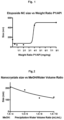
- ETO nanoparticles Size of ETO nanoparticles in suspension versus P407 addition during evaporation (as stabilizing agent P1) and after redispersion (as stabilizing agent P2) in water.
- the amount of stabilizing agent added before evaporation influences the size of ETO nanocrystals (NCs) in suspension.
- NCs ETO nanocrystals
- NCs is correlated with stabilizing agent P1/API weight ratio, a stabilizing agent P1 to API weight ratio equal or less than 5, even less than 4 lead to NCs around 100 nm in size.
- Example 2 Study of the relationship between ETO solvent to precipitation water volume ratio and particle size in the corresponding ETO nanosuspensions.
- Example 2 The protocol exposed in Example 1 was followed with the parameters shown in Table 2.
- Table 2 ETO nanosuspension manufactured by varying methanol: precipitation water volume ratio.
- Test precipitation parameters Dispersion parameters ETO (mg) MeOH (mL) Water (mL) Polymer P1 (mg) Water (mL) Polymer P2 (mg) 15# 2.5 1.5 4 0 6 5 16# 2.5 1.5 6 0 6 5 17# 2.5 1.5 8 0 6 5 18# 2.5 1.5 10 0 6 5
- Example 3 Study of the relationship between the nature and concentration of P2 polymer and ETO particle size evolution in the corresponding ETO nanosuspensions.
- Example 2 The protocol exposed in Example 1 was followed, except that etoposide was solubilized in methanol and then injected in water without stabilizing agent P1, followed by a complete evaporation and redispersion in water with 0.5 mg or 2 mg of Pluronic F-127 or Pluronic F-68 as stabilizing agent P2.
- the size of etoposide nanoparticles was then evaluated by DLS to explore the impact of the nature and concentration of P2 on the nanocrystal size.
- the shape of the correlograms show that the nanocrystals are better stabilized with 2 mg of P2 stabilizing agent as regard to 0.5 mg, for both Pluronic F-127 ( Figures 3A and 3B ) and Pluronic F-68 ( Figures 3C and 3D ).
- the stability of NCs is found better with Pluronic F-127 as its affinity (via e.g. hydrophobic/hydrophilic or van der Waals interactions) as compared to the Pluronic F-68. This property is confirmed with the overlapping of the two correlograms in the case of the etoposide NCs stabilized with Pluronic F-127.
- the nanodispersion prepared with 2 mg F-127 presents a size of approximately 120 nm after 5 h, and 150 nm at 24h.
- the nanodispersion prepared with F188 (#13) has a size of 240 nm after 6 h, however the nanodispersion precipitated after 24h revealing that nanocrystals were not fully stabilized with Pluronic F-68.
- the results obtained led to preferentially use Pluronic F-127 when no stabilizing agent P1 is used, even if F-68 leads to nanoparticles in the nanosize range.
- Table 3 Size of ETO nanoparticles in suspension versus F-127 or F-68 addition after redispersion (stabilizing agent P2) in water.
- Example 4 Comparison of the morphology of ETO nanostructured powder according to the invention and marketed ETO powder
- a pure commercial etoposide powder and an etoposide nanostructured powder according to the invention were characterized by scanning electron microscopy (SEM) (Philips XL 30 microscope, Hillsboro, USA).
- the etoposide nanostructured powder was prepared according to the protocol described in Example 1 using 2.5 mg etoposide solubilized in 1.5 mL methanol injected in 10 mL of water without stabilizing agent P1, then completely evaporated.
- the powders were placed on a double-sided tape, then coated with a 30 nm layer of gold under vacuum (10-6 Pa) for 2 minutes, then observed using SEM at an accelerating voltage of 15 kV under vacuum.
- Example 5 Comparison of the XRD patterns of ETO nanostructured powder and marketed ETO powder
- the powder X-ray diffraction (PRDX) examinations of etoposide nanostructured powder according to the invention manufactured without using stabilizing agent P1 and commercial etoposide powder were made using a Bruker D8-Advance X-ray diffractometer equipped with a LynxEye silicon strip detector.
- the etoposide nanostructured powder was prepared according to the protocol described in Example 1 using 2.5 mg etoposide solubilized in 1.5 mL methanol injected in 10 mL of water without stabilizing agent P1, then completely evaporated.
- a copper source was used with a nickel filter leaving CuK ⁇ radiation.
- the generator was set at 40 kV and 40 mA.
- the samples were ground and put in shallow-well sample holders. The results were collected as three frames to detect 2 ⁇ from 5 to 60 deg. for 300 seconds exposure and evaluated using the Bruker AXS and EVA softwares.
- Example 6 Comparison of the thermal behavior of ETO nanostructured powder according to the invention and marketed ETO powder
- the thermal behavior of pure marketed etoposide powder, etoposide nanostructured powder according to the invention manufactured without using stabilizing agent P1, etoposide NCs/Pluronic F-127 0.03% wt/v dried solid dispersion (#11) and pure Pluronic F-127 were analyzed by differential scanning calorimetry (DSC) technique using a DSC3 from Mettler-Toledo (Gsammlungsee, Switzerland).
- the etoposide nanostructured powder was prepared according to the protocol described in Example 1 using 2.5 mg etoposide solubilized in 1.5 mL methanol injected in 10 mL of water without stabilizing agent P1, then completely evaporated. Each sample with a known mass has been introduced in an aluminum pan that has been sealed afterward.
- the DSC curve of pure marketed etoposide powder exhibits an endothermic peak with an onset temperature of 275.5°C at a 10 °C/min scan rate ( Figure 6A ). This signal corresponds to the fusion of the compound.
- the scan rate is reduced to 5 °C/min, one can observe a different behavior of etoposide upon melting with two endothermic peaks, indicating a thermal degradation of the etoposide during, or at least after its melting ( Figure 7A ).
- the DSC curve of nanostructured powder according to the invention manufactured without using stabilizing agent P1 exhibits two endothermic peaks with a precocious fusion peak at 250 °C ( Figure 7B ).
- the signal around 214 °C obtained for the etoposide NCs/Pluronic F-127 solid dispersion confirms the nanosized etoposide distribution within the polymeric matrix since the temperature of the corresponding signal is lower than that of pure processed etoposide (NCs).
- Example 7 Confirmation of the solid state of etoposide NCs when embedded in F-127 polymetric matrix
- Etoposide NCs/Pluronic F-127 solid dispersions were observed as function of the temperature by means of a LTS 420 Linkam heating cell (Microvision Instruments, Evry, France) placed under a SMZ 168 microscope (Motic, Kowloon, Hong Kong).
- the etoposide NCs/Pluronic F-127 solid dispersion was prepared according to the protocol described in Example 1 using 2.5 mg etoposide solubilized in 1.5 mL methanol injected in 10 mL of water without stabilizing agent P1, then completely evaporated.
- a redispersion in water containing 0.03% wt/v F-127, and then completely evaporated.
- Temperature ranges from 23 to 300 °C at a 5 °C/min increment rate. Cooling of the system was achieved using a T95-HS Linkam device with liquid nitrogen automatically flowed through the cell. The pictures were taken each 5/12 °C ( ⁇ 0.42 °C) with a Moticam 2500, 5.0M pixels, from Motic.
- Example 8 Comparison of the in vitro dissolution rate of an ETO nanostructured powder according to the invention and marketed ETO powder
- nanocrystals etoposide In vitro release of nanocrystals etoposide was assessed by the dialysis bag diffusion technique.
- the nanocrystals etoposide solution was placed in a cellulose dialysis bag (molecular weight cutoff 12.4 kDa) and sealed at both ends using dialysis tubing closure.
- the dialysis bag was placed in a compartment containing 40 mL of PBS-buffered saline medium, pH 7.4, which was stirred at 60 rpm and maintained at 37 °C for 6 hours.
- the receptor compartment was covered to prevent the evaporation of the continuum medium.
- Dissolution study of etoposide NCs evidenced the sustained release of the nanocrystalline forms of the invention compared to the marketed product (Toposar ® ) and also showed an increase of the dissolution rate with the size reduction of particles ( Figure 10 ).
- the etoposide NCs dispersion profiles show an increase of the dissolution rate as the specific area is more consequent for this solid dispersion compared to the etoposide microcrystals solid dispersion that has a low specific area (as particles size is larger) and therefore a lower dissolution rate. Only 18 % of initial mass has been released after 6 hours, whereas, for the nanocrystals formulation 35 % were released. Obviously, for the marketed product (Toposar ® ), 50 % of etoposide were already released after 6 hours, as the etoposide is solubilized in 33% of ethanol for this formulation.
- Example 9 Comparison of the in vitro cytotoxicity of ETO nanostructured powder and marketed ETO powder
- CT26 colon carcinoma cells were cultured in Dubelcco's modified Eagle's medium (DMEM) containing 10% foetal bovine serum and streptomycin (50 mmol) at 37 °C. Cells were plated at the concentration of 200,000 cells/mL in 96 well plates for 24 h. Then, CT26 cells were incubated with Etoposide NCs with or without albumin, solubilized Etoposide or Toposar ® .
- DMEM Dubelcco's modified Eagle's medium
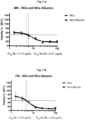
- the viability of CT26 cells has been evaluated after 48h and 72h. Results are presented on Figure 11 and are summarized in Table 4 below.
- the etoposide NCs show similar results with and without albumin after 48h and 72h.
- the IC50 after 48h of etoposide NCs with and without albumin were 5.12 and 6.01 ⁇ g/mL, respectively, and 4.52 and 5.08 ⁇ g/mL at 72h.
- the additional coating of albumin did not significantly improve the sustained release and cytotoxicity of etoposide.
- the cytotoxicity of etoposide NCs of the invention outperformed the solubilized form, for which the IC50 at 48h was 8.99 ⁇ g/mL.
- cytotoxicity of etoposide NCs of the invention that are safer, as no alcohol and unwanted agent are used, can also compete with the marketed product (Toposar ® ) were the IC50 at 48 h and 72h were 4.12 and 3.92 ⁇ g/mL respectively.
- Table 4 CT26 colon cancer cells viability after 48 and 72 hours incubation with etoposide nanocrystals with and without albumin or incubation with Toposar.
- Results of 9.1.b. are summarized in Table 5 below.
- the IC50 after 48h of ETO NCs on CT26 cells with and without albumin were 13.73 ⁇ 5.52 and 20.06 ⁇ 6.09 ⁇ M, respectively, and 4.66 ⁇ 0.91 and 4.40 ⁇ 1.20 ⁇ M at 72h.
- the ETO NCs show similar results with and without albumin after 48h (p > 0.05) and 72h (p > 0.05); and proved their efficiency to inhibited cell growth.
- the additional coating of albumin did not significantly improve the sustained release and cytotoxicity of ETO.
- the cytotoxicity of ETO NCs slightly outperformed the Free ETO, for which the IC50 at 72h was 5.60 ⁇ 0.10 ⁇ M.
- ETO NCs are safer, as no alcohol and undesired excipient are used and hence can compete with the marketed product Toposar ® were the IC50 at 48h and 72h were 16.71 ⁇ 9.95 and 4.55 ⁇ 0.50 ⁇ M respectively.
- 3LL cells line all formulations tested were notably more efficient (p ⁇ 0.05) in comparison with the IC50 obtained for the CT26 cell lines.
- Table 5 CT26 colon cancer cells and LLC1 lung cancer cells viability after 48- and 72-hours incubation with etoposide nanocrystals with and without albumin or incubation with Toposar ® .
- ETO NCs/ F-127 0.083% wt/v, ETO NCs/F-127 0.083 wt/v + albumin 0.2% wt/v were tested on CT26 and 3LL cancer cells.
- Cells (2.10 5 cells/mL) were put in 25 cm 3 culture flask for 24h until confluence. Then, CT26 cells were incubated with each ETO NCs formulations for only 2h. After this period, cells were trypsinized (Trypsin-EDTA 0.5%) and recovered in falcon ® tubes.
- Samples were sliced (80 nm) using a Leica ultracut 5 ultramicrotome fitted with a diamond knife. The selected cell sheets were not additionally stained to avoid precipitates that could be confound with ETO NCs. Specimens were studied under a transmission electron microscope (JEM-100S, JEOL, Tokyo, Japan) at accelerating voltage of 80 kV.
- MDR multidrug resistance
- FIG. 12A shows control CT26 cells.
- Figure 12B and Figure 12C show the cell apoptosis beginning evidenced by the damaged membrane of the cells that were incubated with ETO NCs formulations.
- mice Seventy-two BALB/c female (6 weeks) mice were used for the determination of the ETO NCs concentration overtime in the plasma and selected tissues (liver, rate, kidney, lungs). Four formulations were tested, ETO NCs/Pluronic F-127 0.2 % wt/v, ETO NCs/ F-127 0.2 % wt/v + albumin 0.48 % wt/v, Free ETO and Toposar ® . Each formulation was given intravenously at 10 mg/kg ETO.
- retro-orbital blood sample were realized (200 ⁇ L) at different time, 1, 15, 30, 45, 60 and 120 min and add in an Eppendorf tube containing 20 ⁇ L of EDTA.
- Plasma was collected by centrifugation at 2000 rpm for 15 min and frozen at -20°C for further high- performance liquid chromatography (HPLC) analysis.
- Tissues samples were taken after mice sacrifice at 45, 60 and 120 min in order to have enough drug accumulation in the selected organs and frozen at -80°C for further HPLC analysis.
- ETO contained in organs were recuperated by grinding organs in chloroform using Precellys ® tubes.
- the ETO plasma concentration profile in mice was assessed and compared according to four different formulation of ETO.
- the pharmacokinetics results showed that both ETO NCs formulation experienced have significantly higher ETO plasma concentration than the Free ETO and the Toposar ® (p ⁇ 0.05) with an AUC 0-120min almost 2-fold greater and a higher mean residence time (p ⁇ 0.05). This is not the first time that NCs drug form were proved to have a better long-life time in C57BL/6 mice plasma than its solubilized analog.
- Ganta et al Int. J. Pharm., vol. 367, no. 1-2, pp.
- Nanoparticles coated with albumin are well known to have an prolonged lifespan in blood as albumin has the ability to bind to the FcRn receptor protecting it from degradation, more specifically from endothelial catabolism. But in our study, ETO NCs with albumin had equivalent AUC 0-120min (550 ⁇ 37.33 ⁇ g.min/mL) and MRT (2.75 ⁇ 0.19 min) than ETO NCs (p > 0.05) stabilized with simply F-127.
- Example 12 Anticancer efficacy and hematological toxicity
- the first 4 groups have received 5 injections of ETO (4 different formulations) at 10 mg/kg, an injection daily for two consecutive days, a day for rest, followed by an injection daily for two days in a row.
- the untreated control group was used as comparison for tumor volume.
- the drug schedule protocol was equivalent to the anticancer efficacy study. Blood samples were taken in the mice tail vein at 1, 12, 15, 17 and 22 days and transferred to Eppendorf tube containing 2 ⁇ L of EDTA for white blood cells (WBC) numbering using a MS9-5 (MS Pharmaceuticals, France). All mice were anesthetized before ETO injection, in an induction chamber under a flow of oxygen/isoflurane (30/70) (Tec 7, Minerve, Carnaxide, USA).
- ETO NCs/F-127 0.2% wt/v are significantly more profitable than the marketed product Toposar ® (p ⁇ 0.05). This is certainly justified by the size and the solid form of NCs that are EPR-shaped and have a longer blood stream lifespan. It has also been proven that nanoparticles have a better penetration into the surrounding interstitium of the tumor leading to a better bioavailability and thus anticancer efficacy. ETO NCs formulations were competed with different excipient composition to observe whether the effect on the tumor inhibition was major or not.
- ETO NCs /F-127 0.2% wt/v was significantly better than ETO NCs /F-127 0.2% wt/v + albumin 0.48% wt/v (p ⁇ 0.05), indicating that low concentration of surfactant is more favorable for cancer treatment, and assuming that the nature of interactions and the force of the adsorptive bindings to the ETO NCs are dissimilar with the excipient composition and its concentration.
- ETO NCs/F-127 0.2% wt/v the time to reach the median tumor volume in comparison with Control was delayed of 5.31 days, slightly lower 3.27 days for ETO NCs/F-127 0.2% wt/v + albumin 0.48% wt/v respectively (Table 7).
- Toposar ® and Free ETO have barely postponed the median tumor volume of about half a day revealing a poor treatment response for these two formulations (Table 7).
- ETO NCs /F-127 0.2% wt/v had no weight loss proving that this treatment is well tolerated, nevertheless for the other two ETO NCs.
- a decrease is observed that can be primarily explained by a poor targeting of the ETO to the tumor and therefore to healthy organs. Also, a higher concentration of toxic excipients could foster unwanted side effect causing loss of appetite and thus the mice weight loss.
- White blood cell count (10 9 cells/L) Formulations Days 1 Days 12 Days 15 Days 17 Days 22 Control 11.1 ⁇ 2.1 6.0 ⁇ 2.2 8.7 ⁇ 2.1 10.6 ⁇ 2.3 10.2 ⁇ 3.1 Etoposide NCs/ F-127 0.2% wt/v 10.2 ⁇ 0.9 2.0 ⁇ 1.8 5.7 ⁇ 3.7 10.8 ⁇ 2.3 10.0 ⁇ 3.6 Etoposide NCs/ F-127 0.2% wt/v + Albumin 0.48% wt/v 11.1 ⁇ 3.2 2.8 ⁇ 1.0 8.2 ⁇ 4.3 9.4 ⁇ 3.3 8.3 ⁇ 1.5 Etoposide Solubilized 8.9 ⁇ 2.3 6.5 ⁇ 4.4 11.6 ⁇ 0.9 10.4 ⁇ 1.3 11.3 ⁇ 3.4 Toposar ® 8.7 ⁇ 1.9 2.3 ⁇ 1.1 8.9 ⁇ 0.6 6.4 ⁇ 0.8 9.8 ⁇ 0.5
- Podophyllotoxin as an API was dissolved in absolute methanol in glass vial and slowly injected under agitation (1200 rpm) in water containing no stabilizer P1.
- the mixture was then precipitated by evaporating the entire solution using a rotovapor under vacuum for 0.5 h.
- the resulting powder was kept under vacuum to remove any traces of methanol, then hydrated with aqueous solution containing 5 mg of P407 as polymer P2 under 10 min sonication using a water-bath sonicator to engineer the nanocrystals dispersion.
- the nanosupension was then observed using TEM.
- podophyllotoxin nanocrystals having an average size less than 500 nm are obtained.
Landscapes
- Health & Medical Sciences (AREA)
- Chemical & Material Sciences (AREA)
- Life Sciences & Earth Sciences (AREA)
- Medicinal Chemistry (AREA)
- Pharmacology & Pharmacy (AREA)
- Animal Behavior & Ethology (AREA)
- General Health & Medical Sciences (AREA)
- Public Health (AREA)
- Veterinary Medicine (AREA)
- Bioinformatics & Cheminformatics (AREA)
- Epidemiology (AREA)
- Engineering & Computer Science (AREA)
- Physics & Mathematics (AREA)
- Biomedical Technology (AREA)
- Nanotechnology (AREA)
- Optics & Photonics (AREA)
- Chemical Kinetics & Catalysis (AREA)
- General Chemical & Material Sciences (AREA)
- Nuclear Medicine, Radiotherapy & Molecular Imaging (AREA)
- Organic Chemistry (AREA)
- Molecular Biology (AREA)
- Pharmaceuticals Containing Other Organic And Inorganic Compounds (AREA)
- Medicinal Preparation (AREA)
Claims (14)
- Verfahren zum Herstellen eines nanostrukturierten Pulvers, das nanokristalline Agglomerate umfasst, die einen pharmazeutischen Wirkstoff (API) in seiner kristallinen Form enthalten, wobei das Verfahren Folgendes umfasst:(i) Vorbereiten einer ersten Lösung, die API und ein API-Lösungsmittel umfasst;(ii) Mischen der ersten Lösung mit einer zweiten Lösung, die ein API-Antilösungsmittel und optional ein Stabilisierungsmittel P1 umfasst, um eine mischbare Flüssigkeitsmischung zu erhalten, die das API-Lösungsmittel, das API-Antilösungsmittel und löslich gemachten API enthält;(iii) Verdampfen der mischbaren Flüssigkeitsmischung, bis sowohl das API-Lösungsmittel als auch das API-Antilösungsmittel verdampft sind, vorteilhafterweise unter Vakuum;dadurch gekennzeichnet, dass- wenn das Stabilisierungsmittel P1 vorhanden ist, die mischbare Flüssigkeitsmischung ein Gewichtsverhältnis von Stabilisierungsmittel P1 zu API von kleiner gleich 5, vorzugsweise kleiner als 2, aufweist,- das Verhältnis von API-Antilösungsmittelvolumen zu API-Lösungsmittelvolumen mindestens 4,5, vorzugsweise mindestens 5, beträgt,- das Verfahren keinen Zwischenschritt zwischen den Schritten (ii) und (iii), insbesondere keine Filtration oder keinen anderen Schritt, der zur Entfernung mikrometrischer Partikel vorgesehen ist, umfasst, und- die API-Nanokristalle sich während Schritt (iii) bilden und/oder entwickeln.
- Verfahren nach Anspruch 1, wobei der API ausgewählt wird aus Podophyllotoxin, Etoposid, Teniposid, Albendazol, Amoiton B, Amphotericin B, Aprepitant, Aripiprazol, Ascorbylpalmitat, Asulacrin, Avanafil, Azithromycin, Baicalin, Bexaroten, Breviscapin, Budenosid, Buparvaquon, Cabazitaxel, Camptothecin, Candesartan Cilexetil, Celecoxib, Cilostazol, Clofazimin, Curcumin, Cyclosporin, Danazol, Darunavir, Dexamethason, Diclofenacsäure, Docetaxel, Doxorubicin, Efavirenz, Fenofibrat, Glibenclamid, Griseofulvin, Hesperetin, Hydrocamptothecin, Hydrocortison, Ibuprofen, Indometacin, Itraconazol, Ketoprofen, Lovirid, Lutein, Mebendazol, Mefenaminsäure, Meloxicam, Methyltryptophan, Miconazol, Mononatriumurat, Naproxen, Nimodipin, Nisoldipin, Omeprazol, Oridonin, Paditaxel, Piposulfan, Prednisolon, Puerarin, Fisetin, Resveratrol, Riccardin D, Rutin, Silybin, Simvastin, Spironolacton, Tarazepid und Ziprasidon und Mischungen davon, vorzugsweise ausgewählt aus Podophyllotoxin und Podophyllotoxin-Derivaten wie Etoposid und Teniposid.
- Verfahren nach einem der Ansprüche 1 und 2, wobei das API-Lösungsmittel ausgewählt wird aus Methanol, Isopropanol, Ethanol, Acetonitril, Aceton, Diethanolamin, Diethylentriamin, Dimethylformamid, Ethylamin, Ethylenglykol, Ameisensäure, Furfurylalkohol, Glycerin, Methyldiethanolamin, Methylisocyanid, N-Methyl-2-pyrrolidon, Propanol, Propylenglykol, Pyridin, Tetrahydrofuran, Triethylenglykol und Dimethylsulfoxid, vorzugsweise ausgewählt aus Methanol, Ethanol und Acetonitril und besonders bevorzugt Methanol.
- Verfahren nach einem der Ansprüche 1 bis 3, wobei das API-Antilösungsmittel ausgewählt wird aus Wasser, SH-Puffer, HBS-Puffer, PBS-Puffer, einer wässrigen Lösung, die Glucose, Saccharose, Lactose, Trehalose, NaCl, KCl, Na2HPO4 und/oder KH2PO4 umfasst, und Mischungen davon.
- Nanostrukturiertes Pulver, das nanokristalline Agglomerate umfasst, die ein API in seiner kristallinen Form enthalten, wobei die Agglomerate mindestens eine Größe von weniger als 1 µm aufweisen.
- Nanostrukturiertes Pulver nach Anspruch 5, wobei der API ausgewählt wird aus Podophyllotoxin und Podophyllotoxin-Derivaten wie Etoposid und Teniposid.
- Nanostrukturiertes Pulver nach einem der Ansprüche 5 bis 6, das ferner ein Stabilisierungsmittel in einem Gewichtsverhältnis von Stabilisierungsmittel zu API von kleiner gleich 5, vorzugsweise weniger als 2, umfasst.
- Nanostrukturiertes Pulver nach einem der Ansprüche 5 bis 6, wobei das Pulver frei von Stabilisierungsmitteln ist.
- Verfahren zum Herstellen einer API-Nanokristalle umfassenden Nanosuspension, das einen Schritt des Mischens eines nanostrukturierten Pulvers gemäß einem der Ansprüche 5 bis 8, eines API-Antilösungsmittels und optional eines Stabilisierungsmittels P2 in einem Gewichtsverhältnis von Stabilisierungsmittel P2 zu API von kleiner oder gleich 5, vorzugsweise kleiner als 2, umfasst, wobei das nanostrukturierte Pulver optional aus dem Verfahren nach einem der Ansprüche 1 bis 5 erhalten wird.
- Nanosuspension, die durch das Verfahren nach Anspruch 9 erhalten werden kann, umfassend API-Nanokristalle und ein API-Antilösungsmittel, wobei die API-Nanokristalle eine durchschnittliche Größe von weniger als 500 nm, vorzugsweise weniger als 200 nm, besonders bevorzugt weniger als 100 nm aufweisen.
- Nanosuspension nach Anspruch 10, wobei das Gewichtsverhältnis von Stabilisierungsmittel zu API kleiner oder gleich 5 ist und vorzugsweise zwischen 0 und 2 beträgt.
- Nanosuspension nach einem der Ansprüche 10 bis 11, wobei der API ausgewählt wird aus Podophyllotoxin und Podophyllotoxin-Derivaten wie Etoposid und Teniposid.
- Nanosuspension nach einem der Ansprüche 10 bis 12, wobei das Stabilisierungsmittel ausgewählt wird aus Polysorbat 80, Polyvinylpyrrolidon, Hydroxypropylmethylcellulose, Natriumlaurylsulfat, Mannitol, Lecithin, Tocopheryl-Polyethylenglykol-1000-Succinat, Sorbitantrioleat 85, Tyloxapol, Poloxamer 338, Natriumcholat, Cholsäure, Leucin, Distearoyl-sn-glycero-3-phosphoethanolamin-N-[amino(polyethylenglykol)-1000, Distearoyl-sn-glycero-3-phosphoethanolamin-N-[amino(polyethylenglykol)-2000, Distearoyl-sn-glycero-3-phosphoethanolamin-N-[amino(polyethylenglykol)-5000, Vitamin E, Traganth, Decylglucosid, fötalem Kälberserum, Soja-Phosphatidylcholin, Ei-Phosphatidylcholin, einem synthetischen Derivat von Phosphatidylcholin, Dioctylsulfosuccinat, Chitosan, Maltose, Asialofetuin, Transferrin, Albumin, Cydodextrin, Poloxamer 188 und Poloxamer 407, vorzugsweise Poloxamer 407.
- Nanosuspension nach einem der Ansprüche 10 bis 13 zur Verwendung als Medikament, vorteilhafterweise zur Behandlung von Krebs, noch vorteilhafter zur Behandlung eines Krebses, der aus Hodenkrebs, Lungenkrebs, Lymphom, Leukämie, Neuroblastom und Eierstockkrebs.
Applications Claiming Priority (2)
| Application Number | Priority Date | Filing Date | Title |
|---|---|---|---|
| EP18306138.1A EP3616688A1 (de) | 2018-08-27 | 2018-08-27 | Herstellung von nanosuspensionshaltigen nanokristallen von pharmazeutischen wirkstoffen mit geringen oder keinen stabilisatoren |
| PCT/EP2019/072873 WO2020043735A1 (en) | 2018-08-27 | 2019-08-27 | Preparation of nanosuspension comprising nanocrystals of active pharmaceutical ingredients with little or no stabilizing agents |
Publications (3)
| Publication Number | Publication Date |
|---|---|
| EP3843705A1 EP3843705A1 (de) | 2021-07-07 |
| EP3843705B1 true EP3843705B1 (de) | 2023-11-29 |
| EP3843705C0 EP3843705C0 (de) | 2023-11-29 |
Family
ID=63490375
Family Applications (2)
| Application Number | Title | Priority Date | Filing Date |
|---|---|---|---|
| EP18306138.1A Withdrawn EP3616688A1 (de) | 2018-08-27 | 2018-08-27 | Herstellung von nanosuspensionshaltigen nanokristallen von pharmazeutischen wirkstoffen mit geringen oder keinen stabilisatoren |
| EP19756406.5A Active EP3843705B1 (de) | 2018-08-27 | 2019-08-27 | Herstellung von nanosuspensionshaltigen nanokristallen von pharmazeutischen wirkstoffen mit geringen oder keinen stabilisatoren |
Family Applications Before (1)
| Application Number | Title | Priority Date | Filing Date |
|---|---|---|---|
| EP18306138.1A Withdrawn EP3616688A1 (de) | 2018-08-27 | 2018-08-27 | Herstellung von nanosuspensionshaltigen nanokristallen von pharmazeutischen wirkstoffen mit geringen oder keinen stabilisatoren |
Country Status (3)
| Country | Link |
|---|---|
| US (1) | US20210315831A1 (de) |
| EP (2) | EP3616688A1 (de) |
| WO (1) | WO2020043735A1 (de) |
Families Citing this family (5)
| Publication number | Priority date | Publication date | Assignee | Title |
|---|---|---|---|---|
| CN113797218A (zh) * | 2021-10-29 | 2021-12-17 | 杭州拉林智能科技有限公司 | 药物组合物及其制备方法和应用 |
| CN114224834B (zh) * | 2021-12-24 | 2022-11-11 | 沈阳伟嘉生物技术有限公司 | 一种具有较高生物利用度的阿苯达唑纳米混悬剂及其制备方法 |
| CN114748637B (zh) * | 2022-04-15 | 2023-11-17 | 中国药科大学 | 苯硼酸修饰型纳晶药物稳定系统及其制备方法和应用 |
| US11648205B1 (en) * | 2022-10-14 | 2023-05-16 | King Abdulaziz University | Buccal formulation of avanafil with enhanced bioavailability and prolonged duration |
| CN116421564B (zh) * | 2023-03-09 | 2024-11-12 | 云南中医药大学 | 一种灯盏花素纳米粒及其制备方法 |
Family Cites Families (4)
| Publication number | Priority date | Publication date | Assignee | Title |
|---|---|---|---|---|
| EP0111058B1 (de) | 1982-11-26 | 1987-11-04 | Nippon Kayaku Kabushiki Kaisha | Verfahren zur Herstellung von 4'-Demethyl-epipodophylotoxin-beta-D-ethyliden-glucosid und Acylderivate davon |
| HU205861B (en) * | 1986-12-19 | 1992-07-28 | Sandoz Ag | Process for producing hydrosole of pharmaceutically effective material |
| IT1250692B (it) | 1991-07-23 | 1995-04-21 | Procedimento per la preparazione di demetilepipodofillotossina- beta-d-glucosidi. | |
| CN107303272A (zh) * | 2016-04-18 | 2017-10-31 | 北京大学 | 一种提高难溶性药物口服吸收的纳晶组合物 |
-
2018
- 2018-08-27 EP EP18306138.1A patent/EP3616688A1/de not_active Withdrawn
-
2019
- 2019-08-27 WO PCT/EP2019/072873 patent/WO2020043735A1/en not_active Ceased
- 2019-08-27 US US17/269,802 patent/US20210315831A1/en active Pending
- 2019-08-27 EP EP19756406.5A patent/EP3843705B1/de active Active
Also Published As
| Publication number | Publication date |
|---|---|
| EP3843705A1 (de) | 2021-07-07 |
| WO2020043735A1 (en) | 2020-03-05 |
| US20210315831A1 (en) | 2021-10-14 |
| EP3616688A1 (de) | 2020-03-04 |
| EP3843705C0 (de) | 2023-11-29 |
Similar Documents
| Publication | Publication Date | Title |
|---|---|---|
| EP3843705B1 (de) | Herstellung von nanosuspensionshaltigen nanokristallen von pharmazeutischen wirkstoffen mit geringen oder keinen stabilisatoren | |
| Liu et al. | A wet-milling method for the preparation of cilnidipine nanosuspension with enhanced dissolution and oral bioavailability | |
| US20200060982A1 (en) | Purified therapeutic nanoparticles and preparation methods thereof | |
| Alam et al. | Commercially bioavailable proprietary technologies and their marketed products | |
| Han et al. | Honokiol nanosuspensions: preparation, increased oral bioavailability and dramatically enhanced biodistribution in the cardio-cerebro-vascular system | |
| KR20190141270A (ko) | 아비라테론 아세테이트 제제 | |
| Strojewski et al. | Kollidon® VA 64 and Soluplus® as modern polymeric carriers for amorphous solid dispersions | |
| Li et al. | Improved oral bioavailability of probucol by dry media-milling | |
| Feng et al. | Development and evaluation of polymeric mixed micelles prepared using hot-melt extrusion for extended delivery of poorly water-soluble drugs | |
| JP2010522207A (ja) | ガンマ照射滅菌ナノ粒子状ドセタキセル組成物および該組成物を作製するための方法 | |
| JP2006500387A (ja) | 固形ナノ医薬およびその調製方法 | |
| JP5759464B2 (ja) | オキサリプラチンのナノ粒子及びその製造方法 | |
| JP6063090B2 (ja) | ナノ粒子状組成物およびピペラジン化合物の製剤 | |
| Raj et al. | Preparation and characterization of solid lipid nanoparticles loaded with cytarabine via a micellar composition for leukemia | |
| JP2013151574A (ja) | チューブリンインヒビターであるインジブリン(Indibulin)の改良された薬物動態学を有する、経口投与のための薬剤組成物、及びその製造法 | |
| CN100479807C (zh) | 药物输送系统——固体纳米药物的制备方法 | |
| DK2231193T3 (en) | PHARMACEUTICAL SUPPLY SYSTEM FOR ADMINISTRATING A WATER SOLUBLE, CATIONIC AND AMPHIFIL PHARMACEUTICAL ACTIVE SUBSTANCE | |
| EP2586430B1 (de) | Pharmazeutische zusammensetzung mit verbesserter löslichkeit eines teilweise löslichen trizyklischen derivats | |
| EP4417204A1 (de) | Zusammensetzung mit antitumorwirkstoff und herstellungsverfahren dafür und verwendung davon | |
| Miyasaka et al. | Enhanced solubility and intestinal absorption of cisplatin by coating with nano-hydroxyapatite | |
| Juan-Juan et al. | Improved stability and oral bioavailability of Ganneng dropping pills following transforming lignans of herpetospermum caudigerum into nanosuspensions | |
| Lan et al. | Tea Saponins: A Novel Stabilizer for Enhancing the Oral Bioavailability of Albendazole Nanocrystals | |
| KR102675967B1 (ko) | 렘데시비르를 함유하는 나노지질담체, 이의 제조방법 및 이를 포함하는 약학적 조성물 | |
| KR20090117331A (ko) | 폐-표적지향을 위한 약학 조성물 | |
| Hong et al. | A comparative study on stevioside-and rubusoside-assisted micellar solubilization of clofazimine for physicochemical and in vitro release properties |
Legal Events
| Date | Code | Title | Description |
|---|---|---|---|
| STAA | Information on the status of an ep patent application or granted ep patent |
Free format text: STATUS: UNKNOWN |
|
| STAA | Information on the status of an ep patent application or granted ep patent |
Free format text: STATUS: THE INTERNATIONAL PUBLICATION HAS BEEN MADE |
|
| STAA | Information on the status of an ep patent application or granted ep patent |
Free format text: STATUS: REQUEST FOR EXAMINATION WAS MADE |
|
| PUAI | Public reference made under article 153(3) epc to a published international application that has entered the european phase |
Free format text: ORIGINAL CODE: 0009012 |
|
| 17P | Request for examination filed |
Effective date: 20210317 |
|
| AK | Designated contracting states |
Kind code of ref document: A1 Designated state(s): AL AT BE BG CH CY CZ DE DK EE ES FI FR GB GR HR HU IE IS IT LI LT LU LV MC MK MT NL NO PL PT RO RS SE SI SK SM TR |
|
| DAV | Request for validation of the european patent (deleted) | ||
| DAX | Request for extension of the european patent (deleted) | ||
| STAA | Information on the status of an ep patent application or granted ep patent |
Free format text: STATUS: EXAMINATION IS IN PROGRESS |
|
| 17Q | First examination report despatched |
Effective date: 20220404 |
|
| RAP3 | Party data changed (applicant data changed or rights of an application transferred) |
Owner name: ECOLE NATIONALE SUPERIEURE DE CHIMIE PARIS Owner name: INSTITUT NATIONAL DE LA SANTE ET DE LA RECHERCHE MEDICALE - INSERM Owner name: UNIVERSITE PARIS CITE Owner name: CENTRE NATIONAL DE LA RECHERCHE SCIENTIFIQUE (CNRS) |
|
| GRAP | Despatch of communication of intention to grant a patent |
Free format text: ORIGINAL CODE: EPIDOSNIGR1 |
|
| STAA | Information on the status of an ep patent application or granted ep patent |
Free format text: STATUS: GRANT OF PATENT IS INTENDED |
|
| INTG | Intention to grant announced |
Effective date: 20230622 |
|
| GRAS | Grant fee paid |
Free format text: ORIGINAL CODE: EPIDOSNIGR3 |
|
| GRAA | (expected) grant |
Free format text: ORIGINAL CODE: 0009210 |
|
| STAA | Information on the status of an ep patent application or granted ep patent |
Free format text: STATUS: THE PATENT HAS BEEN GRANTED |
|
| AK | Designated contracting states |
Kind code of ref document: B1 Designated state(s): AL AT BE BG CH CY CZ DE DK EE ES FI FR GB GR HR HU IE IS IT LI LT LU LV MC MK MT NL NO PL PT RO RS SE SI SK SM TR |
|
| REG | Reference to a national code |
Ref country code: GB Ref legal event code: FG4D |
|
| REG | Reference to a national code |
Ref country code: CH Ref legal event code: EP |
|
| REG | Reference to a national code |
Ref country code: DE Ref legal event code: R096 Ref document number: 602019042401 Country of ref document: DE |
|
| REG | Reference to a national code |
Ref country code: IE Ref legal event code: FG4D |
|
| U01 | Request for unitary effect filed |
Effective date: 20231228 |
|
| U07 | Unitary effect registered |
Designated state(s): AT BE BG DE DK EE FI FR IT LT LU LV MT NL PT SE SI Effective date: 20240110 |
|
| PG25 | Lapsed in a contracting state [announced via postgrant information from national office to epo] |
Ref country code: GR Free format text: LAPSE BECAUSE OF FAILURE TO SUBMIT A TRANSLATION OF THE DESCRIPTION OR TO PAY THE FEE WITHIN THE PRESCRIBED TIME-LIMIT Effective date: 20240301 |
|
| PG25 | Lapsed in a contracting state [announced via postgrant information from national office to epo] |
Ref country code: IS Free format text: LAPSE BECAUSE OF FAILURE TO SUBMIT A TRANSLATION OF THE DESCRIPTION OR TO PAY THE FEE WITHIN THE PRESCRIBED TIME-LIMIT Effective date: 20240329 |
|
| PG25 | Lapsed in a contracting state [announced via postgrant information from national office to epo] |
Ref country code: ES Free format text: LAPSE BECAUSE OF FAILURE TO SUBMIT A TRANSLATION OF THE DESCRIPTION OR TO PAY THE FEE WITHIN THE PRESCRIBED TIME-LIMIT Effective date: 20231129 |
|
| PG25 | Lapsed in a contracting state [announced via postgrant information from national office to epo] |
Ref country code: IS Free format text: LAPSE BECAUSE OF FAILURE TO SUBMIT A TRANSLATION OF THE DESCRIPTION OR TO PAY THE FEE WITHIN THE PRESCRIBED TIME-LIMIT Effective date: 20240329 Ref country code: GR Free format text: LAPSE BECAUSE OF FAILURE TO SUBMIT A TRANSLATION OF THE DESCRIPTION OR TO PAY THE FEE WITHIN THE PRESCRIBED TIME-LIMIT Effective date: 20240301 Ref country code: ES Free format text: LAPSE BECAUSE OF FAILURE TO SUBMIT A TRANSLATION OF THE DESCRIPTION OR TO PAY THE FEE WITHIN THE PRESCRIBED TIME-LIMIT Effective date: 20231129 |
|
| PG25 | Lapsed in a contracting state [announced via postgrant information from national office to epo] |
Ref country code: RS Free format text: LAPSE BECAUSE OF FAILURE TO SUBMIT A TRANSLATION OF THE DESCRIPTION OR TO PAY THE FEE WITHIN THE PRESCRIBED TIME-LIMIT Effective date: 20231129 Ref country code: PL Free format text: LAPSE BECAUSE OF FAILURE TO SUBMIT A TRANSLATION OF THE DESCRIPTION OR TO PAY THE FEE WITHIN THE PRESCRIBED TIME-LIMIT Effective date: 20231129 Ref country code: NO Free format text: LAPSE BECAUSE OF FAILURE TO SUBMIT A TRANSLATION OF THE DESCRIPTION OR TO PAY THE FEE WITHIN THE PRESCRIBED TIME-LIMIT Effective date: 20240229 Ref country code: HR Free format text: LAPSE BECAUSE OF FAILURE TO SUBMIT A TRANSLATION OF THE DESCRIPTION OR TO PAY THE FEE WITHIN THE PRESCRIBED TIME-LIMIT Effective date: 20231129 |
|
| PG25 | Lapsed in a contracting state [announced via postgrant information from national office to epo] |
Ref country code: CZ Free format text: LAPSE BECAUSE OF FAILURE TO SUBMIT A TRANSLATION OF THE DESCRIPTION OR TO PAY THE FEE WITHIN THE PRESCRIBED TIME-LIMIT Effective date: 20231129 |
|
| PG25 | Lapsed in a contracting state [announced via postgrant information from national office to epo] |
Ref country code: SK Free format text: LAPSE BECAUSE OF FAILURE TO SUBMIT A TRANSLATION OF THE DESCRIPTION OR TO PAY THE FEE WITHIN THE PRESCRIBED TIME-LIMIT Effective date: 20231129 |
|
| PG25 | Lapsed in a contracting state [announced via postgrant information from national office to epo] |
Ref country code: SM Free format text: LAPSE BECAUSE OF FAILURE TO SUBMIT A TRANSLATION OF THE DESCRIPTION OR TO PAY THE FEE WITHIN THE PRESCRIBED TIME-LIMIT Effective date: 20231129 Ref country code: SK Free format text: LAPSE BECAUSE OF FAILURE TO SUBMIT A TRANSLATION OF THE DESCRIPTION OR TO PAY THE FEE WITHIN THE PRESCRIBED TIME-LIMIT Effective date: 20231129 Ref country code: RO Free format text: LAPSE BECAUSE OF FAILURE TO SUBMIT A TRANSLATION OF THE DESCRIPTION OR TO PAY THE FEE WITHIN THE PRESCRIBED TIME-LIMIT Effective date: 20231129 Ref country code: CZ Free format text: LAPSE BECAUSE OF FAILURE TO SUBMIT A TRANSLATION OF THE DESCRIPTION OR TO PAY THE FEE WITHIN THE PRESCRIBED TIME-LIMIT Effective date: 20231129 |
|
| REG | Reference to a national code |
Ref country code: DE Ref legal event code: R097 Ref document number: 602019042401 Country of ref document: DE |
|
| U20 | Renewal fee for the european patent with unitary effect paid |
Year of fee payment: 6 Effective date: 20240829 |
|
| PLBE | No opposition filed within time limit |
Free format text: ORIGINAL CODE: 0009261 |
|
| STAA | Information on the status of an ep patent application or granted ep patent |
Free format text: STATUS: NO OPPOSITION FILED WITHIN TIME LIMIT |
|
| 26N | No opposition filed |
Effective date: 20240830 |
|
| REG | Reference to a national code |
Ref country code: CH Ref legal event code: PL |
|
| PG25 | Lapsed in a contracting state [announced via postgrant information from national office to epo] |
Ref country code: MC Free format text: LAPSE BECAUSE OF FAILURE TO SUBMIT A TRANSLATION OF THE DESCRIPTION OR TO PAY THE FEE WITHIN THE PRESCRIBED TIME-LIMIT Effective date: 20231129 Ref country code: CH Free format text: LAPSE BECAUSE OF NON-PAYMENT OF DUE FEES Effective date: 20240831 |
|
| PG25 | Lapsed in a contracting state [announced via postgrant information from national office to epo] |
Ref country code: IE Free format text: LAPSE BECAUSE OF NON-PAYMENT OF DUE FEES Effective date: 20240827 |
|
| U20 | Renewal fee for the european patent with unitary effect paid |
Year of fee payment: 7 Effective date: 20250723 |
|
| PGFP | Annual fee paid to national office [announced via postgrant information from national office to epo] |
Ref country code: GB Payment date: 20250826 Year of fee payment: 7 |
|
| PG25 | Lapsed in a contracting state [announced via postgrant information from national office to epo] |
Ref country code: CY Free format text: LAPSE BECAUSE OF FAILURE TO SUBMIT A TRANSLATION OF THE DESCRIPTION OR TO PAY THE FEE WITHIN THE PRESCRIBED TIME-LIMIT; INVALID AB INITIO Effective date: 20190827 |