EP3843031A2 - Verfahren und vorrichtung zur realisierung einer gesichtssuperauflösung, elektronische vorrichtung und speichermedium - Google Patents
Verfahren und vorrichtung zur realisierung einer gesichtssuperauflösung, elektronische vorrichtung und speichermedium Download PDFInfo
- Publication number
- EP3843031A2 EP3843031A2 EP21163939.8A EP21163939A EP3843031A2 EP 3843031 A2 EP3843031 A2 EP 3843031A2 EP 21163939 A EP21163939 A EP 21163939A EP 3843031 A2 EP3843031 A2 EP 3843031A2
- Authority
- EP
- European Patent Office
- Prior art keywords
- image
- face
- super
- sharp
- key point
- Prior art date
- Legal status (The legal status is an assumption and is not a legal conclusion. Google has not performed a legal analysis and makes no representation as to the accuracy of the status listed.)
- Withdrawn
Links
Images






Classifications
-
- G—PHYSICS
- G06—COMPUTING OR CALCULATING; COUNTING
- G06T—IMAGE DATA PROCESSING OR GENERATION, IN GENERAL
- G06T3/00—Geometric image transformations in the plane of the image
- G06T3/40—Scaling of whole images or parts thereof, e.g. expanding or contracting
- G06T3/4046—Scaling of whole images or parts thereof, e.g. expanding or contracting using neural networks
-
- G—PHYSICS
- G06—COMPUTING OR CALCULATING; COUNTING
- G06F—ELECTRIC DIGITAL DATA PROCESSING
- G06F18/00—Pattern recognition
- G06F18/20—Analysing
- G06F18/21—Design or setup of recognition systems or techniques; Extraction of features in feature space; Blind source separation
- G06F18/214—Generating training patterns; Bootstrap methods, e.g. bagging or boosting
-
- G—PHYSICS
- G06—COMPUTING OR CALCULATING; COUNTING
- G06N—COMPUTING ARRANGEMENTS BASED ON SPECIFIC COMPUTATIONAL MODELS
- G06N3/00—Computing arrangements based on biological models
- G06N3/02—Neural networks
- G06N3/04—Architecture, e.g. interconnection topology
- G06N3/0464—Convolutional networks [CNN, ConvNet]
-
- G—PHYSICS
- G06—COMPUTING OR CALCULATING; COUNTING
- G06N—COMPUTING ARRANGEMENTS BASED ON SPECIFIC COMPUTATIONAL MODELS
- G06N3/00—Computing arrangements based on biological models
- G06N3/02—Neural networks
- G06N3/04—Architecture, e.g. interconnection topology
- G06N3/0475—Generative networks
-
- G—PHYSICS
- G06—COMPUTING OR CALCULATING; COUNTING
- G06N—COMPUTING ARRANGEMENTS BASED ON SPECIFIC COMPUTATIONAL MODELS
- G06N3/00—Computing arrangements based on biological models
- G06N3/02—Neural networks
- G06N3/08—Learning methods
-
- G—PHYSICS
- G06—COMPUTING OR CALCULATING; COUNTING
- G06N—COMPUTING ARRANGEMENTS BASED ON SPECIFIC COMPUTATIONAL MODELS
- G06N3/00—Computing arrangements based on biological models
- G06N3/02—Neural networks
- G06N3/08—Learning methods
- G06N3/09—Supervised learning
-
- G—PHYSICS
- G06—COMPUTING OR CALCULATING; COUNTING
- G06N—COMPUTING ARRANGEMENTS BASED ON SPECIFIC COMPUTATIONAL MODELS
- G06N3/00—Computing arrangements based on biological models
- G06N3/02—Neural networks
- G06N3/08—Learning methods
- G06N3/094—Adversarial learning
-
- G—PHYSICS
- G06—COMPUTING OR CALCULATING; COUNTING
- G06T—IMAGE DATA PROCESSING OR GENERATION, IN GENERAL
- G06T3/00—Geometric image transformations in the plane of the image
- G06T3/40—Scaling of whole images or parts thereof, e.g. expanding or contracting
- G06T3/4053—Scaling of whole images or parts thereof, e.g. expanding or contracting based on super-resolution, i.e. the output image resolution being higher than the sensor resolution
-
- G—PHYSICS
- G06—COMPUTING OR CALCULATING; COUNTING
- G06T—IMAGE DATA PROCESSING OR GENERATION, IN GENERAL
- G06T7/00—Image analysis
- G06T7/10—Segmentation; Edge detection
- G06T7/11—Region-based segmentation
-
- G—PHYSICS
- G06—COMPUTING OR CALCULATING; COUNTING
- G06T—IMAGE DATA PROCESSING OR GENERATION, IN GENERAL
- G06T7/00—Image analysis
- G06T7/10—Segmentation; Edge detection
- G06T7/174—Segmentation; Edge detection involving the use of two or more images
-
- G—PHYSICS
- G06—COMPUTING OR CALCULATING; COUNTING
- G06V—IMAGE OR VIDEO RECOGNITION OR UNDERSTANDING
- G06V10/00—Arrangements for image or video recognition or understanding
- G06V10/20—Image preprocessing
- G06V10/26—Segmentation of patterns in the image field; Cutting or merging of image elements to establish the pattern region, e.g. clustering-based techniques; Detection of occlusion
-
- G—PHYSICS
- G06—COMPUTING OR CALCULATING; COUNTING
- G06V—IMAGE OR VIDEO RECOGNITION OR UNDERSTANDING
- G06V40/00—Recognition of biometric, human-related or animal-related patterns in image or video data
- G06V40/10—Human or animal bodies, e.g. vehicle occupants or pedestrians; Body parts, e.g. hands
- G06V40/16—Human faces, e.g. facial parts, sketches or expressions
- G06V40/161—Detection; Localisation; Normalisation
-
- G—PHYSICS
- G06—COMPUTING OR CALCULATING; COUNTING
- G06V—IMAGE OR VIDEO RECOGNITION OR UNDERSTANDING
- G06V40/00—Recognition of biometric, human-related or animal-related patterns in image or video data
- G06V40/10—Human or animal bodies, e.g. vehicle occupants or pedestrians; Body parts, e.g. hands
- G06V40/16—Human faces, e.g. facial parts, sketches or expressions
- G06V40/161—Detection; Localisation; Normalisation
- G06V40/165—Detection; Localisation; Normalisation using facial parts and geometric relationships
-
- G—PHYSICS
- G06—COMPUTING OR CALCULATING; COUNTING
- G06V—IMAGE OR VIDEO RECOGNITION OR UNDERSTANDING
- G06V40/00—Recognition of biometric, human-related or animal-related patterns in image or video data
- G06V40/10—Human or animal bodies, e.g. vehicle occupants or pedestrians; Body parts, e.g. hands
- G06V40/16—Human faces, e.g. facial parts, sketches or expressions
- G06V40/168—Feature extraction; Face representation
-
- G—PHYSICS
- G06—COMPUTING OR CALCULATING; COUNTING
- G06V—IMAGE OR VIDEO RECOGNITION OR UNDERSTANDING
- G06V40/00—Recognition of biometric, human-related or animal-related patterns in image or video data
- G06V40/10—Human or animal bodies, e.g. vehicle occupants or pedestrians; Body parts, e.g. hands
- G06V40/16—Human faces, e.g. facial parts, sketches or expressions
- G06V40/168—Feature extraction; Face representation
- G06V40/171—Local features and components; Facial parts ; Occluding parts, e.g. glasses; Geometrical relationships
-
- G—PHYSICS
- G06—COMPUTING OR CALCULATING; COUNTING
- G06T—IMAGE DATA PROCESSING OR GENERATION, IN GENERAL
- G06T2207/00—Indexing scheme for image analysis or image enhancement
- G06T2207/20—Special algorithmic details
- G06T2207/20081—Training; Learning
-
- G—PHYSICS
- G06—COMPUTING OR CALCULATING; COUNTING
- G06T—IMAGE DATA PROCESSING OR GENERATION, IN GENERAL
- G06T2207/00—Indexing scheme for image analysis or image enhancement
- G06T2207/20—Special algorithmic details
- G06T2207/20084—Artificial neural networks [ANN]
-
- G—PHYSICS
- G06—COMPUTING OR CALCULATING; COUNTING
- G06T—IMAGE DATA PROCESSING OR GENERATION, IN GENERAL
- G06T2207/00—Indexing scheme for image analysis or image enhancement
- G06T2207/30—Subject of image; Context of image processing
- G06T2207/30196—Human being; Person
- G06T2207/30201—Face
Definitions
- the present application relates to fields of image processing and deep learning, and particularly to a field of face image processing.
- an existing image enhancement application there are generally two methods for image enhancement processing.
- the first method is that, an original image is up-sampled by means of a traditional interpolation method, to obtain an image having an enlarged size. Although the size of the image obtained by this method is enlarged, the definition of the image cannot be guaranteed.
- the second method some of the existing solutions can improve the definition of the image.
- these existing solutions are all for general-purpose images, and there is no super-resolution realization solution for a category regarding face. Therefore, the effect of such solutions is generally not prominent when a particular category of images needs to be processed.
- the present application provides a face super-resolution realization method and apparatus, an electronic device, and a storage medium.
- a face super-resolution realization method including:
- a face super-resolution realization apparatus including:
- an electronic device including:
- a non-transitory computer-readable storage medium storing a computer instruction thereon, the computer instructions causing a computer to execute the method described above.
- an existing face super-resolution technology has the following defects. Firstly, the definition of the processed image is not enough; and secondly, there is no super-resolution realization method specifically for face images.
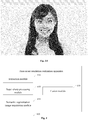
- Fig. 1 is a flow chart I of a face super-resolution realization method according to an embodiment of the present application, and the method may include:
- a face part can be extracted from an image containing the face part, and a resolution of the face part is improved and also a super-sharp face image is obtained; and the super-sharp face image is aligned back to a position of the face part in the image, so as to replace the face part in the image with the super-sharp face image, thereby improving a resolution of a face image.
- the face super-resolution model is able to improve a resolution of a face image.
- the face part in the first image is extracted, so as to improve the resolution of the extracted face part and obtain the super-sharp face image; then the super-sharp face image is placed back to a position where the face part is located in the first image, to replace the face part in the first image, so that the resolution of the face part in the first image is improved.
- Fig. 2 is a flow chart II of a face super-resolution realization method according to an embodiment of the present application. As shown in Fig. 2 , before the above-mentioned S 101, the method in this embodiment of the present application may further include:
- S201 as described above may include: inputting the original image into a pre-trained face key point detection model to obtain a face key point position output by the face key point detection model.
- the face key point detection model can be used to determine the face key point position in the original image accurately.
- S202 as described above may include:
- the selectable magnification ratios may include 1, 2, 4, etc.
- a bilinear interpolation operation may be utilized. While the original image is enlarged into the first image, the face key point information in the original image is enlarged by a corresponding size to obtain the face key point information in the first image.
- Fig. 3A is a schematic diagram of an original image according to an embodiment of the present application.
- the image is a synthetic face image, and points on a face in Fig. 3A are key points of the face.
- Fig. 3B is a schematic diagram of a first image according to an embodiment of the present application.
- Fig. 3B is an image obtained by enlarging Fig. 3A by 2 times.
- the embodiments of the present application not only can carry out super-resolution processing on the synthetic face image, but also can carry out super-resolution processing on a face image of a real person.
- the original image is enlarged according to the user-selected magnification to obtain the first image, and the resolution of the face part in the first image is improved; and thus, it is possible to control the enlarged size of the image, and to guarantee sufficient definition while the size is enlarged.
- S101 as described above may include:
- the face key point information in the first image is used as a point cloud to calculate the conversion matrix for realizing face alignment, and then the face part is cutout from the first image through the conversion matrix and becomes an image having a size of (N ⁇ N) through affine transformation, wherein N being a positive integer.
- This step is primarily to extract the face part from the first image and scale it to a size suitable for processing by the face super-resolution model.
- the above image size N may be calculated according to a size of the face, e.g., a larger face corresponds to a larger N.
- a value range of N is set to be 128 to 256, according to the embodiments of the present application.
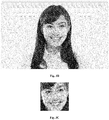
- Fig. 3C is a schematic diagram of a face part image according to an embodiment of the present application.
- Fig. 3C shows the face part extracted from the first image shown in Fig. 3B .
- the face super-resolution model described above adopts a generative adversarial network (GAN).
- GAN generative adversarial network
- the GAN model can improve the resolution of an image, and particularly has a better effect in improving the resolution of a face image.
- the present application does not limit the type of the model adopted by the face super-resolution model.
- the face part image having the size of N ⁇ N is input to the pre-trained face super-resolution model to obtain a 4N ⁇ 4N super-sharp face image.
- Fig. 3D is a schematic diagram of a super-sharp face image according to an embodiment of the present application, in which the size of the super-sharp face image is four times that of the input face part image. Under the condition that content of the face part image is not changed (i.e., illumination, texture, posture, expression and the like are not changed), the definition of the entire image of the output super-sharp face image is improved.
- part of noise of the input face part image may be removed, so as to enable the obtained super-sharp face image to be clearer and cleaner. Since the face super-resolution model used in the embodiments of the present application is trained for face images, a better processing effect of improving the resolution can be achieved for the face images.
- S103 as described above may include:
- Fig. 3E is a schematic diagram of a segmented image output by a face segmentation model according to an embodiment of the present application. As shown in Fig. 3E , five sense organs and other positions on the face may be marked in the segmented image.
- Fig. 3F is a schematic diagram of a semantic segmentation image according to an embodiment of the present application. As shown in Fig. 3F , the face part can be accurately determined as a foreground and separated from the entire image, by the semantic segmentation image.
- S103 as described above may include:
- the super-sharp face image may be aligned back to a position in the original image and scaled to a size identical to the size of the face in the original image, by using the inverse matrix of the conversion matrix.
- Fig. 3G is a schematic diagram of a super-sharp face image aligned back to a position in an original image position according to an embodiment of the present application.
- Fig. 3H is a schematic diagram of a face super-resolution realization result according to an embodiment of the present application.
- a GAN-based face super-resolution method provided by the embodiments of the present application, under the condition that a size of an image is enlarged, the resolution and definition of a face in the image can be improved.
- the method provided by the embodiments of the present application can be implemented with low delay on a computer, has very wide application in fields of face recognition and detection, live video, movie and television special effects and the like, and has a good user experience.
- Fig. 4 is a schematic structural diagram I of a face super-resolution realization apparatus according to an embodiment of the present application.
- the apparatus may include:
- the face super-resolution realization apparatus may further include:
- the above detection module 510 is configured to input the original image into a pre-trained face key point detection model to obtain the face key point information in the original image.
- the above extraction module 410 may include:
- the face super-resolution model described above is a GAN model.
- the above semantic segmentation image acquisition module 430 may include:
- the fusion module 440 described above may include:
- each module in each apparatus in the embodiments of the present application can be described by referring to the corresponding description in the above-mentioned method, and will not be described in detail herein.
- an electronic device and a readable storage medium are further provided by the present application.
- Fig. 6 is a block diagram of an electronic device used for implementing a face super-resolution realization method according to an embodiment of the present application.
- the electronic device is intended to represent various forms of digital computers, such as laptop computers, desktop computers, work table, personal digital assistants, servers, blade servers, mainframe computers, and other suitable computers.
- the electronic device may also represent various forms of mobile devices, such as personal digital processing, cellular telephones, smart phones, wearable devices, and other similar computing devices.
- the components shown herein, connections and relationships thereof, and functions thereof are by way of example only and are not intended to limit the implementations of the present application described and/or claimed herein.
- the electronic device includes: one or more processors 601, a memory 602, and interfaces for connecting various components. including a high-speed interface and a low-speed interface.
- the various components are connected to each other by different buses, and may be mounted on a common mainboard or mounted in other ways as required.
- the processor may process an instruction executed in the electronic device, including an instruction stored in or on the memory to display Graphical User Interface (GUI) graphical information on an external input/output apparatus (e.g., a display device coupled to an interface).
- GUI Graphical User Interface
- a plurality of processors and/or a plurality of buses may be used together with a plurality of memories.
- each device provides some of the necessary operations (e.g., used as a server array, a group of blade servers, or a multi-processor system).
- one processor 601 is taken as an example.
- the memory 602 is a non-transitory computer-readable storage medium provided by the present application.
- the memory stores an instruction executable by at least one processor to cause the at least one processor to perform the face super-resolution realization method provided by the present application.
- the non-transitory computer-readable storage medium of the present application stores a computer instruction for causing a computer to perform the face super-resolution realization method provided by the present application.
- the memory 602 may be configured to store a non-transitory software program, a non-transitory computer-executable program and module, such as a program instruction/module corresponding to the face super-resolution realization method in embodiments of the present application (e.g., the extraction module 410, the super-sharp processing module 420, the semantic segmentation image acquisition module 430 and the fusion module 440 as shown in Fig. 4 ).
- the processor 601 executes various functional applications and data processing of the electronic device by running the non-transient software program, instruction and module stored in the memory 602, thereby realizing the face super-resolution realization method in the method embodiments described above.
- the memory 602 may include a program storage area and a data storage area.
- the program storage area may store an operating system, an application program required for at least one function.
- the data storage area may store data created according to the use of the electronic device for realizing the face super-resolution, etc.
- the memory 602 may include a high-speed random-access memory, and may also include a non-transitory memory, such as at least one magnetic disk storage device, a flash memory device, or any other non-transitory solid memory device.
- the memory 602 may optionally include a memory remotely located relative to the processor 601, and the remote memory may be connected to the electronic device for realizing the face super-resolution through a network. Examples of the network include, but are not limited to, the Internet, an intranet, a local area network, a mobile communication network, and combinations thereof.
- the electronic device for implementing the face super-resolution realization method may further include: an input device 603 and an output device 604.
- the processor 601, the memory 602, the input device 603, and the output device 604 may be connected by buses or in other ways, and the bus connection is taken as an example in Fig. 6 .
- the input device 603 may receive input digital or character information, and generate a key signal input related to a user setting and a functional control of the electronic device for realizing the face super-resolution.
- the input device 603 for example may be a touch screen, a keypad, a mouse, a track pad, a touch pad, an indicator stick, one or more mouse buttons, a trackball, a joystick, etc.
- the output device 604 may include a display device, an auxiliary lighting device (e.g., an LED), a touch feedback device (e.g., a vibration motor), etc.
- the display device may include, but is not limited to, a liquid crystal display (LCD), a light emitting diode (LED) display, and a plasma display. In some embodiments, the display device may be a touch screen.
- Various embodiments of the system and technology described herein may be implemented in a digital electronic circuit system, an integrated circuit system, an Application Specific Integrated Circuit (ASIC), computer hardware, firmware, software, and/or combinations thereof. These various embodiments may be implemented in one or more computer programs executable and/or interpretable on a programmable system including at least one programmable processor, and the programmable processor may be a dedicated or general-purpose programmable processor and capable of receiving and transmitting data and instructions from and to a storage system, at least one input device, and at least one output device.
- ASIC Application Specific Integrated Circuit
- the computing program (also called as program, software, software application, or code) include a machine instruction of a programmable processor, and may be implemented by utilizing a high-level procedural and/or object-oriented programming language, and/or an assembly/machine language.
- machine-readable medium and “computer-readable medium” refer to any computer program product, device, and/or device (e.g., a magnetic disk, an optical disk, a memory and a programmable logic device (PLD)) for providing the machine instruction and/or data to the programmable processor, including a machine-readable medium that receives a machine instruction as a machine-readable signal.
- machine-readable signal refers to any signal used to provide the machine instruction and/or data to the programmable processor.
- the system and the technology described herein may be implemented on a computer having a display device (e.g., a CRT (cathode ray tube) or an LCD (liquid crystal display) monitor) for displaying information to a user, and a keyboard and a pointing device (e.g., a mouse or a trackball), through which the user can provide an input to the computer.
- a display device e.g., a CRT (cathode ray tube) or an LCD (liquid crystal display) monitor
- a keyboard and a pointing device e.g., a mouse or a trackball
- a feedback provided to the user may be any form of sensory feedback (e.g., a visual feedback, an auditory feedback, or a touch feedback); and an input from the user may be received in any form, including an acoustic input, a voice input, or a touch input.
- a feedback provided to the user may be any form of sensory feedback (e.g., a visual feedback, an auditory feedback, or a touch feedback); and an input from the user may be received in any form, including an acoustic input, a voice input, or a touch input.
- the system and technology described herein may be embodied in a computing system that includes a background component (e.g., used as a data server), or a computing system that includes a middleware component (e.g., an application server), or a computing system that includes a front-end component (e.g., a user computer having a graphical user interface or a web browser, through which the user can interact with the embodiments of the system and technology described herein), or a computing system that includes any combination of such background component, middleware component, or front-end component.
- the components of the system may be connected to each other through a digital data communication in any form or medium (e.g., a communication network). Examples of the communication network includes a local area network (LAN), a wide area network (WAN), and the Internet.
- LAN local area network
- WAN wide area network
- the Internet the global information network
- the computer system may include a client and a server.
- the client and server are generally remote from each other and usually interact through a communication network.
- the relationship between the client and the server is generated by computer programs running on corresponding computers and having a client-server relationship with each other.
- the server may be a cloud server (also called as cloud computing server or cloud host), which is a host product in a cloud computing service system, and aims at solving the defects of high management difficulty and weak business expansibility in the traditional physical host and VPS service.
- key point information of a face in an original image can be detected by using a key point detection model; and the original image is enlarged according to a user-selected magnification to obtain a first image, and the key point information of the face in the original image is enlarged by a corresponding size.
- a conversion matrix for realizing face alignment is calculated according to key points of the face, and a face part is cutout from the first image by utilizing the conversion matrix and becomes a fixed-size image through affine transformation.
- the image is input into a pre-trained GAN model to obtain a super-sharp face image after improving the resolution; and then the super-sharp face image is fused into the first image by utilizing an inverse matrix of the conversion matrix and a semantic segmentation image of the corresponding face part, and a low-sharp face in the first image is replaced with the super-sharp face image to obtain a final result image, thereby realizing the enlargement of the original image and improving the resolution of the face part.
Landscapes
- Engineering & Computer Science (AREA)
- Theoretical Computer Science (AREA)
- Physics & Mathematics (AREA)
- General Physics & Mathematics (AREA)
- Health & Medical Sciences (AREA)
- Oral & Maxillofacial Surgery (AREA)
- General Health & Medical Sciences (AREA)
- Computer Vision & Pattern Recognition (AREA)
- Multimedia (AREA)
- Artificial Intelligence (AREA)
- Evolutionary Computation (AREA)
- Data Mining & Analysis (AREA)
- Human Computer Interaction (AREA)
- Life Sciences & Earth Sciences (AREA)
- General Engineering & Computer Science (AREA)
- Biophysics (AREA)
- Computational Linguistics (AREA)
- Molecular Biology (AREA)
- Computing Systems (AREA)
- Mathematical Physics (AREA)
- Software Systems (AREA)
- Biomedical Technology (AREA)
- Evolutionary Biology (AREA)
- Bioinformatics & Cheminformatics (AREA)
- Bioinformatics & Computational Biology (AREA)
- Geometry (AREA)
- Image Processing (AREA)
- Image Analysis (AREA)
Applications Claiming Priority (1)
| Application Number | Priority Date | Filing Date | Title |
|---|---|---|---|
| CN202010552759.6A CN111709878B (zh) | 2020-06-17 | 2020-06-17 | 人脸超分辨率实现方法、装置、电子设备及存储介质 |
Publications (2)
| Publication Number | Publication Date |
|---|---|
| EP3843031A2 true EP3843031A2 (de) | 2021-06-30 |
| EP3843031A3 EP3843031A3 (de) | 2021-10-20 |
Family
ID=72540582
Family Applications (1)
| Application Number | Title | Priority Date | Filing Date |
|---|---|---|---|
| EP21163939.8A Withdrawn EP3843031A3 (de) | 2020-06-17 | 2021-03-22 | Verfahren und vorrichtung zur realisierung einer gesichtssuperauflösung, elektronische vorrichtung und speichermedium |
Country Status (5)
| Country | Link |
|---|---|
| US (1) | US11710215B2 (de) |
| EP (1) | EP3843031A3 (de) |
| JP (1) | JP7317070B2 (de) |
| KR (1) | KR102499996B1 (de) |
| CN (1) | CN111709878B (de) |
Families Citing this family (16)
| Publication number | Priority date | Publication date | Assignee | Title |
|---|---|---|---|---|
| US11482041B2 (en) * | 2020-10-21 | 2022-10-25 | Adobe Inc. | Identity obfuscation in images utilizing synthesized faces |
| CN112381717A (zh) * | 2020-11-18 | 2021-02-19 | 北京字节跳动网络技术有限公司 | 图像处理方法、模型训练方法、装置、介质及设备 |
| CN112418167A (zh) * | 2020-12-10 | 2021-02-26 | 深圳前海微众银行股份有限公司 | 图像的聚类方法、装置、设备和存储介质 |
| CN112598580B (zh) * | 2020-12-29 | 2023-07-25 | 广州光锥元信息科技有限公司 | 提升人像照片清晰度的方法及装置 |
| US11748845B2 (en) * | 2021-01-27 | 2023-09-05 | Nvidia Corporation | Machine learning techniques for enhancing video conferencing applications |
| US12266079B2 (en) | 2021-04-12 | 2025-04-01 | nearmap australia pty ltd. | Semantically accurate super-resolution generative adversarial networks |
| CN113177881B (zh) * | 2021-04-28 | 2023-10-27 | 广州光锥元信息科技有限公司 | 提升图片清晰度的处理方法及装置 |
| JP7835220B2 (ja) * | 2021-06-23 | 2026-03-25 | ソニーグループ株式会社 | 情報処理装置、情報処理方法およびプログラム |
| CN114092364B (zh) * | 2021-08-12 | 2023-10-03 | 荣耀终端有限公司 | 图像处理方法及其相关设备 |
| US12620099B2 (en) | 2021-09-16 | 2026-05-05 | Samsung Electronics Co., Ltd. | Picture quality-sensitive semantic segmentation for use in training image generation adversarial networks |
| CN113628116B (zh) * | 2021-10-12 | 2022-02-11 | 腾讯科技(深圳)有限公司 | 图像处理网络的训练方法、装置、计算机设备和存储介质 |
| KR102779476B1 (ko) * | 2021-10-19 | 2025-03-12 | 서울과학기술대학교 산학협력단 | 생성적 적대 네트워크 기반 영상 생성 모델 생성 방법 |
| CN115376188B (zh) * | 2022-08-17 | 2023-10-24 | 天翼爱音乐文化科技有限公司 | 一种视频通话处理方法、系统、电子设备及存储介质 |
| CN116109482A (zh) * | 2022-12-28 | 2023-05-12 | 广州方硅信息技术有限公司 | 直播封面图像制作方法及其装置、设备、介质 |
| KR102614662B1 (ko) * | 2023-01-31 | 2023-12-20 | 아주대학교산학협력단 | 화소 단위 사영 판별자를 이용한 영상 노이즈 제거 방법 및 장치 |
| WO2025230189A1 (ko) * | 2024-04-29 | 2025-11-06 | 삼성전자 주식회사 | 이미지를 처리하는 전자 장치 및 그 동작 방법 |
Family Cites Families (32)
| Publication number | Priority date | Publication date | Assignee | Title |
|---|---|---|---|---|
| US7916971B2 (en) * | 2007-05-24 | 2011-03-29 | Tessera Technologies Ireland Limited | Image processing method and apparatus |
| JP5552956B2 (ja) * | 2010-08-12 | 2014-07-16 | 株式会社ニコン | 画像処理装置、画像処理方法およびプログラム |
| KR101382892B1 (ko) | 2012-10-08 | 2014-04-08 | 재단법인대구경북과학기술원 | 저해상도 영상 얼굴 인식 방법 및 저해상도 영상 얼굴 인식 장치 |
| WO2016149944A1 (zh) * | 2015-03-26 | 2016-09-29 | 北京旷视科技有限公司 | 用于识别人脸的方法、系统和计算机程序产品 |
| US9836820B2 (en) | 2016-03-03 | 2017-12-05 | Mitsubishi Electric Research Laboratories, Inc. | Image upsampling using global and local constraints |
| CN106022269B (zh) * | 2016-05-23 | 2019-04-16 | 中国科学院长春光学精密机械与物理研究所 | 一种人脸配准方法及装置 |
| CN107742112A (zh) * | 2017-10-26 | 2018-02-27 | 广东工业大学 | 一种基于图像的人脸防伪方法及装置 |
| CN109978754A (zh) * | 2017-12-28 | 2019-07-05 | 广东欧珀移动通信有限公司 | 图像处理方法、装置、存储介质及电子设备 |
| CN108460343B (zh) * | 2018-02-06 | 2019-06-07 | 北京达佳互联信息技术有限公司 | 图像处理方法、系统及服务器 |
| CN108304816B (zh) * | 2018-02-09 | 2020-09-01 | 京东数字科技控股有限公司 | 身份识别方法、装置、存储介质及电子设备 |
| CN108391111A (zh) | 2018-02-27 | 2018-08-10 | 深圳Tcl新技术有限公司 | 图像清晰度调节方法、显示装置及计算机可读存储介质 |
| CN110554602B (zh) * | 2018-05-30 | 2024-10-01 | 罗伯特·博世有限公司 | 生成鲁棒的自动化学习系统并测试经训练自动化学习系统 |
| CN109191392B (zh) * | 2018-08-09 | 2021-06-04 | 复旦大学 | 一种语义分割驱动的图像超分辨率重构方法 |
| WO2020062191A1 (zh) * | 2018-09-29 | 2020-04-02 | 华为技术有限公司 | 图像处理方法、装置及设备 |
| CN109712144A (zh) * | 2018-10-29 | 2019-05-03 | 百度在线网络技术(北京)有限公司 | 面部图像的处理方法、训练方法、设备和存储介质 |
| CN109584162B (zh) | 2018-11-30 | 2023-06-13 | 江苏网进科技股份有限公司 | 一种基于生成网络的图像超分辨率重构的方法 |
| CN109741338A (zh) * | 2018-12-13 | 2019-05-10 | 北京爱奇艺科技有限公司 | 一种人脸分割方法、装置及设备 |
| CN109740688B (zh) * | 2019-01-09 | 2023-04-18 | 广东工业大学 | 一种太赫兹图像信息解译方法、网络及存储介质 |
| CN109785311B (zh) * | 2019-01-14 | 2021-06-04 | 深圳和而泰数据资源与云技术有限公司 | 一种疾病诊断装置、电子设备及存储介质 |
| CN110008817B (zh) * | 2019-01-29 | 2021-12-28 | 北京奇艺世纪科技有限公司 | 模型训练、图像处理方法、装置、电子设备及计算机可读存储介质 |
| CN109815928B (zh) * | 2019-01-31 | 2021-05-11 | 中国电子进出口有限公司 | 一种基于对抗学习的人脸图像合成方法和装置 |
| CN109948441B (zh) * | 2019-02-14 | 2021-03-26 | 北京奇艺世纪科技有限公司 | 模型训练、图像处理方法、装置、电子设备及计算机可读存储介质 |
| CN110309706B (zh) * | 2019-05-06 | 2023-05-12 | 深圳华付技术股份有限公司 | 人脸关键点检测方法、装置、计算机设备及存储介质 |
| CN110163801B (zh) * | 2019-05-17 | 2021-07-20 | 深圳先进技术研究院 | 一种图像超分辨和着色方法、系统及电子设备 |
| CN110263756A (zh) * | 2019-06-28 | 2019-09-20 | 东北大学 | 一种基于联合多任务学习的人脸超分辨率重建系统 |
| CN110569721B (zh) * | 2019-08-01 | 2023-08-29 | 平安科技(深圳)有限公司 | 识别模型训练方法、图像识别方法、装置、设备及介质 |
| CN110414463A (zh) * | 2019-08-05 | 2019-11-05 | 北京深醒科技有限公司 | 一种基于人脸超分辨率的人脸检测模型 |
| CN110443230B (zh) * | 2019-08-21 | 2026-02-13 | 北京百度网讯科技有限公司 | 人脸融合方法、装置以及电子设备 |
| CN111047509B (zh) * | 2019-12-17 | 2024-07-05 | 中国科学院深圳先进技术研究院 | 一种图像特效处理方法、装置及终端 |
| CN111126265A (zh) * | 2019-12-24 | 2020-05-08 | 杭州魔点科技有限公司 | 活体检测方法、装置、电子设备及介质 |
| CN111163265A (zh) * | 2019-12-31 | 2020-05-15 | 成都旷视金智科技有限公司 | 图像处理方法、装置、移动终端及计算机存储介质 |
| CN111275784B (zh) * | 2020-01-20 | 2023-06-13 | 北京百度网讯科技有限公司 | 生成图像的方法和装置 |
-
2020
- 2020-06-17 CN CN202010552759.6A patent/CN111709878B/zh active Active
-
2021
- 2021-03-22 EP EP21163939.8A patent/EP3843031A3/de not_active Withdrawn
- 2021-03-22 US US17/208,651 patent/US11710215B2/en active Active
- 2021-03-24 KR KR1020210037799A patent/KR102499996B1/ko active Active
- 2021-05-10 JP JP2021079453A patent/JP7317070B2/ja active Active
Also Published As
| Publication number | Publication date |
|---|---|
| JP7317070B2 (ja) | 2023-07-28 |
| CN111709878A (zh) | 2020-09-25 |
| KR20210040302A (ko) | 2021-04-13 |
| US20210209732A1 (en) | 2021-07-08 |
| CN111709878B (zh) | 2023-06-23 |
| EP3843031A3 (de) | 2021-10-20 |
| KR102499996B1 (ko) | 2023-02-16 |
| US11710215B2 (en) | 2023-07-25 |
| JP2021166049A (ja) | 2021-10-14 |
Similar Documents
| Publication | Publication Date | Title |
|---|---|---|
| US11710215B2 (en) | Face super-resolution realization method and apparatus, electronic device and storage medium | |
| CN111524166B (zh) | 视频帧的处理方法和装置 | |
| US20210398334A1 (en) | Method for creating image editing model, and electronic device and storage medium thereof | |
| US20210365767A1 (en) | Method and device for operator registration processing based on deep learning and electronic device | |
| US11810384B2 (en) | Method and apparatus for recognizing text content and electronic device | |
| JP7389824B2 (ja) | オブジェクト識別方法と装置、電子機器及び記憶媒体 | |
| CN111654723B (zh) | 视频质量提升方法、装置、电子设备和存储介质 | |
| KR102648760B1 (ko) | 이미지 생성 방법 및 장치 | |
| EP3901907A1 (de) | Verfahren und vorrichtung zur segmentierung eines bildes, elektronische vorrichtung und speichermedium | |
| US20210312240A1 (en) | Header Model For Instance Segmentation, Instance Segmentation Model, Image Segmentation Method and Apparatus | |
| CN111524123B (zh) | 用于处理图像的方法和装置 | |
| US11508044B2 (en) | Method for translating image, method for training image translation model | |
| CN112561059B (zh) | 用于模型蒸馏的方法和装置 | |
| CN111797933B (zh) | 模板匹配的方法、装置、电子设备和存储介质 | |
| CN112558810A (zh) | 检测指尖位置的方法、装置、设备和存储介质 | |
| CN111861991A (zh) | 计算图像清晰度的方法以及装置 | |
| US11526971B2 (en) | Method for translating image and method for training image translation model | |
| CN111339344B (zh) | 室内图像检索方法、装置及电子设备 | |
| CN114564133A (zh) | 一种应用程序显示方法、装置、设备及介质 | |
| CN111062852A (zh) | 一种地图渲染方法、装置、电子设备及存储介质 | |
| CN111666969B (zh) | 计算图文相似度的方法、装置、电子设备和可读存储介质 | |
| CN114863143B (zh) | 图像检测方法、装置、电子设备及存储介质 | |
| CN111709922B (zh) | 图像质量比较方法、装置、设备以及存储介质 | |
| CN107423042A (zh) | 数据显示方法、客户端和存储介质 | |
| HK1247336A1 (en) | Data display method, client and storage medium |
Legal Events
| Date | Code | Title | Description |
|---|---|---|---|
| PUAI | Public reference made under article 153(3) epc to a published international application that has entered the european phase |
Free format text: ORIGINAL CODE: 0009012 |
|
| STAA | Information on the status of an ep patent application or granted ep patent |
Free format text: STATUS: REQUEST FOR EXAMINATION WAS MADE |
|
| 17P | Request for examination filed |
Effective date: 20210322 |
|
| AK | Designated contracting states |
Kind code of ref document: A2 Designated state(s): AL AT BE BG CH CY CZ DE DK EE ES FI FR GB GR HR HU IE IS IT LI LT LU LV MC MK MT NL NO PL PT RO RS SE SI SK SM TR |
|
| PUAL | Search report despatched |
Free format text: ORIGINAL CODE: 0009013 |
|
| AK | Designated contracting states |
Kind code of ref document: A3 Designated state(s): AL AT BE BG CH CY CZ DE DK EE ES FI FR GB GR HR HU IE IS IT LI LT LU LV MC MK MT NL NO PL PT RO RS SE SI SK SM TR |
|
| RIC1 | Information provided on ipc code assigned before grant |
Ipc: G06T 3/40 20060101AFI20210915BHEP |
|
| STAA | Information on the status of an ep patent application or granted ep patent |
Free format text: STATUS: THE APPLICATION HAS BEEN WITHDRAWN |
|
| 18W | Application withdrawn |
Effective date: 20240313 |