EP3840288B1 - Vorregistrierung von authentifizierungsvorrichtungen - Google Patents
Vorregistrierung von authentifizierungsvorrichtungen Download PDFInfo
- Publication number
- EP3840288B1 EP3840288B1 EP20214859.9A EP20214859A EP3840288B1 EP 3840288 B1 EP3840288 B1 EP 3840288B1 EP 20214859 A EP20214859 A EP 20214859A EP 3840288 B1 EP3840288 B1 EP 3840288B1
- Authority
- EP
- European Patent Office
- Prior art keywords
- security key
- application
- authentication code
- security
- key
- Prior art date
- Legal status (The legal status is an assumption and is not a legal conclusion. Google has not performed a legal analysis and makes no representation as to the accuracy of the status listed.)
- Active
Links
Images


Classifications
-
- G—PHYSICS
- G06—COMPUTING OR CALCULATING; COUNTING
- G06F—ELECTRIC DIGITAL DATA PROCESSING
- G06F21/00—Security arrangements for protecting computers, components thereof, programs or data against unauthorised activity
- G06F21/30—Authentication, i.e. establishing the identity or authorisation of security principals
- G06F21/44—Program or device authentication
-
- G—PHYSICS
- G06—COMPUTING OR CALCULATING; COUNTING
- G06F—ELECTRIC DIGITAL DATA PROCESSING
- G06F21/00—Security arrangements for protecting computers, components thereof, programs or data against unauthorised activity
- G06F21/30—Authentication, i.e. establishing the identity or authorisation of security principals
- G06F21/45—Structures or tools for the administration of authentication
-
- G—PHYSICS
- G06—COMPUTING OR CALCULATING; COUNTING
- G06F—ELECTRIC DIGITAL DATA PROCESSING
- G06F21/00—Security arrangements for protecting computers, components thereof, programs or data against unauthorised activity
- G06F21/60—Protecting data
- G06F21/62—Protecting access to data via a platform, e.g. using keys or access control rules
-
- H—ELECTRICITY
- H04—ELECTRIC COMMUNICATION TECHNIQUE
- H04L—TRANSMISSION OF DIGITAL INFORMATION, e.g. TELEGRAPHIC COMMUNICATION
- H04L63/00—Network architectures or network communication protocols for network security
- H04L63/06—Network architectures or network communication protocols for network security for supporting key management in a packet data network
-
- H—ELECTRICITY
- H04—ELECTRIC COMMUNICATION TECHNIQUE
- H04L—TRANSMISSION OF DIGITAL INFORMATION, e.g. TELEGRAPHIC COMMUNICATION
- H04L63/00—Network architectures or network communication protocols for network security
- H04L63/06—Network architectures or network communication protocols for network security for supporting key management in a packet data network
- H04L63/062—Network architectures or network communication protocols for network security for supporting key management in a packet data network for key distribution, e.g. centrally by trusted party
-
- H—ELECTRICITY
- H04—ELECTRIC COMMUNICATION TECHNIQUE
- H04L—TRANSMISSION OF DIGITAL INFORMATION, e.g. TELEGRAPHIC COMMUNICATION
- H04L63/00—Network architectures or network communication protocols for network security
- H04L63/08—Network architectures or network communication protocols for network security for authentication of entities
- H04L63/083—Network architectures or network communication protocols for network security for authentication of entities using passwords
-
- H—ELECTRICITY
- H04—ELECTRIC COMMUNICATION TECHNIQUE
- H04L—TRANSMISSION OF DIGITAL INFORMATION, e.g. TELEGRAPHIC COMMUNICATION
- H04L63/00—Network architectures or network communication protocols for network security
- H04L63/08—Network architectures or network communication protocols for network security for authentication of entities
- H04L63/0876—Network architectures or network communication protocols for network security for authentication of entities based on the identity of the terminal or configuration, e.g. MAC address, hardware or software configuration or device fingerprint
-
- H—ELECTRICITY
- H04—ELECTRIC COMMUNICATION TECHNIQUE
- H04L—TRANSMISSION OF DIGITAL INFORMATION, e.g. TELEGRAPHIC COMMUNICATION
- H04L9/00—Cryptographic mechanisms or cryptographic arrangements for secret or secure communications; Network security protocols
- H04L9/32—Cryptographic mechanisms or cryptographic arrangements for secret or secure communications; Network security protocols including means for verifying the identity or authority of a user of the system or for message authentication, e.g. authorization, entity authentication, data integrity or data verification, non-repudiation, key authentication or verification of credentials
- H04L9/321—Cryptographic mechanisms or cryptographic arrangements for secret or secure communications; Network security protocols including means for verifying the identity or authority of a user of the system or for message authentication, e.g. authorization, entity authentication, data integrity or data verification, non-repudiation, key authentication or verification of credentials involving a third party or a trusted authority
-
- H—ELECTRICITY
- H04—ELECTRIC COMMUNICATION TECHNIQUE
- H04L—TRANSMISSION OF DIGITAL INFORMATION, e.g. TELEGRAPHIC COMMUNICATION
- H04L9/00—Cryptographic mechanisms or cryptographic arrangements for secret or secure communications; Network security protocols
- H04L9/32—Cryptographic mechanisms or cryptographic arrangements for secret or secure communications; Network security protocols including means for verifying the identity or authority of a user of the system or for message authentication, e.g. authorization, entity authentication, data integrity or data verification, non-repudiation, key authentication or verification of credentials
- H04L9/3271—Cryptographic mechanisms or cryptographic arrangements for secret or secure communications; Network security protocols including means for verifying the identity or authority of a user of the system or for message authentication, e.g. authorization, entity authentication, data integrity or data verification, non-repudiation, key authentication or verification of credentials using challenge-response
-
- G—PHYSICS
- G06—COMPUTING OR CALCULATING; COUNTING
- G06F—ELECTRIC DIGITAL DATA PROCESSING
- G06F2221/00—Indexing scheme relating to security arrangements for protecting computers, components thereof, programs or data against unauthorised activity
- G06F2221/21—Indexing scheme relating to G06F21/00 and subgroups addressing additional information or applications relating to security arrangements for protecting computers, components thereof, programs or data against unauthorised activity
- G06F2221/2141—Access rights, e.g. capability lists, access control lists, access tables, access matrices
-
- H—ELECTRICITY
- H04—ELECTRIC COMMUNICATION TECHNIQUE
- H04L—TRANSMISSION OF DIGITAL INFORMATION, e.g. TELEGRAPHIC COMMUNICATION
- H04L2463/00—Additional details relating to network architectures or network communication protocols for network security covered by H04L63/00
- H04L2463/082—Additional details relating to network architectures or network communication protocols for network security covered by H04L63/00 applying multi-factor authentication
Definitions
- the disclosure generally relates to computer security, and more in particular it relates to security keys.
- Two-factor authentication requires two factors for confirming a user's claimed identity at a time of access attempt.
- the factors used in two-factor authentication can include, for example, a secret (e.g., password, PIN), a physical object (e.g., a key, a bank card, a security key), location information (e.g., GPS signal, connection to a network), and/or inherence (e.g., biometrics).
- FIDO Fast Identity Online
- U2F Universal 2 nd Factor
- FIDO/U2F/FIDO2 a user logs into an account with an online service using a login and password as a first factor and presents a security key as a second factor.
- the security key conveniently allows internet users to access different online services using a single security key instead of using various drivers or client software, while providing high level of security and privacy to the users.
- the security key When a user registers the security key for the first time for an account of an online service or an application, the security key generates a unique authentication code such as an asymmetric key pair and provides the public key to the online service to be associated with the account.
- the online service verifies user identity using the asymmetric key pair registered for the account. Because the security key generates a unique asymmetric key pair for each account, an online service cannot link different accounts that belongs to a same user even if the user is using the same security key to log into these different accounts from the same online service. This prevents the online service from identifying that the different accounts belong to the same user based on public key information.
- the security keys in accordance with the FIDO/U2F/FIDO2 standards prevent collection of personal information about a user to ensure user privacy and thus prevents online services from being able to link different user accounts.
- the FIDO/U2F/FIDO2 specifications require security key provider systems to ship the security keys with the same attestation certificate and private key information in large batches (e.g., 100,000 devices or more). Because core principles of the FIDO/U2F/FIDO2 standard include ensuring privacy of users, online services do not receive unique identifiers of security key devices (e.g., a serial number), and it is impossible to distinguish one device from another device from an online service's perspective.
- a user may own multiple security keys and register the multiple security keys for the same account to allow the user to access the account using any one of the multiple security keys, and the online service cannot distinguish an authentication request sent from one device (e.g., a company-issued authentication device) from another authentication device (e.g., a personal authentication device). Therefore, a security key cannot be traced back to a particular user.
- US 2010/050251 A1 explains the use of security token devices.
- One token device is provided per one user to let the user access different applications across an enterprise. The token has been selected from multiple available types of security token devices.
- the present disclosure relates to pre-registration of security keys by a security key provider system with one or more specified applications and/or user accounts in response to a request from an enterprise.
- the description uses the prefix "pre-" to indicate different operation time intervals.
- pre-registration refers to a period of time during manufacturing or after manufacturing during which the security key provider system prepares the security keys to be used with the one or more specified applications prior to being distributed to the enterprise and/or end users (e.g., employees of the enterprise).
- the prefix is therefore just a convenient writing convention.
- the security key provider system may perform the pre-registration with the one or more specified applications prior to distributing the security keys to the enterprise or may provide the pre-registration information to the enterprise along with the security keys to be pre-registered by the enterprise or a third party system identify their specific devices provided to their users.
- the enterprise may benefit from being able to identify specific security keys, but because the FIDO/U2F/FIDO2 standards do not allow identifying individual security keys, it is difficult to implement this security policy.
- an enterprise may want to improve its security profile by enforcing a policy to limit access to certain applications to a known set of unique security keys. For example, the enterprise may wish to only allow access to application X from pre-authorized set of security keys Y and prevent any other security keys from being able to access application X.
- a security key provider system may receive instructions from an enterprise via a computer system to pre-register one or more security keys with a set of applications prior to sending the security keys to the enterprise. For each security key and application pair, the security key provider system identifies an authentication code and registers the authentication code of the security key to an application.
- the pre-registration process may be performed in batch offline using an apparatus that emulates and/or automates the registration process.
- the security keys are then provided to the enterprise, which may distribute security keys to individuals (e.g., employees) based on corresponding set of applications for those individuals, and may record which employee is receiving each security key.
- pre-registration information generated during the pre-registration process is provided to the enterprise along with the security keys such that the enterprise may make use of the pre-registration data at a later time.
- the enterprise may prevent access of applications associated with the enterprise domain from any security key that has not been pre-registered with the applications. This allows the enterprise to limit access to a particular set of security keys.
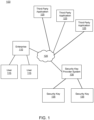
- FIG. 1 is a block diagram of a system environment 100 in which a security key provider system 130 operates.
- the system environment 100 shown by FIG. 1 comprises one or more enterprises 110 associated with one or more of users 115, a network 120, one or more third-party applications 125, and the security key provider system 130 that provides security keys 135.
- different and/or additional components may be included in the system environment 100.
- the description uses the term "third-party" as a convenient and conventional pointer to indicate that the entities running the applications and running the security key provider system 130 are not necessarily the same.
- the enterprise 110 is an organization such as a business or a company associated with a plurality of users 115.
- the plurality of users 115 may be employees of the enterprise 110.
- the description also uses the term "enterprise” for technical systems, such as computer systems, operated by the organization.
- the users 115 are computer users who will eventually interact with third party application 125 at a later point in time, when properly authenticated.
- the plurality of users 115 may use third-party applications 125 using a computing device capable of receiving user input as well as transmitting and/or receiving data via the network 120.
- the computing device is a conventional computer system, such as a desktop or a laptop computer.
- the computing device may be a device having computer functionality, such as a personal digital assistant (PDA), a mobile telephone, a smartphone, a wearable, biometric, or Internet-of-Things (IoT) device, or another suitable device.
- PDA personal digital assistant
- a computing device is configured to communicate via the network 120.
- a computing device executes a browser application to enable interaction between the third-party application 125 and the computing device via the network 120.
- a computing device interacts with the third-party application 125 through an application programming interface (API) running on a native operating system of the computing device, such as IOS ® or ANDROID TM .
- API application programming interface
- the computing devices are configured to communicate via the network 120, which may comprise any combination of local area and/or wide area networks, using both wired and/or wireless communication systems.
- the network 120 uses standard communications technologies and/or protocols.
- the network 120 includes communication links using technologies such as Ethernet, 802.11, worldwide interoperability for microwave access (WiMAX), 3G, 4G, division multiple access (CDMA), digital subscriber line (DSL), etc.
- networking protocols used for communicating via the network 120 include multiprotocol label switching (MPLS), transmission control protocol/Internet protocol (TCP/IP), hypertext transport protocol (HTTP), simple mail transfer protocol (SMTP), and file transfer protocol (FTP).
- Data exchanged over the network 120 may be represented using any suitable format, such as hypertext markup language (HTML) or extensible markup language (XML).
- HTML hypertext markup language
- XML extensible markup language
- all or some of the communication links of the network 120 may be encrypted
- One or more third-party applications 125 may be coupled to the network 120 to provide online services to the enterprise 110.
- a third-party application 125 may be one or more programs that provide online service to users 115 to allow the users 115 to perform tasks (e.g., manage documents, access database, send email).
- a third-party application 125 may be one or more websites and/or web-based services that are accessed by a user 115 of the enterprise 110 via a computing device.
- a third-party application 125 may be a mobile application installed on the computing device to access the online services.
- a third-party application 125 provides content or other information for presentation and services via a computing device to the users 115.
- Third-party applications 125 may be applications subscribed to by the enterprise 110, and may provide, as an example, secure e-mail for the enterprise 110 or other services.
- the third-party application 125 may manage one or more user accounts for each of the users 115, and the third-party application 125 may require two-factor authentication prior to granting access to a user 115.
- One of the factors for the two-factor authentication may be a user login and password pair, and the other factor may be an authentication code from a security key 135.
- Each user account may be associated with a unique authentication code that is requested by the third-party application 125 before allowing access to services on the third-party application 125.
- a security key provider system 130 provides one or more security keys 135 to the enterprise 110.
- the security key provider system 130 may be connected to the enterprise 110 via the network 120 and receive orders for security keys 135.
- An enterprise 110 may pre-register the security keys 135 with third-party applications 125 using pre-registration information received from the security key provider system 130.
- the security key provider system 130 may perform the pre-registration on behalf of the enterprise 110 prior to providing the one or more security keys 135 to the enterprise 110. Details on the security key provider system 130 is described with respect to Fig. 2 .
- the security key 135 is a physical device for identification and authentication of a user 115 connecting to a third-party application 125.
- User 115 inserts the security key into a port of a computing device.
- the security key 135 generates an asymmetric key pair to be used for accessing the third-party application 125. Further details on security keys themselves, as well as security key identification and authentication is provided in U.S. Patent No. 8,806,586 .
- FIG. 2 is a block diagram of a security key provider system 130, in accordance with an embodiment.
- the modules depicted in FIG. 2 are merely exemplary, and any number of modules may be used to affect the functionality of security key provider system 130 disclosed herein.
- the security key provider system 130 may include a web server 215, an authentication code generation module 220, a pre-registration module 225, and a pre-registration information database 230. In alternative configurations, different and/or additional components may be included in the security key provider system 130. Conventional components such as network interfaces, security functions, load balancers, failover servers, management and network operations consoles, and the like are not shown so as to not obscure the details of the system architecture.
- the security key provider system 130 may use a single processor or a multi-processor system in conjunction with a storage medium such as a non-transitory computer-readable storage medium that stores instructions executable by the processor(s) to carry out various functions described herein.
- the web server 215 may link the security key provider system 130 via the network 120 to the enterprise 110, and may also link the security key provider system 130 to the one or more third-party applications 125.
- the web server 215 serves web pages, as well as other content, such as JAVA ® , FLASH ® , XML and so forth.
- the web server 215 may receive information from and transmit information to the enterprise 110 and the one or more third-party applications 125. Additionally, the web server 215 may provide application programming interface (API) functionality to send data directly to native client device operating systems, such as IOS ® , ANDROID TM , or BlackberryOS.
- API application programming interface
- the security key provider system 130 receives a request from an enterprise 110 for one or more security keys 135 through the web server 215.
- the request may include desired model(s) of security keys 135, quantity of security keys 135, identifiers associated with third-party applications 125 for the security keys 135 to be pre-registered to, and any other parameter specified by the enterprise 110.
- the request may specify a different set of identifiers for third-party applications 125 for at least one security key 135 based on the needs of the users 115 that the security keys 135 will be assigned to. For example, a manager at the enterprise 110 may need access to a different set of applications or additional applications compared to a newly hired employee at the enterprise 110, so the security keys 135 are pre-registered to different applications based on user needs.
- the request may also include a quantity of accounts and types of accounts to be pre-registered to the one or more third-party applications 125.
- managers at the enterprise 110 may need to manage multiple accounts (e.g., one personal account and one group account) for a given application, so keys to be provided to managers many be pre-registered to be used with multiple accounts for one or more applications.
- the request from the enterprise 110 may also include information that identifies the enterprise 110 to the third-party applications 125 such as a domain name such that the third-party applications 125 may associate a security key 135 to the enterprise 110 after pre-registration.
- the web server 215 may provide a user interface (UI) to the enterprise 110 to receive the request.
- the Ul may display options for the enterprise 110 to select models, quantity of security keys 135, and third-party application identifiers as well as additional input fields.
- the authentication code generation module 220 provides instructions to security keys 135 to generate authentication codes for the pre-registration process. Based on instructions from the enterprise 110 to pre-register the security keys 135 with one or more third-party applications 125, the security key provider system 130 pre-registers the security keys 135 with each of the identified one or more third-party applications. For pre-registering a given security key 135 with the one or more third-party applications 125, the authentication code generation module 220 instructs the security key 135 to generate a unique authentication code for each of the one or more third-party applications 125.
- the authentication code generation module 220 instructs the security key 135 to generate a unique authentication code for each of the plurality of accounts of the third-party application 125.
- the pre-registration module 225 receives authentication codes generated by security keys 135 in response to instructions from the authentication code generation module 220 and pre-registers security keys 135 using the authentication codes.
- Each authentication code may be an asymmetric key pair associated with an account of a third-party application 125, and the public key of the asymmetric key pair is transmitted to the third-party application 125 during the pre-registration.
- security key identifiers and auxiliary key information may also be collected from the authentication code generation module 220 and included in pre-registration information that is provided to the third-party application 125.
- the pre-registration information transmitted to the third-party application 125 may be signed and encrypted by the pre-registration module 225 prior to transmission for additional security measures.
- the pre-registration module 225 may pre-register a plurality of third-party applications 125 for a same security key 135 either at the same time, or in sequence. This efficiently enables security key provider system 130 to pre-register a security key 135 for multiple third-party applications 125 requested by enterprise 110. Moreover, where a third-party application 125 has multiple sites (e.g., a top-level domain with multiple sites, such as accounts.acme.com; recovery.acme.com; security.acme.com), the pre-registration may occur for each of these multiple sites.
- sites e.g., a top-level domain with multiple sites, such as accounts.acme.com; recovery.acme.com; security.acme.com
- Pre-registration module 225 may determine the multiple sites by, for example, performing a web crawling operation through links found at a page of the top-level domain, and following links at each subsequent page, where the sub-domains based on the addresses of the crawled pages.
- Each of the multiple sites may be pre-registered with a same authentication code such that a same account is pre-registered across the multiple sites, or different authentication codes may be used for some or all of the multiple sites of the third-party application. This may occur for multi-domains and cross-domains; for example, if acme.com just bought acme2.com, the pre-registration process can cover all the different sub-companies or sub-organizations in one automated way, thus simplifying the registration process. Similarly, the multi-domains and cross-domains may be pre-registered with a same authentication code such that a same account is pre-registered across the domains, or different authentication codes may be used for some or all of the domains.
- the pre-registration module 225 may pre-register a plurality of accounts for a given security key 135 for one or more of the third-party applications 125.
- the security key provider system 130 may receive a request from the enterprise 110 for a security key 135 to be registered to a plurality of accounts for one or more third-party applications 125.
- a unique authentication code is generated for each of the plurality of accounts by the security key 135, and the public key of the authentication code is transmitted to the third-party application 125 for each of the plurality of accounts during the pre-registration.
- a security key provider system 130 distributes security keys without first performing a pre-registration process.
- the security key provider system 130 simply receives an order for one or more security keys 135 from a user, and the security key provider system 130 fulfills the order by providing the user with an untouched security key.
- the user seeking to set up two-factor authentication receives the security key 135, the user sets up the security key 135 for future authentication sessions with each of the user's accounts with one or more online services by registering the security key 135 with the accounts.
- the typical registration process may require a user to log into the account using a username and password pair through a computing device (e.g., laptop, phone), provide the security key to the computing device (e.g., plugging the security key into a laptop, tapping the security key against a phone), and then provide explicit instructions to the security key to generate and transmit a unique authentication code for the account (e.g., touch a button on the security key).
- the unique authentication code may be an asymmetric key pair, and the public key is stored by the online service in association with the account. Once the security key is registered, the online service can use the authentication code to verify a user's identity during a future authentication session.
- the security keys 135 require a human touch with a button or another sensor to prove physical presence of a user during registration to prevent unwanted remote access of the security keys 135.
- the security keys 135 may be set to a state during manufacturing or during a batch pre-registration process post-manufacturing that eliminates the touch requirement during pre-registration. With the elimination of the touch requirement, the pre-registration process may be performed in batches for a plurality of security keys 135 instead of requiring a human operator to repeat touching the button for each registration with an application.
- the security key provider system 130 communicates with the third-party applications 125 for pre-registration via connection through the network 120.
- the pre-registration module 225 transmits the authentication code to the third-party applications 125 using an apparatus that automates pre-registration by emulating a connection with a website of the third-party application 125.
- the emulation of network connection may be performed offline and in batches for a plurality of security keys 135 at once.
- the security key provider system 130 performs the emulation by performing the pre-registration (e.g., communicating to a hardware authenticator) as if pre-registration module 225 were a platform or browser.
- pre-registration module 225 may or may not be transmitting communications to the associated third-party application 125.
- pre-registration module 225 may or may not be adding pre-registration information during the pre-registration process to the third-party application 125 in substantially real time. That is, the pre-registration module 225 may provide the pre-registration information to the third-party application 125 for a set of security keys 135 after pre-registration information is generated for the set of security keys 135.
- pre-registration module 225 may or may not be doing so by using FIDO/U2F/FIDO2 or web-authentication JavaScript APIs. Rather, the emulation may be a simulation of that experience, where pre-registration information may be delivered or used later to third-party application 125.
- the pre-registration module 225 directly uploads the authentication code information to the third-party application 125 on behalf of an enterprise 110.
- the security key provider system 130 provides authentication code information to the enterprise 110 or another party to be uploaded to the third-party application 125.
- Security key provider system 130 may use the client to authenticator protocol ("CTAP").
- CTAP client to authenticator protocol
- Pre-registration module 225 may use CTAP when performing pre-registration.
- the security keys 135 After the security keys 135 have been pre-registered, the security keys 135 are provided to an enterprise 110 to be provisioned to the users 115. In other words, the physical security keys 135 are distributed to the users.
- the enterprise 110 may also receive pre-registration information that identifies which third-party applications 125 each of the security keys 135 have been pre-registered with. Because the security keys 135 have already been pre-registered, the users 115 do not need to perform the registration prior to authentication.
- the third-party application 125 checks whether the private key of the security key 135 matches with one of the public keys that were provided to the third-party application 125 during pre-registration. If the third-party application 125 determines that there is a match, the third-party application 125 grants access to the user 115. Otherwise, the third-party application 125 determines that the security key 135 has not been pre-registered and does not allow the user 115 to authenticate using the security key 135 by denying the authentication.
- the enterprise 110 may specify to one or more third-party applications 125 to restrict access to the respective application unless a user 115 authenticates using an authentication code that has been pre-registered.
- the enterprise 110 may limit access to an application to specific users on specific security keys 135.
- the security keys 135 may be configured to specific users using device identity mapping.
- an enterprise 110 may provide user identification (e.g., employee identification number) to be included in a pre-registration of a security key 135.
- the user identification may be stored in the pre-registration information data base 230 and uploaded to third-party applications 125 by the security key provider system 130 during pre-registration.
- the security keys 135 may be set to a configuration in which an enterprise 110 may add user identification for each security key 135 when the security keys 135 are registered by the enterprise 110 (instead of the security key provider system 130) with third-party applications 125.
- the enterprise 110 may provide instructions to the third-party applications 125 to restrict access to its respective application according to user identification, where a table of authorized user identification is provided to the third-party applications 125 by the enterprise 110.
- the pre-registration information database 230 stores pre-registration information to be provided to one or more third-party applications 125.
- the pre-registration information includes authentication codes generated by the security keys 135, security key identifiers, auxiliary key information, information associated with an enterprise 110 that the security keys 135 are to be pre-registered to, and a third-party application identifier for the pre-registration information to be uploaded to.
- the pre-registration information in the pre-registration information data base 230 may be uploaded to a third-party application 125 by the security key provider system 130 with authorization from an enterprise 110 or transmitted to the enterprise 110 to be uploaded by the enterprise 110 or a different party.
- An exemplary table of pre-registration information for a given security key is shown in FIG. 3 .
- FIG. 3 is an exemplary pre-registration information associated with one or more security keys, in accordance with an embodiment.
- Table 300 includes various information that might be encoded during pre-registration, including a timestamp 310 of the pre-registration process, a serial number 320 of the security key 135 being pre-registered, an application ID 330, a challenge 340, a public point 350, a key handle 360, a registration signature 370, and an attestation certificate 380. These parameters are merely exemplary; any other parameters may be used.
- Each row of the table 300 represents a pre-registration process of a security key 135 associated with the serial number 320 with a third-party application 125 associated with the application ID 330.
- each security key 135 may be pre-registered with a plurality of third-party applications 125. Moreover, for each of the plurality of the third-party applications 125, a plurality of accounts may be pre-registered to the security key 135.
- the timestamp 310 indicates a time at which a pre-registration process is initiated by the security key provider system 130.
- the timestamp may represent when an associated authentication code was generated and may be used for any useful purpose such as verification or indexing.
- the serial number 320 is a unique identifier associated with a security key 135 assigned by the security key provider system 130.
- the serial number 320 may identify a particular security key 135 as well as a model of the security key 135. For example, a portion of the serial number 320 may correspond to the model of the security key 135.
- the serial number 320 may be used by the security key provider system 130 to identify which sets of third-party applications 125 the associated security key 135 is pre-registered to.
- the application ID 330 identifies a third-party application 125 that the security keys 135 are pre-registered to.
- the request may include the application IDs 330 associated with the one or more third-party applications 125.
- the enterprise 110 may provide an identifier associated with a third-party application 125 (e.g., name of the third-party application) to the security key provider system 130, and the security key provider system 130 may look up one or more application IDs 330 associated with the identifier.
- a third-party application 125 may have a domain associated with multiple sites or multiple domains, and the security key provider system 130 may automatically identify one or more application ID 330 associated with the third-party application 125 such that the pre-registration process is performed for all the different sub-companies or sub-organizations associated with the third-party application 125, which simplifies the pre-registration process for the enterprise 110.
- the application ID 330 may be a relying party identifier.
- the challenge 340 is data received from a server associated with a third-party application 125 during pre-registration process of a security key 135.
- the security key provider system 130 may receive the challenge 340 from the third-party application 125 when it connects to the third-party application 125 during the pre-registration process.
- the challenge 340 may be unique to each pre-registration process, and the challenge 340 may be different for each of the plurality of security keys 135 that are being pre-registered with a same third-party application 125.
- the challenge 340 is signed by a private key of the corresponding security key 135 and sent as a response to the third-party application 125 when the security key 135 is used to authenticate the security key 135 with the third-party application 125 following the pre-registration process.
- the public point 350 is a value representative of a public key of an authentication code associated with a pre-registration process.
- the authentication code may be generated using elliptic-curve cryptography (ECC), and the public point 350 may be an (x,y) representation of a point on the elliptic curve.
- ECC elliptic-curve cryptography
- the key handle 360 is an identifier associated with each authentication code that allows a security key 135 to identify a private key during authentication.
- Each security key 135 may manage a plurality of authentication codes, and the key handle 360 allows the security key 135 to distinguish the plurality of authentication codes.
- the pre-registration module 225 provides a key handle 360 to the third-party application 125 along with the public key of the authentication code.
- the third-party application 125 stores the key handle 360 with the public key.
- the third-party application 125 sends the key handle 360 to the security key 135 to indicate which authentication code should be used for the authentication.
- the key handle 360 may be a credential ID.
- the registration signature 370 is a signature over the application ID 330, the challenge 340, the public point 350, and the key handle 360.
- the registration signature 370 is sent to the third-party application 125 corresponding to the application ID 330. Responsive to receiving the registration signature 370, the third-party application 125 verifies the registration signature 370. Responsive to verifying the registration signature 370, the third-party application 125 stores the pre-registration information included in the table 300 to be used for future authentication processes.
- the attestation certificate 380 is information that proves that an associated authentication code was generated by a genuine security key 135 of the security key provider system 130.
- the attestation certificate 380 may be shared by a plurality of security keys 135, for example, security keys 135 from a same manufacturing batch.
- the security key provider system 130 may provide the table 300 to the enterprise 110 such that the enterprise 110 may correctly provision the different types of security keys 135 to its employees. For example, employee A of the enterprise 110 may require a security key 135 that has been registered with applications x and y while employee B of the enterprise 110 may require a security key 135 that has been registered with applications x and z.
- the table 300 may allow the enterprise 110 to map the security key 135 to the third-party applications 125 it was pre-registered to.
- the security key provider system 130 may provide the table 300 to the enterprise 110 along with the security keys 135 such that the enterprise 110 may perform the pre-registration using the pre-registration information.
- FIG. 4 is an interaction diagram 400 illustrating a pre-registration process, in accordance with an embodiment.
- the interaction diagram 400 illustrates interactions between an enterprise 110, a security key provider system 130, a first third-party application 125A, a second third-party application 125B, and a user 115 during pre-registration and authentication.
- the enterprise 110 sends 405 a request to the security key provider system 130 to pre-register one or more security keys.
- the request may include desired model(s) of security keys, quantity of security keys, identifiers associated with third-party applications 125 for the security keys to be pre-registered to.
- the request may also indicate whether pre-registration information is to be provided to the third-party applications 125 by the security key provider system 130 on behalf of the enterprise 110 or whether to send the pre-registration information to the enterprise 110 such that the enterprise 110 may complete the process by uploading the pre-registration information.
- the security key provider system 130 sends instructions to the one or more security keys to be pre-registered to generate authentication codes.
- Each security key may be pre-registered to one or more third-party applications 125, and the security key may generate a different authentication code for each of the one or more third-party applications 125 included in the request for pre-registration.
- the security key provider system 130 may generate 410 pre-registration information (e.g., information included in table 300).
- the security key provider system 130 provides 415A pre-registration information associated with one or more security keys to be pre-registered with the first third-party application 125A.
- the third-party application 125A may be associated with one or more application IDs (e.g., application ID 330), and pre-registration information for these one or more application IDs may be provided by the security key provider system 130 to the first third-party application 125A on behalf of the enterprise 110.
- the security key provider system 130 may provide pre-registration information in real-time as pre-registration information for a particular security key is generated or the security key provider system 130 may emulate the pre-registration process for a batch of security keys and deliver the pre-registration information for the entire batch at once.
- the security key provider system 130 provides 415B pre-registration information to be pre-registered with the second third-party application 125B. Different sets of security keys may be pre-registered with the first third-party application 125A and the second third-party application 125B.
- the enterprise 110 requests that the security key provider system 130 generate 410 the pre-registration information without uploading the pre-registration information to the third-party applications 125A, 125B.
- the security key provider system 130 provides 420 the pre-registration information to the enterprise 110 for the enterprise 110 to upload the pre-registration information to the third-party applications 125A, 125B.
- the enterprise 110 uploads 425A the pre-registration information associated with the first third-party application 125A to the first third-party application 125A and uploads 425B the pre-registration information associated with the second third-party application 125B to the second third-party application 425B to complete pre-registration.
- the security key provider system 130 provides one or more security keys to the enterprise 110 according to the request from the enterprise 110 that are either already pre-registered by the security key provider system 130 or pre-registered by the enterprise 110 using the pre-registration information from the security key provider system 130. Responsive to receiving the security keys, the enterprise 110 provisions the security keys to users 115 associated with the enterprise 110.
- the one or more security keys may be pre-registered to different sets of applications.
- a security key may be matched to a user 115 based the types of third-party applications 125 that the security key is pre-registered with. For example, the user 115 may require access to both the first third-party application 125A and the second third-party application 125B, so the enterprise 110 provides a security key that has been pre-registered with both of the third-party applications 125.
- the user 115 after receiving the security key from the enterprise 110, the user 115 attempts to authenticate 430 with the second third-party application 125B using the security key. If the received security key has been pre-registered with the second third-party application 125B, the second third-party application 125B allows 435 the authentication. Otherwise, the second third-party application 125B denies the authentication.
- FIG. 5 is a flowchart illustrating a process 500 of pre-registering a security key, in accordance with an embodiment.
- a security key provider receives 510 an instruction (e.g., from enterprise 110) to pre-register the security key to an application (e.g., third-party application 125).
- the security key provider identifies 520 an authentication code of the security key to pre-register the security key to the application (e.g., using authentication code generation module 220).
- the security key provider may instruct the security key to generate an authentication code for the pre-registration.
- the security key provider pre-registers 530 the authentication code of the security key for the specified application. Because the security key has been pre-registered, when a user attempts to authenticate with the application, the application authenticates the user using the authentication code without the user having to register the security key.
- the enterprise may manually tag security keys and register devices for applications during a provisioning process.
- security keys are designed to perform a physical user presence test by requiring human interaction such as touching a button to provide explicit instructions to generate and transmit a unique authentication code during the registration process with an account.
Landscapes
- Engineering & Computer Science (AREA)
- Computer Security & Cryptography (AREA)
- Computer Hardware Design (AREA)
- General Engineering & Computer Science (AREA)
- Theoretical Computer Science (AREA)
- Computer Networks & Wireless Communication (AREA)
- Signal Processing (AREA)
- Computing Systems (AREA)
- Physics & Mathematics (AREA)
- Software Systems (AREA)
- General Physics & Mathematics (AREA)
- Bioethics (AREA)
- General Health & Medical Sciences (AREA)
- Health & Medical Sciences (AREA)
- Power Engineering (AREA)
- Storage Device Security (AREA)
- Management, Administration, Business Operations System, And Electronic Commerce (AREA)
- Telephonic Communication Services (AREA)
Claims (15)
- Computerimplementiertes Verfahren (500) zum Vorregistrieren eines Sicherheitsschlüssels (135) an eine Anwendung (125), wobei der Sicherheitsschlüssel (135) eine physische Vorrichtung ist, wobei ein technisches System durch eine Organisation betrieben wird, die einer Vielzahl von Benutzern zugeordnet ist, und wobei die Anwendung (125) angepasst ist, um den Benutzern der Organisation Dienste bereitzustellen, das Verfahren umfassend:Empfangen (510), durch ein Sicherheitsschlüsselanbietersystem (130), und von dem technischen System, das durch die Organisation betrieben wird, einer Anweisung, den Sicherheitsschlüssel (135) an die Anwendung (125) vorzuregistrieren (405);Identifizieren (520), durch das Sicherheitsschlüsselanbietersystem (130), eines Authentifizierungscodes, der durch den Sicherheitsschlüssel (135) erzeugt wird, um den Sicherheitsschlüssel (135) an die Anwendung (125) vorzuregistrieren, wobei der Authentifizierungscode einen öffentlichen Schlüssel und einen privaten Schlüssel umfasst; unddurch das Sicherheitsschlüsselanbietersystem (130), Übertragen des öffentlichen Schlüssels des Authentifizierungscodes des Sicherheitsschlüssels (135) an die Anwendung (125), wobei dadurch der Sicherheitsschlüssel (135) an die Anwendung vorregistriert wird;wobei, als Reaktion auf das Bestimmen eines Benutzerversuchs (430), mit der Anwendung (125) nach dem Vorregistrieren zu authentifizieren, durch den Benutzer, der den Sicherheitsschlüssel (135) präsentiert, die Anwendung (125) dem Benutzer Zugriff gewährt, wenn der private Schlüssel des Sicherheitsschlüssels (135) mit dem öffentlichen Schlüssel übereinstimmt.
- Verfahren nach Anspruch 1, wobei das Vorregistrieren des Authentifizierungscodes des Sicherheitsschlüssels (135) an die Anwendung (125) ein Hochladen, durch das Sicherheitsschlüsselanbietersystem (130), des Authentifizierungscodes an die Anwendung (125) umfasst.
- Verfahren nach Anspruch 1, wobei das Vorregistrieren des Authentifizierungscodes des Sicherheitsschlüssels (135) an die Anwendung (125) das Bereitstellen des Authentifizierungscodes an die Organisation umfasst, wobei der Authentifizierungscode durch die Organisation auf die Anwendung (125) hochgeladen wird.
- Verfahren nach Anspruch 1, wobei das Vorregistrieren des Authentifizierungscodes des Sicherheitsschlüssels (135) an die Anwendung (125) umfasst:Emulieren einer Verbindung mit der Anwendung (125); undBereitstellen des Authentifizierungscodes an die Anwendung (125) durch die emulierte Verbindung.
- Verfahren nach Anspruch 1, wobei die Anweisung ist, eine Vielzahl von Sicherheitsschlüsseln (135), umfassend den Sicherheitsschlüssel (135), an die Anwendung (125) vorzuregistrieren, und wobei ein anderer Authentifizierungscode für jeden der Vielzahl von Sicherheitsschlüsseln (135) vorregistriert wird.
- Verfahren nach Anspruch 5, wobei das Vorregistrieren für die Vielzahl von Sicherheitsschlüsseln (135) in einem Batch gleichzeitig durchgeführt wird.
- Verfahren nach Anspruch 1, wobei der Sicherheitsschlüssel (135) an einen Satz von Anwendungen (125A, 125B), umfassend die Anwendung (125), vorregistriert wird, und wobei der Sicherheitsschlüssel (135) an jede Anwendung (125A, 125B) des Satzes von Anwendungen mit einem anderen Authentifizierungscode vorregistriert wird.
- Verfahren nach Anspruch 1, wobei die Anwendung (125) einer Vielzahl von Sites zugeordnet ist und die Vielzahl von Sites mit einem gleichen Authentifizierungscode vorregistriert wird, oder wobei die Anwendung (125) einer Vielzahl von Domänen zugeordnet ist, und die Vielzahl von Domänen mit einem gleichen Authentifizierungscode vorregistriert wird.
- Verfahren nach Anspruch 1, wobei der Sicherheitsschlüssel den Authentifizierungscode durch Verwenden von Elliptische-Kurven-Kryptographie (ECC) erzeugt, wobei der öffentliche Schlüssel eine (x, y) Darstellung eines Punktes auf einer elliptischen Kurve ist.
- Verfahren nach Anspruch 1, mit einem weiteren Schritt des Verwendens des privaten Schlüssels, um eine Aufforderung (340) des entsprechenden Sicherheitsschlüssels (135) zu signieren und die Aufforderung als Reaktion auf die Anwendung (125) zu senden, wenn der Sicherheitsschlüssel (135) verwendet wird, um den Sicherheitsschlüssel (135) mit der Anwendung (125) nach der Vorregistrierung zu authentifizieren.
- Verfahren nach Anspruch 1, wobei der Sicherheitsschlüssel (135) an die Anwendung (125) unter einer Vielzahl von Konten vorregistriert wird, wobei jede der Vielzahl von Konten mit einem anderen Authentifizierungscode vorregistriert wird.
- Nicht flüchtiges computerlesbares Medium, umfassend Computerprogrammanweisungen, die, wenn sie durch jeweilige Computerprozessoren ausgeführt werden, die jeweiligen Computerprozessoren veranlassen, um Schritte eines computerimplementierten Verfahrens nach einem der Ansprüche 1 bis 11 durchzuführen.
- System, umfassend:eine Anwendung;einen Prozessor eines Sicherheitsschlüsselanbietersystems (130); undein nicht flüchtiges computerlesbares Medium, umfassend Computerprogrammanweisungen, die, wenn sie durch den Prozessor ausgeführt werden, den Prozessor veranlassen, Schritte durchzuführen, umfassend:Empfangen (510), durch das Sicherheitsschlüsselanbietersystem (130), und von einem technischen System, das durch eine Organisation betrieben wird, einer Anweisung, einen Sicherheitsschlüssel (135) an die Anwendung (125) vorzuregistrieren (405), wobei der Sicherheitsschlüssel eine physische Vorrichtung ist und das technische System durch die Organisation betrieben wird, die einer Vielzahl von Benutzern zugeordnet ist, und wobei die Anwendung angepasst ist, um den Benutzern der Organisation Dienste bereitzustellen;Identifizieren (520), durch das Sicherheitsschlüsselanbietersystem (130), eines Authentifizierungscodes, der durch den Sicherheitsschlüssel (135) erzeugt wird, um den Sicherheitsschlüssel (135) an die Anwendung (125) vorzuregistrieren, wobei der Authentifizierungscode einen öffentlichen Schlüssel und einen privaten Schlüssel umfasst; unddurch das Sicherheitsschlüsselanbietersystem (130), Übertragen des öffentlichen Schlüssels des Authentifizierungscodes des Sicherheitsschlüssels (135) an die Anwendung (125), wobei dadurch der Sicherheitsschlüssel (135) an die Anwendung vorregistriert wird;wobei, als Reaktion auf das Bestimmen eines Benutzerversuchs (430), mit der Anwendung (125) nach dem Vorregistrieren zu authentifizieren, durch den Benutzer, der den Sicherheitsschlüssel (135) präsentiert, die Anwendung (125) dem Benutzer Zugriff gewährt, wenn der private Schlüssel des Sicherheitsschlüssels (135) mit dem öffentlichen Schlüssel übereinstimmt.
- System nach Anspruch 13, wobei das Vorregistrieren des Authentifizierungscodes des Sicherheitsschlüssels (135) an die Anwendung (125) das Hochladen, durch das Sicherheitsschlüsselanbietersystem (130), des Authentifizierungscodes auf die Anwendung (125) umfasst oder das Bereitstellen des Authentifizierungscodes an das Unternehmen umfasst, wobei der Authentifizierungscode durch das Unternehmen auf die Anwendung (125) hochgeladen wird.
- System nach Anspruch 13, wobei das Vorregistrieren des Authentifizierungscodes an den Sicherheitsschlüssel (135) umfasst:Emulieren einer Verbindung an die Anwendung; undBereitstellen des Authentifizierungscodes an die Anwendung (125) über die emulierte Verbindung.
Applications Claiming Priority (2)
| Application Number | Priority Date | Filing Date | Title |
|---|---|---|---|
| US201962949728P | 2019-12-18 | 2019-12-18 | |
| US16/904,017 US11698957B2 (en) | 2019-12-18 | 2020-06-17 | Pre-registration of authentication devices |
Publications (3)
| Publication Number | Publication Date |
|---|---|
| EP3840288A1 EP3840288A1 (de) | 2021-06-23 |
| EP3840288C0 EP3840288C0 (de) | 2024-04-24 |
| EP3840288B1 true EP3840288B1 (de) | 2024-04-24 |
Family
ID=73855248
Family Applications (1)
| Application Number | Title | Priority Date | Filing Date |
|---|---|---|---|
| EP20214859.9A Active EP3840288B1 (de) | 2019-12-18 | 2020-12-17 | Vorregistrierung von authentifizierungsvorrichtungen |
Country Status (4)
| Country | Link |
|---|---|
| US (3) | US11698957B2 (de) |
| EP (1) | EP3840288B1 (de) |
| AU (1) | AU2020273301B2 (de) |
| CA (1) | CA3100164C (de) |
Families Citing this family (4)
| Publication number | Priority date | Publication date | Assignee | Title |
|---|---|---|---|---|
| JP7351873B2 (ja) * | 2021-06-18 | 2023-09-27 | ヤフー株式会社 | 情報処理装置、情報処理方法および情報処理プログラム |
| US20240250806A1 (en) * | 2023-01-23 | 2024-07-25 | Capital One Services, Llc | Multi-modal access to an online service using hierarchical cryptographic keys for user authentication of accounts and subaccounts |
| TWI847516B (zh) * | 2023-01-31 | 2024-07-01 | 系微股份有限公司 | 遠端驗證實體安全性金鑰的系統及方法 |
| CN118432819A (zh) * | 2023-01-31 | 2024-08-02 | 系微股份有限公司 | 远端验证实体安全性金钥的系统及方法 |
Family Cites Families (18)
| Publication number | Priority date | Publication date | Assignee | Title |
|---|---|---|---|---|
| JP5268889B2 (ja) | 2006-04-24 | 2013-08-21 | シパック エービー | 識別と認証を実行する装置 |
| JP4993733B2 (ja) * | 2007-09-28 | 2012-08-08 | 東芝ソリューション株式会社 | 暗号クライアント装置、暗号パッケージ配信システム、暗号コンテナ配信システム及び暗号管理サーバ装置 |
| US8032932B2 (en) * | 2008-08-22 | 2011-10-04 | Citibank, N.A. | Systems and methods for providing security token authentication |
| JP4929321B2 (ja) | 2009-08-21 | 2012-05-09 | 株式会社三井住友銀行 | パスワードを登録するためのシステム及び方法 |
| US20110314534A1 (en) * | 2010-04-14 | 2011-12-22 | Lee James | Secured Execution Environments and Methods |
| US20180336547A1 (en) * | 2011-12-20 | 2018-11-22 | Mshift, Inc. | Systems and methods for mobile devices with optical recognition |
| US20130268687A1 (en) * | 2012-04-09 | 2013-10-10 | Mcafee, Inc. | Wireless token device |
| US9547761B2 (en) | 2012-04-09 | 2017-01-17 | Mcafee, Inc. | Wireless token device |
| US20140325328A1 (en) * | 2012-10-09 | 2014-10-30 | Robert Dale Beadles | Memory tag hybrid multidimensional bar-text code with social media platform |
| JP2017518712A (ja) * | 2014-03-14 | 2017-07-06 | ロウェム インコーポレイテッド | 秘密データ管理方法及び装置、並びに保安認証方法及びシステム |
| KR20160099358A (ko) | 2015-02-12 | 2016-08-22 | 주식회사 케이티월드 | 클라우드 문서 중앙화 시스템의 인증 방법 |
| KR101966818B1 (ko) | 2015-09-10 | 2019-04-08 | 주식회사 엘지화학 | 광학 필름 및 이를 포함하는 표시 장치 |
| US10541813B2 (en) | 2016-05-09 | 2020-01-21 | Aetna Inc. | Incorporating multiple authentication systems and protocols in conjunction |
| US9997054B2 (en) * | 2016-06-07 | 2018-06-12 | Ecolink Intelligent Technology, Inc. | Method and apparatus for disarming a security system |
| KR101690989B1 (ko) | 2016-07-29 | 2017-01-02 | 한국스마트아이디 주식회사 | Fido 인증모듈을 이용한 전자서명 방법 |
| US20180167383A1 (en) | 2016-12-12 | 2018-06-14 | Qualcomm Incorporated | Integration of password-less authentication systems with legacy identity federation |
| KR101816650B1 (ko) * | 2017-02-21 | 2018-01-09 | 주식회사 코인플러그 | 계정 등록의 간소화 서비스 및 사용자 인증 서비스를 제공하는 방법 및 이를 이용한 인증 서버 |
| US10469490B2 (en) | 2017-10-19 | 2019-11-05 | Mastercard International Incorporated | Methods and systems for providing FIDO authentication services |
-
2020
- 2020-06-17 US US16/904,017 patent/US11698957B2/en active Active
- 2020-11-19 AU AU2020273301A patent/AU2020273301B2/en active Active
- 2020-11-20 CA CA3100164A patent/CA3100164C/en active Active
- 2020-12-17 EP EP20214859.9A patent/EP3840288B1/de active Active
-
2023
- 2023-05-24 US US18/201,653 patent/US12061686B2/en active Active
-
2024
- 2024-07-02 US US18/762,000 patent/US20240354396A1/en active Pending
Also Published As
| Publication number | Publication date |
|---|---|
| US20210192037A1 (en) | 2021-06-24 |
| EP3840288C0 (de) | 2024-04-24 |
| US12061686B2 (en) | 2024-08-13 |
| US20230306103A1 (en) | 2023-09-28 |
| AU2020273301A1 (en) | 2021-07-08 |
| US11698957B2 (en) | 2023-07-11 |
| EP3840288A1 (de) | 2021-06-23 |
| US20240354396A1 (en) | 2024-10-24 |
| CA3100164A1 (en) | 2021-06-18 |
| AU2020273301B2 (en) | 2021-11-18 |
| CA3100164C (en) | 2023-08-01 |
Similar Documents
| Publication | Publication Date | Title |
|---|---|---|
| US20230267414A1 (en) | Single sign-on through customer authentication systems | |
| US11995174B2 (en) | Systems, methods, and storage media for migrating identity information across identity domains in an identity infrastructure | |
| US9245103B2 (en) | Personal authentication and access | |
| US12061686B2 (en) | Pre-registration of authentication devices | |
| US9300653B1 (en) | Delivery of authentication information to a RESTful service using token validation scheme | |
| US20140189799A1 (en) | Multi-factor authorization for authorizing a third-party application to use a resource | |
| CN109684801B (zh) | 电子证件的生成、签发和验证方法及装置 | |
| US20160065579A1 (en) | Method and system for interoperable identity and interoperable credentials | |
| Berbecaru et al. | Providing login and Wi-Fi access services with the eIDAS network: a practical approach | |
| US12282531B2 (en) | Establishing access sessions | |
| US11818114B2 (en) | Systems, methods, and storage media for synchronizing identity information across identity domains in an identity infrastructure | |
| CN103986584A (zh) | 基于智能设备的双因子身份验证方法 | |
| CN102710621B (zh) | 一种用户认证方法和系统 | |
| US10601809B2 (en) | System and method for providing a certificate by way of a browser extension | |
| US11381405B1 (en) | System and method for authenticating a user at a relying party application using an authentication application and automatically redirecting to a target application | |
| CN106161475A (zh) | 用户鉴权的实现方法和装置 | |
| EP2822216A1 (de) | Verfahren zum Schutz der Privatsphäre während des Zugriffs auf einen Dienst | |
| Berbecaru et al. | Federating e-identities across Europe, or how to build cross-border e-services | |
| Edge et al. | Identity and Device Trust | |
| CAMERONI | Providing Login and Wi-Fi Access Services With the eIDAS Network: A Practical Approach | |
| WO2025072035A1 (en) | Web-based wallet authentication | |
| CN117828566A (zh) | 认证方法及系统、电子设备、可读存储介质 |
Legal Events
| Date | Code | Title | Description |
|---|---|---|---|
| PUAI | Public reference made under article 153(3) epc to a published international application that has entered the european phase |
Free format text: ORIGINAL CODE: 0009012 |
|
| STAA | Information on the status of an ep patent application or granted ep patent |
Free format text: STATUS: THE APPLICATION HAS BEEN PUBLISHED |
|
| AK | Designated contracting states |
Kind code of ref document: A1 Designated state(s): AL AT BE BG CH CY CZ DE DK EE ES FI FR GB GR HR HU IE IS IT LI LT LU LV MC MK MT NL NO PL PT RO RS SE SI SK SM TR |
|
| STAA | Information on the status of an ep patent application or granted ep patent |
Free format text: STATUS: REQUEST FOR EXAMINATION WAS MADE |
|
| 17P | Request for examination filed |
Effective date: 20211221 |
|
| RBV | Designated contracting states (corrected) |
Designated state(s): AL AT BE BG CH CY CZ DE DK EE ES FI FR GB GR HR HU IE IS IT LI LT LU LV MC MK MT NL NO PL PT RO RS SE SI SK SM TR |
|
| GRAP | Despatch of communication of intention to grant a patent |
Free format text: ORIGINAL CODE: EPIDOSNIGR1 |
|
| STAA | Information on the status of an ep patent application or granted ep patent |
Free format text: STATUS: GRANT OF PATENT IS INTENDED |
|
| RIC1 | Information provided on ipc code assigned before grant |
Ipc: G06F 21/45 20130101ALI20231024BHEP Ipc: H04L 9/40 20220101ALI20231024BHEP Ipc: G06F 21/34 20130101ALI20231024BHEP Ipc: H04L 9/08 20060101ALI20231024BHEP Ipc: H04L 9/32 20060101AFI20231024BHEP |
|
| INTG | Intention to grant announced |
Effective date: 20231115 |
|
| RAP3 | Party data changed (applicant data changed or rights of an application transferred) |
Owner name: YUBICO AB |
|
| GRAS | Grant fee paid |
Free format text: ORIGINAL CODE: EPIDOSNIGR3 |
|
| GRAA | (expected) grant |
Free format text: ORIGINAL CODE: 0009210 |
|
| STAA | Information on the status of an ep patent application or granted ep patent |
Free format text: STATUS: THE PATENT HAS BEEN GRANTED |
|
| AK | Designated contracting states |
Kind code of ref document: B1 Designated state(s): AL AT BE BG CH CY CZ DE DK EE ES FI FR GB GR HR HU IE IS IT LI LT LU LV MC MK MT NL NO PL PT RO RS SE SI SK SM TR |
|
| REG | Reference to a national code |
Ref country code: GB Ref legal event code: FG4D |
|
| REG | Reference to a national code |
Ref country code: CH Ref legal event code: EP |
|
| REG | Reference to a national code |
Ref country code: DE Ref legal event code: R096 Ref document number: 602020029484 Country of ref document: DE |
|
| REG | Reference to a national code |
Ref country code: IE Ref legal event code: FG4D |
|
| U01 | Request for unitary effect filed |
Effective date: 20240516 |
|
| U07 | Unitary effect registered |
Designated state(s): AT BE BG DE DK EE FI FR IT LT LU LV MT NL PT SE SI Effective date: 20240603 |
|
| PG25 | Lapsed in a contracting state [announced via postgrant information from national office to epo] |
Ref country code: IS Free format text: LAPSE BECAUSE OF FAILURE TO SUBMIT A TRANSLATION OF THE DESCRIPTION OR TO PAY THE FEE WITHIN THE PRESCRIBED TIME-LIMIT Effective date: 20240824 |
|
| PG25 | Lapsed in a contracting state [announced via postgrant information from national office to epo] |
Ref country code: HR Free format text: LAPSE BECAUSE OF FAILURE TO SUBMIT A TRANSLATION OF THE DESCRIPTION OR TO PAY THE FEE WITHIN THE PRESCRIBED TIME-LIMIT Effective date: 20240424 |
|
| PG25 | Lapsed in a contracting state [announced via postgrant information from national office to epo] |
Ref country code: GR Free format text: LAPSE BECAUSE OF FAILURE TO SUBMIT A TRANSLATION OF THE DESCRIPTION OR TO PAY THE FEE WITHIN THE PRESCRIBED TIME-LIMIT Effective date: 20240725 |
|
| PG25 | Lapsed in a contracting state [announced via postgrant information from national office to epo] |
Ref country code: ES Free format text: LAPSE BECAUSE OF FAILURE TO SUBMIT A TRANSLATION OF THE DESCRIPTION OR TO PAY THE FEE WITHIN THE PRESCRIBED TIME-LIMIT Effective date: 20240424 |
|
| PG25 | Lapsed in a contracting state [announced via postgrant information from national office to epo] |
Ref country code: PL Free format text: LAPSE BECAUSE OF FAILURE TO SUBMIT A TRANSLATION OF THE DESCRIPTION OR TO PAY THE FEE WITHIN THE PRESCRIBED TIME-LIMIT Effective date: 20240424 |
|
| PG25 | Lapsed in a contracting state [announced via postgrant information from national office to epo] |
Ref country code: PL Free format text: LAPSE BECAUSE OF FAILURE TO SUBMIT A TRANSLATION OF THE DESCRIPTION OR TO PAY THE FEE WITHIN THE PRESCRIBED TIME-LIMIT Effective date: 20240424 Ref country code: NO Free format text: LAPSE BECAUSE OF FAILURE TO SUBMIT A TRANSLATION OF THE DESCRIPTION OR TO PAY THE FEE WITHIN THE PRESCRIBED TIME-LIMIT Effective date: 20240724 Ref country code: IS Free format text: LAPSE BECAUSE OF FAILURE TO SUBMIT A TRANSLATION OF THE DESCRIPTION OR TO PAY THE FEE WITHIN THE PRESCRIBED TIME-LIMIT Effective date: 20240824 Ref country code: HR Free format text: LAPSE BECAUSE OF FAILURE TO SUBMIT A TRANSLATION OF THE DESCRIPTION OR TO PAY THE FEE WITHIN THE PRESCRIBED TIME-LIMIT Effective date: 20240424 Ref country code: GR Free format text: LAPSE BECAUSE OF FAILURE TO SUBMIT A TRANSLATION OF THE DESCRIPTION OR TO PAY THE FEE WITHIN THE PRESCRIBED TIME-LIMIT Effective date: 20240725 Ref country code: ES Free format text: LAPSE BECAUSE OF FAILURE TO SUBMIT A TRANSLATION OF THE DESCRIPTION OR TO PAY THE FEE WITHIN THE PRESCRIBED TIME-LIMIT Effective date: 20240424 Ref country code: RS Free format text: LAPSE BECAUSE OF FAILURE TO SUBMIT A TRANSLATION OF THE DESCRIPTION OR TO PAY THE FEE WITHIN THE PRESCRIBED TIME-LIMIT Effective date: 20240724 |
|
| U20 | Renewal fee for the european patent with unitary effect paid |
Year of fee payment: 5 Effective date: 20241107 |
|
| PG25 | Lapsed in a contracting state [announced via postgrant information from national office to epo] |
Ref country code: CZ Free format text: LAPSE BECAUSE OF FAILURE TO SUBMIT A TRANSLATION OF THE DESCRIPTION OR TO PAY THE FEE WITHIN THE PRESCRIBED TIME-LIMIT Effective date: 20240424 |
|
| PG25 | Lapsed in a contracting state [announced via postgrant information from national office to epo] |
Ref country code: SK Free format text: LAPSE BECAUSE OF FAILURE TO SUBMIT A TRANSLATION OF THE DESCRIPTION OR TO PAY THE FEE WITHIN THE PRESCRIBED TIME-LIMIT Effective date: 20240424 Ref country code: RO Free format text: LAPSE BECAUSE OF FAILURE TO SUBMIT A TRANSLATION OF THE DESCRIPTION OR TO PAY THE FEE WITHIN THE PRESCRIBED TIME-LIMIT Effective date: 20240424 |
|
| REG | Reference to a national code |
Ref country code: DE Ref legal event code: R097 Ref document number: 602020029484 Country of ref document: DE |
|
| PG25 | Lapsed in a contracting state [announced via postgrant information from national office to epo] |
Ref country code: SM Free format text: LAPSE BECAUSE OF FAILURE TO SUBMIT A TRANSLATION OF THE DESCRIPTION OR TO PAY THE FEE WITHIN THE PRESCRIBED TIME-LIMIT Effective date: 20240424 |
|
| PG25 | Lapsed in a contracting state [announced via postgrant information from national office to epo] |
Ref country code: SM Free format text: LAPSE BECAUSE OF FAILURE TO SUBMIT A TRANSLATION OF THE DESCRIPTION OR TO PAY THE FEE WITHIN THE PRESCRIBED TIME-LIMIT Effective date: 20240424 Ref country code: SK Free format text: LAPSE BECAUSE OF FAILURE TO SUBMIT A TRANSLATION OF THE DESCRIPTION OR TO PAY THE FEE WITHIN THE PRESCRIBED TIME-LIMIT Effective date: 20240424 Ref country code: RO Free format text: LAPSE BECAUSE OF FAILURE TO SUBMIT A TRANSLATION OF THE DESCRIPTION OR TO PAY THE FEE WITHIN THE PRESCRIBED TIME-LIMIT Effective date: 20240424 Ref country code: CZ Free format text: LAPSE BECAUSE OF FAILURE TO SUBMIT A TRANSLATION OF THE DESCRIPTION OR TO PAY THE FEE WITHIN THE PRESCRIBED TIME-LIMIT Effective date: 20240424 |
|
| PLBE | No opposition filed within time limit |
Free format text: ORIGINAL CODE: 0009261 |
|
| STAA | Information on the status of an ep patent application or granted ep patent |
Free format text: STATUS: NO OPPOSITION FILED WITHIN TIME LIMIT |
|
| 26N | No opposition filed |
Effective date: 20250127 |
|
| PG25 | Lapsed in a contracting state [announced via postgrant information from national office to epo] |
Ref country code: MC Free format text: LAPSE BECAUSE OF FAILURE TO SUBMIT A TRANSLATION OF THE DESCRIPTION OR TO PAY THE FEE WITHIN THE PRESCRIBED TIME-LIMIT Effective date: 20240424 |
|
| REG | Reference to a national code |
Ref country code: CH Ref legal event code: PL |
|
| PG25 | Lapsed in a contracting state [announced via postgrant information from national office to epo] |
Ref country code: CH Free format text: LAPSE BECAUSE OF NON-PAYMENT OF DUE FEES Effective date: 20241231 |
|
| PG25 | Lapsed in a contracting state [announced via postgrant information from national office to epo] |
Ref country code: IE Free format text: LAPSE BECAUSE OF NON-PAYMENT OF DUE FEES Effective date: 20241217 |
|
| U20 | Renewal fee for the european patent with unitary effect paid |
Year of fee payment: 6 Effective date: 20251110 |
|
| U1H | Name or address of the proprietor changed after the registration of the unitary effect |
Owner name: YUBICO AB; SE |
|
| PGFP | Annual fee paid to national office [announced via postgrant information from national office to epo] |
Ref country code: GB Payment date: 20251001 Year of fee payment: 6 |