EP3839292B1 - Vehicle axle device - Google Patents
Vehicle axle device Download PDFInfo
- Publication number
- EP3839292B1 EP3839292B1 EP19850688.3A EP19850688A EP3839292B1 EP 3839292 B1 EP3839292 B1 EP 3839292B1 EP 19850688 A EP19850688 A EP 19850688A EP 3839292 B1 EP3839292 B1 EP 3839292B1
- Authority
- EP
- European Patent Office
- Prior art keywords
- differential case
- differential
- piston
- retainer
- disposed
- Prior art date
- Legal status (The legal status is an assumption and is not a legal conclusion. Google has not performed a legal analysis and makes no representation as to the accuracy of the status listed.)
- Active
Links
Images






Classifications
-
- B—PERFORMING OPERATIONS; TRANSPORTING
- B60—VEHICLES IN GENERAL
- B60K—ARRANGEMENT OR MOUNTING OF PROPULSION UNITS OR OF TRANSMISSIONS IN VEHICLES; ARRANGEMENT OR MOUNTING OF PLURAL DIVERSE PRIME-MOVERS IN VEHICLES; AUXILIARY DRIVES FOR VEHICLES; INSTRUMENTATION OR DASHBOARDS FOR VEHICLES; ARRANGEMENTS IN CONNECTION WITH COOLING, AIR INTAKE, GAS EXHAUST OR FUEL SUPPLY OF PROPULSION UNITS IN VEHICLES
- B60K17/00—Arrangement or mounting of transmissions in vehicles
- B60K17/04—Arrangement or mounting of transmissions in vehicles characterised by arrangement, location or kind of gearing
- B60K17/16—Arrangement or mounting of transmissions in vehicles characterised by arrangement, location or kind of gearing of differential gearing
- B60K17/165—Arrangement or mounting of transmissions in vehicles characterised by arrangement, location or kind of gearing of differential gearing provided between independent half axles
-
- B—PERFORMING OPERATIONS; TRANSPORTING
- B60—VEHICLES IN GENERAL
- B60B—VEHICLE WHEELS; CASTORS; AXLES FOR WHEELS OR CASTORS; INCREASING WHEEL ADHESION
- B60B35/00—Axle units; Parts thereof ; Arrangements for lubrication of axles
- B60B35/12—Torque-transmitting axles
- B60B35/14—Torque-transmitting axles composite or split, e.g. half- axles; Couplings between axle parts or sections
-
- B—PERFORMING OPERATIONS; TRANSPORTING
- B60—VEHICLES IN GENERAL
- B60K—ARRANGEMENT OR MOUNTING OF PROPULSION UNITS OR OF TRANSMISSIONS IN VEHICLES; ARRANGEMENT OR MOUNTING OF PLURAL DIVERSE PRIME-MOVERS IN VEHICLES; AUXILIARY DRIVES FOR VEHICLES; INSTRUMENTATION OR DASHBOARDS FOR VEHICLES; ARRANGEMENTS IN CONNECTION WITH COOLING, AIR INTAKE, GAS EXHAUST OR FUEL SUPPLY OF PROPULSION UNITS IN VEHICLES
- B60K17/00—Arrangement or mounting of transmissions in vehicles
- B60K17/04—Arrangement or mounting of transmissions in vehicles characterised by arrangement, location or kind of gearing
- B60K17/16—Arrangement or mounting of transmissions in vehicles characterised by arrangement, location or kind of gearing of differential gearing
-
- B—PERFORMING OPERATIONS; TRANSPORTING
- B60—VEHICLES IN GENERAL
- B60K—ARRANGEMENT OR MOUNTING OF PROPULSION UNITS OR OF TRANSMISSIONS IN VEHICLES; ARRANGEMENT OR MOUNTING OF PLURAL DIVERSE PRIME-MOVERS IN VEHICLES; AUXILIARY DRIVES FOR VEHICLES; INSTRUMENTATION OR DASHBOARDS FOR VEHICLES; ARRANGEMENTS IN CONNECTION WITH COOLING, AIR INTAKE, GAS EXHAUST OR FUEL SUPPLY OF PROPULSION UNITS IN VEHICLES
- B60K17/00—Arrangement or mounting of transmissions in vehicles
- B60K17/04—Arrangement or mounting of transmissions in vehicles characterised by arrangement, location or kind of gearing
- B60K17/16—Arrangement or mounting of transmissions in vehicles characterised by arrangement, location or kind of gearing of differential gearing
- B60K17/20—Arrangement or mounting of transmissions in vehicles characterised by arrangement, location or kind of gearing of differential gearing in which the differential movement is limited
-
- F—MECHANICAL ENGINEERING; LIGHTING; HEATING; WEAPONS; BLASTING
- F16—ENGINEERING ELEMENTS AND UNITS; GENERAL MEASURES FOR PRODUCING AND MAINTAINING EFFECTIVE FUNCTIONING OF MACHINES OR INSTALLATIONS; THERMAL INSULATION IN GENERAL
- F16H—GEARING
- F16H48/00—Differential gearings
- F16H48/06—Differential gearings with gears having orbital motion
- F16H48/08—Differential gearings with gears having orbital motion comprising bevel gears
-
- F—MECHANICAL ENGINEERING; LIGHTING; HEATING; WEAPONS; BLASTING
- F16—ENGINEERING ELEMENTS AND UNITS; GENERAL MEASURES FOR PRODUCING AND MAINTAINING EFFECTIVE FUNCTIONING OF MACHINES OR INSTALLATIONS; THERMAL INSULATION IN GENERAL
- F16H—GEARING
- F16H48/00—Differential gearings
- F16H48/20—Arrangements for suppressing or influencing the differential action, e.g. locking devices
- F16H48/22—Arrangements for suppressing or influencing the differential action, e.g. locking devices using friction clutches or brakes
-
- F—MECHANICAL ENGINEERING; LIGHTING; HEATING; WEAPONS; BLASTING
- F16—ENGINEERING ELEMENTS AND UNITS; GENERAL MEASURES FOR PRODUCING AND MAINTAINING EFFECTIVE FUNCTIONING OF MACHINES OR INSTALLATIONS; THERMAL INSULATION IN GENERAL
- F16H—GEARING
- F16H48/00—Differential gearings
- F16H48/38—Constructional details
- F16H48/40—Constructional details characterised by features of the rotating cases
-
- F—MECHANICAL ENGINEERING; LIGHTING; HEATING; WEAPONS; BLASTING
- F16—ENGINEERING ELEMENTS AND UNITS; GENERAL MEASURES FOR PRODUCING AND MAINTAINING EFFECTIVE FUNCTIONING OF MACHINES OR INSTALLATIONS; THERMAL INSULATION IN GENERAL
- F16H—GEARING
- F16H57/00—General details of gearing
- F16H57/02—Gearboxes; Mounting gearing therein
- F16H57/037—Gearboxes for accommodating differential gearings
-
- B—PERFORMING OPERATIONS; TRANSPORTING
- B60—VEHICLES IN GENERAL
- B60Y—INDEXING SCHEME RELATING TO ASPECTS CROSS-CUTTING VEHICLE TECHNOLOGY
- B60Y2200/00—Type of vehicle
- B60Y2200/10—Road Vehicles
- B60Y2200/14—Trucks; Load vehicles, Busses
-
- B—PERFORMING OPERATIONS; TRANSPORTING
- B60—VEHICLES IN GENERAL
- B60Y—INDEXING SCHEME RELATING TO ASPECTS CROSS-CUTTING VEHICLE TECHNOLOGY
- B60Y2200/00—Type of vehicle
- B60Y2200/40—Special vehicles
-
- B—PERFORMING OPERATIONS; TRANSPORTING
- B60—VEHICLES IN GENERAL
- B60Y—INDEXING SCHEME RELATING TO ASPECTS CROSS-CUTTING VEHICLE TECHNOLOGY
- B60Y2200/00—Type of vehicle
- B60Y2200/40—Special vehicles
- B60Y2200/41—Construction vehicles, e.g. graders, excavators
- B60Y2200/415—Wheel loaders
-
- E—FIXED CONSTRUCTIONS
- E02—HYDRAULIC ENGINEERING; FOUNDATIONS; SOIL SHIFTING
- E02F—DREDGING; SOIL-SHIFTING
- E02F9/00—Component parts of dredgers or soil-shifting machines, not restricted to one of the kinds covered by groups E02F3/00 - E02F7/00
- E02F9/02—Travelling-gear, e.g. associated with slewing gears
-
- E—FIXED CONSTRUCTIONS
- E02—HYDRAULIC ENGINEERING; FOUNDATIONS; SOIL SHIFTING
- E02F—DREDGING; SOIL-SHIFTING
- E02F9/00—Component parts of dredgers or soil-shifting machines, not restricted to one of the kinds covered by groups E02F3/00 - E02F7/00
- E02F9/20—Drives; Control devices
- E02F9/202—Mechanical transmission, e.g. clutches, gears
-
- F—MECHANICAL ENGINEERING; LIGHTING; HEATING; WEAPONS; BLASTING
- F16—ENGINEERING ELEMENTS AND UNITS; GENERAL MEASURES FOR PRODUCING AND MAINTAINING EFFECTIVE FUNCTIONING OF MACHINES OR INSTALLATIONS; THERMAL INSULATION IN GENERAL
- F16H—GEARING
- F16H57/00—General details of gearing
- F16H57/02—Gearboxes; Mounting gearing therein
- F16H2057/02039—Gearboxes for particular applications
- F16H2057/02043—Gearboxes for particular applications for vehicle transmissions
- F16H2057/02052—Axle units; Transfer casings for four wheel drive
-
- F—MECHANICAL ENGINEERING; LIGHTING; HEATING; WEAPONS; BLASTING
- F16—ENGINEERING ELEMENTS AND UNITS; GENERAL MEASURES FOR PRODUCING AND MAINTAINING EFFECTIVE FUNCTIONING OF MACHINES OR INSTALLATIONS; THERMAL INSULATION IN GENERAL
- F16H—GEARING
- F16H48/00—Differential gearings
- F16H48/20—Arrangements for suppressing or influencing the differential action, e.g. locking devices
- F16H48/30—Arrangements for suppressing or influencing the differential action, e.g. locking devices using externally-actuatable means
- F16H48/32—Arrangements for suppressing or influencing the differential action, e.g. locking devices using externally-actuatable means using fluid pressure actuators
Definitions
- the present invention relates to a vehicle axle device to be used suitably for a wheel type construction machine such as a wheel loader and a wheel type hydraulic excavator, for example.
- Axle devices are mounted on the front vehicle body and the rear vehicle body respectively to drive and rotate left and right wheels.
- This axle device is connected via a propeller shaft to an output shaft of the transmission to transmit a rotational force of the engine to the left and right wheels.
- the axle device is provided with left and right axle shafts, a hollow differential body, and a differential mechanism.
- the differential body is disposed between left and right axle tubes accommodating therein the left and right axle shafts.
- the differential mechanism is disposed in the differential body to distribute the rotational force of the engine to the left and right wheels.
- Mount parts are disposed respectively on left and right axle tubes in a front axle device.
- the front axle device is attached via the left and right mount parts to the front vehicle body.
- a rear axle device is attached via an axle support to the rear vehicle body.
- Patent Document 2 discloses a differential device for a vehicle that senses a state of a road surface with a sensor and the data on the state is analyzed and estimated. In accordance with the estimation, the engaging requirements of a friction clutch and the operating pressure for a piston which meets the requirements are determined. The determined data is converted by a regulator in a variation ratio of pressure of a working fluid. The ratio is then fed to a piston. An output shaft and a differential case are thereby subjected to differential restriction in accordance with engaging force of the friction clutch. Wheels at one side only can be restricted for slippage on a rough road so that the wheels can be quickly pulled out from any depression on the road without fail.
- the piston presses the non-rotating discs via the pressure ring inserted in the third differential case.
- a hydraulic chamber to which pressurized oil for pressing the piston is supplied is formed between the piston and the piston accommodating part of the one retainer.
- An oil passage for connection between the hydraulic source and the hydraulic chamber is formed in the one partition wall and in the one retainer.
- a wheel loader 1 includes a rear vehicle body 2, a front vehicle body 3, rear wheels 4, front wheels 5, a working mechanism 6 that is disposed on the front side of the front vehicle body 3, and axle devices 11, 12 to be described later.
- the front vehicle body 3 is coupled to the front side of the rear vehicle body 2 to be capable of swinging in a left-right direction.
- the rear wheels 4 are arranged in both sides of the rear vehicle body 2 in the left-right direction, and the front wheels 5 are arranged in both sides of the front vehicle body 3 in the left-right direction.
- the rear vehicle body 2 is provided with an engine 7 as a drive source, a torque converter 8, a transmission 9, a hydraulic pump (unillustrated) and the like, which are mounted thereon.
- the transmission 9 is connected to the rear axle device 11 through a propeller shaft 9A extending in a front-rear direction and is connected to the front axle device 12 through a propeller shaft 9B.
- a cab 10 in which an operator gets is disposed on the upper side of the rear vehicle body 2.
- the rear axle device 11 is disposed to be positioned on the lower side of the rear vehicle body 2.
- the rear axle device 11 is formed to extend in the left-right direction, and the rear wheels 4 are respectively mounted to both end parts of the rear axle device 11 in the left-right direction.
- the front axle device 12 is disposed to be positioned on the lower side of the front vehicle body 3.
- the front axle device 12 is formed to extend in the left-right direction as similar to the rear axle device 11, and the front wheels 5 are respectively mounted to both end parts of the front axle device 12 in the left-right direction.
- the rear axle device 11 and the front axle device 12 are configured in the same way with each other except for a point where a connection position between the propeller shafts 9A, 9B differs therebetween. Therefore, in the present embodiment, an explanation will be in detail made of the configuration of the front axle device 12, and an explanation of the configuration of the rear axle device 11 is to be omitted.
- the front axle device 12 is connected to the propeller shaft 9B to drive/rotate the left and right front wheels 5.
- the front axle device 12 includes, as illustrated in Fig. 2 and Fig. 3 , a casing 13, left and right axle shafts 19L, 19R, a differential mechanism 20, left and right planetary gear reduction mechanisms 51L, 51R, left and right brake mechanisms 55L, 55R, which will be described later, and the like.
- the casing 13 configures an outer shell of the front axle device 12.
- the casing 13 is provided with a hollow differential body 14 positioned in an immediate part in the left-right direction, and left and right axle tubes 15L, 15R positioned in both sides of the differential body 14 in the left-right direction.
- the differential mechanism 20 and the left and right brake mechanisms 55L, 55R are accommodated in the differential body 14.
- the left and right axle shafts 19L, 19R are respectively supported in the left and right axle tubes 15L, 15R to be rotatable therein.
- the front wheels 5 are respectively attached to the front end sides of the left and right axle shafts 19L, 19R.
- the inside of the differential body 14 is sectioned into a gear room 14E positioned between the left and right partition walls 14B, 14C, and left and right brake rooms 14F, 14G arranged in both of the left side and the right side across the gear room 14E.
- the differential mechanism 20 is accommodated in the gear room 14E
- the brake mechanism 55L is accommodated in the left brake room 14F
- the brake mechanism 55R is accommodated in the right brake room 14G.
- a projecting tube 14H is disposed on the rear side of the differential body 14 (in the rear axle device 11-side) to project toward the transmission 9.
- the projecting tube 14H opens to the gear room 14E, and a later-described input shaft 17 is supported in the projecting tube 14H to be rotatable therein.
- Mount parts 15C are arranged on the top surface sides of the left and right axle tubes 15L, 15R to be adjacent to the cylindrical parts 15A.
- the left and right mount parts 15C are attached to the front vehicle body 3 of the wheel loader 1. That is, the front axle device 12 is an inboard type of an axle device in which the differential mechanism 20, the left and right planetary gear reduction mechanisms 51L, 51R and the left and right brake mechanisms 55L, 55R are arranged between the mount parts 15C of the left and right axle tubes 15L, 15R.
- the rear axle device 11 is attached via an axle support (unillustrated) to the rear vehicle body 2.
- the input shaft 17 is disposed through two bearings 18 in the projecting tube 14H of the differential body 14 to be rotatable therein.
- a connection flange 17A is attached to one end, which projects outside of the projecting tube 14H, of the input shaft 17, and this connection flange 17A is connected to the propeller shaft 9B.
- a drive pinion 17B composed of a bevel gear is formed on the other end, which projects into the gear room 14E of the differential body 14, of the input shaft 17, and this drive pinion 17B is engaged with a later-described ring gear 30.
- the differential mechanism 20 is disposed in the gear room 14E in the differential body 14.
- the differential mechanism 20 distributes and transmits the drive force (rotational force) of the engine 7 as a drive source to the left and right front wheels 5 through the left and right axle shafts 19L, 19R.
- the differential mechanism 20 is configured of a limited slip differential mechanism that temporarily becomes in a lock state (in a differential lock state) in association with a condition.
- the differential mechanism 20 includes a differential case 23, the ring gear 30, a plurality of pinion gears 33, left and right side gears 34, 35, left and right transmission shafts 36, 37, a plurality of rotating discs 38, a plurality of non-rotating discs 39, a piston 46, which will be described later, and the like.
- a cylindrical left retainer 21 having a collar part 21A is attached into the through hole 14D of the left partition wall 14B configuring part of the differential body 14, and the collar part 21A of the left retainer 21 is fixed on the left partition wall 14B by using bolts 22.
- a later-described right retainer 41 is attached into the through hole 14D of the right partition wall 14C configuring part of the differential body 14, and the right retainer 41 is fixed on the right partition wall 14C by using bolts 22.
- the differential case 23 is disposed in the gear room 14E of the differential body 14.
- the differential case 23 is supported through bearings 24 on the left retainer 21 and the right retainer 41 to be rotatable on the axis A - A.
- the differential case 23 is formed as an outer shell of the differential mechanism 20, and is configured of a first differential case 25, a second differential case 26, and a third differential case 27.
- the first differential case 25 is a stepped cylindrical body having a small-diameter cylindrical part 25A and a large-diameter cylindrical part 25B, wherein a shaft insert hole 25C is formed at the center part to penetrate in the left-right direction.
- a disc-shaped collar part 25D in a large diameter is disposed between the small-diameter cylindrical part 25A and the large-diameter cylindrical part 25B.
- the small-diameter cylindrical part 25A is supported through the bearing 24 on the left retainer 21.
- a plurality of bolt insert holes 25E are formed in the collar part 25D over an entire periphery thereof.
- a plurality of screw holes (female screw holes) 25G are formed on an axial end surface 25F of the large-diameter cylindrical part 25B over an entire periphery thereof.
- four recessed parts 25H in a semicircle shape are formed on the axial end surface 25F of the large-diameter cylindrical part 25B at angular intervals of 90 degrees.
- the second differential case 26 is formed as a hollow stepped cylindrical body having a small-diameter cylindrical part 26A and a large-diameter cylindrical part 26B.
- the small-diameter cylindrical part 26A has an outer diameter dimension and a thickness equal to those of the large-diameter cylindrical part 25B of the first differential case 25.
- a plurality of bolt insert holes 26C are formed in the small-diameter cylindrical part 26A over an entire periphery thereof to penetrate in the left-right direction. Each of the bolt insert holes 26C corresponds to each of the screw holes 25G of the first differential case 25.
- recessed parts 26E in a semicircle shape are formed on the axial end surface 26D of the small-diameter cylindrical part 26A at angular intervals of 90 degrees.
- Each of the recessed parts 26E corresponds to each of the recessed parts 25H of the first differential case 25.
- a plurality of screw holes 26G are formed on an axial end surface 26F of the large-diameter cylindrical part 26B over an entire periphery thereof.
- Four rectangular recessed parts 26H are formed on the axial end surface 26F at angular intervals of 90 degrees.
- a screw hole 26J is formed on the bottom part of each of the recessed parts 26H.
- a plurality of (for example, eight) recessed grooves 26L in a semicircle shape in cross section axially extending are formed on an inner peripheral surface 26K of the large-diameter cylindrical part 26B at equal angular intervals.
- Each of projecting parts 39A of the non-rotating discs 39 to be described later is engaged to each of the recessed grooves 26L.
- the third differential case 27 is attached to the second differential case 26 to be positioned at the opposite side to the first differential case 25 in the left-right direction.
- the third differential case 27 has a cylindrical part 27A and a disc-shaped collar part 27B larger in diameter than the cylindrical part 27A.
- the collar part 27B has an outer diameter dimension equal to that of the large-diameter cylindrical part 26B of the second differential case 26.
- a shaft insert hole 27C is formed at the center part of the third differential case 27 to axially penetrate therethrough.
- the cylindrical part 27A is supported through the bearing 24 on the right retainer 41.
- a plurality of bolt insert holes 27D are formed in the collar part 27B over an entire periphery thereof.
- Each of the bolt insert holes 27D corresponds to each of the screw holes 26G in the second differential case 26.
- four pin insert holes 27E are formed in the collar part 27B at angular intervals of 90 degrees.
- Each of the pin insert holes 27E corresponds to each of the screw holes 26J in the second differential case 26.
- a plurality of (for example, eight) rectangular holes 27F are formed in sections, which are positioned closer to the radial inward than the respective bolt insert holes 27D, of the collar part 27B to axially penetrate therethrough.
- Each of rectangular projections 43D of a later-described pressure ring 43 is inserted in each of the rectangular holes 27F to be movable relative thereto.
- bolts 28 are respectively inserted in the respective bolt insert holes 26C of the second differential case 26.
- the respective bolts 28 are threaded into the respective screw holes 25G of the first differential case 25.
- the second differential case 26 is fixed to the first differential case 25.
- the axial end surface 25F of the first differential case 25 abuts on the axial end surface 26D of the second differential case 26 (small-diameter cylindrical part 26A).
- Each of shafts 32A of a later-described spider 32 is engaged between the recessed part 25H of the first differential case 25 and the recessed part 26E of the second differential case 26.
- bolts 29 are respectively inserted in the respective bolt insert holes 27D of the third differential case 27.
- the respective bolts 29 are threaded into the respective screw holes 26G of the second differential case 26.
- the third differential case 27 is fixed to the second differential case 26.
- the differential case 23 composed of the first, second and third differential cases 25, 26, 27 is assembled.
- the spider 32, the plurality of pinion gears 33, and the left and right side gears 34, 35 are arranged in the inside of the differential case 23.
- the ring gear 30 is attached to the differential case 23 in the gear room 14E of the differential body 14.
- the ring gear 30 is formed of an annular bevel gear.
- the ring gear 30 is fixed to the collar part 25D of the first differential case 25 by a plurality of bolts 31 inserted in the respective bolt insert holes 25E of the first differential case 25.
- the ring gear 30 is engaged with the drive pinion 17B of the input shaft 17. Accordingly, the rotation of the engine 7 is transmitted through the transmission 9 to the input shaft 17, and the drive pinion 17B is engaged with the ring gear 30, thereby causing the differential case 23 to rotate.
- the spider 32 is disposed within the differential case 23. As illustrated in Fig. 5 , the spider 32 has four shafts 32A combined in a cross shape at angular intervals of 90 degrees. The front end side of each of the shafts 32A is held tightly between the recessed part 25H of the first differential case 25 and the recessed part 26E of the second differential case 26 configuring part of the differential case 23. The spider 32 rotates together with the differential case 23.
- the plurality of (four) pinion gears 33 are respectively supported on the four shafts 32A arranged in the spider 32 to be rotatable thereon.
- the pinion gears 33 each are composed of a bevel gear and are united by the spider 32.
- the respective pinion gears 33 are engaged with the left side gear 34 and the right side gear 35 within the differential case 23.
- the left side gear 34 and the right side gear 35 are respectively arranged in the differential case 23.
- the left and right side gears 34, 35 are paired in the left-right direction across the spider 32.
- the right side gear 35 configures one side gear of the left and right side gears.
- the left and right side gears 34, 35 each are composed of a bevel gear, and are engaged with each of the pinion gears 33 supported by the spider 32.
- a thrust plate 34A is disposed between the left side gear 34 and the first differential case 25 to reduce abrasion of the first differential case 25.
- a thrust plate 35A is disposed between the right side gear 35 and the third differential case 27 to reduce abrasion of the third differential case 27.
- a shaft spline part 35B is formed on an outer peripheral surface of the right side gear 35.
- the left transmission shaft 36 is connected to the left side gear 34, and the right transmission shaft 37 is connected to the right side gear 35.
- the left and right transmission shafts 36, 37 are arranged to be paired on the axis A - A.
- the left transmission shaft 36 transmits the rotation of the differential case 23 through the planetary gear reduction mechanism 51L to the axle shaft 19L.
- the right transmission shaft 37 transmits the rotation of the differential case 23 through the planetary gear reduction mechanism 51R to the axle shaft 19R.
- the base end side of the left transmission shaft 36 is spline-coupled to an inner peripheral side of the left side gear 34.
- the front end side of the left transmission shaft 36 extends through the left partition wall 14B of the differential body 14 into the axle tube 15L.
- a sun gear 36A configuring part of the planetary gear reduction mechanism 51L is formed integrally with the front end of the left transmission shaft 36.
- the base end side of the right transmission shaft 37 is spline-coupled to an inner peripheral side of the right side gear 35.
- the front end side of the right transmission shaft 37 extends through the right partition wall 14C of the differential body 14 into the axle tube 15R.
- a sun gear 37A configuring part of the planetary gear reduction mechanism 51R is formed integrally with the front end of the right transmission shaft 37.
- the plurality of rotating discs 38 and the plurality of non-rotating discs 39 are arranged between the inner peripheral surface 26K of the second differential case 26 configuring part of the differential case 23 and the shaft spline part 35B of the right side gear 35.
- the respective rotating discs 38 and the respective non-rotating discs 39 each are composed of an annular plate body and are arranged to alternately overlap axially.
- each of the rotating discs 38 is spline-coupled on the inner peripheral side to the shaft spline part 35B of the right side gear 35. Accordingly, each of the rotating discs 38 is rotatable relative to the differential case 23 together with the right side gear 35 in a state of being movable in an axial direction of the right side gear 35.
- each of the non-rotating discs 39 has the plurality of (for example, eight) projecting parts 39A over an entire periphery on the outer peripheral side. Each of the projecting parts 39A is engaged with each of the recessed grooves 26L formed on the inner peripheral surface 26K of the second differential case 26. Accordingly, each of the non-rotating discs 39 is held in a state of being axially movable relative to the differential case 23 and being non-rotatable relative to the differential case 23.
- a pressing plate 40 is disposed between the third differential case 27 and the non-rotating disc 39 to be positioned within the differential case 23.
- the pressing plate 40 is formed of an annular plate body, and four projecting parts 40A are arranged on the outer peripheral side of the pressing plate 40 to project to the radial outward at angular intervals of 90 degrees.
- the four projecting parts 40A are engaged to the respective recessed parts 26H of the second differential case 26. Accordingly, the pressing plate 40 rotates together with differential case 23 in a state of being axially movable along the respective recessed parts 26H.
- Pin insert holes 40B are respectively formed in the respective projecting parts 40A of the pressing plate 40.
- Each of the pin insert holes 40B corresponds to the screw hole 26J formed in each of the recessed parts 26H of the second differential case 26.
- the right retainer 41 is attached to the through hole 14D of the right partition wall 14C configuring part of the differential body 14.
- the right retainer 41 configures one retainer positioned in the right side gear 35-side.
- the right retainer 41 is formed in a stepped cylindrical shape having a cylindrical part 41A fitted in the through hole 14D, and a collar part 41B larger in diameter than the cylindrical part 41A.
- a plurality of bolt insert holes 41C are formed in the collar parts 41B of the right retainer 41 over an entire periphery thereof.
- Bolt 22 are inserted in the respective bolt insert holes 41C, and each of the bolts 22 is threaded into each of the screw holes 14J arranged in the right partition wall 14C of the differential body 14. Thereby, the right retainer 41 is attached to the right partition wall 14C in a state where the cylindrical part 41A is fitted into the through hole 14D.
- a piston accommodating part 41D having a step part of two steps is formed in a section, which axially faces the non-rotating disc 39, of the right retainer 41.
- the piston accommodating part 41D is formed by cutting an outer peripheral surface of the cylindrical part 41A over an entire periphery thereof.
- This piston accommodating part 41D has a large-diameter step part 41E adjacent to the end surface of the cylindrical part 41A, and a small-diameter step part 41F adjacent to the end surface of the large-diameter step part 41E.
- the later-described piston 46 is attached to the piston accommodating part 41D.
- O-rings 42 are respectively attached to outer peripheral surfaces of the large-diameter step part 41E and the small-diameter step part 41F.
- the O-ring 42 maintains liquid-tight sealing between the piston 46 and the right retainer 41 (piston accommodating part 41D) .
- a later-described retainer-side oil passage 49B opens to an end surface 41G of the piston accommodating part 41D positioned in a boundary part between the large-diameter step part 41E and the small-diameter step part 41F.
- a nut 41H is threaded on an inner peripheral side of the right retainer 41, and pressures are given to the bearing 24 between the nut 41H and the third differential case 27.
- the pressure ring 43 is disposed between the right retainer 41 and the non-rotating disc 39.
- the pressure ring 43 is pressed by the piston 46 to axially move and presses the non-rotating disc 39 against the rotating disc 38 via the pressing plate 40.
- the pressure ring 43 is formed as an annular body having an outer diameter dimension smaller in diameter than the collar part 27B of the third differential case 27.
- Four projecting parts 43A are arranged on the outer peripheral side of the pressure ring 43 to project to the radial outward at angular intervals of 90 degrees.
- Pin insert holes 43B are respectively formed in the four projecting parts 43A.
- Each of the pin insert holes 43B corresponds to the screw hole 26J formed in each of the recessed parts 26H of the second differential case 26.
- a plurality of (for example, eight) rectangular projections 43D are arranged to project on an end surface 43C, which axially faces the third differential case 27, of the pressure ring 43.
- Each of the rectangular projections 43D is inserted in each of the rectangular holes 27F of the third differential case 27.
- the front end of each of the rectangular projections 43D abuts on the pressing plate 40.
- Each of the pins 44 is arranged in the respective recessed parts 26H of the second differential case 26, and axially extend toward the right retainer 41.
- Each of the pins 44 has a screw part 44A, and this screw part 44A is threaded in the screw hole 26J formed in each of the recessed parts 26H.
- Each of the pins 44 projects outside of the differential case 23 through each of the pin insert holes 40B of the pressing plate 40 and each of the pin insert holes 27E of the third differential case 27.
- Each of the pins 44 projecting outside of the differential case 23 is inserted in each of pin insert holes 43B of the pressure ring 43.
- the pressure ring 43 axially moves while being guided by each of the pins 44.
- a stop ring 44B is attached in a projecting end side of each of the pins 44. The pressure ring 43 is prevented from being axially pulled out by the stop ring 44B.
Landscapes
- Engineering & Computer Science (AREA)
- General Engineering & Computer Science (AREA)
- Mechanical Engineering (AREA)
- Chemical & Material Sciences (AREA)
- Combustion & Propulsion (AREA)
- Transportation (AREA)
- Physics & Mathematics (AREA)
- Analytical Chemistry (AREA)
- Fluid Mechanics (AREA)
- Retarders (AREA)
Description
- The present invention relates to a vehicle axle device to be used suitably for a wheel type construction machine such as a wheel loader and a wheel type hydraulic excavator, for example.
- In general, for example, there is known a wheel loader as a representative example of a wheel type construction machine. In this wheel loader, a front vehicle body is coupled to the front side of a rear vehicle body to be capable of swinging in a left-right direction, and a working mechanism composed of an arm, a bucket and the like is mounted to the front vehicle body. On the other hand, an engine as a drive source, a torque converter, a transmission, a hydraulic pump and the like are mounted on the rear vehicle body of the wheel loader. Power of the engine is transmitted to the transmission through the torque converter.
- Axle devices are mounted on the front vehicle body and the rear vehicle body respectively to drive and rotate left and right wheels. This axle device is connected via a propeller shaft to an output shaft of the transmission to transmit a rotational force of the engine to the left and right wheels. Here, the axle device is provided with left and right axle shafts, a hollow differential body, and a differential mechanism. The differential body is disposed between left and right axle tubes accommodating therein the left and right axle shafts. The differential mechanism is disposed in the differential body to distribute the rotational force of the engine to the left and right wheels. Mount parts are disposed respectively on left and right axle tubes in a front axle device. The front axle device is attached via the left and right mount parts to the front vehicle body. On the other hand, a rear axle device is attached via an axle support to the rear vehicle body.
- Incidentally, when a wheel loader travels in the sand, in the mud or the like, for example, in a case where a ground road surface state of the left wheel differs from that of the right wheel, one of the left and right wheels possibly runs idle by the differential mechanism. For this reason, there is known a limited slip differential mechanism. The limited slip differential mechanism temporarily locks the differential mechanism in response to a condition. As a result, the rotational force of the engine is transmitted to the left and right wheels without one thereof running idle.
- The limited slip differential mechanism is provided with a differential case that rotates with an engine, and pinion gears, left and right side gears, left and right transmission shafts, non-rotating discs, and rotating discs, which are arranged in the differential case. The left and right side gears are engaged with the pinion gears in the differential case. The left and right transmission shafts are connected to the left and right side gears to transmit rotation of the differential case to the axle shafts. The non-rotating disc is disposed in the differential case in a non-rotating state relative to the differential case. The rotating disc is disposed in the differential case in an axial overlapping state with the non-rotating disc to rotate together with the left and right side gears. In addition, the limited slip differential mechanism of a hydraulic clutch type is provided with a piston that axially moves by supply of a hydraulic force. This piston presses the non-rotating disc to be made in frictional contact with the rotating disc. Thereby, when a torque difference between the left and right axle shafts is below a torque capacity of a clutch, the differential mechanism becomes in a lock state (a differential lock state). As a result, the left and right side gears rotate together with the differential case to cause the left and right transmission shafts to be connected to each other. Thereby, the torque is transmitted to each of the left and right axle shafts (Refer to Patent Document 1).
-
Patent Document 2 discloses a differential device for a vehicle that senses a state of a road surface with a sensor and the data on the state is analyzed and estimated. In accordance with the estimation, the engaging requirements of a friction clutch and the operating pressure for a piston which meets the requirements are determined. The determined data is converted by a regulator in a variation ratio of pressure of a working fluid. The ratio is then fed to a piston. An output shaft and a differential case are thereby subjected to differential restriction in accordance with engaging force of the friction clutch. Wheels at one side only can be restricted for slippage on a rough road so that the wheels can be quickly pulled out from any depression on the road without fail. -
Patent Document 3 discloses a drive axle housing system that may minimize churning of splash and spray oil within a drive axle housing. -
- Patent Document 1:
USP 6620072 - Patent Document 2:
JP S61 175339 A - Patent Document 3:
US 2012/316024 A1 - Incidentally, partition walls are disposed inside of the differential body configuring part of the axle device, and a gear room for accommodating the differential mechanism is defined by the partition walls. There are two kinds of differential bodies, one being of a one-piece structure in which a section forming the gear room and the partition walls are integrally formed, and the other being of a two-piece structure in which the section forming the gear room and the partition walls are separately formed. The differential body of the one-piece structure can cut down more on the number of components and the assembly man-hours as compared to those of the two-piece structure, therefore to simplify the axle device The axle device according to
Patent Document 1 has the differential body of the two-piece structure, wherein a piston is disposed in a piston accommodating part disposed on a surface of the partition wall in a gear room side. - However, since partitions are arranged on both the left and right sides in the gear room in the differential body of the one-piece structure, a space of the gear room is made narrower in accordance therewith, causing a processing work in the gear room to be difficult. Accordingly, the differential body of the one-piece structure can reduce the number of components and the assembly man-hours and on the other hand, has a problem with difficulty of forming the piston accommodating section on the surface of the partition wall in the gear room side.
- The present invention is made in view of the aforementioned problems in the conventional technology, and an object of the present invention is to provide a vehicle axle device that can simplify the configuration of a differential body.
- The present invention is applied to a vehicle axle device, comprising: left and right axle shafts to which left and right wheels are respectively attached; a hollow differential body of a one-piece structure that is disposed between left and right axle tubes accommodating the left and right axle shafts and in both sides of a left-right direction of which partition walls each having a through hole penetrating in the left-right direction are respectively arranged integrally; and a differential mechanism that is disposed between the left and right partition walls of the differential body to transmit a rotational force of a drive source to the left and right axle shafts, wherein the differential mechanism includes: a differential case that is rotatably supported through bearings on left and right retainers respectively attached in the through holes of the left and right partition walls and is rotated by the drive source; a plurality of pinion gears that are arranged in the differential case and rotate together with the differential case; left and right side gears that are arranged in the differential case and are respectively engaged with the respective pinion gears; and left and right transmission shafts that are connected to the respective side gears to transmit the rotation of the differential case to the left and right axle shafts.
- The differential case is therein provided with a plurality of rotating discs that are spline-coupled to an outer peripheral side of one side gear of the left and right side gears and a plurality of non-rotating discs that are arranged between the plurality of rotating discs and are non-rotatable relative to the differential case and movable in the left-right direction; a pressure ring is disposed between one retainer of the left and right retainers positioned in the one side gear-side and the non-rotating disc to press the non-rotating disc against the rotating disc; a piton accommodating part is disposed in the one retainer in a position facing the pressure ring in the left-right direction; and a piston is disposed in the piston accommodating part of the one retainer, the piston being displaced by hydraulic pressures to press the non-rotating disc via the pressure ring against the rotating disc and couple the left and right transmission shafts. The differential case includes: a first differential case that is rotatably supported by the other retainer of the left and right retainers and is provided with a ring gear on an outer peripheral side thereof, to which a rotational force by the drive source is transmitted, and with the other side gear of the left and right side gears on an inner peripheral side thereof; a second differential case that is attached to the first differential case and is provided with the one side gear on an inner peripheral side thereof; and a third differential case that is attached to the second differential case to be positioned at the opposite side to the first differential case in the left-right direction and is rotatably supported on the one retainer. The respective rotating discs and the respective non-rotating discs are arranged between the inner peripheral side of the second differential case and the one side gear. The piston presses the non-rotating discs via the pressure ring inserted in the third differential case. A hydraulic chamber to which pressurized oil for pressing the piston is supplied is formed between the piston and the piston accommodating part of the one retainer. An oil passage for connection between the hydraulic source and the hydraulic chamber is formed in the one partition wall and in the one retainer.
- According to the present invention, the piston accommodating part is disposed in the one retainer of the left and right retainers and the piston can be disposed in the piston accommodating part disposed in the one retainer. Thereby, only by attaching the one retainer into the through hole in the partition wall, the piston can be incorporated in the differential mechanism accommodated in the differential body. Accordingly, for example, as compared to a case of forming the piston accommodating part on the partition wall of the differential body, the structure of the differential body can be more simplified.
-
-
Fig. 1 is a front view illustrating a wheel loader provided with vehicle axle devices according to an embodiment of the present invention. -
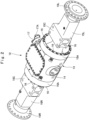
Fig. 2 is an outside appearance perspective view illustrating a front axle device inFig. 1 as viewed from forward in an enlarging manner. -
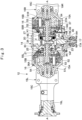
Fig. 3 is a cross section illustrating an internal structure of the front axle device. -
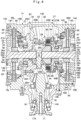
Fig. 4 is a cross section illustrating an essential part of a differential body, a differential mechanism and the like inFig. 3 in an enlarging manner. -
Fig. 5 is an exploded perspective view illustrating main components in the differential mechanism. -
Fig. 6 is a perspective view illustrating a first differential case as a unit. -
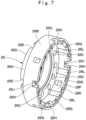
Fig. 7 is a perspective view illustrating a second differential case as a unit. -
Fig. 8 is a perspective view illustrating a third differential case as a unit. -
Fig. 9 is a perspective view illustrating a non-rotating disc as a unit. -
Fig. 10 is a perspective view illustrating a pressing plate as a unit. -
Fig. 11 is a perspective view illustrating a pressure ring as a unit. -
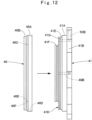
Fig. 12 is a side view illustrating a state of attaching a piston to a right retainer. -
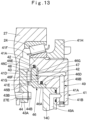
Fig. 13 is a cross section illustrating an essential part of the right retainer, the piston, an oil chamber, an oil passage and the like inFig. 4 in an enlarging manner. -
Fig. 14 is a front view illustrating a state of attaching the right retainer to a right partition wall of a differential body. - Hereinafter, descriptions will be in detail made by taking a case where vehicle axle devices according to an embodiment in the present invention are mounted on a wheel loader, as an example with reference to
Fig. 1 to Fig. 14 . - In
Fig. 1 , awheel loader 1 includes arear vehicle body 2, afront vehicle body 3,rear wheels 4,front wheels 5, a workingmechanism 6 that is disposed on the front side of thefront vehicle body 3, andaxle devices front vehicle body 3 is coupled to the front side of therear vehicle body 2 to be capable of swinging in a left-right direction. Therear wheels 4 are arranged in both sides of therear vehicle body 2 in the left-right direction, and thefront wheels 5 are arranged in both sides of thefront vehicle body 3 in the left-right direction. - Here, the
rear vehicle body 2 is provided with anengine 7 as a drive source, atorque converter 8, atransmission 9, a hydraulic pump (unillustrated) and the like, which are mounted thereon. Thetransmission 9 is connected to therear axle device 11 through apropeller shaft 9A extending in a front-rear direction and is connected to thefront axle device 12 through apropeller shaft 9B. Acab 10 in which an operator gets is disposed on the upper side of therear vehicle body 2. - The
rear axle device 11 is disposed to be positioned on the lower side of therear vehicle body 2. Therear axle device 11 is formed to extend in the left-right direction, and therear wheels 4 are respectively mounted to both end parts of therear axle device 11 in the left-right direction. - The
front axle device 12 is disposed to be positioned on the lower side of thefront vehicle body 3. Thefront axle device 12 is formed to extend in the left-right direction as similar to therear axle device 11, and thefront wheels 5 are respectively mounted to both end parts of thefront axle device 12 in the left-right direction. - Here, the
rear axle device 11 and thefront axle device 12 are configured in the same way with each other except for a point where a connection position between thepropeller shafts front axle device 12, and an explanation of the configuration of therear axle device 11 is to be omitted. - The
front axle device 12 is connected to thepropeller shaft 9B to drive/rotate the left and rightfront wheels 5. Thefront axle device 12 includes, as illustrated inFig. 2 andFig. 3 , acasing 13, left andright axle shafts differential mechanism 20, left and right planetarygear reduction mechanisms right brake mechanisms - The
casing 13 configures an outer shell of thefront axle device 12. Thecasing 13 is provided with a hollowdifferential body 14 positioned in an immediate part in the left-right direction, and left andright axle tubes differential body 14 in the left-right direction. Thedifferential mechanism 20 and the left andright brake mechanisms differential body 14. The left andright axle shafts right axle tubes front wheels 5 are respectively attached to the front end sides of the left andright axle shafts - As illustrated in
Fig. 3 andFig. 4 , thedifferential body 14 is composed of a cylindrical tubular body centering at an axis A - A extending in the left-right direction (axially), and has a one-piece structure in which aleft partition wall 14B and aright partition wall 14C, which will be described later, are integrally formed. Both ends of thedifferential body 14 in the left-right direction are respectively formed as opening ends 14A. The left andright partition walls differential body 14 in the left-right direction. The left andright partition walls end 14A to the radial inward. Throughholes 14D respectively smaller in diameter than the opening ends 14A are formed in the left andright partition walls - The inside of the
differential body 14 is sectioned into agear room 14E positioned between the left andright partition walls right brake rooms gear room 14E. Thedifferential mechanism 20 is accommodated in thegear room 14E, thebrake mechanism 55L is accommodated in theleft brake room 14F, and thebrake mechanism 55R is accommodated in theright brake room 14G. A projectingtube 14H is disposed on the rear side of the differential body 14 (in the rear axle device 11-side) to project toward thetransmission 9. The projectingtube 14H opens to thegear room 14E, and a later-describedinput shaft 17 is supported in the projectingtube 14H to be rotatable therein. - Base end sides of the left and
right axle tubes cylindrical parts 15A each having a radial dimension equal to each of both ends of thedifferential body 14 in the left-right direction. The insides of the left and rightcylindrical parts 15A are formed asreduction gear rooms 15B, and the later-described planetarygear reduction mechanisms reduction gear rooms 15B. Front end sides of the left andright axle tubes cylindrical part 15A. Thecylindrical parts 15A of the left andright axle tubes differential body 14 by using a plurality ofbolts 16. The left andright axle tubes differential body 14. -
Mount parts 15C, each formed in a rectangular shape, are arranged on the top surface sides of the left andright axle tubes cylindrical parts 15A. The left andright mount parts 15C are attached to thefront vehicle body 3 of thewheel loader 1. That is, thefront axle device 12 is an inboard type of an axle device in which thedifferential mechanism 20, the left and right planetarygear reduction mechanisms right brake mechanisms mount parts 15C of the left andright axle tubes rear axle device 11 is attached via an axle support (unillustrated) to therear vehicle body 2. - The
input shaft 17 is disposed through twobearings 18 in the projectingtube 14H of thedifferential body 14 to be rotatable therein. Aconnection flange 17A is attached to one end, which projects outside of the projectingtube 14H, of theinput shaft 17, and thisconnection flange 17A is connected to thepropeller shaft 9B. Adrive pinion 17B composed of a bevel gear is formed on the other end, which projects into thegear room 14E of thedifferential body 14, of theinput shaft 17, and thisdrive pinion 17B is engaged with a later-describedring gear 30. - The
left axle shaft 19L is disposed to axially extend in theleft axle tube 15L, and theright axle shaft 19R is disposed to axially extend in theright axle tube 15R. The left andright axle shafts axle shaft 19L is spline-coupled to acarrier 54 of the later-described planetarygear reduction mechanism 51L. The front end side of theaxle shaft 19L projects from theaxle tube 15L, and thefront wheel 5 is attached to the front end thereof. The base end side of theaxle shaft 19R is spline-coupled to acarrier 54 of the later-described planetarygear reduction mechanism 51R. The front end side of theaxle shaft 19R projects from theaxle tube 15R, and thefront wheel 5 is attached to the front end thereof. - Next, an explanation will be made of the
differential mechanism 20 according to the present embodiment. - The
differential mechanism 20 is disposed in thegear room 14E in thedifferential body 14. Thedifferential mechanism 20 distributes and transmits the drive force (rotational force) of theengine 7 as a drive source to the left and rightfront wheels 5 through the left andright axle shafts differential mechanism 20 is configured of a limited slip differential mechanism that temporarily becomes in a lock state (in a differential lock state) in association with a condition. Thedifferential mechanism 20 includes adifferential case 23, thering gear 30, a plurality of pinion gears 33, left and right side gears 34, 35, left andright transmission shafts rotating discs 38, a plurality ofnon-rotating discs 39, apiston 46, which will be described later, and the like. - A cylindrical
left retainer 21 having acollar part 21A is attached into the throughhole 14D of theleft partition wall 14B configuring part of thedifferential body 14, and thecollar part 21A of theleft retainer 21 is fixed on theleft partition wall 14B by usingbolts 22. In addition, a later-describedright retainer 41 is attached into the throughhole 14D of theright partition wall 14C configuring part of thedifferential body 14, and theright retainer 41 is fixed on theright partition wall 14C by usingbolts 22. - The
differential case 23 is disposed in thegear room 14E of thedifferential body 14. Thedifferential case 23 is supported throughbearings 24 on theleft retainer 21 and theright retainer 41 to be rotatable on the axis A - A. Thedifferential case 23 is formed as an outer shell of thedifferential mechanism 20, and is configured of a firstdifferential case 25, a seconddifferential case 26, and a thirddifferential case 27. - As illustrated in
Fig. 4 andFig. 6 , the firstdifferential case 25 is a stepped cylindrical body having a small-diametercylindrical part 25A and a large-diametercylindrical part 25B, wherein ashaft insert hole 25C is formed at the center part to penetrate in the left-right direction. A disc-shapedcollar part 25D in a large diameter is disposed between the small-diametercylindrical part 25A and the large-diametercylindrical part 25B. The small-diametercylindrical part 25A is supported through the bearing 24 on theleft retainer 21. A plurality of bolt insert holes 25E are formed in thecollar part 25D over an entire periphery thereof. A plurality of screw holes (female screw holes) 25G are formed on anaxial end surface 25F of the large-diametercylindrical part 25B over an entire periphery thereof. In addition, four recessedparts 25H in a semicircle shape are formed on theaxial end surface 25F of the large-diametercylindrical part 25B at angular intervals of 90 degrees. - As illustrated in
Fig. 4 andFig. 7 , the seconddifferential case 26 is formed as a hollow stepped cylindrical body having a small-diametercylindrical part 26A and a large-diametercylindrical part 26B. The small-diametercylindrical part 26A has an outer diameter dimension and a thickness equal to those of the large-diametercylindrical part 25B of the firstdifferential case 25. A plurality of bolt insert holes 26C are formed in the small-diametercylindrical part 26A over an entire periphery thereof to penetrate in the left-right direction. Each of thebolt insert holes 26C corresponds to each of the screw holes 25G of the firstdifferential case 25. Four recessedparts 26E in a semicircle shape are formed on theaxial end surface 26D of the small-diametercylindrical part 26A at angular intervals of 90 degrees. Each of the recessedparts 26E corresponds to each of the recessedparts 25H of the firstdifferential case 25. A plurality ofscrew holes 26G are formed on anaxial end surface 26F of the large-diametercylindrical part 26B over an entire periphery thereof. Four rectangular recessedparts 26H are formed on theaxial end surface 26F at angular intervals of 90 degrees. Ascrew hole 26J is formed on the bottom part of each of the recessedparts 26H. Further, a plurality of (for example, eight) recessedgrooves 26L in a semicircle shape in cross section axially extending are formed on an innerperipheral surface 26K of the large-diametercylindrical part 26B at equal angular intervals. Each of projectingparts 39A of thenon-rotating discs 39 to be described later is engaged to each of the recessedgrooves 26L. - The third
differential case 27 is attached to the seconddifferential case 26 to be positioned at the opposite side to the firstdifferential case 25 in the left-right direction. As illustrated inFig. 4 andFig. 8 , the thirddifferential case 27 has acylindrical part 27A and a disc-shapedcollar part 27B larger in diameter than thecylindrical part 27A. Thecollar part 27B has an outer diameter dimension equal to that of the large-diametercylindrical part 26B of the seconddifferential case 26. Ashaft insert hole 27C is formed at the center part of the thirddifferential case 27 to axially penetrate therethrough. Thecylindrical part 27A is supported through the bearing 24 on theright retainer 41. A plurality of bolt insert holes 27D are formed in thecollar part 27B over an entire periphery thereof. Each of thebolt insert holes 27D corresponds to each of the screw holes 26G in the seconddifferential case 26. In addition, four pin insert holes 27E, each smaller in diameter than thebolt insert hole 27D, are formed in thecollar part 27B at angular intervals of 90 degrees. Each of thepin insert holes 27E corresponds to each of the screw holes 26J in the seconddifferential case 26. Further, a plurality of (for example, eight)rectangular holes 27F are formed in sections, which are positioned closer to the radial inward than the respective bolt insert holes 27D, of thecollar part 27B to axially penetrate therethrough. Each ofrectangular projections 43D of a later-describedpressure ring 43 is inserted in each of therectangular holes 27F to be movable relative thereto. - In addition,
bolts 28 are respectively inserted in the respectivebolt insert holes 26C of the seconddifferential case 26. Therespective bolts 28 are threaded into therespective screw holes 25G of the firstdifferential case 25. Thereby, the seconddifferential case 26 is fixed to the firstdifferential case 25. At this time, theaxial end surface 25F of the firstdifferential case 25 abuts on theaxial end surface 26D of the second differential case 26 (small-diametercylindrical part 26A). Each ofshafts 32A of a later-describedspider 32 is engaged between the recessedpart 25H of the firstdifferential case 25 and the recessedpart 26E of the seconddifferential case 26. In addition,bolts 29 are respectively inserted in the respective bolt insert holes 27D of the thirddifferential case 27. Therespective bolts 29 are threaded into therespective screw holes 26G of the seconddifferential case 26. Thereby, the thirddifferential case 27 is fixed to the seconddifferential case 26. Thereby, thedifferential case 23 composed of the first, second and thirddifferential cases spider 32, the plurality of pinion gears 33, and the left and right side gears 34, 35 are arranged in the inside of thedifferential case 23. - The
ring gear 30 is attached to thedifferential case 23 in thegear room 14E of thedifferential body 14. Thering gear 30 is formed of an annular bevel gear. Thering gear 30 is fixed to thecollar part 25D of the firstdifferential case 25 by a plurality ofbolts 31 inserted in the respectivebolt insert holes 25E of the firstdifferential case 25. Thering gear 30 is engaged with thedrive pinion 17B of theinput shaft 17. Accordingly, the rotation of theengine 7 is transmitted through thetransmission 9 to theinput shaft 17, and thedrive pinion 17B is engaged with thering gear 30, thereby causing thedifferential case 23 to rotate. - The
spider 32 is disposed within thedifferential case 23. As illustrated inFig. 5 , thespider 32 has fourshafts 32A combined in a cross shape at angular intervals of 90 degrees. The front end side of each of theshafts 32A is held tightly between the recessedpart 25H of the firstdifferential case 25 and the recessedpart 26E of the seconddifferential case 26 configuring part of thedifferential case 23. Thespider 32 rotates together with thedifferential case 23. - The plurality of (four) pinion gears 33 are respectively supported on the four
shafts 32A arranged in thespider 32 to be rotatable thereon. The pinion gears 33 each are composed of a bevel gear and are united by thespider 32. The respective pinion gears 33 are engaged with theleft side gear 34 and theright side gear 35 within thedifferential case 23. - The
left side gear 34 and theright side gear 35 are respectively arranged in thedifferential case 23. The left and right side gears 34, 35 are paired in the left-right direction across thespider 32. In the present embodiment, theright side gear 35 configures one side gear of the left and right side gears. The left and right side gears 34, 35 each are composed of a bevel gear, and are engaged with each of the pinion gears 33 supported by thespider 32. Athrust plate 34A is disposed between theleft side gear 34 and the firstdifferential case 25 to reduce abrasion of the firstdifferential case 25. Athrust plate 35A is disposed between theright side gear 35 and the thirddifferential case 27 to reduce abrasion of the thirddifferential case 27. In addition, ashaft spline part 35B is formed on an outer peripheral surface of theright side gear 35. - The
left transmission shaft 36 is connected to theleft side gear 34, and theright transmission shaft 37 is connected to theright side gear 35. The left andright transmission shafts left transmission shaft 36 transmits the rotation of thedifferential case 23 through the planetarygear reduction mechanism 51L to theaxle shaft 19L. Theright transmission shaft 37 transmits the rotation of thedifferential case 23 through the planetarygear reduction mechanism 51R to theaxle shaft 19R. - The base end side of the
left transmission shaft 36 is spline-coupled to an inner peripheral side of theleft side gear 34. The front end side of theleft transmission shaft 36 extends through theleft partition wall 14B of thedifferential body 14 into theaxle tube 15L. Asun gear 36A configuring part of the planetarygear reduction mechanism 51L is formed integrally with the front end of theleft transmission shaft 36. On the other hand, the base end side of theright transmission shaft 37 is spline-coupled to an inner peripheral side of theright side gear 35. The front end side of theright transmission shaft 37 extends through theright partition wall 14C of thedifferential body 14 into theaxle tube 15R. Asun gear 37A configuring part of the planetarygear reduction mechanism 51R is formed integrally with the front end of theright transmission shaft 37. - The plurality of
rotating discs 38 and the plurality ofnon-rotating discs 39 are arranged between the innerperipheral surface 26K of the seconddifferential case 26 configuring part of thedifferential case 23 and theshaft spline part 35B of theright side gear 35. The respectiverotating discs 38 and the respectivenon-rotating discs 39 each are composed of an annular plate body and are arranged to alternately overlap axially. - Each of the
rotating discs 38 is spline-coupled on the inner peripheral side to theshaft spline part 35B of theright side gear 35. Accordingly, each of therotating discs 38 is rotatable relative to thedifferential case 23 together with theright side gear 35 in a state of being movable in an axial direction of theright side gear 35. As illustrated inFig. 9 , each of thenon-rotating discs 39 has the plurality of (for example, eight) projectingparts 39A over an entire periphery on the outer peripheral side. Each of the projectingparts 39A is engaged with each of the recessedgrooves 26L formed on the innerperipheral surface 26K of the seconddifferential case 26. Accordingly, each of thenon-rotating discs 39 is held in a state of being axially movable relative to thedifferential case 23 and being non-rotatable relative to thedifferential case 23. - A
pressing plate 40 is disposed between the thirddifferential case 27 and thenon-rotating disc 39 to be positioned within thedifferential case 23. As illustrated inFig. 10 , thepressing plate 40 is formed of an annular plate body, and four projectingparts 40A are arranged on the outer peripheral side of thepressing plate 40 to project to the radial outward at angular intervals of 90 degrees. The four projectingparts 40A are engaged to the respective recessedparts 26H of the seconddifferential case 26. Accordingly, thepressing plate 40 rotates together withdifferential case 23 in a state of being axially movable along the respective recessedparts 26H. Pin insert holes 40B are respectively formed in the respective projectingparts 40A of thepressing plate 40. Each of the pin insert holes 40B corresponds to thescrew hole 26J formed in each of the recessedparts 26H of the seconddifferential case 26. - The
right retainer 41 is attached to the throughhole 14D of theright partition wall 14C configuring part of thedifferential body 14. Theright retainer 41 configures one retainer positioned in the right side gear 35-side. As illustrated inFig. 12 to Fig. 14 , theright retainer 41 is formed in a stepped cylindrical shape having acylindrical part 41A fitted in the throughhole 14D, and acollar part 41B larger in diameter than thecylindrical part 41A. As illustrated inFig. 14 , a plurality of bolt insert holes 41C are formed in thecollar parts 41B of theright retainer 41 over an entire periphery thereof.Bolt 22 are inserted in the respective bolt insert holes 41C, and each of thebolts 22 is threaded into each of the screw holes 14J arranged in theright partition wall 14C of thedifferential body 14. Thereby, theright retainer 41 is attached to theright partition wall 14C in a state where thecylindrical part 41A is fitted into the throughhole 14D. - A
piston accommodating part 41D having a step part of two steps is formed in a section, which axially faces thenon-rotating disc 39, of theright retainer 41. The pistonaccommodating part 41D is formed by cutting an outer peripheral surface of thecylindrical part 41A over an entire periphery thereof. This pistonaccommodating part 41D has a large-diameter step part 41E adjacent to the end surface of thecylindrical part 41A, and a small-diameter step part 41F adjacent to the end surface of the large-diameter step part 41E. The later-describedpiston 46 is attached to thepiston accommodating part 41D. O-rings 42 are respectively attached to outer peripheral surfaces of the large-diameter step part 41E and the small-diameter step part 41F. The O-ring 42 maintains liquid-tight sealing between thepiston 46 and the right retainer 41 (piston accommodating part 41D) . In addition, a later-described retainer-side oil passage 49B opens to anend surface 41G of thepiston accommodating part 41D positioned in a boundary part between the large-diameter step part 41E and the small-diameter step part 41F. Further, anut 41H is threaded on an inner peripheral side of theright retainer 41, and pressures are given to thebearing 24 between thenut 41H and the thirddifferential case 27. - The
pressure ring 43 is disposed between theright retainer 41 and thenon-rotating disc 39. Thepressure ring 43 is pressed by thepiston 46 to axially move and presses thenon-rotating disc 39 against therotating disc 38 via thepressing plate 40. As illustrated inFig. 11 , thepressure ring 43 is formed as an annular body having an outer diameter dimension smaller in diameter than thecollar part 27B of the thirddifferential case 27. Four projectingparts 43A are arranged on the outer peripheral side of thepressure ring 43 to project to the radial outward at angular intervals of 90 degrees. Pin insert holes 43B are respectively formed in the four projectingparts 43A. Each of the pin insert holes 43B corresponds to thescrew hole 26J formed in each of the recessedparts 26H of the seconddifferential case 26. - A plurality of (for example, eight)
rectangular projections 43D are arranged to project on anend surface 43C, which axially faces the thirddifferential case 27, of thepressure ring 43. Each of therectangular projections 43D is inserted in each of therectangular holes 27F of the thirddifferential case 27. The front end of each of therectangular projections 43D abuts on thepressing plate 40. - Four
pins 44 are arranged in the respective recessedparts 26H of the seconddifferential case 26, and axially extend toward theright retainer 41. Each of thepins 44 has ascrew part 44A, and thisscrew part 44A is threaded in thescrew hole 26J formed in each of the recessedparts 26H. Each of thepins 44 projects outside of thedifferential case 23 through each of the pin insert holes 40B of thepressing plate 40 and each of thepin insert holes 27E of the thirddifferential case 27. Each of thepins 44 projecting outside of thedifferential case 23 is inserted in each of pin insert holes 43B of thepressure ring 43. Thepressure ring 43 axially moves while being guided by each of thepins 44. Astop ring 44B is attached in a projecting end side of each of thepins 44. Thepressure ring 43 is prevented from being axially pulled out by thestop ring 44B. - Four return springs 45 each are arranged on an outer peripherical side of each of the
pins 44 to be positioned between the respective recessedparts 26H of the seconddifferential case 26 and thepressing plate 40. Each of the return springs 45 is composed of a compression spring and urges thepressing plate 40 to the piston 46-side (third differential case 27-side). - The
piston 46 is disposed in thepiston accommodating part 41D of theright retainer 41. As illustrated inFig. 12 andFig. 13 , thepiston 46 is formed in a stepped cylindrical shape having a large-diametercylindrical part 46A and a small-diametercylindrical part 46B. An inner-diameter projectedpart 46C in an annular shape is disposed on an inner peripheral side of a boundary part between the large-diametercylindrical part 46A and the small-diametercylindrical part 46B to extend to the radial inward. Here, an outer diameter dimension of the large-diametercylindrical part 46A is set to be equal to that of thecylindrical part 41A of theright retainer 41. An innerperipheral surface 46D of the large-diametercylindrical part 46A is slidably fitted on an outer peripheral surface of the large-diameter step part 41E of theright retainer 41. An innerperipheral surface 46E of the inner-diameter projectedpart 46C is slidably fitted on an outer peripheral surface of the small-diameter step part 41F of theright retainer 41. - In this way, the
right retainer 41 is provided with thepiston accommodating part 41D that is smaller in an outer diameter dimension than thecylindrical part 41A and is composed of the large-diameter step part 41E and the small-diameter step part 41F. Thepiston 46 is attached in thepiston accommodating part 41D of theright retainer 41. As a result, the outer diameter dimension of the large-diametercylindrical part 46A of thepiston 46 is equal to thecylindrical part 41A of theright retainer 41. Thepiston 46 is inserted in the throughhole 14D formed in theright partition wall 14C of thedifferential body 14 in a state of being incorporated in thepiston accommodating part 41D of theright retainer 41. In this state, by fixing theright retainer 41 on theright partition wall 14C, thepiston 46 can be caused to abut on thepressure ring 43 via a later-describedthrust bearing 48. - An end surface of the inner-diameter projected
part 46C of thepiston 46 in the small-diametercylindrical part 46B-side is formed as an annularpressing surface 46F pressing thepressure ring 43. On the other hand, an entireperipheral groove 46G in an annular shape is formed on an end surface of the inner-diameter projectedpart 46C at the opposite side to thepressing surface 46F (in the large-diametercylindrical part 46A-side). An annularhydraulic chamber 47 is formed between the entireperipheral groove 46G and theend surface 41G of thepiston accommodating part 41D in theright retainer 41 over an entire periphery thereof. Accordingly, when pressurized oil is supplied to thehydraulic chamber 47, thepiston 46 axially moves to press thepressure ring 43. - An annular thrust bearing 48 is disposed between the
pressing surface 46F of thepiston 46 and thepressure ring 43. Thethrust bearing 48 is disposed on an inner peripheral side of the small-diametercylindrical part 46B of thepiston 46 to be radially positioned. Accordingly, thepiston 46 can press thepressure ring 43 via thethrust bearing 48, thus suppressing friction from being generated between thepiston 46 and thepressure ring 43. - An
oil passage 49 is formed in theright partition wall 14C of thedifferential body 14 and in theright retainer 41 to perform supply and discharge of pressurized oil (liquid pressure) to and from thehydraulic chamber 47. Theoil passage 49 is composed of a partition wall-side oil passage 49A formed in theright partition wall 14C and a retainer-side oil passage 49B formed in theright retainer 41. A flow inlet of the partition wall-side oil passage 49A opens to the outer peripheral surface of thedifferential body 14. A flow outlet of the retainer-side oil passage 49B opens to theend surface 41G of thepiston accommodating part 41D of theright retainer 41. A hydraulic source (unillustrated) is connected to the flow inlet of the partition wall-side oil passage 49A. The pressurized oil discharged from the hydraulic source is supplied via the partition wall-side oil passage 49A and the retainer-side oil passage 49B to thehydraulic chamber 47. - Thereby, the
piston 46 axially presses thepressure ring 43 through thethrust bearing 48. Each of therectangular projections 43D of thepressure ring 43 presses thepressing plate 40 to thenon-rotating disc 39 against a spring force of each of the return springs 45. Therefore, the respectivenon-rotating discs 39 and the respectiverotating discs 38 are made in frictional contact with each other between the seconddifferential case 26 and thepiston 46. Thereby, when a torque difference between theleft axle shaft 19L and theright axle shaft 19R is equal to or less than the torque capacity of the clutch, thedifferential mechanism 20 becomes in the lock state (the differential lock state). As a result, the left and right side gears 34, 35 rotate together with thedifferential case 23 to transmit the torque to the left andright axle shafts - On the other hand, when the supply of the pressurized oil to the
hydraulic chamber 47 is stopped, thepressing plate 40 and thepiston 46 move in a direction away from thenon-rotating discs 39 by the spring force of each of the return springs 45. As a result, the contact state between the respectivenon-rotating discs 39 and the respectiverotating discs 38 is released and theright side gear 35 is made to be rotatable relative to thedifferential case 23 to make the differential function effective. As a result, the rotational force of theengine 7 is distributed to the leftfront wheel 5 and the rightfront wheel 5 in accordance with a difference in the frictional force between the left and rightfront wheels 5 and the road surface. - An air-bleeding
passage 50 is formed in theright partition wall 14C of thedifferential body 14 and in theright retainer 41. The air-bleedingpassage 50 is, at the time of incorporating thepiston 46 to thepiston accommodating part 41D of theright retainer 41, a passage for discharging air in thehydraulic chamber 47 to an exterior. As illustrated inFig. 14 , the air-bleedingpassage 50 is configured of a partition wall-side passage 50A formed in theright partition wall 14C and a retainer-side passage 50B formed in theright retainer 41. One end 50A1 of the partition wall-side passage 50A opens to an end surface, which thecollar part 41B of theright retainer 41 abuts on, of theright partition wall 14C. The other end 50A2 of the partition wall-side passage 50A opens to the outer peripheral surface of thedifferential body 14. One end 50B1 of the retainer-side passage 50B opens to thepiston accommodating part 41D. The other end 50B2 of the retainer-side passage 50B opens to an axial end surface of thecollar part 41B to be communicated with the one end 50A1 of the partition wall-side passage 50A. Thereby, when thepiston 46 is installed in thepiston accommodating part 41D of theright retainer 41, the air in thehydraulic chamber 47 is discharged through the retainer-side passage 50B and the partition wall-side passage 50A to an exterior. Accordingly, thepiston 46 can smoothly be installed in thepiston accommodating part 41D. It should be noted that after installing thepiston 46, the other end 50A2 of the partition wall-side passage 50A is blocked by a sealing plug (unillustrated). - The left planetary
gear reduction mechanism 51L is disposed in areduction gear room 15B of theleft axle tube 15L (refer toFig. 2 ). The planetarygear reduction mechanism 51L is configured of thesun gear 36A formed integrally with the front end side of theleft transmission shaft 36, aring gear 52, a plurality of planet gears 53 and acarrier 54. Thering gear 52 is disposed on an inner peripheral side of theaxle tube 15L (cylindrical part 15A). The plurality of planet gears 53 are engaged with thesun gear 36A and thering gear 52. Thecarrier 54 rotatably supports each of the planet gears 53 and is spline-coupled to theaxle shaft 19L. Accordingly, the rotation of theleft transmission shaft 36 is transmitted to theaxle shaft 19L in a state of being reduced in speed by the planetarygear reduction mechanism 51L. - The right planetary
gear reduction mechanism 51R is disposed in thereduction gear room 15B of theright axle tube 15R. The planetarygear reduction mechanism 51R is configured of, as similar to the left planetarygear reduction mechanism 51L, thesun gear 37A formed integrally with the front end side of theright transmission shaft 37, thering gear 52, the plurality of planet gears 53 and thecarrier 54. Thecarrier 54 is spline-coupled to theaxle shaft 19L. Accordingly, the rotation of theright transmission shaft 37 is transmitted to theaxle shaft 19R in a state of being reduced in speed by the planetarygear reduction mechanism 51R. - The
left brake mechanism 55L is disposed in theleft brake room 14F of thedifferential body 14. Thisbrake mechanism 55L is configured as a wet type multiple-brake mechanism, for example. Thebrake mechanism 55L includes a plurality ofbrake discs 57 spline-coupled via ahub 56 on an outer peripheral side of theleft transmission shaft 36, abrake plate 58, and abrake piston 59. Each of thebrake discs 57 rotates together with theleft transmission shaft 36. Thebrake plate 58 is disposed to face thebrake disc 57 and is held in a non-rotating state relative to thedifferential body 14. In addition, thebrake piston 59 pushes thebrake plate 58 against thebrake disc 57 by the hydraulic force from an exterior. Thereby, the braking force is applied to theleft transmission shaft 36. - The
right brake mechanism 55R is disposed in theright brake room 14G of thedifferential body 14. Thebrake mechanism 55R is configured of, as similar to theleft brake mechanism 55L, a plurality ofbrake discs 57 spline-coupled via ahub 56 on an outer peripheral side of theright transmission shaft 37, abrake plate 58, and abrake piston 59. In addition, thebrake piston 59 pushes thebrake plate 58 against thebrake disc 57 by the hydraulic force from an exterior. Thereby, the braking force is applied to theright transmission shaft 37. - The
front axle device 12 according to the present embodiment has the configuration as described above, and hereinafter, an explanation will be made of the operation of thefront axle device 12 at the traveling of thewheel loader 1. - When an operator who has got in the
cab 10 operates theengine 7, a rotational force of theengine 7 is transmitted to theinput shaft 17 through thepropeller shaft 9B of thetransmission 9. The rotation of theinput shaft 17 is transmitted from thedrive pinion 17B to thering gear 30 of thedifferential mechanism 20 to rotate thedifferential case 23 to which thering gear 30 is attached. - Each of the
shafts 32A of thespider 32 is tightly held between the recessedpart 25H of the firstdifferential case 25 and the recessedpart 26E of the seconddifferential case 26 configuring part of thedifferential case 23. Accordingly, thespider 32 rotates together with thedifferential case 23 in a state where the four pinion gears 33 are supported by each of theshafts 32A. - Here, in a state where the pressurized oil is not supplied to the
hydraulic chamber 47 formed between thepiston accommodating part 41D of theright retainer 41 and thepiston 46 from the hydraulic source, thepressing plate 40 is urged in the direction away from thenon-rotating discs 39 by the spring forces of the respective return springs 45. Thereby, the respectivenon-rotating discs 39 and the respectiverotating discs 38 are held in the non-contact state with each other. - When the
differential case 23 rotates together with the respective pinion gears 33, theleft side gear 34 and theright side gear 35 engaged with the respective pinion gears 33 rotate. The rotation of theleft transmission shaft 36 coupled to theleft side gear 34 is transmitted to theaxle shaft 19L in a state of being reduced in speed by the planetarygear reduction mechanism 51L. Similarly, the rotation of theright transmission shaft 37 coupled to theright side gear 35 is transmitted to theaxle shaft 19R in a state of being reduced in speed by the planetarygear reduction mechanism 51R. As a result, the left and rightfront wheels 5 are driven and rotated simultaneously. - Here, in a case where a frictional force between the left
front wheel 5 and the road surface is equal to that between the rightfront wheel 5 and the road surface at the straight-traveling of thewheel loader 1, the left and right side gears 34, 35 rotate together with thedifferential case 23. As a result, the rotational force of theengine 7 is transmitted to the left and rightfront wheels 5 on an equal basis, making it possible to cause thewheel loader 1 to travel straight. - In addition, in a case where the frictional force between the left
front wheel 5 and the road surface differs from that between the rightfront wheel 5 and the road surface at the revolving traveling of thewheel loader 1, theleft side gear 34 andright side gear 35 rotate in rotating speeds different from each other. As a result, the rotational force of theengine 7 is distributed to the leftfront wheel 5 and the rightfront wheel 5 in accordance with a difference in the frictional force between the leftfront wheel 5 and the road surface and between the rightfront wheel 5 and the road surface, and therefore, it is possible to cause thewheel loader 1 to travel for revolution. - On the other hand, when the
wheel loader 1 travels in the sand, in the mud or the like, for example, there are some cases where a ground road surface state of the leftfront wheel 5 differs from a ground road surface state of the rightfront wheel 5. In this case, it is required to avoid one of the left and rightfront wheels 5 from possibly running idle due to thedifferential mechanism 20. - In this case, for example, a foot pedal, a manual switch and the like (none of them is illustrated) arranged in the
cab 10 are operated. Thereby, the pressurized oil from the hydraulic source is supplied through the partition wall-side oil passage 49A in thedifferential body 14 and the retainer-side oil passage 49B in theright retainer 41 to thehydraulic chamber 47. - Therefore, the
piston 46 axially presses thepressure ring 43 through thethrust bearing 48. Each of therectangular projections 43D of thepressure ring 43 presses thepressing plate 40 to thenon-rotating disc 39 against the spring force of each of the return springs 45. Accordingly, the respectivenon-rotating discs 39 and the respectiverotating discs 38 come in shaft frictional contact with each other between the seconddifferential case 26 and thepiston 46. Thereby, when the torque difference between theleft axle shaft 19L and theright axle shaft 19R is equal to or less than the torque capacity of the clutch, thedifferential mechanism 20 becomes in the lock state (the differential lock state). As a result, the left and right side gears 34, 35 rotate together with thedifferential case 23 to transmit the torque to the left andright axle shafts front wheels 5 from running idle, to cause thewheel loader 1 to travel. - Here, in a case of incorporating the
differential mechanism 20 according to the present embodiment in thegear room 14E of thedifferential body 14, each of the pinion gears 33, the left and right side gears 34, 35, the rotatingdiscs 38, thenon-rotating discs 39 and the like are assembled within thedifferential case 23. In addition, thering gear 30 is attached to the firstdifferential case 25 and thepin 44 is attached in each of the screw holes 26J of the seconddifferential case 26. In a state where thereturn spring 45 is arranged on the outer peripheral side of each of thepins 44, each of thepins 44 is inserted in thepin insert hole 27E of the thirddifferential case 27. Further, each of thepins 44 is inserted in the pin throughhole 43B of thepressure ring 43 and each of therectangular projections 43D of thepressure ring 43 is inserted in each of therectangular holes 27F of the thirddifferential case 27. In this state, thestop ring 44B is attached to the projecting end of each of thepins 44. - In addition, the
differential case 23 to which thepressure ring 43 is attached is inserted into thegear room 14E of thedifferential body 14. In this state, theleft retainer 21 is inserted in the throughhole 14D of theleft partition wall 14B, and thecollar part 21A is attached to theleft partition wall 14B. Thereby, the firstdifferential case 25 is held via thebearing 24 by theleft retainer 21. On the other hand, thepiston 46 is incorporated in thepiston accommodating part 41D of theright retainer 41. In this state, thepiston 46 and thecylindrical part 41A of theright retainer 41 are inserted in the throughhole 14D formed in theright partition wall 14C of thedifferential body 14 and thecollar part 41B is attached to theright partition wall 14C. As a result, the thirddifferential case 27 is held via thebearing 24 by theright retainer 41. At this time, it is possible to cause thepiston 46 to abut on thepressure ring 43 via thethrust bearing 48. - In this way, according to the present embodiment, the
piston accommodating part 41D is formed in theright retainer 41 to be attached to theright partition wall 14C of thedifferential body 14, making it possible to assemble thepiston 46 to thepiston accommodating part 41D. Accordingly, it is not required to form the piston accommodating part on the surface of theright partition wall 14C in thegear room 14E-side. Thereby, it is possible to use thedifferential body 14 of the one-piece structure in which the left andright partition walls gear room 14E are integrally formed. Accordingly, as compared to a case where the piston accommodating part is formed on the partition wall of the differential body, it is possible to more simplify the configuration of thedifferential body 14. As a result, it is possible to simplify the configuration of the entirefront axle device 12 to contribute to a reduction in the manufacture cost. - In addition, after inserting the
differential case 23 into thegear room 14E of thedifferential body 14, theright retainer 41 to which thepiston 46 is assembled can be attached to theright partition wall 14C. Thereby, it is possible to cause thepiston 46 to abut on thepressure ring 43 through thethrust bearing 48. This result can enhance the workability at the time of assembling thepiston 46 to thedifferential mechanism 20 accommodated in thedifferential body 14. In addition, it is not required to perform the assembly work of thepiston 46 in thegear room 14E of thedifferential body 14. Therefore, thedifferential case 23 disposed in thegear room 14E can be structured to be large, increasing the number of therotating discs 38 and thenon-rotating discs 39, for example. - In this way, according to the present embodiment, the
front axle device 12 has thedifferential mechanism 20 transmitting the rotational force of theengine 7 to the left andright axle shafts differential mechanism 20 is provided with thedifferential case 23 that is rotatably supported through the bearing 24 by the left andright retainers holes 14D of the left andright partition walls engine 7, the plurality of pinion gears 33 that are arranged in thedifferential case 23 and rotate together with thedifferential case 23, the left and right side gears 34, 35 that are arranged in thedifferential case 23 and engaged with the respective pinion gears 33, and the left andright transmission shafts differential case 23 to the left andright axle shafts - In addition, the
differential case 23 is provided therein with the plurality ofrotating discs 38 spline-coupled to the outer peripheral side of theright side gear 35 and the plurality ofnon-rotating discs 39 that are arranged between the respectiverotating discs 38 and are non-rotatable relative to thedifferential case 23 and movable in the left-right direction, thepressure ring 43 is disposed between theright retainer 41 positioned in the right side gear 35-side and thenon-rotating discs 39 to press thenon-rotating discs 39 toward therotating discs 38, thepiston accommodating part 41D is disposed in theright retainer 41 in a position facing thepressure ring 43 in the left-right direction, and thepiston 46 is disposed in thepiston accommodating part 41D, thepiston 46 being displaced by the liquid pressure to press thenon-rotating discs 39 via thepressure ring 43 against the rotatingdiscs 38 and connect the left andright transmission shafts - According to this configuration, since the
piston 46 can be assembled to thepiston accommodating part 41D formed in theright retainer 41, it is not required to form the piston accommodating part on the surface of theright partition wall 14C in thegear room 14E-side. Thereby, it is possible to use thedifferential body 14 of the one-piece structure in which the left andright partition walls gear room 14E are integrally formed. Accordingly, as compared to a case of forming the piston accommodating part in the partition wall of the differential body, the configuration of thedifferential body 14 can be more simplified. - According to the present embodiment, the
hydraulic chamber 47 to which the pressurized oil for pressing thepiston 46 is supplied is formed between thepiston 46 and thepiston accommodating part 41D of theright retainer 41, and theoil passage 49 for connection between the hydraulic source and thehydraulic chamber 47 is formed in theright partition wall 14C of thedifferential body 14 and in theright retainer 41. According to this configuration, the pressurized oil from the hydraulic source is supplied through theoil passage 49 formed in theright partition wall 14C and in theright retainer 41 to thehydraulic chamber 47. Accordingly, it is not required to connect a hydraulic line composed of a different component from theright retainer 41 to thehydraulic chamber 47, making it possible to simplify the configuration of thedifferential mechanism 20. - According to the present embodiment, the
differential case 23 includes the firstdifferential case 25 that is rotatably supported by theleft retainer 21 and in which thering gear 30 is disposed on the outer peripheral side and theleft side gear 34 is disposed on the inner peripheral side, the seconddifferential case 26 that is attached to the firstdifferential case 25 and in which theright side gear 35 is disposed on the inner peripheral side and the thirddifferential case 27 that is attached to the seconddifferential case 26 to be positioned at the opposite side to the firstdifferential case 25 in the left-right direction and is rotatably supported on theright retainer 41, and the respectiverotating discs 38 and the respectivenon-rotating discs 39 are arranged between the inner peripheral side of the seconddifferential case 26 and theshaft spline part 35B of theright side gear 35, and thepiston 46 can press thenon-rotating discs 39 via thepressure ring 43 inserted in the thirddifferential case 27. - According to the present embodiment, the
pressing plate 40 is disposed between thenon-rotating disc 39 and thepressure ring 43 to press thenon-rotating discs 39 when thepiston 46 operates to move thepressure ring 43 toward thenon-rotating disc 39, thepin 44 is disposed between the seconddifferential case 26 and thepressure ring 43 to be inserted in the thirddifferential case 27 and in thepressing plate 40, and thereturn spring 45 is disposed between the seconddifferential case 26 and thepressing plate 40, thereturn spring 45 being located on the outer peripheral side of thepin 44 to urge thepressing plate 40 toward the piston 46-side. - According to this configuration, when the supply of the pressurized oil to the
hydraulic chamber 47 is stopped, thepressing plate 40 and thepiston 46 move in a direction away from thenon-rotating discs 39 by the spring force of thereturn spring 45. As a result, the contact state between the respectivenon-rotating discs 39 and the respectiverotating discs 38 is released and theright side gear 35 is made rotatable relative to thedifferential case 23 to make the differential function effective. As a result, the rotational force of theengine 7 can be distributed to the leftfront wheel 5 and the rightfront wheel 5 in accordance with the difference in frictional force between the leftfront wheel 5 and the road surface and between the rightfront wheel 5 and the road surface. - It should be noted that in the present embodiment, the
wheel loader 1 is exemplified as the vehicle to which therear axle device 11 and thefront axle device 12 are applied. The present invention is, however, not limited thereto, but, for example, may be applied widely to other wheel type construction machines such as a wheel type excavator. -
- 1:
- Wheel loader
- 4:
- Rear wheel
- 5:
- Front wheel
- 7:
- Engine (Drive source)
- 11:
- Rear axle device
- 12:
- Front axle device
- 14:
- Differential body
- 14B:
- Left partition wall
- 14C:
- Right partition wall
- 14D:
- Through hole
- 15L,
- 15R: Axle tube
- 19L,
- 19R: Axle shaft
- 20:
- Differential mechanism
- 21:
- Left retainer (Other retainer)
- 23:
- Differential case
- 25:
- First differential case
- 26:
- Second differential case
- 27:
- Third differential case
- 30:
- Ring gear
- 33:
- Pinion gear
- 34:
- Left side gear
- 35:
- Right side gear (One side gear)
- 36:
- Left transmission shaft
- 37:
- Right transmission shaft
- 38:
- Rotating disc
- 39:
- Non-rotating disc
- 40:
- Pressing plate
- 41:
- Right retainer (One retainer)
- 41D:
- Piston accommodating part
- 43:
- Pressure ring
- 44:
- Pin
- 45:
- Return spring
- 46:
- Piston
- 47:
- Hydraulic chamber
- 49:
- Oil passage
Claims (2)
- A vehicle axle device comprising:
left and right axle shafts (19L, 19R) to which left and right wheels (4, 5) are respectively attached;a hollow differential body (14) of a one-piece structure that is disposed between left and right axle tubes (15L, 15R) accommodating the left and right axle shafts (19L, 19R) and in both sides of a left-right direction of which partition walls (14B, 14C) each having a through hole (14D) penetrating therethrough in the left-right direction are respectively arranged integrally; anda differential mechanism (20) that is disposed between the left and right partition walls (14B, 14C) of the differential body (14) to transmit a rotational force of a drive source (7) to the left and right axle shafts (19L, 19R), wherein the differential mechanism (20) includes:wherein:a differential case (23) that is rotatably supported through bearings (24) on left and right retainers (21, 41) respectively attached in the through holes (14D) of the left and right partition walls (14B, 14C) and is rotated by the drive source (7);a plurality of pinion gears (33) that are arranged in the differential case (23) and rotate together with the differential case (23) ;left and right side gears (34, 35) that are arranged in the differential case (23) and are respectively engaged with the respective pinion gears (33); andleft and right transmission shafts (36, 37) that are connected to the respective side gears (34, 35) to transmit the rotation of the differential case (23) to the left and right axle shafts (19L, 19R),the differential case (23) is therein provided with:
a plurality of rotating discs (38) that are spline-coupled to an outer peripheral side of one side gear (35) of the left and right side gears (34, 35); anda plurality of non-rotating discs (39) that are arranged between the plurality of rotating discs (38) and are non-rotatable relative to the differential case (23) and movable in the left-right direction,a pressure ring (43) is disposed between one retainer (41) of the left and right retainers (21, 41) positioned in the one side gear (35)-side and the non-rotating disc (39) to press the non-rotating disc (39) against the rotating disc (38),a piston accommodating part (41D) is disposed in the one retainer (41) in a position facing the pressure ring (43) in the left-right direction, anda piston (46) is disposed in the piston accommodating part (41D) of the one retainer (41), the piston (46) being displaced by hydraulic pressure to press the non-rotating disc (39) via the pressure ring (43) against the rotating disc (38) and couple the left and right transmission shafts (36, 37), whereinthe differential case (23) includes: a first differential case (25) that is rotatably supported by the other retainer (21) of the left and right retainers (21, 41) and is provided with a ring gear (30) on an outer peripheral side thereof, to which a rotational force by the drive source (7) is transmitted, and with the other side gear (34) of the left and right side gears (34, 35) on an inner peripheral side thereof;a second differential case (26) that is attached to the first differential case (25) and is provided with the one side gear (35) on an inner peripheral side thereof; anda third differential case (27) that is attached to the second differential case (26) to be positioned at the opposite side to the first differential case (25) in the left-right direction and is rotatably supported on the one retainer (41),the respective rotating discs (38) and the respective non-rotating discs (39) are arranged between the inner peripheral side of the second differential case (26) and the one side gear (35),the piston (46) presses the non-rotating discs (39) via the pressure ring (43) inserted in the third differential case (27),a hydraulic chamber (47) to which pressurized oil for pressing the piston (46) is supplied is formed between the piston (46) and the piston accommodating part (41D) of the one retainer (41), andan oil passage (49) for connection between the hydraulic source and the hydraulic chamber (47) is formed in the one partition wall (14C) and in the one retainer (41). - The vehicle axle device according to claim 1, whereina pressing plate (40) is disposed between the non-rotating disc (39) and the pressure ring (43) to press the non-rotating discs (39) when the piston (46) operates to move the pressure ring (43) toward the non-rotating discs (39),a pin (44) is disposed between the second differential case (26) and the pressure ring (43) to be inserted in the third differential case (27) and in the pressing plate (40), anda return spring (45) is disposed between the second differential case (26) and the pressing plate (40), the return spring (45) being disposed on an outer peripheral side of the pin (44) to urge the pressing plate (40) toward the piston (46) side.
Applications Claiming Priority (2)
| Application Number | Priority Date | Filing Date | Title |
|---|---|---|---|
| JP2018153202A JP7021030B2 (en) | 2018-08-16 | 2018-08-16 | Vehicle axle device |
| PCT/JP2019/030710 WO2020036088A1 (en) | 2018-08-16 | 2019-08-05 | Vehicle axle device |
Publications (3)
| Publication Number | Publication Date |
|---|---|
| EP3839292A1 EP3839292A1 (en) | 2021-06-23 |
| EP3839292A4 EP3839292A4 (en) | 2022-04-06 |
| EP3839292B1 true EP3839292B1 (en) | 2025-03-26 |
Family
ID=69524795
Family Applications (1)
| Application Number | Title | Priority Date | Filing Date |
|---|---|---|---|
| EP19850688.3A Active EP3839292B1 (en) | 2018-08-16 | 2019-08-05 | Vehicle axle device |
Country Status (5)
| Country | Link |
|---|---|
| US (1) | US11143281B2 (en) |
| EP (1) | EP3839292B1 (en) |
| JP (1) | JP7021030B2 (en) |
| CN (1) | CN111788412B (en) |
| WO (1) | WO2020036088A1 (en) |
Families Citing this family (4)
| Publication number | Priority date | Publication date | Assignee | Title |
|---|---|---|---|---|
| WO2021192046A1 (en) * | 2020-03-24 | 2021-09-30 | ジーケーエヌ オートモーティブ リミテッド | Final drive |
| CN213973547U (en) * | 2020-10-30 | 2021-08-17 | 德纳(无锡)技术有限公司 | Electric power train and electric vehicle using the same |
| JP7729755B2 (en) * | 2021-03-31 | 2025-08-26 | ナブテスコ株式会社 | Drive transmission device, construction machine, drive transmission method, and program |
| WO2022215447A1 (en) * | 2021-04-05 | 2022-10-13 | 日立建機株式会社 | Vehicle axle device |
Family Cites Families (23)
| Publication number | Priority date | Publication date | Assignee | Title |
|---|---|---|---|---|
| DE3212495C2 (en) * | 1982-04-03 | 1985-08-29 | Dr.Ing.H.C. F. Porsche Ag, 7000 Stuttgart | Lockable differential gear for motor vehicles |
| US4679463A (en) * | 1984-08-31 | 1987-07-14 | Nissan Motor Co., Ltd. | Limited slip differential |
| JPS61175339A (en) * | 1985-01-30 | 1986-08-07 | Tochigi Fuji Ind Co Ltd | Differential device for vehicle |
| DE3636175A1 (en) * | 1986-10-24 | 1988-04-28 | Bayerische Motoren Werke Ag | LOCKABLE DIFFERENTIAL GEARBOX |
| JPH0448349Y2 (en) * | 1987-04-20 | 1992-11-13 | ||
| JP2527204B2 (en) * | 1987-10-09 | 1996-08-21 | 日産自動車株式会社 | Drive force distribution controller for four-wheel drive vehicle |
| US4867010A (en) * | 1988-07-28 | 1989-09-19 | Deere & Company | Differential lock with non-rotating hydraulically actuated piston |
| US5279401A (en) * | 1988-11-08 | 1994-01-18 | Uni-Cardan Ag | Method for controlling friction clutches or brakes |
| JPH02290735A (en) * | 1989-04-28 | 1990-11-30 | Fuji Heavy Ind Ltd | Differential limit control device for vehicle |
| US5310388A (en) * | 1993-02-10 | 1994-05-10 | Asha Corporation | Vehicle drivetrain hydraulic coupling |
| US5536215A (en) * | 1993-02-10 | 1996-07-16 | Asha Corporation | Hydraulic coupling for vehicle drivetrain |
| JPH1019108A (en) | 1996-07-02 | 1998-01-23 | Tochigi Fuji Ind Co Ltd | Differential device |
| US6120408A (en) * | 1999-03-08 | 2000-09-19 | Mclaren Automotive Group, Inc. | Limited slip differential with temperature compensating valve |
| DE19929070A1 (en) * | 1999-06-25 | 2000-12-28 | Zahnradfabrik Friedrichshafen | Compensation drive for vehicle; has ring gear driven by driving pinion, which is connected to rotating differential holder and having couplings to lock balancing drive at least partly |
| US6561939B1 (en) * | 2001-11-06 | 2003-05-13 | Torque-Traction Technologies, Inc. | Gear module for clutch actuator in differential assembly |
| JP4957274B2 (en) * | 2007-02-02 | 2012-06-20 | トヨタ自動車株式会社 | Differential device for vehicle |
| US8961348B2 (en) * | 2011-06-13 | 2015-02-24 | Caterpillar Inc. | Drive axle housing system for reducing oil churning |
| JP5986201B2 (en) * | 2012-06-28 | 2016-09-06 | 日立建機株式会社 | Wheeled construction machine |
| WO2015041917A1 (en) * | 2013-09-17 | 2015-03-26 | Eaton Corporation | Limited slip differential assembly |
| JP2015135004A (en) * | 2014-01-17 | 2015-07-27 | 日立建機株式会社 | Wheeled construction machine |
| CN103939570A (en) * | 2014-04-25 | 2014-07-23 | 徐工集团工程机械股份有限公司 | Hydraulic antiskid self-locking differential mechanism |
| DE102014220347B4 (en) * | 2014-10-08 | 2022-06-02 | Zf Friedrichshafen Ag | gear arrangement |
| JP6651838B2 (en) * | 2015-12-22 | 2020-02-19 | 株式会社ジェイテクト | Driving force distribution device |
-
2018
- 2018-08-16 JP JP2018153202A patent/JP7021030B2/en active Active
-
2019
- 2019-08-05 WO PCT/JP2019/030710 patent/WO2020036088A1/en not_active Ceased
- 2019-08-05 US US16/978,819 patent/US11143281B2/en active Active
- 2019-08-05 EP EP19850688.3A patent/EP3839292B1/en active Active
- 2019-08-05 CN CN201980016051.4A patent/CN111788412B/en active Active
Also Published As
| Publication number | Publication date |
|---|---|
| US20200408294A1 (en) | 2020-12-31 |
| US11143281B2 (en) | 2021-10-12 |
| CN111788412A (en) | 2020-10-16 |
| CN111788412B (en) | 2023-09-26 |
| EP3839292A1 (en) | 2021-06-23 |
| JP2020026870A (en) | 2020-02-20 |
| JP7021030B2 (en) | 2022-02-16 |
| EP3839292A4 (en) | 2022-04-06 |
| WO2020036088A1 (en) | 2020-02-20 |
Similar Documents
| Publication | Publication Date | Title |
|---|---|---|
| EP3839292B1 (en) | Vehicle axle device | |
| KR100498819B1 (en) | Planetary transmission for a vehicle | |
| US20120234121A1 (en) | Spur Gear Final Drive with Integrated Brakes | |
| JP6904214B2 (en) | Vehicle drive | |
| JPH0222257B2 (en) | ||
| JPH065094B2 (en) | Automatic transmission | |
| GB2130666A (en) | Wheel hub with built-in brake | |
| JP2015077830A (en) | Axle device | |
| US10024429B2 (en) | Automatic transmission | |
| CN107532687B (en) | Power Transmission Units and Motor Graders | |
| US10495164B2 (en) | Wheel type construction machine | |
| JPH11270587A (en) | Clutch mechanism of power distribution device | |
| JP2007120559A (en) | Wet brake for vehicle, and reduction gear and drive mechanism using the same | |
| JP3106867B2 (en) | Left and right driving force adjustment device for vehicles | |
| KR102809551B1 (en) | Axle device for vehicle | |
| JPS6330845Y2 (en) | ||
| EP2924320A1 (en) | Transmission | |
| JPH106793A (en) | Right and left driving force distribution device | |
| JP6371784B2 (en) | Wheeled construction machine | |
| JPH0226099B2 (en) | ||
| JP6351566B2 (en) | Oil supply structure | |
| JPH0715788Y2 (en) | Vehicle differential limiting device | |
| JPS58131452A (en) | Automatic transmission for vehicle | |
| JP6557071B2 (en) | Power transmission device | |
| JP4206347B2 (en) | Driving force transmission device for vehicle |
Legal Events
| Date | Code | Title | Description |
|---|---|---|---|
| STAA | Information on the status of an ep patent application or granted ep patent |
Free format text: STATUS: THE INTERNATIONAL PUBLICATION HAS BEEN MADE |
|
| PUAI | Public reference made under article 153(3) epc to a published international application that has entered the european phase |
Free format text: ORIGINAL CODE: 0009012 |
|
| STAA | Information on the status of an ep patent application or granted ep patent |
Free format text: STATUS: REQUEST FOR EXAMINATION WAS MADE |
|
| 17P | Request for examination filed |
Effective date: 20210316 |
|
| AK | Designated contracting states |
Kind code of ref document: A1 Designated state(s): AL AT BE BG CH CY CZ DE DK EE ES FI FR GB GR HR HU IE IS IT LI LT LU LV MC MK MT NL NO PL PT RO RS SE SI SK SM TR |
|
| DAV | Request for validation of the european patent (deleted) | ||
| DAX | Request for extension of the european patent (deleted) | ||
| A4 | Supplementary search report drawn up and despatched |
Effective date: 20220310 |
|
| RIC1 | Information provided on ipc code assigned before grant |
Ipc: F16H 48/22 20060101ALI20220303BHEP Ipc: F16H 48/08 20060101ALI20220303BHEP Ipc: F16H 48/32 20120101AFI20220303BHEP |
|
| GRAP | Despatch of communication of intention to grant a patent |
Free format text: ORIGINAL CODE: EPIDOSNIGR1 |
|
| STAA | Information on the status of an ep patent application or granted ep patent |
Free format text: STATUS: GRANT OF PATENT IS INTENDED |
|
| INTG | Intention to grant announced |
Effective date: 20241014 |
|
| GRAS | Grant fee paid |
Free format text: ORIGINAL CODE: EPIDOSNIGR3 |
|
| GRAA | (expected) grant |
Free format text: ORIGINAL CODE: 0009210 |
|
| STAA | Information on the status of an ep patent application or granted ep patent |
Free format text: STATUS: THE PATENT HAS BEEN GRANTED |
|
| AK | Designated contracting states |
Kind code of ref document: B1 Designated state(s): AL AT BE BG CH CY CZ DE DK EE ES FI FR GB GR HR HU IE IS IT LI LT LU LV MC MK MT NL NO PL PT RO RS SE SI SK SM TR |
|
| REG | Reference to a national code |
Ref country code: GB Ref legal event code: FG4D |
|
| REG | Reference to a national code |
Ref country code: CH Ref legal event code: EP |
|
| REG | Reference to a national code |
Ref country code: DE Ref legal event code: R096 Ref document number: 602019067889 Country of ref document: DE |
|
| REG | Reference to a national code |
Ref country code: IE Ref legal event code: FG4D |
|
| PG25 | Lapsed in a contracting state [announced via postgrant information from national office to epo] |
Ref country code: RS Free format text: LAPSE BECAUSE OF FAILURE TO SUBMIT A TRANSLATION OF THE DESCRIPTION OR TO PAY THE FEE WITHIN THE PRESCRIBED TIME-LIMIT Effective date: 20250626 |
|
| PG25 | Lapsed in a contracting state [announced via postgrant information from national office to epo] |
Ref country code: FI Free format text: LAPSE BECAUSE OF FAILURE TO SUBMIT A TRANSLATION OF THE DESCRIPTION OR TO PAY THE FEE WITHIN THE PRESCRIBED TIME-LIMIT Effective date: 20250326 |
|
| REG | Reference to a national code |
Ref country code: LT Ref legal event code: MG9D |
|
| PG25 | Lapsed in a contracting state [announced via postgrant information from national office to epo] |
Ref country code: NO Free format text: LAPSE BECAUSE OF FAILURE TO SUBMIT A TRANSLATION OF THE DESCRIPTION OR TO PAY THE FEE WITHIN THE PRESCRIBED TIME-LIMIT Effective date: 20250626 |
|
| PG25 | Lapsed in a contracting state [announced via postgrant information from national office to epo] |
Ref country code: HR Free format text: LAPSE BECAUSE OF FAILURE TO SUBMIT A TRANSLATION OF THE DESCRIPTION OR TO PAY THE FEE WITHIN THE PRESCRIBED TIME-LIMIT Effective date: 20250326 |
|
| PG25 | Lapsed in a contracting state [announced via postgrant information from national office to epo] |
Ref country code: LV Free format text: LAPSE BECAUSE OF FAILURE TO SUBMIT A TRANSLATION OF THE DESCRIPTION OR TO PAY THE FEE WITHIN THE PRESCRIBED TIME-LIMIT Effective date: 20250326 |
|
| PG25 | Lapsed in a contracting state [announced via postgrant information from national office to epo] |
Ref country code: BG Free format text: LAPSE BECAUSE OF FAILURE TO SUBMIT A TRANSLATION OF THE DESCRIPTION OR TO PAY THE FEE WITHIN THE PRESCRIBED TIME-LIMIT Effective date: 20250326 Ref country code: GR Free format text: LAPSE BECAUSE OF FAILURE TO SUBMIT A TRANSLATION OF THE DESCRIPTION OR TO PAY THE FEE WITHIN THE PRESCRIBED TIME-LIMIT Effective date: 20250627 |
|
| REG | Reference to a national code |
Ref country code: NL Ref legal event code: MP Effective date: 20250326 |
|
| PG25 | Lapsed in a contracting state [announced via postgrant information from national office to epo] |
Ref country code: NL Free format text: LAPSE BECAUSE OF FAILURE TO SUBMIT A TRANSLATION OF THE DESCRIPTION OR TO PAY THE FEE WITHIN THE PRESCRIBED TIME-LIMIT Effective date: 20250326 |
|
| PG25 | Lapsed in a contracting state [announced via postgrant information from national office to epo] |
Ref country code: SE Free format text: LAPSE BECAUSE OF FAILURE TO SUBMIT A TRANSLATION OF THE DESCRIPTION OR TO PAY THE FEE WITHIN THE PRESCRIBED TIME-LIMIT Effective date: 20250326 |
|
| REG | Reference to a national code |
Ref country code: AT Ref legal event code: MK05 Ref document number: 1779258 Country of ref document: AT Kind code of ref document: T Effective date: 20250326 |
|
| PG25 | Lapsed in a contracting state [announced via postgrant information from national office to epo] |
Ref country code: SM Free format text: LAPSE BECAUSE OF FAILURE TO SUBMIT A TRANSLATION OF THE DESCRIPTION OR TO PAY THE FEE WITHIN THE PRESCRIBED TIME-LIMIT Effective date: 20250326 |
|
| PG25 | Lapsed in a contracting state [announced via postgrant information from national office to epo] |
Ref country code: PT Free format text: LAPSE BECAUSE OF FAILURE TO SUBMIT A TRANSLATION OF THE DESCRIPTION OR TO PAY THE FEE WITHIN THE PRESCRIBED TIME-LIMIT Effective date: 20250728 Ref country code: ES Free format text: LAPSE BECAUSE OF FAILURE TO SUBMIT A TRANSLATION OF THE DESCRIPTION OR TO PAY THE FEE WITHIN THE PRESCRIBED TIME-LIMIT Effective date: 20250326 |
|
| PGFP | Annual fee paid to national office [announced via postgrant information from national office to epo] |
Ref country code: DE Payment date: 20250831 Year of fee payment: 7 |
|
| PG25 | Lapsed in a contracting state [announced via postgrant information from national office to epo] |
Ref country code: IT Free format text: LAPSE BECAUSE OF FAILURE TO SUBMIT A TRANSLATION OF THE DESCRIPTION OR TO PAY THE FEE WITHIN THE PRESCRIBED TIME-LIMIT Effective date: 20250326 Ref country code: PL Free format text: LAPSE BECAUSE OF FAILURE TO SUBMIT A TRANSLATION OF THE DESCRIPTION OR TO PAY THE FEE WITHIN THE PRESCRIBED TIME-LIMIT Effective date: 20250326 |
|
| PG25 | Lapsed in a contracting state [announced via postgrant information from national office to epo] |
Ref country code: AT Free format text: LAPSE BECAUSE OF FAILURE TO SUBMIT A TRANSLATION OF THE DESCRIPTION OR TO PAY THE FEE WITHIN THE PRESCRIBED TIME-LIMIT Effective date: 20250326 |
|
| PG25 | Lapsed in a contracting state [announced via postgrant information from national office to epo] |
Ref country code: EE Free format text: LAPSE BECAUSE OF FAILURE TO SUBMIT A TRANSLATION OF THE DESCRIPTION OR TO PAY THE FEE WITHIN THE PRESCRIBED TIME-LIMIT Effective date: 20250326 |
|
| PG25 | Lapsed in a contracting state [announced via postgrant information from national office to epo] |
Ref country code: RO Free format text: LAPSE BECAUSE OF FAILURE TO SUBMIT A TRANSLATION OF THE DESCRIPTION OR TO PAY THE FEE WITHIN THE PRESCRIBED TIME-LIMIT Effective date: 20250326 |
|
| PG25 | Lapsed in a contracting state [announced via postgrant information from national office to epo] |
Ref country code: SK Free format text: LAPSE BECAUSE OF FAILURE TO SUBMIT A TRANSLATION OF THE DESCRIPTION OR TO PAY THE FEE WITHIN THE PRESCRIBED TIME-LIMIT Effective date: 20250326 |
|
| PG25 | Lapsed in a contracting state [announced via postgrant information from national office to epo] |
Ref country code: IS Free format text: LAPSE BECAUSE OF FAILURE TO SUBMIT A TRANSLATION OF THE DESCRIPTION OR TO PAY THE FEE WITHIN THE PRESCRIBED TIME-LIMIT Effective date: 20250726 |
|
| REG | Reference to a national code |
Ref country code: DE Ref legal event code: R097 Ref document number: 602019067889 Country of ref document: DE |
|
| PG25 | Lapsed in a contracting state [announced via postgrant information from national office to epo] |
Ref country code: DK Free format text: LAPSE BECAUSE OF FAILURE TO SUBMIT A TRANSLATION OF THE DESCRIPTION OR TO PAY THE FEE WITHIN THE PRESCRIBED TIME-LIMIT Effective date: 20250326 |
|
| PG25 | Lapsed in a contracting state [announced via postgrant information from national office to epo] |
Ref country code: CZ Free format text: LAPSE BECAUSE OF FAILURE TO SUBMIT A TRANSLATION OF THE DESCRIPTION OR TO PAY THE FEE WITHIN THE PRESCRIBED TIME-LIMIT Effective date: 20250326 |
|
| PLBE | No opposition filed within time limit |
Free format text: ORIGINAL CODE: 0009261 |
|
| STAA | Information on the status of an ep patent application or granted ep patent |
Free format text: STATUS: NO OPPOSITION FILED WITHIN TIME LIMIT |
|
| REG | Reference to a national code |
Ref country code: CH Ref legal event code: L10 Free format text: ST27 STATUS EVENT CODE: U-0-0-L10-L00 (AS PROVIDED BY THE NATIONAL OFFICE) Effective date: 20260211 |
|
| 26N | No opposition filed |
Effective date: 20260105 |
|
| REG | Reference to a national code |
Ref country code: CH Ref legal event code: H13 Free format text: ST27 STATUS EVENT CODE: U-0-0-H10-H13 (AS PROVIDED BY THE NATIONAL OFFICE) Effective date: 20260324 |
|
| PG25 | Lapsed in a contracting state [announced via postgrant information from national office to epo] |
Ref country code: MC Free format text: LAPSE BECAUSE OF FAILURE TO SUBMIT A TRANSLATION OF THE DESCRIPTION OR TO PAY THE FEE WITHIN THE PRESCRIBED TIME-LIMIT Effective date: 20250326 |
|
| PG25 | Lapsed in a contracting state [announced via postgrant information from national office to epo] |
Ref country code: LU Free format text: LAPSE BECAUSE OF NON-PAYMENT OF DUE FEES Effective date: 20250805 |
|
| PG25 | Lapsed in a contracting state [announced via postgrant information from national office to epo] |
Ref country code: CH Free format text: LAPSE BECAUSE OF NON-PAYMENT OF DUE FEES Effective date: 20250831 |