EP3839051A1 - Method for the fermentative production of guanidinoacetic acid - Google Patents
Method for the fermentative production of guanidinoacetic acid Download PDFInfo
- Publication number
- EP3839051A1 EP3839051A1 EP19218204.6A EP19218204A EP3839051A1 EP 3839051 A1 EP3839051 A1 EP 3839051A1 EP 19218204 A EP19218204 A EP 19218204A EP 3839051 A1 EP3839051 A1 EP 3839051A1
- Authority
- EP
- European Patent Office
- Prior art keywords
- microorganism
- arginine
- agat
- xk99e
- pec
- Prior art date
- Legal status (The legal status is an assumption and is not a legal conclusion. Google has not performed a legal analysis and makes no representation as to the accuracy of the status listed.)
- Withdrawn
Links
Classifications
-
- C—CHEMISTRY; METALLURGY
- C12—BIOCHEMISTRY; BEER; SPIRITS; WINE; VINEGAR; MICROBIOLOGY; ENZYMOLOGY; MUTATION OR GENETIC ENGINEERING
- C12N—MICROORGANISMS OR ENZYMES; COMPOSITIONS THEREOF; PROPAGATING, PRESERVING, OR MAINTAINING MICROORGANISMS; MUTATION OR GENETIC ENGINEERING; CULTURE MEDIA
- C12N15/00—Mutation or genetic engineering; DNA or RNA concerning genetic engineering, vectors, e.g. plasmids, or their isolation, preparation or purification; Use of hosts therefor
- C12N15/09—Recombinant DNA-technology
- C12N15/63—Introduction of foreign genetic material using vectors; Vectors; Use of hosts therefor; Regulation of expression
- C12N15/74—Vectors or expression systems specially adapted for prokaryotic hosts other than E. coli, e.g. Lactobacillus, Micromonospora
- C12N15/78—Vectors or expression systems specially adapted for prokaryotic hosts other than E. coli, e.g. Lactobacillus, Micromonospora for Pseudomonas
-
- C—CHEMISTRY; METALLURGY
- C12—BIOCHEMISTRY; BEER; SPIRITS; WINE; VINEGAR; MICROBIOLOGY; ENZYMOLOGY; MUTATION OR GENETIC ENGINEERING
- C12N—MICROORGANISMS OR ENZYMES; COMPOSITIONS THEREOF; PROPAGATING, PRESERVING, OR MAINTAINING MICROORGANISMS; MUTATION OR GENETIC ENGINEERING; CULTURE MEDIA
- C12N15/00—Mutation or genetic engineering; DNA or RNA concerning genetic engineering, vectors, e.g. plasmids, or their isolation, preparation or purification; Use of hosts therefor
- C12N15/09—Recombinant DNA-technology
- C12N15/63—Introduction of foreign genetic material using vectors; Vectors; Use of hosts therefor; Regulation of expression
- C12N15/70—Vectors or expression systems specially adapted for E. coli
-
- C—CHEMISTRY; METALLURGY
- C12—BIOCHEMISTRY; BEER; SPIRITS; WINE; VINEGAR; MICROBIOLOGY; ENZYMOLOGY; MUTATION OR GENETIC ENGINEERING
- C12N—MICROORGANISMS OR ENZYMES; COMPOSITIONS THEREOF; PROPAGATING, PRESERVING, OR MAINTAINING MICROORGANISMS; MUTATION OR GENETIC ENGINEERING; CULTURE MEDIA
- C12N15/00—Mutation or genetic engineering; DNA or RNA concerning genetic engineering, vectors, e.g. plasmids, or their isolation, preparation or purification; Use of hosts therefor
- C12N15/09—Recombinant DNA-technology
- C12N15/63—Introduction of foreign genetic material using vectors; Vectors; Use of hosts therefor; Regulation of expression
- C12N15/74—Vectors or expression systems specially adapted for prokaryotic hosts other than E. coli, e.g. Lactobacillus, Micromonospora
- C12N15/77—Vectors or expression systems specially adapted for prokaryotic hosts other than E. coli, e.g. Lactobacillus, Micromonospora for Corynebacterium; for Brevibacterium
-
- C—CHEMISTRY; METALLURGY
- C12—BIOCHEMISTRY; BEER; SPIRITS; WINE; VINEGAR; MICROBIOLOGY; ENZYMOLOGY; MUTATION OR GENETIC ENGINEERING
- C12N—MICROORGANISMS OR ENZYMES; COMPOSITIONS THEREOF; PROPAGATING, PRESERVING, OR MAINTAINING MICROORGANISMS; MUTATION OR GENETIC ENGINEERING; CULTURE MEDIA
- C12N9/00—Enzymes; Proenzymes; Compositions thereof; Processes for preparing, activating, inhibiting, separating or purifying enzymes
- C12N9/10—Transferases (2.)
- C12N9/1003—Transferases (2.) transferring one-carbon groups (2.1)
-
- C—CHEMISTRY; METALLURGY
- C12—BIOCHEMISTRY; BEER; SPIRITS; WINE; VINEGAR; MICROBIOLOGY; ENZYMOLOGY; MUTATION OR GENETIC ENGINEERING
- C12N—MICROORGANISMS OR ENZYMES; COMPOSITIONS THEREOF; PROPAGATING, PRESERVING, OR MAINTAINING MICROORGANISMS; MUTATION OR GENETIC ENGINEERING; CULTURE MEDIA
- C12N9/00—Enzymes; Proenzymes; Compositions thereof; Processes for preparing, activating, inhibiting, separating or purifying enzymes
- C12N9/88—Lyases (4.)
-
- C—CHEMISTRY; METALLURGY
- C12—BIOCHEMISTRY; BEER; SPIRITS; WINE; VINEGAR; MICROBIOLOGY; ENZYMOLOGY; MUTATION OR GENETIC ENGINEERING
- C12N—MICROORGANISMS OR ENZYMES; COMPOSITIONS THEREOF; PROPAGATING, PRESERVING, OR MAINTAINING MICROORGANISMS; MUTATION OR GENETIC ENGINEERING; CULTURE MEDIA
- C12N9/00—Enzymes; Proenzymes; Compositions thereof; Processes for preparing, activating, inhibiting, separating or purifying enzymes
- C12N9/93—Ligases (6)
-
- C—CHEMISTRY; METALLURGY
- C12—BIOCHEMISTRY; BEER; SPIRITS; WINE; VINEGAR; MICROBIOLOGY; ENZYMOLOGY; MUTATION OR GENETIC ENGINEERING
- C12P—FERMENTATION OR ENZYME-USING PROCESSES TO SYNTHESISE A DESIRED CHEMICAL COMPOUND OR COMPOSITION OR TO SEPARATE OPTICAL ISOMERS FROM A RACEMIC MIXTURE
- C12P13/00—Preparation of nitrogen-containing organic compounds
- C12P13/04—Alpha- or beta- amino acids
-
- C—CHEMISTRY; METALLURGY
- C12—BIOCHEMISTRY; BEER; SPIRITS; WINE; VINEGAR; MICROBIOLOGY; ENZYMOLOGY; MUTATION OR GENETIC ENGINEERING
- C12P—FERMENTATION OR ENZYME-USING PROCESSES TO SYNTHESISE A DESIRED CHEMICAL COMPOUND OR COMPOSITION OR TO SEPARATE OPTICAL ISOMERS FROM A RACEMIC MIXTURE
- C12P13/00—Preparation of nitrogen-containing organic compounds
- C12P13/04—Alpha- or beta- amino acids
- C12P13/10—Citrulline; Arginine; Ornithine
-
- C—CHEMISTRY; METALLURGY
- C12—BIOCHEMISTRY; BEER; SPIRITS; WINE; VINEGAR; MICROBIOLOGY; ENZYMOLOGY; MUTATION OR GENETIC ENGINEERING
- C12P—FERMENTATION OR ENZYME-USING PROCESSES TO SYNTHESISE A DESIRED CHEMICAL COMPOUND OR COMPOSITION OR TO SEPARATE OPTICAL ISOMERS FROM A RACEMIC MIXTURE
- C12P7/00—Preparation of oxygen-containing organic compounds
- C12P7/40—Preparation of oxygen-containing organic compounds containing a carboxyl group including Peroxycarboxylic acids
-
- C—CHEMISTRY; METALLURGY
- C12—BIOCHEMISTRY; BEER; SPIRITS; WINE; VINEGAR; MICROBIOLOGY; ENZYMOLOGY; MUTATION OR GENETIC ENGINEERING
- C12Y—ENZYMES
- C12Y201/00—Transferases transferring one-carbon groups (2.1)
- C12Y201/01—Methyltransferases (2.1.1)
- C12Y201/01002—Guanidinoacetate N-methyltransferase (2.1.1.2)
-
- C—CHEMISTRY; METALLURGY
- C12—BIOCHEMISTRY; BEER; SPIRITS; WINE; VINEGAR; MICROBIOLOGY; ENZYMOLOGY; MUTATION OR GENETIC ENGINEERING
- C12Y—ENZYMES
- C12Y201/00—Transferases transferring one-carbon groups (2.1)
- C12Y201/03—Carboxy- and carbamoyltransferases (2.1.3)
- C12Y201/03003—Ornithine carbamoyltransferase (2.1.3.3)
-
- C—CHEMISTRY; METALLURGY
- C12—BIOCHEMISTRY; BEER; SPIRITS; WINE; VINEGAR; MICROBIOLOGY; ENZYMOLOGY; MUTATION OR GENETIC ENGINEERING
- C12Y—ENZYMES
- C12Y201/00—Transferases transferring one-carbon groups (2.1)
- C12Y201/04—Amidinotransferases (2.1.4)
- C12Y201/04001—Glycine amidinotransferase (2.1.4.1)
-
- C—CHEMISTRY; METALLURGY
- C12—BIOCHEMISTRY; BEER; SPIRITS; WINE; VINEGAR; MICROBIOLOGY; ENZYMOLOGY; MUTATION OR GENETIC ENGINEERING
- C12Y—ENZYMES
- C12Y403/00—Carbon-nitrogen lyases (4.3)
- C12Y403/02—Amidine-lyases (4.3.2)
- C12Y403/02001—Argininosuccinate lyase (4.3.2.1)
-
- C—CHEMISTRY; METALLURGY
- C12—BIOCHEMISTRY; BEER; SPIRITS; WINE; VINEGAR; MICROBIOLOGY; ENZYMOLOGY; MUTATION OR GENETIC ENGINEERING
- C12Y—ENZYMES
- C12Y603/00—Ligases forming carbon-nitrogen bonds (6.3)
- C12Y603/04—Other carbon-nitrogen ligases (6.3.4)
- C12Y603/04005—Argininosuccinate synthase (6.3.4.5)
-
- C—CHEMISTRY; METALLURGY
- C12—BIOCHEMISTRY; BEER; SPIRITS; WINE; VINEGAR; MICROBIOLOGY; ENZYMOLOGY; MUTATION OR GENETIC ENGINEERING
- C12Y—ENZYMES
- C12Y603/00—Ligases forming carbon-nitrogen bonds (6.3)
- C12Y603/04—Other carbon-nitrogen ligases (6.3.4)
- C12Y603/04016—Carbamoyl-phosphate synthase (ammonia) (6.3.4.16)
-
- C—CHEMISTRY; METALLURGY
- C12—BIOCHEMISTRY; BEER; SPIRITS; WINE; VINEGAR; MICROBIOLOGY; ENZYMOLOGY; MUTATION OR GENETIC ENGINEERING
- C12Y—ENZYMES
- C12Y603/00—Ligases forming carbon-nitrogen bonds (6.3)
- C12Y603/05—Carbon-nitrogen ligases with glutamine as amido-N-donor (6.3.5)
- C12Y603/05005—Carbamoyl-phosphate synthase (glutamine-hydrolysing) (6.3.5.5)
Definitions
- the present invention relates to a microorganism transformed to be capable of producing guanidinoacetic acid (GAA) and to a method for the fermentative production of GAA using such microorganism.
- GAA guanidinoacetic acid
- the present invention also relates to a method for the fermentative production of creatine.
- GAA is an organic compound used as animal feed additive ( WO2005120246 A1 / US2011257075 A1 ).
- GAA is a natural precursor of creatine (e.g. Humm et al., Biochem. J. (1997) 322, 771-776 ). Therefore, the supplementation of GAA allows for an optimal supply of creatine in the organism.
- the present invention pertains to a method to produce GAA by a fermentative process using industrial feed stocks (e.g. ammonia, ammonium salts and glucose or sugar containing substrates) as starting material.
- industrial feed stocks e.g. ammonia, ammonium salts and glucose or sugar containing substrates
- GAA and ornithine are formed from arginine and glycine as starting materials by the catalytic action of an L-arginine:glycine-amidinotransferase (AGAT; EC 2.1.4.1), which is the first step in creatine biosynthesis: L ⁇ arginine + glycine ⁇ AGAT > L ⁇ ornithine + GAA Guthmiller et al. (J Biol Chem.
- Kurahashi et al. (EP1057893 A1 ) report on methods for increasing the L-arginine producing ability of a microorganism by enhancing L-arginine biosynthesis enzymes utilizing recombinant DNA techniques, e.g.
- a microorganism belonging to the genus Corynebacterium or Brevibacterium which is made to harbor a recombinant DNA comprising a vector DNA and a DNA fragment containing genes for acetylornithine deacetylase, N-acetylglutamic acid- ⁇ -semialdehyde dehydrogenase, N-acetyl glutamokinase and argininosuccinase derived from a microorganism belonging to the genus Escherichia.
- GDH intracellular glutamate dehydrogenase
- the argCJBDFR gene which is involved in arginine biosynthesis, is constituted in the form of an operon and is subjected to feedback-inhibition by intracellular arginine ( Sakanyan et al., Microbiology, 142:9-108, 1996 ), thus imposing a limitation on its high yield L-arginine production.
- the arginine operon is an operon consisting of genes encoding enzymes involved in the mechanism of L-arginine biosynthesis, and in particular, arginine operon consists of genes encoding enzymes constituting the cyclic steps of L-arginine biosynthesis. Specifically, the arginine operon consists of N-acetylglutamyl phosphate reductase (ArgC), glutamate N-acetyltransferase (ArgJ), N-acetylglutamate kinase (ArgB), acetylornithine aminotransferase (ArgD), ornithine carbamoyltransferase (ArgF), and the arginine repressor (ArgR). These enzymes are involved in the continuous enzyme reactions of L-arginine biosynthesis.
- ArgC N-acetylglutamyl phosphate reductase
- ArgJ glutamate N-acetyltransferase
- Fan Wenchao discloses a method for the production of creatine by fermentation of non-pathogenic microorganisms, such as Corynebacterium glutamicum ( CN106065411 A ).
- the microorganism has the following biotransformation functions: glucose conversion to L-glutamic acid; conversion of L-glutamic acid to N-acetyl-L-glutamic acid; conversion of N-acetyl-L-glutamic acid to N-acetyl-L-glutamic acid semialdehyde; conversion of N-acetyl-L-glutamic acid semialdehyde to N- acetyl-L-ornithine; conversion of N-acetyl-L-ornithine to L-ornithine; conversion of L-ornithine to L-citrulline; conversion of L-citrulline to arginino-succinic acid; conversion of arginino-succinic acid to L-arginine
- the microorganism overexpresses one or more enzymes selected from the group consisting of N-acetylglutamate-synthase, N-acetylornithine- ⁇ -aminotransferase, N-acetylornithinase, ornithine-carbamoyl transferase, argininosuccinate synthetase, glycine amidino-transferase (EC: 2.1. 4.1), and guanidinoacetate N-methyltransferase (EC: 2.1.1.2).
- the microorganism overexpresses preferably glycine aminotransferase (L-arginine:glycine amidinotransferase) and guanidinoacetate N-methyltransferase.
- the problem underlying the present invention is to provide a microorganism transformed to be capable of producing guanidinoacetic acid (GAA) and to a method for the fermentative production of GAA using such microorganism.
- GAA guanidinoacetic acid
- a microorganism having an improved ability to produce L-arginine compared with the ability of the wildtype microorganism and/or having increased activities of an enzyme having the function of a carbamoylphosphate synthase (EC 6.3.4.16) compared to the respective enzymic activity in the wildtype microorganism and comprising at least one gene coding for a protein having the function of an L-arginine:glycine amidinotransferase.
- a microorganism having an improved ability to produce L-arginine compared with the ability of the wildtype microorganism and/or having increased activities of an enzyme having the function of an argininosuccinate lyase (E.C. 4.3.2.1) compared to the respective enzymic activity in the wildtype microorganism and comprising at least one gene coding for a protein having the function of an L-arginine:glycine amidinotransferase.
- an enzyme having the function of an argininosuccinate lyase (E.C. 4.3.2.1) compared to the respective enzymic activity in the wildtype microorganism and comprising at least one gene coding for a protein having the function of an L-arginine:glycine amidinotransferase.
- Proteins having the function of an L-arginine:glycine amidinotransferase belong to the amidinotransferase family.
- the amidinotransferase family comprises glycine (EC:2.1.4.1) and inosamine (EC:2.1.4.2) amidinotransferases, enzymes involved in creatine and streptomycin biosynthesis respectively.
- Enzymes or proteins with an L-arginie:glycine-amidinotransferase (AGAT) activity are also described to possess a conserved domain that belongs to the PFAM Family: Amidinotransf (PF02274) (: Marchler-Bauer A et al. (2017), "CDD/SPARCLE: functional classification of proteins via subfamily domain architectures.”, Nucleic Acids Res. 45(D1):D200-D203 .) as described also in the following publications: Pissowotzki K et al.
- the activity of an enzyme having the function of an argininosuccinate lyase (E.C. 4.3.2.1) in the microorganism according to the present invention may be increased compared to the respective enzymic activity in the wildtype microorganism.
- the activity of an enzyme having the function of a carbamoylphosphate synthase (EC 6.3.4.16) in the microorganism according to the present invention may be increased compared to the respective enzymic activity in the wildtype microorganism.
- the activity of an enzyme having the function of an ornithine carbamoyltransferase may be increased compared to the respective enzymic activity in the wildtype microorganism.
- the activity of an enzyme having the function of an argininosuccinate synthetase may be also increased compared to the respective enzymic activity in the wildtype microorganism.
- Increased enzyme activities in microorganisms can be achieved, for example, by mutation of the corresponding endogenous gene.
- a further measure to increase enzymic activities may be to stabilize the mRNA coding for the enzymes.
- the increased activities of the above-mentioned enzymes may also be achieved by overexpressing the genes coding for the respective enzymes.
- the problem is preferably solved by a microorganism having an improved ability to produce L-arginine compared with the ability of the wildtype organism and/or having at least one or more overexpressed genes (e.g. carA, carB) coding for a protein having the function of a carbamoylphosphate synthase (EC 6.3.4.16), and further comprising a gene coding for a protein having the function of an L-arginine:glycine amidinotransferase (AGAT, e.g. EC 2.1.4.1).
- the microorganism according to the present invention preferably also comprises at least one or more overexpressed genes selected from the group consisting of a gene (e.g. argF / argF2 / argl) coding for a protein having the function of an ornithine carbamoyltransferase (EC 2.1.3.3), a gene (e.g. argG) coding for a protein having the function of an argininosuccinate synthetase (E.C. 6.3.4.5), and a gene (e.g. argH) coding for a protein having the function of an argininosuccinate lyase (E.C. 4.3.2.1).
- a gene e.g. argF / argF2 / argl
- Overexpression of a gene is generally achieved by increasing the copy number of the gene and/or by functionally linking the gene with a strong promoter and/or by enhancing the ribosomal binding site and/or by codon usage optimization of the start codon or of the whole gene or a combination comprising a selection of or all methods mentioned above.
- a microorganism having an improved ability to produce L-arginine means a microorganism producing L-arginine in excess of its own need.
- L-arginine producing microorganisms are e.g. C . glutamicum ATCC 21831 or those disclosed by Park et al. (NATURE COMMUNICATIONS
- the microorganism according to the present invention is preferably recombinant and the gene coding for the protein having the function of an L-arginine:glycine amidinotransferase (AGAT) is heterologous.
- AGAT L-arginine:glycine amidinotransferase
- a heterologous gene means that the gene has been inserted into a host organism which does not naturally have this gene. Insertion of the heterologous gene in the host is performed by recombinant DNA technology. Microorganisms that have undergone recombinant DNA technology are called transgenic, genetically modified or recombinant.
- the argR gene coding for the arginine responsive repressor protein ArgR in the microorganism according to the present invention is neither attenuated nor deleted. Instead, in the microorganism according to the present invention the activity of the arginine responsive repressor protein ArgR may be increased compared to the respective activity in the wildtype microorganism.
- the arginine operon (argCJBDFR ) may be overexpressed.
- the argR gene coding for the arginine responsive repressor protein ArgR may be attenuated or deleted.
- Table 1 shows the different names of enzymes involved in or contributing to arginine biosynthesis in different species, i.e. E . coli, C. glutamicum and Pseudomonas putida ( P. putida ).
- the gene coding for a protein having the function of an L-arginine:glycine amidinotransferase may further be overexpressed.
- Overexpression of a gene is generally achieved by increasing the copy number of the gene and/or by functionally linking the gene with a strong promoter and/or by enhancing the ribosomal binding site and/or by codon usage optimization of the start codon or of the whole gene or a combination comprising a selection or all methods mentioned above.
- Table 1 Names of Enzymes Enzyme name Alias EC Number E. coli C. glutamicum P.
- the protein having the function of an L-arginine:glycine amidinotransferase in the microorganism of the present invention may comprise an amino acid sequence which is at least 80 % homologous, preferably at least 90 % homologous to the amino acid sequence according to SEQ ID NO: 4.
- the amino acid sequence of the L-arginine:glycine amidinotransferase is identical to amino acid sequence according to SEQ ID NO: 4.
- the microorganism of the present invention may belong to the genus Corynebacterium, preferably Corynebacterium glutamicum ( C. glutamicum ), or to the genus Enterobacteriaceae, preferably Escherichia coli ( E. coli ), or to the genus Pseudomonas , preferably Pseudomonas putida (P. putida) .
- C. glutamicum Corynebacterium glutamicum
- E. coli Escherichia coli
- Pseudomonas preferably Pseudomonas putida (P. putida) .
- enzyme activities in microorganisms can be achieved, for example, by mutation of the corresponding endogenous gene. Enzyme activities can also be enhanced by overexpression of the corresponding gene.
- the overexpression of a gene is achieved by increasing the copy number of the gene and/or by an enhancement of regulatory factors, e.g. by functionally linking the gene with a strong promoter and/or by enhancing the ribosomal binding site and/or by codon usage optimization of the start codon or of the whole gene.
- the enhancement of such regulatory factors which positively influence gene expression can, for example, be achieved by modifying the promoter sequence upstream of the structural gene in order to increase the effectiveness of the promoter or by completely replacing said promoter with a more effective or a so-called strong promoter. Promoters are located upstream of the gene.
- a promoter is a DNA sequence consisting of about 40 to 50 base pairs and which constitutes the binding site for an RNA polymerase holoenzyme and the transcriptional start point, whereby the strength of expression of the controlled polynucleotide or gene can be influenced.
- a "functional linkage" is understood to mean the sequential arrangement of a promoter with a gene, which leads to a transcription of the gene.
- the genetic code is degenerated which means that a certain amino acid may be encoded by a number of different triplets.
- codon usage refers to the observation that a certain organism will typically not use every possible codon for a certain amino acid with the same frequency. Instead an organism will typically show certain preferences for specific codons meaning that these codons are found more frequently in the coding sequence of transcribed genes of an organism. If a certain gene foreign to its future host, i.e. from a different species, should be expressed in the future host organism the coding sequence of said gene should then be adjusted to the codon usage of said future host organism (i.e. codon usage optimization).
- guanidino acetic acid comprising the steps of a) cultivating the microorganism according to the present invention as defined above in a suitable medium under suitable conditions, and b) accumulating GAA in the medium to form an GAA containing fermentation broth.
- the method according to the present invention may further comprise adding glycine and/or adding L-arginine and/or adding L-ornithine to the medium.
- the medium is supplemented with glycine in a concentration ranging from 0.1 to 300 g glycine/I medium, preferably 0.82 g glycine/l medium, and/or with L-arginine to obtain a concentration ranging from 0.1 to 200 g L-arginine/l medium, preferably 1.9 g L-arginine/I medium.
- the method of the present invention may further comprise the step of isolating GAA from the fermentation broth.
- the method according to the present invention may further comprise the step of drying and/or granulating the GAA containing fermentation broth.
- the present invention further concerns a microorganism as defined above, further comprising a gene coding for an enzyme having the activity of a guanidinoacetate N-methyltransferase (EC: 2.1.1.2).
- a gene coding for an enzyme having the activity of a guanidinoacetate N-methyltransferase is overexpressed.
- the present invention also concerns a method for the fermentative production of creatine, comprising the steps of a) cultivating the microorganism according to the present invention comprising a gene coding for an enzyme having the activity of a guanidinoacetate N-methyltransferase in a suitable medium under suitable conditions, and b) accumulating creatine in the medium to form a creatine containing fermentation broth.
- the method further comprises isolating creatine from the creatine containing fermentation broth.
- creatine may be be extracted from fermentation broth by isoelectric point method and / or ion exchange method.
- creatine can be further purified by a method of recrystallization in water.
- Kanamycin solution from Streptomyces kanamyceticus was purchased from Sigma Aldrich (St. Louis, USA, Cat. no. K0254).
- IPTG Isopropyl ⁇ -D-1-thiogalactopyranoside
- Carl-Roth Carl-Roth (Karlsruhe, Germany, Cat. no. 2316.4.). If not stated otherwise, all other chemicals were purchased analytically pure from Merck (Darmstadt, Germany), Sigma Aldrich (St. Louis, USA) or Carl-Roth (Karlsruhe, Germany).
- Plasmid DNA was isolated from E . coli cells using the QIAprep Spin Miniprep Kit from Qiagen (Hilden, Germany, Cat. No. 27106) according to the instructions of the manufacturer.
- PCR with a proof reading (high fidelity) polymerase was used to amplify a desired segment of DNA for Sanger sequencing or DNA assembly.
- Non-proof-reading polymerase Kits were used for determining the presence or absence of a desired DNA fragment directly from E . coli or C . glutamicum colonies.
- Table 2 Thermocycling conditions for PCR with Phusion® High-Fidelity DNA Polymerase Kit from New England BioLabs Inc.
- Table 3 Thermocycling conditions for PCR with Taq PCR Core Kit (Taq Kit) from Qiagen.
- SapphireAmp® Fast PCR Master Mix (Sapphire Mix) from Takara Bio Inc (Takara Bio Europe S.A.S., Saint-Germain-en-Laye, France, Cat. No.
- RR350A/B was used as an alternative to confirm the presence of a desired segment of DNA in cells taken from E . coli or C . glutamicum colonies according to the instructions of the manufacturer (see table 4).
- Table 4 Thermocycling conditions for PCR with SapphireAmp® Fast PCR Master Mix (Sapphire Mix) from Takara Bio Inc. PCR Program Step Time [min.:sec.] T [°C] Description 1 01:00 94 Initial denaturation step 2 00:05 98 Denaturation step 3 00:05 55 Annealing step 4 00:05 72 Elongation step Repeat step 2 to 4: 30 x 5 04:00 72 Final elongation step 6 Hold 4 Cooling step d.
- oligonucleotide primers were synthesized by Eurofins Genomics GmbH (Ebersberg, Germany) using the phosphoramidite method described by McBride and Caruthers (1983).
- PCR template either a suitably diluted solution of isolated plasmid DNA or of total DNA isolated from a liquid culture or the total DNA contained in a bacterial colony (colony PCR) was used.
- colony PCR the template was prepared by taking cell material with a toothpick from a colony on an agar plate and placing the cell material directly into the PCR reaction tube. The cell material was heated for 10 sec.
- PCR amplificates and restriction fragments were cleaned up using the QIAquick PCR Purification Kit from Qiagen (Hilden, Germany; Cat. No. 28106), according to the manufacturer's instructions. DNA was eluted with 30 ⁇ l 10 mM Tris*HCl (pH 8.5).
- DNA concentration was measured using the NanoDrop Spectrophotometer ND-1000 from PEQLAB Biotechnologie GmbH, since 2015 VWR brand (Er Weg, Germany).
- Plasmid vectors were assembled using the "NEBuilder HiFi DNA Assembly Cloning Kit” purchased from New England BioLabs Inc. (Ipswich, USA, Cat. No. E5520). The reaction mix, containing the linear vector and at least one DNA insert, was incubated at 50°C for 60 min.. 0.5 ⁇ l of Assembly mixture was used for each transformation experiment.
- Transformation of C . glutamicum with plasmid-DNA was conducted via electroporation using a "Gene Pulser Xcell" (Bio-Rad Laboratories GmbH, Feldmün, Germany) as described by Ruan et al . (2015). Electroporation was performed in 1 mm electroporation cuvettes (Bio-Rad Laboratories GmbH, Feldmün, Germany) at 1.8 kV and a fixed time constant set to 5 ms. Transformed cells were selected on BHI-agar containing 134 g/l sorbitol, 2.5 g/l Yeast Extract and 25 mg/l kanamycin.
- Nucleotide sequences of DNA molecules were determined by Eurofins Genomics GmbH (Ebersberg, Germany) by cycle sequencing, using the dideoxy chain termination method of Sanger et al. (Proceedings of the National Academy of Sciences USA 74, 5463 - 5467, 1977 ), on Applied Biosystems® (Carlsbad, CA, USA) 3730xl DNA Analyzers. Clonemanager Professional 9 software from Scientific & Educational Software (Denver, USA) was used to visualise and evaluate the sequences.
- E . coli- and C . glutamicum strains glycerol stocks were prepared. Selected E. coli clones were cultivated in 10 ml LB medium supplemented with 2 g/l glucose. Selected C . glutamicum clones were cultivated in 10 ml twofold concentrated BHI medium supplemented with 2 g/l glucose. Cultures of plasmid containing E . coli- and C . glutamicum strains were supplemented with 25 mg/l kanamycin. The medium was contained in 100 ml Erlenmeyer flasks with 3 baffles. It was inoculated with a loop of cells taken from a colony.
- the culture was then incubated for 18 h at 30°C and 200 rpm. After said incubation period 1.2 ml 85 % (v/v) sterile glycerol were added to the culture. The obtained glycerol containing cell suspension was then aliquoted in 2 ml portions and stored at -80°C.
- SM seed medium
- the medium was contained in a 100 ml Erlenmeyer flask with 3 baffles. It was inoculated with 100 ⁇ l of a glycerol stock culture and the culture incubated for 24 h at 30°C and 200 rpm.
- the composition of the seed medium (SM) is shown in table 5.
- SM Seed medium
- the optical densities OD600 of the precultures were determined.
- the main cultures were started by inoculating the 2.4 ml production medium (PM) containing wells of the 24 Well WDS-Plate with each 100 ⁇ l of the resuspended cells from the precultures.
- the composition of the production medium (PM) is shown in table 6.
- the main cultures were incubated for 72 h at 30 °C and 300 rpm in an Infors HT Multitron standard incubator shaker from Infors GmbH (Bottmingen, Switzerland) until complete consumption of glucose.
- the glucose concentration in the suspension was analysed with the blood glucose-meter OneTouch Vita® from LifeScan (Johnson & Johnson Medical GmbH, Neuss, Germany).
- the culture suspensions were transferred to a deep well microplate. A part of the culture suspension was suitably diluted to measure the OD600. Another part of the culture was centrifuged and the concentration of GAA in the supernatant was analyzed as described below.
- yeast extract FM902 (Angel Yeast Co.,LTD, Hubei, P.R.China) contains various peptides and amino acids, its content of L-arginine and glycine was measured as follows.
- the samples were prepared by dissolving 1 g of yeast extract in 20 ml of water. The solution was filled up with water to a total volume of 25 ml, mixed thoroughly and filtered using a 0.2 ⁇ M nylon syringe filter.
- the samples were prepared by dissolving 1 g yeast extract in 10 ml 6M HCI and incubating them for 24h at 110°C. Then, water was added up to a total volume of 25 ml. The solution was mixed thoroughly and filtered using a 0.2 ⁇ M nylon syringe filter.
- the concentrations of L-arginine and glycine in the samples were determined by ion exchange chromatography using a SYKAM S433 amino acid analyzer from SYKAMmaschines GmbH (Fürstenfeldbruck, Germany).
- SYKAM S433 amino acid analyzer from SYKAMmaschinen GmbH (Fürstenfeldbruck, Germany).
- SYKAM polystyrene-based cation exchanger
- As solid phase a column with spherical, polystyrene-based cation exchanger (Peek LCA N04/Na, dimension 150 x 4.6 mm) from SYKAM was used.
- the separation takes place in an isocratic run using a mixture of buffers A and B for elution or by gradient elution using said buffers.
- buffer A an aqueous solution containing in 20 I 263 g trisodium citrate, 120 g citric acid, 1100 ml methanol, 100 ml 37 % HCI and 2 ml octanoic acid (final pH 3.5) was used.
- buffer B an aqueous solution containing in 20 I 392 g trisodium citrate, 100 g boric acid and 2 ml octanoic acid (final pH 10.2) was used.
- the free amino acids were coloured with ninhydrin through post-column derivatization and detected photometrically at 570 nm.
- Table 7 shows the content of free and total L-arginine and glycine determined in yeast extract FM902 (Angel Yeast Co.,LTD, Hubei, P.R.China), as well as the resulting amounts in the production medium (PM).
- Table 7 Content of L-arginine and glycine in yeast extract (YE) FM902 and resulting concentrations in production medium (PM) containing 1.5 g/l YE.
- the HPLC system was started with 100% B, followed by a linear gradient for 22 min and a constant flow rate of 0,6 mL/min to 66% B.
- the mass analyzer was operated in the ESI positive ionization mode.
- For detection of GAA the m/z values were monitored by using an MRM fragmentation [M+H] + 118 - 76.
- the limit of quantification (LOQ) for GAA was fixed to 7 ppm.
- Example 1 Cloning of a gene putatively coding for an L-arginine:glycine amidinotransferase (AGAT, EC 2.1.4.1) from Moorea producens
- Moorea producens is a filamentous cyanobacterium.
- the genome of the Moorea producens strain PAL-8-15-08-1 was published by Leao et al. ( Leao T, Castel ⁇ o G, Korobeynikov A, Monroe EA, Podell S, Glukhov E, Allen EE, Gerwick WH, Gerwick L, Proc Natl Acad Sci U S A. 2017 Mar 21;114(12):3198-3203. doi: 10.1073/pnas.1618556114 ; Genbank accession Number CP017599.1).
- SEQ ID NO:2 shows the derived amino acid sequence (Genbank accession Number WP_070390602).
- the E . coli-C. glutamicum shuttle plasmid pEC-XK99E was digested using the restriction endonuclease Smal. Terminal phosphates were removed using the "FastAP Thermosensitive Alkaline Phosphatase” (Thermo Fisher Scientific, Waltham, USA). The DNA was then purified with the "QIAquick PCR Purification Kit” (Qiagen GmbH, Hilden, Germany).
- the cloning plasmid pMA-T_AGAT_Mp was digested with Mlul + Aatll and the resulting fragments were blunted using the "Fast DNA End Repair Kit” (Thermo Fisher Scientific, Waltham, USA). They were separated by agarose gel electrophoresis (0,8% agarose in TAE buffer) and the band corresponding to "AGAT_Mp" (1174 bp) was cut out. Its DNA was purified using the "QIAquick Gel Extraction Kit” (Qiagen GmbH, Hilden, Germany).
- the AGAT_Mp fragment and the linearized pEC-XK99E were ligated using the "Ready-To-Go T4 DNA ligase” (GE Healthcare Europe GmbH, Freiburg, Germany).
- the ligation product was transformed into "NEB Stable Competent E . coli (High Efficiency)” (New England Biolabs, Ipswich, USA) and the cells were grown on LB agar containing 25 mg/l kanamycin. Appropriate clones were identified by restriction enzyme digestion and DNA sequencing.
- the resulting plasmid was named pEC-XK99E_AGAT_Mp.
- the argF gene was PCR amplified with the Phusion High-Fidelity DNA Polymerase Kit (New England BioLabs Inc., Ipswich, USA) using genomic DNA of C . glutamicum ATCC13032 and the oligonucleotide primer argF_1.p (SEQ ID NO:5) and argF_2.p (SEQ ID NO:6).
- the resulting PCR product was cloned into the plasmid pCR-Blunt II-TOPO (Thermo Fisher Scientific/Invitrogen, Waltham, USA) and a proper plasmid clone was identified by restriction enzyme digestion and DNA sequencing. This plasmid was named pCRII-argF.
- the genes argG and argH were PCR amplified with the Phusion High-Fidelity DNA Polymerase Kit (New England BioLabs Inc., Ipswich, USA) using genomic DNA of C . glutamicum ATCC13032 and the oligonucleotide primer argG_1.p (SEQ ID NO:7) and argH_2.p (SEQ ID NO:8).
- the resulting PCR product was cloned into the plasmid pCR-Blunt II-TOPO (Thermo Fisher Scientific/Invitrogen, Waltham, USA) and a proper plasmid clone was identified by restriction enzyme digestion and DNA sequencing.
- the plasmid was named pCRII-argGH.
- pCRII-argGH was cut using HpaI + AvrII and a restriction fragment of 2773 bps was isolated from an agarose gel.
- pCRII-argF was cut using Sspl + AvrII and a restriction fragment of 4526 bps was isolated from an agarose gel. Both fragments were ligated and then transformed into E . coli. Proper plasmid clones were identified by restriction enzyme digestion and DNA sequencing. The resulting plasmid was named pCRII-argFGH.
- pCRII-argFGH was cut using Hpal + AvrII and a restriction fragment of 2773 bps was isolated from an agarose gel.
- the plasmid pEC-XK99E was cut using Ecl136II + Xbal. A restriction fragment of 6999 bps was isolated from an agarose gel. Both fragments were ligated and then transformed into E. coli. Proper plasmid clones were identified by restriction digestion and DNA sequencing.
- the resulting plasmid pEC-XK99E_argFGH contains the genes argF , argG and argH from C . glutamicum.
- pCRII-argFGH was cut using Xbal + Spel and a restriction fragment of 3868 bps was isolated from an agarose gel.
- the plasmid pEC-XK99E_AGAT_Mp was cut using Xbal.
- a restriction fragment of 8188 bps was isolated from an agarose gel. Both fragments were ligated and then transformed into E. coli.
- Proper plasmid clones were identified by restriction digestion and DNA sequencing.
- the resulting plasmid pEC-XK99E_AGAT_Mp_argFGH contains the genes argF , argG and argH from C. glutamicum in combination with AGAT_Mp.
- pCRII-argF was cut using Kpnl + Xbal + Asel and the DNA was purified with the "QIAquick PCR Purification Kit” (Qiagen GmbH, Hilden, Germany).
- the plasmid pEC-XK99E_AGAT_Mp was cut using Kpnl + Xbal, the DNA was purified with the "QIAquick PCR Purification Kit” (Qiagen GmbH, Hilden, Germany). Both eluates were mixed, the DNA fragments were ligated and the product was used to transform E . coli. Proper plasmid clones were identified by restriction digestion and DNA sequencing.
- the resulting plasmid pEC-XK99E_AGAT_Mp_argF contains the gene argF from C . glutamicum in combination with AGAT_Mp.
- pCRII-argGH was cut using XbaI + SalI and a restriction fragment of 1798 bps was isolated from an agarose gel.
- the plasmid pEC-XK99E_AGAT_Mp was cut using XbaI + SalI, the DNA was purified with the "QIAquick PCR Purification Kit" (Qiagen GmbH, Hilden, Germany). The DNA fragments were ligated and the product was used to transform E . coli. Proper plasmid clones were identified by restriction digestion and DNA sequencing.
- the resulting plasmid pEC-XK99E_AGAT_Mp_argG contains the gene argG from C . glutamicum in combination with AGAT_Mp.
- Example 10 Chromosomal insertion of the sod promoter upstream of the carAB operon in ATCC13032
- the plasmid pK18mobsacB_Psod-carAB was constructed as follows. Plasmid pK18mobsacB was cut using EcoRI + Hindlll and the linearized vector DNA (5670 bps) was cut out of an agarose gel. The DNA was extracted using the "QIAquick Gel Extraction Kit” (QIAGEN GmbH, Hilden, Germany).
- the product DNAs were purified using the "QIAquick PCR Purification Kit” (Qiagen GmbH, Hilden, Germany). The linearized plasmid and the PCR products were then assembled using the "NEBuilder HiFi DNA Assembly Cloning Kit” (New England BioLabs Inc., Ipswich, USA, Cat. No. E5520). Proper plasmid clones were identified by restriction digestion and DNA sequencing.
- pK18mobsacB_Psod-carAB was used to integrate the strong sod-promoter upstream of the carAB genes into the genome of C . glutamicum ATCC13032.
- the plasmid was transformed into ATCC13032 by electroporation.
- Chromosomal integration (resulting from a first recombination event) was selected by plating on BHI agar supplemented with 134 g/l sorbitol, 2.5 g/l yeast extract and 25 mg/l kanamycin. The agar plates were incubated for 48 h at 33°C.
- glutamicum pK18mobsacB Empty plasmid for genome modification of C. glutamicum pK18mobsacB_Psod-carAB Plasmid for chromosomal integration of the strong sod promotor upstream of carAB in C. glutamicum
- Plasmid containing cells were selected with 25 mg/l kanamycin.
- Table 10 List of plasmid-containing C .
- glutamicum strains Plasmid Cloned gene Recipient strain Resulting strain pEC-XK99E none ATCC21831 ATCC21831/pEC-XK99E pEC-XK99E_AGAT_Mp AGAT_Mp ATCC21831 ATCC21831/pEC-XK99E_AGAT_Mp pEC-XK99E none ATCC13032 ATCC13032/pEC-XK99E pEC-XK99E_argFGH argF , argG , argH ATCC13032 ATCC13032/pEC-XK99E_argFGH pEC-XK99E_AGAT_Mp AGAT_Mp ATCC13032 ATCC13032/pEC-XK99E_AGAT_Mp AGAT_Mp ATCC13032 ATCC13032/pEC-XK99
- ATCC13032/pEC-XK99E_AGAT_Mp (carrying a gene for the AGAT enzyme from Moorea producens ) and ATCC13032/pEC-XK99E (empty vector for control) were analyzed for their ability to produce GAA in batch cultivations using the system of Wouter Duetz (as described above).
- the production medium (PM) contained 40 g/l D-glucose as the main carbon source. Some batches were supplemented with L-arginine and/or glycine as indicated.
- Table 11 GAA production by strains ATCC13032/pEC-XK99E and ATCC13032/pEC-XK99E_AGAT_Mp Strain Supplementation GAA A TCC 13032/pEC-XK99E none not detectable A TCC 13032/pEC-XK99E 1.90 g/l Arg and 0.818 g/l Gly not detectable A TCC 13032/pEC-XK99E_AGAT_Mp none 25 mg/l ATCC13032/pEC-XK99E_AGAT_Mp 0.818 g/l Gly 31 mg/l ATCC13032/pEC-XK99E_AGAT_Mp 1.90 g/l Arg and 0.818 g/l Gly 124 mg/l
- strain ATCC13032/pEC-XK99E could not produce GAA, even if the precursors L-arginine and glycine were provided.
- Strain ATCC13032/pEC-XK99E_AGAT_Mp contains a polynucleotide coding for a putative AGAT from Moorea producens. It produced 25 mg/l GAA in unsupplemented PM. Supplementation of glycine resulted in a small increase to 31 mg/l GAA. Supplementation of glycine and L-arginine largely increased GAA production to 124 mg/l.
- the L-arginine producer C glutamicum ATCC21831 was transformed with pEC-XK99E_AGAT_Mp (containing the AGAT_Mp gene) and pEC-XK99E (empty vector for control). ATCC21831 was isolated as a canavanine resistant mutant and it was found to produce L-arginine. Its genome was sequenced by Park et al. (Nat Commun. 2014 Aug 5;5:4618. doi: 10.1038/ncomms5618 ; accession number CP007722) and the strain is publicly available from LGC Standards (LGC Standards GmbH, Wesel, Germany).
- strains ATCC21831/pEC-XK99E_AGAT_Mp and ATCC21831/pEC-XK99E were analyzed for their ability to produce GAA in batch cultivations using the system of Wouter Duetz (as described above).
- the production medium (PM) contained 40 g/l D-glucose as the main carbon source. Some batches were supplemented with glycine and/or L-arginine.
- Table 12 GAA production by strains ATCC21831/pEC-XK99E_AGAT_Mp and ATCC21831/pEC-XK99E Strain Supplementation GAA L-Arginine ATCC21831/pEC-XK99E none not detectable 2118 mg/l ATCC21831/pEC-XK99E 1.90 g/l Arg and 0.818 g/l Gly not detectable 3311 mg/l ATCC21831/pEC-XK99E_AGAT_Mp none 166 mg/l 2059 mg/l A TCC21831/pEC-XK99E_AGAT_Mp 0.818 g/l Gly 476 mg/l 1242 mg/l
- ATCC21831/pEC-XK99E did not produce GAA, even if the precursors L-arginine and glycine were present.
- ATCC21831/pEC-XK99E does not have an intrinsic AGAT activity.
- Strain ATCC21831/pEC-XK99E_AGAT_Mp produced 166 mg/l GAA in unsupplemented PM.
- the precursors L-arginine and glycine were synthesized from the primary substrates D-glucose, ammonium and urea.
- L-arginine production strains e.g. ATCC21831
- the intermediate L-ornithine is synthesized de novo and further converted into L-arginine.
- the enzyme will produce an equal molar amount of GAA and L-ornithine.
- the formation of L-ornithine though consumes a significant amount of the primary C- and N-sources and it thus lowers the yield of GAA.
- strains lacking the AGAT gene did not produce a detectable amount of GAA.
Landscapes
- Chemical & Material Sciences (AREA)
- Organic Chemistry (AREA)
- Life Sciences & Earth Sciences (AREA)
- Health & Medical Sciences (AREA)
- Engineering & Computer Science (AREA)
- Genetics & Genomics (AREA)
- Zoology (AREA)
- Wood Science & Technology (AREA)
- Bioinformatics & Cheminformatics (AREA)
- General Engineering & Computer Science (AREA)
- General Health & Medical Sciences (AREA)
- Biochemistry (AREA)
- Biotechnology (AREA)
- Microbiology (AREA)
- Biomedical Technology (AREA)
- Molecular Biology (AREA)
- Medicinal Chemistry (AREA)
- General Chemical & Material Sciences (AREA)
- Chemical Kinetics & Catalysis (AREA)
- Physics & Mathematics (AREA)
- Biophysics (AREA)
- Plant Pathology (AREA)
- Micro-Organisms Or Cultivation Processes Thereof (AREA)
- Preparation Of Compounds By Using Micro-Organisms (AREA)
- Organic Low-Molecular-Weight Compounds And Preparation Thereof (AREA)
- Enzymes And Modification Thereof (AREA)
Abstract
The present invention relates to a microorganism transformed to be capable of producing guanidinoacetic acid (GAA) and to a method for the fermentative production of GAA using such microorganism. The present invention also relates to a method for the fermentative production of creatine.
Description
- The present invention relates to a microorganism transformed to be capable of producing guanidinoacetic acid (GAA) and to a method for the fermentative production of GAA using such microorganism. The present invention also relates to a method for the fermentative production of creatine.
- GAA is an organic compound used as animal feed additive (
WO2005120246 A1 /US2011257075 A1 ). GAA is a natural precursor of creatine (e.g. Humm et al., Biochem. J. (1997) 322, 771-776). Therefore, the supplementation of GAA allows for an optimal supply of creatine in the organism. - The present invention pertains to a method to produce GAA by a fermentative process using industrial feed stocks (e.g. ammonia, ammonium salts and glucose or sugar containing substrates) as starting material. In biological systems GAA and ornithine are formed from arginine and glycine as starting materials by the catalytic action of an L-arginine:glycine-amidinotransferase (AGAT; EC 2.1.4.1), which is the first step in creatine biosynthesis:

- Several approaches for increasing the production of one of the starting materials in GAA synthesis, i.e. L-arginine, in microorganisms, particularly bacteria, are also known from literature. An overview for the metabolic engineering of Corynebacterium glutamicum (C. glutamicum) for L-arginine production is provided by Park et al. (NATURE COMMUNICATIONS | DOI: 10.1038/ncomms5618). They propose random mutagenesis and screening for L-arginine producers of already L-arginine producing C. glutamicum strains, e.g. of ATCC 21831 (Nakayama and Yoshida 1974,
US3849250 A ) and stepwise rational metabolic engineering based on system-wide analysis of metabolism results in a gradual increase in L-arginine production throughout the strain engineering steps. Yim et al. (J Ind Microbiol Biotechnol (2011) 38:1911-1920) could show that inactivation of the argR, gene coding for the central repressor protein ArgR controlling the L-arginine biosynthetic pathway, by disrupting the chromosomal argR gene in C. glutamicum leads to an improved arginine-producing strain. Ginesy et al. (Microbial Cell Factories (2015) 14:29) report the successful engineering of E. coli for enhanced arginine production. Among other, they proposed the deletion of the argR repressor gene. -
Kurahashi et al. (EP1057893 A1 ) report on methods for increasing the L-arginine producing ability of a microorganism by enhancing L-arginine biosynthesis enzymes utilizing recombinant DNA techniques, e.g. by utilizing a microorganism belonging to the genus Corynebacterium or Brevibacterium which is made to harbor a recombinant DNA comprising a vector DNA and a DNA fragment containing genes for acetylornithine deacetylase, N-acetylglutamic acid-γ-semialdehyde dehydrogenase, N-acetyl glutamokinase and argininosuccinase derived from a microorganism belonging to the genus Escherichia. For an improved L-arginine production the authors further propose a microorganism which is enhanced in an activity of intracellular glutamate dehydrogenase (GDH) and which has an L-arginine producing ability. - A method of using a genetic recombinant strain, wherein a gene which inhibits the expression of arginine-biosynthesizing operon argR was inactivated has been reported by
Suga et al. (US7160705 B2 ). In particular, the deletion in argR, which controls the arginine operon, has been considered as an important factor in arginine production. - In a microorganism of Corynebacterium, the argCJBDFR gene, which is involved in arginine biosynthesis, is constituted in the form of an operon and is subjected to feedback-inhibition by intracellular arginine (Sakanyan et al., Microbiology, 142:9-108, 1996), thus imposing a limitation on its high yield L-arginine production.
-
However, Bae et al. (EP3153573 A1 ) in an attempt to increase the production yield of L-arginine in C. glutamicum, discovered that L-arginine can be produced in higher yield compared to the parental L-arginine-producing strain, by enhancing the activities of the arginine operon and ornithine carbamoyltransferase (ArgF, ArgF2), without any deletion in arginine repressor (argR). - The arginine operon is an operon consisting of genes encoding enzymes involved in the mechanism of L-arginine biosynthesis, and in particular, arginine operon consists of genes encoding enzymes constituting the cyclic steps of L-arginine biosynthesis. Specifically, the arginine operon consists of N-acetylglutamyl phosphate reductase (ArgC), glutamate N-acetyltransferase (ArgJ), N-acetylglutamate kinase (ArgB), acetylornithine aminotransferase (ArgD), ornithine carbamoyltransferase (ArgF), and the arginine repressor (ArgR). These enzymes are involved in the continuous enzyme reactions of L-arginine biosynthesis.
- Fan Wenchao discloses a method for the production of creatine by fermentation of non-pathogenic microorganisms, such as Corynebacterium glutamicum (
CN106065411 A ). The microorganism has the following biotransformation functions: glucose conversion to L-glutamic acid; conversion of L-glutamic acid to N-acetyl-L-glutamic acid; conversion of N-acetyl-L-glutamic acid to N-acetyl-L-glutamic acid semialdehyde; conversion of N-acetyl-L-glutamic acid semialdehyde to N- acetyl-L-ornithine; conversion of N-acetyl-L-ornithine to L-ornithine; conversion of L-ornithine to L-citrulline; conversion of L-citrulline to arginino-succinic acid; conversion of arginino-succinic acid to L-arginine; conversion of L-arginine to guanidinoacetic acid; and, finally, conversion of guanidinoacetic acid to creatine. Fan Wenchao proposes, that the microorganism overexpresses one or more enzymes selected from the group consisting of N-acetylglutamate-synthase, N-acetylornithine-δ-aminotransferase, N-acetylornithinase, ornithine-carbamoyl transferase, argininosuccinate synthetase, glycine amidino-transferase (EC: 2.1. 4.1), and guanidinoacetate N-methyltransferase (EC: 2.1.1.2). The microorganism overexpresses preferably glycine aminotransferase (L-arginine:glycine amidinotransferase) and guanidinoacetate N-methyltransferase. - Until now, microorganisms suitable for an increased production of GAA compared to their wildtype forms and a respective method for the production of GAA using such microorganisms have not been reported.
- Therefore, the problem underlying the present invention is to provide a microorganism transformed to be capable of producing guanidinoacetic acid (GAA) and to a method for the fermentative production of GAA using such microorganism.
- The problem is solved by a microorganism having an improved ability to produce L-arginine compared with the ability of the wildtype microorganism and/or having increased activities of an enzyme having the function of a carbamoylphosphate synthase (EC 6.3.4.16) compared to the respective enzymic activity in the wildtype microorganism and comprising at least one gene coding for a protein having the function of an L-arginine:glycine amidinotransferase.
- Alternatively, the problem is solved by a microorganism having an improved ability to produce L-arginine compared with the ability of the wildtype microorganism and/or having increased activities of an enzyme having the function of an argininosuccinate lyase (E.C. 4.3.2.1) compared to the respective enzymic activity in the wildtype microorganism and comprising at least one gene coding for a protein having the function of an L-arginine:glycine amidinotransferase.
- Proteins having the function of an L-arginine:glycine amidinotransferase (AGAT) belong to the amidinotransferase family. The amidinotransferase family comprises glycine (EC:2.1.4.1) and inosamine (EC:2.1.4.2) amidinotransferases, enzymes involved in creatine and streptomycin biosynthesis respectively. This family also includes arginine deiminases, EC:3.5.3.6. These enzymes catalyse the reaction: arginine + H2O <=> citrulline + NH3. Also found in this family is the Streptococcus anti tumour glycoprotein. Enzymes or proteins with an L-arginie:glycine-amidinotransferase (AGAT) activity are also described to possess a conserved domain that belongs to the PFAM Family: Amidinotransf (PF02274) (: Marchler-Bauer A et al. (2017), "CDD/SPARCLE: functional classification of proteins via subfamily domain architectures.", Nucleic Acids Res. 45(D1):D200-D203.) as described also in the following publications: Pissowotzki K et al. , Mol Gen Genet 1991;231:113-123 (PUBMED:1661369 EPMC:1661369); D'Hooghe I et al., J Bacteriol 1997;179:7403-7409 (PUBMED:9393705 EPMC:9393705); Kanaoka M et al. , Jpn J Cancer Res 1987;78:1409-1414 (PUBMED:3123442 EPMC:3123442).
- The activity of an enzyme having the function of an argininosuccinate lyase (E.C. 4.3.2.1) in the microorganism according to the present invention may be increased compared to the respective enzymic activity in the wildtype microorganism.
- Alternatively, the activity of an enzyme having the function of a carbamoylphosphate synthase (EC 6.3.4.16) in the microorganism according to the present invention may be increased compared to the respective enzymic activity in the wildtype microorganism.
- Furthermore, in the microorganism according to the present invention, the activity of an enzyme having the function of an ornithine carbamoyltransferase (EC 2.1.3.3) may be increased compared to the respective enzymic activity in the wildtype microorganism.
- In the microorganism according to the present invention, the activity of an enzyme having the function of an argininosuccinate synthetase (E.C. 6.3.4.5) may be also increased compared to the respective enzymic activity in the wildtype microorganism.
- Increased enzyme activities in microorganisms can be achieved, for example, by mutation of the corresponding endogenous gene. A further measure to increase enzymic activities may be to stabilize the mRNA coding for the enzymes.
- The increased activities of the above-mentioned enzymes may also be achieved by overexpressing the genes coding for the respective enzymes. In other words, the problem is preferably solved by a microorganism having an improved ability to produce L-arginine compared with the ability of the wildtype organism and/or having at least one or more overexpressed genes (e.g. carA, carB) coding for a protein having the function of a carbamoylphosphate synthase (EC 6.3.4.16), and further comprising a gene coding for a protein having the function of an L-arginine:glycine amidinotransferase (AGAT, e.g. EC 2.1.4.1).
- The microorganism according to the present invention preferably also comprises at least one or more overexpressed genes selected from the group consisting of a gene (e.g. argF/argF2/argl) coding for a protein having the function of an ornithine carbamoyltransferase (EC 2.1.3.3), a gene (e.g. argG) coding for a protein having the function of an argininosuccinate synthetase (E.C. 6.3.4.5), and a gene (e.g. argH) coding for a protein having the function of an argininosuccinate lyase (E.C. 4.3.2.1).
- Overexpression of a gene is generally achieved by increasing the copy number of the gene and/or by functionally linking the gene with a strong promoter and/or by enhancing the ribosomal binding site and/or by codon usage optimization of the start codon or of the whole gene or a combination comprising a selection of or all methods mentioned above.
- In the context of the present invention, a microorganism having an improved ability to produce L-arginine means a microorganism producing L-arginine in excess of its own need. Examples for such L-arginine producing microorganisms are e.g. C. glutamicum ATCC 21831 or those disclosed by Park et al. (NATURE COMMUNICATIONS | DOI: 10.1038/ncomms5618) or by Ginesy et al. (Microbial Cell Factories (2015) 14:29).
- The microorganism according to the present invention is preferably recombinant and the gene coding for the protein having the function of an L-arginine:glycine amidinotransferase (AGAT) is heterologous.
- A heterologous gene means that the gene has been inserted into a host organism which does not naturally have this gene. Insertion of the heterologous gene in the host is performed by recombinant DNA technology. Microorganisms that have undergone recombinant DNA technology are called transgenic, genetically modified or recombinant.
- In one embodiment of the present invention, the argR gene coding for the arginine responsive repressor protein ArgR in the microorganism according to the present invention is neither attenuated nor deleted. Instead, in the microorganism according to the present invention the activity of the arginine responsive repressor protein ArgR may be increased compared to the respective activity in the wildtype microorganism.
- Furthermore, in the microorganism according to the present invention the arginine operon (argCJBDFR) may be overexpressed.
- Alternatively, in the microorganism according to the present invention the argR gene coding for the arginine responsive repressor protein ArgR may be attenuated or deleted.
- In a further embodiment of the present invention and, optionally in addition to the above-mentioned modifications, at least one or more of the genes coding for an enzyme of the biosynthetic pathway of L-arginine, comprising of gdh, argJ, argB, argC and/or argD coding for a glutamate dehydrogenase, an ornithine acetyltransferase, an acetylglutamate kinase, an acetylglutamylphosphate reductase and an acetylornithine aminotransferase, respectively, is overexpressed in the microorganism according to the present invention.
- Table 1 shows the different names of enzymes involved in or contributing to arginine biosynthesis in different species, i.e. E. coli, C. glutamicum and Pseudomonas putida (P. putida).
- In the microorganism of the present invention the gene coding for a protein having the function of an L-arginine:glycine amidinotransferase may further be overexpressed. Overexpression of a gene is generally achieved by increasing the copy number of the gene and/or by functionally linking the gene with a strong promoter and/or by enhancing the ribosomal binding site and/or by codon usage optimization of the start codon or of the whole gene or a combination comprising a selection or all methods mentioned above.
Table 1: Names of Enzymes Enzyme name Alias EC Number E. coli C. glutamicum P. putida glutamate dehydrogenase NADP-SPECIFIC GLUTAMATE DEHYDROGENASE 1.4.1.4 (1.4.1.2 in P. putida) gdhA gdh gdhA/gdhB N-acetyl glutamokinase ACETYLGLUTAMATE KINASE 2.7.2.8 argB argB argB N-acetylglutamyl phosphate reductase N-acetyl-gamma-glutamylphosphate reductase 1.2.1.38 argC argC argC N-acetylglutamic acid-γ-semialdehyde dehydrogenase ACETYLORNITHINE AMINOTRANSFERASE (in e.c. bifunctional acetylornithine aminotransferase/ succinyldiaminopimelate aminotransferase) 2.6.1.11/ 2.6.1.17 argD argD aruC acetylornithine deacetylase bifunctional acetylornithine deacetylase / GLUTAMATE N-ACETYLTRANSFERASE 2.3.1.35/ 2.3.1.1 argJ argJ acetylornithine deacetylase 3.5.1.16 argE argE GLUTAMATE N-ACETYLTRANSFERASE 2.3.1.1 argA argA ornithine carbamoyltransferase ornithine carbamoyltransferase 1 2.1.3.3 argI argF/argF2 arcB/argF Argininosuccinate synthetase ARGININOSUCCINATE SYNTHASE 6.3.4.5 argG argG argG Argininosuccinate lyase ARGININOSUCCINATE LYASE 4.3.2.1 argH argH argH carbamoyl-phosphate synthase carbamoyl-phosphate synthase 6.3.5.5 carAB carAB carAB carbamate kinase carbamate kinase 2.7.2.2 ybcF /yqeA arcC - The protein having the function of an L-arginine:glycine amidinotransferase in the microorganism of the present invention may comprise an amino acid sequence which is at least 80 % homologous, preferably at least 90 % homologous to the amino acid sequence according to SEQ ID NO: 4. In a further embodiment of the present invention the amino acid sequence of the L-arginine:glycine amidinotransferase is identical to amino acid sequence according to SEQ ID NO: 4.
- The microorganism of the present invention may belong to the genus Corynebacterium, preferably Corynebacterium glutamicum (C. glutamicum), or to the genus Enterobacteriaceae, preferably Escherichia coli (E. coli), or to the genus Pseudomonas, preferably Pseudomonas putida (P. putida).
- Generally, increased enzyme activities in microorganisms can be achieved, for example, by mutation of the corresponding endogenous gene. Enzyme activities can also be enhanced by overexpression of the corresponding gene.
- Generally, the overexpression of a gene, according to the present invention, is achieved by increasing the copy number of the gene and/or by an enhancement of regulatory factors, e.g. by functionally linking the gene with a strong promoter and/or by enhancing the ribosomal binding site and/or by codon usage optimization of the start codon or of the whole gene. The enhancement of such regulatory factors which positively influence gene expression can, for example, be achieved by modifying the promoter sequence upstream of the structural gene in order to increase the effectiveness of the promoter or by completely replacing said promoter with a more effective or a so-called strong promoter. Promoters are located upstream of the gene. A promoter is a DNA sequence consisting of about 40 to 50 base pairs and which constitutes the binding site for an RNA polymerase holoenzyme and the transcriptional start point, whereby the strength of expression of the controlled polynucleotide or gene can be influenced. Generally, it is possible to achieve an overexpression or an increase in the expression of genes in bacteria by selecting strong promoters, for example by replacing the original promoter with strong, native (originally assigned to other genes) promoters or by modifying certain regions of a given, native promoter (for example its so-called -10 and -35 regions) towards a consensus sequence, e.g. as taught by M. Patek et al. (Microbial Biotechnology 6 (2013), 103-117) for C. glutamicum. A "functional linkage" is understood to mean the sequential arrangement of a promoter with a gene, which leads to a transcription of the gene.
- The genetic code is degenerated which means that a certain amino acid may be encoded by a number of different triplets. The term codon usage refers to the observation that a certain organism will typically not use every possible codon for a certain amino acid with the same frequency. Instead an organism will typically show certain preferences for specific codons meaning that these codons are found more frequently in the coding sequence of transcribed genes of an organism. If a certain gene foreign to its future host, i.e. from a different species, should be expressed in the future host organism the coding sequence of said gene should then be adjusted to the codon usage of said future host organism (i.e. codon usage optimization).
- The above-mentioned problem is further solved by a method for the fermentative production of guanidino acetic acid (GAA), comprising the steps of a) cultivating the microorganism according to the present invention as defined above in a suitable medium under suitable conditions, and b) accumulating GAA in the medium to form an GAA containing fermentation broth.
- The method according to the present invention may further comprise adding glycine and/or adding L-arginine and/or adding L-ornithine to the medium. Preferably, the medium is supplemented with glycine in a concentration ranging from 0.1 to 300 g glycine/I medium, preferably 0.82 g glycine/l medium, and/or with L-arginine to obtain a concentration ranging from 0.1 to 200 g L-arginine/l medium, preferably 1.9 g L-arginine/I medium.
- The method of the present invention may further comprise the step of isolating GAA from the fermentation broth.
- The method according to the present invention may further comprise the step of drying and/or granulating the GAA containing fermentation broth.
- The present invention further concerns a microorganism as defined above, further comprising a gene coding for an enzyme having the activity of a guanidinoacetate N-methyltransferase (EC: 2.1.1.2). Preferably, the gene coding for an enzyme having the activity of a guanidinoacetate N-methyltransferase is overexpressed.
- The present invention also concerns a method for the fermentative production of creatine, comprising the steps of a) cultivating the microorganism according to the present invention comprising a gene coding for an enzyme having the activity of a guanidinoacetate N-methyltransferase in a suitable medium under suitable conditions, and b) accumulating creatine in the medium to form a creatine containing fermentation broth.
- Preferably, the method further comprises isolating creatine from the creatine containing fermentation broth. creatine may be be extracted from fermentation broth by isoelectric point method and / or ion exchange method. Alternatively, creatine can be further purified by a method of recrystallization in water.
- Kanamycin solution from Streptomyces kanamyceticus was purchased from Sigma Aldrich (St. Louis, USA, Cat. no. K0254). IPTG (Isopropyl β-D-1-thiogalactopyranoside) was purchased from Carl-Roth (Karlsruhe, Germany, Cat. no. 2316.4.). If not stated otherwise, all other chemicals were purchased analytically pure from Merck (Darmstadt, Germany), Sigma Aldrich (St. Louis, USA) or Carl-Roth (Karlsruhe, Germany).
- If not stated otherwise, cultivation / incubation procedures were performed as follows herewith:
- a. LB broth (MILLER) from Merck (Darmstadt, Germany; Cat. no. 110285) was used to cultivate E. coli strains in liquid medium. The liquid cultures (10 ml liquid medium per 100 ml Erlenmeyer flask with 3 baffles) were incubated in the Infors HT Multitron standard incubator shaker from Infors GmbH (Bottmingen, Switzerland) at 30°C and 200 rpm.
- b. LB agar (MILLER) from Merck (Darmstadt, Germany, Cat. no. 110283) was used for cultivation of E. coli strains on agar plates. The agar plates were incubated at 30°C in an INCU-Line® mini incubator from VWR (Radnor, USA).
- c. Brain heart infusion broth (BHI) from Merck (Darmstadt, Germany, Cat. no. 110493) was used to cultivate C. glutamicum strains in liquid medium. The liquid cultures (10 ml liquid medium per 100 ml Erlenmeyer flask with 3 baffles) were incubated in the Infors HT Multitron standard incubator shaker from Infors GmbH (Bottmingen, Switzerland) at 30°C and 200 rpm.
- d. Brain heart agar (BHI-agar) from Merck (Darmstadt, Germany, Cat. no. 113825) was used for cultivation of C. glutamicum strains on agar plates. The agar plates were incubated at 30°C in an incubator from Heraeus Instruments with Kelvitron® temperature controller (Hanau, Germany).
- e. For cultivating C. glutamicum after electroporation, BHI-agar (Merck, Darmstadt, Germany, Cat. no. 113825) was supplemented with 134 g/l sorbitol (Carl Roth GmbH + Co. KG, Karlsruhe, Germany), 2.5 g/l yeast extract (Oxoid/ThermoFisher Scientific, Waltham, USA, Cat. no. LP0021) and 25 mg/l kanamycin. The agar plates were incubated at 30°C in an incubator from Heraeus Instruments with Kelvitron® temperature controller (Hanau, Germany).
-
- a. The optical density of bacterial suspensions in shake flask cultures was determined at 600 nm (OD600) using the BioPhotometer from Eppendorf AG (Hamburg, Germany).
- b. The optical density of bacterial suspensions produced in the Wouter Duetz (WDS) micro fermentation system (24-Well Plates) was determined at 660 nm (OD660) with the GENios™ plate reader from Tecan Group AG (Männedorf, Switzerland).
-
- a. Bacterial suspensions with a maximum volume of 2 ml were centrifuged in 1.5 ml or 2 ml reaction tubes (e.g. Eppendorf Tubes® 3810X) using an Eppendorf 5417 R benchtop centrifuge (5 min. at 13.000 rpm).
- b. Bacterial suspensions with a maximum volume of 50 ml were centrifuged in 15 ml or 50 ml centrifuge tubes (e.g. FalconTM 50 ml Conical Centrifuge Tubes) using an Eppendorf 5810 R benchtop centrifuge for 10 min. at 4.000 rpm.
- Plasmid DNA was isolated from E. coli cells using the QIAprep Spin Miniprep Kit from Qiagen (Hilden, Germany, Cat. No. 27106) according to the instructions of the manufacturer.
- PCR with a proof reading (high fidelity) polymerase was used to amplify a desired segment of DNA for Sanger sequencing or DNA assembly. Non-proof-reading polymerase Kits were used for determining the presence or absence of a desired DNA fragment directly from E. coli or C. glutamicum colonies.
a. The Phusion® High-Fidelity DNA Polymerase Kit (Phusion Kit) from New England BioLabs Inc. (Ipswich, USA, Cat. No. M0530) was used for template-correct amplification of selected DNA regions according to the instructions of the manufacturer (see table 2).Table 2: Thermocycling conditions for PCR with Phusion® High-Fidelity DNA Polymerase Kit from New England BioLabs Inc. PCR Program Step Time [min.:sec.] T [°C] Description 1 00:30 98 Initial denaturation step 2 00:05 98 Denaturation step 3 00:30 60 Annealing step 4 00:xx 72 Elongation step 1 min. per kb DNA Repeat step 2 to 4: 35 x 5 05:00 72 Final elongation step 6 Hold 4 Cooling step Table 3: Thermocycling conditions for PCR with Taq PCR Core Kit (Taq Kit) from Qiagen. PCR Program Step Time [min.:sec.] T [°C] Description 1 05:00 94 Initial denaturation step 2 00:30 94 Denaturation step 3 00:30 52 Annealing step 4 01:20 72 Elongation step 1 min. per kb DNA Repeat step 2 to 4: 35 x 5 04:00 72 Final elongation step 6 Hold 4 Cooling step Table 4: Thermocycling conditions for PCR with SapphireAmp® Fast PCR Master Mix (Sapphire Mix) from Takara Bio Inc. PCR Program Step Time [min.:sec.] T [°C] Description 1 01:00 94 Initial denaturation step 2 00:05 98 Denaturation step 3 00:05 55 Annealing step 4 00:05 72 Elongation step Repeat step 2 to 4: 30 x 5 04:00 72 Final elongation step 6 Hold 4 Cooling step
e. As PCR template either a suitably diluted solution of isolated plasmid DNA or of total DNA isolated from a liquid culture or the total DNA contained in a bacterial colony (colony PCR) was used. For said colony PCR the template was prepared by taking cell material with a toothpick from a colony on an agar plate and placing the cell material directly into the PCR reaction tube. The cell material was heated for 10 sec. with 800 W in a microwave oven type Mikrowave & Grill from SEVERIN Elektrogeräte GmbH (Sundern, Germany) and then the PCR reagents were added to the template in the PCR reaction tube.
f. All PCR reactions were carried out in PCR cyclers type Mastercycler or Mastercycler nexus gradient from Eppendorf AG (Hamburg, Germany). - For restriction enzyme digestions either "FastDigest restriction endonucleases (FD)" (ThermoFisher Scientific, Waltham, USA) or restriciton endonucleases from New England BioLabs Inc. (Ipswich, USA) were used. The reactions were carried out according to the instructions of the manufacturer's manual.
-
- a. The sizes of small DNA fragments (<1000 bps) were usually determined by automatic capillary electrophoresis using the QIAxcel from Qiagen (Hilden, Germany).
- b. If DNA fragments needed to be isolated or if the DNA fragments were >1000 bps DNA was separated by TAE agarose gel electrophoresis and stained with GelRed® Nucleic Acid Gel Stain (Biotium, Inc., Fremont, Canada). Stained DNA was visualized at 302 nm.
- PCR amplificates and restriction fragments were cleaned up using the QIAquick PCR Purification Kit from Qiagen (Hilden, Germany; Cat. No. 28106), according to the manufacturer's instructions. DNA was eluted with 30 µl 10 mM Tris*HCl (pH 8.5).
- DNA concentration was measured using the NanoDrop Spectrophotometer ND-1000 from PEQLAB Biotechnologie GmbH, since 2015 VWR brand (Erlangen, Germany).
- Plasmid vectors were assembled using the "NEBuilder HiFi DNA Assembly Cloning Kit" purchased from New England BioLabs Inc. (Ipswich, USA, Cat. No. E5520). The reaction mix, containing the linear vector and at least one DNA insert, was incubated at 50°C for 60 min.. 0.5 µl of Assembly mixture was used for each transformation experiment.
- For plasmid cloning, chemically competent "NEB® Stable Competent E. coli (High Efficiency)" (New England BioLabs Inc., Ipswich, USA, Cat. No. C3040) were transformed according to the manufacturer's protocol. Successfully transformed cells were selected on LB agar supplemented with 25 mg/l kanamycin.
- Transformation of C. glutamicum with plasmid-DNA was conducted via electroporation using a "Gene Pulser Xcell" (Bio-Rad Laboratories GmbH, Feldkirchen, Germany) as described by Ruan et al. (2015). Electroporation was performed in 1 mm electroporation cuvettes (Bio-Rad Laboratories GmbH, Feldkirchen, Germany) at 1.8 kV and a fixed time constant set to 5 ms. Transformed cells were selected on BHI-agar containing 134 g/l sorbitol, 2.5 g/l Yeast Extract and 25 mg/l kanamycin.
- Nucleotide sequences of DNA molecules were determined by Eurofins Genomics GmbH (Ebersberg, Germany) by cycle sequencing, using the dideoxy chain termination method of Sanger et al. (Proceedings of the National Academy of Sciences USA 74, 5463 - 5467, 1977), on Applied Biosystems® (Carlsbad, CA, USA) 3730xl DNA Analyzers. Clonemanager Professional 9 software from Scientific & Educational Software (Denver, USA) was used to visualise and evaluate the sequences.
- For long time storage of E. coli- and C. glutamicum strains glycerol stocks were prepared. Selected E. coli clones were cultivated in 10 ml LB medium supplemented with 2 g/l glucose. Selected C. glutamicum clones were cultivated in 10 ml twofold concentrated BHI medium supplemented with 2 g/l glucose. Cultures of plasmid containing E. coli- and C. glutamicum strains were supplemented with 25 mg/l kanamycin. The medium was contained in 100 ml Erlenmeyer flasks with 3 baffles. It was inoculated with a loop of cells taken from a colony. The culture was then incubated for 18 h at 30°C and 200 rpm. After said incubation period 1.2 ml 85 % (v/v) sterile glycerol were added to the culture. The obtained glycerol containing cell suspension was then aliquoted in 2 ml portions and stored at -80°C.
- The millilitre-scale cultivation system according to Duetz (2007) was used to assess the GAA-production of the strains. For this purpose, 24-deepwell microplates (24 well WDS plates) from EnzyScreen BV (Heemstede, Netherlands, Cat. no. CR1424) filled with 2.5 ml medium per well were used.
- Precultures of the strains were done in 10 ml seed medium (SM). The medium was contained in a 100 ml Erlenmeyer flask with 3 baffles. It was inoculated with 100 µl of a glycerol stock culture and the culture incubated for 24 h at 30°C and 200 rpm. The composition of the seed medium (SM) is shown in table 5.
Table 5: Seed medium (SM) Components Concentration (g/l) Yeast extract FM902 (Angel Yeast Co.,LTD, Hubei, P.R.China) 10 Urea 1.5 KH2PO4 0.5 K2HPO4 0.5 MgSO4 * 7 H2O 1 Biotin 0.0001 Thiamine hydrochloride 0.0001 FeSO4 * 7 H2O 0.01 MnSO4 * H2O 0.01 Glucose 20 pH=7.0 - After said incubation period the optical densities OD600 of the precultures were determined. The volume, needed to inoculate 2.5 ml of production medium (PM) to an OD600 of 0.1, was sampled from the preculture, centrifuged (1 min at 8000 g) and the supernatant was discarded. Cells were then resuspended in 100 µl of production medium.
- The main cultures were started by inoculating the 2.4 ml production medium (PM) containing wells of the 24 Well WDS-Plate with each 100 µl of the resuspended cells from the precultures. The composition of the production medium (PM) is shown in table 6.
Table 6: Production medium (PM) Components Concentration (g/l) 3-(N-morpholino)propanesulfonic acid (MOPS) 40 Yeast extract FM902 (Angel Yeast Co.,LTD, Hubei, P.R.China) 1.5 (NH4)2SO4 10 NH4Cl 15 Trisodium citrate * 2 H2O 10 Urea 1 KH2PO4 0.5 K2HPO4 0.5 MgSO4 * 7 H2O 1 Biotin 0.0001 Thiamine hydrochloride 0.0001 FeSO4 * 7 H2O 0.01 MnSO4 * H2O 0.01 ZnSO4 * 7 H2O 0.000015 CuSO4 * 5 H2O 0.0004 Antifoam XFO-1501 (Ivanhoe Industries Inc., Zion, USA) 0.5 Glucose 40 IPTG (Isopropyl β-D-1-thiogalactopyranoside) 0.3 mM pH=7.2 - The main cultures were incubated for 72 h at 30 °C and 300 rpm in an Infors HT Multitron standard incubator shaker from Infors GmbH (Bottmingen, Switzerland) until complete consumption of glucose. The glucose concentration in the suspension was analysed with the blood glucose-meter OneTouch Vita® from LifeScan (Johnson & Johnson Medical GmbH, Neuss, Germany).
- After cultivation the culture suspensions were transferred to a deep well microplate. A part of the culture suspension was suitably diluted to measure the OD600. Another part of the culture was centrifuged and the concentration of GAA in the supernatant was analyzed as described below.
- As yeast extract FM902 (Angel Yeast Co.,LTD, Hubei, P.R.China) contains various peptides and amino acids, its content of L-arginine and glycine was measured as follows.
- For measuring free amino acids, the samples were prepared by dissolving 1 g of yeast extract in 20 ml of water. The solution was filled up with water to a total volume of 25 ml, mixed thoroughly and filtered using a 0.2 µM nylon syringe filter.
- For measuring total amino acids (free amino acids plus amino acids bound in peptides), the samples were prepared by dissolving 1 g yeast extract in 10 ml 6M HCI and incubating them for 24h at 110°C. Then, water was added up to a total volume of 25 ml. The solution was mixed thoroughly and filtered using a 0.2 µM nylon syringe filter.
- The concentrations of L-arginine and glycine in the samples were determined by ion exchange chromatography using a SYKAM S433 amino acid analyzer from SYKAM Vertriebs GmbH (Fürstenfeldbruck, Germany). As solid phase a column with spherical, polystyrene-based cation exchanger (Peek LCA N04/Na, dimension 150 x 4.6 mm) from SYKAM was used. Depending on the L-amino acid the separation takes place in an isocratic run using a mixture of buffers A and B for elution or by gradient elution using said buffers. As buffer A an aqueous solution containing in 20 I 263 g trisodium citrate, 120 g citric acid, 1100 ml methanol, 100 ml 37 % HCI and 2 ml octanoic acid (final pH 3.5) was used. As buffer B an aqueous solution containing in 20 I 392 g trisodium citrate, 100 g boric acid and 2 ml octanoic acid (final pH 10.2) was used. The free amino acids were coloured with ninhydrin through post-column derivatization and detected photometrically at 570 nm.
- Table 7 shows the content of free and total L-arginine and glycine determined in yeast extract FM902 (Angel Yeast Co.,LTD, Hubei, P.R.China), as well as the resulting amounts in the production medium (PM).
Table 7: Content of L-arginine and glycine in yeast extract (YE) FM902 and resulting concentrations in production medium (PM) containing 1.5 g/l YE. Amino acid Free amino acid in YE Total amino acid in YE Resulting free amino acid in PM Resulting total amino acid in PM L-arginine 15.1 g/kg 32.1 g/kg 22.7 mg/l 48.2 mg/l glycine 6.9 g/kg 30.5 g/kg 10.4 mg/l 45.7 mg/l - Samples were analyzed with an analyzing system from Agilent, consisting of a HPLC "Infinity 1260" coupled with a mass analyzer "Triple Quad 6420" (Agilent Technologies Inc., Santa Clara, USA). Chromatographic separation was done on the Atlantis HILIC Silica column, 4,6X250mm, 5µm (Waters Corporation, Milford, USA) at 35°C. Mobile phase A was water with 10mM ammonium formate and 0,2% formic acid. Mobile phase B was a mixture of 90% acetonitrile and 10 % water, 10 mM ammonium formate were added to the mixture. The HPLC system was started with 100% B, followed by a linear gradient for 22 min and a constant flow rate of 0,6 mL/min to 66% B. The mass analyzer was operated in the ESI positive ionization mode. For detection of GAA the m/z values were monitored by using an MRM fragmentation [M+H] + 118 - 76. The limit of quantification (LOQ) for GAA was fixed to 7 ppm.
- Moorea producens is a filamentous cyanobacterium. The genome of the Moorea producens strain PAL-8-15-08-1 was published By Leao et al. (Leao T, Castelão G, Korobeynikov A, Monroe EA, Podell S, Glukhov E, Allen EE, Gerwick WH, Gerwick L, Proc Natl Acad Sci U S A. 2017 Mar 21;114(12):3198-3203. doi: 10.1073/pnas.1618556114; Genbank accession Number CP017599.1). It contains an open reading frame putatively coding for a L-arginine:glycine amidinotransferase (AGAT, EC 2.1.4.1; locus_tag BJP34_00300 shown in SEQ ID NO:1). SEQ ID NO:2 shows the derived amino acid sequence (Genbank accession Number WP_070390602).
- Using the software tool "GeneOptimizer" (Geneart/ ThermoFisher Scientific, Waltham, USA) this amino acid sequence was translated back into a DNA sequence optimized for the codon usage of C. glutamicum. Its ends were expanded with sequences for assembly cloning and 5 base pairs upstream of the open reading frame a Shine-Dalgarno-Sequenz (AGGA) was added. The resulting DNA sequence (SEQ ID NO:3) was ordered for gene synthesis from Invitrogen/Geneart (Thermo Fisher Scientific, Waltham, USA) and it was delivered as part of a cloning plasmid (designated as pMA-T_AGAT_Mp).
- The E. coli-C. glutamicum shuttle plasmid pEC-XK99E was digested using the restriction endonuclease Smal. Terminal phosphates were removed using the "FastAP Thermosensitive Alkaline Phosphatase" (Thermo Fisher Scientific, Waltham, USA). The DNA was then purified with the "QIAquick PCR Purification Kit" (Qiagen GmbH, Hilden, Germany).
- The cloning plasmid pMA-T_AGAT_Mp was digested with Mlul + Aatll and the resulting fragments were blunted using the "Fast DNA End Repair Kit" (Thermo Fisher Scientific, Waltham, USA). They were separated by agarose gel electrophoresis (0,8% agarose in TAE buffer) and the band corresponding to "AGAT_Mp" (1174 bp) was cut out. Its DNA was purified using the "QIAquick Gel Extraction Kit" (Qiagen GmbH, Hilden, Germany).
- The AGAT_Mp fragment and the linearized pEC-XK99E were ligated using the "Ready-To-Go T4 DNA ligase" (GE Healthcare Europe GmbH, Freiburg, Germany). The ligation product was transformed into "NEB Stable Competent E. coli (High Efficiency)" (New England Biolabs, Ipswich, USA) and the cells were grown on LB agar containing 25 mg/l kanamycin. Appropriate clones were identified by restriction enzyme digestion and DNA sequencing. The resulting plasmid was named pEC-XK99E_AGAT_Mp.
- The argF gene was PCR amplified with the Phusion High-Fidelity DNA Polymerase Kit (New England BioLabs Inc., Ipswich, USA) using genomic DNA of C. glutamicum ATCC13032 and the oligonucleotide primer argF_1.p (SEQ ID NO:5) and argF_2.p (SEQ ID NO:6). The resulting PCR product was cloned into the plasmid pCR-Blunt II-TOPO (Thermo Fisher Scientific/Invitrogen, Waltham, USA) and a proper plasmid clone was identified by restriction enzyme digestion and DNA sequencing. This plasmid was named pCRII-argF.
- The genes argG and argH were PCR amplified with the Phusion High-Fidelity DNA Polymerase Kit (New England BioLabs Inc., Ipswich, USA) using genomic DNA of C. glutamicum ATCC13032 and the oligonucleotide primer argG_1.p (SEQ ID NO:7) and argH_2.p (SEQ ID NO:8). The resulting PCR product was cloned into the plasmid pCR-Blunt II-TOPO (Thermo Fisher Scientific/Invitrogen, Waltham, USA) and a proper plasmid clone was identified by restriction enzyme digestion and DNA sequencing. The plasmid was named pCRII-argGH.
- pCRII-argGH was cut using HpaI + AvrII and a restriction fragment of 2773 bps was isolated from an agarose gel. pCRII-argF was cut using Sspl + AvrII and a restriction fragment of 4526 bps was isolated from an agarose gel. Both fragments were ligated and then transformed into E. coli. Proper plasmid clones were identified by restriction enzyme digestion and DNA sequencing. The resulting plasmid was named pCRII-argFGH.
- pCRII-argFGH was cut using Hpal + AvrII and a restriction fragment of 2773 bps was isolated from an agarose gel. The plasmid pEC-XK99E was cut using Ecl136II + Xbal. A restriction fragment of 6999 bps was isolated from an agarose gel. Both fragments were ligated and then transformed into E. coli. Proper plasmid clones were identified by restriction digestion and DNA sequencing. The resulting plasmid pEC-XK99E_argFGH contains the genes argF, argG and argH from C. glutamicum.
- pCRII-argFGH was cut using Xbal + Spel and a restriction fragment of 3868 bps was isolated from an agarose gel. The plasmid pEC-XK99E_AGAT_Mp was cut using Xbal. A restriction fragment of 8188 bps was isolated from an agarose gel. Both fragments were ligated and then transformed into E. coli. Proper plasmid clones were identified by restriction digestion and DNA sequencing. The resulting plasmid pEC-XK99E_AGAT_Mp_argFGH contains the genes argF, argG and argH from C. glutamicum in combination with AGAT_Mp.
- pCRII-argF was cut using Kpnl + Xbal + Asel and the DNA was purified with the "QIAquick PCR Purification Kit" (Qiagen GmbH, Hilden, Germany). The plasmid pEC-XK99E_AGAT_Mp was cut using Kpnl + Xbal, the DNA was purified with the "QIAquick PCR Purification Kit" (Qiagen GmbH, Hilden, Germany). Both eluates were mixed, the DNA fragments were ligated and the product was used to transform E. coli. Proper plasmid clones were identified by restriction digestion and DNA sequencing. The resulting plasmid pEC-XK99E_AGAT_Mp_argF contains the gene argF from C. glutamicum in combination with AGAT_Mp.
- pCRII-argGH was cut using XbaI + SalI and a restriction fragment of 1798 bps was isolated from an agarose gel. The plasmid pEC-XK99E_AGAT_Mp was cut using XbaI + SalI, the DNA was purified with the "QIAquick PCR Purification Kit" (Qiagen GmbH, Hilden, Germany). The DNA fragments were ligated and the product was used to transform E. coli. Proper plasmid clones were identified by restriction digestion and DNA sequencing. The resulting plasmid pEC-XK99E_AGAT_Mp_argG contains the gene argG from C. glutamicum in combination with AGAT_Mp.
- The enzymatic activity of the carbamoyl phosphate synthetase was increased by genomic insertion of the strong sod-promoter upstream of the carAB operon in ATCC13032. Therefore, the plasmid pK18mobsacB_Psod-carAB was constructed as follows. Plasmid pK18mobsacB was cut using EcoRI + Hindlll and the linearized vector DNA (5670 bps) was cut out of an agarose gel. The DNA was extracted using the "QIAquick Gel Extraction Kit" (QIAGEN GmbH, Hilden, Germany).
- For constructing the insert, three DNA fragments were created by PCR with the following pairs of primers (genomic DNA of ATCC13032 as template):
- PsodcarAB-LA-F (SEQ ID NO:9) + PsodcarAB-LA-R (SEQ ID NO:10)
= left homology arm (1025 bps) - PsodcarAB-F (SEQ ID NO:11) + PsodcarAB-R (SEQ ID NO:12)
= sod-promoter (250 bps) - PsodcarAB-RA-F SEQ ID NO:13) + PsodcarAB-RA-R (SEQ ID NO:14)
= right homology arm (944 bps) - The product DNAs were purified using the "QIAquick PCR Purification Kit" (Qiagen GmbH, Hilden, Germany). The linearized plasmid and the PCR products were then assembled using the "NEBuilder HiFi DNA Assembly Cloning Kit" (New England BioLabs Inc., Ipswich, USA, Cat. No. E5520). Proper plasmid clones were identified by restriction digestion and DNA sequencing.
- pK18mobsacB_Psod-carAB was used to integrate the strong sod-promoter upstream of the carAB genes into the genome of C. glutamicum ATCC13032. The plasmid was transformed into ATCC13032 by electroporation. Chromosomal integration (resulting from a first recombination event) was selected by plating on BHI agar supplemented with 134 g/l sorbitol, 2.5 g/l yeast extract and 25 mg/l kanamycin. The agar plates were incubated for 48 h at 33°C.
- Individual colonies were transferred onto fresh agar plates (with 25 mg/l kanamycin) and incubated for 24 h at 33°C. Liquid cultures of these clones were cultivated for 24 h at 33°C in 10 ml BHI medium contained in 100 ml Erlenmeyer flasks with 3 baffles. To isolate clones that have encountered a second recombination event, an aliquot was taken from each liquid culture, suitably diluted and plated (typically 100 to 200 µl) on BHI agar supplemented with 10 % saccharose. These agar plates were incubated for 48 h at 33°C. The colonies growing on the saccharose containing agar plates were then examined for kanamycin sensitivity. To do so a toothpick was used to remove cell material from the colony and to transfer it onto BHI agar containing 25 mg/l kanamycin and onto BHI agar containing 10% saccharose. The agar plates were incubated for 60 h at 33°C. Clones that proved to be sensitive to kanamycin and resistant to saccharose were examined by PCR and DNA sequencing for the appropriate integration of the sod promoter. The resulting strain was named ATCC13032_Psod-carAB.
Table 8: List of strains Strain Comment Escherichia coli NEB® Stable Commercial cloning strain (New England BioLabs Inc., Ipswich, USA) MG1655 E. coli reference strain (Blattner et al., 1997*)) Corynebacterium glutamicum ATCC13032 Corynebacterium glutamicum wild type strain (Kinoshita et al., 1957**)) ATCC21831 C. glutamicum variant producing L-arginine (Park et al., 2014***)) ATCC13032_Psod-carAB Chromosomal integration of the strong sod promotor upstream of carAB in C. glutamicum ATCC13032 *) Blattner et al., 1997: Blattner FR, Plunkett G 3rd, Bloch CA, Perna NT, Burland V, Riley M, Collado-Vides J, Glasner JD, Rode CK, Mayhew GF, Gregor J, Davis NW, Kirkpatrick HA, Goeden MA, Rose DJ, Mau B, Shao Y, Science. 1997 Sep 5;277(5331):1453-62. (doi: 10.1126/science.277.5331.1453)
**) Kinoshita S, Udaka S, Shimono M., J. Gen. Appl. Microbiol. 1957; 3(3): 193-205.
***) Park et al., 2014: Park SH, Kim HU, Kim TY, Park JS, Kim SS, Lee, Nat Commun. 2014 Aug 5; 5:4618. (doi: 10.1038/ncomms5618)Table 9: List of plasmids Plasmid Comment pMA-T_AGAT_Mp Gene synthesis and cloning vector for AGAT_Mp (Moorea producens); proprietary plasmid of Invitrogen/Geneart (Thermo Fisher Scientific, Waltham, USA) pCR-Blunt II-TOPO Empty plasmid for cloning PCR products (Thermo Fisher Scientific/Invitrogen, Waltham, USA) pCRII-argF pCR-Blunt II-TOPO containing the cloned gene argF (C. glutamicum) pCRII-argGH pCR-Blunt II-TOPO containing the cloned genes argG, argH (C. glutamicum) pCRII-argFGH pCR-Blunt II-TOPO containing the cloned genes argF, argG, argH (C. glutamicum) pEC-XK99E Empty E. coli - C. glutamicum shuttle plasmid pEC-XK99E_AGAT_Mp Expression of AGAT_Mp (Moorea producens) pEC-XK99E_argFGH Expression of argF, argG, argH (C. glutamicum) pEC-XK99E_AGAT_Mp_argFGH Expression of AGAT_Mp (Moorea producens), argF, argG, argH (C. glutamicum) pEC-XK99E_AGAT_Mp_argGH Expression of AGAT_Mp (Moorea producens), argG, argH (C. glutamicum) pEC-XK99E_AGAT_Mp_argF Expression of AGAT_Mp (Moorea producens), argF (C. glutamicum) pEC-XK99E_AGAT_Mp_argG Expression of AGAT_Mp (Moorea producens), argG (C. glutamicum) pK18mobsacB Empty plasmid for genome modification of C. glutamicum pK18mobsacB_Psod-carAB Plasmid for chromosomal integration of the strong sod promotor upstream of carAB in C. glutamicum - The following strains of C. glutamicum were transformed with various plasmids:
- C. glutamicum ATCC13032 (Kinoshita et al., J. Gen. Appl. Microbiol. 1957; 3(3): 193-205) is a commonly used wild type strain.
- C. glutamicum strain ATCC21831 (Park et al., Nat Commun. 2014 Aug 5; 5:4618) synthesizes L-arginine from primary substrates like ammonia and glucose.
- ATCC13032_Psod-carAB is a variant of ATCC13032 with the strong sod promotor upstream of the carAB genes.
- The strains were transformed by electroporating with various plasmids (as shown in table 10). Plasmid containing cells were selected with 25 mg/l kanamycin.
Table 10: List of plasmid-containing C. glutamicum strains Plasmid Cloned gene Recipient strain Resulting strain pEC-XK99E none ATCC21831 ATCC21831/pEC-XK99E pEC-XK99E_AGAT_Mp AGAT_Mp ATCC21831 ATCC21831/pEC-XK99E_AGAT_Mp pEC-XK99E none ATCC13032 ATCC13032/pEC-XK99E pEC-XK99E_argFGH argF, argG, argH ATCC13032 ATCC13032/pEC-XK99E_argFGH pEC-XK99E_AGAT_Mp AGAT_Mp ATCC13032 ATCC13032/pEC-XK99E_AGAT_Mp pEC-XK99E_AGAT_Mp_argG AGAT_Mp, argG ATCC13032 ATCC13032/pEC-XK99E_AGAT_Mp_argG pEC-XK99E_AGAT_Mp_argF AGAT_Mp, argF ATCC13032 ATCC13032/pEC-XK99E_AGAT_Mp_argF pEC-XK99E_AGAT_Mp_argGH AGAT_Mp, argG, argH ATCC13032 ATCC13032/pEC-XK99E_AGAT_Mp_argGH pEC-XK99E_AGAT_Mp_argFGH AGAT_Mp, argF, argG, argH ATCC13032 ATCC13032/pEC-XK99E_AGAT_Mp_argFGH pEC-XK99E none ATCC13032_Psod-carAB ATCC13032_PsodcarAB/pEC-XK99E pEC-XK99E_AGAT_Mp_ argFGH AGAT_Mp, argF, argG, argH ATCC13032_PsodcarAB ATCC13032_PsodcarAB/pEC-XK99E_AGAT_Mp_argFGH - Strains ATCC13032/pEC-XK99E_AGAT_Mp (carrying a gene for the AGAT enzyme from Moorea producens) and ATCC13032/pEC-XK99E (empty vector for control) were analyzed for their ability to produce GAA in batch cultivations using the system of Wouter Duetz (as described above). The production medium (PM) contained 40 g/l D-glucose as the main carbon source. Some batches were supplemented with L-arginine and/or glycine as indicated.
Table 11: GAA production by strains ATCC13032/pEC-XK99E and ATCC13032/pEC-XK99E_AGAT_Mp Strain Supplementation GAA A TCC 13032/pEC-XK99E none not detectable A TCC 13032/pEC-XK99E 1.90 g/l Arg and 0.818 g/l Gly not detectable A TCC 13032/pEC-XK99E_AGAT_Mp none 25 mg/l ATCC13032/pEC-XK99E_AGAT_Mp 0.818 g/l Gly 31 mg/l ATCC13032/pEC-XK99E_AGAT_Mp 1.90 g/l Arg and 0.818 g/l Gly 124 mg/l - As shown in table 11, the control strain ATCC13032/pEC-XK99E could not produce GAA, even if the precursors L-arginine and glycine were provided. We conclude that it does not possess an intrinsic AGAT activity. Strain ATCC13032/pEC-XK99E_AGAT_Mp contains a polynucleotide coding for a putative AGAT from Moorea producens. It produced 25 mg/l GAA in unsupplemented PM. Supplementation of glycine resulted in a small increase to 31 mg/l GAA. Supplementation of glycine and L-arginine largely increased GAA production to 124 mg/l.
- In an industrial GAA production process, supplementation of L-arginine would be rather costly when compared to primary substrates like ammonia, urea and glucose. It would therefore be desirable to generate GAA directly from such primary substrates.
- For this purpose, the L-arginine producer C. glutamicum ATCC21831 was transformed with pEC-XK99E_AGAT_Mp (containing the AGAT_Mp gene) and pEC-XK99E (empty vector for control). ATCC21831 was isolated as a canavanine resistant mutant and it was found to produce L-arginine. Its genome was sequenced by Park et al. (Nat Commun. 2014 Aug 5;5:4618. doi: 10.1038/ncomms5618; accession number CP007722) and the strain is publicly available from LGC Standards (LGC Standards GmbH, Wesel, Germany).
- Strains ATCC21831/pEC-XK99E_AGAT_Mp and ATCC21831/pEC-XK99E were analyzed for their ability to produce GAA in batch cultivations using the system of Wouter Duetz (as described above). The production medium (PM) contained 40 g/l D-glucose as the main carbon source. Some batches were supplemented with glycine and/or L-arginine.
Table 12: GAA production by strains ATCC21831/pEC-XK99E_AGAT_Mp and ATCC21831/pEC-XK99E Strain Supplementation GAA L-Arginine ATCC21831/pEC-XK99E none not detectable 2118 mg/l ATCC21831/pEC-XK99E 1.90 g/l Arg and 0.818 g/l Gly not detectable 3311 mg/l ATCC21831/pEC-XK99E_AGAT_Mp none 166 mg/l 2059 mg/l A TCC21831/pEC-XK99E_AGAT_Mp 0.818 g/l Gly 476 mg/l 1242 mg/l - As shown in table 12, ATCC21831/pEC-XK99E did not produce GAA, even if the precursors L-arginine and glycine were present. We conclude that ATCC21831/pEC-XK99E does not have an intrinsic AGAT activity. Strain ATCC21831/pEC-XK99E_AGAT_Mp produced 166 mg/l GAA in unsupplemented PM. We conclude that the precursors L-arginine and glycine were synthesized from the primary substrates D-glucose, ammonium and urea.
- When glycine was added, GAA production of ATCC21831/pEC-XK99E_AGAT_Mp raised to 476 mg/l. When compared to strain ATCC13032/pEC-XK99E_AGAT_Mp (see table 10), the L-arginine producer ATCC21831/pEC-XK99E_AGAT_Mp accumulates much more GAA when glycine is not limiting. We conclude that the capability of internally providing L-arginine improves GAA production.
- In L-arginine production strains (e.g. ATCC21831) the intermediate L-ornithine is synthesized de novo and further converted into L-arginine. When such a strain is provided with an AGAT, the enzyme will produce an equal molar amount of GAA and L-ornithine. The formation of L-ornithine though consumes a significant amount of the primary C- and N-sources and it thus lowers the yield of GAA.
- We found that enhancement of the biosynthetic pathway leading from L-ornithine to L-arginine improves GAA production, presumably by improving the recycling of L-ornithine to L-arginine.
- Various strains, derived from ATCC13032, were cultivated using the Wouter Duetz system and then analyzed for their ability to produce GAA (tables 13, 14 and 15).
Table 13: Impact of improved L-arginine regeneration on GAA production in PM comprising YE without glycine or L-arginine supplementation Strain GAA ATCC13032/pEC-XK99E 0 mg/l ATCC13032/pEC-XK99E_argFGH 0 mg/l ATCC13032_DargR/pEC-XK99E 0 mg/l ATCC13032_Psod-carAB/pEC-XK99E 0 mg/l ATCC13032/pEC-XK99E_AGAT_Mp 25 mg/l ATCC13032/pEC-XK99E_AGAT_Mp_argG 26 mg/l ATCC13032/pEC-XK99E_AGAT_Mp_argH 24 mg/l ATCC13032/pEC-XK99E_AGAT_Mp_argF 27 mg/l ATCC13032/pEC-XK99E_AGAT_Mp_argGH 26 mg/l ATCC13032/pEC-XK99E_AGAT_Mp_argFGH 25 mg/l ATCC13032_Psod-carAB/pEC-XK99E_AGAT_Mp 43 mg/l ATCC13032_Psod-carAB/pEC-XK99E_AGAT_Mp_argG 45 mg/l ATCC13032_Psod-carAB/pEC-XK99E_AGAT_Mp_argFGH 45 mg/l ATCC13032_DargR/pEC-XK99E_AGAT_Mp 42 mg/l ATCC13032_DargR/pEC-XK99E_AGAT_Mp_argG 42 mg/l ATCC13032_DargR/pEC-XK99E_AGAT_Mp_argFGH 37 mg/l Table 14: Impact of improved L-arginine regeneration on GAA production in PM without YE. All cultures were supplemented with 0.82 g/l glycine Strain GAA ATCC13032/pEC-XK99E 0 mg/l ATCC13032/pEC-XK99E_argFGH 0 mg/l ATCC13032_DargR/pEC-XK99E 0 mg/l ATCC13032_Psod-carAB/pEC-XK99E 0 mg/l ATCC13032/pEC-XK99E_AGAT_Mp 22 mg/l ATCC13032/pEC-XK99E_AGAT_Mp_argG 24 mg/l ATCC13032/pEC-XK99E_AGAT_Mp_argH 22 mg/l ATCC13032/pEC-XK99E_AGAT_Mp_argF 23 mg/l ATCC13032/pEC-XK99E_AGAT_Mp_argGH 23 mg/l ATCC13032/pEC-XK99E_AGAT_Mp_argFGH 23 mg/l ATCC13032_Psod-carAB/pEC-XK99E_AGAT_Mp 53 mg/l ATCC13032_DargR/pEC-XK99E_AGAT_Mp 40 mg/l ATCC13032_DargR/pEC-XK99E_AGAT_Mp_argG 42 mg/l ATCC13032_DargR/pEC-XK99E_AGAT_Mp_argFGH 36 mg/l Table 15: Impact of improved L-arginine regeneration on GAA production in PM comprising YE. All cultures were supplemented with 0.82 g/l glycine and 1.9 g/l L-arginine. Strain GAA A TCC 13032/pEC-XK99E not detectable A TCC13032/pEC-XK99E_argFGH not detectable ATCC13032/pEC-XK99E_AGAT_Mp 124 mg/l ATCC13032/pEC-XK99E_AGAT_Mp_argG 136 mg/l ATCC13032/pEC-XK99E_AGAT_Mp_argF 136 mg/l ATCC13032/pEC-XK99E_AGAT_Mp_argGH 133 mg/l ATCC13032/pEC-XK99E_AGAT_Mp_argFGH 154 mg/l ATCC13032_Psod-carAB/pEC-XK99E_AGAT_Mp 156 mg/l ATCC13032_Psod-carAB/pEC-XK99E_AGAT_Mp_argFGH 171 mg/l ATCC13032_DargR/pEC-XK99E_AGAT_Mp 89 mg/l ATCC13032_DargR/pEC-XK99E_AGAT_Mp_argG 97 mg/l ATCC13032_DargR/pEC-XK99E_AGAT_Mp_argFGH 90 mg/l - As shown in tables 13 to 15, strains lacking the AGAT gene did not produce a detectable amount of GAA.
- The expression of AGAT_Mp in ATCC13032/pEC-XK99E_AGAT_Mp resulted in 124 mg/l GAA. Additional amplification of argG (strain ATCC13032/pEC-XK99E_AGAT_Mp_argG), argF (strain ATCC13032/pEC-XK99E_AGAT_Mp_argF) or argG+argH (strain ATCC13032/pEC-XK99E_AGAT_Mp_argGH) improved the production of GAA (cf. table 14).
- In strain ATCC13032/pEC-XK99E_AGAT_Mp_argFGH the expression of the genes argF (coding for ornithine carbamoyltransferase), argG (coding for argininosuccinate synthetase) and argH (coding for argininosuccinate lyase) is enhanced. This further improved the production of GAA to 154 mg/l (cf. table 14).
- The conversion of L-ornithine to L-citrulline, catalyzed by the ornithine carbamoyltransferase, depends on the availability of the co-substrate carbamoyl phosphate. Carbamoyl phosphate is produced by the carbamoyl phosphate synthase, which is encoded by the genes carA and carB. In strain ATCC13032_Psod-carAB/pEC-XK99E_AGAT_Mp a genomic insertion of the strong sod-promoter enhances the expression of carA and carB. When compared to ATCC13032/pEC-XK99E_AGAT_Mp, this resulted in improved GAA production (156 mg/l vs. 124 mg/l).
- In strain ATCC13032_Psod-carAB/pEC-XK99E_AGAT_Mp_argFGH the improved L-ornithine conversion (overexpression of argF, argG and argH) was combined with the improved carbamoyl phosphate biosynthesis (overexpression of carA and carB). This combination further improved GAA production to 171 mg/l.


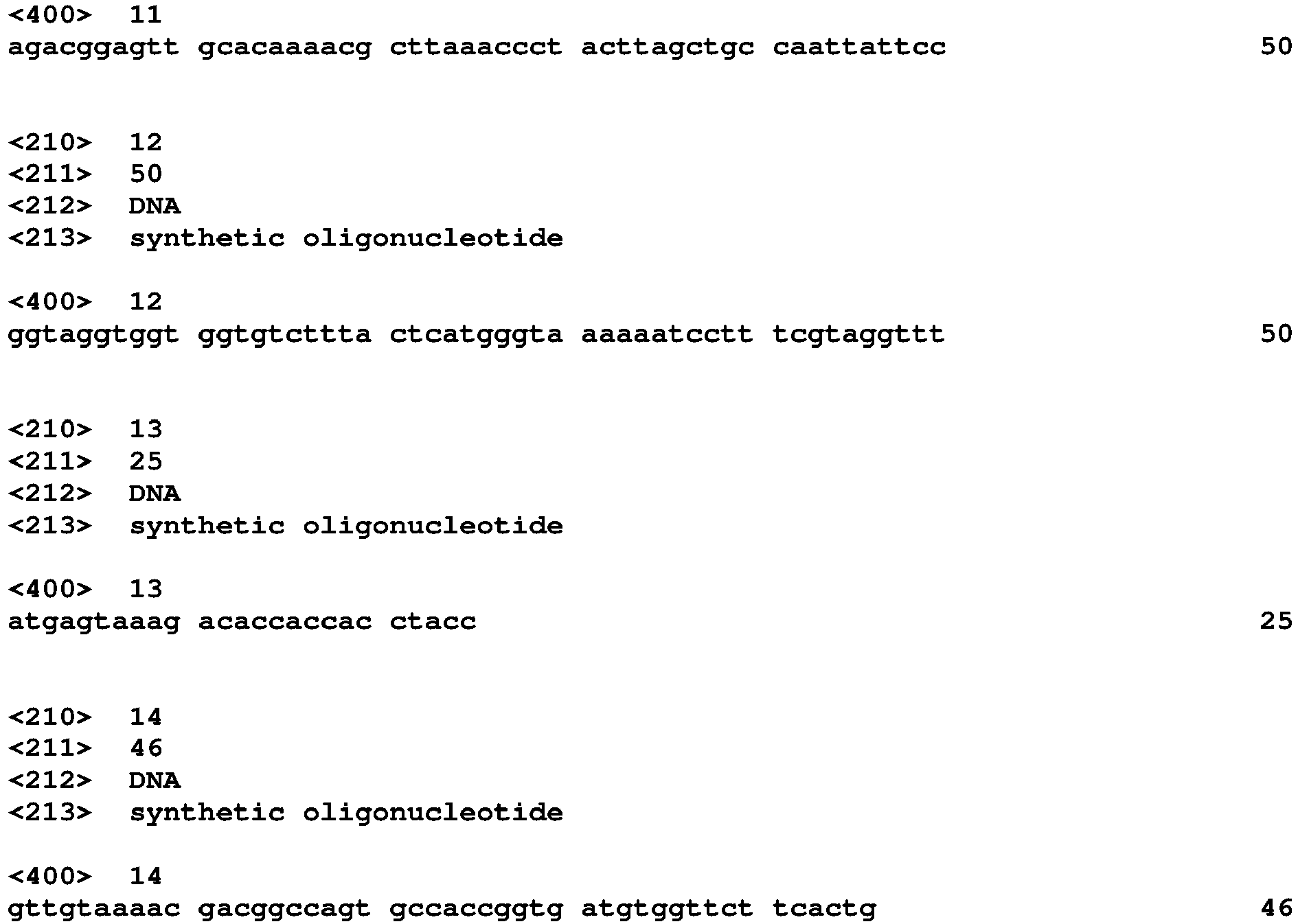
Claims (26)
- A microorganism having an improved ability to produce L-arginine compared with the ability of the wildtype microorganism and/or having increased activities of an enzyme having the function of a carbamoylphosphate synthase compared to the respective enzymic activity in the wildtype microorganism and comprising at least one gene coding for a protein having the function of an L-arginine:glycine amidinotransferase.
- The microorganism of claim 1, wherein the activity of an enzyme having the function of an argininosuccinate lyase is increased compared to the respective enzymic activity in the wildtype microorganism.
- The microorganism of claim 1 or claim 2, wherein the activity of an enzyme having the function of an ornithine carbamoyltransferase is increased compared to the respective enzymic activity in the wildtype microorganism.
- The microorganism of any of claims 1 to 3, wherein the activity of an enzyme having the function of an argininosuccinate synthetase is increased compared to the respective enzymic activity in the wildtype microorganism.
- The microorganism of any of claims 1 to 4, wherein increased activities of the enzymes are achieved by overexpressing the genes coding for the respective enzymes.
- The microorganism of any of claims 1 to 5, wherein the microorganism is recombinant and the gene coding for the protein having the function of an L-arginine:glycine amidinotransferase is heterologous.
- The microorganism of any of claims 1 to 6, wherein the argR gene coding for the arginine responsive repressor protein ArgR is neither attenuated nor deleted.
- The microorganism of claim 7, wherein the activity of the arginine responsive repressor protein ArgR is increased compared to the respective activity in the wildtype microorganism.
- The microorganism of any of claims 1 to 8, wherein the arginine operon (argCJBDFR) is overexpressed.
- The microorganism of any of claims 1 to 6, wherein the argR gene coding for the arginine responsive repressor protein ArgR is attenuated or deleted.
- The microorganism of any of claims 1 to 6 or 10, wherein at least one or more of the genes coding for an enzyme of the biosynthetic pathway of L-arginine, comprising gdh, argJ, argB, argC and/or argD coding for a glutamate dehydrogenase, an ornithine acetyltransferase, an acetylglutamate kinase, an acetylglutamylphosphate reductase and for an acetylornithine aminotransferase, respectively, is overexpressed.
- The microorganism of any of the preceding claims, wherein the gene coding for a protein having the function of an L-arginine:glycine amidinotransferase is overexpressed.
- The microorganism of any of the preceding claims, wherein the protein having the function of an L-arginine:glycine amidinotransferase comprises an amino acid sequence which is at least 80 % homologous to the amino acid sequence according to SEQ ID NO: 4.
- The microorganism of any of the preceding claims, wherein the microorganism belongs to the genus Corynebacterium, to the genus Enterobacteriaceae or to the genus Pseudomonas.
- The microorganism of claim 14, wherein the microorganism is Corynebacterium glutamicum.
- The microorganism of claim 14 wherein the microorganism is Escherichia coli.
- The microorganism of claim 14 wherein the microorganism is Pseudomonas putida.
- A method for the fermentative production of guanidino acetic acid (GAA), comprising the steps of a) cultivating the microorganism as defined in any of the preceding claims in a suitable medium under suitable conditions, and b) accumulating GAA in the medium to form a GAA containing fermentation broth.
- The method of claim 18 further comprising adding glycine to the medium.
- The method of any of claims 18 to 19 further comprising adding L-arginine to the medium.
- The method of any of claims 18 to 20 further comprising isolating GAA from the GAA containing fermentation broth.
- The method of any of claims 18 to 20, further comprising drying and/or granulating the GAA containing fermentation broth.
- A microorganism as claimed in any of claims 1 to 17, further comprising a gene coding for an enzyme having the activity of a guanidinoacetate N-methyltransferase.
- The microorganism of claim 23, wherein the gene coding for an enzyme having the activity of a guanidinoacetate N-methyltransferase is overexpressed.
- A method for the fermentative production of creatine, comprising the steps of a) cultivating the microorganism as defined in any of claims 23 to 24 in a suitable medium under suitable conditions, and b) accumulating creatine in the medium to form a creatine containing fermentation broth.
- The method of claim 25, further comprising isolating creatine from the creatine containing fermentation broth.
Priority Applications (18)
| Application Number | Priority Date | Filing Date | Title |
|---|---|---|---|
| EP19218204.6A EP3839051A1 (en) | 2019-12-19 | 2019-12-19 | Method for the fermentative production of guanidinoacetic acid |
| AU2020410242A AU2020410242B2 (en) | 2019-12-19 | 2020-12-14 | Method for the fermentative production of guanidinoacetic acid |
| MX2022007250A MX2022007250A (en) | 2019-12-19 | 2020-12-14 | Method for the fermentative production of guanidinoacetic acid. |
| DK20823810.5T DK4077695T3 (en) | 2019-12-19 | 2020-12-14 | PROCESS FOR FERMENTATION PRODUCTION OF GUANIDINOACETIC ACID |
| PCT/EP2020/085882 WO2021122400A1 (en) | 2019-12-19 | 2020-12-14 | Method for the fermentative production of guanidinoacetic acid |
| PL20823810.5T PL4077695T3 (en) | 2019-12-19 | 2020-12-14 | Method for the fermentative production of guanidinoacetic acid |
| KR1020227020423A KR20220119026A (en) | 2019-12-19 | 2020-12-14 | Fermentation production method of guanidinoacetic acid |
| BR112022010862A BR112022010862A2 (en) | 2019-12-19 | 2020-12-14 | MICRO-ORGANISMS AND METHOD FOR THE FERMENTATIVE PRODUCTION OF GUANIDINE ACETIC ACID (GAA) AND CREATINE |
| IL293952A IL293952A (en) | 2019-12-19 | 2020-12-14 | Method for the fermentative production of guanidinoacetic acid |
| US17/757,441 US20250171790A1 (en) | 2019-12-19 | 2020-12-14 | Method for the fermentative production of guanidinoacetic acid |
| EP20823810.5A EP4077695B1 (en) | 2019-12-19 | 2020-12-14 | Method for the fermentative production of guanidinoacetic acid |
| MYPI2022003133A MY208731A (en) | 2019-12-19 | 2020-12-14 | Method for the fermentative production of guanidinoacetic acid |
| PH1/2022/551505A PH12022551505A1 (en) | 2019-12-19 | 2020-12-14 | Method for the fermentative production of guanidinoacetic acid |
| CN202080087505.XA CN114867861A (en) | 2019-12-19 | 2020-12-14 | Method for producing guanidinoacetic acid by fermentation |
| JP2022537864A JP7680454B2 (en) | 2019-12-19 | 2020-12-14 | Fermentative production method of guanidinoacetic acid |
| ARP200103498A AR120771A1 (en) | 2019-12-19 | 2020-12-15 | GUANIDINOACETIC ACID FERMENTATIVE PRODUCTION PROCEDURE |
| TW109144374A TW202136505A (en) | 2019-12-19 | 2020-12-16 | Method for the fermentative production of guanidinoacetic acid |
| ZA2022/07792A ZA202207792B (en) | 2019-12-19 | 2022-07-13 | Method for the fermentative production of guanidinoacetic acid |
Applications Claiming Priority (1)
| Application Number | Priority Date | Filing Date | Title |
|---|---|---|---|
| EP19218204.6A EP3839051A1 (en) | 2019-12-19 | 2019-12-19 | Method for the fermentative production of guanidinoacetic acid |
Publications (1)
| Publication Number | Publication Date |
|---|---|
| EP3839051A1 true EP3839051A1 (en) | 2021-06-23 |
Family
ID=69410969
Family Applications (2)
| Application Number | Title | Priority Date | Filing Date |
|---|---|---|---|
| EP19218204.6A Withdrawn EP3839051A1 (en) | 2019-12-19 | 2019-12-19 | Method for the fermentative production of guanidinoacetic acid |
| EP20823810.5A Active EP4077695B1 (en) | 2019-12-19 | 2020-12-14 | Method for the fermentative production of guanidinoacetic acid |
Family Applications After (1)
| Application Number | Title | Priority Date | Filing Date |
|---|---|---|---|
| EP20823810.5A Active EP4077695B1 (en) | 2019-12-19 | 2020-12-14 | Method for the fermentative production of guanidinoacetic acid |
Country Status (17)
| Country | Link |
|---|---|
| US (1) | US20250171790A1 (en) |
| EP (2) | EP3839051A1 (en) |
| JP (1) | JP7680454B2 (en) |
| KR (1) | KR20220119026A (en) |
| CN (1) | CN114867861A (en) |
| AR (1) | AR120771A1 (en) |
| AU (1) | AU2020410242B2 (en) |
| BR (1) | BR112022010862A2 (en) |
| DK (1) | DK4077695T3 (en) |
| IL (1) | IL293952A (en) |
| MX (1) | MX2022007250A (en) |
| MY (1) | MY208731A (en) |
| PH (1) | PH12022551505A1 (en) |
| PL (1) | PL4077695T3 (en) |
| TW (1) | TW202136505A (en) |
| WO (1) | WO2021122400A1 (en) |
| ZA (1) | ZA202207792B (en) |
Cited By (4)
| Publication number | Priority date | Publication date | Assignee | Title |
|---|---|---|---|---|
| CN116426497A (en) * | 2023-03-20 | 2023-07-14 | 江南大学 | A kind of L-arginine-glycine amidinyltransferase and its application in the production of guanidinoacetic acid |
| WO2023232583A1 (en) | 2022-06-03 | 2023-12-07 | Evonik Operations Gmbh | Improved biotechnological method for producing guanidino acetic acid (gaa) by using nadh-dependent dehydrogenases |
| WO2024165344A1 (en) * | 2023-02-06 | 2024-08-15 | Evonik Operations Gmbh | Process for producing free-flowing particles comprising or consisting of an n-guanylamino acid |
| WO2024165348A1 (en) | 2023-02-06 | 2024-08-15 | Evonik Operations Gmbh | Process for preparing an n-guanylamino acid |
Families Citing this family (11)
| Publication number | Priority date | Publication date | Assignee | Title |
|---|---|---|---|---|
| DK3816247T3 (en) | 2019-10-28 | 2023-02-27 | Evonik Operations Gmbh | HARDENING MIXTURE |
| CN113481139B (en) * | 2021-07-29 | 2022-11-08 | 江南大学 | Recombinant bacillus subtilis for producing glycocyamine and construction method thereof |
| JP2025518818A (en) | 2022-06-03 | 2025-06-19 | エボニック オペレーションズ ゲーエムベーハー | Methods for the production of guanidinoacetic acid (GAA) |
| WO2024094481A1 (en) | 2022-11-03 | 2024-05-10 | Evonik Operations Gmbh | Improved biotechnological process to produce guanidinoacetic acid (gaa) by targeted introduction or by increasing the activity of a transmembrane exporter protein |
| WO2024094483A1 (en) | 2022-11-03 | 2024-05-10 | Evonik Operations Gmbh | Improved biotechnological process to produce guanidinoacetic acid (gaa) by targeted introduction or by increasing the activity of a transmembrane transport protein belonging to the amino acid-polyamine-organocation superfamily |
| EP4649144A1 (en) | 2023-01-09 | 2025-11-19 | Evonik Operations GmbH | Fermentative production guanidinoacetic acid (gaa) from serine using a microorganism having an enhanced l-serine hydroxymethyltransferase activity |
| WO2024149617A1 (en) | 2023-01-09 | 2024-07-18 | Evonik Operations Gmbh | Fermentative production guanidinoacetic acid (gaa) from serine by attenuating l serine ammonia lyase activity in microorganisms |
| EP4658777A1 (en) | 2023-02-01 | 2025-12-10 | Evonik Operations GmbH | Method for the fermentative production of guanidinoacetic acid using a microorganism comprising a heterologous l-threonine aldolase gene |
| CN120712357A (en) | 2023-02-01 | 2025-09-26 | 赢创运营有限公司 | Method for producing guanidine acetic acid by fermentation using a microorganism containing a heterologous L-threonine 3-dehydrogenase gene (tdh) and a glycine C-acetyltransferase gene (kbl) |
| EP4687482A1 (en) | 2023-04-03 | 2026-02-11 | Evonik Operations GmbH | COMPOSITION COMPRISING AN n-GUANYLAMINO ACID FOR DRINKING WATER APPLICATION |
| CN117625503B (en) * | 2023-11-20 | 2025-08-26 | 江南大学 | A method for producing creatine by fermenting carbohydrate raw materials using microorganisms |
Citations (9)
| Publication number | Priority date | Publication date | Assignee | Title |
|---|---|---|---|---|
| US3849250A (en) | 1971-02-26 | 1974-11-19 | Kyowa Hakko Kogyo Kk | Process for producing l-arginine by fermentation |
| EP1057893A1 (en) | 1999-06-03 | 2000-12-06 | Ajinomoto Co., Inc. | Method for producing L-arginine |
| WO2005120246A1 (en) | 2004-06-09 | 2005-12-22 | Degussa Ag | Guanidino acetic acid used as an animal food additive |
| WO2006057450A1 (en) * | 2004-11-25 | 2006-06-01 | Ajinomoto Co., Inc. | L-amino acid-producing bacterium and a method for producing l-amino acid |
| US20060200870A1 (en) * | 2004-11-24 | 2006-09-07 | Brian Tseng | Methods of treating muscular dystrophy |
| US7160705B2 (en) | 2000-04-28 | 2007-01-09 | Ajinomoto Co., Inc. | Arginine repressor deficient strain of coryneform bacterium and method for producing L-arginine |
| CN106065411A (en) | 2016-08-10 | 2016-11-02 | 洛阳华荣生物技术有限公司 | Fermentative Production creatine |
| EP3153573A1 (en) | 2014-10-13 | 2017-04-12 | CJ Cheiljedang Corporation | Microorganism of genus corynebacterium for producing l-arginine, and l-arginine production method using same |
| WO2018079687A1 (en) * | 2016-10-26 | 2018-05-03 | Ajinomoto Co., Inc. | Method for producing objective substance |
Family Cites Families (3)
| Publication number | Priority date | Publication date | Assignee | Title |
|---|---|---|---|---|
| US7393682B1 (en) * | 1993-03-19 | 2008-07-01 | The Johns Hopkins University School Of Medicine | Polynucleotides encoding promyostatin polypeptides |
| BRPI0903495B1 (en) | 2008-04-10 | 2019-01-29 | Korea Advanced Institute Of Science And Technology | mutant microorganisms capable of producing putrescine and method for producing putrescine using the same |
| JP6817966B2 (en) * | 2015-06-10 | 2021-01-20 | シンロジック オペレーティング カンパニー インコーポレイテッド | Bacteria engineered to treat diseases associated with hyperammonemia |
-
2019
- 2019-12-19 EP EP19218204.6A patent/EP3839051A1/en not_active Withdrawn
-
2020
- 2020-12-14 WO PCT/EP2020/085882 patent/WO2021122400A1/en not_active Ceased
- 2020-12-14 MY MYPI2022003133A patent/MY208731A/en unknown
- 2020-12-14 KR KR1020227020423A patent/KR20220119026A/en active Pending
- 2020-12-14 IL IL293952A patent/IL293952A/en unknown
- 2020-12-14 CN CN202080087505.XA patent/CN114867861A/en active Pending
- 2020-12-14 BR BR112022010862A patent/BR112022010862A2/en unknown
- 2020-12-14 AU AU2020410242A patent/AU2020410242B2/en active Active
- 2020-12-14 PL PL20823810.5T patent/PL4077695T3/en unknown
- 2020-12-14 JP JP2022537864A patent/JP7680454B2/en active Active
- 2020-12-14 PH PH1/2022/551505A patent/PH12022551505A1/en unknown
- 2020-12-14 EP EP20823810.5A patent/EP4077695B1/en active Active
- 2020-12-14 DK DK20823810.5T patent/DK4077695T3/en active
- 2020-12-14 US US17/757,441 patent/US20250171790A1/en active Pending
- 2020-12-14 MX MX2022007250A patent/MX2022007250A/en unknown
- 2020-12-15 AR ARP200103498A patent/AR120771A1/en not_active Application Discontinuation
- 2020-12-16 TW TW109144374A patent/TW202136505A/en unknown
-
2022
- 2022-07-13 ZA ZA2022/07792A patent/ZA202207792B/en unknown
Patent Citations (10)
| Publication number | Priority date | Publication date | Assignee | Title |
|---|---|---|---|---|
| US3849250A (en) | 1971-02-26 | 1974-11-19 | Kyowa Hakko Kogyo Kk | Process for producing l-arginine by fermentation |
| EP1057893A1 (en) | 1999-06-03 | 2000-12-06 | Ajinomoto Co., Inc. | Method for producing L-arginine |
| US7160705B2 (en) | 2000-04-28 | 2007-01-09 | Ajinomoto Co., Inc. | Arginine repressor deficient strain of coryneform bacterium and method for producing L-arginine |
| WO2005120246A1 (en) | 2004-06-09 | 2005-12-22 | Degussa Ag | Guanidino acetic acid used as an animal food additive |
| US20110257075A1 (en) | 2004-06-09 | 2011-10-20 | Thomas Gastner | Guanidino acetic acid used as an animal food additive |
| US20060200870A1 (en) * | 2004-11-24 | 2006-09-07 | Brian Tseng | Methods of treating muscular dystrophy |
| WO2006057450A1 (en) * | 2004-11-25 | 2006-06-01 | Ajinomoto Co., Inc. | L-amino acid-producing bacterium and a method for producing l-amino acid |
| EP3153573A1 (en) | 2014-10-13 | 2017-04-12 | CJ Cheiljedang Corporation | Microorganism of genus corynebacterium for producing l-arginine, and l-arginine production method using same |
| CN106065411A (en) | 2016-08-10 | 2016-11-02 | 洛阳华荣生物技术有限公司 | Fermentative Production creatine |
| WO2018079687A1 (en) * | 2016-10-26 | 2018-05-03 | Ajinomoto Co., Inc. | Method for producing objective substance |
Non-Patent Citations (21)
| Title |
|---|
| "Genbank", Database accession no. WP_070390602 |
| DATABASE UniProt [online] 15 February 2017 (2017-02-15), "Glycine amidinotransferase", XP055706853, retrieved from EBI accession no. UNIPROT:A0A1D8TKD3 Database accession no. A0A1D8TKD3 * |
| D'HOOGHE I ET AL., J BACTERIOL, vol. 179, 1997, pages 7403 - 7409 |
| GINESY ET AL., MICROBIAL CELL FACTORIES, vol. 14, 2015, pages 29 |
| GUTHMILLER ET AL., J BIOL CHEM., vol. 269, no. 26, 1 July 1994 (1994-07-01), pages 17556 - 60 |
| HUMM ET AL.: "expressed a recombinant gene encoding human AGAT in Escherichia coli and identified cysteine-407 as an active-site residue of AGAT", BIOCHEM. J., vol. 322, 1997, pages 771 - 776 |
| KANAOKA M ET AL., JPN J CANCER RES, vol. 78, 1987, pages 1409 - 1414 |
| KINOSHITA ET AL., J. GEN. APPL. MICROBIOL., vol. 3, no. 3, 1957, pages 193 - 205 |
| LEAO TCASTELAO GKOROBEYNIKOV AMONROE EAPODELL SGLUKHOV EALLEN EEGERWICK WHGERWICK L, PROC NATL ACAD SCI USA., vol. 114, no. 12, 21 March 2017 (2017-03-21), pages 3198 - 3203 |
| M. PATEK ET AL., MICROBIAL BIOTECHNOLOGY, vol. 6, 2013, pages 103 - 117 |
| MARC F ET AL: "Characterization and kinetic mechanism of mono- and bifunctional ornithine acetyltransferases from thermophilic microorganisms", EUROPEAN JOURNAL OF BIOCHEMISTRY, WILEY-BLACKWELL PUBLISHING LTD, GB, vol. 267, no. 16, 1 August 2000 (2000-08-01), pages 5217 - 5226, XP002169947, ISSN: 0014-2956, DOI: 10.1046/J.1432-1327.2000.01593.X * |
| MARCHLER-BAUER A ET AL.: "CDD/SPARCLE: functional classification of proteins via subfamily domain architectures", NUCLEIC ACIDS RES., vol. 45, no. D1, 2017, pages D200 - D203 |
| MUENCHHOFF ET AL., FEBS JOURNAL, vol. 277, 2010, pages 3844 - 3860 |
| PARK ET AL., NAT COMMUN., vol. 5, 5 August 2014 (2014-08-05), pages 4618 |
| PARK ET AL., NATURE COMMUNICATIONS |
| PISSOWOTZKI K ET AL., MOL GEN GENET, vol. 231, 1991, pages 113 - 123 |
| RUAN ET AL.: "Electroporation was performed in 1 mm electroporation cuvettes", 2015, BIO-RAD LABORATORIES GMBH |
| SAKANYAN ET AL., MICROBIOLOGY, vol. 142, 1996, pages 9 - 108 |
| SANGER ET AL., PROCEEDINGS OF THE NATIONAL ACADEMY OF SCIENCES USA, vol. 74, 1977, pages 5463 - 5467 |
| SOSIO ET AL., CELL CHEMICAL BIOLOGY, vol. 25, 17 May 2018 (2018-05-17), pages 540 - 549 |
| YIM ET AL., J IND MICROBIOL BIOTECHNOL, vol. 38, 2011, pages 1911 - 1920 |
Cited By (8)
| Publication number | Priority date | Publication date | Assignee | Title |
|---|---|---|---|---|
| WO2023232583A1 (en) | 2022-06-03 | 2023-12-07 | Evonik Operations Gmbh | Improved biotechnological method for producing guanidino acetic acid (gaa) by using nadh-dependent dehydrogenases |
| AU2023281826B2 (en) * | 2022-06-03 | 2025-12-04 | Evonik Operations Gmbh | Improved biotechnological method for producing guanidino acetic acid (gaa) by using nadh-dependent dehydrogenases |
| WO2024165344A1 (en) * | 2023-02-06 | 2024-08-15 | Evonik Operations Gmbh | Process for producing free-flowing particles comprising or consisting of an n-guanylamino acid |
| WO2024165348A1 (en) | 2023-02-06 | 2024-08-15 | Evonik Operations Gmbh | Process for preparing an n-guanylamino acid |
| CN116426497A (en) * | 2023-03-20 | 2023-07-14 | 江南大学 | A kind of L-arginine-glycine amidinyltransferase and its application in the production of guanidinoacetic acid |
| CN116426497B (en) * | 2023-03-20 | 2023-10-13 | 江南大学 | L-arginine-glycine amidino transferase and application thereof in production of guanidinoacetic acid |
| WO2024192891A1 (en) * | 2023-03-20 | 2024-09-26 | 江南大学 | L-arginine-glycine amidinotransferase and use thereof in production of guanidinoacetic acid |
| US12486498B2 (en) | 2023-03-20 | 2025-12-02 | Jiangnan University | L-arginine-glycine amidinotransferase and use thereof in the production of guanidinoacetic acid |
Also Published As
| Publication number | Publication date |
|---|---|
| JP2023507482A (en) | 2023-02-22 |
| CN114867861A (en) | 2022-08-05 |
| MX2022007250A (en) | 2022-07-13 |
| EP4077695A1 (en) | 2022-10-26 |
| KR20220119026A (en) | 2022-08-26 |
| AR120771A1 (en) | 2022-03-16 |
| PL4077695T3 (en) | 2024-11-25 |
| AU2020410242B2 (en) | 2026-04-09 |
| IL293952A (en) | 2022-08-01 |
| BR112022010862A2 (en) | 2022-08-23 |
| DK4077695T3 (en) | 2024-10-14 |
| US20250171790A1 (en) | 2025-05-29 |
| JP7680454B2 (en) | 2025-05-20 |
| ZA202207792B (en) | 2023-04-26 |
| WO2021122400A1 (en) | 2021-06-24 |
| TW202136505A (en) | 2021-10-01 |
| EP4077695B1 (en) | 2024-07-24 |
| AU2020410242A1 (en) | 2022-08-11 |
| MY208731A (en) | 2025-05-27 |
| PH12022551505A1 (en) | 2023-04-24 |
Similar Documents
| Publication | Publication Date | Title |
|---|---|---|
| EP4077695B1 (en) | Method for the fermentative production of guanidinoacetic acid | |
| US11999982B2 (en) | Method for the fermentative production of guanidinoacetic acid | |
| US12065677B2 (en) | Method for the fermentative production of guanidinoacetic acid | |
| WO2022243116A1 (en) | Improved biotechnological method for producing guanidino acetic acid (gaa) by inactivation of an amino acid exporter | |
| AU2023281826B2 (en) | Improved biotechnological method for producing guanidino acetic acid (gaa) by using nadh-dependent dehydrogenases | |
| US12312622B2 (en) | Method for producing guanidino acetic acid (GAA) | |
| CN117355537A (en) | Improved biotechnological process for the production of guanidinoacetic acid (GAA) by inactivation of amino acid export proteins | |
| CN120129742A (en) | Improved biotechnological process for the production of guanidinoacetic acid (GAA) by targeted introduction or increase in the activity of transmembrane transporters belonging to the amino acid-polyamine-organic cation superfamily | |
| JP2026501792A (en) | Fermentative production of guanidinoacetic acid (GAA) from serine by attenuating L-serine ammonia-lyase activity in microorganisms | |
| JP2026501793A (en) | Fermentative production of guanidinoacetic acid (GAA) from serine using a microorganism with enhanced L-serine hydroxymethyltransferase activity |
Legal Events
| Date | Code | Title | Description |
|---|---|---|---|
| PUAI | Public reference made under article 153(3) epc to a published international application that has entered the european phase |
Free format text: ORIGINAL CODE: 0009012 |
|
| STAA | Information on the status of an ep patent application or granted ep patent |
Free format text: STATUS: THE APPLICATION HAS BEEN PUBLISHED |
|
| AK | Designated contracting states |
Kind code of ref document: A1 Designated state(s): AL AT BE BG CH CY CZ DE DK EE ES FI FR GB GR HR HU IE IS IT LI LT LU LV MC MK MT NL NO PL PT RO RS SE SI SK SM TR |
|
| STAA | Information on the status of an ep patent application or granted ep patent |
Free format text: STATUS: THE APPLICATION IS DEEMED TO BE WITHDRAWN |
|
| 18D | Application deemed to be withdrawn |
Effective date: 20211224 |