EP3837641B1 - Auf tiefem verstärkungslernen basierende techniken für end-zu-end-roboternavigation - Google Patents
Auf tiefem verstärkungslernen basierende techniken für end-zu-end-roboternavigation Download PDFInfo
- Publication number
- EP3837641B1 EP3837641B1 EP19779276.5A EP19779276A EP3837641B1 EP 3837641 B1 EP3837641 B1 EP 3837641B1 EP 19779276 A EP19779276 A EP 19779276A EP 3837641 B1 EP3837641 B1 EP 3837641B1
- Authority
- EP
- European Patent Office
- Prior art keywords
- network
- reward
- actor
- critic
- given
- Prior art date
- Legal status (The legal status is an assumption and is not a legal conclusion. Google has not performed a legal analysis and makes no representation as to the accuracy of the status listed.)
- Active
Links
Images


Classifications
-
- G—PHYSICS
- G06—COMPUTING OR CALCULATING; COUNTING
- G06N—COMPUTING ARRANGEMENTS BASED ON SPECIFIC COMPUTATIONAL MODELS
- G06N3/00—Computing arrangements based on biological models
- G06N3/004—Artificial life, i.e. computing arrangements simulating life
- G06N3/008—Artificial life, i.e. computing arrangements simulating life based on physical entities controlled by simulated intelligence so as to replicate intelligent life forms, e.g. based on robots replicating pets or humans in their appearance or behaviour
-
- G—PHYSICS
- G05—CONTROLLING; REGULATING
- G05D—SYSTEMS FOR CONTROLLING OR REGULATING NON-ELECTRIC VARIABLES
- G05D1/00—Control of position, course, altitude or attitude of land, water, air or space vehicles, e.g. using automatic pilots
- G05D1/02—Control of position or course in two dimensions
- G05D1/021—Control of position or course in two dimensions specially adapted to land vehicles
- G05D1/0212—Control of position or course in two dimensions specially adapted to land vehicles with means for defining a desired trajectory
- G05D1/0221—Control of position or course in two dimensions specially adapted to land vehicles with means for defining a desired trajectory involving a learning process
-
- G—PHYSICS
- G06—COMPUTING OR CALCULATING; COUNTING
- G06N—COMPUTING ARRANGEMENTS BASED ON SPECIFIC COMPUTATIONAL MODELS
- G06N3/00—Computing arrangements based on biological models
- G06N3/02—Neural networks
- G06N3/04—Architecture, e.g. interconnection topology
- G06N3/045—Combinations of networks
-
- G—PHYSICS
- G06—COMPUTING OR CALCULATING; COUNTING
- G06N—COMPUTING ARRANGEMENTS BASED ON SPECIFIC COMPUTATIONAL MODELS
- G06N3/00—Computing arrangements based on biological models
- G06N3/02—Neural networks
- G06N3/04—Architecture, e.g. interconnection topology
- G06N3/0499—Feedforward networks
-
- G—PHYSICS
- G06—COMPUTING OR CALCULATING; COUNTING
- G06N—COMPUTING ARRANGEMENTS BASED ON SPECIFIC COMPUTATIONAL MODELS
- G06N3/00—Computing arrangements based on biological models
- G06N3/02—Neural networks
- G06N3/08—Learning methods
-
- G—PHYSICS
- G06—COMPUTING OR CALCULATING; COUNTING
- G06N—COMPUTING ARRANGEMENTS BASED ON SPECIFIC COMPUTATIONAL MODELS
- G06N3/00—Computing arrangements based on biological models
- G06N3/02—Neural networks
- G06N3/08—Learning methods
- G06N3/082—Learning methods modifying the architecture, e.g. adding, deleting or silencing nodes or connections
-
- G—PHYSICS
- G06—COMPUTING OR CALCULATING; COUNTING
- G06N—COMPUTING ARRANGEMENTS BASED ON SPECIFIC COMPUTATIONAL MODELS
- G06N3/00—Computing arrangements based on biological models
- G06N3/02—Neural networks
- G06N3/08—Learning methods
- G06N3/092—Reinforcement learning
-
- G—PHYSICS
- G06—COMPUTING OR CALCULATING; COUNTING
- G06N—COMPUTING ARRANGEMENTS BASED ON SPECIFIC COMPUTATIONAL MODELS
- G06N3/00—Computing arrangements based on biological models
- G06N3/02—Neural networks
- G06N3/08—Learning methods
- G06N3/0985—Hyperparameter optimisation; Meta-learning; Learning-to-learn
Definitions
- Implementations disclosed herein are related to using reinforcement learning to train a policy network that can be utilized by a robot in performing robot navigation.
- Two examples of robot navigation are point to point navigation and path following navigation.
- Point to point navigation creates trajectories from a robot's current pose (position and/or orientation) to a given target pose.
- Path following creates trajectories to stay near a given guidance path (e.g., provided by a higher-level path planner), which can be expressed as a sequence of waypoints.
- Various implementations disclosed herein can implement these and/or other navigation behaviors via an end to end policy network trained using reinforcement learning, such as an end to end policy network that directly maps robot state data to an action that can be utilized to directly control a robot.
- the robot state data can include noisy observations from a lidar component and/or from other vision component(s), and a learned end to end policy can be utilized to process the robot state data and generate linear and/or angular velocities to be implemented by the robot.
- Such a policy can be utilized to iteratively process state data at a relatively high frequency and iteratively generate and implement corresponding control output at a relatively high frequency, thereby causing a robot to implement desired navigation behaviors.
- a policy network e.g., a feed forward neural network or other neural network
- Reinforcement learning is often used to train a policy network in view of rewards that are based on success/failure of the "true objective" (e.g., the target pose in point to point navigation).
- the "true objective" e.g., the target pose in point to point navigation
- reinforcement learning can fail and/or result in inaccurate and/or non-robust policies when the rewards are sparse, which would be the case for navigation behaviors if the rewards were based on only the true objective.
- Reward shaping addresses this problem by introducing a proxy reward function that is less sparse than the true objective. Such a proxy reward function can be considered by a critic during reinforcement learning.
- reward shaping often involves hand-chosen shaped rewards, and poorly chosen shaped rewards can lead to pathologies where agents learn to exploit the reward function or to terminate the episode early.
- Implementations determine a set of reward weights to use in generating a parameterized atomic reward that can be used by a critic during reinforcement learning. Implementations perform multiple instances of reinforcement learning on each of a plurality of separate instances of the same actor and critic network, where each of the multiple instances of reinforcement learning utilize a separate set of reward weights to be processed by the critic network during the reinforcement learning. A single set of reward weights is then selected, from the sets of reward weights, to use as fixed reward weights. Selecting the single set of reward weights can be based on evaluation of the separate instances of the same actor and critic network.
- each of the separate instances of the same actor and critic network can be evaluated to determine which achieves the maximum "true objective" reward, and the set of reward weights utilized in reinforcement learning for that network can be selected as the single set of reward weights.
- the sets of reward weights considered and used in the multiple instances of reinforcement learning can be chosen randomly (e.g., truly randomly or pseudo-randomly) for the initial instances of reinforcement learning, then chosen based on an optimization procedure for further instances of reinforcement learning.
- various implementations disclosed herein then utilize the single set of reward weights to then optimize network layer sizes (e.g., widths of the policy network and/or critic network) and/or other network hyperparameters to identify the most successful policy for the given robotic navigation task.
- network layer sizes e.g., widths of the policy network and/or critic network
- other network hyperparameters e.g., other network hyperparameters
- a single actor and critic network pair can then be selected, from the actor and critic network pairs, and the single actor and critic network pair and the single set of reward weights used in performing further reinforcement learning training.
- the trained actor network can then be utilized as the policy network and utilized in performing a corresponding robotic navigation task.
- Policy networks trained in such a manner can achieve high levels of robustness and/or accuracy for robotic navigation tasks, including robust obstacle avoidance during navigation.
- implementations disclosed herein relate to techniques for automatically learning a reward function and a neural network architecture in generating of a robotic control policy through reinforcement learning.
- Implementations disclosed herein describe a policy/actor network and a critic network, each of which can be a machine learning model, such as a neural network model. Moreover, as described herein, implementations of the reinforcement learning utilized in training the networks utilize an adaptation of Deep Deterministic Policy Gradient (DDPG) reinforcement learning. More particularly, implementations adapt DDPG through the automated reward-shaping and network-shaping described herein, to determine a reward and network architecture that provides significant improvements over manually chosen reward and/or network hyperparameters. Implementations disclosed herein train and utilize a policy/actor network that can be utilized by a robot to continuously process state data and continuously generate robotic actions to achieve a task objective.
- DDPG Deep Deterministic Policy Gradient
- the current state data can include vision data captured by a vision component of the robot (e.g., 1D depth data captured by a 1D lidar component, a 2D image from a monographic camera, a 2.5D image from a stereographic camera, and/or a 3D point cloud from a 3D lidar component).
- the current state data can include only the vision data, or can optionally include additional data such as a current pose of the robot, a target pose of the robot, etc.
- Generated robotic actions can directly or indirectly indicate actions to be implemented by the robot in view of processed state data.
- robotic actions can indicate a linear and/or angular velocity for the robot, and commands can be provided to actuator(s) of the robot to achieve the linear and/or angular velocity.
- Implementations described herein model a robot, in performing a navigation task as an ( O , A, D, R, ⁇ ) tuple representing a partially observable Markov decision process (POMDP) with continuous observations and actions.
- the first three observations ( O , A, D ) are determined by the robot.
- the observations, o ( o l , o g ) ⁇ n ⁇ O , are ⁇ n can be pairs of vision data, such as pairs of 1-D Lidar vectors, O l , and goal set, O g observed over the last ⁇ n steps.
- the dynamics, D is encoded in the simulator or implicit in the real world.
- the remaining factors encode the task: ⁇ E (0,1) is a scalar discount factor, and R is the structure of the reward R.
- the goal of a navigation agent is to complete a true navigation objective. For point-to-point navigation this is arriving at a goal location, while for path following this is traversing the entire path by reaching all its waypoints.
- the goal of a point to point (P2P) robotic navigation task is to navigate a robot to a goal position without collision.
- the robot can be well-localized using traditional methods.
- the P2P behavior can be used as a local planner for sampling-based planners in order to navigate large environments.
- the goal observation o g is the relative goal position in polar coordinates, which is readily available from localization.
- PF path following robotic navigation task
- the guidance path can be assumed to be collision free, and can be generated by path planners such as those that utilize Probabilistic Roadmap (PRMs) algorithm(s), rapidly-exploring random tree (RRT) algorithm(s), and/or other technique(s).
- PRMs Probabilistic Roadmap
- RRT rapidly-exploring random tree
- the guidance path can additionally or alternatively be generated manually, because it does not need to be dynamically feasible.
- PF is trajectory tracking. While PF can be used with higher-level planners, it has several complications. Since waypoints in the guidance path are intermediate goals that the agent should approach with a speed and orientation appropriate to reach the next point, the spacing and number of waypoints matters.
- Real-world navigation involves long guidance paths (e.g., 100+ meters) with many waypoints and varied separation.
- varied input size and non-uniformity can challenge neural networks.
- implementations disclosed herein linearly interpolate the original guidance path to generate a new guidance path including new waypoints with a substantially constant separation d ws between consecutive waypoints.
- the substantially constant separation d ws can be truly constant, or the separation between each pair of waypoints can be within +/- 5% (or less) of a given distance.
- the i th waypoint is considered reached when the robot is within d wr of the waypoint and the previous waypoint is also reached.
- G PF s ⁇ w ⁇ P I ⁇ s ⁇ w ⁇ ⁇ d wr ⁇ P ⁇
- the goal observation, o g is a partial path consisting of the first un-reached waypoint and the next N partial waypoints.
- the robot is at [0, 0] and P consists of [[0, 0], [1, 0], [1, 1], [1, 2], [1, 3]], the observation is [[1, 0], [1, 1], [1, 2]].
- r dist is the Euclidean distance to the first un-reached waypoint.
- r collision is 1 when the agent collides with obstacles and 0 otherwise.
- vanilla DDPG With observations, action space, true objectives, and rewards defined, training a vanilla DDPG requires selecting actor and critic network architectures.
- Network architecture affects the quality of the trained agent, as the capacity of the network determines what the agent can learn.
- feed-forward fully-connected networks can be chosen.
- the network depth is fixed, leaving the size of each layer as a tunable network hyperparameter.
- a feed-forward fully-connected neural network with rectified linear units (RELUs) and n layers can be represented by FF( ⁇ ), for ⁇ ⁇ R n , where i - th layer contains ⁇ i neurons.
- Learnable weights of the feed forward network FF( ⁇ ) can be represented as W ⁇ .
- the DDPG parametrization can be formalized as DDPG ( ⁇ ⁇ , ⁇ Q , ⁇ r ) being a DDPG algorithm with actor ⁇ ( s
- W ⁇ ) FF ( ⁇ ⁇ ), critic Q(s, a
- G ⁇ R can represent the true objective the trained actor ⁇ ( s
- DDPG hyperparameter selection can be automated with, for example, off-the-shelf gradient-free optimization, and shaping can be split into two phases: (1) reward shaping and (2) network shaping.
- the best reward function e.g. , the best reward weights
- the best actor and critic networks e.g. , the best network architectures
- actor and critic network shapes can be fixed sizes ⁇ ⁇ , ⁇ Q G I ( n min , n max ), where I ( a, b ) is a closed interval in n-dimensional space bounded by points a , b ⁇ R n .
- n g reward-shaping reinforcement learning trials can be performed, with at most n mc reward-shaping reinforcement learning trials being performed in parallel.
- the reward function ⁇ r ( i ) is initialized from I (0,1) n , based on all completed trials according to, for example, a black-box optimization algorithm.
- n mc trials can select reward weights randomly (e.g., truly randomly or pseudo-randomly).
- an asynchronous instance of DDPG ( ⁇ ⁇ , ⁇ Q , ⁇ r )( i )) is trained.
- the best reward ⁇ ⁇ r arg max i Obj ⁇ ⁇ , ⁇ Q , ⁇ r i
- G corresponds to the trial with the highest true task objective.
- a similar process is performed to find the best actor and critic with respect to ⁇ r ⁇ .
- the optimization objective is to maximize the cumulative reward.
- W ⁇ ⁇ ⁇ DDPG ⁇ ⁇ ⁇ ⁇ ⁇ Q ⁇ ⁇ .
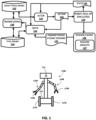
- FIG. 1 illustrates an example environment in which implementations disclosed herein can be implemented.
- FIG. 1 includes an actor 122, that receives states 131 from a real robot 110 and generates a predicted robotic action based on an actor policy network 152 and its current trained weights.
- the robotic action 123 is provided to the robot 110, which implements the robotic action 123 (e.g., generates control commands based on the action 123), thereby causing the state 131 to change, and the new state to again be provided to the actor 122.
- This process continues iteratively for many iterations, relying on update values at each iteration, during an episode in reinforcement learning and/or at inference time.
- the robotic action 123 is also provided to a critic 124, along with the state 131, and a parameterized atomic reward 132.
- the reward engine 126 generates the parameterized atomic reward 132 based on reward weights 127 and based on the state 131 and/or other data from the robot 110.
- the critic 124 generates output using the critic model 154, and the state 131, action 123, and parameterized atomic reward 132, where the output indicates the likelihood of the robotic action 123 maximizing a cumulative reward in view of the state 131 and the parameterized atomic reward 132.
- the trainer 128 (which can use a DDPG algorithm) updates the actor/policy network 152 and the critic model 154 based on the provided output.
- This process can likewise continue iteratively for many iterations, relying on updated values at each iteration, during an episode in reinforcement learning and/or at inference time. Only a single instance of actor 122, critic 123, trainer 128, models 152 and 154, reward engine 126, reward weights 127, etc. are illustrated in FIG. 1 . However, as described herein, in many implementations multiple instances of collections of such components will be utilized in reward-shaping and network-shaping according to implementations disclosed herein.
- Robot 110A is also illustrated in FIG. 1 , and is one example of a physical (i.e., real-world) mobile robot that utilizes a policy network, trained according to implementations disclosed herein, in the performance of robot navigation Moreover, in some implementations, robot 110A can additionally or alternatively be utilized during reinforcement learning in training of the policy network. Additional and/or alternative robots may be provided, such as additional robots that vary in one or more respects from robot 110A illustrated in FIG. 1 . For example, a mobile forklift robot, an unmanned aerial vehicle (“UAV”), and/or a humanoid robot may be utilized instead of or in addition to robot 110
- UAV unmanned aerial vehicle
- Robot 110A includes a base 113 with wheels 117A, 117B provided on opposed sides thereof for locomotion of the robot 110.
- the base 113 may include, for example, one or more motors for driving the wheels 117A, 117B of the robot 110 to achieve a desired direction, velocity, and/or acceleration of movement for the robot 110.
- Robot 110A also includes a vision sensor 111 that can generate vision data related to shape, color, depth, and/or other features of object(s) that are in the line of sight of the vision sensor 111.
- the vision sensor 111 may be, for example, a 1D lidar, a monocular camera, a stereographic camera, and/or a 3D lidar.
- Robot 110 also includes one or more processors that, for example: provide control commands to actuators and/or other operational components thereof based on actions generated utilizing a policy network trained according to implementations disclosed herein.
- the robot 110 also includes robot arms 114A and 114B with corresponding end effectors 115A and 115B that each take the form of a gripper with two opposing "fingers" or "digits.”
- the robot arms 114A, 114B and end effectors 115A, 115B may be controlled autonomously, semi-autonomously, and/or based on control commands provided by a user via a computing device of a user.
- grasping end effectors 115A, 115B are illustrated, additional and/or alternative end effectors may be utilized, such as alternative impactive grasping end effectors (e.g. , those with grasping "plates", those with more or fewer “digits”/”claws"), "ingressive” grasping end effectors, “astrictive” grasping end effectors, or “contigutive” grasping end effectors, or non-grasping end effectors.
- vision sensor 111 e.g. , those with grasping "plates”, those with more or fewer “digits"/”claws
- vision sensor 111 e.g., those with grasping "plates”, those with more or fewer "digits"/"claws
- vision sensor 111 e.g., those with grasping "plates”, those with more or fewer "digits"/"claws
- vision sensor 111 e.g., those with grasping "plates”, those with more or fewer "
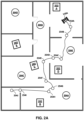
- FIG. 2A illustrates an example environment, the real robot 110A, static objects 202A-E, and dynamic objects 204A-E.
- FIG. 2A also illustrates initially defined waypoints 254A-J for a path following navigation task.
- the initially defined waypoints 254A-J can be provided by, for example, a higher-level path planner.
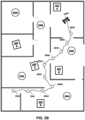
- the initially defined waypoints 254A-J are not uniformly spaced. Since non-uniformity can challenge neural networks, in many implementations described herein the initially defined waypoints 254A-J can be pre-processed to generate the refined waypoints 354A-J of FIG. 2B .
- FIG. 2A is an example of a real-world environment in which the robot 110A can perform a path following navigation task utilizing a policy network trained to perform path following.
- dynamic objects can be caused to move ( e.g. , randomly, pseudo-randomly, and/or according to a script) during reinforcement learning. Larger, smaller, more complex and/or less complex environments can be utilized - and a variety of environments can be utilized during reinforcement learning to improve robustness.
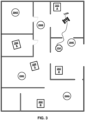
- FIG. 3 illustrates the same example environment, robot 110A, and static and dynamic objects 202A-E and 204A-E as FIG. 2A , but illustrates a target point 254 for a point to point navigation task, in lieu of defined waypoints for a path following task.
- FIG. 3 is an example of a real-world environment in which the robot 110A can perform a point to point navigation task utilizing a policy network trained to perform point to point navigation.
- dynamic objects can be caused to move (e.g., randomly, pseudo-randomly, and/or according to a script) during reinforcement learning.
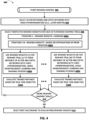
- FIG. 4 is a flowchart illustrating a method 400 of reward-shaping according to various implementations disclosed herein. For convenience, the operations of the flow chart are described with reference to a system that performs the operations. This system may include one or more components of one or more computer systems, such as one or more processors.
- the system starts reward-shaping.
- the system selects an actor network and a critic network with fixed hyperparameters.
- the fixed hyperparameters can include, for example, width(s) of layer(s) of the corresponding network.
- the actor network can have multiple layers each having corresponding fixed widths.
- the critic network can have multiple layers each having corresponding fixed widths.
- the system selects respective reward weights for each of N reward-shaping trials.
- the system selects first reward weights for a first reward-shaping trial, distinct separate reward weights for a second reward-shaping trial, etc.
- sub-block 406A can be performed, where the reward weights selected in the first iteration are selected randomly ( e.g. , truly random, or pseudo-random).
- sub-block 406B can instead be performed, where the reward weights selected in those subsequent iterations can be based on optimizations that are based on prior iterations of blocks 408A-N and 410A-N. For example, in those subsequent iterations an optimization procedure is utilized to select the weights, based on the previously selected weights and based on evaluation (in blocks 410A-N) of the respective trained instances learned using those previously selected weights.
- the system performs blocks 408A-N, optionally in parallel.
- respective reward weights for the respective trial are utilized to train a respective instance of the same actor and critic network with the fixed hyperparameters, using reinforcement learning and training episodes.
- first reward weights for a first reward trial are utilized to train a first instance of the actor and critic network with the fixed hyperparameters.
- disparate reward weights for a different reward trial are utilized to train a different instance of the actor and critic network with the fixed hyperparameters.
- Other reward weight(s) and corresponding reward trial(s) can be performed as indicated by the ellipsis between blocks 408A and 408N.
- the system evaluates the trained instance of the actor and critic network that was trained in block 408A using the reward weights for block 408A.
- the system evaluates the different trained instance of the actor and critic network that was trained in block 408N using the different reward weights for block 408N.
- the system determines whether to perform more reward-shaping trials. This decision can be based on, for example, whether a threshold quantity of reward-shaping trials have been performed, whether the most recent evaluations of blocks 410A-N satisfy a threshold, and/or other factor(s).
- the system determines to perform more reward-shaping trials, the system proceeds back to block 406 and selects new reward weights, then performs another iteration of blocks 408A-N using respective of those new reward weights, and performs another iteration of blocks 410A-N based on additional trained instances trained using those new reward weights. If, at an iteration of block 412, the system determines to not perform more reward-shaping trials, the system proceeds to block 414 and selects best reward weights, where the "best" is according to the evaluations of one or more iterations of blocks 410A-N.
- the system can select the reward weights that resulted in a respective trained instance having the best performance relative to the true task objective.
- the true task objective can vary from task to task. For example, a first objective can be utilized for a path following navigation task and a second objective can be utilized for a point to point navigation task.
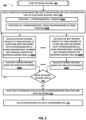
- FIG. 5 is a flowchart illustrating a method 500 of network-shaping according to various implementations disclosed herein. For convenience, the operations of the flow chart are described with reference to a system that performs the operations. This system may include one or more components of one or more computer systems, such as one or more processors.
- Block 502 the system starts network-shaping. Block 502 is performed after completion of method 400.
- the system selects respective hyperparameters for an actor network and critic network for each of N network-shaping trials.
- the hyperparameters for a network can include, for example, those that determine the network structure and/or those that determine how the network is trained (excluding reward weights, as reward weights are determined in method 400).
- the system selects first hyperparameters for a first network-shaping trial, distinct separate hyperparameters for a second network-shaping trial, etc.
- the hyperparameters can include, or be restricted to, width of hidden layers of the actor network and the critic network.
- the hyperparameters can additionally or alternatively include, or be restricted to, connections between hidden layers (e.g.
- sub-block 504A can be performed, where the hyperparameters selected in the first iteration are selected randomly (e.g. , truly random, or pseudo-random).
- sub-block 504B can instead be performed, where the hyperparameters selected in those subsequent iterations can be based on optimizations that are based on prior iterations of blocks 506A-N and 508A-N. For example, in those subsequent iterations an optimization procedure is utilized to select the hyperparameters, based on the previously selected hyperparameters and based on evaluation (in blocks 508A-N) of the respective trained instances learned using those previously selected weights.
- the system performs blocks 506A-N, optionally in parallel.
- the selected best reward weights e.g. , selected using method 400
- the best reward weights are used to train the instance of the actor and critic network with the respective hyperparameters, using reinforcement learning and training episodes.
- the best reward weights are used in training a first instance of actor network and critic network with first hyperparameters
- the best reward weights are used in training a second instance of actor network and critic network with different second hyperparameters, etc.
- the system evaluates the trained instance of the actor and critic network that was trained in block 508A.
- the system evaluates the different trained instance of the actor and critic network that was trained in block 508N.
- the system determines whether to perform more network-shaping trials. This decision can be based on, for example, whether a threshold quantity of trials have been performed, whether the most recent evaluations of blocks 508A-N satisfy a threshold, and/or other factor(s).
- the system determines to perform more reward-shaping trials, the system proceeds back to block 504 and selects new hyperparameters, then performs another iteration of blocks 506A-N using respective of those new hyperparameters, and performs another iteration of blocks 508-N based on additional trained instances trained using those new hyperparameters. If, at an iteration of block 510, the system determines to not perform more network-shaping trials, the system proceeds to block 512 and selects the best hyperprameters for the actor and critic networks, where the "best" is according to the evaluations of one or more iterations of blocks 508A-N. For example, the system can select the hyperparameters that resulted in a respective trained instance having the best performance relative to the cumulative reward.
- the system uses at least the selected actor network (selected at block 512), with the best hyperparameters (selected in method 400), in performing a robotic navigation task - optionally after further reinforcement learning training of the at selected actor network.
- FIG. 6 is a flowchart illustrating a method of performing a robotic navigation task using a trained policy network. For convenience, the operations of the flow chart are described with reference to a system that performs the operations.
- This system may include one or more components of one or more computer systems, such as one or more processors of a robot.
- the system starts robotic navigation.
- the system receives current state data of a robot.
- the current state data includes current vision data from vision sensor(s) of the robot, and for example, current pose data indicated the current pose of component(s) of the robot, and/or other current state data.
- the system processes the current state data using a trained best actor / policy network, to generate a robotic action to implement.
- the utilized trained best actor / policy network is the one having hyperparameters selected based on method 500, and being trained with reward weights selected based on method 400.
- the system executes the selected robotic action.
- the system determines whether to terminate the robotic navigation task. If so, the system proceeds to block 612 and the current instance of robotic navigation ends (although additional instances can be performed). If not, the system proceeds back to block 604, receives new current state data, then performs another iteration of blocks 606, and 608 based on the new state data.
- the system can terminate the performance of the robotic task if the system determines the executed task objective is completed.
- the system can terminate the performance of the robotic task if a critic network, corresponding to the best actor network, processes the stat data and the executed task objective is completed.
- the system can terminate the performance of the robotic task if the action at a most recent iteration of block 606 indicated termination. In some additional or alternative implementations and/or situations, the system can terminate the episode if a threshold quantity of iterations of blocks 604, 606, and 608 have been performed for the performance and/or if other heuristics based termination conditions have been satisfied.
- FIG. 7 schematically depicts an example architecture of a robot 725.
- the robot 725 includes a robot control system 760, one or more operational components 740a-740n, and one or more sensors 742a-742m.
- the sensors 742a-742m include, vision sensors, and may also include light sensors, pressure sensors, pressure wave sensors (e.g., microphones), proximity sensors, accelerometers, gyroscopes, thermometers, barometers, and so forth. While sensors 742a-742m are depicted as being integral with robot 725, this is not meant to be limiting. In some implementations, sensors 742a-742m may be located external to robot 725, e.g., as standalone units.
- Operational components 740a-740n may include, for example, one or more end effectors and/or one or more servo motors or other actuators to effectuate movement of one or more components of the robot.
- the robot 725 may have multiple degrees of freedom and each of the actuators may control actuation of the robot 725 within one or more of the degrees of freedom responsive to the control commands.
- the term actuator encompasses a mechanical or electrical device that creates motion (e.g., a motor), in addition to any driver(s) that may be associated with the actuator and that translate received control commands into one or more signals for driving the actuator. Accordingly, providing a control command to an actuator may comprise providing the control command to a driver that translates the control command into appropriate signals for driving an electrical or mechanical device to create desired motion.
- the robot control system 760 may be implemented in one or more processors, such as a CPU, GPU, and/or other controller(s) of the robot 725.
- the robot 725 may comprise a "brain box" that may include all or aspects of the control system 760.
- the brain box may provide real time bursts of data to the operational components 740a-740n, with each of the real time bursts comprising a set of one or more control commands that dictate, inter alia, the parameters of motion (if any) for each of one or more of the operational components 740a-740n.
- the robot control system 760 performs one or more aspects of method 600 described herein in performing a robotic navigation task.
- control system 760 in performing a robotic navigation task is based on a robotic action selected based on a current state (e.g., based at least on current vision data) and based on utilization of a trained policy network as described herein.
- control system 760 is illustrated in FIG. 7 as an integral part of the robot 725, in some implementations, all or aspects of the control system 760 may be implemented in a component that is separate from, but in communication with, robot 725.
- all or aspects of control system 760 may be implemented on one or more computing devices that are in wired and/or wireless communication with the robot 725, such as computing device 810.
- FIG. 8 is a block diagram of an example computing device 810 that may optionally be utilized to perform one or more aspects of techniques described herein.
- Computing device 810 typically includes at least one processor 814 which communicates with a number of peripheral devices via bus subsystem 812. These peripheral devices may include a storage subsystem 824, including, for example, a memory subsystem 825 and a file storage subsystem 826, user interface output devices 820, user interface input devices 822, and a network interface subsystem 816. The input and output devices allow user interaction with computing device 810.
- Network interface subsystem 816 provides an interface to outside networks and is coupled to corresponding interface devices in other computing devices.
- User interface input devices 822 may include a keyboard, pointing devices such as a mouse, trackball, touchpad, or graphics tablet, a scanner, a touchscreen incorporated into the display, audio input devices such as voice recognition systems, microphones, and/or other types of input devices.
- pointing devices such as a mouse, trackball, touchpad, or graphics tablet
- audio input devices such as voice recognition systems, microphones, and/or other types of input devices.
- use of the term "input device” is intended to include all possible types of devices and ways to input information into computing device 810 or onto a communication network.
- User interface output devices 820 may include a display subsystem, a printer, a fax machine, or non-visual displays such as audio output devices.
- the display subsystem may include a cathode ray tube (CRT), a flat-panel device such as a liquid crystal display (LCD), a projection device, or some other mechanism for creating a visible image.
- the display subsystem may also provide non-visual display such as via audio output devices.
- output device is intended to include all possible types of devices and ways to output information from computing device 810 to the user or to another machine or computing device.
- Storage subsystem 824 stores programming and data constructs that provide the functionality of some or all of the modules described herein.
- the storage subsystem 824 may include the logic to perform selected aspects of one or more method described herein.
- Memory 825 used in the storage subsystem 824 can include a number of memories including a main random access memory (RAM) 830 for storage of instructions and data during program execution and a read only memory (ROM) 832 in which fixed instructions are stored.
- a file storage subsystem 826 can provide persistent storage for program and data files, and may include a hard disk drive, a floppy disk drive along with associated removable media, a CD-ROM drive, an optical drive, or removable media cartridges.
- the modules implementing the functionality of certain implementations may be stored by file storage subsystem 826 in the storage subsystem 824, or in other machines accessible by the processor(s) 814.
- Bus subsystem 812 provides a mechanism for letting the various components and subsystems of computing device 810 communicate with each other as intended. Although bus subsystem 812 is shown schematically as a single bus, alternative implementations of the bus subsystem may use multiple busses.
- Computing device 810 can be of varying types including a workstation, server, computing cluster, blade server, server farm, or any other data processing system or computing device. Due to the ever-changing nature of computers and networks, the description of computing device 810 depicted in FIG. 8 is intended only as a specific example for purposes of illustrating some implementations. Many other configurations of computing device 810 are possible having more or fewer components than the computing device depicted in FIG. 8 .
Landscapes
- Engineering & Computer Science (AREA)
- Physics & Mathematics (AREA)
- Theoretical Computer Science (AREA)
- General Physics & Mathematics (AREA)
- Computing Systems (AREA)
- Mathematical Physics (AREA)
- Biophysics (AREA)
- Computational Linguistics (AREA)
- Data Mining & Analysis (AREA)
- Evolutionary Computation (AREA)
- General Health & Medical Sciences (AREA)
- Molecular Biology (AREA)
- Artificial Intelligence (AREA)
- General Engineering & Computer Science (AREA)
- Life Sciences & Earth Sciences (AREA)
- Biomedical Technology (AREA)
- Software Systems (AREA)
- Health & Medical Sciences (AREA)
- Aviation & Aerospace Engineering (AREA)
- Radar, Positioning & Navigation (AREA)
- Remote Sensing (AREA)
- Automation & Control Theory (AREA)
- Robotics (AREA)
- Feedback Control In General (AREA)
- Manipulator (AREA)
Claims (15)
- Verfahren zum Erzeugen eines trainierten Richtlinien-Netzwerks durch Verstärkungslernen, um einen Roboter beim Durchführen einer Roboternavigationsaufgabe zu steuern, wobei das Verfahren durch einen oder mehrere Prozessoren implementiert wird und Folgendes umfasst:
Bestimmen eines gegebenen Satzes von Reward-Gewichten (127) zur Verwendung beim Erzeugen parametrisierter Atomic-Rewards (132), die von einem gegebenen Richtlinien-Netzwerk (124) während Trainieren des trainierten Richtlinien-Netzwerks zu verarbeiten sind, wobei Bestimmen des gegebenen Satzes von Reward-Gewichten Folgendes umfasst:Auswählen eines gegebenen Akteur-Netzwerks (122) und eines gegebenen Kritik-Netzwerks (124);Auswählen einer Vielzahl von Sätzen von Reward-Gewichten;Durchführen einer Vielzahl von belohnungsgestaltenden Verstärkungslernversuchen, jeweils unter Verwendung einer jeweiligen Instanz des gegebenen Akteurs-Netzwerks und des gegebenen Kritik-Netzwerks (124), und unter Verwendung eines jeweiligen Satzes von Reward-Gewichten, wobei das Durchführen jedes der belohnungsgestaltenden Verstärkungslernversuche Folgendes umfasst:Trainieren der jeweiligen Instanz des gegebenen Akteurs-Netzwerks (122) und des gegebenen Kritik-Netzwerks (124) unter Verwendung von Verstärkungslernen basierend auf Trainingsepisoden, einschließlich Verwenden des jeweiligen Satzes von Reward-Gewichten beim Erzeugen von jeweiligen parametrisierten Atomic-Rewards (132), die von der jeweiligen Instanz des gegebenen Kritik-Netzwerks (124) während des Trainierens zu verarbeiten sind, wobei die Trainingsepisoden Roboternavigations-Episoden sind und die jeweilige Instanz des gegebenen Akteurs-Netzwerks (122) und des gegebenen Kritik-Netzwerks (124) während des Verstärkungslernens Zustandsdaten verarbeitet, die Roboter-Vision-Sensordaten beinhalten; undAuswerten jeder der jeweiligen Instanzen des gegebenen Akteur-Netzwerks nach dem Trainieren, um eine jeweilige Auswertungsmetrik zu erzeugen, wobei die Auswertungsmetriken jeweils die Leistung einer jeweiligen der Instanzen des gegebenen Akteur-Netzwerks (122) in Bezug auf nur ein Aufgaben-Ziel-Reward für die Roboternavigationsaufgabe angeben; undAuswählen des gegebenen Satzes von Reward-Gewichten aus der Vielzahl von Sätzen von Reward-Gewichten basierend auf der jeweiligen Auswertungsmetrik für die jeweilige Instanz des gegebenen Akteur-Netzwerks (122), trainiert unter Verwendung des gegebenen Satzes von Reward-Gewichten;Auswählen eines gegebenen Paares aus Akteur-Netzwerk (122) und Kritik-Netzwerk (124), nach dem Auswählen des gegebenen Satzes von Reward-Gewichten, wobei Auswählen des gegebenen Paares aus Akteur-Netzwerk (122) und Kritik-Netzwerk (124) Folgendes umfasst:Erzeugen einer Vielzahl von Paaren aus Akteur-Netzwerk (122) und Kritik-Netzwerk (124), wobei jedes Paar aus Akteur-Netzwerk (122) und Kritik-Netzwerk (124) eindeutige Hyperparameter aufweist;Durchführen einer Vielzahl von netzwerkgestaltenden Verstärkungslernversuchen, die jeweils den ausgewählten gegebenen Satz von Reward-Gewichten verwenden, und Verwenden eines jeweiligen Paares des Akteur-Netzwerks (122) und des Kritik-Netzwerks (124), um das jeweilige Paar zu trainieren;Auswerten des Akteur-Netzwerks (122) jedes der Paare aus Akteur-Netzwerk (122) und Kritik-Netzwerk (124) nach dem Trainieren, um eine jeweilige zusätzliche Auswertungsmetrik zu erzeugen; und Auswählen des gegebenen Paares aus Akteur-Netzwerk (122) und Kritik-Netzwerk (124) aus den Paaren aus Akteur-Netzwerk (122) und Kritik-Netzwerk (124), basierend auf der jeweiligen zusätzlichen Auswertungsmetrik für das Akteur-Netzwerk (122) des gegebenen Paares aus Akteur-Netzwerk (122) und Kritik-Netzwerk (124); undals Reaktion auf das Auswählen des gegebenen Akteur-Netzwerks (122) und des Kritik-Netzwerks (124) Paares, Verwenden des ausgewählten gegebenen Akteur-Netzwerks (122) und Kritik-Netzwerks (124) Paares beim Erzeugen des trainierten Richtlinien-Netzwerks, wobei das trainierte Richtlinien-Netzwerk das Akteur-Netzwerk des ausgewählten gegebenen Akteur-Netzwerks (122) und des Kritik-Netzwerks (124) Paares umfasst;wobei das trainierte Richtlinien-Netzwerk dazu konfiguriert ist, Zustandsdaten zu verarbeiten, um eine oder mehrere Roboteraktionen zu erzeugen, um einen physischen Roboter beim Navigieren in einer Realwelt-Umgebung zu steuern. - Verfahren nach Anspruch 1, wobei es sich bei der Roboternavigationsaufgabe um eine Punkt-zu-Punkt-Navigationsaufgabe oder um eine pfadfolgende Navigationsaufgabe handelt.
- Verfahren nach einem der vorhergehenden Ansprüche, wobei die zusätzlichen Auswertungsmetriken jeweils die Leistung eines jeweiligen Akteur-Netzwerks der Paare aus Akteur-Netzwerk und Kritik-Netzwerk im Hinblick auf ein kumulatives Reward angeben, das eine Funktion des Aufgaben-Ziel-Rewards und eines oder mehrerer zusätzlicher Rewards ist.
- Verfahren nach einem der vorhergehenden Ansprüche, wobei die Hyperparameter Breiten für eine oder mehrere versteckte Schichten der Paare aus Akteur-Netzwerk und Kritik-Netzwerk umfassen.
- Verfahren nach einem der vorhergehenden Ansprüche, wobei die Hyperparameter aus Breiten für eine oder mehrere versteckte Schichten der Paare aus Akteur-Netzwerk und Kritik-Netzwerk bestehen.
- Verfahren nach Anspruch 4 oder 5, wobei es sich bei den verborgenen Netzwerkschichten um vorgesteuerte Schichten handelt.
- Verfahren nach einem der vorhergehenden Ansprüche, wobei der gegebene Satz von Reward-Gewichten ein erstes Reward-Gewicht für eine erste Reward-Komponente, die angibt, ob ein Zielstandort erreicht wurde, und ein zweites Reward-Gewicht für eine zweite Reward-Komponente, die eine Entfernung zum Zielstandort oder eine Entfernung zu einem nicht erreichten Wegpunkt angibt, umfasst.
- Verfahren nach Anspruch 7, wobei der gegebene Satz von Reward-Gewichten ferner ein drittes Reward-Gewicht für eine dritte Reward-Komponente umfasst, die angibt, ob eine Kollision mit einem Hindernis stattfindet.
- Verfahren nach einem der vorhergehenden Ansprüche, wobei das Auswählen der Vielzahl von Sätzen von Reward-Gewichten das Auswählen eines initialen Teilsatzes der Sätze von Reward-Gewichten und das Auswählen eines zusätzlichen Teilsatzes des initialen Teilsatzes nach dem Durchführen eines initialen Teilsatzes der belohnungsgestaltenden Verstärkungslernversuche unter Verwendung des initialen Teilsatzes der Sätze von Reward-Gewichten umfasst, und/oder
wobei das Auswählen des initialen Teilsatzes der Sätze von Reward-Gewichten das zufällige Auswählen des initialen Teilsatzes umfasst und wobei das Auswählen des zusätzlichen Teilsatzes das Auswählen des zusätzlichen Teilsatzes basierend auf einer Optimierung umfasst, die nach dem Durchführen des initialen Teilsatzes der belohnungsgestaltenden Verstärkungslernversuche unter Verwendung des initialen Teilsatzes der Sätze von Reward-Gewichten durchgeführt wird. - Verfahren nach einem der vorhergehenden Ansprüche, wobei das Auswählen der Paare aus Akteur-Netzwerk (122) und Kritik-Netzwerk (124) das Auswählen eines initialen Teilsatzes der Paare aus Akteur-Netzwerk (122) und Kritik-Netzwerk (124) und das Auswählen eines zusätzlichen Teilsatzes der Paare aus Akteur-Netzwerk (122) und Kritik-Netzwerk (124) nach dem Durchführen eines initialen Teilsatzes der netzwerkgestaltenden Verstärkungslernversuche unter Verwendung des initialen Teilsatzes der Paare aus Akteur-Netzwerk (122) und Kritik-Netzwerk (124) umfasst.
- Verfahren nach Anspruch 10, wobei das Auswählen des initialen Teilsatzes der Paare aus Akteur-Netzwerk (122) und Kritik-Netzwerk (124) das zufällige Auswählen der Hyperparameter für den initialen Teilsatz umfasst und wobei das Auswählen des zusätzlichen Teilsatzes das Auswählen des zusätzlichen Teilsatzes basierend auf einer Optimierung umfasst, die nach der Durchführung des initialen Teilsatzes der netzwerkgestaltenden Verstärkungslernversuche unter Verwendung des initialen Teilsatzes der Paare aus Akteur-Netzwerk (122) und Kritik-Netzwerk (124) durchgeführt wird.
- Verfahren nach einem der vorhergehenden Ansprüche, wobei das Verstärkungslernen Deep-Deterministic-Policy-Gradient-Verstärkungslernen (DDPG) ist und/oder die Roboternavigations-Episoden simulierte Roboternavigations-Episoden beinhalten.
- Verfahren nach Anspruch 1, wobei die Roboter-Vision-Sensordaten eindimensionale Tiefendaten umfassen und es sich bei den eindimensionalen Tiefendaten optional um reale oder simulierte LIDAR-Daten handelt und die Zustandsdaten optional ferner eine aktuelle Roboterpose und/oder eine Zielpose umfassen.
- System, umfassend:
eine Vielzahl von Prozessoren, die zu Folgendem konfiguriert ist:
Durchführen eines der Verfahren nach den Ansprüchen 1 bis 13. - Speicherteilsystem (824), das Anweisungen umfasst, die, wenn sie von einem oder mehreren Prozessoren (814) ausgeführt werden, den einen oder die mehreren Prozessoren (814) veranlassen, das Verfahren nach einem der Ansprüche 1 bis 13 durchzuführen.
Applications Claiming Priority (2)
| Application Number | Priority Date | Filing Date | Title |
|---|---|---|---|
| US201862731788P | 2018-09-14 | 2018-09-14 | |
| PCT/US2019/051065 WO2020056299A1 (en) | 2018-09-14 | 2019-09-13 | Deep reinforcement learning-based techniques for end to end robot navigation |
Publications (2)
| Publication Number | Publication Date |
|---|---|
| EP3837641A1 EP3837641A1 (de) | 2021-06-23 |
| EP3837641B1 true EP3837641B1 (de) | 2024-11-06 |
Family
ID=68073205
Family Applications (1)
| Application Number | Title | Priority Date | Filing Date |
|---|---|---|---|
| EP19779276.5A Active EP3837641B1 (de) | 2018-09-14 | 2019-09-13 | Auf tiefem verstärkungslernen basierende techniken für end-zu-end-roboternavigation |
Country Status (3)
| Country | Link |
|---|---|
| US (1) | US20210325894A1 (de) |
| EP (1) | EP3837641B1 (de) |
| WO (1) | WO2020056299A1 (de) |
Families Citing this family (41)
| Publication number | Priority date | Publication date | Assignee | Title |
|---|---|---|---|---|
| WO2018083667A1 (en) * | 2016-11-04 | 2018-05-11 | Deepmind Technologies Limited | Reinforcement learning systems |
| CN113272822B (zh) * | 2018-11-14 | 2025-10-31 | 直观外科手术操作公司 | 用于有效的组织分割的卷积神经网络 |
| JP7469850B2 (ja) * | 2019-03-25 | 2024-04-17 | 本田技研工業株式会社 | 経路決定装置、ロボット及び経路決定方法 |
| US11663522B2 (en) * | 2020-04-27 | 2023-05-30 | Microsoft Technology Licensing, Llc | Training reinforcement machine learning systems |
| CN111552301B (zh) * | 2020-06-21 | 2022-05-20 | 南开大学 | 一种基于强化学习的蝾螈机器人路径跟踪的分层控制方法 |
| DE102020209685B4 (de) * | 2020-07-31 | 2023-07-06 | Robert Bosch Gesellschaft mit beschränkter Haftung | Verfahren zum steuern einer robotervorrichtung und robotervorrichtungssteuerung |
| US11654566B2 (en) * | 2020-08-12 | 2023-05-23 | General Electric Company | Robotic activity decomposition |
| US12423571B2 (en) * | 2020-08-26 | 2025-09-23 | Sony Group Corporation | Training actor-critic algorithms in laboratory settings |
| CN112476424B (zh) * | 2020-11-13 | 2025-05-09 | 腾讯科技(深圳)有限公司 | 机器人控制方法、装置、设备及计算机存储介质 |
| CN112362066B (zh) * | 2020-11-20 | 2023-02-10 | 西北工业大学 | 一种基于改进的深度强化学习的路径规划方法 |
| CN112540614B (zh) * | 2020-11-26 | 2022-10-25 | 江苏科技大学 | 一种基于深度强化学习的无人艇航迹控制方法 |
| CN112498334B (zh) * | 2020-12-15 | 2022-03-11 | 清华大学 | 智能网联混合动力汽车的鲁棒能量管理方法及系统 |
| CN112767373B (zh) * | 2021-01-27 | 2022-09-02 | 大连理工大学 | 一种基于单目相机的机器人室内复杂场景避障方法 |
| CN113386790B (zh) * | 2021-06-09 | 2022-07-12 | 扬州大学 | 一种面向跨海大桥路况的自动驾驶决策方法 |
| CN113400307B (zh) * | 2021-06-16 | 2022-10-18 | 清华大学 | 一种空间机器人机械臂的控制方法 |
| CN113467248A (zh) * | 2021-07-22 | 2021-10-01 | 南京大学 | 基于强化学习的无人机传感器故障时容错控制方法 |
| CN113838042B (zh) * | 2021-09-30 | 2023-11-10 | 清华大学 | 双机械臂操作问答方法、装置、电子设备和存储介质 |
| CN113843802B (zh) * | 2021-10-18 | 2023-09-05 | 南京理工大学 | 一种基于深度强化学习td3算法的机械臂运动控制方法 |
| CN114047697B (zh) * | 2021-11-05 | 2023-08-25 | 河南科技大学 | 一种基于深度强化学习的四足机器人平衡倒立摆控制方法 |
| CN114089751A (zh) * | 2021-11-11 | 2022-02-25 | 南京航空航天大学 | 一种基于改进ddpg算法的移动机器人路径规划方法 |
| KR102707390B1 (ko) * | 2021-12-22 | 2024-09-20 | 네이버 주식회사 | 강화 학습 기반의 알고리즘과 경로 계획 기반의 알고리즘을 사용하여 로봇을 제어하는 방법 및 시스템과, 로봇이 배치되는 건물 |
| CN114355915B (zh) * | 2021-12-27 | 2024-04-02 | 杭州电子科技大学 | 一种基于深度强化学习的agv路径规划 |
| CN114355973B (zh) * | 2021-12-28 | 2023-12-08 | 哈尔滨工程大学 | 一种基于多智能体分层强化学习的弱观测条件下无人集群协同方法 |
| CN114585004B (zh) * | 2022-03-03 | 2023-04-25 | 南京信息工程大学 | 一种基于Actor-Critic算法的多智能体异构网络资源优化方法 |
| CN114721397B (zh) * | 2022-04-19 | 2024-05-31 | 北方工业大学 | 一种基于强化学习和好奇心的迷宫机器人路径规划方法 |
| CN114872049B (zh) * | 2022-05-31 | 2023-08-29 | 苏州大学 | 一种基于环境交互的机器人实时控制方法 |
| CN115031753B (zh) * | 2022-06-09 | 2024-07-12 | 合肥工业大学 | 基于安全势场和dqn算法的行车工况局部路径规划方法 |
| CN115457809A (zh) * | 2022-08-10 | 2022-12-09 | 中国电子科技集团公司第五十二研究所 | 对面支援场景下基于多智能体强化学习的航迹规划方法 |
| CN115330556B (zh) * | 2022-08-10 | 2024-04-02 | 北京百度网讯科技有限公司 | 充电站的信息调整模型的训练方法、装置及产品 |
| CN115841286B (zh) * | 2022-08-29 | 2025-08-22 | 南京信息工程大学 | 一种基于深度强化学习的外卖配送路径规划方法 |
| CN115766769B (zh) * | 2022-10-25 | 2025-04-08 | 西北工业大学 | 一种基于深度强化学习的无线传感器网络部署方法 |
| CN115837677B (zh) * | 2023-02-24 | 2023-04-28 | 深圳育智科创科技有限公司 | 一种机器人智能控制方法 |
| CN116300909A (zh) * | 2023-03-01 | 2023-06-23 | 东南大学 | 一种基于信息预处理和强化学习的机器人避障导航方法 |
| CN116384469B (zh) * | 2023-06-05 | 2023-08-08 | 中国人民解放军国防科技大学 | 一种智能体策略生成方法、装置、计算机设备和存储介质 |
| CN117103255A (zh) * | 2023-08-17 | 2023-11-24 | 兰州大学 | 基于直接偏好优化的nao机器人物体抓取训练方法 |
| CN117892797B (zh) * | 2023-12-29 | 2024-09-06 | 中科南京人工智能创新研究院 | 基于广泛目标重标记的目标条件强化学习方法 |
| CN117990119B (zh) * | 2024-01-29 | 2024-10-15 | 中山大学·深圳 | 一种基于深度强化学习的分层越野路径规划方法 |
| CN118135550B (zh) * | 2024-04-03 | 2024-09-06 | 武汉船讯科技有限公司 | 一种基于深度学习和单目视觉的水面多目标测距方法、系统及存储介质 |
| CN118081773B (zh) * | 2024-04-23 | 2024-08-20 | 厦门大学 | 一种基于综合损失的演员评论家算法的机器人控制方法 |
| CN120008618B (zh) * | 2025-04-18 | 2025-07-08 | 清华大学 | 集群路径规划方法、装置、设备、存储介质和程序产品 |
| CN120800403B (zh) * | 2025-09-08 | 2026-01-09 | 北京理工大学 | 一种多移动机器人分层强化学习运动规划方法与系统 |
Family Cites Families (13)
| Publication number | Priority date | Publication date | Assignee | Title |
|---|---|---|---|---|
| US7664714B2 (en) * | 2004-10-21 | 2010-02-16 | Honda Motor Co., Ltd. | Neural network element with reinforcement/attenuation learning |
| US20180165602A1 (en) * | 2016-12-14 | 2018-06-14 | Microsoft Technology Licensing, Llc | Scalability of reinforcement learning by separation of concerns |
| EP3573520A4 (de) * | 2017-01-27 | 2020-11-04 | Arterys Inc. | Automatisierte segmentierung unter verwendung vollständig konvolutionaler netze |
| US10878314B2 (en) * | 2017-03-09 | 2020-12-29 | Alphaics Corporation | System and method for training artificial intelligence systems using a SIMA based processor |
| WO2018175641A1 (en) * | 2017-03-21 | 2018-09-27 | Blue River Technology Inc. | Combine harvester including machine feedback control |
| CN110651279B (zh) * | 2017-06-28 | 2023-11-07 | 渊慧科技有限公司 | 利用学徒来训练动作选择神经网络 |
| US11676296B2 (en) * | 2017-08-11 | 2023-06-13 | Sri International | Augmenting reality using semantic segmentation |
| WO2019150452A1 (ja) * | 2018-01-30 | 2019-08-08 | 日本電気株式会社 | 情報処理装置、制御方法、及びプログラム |
| US20190272465A1 (en) * | 2018-03-01 | 2019-09-05 | International Business Machines Corporation | Reward estimation via state prediction using expert demonstrations |
| US10953548B2 (en) * | 2018-07-19 | 2021-03-23 | International Business Machines Corporation | Perform peg-in-hole task with unknown tilt |
| US10726134B2 (en) * | 2018-08-14 | 2020-07-28 | Intel Corporation | Techniques to detect perturbation attacks with an actor-critic framework |
| US10703370B2 (en) * | 2018-08-24 | 2020-07-07 | Ford Global Technologies, Llc | Vehicle action control |
| US11334398B2 (en) * | 2018-08-29 | 2022-05-17 | International Business Machines Corporation | Learning-based thermal estimation in multicore architecture |
-
2019
- 2019-09-13 WO PCT/US2019/051065 patent/WO2020056299A1/en not_active Ceased
- 2019-09-13 EP EP19779276.5A patent/EP3837641B1/de active Active
- 2019-09-13 US US17/275,459 patent/US20210325894A1/en active Pending
Non-Patent Citations (1)
| Title |
|---|
| FAUST ALEKSANDRA ET AL: "PRM-RL: Long-range Robotic Navigation Tasks by Combining Reinforcement Learning and Sampling-Based Planning", 2018 IEEE INTERNATIONAL CONFERENCE ON ROBOTICS AND AUTOMATION (ICRA), IEEE, 21 May 2018 (2018-05-21), pages 5113 - 5120, XP033403518, DOI: 10.1109/ICRA.2018.8461096 * |
Also Published As
| Publication number | Publication date |
|---|---|
| US20210325894A1 (en) | 2021-10-21 |
| EP3837641A1 (de) | 2021-06-23 |
| WO2020056299A1 (en) | 2020-03-19 |
Similar Documents
| Publication | Publication Date | Title |
|---|---|---|
| EP3837641B1 (de) | Auf tiefem verstärkungslernen basierende techniken für end-zu-end-roboternavigation | |
| US12479093B2 (en) | Data-efficient hierarchical reinforcement learning | |
| US20240017405A1 (en) | Viewpoint invariant visual servoing of robot end effector using recurrent neural network | |
| US20230311335A1 (en) | Natural language control of a robot | |
| US12083678B2 (en) | Efficient adaption of robot control policy for new task using meta-learning based on meta-imitation learning and meta-reinforcement learning | |
| EP3568268B1 (de) | Verbesserungen in bezug auf die erzeugung einer robotersteuerungsrichtlinie aus demonstrationen, die durch kinästhetisches lehren eines roboters gesammelt wurden | |
| US20250178615A1 (en) | Robot navigation using a high-level policy model and a trained low-level policy model | |
| EP3622439B1 (de) | Verbesserungen in bezug auf die erzeugung einer robotersteuerungsrichtlinie aus demonstrationen, die durch kinästhetisches lehren eines roboters gesammelt wurden | |
| US11887363B2 (en) | Training a deep neural network model to generate rich object-centric embeddings of robotic vision data | |
| EP3739418B1 (de) | Verfahren und vorrichtung zur steuerung eines fahrzeugs | |
| US12226920B2 (en) | System(s) and method(s) of using imitation learning in training and refining robotic control policies | |
| US11571809B1 (en) | Robotic control using value distributions | |
| US20220410380A1 (en) | Learning robotic skills with imitation and reinforcement at scale | |
| US11610153B1 (en) | Generating reinforcement learning data that is compatible with reinforcement learning for a robotic task | |
| US20240094736A1 (en) | Robot navigation in dependence on gesture(s) of human(s) in environment with robot | |
| WO2025245240A1 (en) | Diffusion model predictive control | |
| EP4577383A1 (de) | System(e) und verfahren zur verwendung von verhaltensklonungswertapproximation beim trainieren und verfeinern von robotersteuerungsrichtlinien | |
| CN118020079A (zh) | 用于模拟用于执行任务的环境的方法和装置 |
Legal Events
| Date | Code | Title | Description |
|---|---|---|---|
| STAA | Information on the status of an ep patent application or granted ep patent |
Free format text: STATUS: UNKNOWN |
|
| STAA | Information on the status of an ep patent application or granted ep patent |
Free format text: STATUS: THE INTERNATIONAL PUBLICATION HAS BEEN MADE |
|
| PUAI | Public reference made under article 153(3) epc to a published international application that has entered the european phase |
Free format text: ORIGINAL CODE: 0009012 |
|
| STAA | Information on the status of an ep patent application or granted ep patent |
Free format text: STATUS: REQUEST FOR EXAMINATION WAS MADE |
|
| 17P | Request for examination filed |
Effective date: 20210314 |
|
| AK | Designated contracting states |
Kind code of ref document: A1 Designated state(s): AL AT BE BG CH CY CZ DE DK EE ES FI FR GB GR HR HU IE IS IT LI LT LU LV MC MK MT NL NO PL PT RO RS SE SI SK SM TR |
|
| DAV | Request for validation of the european patent (deleted) | ||
| DAX | Request for extension of the european patent (deleted) | ||
| STAA | Information on the status of an ep patent application or granted ep patent |
Free format text: STATUS: EXAMINATION IS IN PROGRESS |
|
| 17Q | First examination report despatched |
Effective date: 20230929 |
|
| REG | Reference to a national code |
Ref country code: DE Free format text: PREVIOUS MAIN CLASS: G06N0003040000 Ipc: G06N0003008000 Ref country code: DE Ref legal event code: R079 Ref document number: 602019061552 Country of ref document: DE Free format text: PREVIOUS MAIN CLASS: G06N0003040000 Ipc: G06N0003008000 |
|
| GRAP | Despatch of communication of intention to grant a patent |
Free format text: ORIGINAL CODE: EPIDOSNIGR1 |
|
| STAA | Information on the status of an ep patent application or granted ep patent |
Free format text: STATUS: GRANT OF PATENT IS INTENDED |
|
| RIC1 | Information provided on ipc code assigned before grant |
Ipc: G06N 3/08 20060101ALI20240212BHEP Ipc: G06N 3/045 20230101ALI20240212BHEP Ipc: G06N 3/008 20230101AFI20240212BHEP |
|
| INTG | Intention to grant announced |
Effective date: 20240228 |
|
| GRAJ | Information related to disapproval of communication of intention to grant by the applicant or resumption of examination proceedings by the epo deleted |
Free format text: ORIGINAL CODE: EPIDOSDIGR1 |
|
| STAA | Information on the status of an ep patent application or granted ep patent |
Free format text: STATUS: EXAMINATION IS IN PROGRESS |
|
| GRAP | Despatch of communication of intention to grant a patent |
Free format text: ORIGINAL CODE: EPIDOSNIGR1 |
|
| STAA | Information on the status of an ep patent application or granted ep patent |
Free format text: STATUS: GRANT OF PATENT IS INTENDED |
|
| INTC | Intention to grant announced (deleted) | ||
| INTG | Intention to grant announced |
Effective date: 20240716 |
|
| GRAS | Grant fee paid |
Free format text: ORIGINAL CODE: EPIDOSNIGR3 |
|
| P01 | Opt-out of the competence of the unified patent court (upc) registered |
Free format text: CASE NUMBER: APP_47271/2024 Effective date: 20240815 |
|
| GRAA | (expected) grant |
Free format text: ORIGINAL CODE: 0009210 |
|
| STAA | Information on the status of an ep patent application or granted ep patent |
Free format text: STATUS: THE PATENT HAS BEEN GRANTED |
|
| AK | Designated contracting states |
Kind code of ref document: B1 Designated state(s): AL AT BE BG CH CY CZ DE DK EE ES FI FR GB GR HR HU IE IS IT LI LT LU LV MC MK MT NL NO PL PT RO RS SE SI SK SM TR |
|
| REG | Reference to a national code |
Ref country code: GB Ref legal event code: FG4D |
|
| REG | Reference to a national code |
Ref country code: CH Ref legal event code: EP |
|
| REG | Reference to a national code |
Ref country code: DE Ref legal event code: R096 Ref document number: 602019061552 Country of ref document: DE |
|
| REG | Reference to a national code |
Ref country code: IE Ref legal event code: FG4D |
|
| REG | Reference to a national code |
Ref country code: LT Ref legal event code: MG9D |
|
| REG | Reference to a national code |
Ref country code: NL Ref legal event code: MP Effective date: 20241106 |
|
| PG25 | Lapsed in a contracting state [announced via postgrant information from national office to epo] |
Ref country code: IS Free format text: LAPSE BECAUSE OF FAILURE TO SUBMIT A TRANSLATION OF THE DESCRIPTION OR TO PAY THE FEE WITHIN THE PRESCRIBED TIME-LIMIT Effective date: 20250306 Ref country code: PT Free format text: LAPSE BECAUSE OF FAILURE TO SUBMIT A TRANSLATION OF THE DESCRIPTION OR TO PAY THE FEE WITHIN THE PRESCRIBED TIME-LIMIT Effective date: 20250306 Ref country code: HR Free format text: LAPSE BECAUSE OF FAILURE TO SUBMIT A TRANSLATION OF THE DESCRIPTION OR TO PAY THE FEE WITHIN THE PRESCRIBED TIME-LIMIT Effective date: 20241106 |
|
| PG25 | Lapsed in a contracting state [announced via postgrant information from national office to epo] |
Ref country code: FI Free format text: LAPSE BECAUSE OF FAILURE TO SUBMIT A TRANSLATION OF THE DESCRIPTION OR TO PAY THE FEE WITHIN THE PRESCRIBED TIME-LIMIT Effective date: 20241106 Ref country code: NL Free format text: LAPSE BECAUSE OF FAILURE TO SUBMIT A TRANSLATION OF THE DESCRIPTION OR TO PAY THE FEE WITHIN THE PRESCRIBED TIME-LIMIT Effective date: 20241106 |
|
| REG | Reference to a national code |
Ref country code: AT Ref legal event code: MK05 Ref document number: 1740173 Country of ref document: AT Kind code of ref document: T Effective date: 20241106 |
|
| PG25 | Lapsed in a contracting state [announced via postgrant information from national office to epo] |
Ref country code: BG Free format text: LAPSE BECAUSE OF FAILURE TO SUBMIT A TRANSLATION OF THE DESCRIPTION OR TO PAY THE FEE WITHIN THE PRESCRIBED TIME-LIMIT Effective date: 20241106 |
|
| PG25 | Lapsed in a contracting state [announced via postgrant information from national office to epo] |
Ref country code: ES Free format text: LAPSE BECAUSE OF FAILURE TO SUBMIT A TRANSLATION OF THE DESCRIPTION OR TO PAY THE FEE WITHIN THE PRESCRIBED TIME-LIMIT Effective date: 20241106 |
|
| PG25 | Lapsed in a contracting state [announced via postgrant information from national office to epo] |
Ref country code: NO Free format text: LAPSE BECAUSE OF FAILURE TO SUBMIT A TRANSLATION OF THE DESCRIPTION OR TO PAY THE FEE WITHIN THE PRESCRIBED TIME-LIMIT Effective date: 20250206 |
|
| PG25 | Lapsed in a contracting state [announced via postgrant information from national office to epo] |
Ref country code: LV Free format text: LAPSE BECAUSE OF FAILURE TO SUBMIT A TRANSLATION OF THE DESCRIPTION OR TO PAY THE FEE WITHIN THE PRESCRIBED TIME-LIMIT Effective date: 20241106 Ref country code: GR Free format text: LAPSE BECAUSE OF FAILURE TO SUBMIT A TRANSLATION OF THE DESCRIPTION OR TO PAY THE FEE WITHIN THE PRESCRIBED TIME-LIMIT Effective date: 20250207 Ref country code: AT Free format text: LAPSE BECAUSE OF FAILURE TO SUBMIT A TRANSLATION OF THE DESCRIPTION OR TO PAY THE FEE WITHIN THE PRESCRIBED TIME-LIMIT Effective date: 20241106 |
|
| PG25 | Lapsed in a contracting state [announced via postgrant information from national office to epo] |
Ref country code: PL Free format text: LAPSE BECAUSE OF FAILURE TO SUBMIT A TRANSLATION OF THE DESCRIPTION OR TO PAY THE FEE WITHIN THE PRESCRIBED TIME-LIMIT Effective date: 20241106 |
|
| PG25 | Lapsed in a contracting state [announced via postgrant information from national office to epo] |
Ref country code: RS Free format text: LAPSE BECAUSE OF FAILURE TO SUBMIT A TRANSLATION OF THE DESCRIPTION OR TO PAY THE FEE WITHIN THE PRESCRIBED TIME-LIMIT Effective date: 20250206 |
|
| PG25 | Lapsed in a contracting state [announced via postgrant information from national office to epo] |
Ref country code: SM Free format text: LAPSE BECAUSE OF FAILURE TO SUBMIT A TRANSLATION OF THE DESCRIPTION OR TO PAY THE FEE WITHIN THE PRESCRIBED TIME-LIMIT Effective date: 20241106 |
|
| PG25 | Lapsed in a contracting state [announced via postgrant information from national office to epo] |
Ref country code: DK Free format text: LAPSE BECAUSE OF FAILURE TO SUBMIT A TRANSLATION OF THE DESCRIPTION OR TO PAY THE FEE WITHIN THE PRESCRIBED TIME-LIMIT Effective date: 20241106 |
|
| PG25 | Lapsed in a contracting state [announced via postgrant information from national office to epo] |
Ref country code: EE Free format text: LAPSE BECAUSE OF FAILURE TO SUBMIT A TRANSLATION OF THE DESCRIPTION OR TO PAY THE FEE WITHIN THE PRESCRIBED TIME-LIMIT Effective date: 20241106 |
|
| PG25 | Lapsed in a contracting state [announced via postgrant information from national office to epo] |
Ref country code: RO Free format text: LAPSE BECAUSE OF FAILURE TO SUBMIT A TRANSLATION OF THE DESCRIPTION OR TO PAY THE FEE WITHIN THE PRESCRIBED TIME-LIMIT Effective date: 20241106 |
|
| PG25 | Lapsed in a contracting state [announced via postgrant information from national office to epo] |
Ref country code: SK Free format text: LAPSE BECAUSE OF FAILURE TO SUBMIT A TRANSLATION OF THE DESCRIPTION OR TO PAY THE FEE WITHIN THE PRESCRIBED TIME-LIMIT Effective date: 20241106 |
|
| PG25 | Lapsed in a contracting state [announced via postgrant information from national office to epo] |
Ref country code: CZ Free format text: LAPSE BECAUSE OF FAILURE TO SUBMIT A TRANSLATION OF THE DESCRIPTION OR TO PAY THE FEE WITHIN THE PRESCRIBED TIME-LIMIT Effective date: 20241106 |
|
| PG25 | Lapsed in a contracting state [announced via postgrant information from national office to epo] |
Ref country code: IT Free format text: LAPSE BECAUSE OF FAILURE TO SUBMIT A TRANSLATION OF THE DESCRIPTION OR TO PAY THE FEE WITHIN THE PRESCRIBED TIME-LIMIT Effective date: 20241106 |
|
| REG | Reference to a national code |
Ref country code: DE Ref legal event code: R097 Ref document number: 602019061552 Country of ref document: DE |
|
| PG25 | Lapsed in a contracting state [announced via postgrant information from national office to epo] |
Ref country code: SE Free format text: LAPSE BECAUSE OF FAILURE TO SUBMIT A TRANSLATION OF THE DESCRIPTION OR TO PAY THE FEE WITHIN THE PRESCRIBED TIME-LIMIT Effective date: 20241106 |
|
| PLBE | No opposition filed within time limit |
Free format text: ORIGINAL CODE: 0009261 |
|
| STAA | Information on the status of an ep patent application or granted ep patent |
Free format text: STATUS: NO OPPOSITION FILED WITHIN TIME LIMIT |
|
| PGFP | Annual fee paid to national office [announced via postgrant information from national office to epo] |
Ref country code: DE Payment date: 20250929 Year of fee payment: 7 |
|
| 26N | No opposition filed |
Effective date: 20250807 |
|
| PGFP | Annual fee paid to national office [announced via postgrant information from national office to epo] |
Ref country code: GB Payment date: 20250929 Year of fee payment: 7 |