EP3837136B1 - Ejector trailers - Google Patents
Ejector trailers Download PDFInfo
- Publication number
- EP3837136B1 EP3837136B1 EP19849807.3A EP19849807A EP3837136B1 EP 3837136 B1 EP3837136 B1 EP 3837136B1 EP 19849807 A EP19849807 A EP 19849807A EP 3837136 B1 EP3837136 B1 EP 3837136B1
- Authority
- EP
- European Patent Office
- Prior art keywords
- trailer
- apron
- threaded rod
- ejector
- threaded
- Prior art date
- Legal status (The legal status is an assumption and is not a legal conclusion. Google has not performed a legal analysis and makes no representation as to the accuracy of the status listed.)
- Active
Links
Images




Classifications
-
- B—PERFORMING OPERATIONS; TRANSPORTING
- B60—VEHICLES IN GENERAL
- B60P—VEHICLES ADAPTED FOR LOAD TRANSPORTATION OR TO TRANSPORT, TO CARRY, OR TO COMPRISE SPECIAL LOADS OR OBJECTS
- B60P1/00—Vehicles predominantly for transporting loads and modified to facilitate loading, consolidating the load, or unloading
- B60P1/04—Vehicles predominantly for transporting loads and modified to facilitate loading, consolidating the load, or unloading with a tipping movement of load-transporting element
- B60P1/16—Vehicles predominantly for transporting loads and modified to facilitate loading, consolidating the load, or unloading with a tipping movement of load-transporting element actuated by fluid-operated mechanisms
-
- B—PERFORMING OPERATIONS; TRANSPORTING
- B60—VEHICLES IN GENERAL
- B60P—VEHICLES ADAPTED FOR LOAD TRANSPORTATION OR TO TRANSPORT, TO CARRY, OR TO COMPRISE SPECIAL LOADS OR OBJECTS
- B60P1/00—Vehicles predominantly for transporting loads and modified to facilitate loading, consolidating the load, or unloading
- B60P1/006—Vehicles predominantly for transporting loads and modified to facilitate loading, consolidating the load, or unloading charge and discharge with pusher plates
-
- B—PERFORMING OPERATIONS; TRANSPORTING
- B60—VEHICLES IN GENERAL
- B60P—VEHICLES ADAPTED FOR LOAD TRANSPORTATION OR TO TRANSPORT, TO CARRY, OR TO COMPRISE SPECIAL LOADS OR OBJECTS
- B60P1/00—Vehicles predominantly for transporting loads and modified to facilitate loading, consolidating the load, or unloading
- B60P1/04—Vehicles predominantly for transporting loads and modified to facilitate loading, consolidating the load, or unloading with a tipping movement of load-transporting element
- B60P1/30—Vehicles predominantly for transporting loads and modified to facilitate loading, consolidating the load, or unloading with a tipping movement of load-transporting element in combination with another movement of the element
-
- B—PERFORMING OPERATIONS; TRANSPORTING
- B60—VEHICLES IN GENERAL
- B60P—VEHICLES ADAPTED FOR LOAD TRANSPORTATION OR TO TRANSPORT, TO CARRY, OR TO COMPRISE SPECIAL LOADS OR OBJECTS
- B60P1/00—Vehicles predominantly for transporting loads and modified to facilitate loading, consolidating the load, or unloading
- B60P1/56—Vehicles predominantly for transporting loads and modified to facilitate loading, consolidating the load, or unloading the load-transporting element having bottom discharging openings
Definitions
- the ejector trailer comprises four threaded rods with a threaded rod located substantially at or about a periphery of the apron, such as at each corner of the trailer cross-section.
- each threaded rod is coupled to a respective threaded aperture of the apron.
- each threaded rod comprises a plurality of stabiliser or stay nuts coupled thereto.
- two stabiliser or stay nuts are provided on a first side of the apron boss and a first one of the two stabiliser or stay nuts provided on the first side of the apron boss remains at a first joining location where two adjacent threaded rod sections are coupled together as the apron moves along the threaded rod past the first joining location.
- the ejector trailer 10 comprises a chassis 19 to support the container and to couple the ejector trailer 10 to the prime mover 11 by a coupling mechanism known in the art.
- the ejector trailer is used for the transportation and controlled ejection of the load, for example, into another trailer, onto a conveyer 34, or into a bulk bag.
- the threaded rods 22 are rotated in a second direction to move the apron 20 in a forward direction along the length of the trailer 10, for example, once the load 32 has been ejected from the trailer.
- the first direction is clockwise and the second direction is anti-clockwise.
- the first direction is anti-clockwise and the second direction is clockwise.
- the threaded rods 22 are synchronously rotated to ensure even, longitudinal movement of the apron 20 along the trailer.
- FIGS. 6 to 8D Further details regarding the threaded rods 22 and their operation according to some embodiments of the present invention will now be described with reference to FIGS. 6 to 8D .
- each threaded rod 22 comprises a plurality of threaded rod sections coupled together.
- three threaded rod sections 22A, 22B, 22C are coupled together and extend along, or substantially along the length of the trailer 10 between the drive mechanism 24 at the forward end of the trailer 10 and a mount 70 in which the threaded rod 22 can rotate at the rearward end of the trailer 10.
- the present invention is not limited to the threaded rods 22 comprising three threaded rod sections.
- the number of threaded rod sections required will depend on, for example, the length of the trailer 10, the length of the threaded rod sections and the diameter of the threaded rod sections.
- each threaded rod 22 may comprise two threaded rod sections, three threaded rod sections, or more than three threaded rod sections.
- the threaded rod 22 is adaptable to any length of ejector trailer.
- the apron 20 is located at the front of the trailer on the right.
- two stay nuts 74C, 74D are coupled to the threaded rod 22 on a first side, or forward side of the apron boss 21.
- Stay nut 74A is coupled to the threaded rod 22 at the joining location of adjacent threaded rod sections 22A, 22B and stay nut 74B is coupled to the threaded rod 22 at the joining location of adjacent threaded rod sections 22B, 22C. This arrangement is repeated for the lower threaded rod shown in FIG. 8A .
- the present invention resides in an ejector trailer 10 comprising an apron 20 movable along a length of the trailer; at least one threaded rod 22 coupled to the apron; and at least one drive mechanism 24 coupled to the at least one threaded rod to rotate the at least one threaded rod to move the apron along the length of the trailer.
- the present invention resides in an ejector trailer control system comprising at least one threaded rod 22 for coupling to the apron 20 of the ejector trailer; and at least one drive mechanism 24 for coupling to the at least one threaded rod to rotate the at least one threaded rod to move the apron 20 along the length of the trailer.
- the present invention resides in a method comprising coupling at least one threaded rod 22 to the apron 20 of an ejector trailer; and coupling at least one drive mechanism 24 to the at least one threaded rod to rotate the at least one threaded rod to move the apron 20 along the length of the trailer.
- the stabiliser or stay nuts 74 thus prevent flexing or bowing of the threaded rods and help eliminate, or at least reduce vibration.
- the number and location of the stabilisation points can be determined by number and location of the threadless rod joiners 72 according to the length of threaded rod sections and/or the length of the trailer.
- the elevating arm 26 and hydraulic ram 28 that displaces the trailer rearwardly and into an inclined position provides more accurate control in ejecting the load from the trailer. This is enhanced by the use of the threaded rods 22 received within threaded apertures 23 of the apron bosses 21 of the apron 20, which enable accurate movement of the apron and controlled, quantised ejection of the load. Accuracy of ejection is further enhanced by the aperture in the base 12 of the trailer and the chute 30 which allows the load to be ejected into a more targeted area than is provided by at least some of the prior art ejector trailers.
Landscapes
- Engineering & Computer Science (AREA)
- Transportation (AREA)
- Mechanical Engineering (AREA)
- Loading And Unloading Of Fuel Tanks Or Ships (AREA)
- Vehicle Cleaning, Maintenance, Repair, Refitting, And Outriggers (AREA)
Description
- The present invention relates to ejector trailers. In particular, although not exclusively, the invention relates to systems, methods and apparatus for controlling the ejection of loads from trailers.
- Ejector trailers typically comprise a trailer or tray comprising a base, side walls, a front wall and a rear wall or door for holding and transporting loads, in particular loose material such as soil, sand, rocks, aggregate and the like. The rear wall or door is often hinged or otherwise at least partly openable to allow the load to be ejected from the rear of the trailer. Ejection of the load is often achieved by an apron or door that spans the width of the trailer which is moved along the length of the trailer to push the load out through the rear wall or door. Examples of such an ejector trailers are known e.g. from
DE 93 02 129 U1 ,DE 33 09 647 A1 orUS 5 944 472 A . - However, some problems exist with known ejector trailers. For example, due to the electrical or hydraulic power required to move the apron and the load, ejector trailers have a limited size and a limited distance the apron or door can be moved. Due to the mass of the load to be moved, large hydraulic systems are required which require large oil reservoirs. Alternatively, large electric motors are required which consume significant electrical power. Another problem with known mechanism is that the material being moved comes into contact with the mechanism for moving the apron, which can foul the mechanism and cause the mechanism to require frequent maintenance. Some mechanisms for moving the apron use belts, which can also require frequent maintenance. Another problem encountered with known ejector trailers is that some ejector trailers can be cumbersome to use in that it can be difficult to control the rate of ejection of the load from the rear of the trailer and/or determine the location in which the load is dumped with any accuracy.
- The reference to any prior art in this specification is not, and should not be taken as, an acknowledgement or any form of suggestion that the prior art forms part of the common general knowledge.
- It is preferred object of the present invention to provide an ejector trailer and/or a method that addresses, or at least ameliorates one or more of the aforementioned problems of the prior art and/or provides a useful commercial alternative.
- The present invention relates to ejector trailers, and in particular to ejector trailers with a mechanism for moving an apron in a controlled manner to remove a load from the trailer. The present invention also relates to methods for removing loads from an ejector trailer.
- In one form, the invention resides in an ejector trailer comprising:
- an apron movable along a length of the trailer;
- at least one threaded rod coupled to the apron; and
- at least one drive mechanism coupled to the at least one threaded rod to rotate the at least one threaded rod to move the apron along the length of the trailer;
- wherein each threaded rod comprises a plurality of threaded rod sections coupled together,
- wherein two adjacent threaded rod sections are coupled together with a threadless rod joiner received within hollow portions of the threaded rod sections.
- In a further form, the present invention resides in a method comprising:
- coupling at least one threaded rod to an apron of an ejector trailer; and
- coupling at least one drive mechanism to the at least one threaded rod to rotate the at least one threaded rod to move the apron along the length of the trailer.
- Suitably, two, three, four our more threaded rods are coupled to the apron.
- Suitably, the ejector trailer comprises four threaded rods with a threaded rod located substantially at or about a periphery of the apron, such as at each corner of the trailer cross-section.
- Preferably, each threaded rod is coupled to a respective threaded aperture of the apron.
- Preferably, each threaded aperture is provided in a respective apron boss of the apron.
- Suitably, the drive mechanism is a hydraulic motor or an electric motor.
- Suitably, the threaded rods are rotated in a first direction to move the apron in a rearward direction along the length of the trailer and are rotated in a second direction to move the apron in a forward direction along the length of the trailer. Suitably, the first direction is clockwise and the second direction is anti-clockwise or vice versa.
- Suitably, the threaded rods extend along the length of the trailer.
- Suitably, the threaded rods are accommodated within a housing such that the threaded rods do not contact a material being transported in the trailer.
- Preferably, the trailer is pivotally coupled to an elevating arm driven by a hydraulic ram to move the trailer in a rearward direction and into an out of level or upwardly inclined position in the rearward direction.
- Suitably, the rearward displacement and out of level position of the trailer allows for material in the trailer to be unloaded from the trailer to, for example, a conveyer or bulk bag or another trailer in a more controlled manner than the prior art.
- Preferably, the rear of the trailer contains an aperture in a base of the trailer and optionally a chute extending from the base of the trailer for the load to exit into the conveyer, or bulk bag or another trailer.
- Suitably, each threaded rod comprises a plurality of stabiliser or stay nuts coupled thereto.
- Preferably, a number of stabiliser or stay nuts on each threaded rod is greater than a number of the threaded rod sections by a value of 1.
- Preferably, each threaded rod comprises a stabiliser or stay nut at a location where two adjacent threaded rod sections are coupled together.
- Preferably, the plurality of stabiliser or stay nuts is movable along at least part of at least one of the threaded rod sections as the threaded rod rotates.
- Suitably, the plurality of stabiliser or stay nuts is accommodated within and abut against the housing.
- Preferably, a stabiliser or stay nut is coupled to at least one of the threaded rod sections on each side of an apron boss of the apron.
- Suitably, two stabiliser or stay nuts are provided on a first side of the apron boss and a first one of the two stabiliser or stay nuts provided on the first side of the apron boss remains at a first joining location where two adjacent threaded rod sections are coupled together as the apron moves along the threaded rod past the first joining location.
- Suitably, a second one of the two stabiliser or stay nuts provided on the first side of the apron boss remains at a second joining location where two adjacent threaded rod sections are coupled together as the apron moves further along the threaded rod past the second joining location.
- Preferably, the housing comprises a slit to permit coupling of the apron boss to the threaded rod and the apron.
- Preferably, a seal is provided between the housing and the apron and/or the apron boss that moves with the apron and the apron boss.
- Preferably, the plurality of threaded rods is synchronously rotated for even, longitudinal movement of the apron along the trailer.
- A further form, which is unclaimed, is an ejector trailer comprising:
- a chassis for supporting the trailer;
- an elevating arm pivotally coupled at, or towards one end thereof to the chassis and pivotally coupled at, or towards the other, opposite end thereof to a base or underside of the trailer; and
- a hydraulic ram pivotally coupled at, or towards one end thereof to the chassis at a position forward of the elevating arm and pivotally coupled at, or towards the other end thereof part way along the elevating arm;
- wherein extension of the hydraulic ram causes upward pivoting movement of the elevating arm and movement of the trailer in an upward direction and a rearward direction into an inclined and displaced position.
- Further forms and/or features of the present invention will become apparent from the following detailed description.
- In order that the invention may be readily understood and put into practical effect, reference will now be made to the preferred embodiments of the present invention with reference to the accompanying drawings, wherein like reference numbers refer to identical elements. The drawings are provided by way of example only, wherein:
-
FIG. 1 is a plan view of an ejector trailer in accordance with an embodiment of the present invention; -
FIG. 2 is a side elevation of the ejector trailer shown inFIG. 1 illustrating an original position of the trailer in broken lines and a rearwardly inclined and displaced position of the trailer; -
FIG. 3 is a sectional view of the trailer taken along section B-B inFIG. 1 ; -
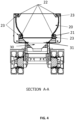
FIG. 4 is a sectional view taken along section A-A inFIG. 1 illustrating a configuration of threaded rods in relation to the trailer, an apron and a chute; -
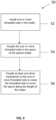
FIG. 5 is a general flow diagram illustrating a method according to the present invention; -
FIG. 6 is plan view of a threaded rod comprising three threaded rod sections, stay nuts and an apron boss coupled to the threaded rod; -
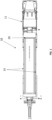
FIG. 7 is a sectional view taken along A-A inFIG. 6 showing two of the threaded rod sections, the apron boss, stay nuts and a rod joiner; -
FIGS. 8A to 8D are plan views of a pair of threaded rods, respective stay nuts and apron bosses as shown inFIG 6 attached to the apron illustrating a sequence of movement of the apron in the ejector trailer in accordance with the present invention. - It will be appreciated that the accompanying drawings may not have been drawn to scale and/or some features may have been distorted and/or omitted and/or may be schematic for the sake of clarity.
- Reference is made to
FIG. 1 showing a plan view of anejector trailer 10 andFIG. 2 showing a side view of the ejector trailer in accordance with an embodiment of the present invention. Theejector trailer 10 is coupled to aprime mover 11 or truck in a conventional manner known in the art. Theejector trailer 10 is used for transporting a load, such as, but not limited to, loose material, such as aggregate, sand, soil or the like. Theejector trailer 10 comprises a base orfloor 12 andside walls 14 and afront wall 16 extending from thebase 12. Theejector trailer 10 also comprises a rear wall ordoor 18. Thebase 12,side walls 14,front wall 16, andrear wall 18 form a container or bin for holding and transporting the load. Theejector trailer 10 can also comprise a roof (not shown) to prevent the load from being dispersed, e.g. by air currents, as the load is transported. The roof may be a flexible material that is retractable as is known in the art. - In some embodiments, the
rear wall 18 extends from thebase 12 and is joined to theside walls 14 and thus is fixed. In other embodiments, the rear wall ordoor 18 is hinged or pivotally coupled, for example, to theside walls 14, or otherwise at least partly openable, to allow the load to be ejected from the rear of the trailer. In the embodiments shown inFIGS. 1 and2 , theejector trailer 10 comprises achute 30 coupled to the base 12 at the rear of the trailer. Anaperture 31 in thebase 12 of the trailer, shown, for example inFIG. 4 , allows theload 32 to be ejected through thechute 30, as will be described in more detail herein. Theejector trailer 10 comprises achassis 19 to support the container and to couple theejector trailer 10 to theprime mover 11 by a coupling mechanism known in the art. The ejector trailer is used for the transportation and controlled ejection of the load, for example, into another trailer, onto aconveyer 34, or into a bulk bag. - With additional reference to
FIGS. 3 and4 , theejector trailer 10 includes anapron 20 that spans substantially the internal width and height of the trailer. Theapron 20 is moveable backwards and forwards along the entire length, or substantially the entire length of the trailer. Theapron 20 is used to push the load along the trailer and out through thechute 30 or out through therear door 18 according to the particular embodiment. Coupled to theapron 20 is a threadedrod 22 or a plurality of threadedrods 22 depending on the embodiment. In the embodiment shown inFIG. 4 , four threadedrods 22 are coupled to theapron 20 and are located substantially at, or about a periphery of theapron 20, such as at, or about each corner of theapron 20 or trailer cross-section. Four threaded rods are used in a preferred embodiment to ensure sufficient force is imparted on theapron 20 to force the load along and out of thetrailer 10 and to ensure even, longitudinal movement of theapron 20 along the trailer. According to different embodiments, the present invention can comprise two, three, or more than four threadedrods 22. For example, trailers having different capacities and/or different cross-sectional shapes can require a different number of threaded rods. For example, for a shallow trailer, a single threadedrod 22 on either side of theapron 20 may be sufficient. In some embodiments, the trailer may be tapered and have, for example, a substantially triangular cross-section such that a threadedrod 22 located at, or about each vertex, thus totalling three threaded rods, is sufficient. Other cross-sectional shapes of trailer requiring other numbers of threaded rods are also envisaged that nonetheless fall within the scope of the present invention. - The
ejector trailer 10 comprises at least one drive mechanism coupled to the threadedrods 22 to rotate each threaded rod to move theapron 20 along the length of the trailer. In some embodiments, the drive mechanism is at least onehydraulic motor 24 which is coupled to a hydraulic system of thetrailer 10 and/orprime mover 11. Alternatively, the drive mechanism is at least one electric motor coupled to an electrical system of thetrailer 10 and/orprime mover 11. In the embodiment shown, a separatehydraulic motor 24 is coupled to each threadedrod 22. In other embodiments, a singlehydraulic motor 24 drives more than one threadedrod 22. - The threaded
rods 22 extend along the length of thetrailer 10. Theapron 20 comprises anapron boss 21 comprising a threadedaperture 23 for receiving therethrough a respective threadedrod 22. Hence, in the embodiment shown, theapron 20 comprises fourapron bosses 21 comprising four respective threadedapertures 23. Thehydraulic motors 24 rotate the threadedrods 22 to move theapron 20 along the length of thetrailer 10. The threadedrods 22 are rotated in a first direction to move the apron in a rearward direction along the length of the trailer, as shown by the apron travel direction indicated inFIG. 1 . The threadedrods 22 are rotated in a second direction to move theapron 20 in a forward direction along the length of thetrailer 10, for example, once theload 32 has been ejected from the trailer. In some embodiments, the first direction is clockwise and the second direction is anti-clockwise. In other embodiments, the first direction is anti-clockwise and the second direction is clockwise. The threadedrods 22 are synchronously rotated to ensure even, longitudinal movement of theapron 20 along the trailer. - With particular reference to
FIGS. 2 and3 , thetrailer 10 comprises an elevatingarm 26 pivotally coupled at, or towards one end thereof to thechassis 19 and pivotally coupled at, or towards the other, opposite end thereof to thebase 12 of the trailer. Ahydraulic ram 28 is pivotally coupled at, or towards one end thereof to thechassis 19 at a position forward of the elevating arm and is pivotally coupled at, or towards the other end thereof part way along the elevatingarm 26 nearer thebase 12 of the trailer. Extension of thehydraulic ram 28 causes upward pivoting movement of the elevatingarm 26 which moves thetrailer 10 in an upward direction and a rearward direction. Thus, thetrailer 10 is moved into an out of level or rearwardly inclined and displaced position. The rearward displacement and out of level position of thetrailer 10 allows for theload 32 in the trailer to be unloaded fromtrailer 10 to another trailer, conveyer, bulk bag or the like in a controlled manner through thechute 30 orrear door 18. Rather than theload 32 falling from thetrailer 10 under gravity in an uncontrolled manner as with the prior art, theload 32 is pushed against gravity in a controlled and, if desired, quantized manner. The accuracy in dispensing theload 32 onto, for example, aconveyer 34 as shown inFIG. 2 , is further improved by thechute 30 at the rear of thetrailer 10, which deposits the load in an area smaller than the width of the trailer, as best illustrated inFIG. 4 . - In some embodiments, the threaded
rods 22 are accommodated within ahousing 27 such that the threadedrods 22 do not contact theload 32 being transported in thetrailer 10. In some embodiments, the housing comprises a slit to permit coupling of theapron boss 21 to the threadedrod 22 and to theapron 20. In such embodiments, aseal 29 is provided between thehousing 27 and theapron 20 and/or theapron boss 21 that moves with theapron 20 and theapron boss 21. -
FIG. 5 refers tomethods 50 of installing the ejector trailer system into an ejector trailer. Atstep 52, the method comprises installing the at least one threadedrod 22, or plurality of threadedrods 22, in thetrailer 10, for example, substantially at, or about a periphery of theapron 20, such as at each corner of the trailer cross-section. Atstep 54, themethod 50 comprises coupling the at least one threadedrod 22 to theapron 20 of the ejector trailer, such as via the threadedapertures 23 in theapron bosses 21. Atstep 56, the method comprises coupling at least onedrive mechanism 24 to the at least one threadedrod 22 to rotate the at least one threadedrod 22 to move theapron 20 along the length of the trailer. - Further details regarding the threaded
rods 22 and their operation according to some embodiments of the present invention will now be described with reference toFIGS. 6 to 8D . - Referring to
FIG. 6 , according to the invention, each threadedrod 22 comprises a plurality of threaded rod sections coupled together. In the example shown inFIG. 6 , three threadedrod sections trailer 10 between thedrive mechanism 24 at the forward end of thetrailer 10 and amount 70 in which the threadedrod 22 can rotate at the rearward end of thetrailer 10. However, it will be appreciated that the present invention is not limited to the threadedrods 22 comprising three threaded rod sections. The number of threaded rod sections required will depend on, for example, the length of thetrailer 10, the length of the threaded rod sections and the diameter of the threaded rod sections. According to the invention, each threadedrod 22 may comprise two threaded rod sections, three threaded rod sections, or more than three threaded rod sections. Hence, the threadedrod 22 is adaptable to any length of ejector trailer. - Referring to the enlarged view in
FIG. 7 , two adjacent threadedrod sections threadless rod joiner 72 received within hollow portions, such as hollow end portions, of the threadedrod sections rod section 22B is coupled to theapron 20 via threadedapertures 23 of theapron boss 21. Each threadedrod 22 comprises a plurality of stabiliser nuts or stay nuts 74 coupled thereto. In some embodiments, a number of stay nuts 74 on each threadedrod 22 is greater than a number of the threaded rod sections by a value of 1. In other words, there are n+1 stay nuts where n is the number of threaded rod sections and n ≠ 0. In the example shown inFIG. 6 , threadedrod 22 comprises three threadedrod sections rod 22 comprises a stay nut 74 at a location where two adjacent threaded rod sections are coupled together. In the embodiment shown inFIG. 6 , threadedrod 22 comprisesstay nut 74A at the joining location of adjacent threadedrod sections nut 74D at the joining location of adjacent threadedrod sections apron boss 21 of theapron 20. With additional reference to the enlarged view inFIG.7 , staynut 74C is coupled to the threadedrod 22 on a first side of theapron boss 21 and staynut 74B is coupled to the threadedrod 22 on a second side of theapron boss 21. Staynut 74D isadjacent stay nut 74C. - In preferred embodiments, the stabiliser nuts or stay nuts 74 and the threaded
rod 22 to which they are coupled are accommodated within and abut against arespective housing 27. The stay nuts 74 are movable along at least part of at least one of the threaded rod sections as the threadedrod 22 rotates. When the stabiliser or stay nuts 74 arrive at the location of thethreadless rod joiner 72 the stabiliser or stay nuts 74 remain in that location and provide support and stabilisation for the threadedrod 22 as theapron 20 andapron boss 21 move away and along the threadedrod 22. The stabiliser or stay nuts 74 thus prevent flexing or bowing of the threaded rods and help eliminate, or at least reduce vibration. The number and location of the stabilisation points can be determined by number and location of thethreadless rod joiners 72 according to the length of threaded rod sections and/or the length of the trailer. - A sequence of movement of the stay nuts 74,
apron bosses 21 and theapron 20 will now be described with reference to the plan views shown inFIGS. 8A to 8D , which show two threadedrods 22 of theejector trailer 10, each comprising three threadedrod sections Apron 20 is coupled to the threadedrods 22 viaapron bosses 21. Threadedrods 22 are rotated viarespective drive mechanisms 24, such as hydraulic or electric motors at the front of the trailer on the right. The rear of the trailer is on the left. The sequence of movement of the stay nuts 74 andapron boss 21 will be described in relation to the upper threadedrod 22, which is emulated for the lower threadedrod 22 shown inFIG. 8A . - Referring to
FIG. 8A , theapron 20 is located at the front of the trailer on the right. In relation to the upper threadedrod 22 shown inFIG. 8A , two stay nuts 74C, 74D are coupled to the threadedrod 22 on a first side, or forward side of theapron boss 21. Staynut 74A is coupled to the threadedrod 22 at the joining location of adjacent threadedrod sections nut 74B is coupled to the threadedrod 22 at the joining location of adjacent threadedrod sections FIG. 8A . - As the threaded
rods 22 are rotated clockwise by therespective drive mechanisms 24, and with reference toFIG. 8B , theapron 20 is moved rearwardly along the trailer, i.e. to the left inFIG. 8B , which pushes the load rearwardly along the trailer. As theapron boss 21 andapron 20 attached thereto move along the threadedrod 22 past a first joining location where the two adjacent threadedrod sections first stay nut 74D of the twostay nuts apron boss 21 remains at the first joining location, by virtue of therod joiner 72 being threadless. Theapron boss 21 shifts staynut 74B from thethreadless rod joiner 72 onto the thread of the threadedrod section 22B on the second, rearward side of theapron boss 21. - With reference to
FIG. 8C , theapron 20 is moved further rearwardly along the trailer due to rotation of the threadedrods 22. As theapron 20 andapron boss 21 move further along the threadedrod 22 past a second joining location where two adjacent threadedrod sections second stay nut 74C of the twostay nuts apron boss 21 remains at a second joining location by virtue of therod joiner 72 being threadless. Theapron boss 21 shifts staynut 74A from thethreadless rod joiner 72 onto the thread of the threadedrod section 22C on the second, rearward side of theapron boss 21. - With reference to
FIG. 8D , theapron 20 is moved further rearwardly along the trailer to the end of the available amount of travel due to rotation of the threadedrods 22. Stay nuts 74A, 74B finish adjacent on the second, rearward side of theapron boss 21. It will be appreciated that driving the threadedrods 22 in an anticlockwise direction in this embodiment effects the aforementioned sequence in reverse moving theapron 20 in a forward direction ready for the trailer to receive another load. - Hence, in one form, the present invention resides in an
ejector trailer 10 comprising anapron 20 movable along a length of the trailer; at least one threadedrod 22 coupled to the apron; and at least onedrive mechanism 24 coupled to the at least one threaded rod to rotate the at least one threaded rod to move the apron along the length of the trailer. - In another form, the present invention resides in an ejector trailer control system comprising at least one threaded
rod 22 for coupling to theapron 20 of the ejector trailer; and at least onedrive mechanism 24 for coupling to the at least one threaded rod to rotate the at least one threaded rod to move theapron 20 along the length of the trailer. - In a further form, the present invention resides in a method comprising coupling at least one threaded
rod 22 to theapron 20 of an ejector trailer; and coupling at least onedrive mechanism 24 to the at least one threaded rod to rotate the at least one threaded rod to move theapron 20 along the length of the trailer. - It is envisaged that at least some known ejector trailers can be retrofitted with the ejector trailer control system in accordance with methods described herein.
- Hence, the present invention addresses or at least ameliorates one or more of the aforementioned problems by providing an ejector trailer and an ejector trailer control system comprising one or more threaded
rods 22 coupled to theapron 20 and to thedrive mechanism 24 to move theapron 20 along the length of the trailer to eject the load from the trailer. The mechanism is simpler and more robust than at least some of the prior art thus requiring less maintenance. Accommodating the threadedrods 22 inrespective housings 27 prevent the mechanism being fouled up by the load which helps reduce maintenance. Large capacity hydraulic systems or high power electric motors are not required, thus reducing cost associated with implementation and use, for example due to replacement of hydraulic fluid and/or power consumption. Furthermore, in the present invention, the drive mechanism, comprising electrical cables or hydraulic hoses is not connected directly to theapron 20. The threadedrods 22 comprising one or more threaded rod sections joined together means the present invention is adaptable to any length of trailer. Since the threaded rods run the length of the trailer, the pressure applied by theapron 20 on theload 32 in the trailer can be maintained throughout the length of the trailer. The apron can also be moved evenly along the full length of the trailer, thus preventing spreading or bowing of the container or bin. The stabiliser or stay nuts 74 provide support and stabilisation for the threadedrod 22 as theapron 20 andapron boss 21 move away and along the threadedrod 22. The stabiliser or stay nuts 74 thus prevent flexing or bowing of the threaded rods and help eliminate, or at least reduce vibration. The number and location of the stabilisation points can be determined by number and location of thethreadless rod joiners 72 according to the length of threaded rod sections and/or the length of the trailer. The elevatingarm 26 andhydraulic ram 28 that displaces the trailer rearwardly and into an inclined position provides more accurate control in ejecting the load from the trailer. This is enhanced by the use of the threadedrods 22 received within threadedapertures 23 of theapron bosses 21 of theapron 20, which enable accurate movement of the apron and controlled, quantised ejection of the load. Accuracy of ejection is further enhanced by the aperture in thebase 12 of the trailer and thechute 30 which allows the load to be ejected into a more targeted area than is provided by at least some of the prior art ejector trailers. - In this specification, the terms "comprises", "comprising" or similar terms are intended to mean a non-exclusive inclusion, such that an apparatus that comprises a list of elements does not include those elements solely, but may well include other elements not listed.
Claims (11)
- An ejector trailer (10) comprising:an apron (20) movable along a length of the ejector trailer, the apron comprising a plurality of threaded apertures (23) at or about a periphery of the apron;a plurality of threaded rods (22) coupled to a respective one of the plurality of threaded apertures of the apron; anda drive mechanism (24) coupled to the plurality of threaded rods to rotate the threaded rods to move the apron along the length of the ejector trailer;characterized in thateach threaded rod comprises a plurality of threaded rod sections (22A, 22B, 22C) coupled together, wherein two adjacent threaded rod sections are coupled together with a threadless rod joiner (72) received within hollow portions of the threaded rod sections.
- A method comprising:coupling a plurality of threaded rods (22) to respective threaded apertures (23) of an apron (20) of an ejector trailer (10); andcoupling at least one drive mechanism (24) to the plurality of threaded rods to rotate the threaded rods to move the apron along the length of the trailer;wherein each threaded rod comprises a plurality of threaded rod sections (22A, 22B, 22C) coupled together, wherein two adjacent threaded rod sections are coupled together with a threadless rod joiner (72) received within hollow portions of the threaded rod sections.
- The ejector trailer of claim 1, or the method of claim 2, wherein each threaded aperture (23) is provided in a respective apron boss (21) of the apron (20).
- The ejector trailer or the method of any preceding claim, comprising four threaded rods (22) wherein one of the four threaded rods is located substantially at or about each corner of the trailer cross-section.
- The ejector trailer or the method of any preceding claim, wherein:the drive mechanism (24) is selected from one of the following: a hydraulic motor; an electric motor; and/or the trailer is pivotally coupled to an elevating arm (26) driven by a hydraulic ram (28) to move the trailer in a rearward direction and into an out of level or upwardly inclined position in the rearward direction; and/orthe rear of the ejector trailer contains an aperture (31) and optionally a chute (30) extending from the aperture for a load to exit from the ejector trailer.
- The ejector trailer or the method of any preceding claim, wherein:the threaded rods (22) are rotated in a first direction to move the apron in a rearward direction along the length of the ejector trailer (10) and the threaded rods are rotated in a second direction to move the apron (20) in a forward direction along the length of the ejector trailer; and/orthe threaded rods are accommodated within a housing (27) such that the threaded rods do not contact a material transported in the ejector trailer; and/orthe plurality of threaded rods is synchronously rotated for even, longitudinal movement of the apron along the trailer.
- The ejector trailer or the method of any preceding claim, wherein each threaded rod (22) comprises a plurality of stabiliser or stay nuts (74) coupled thereto, in particular, wherein each threaded rod comprises a stabiliser or stay nut at a location where two adjacent threaded rod sections are coupled together; and/orwherein a number of stabiliser or stay nuts on each threaded rod is greater than a number of the threaded rod sections by a value of 1; and/orwherein the plurality of stabiliser or stay nuts is movable along at least part of at least one of the threaded rod sections (22A, 22B, 22C) as the threaded rod rotates; and/orwherein the plurality of stabiliser or stay nuts is accommodated within and abut against the housing.
- The ejector trailer or the method of claim 7, wherein a stabiliser or stay nut (74) is coupled to at least one of the threaded rod sections (22A, 22B, 22C) on each side of the apron boss (21) of the apron (20).
- The ejector trailer or the method of claim 8, wherein two stabiliser or stay nuts (74) are provided on a first side of the apron boss (21) and a first one of the two stabiliser or stay nuts provided on the first side of the apron boss remains at a first joining location where two adjacent threaded rod sections (22A, 22B, 22C) are coupled together as the apron (20) moves along the threaded rod past the first joining location.
- The ejector trailer or the method of claim 9, wherein a second one of the two stabiliser or stay nuts (74) provided on the first side of the apron boss (21) remains at a second joining location where two adjacent threaded rod sections are coupled together as the apron (20) moves further along the threaded rod past the second joining location.
- The ejector trailer or the method of claim 6 or 7, wherein the housing (27) comprises a slit to permit coupling of the apron boss (21) to the threaded rod (22) and the apron (20), in particular, further comprising a seal (29) between the housing and the apron and/or the apron boss that moves with the apron and the apron boss.
Applications Claiming Priority (2)
| Application Number | Priority Date | Filing Date | Title |
|---|---|---|---|
| AU2018903000A AU2018903000A0 (en) | 2018-08-16 | Ejector trailer | |
| PCT/AU2019/050382 WO2020033990A1 (en) | 2018-08-16 | 2019-04-29 | Ejector trailers |
Publications (3)
| Publication Number | Publication Date |
|---|---|
| EP3837136A1 EP3837136A1 (en) | 2021-06-23 |
| EP3837136A4 EP3837136A4 (en) | 2022-09-14 |
| EP3837136B1 true EP3837136B1 (en) | 2024-07-03 |
Family
ID=69524531
Family Applications (1)
| Application Number | Title | Priority Date | Filing Date |
|---|---|---|---|
| EP19849807.3A Active EP3837136B1 (en) | 2018-08-16 | 2019-04-29 | Ejector trailers |
Country Status (3)
| Country | Link |
|---|---|
| EP (1) | EP3837136B1 (en) |
| AU (1) | AU2019321866B2 (en) |
| WO (1) | WO2020033990A1 (en) |
Family Cites Families (11)
| Publication number | Priority date | Publication date | Assignee | Title |
|---|---|---|---|---|
| GB530873A (en) * | 1939-05-20 | 1940-12-24 | Atherton Brothers Ltd | Improvements in bodies for commercial vehicles |
| DE3309647A1 (en) * | 1983-03-15 | 1985-04-18 | Kurt 2000 Hamburg Reisener | Unloading aid for lorries or the like, on whose loading surfaces pallets, packages or similar objects are loaded |
| DE9302129U1 (en) * | 1993-02-15 | 1993-05-06 | Achatz, Johann, 8376 Teisnach | Trucks with preferably a tilting loading area |
| US5944472A (en) * | 1998-01-23 | 1999-08-31 | Scofield; Scot P. | Motor driven trailer unloader |
| ATE477147T1 (en) * | 2005-06-14 | 2010-08-15 | Tilta Ind Pty Ltd | TRUCK VEHICLE IMPROVEMENTS |
| US9126520B2 (en) * | 2008-08-01 | 2015-09-08 | Larry D. Butterfield | Moving headboard trailer ejector and floor cleaning |
| US9333890B2 (en) * | 2014-02-04 | 2016-05-10 | Silver Plume, LLC | Replaceable car mat holder |
| CA2874929A1 (en) * | 2014-12-17 | 2016-06-17 | Laurie CLARK | Lift deck assembly for a truck |
| US9803324B2 (en) * | 2016-01-26 | 2017-10-31 | Deere & Company | Ejector control for spreading material according to a profile |
| US20170210266A1 (en) * | 2016-01-26 | 2017-07-27 | Deere & Company | Ejector control for spreading material |
| US20170210267A1 (en) * | 2016-01-26 | 2017-07-27 | Deere & Company | Ejector Control for Spreading Material |
-
2019
- 2019-04-29 EP EP19849807.3A patent/EP3837136B1/en active Active
- 2019-04-29 AU AU2019321866A patent/AU2019321866B2/en active Active
- 2019-04-29 WO PCT/AU2019/050382 patent/WO2020033990A1/en not_active Ceased
Also Published As
| Publication number | Publication date |
|---|---|
| AU2019321866B2 (en) | 2024-09-12 |
| WO2020033990A1 (en) | 2020-02-20 |
| AU2019321866A1 (en) | 2020-12-03 |
| EP3837136A4 (en) | 2022-09-14 |
| EP3837136A1 (en) | 2021-06-23 |
Similar Documents
| Publication | Publication Date | Title |
|---|---|---|
| FI69169C (en) | SNOEROEJNINGSANORDNING | |
| US7837428B2 (en) | Methods and apparatuses for freight container loading | |
| US5964566A (en) | Portable drive-over hopper | |
| US7134830B2 (en) | Grain wagon with improved grain container | |
| US8657557B2 (en) | Method for freight container loading | |
| EP3174756B1 (en) | Apparatus for discharge of bulk materials | |
| US4819701A (en) | Portable particulate material bagging machine | |
| US7918638B1 (en) | Bed scraping apparatus for efficient bulk material dumping | |
| EP3837136B1 (en) | Ejector trailers | |
| US8857080B1 (en) | Transfer bucket and ejector assembly for a front end loader vehicle | |
| US9145649B2 (en) | Pushing device | |
| US3991493A (en) | Floor structure for earthmoving scraper | |
| US5944472A (en) | Motor driven trailer unloader | |
| SE422433B (en) | TELESCOPIC LENGTH-CHANGE CONTAINER WITH EXHAUST PLATE | |
| US6106211A (en) | Portable overhead bin | |
| WO2007116249A3 (en) | Storage car | |
| US3409155A (en) | Self-discharging bulk feed vehicle | |
| SE444556B (en) | TUNNEL CLEANING ROD | |
| RU2151091C1 (en) | Mobile scraper reloader | |
| US20230264620A1 (en) | Ejector blade and mounting assembly | |
| EP1613506B1 (en) | Auxiliary transfer device for sea containers | |
| CN219135494U (en) | Bulk cargo field stock management is with receiving material storage device | |
| US4992017A (en) | Bulk shipper for harbours and the like | |
| BE1025104B1 (en) | IMPROVED BACKWARD DISCHARGE SYSTEM FOR A BOX | |
| US2139261A (en) | Wheeled scraper |
Legal Events
| Date | Code | Title | Description |
|---|---|---|---|
| STAA | Information on the status of an ep patent application or granted ep patent |
Free format text: STATUS: THE INTERNATIONAL PUBLICATION HAS BEEN MADE |
|
| PUAI | Public reference made under article 153(3) epc to a published international application that has entered the european phase |
Free format text: ORIGINAL CODE: 0009012 |
|
| STAA | Information on the status of an ep patent application or granted ep patent |
Free format text: STATUS: REQUEST FOR EXAMINATION WAS MADE |
|
| 17P | Request for examination filed |
Effective date: 20210301 |
|
| AK | Designated contracting states |
Kind code of ref document: A1 Designated state(s): AL AT BE BG CH CY CZ DE DK EE ES FI FR GB GR HR HU IE IS IT LI LT LU LV MC MK MT NL NO PL PT RO RS SE SI SK SM TR |
|
| DAV | Request for validation of the european patent (deleted) | ||
| DAX | Request for extension of the european patent (deleted) | ||
| RIC1 | Information provided on ipc code assigned before grant |
Ipc: B60P 1/30 20060101ALI20220502BHEP Ipc: B60P 1/56 20060101ALI20220502BHEP Ipc: B60P 1/00 20060101ALI20220502BHEP Ipc: B65D 88/60 20060101ALI20220502BHEP Ipc: B60P 1/16 20060101AFI20220502BHEP |
|
| A4 | Supplementary search report drawn up and despatched |
Effective date: 20220811 |
|
| RIC1 | Information provided on ipc code assigned before grant |
Ipc: B60P 1/30 20060101ALI20220805BHEP Ipc: B60P 1/56 20060101ALI20220805BHEP Ipc: B60P 1/00 20060101ALI20220805BHEP Ipc: B65D 88/60 20060101ALI20220805BHEP Ipc: B60P 1/16 20060101AFI20220805BHEP |
|
| GRAP | Despatch of communication of intention to grant a patent |
Free format text: ORIGINAL CODE: EPIDOSNIGR1 |
|
| STAA | Information on the status of an ep patent application or granted ep patent |
Free format text: STATUS: GRANT OF PATENT IS INTENDED |
|
| INTG | Intention to grant announced |
Effective date: 20240131 |
|
| GRAS | Grant fee paid |
Free format text: ORIGINAL CODE: EPIDOSNIGR3 |
|
| GRAA | (expected) grant |
Free format text: ORIGINAL CODE: 0009210 |
|
| STAA | Information on the status of an ep patent application or granted ep patent |
Free format text: STATUS: THE PATENT HAS BEEN GRANTED |
|
| AK | Designated contracting states |
Kind code of ref document: B1 Designated state(s): AL AT BE BG CH CY CZ DE DK EE ES FI FR GB GR HR HU IE IS IT LI LT LU LV MC MK MT NL NO PL PT RO RS SE SI SK SM TR |
|
| REG | Reference to a national code |
Ref country code: CH Ref legal event code: EP |
|
| REG | Reference to a national code |
Ref country code: DE Ref legal event code: R096 Ref document number: 602019054760 Country of ref document: DE |
|
| P01 | Opt-out of the competence of the unified patent court (upc) registered |
Free format text: CASE NUMBER: APP_48102/2024 Effective date: 20240821 |
|
| REG | Reference to a national code |
Ref country code: LT Ref legal event code: MG9D |
|
| REG | Reference to a national code |
Ref country code: NL Ref legal event code: MP Effective date: 20240703 |
|
| PG25 | Lapsed in a contracting state [announced via postgrant information from national office to epo] |
Ref country code: PT Free format text: LAPSE BECAUSE OF FAILURE TO SUBMIT A TRANSLATION OF THE DESCRIPTION OR TO PAY THE FEE WITHIN THE PRESCRIBED TIME-LIMIT Effective date: 20241104 |
|
| REG | Reference to a national code |
Ref country code: AT Ref legal event code: MK05 Ref document number: 1699501 Country of ref document: AT Kind code of ref document: T Effective date: 20240703 |
|
| PG25 | Lapsed in a contracting state [announced via postgrant information from national office to epo] |
Ref country code: NL Free format text: LAPSE BECAUSE OF FAILURE TO SUBMIT A TRANSLATION OF THE DESCRIPTION OR TO PAY THE FEE WITHIN THE PRESCRIBED TIME-LIMIT Effective date: 20240703 |
|
| PG25 | Lapsed in a contracting state [announced via postgrant information from national office to epo] |
Ref country code: PT Free format text: LAPSE BECAUSE OF FAILURE TO SUBMIT A TRANSLATION OF THE DESCRIPTION OR TO PAY THE FEE WITHIN THE PRESCRIBED TIME-LIMIT Effective date: 20241104 Ref country code: NL Free format text: LAPSE BECAUSE OF FAILURE TO SUBMIT A TRANSLATION OF THE DESCRIPTION OR TO PAY THE FEE WITHIN THE PRESCRIBED TIME-LIMIT Effective date: 20240703 |
|
| PG25 | Lapsed in a contracting state [announced via postgrant information from national office to epo] |
Ref country code: NO Free format text: LAPSE BECAUSE OF FAILURE TO SUBMIT A TRANSLATION OF THE DESCRIPTION OR TO PAY THE FEE WITHIN THE PRESCRIBED TIME-LIMIT Effective date: 20241003 |
|
| PG25 | Lapsed in a contracting state [announced via postgrant information from national office to epo] |
Ref country code: FI Free format text: LAPSE BECAUSE OF FAILURE TO SUBMIT A TRANSLATION OF THE DESCRIPTION OR TO PAY THE FEE WITHIN THE PRESCRIBED TIME-LIMIT Effective date: 20240703 Ref country code: GR Free format text: LAPSE BECAUSE OF FAILURE TO SUBMIT A TRANSLATION OF THE DESCRIPTION OR TO PAY THE FEE WITHIN THE PRESCRIBED TIME-LIMIT Effective date: 20241004 Ref country code: PL Free format text: LAPSE BECAUSE OF FAILURE TO SUBMIT A TRANSLATION OF THE DESCRIPTION OR TO PAY THE FEE WITHIN THE PRESCRIBED TIME-LIMIT Effective date: 20240703 |
|
| PG25 | Lapsed in a contracting state [announced via postgrant information from national office to epo] |
Ref country code: BG Free format text: LAPSE BECAUSE OF FAILURE TO SUBMIT A TRANSLATION OF THE DESCRIPTION OR TO PAY THE FEE WITHIN THE PRESCRIBED TIME-LIMIT Effective date: 20240703 |
|
| PG25 | Lapsed in a contracting state [announced via postgrant information from national office to epo] |
Ref country code: LV Free format text: LAPSE BECAUSE OF FAILURE TO SUBMIT A TRANSLATION OF THE DESCRIPTION OR TO PAY THE FEE WITHIN THE PRESCRIBED TIME-LIMIT Effective date: 20240703 |
|
| PG25 | Lapsed in a contracting state [announced via postgrant information from national office to epo] |
Ref country code: IS Free format text: LAPSE BECAUSE OF FAILURE TO SUBMIT A TRANSLATION OF THE DESCRIPTION OR TO PAY THE FEE WITHIN THE PRESCRIBED TIME-LIMIT Effective date: 20241103 Ref country code: AT Free format text: LAPSE BECAUSE OF FAILURE TO SUBMIT A TRANSLATION OF THE DESCRIPTION OR TO PAY THE FEE WITHIN THE PRESCRIBED TIME-LIMIT Effective date: 20240703 |
|
| PG25 | Lapsed in a contracting state [announced via postgrant information from national office to epo] |
Ref country code: CZ Free format text: LAPSE BECAUSE OF FAILURE TO SUBMIT A TRANSLATION OF THE DESCRIPTION OR TO PAY THE FEE WITHIN THE PRESCRIBED TIME-LIMIT Effective date: 20240703 Ref country code: HR Free format text: LAPSE BECAUSE OF FAILURE TO SUBMIT A TRANSLATION OF THE DESCRIPTION OR TO PAY THE FEE WITHIN THE PRESCRIBED TIME-LIMIT Effective date: 20240703 |
|
| PG25 | Lapsed in a contracting state [announced via postgrant information from national office to epo] |
Ref country code: ES Free format text: LAPSE BECAUSE OF FAILURE TO SUBMIT A TRANSLATION OF THE DESCRIPTION OR TO PAY THE FEE WITHIN THE PRESCRIBED TIME-LIMIT Effective date: 20240703 Ref country code: RS Free format text: LAPSE BECAUSE OF FAILURE TO SUBMIT A TRANSLATION OF THE DESCRIPTION OR TO PAY THE FEE WITHIN THE PRESCRIBED TIME-LIMIT Effective date: 20241003 |
|
| PG25 | Lapsed in a contracting state [announced via postgrant information from national office to epo] |
Ref country code: RS Free format text: LAPSE BECAUSE OF FAILURE TO SUBMIT A TRANSLATION OF THE DESCRIPTION OR TO PAY THE FEE WITHIN THE PRESCRIBED TIME-LIMIT Effective date: 20241003 Ref country code: PL Free format text: LAPSE BECAUSE OF FAILURE TO SUBMIT A TRANSLATION OF THE DESCRIPTION OR TO PAY THE FEE WITHIN THE PRESCRIBED TIME-LIMIT Effective date: 20240703 Ref country code: NO Free format text: LAPSE BECAUSE OF FAILURE TO SUBMIT A TRANSLATION OF THE DESCRIPTION OR TO PAY THE FEE WITHIN THE PRESCRIBED TIME-LIMIT Effective date: 20241003 Ref country code: LV Free format text: LAPSE BECAUSE OF FAILURE TO SUBMIT A TRANSLATION OF THE DESCRIPTION OR TO PAY THE FEE WITHIN THE PRESCRIBED TIME-LIMIT Effective date: 20240703 Ref country code: IS Free format text: LAPSE BECAUSE OF FAILURE TO SUBMIT A TRANSLATION OF THE DESCRIPTION OR TO PAY THE FEE WITHIN THE PRESCRIBED TIME-LIMIT Effective date: 20241103 Ref country code: HR Free format text: LAPSE BECAUSE OF FAILURE TO SUBMIT A TRANSLATION OF THE DESCRIPTION OR TO PAY THE FEE WITHIN THE PRESCRIBED TIME-LIMIT Effective date: 20240703 Ref country code: GR Free format text: LAPSE BECAUSE OF FAILURE TO SUBMIT A TRANSLATION OF THE DESCRIPTION OR TO PAY THE FEE WITHIN THE PRESCRIBED TIME-LIMIT Effective date: 20241004 Ref country code: FI Free format text: LAPSE BECAUSE OF FAILURE TO SUBMIT A TRANSLATION OF THE DESCRIPTION OR TO PAY THE FEE WITHIN THE PRESCRIBED TIME-LIMIT Effective date: 20240703 Ref country code: ES Free format text: LAPSE BECAUSE OF FAILURE TO SUBMIT A TRANSLATION OF THE DESCRIPTION OR TO PAY THE FEE WITHIN THE PRESCRIBED TIME-LIMIT Effective date: 20240703 Ref country code: CZ Free format text: LAPSE BECAUSE OF FAILURE TO SUBMIT A TRANSLATION OF THE DESCRIPTION OR TO PAY THE FEE WITHIN THE PRESCRIBED TIME-LIMIT Effective date: 20240703 Ref country code: BG Free format text: LAPSE BECAUSE OF FAILURE TO SUBMIT A TRANSLATION OF THE DESCRIPTION OR TO PAY THE FEE WITHIN THE PRESCRIBED TIME-LIMIT Effective date: 20240703 Ref country code: AT Free format text: LAPSE BECAUSE OF FAILURE TO SUBMIT A TRANSLATION OF THE DESCRIPTION OR TO PAY THE FEE WITHIN THE PRESCRIBED TIME-LIMIT Effective date: 20240703 |
|
| REG | Reference to a national code |
Ref country code: DE Ref legal event code: R097 Ref document number: 602019054760 Country of ref document: DE |
|
| PG25 | Lapsed in a contracting state [announced via postgrant information from national office to epo] |
Ref country code: RO Free format text: LAPSE BECAUSE OF FAILURE TO SUBMIT A TRANSLATION OF THE DESCRIPTION OR TO PAY THE FEE WITHIN THE PRESCRIBED TIME-LIMIT Effective date: 20240703 Ref country code: SM Free format text: LAPSE BECAUSE OF FAILURE TO SUBMIT A TRANSLATION OF THE DESCRIPTION OR TO PAY THE FEE WITHIN THE PRESCRIBED TIME-LIMIT Effective date: 20240703 Ref country code: DK Free format text: LAPSE BECAUSE OF FAILURE TO SUBMIT A TRANSLATION OF THE DESCRIPTION OR TO PAY THE FEE WITHIN THE PRESCRIBED TIME-LIMIT Effective date: 20240703 |
|
| PG25 | Lapsed in a contracting state [announced via postgrant information from national office to epo] |
Ref country code: EE Free format text: LAPSE BECAUSE OF FAILURE TO SUBMIT A TRANSLATION OF THE DESCRIPTION OR TO PAY THE FEE WITHIN THE PRESCRIBED TIME-LIMIT Effective date: 20240703 |
|
| PG25 | Lapsed in a contracting state [announced via postgrant information from national office to epo] |
Ref country code: SK Free format text: LAPSE BECAUSE OF FAILURE TO SUBMIT A TRANSLATION OF THE DESCRIPTION OR TO PAY THE FEE WITHIN THE PRESCRIBED TIME-LIMIT Effective date: 20240703 Ref country code: IT Free format text: LAPSE BECAUSE OF FAILURE TO SUBMIT A TRANSLATION OF THE DESCRIPTION OR TO PAY THE FEE WITHIN THE PRESCRIBED TIME-LIMIT Effective date: 20240703 |
|
| PLBE | No opposition filed within time limit |
Free format text: ORIGINAL CODE: 0009261 |
|
| STAA | Information on the status of an ep patent application or granted ep patent |
Free format text: STATUS: NO OPPOSITION FILED WITHIN TIME LIMIT |
|
| 26N | No opposition filed |
Effective date: 20250404 |
|
| PGFP | Annual fee paid to national office [announced via postgrant information from national office to epo] |
Ref country code: DE Payment date: 20250416 Year of fee payment: 7 |
|
| PGFP | Annual fee paid to national office [announced via postgrant information from national office to epo] |
Ref country code: GB Payment date: 20250417 Year of fee payment: 7 |
|
| PG25 | Lapsed in a contracting state [announced via postgrant information from national office to epo] |
Ref country code: SE Free format text: LAPSE BECAUSE OF FAILURE TO SUBMIT A TRANSLATION OF THE DESCRIPTION OR TO PAY THE FEE WITHIN THE PRESCRIBED TIME-LIMIT Effective date: 20240703 |
|
| REG | Reference to a national code |
Ref country code: CH Ref legal event code: H13 Free format text: ST27 STATUS EVENT CODE: U-0-0-H10-H13 (AS PROVIDED BY THE NATIONAL OFFICE) Effective date: 20251125 |
|
| PG25 | Lapsed in a contracting state [announced via postgrant information from national office to epo] |
Ref country code: LU Free format text: LAPSE BECAUSE OF NON-PAYMENT OF DUE FEES Effective date: 20250429 |
|
| PG25 | Lapsed in a contracting state [announced via postgrant information from national office to epo] |
Ref country code: MC Free format text: LAPSE BECAUSE OF FAILURE TO SUBMIT A TRANSLATION OF THE DESCRIPTION OR TO PAY THE FEE WITHIN THE PRESCRIBED TIME-LIMIT Effective date: 20240703 |
|
| REG | Reference to a national code |
Ref country code: BE Ref legal event code: MM Effective date: 20250430 |
|
| PG25 | Lapsed in a contracting state [announced via postgrant information from national office to epo] |
Ref country code: FR Free format text: LAPSE BECAUSE OF NON-PAYMENT OF DUE FEES Effective date: 20250430 |
|
| PG25 | Lapsed in a contracting state [announced via postgrant information from national office to epo] |
Ref country code: BE Free format text: LAPSE BECAUSE OF NON-PAYMENT OF DUE FEES Effective date: 20250430 |
|
| PG25 | Lapsed in a contracting state [announced via postgrant information from national office to epo] |
Ref country code: CH Free format text: LAPSE BECAUSE OF NON-PAYMENT OF DUE FEES Effective date: 20250430 |
|
| PG25 | Lapsed in a contracting state [announced via postgrant information from national office to epo] |
Ref country code: IE Free format text: LAPSE BECAUSE OF NON-PAYMENT OF DUE FEES Effective date: 20250429 |