EP3836051A1 - Industrial plant optimization - Google Patents
Industrial plant optimization Download PDFInfo
- Publication number
- EP3836051A1 EP3836051A1 EP19216211.3A EP19216211A EP3836051A1 EP 3836051 A1 EP3836051 A1 EP 3836051A1 EP 19216211 A EP19216211 A EP 19216211A EP 3836051 A1 EP3836051 A1 EP 3836051A1
- Authority
- EP
- European Patent Office
- Prior art keywords
- model
- user
- api
- containerized
- asset
- Prior art date
- Legal status (The legal status is an assumption and is not a legal conclusion. Google has not performed a legal analysis and makes no representation as to the accuracy of the status listed.)
- Withdrawn
Links
Images

Classifications
-
- G—PHYSICS
- G06—COMPUTING OR CALCULATING; COUNTING
- G06Q—INFORMATION AND COMMUNICATION TECHNOLOGY [ICT] SPECIALLY ADAPTED FOR ADMINISTRATIVE, COMMERCIAL, FINANCIAL, MANAGERIAL OR SUPERVISORY PURPOSES; SYSTEMS OR METHODS SPECIALLY ADAPTED FOR ADMINISTRATIVE, COMMERCIAL, FINANCIAL, MANAGERIAL OR SUPERVISORY PURPOSES, NOT OTHERWISE PROVIDED FOR
- G06Q50/00—Information and communication technology [ICT] specially adapted for implementation of business processes of specific business sectors, e.g. utilities or tourism
- G06Q50/04—Manufacturing
-
- G—PHYSICS
- G05—CONTROLLING; REGULATING
- G05B—CONTROL OR REGULATING SYSTEMS IN GENERAL; FUNCTIONAL ELEMENTS OF SUCH SYSTEMS; MONITORING OR TESTING ARRANGEMENTS FOR SUCH SYSTEMS OR ELEMENTS
- G05B19/00—Program-control systems
- G05B19/02—Program-control systems electric
- G05B19/418—Total factory control, i.e. centrally controlling a plurality of machines, e.g. direct or distributed numerical control [DNC], flexible manufacturing systems [FMS], integrated manufacturing systems [IMS] or computer integrated manufacturing [CIM]
- G05B19/4185—Total factory control, i.e. centrally controlling a plurality of machines, e.g. direct or distributed numerical control [DNC], flexible manufacturing systems [FMS], integrated manufacturing systems [IMS] or computer integrated manufacturing [CIM] characterised by the network communication
- G05B19/41855—Total factory control, i.e. centrally controlling a plurality of machines, e.g. direct or distributed numerical control [DNC], flexible manufacturing systems [FMS], integrated manufacturing systems [IMS] or computer integrated manufacturing [CIM] characterised by the network communication by local area network [LAN], network structure
-
- G—PHYSICS
- G05—CONTROLLING; REGULATING
- G05B—CONTROL OR REGULATING SYSTEMS IN GENERAL; FUNCTIONAL ELEMENTS OF SUCH SYSTEMS; MONITORING OR TESTING ARRANGEMENTS FOR SUCH SYSTEMS OR ELEMENTS
- G05B19/00—Program-control systems
- G05B19/02—Program-control systems electric
- G05B19/418—Total factory control, i.e. centrally controlling a plurality of machines, e.g. direct or distributed numerical control [DNC], flexible manufacturing systems [FMS], integrated manufacturing systems [IMS] or computer integrated manufacturing [CIM]
- G05B19/41885—Total factory control, i.e. centrally controlling a plurality of machines, e.g. direct or distributed numerical control [DNC], flexible manufacturing systems [FMS], integrated manufacturing systems [IMS] or computer integrated manufacturing [CIM] characterised by modeling, simulation of the manufacturing system
-
- G—PHYSICS
- G05—CONTROLLING; REGULATING
- G05B—CONTROL OR REGULATING SYSTEMS IN GENERAL; FUNCTIONAL ELEMENTS OF SUCH SYSTEMS; MONITORING OR TESTING ARRANGEMENTS FOR SUCH SYSTEMS OR ELEMENTS
- G05B23/00—Testing or monitoring of control systems or parts thereof
- G05B23/02—Electric testing or monitoring
- G05B23/0205—Electric testing or monitoring by means of a monitoring system capable of detecting and responding to faults
-
- G—PHYSICS
- G06—COMPUTING OR CALCULATING; COUNTING
- G06N—COMPUTING ARRANGEMENTS BASED ON SPECIFIC COMPUTATIONAL MODELS
- G06N20/00—Machine learning
-
- G—PHYSICS
- G06—COMPUTING OR CALCULATING; COUNTING
- G06Q—INFORMATION AND COMMUNICATION TECHNOLOGY [ICT] SPECIALLY ADAPTED FOR ADMINISTRATIVE, COMMERCIAL, FINANCIAL, MANAGERIAL OR SUPERVISORY PURPOSES; SYSTEMS OR METHODS SPECIALLY ADAPTED FOR ADMINISTRATIVE, COMMERCIAL, FINANCIAL, MANAGERIAL OR SUPERVISORY PURPOSES, NOT OTHERWISE PROVIDED FOR
- G06Q10/00—Administration; Management
- G06Q10/04—Forecasting or optimisation specially adapted for administrative or management purposes, e.g. linear programming or "cutting stock problem"
-
- G—PHYSICS
- G06—COMPUTING OR CALCULATING; COUNTING
- G06Q—INFORMATION AND COMMUNICATION TECHNOLOGY [ICT] SPECIALLY ADAPTED FOR ADMINISTRATIVE, COMMERCIAL, FINANCIAL, MANAGERIAL OR SUPERVISORY PURPOSES; SYSTEMS OR METHODS SPECIALLY ADAPTED FOR ADMINISTRATIVE, COMMERCIAL, FINANCIAL, MANAGERIAL OR SUPERVISORY PURPOSES, NOT OTHERWISE PROVIDED FOR
- G06Q10/00—Administration; Management
- G06Q10/06—Resources, workflows, human or project management; Enterprise or organisation planning; Enterprise or organisation modelling
-
- G—PHYSICS
- G06—COMPUTING OR CALCULATING; COUNTING
- G06Q—INFORMATION AND COMMUNICATION TECHNOLOGY [ICT] SPECIALLY ADAPTED FOR ADMINISTRATIVE, COMMERCIAL, FINANCIAL, MANAGERIAL OR SUPERVISORY PURPOSES; SYSTEMS OR METHODS SPECIALLY ADAPTED FOR ADMINISTRATIVE, COMMERCIAL, FINANCIAL, MANAGERIAL OR SUPERVISORY PURPOSES, NOT OTHERWISE PROVIDED FOR
- G06Q50/00—Information and communication technology [ICT] specially adapted for implementation of business processes of specific business sectors, e.g. utilities or tourism
- G06Q50/10—Services
Definitions
- the present teachings relate generally to computer-based optimization of an industrial plant.
- Industrial plants such as process plants comprise equipment that is operated to produce one or more industrial products.
- the equipment may, for example, be machinery and/or heat exchangers that require monitoring and maintenance.
- a requirement for maintenance can depend on several factors that include operation time and/or load on the equipment, environmental conditions that the equipment has been exposed to, and so forth.
- Undue or unplanned shutdown of the equipment is generally not desired as it often results in a stoppage of production, which can reduce the efficiency of the plant and can cause wastage. Since the time period between two maintenances can vary, it may be difficult to plan the shutdown of the equipment around the time when the maintenance is actually necessary. Additionally, safety is of high importance in industrial plants. In order to prevent unsafe conditions from occurring, different equipment or parts of the plant may be monitored.
- an industrial plant such as a chemical plant may comprise equipment such as reactors, storage tanks, heat exchangers, compressors, valves, etc., which are monitored using sensors.
- Plant equipment is often sourced from multiple external suppliers or manufacturers of the equipment. Some suppliers may even generate a computer model of their equipment.
- the computer model may be useful for estimating the health of the equipment and for forecasting its maintenance requirements.
- the model may even be capable of determining optimized operating parameters in response to the specific inputs. The latter use can also be of significant interest to the plant operator as the operator can thus use the model to optimize the operation of the equipment or plant.
- the model may even be helpful in determining safe conditions for the equipment.
- the model may however comprise proprietary information or intellectual property of the supplier, which may not be desirable for the supplier to be exposed to a third-party.
- the plant operator is usually interested only in the use of the model, i.e., model output in response to specific inputs.
- a deep knowledge behind the logic of the model might not be required by the plant operator for the purpose of benefiting from the model.
- Generating an accurate model may require significant effort and resources, so if the supplier is reluctant to exposing their know-how to third parties, they may avoid developing good models to mitigate the risk of leaking knowhow to third parties.
- a similar problem can also exist from the perspective of the plant operator.
- the industrial plant or even a specific plant equipment may generate a large amount of data when deployed in the plant.
- the data may have been collected and stored in one or more databases over a long period of time.
- the data often comprises valuable information regarding response of the plant and/or equipment to different conditions.
- the data can be used, for example, to train machine learning ("ML") models.
- ML models can be usable for predictions, safety enhancement, optimization, etc.
- the plant operator may not be willing to provide access to their plant- and/or equipment- data to external parties, including the supplier.
- At least one estimated value related to the behavior of the asset can be determined.
- the asset is an equipment, for example, reaction chamber, heat exchanger, compressor, valve, sensor, etc.
- the asset can even be a group of equipment, for example, steam-cracker, distillation unit, boiler, cooling tower, etc.
- the asset is a product that is produced by a plant.
- the product can for example be a chemical product, a pharmaceutical product, or even any material that is used as a raw material by another plant in a value-chain.
- the product can be a polymer, an additive, an emulsion, a catalyst, etc.
- the usage conditions may be the operating conditions for the equipment, such as inputs that the equipment receives.
- usage conditions or operating conditions can be input conditions such as inlet water temperature and inlet water flow rate.
- the operation conditions may also include ambient conditions such as ambient temperature.
- the operating conditions may also include control conditions, such as controller set-points, for example, required steam outlet flow, outlet temperature, etc.
- the usage conditions may be parameters under which the product was produced.
- tolerances exist for the end-product or the product produced.
- the conditions or parameters under which the product is produced can vary dependent upon time, for example, variations in temperature, pressure, amount of raw materials and so forth during production and/or storage can have a bearing on the specifications that the end-product.
- each of the parameters may be independent of at least some of the others, which result in the variation in the end-product specifications.
- the tolerances are usually tight to make sure that the user of the product can get a product with consistent specifications.
- Tight tolerances often mean a more expensive production process and/or more wastage as the product batch lying outside the tolerance range may have to be discarded.
- the applicant has realized that instead of maintaining tight tolerances, at least in some applications, the usage conditions or production parameters of the product can be transmitted to a relevant user in the value chain. The user can thus adapt the process to be able to use the product more effectively. This can thus result in reduced cost and/or wastage by relaxing the tolerance range of the product.
- the usage conditions can thus be, concentration, density, weight, viscosity, strength, purity, or any such one or more parameters related to the product. Alternatively, or in addition, the usage conditions may be conditions or parameters that influence the product.
- such conditions can be one or more parameters such as: temperature, pressure, reaction time, or any other relevant parameter to which the product can be exposed to for use or further processing and/or for storage.
- the model result signal can thus be indicative of the response or behavior of the product when exposed to one or more usage conditions.
- the response can for example be indicative of one or more properties of the product, such as, composition, viscosity, density, structure, strength, etc.
- the term supplier is used to refer to the party that owns the model or the model logic.
- the term user is used to refer to the party that uses the model without requiring a detailed knowledge of the model logic.
- the supplier can hence be the manufacturer of the equipment, and the user can be the buyer of the equipment or the plant operator that uses the equipment.
- the user can even be a party that is considering sourcing the equipment from the supplier.
- the model can thus even be used by the user to evaluate the suitability of the equipment on the user side prior to sourcing the equipment from the supplier. From the above it will be understood that when the asset is a product, the supplier may be the manufacturer of the product, and the user may be the buyer or prospective buyer of the product. It will be understood that the user container runtime environment is executed on a processing unit on the user side.
- the user network environment is isolated from the supplier network environment at least in terms of access, i.e., the user network does not have access rights to the supplier network, similarly the supplier network does not have access rights to the user network.
- the network environments can be physically isolated as different networks located at different locations.
- the networks may even be isolated using security features such as one or more firewalls and/or other security means.
- Each of the network environments are thus a secure network.
- a method for monitoring a plant equipment comprising:
- At least one estimated value related to the condition of the equipment can be determined.
- the container registry is preferably located within a shared environment.
- the shared environment is isolated from the user network environment and the supplier network environment at least in terms of access, i.e., the shared environment preferably has restricted or no access to the supplier network and/or the user network environments.
- the shared environment is however accessible by the from the user network environment and the supplier network environment.
- the user network environment may request access to the shared environment for receiving the image of the containerized model, the access is preferably secured via a multi-factor authentication, and/or any other secure access means to ensure that the container registry is not accessible by any unauthorized third party.
- the shared environment is located on the user side.
- the shared environment may be a virtualized isolated part of the user network environment.
- the shared environment may be part of a could service which is secured via a multi-factor authentication, and/or any other secure access means to ensure that the container registry is not accessible by any unauthorized third party.
- the shared environment is located on the supplier side.
- the shared environment may be a virtualized isolated part of the supplier network environment.
- the applicant has realized the proposed teachings can provide a secure environment on the user side for the model that the supplier has developed for the asset.
- the risk of the logic of the model to be exposed on the user side can thus be reduced.
- any one or more of: the model execution logic, the process data signal and the model result signal can be secured on the user side without the information related to these being transmitted to the supplier side.
- an always active connection between the supplier network environment and the user network connection can be avoided, which can further improve security and isolation between the two networks.
- the data related to the containerized model can either be an image of the containerized model itself which is transmitted to the container registry, or it may even be a flag signal indicating that a containerized model or a new version thereof is available.
- a signal may then be transmitted to the user container runtime environment, in response to which an image of the containerized model may be fetched either directly from model image already stored in the container registry, or the user environment may request that the model image be transmitted via the registry or the shared environment.
- the data connection to the shared environment may be disabled by either one or both by the user network environment and the supplier network environment, and the flag signal may be cleared. The data connection may be reestablished in response to a new flag signal indicating that a more recent version of the model is available.
- the flag signal may even exist as two separate signals, one each at the user side and the supplier side, i.e., a supplier flag signal indicating to the container registry that a new model is available, and a user flag signal for indicating to the user side that a new model is available in the container registry.
- the obfuscated containerized model is provided via the container registry by transmitting data from the supplier network environment. According to an aspect the data related to the model is pushed to the container registry.
- a method for transmitting a model of an asset comprising:
- the containerized model comprises obfuscated model logic (e.g. in C).
- the API Application Programming Interface
- the API could thus be REST according to OpenA-PI, gRPC, some MQTT preferably with specified and well-documented message bodies depending on model behavior.
- supplier container runtime environment is executed on a processing unit on the supplier side.
- the API could apply additional means to hide the contents of the containerized model.
- Such means could, for example, be authentication mechanisms or passing embedded secrets to the obfuscated model binary.
- the containerized model also comprises a Machine Learning (“ML") module.
- the interface can also comprise a training data signal for training the containerized model image.
- the ML module if the containerized model image can be trained on the user side by providing user training data to the model image via the training data signal.
- the interface further comprises a training result signal for receiving training result data from the model image on the user side.
- the model execution logic receives process data from a process historian (e.g. OSISoft PI) and transmits at least some of the process data via the process data signal to the model image API.
- the model execution logic then receives process results via the model result signal. At least some of the results can be transmitted back to the process historian, for example for further analysis and/or storage in a database.
- the user container runtime environment may be the same as the supplier runtime environment, or they may be different environments yet compatible environments such that the model can be executed on both environments.
- the presence of a shared environment can further allow for more flexibility between the user runtime environment and the supplier runtime environment.
- a containerized model proposed herein may be realized by a virtualized machine environment such as those using Operating System ("OS") level virtualization.
- the containerized model is realized using a container, for example a Docker container.
- a container is software package that often bundle its own software, libraries and configuration files.
- a container is usually isolated from other containers, but the containers can communicate with each other through well-defined channels.
- the present teachings can be particularly suitable for application in a value chain or even in serial production where an asset, or product, which is produced by a first plant is used by a second plant.
- the second plant can better adapt the production or process that utilizes the product according to the properties of the product that has been supplied to the second plant. This can result in one or more of: reduced costs, reduced wastage, and improved quality of the overall process involving the first and the second plant.
- the number of plants in the value chain can be more than two. Or more generally, a user may be a supplier for another user downstream of the value chain, and so forth.
- Industrial plants or simply plants, comprise infrastructure that is used for an industrial purpose.
- the industrial purpose may be manufacturing of one or more products, i.e., process manufacturing done by a process plant.
- the product can, for example, be any product, such as a: chemical, biological, pharmaceutical, food, beverage, textile, metal, plastic, semiconductor.
- the plant can be any or more of the: chemical plant, pharmaceutical plant, fossil fuel facility such as oil and/or natural gas well, refinery, petrochemical plant, cracking plant, fracking facility, and such.
- the product may even be an intermediate product which is used to produce an end-product, either in the same plant or by a user downstream of the value chain.
- the plant can even be any of the: distillery, incinerator, or power plant.
- the plant can even be a combination of any of the above, for example, the plant may be a chemical plant that includes a cracking facility such as a steam cracker, and/or a power plant.
- the plant also comprises instrumentation that can include several different types of sensors for monitoring the plant parameters and equipment. At least part of the process data is generated via the instrumentation such as sensors.
- the method also comprises:
- the interface between the API of the model image and the API of the user model can thus be used for creating a model for the asset that is to be provided to an another user.
- the user model and the model image are contained in a user container composition.
- the user container composition is a well-defined set of containers that are specified to interact with each other in a certain way via the interface.
- the container composition can, for example, be a docker-compose file or a kubernetes deploy manifest.
- the intermediate user container registry and the container registry can either be the same registry which are located in a shared environment, or they may be different registries that are either located in the same shared environment, or in different environments shared between the supplier and the intermediate user, and between the intermediate user and the downstream user respectively.
- a downstream user model execution logic is interfaced to the API of the augmented model image, either via the API of the intermediate user model, or via the API of the user model comprised in the augmented model image.
- the downstream user can then pass downstream user process data to the augmented model image similar to as was explained earlier.
- the interface may also comprise a downstream model result signal.
- a downstream training data signal for training the augmented model image.
- a downstream training result signal for receiving training result data from the augmented model image on the downstream user side.
- An advantage of the above teachings can be that the intermediate user can pass process data to the API of the of the containerized model image and use the model results to evaluate performance at their end without needing to pass proprietary data to the downstream user.
- the downstream user can still benefit from the augmented model which comprises both the model of the asset as well as the contribution from the intermediate user. Similar approach may be applied for receiving and transmitting models for multiple users within the supply chain.
- a computer program comprising instructions which, when the program is executed by a suitable computer processor, cause the processor to carry out the method steps herein disclosed.
- a non-transitory computer readable medium storing a program causing a suitable computer processor to execute any method steps herein disclosed.
- a computer-readable data medium or carrier includes any suitable data storage device on which is stored one or more sets of instructions (e.g., software) embodying any one or more of the methodologies or functions described herein.
- the instructions may also reside, completely or at least partially, within the main memory and/or within the processor during execution thereof by the computer system, main memory, and processing device, which may constitute computer-readable storage media.
- the instructions may further be transmitted or received over a network via a network interface device.
- the computer program for implementing one or more of the embodiments described herein may be stored and/or distributed on a suitable medium, such as an optical storage medium or a solid state medium supplied together with or as part of other hardware, but may also be distributed in other forms, such as via the internet or other wired or wireless telecommunication systems.
- a suitable medium such as an optical storage medium or a solid state medium supplied together with or as part of other hardware, but may also be distributed in other forms, such as via the internet or other wired or wireless telecommunication systems.
- the computer program may also be presented over a network like the World Wide Web and can be downloaded into the working memory of a data processor from such a network.
- a data carrier or a data storage medium for making a computer program element available for downloading can be also provided, which computer program element is arranged to perform a method according to one of the previously described embodiments.
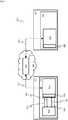
- FIG. 1 shows a network arrangement 100 pursuant to an aspect of the teachings.
- the arrangement 100 for the sake of understanding, the receiving and transmitting parts are shown together. The method aspects will be explained below with reference to the network arrangements.
- the arrangement 100 comprises a containerized model 101 which is provided within a supplier container runtime environment 105.
- the supplier container runtime environment 105 is located within a supplier network environment 109.
- the supplier network environment 109 in some cases may be referred to as belonging to the supplier side.
- Supplier is used to refer to the party that has developed the model 101 and/or is interested in securing the logic of the model 101 from being exposed to third parties.
- the arrangement 100 also comprises a container registry 150 which is located in a shared environment 159.
- the shared environment 159 is shown as a part of a could service. However, the shared environment 159 in some cases may even be realized on the supplier side.
- data related to the model 101 can be provided to the container registry 150.
- the data may either be an image or copy of the model 101, and/or it may be one or more flags indicating that a new version of the model 101 is available on the supplier side.
- a communication link may be a network connection, either wired or wireless. Accordingly, the communications link may be at least partially be an internet connection, or in some cases it may even be an intranet connection.
- the supplier communication link 121 may even be a mobile network supporting computer data transfer.
- the communication via the supplier communication link 121 may even be via a secure connection such as a Virtual Private Network ("VPN”) connection.
- VPN Virtual Private Network
- the containerized model 101 may be obfuscated for security, either within the supplier container runtime environment 105, or when transmitting data to or via the container registry 150.
- the containerized model 101 also comprises an API 102.
- the image 111 is an obfuscated containerized model image that has been transmitted via the container registry 150 through a user communication link 122.
- the user communication link 122 may even be either wired and/or wireless. Accordingly, the user communications link 122 may also be at least partially be an internet connection, or in some cases it may even be an intranet connection.
- the user communication link 122 may even be a mobile network supporting computer data transfer.
- the communication via the user communication link 122 may even be via a secure connection such as a Virtual Private Network ("VPN”) connection.
- VPN Virtual Private Network
- the model image 111 also comprises a model image API 112 that is a copy of the model API 102.
- the model image API 112 is provided with an interface that comprises a process data signal 141 and a model result signal 142.
- the process data signal 141 is used to send data related to usage conditions of an asset.
- the asset is usually on the user side, so the user is often reluctant to share process data generated by the asset with third parties.
- the process data often contains valuable information about the asset and the plant that comprises the asset. Such information can, for example, be used to optimize the performance of the asset and/or the plant, which can be used by the user for lowering costs and/or improving quality of products manufactured by the asset or the plant.
- the model result signal 142 can provide such estimation of performance by indicating the response of the asset to at least some of the usage conditions as specified by the process data signal 141.
- the user container runtime environment 115 is located within a user network environment 109 which is isolated from the supplier network environment 109, i.e., the network environments 109 and 119 are isolated from each another. Being isolated means that resources on either network environments 109 and 119 do not have access rights to the other of the network environments.
- the proposed architecture and method of transmitting and/or receiving the model can thus allow improved security for the supplier and the user for their proprietary intellectual property.
- the supplier can provide a better model for the user's purpose and the user can use the model with both parties enjoying better security.
- the process data signal 141 and the model result signal 142 are handled by a model execution logic 140, which the user can specify for feeding process data to the model image 111 and interpreting model results.
- the interface may also comprise a training data signal 143 and a training result signal 144.
- the training data signal 143 may be used for training the model image 111 by providing training data on the user side.
- the training data can for example be historical data related to the asset, which is used to train a machine learning module in the model image 111.
- the training result signal 144 may be used for receiving training result data from the model image 111. The user can thus better adapt the model image 111 for modeling the asset on the user side.
- the training signals 143 and 144 can also be handled, as shown, via the model execution logic 140.
- FIG. 2 shows another network arrangement 200 pursuant to the present teachings.
- the receiving and transmitting parts are shown together, which will also be used to explain the method aspects.
- the reference numbers from FIG. 1 are reused to refer to the components that can be the same as, or are similar to, those in the supplier-user example shown in FIG. 1 .
- the containerized model 101 which is shown provided within the supplier container runtime environment 105.
- the supplier container runtime environment 105 is located within the supplier network environment 109.
- the container registry 150 is shown as a common registry located in the shared environment 159 in cloud. As it was discussed previously, the registry may even be split between sections of the supply chain, i.e., specific user-supplier groups.
- the shared environment 159 may either be a common environment as shown or different environments for different groups.
- the user network environment 119 in FIG. 2 can be considered as an intermediate user network environment.
- the image 111 of the containerized model 101 is shown provided in the user container runtime environment, which here can be referred to as an intermediate user container runtime environment 115.
- the intermediate user container runtime environment 115 is located within the intermediate user network environment 119.
- The is isolated from the supplier network environment 109.
- the intermediate user model execution logic 140 can be interfaced with the model image 111 for signals such as process- and/or training- data and results.
- the signals are not shown individually in FIG. 2 , rather in a form of an intermediate logic bus 241.
- the intermediate user may be using the asset for producing an intermediate user asset, for example by using the asset as a starting point for manufacturing the intermediate user asset.
- the intermediate user can create an augmented model 222.
- the augmented model 222 comprises the model image 111 and an obfuscated containerized intermediate user model 261.
- the obfuscated containerized intermediate user model has an intermediate API 262 that is used to interface the containerized intermediate user model 261 with the model image 111, for example via an intermediate model data signal 225.
- the augmented model 222 may be comprised in a container composition.
- the intermediate user may transmit the augmented model 222 via an intermediate user container registry, which in the example of FIG. 2 is shown as being the same as the container registry 150.
- a downstream user can which has access to the shared registry 150 can be provided an image of the augmented model 222 via a downstream communications link 223.
- the communication links were explained earlier with reference to FIG.1 .
- the downstream can optionally append the model further by creating a further augmented model 232. This may be the case when the downstream user wants to provide the further augmented model 232 to another user, for example, another downstream user.
- the further augmented model 232 comprises an image of the augmented model 222, which is shown as model images 211 and 271 that correspond to containerized model image 111 and the containerized intermediate user model 261 respectively.
- the model images 211 and 271 are interfaced by signal 235 which corresponds to the intermediate model data signal 225.
- the downstream user creates a containerized downstream user model 281 which is interfaced via its API 282 to the augmented model image via a downstream model data signal 236.
- the further augmented model 232 is provided in a downstream container runtime environment 215 which is located within a downstream user network environment 219.
- the proposed teachings can provide a secure way to provide models within a value chain.
- the further augmented model 232 can just be an image of the augmented model 222.
- model image and model execution logic on the respective sides are being executed on a processing unit, which can either be the same processor or a distributed processing environment.
- a processing unit which can either be the same processor or a distributed processing environment.
- the containerized model is generated using a processing unit on the supplier side.
- a specific architecture of the processing units is not essential to the scope or generality of the present teachings.
Landscapes
- Engineering & Computer Science (AREA)
- Business, Economics & Management (AREA)
- Physics & Mathematics (AREA)
- General Physics & Mathematics (AREA)
- Strategic Management (AREA)
- Economics (AREA)
- Human Resources & Organizations (AREA)
- Theoretical Computer Science (AREA)
- Manufacturing & Machinery (AREA)
- Quality & Reliability (AREA)
- Tourism & Hospitality (AREA)
- Marketing (AREA)
- General Business, Economics & Management (AREA)
- Entrepreneurship & Innovation (AREA)
- Automation & Control Theory (AREA)
- General Engineering & Computer Science (AREA)
- Development Economics (AREA)
- Operations Research (AREA)
- Game Theory and Decision Science (AREA)
- Health & Medical Sciences (AREA)
- General Health & Medical Sciences (AREA)
- Primary Health Care (AREA)
- Software Systems (AREA)
- Educational Administration (AREA)
- Evolutionary Computation (AREA)
- Data Mining & Analysis (AREA)
- Medical Informatics (AREA)
- Computer Vision & Pattern Recognition (AREA)
- Computing Systems (AREA)
- Mathematical Physics (AREA)
- Artificial Intelligence (AREA)
- Management, Administration, Business Operations System, And Electronic Commerce (AREA)
- Debugging And Monitoring (AREA)
- Stored Programmes (AREA)
Priority Applications (7)
| Application Number | Priority Date | Filing Date | Title |
|---|---|---|---|
| EP19216211.3A EP3836051A1 (en) | 2019-12-13 | 2019-12-13 | Industrial plant optimization |
| CN202080085407.2A CN114830155A (zh) | 2019-12-13 | 2020-12-08 | 工业工厂优化 |
| PCT/EP2020/085133 WO2021116126A1 (en) | 2019-12-13 | 2020-12-08 | Industrial plant optimization |
| US17/782,765 US12346098B2 (en) | 2019-12-13 | 2020-12-08 | Industrial plant optimization |
| JP2022535731A JP7755580B2 (ja) | 2019-12-13 | 2020-12-08 | 工業プラント最適化 |
| KR1020227019640A KR20220114549A (ko) | 2019-12-13 | 2020-12-08 | 산업 플랜트 최적화 |
| EP20819761.6A EP4073722A1 (en) | 2019-12-13 | 2020-12-08 | Industrial plant optimization |
Applications Claiming Priority (1)
| Application Number | Priority Date | Filing Date | Title |
|---|---|---|---|
| EP19216211.3A EP3836051A1 (en) | 2019-12-13 | 2019-12-13 | Industrial plant optimization |
Publications (1)
| Publication Number | Publication Date |
|---|---|
| EP3836051A1 true EP3836051A1 (en) | 2021-06-16 |
Family
ID=68917385
Family Applications (2)
| Application Number | Title | Priority Date | Filing Date |
|---|---|---|---|
| EP19216211.3A Withdrawn EP3836051A1 (en) | 2019-12-13 | 2019-12-13 | Industrial plant optimization |
| EP20819761.6A Withdrawn EP4073722A1 (en) | 2019-12-13 | 2020-12-08 | Industrial plant optimization |
Family Applications After (1)
| Application Number | Title | Priority Date | Filing Date |
|---|---|---|---|
| EP20819761.6A Withdrawn EP4073722A1 (en) | 2019-12-13 | 2020-12-08 | Industrial plant optimization |
Country Status (6)
| Country | Link |
|---|---|
| US (1) | US12346098B2 (https=) |
| EP (2) | EP3836051A1 (https=) |
| JP (1) | JP7755580B2 (https=) |
| KR (1) | KR20220114549A (https=) |
| CN (1) | CN114830155A (https=) |
| WO (1) | WO2021116126A1 (https=) |
Families Citing this family (5)
| Publication number | Priority date | Publication date | Assignee | Title |
|---|---|---|---|---|
| US20230044016A1 (en) * | 2021-08-03 | 2023-02-09 | Vertiv It Systems, Inc. | System and method for service management and container orchestration within a host environment |
| US20240103921A1 (en) * | 2022-09-22 | 2024-03-28 | Honeywell International Inc. | Systems and methods for secured and integrated analytics deployment accelerator |
| KR20240069143A (ko) * | 2022-11-11 | 2024-05-20 | 주식회사 에니트 | 도커 컨테이너 기반의 설비 운영 시스템 |
| WO2024108026A1 (en) * | 2022-11-16 | 2024-05-23 | Aveva Software, Llc | Computerized systems and methods for an industrial metaverse |
| US20250315033A1 (en) * | 2024-04-04 | 2025-10-09 | Rtx Corporation | Adaptive tolerancing and machining parameters for subsequent machining |
Citations (2)
| Publication number | Priority date | Publication date | Assignee | Title |
|---|---|---|---|---|
| WO2018203886A1 (en) * | 2017-05-03 | 2018-11-08 | Siemens Aktiengesellschaft | Process image within controllers enabling visibility and accessibility of real world objects |
| WO2019211288A1 (en) * | 2018-05-02 | 2019-11-07 | Kongsberg Digital AS | A method and system for discovering and visualizing potential operational problems of processes running in equipment and systems in an installation |
Family Cites Families (7)
| Publication number | Priority date | Publication date | Assignee | Title |
|---|---|---|---|---|
| FR2942558B1 (fr) * | 2009-02-24 | 2014-05-30 | Eads Europ Aeronautic Defence | Procede d'obscurcissement d'un programme d'ordinateur. |
| US10156841B2 (en) * | 2015-12-31 | 2018-12-18 | General Electric Company | Identity management and device enrollment in a cloud service |
| US10503623B2 (en) * | 2016-04-29 | 2019-12-10 | Ca, Inc. | Monitoring containerized applications |
| US10831470B2 (en) * | 2017-02-28 | 2020-11-10 | Arista Networks, Inc. | Simulating a topology of network elements |
| EP3462705B1 (en) * | 2017-09-27 | 2019-07-10 | Siemens Aktiengesellschaft | Provisioning of software applications on edge devices in an internet-of-things environment |
| JP7246381B2 (ja) * | 2017-09-30 | 2023-03-27 | オラクル・インターナショナル・コーポレイション | 環境要件に基づくコンテナのデプロイメント |
| US20200387818A1 (en) * | 2019-06-07 | 2020-12-10 | Aspen Technology, Inc. | Asset Optimization Using Integrated Modeling, Optimization, and Artificial Intelligence |
-
2019
- 2019-12-13 EP EP19216211.3A patent/EP3836051A1/en not_active Withdrawn
-
2020
- 2020-12-08 US US17/782,765 patent/US12346098B2/en active Active
- 2020-12-08 WO PCT/EP2020/085133 patent/WO2021116126A1/en not_active Ceased
- 2020-12-08 CN CN202080085407.2A patent/CN114830155A/zh active Pending
- 2020-12-08 EP EP20819761.6A patent/EP4073722A1/en not_active Withdrawn
- 2020-12-08 KR KR1020227019640A patent/KR20220114549A/ko active Pending
- 2020-12-08 JP JP2022535731A patent/JP7755580B2/ja active Active
Patent Citations (2)
| Publication number | Priority date | Publication date | Assignee | Title |
|---|---|---|---|---|
| WO2018203886A1 (en) * | 2017-05-03 | 2018-11-08 | Siemens Aktiengesellschaft | Process image within controllers enabling visibility and accessibility of real world objects |
| WO2019211288A1 (en) * | 2018-05-02 | 2019-11-07 | Kongsberg Digital AS | A method and system for discovering and visualizing potential operational problems of processes running in equipment and systems in an installation |
Also Published As
| Publication number | Publication date |
|---|---|
| US20230008064A1 (en) | 2023-01-12 |
| CN114830155A (zh) | 2022-07-29 |
| KR20220114549A (ko) | 2022-08-17 |
| JP2023505591A (ja) | 2023-02-09 |
| WO2021116126A1 (en) | 2021-06-17 |
| US12346098B2 (en) | 2025-07-01 |
| EP4073722A1 (en) | 2022-10-19 |
| JP7755580B2 (ja) | 2025-10-16 |
Similar Documents
| Publication | Publication Date | Title |
|---|---|---|
| EP3836051A1 (en) | Industrial plant optimization | |
| US12386344B2 (en) | Data driven digital twins for industrial automation device operation enhancement | |
| CN1950766B (zh) | 加工厂中过程模块和专家系统的集成 | |
| CN1542575A (zh) | 处理设备中图像显示元件、过程模块和控制模块的集成 | |
| US20190171196A1 (en) | Operator System and Method for Operating and Observing a Technical Plant to be Controlled | |
| CN102566447A (zh) | 建模系统、装置和方法 | |
| CN108713174A (zh) | 用于技术设备的模块和控制技术设备的方法 | |
| CN109283895B (zh) | 工业过程工厂中的通用映射 | |
| US20210105183A1 (en) | Systems and methods for autonomous creation of a domain specific industrial internet of things gateway using a conversational interface | |
| US10877466B2 (en) | Reconciliation of run-time and configuration discrepancies | |
| WO2021116123A1 (en) | Manufacturing system for monitoring and/or controlling one or more chemical plant(s) | |
| Song et al. | Digital twin standards, open source, and best practices | |
| JP2024507383A (ja) | プラントプロセスデータを処理するためのエッジコンピューティングデバイス | |
| Hasan et al. | A new era for digital twins: Progress and industry adoption | |
| Benešl et al. | Asset administration shell-manufacturing processes energy optimization | |
| Pradeep | Integration of IoT and Industry 4.0: revolutionizing industrial processes | |
| Abdullahi et al. | Integrating a fog based distributed digital twin framework with the cloud for improving asset management with predictive maintenance in wind farms | |
| KR20230054410A (ko) | 플랜트-간 통신 | |
| WO2025201654A1 (en) | Technical modules with virtualization | |
| US20250110488A1 (en) | Systems and methods for sustainability recommendations as a service | |
| US20250110904A1 (en) | Controller, setting method, computer-readable recording medium, and information processing apparatus | |
| US12443174B2 (en) | Method and an apparatus for increasing efficiency of a food production plant | |
| Pereira et al. | Implementing Machine Learning Microservices for Predictive Maintenance of Industrial Assets | |
| van der Wal | Structuring with IEC 61131-3: 7 steps to success: The IEC 61131-3 standard includes powerful structuring tools and can help provide users an excellent way to break a control system into manageable units for greater overall effectiveness. | |
| Cassidy | Mastering communications using the Manufacturing Message Specification |
Legal Events
| Date | Code | Title | Description |
|---|---|---|---|
| PUAI | Public reference made under article 153(3) epc to a published international application that has entered the european phase |
Free format text: ORIGINAL CODE: 0009012 |
|
| STAA | Information on the status of an ep patent application or granted ep patent |
Free format text: STATUS: THE APPLICATION HAS BEEN PUBLISHED |
|
| AK | Designated contracting states |
Kind code of ref document: A1 Designated state(s): AL AT BE BG CH CY CZ DE DK EE ES FI FR GB GR HR HU IE IS IT LI LT LU LV MC MK MT NL NO PL PT RO RS SE SI SK SM TR |
|
| STAA | Information on the status of an ep patent application or granted ep patent |
Free format text: STATUS: THE APPLICATION HAS BEEN WITHDRAWN |
|
| 18W | Application withdrawn |
Effective date: 20210621 |