EP3835276A1 - Method for producing mineral wool composites - Google Patents
Method for producing mineral wool composites Download PDFInfo
- Publication number
- EP3835276A1 EP3835276A1 EP19306614.9A EP19306614A EP3835276A1 EP 3835276 A1 EP3835276 A1 EP 3835276A1 EP 19306614 A EP19306614 A EP 19306614A EP 3835276 A1 EP3835276 A1 EP 3835276A1
- Authority
- EP
- European Patent Office
- Prior art keywords
- circulating water
- binder composition
- mineral wool
- water
- tank
- Prior art date
- Legal status (The legal status is an assumption and is not a legal conclusion. Google has not performed a legal analysis and makes no representation as to the accuracy of the status listed.)
- Withdrawn
Links
- 239000002131 composite material Substances 0.000 title claims abstract description 82
- 239000011490 mineral wool Substances 0.000 title claims abstract description 82
- 238000004519 manufacturing process Methods 0.000 title claims abstract description 50
- XLYOFNOQVPJJNP-UHFFFAOYSA-N water Substances O XLYOFNOQVPJJNP-UHFFFAOYSA-N 0.000 claims abstract description 201
- 239000011230 binding agent Substances 0.000 claims abstract description 129
- 239000000203 mixture Substances 0.000 claims abstract description 128
- 238000000034 method Methods 0.000 claims abstract description 55
- 238000002360 preparation method Methods 0.000 claims abstract description 28
- 239000002557 mineral fiber Substances 0.000 claims abstract description 18
- 238000005507 spraying Methods 0.000 claims abstract description 13
- 238000000605 extraction Methods 0.000 claims abstract description 9
- 238000004140 cleaning Methods 0.000 claims abstract description 3
- WSFSSNUMVMOOMR-UHFFFAOYSA-N Formaldehyde Chemical compound O=C WSFSSNUMVMOOMR-UHFFFAOYSA-N 0.000 claims description 18
- KRKNYBCHXYNGOX-UHFFFAOYSA-N citric acid Chemical compound OC(=O)CC(O)(C(O)=O)CC(O)=O KRKNYBCHXYNGOX-UHFFFAOYSA-N 0.000 claims description 6
- ISWSIDIOOBJBQZ-UHFFFAOYSA-N Phenol Chemical compound OC1=CC=CC=C1 ISWSIDIOOBJBQZ-UHFFFAOYSA-N 0.000 claims description 4
- 239000000376 reactant Substances 0.000 claims description 4
- XSQUKJJJFZCRTK-UHFFFAOYSA-N Urea Chemical compound NC(N)=O XSQUKJJJFZCRTK-UHFFFAOYSA-N 0.000 claims description 2
- 150000001412 amines Chemical class 0.000 claims description 2
- -1 amino-amide compound Chemical class 0.000 claims description 2
- 150000008064 anhydrides Chemical class 0.000 claims description 2
- 239000004202 carbamide Substances 0.000 claims description 2
- 150000001720 carbohydrates Chemical class 0.000 claims description 2
- 235000014633 carbohydrates Nutrition 0.000 claims description 2
- 150000001875 compounds Chemical class 0.000 claims description 2
- 239000003431 cross linking reagent Substances 0.000 claims description 2
- 229920000058 polyacrylate Polymers 0.000 claims description 2
- 239000007788 liquid Substances 0.000 description 10
- 239000011347 resin Substances 0.000 description 9
- 229920005989 resin Polymers 0.000 description 9
- 238000005406 washing Methods 0.000 description 9
- 239000002994 raw material Substances 0.000 description 7
- 239000003139 biocide Substances 0.000 description 3
- 238000001914 filtration Methods 0.000 description 3
- 230000003068 static effect Effects 0.000 description 3
- 239000000463 material Substances 0.000 description 2
- 229920000178 Acrylic resin Polymers 0.000 description 1
- 239000004925 Acrylic resin Substances 0.000 description 1
- QDHHCQZDFGDHMP-UHFFFAOYSA-N Chloramine Chemical compound ClN QDHHCQZDFGDHMP-UHFFFAOYSA-N 0.000 description 1
- 230000002411 adverse Effects 0.000 description 1
- 238000007664 blowing Methods 0.000 description 1
- 239000003086 colorant Substances 0.000 description 1
- 238000010276 construction Methods 0.000 description 1
- 238000010924 continuous production Methods 0.000 description 1
- 239000008367 deionised water Substances 0.000 description 1
- 229910021641 deionized water Inorganic materials 0.000 description 1
- 239000006185 dispersion Substances 0.000 description 1
- 239000012153 distilled water Substances 0.000 description 1
- 230000000694 effects Effects 0.000 description 1
- 239000003673 groundwater Substances 0.000 description 1
- 239000008235 industrial water Substances 0.000 description 1
- 229910010272 inorganic material Inorganic materials 0.000 description 1
- 239000011147 inorganic material Substances 0.000 description 1
- 238000002156 mixing Methods 0.000 description 1
- 239000005011 phenolic resin Substances 0.000 description 1
- 238000009288 screen filtration Methods 0.000 description 1
- 239000002904 solvent Substances 0.000 description 1
- 239000008399 tap water Substances 0.000 description 1
- 235000020679 tap water Nutrition 0.000 description 1
- 238000000108 ultra-filtration Methods 0.000 description 1
Images

Classifications
-
- C—CHEMISTRY; METALLURGY
- C03—GLASS; MINERAL OR SLAG WOOL
- C03C—CHEMICAL COMPOSITION OF GLASSES, GLAZES OR VITREOUS ENAMELS; SURFACE TREATMENT OF GLASS; SURFACE TREATMENT OF FIBRES OR FILAMENTS MADE FROM GLASS, MINERALS OR SLAGS; JOINING GLASS TO GLASS OR OTHER MATERIALS
- C03C25/00—Surface treatment of fibres or filaments made from glass, minerals or slags
- C03C25/10—Coating
- C03C25/12—General methods of coating; Devices therefor
- C03C25/14—Spraying
-
- C—CHEMISTRY; METALLURGY
- C03—GLASS; MINERAL OR SLAG WOOL
- C03C—CHEMICAL COMPOSITION OF GLASSES, GLAZES OR VITREOUS ENAMELS; SURFACE TREATMENT OF GLASS; SURFACE TREATMENT OF FIBRES OR FILAMENTS MADE FROM GLASS, MINERALS OR SLAGS; JOINING GLASS TO GLASS OR OTHER MATERIALS
- C03C25/00—Surface treatment of fibres or filaments made from glass, minerals or slags
- C03C25/10—Coating
- C03C25/24—Coatings containing organic materials
- C03C25/26—Macromolecular compounds or prepolymers
- C03C25/32—Macromolecular compounds or prepolymers obtained otherwise than by reactions involving only carbon-to-carbon unsaturated bonds
-
- C—CHEMISTRY; METALLURGY
- C03—GLASS; MINERAL OR SLAG WOOL
- C03C—CHEMICAL COMPOSITION OF GLASSES, GLAZES OR VITREOUS ENAMELS; SURFACE TREATMENT OF GLASS; SURFACE TREATMENT OF FIBRES OR FILAMENTS MADE FROM GLASS, MINERALS OR SLAGS; JOINING GLASS TO GLASS OR OTHER MATERIALS
- C03C25/00—Surface treatment of fibres or filaments made from glass, minerals or slags
- C03C25/10—Coating
- C03C25/12—General methods of coating; Devices therefor
-
- C—CHEMISTRY; METALLURGY
- C03—GLASS; MINERAL OR SLAG WOOL
- C03C—CHEMICAL COMPOSITION OF GLASSES, GLAZES OR VITREOUS ENAMELS; SURFACE TREATMENT OF GLASS; SURFACE TREATMENT OF FIBRES OR FILAMENTS MADE FROM GLASS, MINERALS OR SLAGS; JOINING GLASS TO GLASS OR OTHER MATERIALS
- C03C25/00—Surface treatment of fibres or filaments made from glass, minerals or slags
- C03C25/10—Coating
- C03C25/24—Coatings containing organic materials
- C03C25/25—Non-macromolecular compounds
-
- C—CHEMISTRY; METALLURGY
- C03—GLASS; MINERAL OR SLAG WOOL
- C03C—CHEMICAL COMPOSITION OF GLASSES, GLAZES OR VITREOUS ENAMELS; SURFACE TREATMENT OF GLASS; SURFACE TREATMENT OF FIBRES OR FILAMENTS MADE FROM GLASS, MINERALS OR SLAGS; JOINING GLASS TO GLASS OR OTHER MATERIALS
- C03C25/00—Surface treatment of fibres or filaments made from glass, minerals or slags
- C03C25/10—Coating
- C03C25/24—Coatings containing organic materials
- C03C25/26—Macromolecular compounds or prepolymers
- C03C25/28—Macromolecular compounds or prepolymers obtained by reactions involving only carbon-to-carbon unsaturated bonds
-
- C—CHEMISTRY; METALLURGY
- C03—GLASS; MINERAL OR SLAG WOOL
- C03C—CHEMICAL COMPOSITION OF GLASSES, GLAZES OR VITREOUS ENAMELS; SURFACE TREATMENT OF GLASS; SURFACE TREATMENT OF FIBRES OR FILAMENTS MADE FROM GLASS, MINERALS OR SLAGS; JOINING GLASS TO GLASS OR OTHER MATERIALS
- C03C25/00—Surface treatment of fibres or filaments made from glass, minerals or slags
- C03C25/10—Coating
- C03C25/24—Coatings containing organic materials
- C03C25/26—Macromolecular compounds or prepolymers
- C03C25/28—Macromolecular compounds or prepolymers obtained by reactions involving only carbon-to-carbon unsaturated bonds
- C03C25/285—Acrylic resins
-
- C—CHEMISTRY; METALLURGY
- C03—GLASS; MINERAL OR SLAG WOOL
- C03C—CHEMICAL COMPOSITION OF GLASSES, GLAZES OR VITREOUS ENAMELS; SURFACE TREATMENT OF GLASS; SURFACE TREATMENT OF FIBRES OR FILAMENTS MADE FROM GLASS, MINERALS OR SLAGS; JOINING GLASS TO GLASS OR OTHER MATERIALS
- C03C25/00—Surface treatment of fibres or filaments made from glass, minerals or slags
- C03C25/10—Coating
- C03C25/24—Coatings containing organic materials
- C03C25/26—Macromolecular compounds or prepolymers
- C03C25/32—Macromolecular compounds or prepolymers obtained otherwise than by reactions involving only carbon-to-carbon unsaturated bonds
- C03C25/34—Condensation polymers of aldehydes, e.g. with phenols, ureas, melamines, amides or amines
-
- C—CHEMISTRY; METALLURGY
- C02—TREATMENT OF WATER, WASTE WATER, SEWAGE, OR SLUDGE
- C02F—TREATMENT OF WATER, WASTE WATER, SEWAGE, OR SLUDGE
- C02F1/00—Treatment of water, waste water, or sewage
- C02F1/001—Processes for the treatment of water whereby the filtration technique is of importance
- C02F1/004—Processes for the treatment of water whereby the filtration technique is of importance using large scale industrial sized filters
-
- C—CHEMISTRY; METALLURGY
- C02—TREATMENT OF WATER, WASTE WATER, SEWAGE, OR SLUDGE
- C02F—TREATMENT OF WATER, WASTE WATER, SEWAGE, OR SLUDGE
- C02F1/00—Treatment of water, waste water, or sewage
- C02F1/50—Treatment of water, waste water, or sewage by addition or application of a germicide or by oligodynamic treatment
-
- C—CHEMISTRY; METALLURGY
- C02—TREATMENT OF WATER, WASTE WATER, SEWAGE, OR SLUDGE
- C02F—TREATMENT OF WATER, WASTE WATER, SEWAGE, OR SLUDGE
- C02F2103/00—Nature of the water, waste water, sewage or sludge to be treated
- C02F2103/12—Nature of the water, waste water, sewage or sludge to be treated from the silicate or ceramic industries, e.g. waste waters from cement or glass factories
-
- C—CHEMISTRY; METALLURGY
- C02—TREATMENT OF WATER, WASTE WATER, SEWAGE, OR SLUDGE
- C02F—TREATMENT OF WATER, WASTE WATER, SEWAGE, OR SLUDGE
- C02F2301/00—General aspects of water treatment
- C02F2301/04—Flow arrangements
- C02F2301/046—Recirculation with an external loop
Definitions
- the present invention relates to a method for producing mineral wool composites, in particular relates to a method for producing mineral wool composites whereby circulating water used in a production apparatus for producing mineral wool composites is reused in the production apparatus. More specifically, the invention relates to a method for producing mineral wool composites wherein part of circulating water is extracted and used as the raw material for a binder composition, whereby the target quality for the mineral wool composites can be obtained even when the type of binder composition is changed, and without disposing of large amounts of circulating water.
- binder compositions include aqueous dispersions of binder resins such as phenol resins and acrylic resins.
- WO2009/007648A and US8821625B disclose methods in which circulating water used during the process of producing mineral wool composites is circulated and reused.
- Such circulating water that is reused during the process of producing mineral wool composites contains the binder resin resulting from the binder composition.
- part of the circulating water may be extracted and the extracted circulating water reused as raw material for the binder composition.
- the present invention provides a method for producing mineral wool composites in which a part of circulating water is extracted and used as raw material for a binder composition, whereby when the type of binder composition is changed, it is possible to obtain the target quality of the mineral wool composites without disposing of a large amount of circulating water.
- the invention relates to a method for producing mineral wool composites in which circulating water used for washing of a production apparatus for mineral wool composites is filtered and reused in the production apparatus, the method including the following steps (a) to (c) in this order:
- each operation of each step of the invention it is not necessary to conduct each operation of each step of the invention at all times during the step, as each operation need only be conducted at least once at the preferred timing during the step.
- the arrows in the drawings indicate flow of liquids such as circulating water, clean water, water stored in the tank, and the first and second binder compositions, but flow of liquids not shown in the drawings may also be present in each step. Also, the flow of liquids in each step shown in the drawings need not be present in the step, so long as the advantageous effect of the invention is obtained.
- the circulating water including the binder resin before switching must be disposed of so that the quality of the mineral wool composite after switching is within the allowable range.
- circulating water including the binder resin before switching is stored in a tank and reused, thereby allowing disposal of the circulating water to be reduced to a minimum.
- circulating water including the binder resin before switching that has been stored in a tank, may be gradually mixed with circulating water to be used for production of the mineral wool composite after switching, in a range such that the quality of the mineral wool composite after switching is acceptable, or it may be stored for use during subsequent production of a mineral wool composite including the binder composition before switching.
- the circulating water is used for washing of the production apparatus for the mineral wool composite and for preparation of the binder composition.
- the production apparatus to be washed may be a conveyor or the like, on which there have been accumulated mineral fibers sprayed with a binder composition. Since such a production apparatus can potentially contain adhered material from the binder composition, the washing water after washing of the adhered material includes components from the binder composition.
- the circulating water may be used as a dispersing medium or solvent for the binder composition.
- the circulating water is filtered before being reused.
- the filtration may be carried out by a known method such as screen filtration or ultrafiltration.
- the filtration does not need to be constantly carried out during the method of the invention, and need only be carried out at least once at a desired timing while the method of the invention is being carried out.
- a biocide agent such as monochloramine, may be added to the circulated water, preferably after the filtration.
- the quantity of biocide agent added to the circulating water depend on the configuration of the circulating circuit and the binder compositions.
- the biocide agent is typically added in the circulated water several time a day in an amount of 50 to 500 g/m 3 of circulating water.
- the clean water is water with the lower concentration of components resulting from binder composition than the circulating water.
- the clean water may be water that essentially contains no component resulting from binder composition, and it may be clean water, deionized water, distilled water, tap water, ground water or industrial water, for example.
- step (a) clean water is supplied to the circulating water while at least part of the circulating water is extracted, a first binder composition containing the extracted circulating water is prepared, and the first binder composition is sprayed onto mineral fibers to produce a first mineral wool composite.
- step (a) clean water is provided to the circulating water.
- the clean water may be supplied to the circulating water by recovering after having been used for washing of the production apparatus for the mineral wool composite to mix with other circulating water.
- the clean water may be directly supplied to the circulating water.
- the clean water may be supplied to the circulating water, by preparing of a binder composition and then recovering after the binder composition has been used for production of a mineral wool composite to mix with other circulating water.
- step (a) at least part of the circulating water is extracted and a first binder composition containing the extracted circulating water is prepared.
- the extracted circulating water may be supplied to the tank for preparation of the binder composition, for preparation of the first binder composition, or it may be mixed with another binder resin, for example, in piping using a static mixer or the like, for preparation of the first binder composition. Additional clean water may also be used for preparation of the first binder composition.
- step (a) For the method of producing the first mineral wool composite by spraying the first binder composition onto mineral fibers, which is carried out in step (a), reference may be made to methods known in the prior art.
- step (a) if a tank storing previously recovered water is present, the stored water may be used to prepare the first binder composition or to provide circulating water. In such cases, the stored water may be reused so long as the quality of the first mineral wool composite is within the allowable range.
- step (b1) As shown in Fig. 1(b) , the following substeps (b1) and (b2) are carried out in step (b), in any order or at the same time:
- step (b) preparation is carried out to switch from production of the first mineral wool composite to the second mineral wool composite.
- Production of the first mineral wool composite may be continued in step (b), or production of the second mineral wool composite may be initiated, or production of the mineral wool composites may be halted.
- substep (b1) if production of the first mineral wool composite is still continuing and a preparation tank for preparation of the first binder composition is present, the first binder composition in the preparation tank may be provided for production of the first mineral wool composite. Also, the first binder composition may be prepared by the following substep (b3), and production of the first mineral wool composite continued.
- substep (b2) circulating water including components from the first binder composition are stored in the first tank, thereby reducing the absolute amount of components from the first binder composition in the circulating water. This allows the components from the first binder composition present in the circulating water to be reduced during production of the second mineral wool composite, so that the quality of the second mineral wool composite can be within the allowable range.
- the circulating water stored in the first tank as a result of substep (b2) may be only part of the circulating water, and if the quality of the second mineral wool composite is within the allowable range during its production, the components resulting from the first binder composition may be allowed to reside in the circulating water.
- Part of the circulating water may be disposed of in order to reduce the absolute amount of components from the first binder composition in the circulating water.
- Step (b) may also include a substep (b3) of providing clean water, and using the clean water instead of the circulating water to prepare the first or second binder composition.
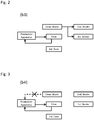
- Fig. 2 shows an example of the flow of liquid in substep (b3). While Fig. 2 does not show the flow of the first or second binder composition for production of the first or second mineral wool composite, production of the first mineral wool composite may be continued or production of the second mineral wool composite initiated in substep (b3).
- clean water may be provided for preparation of the first binder composition.
- clean water may be provided for preparation of the second binder composition.
- Substep (b3) may be carried out before substep (b1) is initiated, and for example, clean water may also be provided for preparation of the first binder composition while the circulating water is being extracted.
- substep (b3) clean water is provided to the tank and mixed with the other raw materials for binder composition, or the clean water may be mixed with the other raw materials for binder composition using a static mixer or the like in the piping, thereby preparing the first or second binder composition.
- Step (b) may also include a substep (b4) for pausing supply of the clean water to the circulating water.
- Fig. 3 shows an example of the flow of liquid in substep (b4). Since the circulating water including components from the first binder composition is stored in the first tank in substep (b2), the absolute amount of components from the first binder composition in the circulating water is continuously reduced. Consequently, when supply of the clean water to the circulating water is continued, the concentration of the components from the first binder composition continues to decrease, but the amount of circulating water to be stored in the first tank increases correspondingly.
- provision of the clean water to the circulating water may be paused in order to maintain a constant concentration of components from the first binder composition in the circulating water stored in the first tank. This will allow the amount of water stored in the first tank to be relatively reduced.
- step (c) while the clean water is being provided to the circulating water, at least part of the circulating water is extracted, a second binder composition containing the extracted circulating water is prepared, and the second binder composition is sprayed onto the mineral fibers to produce the second mineral wool composite.
- Clean water is supplied to the circulating water in step (c) as well, similar to step (a).
- the clean water may be directly supplied to the circulating water by mixing with the circulating water, or it may be indirectly supplied to the circulating water.
- the circulating water may be supplied to the tank for preparation of the binder, for preparation of the second binder composition, or the circulating water may be mixed with another binder resin, for example, in piping using a static mixer or the like, for preparation of the second binder composition.
- step (c) For the method of producing the second mineral wool composite by spraying the second binder composition onto mineral fibers, which is carried out in step (c), reference may be made to methods known in the prior art.
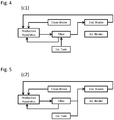
- step (c) may further include a substep (c1) in which water stored in the first tank by substep (b2) of step (b) is provided to the circulating water and used for washing of the production apparatus.
- the water stored in the first tank may be provided to the circulating water in such a manner that the quality of the second mineral wool composite is in the allowable range.
- the water stored in the first tank can be gradually consumed by substep (c1).
- step (c) may further include a substep (c2) in which water stored in the first tank by substep (b2) of step (b) is used for preparation of the second binder composition.
- the water stored in the first tank may be provided to the circulating water so that the quality of the second mineral wool composite is in the allowable range.
- the water stored in the first tank can be gradually consumed by substep (c2).
- the water stored in the first tank may be reused in such a manner that the quality of the second mineral wool composite is in the allowable range.
- step (c) substeps (c1) and (c2) may be carried out either in any order with or at the same time as other operations.
- the method of the invention may further include, after step (c), an additional step (d) in which the following substeps (d1) and (d2) are carried out in any order or at the same time:
- Step (d) is essentially a step of repeating step (b) above. Therefore, the substeps corresponding to substeps (b3) and (b4) of step (b) may also be included in step (d).
- substep (d2) may be carried out with the same tank for the first tank and second tank.
- the second tank may instead be a different tank from the first tank.
- step (a) may be repeated after step (d).
- the repetition of step (a) may be a step (a)' in which third mineral wool composites are produced using not the first binder composition, but rather a third binder composition which is different from the first and second binder compositions.
- the first binder, second binder, and optionally third binder compositions may be aqueous compositions selected from:
- the method of the present invention is particularly advantageous when one of the binder composition result in a lightly colored, in particular white, binder, such as compositions (iii), (iv), or (v) described above.
- the second binder composition results in a lightly colored, in particular white, binder, such as compositions (iii), (iv), or (v)
- the first binder composition results in a colored binder such as compositions (i) or (ii).
Landscapes
- Life Sciences & Earth Sciences (AREA)
- Chemical & Material Sciences (AREA)
- Organic Chemistry (AREA)
- Engineering & Computer Science (AREA)
- Chemical Kinetics & Catalysis (AREA)
- General Chemical & Material Sciences (AREA)
- Geochemistry & Mineralogy (AREA)
- Materials Engineering (AREA)
- General Life Sciences & Earth Sciences (AREA)
- Water Supply & Treatment (AREA)
- Environmental & Geological Engineering (AREA)
- Hydrology & Water Resources (AREA)
- Compositions Of Macromolecular Compounds (AREA)
- Surface Treatment Of Glass Fibres Or Filaments (AREA)
- Treatments For Attaching Organic Compounds To Fibrous Goods (AREA)
- Extraction Or Liquid Replacement (AREA)
- Cosmetics (AREA)
- Nonwoven Fabrics (AREA)
Abstract
The present invention relates to a method for producing mineral wool composites, in which circulating water used for cleaning a production apparatus for producing mineral wool composites is filtered to reuse the circulating water in the production apparatus, the method comprising the following steps (a) to (c) in this order:
(a) producing a first mineral wool composite by extracting at least part of the circulating water to prepare a first binder composition containing the extracted circulating water and then spraying the first binder composition onto mineral fibers, while providing clean water to the circulating water;
(b) conducting the following substeps (b1) and (b2) in any order or at the same time,
(b1) pausing extraction of the circulating water for preparation of the first binder composition;
(b2) extracting at least part of the circulating water to store the extracted circulating water in a first tank;
(c) producing a second mineral wool composite by extracting at least part of the circulating water to prepare a second binder composition containing the extracted circulating water and then spraying the second binder composition onto mineral fibers, while providing clean water to the circulating water.
(a) producing a first mineral wool composite by extracting at least part of the circulating water to prepare a first binder composition containing the extracted circulating water and then spraying the first binder composition onto mineral fibers, while providing clean water to the circulating water;
(b) conducting the following substeps (b1) and (b2) in any order or at the same time,
(b1) pausing extraction of the circulating water for preparation of the first binder composition;
(b2) extracting at least part of the circulating water to store the extracted circulating water in a first tank;
(c) producing a second mineral wool composite by extracting at least part of the circulating water to prepare a second binder composition containing the extracted circulating water and then spraying the second binder composition onto mineral fibers, while providing clean water to the circulating water.
Description
- The present invention relates to a method for producing mineral wool composites, in particular relates to a method for producing mineral wool composites whereby circulating water used in a production apparatus for producing mineral wool composites is reused in the production apparatus. More specifically, the invention relates to a method for producing mineral wool composites wherein part of circulating water is extracted and used as the raw material for a binder composition, whereby the target quality for the mineral wool composites can be obtained even when the type of binder composition is changed, and without disposing of large amounts of circulating water.
- As disclosed in
JP2009-155172A 2009-155172 - When producing mineral wool composites, water is used in large amounts for washing of production apparatuses.
WO2009/007648A andUS8821625B disclose methods in which circulating water used during the process of producing mineral wool composites is circulated and reused. - Such circulating water that is reused during the process of producing mineral wool composites contains the binder resin resulting from the binder composition. On the other hand, part of the circulating water may be extracted and the extracted circulating water reused as raw material for the binder composition.
- However, in methods wherein part of circulating water is extracted and used as raw material for the binder composition, it is necessary to dispose of large amounts of circulating water when the type of binder composition is changed during continuous production of the mineral wool composites. This is because, when the circulating water containing the binder resin before the change is used as raw material for preparing the binder composition after the change, the quality of the mineral wool composites produced using the changed binder composition can be adversely affected.
- The present invention provides a method for producing mineral wool composites in which a part of circulating water is extracted and used as raw material for a binder composition, whereby when the type of binder composition is changed, it is possible to obtain the target quality of the mineral wool composites without disposing of a large amount of circulating water.
- The present inventors have found that the problem can be solved by an invention having the following aspects.
- [1] A method for producing mineral wool composites, in which circulating water used for cleaning a production apparatus for producing mineral wool composites is filtered to reuse the circulating water in the production apparatus, the method comprising the following steps (a) to (c) in this order:
- (a) producing a first mineral wool composite by extracting at least part of the circulating water to prepare a first binder composition containing the extracted circulating water and then spraying the first binder composition onto mineral fibers, while providing clean water to the circulating water;
- (b) conducting the following substeps (b1) and (b2) in any order or at the same time,
- (b1) pausing extraction of the circulating water for preparation of the first binder composition;
- (b2) extracting at least part of the circulating water to store the extracted circulating water in a first tank;
- (c) producing a second mineral wool composite by extracting at least part of the circulating water to prepare a second binder composition containing the extracted circulating water and then spraying the second binder composition onto mineral fibers, while providing clean water to the circulating water.
- [2] The method of [1], wherein the step (b) is conducted while producing the first mineral wool composite and/or the second mineral wool composite.
- [3] The method of [1] or [2], wherein the step (b) comprises conducting the following substep (b3), as well as substeps (b1) and (b2), in any order or at the same time:
(b3) providing clean water to prepare the first or second binder composition comprising the clean water. - [4] The method of any one of [1] to [3], wherein the step (b) comprises conducting the following substep (b4), as well as substeps (b1) and (b2), in any order or at the same time:
(b4) pausing provision of the clean water to the circulating water. - [5] The method of any one of [1] to [4], wherein the step (c) further comprises the following substep (c1):
(c1) providing the water stored in the first tank to the circulating water. - [6] The method of any one of [1] to [5], wherein the step (c) further comprises the following substep (c2):
(c2) providing the water stored in the first tank and the circulating water to prepare the second binder composition. - [7] The method of any one of [1] to [6], wherein the method comprises, after step (c), an additional step (d) in which the following substeps (d1) and (d2) are carried out in any order or at the same time,
- (d1) pausing extraction of the circulating water for preparation of the second binder composition;
- (d2) extracting at least part of the circulating water to store the extracted circulating water in a second tank.
- [8] The method of [7], wherein the first and second tanks are the same tank.
- [9] The method of [7], wherein the first and second tanks are separate tanks.
- [10] The method of any one of [7] to [9], wherein the method further comprising the following step after step (d):
(a)' producing a third mineral wool composite by extracting at least part of the circulating water to prepare a third binder composition containing the extracted circulating water and then spraying the third binder composition onto mineral fibers, while providing clean water to the circulating water. - [11] The method of [10], wherein the third binder composition and the third mineral wool composite are the same as the first binder composition and the first mineral wool composite, respectively.
-
-
Fig. 1 is a drawing illustrating the flow of liquid in a step included in the basic construction of the method of the invention. -
Fig. 2 is a drawing illustrating the flow of liquid in substep (b3) which is preferably included in step (b) included in the method of the invention. -
Fig. 3 is a drawing illustrating the flow of liquid in substep (b4) which is preferably included in step (b) included in the method of the invention. -
Fig. 4 is a drawing illustrating the flow of liquid in substep (c1) which is preferably included in step (c) included in the method of the invention. -
Fig. 5 is a drawing illustrating the flow of liquid in substep (c2) which is preferably included in step (c) included in the method of the invention. - The invention relates to a method for producing mineral wool composites in which circulating water used for washing of a production apparatus for mineral wool composites is filtered and reused in the production apparatus, the method including the following steps (a) to (c) in this order:
- (a) providing clean water to the circulating water while at least part of the circulating water is extracted to prepare a first binder composition containing the extracted circulating water, and spraying the first binder composition onto mineral fibers to produce a first mineral wool composite,
- (b) conducting the following substeps (b1) and (b2) in any order or at the same time:
- (b1) pausing extraction of the circulating water for preparation of the first binder composition, and
- (b2) extracting at least part of the circulating water to store it in a first tank,
- (c) providing clean water to the circulating water while at least part of the circulating water is extracted to prepare a second binder composition containing the extracted circulating water, and spraying the second binder composition onto mineral fibers to produce a second mineral wool composite.
- It is not necessary to conduct each operation of each step of the invention at all times during the step, as each operation need only be conducted at least once at the preferred timing during the step.
- The arrows in the drawings indicate flow of liquids such as circulating water, clean water, water stored in the tank, and the first and second binder compositions, but flow of liquids not shown in the drawings may also be present in each step. Also, the flow of liquids in each step shown in the drawings need not be present in the step, so long as the advantageous effect of the invention is obtained.
- In the method of the invention, it is not necessary to dispose of large amounts of circulating water when switching from production of the first mineral wool composite to the second mineral wool composite. In a method for producing mineral wool composites in which circulating water used for washing of the production apparatus is reused for preparation of a binder composition, resins such as that of the binder that have been washed out by the washing will contaminate the circulating water, and it is therefore often necessary to dispose of the circulating water when switching to production of a mineral wool composite that utilizes a different binder composition. For example, since reaction may take place between the binder compositions before and after switching, and the color of the mineral wool composite may be an unacceptable color after switching if the binder compositions before and after switching have different colors, the circulating water including the binder resin before switching must be disposed of so that the quality of the mineral wool composite after switching is within the allowable range.
- In the method of the invention, circulating water including the binder resin before switching is stored in a tank and reused, thereby allowing disposal of the circulating water to be reduced to a minimum. For example, circulating water including the binder resin before switching, that has been stored in a tank, may be gradually mixed with circulating water to be used for production of the mineral wool composite after switching, in a range such that the quality of the mineral wool composite after switching is acceptable, or it may be stored for use during subsequent production of a mineral wool composite including the binder composition before switching.
- In the method of the invention, the circulating water is used for washing of the production apparatus for the mineral wool composite and for preparation of the binder composition. The production apparatus to be washed may be a conveyor or the like, on which there have been accumulated mineral fibers sprayed with a binder composition. Since such a production apparatus can potentially contain adhered material from the binder composition, the washing water after washing of the adhered material includes components from the binder composition. When the circulating water is to be used for preparation of a binder composition, the circulating water may be used as a dispersing medium or solvent for the binder composition.
- In the method of the invention, the circulating water is filtered before being reused. The filtration may be carried out by a known method such as screen filtration or ultrafiltration. The filtration does not need to be constantly carried out during the method of the invention, and need only be carried out at least once at a desired timing while the method of the invention is being carried out.
- A biocide agent, such as monochloramine, may be added to the circulated water, preferably after the filtration. The quantity of biocide agent added to the circulating water depend on the configuration of the circulating circuit and the binder compositions. The biocide agent is typically added in the circulated water several time a day in an amount of 50 to 500 g/m3 of circulating water.
- In the method of the invention, the clean water is water with the lower concentration of components resulting from binder composition than the circulating water. The clean water may be water that essentially contains no component resulting from binder composition, and it may be clean water, deionized water, distilled water, tap water, ground water or industrial water, for example.
- As shown in
Fig. 1(a) , in step (a), clean water is supplied to the circulating water while at least part of the circulating water is extracted, a first binder composition containing the extracted circulating water is prepared, and the first binder composition is sprayed onto mineral fibers to produce a first mineral wool composite. - In step (a), clean water is provided to the circulating water. For example, as shown in
Fig. 1 (a) the clean water may be supplied to the circulating water by recovering after having been used for washing of the production apparatus for the mineral wool composite to mix with other circulating water. Alternatively, not shown, the clean water may be directly supplied to the circulating water. In addition, also not shown, the clean water may be supplied to the circulating water, by preparing of a binder composition and then recovering after the binder composition has been used for production of a mineral wool composite to mix with other circulating water. - In step (a), at least part of the circulating water is extracted and a first binder composition containing the extracted circulating water is prepared. The extracted circulating water may be supplied to the tank for preparation of the binder composition, for preparation of the first binder composition, or it may be mixed with another binder resin, for example, in piping using a static mixer or the like, for preparation of the first binder composition. Additional clean water may also be used for preparation of the first binder composition.
- For the method of producing the first mineral wool composite by spraying the first binder composition onto mineral fibers, which is carried out in step (a), reference may be made to methods known in the prior art.
- In step (a), if a tank storing previously recovered water is present, the stored water may be used to prepare the first binder composition or to provide circulating water. In such cases, the stored water may be reused so long as the quality of the first mineral wool composite is within the allowable range.
- As shown in
Fig. 1(b) , the following substeps (b1) and (b2) are carried out in step (b), in any order or at the same time: - (b1) pausing extraction of the circulating water for preparation of the first binder composition, and
- (b2) extracting at least part of the circulating water to store it in a first tank.
- In step (b), preparation is carried out to switch from production of the first mineral wool composite to the second mineral wool composite. Production of the first mineral wool composite may be continued in step (b), or production of the second mineral wool composite may be initiated, or production of the mineral wool composites may be halted.
- In substep (b1), if production of the first mineral wool composite is still continuing and a preparation tank for preparation of the first binder composition is present, the first binder composition in the preparation tank may be provided for production of the first mineral wool composite. Also, the first binder composition may be prepared by the following substep (b3), and production of the first mineral wool composite continued.
- In substep (b2), circulating water including components from the first binder composition are stored in the first tank, thereby reducing the absolute amount of components from the first binder composition in the circulating water. This allows the components from the first binder composition present in the circulating water to be reduced during production of the second mineral wool composite, so that the quality of the second mineral wool composite can be within the allowable range.
- The circulating water stored in the first tank as a result of substep (b2) may be only part of the circulating water, and if the quality of the second mineral wool composite is within the allowable range during its production, the components resulting from the first binder composition may be allowed to reside in the circulating water.
- Part of the circulating water may be disposed of in order to reduce the absolute amount of components from the first binder composition in the circulating water.
- Step (b) may also include a substep (b3) of providing clean water, and using the clean water instead of the circulating water to prepare the first or second binder composition.
-
Fig. 2 shows an example of the flow of liquid in substep (b3). WhileFig. 2 does not show the flow of the first or second binder composition for production of the first or second mineral wool composite, production of the first mineral wool composite may be continued or production of the second mineral wool composite initiated in substep (b3). - Specifically, when production of the first mineral wool composite is being continued in substep (b3), clean water may be provided for preparation of the first binder composition. Also, when production of the second mineral wool composite is being initiated, clean water may be provided for preparation of the second binder composition.
- While extraction of circulating water for preparation of the first binder composition is paused according to substep (b1), clean water may be provided according to substep (b3), continuing preparation of the first binder composition and thereby continuing production of the first mineral wool composite. Also, when production of the second mineral wool composite has been initiated, clean water may be supplied according to substep (b3), the second binder composition prepared, and production of the second mineral wool composite initiated.
- Substep (b3) may be carried out before substep (b1) is initiated, and for example, clean water may also be provided for preparation of the first binder composition while the circulating water is being extracted.
- In substep (b3), clean water is provided to the tank and mixed with the other raw materials for binder composition, or the clean water may be mixed with the other raw materials for binder composition using a static mixer or the like in the piping, thereby preparing the first or second binder composition.
- Step (b) may also include a substep (b4) for pausing supply of the clean water to the circulating water.
-
Fig. 3 shows an example of the flow of liquid in substep (b4). Since the circulating water including components from the first binder composition is stored in the first tank in substep (b2), the absolute amount of components from the first binder composition in the circulating water is continuously reduced. Consequently, when supply of the clean water to the circulating water is continued, the concentration of the components from the first binder composition continues to decrease, but the amount of circulating water to be stored in the first tank increases correspondingly. - Therefore, in substep (b4), provision of the clean water to the circulating water may be paused in order to maintain a constant concentration of components from the first binder composition in the circulating water stored in the first tank. This will allow the amount of water stored in the first tank to be relatively reduced.
- As shown in
Fig. 1(c) , in step (c), while the clean water is being provided to the circulating water, at least part of the circulating water is extracted, a second binder composition containing the extracted circulating water is prepared, and the second binder composition is sprayed onto the mineral fibers to produce the second mineral wool composite. - Clean water is supplied to the circulating water in step (c) as well, similar to step (a). The clean water may be directly supplied to the circulating water by mixing with the circulating water, or it may be indirectly supplied to the circulating water.
- In step (c), the circulating water may be supplied to the tank for preparation of the binder, for preparation of the second binder composition, or the circulating water may be mixed with another binder resin, for example, in piping using a static mixer or the like, for preparation of the second binder composition.
- For the method of producing the second mineral wool composite by spraying the second binder composition onto mineral fibers, which is carried out in step (c), reference may be made to methods known in the prior art.
- As shown in
Fig. 4 , step (c) may further include a substep (c1) in which water stored in the first tank by substep (b2) of step (b) is provided to the circulating water and used for washing of the production apparatus. - When substep (c1) is carried out, the water stored in the first tank may be provided to the circulating water in such a manner that the quality of the second mineral wool composite is in the allowable range. The water stored in the first tank can be gradually consumed by substep (c1).
- Furthermore, as shown in
Fig. 5 , step (c) may further include a substep (c2) in which water stored in the first tank by substep (b2) of step (b) is used for preparation of the second binder composition. - When substep (c2) is carried out, the water stored in the first tank may be provided to the circulating water so that the quality of the second mineral wool composite is in the allowable range. The water stored in the first tank can be gradually consumed by substep (c2).
- When substep (c2) is carried out, the water stored in the first tank may be reused in such a manner that the quality of the second mineral wool composite is in the allowable range.
- In step (c), substeps (c1) and (c2) may be carried out either in any order with or at the same time as other operations.
- The method of the invention may further include, after step (c), an additional step (d) in which the following substeps (d1) and (d2) are carried out in any order or at the same time:
- (d1) pausing extraction of the circulating water for preparation of the second binder composition, and
- (d2) extracting at least part of the circulating water to store it in a second tank.
- Step (d) is essentially a step of repeating step (b) above. Therefore, the substeps corresponding to substeps (b3) and (b4) of step (b) may also be included in step (d).
- As water that has been stored in the first tank according to substep (b2) is completely consumed in substep (c1) and (c2) of step (c), substep (d2) may be carried out with the same tank for the first tank and second tank.
- However, the second tank may instead be a different tank from the first tank.
- In the method of the invention, the aforementioned steps (a) to (c) may be repeated after step (d). The repetition of step (a) may be a step (a)' in which third mineral wool composites are produced using not the first binder composition, but rather a third binder composition which is different from the first and second binder compositions.
- A person skilled in the art will be able to carry out the repeated steps (a)' to (c)' in the manner described above, for production of any desired type of mineral wool composites using any desired type of binder composition.
- The first binder, second binder, and optionally third binder compositions may be aqueous compositions selected from:
- (i) a composition comprising phenol/formaldehyde condensates or phenol/formaldehyde and urea/formaldehyde condensates;
- (ii) a composition comprising Maillard reactants including an amine and a carbohydrate, in particular a reducing sugar, as disclosed for example in
WO2007014236 ; - (iii) a composition comprising acrylic polymers and a cross-linking agent such as polyhydroxyl or polyamino compounds, as disclosed in
EP583086 EP990727 EP1741726 ,US5318990 andUS2007/173588 ; - (iv) a composition comprising a non-reducing sugar and/or a hydrogenated sugar, and a polycarboxylic reactant such as citric acid, as disclosed in
WO2009/080938 ,WO2013/021112 andWO2015/159012 ; and - (v) a composition comprising an amino-amide compound resulting in particular from the reaction of an anhydride with alkanolamine, as disclosed in
WO99/36368 WO01/05725 WO01/96460 WO02/06178 WO2004/007615 andWO2006/061249 . - The method of the present invention is particularly advantageous when one of the binder composition result in a lightly colored, in particular white, binder, such as compositions (iii), (iv), or (v) described above. In a preferred embodiment, the second binder composition results in a lightly colored, in particular white, binder, such as compositions (iii), (iv), or (v), and the first binder composition results in a colored binder such as compositions (i) or (ii).
Claims (13)
- A method for producing mineral wool composites, in which circulating water used for cleaning a production apparatus for producing mineral wool composites is filtered to reuse the circulating water in the production apparatus, the method comprising the following steps (a) to (c) in this order:(a) producing a first mineral wool composite by extracting at least part of the circulating water to prepare a first binder composition containing the extracted circulating water and then spraying the first binder composition onto mineral fibers, while providing clean water to the circulating water;(b) conducting the following substeps (b1) and (b2) in any order or at the same time,(b1) pausing extraction of the circulating water for preparation of the first binder composition;(b2) extracting at least part of the circulating water to store the extracted circulating water in a first tank;(c) producing a second mineral wool composite by extracting at least part of the circulating water to prepare a second binder composition containing the extracted circulating water and then spraying the second binder composition onto mineral fibers, while providing clean water to the circulating water.
- The method of claim 1, wherein the step (b) is conducted while producing the first mineral wool composite and/or the second mineral wool composite.
- The method of claim 1 or 2, wherein the step (b) comprises conducting the following substep (b3), as well as substeps (b1) and (b2), in any order or at the same time:
(b3) providing clean water to prepare the first or second binder composition comprising the clean water. - The method of any one of claims 1 to 3, wherein the step (b) comprises conducting the following substep (b4), as well as substeps (b1) and (b2), in any order or at the same time:
(b4) pausing provision of the clean water to the circulating water. - The method of any one of claims 1 to 4, wherein the step (c)further comprises the following substep (c1):
(c1) providing the water stored in the first tank to the circulating water. - The method of any one of claims 1 to 5, wherein the step (c) further comprises the following substep (c2):
(c2) providing the water stored in the first tank and the circulating water to prepare the second binder composition. - The method of any one of claims 1 to 6, wherein the method comprises, after step (c), an additional step (d) in which the following substeps (d1) and (d2) are carried out in any order or at the same time,(d1) pausing extraction of the circulating water for preparation of the second binder composition;(d2) extracting at least part of the circulating water to store the extracted circulating water in a second tank.
- The method of claim 7, wherein the first and second tanks are the same tank.
- The method of claim 7, wherein the first and second tanks are separate tanks.
- The method of any one of claims 7 to 9, wherein the method further comprising the following step after step (d):
(a)' producing a third mineral wool composite by extracting at least part of the circulating water to prepare a third binder composition containing the extracted circulating water and then spraying the third binder composition onto mineral fibers, while providing clean water to the circulating water. - The method of claim 10, wherein the third binder composition and the third mineral wool composite are the same as the first binder composition and the first mineral wool composite, respectively.
- The method of any one of claims 1 to 11, wherein one of the binder compositions are selected from aqueous compositions selected from:(i) a composition comprising phenol/formaldehyde condensates or phenol/formaldehyde and urea/formaldehyde condensates;(ii) a composition comprising Maillard reactants including an amine and a carbohydrate, in particular a reducing;(iii) a composition comprising acrylic polymers and a cross-linking agent such as polyhydroxyl or polyamino compounds;(iv) a composition comprising a non-reducing sugar and/or a hydrogenated sugar, and a polycarboxylic reactant such as citric acid; and(v) a composition comprising an amino-amide compound resulting in particular from the reaction of an anhydride with alkanolamine.
- The method of any one of claims 1 to 12, wherein one of binder composition results in a lightly colored or white binder.
Priority Applications (10)
| Application Number | Priority Date | Filing Date | Title |
|---|---|---|---|
| EP19306614.9A EP3835276A1 (en) | 2019-12-10 | 2019-12-10 | Method for producing mineral wool composites |
| BR112022010500A BR112022010500A2 (en) | 2019-12-10 | 2020-12-08 | METHOD TO PRODUCE MINERAL WOOL COMPOSITES |
| CA3159145A CA3159145A1 (en) | 2019-12-10 | 2020-12-08 | Method for producing mineral wool composites |
| JP2022535234A JP7721528B2 (en) | 2019-12-10 | 2020-12-08 | Method for manufacturing mineral wool composite material |
| PCT/EP2020/085063 WO2021116097A1 (en) | 2019-12-10 | 2020-12-08 | Method for producing mineral wool composites |
| AU2020402120A AU2020402120A1 (en) | 2019-12-10 | 2020-12-08 | Method for producing mineral wool composites |
| EP20817392.2A EP4073011B1 (en) | 2019-12-10 | 2020-12-08 | Method for producing mineral wool composites |
| PL20817392.2T PL4073011T3 (en) | 2019-12-10 | 2020-12-08 | Method for producing mineral wool composites |
| US17/784,280 US20230041834A1 (en) | 2019-12-10 | 2020-12-08 | Method for producing mineral wool composites |
| ES20817392T ES3038397T3 (en) | 2019-12-10 | 2020-12-08 | Method for producing mineral wool composites |
Applications Claiming Priority (1)
| Application Number | Priority Date | Filing Date | Title |
|---|---|---|---|
| EP19306614.9A EP3835276A1 (en) | 2019-12-10 | 2019-12-10 | Method for producing mineral wool composites |
Publications (1)
| Publication Number | Publication Date |
|---|---|
| EP3835276A1 true EP3835276A1 (en) | 2021-06-16 |
Family
ID=69174257
Family Applications (2)
| Application Number | Title | Priority Date | Filing Date |
|---|---|---|---|
| EP19306614.9A Withdrawn EP3835276A1 (en) | 2019-12-10 | 2019-12-10 | Method for producing mineral wool composites |
| EP20817392.2A Active EP4073011B1 (en) | 2019-12-10 | 2020-12-08 | Method for producing mineral wool composites |
Family Applications After (1)
| Application Number | Title | Priority Date | Filing Date |
|---|---|---|---|
| EP20817392.2A Active EP4073011B1 (en) | 2019-12-10 | 2020-12-08 | Method for producing mineral wool composites |
Country Status (9)
| Country | Link |
|---|---|
| US (1) | US20230041834A1 (en) |
| EP (2) | EP3835276A1 (en) |
| JP (1) | JP7721528B2 (en) |
| AU (1) | AU2020402120A1 (en) |
| BR (1) | BR112022010500A2 (en) |
| CA (1) | CA3159145A1 (en) |
| ES (1) | ES3038397T3 (en) |
| PL (1) | PL4073011T3 (en) |
| WO (1) | WO2021116097A1 (en) |
Citations (20)
| Publication number | Priority date | Publication date | Assignee | Title |
|---|---|---|---|---|
| EP0583086A1 (en) | 1992-08-06 | 1994-02-16 | Rohm And Haas Company | Curable aqueous composition and use as fiberglass nonwoven binder |
| US5318990A (en) | 1993-06-21 | 1994-06-07 | Owens-Corning Fiberglas Technology Inc. | Fibrous glass binders |
| WO1999036368A1 (en) | 1998-01-16 | 1999-07-22 | Rockwool International A/S | Compound for use as a mineral fibre binder and process for providing such |
| EP0990727A1 (en) | 1998-10-02 | 2000-04-05 | Johns Manville International Inc. | Polycarboxy/polyol fiberglass binder |
| WO2001005725A1 (en) | 1999-07-16 | 2001-01-25 | Rockwool International A/S | Resin for a mineral wool binder comprising the reaction product of an amine with a first and second anhydride |
| WO2001096460A2 (en) | 2000-06-16 | 2001-12-20 | Rockwool International A/S | Binder for mineral wool products |
| WO2002006178A1 (en) | 2000-07-04 | 2002-01-24 | Rockwool International A/S | Binder for mineral wool products |
| WO2004007615A1 (en) | 2002-07-15 | 2004-01-22 | Rockwool International A/S | Formaldehyde-free aqueous binder composition for mineral fibers |
| WO2006061249A1 (en) | 2004-12-10 | 2006-06-15 | Rockwool International A/S | Aqueous binder for mineral fibers |
| EP1741726A1 (en) | 2005-07-08 | 2007-01-10 | Rohm and Haas France SAS | Curable aqueous composition and use as water repellant fiberglass nonwoven binder |
| WO2007014236A2 (en) | 2005-07-26 | 2007-02-01 | Knauf Insulation Gmbh | Binders and materials made therewith |
| US20070173588A1 (en) | 2003-04-16 | 2007-07-26 | Saint-Gobain Isover | Mineral fibre sizing composition containing a carboxylic polyacid and a polyamine, preparation method thereof and resulting products |
| WO2009007648A2 (en) | 2007-07-04 | 2009-01-15 | Saint-Gobain Isover | Method for recycling water resulting from a method for producing an insulating mattress of mineral fibres |
| WO2009080938A2 (en) | 2007-12-05 | 2009-07-02 | Saint-Gobain Isover | Mineral wool sizing composition comprising a monosaccharide and/or a polysaccharide and an organic polycarboxylic acid, and insulating products obtained |
| JP2009155172A (en) | 2007-12-27 | 2009-07-16 | Asahi Fiber Glass Co Ltd | Glass fiber laminate and vacuum heat insulating material |
| US20110200814A1 (en) * | 2009-05-15 | 2011-08-18 | Hernandez-Torres Jesus M | Biocides for bio-based binders, fibrous insulation products and wash water systems |
| WO2013021112A1 (en) | 2011-08-05 | 2013-02-14 | Saint-Gobain Isover | Sizing composition for mineral wool containing a reducing saccharide and a hydrogenated saccharide, and resulting insulating products |
| US8821625B2 (en) | 2010-12-09 | 2014-09-02 | Owens Corning Intellectual Capital, Llc | Apparatus and method for re-circulating wash water used in manufacturing glass fiber products |
| WO2015159012A1 (en) | 2014-04-15 | 2015-10-22 | Saint-Gobain Isover | Gluing composition based on non-reducing saccharide and hydrogenated saccharide, and insulating products obtained |
| EP3156468A1 (en) * | 2014-06-10 | 2017-04-19 | Kcc Corporation | Aqueous composite binder composition and method for binding fibrous material by means of same |
Family Cites Families (15)
| Publication number | Priority date | Publication date | Assignee | Title |
|---|---|---|---|---|
| DE278923C (en) * | 1913-04-18 | |||
| US3356565A (en) | 1964-08-13 | 1967-12-05 | Owens Corning Fiberglass Corp | Waste wash water and waste binder reuse system and apparatus for mineral fiber forming process |
| US3791807A (en) * | 1972-05-02 | 1974-02-12 | Certain Teed Prod Corp | Waste water reclamation in fiber glass operation |
| US3839236A (en) * | 1973-08-23 | 1974-10-01 | Owens Corning Fiberglass Corp | Tertiary condensation product of phenol, formaldehyde and a silane |
| FR2587738B1 (en) * | 1985-09-25 | 1988-02-19 | Saint Gobain Isover | REPAIR OF BONDING COMPOSITIONS FOR MINERAL FIBERS |
| US7185516B2 (en) * | 2002-05-31 | 2007-03-06 | Owens Corning Fiberglas Technology, Inc. | Washwater neutralization system for glass forming line |
| US7250381B2 (en) * | 2004-11-12 | 2007-07-31 | Johns Manville | Fibrous nonwoven mats containing polyethermid fibers |
| KR100712970B1 (en) * | 2005-03-03 | 2007-05-02 | 롬 앤드 하아스 컴패니 | Method for reducing corrosion |
| FR2907123B1 (en) | 2006-10-11 | 2008-12-05 | Saint Gobain Isover Sa | PHENOLIC RESIN, PROCESS FOR PREPARATION, SIZING COMPOSITION FOR MINERAL FIBERS AND RESULTING PRODUCTS |
| FR2907122B1 (en) | 2006-10-11 | 2008-12-05 | Saint Gobain Isover Sa | PHENOLIC RESIN, PROCESS FOR PREPARATION, SIZING COMPOSITION FOR MINERAL FIBERS AND RESULTING PRODUCTS |
| GB0715100D0 (en) * | 2007-08-03 | 2007-09-12 | Knauf Insulation Ltd | Binders |
| FR2964105B1 (en) | 2010-08-27 | 2012-09-28 | Saint Gobain Isover | PHENOLIC RESIN, PROCESS FOR PREPARATION, SIZING COMPOSITION FOR MINERAL FIBERS, AND RESULTING PRODUCT. |
| US9238749B2 (en) * | 2011-02-14 | 2016-01-19 | Basf Se | Aqueous binder for granular and/or fibrous substrates |
| EP3084074B1 (en) | 2013-12-19 | 2018-07-04 | 3M Innovative Properties Company | Using recycled waste water to make nonwoven fibrous materials suitable for use in a pollution control device or in a firestop |
| FR3090623B1 (en) * | 2018-12-21 | 2022-03-04 | Saint Gobain Isover | Method for adjusting the amount of dilution water of a sizing composition, and corresponding calculation unit |
-
2019
- 2019-12-10 EP EP19306614.9A patent/EP3835276A1/en not_active Withdrawn
-
2020
- 2020-12-08 BR BR112022010500A patent/BR112022010500A2/en unknown
- 2020-12-08 CA CA3159145A patent/CA3159145A1/en active Pending
- 2020-12-08 EP EP20817392.2A patent/EP4073011B1/en active Active
- 2020-12-08 PL PL20817392.2T patent/PL4073011T3/en unknown
- 2020-12-08 ES ES20817392T patent/ES3038397T3/en active Active
- 2020-12-08 US US17/784,280 patent/US20230041834A1/en active Pending
- 2020-12-08 JP JP2022535234A patent/JP7721528B2/en active Active
- 2020-12-08 AU AU2020402120A patent/AU2020402120A1/en active Pending
- 2020-12-08 WO PCT/EP2020/085063 patent/WO2021116097A1/en not_active Ceased
Patent Citations (21)
| Publication number | Priority date | Publication date | Assignee | Title |
|---|---|---|---|---|
| EP0583086A1 (en) | 1992-08-06 | 1994-02-16 | Rohm And Haas Company | Curable aqueous composition and use as fiberglass nonwoven binder |
| US5318990A (en) | 1993-06-21 | 1994-06-07 | Owens-Corning Fiberglas Technology Inc. | Fibrous glass binders |
| WO1999036368A1 (en) | 1998-01-16 | 1999-07-22 | Rockwool International A/S | Compound for use as a mineral fibre binder and process for providing such |
| EP0990727A1 (en) | 1998-10-02 | 2000-04-05 | Johns Manville International Inc. | Polycarboxy/polyol fiberglass binder |
| WO2001005725A1 (en) | 1999-07-16 | 2001-01-25 | Rockwool International A/S | Resin for a mineral wool binder comprising the reaction product of an amine with a first and second anhydride |
| WO2001096460A2 (en) | 2000-06-16 | 2001-12-20 | Rockwool International A/S | Binder for mineral wool products |
| WO2002006178A1 (en) | 2000-07-04 | 2002-01-24 | Rockwool International A/S | Binder for mineral wool products |
| WO2004007615A1 (en) | 2002-07-15 | 2004-01-22 | Rockwool International A/S | Formaldehyde-free aqueous binder composition for mineral fibers |
| US20070173588A1 (en) | 2003-04-16 | 2007-07-26 | Saint-Gobain Isover | Mineral fibre sizing composition containing a carboxylic polyacid and a polyamine, preparation method thereof and resulting products |
| WO2006061249A1 (en) | 2004-12-10 | 2006-06-15 | Rockwool International A/S | Aqueous binder for mineral fibers |
| EP1741726A1 (en) | 2005-07-08 | 2007-01-10 | Rohm and Haas France SAS | Curable aqueous composition and use as water repellant fiberglass nonwoven binder |
| WO2007014236A2 (en) | 2005-07-26 | 2007-02-01 | Knauf Insulation Gmbh | Binders and materials made therewith |
| WO2009007648A2 (en) | 2007-07-04 | 2009-01-15 | Saint-Gobain Isover | Method for recycling water resulting from a method for producing an insulating mattress of mineral fibres |
| US20100192636A1 (en) * | 2007-07-04 | 2010-08-05 | Saint-Gobain Isover | Method of recycling the water from a process for manufacturing an insulating mineral fiber blanket |
| WO2009080938A2 (en) | 2007-12-05 | 2009-07-02 | Saint-Gobain Isover | Mineral wool sizing composition comprising a monosaccharide and/or a polysaccharide and an organic polycarboxylic acid, and insulating products obtained |
| JP2009155172A (en) | 2007-12-27 | 2009-07-16 | Asahi Fiber Glass Co Ltd | Glass fiber laminate and vacuum heat insulating material |
| US20110200814A1 (en) * | 2009-05-15 | 2011-08-18 | Hernandez-Torres Jesus M | Biocides for bio-based binders, fibrous insulation products and wash water systems |
| US8821625B2 (en) | 2010-12-09 | 2014-09-02 | Owens Corning Intellectual Capital, Llc | Apparatus and method for re-circulating wash water used in manufacturing glass fiber products |
| WO2013021112A1 (en) | 2011-08-05 | 2013-02-14 | Saint-Gobain Isover | Sizing composition for mineral wool containing a reducing saccharide and a hydrogenated saccharide, and resulting insulating products |
| WO2015159012A1 (en) | 2014-04-15 | 2015-10-22 | Saint-Gobain Isover | Gluing composition based on non-reducing saccharide and hydrogenated saccharide, and insulating products obtained |
| EP3156468A1 (en) * | 2014-06-10 | 2017-04-19 | Kcc Corporation | Aqueous composite binder composition and method for binding fibrous material by means of same |
Also Published As
| Publication number | Publication date |
|---|---|
| EP4073011B1 (en) | 2025-06-18 |
| JP7721528B2 (en) | 2025-08-12 |
| BR112022010500A2 (en) | 2022-09-06 |
| JP2023512403A (en) | 2023-03-27 |
| AU2020402120A1 (en) | 2022-06-16 |
| PL4073011T3 (en) | 2025-09-15 |
| US20230041834A1 (en) | 2023-02-09 |
| WO2021116097A1 (en) | 2021-06-17 |
| CA3159145A1 (en) | 2021-06-17 |
| ES3038397T3 (en) | 2025-10-13 |
| EP4073011C0 (en) | 2025-06-18 |
| EP4073011A1 (en) | 2022-10-19 |
Similar Documents
| Publication | Publication Date | Title |
|---|---|---|
| JP5192386B2 (en) | Adhesive formulation, process for its production and use thereof | |
| CN110893296B (en) | Filter aid for aluminum foil rolling oil and use method thereof | |
| EP3835276A1 (en) | Method for producing mineral wool composites | |
| CN105366838A (en) | Zero-discharge treatment method for trivalent chromium passivation wastewater | |
| CN105413475A (en) | Cleaning agent suitable for cleaning hollow fiber nanofiltration membranes and preparation method thereof | |
| US10835935B2 (en) | System and method for automatically cleaning converters | |
| KR20210049775A (en) | Water washing treatment method for chlorine-containing powder and water washing treatment system for chlorine-containing powder | |
| CN104181782B (en) | A kind of degumming agent of UV solidification glues and preparation method thereof and Degumming method | |
| DE502004005974D1 (en) | METHOD FOR THE PRODUCTION OF XYLYLENDIAMINE BY CONTINUOUS HYDROGENATION OF LIQUID PHTHALODINITRILE | |
| CN209555549U (en) | A kind of dye material automatic cleaning system | |
| DE19952129A1 (en) | Method and device for degassing a pulp suspension | |
| CN109663790B (en) | Cleaning method for excess material of concrete mixer truck returned to factory | |
| JP3128250B2 (en) | Rinse water circulation treatment method | |
| WO2010050668A3 (en) | Method for preparing high purity copper oxide containing a trace amount of chlorine from waste liquid containing cu(nh3)4cl2 | |
| DE10054000A1 (en) | Process for treating circulating water from a paint shop and means therefor | |
| CN204605185U (en) | UV printer | |
| WO2016180628A1 (en) | Method for chemical cleaning of an immersed membrane filter and device for application of the method | |
| CN109468785A (en) | A kind of dye material automatic cleaning system | |
| CN108587808A (en) | A kind of detergent and preparation method thereof for screw in injection molding machine gun barrel | |
| DE102015100157B4 (en) | Adhesive application for a two-component adhesive and method for operating such an adhesive application | |
| CN104927660A (en) | Moss-control floor coating | |
| CN109266090A (en) | A kind of environment-friendly type film removal material and preparation method thereof for municipal maintenance project | |
| DE19929929B4 (en) | Method and apparatus for chemical-mechanical polishing of semiconductor wafers | |
| CN210758398U (en) | Slurry concentration stabilizing system | |
| CN109092850A (en) | A method of solidifying garbage flying ash using chelating agent |
Legal Events
| Date | Code | Title | Description |
|---|---|---|---|
| PUAI | Public reference made under article 153(3) epc to a published international application that has entered the european phase |
Free format text: ORIGINAL CODE: 0009012 |
|
| STAA | Information on the status of an ep patent application or granted ep patent |
Free format text: STATUS: THE APPLICATION HAS BEEN PUBLISHED |
|
| AK | Designated contracting states |
Kind code of ref document: A1 Designated state(s): AL AT BE BG CH CY CZ DE DK EE ES FI FR GB GR HR HU IE IS IT LI LT LU LV MC MK MT NL NO PL PT RO RS SE SI SK SM TR |
|
| STAA | Information on the status of an ep patent application or granted ep patent |
Free format text: STATUS: THE APPLICATION IS DEEMED TO BE WITHDRAWN |
|
| 18D | Application deemed to be withdrawn |
Effective date: 20211217 |