EP3834720A1 - Verfahren und vorrichtung zur erkennung von atemwegsanomalien, beatmungsvorrichtung und speichermedium - Google Patents
Verfahren und vorrichtung zur erkennung von atemwegsanomalien, beatmungsvorrichtung und speichermedium Download PDFInfo
- Publication number
- EP3834720A1 EP3834720A1 EP18931256.4A EP18931256A EP3834720A1 EP 3834720 A1 EP3834720 A1 EP 3834720A1 EP 18931256 A EP18931256 A EP 18931256A EP 3834720 A1 EP3834720 A1 EP 3834720A1
- Authority
- EP
- European Patent Office
- Prior art keywords
- airway
- pressure
- occurs
- ventilation
- inspiratory
- Prior art date
- Legal status (The legal status is an assumption and is not a legal conclusion. Google has not performed a legal analysis and makes no representation as to the accuracy of the status listed.)
- Granted
Links
Images


Classifications
-
- A—HUMAN NECESSITIES
- A61—MEDICAL OR VETERINARY SCIENCE; HYGIENE
- A61B—DIAGNOSIS; SURGERY; IDENTIFICATION
- A61B5/00—Measuring for diagnostic purposes; Identification of persons
- A61B5/74—Details of notification to user or communication with user or patient; User input means
- A61B5/746—Alarms related to a physiological condition, e.g. details of setting alarm thresholds or avoiding false alarms
-
- A—HUMAN NECESSITIES
- A61—MEDICAL OR VETERINARY SCIENCE; HYGIENE
- A61M—DEVICES FOR INTRODUCING MEDIA INTO, OR ONTO, THE BODY; DEVICES FOR TRANSDUCING BODY MEDIA OR FOR TAKING MEDIA FROM THE BODY; DEVICES FOR PRODUCING OR ENDING SLEEP OR STUPOR
- A61M16/00—Devices for influencing the respiratory system of patients by gas treatment, e.g. ventilators; Tracheal tubes
- A61M16/0051—Devices for influencing the respiratory system of patients by gas treatment, e.g. ventilators; Tracheal tubes with alarm devices
-
- A—HUMAN NECESSITIES
- A61—MEDICAL OR VETERINARY SCIENCE; HYGIENE
- A61B—DIAGNOSIS; SURGERY; IDENTIFICATION
- A61B5/00—Measuring for diagnostic purposes; Identification of persons
- A61B5/08—Measuring devices for evaluating the respiratory organs
- A61B5/085—Measuring impedance of respiratory organs or lung elasticity
-
- A—HUMAN NECESSITIES
- A61—MEDICAL OR VETERINARY SCIENCE; HYGIENE
- A61B—DIAGNOSIS; SURGERY; IDENTIFICATION
- A61B5/00—Measuring for diagnostic purposes; Identification of persons
- A61B5/08—Measuring devices for evaluating the respiratory organs
- A61B5/087—Measuring breath flow
-
- A—HUMAN NECESSITIES
- A61—MEDICAL OR VETERINARY SCIENCE; HYGIENE
- A61B—DIAGNOSIS; SURGERY; IDENTIFICATION
- A61B5/00—Measuring for diagnostic purposes; Identification of persons
- A61B5/48—Other medical applications
- A61B5/4836—Diagnosis combined with treatment in closed-loop systems or methods
-
- A—HUMAN NECESSITIES
- A61—MEDICAL OR VETERINARY SCIENCE; HYGIENE
- A61M—DEVICES FOR INTRODUCING MEDIA INTO, OR ONTO, THE BODY; DEVICES FOR TRANSDUCING BODY MEDIA OR FOR TAKING MEDIA FROM THE BODY; DEVICES FOR PRODUCING OR ENDING SLEEP OR STUPOR
- A61M16/00—Devices for influencing the respiratory system of patients by gas treatment, e.g. ventilators; Tracheal tubes
- A61M16/021—Devices for influencing the respiratory system of patients by gas treatment, e.g. ventilators; Tracheal tubes operated by electrical means
- A61M16/022—Control means therefor
-
- A—HUMAN NECESSITIES
- A61—MEDICAL OR VETERINARY SCIENCE; HYGIENE
- A61M—DEVICES FOR INTRODUCING MEDIA INTO, OR ONTO, THE BODY; DEVICES FOR TRANSDUCING BODY MEDIA OR FOR TAKING MEDIA FROM THE BODY; DEVICES FOR PRODUCING OR ENDING SLEEP OR STUPOR
- A61M16/00—Devices for influencing the respiratory system of patients by gas treatment, e.g. ventilators; Tracheal tubes
- A61M16/021—Devices for influencing the respiratory system of patients by gas treatment, e.g. ventilators; Tracheal tubes operated by electrical means
- A61M16/022—Control means therefor
- A61M16/024—Control means therefor including calculation means, e.g. using a processor
- A61M16/026—Control means therefor including calculation means, e.g. using a processor specially adapted for predicting, e.g. for determining an information representative of a flow limitation during a ventilation cycle by using a root square technique or a regression analysis
-
- A—HUMAN NECESSITIES
- A61—MEDICAL OR VETERINARY SCIENCE; HYGIENE
- A61M—DEVICES FOR INTRODUCING MEDIA INTO, OR ONTO, THE BODY; DEVICES FOR TRANSDUCING BODY MEDIA OR FOR TAKING MEDIA FROM THE BODY; DEVICES FOR PRODUCING OR ENDING SLEEP OR STUPOR
- A61M16/00—Devices for influencing the respiratory system of patients by gas treatment, e.g. ventilators; Tracheal tubes
- A61M16/10—Preparation of respiratory gases or vapours
- A61M16/105—Filters
- A61M16/1055—Filters bacterial
-
- A—HUMAN NECESSITIES
- A61—MEDICAL OR VETERINARY SCIENCE; HYGIENE
- A61M—DEVICES FOR INTRODUCING MEDIA INTO, OR ONTO, THE BODY; DEVICES FOR TRANSDUCING BODY MEDIA OR FOR TAKING MEDIA FROM THE BODY; DEVICES FOR PRODUCING OR ENDING SLEEP OR STUPOR
- A61M16/00—Devices for influencing the respiratory system of patients by gas treatment, e.g. ventilators; Tracheal tubes
- A61M16/10—Preparation of respiratory gases or vapours
- A61M16/105—Filters
- A61M16/106—Filters in a path
- A61M16/1065—Filters in a path in the expiratory path
-
- A—HUMAN NECESSITIES
- A61—MEDICAL OR VETERINARY SCIENCE; HYGIENE
- A61M—DEVICES FOR INTRODUCING MEDIA INTO, OR ONTO, THE BODY; DEVICES FOR TRANSDUCING BODY MEDIA OR FOR TAKING MEDIA FROM THE BODY; DEVICES FOR PRODUCING OR ENDING SLEEP OR STUPOR
- A61M16/00—Devices for influencing the respiratory system of patients by gas treatment, e.g. ventilators; Tracheal tubes
- A61M16/10—Preparation of respiratory gases or vapours
- A61M16/105—Filters
- A61M16/106—Filters in a path
- A61M16/107—Filters in a path in the inspiratory path
-
- A—HUMAN NECESSITIES
- A61—MEDICAL OR VETERINARY SCIENCE; HYGIENE
- A61M—DEVICES FOR INTRODUCING MEDIA INTO, OR ONTO, THE BODY; DEVICES FOR TRANSDUCING BODY MEDIA OR FOR TAKING MEDIA FROM THE BODY; DEVICES FOR PRODUCING OR ENDING SLEEP OR STUPOR
- A61M16/00—Devices for influencing the respiratory system of patients by gas treatment, e.g. ventilators; Tracheal tubes
- A61M16/10—Preparation of respiratory gases or vapours
- A61M16/14—Preparation of respiratory gases or vapours by mixing different fluids, one of them being in a liquid phase
- A61M16/16—Devices to humidify the respiration air
-
- A—HUMAN NECESSITIES
- A61—MEDICAL OR VETERINARY SCIENCE; HYGIENE
- A61M—DEVICES FOR INTRODUCING MEDIA INTO, OR ONTO, THE BODY; DEVICES FOR TRANSDUCING BODY MEDIA OR FOR TAKING MEDIA FROM THE BODY; DEVICES FOR PRODUCING OR ENDING SLEEP OR STUPOR
- A61M16/00—Devices for influencing the respiratory system of patients by gas treatment, e.g. ventilators; Tracheal tubes
- A61M16/0003—Accessories therefor, e.g. sensors, vibrators, negative pressure
- A61M2016/0027—Accessories therefor, e.g. sensors, vibrators, negative pressure pressure meter
-
- A—HUMAN NECESSITIES
- A61—MEDICAL OR VETERINARY SCIENCE; HYGIENE
- A61M—DEVICES FOR INTRODUCING MEDIA INTO, OR ONTO, THE BODY; DEVICES FOR TRANSDUCING BODY MEDIA OR FOR TAKING MEDIA FROM THE BODY; DEVICES FOR PRODUCING OR ENDING SLEEP OR STUPOR
- A61M16/00—Devices for influencing the respiratory system of patients by gas treatment, e.g. ventilators; Tracheal tubes
- A61M16/0003—Accessories therefor, e.g. sensors, vibrators, negative pressure
- A61M2016/003—Accessories therefor, e.g. sensors, vibrators, negative pressure with a flowmeter
-
- A—HUMAN NECESSITIES
- A61—MEDICAL OR VETERINARY SCIENCE; HYGIENE
- A61M—DEVICES FOR INTRODUCING MEDIA INTO, OR ONTO, THE BODY; DEVICES FOR TRANSDUCING BODY MEDIA OR FOR TAKING MEDIA FROM THE BODY; DEVICES FOR PRODUCING OR ENDING SLEEP OR STUPOR
- A61M16/00—Devices for influencing the respiratory system of patients by gas treatment, e.g. ventilators; Tracheal tubes
- A61M16/0003—Accessories therefor, e.g. sensors, vibrators, negative pressure
- A61M2016/003—Accessories therefor, e.g. sensors, vibrators, negative pressure with a flowmeter
- A61M2016/0033—Accessories therefor, e.g. sensors, vibrators, negative pressure with a flowmeter electrical
- A61M2016/0039—Accessories therefor, e.g. sensors, vibrators, negative pressure with a flowmeter electrical in the inspiratory circuit
-
- A—HUMAN NECESSITIES
- A61—MEDICAL OR VETERINARY SCIENCE; HYGIENE
- A61M—DEVICES FOR INTRODUCING MEDIA INTO, OR ONTO, THE BODY; DEVICES FOR TRANSDUCING BODY MEDIA OR FOR TAKING MEDIA FROM THE BODY; DEVICES FOR PRODUCING OR ENDING SLEEP OR STUPOR
- A61M16/00—Devices for influencing the respiratory system of patients by gas treatment, e.g. ventilators; Tracheal tubes
- A61M16/0003—Accessories therefor, e.g. sensors, vibrators, negative pressure
- A61M2016/003—Accessories therefor, e.g. sensors, vibrators, negative pressure with a flowmeter
- A61M2016/0033—Accessories therefor, e.g. sensors, vibrators, negative pressure with a flowmeter electrical
- A61M2016/0042—Accessories therefor, e.g. sensors, vibrators, negative pressure with a flowmeter electrical in the expiratory circuit
-
- A—HUMAN NECESSITIES
- A61—MEDICAL OR VETERINARY SCIENCE; HYGIENE
- A61M—DEVICES FOR INTRODUCING MEDIA INTO, OR ONTO, THE BODY; DEVICES FOR TRANSDUCING BODY MEDIA OR FOR TAKING MEDIA FROM THE BODY; DEVICES FOR PRODUCING OR ENDING SLEEP OR STUPOR
- A61M2205/00—General characteristics of the apparatus
- A61M2205/18—General characteristics of the apparatus with alarm
-
- A—HUMAN NECESSITIES
- A61—MEDICAL OR VETERINARY SCIENCE; HYGIENE
- A61M—DEVICES FOR INTRODUCING MEDIA INTO, OR ONTO, THE BODY; DEVICES FOR TRANSDUCING BODY MEDIA OR FOR TAKING MEDIA FROM THE BODY; DEVICES FOR PRODUCING OR ENDING SLEEP OR STUPOR
- A61M2205/00—General characteristics of the apparatus
- A61M2205/50—General characteristics of the apparatus with microprocessors or computers
- A61M2205/502—User interfaces, e.g. screens or keyboards
-
- A—HUMAN NECESSITIES
- A61—MEDICAL OR VETERINARY SCIENCE; HYGIENE
- A61M—DEVICES FOR INTRODUCING MEDIA INTO, OR ONTO, THE BODY; DEVICES FOR TRANSDUCING BODY MEDIA OR FOR TAKING MEDIA FROM THE BODY; DEVICES FOR PRODUCING OR ENDING SLEEP OR STUPOR
- A61M2205/00—General characteristics of the apparatus
- A61M2205/58—Means for facilitating use, e.g. by people with impaired vision
- A61M2205/581—Means for facilitating use, e.g. by people with impaired vision by audible feedback
-
- A—HUMAN NECESSITIES
- A61—MEDICAL OR VETERINARY SCIENCE; HYGIENE
- A61M—DEVICES FOR INTRODUCING MEDIA INTO, OR ONTO, THE BODY; DEVICES FOR TRANSDUCING BODY MEDIA OR FOR TAKING MEDIA FROM THE BODY; DEVICES FOR PRODUCING OR ENDING SLEEP OR STUPOR
- A61M2205/00—General characteristics of the apparatus
- A61M2205/58—Means for facilitating use, e.g. by people with impaired vision
- A61M2205/587—Lighting arrangements
Definitions
- Embodiments of the disclosure relate to a technical field of medical devices, and in particular, to an airway anomaly recognition method and apparatus, a ventilation device, and a storage medium.
- Ventilation devices such as ventilators are devices that may effectively replace, control or change people's normal physiological breathing, increase pulmonary ventilation, improve respiratory function, reduce respiratory consumption and save cardiac reserve.
- some airway anomaly events are prone to occur, including: due to the use of a humidifier in a respiration circuit, it easily causes the condensation of water vapor and accumulation in the pipeline and hinders the ventilation; the accumulation of a patient's airway secretions in the airway causes the airway resistance to increase and the airway to be blocked, which hinders the ventilation; and bacterial filters are installed at a gas supply end and an expiration end of the ventilator to prevent infection. After long-term use, the filters will be wet by the water vapor in the patient's breathing gas, which will lead to an increase in the filter resistance and hinder the ventilation.
- embodiments of the disclosure provide an airway anomaly recognition method and apparatus, a ventilation device, and a storage medium, such that according to a change of a ventilation parameter, a specific airway anomaly event may be recognized and a prompt is made, which facilitates the handling of the airway anomaly event by an operator and ensures the normal ventilation of the ventilation device, thereby improving the treatment effect.
- An embodiment of the disclosure provides an airway anomaly recognition method, the method comprising:
- the airway anomaly event comprises one or more of a water accumulation in circuit, a sputum accumulation and a circuit resistance increase.
- the step of recognizing, according to a change of the ventilation parameter, whether a water accumulation in circuit occurs comprises: determining, when the ventilation parameter continuously jitters, that a water accumulation in circuit occurs.
- the step of recognizing, according to a change of the ventilation parameter, whether a water accumulation in circuit occurs comprises:
- the step of recognizing, according to a change of the ventilation parameter, whether a water accumulation in circuit occurs comprises:
- the step of recognizing, according to a change of the ventilation parameter, whether a sputum accumulation occurs comprises:
- the airway pressure comprises an inspiratory pressure and an expiratory pressure
- the step of recognizing, according to a change of the ventilation parameter, whether a circuit resistance increase occurs comprises: determining, through the inspiratory pressure and the expiratory pressure, whether a circuit resistance increase occurs.
- the step of determining, through the inspiratory pressure and the expiratory pressure, whether a circuit resistance increase occurs comprises:
- the step of determining, through the inspiratory pressure and the expiratory pressure, whether a circuit resistance increase occurs comprises:
- the airway flow comprises an inspiratory flow and an expiratory flow
- the inspiratory pressure is calculated through the inspiratory flow
- the expiratory pressure is calculated through the expiratory flow
- An embodiment of the disclosure provides an airway anomaly recognition apparatus, the apparatus comprising:
- the airway anomaly event comprises one or more of a water accumulation in circuit, a sputum accumulation and a circuit resistance increase.
- the step of recognizing, by the recognition module according to a change of the ventilation parameter, whether a water accumulation in circuit occurs comprises: determining, when the ventilation parameter continuously jitters, that a water accumulation in circuit occurs.
- the step of recognizing, by the recognition module according to a change of the ventilation parameter, whether a water accumulation in circuit occurs comprises:
- the step of recognizing, by the recognition module according to a change of the ventilation parameter, whether a water accumulation in circuit occurs comprises:
- the step of recognizing, by the recognition module according to a change of the ventilation parameter, whether a sputum accumulation occurs comprises:
- the airway pressure comprises an inspiratory pressure and an expiratory pressure
- the step of recognizing, by the recognition module according to a change of the ventilation parameter, whether a circuit resistance increase occurs comprises: determining, through the inspiratory pressure and the expiratory pressure, whether a circuit resistance increase occurs.
- the step of determining, by the recognition module through the inspiratory pressure and the expiratory pressure, whether a circuit resistance increase occurs comprises:
- the step of determining, by the recognition module through the inspiratory pressure and the expiratory pressure, whether a circuit resistance increase occurs comprises:
- the airway flow comprises an inspiratory flow and an expiratory flow
- the inspiratory pressure is calculated through the inspiratory flow
- the expiratory pressure is calculated through the expiratory flow
- One embodiment of the disclosure provides a ventilation device comprising the above airway anomaly recognition apparatus, the ventilation device comprising a gas source, an inspiratory limb, an expiratory limb, a display, and a controller;
- the gas source provides a gas during mechanical ventilation;
- the inspiratory limb is connected to the gas source and provides an inspiratory path during the mechanical ventilation;
- the expiratory limb provides an expiratory path during the mechanical ventilation;
- the airway anomaly recognition apparatus is connected to the inspiratory limb, the expiratory limb and the controller;
- the airway anomaly recognition apparatus recognizes an airway anomaly event during the mechanical ventilation;
- the controller is further connected to the gas source and controls the process of the mechanical ventilation; and
- the display is connected to the controller and displays a respiratory waveform during the mechanical ventilation.
- An embodiment of the disclosure provides a computer-readable storage medium, the computer-readable storage medium stores an airway anomaly recognition program, and the airway anomaly recognition program is executable by a processor to implement the above airway anomaly recognition method.
- the airway anomaly recognition apparatus acquires a ventilation parameter, the ventilation parameter comprises at least one of an airway pressure and an airway flow; recognizes, according to a change of the ventilation parameter, whether an airway anomaly event occurs; and outputs an airway anomaly event prompt when it is recognized that the airway anomaly event occurs. That is to say, in the technical solution provided according to the embodiments of the disclosure, according to a change of the ventilation parameter, a specific airway anomaly event may be recognized and a prompt is made, which facilitates the handling of the airway anomaly event by an operator and ensures the normal ventilation of the ventilation device, thereby improving the treatment effect.
- FIG. 1 is a schematic flow chart of the airway anomaly recognition method provided according to an embodiment of the disclosure. As shown in FIG. 1 , the method mainly comprises the following steps: S101: acquiring a ventilation parameter, the ventilation parameter comprises at least one of an airway pressure and an airway flow.
- the airway anomaly recognition apparatus may acquire the ventilation parameter in real time during the process of performing mechanical ventilation by a ventilation device.
- the ventilation parameter comprises at least one of the airway pressure and the airway flow.
- the airway anomaly recognition apparatus is a part of the ventilation device, and the ventilation device is a medical device, such as a ventilator and an anesthesia machine, with a ventilation function.
- the specific ventilation device is not limited in the embodiments of the disclosure.
- the airway anomaly recognition apparatus continuously acquires the ventilation parameter.
- S102 recognizing, according to a change of the ventilation parameter, whether an airway anomaly event occurs.
- the airway anomaly recognition apparatus recognizes, according to a change of the ventilation parameter, whether the airway anomaly event occurs.
- the airway anomaly event comprises one or more of a water accumulation in circuit, a sputum accumulation and a circuit resistance increase.
- the ventilation device recognizes, according to a change of the ventilation parameter, whether a water accumulation in circuit occurs as the ventilation device is generally used with a humidifier, water vapor easily condenses in the pipeline and the accumulation of a large amount of water in the pipeline will hinder the ventilation.
- the ventilation device recognizes, according to a change of the ventilation parameter, whether a sputum accumulation occurs, as a sputum accumulation in a patient's respiratory tract will lead to an increase in the airway resistance, which will hinder the ventilation.
- the ventilation device recognizes, according to a change of the ventilation parameter, whether a circuit resistance increase occurs, as bacterial filters are installed at an inspiration end and an expiration end of the ventilation device, and gases exhaled by the patient are wet gases, which will wet the filters after condensation and result in an excessive pipeline resistance, thus hindering the ventilation.
- the step of recognizing, by the airway anomaly recognition apparatus according to a change of the ventilation parameter, whether a water accumulation in circuit occurs comprises: determining, when the ventilation parameter continuously jitters, that a water accumulation in circuit occurs.
- the ventilation device when a water accumulation in circuit occurs in the ventilation device, the accumulated water in the pipeline will flow along with the flow of gas in the pipeline. At this point, both the airway pressure and airway flow acquired by the airway anomaly recognition apparatus always jitter up and down, but under normal conditions, neither of the airway pressure and airway flow acquired by the airway anomaly recognition apparatus jitters up and down. Therefore, as long as the ventilation device detects that one of the airway pressure or the airway flow always jitters up and down, it may be determined that a water accumulation in circuit occurs.
- the airway anomaly recognition apparatus may determine that water accumulates in the pipeline.
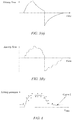
- FIG. 2(a) is an exemplary schematic waveform diagram of airway pressure-time under normal conditions provided according to an embodiment of the disclosure. As shown in FIG. 2(a) , under normal conditions, when the airway pressure does not jitter, the waveform of airway pressure-time is relatively smooth.
- FIG. 2(b) is an exemplary schematic waveform diagram of airway pressure-time during a water accumulation in circuit provided according to an embodiment of the disclosure. As shown in FIG. 2(b) , when water accumulates in the pipeline in the ventilation device, the airway pressure always jitters up and down, and the waveform of airway pressure-time is unsmooth.
- FIG. 3(a) is an exemplary schematic waveform diagram of airway flow-time under normal conditions provided according to an embodiment of the disclosure. As shown in FIG. 3(a) , under normal conditions, when the airway flow does not jitter, the waveform of airway flow-time is relatively smooth.
- FIG. 3(b) is an exemplary schematic waveform diagram of gas flow speed-time during a water accumulation in circuit provided according to an embodiment of the disclosure. As shown in FIG. 3(b) , when water accumulates in the pipeline in the ventilation device, the airway flow always jitters up and down, and the waveform of airway flow-time is unsmooth.
- both of the airway pressure and the airway flow will continuously jitter as long as a water accumulation in circuit occurs, and the ventilation device only needs to detect a change of one of the airway pressure and the airway flow.
- the step of recognizing, by the airway anomaly recognition apparatus according to a change of the ventilation parameter, whether a water accumulation in circuit occurs comprises: performing spectral analysis on the ventilation parameter; and if a high-frequency component of the ventilation parameter is greater than a preset first threshold, determining that a water accumulation in circuit occurs .
- the airway anomaly recognition apparatus performs the spectral analysis on the ventilation parameter, that is, transforming the ventilation parameter from time domain to frequency domain for analysis. For example, Fourier transform is performed on the acquired airway pressure or airway flow, i.e., the data in the time domain, to obtain corresponding frequency domain data, specifically the high-frequency component of the airway pressure or the airway flow.
- the specific spectral analysis method is not limited in the embodiments of the disclosure.
- components greater than a certain value of the ventilation parameter may be determined as high-frequency components, for example, components greater than 20 HZ of the ventilation parameter may be determined as high-frequency components.
- the specific limit value of the high-frequency component is not limited in the embodiments of the disclosure.
- the ventilation parameter changes steadily because the flow of the gas is not continuously hindered and oscillated, which is reflected in that fewer high-frequency components are present in the results of the spectral analysis of the ventilation parameter.
- the ventilation parameter changes drastically because the flow of the gas is continuously hindered and oscillated, which is reflected in that more high-frequency components are present in the results of the spectral analysis of the ventilation parameter. Therefore, if the high-frequency components of the ventilation parameter exceed the preset first threshold, it is determined that a water accumulation in circuit occurs.
- the first threshold may be a value preset autonomously by a user, or may be a value stored by the ventilation device by default, and the specific first threshold is not limited in the embodiments of the disclosure.
- the airway anomaly recognition apparatus performs spectral analysis on the airway pressure to obtain a high-frequency component of the airway pressure, and if the high-frequency component of the airway pressure is greater than a first threshold A, it is determined that a water accumulation in circuit occurs.
- the airway anomaly recognition apparatus performs the spectral analysis on the airway flow to obtain a high-frequency component of the airway flow, and if the high-frequency component of the airway flow is greater than a first threshold B, it is determined that a water accumulation in circuit occurs.
- the step of recognizing, by the airway anomaly recognition apparatus according to a change of the ventilation parameter, whether a water accumulation in circuit occurs comprises: performing curve fitting on the ventilation parameter; calculating an error between the fitted curve and the ventilation parameter; and determining, if the error is greater than a preset second threshold, that a water accumulation in circuit occurs.
- the airway anomaly recognition apparatus may also perform the curve fitting on the ventilation parameter to obtain the fitted curve, but there is a certain error between the fitted curve and the actual ventilation parameter. If the calculated error between the fitted curve and the ventilation parameter is great, namely greater than the preset second threshold, it indicates that the ventilation parameter actually deviates from the fitted curve to a large extent, that is, the ventilation parameter continuously jitters up and down to a large extent, and thus it is determined that a water accumulation in circuit occurs.
- the second threshold may be a value preset autonomously by the user, or may be a value stored by the ventilation device by default, and the specific second threshold is not limited in the embodiments of the disclosure.
- FIG. 4 is an exemplary fitted curve of the airway pressure provided according to an embodiment of the disclosure.
- the airway anomaly recognition apparatus performs the curve fitting on the airway pressure, specifically fits numerical points corresponding to the acquired airway pressure shown in the figure to obtain a curve 1, then an error between the curve 1 and the numerical points may be calculated, and if the error is greater than the preset second threshold, it is determined that a water accumulation in circuit occurs.
- the step of recognizing, by the airway anomaly recognition apparatus according to a change of the ventilation parameter, whether a sputum accumulation occurs comprises: calculating the airway resistance according to the airway pressure and the airway flow; and if the airway resistance increases, determining that a sputum accumulation occurs.
- the airway resistance refers to a pressure difference generated per unit flow in the airway, so the airway anomaly recognition apparatus may calculate the airway resistance through the acquired airway pressure and airway flow.
- the airway pressure comprises an inspiratory pressure and an expiratory pressure
- the gas flow speed comprises an inspiratory flow and an expiratory flow
- the inspiratory pressure may be calculated through the inspiratory flow
- the expiratory pressure may be calculated through the expiratory flow
- the inspiratory pressure and the expiratory pressure may also be directly obtained by relevant sensors on the ventilation device.
- the step of recognizing, by the airway anomaly recognition apparatus according to a change of the ventilation parameter, whether the a circuit resistance increase occurs comprises: determining, through the inspiratory pressure and the expiratory pressure, whether a circuit resistance increase occurs.
- the airway anomaly recognition apparatus calculates a current pipeline pressure drop through the inspiratory pressure and the expiratory pressure; and determines, if a difference between the current pipeline pressure drop and an initial pipeline pressure drop is greater than a preset third threshold, that a circuit resistance increase occurs.
- the third threshold may be a value preset autonomously by a user, or may be a value stored by the ventilation device by default, and the specific third threshold is not limited in the embodiments of the disclosure.
- a pressure drop calculation model may be preset to calculate the initial pipeline pressure drop.
- a resistance coefficient included in the preset pressure drop calculation model also needs to be determined according to an actual situation.
- a resistance coefficient model may be preset, and a resistance coefficient in the preset resistance coefficient model is determined by using a relevant test method, and then the resistance coefficient in the preset pressure drop calculation model is further calculated according to the resistance coefficient in the preset resistance coefficient model.
- a patient port of a patient pipeline in the ventilation device may be closed, a gas is supplied to an inspiratory limb at a preset test flow speed, then an inspiratory test pressure and an expiratory test pressure are acquired, and the resistance coefficient in the preset resistance coefficient model is calculated according to the test flow speed, the inspiratory test pressure, the expiratory test pressure and the preset resistance coefficient model.
- the resistance coefficient in the preset pressure drop calculation model is determined according to the resistance coefficient in the preset resistance coefficient model.
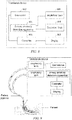
- FIG. 5 is an exemplary schematic diagram of connections of the ventilation device in a test process provided according to an embodiment of the disclosure.
- the patient port used by the patient is closed and blocked, which may ensure that the ventilation device supplies the gas through the inspiratory limb, and the gas flows directly from the inspiratory limb to the expiratory limb and then flows out.
- the inspiratory limb is equipped with a filter 1, an inspiratory flow sensor and an inspiratory pressure sensor
- the expiratory limb is equipped with a filter 2, an expiratory flow sensor and an expiratory pressure sensor.
- the inspiratory flow sensor is configured to obtain an inspiratory flow
- the expiratory flow sensor is configured to obtain an expiratory flow
- the inspiratory pressure sensor is configured to obtain an inspiratory pressure
- the expiratory pressure sensor is configured to obtain an expiratory pressure.
- the ventilation device uses three test flow speeds F1, F2 and F3, to supply the gas to the inspiratory limb.
- the inspiratory flow of the inspiratory limb and the expiratory flow of the expiratory limb each are test flow speeds.
- Inspiratory test pressures Pi1, Pi2 and Pi3 and expiratory test pressures Pe1, Pe2 and Pe3 may be acquired respectively.
- the data is substituted into the preset resistance coefficient model for calculation, and the resistance coefficient in the preset resistance coefficient model may be obtained.
- ⁇ Pressure is a difference between the inspiratory test pressure and the expiratory test pressure
- Flow is the test flow speed
- more than three test flow speeds may further be included, and the ventilation device may more accurately obtain the resistance coefficients in the resistance coefficient model by a fitting method through more tests of the test flow speed.
- ⁇ Ptube is a target pipeline pressure drop
- Fi is an inspiratory flow
- Fe is an expiratory flow.
- FIG. 6 is an exemplary schematic diagram of the connections of the ventilation device during ventilation provided according to an embodiment of the disclosure.
- the ventilation device is connected to the patient via a patient port. If the flow speed at which the inhaled gas flows through the inspiratory limb is Fa and the flow speed at which the exhaled gas flows through the expiratory limb is Fb, the initial pipeline pressure drop may be calculated by substituting Fa and Fb into equation (5).
- the ventilation device acquires an inspiratory pressure Pia and an expiratory pressure Pib by means of the inspiratory pressure sensor and the expiratory pressure sensor, determines a difference between the inspiratory pressure Pia and the expiratory pressure Pib as the current pipeline pressure drop, compares the current pipeline pressure drop with the initial pipeline pressure drop, and determines, if a difference between the current pipeline pressure drop and the initial pipeline pressure drop is greater than a preset third threshold, that a circuit resistance increase occurs.
- the difference between the current pipeline pressure drop and the initial pipeline pressure drop is actually the pressure drop across the filter on the ventilation device. Therefore, if the difference between the current pipeline pressure drop and the initial pipeline pressure drop is greater than the preset third threshold, that is, the pressure drop across the filter is too great, it indicates that the filter resistance is relatively great.
- the step of determining, by the airway anomaly recognition apparatus through the inspiratory pressure and the expiratory pressure, whether a circuit resistance increase occurs further comprises: calculating a change in pressure drop of the pipeline through the inspiratory pressure and the expiratory pressure; and determining, if an increase value in pressure drop of the pipeline is greater than a preset fourth threshold, that a circuit resistance increase occurs.
- the fourth threshold may be a value preset autonomously by the user, or may be a value stored by the ventilation device by default, and the specific fourth threshold is not limited in the embodiments of the disclosure.
- the airway anomaly recognition apparatus acquires the inspiratory pressure and the expiratory pressure in real time
- the difference between the inspiratory pressure and the expiratory pressure may be calculated in real time, and the pressure drop across the pipeline at each moment is obtained, so as to calculate the change in pressure drop of the pipeline.
- the airway anomaly recognition apparatus calculates the difference between the inspiratory pressure and the expiratory pressure as a1 at a first moment, and calculates the difference between the inspiratory pressure and the expiratory pressure as a2 at a second moment, and then may calculate the change in pressure drop of the pipeline as a2-a1.
- the airway anomaly recognition apparatus calculates the change in pressure drop of the pipeline through the inspiratory pressure and the expiratory pressure, and when the obtained pressure drop increase value of the pipeline is M, and M is greater than a preset fourth threshold N, it is determined that a circuit resistance increase occurs.
- the airway anomaly recognition apparatus after recognizing, according to a change of the ventilation parameter, whether the airway anomaly event occurs, the airway anomaly recognition apparatus outputs the airway anomaly event prompt when recognizing the airway anomaly event.
- the airway anomaly recognition apparatus may recognize no airway anomaly event, that is, recognizing no event of a water accumulation in circuit, a sputum accumulation and a circuit resistance increase, at this point, the airway anomaly recognition apparatus does not need to output the airway anomaly event prompt.
- outputting the airway anomaly event prompt when the airway anomaly recognition apparatus recognizes that an airway anomaly event occurs comprises: controlling an indicator light corresponding to the airway anomaly event to blink; or giving an alarm prompt tone corresponding to the airway anomaly event.
- a first indicator light corresponds to the a water accumulation in circuit
- a second indicator light corresponds to a sputum accumulation
- a third indicator light corresponds to the a circuit resistance increase
- the first indicator light is controlled to blink, and medical care personnel may timely drain the water from the pipeline after seeing the blinking of the first indicator light.
- the second indicator light is controlled to blink, and the medical care personnel may timely help the patient to eliminate sputum after seeing the blinking of the second indicator light blink.
- the third indicator light is controlled to blink, and the medical care personnel may timely replace the filter after seeing the blinking of the third indicator light blink.
- the alarm prompt tone corresponding to a water accumulation in circuit is buzz.
- the airway anomaly recognition apparatus recognizes that a water accumulation in circuit occurs, the buzz is emitted, and the medical care personnel may timely drain the water from the pipeline after hearing the emitted buzz.
- the airway anomaly event prompt output by the airway anomaly recognition apparatus may also include other types of prompts.
- a text prompt of a related airway anomaly event is output and displayed on a display of the ventilation device.
- the specific airway anomaly event prompt is not limited in the embodiments of the disclosure.
- An embodiment of the disclosure provides an airway anomaly recognition method.
- the airway anomaly recognition apparatus acquires a ventilation parameter, the ventilation parameter comprises at least one of an airway pressure and an airway flow; recognizes, according to a change of the ventilation parameter, whether an airway anomaly event occurs; and outputs an airway anomaly event prompt when it is recognized that an airway anomaly event occurs. That is to say, in the technical solution provided according to one embodiment of the disclosure, according to a change of the ventilation parameter, a specific airway anomaly event may be recognized and a prompt is made, which facilitates the handling of the airway anomaly event by an operator and ensures the normal ventilation of the ventilation device, thereby improving the treatment effect.
- FIG. 7 is a schematic structural diagram of the airway anomaly recognition apparatus provided according to an embodiment of the disclosure. As shown in FIG. 7 , the apparatus comprises:
- the airway anomaly event comprises one or more of a water accumulation in circuit, a sputum accumulation and a circuit resistance increase.
- the step of recognizing, by the recognition module 702 according to a change of the ventilation parameter, whether a water accumulation in circuit occurs comprises: determining, when the ventilation parameter continuously jitters, that a water accumulation in circuit occurs.
- the step of recognizing, by the recognition module 702 according to a change of the ventilation parameter, whether a water accumulation in circuit occurs comprises:
- the step of recognizing, by the recognition module 702 according to a change of the ventilation parameter, whether a water accumulation in circuit occurs comprises:
- the step of recognizing, by the recognition module 702 according to a change of the ventilation parameter, whether a sputum accumulation occurs comprises:
- the airway pressure comprises an inspiratory pressure and an expiratory pressure
- the step of recognizing, by the recognition module 702 according to a change of the ventilation parameter, whether a circuit resistance increase occurs comprises: determining, through the inspiratory pressure and the expiratory pressure, whether a circuit resistance increase occurs.
- the step of determining, by the recognition module 702 through the inspiratory pressure and the expiratory pressure, whether a circuit resistance increase occurs comprises:
- the step of determining, by the recognition module 702 through the inspiratory pressure and the expiratory pressure, whether a circuit resistance increase occurs comprises:
- the airway flow comprises an inspiratory flow and an expiratory flow
- the inspiratory pressure is calculated through the inspiratory flow
- the expiratory pressure is calculated through the expiratory flow
- An embodiment of the disclosure provides an airway anomaly recognition apparatus, which acquires a ventilation parameter, the ventilation parameter comprises at least one of an airway pressure and an airway flow; recognizes, according to a change of the ventilation parameter, whether an airway anomaly event occurs; and outputs an airway anomaly event prompt when it is recognized that an airway anomaly event occurs. That is to say, the airway anomaly recognition apparatus provided according to one embodiment of the disclosure may recognize a specific airway anomaly event and make a prompt according to a change of the ventilation parameter, which facilitates the handling of the airway anomaly event by an operator and ensures the normal ventilation of the ventilation device, thereby improving the treatment effect.
- FIG. 8 is a first schematic structural diagram I of ventilation recognition provided according to an embodiment of the disclosure.
- the ventilation device comprises: the above airway anomaly recognition apparatus 801, and further comprises a gas source 802, an inspiratory limb 803, an expiratory limb 804, a display 805, and a controller 806;
- the gas source 802 provides a gas during mechanical ventilation;
- the inspiratory limb 803 is connected to the gas source 802 and provides an inspiratory path during the mechanical ventilation;
- the expiratory limb 804 provides an expiratory path during the mechanical ventilation;
- the airway anomaly recognition apparatus 801 is connected to the inspiratory limb 803, the expiratory limb 804 and the controller 806;
- the airway anomaly recognition apparatus 801 recognizes an airway anomaly event during the mechanical ventilation;
- the controller 806 is further connected to the gas source 802 and controls the process of the mechanical ventilation;
- the display 805 is connected to the controller 806 and displays a respiratory waveform during the mechanical ventilation.
- FIG. 9 is a second schematic structural diagram II of the ventilation device provided according to an embodiment of the disclosure.
- a patient may be connected to the ventilation device through a patient pipeline to implement the mechanical ventilation, the ventilation device comprises the above airway anomaly recognition apparatus.
- An embodiment of the disclosure provides a computer-readable storage medium, the computer-readable storage medium stores an airway anomaly recognition program, and the airway anomaly recognition program is executable by a processor to implement the above airway anomaly recognition method.
- the computer-readable storage medium may be a volatile memory, such as a Random-Access Memory (RAM), or a non-volatile memory, such as a Read-Only Memory (ROM), a flash memory, a Hard Disk Drive (HDD) or a Solid-State Drive (SSD); or a respective device comprising one or any combination of the above memories, such as a mobile phone, a computer, a tablet, and a personal digital assistant.
- RAM Random-Access Memory
- ROM Read-Only Memory
- HDD Hard Disk Drive
- SSD Solid-State Drive
- the embodiments of the disclosure may be provided as a method, a system, or a computer program product. Therefore, the disclosure may take the form of hardware embodiments, software embodiments, or embodiments with a combination of software and hardware. Moreover, the disclosure may take the form of a computer program product that is implemented on one or more computer-usable storage media (including but not limited to a disk memory and an optical memory, etc.) that comprising computer-usable program codes.
- a computer-usable storage media including but not limited to a disk memory and an optical memory, etc.
- each procedure and/or block in the flow charts and/or block diagrams, and combinations of the procedures and/or blocks in the flow charts and/or block diagrams may be implemented by computer program instructions.
- These computer program instructions may be provided to a processor of a general-purpose computer, a special-purpose computer, an embedded processor or other programmable signal processing devices to create a machine, such that the instructions executed by the processor of the computer or other programmable signal processing devices create an apparatus for implementing functions specified in one or more procedures in the flow charts and/or one or more blocks in the block diagrams.
- These computer program instructions may also be stored in a computer-readable memory that may direct the computer or other programmable signal processing device to operate in a specific manner, such that the instructions stored in the computer-readable memory create an article of manufacture including an instruction apparatus, and the instruction apparatus implements the functions specified in one or more procedures of the flow charts and/or one or more blocks of the block diagrams.
- These computer program instructions may also be loaded onto the computer or other programmable signal processing devices, such that a series of operation steps are executed on the computer or other programmable devices to perform computer-implemented processing, and thus the instructions executed on the computer or other programmable devices provide steps for implementing the functions specified in one or more procedures of the flow charts and/or one or more blocks of the block diagrams.
- the airway anomaly recognition apparatus acquires a ventilation parameter, the ventilation parameter comprises at least one of an airway pressure and an airway flow; recognizes, according to a change of the ventilation parameter, whether an airway anomaly event occurs; and outputs an airway anomaly event prompt when it is recognized that an airway anomaly event occurs. That is to say, in the technical solution provided according to the embodiments of the disclosure, according to a change of the ventilation parameter, a specific airway anomaly event may be recognized and a prompt is made, which facilitates the handling of the airway anomaly event by an operator and ensures the normal ventilation of the ventilation device, thereby improving the treatment effect.
Landscapes
- Health & Medical Sciences (AREA)
- Life Sciences & Earth Sciences (AREA)
- General Health & Medical Sciences (AREA)
- Public Health (AREA)
- Engineering & Computer Science (AREA)
- Biomedical Technology (AREA)
- Heart & Thoracic Surgery (AREA)
- Veterinary Medicine (AREA)
- Animal Behavior & Ethology (AREA)
- Pulmonology (AREA)
- Biophysics (AREA)
- Physics & Mathematics (AREA)
- Pathology (AREA)
- Medical Informatics (AREA)
- Molecular Biology (AREA)
- Surgery (AREA)
- Emergency Medicine (AREA)
- Hematology (AREA)
- Anesthesiology (AREA)
- Physiology (AREA)
- Measurement Of The Respiration, Hearing Ability, Form, And Blood Characteristics Of Living Organisms (AREA)
Applications Claiming Priority (1)
| Application Number | Priority Date | Filing Date | Title |
|---|---|---|---|
| PCT/CN2018/101595 WO2020037509A1 (zh) | 2018-08-21 | 2018-08-21 | 一种气道异常识别方法及装置、通气设备、存储介质 |
Publications (3)
| Publication Number | Publication Date |
|---|---|
| EP3834720A1 true EP3834720A1 (de) | 2021-06-16 |
| EP3834720A4 EP3834720A4 (de) | 2022-03-09 |
| EP3834720B1 EP3834720B1 (de) | 2026-01-07 |
Family
ID=69592016
Family Applications (1)
| Application Number | Title | Priority Date | Filing Date |
|---|---|---|---|
| EP18931256.4A Active EP3834720B1 (de) | 2018-08-21 | 2018-08-21 | Verfahren und vorrichtung zur erkennung von atemwegsanomalien, beatmungsvorrichtung und speichermedium |
Country Status (4)
| Country | Link |
|---|---|
| US (1) | US12383684B2 (de) |
| EP (1) | EP3834720B1 (de) |
| CN (1) | CN112770670A (de) |
| WO (1) | WO2020037509A1 (de) |
Families Citing this family (4)
| Publication number | Priority date | Publication date | Assignee | Title |
|---|---|---|---|---|
| CN113521461B (zh) * | 2021-06-07 | 2024-01-30 | 中国人民解放军总医院第一医学中心 | 经鼻高流量使用状态的监测方法、装置和存储介质 |
| CN115200911A (zh) * | 2022-07-01 | 2022-10-18 | 山东术木医疗科技有限公司 | 一种机械通气分析预警方法及系统 |
| CN116407718A (zh) * | 2023-04-13 | 2023-07-11 | 江苏鱼跃医疗设备股份有限公司 | 一种可视化呼吸治疗仪、可视化处理方法及使用方法 |
| CN117653852A (zh) * | 2023-11-25 | 2024-03-08 | 深圳市诺然美泰科技股份有限公司 | 一种氧疗通气过压保护方法、系统、设备及存储介质 |
Family Cites Families (21)
| Publication number | Priority date | Publication date | Assignee | Title |
|---|---|---|---|---|
| US5540220A (en) * | 1994-12-08 | 1996-07-30 | Bear Medical Systems, Inc. | Pressure-limited, time-cycled pulmonary ventilation with volume-cycle override |
| SE9500275L (sv) * | 1995-01-26 | 1996-07-27 | Siemens Elema Ab | Metod och apparat för att bestämma en överföringsfunktion för ett anslutningssystem |
| US5881717A (en) * | 1997-03-14 | 1999-03-16 | Nellcor Puritan Bennett Incorporated | System and method for adjustable disconnection sensitivity for disconnection and occlusion detection in a patient ventilator |
| EP1156846A1 (de) * | 1999-02-03 | 2001-11-28 | University Of Florida | Verfahren und vorrichtung zur reduktion der auferzwungenen atmungsarbeit |
| SE0203431D0 (sv) * | 2002-11-20 | 2002-11-20 | Siemens Elema Ab | Method for assessing pulmonary stress and a breathing apparatus |
| US7882834B2 (en) * | 2004-08-06 | 2011-02-08 | Fisher & Paykel Healthcare Limited | Autotitrating method and apparatus |
| SE527820C2 (sv) * | 2004-09-03 | 2006-06-13 | Transunit Ab | Metod och koppling för eliminering av uppvärmningstid och störningar i en ventilator eller anestesimaskin |
| EP1972274B1 (de) * | 2007-03-20 | 2015-12-30 | Drägerwerk AG & Co. KGaA | Verfahren und Vorrichtung zur Bestimmung des Widerstandes des Atmungssystems eines Patienten |
| CN101288791B (zh) * | 2007-04-18 | 2011-09-28 | 深圳迈瑞生物医疗电子股份有限公司 | 一种麻醉机呼吸装置及其流量传感器的标定方法 |
| CN101337101B (zh) * | 2007-07-06 | 2011-04-20 | 深圳迈瑞生物医疗电子股份有限公司 | 麻醉机和呼吸机的通气系统及压力监控方法 |
| US8272379B2 (en) * | 2008-03-31 | 2012-09-25 | Nellcor Puritan Bennett, Llc | Leak-compensated flow triggering and cycling in medical ventilators |
| US8707952B2 (en) * | 2010-02-10 | 2014-04-29 | Covidien Lp | Leak determination in a breathing assistance system |
| CN102441209B (zh) * | 2010-10-09 | 2016-04-13 | 深圳迈瑞生物医疗电子股份有限公司 | 一种通气模式切换设备、方法及麻醉机、呼吸机 |
| FR2970653B1 (fr) * | 2011-01-20 | 2014-03-21 | Air Liquide | Dispositif et procede de detection d'eau condensee dans le passage de gaz d'une installation de traitement de l'apnee obstructive du sommeil |
| US10165966B2 (en) * | 2013-03-14 | 2019-01-01 | University Of Florida Research Foundation, Incorporated | Methods and systems for monitoring resistance and work of breathing for ventilator-dependent patients |
| CN103169476B (zh) * | 2013-03-14 | 2015-03-25 | 中山大学 | 一种用于呼吸波形图像识别与预警的装置 |
| EP2988811A4 (de) * | 2013-04-24 | 2016-12-07 | Science Medical Llc | Beatmungsvorrichtungen sowie entsprechende systeme und verfahren |
| EP3544146B1 (de) * | 2013-10-31 | 2023-11-29 | ResMed Paris SAS | Vorrichtung zur behandlung einer atemwegserkrankung mit einem stromquellenanschluss |
| EP3238110B1 (de) * | 2014-12-23 | 2021-04-07 | Koninklijke Philips N.V. | Systeme und verfahren für modellbasierte optimierung von mechanischer beatmung |
| EP3535001B1 (de) * | 2016-11-01 | 2022-01-19 | Koninklijke Philips N.V. | Bildgebungssystem zur steuerung und diagnose innerhalb der mechanischen beatmung |
| US20190015614A1 (en) * | 2017-07-13 | 2019-01-17 | Royal Commission Yanbu Colleges & Institutes | Systems, devices, and methodologies to provide protective and personalized ventilation |
-
2018
- 2018-08-21 CN CN201880094565.7A patent/CN112770670A/zh active Pending
- 2018-08-21 EP EP18931256.4A patent/EP3834720B1/de active Active
- 2018-08-21 WO PCT/CN2018/101595 patent/WO2020037509A1/zh not_active Ceased
-
2021
- 2021-01-26 US US17/159,142 patent/US12383684B2/en active Active
Also Published As
| Publication number | Publication date |
|---|---|
| WO2020037509A1 (zh) | 2020-02-27 |
| EP3834720B1 (de) | 2026-01-07 |
| CN112770670A (zh) | 2021-05-07 |
| US20210213217A1 (en) | 2021-07-15 |
| US12383684B2 (en) | 2025-08-12 |
| EP3834720A4 (de) | 2022-03-09 |
| WO2020037509A9 (zh) | 2021-03-18 |
Similar Documents
| Publication | Publication Date | Title |
|---|---|---|
| US12383684B2 (en) | Airway anomaly recognition method, ventilation device, and storage medium | |
| US12102756B2 (en) | Methods and devices with leak detection | |
| US9364624B2 (en) | Methods and systems for adaptive base flow | |
| US11413414B2 (en) | Method and apparatus for breathing assistance | |
| US12420041B2 (en) | Method and device for breathing recognition, ventilation apparatus, and storage medium | |
| US12285560B2 (en) | Ventilation detection method and device, ventilation apparatus | |
| JP6622402B2 (ja) | 自動換気を行いかつ自動換気に関する動作状態を識別する麻酔時人工呼吸装置 | |
| US20200282163A1 (en) | Ventilator with automatic detection of a fault in a flow sensor, taking into account spontaneous breathing | |
| EP3535001B1 (de) | Bildgebungssystem zur steuerung und diagnose innerhalb der mechanischen beatmung | |
| JP6574117B2 (ja) | 呼吸ガス供給システム | |
| US12053582B2 (en) | Ventilation control unit and ventilation control system | |
| US8656914B2 (en) | Medical ventilation device with hose detection | |
| CN116490234B (zh) | 对人工呼吸时的异步的识别 | |
| US20260114837A1 (en) | Acoustic sensing system | |
| CN119174859A (zh) | 一种通气设备及其气体流量调节方法 |
Legal Events
| Date | Code | Title | Description |
|---|---|---|---|
| STAA | Information on the status of an ep patent application or granted ep patent |
Free format text: STATUS: THE INTERNATIONAL PUBLICATION HAS BEEN MADE |
|
| PUAI | Public reference made under article 153(3) epc to a published international application that has entered the european phase |
Free format text: ORIGINAL CODE: 0009012 |
|
| STAA | Information on the status of an ep patent application or granted ep patent |
Free format text: STATUS: REQUEST FOR EXAMINATION WAS MADE |
|
| PUAB | Information related to the publication of an a document modified or deleted |
Free format text: ORIGINAL CODE: 0009199EPPU |
|
| PUAI | Public reference made under article 153(3) epc to a published international application that has entered the european phase |
Free format text: ORIGINAL CODE: 0009012 |
|
| 17P | Request for examination filed |
Effective date: 20210202 |
|
| AK | Designated contracting states |
Kind code of ref document: A1 Designated state(s): AL AT BE BG CH CY CZ DE DK EE ES FI FR GB GR HR HU IE IS IT LI LT LU LV MC MK MT NL NO PL PT RO RS SE SI SK SM TR |
|
| DAV | Request for validation of the european patent (deleted) | ||
| DAX | Request for extension of the european patent (deleted) | ||
| A4 | Supplementary search report drawn up and despatched |
Effective date: 20220207 |
|
| RIC1 | Information provided on ipc code assigned before grant |
Ipc: A61M 16/00 20060101ALI20220201BHEP Ipc: A61B 5/08 20060101AFI20220201BHEP |
|
| STAA | Information on the status of an ep patent application or granted ep patent |
Free format text: STATUS: EXAMINATION IS IN PROGRESS |
|
| 17Q | First examination report despatched |
Effective date: 20240119 |
|
| GRAP | Despatch of communication of intention to grant a patent |
Free format text: ORIGINAL CODE: EPIDOSNIGR1 |
|
| STAA | Information on the status of an ep patent application or granted ep patent |
Free format text: STATUS: GRANT OF PATENT IS INTENDED |
|
| INTG | Intention to grant announced |
Effective date: 20250721 |
|
| RAP3 | Party data changed (applicant data changed or rights of an application transferred) |
Owner name: SHENZHEN MINDRAY BIO-MEDICAL ELECTRONICS CO., LTD. Owner name: FUWAI HOSPITAL, CHINESE ACADEMY OF MEDICALSCIENCES AND PEKING UNION MEDICAL COLLEGE |
|
| GRAS | Grant fee paid |
Free format text: ORIGINAL CODE: EPIDOSNIGR3 |
|
| GRAA | (expected) grant |
Free format text: ORIGINAL CODE: 0009210 |
|
| STAA | Information on the status of an ep patent application or granted ep patent |
Free format text: STATUS: THE PATENT HAS BEEN GRANTED |
|
| RAP3 | Party data changed (applicant data changed or rights of an application transferred) |
Owner name: SHENZHEN MINDRAY BIO-MEDICAL ELECTRONICS CO., LTD. Owner name: PEKING UNION MEDICAL COLLEGE HOSPITAL, CHINESEACADEMY OF MEDICAL SCIENCE AND PEKING UNIONMEDICAL COLLEGE |
|
| AK | Designated contracting states |
Kind code of ref document: B1 Designated state(s): AL AT BE BG CH CY CZ DE DK EE ES FI FR GB GR HR HU IE IS IT LI LT LU LV MC MK MT NL NO PL PT RO RS SE SI SK SM TR |
|
| REG | Reference to a national code |
Ref country code: CH Ref legal event code: F10 Free format text: ST27 STATUS EVENT CODE: U-0-0-F10-F00 (AS PROVIDED BY THE NATIONAL OFFICE) Effective date: 20260107 Ref country code: GB Ref legal event code: FG4D |
|
| REG | Reference to a national code |
Ref country code: DE Ref legal event code: R096 Ref document number: 602018088530 Country of ref document: DE |
|
| REG | Reference to a national code |
Ref country code: IE Ref legal event code: FG4D |
|
| P01 | Opt-out of the competence of the unified patent court (upc) registered |
Free format text: CASE NUMBER: UPC_APP_0004407_3834720/2026 Effective date: 20260208 |