EP3834129B1 - Systeme und verfahren zur bildverarbeitung - Google Patents
Systeme und verfahren zur bildverarbeitung Download PDFInfo
- Publication number
- EP3834129B1 EP3834129B1 EP19759198.5A EP19759198A EP3834129B1 EP 3834129 B1 EP3834129 B1 EP 3834129B1 EP 19759198 A EP19759198 A EP 19759198A EP 3834129 B1 EP3834129 B1 EP 3834129B1
- Authority
- EP
- European Patent Office
- Prior art keywords
- neural network
- cargo
- shipping container
- manifest
- container
- Prior art date
- Legal status (The legal status is an assumption and is not a legal conclusion. Google has not performed a legal analysis and makes no representation as to the accuracy of the status listed.)
- Active
Links
Images







Classifications
-
- G—PHYSICS
- G06—COMPUTING OR CALCULATING; COUNTING
- G06V—IMAGE OR VIDEO RECOGNITION OR UNDERSTANDING
- G06V10/00—Arrangements for image or video recognition or understanding
- G06V10/70—Arrangements for image or video recognition or understanding using pattern recognition or machine learning
- G06V10/82—Arrangements for image or video recognition or understanding using pattern recognition or machine learning using neural networks
-
- G—PHYSICS
- G06—COMPUTING OR CALCULATING; COUNTING
- G06F—ELECTRIC DIGITAL DATA PROCESSING
- G06F18/00—Pattern recognition
- G06F18/20—Analysing
- G06F18/21—Design or setup of recognition systems or techniques; Extraction of features in feature space; Blind source separation
- G06F18/214—Generating training patterns; Bootstrap methods, e.g. bagging or boosting
-
- G—PHYSICS
- G06—COMPUTING OR CALCULATING; COUNTING
- G06N—COMPUTING ARRANGEMENTS BASED ON SPECIFIC COMPUTATIONAL MODELS
- G06N3/00—Computing arrangements based on biological models
- G06N3/02—Neural networks
- G06N3/04—Architecture, e.g. interconnection topology
- G06N3/044—Recurrent networks, e.g. Hopfield networks
- G06N3/0442—Recurrent networks, e.g. Hopfield networks characterised by memory or gating, e.g. long short-term memory [LSTM] or gated recurrent units [GRU]
-
- G—PHYSICS
- G06—COMPUTING OR CALCULATING; COUNTING
- G06N—COMPUTING ARRANGEMENTS BASED ON SPECIFIC COMPUTATIONAL MODELS
- G06N3/00—Computing arrangements based on biological models
- G06N3/02—Neural networks
- G06N3/04—Architecture, e.g. interconnection topology
- G06N3/045—Combinations of networks
- G06N3/0455—Auto-encoder networks; Encoder-decoder networks
-
- G—PHYSICS
- G06—COMPUTING OR CALCULATING; COUNTING
- G06N—COMPUTING ARRANGEMENTS BASED ON SPECIFIC COMPUTATIONAL MODELS
- G06N3/00—Computing arrangements based on biological models
- G06N3/02—Neural networks
- G06N3/08—Learning methods
-
- G—PHYSICS
- G06—COMPUTING OR CALCULATING; COUNTING
- G06N—COMPUTING ARRANGEMENTS BASED ON SPECIFIC COMPUTATIONAL MODELS
- G06N3/00—Computing arrangements based on biological models
- G06N3/02—Neural networks
- G06N3/08—Learning methods
- G06N3/0895—Weakly supervised learning, e.g. semi-supervised or self-supervised learning
-
- G—PHYSICS
- G06—COMPUTING OR CALCULATING; COUNTING
- G06Q—INFORMATION AND COMMUNICATION TECHNOLOGY [ICT] SPECIALLY ADAPTED FOR ADMINISTRATIVE, COMMERCIAL, FINANCIAL, MANAGERIAL OR SUPERVISORY PURPOSES; SYSTEMS OR METHODS SPECIALLY ADAPTED FOR ADMINISTRATIVE, COMMERCIAL, FINANCIAL, MANAGERIAL OR SUPERVISORY PURPOSES, NOT OTHERWISE PROVIDED FOR
- G06Q10/00—Administration; Management
- G06Q10/08—Logistics, e.g. warehousing, loading or distribution; Inventory or stock management
- G06Q10/083—Shipping
- G06Q10/0835—Relationships between shipper or supplier and carriers
-
- G—PHYSICS
- G06—COMPUTING OR CALCULATING; COUNTING
- G06V—IMAGE OR VIDEO RECOGNITION OR UNDERSTANDING
- G06V10/00—Arrangements for image or video recognition or understanding
- G06V10/20—Image preprocessing
- G06V10/26—Segmentation of patterns in the image field; Cutting or merging of image elements to establish the pattern region, e.g. clustering-based techniques; Detection of occlusion
-
- G—PHYSICS
- G06—COMPUTING OR CALCULATING; COUNTING
- G06V—IMAGE OR VIDEO RECOGNITION OR UNDERSTANDING
- G06V10/00—Arrangements for image or video recognition or understanding
- G06V10/40—Extraction of image or video features
- G06V10/44—Local feature extraction by analysis of parts of the pattern, e.g. by detecting edges, contours, loops, corners, strokes or intersections; Connectivity analysis, e.g. of connected components
- G06V10/443—Local feature extraction by analysis of parts of the pattern, e.g. by detecting edges, contours, loops, corners, strokes or intersections; Connectivity analysis, e.g. of connected components by matching or filtering
- G06V10/449—Biologically inspired filters, e.g. difference of Gaussians [DoG] or Gabor filters
- G06V10/451—Biologically inspired filters, e.g. difference of Gaussians [DoG] or Gabor filters with interaction between the filter responses, e.g. cortical complex cells
- G06V10/454—Integrating the filters into a hierarchical structure, e.g. convolutional neural networks [CNN]
-
- G—PHYSICS
- G06—COMPUTING OR CALCULATING; COUNTING
- G06V—IMAGE OR VIDEO RECOGNITION OR UNDERSTANDING
- G06V10/00—Arrangements for image or video recognition or understanding
- G06V10/70—Arrangements for image or video recognition or understanding using pattern recognition or machine learning
- G06V10/74—Image or video pattern matching; Proximity measures in feature spaces
- G06V10/75—Organisation of the matching processes, e.g. simultaneous or sequential comparisons of image or video features; Coarse-fine approaches, e.g. multi-scale approaches; using context analysis; Selection of dictionaries
-
- G—PHYSICS
- G06—COMPUTING OR CALCULATING; COUNTING
- G06V—IMAGE OR VIDEO RECOGNITION OR UNDERSTANDING
- G06V10/00—Arrangements for image or video recognition or understanding
- G06V10/98—Detection or correction of errors, e.g. by rescanning the pattern or by human intervention; Evaluation of the quality of the acquired patterns
- G06V10/993—Evaluation of the quality of the acquired pattern
-
- G—PHYSICS
- G06—COMPUTING OR CALCULATING; COUNTING
- G06V—IMAGE OR VIDEO RECOGNITION OR UNDERSTANDING
- G06V20/00—Scenes; Scene-specific elements
- G06V20/50—Context or environment of the image
- G06V20/52—Surveillance or monitoring of activities, e.g. for recognising suspicious objects
-
- G—PHYSICS
- G06—COMPUTING OR CALCULATING; COUNTING
- G06V—IMAGE OR VIDEO RECOGNITION OR UNDERSTANDING
- G06V30/00—Character recognition; Recognising digital ink; Document-oriented image-based pattern recognition
- G06V30/10—Character recognition
- G06V30/19—Recognition using electronic means
- G06V30/191—Design or setup of recognition systems or techniques; Extraction of features in feature space; Clustering techniques; Blind source separation
- G06V30/19173—Classification techniques
-
- G—PHYSICS
- G06—COMPUTING OR CALCULATING; COUNTING
- G06V—IMAGE OR VIDEO RECOGNITION OR UNDERSTANDING
- G06V30/00—Character recognition; Recognising digital ink; Document-oriented image-based pattern recognition
- G06V30/40—Document-oriented image-based pattern recognition
- G06V30/42—Document-oriented image-based pattern recognition based on the type of document
- G06V30/424—Postal images, e.g. labels or addresses on parcels or postal envelopes
-
- G—PHYSICS
- G06—COMPUTING OR CALCULATING; COUNTING
- G06F—ELECTRIC DIGITAL DATA PROCESSING
- G06F17/00—Digital computing or data processing equipment or methods, specially adapted for specific functions
- G06F17/10—Complex mathematical operations
- G06F17/18—Complex mathematical operations for evaluating statistical data, e.g. average values, frequency distributions, probability functions, regression analysis
-
- G—PHYSICS
- G06—COMPUTING OR CALCULATING; COUNTING
- G06V—IMAGE OR VIDEO RECOGNITION OR UNDERSTANDING
- G06V2201/00—Indexing scheme relating to image or video recognition or understanding
- G06V2201/05—Recognition of patterns representing particular kinds of hidden objects, e.g. weapons, explosives, drugs
Definitions
- Imaging technologies including radiography, computed tomography, magnetic resonance imaging (MRI), positron emission tomography (PET), and many others have found widespread use in applications as diverse as medical imaging and cargo inspection.
- X-ray radiography is the principal method of Non-Intrusive Inspection (NII) of cargo today and is used in conjunction with human inspections.
- US 2017/242148 A1 discloses systems and methods for identifying and reporting contents of a tanker, container or vehicle.
- Programmatic tools are provided to assist an operator in analyzing contents of a tanker, container or vehicle.
- Manifest data is automatically imported into the system for each shipment, thereby helping security personnel to quickly determine container contents.
- the container or vehicle may be withheld for further inspection.
- a computing-device implemented method for validating a cargo manifest associated with a shipping container according to claim 1.
- Optional features of the method are outlined in claims 2 to 8.
- a non-transitory computer readable medium storing instructions executable by a processor for validating a cargo manifest associated with a shipping container according to claim 16.
- Described herein are image processing systems, methods, and computer readable media for processing images to verify container contents and identify anomalies in the images and manifests.
- Embodiments provide an image processing system that includes a machine-learning framework to automatically analyze the images and the manifests.
- the images include radiographic images that may be obtained via a scanner or screening device at a security checkpoint.
- the shipping document typically called the shipping manifest, is a mandatory document that accompanies a cargo container during the shipping and describes the container content and quantity, the origin, the destination, the shipper, shipping dates.
- the shipping document can also be the customs declaration or any similar document that can reveal the container content.
- 'manifest' may denote other documents that describe cargo content in a shipping container in addition to, or in place of, a traditional shipping manifest.
- One difficulty with conventional inspection approaches is the vigilance of human operators under heavy inspection load and variability in the decision between different operators.
- the task of a human operator is to understand the manifest text, determine the type of cargo that is being shipped, evaluate the radiographic image, and determine if the pattern in the image is consistent with the expected pattern. Inspection may be difficult as, for example, the shipping document (manifest) may contain trade names, foreign language words, and/or professional (chemistry) terms that may not be understandable to the operator. Therefore, the operator may not know the type of cargo in the container under inspection.
- Another challenge is to understand how the x-ray image pattern should look for a given cargo type. Containers are typically completely filled with cargo to optimize the shipping cost.
- Radiographic images are formed by creating x-rays with an x-ray source that is collimated to form a narrow fan beam, passing cargo through the beam, and detecting x-rays that pass through the cargo. Since the object image is created from x-rays that transmit through multiple cargo objects, the image contains overlapping radiographic profiles of all objects in the beam at a given time. Therefore, unlike a photographic image that shows only objects in the front, a radiographic images show multiple overlapping object that makes recognition of individual object more challenging.
- the image processing system includes a computing device equipped with a processor in communication with a scanner, such as but not limited to an x-ray radiography scanner, configured to render radiographic images.
- the computing device is configured to train a machine-learning algorithm(s) with a training data set that includes at least one radiographic image to generate at least one feature vector.
- the radiographic image includes at least one image of a test container storing objects.
- the test container may contain one or more objects or be empty.
- the objects may include one object or many objects of the same type.
- the machine-learning algorithm(s) is an autoencoder neural network ( G.E. Hinton and R.R. Salakhutdinov. Reducing the dimensionality of data with neural networks.
- the computing device receives at least one rendered radiographic image from the scanner.
- the rendered radiographic image depicts a container that contains objects of a certain type or may be empty.
- the computing device verifies a shipping manifest document listing the object(s) in the container, verifies that the container is empty, or identifies an object or an anomaly using the at least one feature vector.
- the computing device generates an automated detection indication.
- a machine-learning algorithm(s)(s) for image analysis of radiographic images of shipping containers is executed on a machine-learning framework or platform employing an autoencoder neural network.
- Some advantages of using autoencoder type neural network framework over other methods is that it requires a smaller number of images for training, can be trained on live data in real-time, can be used to label images, and can be used for self-learning. Accordingly, the machine-learning algorithm(s) is based on an autoencoder neural network and uses radiographic images of containers for the training data.
- the object type can be any object or objects transportable in a container.
- the calibration data contains the mean, ⁇ A ( x ) ⁇ , and the standard deviation, ⁇ A 2 ( x ) ⁇ - ⁇ A ( x ) ⁇ 2 ⁇ , of the feature vectors for the sample, where the averaging is denoted with angle brackets.
- This procedure assumes that the feature parameters are described with the normal (Gaussian) distribution. If this is not the case the same-cargo sample is described with more than one mean and standard deviation such that the probability density function of the sample is approximated with a series of Gaussian approximations. In this way, even complex shapes can be described with a relatively small number of parameters.
- the trained machine-learning algorithm(s) generates one or more feature vectors based on the training data set.
- Feature vectors are used to represent numeric or symbolic characteristics, called features, of an object in a mathematical way, and are used for pattern processing.
- the training data set is used to train the image processing system to identify patterns associated with the object type.
- the generated patterns are stored, and used to analyze feature vectors of one or more input images.
- the input images are images of objects obtained via a radiographic machine. Based on the feature vectors, in one embodiment, the image processing system is capable of identifying anomalies.
- a second type of artificial neural network algorithm(s) is used to analyze the shipping documentation (manifest) using natural language processing algorithms.
- the algorithm is based on a word-to-vector type of neural network, also known as word embedding, (such as, but not limited to, word-to-vector types such as those described in Mikolov, Tomas; et al. (2013)). "Efficient Estimation of Word Representations in Vector Space". arXiv: 1301.3781 ); see FIG. 7 discussed further below.
- the approach creates a dictionary of manifest words and associated labels, and finds correlation between the words and the labels. The words are transformed into a new feature vector space where correlated words have similar feature vectors (the hidden layer in FIG 3 ).
- the training minimizes the loss function using standard backpropagation and gradient descent methods in order to determine parameters of the matrices A and B .
- the image and/or manifest processing system described herein analyze radiographic images and/or manifests to verify contents of containers and identify anomalies in the images and/or manifests.
- Embodiments may perform manifest verification (MV) to verify that objects listed on the manifest correspond with objects in the containers, to perform empty container verification (ECV) to verify that containers are empty, to determine a cargo type or to perform object type detection, to search for specific objects and/or threats, and/or to perform anomaly detection to search for odd patterns.
- MV manifest verification
- ECV empty container verification
- radiographic image analysis of shipping containers described herein may be performed in isolation or in conjunction with cargo manifest analysis.
- the techniques for cargo manifest analysis described herein such as, but not limited to, those using word embedding, may also be performed in isolation (i.e. without performing radiographic image analysis) to determine the contents of shipping containers.
- MV Manifest verification
- MV attempts to verify that what is in the shipping container is the same as what the manifest indicates is supposed to be in the shipping container.
- MV is performed by processing the shipping manifest text with the manifest processing system and processing the radiographic image with the image processing system.
- Both the image and manifest processing systems derive feature vectors that are similar for the same cargo category. For example, image feature vectors for cargo with empty bottles are similar, while different from other cargo due to specific pattern that empty bottles make in the radiographic image. Description of empty bottle cargo in the manifest is similar for empty bottle shipments so the manifest feature vector is specific to this cargo category.
- MV compares the correlation between image and manifest feature vectors with historic data.
- the manifest is analyzed first to determine the cargo category.
- the image processing system checks image's pattern(s) for consistency with historic images for this cargo category resulting in the chi-square value, as described above.
- the algorithm can choose to validate shipments with chi-square value less than a threshold.
- the threshold can be set such that the inspection meets required false alarm rate for given verification efficiency rate. For example, an implementation of the MV algorithm requires that at 80% of manifest verification rate 70% of falsely documented cargo should be interdicted.
- the Receiver-Operator-Characteristics curves for 200 cargo categories of a seaport show the relationship between the efficiency and the interdiction rate.
- the image processing system uses the feature vector to rank radiographic images for operator inspection.
- Data quality monitoring is performed by the image processing system described herein by analyzing radiographic images for data quality monitoring.
- the image processing system divides an image into one or more segments that are analyzed using an autoencoder type neural network to extract one or more feature vectors for each segment.
- the image processing system compares each feature vector against historic distribution feature vectors for the segment.
- the image processing system uses the feature vectors to evaluate data quality of the radiographic image such as bad detector channels, cut off images, and images with incorrect radiation dose.
- the image processing system 100 analyzes the input image and identifies a presence of an anomaly by dividing the input image into one or more segments that are analyzed using an autoencoder type neural network to extract feature vectors for each segment. Each feature vector is compared against the distribution of other feature vectors from this container. The feature vector is used to identify segments that are significantly different from the rest of the image.
- the output data module 140 generates an automated detection indication based on the analysis of step 106.
- the automated detection indication may be associated with an anomaly identified in the input image.
- the automated detection indication is a text label or other graphical indication that identifies the anomaly in the input image.
- the automated detection indication may be displayed on or included in an output image provided at a display of a user device.
- the output image may be the input image (e.g., a rendered radiographic image) with an indication of the presence of the anomaly.
- the user device where the output or the automated detection indication is provided to the user may include a display device communicatively coupled to security scanning device, a computing device, or a server.
- the automated detection indication may be a visual indication indicating the location of the anomaly in the input image. Such visual indication may be a colored box shape enclosing the anomaly.
- the automated detection indication may be a graphical indication and/or an audible indication alerting a user that an anomaly is detected in the input image.
- the automated detection indication may indicate whether the input image is consistent with the manifest document or whether the input image is consistent with an empty container.
- the automated detection indication may be transmitted to a user device or a computing device coupled to a security scanning device in a facility.
- the security scanning device may be an x-ray screening machine at a port of entry or other secure facility.
- the automated detection indication may be generated and transmitted in real-time or near real-time with respect to when the input image is received at the image processing system 100.
- the image processing system 100 determines that the identified anomaly at block 206 is a common false-alarm anomaly for an object type.
- a list of common false-alarm anomalies is stored in a database.
- anomalies that may be identified by the image processing system but are common false-alarms anomalies may be aggregated to generate a list of common false-alarm anomalies to enable a particular machine-learning algorithm(s) to account for the false alarm anomalies.
- the mapping learned by the encoder part of the autoencoder neural network is useful for extracting features from data.
- Each neuron in the encoder has a set of weights associated with it, which will be tuned to respond to a particular visual feature.
- the features learned by the autoencoder neural network represent patterns from the digital images.
- the training data set is used to train the image processing system to identify patterns associated with the object type.
- the generated patterns are stored, and used to analyze feature vectors of one or more input images, as described above.
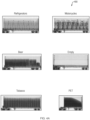
- FIGs. 4A-4C shows an output image provided by the image processing system, in accordance with an exemplary embodiment.
- FIG. 4A illustrates radiographic images 400 of containers containing common object types, including refrigerators, motorcycles, beer, tobacco, and polyethylene terephthalate (PET), and an empty container.
- PET polyethylene terephthalate
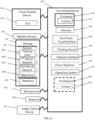
- the system performs an image analysis using an autoencoder type neural network with topology as shown in FIG. 4B .
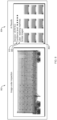
- the object type within the container under inspection is compared with contours of historic distribution of a same object type, which are then plotted as shown in FIG. 4C .
- FIG. 4C shows feature vectors from around 120 image segments of four object types (tobacco, beer, refrigerators, and motorcycles) plotted on a graph, as well as image segments for an empty container and PET container.
- Clustering of points from the same object type 430A, 430B, 430C, 430D, 430E and 430F indicates that the object type can be distinguished based on the image features.
- Container content verification can be achieved by comparing manifest data and radiographic images.
- the system parses the manifest and automatically verifies that the image pattern matches objects listed in the manifest.
- operators at security checkpoints may receive radiographic images of containers and/or a manifest with content information for each container. In such an embodiment, the operator verifies that the image pattern matches objects listed in the manifest.
- FIG. 5 illustrates a network diagram depicting a system 500 for implementing the image processing system, according to an example embodiment.
- the system 500 can include a network 505, multiple devices, for example, device 510, scanning device 520, server 530, and a database(s) 540. Each of the devices 510, 520, server 530, and database(s) 540 is in communication with the network 505.
- one or more portions of network 505 may be an ad hoc network, an intranet, an extranet, a virtual private network (VPN), a local area network (LAN), a wireless LAN (WLAN), a wide area network (WAN), a wireless wide area network (WWAN), a metropolitan area network (MAN), a portion of the Internet, a portion of the Public Switched Telephone Network (PSTN), a cellular telephone network, a wireless network, a Wi-Fi network, a WiMax network, any other type of network, or a combination of two or more such networks.
- VPN virtual private network
- LAN local area network
- WLAN wireless LAN
- WAN wide area network
- WWAN wireless wide area network
- MAN metropolitan area network
- PSTN Public Switched Telephone Network
- PSTN Public Switched Telephone Network
- the device 510 may include, but are not limited to, work stations, computers, general purpose computers, Internet appliances, hand-held devices, wireless devices, portable devices, wearable computers, cellular or mobile phones, portable digital assistants (PDAs), smart phones, tablets, ultrabooks, netbooks, laptops, desktops, multi-processor systems, microprocessor-based or programmable consumer electronics, network PCs, mini-computers, and the like.
- Device 510 may connect to network 505 via a wired or wireless connection.
- the scanning device 520 includes a radiographic machine or system to scan containers, and may produce rendered radiographic images of scanned containers on a display device coupled to the scanning device 520.
- the scanning device 520 is a security screening system at a checkpoint.
- the scanning device 520 may be used to scan shipping containers for security purposes.
- the images produced by the scanning device 520 are used as the dataset to train the machine-learning algorithm(s) as described herein.
- the scanning device 520 produces the input image for the image processing system 100. After the input image is processed, the output image may be displayed at the display device coupled to the scanning device 520, where the output image may include a label for an anomaly and an indication of the location of the anomaly within the image.
- the image processing system described herein can be loaded as a software module onto an existing security checkpoint device or existing server networked to one or more devices.
- the image processing system generates an alarm and alerts the operator of the security checkpoint device to detected anomalies, in addition to any other detection technology that may be installed on those devices or servers.
- the add-on capability may be added to a variety of radiographic imaging devices.
- the alerts generated by the image processing system add-on described herein may be displayed on the screen along with alarms generated by other detection software.
- the devices 510, 520 may perform one or more of the functionalities of the image processing system 100 described herein.
- the device 510, 520 can include one or more components of computing device 500 of FIG. 5 .
- the device 510, 520 may be used to train the machine-learning algorithm(s), and then use the trained algorithm on input images to identify presence of an anomaly.
- device 510, 520 may store and execute first neural network 550 to perform radiographic image analysis and second neural network 560 to perform cargo manifest analysis for a shipping container.
- the image processing system 100 may be included on the server 530, and the server 530 performs one or more of the functionalities of the image processing system 100 described herein.
- the devices 510, 520 may perform some of the functionalities, and the server 530 performs the other functionalities described herein.
- Each of the database(s) 540 and server 530 is connected to the network 505 via a wired or wireless connection.
- Server 530 includes one or more computers or processors configured to communicate with devices 510, 520 via network 505.
- the server 530 can include one or more components of device 600 of FIG. 6 .
- Server 530 hosts one or more applications or websites, including the image processing system described herein, accessed by devices 510, 520 and/or facilitates access to the content of database(s) 540.
- Database(s) 540 include one or more storage devices for storing data and/or instructions (or code) for use by server 530, and/or devices 510, 520.
- Database(s) 540 and server 530 may be located at one or more geographically distributed locations from each other or from devices 510, 520. Alternatively, database(s) 540 may be included within server 530.
- the system 500 includes a first neural network 550 and a second neural network 560.
- the first neural network 550 is used to extract feature vectors from radiographic images, as described herein.
- the second neural network 560 is used for cargo manifest text analysis, as described herein.
- the device 510 and/or the server 520 utilizes the first neural network 550 and the second neural network 560 for processing images and cargo manifests to verify container contents and/or identify anomalies in the images and cargo manifests, as described herein.
- FIG. 6 is a block diagram of an exemplary computing device 600 that can be used to perform one or more steps of the methods provided by exemplary embodiments.
- computing device 600 may be, but is not limited to device 510, 520 and server 530 as described in FIG. 5 .
- the computing device 600 includes one or more non-transitory computer-readable media for storing one or more computer-executable instructions or software for implementing exemplary embodiments.
- the non-transitory computer-readable media can include, but are not limited to, one or more types of hardware memory, non-transitory tangible media (for example, one or more magnetic storage disks, one or more optical disks, one or more USB flash drives), and the like.
- memory 606 included in the computing device 600 can store computer-readable and computer-executable instructions or software for implementing exemplary embodiments.
- the computing device 600 also includes processor 602 and associated core 604, and optionally, one or more additional processor(s) 602' and associated core(s) 604' (for example, in the case of computer systems having multiple processors/cores), for executing computer-readable and computer-executable instructions or software stored in the memory 606 and other programs for controlling system hardware.
- Processor 602 and processor(s) 602' can each be a single core processor or multiple core (604 and 604') processor.
- the computing device 600 also includes a graphics processing unit (GPU) 605. In some embodiments, the computing device 600 includes multiple GPUs.
- GPU graphics processing unit
- Virtualization can be employed in the computing device 600 so that infrastructure and resources in the computing device can be shared dynamically.
- a virtual machine 614 can be provided to handle a process running on multiple processors so that the process appears to be using only one computing resource rather than multiple computing resources. Multiple virtual machines can also be used with one processor.
- Memory 606 can include a computer system memory or random access memory, such as DRAM, SRAM, EDO RAM, and the like. Memory 606 can include other types of memory as well, or combinations thereof.
- a user can interact with the computing device 600 through a visual display device 618, such as a touch screen display or computer monitor, which can display one or more user interfaces 616.
- the visual display device 618 can also display other aspects, elements and/or information or data associated with exemplary embodiments.
- the computing device 600 can include other I/O devices for receiving input from a user, for example, a keyboard or any suitable multi-point touch interface 608, a pointing device 610 (e.g., a pen, stylus, mouse, or trackpad).
- the keyboard 608 and the pointing device 610 can be coupled to the visual display device 618.
- the computing device 600 can include other suitable conventional I/O peripherals.
- the computing device 600 can also include one or more storage devices 624, such as a hard-drive, CD-ROM, or other computer readable media, for storing data and computer-readable instructions and/or software, such as one or more modules of the system 100 shown in FIG. 1 that implements exemplary embodiments of the notification system as described herein, or portions thereof, which can be executed to generate user interface 616 on display 618.
- Exemplary storage device 624 can also store one or more databases for storing any suitable information required to implement exemplary embodiments. The databases can be updated by a user or automatically at any suitable time to add, delete, or update one or more objects in the databases.
- Exemplary storage device 624 can store some or all of image processing system 100 including training data 100A, first neural network 100B, second neural network 100C and/or algorithms 110D (such as but not limited to a manifest verification algorithm, an empty container verification algorithm, a cargo type detection algorithm, an anomaly detection algorithm and/or a data quality monitoring algorithm).
- algorithms 110D such as but not limited to a manifest verification algorithm, an empty container verification algorithm, a cargo type detection algorithm, an anomaly detection algorithm and/or a data quality monitoring algorithm.
- the computing device 600 can include a network interface 612 configured to interface via one or more network devices 622 with one or more networks, for example, Local Area Network (LAN), Wide Area Network (WAN) or the Internet through a variety of connections including, but not limited to, standard telephone lines, LAN or WAN links (for example, 802.11, T1, T3, 56kb, X.25), broadband connections (for example, ISDN, Frame Relay, ATM), wireless connections, controller area network (CAN), or some combination of any or all of the above.
- LAN Local Area Network
- WAN Wide Area Network
- the Internet through a variety of connections including, but not limited to, standard telephone lines, LAN or WAN links (for example, 802.11, T1, T3, 56kb, X.25), broadband connections (for example, ISDN, Frame Relay, ATM), wireless connections, controller area network (CAN), or some combination of any or all of the above.
- the network interface 612 can include a built-in network adapter, network interface card, PCMCIA network card, card bus network adapter, wireless network adapter, USB network adapter, modem or any other device suitable for interfacing the computing device 600 to any type of network capable of communication and performing the operations described herein.
- the computing device 600 can be any computer system, such as a workstation, desktop computer, server, laptop, handheld computer, tablet computer (e.g., the iPad ® tablet computer), mobile computing or communication device (e.g., the iPhone ® communication device), or other form of computing or telecommunications device that is capable of communication and that has sufficient processor power and memory capacity to perform the operations described herein.
- FIG. 10 illustrates an implementation of an empty container validation (ECV) algorithm that flagged a duffel bag filled with currency in a declared-empty container, in accordance with an exemplary embodiment.
- ECV empty container validation
- FIG. 11 illustrates container segments 1102 that are used for anomaly detection, in accordance with an exemplary embodiment.
- Each segment 1102 (as illustrated through the use of a grid overlay to explain segmentation) is evaluated with an autoencoder neural network that provides a feature vector, in accordance with an exemplary embodiment. The result is to identify segments 1102 that are significantly different from the rest of segments. As depicted in FIG. 11 some segments 1104 have been identified that indicate an anomaly.
- FIG. 12 illustrates results of an exemplary implementation of an anomaly detection algorithm, in accordance with an exemplary embodiment.
- the neural network generates a feature vector for each segment, and the output module makes the chi-square heat map (by comparing feature vectors).
- colors denote chi-square values of the segment under inspection from the other segments.
- the chi-square is calculated as the distance-squared between the segment feature vector and the average of feature vectors of other segments, divided by the standard deviation squared of feature vectors of other segments. This chi-square is normalized to the degree of freedom i.e. the number of features minus one.
- the results indicate an anomaly 1204 detected in certain segments of the shipping container (as shown in FIG. 11 ). For instance, the anomaly may indicate an object in a container that is supposed to be empty, or a different type of object than that listed on the cargo manifest.
- FIG. 13 is a flowchart illustrating an exemplary method to validate cargo manifests employed by the image processing system, according to an example embodiment.
- a computing device receives a rendered radiographic image from a scanner that includes a shipping container in the image.
- a feature vector is extracted from the radiographic image of the scanned shipping container using an autoencoder neural network.
- the image processing system assigns a statistical probability that the container matches a listed object on an associated cargo manifest for the scanned shipping container. As discussed above, in step 1308, the statistical probability is further determined by performing an additional analysis on words in cargo manifests using a second artificial neural network.
- an automated detection indication related to the scanned shipping container is then generated by the image processing system based on the assigned statistical probability.
- the detection indication may take a number of forms such as, but not limited to, generating warning displays or audible alarms.
- FIG. 14 is a flowchart illustrating an exemplary method employed by the image processing system to confirm that designated empty shipping containers are in fact empty, according to an example embodiment.
- a computing device receives a rendered radiographic image of a shipping container.
- a feature vector is extracted from the image using an autoencoder neural network.
- the image processing system assigns a statistical probability of the emptiness of the scanned shipping container based on comparison of the extracted feature vector against a historic distribution of feature vectors extracted from radiographic images associated with prior empty shipping containers.
Landscapes
- Engineering & Computer Science (AREA)
- Theoretical Computer Science (AREA)
- Physics & Mathematics (AREA)
- General Physics & Mathematics (AREA)
- Computer Vision & Pattern Recognition (AREA)
- Multimedia (AREA)
- Evolutionary Computation (AREA)
- Artificial Intelligence (AREA)
- Health & Medical Sciences (AREA)
- General Health & Medical Sciences (AREA)
- Life Sciences & Earth Sciences (AREA)
- Software Systems (AREA)
- Computing Systems (AREA)
- Data Mining & Analysis (AREA)
- Molecular Biology (AREA)
- Biomedical Technology (AREA)
- General Engineering & Computer Science (AREA)
- Mathematical Physics (AREA)
- Biophysics (AREA)
- Computational Linguistics (AREA)
- Business, Economics & Management (AREA)
- Quality & Reliability (AREA)
- Databases & Information Systems (AREA)
- Medical Informatics (AREA)
- Economics (AREA)
- Biodiversity & Conservation Biology (AREA)
- Tourism & Hospitality (AREA)
- Development Economics (AREA)
- Entrepreneurship & Innovation (AREA)
- Human Resources & Organizations (AREA)
- Marketing (AREA)
- Operations Research (AREA)
- Strategic Management (AREA)
- General Business, Economics & Management (AREA)
- Bioinformatics & Computational Biology (AREA)
- Bioinformatics & Cheminformatics (AREA)
- Evolutionary Biology (AREA)
- Image Analysis (AREA)
- Analysing Materials By The Use Of Radiation (AREA)
Claims (16)
- Auf einem Computergerät implementiertes Verfahren zum Validieren eines Ladungsmanifestes, das einem Versandcontainer zugeordnet ist, wobei das Verfahren umfasst:Empfangen, auf einem Computergerät (510), eines gerenderten Röntgenbildes eines gescannten Versandcontainers von einem Scanner (520), der dazu konfiguriert ist, den Versandcontainer zu scannen und das Röntgenbild zu rendern;Extrahieren, mit einem neuronalen Autoencoder-Netzwerk (550), eines Merkmalsvektors aus dem Röntgenbild;Bestimmen einer statistischen Wahrscheinlichkeit, dass ein Objekt im gescannten Versandcontainer mit einem aufgelisteten Objekt auf einem Ladungsmanifest übereinstimmt, das dem gescannten Versandcontainer zugeordnet ist, basierend zumindest teilweise auf:einem Vergleich des extrahierten Merkmalsvektors mit einer historischen Verteilung früherer Merkmalsvektoren von Röntgenbildern früherer Versandcontainer, die Ladungsmanifesten zugeordnet sind, die ein ähnliches Objekt enthalten; undGenerieren eines automatischen Erkennungshinweises in Bezug auf den gescannten Versandcontainer basierend auf der bestimmten statistischen Wahrscheinlichkeit, wobei der automatische Erkennungshinweis:einen grafischen Indikator für einen Grad der Übereinstimmung des Inhalts des gescannten Containers mit dem zugehörigen Ladungsmanifest bereitstellt, und/odereine Anzeige einer Rangfolge von Röntgenbildern bereitstellt und/oderein grafischer Hinweis oder ein akustischer Hinweis ist, der einen Benutzer darauf aufmerksam macht, dass im Röntgenbild eine Anomalie erkannt wurde, und/odereine Textbeschriftung ist, die die Anomalie identifiziert, und/odereine farbige Kastenform ist, die die Anomalie umschließt, und/oderangibt, ob das Röntgenbild mit einem leeren Container übereinstimmt;dadurch gekennzeichnet, dass die statistische Wahrscheinlichkeit ferner basierend zumindest teilweise auf der natürlichen Sprachverarbeitung des Ladungsmanifestes durch ein zweites künstliches neuronales Netzwerk bestimmt wird.
- Verfahren nach Anspruch 1, umfassend
Trainieren des neuronalen Autoencoder-Netzwerks mit einem Trainingsdatensatz aus Röntgenbildern, um zumindest einen früheren Merkmalsvektor zu generieren, der numerische oder symbolische Eigenschaften des Objekts im gescannten Versandcontainer mathematisch darstellt, wobei der Trainingsdatensatz einen ersten Satz früherer Röntgenbilder von einem oder mehreren früheren Versandcontainern einschließt, die ähnliche Objekte enthalten. - Verfahren nach Anspruch 1, wobei das zweite künstliche neuronale Netzwerk ein unbeaufsichtigtes rekurrentes neuronales Netzwerk ist, das anhand einer historischen Datenbank früherer Versandcontainer-Ladungsmanifeste trainiert wurde.
- Verfahren nach Anspruch 3, wobei das zweite künstliche neuronale Netzwerk ein neuronales Netzwerk vom Typ "Wort-zu-Vektor" ist.
- Verfahren nach Anspruch 3, wobei das zweite künstliche neuronale Netzwerk vorab trainierte Worteinbettungen aus historischen früheren Versandcontainer-Ladungsmanifesten verwendet, um das Ladungsmanifest zu analysieren.
- Verfahren nach Anspruch 1, wobei das neuronale Autoencoder-Netzwerk ein unbeaufsichtigtes neuronales Netzwerk ist.
- Verfahren nach Anspruch 1, ferner umfassend:
Anzeigen einer kategorischen Zuweisung der Validierung oder Ablehnung eines Ladungsmanifestes basierend auf der statistischen Wahrscheinlichkeit. - Verfahren nach Anspruch 1, wobei mehrere Bilder früherer Versandcontainer, die ähnlichen Ladungsmanifesten zugeordnet sind wie die dem gescannten Versandcontainers zugeordneten, in Echtzeit angezeigt werden, und/oder
mehrere frühere Manifeste, die dem dem gescannten Versandcontainer zugeordneten ähneln, in Echtzeit angezeigt werden. - System zum Validieren eines Ladungsmanifestes, das einem Versandcontainer zugeordnet ist, wobei das System umfasst:einen Scanner (520), der dazu konfiguriert ist, einen Versandcontainer zu scannen und zumindest ein Röntgenbild zu rendern;ein Computergerät (510), das mit einem oder mehreren Prozessoren ausgestattet ist und kommunikativ mit dem Scanner gekoppelt ist, wobei das Computergerät konfiguriert ist, um:ein gerendertes Röntgenbild eines gescannten Versandcontainers vom Scanner zu empfangen,mit einem neuronalen Autoencoder-Netzwerk (550) einen Merkmalsvektor aus dem Röntgenbild zu extrahieren,eine statistische Wahrscheinlichkeit zu bestimmen, dass ein Objekt im gescannten Versandcontainer mit einem aufgelisteten Objekt auf einem Ladungsmanifest übereinstimmt, das dem gescannten Versandcontainer zugeordnet ist, basierend zumindest teilweise auf:einem Vergleich des extrahierten Merkmalsvektors mit einer historischen Verteilung früherer Merkmalsvektoren von Röntgenbildern früherer Versandbehälter, die Ladungsmanifesten zugeordnet sind, die ein ähnliches Objekt enthalten, und einen automatischen Erkennungshinweis in Bezug auf den gescannten Versandbehälter basierend auf der bestimmten statistischen Wahrscheinlichkeit zu generieren, wobei der automatische Erkennungshinweis:einen grafischen Indikator für einen Grad der Übereinstimmung des Inhalts des gescannten Containers mit dem zugehörigen Ladungsmanifest bereitstellt, und/odereine Anzeige einer Rangfolge von Röntgenbildern bereitstellt und/oderein grafischer Hinweis oder ein akustischer Hinweis ist, der einen Benutzer darauf aufmerksam macht, dass im Röntgenbild eine Anomalie erkannt wurde, und/odereine Textbeschriftung ist, die die Anomalie identifiziert, und/odereine farbige Kastenform ist, die die Anomalie umschließt, und/oderangibt, ob das Röntgenbild mit einem leeren Container übereinstimmt; undeinen Ausgabemechanismus, der dazu konfiguriert ist, den automatischen Erkennungshinweis durch Anzeigen von Grafiken oder Generieren von Audio auszugeben;dadurch gekennzeichnet, dass die statistische Wahrscheinlichkeit ferner basierend zumindest teilweise auf der natürlichen Sprachverarbeitung des Ladungsmanifestes durch ein zweites künstliches neuronales Netzwerk bestimmt wird.
- System nach Anspruch 9, wobei das neuronale Autoencoder-Netzwerk mit einem Trainingsdatensatz aus Röntgenbildern trainiert wird, um zumindest einen früheren Merkmalsvektor zu generieren, der numerische oder symbolische Eigenschaften des Objekts im gescannten Versandcontainer mathematisch darstellt, wobei der Trainingsdatensatz einen ersten Satz früherer Röntgenbilder von einem oder mehreren früheren Versandcontainern einschließt, die ähnliche Objekte enthalten.
- System nach Anspruch 9, wobei das zweite künstliche neuronale Netzwerk ein unbeaufsichtigtes rekurrentes neuronales Netzwerk ist, das anhand einer historischen Datenbank früherer Versandcontainer-Ladungsmanifeste trainiert wurde.
- System nach Anspruch 11, wobei das zweite künstliche neuronale Netzwerk ein neuronales Netzwerk vom Typ "Wort-zu-Vektor" ist.
- System nach Anspruch 11, wobei das zweite künstliche neuronale Netzwerk vorab trainierte Worteinbettungen aus historischen früheren Versandcontainer-Ladungsmanifesten verwendet, um das Ladungsmanifest zu analysieren.
- System nach Anspruch 9, wobei das neuronale Autoencoder-Netzwerk ein unbeaufsichtigtes neuronales Netzwerk ist.
- System nach Anspruch 9, wobei das Computergerät ferner dazu konfiguriert ist, Folgendes anzuzeigen: eine kategorische Zuweisung der Validierung oder Ablehnung des Ladungsmanifests basierend auf der statistischen Wahrscheinlichkeit, und/odermehrere Bilder früherer Versandcontainer, die ähnlichen Ladungsmanifesten zugeordnet sind wie die dem gescannten Versandcontainer zugeordneten, in Echtzeit, und/odereine Vielzahl früherer Manifeste, die dem dem gescannten Versandcontainer zugeordneten ähneln, in Echtzeit, und/odereine kategorische Zuweisung von im zugehörigen Ladungsmanifest aufgeführten Objekten.
- Nicht flüchtiges, computerlesbares Medium, das von einem Prozessor ausführbare Anweisungen zum Validieren eines einem Versandcontainer zugeordneten Ladungsmanifests speichert, wobei die Ausführung der Anweisungen bewirkt, dass ein Computergerät (510) das Verfahren nach einem der Ansprüche 1 bis 8 ausführt.
Priority Applications (1)
| Application Number | Priority Date | Filing Date | Title |
|---|---|---|---|
| EP24220240.6A EP4550278A3 (de) | 2018-08-10 | 2019-08-09 | Systeme und verfahren zur bildverarbeitung |
Applications Claiming Priority (2)
| Application Number | Priority Date | Filing Date | Title |
|---|---|---|---|
| US201862717649P | 2018-08-10 | 2018-08-10 | |
| PCT/US2019/046014 WO2020033900A1 (en) | 2018-08-10 | 2019-08-09 | Systems and methods for image processing |
Related Child Applications (1)
| Application Number | Title | Priority Date | Filing Date |
|---|---|---|---|
| EP24220240.6A Division EP4550278A3 (de) | 2018-08-10 | 2019-08-09 | Systeme und verfahren zur bildverarbeitung |
Publications (2)
| Publication Number | Publication Date |
|---|---|
| EP3834129A1 EP3834129A1 (de) | 2021-06-16 |
| EP3834129B1 true EP3834129B1 (de) | 2024-12-25 |
Family
ID=67766363
Family Applications (2)
| Application Number | Title | Priority Date | Filing Date |
|---|---|---|---|
| EP19759198.5A Active EP3834129B1 (de) | 2018-08-10 | 2019-08-09 | Systeme und verfahren zur bildverarbeitung |
| EP24220240.6A Pending EP4550278A3 (de) | 2018-08-10 | 2019-08-09 | Systeme und verfahren zur bildverarbeitung |
Family Applications After (1)
| Application Number | Title | Priority Date | Filing Date |
|---|---|---|---|
| EP24220240.6A Pending EP4550278A3 (de) | 2018-08-10 | 2019-08-09 | Systeme und verfahren zur bildverarbeitung |
Country Status (7)
| Country | Link |
|---|---|
| US (2) | US12067760B2 (de) |
| EP (2) | EP3834129B1 (de) |
| JP (1) | JP7476194B2 (de) |
| AU (2) | AU2019320080B2 (de) |
| CA (1) | CA3109136A1 (de) |
| ES (1) | ES3015707T3 (de) |
| WO (1) | WO2020033900A1 (de) |
Families Citing this family (30)
| Publication number | Priority date | Publication date | Assignee | Title |
|---|---|---|---|---|
| CA3064559A1 (en) | 2017-05-22 | 2018-11-29 | L3 Security & Detection Systems, Inc. | Systems and methods for image processing |
| US11836597B2 (en) * | 2018-08-09 | 2023-12-05 | Nvidia Corporation | Detecting visual artifacts in image sequences using a neural network model |
| US11403765B2 (en) * | 2019-08-14 | 2022-08-02 | Lawrence Livermore National Security, Llc | Automatic threat recognition system and method using material disambiguation informed by physics in x-ray CT images of baggage |
| US11537809B2 (en) * | 2019-11-21 | 2022-12-27 | Kyndryl, Inc. | Dynamic container grouping |
| KR102876718B1 (ko) * | 2020-01-21 | 2025-10-28 | 삼성디스플레이 주식회사 | 잔상 방지 방법 및 이를 포함하는 표시 장치 |
| CN113657352B (zh) * | 2020-03-19 | 2025-03-04 | 蚂蚁区块链科技(上海)有限公司 | 一种人脸特征提取方法、装置及设备 |
| CN111833302B (zh) * | 2020-06-05 | 2024-08-02 | 中铁大桥勘测设计院集团有限公司武汉分公司 | 一种车号与箱号识别关联系统 |
| US12190144B1 (en) | 2020-06-22 | 2025-01-07 | Amazon Technologies, Inc. | Predelivering container image layers for future execution of container images |
| US11670036B2 (en) | 2020-07-14 | 2023-06-06 | Lawrence Livermore National Security, Llc | System and method for identifying objects of interest in images based on likelihood map decluttering |
| WO2022024245A1 (ja) * | 2020-07-29 | 2022-02-03 | オリンパス株式会社 | 検査システム、学習方法、検査方法、及び記憶媒体 |
| EP3945454B1 (de) * | 2020-07-31 | 2025-12-31 | Bull SAS | Überprüfung deklarierten inhalts |
| KR102605692B1 (ko) * | 2020-11-16 | 2023-11-27 | 한국전자통신연구원 | 탐지대상 이미지에서의 이상 부분 탐지 방법 및 시스템, 이의 복원 모델 학습 방법 |
| US20230419636A1 (en) * | 2020-11-25 | 2023-12-28 | Hewlett-Packard Development Company, L.P. | Identifying anomaly location |
| US11843623B2 (en) * | 2021-03-16 | 2023-12-12 | Mitsubishi Electric Research Laboratories, Inc. | Apparatus and method for anomaly detection |
| US12443424B1 (en) | 2021-03-30 | 2025-10-14 | Amazon Technologies, Inc. | Generational management of compute resource pools |
| CN113221964B (zh) * | 2021-04-22 | 2022-06-24 | 华南师范大学 | 单样本图像分类方法、系统、计算机设备及存储介质 |
| WO2022229976A1 (en) * | 2021-04-26 | 2022-11-03 | Jidoka Technologies Private Limited | Anomaly detection using a convolutional neural network and feature based memories |
| US11892418B1 (en) * | 2021-06-30 | 2024-02-06 | Amazon Technologies, Inc. | Container image inspection and optimization |
| US11989586B1 (en) | 2021-06-30 | 2024-05-21 | Amazon Technologies, Inc. | Scaling up computing resource allocations for execution of containerized applications |
| US11995466B1 (en) | 2021-06-30 | 2024-05-28 | Amazon Technologies, Inc. | Scaling down computing resource allocations for execution of containerized applications |
| EP4371038A4 (de) | 2021-07-13 | 2025-05-28 | Rapiscan Systems, Inc. | Bildinspektionssysteme und verfahren zur integration künstlicher intelligenzplattformen dritter |
| CN113724214B (zh) * | 2021-08-23 | 2024-02-23 | 唯智医疗科技(佛山)有限公司 | 一种基于神经网络的图像处理方法及装置 |
| US12468948B2 (en) * | 2021-08-26 | 2025-11-11 | Sk Planet Co., Ltd. | Apparatus and method for anomaly detection |
| US11769245B2 (en) * | 2021-10-21 | 2023-09-26 | Goodrich Corporation | Systems and methods of monitoring cargo load systems for damage detection |
| CN116092096A (zh) * | 2021-11-05 | 2023-05-09 | 同方威视技术股份有限公司 | 用于检验申报信息真实性的方法、系统、设备及介质 |
| US12045570B2 (en) * | 2022-02-11 | 2024-07-23 | S&P Global Inc. | Multi-class text classifier |
| US12406753B2 (en) | 2022-03-03 | 2025-09-02 | Siemens Healthcare Diagnostics Inc. | Diagnostic laboratory systems and methods of imaging tube assemblies |
| CN117408931A (zh) * | 2022-07-06 | 2024-01-16 | 纬创资通(昆山)有限公司 | 影像缺陷检测系统、其产生方法及计算机可读取记录媒体 |
| EP4584723A4 (de) * | 2022-09-07 | 2025-10-29 | Siemens Healthcare Diagnostics Inc | Vorrichtungen und verfahren zum trainieren von probenbehälteridentifikationsnetzwerken in diagnostischen laborsystemen |
| WO2025120694A1 (ja) * | 2023-12-04 | 2025-06-12 | 日本電信電話株式会社 | 認識装置、方法およびプログラム |
Citations (1)
| Publication number | Priority date | Publication date | Assignee | Title |
|---|---|---|---|---|
| GB2577909A (en) * | 2018-10-10 | 2020-04-15 | Symetrica Ltd | Gamma-ray spectrum classification |
Family Cites Families (13)
| Publication number | Priority date | Publication date | Assignee | Title |
|---|---|---|---|---|
| JP2004177138A (ja) | 2002-11-25 | 2004-06-24 | Hitachi Ltd | 危険物探知装置および危険物探知方法 |
| US20090226032A1 (en) | 2007-09-28 | 2009-09-10 | Matthew Allen Merzbacher | Systems and methods for reducing false alarms in detection systems |
| CN101435783B (zh) | 2007-11-15 | 2011-01-26 | 同方威视技术股份有限公司 | 物质识别方法和设备 |
| GB2477680B (en) | 2008-10-30 | 2015-05-20 | Analogic Corp | Detecting concealed threats |
| US8180139B2 (en) | 2009-03-26 | 2012-05-15 | Morpho Detection, Inc. | Method and system for inspection of containers |
| US8903128B2 (en) | 2011-02-16 | 2014-12-02 | Siemens Aktiengesellschaft | Object recognition for security screening and long range video surveillance |
| ES2675308T3 (es) | 2011-09-07 | 2018-07-10 | Rapiscan Systems, Inc. | Sistema de inspección de rayos X que integra datos de manifiesto con procesamiento de obtención de imágenes/detección |
| MX345317B (es) | 2012-06-01 | 2017-01-23 | Rapiscan Systems Inc | Métodos y sistemas para interrogación de tiempo de vuelo de neutrones para discriminación de material. |
| CN104751163B (zh) | 2013-12-27 | 2018-06-19 | 同方威视技术股份有限公司 | 对货物进行自动分类识别的透视检查系统和方法 |
| IL239191A0 (en) | 2015-06-03 | 2015-11-30 | Amir B Geva | Image sorting system |
| US11074492B2 (en) | 2015-10-07 | 2021-07-27 | Altera Corporation | Method and apparatus for performing different types of convolution operations with the same processing elements |
| EP3772702A3 (de) * | 2016-02-22 | 2021-05-19 | Rapiscan Systems, Inc. | Verfahren zur verarbeitung radiographischer bilder |
| CA3064559A1 (en) | 2017-05-22 | 2018-11-29 | L3 Security & Detection Systems, Inc. | Systems and methods for image processing |
-
2019
- 2019-08-09 EP EP19759198.5A patent/EP3834129B1/de active Active
- 2019-08-09 CA CA3109136A patent/CA3109136A1/en active Pending
- 2019-08-09 ES ES19759198T patent/ES3015707T3/es active Active
- 2019-08-09 EP EP24220240.6A patent/EP4550278A3/de active Pending
- 2019-08-09 US US16/537,417 patent/US12067760B2/en active Active
- 2019-08-09 JP JP2021531617A patent/JP7476194B2/ja active Active
- 2019-08-09 AU AU2019320080A patent/AU2019320080B2/en active Active
- 2019-08-09 WO PCT/US2019/046014 patent/WO2020033900A1/en not_active Ceased
-
2024
- 2024-07-22 US US18/779,700 patent/US20250022251A1/en active Pending
-
2025
- 2025-01-06 AU AU2025200070A patent/AU2025200070A1/en active Pending
Patent Citations (1)
| Publication number | Priority date | Publication date | Assignee | Title |
|---|---|---|---|---|
| GB2577909A (en) * | 2018-10-10 | 2020-04-15 | Symetrica Ltd | Gamma-ray spectrum classification |
Also Published As
| Publication number | Publication date |
|---|---|
| EP4550278A3 (de) | 2025-08-20 |
| WO2020033900A1 (en) | 2020-02-13 |
| JP7476194B2 (ja) | 2024-04-30 |
| EP3834129A1 (de) | 2021-06-16 |
| US20200051017A1 (en) | 2020-02-13 |
| ES3015707T3 (en) | 2025-05-07 |
| AU2025200070A1 (en) | 2025-01-23 |
| US20250022251A1 (en) | 2025-01-16 |
| US12067760B2 (en) | 2024-08-20 |
| CA3109136A1 (en) | 2020-02-13 |
| JP2021534523A (ja) | 2021-12-09 |
| AU2019320080A1 (en) | 2021-03-11 |
| AU2019320080B2 (en) | 2024-10-10 |
| EP4550278A2 (de) | 2025-05-07 |
Similar Documents
| Publication | Publication Date | Title |
|---|---|---|
| EP3834129B1 (de) | Systeme und verfahren zur bildverarbeitung | |
| US8600149B2 (en) | Method and system for electronic inspection of baggage and cargo | |
| JP6678192B2 (ja) | 検査機器および銃器検出方法 | |
| EP3635617B1 (de) | Systeme und verfahren zur bildverarbeitung | |
| Shao et al. | Exploiting foreground and background separation for prohibited item detection in overlapping X-Ray images | |
| US10268924B2 (en) | Systems and methods for integrated cargo inspection | |
| CN106415325B (zh) | 对象中的物项探测 | |
| JP2017509903A (ja) | 貨物の検査方法およびそのシステム | |
| KR102158967B1 (ko) | 영상 분석 장치, 영상 분석 방법 및 기록 매체 | |
| US20170178312A1 (en) | Methods, systems, and apparatuses for inspecting goods | |
| JP2018112551A (ja) | 検査機器およびコンテナを検査する方法 | |
| Andrews et al. | Representation-learning for anomaly detection in complex x-ray cargo imagery | |
| Vukadinovic et al. | X-ray baggage screening and artificial intelligence (AI) | |
| US11676407B2 (en) | System and method for supporting user to read X-RAY image | |
| CN118657928A (zh) | 基于人工智能的行李安检危险物品自动识别方法及系统 | |
| KR102594184B1 (ko) | 인공 지능 모델을 기반으로 엑스레이 이미지상에서 위험 물체를 검출하는 전자 장치 및 이의 동작 방법 | |
| Andrews | Anomaly detection for security imaging | |
| Maram | Deep learning-based automated detection and classification of foreign materials in poultry using color and hyperspectral imaging | |
| Mohamed et al. | Optimized ML Model with Explainable AI for Threat Detection at Kuwait International Airport | |
| Victor et al. | Visual Probing and Correction of Object Recognition Models with Interactive user feedback | |
| Borgstrand | Confidence Calibrated Point Cloud Segmentation with Limited Data | |
| Shen et al. | Cargo segmentation in stream of commerce (SoC) x-ray images with deep learning algorithms | |
| CN107077728A (zh) | 确定图像中的均匀度 |
Legal Events
| Date | Code | Title | Description |
|---|---|---|---|
| STAA | Information on the status of an ep patent application or granted ep patent |
Free format text: STATUS: UNKNOWN |
|
| STAA | Information on the status of an ep patent application or granted ep patent |
Free format text: STATUS: THE INTERNATIONAL PUBLICATION HAS BEEN MADE |
|
| PUAI | Public reference made under article 153(3) epc to a published international application that has entered the european phase |
Free format text: ORIGINAL CODE: 0009012 |
|
| STAA | Information on the status of an ep patent application or granted ep patent |
Free format text: STATUS: REQUEST FOR EXAMINATION WAS MADE |
|
| 17P | Request for examination filed |
Effective date: 20210225 |
|
| AK | Designated contracting states |
Kind code of ref document: A1 Designated state(s): AL AT BE BG CH CY CZ DE DK EE ES FI FR GB GR HR HU IE IS IT LI LT LU LV MC MK MT NL NO PL PT RO RS SE SI SK SM TR |
|
| DAV | Request for validation of the european patent (deleted) | ||
| DAX | Request for extension of the european patent (deleted) | ||
| STAA | Information on the status of an ep patent application or granted ep patent |
Free format text: STATUS: EXAMINATION IS IN PROGRESS |
|
| 17Q | First examination report despatched |
Effective date: 20230309 |
|
| P01 | Opt-out of the competence of the unified patent court (upc) registered |
Effective date: 20230530 |
|
| REG | Reference to a national code |
Ref country code: DE Ref legal event code: R079 Free format text: PREVIOUS MAIN CLASS: G06K0009000000 Ipc: G06V0010440000 Ref document number: 602019063967 Country of ref document: DE |
|
| GRAP | Despatch of communication of intention to grant a patent |
Free format text: ORIGINAL CODE: EPIDOSNIGR1 |
|
| STAA | Information on the status of an ep patent application or granted ep patent |
Free format text: STATUS: GRANT OF PATENT IS INTENDED |
|
| RIC1 | Information provided on ipc code assigned before grant |
Ipc: G06V 30/424 20220101ALI20240709BHEP Ipc: G06V 30/19 20220101ALI20240709BHEP Ipc: G06V 20/52 20220101ALI20240709BHEP Ipc: G06V 10/82 20220101ALI20240709BHEP Ipc: G06V 10/44 20220101AFI20240709BHEP |
|
| INTG | Intention to grant announced |
Effective date: 20240718 |
|
| GRAS | Grant fee paid |
Free format text: ORIGINAL CODE: EPIDOSNIGR3 |
|
| GRAA | (expected) grant |
Free format text: ORIGINAL CODE: 0009210 |
|
| STAA | Information on the status of an ep patent application or granted ep patent |
Free format text: STATUS: THE PATENT HAS BEEN GRANTED |
|
| AK | Designated contracting states |
Kind code of ref document: B1 Designated state(s): AL AT BE BG CH CY CZ DE DK EE ES FI FR GB GR HR HU IE IS IT LI LT LU LV MC MK MT NL NO PL PT RO RS SE SI SK SM TR |
|
| REG | Reference to a national code |
Ref country code: GB Ref legal event code: FG4D |
|
| REG | Reference to a national code |
Ref country code: CH Ref legal event code: EP |
|
| REG | Reference to a national code |
Ref country code: DE Ref legal event code: R096 Ref document number: 602019063967 Country of ref document: DE |
|
| REG | Reference to a national code |
Ref country code: IE Ref legal event code: FG4D |
|
| REG | Reference to a national code |
Ref country code: NL Ref legal event code: FP |
|
| REG | Reference to a national code |
Ref country code: LT Ref legal event code: MG9D |
|
| PG25 | Lapsed in a contracting state [announced via postgrant information from national office to epo] |
Ref country code: HR Free format text: LAPSE BECAUSE OF FAILURE TO SUBMIT A TRANSLATION OF THE DESCRIPTION OR TO PAY THE FEE WITHIN THE PRESCRIBED TIME-LIMIT Effective date: 20241225 |
|
| PG25 | Lapsed in a contracting state [announced via postgrant information from national office to epo] |
Ref country code: FI Free format text: LAPSE BECAUSE OF FAILURE TO SUBMIT A TRANSLATION OF THE DESCRIPTION OR TO PAY THE FEE WITHIN THE PRESCRIBED TIME-LIMIT Effective date: 20241225 |
|
| PG25 | Lapsed in a contracting state [announced via postgrant information from national office to epo] |
Ref country code: BG Free format text: LAPSE BECAUSE OF FAILURE TO SUBMIT A TRANSLATION OF THE DESCRIPTION OR TO PAY THE FEE WITHIN THE PRESCRIBED TIME-LIMIT Effective date: 20241225 |
|
| PG25 | Lapsed in a contracting state [announced via postgrant information from national office to epo] |
Ref country code: NO Free format text: LAPSE BECAUSE OF FAILURE TO SUBMIT A TRANSLATION OF THE DESCRIPTION OR TO PAY THE FEE WITHIN THE PRESCRIBED TIME-LIMIT Effective date: 20250325 |
|
| PG25 | Lapsed in a contracting state [announced via postgrant information from national office to epo] |
Ref country code: LV Free format text: LAPSE BECAUSE OF FAILURE TO SUBMIT A TRANSLATION OF THE DESCRIPTION OR TO PAY THE FEE WITHIN THE PRESCRIBED TIME-LIMIT Effective date: 20241225 Ref country code: GR Free format text: LAPSE BECAUSE OF FAILURE TO SUBMIT A TRANSLATION OF THE DESCRIPTION OR TO PAY THE FEE WITHIN THE PRESCRIBED TIME-LIMIT Effective date: 20250326 |
|
| PG25 | Lapsed in a contracting state [announced via postgrant information from national office to epo] |
Ref country code: RS Free format text: LAPSE BECAUSE OF FAILURE TO SUBMIT A TRANSLATION OF THE DESCRIPTION OR TO PAY THE FEE WITHIN THE PRESCRIBED TIME-LIMIT Effective date: 20250325 |
|
| REG | Reference to a national code |
Ref country code: AT Ref legal event code: MK05 Ref document number: 1754856 Country of ref document: AT Kind code of ref document: T Effective date: 20241225 |
|
| PG25 | Lapsed in a contracting state [announced via postgrant information from national office to epo] |
Ref country code: SM Free format text: LAPSE BECAUSE OF FAILURE TO SUBMIT A TRANSLATION OF THE DESCRIPTION OR TO PAY THE FEE WITHIN THE PRESCRIBED TIME-LIMIT Effective date: 20241225 |
|
| PG25 | Lapsed in a contracting state [announced via postgrant information from national office to epo] |
Ref country code: PL Free format text: LAPSE BECAUSE OF FAILURE TO SUBMIT A TRANSLATION OF THE DESCRIPTION OR TO PAY THE FEE WITHIN THE PRESCRIBED TIME-LIMIT Effective date: 20241225 |
|
| PG25 | Lapsed in a contracting state [announced via postgrant information from national office to epo] |
Ref country code: IS Free format text: LAPSE BECAUSE OF FAILURE TO SUBMIT A TRANSLATION OF THE DESCRIPTION OR TO PAY THE FEE WITHIN THE PRESCRIBED TIME-LIMIT Effective date: 20250425 |
|
| PG25 | Lapsed in a contracting state [announced via postgrant information from national office to epo] |
Ref country code: PT Free format text: LAPSE BECAUSE OF FAILURE TO SUBMIT A TRANSLATION OF THE DESCRIPTION OR TO PAY THE FEE WITHIN THE PRESCRIBED TIME-LIMIT Effective date: 20250428 |
|
| PG25 | Lapsed in a contracting state [announced via postgrant information from national office to epo] |
Ref country code: EE Free format text: LAPSE BECAUSE OF FAILURE TO SUBMIT A TRANSLATION OF THE DESCRIPTION OR TO PAY THE FEE WITHIN THE PRESCRIBED TIME-LIMIT Effective date: 20241225 |
|
| PG25 | Lapsed in a contracting state [announced via postgrant information from national office to epo] |
Ref country code: RO Free format text: LAPSE BECAUSE OF FAILURE TO SUBMIT A TRANSLATION OF THE DESCRIPTION OR TO PAY THE FEE WITHIN THE PRESCRIBED TIME-LIMIT Effective date: 20241225 Ref country code: AT Free format text: LAPSE BECAUSE OF FAILURE TO SUBMIT A TRANSLATION OF THE DESCRIPTION OR TO PAY THE FEE WITHIN THE PRESCRIBED TIME-LIMIT Effective date: 20241225 |
|
| PG25 | Lapsed in a contracting state [announced via postgrant information from national office to epo] |
Ref country code: SK Free format text: LAPSE BECAUSE OF FAILURE TO SUBMIT A TRANSLATION OF THE DESCRIPTION OR TO PAY THE FEE WITHIN THE PRESCRIBED TIME-LIMIT Effective date: 20241225 |
|
| PG25 | Lapsed in a contracting state [announced via postgrant information from national office to epo] |
Ref country code: CZ Free format text: LAPSE BECAUSE OF FAILURE TO SUBMIT A TRANSLATION OF THE DESCRIPTION OR TO PAY THE FEE WITHIN THE PRESCRIBED TIME-LIMIT Effective date: 20241225 |
|
| PG25 | Lapsed in a contracting state [announced via postgrant information from national office to epo] |
Ref country code: SE Free format text: LAPSE BECAUSE OF FAILURE TO SUBMIT A TRANSLATION OF THE DESCRIPTION OR TO PAY THE FEE WITHIN THE PRESCRIBED TIME-LIMIT Effective date: 20241225 |
|
| PGFP | Annual fee paid to national office [announced via postgrant information from national office to epo] |
Ref country code: NL Payment date: 20250826 Year of fee payment: 7 |
|
| REG | Reference to a national code |
Ref country code: DE Ref legal event code: R097 Ref document number: 602019063967 Country of ref document: DE |
|
| PGFP | Annual fee paid to national office [announced via postgrant information from national office to epo] |
Ref country code: ES Payment date: 20250901 Year of fee payment: 7 |
|
| PG25 | Lapsed in a contracting state [announced via postgrant information from national office to epo] |
Ref country code: DK Free format text: LAPSE BECAUSE OF FAILURE TO SUBMIT A TRANSLATION OF THE DESCRIPTION OR TO PAY THE FEE WITHIN THE PRESCRIBED TIME-LIMIT Effective date: 20241225 |
|
| PGFP | Annual fee paid to national office [announced via postgrant information from national office to epo] |
Ref country code: IT Payment date: 20250820 Year of fee payment: 7 |
|
| PGFP | Annual fee paid to national office [announced via postgrant information from national office to epo] |
Ref country code: GB Payment date: 20250827 Year of fee payment: 7 |
|
| PGFP | Annual fee paid to national office [announced via postgrant information from national office to epo] |
Ref country code: FR Payment date: 20250825 Year of fee payment: 7 |
|
| PLBE | No opposition filed within time limit |
Free format text: ORIGINAL CODE: 0009261 |
|
| STAA | Information on the status of an ep patent application or granted ep patent |
Free format text: STATUS: NO OPPOSITION FILED WITHIN TIME LIMIT |
|
| 26N | No opposition filed |
Effective date: 20250926 |