EP3833517B1 - A vehicle part hole patch applicator arrangement - Google Patents
A vehicle part hole patch applicator arrangement Download PDFInfo
- Publication number
- EP3833517B1 EP3833517B1 EP19794255.0A EP19794255A EP3833517B1 EP 3833517 B1 EP3833517 B1 EP 3833517B1 EP 19794255 A EP19794255 A EP 19794255A EP 3833517 B1 EP3833517 B1 EP 3833517B1
- Authority
- EP
- European Patent Office
- Prior art keywords
- patch
- spring
- vehicle part
- vacuum
- plunger
- Prior art date
- Legal status (The legal status is an assumption and is not a legal conclusion. Google has not performed a legal analysis and makes no representation as to the accuracy of the status listed.)
- Active
Links
Images




Classifications
-
- B—PERFORMING OPERATIONS; TRANSPORTING
- B65—CONVEYING; PACKING; STORING; HANDLING THIN OR FILAMENTARY MATERIAL
- B65C—LABELLING OR TAGGING MACHINES, APPARATUS, OR PROCESSES
- B65C9/00—Details of labelling machines or apparatus
- B65C9/08—Label feeding
- B65C9/18—Label feeding from strips, e.g. from rolls
- B65C9/1865—Label feeding from strips, e.g. from rolls the labels adhering on a backing strip
- B65C9/1869—Label feeding from strips, e.g. from rolls the labels adhering on a backing strip and being transferred directly from the backing strip onto the article
-
- B—PERFORMING OPERATIONS; TRANSPORTING
- B23—MACHINE TOOLS; METAL-WORKING NOT OTHERWISE PROVIDED FOR
- B23P—METAL-WORKING NOT OTHERWISE PROVIDED FOR; COMBINED OPERATIONS; UNIVERSAL MACHINE TOOLS
- B23P19/00—Machines for simply fitting together or separating metal parts or objects, or metal and non-metal parts, whether or not involving some deformation; Tools or devices therefor so far as not provided for in other classes
- B23P19/001—Article feeders for assembling machines
- B23P19/006—Holding or positioning the article in front of the applying tool
-
- B—PERFORMING OPERATIONS; TRANSPORTING
- B23—MACHINE TOOLS; METAL-WORKING NOT OTHERWISE PROVIDED FOR
- B23P—METAL-WORKING NOT OTHERWISE PROVIDED FOR; COMBINED OPERATIONS; UNIVERSAL MACHINE TOOLS
- B23P19/00—Machines for simply fitting together or separating metal parts or objects, or metal and non-metal parts, whether or not involving some deformation; Tools or devices therefor so far as not provided for in other classes
- B23P19/04—Machines for simply fitting together or separating metal parts or objects, or metal and non-metal parts, whether or not involving some deformation; Tools or devices therefor so far as not provided for in other classes for assembling or disassembling parts
-
- B—PERFORMING OPERATIONS; TRANSPORTING
- B25—HAND TOOLS; PORTABLE POWER-DRIVEN TOOLS; MANIPULATORS
- B25J—MANIPULATORS; CHAMBERS PROVIDED WITH MANIPULATION DEVICES
- B25J13/00—Controls for manipulators
- B25J13/08—Controls for manipulators by means of sensing devices, e.g. viewing or touching devices
- B25J13/081—Touching devices, e.g. pressure-sensitive
-
- B—PERFORMING OPERATIONS; TRANSPORTING
- B25—HAND TOOLS; PORTABLE POWER-DRIVEN TOOLS; MANIPULATORS
- B25J—MANIPULATORS; CHAMBERS PROVIDED WITH MANIPULATION DEVICES
- B25J15/00—Gripping heads and other end effectors
- B25J15/06—Gripping heads and other end effectors with vacuum or magnetic holding means
- B25J15/0616—Gripping heads and other end effectors with vacuum or magnetic holding means with vacuum
- B25J15/0691—Suction pad made out of porous material, e.g. sponge or foam
-
- B—PERFORMING OPERATIONS; TRANSPORTING
- B60—VEHICLES IN GENERAL
- B60R—VEHICLES, VEHICLE FITTINGS, OR VEHICLE PARTS, NOT OTHERWISE PROVIDED FOR
- B60R13/00—Elements for body-finishing, identifying, or decorating; Arrangements or adaptations for advertising purposes
- B60R13/005—Manufacturers' emblems, name plates, bonnet ornaments, mascots or the like; Mounting means therefor
-
- B—PERFORMING OPERATIONS; TRANSPORTING
- B62—LAND VEHICLES FOR TRAVELLING OTHERWISE THAN ON RAILS
- B62D—MOTOR VEHICLES; TRAILERS
- B62D25/00—Superstructure or monocoque structure sub-units; Parts or details thereof not otherwise provided for
- B62D25/24—Superstructure sub-units with access or drainage openings having movable or removable closures; Sealing means therefor
-
- B—PERFORMING OPERATIONS; TRANSPORTING
- B65—CONVEYING; PACKING; STORING; HANDLING THIN OR FILAMENTARY MATERIAL
- B65C—LABELLING OR TAGGING MACHINES, APPARATUS, OR PROCESSES
- B65C1/00—Labelling flat essentially-rigid surfaces
- B65C1/02—Affixing labels to one flat surface of articles, e.g. of packages, of flat bands
- B65C1/025—Affixing labels to one flat surface of articles, e.g. of packages, of flat bands the label being picked up by the article to be labelled, i.e. the labelling head remaining stationary
- B65C1/026—Affixing labels to one flat surface of articles, e.g. of packages, of flat bands the label being picked up by the article to be labelled, i.e. the labelling head remaining stationary and the article being moved out of its normal conveyance path towards the labelling head
-
- B—PERFORMING OPERATIONS; TRANSPORTING
- B60—VEHICLES IN GENERAL
- B60R—VEHICLES, VEHICLE FITTINGS, OR VEHICLE PARTS, NOT OTHERWISE PROVIDED FOR
- B60R13/00—Elements for body-finishing, identifying, or decorating; Arrangements or adaptations for advertising purposes
- B60R13/02—Internal Trim mouldings ; Internal Ledges; Wall liners for passenger compartments; Roof liners
- B60R2013/0287—Internal Trim mouldings ; Internal Ledges; Wall liners for passenger compartments; Roof liners integrating other functions or accessories
Definitions
- the present invention relates to a device and method for robotically applying an applique or hole covering patch and/or label.
- the present invention is useful in Automotive, Aerospace, Marine, Recreational (etc.) vehicle manufacturing where multiple holes need to be permanently sealed or covered in a rapid assembly line environment.
- closure tape is used and is applied manually, which is not fast or efficient.
- the manual application of closure tape is often an ergonomically challenging task.
- the robot tool for mounting plugs into openings in a component of a motor vehicle.
- the robot tool includes a first and second joining element.
- the second joining element can be moved between a removal position and a joining position relative to a magazine with the first joining element.
- the present invention is directed to a patch applicator arrangement for securing a patch over a hole in a vehicle part.
- the arrangement provides a robotic arm having at least one movable joint that allows the robotic arm to move about several axes.
- a spindle attachment Connected to an end of the robotic arm is a spindle attachment.
- the spindle has a neck portion with a longitudinal axis and a first end connected to the robotic arm and a second end connected to a base of the spindle.
- the spindle is rotatable about the longitudinal axis of the neck portion.
- the arrangement further includes plurality of spring loaded applicators connected to the spindle.
- Each one of the plurality of spring loaded applicators includes a static base connected to the base of the spindle, a spring seated on the static base and a plunger that has a hollow portion slidably connected about the static base, with the spring positioned between the static base and the plunger so that the spring acts on the plunger when compressed.
- the plunger is configured to slide between a compressed position where the plunger compresses against the spring and moves towards the base of the spindle and an uncompressed position where the plunger moves away from the base of the spindle.
- Each of the plurality of spring loaded applicators further includes an alignment slot formed on the plunger and an applicator pad with a soft layer and a plastic base layer wherein the plastic base layer includes a connection edge configured to slide onto the alignment slot and a snap tang that is configured to snap into the alignment slot to removable secure the applicator pad to the plunger with the snap tang.
- Each plunger has a vacuum channel extending through each plunger with a vacuum source inlet connected to the vacuum channel. There is also one or more vacuum holes extending through the end of the plunger into the vacuum channel.
- the arrangement further includes plurality of vacuum generators with each one of the plurality of vacuum generators being connected to one of the plurality of spring loaded applicators. Each vacuum generator connected to the respective spring loaded applicator at the vacuum source inlet on the plunger. There is further provided a plurality of vacuum feedback lines each connected at one end to a pressure sensor and at a second end to one of the plurality of vacuum generators. Each of the plurality of vacuum generators is turned on to create a vacuum pressure that is applied to the vacuum source inlet and each of the plurality of vacuum feedback lines send a pressure reading signal to the pressure sensor. Also included are one or more air control valves for controlling the flow of compressed air through a plurality of air supply lines connected to a respective one of the plurality of vacuum generators. The air supply lines provide compressed air that is used by the respective vacuum generator to create the vacuum pressure.
- a controller is connected to the robotic arm, one or more air control valves and pressure sensor connected to each of the plurality of vacuum feedback lines.
- the controller receives signals from each pressure sensor and sends control signals to move the one or more air control valves between an open position and closed position, thereby controlling when the vacuum pressure is created by the respective vacuum generator.
- the arrangement includes at least one camera connected to the controller.
- the camera takes one or more images of the vehicle part and transmits the images to the controller.
- the controller analyzes the one or more images taken by the at least one camera and determines if the vehicle part is in proper position and also determines whether or not the hole on the vehicle part has been covered after the arrangement is operated.
- the present invention is also directed to a method of applying patches to cover holes on a vehicle part, as defined by appended claim 9.
- the vehicle part 106 can be any component of a vehicle that has holes that need to be covered.
- the vehicle part 106 is a rocker panel that has drain holes that are used during the coating process, where the part is dipped or sprayed and liquid must be drained from the inside of the part before finishing the vehicle part by painting, coating or adding additional components. Leaving the drain holes open is not desirable because of the potential for exposing the inside of the part to the outside elements.
- the patch applicator arrangement 100 provides a robotic arm 108 having three moveable joints 110, 112, 114 that allow the robotic arm to move about several axes.
- Moveable joints 110, 112 allow the robotic arm to move vertically and extend and retract in length relative to moveable join 114, which is located at a base of the robotic arm, and moveable joint 114 allows the robotic arm 108 to rotate 360 degrees.
- Connected to an end 116 of the robotic arm 108 is a spindle 118.
- the spindle 118 has a neck portion 120 with a longitudinal axis A-A and a first end 122 connected to the robotic arm 108 and a second end 124 of the neck portion 120 connected to a base 126 of the spindle 118.
- the spindle 118 is rotatable about the longitudinal axis A-A of the neck portion 120.
- the patch applicator arrangement 100 as shown has four spring loaded applicators 128a, 128b, 128c, 128d connected to the base 126 of the spindle 118. While the current embodiment shows fourth spring loaded applicators 128a, 128b, 128c, 128d it is within the scope of the invention for a greater or lesser number of spring loaded applicators to be present, depending on the needs of a particular application. For example if there is a larger number of holes to be covered, or if the size of the patch is smaller or larger, the number of spring loaded applicators that can be connected to the base can vary due to size differences.
- the angle ⁇ allows the patch to contact a surface of the vehicle part at a desired angle and can vary depending on factors such as the length or pivot angle of the robotic arm 108 or curvature on the vehicle part surface.
- the angle ⁇ is determined relative to the longitudinal axis A-A and can be one selected from a range of about 1 degree to about 50 degrees, less than or equal to 45 degrees, less than or equal to 35 degrees, greater than or equal to 5 degrees, greater than or equal to 20 degrees.
- FIG. 7 In another embodiment on the invention show in Fig. 7 another alternate embodiment of a spindle 318 is depicted. In this embodiment of the invention like reference numbers from Fig. 7 are carried over and shown. The difference is that spring loaded applicator 128b shown in Fig. 2 on the spindle 118, has been has been replaced with a digital camera 319 that, as described in greater detail below is used to take images of the vehicle part. The other spring loaded applicators 128a, 128b, 128c are present and will operate in the manner described herein.
- each one of the spring loaded applicators 128a, 128b, 128c, 128d include a static base 132 connected to the angled surface 130a, 130b, 130c, 130d of the base 126 of the spindle 118 using fasteners.
- the static base 132 includes a spring holding bore 134 extending into the static base 132 and terminating as a static spring seat 136. Within the spring holding more 134 is a spring 138 that has a first end 140 and a second end 142.
- the first end 140 contact the static spring seat 136, while the second end 142 of the spring 138 extends outside of the spring holding bore 134 and contacts a plunger spring seat 144 formed on an end 146 of a hollow portion 148 of a plunger 150.
- the plunger 150 is configured to slide between a compressed position where plunger spring seat 144 of the plunger 150 compresses against the spring 138 as the plunger 150 contacts against an object, such as a vehicle part with enough force to compress the spring 138 and cause the plunger 150 to move toward the base 126 of the spindle 118.
- the plunger 150 is also moveable to an uncompressed position where the plunger 150 is moved away, using the robotic arm 108, from contact with the vehicle part and the spring 138 exerts force on the plunger spring seat 144 to cause the plunger 150 to move away from the base 126 of the spindle 118 so that the spring 138 becomes uncompressed.
- the plunger is slidably held to the static base 132 using retention screws 152, 152' that engage a respective retention slot 154, 154' formed on the static base 132.
- the retention screws 152, 152' slide within the retention slot 154, 154' as the plunger 150 moves between the compressed and uncompressed position, while also preventing the plunger 150 from sliding off of the static base 132. If a user desires to remove the plunger from the static base 132, the retention screws 152, 152' are loosened or backed out so they no longer engage the respective retention slot 154, 154', thereby allowing the plunger 150 to slide off the static base 132.
- Each plunger 150 has a vacuum channel 156 extending through the plunger 150, with a vacuum source inlet 158 connected to the vacuum channel 156.
- the vacuum channel 156 is a bore drilled though an end wall 160 of the plunger 150. The ends of the vacuum channel are closed by plugs 164, 164' that are removable and provide alternate attachments locations of the vacuum source inlet 158.
- the vacuum source inlet 158 is connected to a cross channel 162 that extends from the outside surface of the plunge 150 and ends at the vacuum channel 156.
- Through the end wall 160 of the plunger 150 is are vacuum holes 168, 168' that provide a suction. While two vacuum holes 168, 168' are shown it is within the scope of this invention for there to be a lesser or greater number of vacuum holes depending on the size of the patch and the size of the vacuum channel.
- an applicator pad 170 Connected to the end wall 160 of the plunger 150 is an applicator pad 170, which has a soft layer 172 connected to a plastic base layer 174. There are holes 176, 176' that extend through the applicator pad 170 and align with the vacuum holes 168, 168' on the plunger when the applicator pad 170 is connected to the plunger.
- the holes 176, '176' allow for a vacuum suction formed in the vacuum channel 156 of the plunger 150 to be applied at the surface of the soft foam layer 172.
- a patch (described below) is held onto the surface of the soft layer 172 by using the vacuum suction force provided at the holes 176, 176'.
- the plunger has an alignment slot 178 that circumscribes an outer external surface of the end wall 160.
- the plastic base layer 174 has a connection edge 180 and a snap tang 182.
- the connection edge 180 slides into the alignment slot 178 and secures and aligns the applicator pad 170 onto the plunger 150.
- the snap tang 182 snaps onto the alignment slot and prevents the applicator pad 170 from sliding off the plunger 150.
- To remove the alignment pad 170 the snap tang 182 is pulled upward to release the snap tang 182 from the alignment slot 178, which allows the applicator pad 170 to slide off the plunger 150.
- the applicator pad 170 makes contact with the vehicle part with enough force that allows the adhesive of the patch to adhere to the surface of the vehicle part.
- the soft layer 172 provides a cushion that prevents damage to the vehicle part and the spring loaded applicators 128a, 128b, 128c, 128d by absorbing some of the contact between the vehicle part and the spring loaded applicators 128a, 128b, 128c, 128d.
- the soft layer 172 can be made of several materials including rubber, polyurethane, silicone, Styrofoam or any soft material that will allow the robotic arm 108 to press the patch onto a vehicle part without causing damage to the vehicle part or the plunger 150.
- the patch applicator arrangement 100 further includes four vacuum generators 184a, 184b, 184c, 184d with each one being connected to a respective one of the spring loaded applicators 128a, 128b, 128c, 128d.
- the vacuum generators 184a, 184b, 184c, 184d operate by receiving compressed air from the compressed air feedback line 186a, 186b, 186c, 186d, which is then blown through an air channel in the vacuum generator.
- a vacuum passage connects to the air channel so that the compressed air flow past the vacuum passage and creates a pressure differential between the vacuum passage and the air channel. The pressure differential in the vacuum passage creates the vacuum pressure that is then applied to the vacuum source inlet 158.
- Each vacuum generator 184a, 184b, 184c, 184d connects using a hose to the respective spring loaded applicator 184a, 184b, 184c, 184d at the vacuum source inlet 158 on the plunger 150.
- a vacuum feedback line 186a, 186b, 186c, 186d that each connected to a respective vacuum generator 184a, 184b, 184c, 184d.
- Each vacuum feedback line 186a, 186b, 186c, 186d connects at one end to a pressure sensor 194 and at a second end to one of the vacuum generators 184a, 184b, 184c, 184d.
- Each of the of vacuum generator 184a, 184b, 184c, 184d is turned on to create a vacuum pressure that is applied to the vacuum source inlet 158 and each of the vacuum feedback line 186a, 186b, 186c, 186d send a pressure reading signal to the pressure sensor 194.
- one or more air control valves 192 for controlling the flow of compressed air through a plurality of air supply lines 190a, 190b, 190c, 190d connected to a respective one of the vacuum generators 184a, 184b, 184c, 184d at one end and to one of the one or more air control valves 192 at a second end.
- the air supply lines 190a, 190b, 190c, 190d provide compressed air that is used by the respective vacuum generator 184a, 184b, 184c, 184d to create the vacuum pressure.
- a controller 196 is connected to the robotic arm 108, one or more air control valves 192 and pressure sensor 194 connected to each of the vacuum feedback line 186a, 186b, 186c, 186d.
- the controller 196 receives signals from each pressure sensor 194 and sends control signals to move the one or more air control valves 192 between an open position and closed position, thereby controlling when the vacuum pressure is created by the respective vacuum generator 184a, 184b, 184c, 184d.
- Each compressed air feedback line 186a, 186b, 186c, 186d and the plurality of air supply lines 190a, 190b, 190c, 190d extend through a hollow channel 188 in the neck portion 120 of the spindle 118. While the spindle 118 is shown and described as having the hollow channel 188 it is within the scope of this invention for the neck portion 120 to be solid with the compressed air feedback line 186a, 186b, 186c, 186d and the plurality of air supply lines 190a, 190b, 190c, 190d extending on the outside surface of the neck portion.
- the patch applicator arrangement 100 also includes a camera 119, which can be a single camera or multiple cameras depending on the particular application.
- the camera 119 which can also be the camera 319 connected to the spindle 118 described above and also described herein, is connected to the controller 196.
- the camera 119, 219 takes one or more images of the vehicle part 106 and transmits the images to the controller 196.
- the controller 196 analyzes the one or more images taken by the camera 119, 319 and determines if the vehicle part 106 is in proper position and also determines whether or not the hole 104a, 104b, 104c, 104d on the vehicle part 106 has been covered after the arrangement is operated.
- the camera 119 in the current embodiment of the invention is mounted to the ground below the vehicle part 106, however, it is within the scope of this invention for the camera 119 to be mounted to other locations.
- the training applicator pad 198 is used when training the robotic arm 108 to learn the movements and locations of the each hole 104a, 104b, 104c, 104d on the vehicle part 106.
- the training applicator pad 198 has the same plastic base as the applicator pad 170, which allows for the connection with the plunger 150.
- the training applicator pad 198 includes a protruding surface 200 that is positioned into one of the holes of the vehicle part 106 when the robotic arm 108 is being trained.
- the patch applicator arrangement 100 also includes a patch dispensing apparatus 202.
- the patch dispensing apparatus include a tape roll 204 with multiple patches 206a, 206b, 206c connected to the tape roll 204 with adhesive on one side of the patch.
- the tape roll 204 is rotatably positioned on a supply spindle 208 with the end of the tape roll 204 being threaded through the patch dispensing apparatus 202 to a take-up roll 210 rotatably mounted to a take-up spindle 211.
- the supply spindle 208 and the take-up spindle are each connected to an actuator, such as a single motor with a belt transmission (not shown) that rotates both supply spindle 208 and the take-up spindle 211 at the same rate.
- the patch dispensing apparatus 202 includes a patch loading area 214 that has a bend plate 216 where the unrolled tape makes a sharp turn, which slightly peels an edge of any patches adhering to the tape as the tape slides around the bend plate 216. As shown in the drawings, patch 206c is being peeled off in the patch loading area 214. Above the bend plate 216 is an air tooth 220 that blows a stream of compressed air at an angle that contacts the lifted edge of the patch in the patch loading area 214 in causes the patch to falloff the tape.
- the method includes providing a vehicle part having holes that need to be covered.
- the spindle 118 being rotatable about a longitudinal axis A-A of the neck portion 120.
- the method further includes providing the spring loaded applicators 128a, 128b, 128c, 128d connected to the spindle 118. Additionally the method includes providing the vacuum feedback lines 186a, 186b, 186c, 186d connected between each vacuum generator 184a, 184b, 184c, 184d and the at least one pressure sensor 194. Each vacuum generator 184a, 184b, 184c, 184d is connected to one of the spring loaded applicators 128a, 128b, 128c, 128d.
- each vacuum generator 184a, 184b, 184c, 184d is connected to one of a plurality of air supply lines 190a, 190b, 190c, 190d that are connected to are least one air control valve 192 that controls the flow of compressed air to the vacuum generator 184a, 184b, 184c, 184d, which uses the compressed air to create a vacuum pressure.
- the controller 196 connects with the at least one air control valve 192 and at least one pressure sensor 194 for sensing and controlling the flow of compressed air through each one of the each vacuum generator 184a, 184b, 184c, 184d. Also included with the method is the step of providing the camera 119 connected to the controller 196 for taking images of the vehicle part.
- a first step 10 includes loading patches onto the plurality of spring loaded applicators on the spindle.
- the robotic arm is moved and the spindle is rotated to position one of the plurality of spring-loaded applicators relative to a patch loading area of the patch dispensing apparatus.
- the first step 10 further includes activating the patch dispensing machine to move the patch tape so one of the patches is positioned in the patch loading area and then spraying air through an air tooth on the patch dispensing machine to blow the patch off of the tape roll onto the one of the plurality of spring-loaded applicators positioned in the patch loading area.
- the vacuum generator associated with the one of the plurality of spring-loaded applicators is activated to create a vacuum on a surface of the applicator pad to grab and hold the patch onto the surface of the applicator pad.
- the controller will use digital camera images to determine how many holes of the vehicle parts still need to be covered. For example if a vehicle part has more holes than the number of spring loaded applicators than the robotic arm may need to go through a couple of cycles before all of the walls have been covered by patches. The number of holes in a vehicle part in the number of patches applied are all programmed into the controller. Therefore if a camera image shows that there are fewer holes than the number of spring loaded applicators, the controller will only command the robotic arm to load enough patches to cover the remaining holes.
- the controller will also determine if there are patches present on the heads using vacuum pressure signals.
- the pressure sensor which receives feedback signals from the vacuum generators sends pressure reading signals to the controller.
- the controller determines if the pressure reading is such that it indicates the presence of a patch on the applicator pad.
- the pressure reading signals can vary depending upon a particular application. However, wherein the the sensed pressure when there is a properly placed patch present will have a known pressure value no matter what type of application is being used; therefore in one embodiment of the invention the controller is programmed so that a sensed vacuum pressure of less than 25% of the value sensed when a patch is present (i.e., the know pressure value when a properly placed patch is present), indicates that there is no patch present.
- the pressure readings range from -8 kPa to -70 kPa. If a patch is present on the applicator pad than the pressure reading is typically -70 kPa, while if no patch is present then the pressure reading is approximately -8 kPa. In one exemplary embodiment of the invention the controller is programmed to determine that no patch is present if the vacuum pressure reading is less than or equal to -30 kPa because a lesser reading would indicate that either there is no patch present. However this range can vary depending on several factors including the size of the patch, applicator pad material, number of holes, size of the vacuum channels of the plurality of spring-loaded applicators, etc.
- step 12 If at step 12 it is determined that there are not patches on all of the plurality of spring-loaded applicators the controller will determine which of plurality of spring-loaded applicators does not have a patch loaded and then command the robotic arm to rotate the spindle so that the on loaded one of the plurality of spring-loaded applicators faces the patch dispensing apparatus. Then step 10 begins again as described above.
- step 14 it is determined whether the vehicle part is in position?
- the digital camera is used to capture an image of the vehicle part to determine if it is in proper position.
- the image taken by one or more digital cameras is sent to the controller which analyzes the image based on pre-programmed data.
- the preprogrammed data is recorded during a training session where images of the part located in a suitable location are captured and stored by the controller.
- step 14 These stored images are compared to the images taken during step 14 and it is determine whether or not the vehicle part is in proper alignment for the method to continue. If it is determined that the vehicle part is not yet in proper alignment the step 14 will continue to repeat and the one or more digital cameras will take additional images and analysis is made and till the vehicle part has reached a proper alignment position.
- step 14 it has been determined that the vehicle part is in position the method will progress to step 16 where the robotic arm will move at one of the plurality of spring-loaded applicators is rotated into alignment with one of the holes of the vehicle part.
- step 18 the patch is applied to the vehicle part.
- the robotic arm is then moved toward the vehicle part such that a patch is pressed onto the vehicle part so that the hole in the vehicle part is covered.
- the one of the plurality of spring located applicators that is applying the patch is compressed so that the plunger of the one of the plurality of spring located applicators is pressed with force against the vehicle part, the force being sufficient enough to compress the one of the plurality of spring located applicators thereby applying enough force against the patch in the vehicle part parts to cause the patch to stick to the vehicle part.
- the vacuum force of that particular spring loaded applicator is turned off in order to release the vacuum force being applied to the patch.
- a query is made as to what whether there are more holes on the part to cover?
- the controller makes this determination by comparing the number of patches applied to the vehicle part with the number of holes in the vehicle part which were previously programmed into the controller. If a determination is made that there are no more holes to cover in the vehicle part then at step 22 a determination is made whether or not the holes on the vehicle part are covered properly?
- the one or more digital cameras are activated and images are taken of the vehicle part and transmitted to the controller. The plate placement of the patches are then analyzed to determine if the holes are in fact covered. If it is determination is made that all of the holes are covered then at step 24 the robotic arm is moved away from the vehicle part in the vehicle part moves out of the way.
- step 26 the controller will determine if this is the first time that a hole is not been covered or missing. If it is the first time the controller at step 29 will command the robotic arm to place another patch or load another patch is needed and then place another patch. Then the method returns to step 22 and the vehicle part is checked a second time. However if at step 26 it is determined that a second attempt to place a patch has been made and is still unsuccessful then the method will progress to step 27 and an alert will be generated. After step 24 a new vehicle part begins moving into the work area and the method returns back to step 10.
- step 20 this determined that there are more holes on the vehicle part to cover the method progresses to step 28 and a determination is made whether there are still loaded patches on the plurality of spring-loaded applicators? If a determination is made that there are no more patches loaded onto the plurality of spring-loaded applicators than the method probe returned back to step 10 and the patch loading process will begin, and the controller will know based upon the preprogrammed data which of the holes on the vehicle part still need to be covered. The controller will use this information to command the robotic arm at step 16 to move to the next appropriate hole in the vehicle part.
- the number of holes in the vehicle part may be greater or lesser in number than the number of spring loaded applicators on the spindle. There also may be an odd number of holes in the vehicle part.
- a spindle may have three spring loaded applicators, but the vehicle part may only have four holes. This means that for a given vehicle part of the robotic arm will apply one set of three patches but will need to go back and load one more single patch to cover the fourth hole.
- the method of the invention includes programming the controller to command the robotic arm to alternate which one of the three spring located applicators will load and apply the fourth patch. The reason for this is that over many cycles the plurality of spring loaded applicators wear down and I alternating which one of the three spring loaded applicators receives the fourth patch will cause even fatigue amongst the three applicators.
- step 30 the spindle will rotate and align a loaded patch with an open hole on the vehicle part.
- the controller will use the vacuum pressure signals pressure sensor to determine which one of the plurality of spring located applicators still has a loaded patch and then command the robotic arm to rotate the spindle to align spring located applicator into position with the whole on the vehicle part. The method will then return to step 18 where the patch will be applied to the vehicle part.
Landscapes
- Engineering & Computer Science (AREA)
- Mechanical Engineering (AREA)
- Robotics (AREA)
- Chemical & Material Sciences (AREA)
- Human Computer Interaction (AREA)
- Dispersion Chemistry (AREA)
- Combustion & Propulsion (AREA)
- Transportation (AREA)
- Manipulator (AREA)
- Labeling Devices (AREA)
- Container, Conveyance, Adherence, Positioning, Of Wafer (AREA)
Description
- This application claims the benefit of
U.S. Provisional Application No. 62/748,854, filed October 22, 2018 - The present invention relates to a device and method for robotically applying an applique or hole covering patch and/or label.
- The present invention is useful in Automotive, Aerospace, Marine, Recreational (etc.) vehicle manufacturing where multiple holes need to be permanently sealed or covered in a rapid assembly line environment.
- Currently the tape is used and is applied manually, which is not fast or efficient. The manual application of closure tape is often an ergonomically challenging task.
- Therefor there remains a need to provide an automated solution for covering holes with an applique or patch, which is accurate fast and repeatable. It is also desirable to provide a method of verifying the placement of the patches on the vehicle part to ensure that the holes have been sufficiently covered before moving onto the next part.
-
DE 10 2015 014 221 A1 describes a robot tool for mounting plugs into openings in a component of a motor vehicle. The robot tool includes a first and second joining element. The second joining element can be moved between a removal position and a joining position relative to a magazine with the first joining element. - Further areas of applicability of the present invention will become apparent from the detailed description provided hereinafter. It should be understood that the detailed description and specific examples, while indicating the preferred embodiment of the invention, are intended for purposes of illustration only and are not intended to limit the scope of the invention, which is defined by the appended claims.
- The present invention is directed to a patch applicator arrangement for securing a patch over a hole in a vehicle part. The arrangement provides a robotic arm having at least one movable joint that allows the robotic arm to move about several axes. Connected to an end of the robotic arm is a spindle attachment. The spindle has a neck portion with a longitudinal axis and a first end connected to the robotic arm and a second end connected to a base of the spindle. The spindle is rotatable about the longitudinal axis of the neck portion.
- The arrangement further includes plurality of spring loaded applicators connected to the spindle. Each one of the plurality of spring loaded applicators includes a static base connected to the base of the spindle, a spring seated on the static base and a plunger that has a hollow portion slidably connected about the static base, with the spring positioned between the static base and the plunger so that the spring acts on the plunger when compressed. The plunger is configured to slide between a compressed position where the plunger compresses against the spring and moves towards the base of the spindle and an uncompressed position where the plunger moves away from the base of the spindle. Each of the plurality of spring loaded applicators further includes an alignment slot formed on the plunger and an applicator pad with a soft layer and a plastic base layer wherein the plastic base layer includes a connection edge configured to slide onto the alignment slot and a snap tang that is configured to snap into the alignment slot to removable secure the applicator pad to the plunger with the snap tang.
- Each plunger has a vacuum channel extending through each plunger with a vacuum source inlet connected to the vacuum channel. There is also one or more vacuum holes extending through the end of the plunger into the vacuum channel.
- The arrangement further includes plurality of vacuum generators with each one of the plurality of vacuum generators being connected to one of the plurality of spring loaded applicators. Each vacuum generator connected to the respective spring loaded applicator at the vacuum source inlet on the plunger. There is further provided a plurality of vacuum feedback lines each connected at one end to a pressure sensor and at a second end to one of the plurality of vacuum generators. Each of the plurality of vacuum generators is turned on to create a vacuum pressure that is applied to the vacuum source inlet and each of the plurality of vacuum feedback lines send a pressure reading signal to the pressure sensor. Also included are one or more air control valves for controlling the flow of compressed air through a plurality of air supply lines connected to a respective one of the plurality of vacuum generators. The air supply lines provide compressed air that is used by the respective vacuum generator to create the vacuum pressure.
- A controller is connected to the robotic arm, one or more air control valves and pressure sensor connected to each of the plurality of vacuum feedback lines. The controller receives signals from each pressure sensor and sends control signals to move the one or more air control valves between an open position and closed position, thereby controlling when the vacuum pressure is created by the respective vacuum generator.
- In a preferred embodiment, the arrangement includes at least one camera connected to the controller. The camera takes one or more images of the vehicle part and transmits the images to the controller. The controller analyzes the one or more images taken by the at least one camera and determines if the vehicle part is in proper position and also determines whether or not the hole on the vehicle part has been covered after the arrangement is operated.
- The present invention is also directed to a method of applying patches to cover holes on a vehicle part, as defined by appended claim 9.
- The present invention will become more fully understood from the detailed description and the accompanying drawings, wherein:
-
Fig. 1 is a side perspective view of a robotic arm with a spindle. -
Fig. 2 is a top side perspective view of the spindle detached from the robotic arm. -
Fig. 3 is a cross sectional top plan view of the spindle detached from the robotic arm. -
Fig. 4 is a top plan view of the spindle detached from the robotic arm. -
Fig. 5 is an exploded side cross sectional view of the spring loaded applicator. -
Fig. 6a is a flow diagram outlining the method of covering holes on vehicle parts with patches and verifying patch placement. -
Fig. 6b is a flow diagram outlining the method of covering holes on vehicle parts with patches and verifying patch placement. -
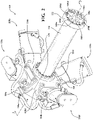
Fig. 7 is an alternate embodiment of a top side perspective view of the spindle detached from the robotic arm with a camera attached to the spindle. -
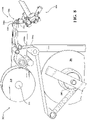
Fig. 8 is a side perspective view of a patch dispensing apparatus loading patches onto the spindle. -
Fig. 9 is a schematic side perspective view of the robotic arm applying a patch to the vehicle part. -
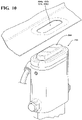
Fig. 10 is a schematic side view of a training applicator pad and hole on a vehicle part. - The following description of the preferred embodiment(s) is merely exemplary in nature and is in no way intended to limit the invention, its application, or uses.
- Referring now all the Figures general and with specific reference to
Figs 6a ,6b ,8 ,9 and 11 a method for securing a patch 102 over ahole vehicle part 106 is shown and described. Thevehicle part 106 can be any component of a vehicle that has holes that need to be covered. In the exemplary embodiment of the invention shown thevehicle part 106 is a rocker panel that has drain holes that are used during the coating process, where the part is dipped or sprayed and liquid must be drained from the inside of the part before finishing the vehicle part by painting, coating or adding additional components. Leaving the drain holes open is not desirable because of the potential for exposing the inside of the part to the outside elements. - The
patch applicator arrangement 100 provides arobotic arm 108 having threemoveable joints Moveable joints moveable join 114, which is located at a base of the robotic arm, andmoveable joint 114 allows therobotic arm 108 to rotate 360 degrees. Connected to an end 116 of therobotic arm 108 is aspindle 118. Thespindle 118 has aneck portion 120 with a longitudinal axis A-A and afirst end 122 connected to therobotic arm 108 and asecond end 124 of theneck portion 120 connected to abase 126 of thespindle 118. Thespindle 118 is rotatable about the longitudinal axis A-A of theneck portion 120. - The
patch applicator arrangement 100 as shown has four spring loadedapplicators base 126 of thespindle 118. While the current embodiment shows fourth spring loadedapplicators Figs. 2-5 depict the spring loadedapplicators angled surface robotic arm 108 or curvature on the vehicle part surface. The angle Θ is determined relative to the longitudinal axis A-A and can be one selected from a range of about 1 degree to about 50 degrees, less than or equal to 45 degrees, less than or equal to 35 degrees, greater than or equal to 5 degrees, greater than or equal to 20 degrees. - In another embodiment on the invention show in
Fig. 7 another alternate embodiment of aspindle 318 is depicted. In this embodiment of the invention like reference numbers fromFig. 7 are carried over and shown. The difference is that spring loadedapplicator 128b shown inFig. 2 on thespindle 118, has been has been replaced with adigital camera 319 that, as described in greater detail below is used to take images of the vehicle part. The other spring loadedapplicators - Referring to
Fig. 5 the details of the spring loadedapplicators applicators static base 132 connected to theangled surface base 126 of thespindle 118 using fasteners. Thestatic base 132 includes a spring holding bore 134 extending into thestatic base 132 and terminating as astatic spring seat 136. Within the spring holding more 134 is aspring 138 that has afirst end 140 and asecond end 142. Thefirst end 140 contact thestatic spring seat 136, while thesecond end 142 of thespring 138 extends outside of the spring holding bore 134 and contacts aplunger spring seat 144 formed on an end 146 of a hollow portion 148 of aplunger 150. Theplunger 150 is configured to slide between a compressed position whereplunger spring seat 144 of theplunger 150 compresses against thespring 138 as theplunger 150 contacts against an object, such as a vehicle part with enough force to compress thespring 138 and cause theplunger 150 to move toward thebase 126 of thespindle 118. Theplunger 150 is also moveable to an uncompressed position where theplunger 150 is moved away, using therobotic arm 108, from contact with the vehicle part and thespring 138 exerts force on theplunger spring seat 144 to cause theplunger 150 to move away from thebase 126 of thespindle 118 so that thespring 138 becomes uncompressed. - The plunger is slidably held to the
static base 132 usingretention screws 152, 152' that engage arespective retention slot 154, 154' formed on thestatic base 132. The retention screws 152, 152' slide within theretention slot 154, 154' as theplunger 150 moves between the compressed and uncompressed position, while also preventing theplunger 150 from sliding off of thestatic base 132. If a user desires to remove the plunger from thestatic base 132, the retention screws 152, 152' are loosened or backed out so they no longer engage therespective retention slot 154, 154', thereby allowing theplunger 150 to slide off thestatic base 132. - Each
plunger 150 has avacuum channel 156 extending through theplunger 150, with avacuum source inlet 158 connected to thevacuum channel 156. Thevacuum channel 156 is a bore drilled though anend wall 160 of theplunger 150. The ends of the vacuum channel are closed byplugs 164, 164' that are removable and provide alternate attachments locations of thevacuum source inlet 158. Thevacuum source inlet 158 is connected to across channel 162 that extends from the outside surface of theplunge 150 and ends at thevacuum channel 156. Through theend wall 160 of theplunger 150 is arevacuum holes 168, 168' that provide a suction. While twovacuum holes 168, 168' are shown it is within the scope of this invention for there to be a lesser or greater number of vacuum holes depending on the size of the patch and the size of the vacuum channel. - Connected to the
end wall 160 of theplunger 150 is anapplicator pad 170, which has asoft layer 172 connected to aplastic base layer 174. There areholes 176, 176' that extend through theapplicator pad 170 and align with the vacuum holes 168, 168' on the plunger when theapplicator pad 170 is connected to the plunger. Theholes 176, '176' allow for a vacuum suction formed in thevacuum channel 156 of theplunger 150 to be applied at the surface of thesoft foam layer 172. During operation a patch (described below) is held onto the surface of thesoft layer 172 by using the vacuum suction force provided at theholes 176, 176'. The plunger has analignment slot 178 that circumscribes an outer external surface of theend wall 160. Theplastic base layer 174 has aconnection edge 180 and asnap tang 182. Theconnection edge 180 slides into thealignment slot 178 and secures and aligns theapplicator pad 170 onto theplunger 150. Thesnap tang 182 snaps onto the alignment slot and prevents theapplicator pad 170 from sliding off theplunger 150. To remove thealignment pad 170 thesnap tang 182 is pulled upward to release thesnap tang 182 from thealignment slot 178, which allows theapplicator pad 170 to slide off theplunger 150. - During operation of the robotic arm 108 (described below) the
applicator pad 170 makes contact with the vehicle part with enough force that allows the adhesive of the patch to adhere to the surface of the vehicle part. Thesoft layer 172 provides a cushion that prevents damage to the vehicle part and the spring loadedapplicators applicators soft layer 172 can be made of several materials including rubber, polyurethane, silicone, Styrofoam or any soft material that will allow therobotic arm 108 to press the patch onto a vehicle part without causing damage to the vehicle part or theplunger 150. - The
patch applicator arrangement 100 further includes fourvacuum generators applicators vacuum generators air feedback line vacuum source inlet 158. - Each
vacuum generator applicator vacuum source inlet 158 on theplunger 150. Connected to eachvacuum generator vacuum feedback line respective vacuum generator vacuum feedback line pressure sensor 194 and at a second end to one of thevacuum generators vacuum generator vacuum source inlet 158 and each of thevacuum feedback line pressure sensor 194. Also included are one or moreair control valves 192 for controlling the flow of compressed air through a plurality ofair supply lines vacuum generators air control valves 192 at a second end. Theair supply lines respective vacuum generator - A
controller 196 is connected to therobotic arm 108, one or moreair control valves 192 andpressure sensor 194 connected to each of thevacuum feedback line controller 196 receives signals from eachpressure sensor 194 and sends control signals to move the one or moreair control valves 192 between an open position and closed position, thereby controlling when the vacuum pressure is created by therespective vacuum generator - Each compressed
air feedback line air supply lines hollow channel 188 in theneck portion 120 of thespindle 118. While thespindle 118 is shown and described as having thehollow channel 188 it is within the scope of this invention for theneck portion 120 to be solid with the compressedair feedback line air supply lines - The
patch applicator arrangement 100 also includes acamera 119, which can be a single camera or multiple cameras depending on the particular application. Thecamera 119, which can also be thecamera 319 connected to thespindle 118 described above and also described herein, is connected to thecontroller 196. Thecamera 119, 219 takes one or more images of thevehicle part 106 and transmits the images to thecontroller 196. Thecontroller 196 analyzes the one or more images taken by thecamera vehicle part 106 is in proper position and also determines whether or not thehole vehicle part 106 has been covered after the arrangement is operated. Thecamera 119 in the current embodiment of the invention is mounted to the ground below thevehicle part 106, however, it is within the scope of this invention for thecamera 119 to be mounted to other locations. - Referring now to
Fig. 10 atraining applicator pad 198 aspect of the invention is shown. Thetraining applicator pad 198 is used when training therobotic arm 108 to learn the movements and locations of the eachhole vehicle part 106. During training of therobotic arm 108 theapplicator pad 170 is removed and thetraining applicator pad 198 is connected to theplunger 150. Thetraining applicator pad 198 has the same plastic base as theapplicator pad 170, which allows for the connection with theplunger 150. Thetraining applicator pad 198 includes a protrudingsurface 200 that is positioned into one of the holes of thevehicle part 106 when therobotic arm 108 is being trained. - Referring now to
Fig. 8 thepatch applicator arrangement 100 also includes apatch dispensing apparatus 202. The patch dispensing apparatus include atape roll 204 withmultiple patches tape roll 204 with adhesive on one side of the patch. Thetape roll 204 is rotatably positioned on asupply spindle 208 with the end of thetape roll 204 being threaded through thepatch dispensing apparatus 202 to a take-up roll 210 rotatably mounted to a take-upspindle 211. In one embodiment of the invention thesupply spindle 208 and the take-up spindle are each connected to an actuator, such as a single motor with a belt transmission (not shown) that rotates bothsupply spindle 208 and the take-upspindle 211 at the same rate. Thepatch dispensing apparatus 202 includes apatch loading area 214 that has abend plate 216 where the unrolled tape makes a sharp turn, which slightly peels an edge of any patches adhering to the tape as the tape slides around thebend plate 216. As shown in the drawings,patch 206c is being peeled off in thepatch loading area 214. Above thebend plate 216 is anair tooth 220 that blows a stream of compressed air at an angle that contacts the lifted edge of the patch in thepatch loading area 214 in causes the patch to falloff the tape. - Referring now to all the Figures a method of covering holes on vehicle parts with a patch and verifying patch placement is described. The method includes providing a vehicle part having holes that need to be covered. Providing the
patch dispensing apparatus 202 with thetape roll 204 with two ormore patches tape roll 204. Providing therobotic arm 108 having at least one movable joint. Providing thespindle 118 connected to an end of therobotic arm 108, where thespindle 118 has theneck portion 120 with longitudinal axis A-A and thefirst end 122 of theneck portion 210 connected to therobotic arm 108 and asecond end 124 of theneck portion 120 connected to thebase 126 of thespindle 118. Thespindle 118 being rotatable about a longitudinal axis A-A of theneck portion 120. - The method further includes providing the spring loaded
applicators spindle 118. Additionally the method includes providing thevacuum feedback lines vacuum generator pressure sensor 194. Eachvacuum generator applicators vacuum generator air supply lines air control valve 192 that controls the flow of compressed air to thevacuum generator controller 196 connects with the at least oneair control valve 192 and at least onepressure sensor 194 for sensing and controlling the flow of compressed air through each one of the eachvacuum generator camera 119 connected to thecontroller 196 for taking images of the vehicle part. - Referring now to
Figs. 6a and6b the method includes the operational steps of the method are described. Afirst step 10 includes loading patches onto the plurality of spring loaded applicators on the spindle. During thisfirst step 10 the robotic arm is moved and the spindle is rotated to position one of the plurality of spring-loaded applicators relative to a patch loading area of the patch dispensing apparatus. Thefirst step 10 further includes activating the patch dispensing machine to move the patch tape so one of the patches is positioned in the patch loading area and then spraying air through an air tooth on the patch dispensing machine to blow the patch off of the tape roll onto the one of the plurality of spring-loaded applicators positioned in the patch loading area. Simultaneously the vacuum generator associated with the one of the plurality of spring-loaded applicators is activated to create a vacuum on a surface of the applicator pad to grab and hold the patch onto the surface of the applicator pad. - Next at a second step 12 a determination is made whether there are more patches that need to be loaded or can be loaded? This determination is made by the controller which receives and analyzes signals from the digital camera as well as the pressure sensor, which senses the vacuum force at each vacuum generator associated with the one of the plurality of spring-loaded applicators. The controller will use digital camera images to determine how many holes of the vehicle parts still need to be covered. For example if a vehicle part has more holes than the number of spring loaded applicators than the robotic arm may need to go through a couple of cycles before all of the walls have been covered by patches. The number of holes in a vehicle part in the number of patches applied are all programmed into the controller. Therefore if a camera image shows that there are fewer holes than the number of spring loaded applicators, the controller will only command the robotic arm to load enough patches to cover the remaining holes.
- The controller will also determine if there are patches present on the heads using vacuum pressure signals. The pressure sensor, which receives feedback signals from the vacuum generators sends pressure reading signals to the controller. The controller determines if the pressure reading is such that it indicates the presence of a patch on the applicator pad. The pressure reading signals can vary depending upon a particular application. However, wherein the the sensed pressure when there is a properly placed patch present will have a known pressure value no matter what type of application is being used; therefore in one embodiment of the invention the controller is programmed so that a sensed vacuum pressure of less than 25% of the value sensed when a patch is present (i.e., the know pressure value when a properly placed patch is present), indicates that there is no patch present. In one exemplary embodiment of the invention the pressure readings range from -8 kPa to -70 kPa. If a patch is present on the applicator pad than the pressure reading is typically -70 kPa, while if no patch is present then the pressure reading is approximately -8 kPa. In one exemplary embodiment of the invention the controller is programmed to determine that no patch is present if the vacuum pressure reading is less than or equal to -30 kPa because a lesser reading would indicate that either there is no patch present. However this range can vary depending on several factors including the size of the patch, applicator pad material, number of holes, size of the vacuum channels of the plurality of spring-loaded applicators, etc. If at
step 12 it is determined that there are not patches on all of the plurality of spring-loaded applicators the controller will determine which of plurality of spring-loaded applicators does not have a patch loaded and then command the robotic arm to rotate the spindle so that the on loaded one of the plurality of spring-loaded applicators faces the patch dispensing apparatus. Then step 10 begins again as described above. - Once it has been determined at
step 12 that all patches are on each of the plurality of applicator heads the method progresses to step 14 where it is determined whether the vehicle part is in position? During this step the digital camera is used to capture an image of the vehicle part to determine if it is in proper position. Often times the method is being implemented on an assembly line and the vehicle part is moving along a conveyor line and must be in proper position before the method can continue. The image taken by one or more digital cameras is sent to the controller which analyzes the image based on pre-programmed data. The preprogrammed data is recorded during a training session where images of the part located in a suitable location are captured and stored by the controller. These stored images are compared to the images taken duringstep 14 and it is determine whether or not the vehicle part is in proper alignment for the method to continue. If it is determined that the vehicle part is not yet in proper alignment thestep 14 will continue to repeat and the one or more digital cameras will take additional images and analysis is made and till the vehicle part has reached a proper alignment position. - Then once at
step 14 it has been determined that the vehicle part is in position the method will progress to step 16 where the robotic arm will move at one of the plurality of spring-loaded applicators is rotated into alignment with one of the holes of the vehicle part. Next atstep 18 the patch is applied to the vehicle part. During this step the robotic arm is then moved toward the vehicle part such that a patch is pressed onto the vehicle part so that the hole in the vehicle part is covered. When the robotic arm moves to the patch application position the one of the plurality of spring located applicators that is applying the patch is compressed so that the plunger of the one of the plurality of spring located applicators is pressed with force against the vehicle part, the force being sufficient enough to compress the one of the plurality of spring located applicators thereby applying enough force against the patch in the vehicle part parts to cause the patch to stick to the vehicle part. Simultaneously during this compression stop the vacuum force of that particular spring loaded applicator is turned off in order to release the vacuum force being applied to the patch. - Next at step 20 a query is made as to what whether there are more holes on the part to cover? During the step the controller makes this determination by comparing the number of patches applied to the vehicle part with the number of holes in the vehicle part which were previously programmed into the controller. If a determination is made that there are no more holes to cover in the vehicle part then at step 22 a determination is made whether or not the holes on the vehicle part are covered properly? During the step the one or more digital cameras are activated and images are taken of the vehicle part and transmitted to the controller. The plate placement of the patches are then analyzed to determine if the holes are in fact covered. If it is determination is made that all of the holes are covered then at
step 24 the robotic arm is moved away from the vehicle part in the vehicle part moves out of the way. However if a determination is made that one of the holes is not covered or not covered properly atstep 26 the controller will determine if this is the first time that a hole is not been covered or missing. If it is the first time the controller atstep 29 will command the robotic arm to place another patch or load another patch is needed and then place another patch. Then the method returns to step 22 and the vehicle part is checked a second time. However if atstep 26 it is determined that a second attempt to place a patch has been made and is still unsuccessful then the method will progress to step 27 and an alert will be generated. After step 24 a new vehicle part begins moving into the work area and the method returns back to step 10. - If it step 20 this determined that there are more holes on the vehicle part to cover the method progresses to step 28 and a determination is made whether there are still loaded patches on the plurality of spring-loaded applicators? If a determination is made that there are no more patches loaded onto the plurality of spring-loaded applicators than the method probe returned back to step 10 and the patch loading process will begin, and the controller will know based upon the preprogrammed data which of the holes on the vehicle part still need to be covered. The controller will use this information to command the robotic arm at
step 16 to move to the next appropriate hole in the vehicle part. During certain applications the number of holes in the vehicle part may be greater or lesser in number than the number of spring loaded applicators on the spindle. There also may be an odd number of holes in the vehicle part. For example a spindle may have three spring loaded applicators, but the vehicle part may only have four holes. This means that for a given vehicle part of the robotic arm will apply one set of three patches but will need to go back and load one more single patch to cover the fourth hole. The method of the invention includes programming the controller to command the robotic arm to alternate which one of the three spring located applicators will load and apply the fourth patch. The reason for this is that over many cycles the plurality of spring loaded applicators wear down and I alternating which one of the three spring loaded applicators receives the fourth patch will cause even fatigue amongst the three applicators. - If at
step 28 it is determined that there are still loaded patches on the plurality of spring-loaded applicators, atstep 30 the spindle will rotate and align a loaded patch with an open hole on the vehicle part. Duringstep 30 the controller will use the vacuum pressure signals pressure sensor to determine which one of the plurality of spring located applicators still has a loaded patch and then command the robotic arm to rotate the spindle to align spring located applicator into position with the whole on the vehicle part. The method will then return to step 18 where the patch will be applied to the vehicle part. - The description of the invention is merely exemplary in nature and, thus, variations are intended to be within the scope of the invention, as long as such variations do not depart from the scope of the appended claims.
Claims (15)
- A patch applicator arrangement (100) for securing a patch (102) over a hole in a vehicle part (106) comprising:a robotic arm (108) having at least one movable joint (110, 112, 114);a spindle attachment (118) connected to an end (116) of the robotic arm, wherein the spindle (118) has a neck portion (120) with having a longitudinal axis (A-A) and a first end (122) connected to the robotic arm (108) and a second end (124) connected to a base (126) of the spindle (118), the spindle (118) is rotatable about the longitudinal axis (A-A) of the neck portion (120);a plurality of spring loaded applicators (128a, 128b, 128c, 128d) connected to the spindle (118), wherein each one of the plurality of spring loaded applicators (128a, 128b, 128c, 128d) includes a static base (132) connected to the base (126) of the spindle (118), a spring (138) seated on the static base (132) and a plunger (150) that having a hollow portion (148) that is slidably connected about the static base (132) with the spring (138) positioned between the static base (132) and the plunger (150) so that the spring (138) acts on the plunger (150) when compressed, wherein the plunger (150) is configured to slide between a compressed position where the plunger (150) compresses against the spring (138) and moves towards the base (126) of the spindle (118) and an uncompressed position where the plunger (150) moves away from the base (126) of the spindle, characterized in that each of the plurality of spring loaded applicators (128a, 128b, 128c, 128d) further include:an alignment slot (178) formed on the plunger (150);an applicator pad (170) with a soft layer (172) and a plastic base layer (174), wherein the plastic base layer (174) includes a connection edge (180) configured to slide onto the alignment slot (178) and a snap tang (182) that is configured to snap into the alignment slot (178) to removable secure the applicator pad (170) to the plunger (150) with the snap tang (182);a vacuum channel (156) extending through each plunger (150) and having a vacuum source inlet (158) connected to the vacuum channel (156) and one or more vacuum holes extending through the end of the plunger (150) to the vacuum channel (156);a plurality of vacuum generators (184a, 184b, 184c, 184d) each one of the plurality of vacuum generators (184a, 184b, 184c, 184d) being connected to one of the plurality of spring loaded applicators (128a, 128b, 128c, 128d) at the vacuum source inlet (158) on the plunger (150) of the one of the plurality of vacuum generators (184a, 184b, 184c, 184d);a plurality of vacuum feedback lines (186a, 186b, 186c, 186d) each connected at one end to a pressure sensor (194) and at a second end (124) to one of the plurality of vacuum generators (184a, 184b, 184c, 184d), wherein each of the plurality of vacuum generators (184a, 184b, 184c, 184d) is turned on to create a vacuum pressure that is applied to the vacuum source inlet (158) and each of the plurality of vacuum feedback lines (186a, 186b, 186c, 186d) send a pressure reading signal to the pressure sensor (194);one or more air control valves (192) for controlling the flow of compressed air through a plurality of air supply lines (190a, 190b, 190c, 190d) connected to a respective one of the plurality of vacuum generators (184a, 184b, 184c, 184d), wherein the plurality of air supply lines (190a, 190b, 190c, 190d) supply compressed air to the plurality of vacuum generators (184a, 184b, 184c, 184d) to create the vacuum pressure;a controller (196) connected to the robotic arm (108), one or more air control valves (192) and pressure sensor (194) connected to each of the plurality of vacuum feedback lines (186a, 186b, 186c, 186d) wherein the controller (196) receives signals from each pressure sensor (194) and sends control signals to move the one or more air control valves (192) between an open position and closed position.
- The patch applicator arrangement (100) of claim 1, further comprising:
at least one camera (119) is connected to the controller (196) for taking one or more images of the vehicle part (106) and transmitting the one or more images to the controller (196), wherein the controller (196) analyzes the one or more images taken by the at least one camera (119) and determines if the vehicle part (106) is in proper position and also determines whether or not the hole on the vehicle part (106) has been covered after the robotic arm (108) arrangement is operated. - The patch applicator arrangement (100) of claim 2, wherein the camera (119) is connected to the base (126) of the spindle (118).
- The patch applicator arrangement (100) of claim 1, wherein each one of the spring loaded applicators (128a, 128b, 128c, 128d) includes one or more retention slots (154, 154') formed on the static base (132) and one or more's retention screws (152, 152') extending through the plunger (150) and into one of the one or more retention slots (154, 154') for holding the plunger (150) onto the static base (132).
- The patch applicator arrangement (100) of claim 1, further comprising one or more training applicator pads (170) that are positionable on the plunger (150) of one of the plurality of spring loaded applicators (128a, 128b, 128c, 128d), wherein the training applicator pads (170) have a protruding surface that is positionable within one of the holes of the vehicle part (106) when the robotic arm (108) is being trained.
- The patch applicator arrangement (100) of claim 1, further comprising:
a patch dispensing apparatus (202) having a tape roll with two or more patches (102) on the tape roll, wherein the tape roll selectively rotates and moves one of the two or more patches (102) to a patch loading area. - The patch applicator arrangement (100) of claim 6, wherein the patch dispensing apparatus (202) further includes an air tooth (220) located in the patch loading area, wherein the air tooth (220) is connected to a compressed air source and blows air through the air tooth onto the tape roll (204) at an angle that causes one of the two or more patches (102) to fall off the tape roll (204) in the patch loading area.
- The patch applicator arrangement (100) of claim 1, wherein each of the plurality of spring loaded applicators (128a, 128b, 128c, 128d) further include:a closed end surface area formed at one end of the hollow portion of the plunger (150);a plunger spring seat (144) formed on the closed end surface area;a spring holding bore (134) extending the static base (132) and terminating at a static spring seat (136), wherein each spring has a first end (122) and a second end (124) and each spring (138) is positioned with in the spring holding bore (134) so that the first end (122) of the spring (138) contacts the static spring seat (136), while a portion of the spring (138) extends out of the spring holding more and a second end (124) of the spring contacts the plunger spring seat (144).
- A method of applying patches (102) to cover holes on a vehicle part (106) and verifying patch placement comprising the steps of:providing a vehicle part (106) having a predetermined number of holes;providing a robotic arm (108) having at least one movable joint (110, 112, 114) and a spindle (118) connected to an end (116) of the robotic arm (108), wherein the spindle (118) is rotatable about a longitudinal axis (A-A);providing a plurality of spring loaded applicators (128a, 128b, 128c, 128d) connected to the spindle (118), the plurality of spring loaded applicators (128a, 128b, 128c, 128d) being connected to a vacuum generator (184a, 184b, 184c, 184d); characterized in thatthe method further comprises the steps of:providing a patch dispensing apparatus (202) with a tape roll (204) having plurality of patches (102) on the tape roll (204);providing a controller (196) and a camera for taking images of the vehicle part, the camera is connected to the controller (196) and the controller (196) is connected to one or more air control valves (192) that are connected to the vacuum generator (184a, 184b, 184c, 184d) connected to each of the plurality of spring loaded applicators (128a, 128b, 128c, 128d), wherein the controller (196) provides instruction signals to the one more air control valves (192);loading the plurality of patches (102) individually onto a respective one of the plurality of spring loaded applicators (128a, 128b, 128c, 128d) on the spindle;determining whether there are more patches (102) that need to be loaded;determining whether the vehicle part (106) is in position by operating the camera to capture an image of the vehicle part (106) and using the controller (196) to analyze the image and determining if the vehicle part (106) is in proper position;moving the robotic arm (108) to position one of the plurality of spring-loaded applicators and one of the plurality of patches (102) into alignment with one of the predetermined number of holes in the vehicle part;applying the one of the plurality of patches (102) to the one of the predetermined number of holes in the vehicle part;determining whether there are more holes of the predetermined number of holes in the vehicle part (106) that need to be covered by comparing the number of patches (102) applied to the vehicle part (106) with the predetermined number of holes in the vehicle part (106) previously programmed onto the controller (196);determining whether or not the holes on the vehicle part (106) are covered properly, wherein the camera is activated and an image is taken of the vehicle part (106) and transmitted to the controller (196) and the controller (196) analyzes the placement of the one of the plurality of patches (102) to determine if the predetermined number of holes are covered; andmoving the robotic arm (108) away from the vehicle part (106) and moving the finished vehicle part.
- The method of claim 9, wherein the step of loading the plurality of patches (102) individually onto a respective one of the plurality of spring loaded applicators (128a, 128b, 128c, 128d) on the spindle (118) further includes moving the robotic arm (108) and rotating the spindle (118) to position one of the plurality of spring-loaded applicators relative to a patch loading area of the patch (102) dispensing apparatus and activating the patch dispensing machine to move the patch tape so one of the patches (102) is positioned in the patch loading area and then spraying air through an air tooth on the patch dispensing machine to blow the patch (102) off of the tape roll onto the one of the plurality of spring-loaded applicators positioned in the patch loading area, and simultaneously operating the vacuum generator (184a, 184b, 184c, 184d) associated with the one of the plurality of spring-loaded applicators to create a vacuum on a surface of an applicator pad (170) of the plurality of spring loaded applicators (128a, 128b, 128c, 128d) to grab and hold the patch (102) onto the surface of the applicator pad (170).
- The method of claim 9, further including the steps of:providing a pressure sensor (194) connected to the plurality of vacuum generators (184a, 184b, 184c, 184d);wherein the step of determining whether there are more patches (102) that need to be loaded further includes operating the controller (196) to receive and analyze the image from the camera (119) to determine how many holes of the vehicle parts still need to be covered and analyzing the signals from the pressure sensor (194) to sense a pressure reading at each vacuum generator associated with the one of the plurality of spring-loaded applicators (128a, 128b, 128c, 128d) to determine if a patch (102) is present on the any of the plurality of spring-loaded applicators (128a, 128b, 128c, 128d).
- The method of claim 11, wherein a pressure reading of less than or equal to -30 kPa indicates that there is no patch (102) present.
- The method of claim 11, wherein a sensed vacuum pressure of less than 25% of a known pressure value when a properly placed patch (102) is present, indicates that there is no patch (102) present.
- The method of claim 9, wherein the step of applying the one of the plurality of patches (102) to the one of the predetermined number of holes in the vehicle part (106) further includes the one of the plurality of spring loaded applicators (128a, 128b, 128c, 128d) that is applying the patch (102) is compressed so that the plunger (150) of the one of the plurality of spring located applicators is pressed with force against the vehicle part, the force being sufficient enough to compress the one of the plurality of spring located applicators thereby applying enough force against the patch (102) onto the vehicle part (106) to cause the patch (102) to stick to the vehicle part (106) and simultaneously stopping the vacuum force of the one of the plurality of spring loaded applicators (128a, 128b, 128c, 128d) to release the vacuum force being applied to the patch.
- The method of claim 9, further comprising the step of:using the controller (196) to determining that one of the holes is not covered;commanding the robotic arm (108) to load another patch (102) on to the plurality of spring loaded patch applicators if necessary and then place another patch; andchecking the vehicle part (106) a second time to determine if all of the predetermined holes on the vehicle part (106) of properly covered.
Priority Applications (1)
| Application Number | Priority Date | Filing Date | Title |
|---|---|---|---|
| EP22190704.1A EP4108395A1 (en) | 2018-10-22 | 2019-10-18 | A vehicle part hole patch applicator arrangement |
Applications Claiming Priority (2)
| Application Number | Priority Date | Filing Date | Title |
|---|---|---|---|
| US201862748854P | 2018-10-22 | 2018-10-22 | |
| PCT/IB2019/058908 WO2020084419A1 (en) | 2018-10-22 | 2019-10-18 | A vehicle part hole patch applicator arrangement |
Related Child Applications (1)
| Application Number | Title | Priority Date | Filing Date |
|---|---|---|---|
| EP22190704.1A Division EP4108395A1 (en) | 2018-10-22 | 2019-10-18 | A vehicle part hole patch applicator arrangement |
Publications (2)
| Publication Number | Publication Date |
|---|---|
| EP3833517A1 EP3833517A1 (en) | 2021-06-16 |
| EP3833517B1 true EP3833517B1 (en) | 2022-09-21 |
Family
ID=68343183
Family Applications (2)
| Application Number | Title | Priority Date | Filing Date |
|---|---|---|---|
| EP19794255.0A Active EP3833517B1 (en) | 2018-10-22 | 2019-10-18 | A vehicle part hole patch applicator arrangement |
| EP22190704.1A Withdrawn EP4108395A1 (en) | 2018-10-22 | 2019-10-18 | A vehicle part hole patch applicator arrangement |
Family Applications After (1)
| Application Number | Title | Priority Date | Filing Date |
|---|---|---|---|
| EP22190704.1A Withdrawn EP4108395A1 (en) | 2018-10-22 | 2019-10-18 | A vehicle part hole patch applicator arrangement |
Country Status (5)
| Country | Link |
|---|---|
| US (1) | US10723498B2 (en) |
| EP (2) | EP3833517B1 (en) |
| JP (1) | JP7158574B2 (en) |
| CN (1) | CN112912215A (en) |
| WO (1) | WO2020084419A1 (en) |
Families Citing this family (7)
| Publication number | Priority date | Publication date | Assignee | Title |
|---|---|---|---|---|
| CN111361819B (en) * | 2020-05-27 | 2020-08-21 | 江苏金恒信息科技股份有限公司 | Wire rod tag hanging system and method |
| CN111923076B (en) * | 2020-08-10 | 2021-07-30 | 青岛职业技术学院 | Assembling method of pneumatic gripper |
| DE102021117805A1 (en) | 2021-07-09 | 2023-01-12 | Bayerische Motoren Werke Aktiengesellschaft | Method for checking the presence of plugs and test system for a motor vehicle component |
| CN113305865B (en) * | 2021-08-01 | 2021-10-15 | 成都岁生科技有限责任公司 | Railway vehicle bogie wedge supporting robot |
| DE102024116852A1 (en) * | 2024-06-14 | 2025-12-18 | Tesa Se | Application unit and method for processing self-adhesive die-cut parts for closing openings in a vehicle component such as battery housings |
| DE102024116855A1 (en) * | 2024-06-14 | 2025-12-18 | Tesa Se | Application unit and method for processing self-adhesive die-cut parts for closing openings in a vehicle component such as battery housings |
| CN120023613B (en) * | 2025-04-21 | 2025-10-17 | 北京新光微电科技有限公司 | Drill rod label intelligent installation device and method |
Family Cites Families (13)
| Publication number | Priority date | Publication date | Assignee | Title |
|---|---|---|---|---|
| US2256824A (en) * | 1940-01-09 | 1941-09-23 | Band It Company | Clamp applying tool |
| US3945238A (en) * | 1974-10-24 | 1976-03-23 | Eckert Robert L | Clip dispenser and applicator |
| GB1521580A (en) * | 1975-11-21 | 1978-08-16 | Kloster K | Spring compressor tool |
| SE428441B (en) * | 1975-12-18 | 1983-07-04 | Raymond A Fa | APPARATUS FOR AUTOMATIC EXPOSURE OF FASTENING ELEMENTS, SUCH AS CLOTHES AND PICKING OF FASTENING ELEMENTS ON THE REPLACE |
| GB9126338D0 (en) * | 1991-12-11 | 1992-02-12 | Glynwed Eng | Fastener applicator |
| DE19545191A1 (en) * | 1995-12-04 | 1997-06-05 | Siemens Nixdorf Inf Syst | Device for providing and applying labels and method for operating this device |
| US6886231B2 (en) * | 1999-06-25 | 2005-05-03 | Burke E. Porter Machinery Company | Robotic apparatus and method for mounting a valve stem on a wheel rim |
| DE20020454U1 (en) * | 2000-12-02 | 2001-03-01 | Vau-Ess-Plastik GmbH & Co., 91550 Dinkelsbühl | Handle with soft touch effect |
| US20040256503A1 (en) * | 2003-05-08 | 2004-12-23 | Young Roy Earl | Shielded electrode |
| US20110209320A1 (en) * | 2010-02-26 | 2011-09-01 | Abb Inc. | Vision Guided Robotic Grommet Installation |
| DE202015102825U1 (en) * | 2015-06-01 | 2016-09-02 | Kuka Systems Gmbh | Plug fastening tool |
| DE102015014221B4 (en) * | 2015-11-04 | 2017-06-14 | Daimler Ag | Robot tool and method for mounting plugs, in particular for motor vehicles |
| CN110678397B (en) * | 2016-11-01 | 2022-05-03 | 香港物流及供应链管理应用技术研发中心 | System for placing a label on an object, method thereof and effector for a robotic system |
-
2019
- 2019-10-18 CN CN201980059861.8A patent/CN112912215A/en active Pending
- 2019-10-18 EP EP19794255.0A patent/EP3833517B1/en active Active
- 2019-10-18 JP JP2021516663A patent/JP7158574B2/en active Active
- 2019-10-18 EP EP22190704.1A patent/EP4108395A1/en not_active Withdrawn
- 2019-10-18 WO PCT/IB2019/058908 patent/WO2020084419A1/en not_active Ceased
- 2019-10-21 US US16/658,670 patent/US10723498B2/en active Active
Also Published As
| Publication number | Publication date |
|---|---|
| US20200122871A1 (en) | 2020-04-23 |
| JP2022502269A (en) | 2022-01-11 |
| JP7158574B2 (en) | 2022-10-21 |
| CN112912215A (en) | 2021-06-04 |
| EP3833517A1 (en) | 2021-06-16 |
| EP4108395A1 (en) | 2022-12-28 |
| US10723498B2 (en) | 2020-07-28 |
| WO2020084419A1 (en) | 2020-04-30 |
Similar Documents
| Publication | Publication Date | Title |
|---|---|---|
| EP3833517B1 (en) | A vehicle part hole patch applicator arrangement | |
| EP3593938B1 (en) | Apparatus for and method of installing pre-molded seal caps | |
| EP2839885B1 (en) | Method and apparatus for exchanging nozzles and tips for a fluid dispensing system | |
| EP3274134B1 (en) | Multi-jointed robot deviation under load determination | |
| US11565370B2 (en) | Method and apparatus for carrying out the replacement of an abrasive element in a machine for working surfaces | |
| CN108430693B (en) | Orientation and application of door seal for motor vehicle | |
| US10717559B2 (en) | Label applicator with label peeling function, robot, and label peeling method | |
| US20070042677A1 (en) | Methods for Lapping Using Pneumatically Actuated Flexible Coupling End Effectors | |
| US10076761B2 (en) | Handheld tool for applying a fluid onto a surface | |
| EP4196340B1 (en) | Installation and process for the preparation and fixation of electronic component fastening devices to tire casings | |
| US20250242466A1 (en) | Abrasive article attachment systems and methods | |
| KR20190124367A (en) | Automatic mounting system for vehicle plug | |
| US10898944B2 (en) | Tape feed apparatus and method for a self-piercing rivet machine | |
| US12076756B2 (en) | Multi-task device comprising means for discharging a rivet or temporary fastener identified as non-compliant to a disposal zone | |
| US20230415281A1 (en) | Modular application apparatus and modular kit for constructing an application apparatus | |
| US20070209420A1 (en) | Apparatus and method for holding materials for the forming and joining thereof | |
| JP2019141834A (en) | Apparatus and method for dispensing brushable substance onto surface | |
| US20250039524A1 (en) | Multi-task device comprising a camera and a single spindle for placing the camera in a focussing position | |
| US20230415245A1 (en) | Application apparatus with integrated drilling unit | |
| CN113226945A (en) | Annular abrasive belt dispenser | |
| CN110735894B (en) | Synchronous belt auxiliary installation mechanism | |
| WO2025166091A1 (en) | Robotic chamber cleaning and maintenance | |
| JPH11173496A (en) | Grease coating device | |
| WO2005060493A3 (en) | Tool and method for joining sheet material |
Legal Events
| Date | Code | Title | Description |
|---|---|---|---|
| STAA | Information on the status of an ep patent application or granted ep patent |
Free format text: STATUS: UNKNOWN |
|
| STAA | Information on the status of an ep patent application or granted ep patent |
Free format text: STATUS: THE INTERNATIONAL PUBLICATION HAS BEEN MADE |
|
| PUAI | Public reference made under article 153(3) epc to a published international application that has entered the european phase |
Free format text: ORIGINAL CODE: 0009012 |
|
| STAA | Information on the status of an ep patent application or granted ep patent |
Free format text: STATUS: REQUEST FOR EXAMINATION WAS MADE |
|
| 17P | Request for examination filed |
Effective date: 20210308 |
|
| AK | Designated contracting states |
Kind code of ref document: A1 Designated state(s): AL AT BE BG CH CY CZ DE DK EE ES FI FR GB GR HR HU IE IS IT LI LT LU LV MC MK MT NL NO PL PT RO RS SE SI SK SM TR |
|
| DAV | Request for validation of the european patent (deleted) | ||
| DAX | Request for extension of the european patent (deleted) | ||
| GRAP | Despatch of communication of intention to grant a patent |
Free format text: ORIGINAL CODE: EPIDOSNIGR1 |
|
| STAA | Information on the status of an ep patent application or granted ep patent |
Free format text: STATUS: GRANT OF PATENT IS INTENDED |
|
| INTG | Intention to grant announced |
Effective date: 20220425 |
|
| GRAS | Grant fee paid |
Free format text: ORIGINAL CODE: EPIDOSNIGR3 |
|
| GRAA | (expected) grant |
Free format text: ORIGINAL CODE: 0009210 |
|
| STAA | Information on the status of an ep patent application or granted ep patent |
Free format text: STATUS: THE PATENT HAS BEEN GRANTED |
|
| AK | Designated contracting states |
Kind code of ref document: B1 Designated state(s): AL AT BE BG CH CY CZ DE DK EE ES FI FR GB GR HR HU IE IS IT LI LT LU LV MC MK MT NL NO PL PT RO RS SE SI SK SM TR |
|
| REG | Reference to a national code |
Ref country code: GB Ref legal event code: FG4D |
|
| REG | Reference to a national code |
Ref country code: CH Ref legal event code: EP |
|
| REG | Reference to a national code |
Ref country code: DE Ref legal event code: R096 Ref document number: 602019019873 Country of ref document: DE |
|
| REG | Reference to a national code |
Ref country code: IE Ref legal event code: FG4D |
|
| REG | Reference to a national code |
Ref country code: AT Ref legal event code: REF Ref document number: 1519747 Country of ref document: AT Kind code of ref document: T Effective date: 20221015 |
|
| REG | Reference to a national code |
Ref country code: LT Ref legal event code: MG9D |
|
| REG | Reference to a national code |
Ref country code: NL Ref legal event code: MP Effective date: 20220921 |
|
| PG25 | Lapsed in a contracting state [announced via postgrant information from national office to epo] |
Ref country code: SE Free format text: LAPSE BECAUSE OF FAILURE TO SUBMIT A TRANSLATION OF THE DESCRIPTION OR TO PAY THE FEE WITHIN THE PRESCRIBED TIME-LIMIT Effective date: 20220921 Ref country code: RS Free format text: LAPSE BECAUSE OF FAILURE TO SUBMIT A TRANSLATION OF THE DESCRIPTION OR TO PAY THE FEE WITHIN THE PRESCRIBED TIME-LIMIT Effective date: 20220921 Ref country code: NO Free format text: LAPSE BECAUSE OF FAILURE TO SUBMIT A TRANSLATION OF THE DESCRIPTION OR TO PAY THE FEE WITHIN THE PRESCRIBED TIME-LIMIT Effective date: 20221221 Ref country code: LV Free format text: LAPSE BECAUSE OF FAILURE TO SUBMIT A TRANSLATION OF THE DESCRIPTION OR TO PAY THE FEE WITHIN THE PRESCRIBED TIME-LIMIT Effective date: 20220921 Ref country code: LT Free format text: LAPSE BECAUSE OF FAILURE TO SUBMIT A TRANSLATION OF THE DESCRIPTION OR TO PAY THE FEE WITHIN THE PRESCRIBED TIME-LIMIT Effective date: 20220921 Ref country code: FI Free format text: LAPSE BECAUSE OF FAILURE TO SUBMIT A TRANSLATION OF THE DESCRIPTION OR TO PAY THE FEE WITHIN THE PRESCRIBED TIME-LIMIT Effective date: 20220921 |
|
| REG | Reference to a national code |
Ref country code: AT Ref legal event code: MK05 Ref document number: 1519747 Country of ref document: AT Kind code of ref document: T Effective date: 20220921 |
|
| PG25 | Lapsed in a contracting state [announced via postgrant information from national office to epo] |
Ref country code: HR Free format text: LAPSE BECAUSE OF FAILURE TO SUBMIT A TRANSLATION OF THE DESCRIPTION OR TO PAY THE FEE WITHIN THE PRESCRIBED TIME-LIMIT Effective date: 20220921 Ref country code: GR Free format text: LAPSE BECAUSE OF FAILURE TO SUBMIT A TRANSLATION OF THE DESCRIPTION OR TO PAY THE FEE WITHIN THE PRESCRIBED TIME-LIMIT Effective date: 20221222 |
|
| PG25 | Lapsed in a contracting state [announced via postgrant information from national office to epo] |
Ref country code: SM Free format text: LAPSE BECAUSE OF FAILURE TO SUBMIT A TRANSLATION OF THE DESCRIPTION OR TO PAY THE FEE WITHIN THE PRESCRIBED TIME-LIMIT Effective date: 20220921 Ref country code: RO Free format text: LAPSE BECAUSE OF FAILURE TO SUBMIT A TRANSLATION OF THE DESCRIPTION OR TO PAY THE FEE WITHIN THE PRESCRIBED TIME-LIMIT Effective date: 20220921 Ref country code: PT Free format text: LAPSE BECAUSE OF FAILURE TO SUBMIT A TRANSLATION OF THE DESCRIPTION OR TO PAY THE FEE WITHIN THE PRESCRIBED TIME-LIMIT Effective date: 20230123 Ref country code: ES Free format text: LAPSE BECAUSE OF FAILURE TO SUBMIT A TRANSLATION OF THE DESCRIPTION OR TO PAY THE FEE WITHIN THE PRESCRIBED TIME-LIMIT Effective date: 20220921 Ref country code: CZ Free format text: LAPSE BECAUSE OF FAILURE TO SUBMIT A TRANSLATION OF THE DESCRIPTION OR TO PAY THE FEE WITHIN THE PRESCRIBED TIME-LIMIT Effective date: 20220921 Ref country code: AT Free format text: LAPSE BECAUSE OF FAILURE TO SUBMIT A TRANSLATION OF THE DESCRIPTION OR TO PAY THE FEE WITHIN THE PRESCRIBED TIME-LIMIT Effective date: 20220921 |
|
| PG25 | Lapsed in a contracting state [announced via postgrant information from national office to epo] |
Ref country code: SK Free format text: LAPSE BECAUSE OF FAILURE TO SUBMIT A TRANSLATION OF THE DESCRIPTION OR TO PAY THE FEE WITHIN THE PRESCRIBED TIME-LIMIT Effective date: 20220921 Ref country code: PL Free format text: LAPSE BECAUSE OF FAILURE TO SUBMIT A TRANSLATION OF THE DESCRIPTION OR TO PAY THE FEE WITHIN THE PRESCRIBED TIME-LIMIT Effective date: 20220921 Ref country code: IS Free format text: LAPSE BECAUSE OF FAILURE TO SUBMIT A TRANSLATION OF THE DESCRIPTION OR TO PAY THE FEE WITHIN THE PRESCRIBED TIME-LIMIT Effective date: 20230121 Ref country code: EE Free format text: LAPSE BECAUSE OF FAILURE TO SUBMIT A TRANSLATION OF THE DESCRIPTION OR TO PAY THE FEE WITHIN THE PRESCRIBED TIME-LIMIT Effective date: 20220921 |
|
| REG | Reference to a national code |
Ref country code: CH Ref legal event code: PL |
|
| REG | Reference to a national code |
Ref country code: DE Ref legal event code: R097 Ref document number: 602019019873 Country of ref document: DE |
|
| REG | Reference to a national code |
Ref country code: BE Ref legal event code: MM Effective date: 20221031 |
|
| PG25 | Lapsed in a contracting state [announced via postgrant information from national office to epo] |
Ref country code: NL Free format text: LAPSE BECAUSE OF FAILURE TO SUBMIT A TRANSLATION OF THE DESCRIPTION OR TO PAY THE FEE WITHIN THE PRESCRIBED TIME-LIMIT Effective date: 20220921 Ref country code: MC Free format text: LAPSE BECAUSE OF FAILURE TO SUBMIT A TRANSLATION OF THE DESCRIPTION OR TO PAY THE FEE WITHIN THE PRESCRIBED TIME-LIMIT Effective date: 20220921 Ref country code: LU Free format text: LAPSE BECAUSE OF NON-PAYMENT OF DUE FEES Effective date: 20221018 Ref country code: AL Free format text: LAPSE BECAUSE OF FAILURE TO SUBMIT A TRANSLATION OF THE DESCRIPTION OR TO PAY THE FEE WITHIN THE PRESCRIBED TIME-LIMIT Effective date: 20220921 |
|
| PLBE | No opposition filed within time limit |
Free format text: ORIGINAL CODE: 0009261 |
|
| STAA | Information on the status of an ep patent application or granted ep patent |
Free format text: STATUS: NO OPPOSITION FILED WITHIN TIME LIMIT |
|
| PG25 | Lapsed in a contracting state [announced via postgrant information from national office to epo] |
Ref country code: LI Free format text: LAPSE BECAUSE OF NON-PAYMENT OF DUE FEES Effective date: 20221031 Ref country code: DK Free format text: LAPSE BECAUSE OF FAILURE TO SUBMIT A TRANSLATION OF THE DESCRIPTION OR TO PAY THE FEE WITHIN THE PRESCRIBED TIME-LIMIT Effective date: 20220921 Ref country code: CH Free format text: LAPSE BECAUSE OF NON-PAYMENT OF DUE FEES Effective date: 20221031 |
|
| 26N | No opposition filed |
Effective date: 20230622 |
|
| PG25 | Lapsed in a contracting state [announced via postgrant information from national office to epo] |
Ref country code: SI Free format text: LAPSE BECAUSE OF FAILURE TO SUBMIT A TRANSLATION OF THE DESCRIPTION OR TO PAY THE FEE WITHIN THE PRESCRIBED TIME-LIMIT Effective date: 20220921 |
|
| PG25 | Lapsed in a contracting state [announced via postgrant information from national office to epo] |
Ref country code: BE Free format text: LAPSE BECAUSE OF NON-PAYMENT OF DUE FEES Effective date: 20221031 |
|
| PG25 | Lapsed in a contracting state [announced via postgrant information from national office to epo] |
Ref country code: IE Free format text: LAPSE BECAUSE OF NON-PAYMENT OF DUE FEES Effective date: 20221018 |
|
| PG25 | Lapsed in a contracting state [announced via postgrant information from national office to epo] |
Ref country code: CY Free format text: LAPSE BECAUSE OF FAILURE TO SUBMIT A TRANSLATION OF THE DESCRIPTION OR TO PAY THE FEE WITHIN THE PRESCRIBED TIME-LIMIT Effective date: 20220921 |
|
| PG25 | Lapsed in a contracting state [announced via postgrant information from national office to epo] |
Ref country code: MK Free format text: LAPSE BECAUSE OF FAILURE TO SUBMIT A TRANSLATION OF THE DESCRIPTION OR TO PAY THE FEE WITHIN THE PRESCRIBED TIME-LIMIT Effective date: 20220921 Ref country code: HU Free format text: LAPSE BECAUSE OF FAILURE TO SUBMIT A TRANSLATION OF THE DESCRIPTION OR TO PAY THE FEE WITHIN THE PRESCRIBED TIME-LIMIT; INVALID AB INITIO Effective date: 20191018 |
|
| GBPC | Gb: european patent ceased through non-payment of renewal fee |
Effective date: 20231018 |
|
| PG25 | Lapsed in a contracting state [announced via postgrant information from national office to epo] |
Ref country code: GB Free format text: LAPSE BECAUSE OF NON-PAYMENT OF DUE FEES Effective date: 20231018 |
|
| PG25 | Lapsed in a contracting state [announced via postgrant information from national office to epo] |
Ref country code: GB Free format text: LAPSE BECAUSE OF NON-PAYMENT OF DUE FEES Effective date: 20231018 Ref country code: BG Free format text: LAPSE BECAUSE OF FAILURE TO SUBMIT A TRANSLATION OF THE DESCRIPTION OR TO PAY THE FEE WITHIN THE PRESCRIBED TIME-LIMIT Effective date: 20220921 |
|
| PG25 | Lapsed in a contracting state [announced via postgrant information from national office to epo] |
Ref country code: MT Free format text: LAPSE BECAUSE OF FAILURE TO SUBMIT A TRANSLATION OF THE DESCRIPTION OR TO PAY THE FEE WITHIN THE PRESCRIBED TIME-LIMIT Effective date: 20220921 |
|
| PGFP | Annual fee paid to national office [announced via postgrant information from national office to epo] |
Ref country code: IT Payment date: 20250922 Year of fee payment: 7 |
|
| PGFP | Annual fee paid to national office [announced via postgrant information from national office to epo] |
Ref country code: FR Payment date: 20250908 Year of fee payment: 7 |
|
| PG25 | Lapsed in a contracting state [announced via postgrant information from national office to epo] |
Ref country code: TR Free format text: LAPSE BECAUSE OF FAILURE TO SUBMIT A TRANSLATION OF THE DESCRIPTION OR TO PAY THE FEE WITHIN THE PRESCRIBED TIME-LIMIT Effective date: 20220921 |
|
| PGFP | Annual fee paid to national office [announced via postgrant information from national office to epo] |
Ref country code: DE Payment date: 20250902 Year of fee payment: 7 |