EP3832476B1 - Beschleunigter und speichereffizienter ähnlichkeitsabgleich - Google Patents
Beschleunigter und speichereffizienter ähnlichkeitsabgleich Download PDFInfo
- Publication number
- EP3832476B1 EP3832476B1 EP20211876.6A EP20211876A EP3832476B1 EP 3832476 B1 EP3832476 B1 EP 3832476B1 EP 20211876 A EP20211876 A EP 20211876A EP 3832476 B1 EP3832476 B1 EP 3832476B1
- Authority
- EP
- European Patent Office
- Prior art keywords
- zone
- value
- hashing
- data
- storage
- Prior art date
- Legal status (The legal status is an assumption and is not a legal conclusion. Google has not performed a legal analysis and makes no representation as to the accuracy of the status listed.)
- Active
Links
Images












Classifications
-
- G—PHYSICS
- G06—COMPUTING OR CALCULATING; COUNTING
- G06F—ELECTRIC DIGITAL DATA PROCESSING
- G06F16/00—Information retrieval; Database structures therefor; File system structures therefor
- G06F16/10—File systems; File servers
- G06F16/17—Details of further file system functions
- G06F16/174—Redundancy elimination performed by the file system
- G06F16/1748—De-duplication implemented within the file system, e.g. based on file segments
- G06F16/1752—De-duplication implemented within the file system, e.g. based on file segments based on file chunks
-
- G—PHYSICS
- G06—COMPUTING OR CALCULATING; COUNTING
- G06F—ELECTRIC DIGITAL DATA PROCESSING
- G06F16/00—Information retrieval; Database structures therefor; File system structures therefor
- G06F16/20—Information retrieval; Database structures therefor; File system structures therefor of structured data, e.g. relational data
- G06F16/22—Indexing; Data structures therefor; Storage structures
- G06F16/2228—Indexing structures
- G06F16/2255—Hash tables
-
- G—PHYSICS
- G06—COMPUTING OR CALCULATING; COUNTING
- G06F—ELECTRIC DIGITAL DATA PROCESSING
- G06F16/00—Information retrieval; Database structures therefor; File system structures therefor
- G06F16/20—Information retrieval; Database structures therefor; File system structures therefor of structured data, e.g. relational data
- G06F16/21—Design, administration or maintenance of databases
- G06F16/215—Improving data quality; Data cleansing, e.g. de-duplication, removing invalid entries or correcting typographical errors
-
- G—PHYSICS
- G06—COMPUTING OR CALCULATING; COUNTING
- G06F—ELECTRIC DIGITAL DATA PROCESSING
- G06F16/00—Information retrieval; Database structures therefor; File system structures therefor
- G06F16/20—Information retrieval; Database structures therefor; File system structures therefor of structured data, e.g. relational data
- G06F16/24—Querying
- G06F16/245—Query processing
- G06F16/2455—Query execution
- G06F16/24568—Data stream processing; Continuous queries
Definitions
- the current subject matter relates to data processing, and in particular, to accelerated and memory-efficient similarity matching of backup data.
- IT information technology
- One such application can be data backup.
- Data backups can be essential to preserving and recovery of data in the event of data loss, for example.
- data backups can be performed during periods of low application server utilization, typically, on weeknights and on weekends.
- the backup job workload can be the same or different depending on how much data needs to be protected and when.
- backup jobs can be scheduled and/or configured using a commercial backup application, an operating system shell scripting, and/or in any other manner.
- Backup applications employ a plurality of techniques to manage data designated for backup, which may include, for example, deduplication, delta-compression, data-compression, etc.
- conventional backup systems implement mechanisms that tend to consume a significant amount of compute power, storage bandwidth, and storage capacity, thereby increasing operational costs and reducing efficiency of networks and data storage facilities.
- US 2012/0233417 describes techniques for backup and restore of optimized data streams as follows.
- a chunk store includes each optimized data stream as a plurality of chunks including at least one data chunk and corresponding optimized stream metadata.
- the chunk store includes data chunks in a deduplicated manner. Optimized data streams stored in the chunk store are identified for backup.
- At least a portion of the chunk store is stored in backup storage according to an optimized backup technique, an un-optimized backup technique, an item level backup technique, or a data chunk identifier backup technique.
- Optimized data streams stored in the backup storage may be restored.
- a file reconstructor includes a callback module that generates calls to a restore application to request optimized stream metadata and any referenced data chunks from the backup storage. The file reconstructor reconstructs the data streams from the referenced data chunks.
- the invention is as set out in the appended claims.
- the current subject matter relates to a computer implemented method.
- the method is for accelerated and memory-efficient similarity matching of backup data.
- the method includes receiving a data stream having a plurality of data zones, wherein each zone includes a zone identifier, generating a plurality of hashing values for each zone in the plurality of zones. Each hashing value is generated based on a portion of a zone.
- the method also includes generating a storage structure having a plurality of storage containers. Each storage container in the plurality of storage containers stores one or more hashing values in the plurality of hashing values associated with each respective storage container and a plurality of zone identifiers referencing the associated hashing values. At least one storage container includes a listing of zone identifiers stored in each storage container.
- the method further includes deduplicating, using the storage structure, the received data stream.
- the method also includes inserting a new zone identifier and a new corresponding hashing value referencing the new zone identifier.
- the insertion is performed based on a determination whether the new corresponding hashing value is stored in one or more storage containers in the plurality of storage containers.
- the new zone identifier and the new corresponding hashing value are encoded using a number of storage containers and stored in at least one storage container.
- the new zone identifier is encoded using the number of storage containers and stored in the storage container storing the new corresponding hashing value.
- Each container may be configured to store a metadata identifying each one of the one associated one or more hashing values.
- each plurality of zone identifiers stored in each storage container in the plurality of containers may be a fixed number of zone identifiers (e.g., X). Further, the plurality of storage containers may be a predetermined number of storage containers (e.g., N).
- each container may be configured to store a zone identifier data determined using the zone identifier referencing the associated one or more hashing values for that container and the predetermined number of storage containers.
- the method may include retrieving a zone identifier in the plurality of zone identifiers referencing a hashing value in the plurality of hashing values.
- the retrieval may be performed using the listing of zone identifiers stored in each storage container in the plurality of storage containers and a number of storage containers.
- the method may include deleting a zone identifier in the plurality of zone identifiers referencing a hashing value in the plurality of hashing values.
- the deletion may be performed based on the listing of zone identifiers and hashing values stored in each storage container in the plurality of storage containers and a number of storage containers.
- Non-transitory computer program products i.e., physically embodied computer program products
- store instructions which when executed by one or more data processors of one or more computing systems, causes at least one data processor to perform operations herein.
- computer systems are also described that may include one or more data processors and memory coupled to the one or more data processors.
- the memory may temporarily or permanently store instructions that cause at least one processor to perform one or more of the operations described herein.
- methods can be implemented by one or more data processors either within a single computing system or distributed among two or more computing systems.
- Such computing systems can be connected and can exchange data and/or commands or other instructions or the like via one or more connections, including but not limited to a connection over a network (e.g., the Internet, a wireless wide area network, a local area network, a wide area network, a wired network, or the like), via a direct connection between one or more of the multiple computing systems, etc.
- a network e.g., the Internet, a wireless wide area network, a local area network, a wide area network, a wired network, or the like
- a direct connection between one or more of the multiple computing systems etc.
- a system comprising: at least one programmable processor; and, a non-transitory machine-readable medium storing instructions that, when executed by the at least one programmable processor, cause the at least one programmable processor to perform operations comprising: receiving a data stream having a plurality of data zones, wherein each zone includes a zone identifier; generating a plurality of hashing values for each zone in the plurality of zones, wherein each hashing value in the plurality of hashing values is generated based on a portion of a zone in the plurality of zones; generating a storage structure having a plurality of storage containers, each storage container in the plurality of storage containers storing one or more hashing values in the plurality of hashing values associated with each respective storage container and a plurality of zone identifiers referencing the associated one or more hashing values, wherein at least one storage container including a listing of zone identifiers stored in each storage container in the plurality of storage containers; and, dedu
- the system may be configured such that each container is configured to store a metadata identifying each one of the one associated one or more hashing values.
- the system may be configured such that each plurality of zone identifiers stored in each storage container in the plurality of containers is a fixed number of zone identifiers.
- the system may be configured such that the plurality of storage containers is a predetermined number of storage containers.
- the system may be configured such that each container is configured to store a zone identifier data determined based on the zone identifier referencing the associated one or more hashing for that container and the predetermined number of storage containers.
- the system may be configured such that the operations further comprise retrieving a zone identifier in the plurality of zone identifiers referencing a hashing value in the plurality of hashing values.
- the system may be configured such that the retrieving is performed based on the listing of zone identifiers stored in each storage container in the plurality of storage containers and a number of storage containers.
- the system is configured such that the operations further comprise inserting a new zone identifier and a new corresponding hashing value referencing the new zone identifier.
- the system is configured such that the inserting is performed based on a determination whether the new corresponding hashing value is stored in one or more storage containers in the plurality of storage containers; wherein, upon determination that the new corresponding hashing value is not stored in the one or more storage containers, the new zone identifier and the new corresponding hashing value are encoded using a number of storage containers and stored in at least one storage container; upon determination that the new corresponding hashing value is stored in the one or more storage containers, the new zone identifier is encoded using the number of storage containers and stored in the storage container storing the new corresponding hashing value.
- the system may be configured such that the operations further comprise deleting a zone identifier in the plurality of zone identifiers referencing a hashing value in the plurality of hashing values.
- the system may be configured such that the deleting is performed based on the listing of zone identifiers and hashing values stored in each storage container in the plurality of storage containers and a number of storage containers.
- one or more implementations of the current subject matter provide methods, systems, articles or manufacture, and the like that can, among other possible advantages, provide for accelerated and memory-efficient similarity matching of backup data.
- the current subject matter relates to systems, methods, devices, and/or computer program products for performing similarity matching of backup data that may be performed as part of deduplication, delta-compression, data-compression and/or other backup-related processes.
- Deduplication and compression of backup data workloads may provide significant cost savings to organizations (e.g., organizations running applications 109 as shown in FIG. 1 and discussed below) by reducing an amount of data that may need to be stored in local storage systems (e.g., system 102 as shown in FIG. 1 ) as well as an amount of data transmitted to disaster recovery storage systems (e.g., remote systems, such as system 104 shown in FIG. 1 ).
- deduplication processes may be extremely compute and input/output (I/O) intensive, which in turn, increases time (e.g., to perform a backup, retrieve, etc.), total cost of ownership, etc. of systems running these processes.
- I/O input/output
- optimizations that may increase the deduplication ratio, accelerate execution time of the deduplication algorithm, and/or any other aspects of the backup processes may be highly beneficial.
- the current subject matter may provide optimization of the backup processes resulting in a significant acceleration of the speed of deduplication processes (e.g., 18x faster random lookup, 1.9x faster insertion), while also reducing memory consumption (e.g., more than 75% of reduction of memory consumption associated with conventional systems).
- a deduplication process unique chunks (e.g., chunks, zones, e-chunks, etc. as will be discussed below) of data, or byte patterns, may be identified, analyzed, and later stored.
- delta compression processes may be performed, which may include determination of differences and/or delta encoding between various data (e.g., subsequent, similar, and/or any other versions of data). This may allow for more efficient and/or quicker storage and/or transmission of data between various nodes in a computing system.
- the determined differences (or deltas) between files, rather than complete files, may be stored/transmitted. In typical applications (as shown in FIG.
- delta compression may consume significant amounts of CPU (central processing unit) that may be located within data processing location 102, memory and I/O (input/output) resources, and thus slow down performance of a computing system.
- CPU central processing unit
- I/O input/output
- FIG. 1 illustrates an exemplary environment where the current subject matter's accelerated and memory efficient similarity matching processes may be implemented.
- FIG. 1 illustrates an exemplary system 100 for processing (e.g., deduplicating, storing, etc.) one or more streams of data received from a variety of sources 109 (a, b, c, d, e, f, g).
- the source 109 can include an archive server 109a, a database server 109b, an email server 109c, a file server 109d, a backup server 109e, a document management server 109f, a replication server 109g, as well as any other application, business object, business process, business process application, server, software, hardware, etc.
- the system 100 may further include data processing locations 102, 104 and networks 111, 112.
- the network 111 may communicatively couple the data processing location 102 and source 109 and the network 112 can communicatively couple the data processing location 102 and the data processing location 104.
- the data processing location 102 may be located in the same physical location as the sources 109.
- the data processing location 102 may be remote from the sources 109.
- the data processing location 104 may be remotely located from the sources 109 and/or data processing location 102.
- the data processing location 104 may be a recovery site for the data received from the source 109.
- the data processing locations 102 and/or 104 may include one or more computing devices, systems, servers, hardware, software, and/or any combination of hardware and/or software, which may be communicatively coupled with one another using various wireless and/or wired connections, networks, etc.
- the networks 111, 112 may be any wireless and/or wired networks, wide area networks ("WAN”), metropolitan area networks (“MAN”), local area networks (“LAN”), Internet, extranet, intranet, as well any other type of network.
- the data processing location 102 may receive data stream(s) from sources 109 and may perform an initial processing (e.g., deduplication, delta-compression, data compression, analysis, etc.) of the received data. Additionally, the data processing location 102 may also perform retrieval of data, when requested to do so by source(s) 109.
- the data may be stored in a storage local to the data processing location 102 (not shown in FIG. 1 ).
- the data may be sent to data processing location 104 and stored in a storage local to the data processing location 104 (not shown in FIG. 1 ).
- critical application data may be stored at a local facility (e.g., as represented by the data processing location 102) and/or at a geographically distant remote facility (e.g., as represented by the data processing location 104) in order to provide for a full recovery in the event of system failure, site disaster, or any other unprecedented condition or event.
- a local facility e.g., as represented by the data processing location 102
- a geographically distant remote facility e.g., as represented by the data processing location 104
- the current subject matter may process backup data streams and apply a multi-level (e.g., a two-tiered) deduplication process to reduce backup data storage capacity, inter-data center network bandwidth, etc.
- a multi-level deduplication process e.g., a two-tiered deduplication process to reduce backup data storage capacity, inter-data center network bandwidth, etc.
- Exemplary process for executing multi-level deduplication are illustrated in co-owned U.S. Patent No. 9,703,707 to Therrien et al., issued on July 11, 2017 , and entitled “Multi-Level Deduplication" and U.S. Patent No. 10,067,946 to Vanderspek et al., issued on September 4, 2018 , and entitled "Next-level Multi-level Deduplication".
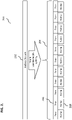
- FIG. 2 illustrates an exemplary backup process 200, including splitting a backup stream into in a plurality of zones and generating corresponding zone stamps/match information, according to some implementations of the current subject matter.
- the process 200 may be performed by the system 100 shown in FIG. 1 .
- an incoming backup stream 202 may be received by a deduplication appliance (e.g., appliance 102 shown in FIG. 1 ).
- the stream 202 may then be split into a variable size zones 204 (e.g., the zones may have a variable length but not exceeding approximately 8MiB or any other size (e.g., an exemplary, non-limiting target range of sizes of zones may be in a range of approximately 8MiB to 100MiB and/or any other values).
- Splitting of the stream 202 into zones 204 may also include generation of a match information for each zone (e.g., generated zone 206 may have a match information or stamp 208).
- the match information may be used to search and/or identify existing zones that may be similar to any new zones contained within incoming backup streams 202.
- FIG. 3 illustrates an exemplary match information that may be generated during process 200 (shown in FIG. 2 ) and that may be used to search for similar zones, according to some implementations of the current subject matter.
- a zone stamp 304 may be generated for each variable size zone 302 (e.g., zones 206 shown in FIG. 2 ).
- An exemplary zone stamp generation process is illustrated in the co-owned U.S. Patent No. 8,412,848 to Therrien et al., issued on April 2, 2013 , and entitled "Method And Apparatus For Content-Aware And Adaptive Deduplication".
- each zone may also split into variable length data chunks or "e-chunks" 312 (by way of a non-limiting example, each e-chunk may be approximately 8KiB (e.g., the target size of the e-chunk may be 8KiB with a minimum of 2KiB and a maximum of the remainder of the zone.)) Further, each such e-chunk 304 in the plurality of e-chunks 312 may have an associated hash value or "e-hash" 308. In some exemplary, non-limiting implementations, e-hash 308 may be generated using any known hashing algorithm, such as, for example, a CRC32 algorithm.
- the CRC32 algorithm may generate concise 32-bit hashes, thereby minimizing memory consumption.
- the CRC32-based hashing may be one of the fastest hashes that may be computed. This is an important aspect of this hashing process, as thousands of hashes may be computed for each zone.
- the lowest-valued 8% of these hashes may be used for multi-level deduplication and/or similarity detection processes. (As can be understood, any percentage of hashes may be used, where an exemplary, non-limiting value of 8% was experimentally selected as an optimal compromise between catalog size and matching accuracy, as for example, explained in U.S. Patent No. 10,067,946 to Vanderspek et al., issued on September 4, 2018 , and entitled "Next-level Multi-level Deduplication").
- a corresponding weight value 310 for each e-chunk 304 may be also generated.
- the weight may correspond to the byte length of the e-chunk 304.
- the same e-hash 308 may appear more than once in a zone, then the e-hash weight 310 may be determined as the sum of all e-chunk lengths that it represents in that zone.
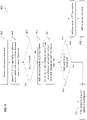
- FIG. 4 illustrates an exemplary process 400 for performing multi-level deduplication, according to some implementations of the current subject matter.
- it illustrates processing of a new zone having a corresponding zone stamp, e-hashes and weights, as described above in connection with FIG. 3 .
- the process 400 may be performed for the first level/tier and second level/tier deduplication.
- the process may be performed utilizing catalogs of zone stamps (e.g., tables, virtual tables, etc.) that may be generated at each such tier (generation and use of such catalogs are illustrated in co-owned U.S. Patent No.
- a new zone may be received and processed, whereby its stamp, e-hash and weight values may be generated/determined.
- the zone stamp generated for the new zone may be generated for the purposes of first tier deduplication processes and the e-hash and weight values may be used for the purposes of second tier deduplication processes.
- a search of the first tier deduplication may be executed to identify an existing zone having a similar zone stamp. This process may be referred to as a first tier match lookup.
- an edit distance for a zone stamp may be determined and compared to a predetermined edit distance match threshold. If the edit distance for the zone stamp is less than or equal to the predetermined match threshold (at 406), then the new zone corresponding to that zone stamp may be delta-compressed against an existing matching zone (i.e., an already stored zone), which means that favorable delta compression ratio may be obtained.
- the computed zone stamp may be added to the first tier catalog, at 408, for possible future matches with subsequently processed zones.
- the deduplication process 400 may then proceed to the next level of deduplication (e.g., second tier deduplication), where the zone, as received and processed at 402, is assessed against the second tier catalog of zone stamps.
- the second tier catalog of zone stamps may be searched using e-hash and weight values that have been determined for the new zone.
- the catalog may be searched for an existing zone whose e-hash set has the best weighted intersection with the new zone's e-hash set.
- FIG. 5 is a diagram 500 illustrating such exemplary intersection 503 of different zone e-hash and weight values (e.g., values for the new zone 502, as received at 402, and values for existing zone(s) 504).
- a second-tier match lookup may be performed using the lowest-valued 8% of the new zone's 502 e-hash values and their corresponding weight values and the lowest-valued 5% of e-hash values for each existing zone 504.
- the e-hash values from the existing zone 502 may be compared to the e-hash values from the new zone 402.
- E-hash values that are in both the existing zone's set and the new zone's set comprise intersection 503 of the two sets.
- the weight values for these e-hash values for the new zone may be summed to determine the weighted intersection of the two sets. All weighted intersections for all zones may be determined and the existing zone with the best weighted intersection may be found.
- the existing zone with the best weighted intersection may be considered a match and the new zone may be delta-compressed against that existing zone, at 414.
- the new zone may be added to the second tier catalog, at 416. Then, the new zone may be data-compressed, at 418. Alternatively, or in addition to, the process may repeat itself using further tiers of zone stamp catalogs (e.g., 3 rd tier, etc.).
- the predetermined threshold size e.g., less than 1% of the new zone size
- information that may be required for performing match lookups may be stored/maintained in a main memory of a deduplication system (e.g., as shown in FIG. 1 ), whereby, information for the first tier lookups may be stored in the first tier zone stamp catalog data structure, and information for second tier lookups may be stored in the second tier zone stamp catalog data structure.
- the second tier (or any other tier) catalog may be configured as an in-memory data structure.
- FIG. 6 illustrates an exemplary in-memory structure, virtual structure and/or schema 600 that may be used for a catalog (e.g., a second-tier catalog), according to some implementations of the current subject matter.
- the structure 600 may be configured as a key-value store data structure having key portions 602 and value portions 604.
- key portion 602 may include one or more e-hash values
- value portion 604 may include corresponding variable length sets of zones that contain that e-hash.
- the second-tier zone stamp catalog may be configured to support at least one of the following functions: lookup, insert, delete, and/or any combination thereof, and/or any other functions.
- the structure 600 may be implemented in connection with any other catalog, virtual memory schema, data structure, etc. It may also be implemented to perform any other functions besides lookup, insert, delete, etc.
- the lookup function may be configured to allow search and retrieval of certain data relating to stored zones, such as a zone identifier (zoneID or zone stamps) and weight values (as discussed above).
- the insert function may be configured add or insert a new zone identifier to the existing list of zoneIDs.
- the delete function may be configured to allow removal or deletion of a zone identifier from the list of zoneIDs.
- FIGS. 7-9 illustrates processes 700, 800, 900 for executing the lookup, insert, and delete functions, respectively.
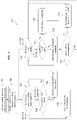
- FIG. 7 illustrates an exemplary process 700 for executing a lookup function.
- the lookup function may be executed in connection with retrieval of any data from a memory location, a data storage structure, an in-memory structure, etc.
- the process 700 may be performed in connection with execution of a lookup function of the second tier catalog (as can be understood, it may be any other catalog) matching process in order to identify the best-weighted match for a new zone when compared to previously stored zones (or identify any similar zones).
- the process 700 may be executed for any level or tier of the matching process.
- the process 700 may be executed by one or more processors and/or memory/storage components of the deduplication system shown in FIG. 1 .
- the lookup function may receive a request to lookup a data set for a new data zone, at 701.
- the lookup data set may include a variable length set of e-hashes and corresponding weightings.
- parameters of BestWeighting and BestZoneID may be used to identify a data zone being sought in response to the execution of the lookup function, may be initialized to NULL or 0 values.
- the lookup function may generate a temporary in-memory "results" key-value store, where each key is a zoneID and each value corresponds to the weighted intersection between that zone's lookup set and a new zone's lookup set.
- the lookup function may be configured to determine whether there are remaining e-hash and weighting values in the lookup set. If so, the lookup function process 700 may be configured to iterate through all e-hashes in the lookup set. If e-hash is not contained in the second tier catalog store, at 706, then the process may return to 704 and the next e-hash, weighting values may be processed.
- the process 700 may return a BestZoneID and BestWeighting values, at 710.
- a set of zoneID values that refer to that e-hash may be retrieved from the second tier catalog store, at 708.
- the processing then proceeds to 712, where the each zoneID value in the retrieved set of zoneID values may be analyzed.
- Each zoneID value is compared to the list of zoneID values that have been already stored in a second tier catalog, at 714. If zoneID value has been already stored, the weighting for the current e-hash may be added to the value for that zoneID value, at 716. If it is not, that zoneID value may be added to the second tier catalog with the weighting for the current e-hash as its value, at 718.
- the current value for this zoneID value may then be compared to the BestWeighting value, at 720. If the current zoneID value is greater than the current BestWeighting value, then the BestWeighting value may be set to the current BestWeighting value, and BestZoneID may be set to that zoneID value, at 722. The processing then returns to 712 to analyze the next zoneID value. Further, once all zoneID values for this e-hash are processed, the process 700 may repeat for the next e-hash value from the lookup set.
- FIG. 8 illustrates an exemplary process 800 for executing an insert function. Similar to FIG. 7 , the insert function may be executed in connection with storage or "insertion of' any data into a memory location, a data storage structure, an in-memory structure, etc. While FIG. 8 illustrates execution of the process 800 in connection with a second-tier catalog or store, it should be noted that the process 800 may be execution in connection with any other type of catalog, data store, virtual memory schema, in-memory structure, etc.
- a zoneID and a variable length set of e-hashes may be received for the purposes of executing the insert function.
- the process 800 may be repeated for each e-hash contained in the set of insert data.
- next e-hash may be retrieved from the insert data set. If there are no more e-hashes (e.g., after the process 800 has been repeated several times), the process would terminate at 806. Otherwise, for each next e-hash that is retrieved from the insert data set, the e-hash may be looked up in the second tier store, at 808. If the e-hash key is not found in the second tier store, its corresponding zoneID may be added as a new entry with the zoneID as the only referencing zone in its set, 810. If the e-hash key is found, then the zoneID may be added to the set of referencing zones for that e-hash, at 812.
- FIG. 9 illustrates an exemplary process 900 for executing a delete function.
- the delete function may be executed in connection with deletion of any data from a memory location, a data storage structure, an in-memory structure, etc. and is not limited to the second tier store structure.
- a zoneID and a variable length set of e-hashes may be received for the purposes of deletion. Similar to the execution of the insert function, the delete process 900 may also be configured to iterate through the received set of e-hashes. At 904, the next e-hash from the received set of e-hashes is retrieved for deletion analysis. If there are no more e-hashes (e.g., after the process 900 may have been repeated several times), the process terminates, at 906.
- the process 900 may proceed to determine whether the retrieved e-hash is associated with a zoneID in the set of referencing zones, at 910. If the zoneID is not present, the process 900 may again return to 904 for analysis of the next e-hash in the received set.
- zoneID may be deleted from the set referring zoneIDs for the retrieved e-hash, at 912.
- the process 900 may determine whether zoneID set is for that e-hash is now empty. If not, the processing again returns to 904 for the analysis of the next e-hash in the received delete set. Otherwise, the entire entry for the retrieved e-hash is deleted from the second-tier store and the process 900 may then return to 904 to repeat the process for the next e-hash in the delete set.
- FIG. 10 illustrates an exemplary implementation of a second-tier data store 1000.
- the store 1000 may be configured as a key:value store (e.g., a second-tier store) that may include an arrangement of e-hashes (keys) 1004 and zoneIDs (values) 1006.
- the store 1000 may correspond to C++ standard template library containers implementing the key-value store.
- the store 1000 may be defined using a C++ definition 1002 (as shown in FIG.
- the key 1004 may be a 32-bit unsigned integer
- the value 1006 may be a set of unsigned 32-bit integers.
- the definition 1002 may be configured to match a functionality that may be required for a second-tier store.
- the " std::map " expression in the definition 1002 may require maintenance of additional map metadata 1008, such as, for tracking its entries and for maintaining a sort order of the e-hash keys 1004.
- each " std::set " (as defined in the definition 1002) collection of zoneIDs may also require maintenance of set metadata 1010 for tracking and sorting of the value 1006 entries.
- the overhead for map metadata 1008 and the set metadata 1010 may consume a significant amount of memory space. For example, to illustrate the consumption of the memory space, a sample test set of e-hashes and zoneIDs was created that may mirror a typical product data. The sample test set included 59.5 million e-hashes referenced by 97.8 million zones.
- the implementation shown in FIG. 10 consumed 10.5 gigabytes of main memory.
- the actual data stored inside the key:value data structures consumed ( 59.5 + 97.8 ) ⁇ 10 ⁇ 6 ⁇ 4 bytes, or 0.629 gigabytes.
- the increase in memory consumption related to map and set metadata overhead was 10.5/0.629:1, or 16.69:1.
- the std::unordered _ map is a key-value container that uses hashing and storage buckets instead of sorting to track its keys and may be more storage efficient and faster than std::map.
- the std::vector is a container that does not sort data and may store data much more efficiently than std::set.
- FIG. 11 illustrates an exemplary alternate implementation of a second-tier data store 1100.
- the data may be stored in a single large memory array as e-hash and zoneID tuples 1102 and may be sorted by e-hash first, and then zoneID.
- an e-hash A having six zoneIDs may be stored as six tuples 1104, where each tuple may have the same e-hash value and a unique zoneID value.
- an e-hash B having three zoneIDs may be stored as three tuples 1106 and e-hash C with four zoneIDs may be stored as four tuples 1108.
- a lookup request may be executed by performing a binary search of the store to find a particular e-hash, and then read all entries with the matching e-hash value to determine a list of zoneIDs referencing that e-hash.
- FIG. 12 illustrates a combination 1200 of the in-memory structures shown in FIGS. 10 and 11 to store data using a second-tier catalog structure.
- the structure 1200 may be configured to include two structures - a primary structure 1202 (similar to structure 1100 shown in FIG. 11 ) and a secondary structure 1204 (similar to structure 1000 shown in FIG. 10 ) for storing the data.
- Most of the data may be configured to be stored using the primary structure 1202, which may maintain e-hash, zoneID tuples in a large array of memory.
- the secondary structure 1204 may be used for storing any new data.
- deleted entries from the primary structure 1202 may be flagged for later deletion rather than immediately being deleted. Any lookup requests may be executed by searching both the primary and secondary structures 1202 and 1204 and results of the search may then be merged together.
- the increase in memory consumption ratio is 1.27:1, thereby making this approach more efficient than the previous ones.
- old entries may be deleted and new entries may be added.
- the delete entries may be flagged and not actually deleted or reused.
- the entries for insertion may be added to the secondary structure 1204. However, this may increase memory consumption.
- the percentage of data that may be flagged for deletion in the primary structure 1202 and/or is inserted into the secondary structure 1204 may vary based on a number of factors. For example, typical percentage range may be from 10% to 30% of entries.
- the above test dataset includes 10% flagged for deletion in the primary structure and flagged for insertion in the secondary structure 1204, corresponding to a memory consumption of 1.34 GB. It should be noted that 30% of the entries deleted from primary structure and inserted in the secondary structure correspond to a memory consumption of 4.00 GB. This resulted in an increase in memory ratio of 2.12:1 to 6.37:1.
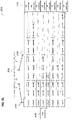
- FIG. 13 illustrates a chart 1300 containing a summary comparison of the memory consumption ratios for the above four exemplary implementations.
- the chart 1300 also indicates issues that may be encountered with each implementation. For example, an array of key:value tuples, as discussed above, may have the least memory consumption, however, may have a poor random insert and/or delete performance.
- the second-tier catalog design may also have several drawbacks. When the number of deleted entries grows large, or the number of entries in the secondary structure 1204 (as shown in FIG. 12 ) grows large, the primary and secondary container structures 1202, 1204 may need to be sort-merged into a new primary container structure. This adds complexity to the overall design of the catalog.
- the second-tier catalog may be unavailable for lookups while a sort-merge process is being executed.
- the primary container structure 1202 may only be appended to in a sort order, thereby requiring the secondary container structure 1204 to be a sorted map container, which may consume more memory than a hashed map container.
- Tessil sparse map (as available from https://github.com/Tessil/sparse-map ) has been also used and tested for the second-tier catalog data structure.
- the Tessil sparse map is C++ implementation of a memory efficient hash map and hash set, which uses the following definition: tsl::sparse_map ⁇ uint32_t, std::vector ⁇ uint32 _ t> > second- tier store
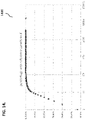
- FIG. 14 is an exemplary plot 1400 illustrating results of an analysis of second-tier zone stamp catalogs of various data sets performed for the purposes of determining distribution of a number of referring zoneIDs for each e-hash. As shown in FIG. 14 , most e-hashes may be associated with only one or two zoneIDs, however, some e-hashes may be associated with thousands of zoneIDs. Most e-hashes (over 99.99%) correspond to 100 or fewer referencing zones.
- the current subject matter system may implement use of N key:value stores, where the value is a fixed size array of zoneIDs.
- the current subject matter may include a plurality of key:value stores for fixed-sizes 1...N.
- a fixed length array does not require metadata to track its entries, which may significantly reduce any metadata overhead (as for example, is shown in FIG. 10 and discussed above).
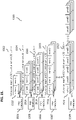
- FIG. 15 illustrates an exemplary in-memory structure or system 1500 having a plurality of key:value stores, according to some implementations of the current subject matter.
- the system 1500 may include a plurality of data store structures 1512-1520. While FIG. 15 illustrates 1...100 data store structures or containers, one having ordinary skill in the art will understand that the structure 1500 may include any number of data store structures or containers (hereinafter, these terms are used interchangeably).
- Each data store structure may include a key:value arrangement, where the key is an e-hash value and the value is a fixed size array of zoneID values.
- Each data store structure 1512-1520 may, for example, be defined by the respective definition 1502-1510, as shown in FIG. 15 .
- Each definition may be in the following format:
- each of the data stores 1512-1520 may further include a map (e.g., tsl_sparse_maps ) metadata 1501-1509 for tracking its respective contents (e.g., map metadata 1501 may be used to track contents of data store 1512).
- the design of the system 1500 may be such that there is no need to track more than N referencing zoneIDs per e-hash value. Even though some e-hashes have way more referring zoneIDs, not tracking more than N per e-hash may likely have no measurable impact on matching rates. As such, the system 1500 does not need to include a final key:value store with a variable length container for the value to hold all e-hash values with more than N referring zoneIDs.
- limiting the maximum number of referring zoneIDs to 100 for any given e-hash has no measurable impact on match rates or overall deduplication compression ratios during the backup processes (e.g., as may be performed by the system 100 shown in FIG. 1 ). Further, in the same non-limiting, exemplary implementation, if an e-hash already has 100 referencing zones, any new zones that reference that e-hash are not added to the list.
- the system 1500 shown in FIG. 15 may be configured to have one of the key:value stores 1512-1520 track how many zoneIDs referrers each e-hash may have. This may improve execution of a lookup function.
- the lookup function may be executed by initially performing a lookup in the e-hash and zoneID count store to determine how many zoneIDs each e-hash may have. Then, a lookup in the store for that count may be performed to determine a list of corresponding zoneIDs.
- the 1_reference store e.g., store structure 1512 shown in FIG.
- e-hashes reference count for the remaining e-hashes having more than one referrer i.e., X>1).
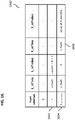
- FIG. 16 illustrates an exemplary chart 1600 summarizing storage of the e-hash reference counts. For example, if an e-hash has one referrer (as shown in row 1602, in the number of referrers "Num referrers" column), zoneID+N+1 value may be stored as the value corresponding to the number of zoneIDs in the 1_ref container 1512 (as shown in FIG. 15 ), where N is the number of X Ref containers.
- an e-hash has X referrers (where X > 1)
- the e-hash value with X is stored in the 1_ref container (as shown in row 1604 of table 1600 shown in FIG. 16 )
- the e-hash, as the X_ref key, and its X length array of zoneIDs, as the X ref value are stored in the X_ref container 1606.
- the current subject matter system may be configured to support any encoding approach that reserves N or more values, whereby adding N+1 to zoneID values, as described above, may be configured to assist in implementation and/or testing.
- the single key:value store may contain both the singe entry e-hashes and the number of entries for e-hashes with more than one zoneID.
- This optimization may allow single entry e-hashes to be stored in only 1 container, which may significantly reduce increase in memory consumption.
- loading of the second-tier store, in accordance with the above structure, using the above referenced dataset may consume 0.997 GB of memory, whereby 0.997 / 0.625 result in an increase in memory consumption is 1.58 to 1.
- the 1_ref container may be used for both the referrer ID for e-hashes with one referrer as well as a redirection to X ref containers (X>1) for e-hashes with more than one referrer.
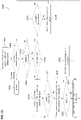
- FIG. 17 illustrates an exemplary process 1700 for executing a lookup function, according to some implementations of the current subject matter.
- the process 1700 may be executed using the store structure (as, for example, described above in connection with FIG. 15 ) to look up a list of zoneIDs that refer to an e-hash value.
- request to perform a lookup data set for a new data zone may be received.
- an e-hash may be looked up in the 1_ref store (e.g., 1_ref store 1512 shown in FIG. 15 ). If the e-hash value is not in the 1_ref store, the e-hash value is not stored in the second-tier catalog and an empty zoneID list may be returned, at 1706.
- the 1_ref store e.g., 1_ref store 1512 shown in FIG. 15 .
- the e-hash key is found in the 1_ref store, i.e., an entry for that e-hash key in the 1_ref store exists, its value may be compared to a predetermined value N, at 1708. If the value is greater than the value N, then the e-hash may include only one referrer and its zoneID value would be (1_ref value - N - 1), at 1710.
- the 1_ref value is less than or equal to the predetermined value N, then that value may correspond to the number of referrers to the identified e-hash.
- FIG. 18 illustrates an exemplary process 1800 for executing an insert function, according to some implementations of the current subject matter.
- the process 1800 may, for example, be executed using the structure 1500 shown in 1500.
- a zoneID and one or more e-hashes may be received for the purposes of executing the insert function.
- the process 1800 may be repeated for each e-hash contained in the set of insert data.
- the process 1800 may be configured to repeat through all e-hashes for a zoneID that is sought to be inserted.
- the process 1800 may be configured to look up the e-hash in the 1_ref store, at 1808 (similar to operation 1704 in FIG. 17 ). If there are no entries, then the second-tier catalog does not include any entries for the received e-hash.
- the second-tier catalog as used herein, is referred to for ease of illustration only and is not intended to limit the scope of the current subject matter, which may be used in connection with any type of catalog, virtual schema, data structure, data store, etc.
- the corresponding zoneID value may be encoded, as described above, by adding N+1 to it. The e-hash and its encoded zoneID may then be inserted in the 1_ref store, at 1810.
- the value for the e-hash may be checked to determine if it is less than the predetermined value of N, at 1812. If the value for that e-hash is less than N, the value may correspond to the current reference count for that e-hash. The processing may then proceed to 1814, where a refCnt may be assigned to this value and a list of zoneIDs may be ascertained from the (refCnt)_ref store.
- the e-hash entry may then be deleted from the (refCnt)_ref store, new zoneID may be added to the zoneID_list, and the e-hash and zoneID_list may be added to the (refCnt+1)_ref store, where the entry for that e-hash in the 1_ref store may be set to (refCnt+1), at 1822.
- the 1_ref value is neither greater than nor less than N, then it may be equal to N, at 1818. In this case, it may be determined that the e-hash already has the maximum zoneID referrers allowed, and no further action may be executed for this e-hash. The processing again proceeds to 1822. Further, as stated above, the process 1800 may be repeated for each next e-hash that has been received as part of the insert. If no e-hashes are left, the process 1800 terminates, at 1806.
- FIG. 19 illustrates an exemplary process 1900 for executing a delete function, according to some implementations of the current subject matter.
- the process 1900 may, for example, be executed using the structure 1500 shown in FIG. 15 .
- a zoneID and a set of e-hashes that it references may be received for the purposes of deletion. Similar to the execution of the insert function 1800, the delete function 1900 may be configured to iterate through the received set of e-hashes.
- the next e-hash from the received set of e-hashes is retrieved for deletion analysis. If there are no more e-hashes (e.g., after the process 1900 may have been repeated several times), the process terminates, at 1906.
- the process 1900 may be configured to look up and/or retrieve the e-hash in the 1_ref store, at 1908 (similar to operation 1704 shown in FIG. 17 and operation 1804 shown in FIG. 18 ). If there are no entries, no further processing is performed in connection with that e-hash.
- the e-hash's 1_ref value may be compared to a predetermined value of N to determine whether it is greater than N, at 1910. If it is greater, then the 1_ref value may be compared to zoneID+N+1 to determine if it equals to it, at 1924. If not, then this e-hash may have already been deleted for this zoneID and no further action may be performed for this e-hash, whereby the process 1900 may return to 1904 to retrieve a next e-hash for deletion analysis. However, if at, 1924, the 1_ref value of the e-hash equals to zoneID+N+1, then the entire entry for that e-hash may be deleted from the 1_ref store, at 1926.
- the refCnt may be set to the 1_ref value and the list of zoneIDs may be read from the store entry for the e-hash in the (refCnt)_ref store, at 1912.
- the zoneID list may be checked to determine whether it contains the zoneID being requested for deletion, at 1914. If not, then this e-hash may have already been deleted for this zoneID and no further processing may be performed for this e-hash, whereby the process 1900 may again return to 1904 to retrieve a next e-hash for analysis, if any.
- the e-hash entry may be deleted from the (refCnt)_ref store and the zoneID may be removed from the zoneID list, at 1916.
- the process 1900 may then continue to 1918, where refCnt value may be checked to determine whether it equals to 2. If so, it may mean that the reference count for this e-hash is going down to 1, and thus, the remaining zoneID in the list may need to be encoded for insertion in the 1_ref store, at 1920, whereby N+1 may be added to the remaining zoneID in the list.
- the e-hash and its list with the outgoing zoneID removed may be added to the (refCnt-1)_ref store, at 1922. Once an e-hash is processed, the process 1900 may loop back to retrieve and process the next e-hash, 1904.
- FIG. 20 illustrates an exemplary chart 2000 illustrating comparison of conventional systems (discussed above) to the current subject matter system.
- the current subject matter's system outperforms existing systems, whereby memory use increase from up to 6.67:1 to 1.58:1 for the current subject matter system, thereby showing memory savings of up to 75%.
- random lookup performance times were reduced from 1050 ns to 57 ns (an improvement of 18 times) and insert performance times were reduced from 1240 ns to 644 ns (an improvement of 1.9 times).
- the current subject matter is advantageous to some of the existing system.
- the current subject matter as described above, is using a plurality of fixed length containers (e.g., N containers, where N may be any small number, such as, approximately 100 (although any number may be used)) rather than using one storage container having a variable length.
- Variable length containers (as for example is shown in FIG. 10 ) may use additional metadata, thereby consuming additional memory.
- the plurality of fixed length containers substantially less metadata is required, thereby causing a reduction in memory consumption.
- the current subject matter allows encoding of e-hashes and zoneIDs for storage in the fixed length containers, where the first container (e.g., 1 container) may include both all length of 1 entries as well as lengths of X containers (X>1), which may be used to determine which container to go to if a received e-has is greater than 1_ref. This further reduces memory consumption as well as access times.
- the current subject matter can be configured to be implemented in a system 2100, as shown in FIG. 21 .
- the system 2100 can include a processor 2110, a memory 2120, a storage device 2130, and an input/output device 2140. Each of the components 2110, 2120, 2130 and 2140 can be interconnected using a system bus 2150.
- the processor 2110 can be configured to process instructions for execution within the system 2100. In some implementations, the processor 2110 can be a single-threaded processor. In alternate implementations, the processor 2110 can be a multi-threaded processor.
- the processor 2110 can be further configured to process instructions stored in the memory 2120 or on the storage device 2130, including receiving or sending information through the input/output device 2140.
- the memory 2120 can store information within the system 2100.
- the memory 2120 can be a computer-readable medium.
- the memory 2120 can be a volatile memory unit.
- the memory 2120 can be a non-volatile memory unit.
- the storage device 2130 can be capable of providing mass storage for the system 2100.
- the storage device 2130 can be a computer-readable medium.
- the storage device 2130 can be a floppy disk device, a hard disk device, an optical disk device, a tape device, non-volatile solid state memory, or any other type of storage device.
- the input/output device 2140 can be configured to provide input/output operations for the system 2100.
- the input/output device 2140 can include a keyboard and/or pointing device.
- the input/output device 2140 can include a display unit for displaying graphical user interfaces.
- FIG. 22 illustrates an exemplary process 2200 for performing accelerated and memory efficient similarity matching, according to the current subject matter.
- a data stream having a plurality of data zones is received. Each zone includes a zone identifier (zoneID generated as described above).
- a plurality of hashing values (e-hashes) for each zone in the plurality of zones is generated. Each hashing value in the plurality of hashing values is generated based on a portion of a zone in the plurality of zones.
- an in-memory or a storage structure e.g., a catalog, as shown in FIGS. 15-16 ) having a plurality of storage containers (1512-1520) is generated.
- Each storage container in the plurality of storage containers stores one or more hashing values in the plurality of hashing values associated with each respective storage container and a plurality of zone identifiers referencing the associated one or more hashing values.
- At least one storage container (e.g., container 1512) includes a listing of zone identifiers stored in each storage container in the plurality of storage containers.
- Each container may be configured to store a metadata (e.g., metadata 1501-1509) identifying each one of the one associated one or more hashing values.
- a metadata e.g., metadata 1501-1509
- each plurality of zone identifiers stored in each storage container in the plurality of containers may be a fixed number of zone identifiers (e.g., X). Further, the plurality of storage containers may be a predetermined number of storage containers (e.g., N).
- each container may be configured to store a zone identifier data determined based on the zone identifier referencing the associated one or more hashing for that container and the predetermined number of storage containers.
- the method 2200 may include retrieving a zone identifier in the plurality of zone identifiers referencing a hashing value in the plurality of hashing values.
- the retrieval (as described above with regard to FIG. 17 ) may be performed based on the listing of zone identifiers stored in each storage container in the plurality of storage containers and a number of storage containers.
- the method also includes inserting a new zone identifier and a new corresponding hashing value referencing the new zone identifier.
- the insertion (e.g., as described above with regard to FIG. 18 ) is performed based on a determination whether the new corresponding hashing value is stored in one or more storage containers in the plurality of storage containers.
- the new zone identifier and the new corresponding hashing value are encoded using a number of storage containers and stored in at least one storage container.
- the new zone identifier is encoded using the number of storage containers and stored in the storage container storing the new corresponding hashing value.
- the method may include deleting a zone identifier in the plurality of zone identifiers referencing a hashing value in the plurality of hashing values.
- the deletion (e.g., as described in connection with FIG. 19 ) may be performed based on the listing of zone identifiers and hashing values stored in each storage container in the plurality of storage containers and a number of storage containers.
- the systems and methods disclosed herein can be embodied in various forms including, for example, a data processor, such as a computer that also includes a database, digital electronic circuitry, firmware, software, or in combinations of them.
- a data processor such as a computer that also includes a database, digital electronic circuitry, firmware, software, or in combinations of them.
- the above-noted features and other aspects and principles of the present disclosed implementations can be implemented in various environments. Such environments and related applications can be specially constructed for performing the various processes and operations according to the disclosed implementations or they can include a general-purpose computer or computing platform selectively activated or reconfigured by code to provide the necessary functionality.
- the processes disclosed herein are not inherently related to any particular computer, network, architecture, environment, or other apparatus, and can be implemented by a suitable combination of hardware, software, and/or firmware.
- various general-purpose machines can be used with programs written in accordance with teachings of the disclosed implementations, or it can be more convenient to construct a specialized apparatus or system to perform the required methods and techniques
- the systems and methods disclosed herein can be implemented as a computer program product, i.e., a computer program tangibly embodied in an information carrier, e.g., in a machine readable storage device or in a propagated signal, for execution by, or to control the operation of, data processing apparatus, e.g., a programmable processor, a computer, or multiple computers.
- a computer program can be written in any form of programming language, including compiled or interpreted languages, and it can be deployed in any form, including as a stand-alone program or as a module, component, subroutine, or other unit suitable for use in a computing environment.
- a computer program can be deployed to be executed on one computer or on multiple computers at one site or distributed across multiple sites and interconnected by a communication network.
- the term "user” can refer to any entity including a person or a computer.
- ordinal numbers such as first, second, and the like can, in some situations, relate to an order; as used in this document ordinal numbers do not necessarily imply an order. For example, ordinal numbers can be merely used to distinguish one item from another. For example, to distinguish a first event from a second event, but need not imply any chronological ordering or a fixed reference system (such that a first event in one paragraph of the description can be different from a first event in another paragraph of the description).
- machine-readable medium refers to any computer program product, apparatus and/or device, such as for example magnetic discs, optical disks, memory, and Programmable Logic Devices (PLDs), used to provide machine instructions and/or data to a programmable processor, including a machine-readable medium that receives machine instructions as a machine-readable signal.
- machine-readable signal refers to any signal used to provide machine instructions and/or data to a programmable processor.
- the machine-readable medium can store such machine instructions non-transitorily, such as for example as would a non-transient solid state memory or a magnetic hard drive or any equivalent storage medium.
- the machine-readable medium can alternatively or additionally store such machine instructions in a transient manner, such as for example as would a processor cache or other random access memory associated with one or more physical processor cores.
- the subject matter described herein can be implemented on a computer having a display device, such as for example a cathode ray tube (CRT) or a liquid crystal display (LCD) monitor for displaying information to the user and a keyboard and a pointing device, such as for example a mouse or a trackball, by which the user can provide input to the computer.
- a display device such as for example a cathode ray tube (CRT) or a liquid crystal display (LCD) monitor for displaying information to the user and a keyboard and a pointing device, such as for example a mouse or a trackball, by which the user can provide input to the computer.
- CTR cathode ray tube
- LCD liquid crystal display
- a keyboard and a pointing device such as for example a mouse or a trackball
- Other kinds of devices can be used to provide for interaction with a user as well.
- feedback provided to the user can be any form of sensory feedback, such as for example visual feedback, auditory feedback, or tactile feedback
- the subject matter described herein can be implemented in a computing system that includes a back-end component, such as for example one or more data servers, or that includes a middleware component, such as for example one or more application servers, or that includes a front-end component, such as for example one or more client computers having a graphical user interface or a Web browser through which a user can interact with an implementation of the subject matter described herein, or any combination of such back-end, middleware, or front-end components.
- the components of the system can be interconnected by any form or medium of digital data communication, such as for example a communication network. Examples of communication networks include, but are not limited to, a local area network (“LAN”), a wide area network (“WAN”), and the Internet.
- LAN local area network
- WAN wide area network
- the Internet the global information network
- the computing system can include clients and servers.
- a client and server are generally, but not exclusively, remote from each other and typically interact through a communication network.
- the relationship of client and server arises by virtue of computer programs running on the respective computers and having a client-server relationship to each other.
Landscapes
- Engineering & Computer Science (AREA)
- Theoretical Computer Science (AREA)
- Databases & Information Systems (AREA)
- Data Mining & Analysis (AREA)
- Physics & Mathematics (AREA)
- General Engineering & Computer Science (AREA)
- General Physics & Mathematics (AREA)
- Software Systems (AREA)
- Quality & Reliability (AREA)
- Computational Linguistics (AREA)
- Information Retrieval, Db Structures And Fs Structures Therefor (AREA)
Claims (11)
- Computerimplementiertes Verfahren, umfassend:Empfangen (2202) eines Datenstroms (202) mit einer Vielzahl von Datenzonen (206, 302), wobei jede Zone eine Zonenkennung (1006) beinhaltet;Erzeugen (2204) einer Vielzahl von Hash-Werten (1004) für jede Zone in der Vielzahl von Zonen, wobei jeder Hash-Wert in der Vielzahl von Hash-Werten unter Verwendung eines Teils einer Zone in der Vielzahl von Zonen generiert wird;Erzeugen (2206) einer Speicherstruktur (1500, 1600) mit einer Vielzahl von Speichercontainern (1512-1520), wobei jeder Speichercontainer in der Vielzahl von Speichercontainern einen oder mehrere Hash-Werte in der Vielzahl von Hash-Werten, die jedem entsprechenden Speichercontainer zugeordnet sind, und eine Vielzahl von Zonenkennungen speichert, die den zugeordneten einen oder die zugeordneten mehreren Hash-Werte referenzieren, wobei zumindest ein Speichercontainer eine Liste von Zonenkennungen speichert, die in jedem Speichercontainer in der Vielzahl von Speichercontainern gespeichert sind;Deduplizieren (2208) des empfangenen Datenstroms unter Verwendung der Speicherstruktur; undEinfügen (1800-1822) einer neuen Zonenkennung und eines neuen entsprechenden Hash-Wertes, der die neue Zonenkennung referenziert, wobei das Einfügen das Bestimmen beinhaltet, ob der neue entsprechende Hash-Wert in einem oder mehreren Speichercontainern in der Vielzahl von Speichercontainern gespeichert ist;wobeibei Feststellung, dass der neue entsprechende Hash-Wert nicht in dem einen oder den mehreren Speichercontainern gespeichert ist, die neue Zonenkennung und der neue entsprechende Hash-Wert unter Verwendung einer Anzahl von Speichercontainern kodiert und in zumindest einem Speichercontainer gespeichert werden;bei Feststellung, dass der neue entsprechende Hash-Wert in dem einen oder den mehreren Speichercontainern gespeichert ist, die neue Zonenkennung unter Verwendung der Anzahl von Speichercontainern kodiert und in dem Speichercontainer gespeichert wird, der den neuen entsprechenden Hash-Wert speichert.
- Verfahren nach Anspruch 1, wobei jeder Container Metadaten (1501-1509) speichert, die jeden aus dem einen oder den mehreren zugeordneten Hash-Werte identifizieren.
- Verfahren nach einem der vorhergehenden Ansprüche, wobei jede Vielzahl von Zonenkennungen, die in jedem Speichercontainer in der Vielzahl von Containern gespeichert sind, eine feste Anzahl von Zonenkennungen ist.
- Verfahren nach einem der vorhergehenden Ansprüche, wobei die Vielzahl von Speichercontainern eine vorbestimmte Anzahl von Speichercontainern ist.
- Verfahren nach einem der vorhergehenden Ansprüche, wobei jeder Container Zonenkennungsdaten speichert, die unter Verwendung der Zonenkennung bestimmt werden, die den zugeordneten einen oder die zugeordneten mehreren Hash-Werte für diesen Container und die vorbestimmte Anzahl von Speichercontainern referenziert.
- Verfahren nach einem der vorhergehenden Ansprüche, das ferner das Abrufen (1700-1714) einer Zonenkennung in der Vielzahl von Zonenkennungen umfasst, die den Hash-Wert in der Vielzahl von Hash-Werten referenziert.
- Verfahren nach Anspruch 6, wobei das Abrufen unter Verwendung der Liste von Zonenkennungen, die in jedem Speichercontainer in der Vielzahl von Speichercontainern gespeichert sind, und einer Anzahl von Speichercontainern ausgeführt wird.
- Verfahren nach einem der vorhergehenden Ansprüche, das ferner das Löschen (1900-1926) einer Zonenkennung in der Vielzahl von Zonenkennungen umfasst, die den Hash-Wert in der Vielzahl von Hash-Werten referenziert.
- Verfahren nach Anspruch 8, wobei das Löschen unter Verwendung der Liste von Zonenkennungen und Hash-Werten, die in jedem Speichercontainer in der Vielzahl von Speichercontainern gespeichert sind, und einer Anzahl von Speichercontainern durchgeführt wird.
- System, umfassend:zumindest einen programmierbaren Prozessor; undein nichtflüchtiges maschinenlesbares Medium, das Anweisungen speichert, die, wenn sie von dem zumindest einen programmierbaren Prozessor ausgeführt werden, den zumindest einen programmierbaren Prozessor dazu veranlassen, Operationen nach einem der Ansprüche 1-9 auszuführen.
- Computerprogrammprodukt, umfassend ein nichtflüchtiges maschinenlesbares Medium, das Anweisungen speichert, die, wenn sie von zumindest einem programmierbaren Prozessor ausgeführt werden, den zumindest einen programmierbaren Prozessor dazu veranlassen, Operationen nach einem der Ansprüche 1-9 auszuführen.
Applications Claiming Priority (1)
| Application Number | Priority Date | Filing Date | Title |
|---|---|---|---|
| US16/704,798 US11204907B2 (en) | 2019-12-05 | 2019-12-05 | Accelerated and memory efficient similarity matching |
Publications (2)
| Publication Number | Publication Date |
|---|---|
| EP3832476A1 EP3832476A1 (de) | 2021-06-09 |
| EP3832476B1 true EP3832476B1 (de) | 2022-10-19 |
Family
ID=73726646
Family Applications (1)
| Application Number | Title | Priority Date | Filing Date |
|---|---|---|---|
| EP20211876.6A Active EP3832476B1 (de) | 2019-12-05 | 2020-12-04 | Beschleunigter und speichereffizienter ähnlichkeitsabgleich |
Country Status (2)
| Country | Link |
|---|---|
| US (1) | US11204907B2 (de) |
| EP (1) | EP3832476B1 (de) |
Families Citing this family (4)
| Publication number | Priority date | Publication date | Assignee | Title |
|---|---|---|---|---|
| US11734361B1 (en) * | 2022-04-15 | 2023-08-22 | Collibra Belgium Bv | Systems and methods for structure-independent categorization of binary documents |
| US12326871B2 (en) | 2023-11-13 | 2025-06-10 | International Business Machines Corporation | Detecting duplicate tables in data lake databases |
| CN117743338B (zh) * | 2023-12-20 | 2024-05-10 | 无锡众星微系统技术有限公司 | 一种基于双哈希的关键字匹配方法和装置 |
| CN117891408A (zh) * | 2024-01-26 | 2024-04-16 | 三星(中国)半导体有限公司 | 用于存储设备的数据去重的方法和存储设备 |
Family Cites Families (10)
| Publication number | Priority date | Publication date | Assignee | Title |
|---|---|---|---|---|
| US8645333B2 (en) | 2008-05-29 | 2014-02-04 | International Business Machines Corporation | Method and apparatus to minimize metadata in de-duplication |
| US8412848B2 (en) | 2009-05-29 | 2013-04-02 | Exagrid Systems, Inc. | Method and apparatus for content-aware and adaptive deduplication |
| US8615485B2 (en) * | 2010-02-09 | 2013-12-24 | Google, Inc. | Method and system for managing weakly mutable data in a distributed storage system |
| US8380681B2 (en) | 2010-12-16 | 2013-02-19 | Microsoft Corporation | Extensible pipeline for data deduplication |
| US9823981B2 (en) | 2011-03-11 | 2017-11-21 | Microsoft Technology Licensing, Llc | Backup and restore strategies for data deduplication |
| US8806160B2 (en) * | 2011-08-16 | 2014-08-12 | Pure Storage, Inc. | Mapping in a storage system |
| US9703707B2 (en) | 2012-12-04 | 2017-07-11 | Ecole polytechnique fédérale de Lausanne (EPFL) | Network-on-chip using request and reply trees for low-latency processor-memory communication |
| US10067946B2 (en) | 2015-02-18 | 2018-09-04 | Exagrid Systems, Inc. | Next-level multi-level deduplication |
| US10365974B2 (en) * | 2016-09-16 | 2019-07-30 | Hewlett Packard Enterprise Development Lp | Acquisition of object names for portion index objects |
| US11789824B2 (en) * | 2019-07-18 | 2023-10-17 | EMC IP Holding Company LLC | Hyper-scale P2P deduplicated storage system using a distributed ledger |
-
2019
- 2019-12-05 US US16/704,798 patent/US11204907B2/en active Active
-
2020
- 2020-12-04 EP EP20211876.6A patent/EP3832476B1/de active Active
Also Published As
| Publication number | Publication date |
|---|---|
| US11204907B2 (en) | 2021-12-21 |
| EP3832476A1 (de) | 2021-06-09 |
| US20210173821A1 (en) | 2021-06-10 |
Similar Documents
| Publication | Publication Date | Title |
|---|---|---|
| US10452617B2 (en) | Multi-level deduplication | |
| US20230273910A1 (en) | Performing in-memory columnar analytic queries on externally resident data | |
| US10268697B2 (en) | Distributed deduplication using locality sensitive hashing | |
| US11163727B2 (en) | Scalable grid deduplication | |
| EP3832476A1 (de) | Beschleunigter und speichereffizienter ähnlichkeitsabgleich | |
| US11182345B2 (en) | Parallelizing and deduplicating backup data | |
| US11126594B2 (en) | Delta compression | |
| US10067946B2 (en) | Next-level multi-level deduplication | |
| CN113760847A (zh) | 日志数据处理方法、装置、设备及存储介质 | |
| EP3379415B1 (de) | Verwaltung eines speicher- und lagerraums für datenbetrieb | |
| US9152683B2 (en) | Database-transparent near online archiving and retrieval of data | |
| EP2881870B1 (de) | Datenkompressionsverfahren | |
| US20230350810A1 (en) | In-memory hash entries and hashes used to improve key search operations for keys of a key value store | |
| US12056105B2 (en) | File lifetime tracking for cloud-based object stores | |
| EP3859550B1 (de) | Ähnlichkeitsanpassung | |
| US11461180B2 (en) | Optimized document backup to cloud-based object store | |
| EP4141686A1 (de) | Verwendung von selbsterhaltenden strukturinformationen für schnelleren datenzugriff | |
| Yang et al. | Scalable high performance de-duplication backup via hash join | |
| EP3401790B1 (de) | Mehrstufige entduplizierung auf der nächsten ebene | |
| CN111949439B (zh) | 基于数据库的数据文件更新方法和装置 | |
| TW201426396A (zh) | 用於在儲存系統上存取檔案的方法和系統 |
Legal Events
| Date | Code | Title | Description |
|---|---|---|---|
| PUAI | Public reference made under article 153(3) epc to a published international application that has entered the european phase |
Free format text: ORIGINAL CODE: 0009012 |
|
| STAA | Information on the status of an ep patent application or granted ep patent |
Free format text: STATUS: THE APPLICATION HAS BEEN PUBLISHED |
|
| AK | Designated contracting states |
Kind code of ref document: A1 Designated state(s): AL AT BE BG CH CY CZ DE DK EE ES FI FR GB GR HR HU IE IS IT LI LT LU LV MC MK MT NL NO PL PT RO RS SE SI SK SM TR |
|
| STAA | Information on the status of an ep patent application or granted ep patent |
Free format text: STATUS: REQUEST FOR EXAMINATION WAS MADE |
|
| 17P | Request for examination filed |
Effective date: 20211208 |
|
| RBV | Designated contracting states (corrected) |
Designated state(s): AL AT BE BG CH CY CZ DE DK EE ES FI FR GB GR HR HU IE IS IT LI LT LU LV MC MK MT NL NO PL PT RO RS SE SI SK SM TR |
|
| GRAP | Despatch of communication of intention to grant a patent |
Free format text: ORIGINAL CODE: EPIDOSNIGR1 |
|
| STAA | Information on the status of an ep patent application or granted ep patent |
Free format text: STATUS: GRANT OF PATENT IS INTENDED |
|
| INTG | Intention to grant announced |
Effective date: 20220531 |
|
| RIN1 | Information on inventor provided before grant (corrected) |
Inventor name: WATKINS, PETER Inventor name: ZIEBER, RAZ Inventor name: SMITH, STEPHEN A. Inventor name: POIRIER, JAMEY C. Inventor name: ARRUDA, LUIS Inventor name: VANDERSPEK, ADRIAN T. |
|
| GRAS | Grant fee paid |
Free format text: ORIGINAL CODE: EPIDOSNIGR3 |
|
| GRAA | (expected) grant |
Free format text: ORIGINAL CODE: 0009210 |
|
| STAA | Information on the status of an ep patent application or granted ep patent |
Free format text: STATUS: THE PATENT HAS BEEN GRANTED |
|
| AK | Designated contracting states |
Kind code of ref document: B1 Designated state(s): AL AT BE BG CH CY CZ DE DK EE ES FI FR GB GR HR HU IE IS IT LI LT LU LV MC MK MT NL NO PL PT RO RS SE SI SK SM TR |
|
| REG | Reference to a national code |
Ref country code: GB Ref legal event code: FG4D |
|
| REG | Reference to a national code |
Ref country code: CH Ref legal event code: EP |
|
| REG | Reference to a national code |
Ref country code: IE Ref legal event code: FG4D |
|
| REG | Reference to a national code |
Ref country code: DE Ref legal event code: R096 Ref document number: 602020005736 Country of ref document: DE |
|
| REG | Reference to a national code |
Ref country code: AT Ref legal event code: REF Ref document number: 1526002 Country of ref document: AT Kind code of ref document: T Effective date: 20221115 |
|
| REG | Reference to a national code |
Ref country code: LT Ref legal event code: MG9D |
|
| REG | Reference to a national code |
Ref country code: NL Ref legal event code: MP Effective date: 20221019 |
|
| REG | Reference to a national code |
Ref country code: AT Ref legal event code: MK05 Ref document number: 1526002 Country of ref document: AT Kind code of ref document: T Effective date: 20221019 |
|
| PG25 | Lapsed in a contracting state [announced via postgrant information from national office to epo] |
Ref country code: NL Free format text: LAPSE BECAUSE OF FAILURE TO SUBMIT A TRANSLATION OF THE DESCRIPTION OR TO PAY THE FEE WITHIN THE PRESCRIBED TIME-LIMIT Effective date: 20221019 |
|
| PG25 | Lapsed in a contracting state [announced via postgrant information from national office to epo] |
Ref country code: SE Free format text: LAPSE BECAUSE OF FAILURE TO SUBMIT A TRANSLATION OF THE DESCRIPTION OR TO PAY THE FEE WITHIN THE PRESCRIBED TIME-LIMIT Effective date: 20221019 Ref country code: PT Free format text: LAPSE BECAUSE OF FAILURE TO SUBMIT A TRANSLATION OF THE DESCRIPTION OR TO PAY THE FEE WITHIN THE PRESCRIBED TIME-LIMIT Effective date: 20230220 Ref country code: NO Free format text: LAPSE BECAUSE OF FAILURE TO SUBMIT A TRANSLATION OF THE DESCRIPTION OR TO PAY THE FEE WITHIN THE PRESCRIBED TIME-LIMIT Effective date: 20230119 Ref country code: LT Free format text: LAPSE BECAUSE OF FAILURE TO SUBMIT A TRANSLATION OF THE DESCRIPTION OR TO PAY THE FEE WITHIN THE PRESCRIBED TIME-LIMIT Effective date: 20221019 Ref country code: FI Free format text: LAPSE BECAUSE OF FAILURE TO SUBMIT A TRANSLATION OF THE DESCRIPTION OR TO PAY THE FEE WITHIN THE PRESCRIBED TIME-LIMIT Effective date: 20221019 Ref country code: ES Free format text: LAPSE BECAUSE OF FAILURE TO SUBMIT A TRANSLATION OF THE DESCRIPTION OR TO PAY THE FEE WITHIN THE PRESCRIBED TIME-LIMIT Effective date: 20221019 Ref country code: AT Free format text: LAPSE BECAUSE OF FAILURE TO SUBMIT A TRANSLATION OF THE DESCRIPTION OR TO PAY THE FEE WITHIN THE PRESCRIBED TIME-LIMIT Effective date: 20221019 |
|
| PG25 | Lapsed in a contracting state [announced via postgrant information from national office to epo] |
Ref country code: RS Free format text: LAPSE BECAUSE OF FAILURE TO SUBMIT A TRANSLATION OF THE DESCRIPTION OR TO PAY THE FEE WITHIN THE PRESCRIBED TIME-LIMIT Effective date: 20221019 Ref country code: PL Free format text: LAPSE BECAUSE OF FAILURE TO SUBMIT A TRANSLATION OF THE DESCRIPTION OR TO PAY THE FEE WITHIN THE PRESCRIBED TIME-LIMIT Effective date: 20221019 Ref country code: LV Free format text: LAPSE BECAUSE OF FAILURE TO SUBMIT A TRANSLATION OF THE DESCRIPTION OR TO PAY THE FEE WITHIN THE PRESCRIBED TIME-LIMIT Effective date: 20221019 Ref country code: IS Free format text: LAPSE BECAUSE OF FAILURE TO SUBMIT A TRANSLATION OF THE DESCRIPTION OR TO PAY THE FEE WITHIN THE PRESCRIBED TIME-LIMIT Effective date: 20230219 Ref country code: HR Free format text: LAPSE BECAUSE OF FAILURE TO SUBMIT A TRANSLATION OF THE DESCRIPTION OR TO PAY THE FEE WITHIN THE PRESCRIBED TIME-LIMIT Effective date: 20221019 Ref country code: GR Free format text: LAPSE BECAUSE OF FAILURE TO SUBMIT A TRANSLATION OF THE DESCRIPTION OR TO PAY THE FEE WITHIN THE PRESCRIBED TIME-LIMIT Effective date: 20230120 |
|
| P01 | Opt-out of the competence of the unified patent court (upc) registered |
Effective date: 20230526 |
|
| REG | Reference to a national code |
Ref country code: DE Ref legal event code: R097 Ref document number: 602020005736 Country of ref document: DE |
|
| PG25 | Lapsed in a contracting state [announced via postgrant information from national office to epo] |
Ref country code: SM Free format text: LAPSE BECAUSE OF FAILURE TO SUBMIT A TRANSLATION OF THE DESCRIPTION OR TO PAY THE FEE WITHIN THE PRESCRIBED TIME-LIMIT Effective date: 20221019 Ref country code: RO Free format text: LAPSE BECAUSE OF FAILURE TO SUBMIT A TRANSLATION OF THE DESCRIPTION OR TO PAY THE FEE WITHIN THE PRESCRIBED TIME-LIMIT Effective date: 20221019 Ref country code: EE Free format text: LAPSE BECAUSE OF FAILURE TO SUBMIT A TRANSLATION OF THE DESCRIPTION OR TO PAY THE FEE WITHIN THE PRESCRIBED TIME-LIMIT Effective date: 20221019 Ref country code: DK Free format text: LAPSE BECAUSE OF FAILURE TO SUBMIT A TRANSLATION OF THE DESCRIPTION OR TO PAY THE FEE WITHIN THE PRESCRIBED TIME-LIMIT Effective date: 20221019 Ref country code: CZ Free format text: LAPSE BECAUSE OF FAILURE TO SUBMIT A TRANSLATION OF THE DESCRIPTION OR TO PAY THE FEE WITHIN THE PRESCRIBED TIME-LIMIT Effective date: 20221019 |
|
| REG | Reference to a national code |
Ref country code: BE Ref legal event code: MM Effective date: 20221231 |
|
| PLBE | No opposition filed within time limit |
Free format text: ORIGINAL CODE: 0009261 |
|
| STAA | Information on the status of an ep patent application or granted ep patent |
Free format text: STATUS: NO OPPOSITION FILED WITHIN TIME LIMIT |
|
| PG25 | Lapsed in a contracting state [announced via postgrant information from national office to epo] |
Ref country code: SK Free format text: LAPSE BECAUSE OF FAILURE TO SUBMIT A TRANSLATION OF THE DESCRIPTION OR TO PAY THE FEE WITHIN THE PRESCRIBED TIME-LIMIT Effective date: 20221019 Ref country code: LU Free format text: LAPSE BECAUSE OF NON-PAYMENT OF DUE FEES Effective date: 20221204 Ref country code: AL Free format text: LAPSE BECAUSE OF FAILURE TO SUBMIT A TRANSLATION OF THE DESCRIPTION OR TO PAY THE FEE WITHIN THE PRESCRIBED TIME-LIMIT Effective date: 20221019 |
|
| 26N | No opposition filed |
Effective date: 20230720 |
|
| PG25 | Lapsed in a contracting state [announced via postgrant information from national office to epo] |
Ref country code: IE Free format text: LAPSE BECAUSE OF NON-PAYMENT OF DUE FEES Effective date: 20221204 |
|
| PG25 | Lapsed in a contracting state [announced via postgrant information from national office to epo] |
Ref country code: SI Free format text: LAPSE BECAUSE OF FAILURE TO SUBMIT A TRANSLATION OF THE DESCRIPTION OR TO PAY THE FEE WITHIN THE PRESCRIBED TIME-LIMIT Effective date: 20221019 Ref country code: BE Free format text: LAPSE BECAUSE OF NON-PAYMENT OF DUE FEES Effective date: 20221231 |
|
| PG25 | Lapsed in a contracting state [announced via postgrant information from national office to epo] |
Ref country code: CY Free format text: LAPSE BECAUSE OF FAILURE TO SUBMIT A TRANSLATION OF THE DESCRIPTION OR TO PAY THE FEE WITHIN THE PRESCRIBED TIME-LIMIT Effective date: 20221019 |
|
| PG25 | Lapsed in a contracting state [announced via postgrant information from national office to epo] |
Ref country code: MK Free format text: LAPSE BECAUSE OF FAILURE TO SUBMIT A TRANSLATION OF THE DESCRIPTION OR TO PAY THE FEE WITHIN THE PRESCRIBED TIME-LIMIT Effective date: 20221019 Ref country code: IT Free format text: LAPSE BECAUSE OF FAILURE TO SUBMIT A TRANSLATION OF THE DESCRIPTION OR TO PAY THE FEE WITHIN THE PRESCRIBED TIME-LIMIT Effective date: 20221019 |
|
| PG25 | Lapsed in a contracting state [announced via postgrant information from national office to epo] |
Ref country code: MC Free format text: LAPSE BECAUSE OF FAILURE TO SUBMIT A TRANSLATION OF THE DESCRIPTION OR TO PAY THE FEE WITHIN THE PRESCRIBED TIME-LIMIT Effective date: 20221019 |
|
| PG25 | Lapsed in a contracting state [announced via postgrant information from national office to epo] |
Ref country code: TR Free format text: LAPSE BECAUSE OF FAILURE TO SUBMIT A TRANSLATION OF THE DESCRIPTION OR TO PAY THE FEE WITHIN THE PRESCRIBED TIME-LIMIT Effective date: 20221019 Ref country code: MC Free format text: LAPSE BECAUSE OF FAILURE TO SUBMIT A TRANSLATION OF THE DESCRIPTION OR TO PAY THE FEE WITHIN THE PRESCRIBED TIME-LIMIT Effective date: 20221019 |
|
| PG25 | Lapsed in a contracting state [announced via postgrant information from national office to epo] |
Ref country code: BG Free format text: LAPSE BECAUSE OF FAILURE TO SUBMIT A TRANSLATION OF THE DESCRIPTION OR TO PAY THE FEE WITHIN THE PRESCRIBED TIME-LIMIT Effective date: 20221019 |
|
| REG | Reference to a national code |
Ref country code: CH Ref legal event code: PL |
|
| PG25 | Lapsed in a contracting state [announced via postgrant information from national office to epo] |
Ref country code: MT Free format text: LAPSE BECAUSE OF FAILURE TO SUBMIT A TRANSLATION OF THE DESCRIPTION OR TO PAY THE FEE WITHIN THE PRESCRIBED TIME-LIMIT Effective date: 20221019 |
|
| PG25 | Lapsed in a contracting state [announced via postgrant information from national office to epo] |
Ref country code: CH Free format text: LAPSE BECAUSE OF NON-PAYMENT OF DUE FEES Effective date: 20231231 |
|
| PG25 | Lapsed in a contracting state [announced via postgrant information from national office to epo] |
Ref country code: CH Free format text: LAPSE BECAUSE OF NON-PAYMENT OF DUE FEES Effective date: 20231231 |
|
| PG25 | Lapsed in a contracting state [announced via postgrant information from national office to epo] |
Ref country code: HU Free format text: LAPSE BECAUSE OF FAILURE TO SUBMIT A TRANSLATION OF THE DESCRIPTION OR TO PAY THE FEE WITHIN THE PRESCRIBED TIME-LIMIT; INVALID AB INITIO Effective date: 20201204 |
|
| PGFP | Annual fee paid to national office [announced via postgrant information from national office to epo] |
Ref country code: FR Payment date: 20250930 Year of fee payment: 6 |
|
| PGFP | Annual fee paid to national office [announced via postgrant information from national office to epo] |
Ref country code: DE Payment date: 20250930 Year of fee payment: 6 |
|
| PGFP | Annual fee paid to national office [announced via postgrant information from national office to epo] |
Ref country code: GB Payment date: 20251001 Year of fee payment: 6 |