EP3832075B1 - Gas turbine module, gas turbine plant including the same, method of unloading gas turbine module, and method of exchanging gas turbine module - Google Patents
Gas turbine module, gas turbine plant including the same, method of unloading gas turbine module, and method of exchanging gas turbine module Download PDFInfo
- Publication number
- EP3832075B1 EP3832075B1 EP20207747.5A EP20207747A EP3832075B1 EP 3832075 B1 EP3832075 B1 EP 3832075B1 EP 20207747 A EP20207747 A EP 20207747A EP 3832075 B1 EP3832075 B1 EP 3832075B1
- Authority
- EP
- European Patent Office
- Prior art keywords
- gas turbine
- exhaust
- inlet
- module
- flange
- Prior art date
- Legal status (The legal status is an assumption and is not a legal conclusion. Google has not performed a legal analysis and makes no representation as to the accuracy of the status listed.)
- Active
Links
Images







Classifications
-
- F—MECHANICAL ENGINEERING; LIGHTING; HEATING; WEAPONS; BLASTING
- F02—COMBUSTION ENGINES; HOT-GAS OR COMBUSTION-PRODUCT ENGINE PLANTS
- F02C—GAS-TURBINE PLANTS; AIR INTAKES FOR JET-PROPULSION PLANTS; CONTROLLING FUEL SUPPLY IN AIR-BREATHING JET-PROPULSION PLANTS
- F02C7/00—Features, components parts, details or accessories, not provided for in, or of interest apart form groups F02C1/00 - F02C6/00; Air intakes for jet-propulsion plants
-
- F—MECHANICAL ENGINEERING; LIGHTING; HEATING; WEAPONS; BLASTING
- F01—MACHINES OR ENGINES IN GENERAL; ENGINE PLANTS IN GENERAL; STEAM ENGINES
- F01D—NON-POSITIVE DISPLACEMENT MACHINES OR ENGINES, e.g. STEAM TURBINES
- F01D25/00—Component parts, details, or accessories, not provided for in, or of interest apart from, other groups
- F01D25/28—Supporting or mounting arrangements, e.g. for turbine casing
- F01D25/285—Temporary support structures, e.g. for testing, assembling, installing, repairing; Assembly methods using such structures
-
- F—MECHANICAL ENGINEERING; LIGHTING; HEATING; WEAPONS; BLASTING
- F01—MACHINES OR ENGINES IN GENERAL; ENGINE PLANTS IN GENERAL; STEAM ENGINES
- F01D—NON-POSITIVE DISPLACEMENT MACHINES OR ENGINES, e.g. STEAM TURBINES
- F01D25/00—Component parts, details, or accessories, not provided for in, or of interest apart from, other groups
- F01D25/28—Supporting or mounting arrangements, e.g. for turbine casing
-
- F—MECHANICAL ENGINEERING; LIGHTING; HEATING; WEAPONS; BLASTING
- F01—MACHINES OR ENGINES IN GENERAL; ENGINE PLANTS IN GENERAL; STEAM ENGINES
- F01D—NON-POSITIVE DISPLACEMENT MACHINES OR ENGINES, e.g. STEAM TURBINES
- F01D25/00—Component parts, details, or accessories, not provided for in, or of interest apart from, other groups
- F01D25/24—Casings; Casing parts, e.g. diaphragms, casing fastenings
-
- F—MECHANICAL ENGINEERING; LIGHTING; HEATING; WEAPONS; BLASTING
- F01—MACHINES OR ENGINES IN GENERAL; ENGINE PLANTS IN GENERAL; STEAM ENGINES
- F01D—NON-POSITIVE DISPLACEMENT MACHINES OR ENGINES, e.g. STEAM TURBINES
- F01D25/00—Component parts, details, or accessories, not provided for in, or of interest apart from, other groups
- F01D25/30—Exhaust heads, chambers, or the like
-
- F—MECHANICAL ENGINEERING; LIGHTING; HEATING; WEAPONS; BLASTING
- F02—COMBUSTION ENGINES; HOT-GAS OR COMBUSTION-PRODUCT ENGINE PLANTS
- F02C—GAS-TURBINE PLANTS; AIR INTAKES FOR JET-PROPULSION PLANTS; CONTROLLING FUEL SUPPLY IN AIR-BREATHING JET-PROPULSION PLANTS
- F02C7/00—Features, components parts, details or accessories, not provided for in, or of interest apart form groups F02C1/00 - F02C6/00; Air intakes for jet-propulsion plants
- F02C7/04—Air intakes for gas-turbine plants or jet-propulsion plants
-
- F—MECHANICAL ENGINEERING; LIGHTING; HEATING; WEAPONS; BLASTING
- F02—COMBUSTION ENGINES; HOT-GAS OR COMBUSTION-PRODUCT ENGINE PLANTS
- F02C—GAS-TURBINE PLANTS; AIR INTAKES FOR JET-PROPULSION PLANTS; CONTROLLING FUEL SUPPLY IN AIR-BREATHING JET-PROPULSION PLANTS
- F02C7/00—Features, components parts, details or accessories, not provided for in, or of interest apart form groups F02C1/00 - F02C6/00; Air intakes for jet-propulsion plants
- F02C7/20—Mounting or supporting of plant; Accommodating heat expansion or creep
-
- F—MECHANICAL ENGINEERING; LIGHTING; HEATING; WEAPONS; BLASTING
- F02—COMBUSTION ENGINES; HOT-GAS OR COMBUSTION-PRODUCT ENGINE PLANTS
- F02C—GAS-TURBINE PLANTS; AIR INTAKES FOR JET-PROPULSION PLANTS; CONTROLLING FUEL SUPPLY IN AIR-BREATHING JET-PROPULSION PLANTS
- F02C7/00—Features, components parts, details or accessories, not provided for in, or of interest apart form groups F02C1/00 - F02C6/00; Air intakes for jet-propulsion plants
- F02C7/36—Power transmission arrangements between the different shafts of the gas turbine plant, or between the gas-turbine plant and the power user
-
- F—MECHANICAL ENGINEERING; LIGHTING; HEATING; WEAPONS; BLASTING
- F16—ENGINEERING ELEMENTS AND UNITS; GENERAL MEASURES FOR PRODUCING AND MAINTAINING EFFECTIVE FUNCTIONING OF MACHINES OR INSTALLATIONS; THERMAL INSULATION IN GENERAL
- F16M—FRAMES, CASINGS OR BEDS OF ENGINES, MACHINES OR APPARATUS, NOT SPECIFIC TO ENGINES, MACHINES OR APPARATUS PROVIDED FOR ELSEWHERE; STANDS; SUPPORTS
- F16M1/00—Frames or casings of engines, machines or apparatus; Frames serving as machinery beds
- F16M1/04—Frames or casings of engines, machines or apparatus; Frames serving as machinery beds for rotary engines or similar machines
-
- F—MECHANICAL ENGINEERING; LIGHTING; HEATING; WEAPONS; BLASTING
- F05—INDEXING SCHEMES RELATING TO ENGINES OR PUMPS IN VARIOUS SUBCLASSES OF CLASSES F01-F04
- F05D—INDEXING SCHEME FOR ASPECTS RELATING TO NON-POSITIVE-DISPLACEMENT MACHINES OR ENGINES, GAS-TURBINES OR JET-PROPULSION PLANTS
- F05D2220/00—Application
- F05D2220/30—Application in turbines
- F05D2220/32—Application in turbines in gas turbines
-
- F—MECHANICAL ENGINEERING; LIGHTING; HEATING; WEAPONS; BLASTING
- F05—INDEXING SCHEMES RELATING TO ENGINES OR PUMPS IN VARIOUS SUBCLASSES OF CLASSES F01-F04
- F05D—INDEXING SCHEME FOR ASPECTS RELATING TO NON-POSITIVE-DISPLACEMENT MACHINES OR ENGINES, GAS-TURBINES OR JET-PROPULSION PLANTS
- F05D2230/00—Manufacture
- F05D2230/50—Building or constructing in particular ways
- F05D2230/51—Building or constructing in particular ways in a modular way, e.g. using several identical or complementary parts or features
-
- F—MECHANICAL ENGINEERING; LIGHTING; HEATING; WEAPONS; BLASTING
- F05—INDEXING SCHEMES RELATING TO ENGINES OR PUMPS IN VARIOUS SUBCLASSES OF CLASSES F01-F04
- F05D—INDEXING SCHEME FOR ASPECTS RELATING TO NON-POSITIVE-DISPLACEMENT MACHINES OR ENGINES, GAS-TURBINES OR JET-PROPULSION PLANTS
- F05D2230/00—Manufacture
- F05D2230/60—Assembly methods
- F05D2230/64—Assembly methods using positioning or alignment devices for aligning or centring, e.g. pins
-
- F—MECHANICAL ENGINEERING; LIGHTING; HEATING; WEAPONS; BLASTING
- F05—INDEXING SCHEMES RELATING TO ENGINES OR PUMPS IN VARIOUS SUBCLASSES OF CLASSES F01-F04
- F05D—INDEXING SCHEME FOR ASPECTS RELATING TO NON-POSITIVE-DISPLACEMENT MACHINES OR ENGINES, GAS-TURBINES OR JET-PROPULSION PLANTS
- F05D2230/00—Manufacture
- F05D2230/60—Assembly methods
- F05D2230/68—Assembly methods using auxiliary equipment for lifting or holding
-
- F—MECHANICAL ENGINEERING; LIGHTING; HEATING; WEAPONS; BLASTING
- F05—INDEXING SCHEMES RELATING TO ENGINES OR PUMPS IN VARIOUS SUBCLASSES OF CLASSES F01-F04
- F05D—INDEXING SCHEME FOR ASPECTS RELATING TO NON-POSITIVE-DISPLACEMENT MACHINES OR ENGINES, GAS-TURBINES OR JET-PROPULSION PLANTS
- F05D2230/00—Manufacture
- F05D2230/70—Disassembly methods
-
- F—MECHANICAL ENGINEERING; LIGHTING; HEATING; WEAPONS; BLASTING
- F05—INDEXING SCHEMES RELATING TO ENGINES OR PUMPS IN VARIOUS SUBCLASSES OF CLASSES F01-F04
- F05D—INDEXING SCHEME FOR ASPECTS RELATING TO NON-POSITIVE-DISPLACEMENT MACHINES OR ENGINES, GAS-TURBINES OR JET-PROPULSION PLANTS
- F05D2230/00—Manufacture
- F05D2230/72—Maintenance
-
- F—MECHANICAL ENGINEERING; LIGHTING; HEATING; WEAPONS; BLASTING
- F05—INDEXING SCHEMES RELATING TO ENGINES OR PUMPS IN VARIOUS SUBCLASSES OF CLASSES F01-F04
- F05D—INDEXING SCHEME FOR ASPECTS RELATING TO NON-POSITIVE-DISPLACEMENT MACHINES OR ENGINES, GAS-TURBINES OR JET-PROPULSION PLANTS
- F05D2230/00—Manufacture
- F05D2230/80—Repairing, retrofitting or upgrading methods
-
- F—MECHANICAL ENGINEERING; LIGHTING; HEATING; WEAPONS; BLASTING
- F05—INDEXING SCHEMES RELATING TO ENGINES OR PUMPS IN VARIOUS SUBCLASSES OF CLASSES F01-F04
- F05D—INDEXING SCHEME FOR ASPECTS RELATING TO NON-POSITIVE-DISPLACEMENT MACHINES OR ENGINES, GAS-TURBINES OR JET-PROPULSION PLANTS
- F05D2250/00—Geometry
- F05D2250/30—Arrangement of components
- F05D2250/31—Arrangement of components according to the direction of their main axis or their axis of rotation
- F05D2250/313—Arrangement of components according to the direction of their main axis or their axis of rotation the axes being perpendicular to each other
Definitions
- the present invention relates to a gas turbine module including a gas turbine, a gas turbine plant including the same, a method of unloading a gas turbine module, and a method of exchanging a gas turbine module.
- US 2008/0187431 A1 below proposes a method of exchanging a gas turbine in operation with another gas turbine of the same type.
- US 2008/0187431 A1 discloses a method of separating a compressor and a turbine that constitute the gas turbine and then individually unloading the compressor and the turbine.
- EP 2 196 431 A2 and US 2016/161048 A1 disclose the pre-characterizing features of claims 1 and 9 and represent the closest prior art.
- An object of the present invention is to provide a technique capable of facilitating the exchanging work of the gas turbine and shortening the work period.
- a method of unloading a gas turbine module according to an aspect of the present invention for achieving the above-described object involves moving the following gas turbine module.
- the gas turbine module includes a gas turbine that has a gas turbine rotor capable of rotating about an axis, and a turbine shell which covers the gas turbine rotor and in which an inlet and an exhaust are formed; an inlet plenum that is connected to the inlet of the gas turbine and is configured to guide air from an inlet duct into the gas turbine; an exhaust plenum that is connected to the exhaust of the gas turbine and is configured to guide exhaust gas from the gas turbine to an exhaust duct; an enclosure that covers the gas turbine; and a common base on which the gas turbine, the inlet plenum, the exhaust plenum, and the enclosure are mounted and which is connected to a gas turbine foundation.
- a method of moving a gas turbine module includes executing the steps including a connection release step of releasing a connection between the common base and the gas turbine foundation, and releasing connections between the gas turbine module and a plurality of connection objects that are connected to the gas turbine module and constitute a part of a gas turbine plant; a module raising step of lifting the gas turbine module from the gas turbine foundation after the connection release step; a moving equipment disposition step of disposing moving equipment that is configured to move the gas turbine module in a gap between the common base and the gas turbine foundation during the module raising step; a module lowering step of ending the module raising step after the moving equipment disposition step and placing the gas turbine module on the moving equipment; and an unloading step of driving the moving equipment after the module lowering step and moving the gas turbine module.
- the method of unloading a gas turbine module according to the above-described aspect is executed and a loading method of loading a no. 2 gas turbine module different from a no. 1 gas turbine module which is the gas turbine module is executed.
- the no. 2 gas turbine module includes a no. 2 gas turbine that has a no. 2 gas turbine rotor capable of rotating about an axis, and a no. 2 turbine shell which covers the no. 2 gas turbine rotor and in which a no. 2 inlet and a no. 2 exhaust are formed; a no. 2 inlet plenum that is connected to the no. 2 inlet of the no. 2 gas turbine and is configured to guide air from the inlet duct into the no. 2 gas turbine; a no. 2 exhaust plenum that is connected to the no. 2 exhaust of the no. 2 gas turbine and is configured to guide exhaust gas from the no. 2 gas turbine to the exhaust duct; a no. 2 enclosure that covers the no. 2 gas turbine; and a no.
- the no. 2 gas turbine module is capable of being connected to the plurality of connection objects that were connected to the no. 1 gas turbine module.
- the loading method includes executing the steps including a no. 2 moving equipment disposition step of disposing the moving equipment on the gas turbine foundation; a loading step of driving the moving equipment after the no. 2 gas turbine module is placed on the moving equipment and moving the no. 2 gas turbine module to a location on the gas turbine foundation where the no. 1 gas turbine module was present; a no. 2 module raising step of lifting the no. 2 gas turbine module from the moving equipment after the loading step; a moving equipment removing step of removing the moving equipment from above the gas turbine foundation during the no. 2 module raising step; a no. 2 module lowering step of ending the no. 2 module raising step after the moving equipment removing step and placing the no. 2 gas turbine module on the gas turbine foundation; and a connection step of connecting the no. 2 common base and the gas turbine foundation to each other and connecting the no. 2 gas turbine module and the plurality of connection objects to each other.
- a gas turbine module for achieving the above-described object includes a gas turbine that has a gas turbine rotor capable of rotating about an axis, and a turbine shell which covers the gas turbine rotor and in which an inlet and an exhaust are formed; an inlet plenum that is connected to the inlet of the gas turbine and is configured to guide air from an inlet duct into the gas turbine; an exhaust plenum that is connected to the exhaust of the gas turbine and is configured to guide exhaust gas from the gas turbine to an exhaust duct; an enclosure that covers the gas turbine; a gas turbine base on which the gas turbine and the inlet plenum are mounted; and a common base on which the gas turbine base, the enclosure, and the exhaust plenum are mounted.
- a gas turbine plant for achieving the above-described object includes the gas turbine module according to the above-described aspect; inlet rotating equipment that has a rotor and is disposed more on a no. 1 axial side where the inlet is present with respect to the exhaust in an axial direction in which the axis extends than the gas turbine module; and an inlet coupling that is configured to connect the rotor of the inlet rotating equipment and an end of the gas turbine rotor on the no. 1 axial side to each other.
- An inlet flange is formed at an end of the gas turbine rotor on the no. axial 1 side.
- the inlet coupling has a no. 1 flange capable of being connected to the inlet flange and a no.
- the no. 2 flange of the inlet coupling capable of being connected to the rotor of the inlet rotating equipment. In a state in which the no. 1 flange of the inlet coupling is connected to the inlet flange, the no. 2 flange of the inlet coupling is located more on the no. 1 axial side than the inlet plenum.
- a gas turbine plant for achieving the above-described object includes the gas turbine module according to the above-described aspect; exhaust rotating equipment that has a rotor and is disposed more on a no. 2 axial side where the exhaust is present with respect to the inlet in an axial direction in which the axis extends than the gas turbine module; and an exhaust coupling that is configured to connect the rotor of the exhaust rotating equipment and an end of the gas turbine rotor on the no. 2 axial side to each other.
- An exhaust flange is formed at an end of the gas turbine rotor on the no. 2 axial side.
- the exhaust coupling has a no. 1 flange capable of being connected to the exhaust flange and a no.
- the no. 2 flange of the exhaust coupling capable of being connected to the rotor of the exhaust rotating equipment. In a state in which the no. 1 flange of the exhaust coupling is connected to the exhaust flange, the no. 2 flange of the exhaust coupling is located more on the no. 2 axial side than the exhaust plenum.
- the exchanging work of the gas turbine can be easily performed, and the work period can be shortened.
- the gas turbine plant of the present embodiment includes a no. 1 gas turbine module M1, an inlet duct 101, an exhaust duct 102, inlet rotating equipment 110, exhaust rotating equipment 120, lube oil supply equipment 131, an ACC enclosure 130, a plant building 140 that covers these, and control equipment 150 that controls the operations of these.
- the control equipment 150 may be disposed in the plant building 140, the control equipment is basically disposed in a control enclosure outside the plant building 140.
- the no. 1 gas turbine module M1 includes a gas turbine 10, an inlet plenum 60, an exhaust plenum 61, a load compartment 65, an enclosure 66, a ventilation system 67, a gas turbine base 80, and a common base 85.
- the compressor 20 includes a compressor rotor 21 that rotates about an axis Ar, a compressor casing 22 that covers an outer peripheral side of the compressor rotor 21, and inlet guide vane equipment (IGV equipment) 25 that controls a flow rate of air that is sucked into the compressor casing 22.
- IGV equipment inlet guide vane equipment
- a direction in which the axis Ar extends is referred to as an axial direction Da
- a circumferential direction about the axis Ar is simply referred to as a circumferential direction Dc
- a direction perpendicular to the axis Ar is referred to as a radial direction Dr.
- one side in the axial direction Da is referred to as an axial upstream side (or a no.
- the compressor casing 22 has an inlet 23 for sucking the air and a discharge 24 for discharging the compressed air.
- the inlet 23 is formed at an end of the compressor casing 22 on the axial upstream side Dau
- the discharge 24 is formed at an end of the compressor casing 22 on the axial downstream side Dad.
- the IGV equipment 25 includes a vane 26 disposed on the inlet 23 side in the compressor casing 22, and a driver 27 that drives the vane 26.
- the high pressure turbine 40 is disposed on the axial downstream side Dad of the compressor 20.
- the high pressure turbine 40 includes a high pressure turbine rotor 41 that rotates about the axis Ar, and a high pressure turbine casing 42 that covers an outer peripheral side of the high pressure turbine rotor 41.
- the exhaust casing 50 is connected to an end of the low pressure turbine casing 47 on the axial downstream side Dad.
- the exhaust casing 50 includes an exhaust diffuser 51.
- the exhaust diffuser 51 includes a cylindrical outer diffuser 51o centered on the axis Ar and an inner diffuser 51i which is cylindrical about the axis Ar and is disposed on the radial direction inner side Dri of the outer diffuser 51o.
- a diffuser area 52 through which exhaust gas Gex exhausted from the low pressure turbine 45 passes is formed between an inner peripheral side of the outer diffuser 51o and an outer peripheral side of the inner diffuser 51i.
- a portion defined by an edge of the outer diffuser 51o on the axial downstream side Dad and an edge of the inner diffuser 51i on the axial downstream side Dad forms an exhaust 53.
- the discharge casing 16 is disposed between the compressor casing 22 and the high pressure turbine casing 42 in the axial direction Da, and connects the compressor casing 22 and the high pressure turbine casing 42 to each other.
- the compressed air discharged from the discharge 24 of the compressor 20 flows into the discharge casing 16.
- the plurality of combustors 30 are provided in the discharge casing 16.
- the plurality of combustors 30 are connected to a fuel supply source through fuel piping 31.
- the fuel piping 31 includes main fuel piping 31a connected to the fuel supply source and a plurality of pieces of fuel piping for combustors 3 1b branched from the main fuel piping 31a.
- the fuel piping for combustors 31b is provided for each of the plurality of combustors 30, and each is connected to the corresponding one combustor 30.
- the main fuel piping 31a is provided with a main fuel control valve 32a.
- the plurality of pieces of fuel piping for combustors 3 1b are each provided with a fuel control valve for a combustor 32b.
- the fuel F from the fuel piping 31 is supplied to the combustor 30, and the compressed air in the discharge casing 16 flows into the combustor.
- the combustor 30 combusts the fuel F in the compressed air to generate the combustion gas Gc.
- the combustion gas Gc flows into the high pressure turbine casing 42 and drives the high pressure turbine 40.
- the inlet bearing 55 supports a portion of the gas turbine rotor 11 on the axial upstream side Dau to be capable of rotatably supporting the gas turbine rotor 11. Further, the exhaust bearing 56 supports a portion of the gas turbine rotor 11 on the axial downstream side Dad to be capable of rotatably supporting the gas turbine rotor 11.
- the inlet plenum 60 is connected to the inlet duct 101 and is connected to the inlet 23 of the turbine shell 15.
- the air A that is sucked by the compressor 20 flows into the inlet duct 101.
- an upstream side portion related to the flow of the air A is provided with an inlet filter, for example.
- the air A flows in the radial direction Dr with respect to the axis Ar.
- the inlet plenum 60 smoothly guides the air from the inlet duct 101 into the compressor casing 22.
- the inlet plenum 60 gradually converts the flow of the air A from the inlet duct 101 in the radial direction Dr into a flow in the axial direction Da. Further, the inlet plenum 60 distributes the air A from the inlet duct 101 substantially evenly in the circumferential direction Dc in the compressor casing 22.
- the inlet flange 13 and the inlet bearing 55 are located on the radial direction inner side Dri of the inlet plenum 60.
- the exhaust plenum 61 is connected to the exhaust duct 102 and is connected to the exhaust 53 of the turbine shell 15.
- the exhaust gas Gex exhausted from the exhaust casing 50 flows through the exhaust plenum 61 and the exhaust duct 102.
- the exhaust gas Gex flows in the radial direction Dr with respect to the axis Ar.
- the exhaust plenum 61 guides the exhaust gas Gex exhausted from the exhaust casing 50 to the exhaust duct 102.
- the exhaust plenum 61 gradually converts the flow of the exhaust gas Gex exhausted from the exhaust casing 50 into a flow in the radial direction Dr.
- the exhaust plenum 61 includes an exhaust gas guide 62 and an exhaust plenum casing 63.
- the exhaust gas guide 62 is connected to the edge of the inner diffuser 51i on the axial downstream side Dad, in other words, is connected to a part of the exhaust 53 of the turbine shell 15, and causes a direction of the flow of the exhaust gas Gex that has passed through the diffuser area 52 to gradually face the radial direction outer side Dro.
- the exhaust plenum casing 63 covers portions of the inner diffuser 51i and the outer diffuser 51o on the axial downstream side Dad, and the exhaust gas guide 62.
- the exhaust plenum casing 63 is connected to the exhaust duct 102.
- the load compartment 65 is located more on the axial downstream side Dad than the exhaust plenum 61 and is connected to the exhaust plenum 61.
- the load compartment 65 partitions an area defined by the inner diffuser 51i of the exhaust casing 50 and the exhaust gas guide 62 of the exhaust plenum 61 on the radial direction inner side Dri from the outside. This area forms an exhaust bearing area 64.
- the exhaust flange 14 and the exhaust bearing 56 are located in the exhaust bearing area 64. It can be said that the exhaust flange 14 and the exhaust bearing 56 are disposed on the radial direction inner side Dri of the exhaust plenum 61.
- Cooling air from the outside is supplied into the exhaust bearing area 64.
- the exhaust bearing 56 in the exhaust bearing area 64 is cooled by the cooling air.
- the inlet plenum 60 and the gas turbine 10 are mounted on the gas turbine base 80.
- the gas turbine base 80 includes an upper surface 81 on which the inlet plenum 60 and the gas turbine 10 are mounted, and a pair of side surfaces 82.
- the upper surface 81 of the gas turbine base 80 extends in a horizontal direction. As shown in Fig. 2C , the upper surface 81 is a rectangle whose longitudinal direction is the axial direction Da.
- One side surface 82 of the pair of side surfaces 82 is connected to one long side of a pair of long sides of the rectangular upper surface 81. Further, the other side surface 82 is connected to the other long side of the pair of long sides of the rectangular upper surface 81. Therefore, both of the pair of side surfaces 82 extend in the axial direction Da and are parallel to each other.
- a direction that is a horizontal direction and is perpendicular to the axis Ar is referred to as a side direction Ds.
- one side is referred to as a no. 1 side direction side Ds1 and the other side is referred to as a no. 2 side direction side Ds2.
- the position of the gas turbine 10 in the side direction Ds of the axis Ar is the center between the position of the one side surface 82 and the position of the other side surface 82 in the side direction Ds.
- the one side surface 82 and the other side surface 82 of the gas turbine base 80 are each provided with a no. 1 trunnion 83a and a no. 2 trunnion 83b.
- the no. 2 trunnion 83b is disposed more on the axial downstream side Dad than the no. 1 trunnion 83a.
- the no. 1 trunnion 83a and the no. 2 trunnion 83b protrude from the side surface 82 of the gas turbine base 80 in the side direction Ds.
- the no. 1 trunnion 83a provided on the one side surface 82 and the no.
- the gas turbine base 80, the enclosure 66, the exhaust plenum 61, and the load compartment 65 are mounted on the common base 85.
- the common base 85 includes an upper surface 86 on which the gas turbine base 80, the enclosure 66, the exhaust plenum 61, and the load compartment 65 are mounted, and a pair of side surfaces 87.
- the upper surface 86 of the common base 85 extends in the horizontal direction.
- the upper surface 86 is a rectangle whose longitudinal direction is the axial direction Da.
- One side surface 87 of the pair of side surfaces 87 is connected to one long side of a pair of long sides of the rectangular upper surface 86.
- both of the pair of side surfaces 87 extend in the axial direction Da and are parallel to each other.
- the position of the gas turbine 10 in the side direction Ds of the axis Ar is a center between the position of the one side surface 87 and the position of the other side surface 87 in the side direction Ds.
- the side direction Ds is also a direction along the upper surface 81 of the gas turbine base 80 or the upper surface 86 of the common base 85 and perpendicular to the axis Ar.
- the one side surface 87 and the other side surface 87 of the common base 85 are each provided with a no. 1 trunnion 88a and a no. 2 trunnion 88b.
- the no. 2 trunnion 88b is disposed more on the axial downstream side Dad than the no. 1 trunnion 88a.
- the no. 1 trunnion 88a and the no. 2 trunnion 88b protrude from the side surface 87 of the common base 85 in the side direction Ds.
- the no. 1 trunnion 88a provided on the one side surface 87 and the no.
- each of the trunnions 88a and 88b serves to receive a load that is generated when the common base 85 is lifted.
- the no. 1 trunnion 83a of the gas turbine base 80 is disposed at a position overlapping the no. 1 trunnion 88a of the common base 85 in the axial direction Da. Further, the no. 2 trunnion 83b of the gas turbine base 80 is disposed at a position overlapping the no. 2 trunnion 88b of the common base 85 in the axial direction Da.
- the above-described gas turbine base 80 is connected to the common base 85 by a plurality of connection parts (for example, bolts and nuts) 84, as shown in Fig. 1 .
- the common base 85 is disposed on a gas turbine foundation 145.
- the common base 85 is fixed to the gas turbine foundation 145 by a plurality of anchor bolts 89.
- the anchor bolts 89 are not welded to the common base 85 so that they can be easily removed from the common base 85.
- the above-described enclosure 66 covers the gas turbine 10 and all of the portions of the gas turbine base 80 except the portion on which the inlet plenum 60 is mounted.
- the no. 1 gas turbine module M1 further includes an inlet support 90, an exhaust support 91, an IGV support 92, an exhaust plenum support 93, and a load compartment support 94. Both of the inlet support 90 and the exhaust support 91 support the gas turbine 10.
- the inlet support 90 is fixed to the upper surface 81 of the gas turbine base 80 and supports the inlet plenum 60.
- the inlet support 90 supports the inlet plenum 60, thereby supporting the gas turbine 10 connected to the inlet plenum 60.
- the exhaust support 91 is fixed to the upper surface 81 of the gas turbine base 80 and supports a portion of the gas turbine 10 on the axial downstream side Dad.
- the IGV support 92 is fixed to the upper surface 81 of the gas turbine base 80 and supports the IGV equipment 25.
- the exhaust plenum support 93 is fixed to the upper surface 86 of the common base 85 and supports the exhaust plenum 61.
- the load compartment support 94 is fixed to the upper surface 86 of the common base 85 and supports the load compartment 65.
- the inlet rotating equipment 110 is, for example, a starter motor for starting rotation of the gas turbine rotor 11 that is stopped.
- the inlet rotating equipment 110 is disposed on the axial upstream side Dau of the no. 1 gas turbine module M1.
- the inlet rotating equipment 110 includes a rotor 111 that rotates about the axis Ar and a casing 113 that covers the rotor 111.
- An end of the rotor 111 on the axial downstream side Dad protrudes from the casing 113 to the axial downstream side Dad.
- a flange 112 is formed at the end of the rotor 111 on the axial downstream side Dad.
- An inlet coupling 115 is disposed between the flange 112 of the inlet rotating equipment 110 and the inlet flange 13 of the gas turbine rotor 11.
- the inlet coupling 115 includes a no. 1 flange 116 capable of being connected to the inlet flange 13 of the gas turbine rotor 11 and a no. 2 flange 117 capable of being connected to the flange 112 of the inlet rotating equipment 110.
- the rotor 111 of the inlet rotating equipment 110 and the gas turbine rotor 11 are connected to each other via the inlet coupling 115. Therefore, the inlet flange 13 of the gas turbine rotor 11 can be connected to the rotor 111 of the inlet rotating equipment 110 via the inlet coupling 115.
- 2 flange 117 of the inlet coupling 115 is located more on the axial upstream side Dau than the inlet plenum 60. Note that all of the flange 112, the no. 1 flange 116, and the no. 2 flange 117 are connection flanges.
- the lube oil supply equipment 131 supplies lube oil to the inlet bearing 55 and the exhaust bearing 56 via the lube oil piping 132.
- the ACC enclosure 130 covers various ACCs including the inlet rotating equipment 110 and the lube oil supply equipment 131.
- the exhaust rotating equipment 120 is, for example, rotating equipment that is driven by the gas turbine 10.
- the exhaust rotating equipment 120 is, for example, a generator, a rotary compressor, a rotary pump, or the like.
- the exhaust rotating equipment 120 is disposed on the axial downstream side Dad of the no. 1 gas turbine module M1.
- the exhaust rotating equipment 120 includes a rotor 121 that rotates about the axis Ar and a casing 123 that covers the rotor 121.
- An end of the rotor 121 on the axial upstream side Dau protrudes from the casing 123 to the axial upstream side Dau.
- a flange 122 is formed at the end of the rotor 121 on the axial upstream side Dau.
- An exhaust coupling 125 is disposed between the flange 122 of the exhaust rotating equipment 120 and the exhaust flange 14 of the gas turbine rotor 11.
- the exhaust coupling 125 includes a no. 1 flange 126 capable of being connected to the exhaust flange 14 of the gas turbine rotor 11 and a no. 2 flange 127 capable of being connected to the flange 122 of the exhaust rotating equipment 120.
- the rotor 121 of the exhaust rotating equipment 120 and the gas turbine rotor 11 are connected to each other via the exhaust coupling 125. Therefore, the exhaust flange 14 of the gas turbine rotor 11 can be connected to the rotor 121 of the exhaust rotating equipment 120 via the exhaust coupling 125.
- 2 flange 127 of the exhaust coupling 125 is located more on the axial downstream side Dad than the exhaust plenum 61 and the load compartment 65. Note that all of the flange 122, the no. 1 flange 126, and the no. 2 flange 127 are connection flanges.
- the control equipment 150 is connected to the IGV equipment 25, the main fuel control valve 32a, the plurality of fuel control valves for combustors 32b, the lube oil supply equipment 131, and the like by various cables 151.
- the plant building 140 is built on a plant foundation 146, as shown in Fig. 3 .
- the gas turbine foundation 145 is located inside the plant building 140 and is provided on the plant foundation 146.
- the plant building 140 has an opening 141.
- the opening 141 is provided on the no. 1 side direction side Ds1 of the no. 1 gas turbine module M1.
- the width of the opening 141 in the axial direction Da is larger than the width of the no. 1 gas turbine module M1 in the axial direction Da.
- the method of exchanging a gas turbine module is executed by executing the methods of unloading and loading a gas turbine module.
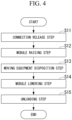
- First, the method of unloading the no. 1 gas turbine module M1 will be described with reference to a flowchart shown in Fig. 4 .
- a connection release step (S11) is executed.
- a connection C1 (see Fig. 1 ) between the common base 85 and the gas turbine foundation 145 is released.
- the plurality of anchor bolts 89 that fix the common base 85 to the gas turbine foundation 145 are removed. Since the anchor bolts 89 are not welded to the common base 85 as described above, the anchor bolts 89 can be removed from the common base 85 without cutting a part of the common base 85 or the anchor bolts 89.
- a connection with a plurality of connection objects connected to the no. 1 gas turbine module M1 is released. All of the plurality of connection objects form a part of the gas turbine plant.
- connection objects examples include the inlet coupling 115 and the exhaust coupling 125 which are connected to the gas turbine rotor 11, the inlet duct 101, the exhaust duct 102, the fuel piping 31 which is connected to the combustor 30, the lube oil piping 132 which is connected to each of the inlet bearing 55 and the exhaust bearing 56, the various cables 151 which are connected to the fuel control valves 32a and 32b or the IGV equipment 25, and the like. Therefore, in the connection release step (S11), a connection C3 between the no. 2 flange 117 of the inlet coupling 115 and the flange 112 of the rotor 111 of the inlet rotating equipment 110 (see Fig. 1 ) is released and a connection C5 between the no.
- connection release step (S11) a connection C2 between the gas turbine rotor 11 and the inlet coupling 115 (see Fig. 1 ) and a connection C4 between the gas turbine rotor 11 and the exhaust coupling 125 are released as necessary.
- a module raising step (S12) is executed.
- the no. 1 gas turbine module M1 is lifted from the gas turbine foundation 145.
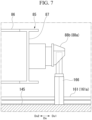
- a jack 166 is disposed between each of the plurality of trunnions 88a and 88b provided on the common base 85 and the gas turbine foundation 145. Then, as shown in Fig. 7 , the jack 166 lifts the no. 1 gas turbine module M1.
- a moving equipment disposition step (S13) is executed.
- the moving equipment disposition step (S13) first, as shown in Fig. 8 , auto transport equipment 165 is disposed outside the plant building 140 at a position along the opening 141 of the plant building 140. A level of an upper surface of the auto transport equipment 165 is substantially the same as a level of the gas turbine foundation 145 in the plant building 140.
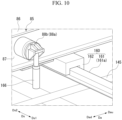
- moving equipment 160 that moves the no. 1 gas turbine module M1 is disposed in a gap between the common base 85 and the gas turbine foundation 145.
- the moving equipment 160 includes a pair of rails 161 and moving carts 162 that move on the rails 161.
- the rails 161 are disposed such that the rails 161 extend from below the common base 85 to the auto transport equipment 165 which is a moving destination in the no. 1 side direction side Ds1.
- the rail 161 includes a rail for indoor 161a in the plant building 140 and a rail on transport equipment 161b on the auto transport equipment 165.
- the rail for indoor 161a is basically installed permanently, and the rail on transport equipment 161b is installed temporarily. However, it may be appropriately selected whether the rail for indoor 161a is permanently installed or temporarily installed, and whether the rail on transport equipment 161b is temporarily installed or permanently installed.
- the level of the upper surface of the auto transport equipment 165 is substantially the same as the level of the gas turbine foundation 145 in the plant building 140.
- a cross-sectional shape of the rail on transport equipment 161b is substantially the same as a cross-sectional shape of the rail for indoor 161a. Therefore, an upper surface level of the rail on transport equipment 161b is substantially the same as an upper surface level of the rail for indoor 161a.
- a drive source for moving the moving carts 162 an electric motor, a linear electric actuator, a hydraulic cylinder, or the like can be considered.
- the moving carts 162 are disposed on the rail 161.
- a module lowering step (S14) is executed.
- the module raising step (S12) ends, and the no. 1 gas turbine module M1 is placed on the moving carts 162 of the moving equipment 160, as shown in Fig. 11 .
- the jack 166 is removed from between each of the trunnions 88a and 88b and the gas turbine foundation 145.
- the no. 1 gas turbine module M1 is lowered, and the no. 1 gas turbine module M1 is placed on the moving cart 162.
- an unloading step (S15) is executed.
- the unloading step (S15) as shown in Fig. 12 , the moving carts 162 are driven, and the no. 1 gas turbine module M1 is moved along the rail 161 to above the auto transport equipment 165.
- the no. 1 gas turbine module M1 is moved to, for example, a repair factory together with the auto transport equipment 165 and the moving carts 162, and the no. 1 gas turbine module M1 is inspected and repaired in the repair factory. Further, when the unloading of the gas turbine module M1 ends, a method of loading a no. 2 gas turbine module M2 is executed in parallel with or prior to the inspection and repair of the no. 1 gas turbine module M1 in the repair factory. The method of loading the no. 2 gas turbine module M2 will be described with reference to a flowchart shown in Fig. 5 .
- a no. 2 moving equipment disposition step (S21) is executed.
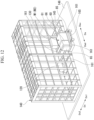
- the no. 2 moving equipment disposition step (S21) first, as shown in Fig. 12 , auto transport equipment 165 on which the no. 2 gas turbine module M2 is mounted is disposed outside the plant building 140 at a position along the opening 141 of the plant building 140. Then, in a case in which the moving carts 162 are not disposed between the no. 2 gas turbine module M2 and the auto transport equipment 165, the no. 2 gas turbine module M2 is lifted and the moving carts 162 are disposed between the no. 2 gas turbine module M2 and the auto transport equipment 165.
- a loading step (S22) is executed.
- the moving carts 162 are driven and the no. 2 gas turbine module M2 is moved along the rail 161 to a region on the gas turbine foundation 145 where the no. 1 gas turbine module M1 was installed.
- a no. 2 module raising step (S23) is executed.
- the no. 2 module raising step (S23) the no. 2 gas turbine module M2 is lifted from the moving carts 162.
- alignment adjust equipment 167 and the jack 166 are disposed between each of the plurality of trunnions 88a and 88b provided on the common base 85 and the gas turbine foundation 145.
- a jack is disposed on the alignment adjust equipment 167. Then, the jack 166 lifts the no. 2 gas turbine module M2.
- connection step (S27) is executed.
- the common base 85 of the no. 2 gas turbine module M2 and the gas turbine foundation 145 are connected to each other.
- the common base 85 of the no. 2 gas turbine module M2 is fixed to the gas turbine foundation 145 using the plurality of anchor bolts 89.
- the above-described plurality of connection objects are connected to the no. 2 gas turbine module M2.
- the no. 1 flange 116 of the inlet coupling 115 and the inlet flange 13 of the gas turbine rotor 11 are connected to each other, and the no.
- the rotor 121 of the exhaust rotating equipment 120 is not located inside the exhaust plenum 61, and thus the no. 1 gas turbine module M1 including the exhaust plenum 61 can be easily unloaded without isolating the exhaust plenum 61.
- the no. 1 gas turbine module M1 can be lifted by the jack 166, the crane, or the like.
- the gas turbine 10 in the above embodiment is a two-shaft gas turbine including the high pressure turbine 40 and the low pressure turbine 45.
- the gas turbine may be a general single-shaft gas turbine including only one turbine.
- the inlet flange 13 of the gas turbine rotor 11 is disposed on the radial direction inner side Dri of the inlet plenum 60. However, the inlet flange 13 may be disposed on the axial upstream side Dau of the inlet plenum 60. Even in this case, the no. 2 flange 117 of the inlet coupling 115 is disposed more on the axial up stream side Dau than the inlet plenum 60. Further, the exhaust flange 14 of the gas turbine rotor 11 is disposed on the radial direction inner side Dri of the exhaust plenum 61. However, the exhaust flange 14 may be disposed more on the axial downstream side Dad than the exhaust plenum 61 and the load compartment 65. Even in this case, the no. 2 flange 127 of the exhaust coupling 125 is disposed more on the axial downstream side Dad than the exhaust plenum 61 and the load compartment 65.
- the rotor 111 of the inlet rotating equipment 110 is directly connected to the inlet coupling 115. However, the rotor 111 of the inlet rotating equipment 110 and the inlet coupling 115 may be connected to each other via a transmission. In this case, the rotor 111 of the inlet rotating equipment 110 may rotate about an axis different from the axis Ar of the gas turbine rotor 11.
- the rotor 121 of the exhaust rotating equipment 120 is directly connected to the exhaust coupling 125. However, the rotor 121 of the exhaust rotating equipment 120 and the exhaust coupling 125 may be connected to each other via a transmission. In this case, the rotor 121 of the exhaust rotating equipment 120 may rotate about an axis different from the axis Ar of the gas turbine rotor 11.
- the method of unloading a gas turbine module in the above embodiment is understood as follows, for example.
- the no. 1 gas turbine module M1 includes a gas turbine 10 that has a gas turbine rotor 11 capable of rotating about an axis Ar, and a turbine shell 15 which covers the gas turbine rotor 11 and in which an inlet 23 and an exhaust 53 are formed; an inlet plenum 60 that is connected to the inlet 23 of the gas turbine 10 and is configured to guide air from an inlet duct 101 into the gas turbine 10; an exhaust plenum 61 that is connected to the exhaust 53 of the gas turbine 10 and is configured to guide exhaust gas Gex from the gas turbine 10 to an exhaust duct 102; an enclosure 66 that covers the gas turbine 10; and a common base 85 on which the gas turbine 10, the inlet plenum 60, the exhaust plenum 61, and the enclosure 66 are mounted and which is connected to a gas turbine foundation 145.
- a method of moving a gas turbine module includes executing the steps including a connection release step (S11) of releasing a connection between the common base 85 and the gas turbine foundation 145, and releasing connections between the no. 1 gas turbine module M1 and a plurality of connection objects that are connected to the No. 1 gas turbine module M1 and constitute a part of a gas turbine plant; a module raising step (S12) of lifting the no. 1 gas turbine module M1 from the gas turbine foundation 145 after the connection release step (S11); a moving equipment disposition step (S13) of disposing moving equipment 160 that is configured to move the no.
- the no. 1 gas turbine module M1 including the entire gas turbine 10 is unloaded, it is not necessary to partially isolate the gas turbine 10, and the unloading work is facilitated and the work time can be shortened. Moreover, in the present aspect, since all of the components except the common base 85 in the no. 1 gas turbine module M1 are mounted on the common base 85, it is possible to easily unload the gas turbine 10 by unloading the common base 85.
- the moving equipment 160 includes a pair of rails 161 and moving carts 162 capable of moving on the rails 161, and in the moving equipment disposition step (S13), each of the pair of rails 161 is disposed to extend toward a moving destination of the no. 1 gas turbine module M1 from below the common base 85, and the moving carts 162 are disposed on the pair of rails 161.
- the no. 1 gas turbine module M1 includes a gas turbine base 80 on which the gas turbine 10 and the inlet plenum 60 are mounted, and the gas turbine base 80, the enclosure 66, and the exhaust plenum 61 are mounted on the common base 85.
- the gas turbine rotor 11 includes the inlet flange 13.
- the loading method includes executing the steps including a no. 2 moving equipment disposition step (S21) of disposing the moving equipment 160 on the gas turbine foundation 145; a loading step (S22) of driving the moving equipment 160 after the no. 2 gas turbine module M2 is placed on the moving equipment 160 and moving the no. 2 gas turbine module M2 to a location on the gas turbine foundation 145 where the no. 1 gas turbine module M1 was present; a no. 2 module raising step (S23) of lifting the no. 2 gas turbine module M2 from the moving equipment 160 after the loading step (S22); a moving equipment removing step (S24) of removing the moving equipment 160 from above the gas turbine foundation 145 during the no. 2 module raising step (S23); a no.
- gas turbine module in the above embodiment is understood as follows, for example.
- a gas turbine module includes a gas turbine 10 that has a gas turbine rotor 11 capable of rotating about an axis Ar, and a turbine shell 15 which covers the gas turbine rotor 11 and in which an inlet 23 and an exhaust 53 are formed; an inlet plenum 60 that is connected to the inlet 23 of the gas turbine 10 and is configured to guide air from an inlet duct 101 into the gas turbine 10; an exhaust plenum 61 that is connected to the exhaust 53 of the gas turbine 10 and is configured to guide exhaust gas Gex from the gas turbine 10 to an exhaust duct 102; an enclosure 66 that covers the gas turbine 10; a gas turbine base 80 on which the gas turbine 10 and the inlet plenum 60 are mounted; and a common base 85 on which the gas turbine base 80, the enclosure 66, and the exhaust plenum 61 are mounted.
- the gas turbine 10 is a type of rotating equipment, it is preferable to minimize the flexure thereof also in the moving process thereof.
- the heaviest gas turbine 10 in the no. 1 gas turbine module M1 is mounted on the gas turbine base 80, and the gas turbine base 80 is mounted on the common base 85. That is, the heaviest gas turbine 10 in the no. 1 gas turbine module M1 is supported by the two overlapping bases. Furthermore, the load of the gas turbine 10 on the common base 85 can be dispersed from the gas turbine base 80. Therefore, in the present aspect, it is possible to suppress the flexure of the gas turbine 10 in the moving process thereof. Moreover, in the present aspect, the exhaust plenum 61 which is lighter than the gas turbine 10 in the no.
- 1 gas turbine module M1 is not mounted on the gas turbine base 80 but is mounted on the common base 85. That is, in the present aspect, the gas turbine base 80 is mounted only on a part of the upper surface 86 of the common base 85. Therefore, in the present aspect, it is possible to suppress the flexure of the gas turbine 10 in the moving process thereof while suppressing an increase in weight of the no. 1 gas turbine module M1.
- the gas turbine module according to the tenth aspect further includes a plurality of trunnions 88a and 88b that are provided on the common base 85 and is configured to receive a load that is generated when the common base 85 is lifted.
- the no. 1 gas turbine module M1 can be lifted by the jack 166, the crane, or the like.
- the gas turbine base 80 includes an upper surface 81 on which the gas turbine 10 and the inlet plenum 60 are mounted, and a pair of side surfaces 82 that extend in an axial direction Da in which the axis Ar extends and face each other in a side direction Ds perpendicular to the axial direction Da and along the upper surface 81.
- Each of the pair of side surfaces 82 of the gas turbine base 80 is provided with trunnions 83a and 83b that is configured to receive a load that is generated when the gas turbine base 80 is lifted.
- the trunnions 83a and 83b provided on one side surface 82 and the trunnions 83a and 83b provided on the other side surface 82 have the same positions in the axial direction Da.
- the trunnions 83a and 83b provided on the gas turbine base 80 are disposed at positions overlapping the trunnions 88a and 88b provided on the common base 85 in the axial direction Da.
- the gas turbine base 80 and the gas turbine 10 mounted thereon can be lifted by the jack 166, the crane, or the like.
- a load that is generated when the gas turbine base 80 is lifted is applied to the trunnions 83a and 83b of the gas turbine base 80. Therefore, the trunnions 83a and 83b are provided in the gas turbine base 80 at high strength portions.
- a load that is generated when the common base 85 is lifted is applied to the trunnions 88a and 88b of the common base 85. Therefore, the trunnions 88a and 88b are provided in the common base 85 at high strength portions.
- the trunnions 83a and 83b of the gas turbine base 80 are disposed at positions overlapping the trunnions 88a and 88b of the common base 85 in the axial direction Da. Therefore, in the present aspect, the position of the high strength portion in the gas turbine base 80 overlaps the position of the high strength portion in the common base 85 in the axial direction Da. For this reason, in the present aspect, a strength of a base in which the gas turbine base 80 and the common base 85 are combined is increased, and it is possible to suppress the flexure of the gas turbine 10 in the moving process thereof.
- gas turbine plant in the above embodiment is understood as follows, for example.
- a gas turbine plant of a fourteenth aspect includes the gas turbine module according to any one of the tenth to thirteenth aspects; inlet rotating equipment 110 that has a rotor 111 and is disposed more on a no. 1 axial side Dau where the inlet 23 is present with respect to the exhaust 53 in an axial direction Da in which the axis Ar extends than the gas turbine module; and an inlet coupling 115 that is configured to connect the rotor 111 of the inlet rotating equipment 110 and an end of the gas turbine rotor 11 on the no. 1 axial side Dau to each other.
- An inlet flange 13 is formed at an end of the gas turbine rotor 11 on the no. 1 axial side Dau.
- the inlet coupling 115 has a no. 1 flange 116 capable of being connected to the inlet flange 13 and a no. 2 flange 117 capable of being connected to the rotor 111 of the inlet rotating equipment 110.
- the no. 2 flange 117 of the inlet coupling 115 is located more on the no. 1 axial side Dau than the inlet plenum 60.
- a gas turbine plant of the fifteenth aspect includes the gas turbine module according to any one of the tenth to thirteenth aspects; an exhaust rotating equipment 120 that has a rotor 121 and is disposed more on a no. 2 axial side Dad where the exhaust 53 is present with respect to the inlet 23 in an axial direction Da in which the axis Ar extends than the gas turbine module; and an exhaust coupling 125 that is configured to connect the rotor 121 of the exhaust rotating equipment 120 and an end of the gas turbine rotor 11 on the no. 2 axial side Dad to each other.
- An exhaust flange 14 is formed at an end of the gas turbine rotor 11 on the no. 2 axial side Dad.
- the exhaust coupling 125 has a no. 1 flange 126 capable of being connected to the exhaust flange 14 and a no. 2 flange 127 capable of being connected to the rotor 121 of the exhaust rotating equipment 120.
- the no. 2 flange of the exhaust coupling 125 is located more on the no. 2 axial side Dad than the exhaust plenum 61.
Landscapes
- Engineering & Computer Science (AREA)
- General Engineering & Computer Science (AREA)
- Mechanical Engineering (AREA)
- Chemical & Material Sciences (AREA)
- Combustion & Propulsion (AREA)
- Engine Equipment That Uses Special Cycles (AREA)
- Supercharger (AREA)
Description
- The present invention relates to a gas turbine module including a gas turbine, a gas turbine plant including the same, a method of unloading a gas turbine module, and a method of exchanging a gas turbine module.
- When inspecting a gas turbine, it is necessary to isolate a plurality of components constituting the gas turbine and then inspect each component. Therefore, the inspection period of the gas turbine becomes long. However, an operator has a desire to make the operation period of the gas turbine as long as possible.
-
US 2008/0187431 A1 below proposes a method of exchanging a gas turbine in operation with another gas turbine of the same type.US 2008/0187431 A1 discloses a method of separating a compressor and a turbine that constitute the gas turbine and then individually unloading the compressor and the turbine. -
EP 2 196 431 A2US 2016/161048 A1 disclose the pre-characterizing features ofclaims 1 and 9 and represent the closest prior art. - In the technique described in
US 2008/0187431 A1 , by exchanging the gas turbine in operation with the gas turbine of the same type, it is possible to prevent the gas turbine from being stopped for a long period due to inspection and repair of the gas turbine. However, the operator has a desire to facilitate the exchange work of the gas turbine and to shorten a work period. - An object of the present invention is to provide a technique capable of facilitating the exchanging work of the gas turbine and shortening the work period.
- This object is solved by a method of unloading a gas turbine module in a gas turbine plant with the features of
claim 1, a gas turbine module with the features of claim 9 and a gas turbine plant with the features ofclaim 13. Preferred embodiments follow from the other claims. - A method of unloading a gas turbine module according to an aspect of the present invention for achieving the above-described object involves moving the following gas turbine module.
- The gas turbine module includes a gas turbine that has a gas turbine rotor capable of rotating about an axis, and a turbine shell which covers the gas turbine rotor and in which an inlet and an exhaust are formed; an inlet plenum that is connected to the inlet of the gas turbine and is configured to guide air from an inlet duct into the gas turbine; an exhaust plenum that is connected to the exhaust of the gas turbine and is configured to guide exhaust gas from the gas turbine to an exhaust duct; an enclosure that covers the gas turbine; and a common base on which the gas turbine, the inlet plenum, the exhaust plenum, and the enclosure are mounted and which is connected to a gas turbine foundation.
- A method of moving a gas turbine module according to the aspect includes executing the steps including a connection release step of releasing a connection between the common base and the gas turbine foundation, and releasing connections between the gas turbine module and a plurality of connection objects that are connected to the gas turbine module and constitute a part of a gas turbine plant; a module raising step of lifting the gas turbine module from the gas turbine foundation after the connection release step; a moving equipment disposition step of disposing moving equipment that is configured to move the gas turbine module in a gap between the common base and the gas turbine foundation during the module raising step; a module lowering step of ending the module raising step after the moving equipment disposition step and placing the gas turbine module on the moving equipment; and an unloading step of driving the moving equipment after the module lowering step and moving the gas turbine module.
- In a method of exchanging a gas turbine module according to an aspect of the present invention for achieving the above-described object, the method of unloading a gas turbine module according to the above-described aspect is executed and a loading method of loading a no. 2 gas turbine module different from a no. 1 gas turbine module which is the gas turbine module is executed.
- The no. 2 gas turbine module includes a no. 2 gas turbine that has a no. 2 gas turbine rotor capable of rotating about an axis, and a no. 2 turbine shell which covers the no. 2 gas turbine rotor and in which a no. 2 inlet and a no. 2 exhaust are formed; a no. 2 inlet plenum that is connected to the no. 2 inlet of the no. 2 gas turbine and is configured to guide air from the inlet duct into the no. 2 gas turbine; a no. 2 exhaust plenum that is connected to the no. 2 exhaust of the no. 2 gas turbine and is configured to guide exhaust gas from the no. 2 gas turbine to the exhaust duct; a no. 2 enclosure that covers the no. 2 gas turbine; and a no. 2 common base on which the no. 2 gas turbine, the no. 2 inlet plenum, the no. 2 exhaust plenum, and the no. 2 enclosure are mounted and which is connected to the gas turbine foundation. The no. 2 gas turbine module is capable of being connected to the plurality of connection objects that were connected to the no. 1 gas turbine module.
- The loading method includes executing the steps including a no. 2 moving equipment disposition step of disposing the moving equipment on the gas turbine foundation; a loading step of driving the moving equipment after the no. 2 gas turbine module is placed on the moving equipment and moving the no. 2 gas turbine module to a location on the gas turbine foundation where the no. 1 gas turbine module was present; a no. 2 module raising step of lifting the no. 2 gas turbine module from the moving equipment after the loading step; a moving equipment removing step of removing the moving equipment from above the gas turbine foundation during the no. 2 module raising step; a no. 2 module lowering step of ending the no. 2 module raising step after the moving equipment removing step and placing the no. 2 gas turbine module on the gas turbine foundation; and a connection step of connecting the no. 2 common base and the gas turbine foundation to each other and connecting the no. 2 gas turbine module and the plurality of connection objects to each other.
- A gas turbine module according to an aspect of the present invention for achieving the above-described object includes a gas turbine that has a gas turbine rotor capable of rotating about an axis, and a turbine shell which covers the gas turbine rotor and in which an inlet and an exhaust are formed; an inlet plenum that is connected to the inlet of the gas turbine and is configured to guide air from an inlet duct into the gas turbine; an exhaust plenum that is connected to the exhaust of the gas turbine and is configured to guide exhaust gas from the gas turbine to an exhaust duct; an enclosure that covers the gas turbine; a gas turbine base on which the gas turbine and the inlet plenum are mounted; and a common base on which the gas turbine base, the enclosure, and the exhaust plenum are mounted.
- A gas turbine plant according to an aspect of the present invention for achieving the above-described object includes the gas turbine module according to the above-described aspect; inlet rotating equipment that has a rotor and is disposed more on a no. 1 axial side where the inlet is present with respect to the exhaust in an axial direction in which the axis extends than the gas turbine module; and an inlet coupling that is configured to connect the rotor of the inlet rotating equipment and an end of the gas turbine rotor on the no. 1 axial side to each other. An inlet flange is formed at an end of the gas turbine rotor on the no. axial 1 side. The inlet coupling has a no. 1 flange capable of being connected to the inlet flange and a no. 2 flange capable of being connected to the rotor of the inlet rotating equipment. In a state in which the no. 1 flange of the inlet coupling is connected to the inlet flange, the no. 2 flange of the inlet coupling is located more on the no. 1 axial side than the inlet plenum.
- A gas turbine plant according to another aspect of the present invention for achieving the above-described object includes the gas turbine module according to the above-described aspect; exhaust rotating equipment that has a rotor and is disposed more on a no. 2 axial side where the exhaust is present with respect to the inlet in an axial direction in which the axis extends than the gas turbine module; and an exhaust coupling that is configured to connect the rotor of the exhaust rotating equipment and an end of the gas turbine rotor on the no. 2 axial side to each other. An exhaust flange is formed at an end of the gas turbine rotor on the no. 2 axial side. The exhaust coupling has a no. 1 flange capable of being connected to the exhaust flange and a no. 2 flange capable of being connected to the rotor of the exhaust rotating equipment. In a state in which the no. 1 flange of the exhaust coupling is connected to the exhaust flange, the no. 2 flange of the exhaust coupling is located more on the no. 2 axial side than the exhaust plenum.
- According to the gas turbine module, the method of moving a gas turbine module, and the method of exchanging a gas turbine module of the present disclosure, the exchanging work of the gas turbine can be easily performed, and the work period can be shortened.
-
-
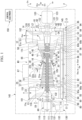
Fig. 1 is an explanatory view showing a schematic configuration of a gas turbine plant according to an embodiment of the present disclosure. -
Fig. 2A is a front view of a gas turbine module according to the embodiment of the present disclosure. -
Fig. 2B is a right side view of the gas turbine module according to the embodiment of the present disclosure. -
Fig. 2C is a plan view of the gas turbine module according to the embodiment of the present disclosure. -
Fig. 3 is a perspective view of the gas turbine plant according to the embodiment of the present disclosure. -
Fig. 4 is a flowchart showing a method of unloading a gas turbine module according to the embodiment of the present disclosure. -
Fig. 5 is a flowchart showing a method of loading a gas turbine module according to the embodiment of the present disclosure. -
Fig. 6 is a perspective view of a common base, a trunnion, and a jack in the process of a module raising step according to the embodiment of the present disclosure. -
Fig. 7 is a front view of the common base, the trunnion, the jack, and moving equipment during the module raising step and in the process of a moving equipment disposition step according to the embodiment of the present disclosure. -
Fig. 8 is a perspective view of the gas turbine plant during the moving equipment disposition step according to the embodiment of the present disclosure. -
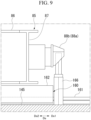
Fig. 9 is a front view of the common base, the trunnion, the jack, and the moving equipment during the module raising step and after the moving equipment disposition step according to the embodiment of the present disclosure. -
Fig. 10 is a perspective view of the common base, the trunnion, the jack, and the moving equipment during the module raising step and after the moving equipment disposition step according to the embodiment of the present disclosure. -
Fig. 11 is a front view of the common base, the trunnion, and the moving equipment after a module lowering step in the embodiment according to the present disclosure. -
Fig. 12 is a perspective view of the gas turbine plant after the moving equipment disposition step according to the embodiment of the present disclosure. -
Fig. 13 is a perspective view of the common base, the trunnion, the jack, alignment adjust equipment, and the moving equipment during a no. 2 module raising step and before a moving equipment removing step according to the embodiment of the present disclosure. - Hereinafter, a gas turbine module, a method of moving a gas turbine module, and a method of exchanging a gas turbine module according to an embodiment of the present disclosure will be described in detail with reference to the drawings.
- A gas turbine and a gas turbine plant including the same of the present embodiment will be described with reference to
Figs. 1 and2 . - As shown in
Fig. 1 , the gas turbine plant of the present embodiment includes a no. 1 gas turbine module M1, aninlet duct 101, anexhaust duct 102,inlet rotating equipment 110,exhaust rotating equipment 120, lubeoil supply equipment 131, anACC enclosure 130, aplant building 140 that covers these, andcontrol equipment 150 that controls the operations of these. Although thecontrol equipment 150 may be disposed in theplant building 140, the control equipment is basically disposed in a control enclosure outside theplant building 140. - The no. 1 gas turbine module M1 includes a
gas turbine 10, aninlet plenum 60, anexhaust plenum 61, aload compartment 65, anenclosure 66, aventilation system 67, agas turbine base 80, and acommon base 85. - The
gas turbine 10 of the present embodiment is a two-shaft gas turbine. Thegas turbine 10 includes acompressor 20 that compresses air A to generate compressed air, a plurality ofcombustors 30 that combust fuel F in the compressed air to generate combustion gas Gc, ahigh pressure turbine 40 that is driven by the combustion gas Gc from the plurality ofcombustors 30, alow pressure turbine 45 that is driven by the combustion gas Gc exhausted from thehigh pressure turbine 40, adischarge casing 16, anexhaust casing 50, aninlet bearing 55, and an exhaust bearing 56. - The
compressor 20 includes acompressor rotor 21 that rotates about an axis Ar, acompressor casing 22 that covers an outer peripheral side of thecompressor rotor 21, and inlet guide vane equipment (IGV equipment) 25 that controls a flow rate of air that is sucked into thecompressor casing 22. In the following, a direction in which the axis Ar extends is referred to as an axial direction Da, a circumferential direction about the axis Ar is simply referred to as a circumferential direction Dc, and a direction perpendicular to the axis Ar is referred to as a radial direction Dr. Further, one side in the axial direction Da is referred to as an axial upstream side (or a no. 1 axis Ar side) Dau, and a side opposite to the axial upstream side is referred to as an axial downstream side (or a no. 2 axis Ar side) Dad. Further, a side closer to the axis Ar in the radial direction Dr is referred to as a radial direction inner side Dri, and a side opposite to the radial direction inner side is referred to as a radial direction outer side Dro. - The
compressor casing 22 has aninlet 23 for sucking the air and a discharge 24 for discharging the compressed air. Theinlet 23 is formed at an end of thecompressor casing 22 on the axial upstream side Dau, and the discharge 24 is formed at an end of thecompressor casing 22 on the axial downstream side Dad. TheIGV equipment 25 includes avane 26 disposed on theinlet 23 side in thecompressor casing 22, and adriver 27 that drives thevane 26. - The
high pressure turbine 40 is disposed on the axial downstream side Dad of thecompressor 20. Thehigh pressure turbine 40 includes a highpressure turbine rotor 41 that rotates about the axis Ar, and a high pressure turbine casing 42 that covers an outer peripheral side of the highpressure turbine rotor 41. - The
low pressure turbine 45 is disposed on the axial downstream side Dad of thehigh pressure turbine 40. Thelow pressure turbine 45 includes a lowpressure turbine rotor 46 that rotates about the axis Ar, and a lowpressure turbine casing 47 that covers an outer peripheral side of the lowpressure turbine rotor 46. The lowpressure turbine casing 47 is connected to an end of the high pressure turbine casing 42 on the axial downstream side Dad. - The
exhaust casing 50 is connected to an end of the lowpressure turbine casing 47 on the axial downstream side Dad. Theexhaust casing 50 includes anexhaust diffuser 51. Theexhaust diffuser 51 includes a cylindrical outer diffuser 51o centered on the axis Ar and an inner diffuser 51i which is cylindrical about the axis Ar and is disposed on the radial direction inner side Dri of the outer diffuser 51o. A diffuser area 52 through which exhaust gas Gex exhausted from thelow pressure turbine 45 passes is formed between an inner peripheral side of the outer diffuser 51o and an outer peripheral side of the inner diffuser 51i. A portion defined by an edge of the outer diffuser 51o on the axial downstream side Dad and an edge of the inner diffuser 51i on the axial downstream side Dad forms anexhaust 53. - The
discharge casing 16 is disposed between thecompressor casing 22 and the high pressure turbine casing 42 in the axial direction Da, and connects thecompressor casing 22 and the high pressure turbine casing 42 to each other. The compressed air discharged from the discharge 24 of thecompressor 20 flows into thedischarge casing 16. - The plurality of
combustors 30 are provided in thedischarge casing 16. The plurality ofcombustors 30 are connected to a fuel supply source throughfuel piping 31. Thefuel piping 31 includesmain fuel piping 31a connected to the fuel supply source and a plurality of pieces of fuel piping for combustors 3 1b branched from themain fuel piping 31a. The fuel piping forcombustors 31b is provided for each of the plurality ofcombustors 30, and each is connected to the corresponding onecombustor 30. Themain fuel piping 31a is provided with a mainfuel control valve 32a. The plurality of pieces of fuel piping for combustors 3 1b are each provided with a fuel control valve for acombustor 32b. The fuel F from thefuel piping 31 is supplied to thecombustor 30, and the compressed air in thedischarge casing 16 flows into the combustor. Thecombustor 30 combusts the fuel F in the compressed air to generate the combustion gas Gc. The combustion gas Gc flows into the high pressure turbine casing 42 and drives thehigh pressure turbine 40. - The
compressor rotor 21 and the highpressure turbine rotor 41 are located on the same axis Ar and are connected to each other to form a no. 1rotor 11a. The lowpressure turbine rotor 46 constitutes a no. 2rotor 11b. The no. 2rotor 11b is not mechanically connected to the no. 1rotor 11a. Therefore, the no. 2rotor 11b can rotate independently of the rotation of the no. 1rotor 11a. In other words, the lowpressure turbine rotor 46 can rotate independently of the rotation of the highpressure turbine rotor 41. Agas turbine rotor 11 includes the no. 1rotor 11a and the no. 2rotor 11b. Aninlet flange 13 is formed at an end of thegas turbine rotor 11 on the axial upstream side Dau, in other words, at an end of the no. 1rotor 11a on the axial upstream side Dau. Further, anexhaust flange 14 is formed at an end of thegas turbine rotor 11 on the axial downstream side Dad, in other words, at an end of the no. 2rotor 11b on the axial downstream side Dad. Note that both of theinlet flange 13 and theexhaust flange 14 are connection flanges. - The inlet bearing 55 supports a portion of the
gas turbine rotor 11 on the axial upstream side Dau to be capable of rotatably supporting thegas turbine rotor 11. Further, the exhaust bearing 56 supports a portion of thegas turbine rotor 11 on the axial downstream side Dad to be capable of rotatably supporting thegas turbine rotor 11. - A
turbine shell 15 is configured to include thecompressor casing 22, thedischarge casing 16, the high pressure turbine casing 42, the lowpressure turbine casing 47, and theexhaust casing 50. Theinlet 23 of thecompressor casing 22 constitutes an inlet of theturbine shell 15. Further, theexhaust 53 of theexhaust casing 50 constitutes an exhaust of theturbine shell 15. - The
inlet plenum 60 is connected to theinlet duct 101 and is connected to theinlet 23 of theturbine shell 15. The air A that is sucked by thecompressor 20 flows into theinlet duct 101. In theinlet duct 101, an upstream side portion related to the flow of the air A is provided with an inlet filter, for example. In theinlet duct 101, and in a downstream side portion related to the flow of the air A, the air A flows in the radial direction Dr with respect to the axis Ar. Theinlet plenum 60 smoothly guides the air from theinlet duct 101 into thecompressor casing 22. Specifically, theinlet plenum 60 gradually converts the flow of the air A from theinlet duct 101 in the radial direction Dr into a flow in the axial direction Da. Further, theinlet plenum 60 distributes the air A from theinlet duct 101 substantially evenly in the circumferential direction Dc in thecompressor casing 22. Theinlet flange 13 and the inlet bearing 55 are located on the radial direction inner side Dri of theinlet plenum 60. - The
exhaust plenum 61 is connected to theexhaust duct 102 and is connected to theexhaust 53 of theturbine shell 15. The exhaust gas Gex exhausted from theexhaust casing 50 flows through theexhaust plenum 61 and theexhaust duct 102. In theexhaust duct 102, and in an upstream side portion related to the flow of the exhaust gas Gex, the exhaust gas Gex flows in the radial direction Dr with respect to the axis Ar. Theexhaust plenum 61 guides the exhaust gas Gex exhausted from theexhaust casing 50 to theexhaust duct 102. Theexhaust plenum 61 gradually converts the flow of the exhaust gas Gex exhausted from theexhaust casing 50 into a flow in the radial direction Dr. Theexhaust plenum 61 includes anexhaust gas guide 62 and anexhaust plenum casing 63. Theexhaust gas guide 62 is connected to the edge of the inner diffuser 51i on the axial downstream side Dad, in other words, is connected to a part of theexhaust 53 of theturbine shell 15, and causes a direction of the flow of the exhaust gas Gex that has passed through the diffuser area 52 to gradually face the radial direction outer side Dro. The exhaust plenum casing 63 covers portions of the inner diffuser 51i and the outer diffuser 51o on the axial downstream side Dad, and theexhaust gas guide 62. The exhaust plenum casing 63 is connected to theexhaust duct 102. - The
load compartment 65 is located more on the axial downstream side Dad than theexhaust plenum 61 and is connected to theexhaust plenum 61. Theload compartment 65 partitions an area defined by the inner diffuser 51i of theexhaust casing 50 and theexhaust gas guide 62 of theexhaust plenum 61 on the radial direction inner side Dri from the outside. This area forms an exhaust bearing area 64. Theexhaust flange 14 and the exhaust bearing 56 are located in the exhaust bearing area 64. It can be said that theexhaust flange 14 and the exhaust bearing 56 are disposed on the radial direction inner side Dri of theexhaust plenum 61. - Cooling air from the outside is supplied into the exhaust bearing area 64. The exhaust bearing 56 in the exhaust bearing area 64 is cooled by the cooling air.
- The
enclosure 66 covers thegas turbine 10 as shown inFigs. 1 and2A to 2C . On the other hand, theenclosure 66 does not cover theinlet plenum 60 and theexhaust plenum 61.
Therefore, theenclosure 66 does not cover theinlet 23 of thegas turbine 10 which is connected to theinlet plenum 60 and theexhaust 53 of thegas turbine 10 which is connected to theexhaust plenum 61. Further, theenclosure 66 does not cover theinlet flange 13 and the inlet bearing 55 disposed on the radial direction inner side Dri of theinlet plenum 60. Further, theenclosure 66 does not cover theexhaust flange 14 and the exhaust bearing 56 disposed on the radial direction inner side Dri of theexhaust plenum 61. - The
ventilation system 67 is provided above theenclosure 66. Theventilation system 67 ventilates the air inside theenclosure 66 and prevents the temperature inside theenclosure 66 from becoming high. - The
inlet plenum 60 and thegas turbine 10 are mounted on thegas turbine base 80. Thegas turbine base 80 includes anupper surface 81 on which theinlet plenum 60 and thegas turbine 10 are mounted, and a pair of side surfaces 82. Theupper surface 81 of thegas turbine base 80 extends in a horizontal direction. As shown inFig. 2C , theupper surface 81 is a rectangle whose longitudinal direction is the axial direction Da. Oneside surface 82 of the pair of side surfaces 82 is connected to one long side of a pair of long sides of the rectangularupper surface 81. Further, theother side surface 82 is connected to the other long side of the pair of long sides of the rectangularupper surface 81. Therefore, both of the pair of side surfaces 82 extend in the axial direction Da and are parallel to each other. - Here, a direction that is a horizontal direction and is perpendicular to the axis Ar is referred to as a side direction Ds. In the side direction Ds, one side is referred to as a no. 1 side direction side Ds1 and the other side is referred to as a no. 2 side direction side Ds2. The position of the
gas turbine 10 in the side direction Ds of the axis Ar is the center between the position of the oneside surface 82 and the position of the other side surface 82 in the side direction Ds. - The one
side surface 82 and the other side surface 82 of thegas turbine base 80 are each provided with a no. 1trunnion 83a and a no. 2trunnion 83b. The no. 2trunnion 83b is disposed more on the axial downstream side Dad than the no. 1trunnion 83a. The no. 1trunnion 83a and the no. 2trunnion 83b protrude from theside surface 82 of thegas turbine base 80 in the side direction Ds. The no. 1trunnion 83a provided on the oneside surface 82 and the no. 1trunnion 83a provided on the other side surface 82 have the same position in the axial direction Da. Further, the no. 2trunnion 83b provided on the oneside surface 82 and the no. 2trunnion 83b provided on the other side surface 82 have the same position in the axial direction Da. Each of thetrunnions gas turbine base 80 is lifted. - As shown in
Figs. 1 and2A to 2C , thegas turbine base 80, theenclosure 66, theexhaust plenum 61, and theload compartment 65 are mounted on thecommon base 85. Thecommon base 85 includes anupper surface 86 on which thegas turbine base 80, theenclosure 66, theexhaust plenum 61, and theload compartment 65 are mounted, and a pair of side surfaces 87. Theupper surface 86 of thecommon base 85 extends in the horizontal direction. As shown inFig. 2C , theupper surface 86 is a rectangle whose longitudinal direction is the axial direction Da. Oneside surface 87 of the pair of side surfaces 87 is connected to one long side of a pair of long sides of the rectangularupper surface 86. Further, theother side surface 87 is connected to the other long side of the pair of long sides of the rectangularupper surface 86. Therefore, both of the pair of side surfaces 87 extend in the axial direction Da and are parallel to each other. The position of thegas turbine 10 in the side direction Ds of the axis Ar is a center between the position of the oneside surface 87 and the position of the other side surface 87 in the side direction Ds. Note that the side direction Ds is also a direction along theupper surface 81 of thegas turbine base 80 or theupper surface 86 of thecommon base 85 and perpendicular to the axis Ar. - The one
side surface 87 and the other side surface 87 of thecommon base 85 are each provided with a no. 1trunnion 88a and a no. 2trunnion 88b. The no. 2trunnion 88b is disposed more on the axial downstream side Dad than the no. 1trunnion 88a. The no. 1trunnion 88a and the no. 2trunnion 88b protrude from theside surface 87 of thecommon base 85 in the side direction Ds. The no. 1trunnion 88a provided on the oneside surface 87 and the no. 1trunnion 88a provided on the other side surface 87 have the same position in the axial direction Da. Further, the no. 2trunnion 88b provided on the oneside surface 87 and the no. 2trunnion 88b provided on the other side surface 87 have the same position in the axial direction Da. Each of thetrunnions common base 85 is lifted. - The no. 1
trunnion 83a of thegas turbine base 80 is disposed at a position overlapping the no. 1trunnion 88a of thecommon base 85 in the axial direction Da. Further, the no. 2trunnion 83b of thegas turbine base 80 is disposed at a position overlapping the no. 2trunnion 88b of thecommon base 85 in the axial direction Da. - The above-described
gas turbine base 80 is connected to thecommon base 85 by a plurality of connection parts (for example, bolts and nuts) 84, as shown inFig. 1 . Thecommon base 85 is disposed on agas turbine foundation 145. Thecommon base 85 is fixed to thegas turbine foundation 145 by a plurality ofanchor bolts 89. Theanchor bolts 89 are not welded to thecommon base 85 so that they can be easily removed from thecommon base 85. - The above-described
enclosure 66 covers thegas turbine 10 and all of the portions of thegas turbine base 80 except the portion on which theinlet plenum 60 is mounted. - As shown in
Fig. 1 , the no. 1 gas turbine module M1 further includes aninlet support 90, anexhaust support 91, anIGV support 92, anexhaust plenum support 93, and aload compartment support 94. Both of theinlet support 90 and theexhaust support 91 support thegas turbine 10. Theinlet support 90 is fixed to theupper surface 81 of thegas turbine base 80 and supports theinlet plenum 60. Theinlet support 90 supports theinlet plenum 60, thereby supporting thegas turbine 10 connected to theinlet plenum 60. Theexhaust support 91 is fixed to theupper surface 81 of thegas turbine base 80 and supports a portion of thegas turbine 10 on the axial downstream side Dad. TheIGV support 92 is fixed to theupper surface 81 of thegas turbine base 80 and supports theIGV equipment 25. Theexhaust plenum support 93 is fixed to theupper surface 86 of thecommon base 85 and supports theexhaust plenum 61. Theload compartment support 94 is fixed to theupper surface 86 of thecommon base 85 and supports theload compartment 65. - The
inlet rotating equipment 110 is, for example, a starter motor for starting rotation of thegas turbine rotor 11 that is stopped. Theinlet rotating equipment 110 is disposed on the axial upstream side Dau of the no. 1 gas turbine module M1. Theinlet rotating equipment 110 includes arotor 111 that rotates about the axis Ar and acasing 113 that covers therotor 111. An end of therotor 111 on the axial downstream side Dad protrudes from thecasing 113 to the axial downstream side Dad. Aflange 112 is formed at the end of therotor 111 on the axial downstream side Dad. Aninlet coupling 115 is disposed between theflange 112 of theinlet rotating equipment 110 and theinlet flange 13 of thegas turbine rotor 11. Theinlet coupling 115 includes a no. 1flange 116 capable of being connected to theinlet flange 13 of thegas turbine rotor 11 and a no. 2flange 117 capable of being connected to theflange 112 of theinlet rotating equipment 110. Therotor 111 of theinlet rotating equipment 110 and thegas turbine rotor 11 are connected to each other via theinlet coupling 115. Therefore, theinlet flange 13 of thegas turbine rotor 11 can be connected to therotor 111 of theinlet rotating equipment 110 via theinlet coupling 115. The no. 2flange 117 of theinlet coupling 115 is located more on the axial upstream side Dau than theinlet plenum 60. Note that all of theflange 112, the no. 1flange 116, and the no. 2flange 117 are connection flanges. - The lube
oil supply equipment 131 supplies lube oil to the inlet bearing 55 and the exhaust bearing 56 via thelube oil piping 132. - The
ACC enclosure 130 covers various ACCs including theinlet rotating equipment 110 and the lubeoil supply equipment 131. - The
exhaust rotating equipment 120 is, for example, rotating equipment that is driven by thegas turbine 10. Specifically, theexhaust rotating equipment 120 is, for example, a generator, a rotary compressor, a rotary pump, or the like. Theexhaust rotating equipment 120 is disposed on the axial downstream side Dad of the no. 1 gas turbine module M1. Theexhaust rotating equipment 120 includes arotor 121 that rotates about the axis Ar and acasing 123 that covers therotor 121. An end of therotor 121 on the axial upstream side Dau protrudes from thecasing 123 to the axial upstream side Dau. Aflange 122 is formed at the end of therotor 121 on the axial upstream side Dau. Anexhaust coupling 125 is disposed between theflange 122 of theexhaust rotating equipment 120 and theexhaust flange 14 of thegas turbine rotor 11. Theexhaust coupling 125 includes a no. 1flange 126 capable of being connected to theexhaust flange 14 of thegas turbine rotor 11 and a no. 2flange 127 capable of being connected to theflange 122 of theexhaust rotating equipment 120. Therotor 121 of theexhaust rotating equipment 120 and thegas turbine rotor 11 are connected to each other via theexhaust coupling 125. Therefore, theexhaust flange 14 of thegas turbine rotor 11 can be connected to therotor 121 of theexhaust rotating equipment 120 via theexhaust coupling 125. The no. 2flange 127 of theexhaust coupling 125 is located more on the axial downstream side Dad than theexhaust plenum 61 and theload compartment 65. Note that all of theflange 122, the no. 1flange 126, and the no. 2flange 127 are connection flanges. - The
control equipment 150 is connected to theIGV equipment 25, the mainfuel control valve 32a, the plurality of fuel control valves forcombustors 32b, the lubeoil supply equipment 131, and the like byvarious cables 151. - The
plant building 140 is built on aplant foundation 146, as shown inFig. 3 . Thegas turbine foundation 145 is located inside theplant building 140 and is provided on theplant foundation 146. Theplant building 140 has anopening 141. Theopening 141 is provided on the no. 1 side direction side Ds1 of the no. 1 gas turbine module M1. The width of theopening 141 in the axial direction Da is larger than the width of the no. 1 gas turbine module M1 in the axial direction Da. - Methods of unloading and loading a gas turbine module, and a method of exchanging a gas turbine module for executing these according to the present embodiment will be described with reference to
Figs. 4 to 13 . - The method of exchanging a gas turbine module is executed by executing the methods of unloading and loading a gas turbine module. First, the method of unloading the no. 1 gas turbine module M1 will be described with reference to a flowchart shown in
Fig. 4 . - In the method of unloading the no. 1 gas turbine module M1, first, a connection release step (S11) is executed. In the connection release step (S11), a connection C1 (see
Fig. 1 ) between thecommon base 85 and thegas turbine foundation 145 is released. Specifically, the plurality ofanchor bolts 89 that fix thecommon base 85 to thegas turbine foundation 145 are removed. Since theanchor bolts 89 are not welded to thecommon base 85 as described above, theanchor bolts 89 can be removed from thecommon base 85 without cutting a part of thecommon base 85 or theanchor bolts 89. Further, a connection with a plurality of connection objects connected to the no. 1 gas turbine module M1 is released. All of the plurality of connection objects form a part of the gas turbine plant. Examples of the connection objects include theinlet coupling 115 and theexhaust coupling 125 which are connected to thegas turbine rotor 11, theinlet duct 101, theexhaust duct 102, the fuel piping 31 which is connected to thecombustor 30, the lube oil piping 132 which is connected to each of the inlet bearing 55 and the exhaust bearing 56, thevarious cables 151 which are connected to thefuel control valves IGV equipment 25, and the like. Therefore, in the connection release step (S11), a connection C3 between the no. 2flange 117 of theinlet coupling 115 and theflange 112 of therotor 111 of the inlet rotating equipment 110 (seeFig. 1 ) is released and a connection C5 between the no. 2flange 127 of theexhaust coupling 125 and theflange 122 of therotor 121 of theexhaust rotating equipment 120 is released. Further, a connection C6 between theinlet plenum 60 and theinlet duct 101, a connection C7 between theexhaust plenum 61 and theexhaust duct 102, a connection between the combustor 30 and thefuel piping 31, a connection of each of the inlet bearing 55 and the exhaust bearing 56 with thelube oil piping 132, and a connection of each of thefuel control valves IGV equipment 25 with each of thecables 151 are released. - In the connection release step (S11), a connection C2 between the
gas turbine rotor 11 and the inlet coupling 115 (seeFig. 1 ) and a connection C4 between thegas turbine rotor 11 and theexhaust coupling 125 are released as necessary. - In the method of unloading the no. 1 gas turbine module M1, next, a module raising step (S12) is executed. In the module raising step (S 12), the no. 1 gas turbine module M1 is lifted from the
gas turbine foundation 145. At this time, as shown inFig. 6 , ajack 166 is disposed between each of the plurality oftrunnions common base 85 and thegas turbine foundation 145. Then, as shown inFig. 7 , thejack 166 lifts the no. 1 gas turbine module M1. - In the method of unloading the no. 1 gas turbine module M1, next, a moving equipment disposition step (S13) is executed. In the moving equipment disposition step (S13), first, as shown in
Fig. 8 ,auto transport equipment 165 is disposed outside theplant building 140 at a position along theopening 141 of theplant building 140. A level of an upper surface of theauto transport equipment 165 is substantially the same as a level of thegas turbine foundation 145 in theplant building 140. Next, as shown inFigs. 9 and10 , movingequipment 160 that moves the no. 1 gas turbine module M1 is disposed in a gap between thecommon base 85 and thegas turbine foundation 145. The movingequipment 160 includes a pair ofrails 161 and movingcarts 162 that move on therails 161. In disposing the movingequipment 160, first, therails 161 are disposed such that therails 161 extend from below thecommon base 85 to theauto transport equipment 165 which is a moving destination in the no. 1 side direction side Ds1. As shown inFig. 8 , therail 161 includes a rail for indoor 161a in theplant building 140 and a rail ontransport equipment 161b on theauto transport equipment 165. The rail for indoor 161a is basically installed permanently, and the rail ontransport equipment 161b is installed temporarily. However, it may be appropriately selected whether the rail for indoor 161a is permanently installed or temporarily installed, and whether the rail ontransport equipment 161b is temporarily installed or permanently installed. As described above, the level of the upper surface of theauto transport equipment 165 is substantially the same as the level of thegas turbine foundation 145 in theplant building 140. A cross-sectional shape of the rail ontransport equipment 161b is substantially the same as a cross-sectional shape of the rail for indoor 161a. Therefore, an upper surface level of the rail ontransport equipment 161b is substantially the same as an upper surface level of the rail for indoor 161a. As a drive source for moving the movingcarts 162, an electric motor, a linear electric actuator, a hydraulic cylinder, or the like can be considered. Next, the movingcarts 162 are disposed on therail 161. - When the moving equipment disposition step (S13) ends, a module lowering step (S14) is executed. In the module lowering step (S14), the module raising step (S12) ends, and the no. 1 gas turbine module M1 is placed on the moving
carts 162 of the movingequipment 160, as shown inFig. 11 . Specifically, after lowering a drive end of thejack 166, thejack 166 is removed from between each of thetrunnions gas turbine foundation 145. As a result, the no. 1 gas turbine module M1 is lowered, and the no. 1 gas turbine module M1 is placed on the movingcart 162. - When the module lowering step (S14) ends, an unloading step (S15) is executed. In the unloading step (S15), as shown in
Fig. 12 , the movingcarts 162 are driven, and the no. 1 gas turbine module M1 is moved along therail 161 to above theauto transport equipment 165. - With this, the method of unloading the no. 1 gas turbine module M1 according to the present embodiment ends.
- As described above, when the unloading of the no. 1 gas turbine module M1 ends, the no. 1 gas turbine module M1 is moved to, for example, a repair factory together with the
auto transport equipment 165 and the movingcarts 162, and the no. 1 gas turbine module M1 is inspected and repaired in the repair factory. Further, when the unloading of the gas turbine module M1 ends, a method of loading a no. 2 gas turbine module M2 is executed in parallel with or prior to the inspection and repair of the no. 1 gas turbine module M1 in the repair factory. The method of loading the no. 2 gas turbine module M2 will be described with reference to a flowchart shown inFig. 5 . - Here, the no. 2 gas turbine module M2 is a gas turbine module that can replace the no. 1 gas turbine module M1 that is the unloaded no. 1 gas turbine module M1. Specifically, the no. 2 gas turbine module M2 is a gas turbine module that can be smoothly connected to the plurality of connection objects without modifying the plurality of connection objects were connected to the no. 1 gas turbine module M1. Therefore, the no. 2 gas turbine module M2 may be a gas turbine module of exactly the same type as the no. 1 gas turbine module M1. In addition, as long as the no. 2 gas turbine module M2 can be smoothly connected to the plurality of connection objects without modifying the plurality of connection objects, the no. 2 gas turbine module may be partially different from the no. 1 gas turbine module M1 (for example, in an internal blade shape, IGV equipment, or the like). Note that, like the no. 1 gas turbine module M1, the no. 2 gas turbine module M2 also includes the gas turbine base (a no. 2 gas turbine base) 80 and the common base (a no. 2 common base) 85 in addition to the gas turbine (a no. 2 gas turbine) 10, the inlet plenum (a no. 2 inlet plenum) 60, and the exhaust plenum (a no. 2 exhaust plenum) 61.
- In the method of loading the no. 2 gas turbine module M2, first, a no. 2 moving equipment disposition step (S21) is executed. In the no. 2 moving equipment disposition step (S21), first, as shown in
Fig. 12 ,auto transport equipment 165 on which the no. 2 gas turbine module M2 is mounted is disposed outside theplant building 140 at a position along theopening 141 of theplant building 140. Then, in a case in which the movingcarts 162 are not disposed between the no. 2 gas turbine module M2 and theauto transport equipment 165, the no. 2 gas turbine module M2 is lifted and the movingcarts 162 are disposed between the no. 2 gas turbine module M2 and theauto transport equipment 165. - When the no. 2 moving equipment disposition step (S21) ends, a loading step (S22) is executed. In the loading step (S22), the moving
carts 162 are driven and the no. 2 gas turbine module M2 is moved along therail 161 to a region on thegas turbine foundation 145 where the no. 1 gas turbine module M1 was installed. - When the loading step (S22) ends, a no. 2 module raising step (S23) is executed. In the no. 2 module raising step (S23), the no. 2 gas turbine module M2 is lifted from the moving
carts 162. At this time, as shown inFig. 13 , alignment adjustequipment 167 and thejack 166 are disposed between each of the plurality oftrunnions common base 85 and thegas turbine foundation 145. Note that a jack is disposed on the alignment adjustequipment 167. Then, thejack 166 lifts the no. 2 gas turbine module M2. - In the method of loading the no. 2 gas turbine module M2, next, a moving equipment removing step (S24) is executed. In the moving equipment removing step (S24), the moving
equipment 160 is removed from above thegas turbine foundation 145. That is, the movingcarts 162 and therails 161 are removed from above thegas turbine foundation 145. - When the moving equipment removing step (S24) ends, an alignment adjust step (S25) is executed. As shown in
Fig. 13 , the above-described alignment adjustequipment 167 includes an adjust table 167a formed of a low friction material such as a fluororesin and a support table 167b for supporting the adjust table 167a. In the alignment adjust step (S25), positions of the no. 2 gas turbine module M2 in the horizontal direction, specifically, the position in the axial direction Da and the position in the side direction Ds, are adjusted. - When the no. 2 gas turbine module M2 is moved in the horizontal direction, the adjust table 167a is moved in the horizontal direction relative to the support table 167b by an electric actuator, a hydraulic cylinder, or the like. As a result, the adjust table 167a, the
jack 166 on the adjust table 167a, and the no. 2 gas turbine module M2 on thejack 166 are moved in the horizontal direction. - When the alignment adjust step (S25) ends, a no. 2 module lowering step (S26) is executed. In the no. 2 module lowering step (S26), the no. 2 module raising step (S23) ends, and the no. 2 gas turbine module M2 is placed on the
gas turbine foundation 145. Specifically, after lowering a drive end of thejack 166, thejack 166 is removed from between each of thetrunnions gas turbine foundation 145. Further, the alignment adjustequipment 167 is removed from above thegas turbine foundation 145. As a result, the no. 2 gas turbine module M2 is lowered, and the no. 2 gas turbine module M2 is placed on thegas turbine foundation 145. - When the no. 2 module lowering step (S26) ends, a connection step (S27) is executed. In the connection step (S27), the
common base 85 of the no. 2 gas turbine module M2 and thegas turbine foundation 145 are connected to each other. Specifically, thecommon base 85 of the no. 2 gas turbine module M2 is fixed to thegas turbine foundation 145 using the plurality ofanchor bolts 89. Furthermore, the above-described plurality of connection objects are connected to the no. 2 gas turbine module M2. In the connection step (S27), the no. 1flange 116 of theinlet coupling 115 and theinlet flange 13 of thegas turbine rotor 11 are connected to each other, and the no. 2flange 117 of theinlet coupling 115 and theflange 112 of therotor 111 of theinlet rotating equipment 110 are connected to each other. Furthermore, in the connection step (S27), the no. 1flange 126 of theexhaust coupling 125 and theexhaust flange 14 of thegas turbine rotor 11 are connected to each other, and the no. 2flange 127 of theexhaust coupling 125 and theflange 122 of therotor 121 of theexhaust rotating equipment 120 are connected to each other. - With this, the method of loading the no. 2 gas turbine module M2 according to the present embodiment ends. As a result, the method for exchanging a gas turbine module according to the present embodiment ends, and the no. 1 gas turbine module M1 is exchanged with the no. 2 gas turbine module M2.
- In the present embodiment, since the
entire gas turbine 10 is mounted on thecommon base 85, thecommon base 85 is moved together with thegas turbine 10, and thus it is not necessary to partially isolate thegas turbine 10, which can facilitate the unloading work and the loading work and shorten the work time. Therefore, in the present embodiment, the exchange work of thegas turbine 10 can be easily performed, and the work period can be shortened. - In the present embodiment, since the no. 1 gas turbine module M1 is moved in the side direction Ds in the unloading step (S11), even if the
rotors rotating equipment gas turbine rotor 11, the no. 1 gas turbine module M1 can be unloaded without moving the otherrotating equipment rotor 111 of theinlet rotating equipment 110 is not located inside theinlet plenum 60, and thus the no. 1 gas turbine module M1 including theinlet plenum 60 can be easily unloaded without isolating theinlet plenum 60. Furthermore, in the present embodiment, therotor 121 of theexhaust rotating equipment 120 is not located inside theexhaust plenum 61, and thus the no. 1 gas turbine module M1 including theexhaust plenum 61 can be easily unloaded without isolating theexhaust plenum 61. - Since the
gas turbine 10 is a type of rotating equipment, it is also preferable to minimize the flexure thereof in the moving process thereof. In the present embodiment, theheaviest gas turbine 10 in the no. 1 gas turbine module M1 is mounted on thegas turbine base 80, and thegas turbine base 80 is mounted on thecommon base 85. That is, theheaviest gas turbine 10 in the no. 1 gas turbine module M1 is supported by the two overlapping bases. Furthermore, the load of thegas turbine 10 on thecommon base 85 can be dispersed from thegas turbine base 80. Therefore, in the present embodiment, it is possible to suppress the flexure of thegas turbine 10 in the moving process thereof. Moreover, in the present embodiment, theexhaust plenum 61 which is lighter than thegas turbine 10 in the no. 1 gas turbine module M1 is not mounted on thegas turbine base 80 but is mounted on thecommon base 85. That is, in the present embodiment, thegas turbine base 80 is mounted only on a part of theupper surface 86 of thecommon base 85. Therefore, in the present embodiment, it is possible to suppress the flexure of thegas turbine 10 in the moving process thereof while suppressing an increase in weight of the no. 1 gas turbine module M1. - In the present embodiment, the reason why the no. 1 gas turbine module M1 has two bases of the
gas turbine base 80 and thecommon base 85, is also due to the following reason. - The
exhaust diffuser 51 of which a part on the axial downstream side Dad is disposed in theexhaust plenum 61 is formed such that a cross-sectional area of the diffuser area 52 through which the exhaust gas Gex passes becomes larger toward the axial downstream side Dad. Therefore, a distance from the axis Ar to a lower end of theexhaust plenum 61 is larger than a distance from the axis Ar to the lowermost end of thegas turbine 10. - It is assumed that the no. 1 gas turbine module M1 includes the
common base 85 and does not include thegas turbine base 80. In this case, to avoid interference between thecommon base 85 and theexhaust plenum 61, it is necessary to increase the height of each of theinlet support 90 and theexhaust support 91 which support thegas turbine 10, and the height of theIGV support 92. However, if the height of theinlet support 90, the height of theexhaust support 91 and the height of theIGV support 92 are increased, it is disadvantageous in terms of vibration and support strength. Therefore, in the present embodiment, to avoid the interference between thecommon base 85 and theexhaust plenum 61, and to suppress the height of theinlet support 90, the height of theexhaust support 91, and the height of theIGV support 92, the no. 1 gas turbine module M1 includes thegas turbine base 80 in addition to thecommon base 85. - In the present embodiment, by engaging a drive end of the
jack 166 or a wire end of a crane with each of thetrunnions common base 85, the no. 1 gas turbine module M1 can be lifted by thejack 166, the crane, or the like. - A load that is generated when the
gas turbine base 80 on which theinlet plenum 60 and thegas turbine 10 are placed is lifted is applied to thetrunnions gas turbine base 80. Therefore, thetrunnions gas turbine base 80 at high strength portions. - A load that is generated when the
common base 85 on which thegas turbine base 80 and theexhaust plenum 61 are placed is lifted is applied to thetrunnions common base 85. Therefore, thetrunnions common base 85 at high strength portions. - In the present embodiment, the
trunnions gas turbine base 80 are disposed at positions overlapping thetrunnions common base 85 in the axial direction Da. Therefore, in the present embodiment, the position of the high strength portion in thegas turbine base 80 overlaps the position of the high strength portion in thecommon base 85 in the axial direction Da. For this reason, in the present embodiment, a strength of a base in which thegas turbine base 80 and thecommon base 85 are combined is increased, and it is possible to suppress the flexure of thegas turbine 10 in the moving process thereof. - It is also possible to lift and move the no. 1 gas turbine module M1 by a crane such as an overhead crane. However, since the no. 1 gas turbine module M1 is extremely heavy, it may be difficult to lift and move the gas turbine module by the crane. Even if there is a crane capable of moving the no. 1 gas turbine module M1, the crane is very large, and the execution cost of the module raising step (S 12) and the unloading step (S15) becomes extremely high. In the present embodiment, since the no. 1 gas turbine module M1 is lifted by the
jack 166 and the no. 1 gas turbine module M1 is moved by the movingequipment 160 including the pair ofrails 161 and the movingcarts 162, the execution cost of the module raising step (S 12) and the unloading step (S 15) can be suppressed. - The
gas turbine 10 in the above embodiment is a two-shaft gas turbine including thehigh pressure turbine 40 and thelow pressure turbine 45. However, the gas turbine may be a general single-shaft gas turbine including only one turbine. - The
gas turbine 10 in the above embodiment is connected to theinlet rotating equipment 110 and theexhaust rotating equipment 120. However, the gas turbine may be connected to only one of theinlet rotating equipment 110 and theexhaust rotating equipment 120. As described above, as the rotating equipment that is connected to the gas turbine, for example, there is a generator that can function as a starter. - The
inlet flange 13 of thegas turbine rotor 11 is disposed on the radial direction inner side Dri of theinlet plenum 60. However, theinlet flange 13 may be disposed on the axial upstream side Dau of theinlet plenum 60. Even in this case, the no. 2flange 117 of theinlet coupling 115 is disposed more on the axial up stream side Dau than theinlet plenum 60. Further, theexhaust flange 14 of thegas turbine rotor 11 is disposed on the radial direction inner side Dri of theexhaust plenum 61. However, theexhaust flange 14 may be disposed more on the axial downstream side Dad than theexhaust plenum 61 and theload compartment 65. Even in this case, the no. 2flange 127 of theexhaust coupling 125 is disposed more on the axial downstream side Dad than theexhaust plenum 61 and theload compartment 65. - The
rotor 111 of theinlet rotating equipment 110 is directly connected to theinlet coupling 115. However, therotor 111 of theinlet rotating equipment 110 and theinlet coupling 115 may be connected to each other via a transmission. In this case, therotor 111 of theinlet rotating equipment 110 may rotate about an axis different from the axis Ar of thegas turbine rotor 11. Therotor 121 of theexhaust rotating equipment 120 is directly connected to theexhaust coupling 125. However, therotor 121 of theexhaust rotating equipment 120 and theexhaust coupling 125 may be connected to each other via a transmission. In this case, therotor 121 of theexhaust rotating equipment 120 may rotate about an axis different from the axis Ar of thegas turbine rotor 11. - Although the preferred embodiments of the present invention and a modification example thereof have been described above, the present invention is not limited to these embodiments and the modification example thereof. It is possible to add, omit, replace, and change configurations without departing from the scope of the claim of the present invention. The present invention is not limited by the above description, but is limited only by the scope of the appended claims.
- The method of unloading a gas turbine module in the above embodiment is understood as follows, for example.
- (1) In a method of moving a gas turbine module according to a first aspect, the following no. 1 gas turbine module M1 is moved.
- The no. 1 gas turbine module M1 includes a
gas turbine 10 that has agas turbine rotor 11 capable of rotating about an axis Ar, and aturbine shell 15 which covers thegas turbine rotor 11 and in which aninlet 23 and anexhaust 53 are formed; aninlet plenum 60 that is connected to theinlet 23 of thegas turbine 10 and is configured to guide air from aninlet duct 101 into thegas turbine 10; anexhaust plenum 61 that is connected to theexhaust 53 of thegas turbine 10 and is configured to guide exhaust gas Gex from thegas turbine 10 to anexhaust duct 102; anenclosure 66 that covers thegas turbine 10; and acommon base 85 on which thegas turbine 10, theinlet plenum 60, theexhaust plenum 61, and theenclosure 66 are mounted and which is connected to agas turbine foundation 145. - A method of moving a gas turbine module according to the first aspect includes executing the steps including a connection release step (S11) of releasing a connection between the
common base 85 and thegas turbine foundation 145, and releasing connections between the no. 1 gas turbine module M1 and a plurality of connection objects that are connected to the No. 1 gas turbine module M1 and constitute a part of a gas turbine plant; a module raising step (S12) of lifting the no. 1 gas turbine module M1 from thegas turbine foundation 145 after the connection release step (S11); a moving equipment disposition step (S13) of disposing movingequipment 160 that is configured to move the no. 1 gas turbine module M1 in a gap between thecommon base 85 and thegas turbine foundation 145 during the module raising step (S12); a module lowering step (S14) of ending the module raising step (S12) after the moving equipment disposition step (S13)and placing the no. 1 gas turbine module M1 on the movingequipment 160; and an unloading step (S15) of driving the movingequipment 160 after the module lowering step (S14) and moving the no. 1 gas turbine module M1. - In the present aspect, since the no. 1 gas turbine module M1 including the
entire gas turbine 10 is unloaded, it is not necessary to partially isolate thegas turbine 10, and the unloading work is facilitated and the work time can be shortened. Moreover, in the present aspect, since all of the components except thecommon base 85 in the no. 1 gas turbine module M1 are mounted on thecommon base 85, it is possible to easily unload thegas turbine 10 by unloading thecommon base 85. - (2) According to a method of moving a gas turbine module of a second aspect, in the method of unloading a gas turbine module according to the first aspect, in the module raising step (S 12), the no. 1 gas turbine module M1 is lifted from the
gas turbine foundation 145 using ajack 166. - It is also possible to lift the no. 1 gas turbine module M1 by a crane such as an overhead crane.
- However, since the no. 1 gas turbine module M1 is extremely heavy, it may be difficult to lift the gas turbine module by the crane. Even if there is a crane capable of lifting the no. 1 gas turbine module M1, the crane is very large, and the execution cost of the module raising step becomes extremely high. In the present aspect, since the no. 1 gas turbine module M1 is lifted using the
jack 166, the execution cost of the module raising step can be suppressed, and the preparation for the module raising step can be simplified. - (3) According to a method of moving a gas turbine module of a third aspect, in the method of unloading a gas turbine module according to the first or second aspect, the moving
equipment 160 includes a pair ofrails 161 and movingcarts 162 capable of moving on therails 161, and in the moving equipment disposition step (S13), each of the pair ofrails 161 is disposed to extend toward a moving destination of the no. 1 gas turbine module M1 from below thecommon base 85, and the movingcarts 162 are disposed on the pair ofrails 161. - It is also possible to move the no. 1 gas turbine module M1 by a crane such as an overhead crane. However, since the no. 1 gas turbine module M1 is extremely heavy, it may be difficult to move the gas turbine module by the crane. Even if there is a crane capable of moving the no. 1 gas turbine module M1, the crane is very large, and the execution cost of the unloading step becomes extremely high.
- In the present aspect, since the no. 1 gas turbine module M1 is moved by the moving
equipment 160 including the pair ofrails 161 and the movingcarts 162, the execution cost of the unloading step can be suppressed. - (4) According to a method of moving a gas turbine module of a fourth aspect, in the method of unloading a gas turbine module according to any one of the first to third aspects, the no. 1 gas turbine module M1 includes a
gas turbine base 80 on which thegas turbine 10 and theinlet plenum 60 are mounted, and thegas turbine base 80, theenclosure 66, and theexhaust plenum 61 are mounted on thecommon base 85. - Since the
gas turbine 10 is a type of rotating equipment, it is preferable to minimize the flexure thereof also in the moving process thereof. In the present aspect, theheaviest gas turbine 10 in the no. 1 gas turbine module M1 is mounted on thegas turbine base 80, and thegas turbine base 80 is mounted on thecommon base 85. That is, theheaviest gas turbine 10 in the no. 1 gas turbine module M1 is supported by the two overlapping bases. Furthermore, the load of thegas turbine 10 on thecommon base 85 can be dispersed from thegas turbine base 80. Therefore, in the present aspect, it is possible to suppress the flexure of thegas turbine 10 in the moving process thereof. Moreover, in the present aspect, theexhaust plenum 61 which is lighter than thegas turbine 10 in the no. 1 gas turbine module M1 is not mounted on thegas turbine base 80 but is mounted on thecommon base 85. That is, in the present aspect, thegas turbine base 80 is mounted only on a part of theupper surface 86 of thecommon base 85. Therefore, in the present aspect, it is possible to suppress the flexure of thegas turbine 10 in the moving process thereof while suppressing an increase in weight of the no. 1 gas turbine module M1. - (5) According to a method of moving a gas turbine module of a fifth aspect, in the method of unloading a gas turbine module according to any one of the first to fourth aspects, the
gas turbine rotor 11 includes at least one flange of aninlet flange 13 that is formed at an end on a no. 1 axial side Dau where theinlet 23 is present with respect to theexhaust 53 in an axial direction Da in which the axis Ar extends and is capable of being connected to arotor 111 ofinlet rotating equipment 110, and anexhaust flange 14 that is formed at an end on a no. 2 axial side Dad where theexhaust 53 is present with respect to theinlet 23 in the axial direction Da and is capable of being connected to arotor 121 of theexhaust rotating equipment 120. In the unloading step (S15), the no. 1 gas turbine module M1 is moved along anupper surface 86 of thecommon base 85 on which thegas turbine 10, theinlet plenum 60, theexhaust plenum 61, and theenclosure 66 are mounted and in a side direction Ds that is a direction different from the axial direction Da. - In the present aspect, since the no. 1 gas turbine module M1 is moved in the side direction Ds in the unloading step, even if the
rotors rotating equipment gas turbine rotor 11, the no. 1 gas turbine module M1 can be unloaded without moving the otherrotating equipment - (6) According to a method of moving a gas turbine module of a sixth aspect, in the method of unloading a gas turbine module according to the fifth aspect, the side direction Ds is a direction perpendicular to the axial direction Da.
- (7) According to a method of moving a gas turbine module of a seventh aspect, in the method of unloading a gas turbine module according to the fifth or sixth aspect, the
gas turbine rotor 11 includes theinlet flange 13. - The gas turbine plant includes, as one of the plurality of connection objects, an
inlet coupling 115 that has a no. 1flange 116 capable of being connected to theinlet flange 13 and a no. 2flange 117 capable of being connected to therotor 111 of theinlet rotating equipment 110. In a state in which the no. 1flange 116 of theinlet coupling 115 is connected to theinlet flange 13, the no. 2flange 117 of theinlet coupling 115 is located more on the no. 1 axial side Dau than theinlet plenum 60. In the connection release step (S11), a connection between the no. 1flange 116 of theinlet coupling 115 and theinlet flange 13 is released, and a connection between the no. 2flange 117 of theinlet coupling 115 and therotor 111 of theinlet rotating equipment 110 is released. - In the present aspect, the
rotor 111 of theinlet rotating equipment 110 is not located inside theinlet plenum 60, and thus the no. 1 gas turbine module M1 including theinlet plenum 60 can be easily unloaded without isolating theinlet plenum 60. - (8) According to a method of moving a gas turbine module of an eighth aspect, in the method of unloading a gas turbine module according to any one of the fifth to seventh aspects, the
gas turbine rotor 11 includes theexhaust flange 14. The gas turbine plant includes, as one of the plurality of connection objects, anexhaust coupling 125 that has a no. 1flange 126 capable of being connected to theexhaust flange 14 and a no. 2flange 127 capable of being connected to therotor 121 of theexhaust rotating equipment 120. In a state in which the no. 1flange 126 of theexhaust coupling 125 is connected to theexhaust flange 14, the no. 2flange 127 of theexhaust coupling 125 is located more on the no. 2 axial side Dad than theexhaust plenum 61. In the connection release step (S11), a connection between the no. 1flange 126 of theexhaust coupling 125 and theexhaust flange 14 is released, and a connection between the no. 2flange 127 of theexhaust coupling 125 and therotor 121 of theexhaust rotating equipment 120 is released. - In the present aspect, the
rotor 121 of theexhaust rotating equipment 120 is not located inside theexhaust plenum 61, and thus the no. 1 gas turbine module M1 including theexhaust plenum 61 can be easily unloaded without isolating theexhaust plenum 61. - Further, the method of exchanging a gas turbine module in the above embodiment is understood as follows, for example.
- (9) In a method of exchanging a gas turbine module according to a ninth aspect, the method of unloading a gas turbine module according to any one of the first to eighth aspects is executed and a loading method of loading a no. 2 gas turbine module M2 different from a no. 1 gas turbine module M1 which is the gas turbine module is executed.
- The no. 2 gas turbine module M2 includes a no. 2
gas turbine 10 that has a no. 2gas turbine rotor 11 capable of rotating about an axis Ar, and a no. 2turbine shell 15 which covers the no. 2gas turbine rotor 11 and in which a no. 2inlet 23 and a no. 2exhaust 53 are formed; a no. 2inlet plenum 60 that is connected to the no. 2inlet 23 of the no. 2gas turbine 10 and is configured to guide air from theinlet duct 101 into the no. 2gas turbine 10; a no. 2exhaust plenum 61 that is connected to the no. 2exhaust 53 of the no. 2gas turbine 10 and is configured to guide exhaust gas Gex from the no. 2gas turbine 10 to theexhaust duct 102; a no. 2enclosure 66 that covers the no. 2gas turbine 10; and a no. 2common base 85 on which the no. 2gas turbine 10, the no. 2inlet plenum 60, the no. 2exhaust plenum 61, and the no. 2enclosure 66 are mounted and which is connected to thegas turbine foundation 145. The no. 2 gas turbine module M2 is capable of being connected to the plurality of connection objects that were connected to the no. 1 gas turbine module M1. - The loading method includes executing the steps including a no. 2 moving equipment disposition step (S21) of disposing the moving
equipment 160 on thegas turbine foundation 145; a loading step (S22) of driving the movingequipment 160 after the no. 2 gas turbine module M2 is placed on the movingequipment 160 and moving the no. 2 gas turbine module M2 to a location on thegas turbine foundation 145 where the no. 1 gas turbine module M1 was present; a no. 2 module raising step (S23) of lifting the no. 2 gas turbine module M2 from the movingequipment 160 after the loading step (S22); a moving equipment removing step (S24) of removing the movingequipment 160 from above thegas turbine foundation 145 during the no. 2 module raising step (S23); a no. 2 module lowering step (S26) of ending the no. 2 module raising step (S23) after the moving equipment removing step (S24) and placing the no. 2 gas turbine module M2 on thegas turbine foundation 145; and a connection step (S27) of connecting the no. 2common base 85 and thegas turbine foundation 145 to each other and connecting the no. 2 gas turbine module M2 and the plurality of connection objects to each other. - In the present aspect, the unloading method described above is executed and, in the loading method as well, the no. 2 gas turbine module M2 including the
entire gas turbine 10 is loaded, and thus the exchanging work of thegas turbine 10 is facilitated and the work period can be shortened. - Further, the gas turbine module in the above embodiment is understood as follows, for example.
- (10) A gas turbine module according to a tenth aspect includes a
gas turbine 10 that has agas turbine rotor 11 capable of rotating about an axis Ar, and aturbine shell 15 which covers thegas turbine rotor 11 and in which aninlet 23 and anexhaust 53 are formed; aninlet plenum 60 that is connected to theinlet 23 of thegas turbine 10 and is configured to guide air from aninlet duct 101 into thegas turbine 10; anexhaust plenum 61 that is connected to theexhaust 53 of thegas turbine 10 and is configured to guide exhaust gas Gex from thegas turbine 10 to anexhaust duct 102; anenclosure 66 that covers thegas turbine 10; agas turbine base 80 on which thegas turbine 10 and theinlet plenum 60 are mounted; and acommon base 85 on which thegas turbine base 80, theenclosure 66, and theexhaust plenum 61 are mounted. - In the present aspect, since the
entire gas turbine 10 is mounted on thecommon base 85, thecommon base 85 is moved together with thegas turbine 10, and thus, it is not necessary to partially isolate thegas turbine 10, the moving work is facilitated, and the work time can be shortened. - Since the
gas turbine 10 is a type of rotating equipment, it is preferable to minimize the flexure thereof also in the moving process thereof. In the present aspect, theheaviest gas turbine 10 in the no. 1 gas turbine module M1 is mounted on thegas turbine base 80, and thegas turbine base 80 is mounted on thecommon base 85. That is, theheaviest gas turbine 10 in the no. 1 gas turbine module M1 is supported by the two overlapping bases. Furthermore, the load of thegas turbine 10 on thecommon base 85 can be dispersed from thegas turbine base 80. Therefore, in the present aspect, it is possible to suppress the flexure of thegas turbine 10 in the moving process thereof. Moreover, in the present aspect, theexhaust plenum 61 which is lighter than thegas turbine 10 in the no. 1 gas turbine module M1 is not mounted on thegas turbine base 80 but is mounted on thecommon base 85. That is, in the present aspect, thegas turbine base 80 is mounted only on a part of theupper surface 86 of thecommon base 85. Therefore, in the present aspect, it is possible to suppress the flexure of thegas turbine 10 in the moving process thereof while suppressing an increase in weight of the no. 1 gas turbine module M1. - (11) According to a gas turbine module of an eleventh aspect, the gas turbine module according to the tenth aspect further includes a plurality of
trunnions common base 85 and is configured to receive a load that is generated when thecommon base 85 is lifted. - In the present aspect, by engaging a drive end of the
jack 166 or a wire end of a crane with each of thetrunnions jack 166, the crane, or the like. - (12) According to a gas turbine module of a twelfth aspect, in the gas turbine module according to the eleventh aspect, the
common base 85 includes anupper surface 86 on which thegas turbine base 80, theenclosure 66, and theexhaust plenum 61 are mounted, and a pair of side surfaces 87 that extend in an axial direction Da in which the axis Ar extends and face each other in a side direction Ds perpendicular to the axial direction Da and along theupper surface 86. Thetrunnions trunnions side surface 87 and thetrunnions - (13) According to a gas turbine module of a thirteenth aspect, in the gas turbine module according to the twelfth aspect, the
gas turbine base 80 includes anupper surface 81 on which thegas turbine 10 and theinlet plenum 60 are mounted, and a pair of side surfaces 82 that extend in an axial direction Da in which the axis Ar extends and face each other in a side direction Ds perpendicular to the axial direction Da and along theupper surface 81. Each of the pair of side surfaces 82 of thegas turbine base 80 is provided withtrunnions gas turbine base 80 is lifted. In the pair of side surfaces 82 of thegas turbine base 80, thetrunnions side surface 82 and thetrunnions trunnions gas turbine base 80 are disposed at positions overlapping thetrunnions common base 85 in the axial direction Da. - In the present aspect, by engaging a drive end of the
jack 166 or a wire end of a crane with each of thetrunnions gas turbine base 80, thegas turbine base 80 and thegas turbine 10 mounted thereon can be lifted by thejack 166, the crane, or the like. - A load that is generated when the
gas turbine base 80 is lifted is applied to thetrunnions gas turbine base 80. Therefore, thetrunnions gas turbine base 80 at high strength portions. A load that is generated when thecommon base 85 is lifted is applied to thetrunnions common base 85. Therefore, thetrunnions common base 85 at high strength portions. - In the present aspect, the
trunnions gas turbine base 80 are disposed at positions overlapping thetrunnions common base 85 in the axial direction Da. Therefore, in the present aspect, the position of the high strength portion in thegas turbine base 80 overlaps the position of the high strength portion in thecommon base 85 in the axial direction Da. For this reason, in the present aspect, a strength of a base in which thegas turbine base 80 and thecommon base 85 are combined is increased, and it is possible to suppress the flexure of thegas turbine 10 in the moving process thereof. - Further, the gas turbine plant in the above embodiment is understood as follows, for example.
- (14) A gas turbine plant of a fourteenth aspect includes the gas turbine module according to any one of the tenth to thirteenth aspects;
inlet rotating equipment 110 that has arotor 111 and is disposed more on a no. 1 axial side Dau where theinlet 23 is present with respect to theexhaust 53 in an axial direction Da in which the axis Ar extends than the gas turbine module; and aninlet coupling 115 that is configured to connect therotor 111 of theinlet rotating equipment 110 and an end of thegas turbine rotor 11 on the no. 1 axial side Dau to each other. - An
inlet flange 13 is formed at an end of thegas turbine rotor 11 on the no. 1 axial side Dau. Theinlet coupling 115 has a no. 1flange 116 capable of being connected to theinlet flange 13 and a no. 2flange 117 capable of being connected to therotor 111 of theinlet rotating equipment 110. In a state in which the no. 1flange 116 of theinlet coupling 115 is connected to theinlet flange 13, the no. 2flange 117 of theinlet coupling 115 is located more on the no. 1 axial side Dau than theinlet plenum 60. - (15) A gas turbine plant of the fifteenth aspect includes the gas turbine module according to any one of the tenth to thirteenth aspects; an
exhaust rotating equipment 120 that has arotor 121 and is disposed more on a no. 2 axial side Dad where theexhaust 53 is present with respect to theinlet 23 in an axial direction Da in which the axis Ar extends than the gas turbine module; and anexhaust coupling 125 that is configured to connect therotor 121 of theexhaust rotating equipment 120 and an end of thegas turbine rotor 11 on the no. 2 axial side Dad to each other. - An
exhaust flange 14 is formed at an end of thegas turbine rotor 11 on the no. 2 axial side Dad. Theexhaust coupling 125 has a no. 1flange 126 capable of being connected to theexhaust flange 14 and a no. 2flange 127 capable of being connected to therotor 121 of theexhaust rotating equipment 120. In a state in which the no. 1flange 126 of theexhaust coupling 125 is connected to theexhaust flange 14, the no. 2 flange of theexhaust coupling 125 is located more on the no. 2 axial side Dad than theexhaust plenum 61. - While preferred embodiments of the invention have been described and illustrated above, it should be understood that these are exemplary of the invention and are not to be considered as limiting. Additions, omissions, substitutions, and other modifications can be made without departing from the scope of the claims.
- Accordingly, the invention is not to be considered as being limited by the foregoing description, and is only limited by the scope of the appended claims.
-
- 10 Gas turbine
- 11 Gas turbine rotor
- 11a No. 1 rotor
- 11b No. 2 rotor
- 13 Inlet flange
- 14 Exhaust flange
- 15 Turbine shell
- 16 Discharge casing
- 20 Compressor
- 21 Compressor rotor
- 22 Compressor casing
- 23 Inlet
- 24 Discharge
- 25 Inlet guide vane equipment (IGV equipment)
- 26 Vane
- 27 Driver
- 30 Combustor
- 31 Fuel piping
- 31a Main fuel piping
- 31b Fuel piping for combustor
- 32a Main fuel control valve
- 32b Fuel control valve for combustor
- 40 High pressure turbine
- 41 High pressure turbine rotor
- 42 High pressure turbine casing
- 45 Low pressure turbine
- 46 Low pressure turbine rotor
- 47 Low pressure turbine casing
- 50 Exhaust casing
- 51 Exhaust diffuser
- 51o Outer diffuser
- 51i Inner diffuser
- 52 Diffuser area
- 53 Exhaust
- 55 Inlet bearing
- 56 Exhaust bearing
- 60 Inlet plenum
- 61 Exhaust plenum
- 62 Exhaust gas guide
- 63 Exhaust plenum casing
- 64 Exhaust bearing area
- 65 Load compartment
- 66 Enclosure
- 67 Ventilation system
- 80 Gas turbine base
- 81 Upper surface
- 82 Side surface
- 83a No. 1 trunnion
- 83b No. 2 trunnion
- 84 Connection part
- 85 Common base
- 86 Upper surface
- 87 Side surface
- 88a No. 1 trunnion
- 88b No. 2 trunnion
- 89 Anchor bolt
- 90 Inlet support
- 91 Exhaust support
- 92 IGV support
- 93 Exhaust plenum support
- 94 Load compartment support
- 101 Inlet duct
- 102 Exhaust duct
- 110 Inlet rotating equipment
- 111 Rotor
- 112 Flange
- 113 Casing
- 115 Inlet coupling
- 116 No. 1 flange
- 117 No. 2 flange
- 120 Exhaust rotating equipment
- 121 Rotor
- 122 Flange
- 123 Casing
- 125 Exhaust coupling
- 126 No. 1 flange
- 127 No. 2 flange
- 130 ACC enclosure
- 131 Lube oil supply equipment
- 132 Lube oil piping
- 140 Plant building
- 141 Opening
- 145 Gas turbine foundation
- 146 Plant foundation
- 150 Control equipment
- 151 Cable
- 160 Moving equipment
- 161 Rail
- 161a Rail for indoor
- 161b Rail on transport equipment
- 162 Moving cart
- 165 Auto transport equipment
- 166 Jack
- 167 Alignment adjust equipment
- 167a Adjust table
- 167b Support table
- M1 No. 1 gas turbine module
- M2 No. 2 gas turbine module
- A Air
- F Fuel
- Gc Combustion gas
- Gex Exhaust gas
- Ar Axis
- Da Axial direction
- Dau Axial upstream side (no. 1 axial side)
- Dad Axial downstream side (no. 2 axial side)
- Dc Circumferential direction
- Dr Radial direction
- Dri Radial direction inner side
- Dro Radial direction outer side
- Ds Side direction
- Ds1 No. 1 side direction side
- Ds2 No. 2 side direction side
Claims (14)
- A method of unloading a gas turbine module in a gas turbine plant, in which the gas turbine module is a no. 1 gas turbine module (M1) and includesa gas turbine (10) that has a gas turbine rotor (11) capable of rotating about an axis (Ar), and a turbine shell (15) which covers the gas turbine rotor (11) and in which an inlet (23) and an exhaust (53) are formed;an inlet plenum (60) that is connected to the inlet (23) of the gas turbine (10) and is configured to guide air from an inlet duct (101) into the gas turbine (10);an exhaust plenum (61) that is connected to the exhaust (53) of the gas turbine (10) and is configured to guide exhaust gas (Gex) from the gas turbine (10) to an exhaust duct (102);an enclosure (66) that covers the gas turbine (10);a gas turbine base (80) on which the gas turbine (10) and the inlet plenum (60) are mounted; anda common base (85) on which the gas turbine base (80), the exhaust plenum (61), and the enclosure (66) are mounted and which is connected to a gas turbine foundation (145),wherein the method includes executing the steps comprising:a connection release step (S11) of releasing a connection between the common base (85) and the gas turbine foundation (145), and releasing connections between the no. 1 gas turbine module (M1) and a plurality of connection objects that are connected to the No. 1 gas turbine module (M1) and constitute a part of a gas turbine plant;a module raising step (S12) of lifting the no. 1 gas turbine module (M1) from the gas turbine foundation (145) after the connection release step (S11);a moving equipment disposition step (S13) of disposing moving equipment (160) that is configured to move the no. 1 gas turbine module (M1) in a gap between the common base (85) and the gas turbine foundation (145) during the module raising step (S12);a module lowering step (S14) of ending the module raising step (S12) after the moving equipment disposition step (S13) and placing the no. 1 gas turbine module (M1) on the moving equipment (160); andan unloading step (S15) of driving the moving equipment (160) after the module lowering step (S14) and moving the no. 1 gas turbine module (M1).
- The method of unloading a gas turbine module according to claim 1, wherein, in the module raising step (S12), the no. 1 gas turbine module (M1) is lifted from the gas turbine foundation (145) using a jack (166).
- The method of unloading a gas turbine module according to claim 1 or 2,wherein the moving equipment (160) includes a pair of rails (161) and moving carts (162) capable of moving on the rails (161), andwherein, in the moving equipment disposition step (S13), each of the pair of rails (161) is disposed to extend toward a moving destination of the no. 1 gas turbine module (M1) from below the common base (85), and the moving carts (162) are disposed on the pair of rails (161).
- The method of unloading a gas turbine module according to any one of claims 1 to 3,wherein the gas turbine rotor (11) includes at least one flange of an inlet flange (13) that is formed at an end on a no. 1 axial side (Dau) where the inlet (23) is present with respect to the exhaust (53) in an axial direction (Da) in which the axis (Ar) extends and is capable of being connected to a rotor (111) of inlet rotating equipment (110), and an exhaust flange (14) that is formed at an end on a no. 2 axial side (Dad) where the exhaust (53) is present with respect to the inlet (23) in the axial direction (Da) and is capable of being connected to a rotor (121) of exhaust rotating equipment (120), andwherein, in the unloading step (S15), the no. 1 gas turbine module (M1) is moved along an upper surface (86) of the common base (85) on which the gas turbine (10), the inlet plenum (60), the exhaust plenum (61), and the enclosure (66) are mounted and in a side direction (Ds) that is a direction different from the axial direction (Da).
- The method of unloading a gas turbine module according to claim 4, wherein the side direction (Ds) is a direction perpendicular to the axial direction (Da).
- The method of unloading a gas turbine module according to claim 4 or 5,wherein the gas turbine rotor (11) includes the inlet flange (13),wherein the gas turbine plant includes, as one of the plurality of connection objects, an inlet coupling (115) that has a no. 1 flange (116) capable of being connected to the inlet flange (13) and a no. 2 flange (117) capable of being connected to the rotor (111) of the inlet rotating equipment (110),wherein, in a state in which the no. 1 flange (116) of the inlet coupling (115) is connected to the inlet flange (13), the no. 2 flange (117) of the inlet coupling (115) is located more on the no. 1 axial side (Dau) than the inlet plenum (60), andwherein, in the connection release step (S11), a connection between the no. 1 flange (116) of the inlet coupling (115) and the inlet flange (13) is released, and a connection between the no. 2 flange (117) of the inlet coupling (115) and the rotor (111) of the inlet rotating equipment (110) is released.
- The method of unloading a gas turbine module according to any one of claims 4 to 6,wherein the gas turbine rotor (11) includes the exhaust flange (14),wherein the gas turbine plant includes, as one of the plurality of connection objects, an exhaust coupling (125) that has a no. 1 flange (126) capable of being connected to the exhaust flange (14) and a no. 2 flange (127) capable of being connected to the rotor (121) of the exhaust rotating equipment (120),wherein, in a state in which the no. 1 flange (126) of the exhaust coupling (125) is connected to the exhaust flange (14), the no. 2 flange (127) of the exhaust coupling (125) is located more on the no. 2 axial side (Dad) than the exhaust plenum (61), andwherein, in the connection release step (S11), a connection between the no. 1 flange (126) of the exhaust coupling (125) and the exhaust flange (14) is released, and a connection between the no. 2 flange (127) of the exhaust coupling (125) and the rotor (121) of the exhaust rotating equipment (120) is released.
- A method of exchanging a gas turbine module in which the method of unloading a gas turbine module according to any one of claims 1 to 7 is executed and a loading method of loading a no. 2 gas turbine module (M2) different from a no. 1 gas turbine module (M1) which is the gas turbine module is executed,wherein the no. 2 gas turbine module (M2) includesa no. 2 gas turbine (10) that has a no. 2 gas turbine rotor (11) capable of rotating about an axis (Ar), and a no. 2 turbine shell (15) which covers the no. 2 gas turbine rotor (11) and in which a no. 2 inlet (23) and a no. 2 exhaust (53) are formed;a no. 2 inlet plenum (60) that is connected to the no. 2 inlet (23) of the no. 2 gas turbine (10) and is configured to guide air from the inlet duct (101) into the no. 2 gas turbine (10);a no. 2 exhaust plenum (61) that is connected to the no. 2 exhaust (53) of the no. 2 gas turbine (10) and is configured to guide exhaust gas (Gex) from the no. 2 gas turbine (10) to the exhaust duct (102);a no. 2 enclosure (66) that covers the no. 2 gas turbine (10); anda no. 2 common base (85) on which the no. 2 gas turbine (10), the no. 2 inlet plenum (60), the no. 2 exhaust plenum (61), and the no. 2 enclosure (66) are mounted and which is connected to the gas turbine foundation (145),wherein the no. 2 gas turbine module (M2) is capable of being connected to the plurality of connection objects that were connected to the no. 1 gas turbine module (M1), andwherein the loading method includes executing the steps includinga no. 2 moving equipment disposition step (S21) of disposing the moving equipment (160) on the gas turbine foundation (145);a loading step (S22) of driving the moving equipment (160) after the no. 2 gas turbine module (M2) is placed on the moving equipment (160) and moving the no. 2 gas turbine module (M2) to a location on the gas turbine foundation (145) where the no. 1 gas turbine module (M1) was present;a no. 2 module raising step (S23) of lifting the no. 2 gas turbine module (M2) from the moving equipment (160) after the loading step (S22);a moving equipment removing step (S24) of removing the moving equipment (160) from above the gas turbine foundation (145) during the no. 2 module raising step (S23);a no. 2 module lowering step (S26) of ending the no. 2 module raising step (S23) after the moving equipment removing step (S24) and placing the no. 2 gas turbine module (M2) on the gas turbine foundation (145); anda connection step (S27) of connecting the no. 2 common base (85) and the gas turbine foundation (145) to each other and connecting the no. 2 gas turbine module (M2) and the plurality of connection objects to each other.
- A gas turbine module which comprisesa gas turbine (10) that has a gas turbine rotor (11) capable of rotating about an axis (Ar), and a turbine shell (15) which covers the gas turbine rotor (11) and in which an inlet (23) and an exhaust (53) are formed;an inlet plenum (60) that is connected to the inlet (23) of the gas turbine (10) and is configured to guide air from an inlet duct (101) into the gas turbine (10);an exhaust plenum (61) that is connected to the exhaust (53) of the gas turbine (10) and is configured to guide exhaust gas (Gex) from the gas turbine (10) to an exhaust duct (102); andan enclosure (66) that covers the gas turbine (10),wherein the gas turbine module further comprisesa gas turbine base (80) on which the gas turbine (10) and the inlet plenum (60) are mounted; anda common base (85) on which the gas turbine base (80), the enclosure (66), and the exhaust plenum (61) are mounted,whereinthe common base (85) is connected to a gas turbine foundation (145), andwherein the gas turbine module is configured to be able to be lifted from the gas turbine foundation (145) after connection between the common base (85) and gas turbine foundation (145) is released.
- The gas turbine module according to claim 9, further comprising
a plurality of trunnions (88a) and (88b) that are provided on the common base (85) and is configured to receive a load that is generated when the common base (85) is lifted. - The gas turbine module according to claim 10,wherein the common base (85) includes an upper surface (86) on which the gas turbine base (80), the enclosure (66), and the exhaust plenum (61) are mounted, and a pair of side surfaces (87) that extend in an axial direction (Da) in which the axis (Ar) extends and face each other in a side direction (Ds) perpendicular to the axial direction (Da) and along the upper surface (86),wherein the trunnions (88a) and (88b) are provided on each of the pair of side surfaces (87), andwherein, in the pair of side surfaces (87), the trunnions (88a) and (88b) provided on one side surface (87) and the trunnions (88a) and (88b) provided on the other side surface (87) have the same positions in the axial direction (Da).
- The gas turbine module according to claim 11,wherein the gas turbine base (80) includes an upper surface (81) on which the gas turbine (10) and the inlet plenum (60) are mounted, and a pair of side surfaces (82) that extend in an axial direction (Da) in which the axis (Ar) extends and face each other in a side direction (Ds) perpendicular to the axial direction (Da) and along the upper surface (81),wherein each of the pair of side surfaces (82) of the gas turbine base (80) is provided with trunnions (83a) and (83b) that is configured to receive a load that is generated when the gas turbine base (80) is lifted,wherein, in the pair of side surfaces (82) of the gas turbine base (80), the trunnions (83a) and (83b) provided on one side surface (82) and the trunnions (83a) and (83b) provided on the other side surface (82) have the same positions in the axial direction (Da), andwherein the trunnions (83a) and (83b) provided on the gas turbine base (80) are disposed at positions overlapping the trunnions (88a) and (88b) provided on the common base (85) in the axial direction (Da).
- A gas turbine plant comprising:the gas turbine module according to any one of claims 9 to 12;inlet rotating equipment (110) that has a rotor (111) and is disposed more on a no. 1 axial side (Dau) where the inlet (23) is present with respect to the exhaust (53) in an axial direction (Da) in which the axis (Ar) extends than the gas turbine module; andan inlet coupling (115) that is configured to connect the rotor (111) of the inlet rotating equipment (110) and an end of the gas turbine rotor (11) on the no. 1 axial side (Dau) to each other,wherein an inlet flange (13) is formed at an end of the gas turbine rotor (11) on the no. 1 axial side (Dau),wherein the inlet coupling (115) has a no. 1 flange (116) capable of being connected to the inlet flange (13) and a no. 2 flange (117) capable of being connected to the rotor (111) of the inlet rotating equipment (110), andwherein, in a state in which the no. 1 flange (116) of the inlet coupling (115) is connected to the inlet flange (13), the no. 2 flange (117) of the inlet coupling (115) is located more on the no. 1 axial side (Dau) than the inlet plenum (60).
- A gas turbine plant comprising:the gas turbine module according to any one of claims 9 to 12;exhaust rotating equipment (120) that has a rotor (121) and is disposed more on a no. 2 axial side (Dad) where the exhaust (53) is present with respect to the inlet (23) in an axial direction (Da) in which the axis (Ar) extends than the gas turbine module; andan exhaust coupling (125) that is configured to connect the rotor (121) of the exhaust rotating equipment (120) and an end of the gas turbine rotor (11) on the no. 2 axial side (Dad) to each other,wherein an exhaust flange (14) is formed at an end of the gas turbine rotor (11) on the axial no. 2 side (Dad),wherein the exhaust coupling (125) has a no. 1 flange (126) capable of being connected to the exhaust flange (14) and a no. 2 flange (127) capable of being connected to the rotor (121) of the exhaust rotating equipment (120), andwherein, in a state in which the no. 1 flange (126) of the exhaust coupling (125) is connected to the exhaust flange (14), the no. 2 flange of the exhaust coupling (125) is located more on the no. 2 axial side (Dad) than the exhaust plenum (61).
Applications Claiming Priority (1)
| Application Number | Priority Date | Filing Date | Title |
|---|---|---|---|
| JP2019219761A JP7231534B2 (en) | 2019-12-04 | 2019-12-04 | Gas turbine module, gas turbine plant including the same, method for unloading gas turbine module, and method for replacing gas turbine module |
Publications (3)
| Publication Number | Publication Date |
|---|---|
| EP3832075A1 EP3832075A1 (en) | 2021-06-09 |
| EP3832075B1 true EP3832075B1 (en) | 2023-12-20 |
| EP3832075C0 EP3832075C0 (en) | 2023-12-20 |
Family
ID=73452044
Family Applications (1)
| Application Number | Title | Priority Date | Filing Date |
|---|---|---|---|
| EP20207747.5A Active EP3832075B1 (en) | 2019-12-04 | 2020-11-16 | Gas turbine module, gas turbine plant including the same, method of unloading gas turbine module, and method of exchanging gas turbine module |
Country Status (8)
| Country | Link |
|---|---|
| US (1) | US11499449B2 (en) |
| EP (1) | EP3832075B1 (en) |
| JP (1) | JP7231534B2 (en) |
| KR (1) | KR102495424B1 (en) |
| CN (1) | CN112901346B (en) |
| AU (1) | AU2020277137B2 (en) |
| CA (1) | CA3099538C (en) |
| RU (1) | RU2753945C1 (en) |
Families Citing this family (1)
| Publication number | Priority date | Publication date | Assignee | Title |
|---|---|---|---|---|
| JP7231534B2 (en) * | 2019-12-04 | 2023-03-01 | 三菱重工業株式会社 | Gas turbine module, gas turbine plant including the same, method for unloading gas turbine module, and method for replacing gas turbine module |
Family Cites Families (35)
| Publication number | Priority date | Publication date | Assignee | Title |
|---|---|---|---|---|
| GB726072A (en) * | 1953-01-29 | 1955-03-16 | Parsons & Marine Eng Turbine | Improvements in and relating to elastic fluid turbines |
| SE387408B (en) * | 1974-12-23 | 1976-09-06 | Stal Laval Turbin Ab | PROCEDURE FOR INSTALLATION IN A MACHINE HALL OF A GAS TURBINE UNIT |
| NZ241415A (en) * | 1992-01-27 | 1995-04-27 | Air New Zealand Ltd | Gas turbine engine transporting frames |
| JPH08270406A (en) * | 1995-03-31 | 1996-10-15 | Hitachi Ltd | Gas turbine equipment and casing jack-up method for gas turbine equipment |
| JP4366034B2 (en) * | 2001-10-02 | 2009-11-18 | 株式会社日立製作所 | Turbine power generation equipment |
| JP2005140068A (en) * | 2003-11-10 | 2005-06-02 | Tokyo Electric Power Co Inc:The | Power generation system |
| US7552903B2 (en) * | 2005-12-13 | 2009-06-30 | Solar Turbines Incorporated | Machine mounting system |
| US20080187431A1 (en) | 2006-06-30 | 2008-08-07 | Ian Trevor Brown | Power system |
| JP2008064043A (en) * | 2006-09-08 | 2008-03-21 | Toshiba Corp | Gas turbine equipment, installation apparatus and installation method |
| US9032620B2 (en) * | 2008-12-12 | 2015-05-19 | Nuovo Pignone S.P.A. | Method for moving and aligning heavy device |
| US8741239B2 (en) | 2009-02-25 | 2014-06-03 | General Electric Company | Method and apparatus for operation of CO/VOC oxidation catalyst to reduce NO2 formation for gas turbine |
| JP2011137404A (en) * | 2009-12-28 | 2011-07-14 | Hitachi Ltd | Gas turbine equipment |
| JP5641950B2 (en) * | 2011-01-14 | 2014-12-17 | 株式会社東芝 | Turbine temporary assembly apparatus and turbine assembly method |
| ITFI20120114A1 (en) * | 2012-06-08 | 2013-12-09 | Nuovo Pignone Srl | "MODULAR GAS PLANT TURBINE WITH A HEAVY DUTY GAS TURBINE" |
| ITFI20130297A1 (en) * | 2013-12-09 | 2015-06-10 | Nuovo Pignone Srl | "GAS TURBINE OFFSHORE INSTALLATIONS" |
| GB2526626A (en) * | 2014-05-30 | 2015-12-02 | Score Group Plc | An apparatus for transporting an engine |
| WO2016032998A1 (en) * | 2014-08-25 | 2016-03-03 | Rolls-Royce Energy Systems Inc. | Gas turbine engine package and corresponding method |
| US9803793B2 (en) | 2014-12-05 | 2017-10-31 | General Electric Company | Method for laterally moving industrial machine |
| WO2017213848A1 (en) * | 2016-06-08 | 2017-12-14 | Dresser-Rand Company | Gas turbine maintenance access system |
| FR3068390B1 (en) * | 2017-06-28 | 2019-07-19 | Safran Aircraft Engines | DEVICE FOR ASSEMBLING A TURBOMACHINE, AND METHOD USING THE DEVICE |
| EP3421726B1 (en) * | 2017-06-30 | 2020-12-30 | Ansaldo Energia Switzerland AG | Picture frame for connecting a can combustor to a turbine in a gas turbine and gas turbine comprising a picture frame |
| US10371012B2 (en) * | 2017-08-29 | 2019-08-06 | On-Power, Inc. | Mobile power generation system including fixture assembly |
| WO2019045687A1 (en) * | 2017-08-29 | 2019-03-07 | On-Power, Inc. | Mobile power generation system including noise attenuation |
| WO2019045688A1 (en) * | 2017-08-29 | 2019-03-07 | On-Power, Inc. | Mobile power generation system including integral air conditioning assembly |
| US20190063309A1 (en) * | 2017-08-29 | 2019-02-28 | On-Power, Inc. | Mobile power generation system including integral air conditioning assembly |
| US10697637B2 (en) | 2017-11-22 | 2020-06-30 | General Electric Company | System for oxidant intake |
| US10961914B1 (en) * | 2019-09-13 | 2021-03-30 | BJ Energy Solutions, LLC Houston | Turbine engine exhaust duct system and methods for noise dampening and attenuation |
| US10895202B1 (en) * | 2019-09-13 | 2021-01-19 | Bj Energy Solutions, Llc | Direct drive unit removal system and associated methods |
| US11255217B2 (en) * | 2019-09-17 | 2022-02-22 | Raytheon Technologies Corporation | Vane arm for variable vanes |
| JP7231534B2 (en) * | 2019-12-04 | 2023-03-01 | 三菱重工業株式会社 | Gas turbine module, gas turbine plant including the same, method for unloading gas turbine module, and method for replacing gas turbine module |
| US11109508B1 (en) * | 2020-06-05 | 2021-08-31 | Bj Energy Solutions, Llc | Enclosure assembly for enhanced cooling of direct drive unit and related methods |
| US11208953B1 (en) * | 2020-06-05 | 2021-12-28 | Bj Energy Solutions, Llc | Systems and methods to enhance intake air flow to a gas turbine engine of a hydraulic fracturing unit |
| US10961908B1 (en) * | 2020-06-05 | 2021-03-30 | Bj Energy Solutions, Llc | Systems and methods to enhance intake air flow to a gas turbine engine of a hydraulic fracturing unit |
| US20220065125A1 (en) * | 2020-06-23 | 2022-03-03 | Bj Energy Solutions, Llc | Energy recovery for high power pumping systems and methods using exhaust gas heat to generate thermoelectric power |
| US11697996B2 (en) * | 2020-08-25 | 2023-07-11 | General Electric Company | Blade dovetail and retention apparatus |
-
2019
- 2019-12-04 JP JP2019219761A patent/JP7231534B2/en active Active
-
2020
- 2020-11-16 EP EP20207747.5A patent/EP3832075B1/en active Active
- 2020-11-16 CA CA3099538A patent/CA3099538C/en active Active
- 2020-11-24 AU AU2020277137A patent/AU2020277137B2/en active Active
- 2020-11-27 US US17/105,862 patent/US11499449B2/en active Active
- 2020-11-27 KR KR1020200163150A patent/KR102495424B1/en active Active
- 2020-12-02 CN CN202011391873.1A patent/CN112901346B/en active Active
- 2020-12-02 RU RU2020139455A patent/RU2753945C1/en active
Also Published As
| Publication number | Publication date |
|---|---|
| CA3099538A1 (en) | 2021-06-04 |
| KR20210070202A (en) | 2021-06-14 |
| CN112901346B (en) | 2024-06-14 |
| EP3832075A1 (en) | 2021-06-09 |
| RU2753945C1 (en) | 2021-08-24 |
| JP7231534B2 (en) | 2023-03-01 |
| US11499449B2 (en) | 2022-11-15 |
| CA3099538C (en) | 2023-03-14 |
| AU2020277137A1 (en) | 2021-06-24 |
| CN112901346A (en) | 2021-06-04 |
| JP2021088963A (en) | 2021-06-10 |
| US20210172342A1 (en) | 2021-06-10 |
| EP3832075C0 (en) | 2023-12-20 |
| AU2020277137B2 (en) | 2022-11-17 |
| KR102495424B1 (en) | 2023-02-06 |
Similar Documents
| Publication | Publication Date | Title |
|---|---|---|
| US8621873B2 (en) | Mobile platform system for a gas turbine engine | |
| JP5627904B2 (en) | Alignment device for gas turbine casing | |
| CN104903550B (en) | Disassembly and assembly method of stator blade ring and auxiliary support device of stator blade sector using this method | |
| EP3450704A1 (en) | Turbine bearing maintenance apparatus and method | |
| US8568094B2 (en) | Gas turbine and method for opening chamber of gas turbine | |
| CN108699919B (en) | All-turbomachine module for LNG plants and the like | |
| EP3832075B1 (en) | Gas turbine module, gas turbine plant including the same, method of unloading gas turbine module, and method of exchanging gas turbine module | |
| EP2249003B1 (en) | Gas turbine | |
| EP3421408B1 (en) | Turbomachine component handling assembly | |
| EP3865684B1 (en) | Rotor hanging tool, rotor support jig, rotor lifting method, and rotary machine disassembly method | |
| CN113513375B (en) | System and method for retrofitting a power generation system to incorporate clutchless synchronous condensing | |
| EP2811123A1 (en) | Apparatus for pivoting an upper portion of a turbine shell | |
| EP3690255B1 (en) | Compressor | |
| EP3477066B1 (en) | Installation apparatus for a load-coupling of a turbine system and method of installing a load-coupling in a turbine system | |
| EP4281650A1 (en) | Apparatus for removal or installation of turbine blade | |
| US11692538B2 (en) | Compressor system and method of inserting and pulling out bundle of compressor |
Legal Events
| Date | Code | Title | Description |
|---|---|---|---|
| PUAI | Public reference made under article 153(3) epc to a published international application that has entered the european phase |
Free format text: ORIGINAL CODE: 0009012 |
|
| STAA | Information on the status of an ep patent application or granted ep patent |
Free format text: STATUS: REQUEST FOR EXAMINATION WAS MADE |
|
| 17P | Request for examination filed |
Effective date: 20201116 |
|
| AK | Designated contracting states |
Kind code of ref document: A1 Designated state(s): AL AT BE BG CH CY CZ DE DK EE ES FI FR GB GR HR HU IE IS IT LI LT LU LV MC MK MT NL NO PL PT RO RS SE SI SK SM TR |
|
| RAP1 | Party data changed (applicant data changed or rights of an application transferred) |
Owner name: MITSUBISHI HEAVY INDUSTRIES, LTD. |
|
| REG | Reference to a national code |
Ref country code: DE Ref legal event code: R079 Free format text: PREVIOUS MAIN CLASS: F01D0025280000 Ipc: F16M0001040000 Ref document number: 602020022997 Country of ref document: DE |
|
| GRAP | Despatch of communication of intention to grant a patent |
Free format text: ORIGINAL CODE: EPIDOSNIGR1 |
|
| STAA | Information on the status of an ep patent application or granted ep patent |
Free format text: STATUS: GRANT OF PATENT IS INTENDED |
|
| RIC1 | Information provided on ipc code assigned before grant |
Ipc: F01D 25/28 20060101ALI20230629BHEP Ipc: F16M 1/04 20060101AFI20230629BHEP |
|
| INTG | Intention to grant announced |
Effective date: 20230720 |
|
| RAP3 | Party data changed (applicant data changed or rights of an application transferred) |
Owner name: MITSUBISHI HEAVY INDUSTRIES, LTD. |
|
| GRAS | Grant fee paid |
Free format text: ORIGINAL CODE: EPIDOSNIGR3 |
|
| GRAA | (expected) grant |
Free format text: ORIGINAL CODE: 0009210 |
|
| STAA | Information on the status of an ep patent application or granted ep patent |
Free format text: STATUS: THE PATENT HAS BEEN GRANTED |
|
| AK | Designated contracting states |
Kind code of ref document: B1 Designated state(s): AL AT BE BG CH CY CZ DE DK EE ES FI FR GB GR HR HU IE IS IT LI LT LU LV MC MK MT NL NO PL PT RO RS SE SI SK SM TR |
|
| REG | Reference to a national code |
Ref country code: GB Ref legal event code: FG4D |
|
| REG | Reference to a national code |
Ref country code: CH Ref legal event code: EP |
|
| REG | Reference to a national code |
Ref country code: DE Ref legal event code: R096 Ref document number: 602020022997 Country of ref document: DE |
|
| REG | Reference to a national code |
Ref country code: IE Ref legal event code: FG4D |
|
| U01 | Request for unitary effect filed |
Effective date: 20231220 |
|
| U07 | Unitary effect registered |
Designated state(s): AT BE BG DE DK EE FI FR IT LT LU LV MT NL PT SE SI Effective date: 20240102 |
|
| PG25 | Lapsed in a contracting state [announced via postgrant information from national office to epo] |
Ref country code: GR Free format text: LAPSE BECAUSE OF FAILURE TO SUBMIT A TRANSLATION OF THE DESCRIPTION OR TO PAY THE FEE WITHIN THE PRESCRIBED TIME-LIMIT Effective date: 20240321 |
|
| PG25 | Lapsed in a contracting state [announced via postgrant information from national office to epo] |
Ref country code: ES Free format text: LAPSE BECAUSE OF FAILURE TO SUBMIT A TRANSLATION OF THE DESCRIPTION OR TO PAY THE FEE WITHIN THE PRESCRIBED TIME-LIMIT Effective date: 20231220 |
|
| PG25 | Lapsed in a contracting state [announced via postgrant information from national office to epo] |
Ref country code: GR Free format text: LAPSE BECAUSE OF FAILURE TO SUBMIT A TRANSLATION OF THE DESCRIPTION OR TO PAY THE FEE WITHIN THE PRESCRIBED TIME-LIMIT Effective date: 20240321 Ref country code: ES Free format text: LAPSE BECAUSE OF FAILURE TO SUBMIT A TRANSLATION OF THE DESCRIPTION OR TO PAY THE FEE WITHIN THE PRESCRIBED TIME-LIMIT Effective date: 20231220 |
|
| PG25 | Lapsed in a contracting state [announced via postgrant information from national office to epo] |
Ref country code: RS Free format text: LAPSE BECAUSE OF FAILURE TO SUBMIT A TRANSLATION OF THE DESCRIPTION OR TO PAY THE FEE WITHIN THE PRESCRIBED TIME-LIMIT Effective date: 20231220 Ref country code: NO Free format text: LAPSE BECAUSE OF FAILURE TO SUBMIT A TRANSLATION OF THE DESCRIPTION OR TO PAY THE FEE WITHIN THE PRESCRIBED TIME-LIMIT Effective date: 20240320 Ref country code: HR Free format text: LAPSE BECAUSE OF FAILURE TO SUBMIT A TRANSLATION OF THE DESCRIPTION OR TO PAY THE FEE WITHIN THE PRESCRIBED TIME-LIMIT Effective date: 20231220 |
|
| PG25 | Lapsed in a contracting state [announced via postgrant information from national office to epo] |
Ref country code: IS Free format text: LAPSE BECAUSE OF FAILURE TO SUBMIT A TRANSLATION OF THE DESCRIPTION OR TO PAY THE FEE WITHIN THE PRESCRIBED TIME-LIMIT Effective date: 20240420 |
|
| PG25 | Lapsed in a contracting state [announced via postgrant information from national office to epo] |
Ref country code: CZ Free format text: LAPSE BECAUSE OF FAILURE TO SUBMIT A TRANSLATION OF THE DESCRIPTION OR TO PAY THE FEE WITHIN THE PRESCRIBED TIME-LIMIT Effective date: 20231220 |
|
| PG25 | Lapsed in a contracting state [announced via postgrant information from national office to epo] |
Ref country code: SK Free format text: LAPSE BECAUSE OF FAILURE TO SUBMIT A TRANSLATION OF THE DESCRIPTION OR TO PAY THE FEE WITHIN THE PRESCRIBED TIME-LIMIT Effective date: 20231220 |
|
| PG25 | Lapsed in a contracting state [announced via postgrant information from national office to epo] |
Ref country code: SM Free format text: LAPSE BECAUSE OF FAILURE TO SUBMIT A TRANSLATION OF THE DESCRIPTION OR TO PAY THE FEE WITHIN THE PRESCRIBED TIME-LIMIT Effective date: 20231220 Ref country code: SK Free format text: LAPSE BECAUSE OF FAILURE TO SUBMIT A TRANSLATION OF THE DESCRIPTION OR TO PAY THE FEE WITHIN THE PRESCRIBED TIME-LIMIT Effective date: 20231220 Ref country code: RO Free format text: LAPSE BECAUSE OF FAILURE TO SUBMIT A TRANSLATION OF THE DESCRIPTION OR TO PAY THE FEE WITHIN THE PRESCRIBED TIME-LIMIT Effective date: 20231220 Ref country code: IS Free format text: LAPSE BECAUSE OF FAILURE TO SUBMIT A TRANSLATION OF THE DESCRIPTION OR TO PAY THE FEE WITHIN THE PRESCRIBED TIME-LIMIT Effective date: 20240420 Ref country code: CZ Free format text: LAPSE BECAUSE OF FAILURE TO SUBMIT A TRANSLATION OF THE DESCRIPTION OR TO PAY THE FEE WITHIN THE PRESCRIBED TIME-LIMIT Effective date: 20231220 |
|
| PG25 | Lapsed in a contracting state [announced via postgrant information from national office to epo] |
Ref country code: PL Free format text: LAPSE BECAUSE OF FAILURE TO SUBMIT A TRANSLATION OF THE DESCRIPTION OR TO PAY THE FEE WITHIN THE PRESCRIBED TIME-LIMIT Effective date: 20231220 |
|
| PG25 | Lapsed in a contracting state [announced via postgrant information from national office to epo] |
Ref country code: PL Free format text: LAPSE BECAUSE OF FAILURE TO SUBMIT A TRANSLATION OF THE DESCRIPTION OR TO PAY THE FEE WITHIN THE PRESCRIBED TIME-LIMIT Effective date: 20231220 |
|
| REG | Reference to a national code |
Ref country code: DE Ref legal event code: R097 Ref document number: 602020022997 Country of ref document: DE |
|
| PLBE | No opposition filed within time limit |
Free format text: ORIGINAL CODE: 0009261 |
|
| STAA | Information on the status of an ep patent application or granted ep patent |
Free format text: STATUS: NO OPPOSITION FILED WITHIN TIME LIMIT |
|
| U20 | Renewal fee for the european patent with unitary effect paid |
Year of fee payment: 5 Effective date: 20241007 |
|
| 26N | No opposition filed |
Effective date: 20240923 |
|
| REG | Reference to a national code |
Ref country code: CH Ref legal event code: PL |
|
| PG25 | Lapsed in a contracting state [announced via postgrant information from national office to epo] |
Ref country code: MC Free format text: LAPSE BECAUSE OF FAILURE TO SUBMIT A TRANSLATION OF THE DESCRIPTION OR TO PAY THE FEE WITHIN THE PRESCRIBED TIME-LIMIT Effective date: 20231220 |
|
| REG | Reference to a national code |
Ref country code: CH Ref legal event code: PL |
|
| PG25 | Lapsed in a contracting state [announced via postgrant information from national office to epo] |
Ref country code: CH Free format text: LAPSE BECAUSE OF NON-PAYMENT OF DUE FEES Effective date: 20241130 |
|
| PG25 | Lapsed in a contracting state [announced via postgrant information from national office to epo] |
Ref country code: IE Free format text: LAPSE BECAUSE OF NON-PAYMENT OF DUE FEES Effective date: 20241116 |
|
| U20 | Renewal fee for the european patent with unitary effect paid |
Year of fee payment: 6 Effective date: 20251008 |
|
| PGFP | Annual fee paid to national office [announced via postgrant information from national office to epo] |
Ref country code: GB Payment date: 20251001 Year of fee payment: 6 |
|
| PG25 | Lapsed in a contracting state [announced via postgrant information from national office to epo] |
Ref country code: HU Free format text: LAPSE BECAUSE OF FAILURE TO SUBMIT A TRANSLATION OF THE DESCRIPTION OR TO PAY THE FEE WITHIN THE PRESCRIBED TIME-LIMIT; INVALID AB INITIO Effective date: 20201116 |
|
| PG25 | Lapsed in a contracting state [announced via postgrant information from national office to epo] |
Ref country code: CY Free format text: LAPSE BECAUSE OF FAILURE TO SUBMIT A TRANSLATION OF THE DESCRIPTION OR TO PAY THE FEE WITHIN THE PRESCRIBED TIME-LIMIT; INVALID AB INITIO Effective date: 20201116 |