EP3829977B1 - Procédé de traitement contre le givre de pièce d'aéronef et pièce d'aéronef - Google Patents
Procédé de traitement contre le givre de pièce d'aéronef et pièce d'aéronef Download PDFInfo
- Publication number
- EP3829977B1 EP3829977B1 EP19745178.4A EP19745178A EP3829977B1 EP 3829977 B1 EP3829977 B1 EP 3829977B1 EP 19745178 A EP19745178 A EP 19745178A EP 3829977 B1 EP3829977 B1 EP 3829977B1
- Authority
- EP
- European Patent Office
- Prior art keywords
- aircraft
- matrix composite
- organic matrix
- less
- aircraft parts
- Prior art date
- Legal status (The legal status is an assumption and is not a legal conclusion. Google has not performed a legal analysis and makes no representation as to the accuracy of the status listed.)
- Active
Links
Images
Classifications
-
- B—PERFORMING OPERATIONS; TRANSPORTING
- B23—MACHINE TOOLS; METAL-WORKING NOT OTHERWISE PROVIDED FOR
- B23K—SOLDERING OR UNSOLDERING; WELDING; CLADDING OR PLATING BY SOLDERING OR WELDING; CUTTING BY APPLYING HEAT LOCALLY, e.g. FLAME CUTTING; WORKING BY LASER BEAM
- B23K26/00—Working by laser beam, e.g. welding, cutting or boring
- B23K26/0006—Working by laser beam, e.g. welding, cutting or boring taking account of the properties of the material involved
-
- B—PERFORMING OPERATIONS; TRANSPORTING
- B23—MACHINE TOOLS; METAL-WORKING NOT OTHERWISE PROVIDED FOR
- B23K—SOLDERING OR UNSOLDERING; WELDING; CLADDING OR PLATING BY SOLDERING OR WELDING; CUTTING BY APPLYING HEAT LOCALLY, e.g. FLAME CUTTING; WORKING BY LASER BEAM
- B23K26/00—Working by laser beam, e.g. welding, cutting or boring
- B23K26/02—Positioning or observing the workpiece, e.g. with respect to the point of impact; Aligning, aiming or focusing the laser beam
- B23K26/06—Shaping the laser beam, e.g. by masks or multi-focusing
- B23K26/062—Shaping the laser beam, e.g. by masks or multi-focusing by direct control of the laser beam
- B23K26/0622—Shaping the laser beam, e.g. by masks or multi-focusing by direct control of the laser beam by shaping pulses
- B23K26/0624—Shaping the laser beam, e.g. by masks or multi-focusing by direct control of the laser beam by shaping pulses using ultrashort pulses, i.e. pulses of 1 ns or less
-
- B—PERFORMING OPERATIONS; TRANSPORTING
- B23—MACHINE TOOLS; METAL-WORKING NOT OTHERWISE PROVIDED FOR
- B23K—SOLDERING OR UNSOLDERING; WELDING; CLADDING OR PLATING BY SOLDERING OR WELDING; CUTTING BY APPLYING HEAT LOCALLY, e.g. FLAME CUTTING; WORKING BY LASER BEAM
- B23K26/00—Working by laser beam, e.g. welding, cutting or boring
- B23K26/352—Working by laser beam, e.g. welding, cutting or boring for surface treatment
- B23K26/355—Texturing
-
- B—PERFORMING OPERATIONS; TRANSPORTING
- B23—MACHINE TOOLS; METAL-WORKING NOT OTHERWISE PROVIDED FOR
- B23K—SOLDERING OR UNSOLDERING; WELDING; CLADDING OR PLATING BY SOLDERING OR WELDING; CUTTING BY APPLYING HEAT LOCALLY, e.g. FLAME CUTTING; WORKING BY LASER BEAM
- B23K26/00—Working by laser beam, e.g. welding, cutting or boring
- B23K26/352—Working by laser beam, e.g. welding, cutting or boring for surface treatment
- B23K26/3568—Modifying rugosity
- B23K26/3584—Increasing rugosity, i.e. roughening
-
- B—PERFORMING OPERATIONS; TRANSPORTING
- B29—WORKING OF PLASTICS; WORKING OF SUBSTANCES IN A PLASTIC STATE IN GENERAL
- B29C—SHAPING OR JOINING OF PLASTICS; SHAPING OF MATERIAL IN A PLASTIC STATE, NOT OTHERWISE PROVIDED FOR; AFTER-TREATMENT OF THE SHAPED PRODUCTS, e.g. REPAIRING
- B29C59/00—Surface shaping of articles, e.g. embossing; Apparatus therefor
- B29C59/16—Surface shaping of articles, e.g. embossing; Apparatus therefor by wave energy or particle radiation, e.g. infrared heating
-
- B—PERFORMING OPERATIONS; TRANSPORTING
- B64—AIRCRAFT; AVIATION; COSMONAUTICS
- B64D—EQUIPMENT FOR FITTING IN OR TO AIRCRAFT; FLIGHT SUITS; PARACHUTES; ARRANGEMENT OR MOUNTING OF POWER PLANTS OR PROPULSION TRANSMISSIONS IN AIRCRAFT
- B64D15/00—De-icing or preventing icing on exterior surfaces of aircraft
- B64D15/02—De-icing or preventing icing on exterior surfaces of aircraft by ducted hot gas or liquid
- B64D15/04—Hot gas application
-
- B—PERFORMING OPERATIONS; TRANSPORTING
- B64—AIRCRAFT; AVIATION; COSMONAUTICS
- B64D—EQUIPMENT FOR FITTING IN OR TO AIRCRAFT; FLIGHT SUITS; PARACHUTES; ARRANGEMENT OR MOUNTING OF POWER PLANTS OR PROPULSION TRANSMISSIONS IN AIRCRAFT
- B64D33/00—Arrangement in aircraft of power plant parts or auxiliaries not otherwise provided for
- B64D33/02—Arrangement in aircraft of power plant parts or auxiliaries not otherwise provided for of combustion air intakes
-
- F—MECHANICAL ENGINEERING; LIGHTING; HEATING; WEAPONS; BLASTING
- F02—COMBUSTION ENGINES; HOT-GAS OR COMBUSTION-PRODUCT ENGINE PLANTS
- F02C—GAS-TURBINE PLANTS; AIR INTAKES FOR JET-PROPULSION PLANTS; CONTROLLING FUEL SUPPLY IN AIR-BREATHING JET-PROPULSION PLANTS
- F02C7/00—Features, components parts, details or accessories, not provided for in, or of interest apart form groups F02C1/00 - F02C6/00; Air intakes for jet-propulsion plants
- F02C7/04—Air intakes for gas-turbine plants or jet-propulsion plants
- F02C7/047—Heating to prevent icing
-
- B—PERFORMING OPERATIONS; TRANSPORTING
- B23—MACHINE TOOLS; METAL-WORKING NOT OTHERWISE PROVIDED FOR
- B23K—SOLDERING OR UNSOLDERING; WELDING; CLADDING OR PLATING BY SOLDERING OR WELDING; CUTTING BY APPLYING HEAT LOCALLY, e.g. FLAME CUTTING; WORKING BY LASER BEAM
- B23K2103/00—Materials to be soldered, welded or cut
- B23K2103/16—Composite materials
-
- B—PERFORMING OPERATIONS; TRANSPORTING
- B29—WORKING OF PLASTICS; WORKING OF SUBSTANCES IN A PLASTIC STATE IN GENERAL
- B29C—SHAPING OR JOINING OF PLASTICS; SHAPING OF MATERIAL IN A PLASTIC STATE, NOT OTHERWISE PROVIDED FOR; AFTER-TREATMENT OF THE SHAPED PRODUCTS, e.g. REPAIRING
- B29C59/00—Surface shaping of articles, e.g. embossing; Apparatus therefor
- B29C59/16—Surface shaping of articles, e.g. embossing; Apparatus therefor by wave energy or particle radiation, e.g. infrared heating
- B29C59/165—Surface shaping of articles, e.g. embossing; Apparatus therefor by wave energy or particle radiation, e.g. infrared heating of profiled articles, e.g. hollow or tubular articles
-
- B—PERFORMING OPERATIONS; TRANSPORTING
- B64—AIRCRAFT; AVIATION; COSMONAUTICS
- B64D—EQUIPMENT FOR FITTING IN OR TO AIRCRAFT; FLIGHT SUITS; PARACHUTES; ARRANGEMENT OR MOUNTING OF POWER PLANTS OR PROPULSION TRANSMISSIONS IN AIRCRAFT
- B64D33/00—Arrangement in aircraft of power plant parts or auxiliaries not otherwise provided for
- B64D33/02—Arrangement in aircraft of power plant parts or auxiliaries not otherwise provided for of combustion air intakes
- B64D2033/0233—Arrangement in aircraft of power plant parts or auxiliaries not otherwise provided for of combustion air intakes comprising de-icing means
-
- B—PERFORMING OPERATIONS; TRANSPORTING
- B64—AIRCRAFT; AVIATION; COSMONAUTICS
- B64D—EQUIPMENT FOR FITTING IN OR TO AIRCRAFT; FLIGHT SUITS; PARACHUTES; ARRANGEMENT OR MOUNTING OF POWER PLANTS OR PROPULSION TRANSMISSIONS IN AIRCRAFT
- B64D29/00—Power-plant nacelles, fairings or cowlings
-
- F—MECHANICAL ENGINEERING; LIGHTING; HEATING; WEAPONS; BLASTING
- F05—INDEXING SCHEMES RELATING TO ENGINES OR PUMPS IN VARIOUS SUBCLASSES OF CLASSES F01-F04
- F05D—INDEXING SCHEME FOR ASPECTS RELATING TO NON-POSITIVE-DISPLACEMENT MACHINES OR ENGINES, GAS-TURBINES OR JET-PROPULSION PLANTS
- F05D2300/00—Materials; Properties thereof
- F05D2300/50—Intrinsic material properties or characteristics
- F05D2300/512—Hydrophobic, i.e. being or having non-wettable properties
-
- Y—GENERAL TAGGING OF NEW TECHNOLOGICAL DEVELOPMENTS; GENERAL TAGGING OF CROSS-SECTIONAL TECHNOLOGIES SPANNING OVER SEVERAL SECTIONS OF THE IPC; TECHNICAL SUBJECTS COVERED BY FORMER USPC CROSS-REFERENCE ART COLLECTIONS [XRACs] AND DIGESTS
- Y02—TECHNOLOGIES OR APPLICATIONS FOR MITIGATION OR ADAPTATION AGAINST CLIMATE CHANGE
- Y02T—CLIMATE CHANGE MITIGATION TECHNOLOGIES RELATED TO TRANSPORTATION
- Y02T50/00—Aeronautics or air transport
- Y02T50/60—Efficient propulsion technologies, e.g. for aircraft
Definitions
- the present invention relates to the anti-icing treatment of aircraft parts, in particular of organic matrix composite parts of aircraft propulsion assembly nacelle.
- an aircraft is subject to climatic conditions which can cause the formation of frost on parts forming leading edges and/or trailing edges, in particular on the air intake lip of a nacelle.
- Such ice formation can cause changes in the nacelle's aerodynamic profile and damage the engine if ice blocks formed on the lip are torn off.
- the water droplets thus heated flow down the lip until they come into contact with parts located downstream of the lip. Since these parts are not coupled to the defrosting or anti-icing system, droplets can freeze on these parts as they flow down.
- An aim of the present invention is to limit this phenomenon of freezing runoff, in particular on organic matrix composite parts located downstream of the air inlet lip.
- the present invention aims to prevent the formation of frost on aircraft parts despite the presence of non-evaporated water on these parts.
- the invention relates to a method for treating a surface of an aircraft part made of organic matrix composite, this method comprising a texturing step in which the surface is irradiated by femtosecond laser pulses so as to make this surface superhydrophobic.
- a superhydrophobic surface prevents the adhesion of water droplets and helps prevent frost from forming on a part thus treated.
- This process allows the surface of any part to be treated without altering its functionality.
- the part includes an acoustic panel
- the surface texturing has no impact on the acoustic treatment carried out by the panel.
- Such surface treatment is compatible with protection of the part against ultraviolet radiation, using anti-ultraviolet paint, and/or protection of the part using organic paints.
- the texturing step may be preceded by a step of protecting the surface by applying an organic paint.
- this paint may comprise an epoxy base or a polyurethane base.
- the laser pulses may have a duration of less than 900 femtoseconds, more preferably less than 600 femtoseconds.
- an organic matrix composite part for an aircraft this part comprising a surface treated with a method as described above.
- the part may include a surface having both microcraters and periodically spaced cilia.
- the microcraters may typically have a diameter of less than 1 mm, preferably between 1 ⁇ m and 100 ⁇ m, and a depth of less than 10 ⁇ m, preferably between 600 nm and 1 ⁇ m.
- the cilia may have a dimension of less than 1 ⁇ m, preferably between 1 nm and 800 nm.
- This organic matrix composite part may be or may constitute all or part of an air intake section of the aircraft, said surface being able to be a surface of a leading edge and/or a trailing edge of this air intake section.
- the invention further relates to an aircraft propulsion assembly comprising such an organic matrix composite part.
- the invention finally relates to an aircraft comprising such a propulsion assembly and/or an organic matrix composite part as defined above.
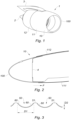
- FIG. 1 shows an aircraft propulsion assembly comprising a nacelle 1 supporting a turbojet engine 2.
- the nacelle 1 is suspended from a pylon 3 connected to a wing (not shown) of the aircraft (not shown).
- This nacelle 1 comprises an air intake section 10, a middle section 11, and a downstream section 12 which can house thrust reversal means.
- the air inlet section 10 comprises a lip 100 forming a leading edge and, in the extension of the lip 100, a section comprising an inner wall 111 and an outer wall 112 forming respective trailing edges.
- the outer wall 112 is radially distant from the inner wall 111.
- the inner wall 111 is in contact with a flow of cold air F passing through the nacelle 1.
- the inner walls 111 and outer walls 112 are made of organic matrix composite.
- the lip 100 delimits with an internal partition 4 an annular interior space capable of receiving an anti-frost treatment device (not shown).
- This device may be a pneumatic or electric defrosting or anti-frosting device.
- the internal surface 111 of the air inlet section 10 is made superhydrophobic by irradiation with femtosecond laser pulses.
- the laser pulses may have a duration of less than 900 femtoseconds, preferably less than 600 femtoseconds.
- hydrophobic characterization of a material is done by measuring the contact angle between its flat surface and a drop of water placed on its surface: standard materials have an angle less than 90°, hydrophobic materials have an angle between 90° and 150° and superhydrophobic materials have an angle greater than 150°.
- Femtosecond laser irradiation constitutes a surface texturing step that can give rise to microcraters 50 and cilia 60.
- the microcraters 50 are separated by flattened peaks 51 and the cilia 60 are periodically spaced in the microcraters 50.
- the textured surface may include cilia in the microcraters and on the peaks, or only at the peaks.
- Such a treatment method can also be implemented to texture the external surface 112 of the air inlet section 10, which makes it possible to make the nacelle 1 compatible with an “open rotor” type turbojet, i.e. having an unducted fan at its downstream section.
- the lip 100 of the air inlet section 10 can also be made superhydrophobic using the method of the invention.
- the superhydrophobic nature of the air inlet lip very advantageously allows the use of a defrosting device using a piezoelectric component.
- Defrosting using a piezoelectric component consists of vibrating the surface to be defrosted to break up and remove the thin layers of ice accumulated on the lip.
- the use of a superhydrophobic surface in addition to a mechanical defrosting device of the piezoelectric type makes it easier to detach the ice, in that the adhesion force of the ice to the wall of the element to be defrosted is reduced.
- the invention is not limited to the examples that have just been described and many adjustments can be made to these examples without departing from the scope of the invention.
- the method according to the invention can be implemented to texture other aircraft parts such as a wing, a tail, or any other part of the nacelle or of the aircraft requiring treatment against frost accretion, and more particularly any part comprising a surface constituting a trailing or leading edge.
Landscapes
- Engineering & Computer Science (AREA)
- Physics & Mathematics (AREA)
- Optics & Photonics (AREA)
- Mechanical Engineering (AREA)
- Chemical & Material Sciences (AREA)
- Combustion & Propulsion (AREA)
- Plasma & Fusion (AREA)
- Aviation & Aerospace Engineering (AREA)
- General Engineering & Computer Science (AREA)
- Health & Medical Sciences (AREA)
- Toxicology (AREA)
- Application Of Or Painting With Fluid Materials (AREA)
- Wind Motors (AREA)
- Physical Or Chemical Processes And Apparatus (AREA)
Description
- La présente invention concerne le traitement contre le givre de pièces d'aéronef, en particulier de pièces en composite à matrice organique de nacelle d'ensemble propulsif d'aéronef.
- En phase de vol, un aéronef est soumis à des conditions climatiques pouvant entraîner la formation de givre sur des pièces formant des bords d'attaque et/ou des bords de fuite, notamment sur la lèvre d'entrée d'air d'une nacelle.
- Une telle formation de givre peut entraîner des modifications du profil aérodynamique de la nacelle et endommager le moteur en cas d'arrachement de blocs de glace formés sur la lèvre.
- Pour empêcher le givrage de gouttelettes d'eau sur la lèvre et la formation de blocs de glace, il est connu de faire circuler dans la lèvre de l'air chaud prélevé par exemple au niveau du moteur.
- Les gouttelettes d'eau ainsi réchauffées ruissellent sur la lèvre jusqu'à venir en contact avec des pièces situées en aval de la lèvre. Ces pièces n'étant pas couplées au système de dégivrage ou d'antigivrage, des gouttelettes peuvent givrer sur ces pièces lors de leur ruissellement.
- Le document
US 2016/153287 A1 décrit un procédé de traitement d'une surface de pièce d'aéronef selon le préambule de la revendication 1 ainsi qu'une pièce d'aéronef en composite à matrice organique selon le préambule de la revendication 5. - Un but de la présente invention est de limiter ce phénomène de ruissellement givrant, en particulier sur les pièces en composite à matrice organique situées en aval de la lèvre d'entrée air.
- Plus généralement, la présente invention vise à éviter la formation de givre sur des pièces d'aéronef malgré la présence d'eau non évaporée sur ces pièces.
- A cet effet, l'invention se rapporte à un procédé de traitement d'une surface de pièce d'aéronef en composite à matrice organique, ce procédé comprenant une étape de texturation dans laquelle la surface est irradiée par impulsions laser femtosecondes de manière à rendre cette surface superhydrophobe.
- Une surface superhydrophobe empêche l'adhésion de gouttelettes d'eau et permet d'éviter la formation de givre sur une pièce ainsi traitée.
- Ce procédé permet de traiter la surface de toute pièce sans altérer la sa fonctionnalité. Par exemple, lorsque la pièce comprend un panneau acoustique, la texturation surfacique n'a pas d'incidence sur le traitement acoustique réalisé par le panneau.
- De plus, un tel traitement de surface est compatible avec une protection de la pièce contre le rayonnement ultraviolet, à l'aide d'une peinture anti-ultraviolet, et/ou une protection de la pièce à l'aide de peintures organiques.
- Dans un mode de réalisation, l'étape de texturation peut être précédée d'une étape de protection de la surface par application d'une peinture organique. A titre d'exemples non limitatifs, cette peinture peut comprendre une base époxyde ou une base polyuréthane.
- Les impulsions laser peuvent avoir une durée inférieure à 900 femtosecondes, plus préférentiellement inférieure à 600 femtosecondes.
- Selon un aspect de la présente invention, celle-ci se rapporte aussi à une pièce en composite à matrice organique d'aéronef, cette pièce comprenant une surface traitée avec un procédé tel que décrit ci-dessus.
- Dans un mode de réalisation, la pièce peut comprendre une surface dotée d'une part de microcratères et d'autre part de cils espacés de manière périodique.
- Les microcratères peuvent typiquement avoir un diamètre inférieur à 1 mm, de préférence compris entre 1 µm et 100 µm, et une profondeur inférieure à 10 µm, de préférence comprise entre 600 nm et 1 µm.
- Les cils peuvent avoir une dimension inférieure à 1 µm, de préférence comprise entre 1 nm et 800 nm.
- Cette pièce en composite à matrice organique peut être ou peut constituer tout ou partie d'une section d'entrée d'air de l'aéronef, ladite surface pouvant être une surface d'un bord d'attaque et/ou d'un bord de fuite de cette section d'entrée d'air.
- Selon un autre aspect, l'invention concerne en outre un ensemble propulsif d'aéronef comprenant une telle pièce en composite à matrice organique.
- Selon encore un autre aspect, l'invention concerne enfin un aéronef comprenant un tel ensemble propulsif et/ou une pièce en composite à matrice organique telle que définie ci-dessus.
- D'autres caractéristiques et avantages de l'invention apparaîtront à la lecture de la description nullement limitative qui suit et des figures annexées, dans lesquelles :
- La
figure 1 est une vue schématique d'un ensemble propulsif d'aéronef doté d'une nacelle et d'un moteur; - La
figure 2 est une vue en coupe longitudinale d'une section d'entrée d'air de la nacelle de l'ensemble propulsif de lafigure 1 ; - La
figure 3 est une vue schématique d'une partie de surface texturée à l'aide du procédé selon l'invention. - Les éléments identiques ou similaires sont repérés par des signes de référence identiques sur l'ensemble des figures.
- La
figure 1 montre un ensemble propulsif d'aéronef comprenant une nacelle 1 supportant un moteur 2 de type turboréacteur. La nacelle 1 est suspendue à un pylône 3 relié à une aile (non représentée) de l'aéronef (non représenté). - Cette nacelle 1 comprend une section d'entrée d'air 10, une section médiane 11, et une section aval 12 pouvant abriter des moyens d'inversion de poussée.
- En référence à la
figure 2 , la section d'entrée d'air 10 comprend une lèvre 100 formant un bord d'attaque et, dans le prolongement de la lèvre 100, une section comportant une paroi interne 111 et une paroi externe 112 formant des bords de fuite respectifs. La paroi externe 112 est radialement éloignée par rapport à la paroi interne 111. La paroi interne 111 est en contact avec un flux d'air froid F traversant la nacelle 1. - Dans cet exemple, les parois interne 111 et externe 112 sont en composite à matrice organique.
- Dans cet exemple, la lèvre 100 délimite avec une cloison interne 4 un espace intérieur annulaire apte à recevoir un dispositif de traitement contre le givre (non représenté). Ce dispositif peut être un dispositif de dégivrage ou d'antigivrage, pneumatique ou électrique.
- Dans un exemple non limitatif de mise en oeuvre de l'invention, la surface interne 111 de la section d'entrée d'air 10 est rendue superhydrophobe par irradiation par impulsions laser femtosecondes. Typiquement, les impulsions laser peuvent avoir une durée inférieure à 900 femtosecondes, de préférence inférieure à 600 femtosecondes.
- La caractérisation hydrophobique d'un matériau se fait en mesurant l'angle de contact entre sa surface plane et une goutte d'eau posée sur sa surface : les matériaux standards ont un angle inférieur à 90°, les matériaux hydrophobes ont un angle compris entre 90° et 150° et les matériaux superhydrophobes ont un angle supérieur à 150°.
- L'irradiation laser femtosecondes constitue une étape de texturation de surface pouvant donner lieu à des microcratères 50 et des cils 60.
- Dans l'exemple de la
figure 3 , les microcratères 50 sont séparés par des sommets 51 aplatis et les cils 60 sont périodiquement espacés dans les microcratères 50. - Dans des variantes de réalisation non représentées, la surface texturée peut comprendre des cils dans les microcratères et sur les sommets, ou uniquement au niveau des sommets.
- Les inventeurs estiment que des propriétés superhydrophobes adaptées au présent domaine d'application peuvent être obtenues en réalisant :
- des microcratères 50 ayant un diamètre D1 inférieur à 1 mm, de préférence compris entre 1 µm et 100 µm, et une profondeur inférieure à 10 µm, de préférence comprise entre 600 nm et 1 µm, et
- des cils ayant une dimension D2 inférieure à 1 µm, de préférence comprise entre 1 nm et 800 nm.
- Un tel procédé de traitement peut aussi être mis en oeuvre pour texturer la surface externe 112 de la section d'entrée d'air 10, ce qui permet de rendre la nacelle 1 compatible avec un turboréacteur de type « open rotor », c'est-à-dire présentant une soufflante non carénée au niveau de sa section aval.
- Optionnellement, la lèvre 100 de la section d'entrée d'air 10 peut aussi être rendue superhydrophobe à l'aide du procédé de l'invention. Le caractère superhydrophobe de la lèvre d'entrée d'air permet très avantageusement d'utiliser un dispositif de dégivrage par composant piézo-électrique. Le dégivrage par composant piézo-électrique consiste à faire vibrer la surface à dégivrer pour casser et évacuer les faibles couches de glace accumulées sur la lèvre. Ainsi, l'utilisation d'une surface superhydrophobe en complément d'un dispositif de dégivrage mécanique de type piézo-électrique permet de faciliter le décrochage de la glace, en ce que la force d'adhésion de la glace sur la paroi de l'élément à dégivrer est réduite.
- Bien entendu, l'invention n'est pas limitée aux exemples qui viennent d'être décrits et de nombreux aménagements peuvent être apportés à ces exemples sans sortir du cadre de l'invention. Par exemple, le procédé selon l'invention peut être mis en oeuvre pour texturer d'autres pièces d'aéronef telles qu'une aile, un empennage, ou toute autre partie de nacelle ou de l'aéronef nécessitant un traitement contre l'accrétion de givre, et plus particulièrement toute pièce comprenant une surface constituant un bord de fuite ou d'attaque.
Claims (9)
- Procédé de traitement d'une surface (100, 111, 112) de pièce (10) d'aéronef en composite à matrice organique, caractérisé en ce qu'il comprend une étape de texturation dans laquelle la surface est irradiée par impulsions laser femtosecondes de manière à rendre cette surface superhydrophobe.
- Procédé selon la revendication 1, dans lequel les impulsions ont une durée inférieure à 900 femtosecondes, de préférence inférieure à 600 femtosecondes.
- Procédé selon la revendication 1 ou 2, dans lequel l'étape de texturation est précédée d'une étape de protection de la surface (100, 111, 112) par application d'une peinture organique.
- Procédé selon la revendication 3, dans lequel la peinture comprend une base époxyde ou une base polyuréthane.
- Pièce (10) d'aéronef en composite à matrice organique, caractérisée en ce qu'elle comprend une surface (100, 111, 112) traitée avec un procédé selon l'une quelconque des revendications 1 à 4.
- Pièce (10) d'aéronef en composite à matrice organique selon la revendication précédente, caractérisée en ce que la surface traitée est dotée :- de microcratères (50) ayant un diamètre inférieur à 1 mm, de préférence compris entre 1 µm et 100 µm, et une profondeur inférieure à 10 µm, de préférence comprise entre 600 nm et 1 µm, et- de cils (60) ayant une dimension inférieure à 1 µm, de préférence comprise entre 1 nm et 800 nm, ces cils étant espacés de manière périodique.
- Pièce (10) en composite à matrice organique selon la revendication 5 ou 6, cette pièce étant une section d'entrée d'air (10) de l'aéronef, ladite surface (100, 111, 112) étant une surface d'un bord d'attaque et/ou d'un bord de fuite de cette section d'entrée d'air (10).
- Ensemble propulsif d'aéronef, caractérisé en ce qu'il comprend une pièce (10) en composite à matrice organique selon l'une quelconque des revendications 5 à 7.
- Aéronef, caractérisé en ce qu'il comprend un ensemble propulsif selon la revendication 8 et/ou une pièce (10) en composite à matrice organique selon l'une quelconque des revendications 5 à 7.
Applications Claiming Priority (2)
| Application Number | Priority Date | Filing Date | Title |
|---|---|---|---|
| FR1857304A FR3084648B1 (fr) | 2018-08-03 | 2018-08-03 | Procede de traitement contre le givre de piece d’aeronef |
| PCT/EP2019/070780 WO2020025752A1 (fr) | 2018-08-03 | 2019-08-01 | Procede de traitement contre le givre de piece d'aeronef |
Publications (2)
| Publication Number | Publication Date |
|---|---|
| EP3829977A1 EP3829977A1 (fr) | 2021-06-09 |
| EP3829977B1 true EP3829977B1 (fr) | 2024-09-25 |
Family
ID=65861328
Family Applications (1)
| Application Number | Title | Priority Date | Filing Date |
|---|---|---|---|
| EP19745178.4A Active EP3829977B1 (fr) | 2018-08-03 | 2019-08-01 | Procédé de traitement contre le givre de pièce d'aéronef et pièce d'aéronef |
Country Status (4)
| Country | Link |
|---|---|
| US (1) | US12104526B2 (fr) |
| EP (1) | EP3829977B1 (fr) |
| FR (1) | FR3084648B1 (fr) |
| WO (1) | WO2020025752A1 (fr) |
Families Citing this family (3)
| Publication number | Priority date | Publication date | Assignee | Title |
|---|---|---|---|---|
| CN113172347B (zh) * | 2021-05-14 | 2022-08-16 | 江苏大学 | 一种复合织构金属疏冰表面及其加工方法 |
| CN115044903B (zh) * | 2022-07-12 | 2023-05-30 | 贵州大学 | 耐磨蚀超疏水形状记忆合金涂层及其制备方法 |
| US12377990B2 (en) | 2023-01-27 | 2025-08-05 | Rohr, Inc. | Lip skin with hydrophobic and hydrophlic surfaces for an aircraft aerostructure |
Family Cites Families (12)
| Publication number | Priority date | Publication date | Assignee | Title |
|---|---|---|---|---|
| FR2904604B1 (fr) * | 2006-08-04 | 2009-02-27 | Airbus France Sas | Element de structure d'un aeronef |
| US20150136226A1 (en) * | 2006-09-29 | 2015-05-21 | University Of Rochester | Super-hydrophobic surfaces and methods for producing super-hydrophobic surfaces |
| US7992823B2 (en) * | 2008-04-30 | 2011-08-09 | General Electric Company | Ice shed reduction for leading edge structures |
| GB0922285D0 (en) * | 2009-12-22 | 2010-02-03 | Rolls Royce Plc | Hydrophobic surface |
| US8549832B2 (en) * | 2009-12-30 | 2013-10-08 | MRA Systems Inc. | Turbomachine nacelle and anti-icing system and method therefor |
| FR3004165B1 (fr) * | 2013-04-09 | 2015-03-27 | Aircelle Sa | Element d'aeronef necessitant un traitement contre le givre |
| EP3019727A4 (fr) * | 2013-07-09 | 2017-05-10 | United Technologies Corporation | Élément de turbine polymère métallisé |
| EP2873617B1 (fr) * | 2013-11-13 | 2020-07-01 | Airbus Defence and Space GmbH | Dispositifs et procédé de dégivrage et/ou de prévention contre la formation de glace ainsi que corps profilé et aéronef dotés d'un tel dispositif |
| FR3013241B1 (fr) * | 2013-11-19 | 2015-12-04 | Schneider Electric Ind Sas | Procede de traitement de la surface d'une paroi dans un appareil de protection electrique et appareil comportant au moins une paroi traitee selon ce procede |
| DE102014003508A1 (de) * | 2014-03-14 | 2015-09-17 | Airbus Defence and Space GmbH | Verfahren zur Herstellung sowie Verwendung einer polierten nanostrukturierten metallischen Oberfläche mit wasser- und eisabweisenden Eigenschaften |
| US20150299503A1 (en) * | 2014-04-17 | 2015-10-22 | James Thomas Carter | Active Ice-Phobic Freeze Point Reducing Anti-Ice Coating and Method for Providing Anti-Ice Protection to Surfaces |
| US20170240985A1 (en) * | 2016-02-24 | 2017-08-24 | General Electric Company | Method of treatment, turbine component, and turbine system |
-
2018
- 2018-08-03 FR FR1857304A patent/FR3084648B1/fr active Active
-
2019
- 2019-08-01 EP EP19745178.4A patent/EP3829977B1/fr active Active
- 2019-08-01 WO PCT/EP2019/070780 patent/WO2020025752A1/fr not_active Ceased
-
2021
- 2021-02-03 US US17/166,826 patent/US12104526B2/en active Active
Also Published As
| Publication number | Publication date |
|---|---|
| FR3084648B1 (fr) | 2020-07-17 |
| FR3084648A1 (fr) | 2020-02-07 |
| EP3829977A1 (fr) | 2021-06-09 |
| US20210156305A1 (en) | 2021-05-27 |
| US12104526B2 (en) | 2024-10-01 |
| WO2020025752A1 (fr) | 2020-02-06 |
Similar Documents
| Publication | Publication Date | Title |
|---|---|---|
| EP2209715B1 (fr) | Degivrage piezo-electrique d'une entree d'air | |
| EP3829977B1 (fr) | Procédé de traitement contre le givre de pièce d'aéronef et pièce d'aéronef | |
| EP2231474B1 (fr) | Nacelle d'aeronef comprenant un systeme de traitement du givre optimise | |
| EP2102062B1 (fr) | Bord d'attaque d'aeronef | |
| WO2010086560A2 (fr) | Nacelle d'aeronef comprenant un systeme de traitement acoustique optimise | |
| FR2898868A1 (fr) | Structure pour levre d'entree d'air de nacelle a degivrage electrique | |
| CA2713471A1 (fr) | Structure d'entree d'air pour une nacelle d'un aeronef | |
| EP2535271A1 (fr) | Entrée d'air d'une nacelle d'aéronef incorporant une lèvre renforcée avec un système de dégivrage par effet joule | |
| EP2219950A1 (fr) | Système parafoudre et aéronef comportant un tel système | |
| WO2007080333A1 (fr) | Procédé de dégivrage du bord d'attaque d'une surface aérodynamique et aéronef mettant en œuvre un tel procédé | |
| EP2571765A2 (fr) | Element d'aerodynamisme pour une nacelle d'aeronef | |
| EP2454154B1 (fr) | Structure de bord d'attaque notamment pour entree d'air de nacelle de moteur d'aeronef | |
| WO2014167237A1 (fr) | Élément d'aéronef nécessitant un traitement contre le givre | |
| FR2952032A1 (fr) | Nacelle d'aeronef comprenant un systeme de traitement acoustique optimise | |
| WO2017187073A1 (fr) | Système de propulsion d'un aéronef comprenant un organe recouvert d'une structure rainurée | |
| EP3501991A1 (fr) | Partie antérieure de nacelle d'un ensemble propulsif comportant un cadre de rigidification incliné | |
| FR3012111A1 (fr) | Fuselage d'aeronef comprenant une isolation externe | |
| CA2866504C (fr) | Dispositif anti-regel pour pales d'aeronef | |
| CA2694812A1 (fr) | Procede d'assemblage d'un tapis degivreur sur une piece de voilure | |
| EP4448387A1 (fr) | Levre d'entree d'air pour une nacelle d'un ensemble propulsif d'aeronef | |
| FR2987166A1 (fr) | Procede de transfert d'une couche | |
| WO2015001258A1 (fr) | Procédé de réparation d'un panneau par application d'un doubleur | |
| FR3100228A1 (fr) | Système électropneumatique de protection contre le givre pour aéronef, et ensemble propulsif et aéronef pourvus d’un tel système. | |
| EP4484294A1 (fr) | Procédé de dégivrage d' une paroi aérodynamique utilisant au moins deux systèmes de dégivrage différents, aéronef équipé d' un dispositif de dégivrage permettant de mettre en oeuvre ledit procédé | |
| FR2993861A1 (fr) | Ensemble turboreacteur et capotage du pylone de fixation a la voilure d'un aeronef |
Legal Events
| Date | Code | Title | Description |
|---|---|---|---|
| STAA | Information on the status of an ep patent application or granted ep patent |
Free format text: STATUS: UNKNOWN |
|
| STAA | Information on the status of an ep patent application or granted ep patent |
Free format text: STATUS: THE INTERNATIONAL PUBLICATION HAS BEEN MADE |
|
| PUAI | Public reference made under article 153(3) epc to a published international application that has entered the european phase |
Free format text: ORIGINAL CODE: 0009012 |
|
| STAA | Information on the status of an ep patent application or granted ep patent |
Free format text: STATUS: REQUEST FOR EXAMINATION WAS MADE |
|
| 17P | Request for examination filed |
Effective date: 20210301 |
|
| AK | Designated contracting states |
Kind code of ref document: A1 Designated state(s): AL AT BE BG CH CY CZ DE DK EE ES FI FR GB GR HR HU IE IS IT LI LT LU LV MC MK MT NL NO PL PT RO RS SE SI SK SM TR |
|
| DAV | Request for validation of the european patent (deleted) | ||
| DAX | Request for extension of the european patent (deleted) | ||
| REG | Reference to a national code |
Ref country code: DE Ref legal event code: R079 Free format text: PREVIOUS MAIN CLASS: B64D0015000000 Ipc: B29C0059160000 Ref country code: DE Ref legal event code: R079 Ref document number: 602019059438 Country of ref document: DE Free format text: PREVIOUS MAIN CLASS: B64D0015000000 Ipc: B29C0059160000 |
|
| GRAP | Despatch of communication of intention to grant a patent |
Free format text: ORIGINAL CODE: EPIDOSNIGR1 |
|
| STAA | Information on the status of an ep patent application or granted ep patent |
Free format text: STATUS: GRANT OF PATENT IS INTENDED |
|
| RIC1 | Information provided on ipc code assigned before grant |
Ipc: B23K 103/16 20060101ALN20240222BHEP Ipc: B64D 29/00 20060101ALN20240222BHEP Ipc: B23K 26/352 20140101ALI20240222BHEP Ipc: F02C 7/047 20060101ALI20240222BHEP Ipc: B64D 33/02 20060101ALI20240222BHEP Ipc: B64D 23/00 20060101ALI20240222BHEP Ipc: B64D 15/04 20060101ALI20240222BHEP Ipc: B23K 26/0622 20140101ALI20240222BHEP Ipc: B23K 26/00 20140101ALI20240222BHEP Ipc: B29C 59/16 20060101AFI20240222BHEP |
|
| RIC1 | Information provided on ipc code assigned before grant |
Ipc: B23K 103/16 20060101ALN20240228BHEP Ipc: B64D 29/00 20060101ALN20240228BHEP Ipc: B23K 26/352 20140101ALI20240228BHEP Ipc: F02C 7/047 20060101ALI20240228BHEP Ipc: B64D 33/02 20060101ALI20240228BHEP Ipc: B64D 23/00 20060101ALI20240228BHEP Ipc: B64D 15/04 20060101ALI20240228BHEP Ipc: B23K 26/0622 20140101ALI20240228BHEP Ipc: B23K 26/00 20140101ALI20240228BHEP Ipc: B29C 59/16 20060101AFI20240228BHEP |
|
| INTG | Intention to grant announced |
Effective date: 20240326 |
|
| GRAS | Grant fee paid |
Free format text: ORIGINAL CODE: EPIDOSNIGR3 |
|
| GRAA | (expected) grant |
Free format text: ORIGINAL CODE: 0009210 |
|
| STAA | Information on the status of an ep patent application or granted ep patent |
Free format text: STATUS: THE PATENT HAS BEEN GRANTED |
|
| AK | Designated contracting states |
Kind code of ref document: B1 Designated state(s): AL AT BE BG CH CY CZ DE DK EE ES FI FR GB GR HR HU IE IS IT LI LT LU LV MC MK MT NL NO PL PT RO RS SE SI SK SM TR |
|
| REG | Reference to a national code |
Ref country code: GB Ref legal event code: FG4D Free format text: NOT ENGLISH |
|
| REG | Reference to a national code |
Ref country code: CH Ref legal event code: EP |
|
| REG | Reference to a national code |
Ref country code: DE Ref legal event code: R096 Ref document number: 602019059438 Country of ref document: DE |
|
| REG | Reference to a national code |
Ref country code: IE Ref legal event code: FG4D Free format text: LANGUAGE OF EP DOCUMENT: FRENCH |
|
| REG | Reference to a national code |
Ref country code: LT Ref legal event code: MG9D |
|
| PG25 | Lapsed in a contracting state [announced via postgrant information from national office to epo] |
Ref country code: NO Free format text: LAPSE BECAUSE OF FAILURE TO SUBMIT A TRANSLATION OF THE DESCRIPTION OR TO PAY THE FEE WITHIN THE PRESCRIBED TIME-LIMIT Effective date: 20241225 |
|
| PG25 | Lapsed in a contracting state [announced via postgrant information from national office to epo] |
Ref country code: GR Free format text: LAPSE BECAUSE OF FAILURE TO SUBMIT A TRANSLATION OF THE DESCRIPTION OR TO PAY THE FEE WITHIN THE PRESCRIBED TIME-LIMIT Effective date: 20241226 Ref country code: FI Free format text: LAPSE BECAUSE OF FAILURE TO SUBMIT A TRANSLATION OF THE DESCRIPTION OR TO PAY THE FEE WITHIN THE PRESCRIBED TIME-LIMIT Effective date: 20240925 |
|
| PG25 | Lapsed in a contracting state [announced via postgrant information from national office to epo] |
Ref country code: BG Free format text: LAPSE BECAUSE OF FAILURE TO SUBMIT A TRANSLATION OF THE DESCRIPTION OR TO PAY THE FEE WITHIN THE PRESCRIBED TIME-LIMIT Effective date: 20240925 |
|
| PG25 | Lapsed in a contracting state [announced via postgrant information from national office to epo] |
Ref country code: LV Free format text: LAPSE BECAUSE OF FAILURE TO SUBMIT A TRANSLATION OF THE DESCRIPTION OR TO PAY THE FEE WITHIN THE PRESCRIBED TIME-LIMIT Effective date: 20240925 |
|
| PG25 | Lapsed in a contracting state [announced via postgrant information from national office to epo] |
Ref country code: RS Free format text: LAPSE BECAUSE OF FAILURE TO SUBMIT A TRANSLATION OF THE DESCRIPTION OR TO PAY THE FEE WITHIN THE PRESCRIBED TIME-LIMIT Effective date: 20241225 |
|
| REG | Reference to a national code |
Ref country code: NL Ref legal event code: MP Effective date: 20240925 |
|
| PG25 | Lapsed in a contracting state [announced via postgrant information from national office to epo] |
Ref country code: RS Free format text: LAPSE BECAUSE OF FAILURE TO SUBMIT A TRANSLATION OF THE DESCRIPTION OR TO PAY THE FEE WITHIN THE PRESCRIBED TIME-LIMIT Effective date: 20241225 Ref country code: NO Free format text: LAPSE BECAUSE OF FAILURE TO SUBMIT A TRANSLATION OF THE DESCRIPTION OR TO PAY THE FEE WITHIN THE PRESCRIBED TIME-LIMIT Effective date: 20241225 Ref country code: LV Free format text: LAPSE BECAUSE OF FAILURE TO SUBMIT A TRANSLATION OF THE DESCRIPTION OR TO PAY THE FEE WITHIN THE PRESCRIBED TIME-LIMIT Effective date: 20240925 Ref country code: GR Free format text: LAPSE BECAUSE OF FAILURE TO SUBMIT A TRANSLATION OF THE DESCRIPTION OR TO PAY THE FEE WITHIN THE PRESCRIBED TIME-LIMIT Effective date: 20241226 Ref country code: FI Free format text: LAPSE BECAUSE OF FAILURE TO SUBMIT A TRANSLATION OF THE DESCRIPTION OR TO PAY THE FEE WITHIN THE PRESCRIBED TIME-LIMIT Effective date: 20240925 Ref country code: BG Free format text: LAPSE BECAUSE OF FAILURE TO SUBMIT A TRANSLATION OF THE DESCRIPTION OR TO PAY THE FEE WITHIN THE PRESCRIBED TIME-LIMIT Effective date: 20240925 |
|
| REG | Reference to a national code |
Ref country code: AT Ref legal event code: MK05 Ref document number: 1726316 Country of ref document: AT Kind code of ref document: T Effective date: 20240925 |
|
| PG25 | Lapsed in a contracting state [announced via postgrant information from national office to epo] |
Ref country code: NL Free format text: LAPSE BECAUSE OF FAILURE TO SUBMIT A TRANSLATION OF THE DESCRIPTION OR TO PAY THE FEE WITHIN THE PRESCRIBED TIME-LIMIT Effective date: 20240925 |
|
| PG25 | Lapsed in a contracting state [announced via postgrant information from national office to epo] |
Ref country code: IS Free format text: LAPSE BECAUSE OF FAILURE TO SUBMIT A TRANSLATION OF THE DESCRIPTION OR TO PAY THE FEE WITHIN THE PRESCRIBED TIME-LIMIT Effective date: 20250125 Ref country code: PT Free format text: LAPSE BECAUSE OF FAILURE TO SUBMIT A TRANSLATION OF THE DESCRIPTION OR TO PAY THE FEE WITHIN THE PRESCRIBED TIME-LIMIT Effective date: 20250127 |
|
| PG25 | Lapsed in a contracting state [announced via postgrant information from national office to epo] |
Ref country code: RO Free format text: LAPSE BECAUSE OF FAILURE TO SUBMIT A TRANSLATION OF THE DESCRIPTION OR TO PAY THE FEE WITHIN THE PRESCRIBED TIME-LIMIT Effective date: 20240925 Ref country code: SM Free format text: LAPSE BECAUSE OF FAILURE TO SUBMIT A TRANSLATION OF THE DESCRIPTION OR TO PAY THE FEE WITHIN THE PRESCRIBED TIME-LIMIT Effective date: 20240925 |
|
| PG25 | Lapsed in a contracting state [announced via postgrant information from national office to epo] |
Ref country code: ES Free format text: LAPSE BECAUSE OF FAILURE TO SUBMIT A TRANSLATION OF THE DESCRIPTION OR TO PAY THE FEE WITHIN THE PRESCRIBED TIME-LIMIT Effective date: 20240925 |
|
| PG25 | Lapsed in a contracting state [announced via postgrant information from national office to epo] |
Ref country code: AT Free format text: LAPSE BECAUSE OF FAILURE TO SUBMIT A TRANSLATION OF THE DESCRIPTION OR TO PAY THE FEE WITHIN THE PRESCRIBED TIME-LIMIT Effective date: 20240925 Ref country code: EE Free format text: LAPSE BECAUSE OF FAILURE TO SUBMIT A TRANSLATION OF THE DESCRIPTION OR TO PAY THE FEE WITHIN THE PRESCRIBED TIME-LIMIT Effective date: 20240925 |
|
| PG25 | Lapsed in a contracting state [announced via postgrant information from national office to epo] |
Ref country code: PL Free format text: LAPSE BECAUSE OF FAILURE TO SUBMIT A TRANSLATION OF THE DESCRIPTION OR TO PAY THE FEE WITHIN THE PRESCRIBED TIME-LIMIT Effective date: 20240925 Ref country code: CZ Free format text: LAPSE BECAUSE OF FAILURE TO SUBMIT A TRANSLATION OF THE DESCRIPTION OR TO PAY THE FEE WITHIN THE PRESCRIBED TIME-LIMIT Effective date: 20240925 |
|
| PG25 | Lapsed in a contracting state [announced via postgrant information from national office to epo] |
Ref country code: IT Free format text: LAPSE BECAUSE OF FAILURE TO SUBMIT A TRANSLATION OF THE DESCRIPTION OR TO PAY THE FEE WITHIN THE PRESCRIBED TIME-LIMIT Effective date: 20240925 Ref country code: SK Free format text: LAPSE BECAUSE OF FAILURE TO SUBMIT A TRANSLATION OF THE DESCRIPTION OR TO PAY THE FEE WITHIN THE PRESCRIBED TIME-LIMIT Effective date: 20240925 |
|
| REG | Reference to a national code |
Ref country code: DE Ref legal event code: R097 Ref document number: 602019059438 Country of ref document: DE |
|
| PG25 | Lapsed in a contracting state [announced via postgrant information from national office to epo] |
Ref country code: DK Free format text: LAPSE BECAUSE OF FAILURE TO SUBMIT A TRANSLATION OF THE DESCRIPTION OR TO PAY THE FEE WITHIN THE PRESCRIBED TIME-LIMIT Effective date: 20240925 |
|
| PLBE | No opposition filed within time limit |
Free format text: ORIGINAL CODE: 0009261 |
|
| STAA | Information on the status of an ep patent application or granted ep patent |
Free format text: STATUS: NO OPPOSITION FILED WITHIN TIME LIMIT |
|
| 26N | No opposition filed |
Effective date: 20250626 |
|
| PG25 | Lapsed in a contracting state [announced via postgrant information from national office to epo] |
Ref country code: SE Free format text: LAPSE BECAUSE OF FAILURE TO SUBMIT A TRANSLATION OF THE DESCRIPTION OR TO PAY THE FEE WITHIN THE PRESCRIBED TIME-LIMIT Effective date: 20240925 |
|
| PGFP | Annual fee paid to national office [announced via postgrant information from national office to epo] |
Ref country code: DE Payment date: 20250819 Year of fee payment: 7 |
|
| PGFP | Annual fee paid to national office [announced via postgrant information from national office to epo] |
Ref country code: GB Payment date: 20250825 Year of fee payment: 7 |
|
| PGFP | Annual fee paid to national office [announced via postgrant information from national office to epo] |
Ref country code: FR Payment date: 20250827 Year of fee payment: 7 |
|
| PG25 | Lapsed in a contracting state [announced via postgrant information from national office to epo] |
Ref country code: HR Free format text: LAPSE BECAUSE OF FAILURE TO SUBMIT A TRANSLATION OF THE DESCRIPTION OR TO PAY THE FEE WITHIN THE PRESCRIBED TIME-LIMIT Effective date: 20240925 |
|
| REG | Reference to a national code |
Ref country code: CH Ref legal event code: H13 Free format text: ST27 STATUS EVENT CODE: U-0-0-H10-H13 (AS PROVIDED BY THE NATIONAL OFFICE) Effective date: 20260324 |
|
| PG25 | Lapsed in a contracting state [announced via postgrant information from national office to epo] |
Ref country code: MC Free format text: LAPSE BECAUSE OF FAILURE TO SUBMIT A TRANSLATION OF THE DESCRIPTION OR TO PAY THE FEE WITHIN THE PRESCRIBED TIME-LIMIT Effective date: 20240925 |
|
| PG25 | Lapsed in a contracting state [announced via postgrant information from national office to epo] |
Ref country code: LU Free format text: LAPSE BECAUSE OF NON-PAYMENT OF DUE FEES Effective date: 20250801 |
|
| PG25 | Lapsed in a contracting state [announced via postgrant information from national office to epo] |
Ref country code: CH Free format text: LAPSE BECAUSE OF NON-PAYMENT OF DUE FEES Effective date: 20250831 |