EP3829129B1 - Bluetooth-audio-streaming-durchführung - Google Patents
Bluetooth-audio-streaming-durchführung Download PDFInfo
- Publication number
- EP3829129B1 EP3829129B1 EP19306521.6A EP19306521A EP3829129B1 EP 3829129 B1 EP3829129 B1 EP 3829129B1 EP 19306521 A EP19306521 A EP 19306521A EP 3829129 B1 EP3829129 B1 EP 3829129B1
- Authority
- EP
- European Patent Office
- Prior art keywords
- bluetooth
- audio stream
- audio
- source device
- stream
- Prior art date
- Legal status (The legal status is an assumption and is not a legal conclusion. Google has not performed a legal analysis and makes no representation as to the accuracy of the status listed.)
- Active
Links
Images









Classifications
-
- H—ELECTRICITY
- H04—ELECTRIC COMMUNICATION TECHNIQUE
- H04L—TRANSMISSION OF DIGITAL INFORMATION, e.g. TELEGRAPHIC COMMUNICATION
- H04L69/00—Network arrangements, protocols or services independent of the application payload and not provided for in the other groups of this subclass
- H04L69/24—Negotiation of communication capabilities
-
- H—ELECTRICITY
- H04—ELECTRIC COMMUNICATION TECHNIQUE
- H04L—TRANSMISSION OF DIGITAL INFORMATION, e.g. TELEGRAPHIC COMMUNICATION
- H04L65/00—Network arrangements, protocols or services for supporting real-time applications in data packet communication
- H04L65/60—Network streaming of media packets
- H04L65/61—Network streaming of media packets for supporting one-way streaming services, e.g. Internet radio
- H04L65/612—Network streaming of media packets for supporting one-way streaming services, e.g. Internet radio for unicast
-
- H—ELECTRICITY
- H04—ELECTRIC COMMUNICATION TECHNIQUE
- H04L—TRANSMISSION OF DIGITAL INFORMATION, e.g. TELEGRAPHIC COMMUNICATION
- H04L65/00—Network arrangements, protocols or services for supporting real-time applications in data packet communication
- H04L65/60—Network streaming of media packets
- H04L65/65—Network streaming protocols, e.g. real-time transport protocol [RTP] or real-time control protocol [RTCP]
-
- H—ELECTRICITY
- H04—ELECTRIC COMMUNICATION TECHNIQUE
- H04L—TRANSMISSION OF DIGITAL INFORMATION, e.g. TELEGRAPHIC COMMUNICATION
- H04L65/00—Network arrangements, protocols or services for supporting real-time applications in data packet communication
- H04L65/60—Network streaming of media packets
- H04L65/70—Media network packetisation
-
- H—ELECTRICITY
- H04—ELECTRIC COMMUNICATION TECHNIQUE
- H04L—TRANSMISSION OF DIGITAL INFORMATION, e.g. TELEGRAPHIC COMMUNICATION
- H04L65/00—Network arrangements, protocols or services for supporting real-time applications in data packet communication
- H04L65/60—Network streaming of media packets
- H04L65/75—Media network packet handling
- H04L65/762—Media network packet handling at the source
-
- H—ELECTRICITY
- H04—ELECTRIC COMMUNICATION TECHNIQUE
- H04L—TRANSMISSION OF DIGITAL INFORMATION, e.g. TELEGRAPHIC COMMUNICATION
- H04L69/00—Network arrangements, protocols or services independent of the application payload and not provided for in the other groups of this subclass
- H04L69/14—Multichannel or multilink protocols
-
- H—ELECTRICITY
- H04—ELECTRIC COMMUNICATION TECHNIQUE
- H04W—WIRELESS COMMUNICATION NETWORKS
- H04W4/00—Services specially adapted for wireless communication networks; Facilities therefor
- H04W4/80—Services using short range communication, e.g. near-field communication [NFC], radio-frequency identification [RFID] or low energy communication
Definitions
- the present disclosure relates to the field of audio streaming. Specifically, the present disclosure relates to methods and devices for transmitting an audio data stream using a Bluetooth communication link.
- Bluetooth defines a communication standard for transmitting and receiving audio data wirelessly over distances which are typically limited up to 10 meters and using radio waves with a frequency comprised in the Ultra High Frequency band. This standard makes Bluetooth devices very popular among customers due to their portability, and in particular, for short-range applications.
- the audio quality of the transmitted and received data depends mainly on digital audio encoders and decoders, called codecs, which are used to transfer data to Bluetooth audio output devices like headphones or loudspeakers.
- codecs digital audio encoders and decoders
- SBC low-complexity subband codec
- SBC supports mono and stereo streams with sampling frequencies up to 48 kHz while bitrates are usually being set up to 193 kbit/s and 328 kbit/s for mono and joint-stereo streams, respectively.
- the quality of an audio stream is not necessarily improved by using codecs which have a higher bandwidth usage, since achieving such a quality depends on the different coding, decoding, mixing and sampling processes which are used by audio devices for transmitting audio streams. This is true, in particular, for source devices such as smartphones and sink devices such as wireless headphones or speakers, when using the Bluetooth standard.
- US 2006/036436 A1 discloses encoders at a broadcast system encoding audio content, wherein packets from a resulting streams are immediately decoded and compared against packets of an original audio stream. Further, reference US 2017/171697 A1 relates to a method and apparatus in which a first device transmits and receives data using Bluetooth Low Energy technology in a wireless communication system, including opening a control channel for controlling a second device and a third device and performing a codec and parameter negotiation procedure for a transmission and reception of an audio stream between the second device and a third device.
- US 2010/150383 A1 discloses a wireless headset supporting simultaneous connections to two or more audio sources and concurrently outputting audio from the different sources.
- US 2010/303244 A1 discloses a method and mobile device for delivering individual audio streams multiplexed in an audio data to at least one audio device through corresponding radio channels.
- An object of the present disclosure is to provide methods and devices for improving the quality and the latency of an audio stream, and specifically, of an audio stream transmitted by Bluetooth.
- a first aspect of the invention relates to a method for transmitting an audio stream over a Bluetooth communication link according to claim 1, the method being carried out by a source device and comprising:
- Bluetooth refers to any version of the Bluetooth protocol, including existing and future versions.
- version 5.1 of Bluetooth comprises Basic Rate/Enhanced Data Rate protocol, also called BR/EDR protocol or Bluetooth classic protocol, and Bluetooth Low Energy protocol, also called BLE protocol.
- a communication link designates a wireless communication between two devices.
- a Bluetooth communication link is configured to include a plurality of Bluetooth physical links, for instance between a given source device and a given sink device, such as a smartphone.
- a Bluetooth communication link may comprise different types of links, such as a point-to-point connection or a one-way link.
- packetizing designates transforming audio data into multiple audio data packets. Such audio data packets correspond to a given number of bytes.
- a codec is a hardware or a software component configured for encoding and/or decoding digital data stream or a signal.
- an audio codec configuration is a configuration which includes information such as a type of codec, a bitrate, i.e. a rate at which bits can be transferred from one location to another, and a corresponding integer size such as 16 bits or 24 bits.
- Types of codec comprise SBC, AAC, MP3, APT-X, LDAC, LHDC, Vorbis, Opus or LC3 codecs.
- the streaming application is preferably an audio application or a gaming application which is configured to stream audio and/or video data.
- the method according to the first object allows transmitting an audio stream over a Bluetooth communication link with reduced quality loss and lower latency.
- the methods of the background art generally require source device and/or sink devices to perform an encoding, a decoding, and resampling or a mixing of the audio stream, which systematically results in a quality loss or in an increase of the latency.
- an audio application can be any application providing a digital music, an access to an audio content or a podcast streaming service, such as a cloud-based streaming service or in general.
- an audio codec configuration can be empty.
- an empty audio codec configuration refers to non-encoded audio data, such as a pulse-code modulation, called PCM, or an analog audio signal which corresponds to a PCM audio codec configuration.
- PCM pulse-code modulation
- the Bluetooth communication link is pre-established, that is, a Bluetooth communication link which is established between the source device and the sink device during a preliminary step which precedes the transmitting of the Bluetooth audio stream to the sink device.
- the receiving of the audio stream from the streaming application is carried out upon receipt of an unmodified bitstream from the streaming application.
- a bitstream is a sequence of bits. Packets resulting from a packetizing of audio data can be grouped, encoded or decoded into contiguous pages of structured bitstream data, said contiguous pages being called logical bitstreams.
- logical bitstreams can be combined into a single physical bitstream. If a physical bitstream comprises more than one logical bitstream, such logical bitstreams are said to be "wrapped" in the physical bitstream. Unwrapping said logical bitstreams from the physical bitstream can be performed by decoding, although a complete decoding is not necessarily required for extracting multiple logical bitstreams.
- an unmodified bitstream is a bitstream that is transmitted as such and is not resampled, for instance by an audio server located between the audio application and the Bluetooth stack of the source device.
- the method further comprises:
- an audio server is any platform configured to manage and/or share audio resources or audio flows with other systems, said systems comprising, in particular, the source device and the sink device.
- said audio resources or audio flows comprise music from an audio application, sound notifications from a social media, sound from a clock alarm from a scheduling application, etc.
- an audio server can comprise an audio hardware interface, an operating system, a computer, an electronic circuit or any kind of computer-readable medium on which audio data can be stored or that can receive and send a stream of audio data.
- Said audio server can be connected to a network like the Internet.
- This provides a hybrid streaming method with two audio streams, said two audio streams being encapsulated in a single Bluetooth audio stream.
- This also allows transmitting the audio streams with reduced quality loss and lower latency compared to known methods involving receiving and transmitting an audio stream from an audio server, since said methods require such an audio stream to be mixed with the audio stream coming from the streaming application, resulting in quality loss. Moreover, these methods also require the audio server to perform a mixing or a resampling of the audio streams using the sampling rate of the audio server or of the sink device, which results in a loss of quality and may also increase the latency.
- the Bluetooth audio stream is of a multi-contribution type, the method further comprising packetizing the received second audio stream into the first Bluetooth audio stream using an audio codec configuration and a sampling rate of the second audio stream.
- This provides a hybrid streaming method with two audio streams, said two audio streams being encapsulated in two Bluetooth audio streams on a single Bluetooth communication link.
- a Bluetooth audio stream being of a multi-contribution type implies that the audio codec configuration (or the sampling rate) is used in a non-exclusive way.
- the audio codec configurations (or the sampling rates) of both the first audio stream and the second audio stream are used to configure the Bluetooth audio stream, which then corresponds to a multi-contribution type Bluetooth audio stream.
- the method further comprises:
- the method further comprises wrapping the first audio stream received from the streaming application into a container, wherein the packetizing of the first audio stream is carried out using the wrapped first audio stream, and/or wrapping the received second audio stream into a container, said container being placed into the first Bluetooth audio stream.
- this allows encapsulating multiple audio streams in a single container, so that it is possible to transmit said streams in a same packet even if they correspond to different audio codec configurations and/or sampling rates.
- this provides a hybrid streaming method with two audio streams, said two audio streams being encapsulated in a single container which is sent from the source device in a single container.
- the streaming application and the audio server use different codecs, and therefore, different audio codec configurations and different sampling rates.
- the application may use a high-quality codec for audio streaming and the audio server may use a low-quality codec for notifications.
- an Ogg stream can be used to encapsulate one or several logical bitstreams created by one or several encoders of an audio server.
- an audio server logical bitstream can be wrapped into the container with the application logical bitstream, both logical bitstreams being transmitted to the sink device using a same packet.
- the sink device can then unwrap the two logical bitstreams, decode them separately using their respective codecs and mix them into a single raw stream to be output.
- a container is an entity defining a media payload format.
- An audio container which defines an audio payload format, can be associated with one or multiple codecs.
- a LATM container can be associated with a AAC codec
- an Ogg container can be associated with a Vorbis or an Opus container.
- the container is an Ogg-Vorbis container.
- the first audio stream received from the streaming application called first audio stream
- the second audio stream are wrapped into the container, the packetizing of said first and second audio streams into the Bluetooth audio stream being carried out using the first and second wrapped audio streams.
- the first audio stream or the second audio stream is a Vorbis encoded stream, or the first audio stream and the second audio streams are Vorbis encoded streams.
- At least two Bluetooth logical links are used for transmitting audio streams.
- This provides a hybrid streaming method for transmitting at least two audio streams.
- two audio streams are encapsulated in two Bluetooth audio streams, to be transmitted over the Bluetooth communication link.
- Bluetooth audio stream This allows transmitting audio stream with a higher flexibility, since at least two Bluetooth logical links can be used. Even if there is already an established Bluetooth audio stream bypassing the audio server on a first Bluetooth logical link, a second Bluetooth audio stream can be used on a second Bluetooth logical link, e.g. for collecting notifications arising from another application running on the source device. Thus, this allows two Bluetooth audio streams to be transmitted on a same logical channel, or on two different logical channels.
- the streaming application is gaming application
- said gaming application can stream audio data directly towards a Bluetooth stack that the source device comprises.
- at least two Bluetooth audio streams on two different Bluetooth logical links since at least one Bluetooth audio stream can be used to render high quality audio from the gaming application, and at least another Bluetooth audio stream can be used to render sound from another source, such as sound notifications from a social media application running on the source device or coming from the audio server.
- the two logical links are either using the same Bluetooth physical link or two different ones.
- the method further comprises:
- multiplexing is carried out using one or more protocols, such as an AVDTP protocol or any other protocol adapted for transmitting an audio stream over a Bluetooth communication link.
- protocols such as an AVDTP protocol or any other protocol adapted for transmitting an audio stream over a Bluetooth communication link.
- the first Bluetooth audio stream or the second Bluetooth audio stream is transmitted over a BR/EDR link of the Bluetooth communication link, or the first Bluetooth audio stream and the second Bluetooth audio streams are transmitted over a BR/EDR link of the Bluetooth communication link.
- the second Bluetooth audio stream is transmitted over a BLE link of the Bluetooth communication link.
- the transmitting of the first Bluetooth audio stream is performed upon a successful negotiation, with the sink device, of the audio codec configuration and of the sampling rate.
- a second aspect of the invention according to independent claim 11 relates to a computer program product comprising a computer readable medium having stored thereon computer program instructions loadable into a computing device and adapted to - when loaded into and executed by said computing device - cause the computed device to perform the steps of a method according to the first aspect.
- a third aspect of the invention according to independent claim 12 relates to a source device for transmitting an audio stream over a Bluetooth communication link.
- a fourth aspect of the invention according to independent claim 13 relates to a system for transmitting and receiving a Bluetooth audio stream over a Bluetooth communication link, said system comprising a source device according to the third aspect and a sink device.
- Figure 1 illustrates simplified method steps for transmitting an audio stream over a Bluetooth communication link, according to a first embodiment of the disclosure.
- a method according to said first embodiment comprises encoding audio data AD as an encoded audio bitstream, said encoded audio bitstream being provided by an audio streaming application 40 to a sink device 20.
- said audio streaming application is an audio application or a gaming application (e.g. on a remote server).
- said sink device 20 is a loudspeaker or comprises wearable headphones.
- the audio data AD is provided to the sink device 20 over a Bluetooth stack BS, said Bluetooth stack BS being included in a source device 10, e.g. a smartphone.
- a Bluetooth stack BS refers to an implementation of a Bluetooth protocol stack, such as an embedded system implementation of the source device 10.
- the Bluetooth stack BS comprises a microcontroller and/or a chipset with an operating system and is configured to support various protocols such as L2CAP and AVDTP protocols, as is described hereafter.
- step S1 the audio streaming application 40 transmits the audio data AD to the source device 10 and said audio data is sent by the source device 10 directly to its Bluetooth stack BS, without modification of the audio data (i.e. without going through the audio server of the source device).
- step S2 the audio data AD received by the Bluetooth stack BS is packetized into a packetized audio data PAD.
- At least one of the audio data AD and the packetized audio data PAD is a Bluetooth data packet, which can be transmitted using a Bluetooth wireless audio link.
- step S3 the source device 10 transmits the packetized audio data PAD to the sink device 20, said transmitting being carried out over one or more Bluetooth audio streams.
- step S4 the sink device 20 decodes the received packetized audio data PAD and sends the decoded data under the form of an audio output OUT, for instance, a PCM signal or broadcast music.
- an audio output OUT for instance, a PCM signal or broadcast music.
- Figure 2 illustrates a flowchart of method steps according to the first embodiment of the disclosure.
- the streaming application 40 Upon receipt of audio data AD1, and in particular of an encoded audio bitstream, through an input IN of the source device 10, the streaming application 40 directly provides said audio data AD1 to the Bluetooth stack BS of the source device 10.
- the audio data AD1 is configured by the source device 10 using the audio codec configuration and the sampling rate of the audio stream of the streaming application 40 running on the source device 10. While providing the audio data AD1 to the Bluetooth stack BS, the Bluetooth stack BS packetizes it and transmits it to a third-party device, and here specifically, to the sink device 20.
- the audio data AD1 is packetized into a configured Bluetooth audio stream using the audio codec configuration and the sampling rate of the audio stream of the streaming application 40.
- the packetized audio data or the configured Bluetooth audio stream is transmitted using a pre-established link, here a Bluetooth communication link L1.
- the Bluetooth communication link L1 can include one or more Bluetooth physical links and Bluetooth logical links, established or pre-established between the source device 10 and the sink device 20.
- the packetized audio data is decoded by the sink device 20. Subsequently, the decoded packet can be broadcast or streamed through an output OUT of the sink device 20.
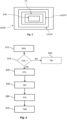
- Figure 3 illustrates an example of a structure of a Bluetooth data packet according to the disclosure, and more specifically, an example of such a structure for transmitting data using a Bluetooth communication link.
- a Bluetooth data packet BTDP comprises several layers, packets, packet data units, frames and/or bitstreams.
- the Bluetooth data packet BTDP comprises a logical link control and adaptation protocol, called L2CAP, corresponding to a protocol data unit, called PDU.
- L2CAP defines a protocol layer of the Bluetooth data packet BTDP for exchanging data between two channel identifiers, called CIDs.
- the L2CAP also defines a link manager layer which implements one or more Bluetooth transport protocols.
- the L2CAP further enables segmenting data packets, assembling data packets, reassembling data packets, and/or multiplexing.
- the L2CAP protocol further allows establishing a logical link between a Bluetooth chip of a device.
- the parameters of the L2CAP protocol may depend on the features of the source device, such as its ability to support other protocols, etc.
- the L2CAP protocol comprises an Audio/Video Distribution Transport Protocol, called AVDTP, which is a Bluetooth audio data transport protocol.
- AVDTP Audio/Video Distribution Transport Protocol
- An AVDTP protocol defines binary transactions between several Bluetooth devices and allows establishing an audio stream and/or a video stream between two stream endpoints, called SEPs.
- the AVDTP protocol is configured for setting up a stream and for streaming an audio stream using the L2CAP protocol.
- the AVDTP protocol further allows a negotiation of the stream parameters and can manage an audio stream by itself.
- the AVDTP protocol and the L2CAP protocol enable the exchange of data over a Bluetooth communication link, for instance between a source device and a sink device.
- the AVDTP protocol comprises a media payload, called container CT, the container CT itself comprising an encoded frame ENC.
- the container CT comprises a media payload header and one or more encoded frames.
- the container CT defines a physical bitstream and at least one encoded frame ENC defines a logical bitstream.
- the physical bitstream may contain both encoded data and associated metadata.
- At least one encoded frame corresponds to audio data which is encoded using an Advanced Audio Coding codec, or AAC codec.
- AAC codec is an audio coding standard for lossy digital audio compression, which advantageously results in a better sound quality than what can be achieved with a MP3 codec at the same bit rate.
- Figure 4 illustrates method steps according to a second embodiment of the disclosure.
- the method steps of the second embodiment allow transmitting an audio stream over a Bluetooth communication link similarly to the first embodiment, but so that said transmitting is performed upon a successful negotiation of the audio codec configuration and of the sampling rate.
- a Bluetooth communication link is open, that is, established between the source device 10 and the sink device 20.
- a streaming application running on the source device 10 is ready to send audio data, said streaming application can request the opening of a new stream. Alternatively, or simultaneously, a reconfiguration of an existing stream can be requested when opening the Bluetooth communication link.
- an optional negotiation phase can be carried out during a step S15.
- Said negotiation phase comprises checking if one or more parameters of the stream are supported by the sink device 20. For instance, said one or more parameters are passed as arguments of the stream being opened or reconfigured.
- Said one or more parameters comprise at least one audio codec configuration and one sampling rate of the audio stream of the streaming application running on the source device 10.
- the required codec and the sampling rate can be passed as an argument of the stream.
- step S15 and if the sink device 20 does not support the audio codec configuration and/or the sampling rate, the underlying request for opening the new stream of for reconfiguring the existing stream can be rejected during a step S20.
- step S15 and if the sink device 20 supports the codec and the sampling rate, the request is accepted and the source device 10 carries out the following steps, including step S40, as described hereafter.
- a configuration of the new stream is carried out or, if appropriate, a reconfiguration of the existing stream, using the one or more parameters.
- said configuration is carried out using the audio codec configuration and the sampling rate of the audio stream of the streaming application.
- HCl Host Controller Interface
- an HCl is an optional standard interface between a Controller subsystem and a Host subsystem.
- the host and the controller can be implemented on a same microprocessor or as an internal software interface.
- the HCl of the source device 10 can perform the configuration or the reconfiguration of the stream during step S40, which is for instance a Bluetooth A2DP stream.
- step S50 the source device 10 receives the audio stream from the streaming application.
- the source device packetizes the received audio stream into the Bluetooth audio stream which has been configured during step S40 using the audio codec configuration and the sampling rate.
- step S70 the source device 10 transmits the Bluetooth audio stream comprising the packetized received audio stream to the sink device 20.
- FIG. 5 illustrates a flowchart of method steps according to a third embodiment of the disclosure.
- the audio data AD1 is received by the Bluetooth stack BS from the input IN of the source device 10, but also audio data AD2 sent by an audio server 30 comprised in the source device 10 (said audio data AD2 may be for instance of system audio notification).
- Both AD1 and AD2 are then packetized into a configured Bluetooth audio stream using the audio codec configuration and the sampling rate of the audio stream of the streaming application 40.
- the configured Bluetooth audio stream is then transmitted from the source device 10 to the sink device 20 using an established Bluetooth link L1, and both packetized audio data AD1 and AD2 are unpacketized by the sink device 20, and optionally, decoded in one or more distinct steps before being rendered, broadcast or further streamed through the output OUT.
- the decoded data can be subsequently mixed or multiplexed before being rendered, broadcast or further streamed through the output OUT (the Bluetooth audio stream may then additionally comprises information on the way to mix data, e.g. the respective percentage/value of volume for each audio data on the sink device side).
- this allows combining multiple audio sources.
- this allows receiving audio notifications, e.g. notifications from a social media application installed on the source device 10, while simultaneously listening to a music file provided by a streaming application 40 running on the source device 10.
- the corresponding audio data may be mixed in at least one audio server and resampled using the sampling rate of the sink device 20, which corresponds to the sampling rate of the streaming application 40 when an existing stream has been reconfigured.
- the shown embodiment allows several audio sources, including the streaming application 40 and at least one audio server 30, to use a simplified audio link path for the streaming application.
- Figure 6 illustrates method steps for transmitting an audio stream over a Bluetooth communication link, according to the third embodiment of the disclosure.
- the method steps of the third embodiment allow transmitting an audio stream over a Bluetooth communication link similarly to the first and second embodiments, except that the reception step S50 is replaced by two steps S51 and S52 which are either carried out simultaneously or successively.
- Step S51 comprising receiving, by the source device 10, first audio data AD1 from the streaming application 40 and step S52 comprising receiving, by the source device 10, second audio data AD2 from the audio server 30.
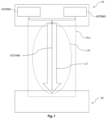
- Figure 7 illustrates a Bluetooth communication link for carrying out the third embodiment of the disclosure.
- a Bluetooth audio stream BTSTRM corresponding to the packetization of two audio streams, is transmitted from the source device 10 to the sink device 20, said Bluetooth audio stream BTSTRM comprising a first contribution ASTRM1 and a second contribution ASTRM2.
- said first contribution ASTRM1 is an audio stream provided by the streaming application running on the source device 10 and said second contribution ASTRM2 is an audio stream provided by an audio server.
- the Bluetooth audio stream BTSTRM is an A2DP Bluetooth audio stream.
- the Bluetooth audio stream BTSTRM is enabled by a logical link LL1, and preferably an ACL-U logical link.
- a logical link is a link which defines what type of information is carried by the Bluetooth audio stream BTSTRM.
- said logical link carries control data or user data, said user data being subdivided into framed data and unframed data.
- the logical link LL1 is carried by a logical transport LT1, and preferably an ACL logical transport.
- a logical transport is a wireless transport which defines what type of characteristics is carried by the stream.
- a logical transport can support one or more logical links and said characteristics comprise casting type, scheduling behavior, acknowledgment/repeat mechanisms, flow control, and sequence numbering, among others.
- Bluetooth logical transports can carry different types of logical links, depending on the type of logical transport, and when several Bluetooth logical links are used, said Bluetooth logical links can be multiplexed onto the same logical transport.
- Examples of logical transports include asynchronous connection-oriented, or ACL, synchronous connection-oriented, or SCO, extended synchronous connection-oriented, or eSCO, active slave broadcast, or ASB, connectionless slave broadcast, or CSB, LE asynchronous connection, or LE ACL, LE advertising broadcast, or ADVB, LE periodic advertising broadcast, or PADVB, transports.
- Other examples include LE connected isochronous and broadcast isochronous streams.
- the Bluetooth audio stream BTSTRM, the logical link LL1 and the logical transport LT1 define a communication link.
- the communication link is defined by at least one physical link between two devices.
- said communication link includes one or more physical links, and defines the wireless communication between two devices and, in the present case, between the source device 10 and the sink device 20.
- the Bluetooth audio stream BTSTRM, the logical link LL1 and the logical transport LT1 define a physical link PL1, such as a BR/EDR physical link.
- a physical link is a BR/EDR physical link or a LE physical link, which allows enabling a baseband connection between wireless devices.
- BR/EDR physical links include BR/EDR active physical links and BR/EDR connectionless slave broadcast physical links.
- LE physical links include LE active physical links, LE advertising physical links, LE periodic physical links, and LE isochronous physical links.
- the physical link PL1 is an active BR/EDR physical link or a LE isochronous physical link.
- Figure 8 illustrates a flowchart of method steps according to a fourth embodiment of the disclosure.
- the audio data AD1 being received from the streaming application 40 is packetized using the audio codec configuration and the sampling rate of the streaming application 40 into the Bluetooth audio stream configured.
- audio data AD2 which corresponds to a second audio stream coming from the audio server 30 is packetized into said Bluetooth audio stream using the audio codec configuration and the sampling rate of the second audio stream.
- the two audio streams use the same audio codec configuration and sampling rate. It is then possible to transmit these two audio streams over a same Bluetooth communication link L1, as shown.
- AD1 and of AD2 are packetized into the same Bluetooth audio stream, they can be later unpacketized and decoded by the sink device 20.
- the unpacketizing and the decoding can be carried out simultaneously or successively for each of AD1 and of AD2.
- Figure 9 illustrates method steps according to the fourth embodiment of the disclosure. In particular, these method steps allow transmitting two audio streams over a Bluetooth communication link.
- a Bluetooth link is opened or pre-established between the source device and the sink device.
- this is carried out when the streaming application running on the source device requests to open at least one audio stream.
- said at least one Bluetooth audio stream is configured or reconfigured with an audio codec configuration and a sampling rate of the streaming application 40.
- step S42 which is carried out either successively or simultaneously with respect to step S41, at least one another Bluetooth audio stream is configured or reconfigured with an audio codec configuration and a sampling rate of the audio server 30, or with the audio codec configuration and the sampling rate of the streaming application.
- step S51 the source device 10 receives the audio stream from the streaming application 40, called first audio stream.
- step S52 which is carried out either successively or simultaneously with respect to step S51, the source device receives the audio stream from the audio server 30, called second audio stream.
- the source device packetizes the first audio stream into the Bluetooth audio stream which has been configured during step S41 using the audio codec configuration and the sampling rate of the streaming application.
- step S62 which is carried out either successively or simultaneously with respect to step S61, the source device packetizes the second audio stream into said Bluetooth audio stream.
- step S70 the source device 10 transmits the Bluetooth audio streams comprising the packetized first and second audio streams to the sink device 20.
- steps S61 and S62 may be followed by two distinct transmission steps S71 and S72 which are not represented.
- the first and second packetized audio streams can be transmitted through separate logical links.
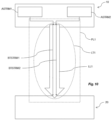
- Figure 10 illustrates a Bluetooth communication link for carrying out the fourth embodiment of the disclosure.
- two Bluetooth audio streams BTSTRM1 and BTSTRM2 are transmitted from the source device 10 to the sink device 20 over a single Bluetooth communication link.
- the first Bluetooth audio stream BTSTRM1 comprises a first contribution ASTRM1 and the second Bluetooth audio stream BTSTRM2 comprises a second contribution ASTRM2, said first contribution ASTRM1 being the audio stream provided by the streaming application 40 running on the source device 10 and the second contribution ASTRM2 being the audio stream provided by the audio server 30.
- the Bluetooth audio streams BTSTRM1 and BTSTRM2 are each A2DP Bluetooth audio streams, said Bluetooth audio streams being enabled by one logical link LL1, such as an ACL-U logical link, carried by one logical transport LT1, such as an ACL logical transport.
- the Bluetooth audio streams BTSTRM1 and BTSTRM2, the logical link LL1 and the logical transport LT1 define a physical link PL1, preferably a BR/EDR active physical link.
- Figure 11 illustrates a flowchart of method steps according to a fifth embodiment of the disclosure.
- the method steps of the fifth embodiment are similar to those of the fourth embodiment except that, in addition to the Bluetooth communication link L1, at least one another Bluetooth logical link LL2 is open between the source device 10 and the sink device 20. This allows transmitting one or more audio streams over two distinct Bluetooth logical links.
- said at least another link LL2 is opened during step S10 when the streaming application 40 requests opening a stream.
- Figure 12 illustrates two Bluetooth communication links for carrying out the fifth embodiment of the disclosure.
- the first Bluetooth audio stream BTSTRM1 comprises a first contribution ASTRM1
- the second Bluetooth audio stream BTSTRM2 comprises a second contribution ASTRM2.
- said first contribution ASTRM1 is the audio stream provided by the streaming application 40
- said second contribution ASTRM2 is the audio stream provided by the audio server 30.
- the Bluetooth audio stream BTSTRM1 is enabled by a logical link LL1, such as an ACL-U logical link, while the Bluetooth audio stream BTSTRM2 is enabled by another logical link LL2, such as a LE-S logical link.
- the logical link LL1 is carried by a logical transport LT1, such as an ACL logical transport, while the logical link LL2 is carried by another logical transport LT2, such as a LE connected isochronous logical transport.
- a logical transport LT1 such as an ACL logical transport
- another logical transport LT2 such as a LE connected isochronous logical transport.
- the Bluetooth audio stream BTSTRM1, the logical link LL1 and the logical transport LT1 define a physical link PL1, which is preferably a BR/EDR active physical link.
- the Bluetooth audio stream BTSTRM2, the logical link LL2 and the logical transport LT2 define a physical link PL2, which is preferably a LE isochronous physical link.
- Figure 13 illustrates a flowchart of method steps according to a sixth embodiment of the disclosure.
- these method steps are similar to those of the first, second and third embodiments except that the packetizing of the audio data AD1 and AD2 is carried out by wrapping said audio data in a container, such as an Ogg-container. This results in a physical bitstream which can subsequently be packetized and transmitted over a Bluetooth communication link established between the source device 10 and the sink device 20.
- a container such as an Ogg-container.
- decoding steps can then be carried out, one decoding step being carried out for the logical bitstream of the physical bitstream which corresponds to the streaming application, and another decoding step being carried out for the logical bitstream of the physical bitstream which corresponds to the audio server.
- the two decoding steps can be carried out separately or together as a single decoding step.
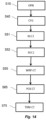
- Figure 14 illustrates method steps corresponding to the sixth embodiment of the disclosure.
- the two audio streams are packetized into a container CT during a step S55, then packetized during a step S65, before eventually being transmitted during a step S75 to the sink device 20.
- Figure 15 illustrates a Bluetooth communication link for carrying out the sixth embodiment of the disclosure.
- a Bluetooth audio stream BTSTRM1 is transmitted from the source device 10 to the sink device 20, said Bluetooth audio stream BTSTRM1 comprising a first contribution ASTRM1 and a second contribution ASTRM2.
- Said first contribution ASTRM1 is an audio stream provided by the streaming application running on the source device 10 and said second contribution ASTRM2 is an audio stream provided by an audio server.
- the two contributions ASTRM1 and ASTRM2 are encapsulated in a container CT before being transmitted from the source device 10 to the sink device 20.
- the Bluetooth communication link defined by the audio stream BTSTRM1, the logical link LL1 and the logical transport LT1 can include one or more physical links and defines the wireless communication between the source device 10 and the sink device 20.
- the Bluetooth audio stream BTSTRM1, the logical link LL1 and the logical transport LT1 define a physical link PL1, such as a BR/EDR physical link.
- the container CT is here an Ogg-Vorbis container. While Bluetooth standards merely allow packetizing audio data in a single audio stream, using an Ogg-Vorbis container allows having multiple audio streams in a same packet. In other words, using Ogg-Vorbis containers, or Ogg stream containers, allows encapsulating one or more logical bitstreams.
- the codec used to encode the audio data provided by the audio server 30 should be compatible with the container CT.
- a logical bitstream coming from the audio server can be wrapped into the container with the logical bitstream of the streaming application. Both logical bitstreams can then be sent within a same packet to the sink device 20. Said sink device 20 can then unwrap the two logical bitstreams, decode them separately using their respective codecs, and carrying out a mixing of the decoded result to provide a single stream to be output.
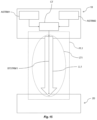
- Figure 16 shows a device 1000 adapted for implementing a method according to an embodiment of the disclosure, and specifically, a method for transmitting or for receiving an audio stream over a Bluetooth communication link when managing a plurality of multimedia devices.
- the device 1000 comprises a Bluetooth chip, which is integrated in an electronic circuit or in any type of electronic device, such as the source device or the sink device.
- the device 1000 comprises a storage space 1002, for example a memory MEM including a random access memory 1002.
- the storage space 1002 can also be a nonvolatile memory such as a ROM or a Flash memory, and can provide a recording medium, said recording medium being configured to store a computer program product.
- the device 1000 further comprises a processing unit 1004 equipped for example with a circuit which includes or is a processor PROC.
- the processing unit 1004 can be controlled by a program, such as a computer program implementing the managing method as described herein with reference to any of the previous figures.
- the processing unit 1004 can store instructions for performing the steps described with reference to any of the aforementioned embodiments.
- the device 1000 may also comprise a database 1010 for storing data like audio data, an audio stream, a container or any bitstream.
- the database 1010 can further store any information such as an audio codec configuration or a sampling rate.
- the device 1000 further comprises an input interface 1006 and an output interface 1008, which are configured for establishing a communication to and from the multimedia device to external devices.
- the output interface 1008 can be a communication module enabling the device 1000 to connect via Bluetooth and for exchanging data with other devices by Bluetooth.
- the communication module preferably includes a Bluetooth communication module.
- the Bluetooth chip is configured to implement one or more of the steps that have been described in the present disclosure.
Landscapes
- Engineering & Computer Science (AREA)
- Multimedia (AREA)
- Computer Networks & Wireless Communication (AREA)
- Signal Processing (AREA)
- Computer Security & Cryptography (AREA)
- Mobile Radio Communication Systems (AREA)
- Reverberation, Karaoke And Other Acoustics (AREA)
Claims (13)
- Verfahren zum Übertragen eines Audio-Streams über eine Bluetooth-Kommunikationsverbindung (L1), wobei das Verfahren von einer Quellvorrichtung (10) durchgeführt wird und Folgendes umfasst:- Empfangen einer Audio-Codec-Konfiguration und einer Abtastrate eines ersten Audio-Streams (AD1), wobei der erste Audio-Stream von einer auf der Quellvorrichtung (10) laufenden Streaming-Anwendung (40) stammt;- Konfigurieren eines ersten Bluetooth-Audio-Streams zwischen der Quellvorrichtung (10) und einer Senkenvorrichtung (20) unter Verwendung der empfangenen Audio-Codec-Konfiguration und Abtastrate;- Empfangen des ersten Audio-Streams (AD1) von der Streaming-Anwendung (40) durch einen Bluetooth-Stack (BS) der Quellvorrichtung, wobei es sich bei dem ersten Audio-Stream um einen codierten Audio-Bit-Stream handelt, der durch die Streaming-Anwendung (40) direkt an den Bluetooth-Stack (BS) der Quellvorrichtung (10) gesendet wird, ohne einen Audioserver der Quellvorrichtung (10) zu durchlaufen und ohne Modifikation, Decodierung, Codierung, Mischung oder erneutes Abtasten des ersten Audio-Streams durch den Audioserver der Quellvorrichtung;- Paketieren des ersten Audio-Streams (AD1), der als codierter Audio-Bit-Stream direkt von der Streaming-Anwendung empfangen wird, in den ersten Bluetooth-Audio-Stream durch den Bluetooth-Stack (BS) der Quellvorrichtung; und- Übertragen des ersten Bluetooth-Audio-Streams durch den Bluetooth-Stack (BS) der Quellvorrichtung an die Senkenvorrichtung (20) über die Bluetooth-Kommunikationsverbindung (L1), wobei der übertragene erste Bluetooth-Audio-Stream den paketierten empfangenen ersten Audio-Stream umfasst.
- Verfahren nach Anspruch 1, ferner umfassend:- Empfangen mindestens eines zweiten Audio-Streams (AD2), wobei sich der zweite Audio-Stream von dem ersten Audio-Stream unterscheidet, von einem Audioserver der Quellvorrichtung (30); und- Übertragen des empfangenen zweiten Audio-Streams an die Senkenvorrichtung (20) über die Bluetooth-Kommunikationsverbindung.
- Verfahren nach Anspruch 2, wobei der erste Bluetooth-Audio-Stream von einem Multi-Contribution-Typ ist, wobei das Verfahren ferner das Paketieren des empfangenen zweiten Audio-Streams in den ersten Bluetooth-Audio-Stream unter Verwendung einer Audio-Codec-Konfiguration und einer Abtastrate des zweiten Audio-Streams umfasst.
- Verfahren nach Anspruch 2, umfassend Umwickeln des von der Streaming-Anwendung empfangenen ersten Audio-Streams in einen Behälter (CT), wobei die Paketierung des ersten Audio-Streams unter Verwendung des umwickelten ersten Audio-Streams durchgeführt wird, und/oder das Umwickeln des empfangenen zweiten Audio-Streams in einen Behälter (CT), wobei der Behälter (CT) in den ersten Bluetooth-Audio-Stream platziert wird.
- Verfahren nach Anspruch 4, wobei der Behälter (CT) ein OggVorbis-Behälter ist.
- Verfahren nach Anspruch 4, wobei der erste Audio-Stream oder der zweite Audio-Stream ein Vorbis-codierter Stream ist oder der erste Audio-Stream und die zweiten Audio-Streams Vorbis-codierte Streams sind.
- Verfahren nach Anspruch 2, ferner umfassend:- Paketieren des empfangenen zweiten Audio-Streams in einen zweiten Bluetooth-Audio-Stream, wobei der zweite Bluetooth-Audio-Stream von dem ersten Bluetooth-Audio-Stream verschieden ist, und- Übertragen des zweiten Bluetooth-Audio-Streams an die Senkenvorrichtung (20) über die Bluetooth-Kommunikationsverbindung, wobei der zweite Bluetooth-Audio-Stream mit dem ersten Bluetoot- Audio-Stream gemultiplext wird.
- Verfahren nach Anspruch 7, wobei der erste Bluetooth-Audio-Stream oder der zweite Bluetooth-Audio-Stream über eine Basic-Raten/Enhanced-Data-Raten-, BR/EDR-, Verbindung der Bluetooth-Kommunikationsverbindung übertragen wird, oder der erste Bluetooth-Audio-Stream und die zweiten Bluetooth-Audio-Streams über eine BR/EDR-Verbindung der Bluetooth-Kommunikationsverbindung übertragen werden.
- Verfahren nach Anspruch 7, wobei der zweite Bluetooth-Audio-Stream über eine Bluetooth-Low-Energy-, BLE-, Verbindung der Bluetooth-Kommunikationsverbindung übertragen wird.
- Verfahren nach einem der vorhergehenden Ansprüche, wobei das Übertragen des ersten Bluetooth-Audio-Streams nach erfolgreicher Aushandlung der Audio-Codec-Konfiguration und der Abtastrate mit der Senkenvorrichtung (20) durchgeführt wird.
- Computerprogrammprodukt, umfassend ein computerlesbares Medium, das darauf gespeicherte Computerprogrammanweisungen aufweist, die in eine Rechenvorrichtung geladen werden können und so beschaffen sind, dass sie - wenn sie in die Rechenvorrichtung geladen und von dieser ausgeführt werden - die Rechenvorrichtung veranlassen, die Schritte eines Verfahrens nach Anspruch 1 bis 10 durchzuführen.
- Quellvorrichtung zum Übertragen eines Audio-Streams über eine Bluetooth-Kommunikationsverbindung (L1), wobei die Quellvorrichtung (10) zu Folgendem konfiguriert ist:- Empfangen einer Audio-Codec-Konfiguration und einer Abtastrate eines ersten Audio-Streams (AD1) einer auf der Quellvorrichtung (10) laufenden Streaming-Anwendung (40);- Konfigurieren eines ersten Bluetooth-Audio-Streams zwischen der Quellvorrichtung (10) und einer Senkenvorrichtung (20) unter Verwendung der empfangenen Audio-Codec-Konfiguration und Abtastrate;- Empfangen des ersten Audio-Streams (AD1) von der Streaming-Anwendung (40) durch einen Bluetooth-Stack (BS) der Quellvorrichtung, wobei es sich bei dem ersten Audio-Stream um einen codierten Audio-Bit-Stream handelt, der von der Streaming-Anwendung (40) direkt an den Bluetooth-Stack (BS) der Quellvorrichtung (10) gesendet wird, ohne einen Audioserver der Quellvorrichtung (10) zu durchlaufen und ohne Modifikation, Decodierung, Codierung, Mischung oder erneutes Abtasten des ersten Audio-Streams durch den Audioserver der Quellvorrichtung;- Paketieren des ersten Audio-Streams (AD1), der als codierter Audio-Bit-Stream direkt von der Streaming-Anwendung empfangen wird, in den ersten Bluetooth-Audio-Stream durch den Bluetooth-Stack (BS) der Quellvorrichtung; und- Übertragen des ersten Bluetooth-Audio-Streams durch den Bluetooth-Stack (BS) der Quellvorrichtung an die Senkenvorrichtung (20) über die Bluetooth-Kommunikationsverbindung (L1), wobei der übertragene erste Bluetooth-Audio-Stream den paketierten empfangenen ersten Audio-Stream umfasst.
- System zum Übertragen und Empfangen eines Bluetooth-Audio-Streams über eine Bluetooth-Kommunikationsverbindung, wobei das System eine Quellvorrichtung (10) nach Anspruch 12 und eine Senkenvorrichtung (20) umfasst.
Priority Applications (11)
| Application Number | Priority Date | Filing Date | Title |
|---|---|---|---|
| EP19306521.6A EP3829129B1 (de) | 2019-11-26 | 2019-11-26 | Bluetooth-audio-streaming-durchführung |
| EP22157062.5A EP4021037B1 (de) | 2019-11-26 | 2019-11-26 | Bluetooth-audio-streaming-durchführung |
| PCT/EP2020/064993 WO2020239985A1 (en) | 2019-05-31 | 2020-05-29 | Method for operating a bluetooth device |
| JP2021558952A JP7302006B2 (ja) | 2019-05-31 | 2020-05-29 | Bluetoothデバイスを操作するための方法 |
| KR1020237027887A KR102697310B1 (ko) | 2019-05-31 | 2020-05-29 | 블루투스 장치 동작 방법 |
| US17/607,728 US12543121B2 (en) | 2019-05-31 | 2020-05-29 | Method for operating a Bluetooth device |
| CN202080026742.5A CN114026894A (zh) | 2019-05-31 | 2020-05-29 | 操作蓝牙设备的方法 |
| KR1020217030912A KR102569374B1 (ko) | 2019-05-31 | 2020-05-29 | 블루투스 장치 동작 방법 |
| US17/103,363 US11595800B2 (en) | 2019-11-26 | 2020-11-24 | Bluetooth audio streaming passthrough |
| US18/114,707 US12041523B2 (en) | 2019-11-26 | 2023-02-27 | Bluetooth audio streaming passthrough |
| JP2023101831A JP7638329B2 (ja) | 2019-05-31 | 2023-06-21 | Bluetoothデバイスを操作するための方法 |
Applications Claiming Priority (1)
| Application Number | Priority Date | Filing Date | Title |
|---|---|---|---|
| EP19306521.6A EP3829129B1 (de) | 2019-11-26 | 2019-11-26 | Bluetooth-audio-streaming-durchführung |
Related Child Applications (2)
| Application Number | Title | Priority Date | Filing Date |
|---|---|---|---|
| EP22157062.5A Division EP4021037B1 (de) | 2019-11-26 | 2019-11-26 | Bluetooth-audio-streaming-durchführung |
| EP22157062.5A Division-Into EP4021037B1 (de) | 2019-11-26 | 2019-11-26 | Bluetooth-audio-streaming-durchführung |
Publications (2)
| Publication Number | Publication Date |
|---|---|
| EP3829129A1 EP3829129A1 (de) | 2021-06-02 |
| EP3829129B1 true EP3829129B1 (de) | 2025-02-19 |
Family
ID=69024233
Family Applications (2)
| Application Number | Title | Priority Date | Filing Date |
|---|---|---|---|
| EP19306521.6A Active EP3829129B1 (de) | 2019-05-31 | 2019-11-26 | Bluetooth-audio-streaming-durchführung |
| EP22157062.5A Active EP4021037B1 (de) | 2019-11-26 | 2019-11-26 | Bluetooth-audio-streaming-durchführung |
Family Applications After (1)
| Application Number | Title | Priority Date | Filing Date |
|---|---|---|---|
| EP22157062.5A Active EP4021037B1 (de) | 2019-11-26 | 2019-11-26 | Bluetooth-audio-streaming-durchführung |
Country Status (2)
| Country | Link |
|---|---|
| US (2) | US11595800B2 (de) |
| EP (2) | EP3829129B1 (de) |
Families Citing this family (10)
| Publication number | Priority date | Publication date | Assignee | Title |
|---|---|---|---|---|
| CN113179477B (zh) * | 2021-06-30 | 2021-09-07 | 杭州兆华电子有限公司 | Lhdc耳机测试方法和系统 |
| CN115733581B (zh) * | 2021-08-27 | 2024-10-29 | 达发科技股份有限公司 | 蓝牙数据包的接收和错误修正方法及装置和存储介质 |
| US12004064B2 (en) * | 2021-08-27 | 2024-06-04 | Airoha Technology Corp. | Method and non-transitory computer-readable storage medium and apparatus for receiving Bluetooth packets and correcting error bits therein |
| CN113873486B (zh) * | 2021-09-23 | 2022-07-12 | 上海山景集成电路股份有限公司 | 蓝牙通信方法、通信设备及系统 |
| CN121691302A (zh) * | 2021-12-31 | 2026-03-17 | 海思技术有限公司 | 一种媒体文件的传输方法和设备 |
| CN115223577A (zh) * | 2022-07-01 | 2022-10-21 | 哲库科技(上海)有限公司 | 音频处理方法、芯片、装置、设备和计算机可读存储介质 |
| CN115278624B (zh) * | 2022-07-21 | 2025-01-07 | Oppo广东移动通信有限公司 | 信息更新方法及装置、音频共享方法及系统、电子设备 |
| WO2025116552A1 (en) * | 2023-11-28 | 2025-06-05 | Samsung Electronics Co., Ltd. | Method and device for managing codec configuration of broadcast audio stream |
| WO2025170987A1 (en) * | 2024-02-05 | 2025-08-14 | University Of Washington | Backscattering into multiple channels, including examples of simultaneous tranmission of multiple ble backscatter packets using ofdm |
| CN117833963A (zh) * | 2024-03-04 | 2024-04-05 | 慧翰微电子股份有限公司 | 一种经典蓝牙音频数据传输方法、系统及电子设备 |
Family Cites Families (33)
| Publication number | Priority date | Publication date | Assignee | Title |
|---|---|---|---|---|
| US20020072816A1 (en) * | 2000-12-07 | 2002-06-13 | Yoav Shdema | Audio system |
| US7299127B2 (en) * | 2003-05-02 | 2007-11-20 | Sony Corporation | Shared oscillator for vehicle mirror display |
| US7567897B2 (en) * | 2004-08-12 | 2009-07-28 | International Business Machines Corporation | Method for dynamic selection of optimized codec for streaming audio content |
| US8116223B2 (en) * | 2006-11-09 | 2012-02-14 | Ivt Technology Inc. | System and method for supporting automatic establishing and disconnecting several wireless connections |
| US7912728B2 (en) * | 2006-11-30 | 2011-03-22 | Broadcom Corporation | Method and system for handling the processing of bluetooth data during multi-path multi-rate audio processing |
| US8224247B2 (en) * | 2007-05-16 | 2012-07-17 | Texas Instruments Incorporated | Controller integrated audio codec for advanced audio distribution profile audio streaming applications |
| US20090076825A1 (en) * | 2007-09-13 | 2009-03-19 | Bionica Corporation | Method of enhancing sound for hearing impaired individuals |
| ATE547903T1 (de) | 2008-05-30 | 2012-03-15 | Oticon As | Qualitätsverbindung für tonübertragung mit niedriger latenz |
| US7920495B2 (en) | 2008-06-25 | 2011-04-05 | Nokia Corporation | Channel management via link parameter adjustment |
| US8467890B2 (en) * | 2008-11-10 | 2013-06-18 | Broadcom Corporation | Method and system for detecting interrupts from detachable electronic accessories or peripherals |
| US9883271B2 (en) * | 2008-12-12 | 2018-01-30 | Qualcomm Incorporated | Simultaneous multi-source audio output at a wireless headset |
| KR20100129415A (ko) * | 2009-06-01 | 2010-12-09 | 삼성전자주식회사 | 근거리 무선 통신 기반의 오디오 데이터 출력 방법 및 이를 이용한 휴대 단말기 |
| US20110103593A1 (en) * | 2009-11-05 | 2011-05-05 | Thirunathan Sutharsan | Method and System For a Pipelined Dual Audio Path Processing Audio Codec |
| US8570964B2 (en) * | 2010-11-15 | 2013-10-29 | Intel Corporation | Device, system, and method of coordinating among multiple co-located wireless communication units |
| GB2490879B (en) | 2011-05-12 | 2018-12-26 | Qualcomm Technologies Int Ltd | Hybrid coded audio data streaming apparatus and method |
| US8483699B1 (en) | 2012-08-29 | 2013-07-09 | Sprint Spectrum L.P. | Codec selection for wireless communication |
| DK2926574T3 (en) * | 2012-12-03 | 2019-02-18 | Sonova Ag | WIRELESS STREAMING OF A SOUND SIGNAL FOR SEVERAL SOUND RECEIVERS APPLIANCES |
| DK2773134T3 (da) | 2013-02-28 | 2023-05-22 | Gn Hearing As | Lydsystem og fremgangsmåde til transmission af lydstrømmme |
| WO2015034275A1 (ko) | 2013-09-05 | 2015-03-12 | 엘지전자(주) | 무선 통신 시스템에서 오디오/비디오 스트리밍 수행 방법 및 장치 |
| US9544718B2 (en) * | 2014-09-11 | 2017-01-10 | Lg Electronics Inc. | Method and apparatus for transmitting and receiving audio stream in wireless communication system |
| KR102325338B1 (ko) * | 2014-12-05 | 2021-11-11 | 삼성전자주식회사 | 전자 장치, 오디오 장치 및 전원 제어 방법 |
| GB2535766B (en) * | 2015-02-27 | 2019-06-12 | Imagination Tech Ltd | Low power detection of an activation phrase |
| US9756455B2 (en) | 2015-05-28 | 2017-09-05 | Sony Corporation | Terminal and method for audio data transmission |
| US20160359925A1 (en) | 2015-06-08 | 2016-12-08 | Lg Electronics Inc. | Method and apparatus for transmitting and receiving data in wireless communication system |
| US10122801B2 (en) | 2015-07-02 | 2018-11-06 | Qualcomm Incorporated | Service discovery and topology management |
| US9930477B2 (en) * | 2015-12-10 | 2018-03-27 | Lg Electronics Inc. | Method and apparatus for transmitting and receiving data in wireless communication system |
| GB201620317D0 (en) | 2016-11-30 | 2017-01-11 | Microsoft Technology Licensing Llc | Audio signal processing |
| US10441885B2 (en) * | 2017-06-12 | 2019-10-15 | Microsoft Technology Licensing, Llc | Audio balancing for multi-source audiovisual streaming |
| CN107708192B (zh) | 2017-10-11 | 2021-03-23 | 普联技术有限公司 | 一种自动切换蓝牙工作模式的方法及装置 |
| US10212569B1 (en) * | 2017-11-09 | 2019-02-19 | Pixart Imaging Inc. | Bluetooth audio communication system and method for acknowledging reception of packets of audio streams at a slave and master devices |
| US10930278B2 (en) * | 2018-04-09 | 2021-02-23 | Google Llc | Trigger sound detection in ambient audio to provide related functionality on a user interface |
| CA3117305C (en) * | 2018-10-22 | 2023-11-28 | Voxx International Corporation | Vehicle entertainment system providing paired wireless connections for multiple wireless headphones and related methods |
| US10701538B1 (en) * | 2019-08-19 | 2020-06-30 | Bose Corporation | Smart connection management |
-
2019
- 2019-11-26 EP EP19306521.6A patent/EP3829129B1/de active Active
- 2019-11-26 EP EP22157062.5A patent/EP4021037B1/de active Active
-
2020
- 2020-11-24 US US17/103,363 patent/US11595800B2/en active Active
-
2023
- 2023-02-27 US US18/114,707 patent/US12041523B2/en active Active
Also Published As
| Publication number | Publication date |
|---|---|
| US20230217225A1 (en) | 2023-07-06 |
| US20210160673A1 (en) | 2021-05-27 |
| EP4021037B1 (de) | 2026-04-01 |
| EP3829129A1 (de) | 2021-06-02 |
| US11595800B2 (en) | 2023-02-28 |
| US12041523B2 (en) | 2024-07-16 |
| EP4021037A1 (de) | 2022-06-29 |
Similar Documents
| Publication | Publication Date | Title |
|---|---|---|
| US12041523B2 (en) | Bluetooth audio streaming passthrough | |
| JP7638329B2 (ja) | Bluetoothデバイスを操作するための方法 | |
| US8224247B2 (en) | Controller integrated audio codec for advanced audio distribution profile audio streaming applications | |
| EP3566227B1 (de) | Anpassung einer verteilten audioaufzeichnung für überwachung einer freien blickperspektive eines endbenutzers | |
| EP4002358A1 (de) | Adaptives audioverarbeitungsverfahren, vorrichtung, computerprogramm und aufzeichnungsmedium dafür in einem drahtlosen kommunikationssystem | |
| CN109565662B (zh) | 控制连接的多媒体装置 | |
| CN111527733B (zh) | 控制双模蓝牙低能耗多媒体装置 | |
| EP1701484A1 (de) | Verbesserte Interoperabilität unter Verwendung von Inhaltsschutz in einem Audiostrom | |
| US20240355339A1 (en) | Media File Transmission Method and Device | |
| US12488803B2 (en) | Method and system for encoding and wirelessly transmitting stereo audio content for audio communication | |
| CN115669210A (zh) | 一种通信方法、装置及系统 | |
| US20230111979A1 (en) | Systems and methods for wireless surround sound | |
| US12628214B1 (en) | Bluetooth internal audio routing for system lack of hardware support | |
| HK40113872A (zh) | 用於无綫环绕声的系统和方法 | |
| CN115883711A (zh) | 蓝牙语音通信系统及储存电路 | |
| WO2024152244A1 (zh) | 数据传输方法和系统、蓝牙设备及芯片 |
Legal Events
| Date | Code | Title | Description |
|---|---|---|---|
| PUAI | Public reference made under article 153(3) epc to a published international application that has entered the european phase |
Free format text: ORIGINAL CODE: 0009012 |
|
| STAA | Information on the status of an ep patent application or granted ep patent |
Free format text: STATUS: THE APPLICATION HAS BEEN PUBLISHED |
|
| AK | Designated contracting states |
Kind code of ref document: A1 Designated state(s): AL AT BE BG CH CY CZ DE DK EE ES FI FR GB GR HR HU IE IS IT LI LT LU LV MC MK MT NL NO PL PT RO RS SE SI SK SM TR |
|
| STAA | Information on the status of an ep patent application or granted ep patent |
Free format text: STATUS: REQUEST FOR EXAMINATION WAS MADE |
|
| 17P | Request for examination filed |
Effective date: 20211202 |
|
| RBV | Designated contracting states (corrected) |
Designated state(s): AL AT BE BG CH CY CZ DE DK EE ES FI FR GB GR HR HU IE IS IT LI LT LU LV MC MK MT NL NO PL PT RO RS SE SI SK SM TR |
|
| RAP1 | Party data changed (applicant data changed or rights of an application transferred) |
Owner name: GOOGLE LLC |
|
| STAA | Information on the status of an ep patent application or granted ep patent |
Free format text: STATUS: EXAMINATION IS IN PROGRESS |
|
| 17Q | First examination report despatched |
Effective date: 20230511 |
|
| REG | Reference to a national code |
Ref country code: DE Ref legal event code: R079 Free format text: PREVIOUS MAIN CLASS: H04L0029060000 Ipc: H04L0065750000 Ref country code: DE Ref legal event code: R079 Ref document number: 602019066108 Country of ref document: DE Free format text: PREVIOUS MAIN CLASS: H04L0029060000 Ipc: H04L0065750000 |
|
| GRAP | Despatch of communication of intention to grant a patent |
Free format text: ORIGINAL CODE: EPIDOSNIGR1 |
|
| STAA | Information on the status of an ep patent application or granted ep patent |
Free format text: STATUS: GRANT OF PATENT IS INTENDED |
|
| RIC1 | Information provided on ipc code assigned before grant |
Ipc: H04L 69/14 20220101ALI20240321BHEP Ipc: H04L 69/24 20220101ALI20240321BHEP Ipc: H04W 4/80 20180101ALI20240321BHEP Ipc: H04L 65/612 20220101ALI20240321BHEP Ipc: H04L 65/75 20220101AFI20240321BHEP |
|
| INTG | Intention to grant announced |
Effective date: 20240418 |
|
| GRAJ | Information related to disapproval of communication of intention to grant by the applicant or resumption of examination proceedings by the epo deleted |
Free format text: ORIGINAL CODE: EPIDOSDIGR1 |
|
| STAA | Information on the status of an ep patent application or granted ep patent |
Free format text: STATUS: EXAMINATION IS IN PROGRESS |
|
| GRAP | Despatch of communication of intention to grant a patent |
Free format text: ORIGINAL CODE: EPIDOSNIGR1 |
|
| STAA | Information on the status of an ep patent application or granted ep patent |
Free format text: STATUS: GRANT OF PATENT IS INTENDED |
|
| INTC | Intention to grant announced (deleted) | ||
| INTG | Intention to grant announced |
Effective date: 20240911 |
|
| GRAS | Grant fee paid |
Free format text: ORIGINAL CODE: EPIDOSNIGR3 |
|
| GRAA | (expected) grant |
Free format text: ORIGINAL CODE: 0009210 |
|
| STAA | Information on the status of an ep patent application or granted ep patent |
Free format text: STATUS: THE PATENT HAS BEEN GRANTED |
|
| AK | Designated contracting states |
Kind code of ref document: B1 Designated state(s): AL AT BE BG CH CY CZ DE DK EE ES FI FR GB GR HR HU IE IS IT LI LT LU LV MC MK MT NL NO PL PT RO RS SE SI SK SM TR |
|
| P01 | Opt-out of the competence of the unified patent court (upc) registered |
Free format text: CASE NUMBER: APP_2089/2025 Effective date: 20250113 |
|
| REG | Reference to a national code |
Ref country code: GB Ref legal event code: FG4D |
|
| REG | Reference to a national code |
Ref country code: CH Ref legal event code: EP |
|
| REG | Reference to a national code |
Ref country code: DE Ref legal event code: R096 Ref document number: 602019066108 Country of ref document: DE |
|
| REG | Reference to a national code |
Ref country code: IE Ref legal event code: FG4D |
|
| REG | Reference to a national code |
Ref country code: NL Ref legal event code: FP |
|
| PG25 | Lapsed in a contracting state [announced via postgrant information from national office to epo] |
Ref country code: RS Free format text: LAPSE BECAUSE OF FAILURE TO SUBMIT A TRANSLATION OF THE DESCRIPTION OR TO PAY THE FEE WITHIN THE PRESCRIBED TIME-LIMIT Effective date: 20250519 |
|
| PG25 | Lapsed in a contracting state [announced via postgrant information from national office to epo] |
Ref country code: FI Free format text: LAPSE BECAUSE OF FAILURE TO SUBMIT A TRANSLATION OF THE DESCRIPTION OR TO PAY THE FEE WITHIN THE PRESCRIBED TIME-LIMIT Effective date: 20250219 |
|
| PG25 | Lapsed in a contracting state [announced via postgrant information from national office to epo] |
Ref country code: PL Free format text: LAPSE BECAUSE OF FAILURE TO SUBMIT A TRANSLATION OF THE DESCRIPTION OR TO PAY THE FEE WITHIN THE PRESCRIBED TIME-LIMIT Effective date: 20250219 |
|
| PG25 | Lapsed in a contracting state [announced via postgrant information from national office to epo] |
Ref country code: ES Free format text: LAPSE BECAUSE OF FAILURE TO SUBMIT A TRANSLATION OF THE DESCRIPTION OR TO PAY THE FEE WITHIN THE PRESCRIBED TIME-LIMIT Effective date: 20250219 |
|
| REG | Reference to a national code |
Ref country code: LT Ref legal event code: MG9D |
|
| PG25 | Lapsed in a contracting state [announced via postgrant information from national office to epo] |
Ref country code: IS Free format text: LAPSE BECAUSE OF FAILURE TO SUBMIT A TRANSLATION OF THE DESCRIPTION OR TO PAY THE FEE WITHIN THE PRESCRIBED TIME-LIMIT Effective date: 20250619 Ref country code: NO Free format text: LAPSE BECAUSE OF FAILURE TO SUBMIT A TRANSLATION OF THE DESCRIPTION OR TO PAY THE FEE WITHIN THE PRESCRIBED TIME-LIMIT Effective date: 20250519 |
|
| PG25 | Lapsed in a contracting state [announced via postgrant information from national office to epo] |
Ref country code: HR Free format text: LAPSE BECAUSE OF FAILURE TO SUBMIT A TRANSLATION OF THE DESCRIPTION OR TO PAY THE FEE WITHIN THE PRESCRIBED TIME-LIMIT Effective date: 20250219 |
|
| PG25 | Lapsed in a contracting state [announced via postgrant information from national office to epo] |
Ref country code: LV Free format text: LAPSE BECAUSE OF FAILURE TO SUBMIT A TRANSLATION OF THE DESCRIPTION OR TO PAY THE FEE WITHIN THE PRESCRIBED TIME-LIMIT Effective date: 20250219 Ref country code: PT Free format text: LAPSE BECAUSE OF FAILURE TO SUBMIT A TRANSLATION OF THE DESCRIPTION OR TO PAY THE FEE WITHIN THE PRESCRIBED TIME-LIMIT Effective date: 20250620 |
|
| PG25 | Lapsed in a contracting state [announced via postgrant information from national office to epo] |
Ref country code: GR Free format text: LAPSE BECAUSE OF FAILURE TO SUBMIT A TRANSLATION OF THE DESCRIPTION OR TO PAY THE FEE WITHIN THE PRESCRIBED TIME-LIMIT Effective date: 20250520 Ref country code: BG Free format text: LAPSE BECAUSE OF FAILURE TO SUBMIT A TRANSLATION OF THE DESCRIPTION OR TO PAY THE FEE WITHIN THE PRESCRIBED TIME-LIMIT Effective date: 20250219 |
|
| REG | Reference to a national code |
Ref country code: AT Ref legal event code: MK05 Ref document number: 1769441 Country of ref document: AT Kind code of ref document: T Effective date: 20250219 |
|
| PG25 | Lapsed in a contracting state [announced via postgrant information from national office to epo] |
Ref country code: SE Free format text: LAPSE BECAUSE OF FAILURE TO SUBMIT A TRANSLATION OF THE DESCRIPTION OR TO PAY THE FEE WITHIN THE PRESCRIBED TIME-LIMIT Effective date: 20250219 |
|
| PG25 | Lapsed in a contracting state [announced via postgrant information from national office to epo] |
Ref country code: SM Free format text: LAPSE BECAUSE OF FAILURE TO SUBMIT A TRANSLATION OF THE DESCRIPTION OR TO PAY THE FEE WITHIN THE PRESCRIBED TIME-LIMIT Effective date: 20250219 |
|
| PG25 | Lapsed in a contracting state [announced via postgrant information from national office to epo] |
Ref country code: DK Free format text: LAPSE BECAUSE OF FAILURE TO SUBMIT A TRANSLATION OF THE DESCRIPTION OR TO PAY THE FEE WITHIN THE PRESCRIBED TIME-LIMIT Effective date: 20250219 |
|
| PG25 | Lapsed in a contracting state [announced via postgrant information from national office to epo] |
Ref country code: IT Free format text: LAPSE BECAUSE OF FAILURE TO SUBMIT A TRANSLATION OF THE DESCRIPTION OR TO PAY THE FEE WITHIN THE PRESCRIBED TIME-LIMIT Effective date: 20250219 |
|
| PG25 | Lapsed in a contracting state [announced via postgrant information from national office to epo] |
Ref country code: AT Free format text: LAPSE BECAUSE OF FAILURE TO SUBMIT A TRANSLATION OF THE DESCRIPTION OR TO PAY THE FEE WITHIN THE PRESCRIBED TIME-LIMIT Effective date: 20250219 |
|
| PG25 | Lapsed in a contracting state [announced via postgrant information from national office to epo] |
Ref country code: EE Free format text: LAPSE BECAUSE OF FAILURE TO SUBMIT A TRANSLATION OF THE DESCRIPTION OR TO PAY THE FEE WITHIN THE PRESCRIBED TIME-LIMIT Effective date: 20250219 Ref country code: CZ Free format text: LAPSE BECAUSE OF FAILURE TO SUBMIT A TRANSLATION OF THE DESCRIPTION OR TO PAY THE FEE WITHIN THE PRESCRIBED TIME-LIMIT Effective date: 20250219 |
|
| PG25 | Lapsed in a contracting state [announced via postgrant information from national office to epo] |
Ref country code: RO Free format text: LAPSE BECAUSE OF FAILURE TO SUBMIT A TRANSLATION OF THE DESCRIPTION OR TO PAY THE FEE WITHIN THE PRESCRIBED TIME-LIMIT Effective date: 20250219 |
|
| PG25 | Lapsed in a contracting state [announced via postgrant information from national office to epo] |
Ref country code: SK Free format text: LAPSE BECAUSE OF FAILURE TO SUBMIT A TRANSLATION OF THE DESCRIPTION OR TO PAY THE FEE WITHIN THE PRESCRIBED TIME-LIMIT Effective date: 20250219 |
|
| REG | Reference to a national code |
Ref country code: DE Ref legal event code: R097 Ref document number: 602019066108 Country of ref document: DE |
|
| PGFP | Annual fee paid to national office [announced via postgrant information from national office to epo] |
Ref country code: NL Payment date: 20251126 Year of fee payment: 7 |
|
| PLBE | No opposition filed within time limit |
Free format text: ORIGINAL CODE: 0009261 |
|
| STAA | Information on the status of an ep patent application or granted ep patent |
Free format text: STATUS: NO OPPOSITION FILED WITHIN TIME LIMIT |
|
| PGFP | Annual fee paid to national office [announced via postgrant information from national office to epo] |
Ref country code: DE Payment date: 20251128 Year of fee payment: 7 |
|
| PGFP | Annual fee paid to national office [announced via postgrant information from national office to epo] |
Ref country code: GB Payment date: 20251127 Year of fee payment: 7 |
|
| PGFP | Annual fee paid to national office [announced via postgrant information from national office to epo] |
Ref country code: FR Payment date: 20251125 Year of fee payment: 7 |
|
| 26N | No opposition filed |
Effective date: 20251120 |