EP3827675A1 - Tobacco material production method, tobacco material, tobacco flavor liquid production method, tobacco flavor liquid, and heating-type flavor inhaler - Google Patents
Tobacco material production method, tobacco material, tobacco flavor liquid production method, tobacco flavor liquid, and heating-type flavor inhaler Download PDFInfo
- Publication number
- EP3827675A1 EP3827675A1 EP18927884.9A EP18927884A EP3827675A1 EP 3827675 A1 EP3827675 A1 EP 3827675A1 EP 18927884 A EP18927884 A EP 18927884A EP 3827675 A1 EP3827675 A1 EP 3827675A1
- Authority
- EP
- European Patent Office
- Prior art keywords
- tobacco
- leaf tobacco
- flavor
- leaf
- ground
- Prior art date
- Legal status (The legal status is an assumption and is not a legal conclusion. Google has not performed a legal analysis and makes no representation as to the accuracy of the status listed.)
- Granted
Links
Images





Classifications
-
- A—HUMAN NECESSITIES
- A24—TOBACCO; CIGARS; CIGARETTES; SIMULATED SMOKING DEVICES; SMOKERS' REQUISITES
- A24F—SMOKERS' REQUISITES; MATCH BOXES; SIMULATED SMOKING DEVICES
- A24F40/00—Electrically operated smoking devices; Component parts thereof; Manufacture thereof; Maintenance or testing thereof; Charging means specially adapted therefor
- A24F40/10—Devices using liquid inhalable precursors
-
- A—HUMAN NECESSITIES
- A24—TOBACCO; CIGARS; CIGARETTES; SIMULATED SMOKING DEVICES; SMOKERS' REQUISITES
- A24B—MANUFACTURE OR PREPARATION OF TOBACCO FOR SMOKING OR CHEWING; TOBACCO; SNUFF
- A24B15/00—Chemical features or treatment of tobacco; Tobacco substitutes, e.g. in liquid form
- A24B15/10—Chemical features of tobacco products or tobacco substitutes
- A24B15/16—Chemical features of tobacco products or tobacco substitutes of tobacco substitutes
- A24B15/167—Chemical features of tobacco products or tobacco substitutes of tobacco substitutes in liquid or vaporisable form, e.g. liquid compositions for electronic cigarettes
-
- A—HUMAN NECESSITIES
- A24—TOBACCO; CIGARS; CIGARETTES; SIMULATED SMOKING DEVICES; SMOKERS' REQUISITES
- A24B—MANUFACTURE OR PREPARATION OF TOBACCO FOR SMOKING OR CHEWING; TOBACCO; SNUFF
- A24B15/00—Chemical features or treatment of tobacco; Tobacco substitutes, e.g. in liquid form
- A24B15/18—Treatment of tobacco products or tobacco substitutes
- A24B15/20—Biochemical treatment
-
- A—HUMAN NECESSITIES
- A24—TOBACCO; CIGARS; CIGARETTES; SIMULATED SMOKING DEVICES; SMOKERS' REQUISITES
- A24B—MANUFACTURE OR PREPARATION OF TOBACCO FOR SMOKING OR CHEWING; TOBACCO; SNUFF
- A24B15/00—Chemical features or treatment of tobacco; Tobacco substitutes, e.g. in liquid form
- A24B15/18—Treatment of tobacco products or tobacco substitutes
- A24B15/24—Treatment of tobacco products or tobacco substitutes by extraction; Tobacco extracts
- A24B15/241—Extraction of specific substances
-
- A—HUMAN NECESSITIES
- A24—TOBACCO; CIGARS; CIGARETTES; SIMULATED SMOKING DEVICES; SMOKERS' REQUISITES
- A24B—MANUFACTURE OR PREPARATION OF TOBACCO FOR SMOKING OR CHEWING; TOBACCO; SNUFF
- A24B3/00—Preparing tobacco in the factory
- A24B3/08—Blending tobacco
-
- A—HUMAN NECESSITIES
- A24—TOBACCO; CIGARS; CIGARETTES; SIMULATED SMOKING DEVICES; SMOKERS' REQUISITES
- A24B—MANUFACTURE OR PREPARATION OF TOBACCO FOR SMOKING OR CHEWING; TOBACCO; SNUFF
- A24B3/00—Preparing tobacco in the factory
- A24B3/12—Steaming, curing, or flavouring tobacco
Definitions
- the present invention relates to a tobacco material production method, a tobacco material, a tobacco flavor liquid production method, a tobacco flavor liquid, and a heating-type flavor inhaler.
- Leaves of cultivated and harvested tobacco plants are subjected to various processes, including a drying process in a farm house, subsequently one to several years of a long-term aging process in a leaf processing facility, and thereafter blending and cutting processes in a manufacturing facility, and then the processed tobacco leaves are used to produce tobacco products.
- the processed tobacco leaf materials used to produce tobacco products are referred to as "leaf tobacco" in the art.
- Leaf tobacco is known to contain various glycoside components.
- glycosides contained in the leaf tobacco glucosides such as scopoletin 7-glucoside (scopoletin) and quercetin 3- ⁇ -D-glucoside (isoquercetin); rhamnoglucosides (rutinosides) such as naringenin 7-rhamnoglucoside (naringin) and quercetin 3-rhamnoglucoside (rutin); and sophorosides such as rishitin ⁇ -sophoroside and quercetin 3- ⁇ -D-sophoroside have been identified, but there are many glycosides that have not yet been identified.
- the glycosides contained in the leaf tobacco are considered to function as precursors of the tobacco flavor components. Specifically, it is considered that when the leaf tobacco is combusted during smoking, the glycoside components contained in the leaf tobacco are degraded into a sugar part and a non-sugar part (i.e., aglycone), and the non-sugar part functions as a tobacco flavor component.
- Jpn. Pat. Appln. KOKAI Publication No. S56-51976 reports that a smoking flavor of leaf tobacco is improved by adding, before a long-term aging process in a leaf processing facility, ethyl alcohol to tobacco leaves, and performing the aging process thereafter.
- An object of the present invention is to provide a technique relating to a tobacco material having an enhanced tobacco flavor, and a tobacco flavor liquid having an enhanced tobacco flavor.
- a tobacco material production method comprising:
- a tobacco flavor liquid production method comprising extracting a tobacco flavor component from the above-described tobacco material to obtain a tobacco flavor liquid.
- a tobacco flavor liquid obtainable by the above-described method.
- a heating-type flavor inhaler comprising the above-described tobacco material, or the above-described tobacco flavor liquid.
- various glycosides contained in the second ground leaf tobacco are degraded by various glycoside-degrading enzymes contained in the first ground leaf tobacco to produce various tobacco flavor components, thereby providing a tobacco material having an enhanced tobacco flavor and a tobacco flavor liquid having an enhanced tobacco flavor.
- a tobacco material production method includes:
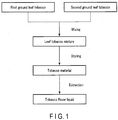
- the tobacco material production method is shown in FIG. 1 by way of a flowchart.
- ground leaf tobacco is used to refer to both the first ground leaf tobacco and the second ground leaf tobacco.
- the ground leaf tobacco is obtainable by grinding the leaf tobacco.
- the ground leaf tobacco has a maximum diameter of, for example, 1 mm or less.
- the ground leaf tobacco having a maximum diameter of 1 mm or less is obtainable by, for example, grinding the leaf tobacco with a commercially available grinder (mill) and passing it through a 1.0 mm mesh sieve.
- the ground leaf tobacco has a maximum diameter of, for example, 0.5 to 1 mm.
- Leaf tobacco as a raw material of the ground leaf tobacco is obtainable by subjecting leaves of cultivated and harvested tobacco plants to various processes including a drying process in a farm house, subsequently one to several years of a long-term aging process in a leaf processing facility, and thereafter blending and cutting processes in a manufacturing facility. That is, “leaf tobacco” refers to cut tobacco ready for use in production of tobacco products. For example, as “leaf tobacco”, cut tobacco ready for use in a cigarette making process can be used.
- the first ground leaf tobacco has ⁇ -D-glucosidase activity of 30 [nkat/g] or more.
- the first ground leaf tobacco generally has ⁇ -D-glucosidase activity of 30 to 1000 [nkat/g].
- the first ground leaf tobacco preferably has P-D-glucosidase activity of 100 to 1000 [nkat/g].
- the second ground leaf tobacco contains glycosides, and has ⁇ -D-glucosidase activity of 25 [nkat/g] or less.
- the second ground leaf tobacco generally has P-D-glucosidase activity of 0 to 25 [nkat/g].
- the second ground leaf tobacco preferably has ⁇ -D-glucosidase activity of 0 to 15 [nkat/g].
- the " ⁇ -D-glucosidase” is one of the glycoside-degrading enzymes contained in the leaf tobacco.
- the " ⁇ -D-glucosidase activity" of the ground leaf tobacco refers to the degradation activity of 4-nitrophenyl ⁇ -D-glucopyranoside (Glc- ⁇ -pNP), which is a model substrate, and specifically refers to enzyme activity determined by the measurement method of Example 1 described below.
- the " ⁇ -D-glucosidase activity" of the ground leaf tobacco is obtainable by collecting partial samples from three portions of the ground leaf tobacco, measuring the enzyme activity for each of the partial samples, and calculating an average of the obtained measurement values.
- the ground leaf tobacco when the ground leaf tobacco has ⁇ -D-glucosidase activity of 30 [nkat/g] or more, the ground leaf tobacco also has activities of predetermined values or more for glycoside-degrading enzymes other than the ⁇ -D-glucosidase, and has a sufficient ability to degrade various glycosides to produce tobacco flavor components.
- the ground leaf tobacco when the ground leaf tobacco has ⁇ -D-glucosidase activity of 25 [nkat/g] or less, the ground leaf tobacco also has activities of predetermined values or less for glycoside-degrading enzymes other than the ⁇ -D-glucosidase, and does not have a sufficient ability to degrade various glycosides to produce tobacco flavor components.
- the " ⁇ -D-glucosidase activity" of the ground leaf tobacco refers to a value measured by the measurement method of Example 1 described later, immediately before the first ground leaf tobacco and the second ground leaf tobacco are mixed.
- the "presence or absence of glycosides" in the ground leaf tobacco is determined by whether or not there is a peak identified as a glycoside according to the analysis method of Example 2 described later, immediately before the first ground leaf tobacco and the second ground leaf tobacco are mixed.
- the first ground leaf tobacco may or may not contain glycosides, and the content thereof is not particularly limited; however, since the first ground leaf tobacco exhibits high glycoside-degrading enzyme activity, the glycoside content is generally low.
- the second ground leaf tobacco contains glycosides serving as a substrate of a glycoside degradation reaction. Since the second ground leaf tobacco exhibits low glycoside-degrading enzyme activity, the glycoside content is generally high. Because a large amount of glycosides contained in the second ground leaf tobacco leads to production of a larger amount of glycoside degradation products, it is preferable that the glycoside content of the second ground leaf tobacco be large.
- the first ground leaf tobacco contains glycosides at a smaller content per unit mass of the ground leaf tobacco than the second ground leaf tobacco. More preferably, the content of each component of glycoside components contained in the first ground leaf tobacco is smaller than that of the corresponding component of glycoside components contained in the second ground leaf tobacco.
- the glycoside content of the ground leaf tobacco refers to a content per unit mass of the ground leaf tobacco.
- glycosides contained in the ground leaf tobacco refer to all glycoside components contained in the leaf tobacco, and specifically refers to all components determined to be glycosides by the analysis method described in WO2018/038245 . More specifically, “glycosides” contained in the ground leaf tobacco refer to all components determined to be glycosides according to the analysis method of Example 2 described later.
- the analysis method described in WO2018/038245 prepares a leaf tobacco extraction liquid sample treated with ⁇ -D-glucosidase and a leaf tobacco extraction liquid sample not treated with ⁇ -D-glucosidase, analyzes each sample by LC-MS/MS to compare analysis results, and determines that peaks eliminated or reduced in intensity by P-D-glucosidase are derived from glycosides.
- the "glycosides" contained in the ground leaf tobacco can be, as described in WO2018/038245 , quantified using an internal standard.
- leaf tobacco contains many kinds of glycoside components, many of which have not been identified. Therefore, in the present specification, the "glycosides" contained in the ground leaf tobacco include not only those identified as glycosides contained in the leaf tobacco but also those contained in the leaf tobacco but not identified.
- the "first ground leaf tobacco” is typically of a variety in which drying of tobacco plant leaves in a farm house is performed by air-curing. Since the typical first ground leaf tobacco is exposed to natural temperature and humidity and natural aeration conditions in a drying process in a farm house, inactivation of enzymes does not easily occur, and most of the glycosides are degraded. As a result, the typical first ground leaf tobacco has high glycoside-degrading enzyme activity, and a low glycoside content.
- the first ground leaf tobacco is, for example, of at least one variety selected from burley tobacco, domestic tobacco, dark fire-cured tobacco, dark air-cured tobacco, and dark sun-cured tobacco.
- the first ground leaf tobacco may be ground leaf tobacco of one variety, or a mixture of ground leaf tobaccos of multiple varieties.
- the "second ground leaf tobacco” is typically of a variety in which drying of tobacco plant leaves in a farm house is performed by flue-curing accompanied by a heating process, or air-circulating curing performed by circulating heated air, or sun-curing. Since the typical second ground leaf tobacco is exposed to a high temperature in a drying process in a farm house, inactivation of enzymes easily occurs, and many of the glycosides remain without being degraded. As a result, the typical second ground leaf tobacco has low glycoside-degrading enzyme activity and a high glycoside content.
- the second ground leaf tobacco is, for example, of at least one variety selected from flue-cured tobacco, oriental tobacco, sun-cured tobacco, and light sun-cured tobacco.
- the second ground leaf tobacco may be ground leaf tobacco of one variety, or a mixture of ground leaf tobaccos of multiple varieties.
- the first ground leaf tobacco may be ground leaf tobacco of a variety in which drying of tobacco plant leaves in a farm house is performed by air-curing.
- the first ground leaf tobacco may be ground leaf tobacco obtainable by: subjecting a leaf tobacco raw material to a treatment for activating a glycoside-degrading enzyme, and subsequently grinding the leaf tobacco raw material.
- the content of glycosides is discretionary as long as the leaf tobacco raw material has glycoside-degrading enzyme activity.
- the leaf tobacco raw material for example, at least one variety selected from burley tobacco, domestic tobacco, dark fire-cured tobacco, dark air-cured tobacco, dark sun-cured tobacco, flue-cured tobacco, oriental tobacco, sun-cured tobacco, and light sun-cured tobacco may be used.
- the activation treatment can be performed by, for example, treating the leaf tobacco raw material with a buffering agent so as to adjust the pH of the leaf tobacco raw material to an optimum pH of the glycoside-degrading enzyme, or by placing the leaf tobacco raw material under an optimum temperature of the glycoside-degrading enzyme.
- the efficiency of the glycoside degrading reaction can be enhanced.
- the second ground leaf tobacco may be ground leaf tobacco of a variety in which drying of tobacco plant leaves in a farm house is performed by flue-curing accompanied by a heating process, air-circulating curing performed by circulating heated air, or sun-curing.
- the second ground leaf tobacco may be ground leaf tobacco obtainable by:
- a value of the glycoside-degrading enzyme activity is discretionary as long as the leaf tobacco raw material contains glycosides.
- the leaf tobacco raw material for example, at least one variety selected from burley tobacco, domestic tobacco, dark fire-cured tobacco, dark air-cured tobacco, dark sun-cured tobacco, flue-cured tobacco, oriental tobacco, sun-cured tobacco, and light sun-cured tobacco may be used.
- at least one variety selected from flue-cured tobacco, oriental tobacco, sun-cured tobacco, and light sun-cured tobacco may be used.
- the inactivation treatment can be performed by, for example, putting the leaf tobacco in a fluidized bed having an air flow temperature of 220 to 250°C, and treating the leaf tobacco for 1 to 5 seconds.
- the leaf tobacco subjected to the inactivation treatment can completely suppress subsequent degradation of glycosides, and the leaf tobacco raw material can be stored while a high glycoside content is maintained. Therefore, by performing the inactivation treatment, it is possible to stably supply a leaf tobacco raw material having a high glycoside content as a raw material of the "second ground leaf tobacco".
- a leaf tobacco mixture is prepared by mixing the above-described first ground leaf tobacco and the above-described second ground leaf tobacco.
- the mixing ratio of the first ground leaf tobacco and the second ground leaf tobacco is discretionary, but they may be mixed preferably at a mass ratio of 1:20 to 20:1, for example, at a mass ratio of 1:1.
- the leaf tobacco mixture may be composed of only the first ground leaf tobacco and the second ground leaf tobacco.
- the present invention merely requires that the glycoside-degrading enzymes contained in the first ground leaf tobacco act on the glycosides contained in the second ground leaf tobacco to produce glycoside degradation products; thus, there is no problem if the leaf tobacco mixture contains no components other than the ground leaf tobacco.
- the present invention does not exclude the case where the leaf tobacco mixture contains components other than the ground leaf tobacco, and the leaf tobacco mixture may contain components that promote the glycoside degradation reaction such as water or a pH buffering agent as additives.
- the above-described leaf tobacco mixture is stored under a humidification condition to produce a tobacco material having an enhanced tobacco flavor.
- the humidification condition can be, in general, a condition in which moisture is added to the leaf tobacco mixture so that a moisture content of the leaf tobacco mixture is 12 to 80% by mass.
- the "moisture content (% by mass) of the leaf tobacco mixture” used herein refers to the ratio of the total moisture content of the moisture content originally possessed by the leaf tobacco mixture and the added moisture content to the total mass of the mass of the leaf tobacco mixture and the added moisture content.
- the "moisture content originally possessed by the leaf tobacco mixture” can be obtained by the following method.
- a leaf tobacco sample is heated at 100°C for 1 hour under normal pressure and allowed to cool in a desiccator for 40 minutes, and moisture is determined from a difference in weight before and after heating.
- a specific procedure is as follows.
- the "moisture content originally possessed by the leaf tobacco mixture” is generally 12 to 14% by mass.
- 29 g of water needs to be added.
- the leaf tobacco mixture may be stirred so as to distribute the moisture throughout the leaf tobacco mixture.
- the humidification condition is a condition in which moisture is added to the leaf tobacco mixture so that the moisture content of the leaf tobacco mixture is 12 to 55% by mass. More preferably, the humidification condition is a condition in which moisture is added to the leaf tobacco mixture so that the moisture content of the leaf tobacco mixture is 12 to 45% by mass.
- Moisture plays a role of a reactant because the glycoside degrading reaction is a hydrolysis reaction. Moisture further functions as a medium, and plays a role of promoting the movements of the glycoside-degrading enzymes and the glycosides between the first ground leaf tobacco and the second ground leaf tobacco, and enhancing the efficiency of the glycoside degradation reaction.
- the "moisture content of the leaf tobacco mixture” be a content sufficient to fulfill the above-described roles. Further, considering that the leaf tobacco mixture is used as a tobacco filler of a tobacco product or as a raw material of a tobacco flavor liquid after storage, it is preferable that the "moisture content of the leaf tobacco mixture” be not excessively high as long as it is sufficient to fulfill the above-described roles. Moreover, in terms of the risk of the occurrence of mold, it is preferable that the "moisture content of the leaf tobacco mixture” be not excessively high.
- the leaf tobacco mixture can be stored at a temperature suitable for the glycoside-degrading enzymes to function, and for a period of time necessary to produce a sufficient amount of glycoside degradation products.
- the leaf tobacco mixture is stored preferably at a temperature of 0 to 60°C.
- the leaf tobacco mixture is stored more preferably at a temperature of 0 to 50°C, and still more preferably at a temperature of 20 to 50°C.
- the leaf tobacco mixture is stored preferably over a period of 24 to 72 hours.
- the leaf tobacco mixture is stored more preferably over a period of 24 to 48 hours.
- the storage period may be determined based on a period up to the point at which the production amount of glycoside degradation products peaks in order to reduce the risk of disappearance of the produced glycoside degradation products due to volatilization or further degradation.
- the leaf tobacco mixture is stored preferably under a sealed condition.
- the sealed condition can be prepared by placing the leaf tobacco mixture in a container having airtightness.
- the airtight container may have any capacity, but is preferably one in which the temperature therein can be controlled.
- the leaf tobacco mixture can be placed in the container to occupy, for example, approximately 50 to 80% of the volume of the container. Storage under a sealed condition is preferred because the glycoside degradation products produced easily remain on the ground leaf tobacco.
- the leaf tobacco mixture may be incorporated into a tobacco product after the above-described storage, or may be incorporated into a tobacco product after being dried to have a moisture content equivalent to that of ordinary leaf tobacco (i.e., 12 to 14% by mass). Drying may be performed using a dryer or by natural drying. Natural drying may be performed by allowing the leaf tobacco mixture to stand for 1 to 7 days under conditions of a temperature of 5 to 40°C and a humidity of 10 to 90%. When a dryer is used, drying may be performed by reduced-pressure drying for 1 to 5 hours while avoiding heating and keeping the temperature at 40°C or below.
- a tobacco material produced according to the method of the present invention contains produced glycoside degradation products, and therefore has an enhanced tobacco flavor. It is preferable that a tobacco material produced according to the method of the present invention be promptly incorporated into a tobacco product (e.g., a flavor inhalation article) in order to reduce the risk of disappearance of the produced glycoside degradation products due to volatilization, further degradation, and the like. In other words, it is preferable that the method of the present invention be performed on leaf tobacco immediately before being incorporated into a tobacco product (e.g., a flavor inhalation article).
- a tobacco product e.g., a flavor inhalation article
- any of the "first ground leaf tobacco”, “leaf tobacco mixture”, and “tobacco material having an enhanced tobacco flavor” be not exposed to a high temperature of, for example, 80°C or more.
- the "first ground leaf tobacco” is required to have glycoside-degrading enzyme activity, and therefore, it is desirable that the first ground leaf tobacco be not exposed to a high temperature leading to inactivation of enzymes, for example, a temperature of 80°C or higher, before or after being mixed with the second ground leaf tobacco.
- the "leaf tobacco mixture” be not exposed to a high temperature leading to inactivation of enzymes, for example, a high temperature of 80°C or higher, so that the glycoside-degrading enzymes contained in the leaf tobacco mixture can function. It is desirable that the "tobacco material having an enhanced tobacco flavor” be not exposed to a high temperature of, for example, 80°C or higher before or after being incorporated into a tobacco product, in order to reduce the risk of disappearance of the generated glycoside degradation products due to volatilization, further degradation, or the like.
- the leaf tobacco there are “a variety having high glycoside-degrading enzyme activity and a low glycoside content” and “a variety having low glycoside-degrading enzyme activity and a high glycoside content”, depending on the method of drying in the farm house. It is considered that this is because when both the glycoside-degrading enzyme activity and the glycosides are present in the same leaf tobacco, the glycosides are degraded, and the glycoside-degrading enzyme activity and the glycoside content are not compatible with each other.
- the present inventors have newly focused on this point, and succeeded in enhancing the tobacco flavor of the leaf tobacco by reacting the glycoside-degrading enzymes contained in the leaf tobacco having high glycoside-degrading enzyme activity with the glycosides contained in a large amount in the leaf tobacco having low glycoside-degrading enzyme activity.
- the present invention is excellent in that many kinds of glycoside degradation products can be produced by effectively utilizing many kinds of glycoside-degrading enzymes contained with high activity in a certain leaf tobacco material and many kinds of glycosides contained in large amounts in another leaf tobacco material.
- the tobacco material of the present invention has an enhanced tobacco flavor.
- the tobacco material of the present invention may be incorporated into any tobacco product as a tobacco filler, or may be used as a raw material for producing a tobacco flavor liquid.
- the tobacco material of the present invention can be incorporated into any flavor inhalation article through which a user tastes tobacco flavor.
- the flavor inhalation article include a combustion type smoking article that burns a tobacco material to provide a user with a tobacco flavor, a heating-type flavor inhaler that heats, without burning, a tobacco material to provide a user with a tobacco flavor, and a non-heating-type flavor inhaler that provides a user with tobacco flavor without heating or burning a tobacco material.
- a heating-type flavor inhaler there are known a direct heating-type in which a tobacco material is heated by a heating device such as a heater to provide a user with a tobacco flavor, and an indirect heating-type in which a liquid aerosol source is heated to generate aerosol and the aerosol passes through the tobacco material to provide a user with tobacco flavor.
- the heating-type flavor inhaler or the non-heating-type flavor inhaler does not bum a tobacco material, and thus does not easily release a tobacco flavor component as compared to the combustion type smoking article. Therefore, the tobacco material of the present invention exhibits a particularly excellent effect in that an enhanced tobacco flavor can be provided to a user when used in a heating-type flavor inhaler or a non-heating-type flavor inhaler.
- combustion type smoking article examples include a cigarette, pipe, Kiseru (i.e., traditional Japanese pipe for fine cut tobacco), cigar, or cigarillo.
- heating-type flavor inhaler examples include:
- non-heating-type flavor inhalation article examples include a non-heating-type tobacco flavor inhalation article including, in an inhalation holder, a refill type cartridge containing a tobacco material, in which a user inhales a tobacco flavor derived from the tobacco material at normal temperature (see, for example, WO2010/110226 )
- the proportion of the tobacco material of the present invention in the total tobacco materials (hereinafter also referred to as a tobacco filler) contained in the flavor inhalation article is not particularly limited. That is, the tobacco material of the present invention may be blended so as to occupy the entire tobacco filler (100% by mass), or may be blended so as to occupy a part of the tobacco filler, for example, 1 to 99% by mass of the tobacco filler.
- the tobacco flavor liquid production method includes:
- FIG. 1 shows a flowchart of the tobacco flavor liquid production method.
- the process of extracting a tobacco flavor component from the tobacco material can be performed using a method generally known as a method of extracting an aroma component.
- the tobacco flavor component can be extracted by, for example, distillation, specifically, steam distillation, hot water distillation, atmospheric distillation, or vacuum distillation. It is preferable that the tobacco flavor component be extracted by steam distillation from the viewpoint of extraction efficiency.
- a tobacco flavor liquid obtainable by the above-described method.
- the tobacco flavor liquid of the present invention has an enhanced tobacco flavor because it is produced using a tobacco material having an enhanced tobacco flavor as a raw material.
- the tobacco flavor liquid of the present invention can be incorporated into any tobacco product.
- the tobacco flavor liquid of the present invention may be incorporated into a liquid containing portion alone, into a pod after being mixed with a solid tobacco flavor source such as cut tobacco or tobacco granules, or into a liquid-containing portion after being mixed with a liquid of an aerosol source (for example, propylene glycol or glycerin).
- a solid tobacco flavor source such as cut tobacco or tobacco granules
- a liquid of an aerosol source for example, propylene glycol or glycerin
- the tobacco flavor liquid of the present invention may be incorporated into a liquid-containing portion alone, or into a pod after being mixed with a solid tobacco flavor source such as cut tobacco or tobacco granules.
- a heating-type flavor inhaler including the tobacco material of the present invention.
- a heating-type flavor inhaler including a tobacco flavor source, in which the tobacco flavor source includes the tobacco material of the present invention and an aerosol source mixed with the tobacco material.
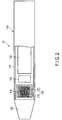
- FIG. 2 An example of the heating-type flavor inhaler is shown in FIG. 2 .
- the heating-type flavor inhaler 10 shown in FIG. 2 is an electrical heating-type inhaler that heats a tobacco flavor source with electrical heat to generate aerosol.
- the heating-type flavor inhaler 10 will be simply referred to as a flavor inhaler 10.
- the flavor inhaler 10 includes a main body 110 and a mouthpiece 120.
- the flavor inhaler 10 has a shape extending along a direction in which the main body 110 and the mouthpiece 120 are connected, and includes a non-mouthpiece end (end of the main body 110 side) and a mouthpiece end (end of the mouthpiece 120 side).
- non-mouthpiece end side indicates the end position of the part closer to the non-mouthpiece end of the flavor inhaler 10.
- the position specified by this "mouthpiece end side” indicates the end position of the part closer to the mouthpiece end of the flavor inhaler 10.
- the main body 110 includes a tubular body 111, a battery 112, a control circuit 113, and a heater 114.
- the tubular body 111 is a tubular body with a bottom, and is open on the mouthpiece end side so that a later-described tobacco pod 130 can be replaced.
- the tubular body 111 may be a circular section tubular body or a polygonal section tubular body.
- the non-mouthpiece end of the tubular body 111 is provided with a charging part (not shown) for charging the battery 112.
- a side wall of the tubular body 111 is provided with a power supply button (not shown) to turn on or off the flavor inhaler 10.
- the battery 112 is placed inside the tubular body 111.
- the battery 112 is, for example, a lithium ion secondary battery.
- the battery 112 supplies the power necessary to operate the flavor inhaler 10 to the electrical and electronic parts included in the flavor inhaler 10.
- the battery 112 supplies the power to the control circuit 113 and the heater 114.
- the control circuit 113 is placed in the tubular body 111 between its opening and the battery 112.
- the control circuit 113 may be placed at another position in the tubular body 111.
- the control circuit 113 controls the operation of the flavor inhaler 10. Specifically, the control circuit 113 controls the power supplied to the heater 114 based on a value output by a temperature sensor placed in the vicinity of the heater 114.
- the heater 114 is placed on the mouthpiece end side in the tubular body 111. Specifically, the heater 114 is placed in the tubular body 111 between its opening and the control circuit 113.
- the heater 114 has a cup shape allowing the tobacco pod 130 to be accommodated.
- the heater 114 is electrically connected to the battery 112 and the control circuit 113.
- the temperature of the heater 114 is controlled by the control circuit 113. It is preferable that the heater 114 be surrounded by an insulator to avoid transmission of its heat to the tubular body 111, the battery 112, the control circuit 113, etc.
- the main body 110 may further include a light-emitting device, for example, on a side wall of the tubular body 111, to notify a user of a heating state of the tobacco pod 130 or a remaining amount of the battery 112.
- a light-emitting device for example, on a side wall of the tubular body 111, to notify a user of a heating state of the tobacco pod 130 or a remaining amount of the battery 112.
- the tobacco pod 130 is placed in the main body 110 to be surrounded by the heater 114.
- the tobacco pod 130 is replaced by the user after inhalation is performed a predetermined number of times.
- the tobacco pod 130 includes a container 131 and a tobacco flavor source 132.
- the container 131 is made of, for example, a metal (e.g., aluminum).
- the tobacco flavor source 132 is contained in the container 131.
- the tobacco flavor source 132 includes the tobacco material of the present invention and an aerosol-generating liquid.
- the aerosol-generating liquid is a liquid for generating aerosol through heating, examples of which include propylene glycol, glycerin, and a mixture thereof.
- the tobacco flavor source 132 may or may not contain a tobacco material, as a tobacco filler, other than the tobacco material of the present invention.
- the tobacco pod 130 Before being attached to the main body 110, the tobacco pod 130 is sealed with an aluminum foil lid. When attached to the main body 110, the tobacco pod 130 is unsealed in such a manner that the tobacco flavor can be inhaled from the tobacco flavor source.
- the mouthpiece 120 is provided on the mouthpiece end side of the main body 110 in a detachable manner.
- the mouthpiece 120 is removed from the main body 110 by the user when the tobacco pod 130 is replaced.
- the mouthpiece 120 includes a protrusion on its non-mouthpiece end side. When the mouthpiece 120 is attached to the main body 110, this protrusion penetrates the lid of the tobacco pod 130 to open the tobacco pod 130.
- the mouthpiece 120 may not include a protrusion. In this case, the tobacco pod 130 is opened by the user's hand, for example, right before being attached to the main body 110.
- the mouthpiece 120 includes a first gas flow path that leads external air of the flavor inhaler 10 into a space in the tobacco pod 130.
- the first gas flow path has a gas flow inlet, for example, in the vicinity of the connection between the mouthpiece 120 and the main body 110.
- the mouthpiece 120 also includes a second gas flow path that connects the space in the tobacco pod 130 and the external space of the flavor inhaler 10 so that the user can inhale the tobacco flavor from the tobacco flavor source 132.
- the second gas flow path has a gas flow outlet, for example, on the mouthpiece end of the mouthpiece 120.
- a heating-type flavor inhaler including the tobacco flavor liquid of the present invention.
- a heating-type flavor inhaler including a tobacco flavor source, in which the tobacco flavor source includes the tobacco flavor liquid of the present invention and an aerosol source mixed with the tobacco flavor liquid.
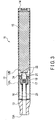
- FIG. 3 An example of the heating-type flavor inhaler is shown in FIG. 3 .
- the heating-type flavor inhaler 11 shown in FIG. 3 is an electrical heating-type inhaler that heats a tobacco flavor source with electrical heat to generate aerosol.
- the heating-type flavor inhaler 11 will simply be referred to as a flavor inhaler 11.
- the flavor inhaler 11 has a rod-like or columnar shape, extending from its mouthpiece end 13A to its distal end 14.
- the flavor inhaler 11 includes a cylindrical housing 12 constituting an outer shell, a cylindrical mouthpiece 13, a distal end 14 provided on the opposite side of the mouthpiece end 13A of the mouthpiece 13, a battery 15 housed in the housing 12, an aerosol source 16 housed in the housing 12, a wick 17 connected to the aerosol source 16, a heater 18 made of an electrically resistive metallic material wound around the wick 17, wiring 21 connecting the heater 18 to the battery 15, air-intake holes 22 provided in the housing 12, a ventilation path 23 provided in a cylindrical shape at the center of the housing 12, and a drive circuit 24 for controlling the supply of electric power to the heater 18.
- the mouthpiece 13 is made of a metallic material such as stainless steel, brass, or the like.
- the housing 12 is formed in a cylindrical shape with, for example, a resin material.
- the housing 12 has a first part 12A positioned on the mouthpiece end 13A side, and a second part 12B positioned on the distal end 14 side.
- the first part 12A is made of a metallic material similar to the material of the mouthpiece 13.
- the second part 12B is made of a resin material having a low specific gravity.
- this resin material for example, polycarbonate, polyacetal, polypropylene, fluororesin (Teflon (registered trademark)), or the like can be used.
- the battery 15 constitutes a power supply of the flavor inhaler 11.
- the battery 15 a cylindrical lithium battery is adopted, for example, but other batteries may be used.
- the battery 15 may be a rechargeable battery that can be repeatedly used.
- the aerosol source 16 is composed of an absorbent, such as absorbent cotton, or other porous body impregnated with a mixture of the tobacco flavor liquid of the present invention and an aerosol-generating liquid such as propylene glycol or glycerin.
- the aerosol source 16 may be composed of a sealable small solution tank, in which a mixture of the tobacco flavor liquid of the present invention and an aerosol-generating liquid such as propylene glycol or glycerin is enclosed.
- the wick 17 is formed by making a plurality of glass fibers (fibers) into one bundle, and the wick 17 is capable of supplying (sucking up) a liquid in the aerosol source 16 to the position of the heater 18 using the capillary force acting among the glass fibers.
- the heater 18 constitutes a heat source for generating aerosol by heating a liquid supplied from the aerosol source 16.
- At least one air-intake hole 22 is formed at a constant interval along the circumferential direction of the housing 12. In the present embodiment, a plurality of air-intake holes 22 are formed, but one air-intake hole 22 will suffice. Each air-intake hole 22 is constituted by a circular small hole penetrating the housing 12.
- the operation of the flavor inhaler 11 is described herein.
- the flavor inhaler 11 is activated by pushing a switch such as a push button or the like provided in the housing 12, or by sensing a user's inhalation of the air through the mouthpiece 13 using a flow sensor.
- a switch such as a push button or the like provided in the housing 12, or by sensing a user's inhalation of the air through the mouthpiece 13 using a flow sensor.
- the battery 15 is a rechargeable-type battery
- the flavor inhaler 11 may be activated when removal of the battery 15 from the charger is sensed by a sensing unit provided in the flavor inhaler 11.
- the drive circuit 24 supplies electric power to the heater 18. Any method can be adopted to supply electric power; for example, electric power may be intermittently supplied to the heater 18 at a fixed time interval, or a certain voltage may be applied to the heater 18 after the flavor inhaler 11 is activated. Alternatively, a flow meter may be provided in the ventilation path 23, so that the electric power is increased or decreased in proportion to the flow rate of the gas passing through the ventilation path 23.
- the liquid supplied from the aerosol source 16 is heated by the heater 18 and mixed with the air supplied from the air-intake hole 22 to generate aerosol.
- Example 1 the ⁇ -D-glucosidase activity of the leaf tobacco was measured. Burley tobacco, flue-cured tobacco, and oriental tobacco were used as the leaf tobacco.
- Leaf tobacco was ground to 1.0 mm mesh or less to obtain ground leaf tobacco.
- the ground leaf tobacco (2.0 ⁇ 0.005g) was weighed in a glass vial, and suspended in 100 mL of a 15 mM McIlvaine buffer (4.8 mM citrate - 10.2 mM disodium hydrogen phosphate buffer, pH5.4) which had been cooled to 4°C.
- the suspension was homogenized and further sonicated to extract enzyme proteins for 30 minutes.
- the extract was filtered using Whatmann #60, and the filtrate was centrifuged at 12,000 ⁇ g for 10 minutes.
- the supernatant was filtered using a cellulose acetate membrane (Whatmann) with a pore size of 0.2 ⁇ m.
- the concentration of 4-nitrophenol (pNP) generated in each of the solutions was calculated from the absorbance at the 405 nm wavelength, and the reaction rate was determined from the change in the concentration with respect to the reaction time.
- the level of enzyme that releases 1 [nmol] of pNP per second was defined as 1 [nkat], and ultimately, the enzyme concentration in the reaction solution was converted to an activity value per weight of the leaf tobacco raw material [nkat/g].
- the P-D-glucosidase activity value per weight of the leaf tobacco raw material [nkat/g] was obtained by dividing a value calculated by the calculation formula of reaction rate [nmol/mL/s] ⁇ 2.0 [mL (final solution amount after activity measurement)] / 0.1 [mL (crude enzyme solution amount)], by the weight of the leaf tobacco raw material [g/mL].
- lot numbers A to D of the flue-cured tobacco are different in the country of origin
- lot numbers E to J of the burley tobacco are different in the country of origin
- lot numbers K and L of the oriental tobacco are different in the country of origin.
- the measurement results show that the activity of ⁇ -glucosidase, which is a glycoside-degrading enzyme, was higher in the burley tobacco as compared to the flue-cured tobacco and the oriental tobacco.
- Example 2 the glycosides contained in the leaf tobacco were analyzed. The analysis was carried out according to the method described in WO2018/038245 . For the leaf tobacco, lot numbers D, H, I and J in Table 1 were used.
- the dried leaf tobacco sample that was ground using a mill was freeze-dried for 3 days.
- Each of the freeze-dried materials (0.5 g) was weighed in a screw tube (20 mL volume, Maruemu Corporation), 20 mL of methanol (Wako Pure Chemical Industries, Ltd., Japan) was added thereto, and while ultrasonic treatment was performed (AS ONE Corporation, US CLEANER US-1R), extraction was performed for 90 minutes.
- 100 ⁇ L (1 mg/mL methanol) of n-dodecyl- ⁇ -D-glucopyranoside (Sigma-Aldrich Japan) as an internal standard was added to each screw tube, and shaken. Filtration was performed using a PTFE membrane having a pore size of 0.45 ⁇ m (Whatman, 25 mm GD/X Disposable Filter Device) to prepare filtrate containing glycosides.
- the filtrate was dispensed into vial containers by 2 mL to prepare analysis samples.
- the filtrates obtained from the leaf tobacco of lot numbers D, H, I and J are referred to as analysis samples D, H, I and J, respectively.
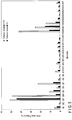
- FIG. 4 shows the analysis results of the glycoside contents of analysis samples D, H, I and J.
- the results of FIG. 4 show that the glycoside content contained in the ground leaf tobacco of the flue-cured tobacco (analysis sample D) was high, whereas the glycoside content contained in the ground leaf tobacco of the burley tobacco (analysis samples H, I and J) was low.
- the results of FIG. 4 indicate that the ground leaf tobacco of burley tobacco contains glycosides at a smaller content per unit mass than the ground leaf tobacco of flue-cured tobacco.
- the results of FIG. 4 indicate that the content of each component of the glycoside components contained in the ground leaf tobacco of the burley tobacco is smaller than that of the corresponding component of the glycoside components contained in the ground leaf tobacco of the flue-cured tobacco.
- 15 g of the burley leaf tobacco was ground to have a maximum diameter of 1 mm or less to prepare burley ground leaf tobacco.
- 15 g of the flue-cured leaf tobacco was ground to have a maximum diameter of 1 mm or less to prepare flue-cured ground leaf tobacco.
- a leaf tobacco mixture A was prepared by mixing 1.5 g of the burley ground leaf tobacco and 1.5 g of the flue-cured ground leaf tobacco. Water was added to the leaf tobacco mixture so that the moisture content of the leaf tobacco mixture was 40% by mass, and the leaf tobacco mixture was stirred. In this manner, the ground leaf tobacco was humidified to such an extent that the surface thereof was slightly wet. The humidified leaf tobacco mixture was placed in a 20 mL container, capped, and stored at 37°C for 3 days, thereby producing a tobacco material A.
- Enzymes of the flue-cured ground leaf tobacco were inactivated in the following manner.
- the flue-cured ground leaf tobacco was put into a fluidized bed that was set to an air flow temperature of 220°C or higher, an absolute humidity of 69 to 78 vol%, and a linear velocity of 30 to 34 m/s, and then heat treatment was performed so that the residence time in the fluidized bed was 2 seconds or less, thereby inactivating the enzymes.
- a leaf tobacco mixture B was prepared by mixing 1.5 g of the burley ground leaf tobacco and 1.5 g of the heat-treated flue-cured ground leaf tobacco.
- a tobacco material B was produced in the same manner as the tobacco material A except that the leaf tobacco mixture B was used instead of the leaf tobacco mixture A.
- a tobacco material C was produced in the same manner as the tobacco material A except that 3.0 g of the burley ground leaf tobacco was used instead of the leaf tobacco mixture A.
- a tobacco material D was produced in the same manner as the tobacco material A except that 3.0 g of the flue-cured ground leaf tobacco was used instead of the leaf tobacco mixture A.
- Enzymes of the burley ground leaf tobacco were inactivated in the following manner.
- the burley ground leaf tobacco was put into a fluidized bed that was set to an air flow temperature of 220°C or higher, an absolute humidity of 69 to 78 vol%, and a linear velocity of 30 to 34 m/s, and then heat treatment was performed so that the residence time in the fluidized bed was 2 seconds or less, thereby inactivating the enzymes.
- enzymes of the flue-cured ground leaf tobacco were inactivated in the following manner.
- the flue-cured ground leaf tobacco was put into a fluidized bed that was set to an air flow temperature of 220°C or higher, an absolute humidity of 69 to 78 vol%, and a linear velocity of 30 to 34 m/s, and then heat treatment was performed so that the residence time in the fluidized bed was 2 seconds or less, thereby inactivating the enzymes.
- a leaf tobacco mixture E was prepared by mixing 1.5 g of the heat-treated burley ground leaf tobacco and 1.5 g of the heat-treated flue-cured ground leaf tobacco.
- a tobacco material E was produced in the same manner as the tobacco material A except that the leaf tobacco mixture E was used instead of the leaf tobacco mixture A.
- glycosides contained in the tobacco materials A, B, C, D and E were analyzed by LC-MS/MS as described in Example 2.
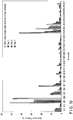
- FIG. 5 shows the total of glycoside contents of the tobacco materials C and D, and the glycoside content of the tobacco material A.
- the horizontal axis represents the peak number of the glycosides
- the vertical axis represents the peak area per 1 g of the tobacco material.
- the results of FIG. 5 show that "the glycoside content of the tobacco material A" is smaller than "the total of glycoside contents of the tobacco materials C (burley tobacco) and D (flue-cured tobacco)".
- the tobacco material A was produced by mixing and storing the burley and flue-cured ground leaf tobaccos.
- the results of Examples 1 and 2 demonstrate that the flue-cured tobacco exhibits low glycoside-degrading enzyme activity and contains various large amounts of glycosides, and that the burley tobacco exhibits high glycoside-degrading enzyme activity and contains small amounts of glycosides. Therefore, for the tobacco material A, it can be said that various glycosides contained in the flue-cured ground leaf tobacco were degraded by various glycoside-degrading enzymes contained in the burley ground leaf tobacco.
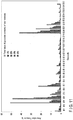
- FIG. 6 shows the glycoside content of the tobacco material B, and the glycoside content of the tobacco material E.
- the horizontal axis represents the peak number of the glycosides
- the vertical axis represents the peak area per 1 g of the tobacco material.
- the results of FIG. 6 show that the "glycoside content of the tobacco material B" is smaller than the "glycoside content of the tobacco material E".
- the tobacco material B was produced by inactivating the enzymes of the flue-cured ground leaf tobacco, and then mixing and storing the flue-cured and burley ground leaf tobaccos.
- the tobacco material E was produced by inactivating both the enzymes of the flue-cured ground leaf tobacco and the enzymes of the burley ground leaf tobacco, and then mixing and storing the flue-cured and burley ground leaf tobaccos. Therefore, for the tobacco material B, it can be said that various glycosides contained in the flue-cured ground leaf tobacco were degraded by various glycoside-degrading enzymes contained in the burley ground leaf tobacco.
- the flue-cured ground leaf tobacco was heat-treated under the same conditions as those used in the production of "tobacco material B" in Example 3 to inactivate the enzymes.
- a tobacco material F was produced in the same manner as in the production of the "tobacco material A" of Example 3, except that 3.0 g of the heat-treated flue-cured ground leaf tobacco was used instead of the leaf tobacco mixture A.
- a steam distillation apparatus (Herb Oil Maker (Standard Type) manufactured by Tokyo Seisakusho), the inside of which was cleaned with water for about 1 hours, was supplied with 1 L of water and heated with a heater (250°C). After boiling, one of the tobacco material B or C prepared in Example 3 or the tobacco material F prepared in Example 4 (60 g) was put into the apparatus, and distillation was started. The distillation was continued, and 500 mL of the fraction was obtained by 2-hour distillation. The obtained fraction was collected in an Erlenmeyer flask and left in an ice bath (5°C) for 2 hours.
- diethyl ether was used as an organic solvent.
- the dehydrated organic phase was filtered through a filter paper (ADVANTEC, No. 2, 150 mm).
- the filtrate was evaporated to dryness under the reduced pressure in a hot water bath at 35°C by a rotary evaporator, thereby obtaining a tobacco extract as a dried product.
- Propylene glycol was added at a weight 50 times the weight of the extract, thereby obtaining a "tobacco flavor liquid".
- Tobacco flavor liquids produced from the tobacco materials B, C and F are referred to as tobacco flavor liquids B, C and F, respectively.
- the tobacco flavor liquids B, C and F were analyzed by GC/MS.
- FIG. 7 is a GC-MS chromatogram when the tobacco flavor liquids C and F were mixed (at 1:1).
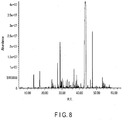
- FIG. 8 is a GC-MS chromatogram of the tobacco flavor liquid B.
- the results of FIGS. 7 and 8 show that the tobacco flavor liquid B has more flavor component peaks and richer flavors, as compared to the mixture of the tobacco flavor liquids C and F. Therefore, the results of FIGS. 7 and 8 show that by performing the method of the present invention, it is possible to provide a tobacco flavor liquid having an enhanced flavor.
- a leaf tobacco mixture was prepared by mixing 1.5 g of the burley ground leaf tobacco and 1.5 g of the flue-cured ground leaf tobacco. Water was added to the leaf tobacco mixture so that the moisture content of the leaf tobacco mixture was 40% by mass, and the leaf tobacco mixture was stirred. In this manner, the ground leaf tobacco was humidified to such an extent that the surface thereof was slightly wet. The humidified leaf tobacco mixture was placed in a 20 mL container, sealed, and stored at a temperature of 27°C, 37°C, 47°C, or 57°C for 3 days, thereby preparing a tobacco material.
- FIG. 9 shows the glycoside content at each storage temperature.
- the sum of the glycoside content of the tobacco material C of Example 3 and the glycoside content of the tobacco material D of Example 3 is shown as a reference value.
- a leaf tobacco mixture was prepared by mixing 1.5 g of the burley ground leaf tobacco and 1.5 g of the flue-cured ground leaf tobacco. Water was added to the leaf tobacco mixture so that the moisture content of the leaf tobacco mixture was 40% by mass, and the leaf tobacco mixture was stirred. In this manner, the ground leaf tobacco was humidified to such an extent that the surface thereof was slightly wet. The humidified leaf tobacco mixture was placed in a 20 mL container, sealed, and stored at 37°C for 1, 2 or 3 days, thereby producing a tobacco material.
- FIG. 10 shows the glycoside contents when the storage periods were changed.
- the sum of the glycoside content of the tobacco material C of Example 3 and the glycoside content of the tobacco material D of Example 3 is shown as a reference value.
- the results of FIG. 10 show that approximately 50% of the glycoside content of the reference value was degraded on storage day 1. Degradation of the glycosides further progressed on storage day 2. The glycoside content on storage day 3 was not significantly different from that of storage day 3. This result shows that a storage period desirable for glycoside degradation is 24 hours to 48 hours.
- a leaf tobacco mixture was prepared by mixing 1.5 g of the burley ground leaf tobacco and 1.5 g of the flue-cured ground leaf tobacco. Water was added to the leaf tobacco mixture so that the moisture content of the leaf tobacco mixture was 12% by mass, 22% by mass, 26% by mass, 30% by mass, 40% by mass, 45% by mass, 50% by mass, or 55% by mass, and the leaf tobacco mixture was stirred.
- the humidified leaf tobacco mixture was placed in a 20 mL container, capped, and stored at 37°C for 3 days, thereby producing a tobacco material.
- the glycosides contained in each of the tobacco materials having different moisture contents during storage were analyzed by LC-MS/MS as described in Example 2.
- FIG. 11 and FIG. 12 show the glycoside contents when the moisture contents during storage were changed.
- the sum of the glycoside content of the tobacco material C of Example 3 and the glycoside content of the tobacco material D of Example 3 is shown as a reference value.
- FIGS. 11 and 12 show that the glycosides were degraded at any moisture contents.
- the glycoside content when the moisture content was 50% by mass and 55% by mass was substantially equal to the glycoside content when the water content was 45% by mass.
- This result shows that the moisture content during storage desirable for glycoside degradation (i.e., the moisture content of the leaf tobacco mixture) is 12% to 45% by mass.
Landscapes
- Chemical & Material Sciences (AREA)
- Chemical Kinetics & Catalysis (AREA)
- General Chemical & Material Sciences (AREA)
- Life Sciences & Earth Sciences (AREA)
- Biochemistry (AREA)
- Manufacture Of Tobacco Products (AREA)
Abstract
Description
- The present invention relates to a tobacco material production method, a tobacco material, a tobacco flavor liquid production method, a tobacco flavor liquid, and a heating-type flavor inhaler.
- Leaves of cultivated and harvested tobacco plants are subjected to various processes, including a drying process in a farm house, subsequently one to several years of a long-term aging process in a leaf processing facility, and thereafter blending and cutting processes in a manufacturing facility, and then the processed tobacco leaves are used to produce tobacco products. The processed tobacco leaf materials used to produce tobacco products are referred to as "leaf tobacco" in the art.
- Leaf tobacco is known to contain various glycoside components. As glycosides contained in the leaf tobacco, glucosides such as scopoletin 7-glucoside (scopoletin) and quercetin 3-β-D-glucoside (isoquercetin); rhamnoglucosides (rutinosides) such as naringenin 7-rhamnoglucoside (naringin) and quercetin 3-rhamnoglucoside (rutin); and sophorosides such as rishitin β-sophoroside and quercetin 3-β-D-sophoroside have been identified, but there are many glycosides that have not yet been identified.
- The glycosides contained in the leaf tobacco are considered to function as precursors of the tobacco flavor components. Specifically, it is considered that when the leaf tobacco is combusted during smoking, the glycoside components contained in the leaf tobacco are degraded into a sugar part and a non-sugar part (i.e., aglycone), and the non-sugar part functions as a tobacco flavor component.
- Meanwhile, attempts have been made to increase the tobacco flavor components contained in the leaf tobacco. For example, Jpn. Pat. Appln. KOKAI Publication No.
S56-51976 - An object of the present invention is to provide a technique relating to a tobacco material having an enhanced tobacco flavor, and a tobacco flavor liquid having an enhanced tobacco flavor.
- According to the first aspect, there is provided a tobacco material production method, comprising:
- mixing first ground leaf tobacco having β-D-glucosidase activity of 30 [nkat/g] or more, and second ground leaf tobacco containing glycosides and having β-D-glucosidase activity of 25 [nkat/g] or less to prepare a leaf tobacco mixture; and
- storing the leaf tobacco mixture under a humidification condition to obtain a tobacco material having an enhanced tobacco flavor.
- According to the second aspect, there is provided a tobacco material obtainable by the above-described method.
- According to the third aspect, there is provided a tobacco flavor liquid production method, comprising extracting a tobacco flavor component from the above-described tobacco material to obtain a tobacco flavor liquid.
- According to the forth aspect, there is provided a tobacco flavor liquid obtainable by the above-described method.
- According to the fifth aspect, there is provided a heating-type flavor inhaler, comprising the above-described tobacco material, or the above-described tobacco flavor liquid.
- According to the present invention, various glycosides contained in the second ground leaf tobacco are degraded by various glycoside-degrading enzymes contained in the first ground leaf tobacco to produce various tobacco flavor components, thereby providing a tobacco material having an enhanced tobacco flavor and a tobacco flavor liquid having an enhanced tobacco flavor.
-
-
FIG. 1 is a flowchart showing a method of the present invention; -
FIG. 2 is a partially cutaway view showing an example of a heating-type flavor inhaler containing a tobacco material; -
FIG. 3 is a cross-sectional view showing an example of a heating-type flavor inhaler containing a tobacco flavor liquid; -
FIG. 4 is a graph showing an analysis result of glycoside contents of analysis samples D, H, I and J; -
FIG. 5 is a graph showing an analysis result of glycoside contents; -
FIG. 6 is a graph showing an analysis result of glycoside contents; -
FIG. 7 is a GC-MS chromatogram of the tobacco flavor liquid; -
FIG. 8 is a GC-MS chromatogram of the tobacco flavor liquid; -
FIG. 9 is a graph showing an influence of a temperature during storage on a glycoside content; -
FIG. 10 is a graph showing an influence of a storage period on a glycoside content; -
FIG. 11 is a graph showing an influence of a moisture content during storage on a glycoside content; and -
FIG. 12 is a graph showing an influence of a moisture content during storage on a glycoside content. - Hereinafter, the present invention will be described, but the following description is for the purpose of detailed explanation of the present invention, and is not intended to limit the present invention.
- A tobacco material production method includes:
- mixing first ground leaf tobacco having β-D-glucosidase activity of 30 [nkat/g] or more, and second ground leaf tobacco containing glycosides and having β-D-glucosidase activity of 25 [nkat/g] or less, to prepare a leaf tobacco mixture; and
- storing the leaf tobacco mixture under a humidification condition to obtain a tobacco material having an enhanced tobacco flavor.
- The tobacco material production method is shown in
FIG. 1 by way of a flowchart. - First, a description will be given of first ground leaf tobacco and second ground leaf tobacco. In the following description, the term "ground leaf tobacco" is used to refer to both the first ground leaf tobacco and the second ground leaf tobacco.
- The ground leaf tobacco is obtainable by grinding the leaf tobacco. The ground leaf tobacco has a maximum diameter of, for example, 1 mm or less. The ground leaf tobacco having a maximum diameter of 1 mm or less is obtainable by, for example, grinding the leaf tobacco with a commercially available grinder (mill) and passing it through a 1.0 mm mesh sieve. The ground leaf tobacco has a maximum diameter of, for example, 0.5 to 1 mm. When the ground leaf tobacco is used, as compared to when non-ground leaf tobacco is used, it is possible to promote movements of glycoside-degrading enzymes and glycosides between the first ground leaf tobacco and the second ground leaf tobacco, and to enhance the efficiency of the glycoside degradation reaction. Thereby, glycoside degradation products are efficiently produced, and a tobacco flavor can be enhanced.
- "Leaf tobacco" as a raw material of the ground leaf tobacco is obtainable by subjecting leaves of cultivated and harvested tobacco plants to various processes including a drying process in a farm house, subsequently one to several years of a long-term aging process in a leaf processing facility, and thereafter blending and cutting processes in a manufacturing facility. That is, "leaf tobacco" refers to cut tobacco ready for use in production of tobacco products. For example, as "leaf tobacco", cut tobacco ready for use in a cigarette making process can be used.
- The first ground leaf tobacco has β-D-glucosidase activity of 30 [nkat/g] or more. The first ground leaf tobacco generally has β-D-glucosidase activity of 30 to 1000 [nkat/g]. The first ground leaf tobacco preferably has P-D-glucosidase activity of 100 to 1000 [nkat/g]. On the other hand, the second ground leaf tobacco contains glycosides, and has β-D-glucosidase activity of 25 [nkat/g] or less. The second ground leaf tobacco generally has P-D-glucosidase activity of 0 to 25 [nkat/g]. The second ground leaf tobacco preferably has β-D-glucosidase activity of 0 to 15 [nkat/g].
- The "β-D-glucosidase" is one of the glycoside-degrading enzymes contained in the leaf tobacco. In the present specification, the "β-D-glucosidase activity" of the ground leaf tobacco refers to the degradation activity of 4-nitrophenyl β-D-glucopyranoside (Glc-β-pNP), which is a model substrate, and specifically refers to enzyme activity determined by the measurement method of Example 1 described below. The "β-D-glucosidase activity" of the ground leaf tobacco is obtainable by collecting partial samples from three portions of the ground leaf tobacco, measuring the enzyme activity for each of the partial samples, and calculating an average of the obtained measurement values.
- General enzymes contained in leaf tobacco are inactivated when exposed to a high temperature during a leaf tobacco production process (particularly, a drying process in a farm house), whereas the activities of the enzymes are maintained without inactivation when they are not exposed to a high temperature during the leaf tobacco production process. Therefore, if the "β-D-glucosidase activity" of the ground leaf tobacco is maintained, other enzyme activities are also maintained. Accordingly, the "β-D-glucosidase activity" of the ground leaf tobacco can be used as an index of activities of various glycoside-degrading enzymes contained in the ground leaf tobacco.
- Specifically, when the ground leaf tobacco has β-D-glucosidase activity of 30 [nkat/g] or more, the ground leaf tobacco also has activities of predetermined values or more for glycoside-degrading enzymes other than the β-D-glucosidase, and has a sufficient ability to degrade various glycosides to produce tobacco flavor components. On the other hand, when the ground leaf tobacco has β-D-glucosidase activity of 25 [nkat/g] or less, the ground leaf tobacco also has activities of predetermined values or less for glycoside-degrading enzymes other than the β-D-glucosidase, and does not have a sufficient ability to degrade various glycosides to produce tobacco flavor components.
- The "β-D-glucosidase activity" of the ground leaf tobacco refers to a value measured by the measurement method of Example 1 described later, immediately before the first ground leaf tobacco and the second ground leaf tobacco are mixed. Similarly, the "presence or absence of glycosides" in the ground leaf tobacco is determined by whether or not there is a peak identified as a glycoside according to the analysis method of Example 2 described later, immediately before the first ground leaf tobacco and the second ground leaf tobacco are mixed.
- The first ground leaf tobacco may or may not contain glycosides, and the content thereof is not particularly limited; however, since the first ground leaf tobacco exhibits high glycoside-degrading enzyme activity, the glycoside content is generally low. On the other hand, the second ground leaf tobacco contains glycosides serving as a substrate of a glycoside degradation reaction. Since the second ground leaf tobacco exhibits low glycoside-degrading enzyme activity, the glycoside content is generally high. Because a large amount of glycosides contained in the second ground leaf tobacco leads to production of a larger amount of glycoside degradation products, it is preferable that the glycoside content of the second ground leaf tobacco be large.
- Therefore, preferably, the first ground leaf tobacco contains glycosides at a smaller content per unit mass of the ground leaf tobacco than the second ground leaf tobacco. More preferably, the content of each component of glycoside components contained in the first ground leaf tobacco is smaller than that of the corresponding component of glycoside components contained in the second ground leaf tobacco. In the present specification, the glycoside content of the ground leaf tobacco refers to a content per unit mass of the ground leaf tobacco.
- In the present specification, the "glycosides" contained in the ground leaf tobacco refer to all glycoside components contained in the leaf tobacco, and specifically refers to all components determined to be glycosides by the analysis method described in
WO2018/038245 . More specifically, "glycosides" contained in the ground leaf tobacco refer to all components determined to be glycosides according to the analysis method of Example 2 described later. The analysis method described inWO2018/038245 prepares a leaf tobacco extraction liquid sample treated with β-D-glucosidase and a leaf tobacco extraction liquid sample not treated with β-D-glucosidase, analyzes each sample by LC-MS/MS to compare analysis results, and determines that peaks eliminated or reduced in intensity by P-D-glucosidase are derived from glycosides. The "glycosides" contained in the ground leaf tobacco can be, as described inWO2018/038245 , quantified using an internal standard. - As described in the Background section above, leaf tobacco contains many kinds of glycoside components, many of which have not been identified. Therefore, in the present specification, the "glycosides" contained in the ground leaf tobacco include not only those identified as glycosides contained in the leaf tobacco but also those contained in the leaf tobacco but not identified.
- The "first ground leaf tobacco" is typically of a variety in which drying of tobacco plant leaves in a farm house is performed by air-curing. Since the typical first ground leaf tobacco is exposed to natural temperature and humidity and natural aeration conditions in a drying process in a farm house, inactivation of enzymes does not easily occur, and most of the glycosides are degraded. As a result, the typical first ground leaf tobacco has high glycoside-degrading enzyme activity, and a low glycoside content.
- The first ground leaf tobacco is, for example, of at least one variety selected from burley tobacco, domestic tobacco, dark fire-cured tobacco, dark air-cured tobacco, and dark sun-cured tobacco. The first ground leaf tobacco may be ground leaf tobacco of one variety, or a mixture of ground leaf tobaccos of multiple varieties.
- The "second ground leaf tobacco" is typically of a variety in which drying of tobacco plant leaves in a farm house is performed by flue-curing accompanied by a heating process, or air-circulating curing performed by circulating heated air, or sun-curing. Since the typical second ground leaf tobacco is exposed to a high temperature in a drying process in a farm house, inactivation of enzymes easily occurs, and many of the glycosides remain without being degraded. As a result, the typical second ground leaf tobacco has low glycoside-degrading enzyme activity and a high glycoside content.
- The second ground leaf tobacco is, for example, of at least one variety selected from flue-cured tobacco, oriental tobacco, sun-cured tobacco, and light sun-cured tobacco. The second ground leaf tobacco may be ground leaf tobacco of one variety, or a mixture of ground leaf tobaccos of multiple varieties.
- As described above, the first ground leaf tobacco may be ground leaf tobacco of a variety in which drying of tobacco plant leaves in a farm house is performed by air-curing. Alternatively, the first ground leaf tobacco may be ground leaf tobacco obtainable by:
subjecting a leaf tobacco raw material to a treatment for activating a glycoside-degrading enzyme, and subsequently grinding the leaf tobacco raw material. - For the leaf tobacco raw material used herein, the content of glycosides is discretionary as long as the leaf tobacco raw material has glycoside-degrading enzyme activity. As the leaf tobacco raw material, for example, at least one variety selected from burley tobacco, domestic tobacco, dark fire-cured tobacco, dark air-cured tobacco, dark sun-cured tobacco, flue-cured tobacco, oriental tobacco, sun-cured tobacco, and light sun-cured tobacco may be used. The activation treatment can be performed by, for example, treating the leaf tobacco raw material with a buffering agent so as to adjust the pH of the leaf tobacco raw material to an optimum pH of the glycoside-degrading enzyme, or by placing the leaf tobacco raw material under an optimum temperature of the glycoside-degrading enzyme.
- When the glycoside-degrading enzyme of the first ground leaf tobacco is activated in advance, the efficiency of the glycoside degrading reaction can be enhanced.
- As described above, the second ground leaf tobacco may be ground leaf tobacco of a variety in which drying of tobacco plant leaves in a farm house is performed by flue-curing accompanied by a heating process, air-circulating curing performed by circulating heated air, or sun-curing. Alternatively, the second ground leaf tobacco may be ground leaf tobacco obtainable by:
- heating a leaf tobacco raw material to inactivate an enzyme contained in the leaf tobacco raw material; and subsequently
- grinding the leaf tobacco raw material.
- For the leaf tobacco raw material used herein, a value of the glycoside-degrading enzyme activity is discretionary as long as the leaf tobacco raw material contains glycosides. As the leaf tobacco raw material, for example, at least one variety selected from burley tobacco, domestic tobacco, dark fire-cured tobacco, dark air-cured tobacco, dark sun-cured tobacco, flue-cured tobacco, oriental tobacco, sun-cured tobacco, and light sun-cured tobacco may be used. Preferably, as the leaf tobacco raw material, at least one variety selected from flue-cured tobacco, oriental tobacco, sun-cured tobacco, and light sun-cured tobacco may be used. The inactivation treatment can be performed by, for example, putting the leaf tobacco in a fluidized bed having an air flow temperature of 220 to 250°C, and treating the leaf tobacco for 1 to 5 seconds.
- If the enzyme of the second ground leaf tobacco is inactivated in advance, the leaf tobacco subjected to the inactivation treatment can completely suppress subsequent degradation of glycosides, and the leaf tobacco raw material can be stored while a high glycoside content is maintained. Therefore, by performing the inactivation treatment, it is possible to stably supply a leaf tobacco raw material having a high glycoside content as a raw material of the "second ground leaf tobacco".
- A leaf tobacco mixture is prepared by mixing the above-described first ground leaf tobacco and the above-described second ground leaf tobacco. The mixing ratio of the first ground leaf tobacco and the second ground leaf tobacco is discretionary, but they may be mixed preferably at a mass ratio of 1:20 to 20:1, for example, at a mass ratio of 1:1.
- The leaf tobacco mixture may be composed of only the first ground leaf tobacco and the second ground leaf tobacco. The present invention merely requires that the glycoside-degrading enzymes contained in the first ground leaf tobacco act on the glycosides contained in the second ground leaf tobacco to produce glycoside degradation products; thus, there is no problem if the leaf tobacco mixture contains no components other than the ground leaf tobacco. However, the present invention does not exclude the case where the leaf tobacco mixture contains components other than the ground leaf tobacco, and the leaf tobacco mixture may contain components that promote the glycoside degradation reaction such as water or a pH buffering agent as additives.
- The above-described leaf tobacco mixture is stored under a humidification condition to produce a tobacco material having an enhanced tobacco flavor.
- The humidification condition can be, in general, a condition in which moisture is added to the leaf tobacco mixture so that a moisture content of the leaf tobacco mixture is 12 to 80% by mass. The "moisture content (% by mass) of the leaf tobacco mixture" used herein refers to the ratio of the total moisture content of the moisture content originally possessed by the leaf tobacco mixture and the added moisture content to the total mass of the mass of the leaf tobacco mixture and the added moisture content.
- The "moisture content originally possessed by the leaf tobacco mixture" can be obtained by the following method.
- Based on a method of analyzing food moisture (heating and drying method), a leaf tobacco sample is heated at 100°C for 1 hour under normal pressure and allowed to cool in a desiccator for 40 minutes, and moisture is determined from a difference in weight before and after heating. A specific procedure is as follows.
- (1) A mass of a sample container (W0) stored in a desiccator is measured.
- (2) A required amount of a leaf tobacco sample is weighed and placed in the sample container, and a lid is put on. Here, the total mass of the mass of the measured sample and the mass of the sample container (W0) is defined as W1.
- (3) The lid of the sample container is opened, and the sample container is put in a rotary dryer, and heated at 100°C for 1 hour.
- (4) After 1 hour, the lid of the sample container is closed, and the sample container is taken out and allowed to cool in the desiccator.
- (5) After 40 minutes, a mass of the sample container containing the sample (W2) is measured. A water content (Mw) is determined by the following equation.
- Mw: Water content (% by mass)
- W1: Total mass (g) of sample before drying and sample container
- W2: Total mass (g) of sample after drying and sample container
- W0: Mass (g) of sample container
- The "moisture content originally possessed by the leaf tobacco mixture" is generally 12 to 14% by mass. For example, in order to change a moisture content of 12% by mass possessed by a leaf tobacco mixture (30 g) to a moisture content of 55% by mass, 29 g of water needs to be added. After the required amount of moisture is added to the leaf tobacco mixture, the leaf tobacco mixture may be stirred so as to distribute the moisture throughout the leaf tobacco mixture.
- Preferably, the humidification condition is a condition in which moisture is added to the leaf tobacco mixture so that the moisture content of the leaf tobacco mixture is 12 to 55% by mass. More preferably, the humidification condition is a condition in which moisture is added to the leaf tobacco mixture so that the moisture content of the leaf tobacco mixture is 12 to 45% by mass.
- Moisture plays a role of a reactant because the glycoside degrading reaction is a hydrolysis reaction. Moisture further functions as a medium, and plays a role of promoting the movements of the glycoside-degrading enzymes and the glycosides between the first ground leaf tobacco and the second ground leaf tobacco, and enhancing the efficiency of the glycoside degradation reaction.
- Therefore, it is preferable that the "moisture content of the leaf tobacco mixture" be a content sufficient to fulfill the above-described roles. Further, considering that the leaf tobacco mixture is used as a tobacco filler of a tobacco product or as a raw material of a tobacco flavor liquid after storage, it is preferable that the "moisture content of the leaf tobacco mixture" be not excessively high as long as it is sufficient to fulfill the above-described roles. Moreover, in terms of the risk of the occurrence of mold, it is preferable that the "moisture content of the leaf tobacco mixture" be not excessively high.
- The leaf tobacco mixture can be stored at a temperature suitable for the glycoside-degrading enzymes to function, and for a period of time necessary to produce a sufficient amount of glycoside degradation products.
- The leaf tobacco mixture is stored preferably at a temperature of 0 to 60°C. The leaf tobacco mixture is stored more preferably at a temperature of 0 to 50°C, and still more preferably at a temperature of 20 to 50°C.
- The leaf tobacco mixture is stored preferably over a period of 24 to 72 hours. The leaf tobacco mixture is stored more preferably over a period of 24 to 48 hours. The storage period may be determined based on a period up to the point at which the production amount of glycoside degradation products peaks in order to reduce the risk of disappearance of the produced glycoside degradation products due to volatilization or further degradation.
- The leaf tobacco mixture is stored preferably under a sealed condition. The sealed condition can be prepared by placing the leaf tobacco mixture in a container having airtightness. The airtight container may have any capacity, but is preferably one in which the temperature therein can be controlled. The leaf tobacco mixture can be placed in the container to occupy, for example, approximately 50 to 80% of the volume of the container. Storage under a sealed condition is preferred because the glycoside degradation products produced easily remain on the ground leaf tobacco.
- The leaf tobacco mixture may be incorporated into a tobacco product after the above-described storage, or may be incorporated into a tobacco product after being dried to have a moisture content equivalent to that of ordinary leaf tobacco (i.e., 12 to 14% by mass). Drying may be performed using a dryer or by natural drying. Natural drying may be performed by allowing the leaf tobacco mixture to stand for 1 to 7 days under conditions of a temperature of 5 to 40°C and a humidity of 10 to 90%. When a dryer is used, drying may be performed by reduced-pressure drying for 1 to 5 hours while avoiding heating and keeping the temperature at 40°C or below.
- A tobacco material produced according to the method of the present invention contains produced glycoside degradation products, and therefore has an enhanced tobacco flavor. It is preferable that a tobacco material produced according to the method of the present invention be promptly incorporated into a tobacco product (e.g., a flavor inhalation article) in order to reduce the risk of disappearance of the produced glycoside degradation products due to volatilization, further degradation, and the like. In other words, it is preferable that the method of the present invention be performed on leaf tobacco immediately before being incorporated into a tobacco product (e.g., a flavor inhalation article).
- Further, in the method of the present invention, it is desirable that any of the "first ground leaf tobacco", "leaf tobacco mixture", and "tobacco material having an enhanced tobacco flavor" be not exposed to a high temperature of, for example, 80°C or more. The "first ground leaf tobacco" is required to have glycoside-degrading enzyme activity, and therefore, it is desirable that the first ground leaf tobacco be not exposed to a high temperature leading to inactivation of enzymes, for example, a temperature of 80°C or higher, before or after being mixed with the second ground leaf tobacco. It is desirable that the "leaf tobacco mixture" be not exposed to a high temperature leading to inactivation of enzymes, for example, a high temperature of 80°C or higher, so that the glycoside-degrading enzymes contained in the leaf tobacco mixture can function. It is desirable that the "tobacco material having an enhanced tobacco flavor" be not exposed to a high temperature of, for example, 80°C or higher before or after being incorporated into a tobacco product, in order to reduce the risk of disappearance of the generated glycoside degradation products due to volatilization, further degradation, or the like.
- As described above, for the leaf tobacco, there are "a variety having high glycoside-degrading enzyme activity and a low glycoside content" and "a variety having low glycoside-degrading enzyme activity and a high glycoside content", depending on the method of drying in the farm house. It is considered that this is because when both the glycoside-degrading enzyme activity and the glycosides are present in the same leaf tobacco, the glycosides are degraded, and the glycoside-degrading enzyme activity and the glycoside content are not compatible with each other. The present inventors have newly focused on this point, and succeeded in enhancing the tobacco flavor of the leaf tobacco by reacting the glycoside-degrading enzymes contained in the leaf tobacco having high glycoside-degrading enzyme activity with the glycosides contained in a large amount in the leaf tobacco having low glycoside-degrading enzyme activity.
- The present invention is excellent in that many kinds of glycoside degradation products can be produced by effectively utilizing many kinds of glycoside-degrading enzymes contained with high activity in a certain leaf tobacco material and many kinds of glycosides contained in large amounts in another leaf tobacco material.
- When an enzyme preparation is used instead of enzymes contained in leaf tobacco, since the enzyme preparation identifies a specific structure of a substrate and acts only on a specific substrate, then for example β-glucosidase can only degrade glycosides having a β-glycoside bond. Therefore, in order to degrade various kinds of glycoside components contained in leaf tobacco, it is necessary to prepare various kinds of enzyme preparations. Further, many of the glycoside components contained in leaf tobacco have not been identified, and there are many for which it is unknown what kind of enzyme should be prepared in the first place. Even if all glycoside components contained in leaf tobacco can be identified, it is a great burden to prepare various kinds of enzyme preparations capable of degrading all these glycoside components.
- On the other hand, by utilizing various kinds of glycoside-degrading enzymes inherently contained in leaf tobacco according to the present invention, various kinds of glycoside components present in leaf tobacco can be degraded at once, and the method of the present invention is excellent also in this respect.
- According to another aspect, there is provided a tobacco material obtainable by the above-described method. As described above, the tobacco material of the present invention has an enhanced tobacco flavor.
- The tobacco material of the present invention may be incorporated into any tobacco product as a tobacco filler, or may be used as a raw material for producing a tobacco flavor liquid.
- The tobacco material of the present invention can be incorporated into any flavor inhalation article through which a user tastes tobacco flavor. Specific examples of the flavor inhalation article include a combustion type smoking article that burns a tobacco material to provide a user with a tobacco flavor, a heating-type flavor inhaler that heats, without burning, a tobacco material to provide a user with a tobacco flavor, and a non-heating-type flavor inhaler that provides a user with tobacco flavor without heating or burning a tobacco material. As a heating-type flavor inhaler, there are known a direct heating-type in which a tobacco material is heated by a heating device such as a heater to provide a user with a tobacco flavor, and an indirect heating-type in which a liquid aerosol source is heated to generate aerosol and the aerosol passes through the tobacco material to provide a user with tobacco flavor.
- The heating-type flavor inhaler or the non-heating-type flavor inhaler does not bum a tobacco material, and thus does not easily release a tobacco flavor component as compared to the combustion type smoking article. Therefore, the tobacco material of the present invention exhibits a particularly excellent effect in that an enhanced tobacco flavor can be provided to a user when used in a heating-type flavor inhaler or a non-heating-type flavor inhaler.
- Examples of the combustion type smoking article include a cigarette, pipe, Kiseru (i.e., traditional Japanese pipe for fine cut tobacco), cigar, or cigarillo.
- Examples of the heating-type flavor inhaler include:
- a carbonaceous heat source type inhalation article that heats a tobacco material (for example, cut tobacco or tobacco molding) with combustion heat of a carbon heat source to generate aerosol containing a smoking flavor component (see, for example,
WO2006/073065 ); - an electrical heating-type inhalation article provided with a refill type tobacco pod containing a tobacco material with an aerosol source (for example, propylene glycol or glycerin), and an inhaler body that heats the tobacco pod with electrical heat to generate aerosol (see, for example,
WO2013/025921 ); or - an electrical heating-type inhalation article provided with a first cartridge having an atomizer configured to atomize an aerosol source using power supplied from a battery, and a second cartridge containing a tobacco material, in which the aerosol generated in the first cartridge is passed through the second cartridge to impart a tobacco flavor to the aerosol (see, for example,
WO2016/075747 ). - Examples of the non-heating-type flavor inhalation article include a non-heating-type tobacco flavor inhalation article including, in an inhalation holder, a refill type cartridge containing a tobacco material, in which a user inhales a tobacco flavor derived from the tobacco material at normal temperature (see, for example,
WO2010/110226 ) - The proportion of the tobacco material of the present invention in the total tobacco materials (hereinafter also referred to as a tobacco filler) contained in the flavor inhalation article is not particularly limited. That is, the tobacco material of the present invention may be blended so as to occupy the entire tobacco filler (100% by mass), or may be blended so as to occupy a part of the tobacco filler, for example, 1 to 99% by mass of the tobacco filler.
- According to another aspect, there is a tobacco flavor liquid production method, including extracting a tobacco flavor component from the tobacco material of the present invention to obtain a tobacco flavor liquid. That is, the tobacco flavor liquid production method includes:
- mixing first ground leaf tobacco having β-D-glucosidase activity of 30 [nkat/g] or more, and second ground leaf tobacco containing glycosides and having β-D-glucosidase activity of 25 [nkat/g] or less to prepare a leaf tobacco mixture;
- storing the leaf tobacco mixture under a humidified condition to obtain a tobacco material having an enhanced tobacco flavor; and
- extracting a tobacco flavor component from the tobacco material to obtain a tobacco flavor liquid.
-
FIG. 1 shows a flowchart of the tobacco flavor liquid production method. - For the processes until obtaining the tobacco material, reference can be made to the description of <1. Tobacco Material Production Method>. The process of extracting a tobacco flavor component from the tobacco material can be performed using a method generally known as a method of extracting an aroma component. The tobacco flavor component can be extracted by, for example, distillation, specifically, steam distillation, hot water distillation, atmospheric distillation, or vacuum distillation. It is preferable that the tobacco flavor component be extracted by steam distillation from the viewpoint of extraction efficiency.
- According to another aspect, there is provided a tobacco flavor liquid obtainable by the above-described method. The tobacco flavor liquid of the present invention has an enhanced tobacco flavor because it is produced using a tobacco material having an enhanced tobacco flavor as a raw material.
- The tobacco flavor liquid of the present invention can be incorporated into any tobacco product.
- For example, in a "heating-type flavor inhaler", the tobacco flavor liquid of the present invention may be incorporated into a liquid containing portion alone, into a pod after being mixed with a solid tobacco flavor source such as cut tobacco or tobacco granules, or into a liquid-containing portion after being mixed with a liquid of an aerosol source (for example, propylene glycol or glycerin). In a "non-heating-type flavor inhaler", the tobacco flavor liquid of the present invention may be incorporated into a liquid-containing portion alone, or into a pod after being mixed with a solid tobacco flavor source such as cut tobacco or tobacco granules.
- According to another aspect, there is provided a heating-type flavor inhaler including the tobacco material of the present invention.
- According to one embodiment, there is provided a heating-type flavor inhaler including a tobacco flavor source, in which the tobacco flavor source includes the tobacco material of the present invention and an aerosol source mixed with the tobacco material. An example of the heating-type flavor inhaler is shown in
FIG. 2 . - The heating-
type flavor inhaler 10 shown inFIG. 2 is an electrical heating-type inhaler that heats a tobacco flavor source with electrical heat to generate aerosol. In the following description, the heating-type flavor inhaler 10 will be simply referred to as aflavor inhaler 10. - The
flavor inhaler 10 includes amain body 110 and amouthpiece 120. Theflavor inhaler 10 has a shape extending along a direction in which themain body 110 and themouthpiece 120 are connected, and includes a non-mouthpiece end (end of themain body 110 side) and a mouthpiece end (end of themouthpiece 120 side). - In the following description, if a "non-mouthpiece end side" is referred to for a certain part, the position specified by this "non-mouthpiece end side" indicates the end position of the part closer to the non-mouthpiece end of the
flavor inhaler 10. Furthermore, in the following description, if a "mouthpiece end side" is referred to for a certain part, the position specified by this "mouthpiece end side" indicates the end position of the part closer to the mouthpiece end of theflavor inhaler 10. - The
main body 110 includes atubular body 111, abattery 112, acontrol circuit 113, and aheater 114. - The
tubular body 111 is a tubular body with a bottom, and is open on the mouthpiece end side so that a later-describedtobacco pod 130 can be replaced. Thetubular body 111 may be a circular section tubular body or a polygonal section tubular body. The non-mouthpiece end of thetubular body 111 is provided with a charging part (not shown) for charging thebattery 112. In addition, a side wall of thetubular body 111 is provided with a power supply button (not shown) to turn on or off theflavor inhaler 10. - The
battery 112 is placed inside thetubular body 111. Thebattery 112 is, for example, a lithium ion secondary battery. Thebattery 112 supplies the power necessary to operate theflavor inhaler 10 to the electrical and electronic parts included in theflavor inhaler 10. For example, thebattery 112 supplies the power to thecontrol circuit 113 and theheater 114. - The
control circuit 113 is placed in thetubular body 111 between its opening and thebattery 112. Thecontrol circuit 113 may be placed at another position in thetubular body 111. Thecontrol circuit 113 controls the operation of theflavor inhaler 10. Specifically, thecontrol circuit 113 controls the power supplied to theheater 114 based on a value output by a temperature sensor placed in the vicinity of theheater 114. - The
heater 114 is placed on the mouthpiece end side in thetubular body 111. Specifically, theheater 114 is placed in thetubular body 111 between its opening and thecontrol circuit 113. Theheater 114 has a cup shape allowing thetobacco pod 130 to be accommodated. Theheater 114 is electrically connected to thebattery 112 and thecontrol circuit 113. The temperature of theheater 114 is controlled by thecontrol circuit 113. It is preferable that theheater 114 be surrounded by an insulator to avoid transmission of its heat to thetubular body 111, thebattery 112, thecontrol circuit 113, etc. - The
main body 110 may further include a light-emitting device, for example, on a side wall of thetubular body 111, to notify a user of a heating state of thetobacco pod 130 or a remaining amount of thebattery 112. - Here, the
tobacco pod 130 will be described. - The
tobacco pod 130 is placed in themain body 110 to be surrounded by theheater 114. Thetobacco pod 130 is replaced by the user after inhalation is performed a predetermined number of times. - The
tobacco pod 130 includes acontainer 131 and atobacco flavor source 132. - The
container 131 is made of, for example, a metal (e.g., aluminum). - The
tobacco flavor source 132 is contained in thecontainer 131. Thetobacco flavor source 132 includes the tobacco material of the present invention and an aerosol-generating liquid. The aerosol-generating liquid is a liquid for generating aerosol through heating, examples of which include propylene glycol, glycerin, and a mixture thereof. Thetobacco flavor source 132 may or may not contain a tobacco material, as a tobacco filler, other than the tobacco material of the present invention. - Before being attached to the
main body 110, thetobacco pod 130 is sealed with an aluminum foil lid. When attached to themain body 110, thetobacco pod 130 is unsealed in such a manner that the tobacco flavor can be inhaled from the tobacco flavor source. - The
mouthpiece 120 is provided on the mouthpiece end side of themain body 110 in a detachable manner. Themouthpiece 120 is removed from themain body 110 by the user when thetobacco pod 130 is replaced. - The
mouthpiece 120 includes a protrusion on its non-mouthpiece end side. When themouthpiece 120 is attached to themain body 110, this protrusion penetrates the lid of thetobacco pod 130 to open thetobacco pod 130. Themouthpiece 120 may not include a protrusion. In this case, thetobacco pod 130 is opened by the user's hand, for example, right before being attached to themain body 110. - The
mouthpiece 120 includes a first gas flow path that leads external air of theflavor inhaler 10 into a space in thetobacco pod 130. The first gas flow path has a gas flow inlet, for example, in the vicinity of the connection between themouthpiece 120 and themain body 110. Themouthpiece 120 also includes a second gas flow path that connects the space in thetobacco pod 130 and the external space of theflavor inhaler 10 so that the user can inhale the tobacco flavor from thetobacco flavor source 132. The second gas flow path has a gas flow outlet, for example, on the mouthpiece end of themouthpiece 120. - According to another aspect, there is provided a heating-type flavor inhaler including the tobacco flavor liquid of the present invention.
- According to one embodiment, there is provided a heating-type flavor inhaler including a tobacco flavor source, in which the tobacco flavor source includes the tobacco flavor liquid of the present invention and an aerosol source mixed with the tobacco flavor liquid. An example of the heating-type flavor inhaler is shown in
FIG. 3 . - The heating-
type flavor inhaler 11 shown inFIG. 3 is an electrical heating-type inhaler that heats a tobacco flavor source with electrical heat to generate aerosol. In the following description, the heating-type flavor inhaler 11 will simply be referred to as aflavor inhaler 11. - The
flavor inhaler 11 has a rod-like or columnar shape, extending from its mouthpiece end 13A to itsdistal end 14. Theflavor inhaler 11 includes acylindrical housing 12 constituting an outer shell, acylindrical mouthpiece 13, adistal end 14 provided on the opposite side of themouthpiece end 13A of themouthpiece 13, abattery 15 housed in thehousing 12, anaerosol source 16 housed in thehousing 12, awick 17 connected to theaerosol source 16, aheater 18 made of an electrically resistive metallic material wound around thewick 17, wiring 21 connecting theheater 18 to thebattery 15, air-intake holes 22 provided in thehousing 12, aventilation path 23 provided in a cylindrical shape at the center of thehousing 12, and adrive circuit 24 for controlling the supply of electric power to theheater 18. - The
mouthpiece 13 is made of a metallic material such as stainless steel, brass, or the like. Thehousing 12 is formed in a cylindrical shape with, for example, a resin material. Thehousing 12 has afirst part 12A positioned on the mouthpiece end 13A side, and asecond part 12B positioned on thedistal end 14 side. Thefirst part 12A is made of a metallic material similar to the material of themouthpiece 13. Thesecond part 12B is made of a resin material having a low specific gravity. As this resin material, for example, polycarbonate, polyacetal, polypropylene, fluororesin (Teflon (registered trademark)), or the like can be used. Thebattery 15 constitutes a power supply of theflavor inhaler 11. - As the
battery 15, a cylindrical lithium battery is adopted, for example, but other batteries may be used. Thebattery 15 may be a rechargeable battery that can be repeatedly used. - The
aerosol source 16 is composed of an absorbent, such as absorbent cotton, or other porous body impregnated with a mixture of the tobacco flavor liquid of the present invention and an aerosol-generating liquid such as propylene glycol or glycerin. Alternatively, theaerosol source 16 may be composed of a sealable small solution tank, in which a mixture of the tobacco flavor liquid of the present invention and an aerosol-generating liquid such as propylene glycol or glycerin is enclosed. - The
wick 17 is formed by making a plurality of glass fibers (fibers) into one bundle, and thewick 17 is capable of supplying (sucking up) a liquid in theaerosol source 16 to the position of theheater 18 using the capillary force acting among the glass fibers. - The
heater 18 constitutes a heat source for generating aerosol by heating a liquid supplied from theaerosol source 16. - At least one air-
intake hole 22 is formed at a constant interval along the circumferential direction of thehousing 12. In the present embodiment, a plurality of air-intake holes 22 are formed, but one air-intake hole 22 will suffice. Each air-intake hole 22 is constituted by a circular small hole penetrating thehousing 12. - The operation of the
flavor inhaler 11 is described herein. Theflavor inhaler 11 is activated by pushing a switch such as a push button or the like provided in thehousing 12, or by sensing a user's inhalation of the air through themouthpiece 13 using a flow sensor. Alternatively, if thebattery 15 is a rechargeable-type battery, theflavor inhaler 11 may be activated when removal of thebattery 15 from the charger is sensed by a sensing unit provided in theflavor inhaler 11. - When the
flavor inhaler 11 is activated, thedrive circuit 24 supplies electric power to theheater 18. Any method can be adopted to supply electric power; for example, electric power may be intermittently supplied to theheater 18 at a fixed time interval, or a certain voltage may be applied to theheater 18 after theflavor inhaler 11 is activated. Alternatively, a flow meter may be provided in theventilation path 23, so that the electric power is increased or decreased in proportion to the flow rate of the gas passing through theventilation path 23. The liquid supplied from theaerosol source 16 is heated by theheater 18 and mixed with the air supplied from the air-intake hole 22 to generate aerosol. - When the user inhales from the
mouthpiece 13, air is taken into thehousing 12 from the air-intake holes 22. This air becomes aerosol containing a tobacco flavor when passing through thewick 17. This aerosol is taken into the oral cavity of the user, meaning the tobacco flavor can be provided to the user. - The preferred embodiments of the present invention are summarized below.
- [1] A tobacco material production method, comprising:
- mixing first ground leaf tobacco having β-D-glucosidase activity of 30 [nkat/g] or more and second ground leaf tobacco containing glycosides and having β-D-glucosidase activity of 25 [nkat/g] or less to prepare a leaf tobacco mixture; and
- storing the leaf tobacco mixture under a humidification condition to obtain a tobacco material having an enhanced tobacco flavor.
- [2] The method according to [1], wherein the first ground leaf tobacco and the second ground leaf tobacco have a maximum diameter of 1 mm or less, preferably a maximum diameter of 0.5 to 1 mm.
- [3] The method according to [1] or [2], wherein the first ground leaf tobacco has β-D-glucosidase activity of 30 to 1000 [nkat/g], preferably P-D-glucosidase activity of 100 to 1000 [nkat/g].
- [4] The method according to any one of [1] to [3], wherein the second ground leaf tobacco has β-D-glucosidase activity of 0 to 25 [nkat/g], preferably P-D-glucosidase activity of 0 to 15 [nkat/g].
- [5] The method according to any one of [1] to [4], wherein the first ground leaf tobacco is ground leaf tobacco of a variety in which drying of tobacco plant leaves in a farm house is performed by air-curing.
- [6] The method according to any one of [1] to [5], wherein the first ground leaf tobacco is ground leaf tobacco of at least one variety selected from burley tobacco, domestic tobacco, dark fire-cured tobacco, dark air-cured tobacco, and dark sun-cured tobacco.
- [7] The method according to any one of [1] to [6], wherein the second ground leaf tobacco is ground leaf tobacco of a variety in which drying of tobacco plant leaves in a farm house is performed by flue-curing accompanied by a heating process, or air-circulating curing performed by circulating heated air, or sun-curing.
- [8] The method according to any one of [1] to [7], wherein the second ground leaf tobacco is ground leaf tobacco of at least one variety selected from flue-cured tobacco, oriental tobacco, sun-cured tobacco, and light sun-cured tobacco.
- [9] The method according to any one of [1] to [8], wherein the mixing is performed by mixing the first ground leaf tobacco and the second ground leaf tobacco at a mass ratio of 1:20 to 20:1.
- [10] The method according to any one of [1] to [9], wherein the leaf tobacco mixture is composed of only the first ground leaf tobacco and the second ground leaf tobacco.
- [11] The method according to any one of [1] to [10], wherein the humidification condition is a condition in which moisture is added to the leaf tobacco mixture so that a moisture content of the leaf tobacco mixture is 12 to 80% by mass.
- [12] The method according to any one of [1] to [11], wherein the humidification condition is a condition in which moisture is added to the leaf tobacco mixture so that a moisture content of the leaf tobacco mixture is 12 to 55% by mass, preferably 12 to 45% by mass.
- [13] The method according to any one of [1] to [12], wherein the storing is performed at a temperature of 0°C to 60°C, preferably 0 to 50°C, more preferably 20 to 50°C.
- [14] The method according to any one of [1] to [13], wherein the storing is performed over a period of 24 to 72 hours, preferably 24 to 48 hours.
- [15] The method according to any one of [1] to [14], wherein the storing is performed under a sealed condition.
- [16] The method according to any one of [1] to [15], wherein the storing is performed in a container having airtightness.
- [17] The method according to any one of [1] to [16], wherein the first ground leaf tobacco contains glycosides at a smaller content per unit mass than the second ground leaf tobacco.
- [18] The method according to any one of [1] to [17], wherein content of each component of glycoside components contained in the first ground leaf tobacco is smaller than content of the corresponding component of glycoside components contained in the second ground leaf tobacco.
- [19] The method according to any one of [1] to [18], wherein the second ground leaf tobacco is obtainable by heating a leaf tobacco raw material to inactivate an enzyme contained in the leaf tobacco raw material, and subsequently grinding the leaf tobacco raw material.
- [20] The method according to [19], wherein the leaf tobacco raw material is leaf tobacco of at least one variety selected from burley tobacco, domestic tobacco, dark fire-cured tobacco, dark air-cured tobacco, dark sun-cured tobacco, flue-cured tobacco, oriental tobacco, sun-cured tobacco, and light sun-cured tobacco; preferably leaf tobacco of at least one variety selected from flue-cured tobacco, oriental tobacco, sun-cured tobacco, and light sun-cured tobacco.
- [21] The method according to any one of [1] to [20], wherein the method further comprises drying the tobacco material such that the tobacco material has a moisture content of 12 to 14% by mass, after the storage.
- [22] A tobacco material obtainable by the method according to any one of [1] to [21].
- [23] A tobacco flavor liquid production method, comprising extracting a tobacco flavor component from the tobacco material according to [22] to obtain a tobacco flavor liquid.
- [24] The method according to [23], wherein the extraction is performed by distillation; preferably steam distillation, hot water distillation, atmospheric distillation, or vacuum distillation; more preferably steam distillation.
- [25] A tobacco flavor liquid obtainable by the method according to [23] or [24].
- [26] A heating-type flavor inhaler, comprising the tobacco material according to [22].
- [27] A heating-type flavor inhaler, comprising the tobacco flavor liquid according to [25].
- [28] A heating-type flavor inhaler comprising tobacco flavor source comprising:
- the tobacco material according to [22]; and
- an aerosol source mixed with the tobacco material.
- [29] The heating-type flavor inhaler according to [28], further comprising a heating device which heats the mixture of the tobacco material and the aerosol source to generate aerosol.
- [30] A heating-type flavor inhaler comprising tobacco flavor source comprising:
- the tobacco flavor liquid according to [25]; and
- an aerosol source mixed with the tobacco flavor liquid.
- [31] The heating-type flavor inhaler according to [30], further comprising a heating device which heats the mixture of the tobacco flavor liquid and the aerosol source to generate aerosol.
- [32] The heating-type flavor inhaler according to [26], wherein the heating-type flavor inhaler is a heating-type inhaler comprising: the tobacco material according to [22]; an aerosol source which generates aerosol passing through the tobacco material; and a heating device which heats the aerosol source to generate aerosol.
- [33] The heating-type flavor inhaler according to [26], wherein the heating-type flavor inhaler is an electrical heating-type inhaler comprising: a refill type tobacco pod containing a mixture of the tobacco material according to [22] and an aerosol source; and an inhaler body which heats the tobacco pod with electrical heat to generate aerosol.
- [34] The heating-type flavor inhaler according to [26], wherein the heating-type flavor inhaler is an electrical heating-type inhaler comprising: a first cartridge having an atomizer which atomizes an aerosol source using power supplied from a battery; and a second cartridge containing the tobacco material according to [22]; wherein the aerosol generated in the first cartridge is passed through the second cartridge to impart a tobacco flavor to the aerosol.
- [35] The heating-type flavor inhaler according to any one of [28] to [34], wherein the aerosol source is propylene glycol, glycerin, or a mixture of propylene glycol and glycerin.
- [36] The combustion type smoking article, comprising the tobacco material according to [22].
- [37] A non-heating-type flavor inhaler, comprising the tobacco material according to [22].
- [38] A non-heating-type flavor inhaler, comprising the tobacco flavor liquid according to [25].
- In Example 1, the β-D-glucosidase activity of the leaf tobacco was measured. Burley tobacco, flue-cured tobacco, and oriental tobacco were used as the leaf tobacco.
- Leaf tobacco was ground to 1.0 mm mesh or less to obtain ground leaf tobacco. The ground leaf tobacco (2.0±0.005g) was weighed in a glass vial, and suspended in 100 mL of a 15 mM McIlvaine buffer (4.8 mM citrate - 10.2 mM disodium hydrogen phosphate buffer, pH5.4) which had been cooled to 4°C. The suspension was homogenized and further sonicated to extract enzyme proteins for 30 minutes. The extract was filtered using
Whatmann # 60, and the filtrate was centrifuged at 12,000×g for 10 minutes. The supernatant was filtered using a cellulose acetate membrane (Whatmann) with a pore size of 0.2 µm. 60 mL of the filtrate was fractionated, and low-molecular components were removed using a 30 kDa ultrafiltration membrane (Amicon Ultra, centrifugal ultrafiltration tube × 4), thereby obtaining a separation liquid of high-molecular components. A 5 mM acetate buffer (pH 5.5) was added to the separation liquid of high-molecular components to dilute the separation liquid, and ultrafiltration was performed again to wash the high-molecular fraction (remove low-molecular components). The washing operation of the high-molecular fraction was further repeated two times. The washed separation liquid was adjusted to 12 mL with an acetate buffer adjusted to 5 mM and pH 5.5. This adjusted solution is defined as a "crude enzyme solution". All processes for preparing the crude enzyme solution were performed at 4°C. - It is calculated that in the crude enzyme solution prepared, a high-molecular crude product corresponding to 0.1 g of the tobacco raw material dissolves in 1 mL (soluble macromolecules in 0.1 g of tobacco raw material/1 mL).
- Five solutions were prepared by mixing 100 µL of the prepared crude enzyme solution and 1000 µL of the 10 mM acetate buffer (pH5.5) in the Eppendorff tube, and each solution was heated in the heat block at 45°C for 2 minutes. 500 µL of the 20 mM 4-nitrophenyl β-D-glueopyranoside (Glc-β-pNP) substrate solution was added to four of the five heated mixed solutions, and 400 µL of the 50 mM sodium carbonate solution was added to one of them after 5 minutes, another one after 15 minutes, the other one after 30 minutes, and the last one after 60 minutes, and the reaction was stopped. One remaining mixed solution was, after incubation, supplied with 400 µL of the 50 mM sodium carbonate solution followed by 500 µL of the Glc-β-pNP substrate solution.
- The concentration of 4-nitrophenol (pNP) generated in each of the solutions was calculated from the absorbance at the 405 nm wavelength, and the reaction rate was determined from the change in the concentration with respect to the reaction time. For the enzyme activity, the level of enzyme that releases 1 [nmol] of pNP per second was defined as 1 [nkat], and ultimately, the enzyme concentration in the reaction solution was converted to an activity value per weight of the leaf tobacco raw material [nkat/g].
- As a specific calculation formula, the P-D-glucosidase activity value per weight of the leaf tobacco raw material [nkat/g] was obtained by dividing a value calculated by the calculation formula of reaction rate [nmol/mL/s] × 2.0 [mL (final solution amount after activity measurement)] / 0.1 [mL (crude enzyme solution amount)], by the weight of the leaf tobacco raw material [g/mL].
- The β-D-glucosidase activities measured in the burley tobacco, flue-cured tobacco, and oriental tobacco are shown in the table below.
[Table 1] Lot number Variety Enzyme activity (nkat/g) A Flue-cured tobacco 12 B 2 C 10 D 7 E Burley tobacco 76 F 431 G 96 H 580 I 286 J 165 K Oriental tobacco 8 L 4 - In Table 1, lot numbers A to D of the flue-cured tobacco are different in the country of origin, lot numbers E to J of the burley tobacco are different in the country of origin, and lot numbers K and L of the oriental tobacco are different in the country of origin.
- The measurement results show that the activity of β-glucosidase, which is a glycoside-degrading enzyme, was higher in the burley tobacco as compared to the flue-cured tobacco and the oriental tobacco.
- In Example 2, the glycosides contained in the leaf tobacco were analyzed. The analysis was carried out according to the method described in
WO2018/038245 . For the leaf tobacco, lot numbers D, H, I and J in Table 1 were used. - The dried leaf tobacco sample that was ground using a mill (Melitta Japan Limited) was freeze-dried for 3 days. Each of the freeze-dried materials (0.5 g) was weighed in a screw tube (20 mL volume, Maruemu Corporation), 20 mL of methanol (Wako Pure Chemical Industries, Ltd., Japan) was added thereto, and while ultrasonic treatment was performed (AS ONE Corporation, US CLEANER US-1R), extraction was performed for 90 minutes. Subsequently, 100 µL (1 mg/mL methanol) of n-dodecyl-β-D-glucopyranoside (Sigma-Aldrich Japan) as an internal standard was added to each screw tube, and shaken. Filtration was performed using a PTFE membrane having a pore size of 0.45 µm (Whatman, 25 mm GD/X Disposable Filter Device) to prepare filtrate containing glycosides.
- The filtrate was dispensed into vial containers by 2 mL to prepare analysis samples. The filtrates obtained from the leaf tobacco of lot numbers D, H, I and J are referred to as analysis samples D, H, I and J, respectively.
- Analysis samples D, H, I and J were each analyzed by LC-MS/MS under the conditions below.
-
- Agilent 6410 triple quadrupole LC/MS
- Chromatography conditions
- Column: YMC-Pack Pro C18 (YMC Co., Ltd.), inner diameter 2.0 mm × length 150 mm,
particle size 3 µm - Injection volume: 5 µL
- Flow rate: 0.15 mL/min
- Run time: 60 min
- Elution method: gradient elution
- Eluent A: 1% formic acid, Eluent B: acetonitrile
- Gradient conditions: 15% B (0 to 5 minutes), 15 to 45% B (5 to 15 minutes), 45 to 90% B (15 to 45 minutes), 90% B (45 to 60 minutes)
- Re-equilibrium time: 20 min
- Column temperature: 40°C
- Ion source parameter
- Ionization method: electrospray ionization (ESI)
- Nebulizer gas: nitrogen
- Nebulizer gas temperature: 350°C
- Nebulizer gas flow rate: 11 L/min
- Nebulizer pressure: 35 psi
- Capillary voltage: 4000 V
- Mass spectrometer parameter
- Ion polarity: positive
- Fragmentor voltage: 100 V
- Collision gas: nitrogen
- Collision energy: 20 V
- Measurement mode: scan
- MS scan range: m/z 250 to 500
- Scan time: 500 ms
- Scanning method: constant neutral loss scan
- Neutral loss offset: 162 u
- Based on the chromatogram obtained from each of the analysis samples, the peaks derived from the glycosides identified by the method described in
WO2018/038245 were compared. The results thereof are shown inFIG. 4. FIG. 4 shows the analysis results of the glycoside contents of analysis samples D, H, I and J. - The results of
FIG. 4 show that the glycoside content contained in the ground leaf tobacco of the flue-cured tobacco (analysis sample D) was high, whereas the glycoside content contained in the ground leaf tobacco of the burley tobacco (analysis samples H, I and J) was low. The results ofFIG. 4 indicate that the ground leaf tobacco of burley tobacco contains glycosides at a smaller content per unit mass than the ground leaf tobacco of flue-cured tobacco. Further, the results ofFIG. 4 indicate that the content of each component of the glycoside components contained in the ground leaf tobacco of the burley tobacco is smaller than that of the corresponding component of the glycoside components contained in the ground leaf tobacco of the flue-cured tobacco. - 15 g of the burley leaf tobacco was ground to have a maximum diameter of 1 mm or less to prepare burley ground leaf tobacco. 15 g of the flue-cured leaf tobacco was ground to have a maximum diameter of 1 mm or less to prepare flue-cured ground leaf tobacco.
- Using the prepared ground leaf tobaccos, the following four types of tobacco materials were produced.
- A leaf tobacco mixture A was prepared by mixing 1.5 g of the burley ground leaf tobacco and 1.5 g of the flue-cured ground leaf tobacco. Water was added to the leaf tobacco mixture so that the moisture content of the leaf tobacco mixture was 40% by mass, and the leaf tobacco mixture was stirred. In this manner, the ground leaf tobacco was humidified to such an extent that the surface thereof was slightly wet. The humidified leaf tobacco mixture was placed in a 20 mL container, capped, and stored at 37°C for 3 days, thereby producing a tobacco material A.
- Enzymes of the flue-cured ground leaf tobacco were inactivated in the following manner. The flue-cured ground leaf tobacco was put into a fluidized bed that was set to an air flow temperature of 220°C or higher, an absolute humidity of 69 to 78 vol%, and a linear velocity of 30 to 34 m/s, and then heat treatment was performed so that the residence time in the fluidized bed was 2 seconds or less, thereby inactivating the enzymes.
- A leaf tobacco mixture B was prepared by mixing 1.5 g of the burley ground leaf tobacco and 1.5 g of the heat-treated flue-cured ground leaf tobacco. A tobacco material B was produced in the same manner as the tobacco material A except that the leaf tobacco mixture B was used instead of the leaf tobacco mixture A.
- A tobacco material C was produced in the same manner as the tobacco material A except that 3.0 g of the burley ground leaf tobacco was used instead of the leaf tobacco mixture A.
- A tobacco material D was produced in the same manner as the tobacco material A except that 3.0 g of the flue-cured ground leaf tobacco was used instead of the leaf tobacco mixture A.
- Enzymes of the burley ground leaf tobacco were inactivated in the following manner. The burley ground leaf tobacco was put into a fluidized bed that was set to an air flow temperature of 220°C or higher, an absolute humidity of 69 to 78 vol%, and a linear velocity of 30 to 34 m/s, and then heat treatment was performed so that the residence time in the fluidized bed was 2 seconds or less, thereby inactivating the enzymes.
- Similarly, enzymes of the flue-cured ground leaf tobacco were inactivated in the following manner. The flue-cured ground leaf tobacco was put into a fluidized bed that was set to an air flow temperature of 220°C or higher, an absolute humidity of 69 to 78 vol%, and a linear velocity of 30 to 34 m/s, and then heat treatment was performed so that the residence time in the fluidized bed was 2 seconds or less, thereby inactivating the enzymes.
- A leaf tobacco mixture E was prepared by mixing 1.5 g of the heat-treated burley ground leaf tobacco and 1.5 g of the heat-treated flue-cured ground leaf tobacco. A tobacco material E was produced in the same manner as the tobacco material A except that the leaf tobacco mixture E was used instead of the leaf tobacco mixture A.
- The glycosides contained in the tobacco materials A, B, C, D and E were analyzed by LC-MS/MS as described in Example 2.
-
FIG. 5 shows the total of glycoside contents of the tobacco materials C and D, and the glycoside content of the tobacco material A. InFIG. 5 , the horizontal axis represents the peak number of the glycosides, and the vertical axis represents the peak area per 1 g of the tobacco material. - The results of
FIG. 5 show that "the glycoside content of the tobacco material A" is smaller than "the total of glycoside contents of the tobacco materials C (burley tobacco) and D (flue-cured tobacco)". The tobacco material A was produced by mixing and storing the burley and flue-cured ground leaf tobaccos. Further, the results of Examples 1 and 2 demonstrate that the flue-cured tobacco exhibits low glycoside-degrading enzyme activity and contains various large amounts of glycosides, and that the burley tobacco exhibits high glycoside-degrading enzyme activity and contains small amounts of glycosides. Therefore, for the tobacco material A, it can be said that various glycosides contained in the flue-cured ground leaf tobacco were degraded by various glycoside-degrading enzymes contained in the burley ground leaf tobacco. -
FIG. 6 shows the glycoside content of the tobacco material B, and the glycoside content of the tobacco material E. InFIG. 6 , the horizontal axis represents the peak number of the glycosides, and the vertical axis represents the peak area per 1 g of the tobacco material. - The results of
FIG. 6 show that the "glycoside content of the tobacco material B" is smaller than the "glycoside content of the tobacco material E". The tobacco material B was produced by inactivating the enzymes of the flue-cured ground leaf tobacco, and then mixing and storing the flue-cured and burley ground leaf tobaccos. On the other hand, the tobacco material E was produced by inactivating both the enzymes of the flue-cured ground leaf tobacco and the enzymes of the burley ground leaf tobacco, and then mixing and storing the flue-cured and burley ground leaf tobaccos. Therefore, for the tobacco material B, it can be said that various glycosides contained in the flue-cured ground leaf tobacco were degraded by various glycoside-degrading enzymes contained in the burley ground leaf tobacco. - The flue-cured ground leaf tobacco was heat-treated under the same conditions as those used in the production of "tobacco material B" in Example 3 to inactivate the enzymes. A tobacco material F was produced in the same manner as in the production of the "tobacco material A" of Example 3, except that 3.0 g of the heat-treated flue-cured ground leaf tobacco was used instead of the leaf tobacco mixture A.
- A steam distillation apparatus (Herb Oil Maker (Standard Type) manufactured by Tokyo Seisakusho), the inside of which was cleaned with water for about 1 hours, was supplied with 1 L of water and heated with a heater (250°C). After boiling, one of the tobacco material B or C prepared in Example 3 or the tobacco material F prepared in Example 4 (60 g) was put into the apparatus, and distillation was started. The distillation was continued, and 500 mL of the fraction was obtained by 2-hour distillation. The obtained fraction was collected in an Erlenmeyer flask and left in an ice bath (5°C) for 2 hours.
- As an organic solvent, diethyl ether was used.
- 15 g of sodium chloride was added to an Erlenmeyer flask containing the fraction, followed by shaking. Next, 500 mL of the fraction (including the oil floating in the fraction) was placed in a 1 L separation funnel, and 150 mL of an organic solution was added, followed by shaking. After removal of an aqueous phase, an organic phase was placed in a new Erlenmeyer flask. The operation of newly adding 150 mL of the organic solvent to the aqueous phase and recovering the organic phase was repeated two times. 20 g of anhydrous sodium sulfate was added to the Erlenmeyer flask in which the organic phase was recovered, and the mixture was left to stand at room temperature for 30 minutes for dehydration.
- The dehydrated organic phase was filtered through a filter paper (ADVANTEC, No. 2, 150 mm). The filtrate was evaporated to dryness under the reduced pressure in a hot water bath at 35°C by a rotary evaporator, thereby obtaining a tobacco extract as a dried product. Propylene glycol was added at a
weight 50 times the weight of the extract, thereby obtaining a "tobacco flavor liquid". Tobacco flavor liquids produced from the tobacco materials B, C and F are referred to as tobacco flavor liquids B, C and F, respectively. - The tobacco flavor liquids B, C and F were analyzed by GC/MS.
- The following conditions can be used for GC/MS.
- Apparatus: Gas chromatography-mass spectrometry manufactured by Agilent
- Column: HP-IMS (30 m × 0.25 mm (film thickness: 0.25 µm)) manufactured by Agilent
- Injection volume: 1 µL
- Septum purge flow: 1.3 mL/min
- Run time: 52 min
- Heating conditions: 40°C (4 min) → 10°C/min, 150°C → 15°C/min, 190°C → 15°C/min, 240°C → 15°C/min, 250°C (30 min)
-
- Apparatus: Agilent 5975C Inert XL MSD
- Detection mode: SCAN
- Ion source temperature: 230°C
- Quadrupole temperature: 150°C
-
FIG. 7 is a GC-MS chromatogram when the tobacco flavor liquids C and F were mixed (at 1:1).FIG. 8 is a GC-MS chromatogram of the tobacco flavor liquid B. The results ofFIGS. 7 and8 show that the tobacco flavor liquid B has more flavor component peaks and richer flavors, as compared to the mixture of the tobacco flavor liquids C and F. Therefore, the results ofFIGS. 7 and8 show that by performing the method of the present invention, it is possible to provide a tobacco flavor liquid having an enhanced flavor. - A leaf tobacco mixture was prepared by mixing 1.5 g of the burley ground leaf tobacco and 1.5 g of the flue-cured ground leaf tobacco. Water was added to the leaf tobacco mixture so that the moisture content of the leaf tobacco mixture was 40% by mass, and the leaf tobacco mixture was stirred. In this manner, the ground leaf tobacco was humidified to such an extent that the surface thereof was slightly wet. The humidified leaf tobacco mixture was placed in a 20 mL container, sealed, and stored at a temperature of 27°C, 37°C, 47°C, or 57°C for 3 days, thereby preparing a tobacco material.
- The glycosides contained in each of the tobacco materials stored at different temperatures were analyzed by LC-MS/MS as described in Example 2.
FIG. 9 shows the glycoside content at each storage temperature. InFIG. 9 , the sum of the glycoside content of the tobacco material C of Example 3 and the glycoside content of the tobacco material D of Example 3 is shown as a reference value. - The results of
FIG. 9 show that when the leaf tobacco mixture was stored at 57°C, the glycoside content was higher and the glycoside degradation amount was smaller than when it was stored at the lower temperatures. It is considered that this is because the activity of the glycoside-degrading enzymes was diminished due to the leaf tobacco mixture being exposed to the higher temperature. This result shows that a temperature range desirable for glycoside degradation is a temperature of 20°C to 50°C. - A leaf tobacco mixture was prepared by mixing 1.5 g of the burley ground leaf tobacco and 1.5 g of the flue-cured ground leaf tobacco. Water was added to the leaf tobacco mixture so that the moisture content of the leaf tobacco mixture was 40% by mass, and the leaf tobacco mixture was stirred. In this manner, the ground leaf tobacco was humidified to such an extent that the surface thereof was slightly wet. The humidified leaf tobacco mixture was placed in a 20 mL container, sealed, and stored at 37°C for 1, 2 or 3 days, thereby producing a tobacco material.
- The glycosides contained in each of the tobacco materials stored for different periods of time were analyzed by LC-MS/MS as described in Example 2.
FIG. 10 shows the glycoside contents when the storage periods were changed. InFIG. 10 , the sum of the glycoside content of the tobacco material C of Example 3 and the glycoside content of the tobacco material D of Example 3 is shown as a reference value. - The results of
FIG. 10 show that approximately 50% of the glycoside content of the reference value was degraded onstorage day 1. Degradation of the glycosides further progressed onstorage day 2. The glycoside content onstorage day 3 was not significantly different from that ofstorage day 3. This result shows that a storage period desirable for glycoside degradation is 24 hours to 48 hours. - A leaf tobacco mixture was prepared by mixing 1.5 g of the burley ground leaf tobacco and 1.5 g of the flue-cured ground leaf tobacco. Water was added to the leaf tobacco mixture so that the moisture content of the leaf tobacco mixture was 12% by mass, 22% by mass, 26% by mass, 30% by mass, 40% by mass, 45% by mass, 50% by mass, or 55% by mass, and the leaf tobacco mixture was stirred. The humidified leaf tobacco mixture was placed in a 20 mL container, capped, and stored at 37°C for 3 days, thereby producing a tobacco material.
- The glycosides contained in each of the tobacco materials having different moisture contents during storage were analyzed by LC-MS/MS as described in Example 2.
FIG. 11 andFIG. 12 show the glycoside contents when the moisture contents during storage were changed. InFIGS. 11 and12 , the sum of the glycoside content of the tobacco material C of Example 3 and the glycoside content of the tobacco material D of Example 3 is shown as a reference value. - The results of
FIGS. 11 and12 show that the glycosides were degraded at any moisture contents. The glycoside content when the moisture content was 50% by mass and 55% by mass was substantially equal to the glycoside content when the water content was 45% by mass. This result shows that the moisture content during storage desirable for glycoside degradation (i.e., the moisture content of the leaf tobacco mixture) is 12% to 45% by mass.

Claims (14)
- A tobacco material production method, comprising:mixing first ground leaf tobacco having β-D-glucosidase activity of 30 [nkat/g] or more and second ground leaf tobacco containing glycosides and having β-D-glucosidase activity of 25 [nkat/g] or less to prepare a leaf tobacco mixture; andstoring the leaf tobacco mixture under a humidification condition to obtain a tobacco material having an enhanced tobacco flavor.
- The method according to claim 1, wherein the first ground leaf tobacco and the second ground leaf tobacco have a maximum diameter of 1 mm or less.
- The method according to claim 1 or 2, wherein the humidification condition is a condition in which moisture is added to the leaf tobacco mixture so that a moisture content of the leaf tobacco mixture is 12 to 80% by mass.
- The method according to any one of claims 1 to 3, wherein the storing is performed at a temperature of 0°C to 60°C.
- The method according to any one of claims 1 to 4, wherein the storing is performed over a period of 24 to 72 hours.
- The method according to any one of claims 1 to 5, wherein the storing is performed under a sealed condition.
- The method according to any one of claims 1 to 6, wherein the first ground leaf tobacco contains glycosides at a smaller content per unit mass than the second ground leaf tobacco.
- The method according to claim 7, wherein content of each component of glycoside components contained in the first ground leaf tobacco are smaller than content of the corresponding component of glycoside components contained in the second ground leaf tobacco.
- The method according to any one of claims 1 to 8, wherein the second ground leaf tobacco is obtainable by heating a leaf tobacco raw material to inactivate an enzyme contained in the leaf tobacco raw material, and subsequently grinding the leaf tobacco raw material.
- A tobacco material obtainable by the method according to any one of claims 1 to 9.
- A tobacco flavor liquid production method, comprising extracting a tobacco flavor component from the tobacco material according to claim 10 to obtain a tobacco flavor liquid.
- A tobacco flavor liquid obtainable by the method according to claim 11.
- A heating-type flavor inhaler, comprising the tobacco material according to claim 10, or the tobacco flavor liquid according to claim 12.
- A heating-type flavor inhaler comprising tobacco flavor source comprising:the tobacco material according to claim 10; andan aerosol source mixed with the tobacco material.
Applications Claiming Priority (1)
| Application Number | Priority Date | Filing Date | Title |
|---|---|---|---|
| PCT/JP2018/027520 WO2020021599A1 (en) | 2018-07-23 | 2018-07-23 | Tobacco material production method, tobacco material, tobacco flavor liquid production method, tobacco flavor liquid, and heating-type flavor inhaler |
Publications (4)
| Publication Number | Publication Date |
|---|---|
| EP3827675A1 true EP3827675A1 (en) | 2021-06-02 |
| EP3827675A4 EP3827675A4 (en) | 2022-02-23 |
| EP3827675C0 EP3827675C0 (en) | 2025-09-03 |
| EP3827675B1 EP3827675B1 (en) | 2025-09-03 |
Family
ID=69180935
Family Applications (1)
| Application Number | Title | Priority Date | Filing Date |
|---|---|---|---|
| EP18927884.9A Active EP3827675B1 (en) | 2018-07-23 | 2018-07-23 | Tobacco material production method, tobacco material, tobacco flavor liquid production method, tobacco flavor liquid, and heating-type flavor inhaler |
Country Status (4)
| Country | Link |
|---|---|
| EP (1) | EP3827675B1 (en) |
| JP (1) | JP7119091B2 (en) |
| PL (1) | PL3827675T3 (en) |
| WO (1) | WO2020021599A1 (en) |
Cited By (2)
| Publication number | Priority date | Publication date | Assignee | Title |
|---|---|---|---|---|
| WO2023111548A1 (en) * | 2021-12-15 | 2023-06-22 | British American Tobacco (Investments) Limited | Methods and apparatus for treating plant-derived material |
| WO2024146283A1 (en) * | 2023-01-06 | 2024-07-11 | 深圳昱朋科技有限公司 | Composition having tobacco-like flavor, preparation method therefor and use |
Families Citing this family (6)
| Publication number | Priority date | Publication date | Assignee | Title |
|---|---|---|---|---|
| BR112021022130A2 (en) | 2019-06-05 | 2021-12-28 | Philip Morris Products Sa | Method of producing a liquid tobacco extract mixed from two or more tobaccos |
| KR102458971B1 (en) * | 2020-06-10 | 2022-10-24 | 주식회사 케이티앤지 | A smoking article including hot water immersed leaf tobacco and manufacturing method thereof |
| JP7648351B2 (en) * | 2020-08-26 | 2025-03-18 | 日本たばこ産業株式会社 | Tobacco fillers and tobacco products |
| JP2025038252A (en) * | 2021-12-15 | 2025-03-19 | 日本たばこ産業株式会社 | Tobacco Materials |
| CN117069409B (en) * | 2023-09-04 | 2025-06-20 | 中国长江电力股份有限公司 | An additive for cement-based sensing material and a preparation method thereof, and cement-based sensing material |
| CN119837295B (en) * | 2025-03-21 | 2025-07-25 | 内蒙古昆明卷烟有限责任公司 | Cigar core tobacco quality improving method, fermentation preparation and application |
Family Cites Families (10)
| Publication number | Priority date | Publication date | Assignee | Title |
|---|---|---|---|---|
| JPS5651976A (en) | 1979-10-01 | 1981-05-09 | Japan Tobacco & Salt Public | Improvement of smoking flavor of tobacco |
| DE69428563T2 (en) * | 1993-11-08 | 2002-06-27 | Philip Morris Products Inc., Richmond | Process for the preparation of a cigarette filler mixture |
| US6298858B1 (en) * | 1998-11-18 | 2001-10-09 | R. J. Reynolds Tobacco Company | Tobacco flavoring components of enhanced aromatic content and method of providing same |
| UA89803C2 (en) | 2005-01-06 | 2010-03-10 | Джапан Тобакко Инк. | Carbonaceous heat source composition for non-combustible smoke article |
| WO2010110226A1 (en) | 2009-03-23 | 2010-09-30 | 日本たばこ産業株式会社 | Non-combustion article for flavor inhalation |
| US8944072B2 (en) * | 2009-06-02 | 2015-02-03 | R.J. Reynolds Tobacco Company | Thermal treatment process for tobacco materials |
| CN204275207U (en) | 2011-08-16 | 2015-04-22 | Pax实验室公司 | Devices for generating inhalable aerosols |
| GB201118689D0 (en) * | 2011-10-28 | 2011-12-14 | Jt Int Sa | Apparatus for creating liquid tobacco extract |
| WO2016075747A1 (en) | 2014-11-10 | 2016-05-19 | 日本たばこ産業株式会社 | Non-combusting flavor inhaler and package |
| JP2019207106A (en) | 2016-08-25 | 2019-12-05 | 日本たばこ産業株式会社 | Glycoside analysis method |
-
2018
- 2018-07-23 EP EP18927884.9A patent/EP3827675B1/en active Active
- 2018-07-23 JP JP2020531844A patent/JP7119091B2/en active Active
- 2018-07-23 PL PL18927884.9T patent/PL3827675T3/en unknown
- 2018-07-23 WO PCT/JP2018/027520 patent/WO2020021599A1/en not_active Ceased
Cited By (2)
| Publication number | Priority date | Publication date | Assignee | Title |
|---|---|---|---|---|
| WO2023111548A1 (en) * | 2021-12-15 | 2023-06-22 | British American Tobacco (Investments) Limited | Methods and apparatus for treating plant-derived material |
| WO2024146283A1 (en) * | 2023-01-06 | 2024-07-11 | 深圳昱朋科技有限公司 | Composition having tobacco-like flavor, preparation method therefor and use |
Also Published As
| Publication number | Publication date |
|---|---|
| EP3827675C0 (en) | 2025-09-03 |
| EP3827675A4 (en) | 2022-02-23 |
| EP3827675B1 (en) | 2025-09-03 |
| WO2020021599A1 (en) | 2020-01-30 |
| JPWO2020021599A1 (en) | 2021-05-13 |
| PL3827675T3 (en) | 2026-01-19 |
| JP7119091B2 (en) | 2022-08-16 |
Similar Documents
| Publication | Publication Date | Title |
|---|---|---|
| EP3827675B1 (en) | Tobacco material production method, tobacco material, tobacco flavor liquid production method, tobacco flavor liquid, and heating-type flavor inhaler | |
| US12514278B2 (en) | Tobacco-derived composition | |
| EP3030098B1 (en) | Tobacco-derived pyrolysis oil | |
| AU2016329505B2 (en) | Apparatus for generating an inhalable medium | |
| KR101432877B1 (en) | Tobacco-based nicotine aerosol generation system | |
| EP3711494A1 (en) | Method for manufacturing fragrance-carrying tobacco filler, fragrance-carrying tobacco filler, and heating type flavor inhaler | |
| CN104010526B (en) | Manufacture method containing enhanced ester fragrance component and the tobacco-containing material for contributing to the fragrant composition for inhaling taste and the tobacco product containing the tobacco-containing material manufactured by this method | |
| KR20160003859A (en) | Vaporisable Material and Capsule | |
| EP3097793B1 (en) | Method for producing tobacco raw materials | |
| EP3062642B1 (en) | Tobacco material and treatment thereof | |
| TW201538089A (en) | Extraction method of smoking flavor component and method of manufacturing component of favorite item | |
| EP2965637B1 (en) | Process for producing raw tobacco material | |
| CN105142430A (en) | Process for producing constituent element for tasty thing containing flavoring ingredient, and constituent element for tasty thing containing flavoring ingredient | |
| CN109527635A (en) | A kind of process and its application improving burley tobaccos quality | |
| ES2954965T3 (en) | Liquid tobacco extract, method of manufacturing it and aerosol-generating articles comprising it | |
| KR20220005578A (en) | High Density Reconstituted Plant Sheet | |
| EP3643184A1 (en) | Method for producing tobacco flavor liquid, and tobacco flavor liquid | |
| KR20230025705A (en) | Expendables | |
| CN114901086A (en) | Tobacco treatment | |
| EP4190175A1 (en) | Method for extracting flavor component and method for producing constituent element of processed tobacco leaves | |
| TW202007286A (en) | Manufacturing method of tobacco material, tobacco material, manufacturing method of tobacco flavor solution, tobacco flavor solution, and heated type flavor inhaler | |
| EP3864972B1 (en) | Method for producing tobacco flavor liquid, tobacco flavor liquid, method for producing ester compound, and smoking article | |
| KR102782712B1 (en) | Tobacco masterbatch for non-combustion flavor inhaler and tobacco material containing same | |
| JP7574436B2 (en) | Tobacco flavor liquid manufacturing method, tobacco flavor liquid, and flavor inhaler | |
| CN108236127B (en) | Preparation method and application of iris extract for fermented cigarettes |
Legal Events
| Date | Code | Title | Description |
|---|---|---|---|
| STAA | Information on the status of an ep patent application or granted ep patent |
Free format text: STATUS: THE INTERNATIONAL PUBLICATION HAS BEEN MADE |
|
| PUAI | Public reference made under article 153(3) epc to a published international application that has entered the european phase |
Free format text: ORIGINAL CODE: 0009012 |
|
| STAA | Information on the status of an ep patent application or granted ep patent |
Free format text: STATUS: REQUEST FOR EXAMINATION WAS MADE |
|
| 17P | Request for examination filed |
Effective date: 20210126 |
|
| AK | Designated contracting states |
Kind code of ref document: A1 Designated state(s): AL AT BE BG CH CY CZ DE DK EE ES FI FR GB GR HR HU IE IS IT LI LT LU LV MC MK MT NL NO PL PT RO RS SE SI SK SM TR |
|
| DAV | Request for validation of the european patent (deleted) | ||
| DAX | Request for extension of the european patent (deleted) | ||
| A4 | Supplementary search report drawn up and despatched |
Effective date: 20220124 |
|
| RIC1 | Information provided on ipc code assigned before grant |
Ipc: A24B 15/20 20060101ALI20220118BHEP Ipc: A24F 47/00 20200101ALI20220118BHEP Ipc: A24B 3/12 20060101AFI20220118BHEP |
|
| STAA | Information on the status of an ep patent application or granted ep patent |
Free format text: STATUS: EXAMINATION IS IN PROGRESS |
|
| 17Q | First examination report despatched |
Effective date: 20240328 |
|
| REG | Reference to a national code |
Ref country code: DE Ref legal event code: R079 Free format text: PREVIOUS MAIN CLASS: A24B0003120000 Ipc: A24B0015167000 Ref country code: DE Ref legal event code: R079 Ref document number: 602018085354 Country of ref document: DE Free format text: PREVIOUS MAIN CLASS: A24B0003120000 Ipc: A24B0015167000 |
|
| RIC1 | Information provided on ipc code assigned before grant |
Ipc: A24B 3/08 20060101ALI20250130BHEP Ipc: A24B 15/24 20060101ALI20250130BHEP Ipc: A24B 15/167 20200101AFI20250130BHEP |
|
| GRAP | Despatch of communication of intention to grant a patent |
Free format text: ORIGINAL CODE: EPIDOSNIGR1 |
|
| STAA | Information on the status of an ep patent application or granted ep patent |
Free format text: STATUS: GRANT OF PATENT IS INTENDED |
|
| INTG | Intention to grant announced |
Effective date: 20250313 |
|
| GRAS | Grant fee paid |
Free format text: ORIGINAL CODE: EPIDOSNIGR3 |
|
| GRAA | (expected) grant |
Free format text: ORIGINAL CODE: 0009210 |
|
| STAA | Information on the status of an ep patent application or granted ep patent |
Free format text: STATUS: THE PATENT HAS BEEN GRANTED |
|
| AK | Designated contracting states |
Kind code of ref document: B1 Designated state(s): AL AT BE BG CH CY CZ DE DK EE ES FI FR GB GR HR HU IE IS IT LI LT LU LV MC MK MT NL NO PL PT RO RS SE SI SK SM TR |
|
| REG | Reference to a national code |
Ref country code: GB Ref legal event code: FG4D |
|
| REG | Reference to a national code |
Ref country code: CH Ref legal event code: EP |
|
| REG | Reference to a national code |
Ref country code: DE Ref legal event code: R096 Ref document number: 602018085354 Country of ref document: DE |
|
| REG | Reference to a national code |
Ref country code: IE Ref legal event code: FG4D |
|
| U01 | Request for unitary effect filed |
Effective date: 20250929 |
|
| U07 | Unitary effect registered |
Designated state(s): AT BE BG DE DK EE FI FR IT LT LU LV MT NL PT RO SE SI Effective date: 20251009 |
|
| PG25 | Lapsed in a contracting state [announced via postgrant information from national office to epo] |
Ref country code: NO Free format text: LAPSE BECAUSE OF FAILURE TO SUBMIT A TRANSLATION OF THE DESCRIPTION OR TO PAY THE FEE WITHIN THE PRESCRIBED TIME-LIMIT Effective date: 20251203 |
|
| PG25 | Lapsed in a contracting state [announced via postgrant information from national office to epo] |
Ref country code: HR Free format text: LAPSE BECAUSE OF FAILURE TO SUBMIT A TRANSLATION OF THE DESCRIPTION OR TO PAY THE FEE WITHIN THE PRESCRIBED TIME-LIMIT Effective date: 20250903 |
|
| PG25 | Lapsed in a contracting state [announced via postgrant information from national office to epo] |
Ref country code: GR Free format text: LAPSE BECAUSE OF FAILURE TO SUBMIT A TRANSLATION OF THE DESCRIPTION OR TO PAY THE FEE WITHIN THE PRESCRIBED TIME-LIMIT Effective date: 20251204 |
|
| PG25 | Lapsed in a contracting state [announced via postgrant information from national office to epo] |
Ref country code: RS Free format text: LAPSE BECAUSE OF FAILURE TO SUBMIT A TRANSLATION OF THE DESCRIPTION OR TO PAY THE FEE WITHIN THE PRESCRIBED TIME-LIMIT Effective date: 20251203 |
|
| PG25 | Lapsed in a contracting state [announced via postgrant information from national office to epo] |
Ref country code: ES Free format text: LAPSE BECAUSE OF FAILURE TO SUBMIT A TRANSLATION OF THE DESCRIPTION OR TO PAY THE FEE WITHIN THE PRESCRIBED TIME-LIMIT Effective date: 20250903 |
|
| U1N | Appointed representative for the unitary patent procedure changed after the registration of the unitary effect |
Representative=s name: KILBURN & STRODE LLP; GB |
|
| PG25 | Lapsed in a contracting state [announced via postgrant information from national office to epo] |
Ref country code: SM Free format text: LAPSE BECAUSE OF FAILURE TO SUBMIT A TRANSLATION OF THE DESCRIPTION OR TO PAY THE FEE WITHIN THE PRESCRIBED TIME-LIMIT Effective date: 20250903 |
|
| PG25 | Lapsed in a contracting state [announced via postgrant information from national office to epo] |
Ref country code: IS Free format text: LAPSE BECAUSE OF FAILURE TO SUBMIT A TRANSLATION OF THE DESCRIPTION OR TO PAY THE FEE WITHIN THE PRESCRIBED TIME-LIMIT Effective date: 20260103 |
|
| PG25 | Lapsed in a contracting state [announced via postgrant information from national office to epo] |
Ref country code: CZ Free format text: LAPSE BECAUSE OF FAILURE TO SUBMIT A TRANSLATION OF THE DESCRIPTION OR TO PAY THE FEE WITHIN THE PRESCRIBED TIME-LIMIT Effective date: 20250903 |
|
| PG25 | Lapsed in a contracting state [announced via postgrant information from national office to epo] |
Ref country code: SK Free format text: LAPSE BECAUSE OF FAILURE TO SUBMIT A TRANSLATION OF THE DESCRIPTION OR TO PAY THE FEE WITHIN THE PRESCRIBED TIME-LIMIT Effective date: 20250903 |
|
| PLBE | No opposition filed within time limit |
Free format text: ORIGINAL CODE: 0009261 |
|
| STAA | Information on the status of an ep patent application or granted ep patent |
Free format text: STATUS: NO OPPOSITION FILED WITHIN TIME LIMIT |
|
| REG | Reference to a national code |
Ref country code: CH Ref legal event code: L10 Free format text: ST27 STATUS EVENT CODE: U-0-0-L10-L00 (AS PROVIDED BY THE NATIONAL OFFICE) Effective date: 20260715 |
|
| REG | Reference to a national code |
Ref country code: CH Ref legal event code: U11 Free format text: ST27 STATUS EVENT CODE: U-0-0-U10-U11 (AS PROVIDED BY THE NATIONAL OFFICE) Effective date: 20260801 |
|
| 26N | No opposition filed |
Effective date: 20260604 |