EP3825805A1 - Agent, presence probability map creation method, agent action control method, and program - Google Patents
Agent, presence probability map creation method, agent action control method, and program Download PDFInfo
- Publication number
- EP3825805A1 EP3825805A1 EP19838534.6A EP19838534A EP3825805A1 EP 3825805 A1 EP3825805 A1 EP 3825805A1 EP 19838534 A EP19838534 A EP 19838534A EP 3825805 A1 EP3825805 A1 EP 3825805A1
- Authority
- EP
- European Patent Office
- Prior art keywords
- existence probability
- agent
- probability map
- evaluation value
- arrangeable
- Prior art date
- Legal status (The legal status is an assumption and is not a legal conclusion. Google has not performed a legal analysis and makes no representation as to the accuracy of the status listed.)
- Granted
Links
Images





Classifications
-
- G—PHYSICS
- G05—CONTROLLING; REGULATING
- G05D—SYSTEMS FOR CONTROLLING OR REGULATING NON-ELECTRIC VARIABLES
- G05D1/00—Control of position, course, altitude or attitude of land, water, air or space vehicles, e.g. using automatic pilots
- G05D1/02—Control of position or course in two dimensions
- G05D1/021—Control of position or course in two dimensions specially adapted to land vehicles
- G05D1/0231—Control of position or course in two dimensions specially adapted to land vehicles using optical position detecting means
- G05D1/0246—Control of position or course in two dimensions specially adapted to land vehicles using optical position detecting means using a video camera in combination with image processing means
-
- G—PHYSICS
- G05—CONTROLLING; REGULATING
- G05D—SYSTEMS FOR CONTROLLING OR REGULATING NON-ELECTRIC VARIABLES
- G05D1/00—Control of position, course, altitude or attitude of land, water, air or space vehicles, e.g. using automatic pilots
- G05D1/02—Control of position or course in two dimensions
- G05D1/021—Control of position or course in two dimensions specially adapted to land vehicles
- G05D1/0268—Control of position or course in two dimensions specially adapted to land vehicles using internal positioning means
- G05D1/0274—Control of position or course in two dimensions specially adapted to land vehicles using internal positioning means using mapping information stored in a memory device
-
- G—PHYSICS
- G05—CONTROLLING; REGULATING
- G05D—SYSTEMS FOR CONTROLLING OR REGULATING NON-ELECTRIC VARIABLES
- G05D1/00—Control of position, course, altitude or attitude of land, water, air or space vehicles, e.g. using automatic pilots
- G05D1/0094—Control of position, course, altitude or attitude of land, water, air or space vehicles, e.g. using automatic pilots involving pointing a payload, e.g. camera, weapon, sensor, towards a fixed or moving target
-
- G—PHYSICS
- G05—CONTROLLING; REGULATING
- G05D—SYSTEMS FOR CONTROLLING OR REGULATING NON-ELECTRIC VARIABLES
- G05D1/00—Control of position, course, altitude or attitude of land, water, air or space vehicles, e.g. using automatic pilots
- G05D1/02—Control of position or course in two dimensions
- G05D1/021—Control of position or course in two dimensions specially adapted to land vehicles
- G05D1/0212—Control of position or course in two dimensions specially adapted to land vehicles with means for defining a desired trajectory
- G05D1/0219—Control of position or course in two dimensions specially adapted to land vehicles with means for defining a desired trajectory ensuring the processing of the whole working surface
-
- G—PHYSICS
- G06—COMPUTING OR CALCULATING; COUNTING
- G06V—IMAGE OR VIDEO RECOGNITION OR UNDERSTANDING
- G06V20/00—Scenes; Scene-specific elements
- G06V20/10—Terrestrial scenes
Definitions
- the present technology relates to, for example, an agent applicable to a robot, an existence probability map creation method, an agent action control method, and a program.
- a robot can autonomously move inside a house by reconstructing a space map using a simultaneously localization and mapping (SLAM) technology.
- SLAM simultaneously localization and mapping
- the robot is proposed to detect an external obstacle and plan a walking route to avoid the obstacle.
- the robot creates an obstacle occupancy probability table indicating a relative distance between the position of the robot and the obstacle, and determines the walking route on the basis of the table.
- finding an obstacle on the walking route the robot searches for an area where no obstacle exists and plans a new walking route.
- Patent Document 1 describes solving such a problem.
- Patent Document 1 Japanese Patent Application Laid-Open No. 2004-298975
- the robot Since the robot is located at a predetermined arrangement position, the user cannot be imaged and captured unless the user approaches a sensable position. Even if the robot can autonomously move, the robot cannot capture the user early unless the robot is at a right position at a right time. For example, if the robot is not at the entrance at the time when the user returns home, the robot cannot notice that the user has come home.
- an object of the present technology is to provide an agent, an existence probability map creation method, an agent action control method, and a program for enabling early imaging and capture of a user when the user appears in a certain space.
- the present technology is an agent including:
- the present technology is a program for causing a computer to execute an existence probability map creation method including:
- the present technology is an agent action control method including:
- the present technology enables a pet robot, for example, to have an ability to move to an appropriate position at an appropriate time by using an existence probability map generated from a user's life pattern. Thereby, it becomes possible to provide a service such as life support by the robot. Furthermore, the user can be imaged and captured early when the user appears in a certain space. Note that the effects described here are not necessarily limited, and any of effects described in the present technology may be exhibited.
- Embodiments and the like described below are favorable specific examples of the present technology, and the contents of the present technology are not limited by these embodiments and the like.
- the first embodiment is to control an action of an agent using an existence probability map.
- the agent is a user interface technology for autonomously determining and executing processing.
- the agent is a technology in which recognition and determination functions are added to an opject that is a combination of data and processing for the data.
- an electronic device in which software behaving as an agent is installed such as a pet robot, is referred to as an agent.
- the agent is moved to an optimum position at an optimum time using the existence probability map.
- the robot can greet a user at an entrance when the user returns home, for example.
- the robot has three elemental technologies: various sensors, an intelligence/control system, and a drive system.
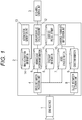
- Fig. 1 illustrates an example of a configuration of the agent.
- Fig. 2 is a flowchart used for describing processing of creating the existence probability map.
- the agent includes a sensing device 1 including a video camera and a depth sensor, a signal processing unit 2, and a mechanical control unit 3.
- the mechanical control unit 3 controls the drive system.
- a controller (not illustrated) included in the agent controls each unit of the system illustrated in Fig. 1 as in the flowchart as illustrated in Fig. 2 .
- the sensing device 1 senses an environment for a certain period (time T1).
- Examples of the sensing device 1 include a camera and a distance sensor. The camera can control an imaging direction.
- a space information processing unit 4 obtains space map information of the environment and arrangeable coordinate (arrangeable position) information, records the space map information in a space map information storage unit 5, and records the arrangeable coordinate information in an arrangeable position information storage unit (arrangeable coordinate information storage unit) 6.
- the space map is created by using a technology capable of creating an environment map, such as SLAM, for example.
- SLAM is a technology for simultaneously estimating a self-position and creating a map from information acquired from the sensing device 1. It is necessary to create a whole map on the basis of information obtained by an autonomous mobile robot
- the arrangeable coordinate information is created by, for example, sampling and recording a history of places where the robot has actually moved at appropriate time intervals.
- a floor plan is known in advance in a space such as a room, a floor other than the front of a door may be set as an arrangeable place.
- step ST3 whether or not (sensing time > time T1) is established is determined.
- the time T1 is a time for sensing the environment as described above. In a case where this condition is not satisfied, the processing returns to step ST1 (sensing the environment). When the condition is satisfied, the processing proceeds to step ST4 (definition of voxel space).
- Voxel space information indicating a divided space (environment) using a grid is defined on the basis of the space map information.
- the space grid division is performed such that a space (environment) is divided using cubes having a side of 50 cm, for example.
- a voxel represents a value of a regular grid unit in a three-dimensional space.
- the voxel space definition information is stored in a voxel space definition storage unit 7.
- the sensing device 1 senses an opject.
- Objects to be sensed are, for example, humans, animals such as dogs and cats, and other pet robots. Not only a specific opject but also a plurality of opjects may be made recognizable. The plurality of opjects can be individually recognized, and respective existence probability maps are created. Specifically, in a case where the agent is a pet robot, an owner user is set as an opject, and a habit (life pattern) of the opject is learned. The object in the environment is sensed for a certain period (time T2).
- An example of a sensing method includes identifying a planar position of an object by RGB-based human body part recognition and general object recognition, and then applying a distance sensor value to the identified position to convert the identified position into a position in a three-dimensional space.
- step ST6 spatiotemporal position information obtained by sensing the object is recorded for each object.
- the voxel space information is prepared for each of 288 time intervals, which are obtained by dividing 24 hours into 5 minutes.
- a voxel corresponding to a position where the user inside a voxel space at the time interval is observed is voted.
- the opject information recording unit 8 in Fig. 1 performs sensing processing and recording processing.
- step ST7 whether or not (sensing time > time T2) is established is determined. In a case where this condition is not satisfied, the processing returns to step ST5 (sensing the opject). When this condition is satisfied, the processing proceeds to step ST8 (creation of an existence probability map).
- An existence probability map creation unit 10 in Fig. 1 performs creation processing, and the created existence probability map is stored in an existence probability map storage unit 11.
- the existence probability map creation processing is processing of creating an existence probability map from the number of votes of an object voted in the voxel space information. For example, a value obtained by dividing the number of votes of the object voted for each voxel by the number of observation days is adopted as an existence probability for the voxel of the object. In this way, the existence probability map for each opject is created.
- the voxel corresponding to the position where the user inside the voxel space at the time is observed is voted.
- 288 pieces of voxel space information are formed for each day, and the value obtained by dividing the total number of votes by the number of observation days is the existence probability.
- the existence probability may be obtained by processing of other than dividing.
- 288 existence probability maps M1, M2, M3, and the like are created corresponding to the times of every 5 minutes of the day. Each existence probability map is associated with a time of the day.
- This control is processing in which an evaluation value calculation unit 12 in Fig. 1 calculates an evaluation value and supplies a control signal formed as a result of the calculation to the mechanical control unit 3, and the mechanical control unit 3 causes the agent to perform an optimum action.
- a time T after several minutes output by an action factor generation unit 13 at fixed intervals and imaging condition information from an imaging condition information storage unit 14 are supplied to the evaluation value calculation unit 12.
- the evaluation value is a value indicating at which position and under what imaging condition the agent can image the opject in the best manner (that is, the agent can recognize the opject in the best manner).
- Fig. 4 is a flowchart illustrating processing of controlling an action of an agent.
- a controller (not illustrated) included in the agent controls each unit of the system illustrated in Fig. 1 as in the flowchart as illustrated in Fig. 4 .
- the time T is acquired from the output of the action factor generation unit 13.
- step ST12 the evaluation value calculation unit 12 extracts the existence probability map at the time T from a time series of the existence probability maps stored in the existence probability map storage unit 11.
- step ST13 one arrangeable position is obtained from arrangeable positions stored in an arrangeable position information storage unit 6.
- step ST14 one imaging condition is obtained from the imaging condition information stored in the imaging condition state storage unit 14.
- step ST15 the evaluation value is calculated.
- the imaging condition is comprehensively simulated for each arrangeable position, and the evaluation value is calculated from an existence probability value of a voxel within a sensing range.
- step ST16 whether or not the imaging condition is the last imaging condition in the changing imaging conditions is determined. In a case where the imaging condition is not the last imaging condition, the processing returns to step ST14 (obtaining one imaging condition from the imaging condition information). In a case where the imaging condition is the last imaging condition, the processing proceeds to step ST17.
- step ST17 whether or not the arrangeable position is the last arrangeable position in a plurality of arrangeable positions is determined. In a case where the arrangeable position is not the last arrangeable position, the processing returns to step ST14 (obtaining an imaging condition from the imaging condition information). In a case where the arrangeable position is the last arrangeable position, the processing proceeds to step ST18.
- step ST18 an evaluation value MAX_VAL having the highest evaluation is acquired.
- step ST19 the highest evaluation value MAX_VAL is compared with a predetermined threshold value VAL_TH. In a case of (MAX_VAL ⁇ VAL_TH), the processing returns to step ST11 (obtaining the time T). That is, it is determined that the highest evaluation value MAX_VAL is not high enough to cause an action, and processing for causing the agent to take an action is not performed. In a case if (MAX_VAL > VAL_TH), the processing proceeds to step ST20.
- step ST20 the arrangeable position and the imaging condition corresponding to the highest evaluation value MAX_VAL are acquired.
- step ST21 the drive system is controlled via the mechanical control unit 3 to move the agent to the acquired arrangeable position.
- step ST22 the drive system is controlled via the mechanical control unit 3 to adjust the agent to the acquired imaging condition.
- the action control processing is schematically described with reference to Fig. 5 .
- the existence probability map at the time T is extracted from the time series of the three-dimensional existence probability maps.
- One arrangeable position is selected from among three arrangeable positions, for example, relating to the extracted existence probability map, and the evaluation value is calculated by changing the imaging condition, for example, a camera angle.
- the evaluation value is similarly calculated for each arrangeable position.
- a combination of the arrangeable position and the camera angle having the highest evaluation value is searched for and determined.
- the agent is moved to the acquired arrangeable position, and the camera angle of the agent is adjusted to the acquired camera angle.
- the voxel is set as a voxel for which the evaluation value is calculated.
- the sensing area is an area to be imaged.
- a sum of the existence probabilities of all the voxels for which the evaluation value is calculated is calculated as the evaluation value of the arrangeable position and the imaging condition.
- the final evaluation value may be obtained by multiplying a weighting coefficient set for each element of the user as the following opject: user preference, a distance to user, a user part type (head, face, torso, or the like), or a sensor type (camera, microphone, IR sensor, polarization sensor, depth sensor, or the like).
- the imaging condition information is information of sensor angles obtained from a sensor 103 provided on a nose of the agent 101 and states of the agent, as illustrated in Fig. 6 .
- the agent 101 has a movable neck and can move an upper part from the neck.
- the sensor angles are a roll angle, a yew angle, and a pitch angle.
- the states of the agent are standing, sitting, and lying down.
- the sensor 103 is an example of the sensing device 1 in Fig. 1 .
- the pet robot as the agent can move to the entrance and greet the user in accordance with the time when the user as an opject returns home, for example. Furthermore, the position of the pet robot to greet the user can be a place easily noticeable by the user and the pet robot's face can be turned to the user.
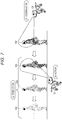
- a second embodiment of the present technology is to predict an action of a user as an opject, and move an agent on the basis of action prediction. An outline of the second embodiment will be described with reference to Fig. 7 .
- An agent 101 observes an action of an opject 102 (user).
- the agent 101 creates an existence probability map regarding future actions from an action prediction technology in which actions of the user who is currently visible are learned using the actions of the user as inputs.
- the existence probability map regarding future actions can be created using a database formed by observing daily actions of the user.
- the agent 101 makes an action plan on the basis of the existence probability map regarding future actions.
- This action plan enables the agent 101 to take actions such as running in parallel with the opject 102, and going round and cutting in the route of the opject 102. In the past, the agent could only follow an object from behind.
- the existence probability map according to the above-described first embodiment is a static existence probability map
- the existence probability map according to the second embodiment is a dynamic existence probability map updated according to an actual action of the user.
- the second embodiment can be implemented by replacing the static existence probability map in the first embodiment with a dynamic existence probability map. Note that the static existence probability map and the dynamic existence probability map may be combined.
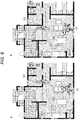
- the agent 101 stands at a predetermined position, for example, near a sofa, according to the static existence probability map similarly created to the first embodiment.
- the opject 102 comes into the room.
- the dynamic existence probability map at this point, it is still unshared whether the user 102 is sitting on the sofa or heading to the kitchen. Therefore, the agent 101 still stands by near the sofa.
- the agent 101 observes the opject 102 for a certain period.
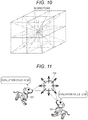
- a direction vector (for example, one of 26 directions (see Fig. 10 )) is determined from the face direction when observing the opject 102, and object information is recorded in a combination (of voxel + direction vector).
- the existence probability map has, in addition to the existence probability, information of a probability of which direction the object is facing.
- the evaluation value of an arrangeable coordinate and an imaging condition in which the face of the user can be imaged becomes high by considering the direction vector, as illustrated in Fig. 11 . That is, the agent moves to an arrangeable position where the agent can image the front of the face of the opject 102 (the user's face is facing the direction of the arrow indicating the left side in Fig. 11 ).
- the agent 101 can take an action of running in parallel with the opject 102 while looking at the opject 102, for example. This action can be implemented by storing a probability for each face angle for each voxel of the static existence probability map of the first embodiment, and using the face angle for calculating the evaluation value.
- the existence probability map with a direction vector enables the agent to act to adjust the direction of the agent's face with the direction of the user's face.
- the face of the agent 101 looks at the direction of the television to which the user's face is directed at a position as close to the user as possible.
- the evaluation value becomes high when the agent looks at the direction of the television watched by the user at the close position to the user.
- the agent When there is no particular object to look at where the user's face is directed, the agent is simply controlled to look at the same direction. For example, the agent looks at a garden with the user. The agent is controlled such that the evaluation value becomes high when the agent looks the same direction as the user at the close position to the user.
- agents complement share an existence probability map and complement each other in a case where there is a plurality of agents.
- One or both of a static existence probability map and a dynamic existence probability map may be shared.
- the existence probability map is shared between agents (pet robots) 101a and 101b in the same room, and smart speakers 104a, 104b, 104c, and 104d.
- the smart speakers 104a to 104d are speakers capable of using an interactive artificial intelligence (AI) assistant and have a sensing device.
- AI artificial intelligence
- a storage unit that stores the common existence probability map can be accessed by any of the agents 101a and 101b and the smart speakers 104a, 104b, 104c, and 104d.
- an observed user action may be shared instead of the existence probability map.
- estimation of the existence probability map itself is performed by each agent.
- the dynamic existence probability map of the opject (user) 102 estimated by the agent 101a is shared with the other agent 101b.
- Fig. 15 illustrates an example of action control in a case where agents are drones 105a and 105b.
- a voxel used by a certain agent for calculating the evaluation value is not used by another agent for calculating the evaluation value.
- the agents act to cover places where people are likely to exist, it is effective for security purposes. Note that an arrangeable place in the case of drones is in the air having a certain margin not to collide with other objects such as walls.
- the functions of the processing device in the above-described embodiments can be recorded in a recording medium such as a magnetic disk, a magnetooptical disk, or a ROM, as a program. Therefore, the functions of the agent can be implemented by reading the program from the recording medium by a computer and executing the program by a micro processing unit (MPU), a digital signal processor (DSP), or the like.
- MPU micro processing unit
- DSP digital signal processor
- the present technology has been specifically described. However, the present technology is not limited to the above-described embodiments, and various modifications based on the technical idea of the present technology can be made. Furthermore, the configurations, methods, steps, shapes, materials, numerical values, and the like given in the above-described embodiments are merely examples, and different configurations, methods, steps, shapes, materials, numerical values, and the like from the examples may be used as needed. For example, the present technology can be applied not only to VR games but also to fields such as educational and medical applications.
Landscapes
- Engineering & Computer Science (AREA)
- Physics & Mathematics (AREA)
- Radar, Positioning & Navigation (AREA)
- General Physics & Mathematics (AREA)
- Remote Sensing (AREA)
- Automation & Control Theory (AREA)
- Aviation & Aerospace Engineering (AREA)
- Multimedia (AREA)
- Computer Vision & Pattern Recognition (AREA)
- Electromagnetism (AREA)
- Theoretical Computer Science (AREA)
- Control Of Position, Course, Altitude, Or Attitude Of Moving Bodies (AREA)
- Image Analysis (AREA)
- Manipulator (AREA)
Abstract
Description
- The present technology relates to, for example, an agent applicable to a robot, an existence probability map creation method, an agent action control method, and a program.
- In recent years, the number of agent devices such as robots equipped with sensing devices such as cameras and depth sensors has increased. A robot can autonomously move inside a house by reconstructing a space map using a simultaneously localization and mapping (SLAM) technology. In a case of performing an autonomous motion, such as a walking motion according to an external state of surroundings and an internal state of the robot itself, the robot is proposed to detect an external obstacle and plan a walking route to avoid the obstacle. The robot creates an obstacle occupancy probability table indicating a relative distance between the position of the robot and the obstacle, and determines the walking route on the basis of the table. In a case of finding an obstacle on the walking route, the robot searches for an area where no obstacle exists and plans a new walking route. When the robot sequentially searches for an area around the robot and finds an obstacle, the robot starts a research for creating a new obstacle occupancy probability table. However, the efficiency of the research is poor and calculation of the walking route takes time, and the walking motion is delayed. For example,
Patent Document 1 describes solving such a problem. - Patent Document 1: Japanese Patent Application Laid-Open No.
2004-298975 - Since the robot is located at a predetermined arrangement position, the user cannot be imaged and captured unless the user approaches a sensable position. Even if the robot can autonomously move, the robot cannot capture the user early unless the robot is at a right position at a right time. For example, if the robot is not at the entrance at the time when the user returns home, the robot cannot notice that the user has come home.
- Therefore, an object of the present technology is to provide an agent, an existence probability map creation method, an agent action control method, and a program for enabling early imaging and capture of a user when the user appears in a certain space.
- The present technology is an agent including:
- a sensing device configured to sense an opject in a real space;
- an existence probability map creation means configured to define the real space as a group of voxels, and create, every predetermined time, an existence probability map on which information of an existence probability of the object is recorded for each of the voxels; and
- an arrangeable position storage unit configured to store information of an arrangeable position. The present technology is an agent including:
- an evaluation value calculation unit configured to calculate an existence probability on the basis of an existence probability map and obtain an evaluation value at an arrangeable position at a predetermined time; and
- a control unit configured to determine an arrangeable position according to an evaluation value obtained by the evaluation value calculation unit, and control a drive system for moving to the determined arrangeable position. The present technology is an existence probability map creation method including:
- sensing, by a sensing device, an opject in a real space;
- defining the real space as a group of voxels, and creating, every predetermined time, an existence probability map on which information of an existence probability of the object is recorded for each of the voxels; and
- storing information of an arrangeable position.
- The present technology is a program for causing a computer to execute an existence probability map creation method including:
- sensing, by a sensing device, an opject in a real space;
- defining the real space as a group of voxels, and creating, every predetermined time, an existence probability map on which information of an existence probability of the object is recorded for each of the voxels; and
- storing information of an arrangeable position.
- The present technology is an agent action control method including:
- calculating an existence probability on the basis of an existence probability map and obtaining an evaluation value at an arrangeable position at a predetermined time;
- determining an arrangeable position according to the obtained evaluation value; and
- controlling a drive system for moving to the determined arrangeable position. The present technology is a program for causing a computer to execute an agent action control method including:
- calculating an existence probability on the basis of an existence probability map and obtaining an evaluation value at an arrangeable position at a predetermined time;
- determining an arrangeable position according to the obtained evaluation value; and
- controlling a drive system for moving to the determined arrangeable position.
- According to at least one embodiment, the present technology enables a pet robot, for example, to have an ability to move to an appropriate position at an appropriate time by using an existence probability map generated from a user's life pattern. Thereby, it becomes possible to provide a service such as life support by the robot. Furthermore, the user can be imaged and captured early when the user appears in a certain space. Note that the effects described here are not necessarily limited, and any of effects described in the present technology may be exhibited.
-
-
Fig. 1 is a block diagram illustrating an example of a configuration of an agent according to the present technology. -
Fig. 2 is a flowchart illustrating an existence probability map generation method. -
Fig. 3 is a diagram used for describing the existence probability map generation method. -
Fig. 4 is a flowchart illustrating a method of controlling an action of an agent, using an existence probability map. -
Fig. 5 is a diagram used for describing action control of an agent, using the existence probability map. -
Fig. 6 is a diagram used for describing imaging conditions. -
Fig. 7 is a diagram used for describing action control of an agent. -
Fig. 8 is a diagram used for describing action control of an agent. -
Fig. 9 is a diagram used for describing an existence probability map with a direction vector. -
Fig. 10 is a diagram used for describing directions. -
Fig. 11 is a diagram used for describing processing of calculating an evaluation value on the basis of the existence probability map with a direction vector. -
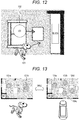
Fig. 12 is a diagram used for describing the processing of calculating an evaluation value on the basis of the existence probability map with a direction vector. -
Fig. 13 is a diagram used for describing action control of a plurality of agents, using an existence probability map. -
Fig. 14 is a diagram used for describing sharing of an action of an observed user. -
Fig. 15 is a diagram used for describing action control in a case of a drone. - Hereinafter, embodiments and the like of the present technology will be described with reference to the drawings. Note that the description will be given in the following order.
- <1. First Embodiment>
- <2. Second Embodiment>
- <3. Third Embodiment>
- <4. Modification>
- Embodiments and the like described below are favorable specific examples of the present technology, and the contents of the present technology are not limited by these embodiments and the like.
- A first embodiment of the present technology will be described. The first embodiment is to control an action of an agent using an existence probability map. The agent is a user interface technology for autonomously determining and executing processing. The agent is a technology in which recognition and determination functions are added to an opject that is a combination of data and processing for the data. In the present description, an electronic device in which software behaving as an agent is installed, such as a pet robot, is referred to as an agent.
- More specifically, the agent is moved to an optimum position at an optimum time using the existence probability map. By such control, the robot can greet a user at an entrance when the user returns home, for example. The robot has three elemental technologies: various sensors, an intelligence/control system, and a drive system.
-
Fig. 1 illustrates an example of a configuration of the agent. Furthermore,Fig. 2 is a flowchart used for describing processing of creating the existence probability map. The agent includes asensing device 1 including a video camera and a depth sensor, asignal processing unit 2, and amechanical control unit 3. Themechanical control unit 3 controls the drive system. A controller (not illustrated) included in the agent controls each unit of the system illustrated inFig. 1 as in the flowchart as illustrated inFig. 2 . - In step ST1 in
Fig. 2 , thesensing device 1 senses an environment for a certain period (time T1). Examples of thesensing device 1 include a camera and a distance sensor. The camera can control an imaging direction. - In step ST2, a space
information processing unit 4 obtains space map information of the environment and arrangeable coordinate (arrangeable position) information, records the space map information in a space mapinformation storage unit 5, and records the arrangeable coordinate information in an arrangeable position information storage unit (arrangeable coordinate information storage unit) 6. - The space map is created by using a technology capable of creating an environment map, such as SLAM, for example. SLAM is a technology for simultaneously estimating a self-position and creating a map from information acquired from the
sensing device 1. It is necessary to create a whole map on the basis of information obtained by an autonomous mobile robot - (agent) moving in an unknown environment and to know the position of the robot itself. Therefore, a technology like SLAM is required. The arrangeable coordinate information is created by, for example, sampling and recording a history of places where the robot has actually moved at appropriate time intervals. Moreover, in a case where a floor plan is known in advance in a space such as a room, a floor other than the front of a door may be set as an arrangeable place.
- In step ST3, whether or not (sensing time > time T1) is established is determined. The time T1 is a time for sensing the environment as described above. In a case where this condition is not satisfied, the processing returns to step ST1 (sensing the environment). When the condition is satisfied, the processing proceeds to step ST4 (definition of voxel space).
- Voxel space information indicating a divided space (environment) using a grid is defined on the basis of the space map information. The space grid division is performed such that a space (environment) is divided using cubes having a side of 50 cm, for example. A voxel represents a value of a regular grid unit in a three-dimensional space. The voxel space definition information is stored in a voxel space
definition storage unit 7. - In step ST5, the
sensing device 1 senses an opject. Objects to be sensed are, for example, humans, animals such as dogs and cats, and other pet robots. Not only a specific opject but also a plurality of opjects may be made recognizable. The plurality of opjects can be individually recognized, and respective existence probability maps are created. Specifically, in a case where the agent is a pet robot, an owner user is set as an opject, and a habit (life pattern) of the opject is learned. The object in the environment is sensed for a certain period (time T2). An example of a sensing method includes identifying a planar position of an object by RGB-based human body part recognition and general object recognition, and then applying a distance sensor value to the identified position to convert the identified position into a position in a three-dimensional space. - In step ST6, spatiotemporal position information obtained by sensing the object is recorded for each object. For example, the voxel space information is prepared for each of 288 time intervals, which are obtained by dividing 24 hours into 5 minutes. When the user is actually observed, a voxel corresponding to a position where the user inside a voxel space at the time interval is observed is voted. The opject
information recording unit 8 inFig. 1 performs sensing processing and recording processing. - In step ST7, whether or not (sensing time > time T2) is established is determined. In a case where this condition is not satisfied, the processing returns to step ST5 (sensing the opject). When this condition is satisfied, the processing proceeds to step ST8 (creation of an existence probability map). An existence probability
map creation unit 10 inFig. 1 performs creation processing, and the created existence probability map is stored in an existence probabilitymap storage unit 11. - The existence probability map creation processing is processing of creating an existence probability map from the number of votes of an object voted in the voxel space information. For example, a value obtained by dividing the number of votes of the object voted for each voxel by the number of observation days is adopted as an existence probability for the voxel of the object. In this way, the existence probability map for each opject is created.
- As illustrated in
Fig. 3 , in a case where anagent 101 senses anopject 102 and theopject 102 is observed, the voxel corresponding to the position where the user inside the voxel space at the time is observed is voted. For example, 288 pieces of voxel space information are formed for each day, and the value obtained by dividing the total number of votes by the number of observation days is the existence probability. The existence probability may be obtained by processing of other than dividing. As a result, 288 existence probability maps M1, M2, M3, and the like are created corresponding to the times of every 5 minutes of the day. Each existence probability map is associated with a time of the day. - Next, action control of the agent, for example, the pet robot based on the created existence probability map will be described. This control is processing in which an evaluation
value calculation unit 12 inFig. 1 calculates an evaluation value and supplies a control signal formed as a result of the calculation to themechanical control unit 3, and themechanical control unit 3 causes the agent to perform an optimum action. A time T after several minutes output by an actionfactor generation unit 13 at fixed intervals and imaging condition information from an imaging conditioninformation storage unit 14 are supplied to the evaluationvalue calculation unit 12. The evaluation value is a value indicating at which position and under what imaging condition the agent can image the opject in the best manner (that is, the agent can recognize the opject in the best manner). -
Fig. 4 is a flowchart illustrating processing of controlling an action of an agent. A controller (not illustrated) included in the agent controls each unit of the system illustrated inFig. 1 as in the flowchart as illustrated inFig. 4 . In first step ST11, the time T is acquired from the output of the actionfactor generation unit 13. - In step ST12, the evaluation
value calculation unit 12 extracts the existence probability map at the time T from a time series of the existence probability maps stored in the existence probabilitymap storage unit 11. - In step ST13, one arrangeable position is obtained from arrangeable positions stored in an arrangeable position
information storage unit 6. - In step ST14, one imaging condition is obtained from the imaging condition information stored in the imaging condition
state storage unit 14. - In step ST15, the evaluation value is calculated. The imaging condition is comprehensively simulated for each arrangeable position, and the evaluation value is calculated from an existence probability value of a voxel within a sensing range.
- In step ST16, whether or not the imaging condition is the last imaging condition in the changing imaging conditions is determined. In a case where the imaging condition is not the last imaging condition, the processing returns to step ST14 (obtaining one imaging condition from the imaging condition information). In a case where the imaging condition is the last imaging condition, the processing proceeds to step ST17.
- In step ST17, whether or not the arrangeable position is the last arrangeable position in a plurality of arrangeable positions is determined. In a case where the arrangeable position is not the last arrangeable position, the processing returns to step ST14 (obtaining an imaging condition from the imaging condition information). In a case where the arrangeable position is the last arrangeable position, the processing proceeds to step ST18.
- In step ST18, an evaluation value MAX_VAL having the highest evaluation is acquired. In step ST19, the highest evaluation value MAX_VAL is compared with a predetermined threshold value VAL_TH. In a case of (MAX_VAL ≤ VAL_TH), the processing returns to step ST11 (obtaining the time T). That is, it is determined that the highest evaluation value MAX_VAL is not high enough to cause an action, and processing for causing the agent to take an action is not performed. In a case if (MAX_VAL > VAL_TH), the processing proceeds to step ST20.
- In step ST20, the arrangeable position and the imaging condition corresponding to the highest evaluation value MAX_VAL are acquired.
- In step ST21, the drive system is controlled via the
mechanical control unit 3 to move the agent to the acquired arrangeable position. - In step ST22, the drive system is controlled via the
mechanical control unit 3 to adjust the agent to the acquired imaging condition. - The action control processing is schematically described with reference to
Fig. 5 . The existence probability map at the time T is extracted from the time series of the three-dimensional existence probability maps. One arrangeable position is selected from among three arrangeable positions, for example, relating to the extracted existence probability map, and the evaluation value is calculated by changing the imaging condition, for example, a camera angle. The evaluation value is similarly calculated for each arrangeable position. A combination of the arrangeable position and the camera angle having the highest evaluation value is searched for and determined. The agent is moved to the acquired arrangeable position, and the camera angle of the agent is adjusted to the acquired camera angle. - Calculation of the evaluation value will be described. When, for example, 50% or more of a volume of a voxel is included in a sensing area of the camera, the voxel is set as a voxel for which the evaluation value is calculated. Specifically, the sensing area is an area to be imaged. Furthermore, a sum of the existence probabilities of all the voxels for which the evaluation value is calculated is calculated as the evaluation value of the arrangeable position and the imaging condition.
- Note that, in the case of calculating the evaluation value, the final evaluation value may be obtained by multiplying a weighting coefficient set for each element of the user as the following opject:
user preference, a distance to user, a user part type (head, face, torso, or the like), or a sensor type (camera, microphone, IR sensor, polarization sensor, depth sensor, or the like). - The imaging condition information is information of sensor angles obtained from a
sensor 103 provided on a nose of theagent 101 and states of the agent, as illustrated inFig. 6 . Theagent 101 has a movable neck and can move an upper part from the neck. The sensor angles are a roll angle, a yew angle, and a pitch angle. The states of the agent are standing, sitting, and lying down. Thesensor 103 is an example of thesensing device 1 inFig. 1 . - As described above, by controlling the action of the agent on the basis of the created existence probability map, the pet robot as the agent can move to the entrance and greet the user in accordance with the time when the user as an opject returns home, for example. Furthermore, the position of the pet robot to greet the user can be a place easily noticeable by the user and the pet robot's face can be turned to the user.
- A second embodiment of the present technology is to predict an action of a user as an opject, and move an agent on the basis of action prediction. An outline of the second embodiment will be described with reference to
Fig. 7 . Anagent 101 observes an action of an opject 102 (user). - Next, the
agent 101 creates an existence probability map regarding future actions from an action prediction technology in which actions of the user who is currently visible are learned using the actions of the user as inputs. For example, the existence probability map regarding future actions can be created using a database formed by observing daily actions of the user. - Next, the
agent 101 makes an action plan on the basis of the existence probability map regarding future actions. This action plan enables theagent 101 to take actions such as running in parallel with theopject 102, and going round and cutting in the route of theopject 102. In the past, the agent could only follow an object from behind. - While the existence probability map according to the above-described first embodiment is a static existence probability map, the existence probability map according to the second embodiment is a dynamic existence probability map updated according to an actual action of the user. The second embodiment can be implemented by replacing the static existence probability map in the first embodiment with a dynamic existence probability map. Note that the static existence probability map and the dynamic existence probability map may be combined.
- The second embodiment will be specifically described with reference to
Fig. 8 . As illustrated inFig. 8A , theagent 101 stands at a predetermined position, for example, near a sofa, according to the static existence probability map similarly created to the first embodiment. Here, theopject 102 comes into the room. In the dynamic existence probability map at this point, it is still unshared whether theuser 102 is sitting on the sofa or heading to the kitchen. Therefore, theagent 101 still stands by near the sofa. - Next, suppose that the opject 102 walks a little further into the room and walks towards the kitchen, as illustrated in
Fig. 8B . According to the dynamic existence probability map, it can be seen that a probability of theopject 102 moving to the kitchen becomes sufficiently high, so theagent 101 goes ahead to the kitchen before theopject 102. - Configuring the dynamic existence probability map as an existence probability map with a direction vector will be described. As illustrated in
Fig. 9 , theagent 101 observes theopject 102 for a certain period. A direction vector (for example, one of 26 directions (seeFig. 10 )) is determined from the face direction when observing theopject 102, and object information is recorded in a combination (of voxel + direction vector). The existence probability map has, in addition to the existence probability, information of a probability of which direction the object is facing. - When calculating an evaluation value on the basis of the existence probability map with a direction vector, the evaluation value of an arrangeable coordinate and an imaging condition in which the face of the user can be imaged becomes high by considering the direction vector, as illustrated in
Fig. 11 . That is, the agent moves to an arrangeable position where the agent can image the front of the face of the opject 102 (the user's face is facing the direction of the arrow indicating the left side inFig. 11 ). By combining the direction vector with the above-described action control by prediction, theagent 101 can take an action of running in parallel with theopject 102 while looking at theopject 102, for example. This action can be implemented by storing a probability for each face angle for each voxel of the static existence probability map of the first embodiment, and using the face angle for calculating the evaluation value. - The existence probability map with a direction vector enables the agent to act to adjust the direction of the agent's face with the direction of the user's face. As illustrated in
Fig. 12 , when the user as theopject 102 is watching a television, the face of theagent 101 looks at the direction of the television to which the user's face is directed at a position as close to the user as possible. The evaluation value becomes high when the agent looks at the direction of the television watched by the user at the close position to the user. - When there is no particular object to look at where the user's face is directed, the agent is simply controlled to look at the same direction. For example, the agent looks at a garden with the user. The agent is controlled such that the evaluation value becomes high when the agent looks the same direction as the user at the close position to the user.
- Since there is a limit to a sensable space by one agent, agents complement share an existence probability map and complement each other in a case where there is a plurality of agents. One or both of a static existence probability map and a dynamic existence probability map may be shared.
- In the example in
Fig. 13 , the existence probability map is shared between agents (pet robots) 101a and 101b in the same room, andsmart speakers smart speakers 104a to 104d are speakers capable of using an interactive artificial intelligence (AI) assistant and have a sensing device. As an example, a storage unit that stores the common existence probability map can be accessed by any of theagents smart speakers - As illustrated in
Fig. 14 , an observed user action (illustrated by the solid line) may be shared instead of the existence probability map. In that case, estimation of the existence probability map itself is performed by each agent. In the case where theagents agent 101a is shared with theother agent 101b. By sharing the dynamic existence probability map, not only theagent 101a but also theagent 101b can predict the action of theopject 102 and proactively move. For sharing, a common storage unit is provided as described above. -
Fig. 15 illustrates an example of action control in a case where agents aredrones agent 105a goes to an entrance, theother agent 105b goes to a back entrance, so that the other agent can be moved to the next candidate position. Since the agents act to cover places where people are likely to exist, it is effective for security purposes. Note that an arrangeable place in the case of drones is in the air having a certain margin not to collide with other objects such as walls. - Note that the functions of the processing device in the above-described embodiments can be recorded in a recording medium such as a magnetic disk, a magnetooptical disk, or a ROM, as a program. Therefore, the functions of the agent can be implemented by reading the program from the recording medium by a computer and executing the program by a micro processing unit (MPU), a digital signal processor (DSP), or the like.
- The embodiments of the present technology have been specifically described. However, the present technology is not limited to the above-described embodiments, and various modifications based on the technical idea of the present technology can be made. Furthermore, the configurations, methods, steps, shapes, materials, numerical values, and the like given in the above-described embodiments are merely examples, and different configurations, methods, steps, shapes, materials, numerical values, and the like from the examples may be used as needed. For example, the present technology can be applied not only to VR games but also to fields such as educational and medical applications.
- Note that the present technology can also have the following configurations.
- (1) An agent including:
- a sensing device configured to sense an opject in a real space;
- an existence probability map creation means configured to define the real space as a group of voxels, and create, every predetermined time, an existence probability map on which information of an existence probability of the object is recorded for each of the voxels; and
- an arrangeable position storage unit configured to store information of an arrangeable position.
- (2) The agent according to (1), in which, in a case of sensing the object while moving in a real space, the arrangeable position is a position on a locus of the movement.
- (3) The agent according to (1) or (2), in which the real space is indoors and the opject is a person.
- (4) The agent according to any one of (1) to (3), in which an existence probability map based on prediction of a future action of the opject is created.
- (5) The agent according to any one of (1) to (4), in which a probability of a vector in a direction of the opject is included.
- (6) An agent including:
- an evaluation value calculation unit configured to calculate an existence probability on the basis of an existence probability map and obtain an evaluation value at an arrangeable position at a predetermined time; and
- a control unit configured to determine an arrangeable position according to an evaluation value obtained by the evaluation value calculation unit, and control a drive system for moving to the determined arrangeable position.
- (7) The agent according to
claim 6, further including:- a sensing device configured to sense an opject in a real space;
- an existence probability map creation means configured to define the real space as a group of voxels, and create, every predetermined time, the existence probability map on which information of the existence probability of the object is recorded for each of the voxels; and
- an arrangeable position storage unit configured to store information of an arrangeable position.
- (8) The agent according to (6) or (7), in which the evaluation value calculation unit calculates the evaluation value, for each of a plurality of imaging conditions.
- (9) The agent according to any one of (6) to (8), in which the existence probability map is shared with another agent.
- (10) An existence probability map creation method including:
- sensing, by a sensing device, an opject in a real space;
- defining the real space as a group of voxels, and creating, every predetermined time, an existence probability map on which information of an existence probability of the object is recorded for each of the voxels; and
- storing information of an arrangeable position.
- (11) A program for causing a computer to execute an existence probability map creation method including:
- sensing, by a sensing device, an opject in a real space;
- defining the real space as a group of voxels, and creating, every predetermined time, an existence probability map on which information of an existence probability of the object is recorded for each of the voxels; and
- storing information of an arrangeable position.
- (12) An agent action control method including:
- calculating an existence probability on the basis of an existence probability map and obtaining an evaluation value at an arrangeable position at a predetermined time;
- determining an arrangeable position according to the obtained evaluation value; and
- controlling a drive system for moving to the determined arrangeable position.
- (13) A program for causing a computer to execute an agent action control method including:
- calculating an existence probability on the basis of an existence probability map and obtaining an evaluation value at an arrangeable position at a predetermined time;
- determining an arrangeable position according to the obtained evaluation value; and
- controlling a drive system for moving to the determined arrangeable position.
-
- 1
- Sensing dehyce
- 3
- Mechanical control unit
- 5
- Space map information storage unit
- 6
- Arrangeable position information storage unit
- 7
- Voxel space definition document storage unit
- 9
- Opject information storage unit
- 11
- Existence probability map storage unit
- 12
- Evaluation value calculation unit
- 13
- Action factor generation unit
- 14
- Imaging condition information storage unit
Claims (13)
- An agent comprising:a sensing device configured to sense an opject in a real space;an existence probability map creation means configured to define the real space as a group of voxels, and create, every predetermined time, an existence probability map on which information of an existence probability of the object is recorded for each of the voxels; andan arrangeable position storage unit configured to store information of an arrangeable position.
- The agent according to claim 1, wherein, in a case of sensing the object while moving in a real space, the arrangeable position is a position on a locus of the movement.
- The agent according to claim 1, wherein the real space is indoors and the opject is a person.
- The agent according to claim 1, wherein an existence probability map based on prediction of a future action of the opject is created.
- The agent according to claim 1, wherein a probability of a vector in a direction of the opject is included.
- An agent comprising:an evaluation value calculation unit configured to calculate an existence probability on a basis of an existence probability map and obtain an evaluation value at an arrangeable position at a predetermined time; anda control unit configured to determine an arrangeable position according to an evaluation value obtained by the evaluation value calculation unit, and control a drive system for moving to the determined arrangeable position.
- The agent according to claim 6, further comprising:a sensing device configured to sense an opject in a real space;an existence probability map creation means configured to define the real space as a group of voxels, and create, every predetermined time, the existence probability map on which information of the existence probability of the object is recorded for each of the voxels; andan arrangeable position storage unit configured to store information of an arrangeable position.
- The agent according to claim 6, wherein the evaluation value calculation unit calculates the evaluation value, for each of a plurality of imaging conditions.
- The agent according to claim 6, wherein the existence probability map is shared with another agent.
- An existence probability map creation method comprising:sensing, by a sensing device, an opject in a real space;defining the real space as a group of voxels, and creating, every predetermined time, an existence probability map on which information of an existence probability of the object is recorded for each of the voxels; andstoring information of an arrangeable position.
- A program for causing a computer to execute an existence probability map creation method comprising:sensing, by a sensing device, an opject in a real space;defining the real space as a group of voxels, and creating, every predetermined time, an existence probability map on which information of an existence probability of the object is recorded for each of the voxels; andstoring information of an arrangeable position.
- An agent action control method comprising:calculating an existence probability on a basis of an existence probability map and obtaining an evaluation value at an arrangeable position at a predetermined time;determining an arrangeable position according to the obtained evaluation value; andcontrolling a drive system for moving to the determined arrangeable position.
- A program for causing a computer to execute an agent action control method comprising:calculating an existence probability on a basis of an existence probability map and obtaining an evaluation value at an arrangeable position at a predetermined time;determining an arrangeable position according to the obtained evaluation value; andcontrolling a drive system for moving to the determined arrangeable position.
Applications Claiming Priority (2)
| Application Number | Priority Date | Filing Date | Title |
|---|---|---|---|
| JP2018136370 | 2018-07-20 | ||
| PCT/JP2019/015544 WO2020017111A1 (en) | 2018-07-20 | 2019-04-10 | Agent, presence probability map creation method, agent action control method, and program |
Publications (3)
| Publication Number | Publication Date |
|---|---|
| EP3825805A1 true EP3825805A1 (en) | 2021-05-26 |
| EP3825805A4 EP3825805A4 (en) | 2021-09-15 |
| EP3825805B1 EP3825805B1 (en) | 2023-09-13 |
Family
ID=69163675
Family Applications (1)
| Application Number | Title | Priority Date | Filing Date |
|---|---|---|---|
| EP19838534.6A Active EP3825805B1 (en) | 2018-07-20 | 2019-04-10 | Agent, presence probability map creation method, agent action control method, and program |
Country Status (4)
| Country | Link |
|---|---|
| US (1) | US20210286370A1 (en) |
| EP (1) | EP3825805B1 (en) |
| CN (1) | CN112424720A (en) |
| WO (1) | WO2020017111A1 (en) |
Families Citing this family (3)
| Publication number | Priority date | Publication date | Assignee | Title |
|---|---|---|---|---|
| WO2024011557A1 (en) * | 2022-07-15 | 2024-01-18 | 深圳市正浩创新科技股份有限公司 | Map construction method and device and storage medium |
| WO2025164283A1 (en) * | 2024-01-30 | 2025-08-07 | ソニーグループ株式会社 | Information processing device, information processing method, and program |
| CN119444857B (en) * | 2024-11-01 | 2025-11-25 | 北方工业大学 | A biomimetic polarization semantic SLAM method based on neural radiation field |
Family Cites Families (12)
| Publication number | Priority date | Publication date | Assignee | Title |
|---|---|---|---|---|
| US20020168084A1 (en) * | 2001-05-14 | 2002-11-14 | Koninklijke Philips Electronics N.V. | Method and apparatus for assisting visitors in navigating retail and exhibition-like events using image-based crowd analysis |
| JP2004298975A (en) | 2003-03-28 | 2004-10-28 | Sony Corp | Robot device, obstacle search method |
| JP2008225785A (en) * | 2007-03-12 | 2008-09-25 | Toyota Motor Corp | Image recognition device |
| EP2615596B1 (en) * | 2010-09-08 | 2024-10-30 | Toyota Jidosha Kabushiki Kaisha | Moving-object prediction device, virtual-mobile-object prediction device, program, mobile-object prediction method, and virtual-mobile-object prediction method |
| JP6020326B2 (en) * | 2013-04-16 | 2016-11-02 | 富士ゼロックス株式会社 | Route search device, self-propelled working device, program, and recording medium |
| US9524426B2 (en) * | 2014-03-19 | 2016-12-20 | GM Global Technology Operations LLC | Multi-view human detection using semi-exhaustive search |
| DK2952993T3 (en) * | 2014-06-05 | 2018-07-30 | Softbank Robotics Europe | PROCEDURE FOR MAKING A CARD OF LIKELIHOOD FOR ONE OF THE ABSENCE OR EXISTENCE OF BARRIERS FOR AN AUTONOMOUS ROBOT |
| US10265859B2 (en) * | 2016-02-09 | 2019-04-23 | Cobalt Robotics Inc. | Mobile robot with removable fabric panels |
| CN109153127B (en) * | 2016-03-28 | 2022-05-31 | Groove X 株式会社 | Behavior autonomous robot for executing head-on behavior |
| JP2018005470A (en) * | 2016-06-30 | 2018-01-11 | カシオ計算機株式会社 | Autonomous mobile device, autonomous mobile method, and program |
| KR102549978B1 (en) * | 2016-09-13 | 2023-07-03 | 엘지전자 주식회사 | Airport robot, and airport robot system including same |
| WO2019106980A1 (en) * | 2017-11-28 | 2019-06-06 | パナソニックIpマネジメント株式会社 | Self-propelled pathogen detection device, pathogen detection system, and control method |
-
2019
- 2019-04-10 US US17/250,363 patent/US20210286370A1/en not_active Abandoned
- 2019-04-10 EP EP19838534.6A patent/EP3825805B1/en active Active
- 2019-04-10 WO PCT/JP2019/015544 patent/WO2020017111A1/en not_active Ceased
- 2019-04-10 CN CN201980047119.5A patent/CN112424720A/en not_active Withdrawn
Also Published As
| Publication number | Publication date |
|---|---|
| WO2020017111A1 (en) | 2020-01-23 |
| CN112424720A (en) | 2021-02-26 |
| EP3825805B1 (en) | 2023-09-13 |
| EP3825805A4 (en) | 2021-09-15 |
| US20210286370A1 (en) | 2021-09-16 |
Similar Documents
| Publication | Publication Date | Title |
|---|---|---|
| Guo et al. | Enhanced camera-based individual pig detection and tracking for smart pig farms | |
| JP6625220B2 (en) | Method and system for detecting the action of an object in a scene | |
| US8406925B2 (en) | Panoramic attention for humanoid robots | |
| US10137567B2 (en) | Inventory robot | |
| CN110998594A (en) | Method and system for detecting motion | |
| EP3825805B1 (en) | Agent, presence probability map creation method, agent action control method, and program | |
| EP3789841B1 (en) | Information processing device, information processing method, program, and autonomous robot control system | |
| JP7823900B2 (en) | Autonomous robot that acts based on experience | |
| Murino et al. | Group and crowd behavior for computer vision | |
| Sheng et al. | Robot semantic mapping through human activity recognition: A wearable sensing and computing approach | |
| Zhang et al. | Localization and tracking of uncontrollable underwater agents: Particle filter based fusion of on-body IMUs and stationary cameras | |
| Colantonio et al. | Object tracking in a stereo and infrared vision system | |
| Park et al. | Vision-based global localization for mobile robots with hybrid maps of objects and spatial layouts | |
| US20180246512A1 (en) | Proactive Acquisition of Data for Maintenance of Appearance Model by Mobile Robot | |
| Jung et al. | Occupant activities and clothes detection based on semi-supervised learning for occupant-centric thermal control | |
| JP5418938B2 (en) | Group behavior estimation apparatus and service providing system | |
| Elinas et al. | Homer: Human oriented messenger robot | |
| Correa et al. | Active visual perception for mobile robot localization | |
| Sun et al. | Real-time and fast RGB-D based people detection and tracking for service robots | |
| Nishioka et al. | Detecting Eating Behavior of Elephants in a Zoo Using Temporal Action Localization. | |
| Ercolano et al. | Seeking and approaching users in domestic environments: Testing a reactive approach on two commercial robots | |
| CN115731613B (en) | Four-directional traffic police gesture recognition method based on temporal linear human skin model and graph convolutional network | |
| Scales et al. | Visual-based global localization from ceiling images using convolutional neural networks | |
| Liu | Comprehensive analysis of mobile robot target tracking technology based on computer vision | |
| Madokoro et al. | Classification of behavior patterns with trajectory analysis used for event site |
Legal Events
| Date | Code | Title | Description |
|---|---|---|---|
| STAA | Information on the status of an ep patent application or granted ep patent |
Free format text: STATUS: THE INTERNATIONAL PUBLICATION HAS BEEN MADE |
|
| PUAI | Public reference made under article 153(3) epc to a published international application that has entered the european phase |
Free format text: ORIGINAL CODE: 0009012 |
|
| STAA | Information on the status of an ep patent application or granted ep patent |
Free format text: STATUS: REQUEST FOR EXAMINATION WAS MADE |
|
| 17P | Request for examination filed |
Effective date: 20210222 |
|
| AK | Designated contracting states |
Kind code of ref document: A1 Designated state(s): AL AT BE BG CH CY CZ DE DK EE ES FI FR GB GR HR HU IE IS IT LI LT LU LV MC MK MT NL NO PL PT RO RS SE SI SK SM TR |
|
| RAP3 | Party data changed (applicant data changed or rights of an application transferred) |
Owner name: SONY GROUP CORPORATION |
|
| A4 | Supplementary search report drawn up and despatched |
Effective date: 20210816 |
|
| RIC1 | Information provided on ipc code assigned before grant |
Ipc: G06K 9/00 20060101ALI20210810BHEP Ipc: G05D 1/02 20200101AFI20210810BHEP |
|
| DAV | Request for validation of the european patent (deleted) | ||
| DAX | Request for extension of the european patent (deleted) | ||
| STAA | Information on the status of an ep patent application or granted ep patent |
Free format text: STATUS: EXAMINATION IS IN PROGRESS |
|
| 17Q | First examination report despatched |
Effective date: 20220419 |
|
| RIC1 | Information provided on ipc code assigned before grant |
Ipc: G06V 20/10 20220101ALI20230306BHEP Ipc: G05D 1/02 20060101AFI20230306BHEP |
|
| GRAP | Despatch of communication of intention to grant a patent |
Free format text: ORIGINAL CODE: EPIDOSNIGR1 |
|
| STAA | Information on the status of an ep patent application or granted ep patent |
Free format text: STATUS: GRANT OF PATENT IS INTENDED |
|
| INTG | Intention to grant announced |
Effective date: 20230417 |
|
| GRAS | Grant fee paid |
Free format text: ORIGINAL CODE: EPIDOSNIGR3 |
|
| GRAA | (expected) grant |
Free format text: ORIGINAL CODE: 0009210 |
|
| STAA | Information on the status of an ep patent application or granted ep patent |
Free format text: STATUS: THE PATENT HAS BEEN GRANTED |
|
| AK | Designated contracting states |
Kind code of ref document: B1 Designated state(s): AL AT BE BG CH CY CZ DE DK EE ES FI FR GB GR HR HU IE IS IT LI LT LU LV MC MK MT NL NO PL PT RO RS SE SI SK SM TR |
|
| REG | Reference to a national code |
Ref country code: CH Ref legal event code: EP |
|
| REG | Reference to a national code |
Ref country code: DE Ref legal event code: R096 Ref document number: 602019037554 Country of ref document: DE |
|
| REG | Reference to a national code |
Ref country code: IE Ref legal event code: FG4D |
|
| REG | Reference to a national code |
Ref country code: DE Ref legal event code: R079 Ref document number: 602019037554 Country of ref document: DE Free format text: PREVIOUS MAIN CLASS: G05D0001020000 Ipc: G05D0001430000 |
|
| REG | Reference to a national code |
Ref country code: LT Ref legal event code: MG9D |
|
| REG | Reference to a national code |
Ref country code: NL Ref legal event code: MP Effective date: 20230913 |
|
| PG25 | Lapsed in a contracting state [announced via postgrant information from national office to epo] |
Ref country code: GR Free format text: LAPSE BECAUSE OF FAILURE TO SUBMIT A TRANSLATION OF THE DESCRIPTION OR TO PAY THE FEE WITHIN THE PRESCRIBED TIME-LIMIT Effective date: 20231214 |
|
| PG25 | Lapsed in a contracting state [announced via postgrant information from national office to epo] |
Ref country code: SE Free format text: LAPSE BECAUSE OF FAILURE TO SUBMIT A TRANSLATION OF THE DESCRIPTION OR TO PAY THE FEE WITHIN THE PRESCRIBED TIME-LIMIT Effective date: 20230913 Ref country code: RS Free format text: LAPSE BECAUSE OF FAILURE TO SUBMIT A TRANSLATION OF THE DESCRIPTION OR TO PAY THE FEE WITHIN THE PRESCRIBED TIME-LIMIT Effective date: 20230913 Ref country code: NO Free format text: LAPSE BECAUSE OF FAILURE TO SUBMIT A TRANSLATION OF THE DESCRIPTION OR TO PAY THE FEE WITHIN THE PRESCRIBED TIME-LIMIT Effective date: 20231213 Ref country code: LV Free format text: LAPSE BECAUSE OF FAILURE TO SUBMIT A TRANSLATION OF THE DESCRIPTION OR TO PAY THE FEE WITHIN THE PRESCRIBED TIME-LIMIT Effective date: 20230913 Ref country code: LT Free format text: LAPSE BECAUSE OF FAILURE TO SUBMIT A TRANSLATION OF THE DESCRIPTION OR TO PAY THE FEE WITHIN THE PRESCRIBED TIME-LIMIT Effective date: 20230913 Ref country code: HR Free format text: LAPSE BECAUSE OF FAILURE TO SUBMIT A TRANSLATION OF THE DESCRIPTION OR TO PAY THE FEE WITHIN THE PRESCRIBED TIME-LIMIT Effective date: 20230913 Ref country code: GR Free format text: LAPSE BECAUSE OF FAILURE TO SUBMIT A TRANSLATION OF THE DESCRIPTION OR TO PAY THE FEE WITHIN THE PRESCRIBED TIME-LIMIT Effective date: 20231214 Ref country code: FI Free format text: LAPSE BECAUSE OF FAILURE TO SUBMIT A TRANSLATION OF THE DESCRIPTION OR TO PAY THE FEE WITHIN THE PRESCRIBED TIME-LIMIT Effective date: 20230913 |
|
| REG | Reference to a national code |
Ref country code: AT Ref legal event code: MK05 Ref document number: 1611907 Country of ref document: AT Kind code of ref document: T Effective date: 20230913 |
|
| PG25 | Lapsed in a contracting state [announced via postgrant information from national office to epo] |
Ref country code: NL Free format text: LAPSE BECAUSE OF FAILURE TO SUBMIT A TRANSLATION OF THE DESCRIPTION OR TO PAY THE FEE WITHIN THE PRESCRIBED TIME-LIMIT Effective date: 20230913 |
|
| PG25 | Lapsed in a contracting state [announced via postgrant information from national office to epo] |
Ref country code: IS Free format text: LAPSE BECAUSE OF FAILURE TO SUBMIT A TRANSLATION OF THE DESCRIPTION OR TO PAY THE FEE WITHIN THE PRESCRIBED TIME-LIMIT Effective date: 20240113 |
|
| PG25 | Lapsed in a contracting state [announced via postgrant information from national office to epo] |
Ref country code: AT Free format text: LAPSE BECAUSE OF FAILURE TO SUBMIT A TRANSLATION OF THE DESCRIPTION OR TO PAY THE FEE WITHIN THE PRESCRIBED TIME-LIMIT Effective date: 20230913 |
|
| PG25 | Lapsed in a contracting state [announced via postgrant information from national office to epo] |
Ref country code: ES Free format text: LAPSE BECAUSE OF FAILURE TO SUBMIT A TRANSLATION OF THE DESCRIPTION OR TO PAY THE FEE WITHIN THE PRESCRIBED TIME-LIMIT Effective date: 20230913 |
|
| PG25 | Lapsed in a contracting state [announced via postgrant information from national office to epo] |
Ref country code: SM Free format text: LAPSE BECAUSE OF FAILURE TO SUBMIT A TRANSLATION OF THE DESCRIPTION OR TO PAY THE FEE WITHIN THE PRESCRIBED TIME-LIMIT Effective date: 20230913 Ref country code: RO Free format text: LAPSE BECAUSE OF FAILURE TO SUBMIT A TRANSLATION OF THE DESCRIPTION OR TO PAY THE FEE WITHIN THE PRESCRIBED TIME-LIMIT Effective date: 20230913 Ref country code: IS Free format text: LAPSE BECAUSE OF FAILURE TO SUBMIT A TRANSLATION OF THE DESCRIPTION OR TO PAY THE FEE WITHIN THE PRESCRIBED TIME-LIMIT Effective date: 20240113 Ref country code: ES Free format text: LAPSE BECAUSE OF FAILURE TO SUBMIT A TRANSLATION OF THE DESCRIPTION OR TO PAY THE FEE WITHIN THE PRESCRIBED TIME-LIMIT Effective date: 20230913 Ref country code: EE Free format text: LAPSE BECAUSE OF FAILURE TO SUBMIT A TRANSLATION OF THE DESCRIPTION OR TO PAY THE FEE WITHIN THE PRESCRIBED TIME-LIMIT Effective date: 20230913 Ref country code: CZ Free format text: LAPSE BECAUSE OF FAILURE TO SUBMIT A TRANSLATION OF THE DESCRIPTION OR TO PAY THE FEE WITHIN THE PRESCRIBED TIME-LIMIT Effective date: 20230913 Ref country code: AT Free format text: LAPSE BECAUSE OF FAILURE TO SUBMIT A TRANSLATION OF THE DESCRIPTION OR TO PAY THE FEE WITHIN THE PRESCRIBED TIME-LIMIT Effective date: 20230913 Ref country code: PT Free format text: LAPSE BECAUSE OF FAILURE TO SUBMIT A TRANSLATION OF THE DESCRIPTION OR TO PAY THE FEE WITHIN THE PRESCRIBED TIME-LIMIT Effective date: 20240115 Ref country code: SK Free format text: LAPSE BECAUSE OF FAILURE TO SUBMIT A TRANSLATION OF THE DESCRIPTION OR TO PAY THE FEE WITHIN THE PRESCRIBED TIME-LIMIT Effective date: 20230913 |
|
| PG25 | Lapsed in a contracting state [announced via postgrant information from national office to epo] |
Ref country code: PL Free format text: LAPSE BECAUSE OF FAILURE TO SUBMIT A TRANSLATION OF THE DESCRIPTION OR TO PAY THE FEE WITHIN THE PRESCRIBED TIME-LIMIT Effective date: 20230913 Ref country code: IT Free format text: LAPSE BECAUSE OF FAILURE TO SUBMIT A TRANSLATION OF THE DESCRIPTION OR TO PAY THE FEE WITHIN THE PRESCRIBED TIME-LIMIT Effective date: 20230913 |
|
| REG | Reference to a national code |
Ref country code: DE Ref legal event code: R097 Ref document number: 602019037554 Country of ref document: DE |
|
| PG25 | Lapsed in a contracting state [announced via postgrant information from national office to epo] |
Ref country code: DK Free format text: LAPSE BECAUSE OF FAILURE TO SUBMIT A TRANSLATION OF THE DESCRIPTION OR TO PAY THE FEE WITHIN THE PRESCRIBED TIME-LIMIT Effective date: 20230913 |
|
| PLBE | No opposition filed within time limit |
Free format text: ORIGINAL CODE: 0009261 |
|
| STAA | Information on the status of an ep patent application or granted ep patent |
Free format text: STATUS: NO OPPOSITION FILED WITHIN TIME LIMIT |
|
| PG25 | Lapsed in a contracting state [announced via postgrant information from national office to epo] |
Ref country code: DK Free format text: LAPSE BECAUSE OF FAILURE TO SUBMIT A TRANSLATION OF THE DESCRIPTION OR TO PAY THE FEE WITHIN THE PRESCRIBED TIME-LIMIT Effective date: 20230913 |
|
| 26N | No opposition filed |
Effective date: 20240614 |
|
| PG25 | Lapsed in a contracting state [announced via postgrant information from national office to epo] |
Ref country code: SI Free format text: LAPSE BECAUSE OF FAILURE TO SUBMIT A TRANSLATION OF THE DESCRIPTION OR TO PAY THE FEE WITHIN THE PRESCRIBED TIME-LIMIT Effective date: 20230913 |
|
| PG25 | Lapsed in a contracting state [announced via postgrant information from national office to epo] |
Ref country code: SI Free format text: LAPSE BECAUSE OF FAILURE TO SUBMIT A TRANSLATION OF THE DESCRIPTION OR TO PAY THE FEE WITHIN THE PRESCRIBED TIME-LIMIT Effective date: 20230913 |
|
| REG | Reference to a national code |
Ref country code: DE Ref legal event code: R119 Ref document number: 602019037554 Country of ref document: DE |
|
| PG25 | Lapsed in a contracting state [announced via postgrant information from national office to epo] |
Ref country code: BG Free format text: LAPSE BECAUSE OF FAILURE TO SUBMIT A TRANSLATION OF THE DESCRIPTION OR TO PAY THE FEE WITHIN THE PRESCRIBED TIME-LIMIT Effective date: 20230913 |
|
| PG25 | Lapsed in a contracting state [announced via postgrant information from national office to epo] |
Ref country code: MC Free format text: LAPSE BECAUSE OF FAILURE TO SUBMIT A TRANSLATION OF THE DESCRIPTION OR TO PAY THE FEE WITHIN THE PRESCRIBED TIME-LIMIT Effective date: 20230913 |
|
| PG25 | Lapsed in a contracting state [announced via postgrant information from national office to epo] |
Ref country code: MC Free format text: LAPSE BECAUSE OF FAILURE TO SUBMIT A TRANSLATION OF THE DESCRIPTION OR TO PAY THE FEE WITHIN THE PRESCRIBED TIME-LIMIT Effective date: 20230913 Ref country code: BG Free format text: LAPSE BECAUSE OF FAILURE TO SUBMIT A TRANSLATION OF THE DESCRIPTION OR TO PAY THE FEE WITHIN THE PRESCRIBED TIME-LIMIT Effective date: 20230913 |
|
| REG | Reference to a national code |
Ref country code: CH Ref legal event code: PL |
|
| PG25 | Lapsed in a contracting state [announced via postgrant information from national office to epo] |
Ref country code: LU Free format text: LAPSE BECAUSE OF NON-PAYMENT OF DUE FEES Effective date: 20240410 |
|
| GBPC | Gb: european patent ceased through non-payment of renewal fee |
Effective date: 20240410 |
|
| REG | Reference to a national code |
Ref country code: BE Ref legal event code: MM Effective date: 20240430 |
|
| PG25 | Lapsed in a contracting state [announced via postgrant information from national office to epo] |
Ref country code: LU Free format text: LAPSE BECAUSE OF NON-PAYMENT OF DUE FEES Effective date: 20240410 |
|
| PG25 | Lapsed in a contracting state [announced via postgrant information from national office to epo] |
Ref country code: DE Free format text: LAPSE BECAUSE OF NON-PAYMENT OF DUE FEES Effective date: 20241105 |
|
| PG25 | Lapsed in a contracting state [announced via postgrant information from national office to epo] |
Ref country code: BE Free format text: LAPSE BECAUSE OF NON-PAYMENT OF DUE FEES Effective date: 20240430 |
|
| PG25 | Lapsed in a contracting state [announced via postgrant information from national office to epo] |
Ref country code: GB Free format text: LAPSE BECAUSE OF NON-PAYMENT OF DUE FEES Effective date: 20240410 |
|
| PG25 | Lapsed in a contracting state [announced via postgrant information from national office to epo] |
Ref country code: FR Free format text: LAPSE BECAUSE OF NON-PAYMENT OF DUE FEES Effective date: 20240430 |
|
| PG25 | Lapsed in a contracting state [announced via postgrant information from national office to epo] |
Ref country code: GB Free format text: LAPSE BECAUSE OF NON-PAYMENT OF DUE FEES Effective date: 20240410 Ref country code: FR Free format text: LAPSE BECAUSE OF NON-PAYMENT OF DUE FEES Effective date: 20240430 Ref country code: DE Free format text: LAPSE BECAUSE OF NON-PAYMENT OF DUE FEES Effective date: 20241105 Ref country code: BE Free format text: LAPSE BECAUSE OF NON-PAYMENT OF DUE FEES Effective date: 20240430 Ref country code: CH Free format text: LAPSE BECAUSE OF NON-PAYMENT OF DUE FEES Effective date: 20240430 |
|
| PG25 | Lapsed in a contracting state [announced via postgrant information from national office to epo] |
Ref country code: IE Free format text: LAPSE BECAUSE OF NON-PAYMENT OF DUE FEES Effective date: 20240410 |
|
| PG25 | Lapsed in a contracting state [announced via postgrant information from national office to epo] |
Ref country code: CY Free format text: LAPSE BECAUSE OF FAILURE TO SUBMIT A TRANSLATION OF THE DESCRIPTION OR TO PAY THE FEE WITHIN THE PRESCRIBED TIME-LIMIT; INVALID AB INITIO Effective date: 20190410 |
|
| PG25 | Lapsed in a contracting state [announced via postgrant information from national office to epo] |
Ref country code: HU Free format text: LAPSE BECAUSE OF FAILURE TO SUBMIT A TRANSLATION OF THE DESCRIPTION OR TO PAY THE FEE WITHIN THE PRESCRIBED TIME-LIMIT; INVALID AB INITIO Effective date: 20190410 |