EP3824879B1 - A stable liquid formulation of fusion protein with igg fc domain - Google Patents
A stable liquid formulation of fusion protein with igg fc domain Download PDFInfo
- Publication number
- EP3824879B1 EP3824879B1 EP20195634.9A EP20195634A EP3824879B1 EP 3824879 B1 EP3824879 B1 EP 3824879B1 EP 20195634 A EP20195634 A EP 20195634A EP 3824879 B1 EP3824879 B1 EP 3824879B1
- Authority
- EP
- European Patent Office
- Prior art keywords
- formulation
- histidine
- aflibercept
- polysorbate
- present
- Prior art date
- Legal status (The legal status is an assumption and is not a legal conclusion. Google has not performed a legal analysis and makes no representation as to the accuracy of the status listed.)
- Active
Links
Images



Classifications
-
- C—CHEMISTRY; METALLURGY
- C07—ORGANIC CHEMISTRY
- C07K—PEPTIDES
- C07K14/00—Peptides having more than 20 amino acids; Gastrins; Somatostatins; Melanotropins; Derivatives thereof
- C07K14/435—Peptides having more than 20 amino acids; Gastrins; Somatostatins; Melanotropins; Derivatives thereof from animals; from humans
- C07K14/705—Receptors; Cell surface antigens; Cell surface determinants
- C07K14/71—Receptors; Cell surface antigens; Cell surface determinants for growth factors; for growth regulators
-
- A—HUMAN NECESSITIES
- A61—MEDICAL OR VETERINARY SCIENCE; HYGIENE
- A61K—PREPARATIONS FOR MEDICAL, DENTAL OR TOILETRY PURPOSES
- A61K47/00—Medicinal preparations characterised by the non-active ingredients used, e.g. carriers or inert additives; Targeting or modifying agents chemically bound to the active ingredient
- A61K47/50—Medicinal preparations characterised by the non-active ingredients used, e.g. carriers or inert additives; Targeting or modifying agents chemically bound to the active ingredient the non-active ingredient being chemically bound to the active ingredient, e.g. polymer-drug conjugates
- A61K47/51—Medicinal preparations characterised by the non-active ingredients used, e.g. carriers or inert additives; Targeting or modifying agents chemically bound to the active ingredient the non-active ingredient being chemically bound to the active ingredient, e.g. polymer-drug conjugates the non-active ingredient being a modifying agent
- A61K47/68—Medicinal preparations characterised by the non-active ingredients used, e.g. carriers or inert additives; Targeting or modifying agents chemically bound to the active ingredient the non-active ingredient being chemically bound to the active ingredient, e.g. polymer-drug conjugates the non-active ingredient being a modifying agent the modifying agent being an antibody, an immunoglobulin or a fragment thereof, e.g. an Fc-fragment
- A61K47/6835—Medicinal preparations characterised by the non-active ingredients used, e.g. carriers or inert additives; Targeting or modifying agents chemically bound to the active ingredient the non-active ingredient being chemically bound to the active ingredient, e.g. polymer-drug conjugates the non-active ingredient being a modifying agent the modifying agent being an antibody, an immunoglobulin or a fragment thereof, e.g. an Fc-fragment the modifying agent being an antibody or an immunoglobulin bearing at least one antigen-binding site
- A61K47/6845—Medicinal preparations characterised by the non-active ingredients used, e.g. carriers or inert additives; Targeting or modifying agents chemically bound to the active ingredient the non-active ingredient being chemically bound to the active ingredient, e.g. polymer-drug conjugates the non-active ingredient being a modifying agent the modifying agent being an antibody, an immunoglobulin or a fragment thereof, e.g. an Fc-fragment the modifying agent being an antibody or an immunoglobulin bearing at least one antigen-binding site the antibody targeting a cytokine, e.g. growth factors, VEGF, TNF, a lymphokine or an interferon
-
- A—HUMAN NECESSITIES
- A61—MEDICAL OR VETERINARY SCIENCE; HYGIENE
- A61K—PREPARATIONS FOR MEDICAL, DENTAL OR TOILETRY PURPOSES
- A61K9/00—Medicinal preparations characterised by special physical form
- A61K9/08—Solutions
-
- A—HUMAN NECESSITIES
- A61—MEDICAL OR VETERINARY SCIENCE; HYGIENE
- A61K—PREPARATIONS FOR MEDICAL, DENTAL OR TOILETRY PURPOSES
- A61K38/00—Medicinal preparations containing peptides
- A61K38/16—Peptides having more than 20 amino acids; Gastrins; Somatostatins; Melanotropins; Derivatives thereof
- A61K38/17—Peptides having more than 20 amino acids; Gastrins; Somatostatins; Melanotropins; Derivatives thereof from animals; from humans
- A61K38/177—Receptors; Cell surface antigens; Cell surface determinants
- A61K38/179—Receptors; Cell surface antigens; Cell surface determinants for growth factors; for growth regulators
-
- A—HUMAN NECESSITIES
- A61—MEDICAL OR VETERINARY SCIENCE; HYGIENE
- A61K—PREPARATIONS FOR MEDICAL, DENTAL OR TOILETRY PURPOSES
- A61K39/00—Medicinal preparations containing antigens or antibodies
- A61K39/395—Antibodies; Immunoglobulins; Immune serum, e.g. antilymphocytic serum
-
- A—HUMAN NECESSITIES
- A61—MEDICAL OR VETERINARY SCIENCE; HYGIENE
- A61K—PREPARATIONS FOR MEDICAL, DENTAL OR TOILETRY PURPOSES
- A61K47/00—Medicinal preparations characterised by the non-active ingredients used, e.g. carriers or inert additives; Targeting or modifying agents chemically bound to the active ingredient
- A61K47/06—Organic compounds, e.g. natural or synthetic hydrocarbons, polyolefins, mineral oil, petrolatum or ozokerite
- A61K47/16—Organic compounds, e.g. natural or synthetic hydrocarbons, polyolefins, mineral oil, petrolatum or ozokerite containing nitrogen, e.g. nitro-, nitroso-, azo-compounds, nitriles, cyanates
- A61K47/18—Amines; Amides; Ureas; Quaternary ammonium compounds; Amino acids; Oligopeptides having up to five amino acids
-
- A—HUMAN NECESSITIES
- A61—MEDICAL OR VETERINARY SCIENCE; HYGIENE
- A61K—PREPARATIONS FOR MEDICAL, DENTAL OR TOILETRY PURPOSES
- A61K47/00—Medicinal preparations characterised by the non-active ingredients used, e.g. carriers or inert additives; Targeting or modifying agents chemically bound to the active ingredient
- A61K47/06—Organic compounds, e.g. natural or synthetic hydrocarbons, polyolefins, mineral oil, petrolatum or ozokerite
- A61K47/16—Organic compounds, e.g. natural or synthetic hydrocarbons, polyolefins, mineral oil, petrolatum or ozokerite containing nitrogen, e.g. nitro-, nitroso-, azo-compounds, nitriles, cyanates
- A61K47/18—Amines; Amides; Ureas; Quaternary ammonium compounds; Amino acids; Oligopeptides having up to five amino acids
- A61K47/183—Amino acids, e.g. glycine, EDTA or aspartame
-
- A—HUMAN NECESSITIES
- A61—MEDICAL OR VETERINARY SCIENCE; HYGIENE
- A61K—PREPARATIONS FOR MEDICAL, DENTAL OR TOILETRY PURPOSES
- A61K47/00—Medicinal preparations characterised by the non-active ingredients used, e.g. carriers or inert additives; Targeting or modifying agents chemically bound to the active ingredient
- A61K47/06—Organic compounds, e.g. natural or synthetic hydrocarbons, polyolefins, mineral oil, petrolatum or ozokerite
- A61K47/22—Heterocyclic compounds, e.g. ascorbic acid, tocopherol or pyrrolidones
-
- A—HUMAN NECESSITIES
- A61—MEDICAL OR VETERINARY SCIENCE; HYGIENE
- A61K—PREPARATIONS FOR MEDICAL, DENTAL OR TOILETRY PURPOSES
- A61K47/00—Medicinal preparations characterised by the non-active ingredients used, e.g. carriers or inert additives; Targeting or modifying agents chemically bound to the active ingredient
- A61K47/06—Organic compounds, e.g. natural or synthetic hydrocarbons, polyolefins, mineral oil, petrolatum or ozokerite
- A61K47/26—Carbohydrates, e.g. sugar alcohols, amino sugars, nucleic acids, mono-, di- or oligo-saccharides; Derivatives thereof, e.g. polysorbates, sorbitan fatty acid esters or glycyrrhizin
-
- A—HUMAN NECESSITIES
- A61—MEDICAL OR VETERINARY SCIENCE; HYGIENE
- A61K—PREPARATIONS FOR MEDICAL, DENTAL OR TOILETRY PURPOSES
- A61K9/00—Medicinal preparations characterised by special physical form
-
- A—HUMAN NECESSITIES
- A61—MEDICAL OR VETERINARY SCIENCE; HYGIENE
- A61K—PREPARATIONS FOR MEDICAL, DENTAL OR TOILETRY PURPOSES
- A61K9/00—Medicinal preparations characterised by special physical form
- A61K9/0012—Galenical forms characterised by the site of application
- A61K9/0019—Injectable compositions; Intramuscular, intravenous, arterial, subcutaneous administration; Compositions to be administered through the skin in an invasive manner
-
- A—HUMAN NECESSITIES
- A61—MEDICAL OR VETERINARY SCIENCE; HYGIENE
- A61K—PREPARATIONS FOR MEDICAL, DENTAL OR TOILETRY PURPOSES
- A61K9/00—Medicinal preparations characterised by special physical form
- A61K9/0012—Galenical forms characterised by the site of application
- A61K9/0048—Eye, e.g. artificial tears
-
- A—HUMAN NECESSITIES
- A61—MEDICAL OR VETERINARY SCIENCE; HYGIENE
- A61P—SPECIFIC THERAPEUTIC ACTIVITY OF CHEMICAL COMPOUNDS OR MEDICINAL PREPARATIONS
- A61P27/00—Drugs for disorders of the senses
- A61P27/02—Ophthalmic agents
-
- C—CHEMISTRY; METALLURGY
- C07—ORGANIC CHEMISTRY
- C07K—PEPTIDES
- C07K2319/00—Fusion polypeptide
- C07K2319/30—Non-immunoglobulin-derived peptide or protein having an immunoglobulin constant or Fc region, or a fragment thereof, attached thereto
Definitions
- the present invention relates to a stable liquid formulation of a fusion protein having an Fc domain of a human immunoglobulin G (IgG). More particularly, the present invention relates to a liquid formulation having a stabilized protein in which an Fc domain of a human IgG and a soluble extracellular domain of a vascular endothelial growth factor (VEGF) receptor are fused, for example, aflibercept, to a composition for stabilizing a protein in which an Fc domain of an IgG and a soluble extracellular domain of a VEGF receptor are fused, and to a method for stabilizing a protein in which an Fc domain of an IgG and a soluble extracellular domain of a VEGF receptor are fused.
- VEGF vascular endothelial growth factor
- VEGF vascular endothelial growth factor
- VEGFR-1, VEGFR-2, and VEGFR-3 membrane-spanning tyrosine kinase receptors.
- VEGFR-1 and VEGFR-2 have 7 Ig-like sequences in the extracellular domain in order to bind to the VEGF, a single transmembrane region, and a consensus tyrosine kinase region. These features are applied as a sequence for an anti-VEGF agent.
- Aflibercept which is an ophthalmic therapeutic agent, is a soluble decoy receptor of about 115 kDa (including glycosylation) having a structure in which a second binding domain of VEGFR-1 and a third binding domain of VEGFR-2 are fused with an Fc region of a human IgG1 (see [ Drug Design Development and Therapy (2013), 3(7), 711-722 ]).
- abnormal angiogenesis is associated with ophthalmic diseases such as wet age-related macular degeneration, diabetic macular edema, and macular edema in retinal vein occlusion, etc. (see [ J. Korean Med. Assoc. (2014), 57(7), 614-623 ]).
- Examples of therapeutic agents for these ophthalmic diseases include pegaptanib (trade name: Macugen), ranibizumab (trade name: Lucentis), bevacizumab (trade name: Avastin), and aflibercept (trade name: Eylea).
- Aflibercept is approved for the treatment of wet age-related macular degeneration in 2011 (see [ Biol. Ther. (2012), 2(3) 1-22 ], and [ Drug Design Development and Therapy (2013), 3(7), 711-722 ], etc.).
- aflibercept has been reported to have the best therapeutic effect on patients with diabetic macular edema having advanced amblyopia (see [ NEJM (2015), 372(13) 1193-1203 ].
- Aflibercept has been commercialized as a therapeutic agent for metastatic colorectal cancers (trade name: Zaltrap) and a therapeutic agent for retinal vein occlusion, diabetic macular edema, choroidal neovascularization, and wet age-related macular degeneration (trade name: Eylea).
- Patent document 1 International Publication WO 2007/149334 discloses "an ophthalmic formulation including 1-100 mg/ml of aflibercept, 0.01-5% of an organic cosolvent (e.g., polysorbate, polyethylene glycol, propylene glycol, etc.), 30-150 mM of an isotonic agent (e.g., NaCl, KCI etc.), 5-40 mM of sodium phosphate buffer and 1.0-7.5% of stabilizer (e.g., sucrose, sorbitol, glycerol, trehalose, and mannitol, etc.)" and "a lyophilizable formulation including 5-50 mg/ml of aflibercept, 5-25 mM of sodium phosphate buffer, 0.01-0.15% of an organic cosolvent, 1-10% of a stabilizer, and 20-150 mM of an isotonic agent.”
- the formulation disclosed in the following prior Patent document 1 may be applied to a prefilled syring
- the present inventors have completed the present invention by developing a liquid formulation having enhanced stability under the harsh conditions as well as stably maintaining a fusion protein having an IgG Fc domain such as aflibercept under the storing condition for a long period of time.
- the present invention is derived to solve the problems described above, and provides a formulation having stabilized protein in which an Fc domain of a human immunoglobulin G (IgG) and a soluble extracellular domain of a vascular endothelial growth factor (VEGF) receptor are fused.
- IgG human immunoglobulin G
- VEGF vascular endothelial growth factor
- Another object of the present invention is to provide a composition for stabilizing a protein in which an Fc domain of an IgG and a soluble extracellular domain of a VEGF receptor are fused.
- Still another object of the present invention is to provide a liquid formulation including the composition for stabilizing a protein in which an Fc domain of an IgG and a soluble extracellular domain of a VEGF receptor are fused; and aflibercept.
- the present invention provides a liquid formulation for use in therapy, including:
- the fusion protein aflibercept may be present in an amount of 10 to 40 mg/ml.
- the histidine salt is histidine-HCl or histidine-acetate.
- the concentration of the histidine salt is 10 mM to 50 mM.
- the sugar is at least one selected from the group consisting of 2.5% (w/v) to 10% (w/v) of sucrose trehalose, mannitol, and glucose.
- the sugar may be 5% (w/v) to 10% (w/v) of sucrose.
- the surfactant is 0% (v/v) to 0.03% (v/v) of polysorbate 20 or polysorbate 80, for example, 0% (v/v) or 0.01% (v/v) to 0.03% (v/v).
- the claims of present invention regard a liquid formulation for use in therapy including a buffer including a histidine salt and having pH ranging from 5.7 to 6.2; one or more stabilizers selected from the group consisting of sugars and surfactants; and aflibercept; wherein the histidine salt is 10 mM to 50 mM of histidine-HCl or histidine-acetate, and the sugar is at least one selected from the group consisting of 2.5% (w/v) to 10% (w/v) of sucrose, trehalose, mannitol and glucose, and the surfactant is 0% (v/v) to 0.03% (v/v) of polysorbate 20 or polysorbate 80, for example, 0% (v/v) or 0.01 % (v/v) to 0.03% (v/v).
- the liquid formulation may be suitable for intravitreal injection.
- liquid formulation for use provided by the present invention, production of impurities and byproducts due to aggregation, fragmentation and isomerization of the fusion protein having an Fc domain of a human immunoglobulin G (IgG) (in particular, the protein in which an Fc domain of a human immunoglobulin G (IgG) and a soluble extracellular domain of a vascular endothelial growth factor (VEGF) receptor are fused (i.e. aflibercept)) under harsh conditions such as a high temperature condition of 40°C or more or shaking condition, as well as general storing condition, is significantly reduced, and thus stability for long-term storage may be enhanced.
- IgG human immunoglobulin G
- VEGF vascular endothelial growth factor
- the present invention improves therapeutic effects on various ophthalmic diseases (e.g., retinal vein occlusion, diabetic macular edema, choroidal neovascularization and wet age-related macular degeneration, etc.) caused by abnormal angiogenesis, while pursuing stabilization of bioactivity through a stable liquid formulation suitable for intravitreal injection of an anti-VEGF-Fc fusion protein including aflibercept.
- ophthalmic diseases e.g., retinal vein occlusion, diabetic macular edema, choroidal neovascularization and wet age-related macular degeneration, etc.
- the previously provided formulation in which a fusion protein such as aflibercept having an IgG Fc domain is stabilized has a problem in that stability is significantly reduced under the harsh conditions, so that it has been required to develop a formulation capable of maintaining the fusion protein under the harsh conditions in addition to the general storing conditions.
- aflibercept which is a protein in which an Fc domain of a human immunoglobulin G (IgG) and a soluble extracellular domain of a vascular endothelial growth factor (VEGF) receptor are fused
- a buffer including a histidine salt and pH ranging from 5.7 to 6.2.
- liquid formulation for use of the present invention stably maintains the fusion protein under general storing conditions for a long period of time and also significantly reduces production of impurities and byproducts under harsh conditions, it is possible to provide a formulation having significantly improved stability relative to the known fusion protein formulation under the inevitable condition where the optimal storing condition would not be provided.
- the present invention provides a liquid formulation for use as of claim 1 including aflibercept, which is a protein in which an Fc domain of a human immunoglobulin G (IgG) and a soluble extracellular domain of a vascular endothelial growth factor (VEGF) are fused; and a buffer including a histidine salt and having a pH ranging from 5.7 to 6.2.
- aflibercept which is a protein in which an Fc domain of a human immunoglobulin G (IgG) and a soluble extracellular domain of a vascular endothelial growth factor (VEGF) are fused
- a buffer including a histidine salt and having a pH ranging from 5.7 to 6.2.
- the fusion protein aflibercept beis included in an amount of about 10-100 mg/ml, preferably about 10-80 mg/ml, and more preferably about 10-40 mg/ml.
- the "buffer” refers to a buffered solution enduring changes in pH due to the action of an acid-base conjugate ingredient of the buffer.
- a buffer including a histidine salt and having pH ranging from 5.7 to 6.2 was used, wherein the histidine salt is histidine-HCl or histidine-acetate, and the histidine salt concentration is10 mM to 50 mM.
- the formulation (3) of FIG. 5 was to measure stability of aflibercept in the 10 mM histidine salt buffer having pH 6.0, and it has been found that aflibercept stability similar to that of control formulation (2) was maintained under the buffer condition.
- the liquid formulation for use of the present invention as claimed further includes one or more stabilizer selected from the group consisting of sugars and surfactants in addition to the fusion protein, which is an active ingredient of the liquid formulation, and the histidine salt buffer.
- the sugar is any one selected from the group consisting of trehalose, sucrose, mannitol and glucose.
- the sugar concentration is 2.5-10% (w/v).
- formulations (3) to (6) which respectively include trehalose, sucrose, mannitol, and glucose in the histidine salt buffer showed enhanced aflibercept stability more than the control formulation (2).
- aflibercept stability was most excellent.
- formulation (3) without sucrose showed similar formulation stability as that of control formulation (2).
- sucrose concentration increased, the effect of inhibiting production of aggregates and impurities increased with respect to control (2).
- the surfactant may be used to ophthalmic drug delivery.
- the surfactant concentration as claimed is 0-0.3% (v/v), for example, 0% (v/v) or 0.01 % (v/v) to 0.03% (v/v).
- the liquid formulation for use according to the present invention maintains stability of the fusion protein under general storing conditions for a long period of time and has an excellent effect of inhibiting production of impurities and byproducts of the fusion protein under harsh conditions, and thus stability of the fusion protein is enhanced more than that of the typical liquid formulation.
- harsh conditions refers to an environment chemically and physically unfavorable to the fusion protein, and leads to unacceptable protein stability.
- the harsh conditions include, for example, high temperature or shaking condition.
- stable indicates that a protein essentially maintains physical and/or chemical stability and/or biological activity thereof during storing.
- Various analytical techniques for measuring protein stability are available in the art. Stability may be measured at selected temperature and selected period.
- the protein may be considered to "maintain physical stability thereof" in a formulation, when the protein shows less or no change in aggregation, precipitation, and/or modification during observation of color and/or transparency with naked eyes, UV light-scattering measurement (i.e., notable aggregates are measured), or size exclusion chromatograph (SEC) measurement.
- UV light-scattering measurement i.e., notable aggregates are measured
- SEC size exclusion chromatograph
- the various conditions of liquid formulations for use of the present invention showed significantly inhibited production of impurities and aggregates more than control formulation (2), thereby being relatively stable for 7 to 21 days at a temperature ranging from 40 to 50°C.
- the present invention illustrates a method of stabilizing a protein in which an Fc domain of a human immunoglobulin G (IgG) and a soluble extracellular domain of a vascular endothelial growth factor VEGF receptor are fused by using a buffer including a histidine salt and having pH of 5.7 to 6.2.
- a buffer including a histidine salt and having pH of 5.7 to 6.2.
- the buffer may further include one or more stabilizers selected from the group consisting of sugars and surfactants.
- the present invention provides the use of a composition (see claim 4) for stabilizing aflibercept, which is a fusion protein in which an Fc domain of an IgG and a soluble extracellular domain of a VEGF receptor are fused, the composition including a buffer including a histidine salt and having pH of 5.7 to 6.2; and one or more stabilizers selected from the group consisting of sugars and surfactants, wherein the histidine salt is 10 mM to 50 mM histidine-HCl, or histidine-acetate; the sugar is any one selected from the group consisting of 2.5% (w/v) to 10% (w/v) of sucrose, trehalose, mannitol, and glucose; and the surfactant is any one selected from 0% (v/v) to 0.03% (v/v), of polysorbate 20 or polysorbate 80, for example, 0% (v/v) or 0.01% (v/v) to 0.03% (v/v).
- a buffer including a
- the present invention as claimed, hence, provides the use of a liquid formulation including the composition for stabilizing a protein in which an Fc domain of an IgG and a soluble extracellular domain of a VEGF receptor are fused; and aflibercept.
- the liquid formulation for medicinal use of claim 1 may be for preventing or treating various diseases without limitation as long as the diseases can be treated with aflibercept treatment.
- the formulation for use may be used to treat or prevent various ophthalmic diseases such as retinal vein occlusion, diabetic macular edema, choroidal neovascularization and wet age-related macular degeneration, etc.
- the liquid formulation for use according to the present invention may further include a pharmaceutically acceptable carrier, diluent, and excipient, etc.
- the pharmaceutically acceptable carrier is a typically used in a formulation, and may include lactose, dextrose, sucrose, sorbitol, mannitol, starch, gum acacia, calcium phosphate, alginate, gelatin, calcium silicate, microcrystalline cellulose, polyvinylpyrrolidone, cellulose, water, syrup, methylcellulose, methyl hydroxybenzoate, propyl hydroxybenzoate, talc, magnesium stearate and mineral oil, but not limited thereto.
- liquid formulation for use of the present invention may further include lubricants, wetting agents, sweetening agents, flavoring agents, emulsifiers, suspensions, preservants, etc.
- suitable pharmaceutically acceptable carrier and formulation are described in detail in Remington's Pharmaceutical Sciences (19th ed., 1995).
- the liquid formulation for use of the present invention may be administered in various routes depending on purposes.
- the formulation for use is preferably administered through intravitreal injection for the treatment of ophthalmic diseases.
- the formulation may be applied to a pre-filled syringe suitable for intravitreal injection.
- the suitable amount of administration of the liquid formulation for use of the present invention may vary depending on factors such as formulation methods, administration modes, age, weight, sex, and disease state of patients, foods, administration time, administration routes, excretion rates, and reaction sensitivity. Doctors with ordinary skills may easily determine and prescribe the amount of administration effective for desired therapy or prevention.
- Example 1 the liquid formulation disclosed in prior art document International Publication WO 2007/149334 was stored at 5 ⁇ 3°C, and used as control (1). Also, control (1) was subjected to the harsh condition (a temperature of 40°C or more) and used as control (2). Then, stability of the formulation was compared to stability of various forms of liquid formulations for use of the present invention.
- samples were prepared for each pH based on the histidine salt buffer as follows.
- the final aflibercept concentration was adjusted to 40 mg/ml, and (1) a formulation having 10 mM sodium phosphate, pH 6.2, 5% sucrose, 40 mM NaCl, 0.03% polysorbate 20 (formulation stored at 5 ⁇ 3°C); (2) a formulation having 10 mM sodium phosphate, pH 6.2, 5% sucrose, 40 mM NaCl, 0.03% polysorbate 20 (formulation stored at 40°C) and formulations having 10% trehalose, 0.01% (w/v) polysorbate 20 and 10 mM histidine-HCl buffer respectively having pH of (3) 5.5; (4) 5.7; (5) 6.0; (6) 6.2; and (7) 6.5 were stored at 40°C for 7 days. Then, impurities produced with lapse of time were analyzed through size exclusion high-performance liquid chromatography (SE-HPLC) and HI-HPLC.
- SE-HPLC size exclusion high-performance liquid chromatography
- TSK-gel G3000SWXL (7.8 ⁇ 300 mm) column (TOSOH Co., Japan) was used, and 0.2 M potassium phosphate (pH 6.2), 0.25 M KCl and 0.05% (w/v) NaN 3 buffer were used at a flow rate of 0.5 ml/min.
- the peak of the anti-VEGF-Fc fusion protein was analyzed at an absorbance of 280 nm.
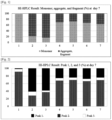
- FIG. 1 showed SE-HPLC result on day 7. It is indicated that, when comparing with control (2), the formulation for use of the present invention shows significantly reduced production of aggregates and fragments at pH 5.7, 6.0, 6.2 and 6.5, and thus the formulation is stable. Also, among various pH conditions, it has been identified that stability of the formulation was highest at pH 6.0.
- HI-HPLC analysis TSK Phenyl-5PW (7.5 ⁇ 300 mm) column was used. As a mobile phase, 50 mM sodium phosphate (pH 7.0) was used. 2 M NaCl, 50 mM sodium phosphate (pH 7.0) and 30% (v/v) acetonitrile buffer was used and allowed to flow at a concentration gradient of 0%-90%. Then, the peak of the anti-VEGF-Fc fusion protein was analyzed at an absorbance of 220 nm. During the HI-HPLC analysis, three main peaks, i.e. peak 1, peak 2 and peak 3 appeared. When changes in the peak were less, it was considered as stable.
- FIG. 2 shows a result of HI-HPLC analysis of the sample stored at 40°C with lapse of time.
- FIG. 2 showed changes in peak 1, peak 2, and peak 3 under each condition, and it has been found that, when comparing to control (2), the formulation for use of the present invention under the pH 5.7, 6.0, 6.2 and 6.5 conditions showed significantly less changes in peaks. Also, among various other pH conditions, the formulation was most stable at pH 6.0 condition, relatively.
- samples were prepared as follows.
- the final aflibercept concentration was adjusted to 40 mg/ml, and (1) a formulation having 10 mM sodium phosphate, pH 6.2, 5% sucrose, 40 mM NaCl, 0.03% polysorbate 20 (formulation stored at 5 ⁇ 3°C); (2) a formulation having 10 mM sodium phosphate, pH 6.2, 5% sucrose, 40 mM NaCl, 0.03% polysorbate 20 (formulation stored at 40°C), and various formulation respectively including 0.01% polysorbate 20 and 2.5% sucrose in a buffer of (3) 10 mM sodium phosphate, pH 6.0; (4) 10 mM histidine-HCl, pH 6.0; (5) 10 mM histidine-acetate, pH 6.0; (6) 10 mM succinate, pH 6.0; and (7) 10 mM sodium acetate, pH 5.6 were stored at 40°C for 21 days. Then, same as example 1, a monomer, aggregates, and variants were analyzed with lapse of time through SE-HP
- SDS-PAGE analysis was performed.
- 20.0 ul of analytic sample diluted to 1 mg/ml 5.0 ul of 5X sample buffer (reducing or non-reducing) was added, and the resultant was reacted at 100°C for 5 minutes and used for analysis. 12.5 ul of the final analytic sample was loaded per well.
- As a marker (M) DokDo-Mark TM protein marker was used, and loaded at 3 ul per well. 10% SDS-PAGE (reducing), and 6% SDS-PAGE (non-reducing) gel electrophoresis were performed. Then, staining was performed with coomassie blue. Until clear bands appear, destaining was performed.
- samples were prepared as follows.
- the final aflibercept concentration was adjusted to 40 mg/ml, and (1) a formulation having 10 mM sodium phosphate, pH 6.2, 5% sucrose, 40 mM NaCl, 0.03% polysorbate 20 (formulation stored at 5 ⁇ 3°C); (2) a formulation having 10 mM sodium phosphate, pH 6.2, 5% sucrose, 40 mM NaCl, 0.03% polysorbate 20 (formulation stored at 50°C), and formulations respectively including, in 10 mM histidine-acetate buffer (pH 6.0) with 0.01% polysorbate 20, (3) 2.5% trehalose; (4) 2.5% sucrose; (5) 2.5% mannitol; and (6) 2.5% glucose were stored at 50°C for 8 days. Then, same as Examples 1 and 2, monomers, aggregates, and variants produced with lapse of time were analyzed through SDS-PAGE (reducing, non-reducing), SE-HPLC, and HI-HPLC.
- samples were prepared as follows.
- the final aflibercept concentration was adjusted to 40 mg/ml, and (1) a formulation having 10 mM sodium phosphate, pH 6.2, 5% sucrose, 40 mM NaCl, 0.03% polysorbate 20 (formulation stored at 5 ⁇ 3°C); (2) a formulation having 10 mM sodium phosphate, pH 6.2, 5% sucrose, 40 mM NaCl, 0.03% polysorbate 20 (formulation stored at 45°C), and formulations respectively having, in 10 mM histidine-acetate buffer (pH 6.0) with 0.01% polysorbate 20, sucrose of varying concentrations of (3) 0%;(4) 2.5%; (5) 5%; and (6) 10% were stored at 45°C for 7 days. Then, same as Examples 1 and 2, monomers, aggregates, and variants produced with lapse of time were analyzed through SDS-PAGE (reducing, non-reducing), SE-HPLC, and HI-HPLC.
- samples were prepared as follows.
- the final aflibercept concentration was adjusted to 40 mg/ml, and (1) a formulation having 10 mM sodium phosphate, pH 6.2, 5% sucrose, 40 mM NaCl, 0.03% polysorbate 20 (formulation stored at 5 ⁇ 3°C); (2) a formulation having 10 mM sodium phosphate, pH 6.2, 5% sucrose, 40 mM NaCl, 0.03% polysorbate 20 (formulation stored at 45°C), and formulations respectively having, in 10 mM histidine-acetate buffer (pH 6.0) with 0.01% polysorbate 20, (3) without a salt, (4) 40 mM sodium chloride; (5) 40 mM ammonium chloride; (6) 40 mM ammonium sulfate; and (7) 40 mM potassium chloride were stored at 45°C for 7 days. Then, same as Examples 1 and 2, monomers, aggregates, and variants produced with lapse of time were analyzed through SDS-PAGE (reducing, non-reducing), SE-HP
- samples were prepared as follows in order to evaluate stability for the formulation depending on the presence and absence of polysorbate 20 and sucrose concentration during shaking, wherein the liquid formulation is based on the histidine-HCl buffer and contains, as an active ingredient, aflibercept which is an anti-VEGF-Fc fusion protein.
- the final aflibercept concentration was adjusted to 40 mg/ml, and formulations having (1) 10 mM sodium phosphate, pH 6.2, 5% sucrose, 40mM NaCl, 0.03% polysorbate 20; (2) 10 mM histidine-acetate, pH 6.0, 10% sucrose; (3) 10 mM histidine-HCl, pH 6.0, 7.5% sucrose; (4) 10 mM histidine-HCl, pH 6.0, 5% sucrose, 0.01% polysorbate 20; (5) 10 mM histidine-HCl, pH 6.0, 7.5% sucrose, 0.01% polysorbate 20; and (6) 10 mM histidine-HCl, pH 6.0, 10% sucrose, 0.01% polysorbate 20 were respectively stored at 5 ⁇ 3°C or25°C for 7 days with shaking at 200 rpm through an orbital shaker.
- the formulation described in (1) corresponded to the formulation disclosed in the prior patent document 1, i.e. International Publication WO 2007/149334 .
- the condition described in (2) was used as a control for changes in the histidine salt buffer.
- samples were prepared as follows.
- the final aflibercept concentration was adjusted to 40 mg/ml, and (1) a formulation having 10 mM sodium phosphate, pH 6.2, 5% sucrose, 40 mM NaCl, 0.03% polysorbate 20 (formulation stored at 5 ⁇ 3°C); (2) a formulation having 10 mM sodium phosphate, pH 6.2, 5% sucrose, 40 mM NaCl, 0.03% polysorbate 20 (formulation stored at 45°C), and formulations having, in 10 mM histidine-acetate buffer (pH 6.0), 10% sucrose, and polysorbate 20 of varying concentrations of (3) 0%; (4) 0.01%; (5) 0.03%; (6) 0.05%; and (7) 0.1% were stored at 45°C for 7 days. Then, same as Examples 1 and 2, monomers, aggregates, and variants produced with lapse of time were analyzed through SDS-PAGE (reducing, non-reducing), SE-HPLC, and HI-HPLC.
- the liquid formulation for use of the present invention has the excellent effect of inhibiting production of impurities and byproducts caused by aggregation, fragmentation and isomerization of the fusion protein having an IgG Fc domain, and thus the fusion protein can be stably stored for a long period of time and also enhanced stability can be provided under harsh conditions.
Landscapes
- Health & Medical Sciences (AREA)
- Life Sciences & Earth Sciences (AREA)
- Chemical & Material Sciences (AREA)
- Medicinal Chemistry (AREA)
- General Health & Medical Sciences (AREA)
- Veterinary Medicine (AREA)
- Public Health (AREA)
- Pharmacology & Pharmacy (AREA)
- Animal Behavior & Ethology (AREA)
- Epidemiology (AREA)
- Engineering & Computer Science (AREA)
- Chemical Kinetics & Catalysis (AREA)
- General Chemical & Material Sciences (AREA)
- Oil, Petroleum & Natural Gas (AREA)
- Proteomics, Peptides & Aminoacids (AREA)
- Immunology (AREA)
- Bioinformatics & Cheminformatics (AREA)
- Molecular Biology (AREA)
- Biochemistry (AREA)
- Cell Biology (AREA)
- Zoology (AREA)
- Gastroenterology & Hepatology (AREA)
- Organic Chemistry (AREA)
- Dermatology (AREA)
- Ophthalmology & Optometry (AREA)
- Biophysics (AREA)
- Toxicology (AREA)
- Genetics & Genomics (AREA)
- Nuclear Medicine, Radiotherapy & Molecular Imaging (AREA)
- Microbiology (AREA)
- Mycology (AREA)
- Medicinal Preparation (AREA)
- Medicines Containing Antibodies Or Antigens For Use As Internal Diagnostic Agents (AREA)
- Medicines That Contain Protein Lipid Enzymes And Other Medicines (AREA)
- Peptides Or Proteins (AREA)
Description
- The present invention relates to a stable liquid formulation of a fusion protein having an Fc domain of a human immunoglobulin G (IgG). More particularly, the present invention relates to a liquid formulation having a stabilized protein in which an Fc domain of a human IgG and a soluble extracellular domain of a vascular endothelial growth factor (VEGF) receptor are fused, for example, aflibercept, to a composition for stabilizing a protein in which an Fc domain of an IgG and a soluble extracellular domain of a VEGF receptor are fused, and to a method for stabilizing a protein in which an Fc domain of an IgG and a soluble extracellular domain of a VEGF receptor are fused.
- A type of cell-inducing dimer mitogen having selectivity to vascular endothelial cells has been identified, and is designated as vascular endothelial growth factor (VEGF). The VEGF is an important factor which increases angiogenesis and vascular permeability.
- It has been known that the VEGF activates VEGF receptors (i.e., VEGFR-1, VEGFR-2, and VEGFR-3) which are membrane-spanning tyrosine kinase receptors. Among the VEGF receptors, VEGFR-1 and VEGFR-2 have 7 Ig-like sequences in the extracellular domain in order to bind to the VEGF, a single transmembrane region, and a consensus tyrosine kinase region. These features are applied as a sequence for an anti-VEGF agent. Aflibercept, which is an ophthalmic therapeutic agent, is a soluble decoy receptor of about 115 kDa (including glycosylation) having a structure in which a second binding domain of VEGFR-1 and a third binding domain of VEGFR-2 are fused with an Fc region of a human IgG1 (see [Drug Design Development and Therapy (2013), 3(7), 711-722]).
- In mechanisms via the VEGF, abnormal angiogenesis is associated with ophthalmic diseases such as wet age-related macular degeneration, diabetic macular edema, and macular edema in retinal vein occlusion, etc. (see [J. Korean Med. Assoc. (2014), 57(7), 614-623]).
- Examples of therapeutic agents for these ophthalmic diseases include pegaptanib (trade name: Macugen), ranibizumab (trade name: Lucentis), bevacizumab (trade name: Avastin), and aflibercept (trade name: Eylea). Aflibercept is approved for the treatment of wet age-related macular degeneration in 2011 (see [Biol. Ther. (2012), 2(3) 1-22], and [Drug Design Development and Therapy (2013), 3(7), 711-722], etc.). Among the therapeutic agents above, aflibercept has been reported to have the best therapeutic effect on patients with diabetic macular edema having advanced amblyopia (see [NEJM (2015), 372(13) 1193-1203]. Aflibercept has been commercialized as a therapeutic agent for metastatic colorectal cancers (trade name: Zaltrap) and a therapeutic agent for retinal vein occlusion, diabetic macular edema, choroidal neovascularization, and wet age-related macular degeneration (trade name: Eylea).
- Physicochemical modifications occur in protein drugs including antibody drugs under the non-optimal condition. In particular, factors such as temperature, pH, concentration of a salt, contact with air, concentration of a protein, and types of buffers significantly affect oxidation, deamidation, isomerization, and polymerization, of a protein. These modifications cause aggregation, and generate fragments, isomers of the protein, so that bioactivity may be reduced. These properties differ among proteins. Particularly, for an Fc fusion protein, due to the problem in folding, separate 3 peaks appear in hydrophobic interaction chromatography (see [Antibodies (2013), 2,452-500]). The following prior Patent document 1 (International Publication
WO 2007/149334 ) discloses "an ophthalmic formulation including 1-100 mg/ml of aflibercept, 0.01-5% of an organic cosolvent (e.g., polysorbate, polyethylene glycol, propylene glycol, etc.), 30-150 mM of an isotonic agent (e.g., NaCl, KCI etc.), 5-40 mM of sodium phosphate buffer and 1.0-7.5% of stabilizer (e.g., sucrose, sorbitol, glycerol, trehalose, and mannitol, etc.)" and "a lyophilizable formulation including 5-50 mg/ml of aflibercept, 5-25 mM of sodium phosphate buffer, 0.01-0.15% of an organic cosolvent, 1-10% of a stabilizer, and 20-150 mM of an isotonic agent." The formulation disclosed in the followingprior Patent document 1 may be applied to a prefilled syringe suitable for intravitreal administration.US2006/0217311 A1 andUS 2015/0017163 A1 disclose formulations of VEGF-specific fusion protein antagonists. - For the ophthalmic formulation and lyophilizable formulation disclosed in the following
prior Patent document 1, an effect of inhibiting production of impurities and byproducts due to aggregation, fragmentation and isomerization of aflibercept, was reported. However, the formulation inprior Patent document 1 was problematic in that the effect of stabilizing aflibercept was markedly reduced under harsh conditions such as high temperature condition of 40°C or more, or shaking condition. - Therefore, the present inventors have completed the present invention by developing a liquid formulation having enhanced stability under the harsh conditions as well as stably maintaining a fusion protein having an IgG Fc domain such as aflibercept under the storing condition for a long period of time.
- The present invention is derived to solve the problems described above, and provides a formulation having stabilized protein in which an Fc domain of a human immunoglobulin G (IgG) and a soluble extracellular domain of a vascular endothelial growth factor (VEGF) receptor are fused.
- Another object of the present invention is to provide a composition for stabilizing a protein in which an Fc domain of an IgG and a soluble extracellular domain of a VEGF receptor are fused.
- Still another object of the present invention is to provide a liquid formulation including the composition for stabilizing a protein in which an Fc domain of an IgG and a soluble extracellular domain of a VEGF receptor are fused; and aflibercept.
- The present invention provides a liquid formulation for use in therapy, including:
- 10 to 100 mg/m! of aflibercept;
- a buffer including a histidine salt and having pH ranging from 5.7 to 6.2;
- a sugar selected from the group consisting of 2.5% (w/v) to 10% (w/v) of sucrose, trehalose, mannitol, and glucose; and
- 0%(v/v) to 0.03%(v/v) of surfactant selected from the group consisting of
polysorbate 20 orpolysorbate 80, - wherein the soluble extracellular domain of the VEGF receptor comprises immunoglobulin-
like domain 2 of a first VEGF receptor and immunoglobulin-like domain 3 of a second VEGF receptor, and the histidine salt is 10 mM to 50 mM of histidine-HCl or histidine-acetate, - wherein the formulation does not contain additional salt ingredients.
- According to another preferred embodiment of the present invention, the fusion protein aflibercept may be present in an amount of 10 to 40 mg/ml.
- According to the present invention, the histidine salt is histidine-HCl or histidine-acetate.
- According to the present invention, wherein the concentration of the histidine salt is 10 mM to 50 mM.
- According to the present invention, the sugar is at least one selected from the group consisting of 2.5% (w/v) to 10% (w/v) of sucrose trehalose, mannitol, and glucose.
- According to still another preferred embodiment of the present invention, the sugar may be 5% (w/v) to 10% (w/v) of sucrose.
- According to the present invention, the surfactant is 0% (v/v) to 0.03% (v/v) of
polysorbate 20 orpolysorbate 80, for example, 0% (v/v) or 0.01% (v/v) to 0.03% (v/v). - The claims of present invention regard a liquid formulation for use in therapy including a buffer including a histidine salt and having pH ranging from 5.7 to 6.2; one or more stabilizers selected from the group consisting of sugars and surfactants; and aflibercept; wherein the histidine salt is 10 mM to 50 mM of histidine-HCl or histidine-acetate, and the sugar is at least one selected from the group consisting of 2.5% (w/v) to 10% (w/v) of sucrose, trehalose, mannitol and glucose, and the surfactant is 0% (v/v) to 0.03% (v/v) of
polysorbate 20 orpolysorbate 80, for example, 0% (v/v) or 0.01 % (v/v) to 0.03% (v/v). - According to a preferred embodiment of the present invention, the liquid formulation may be suitable for intravitreal injection.
- In the liquid formulation for use provided by the present invention, production of impurities and byproducts due to aggregation, fragmentation and isomerization of the fusion protein having an Fc domain of a human immunoglobulin G (IgG) (in particular, the protein in which an Fc domain of a human immunoglobulin G (IgG) and a soluble extracellular domain of a vascular endothelial growth factor (VEGF) receptor are fused (i.e. aflibercept)) under harsh conditions such as a high temperature condition of 40°C or more or shaking condition, as well as general storing condition, is significantly reduced, and thus stability for long-term storage may be enhanced.
- Also, the present invention improves therapeutic effects on various ophthalmic diseases (e.g., retinal vein occlusion, diabetic macular edema, choroidal neovascularization and wet age-related macular degeneration, etc.) caused by abnormal angiogenesis, while pursuing stabilization of bioactivity through a stable liquid formulation suitable for intravitreal injection of an anti-VEGF-Fc fusion protein including aflibercept.
-
-
FIG. 1 is a graph measuring changes in fragment and aggregate contents of a sample stored for 7 days at 40°C by varying pH of the histidine salt buffer including aflibercept. -
FIG. 2 is a graph measuring changes inpeaks -
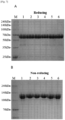
FIG. 3 shows SDS-PAGE analysis results of various buffers (sodium phosphate, succinate, histidine-HCl, histidine-acetate, and sodium acetate) including aflibercept after being stored for 21 days at 40°C. -
FIG. 4 shows SDS-PAGE analysis results of a formulation including various sugars (trehalose, sucrose, mannitol, and glucose) in the histidine salt buffer including aflibercept after being stored for 8 days at 50°C. -
FIG. 5 is a graph measuring changes in fragment and aggregate contents (%) of a sample stored for 7 days at 45°C by varying sucrose concentrations in the histidine salt buffer including aflibercept. -
FIG. 6 is a graph measuring changes in fragment and aggregate contents (%) of a sample stored for 7 days at 45°C, wherein the sample is a formulation including various salts (sodium chloride, ammonium chloride, ammonium sulfate, and potassium chloride) in the histidine salt buffer including aflibercept. -
FIG. 7 shows SDS-PAGE results of a formulation including the histidine salt buffer including aflibercept with or without polysorbate, wherein the formulation is stored for 7 days at 25°C with shaking at 200 rpm. -
FIG. 8 is a graph measuring changes in fragment and aggregate contents (%) of a sample stored for 7 days at 45°C, wherein the sample is a formulation including various concentrations of polysorbate 20 (0%, 0.01%, 0.03%, 0.05% and 0.1%) in the histidine salt buffer including aflibercept. - Hereinafter, the present invention will be described in more detail.
- As described above, the previously provided formulation in which a fusion protein such as aflibercept having an IgG Fc domain is stabilized has a problem in that stability is significantly reduced under the harsh conditions, so that it has been required to develop a formulation capable of maintaining the fusion protein under the harsh conditions in addition to the general storing conditions.
- Therefore, the present invention has found a solution for above-described problems by providing a liquid formulation for use as of
claim 1 including: aflibercept, which is a protein in which an Fc domain of a human immunoglobulin G (IgG) and a soluble extracellular domain of a vascular endothelial growth factor (VEGF) receptor are fused; and a buffer including a histidine salt and pH ranging from 5.7 to 6.2. Since the liquid formulation for use of the present invention stably maintains the fusion protein under general storing conditions for a long period of time and also significantly reduces production of impurities and byproducts under harsh conditions, it is possible to provide a formulation having significantly improved stability relative to the known fusion protein formulation under the inevitable condition where the optimal storing condition would not be provided. - The present invention provides a liquid formulation for use as of
claim 1 including aflibercept, which is a protein in which an Fc domain of a human immunoglobulin G (IgG) and a soluble extracellular domain of a vascular endothelial growth factor (VEGF) are fused; and a buffer including a histidine salt and having a pH ranging from 5.7 to 6.2. - In the liquid formulation for use of the present invention, the fusion protein aflibercept beis included in an amount of about 10-100 mg/ml, preferably about 10-80 mg/ml, and more preferably about 10-40 mg/ml.
- In the liquid formulation according to the present invention, the "buffer" refers to a buffered solution enduring changes in pH due to the action of an acid-base conjugate ingredient of the buffer. In the present invention, a buffer including a histidine salt and having pH ranging from 5.7 to 6.2 was used, wherein the histidine salt is histidine-HCl or histidine-acetate, and the histidine salt concentration is10 mM to 50 mM.
- As shown in
FIGS. 1 and 2 , for the formulation using the histidine salt buffer having pH of 5.7 to 6.2, the effect of inhibiting production of fragments and aggregates was significantly increased more than that of control formulation (2). In particular, stability of the formulation at pH 6.0 is most excellent. - When pH of the buffer was decreased to less than 5.7, as shown in
FIGS. 1 and 2 , stability of the formulation was significantly reduced. For pH of above 6.5, a problem of increasing impurities caused by disruption or aggregation of a target protein may occur. - In addition, as shown in
FIG. 3 , it has been found that the effect of inhibiting production of impurities and aggregates is most excellent, when the histidine-HCl or histidine-acetate buffer was used among various buffer conditions. - Further, the formulation (3) of
FIG. 5 was to measure stability of aflibercept in the 10 mM histidine salt buffer having pH 6.0, and it has been found that aflibercept stability similar to that of control formulation (2) was maintained under the buffer condition. - The liquid formulation for use of the present invention as claimed further includes one or more stabilizer selected from the group consisting of sugars and surfactants in addition to the fusion protein, which is an active ingredient of the liquid formulation, and the histidine salt buffer.
- In the liquid formulation for use of the present invention, the sugar is any one selected from the group consisting of trehalose, sucrose, mannitol and glucose. The sugar concentration is 2.5-10% (w/v).
- As shown in
FIG. 4 , all of formulations (3) to (6) which respectively include trehalose, sucrose, mannitol, and glucose in the histidine salt buffer showed enhanced aflibercept stability more than the control formulation (2). In particular, in the case where the sugar was sucrose, aflibercept stability was most excellent. - Further, as shown in
FIG. 5 , formulation (3) without sucrose showed similar formulation stability as that of control formulation (2). As sucrose concentration increased, the effect of inhibiting production of aggregates and impurities increased with respect to control (2). - In the liquid formulation for use of the present invention, the surfactant may be used to ophthalmic drug delivery. The surfactant concentration as claimed is 0-0.3% (v/v), for example, 0% (v/v) or 0.01 % (v/v) to 0.03% (v/v).
- To evaluate stability of formulations depending whether an additional salt ingredient besides components included in the liquid formulation for use claimed is added or not, formulations respectively including various salts and a formulation without salt were prepared. Consequently, as shown in
FIG. 6 , it has been observed that the effect of inhibiting production of impurities and aggregates was most excellent in the formulation without additional salt ingredients. - The liquid formulation for use according to the present invention maintains stability of the fusion protein under general storing conditions for a long period of time and has an excellent effect of inhibiting production of impurities and byproducts of the fusion protein under harsh conditions, and thus stability of the fusion protein is enhanced more than that of the typical liquid formulation. Herein, the term "harsh conditions" refers to an environment chemically and physically unfavorable to the fusion protein, and leads to unacceptable protein stability. The harsh conditions include, for example, high temperature or shaking condition.
- Herein, the term "stable" indicates that a protein essentially maintains physical and/or chemical stability and/or biological activity thereof during storing. Various analytical techniques for measuring protein stability are available in the art. Stability may be measured at selected temperature and selected period.
- The protein may be considered to "maintain physical stability thereof" in a formulation, when the protein shows less or no change in aggregation, precipitation, and/or modification during observation of color and/or transparency with naked eyes, UV light-scattering measurement (i.e., notable aggregates are measured), or size exclusion chromatograph (SEC) measurement.
- As shown in
FIGS. 1 to 6 and8 , the various conditions of liquid formulations for use of the present invention showed significantly inhibited production of impurities and aggregates more than control formulation (2), thereby being relatively stable for 7 to 21 days at a temperature ranging from 40 to 50°C. - Various conditions of liquid formulations for use of the present invention were stored at 25°C with shaking at 200 rpm for 7 days, and then each formulation was subjected to SE-HPLC and HI-HPLC. Consequently, irrespective of presence and absence of
polysorbate 20, production of aggregates and modifications was inhibited. Likewise, in the SDS-PAGE (non-reducing) (FIG. 7 ) and SE-HPLC results, it has been observed that production of aggregate and protein fragments was inhibited more than that of control (1) irrespective of presence and absence of polysorbate under the shaking condition at 25°C for 7 days. In particular, the effect of inhibiting production of aggregates and protein fragments was slightly better for the formulation without polysorbate. - The present invention illustrates a method of stabilizing a protein in which an Fc domain of a human immunoglobulin G (IgG) and a soluble extracellular domain of a vascular endothelial growth factor VEGF receptor are fused by using a buffer including a histidine salt and having pH of 5.7 to 6.2.
- Since the description about feature of the buffer and fusion protein is the same as described above, overlapping contents are not described in order to avoid excess complexity of the present specification.
- In the method of stabilizing the fusion protein of the present invention, the buffer may further include one or more stabilizers selected from the group consisting of sugars and surfactants.
- Since description about additionally added sugar and surfactant are the same as described above, these features are not described.
- The present invention provides the use of a composition (see claim 4) for stabilizing aflibercept, which is a fusion protein in which an Fc domain of an IgG and a soluble extracellular domain of a VEGF receptor are fused, the composition including a buffer including a histidine salt and having pH of 5.7 to 6.2; and one or more stabilizers selected from the group consisting of sugars and surfactants, wherein the histidine salt is 10 mM to 50 mM histidine-HCl, or histidine-acetate; the sugar is any one selected from the group consisting of 2.5% (w/v) to 10% (w/v) of sucrose, trehalose, mannitol, and glucose; and the surfactant is any one selected from 0% (v/v) to 0.03% (v/v), of
polysorbate 20 orpolysorbate 80, for example, 0% (v/v) or 0.01% (v/v) to 0.03% (v/v). - The description about features of the stabilizing composition is the same as described above, and thus overlapping contents are not described in order to avoid excess complicity of the present specification.
- The present invention as claimed, hence, provides the use of a liquid formulation including the composition for stabilizing a protein in which an Fc domain of an IgG and a soluble extracellular domain of a VEGF receptor are fused; and aflibercept.
- The liquid formulation for medicinal use of
claim 1 may be for preventing or treating various diseases without limitation as long as the diseases can be treated with aflibercept treatment. Preferably, the formulation for use may be used to treat or prevent various ophthalmic diseases such as retinal vein occlusion, diabetic macular edema, choroidal neovascularization and wet age-related macular degeneration, etc. - The liquid formulation for use according to the present invention may further include a pharmaceutically acceptable carrier, diluent, and excipient, etc.
- The pharmaceutically acceptable carrier is a typically used in a formulation, and may include lactose, dextrose, sucrose, sorbitol, mannitol, starch, gum acacia, calcium phosphate, alginate, gelatin, calcium silicate, microcrystalline cellulose, polyvinylpyrrolidone, cellulose, water, syrup, methylcellulose, methyl hydroxybenzoate, propyl hydroxybenzoate, talc, magnesium stearate and mineral oil, but not limited thereto.
- In addition to above ingredients, the liquid formulation for use of the present invention may further include lubricants, wetting agents, sweetening agents, flavoring agents, emulsifiers, suspensions, preservants, etc. The suitable pharmaceutically acceptable carrier and formulation are described in detail in Remington's Pharmaceutical Sciences (19th ed., 1995).
- The liquid formulation for use of the present invention may be administered in various routes depending on purposes. The formulation for use is preferably administered through intravitreal injection for the treatment of ophthalmic diseases. Also, the formulation may be applied to a pre-filled syringe suitable for intravitreal injection.
- The suitable amount of administration of the liquid formulation for use of the present invention may vary depending on factors such as formulation methods, administration modes, age, weight, sex, and disease state of patients, foods, administration time, administration routes, excretion rates, and reaction sensitivity. Doctors with ordinary skills may easily determine and prescribe the amount of administration effective for desired therapy or prevention.
- It should be understood that the scope of the present invention is not limited to the following examples, and all technical and scientific terms used in the specification have the same meaning as those typically appreciated by a person with ordinary skill in the technical field to which the present invention belongs ("a person skilled in the art").
- In Example 1 and following Examples 2 to 5, the liquid formulation disclosed in prior art document International Publication
WO 2007/149334 was stored at 5±3°C, and used as control (1). Also, control (1) was subjected to the harsh condition (a temperature of 40°C or more) and used as control (2). Then, stability of the formulation was compared to stability of various forms of liquid formulations for use of the present invention. - In the present example, to identify the optimal pH of the liquid formulation containing, as an active ingredient, aflibercept which is an anti-VEGF-Fc fusion protein, samples were prepared for each pH based on the histidine salt buffer as follows.
- Specifically, the final aflibercept concentration was adjusted to 40 mg/ml, and (1) a formulation having 10 mM sodium phosphate, pH 6.2, 5% sucrose, 40 mM NaCl, 0.03% polysorbate 20 (formulation stored at 5±3°C); (2) a formulation having 10 mM sodium phosphate, pH 6.2, 5% sucrose, 40 mM NaCl, 0.03% polysorbate 20 (formulation stored at 40°C) and formulations having 10% trehalose, 0.01% (w/v)
polysorbate 20 and 10 mM histidine-HCl buffer respectively having pH of (3) 5.5; (4) 5.7; (5) 6.0; (6) 6.2; and (7) 6.5 were stored at 40°C for 7 days. Then, impurities produced with lapse of time were analyzed through size exclusion high-performance liquid chromatography (SE-HPLC) and HI-HPLC. - In SE-HPLC analysis, TSK-gel G3000SWXL (7.8 × 300 mm) column (TOSOH Co., Japan) was used, and 0.2 M potassium phosphate (pH 6.2), 0.25 M KCl and 0.05% (w/v) NaN3 buffer were used at a flow rate of 0.5 ml/min. The peak of the anti-VEGF-Fc fusion protein was analyzed at an absorbance of 280 nm.
- In SE-HPLC analysis for the sample stored at 40°C for 7 days, the monomer content was calculated, and aggregates, which are high molecular weight impurities, and fragments, which are low molecular weight impurities, were combined and calculated.
FIG. 1 showed SE-HPLC result onday 7. It is indicated that, when comparing with control (2), the formulation for use of the present invention shows significantly reduced production of aggregates and fragments at pH 5.7, 6.0, 6.2 and 6.5, and thus the formulation is stable. Also, among various pH conditions, it has been identified that stability of the formulation was highest at pH 6.0. - In HI-HPLC analysis, TSK Phenyl-5PW (7.5 × 300 mm) column was used. As a mobile phase, 50 mM sodium phosphate (pH 7.0) was used. 2 M NaCl, 50 mM sodium phosphate (pH 7.0) and 30% (v/v) acetonitrile buffer was used and allowed to flow at a concentration gradient of 0%-90%. Then, the peak of the anti-VEGF-Fc fusion protein was analyzed at an absorbance of 220 nm. During the HI-HPLC analysis, three main peaks, i.e.
peak 1,peak 2 andpeak 3 appeared. When changes in the peak were less, it was considered as stable. -
FIG. 2 shows a result of HI-HPLC analysis of the sample stored at 40°C with lapse of time.FIG. 2 showed changes inpeak 1,peak 2, andpeak 3 under each condition, and it has been found that, when comparing to control (2), the formulation for use of the present invention under the pH 5.7, 6.0, 6.2 and 6.5 conditions showed significantly less changes in peaks. Also, among various other pH conditions, the formulation was most stable at pH 6.0 condition, relatively. - In the present example, to identify the optimal buffer condition for the liquid formulation containing, as an active ingredient, aflibercept which is an anti-VEGF-Fc fusion protein, samples were prepared as follows.
- Specifically, the final aflibercept concentration was adjusted to 40 mg/ml, and (1) a formulation having 10 mM sodium phosphate, pH 6.2, 5% sucrose, 40 mM NaCl, 0.03% polysorbate 20 (formulation stored at 5±3°C); (2) a formulation having 10 mM sodium phosphate, pH 6.2, 5% sucrose, 40 mM NaCl, 0.03% polysorbate 20 (formulation stored at 40°C), and various formulation respectively including 0.01
% polysorbate 20 and 2.5% sucrose in a buffer of (3) 10 mM sodium phosphate, pH 6.0; (4) 10 mM histidine-HCl, pH 6.0; (5) 10 mM histidine-acetate, pH 6.0; (6) 10 mM succinate, pH 6.0; and (7) 10 mM sodium acetate, pH 5.6 were stored at 40°C for 21 days. Then, same as example 1, a monomer, aggregates, and variants were analyzed with lapse of time through SE-HPLC and HI-HPLC. - Thereafter, SDS-PAGE analysis was performed. To 20.0 ul of analytic sample diluted to 1 mg/ml, 5.0 ul of 5X sample buffer (reducing or non-reducing) was added, and the resultant was reacted at 100°C for 5 minutes and used for analysis. 12.5 ul of the final analytic sample was loaded per well. As a marker (M), DokDo-Mark™ protein marker was used, and loaded at 3 ul per well. 10% SDS-PAGE (reducing), and 6% SDS-PAGE (non-reducing) gel electrophoresis were performed. Then, staining was performed with coomassie blue. Until clear bands appear, destaining was performed.
- As a result of SDS-PAGE (non-reducing) (
FIG. 3 ), and SE-HPLC and HI-HPLC analysis, it has been found that, when comparing to control (2), the formulations of 10 mM histidine-HCl and 10 mM histidine-acetate of the present invention significantly inhibited production of aggregates and impurities. - In the present example, to identify the optimal sugar for the liquid formulation containing, as an active ingredient, aflibercept which is an anti-VEGF-Fc fusion protein, samples were prepared as follows.
- Specifically, the final aflibercept concentration was adjusted to 40 mg/ml, and (1) a formulation having 10 mM sodium phosphate, pH 6.2, 5% sucrose, 40 mM NaCl, 0.03% polysorbate 20 (formulation stored at 5±3°C); (2) a formulation having 10 mM sodium phosphate, pH 6.2, 5% sucrose, 40 mM NaCl, 0.03% polysorbate 20 (formulation stored at 50°C), and formulations respectively including, in 10 mM histidine-acetate buffer (pH 6.0) with 0.01
% polysorbate 20, (3) 2.5% trehalose; (4) 2.5% sucrose; (5) 2.5% mannitol; and (6) 2.5% glucose were stored at 50°C for 8 days. Then, same as Examples 1 and 2, monomers, aggregates, and variants produced with lapse of time were analyzed through SDS-PAGE (reducing, non-reducing), SE-HPLC, and HI-HPLC. - As a result of SDS-PAGE (reducing, non-reducing) analysis (
FIG. 4 ) and SE-HPLC and HI-HPLC analysis, when comparing to control (2), all formulations respectively including trehalose, sucrose, mannitol, and glucose of the present invention significantly inhibited production of aggregates and impurities. In particular, the effect of inhibiting production of impurities and aggregates was most excellent in the formulation including sucrose. - In the present example, to identify the optimal sugar concentration for the liquid formulation containing, as an active ingredient, aflibercept which is an anti-VEGF-Fc fusion protein, samples were prepared as follows.
- Specifically, the final aflibercept concentration was adjusted to 40 mg/ml, and (1) a formulation having 10 mM sodium phosphate, pH 6.2, 5% sucrose, 40 mM NaCl, 0.03% polysorbate 20 (formulation stored at 5±3°C); (2) a formulation having 10 mM sodium phosphate, pH 6.2, 5% sucrose, 40 mM NaCl, 0.03% polysorbate 20 (formulation stored at 45°C), and formulations respectively having, in 10 mM histidine-acetate buffer (pH 6.0) with 0.01
% polysorbate 20, sucrose of varying concentrations of (3) 0%;(4) 2.5%; (5) 5%; and (6) 10% were stored at 45°C for 7 days. Then, same as Examples 1 and 2, monomers, aggregates, and variants produced with lapse of time were analyzed through SDS-PAGE (reducing, non-reducing), SE-HPLC, and HI-HPLC. - In the SE-HPLC analysis results, it has been found that the formulation without sucrose of the present invention (3) showed formulation stability similar to that of control (2), and as the sucrose concentration in each formulation for use of the present invention increased, the effect of inhibiting production of aggregates and impurities was increased with respect to control (2) (
FIG. 5 ). - In the present example, to identify an additional salt ingredient optimal for the liquid formulation containing, as an active ingredient, aflibercept which is an anti-VEGF-Fc fusion protein, samples were prepared as follows.
- Specifically, the final aflibercept concentration was adjusted to 40 mg/ml, and (1) a formulation having 10 mM sodium phosphate, pH 6.2, 5% sucrose, 40 mM NaCl, 0.03% polysorbate 20 (formulation stored at 5±3°C); (2) a formulation having 10 mM sodium phosphate, pH 6.2, 5% sucrose, 40 mM NaCl, 0.03% polysorbate 20 (formulation stored at 45°C), and formulations respectively having, in 10 mM histidine-acetate buffer (pH 6.0) with 0.01
% polysorbate 20, (3) without a salt, (4) 40 mM sodium chloride; (5) 40 mM ammonium chloride; (6) 40 mM ammonium sulfate; and (7) 40 mM potassium chloride were stored at 45°C for 7 days. Then, same as Examples 1 and 2, monomers, aggregates, and variants produced with lapse of time were analyzed through SDS-PAGE (reducing, non-reducing), SE-HPLC, and HI-HPLC analysis. - As a result of SDS-PAGE and SE-HPLC (
FIG. 6 ) analysis, it has been observed that, when comparing to control (2), the formulation without an additional salt ingredient of the present invention (3) showed the most excellent effect of inhibiting production of impurities and aggregates. - In the present example, samples were prepared as follows in order to evaluate stability for the formulation depending on the presence and absence of
polysorbate 20 and sucrose concentration during shaking, wherein the liquid formulation is based on the histidine-HCl buffer and contains, as an active ingredient, aflibercept which is an anti-VEGF-Fc fusion protein. - Specifically, the final aflibercept concentration was adjusted to 40 mg/ml, and formulations having (1) 10 mM sodium phosphate, pH 6.2, 5% sucrose, 40mM NaCl, 0.03
% polysorbate 20; (2) 10 mM histidine-acetate, pH 6.0, 10% sucrose; (3) 10 mM histidine-HCl, pH 6.0, 7.5% sucrose; (4) 10 mM histidine-HCl, pH 6.0, 5% sucrose, 0.01% polysorbate 20; (5) 10 mM histidine-HCl, pH 6.0, 7.5% sucrose, 0.01% polysorbate 20; and (6) 10 mM histidine-HCl, pH 6.0, 10% sucrose, 0.01% polysorbate 20 were respectively stored at 5±3°C or25°C for 7 days with shaking at 200 rpm through an orbital shaker. - The formulation described in (1) corresponded to the formulation disclosed in the
prior patent document 1, i.e. International PublicationWO 2007/149334 . The condition described in (2) was used as a control for changes in the histidine salt buffer. - As shown in SE-HPLC and HI-HPLC analysis results, it has been found that, irrespective of the presence and absence of polysorbate, the formulation stored for 7 days at 25°C with shaking showed inhibited production of aggregates and variants compared to control (1). In SDS-PAGE (non-reducing) (
FIG. 7 ) and SE-HPLC results, it has been observed that, irrespective of the presence and absence of polysorbate, the formulation stored for 7 days at 25°C with shaking showed inhibited production of aggregates and variants compared to control (1) as well. In particular, the effect of inhibiting production of protein fragments and aggregates of the formulation without polysorbate was slightly better. - In the present example, to identify the
optimal polysorbate 20 concentration for the liquid formulation containing, as an active ingredient, aflibercept which is an anti-VEGF-Fc fusion protein, samples were prepared as follows. - Specifically, the final aflibercept concentration was adjusted to 40 mg/ml, and (1) a formulation having 10 mM sodium phosphate, pH 6.2, 5% sucrose, 40 mM NaCl, 0.03% polysorbate 20 (formulation stored at 5±3°C); (2) a formulation having 10 mM sodium phosphate, pH 6.2, 5% sucrose, 40 mM NaCl, 0.03% polysorbate 20 (formulation stored at 45°C), and formulations having, in 10 mM histidine-acetate buffer (pH 6.0), 10% sucrose, and
polysorbate 20 of varying concentrations of (3) 0%; (4) 0.01%; (5) 0.03%; (6) 0.05%; and (7) 0.1% were stored at 45°C for 7 days. Then, same as Examples 1 and 2, monomers, aggregates, and variants produced with lapse of time were analyzed through SDS-PAGE (reducing, non-reducing), SE-HPLC, and HI-HPLC. - In the SE-HPLC analysis results, it has been found that the formulation (3) without
polysorbate 20 of the present invention and formulations (4), (5), (6) and (7) withpolysorbate 20 had the superior effect of inhibiting production of aggregates and impurities than the effect of control formulation (2) (FIG. 8 ). - Consequently, through Examples 1 to 7, it has been found that, various conditions of liquid formulations of the present invention have greatly inhibited fragmentation and aggregation more than the formulation in prior patent.
- Through the formulation stability test, it has been found that the liquid formulation for use of the present invention has the excellent effect of inhibiting production of impurities and byproducts caused by aggregation, fragmentation and isomerization of the fusion protein having an IgG Fc domain, and thus the fusion protein can be stably stored for a long period of time and also enhanced stability can be provided under harsh conditions.
- Hereinabove, particular features of the present invention are described in detail. The scope of the present invention is defined in the claims.
Claims (5)
- A liquid formulation for use in therapy, comprising:10 to 100 mg/ml of aflibercept;a buffer including a histidine salt and having pH ranging from 5.7 to 6.2, wherein the histidine salt is 10 mM to 50 mM of histidine-HCl or histidine-acetate;
2.5% (w/v) to 10% (w/v) of sugar selected from the group consisting of trehalose, sucrose, mannitol and glucose; and0% (v/v) to 0.03% (v/v) of surfactant selected from the group consisting of polysorbate 20 and polysorbate 80,wherein the formulation does not contain additional salt ingredients. - The liquid formulation for use according to claim 1, wherein the liquid formulation is suitable for intravitreal injection.
- The liquid formulation for use according to claim 1, comprising:40 mg/ml of aflibercept,10 mM of histidine-HCl buffer,10%(w/v) of trehalose, and0.01%(v/v) of polysorbate 20.
- Use of a liquid formulation, comprising:a buffer including a histidine salt and having pH ranging from 5.7 to 6.2, wherein the histidine salt is 10 mM to 50 mM of histidine-HCl or histidine-acetate;
2.5% (w/v) to 10% (w/v) of sugar selected from the group consisting of trehalose, sucrose, mannitol and glucose; and0% (v/v) to 0.03% (v/v) of surfactant selected from the group consisting of polysorbate 20 and polysorbate 80,wherein the formulation does not contain additional salt ingredients,for stablizing of aflibercept. - The use of claim 4, wherein the liquid formulation is suitable for intravitreal injection.
Applications Claiming Priority (4)
| Application Number | Priority Date | Filing Date | Title |
|---|---|---|---|
| KR20150089186 | 2015-06-23 | ||
| KR1020160078234A KR101808234B1 (en) | 2015-06-23 | 2016-06-22 | A stable liquid formulation of fusion protein with IgG Fc domain |
| PCT/KR2016/006679 WO2016208989A1 (en) | 2015-06-23 | 2016-06-23 | A stable liquid formulation of fusion protein with igg fc domain |
| EP16814702.3A EP3313373B1 (en) | 2015-06-23 | 2016-06-23 | A stable liquid formulation of fusion protein with igg fc domain |
Related Parent Applications (2)
| Application Number | Title | Priority Date | Filing Date |
|---|---|---|---|
| EP16814702.3A Division-Into EP3313373B1 (en) | 2015-06-23 | 2016-06-23 | A stable liquid formulation of fusion protein with igg fc domain |
| EP16814702.3A Division EP3313373B1 (en) | 2015-06-23 | 2016-06-23 | A stable liquid formulation of fusion protein with igg fc domain |
Publications (3)
| Publication Number | Publication Date |
|---|---|
| EP3824879A1 EP3824879A1 (en) | 2021-05-26 |
| EP3824879C0 EP3824879C0 (en) | 2024-11-27 |
| EP3824879B1 true EP3824879B1 (en) | 2024-11-27 |
Family
ID=57810344
Family Applications (3)
| Application Number | Title | Priority Date | Filing Date |
|---|---|---|---|
| EP16814702.3A Active EP3313373B1 (en) | 2015-06-23 | 2016-06-23 | A stable liquid formulation of fusion protein with igg fc domain |
| EP24210101.2A Pending EP4477233A3 (en) | 2015-06-23 | 2016-06-23 | A stable liquid formulation of fusion protein with igg fc domain |
| EP20195634.9A Active EP3824879B1 (en) | 2015-06-23 | 2016-06-23 | A stable liquid formulation of fusion protein with igg fc domain |
Family Applications Before (2)
| Application Number | Title | Priority Date | Filing Date |
|---|---|---|---|
| EP16814702.3A Active EP3313373B1 (en) | 2015-06-23 | 2016-06-23 | A stable liquid formulation of fusion protein with igg fc domain |
| EP24210101.2A Pending EP4477233A3 (en) | 2015-06-23 | 2016-06-23 | A stable liquid formulation of fusion protein with igg fc domain |
Country Status (12)
| Country | Link |
|---|---|
| US (1) | US9982032B2 (en) |
| EP (3) | EP3313373B1 (en) |
| JP (1) | JP6541875B2 (en) |
| KR (3) | KR101808234B1 (en) |
| CN (2) | CN107889457B (en) |
| AU (1) | AU2016283557B9 (en) |
| CA (1) | CA2990582C (en) |
| ES (2) | ES3007883T3 (en) |
| MX (1) | MX2017016907A (en) |
| PL (2) | PL3824879T3 (en) |
| RU (1) | RU2688679C1 (en) |
| WO (1) | WO2016208989A1 (en) |
Families Citing this family (37)
| Publication number | Priority date | Publication date | Assignee | Title |
|---|---|---|---|---|
| DK3024484T3 (en) | 2013-07-23 | 2018-10-08 | Novaliq Gmbh | STABILIZED ANTIBODY COMPOSITIONS |
| MX390837B (en) * | 2015-10-16 | 2025-03-21 | Regeneron Pharma | STABLE PROTEIN COMPOSITIONS. |
| EP3407868A1 (en) | 2016-01-26 | 2018-12-05 | Formycon AG | Liquid formulation of a vegf antagonist |
| CN109937034B (en) * | 2016-11-21 | 2022-09-16 | 济世-伊沃泰克生物制品有限公司 | Abutip preparation and application thereof |
| KR101861163B1 (en) * | 2017-04-26 | 2018-05-25 | 삼천당제약주식회사 | Ophthalmic pharmaceutical composition |
| WO2019020777A1 (en) * | 2017-07-26 | 2019-01-31 | Formycon Ag | Liquid formulation of a vegf antagonist |
| US20200255496A1 (en) * | 2017-09-18 | 2020-08-13 | Amgen Inc. | Vegfr-fc fusion protein formulations |
| CN111182893A (en) | 2017-10-04 | 2020-05-19 | 诺瓦利克有限责任公司 | Ophthalmic composition comprising F6H8 |
| WO2019099921A2 (en) * | 2017-11-17 | 2019-05-23 | Amgen Inc. | Vegfr-fc fusion protein formulations |
| MY202872A (en) * | 2017-11-20 | 2024-05-28 | Just Evotec Biologics Inc | Aflibercept formulations containing a lysine salt as tonicifying agent and uses thereof |
| EP3730126B1 (en) * | 2017-12-22 | 2025-05-14 | Samsung Bioepis Co., Ltd. | Liquid composition comprising vegf antagonist |
| CN111699004A (en) | 2018-02-06 | 2020-09-22 | 豪夫迈·罗氏有限公司 | Treatment of ophthalmic disorders |
| WO2019173767A1 (en) * | 2018-03-08 | 2019-09-12 | Coherus Biosciences Inc. | Stable aqueous formulations of aflibercept |
| US11426446B2 (en) | 2018-03-08 | 2022-08-30 | Coherus Biosciences, Inc. | Stable aqueous formulations of aflibercept |
| GB201806918D0 (en) * | 2018-04-27 | 2018-06-13 | Enleofen Bio Pte Ltd | Combination treatment for eye fibrosis |
| JP7855312B2 (en) | 2018-04-27 | 2026-05-08 | ノバリック ゲーエムベーハー | Ophthalmic composition containing tafluprost for the treatment of glaucoma |
| RS67656B1 (en) | 2018-05-10 | 2026-02-27 | Regeneron Pharma | FORMULATIONS CONTAINING HIGH CONCENTRATIONS OF VEGF RECEPTOR FUSION PROTEIN |
| WO2020055123A1 (en) * | 2018-09-10 | 2020-03-19 | 삼성바이오에피스 주식회사 | Liquid composition comprising protein |
| US20210353713A1 (en) | 2018-10-26 | 2021-11-18 | Amgen Inc. | Formulations comprising a tris buffer and a protein |
| CN119033684A (en) | 2018-10-29 | 2024-11-29 | 豪夫迈·罗氏有限公司 | Antibody formulations |
| EP3923907B1 (en) | 2019-02-13 | 2024-09-25 | Novaliq GmbH | Compositions and methods for the treatment of ocular neovascularization |
| PE20212185A1 (en) | 2019-02-18 | 2021-11-11 | Lilly Co Eli | FORMULATION OF THERAPEUTIC ANTIBODIES |
| PE20240329A1 (en) | 2019-06-05 | 2024-02-27 | Regeneron Pharma | DEVICES AND METHODS FOR PRECISION DOSE ADMINISTRATION |
| GB201911461D0 (en) * | 2019-08-09 | 2019-09-25 | Arecor Ltd | Novel composition |
| KR20210077645A (en) * | 2019-12-17 | 2021-06-25 | 주식회사 프로젠 | Novel injectable formulation |
| EP3838260A1 (en) * | 2019-12-20 | 2021-06-23 | Ares Trading S.A. | Igg:tgf rii fusion protein composition |
| WO2021123432A1 (en) * | 2019-12-20 | 2021-06-24 | Ares Trading S.A. | Igg:tgfbetarii fusion protein composition |
| KR102337471B1 (en) * | 2019-12-23 | 2021-12-09 | 한국프라임제약주식회사 | A pharmaceutical formulation comprising VEGFR fusion protein |
| EP4186492B1 (en) * | 2020-07-24 | 2026-01-21 | Pangen Biotech Inc. | Ophthalmic liquid composition |
| EP4190310A4 (en) * | 2020-07-31 | 2024-01-17 | Celltrion, Inc. | STABLE PHARMACEUTICAL PREPARATION |
| CN114324882B (en) * | 2020-10-12 | 2022-12-27 | 广东菲鹏生物有限公司 | Protein stabilizer and application thereof |
| CN114681592A (en) * | 2020-12-31 | 2022-07-01 | 天境生物科技(杭州)有限公司 | Formulations comprising soluble gp130 dimers and methods of use |
| CN115518038A (en) * | 2021-06-25 | 2022-12-27 | 成都康弘药业集团股份有限公司 | Stable ophthalmic preparation |
| US12649031B2 (en) | 2021-09-08 | 2026-06-09 | Regeneron Pharmaceuticals, Inc. | Methods for delivering agents with pre-filled syringes to minimize intraocular inflammation |
| AU2023331423A1 (en) * | 2022-09-01 | 2025-02-13 | Vegenics Pty Limited | Pharmaceutical composition and method of using same |
| USD1120314S1 (en) | 2022-11-30 | 2026-03-24 | Regeneron Pharmaceuticals, Inc. | Dose delivery device |
| WO2026142345A1 (en) * | 2024-12-24 | 2026-07-02 | 주식회사 알테오젠 | Stable liquid formulation of fusion protein having igg fc domain |
Citations (11)
| Publication number | Priority date | Publication date | Assignee | Title |
|---|---|---|---|---|
| WO2003009817A2 (en) | 2001-07-25 | 2003-02-06 | Protein Design Labs, Inc. | Stable lyophilized pharmaceutical formulation of igg antibodies |
| WO2004055164A2 (en) | 2002-12-13 | 2004-07-01 | Abgenix, Inc. | System and method for stabilizing antibodies with histidine |
| WO2006044908A2 (en) | 2004-10-20 | 2006-04-27 | Genentech, Inc. | Antibody formulation in histidine-acetate buffer |
| US20060217311A1 (en) | 2005-03-25 | 2006-09-28 | Daniel Dix | VEGF antagonist formulations |
| WO2007092772A2 (en) | 2006-02-03 | 2007-08-16 | Medimmune, Inc. | Protein formulations |
| WO2008086395A2 (en) | 2007-01-09 | 2008-07-17 | Wyeth | Anti-il-13 antibody formulations and uses thereof |
| US20140323983A1 (en) | 2006-06-16 | 2014-10-30 | Regeneron Pharmaceuticals, Inc. | VEGF Antagonist Formulations for Intravitreal Administration |
| WO2015006734A1 (en) | 2013-07-12 | 2015-01-15 | Ophthotech Corporation | Methods for treating or preventing ophthalmological conditions |
| CA2962480A1 (en) | 2014-09-25 | 2016-03-31 | Innovent Biologics, Inc | Recombinant fusion protein formulation |
| JP2016088897A (en) | 2014-11-06 | 2016-05-23 | 持田製薬株式会社 | Lyophilized products of etanercept |
| WO2017129685A1 (en) | 2016-01-26 | 2017-08-03 | Formycon Ag | Liquid formulation of a vegf antagonist |
Family Cites Families (10)
| Publication number | Priority date | Publication date | Assignee | Title |
|---|---|---|---|---|
| KR20130096731A (en) * | 2010-09-08 | 2013-08-30 | 할로자임, 아이엔씨 | Methods for assessing and identifying or evolving conditionally active therapeutic proteins |
| KR101698386B1 (en) * | 2010-10-06 | 2017-02-01 | 엘지디스플레이 주식회사 | Liquid crystal display device including polarized color filter layer and method of fabricating the same |
| KR20180023015A (en) * | 2011-01-13 | 2018-03-06 | 리제너론 파아마슈티컬스, 인크. | Use of a vegf antagonist to treat angiogenic eye disorders |
| UY34105A (en) * | 2011-06-03 | 2012-07-31 | Lg Life Sciences Ltd | STABLE LIQUID FORMULATION OF ETANERCEPT |
| EP2660251A1 (en) * | 2012-04-30 | 2013-11-06 | Fundació Hospital Universitari Vall d' Hebron - Institut de Recerca | Antibodies or fragments thereof against hemopexin for use in the treatment of ocular diseases |
| US20130323242A1 (en) * | 2012-06-01 | 2013-12-05 | Ophthotech Corp. | Compositions comprising an anti-pdgf aptamer and a vegf antagonist |
| WO2014078627A1 (en) * | 2012-11-19 | 2014-05-22 | Merck Sharp & Dohme Corp. | Liquid formulations for tnfr:fc fusion proteins |
| CN105848645A (en) * | 2013-09-27 | 2016-08-10 | 韩美药品株式会社 | Sustained Human Growth Hormone Preparations |
| ES2875878T3 (en) * | 2013-11-18 | 2021-11-11 | Formycon Ag | Pharmaceutical composition of an anti-VEGF antibody |
| WO2015080513A1 (en) * | 2013-11-29 | 2015-06-04 | Hanwha Chemical Corporation | A liquid formulation of a fusion protein comprising tnfr and fc region |
-
2016
- 2016-06-22 KR KR1020160078234A patent/KR101808234B1/en active Active
- 2016-06-23 EP EP16814702.3A patent/EP3313373B1/en active Active
- 2016-06-23 EP EP24210101.2A patent/EP4477233A3/en active Pending
- 2016-06-23 EP EP20195634.9A patent/EP3824879B1/en active Active
- 2016-06-23 ES ES20195634T patent/ES3007883T3/en active Active
- 2016-06-23 RU RU2018102318A patent/RU2688679C1/en active
- 2016-06-23 PL PL20195634.9T patent/PL3824879T3/en unknown
- 2016-06-23 CN CN201680036177.4A patent/CN107889457B/en active Active
- 2016-06-23 MX MX2017016907A patent/MX2017016907A/en unknown
- 2016-06-23 ES ES16814702T patent/ES3007559T3/en active Active
- 2016-06-23 CN CN202111260492.4A patent/CN114159386A/en active Pending
- 2016-06-23 JP JP2018517113A patent/JP6541875B2/en active Active
- 2016-06-23 CA CA2990582A patent/CA2990582C/en active Active
- 2016-06-23 AU AU2016283557A patent/AU2016283557B9/en active Active
- 2016-06-23 PL PL16814702.3T patent/PL3313373T3/en unknown
- 2016-06-23 US US15/190,378 patent/US9982032B2/en active Active
- 2016-06-23 WO PCT/KR2016/006679 patent/WO2016208989A1/en not_active Ceased
-
2017
- 2017-12-06 KR KR1020170166663A patent/KR20170138387A/en not_active Ceased
-
2022
- 2022-09-08 KR KR1020220114104A patent/KR20220130053A/en not_active Ceased
Patent Citations (14)
| Publication number | Priority date | Publication date | Assignee | Title |
|---|---|---|---|---|
| WO2003009817A2 (en) | 2001-07-25 | 2003-02-06 | Protein Design Labs, Inc. | Stable lyophilized pharmaceutical formulation of igg antibodies |
| WO2004055164A2 (en) | 2002-12-13 | 2004-07-01 | Abgenix, Inc. | System and method for stabilizing antibodies with histidine |
| WO2006044908A2 (en) | 2004-10-20 | 2006-04-27 | Genentech, Inc. | Antibody formulation in histidine-acetate buffer |
| US20060217311A1 (en) | 2005-03-25 | 2006-09-28 | Daniel Dix | VEGF antagonist formulations |
| WO2006104852A2 (en) | 2005-03-25 | 2006-10-05 | Regeneron Pharmaceuticals, Inc. | Vegf antagonist formulations |
| WO2007092772A2 (en) | 2006-02-03 | 2007-08-16 | Medimmune, Inc. | Protein formulations |
| US20140323983A1 (en) | 2006-06-16 | 2014-10-30 | Regeneron Pharmaceuticals, Inc. | VEGF Antagonist Formulations for Intravitreal Administration |
| WO2008086395A2 (en) | 2007-01-09 | 2008-07-17 | Wyeth | Anti-il-13 antibody formulations and uses thereof |
| WO2015006734A1 (en) | 2013-07-12 | 2015-01-15 | Ophthotech Corporation | Methods for treating or preventing ophthalmological conditions |
| US20150017163A1 (en) | 2013-07-12 | 2015-01-15 | Ophthotech Corporation | Methods for Treating or Preventing Ophthalmological Conditions |
| CA2962480A1 (en) | 2014-09-25 | 2016-03-31 | Innovent Biologics, Inc | Recombinant fusion protein formulation |
| WO2016045626A1 (en) | 2014-09-25 | 2016-03-31 | 信达生物制药(苏州)有限公司 | Recombinant fusion protein formulation |
| JP2016088897A (en) | 2014-11-06 | 2016-05-23 | 持田製薬株式会社 | Lyophilized products of etanercept |
| WO2017129685A1 (en) | 2016-01-26 | 2017-08-03 | Formycon Ag | Liquid formulation of a vegf antagonist |
Non-Patent Citations (20)
| Title |
|---|
| "Therapeutic Protein Drug Products", 1 January 2012, ELSEVIER, ISBN: 978-1-907568-18-3, article MEYER BRIAN K., SHAMEEM MOHAMMED: "Commercial therapeutic protein drug products", pages: 1 - 11, XP093309796, DOI: 10.1533/9781908818102.1 |
| ANONYMOUS: " Schüttgüter Schüttdichte - Schüttgewicht", MOLLET FÜLLSTANDTECHNIK GMBH, 1 February 2022 (2022-02-01), XP093309872, Retrieved from the Internet <URL:https://www.mollet.de/uploads/tx_cinproducts/00-0_AI_Schuettdichte_AI-SG-00_02-22_de.pdf> |
| ANONYMOUS: "ARCALYST TM (rilonacept) Injection for Subcutaneous Use - HIGHLIGHTS OF PRESCRIBING INFORMATION ", FDA, 1 February 2008 (2008-02-01), XP093309883 |
| ANONYMOUS: "EYLEA® (aflibercept) Injection For Intravitreal Injection - HIGHLIGHTS OF PRESCRIBING INFORMATION", FDA, 1 October 2014 (2014-10-01), XP093309877 |
| ANONYMOUS: "LUCENTIS (ranibizumab injection) Intravitreal Injection - HIGHLIGHTS OF PRESCRIBING INFORMATION ", FDA, 1 October 2014 (2014-10-01), XP093309886, Retrieved from the Internet <URL:https://www.accessdata.fda.gov/drugsatfda_docs/label/2014/125156s105lbl.pdf> |
| ANONYMOUS: "Lucentis 10 mg/ml solution for injection - ANNEX I SUMMARY OF PRODUCT CHARACTERISTICS", EMA, 14 December 2011 (2011-12-14), XP093309875, Retrieved from the Internet <URL:https://ec.europa.eu/health/documents/community-register/2016/20161114136324/anx_136324_en.pdf> |
| CHEN BEI,ET AL: "Influence of histidine on the stability and physical properties of a fully human antibody in aqueous and solid forms.", PHARMACEUTICAL RESEARCH, SPRINGER BERLIN HEIDELBERG, BERLIN/HEIDELBERG, vol. 20, no. 12, 1 December 2003 (2003-12-01), Berlin/Heidelberg, pages 1952 - 1960, XP002386671, ISSN: 0724-8741, DOI: 10.1023/B:PHAM.0000008042.15988.c0 |
| D27 - Summons to oral proceedings in the prosecution of the application underlying then patent in dispute 19 October 2023 |
| DE OLIVEIRA DIAS JOÃO RAFAEL, DE ANDRADE GABRIEL COSTA, NOVAIS EDUARDO AMORIM, FARAH MICHEL EID, RODRIGUES EDUARDO BÜCHELE: "Fusion proteins for treatment of retinal diseases: aflibercept, ziv-aflibercept, and conbercept", INTERNATIONAL JOURNAL OF RETINA AND VITREOUS, vol. 2, no. 1, 1 December 2016 (2016-12-01), pages 3, XP055927160, DOI: 10.1186/s40942-016-0026-y |
| FEROZ JAMEEL, SUSAN HERSHENSON: "Formulation and process development strategies for manufacturing biopharmaceuticals.", 26 July 2010, WILEY , New York , ISBN: 9780470118122, article SAMPATHKUMAR KRISHNAN, MONICA M. PALLITTO, MARGARET S. RICCI: "Development of Formulations for Therapeutic Monoclonal Antibodies and Fc Fusion Proteins", pages: 383 - 427, XP055188652, DOI: 10.1002/9780470595886.ch16 |
| JYOTHI S, CHOWDHURY H, ELAGOUZ M, SIVAPRASAD S: "Intravitreal bevacizumab (Avastin) for age-related macular degeneration: a critical analysis of literature", EYE, NATURE PUBLISHING GROUP, GB, vol. 24, no. 5, 1 May 2010 (2010-05-01), GB , pages 816 - 824, XP093309843, ISSN: 0950-222X, DOI: 10.1038/eye.2009.219 |
| MANSOUR AHMAD M, AL-GHADBAN SARA I, YUNIS MUHAMMAD H, EL-SABBAN MARWAN E: "Ziv-aflibercept in macular disease", BRITISH JOURNAL OF OPHTHALMOLOGY, BMJ PUBLISHING GROUP, GB, vol. 99, no. 8, 1 August 2015 (2015-08-01), GB , pages 1055 - 1059, XP093309850, ISSN: 0007-1161, DOI: 10.1136/bjophthalmol-2014-306319 |
| MORADI AHMADREZA: "Vascular endothelial growth factor trap-eye (Aflibercept) for the management of diabetic macular edema", WORLD JOURNAL OF DIABETES, vol. 4, no. 6, 1 January 2013 (2013-01-01), pages 303, XP093309849, ISSN: 1948-9358, DOI: 10.4239/wjd.v4.i6.303 |
| NEMA, SANDEEP; LUDWIG, JOHN D (EDS.): "Pharmaceutical Dosage Forms: Parenteral Medications, Third edition, Volume 1: Formulation and Packaging", 1 January 2010, INFORMA HEALTHCARE , New York, London , ISBN: 978-1-4200-8643-0, article GAOZHONG ZHU, Y. JOHN WANG: "Chapter 9 - Formulation of protein- and peptide-based parenteral products", pages: 222 - 253, XP009563809, DOI: 10.3109/9781420086447-10 |
| NICHOLAS W. WARNE: "Development of high concentration protein biopharmaceuticals: The use of platform approaches in formulation development", EUROPEAN JOURNAL OF PHARMACEUTICS AND BIOPHARMACEUTICS, ELSEVIER SCIENCE PUBLISHERS B.V., AMSTERDAM., NL, vol. 78, no. 2, 1 June 2011 (2011-06-01), NL , pages 208 - 212, XP055534222, ISSN: 0939-6411, DOI: 10.1016/j.ejpb.2011.03.004 |
| SEMERARO F, ET AL.: "Aflibercept in wet AMD: specific role and optimal use", DRUG DESIGN, DEVELOPMENT AND THERAPY, vol. 7, 1 January 2013 (2013-01-01), XP055971638 |
| STEWART MICHAEL W., GRIPPON SEDEN, KIRKPATRICK PETER: "Aflibercept", NATURE REVIEWS DRUG DISCOVERY, NATURE PUBLISHING GROUP, GB, vol. 11, no. 4, 1 April 2012 (2012-04-01), GB , pages 269 - 270, XP093309803, ISSN: 1474-1776, DOI: 10.1038/nrd3700 |
| SUMIT GOSWAMI, WEI WANG, TSUTOMU ARAKAWA, SATOSHI OHTAKE: "Developments and Challenges for mAb-Based Therapeutics", ANTIBODIES, vol. 2, no. 3, pages 452 - 500, XP055128980, DOI: 10.3390/antib2030452 |
| T. ARAKAWA ; K. TSUMOTO ; Y. KITA ; B. CHANG ; D. EJIMA: "Biotechnology applications of amino acids in protein purification and formulations", AMINO ACIDS ; THE FORUM FOR AMINO ACID AND PROTEIN RESEARCH, SPRINGER-VERLAG, VI, vol. 33, no. 4, 16 March 2007 (2007-03-16), Vi , pages 587 - 605, XP019565540, ISSN: 1438-2199, DOI: 10.1007/s00726-007-0506-3 |
| WEI WANG , SATISH SINGH, DAVID L ZENG, KEVIN KING, SANDEEP NEMA: "Antibody structure, instability, and formulation", JOURNAL OF PHARMACEUTICAL SCIENCES, ELSEVIER INC, vol. 96, no. 1, 1 January 2007 (2007-01-01), pages 1 - 26, XP009084505, ISSN: 0022-3549, DOI: 10.1002/jps.20727 |
Also Published As
| Publication number | Publication date |
|---|---|
| ES3007559T3 (en) | 2025-03-20 |
| KR101808234B1 (en) | 2017-12-12 |
| EP3313373A1 (en) | 2018-05-02 |
| JP2018517773A (en) | 2018-07-05 |
| CN107889457A (en) | 2018-04-06 |
| WO2016208989A1 (en) | 2016-12-29 |
| JP6541875B2 (en) | 2019-07-17 |
| BR112017027945A2 (en) | 2018-08-28 |
| EP4477233A2 (en) | 2024-12-18 |
| EP3313373B1 (en) | 2024-11-27 |
| ES3007883T3 (en) | 2025-03-20 |
| EP3824879A1 (en) | 2021-05-26 |
| MX2017016907A (en) | 2018-04-18 |
| AU2016283557A1 (en) | 2017-12-14 |
| RU2688679C1 (en) | 2019-05-22 |
| US9982032B2 (en) | 2018-05-29 |
| CN114159386A (en) | 2022-03-11 |
| CN107889457B (en) | 2021-11-12 |
| EP4477233A3 (en) | 2025-03-26 |
| CA2990582C (en) | 2020-06-09 |
| KR20220130053A (en) | 2022-09-26 |
| KR20170138387A (en) | 2017-12-15 |
| KR20170000356A (en) | 2017-01-02 |
| PL3313373T3 (en) | 2025-03-03 |
| US20160376342A1 (en) | 2016-12-29 |
| EP3313373A4 (en) | 2019-03-20 |
| EP3313373C0 (en) | 2024-11-27 |
| EP3824879C0 (en) | 2024-11-27 |
| PL3824879T3 (en) | 2025-03-10 |
| CA2990582A1 (en) | 2016-12-29 |
| AU2016283557B2 (en) | 2020-04-09 |
| AU2016283557B9 (en) | 2020-10-15 |
Similar Documents
| Publication | Publication Date | Title |
|---|---|---|
| EP3313373B1 (en) | A stable liquid formulation of fusion protein with igg fc domain | |
| AU2021286278C1 (en) | Methods for treating ocular diseases | |
| EP3071181B1 (en) | Pharmaceutical composition of an anti-vegf antibody | |
| CN118948760A (en) | Preparations containing high concentrations of VEGF receptor fusion protein | |
| KR20220062279A (en) | How to treat eye disease | |
| AU2021315381A1 (en) | Stable pharmaceutical preparation | |
| AU2021304993B2 (en) | Fusion protein including complement pathway inhibitor and angiogenesis inhibitor and use thereof | |
| CN121079103A (en) | Formulations comprising ACTRIIA protein variants | |
| BR112017027945B1 (en) | STABLE LIQUID FORMULATION OF FUSION PROTEIN WITH IGG FC DOMAIN AND COMPOSITION TO STABILIZE A LIQUID FORMULATION | |
| JP2025528494A (en) | Pharmaceutical compositions and methods of using same | |
| RU2776850C2 (en) | Methods for treatment of eye diseases | |
| CN120204358A (en) | A pharmaceutical composition containing anti-VEGF fusion protein | |
| OA22158A (en) | Pharmaceutical composition and method of using same | |
| HK40052983B (en) | High concentration vegf receptor fusion protein containing formulations |
Legal Events
| Date | Code | Title | Description |
|---|---|---|---|
| PUAI | Public reference made under article 153(3) epc to a published international application that has entered the european phase |
Free format text: ORIGINAL CODE: 0009012 |
|
| STAA | Information on the status of an ep patent application or granted ep patent |
Free format text: STATUS: REQUEST FOR EXAMINATION WAS MADE |
|
| 17P | Request for examination filed |
Effective date: 20201009 |
|
| AC | Divisional application: reference to earlier application |
Ref document number: 3313373 Country of ref document: EP Kind code of ref document: P |
|
| AK | Designated contracting states |
Kind code of ref document: A1 Designated state(s): AL AT BE BG CH CY CZ DE DK EE ES FI FR GB GR HR HU IE IS IT LI LT LU LV MC MK MT NL NO PL PT RO RS SE SI SK SM TR |
|
| TPAC | Observations filed by third parties |
Free format text: ORIGINAL CODE: EPIDOSNTIPA |
|
| STAA | Information on the status of an ep patent application or granted ep patent |
Free format text: STATUS: EXAMINATION IS IN PROGRESS |
|
| 17Q | First examination report despatched |
Effective date: 20220331 |
|
| GRAJ | Information related to disapproval of communication of intention to grant by the applicant or resumption of examination proceedings by the epo deleted |
Free format text: ORIGINAL CODE: EPIDOSDIGR1 |
|
| GRAP | Despatch of communication of intention to grant a patent |
Free format text: ORIGINAL CODE: EPIDOSNIGR1 |
|
| GRAP | Despatch of communication of intention to grant a patent |
Free format text: ORIGINAL CODE: EPIDOSNIGR1 |
|
| STAA | Information on the status of an ep patent application or granted ep patent |
Free format text: STATUS: GRANT OF PATENT IS INTENDED |
|
| GRAJ | Information related to disapproval of communication of intention to grant by the applicant or resumption of examination proceedings by the epo deleted |
Free format text: ORIGINAL CODE: EPIDOSDIGR1 |
|
| GRAP | Despatch of communication of intention to grant a patent |
Free format text: ORIGINAL CODE: EPIDOSNIGR1 |
|
| INTG | Intention to grant announced |
Effective date: 20240628 |
|
| INTG | Intention to grant announced |
Effective date: 20240712 |
|
| GRAS | Grant fee paid |
Free format text: ORIGINAL CODE: EPIDOSNIGR3 |
|
| GRAA | (expected) grant |
Free format text: ORIGINAL CODE: 0009210 |
|
| STAA | Information on the status of an ep patent application or granted ep patent |
Free format text: STATUS: THE PATENT HAS BEEN GRANTED |
|
| AC | Divisional application: reference to earlier application |
Ref document number: 3313373 Country of ref document: EP Kind code of ref document: P |
|
| AK | Designated contracting states |
Kind code of ref document: B1 Designated state(s): AL AT BE BG CH CY CZ DE DK EE ES FI FR GB GR HR HU IE IS IT LI LT LU LV MC MK MT NL NO PL PT RO RS SE SI SK SM TR |
|
| REG | Reference to a national code |
Ref country code: GB Ref legal event code: FG4D |
|
| REG | Reference to a national code |
Ref country code: CH Ref legal event code: EP |
|
| REG | Reference to a national code |
Ref country code: IE Ref legal event code: FG4D |
|
| REG | Reference to a national code |
Ref country code: DE Ref legal event code: R096 Ref document number: 602016090458 Country of ref document: DE |
|
| U01 | Request for unitary effect filed |
Effective date: 20241205 |
|
| U07 | Unitary effect registered |
Designated state(s): AT BE BG DE DK EE FI FR IT LT LU LV MT NL PT RO SE SI Effective date: 20241223 |
|
| REG | Reference to a national code |
Ref country code: ES Ref legal event code: FG2A Ref document number: 3007883 Country of ref document: ES Kind code of ref document: T3 Effective date: 20250320 |
|
| PG25 | Lapsed in a contracting state [announced via postgrant information from national office to epo] |
Ref country code: HR Free format text: LAPSE BECAUSE OF FAILURE TO SUBMIT A TRANSLATION OF THE DESCRIPTION OR TO PAY THE FEE WITHIN THE PRESCRIBED TIME-LIMIT Effective date: 20241127 Ref country code: IS Free format text: LAPSE BECAUSE OF FAILURE TO SUBMIT A TRANSLATION OF THE DESCRIPTION OR TO PAY THE FEE WITHIN THE PRESCRIBED TIME-LIMIT Effective date: 20250327 |
|
| PG25 | Lapsed in a contracting state [announced via postgrant information from national office to epo] |
Ref country code: NO Free format text: LAPSE BECAUSE OF FAILURE TO SUBMIT A TRANSLATION OF THE DESCRIPTION OR TO PAY THE FEE WITHIN THE PRESCRIBED TIME-LIMIT Effective date: 20250227 |
|
| PG25 | Lapsed in a contracting state [announced via postgrant information from national office to epo] |
Ref country code: GR Free format text: LAPSE BECAUSE OF FAILURE TO SUBMIT A TRANSLATION OF THE DESCRIPTION OR TO PAY THE FEE WITHIN THE PRESCRIBED TIME-LIMIT Effective date: 20250228 |
|
| PG25 | Lapsed in a contracting state [announced via postgrant information from national office to epo] |
Ref country code: RS Free format text: LAPSE BECAUSE OF FAILURE TO SUBMIT A TRANSLATION OF THE DESCRIPTION OR TO PAY THE FEE WITHIN THE PRESCRIBED TIME-LIMIT Effective date: 20250227 |
|
| U20 | Renewal fee for the european patent with unitary effect paid |
Year of fee payment: 10 Effective date: 20250509 |
|
| PG25 | Lapsed in a contracting state [announced via postgrant information from national office to epo] |
Ref country code: SM Free format text: LAPSE BECAUSE OF FAILURE TO SUBMIT A TRANSLATION OF THE DESCRIPTION OR TO PAY THE FEE WITHIN THE PRESCRIBED TIME-LIMIT Effective date: 20241127 |
|
| PG25 | Lapsed in a contracting state [announced via postgrant information from national office to epo] |
Ref country code: SK Free format text: LAPSE BECAUSE OF FAILURE TO SUBMIT A TRANSLATION OF THE DESCRIPTION OR TO PAY THE FEE WITHIN THE PRESCRIBED TIME-LIMIT Effective date: 20241127 |
|
| PLBI | Opposition filed |
Free format text: ORIGINAL CODE: 0009260 |
|
| PG25 | Lapsed in a contracting state [announced via postgrant information from national office to epo] |
Ref country code: CZ Free format text: LAPSE BECAUSE OF FAILURE TO SUBMIT A TRANSLATION OF THE DESCRIPTION OR TO PAY THE FEE WITHIN THE PRESCRIBED TIME-LIMIT Effective date: 20241127 |
|
| 26 | Opposition filed |
Opponent name: STORZ, ULRICH Effective date: 20250718 |
|
| PLAB | Opposition data, opponent's data or that of the opponent's representative modified |
Free format text: ORIGINAL CODE: 0009299OPPO |
|
| PLBI | Opposition filed |
Free format text: ORIGINAL CODE: 0009260 |
|
| PLAX | Notice of opposition and request to file observation + time limit sent |
Free format text: ORIGINAL CODE: EPIDOSNOBS2 |
|
| U1N | Appointed representative for the unitary patent procedure changed after the registration of the unitary effect |
Representative=s name: KUTTENKEULER, DAVID; DE |
|
| 26 | Opposition filed |
Opponent name: DOERRIES, HANS ULRICH Effective date: 20250825 |
|
| R26 | Opposition filed (corrected) |
Opponent name: STORZ, ULRICH Effective date: 20250718 |
|
| PGFP | Annual fee paid to national office [announced via postgrant information from national office to epo] |
Ref country code: ES Payment date: 20250702 Year of fee payment: 10 |
|
| PGFP | Annual fee paid to national office [announced via postgrant information from national office to epo] |
Ref country code: CH Payment date: 20250701 Year of fee payment: 10 |
|
| PLAF | Information modified related to communication of a notice of opposition and request to file observations + time limit |
Free format text: ORIGINAL CODE: EPIDOSCOBS2 |
|
| PG25 | Lapsed in a contracting state [announced via postgrant information from national office to epo] |
Ref country code: MC Free format text: LAPSE BECAUSE OF FAILURE TO SUBMIT A TRANSLATION OF THE DESCRIPTION OR TO PAY THE FEE WITHIN THE PRESCRIBED TIME-LIMIT Effective date: 20241127 |
|
| PLBB | Reply of patent proprietor to notice(s) of opposition received |
Free format text: ORIGINAL CODE: EPIDOSNOBS3 |
|
| U20 | Renewal fee for the european patent with unitary effect paid |
Year of fee payment: 11 Effective date: 20260507 |
|
| REG | Reference to a national code |
Ref country code: CH Ref legal event code: U11 Free format text: ST27 STATUS EVENT CODE: U-0-0-U10-U11 (AS PROVIDED BY THE NATIONAL OFFICE) Effective date: 20260701 |
|
| PGFP | Annual fee paid to national office [announced via postgrant information from national office to epo] |
Ref country code: GB Payment date: 20260408 Year of fee payment: 11 Ref country code: PL Payment date: 20260414 Year of fee payment: 11 |
|
| PGFP | Annual fee paid to national office [announced via postgrant information from national office to epo] |
Ref country code: IE Payment date: 20260402 Year of fee payment: 11 |
|
| PG25 | Lapsed in a contracting state [announced via postgrant information from national office to epo] |
Ref country code: CY Free format text: LAPSE BECAUSE OF FAILURE TO SUBMIT A TRANSLATION OF THE DESCRIPTION OR TO PAY THE FEE WITHIN THE PRESCRIBED TIME-LIMIT Effective date: 20241127 |