EP3823979B1 - Verfahren zum screening und zur identifizierung von wirkstoffen, die den nuklearen austrittskomplex von herpesviren hemmen oder modulieren - Google Patents
Verfahren zum screening und zur identifizierung von wirkstoffen, die den nuklearen austrittskomplex von herpesviren hemmen oder modulieren Download PDFInfo
- Publication number
- EP3823979B1 EP3823979B1 EP19742045.8A EP19742045A EP3823979B1 EP 3823979 B1 EP3823979 B1 EP 3823979B1 EP 19742045 A EP19742045 A EP 19742045A EP 3823979 B1 EP3823979 B1 EP 3823979B1
- Authority
- EP
- European Patent Office
- Prior art keywords
- seq
- polypeptide
- protein
- amino acid
- pul53
- Prior art date
- Legal status (The legal status is an assumption and is not a legal conclusion. Google has not performed a legal analysis and makes no representation as to the accuracy of the status listed.)
- Active
Links
Images









Classifications
-
- C—CHEMISTRY; METALLURGY
- C07—ORGANIC CHEMISTRY
- C07K—PEPTIDES
- C07K14/00—Peptides having more than 20 amino acids; Gastrins; Somatostatins; Melanotropins; Derivatives thereof
- C07K14/005—Peptides having more than 20 amino acids; Gastrins; Somatostatins; Melanotropins; Derivatives thereof from viruses
-
- G—PHYSICS
- G01—MEASURING; TESTING
- G01N—INVESTIGATING OR ANALYSING MATERIALS BY DETERMINING THEIR CHEMICAL OR PHYSICAL PROPERTIES
- G01N33/00—Investigating or analysing materials by specific methods not covered by groups G01N1/00 - G01N31/00
- G01N33/48—Biological material, e.g. blood, urine; Haemocytometers
- G01N33/50—Chemical analysis of biological material, e.g. blood, urine; Testing involving biospecific ligand binding methods; Immunological testing
- G01N33/68—Chemical analysis of biological material, e.g. blood, urine; Testing involving biospecific ligand binding methods; Immunological testing involving proteins, peptides or amino acids
- G01N33/6803—General methods of protein analysis not limited to specific proteins or families of proteins
-
- C—CHEMISTRY; METALLURGY
- C07—ORGANIC CHEMISTRY
- C07K—PEPTIDES
- C07K14/00—Peptides having more than 20 amino acids; Gastrins; Somatostatins; Melanotropins; Derivatives thereof
- C07K14/005—Peptides having more than 20 amino acids; Gastrins; Somatostatins; Melanotropins; Derivatives thereof from viruses
- C07K14/01—DNA viruses
- C07K14/03—Herpetoviridae, e.g. pseudorabies virus
- C07K14/04—Varicella-zoster virus
-
- C—CHEMISTRY; METALLURGY
- C07—ORGANIC CHEMISTRY
- C07K—PEPTIDES
- C07K14/00—Peptides having more than 20 amino acids; Gastrins; Somatostatins; Melanotropins; Derivatives thereof
- C07K14/005—Peptides having more than 20 amino acids; Gastrins; Somatostatins; Melanotropins; Derivatives thereof from viruses
- C07K14/01—DNA viruses
- C07K14/03—Herpetoviridae, e.g. pseudorabies virus
- C07K14/05—Epstein-Barr virus
-
- C—CHEMISTRY; METALLURGY
- C07—ORGANIC CHEMISTRY
- C07K—PEPTIDES
- C07K2319/00—Fusion polypeptide
-
- C—CHEMISTRY; METALLURGY
- C12—BIOCHEMISTRY; BEER; SPIRITS; WINE; VINEGAR; MICROBIOLOGY; ENZYMOLOGY; MUTATION OR GENETIC ENGINEERING
- C12N—MICROORGANISMS OR ENZYMES; COMPOSITIONS THEREOF; PROPAGATING, PRESERVING, OR MAINTAINING MICROORGANISMS; MUTATION OR GENETIC ENGINEERING; CULTURE MEDIA
- C12N2710/00—MICROORGANISMS OR ENZYMES; COMPOSITIONS THEREOF; PROPAGATING, PRESERVING, OR MAINTAINING MICROORGANISMS; MUTATION OR GENETIC ENGINEERING; CULTURE MEDIA dsDNA viruses
- C12N2710/00011—Details
- C12N2710/16011—Herpesviridae
- C12N2710/16111—Cytomegalovirus, e.g. human herpesvirus 5
- C12N2710/16122—New viral proteins or individual genes, new structural or functional aspects of known viral proteins or genes
-
- G—PHYSICS
- G01—MEASURING; TESTING
- G01N—INVESTIGATING OR ANALYSING MATERIALS BY DETERMINING THEIR CHEMICAL OR PHYSICAL PROPERTIES
- G01N2333/00—Assays involving biological materials from specific organisms or of a specific nature
- G01N2333/005—Assays involving biological materials from specific organisms or of a specific nature from viruses
- G01N2333/01—DNA viruses
- G01N2333/03—Herpetoviridae, e.g. pseudorabies virus
-
- G—PHYSICS
- G01—MEASURING; TESTING
- G01N—INVESTIGATING OR ANALYSING MATERIALS BY DETERMINING THEIR CHEMICAL OR PHYSICAL PROPERTIES
- G01N2333/00—Assays involving biological materials from specific organisms or of a specific nature
- G01N2333/005—Assays involving biological materials from specific organisms or of a specific nature from viruses
- G01N2333/01—DNA viruses
- G01N2333/03—Herpetoviridae, e.g. pseudorabies virus
- G01N2333/04—Varicella-zoster virus
-
- G—PHYSICS
- G01—MEASURING; TESTING
- G01N—INVESTIGATING OR ANALYSING MATERIALS BY DETERMINING THEIR CHEMICAL OR PHYSICAL PROPERTIES
- G01N2333/00—Assays involving biological materials from specific organisms or of a specific nature
- G01N2333/005—Assays involving biological materials from specific organisms or of a specific nature from viruses
- G01N2333/01—DNA viruses
- G01N2333/03—Herpetoviridae, e.g. pseudorabies virus
- G01N2333/05—Epstein-Barr virus
Definitions
- This invention relates generally to a field of rational drug design for affecting/inhibiting the formation of the nuclear egress complex (NEC) in viruses of the family of Herpesviridae, particularly human cytomegalovirus (HCMV), Epstein-Barr virus (EBV), and/or varicella zoster virus (VZV).
- NEC nuclear egress complex
- the present invention relates to methods for screening inhibitors of general protein-target or peptide-target interactions including, but not limited thereto, protein-protein, protein fragment-protein fragment, peptide-peptide, peptide fragment-peptide fragment, protein-nucleic acid, protein-peptide, and protein-small-molecule interactions as well as peptide-small-molecule interactions, but not limited thereto, with particular application to the inhibition of the interaction of the core NEC proteins pUL50 and pUL53 or homologues thereof of the NEC of viruses of the group of Herpesviridae, and particularly in cytomegalovirus, more particularly in human cytomegalovirus (HCMV), and/or BFRF1 and/or BFLF2 or homologues thereof of EBV, and/or open reading frame 24 (ORF24) and or open reading frame 27 (ORF27) or homologues thereof of VZV.
- HCMV human cytomegalovirus
- ORF24 open reading frame 24
- ORF27 open reading frame 27
- Fusion proteins are provided herein that comprise the respective subunits of the NEC, advantageously permitting to provide improved structural data of the NECs of respective viruses will help identifying drugs that interact with at least one of these NECs, but preferably with more of the NECs of different herpesviruses.
- the herein described new fusion proteins provide the basis for the establishment of methods using the fusion proteins as tools to identify those compounds, which interact with at least one herpesvirus of the Herpesviridae, i.e. HHV-1 to HHV-8, MCMV and/or PrV, particularly with different herpesviruses, e.g., those belonging to different herpesvirus subgroups, for example with the betaherpesviruses.
- the present invention relates particularly to methods for screening agents capable of modulating/inhibiting the activity of the protein-protein and/or peptide-protein interactions of BFRF1 and/or BFLF2 or homologues thereof of EBV, and/or open reading frame 24 (ORF24) and or open reading frame 27 (ORF27) or homologues thereof of VZV, and/or HCMV pUL50 and pUL53 or homologues thereof, based on a novel N-terminal hook mechanism of pUL53 or a homologue thereof that is extendable to homologue NEC mechanisms of viruses of the group of Herpesviridae, such as in the species HHV-1 to HHV-8 and/or PrV, but not limited thereto, and particularly in human cytomegalovirus (HCMV), EBV and/or VZV, or with betaherpesviruses.
- Herpesviridae such as in the species HHV-1 to HHV-8 and/or PrV, but not limited thereto, and particularly in
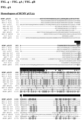
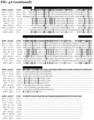
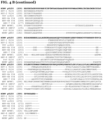
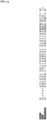
- Figure 4 shows highly conserved respective regions of the CR1-CR of among specific strains of the group of Herpesviridae species HCMV, MCMV, HSV, HHV-6, VZV, EBV, and PrV. It is reasonable to assume that a high degree of homology of highly conserved protein regions provides for functional protein or peptide motives that may be exploited in screening technologies to find novel anti-viral drugs based on the functional protein or peptide motives as unique target, e.g., a (pan-) anti-herpesvirus drug.
- the present invention provides tools and methods to identify molecules/agents/compounds that mask, block or shield said specific aa-based phospho-sites to affect/modulate/inhibit the phospho-sites either alone or in combination to influence structure and/or function of the viral NEC multimerization within the group of Herpesviridae, such as in species selected from a group HHV-1 to HHV-8, MCMV and/or PrV. This may be also exploited in novel antiviral strategies thereof.
- Protein-protein or peptide-protein or peptide-peptide interactions have a key role in most biological processes including the nuclear egress of packaged capsids to promote further virion maturation, and thus offer attractive opportunities for therapeutic intervention.
- Different kinds of protein-protein or peptide-protein or peptide-peptide interactions may be inhibited using drug-like small molecules / in silico designed small molecules / proteins / protein fragments / peptides / peptide fragments / antibodies / non-IgG scaffolds etc.
- the viral NEC represents a regulatory key position of viral replication and a putative target for novel antiviral strategies (4-9).
- Leigh et al (9) describes the structure of a herpesvirus nuclear egress complex subunit which is an interaction groove that is essential for viral replication.
- Bigalke et al (47) discloses new insights into the role of the nuclear egress complex of herpes viruses.
- the viral NEC is not only a target for HCMV, but also for EBV and VZV, and highly likely also for other herpesviruses.
- HCMV starts genomic replication in the host cell nucleus, where preformed capsids are packaged and exported to the cytoplasm for further virion maturation.
- the transition of capsids through the nuclear envelope is a multistep regulatory process that involves a phosphorylation-triggered distortion of the nuclear lamina (10-17).
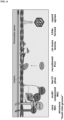
- the HCMV-encoded protein kinase pUL97 was identified as the first herpesviral kinase with lamin-phosphorylating activity (11, 16, 17; see FIG. 6 ).
- pUL50 and pUL53 hetero-dimerize and form the core of the NEC that serves as a scaffold for the recruitment of a group of viral and cellular NEC-associated proteins (see FIGS. 3 and 6 ).
- the composition of the multimeric NEC of human and murine cytomegaloviruses (CMVs) has recently been defined by proteomic analyses (15, 18).
- WO 2014/089158 discloses conditional replication detective cytomegalovirus (rdCMVhet) comprising a fusion protein which is an essential CMV protein fused to a destabilizing protein.
- both nuclear egress proteins pUL50 and pUL53 are post-translationally modified in a complex manner, in particular by phosphorylation.
- the viral kinase pUL97 is one of the responsible kinases, but cellular kinases are suggested being involved in viral core NEC phosphorylation, as well.
- the correctly phosphorylated state of pUL50 and pUL53 is important for its protein activity, intracellular transport, and interaction with each other and with other viral and cellular NEC proteins, as well as for protein stability.
- HCMV Human cytomegalovirus
- Herpesviridae Human cytomegalovirus
- the main pathogenesis of HCMV is manifested by severe systemic or even life-threatening disease in immunosuppressed hosts and upon congenital infection of neonates (2, 3).
- HCMV pathogenesis is determined by various parameters of immune control, viral productivity, viremia, tissue tropism and organ damage, as well as manifold regulatory events of virus-host interaction (1).
- the viral productive replication cycle is largely co-regulated by the interaction between viral and cellular proteins and by the formation of virus-host multiprotein complexes.
- the NEC represents a regulatory key position of viral replication and a putative target for novel antiviral strategies (4-9).
- the nuclear egress complex-based mechanism for transfer of the DNA-packaged viral capsids from nucleus to cytoplasm plays a pivotal role in virion maturation, and thus appears as promising drug-target for broad-spectrum pharmaceutical agents.
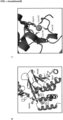
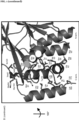
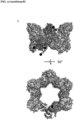
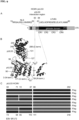
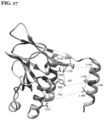
- modulators/inhibitors of protein interactions can be effectively identified based on novel screening methods that relies on the herein disclosed structures of the NEC, (see the FIGS. 1 and 2 for an illustration of the hook-like structure of HCMV and for steric details) between the pUL50 and pUL53 interaction during nuclear egress.
- two types of proteins are highly conserved and essential for building the core of a nuclear egress complex among viruses of the group of Herpesviridae (see e.g. the FIG. 4 and the SEQ ID NOs: 7-39).
- the role of two essential and conserved viral nuclear egress proteins pUL50 and pUL53 is pivotal for cytomegalovirus, particularly for HCMV.
- NEC core nuclear egress complex
- Corresponding proteins are, for example, BFRF1 and BFLF2 of EBV, and ORF24 and ORF27 of VZV, respectively.
- the inventors disclose the detailed crystal structure of the EBV and HCMV core NEC as well as the BFRF1 and BFLF2 and pUL50 and pUL53 protein-protein interaction mechanism, respectively, based on new and truncated fusion proteins as depicted in SEQ ID NOs: 1-6.
- Functionally relevant fragments thereof, i.e. pUL50 and pUL53, BFRF1 and BFLF2 of EBV, and ORF24 and ORF27 of VZV were coproduced in E. coli, co-purified and co-crystallized to determine the three-dimensional structure at high resolution.
- the inventors previously found that the hook interaction of the essential proteins pUL50 and pUL53 is a promising target for the development of novel antiviral strategies e.g. against CMV in general and HCMV specifically, and due to the high degree in analogy and homology against other viruses of the of the group of Herpesviridae, in general (see the alignment information in FIG. 4 and the sequences SEQ ID NOs: 7-39 for sequence details in respect to homology).
- New therapeutic strategies could aim at a direct steric inhibition of protein-protein, peptide-peptide interactions via e.g. in silico designed small molecule inhibitors, and/or at an interference with regulatory mechanisms that control NEC assembly, as the inhibition of NEC protein phosphorylation through kinase inhibitors on specifically herein disclosed amino acid phosphorylation sites (6, 43; see further below).
- the crystalline structural information disclosed herein may be used as the basis of new approaches in screening methods for agents that inhibit NEC as a unique (Pan-)anti-herpesviral target, for example for EBV and/or VZV and/or HCMV replication inhibition.
- the herein described compounds are for use in the inhibition of the NEC in betaherpesviruses. Accordingly, the screening methods disclosed within the context of the invention allow for the development of novel types of NEC-targeted drugs for viruses selected from the group of Herpesviridae, specifically for Pan-Herpes drugs.
- Such screening methods may generally comprise the steps of
- Another method of screening for agents that modulate / inhibit the activity of the BFRF1 and BFLF2, and/or ORF24 and ORF27 and/or pUL50 and pUL53 interaction comprises the steps of
- the inventors previously found an N-terminal hook extension of pUL53, i.e. based on the primary structure of the peptide according to SEQ ID NO: 7 of the pUL53 sequence as being the core NEC architecture, which provides for a scaffold for viral-cellular NEC protein interactions and for building the multimeric NEC.
- the resultant secondary, tertiary, and quaternary structures of the viruses proteins may serve as targets for development of novel antiviral strategies, which may hinder the nuclear egress of DNA-packaged capsids from nucleus to cytoplasm, and thus may be useful against viruses of the group of Herpesviridae in general, and particularly among the species HHV-1 to HHV-8, MCMV and PrV, for example for the betaherpesviruses, but not limited thereto, wherein the nuclear egress complex-based mechanism for transfer of the DNA-packaged viral capsids from nucleus to cytoplasm plays a pivotal role in virion maturation.
- the capsids of herpesvirus are generally assembled within the nucleus of infected cells whereas the final maturation takes place in the surrounding cytosol.
- the pre-formed intranuclear capsids have to cross the nuclear envelope as barrier. This is realized by budding at the inner nuclear membrane, thereby forming a primary enveloped particle residing in the perinuclear cleft.
- a heterodimeric complex of two highly conserved proteins among the Herpesviridae drives the formation of primary envelopes.
- these proteins forming the core NEC are designated by common nomenclature as pUL34, a tail-anchored transmembrane protein located in the nuclear envelope, and pUL31.
- the nuclear egress complex recruits viral and cellular kinases to soften the nuclear lamina and for allowing access of DNA packaged capsids to the inner nuclear membrane.
- pUL53-specific features of a zinc-binding site and a hook N-terminal extension of specific 29 aa (44) are an essential structural element of pUL50-pUL53 interaction in HCMV.
- the pUL50 structure overall resembles the recently published NMR structure of the murine cytomegalovirus homologue pM50, but surprisingly and unexpectedly the instant inventors found a considerable repositioning of the very C-terminal ⁇ -helix of pUL50 upon pUL53 binding.
- pUL53 was found to show structural resemblance with the GHKL domain of bacterial sensory histidine kinases (see FIG. 2 A) .
- the inventors combined the herein disclosed structural information on pUL50-pUL53 core NEC proteins and derived a more detailed understanding of the mechanism of the NEC in Herpesviridae in general, and particularly for the species HHV-1 to HHV-8, MCMV and/or PrV, for betaherpesviruses such as HCMV, HHV-6, HHV-7, or for the gammaherpesvirus EBV, or the like.
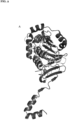
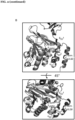
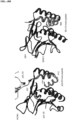
- New fusion proteins are provided herein, which provide an even better crystal structure resolution. These proteins are shown in SEQ ID NOs: 1 to 6. Whenever, reference is made to polypeptides according to the present invention, these sequences and homologues thereof are included. These proteins may be used in assays or methods for the identification and analysis of molecules interacting with / inhibiting / modulating the NEC proteins. Specifically, a hook-into-groove structure was found during its interaction/heterodimerization (see FIG. 12 ), which exists as a conserved mechanism among the Herpesviridae (see FIG. 4 ) and likely plays a role in the viruses nuclear egress. This feature leads to improved options of broad-spectrum anti-herpesviral therapy through finding novel antiviral agents. A similar structure was found for the NEC proteins of HCMV and EBV as shown in Figure 12 .
- this may also lead to improved options of broad-spectrum anti-herpesviral therapy through finding novel antiviral agents that bind to / interact with /antagonize or block/mask/shield the identified phospho-site(s), either alone or in combination thereof, to affect/hinder/inhibit phosphorylation during heterodimerizations/multimerizations of the NEC.
- novel antiviral agents that bind to / interact with /antagonize or block/mask/shield the identified phospho-site(s), either alone or in combination thereof, to affect/hinder/inhibit phosphorylation during heterodimerizations/multimerizations of the NEC.
- Such therapy based on specific phospho-sites may be a second line antiviral strategy to the above hook-into-grove structures, or may be combined therewith (see further details below).
- the method may include three following steps:
- its target e.g., the pUL53 "hook” or “hook-into-groove”
- its target can be prepared by a variety of techniques known in the art. Examples include protein expressions in Escherichia coli cells containing a plasmid encoded with said protein.
- the peptide targets of the invention are not particularly limited to the peptide itself, but may also comprise fragments thereof as long as it interacts/binds with e.g. the small molecule to be tested in the screening methods of the present invention.
- another key finding of the invention is the detection of specific aa-based phospho-sites of pUL50 that are positioned outside the pUL50-pUL53 and/or EBV BFRF1-BFLF2 interacting region, but are decisive for phosphorylation during NEC-based mechanisms, i.e. the NEC multimerization, and thus provide for another novel target in accordance with the instant invention.
- the inventors foresee to mask, block or shield said specific aa-based phospho-sites by agents/compounds/small molecules to be identified by the herein disclosed respective screening methods/assays to affect/modulate/inhibit the phospho-sites either alone or in combination to influence structure and/or function of the viral NEC multimerization within the group of Herpesviridae, such as in species selected from a group HHV-1 to HHV-8, MCMV or PrV, for betaherpesviruses, or for the gammaherpesviruses, such as EBV, or the like. This may be also exploited in novel antiviral strategies thereof.
- the invention further generally relates to screening methods for identifying small molecules that inhibit the formation of the NEC heterodimer pUL50-pUL53 and/or EBV BFRF1-BFLF2 and/or VZV ORF24 and ORF27, either on the basis of
- the inventors applied two screening methods, which allow the measurement of pUL50-pUL53 and/or EBV BFRF1-BFLF2 and/or ORF24 and ORF27 interaction in human cultured cells.
- a confocal microscopy-based method which comprises the following steps:
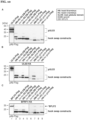
- a co-immunoprecipitation-based method can be used for the detection of BFRF1-BFLF2 and/or ORF24-ORF27 and/or pUL50-pUL53 interactions (44).
- This method is adapted to investigate blocking the interaction of the two proteins by NEC-incubation with the tested small molecules in solution.
- Proof of BFRF1-BFLF2 and/or ORF24-ORF27 and/or pUL50-pUL53 interaction and/or inhibition thereof preferably takes place in a non-radioactive manner.
- the detection of BFRF1-BFLF2 and/or ORF24-ORF27 and/or pUL50-pUL53 interaction is conducted in a more sensitive manner by means of radioactively labeled proteins on Western blots or autoradiograms.
- a quantification of the signals can be made by densitometry.
- Agent screening in the context of the invention identifies agents that modulate/inhibit function and/or structure of the EBV polypeptides/proteins BFRF1 and/or BFLF2 and/or VZV polypeptides/proteins ORF24 and/or ORF27 and/or HCMV polypeptides/proteins pUL50 and/or pUL53.
- screening assays for agents that have a low toxicity for human cells are particularly useful for screening assays for agents that have a low toxicity for human cells.
- the present invention provides new fusion proteins comprising pUL50 and pUL53 (in the fused sequences of SEQ ID NOs. 1 and 2), BFRF1 and BFLF2 (in the fused sequences of SEQ ID NOs. 3 and 4) and/or ORF24-ORF27 (in the fused sequences SEQ ID NOs. 5 and 6), or homologues thereof.
- the amino acid residues comprising the respective subunits of the NEC are explicitly referred to in the below embodiments.
- the two subunits of the fusion proteins may be linked by a suitable linker sequence, e.g., as depicted in the sequence listing.
- Functional homologues of the fusion proteins are those that are capable of heterodimerization with its cognate NEC partner protein, e.g., functional homologues of pUL50 and/or pUL53 should be able to form a dimer of sufficient stability to use the same in the herein described screening methods, wherein sufficient stability means that they form a heterodimer that is at least 50% as stable (does not dissociate) as the herein described new fusion proteins under identical assay conditions. Assays for the determination of the stability / strength of protein-protein interactions are known in the art.
- the term "homologue of any of the herein described polypeptides" means that such polypeptide is a "functional homologue".
- the term "functional” does not necessarily mean that the proteins would be functional under in vivo conditions, i.e. that they function as NEC proteins permitting the maturation of virions.
- the functional homologues are, however, at least suitable to determine the structure of the proteins, e.g. the respective polypeptides in the heterodimer, and to function as matrices or tools in the modelling and identification of compounds (in in silico methods) that are interacting, modulating and/or inhibiting the NEC proteins, in particular in more than one herpesvirus derived NEC.
- Homologues according to the present invention also designate polypeptides derived from other viral strains of the above-mentioned herpesviruses.
- Polypeptides of the NEC of different strains may also differ from the explicitly mentioned sequences hereinbelow. These differences may be the result of modifications of the nucleic acid sequence encoding these polypeptides so that one or more amino acid residues may be different from the herein disclosed sequences. These modifications may be deletions, additions, substitutions, inversions, et cetera, as long as they are derived from NEC polypeptides of herpesviruses. With respect to the herein disclosed sequences, in particular sequences in SEQ ID NOs: 1 to 6, the modifications may result in the peptide sequences that are slightly different from the previously mentioned sequences, i.e.
- the linker amino acids may, for example, be glycine-rich amino acid sequences comprising 3 to 12 amino acids.
- assays may be used for this purpose, as for instance binding assays of a candidate agent /compound to a target protein, target protein fragment, target polypeptide, target peptide, target peptide fragment, and determining/detecting the effect of said tested candidate agent /compound on replication of viruses selected from a group of the Herpesviridae, such as among the species HHV-1 to HHV-8, MCMV and/or PrV, but not limited thereto, determining/detecting the effect on tissue specificity, or determining/detecting functional and/or structural changes of the target or its interactions with other protein(s), protein fragment(s), polypeptide(s), peptide(s), peptide fragment(s) and the like.
- viruses selected from a group of the Herpesviridae, such as among the species HHV-1 to HHV-8, MCMV and/or PrV, but not limited thereto, determining/detecting the effect on tissue specificity, or determining/detecting functional and/or structural changes of the target or its
- Candidate agents/compounds may be assayed for inhibitory efficacy on viral replication, for inhibitory efficacy of hindering the viral DNA-packaged capsid export from nucleus to cytoplasm (i.e. nuclear egress) of a virus, inducing temperance of viral infection, for preventing infection in general, and for preventing virion maturation in general, e.g. in betaherpeviruses, but not limited thereto.
- agent/compound screening extends particularly to screening putative agents/compounds that are useful in broad-spectrum antiviral agents within the group of the Herpesviridae, and specifically, among the species HHV-1 to HHV-8, MCMV and/or PrV, but not limited thereto, based on its high degree of homology in respect to the peptide target motive of SEQ ID NOs: 1 to 6 of the invention.
- N-terminal hook structure of the pUL53 protein (SEQ ID NO: 7), is highly conserved among the species HHV-1 to HHV-8, MCMV and/or PrV, but not limited thereto, in view of its respective peptide target motives of specific strains thereof depicted in FIG. 4 and shown in the respective sequences.
- the screening for agents/compounds that affect/inhibit either of the components of the heterodimers comprising BFRF1 and BFLF2 and/or ORF24 and ORF27 and/or pUL50 or pUL53 alone or their respective interaction/heterodimerization may be performed using an in vitro model or an in vivo model, or a cell permissive for or infected with a virus selected from a group of Herpesviridae, particularly among the species HHV-1 to HHV-8 of the betaherpesviruses, or gammaherpesviruses (such as EBV), and PrV, but not limited thereto, said cell optionally being further mutated, or a panel of cells permissive for or infected with said virus selected from a group of Herpesviridae, particularly among the species HHV-1 to HHV-8 and/or PrV, in particular among the betaherpesviruses, but not limited thereto, said
- the person skilled in the art generally is aware how to identify e.g. ligands, agents, small molecules or substrates that bind to, modulate, inhibit or mimic the interaction of BFRF1 and/or BFLF2 and/or ORF24 and /or ORF27 and/or pUL50 and/or pUL53 or respective homologues thereof.
- the screening method/assay is a binding assay
- one or more of the molecules may be joined to a label, where the label can directly or indirectly provide a detectable signal.
- Various labels include, but not limited thereto, radioisotopes, fluorescers, chemiluminescers, enzymes, peptides, specific binding molecules, particles, e.g. magnetic particles, and the like.
- Specific binding molecules include, but not limited thereto, pairs, such as biotin and streptavidin, digoxin and antidigoxin, etc.
- the complementary member would normally be labeled with a molecule that provides for detection, in accordance with known procedures.
- reagents like salts, neutral proteins, e.g. albumin, detergents, etc. that are used to facilitate optimal protein-protein or protein-peptide or peptide-antibody binding and/or reduce non-specific or background interactions.
- Reagents that improve the efficiency of the assay such as protease inhibitors, nuclease inhibitors, anti-microbial agents, etc. may be used.
- the mixture of components is added in any order that provides for the requisite binding. Incubations are performed at any suitable temperature, typically between 4 and 40 °C, but not limited thereto. Incubation periods are selected for optimum activity, but may also be optimized to facilitate rapid high-throughput screening. Typically between 0.01 and 24 hours will be sufficient, but not limited thereto.
- Preliminary screens can be conducted by screening for compounds/agents capable of binding to BFRF1 and/or BFLF2 and/or ORF24 and ORF27 and/or pUL50 and/or pUL53 either alone or in combination, or on the basis of blocking/masking/shielding of one or more specific phospho-sites as disclosed herein.
- the binding assays usually involve contacting BFRF1 and/or BFLF2 and/or ORF24 and ORF27 and/or pUL50 and/or pUL53, either alone or in combination as disclosed herein, with one or more test compounds and allowing sufficient time for the protein/peptide or a fragment thereof and test compounds to form a binding complex.
- Protein/peptide binding assays include, but are not limited to, methods that measure co-precipitation, co-migration on non-denaturing SDS-polyacrylamide gels, and co-migration on Western blots (see, e.g., Bennet, J. P. and Yamamura, H. I. (1985) "Neurotransmitter, Hormone or Drug Receptor Binding Methods, " in Neurotransmitter Receptor Binding (Yamamura, H. I., et al., eds.), pp. 61-89 .
- agent small molecules
- compound(s) to be tested or similar expressions as used herein describe any molecule, e.g. protein, peptide or pharmaceutical, with the capability of altering, inhibiting or mimicking the physiological function of an EBV polypeptide/protein BFRF1 and/or BFLF2 and/or VZV polypeptide/protein ORF24 and ORF27 and/or HCMV polypeptide/protein pUL50 and/or pUL53.
- a plurality of assay mixtures are run in parallel with different agent concentrations to obtain a differential response to the various concentrations for modulating or inhibiting the EBV polypeptide/protein BFRF1 and/or BFLF2 and/or VZV polypeptide/protein ORF24 and ORF27 and/or pUL50-pUL53 interaction either in vitro or in vivo.
- one of these concentrations serves as a negative control, i.e. at zero concentration or below the level of detection.
- Candidate agents within the context of the instant invention encompass numerous chemical, biochemical and biological classes, though preferably they are organic molecules or inorganic molecules, more preferably small organic compounds or small inorganic molecules having a molecular weight of more than 10 and less than about 2.500 daltons, preferably more than 50 and less than 1.500 daltons molecular weight, more preferably more than 50 and less than 1000 daltons molecular weight, even more preferably more than 50 and less than 800 daltons molecular weight.
- Candidate agents with the context of the invention may further comprise functional groups necessary for structural interaction with proteins, peptides, i.e. particularly hydrogen bonding, and preferably include at least an amine, carbonyl, hydroxyl or carboxyl group, more preferably at least two of the functional chemical groups, but not limited thereto.
- the candidate agents of the invention may further comprise cyclical carbon or heterocyclic structures and/or aromatic or polyaromatic structures substituted with one or more of the above functional groups.
- Candidate agents within the context of the invention may also be found among biomolecules including in silico designed biomolecules, synthesized biomolecules, proteins, peptides, polypeptides, saccharides, fatty acids, steroids, purines, pyrimidines, derivatives thereof, and structural analogs or combinations thereof.
- candidate agents are to be obtained from a wide variety of sources including in silico designed libraries, libraries of synthetic or natural compounds.
- sources including in silico designed libraries, libraries of synthetic or natural compounds.
- numerous means are available for random and directed synthesis of a wide variety of organic compounds and biomolecules, including expression of randomized oligonucleotides and oligopeptides.
- libraries of natural compounds in the form of bacterial, fungal, plant and animal extracts are available or readily produced.
- natural or synthetically produced libraries and compounds are readily modified through conventional chemical, physical and biochemical means, and may be used to produce combinatorial libraries.
- Known pharmacological agents may be subjected to directed or random chemical modifications, such as acylation, alkylation, esterification, amidification, etc. to produce structural analogs.
- Test agents can be obtained from libraries, such as natural product libraries or combinatorial libraries, for example.
- libraries such as natural product libraries or combinatorial libraries, for example.
- combinatorial libraries and methods for preparing such libraries have been described, including for example, PCT publications WO 93/06121 , WO 95/12608 , WO 95/35503 , WO 94/08051 and WO 95/30642 .
- variants thereof are certain peptides or polypeptides, as well as nucleic acids that, by virtue of the degeneracy of the genetic code, are not identical in sequence, these also include variants thereof.
- Variant polypeptides can include aa substitutions, additions or deletions.
- the amino acid substitutions can be conservative amino acid substitutions or substitutions to eliminate non-essential amino acids, such as to alter a glycosylation site, a phosphorylation site or an acetylation site, or to minimize misfolding by substitution or deletion of one or more cysteine residues that are not necessary for function.
- variants can be designed so as to retain or have enhanced biological inhibitory activity of a particular region of the pUL50 and/or the pUL53 protein (e.g., a functional domain and/or, where the polypeptide is a member of a protein family, a region associated with a consensus sequence).
- variants within the context of the invention also include fragments of the polypeptides to be tested, particularly biologically active fragments (i.e. those influencing, inhibiting or modulating the activity of the NEC and consequently, virus release from the cell, virus maturation and/or any other step in the production of infectious viruses, particularly the herein described Herpesviridae) and/or fragments corresponding to functional domains.
- Fragments of interest will typically be at least about 5 aa, 10 aa to at least about 15 aa in length, usually at least about 50 aa in length, and can be as long as 300 aa in length or longer, but will usually not exceed about 500 aa in length, where the fragment will have a contiguous stretch of amino acids that is identical to the provided polypeptide sequence.
- Active test agents/compounds/small molecules identified by the screening methods/assays as described herein that affect/modulate/inhibit pUL50 and/or pUL53 activity or from homologues thereof, preferably on the basis of the herein disclosed hook-like mechanism, and/or herpesvirus growth, preferably HCMV growth, can serve as lead compounds for the synthesis of further analog compounds.
- the analog compounds are synthesized to have an electronic configuration and a molecular conformation similar to that of the lead compound.
- Identification of analog compounds can be performed through use of techniques such as self-consistent field (SCF) analysis, configuration interaction (CI) analysis, and normal mode dynamics analysis. Computer programs for implementing these techniques are available. See, e.g., Rein et al., (1989) Computer-Assisted Modeling of Receptor-Ligand Interactions (Alan Liss, New York ).
- test agents/compounds/small molecules are antibodies, IgG scaffolds, non-IgG scaffolds.
- An antibody according to the present invention is a protein including one or more polypeptides substantially encoded by immunoglobulin genes that specifically binds an antigen.
- the recognized immunoglobulin genes include the kappa, lambda, alpha (IgA), gamma (IgG1, IgG2, IgG3, IgG4), delta (IgD), epsilon (IgE) and mu (IgM) constant region genes, as well as the myriad immunoglobulin variable region genes.
- Full-length immunoglobulin light chains are generally about 25 Kd or 214 amino acids in length.
- Full- length immunoglobulin heavy chains are generally about 50 Kd or 446 amino acid in length.
- Light chains are encoded by a variable region gene at the N-terminus (about 110 amino acids in length) and a kappa or lambda constant region gene at the C-terminus.
- Heavy chains are similarly encoded by a variable region gene (about 116 amino acids in length) and one of the other constant region genes.
- the basic structural unit of an antibody is generally a tetramer that consists of two identical pairs of immunoglobulin chains, each pair having one light and one heavy chain. In each pair, the light and heavy chain variable regions bind to an antigen, and the constant regions mediate effector functions.
- Immunoglobulins also exist in a variety of other forms including, for example, Fv, Fab, and (Fab')2, as well as bifunctional hybrid antibodies and single chains (e.g., Lanzavecchia et al., Eur. J. Immunol. 17:105,1987 ; Huston et al, Proc. Natl. Acad. Sci.
- An immunoglobulin light or heavy chain variable region includes a framework region interrupted by three hypervariable regions, also called complementarity determining regions (CDRs) (see, Sequences of Proteins of Immunological Interest, E. Kabat et al, U.S. Department of Health and Human Services, 1983 ). As noted above, the CDRs are primarily responsible for binding to an epitope of an antigen.
- An immune complex is an antibody, such as a monoclonal antibody, chimeric antibody, humanized antibody or human antibody, or functional antibody fragment, specifically bound to the antigen.
- Chimeric antibodies are antibodies whose light and heavy chain genes have been constructed, typically by genetic engineering, from immunoglobulin variable and constant region genes belonging to different species.
- the variable segments of the genes from a mouse monoclonal antibody can be joined to human constant segments, such as kappa and gamma 1 or gamma 3.
- a therapeutic chimeric antibody is thus a hybrid protein composed of the variable or antigen-binding domain from a mouse antibody and the constant or effector domain from a human antibody, although other mammalian species can be used, or the variable region can be produced by molecular techniques. Methods of making chimeric antibodies are well known in the art, e.g., see U.S. Patent No. 5,807,715 .
- a “humanized” immunoglobulin is an immunoglobulin including a human framework region and one or more CDRs from a non-human (such as a mouse, rat, or synthetic) immunoglobulin.
- the non- human immunoglobulin providing the CDRs is termed a "donor” and the human immunoglobulin providing the framework is termed an "acceptor".
- all the CDRs are from the donor immunoglobulin in a humanized immunoglobulin.
- Constant regions need not be present, but if they are, they must be substantially identical to human immunoglobulin constant regions, i.e., at least about 85-90%, such as about 95% or more identical.
- a humanized antibody is an antibody comprising a humanized light chain and a humanized heavy chain immunoglobulin.
- a humanized antibody binds to the same antigen as the donor antibody that provides the CDRs.
- the acceptor framework of a humanized immunoglobulin or antibody may have a limited number of substitutions by amino acids taken from the donor framework. Humanized or other monoclonal antibodies can have additional conservative amino acid substitutions, which have substantially no effect on antigen binding or other immunoglobulin functions.
- Humanized immunoglobulins can be constructed by means of genetic engineering (e.g., see U.S. Patent No. 5,585,089 ).
- a human antibody is an antibody wherein the light and heavy chain genes are of human origin.
- Human antibodies can be generated using methods known in the art. Human antibodies can be produced by immortalizing a human B cell secreting the antibody of interest. Immortalization can be accomplished, for example, by EBV infection or by fusing a human B cell with a myeloma or hybridoma cell to produce a trioma cell.
- Human antibodies can also be produced by phage display methods (see, e.g., Dower et al., PCT Publication No. WO91/17271 ; McCafferty et al, PCT Publication No. WO92/001047 ; and Winter, PCT Publication No. WO92/20791 ), or selected from a human combinatorial monoclonal antibody library (see the Morphosys website).
- Human antibodies can also be prepared by using transgenic animals carrying a human immunoglobulin gene (for example, WO93/12227 ; WO91/10741 ).
- the antibody may have the formats known in the art.
- examples are human antibodies, monoclonal antibodies, humanized antibodies, chimeric antibodies, CDR-grafted antibodies.
- antibodies according to the present invention are recombinantly produced antibodies as e.g. IgG, a typical full-length immunoglobulin, or antibody fragments containing at least the F-variable domain of heavy and/or light chain as e.g. chemically coupled antibodies (fragment antigen binding) including but not limited thereto Fab-fragments including Fab minibodies, single chain Fab antibody, monovalent Fab antibody with epitope tags, e.g.
- bivalent Fab-V5Sx2 bivalent Fab (mini-antibody) dimerized with the CH3 domain
- bivalent Fab or multivalent Fab e.g. formed via multimerization with the aid of a heterologous domain, e.g. via dimerization of dHLX domains, e.g. Fab-dHLX-FSx2; F(ab')2-fragments, scFv-fragments, multimerized multivalent or/and multispecific scFv-fragments, bivalent and/or bispecific diabodies, BITE ® (bispecific T-cell engager), trifunctional antibodies, polyvalent antibodies, e.g. from a different class than G; single-domain antibodies, e.g.
- the antibody format is selected from the group comprising Fv fragment, scFv fragment, Fab fragment, scFab fragment, (Fab)2 fragment and scFv-Fc Fusion protein.
- the antibody format is selected from the group comprising scFab fragment, Fab fragment, scFv fragment and bioavailability optimized conjugates thereof, such as PEGylated fragments.
- One of the most preferred formats is the scFab format.
- the binder to the NEC proteins or homologues thereof is selected from the group consisting of antibodies e.g. IgG, a typical full-length immunoglobulin, or antibody fragments containing at least the F-variable domain of heavy and/or light chain as e.g. chemically coupled antibodies (fragment antigen binding) including but not limited thereto Fab-fragments including Fab minibodies, single chain Fab antibody, monovalent Fab antibody with epitope tags, e.g. Fab-V5Sx2; bivalent Fab (mini-antibody) dimerized with the CH3 domain; bivalent Fab or multivalent Fab, e.g. formed via multimerization with the aid of a heterologous domain, e.g.
- antibodies e.g. IgG, a typical full-length immunoglobulin, or antibody fragments containing at least the F-variable domain of heavy and/or light chain as e.g. chemically coupled antibodies (fragment antigen binding) including but not limited thereto Fab-
- dHLX domains e.g. Fab-dHLX-FSx2; F(ab')2-fragments, scFv-fragments, multimerized multivalent or/and multispecific scFv-fragments, bivalent and/or bispecific diabodies, BITE ® (bispecific T-cell engager), trifunctional antibodies, polyvalent antibodies, e.g. from a different class than G; single-domain antibodies, e.g. nanobodies derived from camelid and fish immunoglobulines.
- Non-IgG scaffolds may be protein scaffolds and may be used as antibody mimics as they are capable to bind to ligands or antigens.
- Non-IgG scaffolds may be selected from the group comprising tetranectin-based non-IgG scaffolds (e.g. described in US 2010/0028995 ), fibronectin scaffolds (e.g. described in EP 1266025 ); lipocalin-based scaffolds (e.g. described in WO 2011/154420 ); ubiquitin scaffolds (e.g. described in WO 2011/073214 ), transferring scaffolds (e.g. described in US 2004/0023334 ), protein A scaffolds (e.g.
- ankyrin repeat based scaffolds e.g. described in WO 2010/060748
- microproteins preferably microproteins forming a cystine knot
- Fyn SH3 domain based scaffolds e.g. described in WO 2011/023685
- EGFR-A-domain based scaffolds e.g. described in WO 2005/040229
- units domain based scaffolds e.g. described in EP 1941867 .
- WO 01/64942 describes protein scaffolds useful for the generation of products having novel binding characteristics.
- antibodies or “antibody fragments” or “IgG-scaffolds” or “non-Ig scaffolds” in accordance with the invention are capable of binding NEC proteins, e.g., the specific aa-based phospho-sites either alone or in combination of the instant invention.
- biopolymer scaffolds are well known in the art to complex a target molecule within the context of the invention either alone or in combination of the instant invention and have been used for the generation of highly target specific biopolymers. Examples are aptamers, spiegelmers, anticalins and conotoxins.
- the antibody format is selected from the group comprising Fv fragment, scFv fragment, Fab fragment, scFab fragment, F(ab)2 fragment and scFv-Fc Fusion protein.
- the antibody format is selected from the group comprising scFab fragment, Fab fragment, scFv fragment and bioavailability optimized conjugates thereof, such as PEGylated fragments.
- One of the most preferred formats is the scFab format.
- test agent/compound/small molecules either (labeled) test agent/compound/small molecules, its target EBV polypeptide/protein BFRF1 and/or BFLF2 and/or VZV polypeptide/protein ORF24 and ORF27 and/or pUL50 and/or pUL53 protein or homologues thereof as defined above and infra (e.g. of the sequences SEQ ID NOs: 1 to 6), or fragments thereof are at least combined in a solution and may be optionally further combined with one or more candidate agents/compounds/small molecules, but not limited thereto.
- infra e.g. of the sequences SEQ ID NOs: 1 to 6
- the candidate agents/compounds/small molecules is/are a molecule that, for example, may inhibit viral growth/replication of viruses selected from a group of Herpesviridae, particularly among the species HHV-1 to HHV-8, MCMV and PrV, but not limited thereto, and the resultant symptoms of such viral infections, more preferably inhibit HCMV growth and the symptoms of such viral infections.
- the candidate agents/compounds/small molecules may be - without being construed as limitation to the invention - a protein or fragment thereof, a peptide or a fragment thereof, an in silico designed synthetic peptide or fragment thereof that does not occur in nature (e.g. a peptide containing D amino acid residues or a stapled peptide), a small molecule, or even a nucleic acid molecule or ribonucleic acid molecule.
- the skilled person is aware of various commercial sources of small molecule libraries that meet the basic criteria for useful drugs in an effort to "brute force" the identification of useful candidate compounds/agents/small molecules with the context of the instant invention.
- Candidate compounds may be screened from large libraries of synthetic or natural compounds.
- a candidate compound library is an FDA-approved library of compounds that can be used by humans.
- Synthetic compound libraries are commercially available from a number of companies including Maybridge Chemical Co. (Trevillet, Cornwall, UK), Comgenex (Princeton, N.J.), Brandon Associates (Merrimack, N.H.), and Microsource (New Milford, Conn.) and a rare chemical library is available from Aldrich (Milwaukee, Wis.). Combinatorial libraries are available or can be prepared.
- libraries of natural candidate compounds in the form of bacterial, fungal, plant and animal extracts are also available from, for example, Pan Laboratories (Bothell, Wash.) or MycoSearch (N.C.), or can be readily prepared by methods well known in the art.
- Candidate compounds isolated from natural sources, such as animals, bacteria, fungi, plant sources, including leaves and bark, and marine samples may be assayed as candidates for the presence of potentially useful pharmaceutical agents. It will be understood that the pharmaceutical agents to be screened could also be derived or synthesized from chemical, biochemical, biological compositions or man-made compounds.
- the reaction system contains at least one candidate compound/agent/small molecule.
- the reaction system can contain two or more candidate compounds/agents/small molecules, preferably between 2 and 200 compounds/agents/small molecules per batch/cavity, more preferably between 2 and 100 compounds/agents/small molecules per batch/cavity, most preferred between 2 and 50 compounds/agents/small molecules per batch/cavity because the assay does not rely on labeling of candidate compounds and can provide high efficiency screening by testing multiple candidate compounds in parallel.
- the person skilled in the art is aware that these indications are not to be construed as limiting in view of the wide varieties of designing suitable reaction systems to fully exploit the screening assays/methods of the instant invention.
- each compound can be tested further to assess its modulating or inhibitory activity, e.g. in suitable anti-viral assays for viruses selected from a group of Herpesviridae, particularly among the species HHV-1 to HHV-8, MCMV and/or PrV, but not limited thereto, such as e.g. any suitable anti-HCMV assay (see Example portion) or any suitable anti-HSV assay, but not limited thereto.
- suitable anti-viral assays for viruses selected from a group of Herpesviridae, particularly among the species HHV-1 to HHV-8, MCMV and/or PrV, but not limited thereto, such as e.g. any suitable anti-HCMV assay (see Example portion) or any suitable anti-HSV assay, but not limited thereto.
- the tested candidate compound/agent/small molecule is a peptide or a peptide fragment.
- Peptides are naturally found throughout the body in signaling pathways and hormonal control systems, but may also be in silico designed with the context of the present invention.
- the tested candidate compound/agent/small molecule is an in silico designed compound/agent/small molecule or a library thereof.
- the person skilled in the art is aware of a wide variety of methods, programs and institutions that allow for broad-spectrum in silico designs of compounds/agents/small molecules or of libraries thereof.
- the inventors foresee on the basis of the disclosed screening methods/assays the finding of novel drugs that target specifically with high affinity the NEC of Herpesviridae as broad-spectrum antiviral agent (for instance against human herpesvirus HHV-1 to HHV-8) or specific strains of the species HHV-1 to HHV-8, MCMV and/or PrV, or the like (see the FIGS. 1 and 2 for illustration and steric details) or in an alternative embodiment that may be also combined with other embodiments of the instant invention, on the basis of the specific aa-based phospho-site(s) of the respective proteins in accordance with the instant invention as target.
- broad-spectrum antiviral agent for instance against human herpesvirus HHV-1 to HHV-8
- specific strains of the species HHV-1 to HHV-8, MCMV and/or PrV, or the like see the FIGS. 1 and 2 for illustration and steric details
- FIGS. 1 and 2 for illustration and steric details
- the herein disclosed targeting strategies may either provide for candidate agents/compounds/small molecules for a EBV-, VZV- and/or cytomegalovirus-specific drug, preferably for HCMV, and/or for antiherpesviral broad-spectrum drugs in general for various viral species of the group of Herpesviridae.
- PSB covers the respective aa-based phospho-site as disclosed in the present invention, so that phosphorylation is prevented and thus no phosphorylation-mediated activation of the herein disclosed interaction of herpesvirus protein heterodimers or of homologues thereof occurs.
- PSB allows phosphorylation but then masks/shields/blocks one or more phospho-sites of the invention, which results in no recognition of the required phosphorylation signal by interactors/ligands/complexes of the NEC. This avoids NEC formation/multimerization and finally avoids further virion maturation.
- PSB may also allow phosphorylation that normally leads to a conformational change, but PSB stalls the protein in an unfortunate, transient state of an inactive conformation.
- candidates for phospho-site inhibition may be cellular cyclin-dependent protein kinases, CDKs, which may directly phosphorylate pUL50-pUL53 and/or EBV BFRF1-BFLF2 or other homologous NEC proteins.
- pUL97 which is known to phosphorylate the core NEC of HCMV and represents a functional/structural viral ortholog of CDKs.
- pUL97 and CDKs can dually phosphorylate identical substrate proteins such as pUL69, lamins, Rb, RNAP II, EF-1d.
- pUL97 directly interacts with cellular cyclins and the inhibition of CDKs can inhibit the core NEC recruitment at the nuclear rim.
- HCMV-NEC Four specific phospho-sites in the respective protein were previously identified in the HCMV-NEC and can be also exploited either alone or in combination in the screening methods of the invention to modulate/inhibit/affect the NEC formation/multimerization of the NEC of viruses of the Herpesviridae in general, and specifically for EBV, VZV, and/or HCMV.
- phospho-sites can be inhibited either alone or in combinations thereof for novel antiviral strategies for viruses selected from the group of Herpesviridae, such as the species HCMV, MCMV, HSV, VZV, HHV-6, EBV, PrV, or the like.
- the inventors provide another mechanism of BFRF1-BFLF2 and/or ORF24-ORF27 and/or pUL50-pUL53 heterodimer interaction to be exploited for novel antiviral strategies for Herpesviridae, and specifically for HHV-1 to HHV-8 and/or PrV, or the like, in particular in betaherpesviruses.
- This new mechanism is based on the phosphorylation of the NEC protein pUL50, which could be masked/blocked/shielded by small molecules without being necessarily a cellular protein kinase.
- this problem might be resolved by a screening method of the invention for agents/compounds/small molecules with putative activity as the above-mentioned phospho-site blocker (PSB).
- PSB phospho-site blocker
- NEC polypeptides such as pUL50, as described above, appears to also inhibit pUL53 recruitment to promote nuclear egress complex multimerization in general.
- the formation of the entire multimeric NEC from many viral and cellular proteins that are subsequently recruited into the NEC complex may be hereby inhibited (see e.g. FIGS. 3 and 6 for illustrations thereof).
- CDKs are the first candidates for cellular protein kinases that phosphorylate the viral core NEC and thus activate virion maturation within HCMV.
- SEQ ID NOs: this situation could be similar in other viruses within the group of Herpesviridae.
- the core of the invention and the advantages can be summarized as follows:
- the inventors disclose the BFRF1-BFLF2 and pUL50-pUL53 NEC crystal structure in a very detailed manner with high resolution.
- the inventors expressed a truncated pUL50-pUL53 spanning the aa 1-171 fused via a linker, e.g., a glycine-rich linker, such as GGSGSGGS or the like, to pUL53 of amino acids 59-87 (see SEQ ID NOs: 1 and 2 ).
- a linker e.g., a glycine-rich linker, such as GGSGSGGS or the like
- the aa 59-87 have, according to the best knowledge of the inventors, not been analyzed for its detailed crystal structure, so far.
- the new crystal structure is available at 1.48 ⁇ .
- EBV BFRF1-BFLF2 fusion protein a truncated EBV BFRF1-BFLF2 fusion protein was constructed, wherein EBV BFRF1 1-192 is fused via a linker, e.g., a glycine-rich linker, such as GGSGS or the like to EBV BFLF2 78-110 (see SEQ ID NOs: 3 and 4).
- the aa 78-110 have, according to the best knowledge of the inventors, not been analyzed for its detailed crystal structure, so far. The new crystal structure was provided at 1.75 ⁇ (see Figure 12 for illustration).
- the inventors found a similar structure in HCMV and in EBV using the above fusion proteins. Therefore, as the structure seems to be conserved among different types of viruses of the Herpesviridae, it is possible to identify compounds affecting the NEC, e.g. Pan Herpes-inhibitors/modulators or the like, provided that these viruses use a NEC for viral replication and virion egress.
- compounds affecting the NEC e.g. Pan Herpes-inhibitors/modulators or the like, provided that these viruses use a NEC for viral replication and virion egress.
- the inventors co-expressed the pUL50 and pUL53 of HCMV and BFRF1 and BFLF2 of EBV and the respective proteins of VZV and afterwards co-crystallized and co-purified these.
- the phospho-sites may be druggable targets, either as second line strategy or to be combined with the findings for the hook-like mechanism for pUL50 and pUL53, while being inhibited either alone or in combinations thereof.
- this also provides for novel antiviral strategies for viruses selected from the group of Herpesviridae, such as the species HHV-1 to HHV-8, PrV, or the like and its respective strains. It is noted that the phospho-sites are all outside the interaction surface region of pUL50-pUL53 in HCMV NEC.
- druggability and “druggable” or related terms denote with the subject matter of the present invention a biological target (i.e. within the context of the invention pUL50 and/or pUL53 protein, -protein fragment, -peptide, -peptide fragment or the peptide of SEQ ID NO: 1 and/or the identified phospho-sites disclosed herein) that was found by the inventors and is predicted to bind with high affinity to a drug.
- the binding of a drug that is obtainable by the screening methods/assay of the present invention will alter the function/structure of the target with a therapeutic benefit to the patient.
- the concept of druggability in context of the invention is preferably directed to small molecules, but also comprises biologic medical products such as therapeutic monoclonal antibodies.
- small molecule(s) and related terms with the context of the invention denote low molecular weight molecules that comprise lipids, monosaccharides, second messengers, other natural products and metabolites, as well as drugs and other xenobiotics, but not limited thereto. They are distinct from macromolecules such as proteins. These or similar expressions cover metal ions.
- a small molecule In molecular biology and pharmacology, a small molecule is a low molecular weight ( ⁇ 900 daltons) organic compound that may help regulate a biological process, with a size on the order of 10 -9 m. Most drugs are small molecules.
- the upper molecular weight limit for a small molecule is approximately 900 daltons, which allows for the possibility to rapidly diffuse across cell membranes so that they can reach intracellular sites of action.
- this molecular weight cutoff is a necessary but insufficient condition for oral bioavailability.
- a lower molecular weight cutoff of 500 daltons (as part of the "rule of five") has been recommended for small molecule drug development candidates based on the observation that clinical attrition rates are significantly reduced if the molecular weight is kept below this 500 dalton limit.
- Pharmacology usually restricts the term to a molecule that binds to a specific biopolymer such as protein or nucleic acid and acts as an effector, altering the activity or function of the biopolymer.
- Small molecules can have a variety of biological functions, serving as cell signaling molecules, as drugs in medicine, as pesticides in farming, and in many other roles. These compounds can be natural (such as secondary metabolites) or artificial (such as antiviral drugs); they may have a beneficial effect against a disease (such as drugs) or may be detrimental (such as teratogens and carcinogens).
- Biopolymers such as nucleic acids and proteins, and polysaccharides (such as starch or cellulose) are not small molecules though their constituent monomers ribo- or deoxyribonucleotides, amino acids, and monosaccharides, respectively are often considered small molecules. Very small oligomers are also usually considered small molecules, such as dinucleotides, peptides such as the antioxidant glutathione, and disaccharides such as sucrose.
- Small molecules may also be used as research tools to probe biological function as well as leads in the development of new therapeutic agents. Some can inhibit a specific function of a multifunctional protein or disrupt protein-protein interactions.
- inhibitor or similar terms with the context of the invention denote(s) to restrain, hinder, or arrest an action, a structure, a function, an impulse, etc. and/or to prohibit an action, a structure, a function, an impulse, etc. within the context of the invention. Said term or similar terms also denote(s) to decrease the rate of action of or stop a chemical, biochemical, physical, or physico-chemical reaction.
- homologue or similar terms denote(s) DNA, RNA, amino acid(s), protein/peptide or fragment analogs that are equal or similar in structure and function; see e.g. FIG. 4 for illustration thereof.
- Herpesviridae denotes a viral/virus family, comprising different genera such as e.g. the genus CMV and other genus, the person skilled in the art is aware of.
- the human pathogen HCMV and the murine pathogen MCMV exist within a genus different viral/virus species exist, such as within the genus CMV, the human pathogen HCMV and the murine pathogen MCMV exist.
- Such species further comprise different strains such as for instance HCMV, the strain AD 169.
- the person skilled in the art knows how to discriminate between animal pathogens and human pathogens. For instance the skilled person is well aware that HCMV is predominantly a human pathogen and MCMV is predominantly a murine pathogen.
- HHV-6, HHV-7, HHV-8 represent an own class of viruses.
- target or similar terms within the context of the invention denote(s) a structure of a protein/polypeptide/peptide or a fragment thereof or an amino acid or more amino acids to be tested for binding /interacting with /antagonizing with the compounds/agents/small molecules by the disclosed screening methods/assays of the instant invention.
- This definition can be combined with the definition for "druggable” above to define a “druggable target” with the context of the instant invention.
- the proteins corresponding to SEQ ID NO: 1 to 6 were cloned into either the plasmid pET15b or pET28b.
- the viral protein sequences are N-terminally expanded to include a His-tag and Thrombin cleavage site MGSSHHHHHHSSGLVPRGSH sequence (SEQ ID NO: 40) at the N-terminus to make the production and purification of the fusion proteins easier.
- the plasmids were transformed into E. coli BL21(DE3) and the cells incubated in TB-medium in the presence of either 100 ⁇ g/ml ampicillin or 50 ⁇ g/ml kanamycin at 20° C. Protein production was induced with 0.25 to 1 mM IPTG.
- the two fusion proteins truncated-HCMV-pUL50-pUL53 fusion protein (SEQ ID NO: 2) and truncated-EBV-BMRF1-BMLF2 fusion protein (SEQ ID NO: 4) were screened for crystallization conditions using the sitting drop technique and proteins with concentrations between 10 and 15 mg/ml dissolved in a buffer consisting of 50 mM TrisHCl buffer, 150 mM NaCl and pH 7.4. Diffraction quality crystals of truncated-HCMV-pUL50-pUL53 fusion protein (SEQ ID NO: 2) were obtained at 4° C with 20 % PEG 4000, 10 % propanol, 100 mM HEPES, pH 7.5 as a reservoir solution.
- Diffraction quality crystals of truncated EBV BMRF1-BMLF2 fusion protein were obtained at 4° C with 0.2M sodium malonate pH 4.5, 20% PEG 3350 (Peg Rx E2) as a reservoir solution.
- High resolution diffraction data sets from crystals of truncated-HCMV-pUL50-pUL53 fusion protein (SEQ ID NO: 2) and truncated-EBV-BMRF1-BMLF2 fusion protein (SEQ ID NO: 4) were collected at the MX beamlines of the BESSY synchrotron Berlin. Data were processed with program XDS. Initial phases were obtained with the molecular replacement technique with program PHENIX_MRAGE using the previously determined structure of the pUL50-pUL53 complex as a search model (PDB entry code 5D5N.pdb, http://www.pdb.org). The structures were completed and corrected using either the PHENIX program AUTOBUILD or manually using program COOT.
- Crystallographic data collection and refinement statistics are summarized below for truncated-HCMV-pUL50-pUL53 fusion protein (SEQ ID NO: 2) and truncated-EBV-BMRF1-BMLF2 fusion protein (SEQ ID NO: 4), respectively.
- the suitability of the agents/compounds/small molecules of the invention for the treatment of HCMV infections can be exemplarily shown in the following animal model: - HCMV Xenograft Gelfoam(R).
- suitable tests can be applied to test the agents/compounds/small molecules to be identified by the invention for, e.g., treatment of HHV-1 - HHV-8, or PrV infections, but not limited thereto, such as for instance suitable anti-HSV, anti-HHV- or anti-VZV tests.
- mice 3-4-week old female immunodeficient mice (16-18 g), Fox Chase SCID or Fox Chase SCID-NOD or SCID beige, are purchased from commercial breeders (Taconic M+B, Jackson USA). The animals are housed under sterile conditions (including bedding and feed) in isolators.
- HCMV Human cytomegalovirus
- NHDF cells human embryonic prepuce fibroblasts
- MEM minimal essential medium
- FCS fetal calf serum
- DMSO fetal calf serum
- Collagen sponges 1 cm x 1cm x 1cm in size (Gelfoam(R); from Peasel & Lorey, order No. 407534; K. T. Chong et al., Abstracts of 39th Interscience Conference on Antimicrobial Agents and Chemotherapy, 1999, p. 439 ) are initially wetted with phosphate-buffered saline (PBS), the trapped air bubbles are removed by degassing, and then stored in MEM+10% FCS. 1 ⁇ 10 6 virus-infected NHDF cells (infection with HCMV Davis or HCMV AD169 M.O.I.
- mice are detached 3 hours after infection and added in a drop of 20 ⁇ l of MEM, 10% of FCS, to a moist sponge. About 16 hours later, the infected sponges are incubated with 25 ⁇ l of PBS/0.1% BSA/1 mM DTT with 5 ng/ ⁇ l basic fibroblast growth factor (bFGF).
- bFGF basic fibroblast growth factor
- the immunodeficient mice are anaesthetized with Avertin or a ketamine/xylazine/azepromazine mixture, the fur on the back is removed using a shaver, the epidermis is opened 1-2 cm, unstressed and the moist sponges are transplanted under the dorsal skin. The surgical wound is closed with tissue glue. 6 hours after the transplantation, the mice can be treated for the first time (on the day of the operation, there is one treatment).
- mice are treated with substance orally three times a day (7.00 h and 14.00 h and 19.00 h), two times a day (8.00 h and 18.00 h) or once a day (14.00 h).
- the daily dose is, for example 3 or 10 or 30 or 60 or 100 mg/kg of body weight, but not limited thereto, the volume administered is 10 ml/kg of body weight.
- the substances are formulated in the form of a 0.5 % strength Tylose suspension with 2 % DMSO or a 0.5 % strength Tylose suspension. 9 days after transplantation and 16 hours after the last administration of substance, the animals are painlessly sacrificed and the sponge is removed.
- the virus-infected cells are released from the sponge by collagenase digestion (330 U/1.5 ml) and stored in the presence of MEM, 10 % fetal calf serum, 10 % DMSO at -140 °C.
- Evaluation takes place after serial ten-fold dilutions of the virus-infected cells by determining the titer on 24-well plates of confluent NHDF cells after vital staining with Neutral Red. The number of infected cells or infectious virus particles (infectious center assay) after the substance treatment compared with the placebo-treated control is determined.
- test substance is incubated with human liver microsomes (2 mg/ml of microsomal protein) in potassium phosphate buffer pH 7.4 with addition of an NADPH-generating system (NADP+, glucose 6-phosphate, glucose 6-phosphate dehydrogenase) at 37 °C. At various points of time, 2 aliquots are taken from the incubation.
- NADPH-generating system NADP+, glucose 6-phosphate, glucose 6-phosphate dehydrogenase
- the first aliquot is incubated 1:50 in a new incubation solution (phosphate buffer, NADPH-generating system and 10 ⁇ M of Midazolam) at 37 °C for a further 10 min.
- the incubation is then stopped using acetonitrile on ice, the protein is pelleted in a centrifuge at 15.000 g and the supernatant is analyzed for formation of 1'-hydroxyimidazolam using standard HPLC/MS methods.
- the second aliquot is stopped using acetonitrile on ice and analyzed for remaining test substance using HPLC/UV/MS.
- the two sets of analytical data are determined for irreversible-inhibition-typical parameters (kinact, Ki and partition ratio r), and using these data, the test substance is evaluated (cf. ⁇ . Madan, et al., in ⁇ . D. Rodrigues (ed.) "Drug-Drug Interaction” in “Drugs and the Pharmaceutical Science”, Vol. 116, ISBN 0-8247-0283.2, Marcel Dekker Inc., New York, 2002 ).
- any suitable anti-HCMV assay or surrogate assay can be used as well as any suitable anti-HSV assay or surrogate assay or similar assays for the viral strains to be tested, to further investigate the antiviral properties of the candidate agents identified by the screening methods/assays disclosed herein.
- Escherichia coli (E. coli) DH10B F- end A1 hsdR17 (rk-, mk+) supE44 thi-1 ⁇ - rec A1 gyrA96 rel A1 deoR ⁇ ⁇ ( lac ZYA- arg F)-U169 80 lac ⁇ M15 (Grant et al., 1990)
- sequences (annotated from 5' to 3') used for PCR cloning, Gateway cloning and nucleotide sequencing are listed below. Sequences corresponding to the gene of interest are underlined, restriction enzyme cleavage sites are highlighted in bold, Flag (DYKDDDDK peptide, SEQ ID NO: 41) and HA (hemagglutinin) epitopes are depicted in italics and start and stop codons are shaded in grey.
- pcDNA3.1 (+) mammalian expression vector containing a multiple cloning site (MCS) in forward (+) orientation for insertion of an ORF of interest under the control of the HCMV immediate early promoter and enhancer; neomycin and ampicillin resistance cassettes enable the selection of transfected cell clones (Invitrogen, Düsseldorf, Germany).
- MCS multiple cloning site
- pDONR221 Donor vector for BP recombination reaction for Gateway Cloning (Invitrogen/ Life technologies, Düsseldorf, Germany)
- pInducer20 cms pHM4527: pInducer20 CRS mutagenized (pF1037) for LR recombination reaction for Gateway Cloning (kindly provided by the Stamminger laboratory, Virology, FAU Er Weg-Nürnberg).
- red fluorescent protein under the control of the HCMV IE promoter/enhancer pF720 pcDNA-UL97 eukaryotic expression construct encoding the HCMV protein kinase pUL97 pF721 pcDNA-UL97-Flag eukaryotic expression construct encoding the HCMV protein kinase pUL97, C-terminally fused to the Flag epitope pF732 pcDNA-UL44-Flag eukaryotic expression construct encoding pUL44, C-terminally fused to the Flag epitope - Lamin Chromobody-TagGFP plasmid eukaryotic expression construct encoding the marker of the nuclear envelope Lamin-V H H fused to green fluorescent protein TagGFP2 (Chromo Tek GmbH, Planegg-Martinsried)
- the following expression plasmids encode for the domain swap constructs of HCMV pUL53 and EBV BFLF2.
- the domain swaps were generated by PCR/PCR amplification of pcDNA-UL53-Flag and pcDNA-BFLF2-Flag using oligonucleotides depicted above. The fragments were inserted into pcDNA3.1(+) via EcoRI and Xho I.
- the following plasmids encode for BFRF1-BFLF2 and BGLF4 constructed by the Gateway ® Technology.
- the constructs were generated by PCR amplification of BFRF1, BFLF2 and BGLF4 using oligonucleotides listed in Table 2.2.
- the fusion construct of BFRF1-BFLF2 was initially cloned into pcDNA3.1(+) via EcoRI, Bam HI and Xbal.
- the fragments of BFRF1-BFLF2 (cutted out from vector via EcoRI and Xbal) and BGLF4 (PCR-product) were firstly inserted into pDONR221 and subsequently into pInducer20 via homologueous recombination.
- HeLa cells (3.5 ⁇ 10 5 ) were grown on coverslips in 6-well dishes. At two dpt the cells were washed twice with PBSo and fixed with a 4 % paraformaldehyde solution for 10 min at RT and subsequently washed three times with PBSo. Permeabilization of the plasma membrane was achieved by incubation with 0.2 % Triton X-100 in PBSo at 4°C for 15 min and subsequently washed again with PBSo five times. For staining of transiently expressed proteins, cells were incubated with the appropriate antibodies diluted in 100 ⁇ l PBSo/1 % FCS at 37°C for 60 min.
- CoIP analyses were performed to investigate specific protein-protein interactions (Bannister and Kouzarides, 1996). To this end, 293T cells (5 ⁇ 10 6 ) were transfected with the plasmids coding for the proteins of interest. One day before CoIP, 50 mg/ml protein A sepharose or 25 ⁇ l of dynabeads Protein A were incubated with the appropriate antibody in 500 ⁇ l CoIP buffer at 4°C overnight. Two or three dpt cells were harvested. Lysis was performed using 500 ⁇ l CoIP buffer containing protease inhibitors and PMSF on ice for 20 min, sonificated (20 impulses, 80 %) and centrifuged (14000 rpm, 10 min, 4°C).
- Protein samples obtained from CoIP or cell lysates were separated by SDS-PAGE and transferred to a nitrocellulose membrane by electroblotting (200-300 mA for 80 min).
- the membranes were saturated for at least 1 h with 5 % skim milk powder solution to prevent unspecific antibody binding, followed by the binding of the primary antibody diluted in 2.5 % skim milk solution at 4°C overnight. Next day, membranes were washed three times with PBSo/0.1 % Tween for 30 min and subsequently incubated with the respective HRP-coupled secondary antibody (in 2.5 % skim milk solution) for 1 h at RT.
- the membranes were washed again three times with PBSo over 30 min, shortly incubated within a freshly prepared ECL solution (10 ml ECL solution A, 100 ⁇ l ECL solution B and 3.1 ⁇ l H 2 O 2 ) and the proteins were detected by the use of the FUJIFILM Luminescent Image Analyzer LAS-1000 (FUJIFILM Europe GmbH, Düsseldorf, Germany). A prestained molecular weight marker was used to determine the molecular weight and consequently the specification of the protein bands. For further staining of relevant proteins, the membranes were incubated for 20 min at 56°C in Roti ® -Free stripping buffer to remove the linked antibodies. After removal of the antibodies, membranes were washed and saturated followed by an additional round of antibody binding.
- the Gateway ® technology from Invitrogen/ Life technologies was performed according to the manufacturer's protocol to obtain a lentiviral vector with the gene of interest. After successful Gateway cloning lentiviral transduction of HFF cells can be processed.
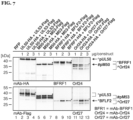
- 293T cells were transiently transfected with constructs coding for HA-tagged pUL50, pM50 or pUL27 (negative control) in combination with pUL53 or pM53.
- constructs coding for HA-tagged pUL50, pM50 or pUL27 (negative control) in combination with pUL53 or pM53.
- cells were lysed and HA-tagged proteins were precipitated using pAb-HA or a rabbit antibody Fc fragment as specificity control. Lysate controls taken prior to the IP and CoIP samples were subjected to standard Wb analysis using tag-specific antibodies as indicated.
- pUL50 or pM50 binding to the EBV-specific core protein BFLF2 was investigated.
- 293T cells were transiently transfected with constructs coding for HA-tagged pUL50, pM50, pUL44 and BFRF1 or for RFP. Interaction of these proteins with transiently coexpressed Flag-tagged BFLF2, pUL53 or pM53 was investigated by CoIP analysis. At two dpt, cells were lysed and HA-tagged proteins were immunoprecipitated using mAb-HA, mAb-BFRF1 or a mouse antibody Fc fragment as a specificity control. Lysate controls taken prior to the IP and CoIP samples were subjected to standard Wb analysis and protein expression was analyzed using tag-or protein-specific antibodies. Finally, an analysis of Orf27 and pUL50 interaction was performed.
- Constructs coding for HA-tagged pUL50, Orf24 (positive control) or pUL44 and RFP (negative controls) were transiently cotransfected with Flag-tagged Orf27 in 293T cells. At two dpt, cells were lysed and Orf27 was immunoprecipitated using mAb-Orf27 or a mouse antibody Fc fragment as a specificity control. Lysate controls taken prior to the IP and CoIP samples were examined by standard Wb analysis using the indicated tag-specific and protein-specific antibodies.
- the hook structure (aa 50-87) or the further N-terminal portion of the globular domain (aa 88-292) of pUL53 was exchanged against the respective predicted sequences of BFLF2 (aa 73-110 or aa 111-318). Furthermore, the hook structure was subdivided into a C-terminal (aa 50-71 of pUL53 or aa 73-94 of BFLF2) and N-terminal (aa 72-87 of pUL53 or aa 95-110 of BFLF2) part and was additionally exchanged in several combinations.
- the N-terminal part of the hook is abbreviated HN and the C-terminal part HC, whereas the globular domain is termed GLOB.
- Parts of pUL53 are given in capital letters and BFLF2 in small letters (see Fig. 8 ).
- a tyrosine represents a good compromise amino acid for a shared hook. It does not affect the interaction in EBV (0.00 kcal/mol) and leads only to a moderately reduced affinity (0.88 kcal/mol) for HCMV.
- EBV 0.00 kcal/mol
- HCMV moderately reduced affinity
- Fig. 14 molecular modeling is used to generate structure predictions of the shared hook in complex with different groove proteins ( Fig. 15 ) and to investigate the binding properties by molecular dynamics simulations. This type of analysis allows assessing the conformational stability of the complex and a more accurate calculation of the interaction energies.
- the grooves of different herpesviral NEC proteins could be targeted by small organic compounds.
- such organic compounds should target conserved sites of the groove. These conserved sites were identified from an analysis of the evolutionary conservation of the surface region among different herpesviral groove proteins. The results from this analysis are shown in Fig. 16 .
- the next step of the computational prediction method according to embodiments of the present invention comprises the identification of those conserved residues that are located sufficiently close in space to be targeted by the same small organic compound.
- E56/Y57 are subject to these methods, because they represent a promising docking site for small organic ligands to interfere with the pUL53 interaction ( Fig. 17 ).
- a larger ligand that may contact the highly conserved hydrophobic residues L162/L163 can increase binding affinity, so that these residues may be subject to the computational analysis methods of the present invention, too.
- peptide incubation peptide (5 or 25 ⁇ M) in 350 or 450 ⁇ l buffer were added and rotated for 1 hour at ambient temperature.
- UL53-Flag 150 or 50 ⁇ l
- pcDNA3.1 were added to bead-peptide-mix and rotated for 1 hour at ambient temperature. Subsequently, the beads were washed five times and then mixed with 30 ⁇ l 2x Boiling-Mix for 10min 95°C.
- VZV ORF24-ORF27 fusion protein for structural and functional investigations comprises VZV orf24 consisting of VZV orf24 (Uniprot entry: Q6QCN1, 16- GDNLLQRI 7-89) fused via a GGSGSGGS linker to VZV orf27 (Uniprot entry: Q6QCM8, 77-SKERSV.... FDDFVPPR-333) and is depicted in SEQ ID NO:5.
- VZV ORF24-ORF27 (SEQ ID NO:S) was screened for crystallization conditions using the sitting drop technique and proteins with concentrations between 10 and 15 mg/ml dissolved in a buffer consisting of 50 mM TrisHCl buffer, 50 mM NaCl, pH 8.0 and SmM DTT).
- Diffraction quality crystals of VZV ORF24-ORF27 fusion protein (SEQ ID NO: 5) were obtained at 20° C with 0.09 M Bis-Tris pH 5.5, 0.91 M (NH4)2SO4, 2.72 % PEG 3350, 3.64 % formamid as a reservoir solution.
- Crystallization droplets were set up while mixing 2 ⁇ l protein and 1 ⁇ l reservoir solution. Crystals grew within five to ten days to sizes of 300 x 20 x 10 ⁇ m 3 . The crystals were flash-frozen in liquid nitrogen upon addition of 20 % ethylene glycol to a protein droplet.
- the hook - groove protein interactions of the HCMV and EBV NECs was analyzed at the level of soluble recombinant proteins, using a direct ELISA type binding assay, in which the hook protein was coated to microtiter plates, and the His-tagged groove proteins added at different concentration.
- Peptides (see Table 3 for sequences) were synthesized as C-terminal amides by Fmoc/t-Bu-based solid-phase synthesis, as previously described (Groß et al, DOI: 10.1002/cbic.201402545). Biotin was introduced by coupling of Fmoc-Lys(biotin). Crude peptides were purified by preparative HPLC, and purified peptides were then characterized by analytical HPLC with online ESI mass spectrometry detection (LC-MS). Stock solutions of purified peptides were prepared at 5 mM in 50% acetonitrile/water. Table 3.
- HCMV hook peptide EBV hook peptide a Ac, acetyl; b Aoa, 8-amino-3,6-dioxaoctanoic acid; c Bio, biotin.
- High binding Immulon microtiter plates were coated overnight at 4°C with the HCMV (pUL53) and EBV (BFLF2) hook proteins, respectively, (2 ⁇ g/mL in 0.1 M sodium carbonate buffer pH 9.5, 100 ⁇ L/well). Unspecific binding was blocked with 1% BSA in 0.1 M phosphate buffer pH 7.2 (200 ⁇ L/well, one hour). Plates were then incubated with 100 ⁇ L/well of His-tagged groove protein solution (pUL50 and BFRF1, respectively) at serial dilutions, starting from 2.5 ⁇ g/mL and 15 ⁇ g/mL, respectively, for one hour.
- His-tagged groove protein solution pUL50 and BFRF1, respectively
- Bound protein was detected using 100 ⁇ L/well anti-His-HRP conjugate from Sigma at a 1: 10.000 dilution. All proteins and antibodies were in 0.1 M phosphate buffer pH 7.2, containing 0.1% BSA and 0.01% Tween20. Plates were washed four times with 0.01% Tween 20 in 0.1 M phosphate buffer pH 7.2 (300 ⁇ L/well) after each incubation step. Plates were developed with 100 ⁇ L/well OPD (1mg/mL) in the presence of 0.03% H 2 O 2 for approximately 10 minutes in the dark. After the reaction was stopped with 50 ⁇ L/well 2M H2SO4, absorbance was read at 492 nm. All data points present means of duplicates.
- High binding Immulon microtiter plates were coated with pUL53 and BFLF2, respectively, as described above for the direct binding assay. After blocking with BSA plates were incubated with 50 ⁇ L/well of inhibitor solutions at different concentration ranges, and 50 ⁇ L/well of His-tagged pUL50 (0.16 ⁇ g/mL) and BFRF1 (5 ⁇ g/mL), respectively. His-tagged pUL50 and BFRF1 were detected and plates developed as described above. IC50-values were determined using the regression wizard of GraphPad Prism. All data points present means of duplicates.
- % Inhibition [1 - (Apeptide - Ablank1) / (A100% - Ablank2)] x 100 , in which "100%” is a sample without inhibitor, "blank1” is a sample without coated hook protein and “blank2" is a sample without coated hook protein and without inhibitor.
Landscapes
- Life Sciences & Earth Sciences (AREA)
- Health & Medical Sciences (AREA)
- Chemical & Material Sciences (AREA)
- Virology (AREA)
- Molecular Biology (AREA)
- Organic Chemistry (AREA)
- Engineering & Computer Science (AREA)
- Biochemistry (AREA)
- General Health & Medical Sciences (AREA)
- Medicinal Chemistry (AREA)
- Biophysics (AREA)
- Proteomics, Peptides & Aminoacids (AREA)
- Genetics & Genomics (AREA)
- Gastroenterology & Hepatology (AREA)
- Urology & Nephrology (AREA)
- Hematology (AREA)
- Tropical Medicine & Parasitology (AREA)
- Physics & Mathematics (AREA)
- Biomedical Technology (AREA)
- Immunology (AREA)
- Microbiology (AREA)
- Cell Biology (AREA)
- Biotechnology (AREA)
- Bioinformatics & Computational Biology (AREA)
- Bioinformatics & Cheminformatics (AREA)
- Food Science & Technology (AREA)
- Analytical Chemistry (AREA)
- General Physics & Mathematics (AREA)
- Pathology (AREA)
- Peptides Or Proteins (AREA)
- Medicines That Contain Protein Lipid Enzymes And Other Medicines (AREA)
- Pharmaceuticals Containing Other Organic And Inorganic Compounds (AREA)
Claims (16)
- Polypeptid, umfassend mindestens zwei fusionierte Domänen, wobeia) eine erste Domäne ein Polypeptid umfasst, das die Aminosäurereste 1 bis 171 gemäß SEQ-ID-NR.: 1 oder gemäß SEQ-ID-NR.: 2 umfasst, oder ein funktionelles Homolog davon, und wobei eine zweite Domäne ein Polypeptid umfasst, das die Aminosäurereste 180 bis 413 gemäß SEQ-ID-NR.: 1 oder die Aminosäurereste 180 bis 208 gemäß SEQ-ID-NR.: 2 umfasst, oder ein funktionelles Homolog davon, oderb) eine erste Domäne ein Polypeptid umfasst, das die Aminosäurereste 1 bis 192 gemäß SEQ-ID-NR.: 3 oder gemäß SEQ-ID-NR.: 4 umfasst, oder ein funktionelles Homolog davon, und wobei eine zweite Domäne ein Polypeptid umfasst, das die Aminosäurereste 198 bis 438 gemäß SEQ-ID-NR.: 3 oder die Aminosäurereste 198 bis 230 gemäß SEQ-ID-NR.: 4 umfasst, oder ein funktionelles Homolog davon, oderc) eine erste Domäne ein Polypeptid umfasst, das die Aminosäurereste 1 bis 174 gemäß SEQ-ID-NR.: 5 oder gemäß SEQ-ID-NR.: 6 umfasst, oder ein funktionelles Homolog davon, und wobei eine zweite Domäne ein Polypeptid umfasst, das die Aminosäurereste 183 bis 439 gemäß SEQ-ID-NR.: 5 oder die Aminosäurereste 183 bis 215 gemäß SEQ-ID-NR.: 6 umfasst, oder ein funktionelles Homolog davon,und wobei die funktionellen Homologe der Polypeptide von a, b und c sich um mindestens 20 %, bevorzugt um 15 %, weiter bevorzugt um 10 %, weiter bevorzugt um 9 %, weiter bevorzugt um 8 %, weiter bevorzugt um 7 %, weiter bevorzugt um 6 %, weiter bevorzugt um 5 %, weiter bevorzugt um 4 %, weiter bevorzugt um 3 %, weiter bevorzugt um 2 % oder am meisten bevorzugt um 1 % von ihren zuvor erwähnten Sequenzen unterscheiden und NEC-(abgeleitete-) Polypeptide kodieren, die zur Heterodimerisierung fähig sind.
- Polypeptid nach Anspruch 1, wobei die funktionellen Homologe NEC-(abgeleitete-) Polypeptide kodieren, die zur Heterodimerisierung fähig sind, um ein Heterodimer zu bilden, das unter identischen Assaybedingungen mindestens zu 50 % so stabil ist wie die Polypeptide von a, b und c.
- Polypeptid nach Anspruch 1 oder 2, wobei mindestens eine zusätzliche Aminosäuresequenz zwischen der ersten und zweiten Domäne eingefügt ist.
- Polypeptid nach einem der Ansprüche 1 bis 3, wobei die erste Domäne, die die Aminosäurereste 1 bis 171 gemäß SEQ-ID-NR.: 1 oder gemäß SEQ-ID-NR.: 2 umfasst, oder ein funktionelles Homolog davon dem menschlichen Cytomegalovirus-Protein pUL50 oder einem funktionellen Homolog davon entspricht oder Teil davon ist, und wobei die zweite Domäne, die die Aminosäurereste 180 bis 413 gemäß SEQ-ID-NR.: 1 oder die Aminosäurereste 180 bis 208 gemäß SEQ-ID-NR.: 2 umfasst, oder ein funktionelles Homolog davon dem menschlichen Cytomegalovirus-Protein pUL53 oder einem funktionellen Homolog davon entspricht oder Teil davon ist.
- Polypeptid nach einem der Ansprüche 1 bis 3, wobei die erste Domäne, die die Aminosäurereste 1 bis 192 gemäß SEQ-ID-NR.: 3 oder gemäß SEQ-ID-NR.: 4 umfasst, oder ein funktionelles Homolog davon dem Epstein-Barr-Virus-Protein BFRF1 oder einem funktionellen Homolog davon entspricht oder Teil davon ist, und wobei die zweite Domäne, die die Aminosäurereste 198 bis 438 gemäß SEQ-ID-NR.: 3 oder die Aminosäurereste 198 bis 230 gemäß SEQ-ID-NR.: 4 umfasst, oder ein funktionelles Homolog davon dem Epstein-Barr-Virus-Protein BFLF2 oder einem funktionellen Homolog davon entspricht oder Teil davon ist.
- Polypeptid nach einem der Ansprüche 1 bis 3, wobei die erste Domäne, die die Aminosäurereste 1 bis 174 gemäß SEQ-ID-NR.: 5 oder gemäß SEQ-ID-NR.: 6 umfasst, oder ein funktionelles Homolog davon dem Varizella-Zoster-Virus-Protein VZV ORF24 oder einem funktionellen Homolog davon entspricht oder Teil davon ist, und wobei die zweite Domäne, die die Aminosäurereste 183 bis 439 gemäß SEQ-ID-NR.: 5 oder die Aminosäurereste 183 bis 215 gemäß SEQ-ID-NR.: 6 umfasst, oder ein funktionelles Homolog davon dem Varizella-Zoster-Virus-Protein VZV ORF27 oder einem funktionellen Homolog davon entspricht oder Teil davon ist.
- Polypeptid nach einem der Ansprüche 1 bis 4, umfassend die Aminosäuresequenz gemäß SEQ-ID-NR.: 1 oder 2 oder ein funktionelles Homolog davon.
- Polypeptid nach einem der Ansprüche 1 bis 3 und 5, umfassend die Aminosäuresequenz gemäß SEQ-ID-NR.: 3 oder 4 oder ein funktionelles Homolog davon.
- Polypeptid nach einem der Ansprüche 1 bis 3 und 6, umfassend die Aminosäuresequenz gemäß SEQ-ID-NR.: 5 oder 6 oder ein funktionelles Homolog davon.
- Verwendung eines in einem der Ansprüche 1 bis 9 definierten Polypeptids als Screening-Tool.
- Antikörper oder Antikörperfragment oder IgG-Gerüst oder Nicht-lgG-Gerüst, das spezifisch das Polypeptid nach einem der Ansprüche 1 bis 9 bindet.
- Verfahren zum Screening von Wirkstoffen, die spezifisch an die in einem der Ansprüche 1 bis 9 definierten Polypeptide binden und/oder mit ihnen interagieren und/oder sie antagonisieren, umfassend die folgenden Schritte:a) Bereitstellen eines Reaktionssystems in vitro,b) Bereitstellen mindestens eines in einem der Ansprüche 1 bis 9 definierten Polypeptids als Polypeptidziel,c) Mischen mindestens eines Wirkstoffkandidaten,wobei der Wirkstoffkandidat bevorzugt ausgewählt ist aus der Gruppe umfassend Polypeptide, Proteine, Antikörper, Antikörperfragmente, IgG-Gerüste, Nicht-lgG-Gerüste, Peptide, Nukleinsäuren, Ribonukleinsäuren, RNA-Hemmer, small molecules und in silico entwickelte small molecules, undwobei entweder das Polypeptidziel oder der Wirkstoffkandidat oder sowohl das Polypeptidziel als auch der Wirkstoffkandidat optional mit einer nachweisbaren Markierung markiert sind, die ausgewählt ist aus einer Gruppe umfassend ein Radioisotop, eine chemilumineszente Markierung, eine fluoreszierende Markierung, eine biolumineszente Markierung, ein Peptid oder ein Enzym, undd) Nachweisen der Bindung und/oder Interaktion und/oder Antagonisierung zwischen dem Polypeptidziel und dem Wirkstoffkandidaten durch Überwachen funktioneller und struktureller Veränderungen in mindestens einem Polypeptid gemäß einer der SEQ-ID-NR.: 1 bis 6 oder einem funktionellen Homolog davon und/oder in dem Wirkstoffkandidaten, der an das Polypeptidziel bindet und/oder mit diesem interagiert und/oder dieses antagonisiert,wobei funktionelle und/oder strukturelle Veränderungen in dem mindestens einen Polypeptidziel und/oder eine erhöhte Bindung und/oder Interaktion und/oder Antagonisierung zwischen dem mindestens einen Polypeptidziel und dem Wirkstoffkandidaten im Vergleich zu der Kontrolle ohne den Wirkstoffkandidaten auf eine Aktivität des Wirkstoffkandidaten bei der Beeinflussung und/oder konformativen Beeinflussung des mindestens einen Polypeptidziels hinweisen, wobei das Verfahren bevorzugt ausgewählt ist aus der Gruppe umfassend einen Immunopräzipitationsassay, einen auf Mikroskopie basierenden Assay, einen Peptidbindungsassay, einen auf NMR basierenden Assay, einen Röntgen-Assay, einen in silico-Assay, einen Inhibitionsassay, einen Immunoassay und/oder einen zellulären Assay.
- In silico-Verfahren zum strukturellen Screening von Wirkstoffen, die spezifisch an die in einem der Ansprüche 1 bis 9 definierten Polypeptide binden und/oder mit ihnen interagieren und/oder sie antagonisieren, umfassend die folgenden Schritte:a) Bereitstellen von Kristallstrukturdaten von mindestens einem in einem der Ansprüche 1 bis 9 als Polypeptidziel definierten Polypeptid,b) Berechnen, ob mindestens ein Wirkstoffkandidat mit bekannter Struktur spezifisch an das Polypeptidziel bindet und/oder mit diesem interagiert und/oder dieses antagonisiert, wobei der Wirkstoffkandidat bevorzugt ausgewählt ist aus der Gruppe umfassend Polypeptide, Proteine, Antikörper, Antikörperfragmente, IgG-Gerüste, Nicht-lgG-Gerüste, Peptide, Nukleinsäuren, Ribonukleinsäuren, RNA-Hemmer, small molecules und in silico entwickelte small molecules.
- Verfahren zur computergestützten Identifizierung einer Verbindung, die eine Aktivität eines Zielproteins moduliert, wobei das Verfahren Folgendes umfasst:a) Bereitstellen einer Kristallstruktur von mindestens einem in einem der Ansprüche 1 bis 9 definierten Zielpolypeptid im Komplex mit einem Biomolekül,b) Durchführen einer Molekulardynamiksimulation der Struktur mit langer Zeitskala,c) Identifizieren eines oder mehrerer entwickelter dreidimensionaler topologischer Merkmale auf dem Zielpolypeptid der Struktur von Schritt (a), undd) Identifizieren einer Verbindung, die an mindestens eines der in Schritt (c) identifizierten einem oder mehreren entwickelten dreidimensionalen topologischen Merkmale bindet, wobei das Binden der Verbindung an das eine oder die mehreren entwickelten dreidimensionalen topologischen Merkmale eine Aktivität des Zielproteins moduliert.
- Verfahren zum computergestützten Identifizieren einer Verbindung, die eine Interaktion zwischen einem Zielpolypeptid und einem Biomolekül moduliert, wobei das Biomolekül ein Bindungspartner des Zielpolypeptids ist, wobei das Verfahren Folgendes umfasst:a) Bereitstellen einer Kristallstruktur von mindestens einem in einem der Ansprüche 1 bis 9 definierten Zielpolypeptid im Komplex mit einem Biomolekül,b) Durchführen einer Molekulardynamiksimulation der Struktur mit langer Zeitskala,c) Identifizieren eines oder mehrerer entwickelter dreidimensionaler topologischer Merkmale auf dem Zielpolypeptid der Struktur von Schritt (a), undd) Identifizieren einer Verbindung, die an mindestens eines der in Schritt (c) identifizierten einem oder mehreren entwickelten dreidimensionalen topologischen Merkmale bindet, wobei das Binden der Verbindung an das eine oder die mehreren entwickelten dreidimensionalen topologischen Merkmale eine Interaktion zwischen dem Zielpolypeptid und dem Biomolekül oder Fragment davon moduliert.
- In vitro-Verfahren zur Identifizierung biologisch aktiver Wirkstoffe, die die Virusreplikation in Zellen reduzieren, wobei das Virus ein Herpesvirus ist, das aus der Gruppe der Herpesviridae ausgewählt ist, wobei das Herpesvirus bevorzugt das Epstein-Barr-Virus oder das Varizella-Zoster-Virus oder das menschliche Cytomegalovirus ist, wobei das Verfahren Folgendes umfasst:a) Kombinieren eines biologisch aktiven Wirkstoffkandidaten, ausgewählt aus der Gruppe umfassend Polypeptide, Proteine, Antikörper, Antikörperfragmente, IgG-Gerüste, Nicht-lgG-Gerüste, Peptide, Nukleinsäuren, Ribonukleinsäuren, RNA-Hemmer, small molecules, in silico entwickelte small molecules, ferner dadurch gekennzeichnet, dass der biologisch aktive Wirkstoffkandidat an ein in einem der Ansprüche 1 bis 9 definiertes Zielpolypeptid bindet und/oder mit diesem interagiert und/oder dieses antagonisiert, mit mindestens einer Zelle, die mit dem Virus infiziert ist, undb) Bestimmen der Wirkung des biologisch aktiven Wirkstoffkandidaten auf die Virusreplikation.
Applications Claiming Priority (2)
| Application Number | Priority Date | Filing Date | Title |
|---|---|---|---|
| EP18184806 | 2018-07-20 | ||
| PCT/EP2019/069562 WO2020016433A1 (en) | 2018-07-20 | 2019-07-19 | Methods for screening and identifying agents that inhibit or modulate the nuclear egress complex of herpesviruses |
Publications (4)
| Publication Number | Publication Date |
|---|---|
| EP3823979A1 EP3823979A1 (de) | 2021-05-26 |
| EP3823979B1 true EP3823979B1 (de) | 2024-12-18 |
| EP3823979C0 EP3823979C0 (de) | 2024-12-18 |
| EP3823979B8 EP3823979B8 (de) | 2025-02-26 |
Family
ID=63014438
Family Applications (1)
| Application Number | Title | Priority Date | Filing Date |
|---|---|---|---|
| EP19742045.8A Active EP3823979B8 (de) | 2018-07-20 | 2019-07-19 | Verfahren zum screening und zur identifizierung von wirkstoffen, die den nuklearen austrittskomplex von herpesviren hemmen oder modulieren |
Country Status (7)
| Country | Link |
|---|---|
| US (1) | US12276665B2 (de) |
| EP (1) | EP3823979B8 (de) |
| AU (2) | AU2019304526B2 (de) |
| CA (1) | CA3106833A1 (de) |
| ES (1) | ES3005559T3 (de) |
| MA (1) | MA53158A (de) |
| WO (1) | WO2020016433A1 (de) |
Families Citing this family (1)
| Publication number | Priority date | Publication date | Assignee | Title |
|---|---|---|---|---|
| EP4192823B1 (de) | 2020-08-05 | 2025-12-17 | Saniona A/S | Difluormethyl-pyridin-2-yl-triazole |
Citations (1)
| Publication number | Priority date | Publication date | Assignee | Title |
|---|---|---|---|---|
| WO2011138040A2 (en) * | 2010-05-05 | 2011-11-10 | Christian Thirion | Vaccine against beta-herpesvirus infection and use thereof |
Family Cites Families (19)
| Publication number | Priority date | Publication date | Assignee | Title |
|---|---|---|---|---|
| US5807715A (en) | 1984-08-27 | 1998-09-15 | The Board Of Trustees Of The Leland Stanford Junior University | Methods and transformed mammalian lymphocyte cells for producing functional antigen-binding protein including chimeric immunoglobulin |
| DK0463151T3 (da) | 1990-01-12 | 1996-07-01 | Cell Genesys Inc | Frembringelse af xenogene antistoffer |
| US5427908A (en) | 1990-05-01 | 1995-06-27 | Affymax Technologies N.V. | Recombinant library screening methods |
| GB9015198D0 (en) | 1990-07-10 | 1990-08-29 | Brien Caroline J O | Binding substance |
| EP0585287B1 (de) | 1990-07-10 | 1999-10-13 | Cambridge Antibody Technology Limited | Verfahren zur herstellung von spezifischen bindungspaargliedern |
| CA2118806A1 (en) | 1991-09-18 | 1993-04-01 | William J. Dower | Method of synthesizing diverse collections of oligomers |
| CA2124967C (en) | 1991-12-17 | 2008-04-08 | Nils Lonberg | Transgenic non-human animals capable of producing heterologous antibodies |
| DK0665897T3 (da) | 1992-10-01 | 2003-10-20 | Univ Columbia | Komplekse, kombinatoriske, kemiske biblioteker kodet med etiketter |
| NZ276860A (en) | 1993-11-02 | 1997-09-22 | Affymax Tech Nv | Apparatus and its use for synthesising diverse molecular products on substrates |
| WO1995030642A1 (en) | 1994-05-06 | 1995-11-16 | Pharmacopeia, Inc. | Combinatorial dihydrobenzopyran library |
| US5663046A (en) | 1994-06-22 | 1997-09-02 | Pharmacopeia, Inc. | Synthesis of combinatorial libraries |
| ATE384792T1 (de) * | 1998-11-18 | 2008-02-15 | Genentech Inc | Antikörpervarianten mit höheren bindungsaffinitäten im vergleich zu parentalen antikörpern |
| US6818418B1 (en) | 1998-12-10 | 2004-11-16 | Compound Therapeutics, Inc. | Protein scaffolds for antibody mimics and other binding proteins |
| WO2007106404A2 (en) * | 2006-03-10 | 2007-09-20 | The Regents Of The University Of California | Vaccine for viruses that cause persistent or latent infections |
| WO2011076883A1 (en) * | 2009-12-23 | 2011-06-30 | 4-Antibody Ag | Binding members for human cytomegalovirus |
| EP2929034A4 (de) * | 2012-12-04 | 2016-06-22 | Merck Sharp & Dohme | Virusvektoren mit bedingter replikation |
| US20150051090A1 (en) * | 2013-08-19 | 2015-02-19 | D.E. Shaw Research, Llc | Methods for in silico screening |
| EP3429619A1 (de) * | 2016-03-14 | 2019-01-23 | Redbiotec AG | Mittel und verfahren zur behandlung von hsv |
| JP7614842B2 (ja) * | 2018-04-03 | 2025-01-16 | サノフイ | 抗原性エプスタインバーウイルスポリペプチド |
-
2019
- 2019-07-19 EP EP19742045.8A patent/EP3823979B8/de active Active
- 2019-07-19 US US17/261,501 patent/US12276665B2/en active Active
- 2019-07-19 WO PCT/EP2019/069562 patent/WO2020016433A1/en not_active Ceased
- 2019-07-19 AU AU2019304526A patent/AU2019304526B2/en active Active
- 2019-07-19 MA MA053158A patent/MA53158A/fr unknown
- 2019-07-19 ES ES19742045T patent/ES3005559T3/es active Active
- 2019-07-19 CA CA3106833A patent/CA3106833A1/en active Pending
-
2024
- 2024-08-30 AU AU2024216501A patent/AU2024216501A1/en active Pending
Patent Citations (1)
| Publication number | Priority date | Publication date | Assignee | Title |
|---|---|---|---|---|
| WO2011138040A2 (en) * | 2010-05-05 | 2011-11-10 | Christian Thirion | Vaccine against beta-herpesvirus infection and use thereof |
Also Published As
| Publication number | Publication date |
|---|---|
| ES3005559T3 (en) | 2025-03-14 |
| AU2019304526B2 (en) | 2024-09-19 |
| AU2024216501A1 (en) | 2024-09-19 |
| CA3106833A1 (en) | 2020-01-23 |
| AU2019304526A1 (en) | 2020-12-24 |
| EP3823979A1 (de) | 2021-05-26 |
| MA53158A (fr) | 2021-05-26 |
| WO2020016433A1 (en) | 2020-01-23 |
| US12276665B2 (en) | 2025-04-15 |
| US20210396761A1 (en) | 2021-12-23 |
| EP3823979C0 (de) | 2024-12-18 |
| EP3823979B8 (de) | 2025-02-26 |
Similar Documents
| Publication | Publication Date | Title |
|---|---|---|
| Da Silva et al. | Camelized rabbit-derived VH single-domain intrabodies against Vif strongly neutralize HIV-1 infectivity | |
| Bonsor et al. | Structure of the SHOC2–MRAS–PP1C complex provides insights into RAF activation and Noonan syndrome | |
| Milbradt et al. | Cytomegaloviral proteins that associate with the nuclear lamina: components of a postulated nuclear egress complex | |
| Benedyk et al. | pUL21 is a viral phosphatase adaptor that promotes herpes simplex virus replication and spread | |
| Sarkari et al. | Further insight into substrate recognition by USP7: structural and biochemical analysis of the HdmX and Hdm2 interactions with USP7 | |
| Schweininger et al. | The crystal structure of the varicella-zoster Orf24-Orf27 nuclear egress complex spotlights multiple determinants of herpesvirus subfamily specificity | |
| US11732026B2 (en) | Glycoprotein hormone receptor mutations | |
| AU2024216501A1 (en) | Methods for screening and identifying agents that inhibit or modulate the nuclear egress complex of herpesviruses | |
| Guo et al. | Biosensor-based epitope mapping of antibodies targeting the hemagglutinin and neuraminidase of influenza A virus | |
| JP2016189772A (ja) | エンドヌクレアーゼ活性を有するインフルエンザa2009パンデミックh1n1のポリペプチド断片、及びそれらの使用 | |
| US20250197819A1 (en) | Fusion proteins comprising an e2 ubiquitin or ubiquitin-like conjugating domain and a targeting domain for specific protein degradation | |
| Nakashima et al. | Mutations in the putative dimer-dimer interfaces of the measles virus hemagglutinin head domain affect membrane fusion triggering | |
| Isegawa et al. | Characterization of the human herpesvirus 6 U69 gene product and identification of its nuclear localization signal | |
| De Cae et al. | Ultrapotent SARS coronavirus-neutralizing single-domain antibodies that bind a conserved membrane proximal epitope of the spike | |
| Woznik et al. | Mumps virus small hydrophobic protein targets ataxin-1 ubiquitin-like interacting protein (ubiquilin 4) | |
| Mannar et al. | Emerging SARS-CoV-2 Variants of Concern: Spike Protein Mutational Analysis and Epitope for Broad Neutralization | |
| Lamberti et al. | Analysis of interaction partners for eukaryotic translation elongation factor 1A M-domain by functional proteomics | |
| EP3368552B1 (de) | Fusionsproteinkristall mit einem anteil | |
| Iha et al. | Segregation of NF-? B activation through NEMO/IKK? by Tax and TNFa: implications for stimulus-specific interruption of oncogenic signaling. | |
| Fang et al. | Modulation of Epstein-Barr virus latent membrane protein 1 activity by intrabodies | |
| Gupta et al. | Interaction and co-phase separation of SARS-CoV-2 nucleocapsid protein and human hnRNPA1 and its implications for viral life cycle | |
| Benedyk | Structural and functional characterisation of pUL21, an α-herpesvirus phosphatase adaptor protein | |
| Zeng et al. | Substrate-induced clustering activates Trim-Away of pathogens and proteins | |
| Kenny | Regulation of Ubiquitin Signaling Pathways by Adaptor Proteins | |
| US20150268247A1 (en) | Assay for Screening of Anti-Viral Compounds That Inhibit Specific Interaction Interfaces Between Cullin5 and an ElonginB/ElonginC/ CBF-beta/HIV-1 Vif Complex |
Legal Events
| Date | Code | Title | Description |
|---|---|---|---|
| STAA | Information on the status of an ep patent application or granted ep patent |
Free format text: STATUS: UNKNOWN |
|
| STAA | Information on the status of an ep patent application or granted ep patent |
Free format text: STATUS: THE INTERNATIONAL PUBLICATION HAS BEEN MADE |
|
| PUAI | Public reference made under article 153(3) epc to a published international application that has entered the european phase |
Free format text: ORIGINAL CODE: 0009012 |
|
| STAA | Information on the status of an ep patent application or granted ep patent |
Free format text: STATUS: REQUEST FOR EXAMINATION WAS MADE |
|
| 17P | Request for examination filed |
Effective date: 20201222 |
|
| AK | Designated contracting states |
Kind code of ref document: A1 Designated state(s): AL AT BE BG CH CY CZ DE DK EE ES FI FR GB GR HR HU IE IS IT LI LT LU LV MC MK MT NL NO PL PT RO RS SE SI SK SM TR |
|
| REG | Reference to a national code |
Ref country code: HK Ref legal event code: DE Ref document number: 40050141 Country of ref document: HK |
|
| STAA | Information on the status of an ep patent application or granted ep patent |
Free format text: STATUS: EXAMINATION IS IN PROGRESS |
|
| 17Q | First examination report despatched |
Effective date: 20220621 |
|
| P01 | Opt-out of the competence of the unified patent court (upc) registered |
Effective date: 20230421 |
|
| GRAP | Despatch of communication of intention to grant a patent |
Free format text: ORIGINAL CODE: EPIDOSNIGR1 |
|
| STAA | Information on the status of an ep patent application or granted ep patent |
Free format text: STATUS: GRANT OF PATENT IS INTENDED |
|
| INTG | Intention to grant announced |
Effective date: 20240715 |
|
| GRAS | Grant fee paid |
Free format text: ORIGINAL CODE: EPIDOSNIGR3 |
|
| GRAA | (expected) grant |
Free format text: ORIGINAL CODE: 0009210 |
|
| STAA | Information on the status of an ep patent application or granted ep patent |
Free format text: STATUS: THE PATENT HAS BEEN GRANTED |
|
| AK | Designated contracting states |
Kind code of ref document: B1 Designated state(s): AL AT BE BG CH CY CZ DE DK EE ES FI FR GB GR HR HU IE IS IT LI LT LU LV MC MK MT NL NO PL PT RO RS SE SI SK SM TR |
|
| REG | Reference to a national code |
Ref country code: CH Ref legal event code: EP |
|
| REG | Reference to a national code |
Ref country code: DE Ref legal event code: R096 Ref document number: 602019063662 Country of ref document: DE |
|
| REG | Reference to a national code |
Ref country code: IE Ref legal event code: FG4D |
|
| RAP2 | Party data changed (patent owner data changed or rights of a patent transferred) |
Owner name: FRIEDRICH-ALEXANDER-UNIVERSITAET ERLANGEN-NUERNBERG Owner name: AICURIS ANTI-INFECTIVE CURES AG |
|
| REG | Reference to a national code |
Ref country code: CH Ref legal event code: PK Free format text: BERICHTIGUNG B8 |
|
| U01 | Request for unitary effect filed |
Effective date: 20250114 |
|
| U07 | Unitary effect registered |
Designated state(s): AT BE BG DE DK EE FI FR IT LT LU LV MT NL PT RO SE SI Effective date: 20250120 |
|
| P04 | Withdrawal of opt-out of the competence of the unified patent court (upc) registered |
Free format text: CASE NUMBER: APP_2621/2025 Effective date: 20250116 |
|
| REG | Reference to a national code |
Ref country code: ES Ref legal event code: FG2A Ref document number: 3005559 Country of ref document: ES Kind code of ref document: T3 Effective date: 20250314 |
|
| PG25 | Lapsed in a contracting state [announced via postgrant information from national office to epo] |
Ref country code: HR Free format text: LAPSE BECAUSE OF FAILURE TO SUBMIT A TRANSLATION OF THE DESCRIPTION OR TO PAY THE FEE WITHIN THE PRESCRIBED TIME-LIMIT Effective date: 20241218 |
|
| PG25 | Lapsed in a contracting state [announced via postgrant information from national office to epo] |
Ref country code: NO Free format text: LAPSE BECAUSE OF FAILURE TO SUBMIT A TRANSLATION OF THE DESCRIPTION OR TO PAY THE FEE WITHIN THE PRESCRIBED TIME-LIMIT Effective date: 20250318 |
|
| PG25 | Lapsed in a contracting state [announced via postgrant information from national office to epo] |
Ref country code: GR Free format text: LAPSE BECAUSE OF FAILURE TO SUBMIT A TRANSLATION OF THE DESCRIPTION OR TO PAY THE FEE WITHIN THE PRESCRIBED TIME-LIMIT Effective date: 20250319 |
|
| PG25 | Lapsed in a contracting state [announced via postgrant information from national office to epo] |
Ref country code: RS Free format text: LAPSE BECAUSE OF FAILURE TO SUBMIT A TRANSLATION OF THE DESCRIPTION OR TO PAY THE FEE WITHIN THE PRESCRIBED TIME-LIMIT Effective date: 20250318 |
|
| PG25 | Lapsed in a contracting state [announced via postgrant information from national office to epo] |
Ref country code: SM Free format text: LAPSE BECAUSE OF FAILURE TO SUBMIT A TRANSLATION OF THE DESCRIPTION OR TO PAY THE FEE WITHIN THE PRESCRIBED TIME-LIMIT Effective date: 20241218 |
|
| PG25 | Lapsed in a contracting state [announced via postgrant information from national office to epo] |
Ref country code: PL Free format text: LAPSE BECAUSE OF FAILURE TO SUBMIT A TRANSLATION OF THE DESCRIPTION OR TO PAY THE FEE WITHIN THE PRESCRIBED TIME-LIMIT Effective date: 20241218 |
|
| PG25 | Lapsed in a contracting state [announced via postgrant information from national office to epo] |
Ref country code: IS Free format text: LAPSE BECAUSE OF FAILURE TO SUBMIT A TRANSLATION OF THE DESCRIPTION OR TO PAY THE FEE WITHIN THE PRESCRIBED TIME-LIMIT Effective date: 20250418 |
|
| VS25 | Lapsed in a validation state [announced via postgrant information from nat. office to epo] |
Ref country code: MD Free format text: LAPSE BECAUSE OF FAILURE TO SUBMIT A TRANSLATION OF THE DESCRIPTION OR TO PAY THE FEE WITHIN THE PRESCRIBED TIME-LIMIT Effective date: 20241218 |
|
| PG25 | Lapsed in a contracting state [announced via postgrant information from national office to epo] |
Ref country code: SK Free format text: LAPSE BECAUSE OF FAILURE TO SUBMIT A TRANSLATION OF THE DESCRIPTION OR TO PAY THE FEE WITHIN THE PRESCRIBED TIME-LIMIT Effective date: 20241218 |
|
| PG25 | Lapsed in a contracting state [announced via postgrant information from national office to epo] |
Ref country code: CZ Free format text: LAPSE BECAUSE OF FAILURE TO SUBMIT A TRANSLATION OF THE DESCRIPTION OR TO PAY THE FEE WITHIN THE PRESCRIBED TIME-LIMIT Effective date: 20241218 |
|
| U20 | Renewal fee for the european patent with unitary effect paid |
Year of fee payment: 7 Effective date: 20250725 |
|
| PGFP | Annual fee paid to national office [announced via postgrant information from national office to epo] |
Ref country code: ES Payment date: 20250811 Year of fee payment: 7 |
|
| PGFP | Annual fee paid to national office [announced via postgrant information from national office to epo] |
Ref country code: GB Payment date: 20250722 Year of fee payment: 7 |
|
| PLBE | No opposition filed within time limit |
Free format text: ORIGINAL CODE: 0009261 |
|
| STAA | Information on the status of an ep patent application or granted ep patent |
Free format text: STATUS: NO OPPOSITION FILED WITHIN TIME LIMIT |
|
| 26N | No opposition filed |
Effective date: 20250919 |