EP3822968B1 - Binaural rendering apparatus and method for playing back of multiple audio sources - Google Patents
Binaural rendering apparatus and method for playing back of multiple audio sources Download PDFInfo
- Publication number
- EP3822968B1 EP3822968B1 EP20209677.2A EP20209677A EP3822968B1 EP 3822968 B1 EP3822968 B1 EP 3822968B1 EP 20209677 A EP20209677 A EP 20209677A EP 3822968 B1 EP3822968 B1 EP 3822968B1
- Authority
- EP
- European Patent Office
- Prior art keywords
- brir
- frame
- audio source
- signals
- frames
- Prior art date
- Legal status (The legal status is an assumption and is not a legal conclusion. Google has not performed a legal analysis and makes no representation as to the accuracy of the status listed.)
- Active
Links
Images




Classifications
-
- H—ELECTRICITY
- H04—ELECTRIC COMMUNICATION TECHNIQUE
- H04S—STEREOPHONIC SYSTEMS
- H04S7/00—Indicating arrangements; Control arrangements, e.g. balance control
- H04S7/30—Control circuits for electronic adaptation of the sound field
- H04S7/302—Electronic adaptation of stereophonic sound system to listener position or orientation
- H04S7/303—Tracking of listener position or orientation
- H04S7/304—For headphones
-
- H—ELECTRICITY
- H04—ELECTRIC COMMUNICATION TECHNIQUE
- H04S—STEREOPHONIC SYSTEMS
- H04S1/00—Two-channel systems
- H04S1/002—Non-adaptive circuits, e.g. manually adjustable or static, for enhancing the sound image or the spatial distribution
- H04S1/005—For headphones
-
- H—ELECTRICITY
- H04—ELECTRIC COMMUNICATION TECHNIQUE
- H04S—STEREOPHONIC SYSTEMS
- H04S7/00—Indicating arrangements; Control arrangements, e.g. balance control
- H04S7/30—Control circuits for electronic adaptation of the sound field
- H04S7/305—Electronic adaptation of stereophonic audio signals to reverberation of the listening space
-
- G—PHYSICS
- G10—MUSICAL INSTRUMENTS; ACOUSTICS
- G10L—SPEECH ANALYSIS TECHNIQUES OR SPEECH SYNTHESIS; SPEECH RECOGNITION; SPEECH OR VOICE PROCESSING TECHNIQUES; SPEECH OR AUDIO CODING OR DECODING
- G10L19/00—Speech or audio signals analysis-synthesis techniques for redundancy reduction, e.g. in vocoders; Coding or decoding of speech or audio signals, using source filter models or psychoacoustic analysis
- G10L19/008—Multichannel audio signal coding or decoding using interchannel correlation to reduce redundancy, e.g. joint-stereo, intensity-coding or matrixing
-
- H—ELECTRICITY
- H04—ELECTRIC COMMUNICATION TECHNIQUE
- H04S—STEREOPHONIC SYSTEMS
- H04S2400/00—Details of stereophonic systems covered by H04S but not provided for in its groups
- H04S2400/01—Multi-channel, i.e. more than two input channels, sound reproduction with two speakers wherein the multi-channel information is substantially preserved
-
- H—ELECTRICITY
- H04—ELECTRIC COMMUNICATION TECHNIQUE
- H04S—STEREOPHONIC SYSTEMS
- H04S2420/00—Techniques used stereophonic systems covered by H04S but not provided for in its groups
- H04S2420/01—Enhancing the perception of the sound image or of the spatial distribution using head related transfer functions [HRTF's] or equivalents thereof, e.g. interaural time difference [ITD] or interaural level difference [ILD]
Definitions
- Spatial audio refers to an immersive audio reproduction system that allows the audience perceive high degree of audio envelopment. This sense of envelopment includes the sensation of spatial location of the audio sources, in both direction and distance, such that the audience perceive the sound scene as if they are in the natural sound environment.
- the format depends on the recording and mixing approach used at the audio content production site.
- the first format is the most well-known channelbased whereby each channel of audio signals is designated to be playback on a particular loudspeaker at the reproduction site.
- the second format is called objectbased whereby a spatial sound scene can be described by a number of virtual sources (also called objects). Each audio object can be represented by a sound waveform with the associated metadata.
- the third format is called Ambisonic-based which can be regarded as coefficient signals that represent a spherical expansion of the sound field.
- Binauralization is the process of converting the input spatial audio signals, for example, channel-based signals, object-based signals or Ambisonic-based signals, into the headphone playback signals.
- the natural sound scene in a practical environment is perceived by a pair of human ears. This infers that the headphone playback signals should be able to render the spatial sound scene as natural as possible if these playback signals are close to the sounds perceived by the human in the natural environment.
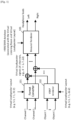
- Figure 1 illustrates the flow diagram of rendering the channelbased and object-based input signals to the binaural feeds in MPEG-H 3D audio standard.
- the channel-based signals 1 ... L 1 and object based signals 1 ... L 2 are firstly converted to a number of virtual loudspeaker signals via a format converter (101) and VBAP renderer (102), respectively.
- the virtual loudspeaker signals are then converted to the binaural signals via a binaural renderer (103) by taking into account the BRIR database.
- EP 2 806 658 A1 relates to a method for reproducing audio data of an acoustic scene for driving two headphone channels, wherein auditory events are reproduced that a listener perceives in a close distance to his head.
- US 2014/023196 A1 relates to a method for audio signal processing, wherein audio objects are grouped into clusters.
- WO 2015/139769 A1 relates to a method of binauralization, wherein a mixing time separating an impulse response into a direct part and a late part is determined based on a pair of room impulse responses.
- EP 3 128 766 A2 relates to a method of binauralization, wherein a type of a filter for binaural filtering is set as being one of a finite response filter and a parameterized filter in a frequency domain.
- WO 2015/103024 A1 relates to a method for designing binaural impulse responses (BRIRs).
- Indirect binaural rendering via conversion of channel-based and object-based input signals to the virtual loudspeaker signals first and then followed by conversion to the binaural signals is widely adopted in 3D audio system, such as in MPEG-H 3D audio standard.
- 3D audio system such as in MPEG-H 3D audio standard.
- spatial resolution being fixed and limited by the configuration of the virtual loudspeakers in the middle of the rendering path.
- the virtual loudspeaker is set as 5.1 or 7.1 configuration, for example, the spatial resolution is constrained by small number of the virtual loudspeakers, resulting that the user perceives the sound coming from only these fixed directions.
- the BRIR database used in the binaural renderer (103) is associated with the virtual loudspeaker layout in a virtual listening room. This fact is deviated from the expected situation where the BRIRs should be the ones associated with the production scene if such information is available from the decoded bitstream.
- Ways to improve the spatial resolution include the increase of the number of loudspeakers, e.g., to 22.2 configuration, or using an object-binaural direct rendering scheme.
- these ways may lead to a high computational complexity problem when BRIR is used as the number of input signals for binauralization is increased.
- the computational complexity issue is explained in the following paragraph.
- FIG. 2 illustrates the processing flow of the binaural render (103) in MPEG-H 3D audio.
- This binaural renderer splits the BRIR into the "direct & early reflections” and “late reverberation” parts and process, these two parts separately. Since the "direct & early reflections" part reserves the most spatial information, this part of each BRIR is convolved with the signals separately in (201).
- the signals can be downmixed (202) into one channel such that the convolution needs to be performed only once with the downmixed channel in (203).
- this method reduces the computational load in the late reverberation processing (203), the computational complexity may still be very high for the direct and early part processing (201). This is because each of the source signals is processed separately in the direct and early part processing (201) and the computational complexity increases as the number of the source signals increases.
- the binaural renderer (103) considers the virtual loudspeaker signals as input signals and the binaural rendering can be performed by convolving each virtual loudspeaker signal with the corresponding pair of binaural impulse responses.
- the head related impulse response (HRIR) and binaural room impulse response (BRIR) are commonly used as the impulse response where the latter one consists of room reverberation filter coefficients which make it much longer than the HRIR.
- the convolution process implicitly assumes that the source is at fixed position-which is true for the virtual loudspeaker.
- the audio sources can be moving.
- One example is the use of head mounted display (HMD) in virtual reality (VR) application where the positions of audio sources are expected to be invariant from any rotation of the user head. This is achieved by rotating the positions of objects or virtual loudspeakers in the reverse direction to wipe off the effect of user head rotation.
- HMD head mounted display
- VR virtual reality
- Another example is the direct rendering of objects, where these objects can be moving with the varying positions specified in metadata.
- the present disclosure comprises the followings. Firstly, it is the means of directly rendering the object-based and channel-based signals to the binaural ends without going through the virtual loudspeakers. It is possible to solve the spatial resolution limitation problem in ⁇ Problem 1>. Secondly, it is the means of grouping the close sources into one cluster such that some part of processing can be applied to the downmixed version of the sources within one cluster to save computational complexity problem in ⁇ Problem 2>.
- FIG. 3 shows the overview diagram of the present disclosure.
- the inputs for the proposed fast binaural renderer (306) include K audio source signals, source metadata which specifies the source positions/ moving trajectories over a time period and a designated BRIR database.
- the aforementioned source signals can be either object-based signals, channel-based signals (virtual loudspeaker signals) or a mixture of both, and the source positions/ moving trajectories can be position series over a time period for the object-based sources or stationary virtual loudspeaker positions for the channel-based sources.
- the inputs also include an optional user head tracking data, which can be the instant user head facing direction or position, if such information is available from external applications and the rendered audio scene is required to be adapted with respect to the user head rotation/movement.
- the outputs of the fast binaural renderer are the left and right headphone feed signals for user listening.
- the fast binaural renderer first comprises of a head-relative source position computation module (301) which computes the relative source positions with respect to the instant user head facing direction/ position by taking the instant source metadata and user head tracking data.
- the computed head-relative source positions are then used in a hierarchical source grouping module (302) to generate the hierarchical source grouping information and binaural renderer core (303) for selecting the parameterized BRIRs according to the instant source positions.
- the hierarchical information generated by (302) is also used in the binaural renderer core (303) for the purpose of reducing the computational complexity.
- the details of the hierarchical source grouping module (302) are described in Section ⁇ Source groupings
- the proposed fast binaural render also comprises of a BRIR parameterization module (304) which splits each BRIR filter into several blocks. It further divides the first block into frames and attaches each frame with corresponding BRIR target position label.
- the details of the BRIR parameterization module (304) are described in Section ⁇ BRIR parameterization>.
- the proposed fast binaural renderer considers the BRIRs as the filters for rendering the audio sources.
- the proposed fast binaural render supports an external BRIR interpolation module (305) which interpolates the BRIR filters for the missing target locations based on the nearby BRIR filters.
- an external module is not specified in this document.
- the proposed fast binaural renderer comprises of a binaural renderer core (303) which is the core processing unit. It takes the aforementioned individual source signals, the computed head-relative source positions, the hierarchical source grouping information and the parameterized BRIR blocks/frames for generating the headphone feeds.
- the details of the binaural renderer core (303) are described in Section ⁇ Binaural renderer core> and Section ⁇ Source grouping based frame-by-frame binaural rendering>.
- the hierarchical source grouping module (302) in Figure 3 takes the computed instant head-relative source positions as inputs for computing the audio source grouping information based on similarity, e.g., the inter-distance, between any two audio sources.
- grouping decision can be made hierarchically with P layers where the higher layer has a lower resolution while the deeper layer has a higher resolution for grouping the sources.
- the Oth cluster of the pth layer is denoted as C o p
- the figure is shown as a top view where the origin indicates the user (listener) position, the direction of y-axis indicates the user facing direction and the sources are plotted according to their two-dimensional head-relative positions computed from (301) with respect to the user.
- the number of layers P is chosen by the user depending on the system complexity requirement and can be greater than 2.
- a proper hierarchy design with lower resolution on the high layers can result in a lower computational complexity.
- To group the sources a simple way is based on division of the whole space where the audio sources exist into a number of small areas/enclosures, as illustrated in the previous example. The sources are therefore grouped based on which area/enclosure they fall into. More professionally, the audio sources can be grouped based on some particular clustering algorithms, e.g., k-means, fuzzy c means algorithms. These clustering algorithms compute the similarity measures between any two sources and grouped the sources into clusters.
- BRIR parameterization module (304) in Figure 3 which takes a designated BRIR database or an interpolated BRIR database as inputs.
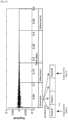
- Figure 5 shows the procedure of parameterizing one of the BRIR filters into blocks and frames.
- a BRIR filter can be long, e.g., greater than 0.5 second in a hall, due to the inclusion of room reflections.
- each BRIR filter is divided into direct block and diffuse blocks and a simplified processing, as described in Section ⁇ Binaural renderer core>, is applied on the diffuse blocks.
- Dividing the BRIR filter into blocks can be determined by the energy envelop of each BRIR filter and inter-aural coherence between the filters in pair. As the energy and inter-aural coherence reduces with time increases in BRIRs, the time points for separating the blocks can be derived empirically using existing algorithms [see NPL 2].
- Figure 5 shows the example where a BRIR filter has been divided into a direct block and W diffuse blocks.
- the direct block is denoted as h ⁇ 0 n where n denotes the sample index, superscript (0) denotes direct block and ⁇ denotes the target location of this BRIR filter.
- f w which are the outputs of (304) in Figure 3 , are computed for each block based on the energy distribution in the time-frequency domain of the BRIRs.
- the frequencies above the cut-off frequencies f w are not processed in order to save computational complexity. Since the diffuse blocks contain less directional information, they will be used in the late reverberation processing module (703) in Figure 7 which processes a downmixed version of the source signals to save computational complexity, which is elaborated in Section ⁇ Binaural renderer core> in details.
- the direct block of BRIR contains important directional information and will generate the directional cues in the binaural playback signals.
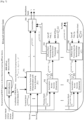
- FIG. 7 shows the processing diagram of the binaural renderer core (303) which processes the current block and previous blocks of the source signal separately.
- each source signal is divided into current block and W previous blocks where W is the number of diffuse BRIR blocks defined in Section ⁇ BRIR parameterization>.
- the current block of each source is processed in the frame-by-frame fast binauralization module (701) using the direct block of BRIR.
- y (current) denotes the output of (701)
- the function ⁇ ( ⁇ ) denotes the processing function of (701) which takes hierarchical source grouping information generated from (302) in Figure 3
- H (0) denotes a collection of the BRIR frames of the direct block corresponding to all the instant frame-wise source locations during the current block time period.
- the details of this frame-by-frame fast binauralization module (701) are described in Section ⁇ Source grouping based frame-by-frame binaural rendering>.
- the previous blocks of source signals will be downmixed in the downmxing module (702) into one channel and passed to the late reverberation processing module (703).
- the variable ⁇ ave denotes the averaged location of all the K sources at the block current-w.
- this late reverberation processing can be performed in time-domain using convolution. It can also be implemented by multiplication in frequency domain using fast Fourier transform (FFT) with cut-off frequencies f w applied. It is also worth noting that time-domain downsampling can be implemented on the diffuse blocks depending on the target system computational complexity. Such downsampling can reduce the number of signal samples, and thus reduce the number of multiplications in the FFT domain, resulted a reduced computational complexity.
- FFT fast Fourier transform
- This section describes the details of the source grouping based frame-by-frame binauralization module (701) in Figure 7 which processes the current block of the source signals.
- the current block of the kth source signal s k (current) (n) is divided into frames, where the latest frame is denoted by s k (current) , lfrm (n) and the previous mth frame is denoted by s k (current) , lfrm-m (n).
- the frame length of source signal is equivalent to the frame length of the direct block of BRIR filter.
- the latest frame s k (current) , lfrm (n) is convolved with the Oth frame of the direct block of BRIR h ⁇ k current , lfrm 0 , 0 n contained in the collection H (0) .
- This BRIR frame is selected by searching for the labelled location of BRIR frame [ ⁇ k (current) , lfrm ] which is closest to the instant position of the source ⁇ k (current), lfrm at the latest frame, where [ ⁇ k (current) , lfrm ] denotes finding the nearest value of label in the BRIR database. Due to that the Oth frame of BRIR contains the most directional information, the convolution is performed with each source signal individually to reserve the spatial cues of each source. The convolution can be performed using multiplication in frequency domain, as illustrated in (801) in Figure 8 .
- the downmix can be applied by averaging the source signals as (s 4 latest frame-2 (n) + s 5 latest frame-2 (n)) / 2 and the convolution is applied between this averaged signal and the BRIR frame with the averaged source location at that frame.
- the present present disclosure is configured with hardware by way of the above explained example, but the present disclosure may also be provided by software in cooperation with hardware.
- the functional blocks used in the descriptions of the embodiments are typically implemented as LSI devices, which are integrated circuits.
- the functional blocks may be formed as individual chips, or a part or all of the functional blocks may be integrated into a single chip.
- LSI is used herein, but the terms "IC,” “system LSI,” “super LSI” or “ultra LSI” may be used as well depending on the level of integration.
- circuit integration is not limited to LSI and may be achieved by dedicated circuitry or a general-purpose processor other than an LSI.
- a field programmable gate array FPGA
- reconfigurable processor which allows reconfiguration of connections and settings of circuit cells in LSI may be used.
- This disclosure can be applied to a method for rendering of digital audio signals for headphone playback.
Landscapes
- Engineering & Computer Science (AREA)
- Physics & Mathematics (AREA)
- Acoustics & Sound (AREA)
- Signal Processing (AREA)
- Multimedia (AREA)
- Mathematical Physics (AREA)
- Computational Linguistics (AREA)
- Health & Medical Sciences (AREA)
- Audiology, Speech & Language Pathology (AREA)
- Human Computer Interaction (AREA)
- Stereophonic System (AREA)
Applications Claiming Priority (3)
| Application Number | Priority Date | Filing Date | Title |
|---|---|---|---|
| JP2016211803 | 2016-10-28 | ||
| PCT/JP2017/036738 WO2018079254A1 (en) | 2016-10-28 | 2017-10-11 | Binaural rendering apparatus and method for playing back of multiple audio sources |
| EP17865085.9A EP3533242B1 (en) | 2016-10-28 | 2017-10-11 | Binaural rendering apparatus and method for playing back of multiple audio sources |
Related Parent Applications (2)
| Application Number | Title | Priority Date | Filing Date |
|---|---|---|---|
| EP17865085.9A Division EP3533242B1 (en) | 2016-10-28 | 2017-10-11 | Binaural rendering apparatus and method for playing back of multiple audio sources |
| EP17865085.9A Division-Into EP3533242B1 (en) | 2016-10-28 | 2017-10-11 | Binaural rendering apparatus and method for playing back of multiple audio sources |
Publications (2)
| Publication Number | Publication Date |
|---|---|
| EP3822968A1 EP3822968A1 (en) | 2021-05-19 |
| EP3822968B1 true EP3822968B1 (en) | 2023-09-06 |
Family
ID=62024946
Family Applications (2)
| Application Number | Title | Priority Date | Filing Date |
|---|---|---|---|
| EP20209677.2A Active EP3822968B1 (en) | 2016-10-28 | 2017-10-11 | Binaural rendering apparatus and method for playing back of multiple audio sources |
| EP17865085.9A Active EP3533242B1 (en) | 2016-10-28 | 2017-10-11 | Binaural rendering apparatus and method for playing back of multiple audio sources |
Family Applications After (1)
| Application Number | Title | Priority Date | Filing Date |
|---|---|---|---|
| EP17865085.9A Active EP3533242B1 (en) | 2016-10-28 | 2017-10-11 | Binaural rendering apparatus and method for playing back of multiple audio sources |
Country Status (5)
| Country | Link |
|---|---|
| US (5) | US10555107B2 (https=) |
| EP (2) | EP3822968B1 (https=) |
| JP (2) | JP6977030B2 (https=) |
| CN (2) | CN109792582B (https=) |
| WO (1) | WO2018079254A1 (https=) |
Families Citing this family (12)
| Publication number | Priority date | Publication date | Assignee | Title |
|---|---|---|---|---|
| CN110603821B (zh) | 2017-05-04 | 2025-06-24 | 杜比国际公司 | 渲染具有表观大小的音频对象 |
| WO2019004524A1 (ko) * | 2017-06-27 | 2019-01-03 | 엘지전자 주식회사 | 6자유도 환경에서 오디오 재생 방법 및 오디오 재생 장치 |
| ES2954317T3 (es) * | 2018-03-28 | 2023-11-21 | Fund Eurecat | Técnica de reverberación para audio 3D |
| US11068668B2 (en) * | 2018-10-25 | 2021-07-20 | Facebook Technologies, Llc | Natural language translation in augmented reality(AR) |
| GB2593419A (en) | 2019-10-11 | 2021-09-29 | Nokia Technologies Oy | Spatial audio representation and rendering |
| US11967329B2 (en) * | 2020-02-20 | 2024-04-23 | Qualcomm Incorporated | Signaling for rendering tools |
| CN111918176B (zh) | 2020-07-31 | 2025-07-04 | 北京全景声信息科技有限公司 | 音频处理方法、装置、无线耳机以及存储介质 |
| EP4164254A1 (en) * | 2021-10-06 | 2023-04-12 | Nokia Technologies Oy | Rendering spatial audio content |
| CN116939474A (zh) | 2022-04-12 | 2023-10-24 | 北京荣耀终端有限公司 | 一种音频信号处理方法及电子设备 |
| WO2024253691A1 (en) * | 2023-06-08 | 2024-12-12 | Google Llc | Performing common audio convolutions using iso-trajectories in three dimensional (3d) space |
| US12408001B2 (en) | 2023-06-16 | 2025-09-02 | Harman International Industries, Incorporated | Rendering of audio signals using virtualized reverberation |
| US20250024219A1 (en) * | 2023-07-12 | 2025-01-16 | Qualcomm Incorporated | Sound field adjustment |
Family Cites Families (32)
| Publication number | Priority date | Publication date | Assignee | Title |
|---|---|---|---|---|
| JP2000013900A (ja) * | 1998-06-25 | 2000-01-14 | Matsushita Electric Ind Co Ltd | 音再生装置 |
| WO2007052612A1 (ja) * | 2005-10-31 | 2007-05-10 | Matsushita Electric Industrial Co., Ltd. | ステレオ符号化装置およびステレオ信号予測方法 |
| JP2007135077A (ja) * | 2005-11-11 | 2007-05-31 | Kyocera Corp | 携帯端末装置、音響出力装置、音響装置及びその音響出力制御方法 |
| CN101690269A (zh) | 2007-06-26 | 2010-03-31 | 皇家飞利浦电子股份有限公司 | 双耳的面向对象的音频解码器 |
| CN101458942B (zh) * | 2007-12-14 | 2012-07-18 | 鸿富锦精密工业(深圳)有限公司 | 音视频装置及控制方法 |
| EP2175670A1 (en) | 2008-10-07 | 2010-04-14 | Fraunhofer-Gesellschaft zur Förderung der angewandten Forschung e.V. | Binaural rendering of a multi-channel audio signal |
| US7769641B2 (en) * | 2008-11-18 | 2010-08-03 | Cisco Technology, Inc. | Sharing media content assets between users of a web-based service |
| JP5611970B2 (ja) * | 2008-11-21 | 2014-10-22 | アウロ テクノロジーズ | オーディオ信号を変換するためのコンバータ及び方法 |
| WO2010122455A1 (en) | 2009-04-21 | 2010-10-28 | Koninklijke Philips Electronics N.V. | Audio signal synthesizing |
| KR101805212B1 (ko) * | 2009-08-14 | 2017-12-05 | 디티에스 엘엘씨 | 객체-지향 오디오 스트리밍 시스템 |
| US9819987B2 (en) * | 2010-11-17 | 2017-11-14 | Verizon Patent And Licensing Inc. | Content entitlement determinations for playback of video streams on portable devices |
| EP2503800B1 (en) * | 2011-03-24 | 2018-09-19 | Harman Becker Automotive Systems GmbH | Spatially constant surround sound |
| US9043435B2 (en) * | 2011-10-24 | 2015-05-26 | International Business Machines Corporation | Distributing licensed content across multiple devices |
| JP5754595B2 (ja) * | 2011-11-22 | 2015-07-29 | 日本電信電話株式会社 | トランスオーラルシステム |
| US9516446B2 (en) * | 2012-07-20 | 2016-12-06 | Qualcomm Incorporated | Scalable downmix design for object-based surround codec with cluster analysis by synthesis |
| US9761229B2 (en) * | 2012-07-20 | 2017-09-12 | Qualcomm Incorporated | Systems, methods, apparatus, and computer-readable media for audio object clustering |
| WO2014036085A1 (en) * | 2012-08-31 | 2014-03-06 | Dolby Laboratories Licensing Corporation | Reflected sound rendering for object-based audio |
| TWI530941B (zh) * | 2013-04-03 | 2016-04-21 | 杜比實驗室特許公司 | 用於基於物件音頻之互動成像的方法與系統 |
| KR102150955B1 (ko) * | 2013-04-19 | 2020-09-02 | 한국전자통신연구원 | 다채널 오디오 신호 처리 장치 및 방법 |
| EP2806658B1 (en) * | 2013-05-24 | 2017-09-27 | Barco N.V. | Arrangement and method for reproducing audio data of an acoustic scene |
| US9674632B2 (en) * | 2013-05-29 | 2017-06-06 | Qualcomm Incorporated | Filtering with binaural room impulse responses |
| EP2830043A3 (en) * | 2013-07-22 | 2015-02-18 | Fraunhofer-Gesellschaft zur Förderung der angewandten Forschung e.V. | Method for Processing an Audio Signal in accordance with a Room Impulse Response, Signal Processing Unit, Audio Encoder, Audio Decoder, and Binaural Renderer |
| EP2840811A1 (en) * | 2013-07-22 | 2015-02-25 | Fraunhofer-Gesellschaft zur Förderung der angewandten Forschung e.V. | Method for processing an audio signal; signal processing unit, binaural renderer, audio encoder and audio decoder |
| KR102007991B1 (ko) * | 2013-07-25 | 2019-08-06 | 한국전자통신연구원 | 다채널 오디오 신호의 바이노럴 렌더링 방법 및 장치 |
| US10580417B2 (en) * | 2013-10-22 | 2020-03-03 | Industry-Academic Cooperation Foundation, Yonsei University | Method and apparatus for binaural rendering audio signal using variable order filtering in frequency domain |
| EP4421617A3 (en) * | 2013-10-31 | 2024-11-06 | Dolby Laboratories Licensing Corporation | Binaural rendering for headphones using metadata processing |
| EP3090576B1 (en) * | 2014-01-03 | 2017-10-18 | Dolby Laboratories Licensing Corporation | Methods and systems for designing and applying numerically optimized binaural room impulse responses |
| WO2015102920A1 (en) * | 2014-01-03 | 2015-07-09 | Dolby Laboratories Licensing Corporation | Generating binaural audio in response to multi-channel audio using at least one feedback delay network |
| JP6442037B2 (ja) * | 2014-03-21 | 2018-12-19 | 華為技術有限公司Huawei Technologies Co.,Ltd. | 室内インパルス応答の少なくとも第1のペアに基づいて総ミキシング時間を推定する装置および方法、ならびに対応するコンピュータプログラム |
| KR101856540B1 (ko) * | 2014-04-02 | 2018-05-11 | 주식회사 윌러스표준기술연구소 | 오디오 신호 처리 방법 및 장치 |
| US9432778B2 (en) * | 2014-04-04 | 2016-08-30 | Gn Resound A/S | Hearing aid with improved localization of a monaural signal source |
| CN104240712B (zh) * | 2014-09-30 | 2018-02-02 | 武汉大学深圳研究院 | 一种三维音频多声道分组聚类编码方法及系统 |
-
2017
- 2017-10-11 CN CN201780059396.9A patent/CN109792582B/zh active Active
- 2017-10-11 CN CN202111170487.4A patent/CN114025301B/zh active Active
- 2017-10-11 JP JP2019518124A patent/JP6977030B2/ja active Active
- 2017-10-11 WO PCT/JP2017/036738 patent/WO2018079254A1/en not_active Ceased
- 2017-10-11 EP EP20209677.2A patent/EP3822968B1/en active Active
- 2017-10-11 EP EP17865085.9A patent/EP3533242B1/en active Active
- 2017-10-11 US US16/341,861 patent/US10555107B2/en active Active
-
2019
- 2019-12-23 US US16/724,921 patent/US10735886B2/en active Active
-
2020
- 2020-06-26 US US16/913,034 patent/US10873826B2/en active Active
- 2020-11-13 US US17/097,829 patent/US11337026B2/en active Active
-
2021
- 2021-11-09 JP JP2021182510A patent/JP7222054B2/ja active Active
-
2022
- 2022-04-20 US US17/725,097 patent/US11653171B2/en active Active
Also Published As
| Publication number | Publication date |
|---|---|
| EP3822968A1 (en) | 2021-05-19 |
| US10735886B2 (en) | 2020-08-04 |
| EP3533242A1 (en) | 2019-09-04 |
| US20200128351A1 (en) | 2020-04-23 |
| US10873826B2 (en) | 2020-12-22 |
| JP6977030B2 (ja) | 2021-12-08 |
| CN114025301B (zh) | 2024-07-30 |
| CN114025301A (zh) | 2022-02-08 |
| EP3533242A4 (en) | 2019-10-30 |
| US20190246236A1 (en) | 2019-08-08 |
| WO2018079254A1 (en) | 2018-05-03 |
| US20200329332A1 (en) | 2020-10-15 |
| JP7222054B2 (ja) | 2023-02-14 |
| JP2019532579A (ja) | 2019-11-07 |
| US11337026B2 (en) | 2022-05-17 |
| US20220248163A1 (en) | 2022-08-04 |
| US11653171B2 (en) | 2023-05-16 |
| JP2022010174A (ja) | 2022-01-14 |
| US20210067897A1 (en) | 2021-03-04 |
| EP3533242B1 (en) | 2021-01-20 |
| CN109792582A (zh) | 2019-05-21 |
| CN109792582B (zh) | 2021-10-22 |
| US10555107B2 (en) | 2020-02-04 |
Similar Documents
| Publication | Publication Date | Title |
|---|---|---|
| US11653171B2 (en) | Fast binaural rendering apparatus and method for playing back of multiple audio sources | |
| KR102653560B1 (ko) | 다채널 오디오 신호 처리 장치 및 방법 | |
| Cobos et al. | An overview of machine learning and other data-based methods for spatial audio capture, processing, and reproduction | |
| EP3028476B1 (en) | Panning of audio objects to arbitrary speaker layouts | |
| US9351070B2 (en) | Positional disambiguation in spatial audio | |
| RU2643644C2 (ru) | Кодирование и декодирование аудиосигналов | |
| EP1991984B1 (en) | Method and system synthesizing a stereo signal | |
| US20220078570A1 (en) | Method for generating binaural signals from stereo signals using upmixing binauralization, and apparatus therefor | |
| US10375472B2 (en) | Determining azimuth and elevation angles from stereo recordings | |
| KR101546849B1 (ko) | 주파수 영역에서의 음장효과 생성 방법 및 장치 | |
| US11032639B2 (en) | Determining azimuth and elevation angles from stereo recordings | |
| JP2016019041A (ja) | 音響信号変換装置、音響信号変換方法、音響信号変換プログラム | |
| HK1255002B (en) | Determining azimuth and elevation angles from stereo recordings |
Legal Events
| Date | Code | Title | Description |
|---|---|---|---|
| PUAI | Public reference made under article 153(3) epc to a published international application that has entered the european phase |
Free format text: ORIGINAL CODE: 0009012 |
|
| STAA | Information on the status of an ep patent application or granted ep patent |
Free format text: STATUS: REQUEST FOR EXAMINATION WAS MADE |
|
| 17P | Request for examination filed |
Effective date: 20201125 |
|
| AC | Divisional application: reference to earlier application |
Ref document number: 3533242 Country of ref document: EP Kind code of ref document: P |
|
| AK | Designated contracting states |
Kind code of ref document: A1 Designated state(s): AL AT BE BG CH CY CZ DE DK EE ES FI FR GB GR HR HU IE IS IT LI LT LU LV MC MK MT NL NO PL PT RO RS SE SI SK SM TR |
|
| GRAP | Despatch of communication of intention to grant a patent |
Free format text: ORIGINAL CODE: EPIDOSNIGR1 |
|
| STAA | Information on the status of an ep patent application or granted ep patent |
Free format text: STATUS: GRANT OF PATENT IS INTENDED |
|
| INTG | Intention to grant announced |
Effective date: 20230331 |
|
| GRAS | Grant fee paid |
Free format text: ORIGINAL CODE: EPIDOSNIGR3 |
|
| GRAA | (expected) grant |
Free format text: ORIGINAL CODE: 0009210 |
|
| STAA | Information on the status of an ep patent application or granted ep patent |
Free format text: STATUS: THE PATENT HAS BEEN GRANTED |
|
| AC | Divisional application: reference to earlier application |
Ref document number: 3533242 Country of ref document: EP Kind code of ref document: P |
|
| AK | Designated contracting states |
Kind code of ref document: B1 Designated state(s): AL AT BE BG CH CY CZ DE DK EE ES FI FR GB GR HR HU IE IS IT LI LT LU LV MC MK MT NL NO PL PT RO RS SE SI SK SM TR |
|
| REG | Reference to a national code |
Ref country code: GB Ref legal event code: FG4D |
|
| REG | Reference to a national code |
Ref country code: CH Ref legal event code: EP |
|
| REG | Reference to a national code |
Ref country code: DE Ref legal event code: R096 Ref document number: 602017074037 Country of ref document: DE |
|
| REG | Reference to a national code |
Ref country code: IE Ref legal event code: FG4D |
|
| REG | Reference to a national code |
Ref country code: LT Ref legal event code: MG9D |
|
| PG25 | Lapsed in a contracting state [announced via postgrant information from national office to epo] |
Ref country code: GR Free format text: LAPSE BECAUSE OF FAILURE TO SUBMIT A TRANSLATION OF THE DESCRIPTION OR TO PAY THE FEE WITHIN THE PRESCRIBED TIME-LIMIT Effective date: 20231207 |
|
| PG25 | Lapsed in a contracting state [announced via postgrant information from national office to epo] |
Ref country code: SE Free format text: LAPSE BECAUSE OF FAILURE TO SUBMIT A TRANSLATION OF THE DESCRIPTION OR TO PAY THE FEE WITHIN THE PRESCRIBED TIME-LIMIT Effective date: 20230906 Ref country code: RS Free format text: LAPSE BECAUSE OF FAILURE TO SUBMIT A TRANSLATION OF THE DESCRIPTION OR TO PAY THE FEE WITHIN THE PRESCRIBED TIME-LIMIT Effective date: 20230906 Ref country code: NO Free format text: LAPSE BECAUSE OF FAILURE TO SUBMIT A TRANSLATION OF THE DESCRIPTION OR TO PAY THE FEE WITHIN THE PRESCRIBED TIME-LIMIT Effective date: 20231206 Ref country code: LV Free format text: LAPSE BECAUSE OF FAILURE TO SUBMIT A TRANSLATION OF THE DESCRIPTION OR TO PAY THE FEE WITHIN THE PRESCRIBED TIME-LIMIT Effective date: 20230906 Ref country code: LT Free format text: LAPSE BECAUSE OF FAILURE TO SUBMIT A TRANSLATION OF THE DESCRIPTION OR TO PAY THE FEE WITHIN THE PRESCRIBED TIME-LIMIT Effective date: 20230906 Ref country code: HR Free format text: LAPSE BECAUSE OF FAILURE TO SUBMIT A TRANSLATION OF THE DESCRIPTION OR TO PAY THE FEE WITHIN THE PRESCRIBED TIME-LIMIT Effective date: 20230906 Ref country code: GR Free format text: LAPSE BECAUSE OF FAILURE TO SUBMIT A TRANSLATION OF THE DESCRIPTION OR TO PAY THE FEE WITHIN THE PRESCRIBED TIME-LIMIT Effective date: 20231207 Ref country code: FI Free format text: LAPSE BECAUSE OF FAILURE TO SUBMIT A TRANSLATION OF THE DESCRIPTION OR TO PAY THE FEE WITHIN THE PRESCRIBED TIME-LIMIT Effective date: 20230906 |
|
| REG | Reference to a national code |
Ref country code: AT Ref legal event code: MK05 Ref document number: 1609637 Country of ref document: AT Kind code of ref document: T Effective date: 20230906 |
|
| PG25 | Lapsed in a contracting state [announced via postgrant information from national office to epo] |
Ref country code: NL Free format text: LAPSE BECAUSE OF FAILURE TO SUBMIT A TRANSLATION OF THE DESCRIPTION OR TO PAY THE FEE WITHIN THE PRESCRIBED TIME-LIMIT Effective date: 20230906 |
|
| PG25 | Lapsed in a contracting state [announced via postgrant information from national office to epo] |
Ref country code: IS Free format text: LAPSE BECAUSE OF FAILURE TO SUBMIT A TRANSLATION OF THE DESCRIPTION OR TO PAY THE FEE WITHIN THE PRESCRIBED TIME-LIMIT Effective date: 20240106 |
|
| PG25 | Lapsed in a contracting state [announced via postgrant information from national office to epo] |
Ref country code: AT Free format text: LAPSE BECAUSE OF FAILURE TO SUBMIT A TRANSLATION OF THE DESCRIPTION OR TO PAY THE FEE WITHIN THE PRESCRIBED TIME-LIMIT Effective date: 20230906 |
|
| PG25 | Lapsed in a contracting state [announced via postgrant information from national office to epo] |
Ref country code: ES Free format text: LAPSE BECAUSE OF FAILURE TO SUBMIT A TRANSLATION OF THE DESCRIPTION OR TO PAY THE FEE WITHIN THE PRESCRIBED TIME-LIMIT Effective date: 20230906 |
|
| PG25 | Lapsed in a contracting state [announced via postgrant information from national office to epo] |
Ref country code: SM Free format text: LAPSE BECAUSE OF FAILURE TO SUBMIT A TRANSLATION OF THE DESCRIPTION OR TO PAY THE FEE WITHIN THE PRESCRIBED TIME-LIMIT Effective date: 20230906 Ref country code: RO Free format text: LAPSE BECAUSE OF FAILURE TO SUBMIT A TRANSLATION OF THE DESCRIPTION OR TO PAY THE FEE WITHIN THE PRESCRIBED TIME-LIMIT Effective date: 20230906 Ref country code: IS Free format text: LAPSE BECAUSE OF FAILURE TO SUBMIT A TRANSLATION OF THE DESCRIPTION OR TO PAY THE FEE WITHIN THE PRESCRIBED TIME-LIMIT Effective date: 20240106 Ref country code: ES Free format text: LAPSE BECAUSE OF FAILURE TO SUBMIT A TRANSLATION OF THE DESCRIPTION OR TO PAY THE FEE WITHIN THE PRESCRIBED TIME-LIMIT Effective date: 20230906 Ref country code: EE Free format text: LAPSE BECAUSE OF FAILURE TO SUBMIT A TRANSLATION OF THE DESCRIPTION OR TO PAY THE FEE WITHIN THE PRESCRIBED TIME-LIMIT Effective date: 20230906 Ref country code: CZ Free format text: LAPSE BECAUSE OF FAILURE TO SUBMIT A TRANSLATION OF THE DESCRIPTION OR TO PAY THE FEE WITHIN THE PRESCRIBED TIME-LIMIT Effective date: 20230906 Ref country code: AT Free format text: LAPSE BECAUSE OF FAILURE TO SUBMIT A TRANSLATION OF THE DESCRIPTION OR TO PAY THE FEE WITHIN THE PRESCRIBED TIME-LIMIT Effective date: 20230906 Ref country code: SK Free format text: LAPSE BECAUSE OF FAILURE TO SUBMIT A TRANSLATION OF THE DESCRIPTION OR TO PAY THE FEE WITHIN THE PRESCRIBED TIME-LIMIT Effective date: 20230906 Ref country code: PT Free format text: LAPSE BECAUSE OF FAILURE TO SUBMIT A TRANSLATION OF THE DESCRIPTION OR TO PAY THE FEE WITHIN THE PRESCRIBED TIME-LIMIT Effective date: 20240108 |
|
| PG25 | Lapsed in a contracting state [announced via postgrant information from national office to epo] |
Ref country code: PL Free format text: LAPSE BECAUSE OF FAILURE TO SUBMIT A TRANSLATION OF THE DESCRIPTION OR TO PAY THE FEE WITHIN THE PRESCRIBED TIME-LIMIT Effective date: 20230906 Ref country code: IT Free format text: LAPSE BECAUSE OF FAILURE TO SUBMIT A TRANSLATION OF THE DESCRIPTION OR TO PAY THE FEE WITHIN THE PRESCRIBED TIME-LIMIT Effective date: 20230906 |
|
| REG | Reference to a national code |
Ref country code: CH Ref legal event code: PL |
|
| REG | Reference to a national code |
Ref country code: DE Ref legal event code: R097 Ref document number: 602017074037 Country of ref document: DE |
|
| REG | Reference to a national code |
Ref country code: BE Ref legal event code: MM Effective date: 20231031 |
|
| PG25 | Lapsed in a contracting state [announced via postgrant information from national office to epo] |
Ref country code: LU Free format text: LAPSE BECAUSE OF NON-PAYMENT OF DUE FEES Effective date: 20231011 |
|
| PG25 | Lapsed in a contracting state [announced via postgrant information from national office to epo] |
Ref country code: LU Free format text: LAPSE BECAUSE OF NON-PAYMENT OF DUE FEES Effective date: 20231011 |
|
| PG25 | Lapsed in a contracting state [announced via postgrant information from national office to epo] |
Ref country code: MC Free format text: LAPSE BECAUSE OF FAILURE TO SUBMIT A TRANSLATION OF THE DESCRIPTION OR TO PAY THE FEE WITHIN THE PRESCRIBED TIME-LIMIT Effective date: 20230906 |
|
| PG25 | Lapsed in a contracting state [announced via postgrant information from national office to epo] |
Ref country code: DK Free format text: LAPSE BECAUSE OF FAILURE TO SUBMIT A TRANSLATION OF THE DESCRIPTION OR TO PAY THE FEE WITHIN THE PRESCRIBED TIME-LIMIT Effective date: 20230906 |
|
| PLBE | No opposition filed within time limit |
Free format text: ORIGINAL CODE: 0009261 |
|
| STAA | Information on the status of an ep patent application or granted ep patent |
Free format text: STATUS: NO OPPOSITION FILED WITHIN TIME LIMIT |
|
| PG25 | Lapsed in a contracting state [announced via postgrant information from national office to epo] |
Ref country code: CH Free format text: LAPSE BECAUSE OF NON-PAYMENT OF DUE FEES Effective date: 20231031 |
|
| PG25 | Lapsed in a contracting state [announced via postgrant information from national office to epo] |
Ref country code: MC Free format text: LAPSE BECAUSE OF FAILURE TO SUBMIT A TRANSLATION OF THE DESCRIPTION OR TO PAY THE FEE WITHIN THE PRESCRIBED TIME-LIMIT Effective date: 20230906 Ref country code: DK Free format text: LAPSE BECAUSE OF FAILURE TO SUBMIT A TRANSLATION OF THE DESCRIPTION OR TO PAY THE FEE WITHIN THE PRESCRIBED TIME-LIMIT Effective date: 20230906 Ref country code: CH Free format text: LAPSE BECAUSE OF NON-PAYMENT OF DUE FEES Effective date: 20231031 Ref country code: SI Free format text: LAPSE BECAUSE OF FAILURE TO SUBMIT A TRANSLATION OF THE DESCRIPTION OR TO PAY THE FEE WITHIN THE PRESCRIBED TIME-LIMIT Effective date: 20230906 |
|
| 26N | No opposition filed |
Effective date: 20240607 |
|
| GBPC | Gb: european patent ceased through non-payment of renewal fee |
Effective date: 20231206 |
|
| PG25 | Lapsed in a contracting state [announced via postgrant information from national office to epo] |
Ref country code: BE Free format text: LAPSE BECAUSE OF NON-PAYMENT OF DUE FEES Effective date: 20231031 |
|
| PG25 | Lapsed in a contracting state [announced via postgrant information from national office to epo] |
Ref country code: IE Free format text: LAPSE BECAUSE OF NON-PAYMENT OF DUE FEES Effective date: 20231011 |
|
| PG25 | Lapsed in a contracting state [announced via postgrant information from national office to epo] |
Ref country code: GB Free format text: LAPSE BECAUSE OF NON-PAYMENT OF DUE FEES Effective date: 20231206 |
|
| PG25 | Lapsed in a contracting state [announced via postgrant information from national office to epo] |
Ref country code: FR Free format text: LAPSE BECAUSE OF NON-PAYMENT OF DUE FEES Effective date: 20231106 |
|
| PG25 | Lapsed in a contracting state [announced via postgrant information from national office to epo] |
Ref country code: IE Free format text: LAPSE BECAUSE OF NON-PAYMENT OF DUE FEES Effective date: 20231011 Ref country code: GB Free format text: LAPSE BECAUSE OF NON-PAYMENT OF DUE FEES Effective date: 20231206 Ref country code: FR Free format text: LAPSE BECAUSE OF NON-PAYMENT OF DUE FEES Effective date: 20231106 |
|
| PG25 | Lapsed in a contracting state [announced via postgrant information from national office to epo] |
Ref country code: BG Free format text: LAPSE BECAUSE OF FAILURE TO SUBMIT A TRANSLATION OF THE DESCRIPTION OR TO PAY THE FEE WITHIN THE PRESCRIBED TIME-LIMIT Effective date: 20230906 |
|
| PG25 | Lapsed in a contracting state [announced via postgrant information from national office to epo] |
Ref country code: BG Free format text: LAPSE BECAUSE OF FAILURE TO SUBMIT A TRANSLATION OF THE DESCRIPTION OR TO PAY THE FEE WITHIN THE PRESCRIBED TIME-LIMIT Effective date: 20230906 |
|
| PG25 | Lapsed in a contracting state [announced via postgrant information from national office to epo] |
Ref country code: CY Free format text: LAPSE BECAUSE OF FAILURE TO SUBMIT A TRANSLATION OF THE DESCRIPTION OR TO PAY THE FEE WITHIN THE PRESCRIBED TIME-LIMIT; INVALID AB INITIO Effective date: 20171011 |
|
| PG25 | Lapsed in a contracting state [announced via postgrant information from national office to epo] |
Ref country code: HU Free format text: LAPSE BECAUSE OF FAILURE TO SUBMIT A TRANSLATION OF THE DESCRIPTION OR TO PAY THE FEE WITHIN THE PRESCRIBED TIME-LIMIT; INVALID AB INITIO Effective date: 20171011 |
|
| PG25 | Lapsed in a contracting state [announced via postgrant information from national office to epo] |
Ref country code: TR Free format text: LAPSE BECAUSE OF FAILURE TO SUBMIT A TRANSLATION OF THE DESCRIPTION OR TO PAY THE FEE WITHIN THE PRESCRIBED TIME-LIMIT Effective date: 20230906 |
|
| PGFP | Annual fee paid to national office [announced via postgrant information from national office to epo] |
Ref country code: DE Payment date: 20251021 Year of fee payment: 9 |