EP3822832B1 - Device for providing identification information, and system for same - Google Patents
Device for providing identification information, and system for same Download PDFInfo
- Publication number
- EP3822832B1 EP3822832B1 EP19862446.2A EP19862446A EP3822832B1 EP 3822832 B1 EP3822832 B1 EP 3822832B1 EP 19862446 A EP19862446 A EP 19862446A EP 3822832 B1 EP3822832 B1 EP 3822832B1
- Authority
- EP
- European Patent Office
- Prior art keywords
- electronic device
- information
- display
- processor
- identity
- Prior art date
- Legal status (The legal status is an assumption and is not a legal conclusion. Google has not performed a legal analysis and makes no representation as to the accuracy of the status listed.)
- Active
Links
Images




Classifications
-
- G—PHYSICS
- G06—COMPUTING OR CALCULATING; COUNTING
- G06F—ELECTRIC DIGITAL DATA PROCESSING
- G06F21/00—Security arrangements for protecting computers, components thereof, programs or data against unauthorised activity
- G06F21/60—Protecting data
- G06F21/62—Protecting access to data via a platform, e.g. using keys or access control rules
- G06F21/6218—Protecting access to data via a platform, e.g. using keys or access control rules to a system of files or objects, e.g. local or distributed file system or database
- G06F21/6245—Protecting personal data, e.g. for financial or medical purposes
-
- G—PHYSICS
- G06—COMPUTING OR CALCULATING; COUNTING
- G06F—ELECTRIC DIGITAL DATA PROCESSING
- G06F21/00—Security arrangements for protecting computers, components thereof, programs or data against unauthorised activity
- G06F21/30—Authentication, i.e. establishing the identity or authorisation of security principals
- G06F21/31—User authentication
- G06F21/33—User authentication using certificates
-
- H—ELECTRICITY
- H04—ELECTRIC COMMUNICATION TECHNIQUE
- H04L—TRANSMISSION OF DIGITAL INFORMATION, e.g. TELEGRAPHIC COMMUNICATION
- H04L63/00—Network architectures or network communication protocols for network security
- H04L63/08—Network architectures or network communication protocols for network security for authentication of entities
- H04L63/083—Network architectures or network communication protocols for network security for authentication of entities using passwords
-
- G—PHYSICS
- G06—COMPUTING OR CALCULATING; COUNTING
- G06F—ELECTRIC DIGITAL DATA PROCESSING
- G06F21/00—Security arrangements for protecting computers, components thereof, programs or data against unauthorised activity
- G06F21/30—Authentication, i.e. establishing the identity or authorisation of security principals
- G06F21/31—User authentication
- G06F21/32—User authentication using biometric data, e.g. fingerprints, iris scans or voiceprints
-
- G—PHYSICS
- G06—COMPUTING OR CALCULATING; COUNTING
- G06F—ELECTRIC DIGITAL DATA PROCESSING
- G06F21/00—Security arrangements for protecting computers, components thereof, programs or data against unauthorised activity
- G06F21/30—Authentication, i.e. establishing the identity or authorisation of security principals
- G06F21/45—Structures or tools for the administration of authentication
- G06F21/46—Structures or tools for the administration of authentication by designing passwords or checking the strength of passwords
-
- H—ELECTRICITY
- H04—ELECTRIC COMMUNICATION TECHNIQUE
- H04L—TRANSMISSION OF DIGITAL INFORMATION, e.g. TELEGRAPHIC COMMUNICATION
- H04L41/00—Arrangements for maintenance, administration or management of data switching networks, e.g. of packet switching networks
- H04L41/22—Arrangements for maintenance, administration or management of data switching networks, e.g. of packet switching networks comprising specially adapted graphical user interfaces [GUI]
-
- H—ELECTRICITY
- H04—ELECTRIC COMMUNICATION TECHNIQUE
- H04L—TRANSMISSION OF DIGITAL INFORMATION, e.g. TELEGRAPHIC COMMUNICATION
- H04L63/00—Network architectures or network communication protocols for network security
- H04L63/08—Network architectures or network communication protocols for network security for authentication of entities
- H04L63/0861—Network architectures or network communication protocols for network security for authentication of entities using biometrical features, e.g. fingerprint, retina-scan
-
- H—ELECTRICITY
- H04—ELECTRIC COMMUNICATION TECHNIQUE
- H04L—TRANSMISSION OF DIGITAL INFORMATION, e.g. TELEGRAPHIC COMMUNICATION
- H04L63/00—Network architectures or network communication protocols for network security
- H04L63/08—Network architectures or network communication protocols for network security for authentication of entities
- H04L63/0892—Network architectures or network communication protocols for network security for authentication of entities by using authentication-authorization-accounting [AAA] servers or protocols
-
- H—ELECTRICITY
- H04—ELECTRIC COMMUNICATION TECHNIQUE
- H04L—TRANSMISSION OF DIGITAL INFORMATION, e.g. TELEGRAPHIC COMMUNICATION
- H04L63/00—Network architectures or network communication protocols for network security
- H04L63/10—Network architectures or network communication protocols for network security for controlling access to devices or network resources
- H04L63/102—Entity profiles
-
- H—ELECTRICITY
- H04—ELECTRIC COMMUNICATION TECHNIQUE
- H04L—TRANSMISSION OF DIGITAL INFORMATION, e.g. TELEGRAPHIC COMMUNICATION
- H04L63/00—Network architectures or network communication protocols for network security
- H04L63/20—Network architectures or network communication protocols for network security for managing network security; network security policies in general
-
- H—ELECTRICITY
- H04—ELECTRIC COMMUNICATION TECHNIQUE
- H04W—WIRELESS COMMUNICATION NETWORKS
- H04W12/00—Security arrangements; Authentication; Protecting privacy or anonymity
- H04W12/06—Authentication
Definitions
- Embodiments disclosed in this specification relate to a technology for providing identity information of a user of an electronic device.
- Identity information may be verified offline with, for example, a plastic card, and thus a user needs to carry an identity card in person.
- a mobile identity card e.g., a student ID or an employee ID
- a mobile identity card may be supported through an application installed in the electronic device.
- Document US 2014/337221 is considered to be a relevant prior art document in the field of securing mobile identity cards.
- An electronic device may output a mobile identity card on a display.
- the mobile identity card may include various pieces of personal information (e.g., a name, a resident registration number, and an address).
- a user is reluctant to expose the various pieces of personal information to other people through the screen.
- Information to be necessarily provided may be different depending on various situations in each of which the mobile identity card is used.
- Various embodiments disclosed in this specification are intended to provide a portable electronic device capable of providing only necessary identity information depending on a situation.
- an electronic device may include a communication circuit communicating with at least one authentication server providing an identity verification service, a display, at least one memory storing identity information associated with a user registered in the identity verification service, and the identity information including a plurality of items and values respectively corresponding to the plurality of items, and a processor.
- the processor may be configured to obtain first identification information corresponding to an object to be provided with the identity information, to transmit the first identification information and second identification information corresponding to the electronic device to the at least one authentication server, to receive information on a first item, which is determined based at least partly on the first identification information and the second identification information, from among a plurality of items of the identity information from the at least one authentication server, to perform user authentication on the user, and to display information corresponding to a first value corresponding to the first item among the plurality of items of the identity information through the display in response to a success of the user authentication.
- a system providing an identity verification service may include the at least one authentication server providing the identity verification service, an electronic device of a user registered in the identity verification service and including identity information of the user including a plurality of items and values respectively corresponding to the plurality of items, and an external device registered in the identity verification service.
- the external device may transmit first identification information associated with the external device to the electronic device.
- the electronic device may transmit the first identification information and second identification information corresponding to the electronic device to the at least one authentication server.
- the at least one authentication server may transmit information on a first item, which is determined based on the first identification information and the second identification information, from among the plurality of items to the electronic device.
- the electronic device may perform user authentication on the user, and may display information associated with a first value corresponding to the first item through the electronic device or the external device in response to a success of the user authentication.
- an electronic device may differentially provide identity information depending on a situation. Besides, a variety of effects directly or indirectly understood through the specification may be provided.
- FIG. 1 illustrates an identity verification system and a block diagram of an electronic device according to an embodiment.
- an identity verification system 10 may provide an identity verification service for a user registered in the identity verification service.
- the identity verification system 10 may include an electronic device 100 (e.g., an electronic device 901 of FIG. 9 ), an authentication server 50, and an external device 70.
- the authentication server 50 may provide the identity verification service.
- the electronic device 100 and the external device 70 may provide the identity verification service by communicating with the authentication server 50.
- the identity verification system 10 may include a plurality of authentication servers. However, the identity verification system 10 composed of the single authentication server 50 is disclosed by way of an example below.
- the electronic device 100 may exchange identity information and information associated with the identity information between the authentication server 50 and the external device 70.
- the electronic device 100 is a portable electronic device such as a smartphone or a tablet PC.
- the electronic device 100 may be a wearable device worn on a part of the user's body.
- the electronic device 100 is an electronic device owned by the user registered in the identity verification service.
- the electronic device 100 may store identity information associated with the user.
- the external device 70 is a device installed in an offline object (e.g., a store or an institution).
- the external device 70 may be a point-of-service (POS) machine.
- the external device 70 may have a unique identity (ID) (hereinafter referred to as an 'object ID') for each device or for each offline object.
- ID unique identity
- the external device 70 may perform a specific function (e.g., a transaction or membership registration) that requires the user's identity information.
- Each specific function may have an ID (hereinafter referred to as a ⁇ function ID') for each function.
- the external device 70 may receive identity information necessary to perform the specific function from the electronic device 100 and/or the authentication server 50.
- the authentication server 50 may have information on an item (hereinafter referred to as a ⁇ necessary item') of identity information necessary for the external device 70 to perform a specific function.
- the authentication server 50 may transmit information on the necessary item to the electronic device 100.
- the electronic device 100 may operate identity information on the user of the electronic device 100 based on the received information.
- the authentication server 50 may store, in advance, whether the electronic device 100 or the external server 70 has an access right to identity information stored in the electronic device 100. Accordingly, the authentication server 50 may include an item having the access right in the necessary item.
- the electronic device 100 may include a processor 110 (e.g., a processor 920 of FIG.
- the processor 110 may control overall operations of the electronic device 100.
- the electronic device 100 may transmit and receive data with the authentication server 50 and the external device 70 through the communication circuit 130.
- the memory 120 may store identity information associated with the user registered in the identity verification service.
- the identity information may include a plurality of items and values respectively corresponding to the plurality of items. For example, when the item is a date of birth, the value may be stored as data in a numeric form of year-month-day.
- the memory 120 may store a first application 122 for providing the identity verification service.
- the electronic device 100 may launch the first application 122 and may output an execution screen of the first application 122 through the display 140.
- the execution screen may include a user interface (hereinafter referred to as a 'UI') including the identity information of the user in at least a part of the execution screen.
- the UI may be implemented in various forms depending on a type of identity information to be displayed. Examples of the UI will be described later with reference to FIGS. 5 and 6 .
- the electronic device 100 may include a secure element (SE) 124.
- the secure element 124 may store identity information 126.
- the secure element 124 may have restrictions in direct communication with an external device such as the authentication server 50 or the external device 70.
- the secure element 124 may store a second application that is directly installed therein.
- the second application may relay data transmission/reception between the secure element 124 and the authentication server 50 or the external device 70.
- the authentication server 50 or the external device 70 may communicate with the secure element 124 through short-range wireless communication.
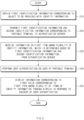
- FIG. 2 is a flowchart 1 illustrating how an electronic device provides identity information according to an embodiment.
- an identity information providing method may include operation 210 to operation 250.
- operation 210 to operation 250 may be performed by the electronic device 100 illustrated in FIG. 1 .
- operation 210 to operation 250 may be respectively implemented with instructions capable of being performed (or executed) by the processor 110 of the electronic device 100.
- the instructions may be stored in, for example, a computer-readable recording medium or the memory 120 of the electronic device 100 illustrated in FIG. 1 .
- a description that is the same as the description given with reference to FIG. 1 may not be repeated here.
- the electronic device 100 may obtain first identification information corresponding to an object to be provided with identity information.
- the electronic device 100 may obtain the first identification information through the communication circuit 130 from the external device 70 corresponding to an object to be provided with the identity information 126.
- the first identification information may include an object ID for an object associated with the external device 70, and a function ID for a function (e.g., a transaction or membership registration) performed by the external device 70.
- the electronic device 100 may transmit the first identification information and second identification information corresponding to the electronic device to the authentication server 50.
- the second identification information may include a user ID registered in an identity verification service. It may be understood that the second identification information refers to information necessary for the authentication server 50 to identify or authenticate a user of the electronic device 100.
- the electronic device 100 may receive information on a first item among a plurality of items of the identity information 126, which is determined based on the first identification information and the second identification information, from the authentication server 50.
- the first item is the ⁇ necessary item' described above in FIG. 1 .
- the authentication server 50 may select information on an item necessary for the external device 70 to perform a specific function among identity information stored in the electronic device 100 or the authentication server 50.
- the necessary item may be mapped onto the function ID or the object ID and then may be stored.
- the electronic device 100 may perform user authentication on the user.
- the electronic device 100 may display a UI for requesting the user authentication through an execution screen of the first application 122.
- the electronic device 100 may obtain the user's authentication information in response to the display on a UI.
- the authentication information may include at least part of a password and biometric information (e.g., fingerprint information, iris information, or face information).
- the electronic device 100 may display information corresponding to a first value corresponding to the first item among a plurality of items of the identity information 126 through the display 140 in response to the success of the user authentication.
- the electronic device 100 may display the first value through the display 140. For example, when a value corresponding to an item of a date of birth is '1990-01-01', the electronic device 100 may display '1990-01-01' or ⁇ January 1, 1990' on the display 140.
- the user who has subscribed to the identity verification service may perform identity authentication required by an offline object by presenting identity information displayed on the electronic device 100 to the offline object.
- the electronic device 100 may generate a second value obtained by omitting at least part of the first value, and may display the second value through the display 140. For example, when ⁇ whether you are an adult' is information required by the offline object, the electronic device 100 may display only information about ⁇ year' in the date of birth on the display 140. In various embodiments, the electronic device 100 may generate a specific UI based on the first value. The electronic device 100 may display the generated UI on the display 140 through the execution screen of the first application 122. For example, when ⁇ whether you are an adult' is information required by the offline object, the electronic device 100 may display a UI including a phrase of "I am an adult" and "I am over 19 years old" on the display 140. The related embodiment will be described with reference to FIG. 6 .
- the electronic device 100 may transmit the first value to the external device 70.
- the external device 70 may perform a specific function by using the received first value. For example, when receiving a true value associated with ⁇ whether you are an adult', the external device 70 may make a payment for alcoholic beverages and cigarettes based the true value.
- the external device 70 may receive values respectively associated with a plurality of items necessary for membership registration, and may perform a member registration function on the user by using the values.
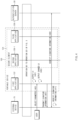
- FIG. 3 is a signal flowchart 2 of a method of providing identity information according to an embodiment.
- FIG. 4 is a signal flowchart 3 of a method of changing a UI including identity information according to an embodiment.
- a user ID registered in an identity verification service may be referred to as a "server ID".
- a user who has subscribed to the identity verification service may receive the server ID.
- the electronic device 100 may store the corresponding server ID in the memory 120.
- the authentication server 50 is one or more servers providing the above-described identity verification service. In various embodiments, it may be assumed that at least part of the server ID and at least part of identity information on a user of the electronic device 100 (e.g., the electronic device 100 of FIG. 1 or the electronic device 901 of FIG. 9 ) are stored in storage of the authentication server 50 in advance. In some embodiments, information on the electronic device 100 registered in association with the server ID may be further stored in the storage of the authentication server 50.
- the authentication server 50 may include at least part of the server ID corresponding to each of users subscribed to the identity verification service, information on the electronic device 100, or identity information on a user.
- the electronic device 100 may map the server ID to the first application 122 and may store the mapped result in the memory 120.
- the external device 70 is an electronic device installed in an offline object (e.g., a store or an institution).
- an offline object e.g., a store or an institution.
- the authentication server 50 may store information on a store ID (e.g., an object ID in FIG. 2 ) corresponding to each of stores subscribed to the identity verification service, a transaction ID (e.g., a function ID of FIG. 2 ) for a transaction made by the corresponding store, and what identity information required by the corresponding store is.
- the store ID is a unique ID for identifying a specific store.
- the identity information required in a store may be a parameter, and may be mapped and stored onto the store ID.
- the electronic device 100 may make a request for store information to the external device 70.
- the electronic device 100 may request store information by reading a barcode/QR code output by the external device 70 provided in an offline store.
- the first application 122 of the electronic device 100 may provide a menu for requesting the store information.
- the electronic device 100 may make a request for the store information to the external device 70 through short range wireless communication, Bluetooth communication, or Wi-Fi communication.
- the external device 70 may transmit store information and a transaction ID to the electronic device 100 in response to a request of the electronic device 100.
- the electronic device 100 may transmit the received store information to the authentication server 50.
- the authentication server 50 may search for store information stored in the authentication server 50 and may transmit a parameter corresponding to identity information requested by the corresponding store to a terminal, in response to receiving the store information.
- the authentication server 50 may search for data stored after being mapped onto the received store ID.
- each of items of the user's identity information may be parameterized and stored in the authentication server 50.
- the authentication server 50 may deliver information on the above-described ⁇ necessary item' to the electronic device 100 or the external device 70 through the parameter.
- the parameters may include a date of birth, a name, and an image such as a user's ID photo.
- parameters stored after being mapped onto the store information and/or transaction ID are pieces of minimum identity information required for the corresponding store and/or transaction.
- the authentication server 50 may restrict the transmitted or received parameter such that only the minimum identity information is used depending on a type of a store and/or transaction.
- the electronic device 100 may select items to be used for identity verification from the stored identity information 126 to output or transmit the selected items to the external device 70.
- the electronic device 100 may transmit a server ID stored in advance in the identity information 126 to the authentication server 50.
- the authentication server 50 may transmit a key ID stored after being mapped onto the received server ID and a nonce value of 'r' to be used for subsequent authentication, to the electronic device 100.
- the key ID may be a public key corresponding to the electronic device 100.
- a pair of encryption keys including the public key may be generated by the secure element 124 when the electronic device 100 is registered in the authentication server 50.
- the electronic device 100 may transmit a first application ID for identifying a first application together with a server ID. For example, when the authentication server 50 supports a plurality of applications according to types of services, the authentication server 50 may identify services that are different depending on each application ID.
- the electronic device 100 may receive authentication information from the user of the electronic device 100.
- the authentication information may include the user's biometric information.
- the electronic device 100 may output an interface for requesting fingerprint authentication for user authentication through an execution screen of the first application 122 and may obtain fingerprint information from the user.
- the fingerprint information having an identifier different for each finger of the user may be obtained.
- the electronic device 100 may include a second application 128-1 and a third application 128-2 installed in the secure element 124.
- the second application 128-1 and the third application 128-2 are applets for transmitting and receiving data between the secure element 124 and external devices, or performing a specific function using pieces of data stored in the secure element 124.
- the second application 128-1 and the third application 128-2 in the secure element 124 may be composed of one applet.
- the electronic device 100 may deliver the obtained authentication information and a key ID to the second application 128 (e.g., the second application 128 in FIG. 1 ) and may determine whether the identity verification service is registered.
- the electronic device 100 may compare the fingerprint information with pre-stored fingerprint information through the second application 128.
- the electronic device 100 may compare a pattern with the received identifier of the fingerprint information.
- the electronic device 100 may deliver authentication information, a key ID, a transaction ID, and a parameter, to the secure element 124.
- the electronic device 100 may generate signature information, by using the data transmitted in operation 317 and the data stored in the identity information 126. For example, operation 319 and operation 321 may be performed through the third application 128-2 installed in the secure element 1124.
- the electronic device 100 may generate a UI by using the generated signature information.
- the UI may be displayed through the execution screen of the first application 122.
- the UI may include identity information.
- a mobile identity card may be output through the corresponding UI.
- the mobile identity card may be generated based on the parameter received from the authentication server 50. For example, when a mobile identity card is displayed, only necessary items may be displayed depending on a transaction with a store, and the remaining items may be omitted. For example, items corresponding to the received parameter may be displayed, and other items that do not correspond to the received parameter may not be displayed.
- the electronic device 100 may transmit the generated signature information to the external device 70.
- the external device 70 may directly perform identity authentication based on the received signature information.
- the external device 70 may transmit the received signature information to the authentication server 50, and may receive identity information of the user of the electronic device 100 from the authentication server 50.
- the external device 70 may directly perform identity verification on a user by using the received identity information.
- the external device 70 may make a transaction to be performed based on the authenticated identity information. For example, the external device 70 may make a payment for items such as alcoholic beverages and cigarettes that are sold to people over the age of 19.
- the user registered in the identity verification service and an offline store registered in the identity verification service may perform identity verification by using the electronic device 100 and the external device 70, through operations shown in FIG. 3 .
- the electronic device 100 may generate a signature by using only necessary information required for identity verification.
- the UI output through the electronic device 100 may display only necessary identity information, and thus all pieces of identity information associated with the user may not be exposed.
- the electronic device 100 may change the UI of the mobile identity card displayed on the electronic device 100. As described above in FIG. 3 , the electronic device 100 may generate a signature and an identity card UI by using the minimum information required in the offline store. At this time, the user may select the identity information of an item to be additionally provided among items that are not displayed. In various embodiments, in a situation where specific information is presented to an employee in a store when the user faces the employee in the offline store, the user may selectively provide additional information by changing a UI. In an embodiment, in operation 401, a UI including identity information may be displayed through the display 140 of the electronic device 100. For example, the UI may be generated based on at least part of the parameters received through operation 307 in FIG. 3 . The UI may include at least part of identity information corresponding to the parameters. In various embodiments, the electronic device 100 may display a list of parameters, which are not displayed, through the UI or another UI (or another region of the display 140 where the UI is not displayed).
- the electronic device 100 may receive a selection input for a parameter to be displayed from the user.
- the selected parameter is a parameter that is not currently displayed on the UI.
- the electronic device 100 may receive an input to change a region in which identity information is to be displayed.
- the electronic device 100 may additionally display identity information corresponding to the selected parameter through the display 140 in response to the selection input. For example, a changed UI may be displayed to include identity information corresponding to the selected parameter.
- Operation 407, operation 409, and operation 411 in FIG. 4 may correspond to operation 325, operation 327, and operation 329 in FIG. 3 , respectively.
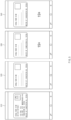
- FIG. 5 is examples of a mobile identity card including identity information that varies depending on a situation in various embodiments.
- a mobile identity card according to various embodiments is illustrated.
- identity information required by an offline store is ⁇ whether you are an adult'.
- a transaction may be ⁇ a payment requiring adult certification for alcoholic beverages and cigarettes'.
- a necessary parameter corresponding to the corresponding store and the corresponding transaction may be ⁇ date of birth'.
- a first UI 510 is an example of a mobile identity card including all pieces of identity information.
- a second UI 520 is an example of a mobile identity card including only name information and information about a date of birth. For example, identity information (e.g., a photo or an address) may be blurred, not the necessary identity information.
- a third UI 530 is an example of a mobile identity card including the additional information with the name information and the information about a date of birth. For example, the third UI 530 may include additional information 531 displaying ⁇ whether you are an adult' that is necessary information required by an offline store.
- a fourth UI 540 is an example of a mobile identity card that includes only information about ⁇ whether you are an adult' that is necessary information required by the offline store, without including the information about a date of birth.
- a user may perform identity verification by providing only information 541 about ⁇ whether you are an adult' to the offline store.
- FIG. 6 is an example of mobile identity cards providing identity information that varies depending on a user's selection, in various embodiments.
- the electronic device 100 may change a UI depending on a selection input.
- the electronic device 100 may receive a selection input to a second item different from a first item, which is already displayed, from among a plurality of items included in the identity information 126.
- the electronic device 100 may display information corresponding to a second value corresponding to the second item on the display 140 through an execution screen of the first application 122, in response to the corresponding selection input.
- the electronic device 100 may display at least part of the remaining items other than the first item, which is already displayed, from among the plurality of items included in the identity information 126 as a selection item on the display 140.
- the electronic device 100 may display information corresponding to a second value corresponding to the second item on the display 140.
- the electronic device 100 may change whether to display the specific identity information.
- the electronic device 100 may control the display 140 such that the photo is displayed or the photo is not displayed. For example, in a situation where a photo is not displayed on the mobile identity card, when a user desires to additionally display photo information, the user may touch a region where a photo is to be displayed.
- the electronic device 100 may obtain a parameter corresponding to photo information from the authentication server 70 (or may use a parameter that is received in advance), and may output the photo information through the display 140 based on the parameter.
- the electronic device 100 may display items of identity information capable of being additionally provided, through the display 140.
- the electronic device 100 may additionally display items selected from the items through the display 140.
- items of the identity information may correspond to parameters previously received from the authentication server 50.
- the selection interface 622 may include the items (a resident registration number, a photo, and an address) of the identity information capable of being additionally provided. For example, when a selection input 625 to a photo item among items included in the selection interface 622 is received, the electronic device 100 may further display the photo item. For example, when all items included in the selection interface 622 are selected, all pieces of identity information included in the mobile identity card may be displayed through the display 140 as illustrated in a seventh UI 630.
- the electronic device 100 may display identity information in various forms, not a form of the above-described mobile identity card. For example, when a user desires to purchase alcoholic beverages from an offline store and to ship the alcoholic beverages to his/her house, the electronic device 100 may output a UI including only ⁇ whether you are an adult' and an 'address'. For example, a user may provide a store with address information in addition to adult certification as a type of required information to be displayed, using a mobile identity card. In various embodiments, when generating signature information, the electronic device 100 may additionally receive a parameter from the user and may generate a signature by using the parameter.
- FIG. 7 is a signal flowchart 4 of a method of providing identity information according to various embodiments.
- the electronic device 100 may display a UI through the display 140. At this time, the electronic device 100 may display the UI including parameters received from the authentication server 60.
- the electronic device 100 may receive a selection input for a parameter to be displayed among parameters that are not displayed.
- the electronic device 100 may receive a change input to change a region where a parameter is to be displayed.
- the selection input or the change input may be received through an execution screen of the first application 122 that provides an identity verification service.
- the selection input or the change input may be received through another menu button disposed in a region (e.g., a region where a mobile identity card is displayed) other than a region where identity information is displayed.
- a parameter added by a user input is described as a 'selected parameter' .
- the electronic device 100 may transmit information on the selected parameter to the authentication server 50.
- the electronic device 100 may receive a nonce value 'r' from the authentication server 50.
- the electronic device 100 may deliver pieces of data necessary to generate signature information to a third application.
- operation 707 may correspond to operation 317 of FIG. 3 .
- the electronic device 100 may generate a signature by using the received information and pieces of data stored in the secure element 124.
- the electronic device 100 may generate a signature based on both a parameter received from the authentication server 50 and a parameter selected by a user.
- the parameter may be information about a date of birth.
- the selected parameter may be address information selected by the user.
- the signature generated by the third application 128-2 may be delivered to the first application 122 and may be used.
- the electronic device 100 may output a UI including both the parameter and the received parameter.
- the electronic device 100 may transmit the signature generated in operation 709 to the external device 70.
- the external device 70 may directly authenticate the user by using the received signature.
- the external device 70 may transmit the received signature to the authentication server 50 to determine whether identity information included in the signature has been forged or modified.
- the external device 70 may perform a transaction according to the verified identity information.
- the authentication server 50 may directly transmit identity information on a user of the electronic device 100 to the external device 70.
- the electronic device 100 may generate a signature including only parameters corresponding to identity information to be transmitted, and may transmit the signature to the authentication server 50. After verifying forgery/modification of the received signature, the authentication server 50 may transmit identity information corresponding to a parameter included in the corresponding signature to the external device 70.
- the electronic device 100 may display a list of identity information transmitted to the external device 70, through an execution screen of the first application 122.
- the electronic device 100 may display a UI for requesting a user's consent to the list of the identity information.
- the electronic device 100 may transmit a message indicating that the user's consent has been received, to the authentication server 50.
- the authentication server 50 may transmit the identity information to the external device 70 in response to receiving the message.
- the external device 70 may have at least part of the identity information of the user registered in the identity verification service. In this case, at least part of the user's identity information may be provided through the external device 70.
- the electronic device 100 may transmit signature information to the external device 70.
- the external device 70 may transmit the signature information to the authentication server 50 and may authenticate the signature information.
- the external device 70 may search for identity information corresponding to a parameter included in the corresponding signature information and may perform a subsequent transaction procedure.
- the external device 70 may provide the above-described service through a display and an output device of the external device 70.
- specific identity information on a user of the identity verification service may be forcibly provided depending on the authority of the external device 70 used in the offline store.
- a UI for recommending identity information necessary for operations performed by the external device 70 may be provided.
- identity information necessary to process a specific service provided by a public institution may be determined in advance.
- the external device 70 operated by the public institution may be required for a specific service and may have authority for predetermined identity information.
- the external device 70 in the public institution may obtain necessary identity information from the authentication server 70 or the electronic device 100 without the consent of the user.
- the identity information on the user may be automatically provided to the electronic device 100 and/or the external device 70, which is registered in the identity verification service.
- the external device 70 e.g., a tablet PC or PC
- the external device 70 may obtain identity information necessary to subscribe to an insurance service through the electronic device 100 of the insurance subscriber or the authentication server 50.
- FIG. 8 is a signal flowchart 5 of a method of performing identity verification in an external device according to various embodiments.
- signature information generated in FIG. 3 may be transmitted to the external device 70.
- the external device 70 may determine whether the received signature information is valid.
- the external device 70 may transmit the received signature information to the authentication server 50, and the authentication server 50 may determine whether the corresponding signature information is forged or modified.
- the authentication server 50 may transmit information required by the external device 70.
- the external device 70 may re-process the received identity information. For example, the external device 70 may generate a UI including identity information, and may output the UI through a display provided in the external device 70. A clerk in a store may identify the UI. In still another embodiment, when the external device 70 performs a member registration function, the external device 70 may receive identity information necessary for membership registration from the authentication server 50. The external device 70 may automatically perform a member registration function based on the received identity information.
- FIG. 9 is a block diagram illustrating an electronic device 901 (e.g., the electronic device 100 of FIG. 1 ) in a network environment 900 (e.g., the identity verification system 10 of FIG. 1 ) according to various embodiments.
- the electronic device 901 in the network environment 900 may communicate with an electronic device 902 via a first network 998 (e.g., a short-range wireless communication network), or an electronic device 904 or a server 908 via a second network 999 (e.g., a long-range wireless communication network).
- the electronic device 901 may communicate with the electronic device 904 via the server 908.
- the electronic device 901 may include a processor 920 901 (e.g., the processor 110 of FIG. 1 ), memory 930 (e.g., the memory 120 of FIG. 1 ), an input device 950, a sound output device 955, a display device 960 (e.g., the display 140 of FIG. 1 ), an audio module 970, a sensor module 976, an interface 977, a haptic module 979, a camera module 980, a power management module 988, a battery 989, a communication module 990 (e.g., the communication circuit 130 of FIG. 1 ), a subscriber identification module (SIM) 996, or an antenna module 997.
- a processor 920 901 e.g., the processor 110 of FIG. 1
- memory 930 e.g., the memory 120 of FIG. 1
- an input device 950 e.g., a sound output device 955
- a display device 960 e.g., the display 140 of FIG. 1
- At least one (e.g., the display device 960 or the camera module 980) of the components may be omitted from the electronic device 901, or one or more other components may be added in the electronic device 901.
- some of the components may be implemented as single integrated circuitry.
- the sensor module 976 e.g., a fingerprint sensor, an iris sensor, or an illuminance sensor
- the display device 960 e.g., a display
- the processor 920 may execute, for example, software (e.g., a program 940) to control at least one other component (e.g., a hardware or software component) of the electronic device 901 coupled with the processor 920, and may perform various data processing or computation. According to one embodiment, as at least part of the data processing or computation, the processor 920 may load a command or data received from another component (e.g., the sensor module 976 or the communication module 990) in volatile memory 932, process the command or the data stored in the volatile memory 932, and store resulting data in non-volatile memory 934.
- software e.g., a program 940
- the processor 920 may load a command or data received from another component (e.g., the sensor module 976 or the communication module 990) in volatile memory 932, process the command or the data stored in the volatile memory 932, and store resulting data in non-volatile memory 934.
- the processor 920 may include a main processor 921 (e.g., a central processing unit (CPU) or an application processor (AP)), and an auxiliary processor 923 (e.g., a graphics processing unit (GPU), an image signal processor (ISP), a sensor hub processor, or a communication processor (CP)) that is operable independently from, or in conjunction with, the main processor 921.
- auxiliary processor 923 may be adapted to consume less power than the main processor 921, or to be specific to a specified function.
- the auxiliary processor 923 may be implemented as separate from, or as part of the main processor 921.
- the auxiliary processor 923 may control at least some of functions or states related to at least one component (e.g., the display device 960, the sensor module 976, or the communication module 990) among the components of the electronic device 901, instead of the main processor 921 while the main processor 921 is in an inactive (e.g., sleep) state, or together with the main processor 921 while the main processor 921 is in an active state (e.g., executing an application).
- the auxiliary processor 923 e.g., an image signal processor or a communication processor
- the memory 930 may store various data used by at least one component (e.g., the processor 920 or the sensor module 976) of the electronic device 901.
- the various data may include, for example, software (e.g., the program 940) and input data or output data for a command related thererto.
- the memory 930 may include the volatile memory 932 or the non-volatile memory 934.
- the program 940 may be stored in the memory 930 as software, and may include, for example, an operating system (OS) 942, middleware 944, or an application 946.
- OS operating system
- middleware middleware
- application application
- the input device 950 may receive a command or data to be used by other component (e.g., the processor 920) of the electronic device 901, from the outside (e.g., a user) of the electronic device 901.
- the input device 950 may include, for example, a microphone, a mouse, or a keyboard.
- the sound output device 955 may output sound signals to the outside of the electronic device 901.
- the sound output device 955 may include, for example, a speaker or a receiver.
- the speaker may be used for general purposes, such as playing multimedia or playing record, and the receiver may be used for an incoming calls. According to an embodiment, the receiver may be implemented as separate from, or as part of the speaker.
- the display device 960 may visually provide information to the outside (e.g., a user) of the electronic device 901.
- the display device 960 may include, for example, a display, a hologram device, or a projector and control circuitry to control a corresponding one of the display, hologram device, and projector.
- the display device 960 may include touch circuitry adapted to detect a touch, or sensor circuitry (e.g., a pressure sensor) adapted to measure the intensity of force incurred by the touch.
- the audio module 970 may convert a sound into an electrical signal and vice versa. According to an embodiment, the audio module 970 may obtain the sound via the input device 950, or output the sound via the sound output device 955 or a headphone of an external electronic device (e.g., an electronic device 902) directly (e.g., wiredly) or wirelessly coupled with the electronic device 901.
- an external electronic device e.g., an electronic device 902
- directly e.g., wiredly
- wirelessly e.g., wirelessly
- the sensor module 976 may detect an operational state (e.g., power or temperature) of the electronic device 901 or an environmental state (e.g., a state of a user) external to the electronic device 901, and then generate an electrical signal or data value corresponding to the detected state.
- the sensor module 976 may include, for example, a gesture sensor, a gyro sensor, an atmospheric pressure sensor, a magnetic sensor, an acceleration sensor, a grip sensor, a proximity sensor, a color sensor, an infrared (IR) sensor, a biometric sensor, a temperature sensor, a humidity sensor, or an illuminance sensor.
- the interface 977 may support one or more specified protocols to be used for the electronic device 901 to be coupled with the external electronic device (e.g., the electronic device 902) directly (e.g., wiredly) or wirelessly.
- the interface 977 may include, for example, a high definition multimedia interface (HDMI), a universal serial bus (USB) interface, a secure digital (SD) card interface, or an audio interface.
- HDMI high definition multimedia interface
- USB universal serial bus
- SD secure digital
- a connecting terminal 978 may include a connector via which the electronic device 901 may be physically connected with the external electronic device (e.g., the electronic device 902).
- the connecting terminal 978 may include, for example, a HDMI connector, a USB connector, a SD card connector, or an audio connector (e.g., a headphone connector),
- the haptic module 979 may convert an electrical signal into a mechanical stimulus (e.g., a vibration or a movement) or electrical stimulus which may be recognized by a user via his tactile sensation or kinesthetic sensation.
- the haptic module 979 may include, for example, a motor, a piezoelectric element, or an electric stimulator.
- the camera module 980 may capture a still image or moving images.
- the camera module 980 may include one or more lenses, image sensors, image signal processors, or flashes.
- the power management module 988 may manage power supplied to the electronic device 901. According to one embodiment, the power management module 988 may be implemented as at least part of, for example, a power management integrated circuit (PMIC).
- PMIC power management integrated circuit
- the battery 989 may supply power to at least one component of the electronic device 901.
- the battery 989 may include, for example, a primary cell which is not rechargeable, a secondary cell which is rechargeable, or a fuel cell.
- the communication module 990 may support establishing a direct (e.g., wired) communication channel or a wireless communication channel between the electronic device 901 and the external electronic device (e.g., the electronic device 902, the electronic device 904, or the server 908) and performing communication via the established communication channel.
- the communication module 990 may include one or more communication processors that are operable independently from the processor 920 (e.g., the application processor (AP)) and supports a direct (e.g., wired) communication or a wireless communication.
- AP application processor
- the communication module 990 may include a wireless communication module 992 (e.g., a cellular communication module, a short-range wireless communication module, or a global navigation satellite system (GNSS) communication module) or a wired communication module 994 (e.g., a local area network (LAN) communication module or a power line communication (PLC) module).
- a wireless communication module 992 e.g., a cellular communication module, a short-range wireless communication module, or a global navigation satellite system (GNSS) communication module
- GNSS global navigation satellite system
- wired communication module 994 e.g., a local area network (LAN) communication module or a power line communication (PLC) module.
- LAN local area network
- PLC power line communication
- a corresponding one of these communication modules may communicate with the external electronic device via the first network 998 (e.g., a short-range communication network, such as Bluetooth TM , wireless-fidelity (Wi-Fi) direct, or infrared data association (IrDA)) or the second network 999 (e.g., a long-range communication network, such as a cellular network, the Internet, or a computer network (e.g., LAN or wide area network (WAN)).
- the first network 998 e.g., a short-range communication network, such as Bluetooth TM , wireless-fidelity (Wi-Fi) direct, or infrared data association (IrDA)
- the second network 999 e.g., a long-range communication network, such as a cellular network, the Internet, or a computer network (e.g., LAN or wide area network (WAN)
- These various types of communication modules may be implemented as a single component (e.g., a single chip), or may be implemented as multi
- the wireless communication module 992 may identify and authenticate the electronic device 901 in a communication network, such as the first network 998 or the second network 999, using subscriber information (e.g., international mobile subscriber identity (IMSI)) stored in the subscriber identification module 996.
- subscriber information e.g., international mobile subscriber identity (IMSI)
- the antenna module 997 may transmit or receive a signal or power to or from the outside (e.g., the external electronic device) of the electronic device 901.
- the antenna module 997 may include one or more antennas, and, therefrom, at least one antenna appropriate for a communication scheme used in the communication network, such as the first network 998 or the second network 999, may be selected, for example, by the communication module 990 (e.g., the wireless communication module 992).
- the signal or the power may then be transmitted or received between the communication module 990 and the external electronic device via the selected at least one antenna.
- At least some of the above-described components may be coupled mutually and communicate signals (e.g., commands or data) therebetween via an inter-peripheral communication scheme (e.g., a bus, general purpose input and output (GPIO), serial peripheral interface (SPI), or mobile industry processor interface (MIPI)).
- an inter-peripheral communication scheme e.g., a bus, general purpose input and output (GPIO), serial peripheral interface (SPI), or mobile industry processor interface (MIPI)
- commands or data may be transmitted or received between the electronic device 901 and the external electronic device 904 via the server 908 coupled with the second network 999.
- Each of the electronic devices 902 and 904 may be a device of a same type as, or a different type, from the electronic device 901.
- all or some of operations to be executed at the electronic device 901 may be executed at one or more of the external electronic devices 902, 904, or 908.
- the electronic device 901 instead of, or in addition to, executing the function or the service, may request the one or more external electronic devices to perform at least part of the function or the service.
- the one or more external electronic devices receiving the request may perform the at least part of the function or the service requested, or an additional function or an additional service related to the request, and transfer an outcome of the performing to the electronic device 901.
- the electronic device 901 may provide the outcome, with or without further processing of the outcome, as at least part of a reply to the request.
- a cloud computing, distributed computing, or client-server computing technology may be used, for example.
- the electronic device may be one of various types of electronic devices.
- the electronic devices may include, for example, a portable communication device (e.g., a smart phone), a computer device, a portable multimedia device, a portable medical device, a camera, a wearable device, or a home appliance. According to an embodiment of the disclosure, the electronic devices are not limited to those described above.
- each of such phrases as “A or B,” “at least one of A and B,” “at least one of A or B,” “A, B, or C,” “at least one of A, B, and C,” and “at least one of A, B, or C,” may include all possible combinations of the items enumerated together in a corresponding one of the phrases.
- such terms as “1st” and “2nd,” or “first” and “second” may be used to simply distinguish a corresponding component from another, and does not limit the components in other aspect (e.g., importance or order).
- an element e.g., a first element
- the element may be coupled with the other element directly (e.g., wiredly), wirelessly, or via a third element.
- module may include a unit implemented in hardware, software, or firmware, and may interchangeably be used with other terms, for example, “logic,” “logic block,” “part,” or “circuitry”.
- a module may be a single integral component, or a minimum unit or part thereof, adapted to perform one or more functions.
- the module may be implemented in a form of an application-specific integrated circuit (ASIC).
- ASIC application-specific integrated circuit
- Various embodiments as set forth herein may be implemented as software (e.g., the program 940) including one or more instructions that are stored in a storage medium (e.g., internal memory 936 or external memory 938) that is readable by a machine (e.g., the electronic device 901) .
- a processor e.g., the processor 920
- the machine e.g., the electronic device 901
- the one or more instructions may include a code generated by a complier or a code executable by an interpreter.
- the machine-readable storage medium may be provided in the form of a non-transitory storage medium.
- non-transitory simply means that the storage medium is a tangible device, and does not include a signal (e.g., an electromagnetic wave), but this term does not differentiate between where data is semi-permanently stored in the storage medium and where the data is temporarily stored in the storage medium.
- a method may be included and provided in a computer program product.
- the computer program product may be traded as a product between a seller and a buyer.
- the computer program product may be distributed in the form of a machine-readable storage medium (e.g., compact disc read only memory (CD-ROM)), or be distributed (e.g., downloaded or uploaded) online via an application store (e.g., Play Store TM ), or between two user devices (e.g., smart phones) directly. If distributed online, at least part of the computer program product may be temporarily generated or at least temporarily stored in the machine-readable storage medium, such as memory of the manufacturer's server, a server of the application store, or a relay server.
- CD-ROM compact disc read only memory
- an application store e.g., Play Store TM
- two user devices e.g., smart phones
- each component e.g., a module or a program of the above-described components may include a single entity or multiple entities. According to various embodiments, one or more of the above-described components may be omitted, or one or more other components may be added. Alternatively or additionally, a plurality of components (e.g., modules or programs) may be integrated into a single component. In such a case, according to various embodiments, the integrated component may still perform one or more functions of each of the plurality of components in the same or similar manner as they are performed by a corresponding one of the plurality of components before the integration.
- operations performed by the module, the program, or another component may be carried out sequentially, in parallel, repeatedly, or heuristically, or one or more of the operations may be executed in a different order or omitted, or one or more other operations may be added.
Landscapes
- Engineering & Computer Science (AREA)
- Computer Security & Cryptography (AREA)
- Computer Hardware Design (AREA)
- General Engineering & Computer Science (AREA)
- Theoretical Computer Science (AREA)
- Computer Networks & Wireless Communication (AREA)
- Signal Processing (AREA)
- Computing Systems (AREA)
- General Physics & Mathematics (AREA)
- Software Systems (AREA)
- Physics & Mathematics (AREA)
- Health & Medical Sciences (AREA)
- General Health & Medical Sciences (AREA)
- Biomedical Technology (AREA)
- Bioethics (AREA)
- Human Computer Interaction (AREA)
- Accounting & Taxation (AREA)
- Business, Economics & Management (AREA)
- Medical Informatics (AREA)
- Databases & Information Systems (AREA)
- User Interface Of Digital Computer (AREA)
- Telephone Function (AREA)
- Financial Or Insurance-Related Operations Such As Payment And Settlement (AREA)
Description
- Embodiments disclosed in this specification relate to a technology for providing identity information of a user of an electronic device.
- Identity information may be verified offline with, for example, a plastic card, and thus a user needs to carry an identity card in person. Nowadays, with the activation of a payment service using an electronic device, a mobile identity card (e.g., a student ID or an employee ID) capable of replacing a physical card is being used. For example, a mobile identity card may be supported through an application installed in the electronic device. Document
US 2014/337221 is considered to be a relevant prior art document in the field of securing mobile identity cards. - An electronic device may output a mobile identity card on a display. The mobile identity card may include various pieces of personal information (e.g., a name, a resident registration number, and an address). A user is reluctant to expose the various pieces of personal information to other people through the screen. Information to be necessarily provided may be different depending on various situations in each of which the mobile identity card is used. Various embodiments disclosed in this specification are intended to provide a portable electronic device capable of providing only necessary identity information depending on a situation.
- The invention is disclosed in independent claim 1. According to an embodiment disclosed in this specification, an electronic device may include a communication circuit communicating with at least one authentication server providing an identity verification service, a display, at least one memory storing identity information associated with a user registered in the identity verification service, and the identity information including a plurality of items and values respectively corresponding to the plurality of items, and a processor. The processor may be configured to obtain first identification information corresponding to an object to be provided with the identity information, to transmit the first identification information and second identification information corresponding to the electronic device to the at least one authentication server, to receive information on a first item, which is determined based at least partly on the first identification information and the second identification information, from among a plurality of items of the identity information from the at least one authentication server, to perform user authentication on the user, and to display information corresponding to a first value corresponding to the first item among the plurality of items of the identity information through the display in response to a success of the user authentication.
- Furthermore, according to an embodiment disclosed in this specification, a system providing an identity verification service may include the at least one authentication server providing the identity verification service, an electronic device of a user registered in the identity verification service and including identity information of the user including a plurality of items and values respectively corresponding to the plurality of items, and an external device registered in the identity verification service. The external device may transmit first identification information associated with the external device to the electronic device. The electronic device may transmit the first identification information and second identification information corresponding to the electronic device to the at least one authentication server. The at least one authentication server may transmit information on a first item, which is determined based on the first identification information and the second identification information, from among the plurality of items to the electronic device. The electronic device may perform user authentication on the user, and may display information associated with a first value corresponding to the first item through the electronic device or the external device in response to a success of the user authentication.
- According to embodiments disclosed in this specification, an electronic device may differentially provide identity information depending on a situation. Besides, a variety of effects directly or indirectly understood through the specification may be provided.
-
-
FIG. 1 illustrates an identity verification system and a block diagram of an electronic device according to an embodiment. -
FIG. 2 is a flowchart illustrating how an electronic device provides identity information according to an embodiment. -
FIG. 3 is a signal flowchart of a method of providing identity information according to an embodiment. -
FIG. 4 is a signal flowchart of a method of changing a UI including identity information according to an embodiment. -
FIG. 5 is examples of a mobile identity card including identity information that varies depending on a situation in various embodiments. -
FIG. 6 is an example of mobile identity cards providing identity information that varies depending on a user's selection, in various embodiments. -
FIG. 7 is a signal flowchart of a method of providing identity information according to various embodiments. -
FIG. 8 is a signal flowchart of a method of performing identity verification in an external device according to various embodiments. -
FIG. 9 illustrates an electronic device in a network environment according to various embodiments. - With regard to description of drawings, the same or similar components will be marked by the same or similar reference signs.
- Hereinafter, various embodiments of the disclosure may be described with reference to accompanying drawings. However, it should be understood that this is not intended to limit the disclosure to specific implementation forms and includes various modifications, equivalents, and/or alternatives of embodiments of the disclosure.
-
FIG. 1 illustrates an identity verification system and a block diagram of an electronic device according to an embodiment. - According to an embodiment, an
identity verification system 10 may provide an identity verification service for a user registered in the identity verification service. Theidentity verification system 10 may include an electronic device 100 (e.g., anelectronic device 901 ofFIG. 9 ), anauthentication server 50, and anexternal device 70. - For example, the
authentication server 50 may provide the identity verification service. Theelectronic device 100 and theexternal device 70 may provide the identity verification service by communicating with theauthentication server 50. Theidentity verification system 10 may include a plurality of authentication servers. However, theidentity verification system 10 composed of thesingle authentication server 50 is disclosed by way of an example below. Theelectronic device 100 may exchange identity information and information associated with the identity information between theauthentication server 50 and theexternal device 70. - For example, it may be understood that the
electronic device 100 is a portable electronic device such as a smartphone or a tablet PC. Alternatively, theelectronic device 100 may be a wearable device worn on a part of the user's body. It may be understood that theelectronic device 100 is an electronic device owned by the user registered in the identity verification service. Theelectronic device 100 may store identity information associated with the user. - For example, it may be understood that the
external device 70 is a device installed in an offline object (e.g., a store or an institution). For example, theexternal device 70 may be a point-of-service (POS) machine. Theexternal device 70 may have a unique identity (ID) (hereinafter referred to as an 'object ID') for each device or for each offline object. Theexternal device 70 may perform a specific function (e.g., a transaction or membership registration) that requires the user's identity information. Each specific function may have an ID (hereinafter referred to as a `function ID') for each function. In various embodiments, theexternal device 70 may receive identity information necessary to perform the specific function from theelectronic device 100 and/or theauthentication server 50. - For example, the
authentication server 50 may have information on an item (hereinafter referred to as a `necessary item') of identity information necessary for theexternal device 70 to perform a specific function. Theauthentication server 50 may transmit information on the necessary item to theelectronic device 100. Theelectronic device 100 may operate identity information on the user of theelectronic device 100 based on the received information. In various embodiments, theauthentication server 50 may store, in advance, whether theelectronic device 100 or theexternal server 70 has an access right to identity information stored in theelectronic device 100. Accordingly, theauthentication server 50 may include an item having the access right in the necessary item. In an embodiment, theelectronic device 100 may include a processor 110 (e.g., aprocessor 920 ofFIG. 9 ), a memory 120 (e.g., amemory 930 ofFIG. 9 ), a communication circuit 130 (e.g., acommunication module 990 ofFIG. 9 ), and a display 140 (e.g., adisplay device 960 ofFIG. 9 ). Theprocessor 110 may control overall operations of theelectronic device 100. Theelectronic device 100 may transmit and receive data with theauthentication server 50 and theexternal device 70 through thecommunication circuit 130. - In an embodiment, the
memory 120 may store identity information associated with the user registered in the identity verification service. For example, the identity information may include a plurality of items and values respectively corresponding to the plurality of items. For example, when the item is a date of birth, the value may be stored as data in a numeric form of year-month-day. In an embodiment, thememory 120 may store afirst application 122 for providing the identity verification service. In various embodiments, theelectronic device 100 may launch thefirst application 122 and may output an execution screen of thefirst application 122 through thedisplay 140. The execution screen may include a user interface (hereinafter referred to as a 'UI') including the identity information of the user in at least a part of the execution screen. In various embodiments, the UI may be implemented in various forms depending on a type of identity information to be displayed. Examples of the UI will be described later with reference toFIGS. 5 and6 . - In various embodiments, the
electronic device 100 may include a secure element (SE) 124. Thesecure element 124 may storeidentity information 126. For example, thesecure element 124 may have restrictions in direct communication with an external device such as theauthentication server 50 or theexternal device 70. In this case, thesecure element 124 may store a second application that is directly installed therein. In this case, the second application may relay data transmission/reception between thesecure element 124 and theauthentication server 50 or theexternal device 70. In another example, theauthentication server 50 or theexternal device 70 may communicate with thesecure element 124 through short-range wireless communication. -
FIG. 2 is a flowchart 1 illustrating how an electronic device provides identity information according to an embodiment. - Referring to
FIG. 2 , an identity information providing method according to an embodiment may includeoperation 210 tooperation 250. For example,operation 210 tooperation 250 may be performed by theelectronic device 100 illustrated inFIG. 1 . For example,operation 210 tooperation 250 may be respectively implemented with instructions capable of being performed (or executed) by theprocessor 110 of theelectronic device 100. The instructions may be stored in, for example, a computer-readable recording medium or thememory 120 of theelectronic device 100 illustrated inFIG. 1 . Hereinafter, in descriptions associated withoperation 210 tooperation 250, a description that is the same as the description given with reference toFIG. 1 may not be repeated here. - In
operation 210, theelectronic device 100 may obtain first identification information corresponding to an object to be provided with identity information. For example, theelectronic device 100 may obtain the first identification information through thecommunication circuit 130 from theexternal device 70 corresponding to an object to be provided with theidentity information 126. For example, the first identification information may include an object ID for an object associated with theexternal device 70, and a function ID for a function (e.g., a transaction or membership registration) performed by theexternal device 70. - In
operation 220, theelectronic device 100 may transmit the first identification information and second identification information corresponding to the electronic device to theauthentication server 50. For example, the second identification information may include a user ID registered in an identity verification service. It may be understood that the second identification information refers to information necessary for theauthentication server 50 to identify or authenticate a user of theelectronic device 100. - In
operation 230, theelectronic device 100 may receive information on a first item among a plurality of items of theidentity information 126, which is determined based on the first identification information and the second identification information, from theauthentication server 50. For example, it may be understood that the first item is the `necessary item' described above inFIG. 1 . Theauthentication server 50 may select information on an item necessary for theexternal device 70 to perform a specific function among identity information stored in theelectronic device 100 or theauthentication server 50. For example, the necessary item may be mapped onto the function ID or the object ID and then may be stored. - In
operation 240, theelectronic device 100 may perform user authentication on the user. In various embodiments, theelectronic device 100 may display a UI for requesting the user authentication through an execution screen of thefirst application 122. Theelectronic device 100 may obtain the user's authentication information in response to the display on a UI. For example, the authentication information may include at least part of a password and biometric information (e.g., fingerprint information, iris information, or face information). - In
operation 250, theelectronic device 100 may display information corresponding to a first value corresponding to the first item among a plurality of items of theidentity information 126 through thedisplay 140 in response to the success of the user authentication. - In an embodiment, the
electronic device 100 may display the first value through thedisplay 140. For example, when a value corresponding to an item of a date of birth is '1990-01-01', theelectronic device 100 may display '1990-01-01' or `January 1, 1990' on thedisplay 140. The user who has subscribed to the identity verification service may perform identity authentication required by an offline object by presenting identity information displayed on theelectronic device 100 to the offline object. - In various embodiments, the
electronic device 100 may generate a second value obtained by omitting at least part of the first value, and may display the second value through thedisplay 140. For example, when `whether you are an adult' is information required by the offline object, theelectronic device 100 may display only information about `year' in the date of birth on thedisplay 140. In various embodiments, theelectronic device 100 may generate a specific UI based on the first value. Theelectronic device 100 may display the generated UI on thedisplay 140 through the execution screen of thefirst application 122. For example, when `whether you are an adult' is information required by the offline object, theelectronic device 100 may display a UI including a phrase of "I am an adult" and "I am over 19 years old" on thedisplay 140. The related embodiment will be described with reference toFIG. 6 . - In various embodiments, the
electronic device 100 may transmit the first value to theexternal device 70. In this case, theexternal device 70 may perform a specific function by using the received first value. For example, when receiving a true value associated with `whether you are an adult', theexternal device 70 may make a payment for alcoholic beverages and cigarettes based the true value. For another example, theexternal device 70 may receive values respectively associated with a plurality of items necessary for membership registration, and may perform a member registration function on the user by using the values. -
FIG. 3 is a signal flowchart 2 of a method of providing identity information according to an embodiment.FIG. 4 is a signal flowchart 3 of a method of changing a UI including identity information according to an embodiment. - Hereinafter, specific examples of operations performed through the
identity verification system 10 will be described with reference toFIGS. 3 to 4 . In various embodiments, a user ID registered in an identity verification service may be referred to as a "server ID". For example, a user who has subscribed to the identity verification service may receive the server ID. Theelectronic device 100 may store the corresponding server ID in thememory 120. - It may be understood that the
authentication server 50 is one or more servers providing the above-described identity verification service. In various embodiments, it may be assumed that at least part of the server ID and at least part of identity information on a user of the electronic device 100 (e.g., theelectronic device 100 ofFIG. 1 or theelectronic device 901 ofFIG. 9 ) are stored in storage of theauthentication server 50 in advance. In some embodiments, information on theelectronic device 100 registered in association with the server ID may be further stored in the storage of theauthentication server 50. Theauthentication server 50 may include at least part of the server ID corresponding to each of users subscribed to the identity verification service, information on theelectronic device 100, or identity information on a user. Theelectronic device 100 may map the server ID to thefirst application 122 and may store the mapped result in thememory 120. For example, it may be understood that theexternal device 70 is an electronic device installed in an offline object (e.g., a store or an institution). Hereinafter, a store among offline objects is described by way of an example. Theauthentication server 50 may store information on a store ID (e.g., an object ID inFIG. 2 ) corresponding to each of stores subscribed to the identity verification service, a transaction ID (e.g., a function ID ofFIG. 2 ) for a transaction made by the corresponding store, and what identity information required by the corresponding store is. It may be understood that the store ID is a unique ID for identifying a specific store. For example, the identity information required in a store may be a parameter, and may be mapped and stored onto the store ID. - In an embodiment, in
operation 301, theelectronic device 100 may make a request for store information to theexternal device 70. For example, theelectronic device 100 may request store information by reading a barcode/QR code output by theexternal device 70 provided in an offline store. For example, thefirst application 122 of theelectronic device 100 may provide a menu for requesting the store information. For another example, theelectronic device 100 may make a request for the store information to theexternal device 70 through short range wireless communication, Bluetooth communication, or Wi-Fi communication. In operation 303, theexternal device 70 may transmit store information and a transaction ID to theelectronic device 100 in response to a request of theelectronic device 100. Inoperation 305, theelectronic device 100 may transmit the received store information to theauthentication server 50. Inoperation 307, theauthentication server 50 may search for store information stored in theauthentication server 50 and may transmit a parameter corresponding to identity information requested by the corresponding store to a terminal, in response to receiving the store information. For example, theauthentication server 50 may search for data stored after being mapped onto the received store ID. For example, each of items of the user's identity information may be parameterized and stored in theauthentication server 50. Theauthentication server 50 may deliver information on the above-described `necessary item' to theelectronic device 100 or theexternal device 70 through the parameter. For example, the parameters may include a date of birth, a name, and an image such as a user's ID photo. - In various embodiments, it may be understood that parameters stored after being mapped onto the store information and/or transaction ID are pieces of minimum identity information required for the corresponding store and/or transaction. The
authentication server 50 may restrict the transmitted or received parameter such that only the minimum identity information is used depending on a type of a store and/or transaction. - In various embodiments, when the
authentication server 50 transmits the parameters to theelectronic device 100, theelectronic device 100 may select items to be used for identity verification from the storedidentity information 126 to output or transmit the selected items to theexternal device 70. - In operation 309, the
electronic device 100 may transmit a server ID stored in advance in theidentity information 126 to theauthentication server 50. In operation 311, theauthentication server 50 may transmit a key ID stored after being mapped onto the received server ID and a nonce value of 'r' to be used for subsequent authentication, to theelectronic device 100. For example, the key ID may be a public key corresponding to theelectronic device 100. A pair of encryption keys including the public key may be generated by thesecure element 124 when theelectronic device 100 is registered in theauthentication server 50. According to various embodiments, in operation 309, theelectronic device 100 may transmit a first application ID for identifying a first application together with a server ID. For example, when theauthentication server 50 supports a plurality of applications according to types of services, theauthentication server 50 may identify services that are different depending on each application ID. - In various embodiments, in
operation 313, theelectronic device 100 may receive authentication information from the user of theelectronic device 100. For example, the authentication information may include the user's biometric information. In one example, theelectronic device 100 may output an interface for requesting fingerprint authentication for user authentication through an execution screen of thefirst application 122 and may obtain fingerprint information from the user. For example, the fingerprint information having an identifier different for each finger of the user may be obtained. - In various embodiments, the
electronic device 100 may include a second application 128-1 and a third application 128-2 installed in thesecure element 124. For example, it may be understood that the second application 128-1 and the third application 128-2 are applets for transmitting and receiving data between thesecure element 124 and external devices, or performing a specific function using pieces of data stored in thesecure element 124. In another embodiment, the second application 128-1 and the third application 128-2 in thesecure element 124 may be composed of one applet. Inoperation 315, theelectronic device 100 may deliver the obtained authentication information and a key ID to the second application 128 (e.g., the second application 128 inFIG. 1 ) and may determine whether the identity verification service is registered. For example, when authentication information is fingerprint information, theelectronic device 100 may compare the fingerprint information with pre-stored fingerprint information through the second application 128. When pieces of fingerprint information having identifiers different for each finger of the user are stored, theelectronic device 100 may compare a pattern with the received identifier of the fingerprint information. - In operation 317, the
electronic device 100 may deliver authentication information, a key ID, a transaction ID, and a parameter, to thesecure element 124. Inoperation 319, theelectronic device 100 may generate signature information, by using the data transmitted in operation 317 and the data stored in theidentity information 126. For example,operation 319 andoperation 321 may be performed through the third application 128-2 installed in the secure element 1124. - In
operation 323, theelectronic device 100 may generate a UI by using the generated signature information. The UI may be displayed through the execution screen of thefirst application 122. - In an embodiment, the UI may include identity information. For example, a mobile identity card may be output through the corresponding UI. The mobile identity card may be generated based on the parameter received from the
authentication server 50. For example, when a mobile identity card is displayed, only necessary items may be displayed depending on a transaction with a store, and the remaining items may be omitted. For example, items corresponding to the received parameter may be displayed, and other items that do not correspond to the received parameter may not be displayed. - In various embodiments, in
operation 325, theelectronic device 100 may transmit the generated signature information to theexternal device 70. Theexternal device 70 may directly perform identity authentication based on the received signature information. At this time, theexternal device 70 may transmit the received signature information to theauthentication server 50, and may receive identity information of the user of theelectronic device 100 from theauthentication server 50. Inoperation 327, theexternal device 70 may directly perform identity verification on a user by using the received identity information. Inoperation 329, theexternal device 70 may make a transaction to be performed based on the authenticated identity information. For example, theexternal device 70 may make a payment for items such as alcoholic beverages and cigarettes that are sold to people over the age of 19. - The user registered in the identity verification service and an offline store registered in the identity verification service may perform identity verification by using the
electronic device 100 and theexternal device 70, through operations shown inFIG. 3 . When the user authentication service according to an embodiment of the disclosure is provided, theelectronic device 100 may generate a signature by using only necessary information required for identity verification. The UI output through theelectronic device 100 may display only necessary identity information, and thus all pieces of identity information associated with the user may not be exposed. - In various embodiments, the
electronic device 100 may change the UI of the mobile identity card displayed on theelectronic device 100. As described above inFIG. 3 , theelectronic device 100 may generate a signature and an identity card UI by using the minimum information required in the offline store. At this time, the user may select the identity information of an item to be additionally provided among items that are not displayed. In various embodiments, in a situation where specific information is presented to an employee in a store when the user faces the employee in the offline store, the user may selectively provide additional information by changing a UI. In an embodiment, inoperation 401, a UI including identity information may be displayed through thedisplay 140 of theelectronic device 100. For example, the UI may be generated based on at least part of the parameters received throughoperation 307 inFIG. 3 . The UI may include at least part of identity information corresponding to the parameters. In various embodiments, theelectronic device 100 may display a list of parameters, which are not displayed, through the UI or another UI (or another region of thedisplay 140 where the UI is not displayed). - In various embodiments, in
operation 403, theelectronic device 100 may receive a selection input for a parameter to be displayed from the user. For example, it may be understood that the selected parameter is a parameter that is not currently displayed on the UI. In another embodiment, theelectronic device 100 may receive an input to change a region in which identity information is to be displayed. Inoperation 405, theelectronic device 100 may additionally display identity information corresponding to the selected parameter through thedisplay 140 in response to the selection input. For example, a changed UI may be displayed to include identity information corresponding to the selected parameter.Operation 407,operation 409, andoperation 411 inFIG. 4 may correspond tooperation 325,operation 327, andoperation 329 inFIG. 3 , respectively. -
FIG. 5 is examples of a mobile identity card including identity information that varies depending on a situation in various embodiments. - Referring to
FIG. 5 , a mobile identity card according to various embodiments is illustrated. For example, it may be assumed that identity information required by an offline store is `whether you are an adult'. In this case, a transaction may be `a payment requiring adult certification for alcoholic beverages and cigarettes'. A necessary parameter corresponding to the corresponding store and the corresponding transaction may be `date of birth'. - A
first UI 510 is an example of a mobile identity card including all pieces of identity information. Asecond UI 520 is an example of a mobile identity card including only name information and information about a date of birth. For example, identity information (e.g., a photo or an address) may be blurred, not the necessary identity information. Athird UI 530 is an example of a mobile identity card including the additional information with the name information and the information about a date of birth. For example, thethird UI 530 may include additional information 531 displaying `whether you are an adult' that is necessary information required by an offline store. - A
fourth UI 540 is an example of a mobile identity card that includes only information about `whether you are an adult' that is necessary information required by the offline store, without including the information about a date of birth. A user may perform identity verification by providing only information 541 about `whether you are an adult' to the offline store. -
FIG. 6 is an example of mobile identity cards providing identity information that varies depending on a user's selection, in various embodiments. - In various embodiments, the electronic device 100 (e.g., the
electronic device 100 ofFIG. 1 or theelectronic device 901 ofFIG. 9 ) may change a UI depending on a selection input. For example, theelectronic device 100 may receive a selection input to a second item different from a first item, which is already displayed, from among a plurality of items included in theidentity information 126. Theelectronic device 100 may display information corresponding to a second value corresponding to the second item on thedisplay 140 through an execution screen of thefirst application 122, in response to the corresponding selection input. Theelectronic device 100 may display at least part of the remaining items other than the first item, which is already displayed, from among the plurality of items included in theidentity information 126 as a selection item on thedisplay 140. For example, when the second item displayed as the selection item is selected by a user, theelectronic device 100 may display information corresponding to a second value corresponding to the second item on thedisplay 140. - For example, when a touch input is received in a specific region where the specific identity information of the mobile identity card output through the
display 140 is displayed, theelectronic device 100 may change whether to display the specific identity information. - Referring to a
fifth UI 610, when atouch input 615 is received in a region where a photo is displayed, theelectronic device 100 may control thedisplay 140 such that the photo is displayed or the photo is not displayed. For example, in a situation where a photo is not displayed on the mobile identity card, when a user desires to additionally display photo information, the user may touch a region where a photo is to be displayed. When theelectronic device 100 receives the touch input, theelectronic device 100 may obtain a parameter corresponding to photo information from the authentication server 70 (or may use a parameter that is received in advance), and may output the photo information through thedisplay 140 based on the parameter. - In various embodiments, the
electronic device 100 may display items of identity information capable of being additionally provided, through thedisplay 140. Theelectronic device 100 may additionally display items selected from the items through thedisplay 140. For example, items of the identity information may correspond to parameters previously received from theauthentication server 50. - Referring to a
sixth UI 620, a selection interface 622 for additional items is illustrated. The selection interface 622 may include the items (a resident registration number, a photo, and an address) of the identity information capable of being additionally provided. For example, when a selection input 625 to a photo item among items included in the selection interface 622 is received, theelectronic device 100 may further display the photo item. For example, when all items included in the selection interface 622 are selected, all pieces of identity information included in the mobile identity card may be displayed through thedisplay 140 as illustrated in aseventh UI 630. - In various embodiments, the
electronic device 100 may display identity information in various forms, not a form of the above-described mobile identity card. For example, when a user desires to purchase alcoholic beverages from an offline store and to ship the alcoholic beverages to his/her house, theelectronic device 100 may output a UI including only `whether you are an adult' and an 'address'. For example, a user may provide a store with address information in addition to adult certification as a type of required information to be displayed, using a mobile identity card. In various embodiments, when generating signature information, theelectronic device 100 may additionally receive a parameter from the user and may generate a signature by using the parameter. -
FIG. 7 is a signal flowchart 4 of a method of providing identity information according to various embodiments. - In
operation 701, the electronic device 100 (e.g., theelectronic device 100 ofFIG. 1 or theelectronic device 901 ofFIG. 9 ) may display a UI through thedisplay 140. At this time, theelectronic device 100 may display the UI including parameters received from the authentication server 60. - In
operation 703, theelectronic device 100 may receive a selection input for a parameter to be displayed among parameters that are not displayed. In another embodiment, theelectronic device 100 may receive a change input to change a region where a parameter is to be displayed. For example, the selection input or the change input may be received through an execution screen of thefirst application 122 that provides an identity verification service. For another example, the selection input or the change input may be received through another menu button disposed in a region (e.g., a region where a mobile identity card is displayed) other than a region where identity information is displayed. Hereinafter, a parameter added by a user input is described as a 'selected parameter' . - In
operation 705, theelectronic device 100 may transmit information on the selected parameter to theauthentication server 50. In operation 706, theelectronic device 100 may receive a nonce value 'r' from theauthentication server 50. - In
operation 707, theelectronic device 100 may deliver pieces of data necessary to generate signature information to a third application. For example,operation 707 may correspond to operation 317 ofFIG. 3 . Inoperation 709, theelectronic device 100 may generate a signature by using the received information and pieces of data stored in thesecure element 124. For example, theelectronic device 100 may generate a signature based on both a parameter received from theauthentication server 50 and a parameter selected by a user. For example, the parameter may be information about a date of birth. The selected parameter may be address information selected by the user. In various embodiments, inoperation 711, the signature generated by the third application 128-2 may be delivered to thefirst application 122 and may be used. Inoperation 713, theelectronic device 100 may output a UI including both the parameter and the received parameter. - In various embodiments, in
operation 715, theelectronic device 100 may transmit the signature generated inoperation 709 to theexternal device 70. Theexternal device 70 may directly authenticate the user by using the received signature. Inoperation 717, theexternal device 70 may transmit the received signature to theauthentication server 50 to determine whether identity information included in the signature has been forged or modified. When the identity information is verified, inoperation 719, theexternal device 70 may perform a transaction according to the verified identity information. - In various embodiments, the
authentication server 50 may directly transmit identity information on a user of theelectronic device 100 to theexternal device 70. In this case, theelectronic device 100 may generate a signature including only parameters corresponding to identity information to be transmitted, and may transmit the signature to theauthentication server 50. After verifying forgery/modification of the received signature, theauthentication server 50 may transmit identity information corresponding to a parameter included in the corresponding signature to theexternal device 70. - In the embodiment, the
electronic device 100 may display a list of identity information transmitted to theexternal device 70, through an execution screen of thefirst application 122. Theelectronic device 100 may display a UI for requesting a user's consent to the list of the identity information. When the user's consent input is received in association with a UI, theelectronic device 100 may transmit a message indicating that the user's consent has been received, to theauthentication server 50. Theauthentication server 50 may transmit the identity information to theexternal device 70 in response to receiving the message. - In various embodiments, the
external device 70 may have at least part of the identity information of the user registered in the identity verification service. In this case, at least part of the user's identity information may be provided through theexternal device 70. Theelectronic device 100 may transmit signature information to theexternal device 70. Theexternal device 70 may transmit the signature information to theauthentication server 50 and may authenticate the signature information. When the signature information is authenticated by theauthentication server 50, theexternal device 70 may search for identity information corresponding to a parameter included in the corresponding signature information and may perform a subsequent transaction procedure. In various embodiments, theexternal device 70 may provide the above-described service through a display and an output device of theexternal device 70. - In the embodiment, specific identity information on a user of the identity verification service may be forcibly provided depending on the authority of the
external device 70 used in the offline store. Alternatively, a UI for recommending identity information necessary for operations performed by theexternal device 70 may be provided. - For example, identity information necessary to process a specific service provided by a public institution may be determined in advance. In this case, the
external device 70 operated by the public institution may be required for a specific service and may have authority for predetermined identity information. For example, theexternal device 70 in the public institution may obtain necessary identity information from theauthentication server 70 or theelectronic device 100 without the consent of the user. - In various embodiments, when the
authentication server 50 obtains the user's consent in advance in the registration process of the identity verification service, the identity information on the user may be automatically provided to theelectronic device 100 and/or theexternal device 70, which is registered in the identity verification service. For example, while someone subscribes to an insurance service, the external device 70 (e.g., a tablet PC or PC) of an insurance agent may receive identity information of an insurance subscriber through the identity verification service. For example, theexternal device 70 may obtain identity information necessary to subscribe to an insurance service through theelectronic device 100 of the insurance subscriber or theauthentication server 50. -
FIG. 8 is a signal flowchart 5 of a method of performing identity verification in an external device according to various embodiments. - In various embodiments, in
operation 801, signature information generated inFIG. 3 may be transmitted to theexternal device 70. Theexternal device 70 may determine whether the received signature information is valid. Inoperation 803, theexternal device 70 may transmit the received signature information to theauthentication server 50, and theauthentication server 50 may determine whether the corresponding signature information is forged or modified. When theauthentication server 50 authenticates users of the electronic device 100 (e.g., theelectronic device 100 ofFIG. 1 or theelectronic device 901 ofFIG. 9 ) and theexternal device 70 and there is no forgery or modification, inoperation 805, theauthentication server 50 may transmit information required by theexternal device 70. - The
external device 70 may re-process the received identity information. For example, theexternal device 70 may generate a UI including identity information, and may output the UI through a display provided in theexternal device 70. A clerk in a store may identify the UI. In still another embodiment, when theexternal device 70 performs a member registration function, theexternal device 70 may receive identity information necessary for membership registration from theauthentication server 50. Theexternal device 70 may automatically perform a member registration function based on the received identity information. -
FIG. 9 is a block diagram illustrating an electronic device 901 (e.g., theelectronic device 100 ofFIG. 1 ) in a network environment 900 (e.g., theidentity verification system 10 ofFIG. 1 ) according to various embodiments. Referring toFIG. 9 , theelectronic device 901 in thenetwork environment 900 may communicate with anelectronic device 902 via a first network 998 (e.g., a short-range wireless communication network), or anelectronic device 904 or aserver 908 via a second network 999 (e.g., a long-range wireless communication network). According to an embodiment, theelectronic device 901 may communicate with theelectronic device 904 via theserver 908. According to an embodiment, theelectronic device 901 may include aprocessor 920 901 (e.g., theprocessor 110 ofFIG. 1 ), memory 930 (e.g., thememory 120 ofFIG. 1 ), aninput device 950, asound output device 955, a display device 960 (e.g., thedisplay 140 ofFIG. 1 ), anaudio module 970, asensor module 976, aninterface 977, ahaptic module 979, acamera module 980, apower management module 988, abattery 989, a communication module 990 (e.g., thecommunication circuit 130 ofFIG. 1 ), a subscriber identification module (SIM) 996, or anantenna module 997. In some embodiments, at least one (e.g., thedisplay device 960 or the camera module 980) of the components may be omitted from theelectronic device 901, or one or more other components may be added in theelectronic device 901. In some embodiments, some of the components may be implemented as single integrated circuitry. For example, the sensor module 976 (e.g., a fingerprint sensor, an iris sensor, or an illuminance sensor) may be implemented as embedded in the display device 960 (e.g., a display). - The processor 920may execute, for example, software (e.g., a program 940) to control at least one other component (e.g., a hardware or software component) of the
electronic device 901 coupled with theprocessor 920, and may perform various data processing or computation. According to one embodiment, as at least part of the data processing or computation, theprocessor 920 may load a command or data received from another component (e.g., thesensor module 976 or the communication module 990) involatile memory 932, process the command or the data stored in thevolatile memory 932, and store resulting data innon-volatile memory 934. According to an embodiment, theprocessor 920 may include a main processor 921 (e.g., a central processing unit (CPU) or an application processor (AP)), and an auxiliary processor 923 (e.g., a graphics processing unit (GPU), an image signal processor (ISP), a sensor hub processor, or a communication processor (CP)) that is operable independently from, or in conjunction with, themain processor 921. Additionally or alternatively, theauxiliary processor 923 may be adapted to consume less power than themain processor 921, or to be specific to a specified function. Theauxiliary processor 923 may be implemented as separate from, or as part of themain processor 921. - The
auxiliary processor 923 may control at least some of functions or states related to at least one component (e.g., thedisplay device 960, thesensor module 976, or the communication module 990) among the components of theelectronic device 901, instead of themain processor 921 while themain processor 921 is in an inactive (e.g., sleep) state, or together with themain processor 921 while themain processor 921 is in an active state (e.g., executing an application). According to an embodiment, the auxiliary processor 923 (e.g., an image signal processor or a communication processor) may be implemented as part of another component (e.g., thecamera module 980 or the communication module 990) functionally related to theauxiliary processor 923. - The
memory 930 may store various data used by at least one component (e.g., theprocessor 920 or the sensor module 976) of theelectronic device 901. The various data may include, for example, software (e.g., the program 940) and input data or output data for a command related thererto. Thememory 930 may include thevolatile memory 932 or thenon-volatile memory 934. - The
program 940 may be stored in thememory 930 as software, and may include, for example, an operating system (OS) 942,middleware 944, or anapplication 946. - The
input device 950 may receive a command or data to be used by other component (e.g., the processor 920) of theelectronic device 901, from the outside (e.g., a user) of theelectronic device 901. Theinput device 950 may include, for example, a microphone, a mouse, or a keyboard. - The
sound output device 955 may output sound signals to the outside of theelectronic device 901. Thesound output device 955 may include, for example, a speaker or a receiver. The speaker may be used for general purposes, such as playing multimedia or playing record, and the receiver may be used for an incoming calls. According to an embodiment, the receiver may be implemented as separate from, or as part of the speaker. - The
display device 960 may visually provide information to the outside (e.g., a user) of theelectronic device 901. Thedisplay device 960 may include, for example, a display, a hologram device, or a projector and control circuitry to control a corresponding one of the display, hologram device, and projector. According to an embodiment, thedisplay device 960 may include touch circuitry adapted to detect a touch, or sensor circuitry (e.g., a pressure sensor) adapted to measure the intensity of force incurred by the touch. - The
audio module 970 may convert a sound into an electrical signal and vice versa. According to an embodiment, theaudio module 970 may obtain the sound via theinput device 950, or output the sound via thesound output device 955 or a headphone of an external electronic device (e.g., an electronic device 902) directly (e.g., wiredly) or wirelessly coupled with theelectronic device 901. - The
sensor module 976 may detect an operational state (e.g., power or temperature) of theelectronic device 901 or an environmental state (e.g., a state of a user) external to theelectronic device 901, and then generate an electrical signal or data value corresponding to the detected state. According to an embodiment, thesensor module 976 may include, for example, a gesture sensor, a gyro sensor, an atmospheric pressure sensor, a magnetic sensor, an acceleration sensor, a grip sensor, a proximity sensor, a color sensor, an infrared (IR) sensor, a biometric sensor, a temperature sensor, a humidity sensor, or an illuminance sensor. - The
interface 977 may support one or more specified protocols to be used for theelectronic device 901 to be coupled with the external electronic device (e.g., the electronic device 902) directly (e.g., wiredly) or wirelessly. According to an embodiment, theinterface 977 may include, for example, a high definition multimedia interface (HDMI), a universal serial bus (USB) interface, a secure digital (SD) card interface, or an audio interface. - A connecting
terminal 978 may include a connector via which theelectronic device 901 may be physically connected with the external electronic device (e.g., the electronic device 902). According to an embodiment, the connectingterminal 978 may include, for example, a HDMI connector, a USB connector, a SD card connector, or an audio connector (e.g., a headphone connector), - The
haptic module 979 may convert an electrical signal into a mechanical stimulus (e.g., a vibration or a movement) or electrical stimulus which may be recognized by a user via his tactile sensation or kinesthetic sensation. According to an embodiment, thehaptic module 979 may include, for example, a motor, a piezoelectric element, or an electric stimulator. - The
camera module 980 may capture a still image or moving images. According to an embodiment, thecamera module 980 may include one or more lenses, image sensors, image signal processors, or flashes. - The
power management module 988 may manage power supplied to theelectronic device 901. According to one embodiment, thepower management module 988 may be implemented as at least part of, for example, a power management integrated circuit (PMIC). - The
battery 989 may supply power to at least one component of theelectronic device 901. According to an embodiment, thebattery 989 may include, for example, a primary cell which is not rechargeable, a secondary cell which is rechargeable, or a fuel cell. - The
communication module 990 may support establishing a direct (e.g., wired) communication channel or a wireless communication channel between theelectronic device 901 and the external electronic device (e.g., theelectronic device 902, theelectronic device 904, or the server 908) and performing communication via the established communication channel. Thecommunication module 990 may include one or more communication processors that are operable independently from the processor 920 (e.g., the application processor (AP)) and supports a direct (e.g., wired) communication or a wireless communication. According to an embodiment, thecommunication module 990 may include a wireless communication module 992 (e.g., a cellular communication module, a short-range wireless communication module, or a global navigation satellite system (GNSS) communication module) or a wired communication module 994 (e.g., a local area network (LAN) communication module or a power line communication (PLC) module). A corresponding one of these communication modules may communicate with the external electronic device via the first network 998 (e.g., a short-range communication network, such as Bluetooth™, wireless-fidelity (Wi-Fi) direct, or infrared data association (IrDA)) or the second network 999 (e.g., a long-range communication network, such as a cellular network, the Internet, or a computer network (e.g., LAN or wide area network (WAN)). These various types of communication modules may be implemented as a single component (e.g., a single chip), or may be implemented as multi components (e.g., multi chips) separate from each other. Thewireless communication module 992 may identify and authenticate theelectronic device 901 in a communication network, such as thefirst network 998 or thesecond network 999, using subscriber information (e.g., international mobile subscriber identity (IMSI)) stored in thesubscriber identification module 996. - The
antenna module 997 may transmit or receive a signal or power to or from the outside (e.g., the external electronic device) of theelectronic device 901. According to an embodiment, theantenna module 997 may include one or more antennas, and, therefrom, at least one antenna appropriate for a communication scheme used in the communication network, such as thefirst network 998 or thesecond network 999, may be selected, for example, by the communication module 990 (e.g., the wireless communication module 992). The signal or the power may then be transmitted or received between thecommunication module 990 and the external electronic device via the selected at least one antenna. - At least some of the above-described components may be coupled mutually and communicate signals (e.g., commands or data) therebetween via an inter-peripheral communication scheme (e.g., a bus, general purpose input and output (GPIO), serial peripheral interface (SPI), or mobile industry processor interface (MIPI)).
- According to an embodiment, commands or data may be transmitted or received between the
electronic device 901 and the externalelectronic device 904 via theserver 908 coupled with thesecond network 999. Each of theelectronic devices electronic device 901. According to an embodiment, all or some of operations to be executed at theelectronic device 901 may be executed at one or more of the externalelectronic devices electronic device 901 should perform a function or a service automatically, or in response to a request from a user or another device, theelectronic device 901, instead of, or in addition to, executing the function or the service, may request the one or more external electronic devices to perform at least part of the function or the service. The one or more external electronic devices receiving the request may perform the at least part of the function or the service requested, or an additional function or an additional service related to the request, and transfer an outcome of the performing to theelectronic device 901. Theelectronic device 901 may provide the outcome, with or without further processing of the outcome, as at least part of a reply to the request. To that end, a cloud computing, distributed computing, or client-server computing technology may be used, for example. - The electronic device according to various embodiments may be one of various types of electronic devices. The electronic devices may include, for example, a portable communication device (e.g., a smart phone), a computer device, a portable multimedia device, a portable medical device, a camera, a wearable device, or a home appliance. According to an embodiment of the disclosure, the electronic devices are not limited to those described above.
- It should be appreciated that various embodiments of the disclosure and the terms used therein are not intended to limit the technological features set forth herein to particular embodiments and include various changes, equivalents, or replacements for a corresponding embodiment. With regard to the description of the drawings, similar reference numerals may be used to refer to similar or related elements. It is to be understood that a singular form of a noun corresponding to an item may include one or more of the things, unless the relevant context clearly indicates otherwise. As used herein, each of such phrases as "A or B," "at least one of A and B," "at least one of A or B," "A, B, or C," "at least one of A, B, and C," and "at least one of A, B, or C," may include all possible combinations of the items enumerated together in a corresponding one of the phrases. As used herein, such terms as "1st" and "2nd," or "first" and "second" may be used to simply distinguish a corresponding component from another, and does not limit the components in other aspect (e.g., importance or order). It is to be understood that if an element (e.g., a first element) is referred to, with or without the term "operatively" or "communicatively", as "coupled with," "coupled to," "connected with," or "connected to" another element (e.g., a second element), it means that the element may be coupled with the other element directly (e.g., wiredly), wirelessly, or via a third element.
- As used herein, the term "module" may include a unit implemented in hardware, software, or firmware, and may interchangeably be used with other terms, for example, "logic," "logic block," "part," or "circuitry". A module may be a single integral component, or a minimum unit or part thereof, adapted to perform one or more functions. For example, according to an embodiment, the module may be implemented in a form of an application-specific integrated circuit (ASIC).
- Various embodiments as set forth herein may be implemented as software (e.g., the program 940) including one or more instructions that are stored in a storage medium (e.g.,
internal memory 936 or external memory 938) that is readable by a machine (e.g., the electronic device 901) . For example, a processor (e.g., the processor 920) of the machine (e.g., the electronic device 901) may invoke at least one of the one or more instructions stored in the storage medium, and execute it, with or without using one or more other components under the control of the processor. This allows the machine to be operated to perform at least one function according to the at least one instruction invoked. The one or more instructions may include a code generated by a complier or a code executable by an interpreter. The machine-readable storage medium may be provided in the form of a non-transitory storage medium. Wherein, the term "non-transitory" simply means that the storage medium is a tangible device, and does not include a signal (e.g., an electromagnetic wave), but this term does not differentiate between where data is semi-permanently stored in the storage medium and where the data is temporarily stored in the storage medium. - According to an embodiment, a method according to various embodiments of the disclosure may be included and provided in a computer program product. The computer program product may be traded as a product between a seller and a buyer. The computer program product may be distributed in the form of a machine-readable storage medium (e.g., compact disc read only memory (CD-ROM)), or be distributed (e.g., downloaded or uploaded) online via an application store (e.g., Play Store™), or between two user devices (e.g., smart phones) directly. If distributed online, at least part of the computer program product may be temporarily generated or at least temporarily stored in the machine-readable storage medium, such as memory of the manufacturer's server, a server of the application store, or a relay server.
- According to various embodiments, each component (e.g., a module or a program) of the above-described components may include a single entity or multiple entities. According to various embodiments, one or more of the above-described components may be omitted, or one or more other components may be added. Alternatively or additionally, a plurality of components (e.g., modules or programs) may be integrated into a single component. In such a case, according to various embodiments, the integrated component may still perform one or more functions of each of the plurality of components in the same or similar manner as they are performed by a corresponding one of the plurality of components before the integration. According to various embodiments, operations performed by the module, the program, or another component may be carried out sequentially, in parallel, repeatedly, or heuristically, or one or more of the operations may be executed in a different order or omitted, or one or more other operations may be added.
Claims (14)
- An electronic device comprising:a communication circuit configured to communicate with at least one authentication server providing an identity verification service;a display;at least one memory configured to store identity information associated with a user registered in the identity verification service, wherein the identity information includes a plurality of items and values respectively corresponding to the plurality of items; anda processor, wherein the processor is configured to:obtain first identification information corresponding to an object to be provided with information corresponding to a value corresponding to at least one item of the identity information;transmit the first identification information and second identification information corresponding to the electronic device to the at least one authentication server;receive a parameter corresponding to a first item among the plurality of items of the identity information required by the object from the at least one authentication server, wherein the parameter is determined based at least partly on the first identification information and the second identification information, from among the plurality of items of the identity information;perform user authentication of the user; anddisplay information corresponding to a first value corresponding to the first item selected among the plurality of items of the identity information based on the parameter through the display, in response to a success of the user authentication.
- The electronic device of claim 1, wherein the at least one memory stores a first application for providing the identity verification service, and
wherein the processor is configured to:execute the first application; anddisplay the information corresponding to the first value through an execution screen of the first application on the display. - The electronic device of claim 2, wherein the processor is configured to:receive a selection input to a second item different from the first item among the plurality of items; anddisplay information corresponding to a second value corresponding to the second item on the display through the execution screen in response to the selection input.
- The electronic device of claim 3, wherein the processor is configured to:display at least partial items of the plurality of items on the display through the execution screen; andreceive the selection input to the second item included in the partial items.
- The electronic device of claim 2, wherein the processor is configured to:display an interface for requesting the user authentication through the execution screen; andobtain authentication information of the user in response to a display of the interface.
- The electronic device of claim 5, wherein the processor is configured to:
obtain at least one of biometric information of the user or a password as the authentication information. - The electronic device of claim 2, wherein the processor is configured to:generate a first UI based on the first value; anddisplay the first UI as the information corresponding to the first value on the display through the execution screen.
- The electronic device of claim 1, wherein the identity information is stored in a secure element in the at least one memory.
- The electronic device of claim 1, wherein the processor is configured to:
obtain the first identification information through the communication circuit from an external device corresponding to the object to be provided with the identity information. - The electronic device of claim 9, wherein the first identification information includes an object ID associated with the external device, and a function ID associated with a function performed by the external device.
- The electronic device of claim 9, wherein the processor is configured to:
transmit the first value to the external device. - The electronic device of claim 1, wherein the processor is configured to:
display the first value through the display. - The electronic device of claim 12, wherein the processor is configured to:determine a second value obtained by omitting at least part of the first value; anddisplay the second value through the display.
- The electronic device of claim 12, wherein the processor is configured to:receive a selection input to a second item different from the first item among the plurality of items; anddisplay information corresponding to a second value corresponding to the second item through the display in response to the selection input.
Applications Claiming Priority (2)
| Application Number | Priority Date | Filing Date | Title |
|---|---|---|---|
| KR1020180113899A KR102560769B1 (en) | 2018-09-21 | 2018-09-21 | Apparatus and system for providing identity informmation |
| PCT/KR2019/011904 WO2020060114A1 (en) | 2018-09-21 | 2019-09-16 | Device for providing identification information, and system for same |
Publications (3)
| Publication Number | Publication Date |
|---|---|
| EP3822832A1 EP3822832A1 (en) | 2021-05-19 |
| EP3822832A4 EP3822832A4 (en) | 2021-10-06 |
| EP3822832B1 true EP3822832B1 (en) | 2024-10-30 |
Family
ID=69887572
Family Applications (1)
| Application Number | Title | Priority Date | Filing Date |
|---|---|---|---|
| EP19862446.2A Active EP3822832B1 (en) | 2018-09-21 | 2019-09-16 | Device for providing identification information, and system for same |
Country Status (5)
| Country | Link |
|---|---|
| US (1) | US12177206B2 (en) |
| EP (1) | EP3822832B1 (en) |
| KR (1) | KR102560769B1 (en) |
| CN (1) | CN112740208B (en) |
| WO (1) | WO2020060114A1 (en) |
Families Citing this family (8)
| Publication number | Priority date | Publication date | Assignee | Title |
|---|---|---|---|---|
| KR102783467B1 (en) * | 2019-02-26 | 2025-03-21 | 삼성전자주식회사 | Electronic device for storing user identification information and method thereof |
| CN113343193B (en) * | 2020-03-03 | 2024-08-27 | 华为技术有限公司 | Authentication method, device and electronic device |
| KR102430793B1 (en) * | 2020-07-23 | 2022-08-09 | 인비즈넷 주식회사 | Method and system for adult authenticating |
| CA3189171A1 (en) * | 2020-08-13 | 2022-02-17 | Alan John MAYO | Identity authentication |
| KR102409822B1 (en) * | 2020-11-03 | 2022-06-20 | (주)드림시큐리티 | Apparatus and method for verifying liveness of identity information |
| US12355761B2 (en) | 2020-11-25 | 2025-07-08 | Samsung Electronics Co., Ltd. | Electronic device for verifying a user's identity |
| US12615253B2 (en) | 2022-03-10 | 2026-04-28 | Honeywell International Inc. | System and method of sharing user credentials |
| KR102836079B1 (en) * | 2022-12-26 | 2025-07-18 | 맨인블록 주식회사 | Platform for membership service based no NFT and method thereof |
Family Cites Families (17)
| Publication number | Priority date | Publication date | Assignee | Title |
|---|---|---|---|---|
| JP2003016168A (en) | 2001-06-27 | 2003-01-17 | Ntt Data Corp | Personal information providing system and personal information management device |
| JP2005025663A (en) | 2003-07-02 | 2005-01-27 | Nec Corp | Personal information providing intermediary system |
| EP1890451A1 (en) * | 2005-06-10 | 2008-02-20 | Matsushita Electric Industrial Co., Ltd. | Authentication system, authentication device, terminal, and verifying device |
| JP2007058781A (en) * | 2005-08-26 | 2007-03-08 | Nec Corp | Identification system and method, user's portable terminal, and identification card management server and program |
| GB2437761A (en) * | 2006-05-03 | 2007-11-07 | Qusharat Hussain | Virtual identity and authentication employing a mobile device |
| KR20140029067A (en) | 2012-08-31 | 2014-03-10 | 주식회사 케이티 | Methods and apparatus for electronically identifying personal identity |
| KR102178179B1 (en) | 2013-04-24 | 2020-11-12 | 에스케이플래닛 주식회사 | apparatus and user terminal for mobile identification |
| US9313200B2 (en) | 2013-05-13 | 2016-04-12 | Hoyos Labs Ip, Ltd. | System and method for determining liveness |
| JP6100706B2 (en) * | 2014-02-03 | 2017-03-22 | ヤフー株式会社 | Information providing apparatus, information providing system, information providing program, and information providing method |
| JP6799541B2 (en) | 2015-03-22 | 2020-12-16 | アップル インコーポレイテッドApple Inc. | Methods and devices for user authentication and human intent verification in mobile devices |
| KR101834849B1 (en) * | 2015-08-19 | 2018-03-06 | 삼성전자주식회사 | Electronic device and user authentication method thereof |
| KR20170050162A (en) * | 2015-10-29 | 2017-05-11 | 에스케이플래닛 주식회사 | User equipment and method for searching mobile card based on pattern recognition, and computer readable medium having computer program recorded thereon |
| KR20170115235A (en) * | 2016-04-07 | 2017-10-17 | 삼성전자주식회사 | Method for authenticating biometric information |
| US20180069937A1 (en) * | 2016-09-02 | 2018-03-08 | VeriHelp, Inc. | Event correlation and association using a graph database |
| US10089521B2 (en) * | 2016-09-02 | 2018-10-02 | VeriHelp, Inc. | Identity verification via validated facial recognition and graph database |
| KR102646761B1 (en) * | 2016-09-07 | 2024-03-13 | 삼성전자주식회사 | Method and electronic device for registration of financial account and payment using the same |
| KR102455913B1 (en) * | 2018-02-08 | 2022-10-20 | 삼성전자주식회사 | Method for providing service using near field communication and electronic device supporting the same |
-
2018
- 2018-09-21 KR KR1020180113899A patent/KR102560769B1/en active Active
-
2019
- 2019-09-16 EP EP19862446.2A patent/EP3822832B1/en active Active
- 2019-09-16 WO PCT/KR2019/011904 patent/WO2020060114A1/en not_active Ceased
- 2019-09-16 CN CN201980061830.6A patent/CN112740208B/en active Active
- 2019-09-16 US US17/268,994 patent/US12177206B2/en active Active
Also Published As
| Publication number | Publication date |
|---|---|
| KR20200034289A (en) | 2020-03-31 |
| WO2020060114A1 (en) | 2020-03-26 |
| US12177206B2 (en) | 2024-12-24 |
| CN112740208A (en) | 2021-04-30 |
| EP3822832A4 (en) | 2021-10-06 |
| KR102560769B1 (en) | 2023-07-28 |
| CN112740208B (en) | 2025-02-07 |
| EP3822832A1 (en) | 2021-05-19 |
| US20210314309A1 (en) | 2021-10-07 |
Similar Documents
| Publication | Publication Date | Title |
|---|---|---|
| US12177206B2 (en) | Device for providing identification information, and system for same | |
| US11556916B2 (en) | Electronic device and method for supporting automatic Wi-Fi connection with enhanced security method when making electronic wallet payment | |
| US11496900B2 (en) | Electronic device and method for storing user identification information | |
| US11349978B2 (en) | Electronic device for transmitting and receiving message including emoji and method for controlling electronic device | |
| US11232456B2 (en) | Electronic device for controlling electronic payment and method therefor | |
| US12120508B2 (en) | Method for duplicating near field communication card and electronic device therefor | |
| US11057379B2 (en) | Electronic device performing authentication on another electronic device and method for operating the same | |
| US12355761B2 (en) | Electronic device for verifying a user's identity | |
| US12603878B2 (en) | Electronic device and method for controlling vehicle based on driver authentication | |
| US11523363B2 (en) | Electronic device and method for registering ownership | |
| KR102371705B1 (en) | Device and method for controlling transactions of nfc reader with external electronic device | |
| KR20210111066A (en) | Electronic device for providing transaction related information account and operating method therof | |
| US20210319434A1 (en) | Electronic device for sending cryptocurrency to blockchain account and method for operating the same | |
| US11907345B2 (en) | Method for performing biometric authentication according to display of object related to biometric authentication and electronic device therefor | |
| US11126747B2 (en) | Apparatus and method for transmitting personal information using automatic response system | |
| US20200387907A1 (en) | System and electronic device for performing offline payment by using online authentication | |
| US11244081B2 (en) | Electronic device and method for controlling connection of external device using the same | |
| US10602336B2 (en) | Method for providing service using near field communication and electronic device for supporting the same | |
| US20210027765A1 (en) | Electronic device and operating method thereof | |
| US20190043041A1 (en) | Method for managing an electronic card and electronic device thereof |
Legal Events
| Date | Code | Title | Description |
|---|---|---|---|
| STAA | Information on the status of an ep patent application or granted ep patent |
Free format text: STATUS: THE INTERNATIONAL PUBLICATION HAS BEEN MADE |
|
| PUAI | Public reference made under article 153(3) epc to a published international application that has entered the european phase |
Free format text: ORIGINAL CODE: 0009012 |
|
| STAA | Information on the status of an ep patent application or granted ep patent |
Free format text: STATUS: REQUEST FOR EXAMINATION WAS MADE |
|
| 17P | Request for examination filed |
Effective date: 20210211 |
|
| AK | Designated contracting states |
Kind code of ref document: A1 Designated state(s): AL AT BE BG CH CY CZ DE DK EE ES FI FR GB GR HR HU IE IS IT LI LT LU LV MC MK MT NL NO PL PT RO RS SE SI SK SM TR |
|
| A4 | Supplementary search report drawn up and despatched |
Effective date: 20210903 |
|
| RIC1 | Information provided on ipc code assigned before grant |
Ipc: G06F 21/62 20130101ALI20210830BHEP Ipc: H04W 12/06 20210101ALI20210830BHEP Ipc: H04L 29/06 20060101ALI20210830BHEP Ipc: G06F 21/46 20130101ALI20210830BHEP Ipc: G06F 21/32 20130101ALI20210830BHEP Ipc: G06F 21/33 20130101AFI20210830BHEP |
|
| DAV | Request for validation of the european patent (deleted) | ||
| DAX | Request for extension of the european patent (deleted) | ||
| GRAP | Despatch of communication of intention to grant a patent |
Free format text: ORIGINAL CODE: EPIDOSNIGR1 |
|
| STAA | Information on the status of an ep patent application or granted ep patent |
Free format text: STATUS: GRANT OF PATENT IS INTENDED |
|
| RIC1 | Information provided on ipc code assigned before grant |
Ipc: H04L 9/40 20220101ALI20240212BHEP Ipc: G06F 21/62 20130101ALI20240212BHEP Ipc: H04W 12/06 20210101ALI20240212BHEP Ipc: G06F 21/46 20130101ALI20240212BHEP Ipc: G06F 21/32 20130101ALI20240212BHEP Ipc: G06F 21/33 20130101AFI20240212BHEP |
|
| INTG | Intention to grant announced |
Effective date: 20240314 |
|
| GRAS | Grant fee paid |
Free format text: ORIGINAL CODE: EPIDOSNIGR3 |
|
| GRAJ | Information related to disapproval of communication of intention to grant by the applicant or resumption of examination proceedings by the epo deleted |
Free format text: ORIGINAL CODE: EPIDOSDIGR1 |
|
| GRAL | Information related to payment of fee for publishing/printing deleted |
Free format text: ORIGINAL CODE: EPIDOSDIGR3 |
|
| STAA | Information on the status of an ep patent application or granted ep patent |
Free format text: STATUS: REQUEST FOR EXAMINATION WAS MADE |
|
| GRAP | Despatch of communication of intention to grant a patent |
Free format text: ORIGINAL CODE: EPIDOSNIGR1 |
|
| STAA | Information on the status of an ep patent application or granted ep patent |
Free format text: STATUS: GRANT OF PATENT IS INTENDED |
|
| INTC | Intention to grant announced (deleted) | ||
| INTG | Intention to grant announced |
Effective date: 20240809 |
|
| GRAA | (expected) grant |
Free format text: ORIGINAL CODE: 0009210 |
|
| STAA | Information on the status of an ep patent application or granted ep patent |
Free format text: STATUS: THE PATENT HAS BEEN GRANTED |
|
| AK | Designated contracting states |
Kind code of ref document: B1 Designated state(s): AL AT BE BG CH CY CZ DE DK EE ES FI FR GB GR HR HU IE IS IT LI LT LU LV MC MK MT NL NO PL PT RO RS SE SI SK SM TR |
|
| REG | Reference to a national code |
Ref country code: GB Ref legal event code: FG4D |
|
| REG | Reference to a national code |
Ref country code: CH Ref legal event code: EP |
|
| REG | Reference to a national code |
Ref country code: IE Ref legal event code: FG4D |
|
| REG | Reference to a national code |
Ref country code: DE Ref legal event code: R096 Ref document number: 602019061282 Country of ref document: DE |
|
| REG | Reference to a national code |
Ref country code: LT Ref legal event code: MG9D |
|
| REG | Reference to a national code |
Ref country code: NL Ref legal event code: MP Effective date: 20241030 |
|
| PG25 | Lapsed in a contracting state [announced via postgrant information from national office to epo] |
Ref country code: HR Free format text: LAPSE BECAUSE OF FAILURE TO SUBMIT A TRANSLATION OF THE DESCRIPTION OR TO PAY THE FEE WITHIN THE PRESCRIBED TIME-LIMIT Effective date: 20241030 Ref country code: PT Free format text: LAPSE BECAUSE OF FAILURE TO SUBMIT A TRANSLATION OF THE DESCRIPTION OR TO PAY THE FEE WITHIN THE PRESCRIBED TIME-LIMIT Effective date: 20250228 Ref country code: IS Free format text: LAPSE BECAUSE OF FAILURE TO SUBMIT A TRANSLATION OF THE DESCRIPTION OR TO PAY THE FEE WITHIN THE PRESCRIBED TIME-LIMIT Effective date: 20250228 |
|
| PG25 | Lapsed in a contracting state [announced via postgrant information from national office to epo] |
Ref country code: FI Free format text: LAPSE BECAUSE OF FAILURE TO SUBMIT A TRANSLATION OF THE DESCRIPTION OR TO PAY THE FEE WITHIN THE PRESCRIBED TIME-LIMIT Effective date: 20241030 Ref country code: NL Free format text: LAPSE BECAUSE OF FAILURE TO SUBMIT A TRANSLATION OF THE DESCRIPTION OR TO PAY THE FEE WITHIN THE PRESCRIBED TIME-LIMIT Effective date: 20241030 |
|
| REG | Reference to a national code |
Ref country code: AT Ref legal event code: MK05 Ref document number: 1737609 Country of ref document: AT Kind code of ref document: T Effective date: 20241030 |
|
| PG25 | Lapsed in a contracting state [announced via postgrant information from national office to epo] |
Ref country code: BG Free format text: LAPSE BECAUSE OF FAILURE TO SUBMIT A TRANSLATION OF THE DESCRIPTION OR TO PAY THE FEE WITHIN THE PRESCRIBED TIME-LIMIT Effective date: 20241030 |
|
| PG25 | Lapsed in a contracting state [announced via postgrant information from national office to epo] |
Ref country code: ES Free format text: LAPSE BECAUSE OF FAILURE TO SUBMIT A TRANSLATION OF THE DESCRIPTION OR TO PAY THE FEE WITHIN THE PRESCRIBED TIME-LIMIT Effective date: 20241030 |
|
| PG25 | Lapsed in a contracting state [announced via postgrant information from national office to epo] |
Ref country code: NO Free format text: LAPSE BECAUSE OF FAILURE TO SUBMIT A TRANSLATION OF THE DESCRIPTION OR TO PAY THE FEE WITHIN THE PRESCRIBED TIME-LIMIT Effective date: 20250130 |
|
| PG25 | Lapsed in a contracting state [announced via postgrant information from national office to epo] |
Ref country code: AT Free format text: LAPSE BECAUSE OF FAILURE TO SUBMIT A TRANSLATION OF THE DESCRIPTION OR TO PAY THE FEE WITHIN THE PRESCRIBED TIME-LIMIT Effective date: 20241030 Ref country code: LV Free format text: LAPSE BECAUSE OF FAILURE TO SUBMIT A TRANSLATION OF THE DESCRIPTION OR TO PAY THE FEE WITHIN THE PRESCRIBED TIME-LIMIT Effective date: 20241030 Ref country code: GR Free format text: LAPSE BECAUSE OF FAILURE TO SUBMIT A TRANSLATION OF THE DESCRIPTION OR TO PAY THE FEE WITHIN THE PRESCRIBED TIME-LIMIT Effective date: 20250131 |
|
| PG25 | Lapsed in a contracting state [announced via postgrant information from national office to epo] |
Ref country code: PL Free format text: LAPSE BECAUSE OF FAILURE TO SUBMIT A TRANSLATION OF THE DESCRIPTION OR TO PAY THE FEE WITHIN THE PRESCRIBED TIME-LIMIT Effective date: 20241030 |
|
| PG25 | Lapsed in a contracting state [announced via postgrant information from national office to epo] |
Ref country code: RS Free format text: LAPSE BECAUSE OF FAILURE TO SUBMIT A TRANSLATION OF THE DESCRIPTION OR TO PAY THE FEE WITHIN THE PRESCRIBED TIME-LIMIT Effective date: 20250130 |
|
| PG25 | Lapsed in a contracting state [announced via postgrant information from national office to epo] |
Ref country code: SM Free format text: LAPSE BECAUSE OF FAILURE TO SUBMIT A TRANSLATION OF THE DESCRIPTION OR TO PAY THE FEE WITHIN THE PRESCRIBED TIME-LIMIT Effective date: 20241030 |
|
| PG25 | Lapsed in a contracting state [announced via postgrant information from national office to epo] |
Ref country code: DK Free format text: LAPSE BECAUSE OF FAILURE TO SUBMIT A TRANSLATION OF THE DESCRIPTION OR TO PAY THE FEE WITHIN THE PRESCRIBED TIME-LIMIT Effective date: 20241030 |
|
| PG25 | Lapsed in a contracting state [announced via postgrant information from national office to epo] |
Ref country code: EE Free format text: LAPSE BECAUSE OF FAILURE TO SUBMIT A TRANSLATION OF THE DESCRIPTION OR TO PAY THE FEE WITHIN THE PRESCRIBED TIME-LIMIT Effective date: 20241030 |
|
| PG25 | Lapsed in a contracting state [announced via postgrant information from national office to epo] |
Ref country code: RO Free format text: LAPSE BECAUSE OF FAILURE TO SUBMIT A TRANSLATION OF THE DESCRIPTION OR TO PAY THE FEE WITHIN THE PRESCRIBED TIME-LIMIT Effective date: 20241030 |
|
| PG25 | Lapsed in a contracting state [announced via postgrant information from national office to epo] |
Ref country code: SK Free format text: LAPSE BECAUSE OF FAILURE TO SUBMIT A TRANSLATION OF THE DESCRIPTION OR TO PAY THE FEE WITHIN THE PRESCRIBED TIME-LIMIT Effective date: 20241030 |
|
| PG25 | Lapsed in a contracting state [announced via postgrant information from national office to epo] |
Ref country code: CZ Free format text: LAPSE BECAUSE OF FAILURE TO SUBMIT A TRANSLATION OF THE DESCRIPTION OR TO PAY THE FEE WITHIN THE PRESCRIBED TIME-LIMIT Effective date: 20241030 |
|
| PG25 | Lapsed in a contracting state [announced via postgrant information from national office to epo] |
Ref country code: IT Free format text: LAPSE BECAUSE OF FAILURE TO SUBMIT A TRANSLATION OF THE DESCRIPTION OR TO PAY THE FEE WITHIN THE PRESCRIBED TIME-LIMIT Effective date: 20241030 |
|
| REG | Reference to a national code |
Ref country code: DE Ref legal event code: R097 Ref document number: 602019061282 Country of ref document: DE |
|
| PLBE | No opposition filed within time limit |
Free format text: ORIGINAL CODE: 0009261 |
|
| STAA | Information on the status of an ep patent application or granted ep patent |
Free format text: STATUS: NO OPPOSITION FILED WITHIN TIME LIMIT |
|
| PG25 | Lapsed in a contracting state [announced via postgrant information from national office to epo] |
Ref country code: SE Free format text: LAPSE BECAUSE OF FAILURE TO SUBMIT A TRANSLATION OF THE DESCRIPTION OR TO PAY THE FEE WITHIN THE PRESCRIBED TIME-LIMIT Effective date: 20241030 |
|
| 26N | No opposition filed |
Effective date: 20250731 |
|
| PGFP | Annual fee paid to national office [announced via postgrant information from national office to epo] |
Ref country code: DE Payment date: 20250820 Year of fee payment: 7 |
|
| PGFP | Annual fee paid to national office [announced via postgrant information from national office to epo] |
Ref country code: GB Payment date: 20250820 Year of fee payment: 7 |
|
| REG | Reference to a national code |
Ref country code: CH Ref legal event code: H13 Free format text: ST27 STATUS EVENT CODE: U-0-0-H10-H13 (AS PROVIDED BY THE NATIONAL OFFICE) Effective date: 20260504 |