EP3822353A1 - Method for the production of dsrna - Google Patents
Method for the production of dsrna Download PDFInfo
- Publication number
- EP3822353A1 EP3822353A1 EP19382997.5A EP19382997A EP3822353A1 EP 3822353 A1 EP3822353 A1 EP 3822353A1 EP 19382997 A EP19382997 A EP 19382997A EP 3822353 A1 EP3822353 A1 EP 3822353A1
- Authority
- EP
- European Patent Office
- Prior art keywords
- nucleotide sequence
- sequence
- viroid
- dsrna
- intron
- Prior art date
- Legal status (The legal status is an assumption and is not a legal conclusion. Google has not performed a legal analysis and makes no representation as to the accuracy of the status listed.)
- Granted
Links
Images



Classifications
-
- C—CHEMISTRY; METALLURGY
- C12—BIOCHEMISTRY; BEER; SPIRITS; WINE; VINEGAR; MICROBIOLOGY; ENZYMOLOGY; MUTATION OR GENETIC ENGINEERING
- C12P—FERMENTATION OR ENZYME-USING PROCESSES TO SYNTHESISE A DESIRED CHEMICAL COMPOUND OR COMPOSITION OR TO SEPARATE OPTICAL ISOMERS FROM A RACEMIC MIXTURE
- C12P19/00—Preparation of compounds containing saccharide radicals
- C12P19/26—Preparation of nitrogen-containing carbohydrates
- C12P19/28—N-glycosides
- C12P19/30—Nucleotides
- C12P19/34—Polynucleotides, e.g. nucleic acids, oligoribonucleotides
-
- C—CHEMISTRY; METALLURGY
- C12—BIOCHEMISTRY; BEER; SPIRITS; WINE; VINEGAR; MICROBIOLOGY; ENZYMOLOGY; MUTATION OR GENETIC ENGINEERING
- C12N—MICROORGANISMS OR ENZYMES; COMPOSITIONS THEREOF; PROPAGATING, PRESERVING, OR MAINTAINING MICROORGANISMS; MUTATION OR GENETIC ENGINEERING; CULTURE MEDIA
- C12N15/00—Mutation or genetic engineering; DNA or RNA concerning genetic engineering, vectors, e.g. plasmids, or their isolation, preparation or purification; Use of hosts therefor
- C12N15/09—Recombinant DNA-technology
- C12N15/63—Introduction of foreign genetic material using vectors; Vectors; Use of hosts therefor; Regulation of expression
- C12N15/67—General methods for enhancing the expression
-
- C—CHEMISTRY; METALLURGY
- C12—BIOCHEMISTRY; BEER; SPIRITS; WINE; VINEGAR; MICROBIOLOGY; ENZYMOLOGY; MUTATION OR GENETIC ENGINEERING
- C12N—MICROORGANISMS OR ENZYMES; COMPOSITIONS THEREOF; PROPAGATING, PRESERVING, OR MAINTAINING MICROORGANISMS; MUTATION OR GENETIC ENGINEERING; CULTURE MEDIA
- C12N15/00—Mutation or genetic engineering; DNA or RNA concerning genetic engineering, vectors, e.g. plasmids, or their isolation, preparation or purification; Use of hosts therefor
- C12N15/09—Recombinant DNA-technology
- C12N15/11—DNA or RNA fragments; Modified forms thereof; Non-coding nucleic acids having a biological activity
- C12N15/113—Non-coding nucleic acids modulating the expression of genes, e.g. antisense oligonucleotides; Antisense DNA or RNA; Triplex- forming oligonucleotides; Catalytic nucleic acids, e.g. ribozymes; Nucleic acids used in co-suppression or gene silencing
-
- C—CHEMISTRY; METALLURGY
- C12—BIOCHEMISTRY; BEER; SPIRITS; WINE; VINEGAR; MICROBIOLOGY; ENZYMOLOGY; MUTATION OR GENETIC ENGINEERING
- C12N—MICROORGANISMS OR ENZYMES; COMPOSITIONS THEREOF; PROPAGATING, PRESERVING, OR MAINTAINING MICROORGANISMS; MUTATION OR GENETIC ENGINEERING; CULTURE MEDIA
- C12N15/00—Mutation or genetic engineering; DNA or RNA concerning genetic engineering, vectors, e.g. plasmids, or their isolation, preparation or purification; Use of hosts therefor
- C12N15/09—Recombinant DNA-technology
- C12N15/63—Introduction of foreign genetic material using vectors; Vectors; Use of hosts therefor; Regulation of expression
- C12N15/70—Vectors or expression systems specially adapted for E. coli
-
- C—CHEMISTRY; METALLURGY
- C12—BIOCHEMISTRY; BEER; SPIRITS; WINE; VINEGAR; MICROBIOLOGY; ENZYMOLOGY; MUTATION OR GENETIC ENGINEERING
- C12N—MICROORGANISMS OR ENZYMES; COMPOSITIONS THEREOF; PROPAGATING, PRESERVING, OR MAINTAINING MICROORGANISMS; MUTATION OR GENETIC ENGINEERING; CULTURE MEDIA
- C12N9/00—Enzymes; Proenzymes; Compositions thereof; Processes for preparing, activating, inhibiting, separating or purifying enzymes
- C12N9/93—Ligases (6)
-
- C—CHEMISTRY; METALLURGY
- C12—BIOCHEMISTRY; BEER; SPIRITS; WINE; VINEGAR; MICROBIOLOGY; ENZYMOLOGY; MUTATION OR GENETIC ENGINEERING
- C12Y—ENZYMES
- C12Y601/00—Ligases forming carbon-oxygen bonds (6.1)
- C12Y601/01—Ligases forming aminoacyl-tRNA and related compounds (6.1.1)
-
- C—CHEMISTRY; METALLURGY
- C12—BIOCHEMISTRY; BEER; SPIRITS; WINE; VINEGAR; MICROBIOLOGY; ENZYMOLOGY; MUTATION OR GENETIC ENGINEERING
- C12N—MICROORGANISMS OR ENZYMES; COMPOSITIONS THEREOF; PROPAGATING, PRESERVING, OR MAINTAINING MICROORGANISMS; MUTATION OR GENETIC ENGINEERING; CULTURE MEDIA
- C12N2310/00—Structure or type of the nucleic acid
- C12N2310/10—Type of nucleic acid
- C12N2310/12—Type of nucleic acid catalytic nucleic acids, e.g. ribozymes
- C12N2310/121—Hammerhead
-
- C—CHEMISTRY; METALLURGY
- C12—BIOCHEMISTRY; BEER; SPIRITS; WINE; VINEGAR; MICROBIOLOGY; ENZYMOLOGY; MUTATION OR GENETIC ENGINEERING
- C12N—MICROORGANISMS OR ENZYMES; COMPOSITIONS THEREOF; PROPAGATING, PRESERVING, OR MAINTAINING MICROORGANISMS; MUTATION OR GENETIC ENGINEERING; CULTURE MEDIA
- C12N2310/00—Structure or type of the nucleic acid
- C12N2310/10—Type of nucleic acid
- C12N2310/14—Type of nucleic acid interfering nucleic acids [NA]
-
- C—CHEMISTRY; METALLURGY
- C12—BIOCHEMISTRY; BEER; SPIRITS; WINE; VINEGAR; MICROBIOLOGY; ENZYMOLOGY; MUTATION OR GENETIC ENGINEERING
- C12N—MICROORGANISMS OR ENZYMES; COMPOSITIONS THEREOF; PROPAGATING, PRESERVING, OR MAINTAINING MICROORGANISMS; MUTATION OR GENETIC ENGINEERING; CULTURE MEDIA
- C12N2310/00—Structure or type of the nucleic acid
- C12N2310/50—Physical structure
- C12N2310/53—Physical structure partially self-complementary or closed
- C12N2310/531—Stem-loop; Hairpin
-
- C—CHEMISTRY; METALLURGY
- C12—BIOCHEMISTRY; BEER; SPIRITS; WINE; VINEGAR; MICROBIOLOGY; ENZYMOLOGY; MUTATION OR GENETIC ENGINEERING
- C12N—MICROORGANISMS OR ENZYMES; COMPOSITIONS THEREOF; PROPAGATING, PRESERVING, OR MAINTAINING MICROORGANISMS; MUTATION OR GENETIC ENGINEERING; CULTURE MEDIA
- C12N2790/00—Viroids or subviral agents
- C12N2790/00011—Details
- C12N2790/00041—Use of virus, viral particle or viral elements as a vector
- C12N2790/00044—Chimeric viral vector comprising heterologous viral elements for production of another viral vector
-
- C—CHEMISTRY; METALLURGY
- C12—BIOCHEMISTRY; BEER; SPIRITS; WINE; VINEGAR; MICROBIOLOGY; ENZYMOLOGY; MUTATION OR GENETIC ENGINEERING
- C12N—MICROORGANISMS OR ENZYMES; COMPOSITIONS THEREOF; PROPAGATING, PRESERVING, OR MAINTAINING MICROORGANISMS; MUTATION OR GENETIC ENGINEERING; CULTURE MEDIA
- C12N2800/00—Nucleic acids vectors
- C12N2800/10—Plasmid DNA
- C12N2800/101—Plasmid DNA for bacteria
-
- Y—GENERAL TAGGING OF NEW TECHNOLOGICAL DEVELOPMENTS; GENERAL TAGGING OF CROSS-SECTIONAL TECHNOLOGIES SPANNING OVER SEVERAL SECTIONS OF THE IPC; TECHNICAL SUBJECTS COVERED BY FORMER USPC CROSS-REFERENCE ART COLLECTIONS [XRACs] AND DIGESTS
- Y02—TECHNOLOGIES OR APPLICATIONS FOR MITIGATION OR ADAPTATION AGAINST CLIMATE CHANGE
- Y02A—TECHNOLOGIES FOR ADAPTATION TO CLIMATE CHANGE
- Y02A40/00—Adaptation technologies in agriculture, forestry, livestock or agroalimentary production
- Y02A40/10—Adaptation technologies in agriculture, forestry, livestock or agroalimentary production in agriculture
- Y02A40/146—Genetically Modified [GMO] plants, e.g. transgenic plants
Definitions
- the present invention relates to a nucleotide sequence comprising a) the cDNAs of two strands of a target double-stranded RNA (dsRNA) separated by an autocatalytic intron flanked by exons, and b) a plant viroid sequence, wherein element (a) is inserted in the plant viroid sequence.
- dsRNA target double-stranded RNA
- the expression of this nucleotide sequence in a host cell, such as Escherichia coli, along with a tRNA ligase allows the production of large amounts of dsRNA specific for a target gene.
- This dsRNA can be used in the interfering RNA technology for silencing gene expression.
- the present invention belongs to the field of biotechnology, specifically, to the field of the production of recombinant RNA.
- RNAi RNA interference
- exogenous for example, viruses
- endogenous for example, transposons
- RNAi is triggered by the presence of double-stranded RNA (dsRNA) and has the ultimate consequence of silencing or suppressing homologous messenger RNA (mRNA).
- dsRNA double-stranded RNA
- mRNA messenger RNA
- the dsRNA is processed by the Dicer endonucleases to produce small RNA (sRNA) that is recognized by the RNase H Argonaute (Ago), which carries one of the strands of the sRNA to form the RNA-induced silencing complex (RISC).
- sRNA small RNA
- Ago RNase H Argonaute
- this complex traces its target RNA based on the complementarity of the sRNA and, when it finds it, it cuts it down inactivating it or it joins it, inhibiting its translation.
- an RNA-dependent RNA polymerase (RDR) activity uses sRNA as a primer to produce more homologous dsRNA, which feeds the cycle from its inception and amplifies the interfering signal.
- RNAi can be efficiently induced by the administration of exogenous RNA, so it has been widely used in basic research to study gene function in many classes of organisms.
- its conceptual simplicity highly specific gene suppression based on simple base complementarity
- RNA against pests the ingestion of dsRNAs by nematodes, insects and other arthropods induces the silencing of endogenous homologous genes, causing their death or affecting their development, mobility or feeding behavior, reducing in any case the damage they cause.
- the silencing induced by dsRNAs has also been demonstrated in pathogens such as viruses and fungi.
- RNA a natural compound that is harmless to the environment, has become a promising agent against pests and pathogens.
- its mechanism of action based on base complementarity makes it highly specific and easily adaptable to any new species or lineage of pest or emerging pathogen. Its use in agricultural crops has aroused great interest but its potential goes beyond agricultural biotechnology.
- dsRNAs The biotechnological use of dsRNAs requires, however, systems capable of producing large quantities of this type of compound quickly and economically.
- the classical strategies for the production of RNAs based on chemical synthesis or in vitro transcription are not viable due to their cost and yield.
- the most logical alternative is the production of dsRNA in biofactory systems such as bacterial cultures, for example, of E . coli.
- the patent application WO 2015/177100 discloses the production of RNA by co-expressing a tRNA ligase and a chimeric RNA molecule comprising a target RNA and a plant viroid scaffold in a host cell.
- This co-expression causes the production of large amounts of the chimeric RNA molecule in the host cells and may be useful, for example, in the production of RNA aptamers and other RNA molecules.
- a system based on elements of the biology of viroids to produce large amounts of recombinant RNA in E. coli has been developed ( Daros et al., 2018. Sci. Rep. 8: 1904 ).
- Viroids are a class of infectious agents of plants constituted exclusively by a noncoding circular RNA of relatively small size (246-401 nucleotides, in the known species to date). In spite of not coding own proteins, the viroid RNA manages to replicate itself and move around the plant, for which it has to recruit proteins and take advantage of the cellular structures of the host.
- RNA derived from the Eggplant latent viroid (ELVd), which contains the RNA of interest, and the chloroplastic isoform of the eggplant ( Solanum melongena L.) tRNA ligase, an enzyme that mediates the circularization of this viroid in the infected plant.
- ELVd does not replicate in E. coli.
- its hammerhead ribozymes act to generate a linear monomer with the RNA of interest inserted. This monomer is recognized by the tRNA ligase and circularized.
- the resulting product a hybrid molecule consisting of a highly structured viroid scaffold on which the RNA of interest is presented, is accumulated in enormous quantities in the bacterial cells as a consequence of its circularity and formation of a ribonucleoprotein complex with the tRNA ligase.
- quantities in the order of 100 mg of aptamers of RNA and other structured RNAs per litre of culture have been produced.
- this system was shown from the start to be incapable of producing substantial quantities of dsRNAs, the molecules necessary to induce gene silencing in pests and pathogens. Therefore, there is still the necessity of developing methods and processes that allow producing large amounts of dsRNA, overcoming the drawbacks of the systems, which already exist in the state of the art.
- the present invention allows to overcome the above-mentioned limitation of the state of the art, and to produce large quantities of dsRNAs which may be used against pests and pathogens.
- using these same autocatalytic introns permuted it is possible to cleave the dsRNA of interest from the viroid scaffold on which it is transcribed, producing a pure circular dsRNA molecule without any residue of the viroid.
- the repeats were separated with a cDNA corresponding to the group I intron of the 26S ribosomal RNA (rRNA) of prilled ciliated Tetrahymena termophila (order Hymenostomatia). Since this intron is autocatalytic and only requires a guanosine nucleoside for its processing, once the transcript is expressed in E. coli, the intron is self-cleaved with extraordinary efficiency and a hairpin of dsRNA is formed closed by a loop of 20 nucleotides corresponding to two 10-nucleotides-long fragments of the exons that flank the intron.
- rRNA ribosomal RNA
- RNA against essential genes of insect pests was produced and its pesticide activity demonstrated.
- the commercial potential of this technology may be limited by the presence in the molecule of dsRNA of interest of a residue derived from the viroid.
- this invention allows the production of large amounts of dsRNA in E. coli.
- the cDNAs of the two strands of the dsRNA are inserted into the cDNA of a viroid, and separated by the cDNA of a type I intron.
- the co-expression in E. coli of the resulting RNA together with the tRNA ligase of eggplant produces a large accumulation of a hybrid molecule in which the dsRNA is fused to the viroid.
- the autocatalytic intron disappears during the processing of the precursor.
- the dsRNA of interest in a circular form can be separated from the viroid molecule.
- the present invention relates to an isolated nucleotide sequence comprising
- the present invention relates to a method for producing dsRNA specific for a target gene comprising co-expressing in a host cell
- nucleotide sequence of the invention relates to an isolated nucleotide sequence, hereinafter "nucleotide sequence of the invention", comprising
- double-stranded RNA or “dsRNA” refers to a RNA molecule comprising two nucleic acid strands containing complementary sequences each other, wherein one of the strands is called sense strand (direction 5'-3') and the other one is called antisense strand (direction 3'-5').
- the nucleotide sequence of the invention comprises an inverted repeat sequence comprising the sense and antisense strands of the target RNA separated by an intervening sequence comprising an intron type I flanked by exons or exon fragments.
- target dsRNA is the dsRNA capable of inducing the expression silencing of a specific target gene with which it shares homology. In the context of the present invention, it is considered that two nucleotide sequences share homology when the sequence identity between them is, at least, 75 % by the optimal alignment of them. Tools for determining the sequence identity between two nucleotide sequences are disclosed below. Any dsRNA molecule that needs to be generated in large amounts may be used as the target dsRNA. The target dsRNA may be non-naturally occurring. Suitable target dsRNA may include sequences up to 100 bases, up to 200 bases or up to 300 bases or more.
- the target dsRNA is not derived from a plant viroid and is not naturally associated with the plant viroid sequence (i.e. the target dsRNA is heterologous).
- specific target genes include, without being limited to, the target genes shown in Table 1. Table 1.
- Target genes useful for fighting against pests and pathogens Target insect Target gene Functions Helicoverpa armigera Cytochrome 450 monooxygenase CTP6AE14 Degrade gossypol and increase tolerance to gossypol GST glutathion transferase Detoxification enzymes HaHR-3 Molt-regulating transcription factor 20-Hydroxyecdysone Role in molting and metamorphosis Arginine kinase Play role in role in cellular energy metabolism Chitin synthase monooxygenase Synthesis of chitin Cytochrome P450 Required for tolerance against gossypol V-ATPase Role in cellular energy production Chitinase Role in molting and metamorphosis Diabrotica virgifera virgifera LeConte Vacuolar A TPase Role in cellular energy production DVSSJ1 production of their respective smooth septate junction membrane proteins DVSSJ2 Spodoptera exigua 20-H
- the target dsRNA is the gene beta-actin from Ceratitis capitata (diptera: Tephritidae ).
- the cDNA sequence of the sense strand of the target dsRNA comprises, or consists of, a nucleotide sequence with a sequence identity of, at least, 70, 75, 80, 85, 90, 95, 96, 97, 98 or 99% with SEQ ID NO: 1.
- the cDNA sequence of the sense strand of the target dsRNA comprises, or consists of, a nucleotide sequence with a sequence identity of 100% to SEQ ID NO: 1.
- the cDNA sequence of the anti-sense strand of the target dsRNA comprises, or consists of, a nucleotide sequence with a sequence identity of, at least, 70, 75, 80, 85, 90, 95, 96, 97, 98 or 99% with SEQ ID NO: 2.
- the cDNA sequence of the sense strand of the target dsRNA comprises, or consists of, a nucleotide sequence with a sequence identity of 100% to SEQ ID NO: 2.
- sequence identity refers to the degree of similarity between two nucleotide (or amino acid) sequences obtained by the optimal alignment of the two sequences. A degree of identity expressed as a percentage will be obtained based on the number of common residues among the aligned sequences.
- the degree of identity between two nucleotide (or amino acid) sequences can be determined by conventional methods, for example, standard sequence alignment algorithms known in the state of the art, such as BLAST [ Altschul S.F. et al. Basic local alignment search tool. J Mol Biol. 1990 Oct 5; 215(3):403-10 ].
- BLAST programs for example, BLASTN, BLASTX and TBLASTX, BLASTP and TBLASTN are a part of the public domain on The National Center for Biotechnology Information (NCBI) website.
- NCBI National Center for Biotechnology Information
- Particular nucleotide sequence variants may differ from a reference sequence by insertion, addition, substitution or deletion of 1 base, 2, 3, 4, 5-10, 10-20, 20-30 or more bases.
- the cDNAs of two strands of a target dsRNA in the nucleotide sequence of the invention are separated by an autocatalytic intron flanked by exons or exon fragments.
- autocatalytic intron refers to self-splicing introns which do not need the action of a spliceosome to be removed from the nucleotide sequence.
- self-splicing introns There are three kinds of self-splicing introns, Type I, Type II and Type III. Any of them can be used in the present invention.
- the autocatalytic intron is an autocatalytic intron type I or an autocatalytic intron type II or an autocatalytic intron type III.
- Type I introns are large self-splicing ribozymes that catalyze their own excision from RNA precursors. They perform two sequential transesterification reactions.
- the core structure consists of nine paired regions (P1-P9).
- An exogenous guanosine or guanosine nucleotide (exoG) first docks onto the active G-binding site located in P7, and its 3'-OH is aligned to attack the phosphodiester bond at the 5' splice site located in P1. This results in a free 3'-OH group at the upstream exon and the exoG attached to the 5' end of the intron.
- the terminal G (omega G) of the intron replaces the exoG and occupies the G-binding site to organize the second transesterification reaction.
- the 3'-OH group of the upstream exon in P1 is aligned to attack the 3' splice site in P10, leading to the ligation of the adjacent upstream and downstream exons and release of the catalytic intron.
- Type I introns include, without being limited to, autocatalytic intron type I of the rRNA 26S from Tetrahymena termophila, Ankistrodesmus stipitatus LSU rRNA intron, Saccharomyces cerevisiae LSU rRNA mitochondrial intron or Podospora anserina mitochondrial apocytochrome b intron.
- Type II introns are a large class of self-splicing ribozymes and mobile genetic elements in which, unlike Group I introns, excision occurs in the absence of a guanosine nucleotide and a lariat structure is formed.
- the lariat contains an A-residue branchpoint what resembles that found in lariats formed during splicing of nuclear pre-mRNA.
- the secondary structure of group II introns is characterized by six typical stem-loop structures, domains I to VI (DI to DVI, or D1 to D6).
- the domains radiate from a central core that brings the 5' and 3' splice junctions into proximity.
- the proximal helix structures of the six domains are connected by a few nucleotides in the central region.
- Type III introns are a class of self-splicing ribozymes that have a conventional Group II-type DVI with a bulged adenosine, a streamlined DI, no DII-DV, and a relaxed splice site consensus. Splicing is done with two transesterification reactions with a DVI bulged adenosine as initiating nucleophile. The intron is also excised as a lariat.
- the autocatalytic intron is an autocatalytic intron of type I.
- the autocatalytic intron of type I is the autocatalytic intron type I of the rRNA 26S from Tetrahymena termophila (GenBank access number V01416.1 [SEQ ID NO: 23]), or a fragment thereof with autocatalytic activity.
- fragment means a nucleotide sequence having one or more (e.g., several) nucleotides absent from the 5' and/or 3' ends of a reference nucleotide sequence, wherein the fragment encodes a protein having the same activity than the reference nucleotide sequence, being thus a functionally equivalent fragment.
- the autocatalytic intron type I of the rRNA 26S from T. termophila comprises, or consists of, a nucleotide sequence with a sequence identity of at least 70, 75, 80, 85, 90, 95, 96, 97, 98 or 99% with SEQ ID NO: 3.
- the autocatalytic intron comprises, or consists of, a nucleotide sequence with a sequence identity of 100% to SEQ ID NO: 3.
- the autocatalytic intron is flanked by exons or exon fragments, which may proceed from the same or different microorganism than the autocatalytic intron.
- fragment has been defined above.
- the autocatalytic intron and the exons (or exon fragments) proceed from the same microorganism, particularly, said microorganism is T. termophila.
- the exons (or exon fragments) in 5' and 3' position with respect to the autocatalytic intron may proceed from the same or different microorganism.
- the exon (or exon fragment) at 5' position of the autocatalytic intron comprises, or consists of, the sequence SEQ ID NO: 4 and/or the exon (or exon fragment) at 3' position of the autocatalytic intron comprises, or consists of, the sequence SEQ ID NO: 5.
- the autocatalytic intron flanked by exons comprises, or consisting of, the sequence SEQ ID NO: 6, wherein the exons are shown below underlined.
- the nucleotide sequence of the invention also comprises a plant viroid sequence.
- the plant viroid sequence is deemed to be the scaffold of the nucleotide sequence of the invention on which the rest of the components (the cDNAs of two strands of a dsRNA separated by an autocatalytic intron flanked by exons) are inserted.
- the term "plant viroid” refers to the smallest infectious pathogens known comprising solely of a short strand of circular, single-stranded RNA that has no protein coating.
- the viroid replication mechanism uses the host cell enzyme RNA polymerase II or chloroplastic RNA polymerase, which catalyze "rolling circle” synthesis of new RNA using the viroid RNA as a template.
- Taxonomically, plant viroids are divided in two families: Family Pospiviroidae comprising the genera Pospiviroid, Hostuviroid, Cocadviroid, Apscaviroid and Coleviroid, and family Avsunviroidae comprising the genera Avsunviroid, Pelamoviroid and Elaviroid. Any viroid belonging to one of these families can be used in the context of the present invention.
- viroids include, without being limited to, Potato spindle tuber viroid (PSTVd), Citrus exocortis viroid (CEVd), Chrysanthemum chlorotic mottle viroid (CChMVd), Hop stunt viroid (HSVd), Peach latent mosaic viroid (PLMVd), Coconut cadang-cadang viroid (CCCVd), Apple scar skin viroid (ASSVd), Coleus blumei viroid 1 (CbVd-1), Avocado sunblotch viroid (ASBVd), Peach latent mosaic viroid (PLMVd), and Eggplant latent viroid (ELVd).
- PSTVd Potato spindle tuber viroid
- CEVd Citrus exocortis viroid
- ChMVd Chrysanthemum chlorotic mottle viroid
- HSVd Hop stunt viroid
- PLMVd Peach latent mosaic viroid
- CCCVd Corn cadang-cadang viroid
- ASSVd Apple scar skin viroid
- ASBVd Coleus blume
- the enzymes responsible for strand scission of the viroids are co-expressed together with the plant viroid or the nucleotide sequence of the invention is expressed in a host cell comprising said enzymes.
- the plant viroid sequence used in the present invention comprises a hammerhead domain, i.e. belongs to the family Avsunviroidae, two functional hammerhead domains, one to each side of the plant viroid sequence, have to be added to the plant viroid sequence, duplicating the hammerhead domain of the plant viroid.
- the plant viroid sequence comprises a hammerhead ribozyme domain.
- the plant viroid sequence is the ELVd sequence, the ASBVd sequence, the PLMVd sequence, or the CChMVd sequence.
- the plant viroid sequence may comprise all or part of a plant viroid.
- the full-length (333 nt) genomic sequence of ELVd is publically available under the GenBank entry number AJ536613.1 GI: 29825431 (SEQ ID NO: 7).
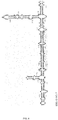
- the sequence and structure of ELVd is shown in Figure 4 .
- the hammerhead ribozyme region of ELVd corresponds to nucleotides 327 to 46 (plus) and nucleotides 153-203 (minus).
- the full-length (337 nt) genomic sequence of PLMVd is publically available under the GenBank entry number NC_003636.1 GI: 20177433 (SEQ ID NO: 10).
- the hammerhead ribozyme region of PLMVd corresponds to nucleotides 282 to 335 (plus) and nucleotides 2-57 (minus).
- a variant of a reference plant viroid sequence listed above may comprise, or consist of, a nucleotide sequence having at least 70, 75, 80, 85, 90, 95, 96, 97, 98, 99% sequence identity to the sequence of the reference plant viroid scaffold.
- the plant viroid sequence may be a truncation of the full-length plant viroid sequence, for example the full-length plant viroid genome sequence of any of SEQ ID NO: 7 to 10.
- the plant viroid sequence may comprise, or consist of, the full-length plant viroid sequence with one or more deletions.
- the plant viroid sequence may be a synthetic plant viroid sequence that does not occur in nature.
- the plant viroid sequence comprises the Eggplant latent viroid sequence (ELVd) which, in a still more particular embodiment, comprises, or consists of, a nucleotide sequence with a sequence identity of, at least, 70, 75, 80, 85, 90, 95, 96, 97, 98 or 99% with SEQ ID NO: 11.
- ELVd comprises, or consists of, a nucleotide sequence with a sequence identity of 100% with SEQ ID NO: 11.
- Double underlined insertion site of the inverted repeat sequence comprising the sense and antisense strands of the target RNA separated by an intervening sequence comprising an intron type I flanked by exons or exon fragments.
- Bold cut site of the ribozyme
- the plant viroid comprises a hammerhead ribozyme domain (motif), or a fragment thereof, at the 5' and 3' end of the sequence of the plant viroid.
- hammerhead ribozymes domain is a small self-cleaving RNA that promotes strand scission by internal phosphoester transfer.
- fragment has been defined above.
- Suitable plant viroid sequences may comprise the hammerhead ribozyme region of the plant viroid, which may for example be located from nucleotides 327 to 46 (plus) and nucleotides 153-203 (minus) in ELVd and at the corresponding nucleotides in other plant viroids. Corresponding nucleotides in other plant viroid genomes may be identified using standard sequence alignment tools.
- the hammerhead ribozyme domain located at the 5' end comprises nucleotides 1 to 53 of SEQ ID NO: 11, and/or the hammerhead ribozyme domain located at the 3' end comprises nucleotides 334 to 386 of SEQ ID NO: 11.
- the inverted repeat sequence comprising the sense and antisense strands of the target RNA separated by an intervening sequence comprising an autocatalytic intron flanked by exons or exon fragments, may be located at any position within the plant viroid scaffold as long as it does not disrupt the viroid activity.
- the inverted repeat sequence may be located in any site between the viroid hammerhead ribozyme domains of the plant viroid sequence.
- the insertion site of the inverted repeat sequence is located between nucleotides 252 and 253 of SEQ ID NO: 11.
- the nucleotide sequence of the invention comprises, or consists of, the sequence SEQ ID NO: 12.
- Underlined the hammerhead ribozyme sequences showing in bold the cut site of the ribozyme.
- Broken underlined. cDNA from ELVd (C327 to G46 from GeneBank accession number AJ536613.1; SEQ ID NO: 7), showing in double underlined the insertion site of the inverted repeat sequence comprising the sense and antisense strands of the target RNA separated by an intervening sequence comprising an intron type I flanked by exons. Italic : 100 bp of the ⁇ -actin gene of Ceratitis capitata, in sense and antisense orientation.
- nucleotide sequence of the invention as disclosed in previous paragraphs allows the skilled person in the art to produce large amounts of dsRNA when it is cloned in a host cell, such as, for example, E. coli, along with a tRNA ligase.
- a host cell such as, for example, E. coli
- tRNA ligase co-expression of the nucleotide sequence of the invention with tRNA ligase is shown herein to lead to the high level production of dsRNA molecule in host cells.
- the tRNA ligase is needed to catalyze the covalent joining of single-stranded 5'-hydroxyl termini of RNA to single-stranded 2'-3'-cyclic phosphodiester termini of RNA, and in this way to form the circular RNA that contains the dsRNA of interest.
- the tRNA ligase may be bound to the nucleotide sequence of the invention giving rise to a chimeric complex, or may be present in the vector used for cloning the nucleotide sequence in the host cell, or may be present in the host cell.
- the nucleotide sequence of the invention further comprises a nucleotide sequence encoding a tRNA ligase.
- the tRNA ligase may be a plant tRNA ligase, for example a plant choloroplast or plant nuclear tRNA ligase.
- the tRNA ligase is a plant chloroplast tRNA ligase.
- the tRNA ligase may be from a eukaryote other than a plant.
- Suitable tRNA ligases may be homologues or orthologues of plant tRNA ligases and may be readily identified using standard techniques.
- suitable tRNA ligases may bind to the plant viroid sequence to form a ribonucleoprotein complex.
- the plant viroid sequence and the tRNA ligase may be from the same plant species.
- Suitable plant tRNA ligases are well-known in the art and include, without being limited to, Solanum melongena (eggplant) tRNA ligase.
- the amino acid sequence of Solanum melongena tRNA ligase is publically available under the GenBank entry number AFK76482.1 GI: 388604525 (SEQ ID NO: 13) and the nucleotide coding sequence is publically available under the GenBank entry number JX025157.1 GI: 388604524 (SEQ ID NO: 14).
- the tRNA ligase is the eggplant tRNA ligase.
- the tRNA ligase from eggplant comprises, or consists of, a nucleotide sequence having a sequence identity of at least 70, 75, 80, 85, 90, 96, 97, 98 or 99% to SEQ ID NO: 14.
- the tRNA ligase from eggplant comprises, or consists of, a nucleotide sequence having a sequence identity of 100% to SEQ ID NO: 14.
- tRNA ligases for use in the present invention may be an orthologue from a plant species other than Solanum melongena (eggplant), for example Arabidopsis thaliana (GenBank accession number NM_100665.3 [SEQ ID NO: 18]), Solanum lycopersicum (XM_004251213.4 [SEQ ID NO: 19]), Hevea brasiliensis (XM_021784835.1 [SEQ ID NO: 20]), Prunus avium (XM_021975205.1 [SEQ ID NO: 21]), Malus domestica (XM_029088496.1 [SEQ ID NO: 22]), Triticum spp. or Oryza sativa.
- Suitable orthologues may be identified using standard sequence analysis techniques.
- the plant viroid and the tRNA ligase may be from the same plant species.
- eggplant tRNA ligase may be expressed with an ELVd sequence
- avocado tRNA ligase may be expressed with an avocado sunblotch viroid (ASBVd) sequence.
- the dsRNA molecule and the tRNA ligase may be encoded by the same or different nucleic acids in the host cell.
- the nucleic acids may be heterologous or exogenous to the host cell and may be introduced into the host cell by transformation or transfection as described below.
- dsRNA hairpin As a consequence of expressing the nucleotide sequence of the invention on a host cell in combination with a tRNA ligase, large quantities of hybrid circular molecules are produced efficiently comprising the plant viroid on which the dsRNA hairpin is presented. For example, more than 10 mg, more than 20 mg, more than 30 mg, more than 50 mg or more than 100 mg of dsRNA may be produced per litre of the host cell culture.
- the inventors added a new element to the nucleotide sequence of the invention comprising of a permutated intron-exon sequence.
- an intron of group I is divided into two parts, and the first is fused following the second, the self-cleavage reaction continues on the border between exon 1 and the 5' end of the intron and continues with the attack on 3' end from exon 1 to the border between the 3' end of the intron and exon 2, autocatalytically generating a circular RNA molecule comprised by the two exons.
- the nucleotide sequence of the invention may further comprise permutated autocatalytic intron-exon sequences between the plant viroid sequence and the cDNAs sequences.
- permutated autocatalytic intron-exon sequences include, without being limited to, tRNA intron from Anabaena sp. strain PCC7120 or the intron from thymidylate synthase (td) gene of phage T4.
- the permutated autocatalytic intron-exon sequences are the autocatalytic intron of the 26S rRNA gene of T. termophila.
- the permutated autocatalytic intron-exon sequence at 5' of the cDNA sequence of the sense strand of the target dsRNA comprises, or consists of, a nucleotide sequence with a sequence identity of at least 70, 75, 80, 85, 90, 95, 96, 97, 98, 99% with SEQ ID NO: 15.
- the permutated autocatalytic intron-exon sequence at 5' of the cDNA sequence of the sense strand of the target dsRNA comprises, or consists of, a nucleotide sequence with a sequence identity of 100% with SEQ ID NO: 15.
- the permutated autocatalytic intron-exon sequence at 3' of the cDNA sequence of the antisense strand of the target dsRNA comprises, or consists of, a nucleotide sequence with a sequence identity of at least 70, 75, 80, 85, 90, 95, 96, 97, 98, 99% with SEQ ID NO: 16.
- the permutated autocatalytic intron-exon sequence at 3' of the cDNA sequence of the sense strand of the target dsRNA comprises, or consists of, a nucleotide sequence with a sequence identity of 100% with SEQ ID NO: 16.
- the nucleotide sequence of the invention comprises the sequence SEQ ID NO: 17.
- Underlined the hammerhead ribozyme sequences showing in bold the cut site of the ribozyme.
- Broken underlined. cDNA from ELVd (C327 to G46 from GeneBank accession number AJ536613.1), showing in double underlined the insertion site of the inverted repeat sequence comprising the sense and antisense strands of the target RNA separated by an intervening sequence comprising an intron type I flanked by exon fragments.
- Italic 100 bp of the ⁇ -actin gene of Ceratitis capitata, in sense and antisense orientation.
- the nucleotide sequence of the invention allows the production of large amounts of dsRNA.
- the cDNAs of the two strands of the target dsRNA are inserted into the cDNA of a plant viroid and separated by the cDNA of an autocatalytic intron.
- the co-expression of the resulting RNA together with the tRNA ligase produces a large accumulation of a hybrid molecule in which the dsRNA is fused to the viroid.
- the autocatalytic intron disappears during the processing of the precursor.
- a permuted autocatalytic intron is added to this construction, the dsRNA of interest can be separated in a circular form from the viroid molecule.
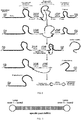
- Figures 1 and 2 illustrate the process disclosed in this paragraph.
- nucleotide sequence of the invention may further comprise regulatory sequences, such as enhances and promoters, origins of replication, ribosomal terminators, resistance genes, etc., which allow the expression of the nucleotide sequence in a host cell.
- regulatory sequences such as enhances and promoters, origins of replication, ribosomal terminators, resistance genes, etc.
- the present invention relates to a vector, hereinafter "vector of the invention", comprising the nucleotide sequence of the invention.
- vector in accordance with the invention means a plasmid, cosmid, virus, bacteriophage or another vector used conventionally in genetic engineering which carries the nucleotide sequence of the invention. Accordingly, the nucleotide sequence of the invention may be inserted into several commercially available vectors.
- Nonlimiting examples include prokaryotic plasmid vectors, such as of the pUC-series, pBluescript (Stratagene), the pET-series of expression vectors (Novagen) or pCRTOPO (Invitrogen) and vectors compatible with an expression in mammalian cells like pREP (Invitrogen), pcDNA3 (Invitrogen), pCEP4 (Invitrogen), pMC1neo (Stratagene), pXT1 (Stratagene), pSG5 (Stratagene), EBO-pSV2neo, pBPV-1, pdBPVMMTneo, pRSVgpt, pRSVneo, pSV2-dhfr, plZD35, pLXIN, pSIR (Clontech), pIRES-EGFP (Clontech), pEAK-10 (Edge Biosystems) pTriEx-Hygro (Novagen
- the nucleotide sequence of the invention may be inserted into vectors such that a (further) translational fusion with another nucleotide sequence is generated.
- the other nucleotide sequence may encode a protein which may, for example, increase the solubility and/or facilitate the purification of the dsRNA encoded by nucleotide sequence of the invention.
- overlap extension PCR can be applied. The products arising therefrom are termed fusion proteins and will be described further below.
- the vector of the invention may comprise a nucleotide sequence encoding the tRNA ligase.
- the present invention also encompasses a pair of vectors, the first vector comprising the nucleotide sequence of the invention, and the second vector comprising the nucleotide sequence encoding the tRNA ligase as described in previous paragraphs.
- Plasmids which can be used to introduce the nucleotide sequence of the invention into a host cell are pUC18/19 (Roche Biochemicals), pBluescript ll, pKK-177-3H (Roche Biochemicals), pBTac2 (Roche Biochemicals), pKK223-3 (Amersham Pharmacia Biotech), pKK-233-3 (Stratagene) or pET (Novagen).
- vectors can contain one or more origins of replication (ori) and inheritance systems for cloning or expression, one or more markers for selection in the host, e.g., antibiotic resistance, and one or more expression cassettes.
- Suitable origins of replication include, without limiting to, the pUC, p15A, ColE1, the viral SV40 or the M13 origins of replication.
- the nucleotide sequences inserted in the vector can, for example, be synthesized by standard methods. Ligation of the nucleotide sequence to transcriptional regulatory elements and/or to other nucleotides sequences can be carried out using established methods well-known by the skilled person in the art. Transcriptional regulatory elements (parts of an expression cassette) ensuring expression in prokaryotes or eukaryotic cells are well known to those skilled in the art. These elements comprise regulatory sequences ensuring the initiation of the transcription (e. g., translation initiation codon, transcriptional termination sequences, promoters, enhancers, and/or insulators) and internal ribosomal entry sites (IRES).
- initiation of the transcription e. g., translation initiation codon, transcriptional termination sequences, promoters, enhancers, and/or insulators
- IVS internal ribosomal entry sites
- Additional regulatory elements may include transcriptional, and/or naturally-associated or heterologous promoter regions.
- the regulatory elements may be heterologous regulatory elements.
- the nucleotide sequence of the invention is operably linked to such expression control sequences allowing expression in prokaryotes or eukaryotic cells.
- the co-transfection with a selectable marker such as kanamycin, chloramphenicol or ampicillin resistance genes for culturing in E. coli or other bacteria allows the identification and isolation of the transfected cells. Using such markers, the cells are grown in selective medium and those with the highest resistance are the transfected cells.
- the invention relates to a host cell, hereinafter "cell of the invention", comprising, e.g., as a result of transformation, transduction, microinjection or transfection, the nucleotide sequence or the vector of the invention.
- suitable techniques may include calcium phosphate transfection, DEAE- Dextran, electroporation, liposome-mediated transfection and transduction using retrovirus or other virus, e.g. adenovirus, AAV, lentivirus or vaccinia.
- suitable techniques may include calcium chloride transformation, electroporation and transfection using bacteriophage. Marker genes such as antibiotic resistance or sensitivity genes may be used in identifying clones containing nucleic acid of interest, as is well-known in the art.
- the introduced nucleic acid(s) may be on an extra-chromosomal vector within the cell or the nucleic acid may be integrated into the genome of the host cell. Integration may be promoted by inclusion of sequences within the nucleic acid or vector which promote recombination with the genome, in accordance with standard techniques.
- a variety of host-expression systems may be used to express the nucleotide sequence or the vector of the invention.
- the host cell of the invention may be produced by introducing the nucleotide sequence or vector(s) of the invention into the host cell.
- the host cell of the invention comprises
- the host from which the host cell is derived may be any eukaryotic or prokaryote cell.
- a suitable eukaryotic host cell may be a vertebrate cell, an amphibian cell, a fish cell, an insect cell, a fungal/yeast cell, a nematode cell or a plant cell.
- the insect cell may be a Spodoptera frugiperda cell, a Drosophila S2 cell or a Spodoptera Sf9 cell
- the fungal/yeast cell may a Saccharomyces cerevisiae cell, Pichia pastoris cell or an Aspergillus cell.
- the vertebrate cell is a mammalian cell such as a human cell, CHO, COS, 293 or Bowes melanoma cell.
- the plant cell is preferably selected independently from a cell of Anacardium, Anona, Arachis, Artocarpus, Asparagus, Atropa, Avena, Brassica, Carica, Citrus, Citrullus, Capsicum, Carthamus, Cocos, Coffea, Cucumis, Cucurbita, Daucus, Elaeis, Fragaria, Glycine, Gossypium, Helianthus, Heterocallis, Hordeum, Hyoseyamus, Lactuca, Linum, Lolium, Lupinus, Lycopersicon, Malus, Manihot, Majorana, Medicago, Nicotiana, Olea, Oryza, Panieum, Pannesetum, Passiflora, Persea, Phaseolus, Pistachia, Pisum, Pyrus,
- Suitable prokaryotes (bacteria) useful as hosts for the invention are those generally used for cloning and/or expression include, without being limited to, E. coli (e.g., E coli strains BL21, HB101, DH5a, XL1 Blue, Y1090, JM101, and HT115), Salmonella typhimurium, Serratia marcescens, Burkholderia glumae, Pseudomonas putida, Pseudomonas fluorescens, Pseudomonas stutzeri, Streptomyces lividans, Lactococcus lactis, Mycobacterium smegmatis, Streptomycesor, Bacillus subtilis. Appropriate culture mediums and conditions for the above described host cells are known in the art.
- E. coli e.g., E coli strains BL21, HB101, DH5a, XL1 Blue,
- Preferred examples for host cell to be genetically engineered with the nucleotide sequence or the vector(s) of the invention is a cell of yeast, E. coli and/or a species of the genus Bacillus (e.g., B. subtilis ).
- the host cells may express an exogenous tRNA ligase.
- the host cells may have been previously transformed with a nucleotide sequence encoding the tRNA ligase.
- a method as described herein may comprise introducing nucleic acid encoding the nucleotide sequence of the invention into host cells that express an exogenous tRNA ligase. The introduction may be followed by expression of the nucleotide sequence(s) to produce the dsRNA molecule and/or tRNA ligase.
- host cells (which may include cells actually transformed although more likely the cells will be descendants of the transformed cells) may be cultured in vitro under conditions for expression of the nucleic acid, so that the encoded dsRNA molecule and/or tRNA ligase are produced.
- expression may require the activation of the inducible promoter.
- the dsRNA molecules may then be recovered from the host cells or the surrounding medium.
- the present invention relates to a plant, hereinafter "plant of the invention", comprising the isolated nucleotide sequence of the invention, or the vector of the invention, or the host cell of the invention.
- Another aspect of the invention provides a recombinant host cell that expresses the dsRNA molecule and tRNA ligase, as described herein.
- the host cell may comprise a heterologous nucleotide sequence encoding the tRNA ligase and a heterologous nucleotide sequence encoding the dsRNA molecule (the nucleotide sequence of the invention).
- the nucloetide sequences may be contained in the same or separate expression vectors as described above.
- Another aspect of the invention provides a recombinant host cell that expresses an exogenous tRNA ligase and is suitable for transformation with a nucleotide sequence of the invention as disclosed herein. Host cells, chimeric RNA molecules and tRNA ligases are described in more detail above.
- the expressed dsRNA may be isolated and/or purified after production from the host cell and/or culture medium. This may be achieved using any convenient method known in the art. Techniques for the purification and/or the isolation of RNA are well known in the art and include, for example HPLC, FPLC or affinity chromatography.
- the dsRNA molecule may subsequently be used as desired, e.g. in the formulation of a composition which may include one or more additional components, such as a pharmaceutical or a phytosanitary composition which includes one or more acceptable excipients, vehicles or carriers.
- a composition which may include one or more additional components, such as a pharmaceutical or a phytosanitary composition which includes one or more acceptable excipients, vehicles or carriers.
- dsRNAs produced as described herein may be investigated further, for example the pharmacological properties and/or activity may be determined. Methods and means of RNA analysis are well-known in the art.
- the dsRNA may be modified or adapted after isolated from the host cell.
- the 2' -OH group of one or more nucleotides in the dsRNA may be chemically modified, for example by addition of a substituent group, such as methyl (e.g. 2 '-O-methyl), halogen (e.g. 2'-Fluoro) or amine (e.g. 2'-NH3), or reduction to 2'-H (e.g. 2' deoxy).
- a substituent group such as methyl (e.g. 2 '-O-methyl), halogen (e.g. 2'-Fluoro) or amine (e.g. 2'-NH3), or reduction to 2'-H (e.g. 2' deoxy).
- the nucleotide sequence of the invention allows the production of high amounts of a target dsRNA when it is expressed in a host cell.
- the present invention relates to the use of the isolated nucleotide sequence of the invention, or of the vector of the invention, or of the host cell of the invention, or the plant of the invention, for producing a dsRNA specific for a target gene.
- the terms used for defining this aspect, as well as their particular embodiments, have been explained in previous paragraphs and can be applied to the present inventive aspect.
- the isolated nucleotide sequence of the invention, or of the vector of the invention, or of the host cell of the invention, or the plant of the invention may comprise a nucleotide sequence encoding a tRNA ligase.
- the tRNA ligase (or the nucleotide sequence encoding the tRNA ligase) may be present in another vector or in the own genome of the host cell.
- the invention relates to the use of the isolated nucleotide sequence of the invention, or of the vector of the invention, or of the host cell of the invention, or the plant of the invention, in combination with a tRNA ligase (or the nucleotide sequence encoding the tRNA ligase), for producing a dsRNA specific for a target gene.
- a tRNA ligase or the nucleotide sequence encoding the tRNA ligase
- the present invention relates to a method for producing dsRNA specific for a target gene, hereinafter "method of the invention", comprising co-expressing in a host cell
- the host cell is E. coli.
- the tRNA ligase is the tRNA ligase from eggplant.
- dsRNA DNA ligase
- host cell tRNA ligase
- tRNA RNA ligase
- the co-expression of elements (a) and (b) cited above is carried out by culturing the host cell comprising both elements in suitable conditions.
- suitable conditions for culturing a prokaryotic or eukaryotic host cell are well known to the person skilled in the art.
- Suitable conditions for culturing E. coli are provided in the examples of the present invention.
- suitable conditions for culturing bacteria are growing them under aeration in Luria Bertani (LB) medium.
- LB Luria Bertani
- E . coli can be cultured from 4 to about 37 °C, the exact temperature or sequence of temperatures depends on the molecule to be overexpressed.
- Aspergillus sp. may be grown on Sabouraud dextrose agar, or potato dextrose agar at about to 10°C to about 40°C, and preferably at about 25°C.
- Suitable conditions for yeast cultures are known. The skilled person is also aware of all these conditions and may further adapt these conditions to the needs of a particular host species and the requirements of the polypeptide expressed.
- an inducible promoter controls the nucleotide sequence of the invention in the vector present in the host cell, expression of the dsRNA can be induced by addition of an appropriate inducing agent.
- mammalian cell culture can e.g. be carried out in RPMI or DMEM medium containing 10% (v/v) FCS, 2mM L-glutamine and 100 U/ml penicillin/streptomycin.
- the cells can be kept at 37 °C in a 5% CO2, water saturated atmosphere.
- Suitable expression protocols for eukaryotic cells are well known to the skilled person.
- the dsRNA produced may be isolated and/or purified.
- Methods of isolation are well-known in the art and comprise, without limitation, steps such as ion exchange chromatography, gel filtration chromatography (size exclusion chromatography), affinity chromatography, high pressure liquid chromatography (HPLC), reversed phase HPLC, or disc gel electrophoresis.
- the present invention relates to a phytosanitary composition
- a phytosanitary composition comprising a dsRNA obtained by the method of the invention.
- DNAs of the expected size were eluted from the gel using silica-gel spin columns.
- the three DNAs were assembled between the positions T245 and T246 of the ELVd-AJ536613.1 cDNA with duplicated hammerhead ribozyme domains (SEQ ID NO: 11) in plasmid pLELVd ( Dar ⁇ s, J.A., Aragonés, V., and Cordero, T. (2018) Sci. Rep., 8,1904 ), by means of the Gibson assembly reaction using the NEBuilder HiFi DNA assembly master mix (New England Biolabs). Competent E.
- This plasmid was used to co-electroporate the RNase III-deficient HT115(DE3) strain of E. coli that lacks RNase III ( Timmons, L., Court, D.L., and Fire, A. (2001) Gene, 263, 103-112 ), along with plasmid pLtRnlSm (Dar ⁇ s et al., 2018, cited ad supra ) from which eggplant tRNA ligase (SEQ ID NO: 13 and SEQ ID NO: 14) is constitutively expressed.
- pLtRnlSm was also co-electroporated with the plasmid to express the empty ELVd (pLELVd) (Dar ⁇ s et al., 2018, cited ad supra ).
- pLELVd empty ELVd
- Nine independent colonies were picked from LB plates containing 50 ⁇ g/ml ampicillin and 34 ⁇ g/ml chloramphenicol and grown for 24 hours in liquid Terrific Broth (TB) medium.
- PAGE polyacrylamide gel electrophoresis
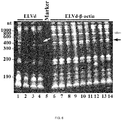
- Two prominent bands above the 600-nt and slightly below the 400-nt RNA markers were observed in the RNA extracts from bacteria transformed with the plasmid to express the dsRNA ( Figure 6 , lanes 6 to 14, gray and black arrows respectively). Remarkably, these bands exhibited a fluorescence intensity comparable to those from the endogenous E.
- RNA extracts from the empty ELVd controls exhibited a single prominent band above the 400-nt marker that, according to our previous analysis ( Fadda, Z., Dar ⁇ s, J.A., Fagoaga, C., Flores, R., and Duran-Vila, N. (2003) J. Virol., 77 ), corresponds to the 333-nt-long circular ELVd RNA ( Figure 6 , lanes 1 to 4, white arrow). Circular RNAs migrate slower than the linear counterparts of the same size in denaturing conditions. The identity of the different RNA species indicated in the Figure 2 was confirmed by Northern-blot hybridization analysis using 32 P-labelled RNA probes complementary to the ELVd and the T. termophila intron RNAs.
- Transformed bacteria were selected in LB plates containing ampicillin and chloramphenicol.
- the RNA preparation was analyzed by PAGE under non-denaturing and denaturing (8 M urea) conditions ( Figure 7 ). The alteration of electrophoretic migration from non-denaturing to denaturing conditions confirmed the production in E.
- dsRNA that can be used in RNAi-based biotechnology applications.
- the new method is based on the activity of two versions of a self-splicing group-I intron, the second in a permuted form.
- the first intron stabilizes the DNA inverted repeats that are required to transcribe a dsRNA in E . coli, while is efficiently processed from the final transcript.
- the second (permuted) intron cleaves the dsRNA from the viroid scaffold producing a circular molecule consisting of the dsRNA locked at both ends by the exon fragments ( Figure 3 ).
Landscapes
- Health & Medical Sciences (AREA)
- Genetics & Genomics (AREA)
- Life Sciences & Earth Sciences (AREA)
- Engineering & Computer Science (AREA)
- Chemical & Material Sciences (AREA)
- Organic Chemistry (AREA)
- Wood Science & Technology (AREA)
- Zoology (AREA)
- Bioinformatics & Cheminformatics (AREA)
- General Engineering & Computer Science (AREA)
- Biotechnology (AREA)
- Biomedical Technology (AREA)
- Molecular Biology (AREA)
- Biochemistry (AREA)
- General Health & Medical Sciences (AREA)
- Microbiology (AREA)
- Physics & Mathematics (AREA)
- Biophysics (AREA)
- Plant Pathology (AREA)
- General Chemical & Material Sciences (AREA)
- Chemical Kinetics & Catalysis (AREA)
- Medicinal Chemistry (AREA)
- Micro-Organisms Or Cultivation Processes Thereof (AREA)
- Saccharide Compounds (AREA)
- Preparation Of Compounds By Using Micro-Organisms (AREA)
- Enzymes And Modification Thereof (AREA)
Abstract
Description
- The present invention relates to a nucleotide sequence comprising a) the cDNAs of two strands of a target double-stranded RNA (dsRNA) separated by an autocatalytic intron flanked by exons, and b) a plant viroid sequence, wherein element (a) is inserted in the plant viroid sequence. The expression of this nucleotide sequence in a host cell, such as Escherichia coli, along with a tRNA ligase, allows the production of large amounts of dsRNA specific for a target gene. This dsRNA can be used in the interfering RNA technology for silencing gene expression. Thus, the present invention belongs to the field of biotechnology, specifically, to the field of the production of recombinant RNA.
- Gene silencing mediated by RNA or RNA interference (RNAi) is a natural defense mechanism against genetic elements, both exogenous (for example, viruses) and endogenous (for example, transposons), which in most eukaryotic organisms has evolved to become an important regulatory way of gene expression. RNAi is triggered by the presence of double-stranded RNA (dsRNA) and has the ultimate consequence of silencing or suppressing homologous messenger RNA (mRNA). Very briefly, the dsRNA is processed by the Dicer endonucleases to produce small RNA (sRNA) that is recognized by the RNase H Argonaute (Ago), which carries one of the strands of the sRNA to form the RNA-induced silencing complex (RISC). In the cell, this complex traces its target RNA based on the complementarity of the sRNA and, when it finds it, it cuts it down inactivating it or it joins it, inhibiting its translation. In some taxonomic groups such as nematodes or plants, an RNA-dependent RNA polymerase (RDR) activity uses sRNA as a primer to produce more homologous dsRNA, which feeds the cycle from its inception and amplifies the interfering signal.
- RNAi can be efficiently induced by the administration of exogenous RNA, so it has been widely used in basic research to study gene function in many classes of organisms. At the same time, its conceptual simplicity (highly specific gene suppression based on simple base complementarity) has driven the development of a multitude of promising biotechnological applications. One of them is the use of RNA against pests: the ingestion of dsRNAs by nematodes, insects and other arthropods induces the silencing of endogenous homologous genes, causing their death or affecting their development, mobility or feeding behavior, reducing in any case the damage they cause. The silencing induced by dsRNAs has also been demonstrated in pathogens such as viruses and fungi. In this way, RNA, a natural compound that is harmless to the environment, has become a promising agent against pests and pathogens. In addition, its mechanism of action based on base complementarity makes it highly specific and easily adaptable to any new species or lineage of pest or emerging pathogen. Its use in agricultural crops has aroused great interest but its potential goes beyond agricultural biotechnology.
- The biotechnological use of dsRNAs requires, however, systems capable of producing large quantities of this type of compound quickly and economically. The classical strategies for the production of RNAs based on chemical synthesis or in vitro transcription are not viable due to their cost and yield. The most logical alternative is the production of dsRNA in biofactory systems such as bacterial cultures, for example, of E. coli.
- The patent application
WO 2015/177100 discloses the production of RNA by co-expressing a tRNA ligase and a chimeric RNA molecule comprising a target RNA and a plant viroid scaffold in a host cell. This co-expression causes the production of large amounts of the chimeric RNA molecule in the host cells and may be useful, for example, in the production of RNA aptamers and other RNA molecules. Recently, a system based on elements of the biology of viroids to produce large amounts of recombinant RNA in E. coli has been developed (Daros et al., 2018. Sci. Rep. 8: 1904). - Viroids are a class of infectious agents of plants constituted exclusively by a noncoding circular RNA of relatively small size (246-401 nucleotides, in the known species to date). In spite of not coding own proteins, the viroid RNA manages to replicate itself and move around the plant, for which it has to recruit proteins and take advantage of the cellular structures of the host. The system of production of recombinant RNA in E. coli disclosed in Daros et al. 2018 (cited ad supra) is based on the co-expression of an RNA derived from the Eggplant latent viroid (ELVd), which contains the RNA of interest, and the chloroplastic isoform of the eggplant (Solanum melongena L.) tRNA ligase, an enzyme that mediates the circularization of this viroid in the infected plant. ELVd does not replicate in E. coli. However, when a precursor containing it is transcribed, its hammerhead ribozymes act to generate a linear monomer with the RNA of interest inserted. This monomer is recognized by the tRNA ligase and circularized. The resulting product, a hybrid molecule consisting of a highly structured viroid scaffold on which the RNA of interest is presented, is accumulated in enormous quantities in the bacterial cells as a consequence of its circularity and formation of a ribonucleoprotein complex with the tRNA ligase. With this system, quantities in the order of 100 mg of aptamers of RNA and other structured RNAs per litre of culture have been produced. However, due to the known instability of inverted DNA repeats in E. coli, this system was shown from the start to be incapable of producing substantial quantities of dsRNAs, the molecules necessary to induce gene silencing in pests and pathogens. Therefore, there is still the necessity of developing methods and processes that allow producing large amounts of dsRNA, overcoming the drawbacks of the systems, which already exist in the state of the art.
- Thanks to the use of autocatalytic introns in E. coli, the present invention allows to overcome the above-mentioned limitation of the state of the art, and to produce large quantities of dsRNAs which may be used against pests and pathogens. In addition, using these same autocatalytic introns permuted, it is possible to cleave the dsRNA of interest from the viroid scaffold on which it is transcribed, producing a pure circular dsRNA molecule without any residue of the viroid.
- To solve the problem of the instability of inverted DNA repeats in E. coli, the repeats were separated with a cDNA corresponding to the group I intron of the 26S ribosomal RNA (rRNA) of prilled ciliated Tetrahymena termophila (order Hymenostomatia). Since this intron is autocatalytic and only requires a guanosine nucleoside for its processing, once the transcript is expressed in E. coli, the intron is self-cleaved with extraordinary efficiency and a hairpin of dsRNA is formed closed by a loop of 20 nucleotides corresponding to two 10-nucleotides-long fragments of the exons that flank the intron. Thus, in the culture of E. coli, large quantities of hybrid circular molecules were produced efficiently consisting of an ELVd scaffold on which the pesticide dsRNA hairpin is presented (
Figure 1 ). - Using this system, a 100 bp double-stranded RNA against essential genes of insect pests was produced and its pesticide activity demonstrated. However, it is understood that the commercial potential of this technology may be limited by the presence in the molecule of dsRNA of interest of a residue derived from the viroid.
- In order to eliminate the viroid moity, a new element consisting of a permutated intron-exon sequence was added to the system (
Figure 2 ). When an intron of group I is divided in two parts, and the first is fused following the second, the self-cleavage reaction continues on the border betweenexon 1 and the 5' end of the intron and continues with the attack on 3' end fromexon 1 to the border between the 3' end of the intron andexon 2, autocatalytically generating a circular RNA molecule formed by the two exons (Figure 3 ). In this way, the viroid moiety (Figure 4 ) is completely removed from the final dsRNA product (Figure 3 ). - In summary, this invention allows the production of large amounts of dsRNA in E. coli. To do this, the cDNAs of the two strands of the dsRNA are inserted into the cDNA of a viroid, and separated by the cDNA of a type I intron. The co-expression in E. coli of the resulting RNA together with the tRNA ligase of eggplant produces a large accumulation of a hybrid molecule in which the dsRNA is fused to the viroid. The autocatalytic intron disappears during the processing of the precursor. In addition, if a permuted type I intron is added to this construct, the dsRNA of interest in a circular form can be separated from the viroid molecule.
- In view of the foregoing, in an aspect, the present invention relates to an isolated nucleotide sequence comprising
- a) the cDNAs of two strands of a target dsRNA separated by an autocatalytic intron flanked by exons or exon fragments, and
- b) a plant viroid sequence,
- Additionally, in another inventive aspect, the present invention relates to a method for producing dsRNA specific for a target gene comprising co-expressing in a host cell
- a) a nucleotide sequence according to the above-mentioned aspect, and
- b) a nucleotide sequence encoding a tRNA ligase,
- In an aspect, the present invention relates to an isolated nucleotide sequence, hereinafter "nucleotide sequence of the invention", comprising
- a) the cDNAs of two strands of a target dsRNA separated by an autocatalytic intron flanked by exons or exon fragments, and
- b) a plant viroid sequence,
- As used herein, the term "double-stranded RNA" or "dsRNA" refers to a RNA molecule comprising two nucleic acid strands containing complementary sequences each other, wherein one of the strands is called sense strand (direction 5'-3') and the other one is called antisense strand (direction 3'-5'). Thus, the nucleotide sequence of the invention comprises an inverted repeat sequence comprising the sense and antisense strands of the target RNA separated by an intervening sequence comprising an intron type I flanked by exons or exon fragments.
- As used herein, the term "target dsRNA" is the dsRNA capable of inducing the expression silencing of a specific target gene with which it shares homology. In the context of the present invention, it is considered that two nucleotide sequences share homology when the sequence identity between them is, at least, 75 % by the optimal alignment of them. Tools for determining the sequence identity between two nucleotide sequences are disclosed below. Any dsRNA molecule that needs to be generated in large amounts may be used as the target dsRNA. The target dsRNA may be non-naturally occurring. Suitable target dsRNA may include sequences up to 100 bases, up to 200 bases or up to 300 bases or more. Preferably, the target dsRNA is not derived from a plant viroid and is not naturally associated with the plant viroid sequence (i.e. the target dsRNA is heterologous). Examples of specific target genes include, without being limited to, the target genes shown in Table 1.
Table 1. Target genes useful for fighting against pests and pathogens Target insect Target gene Functions Helicoverpa armigera Cytochrome 450 monooxygenase CTP6AE14 Degrade gossypol and increase tolerance to gossypol GST glutathion transferase Detoxification enzymes HaHR-3 Molt-regulating transcription factor 20-Hydroxyecdysone Role in molting and metamorphosis Arginine kinase Play role in role in cellular energy metabolism Chitin synthase monooxygenase Synthesis of chitin Cytochrome P450 Required for tolerance against gossypol V-ATPase Role in cellular energy production Chitinase Role in molting and metamorphosis Diabrotica virgifera virgifera LeConte Vacuolar A TPase Role in cellular energy production DVSSJ1 production of their respective smooth septate junction membrane proteins DVSSJ2 Spodoptera exigua 20-Hydroxyecdysone Role in molting and metamorphosis Manduca sexta MsCYP6B46 Nicotine degradation Nilaparvata Lugens Hexose transporter gene Transport of glucose Carboxypeptidase Hydrolysis of protein Trypsin like serine protease Hydrolysis of protein Myzus persicae Rack1 Essential in foraging and feeding of the pea aphid MpC002 Intracellular receptor Hunchback (hb) Play role in insect axial patterning Serine proteases (SP) Gut proteolytic digestion Bemisia tabaci v-ATPase Encode for v-ATPase subunit A, role in cellular energy production Acetylcholinesterase (AChE) Required in signaling Ecdysone receptor (EcR) Role in molting and metamorphosis - In a particular embodiment, the target dsRNA is the gene beta-actin from Ceratitis capitata (diptera: Tephritidae). In a more particular embodiment, the cDNA sequence of the sense strand of the target dsRNA comprises, or consists of, a nucleotide sequence with a sequence identity of, at least, 70, 75, 80, 85, 90, 95, 96, 97, 98 or 99% with SEQ ID NO: 1. In a still more particular embodiment, the cDNA sequence of the sense strand of the target dsRNA comprises, or consists of, a nucleotide sequence with a sequence identity of 100% to SEQ ID NO: 1. In another particular embodiment, the cDNA sequence of the anti-sense strand of the target dsRNA comprises, or consists of, a nucleotide sequence with a sequence identity of, at least, 70, 75, 80, 85, 90, 95, 96, 97, 98 or 99% with SEQ ID NO: 2. In a still more particular embodiment, the cDNA sequence of the sense strand of the target dsRNA comprises, or consists of, a nucleotide sequence with a sequence identity of 100% to SEQ ID NO: 2.


- As used herein, the term "sequence identity" refers to the degree of similarity between two nucleotide (or amino acid) sequences obtained by the optimal alignment of the two sequences. A degree of identity expressed as a percentage will be obtained based on the number of common residues among the aligned sequences. The degree of identity between two nucleotide (or amino acid) sequences can be determined by conventional methods, for example, standard sequence alignment algorithms known in the state of the art, such as BLAST [Altschul S.F. et al. Basic local alignment search tool. J Mol Biol. 1990 ]. The BLAST programs, for example, BLASTN, BLASTX and TBLASTX, BLASTP and TBLASTN are a part of the public domain on The National Center for Biotechnology Information (NCBI) website. Particular nucleotide sequence variants may differ from a reference sequence by insertion, addition, substitution or deletion of 1 base, 2, 3, 4, 5-10, 10-20, 20-30 or more bases.
- The cDNAs of two strands of a target dsRNA in the nucleotide sequence of the invention are separated by an autocatalytic intron flanked by exons or exon fragments. As used herein, the term "autocatalytic intron" refers to self-splicing introns which do not need the action of a spliceosome to be removed from the nucleotide sequence. There are three kinds of self-splicing introns, Type I, Type II and Type III. Any of them can be used in the present invention. Thus, in a particular embodiment of the nucleotide sequence of the invention, the autocatalytic intron is an autocatalytic intron type I or an autocatalytic intron type II or an autocatalytic intron type III.
- Type I introns (or Group I) are large self-splicing ribozymes that catalyze their own excision from RNA precursors. They perform two sequential transesterification reactions. The core structure consists of nine paired regions (P1-P9). An exogenous guanosine or guanosine nucleotide (exoG) first docks onto the active G-binding site located in P7, and its 3'-OH is aligned to attack the phosphodiester bond at the 5' splice site located in P1. This results in a free 3'-OH group at the upstream exon and the exoG attached to the 5' end of the intron. Then, the terminal G (omega G) of the intron replaces the exoG and occupies the G-binding site to organize the second transesterification reaction. In this reaction, the 3'-OH group of the upstream exon in P1 is aligned to attack the 3' splice site in P10, leading to the ligation of the adjacent upstream and downstream exons and release of the catalytic intron. Examples of Type I introns include, without being limited to, autocatalytic intron type I of the
rRNA 26S from Tetrahymena termophila, Ankistrodesmus stipitatus LSU rRNA intron, Saccharomyces cerevisiae LSU rRNA mitochondrial intron or Podospora anserina mitochondrial apocytochrome b intron. - Type II introns (Group II) are a large class of self-splicing ribozymes and mobile genetic elements in which, unlike Group I introns, excision occurs in the absence of a guanosine nucleotide and a lariat structure is formed. The lariat contains an A-residue branchpoint what resembles that found in lariats formed during splicing of nuclear pre-mRNA. The secondary structure of group II introns is characterized by six typical stem-loop structures, domains I to VI (DI to DVI, or D1 to D6). The domains radiate from a central core that brings the 5' and 3' splice junctions into proximity. The proximal helix structures of the six domains are connected by a few nucleotides in the central region.
- Type III introns (Group III) are a class of self-splicing ribozymes that have a conventional Group II-type DVI with a bulged adenosine, a streamlined DI, no DII-DV, and a relaxed splice site consensus. Splicing is done with two transesterification reactions with a DVI bulged adenosine as initiating nucleophile. The intron is also excised as a lariat.
- In a more particular embodiment of the nucleotide sequence of the invention, the autocatalytic intron is an autocatalytic intron of type I. In a still more particular embodiment, the autocatalytic intron of type I is the autocatalytic intron type I of the
rRNA 26S from Tetrahymena termophila (GenBank access number V01416.1 [SEQ ID NO: 23]), or a fragment thereof with autocatalytic activity. The term "fragment" means a nucleotide sequence having one or more (e.g., several) nucleotides absent from the 5' and/or 3' ends of a reference nucleotide sequence, wherein the fragment encodes a protein having the same activity than the reference nucleotide sequence, being thus a functionally equivalent fragment. In still more particular embodiment, the autocatalytic intron type I of therRNA 26S from T. termophila comprises, or consists of, a nucleotide sequence with a sequence identity of at least 70, 75, 80, 85, 90, 95, 96, 97, 98 or 99% with SEQ ID NO: 3. In a more particular embodiment, the autocatalytic intron comprises, or consists of, a nucleotide sequence with a sequence identity of 100% to SEQ ID NO: 3.
- In the present invention, the autocatalytic intron is flanked by exons or exon fragments, which may proceed from the same or different microorganism than the autocatalytic intron. The term "fragment" has been defined above. In a particular embodiment, the autocatalytic intron and the exons (or exon fragments) proceed from the same microorganism, particularly, said microorganism is T. termophila. Likewise, the exons (or exon fragments) in 5' and 3' position with respect to the autocatalytic intron may proceed from the same or different microorganism. In a more particular embodiment, the exon (or exon fragment) at 5' position of the autocatalytic intron comprises, or consists of, the sequence SEQ ID NO: 4 and/or the exon (or exon fragment) at 3' position of the autocatalytic intron comprises, or consists of, the sequence SEQ ID NO: 5.
- SEQ ID NO: 4 - ATGACTCTCT
- SEQ ID NO: 5 - TAAGGTAGCC
- Thus, in a more particular embodiment, the autocatalytic intron flanked by exons (or exon fragments) comprises, or consisting of, the sequence SEQ ID NO: 6, wherein the exons are shown below underlined.


- The nucleotide sequence of the invention also comprises a plant viroid sequence. The plant viroid sequence is deemed to be the scaffold of the nucleotide sequence of the invention on which the rest of the components (the cDNAs of two strands of a dsRNA separated by an autocatalytic intron flanked by exons) are inserted. As used herein, the term "plant viroid" refers to the smallest infectious pathogens known comprising solely of a short strand of circular, single-stranded RNA that has no protein coating. The viroid replication mechanism uses the host cell enzyme RNA polymerase II or chloroplastic RNA polymerase, which catalyze "rolling circle" synthesis of new RNA using the viroid RNA as a template. Taxonomically, plant viroids are divided in two families: Family Pospiviroidae comprising the genera Pospiviroid, Hostuviroid, Cocadviroid, Apscaviroid and Coleviroid, and family Avsunviroidae comprising the genera Avsunviroid, Pelamoviroid and Elaviroid. Any viroid belonging to one of these families can be used in the context of the present invention. Examples of viroids include, without being limited to, Potato spindle tuber viroid (PSTVd), Citrus exocortis viroid (CEVd), Chrysanthemum chlorotic mottle viroid (CChMVd), Hop stunt viroid (HSVd), Peach latent mosaic viroid (PLMVd), Coconut cadang-cadang viroid (CCCVd), Apple scar skin viroid (ASSVd), Coleus blumei viroid 1 (CbVd-1), Avocado sunblotch viroid (ASBVd), Peach latent mosaic viroid (PLMVd), and Eggplant latent viroid (ELVd). In case that the plant viroid sequence used in the present invention does not comprise a hammerhead ribozyme domain, i.e. it belongs to the Family Pospiviroidae, the enzymes responsible for strand scission of the viroids are co-expressed together with the plant viroid or the nucleotide sequence of the invention is expressed in a host cell comprising said enzymes. Alternatively, if the plant viroid sequence used in the present invention comprises a hammerhead domain, i.e. belongs to the family Avsunviroidae, two functional hammerhead domains, one to each side of the plant viroid sequence, have to be added to the plant viroid sequence, duplicating the hammerhead domain of the plant viroid. In a particular embodiment, the plant viroid sequence comprises a hammerhead ribozyme domain. In another particular embodiment, the plant viroid sequence is the ELVd sequence, the ASBVd sequence, the PLMVd sequence, or the CChMVd sequence.
- The plant viroid sequence may comprise all or part of a plant viroid. The full-length (333 nt) genomic sequence of ELVd is publically available under the GenBank entry number AJ536613.1 GI: 29825431 (SEQ ID NO: 7). The sequence and structure of ELVd is shown in
Figure 4 . The hammerhead ribozyme region of ELVd corresponds to nucleotides 327 to 46 (plus) and nucleotides 153-203 (minus).
- The full-length (247 nt) genomic sequence of ASBVd is publically available under the GenBank entry number NC_001410.1 GI: 11496574 (SEQ ID NO: 8).

- The full-length (399 nt) genomic sequence of CChMVd is publically available under the GenBank entry number NC_003540.1 GI: 20095240 (SEQ ID NO: 9).

- The full-length (337 nt) genomic sequence of PLMVd is publically available under the GenBank entry number NC_003636.1 GI: 20177433 (SEQ ID NO: 10). The hammerhead ribozyme region of PLMVd corresponds to nucleotides 282 to 335 (plus) and nucleotides 2-57 (minus).

- A variant of a reference plant viroid sequence listed above (for example, the genomic sequence of ELVd, ASBVd, CChMVd or PLMVd, (SEQ ID NO: 7 to 10 respectively); or a truncated form thereof, as set out above) may comprise, or consist of, a nucleotide sequence having at least 70, 75, 80, 85, 90, 95, 96, 97, 98, 99% sequence identity to the sequence of the reference plant viroid scaffold.
- In some embodiments, the plant viroid sequence may be a truncation of the full-length plant viroid sequence, for example the full-length plant viroid genome sequence of any of SEQ ID NO: 7 to 10. The plant viroid sequence may comprise, or consist of, the full-length plant viroid sequence with one or more deletions. The plant viroid sequence may be a synthetic plant viroid sequence that does not occur in nature.
- In a more particular embodiment, the plant viroid sequence comprises the Eggplant latent viroid sequence (ELVd) which, in a still more particular embodiment, comprises, or consists of, a nucleotide sequence with a sequence identity of, at least, 70, 75, 80, 85, 90, 95, 96, 97, 98 or 99% with SEQ ID NO: 11. In another particular embodiment, the ELVd comprises, or consists of, a nucleotide sequence with a sequence identity of 100% with SEQ ID NO: 11.Underlined: the hammerhead ribozyme sequences

Double underlined: insertion site of the inverted repeat sequence comprising the sense and antisense strands of the target RNA separated by an intervening sequence comprising an intron type I flanked by exons or exon fragments.
Bold: cut site of the ribozyme - In a particular embodiment of the nucleotide sequence of the invention, the plant viroid comprises a hammerhead ribozyme domain (motif), or a fragment thereof, at the 5' and 3' end of the sequence of the plant viroid. As used herein, the term "hammerhead ribozymes domain" is a small self-cleaving RNA that promotes strand scission by internal phosphoester transfer. The term "fragment" has been defined above. Suitable plant viroid sequences may comprise the hammerhead ribozyme region of the plant viroid, which may for example be located from nucleotides 327 to 46 (plus) and nucleotides 153-203 (minus) in ELVd and at the corresponding nucleotides in other plant viroids. Corresponding nucleotides in other plant viroid genomes may be identified using standard sequence alignment tools. In a particular embodiment of the present invention, the hammerhead ribozyme domain located at the 5' end comprises
nucleotides 1 to 53 of SEQ ID NO: 11, and/or the hammerhead ribozyme domain located at the 3' end comprises nucleotides 334 to 386 of SEQ ID NO: 11. - The inverted repeat sequence, comprising the sense and antisense strands of the target RNA separated by an intervening sequence comprising an autocatalytic intron flanked by exons or exon fragments, may be located at any position within the plant viroid scaffold as long as it does not disrupt the viroid activity. Thus, the inverted repeat sequence may be located in any site between the viroid hammerhead ribozyme domains of the plant viroid sequence. In a more particular embodiment, the insertion site of the inverted repeat sequence is located between nucleotides 252 and 253 of SEQ ID NO: 11.
- In a still more particular embodiment, the nucleotide sequence of the invention comprises, or consists of, the sequence SEQ ID NO: 12.Underlined: the hammerhead ribozyme sequences showing in bold the cut site of the ribozyme.

Broken underlined.: cDNA from ELVd (C327 to G46 from GeneBank accession number AJ536613.1; SEQ ID NO: 7), showing in double underlined the insertion site of the inverted repeat sequence comprising the sense and antisense strands of the target RNA separated by an intervening sequence comprising an intron type I flanked by exons.
Italic: 100 bp of the β-actin gene of Ceratitis capitata, in sense and antisense orientation.
Undulating underlined: 5' and 3' exon fragments of the autocatalytic intron of therRNA 26S gene from T. thermophila.
Underlined with dots: Autocatalytic intron of therRNA 26S gene from T. termophila. - The nucleotide sequence of the invention as disclosed in previous paragraphs allows the skilled person in the art to produce large amounts of dsRNA when it is cloned in a host cell, such as, for example, E. coli, along with a tRNA ligase. Thus, co-expression of the nucleotide sequence of the invention with tRNA ligase is shown herein to lead to the high level production of dsRNA molecule in host cells. As the skilled person knows, the tRNA ligase is needed to catalyze the covalent joining of single-stranded 5'-hydroxyl termini of RNA to single-stranded 2'-3'-cyclic phosphodiester termini of RNA, and in this way to form the circular RNA that contains the dsRNA of interest. The tRNA ligase may be bound to the nucleotide sequence of the invention giving rise to a chimeric complex, or may be present in the vector used for cloning the nucleotide sequence in the host cell, or may be present in the host cell. In a particular embodiment, the nucleotide sequence of the invention further comprises a nucleotide sequence encoding a tRNA ligase.
- The tRNA ligase may be a plant tRNA ligase, for example a plant choloroplast or plant nuclear tRNA ligase. Preferably, the tRNA ligase is a plant chloroplast tRNA ligase. The tRNA ligase may be from a eukaryote other than a plant. Suitable tRNA ligases may be homologues or orthologues of plant tRNA ligases and may be readily identified using standard techniques. In some embodiments, suitable tRNA ligases may bind to the plant viroid sequence to form a ribonucleoprotein complex. In some preferred embodiments, the plant viroid sequence and the tRNA ligase may be from the same plant species.
- Suitable plant tRNA ligases are well-known in the art and include, without being limited to, Solanum melongena (eggplant) tRNA ligase. The amino acid sequence of Solanum melongena tRNA ligase is publically available under the GenBank entry number AFK76482.1 GI: 388604525 (SEQ ID NO: 13) and the nucleotide coding sequence is publically available under the GenBank entry number JX025157.1 GI: 388604524 (SEQ ID NO: 14).


- Thus, in a particular embodiment of the present invention, the tRNA ligase is the eggplant tRNA ligase. In a more particular embodiment, the tRNA ligase from eggplant comprises, or consists of, a nucleotide sequence having a sequence identity of at least 70, 75, 80, 85, 90, 96, 97, 98 or 99% to SEQ ID NO: 14. In a more particular embodiment, the tRNA ligase from eggplant comprises, or consists of, a nucleotide sequence having a sequence identity of 100% to SEQ ID NO: 14.
- Other suitable tRNA ligases for use in the present invention may be an orthologue from a plant species other than Solanum melongena (eggplant), for example Arabidopsis thaliana (GenBank accession number NM_100665.3 [SEQ ID NO: 18]), Solanum lycopersicum (XM_004251213.4 [SEQ ID NO: 19]), Hevea brasiliensis (XM_021784835.1 [SEQ ID NO: 20]), Prunus avium (XM_021975205.1 [SEQ ID NO: 21]), Malus domestica (XM_029088496.1 [SEQ ID NO: 22]), Triticum spp. or Oryza sativa. Suitable orthologues may be identified using standard sequence analysis techniques.
- In a particular embodiment, the plant viroid and the tRNA ligase may be from the same plant species. For example, eggplant tRNA ligase may be expressed with an ELVd sequence, or avocado tRNA ligase may be expressed with an Avocado sunblotch viroid (ASBVd) sequence. The dsRNA molecule and the tRNA ligase may be encoded by the same or different nucleic acids in the host cell. The nucleic acids may be heterologous or exogenous to the host cell and may be introduced into the host cell by transformation or transfection as described below.
- As a consequence of expressing the nucleotide sequence of the invention on a host cell in combination with a tRNA ligase, large quantities of hybrid circular molecules are produced efficiently comprising the plant viroid on which the dsRNA hairpin is presented. For example, more than 10 mg, more than 20 mg, more than 30 mg, more than 50 mg or more than 100 mg of dsRNA may be produced per litre of the host cell culture. The data herein, for example, shows the production of 50 mg per litre of E. coli culture.
- However, it is desirable to avoid the presence of the plant viroid in the dsRNA molecule in order to improve the commercial potential of this technology. In order to remove the residue derived from the plant viroid, the inventors added a new element to the nucleotide sequence of the invention comprising of a permutated intron-exon sequence. When an intron of group I is divided into two parts, and the first is fused following the second, the self-cleavage reaction continues on the border between
exon 1 and the 5' end of the intron and continues with the attack on 3' end fromexon 1 to the border between the 3' end of the intron andexon 2, autocatalytically generating a circular RNA molecule comprised by the two exons. - Therefore, in another particular embodiment, the nucleotide sequence of the invention may further comprise permutated autocatalytic intron-exon sequences between the plant viroid sequence and the cDNAs sequences. Examples of permutated autocatalytic intron-exon sequences include, without being limited to, tRNA intron from Anabaena sp. strain PCC7120 or the intron from thymidylate synthase (td) gene of phage T4. In a particular embodiment, the permutated autocatalytic intron-exon sequences are the autocatalytic intron of the 26S rRNA gene of T. termophila.
- In a more particular embodiment, the permutated autocatalytic intron-exon sequence at 5' of the cDNA sequence of the sense strand of the target dsRNA comprises, or consists of, a nucleotide sequence with a sequence identity of at least 70, 75, 80, 85, 90, 95, 96, 97, 98, 99% with SEQ ID NO: 15. In a still more particular embodiment, the permutated autocatalytic intron-exon sequence at 5' of the cDNA sequence of the sense strand of the target dsRNA comprises, or consists of, a nucleotide sequence with a sequence identity of 100% with SEQ ID NO: 15.

- In another particular embodiment, the permutated autocatalytic intron-exon sequence at 3' of the cDNA sequence of the antisense strand of the target dsRNA comprises, or consists of, a nucleotide sequence with a sequence identity of at least 70, 75, 80, 85, 90, 95, 96, 97, 98, 99% with SEQ ID NO: 16. In a still more particular embodiment, the permutated autocatalytic intron-exon sequence at 3' of the cDNA sequence of the sense strand of the target dsRNA comprises, or consists of, a nucleotide sequence with a sequence identity of 100% with SEQ ID NO: 16.

- In a still more particular embodiment, the nucleotide sequence of the invention comprises the sequence SEQ ID NO: 17.Underlined: the hammerhead ribozyme sequences showing in bold the cut site of the ribozyme.

Broken underlined.: cDNA from ELVd (C327 to G46 from GeneBank accession number AJ536613.1), showing in double underlined the insertion site of the inverted repeat sequence comprising the sense and antisense strands of the target RNA separated by an intervening sequence comprising an intron type I flanked by exon fragments.
Italic: 100 bp of the β-actin gene of Ceratitis capitata, in sense and antisense orientation.
Undulating underlined: 5' and 3' exons of the autocatalytic intron of therRNA 26S gene from T. termophila.
Underlined.with. dots: Autocatalytic intron of therRNA 26S gene from T. thermophila. Bold: Permuted autocatalytic intron-exon sequence at 5' and 3' of the cDNA sequence of the sense and antisense strands, respectively, of the target dsRNA, wherein the exons are showing underlined. - In summary, the nucleotide sequence of the invention allows the production of large amounts of dsRNA. To do this, the cDNAs of the two strands of the target dsRNA are inserted into the cDNA of a plant viroid and separated by the cDNA of an autocatalytic intron. The co-expression of the resulting RNA together with the tRNA ligase produces a large accumulation of a hybrid molecule in which the dsRNA is fused to the viroid. The autocatalytic intron disappears during the processing of the precursor. In addition, if a permuted autocatalytic intron is added to this construction, the dsRNA of interest can be separated in a circular form from the viroid molecule.
Figures 1 and2 illustrate the process disclosed in this paragraph. - As the skilled person in the art understands, the nucleotide sequence of the invention may further comprise regulatory sequences, such as enhances and promoters, origins of replication, ribosomal terminators, resistance genes, etc., which allow the expression of the nucleotide sequence in a host cell.
- In another aspect, the present invention relates to a vector, hereinafter "vector of the invention", comprising the nucleotide sequence of the invention.
- The term "vector" in accordance with the invention means a plasmid, cosmid, virus, bacteriophage or another vector used conventionally in genetic engineering which carries the nucleotide sequence of the invention. Accordingly, the nucleotide sequence of the invention may be inserted into several commercially available vectors. Nonlimiting examples include prokaryotic plasmid vectors, such as of the pUC-series, pBluescript (Stratagene), the pET-series of expression vectors (Novagen) or pCRTOPO (Invitrogen) and vectors compatible with an expression in mammalian cells like pREP (Invitrogen), pcDNA3 (Invitrogen), pCEP4 (Invitrogen), pMC1neo (Stratagene), pXT1 (Stratagene), pSG5 (Stratagene), EBO-pSV2neo, pBPV-1, pdBPVMMTneo, pRSVgpt, pRSVneo, pSV2-dhfr, plZD35, pLXIN, pSIR (Clontech), pIRES-EGFP (Clontech), pEAK-10 (Edge Biosystems) pTriEx-Hygro (Novagen) and pCINeo (Promega). Samples for plasmid vectors suitable for Pichia pastoris include, without being limited to, the plasmids pAO815, pPIC9K and pPIC3.5K (all Invitrogen).
- The nucleotide sequence of the invention may be inserted into vectors such that a (further) translational fusion with another nucleotide sequence is generated. The other nucleotide sequence may encode a protein which may, for example, increase the solubility and/or facilitate the purification of the dsRNA encoded by nucleotide sequence of the invention. To generate said fusion of nucleotides, overlap extension PCR can be applied. The products arising therefrom are termed fusion proteins and will be described further below.
- The vector of the invention, further to the nucleotide sequence of the invention, may comprise a nucleotide sequence encoding the tRNA ligase. Alternatively, the present invention also encompasses a pair of vectors, the first vector comprising the nucleotide sequence of the invention, and the second vector comprising the nucleotide sequence encoding the tRNA ligase as described in previous paragraphs.
- Plasmids which can be used to introduce the nucleotide sequence of the invention into a host cell are pUC18/19 (Roche Biochemicals), pBluescript ll, pKK-177-3H (Roche Biochemicals), pBTac2 (Roche Biochemicals), pKK223-3 (Amersham Pharmacia Biotech), pKK-233-3 (Stratagene) or pET (Novagen).
Generally, vectors can contain one or more origins of replication (ori) and inheritance systems for cloning or expression, one or more markers for selection in the host, e.g., antibiotic resistance, and one or more expression cassettes. Suitable origins of replication include, without limiting to, the pUC, p15A, ColE1, the viral SV40 or the M13 origins of replication. - The nucleotide sequences inserted in the vector can, for example, be synthesized by standard methods. Ligation of the nucleotide sequence to transcriptional regulatory elements and/or to other nucleotides sequences can be carried out using established methods well-known by the skilled person in the art. Transcriptional regulatory elements (parts of an expression cassette) ensuring expression in prokaryotes or eukaryotic cells are well known to those skilled in the art. These elements comprise regulatory sequences ensuring the initiation of the transcription (e. g., translation initiation codon, transcriptional termination sequences, promoters, enhancers, and/or insulators) and internal ribosomal entry sites (IRES). Additional regulatory elements may include transcriptional, and/or naturally-associated or heterologous promoter regions. The regulatory elements may be heterologous regulatory elements. Preferably, the nucleotide sequence of the invention is operably linked to such expression control sequences allowing expression in prokaryotes or eukaryotic cells. The co-transfection with a selectable marker such as kanamycin, chloramphenicol or ampicillin resistance genes for culturing in E. coli or other bacteria allows the identification and isolation of the transfected cells. Using such markers, the cells are grown in selective medium and those with the highest resistance are the transfected cells.
- In another aspect, the invention relates to a host cell, hereinafter "cell of the invention", comprising, e.g., as a result of transformation, transduction, microinjection or transfection, the nucleotide sequence or the vector of the invention.
- Techniques for the introduction of nucleic acid into cells are well established in the art and any suitable technique may be employed in accordance with the particular circumstances. For eukaryotic cells, suitable techniques may include calcium phosphate transfection, DEAE- Dextran, electroporation, liposome-mediated transfection and transduction using retrovirus or other virus, e.g. adenovirus, AAV, lentivirus or vaccinia. For bacterial cells, suitable techniques may include calcium chloride transformation, electroporation and transfection using bacteriophage. Marker genes such as antibiotic resistance or sensitivity genes may be used in identifying clones containing nucleic acid of interest, as is well-known in the art. The introduced nucleic acid(s) may be on an extra-chromosomal vector within the cell or the nucleic acid may be integrated into the genome of the host cell. Integration may be promoted by inclusion of sequences within the nucleic acid or vector which promote recombination with the genome, in accordance with standard techniques.
- A variety of host-expression systems may be used to express the nucleotide sequence or the vector of the invention. The host cell of the invention may be produced by introducing the nucleotide sequence or vector(s) of the invention into the host cell.
- In a particular embodiment, the host cell of the invention comprises
- (a) the vector of the invention, or
- (c) a pair of vectors, the first vector comprising the nucleotide sequence of the invention, and the second vector comprising the nucleotide sequence encoding the tRNA ligase as described in previous paragraphs.
- The host from which the host cell is derived may be any eukaryotic or prokaryote cell. A suitable eukaryotic host cell may be a vertebrate cell, an amphibian cell, a fish cell, an insect cell, a fungal/yeast cell, a nematode cell or a plant cell. The insect cell may be a Spodoptera frugiperda cell, a Drosophila S2 cell or a Spodoptera Sf9 cell, the fungal/yeast cell may a Saccharomyces cerevisiae cell, Pichia pastoris cell or an Aspergillus cell.
- It is preferred that the vertebrate cell is a mammalian cell such as a human cell, CHO, COS, 293 or Bowes melanoma cell. The plant cell is preferably selected independently from a cell of Anacardium, Anona, Arachis, Artocarpus, Asparagus, Atropa, Avena, Brassica, Carica, Citrus, Citrullus, Capsicum, Carthamus, Cocos, Coffea, Cucumis, Cucurbita, Daucus, Elaeis, Fragaria, Glycine, Gossypium, Helianthus, Heterocallis, Hordeum, Hyoseyamus, Lactuca, Linum, Lolium, Lupinus, Lycopersicon, Malus, Manihot, Majorana, Medicago, Nicotiana, Olea, Oryza, Panieum, Pannesetum, Passiflora, Persea, Phaseolus, Pistachia, Pisum, Pyrus, Prunus, Psidium, Raphanus, Ricinus, Secale, Senecio, Sinapis, Solanum, Sorghum, Theobromus, Trigonella, Triticum, Vicia, Vitis, Vigna and Zea. The cell may be a part of a cell line. The cell from plant may, e.g., be derived from root, leave, bark, needle, bole or caulis.
- Suitable prokaryotes (bacteria) useful as hosts for the invention are those generally used for cloning and/or expression include, without being limited to, E. coli (e.g., E coli strains BL21, HB101, DH5a, XL1 Blue, Y1090, JM101, and HT115), Salmonella typhimurium, Serratia marcescens, Burkholderia glumae, Pseudomonas putida, Pseudomonas fluorescens, Pseudomonas stutzeri, Streptomyces lividans, Lactococcus lactis, Mycobacterium smegmatis, Streptomycesor, Bacillus subtilis. Appropriate culture mediums and conditions for the above described host cells are known in the art.
- Preferred examples for host cell to be genetically engineered with the nucleotide sequence or the vector(s) of the invention is a cell of yeast, E. coli and/or a species of the genus Bacillus (e.g., B. subtilis).
- In some embodiments, the host cells may express an exogenous tRNA ligase. For example, the host cells may have been previously transformed with a nucleotide sequence encoding the tRNA ligase. A method as described herein may comprise introducing nucleic acid encoding the nucleotide sequence of the invention into host cells that express an exogenous tRNA ligase. The introduction may be followed by expression of the nucleotide sequence(s) to produce the dsRNA molecule and/or tRNA ligase. In some embodiments, host cells (which may include cells actually transformed although more likely the cells will be descendants of the transformed cells) may be cultured in vitro under conditions for expression of the nucleic acid, so that the encoded dsRNA molecule and/or tRNA ligase are produced. When an inducible promoter is used, expression may require the activation of the inducible promoter. The dsRNA molecules may then be recovered from the host cells or the surrounding medium.
- In another aspect, the present invention relates to a plant, hereinafter "plant of the invention", comprising the isolated nucleotide sequence of the invention, or the vector of the invention, or the host cell of the invention.
- Another aspect of the invention provides a recombinant host cell that expresses the dsRNA molecule and tRNA ligase, as described herein. The host cell may comprise a heterologous nucleotide sequence encoding the tRNA ligase and a heterologous nucleotide sequence encoding the dsRNA molecule (the nucleotide sequence of the invention). The nucloetide sequences may be contained in the same or separate expression vectors as described above. Another aspect of the invention provides a recombinant host cell that expresses an exogenous tRNA ligase and is suitable for transformation with a nucleotide sequence of the invention as disclosed herein. Host cells, chimeric RNA molecules and tRNA ligases are described in more detail above.
- The expressed dsRNA, specific of a target RNA, may be isolated and/or purified after production from the host cell and/or culture medium. This may be achieved using any convenient method known in the art. Techniques for the purification and/or the isolation of RNA are well known in the art and include, for example HPLC, FPLC or affinity chromatography.
- Following isolation and/or purification, the dsRNA molecule may subsequently be used as desired, e.g. in the formulation of a composition which may include one or more additional components, such as a pharmaceutical or a phytosanitary composition which includes one or more acceptable excipients, vehicles or carriers. dsRNAs produced as described herein may be investigated further, for example the pharmacological properties and/or activity may be determined. Methods and means of RNA analysis are well-known in the art.
- In some embodiments, the dsRNA may be modified or adapted after isolated from the host cell. For example, the 2' -OH group of one or more nucleotides in the dsRNA may be chemically modified, for example by addition of a substituent group, such as methyl (e.g. 2 '-O-methyl), halogen (e.g. 2'-Fluoro) or amine (e.g. 2'-NH3), or reduction to 2'-H (e.g. 2' deoxy).
- As explained throughout the present description, the nucleotide sequence of the invention allows the production of high amounts of a target dsRNA when it is expressed in a host cell. Thus, in another aspect, the present invention relates to the use of the isolated nucleotide sequence of the invention, or of the vector of the invention, or of the host cell of the invention, or the plant of the invention, for producing a dsRNA specific for a target gene. The terms used for defining this aspect, as well as their particular embodiments, have been explained in previous paragraphs and can be applied to the present inventive aspect. The isolated nucleotide sequence of the invention, or of the vector of the invention, or of the host cell of the invention, or the plant of the invention, may comprise a nucleotide sequence encoding a tRNA ligase. However, as explained in previous paragraphs, the tRNA ligase (or the nucleotide sequence encoding the tRNA ligase) may be present in another vector or in the own genome of the host cell. Thus, in a particular embodiment, the invention relates to the use of the isolated nucleotide sequence of the invention, or of the vector of the invention, or of the host cell of the invention, or the plant of the invention, in combination with a tRNA ligase (or the nucleotide sequence encoding the tRNA ligase), for producing a dsRNA specific for a target gene.
- Analogously, in another aspect, the present invention relates to a method for producing dsRNA specific for a target gene, hereinafter "method of the invention", comprising co-expressing in a host cell
- a) the nucleotide sequence of the invention and
- b) a nucleotide sequence encoding a tRNA ligase,
- In a particular embodiment of the method of the invention, the host cell is E. coli.
- In another particular embodiment, the tRNA ligase is the tRNA ligase from eggplant.
- The terms "dsRNA", "host cell" and "tRNA ligase" have been defined and explained in previous aspects of the present invention. The co-expression of elements (a) and (b) cited above is carried out by culturing the host cell comprising both elements in suitable conditions. Suitable conditions for culturing a prokaryotic or eukaryotic host cell are well known to the person skilled in the art. Suitable conditions for culturing E. coli, are provided in the examples of the present invention. In general, suitable conditions for culturing bacteria are growing them under aeration in Luria Bertani (LB) medium. To increase the yield and the solubility of the expression product, the medium can be buffered or supplemented with suitable additives known to enhance or facilitate both. E. coli can be cultured from 4 to about 37 °C, the exact temperature or sequence of temperatures depends on the molecule to be overexpressed. In general, Aspergillus sp. may be grown on Sabouraud dextrose agar, or potato dextrose agar at about to 10°C to about 40°C, and preferably at about 25°C. Suitable conditions for yeast cultures are known. The skilled person is also aware of all these conditions and may further adapt these conditions to the needs of a particular host species and the requirements of the polypeptide expressed. In case an inducible promoter controls the nucleotide sequence of the invention in the vector present in the host cell, expression of the dsRNA can be induced by addition of an appropriate inducing agent. Suitable expression protocols and strategies are known to the skilled person. Depending on the cell type and its specific requirements, mammalian cell culture can e.g. be carried out in RPMI or DMEM medium containing 10% (v/v) FCS, 2mM L-glutamine and 100 U/ml penicillin/streptomycin. The cells can be kept at 37 °C in a 5% CO2, water saturated atmosphere. Suitable expression protocols for eukaryotic cells are well known to the skilled person.
- After culturing the host cell, the dsRNA produced may be isolated and/or purified. Methods of isolation are well-known in the art and comprise, without limitation, steps such as ion exchange chromatography, gel filtration chromatography (size exclusion chromatography), affinity chromatography, high pressure liquid chromatography (HPLC), reversed phase HPLC, or disc gel electrophoresis.
- In another aspect, the present invention relates to a phytosanitary composition comprising a dsRNA obtained by the method of the invention.
- Unless otherwise defined, all technical and scientific terms used herein have the same meaning as commonly understood by one of ordinary skilled in the art to which this invention belongs. Methods and materials similar or equivalent to those described herein can be used in the practice of the present invention. Throughout the description and claims the word "comprise" and its variations are not intended to exclude other technical features, additives, components, or steps. Additional objects, advantages and features of the invention will become apparent to those skilled in the art upon examination of the description or may be learned by practice of the invention. The following examples, drawings and sequence listing are provided by way of illustration and are not intended to be limiting of the present invention.
-
-
Figure 1 is a representation of the production of dsRNA in E. coli with the system derived from ELVd, using the autocatalytic intron of T. termophila to separate the inverted repeats. -
Figure 2 is a scheme of the intron-exon permutation strategy (IEP) and of the self-cleavage reaction of the introns of group I, in which the ligation of the exons and the circularization of the dsRNA is produced. -
Figure 3 is a representation of a circular double-stranded miniRNA with an extensive perfectly double-stranded region homologous to an endogenous gene of the pest or pathogen of interest, closed in both sides by the fragments of the exons. -
Figure 4 shows the sequence and predicted structure of minimum free energy of Eggplant latent viroid (ELVd; GenBank accession number AJ536613.1 (SEQ ID NO: 7)). The hammerhead ribozyme domain and self-cleavage site are indicated on grey background and by an arrowhead, respectively. The position U245-U246 where recombinant RNAs were inserted is indicated by an arrow. -
Figure 5 is a 1% agarose gel stained with ethidium bromide in which the electrophoretic migration of the empty plasmid pLELVd (lane 2) is compared to those of five independent clones of pLELVd-β-actin (lanes 3 to 7).Lane 1 corresponds to a ladder of DNA markers whose sizes in base pairs (bp) are indicated on the left. -
Figure 6 is a 5% polyacrylamide gel, containing 8 M urea, stained with ethidium bromide in which total Escherichia coli RNA preparations were analyzed.Lanes 1 to 4 correspond to E. coli clones transformed with empty pLELVd,lane 5 corresponds to a ladder of RNA markers whose size in nucleotides (nt) is indicated on the left,lanes 6 to 7 correspond to E. coli clones transformed with pLELVd-β-actin. White, gray and black arrows point to ELVd RNA, ELVd-dsRNA-β-actin, and the spliced intron RNA, respectively. -
Figure 7 are two 5% polyacrylamide gels, the second containing 8 M urea, stained with ethidium bromide. A total RNA preparation from an Escherichia coli clone transformed with pLELVd-β-actin was separated in the first gel (left) under non-denaturing conditions. After staining the gel, the band pointed by the arrow was cut from the gel and applied onto a second gel (right) that was run under denaturing conditions. The arrow on the right points to the spliced circular dsRNA, which is also schematized in the figure. Both gels contain RNA markers on the left. - Due to the instability of DNA inverted repeats in E. coli cells when plasmids to produce dsRNA to induce RNAi in pests and pathogens were built, bacterial colonies bearing the expected constructs were not obtained. In order to alleviate the well-known problems with DNA inverted repeats in E. coli, the cDNAs corresponding to the two strands of the target dsRNAs were separated with a 433-bp cDNA (SEQ ID NO: 6) corresponding to
T. termophila 26S rRNA Group-I intron (GenBank accession number V01416.1 [SEQ ID NO: 23]) plus 10 bp of both native flanking exons. In this way, while the intron cDNA will separate the inverted repeat at the DNA level, the intron would self-splice from the transcript allowing formation of the dsRNA. - For this purpose, we amplified by PCR using the Phusion high-fidelity DNA polymerase (Thermo Scientific) two different DNAs corresponding to a 100-bp fragment of C. capitata beta-actin mRNA (GenBank accession number EU665679.1 [SEQ ID NO: 24]) in both orientations (SEQ ID NO: 1 and SEQ ID NO: 2). We also amplified by PCR a DNA corresponding to
T. termophila 26S rRNA group-I intron with fragments of flanking exons (SEQ ID NO: 6), from a plasmid obtained by gene synthesis. PCR products were separated by electrophoresis in a 1% agarose gel and the gel stained with ethidium bromide. DNAs of the expected size were eluted from the gel using silica-gel spin columns. The three DNAs were assembled between the positions T245 and T246 of the ELVd-AJ536613.1 cDNA with duplicated hammerhead ribozyme domains (SEQ ID NO: 11) in plasmid pLELVd (Daròs, J.A., Aragonés, V., and Cordero, T. (2018) Sci. Rep., 8,1904), by means of the Gibson assembly reaction using the NEBuilder HiFi DNA assembly master mix (New England Biolabs). Competent E. coli cells were finally electroporated with the products of the Gibson assembly reactions and transformed bacteria selected in Luria-Bertani (LB) plates containing 50 µg/ml ampicillin. We grew five independent E. coli clones in liquid LB cultures and purified the corresponding plasmids. An analysis by electrophoresis in a 1% agarose gel that was stained with ethidium bromide showed all of them being the same size and exhibiting a migration delay consistent with the inserted DNAs (Figure 5 , comparelane 2 withlanes 3 to 7). The expected sequence SEQ ID NO: 12) was experimentally confirmed in one of these plasmids. This plasmid was used to co-electroporate the RNase III-deficient HT115(DE3) strain of E. coli that lacks RNase III (Timmons, L., Court, D.L., and Fire, A. (2001) Gene, 263, 103-112), along with plasmid pLtRnlSm (Daròs et al., 2018, cited ad supra) from which eggplant tRNA ligase (SEQ ID NO: 13 and SEQ ID NO: 14) is constitutively expressed. As controls, pLtRnlSm was also co-electroporated with the plasmid to express the empty ELVd (pLELVd) (Daròs et al., 2018, cited ad supra). Nine independent colonies (four for the empty ELVd control) were picked from LB plates containing 50 µg/ml ampicillin and 34 µg/ml chloramphenicol and grown for 24 hours in liquid Terrific Broth (TB) medium. Total RNA was extracted from the cells using a 1:1 mix of phenol and chloroform (pH 8.0) (Daròs et al., 2018), and analyzed by polyacrylamide gel electrophoresis (PAGE) in denaturing conditions (8 M urea) (Daròs et al., 2018, cited ad supra). Two prominent bands above the 600-nt and slightly below the 400-nt RNA markers were observed in the RNA extracts from bacteria transformed with the plasmid to express the dsRNA (Figure 6 ,lanes 6 to 14, gray and black arrows respectively). Remarkably, these bands exhibited a fluorescence intensity comparable to those from the endogenous E. coli rRNAs (Figure 6 , upper part of the gel), indicating a large accumulation in E. coli. RNA extracts from the empty ELVd controls exhibited a single prominent band above the 400-nt marker that, according to our previous analysis (Fadda, Z., Daròs, J.A., Fagoaga, C., Flores, R., and Duran-Vila, N. (2003) J. Virol., 77), corresponds to the 333-nt-long circular ELVd RNA (Figure 6 ,lanes 1 to 4, white arrow). Circular RNAs migrate slower than the linear counterparts of the same size in denaturing conditions. The identity of the different RNA species indicated in theFigure 2 was confirmed by Northern-blot hybridization analysis using 32P-labelled RNA probes complementary to the ELVd and the T. termophila intron RNAs. - Taken together, these results indicate that, while the T. thermophila cDNA serves to stabilize the inverted repeats in the E. coli expression plasmids, the intron very efficiently self-splices from the primary transcript in bacterial cells facilitating the accumulation of large amounts of a circular RNA product that consists of an ELVd scaffold from which the dsRNA bulges. This is schematized in
Figure 1 . The dsRNAs produced in E. coli with this method showed the same insecticide activities as the counterparts of the same sequence obtained using the standard methodologies, such as two-strand transcription from two opposite promoters. - Next, we designed a novel strategy to separate the active dsRNA from the undesired ELVd scaffold. For this purpose, we took advantage of the permuted intron-exon (PIE) reaction (Price, J. V, Engberg, J., and Cech, T.R. (1987) J. Mol. Biol., 196, 49-60; Puttaraju, M. and Been, M. (1992) Nucleic Acids Res., 20, 5357-5364). We built a new plasmid in which a cDNA corresponding to the
T. termophila 26S rRNA group-I intron with 10 nt of the flanking exons (SEQ ID NO: 6) was split and permuted, and the 3' fragment (SEQ ID NO: 15) inserted between the 5' moiety of ELVd and the plus strand of the dsRNA, and the 5' fragment (SEQ ID NO: 16) inserted between the minus strand of the dsRNA and the 3' moiety of the ELVd (seeFigure 2 ). We built this plasmid by amplifying the DNAs by PCR with the Phusion high-fidelity DNA polymerase and assembling the fragment by the Gibson reaction. The sequence of the plasmid was confirmed by sequencing. The selected plasmid, along pLtRnlSm to co-express the eggplant tRNA ligase, was used to electroporate competent E. coli cells. Transformed bacteria were selected in LB plates containing ampicillin and chloramphenicol. Next, we grew liquid cultures in TB, containing the same antibiotics, and extracted total RNA from bacteria using phenol:chloroform. The RNA preparation was analyzed by PAGE under non-denaturing and denaturing (8 M urea) conditions (Figure 7 ). The alteration of electrophoretic migration from non-denaturing to denaturing conditions confirmed the production in E. coli of a circular RNA molecule consisting of a 100-bp dsRNA locked at both ends by the exon fragments (Figure 3 ), as a result of the self-cleavage of the regular intron I and the permuted intron I (Figure 2 ). - In conclusion, we have worked out a new method to produce dsRNA that can be used in RNAi-based biotechnology applications. The new method is based on the activity of two versions of a self-splicing group-I intron, the second in a permuted form. The first intron stabilizes the DNA inverted repeats that are required to transcribe a dsRNA in E. coli, while is efficiently processed from the final transcript. The second (permuted) intron cleaves the dsRNA from the viroid scaffold producing a circular molecule consisting of the dsRNA locked at both ends by the exon fragments (
Figure 3 ).


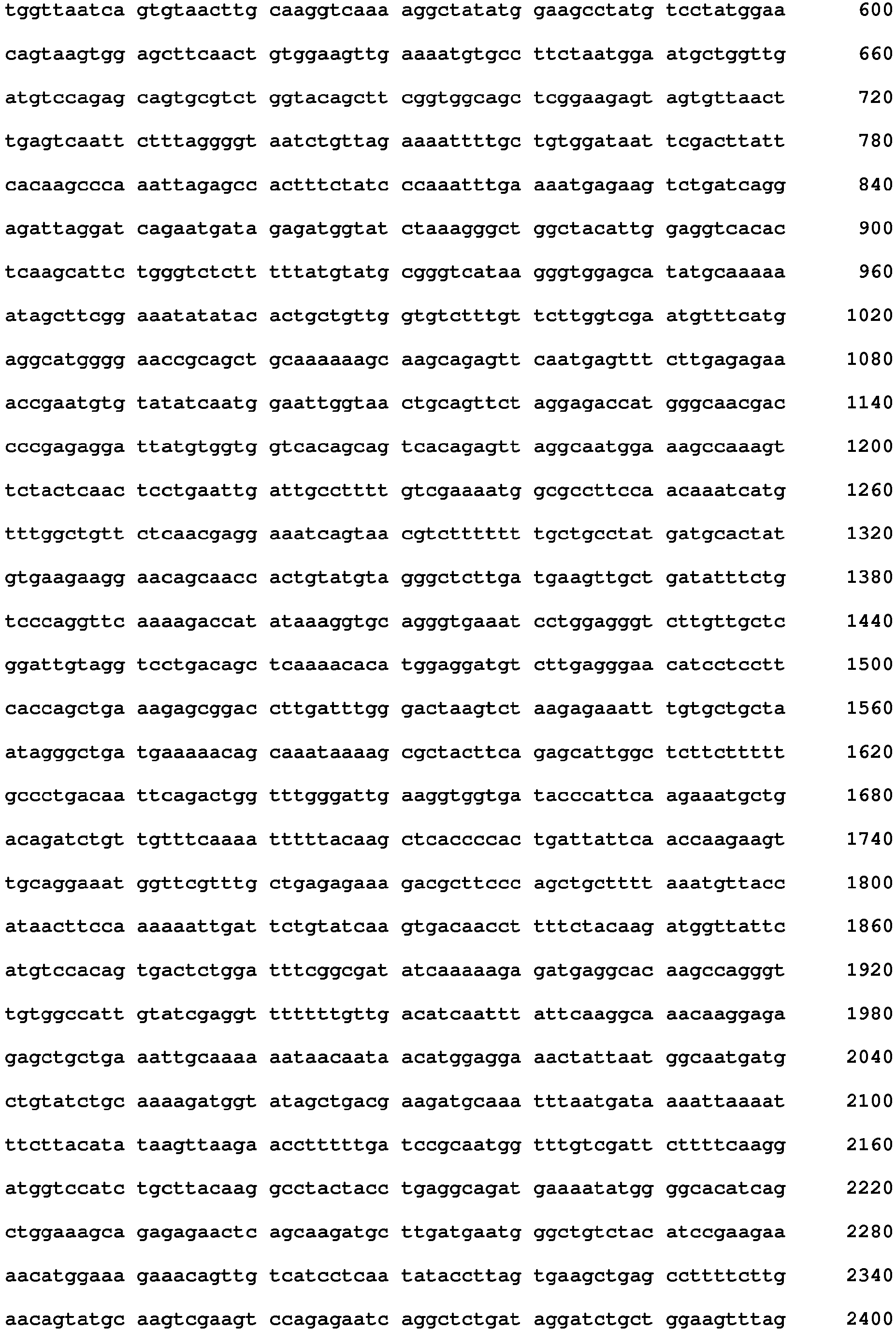


Claims (15)
- An isolated nucleotide sequence comprisinga) the cDNAs of two strands of a target dsRNA separated by an autocatalytic intron flanked by exons or exon fragments, andb) a plant viroid sequence,wherein element (a) is inserted in the plant viroid sequence.
- Isolated nucleotide sequence according to claim 1, further comprising permuted autocatalytic intron-exon sequences between the plant viroid sequence and the cDNAs sequences.
- Isolated nucleotide sequence according to claim 2, wherein the permuted autocatalytic intron-exon sequences derive from type I introns or the intron type I of the rRNA 26S from Tetrahymena termophila.
- Isolated nucleotide sequence according to anyone of claims 1 to 3, wherein the autocatalytic intron is an autocatalytic intron type I or an autocatalytic intron type II or an autocatalytic intron type III.
- Isolated nucleotide sequence according to claim 4, wherein the autocatalytic intron type I is the autocatalytic intron type I of the rRNA 26S from Tetrahymena termophila.
- Isolated nucleotide sequence according to anyone of claims 1 to 5, wherein the plant viroid sequence is the Eggplant latent viroid (ELVd) sequence, the Avocado sunblotch viroid (ASBVd) sequence, the Peach latent mosaic viroid (PLMVd) sequence, or the Chrysanthemum chlorotic mottle viroid (CChMVd) sequence.
- Isolated nucleotide sequence according to anyone of claims 1 to 6, wherein the target RNA is a gene from a plant pathogen or pest, or the β-actin gene from Ceratitis capitata.
- Isolated nucleotide sequence according to anyone of claims 1 to 7, further comprising a nucleotide sequence encoding a tRNA ligase.
- Isolated nucleotide sequence according to claim 8, wherein the tRNA ligase is the tRNA ligase from eggplant.
- A vector comprising an isolated nucleotide sequence according to anyone of claims 1 to 9.
- A host cell comprising an isolated nucleotide sequence according to anyone of claims 1 to 9 or a vector according to claim 10.
- Use of an isolated nucleotide sequence according to anyone of claims 1 to 9, or a vector according to claim 10, or a host cell according to claim 11, for producing dsRNA specific for a target gene.
- A method for producing dsRNA specific for a target gene comprising co-expressing in a host cellc) a nucleotide sequence according to anyone of claims 1 to 7 andd) a nucleotide sequence encoding a tRNA ligase,wherein the nucleotide sequences of a) and b) are in the same or different nucleic acid molecule.
- A method according to claim 13, wherein the host cell is E. coli.
- A method according to claim 13 or 14, wherein the tRNA ligase is the tRNA ligase from eggplant.
Priority Applications (18)
| Application Number | Priority Date | Filing Date | Title |
|---|---|---|---|
| ES19382997T ES3041297T3 (en) | 2019-11-13 | 2019-11-13 | Method for the production of dsrna |
| EP19382997.5A EP3822353B1 (en) | 2019-11-13 | 2019-11-13 | Method for the production of dsrna |
| NZ787675A NZ787675B2 (en) | 2020-11-13 | Method for the production of double-stranded rna | |
| BR112022009194-0A BR112022009194B1 (en) | 2019-11-13 | 2020-11-13 | Isolated nucleotide sequence, vector and host cell, their uses and method for the production of dsRNA specific for a target gene. |
| CN202080079024.4A CN115052987B (en) | 2019-11-13 | 2020-11-13 | Method for preparing double-stranded RNA |
| US17/776,452 US20230279457A1 (en) | 2019-11-13 | 2020-11-13 | Method for the production of double-stranded rna |
| JP2022528553A JP2023501817A (en) | 2019-11-13 | 2020-11-13 | Method for generating double-stranded RNA |
| IL292888A IL292888A (en) | 2019-11-13 | 2020-11-13 | Method for the production of double-stranded rna |
| KR1020227019467A KR20220097982A (en) | 2019-11-13 | 2020-11-13 | Methods for producing double-stranded RNA |
| MYPI2022002431A MY209810A (en) | 2019-11-13 | 2020-11-13 | Method for the production of double-stranded rna |
| PCT/EP2020/082018 WO2021094511A1 (en) | 2019-11-13 | 2020-11-13 | Method for the production of double-stranded rna |
| PH1/2022/551182A PH12022551182A1 (en) | 2019-11-13 | 2020-11-13 | Method for the production of double-stranded rna |
| MX2022005755A MX2022005755A (en) | 2019-11-13 | 2020-11-13 | Method for the production of double-stranded rna. |
| CA3159902A CA3159902A1 (en) | 2019-11-13 | 2020-11-13 | Method for the production of double-stranded rna |
| AU2020381876A AU2020381876C1 (en) | 2019-11-13 | 2020-11-13 | Method for the production of double-stranded RNA |
| CL2022001248A CL2022001248A1 (en) | 2019-11-13 | 2022-05-12 | Method for the production of double-stranded RNA |
| CONC2022/0007009A CO2022007009A2 (en) | 2019-11-13 | 2022-05-25 | Method for the production of double-stranded RNA |
| ZA2022/06268A ZA202206268B (en) | 2019-11-13 | 2022-06-06 | Method for the production of double-stranded rna |
Applications Claiming Priority (1)
| Application Number | Priority Date | Filing Date | Title |
|---|---|---|---|
| EP19382997.5A EP3822353B1 (en) | 2019-11-13 | 2019-11-13 | Method for the production of dsrna |
Publications (3)
| Publication Number | Publication Date |
|---|---|
| EP3822353A1 true EP3822353A1 (en) | 2021-05-19 |
| EP3822353C0 EP3822353C0 (en) | 2025-08-27 |
| EP3822353B1 EP3822353B1 (en) | 2025-08-27 |
Family
ID=68621210
Family Applications (1)
| Application Number | Title | Priority Date | Filing Date |
|---|---|---|---|
| EP19382997.5A Active EP3822353B1 (en) | 2019-11-13 | 2019-11-13 | Method for the production of dsrna |
Country Status (16)
| Country | Link |
|---|---|
| US (1) | US20230279457A1 (en) |
| EP (1) | EP3822353B1 (en) |
| JP (1) | JP2023501817A (en) |
| KR (1) | KR20220097982A (en) |
| CN (1) | CN115052987B (en) |
| AU (1) | AU2020381876C1 (en) |
| CA (1) | CA3159902A1 (en) |
| CL (1) | CL2022001248A1 (en) |
| CO (1) | CO2022007009A2 (en) |
| ES (1) | ES3041297T3 (en) |
| IL (1) | IL292888A (en) |
| MX (1) | MX2022005755A (en) |
| MY (1) | MY209810A (en) |
| PH (1) | PH12022551182A1 (en) |
| WO (1) | WO2021094511A1 (en) |
| ZA (1) | ZA202206268B (en) |
Families Citing this family (2)
| Publication number | Priority date | Publication date | Assignee | Title |
|---|---|---|---|---|
| WO2025171649A1 (en) * | 2024-02-18 | 2025-08-21 | 中山大学孙逸仙纪念医院 | Circular multimeric tandem rna sense strand |
| WO2025171651A1 (en) * | 2024-02-18 | 2025-08-21 | 中山大学孙逸仙纪念医院 | Circular rna preparation method |
Citations (1)
| Publication number | Priority date | Publication date | Assignee | Title |
|---|---|---|---|---|
| WO2015177100A1 (en) | 2014-05-20 | 2015-11-26 | Consejo Superior De Investigaciones Científicas | Recombinant rna production |
-
2019
- 2019-11-13 ES ES19382997T patent/ES3041297T3/en active Active
- 2019-11-13 EP EP19382997.5A patent/EP3822353B1/en active Active
-
2020
- 2020-11-13 MY MYPI2022002431A patent/MY209810A/en unknown
- 2020-11-13 MX MX2022005755A patent/MX2022005755A/en unknown
- 2020-11-13 CA CA3159902A patent/CA3159902A1/en active Pending
- 2020-11-13 IL IL292888A patent/IL292888A/en unknown
- 2020-11-13 PH PH1/2022/551182A patent/PH12022551182A1/en unknown
- 2020-11-13 US US17/776,452 patent/US20230279457A1/en active Pending
- 2020-11-13 AU AU2020381876A patent/AU2020381876C1/en active Active
- 2020-11-13 JP JP2022528553A patent/JP2023501817A/en active Pending
- 2020-11-13 CN CN202080079024.4A patent/CN115052987B/en active Active
- 2020-11-13 KR KR1020227019467A patent/KR20220097982A/en active Pending
- 2020-11-13 WO PCT/EP2020/082018 patent/WO2021094511A1/en not_active Ceased
-
2022
- 2022-05-12 CL CL2022001248A patent/CL2022001248A1/en unknown
- 2022-05-25 CO CONC2022/0007009A patent/CO2022007009A2/en unknown
- 2022-06-06 ZA ZA2022/06268A patent/ZA202206268B/en unknown
Patent Citations (1)
| Publication number | Priority date | Publication date | Assignee | Title |
|---|---|---|---|---|
| WO2015177100A1 (en) | 2014-05-20 | 2015-11-26 | Consejo Superior De Investigaciones Científicas | Recombinant rna production |
Non-Patent Citations (13)
| Title |
|---|
| "GenBank", Database accession no. NM_100665.3 |
| "GeneBank", Database accession no. AJ536613.1 |
| ALTSCHUL S.F. ET AL.: "Basic local alignment search tool", J MOL BIOL., vol. 215, no. 3, 5 October 1990 (1990-10-05), pages 403 - 10, XP002949123, DOI: 10.1006/jmbi.1990.9999 |
| DAROS, J.A.ARAGONES, V.CORDERO, T., SCI. REP., vol. 8, 2018, pages 1904 |
| FADDA, Z.DAROS, J.A.FAGOAGA, C.FLORES, R.DURAN-VILA, N., J. VIROL., vol. 77, 2003 |
| FENG GUO ET AL: "In vivo selection of better self-splicing introns in Escherichia coli: The role of the P1 extension helix of the Tetrahymena intron", RNA, vol. 8, no. 5, 1 May 2002 (2002-05-01), US, pages 647 - 658, XP055685980, ISSN: 1355-8382, DOI: 10.1017/S1355838202029011 * |
| G. DINTER-GOTTLIEB: "Viroids and virusoids are related to group I introns.", PROCEEDINGS OF THE NATIONAL ACADEMY OF SCIENCES, vol. 83, no. 17, 1 September 1986 (1986-09-01), US, pages 6250 - 6254, XP055685971, ISSN: 0027-8424, DOI: 10.1073/pnas.83.17.6250 * |
| J. ROMAN ET AL: "Integration of the Tetrahymena group I intron into bacterial rRNA by reverse splicing in vivo", PROCEEDINGS OF THE NATIONAL ACADEMY OF SCIENCES, vol. 95, no. 5, 3 March 1998 (1998-03-03), US, pages 2134 - 2139, XP055685989, ISSN: 0027-8424, DOI: 10.1073/pnas.95.5.2134 * |
| JOSÉ-ANTONIO DARÒS ET AL: "A viroid-derived system to produce large amounts of recombinant RNA in Escherichia coli", SCIENTIFIC REPORTS, vol. 8, no. 1, 30 January 2018 (2018-01-30), XP055685866, DOI: 10.1038/s41598-018-20314-3 * |
| PRICE, J. VENGBERG, J.CECH, T.R., J. MOL. BIOL., vol. 196, 1987, pages 49 - 60 |
| PUTTARAJU, M.BEEN, M., NUCLEIC ACIDS RES., vol. 20, 1992, pages 5357 - 5364 |
| TERESA CORDERO ET AL: "Mutational Analysis of Eggplant Latent Viroid RNA Circularization by the Eggplant tRNA Ligase in Escherichia coli", FRONTIERS IN MICROBIOLOGY, vol. 9, 5 April 2018 (2018-04-05), XP055685893, ISSN: 1664-302X, DOI: 10.3389/fmicb.2018.00635 * |
| TIMMONS, L.COURT, D.L.FIRE, A., GENE, vol. 263, 2001, pages 103 - 112 |
Also Published As
| Publication number | Publication date |
|---|---|
| IL292888A (en) | 2022-07-01 |
| MX2022005755A (en) | 2022-08-16 |
| CL2022001248A1 (en) | 2023-04-10 |
| AU2020381876A1 (en) | 2022-06-09 |
| WO2021094511A1 (en) | 2021-05-20 |
| US20230279457A1 (en) | 2023-09-07 |
| ZA202206268B (en) | 2025-09-25 |
| NZ787675A (en) | 2025-07-25 |
| EP3822353C0 (en) | 2025-08-27 |
| PH12022551182A1 (en) | 2023-12-04 |
| KR20220097982A (en) | 2022-07-08 |
| CO2022007009A2 (en) | 2022-06-10 |
| CN115052987B (en) | 2025-02-14 |
| AU2020381876B2 (en) | 2025-05-29 |
| BR112022009194A2 (en) | 2022-07-26 |
| CA3159902A1 (en) | 2021-05-20 |
| JP2023501817A (en) | 2023-01-19 |
| ES3041297T3 (en) | 2025-11-11 |
| EP3822353B1 (en) | 2025-08-27 |
| AU2020381876C1 (en) | 2025-10-02 |
| MY209810A (en) | 2025-08-05 |
| CN115052987A (en) | 2022-09-13 |
Similar Documents
| Publication | Publication Date | Title |
|---|---|---|
| US12123014B2 (en) | Class II, type V CRISPR systems | |
| Chamot et al. | A cold shock-induced cyanobacterial RNA helicase | |
| Jang et al. | Triphenylmethane reductase from Citrobacter sp. strain KCTC 18061P: purification, characterization, gene cloning, and overexpression of a functional protein in Escherichia coli | |
| CA2912131C (en) | Oligonucleotides comprising capsid specific packaging sequences and methods of manufacture thereof | |
| KR20190104344A (en) | Thermostable CAS9 nuclease | |
| AU2020381876B2 (en) | Method for the production of double-stranded RNA | |
| KR20240049306A (en) | Enzymes with RUVC domains | |
| EP2982748B1 (en) | Novel extracellularly secreted nuclease | |
| Li et al. | Halolysin SptA, a serine protease, contributes to growth-phase transition of haloarchaeon Natrinema sp. J7-2, and its expression involves cooperative action of multiple cis-regulatory elements | |
| Suzuki et al. | Extracellular production of an RNA aptamer by ribonuclease-free marine bacteria harboring engineered plasmids: a proposal for industrial RNA drug production | |
| Park et al. | Identification and functional characterization of a gene for the methanol: N, N′-dimethyl-4-nitrosoaniline oxidoreductase from Mycobacterium sp. strain JC1 (DSM 3803) | |
| Daròs Arnau et al. | Method for the production of double-stranded RNA | |
| EP4218843A2 (en) | Methods for isolating spider silk proteins via high shear solubilization | |
| AU2021424650A1 (en) | Faustovirus capping enzyme, mrna capping enzyme compositions, methods and kits | |
| BR112022009194B1 (en) | Isolated nucleotide sequence, vector and host cell, their uses and method for the production of dsRNA specific for a target gene. | |
| Daròs Arnau et al. | Method for the production of DSRNA | |
| JP2008154552A (en) | Expression vector for Rhodococcus bacteria | |
| US20170088871A1 (en) | Recombinant rna production | |
| US20250059568A1 (en) | Class ii, type v crispr systems | |
| CN118813611B (en) | DEAR nucleic acid manipulation system based on RNA ribozyme and application thereof | |
| CN117821423A (en) | RalCas13d protein and its editing system | |
| HK40048804A (en) | Compositions and methods using capsids resistant to hydrolases | |
| Büyüksungur | Cloning and expression of benzaldehyde lyase gene from pseudomonas fluorescens biovar i in Pichia pastoris | |
| Büyüksungur | Cloning and expression ofbenzaldehydelyase from Pseudomonas fluorescens Biovar I in Pichia pastoris |
Legal Events
| Date | Code | Title | Description |
|---|---|---|---|
| PUAI | Public reference made under article 153(3) epc to a published international application that has entered the european phase |
Free format text: ORIGINAL CODE: 0009012 |
|
| STAA | Information on the status of an ep patent application or granted ep patent |
Free format text: STATUS: THE APPLICATION HAS BEEN PUBLISHED |
|
| AK | Designated contracting states |
Kind code of ref document: A1 Designated state(s): AL AT BE BG CH CY CZ DE DK EE ES FI FR GB GR HR HU IE IS IT LI LT LU LV MC MK MT NL NO PL PT RO RS SE SI SK SM TR |
|
| STAA | Information on the status of an ep patent application or granted ep patent |
Free format text: STATUS: REQUEST FOR EXAMINATION WAS MADE |
|
| 17P | Request for examination filed |
Effective date: 20211117 |
|
| RBV | Designated contracting states (corrected) |
Designated state(s): AL AT BE BG CH CY CZ DE DK EE ES FI FR GB GR HR HU IE IS IT LI LT LU LV MC MK MT NL NO PL PT RO RS SE SI SK SM TR |
|
| P01 | Opt-out of the competence of the unified patent court (upc) registered |
Effective date: 20230526 |
|
| STAA | Information on the status of an ep patent application or granted ep patent |
Free format text: STATUS: EXAMINATION IS IN PROGRESS |
|
| 17Q | First examination report despatched |
Effective date: 20240222 |
|
| GRAP | Despatch of communication of intention to grant a patent |
Free format text: ORIGINAL CODE: EPIDOSNIGR1 |
|
| STAA | Information on the status of an ep patent application or granted ep patent |
Free format text: STATUS: GRANT OF PATENT IS INTENDED |
|
| INTG | Intention to grant announced |
Effective date: 20250331 |
|
| GRAS | Grant fee paid |
Free format text: ORIGINAL CODE: EPIDOSNIGR3 |
|
| GRAA | (expected) grant |
Free format text: ORIGINAL CODE: 0009210 |
|
| STAA | Information on the status of an ep patent application or granted ep patent |
Free format text: STATUS: THE PATENT HAS BEEN GRANTED |
|
| AK | Designated contracting states |
Kind code of ref document: B1 Designated state(s): AL AT BE BG CH CY CZ DE DK EE ES FI FR GB GR HR HU IE IS IT LI LT LU LV MC MK MT NL NO PL PT RO RS SE SI SK SM TR |
|
| REG | Reference to a national code |
Ref country code: GB Ref legal event code: FG4D |
|
| REG | Reference to a national code |
Ref country code: CH Ref legal event code: EP |
|
| REG | Reference to a national code |
Ref country code: DE Ref legal event code: R096 Ref document number: 602019074687 Country of ref document: DE |
|
| REG | Reference to a national code |
Ref country code: IE Ref legal event code: FG4D |
|
| U01 | Request for unitary effect filed |
Effective date: 20250916 |
|
| U07 | Unitary effect registered |
Designated state(s): AT BE BG DE DK EE FI FR IT LT LU LV MT NL PT RO SE SI Effective date: 20250923 |
|
| REG | Reference to a national code |
Ref country code: ES Ref legal event code: FG2A Ref document number: 3041297 Country of ref document: ES Kind code of ref document: T3 Effective date: 20251111 |
|
| U20 | Renewal fee for the european patent with unitary effect paid |
Year of fee payment: 7 Effective date: 20251022 |
|
| PG25 | Lapsed in a contracting state [announced via postgrant information from national office to epo] |
Ref country code: IS Free format text: LAPSE BECAUSE OF FAILURE TO SUBMIT A TRANSLATION OF THE DESCRIPTION OR TO PAY THE FEE WITHIN THE PRESCRIBED TIME-LIMIT Effective date: 20251227 |
|
| PGFP | Annual fee paid to national office [announced via postgrant information from national office to epo] |
Ref country code: GB Payment date: 20251127 Year of fee payment: 7 |
|
| PG25 | Lapsed in a contracting state [announced via postgrant information from national office to epo] |
Ref country code: NO Free format text: LAPSE BECAUSE OF FAILURE TO SUBMIT A TRANSLATION OF THE DESCRIPTION OR TO PAY THE FEE WITHIN THE PRESCRIBED TIME-LIMIT Effective date: 20251127 |
|
| PG25 | Lapsed in a contracting state [announced via postgrant information from national office to epo] |
Ref country code: HR Free format text: LAPSE BECAUSE OF FAILURE TO SUBMIT A TRANSLATION OF THE DESCRIPTION OR TO PAY THE FEE WITHIN THE PRESCRIBED TIME-LIMIT Effective date: 20250827 |
|
| PG25 | Lapsed in a contracting state [announced via postgrant information from national office to epo] |
Ref country code: GR Free format text: LAPSE BECAUSE OF FAILURE TO SUBMIT A TRANSLATION OF THE DESCRIPTION OR TO PAY THE FEE WITHIN THE PRESCRIBED TIME-LIMIT Effective date: 20251128 |
|
| PG25 | Lapsed in a contracting state [announced via postgrant information from national office to epo] |
Ref country code: PL Free format text: LAPSE BECAUSE OF FAILURE TO SUBMIT A TRANSLATION OF THE DESCRIPTION OR TO PAY THE FEE WITHIN THE PRESCRIBED TIME-LIMIT Effective date: 20250827 |
|
| PG25 | Lapsed in a contracting state [announced via postgrant information from national office to epo] |
Ref country code: RS Free format text: LAPSE BECAUSE OF FAILURE TO SUBMIT A TRANSLATION OF THE DESCRIPTION OR TO PAY THE FEE WITHIN THE PRESCRIBED TIME-LIMIT Effective date: 20251127 |
|
| PGFP | Annual fee paid to national office [announced via postgrant information from national office to epo] |
Ref country code: ES Payment date: 20251201 Year of fee payment: 7 |
|
| PG25 | Lapsed in a contracting state [announced via postgrant information from national office to epo] |
Ref country code: SM Free format text: LAPSE BECAUSE OF FAILURE TO SUBMIT A TRANSLATION OF THE DESCRIPTION OR TO PAY THE FEE WITHIN THE PRESCRIBED TIME-LIMIT Effective date: 20250827 |
|
| PG25 | Lapsed in a contracting state [announced via postgrant information from national office to epo] |
Ref country code: CZ Free format text: LAPSE BECAUSE OF FAILURE TO SUBMIT A TRANSLATION OF THE DESCRIPTION OR TO PAY THE FEE WITHIN THE PRESCRIBED TIME-LIMIT Effective date: 20250827 |
|
| PG25 | Lapsed in a contracting state [announced via postgrant information from national office to epo] |
Ref country code: SK Free format text: LAPSE BECAUSE OF FAILURE TO SUBMIT A TRANSLATION OF THE DESCRIPTION OR TO PAY THE FEE WITHIN THE PRESCRIBED TIME-LIMIT Effective date: 20250827 |