EP3819980B1 - Batteriesystem - Google Patents
Batteriesystem Download PDFInfo
- Publication number
- EP3819980B1 EP3819980B1 EP20199806.9A EP20199806A EP3819980B1 EP 3819980 B1 EP3819980 B1 EP 3819980B1 EP 20199806 A EP20199806 A EP 20199806A EP 3819980 B1 EP3819980 B1 EP 3819980B1
- Authority
- EP
- European Patent Office
- Prior art keywords
- battery
- housing
- component
- component housing
- battery housing
- Prior art date
- Legal status (The legal status is an assumption and is not a legal conclusion. Google has not performed a legal analysis and makes no representation as to the accuracy of the status listed.)
- Active
Links
Images
Classifications
-
- H—ELECTRICITY
- H01—ELECTRIC ELEMENTS
- H01M—PROCESSES OR MEANS, e.g. BATTERIES, FOR THE DIRECT CONVERSION OF CHEMICAL ENERGY INTO ELECTRICAL ENERGY
- H01M10/00—Secondary cells; Manufacture thereof
- H01M10/42—Methods or arrangements for servicing or maintenance of secondary cells or secondary half-cells
- H01M10/425—Structural combination with electronic components, e.g. electronic circuits integrated to the outside of the casing
-
- H—ELECTRICITY
- H01—ELECTRIC ELEMENTS
- H01M—PROCESSES OR MEANS, e.g. BATTERIES, FOR THE DIRECT CONVERSION OF CHEMICAL ENERGY INTO ELECTRICAL ENERGY
- H01M50/00—Constructional details or processes of manufacture of the non-active parts of electrochemical cells other than fuel cells, e.g. hybrid cells
- H01M50/20—Mountings; Secondary casings or frames; Racks, modules or packs; Suspension devices; Shock absorbers; Transport or carrying devices; Holders
- H01M50/218—Mountings; Secondary casings or frames; Racks, modules or packs; Suspension devices; Shock absorbers; Transport or carrying devices; Holders characterised by the material
- H01M50/22—Mountings; Secondary casings or frames; Racks, modules or packs; Suspension devices; Shock absorbers; Transport or carrying devices; Holders characterised by the material of the casings or racks
- H01M50/222—Inorganic material
- H01M50/224—Metals
-
- B—PERFORMING OPERATIONS; TRANSPORTING
- B60—VEHICLES IN GENERAL
- B60L—PROPULSION OF ELECTRICALLY-PROPELLED VEHICLES; SUPPLYING ELECTRIC POWER FOR AUXILIARY EQUIPMENT OF ELECTRICALLY-PROPELLED VEHICLES; ELECTRODYNAMIC BRAKE SYSTEMS FOR VEHICLES IN GENERAL; MAGNETIC SUSPENSION OR LEVITATION FOR VEHICLES; MONITORING OPERATING VARIABLES OF ELECTRICALLY-PROPELLED VEHICLES; ELECTRIC SAFETY DEVICES FOR ELECTRICALLY-PROPELLED VEHICLES
- B60L15/00—Methods, circuits, or devices for controlling the traction-motor speed of electrically-propelled vehicles
- B60L15/007—Physical arrangements or structures of drive train converters specially adapted for the propulsion motors of electric vehicles
-
- B—PERFORMING OPERATIONS; TRANSPORTING
- B60—VEHICLES IN GENERAL
- B60L—PROPULSION OF ELECTRICALLY-PROPELLED VEHICLES; SUPPLYING ELECTRIC POWER FOR AUXILIARY EQUIPMENT OF ELECTRICALLY-PROPELLED VEHICLES; ELECTRODYNAMIC BRAKE SYSTEMS FOR VEHICLES IN GENERAL; MAGNETIC SUSPENSION OR LEVITATION FOR VEHICLES; MONITORING OPERATING VARIABLES OF ELECTRICALLY-PROPELLED VEHICLES; ELECTRIC SAFETY DEVICES FOR ELECTRICALLY-PROPELLED VEHICLES
- B60L50/00—Electric propulsion with power supplied within the vehicle
- B60L50/50—Electric propulsion with power supplied within the vehicle using propulsion power supplied by batteries or fuel cells
- B60L50/60—Electric propulsion with power supplied within the vehicle using propulsion power supplied by batteries or fuel cells using power supplied by batteries
- B60L50/66—Arrangements of batteries
-
- H—ELECTRICITY
- H01—ELECTRIC ELEMENTS
- H01M—PROCESSES OR MEANS, e.g. BATTERIES, FOR THE DIRECT CONVERSION OF CHEMICAL ENERGY INTO ELECTRICAL ENERGY
- H01M10/00—Secondary cells; Manufacture thereof
- H01M10/42—Methods or arrangements for servicing or maintenance of secondary cells or secondary half-cells
- H01M10/44—Methods for charging or discharging
- H01M10/441—Methods for charging or discharging for several batteries or cells simultaneously or sequentially
-
- H—ELECTRICITY
- H01—ELECTRIC ELEMENTS
- H01M—PROCESSES OR MEANS, e.g. BATTERIES, FOR THE DIRECT CONVERSION OF CHEMICAL ENERGY INTO ELECTRICAL ENERGY
- H01M10/00—Secondary cells; Manufacture thereof
- H01M10/42—Methods or arrangements for servicing or maintenance of secondary cells or secondary half-cells
- H01M10/48—Accumulators combined with arrangements for measuring, testing or indicating the condition of cells, e.g. the level or density of the electrolyte
- H01M10/482—Accumulators combined with arrangements for measuring, testing or indicating the condition of cells, e.g. the level or density of the electrolyte for several batteries or cells simultaneously or sequentially
-
- H—ELECTRICITY
- H01—ELECTRIC ELEMENTS
- H01M—PROCESSES OR MEANS, e.g. BATTERIES, FOR THE DIRECT CONVERSION OF CHEMICAL ENERGY INTO ELECTRICAL ENERGY
- H01M10/00—Secondary cells; Manufacture thereof
- H01M10/42—Methods or arrangements for servicing or maintenance of secondary cells or secondary half-cells
- H01M10/48—Accumulators combined with arrangements for measuring, testing or indicating the condition of cells, e.g. the level or density of the electrolyte
- H01M10/486—Accumulators combined with arrangements for measuring, testing or indicating the condition of cells, e.g. the level or density of the electrolyte for measuring temperature
-
- H—ELECTRICITY
- H01—ELECTRIC ELEMENTS
- H01M—PROCESSES OR MEANS, e.g. BATTERIES, FOR THE DIRECT CONVERSION OF CHEMICAL ENERGY INTO ELECTRICAL ENERGY
- H01M50/00—Constructional details or processes of manufacture of the non-active parts of electrochemical cells other than fuel cells, e.g. hybrid cells
- H01M50/20—Mountings; Secondary casings or frames; Racks, modules or packs; Suspension devices; Shock absorbers; Transport or carrying devices; Holders
- H01M50/249—Mountings; Secondary casings or frames; Racks, modules or packs; Suspension devices; Shock absorbers; Transport or carrying devices; Holders specially adapted for aircraft or vehicles, e.g. cars or trains
-
- H—ELECTRICITY
- H01—ELECTRIC ELEMENTS
- H01M—PROCESSES OR MEANS, e.g. BATTERIES, FOR THE DIRECT CONVERSION OF CHEMICAL ENERGY INTO ELECTRICAL ENERGY
- H01M10/00—Secondary cells; Manufacture thereof
- H01M10/60—Heating or cooling; Temperature control
- H01M10/65—Means for temperature control structurally associated with the cells
- H01M10/657—Means for temperature control structurally associated with the cells by electric or electromagnetic means
- H01M10/6572—Peltier elements or thermoelectric devices
-
- H—ELECTRICITY
- H01—ELECTRIC ELEMENTS
- H01M—PROCESSES OR MEANS, e.g. BATTERIES, FOR THE DIRECT CONVERSION OF CHEMICAL ENERGY INTO ELECTRICAL ENERGY
- H01M2220/00—Batteries for particular applications
- H01M2220/20—Batteries in motive systems, e.g. vehicle, ship, plane
-
- H—ELECTRICITY
- H01—ELECTRIC ELEMENTS
- H01M—PROCESSES OR MEANS, e.g. BATTERIES, FOR THE DIRECT CONVERSION OF CHEMICAL ENERGY INTO ELECTRICAL ENERGY
- H01M50/00—Constructional details or processes of manufacture of the non-active parts of electrochemical cells other than fuel cells, e.g. hybrid cells
- H01M50/50—Current conducting connections for cells or batteries
- H01M50/572—Means for preventing undesired use or discharge
- H01M50/574—Devices or arrangements for the interruption of current
-
- Y—GENERAL TAGGING OF NEW TECHNOLOGICAL DEVELOPMENTS; GENERAL TAGGING OF CROSS-SECTIONAL TECHNOLOGIES SPANNING OVER SEVERAL SECTIONS OF THE IPC; TECHNICAL SUBJECTS COVERED BY FORMER USPC CROSS-REFERENCE ART COLLECTIONS [XRACs] AND DIGESTS
- Y02—TECHNOLOGIES OR APPLICATIONS FOR MITIGATION OR ADAPTATION AGAINST CLIMATE CHANGE
- Y02E—REDUCTION OF GREENHOUSE GAS [GHG] EMISSIONS, RELATED TO ENERGY GENERATION, TRANSMISSION OR DISTRIBUTION
- Y02E60/00—Enabling technologies; Technologies with a potential or indirect contribution to GHG emissions mitigation
- Y02E60/10—Energy storage using batteries
-
- Y—GENERAL TAGGING OF NEW TECHNOLOGICAL DEVELOPMENTS; GENERAL TAGGING OF CROSS-SECTIONAL TECHNOLOGIES SPANNING OVER SEVERAL SECTIONS OF THE IPC; TECHNICAL SUBJECTS COVERED BY FORMER USPC CROSS-REFERENCE ART COLLECTIONS [XRACs] AND DIGESTS
- Y02—TECHNOLOGIES OR APPLICATIONS FOR MITIGATION OR ADAPTATION AGAINST CLIMATE CHANGE
- Y02T—CLIMATE CHANGE MITIGATION TECHNOLOGIES RELATED TO TRANSPORTATION
- Y02T10/00—Road transport of goods or passengers
- Y02T10/60—Other road transportation technologies with climate change mitigation effect
- Y02T10/64—Electric machine technologies in electromobility
-
- Y—GENERAL TAGGING OF NEW TECHNOLOGICAL DEVELOPMENTS; GENERAL TAGGING OF CROSS-SECTIONAL TECHNOLOGIES SPANNING OVER SEVERAL SECTIONS OF THE IPC; TECHNICAL SUBJECTS COVERED BY FORMER USPC CROSS-REFERENCE ART COLLECTIONS [XRACs] AND DIGESTS
- Y02—TECHNOLOGIES OR APPLICATIONS FOR MITIGATION OR ADAPTATION AGAINST CLIMATE CHANGE
- Y02T—CLIMATE CHANGE MITIGATION TECHNOLOGIES RELATED TO TRANSPORTATION
- Y02T10/00—Road transport of goods or passengers
- Y02T10/60—Other road transportation technologies with climate change mitigation effect
- Y02T10/70—Energy storage systems for electromobility, e.g. batteries
Definitions
- the invention relates to a battery system comprising a metallic battery housing and a metallic component housing, wherein at least one battery module with at least one battery cell and a control unit for controlling and monitoring the at least one battery module are arranged in the battery housing, and wherein at least one electrical component is arranged in the component housing, which is electrically connected to the at least one battery module.
- the invention further relates to a motor vehicle comprising at least one battery system according to the invention.
- Such electrically powered motor vehicles each comprise a battery system for supplying energy.
- the battery system comprises a battery housing for accommodating at least one battery module and a control unit for controlling and monitoring the at least one battery module.
- the battery system can also comprise further electrical components that are arranged in a component housing or in several separate component housings.
- the battery housing and the component housing(s) are made of metal to provide shielding from electromagnetic interference, high mechanical strength and/or good heat dissipation.
- the battery housing and the component housing(s) as well as the electrical components arranged in the two housings are connected to a common ground potential.
- the common ground potential is the body or frame. As a conductive part that extends over the entire vehicle, it also serves as a return conductor for the on-board network. This means that only one cable needs to be laid to supply energy to each consumer.
- US 2006/0169526 A1 discloses a lead-acid battery used to supply power in a power steering system.
- a battery module which is arranged in a housing.
- a battery control unit and a DC-DC converter are also arranged in the housing.
- the document WO 2012/090523 A1 discloses an electric vehicle comprising high-voltage batteries and low-voltage batteries, a DC-DC converter and a controller, wherein the housing of the DC-DC converter is made of metal and is electrically insulated from the metallic vehicle frame by an insulator and is grounded via an earthing. The batteries are grounded via the vehicle frame, the housing of the DC-DC converter is mechanically connected to the battery housing and electrically insulated from one another.
- the document JP 4 832225 B2 discloses a battery system comprising a metallic battery housing and a metallic component housing, wherein at least one battery module with at least one battery cell is arranged in the battery housing and at least one electrical component is arranged in the component housing, wherein the component housing is arranged on the battery housing, wherein the component housing and the battery housing are mechanically connected to one another and electrically insulated from one another.
- the document JP 2011 138685 A discloses a battery system comprising a metallic battery housing and a metallic component housing, wherein at least one battery module with at least one battery cell is arranged in the battery housing and wherein at least one electrical component is arranged in the component housing, which is electrically connected to the at least one battery module, wherein the component housing is arranged on the battery housing, wherein the component housing and the battery housing are connected to a first ground potential and the component housing is connected to a second ground potential.
- a battery system comprises a metallic battery housing and a metallic component housing. At least one battery module with at least one battery cell and a control unit for controlling and monitoring the at least one battery module are arranged in the battery housing. At least one electrical component is arranged in the component housing and is electrically connected to the at least one battery module.
- the battery housing and the component housing are each made of cast aluminum.
- the battery housing and the component housing each have a feedthrough for power and signal transmission.
- the at least one battery module is preferably arranged on a base of the battery housing and has a positive pole and a negative pole, between which the at least one battery cell is connected.
- the at least one battery cell can be circular-cylindrical or prismatic.
- the component housing is arranged on the battery housing.
- the battery housing and the component housing are mechanically connected to one another and electrically insulated from one another.
- the battery housing is connected to a first ground potential, while the component housing is connected to a second ground potential.
- the first ground potential differs from the second ground potential. It is conceivable that the first ground potential is a floating potential.
- a first temperature control device is formed between the battery housing and the component housing, wherein the first temperature control device is insulated from the battery housing and the component housing, wherein the first temperature control device is formed such that a seal is inserted between the upper part of the battery housing and the lower part of the component housing, wherein a first temperature control channel is formed in an area enclosed by the seal between the upper part of the battery housing and the lower part of the component housing, or the first temperature control device is formed as a Peltier element unit. [Page 4, lines 18 ff.]
- the battery housing and the component housing are electrically insulated from each other if an insulator is arranged at least at the respective connection points between the battery housing and the component housing.
- the battery housing and the component housing can advantageously be connected to one another in a materially bonded manner, for example by means of adhesive bonding.
- the battery housing and the component housing can also be advantageously connected to one another in a form-fitting manner, for example by means of screws.
- the battery housing and the component housing each have fastening holes for this purpose.
- the fastening holes of the component housing can each be designed as a through hole. Electrically non-conductive screws, such as plastic screws, can be used. It is also conceivable that electrically conductive screws are used.
- the respective fastening holes and contact surfaces of the screw heads can each be coated with an insulator. It is also conceivable that the shafts of the respective electrically conductive screws and contact surfaces of the screw heads are coated with an insulator.
- a countersink can be provided at both ends of the respective fastening holes of the component housing.
- a sliding and tough layer such as a polyimide layer, can be applied to the contact surfaces of the respective screw heads in order to prevent the coating from rubbing through.
- the battery housing and the component housing are designed in such a way that they have the necessary resistance to different mechanical loads.
- the battery housing is coated with an insulator.
- the insulator can be, for example, cathodic dip paint. It is also conceivable that Hard anodizing or insulating adhesive tape is used.
- the insulator can be coated exclusively on a surface of the battery housing facing the component housing. It is also conceivable that the battery housing is completely coated with the insulator.
- the component housing is also coated with the insulator.
- the insulator can be coated exclusively on a surface of the component housing facing the battery housing. It is also conceivable that the component housing is completely coated with the insulator.
- the insulator for coating the battery housing and/or the component housing and the insulator for coating the respective fastening holes and the contact surfaces of the screw heads or the shafts of the respective electrically conductive screws can be the same or different.
- the battery system according to the invention preferably comprises a circuit breaker unit for switching off a discharge current or a charging current of the at least one battery module.
- the circuit breaker unit is preferably arranged in the battery housing.
- the at least one battery module is electrically connected to the at least one electrical component via the circuit breaker unit.
- the battery housing has a second temperature control device.
- the second temperature control device can have a second
- the potential of the negative pole deviates from the common ground potential.
- the other electrical components that are supplied by the at least one battery module are, however, designed for the common ground potential.
- the other electrical components that are supplied by the at least one battery module cannot be integrated into the battery housing if the battery housing is connected to the negative pole of the at least one battery module. If the other electrical components are arranged in another housing or each have their own housing, there must be no electrically conductive connection between the battery housing and this other housing or these housings. The disadvantage of this is that the battery system cannot be constructed in a compact manner.
- the battery system which has a battery housing for the at least one battery module and the control unit as well as a component housing for the further electrical components, wherein the battery housing and the component housing are insulated from one another, the battery housing and the component housing can be assembled in a compact manner and placed at different ground potentials.
- a common temperature control circuit can be used for the battery housing and the component housing. This leads to a further reduction in manufacturing costs.
- FIG 1 represents the subject matter of the invention only schematically.
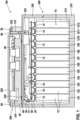
- FIG. 1 shows a schematic sectional view of a battery system 100 according to the invention.
- the battery system 100 comprises a battery housing 200 made of cast aluminum, which has a battery housing lower part 210 and a battery housing upper part 220 placed on the battery housing lower part 210.
- the battery system 100 further includes a cast aluminum component housing 300 having a component housing lower part 310 and a component housing upper part 320.
- the battery system 100 further comprises a battery module 10, a control unit 20 for controlling and monitoring the battery module 10 and a circuit breaker unit 30 for switching off a discharge current or a charging current of the battery module 10.
- the battery module 10 is arranged on a base 212 of the battery housing lower part 210 and comprises several prismatic battery cells 12 arranged next to one another, each of which has a positive terminal 13 and a negative terminal 14.
- Figure 1 There are twelve battery cells 12, namely, from the left, a first battery cell 121 to a twelfth battery cell 1212 are shown. Of course, more or fewer than twelve battery cells 12 can be arranged in the battery module 10.
- the battery cells 12 are electrically connected to one another in series by means of several cell connectors 15.
- the positive terminal 13 of the first battery cell 121 represents a positive pole of the battery module 10 and the negative terminal 14 of the twelfth battery cell 1212 represents a negative pole of the battery module 10.
- the battery cells 12 are connected in parallel to each other.
- the control unit 20 is arranged on the battery module 10.
- the control unit 20 is electrically connected to the battery module 10 or the individual battery cells 12 via several conductors 18 for control and monitoring purposes.
- the isolating switch unit 30 for switching off a discharging current or a charging current of the battery module 10 is arranged above the control unit 20.
- the isolating switch unit 30 has a first connection 31 and a second connection (not shown).
- the first connection 31 is electrically connected by means of a connector 50 to the positive terminal 13 of the first battery cell 121, which represents the positive pole of the battery module 10.
- the component housing 300 in which an electrical component 80, which can be designed as a DC-DC converter, is arranged, is arranged on the battery housing upper part 220 of the battery system 100 according to the invention.
- the component housing 300 has a component housing lower part 310 and a component housing upper part 320 placed on the component housing lower part 310.
- the battery housing upper part 220 and the component housing lower part 310 are each provided with a feedthrough (not shown) for power and signal transmission.
- the circuit breaker unit 30 is electrically connected to the electrical component 80 via bushings.
- the battery housing upper part 220 is coated with an insulator 40.
- the insulator 40 can be, for example, cathodic dip paint. It is also conceivable that hard anodizing or insulating adhesive tape is used.
- the insulator 40 can be coated exclusively on a surface of the battery housing upper part 220 facing the component housing lower part 310. It is also conceivable that the battery housing upper part 220 is completely coated with the insulator 40.
- the component housing lower part 310 is also coated with the insulator 40.
- the insulator 40 can be coated exclusively on a surface of the component housing lower part 310 facing the battery housing upper part 220. It is also conceivable that the component housing lower part 310 is completely coated with the insulator 40.
- the battery housing lower part 210 and/or the component housing upper part 320 can also be coated with the insulator 40.
- the battery housing upper part 220, the component housing lower part 310 and the component housing upper part 320 are screwed together.
- the battery housing upper part 220 has a plurality of first fastening holes 222.
- the component housing lower part 310 has a plurality of second fastening holes 312 and the component housing upper part 320 has a plurality of third fastening holes 322.
- the second and third fastening holes 312, 322 are each designed as a through hole.
- Electrically non-conductive screws 90 such as plastic screws, are used to fasten the battery housing upper part 220, the component housing lower part 310 and the component housing upper part 320 to one another.
- a sealing cord 330 is inserted between the component housing lower part 310 and the battery housing upper part 220.
- a first temperature control channel (not shown) for the passage of a temperature control medium is provided between the component housing lower part 310 and the battery housing upper part 220.
- the first temperature control channel is insulated from the battery housing upper part 220 and the component housing lower part 310.
- the battery housing 200 can have a second temperature control device (not shown).
- the second temperature control device can have a second temperature control channel for passing the temperature control medium, which can be made of the material of the battery housing lower part 210 and/or the battery housing upper part 220.
- the second temperature control device can also be designed as a Peltier element unit.
- the second temperature control device designed as a Peltier element unit can be arranged on the base 212 of the battery housing lower part 210 and between the base 212 and the battery module 10.
- the first tempering channel can be hydraulically connected in series with the second tempering channel (not shown) to form a common tempering circuit.
- a potential of the negative pole of the battery module 10, which is represented by the negative terminal 14 of the twelfth battery cell 1212, is selected as the ground potential.
- the potential of the negative pole of the battery module 10 can also be selected for the first ground potential of the battery housing 200.
- the first ground potential is a floating potential.
- the second ground potential of the component housing 300 another potential is selected that is different from the first ground potential.
- the second ground potential is selected for the electrical component 80 that is arranged in the component housing 300.
- the component housing 300 can be electrically connected to a body of the motor vehicle and thus the second Ground potential equal to a potential of the body.
- the battery housing 200 can be electrically connected to the negative pole of the battery module 10 and thus the first ground potential is equal to the potential of the negative pole.
- the battery housing 200 can also be placed at a floating potential. This means that the battery housing 200 is electrically insulated from all other electrically conductive parts of the motor vehicle.
Landscapes
- Engineering & Computer Science (AREA)
- Chemical & Material Sciences (AREA)
- Chemical Kinetics & Catalysis (AREA)
- Electrochemistry (AREA)
- General Chemical & Material Sciences (AREA)
- Manufacturing & Machinery (AREA)
- Mechanical Engineering (AREA)
- Power Engineering (AREA)
- Transportation (AREA)
- Microelectronics & Electronic Packaging (AREA)
- Life Sciences & Earth Sciences (AREA)
- Sustainable Development (AREA)
- Sustainable Energy (AREA)
- Aviation & Aerospace Engineering (AREA)
- Inorganic Chemistry (AREA)
- Battery Mounting, Suspending (AREA)
- Electric Propulsion And Braking For Vehicles (AREA)
Description
- Die Erfindung betrifft ein Batteriesystem, das ein metallisches Batteriegehäuse und ein metallisches Komponentengehäuse umfasst, wobei im Batteriegehäuse mindestens ein Batteriemodul mit mindestens einer Batteriezelle und eine Steuereinheit zur Steuerung und Überwachung des mindestens einen Batteriemoduls angeordnet sind und wobei im Komponentengehäuse mindestens eine elektrische Komponente angeordnet ist, die mit dem mindestens einen Batteriemodul elektrisch verbunden ist.
- Die Erfindung betrifft ferner ein Kraftfahrzeug, dass mindestens ein erfindungsgemäßes Batteriesystem umfasst.
- Es zeichnet sich ab, dass in Zukunft vermehrt elektrisch angetriebene Kraftfahrzeuge zum Einsatz kommen werden. Solche elektrisch angetriebene Kraftfahrzeuge, wie z.B. Hybridfahrzeuge und Elektrofahrzeuge, umfassen jeweils ein Batteriesystem zur Energieversorgung. Dabei umfasst das Batteriesystem ein Batteriegehäuse zur Aufnahme mindestens eines Batteriemoduls und einer Steuereinheit zur Steuerung und Überwachung des mindestens einen Batteriemoduls. Das Batteriesystem kann ferner auch weitere elektrische Komponenten aufweisen, die in einem Komponentengehäuse oder in mehreren separaten Komponentengehäusen angeordnet sind.
- Üblicherweise sind das Batteriegehäuse und das bzw. die Komponentengehäuse aus Metall hergestellt, um eine Schirmung von elektromagnetischen Störungen, eine hohe mechanische Festigkeit und/oder eine gute Wärmeabfuhr zu realisieren.
- Um die elektromagnetischen Störungen zu schirmen, sind das Batteriegehäuse und das bzw. die Komponentengehäuse sowie die in den beiden Gehäusen angeordneten elektrischen Komponenten auf ein gemeinsames Massepotential gelegt.
- Bei einem Fahrzeug ist das gemeinsame Massepotential die Karosserie bzw. der Rahmen. Als leitfähiges Teil, welches sich über das gesamte Fahrzeug erstreckt, dient es zugleich als Rückleiter für das Bordnetz. Somit muss zur Energieversorgung zu jedem Verbraucher nur eine Leitung verlegt werden.
- Das Dokument
US 2006/0169526 A1 offenbart einen Bleiakkumulator, der in einem Servolenkungssystem zur Stromversorgung verwendet wird. - Aus dem Dokument
US 2015/0037647 A1 ist ein Batteriemodul bekannt, das in einem Gehäuse angeordnet ist. Im Gehäuse sind ebenfalls eine Batteriesteuereinheit und ein Gleichspannungswandler angeordnet. - Das Dokument
WO 2012/090523 A1 offenbart ein elektrisches Fahrzeug umfassend Hochvoltbatterien und Niedervoltbatterien, einen Gleichspannungswandler und eine Steuerung, wobei das Gehäuse des Gleichspannungswandlers aus Metall besteht und durch einen Isolator vom metallischen Fahrzeuggestell elektrisch isoliert und über eine Erdung geerdet ist. Die Batterien sind über das Fahrzeuggestell geerdet, das Gehäuse des Gleichspannungswandler ist mit dem Batteriegehäuse mechanisch miteinander verbunden und elektrisch gegeneinander isoliert. - Das Dokument
JP 4 832225 B2 - Das Dokument
JP 2011 138685 A - Es wird ein Batteriesystem vorgeschlagen. Dabei umfasst das Batteriesystem ein metallisches Batteriegehäuse und ein metallisches Komponentengehäuse. Dabei sind im Batteriegehäuse mindestens ein Batteriemodul mit mindestens einer Batteriezelle und eine Steuereinheit zur Steuerung und Überwachung des mindestens einen Batteriemoduls angeordnet. Im Komponentengehäuse ist mindestens eine elektrische Komponente angeordnet, die mit dem mindestens einen Batteriemodul elektrisch verbunden ist.
- Bevorzugt sind das Batteriegehäuse und das Komponentengehäuse jeweils aus Aluminiumguss hergestellt. Das Batteriegehäuse und das Komponentengehäuse weisen dabei jeweils eine Durchführung für Strom- und Signalübertragung auf.
- Das mindestens eine Batteriemodul ist bevorzugt auf einem Boden des Batteriegehäuses angeordnet und weist einen Pluspol und einen Minuspol auf, zwischen denen die mindestens eine Batteriezelle geschaltet ist. Die mindestens eine Batteriezelle kann dabei kreiszylindrisch oder prismatisch ausgebildet sein.
- Erfindungsgemäß ist das Komponentengehäuse auf dem Batteriegehäuse angeordnet. Dabei sind das Batteriegehäuse und das Komponentengehäuse mechanisch miteinander verbunden und elektrisch gegeneinander isoliert. Das Batteriegehäuse ist dabei auf ein erstes Massepotential gelegt, während das Komponentengehäuse auf ein zweites Massepotential gelegt ist. Dabei unterscheidet sich das erste Massepotential vom zweiten Massepotential. Denkbar ist, dass das erste Massepotential ein Schwebepotential (engl.: floating potential) ist.
- Zwischen dem Batteriegehäuse und dem Komponentengehäuse ist eine erste Temperierungseinrichtung ausgebildet, wobei die erste Temperierungseinrichtung gegen das Batteriegehäuse und das Komponentengehäuse isoliert ist, wobei die erste Temperierungseinrichtung derart ausgebildet ist, dass zwischen dem Batteriegehäuseoberteil und dem Komponentengehäuseunterteil eine Dichtung eingesetzt ist, wobei in einem durch die Dichtung umschlossenen Bereich zwischen dem Batteriegehäuseoberteil und dem Komponentengehäuseunterteil ein erster Temperierungskanal ausgeführt wird, oder die erste Temperierungseinrichtung als eine Peltier-Element-Einheit ausgebildet ist. [Seite 4, Zeilen 18 ff.]
- Das Batteriegehäuse und das Komponentengehäuse sind elektrisch gegeneinander isoliert, wenn zumindest an den jeweiligen Verbindungsstellen zwischen dem Batteriegehäuse und dem Komponentengehäuse ein Isolator angeordnet ist.
- Das Batteriegehäuse und das Komponentengehäuse können vorteilhaft stoffschlüssig, wie beispielsweise mittels Kleben, miteinander verbunden sein.
- Das Batteriegehäuse und das Komponentengehäuse können aber auch vorteilhaft formschlüssig, wie beispielsweise durch Schrauben, miteinander verbunden sein. Beispielsweise weisen das Batteriegehäuse und das Komponentengehäuse dazu jeweils Befestigungsbohrungen auf. Die Befestigungsbohrungen des Komponentengehäuses können dabei jeweils als eine Durchgangsbohrung ausgebildet werden. Dabei können elektrisch nichtleitende Schrauben, wie beispielsweise Kunststoffschrauben, verwendet werden. Denkbar ist aber auch, dass elektrisch leitende Schrauben verwendet werden. Dabei können die jeweiligen Befestigungsbohrungen und Auflageflächen der Schraubenköpfe jeweils mit einem Isolator beschichtet sein. Denkbar ist auch, dass Schäfte der jeweiligen elektrisch leitenden Schrauben und Auflageflächen der Schraubenköpfe mit einem Isolator beschichtet werden. Zusätzlich zu der Beschichtung mit einem Isolator kann an beiden Enden der jeweiligen Befestigungsbohrungen des Komponentengehäuses jeweils eine Kegelsenkung vorgesehen werden. Darüber hinaus kann eine gleitende und zähe Schicht, wie beispielsweise eine Polyimid-Schicht, auf den Auflagerflächen der jeweiligen Schraubenköpfe aufgebracht werden, um eine Durchreibung der Beschichtung zu vermeiden.
- Das Batteriegehäuse und das Komponentengehäuse sind dabei so ausgelegt, dass sie im Verbund die notwendige Widerstandsfähigkeit gegen unterschiedliche mechanische Lasten aufweisen.
- Bevorzugt ist das Batteriegehäuse mit einem Isolator beschichtet. Der Isolator kann beispielsweise kathodischer Tauch-Lack sein. Denkbar ist auch, dass Harteloxal oder isolierendes Klebeband verwendet wird. Dabei kann der Isolator ausschließlich auf einer dem Komponentengehäuse zugewandten Oberfläche des Batteriegehäuses beschichtet werden. Denkbar ist auch, dass das Batteriegehäuse komplett mit dem Isolator beschichtet wird.
- Vorzugsweise ist das Komponentengehäuse ebenfalls mit dem Isolator beschichtet. Dabei kann der Isolator ausschließlich auf einer dem Batteriegehäuse zugewandten Oberfläche des Komponentengehäuses beschichtet werden. Denkbar ist auch, dass das Komponentengehäuse komplett mit dem Isolator beschichtet wird.
- Der Isolator zur Beschichtung des Batteriegehäuses und/oder des Komponentengehäuses und der Isolator zur Beschichtung der jeweiligen Befestigungsbohrungen und der Auflageflächen der Schraubenköpfe oder der Schäfte der jeweiligen elektrisch leitenden Schrauben können dabei gleich oder verschieden sein.
- Bevorzugt umfasst das erfindungsgemäße Batteriesystem eine Trennschaltereinheit zum Abschalten eines Entladestroms oder eines Aufladestroms des mindestens einen Batteriemoduls. Bevorzugt ist die Trennschaltereinheit im Batteriegehäuse angeordnet. Dabei ist das mindestens eine Batteriemodul über die Trennschaltereinheit mit der mindestens einen elektrischen Komponente elektrisch verbunden.
- Vorzugsweise weist das Batteriegehäuse eine zweite Temperierungseinrichtung auf. Die zweite Temperierungseinrichtung kann dabei einen zweiten
- Massepotential gelegt. Weitere elektrische Komponenten, die durch das mindesten eine Batteriemoduls versorgt werden, sowie Gehäuse oder Gehäusen für die weiteren elektrischen Komponenten sind ebenfalls auf das gemeinsame Massepotential gelegt.
- Wegen einer Impedanz der Leitung zwischen dem Minuspol des mindestens einen Batteriemoduls und dem elektrischen Massepotential weich das Potential des Minuspols von dem gemeinsamen Massepotential ab. Die weiteren elektrischen Komponenten, die durch das mindestens eine Batteriemoduls versorgt werden, sind jedoch für das gemeinsame Massepotential ausgelegt.
- Dies führt dazu, dass die weiteren elektrischen Komponenten, die durch das mindestens eine Batteriemoduls versorgt werden, nicht im Batteriegehäuse integriert werden können, sofern das Batteriegehäuse mit dem Minuspol des mindestens einen Batteriemoduls verbunden ist. Werden die weiteren elektrischen Komponenten in einem anderen Gehäuse angeordnet oder weisen sie jeweils ein eignes Gehäuse auf, darf zwischen dem Batteriegehäuse und diesem andere Gehäuse oder diesen Gehäusen keine elektrisch leitende Verbindung bestehen. Nachteilig daran ist, dass das Batteriesystem so nicht in einer kompakten Weise aufgebaut werden kann.
- Mit der erfindungsgemäßen Batteriesystem, das ein Batteriegehäuse für das mindestens eine Batteriemodul und die Steuereinheit sowie ein Komponentengehäuse für die weiteren elektrischen Komponenten aufweist, wobei das Batteriegehäuse und das Komponentengehäuse gegeneinander isoliert sind, können das Batteriegehäuse und das Komponentengehäuse in einer kompakten Weise zusammengebaut und auf unterschiedliche Massepotentiale gelegt werden.
- Mit dem erfindungsgemäßen Batteriesystem ist somit ein Bedarf an Bauraum deutlich reduziert.
- Ferner ist der Aufwand für elektrische Verbindungen zwischen dem mindestens einen Batteriemodul und den weiteren elektrischen Komponenten reduziert. Somit werden Herstellungskosten reduziert.
- Mit dem erfindungsgemäßen Batteriesystem kann ein gemeinsamer Temperierungskreis für das Batteriegehäuse und das Komponentengehäuse eingesetzt werden. Dies führt zu einer weiteren Reduzierung der Herstellungskosten.
- Ausführungsformen der Erfindung werden anhand der Zeichnungen und der nachfolgenden Beschreibung näher erläutert.
- Es zeigt:
- Figur 1
- eine schematische Schnittdarstellung eines erfindungsgemäßen Batteriesystems.
-
Figur 1 stellt den Gegenstand der Erfindung nur schematisch dar. -
Figur 1 zeigt eine schematische Schnittdarstellung eines erfindungsgemäßen Batteriesystems 100. Dabei umfasst das Batteriesystem 100 ein Batteriegehäuse 200 aus Aluminiumguss, das ein Batteriegehäuseunterteil 210 und ein auf dem Batteriegehäuseunterteil 210 aufgesetztes Batteriegehäuseoberteil 220 aufweist. - Das Batteriesystem 100 umfasst ferner ein Komponentengehäuse 300 aus Aluminiumguss, das ein Komponentengehäuseunterteil 310 und ein Komponentengehäuseoberteil 320 aufweist.
- Das Batteriesystem 100 umfasst weiterhin ein Batteriemodul 10, eine Steuereinheit 20 zur Steuerung und Überwachung des Batteriemoduls 10 und eine Trennschaltereinheit 30 zum Abschalten eines Entladestroms oder eines Aufladestroms des Batteriemoduls 10.
- Das Batteriemodul 10 ist auf einem Boden 212 des Batteriegehäuseunterteils 210 angeordnet und umfasst dabei mehrere nebeneinander angeordnete prismatische Batteriezellen 12, die jeweils ein positives Terminal 13 und ein negatives Terminal 14 aufweisen. In
Figur 1 sind dabei zwölf Batteriezellen 12, und zwar von links gesehen eine erste Batteriezelle 121 bis eine zwölfte Batteriezelle 1212, dargestellt. Selbstverständlich können mehr oder weniger als zwölf Batteriezellen 12 in dem Batteriemodul 10 angeordnet werden. Die Batteriezellen 12 sind dabei mittels mehrerer Zellverbinder 15 elektrisch seriell miteinander verbunden. Dabei stellt das positive Terminal 13 der ersten Batteriezelle 121 einen Pluspol des Batteriemoduls 10 dar und das negative Terminal 14 des zwölften Batteriezelle 1212 stellt einen Minuspol des Batteriemoduls 10 dar. - Denkbar ist aber auch, dass die Batteriezellen 12 parallel zueinander geschaltet werden.
- Auf dem Batteriemodul 10 ist die Steuereinheit 20 angeordnet. Die Steuereinheit 20 ist dabei zur Steuerung und Überwachung über mehrere Leiter 18 mit dem Batteriemodul 10 bzw. den einzelnen Batteriezellen 12 elektrisch verbunden.
- Oberhalb der Steuereinheit 20 ist die Trennschaltereinheit 30 zum Abschalten eines Entladestroms oder eines Aufladestroms des Batteriemoduls 10 angeordnet.
- Die Trennschaltereinheit 30 weist dabei einen ersten Anschluss 31 und einen zweiten Anschluss (nicht dargestellt) auf. Der erste Anschluss 31 ist dabei mittels eines Verbinders 50 mit dem positiven Terminal 13 der ersten Batteriezelle 121, das den Pluspol des Batteriemoduls 10 darstellt, elektrisch verbunden.
- Auf dem Batteriegehäuseoberteil 220 des erfindungsgemäßen Batteriesystems 100, ist das Komponentengehäuse 300 angeordnet, in dem eine elektrische Komponente 80, die als ein Gleichspannungswandler ausgebildet sein kann, angeordnet ist. Das Komponentengehäuse 300 weist dabei ein Komponentengehäuseunterteil 310 und ein auf dem Komponentengehäuseunterteil 310 aufgesetztes Komponentengehäuseoberteil 320 auf.
- Dabei sind das Batteriegehäuseoberteil 220 und das Komponentengehäuseunterteil 310 jeweils mit einer Durchführung (nicht dargestellt) für Strom- und Signalübertragung versehen. Durch die Durchführungen ist die Trennschaltereinheit 30 mit der elektrischen Komponente 80 elektrisch verbunden.
- Dabei ist das Batteriegehäuseoberteil 220 mit einem Isolator 40 beschichtet. Der Isolator 40 kann beispielsweise kathodischer Tauch-Lack sein. Denkbar ist auch, dass Harteloxal oder isolierendes Klebeband verwendet wird. Dabei kann der Isolator 40 ausschließlich auf einer dem Komponentengehäuseunterteil 310 zugewandten Oberfläche des Batteriegehäuseoberteils 220 beschichtet werden. Denkbar ist auch, dass das Batteriegehäuseoberteil 220 komplett mit dem Isolator 40 beschichtet wird.
- Das Komponentengehäuseunterteil 310 ist dabei ebenfalls mit dem Isolator 40 beschichtet. Dabei kann der Isolator 40 ausschließlich auf einer dem Batteriegehäuseoberteil 220 zugewandten Oberfläche des Komponentengehäuseunterteils 310 beschichtet werden. Denkbar ist auch, dass das Komponentengehäuseunterteil 310 komplett mit dem Isolator 40 beschichtet wird.
- Vorteilhaft können das Batteriegehäuseunterteil 210 und/oder das Komponentengehäuseoberteil 320 ebenfalls mit dem Isolator 40 beschichtet werden.
- Das Batteriegehäuseoberteil 220, das Komponentengehäuseunterteil 310 und das Komponentengehäuseoberteil 320 sind miteinander verschraubt. Dabei weist das Batteriegehäuseoberteil 220 mehrere erste Befestigungsbohrungen 222 auf. Das Komponentengehäuseunterteil 310 weist mehrere zweite Befestigungsbohrungen 312 auf und das Komponentengehäuseoberteil 320 weist mehrere dritte Befestigungsbohrungen 322 auf. Dabei sind die zweiten und dritten Befestigungsbohrungen 312, 322 jeweils als eine Durchgangsbohrung ausgebildet. Zur Befestigung des Batteriegehäuseoberteils 220, des Komponentengehäuseunterteils 310 und des Komponentengehäuseoberteils 320 miteinander werden elektrisch nichtleitende Schrauben 90, wie beispielsweise Kunststoffschrauben, verwendet.
- Zwischen dem Komponentengehäuseunterteil 310 und dem Batteriegehäuseoberteil 220 ist eine Dichtungsschnur 330 eingesetzt. In einem durch die Dichtungsschnur 330 umschlossenen Bereich (nicht dargestellt) zwischen dem Komponentengehäuseunterteil 310 und dem Batteriegehäuseoberteil 220 ist ein erster Temperierungskanal (nicht dargestellt) zur Durchleitung eines Temperierungsmediums ausgeführt. Dabei ist der erste Temperierungskanal gegen das Batteriegehäuseoberteil 220 und das Komponentengehäuseunterteil 310 isoliert.
- Das Batteriegehäuse 200 kann eine zweite Temperierungseinrichtung (nicht dargestellt) aufweisen. Die zweite Temperierungseinrichtung kann dabei einen zweiten Temperierungskanal zur Durchleitung des Temperierungsmediums aufweisen, der im Material des Batteriegehäuseunterteils 210 und/oder des Batteriegehäuseoberteils 220 ausgeführt werden kann. Die zweite Temperierungseinrichtung kann auch als eine Peltier-Element-Einheit ausgebildet werden. Die als eine Peltier-Element-Einheit ausgebildete zweite Temperierungseinrichtung kann auf dem Boden 212 des Batteriegehäuseunterteils 210 und zwischen dem Boden 212 und dem Batteriemoduls 10 angeordnet werden.
- Dabei kann der erste Temperierungskanal mit dem zweiten Temperierungskanal (nicht dargestellt) hydraulisch seriell geschaltet werden, um einen gemeinsamen Temperierungskreis zu bilden.
- Für die Steuereinheit 20 ist ein Potential des Minuspols des Batteriemoduls 10, der durch das negative Terminal 14 der zwölften Batteriezelle 1212 dargestellt ist, als Massepotential ausgewählt.
- Das Potential des Minuspols des Batteriemoduls 10 kann ebenfalls für das erste Massepotential des Batteriegehäuses 200 ausgewählt werden. Denkbar ist aber auch, dass das erste Massepotential ein Schwebepotential ist.
- Für das zweite Massepotential des Komponentengehäuses 300 wird ein anderes Potential ausgewählt, das sich vom ersten Massepotential unterscheidet. Für die elektrische Komponente 80, die im Komponentengehäuse 300 angeordnet ist, ist das zweite Massepotential ausgewählt.
- Wird das erfindungsgemäße Batteriesystem 100 in einem Kraftfahrzeug verwendet, kann das Komponentengehäuse 300 mit einer Karosserie des Kraftfahrzeugs elektrisch verbunden werden und somit ist das zweite Massepotential gleich einem Potential der Karosserie. Das Batteriegehäuse 200 kann dabei mit dem Minuspol des Batteriemoduls 10 elektrisch verbunden und somit ist das erste Massepotential gleich dem Potential des Minuspols. Das Batteriegehäuse 200 kann dabei auch auf ein Schwebepotential gelegt werden. Das heißt, dass das Batteriegehäuse 200 gegen alle andere elektrisch leitende Teile des Kraftfahrzeugs elektrisch isoliert ist.
- Die Erfindung ist nicht auf die hier beschriebenen Ausführungsbeispiele und die darin hervorgehobenen Aspekte beschränkt. Vielmehr ist innerhalb des durch die Ansprüche angegebenen Bereichs eine Vielzahl von Abwandlungen möglich, die im Rahmen fachmännischen Handelns liegen.
Claims (9)
- Batteriesystem (100), umfassendein metallisches Batteriegehäuse (200) undein metallisches Komponentengehäuse (300),wobei im Batteriegehäuse (200) mindestens ein Batteriemodul (10) mit mindestens einer Batteriezelle (12) und eine Steuereinheit (20) zur Steuerung und Überwachung des mindestens einen Batteriemoduls (10) angeordnet sind undwobei im Komponentengehäuse (300) mindestens eine elektrische Komponente (80) angeordnet ist, die mit dem mindestens einen Batteriemodul (10) elektrisch verbunden ist, wobeidas Komponentengehäuse (300) auf dem Batteriegehäuse (200) angeordnet ist,wobei das Komponentengehäuse (300) und das Batteriegehäuse (200) mechanisch miteinander verbunden und elektrisch gegeneinander isoliert sind, und dassdas Batteriegehäuse (200) auf ein erstes Massepotential gelegt ist und das Komponentengehäuse (300) auf ein zweites Massepotential gelegt ist, wobei sich das erste Massepotential vom zweiten Massepotential unterscheidet,wobei zwischen dem Batteriegehäuse (200) und dem Komponentengehäuse (300) eine erste Temperierungseinrichtung ausgebildet ist, wobei die erste Temperierungseinrichtung gegen das Batteriegehäuse (200) und das Komponentengehäuse (300) isoliert ist und wobeidie erste Temperierungseinrichtung derart ausgebildet ist, dass zwischen einem Batteriegehäuseoberteil (220) und einem Komponentengehäuseunterteil (310) eine Dichtung (330) eingesetzt ist, wobei in einem durch die Dichtung (330) umschlossenen Bereich zwischen dem Batteriegehäuseoberteil (220) und dem Komponentengehäuseunterteil (310) ein erster Temperierungskanal ausgeführt wird, oder die erste Temperierungseinrichtung als eine Peltier-Element-Einheit ausgebildet ist.
- Batteriesystem (100) nach Anspruch 1, dadurch gekennzeichnet, dass das Batteriegehäuse (200) und das Komponentengehäuse (300) stoffschlüssig oder formschlüssig miteinander verbunden sind.
- Batteriesystem (100) nach Anspruch 1 oder 2, dadurch gekennzeichnet, dass
das Batteriegehäuse (200) und/oder das Komponentengehäuse (300) jeweils mit einem Isolator (40) beschichtet sind. - Batteriesystem (100) nach einem der Ansprüche 1 bis 3, dadurch gekennzeichnet, dass
im Batteriegehäuse (200) eine Trennschaltereinheit (30) zum Abschalten eines Entladestroms oder eines Aufladestroms des mindestens einen Batteriemoduls (10) angeordnet ist. - Batteriesystem (100) nach einem der Ansprüche 1 bis 4, dadurch gekennzeichnet, dass
das Batteriegehäuse (200) eine zweite Temperierungseinrichtung aufweist. - Batteriesystem (100) nach einem der Ansprüche 1 bis 5, dadurch gekennzeichnet, dass
die mindestens eine elektrische Komponente (80) als ein Gleichspannungswandler ausgebildet ist. - Kraftfahrzeug, das mindestens ein Batteriesystem (100) nach einem der Ansprüche 1 bis 6 umfasst.
- Kraftfahrzeug nach Anspruch 7, dadurch gekennzeichnet, dass das erste Massepotential ein Schwebepotential ist.
- Kraftfahrzeug nach Anspruch 7 oder 8, dadurch gekennzeichnet, dass das zweite Massepotential gleich einem Potential einer Karosserie des Kraftfahrzeugs ist.
Applications Claiming Priority (1)
| Application Number | Priority Date | Filing Date | Title |
|---|---|---|---|
| DE102019217296.2A DE102019217296A1 (de) | 2019-11-08 | 2019-11-08 | Batteriesystem |
Publications (2)
| Publication Number | Publication Date |
|---|---|
| EP3819980A1 EP3819980A1 (de) | 2021-05-12 |
| EP3819980B1 true EP3819980B1 (de) | 2025-02-19 |
Family
ID=72744616
Family Applications (1)
| Application Number | Title | Priority Date | Filing Date |
|---|---|---|---|
| EP20199806.9A Active EP3819980B1 (de) | 2019-11-08 | 2020-10-02 | Batteriesystem |
Country Status (3)
| Country | Link |
|---|---|
| US (1) | US11631904B2 (de) |
| EP (1) | EP3819980B1 (de) |
| DE (1) | DE102019217296A1 (de) |
Families Citing this family (1)
| Publication number | Priority date | Publication date | Assignee | Title |
|---|---|---|---|---|
| DE102020105614B4 (de) * | 2020-03-03 | 2024-03-21 | Dr. Ing. H.C. F. Porsche Aktiengesellschaft | Batterieanordnung für ein elektrisch antreibbares Kraftfahrzeug |
Family Cites Families (14)
| Publication number | Priority date | Publication date | Assignee | Title |
|---|---|---|---|---|
| US2145866A (en) * | 1929-08-14 | 1939-02-07 | Gioacchino Failla | Electrotechnique |
| JPS4832225B1 (de) * | 1970-07-08 | 1973-10-04 | ||
| US5544063A (en) * | 1990-03-30 | 1996-08-06 | Dallas Semiconductor Corporation | Digital controller |
| FR2761201B1 (fr) * | 1997-03-24 | 1999-05-07 | Alsthom Cge Alcatel | Generateur a boitier isole protege contre la corrosion |
| JP2006187130A (ja) | 2004-12-28 | 2006-07-13 | Hitachi Ltd | 捲回式鉛電池を電源とする電動パワーステアリングシステム及びそれに用いられるモータとインバータ装置 |
| JP4832225B2 (ja) * | 2006-09-07 | 2011-12-07 | 本田技研工業株式会社 | 車両における電気機器の冷却構造 |
| GB0913734D0 (en) * | 2009-08-06 | 2009-09-16 | Binstead Ronald P | Masked touch sensors |
| JP5417162B2 (ja) * | 2009-12-28 | 2014-02-12 | 株式会社日立製作所 | 蓄電装置 |
| US8339807B2 (en) * | 2010-04-23 | 2012-12-25 | Psion Teklogix Inc. | EM shield for internal antenna of handheld terminals |
| JP2012143031A (ja) * | 2010-12-28 | 2012-07-26 | Nobuyoshi Muto | 電気自動車 |
| JP5477422B2 (ja) * | 2012-01-06 | 2014-04-23 | 株式会社村田製作所 | 高周波信号線路 |
| US9496588B2 (en) | 2013-07-30 | 2016-11-15 | Johnson Controls Technology Company | Battery module with cooling features |
| US9525195B2 (en) * | 2013-07-30 | 2016-12-20 | Johnson Controls Technology Corporation | Remanufacturing methods for battery module |
| US10498150B2 (en) * | 2015-11-04 | 2019-12-03 | Cps Technology Holdings Llc | Hybrid battery control system architecture design systems and methods |
-
2019
- 2019-11-08 DE DE102019217296.2A patent/DE102019217296A1/de not_active Withdrawn
-
2020
- 2020-10-02 EP EP20199806.9A patent/EP3819980B1/de active Active
- 2020-11-09 US US17/092,874 patent/US11631904B2/en active Active
Also Published As
| Publication number | Publication date |
|---|---|
| US20210143487A1 (en) | 2021-05-13 |
| DE102019217296A1 (de) | 2021-05-12 |
| US11631904B2 (en) | 2023-04-18 |
| EP3819980A1 (de) | 2021-05-12 |
Similar Documents
| Publication | Publication Date | Title |
|---|---|---|
| EP3371009B1 (de) | Mehrspannungsbordnetzsystem sowie spannungsebenen - übergreifendes multilayerkabel | |
| DE102021101528A1 (de) | Hochstrommodul für Ladesteckverbinderteil | |
| EP2929598B1 (de) | Verbindungsvorrichtung | |
| DE102008059964B4 (de) | Batterie mit mehreren einen Zellverbund bildenden Batteriezellen und Verwendung einer Batterie | |
| DE102013203102A1 (de) | Batterie mit einem eine Spanneinrichtung umfassenden Batteriemodul und elektrischen Kontaktierungen der Batteriezellen und Verfahren zur Montage eines Batteriepacks in einem Batteriemodul | |
| DE102016107937A1 (de) | Leiteranordnung und mobile elektrische Antriebsvorrichtung | |
| DE102021112301B3 (de) | Kontakteinrichtung für eine doppelstromschiene und kontaktsystem für zwei doppelstromschienen | |
| EP3819980B1 (de) | Batteriesystem | |
| DE102019128294B4 (de) | Gehäuse, insbesondere Leitungsgehäuse, System sowie Verfahren zur Herstellung eines solchen Systems | |
| DE102021200312B4 (de) | Kontaktieranordnung | |
| DE102011002864A1 (de) | Leiterplatine und Verfahren zur Herstellung einer Leiterplatine | |
| DE102021112300A1 (de) | Kontakteinrichtung für eine doppelstromschiene, gegenstück zu der kontakteinrichtung und kontaktsystem für zwei doppelstromschienen | |
| EP4049898B1 (de) | Kabelsatz sowie verfahren zur konfiguration eines kabelsatzes | |
| DE102017222446B4 (de) | Elektrische Antriebsvorrichtung zum Antrieb eines Hybridelektro-/Elektrofahrzeugs, Hybridelektro-/Elektrofahrzeug | |
| DE102023133830A1 (de) | Kontaktstecker, DC Kontakthalter und DC Trennstelle eines DC Steckers eines Ladekabels | |
| EP3886277B1 (de) | Elektrisch geschirmtes gehäuse | |
| DE102017125687B3 (de) | Dezentraler kleinverteiler, leitungssystem und herstellverfahren | |
| DE102023200220B3 (de) | Metallische Trägerstruktur und Isolationselement zur Anwendung in einem Inverter | |
| DE102022208468B3 (de) | Steckeradapter und elektronische Anordnung | |
| DE102011077166B4 (de) | Vorrichtung zur Spannungsversorgung eines Kraftfahrzeugs | |
| DE102022202240A1 (de) | Vorrichtung zur elektrischen Leistungsverteilung in einem Kraftahrzeug sowie Stromschienen-Anordnung für ein Kraftfahrzeug | |
| DE102022128805A1 (de) | Anschlusseinrichtung zum elektrischen Anschließen von mehreren ersten elektrischen Komponenten an einen Energiespeicher und Anschlussanordnung | |
| DE102024200744A1 (de) | Leistungselektroniksystem | |
| DE102015120880B4 (de) | Gehäuse mit integrierter, elektrisch leitender Schicht und System | |
| DE102019220396A1 (de) | Batteriesystem |
Legal Events
| Date | Code | Title | Description |
|---|---|---|---|
| PUAI | Public reference made under article 153(3) epc to a published international application that has entered the european phase |
Free format text: ORIGINAL CODE: 0009012 |
|
| STAA | Information on the status of an ep patent application or granted ep patent |
Free format text: STATUS: THE APPLICATION HAS BEEN PUBLISHED |
|
| AK | Designated contracting states |
Kind code of ref document: A1 Designated state(s): AL AT BE BG CH CY CZ DE DK EE ES FI FR GB GR HR HU IE IS IT LI LT LU LV MC MK MT NL NO PL PT RO RS SE SI SK SM TR |
|
| STAA | Information on the status of an ep patent application or granted ep patent |
Free format text: STATUS: REQUEST FOR EXAMINATION WAS MADE |
|
| 17P | Request for examination filed |
Effective date: 20211112 |
|
| RBV | Designated contracting states (corrected) |
Designated state(s): AL AT BE BG CH CY CZ DE DK EE ES FI FR GB GR HR HU IE IS IT LI LT LU LV MC MK MT NL NO PL PT RO RS SE SI SK SM TR |
|
| STAA | Information on the status of an ep patent application or granted ep patent |
Free format text: STATUS: EXAMINATION IS IN PROGRESS |
|
| 17Q | First examination report despatched |
Effective date: 20240119 |
|
| GRAP | Despatch of communication of intention to grant a patent |
Free format text: ORIGINAL CODE: EPIDOSNIGR1 |
|
| STAA | Information on the status of an ep patent application or granted ep patent |
Free format text: STATUS: GRANT OF PATENT IS INTENDED |
|
| RIC1 | Information provided on ipc code assigned before grant |
Ipc: B60L 15/00 20060101ALI20241107BHEP Ipc: B60L 50/60 20190101ALI20241107BHEP Ipc: H01M 50/249 20210101ALI20241107BHEP Ipc: H01M 50/224 20210101AFI20241107BHEP |
|
| INTG | Intention to grant announced |
Effective date: 20241119 |
|
| GRAS | Grant fee paid |
Free format text: ORIGINAL CODE: EPIDOSNIGR3 |
|
| GRAA | (expected) grant |
Free format text: ORIGINAL CODE: 0009210 |
|
| STAA | Information on the status of an ep patent application or granted ep patent |
Free format text: STATUS: THE PATENT HAS BEEN GRANTED |
|
| AK | Designated contracting states |
Kind code of ref document: B1 Designated state(s): AL AT BE BG CH CY CZ DE DK EE ES FI FR GB GR HR HU IE IS IT LI LT LU LV MC MK MT NL NO PL PT RO RS SE SI SK SM TR |
|
| REG | Reference to a national code |
Ref country code: GB Ref legal event code: FG4D Free format text: NOT ENGLISH |
|
| REG | Reference to a national code |
Ref country code: CH Ref legal event code: EP |
|
| REG | Reference to a national code |
Ref country code: IE Ref legal event code: FG4D Free format text: LANGUAGE OF EP DOCUMENT: GERMAN |
|
| REG | Reference to a national code |
Ref country code: DE Ref legal event code: R096 Ref document number: 502020010415 Country of ref document: DE |
|
| REG | Reference to a national code |
Ref country code: NL Ref legal event code: MP Effective date: 20250219 |
|
| PG25 | Lapsed in a contracting state [announced via postgrant information from national office to epo] |
Ref country code: RS Free format text: LAPSE BECAUSE OF FAILURE TO SUBMIT A TRANSLATION OF THE DESCRIPTION OR TO PAY THE FEE WITHIN THE PRESCRIBED TIME-LIMIT Effective date: 20250519 |
|
| PG25 | Lapsed in a contracting state [announced via postgrant information from national office to epo] |
Ref country code: FI Free format text: LAPSE BECAUSE OF FAILURE TO SUBMIT A TRANSLATION OF THE DESCRIPTION OR TO PAY THE FEE WITHIN THE PRESCRIBED TIME-LIMIT Effective date: 20250219 |
|
| PG25 | Lapsed in a contracting state [announced via postgrant information from national office to epo] |
Ref country code: PL Free format text: LAPSE BECAUSE OF FAILURE TO SUBMIT A TRANSLATION OF THE DESCRIPTION OR TO PAY THE FEE WITHIN THE PRESCRIBED TIME-LIMIT Effective date: 20250219 |
|
| PG25 | Lapsed in a contracting state [announced via postgrant information from national office to epo] |
Ref country code: ES Free format text: LAPSE BECAUSE OF FAILURE TO SUBMIT A TRANSLATION OF THE DESCRIPTION OR TO PAY THE FEE WITHIN THE PRESCRIBED TIME-LIMIT Effective date: 20250219 |
|
| REG | Reference to a national code |
Ref country code: LT Ref legal event code: MG9D |
|
| PG25 | Lapsed in a contracting state [announced via postgrant information from national office to epo] |
Ref country code: IS Free format text: LAPSE BECAUSE OF FAILURE TO SUBMIT A TRANSLATION OF THE DESCRIPTION OR TO PAY THE FEE WITHIN THE PRESCRIBED TIME-LIMIT Effective date: 20250619 Ref country code: NO Free format text: LAPSE BECAUSE OF FAILURE TO SUBMIT A TRANSLATION OF THE DESCRIPTION OR TO PAY THE FEE WITHIN THE PRESCRIBED TIME-LIMIT Effective date: 20250519 |
|
| PG25 | Lapsed in a contracting state [announced via postgrant information from national office to epo] |
Ref country code: NL Free format text: LAPSE BECAUSE OF FAILURE TO SUBMIT A TRANSLATION OF THE DESCRIPTION OR TO PAY THE FEE WITHIN THE PRESCRIBED TIME-LIMIT Effective date: 20250219 |
|
| PG25 | Lapsed in a contracting state [announced via postgrant information from national office to epo] |
Ref country code: HR Free format text: LAPSE BECAUSE OF FAILURE TO SUBMIT A TRANSLATION OF THE DESCRIPTION OR TO PAY THE FEE WITHIN THE PRESCRIBED TIME-LIMIT Effective date: 20250219 |
|
| PG25 | Lapsed in a contracting state [announced via postgrant information from national office to epo] |
Ref country code: PT Free format text: LAPSE BECAUSE OF FAILURE TO SUBMIT A TRANSLATION OF THE DESCRIPTION OR TO PAY THE FEE WITHIN THE PRESCRIBED TIME-LIMIT Effective date: 20250620 Ref country code: LV Free format text: LAPSE BECAUSE OF FAILURE TO SUBMIT A TRANSLATION OF THE DESCRIPTION OR TO PAY THE FEE WITHIN THE PRESCRIBED TIME-LIMIT Effective date: 20250219 |
|
| PG25 | Lapsed in a contracting state [announced via postgrant information from national office to epo] |
Ref country code: GR Free format text: LAPSE BECAUSE OF FAILURE TO SUBMIT A TRANSLATION OF THE DESCRIPTION OR TO PAY THE FEE WITHIN THE PRESCRIBED TIME-LIMIT Effective date: 20250520 Ref country code: BG Free format text: LAPSE BECAUSE OF FAILURE TO SUBMIT A TRANSLATION OF THE DESCRIPTION OR TO PAY THE FEE WITHIN THE PRESCRIBED TIME-LIMIT Effective date: 20250219 |
|
| PG25 | Lapsed in a contracting state [announced via postgrant information from national office to epo] |
Ref country code: SE Free format text: LAPSE BECAUSE OF FAILURE TO SUBMIT A TRANSLATION OF THE DESCRIPTION OR TO PAY THE FEE WITHIN THE PRESCRIBED TIME-LIMIT Effective date: 20250219 |
|
| PG25 | Lapsed in a contracting state [announced via postgrant information from national office to epo] |
Ref country code: SM Free format text: LAPSE BECAUSE OF FAILURE TO SUBMIT A TRANSLATION OF THE DESCRIPTION OR TO PAY THE FEE WITHIN THE PRESCRIBED TIME-LIMIT Effective date: 20250219 |
|
| PG25 | Lapsed in a contracting state [announced via postgrant information from national office to epo] |
Ref country code: DK Free format text: LAPSE BECAUSE OF FAILURE TO SUBMIT A TRANSLATION OF THE DESCRIPTION OR TO PAY THE FEE WITHIN THE PRESCRIBED TIME-LIMIT Effective date: 20250219 |
|
| PG25 | Lapsed in a contracting state [announced via postgrant information from national office to epo] |
Ref country code: IT Free format text: LAPSE BECAUSE OF FAILURE TO SUBMIT A TRANSLATION OF THE DESCRIPTION OR TO PAY THE FEE WITHIN THE PRESCRIBED TIME-LIMIT Effective date: 20250219 |
|
| PG25 | Lapsed in a contracting state [announced via postgrant information from national office to epo] |
Ref country code: EE Free format text: LAPSE BECAUSE OF FAILURE TO SUBMIT A TRANSLATION OF THE DESCRIPTION OR TO PAY THE FEE WITHIN THE PRESCRIBED TIME-LIMIT Effective date: 20250219 Ref country code: CZ Free format text: LAPSE BECAUSE OF FAILURE TO SUBMIT A TRANSLATION OF THE DESCRIPTION OR TO PAY THE FEE WITHIN THE PRESCRIBED TIME-LIMIT Effective date: 20250219 |
|
| PG25 | Lapsed in a contracting state [announced via postgrant information from national office to epo] |
Ref country code: RO Free format text: LAPSE BECAUSE OF FAILURE TO SUBMIT A TRANSLATION OF THE DESCRIPTION OR TO PAY THE FEE WITHIN THE PRESCRIBED TIME-LIMIT Effective date: 20250219 |
|
| PG25 | Lapsed in a contracting state [announced via postgrant information from national office to epo] |
Ref country code: SK Free format text: LAPSE BECAUSE OF FAILURE TO SUBMIT A TRANSLATION OF THE DESCRIPTION OR TO PAY THE FEE WITHIN THE PRESCRIBED TIME-LIMIT Effective date: 20250219 |
|
| REG | Reference to a national code |
Ref country code: DE Ref legal event code: R097 Ref document number: 502020010415 Country of ref document: DE |
|
| PLBE | No opposition filed within time limit |
Free format text: ORIGINAL CODE: 0009261 |
|
| STAA | Information on the status of an ep patent application or granted ep patent |
Free format text: STATUS: NO OPPOSITION FILED WITHIN TIME LIMIT |
|
| PGFP | Annual fee paid to national office [announced via postgrant information from national office to epo] |
Ref country code: DE Payment date: 20251209 Year of fee payment: 6 |
|
| PGFP | Annual fee paid to national office [announced via postgrant information from national office to epo] |
Ref country code: GB Payment date: 20251024 Year of fee payment: 6 |
|
| 26N | No opposition filed |
Effective date: 20251120 |