EP3819850A1 - Method and device for data processing based on blockchain - Google Patents
Method and device for data processing based on blockchain Download PDFInfo
- Publication number
- EP3819850A1 EP3819850A1 EP19898178.9A EP19898178A EP3819850A1 EP 3819850 A1 EP3819850 A1 EP 3819850A1 EP 19898178 A EP19898178 A EP 19898178A EP 3819850 A1 EP3819850 A1 EP 3819850A1
- Authority
- EP
- European Patent Office
- Prior art keywords
- service processing
- service
- processing result
- data
- node device
- Prior art date
- Legal status (The legal status is an assumption and is not a legal conclusion. Google has not performed a legal analysis and makes no representation as to the accuracy of the status listed.)
- Granted
Links
Images


Classifications
-
- G—PHYSICS
- G06—COMPUTING OR CALCULATING; COUNTING
- G06Q—INFORMATION AND COMMUNICATION TECHNOLOGY [ICT] SPECIALLY ADAPTED FOR ADMINISTRATIVE, COMMERCIAL, FINANCIAL, MANAGERIAL OR SUPERVISORY PURPOSES; SYSTEMS OR METHODS SPECIALLY ADAPTED FOR ADMINISTRATIVE, COMMERCIAL, FINANCIAL, MANAGERIAL OR SUPERVISORY PURPOSES, NOT OTHERWISE PROVIDED FOR
- G06Q40/00—Finance; Insurance; Tax strategies; Processing of corporate or income taxes
- G06Q40/08—Insurance
-
- H—ELECTRICITY
- H04—ELECTRIC COMMUNICATION TECHNIQUE
- H04L—TRANSMISSION OF DIGITAL INFORMATION, e.g. TELEGRAPHIC COMMUNICATION
- H04L67/00—Network arrangements or protocols for supporting network services or applications
- H04L67/01—Protocols
- H04L67/10—Protocols in which an application is distributed across nodes in the network
- H04L67/104—Peer-to-peer [P2P] networks
-
- G—PHYSICS
- G06—COMPUTING OR CALCULATING; COUNTING
- G06F—ELECTRIC DIGITAL DATA PROCESSING
- G06F16/00—Information retrieval; Database structures therefor; File system structures therefor
- G06F16/20—Information retrieval; Database structures therefor; File system structures therefor of structured data, e.g. relational data
- G06F16/23—Updating
- G06F16/2365—Ensuring data consistency and integrity
-
- G—PHYSICS
- G06—COMPUTING OR CALCULATING; COUNTING
- G06F—ELECTRIC DIGITAL DATA PROCESSING
- G06F16/00—Information retrieval; Database structures therefor; File system structures therefor
- G06F16/20—Information retrieval; Database structures therefor; File system structures therefor of structured data, e.g. relational data
- G06F16/28—Databases characterised by their database models, e.g. relational or object models
-
- G—PHYSICS
- G06—COMPUTING OR CALCULATING; COUNTING
- G06Q—INFORMATION AND COMMUNICATION TECHNOLOGY [ICT] SPECIALLY ADAPTED FOR ADMINISTRATIVE, COMMERCIAL, FINANCIAL, MANAGERIAL OR SUPERVISORY PURPOSES; SYSTEMS OR METHODS SPECIALLY ADAPTED FOR ADMINISTRATIVE, COMMERCIAL, FINANCIAL, MANAGERIAL OR SUPERVISORY PURPOSES, NOT OTHERWISE PROVIDED FOR
- G06Q10/00—Administration; Management
- G06Q10/10—Office automation; Time management
-
- G—PHYSICS
- G06—COMPUTING OR CALCULATING; COUNTING
- G06Q—INFORMATION AND COMMUNICATION TECHNOLOGY [ICT] SPECIALLY ADAPTED FOR ADMINISTRATIVE, COMMERCIAL, FINANCIAL, MANAGERIAL OR SUPERVISORY PURPOSES; SYSTEMS OR METHODS SPECIALLY ADAPTED FOR ADMINISTRATIVE, COMMERCIAL, FINANCIAL, MANAGERIAL OR SUPERVISORY PURPOSES, NOT OTHERWISE PROVIDED FOR
- G06Q20/00—Payment architectures, schemes or protocols
- G06Q20/02—Payment architectures, schemes or protocols involving a neutral party, e.g. certification authority, notary or trusted third party [TTP]
-
- G—PHYSICS
- G06—COMPUTING OR CALCULATING; COUNTING
- G06Q—INFORMATION AND COMMUNICATION TECHNOLOGY [ICT] SPECIALLY ADAPTED FOR ADMINISTRATIVE, COMMERCIAL, FINANCIAL, MANAGERIAL OR SUPERVISORY PURPOSES; SYSTEMS OR METHODS SPECIALLY ADAPTED FOR ADMINISTRATIVE, COMMERCIAL, FINANCIAL, MANAGERIAL OR SUPERVISORY PURPOSES, NOT OTHERWISE PROVIDED FOR
- G06Q20/00—Payment architectures, schemes or protocols
- G06Q20/38—Payment protocols; Details thereof
- G06Q20/389—Keeping log of transactions for guaranteeing non-repudiation of a transaction
-
- H—ELECTRICITY
- H04—ELECTRIC COMMUNICATION TECHNIQUE
- H04L—TRANSMISSION OF DIGITAL INFORMATION, e.g. TELEGRAPHIC COMMUNICATION
- H04L63/00—Network architectures or network communication protocols for network security
- H04L63/12—Applying verification of the received information
-
- H—ELECTRICITY
- H04—ELECTRIC COMMUNICATION TECHNIQUE
- H04L—TRANSMISSION OF DIGITAL INFORMATION, e.g. TELEGRAPHIC COMMUNICATION
- H04L67/00—Network arrangements or protocols for supporting network services or applications
- H04L67/01—Protocols
- H04L67/10—Protocols in which an application is distributed across nodes in the network
- H04L67/1097—Protocols in which an application is distributed across nodes in the network for distributed storage of data in networks, e.g. transport arrangements for network file system [NFS], storage area networks [SAN] or network attached storage [NAS]
-
- H—ELECTRICITY
- H04—ELECTRIC COMMUNICATION TECHNIQUE
- H04L—TRANSMISSION OF DIGITAL INFORMATION, e.g. TELEGRAPHIC COMMUNICATION
- H04L9/00—Cryptographic mechanisms or cryptographic arrangements for secret or secure communications; Network security protocols
- H04L9/32—Cryptographic mechanisms or cryptographic arrangements for secret or secure communications; Network security protocols including means for verifying the identity or authority of a user of the system or for message authentication, e.g. authorization, entity authentication, data integrity or data verification, non-repudiation, key authentication or verification of credentials
- H04L9/3236—Cryptographic mechanisms or cryptographic arrangements for secret or secure communications; Network security protocols including means for verifying the identity or authority of a user of the system or for message authentication, e.g. authorization, entity authentication, data integrity or data verification, non-repudiation, key authentication or verification of credentials using cryptographic hash functions
- H04L9/3239—Cryptographic mechanisms or cryptographic arrangements for secret or secure communications; Network security protocols including means for verifying the identity or authority of a user of the system or for message authentication, e.g. authorization, entity authentication, data integrity or data verification, non-repudiation, key authentication or verification of credentials using cryptographic hash functions involving non-keyed hash functions, e.g. modification detection codes [MDCs], MD5, SHA or RIPEMD
-
- H—ELECTRICITY
- H04—ELECTRIC COMMUNICATION TECHNIQUE
- H04L—TRANSMISSION OF DIGITAL INFORMATION, e.g. TELEGRAPHIC COMMUNICATION
- H04L9/00—Cryptographic mechanisms or cryptographic arrangements for secret or secure communications; Network security protocols
- H04L9/50—Cryptographic mechanisms or cryptographic arrangements for secret or secure communications; Network security protocols using hash chains, e.g. blockchains or hash trees
-
- G—PHYSICS
- G06—COMPUTING OR CALCULATING; COUNTING
- G06Q—INFORMATION AND COMMUNICATION TECHNOLOGY [ICT] SPECIALLY ADAPTED FOR ADMINISTRATIVE, COMMERCIAL, FINANCIAL, MANAGERIAL OR SUPERVISORY PURPOSES; SYSTEMS OR METHODS SPECIALLY ADAPTED FOR ADMINISTRATIVE, COMMERCIAL, FINANCIAL, MANAGERIAL OR SUPERVISORY PURPOSES, NOT OTHERWISE PROVIDED FOR
- G06Q2220/00—Business processing using cryptography
Definitions
- This specification relates to the field of data processing technologies, and in particular, to a blockchain-based data processing method and apparatus.
- the blockchain technology also referred to as a distributed ledger technology, is an emerging technology in which several computing devices participate in "accounting" to jointly maintain a complete distributed database. Because the blockchain technology features decentralization, openness, and transparency, all the computing devices can participate in database recording, and quick data synchronization can be performed among the computing devices. Therefore, the blockchain technology has been widely applied to many fields.
- one or more embodiments of this specification provide a blockchain-based data processing method and apparatus, and a computer device.
- a blockchain-based data processing method where a blockchain includes a node device of a service acceptance platform and node devices of service data processing entities, and the method includes:
- a blockchain-based data processing method where a blockchain includes a node device of a service acceptance platform and node devices of service data processing entities, and the method includes:
- a blockchain-based data processing apparatus where a blockchain includes a node device of a service acceptance platform and node devices of service data processing entities, and the apparatus includes:
- a blockchain-based data processing apparatus where a blockchain includes a node device of a service acceptance platform and node devices of service data processing entities, and the apparatus includes:
- a computer device including a memory and a processor, where the memory stores a computer program executable by the processor, and the processor, when executing the computer program, performs the blockchain-based data processing method performed by the node device of the service acceptance platform.
- a computer device including a memory and a processor, where the memory stores a computer program executable by the processor, and the processor, when executing the computer program, performs the blockchain-based data processing method performed by the node devices of the service data processing entities.
- terminals of a service acceptance platform and data processing entities are set as node devices of a blockchain, and service processing result data obtained by both entities through processing is transmitted and obtained by using a distributed database of the blockchain, which not only ensures the timeliness of the transmitted data, but also ensures that the transmitted data is tamper-proof.
- privacy isolation is performed on the data stored in a blockchain system, that is, private service data is only locally stored in a node device of a corresponding service data processing entity, and non-private service data may be publicly shared in the distributed database of the blockchain.
- the steps of corresponding methods are not necessarily performed according to sequences shown and described in this specification. In some other embodiments, the methods may include more or fewer steps than those described in this specification. In addition, a single step described in this specification may be divided into a plurality of steps for description in other embodiments, and a plurality of steps described in this specification may be combined into a single step for description in other embodiments.
- FIG. 1 is a schematic flowchart of a blockchain-based data processing method, according to an embodiment of this specification.
- the blockchain includes a node device of a service acceptance platform and node devices of service data processing entities.
- a service acceptance platform described in this embodiment may include a plurality of types of user-oriented service acceptance platforms established based on a network, for example, an insurance-related service acceptance platform, a financing-product-related service acceptance platform, and a supply-chain-related service acceptance platform. This is not limited in this specification.
- a service data processing entity described in this embodiment is an agency performing corresponding service processing based on a service application accepted by the service acceptance platform.
- the blockchain described in this embodiment may refer to a P2P network system with a distributed data storage structure that is constructed by nodes by using a consensus mechanism.
- Data in the blockchain is distributed in "blocks" connected temporally, each block contains a data digest of a previous block, and full data backup of all or some of the nodes is achieved depending on different consensus mechanisms (such as PoW, PoS, DPoS, or PBFT).
- consensus mechanisms such as PoW, PoS, DPoS, or PBFT.
- the blockchain system has the unmatched characteristics of ensuring data security and preventing attacks and tampering. It can be learned that, in the embodiments provided in this specification, data recorded in a distributed database of the blockchain will not be attacked or tampered with, which ensures authenticity and reliability of data transmission performed by the service acceptance platform and the service data processing entities based on the distributed database of the blockchain.
- the node device of the service acceptance platform and the node devices of the service data processing entities described in this embodiment may join the blockchain by following a corresponding node protocol and installing a node protocol program, to serve as nodes of the blockchain.
- a node device with full backup of data in the distributed database of the blockchain is usually referred to as a full node by a person skilled in the art, and a node device with partial backup data (for example, only data of a block header) of the distributed database of the blockchain is referred to as a light node, a client, or the like.
- the node device of the service acceptance platform and the node devices of the service data processing entities described in this embodiment may include the foregoing full node, light node, or client. Any device that is directly or indirectly connected to the blockchain and that may send or obtain data in the distributed database of the blockchain may be referred to as the node device described in this embodiment.
- the blockchain-based data processing method includes:
- Step 102 The node device of the service acceptance platform receives service processing application data of a target user.
- the service processing application data of the target user received by the node device of the service acceptance platform described in this embodiment may include various possible Internet-based service processing application data, for example, insurance application data or claim settlement application data, financing product purchasing or redeeming application data, or product purchasing, payment or transfer of receivables in a supply chain or financial loan application data such as mortgage loan.
- the target user described in this embodiment may be an individual user, or may be an institutional user. This is not limited in this specification.
- Step 104 The node device of the service acceptance platform generates, based on the service processing application data, a first shared service processing result and a first private service processing result with respect to a target service data processing entity, where the first shared service processing result includes at least a data digest of the first private service processing result.
- the service acceptance platform After accepting a service processing application of the target user, the service acceptance platform usually performs service processing in advance based on service processing steps preset by the platform and the service processing application data, to generate a service processing result.
- an insurance application acceptance platform may generate insurance policy application data of the target user in a preset format based on insurance application data of the target user.
- the insurance policy application data may include data such as identity information of the target user, an insurance application type, and an insurance application qualification certificate material, for an insurance company acting as the service data processing entity to review an insurance application of the target user.
- the node device of the service acceptance platform generates, based on the preset service processing steps, the first private service processing result with respect to the target service data processing entity and the first shared service processing result to be shared in a distributed database of the blockchain.
- the target service data processing entity is a service data processing entity that views and obtains the first private service processing result, which generally may be an insurance company corresponding to the insurance application or claim settlement of the user, or an operating company of a financing product that the user intends to purchase.
- the first shared service processing result includes at least a data digest (such as a hash digest) of the first private service processing result for attestation of the first shared service processing result.
- the first private service processing result may be a data modelized first private service processing result obtained by the node device of the service acceptance platform by performing data modeling processing. Therefore, all node devices (including the node device of the service acceptance platform and node devices of service processing entities) in the blockchain can maintain a uniform data format of privacy service processing results, thereby facilitating data management, query, and application of the first private service processing result.
- the process of performing data modeling on the first private service processing result may be completed by the node device of the service acceptance platform by locally executing a preset data modeling logic program.
- the node device of the service acceptance platform may call a smart contract deployed on the blockchain to complete the data modeling process of generating the data modelized first private service processing result based on the service processing application data of the user.
- Step 106 The node device of the service acceptance platform sends a first transaction to the blockchain, where the first transaction includes the first shared service processing result, for the first transaction to be recorded in a distributed database of the blockchain after consensus verification by the blockchain.
- the transaction described in this specification refers to a piece of data that is created by each user through a node device end of the blockchain and that needs to be finally published to the distributed database of the blockchain.
- the transaction in the blockchain includes a transaction in a narrow sense and a transaction in a broad sense.
- the transaction in a narrow sense refers to a value transfer published by the user to the blockchain.
- a transaction may be a transfer initiated by the user in the blockchain.
- the transaction in a broad sense refers to a piece of service data with a service intent published by the user to the blockchain.
- the transaction may be a service (such as a leasing service, a vehicle scheduling service, an insurance claim settlement service, a credit service, or a medical service) message or a service request with a service intent that is published by the user to the blockchain and that is irrelevant to value transfer.
- the first transaction described in this embodiment includes a piece of service data of the first shared service processing result.
- the first shared service processing result may be encapsulated into the first transaction according to a preset transaction format, and then the first transaction is uploaded to the blockchain.
- a detail process of uploading the first transaction to the distributed database of the blockchain described in the foregoing embodiment may be set according to a consensus mechanism and a transaction rule of the blockchain.
- the uploading the first transaction to the distributed database of the blockchain includes:
- the node device with the accounting permission refers to a node device with a permission to generate a candidate block.
- the consensus accounting node device may be determined from the node devices having the accounting permission with respect to the candidate block according to the consensus mechanism of the blockchain.
- the consensus mechanism may include a proof of work (PoW) mechanism, a proof of stake (PoS) mechanism, or a delegated proof of stake (DPoS) mechanism.
- the PoS or DPoS consensus mechanism is similar to the PoW consensus mechanism and also belongs to a consensus algorithm commonly selected to determine a consensus accounting node device in a public blockchain.
- the embodiments provided in this specification may further select a consortium blockchain architecture to construct the blockchain.
- the node devices of the service acceptance platform, of the service data processing entities, and of a service-related supervision agency may be used as preselected node devices of the consortium blockchain, to participate in accounting of blocks.
- a consensus process of the consortium blockchain is also controlled by the preselected node devices. When a block is confirmed by more than a preset proportion (such as 2/3) of node devices in a network, a transaction or data recorded by the block is confirmed by the entire network.
- a consensus algorithm such as proof of stake, PBFT, or RAFT is usually used in the consortium blockchain.
- a primary node device that is, the consensus accounting node described in the foregoing embodiment, may be selected from the node devices in the blockchain (for example, a new primary node device is selected in each round of consensus, and other node devices are used as secondary node devices).
- the primary node device further initiates verification and consensus of a transaction, and is responsible for creating a latest block for the blockchain based on transaction data (or target data) on which a consensus is reached.
- the PBFT algorithm is used as a preferred implementation of the consensus algorithm of the consortium blockchain provided in this specification, because the algorithm has high consensus efficiency and can satisfy requirements of a high-frequency transaction amount.
- the service acceptance platform generates a corresponding first transaction based on frequently accepted user service processing applications.
- the PBFT algorithm has a low consensus latency, basically satisfies requirements of real-time processing, and can quickly record the foregoing first transaction in a newly-generated block of the blockchain in real time.
- trusted nodes in a consortium blockchain network are used as preselected accounting nodes, thereby achieving both security and stability.
- the PBFT algorithm does not consume excessive computing power resources of a computer, does not necessarily require the circulation of tokens, and therefore, has good usability.
- Step 108 The node device of the service acceptance platform sends the first private service processing result to a node device of the target service data processing entity, for the node device of the target service data processing entity to generate a second service processing result according to preset service processing steps.
- the service processing steps at least include verifying the first private service processing result based on the first shared service processing result, and generating the second service processing result based on the first private service processing result after the verification succeeds.
- the node device of the service acceptance platform may send the first private service processing result to the node device of the target service data processing entity by using an off-chain channel.
- the first private service processing result is not disclosed to other node devices in the blockchain, and the node device of the target service data processing entity generates the second service processing result according to the preset service processing steps based on the first private service processing result received by using the off-chain channel and the first shared service processing result obtained from the distributed database of the blockchain.
- the preset service processing steps include at least verifying, based on the data digest of the first private service processing result included in the first shared service processing result, whether the first private service processing result obtained by using the off-chain channel corresponds to a data digest attested in the blockchain, to avoid that the first private service processing result is illegally tampered with during transmission in the off-chain channel. After the verification succeeds, the second service processing result is generated based on at least the first private service processing result (sometimes, other shared information included in the first shared service processing result is required.).
- Step 110 The node device of the target service data processing entity receives the first private service processing result sent by the node device of the service acceptance platform.
- the node device of the target service data processing entity may receive the first private service processing result sent by the node device of the service acceptance platform by using the off-chain channel, to prevent the first private service processing result from being disclosed to other node devices in the blockchain.
- the first private service processing result may be a data modelized first private service processing result obtained by the node device of the service acceptance platform by performing data modeling processing. Therefore, all node devices (including the node device of the service acceptance platform and node devices of service processing entities) in the blockchain can maintain a uniform data format of privacy service processing results, thereby facilitating data management, query, and application of the first private service processing result.
- the process of performing data modeling on the first private service processing result may be completed by the node device of the service acceptance platform by locally executing a preset data modeling logic program.
- the node device of the service acceptance platform may call a smart contract deployed on the blockchain to complete the data modeling process of generating the data modelized first private service processing result based on the service processing application data of the user.
- Step 112. The node device of the target service data processing entity obtains, from the distributed database of the blockchain, the first transaction sent by the node device of the service acceptance platform.
- the node device of the target service data processing entity may synchronize a latest block based on a latest block generating frequency decided by the consensus mechanism of the blockchain, to obtain the first transaction.
- the first transaction includes the first shared service processing result
- the first shared service processing result is generated by the node device of the service acceptance platform based on the received service processing application data of the target user.
- the blockchain based on a consortium blockchain architecture usually has high transaction processing throughput and data can be written into the blockchain almost in real time, thereby improving the efficiency of service processing.
- the first shared service processing result includes at least a data digest (such as a hash digest) of the first private service processing result for attestation of the first shared service processing result.
- a data digest such as a hash digest
- Step 114 The node device of the service data processing entity generates a second service processing result according to preset service processing steps, where the service processing steps include verifying the first private service processing result based on at least the first shared service processing result, and generating the second service processing result based on at least the first private service processing result after the verification succeeds.
- the preset service processing steps include at least verifying, based on the data digest of the first private service processing result included in the first shared service processing result, whether the first private service processing result obtained by using the off-chain channel corresponds to a data digest attested in the blockchain, to avoid that the first private service processing result is illegally tampered with during transmission in the off-chain channel.
- the node device of the target service data processing entity may further generate the second service processing result based on at least the first private service processing result.
- the node device of the target service data processing entity may further generate the second service processing result based on the first private service processing result and the first shared service processing result.
- Step 116 The node device of the target service data processing entity sends a second transaction to the blockchain, where the second transaction includes the second service processing result, for the second transaction to be recorded in the distributed database of the blockchain after consensus verification by the blockchain.
- the node device of the service data processing entities may encapsulate the second service processing result into a second transaction according to a preset transaction format and send the second transaction to the blockchain. Because the second service processing result is visible in the distributed database of the blockchain, the second service processing result may not involve private information of a related target user or target service processing agency, while the target service processing agency may store a data processing result involving the private information into a local database.
- a process of recording the second transaction in the distributed database of the blockchain is similar to a process of recording the first transaction in the distributed database of the blockchain. Details are not described herein again.
- the blockchain-based data processing method may further include step 118 (not shown in FIG. 1 ): the node device of the service acceptance platform obtains, from the distributed database of the blockchain, a second transaction sent by the node device of the service data processing entity, where the second transaction includes a second service processing result of the target user, sends the second service processing result to the target user.
- the target user in this embodiment may also benefit from the timeliness of data uploading or synchronization on the blockchain in the foregoing embodiment, to effectively obtain a service processing result (that is, the second service processing result) of a service processing application in a timely manner, thereby improving service use experience of the target user.
- the terminal device of the target user such as a PC terminal or a mobile device terminal, may also be used as a node device of the blockchain, and directly obtain the second service processing result from the distributed database of the blockchain. A process is not described herein again.
- the service acceptance platform and the data processing entity complete transmission of the first service processing result and the second service processing result based on the blockchain.
- This embodiment not only ensures the timeliness of the transmitted data, but also ensures that data backed up on the blockchain is tamper-poof.
- the first private service processing result may be transmitted by using an off-chain channel, and the data digest of the first private service processing result is attested in the distributed database of the blockchain, thereby achieving isolation for data privacy, and avoiding impact of adverse events such as data tampering.
- one insurance platform may be connected to a plurality of insurance companies, to receive insurance applications of users and accept claim settlements.
- the plurality of insurance companies may review the insurance applications of the users and review the claim settlements.
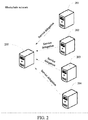
- Terminal devices 201 to 204 of the plurality of insurance companies and a terminal device 205 of the insurance platform all join in the blockchain network as the node devices of the blockchain, and transmit service data based on the distributed database of the blockchain.
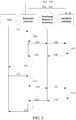
- FIG. 3 shows a process of processing an insurance application service of a user and a claim settlement service of a user by the foregoing node device 201 of an insurance company and the foregoing node device 205 of the insurance platform.
- Step 301 A target user initiates an insurance application for an insurance product based on a client of an insurance platform installed on a terminal device of the target user.
- the insurance platform generates, based on the insurance application of the target user, a first private service processing result and a first shared service processing result with respect to a target insurance company. For example, by performing process steps, such as accepting an insurance application, obtaining insurance application data, charging an insurance application fee (which may be a pre-charged premium, where the final actual premium is charged by an insurance company agency after performing insurance underwriting according to the conditions of the target user), and generating insurance policy format data, the insurance platform generates insurance policy application data of the insurance product of the target insurance company that is purchased by the target user, to use the insurance policy application data as the first private service processing result; and the insurance platform generates a hash digest of the first private service processing result as at least a portion of the first shared service processing result.
- process steps such as accepting an insurance application, obtaining insurance application data, charging an insurance application fee (which may be a pre-charged premium, where the final actual premium is charged by an insurance company agency after performing insurance underwriting according to the conditions of the target user), and generating insurance policy format data
- Step 303 A node device of the insurance platform encapsulates the first shared service processing result generated in the foregoing step into a first transaction, and sends the first transaction to the blockchain. Based on a consensus and verification mechanism of the blockchain, the first transaction is recorded in a distributed database of the blockchain after consensus verification.
- Step 304 The node device of the insurance platform sends, by using an off-chain channel, the first private service processing result generated in the foregoing step to the target insurance company providing the insurance product.
- the node device of the insurance platform performs data modeling processing on the first private service processing result by calling a smart contract that is used for data modeling processing and that is deployed in the blockchain, to facilitate data type management on the first private service processing result in the entire system (including the node device of the insurance platform and node devices of service processing entities).
- Step 305 A supplier of the insurance product purchased by the target user, that is, a node device of the target insurance company, receives the first private service processing result by using the off-chain channel.
- Step 306 The node device of the target insurance company synchronously updates the distributed database of the blockchain, and obtains the first transaction from the database.
- the first shared service processing result included in the first transaction includes at least a hash digest of the first private service processing result.
- Step 307. The node device of the target insurance company generates an insurance application result of the target user, such as a notification of insurance application success information, a notification of a premium amount, a notification of insurance quota information, or a notification of insurance application failure information, according to preset insurance application result generating steps, for example, process steps as follows: first performing, based on the hash digest of the first private service processing result included in the first shared service processing result, corresponding verification on the first private service processing result received by using the off-chain channel, and after the verification succeeds, checking authenticity and effectiveness of a certificate material of the target user included in the insurance policy application data, performing accounting on a premium of the target user, assigning an insurance policy number to the insurance policy application data, and signing and approving the insurance policy application data.
- an insurance application result of the target user such as a notification of insurance application success information, a notification of a premium amount, a notification of insurance quota information, or a notification of insurance application failure information
- preset insurance application result generating steps for example, process
- Step 308 The node device of the target insurance company encapsulates the insurance application result of the target user into an insurance application result transaction (second transaction) of the target user, and sends the insurance application result transaction to the blockchain, where based on the consensus and verification mechanism of the blockchain, the insurance policy result transaction is recorded in the distributed database of the blockchain after consensus verification.
- second transaction an insurance application result transaction
- the insurance policy result transaction is recorded in the distributed database of the blockchain after consensus verification.
- Step 309 The node device of the insurance platform synchronously updates the distributed database of the blockchain, and obtains the insurance application result transaction from the database.
- Step 310 The node device of the insurance platform notifies the target user of a user insurance application result, or updates an insurance policy status of the target user or the like on the platform according to the insurance application result in the insurance application result transaction.
- Step 301 to step 310 illustrate a process in which the target user uses the blockchain-based data processing method provided in this specification in an insurance application scenario.
- the blockchain-based data processing method provided in this specification may also be used in a claim settlement scenario of the target user. For example:
- Step 311 A target user initiates, based on a client of an insurance platform installed on a terminal device of the target user, claim settlement application data of an insurance product purchased by the target user.
- Step 312 The insurance platform generates, based on the claim settlement application data of the target user, a first private service processing result and a first shared service processing result with respect to a target insurance company. For example, the insurance platform generates claim settlement report data of the target user according to process steps such as processing a claim examination material and accepting a report, to use the claim settlement report data as the first private service processing result, and the insurance platform generates a hash digest of the first private service processing result as at least a portion of the first shared service processing result.
- the first shared service processing result may further include a claim settlement certificate, such as accident invoice information, included in the claim settlement application data of the target user, to avoid that the target user claims settlement repeatedly based on the same claim settlement certificate.
- a paid-compensation record or remaining compensable amount of the target user with respect to the insurance policy may be generated based on the accident invoice information attested in the distributed database of the blockchain and a claim settlement amount included in the insurance application information in step 308.
- a node device of the insurance platform encapsulates the first shared service processing result generated in the foregoing step into a first transaction, and sends the first transaction to the blockchain, where based on a consensus and verification mechanism of the blockchain, the first transaction is recorded in a distributed database of the blockchain after consensus verification.
- Step 314. The node device of the insurance platform sends, by using an off-chain channel, the first private service processing result generated in the foregoing step to the target insurance company that performs claim settlement based on the insurance product.
- the node device of the insurance platform performs data modeling processing on the first private service processing result by calling a smart contract that is used for data modeling processing and that is deployed in the blockchain, to facilitate data type management on the first private service processing result in the entire system (including the node device of the insurance platform and node devices of service processing entities).
- Step 315 A claimant of the insurance product corresponding to the claim settlement application of the target user, that is, a node device of the target insurance company, receives the first private service processing result by using the off-chain channel.
- Step 316 The node device of the target insurance company synchronously updates the distributed database of the blockchain, and obtains the first transaction from the database.
- the first shared service processing result included in first transaction includes at least a hash digest of the first private service processing result.
- the first transaction may further include certificate information of the claim settlement application of the target user.
- Step 317 The node device of the insurance company generates a compensation result of the target user, for example, notification information that the claim settlement review succeeds, a compensation amount, notification information that the claim settlement fails, information of causes of failed claim settlement, or other data, according to preset compensation result generating steps, for example, process steps as follows: first performing, based on the hash digest of the first private service processing result included in the first shared service processing result, corresponding verification on the first private service processing result received by using the off-chain channel, and after the verification succeeds, checking authenticity and effectiveness of a claim settlement certificate material of the target user included in the first private service processing result, performing accounting on a claim settlement amount for a claim settlement certificate included in the first shared service processing result.
- a compensation result of the target user for example, notification information that the claim settlement review succeeds, a compensation amount, notification information that the claim settlement fails, information of causes of failed claim settlement, or other data
- preset compensation result generating steps for example, process steps as follows: first performing, based on the hash digest of the first
- Step 318 The node device of the target insurance company encapsulates the compensation result of the target user into a compensation result transaction (second transaction), and sends the compensation result transaction to the blockchain, where based on the consensus and verification mechanism of the blockchain, the compensation result transaction is recorded in the distributed database of the blockchain after consensus verification.
- second transaction a compensation result transaction
- the compensation result transaction is recorded in the distributed database of the blockchain after consensus verification.
- Step 319 The node device of the insurance platform synchronously updates the distributed database of the blockchain, and obtains the compensation result transaction from the database.
- Step 320 The node device of the insurance platform notifies the target user of the notification information that the claim settlement review succeeds, the compensation amount, the notification information that the claim settlement fails, the information of causes of failed claim settlement, or the like according to the compensation result in the compensation result transaction.
- the node device of the insurance company may remit (or referred to as transfer), based on the compensation amount included in the compensation result, an asset certificate corresponding to the compensation amount to a blockchain account of the target user on the blockchain.
- the asset certificate may correspond to smart assets such as tokens or digital assets in the blockchain, or may correspond to off-chain assets such as cash, securities, coupons, or house property outside the blockchain.
- a payment result of the compensation may also be included in the scope of the compensation result.
- an embodiment of this specification further provides blockchain-based data processing apparatuses 40 and 50.
- the apparatus 40 or 50 may be implemented by software, hardware, or a combination of software and hardware.
- a logical apparatus is formed by reading a corresponding computer program instruction and writing the instruction into an internal memory for executing through a central processing unit (CPU) of a device on which the apparatus is located.
- CPU central processing unit
- the device at which the apparatus for implementing a network risk service is located usually includes other hardware, such as a chip for wireless signal transmission and receiving, and/or other hardware, such as a board card for implementing network communication functions.
- FIG. 4 shows a blockchain-based data processing apparatus 40.
- a blockchain includes a node device of a service acceptance platform and node devices of service data processing entities, and the apparatus 40 includes:
- the apparatus 40 further includes:
- the first private service processing result is a data modelized first private service processing result.
- the node device of the service acceptance platform is a node device of an insurance application acceptance platform
- the node devices of the service data processing entities are node devices of insurance application review agencies
- the service processing application data of the target user is insurance application data of the target user.
- the first private service processing result is insurance policy application data with respect to a target insurance application review agency, and the first shared service processing result is a hash digest of the insurance policy application data.
- the second service processing result is an insurance application result of the target user obtained by a node device of the target insurance application review agency through processing.
- the node device of the service acceptance platform is a node device of a claim settlement acceptance platform
- the node devices of the service data processing entities are node devices of claim settlement review agencies
- the service processing application data of the target user is claim settlement application data of the target user.
- the first private service processing result includes claim settlement application data with respect to a target claim settlement review agency, and the first shared service processing result includes a hash digest of the claim settlement application data.
- the second service processing result includes a compensation result for the target user obtained by a node device of the target claim settlement review agency through processing.
- the blockchain is a consortium blockchain
- the node device of the service acceptance platform and the node devices of the service data processing entities are consortium member node devices.
- FIG. 5 shows a blockchain-based data processing apparatus 50.
- a blockchain includes a node device of a service acceptance platform and node devices of service data processing entities, and the apparatus 50 includes:
- the first private service processing result is a data modelized first private service processing result.
- the node device of the service acceptance platform is a node device of an insurance application acceptance platform
- the node devices of the service data processing entities are node devices of insurance application review agencies
- the service processing application data of the target user is insurance application data of the target user.
- the first private service processing result is insurance policy application data with respect to a target insurance application review agency, and the first shared service processing result is a hash digest of the insurance policy application data.
- the second service processing result is an insurance application result of the target user obtained by a node device of the target insurance application review agency through processing.
- the node device of the service acceptance platform is a node device of a claim settlement acceptance platform
- the node devices of the service data processing entities are node devices of claim settlement review agencies
- the service processing application data of the target user is claim settlement application data of the target user.
- the first private service processing result includes claim settlement application data with respect to a target claim settlement review agency, and the first shared service processing result includes a hash digest of the claim settlement application data.
- the second service processing result includes a compensation result for the target user obtained by a node device of the target claim settlement review agency through processing.
- the apparatus embodiments described above are merely examples.
- the units described as separate parts may or may not be physically separate, and the parts displayed as units may or may not be physical modules, may be located in one position, or may be distributed on a plurality of network modules. Some or all of the units or modules may be selected according to actual requirements to achieve the objectives of the solutions of this specification. A person of ordinary skill in the art may understand and implement the solutions without creative efforts.
- the apparatus, the unit or the module described in the foregoing embodiments can be implemented by a computer chip or an entity or implemented by a product having a certain function.
- a typical implementation device is a computer, and the computer may be in a form of a personal computer, a laptop computer, a cellular phone, a camera phone, a smartphone, a personal digital assistant, a media player, a navigation device, an email device, a game console, a tablet computer, a wearable device, or a combination of any of these devices.
- an embodiment of this specification further provides a computer device.
- the computer device includes a memory and a processor.
- the memory stores a computer program executable by the processor.
- the processor when executing the computer program, performs the steps of the blockchain-based data processing method performed by a node device end of a service acceptance platform in the embodiments of this specification.
- steps of the blockchain-based data processing method performed by the node device end of the service acceptance platform refer to previous content. Details are not repeated.
- an embodiment of this specification further provides a computer device.
- the computer device includes a memory and a processor.
- the memory stores a computer program executable by the processor.
- the processor when executing the computer program, performs the steps of the blockchain-based data processing method performed by a node device end of service data processing entities in the embodiments of this specification.
- steps of the blockchain-based data processing method performed by the node device end of the service data processing entities refer to previous content. Details are not repeated.
- a computing device includes one or more processors (CPUs), an input/output interface, a network interface, and an internal memory.
- processors CPUs
- input/output interface input/output interface
- network interface network interface
- internal memory volatile and non-volatile memory
- the internal memory may include the following forms of computer-readable media: a non-persistent memory, a random access memory (RAM), and/or a nonvolatile internal memory, for example, a read-only memory (ROM) or a flash memory (flash RAM).
- ROM read-only memory
- flash RAM flash memory
- the computer-readable medium includes a persistent medium and a non-persistent medium, a removable medium and a non-removable medium, which may implement storage of information by using any method or technology.
- the information may be computer-readable instructions, a data structure, a module of a program, or other data.
- Examples of computer storage media include but are not limited to a phase change memory (PRAM), a static random access memory (SRAM), a dynamic random access memory (DRAM), another type of RAM, a ROM, an electrically erasable programmable read-only memory (EEPROM), a flash memory or other internal memory technology, a compact disc read-only memory (CD-ROM), a digital versatile disc (DVD) or other optical storage, a cassette magnetic tape, tape and disk storage or other magnetic storage device or any other non-transmission media that may be configured to store information accessible by the computing device.
- the computer-readable medium does not include transitory computer-readable media (transitory media) such as a modulated data signal and a carrier.
- the embodiments of this specification may be provided as a method, a system, or a computer program product. Therefore, the embodiments of this specification may use a form of hardware only embodiments, software only embodiments, or embodiments with a combination of software and hardware. Moreover, the embodiments of this specification may use a form of a computer program product that is implemented on one or more computer-usable storage media (including but not limited to a disk memory, a CD-ROM, an optical memory, and the like) that include computer-usable program code.
- computer-usable storage media including but not limited to a disk memory, a CD-ROM, an optical memory, and the like
Landscapes
- Engineering & Computer Science (AREA)
- Business, Economics & Management (AREA)
- Theoretical Computer Science (AREA)
- Physics & Mathematics (AREA)
- General Physics & Mathematics (AREA)
- Accounting & Taxation (AREA)
- Computer Security & Cryptography (AREA)
- Strategic Management (AREA)
- General Business, Economics & Management (AREA)
- Computer Networks & Wireless Communication (AREA)
- Signal Processing (AREA)
- Finance (AREA)
- Data Mining & Analysis (AREA)
- Databases & Information Systems (AREA)
- General Engineering & Computer Science (AREA)
- Entrepreneurship & Innovation (AREA)
- Economics (AREA)
- Marketing (AREA)
- Human Resources & Organizations (AREA)
- Technology Law (AREA)
- Development Economics (AREA)
- Operations Research (AREA)
- Quality & Reliability (AREA)
- Tourism & Hospitality (AREA)
- Computing Systems (AREA)
- Computer Hardware Design (AREA)
- Management, Administration, Business Operations System, And Electronic Commerce (AREA)
- Financial Or Insurance-Related Operations Such As Payment And Settlement (AREA)
Abstract
Description
- This specification relates to the field of data processing technologies, and in particular, to a blockchain-based data processing method and apparatus.
- The blockchain technology, also referred to as a distributed ledger technology, is an emerging technology in which several computing devices participate in "accounting" to jointly maintain a complete distributed database. Because the blockchain technology features decentralization, openness, and transparency, all the computing devices can participate in database recording, and quick data synchronization can be performed among the computing devices. Therefore, the blockchain technology has been widely applied to many fields.
- In view of this, one or more embodiments of this specification provide a blockchain-based data processing method and apparatus, and a computer device.
- To achieve the foregoing objective, one or more embodiments of this specification provide the following technical solutions.
- According to a first aspect of one or more embodiments of this specification, a blockchain-based data processing method is provided, where a blockchain includes a node device of a service acceptance platform and node devices of service data processing entities, and the method includes:
- receiving, by the node device of the service acceptance platform, service processing application data of a target user;
- generating, based on the service processing application data, a first shared service processing result and a first private service processing result with respect to a target service data processing entity, where the first shared service processing result includes at least a data digest of the first private service processing result;
- sending a first transaction to the blockchain, where the first transaction includes the first shared service processing result, for the first transaction to be recorded in a distributed database of the blockchain after consensus verification by the blockchain; and
- sending the first private service processing result to a node device of the target service data processing entity, for the node device of the target service data processing entity to generate a second service processing result according to preset service processing steps, where the service processing steps include verifying the first private service processing result based on at least the first shared service processing result, and generating the second service processing result based on at least the first private service processing result after the verification succeeds.
- According to a second aspect of one or more embodiments of this specification, a blockchain-based data processing method is provided, where a blockchain includes a node device of a service acceptance platform and node devices of service data processing entities, and the method includes:
- receiving, by a node device of a target service data processing entity, a first private service processing result sent by the node device of the service acceptance platform, where the first private service processing result is generated by the node device of the service acceptance platform based on received service processing application data of a target user;
- obtaining, from a distributed database of the blockchain, a first transaction sent by the node device of the service acceptance platform, where the first transaction includes a first shared service processing result, the first shared service processing result is generated by the node device of the service acceptance platform based on the received service processing application data of the target user, and the first shared service processing result includes at least a data digest of the first private service processing result;
- generating a second service processing result according to preset service processing steps, where the service processing steps include verifying the first private service processing result based at least on the first shared service processing result, and generating the second service processing result based at least on the first private service processing result after the verification succeeds; and
- sending a second transaction to the blockchain, where the second transaction includes the second service processing result, for the second transaction to be recorded in the distributed database of the blockchain after consensus verification by the blockchain.
- According to a third aspect of one or more embodiments of this specification, a blockchain-based data processing apparatus is provided, where a blockchain includes a node device of a service acceptance platform and node devices of service data processing entities, and the apparatus includes:
- a receiving unit, configured to receive service processing application data of a target user;
- a data processing unit, configured to generate, based on the service processing application data, a first shared service processing result and a first private service processing result with respect to a target service data processing entity, where the first shared service processing result includes at least a data digest of the first private service processing result;
- a sending unit, configured to send a first transaction to the blockchain, where the first transaction includes the first shared service processing result, for the first transaction to be recorded in a distributed database of the blockchain after consensus verification by the blockchain, and
- the sending unit is further configured to send the first private service processing result to a node device of the target service data processing entity, for the node device of the target service data processing entity to generate a second service processing result according to preset service processing steps, where the service processing steps include verifying the first private service processing result based at least on the first shared service processing result, and generating the second service processing result based at least on the first private service processing result after the verification succeeds.
- According to a fourth aspect of one or more embodiments of this specification, a blockchain-based data processing apparatus is provided, where a blockchain includes a node device of a service acceptance platform and node devices of service data processing entities, and the apparatus includes:
- a receiving unit, configured to receive a first private service processing result sent by the node device of the service acceptance platform, where the first private service processing result is generated by the node device of the service acceptance platform based on received service processing application data of a target user;
- an obtaining unit, configured to obtain, from a distributed database of the blockchain, a first transaction sent by the node device of the service acceptance platform, where the first transaction includes a first shared service processing result, the first shared service processing result is generated by the node device of the service acceptance platform based on the received service processing application data of the target user, and the first shared service processing result includes at least a data digest of the first private service processing result;
- a data processing unit, configured to generate a second service processing result according to preset service processing steps, where the service processing steps include verifying the first private service processing result based at least on the first shared service processing result, and generating the second service processing result based at least on the first private service processing result after the verification succeeds; and
- a sending unit, configured to send a second transaction to the blockchain, where the second transaction includes the second service processing result, for the second transaction to be recorded in the distributed database of the blockchain after consensus verification by the blockchain.
- According to a fifth aspect of one or more embodiments of this specification, a computer device is provided, including a memory and a processor, where the memory stores a computer program executable by the processor, and the processor, when executing the computer program, performs the blockchain-based data processing method performed by the node device of the service acceptance platform.
- According to a sixth aspect of one or more embodiments of this specification, a computer device is provided, including a memory and a processor, where the memory stores a computer program executable by the processor, and the processor, when executing the computer program, performs the blockchain-based data processing method performed by the node devices of the service data processing entities.
- It can be seen from the foregoing technical solutions that, in the blockchain-based data processing method and apparatus provided in this specification, terminals of a service acceptance platform and data processing entities are set as node devices of a blockchain, and service processing result data obtained by both entities through processing is transmitted and obtained by using a distributed database of the blockchain, which not only ensures the timeliness of the transmitted data, but also ensures that the transmitted data is tamper-proof. In addition, in the blockchain-based data processing method and apparatus provided in this specification, privacy isolation is performed on the data stored in a blockchain system, that is, private service data is only locally stored in a node device of a corresponding service data processing entity, and non-private service data may be publicly shared in the distributed database of the blockchain.
-
-
FIG. 1 is a schematic flowchart of a blockchain-based data processing method, according to an embodiment of this specification; -
FIG. 2 is a schematic diagram of an organizational structure of node devices performing an insurance application service or an insurance claim settlement service in a blockchain network, according to an embodiment of this specification; -
FIG. 3 is a flowchart of an insurance application service and an insurance claim settlement service performed in a blockchain network, according to an embodiment of this specification; -
FIG. 4 is a schematic diagram of a data processing apparatus applied to a node device end of a service acceptance platform, according to an embodiment of this specification; -
FIG. 5 is a schematic diagram of a data processing apparatus applied to a node device end of a service data processing entity, according to an embodiment of this specification; and -
FIG. 6 is a diagram of a hardware structure executing a blockchain-based data processing apparatus, according to an embodiment of this specification. - The exemplary embodiments are described herein in detail, and examples of the embodiments are shown in the accompanying drawings. When the following descriptions are made with reference to the accompanying drawings, unless otherwise indicated, same numbers in different accompanying drawings represent same or similar elements. The implementations described in the following exemplary embodiments are not all the implementations consistent with one or more embodiments of this specification, but are instead only examples of methods and apparatuses that are described in detail in the appended claims and that are consistent with some aspects of one or more embodiments of this specification.
- It should be noted that in other embodiments, the steps of corresponding methods are not necessarily performed according to sequences shown and described in this specification. In some other embodiments, the methods may include more or fewer steps than those described in this specification. In addition, a single step described in this specification may be divided into a plurality of steps for description in other embodiments, and a plurality of steps described in this specification may be combined into a single step for description in other embodiments.
-
FIG. 1 is a schematic flowchart of a blockchain-based data processing method, according to an embodiment of this specification. The blockchain includes a node device of a service acceptance platform and node devices of service data processing entities. - A service acceptance platform described in this embodiment may include a plurality of types of user-oriented service acceptance platforms established based on a network, for example, an insurance-related service acceptance platform, a financing-product-related service acceptance platform, and a supply-chain-related service acceptance platform. This is not limited in this specification. A service data processing entity described in this embodiment is an agency performing corresponding service processing based on a service application accepted by the service acceptance platform.
- The blockchain described in this embodiment may refer to a P2P network system with a distributed data storage structure that is constructed by nodes by using a consensus mechanism. Data in the blockchain is distributed in "blocks" connected temporally, each block contains a data digest of a previous block, and full data backup of all or some of the nodes is achieved depending on different consensus mechanisms (such as PoW, PoS, DPoS, or PBFT). It is well known by a person skilled in the art that, because the blockchain network operates under a corresponding consensus mechanism, it is difficult for any node to tamper with data recorded in the blockchain database. For example, in a blockchain using the PoW consensus, at least 51% of computing power of the entire network is needed to tamper with existing data. Therefore, compared with other centralized database systems, the blockchain system has the unmatched characteristics of ensuring data security and preventing attacks and tampering. It can be learned that, in the embodiments provided in this specification, data recorded in a distributed database of the blockchain will not be attacked or tampered with, which ensures authenticity and reliability of data transmission performed by the service acceptance platform and the service data processing entities based on the distributed database of the blockchain.
- The node device of the service acceptance platform and the node devices of the service data processing entities described in this embodiment may join the blockchain by following a corresponding node protocol and installing a node protocol program, to serve as nodes of the blockchain. A node device with full backup of data in the distributed database of the blockchain is usually referred to as a full node by a person skilled in the art, and a node device with partial backup data (for example, only data of a block header) of the distributed database of the blockchain is referred to as a light node, a client, or the like. The node device of the service acceptance platform and the node devices of the service data processing entities described in this embodiment may include the foregoing full node, light node, or client. Any device that is directly or indirectly connected to the blockchain and that may send or obtain data in the distributed database of the blockchain may be referred to as the node device described in this embodiment.
- As shown in
FIG. 1 , the blockchain-based data processing method includes: -
Step 102. The node device of the service acceptance platform receives service processing application data of a target user. - The service processing application data of the target user received by the node device of the service acceptance platform described in this embodiment may include various possible Internet-based service processing application data, for example, insurance application data or claim settlement application data, financing product purchasing or redeeming application data, or product purchasing, payment or transfer of receivables in a supply chain or financial loan application data such as mortgage loan. The target user described in this embodiment may be an individual user, or may be an institutional user. This is not limited in this specification.
-
Step 104. The node device of the service acceptance platform generates, based on the service processing application data, a first shared service processing result and a first private service processing result with respect to a target service data processing entity, where the first shared service processing result includes at least a data digest of the first private service processing result. - After accepting a service processing application of the target user, the service acceptance platform usually performs service processing in advance based on service processing steps preset by the platform and the service processing application data, to generate a service processing result. For example, an insurance application acceptance platform may generate insurance policy application data of the target user in a preset format based on insurance application data of the target user. The insurance policy application data may include data such as identity information of the target user, an insurance application type, and an insurance application qualification certificate material, for an insurance company acting as the service data processing entity to review an insurance application of the target user.
- Because the insurance application information of the target user usually includes private information of the user, for example, information data such as identify information or an insurance application qualification certificate material, to protect the privacy of the service processing result, the node device of the service acceptance platform generates, based on the preset service processing steps, the first private service processing result with respect to the target service data processing entity and the first shared service processing result to be shared in a distributed database of the blockchain. The target service data processing entity is a service data processing entity that views and obtains the first private service processing result, which generally may be an insurance company corresponding to the insurance application or claim settlement of the user, or an operating company of a financing product that the user intends to purchase. It should be learned by a person skilled in the art that, the first shared service processing result includes at least a data digest (such as a hash digest) of the first private service processing result for attestation of the first shared service processing result.
- In another shown implementation, to further optimize data management, the first private service processing result may be a data modelized first private service processing result obtained by the node device of the service acceptance platform by performing data modeling processing. Therefore, all node devices (including the node device of the service acceptance platform and node devices of service processing entities) in the blockchain can maintain a uniform data format of privacy service processing results, thereby facilitating data management, query, and application of the first private service processing result.
- The process of performing data modeling on the first private service processing result may be completed by the node device of the service acceptance platform by locally executing a preset data modeling logic program. Optionally, the node device of the service acceptance platform may call a smart contract deployed on the blockchain to complete the data modeling process of generating the data modelized first private service processing result based on the service processing application data of the user.
-
Step 106. The node device of the service acceptance platform sends a first transaction to the blockchain, where the first transaction includes the first shared service processing result, for the first transaction to be recorded in a distributed database of the blockchain after consensus verification by the blockchain. - The transaction described in this specification refers to a piece of data that is created by each user through a node device end of the blockchain and that needs to be finally published to the distributed database of the blockchain. The transaction in the blockchain includes a transaction in a narrow sense and a transaction in a broad sense. The transaction in a narrow sense refers to a value transfer published by the user to the blockchain. For example, in a conventional bitcoin blockchain network, a transaction may be a transfer initiated by the user in the blockchain. The transaction in a broad sense refers to a piece of service data with a service intent published by the user to the blockchain. For example, the transaction may be a service (such as a leasing service, a vehicle scheduling service, an insurance claim settlement service, a credit service, or a medical service) message or a service request with a service intent that is published by the user to the blockchain and that is irrelevant to value transfer. The first transaction described in this embodiment includes a piece of service data of the first shared service processing result. The first shared service processing result may be encapsulated into the first transaction according to a preset transaction format, and then the first transaction is uploaded to the blockchain.
- A detail process of uploading the first transaction to the distributed database of the blockchain described in the foregoing embodiment may be set according to a consensus mechanism and a transaction rule of the blockchain. In a shown embodiment, the uploading the first transaction to the distributed database of the blockchain includes:
- adding, by node devices with an accounting permission in the blockchain, the first transaction to a candidate block;
- determining a consensus accounting node device satisfying a consensus mechanism of the blockchain from the node devices with the accounting permission;
- broadcasting, by the consensus accounting node, the candidate block to node devices of the blockchain; and
- setting the candidate block as a latest block after the candidate block is verified and approved by a preset quantity of node devices in the blockchain, and adding the latest block to the distributed database of the blockchain.
- In the foregoing embodiment, the node device with the accounting permission refers to a node device with a permission to generate a candidate block. The consensus accounting node device may be determined from the node devices having the accounting permission with respect to the candidate block according to the consensus mechanism of the blockchain. The consensus mechanism may include a proof of work (PoW) mechanism, a proof of stake (PoS) mechanism, or a delegated proof of stake (DPoS) mechanism.
- The PoS or DPoS consensus mechanism is similar to the PoW consensus mechanism and also belongs to a consensus algorithm commonly selected to determine a consensus accounting node device in a public blockchain. In another shown embodiment, to reduce a confirmation time of a transaction or data, improve the transaction throughput, and satisfy requirements on security and performance, the embodiments provided in this specification may further select a consortium blockchain architecture to construct the blockchain. The node devices of the service acceptance platform, of the service data processing entities, and of a service-related supervision agency may be used as preselected node devices of the consortium blockchain, to participate in accounting of blocks. A consensus process of the consortium blockchain is also controlled by the preselected node devices. When a block is confirmed by more than a preset proportion (such as 2/3) of node devices in a network, a transaction or data recorded by the block is confirmed by the entire network.
- A consensus algorithm such as proof of stake, PBFT, or RAFT is usually used in the consortium blockchain. During implementation, before each round of consensus of the blockchain starts, a primary node device, that is, the consensus accounting node described in the foregoing embodiment, may be selected from the node devices in the blockchain (for example, a new primary node device is selected in each round of consensus, and other node devices are used as secondary node devices). The primary node device further initiates verification and consensus of a transaction, and is responsible for creating a latest block for the blockchain based on transaction data (or target data) on which a consensus is reached.
- The PBFT algorithm is used as a preferred implementation of the consensus algorithm of the consortium blockchain provided in this specification, because the algorithm has high consensus efficiency and can satisfy requirements of a high-frequency transaction amount. For example, in this embodiment, the service acceptance platform generates a corresponding first transaction based on frequently accepted user service processing applications. In addition, the PBFT algorithm has a low consensus latency, basically satisfies requirements of real-time processing, and can quickly record the foregoing first transaction in a newly-generated block of the blockchain in real time. Moreover, trusted nodes in a consortium blockchain network are used as preselected accounting nodes, thereby achieving both security and stability. In addition, the PBFT algorithm does not consume excessive computing power resources of a computer, does not necessarily require the circulation of tokens, and therefore, has good usability.
-
Step 108. The node device of the service acceptance platform sends the first private service processing result to a node device of the target service data processing entity, for the node device of the target service data processing entity to generate a second service processing result according to preset service processing steps. The service processing steps at least include verifying the first private service processing result based on the first shared service processing result, and generating the second service processing result based on the first private service processing result after the verification succeeds. - The node device of the service acceptance platform may send the first private service processing result to the node device of the target service data processing entity by using an off-chain channel. In this way, the first private service processing result is not disclosed to other node devices in the blockchain, and the node device of the target service data processing entity generates the second service processing result according to the preset service processing steps based on the first private service processing result received by using the off-chain channel and the first shared service processing result obtained from the distributed database of the blockchain.
- The preset service processing steps include at least verifying, based on the data digest of the first private service processing result included in the first shared service processing result, whether the first private service processing result obtained by using the off-chain channel corresponds to a data digest attested in the blockchain, to avoid that the first private service processing result is illegally tampered with during transmission in the off-chain channel. After the verification succeeds, the second service processing result is generated based on at least the first private service processing result (sometimes, other shared information included in the first shared service processing result is required.).
-
Step 110. The node device of the target service data processing entity receives the first private service processing result sent by the node device of the service acceptance platform. - It can be learned from the above that, the node device of the target service data processing entity may receive the first private service processing result sent by the node device of the service acceptance platform by using the off-chain channel, to prevent the first private service processing result from being disclosed to other node devices in the blockchain.
- In another shown implementation, to further optimize data management, the first private service processing result may be a data modelized first private service processing result obtained by the node device of the service acceptance platform by performing data modeling processing. Therefore, all node devices (including the node device of the service acceptance platform and node devices of service processing entities) in the blockchain can maintain a uniform data format of privacy service processing results, thereby facilitating data management, query, and application of the first private service processing result.
- The process of performing data modeling on the first private service processing result may be completed by the node device of the service acceptance platform by locally executing a preset data modeling logic program. Optionally, the node device of the service acceptance platform may call a smart contract deployed on the blockchain to complete the data modeling process of generating the data modelized first private service processing result based on the service processing application data of the user.
-
Step 112. The node device of the target service data processing entity obtains, from the distributed database of the blockchain, the first transaction sent by the node device of the service acceptance platform. - The node device of the target service data processing entity may synchronize a latest block based on a latest block generating frequency decided by the consensus mechanism of the blockchain, to obtain the first transaction. It can be learned from the above that, the first transaction includes the first shared service processing result, and the first shared service processing result is generated by the node device of the service acceptance platform based on the received service processing application data of the target user. It can be learned from the foregoing embodiment that, the blockchain based on a consortium blockchain architecture usually has high transaction processing throughput and data can be written into the blockchain almost in real time, thereby improving the efficiency of service processing.
- In addition, the first shared service processing result includes at least a data digest (such as a hash digest) of the first private service processing result for attestation of the first shared service processing result.
-
Step 114. The node device of the service data processing entity generates a second service processing result according to preset service processing steps, where the service processing steps include verifying the first private service processing result based on at least the first shared service processing result, and generating the second service processing result based on at least the first private service processing result after the verification succeeds. - The preset service processing steps include at least verifying, based on the data digest of the first private service processing result included in the first shared service processing result, whether the first private service processing result obtained by using the off-chain channel corresponds to a data digest attested in the blockchain, to avoid that the first private service processing result is illegally tampered with during transmission in the off-chain channel.
- After the verification performed on the first private service processing result succeeds, the node device of the target service data processing entity may further generate the second service processing result based on at least the first private service processing result. Sometimes, when the first shared service processing result further includes some basic service information, the node device of the target service data processing entity may further generate the second service processing result based on the first private service processing result and the first shared service processing result.
-
Step 116. The node device of the target service data processing entity sends a second transaction to the blockchain, where the second transaction includes the second service processing result, for the second transaction to be recorded in the distributed database of the blockchain after consensus verification by the blockchain. - For example, the node device of the service data processing entities may encapsulate the second service processing result into a second transaction according to a preset transaction format and send the second transaction to the blockchain. Because the second service processing result is visible in the distributed database of the blockchain, the second service processing result may not involve private information of a related target user or target service processing agency, while the target service processing agency may store a data processing result involving the private information into a local database.
- A process of recording the second transaction in the distributed database of the blockchain is similar to a process of recording the first transaction in the distributed database of the blockchain. Details are not described herein again.
- In another shown implementation, because the service acceptance platform is usually used as a platform on which service acceptance and feedback are performed for the target user, the blockchain-based data processing method may further include step 118 (not shown in
FIG. 1 ): the node device of the service acceptance platform obtains, from the distributed database of the blockchain, a second transaction sent by the node device of the service data processing entity, where the second transaction includes a second service processing result of the target user, sends the second service processing result to the target user. - The target user in this embodiment may also benefit from the timeliness of data uploading or synchronization on the blockchain in the foregoing embodiment, to effectively obtain a service processing result (that is, the second service processing result) of a service processing application in a timely manner, thereby improving service use experience of the target user.
- Certainly, this specification is not limited thereto. The terminal device of the target user, such as a PC terminal or a mobile device terminal, may also be used as a node device of the blockchain, and directly obtain the second service processing result from the distributed database of the blockchain. A process is not described herein again.
- So far, by using
step 102 to step 116 in this embodiment, the service acceptance platform and the data processing entity complete transmission of the first service processing result and the second service processing result based on the blockchain. This embodiment not only ensures the timeliness of the transmitted data, but also ensures that data backed up on the blockchain is tamper-poof. In addition, the first private service processing result may be transmitted by using an off-chain channel, and the data digest of the first private service processing result is attested in the distributed database of the blockchain, thereby achieving isolation for data privacy, and avoiding impact of adverse events such as data tampering. - The following describes the blockchain-based data processing method provided in this specification in detail by using the following service architectural mode: an insurance claim settlement platform as a front end to insurance claim settlement agencies as a back end.
- As shown in
FIG. 2 , one insurance platform may be connected to a plurality of insurance companies, to receive insurance applications of users and accept claim settlements. Correspondingly, the plurality of insurance companies may review the insurance applications of the users and review the claim settlements.Terminal devices 201 to 204 of the plurality of insurance companies and aterminal device 205 of the insurance platform all join in the blockchain network as the node devices of the blockchain, and transmit service data based on the distributed database of the blockchain. -
FIG. 3 shows a process of processing an insurance application service of a user and a claim settlement service of a user by the foregoingnode device 201 of an insurance company and the foregoingnode device 205 of the insurance platform. -
Step 301. A target user initiates an insurance application for an insurance product based on a client of an insurance platform installed on a terminal device of the target user. -
Step 302. The insurance platform generates, based on the insurance application of the target user, a first private service processing result and a first shared service processing result with respect to a target insurance company. For example, by performing process steps, such as accepting an insurance application, obtaining insurance application data, charging an insurance application fee (which may be a pre-charged premium, where the final actual premium is charged by an insurance company agency after performing insurance underwriting according to the conditions of the target user), and generating insurance policy format data, the insurance platform generates insurance policy application data of the insurance product of the target insurance company that is purchased by the target user, to use the insurance policy application data as the first private service processing result; and the insurance platform generates a hash digest of the first private service processing result as at least a portion of the first shared service processing result. -
Step 303. A node device of the insurance platform encapsulates the first shared service processing result generated in the foregoing step into a first transaction, and sends the first transaction to the blockchain. Based on a consensus and verification mechanism of the blockchain, the first transaction is recorded in a distributed database of the blockchain after consensus verification. - Step 304. The node device of the insurance platform sends, by using an off-chain channel, the first private service processing result generated in the foregoing step to the target insurance company providing the insurance product. Optionally, before transmission of the first private service processing result, the node device of the insurance platform performs data modeling processing on the first private service processing result by calling a smart contract that is used for data modeling processing and that is deployed in the blockchain, to facilitate data type management on the first private service processing result in the entire system (including the node device of the insurance platform and node devices of service processing entities).
- Step 305. A supplier of the insurance product purchased by the target user, that is, a node device of the target insurance company, receives the first private service processing result by using the off-chain channel.
-
Step 306. The node device of the target insurance company synchronously updates the distributed database of the blockchain, and obtains the first transaction from the database. As described above, the first shared service processing result included in the first transaction includes at least a hash digest of the first private service processing result. -
Step 307. The node device of the target insurance company generates an insurance application result of the target user, such as a notification of insurance application success information, a notification of a premium amount, a notification of insurance quota information, or a notification of insurance application failure information, according to preset insurance application result generating steps, for example, process steps as follows: first performing, based on the hash digest of the first private service processing result included in the first shared service processing result, corresponding verification on the first private service processing result received by using the off-chain channel, and after the verification succeeds, checking authenticity and effectiveness of a certificate material of the target user included in the insurance policy application data, performing accounting on a premium of the target user, assigning an insurance policy number to the insurance policy application data, and signing and approving the insurance policy application data. -
Step 308. The node device of the target insurance company encapsulates the insurance application result of the target user into an insurance application result transaction (second transaction) of the target user, and sends the insurance application result transaction to the blockchain, where based on the consensus and verification mechanism of the blockchain, the insurance policy result transaction is recorded in the distributed database of the blockchain after consensus verification. -
Step 309. The node device of the insurance platform synchronously updates the distributed database of the blockchain, and obtains the insurance application result transaction from the database. -
Step 310. The node device of the insurance platform notifies the target user of a user insurance application result, or updates an insurance policy status of the target user or the like on the platform according to the insurance application result in the insurance application result transaction. - Step 301 to step 310 illustrate a process in which the target user uses the blockchain-based data processing method provided in this specification in an insurance application scenario. Similarly, the blockchain-based data processing method provided in this specification may also be used in a claim settlement scenario of the target user. For example:
-
Step 311. A target user initiates, based on a client of an insurance platform installed on a terminal device of the target user, claim settlement application data of an insurance product purchased by the target user. -
Step 312. The insurance platform generates, based on the claim settlement application data of the target user, a first private service processing result and a first shared service processing result with respect to a target insurance company. For example, the insurance platform generates claim settlement report data of the target user according to process steps such as processing a claim examination material and accepting a report, to use the claim settlement report data as the first private service processing result, and the insurance platform generates a hash digest of the first private service processing result as at least a portion of the first shared service processing result. - Optionally, the first shared service processing result may further include a claim settlement certificate, such as accident invoice information, included in the claim settlement application data of the target user, to avoid that the target user claims settlement repeatedly based on the same claim settlement certificate. In addition, a paid-compensation record or remaining compensable amount of the target user with respect to the insurance policy may be generated based on the accident invoice information attested in the distributed database of the blockchain and a claim settlement amount included in the insurance application information in
step 308. -
Step 313. A node device of the insurance platform encapsulates the first shared service processing result generated in the foregoing step into a first transaction, and sends the first transaction to the blockchain, where based on a consensus and verification mechanism of the blockchain, the first transaction is recorded in a distributed database of the blockchain after consensus verification. - Step 314. The node device of the insurance platform sends, by using an off-chain channel, the first private service processing result generated in the foregoing step to the target insurance company that performs claim settlement based on the insurance product. Optionally, before transmission of the first private service processing result, the node device of the insurance platform performs data modeling processing on the first private service processing result by calling a smart contract that is used for data modeling processing and that is deployed in the blockchain, to facilitate data type management on the first private service processing result in the entire system (including the node device of the insurance platform and node devices of service processing entities).
- Step 315. A claimant of the insurance product corresponding to the claim settlement application of the target user, that is, a node device of the target insurance company, receives the first private service processing result by using the off-chain channel.
-
Step 316. The node device of the target insurance company synchronously updates the distributed database of the blockchain, and obtains the first transaction from the database. As described above, the first shared service processing result included in first transaction includes at least a hash digest of the first private service processing result. As described above, the first transaction may further include certificate information of the claim settlement application of the target user. -
Step 317. The node device of the insurance company generates a compensation result of the target user, for example, notification information that the claim settlement review succeeds, a compensation amount, notification information that the claim settlement fails, information of causes of failed claim settlement, or other data, according to preset compensation result generating steps, for example, process steps as follows: first performing, based on the hash digest of the first private service processing result included in the first shared service processing result, corresponding verification on the first private service processing result received by using the off-chain channel, and after the verification succeeds, checking authenticity and effectiveness of a claim settlement certificate material of the target user included in the first private service processing result, performing accounting on a claim settlement amount for a claim settlement certificate included in the first shared service processing result. -
Step 318. The node device of the target insurance company encapsulates the compensation result of the target user into a compensation result transaction (second transaction), and sends the compensation result transaction to the blockchain, where based on the consensus and verification mechanism of the blockchain, the compensation result transaction is recorded in the distributed database of the blockchain after consensus verification. -
Step 319. The node device of the insurance platform synchronously updates the distributed database of the blockchain, and obtains the compensation result transaction from the database. -
Step 320. The node device of the insurance platform notifies the target user of the notification information that the claim settlement review succeeds, the compensation amount, the notification information that the claim settlement fails, the information of causes of failed claim settlement, or the like according to the compensation result in the compensation result transaction. - When a terminal of the target user is also a node device of the blockchain, the node device of the insurance company may remit (or referred to as transfer), based on the compensation amount included in the compensation result, an asset certificate corresponding to the compensation amount to a blockchain account of the target user on the blockchain. The asset certificate may correspond to smart assets such as tokens or digital assets in the blockchain, or may correspond to off-chain assets such as cash, securities, coupons, or house property outside the blockchain. A payment result of the compensation may also be included in the scope of the compensation result.
- Corresponding to the implementations of the foregoing processes, an embodiment of this specification further provides blockchain-based data processing apparatuses 40 and 50. The apparatus 40 or 50 may be implemented by software, hardware, or a combination of software and hardware. Using software implementation as an example, a logical apparatus is formed by reading a corresponding computer program instruction and writing the instruction into an internal memory for executing through a central processing unit (CPU) of a device on which the apparatus is located. From a hardware perspective, in addition to the CPU, internal memory, and memory shown in
FIG. 6 , the device at which the apparatus for implementing a network risk service is located usually includes other hardware, such as a chip for wireless signal transmission and receiving, and/or other hardware, such as a board card for implementing network communication functions. -
FIG. 4 shows a blockchain-based data processing apparatus 40. A blockchain includes a node device of a service acceptance platform and node devices of service data processing entities, and the apparatus 40 includes: - a receiving unit 402, configured to receive service processing application data of a target user;
- a
data processing unit 404, configured to generate, based on the service processing application data, a first shared service processing result and a first private service processing result with respect to a target service data processing entity, where the first shared service processing result includes at least a data digest of the first private service processing result; and - a sending
unit 406, configured to send a first transaction to the blockchain, where the first transaction includes the first shared service processing result, for the first transaction to be recorded in a distributed database of the blockchain after consensus verification by the blockchain, and - the sending
unit 406 is further configured to send the first private service processing result to a node device of the target service data processing entity, for the node device of the target service data processing entity to generate a second service processing result according to preset service processing steps, where the service processing steps include verifying the first private service processing result based on at least the first shared service processing result, and generating the second service processing result based on at least the first private service processing result after the verification succeeds. - In another shown implementation, the apparatus 40 further includes:
- an obtaining
unit 408, configured to obtain, from the distributed database of the blockchain, a second transaction sent by the node device of the target service data processing entity, where the second transaction includes the second service processing result of the target user, and - the sending
unit 406 is further configured to send the second service processing result to the target user. - In another shown implementation, the first private service processing result is a data modelized first private service processing result.
- In another shown implementation, the node device of the service acceptance platform is a node device of an insurance application acceptance platform, the node devices of the service data processing entities are node devices of insurance application review agencies, and the service processing application data of the target user is insurance application data of the target user.
- The first private service processing result is insurance policy application data with respect to a target insurance application review agency, and the first shared service processing result is a hash digest of the insurance policy application data.
- The second service processing result is an insurance application result of the target user obtained by a node device of the target insurance application review agency through processing.
- In another shown implementation, the node device of the service acceptance platform is a node device of a claim settlement acceptance platform, the node devices of the service data processing entities are node devices of claim settlement review agencies, and the service processing application data of the target user is claim settlement application data of the target user.
- The first private service processing result includes claim settlement application data with respect to a target claim settlement review agency, and the first shared service processing result includes a hash digest of the claim settlement application data.
- The second service processing result includes a compensation result for the target user obtained by a node device of the target claim settlement review agency through processing.
- In another shown implementation, the blockchain is a consortium blockchain, and the node device of the service acceptance platform and the node devices of the service data processing entities are consortium member node devices.
-
FIG. 5 shows a blockchain-based data processing apparatus 50. A blockchain includes a node device of a service acceptance platform and node devices of service data processing entities, and the apparatus 50 includes: - a receiving unit 502, configured to receive a first private service processing result sent by the node device of the service acceptance platform, where the first private service processing result is generated by the node device of the service acceptance platform based on received service processing application data of a target user;
- an obtaining
unit 504, configured to obtain, from a distributed database of the blockchain, a first transaction sent by the node device of the service acceptance platform, where the first transaction includes a first shared service processing result, and the first shared service processing result is generated by the node device of the service acceptance platform based on the received service processing application data of the target user, where the first shared service processing result includes at least a data digest of the first private service processing result; - a
data processing unit 506, configured to generate a second service processing result according to preset service processing steps, where the service processing steps include verifying the first private service processing result based on at least the first shared service processing result, and generating the second service processing result based on at least the first private service processing result after the verification succeeds; and - a sending
unit 508, configured to send a second transaction to the blockchain, where the second transaction includes the second service processing result, for the second transaction to be recorded in the distributed database of the blockchain after consensus verification by the blockchain. - In another shown implementation, the first private service processing result is a data modelized first private service processing result.
- In another shown implementation, the node device of the service acceptance platform is a node device of an insurance application acceptance platform, the node devices of the service data processing entities are node devices of insurance application review agencies, and the service processing application data of the target user is insurance application data of the target user.
- The first private service processing result is insurance policy application data with respect to a target insurance application review agency, and the first shared service processing result is a hash digest of the insurance policy application data.
- The second service processing result is an insurance application result of the target user obtained by a node device of the target insurance application review agency through processing.
- In another shown implementation, the node device of the service acceptance platform is a node device of a claim settlement acceptance platform, the node devices of the service data processing entities are node devices of claim settlement review agencies, and the service processing application data of the target user is claim settlement application data of the target user.
- The first private service processing result includes claim settlement application data with respect to a target claim settlement review agency, and the first shared service processing result includes a hash digest of the claim settlement application data.
- The second service processing result includes a compensation result for the target user obtained by a node device of the target claim settlement review agency through processing.
- For details of the implementation processes of the functions and effects of the units in the apparatuses 40 and 50, reference may be made to the implementation processes of corresponding steps in the foregoing method. For related parts, refer to partial descriptions in the method embodiment. Details are not described herein again.
- The apparatus embodiments described above are merely examples. The units described as separate parts may or may not be physically separate, and the parts displayed as units may or may not be physical modules, may be located in one position, or may be distributed on a plurality of network modules. Some or all of the units or modules may be selected according to actual requirements to achieve the objectives of the solutions of this specification. A person of ordinary skill in the art may understand and implement the solutions without creative efforts.
- The apparatus, the unit or the module described in the foregoing embodiments can be implemented by a computer chip or an entity or implemented by a product having a certain function. A typical implementation device is a computer, and the computer may be in a form of a personal computer, a laptop computer, a cellular phone, a camera phone, a smartphone, a personal digital assistant, a media player, a navigation device, an email device, a game console, a tablet computer, a wearable device, or a combination of any of these devices.
- Corresponding to the method embodiment, an embodiment of this specification further provides a computer device. As shown in
FIG. 6 , the computer device includes a memory and a processor. The memory stores a computer program executable by the processor. The processor, when executing the computer program, performs the steps of the blockchain-based data processing method performed by a node device end of a service acceptance platform in the embodiments of this specification. For detailed descriptions of the steps of the blockchain-based data processing method performed by the node device end of the service acceptance platform, refer to previous content. Details are not repeated. - Corresponding to the method embodiment, an embodiment of this specification further provides a computer device. As shown in
FIG. 6 , the computer device includes a memory and a processor. The memory stores a computer program executable by the processor. The processor, when executing the computer program, performs the steps of the blockchain-based data processing method performed by a node device end of service data processing entities in the embodiments of this specification. For detailed descriptions of the steps of the blockchain-based data processing method performed by the node device end of the service data processing entities, refer to previous content. Details are not repeated. - The foregoing descriptions are merely exemplary embodiments of this specification, but are not intended to limit this specification. Any modification, equivalent replacement, or improvement made without departing from the spirit and principle of this specification should fall within the protection scope of this specification.
- In a typical configuration, a computing device includes one or more processors (CPUs), an input/output interface, a network interface, and an internal memory.
- The internal memory may include the following forms of computer-readable media: a non-persistent memory, a random access memory (RAM), and/or a nonvolatile internal memory, for example, a read-only memory (ROM) or a flash memory (flash RAM). The internal memory is an example of the computer-readable medium.
- The computer-readable medium includes a persistent medium and a non-persistent medium, a removable medium and a non-removable medium, which may implement storage of information by using any method or technology. The information may be computer-readable instructions, a data structure, a module of a program, or other data.
- Examples of computer storage media include but are not limited to a phase change memory (PRAM), a static random access memory (SRAM), a dynamic random access memory (DRAM), another type of RAM, a ROM, an electrically erasable programmable read-only memory (EEPROM), a flash memory or other internal memory technology, a compact disc read-only memory (CD-ROM), a digital versatile disc (DVD) or other optical storage, a cassette magnetic tape, tape and disk storage or other magnetic storage device or any other non-transmission media that may be configured to store information accessible by the computing device. According to the definition in this specification, the computer-readable medium does not include transitory computer-readable media (transitory media) such as a modulated data signal and a carrier.
- It should also be noted that the terms "include," "comprise" and any other variants mean to cover the non-exclusive inclusion. Therefore, the process, method, article, or device that includes a series of elements not only includes those elements, but also includes other elements not clearly listed, or includes the elements inherent to the process, method, article or device. Without further limitation, the element defined by a phrase "include one..." does not exclude other same elements in the process, method, article, or device that includes the element.
- A person skilled in the art should understand that the embodiments of this specification may be provided as a method, a system, or a computer program product. Therefore, the embodiments of this specification may use a form of hardware only embodiments, software only embodiments, or embodiments with a combination of software and hardware. Moreover, the embodiments of this specification may use a form of a computer program product that is implemented on one or more computer-usable storage media (including but not limited to a disk memory, a CD-ROM, an optical memory, and the like) that include computer-usable program code.
Claims (22)
- A blockchain-based data processing method, wherein a blockchain comprises a node device of a service acceptance platform and node devices of service data processing entities, and the method comprises:receiving, by the node device of the service acceptance platform, service processing application data of a target user;generating, based on the service processing application data, a first shared service processing result and a first private service processing result with respect to a target service data processing entity, wherein the first shared service processing result comprises at least a data digest of the first private service processing result;sending a first transaction to the blockchain, the first transaction comprising the first shared service processing result, for the first transaction to be recorded in a distributed database of the blockchain after consensus verification by the blockchain; andsending the first private service processing result to a node device of the target service data processing entity, for the node device of the target service data processing entity to generate a second service processing result according to preset service processing steps, wherein the service processing steps comprise verifying the first private service processing result based at least on the first shared service processing result, and generating the second service processing result based at least on the first private service processing result after the verification succeeds.
- The method according to claim 1, further comprising:obtaining, from the distributed database of the blockchain, a second transaction sent by the node device of the target service data processing entity, wherein the second transaction comprises the second service processing result of the target user; andsending the second service processing result to the target user.
- The method according to claim 1 or 2, wherein the first private service processing result is a data modelized first private service processing result.
- The method according to claim 1, wherein the node device of the service acceptance platform is a node device of an insurance application acceptance platform, the node devices of the service data processing entities are node devices of insurance application review agencies, and the service processing application data of the target user is insurance application data of the target user;
the first private service processing result is insurance policy application data with respect to a target insurance application review agency, and the first shared service processing result is a hash digest of the insurance policy application data; and
the second service processing result is an insurance application result of the target user obtained by a node device of the target insurance application review agency through processing. - The method according to claim 1, wherein the node device of the service acceptance platform is a node device of a claim settlement acceptance platform, the node devices of the service data processing entities are node devices of claim settlement review agencies, and the service processing application data of the target user is claim settlement application data of the target user;
the first private service processing result comprises claim settlement application data with respect to a target claim settlement review agency, and the first shared service processing result comprises a hash digest of the claim settlement application data; and
the second service processing result comprises a compensation result for the target user obtained by a node device of the target claim settlement review agency through processing. - The method according to claim 4 or 5, wherein the blockchain is a consortium blockchain, and the node device of the service acceptance platform and the node devices of the service data processing entities are consortium member node devices.
- A blockchain-based data processing method, wherein a blockchain comprises a node device of a service acceptance platform and node devices of service data processing entities, and the method comprises:receiving, by a node device of a target service data processing entity, a first private service processing result sent by the node device of the service acceptance platform, wherein the first private service processing result is generated by the node device of the service acceptance platform based on received service processing application data of a target user;obtaining, from a distributed database of the blockchain, a first transaction sent by the node device of the service acceptance platform, wherein the first transaction comprises a first shared service processing result, the first shared service processing result is generated by the node device of the service acceptance platform based on the received service processing application data of the target user, and the first shared service processing result comprises at least a data digest of the first private service processing result;generating a second service processing result according to preset service processing steps, wherein the service processing steps comprise verifying the first private service processing result based at least on the first shared service processing result, and generating the second service processing result based at least on the first private service processing result after the verification succeeds; andsending a second transaction to the blockchain, the second transaction comprising the second service processing result, for the second transaction to be recorded in the distributed database of the blockchain after consensus verification by the blockchain.
- The method according to claim 7, wherein the first private service processing result is a data modelized first private service processing result.
- The method according to claim 7 or 8, wherein the node device of the service acceptance platform is a node device of an insurance application acceptance platform, the node devices of the service data processing entities are node devices of insurance application review agencies, and the service processing application data of the target user is insurance application data of the target user;
the first private service processing result is insurance policy application data with respect to a target insurance application review agency, and the first shared service processing result is a hash digest of the insurance policy application data; and
the second service processing result is an insurance application result of the target user obtained by a node device of the target insurance application review agency through processing. - The method according to claim 7 or 8, wherein the node device of the service acceptance platform is a node device of a claim settlement acceptance platform, the node devices of the service data processing entities are node devices of claim settlement review agencies, and the service processing application data of the target user is claim settlement application data of the target user;
the first private service processing result comprises claim settlement application data with respect to a target claim settlement review agency, and the first shared service processing result comprises a hash digest of the claim settlement application data; and
the second service processing result comprises a compensation result for the target user obtained by a node device of the target claim settlement review agency through processing. - A blockchain-based data processing apparatus, wherein a blockchain comprises a node device of a service acceptance platform and node devices of service data processing entities, and the apparatus comprises:a receiving unit, configured to receive service processing application data of a target user;a data processing unit, configured to generate, based on the service processing application data, a first shared service processing result and a first private service processing result with respect to a target service data processing entity, wherein the first shared service processing result comprises at least a data digest of the first private service processing result; anda sending unit, configured to send a first transaction to the blockchain, wherein the first transaction comprises the first shared service processing result, for the first transaction to be recorded in a distributed database of the blockchain after consensus verification by the blockchain, andthe sending unit is further configured to send the first private service processing result to a node device of the target service data processing entity, for the node device of the target service data processing entity to generate a second service processing result according to preset service processing steps, wherein the service processing steps comprise verifying the first private service processing result based at least on the first shared service processing result, and generating the second service processing result based at least on the first private service processing result after the verification succeeds.
- The apparatus according to claim 11, further comprising:an obtaining unit, configured to obtain a second transaction sent by the node device of the target service data processing entity from the distributed database of the blockchain, wherein the second transaction comprises the second service processing result of the target user, andthe sending unit is further configured to send the second service processing result to the target user.
- The apparatus according to claim 11 or 12, wherein the first private service processing result is a data modelized first private service processing result.
- The apparatus according to claim 11, wherein the node device of the service acceptance platform is a node device of an insurance application acceptance platform, the node devices of the service data processing entities are node devices of insurance application review agencies, and the service processing application data of the target user is insurance application data of the target user;
the first private service processing result is insurance policy application data with respect to a target insurance application review agency, and the first shared service processing result is a hash digest of the insurance policy application data; and
the second service processing result is an insurance application result of the target user obtained by a node device of the target insurance application review agency through processing. - The apparatus according to claim 11, wherein the node device of the service acceptance platform is a node device of a claim settlement acceptance platform, the node devices of the service data processing entities are node devices of claim settlement review agencies, and the service processing application data of the target user is claim settlement application data of the target user;
the first private service processing result comprises claim settlement application data with respect to a target claim settlement review agency, and the first shared service processing result comprises a hash digest of the claim settlement application data; and
the second service processing result comprises a compensation result for the target user obtained by a node device of the target claim settlement review agency through processing. - The apparatus according to claim 14 or 15, wherein the blockchain is a consortium blockchain, and the node device of the service acceptance platform and the node devices of the service data processing entities are consortium member node devices.
- A blockchain-based data processing apparatus, wherein a blockchain comprises a node device of a service acceptance platform and node devices of service data processing entities, and the apparatus comprises:a receiving unit, configured to receive a first private service processing result sent by the node device of the service acceptance platform, wherein the first private service processing result is generated by the node device of the service acceptance platform based on received service processing application data of a target user;an obtaining unit, configured to obtain, from a distributed database of the blockchain, a first transaction sent by the node device of the service acceptance platform, wherein the first transaction comprises a first shared service processing result, the first shared service processing result is generated by the node device of the service acceptance platform based on the received service processing application data of the target user, and the first shared service processing result comprises at least a data digest of the first private service processing result;a data processing unit, configured to generate a second service processing result according to preset service processing steps, wherein the service processing steps comprise verifying the first private service processing result based at least on the first shared service processing result, and generating the second service processing result based at least on the first private service processing result after the verification succeeds; anda sending unit, configured to send a second transaction to the blockchain, wherein the second transaction comprises the second service processing result, for the second transaction to be recorded in the distributed database of the blockchain after consensus verification by the blockchain.
- The apparatus according to claim 17, wherein the first private service processing result is a data modelized first private service processing result.
- The apparatus according to claim 17 or 18, wherein the node device of the service acceptance platform is a node device of an insurance application acceptance platform, the node devices of the service data processing entities are node devices of insurance application review agencies, and the service processing application data of the target user is insurance application data of the target user;
the first private service processing result is insurance policy application data with respect to a target insurance application review agency, and the first shared service processing result is a hash digest of the insurance policy application data; and
the second service processing result is an insurance application result of the target user obtained by a node device of the target insurance application review agency through processing. - The apparatus according to claim 17 or 18, wherein the node device of the service acceptance platform is a node device of a claim settlement acceptance platform, the node devices of the service data processing entities are node devices of claim settlement review agencies, and the service processing application data of the target user is claim settlement application data of the target user;
the first private service processing result comprises claim settlement application data with respect to a target claim settlement review agency, and the first shared service processing result comprises a hash digest of the claim settlement application data; and
the second service processing result comprises a compensation result for the target user obtained by a node device of the target claim settlement review agency through processing. - A computer device, comprising a memory and a processor, wherein the memory stores a computer program executable by the processor, and the processor performs the method according to any one of claims 1 to 6 when executing the computer program.
- A computer device, comprising a memory and a processor, wherein the memory stores a computer program executable by the processor, and the processor performs the method according to any one of claims 7 to 10 when executing the computer program.
Applications Claiming Priority (2)
| Application Number | Priority Date | Filing Date | Title |
|---|---|---|---|
| CN201811574828.2A CN110009337B (en) | 2018-12-21 | 2018-12-21 | A method and device for data processing based on blockchain |
| PCT/CN2019/119067 WO2020125299A1 (en) | 2018-12-21 | 2019-11-18 | Method and device for data processing based on blockchain |
Publications (3)
| Publication Number | Publication Date |
|---|---|
| EP3819850A1 true EP3819850A1 (en) | 2021-05-12 |
| EP3819850A4 EP3819850A4 (en) | 2021-12-29 |
| EP3819850B1 EP3819850B1 (en) | 2025-08-27 |
Family
ID=67165196
Family Applications (1)
| Application Number | Title | Priority Date | Filing Date |
|---|---|---|---|
| EP19898178.9A Active EP3819850B1 (en) | 2018-12-21 | 2019-11-18 | Method and device for data processing based on blockchain |
Country Status (6)
| Country | Link |
|---|---|
| US (1) | US11321783B2 (en) |
| EP (1) | EP3819850B1 (en) |
| CN (1) | CN110009337B (en) |
| SG (1) | SG11202101046WA (en) |
| TW (1) | TWI716140B (en) |
| WO (1) | WO2020125299A1 (en) |
Cited By (1)
| Publication number | Priority date | Publication date | Assignee | Title |
|---|---|---|---|---|
| WO2023012155A1 (en) * | 2021-08-04 | 2023-02-09 | Sony Group Corporation | Method and publisher-subscriber network |
Families Citing this family (30)
| Publication number | Priority date | Publication date | Assignee | Title |
|---|---|---|---|---|
| CN110009337B (en) * | 2018-12-21 | 2020-04-21 | 阿里巴巴集团控股有限公司 | A method and device for data processing based on blockchain |
| US11699203B2 (en) | 2019-02-20 | 2023-07-11 | Aon Risk Services, Inc. Of Maryland | Digital property authentication and management system |
| US11182866B2 (en) | 2019-02-20 | 2021-11-23 | Aon Risk Services, Inc. Of Maryland | Digital property authentication and management system |
| CN110636042B (en) * | 2019-08-14 | 2021-07-16 | 创新先进技术有限公司 | A method, device, and device for updating a server-side verified block height |
| CN110992164B (en) * | 2019-11-21 | 2021-05-18 | 支付宝(杭州)信息技术有限公司 | Blockchain-based transaction processing method, device, system and equipment |
| CN113128998B (en) * | 2019-12-31 | 2024-04-12 | 航天信息股份有限公司 | Service processing method, device and system of block chain system |
| CN111526180B (en) * | 2020-03-30 | 2022-05-24 | 中国建设银行股份有限公司 | Data sharing method and device |
| CN111552991A (en) * | 2020-04-29 | 2020-08-18 | 支付宝实验室(新加坡)有限公司 | Block chain transaction method and device |
| CN111596956B (en) * | 2020-05-20 | 2024-01-30 | 中国工商银行股份有限公司 | Information processing method and device based on block chain, electronic equipment and medium |
| EP3844942B1 (en) * | 2020-06-12 | 2023-04-05 | Alipay Labs (Singapore) Pte. Ltd. | Blockchain-based message services for time-sensitive events |
| CN113849851A (en) * | 2020-06-28 | 2021-12-28 | 中兴通讯股份有限公司 | Proxy method, device and computer readable storage medium |
| CN111815461B (en) * | 2020-07-03 | 2024-11-22 | 中保科联技术有限责任公司 | Claims settlement method, device, system, equipment and storage medium based on blockchain |
| CN111783144A (en) * | 2020-08-20 | 2020-10-16 | 支付宝(杭州)信息技术有限公司 | Blockchain-based data processing method and device |
| CN112910989B (en) * | 2021-01-28 | 2022-09-02 | 浙江网商银行股份有限公司 | Data processing system, method and device based on block chain |
| CN112508722B (en) * | 2021-01-29 | 2021-05-25 | 支付宝(杭州)信息技术有限公司 | Policy information verification method and device based on zero knowledge proof |
| CN113726758A (en) * | 2021-08-25 | 2021-11-30 | 百保(上海)科技有限公司 | Data privacy calculation method and system based on block chain |
| US20230186070A1 (en) * | 2021-12-10 | 2023-06-15 | NB Ventures, Inc., dba GEP | Artificial intelligence based data processing in enterprise application |
| CN114301675B (en) * | 2021-12-28 | 2024-10-01 | 杭州趣链科技有限公司 | Privacy data transaction method, system, computer device and storage medium |
| CN116470928A (en) * | 2022-01-12 | 2023-07-21 | 瑞昱半导体股份有限公司 | Wireless communication device and wireless communication method capable of verifying supplier information |
| CN114924882B (en) * | 2022-05-24 | 2025-05-06 | 中国光大银行股份有限公司 | A distributed business processing method, device, equipment and storage medium |
| TWI798114B (en) * | 2022-06-23 | 2023-04-01 | 中華電信股份有限公司 | Management method and management server of medical insurance based on non-fungible token |
| CN115473650A (en) * | 2022-08-22 | 2022-12-13 | 康瑞 | Service function chain implementation method, device, terminal equipment and storage medium |
| CN116366273B (en) * | 2022-09-09 | 2023-11-17 | 简单汇信息科技(广州)有限公司 | Private data sending method based on blockchain |
| US20240193610A1 (en) * | 2022-12-09 | 2024-06-13 | Assurant, Inc. | Electronic data management for an asset associated with a property identifier based on a distributed ledger |
| CN116188176A (en) * | 2023-02-24 | 2023-05-30 | 中银金融科技有限公司 | A management method, system, electronic equipment and storage medium for an electronic insurance policy |
| CN116226236B (en) * | 2023-03-14 | 2026-02-13 | 中国工商银行股份有限公司 | Information verification methods and apparatuses, electronic devices and computer-readable storage media |
| CN116402610B (en) * | 2023-04-12 | 2024-08-20 | 湖南经研电力设计有限公司 | Shared energy storage concurrent transaction data processing method and system based on blockchain technology |
| CN118427280B (en) * | 2024-07-04 | 2024-08-30 | 国家海洋信息中心 | Project data exchange sharing platform and data management method based on block chain |
| CN119254784B (en) * | 2024-08-08 | 2025-12-12 | 福建天晴在线互动科技有限公司 | A Block-Based Service Processing Method and Terminal |
| CN119624590B (en) * | 2025-02-11 | 2025-05-06 | 杭州荔藤网络科技有限公司 | Order data processing method and system based on block chain |
Family Cites Families (38)
| Publication number | Priority date | Publication date | Assignee | Title |
|---|---|---|---|---|
| US7395219B2 (en) * | 2001-12-08 | 2008-07-01 | Kenneth Ray Strech | Insurance on demand transaction management system |
| US7818186B2 (en) * | 2001-12-31 | 2010-10-19 | Genworth Financial, Inc. | System for determining a confidence factor for insurance underwriting suitable for use by an automated system |
| US20080312969A1 (en) * | 2007-04-20 | 2008-12-18 | Richard Raines | System and method for insurance underwriting and rating |
| US8428971B2 (en) * | 2007-07-27 | 2013-04-23 | Chris W. Peterie | Insurance coverage analysis |
| US20150039347A1 (en) * | 2013-08-02 | 2015-02-05 | United Parcel Service Of America, Inc. | Systems and methods for providing proactive monitoring, intervention, and insurance coverage services in a package delivery network |
| US20150356523A1 (en) | 2014-06-07 | 2015-12-10 | ChainID LLC | Decentralized identity verification systems and methods |
| US10116447B2 (en) | 2015-02-17 | 2018-10-30 | Visa International Service Association | Secure authentication of user and mobile device |
| HK1249791A1 (en) * | 2015-03-31 | 2018-11-09 | Nasdaq, Inc. | Systems and methods of blockchain transaction recordation |
| US10075298B2 (en) * | 2015-06-02 | 2018-09-11 | ALTR Solutions, Inc. | Generation of hash values within a blockchain |
| US20170116693A1 (en) | 2015-10-27 | 2017-04-27 | Verimatrix, Inc. | Systems and Methods for Decentralizing Commerce and Rights Management for Digital Assets Using a Blockchain Rights Ledger |
| US11941588B2 (en) | 2015-11-06 | 2024-03-26 | Cable Television Laboratories, Inc. | Systems and methods for blockchain virtualization and scalability |
| US20180089651A9 (en) | 2015-11-06 | 2018-03-29 | Cable Television Laboratories, Inc | Blockchaining systems and methods for frictionless media |
| US12107952B2 (en) | 2016-02-23 | 2024-10-01 | Nchain Licensing Ag | Methods and systems for efficient transfer of entities on a peer-to-peer distributed ledger using the blockchain |
| EP3437048B1 (en) | 2016-04-01 | 2021-06-09 | ConsenSys Software Inc. | Systems and methods for providing data privacy in a private distributed ledger |
| CN107306183B (en) * | 2016-04-22 | 2021-12-21 | 索尼公司 | Client, server, method and identity verification system |
| US20170345011A1 (en) * | 2016-05-26 | 2017-11-30 | Hitfin, Inc. | System and method executed on a blockchain network |
| KR20190028517A (en) | 2016-07-15 | 2019-03-18 | 비자 인터네셔널 서비스 어소시에이션 | Distributing digital assets by transactional devices |
| US10749681B2 (en) * | 2016-10-26 | 2020-08-18 | Black Gold Coin, Inc. | Systems and methods for providing a universal decentralized solution for verification of users with cross-verification features |
| CN106600252A (en) | 2016-12-15 | 2017-04-26 | 咪咕文化科技有限公司 | Payment method and system based on block chain |
| KR101835520B1 (en) | 2016-12-29 | 2018-04-19 | 주식회사 코인플러그 | Method for providing united point service using updated status of balance database with blockchain and server using the same |
| WO2018128581A1 (en) * | 2017-01-06 | 2018-07-12 | Aimazing Pte Ltd | A transaction management method |
| KR101862860B1 (en) | 2017-01-11 | 2018-05-31 | 주식회사 코인플러그 | Method for providing payment gateway service in use of merkle tree structure on the basis of unspent transaction output protocol and servers using the same |
| CN106982205B (en) | 2017-03-01 | 2020-05-19 | 中钞信用卡产业发展有限公司杭州区块链技术研究院 | Block chain-based digital asset processing method and device |
| CN107341702B (en) * | 2017-03-08 | 2020-06-23 | 创新先进技术有限公司 | Service processing method and device |
| US10397328B2 (en) * | 2017-05-17 | 2019-08-27 | Nec Corporation | Method and system for providing a robust blockchain with an integrated proof of storage |
| CN107292621B (en) * | 2017-06-22 | 2020-10-27 | 丁江 | Method and node for determining authority and storing certificate of mass data |
| CN107369008A (en) | 2017-07-17 | 2017-11-21 | 北京京东金融科技控股有限公司 | For improving management method, the apparatus and system of bill business security |
| US10643202B2 (en) * | 2017-07-25 | 2020-05-05 | Bank Of America Corporation | Real-time processing distributed ledger system |
| US10963400B2 (en) * | 2017-10-11 | 2021-03-30 | International Business Machines Corporation | Smart contract creation and monitoring for event identification in a blockchain |
| US11227284B2 (en) | 2017-12-13 | 2022-01-18 | Mastercard International Incorporated | Method and system for consumer-initiated transactions using encrypted tokens |
| CN108389129B (en) | 2018-02-27 | 2020-12-04 | 创新先进技术有限公司 | Blockchain-based transaction execution method and device, and electronic device |
| US10628454B2 (en) * | 2018-03-13 | 2020-04-21 | Blockpoint Systems Inc. | Relational blockchain database |
| CN108667632B (en) * | 2018-04-19 | 2020-10-30 | 创新先进技术有限公司 | Blockchain-based credit record sharing method and device, and electronic equipment |
| CN108520415A (en) * | 2018-04-26 | 2018-09-11 | 泰康保险集团股份有限公司 | Data processing method based on block chain and device |
| CN108694669A (en) * | 2018-07-18 | 2018-10-23 | 矩阵元技术(深圳)有限公司 | A kind of block chain intelligence contract implementation method and device |
| CN109214883A (en) * | 2018-07-27 | 2019-01-15 | 阿里巴巴集团控股有限公司 | Service lease method, apparatus, system and electronic equipment based on block chain |
| CN109697365B (en) | 2018-12-20 | 2023-04-07 | 深圳市元征科技股份有限公司 | Information processing method, block chain node and electronic equipment |
| CN110009337B (en) * | 2018-12-21 | 2020-04-21 | 阿里巴巴集团控股有限公司 | A method and device for data processing based on blockchain |
-
2018
- 2018-12-21 CN CN201811574828.2A patent/CN110009337B/en active Active
-
2019
- 2019-10-07 TW TW108136238A patent/TWI716140B/en not_active IP Right Cessation
- 2019-11-18 EP EP19898178.9A patent/EP3819850B1/en active Active
- 2019-11-18 WO PCT/CN2019/119067 patent/WO2020125299A1/en not_active Ceased
- 2019-11-18 SG SG11202101046WA patent/SG11202101046WA/en unknown
-
2021
- 2021-01-31 US US17/163,483 patent/US11321783B2/en active Active
Cited By (2)
| Publication number | Priority date | Publication date | Assignee | Title |
|---|---|---|---|---|
| WO2023012155A1 (en) * | 2021-08-04 | 2023-02-09 | Sony Group Corporation | Method and publisher-subscriber network |
| US12477044B2 (en) | 2021-08-04 | 2025-11-18 | Sony Group Corporation | Method and publisher-subscriber network |
Also Published As
| Publication number | Publication date |
|---|---|
| US11321783B2 (en) | 2022-05-03 |
| CN110009337A (en) | 2019-07-12 |
| TWI716140B (en) | 2021-01-11 |
| EP3819850A4 (en) | 2021-12-29 |
| US20210158454A1 (en) | 2021-05-27 |
| TW202032960A (en) | 2020-09-01 |
| EP3819850B1 (en) | 2025-08-27 |
| CN110009337B (en) | 2020-04-21 |
| SG11202101046WA (en) | 2021-03-30 |
| WO2020125299A1 (en) | 2020-06-25 |
Similar Documents
| Publication | Publication Date | Title |
|---|---|---|
| US11321783B2 (en) | Method and device for data processing based on blockchain | |
| US11270388B2 (en) | Blockchain-based data processing method and apparatus | |
| US11188874B2 (en) | Block chain-based claim settlement method and apparatus | |
| US11593901B2 (en) | Systems and methods for using blockchains to record, manage, and transfer ownership rights to land titles | |
| US11544794B2 (en) | Claim settlement method and apparatus employing blockchain technology | |
| US20230306387A1 (en) | Contingent payments for virtual currencies | |
| CN111026789B (en) | Block chain-based electronic bill query method and device and electronic equipment | |
| US20210152363A1 (en) | Blockchain recording methods and apparatuses, and computer devices | |
| CN110363527B (en) | Method and device for storing evidence and supervising based on block chain | |
| TW202029106A (en) | A blockchain-based evidence storage method and device | |
| US20200211007A1 (en) | Blockchain-based product purchase method and apparatus | |
| TW202016818A (en) | Blockchain transaction method and device | |
| CN111383114A (en) | Asset information management method and device based on block chain | |
| CN111260485A (en) | Mutual-aid insurance method, equipment and medium based on block chain | |
| CN111640002A (en) | Block chain-based mortgage loan method and device | |
| CN110659993A (en) | Resource management method and device based on block chain network | |
| CN109785145B (en) | Fixed-point drugstore financing method based on block chain, storage medium and computer equipment | |
| CN110458541B (en) | Blockchain-based object replacement method and device | |
| CN112418867A (en) | Distributed token payment method based on block chain | |
| HK40010674B (en) | Data processing method and device based on block chain | |
| HK40010674A (en) | Data processing method and device based on block chain | |
| HK40010760A (en) | Data processing method and device based on block chain | |
| HK40010760B (en) | Data processing method and device based on block chain | |
| HK40014385A (en) | Block chain-based leasing method and device | |
| HK40024820B (en) | A blockchain-based data distribution method, equipment, and storage medium |
Legal Events
| Date | Code | Title | Description |
|---|---|---|---|
| STAA | Information on the status of an ep patent application or granted ep patent |
Free format text: STATUS: THE INTERNATIONAL PUBLICATION HAS BEEN MADE |
|
| PUAI | Public reference made under article 153(3) epc to a published international application that has entered the european phase |
Free format text: ORIGINAL CODE: 0009012 |
|
| STAA | Information on the status of an ep patent application or granted ep patent |
Free format text: STATUS: REQUEST FOR EXAMINATION WAS MADE |
|
| 17P | Request for examination filed |
Effective date: 20210203 |
|
| AK | Designated contracting states |
Kind code of ref document: A1 Designated state(s): AL AT BE BG CH CY CZ DE DK EE ES FI FR GB GR HR HU IE IS IT LI LT LU LV MC MK MT NL NO PL PT RO RS SE SI SK SM TR |
|
| A4 | Supplementary search report drawn up and despatched |
Effective date: 20211125 |
|
| RIC1 | Information provided on ipc code assigned before grant |
Ipc: G06Q 20/38 20120101AFI20211119BHEP |
|
| DAV | Request for validation of the european patent (deleted) | ||
| DAX | Request for extension of the european patent (deleted) | ||
| STAA | Information on the status of an ep patent application or granted ep patent |
Free format text: STATUS: EXAMINATION IS IN PROGRESS |
|
| 17Q | First examination report despatched |
Effective date: 20220922 |
|
| GRAP | Despatch of communication of intention to grant a patent |
Free format text: ORIGINAL CODE: EPIDOSNIGR1 |
|
| STAA | Information on the status of an ep patent application or granted ep patent |
Free format text: STATUS: GRANT OF PATENT IS INTENDED |
|
| INTG | Intention to grant announced |
Effective date: 20250319 |
|
| GRAS | Grant fee paid |
Free format text: ORIGINAL CODE: EPIDOSNIGR3 |
|
| GRAA | (expected) grant |
Free format text: ORIGINAL CODE: 0009210 |
|
| STAA | Information on the status of an ep patent application or granted ep patent |
Free format text: STATUS: THE PATENT HAS BEEN GRANTED |
|
| AK | Designated contracting states |
Kind code of ref document: B1 Designated state(s): AL AT BE BG CH CY CZ DE DK EE ES FI FR GB GR HR HU IE IS IT LI LT LU LV MC MK MT NL NO PL PT RO RS SE SI SK SM TR |
|
| REG | Reference to a national code |
Ref country code: GB Ref legal event code: FG4D |
|
| REG | Reference to a national code |
Ref country code: CH Ref legal event code: EP |
|
| P01 | Opt-out of the competence of the unified patent court (upc) registered |
Free format text: CASE NUMBER: UPC_APP_2801_3819850/2025 Effective date: 20250807 |
|
| REG | Reference to a national code |
Ref country code: DE Ref legal event code: R096 Ref document number: 602019074957 Country of ref document: DE |
|
| REG | Reference to a national code |
Ref country code: IE Ref legal event code: FG4D |
|
| REG | Reference to a national code |
Ref country code: NL Ref legal event code: MP Effective date: 20250827 |
|
| PG25 | Lapsed in a contracting state [announced via postgrant information from national office to epo] |
Ref country code: IS Free format text: LAPSE BECAUSE OF FAILURE TO SUBMIT A TRANSLATION OF THE DESCRIPTION OR TO PAY THE FEE WITHIN THE PRESCRIBED TIME-LIMIT Effective date: 20251227 |
|
| PGFP | Annual fee paid to national office [announced via postgrant information from national office to epo] |
Ref country code: DE Payment date: 20250923 Year of fee payment: 7 |
|
| PG25 | Lapsed in a contracting state [announced via postgrant information from national office to epo] |
Ref country code: NO Free format text: LAPSE BECAUSE OF FAILURE TO SUBMIT A TRANSLATION OF THE DESCRIPTION OR TO PAY THE FEE WITHIN THE PRESCRIBED TIME-LIMIT Effective date: 20251127 |
|
| REG | Reference to a national code |
Ref country code: LT Ref legal event code: MG9D |
|
| PG25 | Lapsed in a contracting state [announced via postgrant information from national office to epo] |
Ref country code: PT Free format text: LAPSE BECAUSE OF FAILURE TO SUBMIT A TRANSLATION OF THE DESCRIPTION OR TO PAY THE FEE WITHIN THE PRESCRIBED TIME-LIMIT Effective date: 20251229 |
|
| PG25 | Lapsed in a contracting state [announced via postgrant information from national office to epo] |
Ref country code: FI Free format text: LAPSE BECAUSE OF FAILURE TO SUBMIT A TRANSLATION OF THE DESCRIPTION OR TO PAY THE FEE WITHIN THE PRESCRIBED TIME-LIMIT Effective date: 20250827 |
|
| PG25 | Lapsed in a contracting state [announced via postgrant information from national office to epo] |
Ref country code: HR Free format text: LAPSE BECAUSE OF FAILURE TO SUBMIT A TRANSLATION OF THE DESCRIPTION OR TO PAY THE FEE WITHIN THE PRESCRIBED TIME-LIMIT Effective date: 20250827 Ref country code: NL Free format text: LAPSE BECAUSE OF FAILURE TO SUBMIT A TRANSLATION OF THE DESCRIPTION OR TO PAY THE FEE WITHIN THE PRESCRIBED TIME-LIMIT Effective date: 20250827 |
|
| PG25 | Lapsed in a contracting state [announced via postgrant information from national office to epo] |
Ref country code: GR Free format text: LAPSE BECAUSE OF FAILURE TO SUBMIT A TRANSLATION OF THE DESCRIPTION OR TO PAY THE FEE WITHIN THE PRESCRIBED TIME-LIMIT Effective date: 20251128 |
|
| PG25 | Lapsed in a contracting state [announced via postgrant information from national office to epo] |
Ref country code: SE Free format text: LAPSE BECAUSE OF FAILURE TO SUBMIT A TRANSLATION OF THE DESCRIPTION OR TO PAY THE FEE WITHIN THE PRESCRIBED TIME-LIMIT Effective date: 20250827 |
|
| PG25 | Lapsed in a contracting state [announced via postgrant information from national office to epo] |
Ref country code: LV Free format text: LAPSE BECAUSE OF FAILURE TO SUBMIT A TRANSLATION OF THE DESCRIPTION OR TO PAY THE FEE WITHIN THE PRESCRIBED TIME-LIMIT Effective date: 20250827 |
|
| PG25 | Lapsed in a contracting state [announced via postgrant information from national office to epo] |
Ref country code: BG Free format text: LAPSE BECAUSE OF FAILURE TO SUBMIT A TRANSLATION OF THE DESCRIPTION OR TO PAY THE FEE WITHIN THE PRESCRIBED TIME-LIMIT Effective date: 20250827 Ref country code: PL Free format text: LAPSE BECAUSE OF FAILURE TO SUBMIT A TRANSLATION OF THE DESCRIPTION OR TO PAY THE FEE WITHIN THE PRESCRIBED TIME-LIMIT Effective date: 20250827 |
|
| PG25 | Lapsed in a contracting state [announced via postgrant information from national office to epo] |
Ref country code: RS Free format text: LAPSE BECAUSE OF FAILURE TO SUBMIT A TRANSLATION OF THE DESCRIPTION OR TO PAY THE FEE WITHIN THE PRESCRIBED TIME-LIMIT Effective date: 20251127 |
|
| PG25 | Lapsed in a contracting state [announced via postgrant information from national office to epo] |
Ref country code: ES Free format text: LAPSE BECAUSE OF FAILURE TO SUBMIT A TRANSLATION OF THE DESCRIPTION OR TO PAY THE FEE WITHIN THE PRESCRIBED TIME-LIMIT Effective date: 20250827 |
|
| REG | Reference to a national code |
Ref country code: AT Ref legal event code: MK05 Ref document number: 1830826 Country of ref document: AT Kind code of ref document: T Effective date: 20250827 |
|
| PG25 | Lapsed in a contracting state [announced via postgrant information from national office to epo] |
Ref country code: RO Free format text: LAPSE BECAUSE OF FAILURE TO SUBMIT A TRANSLATION OF THE DESCRIPTION OR TO PAY THE FEE WITHIN THE PRESCRIBED TIME-LIMIT Effective date: 20250827 |
|
| PG25 | Lapsed in a contracting state [announced via postgrant information from national office to epo] |
Ref country code: SM Free format text: LAPSE BECAUSE OF FAILURE TO SUBMIT A TRANSLATION OF THE DESCRIPTION OR TO PAY THE FEE WITHIN THE PRESCRIBED TIME-LIMIT Effective date: 20250827 |
|
| PG25 | Lapsed in a contracting state [announced via postgrant information from national office to epo] |
Ref country code: DK Free format text: LAPSE BECAUSE OF FAILURE TO SUBMIT A TRANSLATION OF THE DESCRIPTION OR TO PAY THE FEE WITHIN THE PRESCRIBED TIME-LIMIT Effective date: 20250827 |
|
| PG25 | Lapsed in a contracting state [announced via postgrant information from national office to epo] |
Ref country code: AT Free format text: LAPSE BECAUSE OF FAILURE TO SUBMIT A TRANSLATION OF THE DESCRIPTION OR TO PAY THE FEE WITHIN THE PRESCRIBED TIME-LIMIT Effective date: 20250827 |
|
| PG25 | Lapsed in a contracting state [announced via postgrant information from national office to epo] |
Ref country code: IT Free format text: LAPSE BECAUSE OF FAILURE TO SUBMIT A TRANSLATION OF THE DESCRIPTION OR TO PAY THE FEE WITHIN THE PRESCRIBED TIME-LIMIT Effective date: 20250827 |
|
| PG25 | Lapsed in a contracting state [announced via postgrant information from national office to epo] |
Ref country code: CZ Free format text: LAPSE BECAUSE OF FAILURE TO SUBMIT A TRANSLATION OF THE DESCRIPTION OR TO PAY THE FEE WITHIN THE PRESCRIBED TIME-LIMIT Effective date: 20250827 |
|
| PG25 | Lapsed in a contracting state [announced via postgrant information from national office to epo] |
Ref country code: SK Free format text: LAPSE BECAUSE OF FAILURE TO SUBMIT A TRANSLATION OF THE DESCRIPTION OR TO PAY THE FEE WITHIN THE PRESCRIBED TIME-LIMIT Effective date: 20250827 Ref country code: EE Free format text: LAPSE BECAUSE OF FAILURE TO SUBMIT A TRANSLATION OF THE DESCRIPTION OR TO PAY THE FEE WITHIN THE PRESCRIBED TIME-LIMIT Effective date: 20250827 |