EP3819764A2 - Verfahren, gerät, vorrichtung und computerspeichermedium zur verarbeitung von serviceinformationen - Google Patents
Verfahren, gerät, vorrichtung und computerspeichermedium zur verarbeitung von serviceinformationen Download PDFInfo
- Publication number
- EP3819764A2 EP3819764A2 EP21164625.2A EP21164625A EP3819764A2 EP 3819764 A2 EP3819764 A2 EP 3819764A2 EP 21164625 A EP21164625 A EP 21164625A EP 3819764 A2 EP3819764 A2 EP 3819764A2
- Authority
- EP
- European Patent Office
- Prior art keywords
- service
- information
- container
- description
- target process
- Prior art date
- Legal status (The legal status is an assumption and is not a legal conclusion. Google has not performed a legal analysis and makes no representation as to the accuracy of the status listed.)
- Ceased
Links
Images




Classifications
-
- G—PHYSICS
- G06—COMPUTING OR CALCULATING; COUNTING
- G06F—ELECTRIC DIGITAL DATA PROCESSING
- G06F9/00—Arrangements for program control, e.g. control units
- G06F9/06—Arrangements for program control, e.g. control units using stored programs, i.e. using an internal store of processing equipment to receive or retain programs
- G06F9/46—Multiprogramming arrangements
- G06F9/48—Program initiating; Program switching, e.g. by interrupt
- G06F9/4806—Task transfer initiation or dispatching
- G06F9/4843—Task transfer initiation or dispatching by program, e.g. task dispatcher, supervisor, operating system
- G06F9/485—Task life-cycle, e.g. stopping, restarting, resuming execution
-
- G—PHYSICS
- G06—COMPUTING OR CALCULATING; COUNTING
- G06F—ELECTRIC DIGITAL DATA PROCESSING
- G06F9/00—Arrangements for program control, e.g. control units
- G06F9/06—Arrangements for program control, e.g. control units using stored programs, i.e. using an internal store of processing equipment to receive or retain programs
- G06F9/44—Arrangements for executing specific programs
- G06F9/455—Emulation; Interpretation; Software simulation, e.g. virtualisation or emulation of application or operating system execution engines
- G06F9/45533—Hypervisors; Virtual machine monitors
- G06F9/45558—Hypervisor-specific management and integration aspects
-
- G—PHYSICS
- G06—COMPUTING OR CALCULATING; COUNTING
- G06F—ELECTRIC DIGITAL DATA PROCESSING
- G06F11/00—Error detection; Error correction; Monitoring
- G06F11/07—Responding to the occurrence of a fault, e.g. fault tolerance
- G06F11/14—Error detection or correction of the data by redundancy in operations
- G06F11/1402—Saving, restoring, recovering or retrying
- G06F11/1415—Saving, restoring, recovering or retrying at system level
- G06F11/1438—Restarting or rejuvenating
-
- G—PHYSICS
- G06—COMPUTING OR CALCULATING; COUNTING
- G06F—ELECTRIC DIGITAL DATA PROCESSING
- G06F11/00—Error detection; Error correction; Monitoring
- G06F11/30—Monitoring
- G06F11/3003—Monitoring arrangements specially adapted to the computing system or computing system component being monitored
- G06F11/301—Monitoring arrangements specially adapted to the computing system or computing system component being monitored where the computing system is a virtual computing platform, e.g. logically partitioned systems
-
- G—PHYSICS
- G06—COMPUTING OR CALCULATING; COUNTING
- G06F—ELECTRIC DIGITAL DATA PROCESSING
- G06F11/00—Error detection; Error correction; Monitoring
- G06F11/30—Monitoring
- G06F11/3051—Monitoring arrangements for monitoring the configuration of the computing system or of the computing system component, e.g. monitoring the presence of processing resources, peripherals, I/O links, software programs
-
- G—PHYSICS
- G06—COMPUTING OR CALCULATING; COUNTING
- G06F—ELECTRIC DIGITAL DATA PROCESSING
- G06F11/00—Error detection; Error correction; Monitoring
- G06F11/30—Monitoring
- G06F11/3055—Monitoring arrangements for monitoring the status of the computing system or of the computing system component, e.g. monitoring if the computing system is on, off, available, not available
-
- G—PHYSICS
- G06—COMPUTING OR CALCULATING; COUNTING
- G06F—ELECTRIC DIGITAL DATA PROCESSING
- G06F9/00—Arrangements for program control, e.g. control units
- G06F9/06—Arrangements for program control, e.g. control units using stored programs, i.e. using an internal store of processing equipment to receive or retain programs
- G06F9/44—Arrangements for executing specific programs
- G06F9/455—Emulation; Interpretation; Software simulation, e.g. virtualisation or emulation of application or operating system execution engines
-
- G—PHYSICS
- G06—COMPUTING OR CALCULATING; COUNTING
- G06F—ELECTRIC DIGITAL DATA PROCESSING
- G06F9/00—Arrangements for program control, e.g. control units
- G06F9/06—Arrangements for program control, e.g. control units using stored programs, i.e. using an internal store of processing equipment to receive or retain programs
- G06F9/46—Multiprogramming arrangements
- G06F9/50—Allocation of resources, e.g. of the central processing unit [CPU]
- G06F9/5005—Allocation of resources, e.g. of the central processing unit [CPU] to service a request
- G06F9/5027—Allocation of resources, e.g. of the central processing unit [CPU] to service a request the resource being a machine, e.g. CPUs, Servers, Terminals
- G06F9/505—Allocation of resources, e.g. of the central processing unit [CPU] to service a request the resource being a machine, e.g. CPUs, Servers, Terminals considering the load
-
- G—PHYSICS
- G06—COMPUTING OR CALCULATING; COUNTING
- G06F—ELECTRIC DIGITAL DATA PROCESSING
- G06F9/00—Arrangements for program control, e.g. control units
- G06F9/06—Arrangements for program control, e.g. control units using stored programs, i.e. using an internal store of processing equipment to receive or retain programs
- G06F9/46—Multiprogramming arrangements
- G06F9/50—Allocation of resources, e.g. of the central processing unit [CPU]
- G06F9/5061—Partitioning or combining of resources
- G06F9/5072—Grid computing
-
- G—PHYSICS
- G06—COMPUTING OR CALCULATING; COUNTING
- G06F—ELECTRIC DIGITAL DATA PROCESSING
- G06F9/00—Arrangements for program control, e.g. control units
- G06F9/06—Arrangements for program control, e.g. control units using stored programs, i.e. using an internal store of processing equipment to receive or retain programs
- G06F9/46—Multiprogramming arrangements
- G06F9/50—Allocation of resources, e.g. of the central processing unit [CPU]
- G06F9/5061—Partitioning or combining of resources
- G06F9/5077—Logical partitioning of resources; Management or configuration of virtualized resources
-
- G—PHYSICS
- G06—COMPUTING OR CALCULATING; COUNTING
- G06F—ELECTRIC DIGITAL DATA PROCESSING
- G06F9/00—Arrangements for program control, e.g. control units
- G06F9/06—Arrangements for program control, e.g. control units using stored programs, i.e. using an internal store of processing equipment to receive or retain programs
- G06F9/46—Multiprogramming arrangements
- G06F9/50—Allocation of resources, e.g. of the central processing unit [CPU]
- G06F9/5083—Techniques for rebalancing the load in a distributed system
-
- H—ELECTRICITY
- H04—ELECTRIC COMMUNICATION TECHNIQUE
- H04L—TRANSMISSION OF DIGITAL INFORMATION, e.g. TELEGRAPHIC COMMUNICATION
- H04L41/00—Arrangements for maintenance, administration or management of data switching networks, e.g. of packet switching networks
- H04L41/08—Configuration management of networks or network elements
- H04L41/085—Retrieval of network configuration; Tracking network configuration history
- H04L41/0853—Retrieval of network configuration; Tracking network configuration history by actively collecting configuration information or by backing up configuration information
-
- H—ELECTRICITY
- H04—ELECTRIC COMMUNICATION TECHNIQUE
- H04L—TRANSMISSION OF DIGITAL INFORMATION, e.g. TELEGRAPHIC COMMUNICATION
- H04L43/00—Arrangements for monitoring or testing data switching networks
- H04L43/08—Monitoring or testing based on specific metrics, e.g. QoS, energy consumption or environmental parameters
- H04L43/0805—Monitoring or testing based on specific metrics, e.g. QoS, energy consumption or environmental parameters by checking availability
-
- H—ELECTRICITY
- H04—ELECTRIC COMMUNICATION TECHNIQUE
- H04L—TRANSMISSION OF DIGITAL INFORMATION, e.g. TELEGRAPHIC COMMUNICATION
- H04L43/00—Arrangements for monitoring or testing data switching networks
- H04L43/10—Active monitoring, e.g. heartbeat, ping or trace-route
-
- G—PHYSICS
- G06—COMPUTING OR CALCULATING; COUNTING
- G06F—ELECTRIC DIGITAL DATA PROCESSING
- G06F9/00—Arrangements for program control, e.g. control units
- G06F9/06—Arrangements for program control, e.g. control units using stored programs, i.e. using an internal store of processing equipment to receive or retain programs
- G06F9/44—Arrangements for executing specific programs
- G06F9/455—Emulation; Interpretation; Software simulation, e.g. virtualisation or emulation of application or operating system execution engines
- G06F9/45533—Hypervisors; Virtual machine monitors
- G06F9/45558—Hypervisor-specific management and integration aspects
- G06F2009/45562—Creating, deleting, cloning virtual machine instances
-
- G—PHYSICS
- G06—COMPUTING OR CALCULATING; COUNTING
- G06F—ELECTRIC DIGITAL DATA PROCESSING
- G06F9/00—Arrangements for program control, e.g. control units
- G06F9/06—Arrangements for program control, e.g. control units using stored programs, i.e. using an internal store of processing equipment to receive or retain programs
- G06F9/44—Arrangements for executing specific programs
- G06F9/455—Emulation; Interpretation; Software simulation, e.g. virtualisation or emulation of application or operating system execution engines
- G06F9/45533—Hypervisors; Virtual machine monitors
- G06F9/45558—Hypervisor-specific management and integration aspects
- G06F2009/4557—Distribution of virtual machine instances; Migration and load balancing
-
- G—PHYSICS
- G06—COMPUTING OR CALCULATING; COUNTING
- G06F—ELECTRIC DIGITAL DATA PROCESSING
- G06F9/00—Arrangements for program control, e.g. control units
- G06F9/06—Arrangements for program control, e.g. control units using stored programs, i.e. using an internal store of processing equipment to receive or retain programs
- G06F9/44—Arrangements for executing specific programs
- G06F9/455—Emulation; Interpretation; Software simulation, e.g. virtualisation or emulation of application or operating system execution engines
- G06F9/45533—Hypervisors; Virtual machine monitors
- G06F9/45558—Hypervisor-specific management and integration aspects
- G06F2009/45575—Starting, stopping, suspending or resuming virtual machine instances
-
- G—PHYSICS
- G06—COMPUTING OR CALCULATING; COUNTING
- G06F—ELECTRIC DIGITAL DATA PROCESSING
- G06F9/00—Arrangements for program control, e.g. control units
- G06F9/06—Arrangements for program control, e.g. control units using stored programs, i.e. using an internal store of processing equipment to receive or retain programs
- G06F9/44—Arrangements for executing specific programs
- G06F9/455—Emulation; Interpretation; Software simulation, e.g. virtualisation or emulation of application or operating system execution engines
- G06F9/45533—Hypervisors; Virtual machine monitors
- G06F9/45558—Hypervisor-specific management and integration aspects
- G06F2009/45595—Network integration; Enabling network access in virtual machine instances
-
- G—PHYSICS
- G06—COMPUTING OR CALCULATING; COUNTING
- G06F—ELECTRIC DIGITAL DATA PROCESSING
- G06F2201/00—Indexing scheme relating to error detection, to error correction, and to monitoring
- G06F2201/815—Virtual
-
- G—PHYSICS
- G06—COMPUTING OR CALCULATING; COUNTING
- G06F—ELECTRIC DIGITAL DATA PROCESSING
- G06F2209/00—Indexing scheme relating to G06F9/00
- G06F2209/50—Indexing scheme relating to G06F9/50
- G06F2209/508—Monitor
-
- H—ELECTRICITY
- H04—ELECTRIC COMMUNICATION TECHNIQUE
- H04L—TRANSMISSION OF DIGITAL INFORMATION, e.g. TELEGRAPHIC COMMUNICATION
- H04L43/00—Arrangements for monitoring or testing data switching networks
- H04L43/12—Network monitoring probes
Definitions
- the application relates to the field of computer technology, in particular to the technical field of cloud computing.
- a software module running on a network may be referred to as a service, which enables a user in different places to access data on the network or use APP (Application) through different terminal devices.
- APP Application
- the container technology also develops rapidly so that services can be deployed through containers.
- Internet companies often have huge amounts of heterogeneous services and physical resources within them.
- PaaS Plate As Service
- most Internet companies adopt a traditional PaaS (Platform As Service) container management system, which is based on a single container, to realize deployment change and resource virtualization delivery of the traffic.
- the application provides a service information processing method, apparatus, device, and computer storage medium.
- a service information processing method including:
- a service information processing apparatus including:
- an electronic device including:
- a non-transitory computer-readable storage medium having computer instructions stored thereon is provided by any embodiment of the present application, wherein the computer instructions cause a computer to execute the method provided by any one of the embodiments of the present application.
- PaaS system for short
- the embodiment of the application provides a service information processing method.
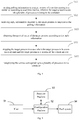
- the service information processing method may include:
- the target process is one of a plurality of processes running in a container, and the target process is independently polled to execute target process probing. Therefore, processes in the container can be independently probed, so that multiple processes can be run in a single container to save container resources.
- sending polling information to a target process of a service running in a container may include: sending the polling information to the target process through a port, or sending the polling information to the target process by using a probe, to poll the state of the target process.
- the plurality of processes may be processes of a same service or do not belong to a same service.
- a plurality of processes of a critical service A and at least one process of an accompanying service B of the critical service A are run in the container, and the target process may be a process of the critical service A or the accompanying service B.
- the target process is a process of the critical service A.
- the plurality of processes running in the container may include critical processes of a critical service, and may also include non-critical processes of an accompanying service of a critical service, wherein the accompanying service of the critical service may be a non-critical service.
- Both the critical service and the accompanying service of the critical service may, in the container, run an add-on that is different from a process and, in one specific embodiment that does not belong to such an object which can receive the polling information.
- the plurality of processes running in the above container may include only critical processes of a critical service, in which case there are only processes of a critical service within the container and no process of a non-critical service.
- a plurality processes may be isolated by a directory, or by an isolation card, or may not be isolated.
- a plurality of processes in the container may include the Nginx (X Engine) process and the Main process of Service A, and the Service A has a common configuration library (an add-on). It is also possible to run a Sidecar process that does not belong to the service A.
- the Sidecar process is a process of an accompanying service of the service A, for adding functions to the service A.
- state polling may be carried out on the plurality of processes running in the container through a port or by using a probe. By polling, whether the running of each process is abnormal or not may be known and thus the plurality of processes may be probed.
- the target process After receiving the polling information, the target process returns reply information of the polling information. If the reply information is not received or the received reply information is abnormal, it may be determined that the target process is abnormal.
- the obtaining the survival status of the target process according to the reply information may include: determining the survival status of the target process according to whether the reply information is received or not, or according to the content of the received reply information.
- the survival status of the target process is recorded.
- the target process is the main process of the critical service A in the container
- example status abnormity of the critical service A in the container is recorded.
- the target process is a process of a non-critical service
- the target process is an accompanying process of an accompanying service
- only target process status abnormity is recorded.
- the functions of recording example status abnormity and recording target process abnormity can include a keep-alive countdown of the service A or the target process. For example, in a case where a set first period is reached after the example status abnormity of the critical service A is recorded, the redeployment of the critical service A is executed. For another example, in a case where the target process is a process of a non-critical service, the target process is restarted in a case where a set second period is reached after the target process status abnormity is recorded or in a case where the target process status abnormity is recorded for a plurality of times.
- one base (Base) service which may be a program script, may be deployed in the container, and the PaaS system executes S11-S13 as shown in Fig. 1 by calling the program script.
- the script of the base service deployed in the container is used for managing other services to perform probing.
- the PaaS system may also call the script of the base service to start and stop other services, load data, and the like, playing the role of a universal service control (Control) script.
- the universal service control script may control traffic services to be able to be accessed, changed, kept alive, and probed (Status) independently in the container and notify a process to load configured data at startup (Reload), the start (Start) of the process, the stop (Stop) of the process, and the like.
- Service A 21 Service A
- Service B 22 Service B
- Service A and Service B may respectively start at least one process in the container.
- Add-on may not belong to a service process, and is used only for other services to provide configuration or base environment capabilities.
- Add-on C23 for Service B is (Service B Addon C).
- Add-on D for Service A (Service A Addon D).
- a base service 24 is called by the PaaS system for the start, stop, data reloading, and probing operations of service A 21, service B 22, and service B add-on C 23.
- the target process is one of a plurality of processes running in the container, and the target process is independently polled to execute target process probing. Therefore, other processes in the container may be independently probed such that multiple processes may be run in a single container based on the traditional PaaS single container, and thus container resources may be saved.
- the service includes a non-critical service
- the service information processing method may further include:
- a process can be distinguished as a process of a critical service or a process of a non-critical service by setting a critical flag field for the process.
- a non-critical service can be an accompanying service of a critical service.
- the target process is a process of a critical service
- the target process is a critical process
- the target process is a process of a non-critical service
- the target process in a case where the target process is in a non-survival state and the target process is in a process of a non-critical service, the target process is restarted, and the target process may be restarted after a set first time upon the target process is determined to be in the non-survival state through polling.
- the process of the non-critical service in a case where the process is in a non-survival state, the process of the non-critical service does not have a dependency relationship with other processes.
- the process may be restarted independently, without influencing the running of other processes in the container, so that independent keep-alive of a process in the container may be realized, and it is not necessary to rebuild the container. Thereby, the keep-alive cost is reduced, and the example level keep-alive is realized.
- the service includes a critical service
- the service information processing method may further include:
- the more than two processes among processes running in the container are processes of the critical service
- the more than two processes may generally have dependencies between the processes or may be relied on by a process of a non-critical service.
- the process of the critical service is in a non-survival state, the critical service needs to be redeployed, and simultaneously, other services with processes running in the container also need to be redeployed.
- data package of the critical service may be pulled, description information of the critical service may be obtained, and deployment of the critical service may be performed.
- the processes of the critical service and the processes of the non-critical service as well as the corresponding add-ons may be changed independently.
- the processes of the critical service and the processes of the non-critical service may also be independently probed and kept alive, and add-ons do not need to be probed and kept alive.
- a service may be defined whether to be a critical service by a field "is_critical". In a case where the service is a critical service, the value of the "is critical" field is "true”. In a case where both a process of the critical service and a process of the non-critical service are included in the container, the non-critical service depends on the critical service and the overall keep-alive of the container is executed once the critical service is abnormal.
- the service is an accompanying service (i.e. a non-critical service)
- the value of the "is_critical” field is "false”
- the non-critical service is not depended on by other services and service abnormity is not reflected on the whole of the container. Only this service is restarted and kept alive without affecting normal operation of other services. Keep-alive semantics are richer, and the keep-alive cost is more flexible and controllable.
- a keep-alive mode different from the process of the non-critical service is adopted, so that multiple processes can be flexibly kept alive while they are running based on a single container.
- the independent deployment of the critical service is needed, the independent deployment of the critical service is executed, so that the keep-alive cost is reduced and the service-level keep-alive is supported.
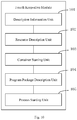
- redeploying a service corresponding to a plurality of processes in a container includes:
- the service information processing method further includes:
- a dependency between services, and starting and stopping order between services may be defined. If a plurality of services are included in the container, and the plurality of services include a critical service and a non-critical service, there is a dependency between services, generally the non-critical service depending on the critical service. For example, if the sequenced service is a critical service, a sequenced process is started in a corresponding container, the accompanying service starts a log record process in the container, the log record process is responsible for the log record of the sequenced process, and the log record process depends on the sequenced process.
- the service information processing method may further include:
- an access request of the service is sent to the configuration platform.
- the access request includes the metadata information of the service.
- the description information of the service is generated at the configuration platform, and the description information is used for deploying the service.
- the description information is generated according to the metadata information contained in the access request of the service, so that the user can deploy the service only by providing a small amount of metadata information and the access cost of the service is facilitated to get reduced.
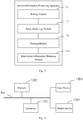
- the one-stop configuration platform 52 can automatically generate a configuration file, according to default rules, by pulling description information from a resource platform 53 according to the metadata.
- the configuration file is then sent through api (interface) to the back-end PaaS system 54 to deploy the service, starting the process of the service in the container. After the service is accessed, the starting, stopping, probing, data loading, etc. in the container are executed by means of one suitably developed script (Base).
- the platform provides a general control script that defines the behaviors of the script through the configuration file, including probing, stopping, starting, data reloading, domain name service of a process.
- the probing includes two modes of port probing and pointer probing, and in a specific example, the probing of a process can be carried out in any of the two modes.
- Pointer probing specifically includes two modes of command line pointer probing and HTTP (HyperText Transfer Protocol) pointer probing.
- a process stops in three modes: traffic stopping command stops, the sub-process with supervision recursively stops, and the process stops when the customized graceful exit period is reached.
- a process may be stopped in any mode.
- the mode in which a process starts includes both starts with supervision, and traffic starting command starts.
- a process may be started in any mode.
- Domain name service of a process (for example, Baidu Name Service, BNS) is used for service discovery. Still referring to Fig. 6 , the domain name service of a process includes two modes: the example domain name service is removed during the change, and the domain name service long tail waiting period is customized. In a specific example, the domain name service of a process may be realized in any mode. The conversion from the development script to the configuration parameters is realized, and the access cost of the traffic is greatly reduced.
- any one service or any combination of a plurality of services may be arbitrarily selected.
- the program package description in the description information can be updated. After an update is detected, the updated data are pulled and compared with the data described by the original program package. The difference between the updated data and the data described by the original program package is determined. A new add-on is then generated to replace the original add-on so that the flexible change of any combination in the service online procedure of one container is realized. It is ensured that the service in the container that does not need to be changed does not stop the service; the service that needs to be changed in the container can be changed with a plurality of arbitrarily selected services that have dependencies with it.
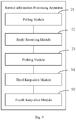
- An embodiment of the present application also provides a service information processing apparatus, as shown in Fig. 7 , including:
- a service includes a non-critical service, and as shown in Fig. 8 , the service information processing apparatus may further include:
- a service includes a critical service
- the service information processing apparatus may further include:
- the service information processing apparatus may further include:
- the application also provides an electronic device and a readable storage medium.
- Fig. 12 is a block diagram of an electronic device for a service information processing method of an embodiment of the present application.
- the electronic device is intended to represent various forms of digital computers, such as laptop computers, desktop computers, workstations, personal digital assistants, servers, blade servers, mainframe computers, and other suitable computers.
- the electronic device may also represent various forms of mobile apparatuses, such as personal digital assistants, cellular telephones, smartphones, wearable device, and other similar computing apparatuses.
- the components shown herein, their connections and relationships, and their functions are by way of example only and are not intended to limit the implementations of the application described and/or claimed herein.
- the electronic device includes one or more processors 1201, a memory 1202, and interfaces for connecting components, including high-speed interfaces and low-speed interfaces.
- the various components are interconnected using different buses and may be mounted on a common motherboard or otherwise as required.
- the processor may process instructions for execution within the electronic device, including instructions stored in memory or in memory to display graphical information of the GUI on an external input/output device (such as display device coupled to the interface).
- multiple processors and/or multiple buses may be used with multiple memories, if desired.
- multiple electronic devices may be connected, and each of them may provide some of the necessary manipulations (e.g., as an array of servers, a set of blade servers, or a multiprocessor system).
- One processor 1201 is shown as an example in Fig. 12 .
- Memory 1202 is a non-transitory computer-readable storage medium provided by the present application.
- the memory stores instructions executable by at least one processor to cause the at least one processor to execute the service information processing method provided by the present application.
- the non-transitory computer-readable storage medium of the present application stores computer instructions for causing a computer to execute the service information processing method provided herein.
- Memory 1202 as a non-transitory computer-readable storage medium, may be used to store non-transitory software programs, non-transitory computer-executable programs and modules, such as program instructions/modules corresponding to the service information processing method in the embodiment of the present application (e.g., polling module 71, reply receiving module 72, and probing module 73 shown in Fig. 7 ).
- the processor 1201 executes various functional applications and data processing of the server, i.e., may implement the service information processing method in the respective above-mentioned method embodiments by running non-transient software programs, instructions, and modules stored in the memory 1202.
- the memory 1202 can include a storage program area and a storage data area, wherein the storage program area can store an operating system and application programs required by at least one function; the storage data area may store data or the like created according to the use of service information processing electronic device.
- the memory 1202 may include high-speed random access memory, and may also include non-transitory memory, such as at least one disk storage components, flash memory components, or other non-transitory solid state storage components.
- the memory 1202 may optionally include a memory remotely set with respect to the processor 1201.
- the remote memories may be connected to the service information processing electronic apparatus via a network. Examples of the above-mentioned network includes, but is not limited to, the Internet, intranets, local area networks, mobile communication networks, and combinations thereof.
- the electronic device of the service information processing method may further include: input device 1203 and output device 1204.
- the processor 1201, memory 1202, input device 1203, and output device 1204 may be connected by a bus or other means, exemplified by a bus connection in Fig. 12 .
- the input device 1203 may receive input numeric or character information and generate key signal input related to user settings and functional controls of electronic device for service information processing, for example, may include a touch screen, a keypad, a mouse, a track pad, a touch pad, an indicating arm, one or more mouse buttons, a track ball, a joystick, and like input devices.
- the output device 1204 may include display device, auxiliary lighting device (e.g., LED), tactile feedback device (e.g., vibration motor), etc.
- the display device may include, but is not limited to, a liquid crystal display (LCD), a light emitting diode (LED) display, and a plasma display. In some implementations, the display device may be a touch screen.
- the various implementations of the systems and techniques described herein can be implemented in digital electronic circuit systems, integrated circuit systems, application specific ASIC (Application Specific Integrated Circuit), computer hardware, firmware, software, and/or combinations thereof. These various embodiments may include: implementing in one or more computer programs, which can be executed and/or interpreted on a programmable system including at least one programmable processor.
- the programmable processor can be a dedicated or general-purpose programmable processor, which can receive data and instructions from, and transmit data and instructions to, a storage system, at least one input device, and at least one output device.
- machine-readable medium and “computer-readable medium” refer to any computer program product, apparatus, and/or device (such as a magnetic disk, an optical disk, a memory and a programmable logic device (PLD)) for providing machine instructions and/or data to a programmable processor, including a machine-readable medium that receives machine instructions as machine-readable signals.
- machine-readable signal refers to any signal used to provide machine instructions and/or data to a programmable processor.
- the systems and techniques described herein may be implemented on a computer having: a display device (e.g., a CRT (cathode ray tube) or LCD (liquid crystal display) monitor) for displaying information to a user; and a keyboard and a pointing device (e.g., a mouse or a trackball) through which a user can provide the input to the computer.
- a display device e.g., a CRT (cathode ray tube) or LCD (liquid crystal display) monitor
- a keyboard and a pointing device e.g., a mouse or a trackball
- Other types of devices may also be used to provide an interaction with a user; for example, the feedback provided to the user may be any form of sensory feedback, (e.g., visual feedback, auditory feedback, or tactile feedback); the input from the user may be received in any form (including acoustic input, voice input, or tactile input).
- the systems and techniques described herein may be implemented in a computing system that includes a background part (e.g., as a data server), or in a computing system that includes a middleware part (e.g., an application server), or in a computing system that includes a front-end part (e.g., a user computer having a graphical user interface or a web browser through which a user may interact with implementations of the systems and techniques described herein), or in a computing system that includes any combination of such background part, middleware part or front-end part.
- the parts of the system may be interconnected by any form or medium of digital data communication (such as a communication network). Examples of the communication network include local area network (LAN), wide area network (WAN), and the Internet.
- the computer system may include a client and a server.
- the client and server are generally remote from each other and generally interact through a communication network.
- the relationship of the client and the server is generated by computer programs running on a corresponding computer and having a client-server relationship with each other.
- the server can be a cloud server, also called a cloud computing server or a cloud host, and is a host product in a cloud computing service system for solving the defects of high management difficulty and weak traffic expansibility in the traditional physical host and virtual private server (VPS) service.
- the server may also be a server of a distributed system, or a server incorporating a blockchain.
- the target process is one of a plurality of processes running in the container.
- the embodiment of the application independently polls the information to execute the probing of the target process. Therefore, other processes in the container can be independently probed so that based on the traditional PaaS single container, multiple processes are run in the single container and container resources are saved.
- the embodiment of the application supports flexible deployment of multiple services of the single container, can flexibly increase and decrease the services, and can independently change or be arbitrarily combined to change the service.
- the traffic access container only needs a user to provide very simple metadata to realize one-stop platform access, and configuration files and universal control script platformization, and the control scripts for control and starting are simple and easy to deploy.
- the time cost of the new traffic access search domain PaaS system is shortened from an average of 8 days to 1 day.
Landscapes
- Engineering & Computer Science (AREA)
- Theoretical Computer Science (AREA)
- Software Systems (AREA)
- Physics & Mathematics (AREA)
- General Engineering & Computer Science (AREA)
- General Physics & Mathematics (AREA)
- Signal Processing (AREA)
- Computer Networks & Wireless Communication (AREA)
- Computing Systems (AREA)
- Quality & Reliability (AREA)
- Mathematical Physics (AREA)
- General Health & Medical Sciences (AREA)
- Cardiology (AREA)
- Health & Medical Sciences (AREA)
- Environmental & Geological Engineering (AREA)
- Stored Programmes (AREA)
- Debugging And Monitoring (AREA)
- Time Recorders, Dirve Recorders, Access Control (AREA)
- Management, Administration, Business Operations System, And Electronic Commerce (AREA)
- Financial Or Insurance-Related Operations Such As Payment And Settlement (AREA)
Applications Claiming Priority (1)
| Application Number | Priority Date | Filing Date | Title |
|---|---|---|---|
| CN202011052975.0A CN112187581B (zh) | 2020-09-29 | 2020-09-29 | 服务信息处理方法、装置、设备及计算机存储介质 |
Publications (2)
| Publication Number | Publication Date |
|---|---|
| EP3819764A2 true EP3819764A2 (de) | 2021-05-12 |
| EP3819764A3 EP3819764A3 (de) | 2021-08-25 |
Family
ID=73946563
Family Applications (1)
| Application Number | Title | Priority Date | Filing Date |
|---|---|---|---|
| EP21164625.2A Ceased EP3819764A3 (de) | 2020-09-29 | 2021-03-24 | Dienstinformationverarbeitungsverfahren, einrichtung, vorrichtung und computerspeichermedium |
Country Status (5)
| Country | Link |
|---|---|
| US (1) | US11663037B2 (de) |
| EP (1) | EP3819764A3 (de) |
| JP (1) | JP7256217B2 (de) |
| KR (1) | KR102522398B1 (de) |
| CN (1) | CN112187581B (de) |
Cited By (5)
| Publication number | Priority date | Publication date | Assignee | Title |
|---|---|---|---|---|
| CN113535187A (zh) * | 2021-07-16 | 2021-10-22 | 北京百度网讯科技有限公司 | 服务上线方法、服务更新方法及服务提供方法 |
| CN113626044A (zh) * | 2021-08-13 | 2021-11-09 | 中国工商银行股份有限公司 | 服务管理方法及装置 |
| CN113641544A (zh) * | 2021-08-23 | 2021-11-12 | 北京百度网讯科技有限公司 | 用于检测应用状态的方法、装置、设备、介质和产品 |
| CN114281478A (zh) * | 2021-12-24 | 2022-04-05 | 北京百度网讯科技有限公司 | 容器运行方法、装置、电子设备及计算机存储介质 |
| CN115129469A (zh) * | 2022-06-23 | 2022-09-30 | 北京新唐思创教育科技有限公司 | 跨进程通信方法、装置、设备及存储介质 |
Families Citing this family (6)
| Publication number | Priority date | Publication date | Assignee | Title |
|---|---|---|---|---|
| CN112882735B (zh) * | 2021-03-11 | 2024-04-19 | 百度在线网络技术(北京)有限公司 | 熔断信息处理方法、装置、设备及存储介质 |
| CN115134231B (zh) * | 2021-03-17 | 2024-03-08 | 北京搜狗科技发展有限公司 | 一种通信方法、装置和用于通信的装置 |
| CN115827312A (zh) * | 2021-09-16 | 2023-03-21 | 博泰车联网科技(上海)股份有限公司 | 进程复归的方法、装置及计算机可读存储介质 |
| CN113849312B (zh) * | 2021-09-29 | 2023-05-16 | 北京百度网讯科技有限公司 | 数据处理任务的分配方法、装置、电子设备及存储介质 |
| CN116089075A (zh) * | 2022-12-30 | 2023-05-09 | 北京青云科技股份有限公司 | 一种容器应用方法、装置、电子设备和存储介质 |
| CN118827341A (zh) * | 2023-07-07 | 2024-10-22 | 中国移动通信集团福建有限公司 | 设备故障定位方法、装置及电子设备 |
Family Cites Families (20)
| Publication number | Priority date | Publication date | Assignee | Title |
|---|---|---|---|---|
| JP2002041305A (ja) * | 2000-07-26 | 2002-02-08 | Hitachi Ltd | 仮想計算機システムにおける計算機資源の割当て方法および仮想計算機システム |
| JP2005078163A (ja) * | 2003-08-28 | 2005-03-24 | Ricoh Co Ltd | 情報処理装置、機能復旧方法、機能復旧プログラム及び記録媒体 |
| US7434204B1 (en) * | 2004-07-07 | 2008-10-07 | Liveops, Inc. | Method and apparatus for managing software processes |
| US7748001B2 (en) * | 2004-09-23 | 2010-06-29 | Intel Corporation | Multi-thread processing system for detecting and handling live-lock conditions by arbitrating livelock priority of logical processors based on a predertermined amount of time |
| US9385926B2 (en) * | 2013-12-19 | 2016-07-05 | Intel Corporation | Service template generation and deployment based on service level agreement requirements |
| US9397905B1 (en) * | 2014-01-24 | 2016-07-19 | Amazon Technologies, Inc. | Aggregated health check of a multi-tenant service container |
| WO2015157897A1 (zh) * | 2014-04-14 | 2015-10-22 | 华为技术有限公司 | 一种云计算架构下的容灾数据中心配置方法及装置 |
| EP3311323A1 (de) * | 2015-06-22 | 2018-04-25 | Draios Inc. | Überwachung von in containern isolierten anwendungen |
| CN105138398B (zh) * | 2015-09-30 | 2019-09-27 | 山东乾云启创信息科技股份有限公司 | 同步通信模式下socket通信与进程管理通用平台及方法 |
| CN105357266B (zh) * | 2015-09-30 | 2018-11-16 | 山东乾云启创信息科技股份有限公司 | 适合多种场景的socket通信与进程管理通用平台及方法 |
| CN105389243B (zh) * | 2015-10-26 | 2018-06-05 | 华为技术有限公司 | 一种容器监控方法和装置 |
| CN105490870A (zh) * | 2015-11-20 | 2016-04-13 | 浪潮电子信息产业股份有限公司 | 一种批量监控Linux服务器运行状态的方法 |
| CN105868233A (zh) * | 2015-12-03 | 2016-08-17 | 乐视网信息技术(北京)股份有限公司 | 数据访问处理方法、装置及系统 |
| US10135837B2 (en) * | 2016-05-17 | 2018-11-20 | Amazon Technologies, Inc. | Versatile autoscaling for containers |
| JP2019159977A (ja) * | 2018-03-15 | 2019-09-19 | 富士通株式会社 | 制御プログラム、制御装置及び制御方法 |
| JP2020038525A (ja) * | 2018-09-05 | 2020-03-12 | 東日本電信電話株式会社 | 異常検知装置 |
| CN109739640A (zh) | 2018-12-13 | 2019-05-10 | 北京计算机技术及应用研究所 | 一种基于申威架构的容器资源管理系统 |
| US10956526B2 (en) * | 2019-03-04 | 2021-03-23 | International Business Machines Corporation | Implementing a policy-driven resource deployment mechanism in a cloud environment |
| CN110935167B (zh) | 2019-11-21 | 2023-05-26 | 网易(杭州)网络有限公司 | 服务端维护方法、装置、处理器及电子装置 |
| US11122506B2 (en) * | 2019-12-27 | 2021-09-14 | Intel Corporation | Idle connection optimization for wireless devices |
-
2020
- 2020-09-29 CN CN202011052975.0A patent/CN112187581B/zh active Active
-
2021
- 2021-02-05 KR KR1020210016978A patent/KR102522398B1/ko active Active
- 2021-03-22 JP JP2021047080A patent/JP7256217B2/ja active Active
- 2021-03-24 EP EP21164625.2A patent/EP3819764A3/de not_active Ceased
- 2021-03-24 US US17/211,315 patent/US11663037B2/en active Active
Non-Patent Citations (2)
| Title |
|---|
| BURNS BRENDAN ET AL: "Kubernetes Up & Running", 4 October 2019 (2019-10-04), XP055921130, Retrieved from the Internet <URL:https://www.vmware.com/content/dam/digitalmarketing/vmware/en/pdf/docs/vmware-kubernetes-up-running-dive-into-the-future-of-infrastructure.pdf> [retrieved on 20220513] * |
| FELBER P ET AL: "Failure detectors as first class objects", DISTRIBUTED OBJECTS AND APPLICATIONS, 1999. PROCEEDINGS OF THE INTERNA TIONAL SYMPOSIUM ON EDINBURGH, UK 5-6 SEPT. 1999, LOS ALAMITOS, CA, USA,IEEE COMPUT. SOC, US, 5 September 1999 (1999-09-05), pages 132 - 141, XP010352190, ISBN: 978-0-7695-0182-6 * |
Cited By (8)
| Publication number | Priority date | Publication date | Assignee | Title |
|---|---|---|---|---|
| CN113535187A (zh) * | 2021-07-16 | 2021-10-22 | 北京百度网讯科技有限公司 | 服务上线方法、服务更新方法及服务提供方法 |
| CN113535187B (zh) * | 2021-07-16 | 2024-03-22 | 北京百度网讯科技有限公司 | 服务上线方法、服务更新方法及服务提供方法 |
| CN113626044A (zh) * | 2021-08-13 | 2021-11-09 | 中国工商银行股份有限公司 | 服务管理方法及装置 |
| CN113641544A (zh) * | 2021-08-23 | 2021-11-12 | 北京百度网讯科技有限公司 | 用于检测应用状态的方法、装置、设备、介质和产品 |
| CN113641544B (zh) * | 2021-08-23 | 2024-04-26 | 北京百度网讯科技有限公司 | 用于检测应用状态的方法、装置、设备、介质和产品 |
| CN114281478A (zh) * | 2021-12-24 | 2022-04-05 | 北京百度网讯科技有限公司 | 容器运行方法、装置、电子设备及计算机存储介质 |
| CN115129469A (zh) * | 2022-06-23 | 2022-09-30 | 北京新唐思创教育科技有限公司 | 跨进程通信方法、装置、设备及存储介质 |
| CN115129469B (zh) * | 2022-06-23 | 2023-04-21 | 北京新唐思创教育科技有限公司 | 跨进程通信方法、装置、设备及存储介质 |
Also Published As
| Publication number | Publication date |
|---|---|
| CN112187581B (zh) | 2022-08-02 |
| KR20220043818A (ko) | 2022-04-05 |
| CN112187581A (zh) | 2021-01-05 |
| KR102522398B1 (ko) | 2023-04-17 |
| US11663037B2 (en) | 2023-05-30 |
| EP3819764A3 (de) | 2021-08-25 |
| US20210271511A1 (en) | 2021-09-02 |
| JP2021099888A (ja) | 2021-07-01 |
| JP7256217B2 (ja) | 2023-04-11 |
Similar Documents
| Publication | Publication Date | Title |
|---|---|---|
| US11663037B2 (en) | Service information processing method, apparatus, device and computer storage medium | |
| EP3828701B1 (de) | Mini-app-verarbeitungsverfahren, server, vorrichtung und speichermedium | |
| EP3974962A1 (de) | Verfahren, gerät, elektronische vorrichtung, lesbares speichermedium und programm zum einsatz der anwendung | |
| US20210208951A1 (en) | Method and apparatus for sharing gpu, electronic device and readable storage medium | |
| CN106598655B (zh) | 应用程序页面处理方法和装置 | |
| JP7167222B2 (ja) | アプレットデータの取得方法、装置、機器及び記憶媒体 | |
| CN113934464B (zh) | Linux系统中启动安卓应用的方法、装置和电子设备 | |
| US20130339947A1 (en) | Method and system for hypervisor-based service management | |
| CN113656147A (zh) | 一种集群部署方法、装置、设备及存储介质 | |
| US11354150B1 (en) | Utilizing maintenance event windows to determine placement of instances | |
| US11294651B2 (en) | Code execution method, device, and rendering apparatus | |
| CN111767090A (zh) | 小程序的启动方法、装置、电子设备以及存储介质 | |
| US11681585B2 (en) | Data migration for a shared database | |
| KR20210038858A (ko) | 애플리케이션의 작동 방법, 장치, 기기 및 저장매체 | |
| CN113656423A (zh) | 更新数据的方法及装置、电子设备和存储介质 | |
| CN114077367A (zh) | Linux系统中实现安卓应用快捷方式的方法和装置 | |
| CN111597021A (zh) | 一种实现应用程序运行的方法、装置、系统及相关设备 | |
| CN113805858B (zh) | 持续部署脚本语言开发的软件的方法和装置 | |
| CN115658109A (zh) | 微服务热部署方法、系统、电子设备和存储介质 | |
| CN110730197A (zh) | 一种服务发现方法和系统 | |
| JP2021131897A (ja) | スケジューリング方法、装置、設備、記憶設備、及びプログラム | |
| CN115269497B (zh) | 用于配置网络文件系统的方法和装置 | |
| CN114416276B (zh) | 设备管理服务的调度方法、装置、电子设备及存储介质 | |
| CN115576565A (zh) | 应用程序的部署方法、装置、电子设备及存储介质 | |
| CN117056022A (zh) | Rpa任务的执行方法、装置、电子设备及存储介质 |
Legal Events
| Date | Code | Title | Description |
|---|---|---|---|
| PUAI | Public reference made under article 153(3) epc to a published international application that has entered the european phase |
Free format text: ORIGINAL CODE: 0009012 |
|
| STAA | Information on the status of an ep patent application or granted ep patent |
Free format text: STATUS: REQUEST FOR EXAMINATION WAS MADE |
|
| 17P | Request for examination filed |
Effective date: 20210324 |
|
| AK | Designated contracting states |
Kind code of ref document: A2 Designated state(s): AL AT BE BG CH CY CZ DE DK EE ES FI FR GB GR HR HU IE IS IT LI LT LU LV MC MK MT NL NO PL PT RO RS SE SI SK SM TR |
|
| PUAL | Search report despatched |
Free format text: ORIGINAL CODE: 0009013 |
|
| AK | Designated contracting states |
Kind code of ref document: A3 Designated state(s): AL AT BE BG CH CY CZ DE DK EE ES FI FR GB GR HR HU IE IS IT LI LT LU LV MC MK MT NL NO PL PT RO RS SE SI SK SM TR |
|
| RIC1 | Information provided on ipc code assigned before grant |
Ipc: G06F 9/48 20060101AFI20210721BHEP Ipc: G06F 9/455 20180101ALI20210721BHEP Ipc: G06F 9/50 20060101ALI20210721BHEP Ipc: G06F 11/07 20060101ALI20210721BHEP Ipc: G06F 11/30 20060101ALI20210721BHEP Ipc: G06F 11/14 20060101ALI20210721BHEP Ipc: H04L 12/24 20060101ALI20210721BHEP Ipc: H04L 12/26 20060101ALI20210721BHEP |
|
| STAA | Information on the status of an ep patent application or granted ep patent |
Free format text: STATUS: EXAMINATION IS IN PROGRESS |
|
| 17Q | First examination report despatched |
Effective date: 20220127 |
|
| STAA | Information on the status of an ep patent application or granted ep patent |
Free format text: STATUS: THE APPLICATION HAS BEEN REFUSED |
|
| 18R | Application refused |
Effective date: 20230309 |