EP3819140B1 - Transport refrigeration system - Google Patents
Transport refrigeration system Download PDFInfo
- Publication number
- EP3819140B1 EP3819140B1 EP20206052.1A EP20206052A EP3819140B1 EP 3819140 B1 EP3819140 B1 EP 3819140B1 EP 20206052 A EP20206052 A EP 20206052A EP 3819140 B1 EP3819140 B1 EP 3819140B1
- Authority
- EP
- European Patent Office
- Prior art keywords
- power
- grid
- compressor
- supplied
- conversion unit
- Prior art date
- Legal status (The legal status is an assumption and is not a legal conclusion. Google has not performed a legal analysis and makes no representation as to the accuracy of the status listed.)
- Active
Links
Images




Classifications
-
- B—PERFORMING OPERATIONS; TRANSPORTING
- B60—VEHICLES IN GENERAL
- B60L—PROPULSION OF ELECTRICALLY-PROPELLED VEHICLES; SUPPLYING ELECTRIC POWER FOR AUXILIARY EQUIPMENT OF ELECTRICALLY-PROPELLED VEHICLES; ELECTRODYNAMIC BRAKE SYSTEMS FOR VEHICLES IN GENERAL; MAGNETIC SUSPENSION OR LEVITATION FOR VEHICLES; MONITORING OPERATING VARIABLES OF ELECTRICALLY-PROPELLED VEHICLES; ELECTRIC SAFETY DEVICES FOR ELECTRICALLY-PROPELLED VEHICLES
- B60L53/00—Methods of charging batteries, specially adapted for electric vehicles; Charging stations or on-board charging equipment therefor; Exchange of energy storage elements in electric vehicles
- B60L53/60—Monitoring or controlling charging stations
- B60L53/62—Monitoring or controlling charging stations in response to charging parameters, e.g. current, voltage or electrical charge
-
- H—ELECTRICITY
- H02—GENERATION; CONVERSION OR DISTRIBUTION OF ELECTRIC POWER
- H02J—ELECTRIC POWER NETWORKS; CIRCUIT ARRANGEMENTS OR SYSTEMS FOR SUPPLYING OR DISTRIBUTING ELECTRIC POWER; SYSTEMS FOR STORING ELECTRIC ENERGY
- H02J7/00—Circuit arrangements for charging or discharging batteries or for supplying loads from batteries
- H02J7/865—Battery or charger load switching, e.g. concurrent charging and load supply
-
- B—PERFORMING OPERATIONS; TRANSPORTING
- B60—VEHICLES IN GENERAL
- B60H—ARRANGEMENTS OF HEATING, COOLING, VENTILATING OR OTHER AIR-TREATING DEVICES SPECIALLY ADAPTED FOR PASSENGER OR GOODS SPACES OF VEHICLES
- B60H1/00—Heating, cooling or ventilating devices
- B60H1/32—Cooling devices
- B60H1/3204—Cooling devices using compression
- B60H1/3205—Control means therefor
- B60H1/3208—Vehicle drive related control of the compressor drive means, e.g. for fuel saving purposes
-
- B—PERFORMING OPERATIONS; TRANSPORTING
- B60—VEHICLES IN GENERAL
- B60H—ARRANGEMENTS OF HEATING, COOLING, VENTILATING OR OTHER AIR-TREATING DEVICES SPECIALLY ADAPTED FOR PASSENGER OR GOODS SPACES OF VEHICLES
- B60H1/00—Heating, cooling or ventilating devices
- B60H1/00421—Driving arrangements for parts of a vehicle air-conditioning
- B60H1/00428—Driving arrangements for parts of a vehicle air-conditioning electric
-
- B—PERFORMING OPERATIONS; TRANSPORTING
- B60—VEHICLES IN GENERAL
- B60H—ARRANGEMENTS OF HEATING, COOLING, VENTILATING OR OTHER AIR-TREATING DEVICES SPECIALLY ADAPTED FOR PASSENGER OR GOODS SPACES OF VEHICLES
- B60H1/00—Heating, cooling or ventilating devices
- B60H1/32—Cooling devices
- B60H1/3204—Cooling devices using compression
- B60H1/3222—Cooling devices using compression characterised by the compressor driving arrangements, e.g. clutches, transmissions or multiple drives
-
- B—PERFORMING OPERATIONS; TRANSPORTING
- B60—VEHICLES IN GENERAL
- B60H—ARRANGEMENTS OF HEATING, COOLING, VENTILATING OR OTHER AIR-TREATING DEVICES SPECIALLY ADAPTED FOR PASSENGER OR GOODS SPACES OF VEHICLES
- B60H1/00—Heating, cooling or ventilating devices
- B60H1/32—Cooling devices
- B60H1/3204—Cooling devices using compression
- B60H1/3226—Self-contained devices, i.e. including own drive motor
-
- B—PERFORMING OPERATIONS; TRANSPORTING
- B60—VEHICLES IN GENERAL
- B60H—ARRANGEMENTS OF HEATING, COOLING, VENTILATING OR OTHER AIR-TREATING DEVICES SPECIALLY ADAPTED FOR PASSENGER OR GOODS SPACES OF VEHICLES
- B60H1/00—Heating, cooling or ventilating devices
- B60H1/32—Cooling devices
- B60H1/3204—Cooling devices using compression
- B60H1/3232—Cooling devices using compression particularly adapted for load transporting vehicles
-
- B—PERFORMING OPERATIONS; TRANSPORTING
- B60—VEHICLES IN GENERAL
- B60R—VEHICLES, VEHICLE FITTINGS, OR VEHICLE PARTS, NOT OTHERWISE PROVIDED FOR
- B60R16/00—Electric or fluid circuits specially adapted for vehicles and not otherwise provided for; Arrangement of elements of electric or fluid circuits specially adapted for vehicles and not otherwise provided for
- B60R16/02—Electric or fluid circuits specially adapted for vehicles and not otherwise provided for; Arrangement of elements of electric or fluid circuits specially adapted for vehicles and not otherwise provided for electric constitutive elements
- B60R16/03—Electric or fluid circuits specially adapted for vehicles and not otherwise provided for; Arrangement of elements of electric or fluid circuits specially adapted for vehicles and not otherwise provided for electric constitutive elements for supply of electrical power to vehicle subsystems or for
-
- B—PERFORMING OPERATIONS; TRANSPORTING
- B60—VEHICLES IN GENERAL
- B60L—PROPULSION OF ELECTRICALLY-PROPELLED VEHICLES; SUPPLYING ELECTRIC POWER FOR AUXILIARY EQUIPMENT OF ELECTRICALLY-PROPELLED VEHICLES; ELECTRODYNAMIC BRAKE SYSTEMS FOR VEHICLES IN GENERAL; MAGNETIC SUSPENSION OR LEVITATION FOR VEHICLES; MONITORING OPERATING VARIABLES OF ELECTRICALLY-PROPELLED VEHICLES; ELECTRIC SAFETY DEVICES FOR ELECTRICALLY-PROPELLED VEHICLES
- B60L2200/00—Type of vehicles
- B60L2200/36—Vehicles designed to transport cargo, e.g. trucks
-
- Y—GENERAL TAGGING OF NEW TECHNOLOGICAL DEVELOPMENTS; GENERAL TAGGING OF CROSS-SECTIONAL TECHNOLOGIES SPANNING OVER SEVERAL SECTIONS OF THE IPC; TECHNICAL SUBJECTS COVERED BY FORMER USPC CROSS-REFERENCE ART COLLECTIONS [XRACs] AND DIGESTS
- Y02—TECHNOLOGIES OR APPLICATIONS FOR MITIGATION OR ADAPTATION AGAINST CLIMATE CHANGE
- Y02T—CLIMATE CHANGE MITIGATION TECHNOLOGIES RELATED TO TRANSPORTATION
- Y02T10/00—Road transport of goods or passengers
- Y02T10/60—Other road transportation technologies with climate change mitigation effect
- Y02T10/70—Energy storage systems for electromobility, e.g. batteries
-
- Y—GENERAL TAGGING OF NEW TECHNOLOGICAL DEVELOPMENTS; GENERAL TAGGING OF CROSS-SECTIONAL TECHNOLOGIES SPANNING OVER SEVERAL SECTIONS OF THE IPC; TECHNICAL SUBJECTS COVERED BY FORMER USPC CROSS-REFERENCE ART COLLECTIONS [XRACs] AND DIGESTS
- Y02—TECHNOLOGIES OR APPLICATIONS FOR MITIGATION OR ADAPTATION AGAINST CLIMATE CHANGE
- Y02T—CLIMATE CHANGE MITIGATION TECHNOLOGIES RELATED TO TRANSPORTATION
- Y02T10/00—Road transport of goods or passengers
- Y02T10/60—Other road transportation technologies with climate change mitigation effect
- Y02T10/7072—Electromobility specific charging systems or methods for batteries, ultracapacitors, supercapacitors or double-layer capacitors
-
- Y—GENERAL TAGGING OF NEW TECHNOLOGICAL DEVELOPMENTS; GENERAL TAGGING OF CROSS-SECTIONAL TECHNOLOGIES SPANNING OVER SEVERAL SECTIONS OF THE IPC; TECHNICAL SUBJECTS COVERED BY FORMER USPC CROSS-REFERENCE ART COLLECTIONS [XRACs] AND DIGESTS
- Y02—TECHNOLOGIES OR APPLICATIONS FOR MITIGATION OR ADAPTATION AGAINST CLIMATE CHANGE
- Y02T—CLIMATE CHANGE MITIGATION TECHNOLOGIES RELATED TO TRANSPORTATION
- Y02T10/00—Road transport of goods or passengers
- Y02T10/80—Technologies aiming to reduce greenhouse gasses emissions common to all road transportation technologies
- Y02T10/88—Optimized components or subsystems, e.g. lighting, actively controlled glasses
-
- Y—GENERAL TAGGING OF NEW TECHNOLOGICAL DEVELOPMENTS; GENERAL TAGGING OF CROSS-SECTIONAL TECHNOLOGIES SPANNING OVER SEVERAL SECTIONS OF THE IPC; TECHNICAL SUBJECTS COVERED BY FORMER USPC CROSS-REFERENCE ART COLLECTIONS [XRACs] AND DIGESTS
- Y02—TECHNOLOGIES OR APPLICATIONS FOR MITIGATION OR ADAPTATION AGAINST CLIMATE CHANGE
- Y02T—CLIMATE CHANGE MITIGATION TECHNOLOGIES RELATED TO TRANSPORTATION
- Y02T90/00—Enabling technologies or technologies with a potential or indirect contribution to GHG emissions mitigation
- Y02T90/10—Technologies relating to charging of electric vehicles
- Y02T90/12—Electric charging stations
Definitions
- the embodiments herein generally relate to transport refrigeration systems and more specifically, the energy management of such transport refrigeration systems.
- cold chain distribution systems are used to transport and distribute cargo, or more specifically perishable goods and environmentally sensitive goods (herein referred to as perishable goods) that may be susceptible to temperature, humidity, and other environmental factors.
- Perishable goods may include but are not limited to fruits, vegetables, grains, beans, nuts, eggs, dairy, seed, flowers, meat, poultry, fish, ice, and pharmaceuticals.
- cold chain distribution systems allow perishable goods to be effectively transported and distributed without damage or other undesirable effects.
- Refrigerated vehicles and trailers are commonly used to transport perishable goods in a cold chain distribution system.
- a transport refrigeration system is mounted to the vehicles or to the trailer in operative association with a cargo space defined within the vehicles or trailer for maintaining a controlled temperature environment within the cargo space.
- transport refrigeration systems used in connection with refrigerated vehicles and refrigerated trailers include a transportation refrigeration unit having a refrigerant compressor, a condenser with one or more associated condenser fans, an expansion device, and an evaporator with one or more associated evaporator fans, which are connected via appropriate refrigerant lines in a closed refrigerant flow circuit.
- Air or an air/ gas mixture is drawn from the interior volume of the cargo space by means of the evaporator fan(s) associated with the evaporator, passed through the airside of the evaporator in heat exchange relationship with refrigerant whereby the refrigerant absorbs heat from the air, thereby cooling the air.
- the cooled air is then supplied back to the cargo space.
- the compressor On commercially available transport refrigeration systems used in connection with refrigerated vehicles and refrigerated trailers, the compressor, and typically other components of the transportation refrigeration unit, must be powered during transit by a prime mover.
- the compressor In mechanically driven transport refrigeration systems the compressor is driven by the prime mover, either through a direct mechanical coupling or a belt drive, and other components, such as the condenser and evaporator fans are belt driven.
- Transport refrigeration systems may also be electrically driven.
- components of the transportation refrigeration unit such as a compressor
- a “road mode” refers to a mode of operation in which the transport refrigeration system is unconnected to a power grid, such as when a refrigerated vehicle is in transit.
- a “standby mode” refers to a mode of operation in which the transport refrigeration system is connected to a power grid, such as when a refrigerated vehicle is parked and plugged in to a charging station.
- WO 2018/005968 A1 discloses a system including mode, engine, and battery modules, wherein the mode module determines whether to operate in an engine mode or a battery mode based on parameters.
- US 2007/0131408 A1 discloses a HVAC system for use in an over-the-road or off road vehicle, which may be operated regardless of the operational state of the engine.
- a transport refrigeration system comprising: a transportation refrigeration unit including a compressor, one or more valves, and a controller; an energy storage device configured to provide electrical power to the transportation refrigeration unit; and an intelligent charging connector in electrical communication with the energy storage device and/or the transportation refrigeration unit, the intelligent charging connector being connectable to a power grid; wherein the intelligent charging connector is configured to selectively control a provision of electrical power to the transportation refrigeration unit from the energy storage device and/or the power grid; wherein the intelligent charging connector is configured to transition the provision of electrical power to the transportation refrigeration unit from being supplied by the energy storage device to being supplied by the power grid in response to the intelligent charging connector being connected to the power grid; wherein the intelligent charging connector is configured to transition the provision of electrical power to the transportation refrigeration unit from being supplied by the power grid to being supplied by the energy storage device in conjunction with the intelligent charging connector being disconnected from the power grid; wherein the transport refrigeration system comprises a power conversion unit configured to convert an amplitude, a frequency and a phase of an electrical
- the transport refrigeration system may include that the intelligent charging connector is configured to transmit the characteristics of the electrical power signal supplied by the power grid to the power conversion unit in response to the intelligent charging connector being connected to the power grid and the power conversion unit is configured to, based on the characteristics of the electrical power signal supplied by the power grid, gradually convert characteristics of an electrical power signal supplied from the energy storage device to the transportation refrigeration unit to match the characteristics of the electrical power signal supplied by the power grid.
- Further embodiments of the transport refrigeration system may include that the characteristics of the electrical power signal supplied from the energy storage device include an amplitude, a frequency and a phase of the electrical power signal supplied from the energy storage device.
- the transport refrigeration system may include that the power conversion unit is configured to gradually convert the characteristics of the electrical power signal supplied from the energy storage device to the transportation refrigeration unit at a rate of change that allows for a continuous functioning of the transportation refrigeration unit.
- the intelligent charging connector is configured to close the switch to directly connect the power grid to the transportation refrigeration unit in response to receiving a communication from the power conversion unit indicating that the characteristics of the electrical power signal supplied from the energy storage device have been converted to match the characteristics of the electrical power signal supplied by the power grid.
- the transport refrigeration system may include that the power conversion unit is configured to supply an electrical power signal to the energy storage device in response to the switch being closed by converting the characteristics of the electrical power signal supplied from the power grid to match characteristics of an electrical power signal required to charge the energy storage device.
- the transport refrigeration system may include that the power conversion unit is configured to displace the electrical power signal supplied from the power grid to the transportation refrigeration unit with an electrical power signal supplied by the energy storage device that has been converted by the power conversion unit to have characteristics that match the characteristics of the electrical power signal supplied by the power grid in response to receiving a signal indicative of a user's intent to disconnect the intelligent charging connector from the power supply.
- the transport refrigeration system may include that the intelligent charging connector is configured to open the switch and cause an indication that the intelligent charging connector is ready to be disconnected from the power supply to be displayed for viewing by a user in response to the intelligent charging connector receiving an indication from the power conversion unit that the transportation refrigeration unit is being fully powered by an electrical power signal supplied by the energy storage device.
- the power supply may also be considered as a power grid.
- a method of transitioning a transport refrigeration system from a road mode to a standby mode comprises: connecting an intelligent charging connector of the transport refrigeration system to a power grid that supplies grid power; detecting, by the intelligent charging connector, electrical characteristics of the grid power; communicating the electrical characteristics of the grid power to a power conversion unit of the transport refrigeration system; adjusting, by the power conversion unit, electrical characteristics of a power supplied to a compressor of the transport refrigeration system from a battery of the transport refrigeration system to match the electrical characteristics of the grid power; closing, by the intelligent charging connector, a switch of the intelligent charging connector, wherein the closed switch provides a direct connection between the power grid and the compressor; and turning off the power conversion unit to prevent a flow of electrical power from the battery to the compressor.
- Further embodiments of the method of transitioning a transport refrigeration system from a road mode to a standby mode may include that the power supplied to the compressor is supplied from the battery to the compressor via the power conversion unit.
- adjusting the electrical characteristics of the power supplied to the compressor to match the electrical characteristics of the grid power includes: gradually adjusting the electrical characteristics of the power supplied to the compressor; and repeatedly checking the electrical characteristics of the power supplied to the compressor until a match with the electrical characteristics of the grid power has been achieved.
- Further embodiments of the method of transitioning a transport refrigeration system from a road mode to a standby mode may include that adjusting the electrical characteristics of the power supplied to the compressor comprises changing one or more of an amplitude, phase or frequency of the power supplied to the compressor.
- Further embodiments of the method of transitioning a transport refrigeration system from a road mode to a standby mode may include activating the power conversion unit to convert the grid power into a DC power that is appropriate to charge the battery.
- a method of transitioning a transport refrigeration system from a standby mode to a road mode comprises: operating the transport refrigeration system in the standby mode, wherein the standby mode includes powering a compressor of the transport refrigeration system with grid power via a direct connection from the compressor to a power grid; receiving, by an intelligent charging connector of the transport refrigeration system, an indication that a standby mode should end; turning on a power conversion unit of the transport refrigeration system that receives power supplied by a battery of the transport refrigeration system as an input and supplies an output power to the compressor; gradually adjusting, by the power conversion unit, electrical characteristics of the output power supplied to the compressor to match electrical characteristics of the grid power; and responsive to determining that the power supplied to the compressor from the power conversion unit has completely displaced the power supplied to the compressor from the power grid, causing, by the intelligent charging connector, a switch of the intelligent charging connector to be opened to disconnect the direct connection from the compressor to the power grid.
- determining that the power supplied to the compressor from the power conversion unit has completely displaced the power supplied to the compressor from the power grid includes: determining, by the power conversion unit that the power supplied to the compressor from the power conversion unit has completely displaced the power supplied to the compressor from the power grid; and transmitting, from the power conversion unit to the intelligent charging connector, an indication that the power supplied to the compressor from the power conversion unit has completely displaced the power supplied to the compressor from the power grid.
- Further embodiments of the method of transitioning a transport refrigeration system from a standby mode to a road mode may include that the electrical characteristics of the output power supplied to the compressor comprise one or more of an amplitude, a phase and a frequency of the output power.
- Further embodiments of the method of transitioning a transport refrigeration system from a standby mode to a road mode may include that operating the transport refrigeration system in the standby mode includes charging the battery using the grid power.
- FIG. 1 For embodiments of the method of transitioning a transport refrigeration system from a standby mode to a road mode, may include that receiving, by an intelligent charging connector, an indication that a standby mode should end includes: determining, by a sensor associated with the battery, that the battery has completed charging; and turning the power conversion unit off.
- inventions of the present disclosure include allowing the smooth transition between different operating modes that allows the continuous uninterrupted operation of the transport refrigeration system by preventing large inrush currents that may otherwise be caused by connecting the transport refrigeration system to the power grid and power interruptions caused by disconnecting from the power grid.
- FIG. 1 shows a schematic illustration of a transport refrigeration system 200.
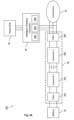
- FIG. 2A shows block diagram of an intelligent charging connector 28 integrated with a transport refrigeration system 200 of FIG. 1 .
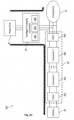
- FIGS. 2B and 2C show a block diagram of the transport refrigeration system 200 operating in road mode and a block diagram of the transport refrigeration system 200 operating in standby mode, respectively.
- the transport refrigeration system 200 is being illustrated as a trailer system 100, as seen in FIG. 1 .
- the trailer system 100 includes a vehicle 102 integrally connected to a transport container 106.
- the vehicle 102 includes an operator's compartment or cab 104 and a propulsion motor 120 which acts as the drive system of the trailer system 100.
- the propulsion motor 120 is configured to power the vehicle 102.
- the energy source that powers the propulsion motor 120 may be at least one of compressed natural gas, liquefied natural gas, gasoline, electricity, diesel, or a combination thereof.
- the propulsion motor 120 may be an electric motor or a hybrid motor (e.g., a combustion engine and an electric motor).
- the transport container 106 is coupled to the vehicle 102.
- the transport container 106 may be removably coupled to the vehicle 102.
- the transport container 106 is a refrigerated trailer and includes a top wall 108, a directly opposed bottom wall 110, opposed side walls 112, and a front wall 114, with the front wall 114 being closest to the vehicle 102.
- the transport container 106 further includes a door or doors 117 at a rear wall 116, opposite the front wall 114.
- the walls of the transport container 106 define a refrigerated cargo space 119. It is appreciated by those of skill in the art that embodiments described herein may be applied to a tractor-trailer refrigerated system or non-trailer refrigeration such as, for example, a rigid truck, or a truck having refrigerated compartment.
- transport refrigeration systems 200 are used to transport and distribute perishable goods and environmentally sensitive goods (herein referred to as perishable goods 118).
- the perishable goods 118 may include but are not limited to fruits, vegetables, grains, beans, nuts, eggs, dairy, seed, flowers, meat, poultry, fish, ice, blood, pharmaceuticals, or any other suitable cargo requiring temperature controlled transport.
- the transport refrigeration system 200 includes a transportation refrigeration unit 22, an energy storage device 24, a power conversion unit 26, and an intelligent charging connector 28.
- the transportation refrigeration unit 22 includes a refrigerant compression device 32 for providing a heat transfer functionality and an electric motor (not shown) for driving the refrigerant compression device 32.
- the transportation refrigeration unit 22 is in operative association with the refrigerated cargo space 119 and is configured to provide conditioned air to the transport container 106.
- the transportation refrigeration unit 22 functions, under the control of a controller (not shown), to establish and regulate desired environmental parameters, such as, for example, temperature, pressure, humidity, carbon dioxide, ethylene, ozone, light exposure, vibration exposure, and other conditions in the cargo space 119, as known to one of ordinary skill in the art.
- desired environmental parameters such as, for example, temperature, pressure, humidity, carbon dioxide, ethylene, ozone, light exposure, vibration exposure, and other conditions in the cargo space 119, as known to one of ordinary skill in the art.
- the transportation refrigeration unit 22 is capable of providing a desired temperature and humidity range.
- the transportation refrigeration unit 22 can include a refrigerant compression device 32 (which may be referred to simply as compressor 32), a refrigerant heat rejection heat exchanger, an expansion device, and a refrigerant heat absorption heat exchanger connected in refrigerant flow communication in a closed loop refrigerant circuit and arranged in a conventional refrigeration cycle.
- the refrigerant compression device 32 may be a single-stage or multiple-stage compressor such as, for example, a reciprocating compressor or a scroll compressor.
- the transportation refrigeration unit 22 can also include one or more fans associated with the refrigerant heat rejection heat exchanger and can be driven by fan motor(s) and one or more fans associated with the refrigerant heat absorption heat exchanger and driven by fan motor(s).
- the transportation refrigeration unit 22 may also include a heater associated with the refrigerant heat absorption heat exchanger. It is to be understood that other components may be incorporated into the refrigerant circuit as desired, including for example, but not limited to, a suction modulation valve, a receiver, a filter/dryer, and/or an economizer circuit.
- compressor 32 shown in FIG. 2A can be a component of a refrigeration unit 22.
- the transportation refrigeration unit 22 can be powered by the energy storage device 24 (which may for simplicity be referred to as battery 24), which provides electrical power to the transportation refrigeration unit 22 during operation of the transport refrigeration system in road mode.
- the energy storage device 24 may include a battery system (e.g., a battery or bank of batteries), fuel cells, flow battery, and others devices capable of storing and outputting electric energy that may be direct current (DC).
- the energy storage device 24 may include a battery system, which may employ multiple batteries organized into battery banks.
- the battery 24 may be charged by a stationary charging station 30 such as, for example, a wall 48V power outlet, or some other outlet connected to a power grid 30.
- the charging station 30 may provide single phase (e.g., level 2 charging capability) or three phase AC power to the energy storage device 24. It is understood that the charging station 30 may have any phase charging and embodiments disclosed herein are not limited to single phase or three phase AC power.
- the single phase AC power may be a high voltage DC power, such as, for example, 500VDC.
- the energy storage device 24 is located outside of the transportation refrigeration unit 22, as shown in FIG. 1 . In another embodiment, the energy storage device 24 is located within the transportation refrigeration unit 22.
- the transportation refrigeration unit 22 can have a plurality of electrical power demand loads on the energy storage device 24, including, but not limited to, a motor for compressor 32, a drive motor for a fan associated with a refrigerant heat rejection heat exchanger, a drive motor for a fan associated with a refrigerant heat absorption heat exchanger, or any other such features of the transportation refrigeration unit 22 that may require electrical power.
- the motor used to power the refrigerant compression device 32 is typically an alternating current (AC) motor, whereas the power supplied by the battery 24 is a DC voltage, therefore a power conversion unit 26 is electrically connected between the battery 24 and the refrigerant compression device 32 to convert power supplied from the battery 24 to the refrigerant compression device 32 from DC to AC.
- the power conversion unit 26 can include a first filter 262 connected to a first converter 264 connected to a second converter 266 that is connected to a second filter 268.
- either or both of the filters 262, 268 can be the same type or different types of filters (e.g., L, LC, LCL, etc.) that are configured to reduce the harmonics of the electrical power.
- the first and/or second converters 264, 266 can be an AC to DC rectifier, a DC to AC inverter, an AC to AC voltage/frequency converter, and/or a DC to DC voltage converter.
- the first converter 264 can be a DC to DC converter and the second converter 266 can be a DC to AC inverter.
- the first converter 264 can be configured to convert an input DC signal (e.g., input from the battery 24) to an output DC signal of a different voltage (e.g., output to the second converter 266).
- the second converter 266 can be configured to convert an input DC signal (e.g., input from the first converter 264) to an output AC signal (e.g., output to the refrigerant compression device 32).
- FIG. 2B shows that when the transport refrigeration system 200 is in road mode, an electric power signal flows from the battery 24 through the power conversion unit 26, which converts the DC power supplied by the battery 24 to an appropriate AC power for use by the refrigerant compression device 32.
- the power conversion unit 26 is also electrically connected to the intelligent charging connector 28, such that AC power supplied by the power grid 30 may be converted to DC power by the power conversion unit 26 to charge the battery 24.
- the power conversion unit 26 can also operate in reverse such that the second converter 266 can convert an AC power provided by the power grid 30 to a DC power output to the first converter 264 and the first converter 264 can receive the DC power and output another DC power of a different voltage that is appropriate for charging the battery 24.
- the power grid 30 can directly power the compressor 32 via the intelligent charging connector 28 as shown in FIG. 2C .
- the power conversion unit 26 is configured to change one or more electrical characteristics of an input power signal and output a modified signal having modified characteristics. As will be understood by those of skill in the art, the power conversion unit 26 can modify one or more of amplitude, frequency and/or phase of a signal, so that for example, a power signal output by the battery 24 may be changed to have electrical characteristics that are suitable for powering the compressor 32.
- the power conversion unit 26 includes circuitry that enables it to communicate with the intelligent charging connector 28.
- the intelligent charging connector 28 can receive an input power signal from the power grid 30 when connected to the power grid 30 (e.g., via a power cable of the transport refrigeration system 200 that is plugged into a charging station 30) and may output a signal to the power conversion unit 26 and/or to the compressor 32.
- the intelligent charging connector 28 includes a grid voltage detection unit 282, a communication unit 284 and a switch 286.
- the grid voltage detection unit 282 is configured to detect the electrical characteristics (phase, amplitude, frequency) of an electric power signal output by the power grid 30 to the intelligent charging connector 28.
- the communication unit 284 is configured to communicate information from the intelligent charging connector 28 to the power conversion unit 26, such as the electrical characteristics of the power signal from the power grid 30 and whether the switch 286 is closed or not.
- the switch 286 is positioned between the intelligent charging connector 28 and the compressor 32 such that when the switch is closed the power signal supplied from the power grid 30 is directly connected to the compressor 32 and when the switch is open there is no direct connection between the compressor 32 and the power grid 30, but rather the power supplied from the power grid 30 is input into the power conversion unit 26.
- the intelligent charging connector 28 can allow for the smooth transition between the road mode and the standby mode by supplying information about the power supplied by the power grid 30 (the "grid power") to the power conversion unit 26 to allow it to convert the characteristics of the power supplied to the compressor 32 to match that of the grid power and by selectively opening and closing the switch 286.
- the switch 286 may be a fast switch, which can include one or more semiconductor based switches, mechanical switches, gas based switches or a hybrid combination or a hybrid of switch types.
- the switching time of the fast switches can be less than 1 micro-second.
- the power conversion unit 26 can gradually change the electrical characteristics of the power that is supplied by the battery 24 and output by the power conversion unit 26 to the compressor 32 to match the electrical characteristics of the power supplied by the power grid 30. After this gradual conversion is complete, the power conversion unit 26 communicates with the intelligent charging connector 28 to let it know that the power being supplied to the compressor 32 that originates from the battery 24 now matches the characteristics of the power supplied from the power grid 30, at which point intelligent charging connector can cause the switch to close, which provides a direct connection between the power grid 30 and the compressor 32 (i.e., entering standby mode). In this way, the compressor 32 can be switched from battery power to grid power without experiencing a disruptive surge in current. Once the system is standby mode, the power conversion unit 26 can convert power supplied from the power grid 30 to a DC power that is used to charge the battery 24 as shown in FIG. 2C .
- the intelligent charging connector 28 may include an electronic controller including a processor and an associated memory comprising computer-executable instructions that, when executed by the processor, cause the processor to perform various operations.
- the processor may be but is not limited to a single-processor or multi-processor system of any of a wide array of possible architectures, including field programmable gate array (FPGA), central processing unit (CPU), application specific integrated circuits (ASIC), digital signal processor (DSP) or graphics processing unit (GPU) hardware arranged homogenously or heterogeneously.
- the memory may be a storage device such as, for example, a random access memory (RAM), read only memory (ROM), or other electronic, optical, magnetic or any other computer readable medium.
- FIG. 3 shows a flow process illustrating a method 300 of transitioning the transport refrigeration system 200 from a road mode to a standby mode.
- the transport refrigeration system 200 begins by operating in a road mode.
- the vehicle 102 may be in transit.
- the compressor 32 is powered by the battery 24.
- the method includes plugging in the intelligent charging connector 28 to a power source.
- a power source For example, an operator of the vehicle 102 may park the vehicle and plug an electrical cable that is electrically connected to the intelligent charging connector 28 into a suitable port of a charging station 30.
- the method includes detecting electrical characteristics of the power supplied by the power grid 30.
- the grid voltage detection unit 282 of the intelligent charging connector 28 may detect the phase, amplitude and frequency of the power supplied by the power grid 30.
- the method includes communicating the detected electrical characteristics of the power supplied by the power grid 30 to the power conversion unit 26, and in particular to the second converter 266.
- the communications unit 284 of the intelligent charging connector 28 may communicate the detected electrical characteristics to the power conversion unit 26.
- the intelligent charging connector 28 is configured to transmit the characteristics of an electrical power signal supplied by the power grid 30 to the power conversion unit 26 in response to the cable being connected to the power grid 30.
- the method includes gradually adjusting, by the power conversion unit 26, the electrical characteristics (i.e., amplitude, phase and/or frequency) of the power supplied by the battery 24 to the compressor 32 (via the power conversion unit 26) to match the electrical characteristics of the grid power.
- the adjusting may be carried out by the second converter 266 of the power conversion unit 26.
- the power conversion unit 26 is configured to gradually convert the characteristics of the electrical power signal supplied from the battery 24 to the compressor 32 to match the characteristics of the electrical power signal supplied by the power grid.
- the power conversion unit 26 is configured to gradually convert the characteristics of the electrical power signal supplied from the battery 24 to the compressor 32 at a rate of change that allows for the continuous (i.e., uninterrupted) functioning of the compressor 32.
- the method includes determining whether the motor voltage (i.e., the power being supplied from the power conversion unit 26 to the compressor 32) characteristics matche the electrical characteristics of the grid power. If they do not yet match, the method includes repeatedly continuing to check until they do match. Once the motor voltage characteristics match the grid power characteristics, the method proceeds to block 314.
- the motor voltage i.e., the power being supplied from the power conversion unit 26 to the compressor 32
- the method includes closing, by the intelligent charging connector 28, the switch 286 to provide a direct connection between the power grid 30 and the compressor 32.
- the intelligent charging connector 28 can close the switch 286 in response to receiving a communication from the power conversion unit 26 that indicates that the characteristics of the electrical power signal supplied from the battery 24 have been converted to match the characteristics of the electric power signal supplied by the power grid 30.
- the method includes turning off the power conversion unit 26 to prevent the flow of electrical power from the battery 24 to the compressor 32, by, for example, turning off the pulse width modulation (PWM) of the first converter 264 (i.e., ceasing the operation of the first converter 264) and the second converter 266 to cease providing power from the battery 24 to the compressor 32.
- PWM pulse width modulation
- the power supplied by the power grid 30 will seamlessly displace the power previously supplied by the battery 24 (via the power conversion unit 26) and the compressor 32 will be completely powered by the grid power without experiencing any disruption to its operation.
- the method includes activating the power conversion unit 26 (i.e., the first converter 264 and the second converter 266) to convert power supplied by the power grid 30 to a DC power that is appropriate to charge the battery 24.
- the power conversion unit 26 may convert grid power that is 480V/60Hz to a DC power that is 500V. It will be understood that according to various embodiments, the voltage and/or frequency of electric power that the power conversion unit 26 is configured to receive and/or output may differ based on the characteristics of the grid power and operational needs of the battery 24 and/or compressor 32.
- the method includes operating in standby mode.
- operating in standby mode includes the compressor 32 being fully powered by the grid power and the battery 24 being charged by the grid power (i.e., via the power conversion unit 26).
- the second converter 266 may regulate the DC link voltage and current to convert grid power from AC to DC and the first converter 264 may regulate the voltage and current supplied to the battery 24 in order to charge the battery 24.
- FIG. 4 shows a flow process illustrating a method 400 of transitioning the transport refrigeration system 200 from a standby mode to a road mode.
- the transport refrigeration system 200 begins by operating in a standby mode.
- the vehicle 102 may be parked and plugged into a charging station 30.
- the compressor 32 is powered by the power grid 30 and the power grid 30 may also be used to charge the battery 24.
- the method optionally includes determining whether the battery 24 is fully charged. According to some embodiments, if the battery 24 is not fully charged, the method includes continuing to charge the battery 24 until it is fully charged.
- the method includes causing the charging of the battery 24 to stop.
- the battery 24 may include a sensor that determines the amount of charge of the battery 24 and whether it is fully charged or not.
- the battery 24 is paired with a communication unit that communicates with the intelligent charging connector 28 to provide a status of the battery 24 charging.
- the intelligent charging connector 28 may cause the further charging of the battery 24 to cease.
- the method includes turning off the power conversion unit 26 to prevent the flow of electrical power from the power grid 30 to the battery 24.
- the pulse width modulation (PWM) of the first converter 264 and the second converter 266 can be turned off in response to an instruction from the intelligent charging connector 28.
- the PWM can be the pattern of the signal used to turn on/off the power semiconductor device inside the power conversion unit 26, such that when the PWM to a converter is shut off, the converter will cease to operate.
- the method includes determining whether or not an indication has been provided that standby mode should end. If not, the method continues to perform a check to determine whether an indication has been provided that standby mode should end.
- an indication that standby mode should end may be provided as a user input. For example, if an operator of the vehicle 102 has decided it necessary for the vehicle to enter transit, then the operator may, for example, push a button on a control panel of the vehicle 102 to provide an indication to the intelligent charging connector 28 that it should initiate a transition from standby mode to road mode (i.e., begin transitioning the operation of the compressor 32 off of grid power and onto battery power).
- an indication that standby mode should end may be provided by a control system of the vehicle 102 in response to, for example a determination by the control system that the vehicle is to initiate transit in the nearby future. If an indication that standby mode should end has been received, the method proceeds to block 412.
- the method includes turning on the power conversion unit 26 to begin to supply power to the compressor 32 from the battery 24.
- the first converter 264 can regulate the DC voltage supplied from the battery 24 and the second converter 266 can regulate the current by converting the DC voltage into an AC voltage that is supplied to the compressor 32.
- the power conversion unit 26 may be considered to be in a current control mode that allows the second converter 266 to supply current to the compressor 32 in addition to current supplied by the power grid 30.
- the terminal voltage of the compressor 32 is determined by the power grid 30.
- the power conversion unit 26 can be configured to output a power signal to the compressor 32 that gradually increases and has electrical characteristics that match the electrical characteristics of the grid power that is being supplied to the compressor 32 so that power supplied by the battery 24 (via the power conversion unit 26) may be supplied to the compressor 32 to displace power supplied by the power grid 30.
- the second converter 266 can regulate the current supplied from the battery 24 to the compressor 32 such that the current matches the phase and frequency of the current provided to the compressor 32 from the power grid 30, but the second converter 266 can gradually increase the amplitude of the current supplied from the battery 24 to displace the current provided by the power grid 30.
- the method involves decreasing the power grid supplied current to the compressor 32 to zero.
- the compressor 32 when the power conversion unit 26 is activated, the compressor 32 will be receiving power from both the power grid 30 and the battery 24 (i.e., via the power conversion unit 26). However, as the power supplied from the battery 24 via the power conversion unit 26 (i.e., the output current of the second converter 266) to the compressor 32 gradually increases, it will naturally displace the power supplied to the compressor 32 from the power grid 30 until no power from the power grid 30 is powering the compressor 32.
- the method includes operating the compressor 32 using power supplied from the battery 24 via the power conversion unit 26.
- the second converter 266 can switch from a current control mode to a motor control mode based on the electrical characteristics of the power supplied by the power grid 30.
- the intelligent charging connector 28 can communicate (e.g., via communication unit 284) the electrical characteristics of the grid power to the power conversion unit 26 and the power conversion unit can then use that information to convert the power supplied by the battery 24 to a power that has characteristics that match that of the grid power so that the battery supplied power can displace the grid power at the compressor 32 without any disruption.
- the motor control mode the ultimate goal is to control the speed of the motor of the compressor 32 in an appropriate manner.
- the motor terminal voltage of the compressor 32 will depend on the operating point of the system and the reference setting for motor control will be the speed and flux, not the current.
- the grid power characteristics can be used by the second converter 266 to transition from the current control mode to the motor control mode without any disruption to the operation of the compressor 32 by translating it to the reference for motor control.
- the compressor 32 is fully powered by electrical power supplied by the battery 24 (via the power conversion unit 26).
- the intelligent charging connector 28 can cause the switch 286 to open, severing the direct connection between the power grid 30 and the compressor 32. This will have no effect on the compressor 32, as by this point the compressor 32 is being powered entirely by the battery supplied power that is being converted by the power conversion unit 26 to match the characteristics of the grid power. According to some embodiments, the intelligent charging connector 28 can cause the switch 286 to open in response to receiving a communication from the power conversion unit 26 that the compressor 32 is being entirely powered by the power output by the power conversion unit 26 (i.e., originating at the battery 24).
- the intelligent charging connector 28 is configured to open the switch 286 and cause an indication that the cable is ready to be disconnected from the power supply to be displayed for viewing by user in response to the intelligent charging connector 28 receiving an indication from the power conversion unit 26 that the compressor 32 is being fully powered by an electrical power signal supplied by the battery 24.
- the method includes disconnecting the cable from the charging station/power grid 30.
- the intelligent charging connector may thereby be disconnected.
- the cable may be manually disconnected by an operator of the vehicle 102.
- the vehicle may provide an indication that the cable is ready to be disconnected, such as a notification light or sound.
- the intelligent charging connector 28 can cause such a notification to be made in response to receiving a communication from the power conversion unit 26 that the compressor 32 is being powered entirely by the battery 24.
- the method includes operating the transport refrigeration system in road mode by virtue of the power conversion unit 26 regulating the power supplied to the compressor 32.
- the first converter 264 can regulate the DC voltage link and the second converter 266 can control the motor of the compressor 32.
- the power conversion unit 26 may gradually adjust the electrical characteristics of the power being supplied to the compressor 32 so that they comport with a predetermined set of road mode electrical characteristics.
- the battery 24 can smoothly displace the grid power as the source of power to the compressor 32, and then the power supplied to the compressor 32 can be gradually adjusted to return to the desired road mode characteristics (i.e., desired amplitude, phase and frequency).
- the intelligent charging connector 28 can smoothly (i.e., without disruption to the continued operation of the transportation refrigeration unit 22) transition the provision of electrical power to the compressor 32 of the transportation refrigeration unit 22 from being supplied by the battery 24 to being supplied by the power grid 30.
- embodiments can be in the form of processor-implemented processes and devices for practicing those processes, such as processor.
- Embodiments can also be in the form of computer program code containing instructions embodied in tangible media, such as floppy diskettes, CD ROMs, hard drives, or any other computer-readable storage medium, wherein, when the computer program code is loaded into and executed by a computer, the computer becomes a device for practicing the embodiments.
- Embodiments can also be in the form of computer program code, for example, whether stored in a storage medium, loaded into and/or executed by a computer, or transmitted over some transmission medium, loaded into and/or executed by a computer, or transmitted over some transmission medium, such as over electrical wiring or cabling, through fiber optics, or via electromagnetic radiation, wherein, when the computer program code is loaded into an executed by a computer, the computer becomes an device for practicing the exemplary embodiments.
- the computer program code segments configure the microprocessor to create specific logic circuits.
Landscapes
- Engineering & Computer Science (AREA)
- Mechanical Engineering (AREA)
- Physics & Mathematics (AREA)
- Thermal Sciences (AREA)
- Power Engineering (AREA)
- Transportation (AREA)
- Charge And Discharge Circuits For Batteries Or The Like (AREA)
- Electric Propulsion And Braking For Vehicles (AREA)
Description
- The embodiments herein generally relate to transport refrigeration systems and more specifically, the energy management of such transport refrigeration systems.
- Typically, cold chain distribution systems are used to transport and distribute cargo, or more specifically perishable goods and environmentally sensitive goods (herein referred to as perishable goods) that may be susceptible to temperature, humidity, and other environmental factors. Perishable goods may include but are not limited to fruits, vegetables, grains, beans, nuts, eggs, dairy, seed, flowers, meat, poultry, fish, ice, and pharmaceuticals. Advantageously, cold chain distribution systems allow perishable goods to be effectively transported and distributed without damage or other undesirable effects.
- Refrigerated vehicles and trailers are commonly used to transport perishable goods in a cold chain distribution system. A transport refrigeration system is mounted to the vehicles or to the trailer in operative association with a cargo space defined within the vehicles or trailer for maintaining a controlled temperature environment within the cargo space.
- Conventionally, transport refrigeration systems used in connection with refrigerated vehicles and refrigerated trailers include a transportation refrigeration unit having a refrigerant compressor, a condenser with one or more associated condenser fans, an expansion device, and an evaporator with one or more associated evaporator fans, which are connected via appropriate refrigerant lines in a closed refrigerant flow circuit. Air or an air/ gas mixture is drawn from the interior volume of the cargo space by means of the evaporator fan(s) associated with the evaporator, passed through the airside of the evaporator in heat exchange relationship with refrigerant whereby the refrigerant absorbs heat from the air, thereby cooling the air. The cooled air is then supplied back to the cargo space.
- On commercially available transport refrigeration systems used in connection with refrigerated vehicles and refrigerated trailers, the compressor, and typically other components of the transportation refrigeration unit, must be powered during transit by a prime mover. In mechanically driven transport refrigeration systems the compressor is driven by the prime mover, either through a direct mechanical coupling or a belt drive, and other components, such as the condenser and evaporator fans are belt driven.
- Transport refrigeration systems may also be electrically driven. In an electrically driven transport refrigeration system, components of the transportation refrigeration unit (such as a compressor) can be powered by an electric current supplied by a battery during a "road mode" and an electric current supplied by a power grid during a "standby mode." A "road mode" refers to a mode of operation in which the transport refrigeration system is unconnected to a power grid, such as when a refrigerated vehicle is in transit. A "standby mode" refers to a mode of operation in which the transport refrigeration system is connected to a power grid, such as when a refrigerated vehicle is parked and plugged in to a charging station. It is desirable to maintain the uninterrupted operation of the compressor during the transition from one mode to another, however, conventionally when transitioning from road mode to standby mode there can be a large inrush current if the motor of the compressor is not stopped due to the different voltage and phase between the grid and motor terminal voltage. Likewise, when using conventional methods to transition from the standby mode to the road mode, there can be a power disruption when disconnecting the charging connect from the grid due to the current supplied by the grid. To avoid these problems, a method of smoothly transferring between these two modes is desired to allow uninterrupted operation of the compressor.
-
WO 2018/005968 A1 discloses a system including mode, engine, and battery modules, wherein the mode module determines whether to operate in an engine mode or a battery mode based on parameters. -
US 2007/0131408 A1 discloses a HVAC system for use in an over-the-road or off road vehicle, which may be operated regardless of the operational state of the engine. - According to a first aspect of the present invention, a transport refrigeration system is provided, comprising: a transportation refrigeration unit including a compressor, one or more valves, and a controller; an energy storage device configured to provide electrical power to the transportation refrigeration unit; and an intelligent charging connector in electrical communication with the energy storage device and/or the transportation refrigeration unit, the intelligent charging connector being connectable to a power grid; wherein the intelligent charging connector is configured to selectively control a provision of electrical power to the transportation refrigeration unit from the energy storage device and/or the power grid; wherein the intelligent charging connector is configured to transition the provision of electrical power to the transportation refrigeration unit from being supplied by the energy storage device to being supplied by the power grid in response to the intelligent charging connector being connected to the power grid; wherein the intelligent charging connector is configured to transition the provision of electrical power to the transportation refrigeration unit from being supplied by the power grid to being supplied by the energy storage device in conjunction with the intelligent charging connector being disconnected from the power grid; wherein the transport refrigeration system comprises a power conversion unit configured to convert an amplitude, a frequency and a phase of an electrical power signal provided by the energy storage device and/or power grid; characterized in that the intelligent charging connector comprises a switch configured to connect the transportation refrigeration unit directly to the power grid when the switch is closed; and wherein the intelligent charging connector comprises: a grid voltage detection unit configured to detect characteristics of an electrical power signal supplied by the power grid, wherein the characteristics comprise an amplitude, a phase and a frequency of the electrical power signal supplied by the power grid; and a communication unit configured to communicate with the power conversion unit to transmit and receive characteristics of electrical power signals being supplied by the power grid and/or the energy storage device.
- Further embodiments of the transport refrigeration system may include that the intelligent charging connector is configured to transmit the characteristics of the electrical power signal supplied by the power grid to the power conversion unit in response to the intelligent charging connector being connected to the power grid and the power conversion unit is configured to, based on the characteristics of the electrical power signal supplied by the power grid, gradually convert characteristics of an electrical power signal supplied from the energy storage device to the transportation refrigeration unit to match the characteristics of the electrical power signal supplied by the power grid.
- Further embodiments of the transport refrigeration system may include that the characteristics of the electrical power signal supplied from the energy storage device include an amplitude, a frequency and a phase of the electrical power signal supplied from the energy storage device.
- Further embodiments of the transport refrigeration system may include that the power conversion unit is configured to gradually convert the characteristics of the electrical power signal supplied from the energy storage device to the transportation refrigeration unit at a rate of change that allows for a continuous functioning of the transportation refrigeration unit.
- Further embodiments of the transport refrigeration system may include that the intelligent charging connector is configured to close the switch to directly connect the power grid to the transportation refrigeration unit in response to receiving a communication from the power conversion unit indicating that the characteristics of the electrical power signal supplied from the energy storage device have been converted to match the characteristics of the electrical power signal supplied by the power grid.
- Further embodiments of the transport refrigeration system may include that the power conversion unit is configured to supply an electrical power signal to the energy storage device in response to the switch being closed by converting the characteristics of the electrical power signal supplied from the power grid to match characteristics of an electrical power signal required to charge the energy storage device.
- Further embodiments of the transport refrigeration system may include that the power conversion unit is configured to displace the electrical power signal supplied from the power grid to the transportation refrigeration unit with an electrical power signal supplied by the energy storage device that has been converted by the power conversion unit to have characteristics that match the characteristics of the electrical power signal supplied by the power grid in response to receiving a signal indicative of a user's intent to disconnect the intelligent charging connector from the power supply.
- Further embodiments of the transport refrigeration system may include that the intelligent charging connector is configured to open the switch and cause an indication that the intelligent charging connector is ready to be disconnected from the power supply to be displayed for viewing by a user in response to the intelligent charging connector receiving an indication from the power conversion unit that the transportation refrigeration unit is being fully powered by an electrical power signal supplied by the energy storage device.
- The power supply may also be considered as a power grid.
- According to a second aspect of the present invention, a method of transitioning a transport refrigeration system from a road mode to a standby mode is provided. The method comprises: connecting an intelligent charging connector of the transport refrigeration system to a power grid that supplies grid power; detecting, by the intelligent charging connector, electrical characteristics of the grid power; communicating the electrical characteristics of the grid power to a power conversion unit of the transport refrigeration system; adjusting, by the power conversion unit, electrical characteristics of a power supplied to a compressor of the transport refrigeration system from a battery of the transport refrigeration system to match the electrical characteristics of the grid power; closing, by the intelligent charging connector, a switch of the intelligent charging connector, wherein the closed switch provides a direct connection between the power grid and the compressor; and turning off the power conversion unit to prevent a flow of electrical power from the battery to the compressor.
- Further embodiments of the method of transitioning a transport refrigeration system from a road mode to a standby mode may include that the power supplied to the compressor is supplied from the battery to the compressor via the power conversion unit.
- Further embodiments of the method of transitioning a transport refrigeration system from a road mode to a standby mode may include that adjusting the electrical characteristics of the power supplied to the compressor to match the electrical characteristics of the grid power includes: gradually adjusting the electrical characteristics of the power supplied to the compressor; and repeatedly checking the electrical characteristics of the power supplied to the compressor until a match with the electrical characteristics of the grid power has been achieved.
- Further embodiments of the method of transitioning a transport refrigeration system from a road mode to a standby mode may include that adjusting the electrical characteristics of the power supplied to the compressor comprises changing one or more of an amplitude, phase or frequency of the power supplied to the compressor.
- Further embodiments of the method of transitioning a transport refrigeration system from a road mode to a standby mode may include activating the power conversion unit to convert the grid power into a DC power that is appropriate to charge the battery.
- According to a third aspect of the present invention, a method of transitioning a transport refrigeration system from a standby mode to a road mode is provided. The method comprises: operating the transport refrigeration system in the standby mode, wherein the standby mode includes powering a compressor of the transport refrigeration system with grid power via a direct connection from the compressor to a power grid; receiving, by an intelligent charging connector of the transport refrigeration system, an indication that a standby mode should end; turning on a power conversion unit of the transport refrigeration system that receives power supplied by a battery of the transport refrigeration system as an input and supplies an output power to the compressor; gradually adjusting, by the power conversion unit, electrical characteristics of the output power supplied to the compressor to match electrical characteristics of the grid power; and responsive to determining that the power supplied to the compressor from the power conversion unit has completely displaced the power supplied to the compressor from the power grid, causing, by the intelligent charging connector, a switch of the intelligent charging connector to be opened to disconnect the direct connection from the compressor to the power grid.
- Further embodiments of the method of transitioning a transport refrigeration system from a standby mode to a road mode may include that determining that the power supplied to the compressor from the power conversion unit has completely displaced the power supplied to the compressor from the power grid includes: determining, by the power conversion unit that the power supplied to the compressor from the power conversion unit has completely displaced the power supplied to the compressor from the power grid; and transmitting, from the power conversion unit to the intelligent charging connector, an indication that the power supplied to the compressor from the power conversion unit has completely displaced the power supplied to the compressor from the power grid.
- Further embodiments of the method of transitioning a transport refrigeration system from a standby mode to a road mode may include that the electrical characteristics of the output power supplied to the compressor comprise one or more of an amplitude, a phase and a frequency of the output power.
- Further embodiments of the method of transitioning a transport refrigeration system from a standby mode to a road mode may include that operating the transport refrigeration system in the standby mode includes charging the battery using the grid power.
- Further embodiments of the method of transitioning a transport refrigeration system from a standby mode to a road mode may include that receiving, by an intelligent charging connector, an indication that a standby mode should end includes: determining, by a sensor associated with the battery, that the battery has completed charging; and turning the power conversion unit off.
- Technical effects of embodiments of the present disclosure include allowing the smooth transition between different operating modes that allows the continuous uninterrupted operation of the transport refrigeration system by preventing large inrush currents that may otherwise be caused by connecting the transport refrigeration system to the power grid and power interruptions caused by disconnecting from the power grid.
- The foregoing features and elements may be combined in various combinations without exclusivity, unless expressly indicated otherwise. These features and elements as well as the operation thereof will become more apparent in light of the following description and the accompanying drawings. It should be understood, however, that the following description and drawings are intended to be illustrative and explanatory in nature and non-limiting.
- The following descriptions are by way of example only and should not be considered limiting in any way. With reference to the accompanying drawings, like elements are numbered alike:
-
FIG. 1 is a schematic illustration of a transport refrigeration system; -
FIG. 2A is a block diagram of an intelligent charging connector integrated with a transport refrigeration system ofFIG. 1 ; -
FIG. 2B is a block diagram of an intelligent charging connector integrated with a transport refrigeration system operating in road mode; -
FIG. 2C is a block diagram of an intelligent charging connector integrated with a transport refrigeration system operating in standby mode; -
FIG. 3 is a flow process illustrating a method of transitioning the transport refrigeration system ofFIG. 2A from a road mode to a standby mode; and -
FIG. 4 is a flow process illustrating a method of transitioning the transport refrigeration system ofFIG. 2A from a standby mode to a road mode. - A detailed description of one or more embodiments of the disclosed apparatus and method are presented herein by way of exemplification and not limitation with reference to the Figures.
- Referring to
FIGS. 1 and2A-2C , various embodiments of the present disclosure are illustrated.FIG. 1 shows a schematic illustration of atransport refrigeration system 200.FIG. 2A shows block diagram of anintelligent charging connector 28 integrated with atransport refrigeration system 200 ofFIG. 1 .FIGS. 2B and2C show a block diagram of thetransport refrigeration system 200 operating in road mode and a block diagram of thetransport refrigeration system 200 operating in standby mode, respectively. - The
transport refrigeration system 200 is being illustrated as atrailer system 100, as seen inFIG. 1 . Thetrailer system 100 includes avehicle 102 integrally connected to atransport container 106. Thevehicle 102 includes an operator's compartment orcab 104 and apropulsion motor 120 which acts as the drive system of thetrailer system 100. Thepropulsion motor 120 is configured to power thevehicle 102. The energy source that powers thepropulsion motor 120 may be at least one of compressed natural gas, liquefied natural gas, gasoline, electricity, diesel, or a combination thereof. Thepropulsion motor 120 may be an electric motor or a hybrid motor (e.g., a combustion engine and an electric motor). Thetransport container 106 is coupled to thevehicle 102. Thetransport container 106 may be removably coupled to thevehicle 102. Thetransport container 106 is a refrigerated trailer and includes atop wall 108, a directly opposedbottom wall 110, opposedside walls 112, and afront wall 114, with thefront wall 114 being closest to thevehicle 102. Thetransport container 106 further includes a door ordoors 117 at arear wall 116, opposite thefront wall 114. The walls of thetransport container 106 define arefrigerated cargo space 119. It is appreciated by those of skill in the art that embodiments described herein may be applied to a tractor-trailer refrigerated system or non-trailer refrigeration such as, for example, a rigid truck, or a truck having refrigerated compartment. - Typically,
transport refrigeration systems 200 are used to transport and distribute perishable goods and environmentally sensitive goods (herein referred to as perishable goods 118). Theperishable goods 118 may include but are not limited to fruits, vegetables, grains, beans, nuts, eggs, dairy, seed, flowers, meat, poultry, fish, ice, blood, pharmaceuticals, or any other suitable cargo requiring temperature controlled transport. Thetransport refrigeration system 200 includes atransportation refrigeration unit 22, anenergy storage device 24, apower conversion unit 26, and anintelligent charging connector 28. Thetransportation refrigeration unit 22 includes arefrigerant compression device 32 for providing a heat transfer functionality and an electric motor (not shown) for driving therefrigerant compression device 32. Thetransportation refrigeration unit 22 is in operative association with therefrigerated cargo space 119 and is configured to provide conditioned air to thetransport container 106. Thetransportation refrigeration unit 22 functions, under the control of a controller (not shown), to establish and regulate desired environmental parameters, such as, for example, temperature, pressure, humidity, carbon dioxide, ethylene, ozone, light exposure, vibration exposure, and other conditions in thecargo space 119, as known to one of ordinary skill in the art. In an embodiment, thetransportation refrigeration unit 22 is capable of providing a desired temperature and humidity range. - Airflow is circulated into and through the refrigerated
cargo space 119 of thetransport container 106 by means of thetransportation refrigeration unit 22. According to some embodiments, thetransportation refrigeration unit 22 can include a refrigerant compression device 32 (which may be referred to simply as compressor 32), a refrigerant heat rejection heat exchanger, an expansion device, and a refrigerant heat absorption heat exchanger connected in refrigerant flow communication in a closed loop refrigerant circuit and arranged in a conventional refrigeration cycle. Therefrigerant compression device 32 may be a single-stage or multiple-stage compressor such as, for example, a reciprocating compressor or a scroll compressor. Thetransportation refrigeration unit 22 can also include one or more fans associated with the refrigerant heat rejection heat exchanger and can be driven by fan motor(s) and one or more fans associated with the refrigerant heat absorption heat exchanger and driven by fan motor(s). Thetransportation refrigeration unit 22 may also include a heater associated with the refrigerant heat absorption heat exchanger. It is to be understood that other components may be incorporated into the refrigerant circuit as desired, including for example, but not limited to, a suction modulation valve, a receiver, a filter/dryer, and/or an economizer circuit. Those of skill in the art will understand the conventional components and functionality provided by therefrigeration unit 22 to circuit airflow into therefrigerated cargo space 119 and as such they will not be shown or described in detail herein. It will be understood thatcompressor 32 shown inFIG. 2A can be a component of arefrigeration unit 22. - The
transportation refrigeration unit 22 can be powered by the energy storage device 24 (which may for simplicity be referred to as battery 24), which provides electrical power to thetransportation refrigeration unit 22 during operation of the transport refrigeration system in road mode. Examples of theenergy storage device 24 may include a battery system (e.g., a battery or bank of batteries), fuel cells, flow battery, and others devices capable of storing and outputting electric energy that may be direct current (DC). Theenergy storage device 24 may include a battery system, which may employ multiple batteries organized into battery banks. - The
battery 24 may be charged by astationary charging station 30 such as, for example, a wall 48V power outlet, or some other outlet connected to apower grid 30. The chargingstation 30 may provide single phase (e.g.,level 2 charging capability) or three phase AC power to theenergy storage device 24. It is understood that the chargingstation 30 may have any phase charging and embodiments disclosed herein are not limited to single phase or three phase AC power. In an embodiment, the single phase AC power may be a high voltage DC power, such as, for example, 500VDC. - In one embodiment, the
energy storage device 24 is located outside of thetransportation refrigeration unit 22, as shown inFIG. 1 . In another embodiment, theenergy storage device 24 is located within thetransportation refrigeration unit 22. Thetransportation refrigeration unit 22 can have a plurality of electrical power demand loads on theenergy storage device 24, including, but not limited to, a motor forcompressor 32, a drive motor for a fan associated with a refrigerant heat rejection heat exchanger, a drive motor for a fan associated with a refrigerant heat absorption heat exchanger, or any other such features of thetransportation refrigeration unit 22 that may require electrical power. - The motor used to power the
refrigerant compression device 32 is typically an alternating current (AC) motor, whereas the power supplied by thebattery 24 is a DC voltage, therefore apower conversion unit 26 is electrically connected between thebattery 24 and therefrigerant compression device 32 to convert power supplied from thebattery 24 to therefrigerant compression device 32 from DC to AC. According to some embodiments, as shown inFIG. 2A , thepower conversion unit 26 can include afirst filter 262 connected to afirst converter 264 connected to asecond converter 266 that is connected to asecond filter 268. According to some embodiments, either or both of thefilters second converters first converter 264 can be a DC to DC converter and thesecond converter 266 can be a DC to AC inverter. According to some embodiments, thefirst converter 264 can be configured to convert an input DC signal (e.g., input from the battery 24) to an output DC signal of a different voltage (e.g., output to the second converter 266). In some embodiments, thesecond converter 266 can be configured to convert an input DC signal (e.g., input from the first converter 264) to an output AC signal (e.g., output to the refrigerant compression device 32).FIG. 2B shows that when thetransport refrigeration system 200 is in road mode, an electric power signal flows from thebattery 24 through thepower conversion unit 26, which converts the DC power supplied by thebattery 24 to an appropriate AC power for use by therefrigerant compression device 32. - As shown in
FIG. 2C , which depicts the power flow of thetransport refrigeration system 200 when it is in standby mode, thepower conversion unit 26 is also electrically connected to theintelligent charging connector 28, such that AC power supplied by thepower grid 30 may be converted to DC power by thepower conversion unit 26 to charge thebattery 24. Thus, it should be understood that thepower conversion unit 26 can also operate in reverse such that thesecond converter 266 can convert an AC power provided by thepower grid 30 to a DC power output to thefirst converter 264 and thefirst converter 264 can receive the DC power and output another DC power of a different voltage that is appropriate for charging thebattery 24. Further, when in standby mode, thepower grid 30 can directly power thecompressor 32 via theintelligent charging connector 28 as shown inFIG. 2C . - The
power conversion unit 26 is configured to change one or more electrical characteristics of an input power signal and output a modified signal having modified characteristics. As will be understood by those of skill in the art, thepower conversion unit 26 can modify one or more of amplitude, frequency and/or phase of a signal, so that for example, a power signal output by thebattery 24 may be changed to have electrical characteristics that are suitable for powering thecompressor 32. - The
power conversion unit 26 includes circuitry that enables it to communicate with theintelligent charging connector 28. - As shown in
FIGS. 2A-2C , theintelligent charging connector 28 can receive an input power signal from thepower grid 30 when connected to the power grid 30 (e.g., via a power cable of thetransport refrigeration system 200 that is plugged into a charging station 30) and may output a signal to thepower conversion unit 26 and/or to thecompressor 32. Theintelligent charging connector 28 includes a gridvoltage detection unit 282, acommunication unit 284 and aswitch 286. The gridvoltage detection unit 282 is configured to detect the electrical characteristics (phase, amplitude, frequency) of an electric power signal output by thepower grid 30 to theintelligent charging connector 28. Thecommunication unit 284 is configured to communicate information from theintelligent charging connector 28 to thepower conversion unit 26, such as the electrical characteristics of the power signal from thepower grid 30 and whether theswitch 286 is closed or not. Theswitch 286 is positioned between theintelligent charging connector 28 and thecompressor 32 such that when the switch is closed the power signal supplied from thepower grid 30 is directly connected to thecompressor 32 and when the switch is open there is no direct connection between thecompressor 32 and thepower grid 30, but rather the power supplied from thepower grid 30 is input into thepower conversion unit 26. As will be explained in greater detail below, theintelligent charging connector 28 can allow for the smooth transition between the road mode and the standby mode by supplying information about the power supplied by the power grid 30 (the "grid power") to thepower conversion unit 26 to allow it to convert the characteristics of the power supplied to thecompressor 32 to match that of the grid power and by selectively opening and closing theswitch 286. According to some embodiments, theswitch 286 may be a fast switch, which can include one or more semiconductor based switches, mechanical switches, gas based switches or a hybrid combination or a hybrid of switch types. According to some embodiments, the switching time of the fast switches can be less than 1 micro-second. When transitioning from road mode to standby mode, thepower conversion unit 26 can gradually change the electrical characteristics of the power that is supplied by thebattery 24 and output by thepower conversion unit 26 to thecompressor 32 to match the electrical characteristics of the power supplied by thepower grid 30. After this gradual conversion is complete, thepower conversion unit 26 communicates with theintelligent charging connector 28 to let it know that the power being supplied to thecompressor 32 that originates from thebattery 24 now matches the characteristics of the power supplied from thepower grid 30, at which point intelligent charging connector can cause the switch to close, which provides a direct connection between thepower grid 30 and the compressor 32 (i.e., entering standby mode). In this way, thecompressor 32 can be switched from battery power to grid power without experiencing a disruptive surge in current. Once the system is standby mode, thepower conversion unit 26 can convert power supplied from thepower grid 30 to a DC power that is used to charge thebattery 24 as shown inFIG. 2C . - According to some embodiments, the
intelligent charging connector 28 may include an electronic controller including a processor and an associated memory comprising computer-executable instructions that, when executed by the processor, cause the processor to perform various operations. The processor may be but is not limited to a single-processor or multi-processor system of any of a wide array of possible architectures, including field programmable gate array (FPGA), central processing unit (CPU), application specific integrated circuits (ASIC), digital signal processor (DSP) or graphics processing unit (GPU) hardware arranged homogenously or heterogeneously. The memory may be a storage device such as, for example, a random access memory (RAM), read only memory (ROM), or other electronic, optical, magnetic or any other computer readable medium. - Referring now to
FIG. 3 , with continued reference toFIGS. 1 and2B ,FIG. 3 shows a flow process illustrating amethod 300 of transitioning thetransport refrigeration system 200 from a road mode to a standby mode. - At
block 302, thetransport refrigeration system 200 begins by operating in a road mode. For example, thevehicle 102 may be in transit. As described above, in this mode, thecompressor 32 is powered by thebattery 24. - At
block 304, the method includes plugging in theintelligent charging connector 28 to a power source. For example, an operator of thevehicle 102 may park the vehicle and plug an electrical cable that is electrically connected to theintelligent charging connector 28 into a suitable port of a chargingstation 30. - At
block 306, the method includes detecting electrical characteristics of the power supplied by thepower grid 30. For example, the gridvoltage detection unit 282 of theintelligent charging connector 28 may detect the phase, amplitude and frequency of the power supplied by thepower grid 30. - At
block 308, the method includes communicating the detected electrical characteristics of the power supplied by thepower grid 30 to thepower conversion unit 26, and in particular to thesecond converter 266. For example, thecommunications unit 284 of theintelligent charging connector 28 may communicate the detected electrical characteristics to thepower conversion unit 26. Thus, according to some embodiments, theintelligent charging connector 28 is configured to transmit the characteristics of an electrical power signal supplied by thepower grid 30 to thepower conversion unit 26 in response to the cable being connected to thepower grid 30. - At
block 310, the method includes gradually adjusting, by thepower conversion unit 26, the electrical characteristics (i.e., amplitude, phase and/or frequency) of the power supplied by thebattery 24 to the compressor 32 (via the power conversion unit 26) to match the electrical characteristics of the grid power. The adjusting may be carried out by thesecond converter 266 of thepower conversion unit 26. According to some embodiments, thepower conversion unit 26 is configured to gradually convert the characteristics of the electrical power signal supplied from thebattery 24 to thecompressor 32 to match the characteristics of the electrical power signal supplied by the power grid. In some embodiments, thepower conversion unit 26 is configured to gradually convert the characteristics of the electrical power signal supplied from thebattery 24 to thecompressor 32 at a rate of change that allows for the continuous (i.e., uninterrupted) functioning of thecompressor 32. - At
block 312, the method includes determining whether the motor voltage (i.e., the power being supplied from thepower conversion unit 26 to the compressor 32) characteristics matche the electrical characteristics of the grid power. If they do not yet match, the method includes repeatedly continuing to check until they do match. Once the motor voltage characteristics match the grid power characteristics, the method proceeds to block 314. - At
block 314, the method includes closing, by theintelligent charging connector 28, theswitch 286 to provide a direct connection between thepower grid 30 and thecompressor 32. According to some embodiments, theintelligent charging connector 28 can close theswitch 286 in response to receiving a communication from thepower conversion unit 26 that indicates that the characteristics of the electrical power signal supplied from thebattery 24 have been converted to match the characteristics of the electric power signal supplied by thepower grid 30. - At
block 316, the method includes turning off thepower conversion unit 26 to prevent the flow of electrical power from thebattery 24 to thecompressor 32, by, for example, turning off the pulse width modulation (PWM) of the first converter 264 (i.e., ceasing the operation of the first converter 264) and thesecond converter 266 to cease providing power from thebattery 24 to thecompressor 32. At this point, the power supplied by thepower grid 30 will seamlessly displace the power previously supplied by the battery 24 (via the power conversion unit 26) and thecompressor 32 will be completely powered by the grid power without experiencing any disruption to its operation. - At
block 318, the method includes activating the power conversion unit 26 (i.e., thefirst converter 264 and the second converter 266) to convert power supplied by thepower grid 30 to a DC power that is appropriate to charge thebattery 24. For example, in some embodiments, thepower conversion unit 26 may convert grid power that is 480V/60Hz to a DC power that is 500V. It will be understood that according to various embodiments, the voltage and/or frequency of electric power that thepower conversion unit 26 is configured to receive and/or output may differ based on the characteristics of the grid power and operational needs of thebattery 24 and/orcompressor 32. - At
block 320, the method includes operating in standby mode. In some embodiments, operating in standby mode includes thecompressor 32 being fully powered by the grid power and thebattery 24 being charged by the grid power (i.e., via the power conversion unit 26). According to some embodiments, when in standby mode, thesecond converter 266 may regulate the DC link voltage and current to convert grid power from AC to DC and thefirst converter 264 may regulate the voltage and current supplied to thebattery 24 in order to charge thebattery 24. - Referring now to
FIG. 4 , with continued reference toFIGS. 1 and2C ,FIG. 4 shows a flow process illustrating amethod 400 of transitioning thetransport refrigeration system 200 from a standby mode to a road mode. - At
block 402, thetransport refrigeration system 200 begins by operating in a standby mode. For example, thevehicle 102 may be parked and plugged into a chargingstation 30. As described above, in this mode, thecompressor 32 is powered by thepower grid 30 and thepower grid 30 may also be used to charge thebattery 24. - At
block 404, the method optionally includes determining whether thebattery 24 is fully charged. According to some embodiments, if thebattery 24 is not fully charged, the method includes continuing to charge thebattery 24 until it is fully charged. - At
block 406, the method includes causing the charging of thebattery 24 to stop. According to some embodiments, thebattery 24 may include a sensor that determines the amount of charge of thebattery 24 and whether it is fully charged or not. In some embodiments, thebattery 24 is paired with a communication unit that communicates with theintelligent charging connector 28 to provide a status of thebattery 24 charging. Upon receiving a notification that thebattery 24 is fully charged, theintelligent charging connector 28 may cause the further charging of thebattery 24 to cease. Further, atblock 406, the method includes turning off thepower conversion unit 26 to prevent the flow of electrical power from thepower grid 30 to thebattery 24. For example, the pulse width modulation (PWM) of thefirst converter 264 and thesecond converter 266 can be turned off in response to an instruction from theintelligent charging connector 28. The PWM can be the pattern of the signal used to turn on/off the power semiconductor device inside thepower conversion unit 26, such that when the PWM to a converter is shut off, the converter will cease to operate. - At
block 408, the method includes determining whether or not an indication has been provided that standby mode should end. If not, the method continues to perform a check to determine whether an indication has been provided that standby mode should end. According to some embodiments, an indication that standby mode should end may be provided as a user input. For example, if an operator of thevehicle 102 has decided it necessary for the vehicle to enter transit, then the operator may, for example, push a button on a control panel of thevehicle 102 to provide an indication to theintelligent charging connector 28 that it should initiate a transition from standby mode to road mode (i.e., begin transitioning the operation of thecompressor 32 off of grid power and onto battery power). According to some embodiments, such as in a case where thevehicle 102 is an autonomous or self-driving vehicle that may be configured to automatically connect and disconnect theintelligent charging connector 28 to and from thepower grid 30, an indication that standby mode should end may be provided by a control system of thevehicle 102 in response to, for example a determination by the control system that the vehicle is to initiate transit in the nearby future. If an indication that standby mode should end has been received, the method proceeds to block 412. - At
block 410, the method includes turning on thepower conversion unit 26 to begin to supply power to thecompressor 32 from thebattery 24. Thefirst converter 264 can regulate the DC voltage supplied from thebattery 24 and thesecond converter 266 can regulate the current by converting the DC voltage into an AC voltage that is supplied to thecompressor 32. In this state, thepower conversion unit 26 may be considered to be in a current control mode that allows thesecond converter 266 to supply current to thecompressor 32 in addition to current supplied by thepower grid 30. During this state, the terminal voltage of thecompressor 32 is determined by thepower grid 30. Thepower conversion unit 26 can be configured to output a power signal to thecompressor 32 that gradually increases and has electrical characteristics that match the electrical characteristics of the grid power that is being supplied to thecompressor 32 so that power supplied by the battery 24 (via the power conversion unit 26) may be supplied to thecompressor 32 to displace power supplied by thepower grid 30. In other words, atblock 410, thesecond converter 266 can regulate the current supplied from thebattery 24 to thecompressor 32 such that the current matches the phase and frequency of the current provided to thecompressor 32 from thepower grid 30, but thesecond converter 266 can gradually increase the amplitude of the current supplied from thebattery 24 to displace the current provided by thepower grid 30. - At
block 412, the method involves decreasing the power grid supplied current to thecompressor 32 to zero. As will be understood by those of skill in the art, when thepower conversion unit 26 is activated, thecompressor 32 will be receiving power from both thepower grid 30 and the battery 24 (i.e., via the power conversion unit 26). However, as the power supplied from thebattery 24 via the power conversion unit 26 (i.e., the output current of the second converter 266) to thecompressor 32 gradually increases, it will naturally displace the power supplied to thecompressor 32 from thepower grid 30 until no power from thepower grid 30 is powering thecompressor 32. - At
block 414, the method includes operating thecompressor 32 using power supplied from thebattery 24 via thepower conversion unit 26. In some embodiments, thesecond converter 266 can switch from a current control mode to a motor control mode based on the electrical characteristics of the power supplied by thepower grid 30. As explained previously, theintelligent charging connector 28 can communicate (e.g., via communication unit 284) the electrical characteristics of the grid power to thepower conversion unit 26 and the power conversion unit can then use that information to convert the power supplied by thebattery 24 to a power that has characteristics that match that of the grid power so that the battery supplied power can displace the grid power at thecompressor 32 without any disruption. During the motor control mode, the ultimate goal is to control the speed of the motor of thecompressor 32 in an appropriate manner. According to some embodiments, during motor control mode, the motor terminal voltage of thecompressor 32 will depend on the operating point of the system and the reference setting for motor control will be the speed and flux, not the current. The grid power characteristics can be used by thesecond converter 266 to transition from the current control mode to the motor control mode without any disruption to the operation of thecompressor 32 by translating it to the reference for motor control. During motor control mode, thecompressor 32 is fully powered by electrical power supplied by the battery 24 (via the power conversion unit 26). - At
block 416, theintelligent charging connector 28 can cause theswitch 286 to open, severing the direct connection between thepower grid 30 and thecompressor 32. This will have no effect on thecompressor 32, as by this point thecompressor 32 is being powered entirely by the battery supplied power that is being converted by thepower conversion unit 26 to match the characteristics of the grid power. According to some embodiments, theintelligent charging connector 28 can cause theswitch 286 to open in response to receiving a communication from thepower conversion unit 26 that thecompressor 32 is being entirely powered by the power output by the power conversion unit 26 (i.e., originating at the battery 24). According to some embodiments, theintelligent charging connector 28 is configured to open theswitch 286 and cause an indication that the cable is ready to be disconnected from the power supply to be displayed for viewing by user in response to theintelligent charging connector 28 receiving an indication from thepower conversion unit 26 that thecompressor 32 is being fully powered by an electrical power signal supplied by thebattery 24. - At
block 418, the method includes disconnecting the cable from the charging station/power grid 30. The intelligent charging connector may thereby be disconnected. According to some embodiments, the cable may be manually disconnected by an operator of thevehicle 102. In some embodiments, the vehicle may provide an indication that the cable is ready to be disconnected, such as a notification light or sound. According to some embodiments, theintelligent charging connector 28 can cause such a notification to be made in response to receiving a communication from thepower conversion unit 26 that thecompressor 32 is being powered entirely by thebattery 24. - At
block 420, the method includes operating the transport refrigeration system in road mode by virtue of thepower conversion unit 26 regulating the power supplied to thecompressor 32. For example, thefirst converter 264 can regulate the DC voltage link and thesecond converter 266 can control the motor of thecompressor 32. According to some embodiments, following the disconnection of the cable from thepower grid 30, thepower conversion unit 26 may gradually adjust the electrical characteristics of the power being supplied to thecompressor 32 so that they comport with a predetermined set of road mode electrical characteristics. In this way, following disconnection from the grid power, thebattery 24 can smoothly displace the grid power as the source of power to thecompressor 32, and then the power supplied to thecompressor 32 can be gradually adjusted to return to the desired road mode characteristics (i.e., desired amplitude, phase and frequency). In this way, theintelligent charging connector 28 can smoothly (i.e., without disruption to the continued operation of the transportation refrigeration unit 22) transition the provision of electrical power to thecompressor 32 of thetransportation refrigeration unit 22 from being supplied by thebattery 24 to being supplied by thepower grid 30. - While the above description has described the flow process of
FIGS. 3 and4 in a particular order, it should be appreciated that unless otherwise specifically required in the attached claims that the ordering of the steps may be varied. - As described above, embodiments can be in the form of processor-implemented processes and devices for practicing those processes, such as processor. Embodiments can also be in the form of computer program code containing instructions embodied in tangible media, such as floppy diskettes, CD ROMs, hard drives, or any other computer-readable storage medium, wherein, when the computer program code is loaded into and executed by a computer, the computer becomes a device for practicing the embodiments. Embodiments can also be in the form of computer program code, for example, whether stored in a storage medium, loaded into and/or executed by a computer, or transmitted over some transmission medium, loaded into and/or executed by a computer, or transmitted over some transmission medium, such as over electrical wiring or cabling, through fiber optics, or via electromagnetic radiation, wherein, when the computer program code is loaded into an executed by a computer, the computer becomes an device for practicing the exemplary embodiments. When implemented on a general-purpose microprocessor, the computer program code segments configure the microprocessor to create specific logic circuits.
- The term "about" is intended to include the degree of error associated with measurement of the particular quantity based upon the equipment available at the time of filing the application. For example, "about" can include a range of ± 8% or 5%, or 2% of a given value.
- The terminology used herein is for the purpose of describing particular embodiments only and is not intended to be limiting of the present disclosure. As used herein, the singular forms "a", "an" and "the" are intended to include the plural forms as well, unless the context clearly indicates otherwise. It will be further understood that the terms "comprises" and/or "comprising," when used in this specification, specify the presence of stated features, integers, steps, operations, elements, and/or components, but do not preclude the presence or addition of one or more other features, integers, steps, operations, element components, and/or groups thereof.
- It is intended that the present invention not be limited to the particular embodiment disclosed for carrying out this present disclosure, but that the present invention will include all embodiments falling within the scope of the claims.
Claims (15)
- A transport refrigeration system (200) comprising:a transportation refrigeration unit (22) including a compressor (32), one or more valves, and a controller;an energy storage device (24) configured to provide electrical power to the transportation refrigeration unit (22); andan intelligent charging connector (28) in electrical communication with the energy storage device (24) and/or the transportation refrigeration unit (22), the intelligent charging connector being connectable to a power grid (30);wherein:the intelligent charging connector (28) is configured to selectively control a provision of electrical power to the transportation refrigeration unit from the energy storage device and/or the power grid;wherein the intelligent charging connector (28) is configured to transition the provision of electrical power to the transportation refrigeration unit (22) from being supplied by the energy storage device (24) to being supplied by the power grid (30) in response to the intelligent charging connector being connected to the power grid;wherein the intelligent charging connector (28) is configured to transition the provision of electrical power to the transportation refrigeration unit (22) from being supplied by the power grid (30) to being supplied by the energy storage device (24) in conjunction with the intelligent charging connector being disconnected from the power grid;wherein the transport refrigeration system (200) comprises a power conversion unit (26) configured to convert an amplitude, a frequency and a phase of an electrical power signal provided by the energy storage device (24) and/or power grid (30);characterized in that:the intelligent charging connector (28) comprises a switch (286) configured to connect the transportation refrigeration unit (22) directly to the power grid (30) when the switch is closed; andwherein the intelligent charging connector (28) comprises:a grid voltage detection unit (282) configured to detect characteristics of an electrical power signal supplied by the power grid (30), wherein the characteristics comprise an amplitude, a phase and a frequency of the electrical power signal supplied by the power grid; anda communication unit (284) configured to communicate with the power conversion unit (26) to transmit and receive characteristics of electrical power signals being supplied by the power grid (30) and/or the energy storage device (24).
- The transport refrigeration system (200) of claim 1, wherein the intelligent charging connector (28) is configured to transmit the characteristics of the electrical power signal supplied by the power grid (30) to the power conversion unit (26) in response to the intelligent charging connector being connected to the power grid, and the power conversion unit (26) is configured to, based on the characteristics of the electrical power signal supplied by the power grid (30), gradually convert characteristics of an electrical power signal supplied from the energy storage device (24) to the transportation refrigeration unit (22) to match the characteristics of the electrical power signal supplied by the power grid;
optionally wherein the characteristics of the electrical power signal supplied from the energy storage device (24) comprise an amplitude, a frequency and a phase of the electrical power signal supplied from the energy storage device. - The transport refrigeration system (200) of claim 2, wherein the power conversion unit (26) is configured to gradually convert the characteristics of the electrical power signal supplied from the energy storage device (24) to the transportation refrigeration unit (22) at a rate of change that allows for a continuous functioning of the transportation refrigeration unit.
- The transport refrigeration system (200) of claim 2 or 3, wherein the intelligent charging connector (28) is configured to close the switch (286) to directly connect the power grid (30) to the transportation refrigeration unit (22) in response to receiving a communication from the power conversion unit (26) indicating that the characteristics of the electrical power signal supplied from the energy storage device (24) have been converted to match the characteristics of the electrical power signal supplied by the power grid (30).
- The transport refrigeration system (200) of any of claims 1 to 4, wherein the power conversion unit (26) is configured to supply an electrical power signal to the energy storage device (24) in response to the switch (286) being closed by converting the characteristics of the electrical power signal supplied from the power grid (30) to match characteristics of an electrical power signal required to charge the energy storage device (24).
- The transport refrigeration system (200) of any of claims 1 to 5, wherein the power conversion unit (26) is configured to displace the electrical power signal supplied from the power grid (30) to the transportation refrigeration unit (22) with an electrical power signal supplied by the energy storage device (24) that has been converted by the power conversion unit (26) to have characteristics that match the characteristics of the electrical power signal supplied by the power grid (30) in response to receiving a signal indicative of a user's intent to unplug the intelligent charging connector (28) from the power grid.
- The transport refrigeration system (200) of any of claims 1 to 6, wherein the intelligent charging connector (28) is configured to open the switch (286) and cause an indication that the intelligent charging connector is ready to be disconnected from the power grid (30) to be displayed for viewing by a user in response to the intelligent charging connector receiving an indication from the power conversion unit (26) that the transportation refrigeration unit (22) is being fully powered by an electrical power signal supplied by the energy storage device (24).
- A method (300) of transitioning a transport refrigeration system (200) from a road mode to a standby mode, the method comprising:connecting (304) an intelligent charging connector (28) of the transport refrigeration system to a power grid (30) that supplies grid power;detecting (306), by the intelligent charging connector (28), electrical characteristics of the grid power;communicating (308) the electrical characteristics of the grid power to a power conversion unit (26) of the transport refrigeration system;adjusting (310), by the power conversion unit (26), electrical characteristics of a power supplied to a compressor (32) of the transport refrigeration system from a battery (24) of the transport refrigeration system to match the electrical characteristics of the grid power;closing (314), by the intelligent charging connector (28), a switch (286) of the intelligent charging connector, wherein the closed switch provides a direct connection between the power grid (30) and the compressor (32); andturning off (316) the power conversion unit (26) to prevent a flow of electrical power from the battery (24) to the compressor (32).
- The method of claim 8, wherein the power supplied to the compressor (32) is supplied from the battery (24) to the compressor via the power conversion unit (26); and/or, wherein adjusting the electrical characteristics of the power supplied to the compressor (32) to match the electrical characteristics of the grid power comprises:gradually adjusting the electrical characteristics of the power supplied to the compressor (32); andrepeatedly checking the electrical characteristics of the power supplied to the compressor (32) until a match with the electrical characteristics of the grid power has been achieved.
- The method of claim 8 or 9, wherein adjusting the electrical characteristics of the power supplied to the compressor (32) comprises changing one or more of an amplitude, phase or frequency of the power supplied to the compressor; and/or wherein the method further comprises:
activating (318) the power conversion unit (26) to convert the grid power into a DC power that is appropriate to charge the battery (24). - A method (400) of transitioning a transport refrigeration system (200) from a standby mode to a road mode, the method comprising:operating (402) the transport refrigeration system (22) in the standby mode, wherein the standby mode comprises powering a compressor (32) of the transport refrigeration system (200) with grid power via a direct connection from the compressor to a power grid (30);receiving, by an intelligent charging connector (28) of the transport refrigeration system, an indication that a standby mode should end;turning on (410) a power conversion unit (26) of the transport refrigeration system that receives power supplied by a battery (24) of the transport refrigeration system as an input and supplies an output power to the compressor (32);gradually adjusting, by the power conversion unit (26), electrical characteristics of the output power supplied to the compressor (32) to match electrical characteristics of the grid power; andresponsive to determining that the power supplied to the compressor (32) from the power conversion unit (26) has completely displaced the power supplied to the compressor (32) from the power grid (30), causing (416), by the intelligent charging connector (28), a switch (286) of the intelligent charging connector to be opened to disconnect the direct connection from the compressor to the power grid.
- The method of claim 11, wherein determining that the power supplied to the compressor (32) from the power conversion unit (26) has completely displaced the power supplied to the compressor from the power grid (30) comprises:determining, by the power conversion unit (26) that the power supplied to the compressor (32) from the power conversion unit has completely displaced the power supplied to the compressor from the power grid (30); andtransmitting, from the power conversion unit (26) to the intelligent charging connector (28), an indication that the power supplied to the compressor (32) from the power conversion unit has completely displaced the power supplied to the compressor from the power grid (30).
- The method of claim 11 or 12, wherein the electrical characteristics of the output power supplied to the compressor (32) comprise one or more of an amplitude, a phase and a frequency of the output power.
- The method of claim 11, 12 or 13, wherein operating the transport refrigeration system (200) in the standby mode comprises charging the battery (24) using the grid power.
- The method of claim 14, wherein receiving, by an intelligent charging connector (28), an indication that a standby mode should end comprises:determining, by a sensor associated with the battery, that the battery (24) has completed charging; andturning the power conversion unit (26) off.
Applications Claiming Priority (1)
| Application Number | Priority Date | Filing Date | Title |
|---|---|---|---|
| US201962930741P | 2019-11-05 | 2019-11-05 |
Publications (2)
| Publication Number | Publication Date |
|---|---|
| EP3819140A1 EP3819140A1 (en) | 2021-05-12 |
| EP3819140B1 true EP3819140B1 (en) | 2023-06-21 |
Family
ID=73138781
Family Applications (1)
| Application Number | Title | Priority Date | Filing Date |
|---|---|---|---|
| EP20206052.1A Active EP3819140B1 (en) | 2019-11-05 | 2020-11-05 | Transport refrigeration system |
Country Status (3)
| Country | Link |
|---|---|
| US (1) | US11772508B2 (en) |
| EP (1) | EP3819140B1 (en) |
| CN (1) | CN112787369A (en) |
Families Citing this family (5)
| Publication number | Priority date | Publication date | Assignee | Title |
|---|---|---|---|---|
| US11498442B2 (en) * | 2019-09-17 | 2022-11-15 | Dr. Ing. H.C. F. Porsche Aktiengesellschaft | Systems and methods for noise cancellation in protective earth resistance check of vehicle onboard battery charger |
| CN115891878A (en) * | 2021-08-06 | 2023-04-04 | 北京图森智途科技有限公司 | Power supply control method for vehicle, control unit, and medium |
| US12409709B2 (en) | 2022-01-04 | 2025-09-09 | Carrier Corporation | Medium-to-high voltage power system for a transport refrigeration unit |
| EP4206007A1 (en) | 2022-01-04 | 2023-07-05 | Carrier Corporation | Low voltage power system for a transport refrigeration unit |
| CN117996875A (en) * | 2022-10-31 | 2024-05-07 | 开利公司 | Battery box, air conditioning system and method for the air conditioning system |
Family Cites Families (27)
| Publication number | Priority date | Publication date | Assignee | Title |
|---|---|---|---|---|
| US5265435A (en) | 1992-12-31 | 1993-11-30 | Phyllis M. Morefield | Vehicle refrigeration system |
| US6819576B2 (en) | 1999-08-13 | 2004-11-16 | Powerware Corporation | Power conversion apparatus and methods using balancer circuits |
| JP4426737B2 (en) | 2000-06-28 | 2010-03-03 | 東芝キヤリア株式会社 | Refrigeration equipment for vehicles |
| US9694651B2 (en) | 2002-04-29 | 2017-07-04 | Bergstrom, Inc. | Vehicle air conditioning and heating system providing engine on and off operation |
| DE102010003509A1 (en) * | 2010-03-31 | 2011-10-06 | Zf Friedrichshafen Ag | Power supply device and unit |
| EP2694304B1 (en) * | 2011-04-04 | 2018-05-02 | Carrier Corporation | Semi-electric mobile refrigerated system |
| CN102310746A (en) | 2011-06-10 | 2012-01-11 | 合肥工业大学 | Electric refrigerating unit for refrigerated vehicle |
| JP5594239B2 (en) * | 2011-06-27 | 2014-09-24 | 株式会社デンソー | In-vehicle storage battery charging system |
| US9562715B2 (en) | 2012-03-21 | 2017-02-07 | Thermo King Corporation | Power regulation system for a mobile environment-controlled unit and method of controlling the same |
| US20140060097A1 (en) | 2012-08-31 | 2014-03-06 | Philip PERREAULT | Refrigerated truck battery back-up system and related methods |
| US20140283533A1 (en) | 2013-03-22 | 2014-09-25 | Aura Systems, Inc. | Apparatus and Method for Electrical Transport Refrigeration in a Tractor-Trailer System |
| WO2015100397A1 (en) | 2013-12-26 | 2015-07-02 | Thermo King Corporation | Method and system for configuring a transport refrigeration unit battery charger for use in a transport refrigeration system |
| US9586458B2 (en) | 2014-02-28 | 2017-03-07 | Enow, Inc. | Tractor trailer refrigeration unit |
| CN107810121A (en) | 2015-03-19 | 2018-03-16 | 开利公司 | Complete electric framework truck unit |
| WO2017218910A2 (en) | 2016-06-17 | 2017-12-21 | Carrier Corporation | Battery system for refrigerated transport container |
| US10315495B2 (en) | 2016-06-30 | 2019-06-11 | Emerson Climate Technologies, Inc. | System and method of controlling compressor, evaporator fan, and condenser fan speeds during a battery mode of a refrigeration system for a container of a vehicle |
| US10300766B2 (en) * | 2016-06-30 | 2019-05-28 | Emerson Climate Technologies, Inc. | System and method of controlling passage of refrigerant through eutectic plates and an evaporator of a refrigeration system for a container of a vehicle |
| US10828963B2 (en) * | 2016-06-30 | 2020-11-10 | Emerson Climate Technologies, Inc. | System and method of mode-based compressor speed control for refrigerated vehicle compartment |
| US20210331559A1 (en) | 2017-01-20 | 2021-10-28 | Carrier Corporation | Communication interface module for energy management |
| JP6939416B2 (en) * | 2017-10-27 | 2021-09-22 | トヨタ自動車株式会社 | Delivery system and vehicle |
| EP3626489A1 (en) * | 2018-09-19 | 2020-03-25 | Thermo King Corporation | Methods and systems for energy management of a transport climate control system |
| EP3626490A1 (en) * | 2018-09-19 | 2020-03-25 | Thermo King Corporation | Methods and systems for power and load management of a transport climate control system |
| CN208806649U (en) * | 2018-10-30 | 2019-04-30 | 上海安鲜达物流科技有限公司 | A kind of refrigerator car and its power supply unit, place power supply system |
| US11059352B2 (en) * | 2018-10-31 | 2021-07-13 | Thermo King Corporation | Methods and systems for augmenting a vehicle powered transport climate control system |
| US11070073B2 (en) * | 2018-12-04 | 2021-07-20 | Mobile Escapes, Llc | Mobile power system with multiple DC-AC converters and related platforms and methods |
| JP7291513B2 (en) * | 2019-03-27 | 2023-06-15 | 株式会社Subaru | vehicle |
| WO2021085440A1 (en) * | 2019-10-31 | 2021-05-06 | 株式会社デンソー | Vehicular control device |
-
2020
- 2020-10-29 US US17/084,051 patent/US11772508B2/en active Active
- 2020-11-04 CN CN202011216041.6A patent/CN112787369A/en active Pending
- 2020-11-05 EP EP20206052.1A patent/EP3819140B1/en active Active
Also Published As
| Publication number | Publication date |
|---|---|
| US11772508B2 (en) | 2023-10-03 |
| EP3819140A1 (en) | 2021-05-12 |
| CN112787369A (en) | 2021-05-11 |
| US20210129702A1 (en) | 2021-05-06 |
Similar Documents
| Publication | Publication Date | Title |
|---|---|---|
| EP3819140B1 (en) | Transport refrigeration system | |
| EP3856551B1 (en) | Transportation refrigeration unit with energy storage system and external dc power source | |
| US12215919B2 (en) | Transportation refrigeration unit with external DC generator power source | |
| EP4219202B1 (en) | Transportation refrigeration unit with ac generator charging of prime mover energy storage device | |
| CN104684758B (en) | System and method for providing power for transport refrigeration system | |
| US11548353B2 (en) | Battery powered transportation refrigeration unit with variable inverter | |
| US20210213806A1 (en) | Transportation refrigeration unit with dc generator charging of prime mover energy storage device | |
| US20210213797A1 (en) | Transportation refrigeration unit with external ac generator power source | |
| US11345210B2 (en) | High voltage auxiliary power unit for a transportation refrigeration system | |
| EP4003766B1 (en) | Trailer compartment transportation refrigeration unit operation visualization | |
| EP4063151B1 (en) | Electrical architecture for powering multiple transport refrigeration units | |
| EP3901542B1 (en) | Voltage conversion system for transport refrigeration system | |
| EP3086979B1 (en) | Method and system for dynamic power allocation in a transport refrigeration system | |
| EP3819567B1 (en) | Time sharing control of transport refrigeration system | |
| EP3964373A1 (en) | Multi charging system architecture | |
| EP4707003A1 (en) | Transport refrigeration system having multple power modes | |
| US20250313056A1 (en) | Transportation refrigeration unit with ac generator charging of prime mover energy storage device | |
| US20230054221A1 (en) | Method to shut off a transport refrigeration unit based on absence of perishable goods |
Legal Events
| Date | Code | Title | Description |
|---|---|---|---|
| PUAI | Public reference made under article 153(3) epc to a published international application that has entered the european phase |
Free format text: ORIGINAL CODE: 0009012 |
|
| STAA | Information on the status of an ep patent application or granted ep patent |
Free format text: STATUS: THE APPLICATION HAS BEEN PUBLISHED |
|
| AK | Designated contracting states |
Kind code of ref document: A1 Designated state(s): AL AT BE BG CH CY CZ DE DK EE ES FI FR GB GR HR HU IE IS IT LI LT LU LV MC MK MT NL NO PL PT RO RS SE SI SK SM TR |
|
| STAA | Information on the status of an ep patent application or granted ep patent |
Free format text: STATUS: REQUEST FOR EXAMINATION WAS MADE |
|
| 17P | Request for examination filed |
Effective date: 20211112 |
|
| RBV | Designated contracting states (corrected) |
Designated state(s): AL AT BE BG CH CY CZ DE DK EE ES FI FR GB GR HR HU IE IS IT LI LT LU LV MC MK MT NL NO PL PT RO RS SE SI SK SM TR |
|
| GRAP | Despatch of communication of intention to grant a patent |
Free format text: ORIGINAL CODE: EPIDOSNIGR1 |
|
| STAA | Information on the status of an ep patent application or granted ep patent |
Free format text: STATUS: GRANT OF PATENT IS INTENDED |
|
| INTG | Intention to grant announced |
Effective date: 20220120 |
|
| GRAJ | Information related to disapproval of communication of intention to grant by the applicant or resumption of examination proceedings by the epo deleted |
Free format text: ORIGINAL CODE: EPIDOSDIGR1 |
|
| STAA | Information on the status of an ep patent application or granted ep patent |
Free format text: STATUS: REQUEST FOR EXAMINATION WAS MADE |
|
| INTC | Intention to grant announced (deleted) | ||
| GRAP | Despatch of communication of intention to grant a patent |
Free format text: ORIGINAL CODE: EPIDOSNIGR1 |
|
| STAA | Information on the status of an ep patent application or granted ep patent |
Free format text: STATUS: GRANT OF PATENT IS INTENDED |
|
| INTG | Intention to grant announced |
Effective date: 20220718 |
|
| GRAJ | Information related to disapproval of communication of intention to grant by the applicant or resumption of examination proceedings by the epo deleted |
Free format text: ORIGINAL CODE: EPIDOSDIGR1 |
|
| STAA | Information on the status of an ep patent application or granted ep patent |
Free format text: STATUS: REQUEST FOR EXAMINATION WAS MADE |
|
| GRAP | Despatch of communication of intention to grant a patent |
Free format text: ORIGINAL CODE: EPIDOSNIGR1 |
|
| INTC | Intention to grant announced (deleted) | ||
| STAA | Information on the status of an ep patent application or granted ep patent |
Free format text: STATUS: GRANT OF PATENT IS INTENDED |
|
| INTG | Intention to grant announced |
Effective date: 20230105 |
|
| GRAS | Grant fee paid |
Free format text: ORIGINAL CODE: EPIDOSNIGR3 |
|
| GRAA | (expected) grant |
Free format text: ORIGINAL CODE: 0009210 |
|
| STAA | Information on the status of an ep patent application or granted ep patent |
Free format text: STATUS: THE PATENT HAS BEEN GRANTED |
|
| AK | Designated contracting states |
Kind code of ref document: B1 Designated state(s): AL AT BE BG CH CY CZ DE DK EE ES FI FR GB GR HR HU IE IS IT LI LT LU LV MC MK MT NL NO PL PT RO RS SE SI SK SM TR |
|
| REG | Reference to a national code |
Ref country code: CH Ref legal event code: EP |
|
| REG | Reference to a national code |
Ref country code: DE Ref legal event code: R096 Ref document number: 602020012727 Country of ref document: DE |
|
| REG | Reference to a national code |
Ref country code: AT Ref legal event code: REF Ref document number: 1580686 Country of ref document: AT Kind code of ref document: T Effective date: 20230715 |
|
| REG | Reference to a national code |
Ref country code: IE Ref legal event code: FG4D |
|
| REG | Reference to a national code |
Ref country code: LT Ref legal event code: MG9D |
|
| REG | Reference to a national code |
Ref country code: NL Ref legal event code: MP Effective date: 20230621 |
|
| PG25 | Lapsed in a contracting state [announced via postgrant information from national office to epo] |
Ref country code: SE Free format text: LAPSE BECAUSE OF FAILURE TO SUBMIT A TRANSLATION OF THE DESCRIPTION OR TO PAY THE FEE WITHIN THE PRESCRIBED TIME-LIMIT Effective date: 20230621 Ref country code: NO Free format text: LAPSE BECAUSE OF FAILURE TO SUBMIT A TRANSLATION OF THE DESCRIPTION OR TO PAY THE FEE WITHIN THE PRESCRIBED TIME-LIMIT Effective date: 20230921 |
|
| REG | Reference to a national code |
Ref country code: AT Ref legal event code: MK05 Ref document number: 1580686 Country of ref document: AT Kind code of ref document: T Effective date: 20230621 |
|
| PG25 | Lapsed in a contracting state [announced via postgrant information from national office to epo] |
Ref country code: RS Free format text: LAPSE BECAUSE OF FAILURE TO SUBMIT A TRANSLATION OF THE DESCRIPTION OR TO PAY THE FEE WITHIN THE PRESCRIBED TIME-LIMIT Effective date: 20230621 Ref country code: NL Free format text: LAPSE BECAUSE OF FAILURE TO SUBMIT A TRANSLATION OF THE DESCRIPTION OR TO PAY THE FEE WITHIN THE PRESCRIBED TIME-LIMIT Effective date: 20230621 Ref country code: LV Free format text: LAPSE BECAUSE OF FAILURE TO SUBMIT A TRANSLATION OF THE DESCRIPTION OR TO PAY THE FEE WITHIN THE PRESCRIBED TIME-LIMIT Effective date: 20230621 Ref country code: LT Free format text: LAPSE BECAUSE OF FAILURE TO SUBMIT A TRANSLATION OF THE DESCRIPTION OR TO PAY THE FEE WITHIN THE PRESCRIBED TIME-LIMIT Effective date: 20230621 Ref country code: HR Free format text: LAPSE BECAUSE OF FAILURE TO SUBMIT A TRANSLATION OF THE DESCRIPTION OR TO PAY THE FEE WITHIN THE PRESCRIBED TIME-LIMIT Effective date: 20230621 Ref country code: GR Free format text: LAPSE BECAUSE OF FAILURE TO SUBMIT A TRANSLATION OF THE DESCRIPTION OR TO PAY THE FEE WITHIN THE PRESCRIBED TIME-LIMIT Effective date: 20230922 |
|
| PG25 | Lapsed in a contracting state [announced via postgrant information from national office to epo] |
Ref country code: FI Free format text: LAPSE BECAUSE OF FAILURE TO SUBMIT A TRANSLATION OF THE DESCRIPTION OR TO PAY THE FEE WITHIN THE PRESCRIBED TIME-LIMIT Effective date: 20230621 |
|
| PG25 | Lapsed in a contracting state [announced via postgrant information from national office to epo] |
Ref country code: SK Free format text: LAPSE BECAUSE OF FAILURE TO SUBMIT A TRANSLATION OF THE DESCRIPTION OR TO PAY THE FEE WITHIN THE PRESCRIBED TIME-LIMIT Effective date: 20230621 |
|
| PG25 | Lapsed in a contracting state [announced via postgrant information from national office to epo] |
Ref country code: ES Free format text: LAPSE BECAUSE OF FAILURE TO SUBMIT A TRANSLATION OF THE DESCRIPTION OR TO PAY THE FEE WITHIN THE PRESCRIBED TIME-LIMIT Effective date: 20230621 |
|
| PG25 | Lapsed in a contracting state [announced via postgrant information from national office to epo] |
Ref country code: IS Free format text: LAPSE BECAUSE OF FAILURE TO SUBMIT A TRANSLATION OF THE DESCRIPTION OR TO PAY THE FEE WITHIN THE PRESCRIBED TIME-LIMIT Effective date: 20231021 |
|
| PG25 | Lapsed in a contracting state [announced via postgrant information from national office to epo] |
Ref country code: SM Free format text: LAPSE BECAUSE OF FAILURE TO SUBMIT A TRANSLATION OF THE DESCRIPTION OR TO PAY THE FEE WITHIN THE PRESCRIBED TIME-LIMIT Effective date: 20230621 Ref country code: SK Free format text: LAPSE BECAUSE OF FAILURE TO SUBMIT A TRANSLATION OF THE DESCRIPTION OR TO PAY THE FEE WITHIN THE PRESCRIBED TIME-LIMIT Effective date: 20230621 Ref country code: RO Free format text: LAPSE BECAUSE OF FAILURE TO SUBMIT A TRANSLATION OF THE DESCRIPTION OR TO PAY THE FEE WITHIN THE PRESCRIBED TIME-LIMIT Effective date: 20230621 Ref country code: PT Free format text: LAPSE BECAUSE OF FAILURE TO SUBMIT A TRANSLATION OF THE DESCRIPTION OR TO PAY THE FEE WITHIN THE PRESCRIBED TIME-LIMIT Effective date: 20231023 Ref country code: IS Free format text: LAPSE BECAUSE OF FAILURE TO SUBMIT A TRANSLATION OF THE DESCRIPTION OR TO PAY THE FEE WITHIN THE PRESCRIBED TIME-LIMIT Effective date: 20231021 Ref country code: ES Free format text: LAPSE BECAUSE OF FAILURE TO SUBMIT A TRANSLATION OF THE DESCRIPTION OR TO PAY THE FEE WITHIN THE PRESCRIBED TIME-LIMIT Effective date: 20230621 Ref country code: EE Free format text: LAPSE BECAUSE OF FAILURE TO SUBMIT A TRANSLATION OF THE DESCRIPTION OR TO PAY THE FEE WITHIN THE PRESCRIBED TIME-LIMIT Effective date: 20230621 Ref country code: CZ Free format text: LAPSE BECAUSE OF FAILURE TO SUBMIT A TRANSLATION OF THE DESCRIPTION OR TO PAY THE FEE WITHIN THE PRESCRIBED TIME-LIMIT Effective date: 20230621 Ref country code: AT Free format text: LAPSE BECAUSE OF FAILURE TO SUBMIT A TRANSLATION OF THE DESCRIPTION OR TO PAY THE FEE WITHIN THE PRESCRIBED TIME-LIMIT Effective date: 20230621 |
|
| PG25 | Lapsed in a contracting state [announced via postgrant information from national office to epo] |
Ref country code: PL Free format text: LAPSE BECAUSE OF FAILURE TO SUBMIT A TRANSLATION OF THE DESCRIPTION OR TO PAY THE FEE WITHIN THE PRESCRIBED TIME-LIMIT Effective date: 20230621 |
|
| REG | Reference to a national code |
Ref country code: DE Ref legal event code: R097 Ref document number: 602020012727 Country of ref document: DE |
|
| PLBE | No opposition filed within time limit |
Free format text: ORIGINAL CODE: 0009261 |
|
| STAA | Information on the status of an ep patent application or granted ep patent |
Free format text: STATUS: NO OPPOSITION FILED WITHIN TIME LIMIT |
|
| PG25 | Lapsed in a contracting state [announced via postgrant information from national office to epo] |
Ref country code: DK Free format text: LAPSE BECAUSE OF FAILURE TO SUBMIT A TRANSLATION OF THE DESCRIPTION OR TO PAY THE FEE WITHIN THE PRESCRIBED TIME-LIMIT Effective date: 20230621 |
|
| PG25 | Lapsed in a contracting state [announced via postgrant information from national office to epo] |
Ref country code: SI Free format text: LAPSE BECAUSE OF FAILURE TO SUBMIT A TRANSLATION OF THE DESCRIPTION OR TO PAY THE FEE WITHIN THE PRESCRIBED TIME-LIMIT Effective date: 20230621 |
|
| 26N | No opposition filed |
Effective date: 20240322 |
|
| PG25 | Lapsed in a contracting state [announced via postgrant information from national office to epo] |
Ref country code: SI Free format text: LAPSE BECAUSE OF FAILURE TO SUBMIT A TRANSLATION OF THE DESCRIPTION OR TO PAY THE FEE WITHIN THE PRESCRIBED TIME-LIMIT Effective date: 20230621 Ref country code: IT Free format text: LAPSE BECAUSE OF FAILURE TO SUBMIT A TRANSLATION OF THE DESCRIPTION OR TO PAY THE FEE WITHIN THE PRESCRIBED TIME-LIMIT Effective date: 20230621 |
|
| REG | Reference to a national code |
Ref country code: CH Ref legal event code: PL |
|
| PG25 | Lapsed in a contracting state [announced via postgrant information from national office to epo] |
Ref country code: MC Free format text: LAPSE BECAUSE OF FAILURE TO SUBMIT A TRANSLATION OF THE DESCRIPTION OR TO PAY THE FEE WITHIN THE PRESCRIBED TIME-LIMIT Effective date: 20230621 |
|
| PG25 | Lapsed in a contracting state [announced via postgrant information from national office to epo] |
Ref country code: LU Free format text: LAPSE BECAUSE OF NON-PAYMENT OF DUE FEES Effective date: 20231105 |
|
| PG25 | Lapsed in a contracting state [announced via postgrant information from national office to epo] |
Ref country code: CH Free format text: LAPSE BECAUSE OF NON-PAYMENT OF DUE FEES Effective date: 20231130 |
|
| PG25 | Lapsed in a contracting state [announced via postgrant information from national office to epo] |
Ref country code: MC Free format text: LAPSE BECAUSE OF FAILURE TO SUBMIT A TRANSLATION OF THE DESCRIPTION OR TO PAY THE FEE WITHIN THE PRESCRIBED TIME-LIMIT Effective date: 20230621 Ref country code: LU Free format text: LAPSE BECAUSE OF NON-PAYMENT OF DUE FEES Effective date: 20231105 Ref country code: CH Free format text: LAPSE BECAUSE OF NON-PAYMENT OF DUE FEES Effective date: 20231130 |
|
| REG | Reference to a national code |
Ref country code: BE Ref legal event code: MM Effective date: 20231130 |
|
| REG | Reference to a national code |
Ref country code: IE Ref legal event code: MM4A |
|
| PG25 | Lapsed in a contracting state [announced via postgrant information from national office to epo] |
Ref country code: IE Free format text: LAPSE BECAUSE OF NON-PAYMENT OF DUE FEES Effective date: 20231105 |
|
| PG25 | Lapsed in a contracting state [announced via postgrant information from national office to epo] |
Ref country code: BE Free format text: LAPSE BECAUSE OF NON-PAYMENT OF DUE FEES Effective date: 20231130 |
|
| PG25 | Lapsed in a contracting state [announced via postgrant information from national office to epo] |
Ref country code: IE Free format text: LAPSE BECAUSE OF NON-PAYMENT OF DUE FEES Effective date: 20231105 Ref country code: BE Free format text: LAPSE BECAUSE OF NON-PAYMENT OF DUE FEES Effective date: 20231130 |
|
| PG25 | Lapsed in a contracting state [announced via postgrant information from national office to epo] |
Ref country code: BG Free format text: LAPSE BECAUSE OF FAILURE TO SUBMIT A TRANSLATION OF THE DESCRIPTION OR TO PAY THE FEE WITHIN THE PRESCRIBED TIME-LIMIT Effective date: 20230621 |
|
| PG25 | Lapsed in a contracting state [announced via postgrant information from national office to epo] |
Ref country code: BG Free format text: LAPSE BECAUSE OF FAILURE TO SUBMIT A TRANSLATION OF THE DESCRIPTION OR TO PAY THE FEE WITHIN THE PRESCRIBED TIME-LIMIT Effective date: 20230621 |
|
| PG25 | Lapsed in a contracting state [announced via postgrant information from national office to epo] |
Ref country code: CY Free format text: LAPSE BECAUSE OF FAILURE TO SUBMIT A TRANSLATION OF THE DESCRIPTION OR TO PAY THE FEE WITHIN THE PRESCRIBED TIME-LIMIT; INVALID AB INITIO Effective date: 20201105 |
|
| PG25 | Lapsed in a contracting state [announced via postgrant information from national office to epo] |
Ref country code: HU Free format text: LAPSE BECAUSE OF FAILURE TO SUBMIT A TRANSLATION OF THE DESCRIPTION OR TO PAY THE FEE WITHIN THE PRESCRIBED TIME-LIMIT; INVALID AB INITIO Effective date: 20201105 |
|
| PG25 | Lapsed in a contracting state [announced via postgrant information from national office to epo] |
Ref country code: TR Free format text: LAPSE BECAUSE OF FAILURE TO SUBMIT A TRANSLATION OF THE DESCRIPTION OR TO PAY THE FEE WITHIN THE PRESCRIBED TIME-LIMIT Effective date: 20230621 |
|
| PGFP | Annual fee paid to national office [announced via postgrant information from national office to epo] |
Ref country code: DE Payment date: 20251022 Year of fee payment: 6 |
|
| PGFP | Annual fee paid to national office [announced via postgrant information from national office to epo] |
Ref country code: GB Payment date: 20251022 Year of fee payment: 6 |
|
| PGFP | Annual fee paid to national office [announced via postgrant information from national office to epo] |
Ref country code: FR Payment date: 20251022 Year of fee payment: 6 |