EP3816784A1 - System and method for monitoring, recommending and updating multifunction peripherals via a handheld device - Google Patents
System and method for monitoring, recommending and updating multifunction peripherals via a handheld device Download PDFInfo
- Publication number
- EP3816784A1 EP3816784A1 EP20187181.1A EP20187181A EP3816784A1 EP 3816784 A1 EP3816784 A1 EP 3816784A1 EP 20187181 A EP20187181 A EP 20187181A EP 3816784 A1 EP3816784 A1 EP 3816784A1
- Authority
- EP
- European Patent Office
- Prior art keywords
- data
- multifunction peripherals
- processor
- user
- software
- Prior art date
- Legal status (The legal status is an assumption and is not a legal conclusion. Google has not performed a legal analysis and makes no representation as to the accuracy of the status listed.)
- Granted
Links
Images



Classifications
-
- H—ELECTRICITY
- H04—ELECTRIC COMMUNICATION TECHNIQUE
- H04N—PICTORIAL COMMUNICATION, e.g. TELEVISION
- H04N1/00—Scanning, transmission or reproduction of documents or the like, e.g. facsimile transmission; Details thereof
- H04N1/00127—Connection or combination of a still picture apparatus with another apparatus, e.g. for storage, processing or transmission of still picture signals or of information associated with a still picture
- H04N1/00344—Connection or combination of a still picture apparatus with another apparatus, e.g. for storage, processing or transmission of still picture signals or of information associated with a still picture with a management, maintenance, service or repair apparatus
-
- G—PHYSICS
- G06—COMPUTING OR CALCULATING; COUNTING
- G06F—ELECTRIC DIGITAL DATA PROCESSING
- G06F3/00—Input arrangements for transferring data to be processed into a form capable of being handled by the computer; Output arrangements for transferring data from processing unit to output unit, e.g. interface arrangements
- G06F3/12—Digital output to print unit, e.g. line printer, chain printer
- G06F3/1201—Dedicated interfaces to print systems
- G06F3/1202—Dedicated interfaces to print systems specifically adapted to achieve a particular effect
- G06F3/121—Facilitating exception or error detection and recovery, e.g. fault, media or consumables depleted
-
- G—PHYSICS
- G06—COMPUTING OR CALCULATING; COUNTING
- G06F—ELECTRIC DIGITAL DATA PROCESSING
- G06F3/00—Input arrangements for transferring data to be processed into a form capable of being handled by the computer; Output arrangements for transferring data from processing unit to output unit, e.g. interface arrangements
- G06F3/12—Digital output to print unit, e.g. line printer, chain printer
- G06F3/1201—Dedicated interfaces to print systems
- G06F3/1202—Dedicated interfaces to print systems specifically adapted to achieve a particular effect
- G06F3/1203—Improving or facilitating administration, e.g. print management
- G06F3/1204—Improving or facilitating administration, e.g. print management resulting in reduced user or operator actions, e.g. presetting, automatic actions, using hardware token storing data
-
- G—PHYSICS
- G06—COMPUTING OR CALCULATING; COUNTING
- G06F—ELECTRIC DIGITAL DATA PROCESSING
- G06F3/00—Input arrangements for transferring data to be processed into a form capable of being handled by the computer; Output arrangements for transferring data from processing unit to output unit, e.g. interface arrangements
- G06F3/12—Digital output to print unit, e.g. line printer, chain printer
- G06F3/1201—Dedicated interfaces to print systems
- G06F3/1223—Dedicated interfaces to print systems specifically adapted to use a particular technique
- G06F3/1229—Printer resources management or printer maintenance, e.g. device status, power levels
-
- G—PHYSICS
- G06—COMPUTING OR CALCULATING; COUNTING
- G06F—ELECTRIC DIGITAL DATA PROCESSING
- G06F3/00—Input arrangements for transferring data to be processed into a form capable of being handled by the computer; Output arrangements for transferring data from processing unit to output unit, e.g. interface arrangements
- G06F3/12—Digital output to print unit, e.g. line printer, chain printer
- G06F3/1201—Dedicated interfaces to print systems
- G06F3/1223—Dedicated interfaces to print systems specifically adapted to use a particular technique
- G06F3/1229—Printer resources management or printer maintenance, e.g. device status, power levels
- G06F3/123—Software or firmware update, e.g. device firmware management
-
- G—PHYSICS
- G06—COMPUTING OR CALCULATING; COUNTING
- G06F—ELECTRIC DIGITAL DATA PROCESSING
- G06F3/00—Input arrangements for transferring data to be processed into a form capable of being handled by the computer; Output arrangements for transferring data from processing unit to output unit, e.g. interface arrangements
- G06F3/12—Digital output to print unit, e.g. line printer, chain printer
- G06F3/1201—Dedicated interfaces to print systems
- G06F3/1223—Dedicated interfaces to print systems specifically adapted to use a particular technique
- G06F3/1229—Printer resources management or printer maintenance, e.g. device status, power levels
- G06F3/1231—Device related settings, e.g. IP address, Name, Identification
-
- G—PHYSICS
- G06—COMPUTING OR CALCULATING; COUNTING
- G06F—ELECTRIC DIGITAL DATA PROCESSING
- G06F3/00—Input arrangements for transferring data to be processed into a form capable of being handled by the computer; Output arrangements for transferring data from processing unit to output unit, e.g. interface arrangements
- G06F3/12—Digital output to print unit, e.g. line printer, chain printer
- G06F3/1201—Dedicated interfaces to print systems
- G06F3/1278—Dedicated interfaces to print systems specifically adapted to adopt a particular infrastructure
- G06F3/1285—Remote printer device, e.g. being remote from client or server
- G06F3/1288—Remote printer device, e.g. being remote from client or server in client-server-printer device configuration
-
- H—ELECTRICITY
- H04—ELECTRIC COMMUNICATION TECHNIQUE
- H04L—TRANSMISSION OF DIGITAL INFORMATION, e.g. TELEGRAPHIC COMMUNICATION
- H04L41/00—Arrangements for maintenance, administration or management of data switching networks, e.g. of packet switching networks
- H04L41/08—Configuration management of networks or network elements
- H04L41/0803—Configuration setting
- H04L41/0806—Configuration setting for initial configuration or provisioning, e.g. plug-and-play
-
- H—ELECTRICITY
- H04—ELECTRIC COMMUNICATION TECHNIQUE
- H04L—TRANSMISSION OF DIGITAL INFORMATION, e.g. TELEGRAPHIC COMMUNICATION
- H04L41/00—Arrangements for maintenance, administration or management of data switching networks, e.g. of packet switching networks
- H04L41/08—Configuration management of networks or network elements
- H04L41/0803—Configuration setting
- H04L41/0813—Configuration setting characterised by the conditions triggering a change of settings
- H04L41/0816—Configuration setting characterised by the conditions triggering a change of settings the condition being an adaptation, e.g. in response to network events
-
- H—ELECTRICITY
- H04—ELECTRIC COMMUNICATION TECHNIQUE
- H04L—TRANSMISSION OF DIGITAL INFORMATION, e.g. TELEGRAPHIC COMMUNICATION
- H04L41/00—Arrangements for maintenance, administration or management of data switching networks, e.g. of packet switching networks
- H04L41/08—Configuration management of networks or network elements
- H04L41/085—Retrieval of network configuration; Tracking network configuration history
- H04L41/0853—Retrieval of network configuration; Tracking network configuration history by actively collecting configuration information or by backing up configuration information
-
- H—ELECTRICITY
- H04—ELECTRIC COMMUNICATION TECHNIQUE
- H04L—TRANSMISSION OF DIGITAL INFORMATION, e.g. TELEGRAPHIC COMMUNICATION
- H04L41/00—Arrangements for maintenance, administration or management of data switching networks, e.g. of packet switching networks
- H04L41/14—Network analysis or design
- H04L41/147—Network analysis or design for predicting network behaviour
-
- H—ELECTRICITY
- H04—ELECTRIC COMMUNICATION TECHNIQUE
- H04L—TRANSMISSION OF DIGITAL INFORMATION, e.g. TELEGRAPHIC COMMUNICATION
- H04L41/00—Arrangements for maintenance, administration or management of data switching networks, e.g. of packet switching networks
- H04L41/14—Network analysis or design
- H04L41/149—Network analysis or design for prediction of maintenance
-
- H—ELECTRICITY
- H04—ELECTRIC COMMUNICATION TECHNIQUE
- H04L—TRANSMISSION OF DIGITAL INFORMATION, e.g. TELEGRAPHIC COMMUNICATION
- H04L43/00—Arrangements for monitoring or testing data switching networks
- H04L43/06—Generation of reports
- H04L43/065—Generation of reports related to network devices
-
- H—ELECTRICITY
- H04—ELECTRIC COMMUNICATION TECHNIQUE
- H04L—TRANSMISSION OF DIGITAL INFORMATION, e.g. TELEGRAPHIC COMMUNICATION
- H04L43/00—Arrangements for monitoring or testing data switching networks
- H04L43/08—Monitoring or testing based on specific metrics, e.g. QoS, energy consumption or environmental parameters
- H04L43/0805—Monitoring or testing based on specific metrics, e.g. QoS, energy consumption or environmental parameters by checking availability
- H04L43/0817—Monitoring or testing based on specific metrics, e.g. QoS, energy consumption or environmental parameters by checking availability by checking functioning
-
- H—ELECTRICITY
- H04—ELECTRIC COMMUNICATION TECHNIQUE
- H04N—PICTORIAL COMMUNICATION, e.g. TELEVISION
- H04N1/00—Scanning, transmission or reproduction of documents or the like, e.g. facsimile transmission; Details thereof
- H04N1/00002—Diagnosis, testing or measuring; Detecting, analysing or monitoring not otherwise provided for
- H04N1/00071—Diagnosis, testing or measuring; Detecting, analysing or monitoring not otherwise provided for characterised by the action taken
- H04N1/00074—Indicating or reporting
-
- H—ELECTRICITY
- H04—ELECTRIC COMMUNICATION TECHNIQUE
- H04N—PICTORIAL COMMUNICATION, e.g. TELEVISION
- H04N1/00—Scanning, transmission or reproduction of documents or the like, e.g. facsimile transmission; Details thereof
- H04N1/00127—Connection or combination of a still picture apparatus with another apparatus, e.g. for storage, processing or transmission of still picture signals or of information associated with a still picture
-
- H—ELECTRICITY
- H04—ELECTRIC COMMUNICATION TECHNIQUE
- H04N—PICTORIAL COMMUNICATION, e.g. TELEVISION
- H04N1/00—Scanning, transmission or reproduction of documents or the like, e.g. facsimile transmission; Details thereof
- H04N1/00127—Connection or combination of a still picture apparatus with another apparatus, e.g. for storage, processing or transmission of still picture signals or of information associated with a still picture
- H04N1/00204—Connection or combination of a still picture apparatus with another apparatus, e.g. for storage, processing or transmission of still picture signals or of information associated with a still picture with a digital computer or a digital computer system, e.g. an internet server
- H04N1/00244—Connection or combination of a still picture apparatus with another apparatus, e.g. for storage, processing or transmission of still picture signals or of information associated with a still picture with a digital computer or a digital computer system, e.g. an internet server with a server, e.g. an internet server
-
- H—ELECTRICITY
- H04—ELECTRIC COMMUNICATION TECHNIQUE
- H04N—PICTORIAL COMMUNICATION, e.g. TELEVISION
- H04N1/00—Scanning, transmission or reproduction of documents or the like, e.g. facsimile transmission; Details thereof
- H04N1/00127—Connection or combination of a still picture apparatus with another apparatus, e.g. for storage, processing or transmission of still picture signals or of information associated with a still picture
- H04N1/00281—Connection or combination of a still picture apparatus with another apparatus, e.g. for storage, processing or transmission of still picture signals or of information associated with a still picture with a telecommunication apparatus, e.g. a switched network of teleprinters for the distribution of text-based information, a selective call terminal
- H04N1/00307—Connection or combination of a still picture apparatus with another apparatus, e.g. for storage, processing or transmission of still picture signals or of information associated with a still picture with a telecommunication apparatus, e.g. a switched network of teleprinters for the distribution of text-based information, a selective call terminal with a mobile telephone apparatus
-
- H—ELECTRICITY
- H04—ELECTRIC COMMUNICATION TECHNIQUE
- H04N—PICTORIAL COMMUNICATION, e.g. TELEVISION
- H04N1/00—Scanning, transmission or reproduction of documents or the like, e.g. facsimile transmission; Details thereof
- H04N1/00127—Connection or combination of a still picture apparatus with another apparatus, e.g. for storage, processing or transmission of still picture signals or of information associated with a still picture
- H04N1/00347—Connection or combination of a still picture apparatus with another apparatus, e.g. for storage, processing or transmission of still picture signals or of information associated with a still picture with another still picture apparatus, e.g. hybrid still picture apparatus
-
- H—ELECTRICITY
- H04—ELECTRIC COMMUNICATION TECHNIQUE
- H04N—PICTORIAL COMMUNICATION, e.g. TELEVISION
- H04N1/00—Scanning, transmission or reproduction of documents or the like, e.g. facsimile transmission; Details thereof
- H04N1/32—Circuits or arrangements for control or supervision between transmitter and receiver or between image input and image output device, e.g. between a still-image camera and its memory or between a still-image camera and a printer device
- H04N1/32502—Circuits or arrangements for control or supervision between transmitter and receiver or between image input and image output device, e.g. between a still-image camera and its memory or between a still-image camera and a printer device in systems having a plurality of input or output devices
- H04N1/32523—Circuits or arrangements for control or supervision between transmitter and receiver or between image input and image output device, e.g. between a still-image camera and its memory or between a still-image camera and a printer device in systems having a plurality of input or output devices a plurality of output devices
- H04N1/32539—Detecting or indicating the status of the output devices
-
- G—PHYSICS
- G06—COMPUTING OR CALCULATING; COUNTING
- G06F—ELECTRIC DIGITAL DATA PROCESSING
- G06F3/00—Input arrangements for transferring data to be processed into a form capable of being handled by the computer; Output arrangements for transferring data from processing unit to output unit, e.g. interface arrangements
- G06F3/12—Digital output to print unit, e.g. line printer, chain printer
- G06F3/1201—Dedicated interfaces to print systems
- G06F3/1202—Dedicated interfaces to print systems specifically adapted to achieve a particular effect
- G06F3/1203—Improving or facilitating administration, e.g. print management
Definitions
- This application relates generally to management of groups of multifunction peripherals.
- the application relates more particularly to use of a handheld device to retrieve status data from a fleet of multifunction peripherals to provide user selectable device modifications based on suggestions determined from fleet status data.
- Document processing devices include printers, copiers, scanners and e-mail gateways. More recently, devices employing two or more of these functions are found in office environments. These devices are referred to as multifunction peripherals (MFPs) or multifunction devices (MFDs). As used herein, MFPs are understood to comprise printers, alone or in combination with other of the afore-noted functions. It is further understood that any suitable document processing device can be used.
- MFPs multifunction peripherals
- MFDs multifunction devices
- a system comprising: a data interface configured to receive device status data from each of a plurality of multifunction peripherals, the device status data corresponding to one or more of installed software, installed software versions, installed hardware, device configuration, consumable levels, device usage levels, device errors or device alerts; a memory storing configuration data corresponding to one or more of device configuration options, software installation options or hardware installation options for each of the multifunction peripherals; and a processor configured to generate, for each of the multifunction peripherals, report data corresponding to one or more of predictive device failures, suggested device maintenance or device modifications in accordance with received device status data and stored configuration data.
- the processor is further configured to communicate generated report data to an associated user data device via the network interface.
- the processor is further configured to generate the report data including recommended software modification to one or more multifunction peripherals.
- the processor is further configured to generate the report data including recommended hardware modification to one or more multifunction peripherals.
- the processor is further configured to generate the report data including recommended device settings modification to one or more multifunction peripherals.
- the processor is further configured to generate the report data including dashboard data associated with received device status data.
- the processor is further configured to generate the report data including one or more failure predictions for an identified multifunction peripheral.
- the data interface is further configured to receive, from the user data device, software installation instructions or device reconfiguration instructions responsive to report data communicated to the user data device.
- the processor is further configured to direct installation of software or reconfiguration of one or more multifunction peripherals in accordance with received instructions.
- the present invention also relates to a method comprising: receiving, into a data interface, device status data from each of a plurality of multifunction peripherals, the device status data corresponding to one or more of installed software, installed software versions, installed hardware, device configuration, consumable levels, device usage levels, device errors or device alerts; storing configuration data corresponding to one or more of device configuration options, software installation options or hardware installation options for each of the multifunction peripherals; generating, for each of the multifunction peripherals, report data corresponding to one or more of predictive device failures, suggested device maintenance or device modifications in accordance with received device status data and stored configuration data; and communicating generated report data to an associated user data device via an associated network interface.
- the method further comprises generating the report data including recommended software modification to one or more multifunction peripherals.
- the method further comprises generating the report data including recommended hardware modification to one or more multifunction peripherals.
- the method further comprises generating the report data including recommended device settings modification to one or more multifunction peripherals.
- the method further comprises generating the report data including dashboard data associated with received device status data.
- the method further comprises generating the report data including one or more failure predictions for an identified multifunction peripheral.
- the method further comprises receiving, from the user data device, software installation instructions or device reconfiguration instructions responsive to report data communicated to the user data device.
- the method further comprises directing installation of software or reconfiguration of one or more multifunction peripherals in accordance with received instructions.
- the present invention further relates to a system comprising: memory; a user interface including a user input and a display; a data interface; and a processor.
- the processor is configured to retrieve device status data from each of a plurality of multifunction peripherals, to generate fleet data corresponding to device status data retrieved from each of the multifunction peripherals, to send generated fleet data to an associated server via the data interface, to receive multifunction peripheral modification suggestion data from the associated server responsive to sending the fleet data, to generate a display of multifunction peripheral modification options, corresponding to received modification suggestion data, on the display, to receive user instructions responsive to displayed modification options, and to send device reconfiguration instructions to the multifunction peripherals in accordance with received user instructions.
- the device status data includes one or more of multifunction peripheral hardware configuration data, software configuration data or device settings data.
- hardware configuration data reflects configuration of one or more of a finisher, paper tray, NFC reader, keyboard or scanner.
- software configuration data reflects one or more of firmware properties or software properties.
- device settings data reflects one or more of security settings, power use settings or accessibility settings.
- device status data further includes one or more of a consumable level, device alert or device error condition.
- device reconfiguration instructions include one or more of device setting changes, device software changes or device hardware changes.
- Recommendation engines are often used to recommend products and services to users based on the characteristics of other similar users and/or products.
- art exists to make predictions for an MFP based on similar MFPs. Using this data is difficult for most users in a business environment for problem solving.
- Example embodiments described herein provide a system and method for users of portable data devices, such as smart phones or tablet computers, to get recommendations to configure MFPs in a fleet, or other type of equipment fleet, to help avoid the need to make service calls, or to lessen a frequency of service calls.
- the device application allows a user to review a status of their MFP fleet so that they know which machines will need attention.
- the system provides end users with alerts of issues, predictions before issues occur, and with prescriptions for what to do so that they can resolve the issue themselves.
- the system provides recommendations based on needs, usage, and other customer usage or purchase data to allow the end user to review, select and install configuration options for their equipment fleet to optimize equipment usage. Configuration data from MFPs in a fleet is aggregated.
- a portable data device collects fleet device information, which information is aggregated and sent to a cloud service for processing and analysis to provide predictions and suggestions for device reconfiguration, software modification or hardware modification. Recommendation data is then received from the cloud service, and it is presented to the user to aid them in making intelligent product configuration selections.
- Such use of a portable data device for prediction of issues, issue alerts, and resolution information to an end user helps them avoid making unnecessary service calls.
- portable data devices such as a smartphones or tablets are supplied with applications and access to a backend cloud service.
- the backend cloud service includes a data aggregator and recommendation service.
- the data aggregator collects configuration data from equipment that is connected to the backend cloud service and stores it for processing.
- the recommendation service uses the stored aggregated data to analyze the configuration settings of all equipment providing data. The result of the analysis is a set of recommendations.
- the recommendations may be categorized into applications, configurations, equipment, professional services, predictions, break-fix service, or the like.
- Applications may comprise applications that can be loaded on the equipment to provide added-value to end users.
- Configurations may comprise settings such as security, energy saving, eco-friendly, accessibility, and convenience.
- Equipment may include options to be installed on the reporting equipment, or additional equipment in order to optimize usage.
- Professional services include fleet evaluations for cost, security, optimization, placement, and other reasons. Predictions can be used to alert end users of potential problems with their equipment and provide a means for resolution.
- a break-fix service is a call placed to a servicing organization to fix broken equipment.
- the recommendation service also suitably provides an interface in the form of an application program interface (API) to the smartphone or tablet application. This API allows the smartphone to forward locally discovered equipment data to the cloud service, receive recommendations, and receive notifications when recommendations have been updated.
- API application program interface
- the smartphone or tablet application includes a method to register a customer, discover a fleet of equipment on a local network, receive alerts from the equipment, and interface with the backend cloud service. This application also generates a user interface for user device interaction.
- a user will first register themselves as the application user and owner of the discovered equipment fleet.
- the application will discover equipment on the user's network, such as a local network, to form a device list. Identifying information, such as device serial numbers, will be stored locally. This information is also sent to the recommendation cloud service interface. After sending, the cloud service returns recommendations to the application. The application then displays them to the user. The user may select the recommendations, and if appropriate, the application will then interface with the equipment for updating.
- the application includes an ability to poll devices periodically to collect information and confirm status for the user. This polling capability suitably executes in the foreground when the app is in use, or in the background when the app is closed. This provides the user with continuous status monitoring.
- the backend cloud service suitably interfaces with a purchase system to allow the purchase of recommended equipment or services.
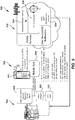
- FIGURE 1 illustrates an example embodiment of a MFP fleet maintenance system 100 including MFPs 104, 108 and 112.
- a fleet is suitably comprised of any number of MFPs, which may be of the same or different types.
- MFPs 104 and 108 share the same capabilities and MFP 112 has different capabilities.
- Each MFP is suitably identified by a unique identifier, such as via their IP address.
- Listing of fleet MFPs can be done automatically, such as by network device discovery, or by manual addition or deletion of devices.
- Devices in FIGURE 1 are in data communication across a network 116 through any suitable wired or wireless means, via a local area network (LAN), wide area network (WAN), which may comprise the Internet, or any suitable combination thereof.
- LAN local area network
- WAN wide area network
- a portable data device such as smartphone 120 discovers networked devices, such as MPFs 104, 108 and 110.
- the MFPs provide report device status data to smartphone 120.
- Smartphone 120 includes a user interface including a user input and a display, suitably integrated as a touchscreen display 128.
- Device status data may include hardware configuration data, software configuration data and device settings data.
- Software configuration data may include identification of firmware, operating systems or applications on MFPs, which may include version information.
- Hardware configuration information may include available hardware resources, such as presence or absence of a finisher, paper tray, near field communications (NFC) reader, Bluetooth, Wi-Fi, keyboard, scanner, stapler or hole puncher.
- Device settings data may include levels of consumables, such as toner, ink or paper. Device settings may also include device alerts, device errors or error conditions, sensor readings, such as temperature or humidity levels, as well as page count information.
- reported device information is communicated from smartphone 120 to server 124 as fleet data.
- Server 124 is suitably a cloud server that can support more than one MFP fleet as a service.
- Server 124 analyzes aggregated fleet data and returns predictions, such as failure predictions, as well as modification recommendations to smartphone 120 for display on smartphone touchscreen 128.
- notifications 130, predictions 132 and recommendations 136 are shown on touchscreen 128.
- Recommendations may be one or more of software additions or deletions, including firmware or applications, hardware additions or removal or changes in device settings.
- Example device settings may include device policies, hardware settings, software settings or device configuration.
- Example device configuration may include configuration of security settings, energy conservation settings, such as an "eco mode," or an accessibility mode added to a user interface.
- Display 128 also illustrates a dashboard report 140, including MFP information, such as error levels or usage levels for monitored MFPs.
- FIGURE 2 illustrated is an example embodiment of a networked digital device comprised of document rendering system 200 suitably comprised within an MFP, such as with MFPs 104, 108 and 112 of FIGURE 1 .
- an MFP includes an intelligent controller 201 which is itself a computer system. Included in controller 201 are one or more processors, such as that illustrated by processor 202. Each processor is suitably associated with non-volatile memory, such as read only memory (ROM) 204, and random access memory (RAM) 206, via a data bus 212.
- ROM read only memory
- RAM random access memory
- Processor 202 is also in data communication with a storage interface 208 for reading or writing data with storage 216, suitably comprised of a hard disk, optical disk, solid-state disk, cloud-based storage, or any other suitable data storage as will be appreciated by one of ordinary skill in the art.
- Processor 202 is also in data communication with a network interface 210 which provides an interface to a network interface controller (NIC) 214, which in turn provides a data path to any suitable wired or physical network connection 220, or to a wireless data connection via a wireless network interface, such as WiFi 218.
- NIC network interface controller
- Example wireless connections include cellular, Wi-Fi, wireless universal serial bus (wireless USB), satellite, and the like.
- Example wired interfaces include Ethernet, USB, IEEE 1394 (FireWire), Lightning, telephone line, or the like.
- Processor 202 is also in data communication with a hardware monitor 221, suitably amassing state data from subassemblies, sensors, digital thermometers, or the like, and suitably including digital state date including device codes, such as device error codes.
- Processor 202 can also be in data communication with a document processor interface 222, with Bluetooth interface 226 and NFC interface 228 via data path 212.
- Processor 202 can also be in data communication with any suitable user input/output (I/O) interface (not shown) which provides data communication with user peripherals, such as displays, keyboards, mice, track balls, touch screens, or the like.
- I/O user input/output
- Document processor interface 222 is suitable for data communication with MFP functional units 250.
- these units include a copy engine, suitably comprised of copy hardware 240, a scan engine, suitably comprised of scan hardware 242, a print engine, suitably comprised of print hardware 244 and a fax engine, suitably comprised of fax hardware 246.
- These subsystems together comprise MFP functional hardware 250.
- functional units are suitably comprised of intelligent units, including any suitable hardware or software platform.
- FIGURE 3 illustrated is an example of a digital device system 300 suitably comprising smartphone 120 and server 124 of FIGURE 1 . Included are one or more processors, such as that illustrated by processor 304. Each processor is suitably associated with non-volatile memory, such as read only memory (ROM) 310 and random access memory (RAM) 312, via a data bus 314.
- ROM read only memory
- RAM random access memory
- Processor 304 is also in data communication with a storage interface 306 for reading or writing to a data storage system 308, suitably comprised of a hard disk, optical disk, solid-state disk, or any other suitable data storage as will be appreciated by one of ordinary skill in the art.
- a storage interface 306 for reading or writing to a data storage system 308, suitably comprised of a hard disk, optical disk, solid-state disk, or any other suitable data storage as will be appreciated by one of ordinary skill in the art.
- Processor 304 is also in data communication with a network interface controller (NIC) 330, which provides a data path to any suitable network or device connection, such as a suitable wireless data connection via wireless network interface 338.
- NIC network interface controller
- a suitable data connection to an MFP or server is via a data network, such as a local area network (LAN), a wide area network (WAN), which may comprise the Internet, or any suitable combination thereof.
- a digital data connection is also suitably directly with an MFP or server, such as via Bluetooth, optical data transfer, Wi-Fi direct, or the like.
- Processor 304 is also in data communication with a user input/output (I/O) interface 340 which provides data communication with user peripherals, such as touch screen display 344 via display generator 346, as well as keyboards, mice, track balls, touch screens, or the like.
- user peripherals such as touch screen display 344 via display generator 346, as well as keyboards, mice, track balls, touch screens, or the like.
- functional units are suitably comprised of intelligent units, including any suitable hardware or software platform.
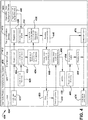
- FIGURE 4 is a diagram 400 showing interaction between user 404, one or more MFPs, illustrated by MFP 408, smartphone app 412, suitably executing on smartphone 120 of FIGURE 1 , recommendation service 416 and equipment data aggregation service 420.
- recommendation service 416 and data aggregation service 420 are cloud services, suitably undertaken by one or more cloud servers, such as server 124 of FIGURE 1 .
- a process commences at block 422 when user 404 inputs their profile into smartphone app 412 at block 424. The user is then registered with recommendation service 416 at block 426.
- MFP 408 sends data for discovery to smartphone app 412 at block 428, which data is collected at block 432, and a list of discovered equipment is sent to recommendation service 416 at block 434.
- Data aggregation service 420 aggregates equipment data at block 440, and feeds it to a recommendation engine of recommendation service 416 at block 442.
- Block 436, working with discovered equipment information from block 434 and recommendation engine output from block 442 leads to generation of recommendations at block 446.
- These recommendations are communicated to smartphone app 412 at block 448 for display to user 404 at block 450.
- the user 404 selects one or more upgrade or modification suggestion at block 454, and smartphone app 412 generates a user display at block 456 to display and check results and recommendations. Updates or modifications from user selections are applied at MFP 408 at block 458.
- MFP 408 sends data for discovery to smartphone app 412 at block 460, responsive to polling at block 464 completed by smartphone app 412. Resulting alerts are processed on smartphone app 412 at block 468, and device status is also communicated to recommendation service 416 where corresponding predictions are made at block 470. Predictions are communicated via smartphone app 412 to user 404 at block 474 for viewing.
- FIGURE 5 illustrates an overview 500 of a system for monitoring, recommending and updating multifunction peripherals via a handheld device.
- MFP 504 includes a web service (WS) interface 506 and provides status information, suitably via SNMP interface 502.
- An example web service interfaces is found with TopAccess, available from Toshiba TEC.
- a device maintenance agent is also included allowing the MFP to be monitored, updated or configured remote with a system such as Toshiba TEC's eBridge CloudConnect (ECC) via ECC agent 512.
- Smartphone system 508 includes smartphone 510 and a mobile app 514. Smartphone system 508 discovers MFPs, such as MFP 504, and obtains device information. Smartphone system 508 further directs device updates, modifications or configurations to MFP 504.
- MFP Smartphone system 508 communicates with cloud server system 518, which includes recommendation service 524 and ECC service 528.
- Cloud server system 518 also suitably provides virtual assistant subsystem 530 to assist users if needed.
- FIGURE 6 illustrates an example embodiment of a hardware diagram of a system 600 for monitoring, recommending and updating multifunction peripherals via a handheld device. Illustrated are interactions among MFP 604, smartphone 608 and cloud service 612. MFP 604 can be provided with updates, applications to install or uninstall, or configuration changes.
- Smartphone 608 can display self-service information, such as toner or paper replacement. Smartphone 608 also serves as a gateway for knowledge base searching or assistant chatting.
- Cloud service 612 interacts with smartphone 608 via interface 614 and notification service 618.
- Interface 614 includes a web service interface 622 and can transmit device identifiers, such as device serial numbers, recommendations, and update or configuration changes.
- Notification service 618 suitably provides notifications, including alerts, new product recommendations, new service recommendations, or the like.
Landscapes
- Engineering & Computer Science (AREA)
- Signal Processing (AREA)
- Theoretical Computer Science (AREA)
- Human Computer Interaction (AREA)
- Multimedia (AREA)
- General Engineering & Computer Science (AREA)
- Computer Networks & Wireless Communication (AREA)
- Physics & Mathematics (AREA)
- General Physics & Mathematics (AREA)
- Health & Medical Sciences (AREA)
- Biomedical Technology (AREA)
- General Health & Medical Sciences (AREA)
- Software Systems (AREA)
- Computing Systems (AREA)
- Environmental & Geological Engineering (AREA)
- Facsimiles In General (AREA)
- Accessory Devices And Overall Control Thereof (AREA)
Abstract
Description
- This application relates generally to management of groups of multifunction peripherals. The application relates more particularly to use of a handheld device to retrieve status data from a fleet of multifunction peripherals to provide user selectable device modifications based on suggestions determined from fleet status data.
- Document processing devices include printers, copiers, scanners and e-mail gateways. More recently, devices employing two or more of these functions are found in office environments. These devices are referred to as multifunction peripherals (MFPs) or multifunction devices (MFDs). As used herein, MFPs are understood to comprise printers, alone or in combination with other of the afore-noted functions. It is further understood that any suitable document processing device can be used.
- Many businesses have a large number of MFPs in service. It may be extremely difficult to determine what could be done to improve device operations or user convenience for a large number of devices.
- To this end, there is provided a system comprising: a data interface configured to receive device status data from each of a plurality of multifunction peripherals, the device status data corresponding to one or more of installed software, installed software versions, installed hardware, device configuration, consumable levels, device usage levels, device errors or device alerts; a memory storing configuration data corresponding to one or more of device configuration options, software installation options or hardware installation options for each of the multifunction peripherals; and a processor configured to generate, for each of the multifunction peripherals, report data corresponding to one or more of predictive device failures, suggested device maintenance or device modifications in accordance with received device status data and stored configuration data.
- According to the present invention, the processor is further configured to communicate generated report data to an associated user data device via the network interface.
- Preferably, the processor is further configured to generate the report data including recommended software modification to one or more multifunction peripherals.
- Preferably, the processor is further configured to generate the report data including recommended hardware modification to one or more multifunction peripherals.
- Preferably, the processor is further configured to generate the report data including recommended device settings modification to one or more multifunction peripherals.
- Preferably, the processor is further configured to generate the report data including dashboard data associated with received device status data.
- Preferably, the processor is further configured to generate the report data including one or more failure predictions for an identified multifunction peripheral.
- Preferably, the data interface is further configured to receive, from the user data device, software installation instructions or device reconfiguration instructions responsive to report data communicated to the user data device.
- Preferably, the processor is further configured to direct installation of software or reconfiguration of one or more multifunction peripherals in accordance with received instructions. The present invention also relates to a method comprising: receiving, into a data interface, device status data from each of a plurality of multifunction peripherals, the device status data corresponding to one or more of installed software, installed software versions, installed hardware, device configuration, consumable levels, device usage levels, device errors or device alerts; storing configuration data corresponding to one or more of device configuration options, software installation options or hardware installation options for each of the multifunction peripherals; generating, for each of the multifunction peripherals, report data corresponding to one or more of predictive device failures, suggested device maintenance or device modifications in accordance with received device status data and stored configuration data; and communicating generated report data to an associated user data device via an associated network interface.
- Preferably, the method further comprises generating the report data including recommended software modification to one or more multifunction peripherals.
- Preferably, the method further comprises generating the report data including recommended hardware modification to one or more multifunction peripherals.
- Preferably, the method further comprises generating the report data including recommended device settings modification to one or more multifunction peripherals.
- Preferably, the method further comprises generating the report data including dashboard data associated with received device status data.
- Preferably, the method further comprises generating the report data including one or more failure predictions for an identified multifunction peripheral.
- Preferably, the method further comprises receiving, from the user data device, software installation instructions or device reconfiguration instructions responsive to report data communicated to the user data device.
- Preferably, the method further comprises directing installation of software or reconfiguration of one or more multifunction peripherals in accordance with received instructions.
- The present invention further relates to a system comprising: memory; a user interface including a user input and a display; a data interface; and a processor. In this system, the processor is configured to retrieve device status data from each of a plurality of multifunction peripherals, to generate fleet data corresponding to device status data retrieved from each of the multifunction peripherals, to send generated fleet data to an associated server via the data interface, to receive multifunction peripheral modification suggestion data from the associated server responsive to sending the fleet data, to generate a display of multifunction peripheral modification options, corresponding to received modification suggestion data, on the display, to receive user instructions responsive to displayed modification options, and to send device reconfiguration instructions to the multifunction peripherals in accordance with received user instructions.
- Preferably, the device status data includes one or more of multifunction peripheral hardware configuration data, software configuration data or device settings data.
- Preferably, hardware configuration data reflects configuration of one or more of a finisher, paper tray, NFC reader, keyboard or scanner.
- Preferably, software configuration data reflects one or more of firmware properties or software properties.
- Preferably, device settings data reflects one or more of security settings, power use settings or accessibility settings.
- Preferably, device status data further includes one or more of a consumable level, device alert or device error condition.
- Preferably, device reconfiguration instructions include one or more of device setting changes, device software changes or device hardware changes.
- Various embodiments will become better understood with regard to the following description, appended claims and accompanying drawings wherein:
-
FIGURE 1 is an example embodiment of a multifunction peripheral fleet maintenance system; -
FIGURE 2 is an example embodiment of a networked digital device comprising a document rendering system; -
FIGURE 3 is an example embodiment of a digital device system such as a smartphone or tablet computer; -
FIGURE 4 is a diagram of an example embodiment of interaction between a user, one or more MFPs and a smartphone app; -
FIGURE 5 is an example embodiment of a system for monitoring, recommending and updating multifunction peripherals via a handheld device; and -
FIGURE 6 is a hardware diagram of an example embodiment of a system for monitoring, recommending and updating multifunction peripherals via a handheld device. - The systems and methods disclosed herein are described in detail by way of examples and with reference to the figures. It will be appreciated that modifications to disclosed and described examples, arrangements, configurations, components, elements, apparatuses, devices methods, systems, etc. can suitably be made and may be desired for a specific application. In this disclosure, any identification of specific techniques, arrangements, etc. are either related to a specific example presented or are merely a general description of such a technique, arrangement, etc. Identifications of specific details or examples are not intended to be, and should not be, construed as mandatory or limiting unless specifically designated as such.
- Recommendation engines are often used to recommend products and services to users based on the characteristics of other similar users and/or products. Currently, art exists to make predictions for an MFP based on similar MFPs. Using this data is difficult for most users in a business environment for problem solving.
- Example embodiments described herein provide a system and method for users of portable data devices, such as smart phones or tablet computers, to get recommendations to configure MFPs in a fleet, or other type of equipment fleet, to help avoid the need to make service calls, or to lessen a frequency of service calls. The device application allows a user to review a status of their MFP fleet so that they know which machines will need attention. The system provides end users with alerts of issues, predictions before issues occur, and with prescriptions for what to do so that they can resolve the issue themselves. The system provides recommendations based on needs, usage, and other customer usage or purchase data to allow the end user to review, select and install configuration options for their equipment fleet to optimize equipment usage. Configuration data from MFPs in a fleet is aggregated. A portable data device collects fleet device information, which information is aggregated and sent to a cloud service for processing and analysis to provide predictions and suggestions for device reconfiguration, software modification or hardware modification. Recommendation data is then received from the cloud service, and it is presented to the user to aid them in making intelligent product configuration selections. Such use of a portable data device for prediction of issues, issue alerts, and resolution information to an end user helps them avoid making unnecessary service calls.
- In further example embodiments, portable data devices, such as a smartphones or tablets are supplied with applications and access to a backend cloud service. The backend cloud service includes a data aggregator and recommendation service. The data aggregator collects configuration data from equipment that is connected to the backend cloud service and stores it for processing. The recommendation service uses the stored aggregated data to analyze the configuration settings of all equipment providing data. The result of the analysis is a set of recommendations. The recommendations may be categorized into applications, configurations, equipment, professional services, predictions, break-fix service, or the like. Applications may comprise applications that can be loaded on the equipment to provide added-value to end users. Configurations may comprise settings such as security, energy saving, eco-friendly, accessibility, and convenience. Equipment may include options to be installed on the reporting equipment, or additional equipment in order to optimize usage. Professional services include fleet evaluations for cost, security, optimization, placement, and other reasons. Predictions can be used to alert end users of potential problems with their equipment and provide a means for resolution. A break-fix service is a call placed to a servicing organization to fix broken equipment. The recommendation service also suitably provides an interface in the form of an application program interface (API) to the smartphone or tablet application. This API allows the smartphone to forward locally discovered equipment data to the cloud service, receive recommendations, and receive notifications when recommendations have been updated.
- The smartphone or tablet application includes a method to register a customer, discover a fleet of equipment on a local network, receive alerts from the equipment, and interface with the backend cloud service. This application also generates a user interface for user device interaction.
- In a more particular example embodiment, a user will first register themselves as the application user and owner of the discovered equipment fleet. The application will discover equipment on the user's network, such as a local network, to form a device list. Identifying information, such as device serial numbers, will be stored locally. This information is also sent to the recommendation cloud service interface. After sending, the cloud service returns recommendations to the application. The application then displays them to the user. The user may select the recommendations, and if appropriate, the application will then interface with the equipment for updating. The application includes an ability to poll devices periodically to collect information and confirm status for the user. This polling capability suitably executes in the foreground when the app is in use, or in the background when the app is closed. This provides the user with continuous status monitoring. The backend cloud service suitably interfaces with a purchase system to allow the purchase of recommended equipment or services.
- In accordance with the subject application,
FIGURE 1 illustrates an example embodiment of a MFPfleet maintenance system 100 includingMFPs MFPs MFP 112 has different capabilities. Each MFP is suitably identified by a unique identifier, such as via their IP address. Listing of fleet MFPs can be done automatically, such as by network device discovery, or by manual addition or deletion of devices. Devices inFIGURE 1 are in data communication across anetwork 116 through any suitable wired or wireless means, via a local area network (LAN), wide area network (WAN), which may comprise the Internet, or any suitable combination thereof. A portable data device, such assmartphone 120 discovers networked devices, such asMPFs smartphone 120.Smartphone 120 includes a user interface including a user input and a display, suitably integrated as atouchscreen display 128. Device status data may include hardware configuration data, software configuration data and device settings data. Software configuration data may include identification of firmware, operating systems or applications on MFPs, which may include version information. Hardware configuration information may include available hardware resources, such as presence or absence of a finisher, paper tray, near field communications (NFC) reader, Bluetooth, Wi-Fi, keyboard, scanner, stapler or hole puncher. Device settings data may include levels of consumables, such as toner, ink or paper. Device settings may also include device alerts, device errors or error conditions, sensor readings, such as temperature or humidity levels, as well as page count information. - In the example of
FIGURE 1 , reported device information is communicated fromsmartphone 120 toserver 124 as fleet data.Server 124 is suitably a cloud server that can support more than one MFP fleet as a service.Server 124 analyzes aggregated fleet data and returns predictions, such as failure predictions, as well as modification recommendations tosmartphone 120 for display onsmartphone touchscreen 128. In the illustrated example,notifications 130,predictions 132 andrecommendations 136 are shown ontouchscreen 128. Recommendations may be one or more of software additions or deletions, including firmware or applications, hardware additions or removal or changes in device settings. Example device settings may include device policies, hardware settings, software settings or device configuration. Example device configuration may include configuration of security settings, energy conservation settings, such as an "eco mode," or an accessibility mode added to a user interface.Display 128 also illustrates adashboard report 140, including MFP information, such as error levels or usage levels for monitored MFPs. - Turning now to
FIGURE 2 illustrated is an example embodiment of a networked digital device comprised ofdocument rendering system 200 suitably comprised within an MFP, such as withMFPs FIGURE 1 . It will be appreciated that an MFP includes anintelligent controller 201 which is itself a computer system. Included incontroller 201 are one or more processors, such as that illustrated byprocessor 202. Each processor is suitably associated with non-volatile memory, such as read only memory (ROM) 204, and random access memory (RAM) 206, via adata bus 212. -
Processor 202 is also in data communication with astorage interface 208 for reading or writing data withstorage 216, suitably comprised of a hard disk, optical disk, solid-state disk, cloud-based storage, or any other suitable data storage as will be appreciated by one of ordinary skill in the art.Processor 202 is also in data communication with anetwork interface 210 which provides an interface to a network interface controller (NIC) 214, which in turn provides a data path to any suitable wired orphysical network connection 220, or to a wireless data connection via a wireless network interface, such asWiFi 218. Example wireless connections include cellular, Wi-Fi, wireless universal serial bus (wireless USB), satellite, and the like. Example wired interfaces include Ethernet, USB, IEEE 1394 (FireWire), Lightning, telephone line, or the like.Processor 202 is also in data communication with ahardware monitor 221, suitably amassing state data from subassemblies, sensors, digital thermometers, or the like, and suitably including digital state date including device codes, such as device error codes.Processor 202 can also be in data communication with adocument processor interface 222, withBluetooth interface 226 andNFC interface 228 viadata path 212. -
Processor 202 can also be in data communication with any suitable user input/output (I/O) interface (not shown) which provides data communication with user peripherals, such as displays, keyboards, mice, track balls, touch screens, or the like. -
Document processor interface 222 is suitable for data communication with MFPfunctional units 250. In the illustrated example, these units include a copy engine, suitably comprised ofcopy hardware 240, a scan engine, suitably comprised ofscan hardware 242, a print engine, suitably comprised ofprint hardware 244 and a fax engine, suitably comprised offax hardware 246. These subsystems together comprise MFPfunctional hardware 250. It will be understood that functional units are suitably comprised of intelligent units, including any suitable hardware or software platform. - Turning now to
FIGURE 3 , illustrated is an example of adigital device system 300 suitably comprisingsmartphone 120 andserver 124 ofFIGURE 1 . Included are one or more processors, such as that illustrated byprocessor 304. Each processor is suitably associated with non-volatile memory, such as read only memory (ROM) 310 and random access memory (RAM) 312, via adata bus 314. -
Processor 304 is also in data communication with astorage interface 306 for reading or writing to adata storage system 308, suitably comprised of a hard disk, optical disk, solid-state disk, or any other suitable data storage as will be appreciated by one of ordinary skill in the art. -
Processor 304 is also in data communication with a network interface controller (NIC) 330, which provides a data path to any suitable network or device connection, such as a suitable wireless data connection viawireless network interface 338. A suitable data connection to an MFP or server is via a data network, such as a local area network (LAN), a wide area network (WAN), which may comprise the Internet, or any suitable combination thereof. A digital data connection is also suitably directly with an MFP or server, such as via Bluetooth, optical data transfer, Wi-Fi direct, or the like. -
Processor 304 is also in data communication with a user input/output (I/O)interface 340 which provides data communication with user peripherals, such astouch screen display 344 viadisplay generator 346, as well as keyboards, mice, track balls, touch screens, or the like. It will be understood that functional units are suitably comprised of intelligent units, including any suitable hardware or software platform. -
FIGURE 4 is a diagram 400 showing interaction betweenuser 404, one or more MFPs, illustrated by MFP 408,smartphone app 412, suitably executing onsmartphone 120 ofFIGURE 1 ,recommendation service 416 and equipmentdata aggregation service 420. It is to be appreciated thatrecommendation service 416 anddata aggregation service 420 are cloud services, suitably undertaken by one or more cloud servers, such asserver 124 ofFIGURE 1 . In the illustrated example, a process commences atblock 422 whenuser 404 inputs their profile intosmartphone app 412 atblock 424. The user is then registered withrecommendation service 416 atblock 426. MFP 408 sends data for discovery tosmartphone app 412 atblock 428, which data is collected atblock 432, and a list of discovered equipment is sent torecommendation service 416 atblock 434.Data aggregation service 420 aggregates equipment data atblock 440, and feeds it to a recommendation engine ofrecommendation service 416 atblock 442.Block 436, working with discovered equipment information fromblock 434 and recommendation engine output fromblock 442 leads to generation of recommendations atblock 446. These recommendations are communicated tosmartphone app 412 atblock 448 for display touser 404 atblock 450. Theuser 404 selects one or more upgrade or modification suggestion atblock 454, andsmartphone app 412 generates a user display atblock 456 to display and check results and recommendations. Updates or modifications from user selections are applied at MFP 408 atblock 458. - Further in the example of
FIGURE 4 , MFP 408 sends data for discovery tosmartphone app 412 atblock 460, responsive to polling atblock 464 completed bysmartphone app 412. Resulting alerts are processed onsmartphone app 412 atblock 468, and device status is also communicated torecommendation service 416 where corresponding predictions are made atblock 470. Predictions are communicated viasmartphone app 412 touser 404 atblock 474 for viewing. -
FIGURE 5 illustrates anoverview 500 of a system for monitoring, recommending and updating multifunction peripherals via a handheld device.MFP 504 includes a web service (WS)interface 506 and provides status information, suitably viaSNMP interface 502. An example web service interfaces is found with TopAccess, available from Toshiba TEC. A device maintenance agent is also included allowing the MFP to be monitored, updated or configured remote with a system such as Toshiba TEC's eBridge CloudConnect (ECC) viaECC agent 512.Smartphone system 508 includessmartphone 510 and amobile app 514.Smartphone system 508 discovers MFPs, such asMFP 504, and obtains device information.Smartphone system 508 further directs device updates, modifications or configurations toMFP 504.MFP Smartphone system 508 communicates withcloud server system 518, which includesrecommendation service 524 andECC service 528.Cloud server system 518 also suitably provides virtualassistant subsystem 530 to assist users if needed. -
FIGURE 6 illustrates an example embodiment of a hardware diagram of asystem 600 for monitoring, recommending and updating multifunction peripherals via a handheld device. Illustrated are interactions amongMFP 604,smartphone 608 andcloud service 612.MFP 604 can be provided with updates, applications to install or uninstall, or configuration changes. -
Smartphone 608 can display self-service information, such as toner or paper replacement.Smartphone 608 also serves as a gateway for knowledge base searching or assistant chatting.Cloud service 612 interacts withsmartphone 608 viainterface 614 andnotification service 618.Interface 614 includes aweb service interface 622 and can transmit device identifiers, such as device serial numbers, recommendations, and update or configuration changes.Notification service 618 suitably provides notifications, including alerts, new product recommendations, new service recommendations, or the like. - While certain embodiments have been described, these embodiments have been presented by way of example only, and are not intended to limit the scope of the inventions. Indeed, the novel embodiments described herein may be embodied in a variety of other forms; furthermore, various omissions, substitutions and changes in the form of the embodiments described herein may be made without departing from the spirit of the inventions. The accompanying claims and their equivalents are intended to cover such forms or modifications as would fall within the spirit and scope of the inventions.
Claims (15)
- A system comprising:a data interface configured to receive device status data from each of a plurality of multifunction peripherals, the device status data corresponding to one or more of installed software, installed software versions, installed hardware, device configuration, consumable levels, device usage levels, device errors or device alerts;a memory storing configuration data corresponding to one or more of device configuration options, software installation options or hardware installation options for each of the multifunction peripherals; anda processor configured to generate, for each of the multifunction peripherals, report data corresponding to one or more of predictive device failures, suggested device maintenance or device modifications in accordance with received device status data and stored configuration data,wherein the processor is further configured to communicate generated report data to an associated user data device via the network interface.
- The system of claim 1 wherein the processor is further configured to generate the report data including recommended software modification to one or more multifunction peripherals.
- The system of claim 1 or 2, wherein the processor is further configured to generate the report data including recommended hardware modification to one or more multifunction peripherals.
- The system of any one of claims 1 to 3, wherein the processor is further configured to generate the report data including recommended device settings modification to one or more multifunction peripherals.
- The system of any one of claims 1 to 4 wherein the processor is further configured to generate the report data including dashboard data associated with received device status data.
- The system of any one of claims 1 to 5 wherein the processor is further configured to generate the report data including one or more failure predictions for an identified multifunction peripheral.
- The system of any one of claims 1 to 6 wherein the data interface is further configured to receive, from the user data device, software installation instructions or device reconfiguration instructions responsive to report data communicated to the user data device.
- The system of claim 7 wherein the processor is further configured to direct installation of software or reconfiguration of one or more multifunction peripherals in accordance with received instructions.
- A method comprising:receiving, into a data interface, device status data from each of a plurality of multifunction peripherals, the device status data corresponding to one or more of installed software, installed software versions, installed hardware, device configuration, consumable levels, device usage levels, device errors or device alerts;storing configuration data corresponding to one or more of device configuration options, software installation options or hardware installation options for each of the multifunction peripherals.generating, for each of the multifunction peripherals, report data corresponding to one or more of predictive device failures, suggested device maintenance or device modifications in accordance with received device status data and stored configuration data; andcommunicating generated report data to an associated user data device via an associated network interface.
- The method of claim 9 further comprising generating the report data including recommended software modification to one or more multifunction peripherals.
- The method of claim 9 or 10 further comprising generating the report data including recommended hardware modification to one or more multifunction peripherals.
- The method of any one of claims 9 to 11 further comprising generating the report data including recommended device settings modification to one or more multifunction peripherals.
- The method of any one of claims 9 to 12 further comprising generating the report data including dashboard data associated with received device status data.
- The method of any one of claims 9 to 13 further comprising generating the report data including one or more failure predictions for an identified multifunction peripheral.
- The method of any one of claims 9 to 14 further comprising receiving, from the user data device, software installation instructions or device reconfiguration instructions responsive to report data communicated to the user data device.
Applications Claiming Priority (2)
| Application Number | Priority Date | Filing Date | Title |
|---|---|---|---|
| US201962930094P | 2019-11-04 | 2019-11-04 | |
| US16/801,482 US11076060B2 (en) | 2019-11-04 | 2020-02-26 | System and method for monitoring, recommending and updating multifunction peripherals via a handheld device |
Publications (2)
| Publication Number | Publication Date |
|---|---|
| EP3816784A1 true EP3816784A1 (en) | 2021-05-05 |
| EP3816784B1 EP3816784B1 (en) | 2025-12-17 |
Family
ID=71899503
Family Applications (1)
| Application Number | Title | Priority Date | Filing Date |
|---|---|---|---|
| EP20187181.1A Active EP3816784B1 (en) | 2019-11-04 | 2020-07-22 | System and method for monitoring, recommending and updating multifunction peripherals via a handheld device |
Country Status (3)
| Country | Link |
|---|---|
| US (1) | US11076060B2 (en) |
| EP (1) | EP3816784B1 (en) |
| CN (1) | CN112788190A (en) |
Families Citing this family (3)
| Publication number | Priority date | Publication date | Assignee | Title |
|---|---|---|---|---|
| US11575800B1 (en) * | 2021-07-16 | 2023-02-07 | Toshiba Tec Kabushiki Kaisha | System and method for server connection using multiple network adapters |
| JP7748235B2 (en) * | 2021-09-10 | 2025-10-02 | キヤノン株式会社 | Server, its control method, and program |
| US20240314037A1 (en) * | 2023-03-15 | 2024-09-19 | Toshiba Tec Kabushiki Kaisha | System and method for dynamic self-configuration of network device data collection |
Citations (2)
| Publication number | Priority date | Publication date | Assignee | Title |
|---|---|---|---|---|
| US20110051165A1 (en) * | 2009-09-03 | 2011-03-03 | Sharp Kabushiki Kaisha | Information processing apparatus presenting recommended optional function to image forming apparatus, image forming apparatus communicable with the information processing apparatus, and image forming system including these |
| EP3537282A1 (en) * | 2018-03-05 | 2019-09-11 | Toshiba Tec Kabushiki Kaisha | System and method of resolution prediction for multifunction peripherial failures |
Family Cites Families (12)
| Publication number | Priority date | Publication date | Assignee | Title |
|---|---|---|---|---|
| US6732195B1 (en) * | 2000-10-03 | 2004-05-04 | Hewlett-Packard Development Company, Lp. | Apparatus for and method of updating a device driver from a local resource |
| JP2005135173A (en) * | 2003-10-30 | 2005-05-26 | Canon Inc | Information processing method, information processing system, program, and storage medium |
| JP4566679B2 (en) * | 2003-11-13 | 2010-10-20 | キヤノン株式会社 | Image forming apparatus, control method, and program |
| JP2005208339A (en) * | 2004-01-22 | 2005-08-04 | Kyocera Mita Corp | Image forming apparatus |
| WO2013113697A1 (en) * | 2012-01-31 | 2013-08-08 | Oce-Technologies B.V. | Method for managing a plurality of image processing devices, computer-program product, fleet management system, mobile device, and monitoring device therefor |
| EP3204826B1 (en) * | 2014-10-07 | 2020-11-25 | Videojet Technologies Inc. | System and method for remotely servicing an industrial printer |
| JP6299661B2 (en) * | 2015-04-25 | 2018-03-28 | 京セラドキュメントソリューションズ株式会社 | Image forming system and recommendation degree display program |
| US9912826B2 (en) * | 2016-05-11 | 2018-03-06 | Kabushiki Kaisha Toshiba | Business customized multifunction peripherals |
| JP6798148B2 (en) * | 2016-05-25 | 2020-12-09 | ブラザー工業株式会社 | Function execution program and information processing device |
| JP6801300B2 (en) * | 2016-08-30 | 2020-12-16 | ブラザー工業株式会社 | Control program |
| US10447552B2 (en) * | 2017-02-23 | 2019-10-15 | Kabushiki Kaisha Toshiba | System and method for predictive maintenance |
| US10362183B2 (en) * | 2017-11-10 | 2019-07-23 | Toshiba Tec Kabushiki Kaisha | System and method for natural language operation of multifunction peripherals |
-
2020
- 2020-02-26 US US16/801,482 patent/US11076060B2/en active Active
- 2020-07-22 EP EP20187181.1A patent/EP3816784B1/en active Active
- 2020-09-10 CN CN202010948026.4A patent/CN112788190A/en active Pending
Patent Citations (2)
| Publication number | Priority date | Publication date | Assignee | Title |
|---|---|---|---|---|
| US20110051165A1 (en) * | 2009-09-03 | 2011-03-03 | Sharp Kabushiki Kaisha | Information processing apparatus presenting recommended optional function to image forming apparatus, image forming apparatus communicable with the information processing apparatus, and image forming system including these |
| EP3537282A1 (en) * | 2018-03-05 | 2019-09-11 | Toshiba Tec Kabushiki Kaisha | System and method of resolution prediction for multifunction peripherial failures |
Also Published As
| Publication number | Publication date |
|---|---|
| EP3816784B1 (en) | 2025-12-17 |
| US20210136238A1 (en) | 2021-05-06 |
| US11076060B2 (en) | 2021-07-27 |
| CN112788190A (en) | 2021-05-11 |
Similar Documents
| Publication | Publication Date | Title |
|---|---|---|
| EP2518946B1 (en) | Device management system | |
| JP5482530B2 (en) | Device management system, device management apparatus, and device management method | |
| US20140188729A1 (en) | Remote notification and action system with event generating | |
| US9007631B2 (en) | System, apparatus and method for managing heterogeneous group of devices | |
| US9130838B2 (en) | Device management system, apparatus and method configured for customizing a power filter | |
| EP3816784B1 (en) | System and method for monitoring, recommending and updating multifunction peripherals via a handheld device | |
| JP5413203B2 (en) | Device management system, device management apparatus, and device management method | |
| US20140222989A1 (en) | Management of device management units | |
| US8982369B2 (en) | Methods, systems and processor-readable media for automatically detecting device movement in a managed service environment | |
| US10241734B2 (en) | Multi-worker approach for printer data collection in timely situations | |
| JP6935210B2 (en) | Remote monitoring system and method for document processing devices | |
| JP5112133B2 (en) | Network system, information processing apparatus, information processing method for network system, program, and recording medium | |
| US10152697B2 (en) | Monitoring apparatus, monitoring method and non-transitory computer-readable medium | |
| US10728123B2 (en) | Device data collector | |
| JP2012221197A (en) | Distribution setting method for distribution server in image forming apparatus | |
| US20150100686A1 (en) | Information processing system, site monitoring apparatus, and information processing method | |
| US10142495B2 (en) | Method and apparatus for simplified device data collection | |
| US20250097358A1 (en) | System and method for multifunction peripheral fleet management | |
| US20170310765A1 (en) | System and method for location-based access to document processing devices | |
| JP7504689B2 (en) | Maintenance system and program for multifunction printer | |
| KR20190121631A (en) | System and terminal for managing document output device | |
| CN114979391A (en) | System and method for maintaining and provisioning a multifunction peripheral cluster | |
| JP7069902B2 (en) | Remote management system and remote management method | |
| US20200133653A1 (en) | Generation of recommended multifunction peripheral firmware and applications based on group machine learning | |
| US10901826B2 (en) | Image processing apparatus, control method of image processing apparatus to import setting file and analyze setting value for determining whether communication test is require to execute |
Legal Events
| Date | Code | Title | Description |
|---|---|---|---|
| PUAI | Public reference made under article 153(3) epc to a published international application that has entered the european phase |
Free format text: ORIGINAL CODE: 0009012 |
|
| STAA | Information on the status of an ep patent application or granted ep patent |
Free format text: STATUS: THE APPLICATION HAS BEEN PUBLISHED |
|
| AK | Designated contracting states |
Kind code of ref document: A1 Designated state(s): AL AT BE BG CH CY CZ DE DK EE ES FI FR GB GR HR HU IE IS IT LI LT LU LV MC MK MT NL NO PL PT RO RS SE SI SK SM TR |
|
| STAA | Information on the status of an ep patent application or granted ep patent |
Free format text: STATUS: REQUEST FOR EXAMINATION WAS MADE |
|
| 17P | Request for examination filed |
Effective date: 20211105 |
|
| RBV | Designated contracting states (corrected) |
Designated state(s): AL AT BE BG CH CY CZ DE DK EE ES FI FR GB GR HR HU IE IS IT LI LT LU LV MC MK MT NL NO PL PT RO RS SE SI SK SM TR |
|
| STAA | Information on the status of an ep patent application or granted ep patent |
Free format text: STATUS: EXAMINATION IS IN PROGRESS |
|
| 17Q | First examination report despatched |
Effective date: 20231201 |
|
| GRAP | Despatch of communication of intention to grant a patent |
Free format text: ORIGINAL CODE: EPIDOSNIGR1 |
|
| STAA | Information on the status of an ep patent application or granted ep patent |
Free format text: STATUS: GRANT OF PATENT IS INTENDED |
|
| RIC1 | Information provided on ipc code assigned before grant |
Ipc: H04L 43/0817 20220101ALI20250206BHEP Ipc: H04L 43/065 20220101ALI20250206BHEP Ipc: H04L 41/149 20220101ALI20250206BHEP Ipc: H04L 41/147 20220101ALI20250206BHEP Ipc: H04L 41/0853 20220101ALI20250206BHEP Ipc: H04L 41/0816 20220101ALI20250206BHEP Ipc: H04L 41/0806 20220101ALI20250206BHEP Ipc: H04N 1/00 20060101ALI20250206BHEP Ipc: G06F 3/12 20060101AFI20250206BHEP |
|
| INTG | Intention to grant announced |
Effective date: 20250218 |
|
| GRAJ | Information related to disapproval of communication of intention to grant by the applicant or resumption of examination proceedings by the epo deleted |
Free format text: ORIGINAL CODE: EPIDOSDIGR1 |
|
| STAA | Information on the status of an ep patent application or granted ep patent |
Free format text: STATUS: EXAMINATION IS IN PROGRESS |
|
| GRAS | Grant fee paid |
Free format text: ORIGINAL CODE: EPIDOSNIGR3 |
|
| STAA | Information on the status of an ep patent application or granted ep patent |
Free format text: STATUS: GRANT OF PATENT IS INTENDED |
|
| GRAP | Despatch of communication of intention to grant a patent |
Free format text: ORIGINAL CODE: EPIDOSNIGR1 |
|
| INTC | Intention to grant announced (deleted) | ||
| INTG | Intention to grant announced |
Effective date: 20250704 |
|
| GRAA | (expected) grant |
Free format text: ORIGINAL CODE: 0009210 |
|
| STAA | Information on the status of an ep patent application or granted ep patent |
Free format text: STATUS: THE PATENT HAS BEEN GRANTED |
|
| AK | Designated contracting states |
Kind code of ref document: B1 Designated state(s): AL AT BE BG CH CY CZ DE DK EE ES FI FR GB GR HR HU IE IS IT LI LT LU LV MC MK MT NL NO PL PT RO RS SE SI SK SM TR |
|
| REG | Reference to a national code |
Ref country code: CH Ref legal event code: F10 Free format text: ST27 STATUS EVENT CODE: U-0-0-F10-F00 (AS PROVIDED BY THE NATIONAL OFFICE) Effective date: 20251217 Ref country code: GB Ref legal event code: FG4D |
|
| REG | Reference to a national code |
Ref country code: DE Ref legal event code: R096 Ref document number: 602020063926 Country of ref document: DE |
|
| REG | Reference to a national code |
Ref country code: LT Ref legal event code: MG9D |
|
| PG25 | Lapsed in a contracting state [announced via postgrant information from national office to epo] |
Ref country code: NO Free format text: LAPSE BECAUSE OF FAILURE TO SUBMIT A TRANSLATION OF THE DESCRIPTION OR TO PAY THE FEE WITHIN THE PRESCRIBED TIME-LIMIT Effective date: 20260317 |
|
| PG25 | Lapsed in a contracting state [announced via postgrant information from national office to epo] |
Ref country code: FI Free format text: LAPSE BECAUSE OF FAILURE TO SUBMIT A TRANSLATION OF THE DESCRIPTION OR TO PAY THE FEE WITHIN THE PRESCRIBED TIME-LIMIT Effective date: 20251217 Ref country code: HR Free format text: LAPSE BECAUSE OF FAILURE TO SUBMIT A TRANSLATION OF THE DESCRIPTION OR TO PAY THE FEE WITHIN THE PRESCRIBED TIME-LIMIT Effective date: 20251217 |
|
| PG25 | Lapsed in a contracting state [announced via postgrant information from national office to epo] |
Ref country code: RS Free format text: LAPSE BECAUSE OF FAILURE TO SUBMIT A TRANSLATION OF THE DESCRIPTION OR TO PAY THE FEE WITHIN THE PRESCRIBED TIME-LIMIT Effective date: 20260317 |
|
| REG | Reference to a national code |
Ref country code: NL Ref legal event code: MP Effective date: 20251217 |
|
| PG25 | Lapsed in a contracting state [announced via postgrant information from national office to epo] |
Ref country code: LV Free format text: LAPSE BECAUSE OF FAILURE TO SUBMIT A TRANSLATION OF THE DESCRIPTION OR TO PAY THE FEE WITHIN THE PRESCRIBED TIME-LIMIT Effective date: 20251217 |
|
| PG25 | Lapsed in a contracting state [announced via postgrant information from national office to epo] |
Ref country code: BG Free format text: LAPSE BECAUSE OF FAILURE TO SUBMIT A TRANSLATION OF THE DESCRIPTION OR TO PAY THE FEE WITHIN THE PRESCRIBED TIME-LIMIT Effective date: 20251217 |
|
| REG | Reference to a national code |
Ref country code: AT Ref legal event code: MK05 Ref document number: 1869085 Country of ref document: AT Kind code of ref document: T Effective date: 20251217 |
|
| PG25 | Lapsed in a contracting state [announced via postgrant information from national office to epo] |
Ref country code: NL Free format text: LAPSE BECAUSE OF FAILURE TO SUBMIT A TRANSLATION OF THE DESCRIPTION OR TO PAY THE FEE WITHIN THE PRESCRIBED TIME-LIMIT Effective date: 20251217 |
|
| PG25 | Lapsed in a contracting state [announced via postgrant information from national office to epo] |
Ref country code: LT Free format text: LAPSE BECAUSE OF FAILURE TO SUBMIT A TRANSLATION OF THE DESCRIPTION OR TO PAY THE FEE WITHIN THE PRESCRIBED TIME-LIMIT Effective date: 20251217 |
|
| PG25 | Lapsed in a contracting state [announced via postgrant information from national office to epo] |
Ref country code: SM Free format text: LAPSE BECAUSE OF FAILURE TO SUBMIT A TRANSLATION OF THE DESCRIPTION OR TO PAY THE FEE WITHIN THE PRESCRIBED TIME-LIMIT Effective date: 20251217 |
|
| PG25 | Lapsed in a contracting state [announced via postgrant information from national office to epo] |
Ref country code: ES Free format text: LAPSE BECAUSE OF FAILURE TO SUBMIT A TRANSLATION OF THE DESCRIPTION OR TO PAY THE FEE WITHIN THE PRESCRIBED TIME-LIMIT Effective date: 20251217 |
|
| PG25 | Lapsed in a contracting state [announced via postgrant information from national office to epo] |
Ref country code: PL Free format text: LAPSE BECAUSE OF FAILURE TO SUBMIT A TRANSLATION OF THE DESCRIPTION OR TO PAY THE FEE WITHIN THE PRESCRIBED TIME-LIMIT Effective date: 20251217 |
|
| PGFP | Annual fee paid to national office [announced via postgrant information from national office to epo] |
Ref country code: GB Payment date: 20260601 Year of fee payment: 7 |
|
| PG25 | Lapsed in a contracting state [announced via postgrant information from national office to epo] |
Ref country code: IT Free format text: LAPSE BECAUSE OF FAILURE TO SUBMIT A TRANSLATION OF THE DESCRIPTION OR TO PAY THE FEE WITHIN THE PRESCRIBED TIME-LIMIT Effective date: 20251217 |
|
| PG25 | Lapsed in a contracting state [announced via postgrant information from national office to epo] |
Ref country code: AT Free format text: LAPSE BECAUSE OF FAILURE TO SUBMIT A TRANSLATION OF THE DESCRIPTION OR TO PAY THE FEE WITHIN THE PRESCRIBED TIME-LIMIT Effective date: 20251217 |
|
| PG25 | Lapsed in a contracting state [announced via postgrant information from national office to epo] |
Ref country code: EE Free format text: LAPSE BECAUSE OF FAILURE TO SUBMIT A TRANSLATION OF THE DESCRIPTION OR TO PAY THE FEE WITHIN THE PRESCRIBED TIME-LIMIT Effective date: 20251217 |
|
| PG25 | Lapsed in a contracting state [announced via postgrant information from national office to epo] |
Ref country code: PT Free format text: LAPSE BECAUSE OF FAILURE TO SUBMIT A TRANSLATION OF THE DESCRIPTION OR TO PAY THE FEE WITHIN THE PRESCRIBED TIME-LIMIT Effective date: 20260417 Ref country code: IS Free format text: LAPSE BECAUSE OF FAILURE TO SUBMIT A TRANSLATION OF THE DESCRIPTION OR TO PAY THE FEE WITHIN THE PRESCRIBED TIME-LIMIT Effective date: 20260417 |
|
| PG25 | Lapsed in a contracting state [announced via postgrant information from national office to epo] |
Ref country code: CZ Free format text: LAPSE BECAUSE OF FAILURE TO SUBMIT A TRANSLATION OF THE DESCRIPTION OR TO PAY THE FEE WITHIN THE PRESCRIBED TIME-LIMIT Effective date: 20251217 |
|
| PGFP | Annual fee paid to national office [announced via postgrant information from national office to epo] |
Ref country code: FR Payment date: 20260608 Year of fee payment: 7 |
|
| PG25 | Lapsed in a contracting state [announced via postgrant information from national office to epo] |
Ref country code: SK Free format text: LAPSE BECAUSE OF FAILURE TO SUBMIT A TRANSLATION OF THE DESCRIPTION OR TO PAY THE FEE WITHIN THE PRESCRIBED TIME-LIMIT Effective date: 20251217 |
|
| PG25 | Lapsed in a contracting state [announced via postgrant information from national office to epo] |
Ref country code: SE Free format text: LAPSE BECAUSE OF FAILURE TO SUBMIT A TRANSLATION OF THE DESCRIPTION OR TO PAY THE FEE WITHIN THE PRESCRIBED TIME-LIMIT Effective date: 20251217 |