EP3816577B1 - System having an extended life high performance sensor - Google Patents
System having an extended life high performance sensor Download PDFInfo
- Publication number
- EP3816577B1 EP3816577B1 EP20199485.2A EP20199485A EP3816577B1 EP 3816577 B1 EP3816577 B1 EP 3816577B1 EP 20199485 A EP20199485 A EP 20199485A EP 3816577 B1 EP3816577 B1 EP 3816577B1
- Authority
- EP
- European Patent Office
- Prior art keywords
- rlg
- sensor
- controller
- dissimilar sensor
- rate
- Prior art date
- Legal status (The legal status is an assumption and is not a legal conclusion. Google has not performed a legal analysis and makes no representation as to the accuracy of the status listed.)
- Active
Links
Images



Classifications
-
- G—PHYSICS
- G01—MEASURING; TESTING
- G01C—MEASURING DISTANCES, LEVELS OR BEARINGS; SURVEYING; NAVIGATION; GYROSCOPIC INSTRUMENTS; PHOTOGRAMMETRY OR VIDEOGRAMMETRY
- G01C21/00—Navigation; Navigational instruments not provided for in groups G01C1/00 - G01C19/00
- G01C21/10—Navigation; Navigational instruments not provided for in groups G01C1/00 - G01C19/00 by using measurements of speed or acceleration
- G01C21/12—Navigation; Navigational instruments not provided for in groups G01C1/00 - G01C19/00 by using measurements of speed or acceleration executed aboard the object being navigated; Dead reckoning
- G01C21/16—Navigation; Navigational instruments not provided for in groups G01C1/00 - G01C19/00 by using measurements of speed or acceleration executed aboard the object being navigated; Dead reckoning by integrating acceleration or speed, i.e. inertial navigation
- G01C21/18—Stabilised platforms, e.g. by gyroscope
-
- G—PHYSICS
- G01—MEASURING; TESTING
- G01C—MEASURING DISTANCES, LEVELS OR BEARINGS; SURVEYING; NAVIGATION; GYROSCOPIC INSTRUMENTS; PHOTOGRAMMETRY OR VIDEOGRAMMETRY
- G01C19/00—Gyroscopes; Turn-sensitive devices using vibrating masses; Turn-sensitive devices without moving masses; Measuring angular rate using gyroscopic effects
- G01C19/58—Turn-sensitive devices without moving masses
- G01C19/64—Gyrometers using the Sagnac effect, i.e. rotation-induced shifts between counter-rotating electromagnetic beams
- G01C19/66—Ring laser gyrometers
- G01C19/661—Ring laser gyrometers details
- G01C19/662—Ring laser gyrometers details signal readout; dither compensators
-
- G—PHYSICS
- G01—MEASURING; TESTING
- G01C—MEASURING DISTANCES, LEVELS OR BEARINGS; SURVEYING; NAVIGATION; GYROSCOPIC INSTRUMENTS; PHOTOGRAMMETRY OR VIDEOGRAMMETRY
- G01C19/00—Gyroscopes; Turn-sensitive devices using vibrating masses; Turn-sensitive devices without moving masses; Measuring angular rate using gyroscopic effects
- G01C19/58—Turn-sensitive devices without moving masses
- G01C19/64—Gyrometers using the Sagnac effect, i.e. rotation-induced shifts between counter-rotating electromagnetic beams
- G01C19/66—Ring laser gyrometers
-
- G—PHYSICS
- G01—MEASURING; TESTING
- G01C—MEASURING DISTANCES, LEVELS OR BEARINGS; SURVEYING; NAVIGATION; GYROSCOPIC INSTRUMENTS; PHOTOGRAMMETRY OR VIDEOGRAMMETRY
- G01C19/00—Gyroscopes; Turn-sensitive devices using vibrating masses; Turn-sensitive devices without moving masses; Measuring angular rate using gyroscopic effects
- G01C19/56—Turn-sensitive devices using vibrating masses, e.g. vibratory angular rate sensors based on Coriolis forces
- G01C19/5776—Signal processing not specific to any of the devices covered by groups G01C19/5607 - G01C19/5719
-
- G—PHYSICS
- G01—MEASURING; TESTING
- G01C—MEASURING DISTANCES, LEVELS OR BEARINGS; SURVEYING; NAVIGATION; GYROSCOPIC INSTRUMENTS; PHOTOGRAMMETRY OR VIDEOGRAMMETRY
- G01C21/00—Navigation; Navigational instruments not provided for in groups G01C1/00 - G01C19/00
- G01C21/26—Navigation; Navigational instruments not provided for in groups G01C1/00 - G01C19/00 specially adapted for navigation in a road network
- G01C21/34—Route searching; Route guidance
- G01C21/3407—Route searching; Route guidance specially adapted for specific applications
- G01C21/3415—Dynamic re-routing, e.g. recalculating the route when the user deviates from calculated route or after detecting real-time traffic data or accidents
-
- G—PHYSICS
- G01—MEASURING; TESTING
- G01C—MEASURING DISTANCES, LEVELS OR BEARINGS; SURVEYING; NAVIGATION; GYROSCOPIC INSTRUMENTS; PHOTOGRAMMETRY OR VIDEOGRAMMETRY
- G01C25/00—Manufacturing, calibrating, cleaning, or repairing instruments or devices referred to in the other groups of this subclass
- G01C25/005—Manufacturing, calibrating, cleaning, or repairing instruments or devices referred to in the other groups of this subclass initial alignment, calibration or starting-up of inertial devices
-
- G—PHYSICS
- G01—MEASURING; TESTING
- G01P—MEASURING LINEAR OR ANGULAR SPEED, ACCELERATION, DECELERATION, OR SHOCK; INDICATING PRESENCE, ABSENCE, OR DIRECTION, OF MOVEMENT
- G01P21/00—Testing or calibrating of apparatus or devices covered by the preceding groups
-
- G—PHYSICS
- G01—MEASURING; TESTING
- G01P—MEASURING LINEAR OR ANGULAR SPEED, ACCELERATION, DECELERATION, OR SHOCK; INDICATING PRESENCE, ABSENCE, OR DIRECTION, OF MOVEMENT
- G01P3/00—Measuring linear or angular speed; Measuring differences of linear or angular speeds
Definitions
- a gyroscope may be used as a navigational aid. Gyroscopes measure orientation and angular velocity. In an aircraft application, these measurements provide vital information used to safely operate the aircraft as it traverses through its travel path.
- Gyroscopes measure orientation and angular velocity. In an aircraft application, these measurements provide vital information used to safely operate the aircraft as it traverses through its travel path.
- RLG has excellent run-to-run stability but its life expectancy is less than the life expectancy of an aircraft.
- Other types of sensors, such as MEMS gyroscopes have a good angle random walk (ARW) and good in-run bias stability but poorer run-to-run stability.
- ARW angle random walk
- ARW is a velocity error build up over time due to noise.
- An in-run bias stability is a measure of a random variation in bias computed over a specified sample time and averaging time interval.
- a run-to-run (or the turn-on to turn-on) stability is a residual output error that occurs after calibration and internal compensation that is caused by at least the effects of turn-ons, turn-offs, time and temperature variations.
- WO2016/107806A1 discloses a hybrid inertia sensor employing cold atoms and MEMS and associated inertial platform.
- Document US 2013/0181086 A1 discloses a detector assembly wherein the drift of MEMS gyroscopes in a secondary IMU is compensated using a main IMU comprising a ring laser gyroscope.
- EP2685212A2 discloses an inertial sensing system comprising a first multi-axis atomic inertial sensor, a second multi-axis atomic inertial sensor, and an optical multiplexer optically coupled to the first and second multi-axis atomic inertial sensors.
- a plurality of (MEMS inertial sensors is in operative communication with the first and second multi-axis atomic inertial sensors.
- US2012/0059575A1 discloses a target locator device comprising: a high performance gyroscope; an inertial measurement unit including an accelerometer triad and a gyroscope triad; a rangefinder; a global navigation satellite system (GNSS) receiver; and a processor coupled to the high performance gyroscope, the inertial measurement unit, the rangefinder and the GNSS receiver.
- a target locator device comprising: a high performance gyroscope; an inertial measurement unit including an accelerometer triad and a gyroscope triad; a rangefinder; a global navigation satellite system (GNSS) receiver; and a processor coupled to the high performance gyroscope, the inertial measurement unit, the rangefinder and the GNSS receiver.
- GNSS global navigation satellite system
- Embodiments provide a system that selectively incorporates a high performance sensor and at least one dissimilar sensors at select times during operation of the system to extend the life of the high performance sensor.
- Embodiments provide a system that improves the life expectancy of a high performance sensor.
- Systems described herein include the high performance sensor and at least one dissimilar sensor.
- the at least one dissimilar sensor provides the same type of measurements as the high performance sensor but is typically not as accurate as the high performance sensor. Further, the at least one dissimilar sensor may have a longer life expectancy than the high performance sensor.
- the life expectancy of the high performance sensor is extended in embodiments by selectively turning off the high performance sensor during periods of a vehicle mission where measurements from the at least one dissimilar sensor can be safely used.
- Vehicle applications in which the system may be incorporated in include but are not limited to, cars, trucks, boats, aircraft, spacecraft etc.
- Systems described herein may be applied in vehicles where the vehicles mission is longer than the life expectancy of the high performance sensor or where the vehicle has a longer life expectancy than the high performance sensor.
- Embodiments are described hereafter as applying to the example embodiment of a gyroscope system that selectively incorporates a ring laser gyroscope (RLG) (an example high performance sensor) and at least one other dissimilar sensor, such as but not limited to, a microelectromechanical system (MEMS) gyroscope at select times to extend the life of the RLG.
- RLG ring laser gyroscope
- MEMS microelectromechanical system
- the gyroscope system only uses the accurate sensor (RLG) long enough to overcome the run-to-run repeatability issues of the other dissimilar sensors. The RLG is then shut off to limit the amount of time the RLG is used.
- the gyroscope system 100 is illustrated as including a controller 102, a memory 110, a RLG 104 (high performance sensor), a plurality of dissimilar sensors 106-1 through 106-N, a Kalman filter 112, a vehicle control 114 and a clock 116.
- the dissimilar sensors 106-1 through 106-N may be other types of gyroscopes, such as MEMS gyroscopes, or other devices that provide orientation and angular velocity information.
- the vehicle control 114 may be a vehicle system that uses the measurements, generally described as rate/angle measurements, from the gyroscope system 100 to at least display or even control aspects of the vehicle based on the rate/angle measurements from the gyroscope system 100 for navigation reasons.
- the clock 116 is used by the controller 102 to at least track the time the RLG 104 is on in one example embodiment.
- the controller 102 may include any one or more of a processor, microprocessor, a digital signal processor (DSP), an application specific integrated circuit (ASIC), a field program gate array (FPGA), or equivalent discrete or integrated logic circuitry.
- controller 102 may include multiple components, such as any combination of one or more microprocessors, one or more controllers, one or more DSPs, one or more ASICs, one or more FPGAs, as well as other discrete or integrated logic circuitry.
- the functions attributed to the controller 102 herein may be embodied as software, firmware, hardware or any combination thereof.
- the controller may be part of a system controller or a component controller.
- the memory 110 may include computerreadable operating instructions that, when executed by the controller provides functions of the gyroscope system 100. Such functions may include the functions of turning on and off the RLG 104 as described below.
- the computer readable instructions may be encoded within the memory 110.
- Memory 110 may comprise computer readable storage media including any volatile, nonvolatile, magnetic, optical, or electrical media, such as, but not limited to, a random access memory (RAM), read-only memory (ROM), non-volatile RAM (NVRAM), electrically-erasable programmable ROM (EEPROM), flash memory, or any other storage medium.
- RAM random access memory
- ROM read-only memory
- NVRAM non-volatile RAM
- EEPROM electrically-erasable programmable ROM
- flash memory or any other storage medium.
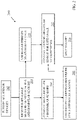
- Figure 2 illustrates an operational gyroscope system flow diagram 200 of an example embodiment.
- the flow diagram 200 is provided as a series of sequential blocks. The order and even the content may be different in other embodiments. Hence embodiments are not limited the sequence and content illustrated in the example flow diagram of Figure 2 .
- the process starts in the operational gyroscope system flow diagram 200 by turning on all of the sensor devices at block (202). All the sensors devices include the RLG 104 and the dissimilar sensors generally indicated as 106.
- the controller 102 then receives all the sensor or measurement data that includes the rate/angle measurements, in the gyroscope system embodiment, from the RLG 104 and the dissimilar sensors 106.
- the controller 102 uses the rate/angle measurements of the RLG data as primary measurement data at block (210) while the RLG 104 is on.
- a bias error for N dissimilar sensors is computed at block (206) by the controller 102.
- a compensation model based on the bias error for each dissimilar sensor 106 is loaded on and stored in the memory 110 at block (208) in this example embodiment.
- the compensation model is based on a comparison of measurement outputs of the dissimilar sensors 106 with measurement outputs of the RLG 104.
- the controller 102 converts to using the dissimilar sensor measurement outputs for rate measurements using the compensation module stored in the memory 110.
- the RLG 104 is then shut off at block (214).
- FIG. 3 An example of a timing flow diagram 300 of an example embodiment is illustrated in Figure 3 .
- the flow diagram 300 is provided as a series of sequential blocks. The order and even the content may be different in other embodiments. Hence embodiments are not limited the sequence and content illustrated in the example flow diagram of Figure 3 .
- both the RLG 104 and the dissimilar sensors are turned on at block (302).
- the time the RLG is on is tracked at block (304). Once it is determined at block (306) that the select time is reached, the RLG 104 is turned off at block (308).
- the time period is a period that is long enough to overcome the run-to-run repeatability issues of the dissimilar sensors 106.
- both the dissimilar sensors 106 and RLG 104 are turned on at the start of a "day.”
- the RLG 104 Upon start up the RLG 104 self-aligns and provides data to calibrate the dissimilar sensors biases to ⁇ 0.002 to 0.003 deg/hr for a select initial calibration period of time. For example the select period of time may be a first hour of operation.
- the RLG 104 is then shut off and the dissimilar sensors 106 is used to navigate for the rest of the "day.”
- the RLG 104 useful life may be extended by 15x. This system not only addresses dissimilar sensor run-by-run bias repeatability issues (such as MEMS run-by-run bias repeatability issues), it extends the life the RLG 104.
- a Kalman filter 112 may be used during the select calibration period of RLG operation to determine the bias error of the dissimilar sensors 106. After that time, calibrated (adjusted) rate/angle measurements from the dissimilar sensors 106 based on the determined bias errors is used for the remainder of the "day" and shut the RLG 112 is shut off.
- the RLG 104 may be turned on at any time for a period of time to provide a fresh solution (update calibration information) to add fault tolerance or detection to the gyroscope system 100. This is further illustrated in the timing flow diagram of Figure 3 .
- a new solution at block (310) is needed.
- the need for a new solution is a need for a new compensation model (or calibration information) stored in memory 110 as described above in Figure 2 .
- the RLG 104 is turned on at block (312).
- the time the RLG 104 is on is tracked at block (314).
- the RLG 104 is turned off.
- the operating time of the RLG 104 may be variable depending upon the ARW of the RLG 104 and the level of bias uncertainty needed for the dissimilar sensors.
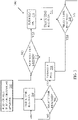
- a solution determination flow diagram 400 of Figure 4 An example of an application of the Kalman filter is illustrated in a solution determination flow diagram 400 of Figure 4 .
- the flow diagram 400 is provided as a series of sequential blocks. The order and even the content may be different in other embodiments. Hence embodiments are not limited the sequence and content illustrated in the example flow diagram of Figure 4 .
- the process starts a block (402) where it is determined if the RLG 104 is on. If it is on, the process uses the Kalman filter 112 at block (404) to determine bias error associated with the dissimilar sensor measurements. Calibration information that is based on the determined bias errors is stored the memory 110 at block (406). If the RLG is not on as determined by block (402), the stored calibration information is used in generating rate/angle measurements from the dissimilar sensor(s) at block (408).
- Embodiments may also be applied to sensor triads as illustrated in Figure 5 .
- the sensor triad gyroscope system 500 example of Figure 5 .
- This gyroscope system 500 is illustrated as including a RLG triad 504, a plurality of dissimilar sensor triads 106-1 through 106-N Kalman, a filter 512, a vehicle control 514 and a clock 516.
- the dissimilar sensor triads maybe other types of gyroscope triads including MEMS triads that provide orientation and angular velocity information.
- this embodiment includes a controller 502 and a memory 510 to perform at least the functions described above regarding the embodiment described in the Figure 1 .
- Figure 6 illustrates an operational triad gyroscope system flow diagram 600 of an example embodiment.
- the flow diagram 600 is provided as a series of sequential blocks. The order and even the content may be different in other embodiments. Hence embodiments are not limited the sequence and content illustrated in the example flow diagram of Figure 2 .
- the process starts in the operational gyroscope system flow diagram 600 by turning on all of the sensor devices at block (602). All the sensors devices include the RLG triad 504 and the dissimilar sensors triads generally indicated as 506.
- the controller 502 receives all the sensor data that includes rate/angle measurements from the triad RLG 504 and the dissimilar sensor triads 506.
- the controller 502 at block (604) based on instructions stored in the memory 510, the controller 502 uses the RLG data as primary data at block (610) while the RLG 504 is on.
- the controller 502 at block (606) computes a bias error for N dissimilar sensor triads.
- the bias error for N dissimilar sensor triads is stored in the memory at block (608).
- calibration information based on the bias error is stored in the memory.
- data from the N dissimilar sensor triads 506 is converted for use using the computed bias error.
- the RLG Triad is then shut off at block (614).
- the converted measurements from the N dissimilar sensor triads 506 are then used by the gyroscope system 500 while the RLG triad 504 is turned off.
Landscapes
- Engineering & Computer Science (AREA)
- Physics & Mathematics (AREA)
- Radar, Positioning & Navigation (AREA)
- Remote Sensing (AREA)
- General Physics & Mathematics (AREA)
- Optics & Photonics (AREA)
- Power Engineering (AREA)
- Electromagnetism (AREA)
- Manufacturing & Machinery (AREA)
- Automation & Control Theory (AREA)
- Signal Processing (AREA)
- Gyroscopes (AREA)
- Navigation (AREA)
Description
- A gyroscope may be used as a navigational aid. Gyroscopes measure orientation and angular velocity. In an aircraft application, these measurements provide vital information used to safely operate the aircraft as it traverses through its travel path. There are several different types of gyroscopes that are used for aircraft navigation. Two example types include a ring laser gyroscope (RLG) and a microelectromechanical system (MEMS) gyroscope. A RLG has excellent run-to-run stability but its life expectancy is less than the life expectancy of an aircraft. Other types of sensors, such as MEMS gyroscopes, have a good angle random walk (ARW) and good in-run bias stability but poorer run-to-run stability. ARW is a velocity error build up over time due to noise. An in-run bias stability is a measure of a random variation in bias computed over a specified sample time and averaging time interval. A run-to-run (or the turn-on to turn-on) stability is a residual output error that occurs after calibration and internal compensation that is caused by at least the effects of turn-ons, turn-offs, time and temperature variations. Currently a suitable very long life selfaligning gyroscope system can therefore not be made by either technology type.
-
WO2016/107806A1 discloses a hybrid inertia sensor employing cold atoms and MEMS and associated inertial platform. DocumentUS 2013/0181086 A1 discloses a detector assembly wherein the drift of MEMS gyroscopes in a secondary IMU is compensated using a main IMU comprising a ring laser gyroscope. -
EP2685212A2 discloses an inertial sensing system comprising a first multi-axis atomic inertial sensor, a second multi-axis atomic inertial sensor, and an optical multiplexer optically coupled to the first and second multi-axis atomic inertial sensors. A plurality of (MEMS inertial sensors is in operative communication with the first and second multi-axis atomic inertial sensors. -
US2012/0059575A1 discloses a target locator device comprising: a high performance gyroscope; an inertial measurement unit including an accelerometer triad and a gyroscope triad; a rangefinder; a global navigation satellite system (GNSS) receiver; and a processor coupled to the high performance gyroscope, the inertial measurement unit, the rangefinder and the GNSS receiver. - The following summary is made by way of example and not by way of limitation. It is merely provided to aid the reader in understanding some of the aspects of the subject matter described. Embodiments provide a system that selectively incorporates a high performance sensor and at least one dissimilar sensors at select times during operation of the system to extend the life of the high performance sensor.
- The present invention is defined by the independent claims, to which reference should now be made. Advantageous embodiments are set out in the dependent claims.
- Embodiments can be more easily understood and further advantages and uses thereof will be more readily apparent, when considered in view of the detailed description and the following figures in which:
-
Figure 1 is a block diagram of a gyroscope system according to one exemplary embodiment; -
Figure 2 illustrates an operational gyroscope system flow diagram according to one exemplary embodiment; -
Figure 3 illustrates a timing flow diagram according to one exemplary embodiment; -
Figure 4 illustrates a solution determination flow diagram according to one exemplary embodiment; -
Figure 5 is a block diagram of another gyroscope system according to one exemplary embodiment; and -
Figure 6 illustrates an operational triad gyroscope system flow diagram according to one exemplary embodiment; - In accordance with common practice, the various described features are not drawn to scale but are drawn to emphasize specific features relevant to the subject matter described. Reference characters denote like elements throughout Figures and text.
- In the following detailed description, reference is made to the accompanying drawings, which form a part hereof, and in which is shown by way of illustration specific embodiments in which the inventions may be practiced. These embodiments are described in sufficient detail to enable those skilled in the art to practice the embodiments, and it is to be understood that other embodiments may be utilized and that changes may be made without departing from the spirit and scope of the present invention. The following detailed description is, therefore, not to be taken in a limiting sense, and the scope of the present invention is defined only by the claims and equivalents thereof.
- Embodiments provide a system that improves the life expectancy of a high performance sensor. Systems described herein include the high performance sensor and at least one dissimilar sensor. The at least one dissimilar sensor provides the same type of measurements as the high performance sensor but is typically not as accurate as the high performance sensor. Further, the at least one dissimilar sensor may have a longer life expectancy than the high performance sensor. The life expectancy of the high performance sensor is extended in embodiments by selectively turning off the high performance sensor during periods of a vehicle mission where measurements from the at least one dissimilar sensor can be safely used. Vehicle applications in which the system may be incorporated in, include but are not limited to, cars, trucks, boats, aircraft, spacecraft etc. Systems described herein may be applied in vehicles where the vehicles mission is longer than the life expectancy of the high performance sensor or where the vehicle has a longer life expectancy than the high performance sensor.
- Embodiments are described hereafter as applying to the example embodiment of a gyroscope system that selectively incorporates a ring laser gyroscope (RLG) (an example high performance sensor) and at least one other dissimilar sensor, such as but not limited to, a microelectromechanical system (MEMS) gyroscope at select times to extend the life of the RLG. In particular, in some embodiments, the gyroscope system only uses the accurate sensor (RLG) long enough to overcome the run-to-run repeatability issues of the other dissimilar sensors. The RLG is then shut off to limit the amount of time the RLG is used.
- Referring to
Figure 1 , a block diagram ofgyroscope system 100 of one example is illustrated. Thegyroscope system 100 is illustrated as including acontroller 102, amemory 110, a RLG 104 (high performance sensor), a plurality of dissimilar sensors 106-1 through 106-N, a Kalmanfilter 112, avehicle control 114 and aclock 116. The dissimilar sensors 106-1 through 106-N may be other types of gyroscopes, such as MEMS gyroscopes, or other devices that provide orientation and angular velocity information. Thevehicle control 114 may be a vehicle system that uses the measurements, generally described as rate/angle measurements, from thegyroscope system 100 to at least display or even control aspects of the vehicle based on the rate/angle measurements from thegyroscope system 100 for navigation reasons. Theclock 116 is used by thecontroller 102 to at least track the time the RLG 104 is on in one example embodiment. - In general, the
controller 102 may include any one or more of a processor, microprocessor, a digital signal processor (DSP), an application specific integrated circuit (ASIC), a field program gate array (FPGA), or equivalent discrete or integrated logic circuitry. In some example embodiments,controller 102 may include multiple components, such as any combination of one or more microprocessors, one or more controllers, one or more DSPs, one or more ASICs, one or more FPGAs, as well as other discrete or integrated logic circuitry. The functions attributed to thecontroller 102 herein may be embodied as software, firmware, hardware or any combination thereof. The controller may be part of a system controller or a component controller. Thememory 110 may include computerreadable operating instructions that, when executed by the controller provides functions of thegyroscope system 100. Such functions may include the functions of turning on and off the RLG 104 as described below. The computer readable instructions may be encoded within thememory 110.Memory 110 may comprise computer readable storage media including any volatile, nonvolatile, magnetic, optical, or electrical media, such as, but not limited to, a random access memory (RAM), read-only memory (ROM), non-volatile RAM (NVRAM), electrically-erasable programmable ROM (EEPROM), flash memory, or any other storage medium. -
Figure 2 illustrates an operational gyroscope system flow diagram 200 of an example embodiment. The flow diagram 200 is provided as a series of sequential blocks. The order and even the content may be different in other embodiments. Hence embodiments are not limited the sequence and content illustrated in the example flow diagram ofFigure 2 . - The process starts in the operational gyroscope system flow diagram 200 by turning on all of the sensor devices at block (202). All the sensors devices include the
RLG 104 and the dissimilar sensors generally indicated as 106. Thecontroller 102 then receives all the sensor or measurement data that includes the rate/angle measurements, in the gyroscope system embodiment, from theRLG 104 and thedissimilar sensors 106. Thecontroller 102, based on instructions stored in thememory 110, uses the rate/angle measurements of the RLG data as primary measurement data at block (210) while theRLG 104 is on. - Further, a bias error for N dissimilar sensors is computed at block (206) by the
controller 102. A compensation model based on the bias error for eachdissimilar sensor 106 is loaded on and stored in thememory 110 at block (208) in this example embodiment. In one embodiment the compensation model is based on a comparison of measurement outputs of thedissimilar sensors 106 with measurement outputs of theRLG 104. At block (212), thecontroller 102 converts to using the dissimilar sensor measurement outputs for rate measurements using the compensation module stored in thememory 110. TheRLG 104 is then shut off at block (214). - An example of a timing flow diagram 300 of an example embodiment is illustrated in
Figure 3 . The flow diagram 300 is provided as a series of sequential blocks. The order and even the content may be different in other embodiments. Hence embodiments are not limited the sequence and content illustrated in the example flow diagram ofFigure 3 . - In this example embodiment, both the
RLG 104 and the dissimilar sensors are turned on at block (302). The time the RLG is on is tracked at block (304). Once it is determined at block (306) that the select time is reached, theRLG 104 is turned off at block (308). In one embodiment the time period is a period that is long enough to overcome the run-to-run repeatability issues of thedissimilar sensors 106. - In one embodiment both the
dissimilar sensors 106 andRLG 104 are turned on at the start of a "day." Upon start up theRLG 104 self-aligns and provides data to calibrate the dissimilar sensors biases to ~0.002 to 0.003 deg/hr for a select initial calibration period of time. For example the select period of time may be a first hour of operation. TheRLG 104 is then shut off and thedissimilar sensors 106 is used to navigate for the rest of the "day." Using this system, for a 15-hour day, theRLG 104 useful life may be extended by 15x. This system not only addresses dissimilar sensor run-by-run bias repeatability issues (such as MEMS run-by-run bias repeatability issues), it extends the life theRLG 104. - In an example embodiment, a
Kalman filter 112 may be used during the select calibration period of RLG operation to determine the bias error of thedissimilar sensors 106. After that time, calibrated (adjusted) rate/angle measurements from thedissimilar sensors 106 based on the determined bias errors is used for the remainder of the "day" and shut theRLG 112 is shut off. - Further in embodiments, the
RLG 104 may be turned on at any time for a period of time to provide a fresh solution (update calibration information) to add fault tolerance or detection to thegyroscope system 100. This is further illustrated in the timing flow diagram ofFigure 3 . At block (310) it is determined if a new solution at block (310) is needed. In an embodiment, the need for a new solution is a need for a new compensation model (or calibration information) stored inmemory 110 as described above inFigure 2 . If a new solution is needed, theRLG 104 is turned on at block (312). The time theRLG 104 is on is tracked at block (314). Once it is determined at block (316) that a select time is reached, theRLG 104 is turned off. The operating time of theRLG 104 may be variable depending upon the ARW of theRLG 104 and the level of bias uncertainty needed for the dissimilar sensors. - An example of an application of the Kalman filter is illustrated in a solution determination flow diagram 400 of
Figure 4 . The flow diagram 400 is provided as a series of sequential blocks. The order and even the content may be different in other embodiments. Hence embodiments are not limited the sequence and content illustrated in the example flow diagram ofFigure 4 . - The process starts a block (402) where it is determined if the
RLG 104 is on. If it is on, the process uses theKalman filter 112 at block (404) to determine bias error associated with the dissimilar sensor measurements. Calibration information that is based on the determined bias errors is stored thememory 110 at block (406). If the RLG is not on as determined by block (402), the stored calibration information is used in generating rate/angle measurements from the dissimilar sensor(s) at block (408). - Embodiments may also be applied to sensor triads as illustrated in
Figure 5 . The sensortriad gyroscope system 500 example ofFigure 5 . Thisgyroscope system 500 is illustrated as including aRLG triad 504, a plurality of dissimilar sensor triads 106-1 through 106-N Kalman, afilter 512, avehicle control 514 and aclock 516. The dissimilar sensor triads maybe other types of gyroscope triads including MEMS triads that provide orientation and angular velocity information. Similar to the embodiment ofFigure 1 , this embodiment includes acontroller 502 and amemory 510 to perform at least the functions described above regarding the embodiment described in theFigure 1 . -
Figure 6 illustrates an operational triad gyroscope system flow diagram 600 of an example embodiment. The flow diagram 600 is provided as a series of sequential blocks. The order and even the content may be different in other embodiments. Hence embodiments are not limited the sequence and content illustrated in the example flow diagram ofFigure 2 . - The process starts in the operational gyroscope system flow diagram 600 by turning on all of the sensor devices at block (602). All the sensors devices include the
RLG triad 504 and the dissimilar sensors triads generally indicated as 506. Thecontroller 502 then receives all the sensor data that includes rate/angle measurements from thetriad RLG 504 and thedissimilar sensor triads 506. Thecontroller 502 at block (604), based on instructions stored in thememory 510, thecontroller 502 uses the RLG data as primary data at block (610) while theRLG 504 is on. - The
controller 502 at block (606) computes a bias error for N dissimilar sensor triads. The bias error for N dissimilar sensor triads is stored in the memory at block (608). As described above, in an embodiment calibration information based on the bias error is stored in the memory. At block (612) data from the Ndissimilar sensor triads 506 is converted for use using the computed bias error. The RLG Triad is then shut off at block (614). The converted measurements from the Ndissimilar sensor triads 506 are then used by thegyroscope system 500 while theRLG triad 504 is turned off. - Although specific embodiments have been illustrated and described herein, it will be appreciated by those of ordinary skill in the art that any arrangement, which is calculated to achieve the same purpose, may be substituted for the specific embodiment shown. This application is intended to cover any adaptations or variations of the present invention. Therefore, it is manifestly intended that this invention be limited only by the claims and the equivalents thereof.
Claims (8)
- A system (100) comprising:a ring laser gyroscope, RLG, (104) to provide rate/angle measurements;at least one dissimilar sensor (106), the at least one dissimilar sensor (106) being of a different type of sensor than the RLG (104) while providing a same type of measurement as the RLG (104), the at least one dissimilar sensor (106) being less accurate than the RLG and having a longer life expectancy than the RLG (104); andat least one controller (102) in communication with the RLG (104) and the at least one dissimilar sensor (106), the at least one controller (102) configured to start both the RLG (104) and the at least one dissimilar sensor (106) at startup of the system (100), the at least one controller (102) further configured to turn off the RLG (104) after a select period of time, the at least one controller (102) further configured to output measurement data based on measurements of the RLG (104) while the RLG (104) is on and output the measurement data based on the at least one dissimilar sensor (106) when the RLG (104) is off,wherein the at least one controller (102) is further configured to determine bias errors between the rate/angle measurements of the RLG (104) and the rate/angle measurements of the at least one dissimilar sensor (106) when the RLG (104) is on and convert rate/angle measurements of the at least one dissimilar sensor (106) using the determined bias errors when the RLG (104) is turned off.
- The system (100) of claim 1, further comprising:
at least one Kalman filter (112) used by the at least one controller (102) to determine the bias error, the at least one controller (102) is configured to use an estimated solution from the Kalman filter (112) when the RLG (104) is turned off and use the estimated solution to calibrate outputs of the at least one dissimilar sensor (106). - The system (100) of claim 2, further comprising:
a memory (110) to store calibration information based on the determined bias errors, the at least one controller (102) in communication with the memory (110). - The system of claim 3, wherein the controller (102) is further configured to turn on the RLG (104) periodically to update calibration information.
- A vehicle comprising the system of claim 1, wherein the RLG (104) has a life expectancy less than a life expectancy of the vehicle.
- A method of operating a gyroscope system (100), the method comprising:turning on a ring laser gyroscope, RLG, (104) and at least one dissimilar sensor (106), each dissimilar sensor (106) being of a different type of sensor than the RLG (104) that also provides rate/angle measurements, the at least one dissimilar sensor (106) being less accurate than the RLG (104) and having a longer life expectancy than the RLG;using the rate/angle measurements of the RLG (104) when the RLG (104) is on;determining bias errors between the rate/angle measurements of the RLG (104) and the rate/angle measurements of the at least one dissimilar sensor (106);storing calibration information based on the bias errors in an memory (110);turning off the RLG (104); andcalibrating the rate/angle measurements from the at least one dissimilar sensor (106) based on the stored calibration information.
- The method of claim 6, further comprising:
applying a Kalman filter (112) in determining the bias errors of the rate/angle measurements of the at least one dissimilar sensor (106). - The method of claim 6, wherein turning off the RLG (104) further comprises:
turning off the RLG (104) after a select time has passed needed to overcome run-to-run repeatability issues of the at least one dissimilar sensor (106).
Applications Claiming Priority (1)
| Application Number | Priority Date | Filing Date | Title |
|---|---|---|---|
| US16/665,971 US11255672B2 (en) | 2019-10-28 | 2019-10-28 | System having an extended life high performance sensor |
Publications (2)
| Publication Number | Publication Date |
|---|---|
| EP3816577A1 EP3816577A1 (en) | 2021-05-05 |
| EP3816577B1 true EP3816577B1 (en) | 2022-03-30 |
Family
ID=72717677
Family Applications (1)
| Application Number | Title | Priority Date | Filing Date |
|---|---|---|---|
| EP20199485.2A Active EP3816577B1 (en) | 2019-10-28 | 2020-09-30 | System having an extended life high performance sensor |
Country Status (3)
| Country | Link |
|---|---|
| US (1) | US11255672B2 (en) |
| EP (1) | EP3816577B1 (en) |
| CN (1) | CN112729295B (en) |
Families Citing this family (2)
| Publication number | Priority date | Publication date | Assignee | Title |
|---|---|---|---|---|
| GB2608647B (en) * | 2021-07-09 | 2024-04-17 | Zero Point Motion Ltd | Chip-scale inertial sensor and inertial measurement unit |
| EP4506660A1 (en) * | 2023-08-09 | 2025-02-12 | Atlantic Inertial Systems Limited | Gyroscope systems |
Family Cites Families (15)
| Publication number | Priority date | Publication date | Assignee | Title |
|---|---|---|---|---|
| US6654685B2 (en) | 2002-01-04 | 2003-11-25 | The Boeing Company | Apparatus and method for navigation of an aircraft |
| US8255161B2 (en) | 2008-10-03 | 2012-08-28 | Honeywell International Inc. | System and method of auto-calibration of inertial sensors |
| US20130211723A1 (en) * | 2009-01-30 | 2013-08-15 | Gyrodata, Incorporated | Reducing error contributions to gyroscopic measurements |
| IL198109A (en) | 2009-04-07 | 2013-01-31 | Azimuth Technologies Ltd | North finding device, system and method |
| US20120059575A1 (en) | 2010-02-05 | 2012-03-08 | Honeywell International Inc. | Target locator device and methods |
| US8583371B1 (en) * | 2010-12-23 | 2013-11-12 | Lockheed Martin Corporation | Autonomous gyro temperature calibration |
| US9091539B2 (en) * | 2011-06-10 | 2015-07-28 | Honeywell International Inc. | Gyroscope dynamic motor amplitude compensation for enhanced rate estimation during startup |
| US8552350B2 (en) | 2012-01-15 | 2013-10-08 | Raytheon Company | Mitigation of drift effects in secondary inertial measurements of an isolated detector assembly |
| US8860933B2 (en) | 2012-07-12 | 2014-10-14 | Honeywell International Inc. | Multi-axis atomic inertial sensor system |
| US9121866B2 (en) * | 2013-03-15 | 2015-09-01 | Autoliv Asp, Inc. | System and method for inertial sensor offset compensation |
| US9996986B2 (en) * | 2014-08-28 | 2018-06-12 | GM Global Technology Operations LLC | Sensor offset calibration using map information |
| EP3218674B1 (en) * | 2014-11-11 | 2021-06-23 | Intel Corporation | Extended kalman filter based autonomous magnetometer calibration |
| FR3031187B1 (en) | 2014-12-30 | 2017-10-20 | Thales Sa | COLD ATOMIC HYBRID INERTIA SENSOR AND MEMS AND ASSOCIATED INERTIAL PLANT |
| WO2018048897A1 (en) * | 2016-09-06 | 2018-03-15 | The Charles Stark Draper Laboratory, Inc. | Fused sensor ensemble for navigation and calibration process therefor |
| CN108592947B (en) * | 2018-04-26 | 2020-06-09 | Oppo广东移动通信有限公司 | Gyroscope calibration method and device, storage medium and terminal equipment |
-
2019
- 2019-10-28 US US16/665,971 patent/US11255672B2/en active Active
-
2020
- 2020-09-29 CN CN202011054444.5A patent/CN112729295B/en active Active
- 2020-09-30 EP EP20199485.2A patent/EP3816577B1/en active Active
Also Published As
| Publication number | Publication date |
|---|---|
| CN112729295A (en) | 2021-04-30 |
| EP3816577A1 (en) | 2021-05-05 |
| CN112729295B (en) | 2025-10-17 |
| US11255672B2 (en) | 2022-02-22 |
| US20210123738A1 (en) | 2021-04-29 |
Similar Documents
| Publication | Publication Date | Title |
|---|---|---|
| US7788025B2 (en) | Navigation system | |
| EP1941236B1 (en) | Systems and methods for reducing vibration-induced errors in inertial sensors | |
| US8024119B2 (en) | Systems and methods for gyrocompass alignment using dynamically calibrated sensor data and an iterated extended kalman filter within a navigation system | |
| EP1837627B1 (en) | Methods and systems for implementing an iterated extended kalman filter within a navigation system | |
| US7979231B2 (en) | Method and system for estimation of inertial sensor errors in remote inertial measurement unit | |
| EP3076133B1 (en) | Vehicle navigation system with adaptive gyroscope bias compensation | |
| US8019542B2 (en) | Heading stabilization for aided inertial navigation systems | |
| US10488432B2 (en) | Systems and methods for compensating for the absence of a sensor measurement in a heading reference system | |
| EP3816577B1 (en) | System having an extended life high performance sensor | |
| KR101135782B1 (en) | System for navigation redundancy | |
| US7130744B2 (en) | Method for determining and compensating the scale factor error caused by a wavelength change in a GPS-based inertial navigation system | |
| JP6248559B2 (en) | Vehicle trajectory calculation device | |
| US20240159539A1 (en) | Method for assisting with the navigation of a vehicle | |
| JP6673106B2 (en) | Angular velocity sensor correction device and angular velocity sensor correction method | |
| Parviainen et al. | Using Doppler radar and MEMS gyro to augment DGPS for land vehicle navigation | |
| US8413931B2 (en) | System and method for reducing attitude errors for exoatmospheric devices |
Legal Events
| Date | Code | Title | Description |
|---|---|---|---|
| PUAI | Public reference made under article 153(3) epc to a published international application that has entered the european phase |
Free format text: ORIGINAL CODE: 0009012 |
|
| STAA | Information on the status of an ep patent application or granted ep patent |
Free format text: STATUS: THE APPLICATION HAS BEEN PUBLISHED |
|
| AK | Designated contracting states |
Kind code of ref document: A1 Designated state(s): AL AT BE BG CH CY CZ DE DK EE ES FI FR GB GR HR HU IE IS IT LI LT LU LV MC MK MT NL NO PL PT RO RS SE SI SK SM TR |
|
| STAA | Information on the status of an ep patent application or granted ep patent |
Free format text: STATUS: REQUEST FOR EXAMINATION WAS MADE |
|
| 17P | Request for examination filed |
Effective date: 20210609 |
|
| RBV | Designated contracting states (corrected) |
Designated state(s): AL AT BE BG CH CY CZ DE DK EE ES FI FR GB GR HR HU IE IS IT LI LT LU LV MC MK MT NL NO PL PT RO RS SE SI SK SM TR |
|
| GRAP | Despatch of communication of intention to grant a patent |
Free format text: ORIGINAL CODE: EPIDOSNIGR1 |
|
| STAA | Information on the status of an ep patent application or granted ep patent |
Free format text: STATUS: GRANT OF PATENT IS INTENDED |
|
| INTG | Intention to grant announced |
Effective date: 20211028 |
|
| RAP3 | Party data changed (applicant data changed or rights of an application transferred) |
Owner name: HONEYWELL INTERNATIONAL INC. |
|
| GRAS | Grant fee paid |
Free format text: ORIGINAL CODE: EPIDOSNIGR3 |
|
| GRAA | (expected) grant |
Free format text: ORIGINAL CODE: 0009210 |
|
| STAA | Information on the status of an ep patent application or granted ep patent |
Free format text: STATUS: THE PATENT HAS BEEN GRANTED |
|
| AK | Designated contracting states |
Kind code of ref document: B1 Designated state(s): AL AT BE BG CH CY CZ DE DK EE ES FI FR GB GR HR HU IE IS IT LI LT LU LV MC MK MT NL NO PL PT RO RS SE SI SK SM TR |
|
| REG | Reference to a national code |
Ref country code: GB Ref legal event code: FG4D |
|
| REG | Reference to a national code |
Ref country code: CH Ref legal event code: EP |
|
| REG | Reference to a national code |
Ref country code: AT Ref legal event code: REF Ref document number: 1479577 Country of ref document: AT Kind code of ref document: T Effective date: 20220415 |
|
| REG | Reference to a national code |
Ref country code: DE Ref legal event code: R096 Ref document number: 602020002451 Country of ref document: DE |
|
| REG | Reference to a national code |
Ref country code: IE Ref legal event code: FG4D |
|
| REG | Reference to a national code |
Ref country code: LT Ref legal event code: MG9D |
|
| PG25 | Lapsed in a contracting state [announced via postgrant information from national office to epo] |
Ref country code: SE Free format text: LAPSE BECAUSE OF FAILURE TO SUBMIT A TRANSLATION OF THE DESCRIPTION OR TO PAY THE FEE WITHIN THE PRESCRIBED TIME-LIMIT Effective date: 20220330 Ref country code: RS Free format text: LAPSE BECAUSE OF FAILURE TO SUBMIT A TRANSLATION OF THE DESCRIPTION OR TO PAY THE FEE WITHIN THE PRESCRIBED TIME-LIMIT Effective date: 20220330 Ref country code: NO Free format text: LAPSE BECAUSE OF FAILURE TO SUBMIT A TRANSLATION OF THE DESCRIPTION OR TO PAY THE FEE WITHIN THE PRESCRIBED TIME-LIMIT Effective date: 20220630 Ref country code: LT Free format text: LAPSE BECAUSE OF FAILURE TO SUBMIT A TRANSLATION OF THE DESCRIPTION OR TO PAY THE FEE WITHIN THE PRESCRIBED TIME-LIMIT Effective date: 20220330 Ref country code: HR Free format text: LAPSE BECAUSE OF FAILURE TO SUBMIT A TRANSLATION OF THE DESCRIPTION OR TO PAY THE FEE WITHIN THE PRESCRIBED TIME-LIMIT Effective date: 20220330 Ref country code: BG Free format text: LAPSE BECAUSE OF FAILURE TO SUBMIT A TRANSLATION OF THE DESCRIPTION OR TO PAY THE FEE WITHIN THE PRESCRIBED TIME-LIMIT Effective date: 20220630 |
|
| REG | Reference to a national code |
Ref country code: NL Ref legal event code: MP Effective date: 20220330 |
|
| REG | Reference to a national code |
Ref country code: AT Ref legal event code: MK05 Ref document number: 1479577 Country of ref document: AT Kind code of ref document: T Effective date: 20220330 |
|
| PG25 | Lapsed in a contracting state [announced via postgrant information from national office to epo] |
Ref country code: LV Free format text: LAPSE BECAUSE OF FAILURE TO SUBMIT A TRANSLATION OF THE DESCRIPTION OR TO PAY THE FEE WITHIN THE PRESCRIBED TIME-LIMIT Effective date: 20220330 Ref country code: GR Free format text: LAPSE BECAUSE OF FAILURE TO SUBMIT A TRANSLATION OF THE DESCRIPTION OR TO PAY THE FEE WITHIN THE PRESCRIBED TIME-LIMIT Effective date: 20220701 Ref country code: FI Free format text: LAPSE BECAUSE OF FAILURE TO SUBMIT A TRANSLATION OF THE DESCRIPTION OR TO PAY THE FEE WITHIN THE PRESCRIBED TIME-LIMIT Effective date: 20220330 |
|
| PG25 | Lapsed in a contracting state [announced via postgrant information from national office to epo] |
Ref country code: NL Free format text: LAPSE BECAUSE OF FAILURE TO SUBMIT A TRANSLATION OF THE DESCRIPTION OR TO PAY THE FEE WITHIN THE PRESCRIBED TIME-LIMIT Effective date: 20220330 |
|
| PG25 | Lapsed in a contracting state [announced via postgrant information from national office to epo] |
Ref country code: SM Free format text: LAPSE BECAUSE OF FAILURE TO SUBMIT A TRANSLATION OF THE DESCRIPTION OR TO PAY THE FEE WITHIN THE PRESCRIBED TIME-LIMIT Effective date: 20220330 Ref country code: SK Free format text: LAPSE BECAUSE OF FAILURE TO SUBMIT A TRANSLATION OF THE DESCRIPTION OR TO PAY THE FEE WITHIN THE PRESCRIBED TIME-LIMIT Effective date: 20220330 Ref country code: RO Free format text: LAPSE BECAUSE OF FAILURE TO SUBMIT A TRANSLATION OF THE DESCRIPTION OR TO PAY THE FEE WITHIN THE PRESCRIBED TIME-LIMIT Effective date: 20220330 Ref country code: PT Free format text: LAPSE BECAUSE OF FAILURE TO SUBMIT A TRANSLATION OF THE DESCRIPTION OR TO PAY THE FEE WITHIN THE PRESCRIBED TIME-LIMIT Effective date: 20220801 Ref country code: ES Free format text: LAPSE BECAUSE OF FAILURE TO SUBMIT A TRANSLATION OF THE DESCRIPTION OR TO PAY THE FEE WITHIN THE PRESCRIBED TIME-LIMIT Effective date: 20220330 Ref country code: EE Free format text: LAPSE BECAUSE OF FAILURE TO SUBMIT A TRANSLATION OF THE DESCRIPTION OR TO PAY THE FEE WITHIN THE PRESCRIBED TIME-LIMIT Effective date: 20220330 Ref country code: CZ Free format text: LAPSE BECAUSE OF FAILURE TO SUBMIT A TRANSLATION OF THE DESCRIPTION OR TO PAY THE FEE WITHIN THE PRESCRIBED TIME-LIMIT Effective date: 20220330 Ref country code: AT Free format text: LAPSE BECAUSE OF FAILURE TO SUBMIT A TRANSLATION OF THE DESCRIPTION OR TO PAY THE FEE WITHIN THE PRESCRIBED TIME-LIMIT Effective date: 20220330 |
|
| PG25 | Lapsed in a contracting state [announced via postgrant information from national office to epo] |
Ref country code: PL Free format text: LAPSE BECAUSE OF FAILURE TO SUBMIT A TRANSLATION OF THE DESCRIPTION OR TO PAY THE FEE WITHIN THE PRESCRIBED TIME-LIMIT Effective date: 20220330 Ref country code: IS Free format text: LAPSE BECAUSE OF FAILURE TO SUBMIT A TRANSLATION OF THE DESCRIPTION OR TO PAY THE FEE WITHIN THE PRESCRIBED TIME-LIMIT Effective date: 20220730 Ref country code: AL Free format text: LAPSE BECAUSE OF FAILURE TO SUBMIT A TRANSLATION OF THE DESCRIPTION OR TO PAY THE FEE WITHIN THE PRESCRIBED TIME-LIMIT Effective date: 20220330 |
|
| REG | Reference to a national code |
Ref country code: DE Ref legal event code: R097 Ref document number: 602020002451 Country of ref document: DE |
|
| PG25 | Lapsed in a contracting state [announced via postgrant information from national office to epo] |
Ref country code: DK Free format text: LAPSE BECAUSE OF FAILURE TO SUBMIT A TRANSLATION OF THE DESCRIPTION OR TO PAY THE FEE WITHIN THE PRESCRIBED TIME-LIMIT Effective date: 20220330 |
|
| PLBE | No opposition filed within time limit |
Free format text: ORIGINAL CODE: 0009261 |
|
| STAA | Information on the status of an ep patent application or granted ep patent |
Free format text: STATUS: NO OPPOSITION FILED WITHIN TIME LIMIT |
|
| 26N | No opposition filed |
Effective date: 20230103 |
|
| REG | Reference to a national code |
Ref country code: DE Ref legal event code: R119 Ref document number: 602020002451 Country of ref document: DE |
|
| PG25 | Lapsed in a contracting state [announced via postgrant information from national office to epo] |
Ref country code: MC Free format text: LAPSE BECAUSE OF FAILURE TO SUBMIT A TRANSLATION OF THE DESCRIPTION OR TO PAY THE FEE WITHIN THE PRESCRIBED TIME-LIMIT Effective date: 20220330 |
|
| REG | Reference to a national code |
Ref country code: BE Ref legal event code: MM Effective date: 20220930 |
|
| PG25 | Lapsed in a contracting state [announced via postgrant information from national office to epo] |
Ref country code: SI Free format text: LAPSE BECAUSE OF FAILURE TO SUBMIT A TRANSLATION OF THE DESCRIPTION OR TO PAY THE FEE WITHIN THE PRESCRIBED TIME-LIMIT Effective date: 20220330 |
|
| PG25 | Lapsed in a contracting state [announced via postgrant information from national office to epo] |
Ref country code: LU Free format text: LAPSE BECAUSE OF NON-PAYMENT OF DUE FEES Effective date: 20220930 |
|
| P01 | Opt-out of the competence of the unified patent court (upc) registered |
Effective date: 20230525 |
|
| PG25 | Lapsed in a contracting state [announced via postgrant information from national office to epo] |
Ref country code: IT Free format text: LAPSE BECAUSE OF FAILURE TO SUBMIT A TRANSLATION OF THE DESCRIPTION OR TO PAY THE FEE WITHIN THE PRESCRIBED TIME-LIMIT Effective date: 20220330 Ref country code: IE Free format text: LAPSE BECAUSE OF NON-PAYMENT OF DUE FEES Effective date: 20220930 Ref country code: DE Free format text: LAPSE BECAUSE OF NON-PAYMENT OF DUE FEES Effective date: 20230401 |
|
| PG25 | Lapsed in a contracting state [announced via postgrant information from national office to epo] |
Ref country code: BE Free format text: LAPSE BECAUSE OF NON-PAYMENT OF DUE FEES Effective date: 20220930 |
|
| PG25 | Lapsed in a contracting state [announced via postgrant information from national office to epo] |
Ref country code: CY Free format text: LAPSE BECAUSE OF FAILURE TO SUBMIT A TRANSLATION OF THE DESCRIPTION OR TO PAY THE FEE WITHIN THE PRESCRIBED TIME-LIMIT Effective date: 20220330 |
|
| REG | Reference to a national code |
Ref country code: CH Ref legal event code: PL |
|
| PG25 | Lapsed in a contracting state [announced via postgrant information from national office to epo] |
Ref country code: MK Free format text: LAPSE BECAUSE OF FAILURE TO SUBMIT A TRANSLATION OF THE DESCRIPTION OR TO PAY THE FEE WITHIN THE PRESCRIBED TIME-LIMIT Effective date: 20220330 |
|
| PG25 | Lapsed in a contracting state [announced via postgrant information from national office to epo] |
Ref country code: CH Free format text: LAPSE BECAUSE OF NON-PAYMENT OF DUE FEES Effective date: 20230930 |
|
| PG25 | Lapsed in a contracting state [announced via postgrant information from national office to epo] |
Ref country code: HU Free format text: LAPSE BECAUSE OF FAILURE TO SUBMIT A TRANSLATION OF THE DESCRIPTION OR TO PAY THE FEE WITHIN THE PRESCRIBED TIME-LIMIT; INVALID AB INITIO Effective date: 20200930 Ref country code: CH Free format text: LAPSE BECAUSE OF NON-PAYMENT OF DUE FEES Effective date: 20230930 |
|
| PG25 | Lapsed in a contracting state [announced via postgrant information from national office to epo] |
Ref country code: MT Free format text: LAPSE BECAUSE OF FAILURE TO SUBMIT A TRANSLATION OF THE DESCRIPTION OR TO PAY THE FEE WITHIN THE PRESCRIBED TIME-LIMIT Effective date: 20220330 |
|
| GBPC | Gb: european patent ceased through non-payment of renewal fee |
Effective date: 20240930 |
|
| PG25 | Lapsed in a contracting state [announced via postgrant information from national office to epo] |
Ref country code: GB Free format text: LAPSE BECAUSE OF NON-PAYMENT OF DUE FEES Effective date: 20240930 |
|
| PGFP | Annual fee paid to national office [announced via postgrant information from national office to epo] |
Ref country code: FR Payment date: 20250925 Year of fee payment: 6 |
|
| PG25 | Lapsed in a contracting state [announced via postgrant information from national office to epo] |
Ref country code: TR Free format text: LAPSE BECAUSE OF FAILURE TO SUBMIT A TRANSLATION OF THE DESCRIPTION OR TO PAY THE FEE WITHIN THE PRESCRIBED TIME-LIMIT Effective date: 20220330 |