EP3815428B1 - Verbesserte systeminformationsbereitstellung - Google Patents
Verbesserte systeminformationsbereitstellung Download PDFInfo
- Publication number
- EP3815428B1 EP3815428B1 EP20742697.4A EP20742697A EP3815428B1 EP 3815428 B1 EP3815428 B1 EP 3815428B1 EP 20742697 A EP20742697 A EP 20742697A EP 3815428 B1 EP3815428 B1 EP 3815428B1
- Authority
- EP
- European Patent Office
- Prior art keywords
- system information
- gnodeb
- information
- gnb
- request
- Prior art date
- Legal status (The legal status is an assumption and is not a legal conclusion. Google has not performed a legal analysis and makes no representation as to the accuracy of the status listed.)
- Active
Links
Images



Classifications
-
- H—ELECTRICITY
- H04—ELECTRIC COMMUNICATION TECHNIQUE
- H04W—WIRELESS COMMUNICATION NETWORKS
- H04W4/00—Services specially adapted for wireless communication networks; Facilities therefor
- H04W4/06—Selective distribution of broadcast services, e.g. multimedia broadcast multicast service [MBMS]; Services to user groups; One-way selective calling services
-
- H—ELECTRICITY
- H04—ELECTRIC COMMUNICATION TECHNIQUE
- H04W—WIRELESS COMMUNICATION NETWORKS
- H04W48/00—Access restriction; Network selection; Access point selection
- H04W48/08—Access restriction or access information delivery, e.g. discovery data delivery
- H04W48/12—Access restriction or access information delivery, e.g. discovery data delivery using downlink control channel
-
- H—ELECTRICITY
- H04—ELECTRIC COMMUNICATION TECHNIQUE
- H04W—WIRELESS COMMUNICATION NETWORKS
- H04W48/00—Access restriction; Network selection; Access point selection
- H04W48/08—Access restriction or access information delivery, e.g. discovery data delivery
- H04W48/10—Access restriction or access information delivery, e.g. discovery data delivery using broadcasted information
-
- H—ELECTRICITY
- H04—ELECTRIC COMMUNICATION TECHNIQUE
- H04W—WIRELESS COMMUNICATION NETWORKS
- H04W24/00—Supervisory, monitoring or testing arrangements
- H04W24/02—Arrangements for optimising operational condition
-
- H—ELECTRICITY
- H04—ELECTRIC COMMUNICATION TECHNIQUE
- H04W—WIRELESS COMMUNICATION NETWORKS
- H04W72/00—Local resource management
- H04W72/50—Allocation or scheduling criteria for wireless resources
- H04W72/53—Allocation or scheduling criteria for wireless resources based on regulatory allocation policies
-
- H—ELECTRICITY
- H04—ELECTRIC COMMUNICATION TECHNIQUE
- H04W—WIRELESS COMMUNICATION NETWORKS
- H04W76/00—Connection management
- H04W76/20—Manipulation of established connections
- H04W76/27—Transitions between radio resource control [RRC] states
-
- H—ELECTRICITY
- H04—ELECTRIC COMMUNICATION TECHNIQUE
- H04W—WIRELESS COMMUNICATION NETWORKS
- H04W88/00—Devices specially adapted for wireless communication networks, e.g. terminals, base stations or access point devices
- H04W88/08—Access point devices
- H04W88/085—Access point devices with remote components
-
- H—ELECTRICITY
- H04—ELECTRIC COMMUNICATION TECHNIQUE
- H04W—WIRELESS COMMUNICATION NETWORKS
- H04W92/00—Interfaces specially adapted for wireless communication networks
- H04W92/04—Interfaces between hierarchically different network devices
- H04W92/12—Interfaces between hierarchically different network devices between access points and access point controllers
Definitions
- This disclosure concerns mechanisms for providing and broadcasting System Information (SI) in an environment where a gNB has been decomposed into a gNB-CU (Centralized Unit) and a gNB-DU (Distributed Unit).
- SI System Information
- the 3 rd Generation Partnership Project (3GPP) supports gNB deployment in a disaggregated architecture which allows the gNB to be decomposed into a gNB-CU (Centralized Unit) and a gNB-DU (Distributed Unit), as will be shown in Figures 1 and 3 below.
- the disaggregated architecture impacts the mechanisms for providing and broadcasting System Information (SI), since some portions of SI are handled in the gNB-CU, while others are handled in the gNB-DU.
- SI System Information
- the gNB-DU owns and encodes MIB and SIB1
- SIBs System Information Broadcasts
- the present disclosure applies to the following: Any scenario in which the gNB-DU is able to provide System Information that is originally intended to be triggered from the gNB-CU, such as SIB9, yet the gNB-DU is able to generate it autonomously and broadcast it without further assistance from the gNB-CU.
- This functionality can greatly reduce signaling over the interface as the gNB-CU is no longer required to provide continuous updates over the interface between the gNB-CU and the gNB-DU, which in some scenarios can be as frequent as every 160 ms, such as, in case of reference-time delivery in SIB9.
- the gNB-CU may benefit from receiving the gNB-DU-derived information and use it to deliver it to the user equipment (UE) via dedicated unicast signaling, such as, an encoded SIB, or another piece of information, such as time reference.
- UE user equipment
- dedicated unicast signaling such as, an encoded SIB
- time reference another piece of information, such as time reference.
- the information the gNB-DU has generated rather than to have the gNB-CU generate it by itself. If the gNB-DU provides the SI in encoded form, that is, as an SIB, the gNB-CU can copy and paste it directly without further de-coding/re-encoding.
- the capability of the gNB-DU to re-encode SIB9 still has multiple shortcomings and is not efficient in that excessive signaling is not resolved, and the gNB-CU still provides inaccurate information in dedicated signaling (unicast) cases. Further, it is not applicable on a general level to all other system information cases and instead only partially tackles the issue of SIB9. This is a major shortcoming, given that as part of new work items, there are new SIBs being considered which would also not work optimally under the current framework which has MIB/SIB1 owned and encoded at gNB-DU and all other SIBs owned and encoded at the gNB-CU.
- Such examples are, for instance, new SIBs being considered for Non-Public Networks (NPN), as well as unicast delivery of very accurate information, possibly via a new SIB, required for Industrial IoT (IIoT) in 3GPP Release 16 work items.
- NPN Non-Public Networks
- IIoT Industrial IoT
- US2018/338277 relates to a method whereby a DU of a base station: receives system information from a CU of the base station; receives a request for system information from a UE; forwards the request to the CU; receives a command from the CU to provide the system information; and broadcasts the system information based on the command.
- gNB should be understood to mean “network node”.
- the term “gNB” is used to denote a network node in 5G.
- the present invention as described below, is not limited to 5G, but may be applicable to other generations yet to be developed or to earlier generations being further developed.
- gNB should be understood more broadly as a network node.
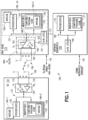
- FIG. 1 is a block diagram of one possible and non-limiting example in which the subject matter of the present disclosure may be practiced.
- a user equipment (UE) 110 radio access network (RAN) node 170, and network element(s) 190 are illustrated.
- the user equipment (UE) 110 is in wireless communication with a wireless network 100.
- a UE is a wireless device, typically mobile, that can access the wireless network.
- the UE 110 includes one or more processors 120, one or more memories 125, and one or more transceivers 130 interconnected through one or more buses 127.
- Each of the one or more transceivers 130 includes a receiver, Rx, 132 and a transmitter, Tx, 133.
- the one or more buses 127 may be address, data, or control buses, and may include any interconnection mechanism, such as a series of lines on a motherboard or integrated circuit, fiber optics or other optical communication equipment, and the like.
- the one or more transceivers 130 are connected to one or more antennas 128.
- the one or more memories 125 include computer program code 123.
- the UE 110 includes a module 140, comprising one of or both parts 140-1 and/or 140-2, which may be implemented in a number of ways.
- the module 140 may be implemented in hardware as module 140-1, such as being implemented as part of the one or more processors 120.
- the module 140-1 may be implemented also as an integrated circuit or through other hardware such as a programmable gate array.
- the module 140 may be implemented as module 140-2, which is implemented as computer program code 123 and is executed by the one or more processors 120.
- the one or more memories 125 and the computer program code 123 may be configured, with the one or more processors 120, to cause the user equipment 110 to perform one or more of the operations as described herein.
- the UE 110 communicates with RAN node 170 via a wireless link 111.
- the RAN node 170 in this example is a base station that provides access by wireless devices, such as the UE 110, to the wireless network 100.
- the RAN node 170 may be, for example, a base station for 5G, also called New Radio (NR).
- the RAN node 170 may be an NG-RAN node, which is defined as either a gNB or an ng-eNB.
- a gNB is a node providing NR user plane and control-plane protocol terminations toward the UE, and connected via the NG interface to a 5GC, such as, for example, the network element(s) 190.
- the ng-eNB is a node providing E-UTRA user plane and control plane protocol terminations towards the UE, and connected via the NG interface to the 5GC.
- the NG-RAN node may include multiple gNBs, which may also include a centralized unit (CU) (gNB-CU) 196 and distributed unit(s) (DUs) (gNB-DUs), of which DU 195 is shown.
- the DU may include or be coupled to and control a radio unit (RU).
- the gNB-CU is a logical node hosting RRC, SDAP and PDCP protocols of the gNB or RRC and PDCP protocols of the en-gNB that controls the operation of one or more gNB-DUs.
- the RAN node 170 includes one or more processors 152, one or more memories 155, one or more network interfaces (N/W I/F(s)) 161, and one or more transceivers 160 interconnected through one or more buses 157.
- Each of the one or more transceivers 160 includes a receiver, Rx, 162 and a transmitter, Tx, 163.
- the one or more transceivers 160 are connected to one or more antennas 158.
- the one or more memories 155 include computer program code 153.
- the CU 196 may include the processor(s) 152, memories 155, and network interfaces 161. Note that the DU 195 may also contain its own memory/memories and processor(s), and/or other hardware, but these are not shown.
- the RAN node 170 includes a module 150, comprising one of or both parts 150-1 and/or 150-2, which may be implemented in a number of ways.
- the module 150 may be implemented in hardware as module 150-1, such as being implemented as part of the one or more processors 152.
- the module 150-1 may be implemented also as an integrated circuit or through other hardware such as a programmable gate array.
- module 150 may be implemented as module 150-2, which is implemented as computer program code 153 executed by the one or more processors 152.
- the one or more memories 155 and the computer program code 153 are configured, with the one or more processors 152, to cause the RAN node 170 to perform one or more of the operations as described herein.
- the functionality of the module 150 may be distributed, such as being distributed between the DU 195 and the CU 196, or be implemented solely in the DU 195.
- the one or more network interfaces 161 communicate over a network such as via the links 176 and 131.
- Two or more gNBs 170 may communicate using, e.g., link 176.
- the link 176 may be wired or wireless or both and may implement, for example, an Xn interface for 5G, an X2 interface for LTE, or other suitable interface for other standards.
- the one or more buses 157 may be address, data, or control buses, and may include any interconnection mechanism, such as a series of lines on a motherboard or integrated circuit, fiber optics or other optical communication equipment, wireless channels, and the like.
- the one or more transceivers 160 may be implemented as a remote radio head (RRH) 195 for LTE or a distributed unit (DU) 195 for gNB implementation for 5G, with the other elements of the RAN node 170 possibly being physically in a different location from the RRH/DU, and the one or more buses 157 could be implemented in part as, for example, fiber optic cable or other suitable network connection to connect the other elements (e.g., a centralized unit (CU), gNB-CU) of the RAN node 170 to the RRH/DU 195.
- Reference 198 also indicates those suitable network link(s).
- the cell makes up part of a base station. That is, there can be multiple cells per base station. For example, there could be three cells for a single carrier frequency and associated bandwidth, each cell covering one-third of a 360° area so that the single base station's coverage area covers an approximate oval or circle. Furthermore, each cell can correspond to a single carrier and a base station may use multiple carriers. So if there are three 120° cells per carrier and two carriers, then the base station has a total of 6 cells.
- the computer-readable memories 125, 155, and 171 may be of any type suitable to the local technical environment and may be implemented using any suitable data storage technology, such as semiconductor-based memory devices, flash memory, magnetic memory devices and systems, optical memory devices and systems, fixed memory and removable memory.
- the computer-readable memories 125, 155, and 171 may be means for performing storage functions.
- the processors 120, 152, and 175 may be of any type suitable to the local technical environment, and may include one or more of general purpose computers, special purpose computers, microprocessors, digital signal processors (DSPs) and processors based on a multi-core processor architecture, as non-limiting examples.
- the processors 120, 152, and 175 may be means for performing functions, such as controlling the UE 110, RAN node 170, and other functions as described herein.
- the various embodiments of the user equipment 110 can include, but are not limited to, cellular telephones such as smart phones, tablets, personal digital assistants (PDAs) having wireless communication capabilities, portable computers having wireless communication capabilities, image capture devices such as digital cameras having wireless communication capabilities, gaming devices having wireless communication capabilities, music storage and playback appliances having wireless communication capabilities, Internet appliances permitting wireless Internet access and browsing, tablets with wireless communication capabilities, as well as portable units or terminals that incorporate combinations of such functions.
- cellular telephones such as smart phones, tablets, personal digital assistants (PDAs) having wireless communication capabilities, portable computers having wireless communication capabilities, image capture devices such as digital cameras having wireless communication capabilities, gaming devices having wireless communication capabilities, music storage and playback appliances having wireless communication capabilities, Internet appliances permitting wireless Internet access and browsing, tablets with wireless communication capabilities, as well as portable units or terminals that incorporate combinations of such functions.
- PDAs personal digital assistants
- portable computers having wireless communication capabilities
- image capture devices such as digital cameras having wireless communication capabilities
- gaming devices having wireless communication capabilities
- music storage and playback appliances having wireless communication capabilities
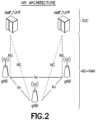
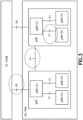
- Figures 2 and 3 show an example of New Radio (NR) architecture having the 5G core (5GC) and the NG-RAN.
- the base stations gNB are coupled to the 5GC by the interface to Core NGs, and the gNBs are coupled to each other by the inter-base stations interface Xn.
- NR New Radio
- 3GPP TS 38.401 defines that System Information be distributed as follows:
- the SIBs can be delivered to UEs in the following ways:
- the F1 Interface defined in 3GPP TS 38.470 and 3GPP TS 38.473, supports exchanging their corresponding SIBs between the gNB-DU and the gNB-CU via both the F1 setup procedure as well as via DU configuration update and CU configuration update messages, respectively.
- the gNB-CU can command the gNB-DU to broadcast SIBs belonging to Other-SI via the System Information delivery command message.
- the frequency of broadcast is configurable. However, there is a possibility to have "always on" broadcast, meaning that the SIBs will continuously be broadcasted. If the SIB is owned/encoded by the gNB-CU and is part of the Other-SI, this will require the gNB-CU to provide the updated SIB as every time its contents change when it is to be transmitted by the gNB-DU. This will be necessary even if the gNB-DU is capable of re-encoding a certain SIBs, such as SIB9. Likewise, for some SIBs, such as SIB9, this can be as frequent as every 160ms.
- the present disclosure tackles this issue by introducing a mechanism that has the gNB-DU indicate to the gNB-CU that it has capability of generating information related to Other-SI. With this information, the gNB-CU can opt out from continuously providing updates for the indicated SIBs, and send an acknowledge indication back to the gNB-DU. After this message exchange, the gNB-DU will autonomously generate the agreed SIBs without requiring any further communication with the gNB-CU. In addition, an option for the gNB-CU to enable/disable this function at the gNB-DU, if, for some reason, the gNB-CU is the preferable entity to generate the SIB, is proposed.
- Changes required in the F1 interface are a new Information Elements (IE) to the F1 setup procedure, the DU configuration update procedure, and the CU configuration update procedure.
- IE Information Elements
- 3GPP specifications allow for "on-demand" delivery of System Information.
- One of the methods is via Message 1 (Msg1).
- Msg1 Message 1
- a UE can directly contact the gNB-DU and request certain SIBs to be broadcasted. After receiving the request and assuming that the gNB-DU already has the information available, such as because it has received it from the gNB-CU beforehand via any of the F1 methods, it is able to broadcast it accordingly without gNB-CU intervention. If the SIB requested is not available at the gNB-DU, the gNB-DU will have to request it from the gNB-CU prior to broadcasting it.
- the present disclosure tackles this issue.
- the method is the same as with the previous scenario, since the method to indicate and allow the gNB-DU to autonomously generate and broadcast a certain SIB is also applicable. If the gNB-DU received a request for a SIB it had not received, however, it is able to generate it by itself, it can do so and broadcast it without need to interact with the gNB-CU.
- RRC Dedicated (RRC) Signaling (that is, unicast (RRC) signaling)
- the SI delivery via dedicated signaling is currently mainly used for two purposes: to provide SIB 1 during handover; and to provide updated SIB1 and/or ETWS/CMAS notifications (SIB6, SIB7 and SIB8) to specific UEs in RRC CONNECTED state that are utilizing a Bandwidth Part (BWP) which does not support broadcast, such as by having no Common Search Space (CSS) configured. That is, the UEs utilizing that BWP are unable to receive any SIBs via the default broadcast mechanism.
- the gNB-DU provides a list of UEs, which cannot receive the broadcast, to the gNB-CU. Then, the gNB-CU provides the SIBs to each UE separately.
- SIB9 Although this could apply to other SIBs in the future, in which the time-reference information that the gNB-DU can generate is more accurate and reliable. Therefore, it is preferable to use the information that the gNB-DU can generate.
- the present disclosure tackles this issue by introducing a mechanism that extends the method described for broadcast scenarios above.
- the gNB-CU has already become aware that the gNB-DU can generate certain information used in Other-SI, it can request such information rather than generating it by itself.
- the gNB-CU can request an encoded SIB, or just some of its contents to be delivered as IEs. This is useful as some information may be the same for multiple UEs, or possibly applicable to multiple SIBs.
- the flexibility at the gNB-CU it will be beneficial to have the flexibility at the gNB-CU to decide whether to encode the SIB itself using "assistance" information from the gNB-DU, or request an already encoded SIB from the gNB-DU, which could be transmitted without any changes.
- Providing assistance information enables the CU to prepare the unicast signaling to UEs, without increasing the signaling overhead over F1.
- the CU receiving an already encoded SIB could imply that the F1 procedure has to be executed per UE.
- the use of some of the not encoded contents of system information for some other purpose, such as coordination between the gNB-CUs or sharing the information with core network, is also envisioned.
- Changes required in F1 interface are new IEs to indicate the information that the gNB-CU is requesting the gNB-DU to generate.
- CU configuration update procedure As well as introduction of a new procedure for this purpose, are both viable choices.
- one or multiple UEs request the gNB-CU to provide a certain SIB or time-reference information via unicast RRC signaling.
- the request may be implemented either via RRC System Info Request message or a new "Time reference info request" message.
- the request may additionally indicate whether the UE is interested in receiving the information periodically or just "one-time”.
- the gNB-CU decides that the requested information should originate from the gNB-DU. In step 2, it sends the SIB/Time Info request to the gNB-DU indicating whether it wants to receive the information one time or periodically.
- step 3 the gNB-DU responds with the requested information to the gNB-CU. Note that since unicast RRC messages are encoded by the gNB-CU, the gNB-DU cannot send the information directly to the UE.
- the requested information is provided with a dedicated RRC signaling to the UEs which requested the information, such as via an RRC Reconfiguration message containing dedicated SIB IE or via a DL Information Transfer message.
- steps 3 and 4 are repeated periodically, as represented by steps 3' and 4' in Figure 4 .
- step 1 in Figure 4 is not supported by the current specifications.
- 3GPP specifications allow requesting an SIB, but only in case gNB indicates in SIB1 that a certain SIB or SI message is available but currently is in a "not broadcasting" state. Based on that indication and on an additional configuration, a UE in an RRC IDLE or RRC INACTIVE state may request a certain SIB or SI message to be provided using one of the two methods:
- the network delivers it via dedicated RRC signaling instead of broadcasting it, as is done at the moment for on-demand SI.
- a high level-view of the changes in procedures includes:
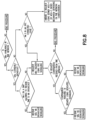
- Figure 9 is a flow chart illustrating a method performed by a gNB-DU in accordance with the present disclosure.
- the gNB-DU indicates, to a second node, a capability information element for generating information related to Other-System Information (OSI).
- OSI Other-System Information
- the gNB-DU receives an acknowledge indication from the second node.
- the gNB-DU generates system information broadcast information to at least one user equipment.
- FIG. 10 is a flow chart illustrating a method performed by a gNB-CU in accordance with the present disclosure.
- the gNB-CU receives, from a first node, a capability information element for generating information related to Other-System Information (OSI). And, in block 1004, the gNB-CU transmits an acknowledge indication to the first node.
- OSI Other-System Information
- the various exemplary embodiments may be implemented in hardware or special purpose circuits, software, logic or any combination thereof.
- some aspects may be implemented in hardware, while other aspects may be implemented in firmware or software, which may be executed by a controller, microprocessor or other computing device, although the invention is not limited thereto.
- the integrated circuit, or circuits may comprise circuitry, as well as possibly firmware, for embodying at least one or more of a data processor or data processors, a digital signal processor or processors, baseband circuitry and radio frequency circuitry that are configurable so as to operate in accordance with the exemplary embodiments of this invention.
Landscapes
- Engineering & Computer Science (AREA)
- Computer Networks & Wireless Communication (AREA)
- Signal Processing (AREA)
- Computer Security & Cryptography (AREA)
- Multimedia (AREA)
- Mobile Radio Communication Systems (AREA)
Claims (15)
- Zentralisierte gNodeB-Einheit, die Folgendes umfasst:Mittel zum Empfangen von Informationen, die die Fähigkeit zum Erzeugen von Informationen eines anderen Systems von einer verteilten gNodeB-Einheit anzeigen, von der verteilten gNodeB-Einheit, wobei die Informationen des anderen Systems andere Systeminformationen als Informationen eines Masterinformationsblocks und eines Systeminformationsblocks 1 umfassen;Mittel zum Übertragen einer Anforderung der Informationen eines anderen Systems zur verteilten gNodeB-Einheit, wobei die Informationen des anderen Systems Zeitreferenzinformationen umfassen, die von der verteilten gNodeB-Einheit erzeugt wurden;Mittel zum Empfangen einer Bereitstellung der Informationen des anderen Systems von der verteilten gNodeB-Einheit; undMittel zum Erzeugen von Systeminformationsbroadcastinformationen, die via eine dedizierte Signalisierung an mindestens eine Teilnehmereinrichtung mindestens teilweise auf Basis der Informationen des anderen Systems zu senden sind.
- Zentralisierte gNodeB-Einheit nach Anspruch 1, wobei die Systeminformationsbroadcastinformationen ein Systeminformationsbrodcast 9 umfassen.
- Zentralisierte gNodeB-Einheit nach einem der Ansprüche 1 bis 2, wobei die Informationen des anderen Systems über eine F1-Schnittstelle durch mindestens eines von Folgendem empfangen werden:einer F1-Einrichtungsprozedur;einer Aktualisierungsprozedur für eine Auslegung der verteilten Einheit;einer Aktualisierungsprozedur für eine Auslegung der zentralisierten Einheit; undeiner Anforderungsprozedur für Informationen des anderen Systems.
- Zentralisierte gNodeB-Einheit nach einem der Ansprüche 1 bis 3, die ferner Folgendes umfasst:
Mittel zum Übertragen einer Anforderung von Systeminformationsbroadcastinformationen zu einer verteilten gNodeB-Einheit. - Zentralisierte gNodeB-Einheit nach Anspruch 4, wobei die Anforderung eine Anforderung von codierten Systeminformationen oder mindestens eines Teils eines Inhalts von Systeminformationen umfasst.
- Zentralisierte gNodeB-Einheit nach Anspruch 4, die ferner Folgendes umfasst:
Mittel zum Empfangen von Unterstützungsinformationen mit Bezug auf die Systeminformationsbroadcastinformationen von der verteilten gNodeB-Einheit. - Zentralisierte gNodeB-Einheit nach einem der Ansprüche 1 bis 6, die ferner Folgendes umfasst:
Mittel zum Empfangen einer Anforderung von mindestens einer Teilnehmereinrichtung für Systeminformationsbroadcastinformationen via eine Unicastfunkressourcensteuersignalisierung. - Zentralisierte gNodeB-Einheit nach Anspruch 7, wobei sich die mindestens eine Teilnehmereinrichtung in einem FunkressourcensteuerungsVERBINDUNGSzustand befindet und das angeforderte Systeminformationsbroadcast einen Status "kein Broadcasting" im Systeminformationsbroadcast 1 aufweist, oder wobei sich die mindestens eine Teilnehmereinrichtung im FunkressourcensteuerungsVERBINDUNGSzustand in einem Bandbreitenteil befindet, in dem kein Suchraum ausgelegt ist.
- Verteilte gNodeB-Einheit, die Folgendes umfasst:Mittel zum Übertragen von Informationen, die die Fähigkeit zum Erzeugen von Informationen eines anderen Systems von einer verteilten gNodeB-Einheit anzeigen, zu einer zentralisierten gNodeB-Einheit, wobei die Informationen des anderen Systems andere Systeminformationen als Informationen eines Masterinformationsblocks und eines Systeminformationsblocks 1 umfassen;Mittel zum Empfangen einer Anforderung der Informationen des anderen Systems von einer zentralisierten gNodeB-Einheit, wobei die Informationen des anderen Systems Zeitreferenzinformationen umfassen, die von der verteilten gNodeB-Einheit erzeugt wurden; undMittel zum Übertragen einer Bereitstellung von Informationen eines anderen Systems zur zentralisierten gNodeB-Einheit.
- Verteilte gNodeB-Einheit nach Anspruch 9, wobei die Informationen des anderen Systems über eine F1-Schnittstelle durch mindestens eines von Folgendem übertragen werden:einer F1-Einrichtungsprozedur;einer Aktualisierungsprozedur für eine Auslegung der verteilten Einheit;einer Aktualisierungsprozedur für eine Auslegung der zentralisierten Einheit; undeiner Anforderungsprozedur für Informationen des anderen Systems.
- Verteilte gNodeB-Einheit nach einem der Ansprüche 9 bis 10, die ferner Folgendes umfasst:
Mittel zum Empfangen einer Anforderung von Systeminformationsbroadcastinformationen von der zentralisierten gNodeB-Einheit. - Verteilte gNodeB-Einheit nach Anspruch 11, wobei die Anforderung eine Anforderung von codierten Systeminformationen oder mindestens eines Teils eines Inhalts von Systeminformationen umfasst.
- Verteilte gNodeB-Einheit nach Anspruch 11, wobei die Systeminformationsbroadcastinformationen ein Systeminformationsbrodcast 9 umfassen.
- Verteilte gNodeB-Einheit nach Anspruch 11, die ferner Folgendes umfasst:
Mittel zum Übertragen von Unterstützungsinformationen mit Bezug auf die Systeminformationsbroadcastinformationen zur zentralisierten gNodeB-Einheit. - Verteilte gNodeB-Einheit nach Anspruch 14, wobei die Unterstützungsinformationen codierte Systeminformationen oder mindestens eines Teils eines Inhalts von Systeminformationen umfassen.
Applications Claiming Priority (2)
| Application Number | Priority Date | Filing Date | Title |
|---|---|---|---|
| IN201941032866 | 2019-08-14 | ||
| PCT/EP2020/070085 WO2021028145A1 (en) | 2019-08-14 | 2020-07-16 | System information delivery enhancements |
Publications (2)
| Publication Number | Publication Date |
|---|---|
| EP3815428A1 EP3815428A1 (de) | 2021-05-05 |
| EP3815428B1 true EP3815428B1 (de) | 2025-05-07 |
Family
ID=71670244
Family Applications (1)
| Application Number | Title | Priority Date | Filing Date |
|---|---|---|---|
| EP20742697.4A Active EP3815428B1 (de) | 2019-08-14 | 2020-07-16 | Verbesserte systeminformationsbereitstellung |
Country Status (4)
| Country | Link |
|---|---|
| US (1) | US20210051569A1 (de) |
| EP (1) | EP3815428B1 (de) |
| CN (1) | CN112703751A (de) |
| WO (1) | WO2021028145A1 (de) |
Families Citing this family (6)
| Publication number | Priority date | Publication date | Assignee | Title |
|---|---|---|---|---|
| BR112023000698A2 (pt) * | 2020-07-23 | 2023-02-07 | Apple Inc | Sistemas e métodos para fornecer informações de sistema por meio de retransmissão de ue para rede |
| PL4193570T3 (pl) * | 2020-08-04 | 2024-08-05 | Koninklijke Philips N.V. | Sposób i urządzenie do uwierzytelniania stacji podstawowej |
| JP7707711B2 (ja) * | 2021-07-20 | 2025-07-15 | 富士通株式会社 | 通信システム、通信処理装置及び機器増設方法 |
| WO2024098629A1 (en) * | 2023-03-29 | 2024-05-16 | Zte Corporation | User equipment mobility management |
| US20250098018A1 (en) * | 2023-09-19 | 2025-03-20 | Qualcomm Incorporated | System information acquisition in service-based system |
| CN120730346A (zh) * | 2024-03-29 | 2025-09-30 | 华为技术有限公司 | 指示方法、获取系统信息块sib1的方法以及相关装置 |
Family Cites Families (20)
| Publication number | Priority date | Publication date | Assignee | Title |
|---|---|---|---|---|
| CN103581960B (zh) * | 2012-07-27 | 2019-02-12 | 中兴通讯股份有限公司 | 能力指示信息处理方法及装置 |
| KR102263703B1 (ko) * | 2013-11-01 | 2021-06-11 | 삼성전자주식회사 | Lte 어드밴스드용 증대된 커버리지 송신을 위한 방법 및 장치 |
| CN109479236B (zh) * | 2016-07-22 | 2021-07-16 | 三星电子株式会社 | 用于无线通信系统中的系统信息获取的方法和终端 |
| CN107872876B (zh) * | 2016-09-23 | 2021-07-16 | 华为技术有限公司 | 消息的发送方法和装置 |
| EP3541119B1 (de) * | 2016-11-11 | 2021-03-31 | Beijing Xiaomi Mobile Software Co., Ltd. | Verfahren, vorrichtung, benutzergerät und basisstation zum senden und empfangen von systeminformationen |
| US10798642B2 (en) * | 2017-01-06 | 2020-10-06 | Mediatek Inc. | On-demand system information delivery procedure |
| CN108632949B (zh) * | 2017-03-24 | 2023-06-27 | 华为技术有限公司 | 一种传输信息的方法和网络设备 |
| RU2727722C1 (ru) * | 2017-04-13 | 2020-07-23 | ЭлДжи ЭЛЕКТРОНИКС ИНК. | Способ и устройство для предоставления информации системы |
| CN107135502B (zh) * | 2017-05-04 | 2019-08-16 | 电信科学技术研究院 | 一种系统信息的发送方法及装置 |
| CN109246746A (zh) * | 2017-05-05 | 2019-01-18 | 北京三星通信技术研究有限公司 | 前向接口的建立、ue接入和切换方法及装置 |
| WO2018205279A1 (zh) * | 2017-05-12 | 2018-11-15 | 北京小米移动软件有限公司 | 用于接收和发送系统消息的方法、装置、用户设备及基站 |
| WO2018227481A1 (en) * | 2017-06-15 | 2018-12-20 | Zte Corporation | System and method for configuring system information in wireless network |
| WO2018228562A1 (zh) * | 2017-06-16 | 2018-12-20 | 华为技术有限公司 | 一种通信方法及装置 |
| CN110636457B (zh) * | 2017-06-16 | 2021-01-29 | 华为技术有限公司 | 一种通信方法及装置 |
| WO2018236867A2 (en) * | 2017-06-19 | 2018-12-27 | Intel Corporation | Separation of control plane and user plane in new radio (nr) systems |
| CN114828271B (zh) * | 2017-08-11 | 2025-04-04 | 维沃移动通信有限公司 | 一种系统信息的发送方法、获取方法及相关设备 |
| CN109788517B (zh) * | 2017-11-15 | 2023-04-07 | 大唐移动通信设备有限公司 | 一种Pcell或PScell管理方法及装置 |
| CN110121210B (zh) * | 2018-02-06 | 2023-08-01 | 大唐移动通信设备有限公司 | 信息传输方法及装置、计算机存储介质 |
| CN111417186B (zh) * | 2019-01-07 | 2021-07-16 | 华为技术有限公司 | 一种时间同步方法和装置 |
| WO2020217488A1 (ja) * | 2019-04-26 | 2020-10-29 | 株式会社Nttドコモ | 無線基地局 |
-
2020
- 2020-07-16 EP EP20742697.4A patent/EP3815428B1/de active Active
- 2020-07-16 CN CN202080004350.9A patent/CN112703751A/zh active Pending
- 2020-07-16 WO PCT/EP2020/070085 patent/WO2021028145A1/en not_active Ceased
- 2020-07-22 US US16/935,281 patent/US20210051569A1/en not_active Abandoned
Also Published As
| Publication number | Publication date |
|---|---|
| CN112703751A (zh) | 2021-04-23 |
| US20210051569A1 (en) | 2021-02-18 |
| EP3815428A1 (de) | 2021-05-05 |
| WO2021028145A1 (en) | 2021-02-18 |
Similar Documents
| Publication | Publication Date | Title |
|---|---|---|
| EP3815428B1 (de) | Verbesserte systeminformationsbereitstellung | |
| EP3753374B1 (de) | Bandbreitenteiloperationen für leerlauf- und inaktive zustände | |
| US10548107B2 (en) | Delaying cellular re-registration during critical conditions | |
| WO2021259129A1 (zh) | 一种通信方法及通信装置 | |
| US10609607B2 (en) | Enhanced reporting for handover in device-to-device communication | |
| US11528595B2 (en) | UE capability signaling to support 5G new radio (NR) in unlicensed spectrum (NR-U) | |
| JP7533598B2 (ja) | 端末装置及び第1ネットワーク装置 | |
| US12363786B2 (en) | Setting a different BWP earlier in a connection establishment process to a wireless network by a UE when transitioning from an idle or inactive state | |
| EP4046460A1 (de) | Frühzeitige zustandshandhabung für effiziente rrc-zustandsänderung | |
| CA3188564A1 (en) | Selection mechanism and use of multiple ul transmission schemes | |
| EP4369791A1 (de) | Auslösung von mobilität niedriger schicht durch ein interzellulares strahlverwaltungsverfahren | |
| EP3659386B1 (de) | Verfahren und vorrichtung für d2d-kommunikation | |
| WO2022082567A1 (en) | Method and apparatus for multicast and broadcast services | |
| US20210144630A1 (en) | Base station and data transmission method thereof for mobile communication system | |
| WO2013059996A1 (en) | Spectrum sensing | |
| US20250119801A1 (en) | Enabling special ue measurement behavior | |
| WO2024082498A1 (en) | Methods and apparatuses for maintaining ta values | |
| US20240224191A1 (en) | Methods of controlling charging for user equipment, and communication device | |
| EP4613039A1 (de) | Verfahren zur inter-plmn-zellenneuauswahl in rrc_inaktiv ohne übergang zu rrc_verbundener oder zu rrc_ruhe | |
| EP4612980A1 (de) | Verwendung von ersatzbits in kurznachrichten bei paging-dci zur anzeige von gesperrten zellen oder aktualisierten systeminformationen | |
| WO2026032887A1 (en) | Anchor cell failure handling for on-demand sib1 | |
| CN118524508A (zh) | 定时相关状态更新 | |
| CN121100556A (zh) | 针对l1/l2触发的移动性中的定时提前获取的增强 | |
| CN117177320A (zh) | 用于辅小区组的小区更新方法及装置、存储介质 | |
| WO2019215479A1 (en) | Maintaining radio network system selection |
Legal Events
| Date | Code | Title | Description |
|---|---|---|---|
| STAA | Information on the status of an ep patent application or granted ep patent |
Free format text: STATUS: UNKNOWN |
|
| STAA | Information on the status of an ep patent application or granted ep patent |
Free format text: STATUS: THE INTERNATIONAL PUBLICATION HAS BEEN MADE |
|
| PUAI | Public reference made under article 153(3) epc to a published international application that has entered the european phase |
Free format text: ORIGINAL CODE: 0009012 |
|
| STAA | Information on the status of an ep patent application or granted ep patent |
Free format text: STATUS: THE APPLICATION HAS BEEN PUBLISHED |
|
| AK | Designated contracting states |
Kind code of ref document: A1 Designated state(s): AL AT BE BG CH CY CZ DE DK EE ES FI FR GB GR HR HU IE IS IT LI LT LU LV MC MK MT NL NO PL PT RO RS SE SI SK SM TR |
|
| STAA | Information on the status of an ep patent application or granted ep patent |
Free format text: STATUS: REQUEST FOR EXAMINATION WAS MADE |
|
| 17P | Request for examination filed |
Effective date: 20210818 |
|
| RBV | Designated contracting states (corrected) |
Designated state(s): AL AT BE BG CH CY CZ DE DK EE ES FI FR GB GR HR HU IE IS IT LI LT LU LV MC MK MT NL NO PL PT RO RS SE SI SK SM TR |
|
| DAV | Request for validation of the european patent (deleted) | ||
| DAX | Request for extension of the european patent (deleted) | ||
| STAA | Information on the status of an ep patent application or granted ep patent |
Free format text: STATUS: EXAMINATION IS IN PROGRESS |
|
| 17Q | First examination report despatched |
Effective date: 20230309 |
|
| REG | Reference to a national code |
Ref legal event code: R079 Ipc: H04W0048120000 Ref country code: DE Ref legal event code: R079 Ref document number: 602020050843 Country of ref document: DE Free format text: PREVIOUS MAIN CLASS: H04W0048100000 Ipc: H04W0048120000 |
|
| GRAP | Despatch of communication of intention to grant a patent |
Free format text: ORIGINAL CODE: EPIDOSNIGR1 |
|
| STAA | Information on the status of an ep patent application or granted ep patent |
Free format text: STATUS: GRANT OF PATENT IS INTENDED |
|
| RIC1 | Information provided on ipc code assigned before grant |
Ipc: H04W 92/12 20090101ALN20241204BHEP Ipc: H04W 88/08 20090101ALN20241204BHEP Ipc: H04W 76/27 20180101ALN20241204BHEP Ipc: H04W 48/12 20090101AFI20241204BHEP |
|
| RIC1 | Information provided on ipc code assigned before grant |
Ipc: H04W 92/12 20090101ALN20241210BHEP Ipc: H04W 88/08 20090101ALN20241210BHEP Ipc: H04W 76/27 20180101ALN20241210BHEP Ipc: H04W 48/12 20090101AFI20241210BHEP |
|
| INTG | Intention to grant announced |
Effective date: 20250103 |
|
| GRAS | Grant fee paid |
Free format text: ORIGINAL CODE: EPIDOSNIGR3 |
|
| GRAA | (expected) grant |
Free format text: ORIGINAL CODE: 0009210 |
|
| STAA | Information on the status of an ep patent application or granted ep patent |
Free format text: STATUS: THE PATENT HAS BEEN GRANTED |
|
| AK | Designated contracting states |
Kind code of ref document: B1 Designated state(s): AL AT BE BG CH CY CZ DE DK EE ES FI FR GB GR HR HU IE IS IT LI LT LU LV MC MK MT NL NO PL PT RO RS SE SI SK SM TR |
|
| REG | Reference to a national code |
Ref country code: GB Ref legal event code: FG4D |
|
| REG | Reference to a national code |
Ref country code: CH Ref legal event code: EP |
|
| REG | Reference to a national code |
Ref country code: DE Ref legal event code: R096 Ref document number: 602020050843 Country of ref document: DE |
|
| REG | Reference to a national code |
Ref country code: IE Ref legal event code: FG4D |
|
| PGFP | Annual fee paid to national office [announced via postgrant information from national office to epo] |
Ref country code: GB Payment date: 20250529 Year of fee payment: 6 |
|
| P01 | Opt-out of the competence of the unified patent court (upc) registered |
Free format text: CASE NUMBER: APP_30233/2025 Effective date: 20250624 |
|
| REG | Reference to a national code |
Ref country code: NL Ref legal event code: MP Effective date: 20250507 |
|
| PG25 | Lapsed in a contracting state [announced via postgrant information from national office to epo] |
Ref country code: PT Free format text: LAPSE BECAUSE OF FAILURE TO SUBMIT A TRANSLATION OF THE DESCRIPTION OR TO PAY THE FEE WITHIN THE PRESCRIBED TIME-LIMIT Effective date: 20250908 Ref country code: ES Free format text: LAPSE BECAUSE OF FAILURE TO SUBMIT A TRANSLATION OF THE DESCRIPTION OR TO PAY THE FEE WITHIN THE PRESCRIBED TIME-LIMIT Effective date: 20250507 Ref country code: FI Free format text: LAPSE BECAUSE OF FAILURE TO SUBMIT A TRANSLATION OF THE DESCRIPTION OR TO PAY THE FEE WITHIN THE PRESCRIBED TIME-LIMIT Effective date: 20250507 |
|
| PGFP | Annual fee paid to national office [announced via postgrant information from national office to epo] |
Ref country code: DE Payment date: 20250604 Year of fee payment: 6 |
|
| REG | Reference to a national code |
Ref country code: LT Ref legal event code: MG9D |
|
| PG25 | Lapsed in a contracting state [announced via postgrant information from national office to epo] |
Ref country code: GR Free format text: LAPSE BECAUSE OF FAILURE TO SUBMIT A TRANSLATION OF THE DESCRIPTION OR TO PAY THE FEE WITHIN THE PRESCRIBED TIME-LIMIT Effective date: 20250808 Ref country code: NO Free format text: LAPSE BECAUSE OF FAILURE TO SUBMIT A TRANSLATION OF THE DESCRIPTION OR TO PAY THE FEE WITHIN THE PRESCRIBED TIME-LIMIT Effective date: 20250807 |
|
| PG25 | Lapsed in a contracting state [announced via postgrant information from national office to epo] |
Ref country code: NL Free format text: LAPSE BECAUSE OF FAILURE TO SUBMIT A TRANSLATION OF THE DESCRIPTION OR TO PAY THE FEE WITHIN THE PRESCRIBED TIME-LIMIT Effective date: 20250507 Ref country code: PL Free format text: LAPSE BECAUSE OF FAILURE TO SUBMIT A TRANSLATION OF THE DESCRIPTION OR TO PAY THE FEE WITHIN THE PRESCRIBED TIME-LIMIT Effective date: 20250507 |
|
| PGFP | Annual fee paid to national office [announced via postgrant information from national office to epo] |
Ref country code: TR Payment date: 20250707 Year of fee payment: 6 |
|
| REG | Reference to a national code |
Ref country code: AT Ref legal event code: MK05 Ref document number: 1793876 Country of ref document: AT Kind code of ref document: T Effective date: 20250507 |
|
| PG25 | Lapsed in a contracting state [announced via postgrant information from national office to epo] |
Ref country code: BG Free format text: LAPSE BECAUSE OF FAILURE TO SUBMIT A TRANSLATION OF THE DESCRIPTION OR TO PAY THE FEE WITHIN THE PRESCRIBED TIME-LIMIT Effective date: 20250507 |
|
| PG25 | Lapsed in a contracting state [announced via postgrant information from national office to epo] |
Ref country code: HR Free format text: LAPSE BECAUSE OF FAILURE TO SUBMIT A TRANSLATION OF THE DESCRIPTION OR TO PAY THE FEE WITHIN THE PRESCRIBED TIME-LIMIT Effective date: 20250507 |
|
| PG25 | Lapsed in a contracting state [announced via postgrant information from national office to epo] |
Ref country code: AT Free format text: LAPSE BECAUSE OF FAILURE TO SUBMIT A TRANSLATION OF THE DESCRIPTION OR TO PAY THE FEE WITHIN THE PRESCRIBED TIME-LIMIT Effective date: 20250507 |
|
| PG25 | Lapsed in a contracting state [announced via postgrant information from national office to epo] |
Ref country code: RS Free format text: LAPSE BECAUSE OF FAILURE TO SUBMIT A TRANSLATION OF THE DESCRIPTION OR TO PAY THE FEE WITHIN THE PRESCRIBED TIME-LIMIT Effective date: 20250807 |
|
| PG25 | Lapsed in a contracting state [announced via postgrant information from national office to epo] |
Ref country code: IS Free format text: LAPSE BECAUSE OF FAILURE TO SUBMIT A TRANSLATION OF THE DESCRIPTION OR TO PAY THE FEE WITHIN THE PRESCRIBED TIME-LIMIT Effective date: 20250907 |
|
| PG25 | Lapsed in a contracting state [announced via postgrant information from national office to epo] |
Ref country code: LV Free format text: LAPSE BECAUSE OF FAILURE TO SUBMIT A TRANSLATION OF THE DESCRIPTION OR TO PAY THE FEE WITHIN THE PRESCRIBED TIME-LIMIT Effective date: 20250507 |
|
| PG25 | Lapsed in a contracting state [announced via postgrant information from national office to epo] |
Ref country code: DK Free format text: LAPSE BECAUSE OF FAILURE TO SUBMIT A TRANSLATION OF THE DESCRIPTION OR TO PAY THE FEE WITHIN THE PRESCRIBED TIME-LIMIT Effective date: 20250507 Ref country code: SM Free format text: LAPSE BECAUSE OF FAILURE TO SUBMIT A TRANSLATION OF THE DESCRIPTION OR TO PAY THE FEE WITHIN THE PRESCRIBED TIME-LIMIT Effective date: 20250507 |
|
| PG25 | Lapsed in a contracting state [announced via postgrant information from national office to epo] |
Ref country code: CZ Free format text: LAPSE BECAUSE OF FAILURE TO SUBMIT A TRANSLATION OF THE DESCRIPTION OR TO PAY THE FEE WITHIN THE PRESCRIBED TIME-LIMIT Effective date: 20250507 |
|
| PG25 | Lapsed in a contracting state [announced via postgrant information from national office to epo] |
Ref country code: EE Free format text: LAPSE BECAUSE OF FAILURE TO SUBMIT A TRANSLATION OF THE DESCRIPTION OR TO PAY THE FEE WITHIN THE PRESCRIBED TIME-LIMIT Effective date: 20250507 |
|
| PG25 | Lapsed in a contracting state [announced via postgrant information from national office to epo] |
Ref country code: SK Free format text: LAPSE BECAUSE OF FAILURE TO SUBMIT A TRANSLATION OF THE DESCRIPTION OR TO PAY THE FEE WITHIN THE PRESCRIBED TIME-LIMIT Effective date: 20250507 Ref country code: RO Free format text: LAPSE BECAUSE OF FAILURE TO SUBMIT A TRANSLATION OF THE DESCRIPTION OR TO PAY THE FEE WITHIN THE PRESCRIBED TIME-LIMIT Effective date: 20250507 |
|
| PG25 | Lapsed in a contracting state [announced via postgrant information from national office to epo] |
Ref country code: IT Free format text: LAPSE BECAUSE OF FAILURE TO SUBMIT A TRANSLATION OF THE DESCRIPTION OR TO PAY THE FEE WITHIN THE PRESCRIBED TIME-LIMIT Effective date: 20250507 |
|
| REG | Reference to a national code |
Ref country code: DE Ref legal event code: R097 Ref document number: 602020050843 Country of ref document: DE |
|
| REG | Reference to a national code |
Ref country code: CH Ref legal event code: H13 Free format text: ST27 STATUS EVENT CODE: U-0-0-H10-H13 (AS PROVIDED BY THE NATIONAL OFFICE) Effective date: 20260224 |
|
| PLBE | No opposition filed within time limit |
Free format text: ORIGINAL CODE: 0009261 |
|
| STAA | Information on the status of an ep patent application or granted ep patent |
Free format text: STATUS: NO OPPOSITION FILED WITHIN TIME LIMIT |
|
| PG25 | Lapsed in a contracting state [announced via postgrant information from national office to epo] |
Ref country code: LU Free format text: LAPSE BECAUSE OF NON-PAYMENT OF DUE FEES Effective date: 20250716 |
|
| REG | Reference to a national code |
Ref country code: CH Ref legal event code: L10 Free format text: ST27 STATUS EVENT CODE: U-0-0-L10-L00 (AS PROVIDED BY THE NATIONAL OFFICE) Effective date: 20260318 |