EP3814220B1 - Method of configuring a flight vehicle engine inlet with internal diverter - Google Patents
Method of configuring a flight vehicle engine inlet with internal diverter Download PDFInfo
- Publication number
- EP3814220B1 EP3814220B1 EP19727180.2A EP19727180A EP3814220B1 EP 3814220 B1 EP3814220 B1 EP 3814220B1 EP 19727180 A EP19727180 A EP 19727180A EP 3814220 B1 EP3814220 B1 EP 3814220B1
- Authority
- EP
- European Patent Office
- Prior art keywords
- inlet
- streamline
- traced
- diverter
- configuring
- Prior art date
- Legal status (The legal status is an assumption and is not a legal conclusion. Google has not performed a legal analysis and makes no representation as to the accuracy of the status listed.)
- Active
Links
Images

Classifications
-
- B—PERFORMING OPERATIONS; TRANSPORTING
- B64—AIRCRAFT; AVIATION; COSMONAUTICS
- B64D—EQUIPMENT FOR FITTING IN OR TO AIRCRAFT; FLIGHT SUITS; PARACHUTES; ARRANGEMENT OR MOUNTING OF POWER PLANTS OR PROPULSION TRANSMISSIONS IN AIRCRAFT
- B64D33/00—Arrangement in aircraft of power plant parts or auxiliaries not otherwise provided for
- B64D33/02—Arrangement in aircraft of power plant parts or auxiliaries not otherwise provided for of combustion air intakes
-
- F—MECHANICAL ENGINEERING; LIGHTING; HEATING; WEAPONS; BLASTING
- F02—COMBUSTION ENGINES; HOT-GAS OR COMBUSTION-PRODUCT ENGINE PLANTS
- F02C—GAS-TURBINE PLANTS; AIR INTAKES FOR JET-PROPULSION PLANTS; CONTROLLING FUEL SUPPLY IN AIR-BREATHING JET-PROPULSION PLANTS
- F02C7/00—Features, components parts, details or accessories, not provided for in, or of interest apart form groups F02C1/00 - F02C6/00; Air intakes for jet-propulsion plants
- F02C7/04—Air intakes for gas-turbine plants or jet-propulsion plants
-
- B—PERFORMING OPERATIONS; TRANSPORTING
- B64—AIRCRAFT; AVIATION; COSMONAUTICS
- B64C—AEROPLANES; HELICOPTERS
- B64C30/00—Supersonic type aircraft
-
- B—PERFORMING OPERATIONS; TRANSPORTING
- B64—AIRCRAFT; AVIATION; COSMONAUTICS
- B64D—EQUIPMENT FOR FITTING IN OR TO AIRCRAFT; FLIGHT SUITS; PARACHUTES; ARRANGEMENT OR MOUNTING OF POWER PLANTS OR PROPULSION TRANSMISSIONS IN AIRCRAFT
- B64D33/00—Arrangement in aircraft of power plant parts or auxiliaries not otherwise provided for
- B64D33/02—Arrangement in aircraft of power plant parts or auxiliaries not otherwise provided for of combustion air intakes
- B64D2033/0226—Arrangement in aircraft of power plant parts or auxiliaries not otherwise provided for of combustion air intakes comprising boundary layer control means
-
- B—PERFORMING OPERATIONS; TRANSPORTING
- B64—AIRCRAFT; AVIATION; COSMONAUTICS
- B64D—EQUIPMENT FOR FITTING IN OR TO AIRCRAFT; FLIGHT SUITS; PARACHUTES; ARRANGEMENT OR MOUNTING OF POWER PLANTS OR PROPULSION TRANSMISSIONS IN AIRCRAFT
- B64D33/00—Arrangement in aircraft of power plant parts or auxiliaries not otherwise provided for
- B64D33/02—Arrangement in aircraft of power plant parts or auxiliaries not otherwise provided for of combustion air intakes
- B64D2033/0253—Arrangement in aircraft of power plant parts or auxiliaries not otherwise provided for of combustion air intakes specially adapted for particular type of aircraft
- B64D2033/026—Arrangement in aircraft of power plant parts or auxiliaries not otherwise provided for of combustion air intakes specially adapted for particular type of aircraft for supersonic or hypersonic aircraft
-
- F—MECHANICAL ENGINEERING; LIGHTING; HEATING; WEAPONS; BLASTING
- F05—INDEXING SCHEMES RELATING TO ENGINES OR PUMPS IN VARIOUS SUBCLASSES OF CLASSES F01-F04
- F05D—INDEXING SCHEME FOR ASPECTS RELATING TO NON-POSITIVE-DISPLACEMENT MACHINES OR ENGINES, GAS-TURBINES OR JET-PROPULSION PLANTS
- F05D2220/00—Application
- F05D2220/10—Application in ram-jet engines or ram-jet driven vehicles
-
- F—MECHANICAL ENGINEERING; LIGHTING; HEATING; WEAPONS; BLASTING
- F05—INDEXING SCHEMES RELATING TO ENGINES OR PUMPS IN VARIOUS SUBCLASSES OF CLASSES F01-F04
- F05D—INDEXING SCHEME FOR ASPECTS RELATING TO NON-POSITIVE-DISPLACEMENT MACHINES OR ENGINES, GAS-TURBINES OR JET-PROPULSION PLANTS
- F05D2220/00—Application
- F05D2220/80—Application in supersonic vehicles excluding hypersonic vehicles or ram, scram or rocket propulsion
Definitions
- the invention is in the field of engine inlets for flight vehicle engines.
- Air-breathing engine inlets have sometimes used internal diverters to remove or otherwise ameliorate boundary layers that may otherwise detrimentally affect engine performance.
- internal diverters themselves have been associated with detrimental flow effects, for example flow disruptions such as shocks or expansion fans.
- US 3005309 A discloses an air inlet for a ramjet, comprising a cowling defining a duct, a body mounted in said duct but partially extending forwardly therefrom, a streamlined member supported in front of and in spaced relation to said cowling and substantially forming an extension of said cowling which is separated therefrom by a slot, said streamlined member being substantially coextensive with the forwardly extending portion of said body and means for dividing said slot into a plurality of slots, whereby said 4 tains supersonic speeds and the separation of the boundary layer from the streamlined member is inhibited by said means.
- US 2735612 A discloses, In a compressor having inner and outer walls of predetermined diameters respectively forming an annular passage, said passage having a longitudinal axis, a row of vanes fixed to said walls of airfoil shape and circurnferentially spaced transversely of the axis of said passage, each of said vanes substantailly spanning said annular passage in a radial direction and extending from one of said walls to the other, said vanes having a chordwise length extending along the longitudinal axis of said passage, and a protrusion extending into said passage from at least one of said walls and spanning the entire space between circumferentially adjacent vanes, said protrusion having a smoothly curved shape diverging at a predetermined rate from the diameter of said one wall and subsequently converging at a greater rate to the diameter-of said one wall in a direction downstream along said longitudinal axis, said protrusion having its point of maximum divergence located approximately within the last downstream quarter of the chordwise length of the vanes but
- BILLIG FREDERICK S ET AL: "COMPARISON OF PLANAR AND AXISYMMETRIC FLOWPATHS FOR HYDROGEN FUELED SPACE ACCESS VEHICLES" AIAA/SAE/ASME/ASEE JOINT PROPULSION CONFERENCE AND EXHI. 23 July 2003 discloses designing an inlet by streamline tracing, comprising selecting a geometric shape of the projection of the desired air capture streamtube that lies within the circular capture streamline of a truncated Busemann flowfield.
- US 4194519 A discloses a compact hypersonic modular inlet which divides a captured airstream and compresses it supersonically without the need for a variable geometry diffuser.
- an innerbody is provided with a plurality of perimetrically spaced inlet ducts which are defined by a single concave sidewall. The sidewalls intersect to form a center spike and radially directed, swept back leading edges.
- a cowling covers the inlets and is provided with a swept back leading edge adjacent to each duct, each leading edge having a profile conforming to a normal shock front.
- a method of configuring an inlet for a flight vehicle engine according to claim 1 is provided.
- An inlet for a flight vehicle engine such as for a supersonic or hypersonic engine, includes an internal flow diverter to divert boundary layer flow.
- the flow diverter is configured to minimize disruption to flow outside the diverted boundary by being configured through use of a flow field that is also used to configure the walls of the inlet.
- the flow field that is used to configure an inlet-creating shape and a diverter-creating shape has the same flow generator, contraction ratio, compression ratio, mass capture ratio, pressure ratio between entrance and exit, and/or Mach number, for example.
- the internal diverter may be configured so as to allow selection of a leading edge shape for the internal diverter, for example to use a shape that helps avoid radar detection.
- Fig. 1 schematically shows an air vehicle 10 that is powered by a propulsion system 12 that is mechanically coupled to a fuselage 14.
- the air vehicle 10 may be a missile, projectile, an unmanned aircraft (an unmanned aerial vehicle or UAV), manned aircraft or an access-to-space vehicle.
- the air vehicle may have any of a variety of sizes, and any of a variety of operating conditions.
- the air vehicle 10 is described in terms of a high supersonic to hypersonic air vehicle, with a Mach number ranging from 4 to 6, or more broadly with a Mach number of 2 to 25. However the air vehicle 10 may operate at lower supersonic speeds (Mach number greater than one), or even at subsonic speeds.
- the propulsion system 12 may be coupled to the fuselage 14 in any of a variety ways, including parts of the propulsion system 12 being integrally formed with parts of the fuselage 14.
- the fuselage 14 may have any of a variety of suitable shapes, and may include additional components for carrying out one or more operations of the air vehicle 10.
- additional components may include control systems (such as for steering), lift-producing and/or control surfaces (such as wings, fins, or canards, either fixed in position or movable in whole or in part), communication systems, cooling systems, sensors or other data-collecting systems, and/or any of a variety of payloads.
- the propulsion system 12 includes an air inlet 20, an isolator or diffuser 22, and a combustor or engine combustor 24.
- Various shocks 25 occur upstream of and in the various parts of the propulsion system 12.
- the air inlet 20 takes in air from the freestream and compresses the air, with one or more shocks perhaps occurring as the flow is compressed.
- the flow captured by the inlet 20 is also decelerated in the inlet 20.
- the compressed air then exits the air inlet 20 to enter into the isolator 22.
- the isolator 22 functions to keep the shocks stable, isolates dynamic flow fluctuations between the inlet and engine, provides demanded pressure rises, and/or provides desired flow patterns at its downstream end, where the air passes from the isolator 22 to the combustor 24.
- the propulsion system 12 thus defines a flow path or propulsion flow path through the inlet 20, the isolator 22, the engine combustor 24, and the nozzle 27.
- the combustor 24 may be any of variety of suitable devices for burning a fuel-air or fuel-oxidizer mixture and producing thrust.
- the combustor 24 (and/or the engine 12) may be a ramjet, a scramjet, a dual-mode ramjet/scramjet, constant-volume combustion device, or perhaps a turbojet.
- the combustor 24 is shown as having a turbine 28, but in many embodiments the combustor 24 has no turbine (or other moving parts).
- the inlet 20 may have any of a variety of suitable shapes, for example being round, elliptical, or rectangular.
- the isolator 22 may have a general shape that makes the transition between a square, rectangular, trapezoidal or elliptical shape of the inlet 20 (to give a few examples) to a round or other-shaped combustor 24.
- the inlet 20 and the combustor 24 may be in line with each other, or may be offset from one another and at different angular orientations. Many variations are possible for the configuration of the isolator 22, and the examples given herein should not be considered as limiting to the invention.
- Fig. 3 shows further details of one embodiment of the inlet 20.
- the inlet 20 includes walls 30 that define an interior space 32 within the walls 30. Air enters the interior space 32 and is compressed and directed downstream to the isolator 22 ( Fig. 2 ).
- the inlet 20 includes a flow diverter 42 that is used to skim off a boundary layer of the flow from a top wall 44 of the inlet 20.
- the internal diverter 42 is spaced away from the top wall 44 at a front end 46 of the internal diverter 42.
- the internal diverter 42 is angled back in toward the top wall 44, and in the illustrated embodiment the internal diverter 42 makes contact with top wall 44 toward a downstream end 48 of the internal diverter 42.
- the flow diverter 42 is attached to side walls 52 and 54, near the tops of the side walls 52 and 54.
- the boundary layer flow captured by the internal diverter 42 is directed through slots at the sides of the inlet 20, out of the inlet 20.
- Removing the boundary layer flow using the internal diverter 42 may improve performance of the engine combustor 24 ( Fig. 2 ), for example by providing more uniform momentum in the intake air provided to the combustor 24.
- the internal diverter 42 may be configured such that the flow qualities within the inlet 20 maintain the same sort of flow used in configuring the inlet walls 30.
- the inlet walls 30 are configured using streamline traces in a defined flow field, and the internal diverter 42 is configured using the same flow field. This helps in maintaining the flow qualities of the original inlet shape.
- the internal diverter 42 has an aft-swept leading edge 62, which is one of a variety of possible leading edge shapes, as is discussed further below.
- the illustrated inlet 20 has a rectangular cross-section shape.
- the inlet 20 could have other suitable shapes, such as trapezoidal, rounded, or circular. More broadly, the inlet could have any of a variety of further shapes, such as any shapes used to conform to a vehicle body shape.
- Fig. 6 shows a high-level flow chart of a method or process 100 of configuring the inlet.
- the inlet walls 30 ( Fig. 3 ) are streamlined traced using a flow field.
- the flow field is a theoretical (ideal) flow field past a surface or shape, such as a Busemann inlet.
- the flow field may model a supersonic flow field with characteristics, such as Mach number, contraction ratio (the ratio of the upstream and downstream areas of the inlet), compression ratio, pressure ratio between entrance and exit, mass capture ratio, pressure ratio between entrance and exit, and air pressure, corresponding to operating conditions for the engine. Shock locations within the flow field may be determined based on the flow characteristics. These factors may be taken into account in configuring the walls 30 of the inlet 20.
- a shape is used for configuring the internal diverter 42 ( Fig. 4 ).
- the diverter-configuring shape is a shape created using the same flow field as was used in step 102 to configure the inlet walls 30.
- the similarity includes (for example) using the same original generating body for streamline tracing, a geometrically similar leading edge shape (of higher aspect ratio), the same Mach number and contraction ratio, and the same throat shape.
- the identity of the throat shape may be used to allow the internal diverter 42 to blend into the shape of the inlet walls 30.
- the diverter-creating shape 142 has a shape similar to that of an inlet-creating shape 130 used for configuring the inlet walls 30 ( Fig. 3 ).
- the diverter-creating shape 142 is shorter and wider than the inlet-creating shape 130, giving the diverter-creating shape 142 a larger aspect ratio than the inlet-creating shape 130. That the diverter-creating shape 142 is shorter than the inlet-creating shape 130, with a vertical separation at a forward part of the shapes 130 and 142. The amount of this separation (a vertical separation in the illustrated embodiment) corresponds to a desired height of the boundary layer to be removed at the axial station of interest.
- the shapes 130 and 142 are configured to converge with each other downstream of their leading edges, because the shapes 130 and 142 blend to the same throat shape.
- the flow diverter 42 may be selected at any of a variety of locations within the diverter-creating shape 142.
- One example is shown as reference number 144 in Fig. 7 .
- the diverter-creating shape 142 is acting as a template for configuring the internal diverter 42.
- intersection of the inlet walls 30 and the internal diverter 42 form the lateral extent of the surface 142.
- intersection of the original inlet top wall 44 and the diverter wall 42 form the aft extent of the internal diverter surface 42.
- One advantage of configuring the flow diverter 42 to be on the shape 142 is that this minimizes disruption of the flow through the inlet 20. This is so, at least in part, because the shape 142 is on streamlines similar to the same flow as that used for creating the inlet walls 30. Because the diverter shape is along streamlines of the original inlet, the leading edge of the diverter surface may exist at any location on the diverter, and may be of arbitrary (or at least somewhat arbitrary) shape. Another advantage is that this process allows variability in the shape of the leading edge of the internal diverter 42, without causing significant impact or disruption on the flow.
- the trailing edge of the internal diverter 42 is where the internal diverter 42 merges with the walls 30, may correspond to a location where the shapes 130 and 142 converge, such as at or near a downstream throat of the inlet 20.
- the method 100 allows the internal diverter 42 to be configured with its leading edge away from an upstream end of the inlet 20, which is in contrast to how diverters are usually configured.
- the placement of the diverter edge downstream of the upstream end of the inlet 20 allows more flexibility in the configuration of diverters, for example to achieve desired characteristics in radar visibility.
- Streamline-traced inlets tend to be long and have a boundary layer concentrated along the center of the body of the inlet.
- An inlet diverter such as the internal diverter 42 helps reduce the opportunity for boundary-layer separation along the inlet centerline.
- the internal diverter 42 may also be useful in aiding the inlet starting process.
- flow fields may be used in configuring the shapes 130 and 142, for example modeling flow over wedges, cones, osculating cones, or in a Busemann inlet.
- the streamlines downstream of a shock anchored on the front edge are identical, regardless of position on the shock.
- the streamlines are also tangent to the generating wedge, with no curvature, and flow field properties downstream of the leading shock are uniform.
- the shapes 130 and 142 may be shaped to follow any of a variety of Busemann-based inlet shapes, for example by use of computer tools for generating blended, streamline-traced Busemann inlets with arbitrary leading edges and throats.
- the leading edge can be configured with a shape selected for ease of manufacture, such as a straight leading edge, or a leading edge made up of line segments.
- any three-dimensional flowfield may be used as a generator.
- Figs. 8-11 shows various possible configurations of the internal diverter, with various leading edge shapes and/or positions within the inlet 30. It will be appreciated that the illustrated embodiments are only examples, and that a variety of other leading edge shapes are possible. As an example, the leading edges may be curvilinear.
- Fig. 8 shows an internal diverter 42b with a single-notch leading edge 204.
- the internal diverter 42b is in a relatively close to a leading edge (upstream end) 206 of the inlet 30, while still being downstream from the inlet upstream end 206.
- Fig. 9 shows an internal diverter 42c that has the same shape as the internal diverter 42b, while being further downstream within the inlet 30.
- Fig. 10 shows an internal diverter 42d with a W-shape leading edge 208, with multiple line segments angled relative to one another.
- Fig. 11 shows another example, an internal diverter 42e with a W-shape leading edge 210.
- Figs. 12 and 13 show another example, with an internal diverter 342 in an inlet 320 that has a circular cross-section shape.
- the diverter 342 has a leading edge 362 with a pair of curved portions 364 and 366 that extend into the flow.
Landscapes
- Engineering & Computer Science (AREA)
- Chemical & Material Sciences (AREA)
- Combustion & Propulsion (AREA)
- Aviation & Aerospace Engineering (AREA)
- Mechanical Engineering (AREA)
- General Engineering & Computer Science (AREA)
- Measuring Volume Flow (AREA)
- Structures Of Non-Positive Displacement Pumps (AREA)
- Jet Pumps And Other Pumps (AREA)
- Plasma Technology (AREA)
Description
- The invention is in the field of engine inlets for flight vehicle engines.
- Air-breathing engine inlets have sometimes used internal diverters to remove or otherwise ameliorate boundary layers that may otherwise detrimentally affect engine performance. However internal diverters themselves have been associated with detrimental flow effects, for example flow disruptions such as shocks or expansion fans.
-
EP 2660442 A2 discloses an air intake system suitable for a supersonic vehicle. The system includes a channel comprising an inlet and a side wall and a plenum coupled to the side wall. The plenum is configured to accept a flow of coolant. In certain embodiments, the coolant is the waste coolant from an on-board electronics cooling system. The system also includes a porous region in the side wall configured to allow a flow of bleed air from the channel through the porous region of the side wall into the plenum so as to aid the transition to supersonic flow. In certain embodiments, the flow of the bleed air is reduced at supersonic speeds by pressurization of the plenum with the coolant. -
US 3005309 A discloses an air inlet for a ramjet, comprising a cowling defining a duct, a body mounted in said duct but partially extending forwardly therefrom, a streamlined member supported in front of and in spaced relation to said cowling and substantially forming an extension of said cowling which is separated therefrom by a slot, said streamlined member being substantially coextensive with the forwardly extending portion of said body and means for dividing said slot into a plurality of slots, whereby said 4 tains supersonic speeds and the separation of the boundary layer from the streamlined member is inhibited by said means. -
US 2735612 A discloses, In a compressor having inner and outer walls of predetermined diameters respectively forming an annular passage, said passage having a longitudinal axis, a row of vanes fixed to said walls of airfoil shape and circurnferentially spaced transversely of the axis of said passage, each of said vanes substantailly spanning said annular passage in a radial direction and extending from one of said walls to the other, said vanes having a chordwise length extending along the longitudinal axis of said passage, and a protrusion extending into said passage from at least one of said walls and spanning the entire space between circumferentially adjacent vanes, said protrusion having a smoothly curved shape diverging at a predetermined rate from the diameter of said one wall and subsequently converging at a greater rate to the diameter-of said one wall in a direction downstream along said longitudinal axis, said protrusion having its point of maximum divergence located approximately within the last downstream quarter of the chordwise length of the vanes but upstream of the trailing edge thereof. - BILLIG FREDERICK S ET AL: "COMPARISON OF PLANAR AND AXISYMMETRIC FLOWPATHS FOR HYDROGEN FUELED SPACE ACCESS VEHICLES" AIAA/SAE/ASME/ASEE JOINT PROPULSION CONFERENCE AND EXHI. 23 July 2003, discloses designing an inlet by streamline tracing, comprising selecting a geometric shape of the projection of the desired air capture streamtube that lies within the circular capture streamline of a truncated Busemann flowfield.
-
US 4194519 A discloses a compact hypersonic modular inlet which divides a captured airstream and compresses it supersonically without the need for a variable geometry diffuser. According to the invention, an innerbody is provided with a plurality of perimetrically spaced inlet ducts which are defined by a single concave sidewall. The sidewalls intersect to form a center spike and radially directed, swept back leading edges. A cowling covers the inlets and is provided with a swept back leading edge adjacent to each duct, each leading edge having a profile conforming to a normal shock front. - According to an aspect of the invention, a method of configuring an inlet for a flight vehicle engine according to claim 1 is provided.
- Preferred embodiments are provided in the dependent claims.
- To the accomplishment of the foregoing and related ends, the invention comprises the features hereinafter fully described and particularly pointed out in the claims. The following description and the annexed drawings set forth in detail certain illustrative embodiments of the invention. These embodiments are indicative, however, of but a few of the various ways in which the principles of the invention may be employed. Other objects, advantages and novel features of the invention will become apparent from the following detailed description of the invention when considered in conjunction with the drawings.
- The annexed drawings, which are not necessarily to scale, show various aspects of the invention.
-
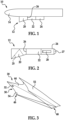
Fig. 1 is a schematic view of a flight vehicle that includes an engine with an inlet according to an embodiment of the invention. -
Fig. 2 is a schematic view of a propulsion system that includes the inlet ofFig. 1 . -
Fig. 3 is an oblique view of the inlet ofFig. 1 . -
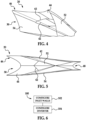
Fig. 4 is another oblique view, or part of the inlet ofFig. 1 , showing an internal diverter of the inlet. -
Fig. 5 is a bottom view of the inlet ofFig. 1 . -
Fig. 6 is a high-level flow chart, showing steps in configuring the inlet. -
Fig. 7 is a view of surfaces generated in configuring the inlet walls and the internal diverter. -
Fig. 8 is a view of an inlet according to a first alternate embodiment of the invention. -
Fig. 9 is a view of an inlet according to a second alternate embodiment of the invention, with the diverter surface moved aft. -
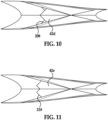
Fig. 10 is a view of an inlet according to a third alternate embodiment of the invention. -
Fig. 11 is a view of an inlet according to a fourth alternate embodiment of the invention. -
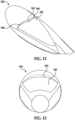
Fig. 12 is an oblique view of an underside of an inlet according to a fifth alternate embodiment of the invention. -
Fig. 13 is an end view looking down the throat of the inlet ofFig. 12 . - An inlet for a flight vehicle engine, such as for a supersonic or hypersonic engine, includes an internal flow diverter to divert boundary layer flow. The flow diverter is configured to minimize disruption to flow outside the diverted boundary by being configured through use of a flow field that is also used to configure the walls of the inlet. The flow field that is used to configure an inlet-creating shape and a diverter-creating shape has the same flow generator, contraction ratio, compression ratio, mass capture ratio, pressure ratio between entrance and exit, and/or Mach number, for example. The internal diverter may be configured so as to allow selection of a leading edge shape for the internal diverter, for example to use a shape that helps avoid radar detection.
-
Fig. 1 schematically shows anair vehicle 10 that is powered by apropulsion system 12 that is mechanically coupled to afuselage 14. Theair vehicle 10 may be a missile, projectile, an unmanned aircraft (an unmanned aerial vehicle or UAV), manned aircraft or an access-to-space vehicle. The air vehicle may have any of a variety of sizes, and any of a variety of operating conditions. In much of the description below theair vehicle 10 is described in terms of a high supersonic to hypersonic air vehicle, with a Mach number ranging from 4 to 6, or more broadly with a Mach number of 2 to 25. However theair vehicle 10 may operate at lower supersonic speeds (Mach number greater than one), or even at subsonic speeds. - The
propulsion system 12 may be coupled to thefuselage 14 in any of a variety ways, including parts of thepropulsion system 12 being integrally formed with parts of thefuselage 14. Thefuselage 14 may have any of a variety of suitable shapes, and may include additional components for carrying out one or more operations of theair vehicle 10. Such additional components, to give a few nonlimiting examples, may include control systems (such as for steering), lift-producing and/or control surfaces (such as wings, fins, or canards, either fixed in position or movable in whole or in part), communication systems, cooling systems, sensors or other data-collecting systems, and/or any of a variety of payloads. - With reference in addition to
Fig. 2 , thepropulsion system 12 includes anair inlet 20, an isolator ordiffuser 22, and a combustor orengine combustor 24.Various shocks 25 occur upstream of and in the various parts of thepropulsion system 12. Theair inlet 20 takes in air from the freestream and compresses the air, with one or more shocks perhaps occurring as the flow is compressed. The flow captured by theinlet 20 is also decelerated in theinlet 20. The compressed air then exits theair inlet 20 to enter into theisolator 22. There may be athroat 26, a minimum area location at the boundary between theair inlet 20 and theisolator 22. - The
isolator 22 functions to keep the shocks stable, isolates dynamic flow fluctuations between the inlet and engine, provides demanded pressure rises, and/or provides desired flow patterns at its downstream end, where the air passes from theisolator 22 to thecombustor 24. There may be a shock train at lower flight speeds that further decelerates flow from supersonic at thethroat 26, to subsonic at the entrance to thecombustor 24. - In the
combustor 24 fuel is added to the air flow, mixed, combustion occurs, and the combusted flow is passed through anozzle 27, producing thrust from thepropulsion system 12, which is used to propel theair vehicle 10. Combustion products are exhausted from a downstream end of thecombustor 24 through thenozzle 27. Thepropulsion system 12 thus defines a flow path or propulsion flow path through theinlet 20, theisolator 22, theengine combustor 24, and thenozzle 27. - The
combustor 24 may be any of variety of suitable devices for burning a fuel-air or fuel-oxidizer mixture and producing thrust. For example the combustor 24 (and/or the engine 12) may be a ramjet, a scramjet, a dual-mode ramjet/scramjet, constant-volume combustion device, or perhaps a turbojet. InFig. 2 thecombustor 24 is shown as having aturbine 28, but in many embodiments thecombustor 24 has no turbine (or other moving parts). - In general the
inlet 20 may have any of a variety of suitable shapes, for example being round, elliptical, or rectangular. Theisolator 22 may have a general shape that makes the transition between a square, rectangular, trapezoidal or elliptical shape of the inlet 20 (to give a few examples) to a round or other-shapedcombustor 24. Theinlet 20 and thecombustor 24 may be in line with each other, or may be offset from one another and at different angular orientations. Many variations are possible for the configuration of theisolator 22, and the examples given herein should not be considered as limiting to the invention. -
Fig. 3 shows further details of one embodiment of theinlet 20. Theinlet 20 includeswalls 30 that define aninterior space 32 within thewalls 30. Air enters theinterior space 32 and is compressed and directed downstream to the isolator 22 (Fig. 2 ). - Referring now in addition to
Figs. 4 and 5 , theinlet 20 includes aflow diverter 42 that is used to skim off a boundary layer of the flow from atop wall 44 of theinlet 20. Theinternal diverter 42 is spaced away from thetop wall 44 at afront end 46 of theinternal diverter 42. Theinternal diverter 42 is angled back in toward thetop wall 44, and in the illustrated embodiment theinternal diverter 42 makes contact withtop wall 44 toward adownstream end 48 of theinternal diverter 42. - The
flow diverter 42 is attached toside walls side walls internal diverter 42 is directed through slots at the sides of theinlet 20, out of theinlet 20. - Removing the boundary layer flow using the
internal diverter 42 may improve performance of the engine combustor 24 (Fig. 2 ), for example by providing more uniform momentum in the intake air provided to thecombustor 24. - It is advantageous that the
internal diverter 42 not unnecessarily impact the flow of air through theinlet 20. Toward that end, theinternal diverter 42 may be configured such that the flow qualities within theinlet 20 maintain the same sort of flow used in configuring theinlet walls 30. Theinlet walls 30 are configured using streamline traces in a defined flow field, and theinternal diverter 42 is configured using the same flow field. This helps in maintaining the flow qualities of the original inlet shape. Theinternal diverter 42 has an aft-swept leadingedge 62, which is one of a variety of possible leading edge shapes, as is discussed further below. - The illustrated
inlet 20 has a rectangular cross-section shape. Alternatively theinlet 20 could have other suitable shapes, such as trapezoidal, rounded, or circular. More broadly, the inlet could have any of a variety of further shapes, such as any shapes used to conform to a vehicle body shape. -
Fig. 6 shows a high-level flow chart of a method orprocess 100 of configuring the inlet. Instep 102 the inlet walls 30 (Fig. 3 ) are streamlined traced using a flow field. The flow field is a theoretical (ideal) flow field past a surface or shape, such as a Busemann inlet. The flow field may model a supersonic flow field with characteristics, such as Mach number, contraction ratio (the ratio of the upstream and downstream areas of the inlet), compression ratio, pressure ratio between entrance and exit, mass capture ratio, pressure ratio between entrance and exit, and air pressure, corresponding to operating conditions for the engine. Shock locations within the flow field may be determined based on the flow characteristics. These factors may be taken into account in configuring thewalls 30 of theinlet 20. - In step 104 a shape is used for configuring the internal diverter 42 (
Fig. 4 ). The diverter-configuring shape is a shape created using the same flow field as was used instep 102 to configure theinlet walls 30. The similarity includes (for example) using the same original generating body for streamline tracing, a geometrically similar leading edge shape (of higher aspect ratio), the same Mach number and contraction ratio, and the same throat shape. The identity of the throat shape may be used to allow theinternal diverter 42 to blend into the shape of theinlet walls 30. As illustrated inFig. 7 , the diverter-creatingshape 142 has a shape similar to that of an inlet-creatingshape 130 used for configuring the inlet walls 30 (Fig. 3 ). As illustrated, the diverter-creatingshape 142 is shorter and wider than the inlet-creatingshape 130, giving the diverter-creating shape 142 a larger aspect ratio than the inlet-creatingshape 130. That the diverter-creatingshape 142 is shorter than the inlet-creatingshape 130, with a vertical separation at a forward part of theshapes shapes shapes - The
flow diverter 42, or most of the flow diverter 42 (such as the upstream-most part of the flow diverter 42) may be selected at any of a variety of locations within the diverter-creatingshape 142. One example is shown asreference number 144 inFig. 7 . Thus the diverter-creatingshape 142 is acting as a template for configuring theinternal diverter 42. - The intersection of the
inlet walls 30 and theinternal diverter 42 form the lateral extent of thesurface 142. The intersection of the original inlettop wall 44 and thediverter wall 42 form the aft extent of theinternal diverter surface 42. - One advantage of configuring the
flow diverter 42 to be on theshape 142 is that this minimizes disruption of the flow through theinlet 20. This is so, at least in part, because theshape 142 is on streamlines similar to the same flow as that used for creating theinlet walls 30. Because the diverter shape is along streamlines of the original inlet, the leading edge of the diverter surface may exist at any location on the diverter, and may be of arbitrary (or at least somewhat arbitrary) shape. Another advantage is that this process allows variability in the shape of the leading edge of theinternal diverter 42, without causing significant impact or disruption on the flow. The trailing edge of theinternal diverter 42 is where theinternal diverter 42 merges with thewalls 30, may correspond to a location where theshapes inlet 20. - The
method 100 allows theinternal diverter 42 to be configured with its leading edge away from an upstream end of theinlet 20, which is in contrast to how diverters are usually configured. The placement of the diverter edge downstream of the upstream end of theinlet 20 allows more flexibility in the configuration of diverters, for example to achieve desired characteristics in radar visibility. - Streamline-traced inlets tend to be long and have a boundary layer concentrated along the center of the body of the inlet. An inlet diverter such as the
internal diverter 42 helps reduce the opportunity for boundary-layer separation along the inlet centerline. Theinternal diverter 42 may also be useful in aiding the inlet starting process. - Many different types of flow fields may be used in configuring the
shapes - The
shapes -
Figs. 8-11 shows various possible configurations of the internal diverter, with various leading edge shapes and/or positions within theinlet 30. It will be appreciated that the illustrated embodiments are only examples, and that a variety of other leading edge shapes are possible. As an example, the leading edges may be curvilinear. -
Fig. 8 shows aninternal diverter 42b with a single-notch leading edge 204. Theinternal diverter 42b is in a relatively close to a leading edge (upstream end) 206 of theinlet 30, while still being downstream from the inlet upstream end 206.Fig. 9 shows aninternal diverter 42c that has the same shape as theinternal diverter 42b, while being further downstream within theinlet 30.Fig. 10 shows aninternal diverter 42d with a W-shape leading edge 208, with multiple line segments angled relative to one another.Fig. 11 shows another example, aninternal diverter 42e with a W-shape leading edge 210. -
Figs. 12 and 13 show another example, with aninternal diverter 342 in aninlet 320 that has a circular cross-section shape. Thediverter 342 has aleading edge 362 with a pair ofcurved portions
Claims (15)
- A method of configuring an inlet (20) for a flight vehicle engine (12), the method comprising:configuring (102) streamline-traced inlet walls (30) of the inlet, the streamline-traced inlet walls defining an interior space (32) within the streamline-traced inlet walls;configuring (104) a streamline-traced internal diverter (42) within the inlet, for removing, from the inlet, boundary layer flow along one of the streamline-traced inlet walls; andforming the inlet walls to have one or more slots through which flow captured by the streamline-traced internal diverter is directed, out of the inlet;wherein the streamline-traced inlet walls are configured using an inlet-creating shape along streamlines of a flow field; andwherein the streamline-traced internal diverter is configured using a diverter-creating shape along streamlines of the flow field used for the inlet-creating shape.
- The method of claim 1,further comprising, prior to the configuring the streamline-traced inlet walls and the configuring the streamline-traced internal diverter,generating the inlet-creating shape from the flow field; andgenerating the diverter-creating shape from the flow field;wherein the flow field is a function of a flow-generating shape, a contraction ratio, and a Mach number.
- The method of claim 1 or claim 2, wherein the configuring the streamline-traced internal diverter includes configuring a leading edge of the streamline-traced internal diverter to achieve desired radar-detection characteristics.
- The method of claim 1 or claim 2, wherein the configuring the streamline-traced internal diverter includes configuring a leading edge of the streamline-traced internal diverter with multiple linear segments.
- The method of any one of claims 1 to 4, further comprising forming the one of the streamline-traced inlet walls as a top wall of the inlet.
- The method of any one of claims 1 to 5, further comprising forming the inlet-creating shape to have a different aspect ratio from the diverter-creating shape.
- The method of claim 6, further comprising forming the diverter-creating shape to be wider than the inlet-creating shape.
- The method of claim 1 or claim 2, further comprising angling a leading edge of the streamline-traced internal diverter at a nonzero angle relative to freestream flow through the inlet.
- The method of claim 8, further comprising angling the leading edge of the internal diverter differently than a leading edge of the one of the streamline-traced inlet walls.
- The method of claim 1 or claim 2, further comprising angling a leading edge of the streamline-traced internal diverter at a nonzero angle relative to freestream flow through the inlet, and forming the leading edge of the internal diverter to include multiple linear segments angled relative to each other.
- The method of claim 10, further comprising angling the leading edge of the internal diverter differently than a leading edge of the one of the streamline-traced inlet walls.
- The method of any one of claims 1 to 11, further comprising forming a downstream end of the streamline-traced internal diverter to blend with the one of the streamline-traced inlet walls.
- The method of any one of claims 1 to 12, further comprising forming the inlet as a rectangular inlet.
- The method of any one of claims 1 to 12, further comprising forming the inlet as a rounded inlet.
- The method of any one of claims 1 to 12, further comprising forming the inlet as a circular inlet.
Applications Claiming Priority (2)
| Application Number | Priority Date | Filing Date | Title |
|---|---|---|---|
| US16/019,720 US11053018B2 (en) | 2018-06-27 | 2018-06-27 | Flight vehicle engine inlet with internal diverter, and method of configuring |
| PCT/US2019/030852 WO2020005387A1 (en) | 2018-06-27 | 2019-05-06 | Flight vehicle engine inlet with internal diverter, and method of configuring |
Publications (2)
| Publication Number | Publication Date |
|---|---|
| EP3814220A1 EP3814220A1 (en) | 2021-05-05 |
| EP3814220B1 true EP3814220B1 (en) | 2025-02-26 |
Family
ID=66669067
Family Applications (1)
| Application Number | Title | Priority Date | Filing Date |
|---|---|---|---|
| EP19727180.2A Active EP3814220B1 (en) | 2018-06-27 | 2019-05-06 | Method of configuring a flight vehicle engine inlet with internal diverter |
Country Status (6)
| Country | Link |
|---|---|
| US (1) | US11053018B2 (en) |
| EP (1) | EP3814220B1 (en) |
| JP (1) | JP6987262B2 (en) |
| AU (1) | AU2019292004B2 (en) |
| BR (1) | BR112020026496B1 (en) |
| WO (1) | WO2020005387A1 (en) |
Families Citing this family (4)
| Publication number | Priority date | Publication date | Assignee | Title |
|---|---|---|---|---|
| DE102020004273B4 (en) * | 2020-02-26 | 2024-07-18 | Airbus Defence and Space GmbH | Aircraft structure with an inlet opening for engine air |
| AU2020467223A1 (en) * | 2020-09-08 | 2023-04-13 | Hypersonix IP Holdings, Inc. | Airframe integrated scramjet with fixed geometry and shape transition for hypersonic operation over a large mach number range |
| US11639700B2 (en) * | 2020-09-08 | 2023-05-02 | Hypersonix IP Holdings, Inc. | Airframe integrated scramjet with fixed geometry and shape transition for hypersonic operation over a large Mach number range |
| FR3121125B1 (en) * | 2021-03-23 | 2024-05-03 | Arianegroup Sas | Hypersonic transport system |
Citations (1)
| Publication number | Priority date | Publication date | Assignee | Title |
|---|---|---|---|---|
| US4194519A (en) * | 1964-11-18 | 1980-03-25 | The United States Of America As Represented By The Secretary Of The Navy | Hypersonic modular inlet |
Family Cites Families (25)
| Publication number | Priority date | Publication date | Assignee | Title |
|---|---|---|---|---|
| US2735612A (en) * | 1956-02-21 | hausmann | ||
| US3005309A (en) * | 1952-11-17 | 1961-10-24 | Randolph S Rae | Streamlined ring for assuring optimum compression in a ramjet |
| GB1458033A (en) * | 1973-05-31 | 1976-12-08 | British Aircraft Corp Ltd | Air intakes for jet propulsion engines |
| US5082206A (en) | 1988-07-25 | 1992-01-21 | General Electric Company | Hypersonic flight vehicle |
| US5779189A (en) * | 1996-03-19 | 1998-07-14 | Lockheed Martin Corporation | System and method for diverting boundary layer air |
| US5881758A (en) | 1996-03-28 | 1999-03-16 | The Boeing Company | Internal compression supersonic engine inlet |
| US6793175B1 (en) * | 1999-08-25 | 2004-09-21 | The Boeing Company | Supersonic external-compression diffuser and method for designing same |
| US7048229B2 (en) | 2000-09-26 | 2006-05-23 | Techland Research, Inc. | Low sonic boom inlet for supersonic aircraft |
| US6907724B2 (en) | 2002-09-13 | 2005-06-21 | The Boeing Company | Combined cycle engines incorporating swirl augmented combustion for reduced volume and weight and improved performance |
| US7216474B2 (en) | 2004-02-19 | 2007-05-15 | Aerojet-General Corporation | Integrated air inlet system for multi-propulsion aircraft engines |
| US20070181743A1 (en) * | 2006-02-08 | 2007-08-09 | Lockheed Martin Corporation | Method for streamline traced external compression inlet |
| US20080060361A1 (en) | 2006-09-07 | 2008-03-13 | Pratt & Whitney Rocketdyne, Inc. | Multi-height ramp injector scramjet combustor |
| US7797943B2 (en) | 2006-10-18 | 2010-09-21 | Aerojet-General Corporation | Core burning for scramjet engines |
| US7762077B2 (en) | 2006-12-05 | 2010-07-27 | Pratt & Whitney Rocketdyne, Inc. | Single-stage hypersonic vehicle featuring advanced swirl combustion |
| US8408491B2 (en) | 2007-04-24 | 2013-04-02 | United Technologies Corporation | Nacelle assembly having inlet airfoil for a gas turbine engine |
| US8359825B2 (en) * | 2008-05-21 | 2013-01-29 | Florida State University Research Foundation | Microjet creation and control of shock waves |
| US8656957B2 (en) | 2009-09-30 | 2014-02-25 | The Board Of Trustees Of The University Of Illinois | Vortex generators to control boundary layer interactions |
| US8434723B2 (en) | 2010-06-01 | 2013-05-07 | Applied University Research, Inc. | Low drag asymmetric tetrahedral vortex generators |
| US8403271B2 (en) | 2010-08-24 | 2013-03-26 | Lockheed Martin Corporation | Passive robust flow control micro device |
| RU2472956C2 (en) * | 2011-04-29 | 2013-01-20 | Открытое акционерное общество "ОКБ Сухого" | Supersonic controlled air intake |
| US9403600B2 (en) | 2012-05-01 | 2016-08-02 | Lockheed Martin Corporation | Integrated thermal protection and leakage reduction in a supersonic air intake system |
| US20140224949A1 (en) | 2013-02-13 | 2014-08-14 | Dale Mark | Track Guard |
| US9758253B2 (en) * | 2015-06-25 | 2017-09-12 | Northrop Grumman Systems Corporation | Swept gradient boundary layer diverter |
| US9862482B2 (en) * | 2015-09-04 | 2018-01-09 | The Boeing Company | Variable geometry flush boundary diverter |
| JP6719933B2 (en) | 2016-03-16 | 2020-07-08 | 三菱重工業株式会社 | Jet engine, flying body, and how to operate jet engine |
-
2018
- 2018-06-27 US US16/019,720 patent/US11053018B2/en active Active
-
2019
- 2019-05-06 WO PCT/US2019/030852 patent/WO2020005387A1/en not_active Ceased
- 2019-05-06 AU AU2019292004A patent/AU2019292004B2/en active Active
- 2019-05-06 JP JP2020541999A patent/JP6987262B2/en active Active
- 2019-05-06 BR BR112020026496-2A patent/BR112020026496B1/en active IP Right Grant
- 2019-05-06 EP EP19727180.2A patent/EP3814220B1/en active Active
Patent Citations (1)
| Publication number | Priority date | Publication date | Assignee | Title |
|---|---|---|---|---|
| US4194519A (en) * | 1964-11-18 | 1980-03-25 | The United States Of America As Represented By The Secretary Of The Navy | Hypersonic modular inlet |
Also Published As
| Publication number | Publication date |
|---|---|
| JP2021512814A (en) | 2021-05-20 |
| WO2020005387A1 (en) | 2020-01-02 |
| US11053018B2 (en) | 2021-07-06 |
| EP3814220A1 (en) | 2021-05-05 |
| AU2019292004A1 (en) | 2021-01-14 |
| BR112020026496A2 (en) | 2021-03-23 |
| AU2019292004B2 (en) | 2023-07-20 |
| US20200002020A1 (en) | 2020-01-02 |
| JP6987262B2 (en) | 2021-12-22 |
| BR112020026496B1 (en) | 2022-09-27 |
Similar Documents
| Publication | Publication Date | Title |
|---|---|---|
| US7866599B2 (en) | Integrated inward turning inlets and nozzles for hypersonic air vehicles | |
| EP3814220B1 (en) | Method of configuring a flight vehicle engine inlet with internal diverter | |
| EP1206384B1 (en) | Supersonic external-compression diffuser and method for designing same | |
| ES2985102T3 (en) | Fluidic propulsion system and thrust and lift generator for aerial vehicles | |
| EP1718857B1 (en) | Integrated air inlet system for multi-propulsion aircraft engines | |
| JP6806474B2 (en) | Intake flow limiter | |
| US7681400B2 (en) | Exhaust assembly forming a horizontal propulsion gas elbow in an aircraft | |
| EP3601766B1 (en) | Flight vehicle engine with finned inlet | |
| EP3088720A1 (en) | Nozzle for jet engines | |
| US20140259631A1 (en) | Internal/external single expansion ramp nozzle with integrated third stream | |
| AU2018279791B2 (en) | Flight vehicle air breathing engine with isolator having bulged section | |
| US12202604B2 (en) | Vertical take off and landing aircraft with fluidic propulsion system | |
| US7055307B2 (en) | Vectorable nozzle with sideways pivotable ramp | |
| AU2021278813A1 (en) | Vertical take off and landing aircraft with fluidic propulsion system | |
| US7828243B2 (en) | SCRAMjet arrangement for hypersonic aircraft | |
| JP2023548715A (en) | Integral body scramjet with fixed geometry and geometry transition for hypersonic operation over large Mach number range | |
| RU2782411C1 (en) | Air intake device of a supersonic aircraft | |
| JP2020524116A (en) | Winglet ejector configuration | |
| Slater | Refinement of Supersonic Inlets for Mach 1.4 to 2.0 | |
| US20220009627A1 (en) | Vertical take off and landing aircraft with fluidic propulsion system | |
| JPH07217498A (en) | Exhaust nozzle |
Legal Events
| Date | Code | Title | Description |
|---|---|---|---|
| STAA | Information on the status of an ep patent application or granted ep patent |
Free format text: STATUS: THE INTERNATIONAL PUBLICATION HAS BEEN MADE |
|
| PUAI | Public reference made under article 153(3) epc to a published international application that has entered the european phase |
Free format text: ORIGINAL CODE: 0009012 |
|
| STAA | Information on the status of an ep patent application or granted ep patent |
Free format text: STATUS: REQUEST FOR EXAMINATION WAS MADE |
|
| 17P | Request for examination filed |
Effective date: 20210127 |
|
| AK | Designated contracting states |
Kind code of ref document: A1 Designated state(s): AL AT BE BG CH CY CZ DE DK EE ES FI FR GB GR HR HU IE IS IT LI LT LU LV MC MK MT NL NO PL PT RO RS SE SI SK SM TR |
|
| DAV | Request for validation of the european patent (deleted) | ||
| DAX | Request for extension of the european patent (deleted) | ||
| STAA | Information on the status of an ep patent application or granted ep patent |
Free format text: STATUS: EXAMINATION IS IN PROGRESS |
|
| 17Q | First examination report despatched |
Effective date: 20220408 |
|
| GRAP | Despatch of communication of intention to grant a patent |
Free format text: ORIGINAL CODE: EPIDOSNIGR1 |
|
| STAA | Information on the status of an ep patent application or granted ep patent |
Free format text: STATUS: GRANT OF PATENT IS INTENDED |
|
| GRAJ | Information related to disapproval of communication of intention to grant by the applicant or resumption of examination proceedings by the epo deleted |
Free format text: ORIGINAL CODE: EPIDOSDIGR1 |
|
| STAA | Information on the status of an ep patent application or granted ep patent |
Free format text: STATUS: EXAMINATION IS IN PROGRESS |
|
| INTG | Intention to grant announced |
Effective date: 20240729 |
|
| GRAP | Despatch of communication of intention to grant a patent |
Free format text: ORIGINAL CODE: EPIDOSNIGR1 |
|
| STAA | Information on the status of an ep patent application or granted ep patent |
Free format text: STATUS: GRANT OF PATENT IS INTENDED |
|
| INTC | Intention to grant announced (deleted) | ||
| INTG | Intention to grant announced |
Effective date: 20240903 |
|
| GRAS | Grant fee paid |
Free format text: ORIGINAL CODE: EPIDOSNIGR3 |
|
| GRAA | (expected) grant |
Free format text: ORIGINAL CODE: 0009210 |
|
| STAA | Information on the status of an ep patent application or granted ep patent |
Free format text: STATUS: THE PATENT HAS BEEN GRANTED |
|
| AK | Designated contracting states |
Kind code of ref document: B1 Designated state(s): AL AT BE BG CH CY CZ DE DK EE ES FI FR GB GR HR HU IE IS IT LI LT LU LV MC MK MT NL NO PL PT RO RS SE SI SK SM TR |
|
| REG | Reference to a national code |
Ref country code: GB Ref legal event code: FG4D |
|
| REG | Reference to a national code |
Ref country code: CH Ref legal event code: EP |
|
| REG | Reference to a national code |
Ref country code: DE Ref legal event code: R096 Ref document number: 602019066475 Country of ref document: DE |
|
| REG | Reference to a national code |
Ref country code: IE Ref legal event code: FG4D |
|
| REG | Reference to a national code |
Ref country code: NL Ref legal event code: FP |
|
| REG | Reference to a national code |
Ref country code: SE Ref legal event code: TRGR |
|
| PGFP | Annual fee paid to national office [announced via postgrant information from national office to epo] |
Ref country code: NL Payment date: 20250423 Year of fee payment: 7 |
|
| PG25 | Lapsed in a contracting state [announced via postgrant information from national office to epo] |
Ref country code: RS Free format text: LAPSE BECAUSE OF FAILURE TO SUBMIT A TRANSLATION OF THE DESCRIPTION OR TO PAY THE FEE WITHIN THE PRESCRIBED TIME-LIMIT Effective date: 20250526 |
|
| PG25 | Lapsed in a contracting state [announced via postgrant information from national office to epo] |
Ref country code: FI Free format text: LAPSE BECAUSE OF FAILURE TO SUBMIT A TRANSLATION OF THE DESCRIPTION OR TO PAY THE FEE WITHIN THE PRESCRIBED TIME-LIMIT Effective date: 20250226 |
|
| PG25 | Lapsed in a contracting state [announced via postgrant information from national office to epo] |
Ref country code: PL Free format text: LAPSE BECAUSE OF FAILURE TO SUBMIT A TRANSLATION OF THE DESCRIPTION OR TO PAY THE FEE WITHIN THE PRESCRIBED TIME-LIMIT Effective date: 20250226 |
|
| PGFP | Annual fee paid to national office [announced via postgrant information from national office to epo] |
Ref country code: DE Payment date: 20250423 Year of fee payment: 7 |
|
| PG25 | Lapsed in a contracting state [announced via postgrant information from national office to epo] |
Ref country code: ES Free format text: LAPSE BECAUSE OF FAILURE TO SUBMIT A TRANSLATION OF THE DESCRIPTION OR TO PAY THE FEE WITHIN THE PRESCRIBED TIME-LIMIT Effective date: 20250226 |
|
| PGFP | Annual fee paid to national office [announced via postgrant information from national office to epo] |
Ref country code: GB Payment date: 20250423 Year of fee payment: 7 |
|
| REG | Reference to a national code |
Ref country code: LT Ref legal event code: MG9D |
|
| PG25 | Lapsed in a contracting state [announced via postgrant information from national office to epo] |
Ref country code: IS Free format text: LAPSE BECAUSE OF FAILURE TO SUBMIT A TRANSLATION OF THE DESCRIPTION OR TO PAY THE FEE WITHIN THE PRESCRIBED TIME-LIMIT Effective date: 20250626 |
|
| PGFP | Annual fee paid to national office [announced via postgrant information from national office to epo] |
Ref country code: NO Payment date: 20250424 Year of fee payment: 7 |
|
| PGFP | Annual fee paid to national office [announced via postgrant information from national office to epo] |
Ref country code: IT Payment date: 20250520 Year of fee payment: 7 |
|
| PG25 | Lapsed in a contracting state [announced via postgrant information from national office to epo] |
Ref country code: HR Free format text: LAPSE BECAUSE OF FAILURE TO SUBMIT A TRANSLATION OF THE DESCRIPTION OR TO PAY THE FEE WITHIN THE PRESCRIBED TIME-LIMIT Effective date: 20250226 |
|
| PG25 | Lapsed in a contracting state [announced via postgrant information from national office to epo] |
Ref country code: LV Free format text: LAPSE BECAUSE OF FAILURE TO SUBMIT A TRANSLATION OF THE DESCRIPTION OR TO PAY THE FEE WITHIN THE PRESCRIBED TIME-LIMIT Effective date: 20250226 Ref country code: PT Free format text: LAPSE BECAUSE OF FAILURE TO SUBMIT A TRANSLATION OF THE DESCRIPTION OR TO PAY THE FEE WITHIN THE PRESCRIBED TIME-LIMIT Effective date: 20250626 |
|
| PGFP | Annual fee paid to national office [announced via postgrant information from national office to epo] |
Ref country code: FR Payment date: 20250423 Year of fee payment: 7 |
|
| PG25 | Lapsed in a contracting state [announced via postgrant information from national office to epo] |
Ref country code: BG Free format text: LAPSE BECAUSE OF FAILURE TO SUBMIT A TRANSLATION OF THE DESCRIPTION OR TO PAY THE FEE WITHIN THE PRESCRIBED TIME-LIMIT Effective date: 20250226 Ref country code: GR Free format text: LAPSE BECAUSE OF FAILURE TO SUBMIT A TRANSLATION OF THE DESCRIPTION OR TO PAY THE FEE WITHIN THE PRESCRIBED TIME-LIMIT Effective date: 20250527 |
|
| PGFP | Annual fee paid to national office [announced via postgrant information from national office to epo] |
Ref country code: TR Payment date: 20250429 Year of fee payment: 7 |
|
| PGFP | Annual fee paid to national office [announced via postgrant information from national office to epo] |
Ref country code: SE Payment date: 20250423 Year of fee payment: 7 |
|
| REG | Reference to a national code |
Ref country code: AT Ref legal event code: MK05 Ref document number: 1770432 Country of ref document: AT Kind code of ref document: T Effective date: 20250226 |
|
| PG25 | Lapsed in a contracting state [announced via postgrant information from national office to epo] |
Ref country code: SM Free format text: LAPSE BECAUSE OF FAILURE TO SUBMIT A TRANSLATION OF THE DESCRIPTION OR TO PAY THE FEE WITHIN THE PRESCRIBED TIME-LIMIT Effective date: 20250226 |
|
| PG25 | Lapsed in a contracting state [announced via postgrant information from national office to epo] |
Ref country code: DK Free format text: LAPSE BECAUSE OF FAILURE TO SUBMIT A TRANSLATION OF THE DESCRIPTION OR TO PAY THE FEE WITHIN THE PRESCRIBED TIME-LIMIT Effective date: 20250226 |
|
| PG25 | Lapsed in a contracting state [announced via postgrant information from national office to epo] |
Ref country code: AT Free format text: LAPSE BECAUSE OF FAILURE TO SUBMIT A TRANSLATION OF THE DESCRIPTION OR TO PAY THE FEE WITHIN THE PRESCRIBED TIME-LIMIT Effective date: 20250226 |
|
| PG25 | Lapsed in a contracting state [announced via postgrant information from national office to epo] |
Ref country code: CZ Free format text: LAPSE BECAUSE OF FAILURE TO SUBMIT A TRANSLATION OF THE DESCRIPTION OR TO PAY THE FEE WITHIN THE PRESCRIBED TIME-LIMIT Effective date: 20250226 Ref country code: EE Free format text: LAPSE BECAUSE OF FAILURE TO SUBMIT A TRANSLATION OF THE DESCRIPTION OR TO PAY THE FEE WITHIN THE PRESCRIBED TIME-LIMIT Effective date: 20250226 |
|
| PG25 | Lapsed in a contracting state [announced via postgrant information from national office to epo] |
Ref country code: RO Free format text: LAPSE BECAUSE OF FAILURE TO SUBMIT A TRANSLATION OF THE DESCRIPTION OR TO PAY THE FEE WITHIN THE PRESCRIBED TIME-LIMIT Effective date: 20250226 |
|
| PG25 | Lapsed in a contracting state [announced via postgrant information from national office to epo] |
Ref country code: SK Free format text: LAPSE BECAUSE OF FAILURE TO SUBMIT A TRANSLATION OF THE DESCRIPTION OR TO PAY THE FEE WITHIN THE PRESCRIBED TIME-LIMIT Effective date: 20250226 |
|
| REG | Reference to a national code |
Ref country code: DE Ref legal event code: R097 Ref document number: 602019066475 Country of ref document: DE |
|
| REG | Reference to a national code |
Ref country code: CH Ref legal event code: H13 Free format text: ST27 STATUS EVENT CODE: U-0-0-H10-H13 (AS PROVIDED BY THE NATIONAL OFFICE) Effective date: 20251223 |
|
| PLBE | No opposition filed within time limit |
Free format text: ORIGINAL CODE: 0009261 |
|
| STAA | Information on the status of an ep patent application or granted ep patent |
Free format text: STATUS: NO OPPOSITION FILED WITHIN TIME LIMIT |
|
| PG25 | Lapsed in a contracting state [announced via postgrant information from national office to epo] |
Ref country code: LU Free format text: LAPSE BECAUSE OF NON-PAYMENT OF DUE FEES Effective date: 20250506 |
|
| PG25 | Lapsed in a contracting state [announced via postgrant information from national office to epo] |
Ref country code: CH Free format text: LAPSE BECAUSE OF NON-PAYMENT OF DUE FEES Effective date: 20250531 |
|
| REG | Reference to a national code |
Ref country code: BE Ref legal event code: MM Effective date: 20250531 |
|
| PG25 | Lapsed in a contracting state [announced via postgrant information from national office to epo] |
Ref country code: MC Free format text: LAPSE BECAUSE OF FAILURE TO SUBMIT A TRANSLATION OF THE DESCRIPTION OR TO PAY THE FEE WITHIN THE PRESCRIBED TIME-LIMIT Effective date: 20250226 |
|
| 26N | No opposition filed |
Effective date: 20251127 |
|
| PG25 | Lapsed in a contracting state [announced via postgrant information from national office to epo] |
Ref country code: IE Free format text: LAPSE BECAUSE OF NON-PAYMENT OF DUE FEES Effective date: 20250506 |
|
| PG25 | Lapsed in a contracting state [announced via postgrant information from national office to epo] |
Ref country code: BE Free format text: LAPSE BECAUSE OF NON-PAYMENT OF DUE FEES Effective date: 20250531 |