EP3812975B1 - Verfahren und system zum trainieren einer maschinenlernmaschine und zugehörige vorrichtung - Google Patents
Verfahren und system zum trainieren einer maschinenlernmaschine und zugehörige vorrichtung Download PDFInfo
- Publication number
- EP3812975B1 EP3812975B1 EP19821642.6A EP19821642A EP3812975B1 EP 3812975 B1 EP3812975 B1 EP 3812975B1 EP 19821642 A EP19821642 A EP 19821642A EP 3812975 B1 EP3812975 B1 EP 3812975B1
- Authority
- EP
- European Patent Office
- Prior art keywords
- executable file
- features
- machine learning
- information entropy
- learning engine
- Prior art date
- Legal status (The legal status is an assumption and is not a legal conclusion. Google has not performed a legal analysis and makes no representation as to the accuracy of the status listed.)
- Active
Links
Images


Classifications
-
- G—PHYSICS
- G06—COMPUTING OR CALCULATING; COUNTING
- G06F—ELECTRIC DIGITAL DATA PROCESSING
- G06F21/00—Security arrangements for protecting computers, components thereof, programs or data against unauthorised activity
- G06F21/50—Monitoring users, programs or devices to maintain the integrity of platforms, e.g. of processors, firmware or operating systems
- G06F21/55—Detecting local intrusion or implementing counter-measures
- G06F21/56—Computer malware detection or handling, e.g. anti-virus arrangements
-
- G—PHYSICS
- G06—COMPUTING OR CALCULATING; COUNTING
- G06N—COMPUTING ARRANGEMENTS BASED ON SPECIFIC COMPUTATIONAL MODELS
- G06N20/00—Machine learning
-
- Y—GENERAL TAGGING OF NEW TECHNOLOGICAL DEVELOPMENTS; GENERAL TAGGING OF CROSS-SECTIONAL TECHNOLOGIES SPANNING OVER SEVERAL SECTIONS OF THE IPC; TECHNICAL SUBJECTS COVERED BY FORMER USPC CROSS-REFERENCE ART COLLECTIONS [XRACs] AND DIGESTS
- Y02—TECHNOLOGIES OR APPLICATIONS FOR MITIGATION OR ADAPTATION AGAINST CLIMATE CHANGE
- Y02D—CLIMATE CHANGE MITIGATION TECHNOLOGIES IN INFORMATION AND COMMUNICATION TECHNOLOGIES [ICT], I.E. INFORMATION AND COMMUNICATION TECHNOLOGIES AIMING AT THE REDUCTION OF THEIR OWN ENERGY USE
- Y02D10/00—Energy efficient computing, e.g. low power processors, power management or thermal management
Definitions
- the present disclosure relates to the field of machine learning, and in particular to a method and a system for training a machine learning engine, a computer-readable storage medium and a device for training a machine learning engine.
- information entropy of a software is determined as static features for the machine learning.
- the information entropy is extracted from main features of an executable file, and the extracted information entropy is used as static features to be inputted to the machine learning engine.
- the operation of extracting information entropy from the main features of the executable file is only performed on an import table, an export table and section information of the executable file, the import table, the export table and the section information are general features, thus the extracted sample features have coarse granularity.
- the machine learning based on the sample features according to the conventional technology will result in a poor effect in training the machine learning engine and a low recognition rate.
- Patent document US2017004306 represents the closest prior art.
- a method and a system for training a machine learning engine, a computer-readable storage medium and a device for training a machine learning engine are provided according to the present disclosure, to stably extract static features of an executable file to make a detection model generated by a machine learning engine have a recognition rate with strong robust.
- the method includes:
- the dividing the executable file into multiple to-be-extracted parts based on a data directory of the executable file includes: dividing the executable file into an executable file header part, an executable file section part, an executable file Overlay data part, and an executable file integral part based on the data directory of the executable file.
- the extracting information entropy features of all the to-be-extracted parts and performing data transformation on the information entropy features to obtain static features includes:
- the calculating a proportion of each of characters in the binary data corresponding to the information entropy features to all the characters in the binary data and obtaining an entropy flow of the information entropy features based on the proportion includes:
- the method further includes: determining a file format of the executable file based on general format information of the executable file; and selecting a feature extraction strategy based on the file format.
- the extracting information entropy features of all the to-be-extracted parts includes: extracting the information entropy features of all the to-be-extracted parts based on the feature extraction strategy.
- the determining a file format of the executable file based on general format information of the executable file includes:
- the dividing the executable file into multiple to-be-extracted parts based on a data directory of the executable file includes: dividing the executable file into multiple to-be-extracted parts based on a section array of the executable file.
- the method further includes:
- the method further includes:
- a system for training a machine learning engine is further provided according to the present disclosure.
- the system includes a file division module, a static feature extraction module and a training module.
- the file division module is configured to obtain an executable file and divide the executable file into multiple to-be-extracted parts based on a data directory of the executable file.
- the static feature extraction module is configured to extract information entropy features of all the to-be-extracted parts and perform data transformation on the information entropy features to obtain static features.
- the training module is configured to train a machine learning engine using the static features.
- the file division module includes a file obtaining unit and a division unit.
- the file obtaining unit is configured to obtain the executable file.
- the division unit is configured to divide the executable file into an executable file header part, an executable file section part, an executable file Overlay data part, and an executable file integral part based on the data directory of the executable file.
- the static feature extraction module includes an information entropy feature extraction unit, an entropy flow calculation unit and a data transformation unit.
- the information entropy feature extraction unit is configured to extract the information entropy features of all the to-be-extracted pars.
- the information entropy feature are binary data.
- the entropy flow calculation unit is configured to calculate a proportion of each of characters in the binary data corresponding to the information entropy features to all the characters in the binary data and obtain an entropy flow of the information entropy features based on the proportion.
- the data transformation unit is configured to perform a DCT transform or a DWT transform on the entropy flow to obtain the static features.
- the entropy flow calculation unit includes a division sub-unit, an entropy flow component calculation sub-unit and an entropy flow component accumulation unit.
- the division sub-unit is configured to divide the binary data corresponding to the information entropy features into multiple byte blocks, where each of the byte blocks includes 256 bytes.
- the entropy flow component accumulation unit is configured to accumulate all the entropy flow components to obtain the entropy flow.
- system further includes an extraction strategy determination module.
- the extraction strategy determination module is configured to determine a file format of the executable file based on general format information of the executable file, and select a feature extraction strategy based on the file format.
- the static feature extraction module is configured to extract the information entropy features of all the to-be-extracted parts based on the feature extraction strategy, and perform data transformation on the information entropy features to obtain the static features.
- the extraction strategy determination module includes a file format determination unit and a strategy selection unit.
- the file format determining unit is configured to determine values of .Net MetaData Directory RVA and .Net MetaData Directory Size in the data directory of the executable file, and determine, if the values of the .Net MetaData Directory RVA and the .Net MetaData Directory Size are not empty, that the file format of the executable file is .Net format.
- the strategy selection unit is configured to select the feature extraction strategy based on the file format.
- the file division module is configured to obtain the executable file and divide the executable file into the multiple to-be-extracted parts based on a section array of the executable file.
- system further includes an extraction module and a determination module.
- the extraction module is configured to extract, in a case that a suspicious software is detected, a target executable file of the suspicious software.
- the determination module is configured to input the target executable file into the trained machine learning engine to determine, by the trained machine learning engine, whether the target executable file is an executable file of a malware.
- system further includes a reporting module and a secondary training module.
- the reporting module is configured to report, if it is determined by the trained machine learning engine that the target executable file is the executable file of the malware, software information of the suspicious software to perform manual detection on the suspicious software.
- the secondary training module is configured to receive a manual detection result, determine whether the current determination by the trained machine learning engine is wrong based on the manual detection result, and train, if the current determination by the trained machine learning engine is wrong, the machine learning engine using the target executable file as a new negative training sample.
- a computer-readable storage medium storing a computer program is further provided according to the present disclosure.
- the computer program when executed, performs the method for training a machine learning engine.
- a device for training a machine learning engine is further provided according to the present disclosure.
- the device includes a memory and a processor.
- the memory stores a computer program.
- the processor is configured to execute the computer program to perform the method for training a machine learning engine.
- a method for training a machine learning engine includes: obtaining an executable file and dividing the executable file into multiple to-be-extracted parts based on a data directory of the executable file; extracting information entropy features of all the to-be-extracted parts and performing data transformation on the information entropy features to obtain static features; and training a machine learning engine using the static features.
- the executable file is divided into multiple to-be-extracted parts, information entropy features of all the to-be-extracted parts are extracted, an transformation is performed on the extracted information entropy features to obtain static features which are required in training the machine learning engine to train the machine learning engine.
- the executable file is divided into multiple to-be-extracted parts based on the data directory and information entropy features of all the to-be-extracted parts are extracted.
- the information entropy features are extracted from the main features which are common features, the obtained static features have a coarse granularity.
- the information entropy features are extracted from the entire executable file by dividing the executable file into multiple to-be-extracted parts and extracting the information entropy features of all the to-be-extracted parts, thus it can be ensured that the obtained static features have a fine granularity.
- the static features of the executable file can be stably extracted, so that the detection model generated by the machine learning engine has a recognition rate with strong robust.
- a system for training a machine learning engine, a computer-readable storage medium and a device for training a machine learning engine are further provided, which have the above beneficial effects and are not repeated herein.
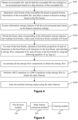
- Figure 1 is a flow chart of a method for training a machine learning engine according to an embodiment of the present disclosure.
- the method includes the following steps S101 to S103.
- step S101 an executable file is obtained, and the executable file is divided into multiple to-be-extracted parts based on a data directory of the executable file.
- a method for training a machine learning engine is provided. Samples required for training the machine learning engine are static features of the executable file.
- the executable file is a file which may be loaded and executed by an operating system. In different operating system environments, the executable file is in different formats. For example, the executable file in a Windows system is a PE (portable executable) file, and the executable file in a system, such as Linux, Mac, and Android, has a file format corresponding to the system.
- the system where the executable file is executed is not limited here. According to the present disclosure, operations can be performed on the executable files in multiple systems.
- the executable file is divided into multiple to-be-extracted parts based on the data directory of the executable file.
- the executable file may be divided based on a section array in the structure of the executable file, and may be divided based on other data directories in the structure of the executable file, which is not limited herein.
- the executable file is divided into an executable file header part, an executable file section part, an executable file Overlay data part, and an executable file integral part based on the data directory of the executable file .
- the executable file may be divided into the to-be-extracted parts based on some parts or some structures of the general format information of the executable file.
- the executable file is divided into multiple to-be-extracted parts based on the data directory.
- the information entropy features may be extracted with a specific feature extraction method, achieving information entropy features with a fine granularity, thereby increasing the stability of the static features.
- step S102 information entropy features of all the to-be-extracted parts are extracted, and data transformation is performed on the information entropy features to obtain static features.
- the information entropy features of all the to-be-extracted parts are extracted.
- the information entropy is an occurrence probability of a kind of information, and may be compared with the thermodynamic entropy.
- the information entropy features in the embodiment are occurrence probabilities of all kinds of information in the to-be-extracted parts.
- information in a computer is in the form of characters.
- the information entropy features in this step may be considered as feature values of the occurrence probabilities of the characters in the executable file.
- the samples used for training the machine learning engine are static features of the executable files.
- data transformation is performed on the information entropy features to obtain the static features, so that the machine learning engine is trained in a next step.
- step S103 the machine learning engine is trained using the static features.
- the executable file is divided into multiple to-be-extracted parts, information entropy features of all the to-be-extracted parts are extracted, and transformation is performed on the extracted information entropy features to obtain static features which are required in training the machine learning engine to train the machine learning engine.
- the executable file is divided into multiple to-be-extracted parts based on the data directory and information entropy features of all the to-be-extracted parts are extracted.
- the information entropy features are extracted from the main features which are common features, the obtained static features have a coarse granularity.
- the information entropy features are extracted from the entire executable file by dividing the executable file into multiple to-be-extracted parts and extracting the information entropy features of all the to-be-extracted parts, thus it can be ensured that the obtained static features have a fine granularity.
- the static features of the executable file can be stably extracted, so that the detection model generated by the machine learning engine has a recognition rate with strong robust.
- Figure 2 is a flow chart of extracting information entropy features and performing transformation on the extracted information entropy features to obtain static features in a method for training a machine learning engine according to an embodiment of the present disclosure.
- the extracting information entropy features and performing transformation on the extracted information entropy features to obtain static features includes but is not limited to the following steps.
- step S201 the information entropy features of all the to-be-extracted parts are extracted.
- the information entropy features are binary data.
- step S202 a proportion of each of characters in the binary data corresponding to the information entropy features to all the characters in the binary data is calculated, and an entropy flow of the information entropy features is obtained based on the proportion.
- the information entropy may be compared with thermodynamic entropy, and the transmission of net entropy via information flow is called as entropy flow.
- the entropy flow is calculated based on the overall information entropy features which are binary data.
- the binary data may be divided into multiple blocks for calculating the entropy flow.
- the binary data corresponding to the information entropy features is divided into multiple byte blocks, where each of the byte blocks includes 256 bytes.
- step S203 a DCT transform or a DWT transform is performed on the entropy flow to obtain the static features.
- the DCT Discrete Cosine Transform
- the DWT Discrete Walsh Transform
- the static features may be obtained by performing the DCT transform or the DWT transform on the entropy flow.
- Figure 3 is a flow chart of a method for training a machine learning engine according to another embodiment of the present disclosure.
- the method includes the following steps S301 to S303.
- a file format of the executable file is determined based on general format information of the executable file, and a feature extraction strategy is selected based on the file format.
- a subclass (such as, a .Net format, a Py2exe format, an auotit format and a Nsis format) of the executable file is determined based on the general format information of the executable file, and a feature extraction strategy (such as a strategy for determining which features are to be extracted) is determined based on the file format of the executable file.
- a feature extraction strategy such as a strategy for determining which features are to be extracted
- determining the file format In determining the file format of the executable file, it may be determined whether values of ".Net MetaData Directory RVA" and ".Net MetaData Directory Size” in the data directory of the executable file are empty. If the values of the ".Net MetaData Directory RVA” and the “.Net MetaData Directory Size” in the data directory of the executable file are not empty, the executable file is in .Net format. Alternatively, it may be detected whether the executable file includes a reference of a library while python is run.
- an import table of the executable file includes python*.dll format or other formats (whether including codes compiled with python or python codes) to determine whether the executable file is in Py2exe format.
- Executable files in different file formats may be determined in different ways, which are not limited here and may be configured by those skilled in the art according to actual application conditions.
- step S302 the static features of the executable file are extracted based on the feature extraction strategy.
- the purpose for extracting the static features may be as follows: extracting certain structures and metadata from the executable file, reading and parsing the attributes of each of the structures and metadata according to a predefined structure, converting numeric data into a certain range, and performing operation, such as intercepting characters of a certain length or replacing special characters, on string data.
- step S303 the machine learning engine is trained using the static features.
- static features having a fine granularity can be obtained to train the machine learning engine, improving the recognition rate of the machine learning engine.
- the operations performed in the embodiment may be combined with the operations performed in the first embodiment or the second embodiment, so that the information entropy features in the previous two embodiments are extracted based on the feature extraction strategy selected based on the file format according to the embodiment. That is, the information entropy features of the to-be-extracted parts are extracted based on the feature extraction strategy.
- Figure 4 is a flow chart of a method for training a machine learning engine according to another embodiment of the present disclosure.
- step S401 an executable file is obtained, and the executable file is divided into multiple to-be-extracted parts based on a data directory of the executable file.
- a file format of the executable file is determined based on general format information of the executable file, and a feature extraction strategy is selected based on the file format.
- step S403 information entropy features of all the to-be-extracted parts are extracted based on the feature extraction strategy.
- the information entropy features are binary data.
- step S404 the binary data corresponding to the information entropy features is divided into multiple byte blocks, where each of the byte blocks includes 256 bytes.
- step S406 all the entropy flow components are accumulated to obtain the entropy flow.
- step S407 a DCT transform or a DWT transform is performed on the entropy flow to obtain the static features.
- step S408 the machine learning engine is trained using the static features.
- the method may further include the following steps 1 to 4.
- step 1 in a case that a suspicious software is detected, a target executable file of the suspicious software is extracted.
- step 2 the target executable file is inputted into the trained machine learning engine to determine, by the trained machine learning engine, whether the target executable file is an executable file of a malware.
- step 3 if it is determined by the trained machine learning engine that the target executable file is the executable file of the malware, software information of the suspicious software is reported to perform manual detection on the suspicious software.
- step 4 a manual detection result is received, and it is determined whether the current determination by the trained machine learning engine is wrong based on the manual detection result. If the current determination by the trained machine learning engine is wrong, the machine learning engine is trained using the target executable file as a new negative training sample.
- the trained machine learning engine is used for detecting malware. Since the trained machine learning engine may have a low detection accuracy, in the embodiment, if the machine learning engine detects a malware, the malware is reported and a manual detection (that is, re-detection) is performed on the malware. If it is determined based on the manual detection that the suspicious software is not a malware, it indicates that the detection by the machine learning engine is wrong. The machine learning engine may be trained again using the target executable file of the suspicious software as a new negative training sample to improve the detection accuracy. Training samples include positive samples and negative samples. The positive samples correspond to executable files of malwares. The negative samples correspond to executable files of non-malwares.
- Figure 5 is a schematic structural diagram of a system for training a machine learning engine according to an embodiment of the present disclosure.
- the system includes a file division module 100, a static feature extraction module 200 and a training module 300.
- the file division module 100 is configured to obtain an executable file and divide the executable file into multiple to-be-extracted parts based on a data directory of the executable file.
- the static feature extraction module 200 is configured to extract information entropy features of all the to-be-extracted parts and perform data transformation on the information entropy features to obtain static features.
- the training module 300 is configured to train a machine learning engine using the static features.
- the file division module 100 includes a file obtaining unit and a division unit.
- the file obtaining unit is configured to obtain the executable file.
- the division unit is configured to divide the executable file into an executable file header part, an executable file section part, an executable file Overlay data part, and an executable file integral part based on the data directory of the executable file.
- the static feature extraction module 200 includes an information entropy feature extraction unit, an entropy flow calculation unit and a data transformation unit.
- the information entropy feature extraction unit is configured to extract the information entropy features of all the to-be-extracted parts.
- the information entropy features are binary data.
- the entropy flow calculation unit is configured to calculate a proportion of each of characters in the binary data corresponding to the information entropy features to all the characters in the binary data and obtain an entropy flow of the information entropy features based on the proportion.
- the data transformation unit is configured to perform a DCT transform or a DWT transform on the entropy flow to obtain the static features.
- the entropy flow calculation unit includes a division sub-unit, an entropy flow component calculation sub-unit and a entropy flow component accumulation unit.
- the division sub-unit is configured to divide the binary data corresponding to the information entropy features into multiple byte blocks, where each of the byte blocks includes 256 bytes.
- the entropy flow component accumulation unit is configured to accumulate all the entropy flow components to obtain the entropy flow.
- system further includes an extraction strategy determination module.
- the extraction strategy determination module is configured to determine a file format of the executable file based on general format information of the executable file, and select a feature extraction strategy based on the file format.
- the static feature extraction module is configured to extract the information entropy features of all the to-be-extracted parts based on the feature extraction strategy, and perform data transformation on the information entropy features to obtain the static features.
- the extraction strategy determination module includes a file format determination unit and a strategy selection unit.
- the file format determining unit is configured to determine values of .Net MetaData Directory RVA and .Net MetaData Directory Size in the data directory of the executable file, and determine, if the values of the .Net MetaData Directory RVA and the .Net MetaData Directory Size are not empty, that the file format of the executable file is .Net format.
- the strategy selection unit is configured to select the feature extraction strategy based on the file format.
- the file division module is configured to obtain the executable file and divide the executable file into the multiple to-be-extracted parts based on a section array of the executable file.
- the method further includes an extraction module and a determination module.
- the extraction module is configured to extract, in a case that a suspicious software is detected, a target executable file of the suspicious software.
- the determination module is configured to input the target executable file into the trained machine learning engine to determine by the trained machine learning engine whether the target executable file is an executable file of a malware.
- the method further includes a reporting module and a secondary training module.
- the reporting module is configured to report, if it is determined by the trained machine learning engine that the target executable file is the executable file of the malware, software information of the suspicious software to perform manual detection on the suspicious software.
- the secondary training module is configured to receive a manual detection result, determine whether the current determination by the trained machine learning engine is wrong based on the manual detection result, and train, if the current determination by the trained machine learning engine is wrong, the machine learning engine using the target executable file as a new negative training sample.
- a computer-readable storage medium storing a computer program is further provided according to the present disclosure.
- the computer program when executed, perform the method according to the above embodiments.
- the storage medium may include mediums capable of storing program codes, such as a USB flash disk, a removable hard disk, a read-only memory (ROM), a random access memory (RAM), a magnetic disk or an optical disk.
- a device for training a machine learning engine is further provided according to the present disclosure.
- the device may include a memory and a processor.
- the memory stores a computer program.
- the processor is configured to execute the computer program stored in the memory to perform the method according to the above embodiments.
- the device for training a machine learning engine may include various network interfaces, a power supply and other components.
Landscapes
- Engineering & Computer Science (AREA)
- Theoretical Computer Science (AREA)
- Software Systems (AREA)
- Computer Security & Cryptography (AREA)
- General Engineering & Computer Science (AREA)
- Physics & Mathematics (AREA)
- Computer Hardware Design (AREA)
- General Physics & Mathematics (AREA)
- General Health & Medical Sciences (AREA)
- Virology (AREA)
- Health & Medical Sciences (AREA)
- Artificial Intelligence (AREA)
- Computer Vision & Pattern Recognition (AREA)
- Data Mining & Analysis (AREA)
- Evolutionary Computation (AREA)
- Medical Informatics (AREA)
- Computing Systems (AREA)
- Mathematical Physics (AREA)
- Information Retrieval, Db Structures And Fs Structures Therefor (AREA)
- Machine Translation (AREA)
- Control Of Vehicle Engines Or Engines For Specific Uses (AREA)
Claims (13)
- Verfahren zum Trainieren einer Maschine zum maschinellen Lernen, umfassend:Erhalten einer ausführbaren Datei und Aufteilen der ausführbaren Datei in eine Vielzahl von zu extrahierenden Teilen basierend auf einem Datenverzeichnis der ausführbaren Datei;Extrahieren von Informationsentropiemerkmalen aller zu extrahierenden Teile und Durchführen einer Datentransformation an den Informationsentropiemerkmalen, um statische Merkmale zu erhalten; undTrainieren einer Maschine zum maschinellen Lernen unter Verwendung der statischen Merkmale;wobei das Aufteilen der ausführbaren Datei in eine Vielzahl von zu extrahierenden Teilen auf der Grundlage eines Datenverzeichnisses der ausführbaren Datei umfasst:
Aufteilen der ausführbaren Datei in einen Kopfteil der ausführbaren Datei, einen Abschnitt der ausführbaren Datei, einen Overlay-Datenteil der ausführbaren Datei und einen integralen Teil der ausführbaren Datei auf der Grundlage des Datenverzeichnisses der ausführbaren Datei. - Verfahren nach Anspruch 1, wobei das Extrahieren von Informationsentropiemerkmalen aller zu extrahierenden Teile und das Durchführen einer Datentransformation an den Informationsentropiemerkmalen, um statische Merkmale zu erhalten, umfasst:Extrahieren der Informationsentropiemerkmale aller zu extrahierenden Teile, wobei die Informationsentropiemerkmale binäre Daten sind;Berechnen eines Verhältnisses jedes der Zeichen in den binären Daten, die den Informationsentropiemerkmalen entsprechen, zu allen Zeichen in den binären Daten, und Erhalten eines Entropieflusses der Informationsentropiemerkmale auf der Grundlage des Verhältnisses; undDurchführen einer DCT-Transformation oder einer DWT-Transformation an dem Entropiefluss, um die statischen Merkmale zu erhalten.
- Verfahren nach Anspruch 2, wobei das Berechnen eines Verhältnisses jedes der Zeichen in den Binärdaten, die den Informationsentropiemerkmalen entsprechen, zu allen Zeichen in den binären Daten und das Erhalten eines Entropieflusses der Informationsentropiemerkmale basierend auf dem Verhältnis Folgendes umfasstAufteilen der den Informationsentropiemerkmalen entsprechenden Binärdaten in eine Vielzahl von Byteblöcken, wobei jeder der Byteblöcke 256 Bytes umfasst;für jeden der Byteblöcke Berechnen eines Byteblockanteils p jedes der Zeichen in dem Byteblock zu allen Zeichen in dem Byteblock und Berechnen einer Entropieflusskomponente S für jedes der Bytes in dem Byteblock unter Verwendung der folgenden Gleichung:
 Akkumulation aller Entropieflusskomponenten, um den Entropiefluss zu erhalten.
 - Verfahren nach Anspruch 1, wobei das Verfahren nach dem Erhalten der ausführbaren Datei weiterhin umfasst:Bestimmen eines Dateiformats der ausführbaren Datei auf der Grundlage allgemeiner Formatinformationen der ausführbaren Datei, und Auswählen einer Merkmalsextraktionsstrategie auf der Grundlage des Dateiformats;das Extrahieren von Informationsentropiemerkmalen aller zu extrahierenden Teile umfasst:
Extrahieren der Informationsentropiemerkmale aller zu extrahierenden Teile auf der Grundlage der Merkmalsextraktionsstrategie. - Verfahren nach Anspruch 4, wobei das Bestimmen eines Dateiformats der ausführbaren Datei auf der Grundlage allgemeiner Formatinformationen der ausführbaren Datei umfasst:Bestimmen von Werten von .Net MetaData Directory RVA und .Net MetaData Directory Size im Datenverzeichnis der ausführbaren Datei; undBestimmen, wenn die Werte des .Net MetaData Directory RVA und der .Net MetaData Directory Size nicht leer sind, dass das Dateiformat der ausführbaren Datei das .Net-Format ist.
- Verfahren nach Anspruch 1, wobei das Aufteilen der ausführbaren Datei in eine Vielzahl von zu extrahierenden Teilen auf der Grundlage eines Datenverzeichnisses der ausführbaren Datei umfasst:
Aufteilen der ausführbaren Datei in eine Vielzahl von zu extrahierenden Teilen auf der Grundlage eines Abschnittsfeldes der ausführbaren Datei. - Verfahren nach einem der Ansprüche 1 bis 6, wobei das Verfahren nach dem Trainieren einer Maschine zum maschinellen Lernen unter Verwendung der statischen Merkmale ferner Folgendes umfasst:in einem Fall, in dem eine verdächtige Software erkannt wird, Extrahieren einer ausführbaren Zieldatei der verdächtigen Software; undEingeben der ausführbaren Zieldatei in die trainierte Maschine zum maschinellen Lernen, um durch die trainierte Maschine zum maschinellen Lernen zu bestimmen, ob die ausführbare Zieldatei eine ausführbare Datei einer Malware ist.
- Verfahren nach Anspruch 7, ferner umfassend:Melden von Software-Informationen der verdächtigen Software, wenn von der trainierten Maschine zum maschinellen Lernen festgestellt wird, dass die ausführbare Zieldatei die ausführbare Datei der Malware ist, um eine manuelle Erkennung der verdächtigen Software durchzuführen;Empfangen eines manuellen Erkennungsergebnisses und Bestimmen, ob die aktuelle Bestimmung durch die trainierte Maschine zum maschinellen Lernen falsch ist, basierend auf dem manuellen Erkennungsergebnis; undTrainieren der Maschine zum maschinellen Lernen unter Verwendung der ausführbaren Zieldatei als ein neues negatives Trainingsmuster, wenn die aktuelle Bestimmung durch die trainierte Maschine zum maschinellen Lernen falsch ist.
- System zum Trainieren einer Maschine zum maschinellen Lernen, umfassend:ein Dateiunterteilungsmodul, das so konfiguriert ist, dass es eine ausführbare Datei erhält und die ausführbare Datei in eine Vielzahl von zu extrahierenden Teilen auf der Grundlage eines Datenverzeichnisses der ausführbaren Datei unterteilt;ein Modul zur Extraktion statischer Merkmale, das so konfiguriert ist, dass es Informationsentropiemerkmale aller zu extrahierenden Teile extrahiert und eine Datentransformation an den Informationsentropiemerkmalen durchführt, um statische Merkmale zu erhalten; undein Trainingsmodul, das so konfiguriert ist, dass es eine Maschine zum maschinellen Lernen unter Verwendung der statischen Merkmale trainiert;wobei das Dateiaufteilungsmodul umfasst:eine Dateibeschaffungseinheit, die konfiguriert ist, um die ausführbare Datei zu erhalten; undeine Unterteilungseinheit, die so konfiguriert ist, dass sie die ausführbare Datei in einen Kopfteil der ausführbaren Datei, einen Abschnitt der ausführbaren Datei, einen Overlay-Datenteil der ausführbaren Datei und einen integralen Teil der ausführbaren Datei basierend auf dem Datenverzeichnis der ausführbaren Datei unterteilt.
- System nach Anspruch 9, wobei das Modul zur Extraktion statischer Merkmale Folgendes umfasst:eine Informationsentropie-Merkmalsextraktionseinheit, die konfiguriert ist, um die Informationsentropiemerkmale aller zu extrahierenden Teile zu extrahieren, wobei die Informationsentropiemerkmale binäre Daten sind;eine Entropiefluss-Berechnungseinheit, die konfiguriert ist, um ein Verhältnis jedes der Zeichen in den binären Daten, die den Informationsentropiemerkmalen entsprechen, zu allen Zeichen in den binären Daten zu berechnen und einen Entropiefluss der Informationsentropiemerkmale auf der Grundlage des Verhältnisses zu erhalten; undeine Datentransformationseinheit, die konfiguriert ist, um eine DCT-Transformation oder eine DWT-Transformation an dem Entropiefluss durchzuführen, um die statischen Merkmale zu erhalten.
- System nach Anspruch 9, ferner umfassend:ein Extraktionsstrategie-Bestimmungsmodul, das so konfiguriert ist, dass es ein Dateiformat der ausführbaren Datei auf der Grundlage von allgemeinen Formatinformationen der ausführbaren Datei bestimmt und eine Merkmalsextraktionsstrategie auf der Grundlage des Dateiformats auswählt;das Modul zur Extraktion statischer Merkmale ist so konfiguriert, dass es die Informationsentropiemerkmale aller zu extrahierenden Teile auf der Grundlage der Merkmalsextraktionsstrategie extrahiert und eine Datentransformation an den Informationsentropiemerkmalen durchführt, um die statischen Merkmale zu erhalten.
- System nach einem der Ansprüche 9 bis 11, ferner umfassend:ein Extraktionsmodul, das so konfiguriert ist, dass es in einem Fall, in dem eine verdächtige Software erkannt wird, eine ausführbare Zieldatei der verdächtigen Software extrahiert; undein Bestimmungsmodul, das so konfiguriert ist, dass es die ausführbare Zieldatei in die trainierte Maschine zum maschinellen Lernen eingibt, um durch die trainierte Maschine zum maschinellen Lernen zu bestimmen, ob die ausführbare Zieldatei eine ausführbare Datei einer Malware ist.
- Computerlesbares Speichermedium, das ein Computerprogramm speichert, wobei das Computerprogramm, wenn es von einem Prozessor ausgeführt wird, den Prozessor veranlasst, das Verfahren zum Trainieren einer Maschine zum maschinellen Lernen nach einem der Ansprüche 1 bis 8 durchzuführen.
Applications Claiming Priority (2)
| Application Number | Priority Date | Filing Date | Title |
|---|---|---|---|
| CN201810638258.2A CN110689133B (zh) | 2018-06-20 | 2018-06-20 | 一种训练机器学习引擎的方法、系统及相关装置 |
| PCT/CN2019/087564 WO2019242444A1 (zh) | 2018-06-20 | 2019-05-20 | 一种训练机器学习引擎的方法、系统及相关装置 |
Publications (4)
| Publication Number | Publication Date |
|---|---|
| EP3812975A1 EP3812975A1 (de) | 2021-04-28 |
| EP3812975A4 EP3812975A4 (de) | 2022-03-23 |
| EP3812975B1 true EP3812975B1 (de) | 2023-09-20 |
| EP3812975C0 EP3812975C0 (de) | 2023-09-20 |
Family
ID=68982765
Family Applications (1)
| Application Number | Title | Priority Date | Filing Date |
|---|---|---|---|
| EP19821642.6A Active EP3812975B1 (de) | 2018-06-20 | 2019-05-20 | Verfahren und system zum trainieren einer maschinenlernmaschine und zugehörige vorrichtung |
Country Status (5)
| Country | Link |
|---|---|
| EP (1) | EP3812975B1 (de) |
| CN (1) | CN110689133B (de) |
| ES (1) | ES2967250T3 (de) |
| SG (1) | SG11202012709TA (de) |
| WO (1) | WO2019242444A1 (de) |
Families Citing this family (1)
| Publication number | Priority date | Publication date | Assignee | Title |
|---|---|---|---|---|
| CN113378881B (zh) * | 2021-05-11 | 2022-06-21 | 广西电网有限责任公司电力科学研究院 | 基于信息熵增益svm模型的指令集识别方法及装置 |
Family Cites Families (14)
| Publication number | Priority date | Publication date | Assignee | Title |
|---|---|---|---|---|
| US7644076B1 (en) * | 2003-09-12 | 2010-01-05 | Teradata Us, Inc. | Clustering strings using N-grams |
| RU2580036C2 (ru) * | 2013-06-28 | 2016-04-10 | Закрытое акционерное общество "Лаборатория Касперского" | Система и способ создания гибкой свертки для обнаружения вредоносных программ |
| CN104978522B (zh) * | 2014-04-10 | 2018-05-08 | 北京启明星辰信息安全技术有限公司 | 一种检测恶意代码的方法和装置 |
| US9465940B1 (en) * | 2015-03-30 | 2016-10-11 | Cylance Inc. | Wavelet decomposition of software entropy to identify malware |
| CN106295337B (zh) * | 2015-06-30 | 2018-05-22 | 安一恒通(北京)科技有限公司 | 用于检测恶意漏洞文件的方法、装置及终端 |
| US9690938B1 (en) * | 2015-08-05 | 2017-06-27 | Invincea, Inc. | Methods and apparatus for machine learning based malware detection |
| CN105550746B (zh) * | 2015-12-08 | 2018-02-02 | 北京旷视科技有限公司 | 机器学习模型的训练方法和训练装置 |
| CN107153630B (zh) * | 2016-03-04 | 2020-11-06 | 阿里巴巴集团控股有限公司 | 一种机器学习系统的训练方法和训练系统 |
| CN106778241B (zh) * | 2016-11-28 | 2020-12-25 | 东软集团股份有限公司 | 恶意文件的识别方法及装置 |
| US9864956B1 (en) * | 2017-05-01 | 2018-01-09 | SparkCognition, Inc. | Generation and use of trained file classifiers for malware detection |
| CN107688744B (zh) * | 2017-08-31 | 2020-03-13 | 杭州安恒信息技术股份有限公司 | 基于图像特征匹配的恶意文件分类方法及装置 |
| CN107992764B (zh) * | 2017-11-28 | 2021-07-23 | 国网河南省电力公司电力科学研究院 | 一种敏感网页识别与检测方法及装置 |
| CN108108820A (zh) * | 2017-12-20 | 2018-06-01 | 第四范式(北京)技术有限公司 | 用于选择机器学习样本的特征的方法及系统 |
| CN108062478B (zh) * | 2018-01-04 | 2021-04-02 | 北京理工大学 | 全局特征可视化与局部特征相结合的恶意代码分类方法 |
-
2018
- 2018-06-20 CN CN201810638258.2A patent/CN110689133B/zh active Active
-
2019
- 2019-05-20 SG SG11202012709TA patent/SG11202012709TA/en unknown
- 2019-05-20 ES ES19821642T patent/ES2967250T3/es active Active
- 2019-05-20 EP EP19821642.6A patent/EP3812975B1/de active Active
- 2019-05-20 WO PCT/CN2019/087564 patent/WO2019242444A1/zh not_active Ceased
Also Published As
| Publication number | Publication date |
|---|---|
| ES2967250T3 (es) | 2024-04-29 |
| EP3812975A1 (de) | 2021-04-28 |
| SG11202012709TA (en) | 2021-02-25 |
| CN110689133A (zh) | 2020-01-14 |
| CN110689133B (zh) | 2023-09-05 |
| EP3812975A4 (de) | 2022-03-23 |
| EP3812975C0 (de) | 2023-09-20 |
| WO2019242444A1 (zh) | 2019-12-26 |
Similar Documents
| Publication | Publication Date | Title |
|---|---|---|
| KR101337874B1 (ko) | 파일 유전자 지도를 이용하여 파일의 악성코드 포함 여부를 판단하는 방법 및 시스템 | |
| US8838657B1 (en) | Document fingerprints using block encoding of text | |
| CN113448935B (zh) | 用于提供日志信息的方法、电子设备和计算机程序产品 | |
| WO2019237540A1 (zh) | 财政数据的获取方法、装置、终端设备及介质 | |
| CN110750615B (zh) | 文本重复性判定方法和装置、电子设备和存储介质 | |
| CN108073815B (zh) | 基于代码切片的家族判定方法、系统及存储介质 | |
| EP3171274B1 (de) | Ressourcenleckdetektionsverfahren und vorrichtung | |
| CN109033295B (zh) | 超大数据集的合并方法及装置 | |
| US10055584B2 (en) | Method and device for obtaining virus signatures | |
| CN110716857B (zh) | 测试用例管理方法、装置、计算机设备和存储介质 | |
| US20150106478A1 (en) | File handlers supporting dynamic data streams | |
| CN107085568B (zh) | 一种文本相似度判别方法及装置 | |
| EP3812975B1 (de) | Verfahren und system zum trainieren einer maschinenlernmaschine und zugehörige vorrichtung | |
| CN111813342A (zh) | 一种数据回收方法、装置、设备及计算机可读存储介质 | |
| CN111159497A (zh) | 正则表达式的生成方法及基于正则表达式的数据提取方法 | |
| CN111125222B (zh) | 一种数据测试方法及装置 | |
| CN112733523A (zh) | 文档发送方法、装置、设备及存储介质 | |
| HK40043318B (en) | Method and system for training machine learning engine and related device | |
| HK40043318A (en) | Method and system for training machine learning engine and related device | |
| CN113051329B (zh) | 基于接口的数据采集方法、装置、设备及存储介质 | |
| CN119669180A (zh) | 数据处理方法、装置、计算机设备及存储介质 | |
| CN108171014B (zh) | 一种rtf可疑文件的检测方法、系统及存储介质 | |
| CN112379891A (zh) | 一种数据处理方法和装置 | |
| CN111159234A (zh) | 一种对比报表的方法和装置 | |
| CN113407494B (zh) | 一种违规文件检测方法、装置及设备 |
Legal Events
| Date | Code | Title | Description |
|---|---|---|---|
| STAA | Information on the status of an ep patent application or granted ep patent |
Free format text: STATUS: THE INTERNATIONAL PUBLICATION HAS BEEN MADE |
|
| PUAI | Public reference made under article 153(3) epc to a published international application that has entered the european phase |
Free format text: ORIGINAL CODE: 0009012 |
|
| STAA | Information on the status of an ep patent application or granted ep patent |
Free format text: STATUS: REQUEST FOR EXAMINATION WAS MADE |
|
| 17P | Request for examination filed |
Effective date: 20201217 |
|
| AK | Designated contracting states |
Kind code of ref document: A1 Designated state(s): AL AT BE BG CH CY CZ DE DK EE ES FI FR GB GR HR HU IE IS IT LI LT LU LV MC MK MT NL NO PL PT RO RS SE SI SK SM TR |
|
| AX | Request for extension of the european patent |
Extension state: BA ME |
|
| REG | Reference to a national code |
Ref country code: HK Ref legal event code: DE Ref document number: 40043318 Country of ref document: HK |
|
| DAV | Request for validation of the european patent (deleted) | ||
| DAX | Request for extension of the european patent (deleted) | ||
| A4 | Supplementary search report drawn up and despatched |
Effective date: 20220218 |
|
| RIC1 | Information provided on ipc code assigned before grant |
Ipc: G06F 21/56 20130101ALI20220215BHEP Ipc: G06N 20/00 20190101AFI20220215BHEP |
|
| REG | Reference to a national code |
Ref country code: DE Ref legal event code: R079 Ipc: G06N0020000000 Ref country code: DE Ref legal event code: R079 Ref document number: 602019037927 Country of ref document: DE Free format text: PREVIOUS MAIN CLASS: G06N0099000000 Ipc: G06N0020000000 |
|
| GRAP | Despatch of communication of intention to grant a patent |
Free format text: ORIGINAL CODE: EPIDOSNIGR1 |
|
| STAA | Information on the status of an ep patent application or granted ep patent |
Free format text: STATUS: GRANT OF PATENT IS INTENDED |
|
| RIC1 | Information provided on ipc code assigned before grant |
Ipc: G06F 21/56 20130101ALI20230310BHEP Ipc: G06N 20/00 20190101AFI20230310BHEP |
|
| INTG | Intention to grant announced |
Effective date: 20230417 |
|
| GRAS | Grant fee paid |
Free format text: ORIGINAL CODE: EPIDOSNIGR3 |
|
| GRAA | (expected) grant |
Free format text: ORIGINAL CODE: 0009210 |
|
| STAA | Information on the status of an ep patent application or granted ep patent |
Free format text: STATUS: THE PATENT HAS BEEN GRANTED |
|
| AK | Designated contracting states |
Kind code of ref document: B1 Designated state(s): AL AT BE BG CH CY CZ DE DK EE ES FI FR GB GR HR HU IE IS IT LI LT LU LV MC MK MT NL NO PL PT RO RS SE SI SK SM TR |
|
| REG | Reference to a national code |
Ref country code: GB Ref legal event code: FG4D |
|
| REG | Reference to a national code |
Ref country code: CH Ref legal event code: EP |
|
| REG | Reference to a national code |
Ref country code: DE Ref legal event code: R096 Ref document number: 602019037927 Country of ref document: DE |
|
| REG | Reference to a national code |
Ref country code: IE Ref legal event code: FG4D |
|
| P01 | Opt-out of the competence of the unified patent court (upc) registered |
Effective date: 20231016 |
|
| U01 | Request for unitary effect filed |
Effective date: 20231019 |
|
| P04 | Withdrawal of opt-out of the competence of the unified patent court (upc) registered |
Effective date: 20231023 |
|
| U07 | Unitary effect registered |
Designated state(s): AT BE BG DE DK EE FI FR IT LT LU LV MT NL PT SE SI Effective date: 20231026 |
|
| PG25 | Lapsed in a contracting state [announced via postgrant information from national office to epo] |
Ref country code: GR Free format text: LAPSE BECAUSE OF FAILURE TO SUBMIT A TRANSLATION OF THE DESCRIPTION OR TO PAY THE FEE WITHIN THE PRESCRIBED TIME-LIMIT Effective date: 20231221 |
|
| PG25 | Lapsed in a contracting state [announced via postgrant information from national office to epo] |
Ref country code: RS Free format text: LAPSE BECAUSE OF FAILURE TO SUBMIT A TRANSLATION OF THE DESCRIPTION OR TO PAY THE FEE WITHIN THE PRESCRIBED TIME-LIMIT Effective date: 20230920 Ref country code: NO Free format text: LAPSE BECAUSE OF FAILURE TO SUBMIT A TRANSLATION OF THE DESCRIPTION OR TO PAY THE FEE WITHIN THE PRESCRIBED TIME-LIMIT Effective date: 20231220 Ref country code: HR Free format text: LAPSE BECAUSE OF FAILURE TO SUBMIT A TRANSLATION OF THE DESCRIPTION OR TO PAY THE FEE WITHIN THE PRESCRIBED TIME-LIMIT Effective date: 20230920 Ref country code: GR Free format text: LAPSE BECAUSE OF FAILURE TO SUBMIT A TRANSLATION OF THE DESCRIPTION OR TO PAY THE FEE WITHIN THE PRESCRIBED TIME-LIMIT Effective date: 20231221 |
|
| PG25 | Lapsed in a contracting state [announced via postgrant information from national office to epo] |
Ref country code: IS Free format text: LAPSE BECAUSE OF FAILURE TO SUBMIT A TRANSLATION OF THE DESCRIPTION OR TO PAY THE FEE WITHIN THE PRESCRIBED TIME-LIMIT Effective date: 20240120 |
|
| REG | Reference to a national code |
Ref country code: ES Ref legal event code: FG2A Ref document number: 2967250 Country of ref document: ES Kind code of ref document: T3 Effective date: 20240429 |
|
| PG25 | Lapsed in a contracting state [announced via postgrant information from national office to epo] |
Ref country code: SM Free format text: LAPSE BECAUSE OF FAILURE TO SUBMIT A TRANSLATION OF THE DESCRIPTION OR TO PAY THE FEE WITHIN THE PRESCRIBED TIME-LIMIT Effective date: 20230920 Ref country code: RO Free format text: LAPSE BECAUSE OF FAILURE TO SUBMIT A TRANSLATION OF THE DESCRIPTION OR TO PAY THE FEE WITHIN THE PRESCRIBED TIME-LIMIT Effective date: 20230920 Ref country code: IS Free format text: LAPSE BECAUSE OF FAILURE TO SUBMIT A TRANSLATION OF THE DESCRIPTION OR TO PAY THE FEE WITHIN THE PRESCRIBED TIME-LIMIT Effective date: 20240120 Ref country code: CZ Free format text: LAPSE BECAUSE OF FAILURE TO SUBMIT A TRANSLATION OF THE DESCRIPTION OR TO PAY THE FEE WITHIN THE PRESCRIBED TIME-LIMIT Effective date: 20230920 Ref country code: SK Free format text: LAPSE BECAUSE OF FAILURE TO SUBMIT A TRANSLATION OF THE DESCRIPTION OR TO PAY THE FEE WITHIN THE PRESCRIBED TIME-LIMIT Effective date: 20230920 |
|
| PG25 | Lapsed in a contracting state [announced via postgrant information from national office to epo] |
Ref country code: PL Free format text: LAPSE BECAUSE OF FAILURE TO SUBMIT A TRANSLATION OF THE DESCRIPTION OR TO PAY THE FEE WITHIN THE PRESCRIBED TIME-LIMIT Effective date: 20230920 |
|
| REG | Reference to a national code |
Ref country code: DE Ref legal event code: R097 Ref document number: 602019037927 Country of ref document: DE |
|
| U20 | Renewal fee for the european patent with unitary effect paid |
Year of fee payment: 6 Effective date: 20240517 |
|
| PLBE | No opposition filed within time limit |
Free format text: ORIGINAL CODE: 0009261 |
|
| STAA | Information on the status of an ep patent application or granted ep patent |
Free format text: STATUS: NO OPPOSITION FILED WITHIN TIME LIMIT |
|
| 26N | No opposition filed |
Effective date: 20240621 |
|
| REG | Reference to a national code |
Ref country code: CH Ref legal event code: PL |
|
| P05 | Withdrawal of opt-out of the competence of the unified patent court (upc) changed |
Free format text: CASE NUMBER: APP_582278/2023 Effective date: 20231026 |
|
| PG25 | Lapsed in a contracting state [announced via postgrant information from national office to epo] |
Ref country code: MC Free format text: LAPSE BECAUSE OF FAILURE TO SUBMIT A TRANSLATION OF THE DESCRIPTION OR TO PAY THE FEE WITHIN THE PRESCRIBED TIME-LIMIT Effective date: 20230920 |
|
| GBPC | Gb: european patent ceased through non-payment of renewal fee |
Effective date: 20240520 |
|
| PG25 | Lapsed in a contracting state [announced via postgrant information from national office to epo] |
Ref country code: MC Free format text: LAPSE BECAUSE OF FAILURE TO SUBMIT A TRANSLATION OF THE DESCRIPTION OR TO PAY THE FEE WITHIN THE PRESCRIBED TIME-LIMIT Effective date: 20230920 Ref country code: CH Free format text: LAPSE BECAUSE OF NON-PAYMENT OF DUE FEES Effective date: 20240531 |
|
| PG25 | Lapsed in a contracting state [announced via postgrant information from national office to epo] |
Ref country code: IE Free format text: LAPSE BECAUSE OF NON-PAYMENT OF DUE FEES Effective date: 20240520 |
|
| PG25 | Lapsed in a contracting state [announced via postgrant information from national office to epo] |
Ref country code: GB Free format text: LAPSE BECAUSE OF NON-PAYMENT OF DUE FEES Effective date: 20240520 |
|
| U20 | Renewal fee for the european patent with unitary effect paid |
Year of fee payment: 7 Effective date: 20250425 |
|
| PGFP | Annual fee paid to national office [announced via postgrant information from national office to epo] |
Ref country code: ES Payment date: 20250610 Year of fee payment: 7 |
|
| PG25 | Lapsed in a contracting state [announced via postgrant information from national office to epo] |
Ref country code: CY Free format text: LAPSE BECAUSE OF FAILURE TO SUBMIT A TRANSLATION OF THE DESCRIPTION OR TO PAY THE FEE WITHIN THE PRESCRIBED TIME-LIMIT; INVALID AB INITIO Effective date: 20190520 |
|
| PG25 | Lapsed in a contracting state [announced via postgrant information from national office to epo] |
Ref country code: HU Free format text: LAPSE BECAUSE OF FAILURE TO SUBMIT A TRANSLATION OF THE DESCRIPTION OR TO PAY THE FEE WITHIN THE PRESCRIBED TIME-LIMIT; INVALID AB INITIO Effective date: 20190520 |