EP3812206B1 - Slide device - Google Patents
Slide device Download PDFInfo
- Publication number
- EP3812206B1 EP3812206B1 EP19848422.2A EP19848422A EP3812206B1 EP 3812206 B1 EP3812206 B1 EP 3812206B1 EP 19848422 A EP19848422 A EP 19848422A EP 3812206 B1 EP3812206 B1 EP 3812206B1
- Authority
- EP
- European Patent Office
- Prior art keywords
- shaft
- face
- slide device
- lock tooth
- seat
- Prior art date
- Legal status (The legal status is an assumption and is not a legal conclusion. Google has not performed a legal analysis and makes no representation as to the accuracy of the status listed.)
- Active
Links
Images


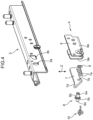


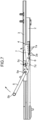



Classifications
-
- B—PERFORMING OPERATIONS; TRANSPORTING
- B60—VEHICLES IN GENERAL
- B60N—SEATS SPECIALLY ADAPTED FOR VEHICLES; VEHICLE PASSENGER ACCOMMODATION NOT OTHERWISE PROVIDED FOR
- B60N2/00—Seats specially adapted for vehicles; Arrangement or mounting of seats in vehicles
- B60N2/02—Seats specially adapted for vehicles; Arrangement or mounting of seats in vehicles the seat or part thereof being movable, e.g. adjustable
- B60N2/04—Seats specially adapted for vehicles; Arrangement or mounting of seats in vehicles the seat or part thereof being movable, e.g. adjustable the whole seat being movable
- B60N2/06—Seats specially adapted for vehicles; Arrangement or mounting of seats in vehicles the seat or part thereof being movable, e.g. adjustable the whole seat being movable slidable
- B60N2/08—Seats specially adapted for vehicles; Arrangement or mounting of seats in vehicles the seat or part thereof being movable, e.g. adjustable the whole seat being movable slidable characterised by the locking device
- B60N2/0831—Movement of the latch
- B60N2/0837—Movement of the latch pivoting
- B60N2/085—Movement of the latch pivoting about a transversal axis
-
- B—PERFORMING OPERATIONS; TRANSPORTING
- B60—VEHICLES IN GENERAL
- B60N—SEATS SPECIALLY ADAPTED FOR VEHICLES; VEHICLE PASSENGER ACCOMMODATION NOT OTHERWISE PROVIDED FOR
- B60N2/00—Seats specially adapted for vehicles; Arrangement or mounting of seats in vehicles
- B60N2/02—Seats specially adapted for vehicles; Arrangement or mounting of seats in vehicles the seat or part thereof being movable, e.g. adjustable
- B60N2/04—Seats specially adapted for vehicles; Arrangement or mounting of seats in vehicles the seat or part thereof being movable, e.g. adjustable the whole seat being movable
- B60N2/06—Seats specially adapted for vehicles; Arrangement or mounting of seats in vehicles the seat or part thereof being movable, e.g. adjustable the whole seat being movable slidable
- B60N2/07—Slide construction
- B60N2/0702—Slide construction characterised by its cross-section
- B60N2/0705—Slide construction characterised by its cross-section omega-shaped
-
- B—PERFORMING OPERATIONS; TRANSPORTING
- B60—VEHICLES IN GENERAL
- B60N—SEATS SPECIALLY ADAPTED FOR VEHICLES; VEHICLE PASSENGER ACCOMMODATION NOT OTHERWISE PROVIDED FOR
- B60N2/00—Seats specially adapted for vehicles; Arrangement or mounting of seats in vehicles
- B60N2/02—Seats specially adapted for vehicles; Arrangement or mounting of seats in vehicles the seat or part thereof being movable, e.g. adjustable
- B60N2/04—Seats specially adapted for vehicles; Arrangement or mounting of seats in vehicles the seat or part thereof being movable, e.g. adjustable the whole seat being movable
- B60N2/06—Seats specially adapted for vehicles; Arrangement or mounting of seats in vehicles the seat or part thereof being movable, e.g. adjustable the whole seat being movable slidable
- B60N2/07—Slide construction
- B60N2/0722—Constructive details
-
- B—PERFORMING OPERATIONS; TRANSPORTING
- B60—VEHICLES IN GENERAL
- B60N—SEATS SPECIALLY ADAPTED FOR VEHICLES; VEHICLE PASSENGER ACCOMMODATION NOT OTHERWISE PROVIDED FOR
- B60N2/00—Seats specially adapted for vehicles; Arrangement or mounting of seats in vehicles
- B60N2/02—Seats specially adapted for vehicles; Arrangement or mounting of seats in vehicles the seat or part thereof being movable, e.g. adjustable
- B60N2/04—Seats specially adapted for vehicles; Arrangement or mounting of seats in vehicles the seat or part thereof being movable, e.g. adjustable the whole seat being movable
- B60N2/06—Seats specially adapted for vehicles; Arrangement or mounting of seats in vehicles the seat or part thereof being movable, e.g. adjustable the whole seat being movable slidable
- B60N2/08—Seats specially adapted for vehicles; Arrangement or mounting of seats in vehicles the seat or part thereof being movable, e.g. adjustable the whole seat being movable slidable characterised by the locking device
- B60N2/0812—Location of the latch
- B60N2/0818—Location of the latch inside the rail
-
- B—PERFORMING OPERATIONS; TRANSPORTING
- B60—VEHICLES IN GENERAL
- B60N—SEATS SPECIALLY ADAPTED FOR VEHICLES; VEHICLE PASSENGER ACCOMMODATION NOT OTHERWISE PROVIDED FOR
- B60N2205/00—General mechanical or structural details
- B60N2205/20—Measures for elimination or compensation of play or backlash
Definitions
- the lock tooth 55 swings upward by the resilience of the tension coil spring 60 and the catch holes 59 of the engagement piece 58 of the lock tooth 55 engage with the teeth 53 of the lower rail 51 to lock the upper rail 52 and the seat at the position, thereby disallowing the upper rail 52 and the seat from moving along the front-and-rear direction.
- Patent Literature 1 JP 4247405 B2
- a pair of lower rails 2 is fixed to a vehicle floor F, which is an installation face where the seat S is set, along the front-and-rear direction X to be separated from each other.
- the shaft 6 is positioned so as an outer tapered face 6b, which will be described later, to be positioned between the pair of opposing walls 9a and fixed to each of the pair of opposing walls 9a by welding, for example.
- One of the pair of opposing walls 9a is fixed to an inner wall of the upper rail 3 by screwing, for example.
- FIG. 8 an optimum region for a lock operation will be discussed, where the region is derived from a taper angle and a taper press-load of the slide device according to the embodiment of the present invention (the embodiment in FIGS. 1 to 7 ).
- each of the slant angles of the outer tapered face 6b and the inner tapered face 7c being 10 to 15 degrees, the increase in a rotational resistance against swinging of the lock tooth 7 can be suppressed and at the same time rattling of the lock tooth 7 can be prevented.
- the shaft 6 makes a tight fit in the lock tooth 7 and the rotational resistance against swinging of the lock tooth 7 disadvantageously increases, whereas when the slant angles are larger than 15 degrees, the lock tooth 7 may easily move in such a direction that the lock tooth 7 comes off the shaft 6, thereby disadvantageously causing a rattling feeling.
- the angle of about 10 to 15 degrees is preferable.
- the operating lever 5 is disposed to be below a forward end portion of the seat S and extends in the width direction Y.
- the operating lever 5 is swingably supported at both end portions 5a on a pair of upper rails 3.
- Each of the end portions 5a are pivotally supported by the attachment hole 3a (see FIGS. 1 to 4 ) in the side wall of the upper rail 3.
- the face-to-face contact between the inner tapered face 7c of the lock tooth 7 and the outer tapered face 6b of the shaft 6 suppresses wearing. This improves durability of the lock tooth 7 and the shaft 6 and can suppress chronological change in the operating load.
- the durability of the lock tooth 7 can further be improved by increasing the hardness of the lock tooth 7 by a treatment such as heat treatment.
- the slide device 1 of the embodiment (that is, the structure including the inner tapered face 7c and the outer tapered face 6b) will be compared with a conventional slide device regarding the rattling along the front-and-rear direction.
- a pair of opposing walls 9a of the holder 9 can reliably protect contact portions of the outer tapered face 6b and the inner tapered face 7c from depositing of or contacting foreign objects, and thus deterioration in the tapered faces 6b and 7c can be suppressed.
- the wave washer 8 made of an annular member is disposed between a pair of opposing walls 9a and sandwiched between the lock tooth 7 and the opposing wall 9a to which the distal end portion 6a of the shaft 6 is fixed. This enables the wave washer 8 to reliably press the lock tooth 7 in the axial direction (width direction Y) without coming off the shaft 6.
- Patent Literature 1 Disclosed in Patent Literature 1 is, as illustrated in FIGS. 10 and 11 , a tapered second support shaft 62 and a through hole 56a that are for connecting together a lock tooth 55 and an operating lever 56. It seems that this structure cannot be employed in a fitting portion for a rotational shaft of a lock tooth 55 and a hole regarding a view point described below.
- the slide device 1 of the embodiment and the slide device disclosed in Patent Literature 1 will be described in comparison below.
- a slide device is a slide device that slidably supports a seat along a front-and-rear direction and locks the seat at a desired position regarding the front-and-rear direction, the slide device including a lower rail fixed to an installation face where the seat is set, an upper rail that has a portion fixed to the seat and is guided by the lower rail to move along the front-and-rear direction, and a lock mechanism for locking the upper rail to the lower rail, in which the lower rail includes a plurality of engaged-parts provided along a longitudinal direction of the lower rail, the lock mechanism includes a shaft attached to the upper rail and extending in a width direction of the seat perpendicular to the front-and-rear direction, an engaging member that includes an engaging-part having a shape engageable with at least one of the plurality of engaged-parts of the lower rail, and a shaft hole to which the shaft is inserted, and is supported by the shaft so as to pivot about the shaft, and a press member that presses the engaging member in an axial direction
- the shaft is fixed to the upper rail via the holder, so that the shaft can easily be fixed to an arbitrary position on the upper rail and the workability of attaching the shaft improves.
- the lock mechanism further includes a rotationally urging member that gives a rotationally urging force to the engaging member in such a direction that causes the engaging-part to engage with the engaged-part.
- the rotationally urging member gives the engaging member the rotationally urging force in such a direction that causes the engaging-part to engage with the engaged-part, so that the rotationally urging member prevents the engaging-part of the engaging member from disengaging from the engaged-part of the lower rail by, for example, vibration transferred from the installation face to the slide device at a timing unexpected by a user.
- the engaging member includes a receiving portion that is provided in an opposite side of a portion where the engaging-part is provided, in relation to the shaft hole, and receives an operating force to swing the engaging member in such a direction that causes the engaging-part to disengage from the engaged-part, and the slide device further includes an operating lever that is swingably supported on the upper rail and externally gives an operating force to the receiving portion.
- the slide device of the embodiment can prevent rattling of the seat with a simple structure.
Landscapes
- Engineering & Computer Science (AREA)
- Aviation & Aerospace Engineering (AREA)
- Transportation (AREA)
- Mechanical Engineering (AREA)
- Seats For Vehicles (AREA)
Description
- The present invention relates to a slide device that slidably supports a seat along a front-and-rear direction and locks the seat at a desired location regarding the front-and-rear direction.
- Conventionally, a slide device that supports a seat along a front-and-rear direction and locks the seat at a desired location regarding the front-and-rear direction is widely used for a seat of a car or the like.
- For example, the slide device has such a structure as described in Patent Literature 1. As illustrated in
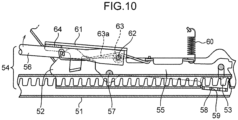
FIG. 10 , the slide device includes alower rail 51 fixed to a vehicle floor along a front-and-rear direction of a seat, and anupper rail 52 fixed to the seat and guided by thelower rail 51 to move along the front-and-rear direction. Thelower rail 51 includes a plurality ofteeth 53 provided along a longitudinal direction of thelower rail 51. - The slide device includes a
slide lock mechanism 54 to lock theupper rail 52 at a desired position. Theslide lock mechanism 54 includes alock tooth 55, and anoperating lever 56 that gives an operating force to thelock tooth 55. - The
lock tooth 55 is attached to afirst support shaft 57 provided on theupper rail 52 to extend in a lateral direction (direction normal to the plane ofFIG. 10 ) so as to swing upward and downward. Thelock tooth 55 includes a plate-like engagement piece 58 protruding in the lateral direction (direction normal to the plane ofFIG. 10 ) from a lower end portion of a free end (right end inFIG. 10 ) of thelock tooth 55. Theengagement piece 58 is provided with threecatch holes 59 that can engage with a plurality ofteeth 53 of thelower rail 51. - Resilience of a
tension coil spring 60 constantly urges thelock tooth 55 in such a direction that causes thelock tooth 55 to swing upward. When theoperating lever 56 is not receiving an operating force, thelock tooth 55 is kept at a locked position where theteeth 53 of thelower rail 51 are engaging with thecatch holes 59 of theengagement piece 58. When thelock tooth 55 is at the locked position, thelock tooth 55 engaging with theteeth 53 disallows theupper rail 52 from moving along the front-and-rear direction. - Meanwhile, a
protruding piece 61 protruding in the lateral direction (direction normal to the plane ofFIG. 10 ) is provided at an upper end, above thefirst support shaft 57, of thelock tooth 55. Theprotruding piece 61 covers a portion of theoperating lever 56 from above. - The
operating lever 56 is swingably supported by asecond support shaft 62 projecting in the lateral direction (direction normal to the plane ofFIG. 10 ) from thelock tooth 55. Acoil spring 63 attached to thesecond support shaft 62 urges theoperating lever 56 via anarm 63a of thecoil spring 63 in such a direction that causes theoperating lever 56 to swing upward. - To cancel locking performed by the
slide lock mechanism 54 configured as described above and illustrated inFIG. 10 , the free end of the operating lever 56 (end portion in the left side in the sheet on whichFIG. 10 is drawn, that is, an end portion opposite the second support shaft 62) is pulled up. Theoperating lever 56 thereby swings upward about thesecond support shaft 62. In this motion, theoperating lever 56 pushes up theprotruding piece 61 of thelock tooth 55 via acushioning pad 64. Thelock tooth 55 thereby swings downward about thefirst support shaft 57 against a tensional force of thetension coil spring 60. As a result, thecatch holes 59 of theengagement piece 58 provided on the free end of thelock tooth 55 move to be lower than theteeth 53 of thelower rail 51, thereby disengaging thelock tooth 55 from thelower rail 51 to allow theupper rail 52 and the seat connected to theupper rail 52 to move along the front-and-rear direction. - By stopping the operation of pulling up the
operating lever 56 when the seat has moved to the desired position regarding the front-and-rear direction, thelock tooth 55 swings upward by the resilience of thetension coil spring 60 and thecatch holes 59 of theengagement piece 58 of thelock tooth 55 engage with theteeth 53 of thelower rail 51 to lock theupper rail 52 and the seat at the position, thereby disallowing theupper rail 52 and the seat from moving along the front-and-rear direction. - In the slide device described in Patent Literature 1, the
lock tooth 55 swings upward and downward to cause engagement with and disengagement from theteeth 53 of thelower rail 51. Thelock tooth 55 is swingably supported by thefirst support shaft 57 projecting in the lateral direction from theupper rail 52. It is understood that thefirst support shaft 57 has a shape of a round bar with a circular cross-section. - To swingably assemble the
lock tooth 55 to thefirst support shaft 57 having a shape of a round bar in such a structure, there should be a gap (play) between a through hole (shaft hole) 56a provided in thelock tooth 55 and an outer circumferential face of thefirst support shaft 57. This gap causes rattling of thelock tooth 55 relative to thefirst support shaft 57 along the front-and-rear direction of the seat and an axial direction of thefirst support shaft 57 when the car is travelling, which may result in rattling of the seat. When the seat rattles, a relatively large load (80 N or greater) along the front-and-rear direction and proportional to the weight of the seat and the weight of the person sitting in the seat acts on a fitting portion having the gap between theshaft hole 56a of thelock tooth 55 and thefirst support shaft 57, which may cause deterioration and damage in thelock tooth 55 and thefirst support shaft 57 and become the cause of noises. - To prevent rattling of the
lock tooth 55 in the conventional art, such a structure having a wedge-shaped engaging-part tightly fitting with an engaged-part needs to be employed, or a special spring mechanism for preventing rattling of thelock tooth 55 along both the front-and-rear direction and the axial direction needs to be provided. This disadvantageously makes the structure of the slide device complicated and increases the manufacturing cost. - Patent Literature 1:
JP 4247405 B2 - The present invention has been made in view of the problem described above. An object of the present invention is to provide a slide device that can prevent rattling of a seat with a simple structure.
- To solve the problem described above, a slide device according to the present invention is a slide device that slidably supports a seat along a front-and-rear direction and locks the seat at a desired position regarding the front-and-rear direction, the slide device including a lower rail fixed to an installation face where the seat is set, an upper rail that has a portion fixed to the seat and is guided by the lower rail to move along the front-and-rear direction, and a lock mechanism for locking the upper rail to the lower rail, where the lower rail includes a plurality of engaged-parts provided along a longitudinal direction of the lower rail, the lock mechanism includes a shaft attached to the upper rail and extending in a width direction of the seat perpendicular to the front-and-rear direction, an engaging member that includes an engaging-part having a shape engageable with at least one of the plurality of engaged-parts of the lower rail, and a shaft hole to which the shaft is inserted, and is supported by the shaft so as to pivot about the shaft, and a press member that presses the engaging member in an axial direction of the shaft, an outer circumferential face of the shaft has an outer tapered face slanted so that the shaft becomes thinner along a direction from a proximal end portion toward a distal end portion, an inner circumferential face of the shaft hole of the engaging member has an inner tapered face having a slant angle that allows face-to-face contact with the outer tapered face, and the press member presses the engaging member in a direction in which the inner tapered face is pressed against the outer tapered face to make face-to-face contact.
- In the present invention, a term "to lock" means to fix the seat or the upper rail not to move.
-
-
FIG. 1 is an overall perspective view illustrating a slide device according to an embodiment of the present invention. -
FIG. 2 is an exploded perspective view of an upper rail and a lower rail inFIG. 1 . -
FIG. 3 is an enlarged perspective view of a lock mechanism provided in an inner side of the upper rail inFIG. 1 . -
FIG. 4 is an exploded perspective view of the lock mechanism inFIG. 3 . -
FIG. 5 is a cross-sectional explanatory view illustrating a transverse cross-section of an inner structure of a portion surrounded by the upper rail and the lower rail inFIG. 1 . -
FIG. 6 is a cross-sectional explanatory view illustrating a vertical cross-section of the slide device inFIG. 1 in a locked state. -
FIG. 7 is a cross-sectional explanatory view illustrating a vertical cross-section of the slide device inFIG. 1 in an unlocked state. -
FIG. 8 is a chart for explaining an optimum region for a lock operation, the region being derived from a taper angle and a taper press-load of the slide device according to the embodiment of the present invention. -
FIG.9A is a chart illustrating displacement and load under rattling when the slide device according to the embodiment of the present invention is in the locked state, andFIG.9B is a chart given as a comparative example to the present invention, illustrating displacement and load under rattling when a combination of a shaft having no tapered face and a lock tooth is in the locked state. -
FIG. 10 is a cross-sectional view illustrating an internal structure of a conventional slide device. -
FIG. 11 is an enlarged cross-sectional view of a fitting portion between a second support shaft and a shaft hole of the lock tooth of the slide device inFIG. 10 . - One preferable embodiment of a slide device of the present invention will be described below with reference to the attached drawings.
- As illustrated in
FIGS. 1 to 5 , a slide device 1 according to the embodiment is configured to support, for example, a seat S used as a vehicle seat to slidably move along a front-and-rear direction X of the seat S and lock the seat S at a desired position regarding the front-and-rear direction X. - Specifically, the slide device 1 includes a pair of
lower rails 2, a pair ofupper rails 3, alock mechanism 4 provided in an inner side of theupper rails 3 to lock theupper rails 3 to disallow sliding, and anoperating lever 5 that cancels locking performed by thelock mechanism 4. - A pair of
lower rails 2 is fixed to a vehicle floor F, which is an installation face where the seat S is set, along the front-and-rear direction X to be separated from each other. - A plurality of
engaging holes 2a (engaged-part) illustrated inFIGS. 6 and7 is provided in a bottom face of each of thelower rails 2. Manyengaging holes 2a are provided along a longitudinal direction (that is, the front-and-rear direction X) of thelower rail 2 at a constant interval. Two projectingportions 2b (seeFIG. 2 ) separated from each other along the front-and-rear direction X are provided on a side wall of thelower rail 2 to determine a range within which theupper rail 3 can move. - The
upper rail 3 includes a portion fixed to the seat S (for example, a stud bolt protruding upward). Theupper rail 3 is guided by thelower rail 2 to move along the front-and-rear direction X. In the embodiment, as illustrated inFIGS. 2 and5 , both edge portions of theupper rail 3 are supported by a plurality ofballs 11 so as to slide along the front-and-rear direction X relative to edge portions of thelower rail 2. A rolling unit other than theballs 11 or a different kind of supporting unit may be used to support theupper rail 3 on thelower rail 2 so as to move along the front-and-rear direction X. - An
attachment hole 3a and anaperture 3b illustrated inFIGS. 1 to 4 are provided in the side wall of theupper rail 3 to be adjacent to each other along the front-and-rear direction X. - As illustrated in
FIGS. 3 to 5 , thelock mechanism 4 is configured to lock theupper rail 3 to thelower rail 2. Specifically, thelock mechanism 4 includes ashaft 6, a lock tooth 7 (engaging member) swingably supported by theshaft 6, a wave washer 8 (press member) attached to theshaft 6, aholder 9 that holds theshaft 6, and a lock spring 10 (rotationally urging member). - The
shaft 6 is attached to theupper rail 3 to extend in a width direction Y of the seat S perpendicular to the front-and-rear direction X. In the embodiment, theshaft 6 is attached to theupper rail 3 via theholder 9. - The
holder 9 interconnects theshaft 6 and theupper rail 3 to fix theshaft 6 to theupper rail 3. - Specifically, the
holder 9 includes a pair of opposingwalls 9a separated from each other along the direction (width direction Y) perpendicular to the front-and-rear direction X, and abottom wall 9b (seeFIG. 3 ) interconnecting lower ends of the opposingwalls 9a. - The
shaft 6 is positioned so as an outertapered face 6b, which will be described later, to be positioned between the pair of opposingwalls 9a and fixed to each of the pair of opposingwalls 9a by welding, for example. One of the pair of opposingwalls 9a is fixed to an inner wall of theupper rail 3 by screwing, for example. - The
lock tooth 7 is a thin, long, plate-like member. A plurality ofteeth 7a is provided on a lower end of one of end portions of thelock tooth 7 to protrude downward. A plurality ofteeth 7a serves as an engaging-part that can engage with at least one of a plurality of engagingholes 2a of thelower rail 2. At least onetooth 7a can serve as the engaging-part that engages with the engaginghole 2a of thelower rail 2. - The
lock tooth 7 includes ashaft hole 7b in which theshaft 6 is inserted. Thelock tooth 7 is disposed in a space between the pair of opposingwalls 9a of theholder 9, and supported by theshaft 6 inserted in theshaft hole 7b so as to swing about theshaft 6. - The
teeth 7a of thelock tooth 7 can protrude below theholder 9 through the throughhole 9c provided in thebottom wall 9b of theholder 9. - The
lock tooth 7 includes a receivingportion 7d that is provided in the opposite side of the portion where theteeth 7a are provided, in relation to theshaft hole 7b, and receives an operating force to swing thelock tooth 7 in such a direction that disengages theteeth 7a from the engagingholes 2a. - The
shaft 6 includes adistal end portion 6a and aproximal end portion 6d. An outer circumferential face of theshaft 6 has an outertapered face 6b slanted so that theshaft 6 becomes thinner along a direction from theproximal end portion 6d toward thedistal end portion 6a. - Corresponding to the outer
tapered face 6b, an inner circumferential face of theshaft hole 7b of thelock tooth 7 has an innertapered face 7c having a slant angle that allows face-to-face contact with the outertapered face 6b. - The inner
tapered face 7c has a slant angle that allows face-to-face contact with the outertapered face 6b (substantially the same slant angle as a slant angle of the outertapered face 6b). - With reference to
FIG. 8 , an optimum region for a lock operation will be discussed, where the region is derived from a taper angle and a taper press-load of the slide device according to the embodiment of the present invention (the embodiment inFIGS. 1 to 7 ). - The taper angles are slant angles of the outer
tapered face 6b and the inner taperedface 7c. The taper press-load is a load by which the inner taperedface 7c is pressed against the outertapered face 6b.FIG. 8 illustrates the press-load along the front-and-rear direction (direction in which theshaft 6 inFIG. 5 extends, that is, the width direction Y). - As illustrated in
FIG. 8 , when the taper press-load is too small (too low), the inner taperedface 7c cannot sufficiently be pressed against the outertapered face 6b and rattling occurs between thelock tooth 7 and theshaft 6 regardless of the degree of the taper angle (see a rattling-occurring region α inFIG. 8 ). - Meanwhile, when the taper press-load is too large (high), a high taper face pressure degrades operability of swinging the
lock tooth 7, and an operation cannot be made smoothly (see an operability affected (hampered) region β inFIG. 8 ). The "hampered" means the movement of thelock tooth 7 being degraded or responsiveness of thelock tooth 7 receiving the operating force being degraded. - When the taper angle is too large, the force that holds the tapered faces together becomes low and the
lock tooth 7 can move easily to cause rattling (see the rattling-occurring region α inFIG. 8 ). - Meanwhile, when the taper angle is too small, a high face pressure hinders a smooth operation (see the operability affected (hampered) region β in
FIG. 8 ). - Thus, the taper angle and the taper press-load are to be set so as not to be in the rattling-occurring region α nor the operability affected (hampered) region β. Specifically, the taper angle and the taper press-load are to be set in a trapezoid region surrounded by the region α and the region β. More preferably, the taper angle and the taper press-load can easily be controlled (managed) when set within a range of an optimum region γ (managed region).
- The taper angle is set as described above. For example, it is preferable that the taper angles, that is, the slant angles of the outer
tapered face 6b and the inner taperedface 7c, are set to about 10 to 15 degrees to an axial center of theshaft 6. - With each of the slant angles of the outer
tapered face 6b and the inner taperedface 7c being 10 to 15 degrees, the increase in a rotational resistance against swinging of thelock tooth 7 can be suppressed and at the same time rattling of thelock tooth 7 can be prevented. When the slant angles of the tapered faces 6b and 7c are smaller than 10 degrees, theshaft 6 makes a tight fit in thelock tooth 7 and the rotational resistance against swinging of thelock tooth 7 disadvantageously increases, whereas when the slant angles are larger than 15 degrees, thelock tooth 7 may easily move in such a direction that thelock tooth 7 comes off theshaft 6, thereby disadvantageously causing a rattling feeling. Thus, the angle of about 10 to 15 degrees is preferable. - The
lock tooth 7 is disposed between a pair of opposingwalls 9a and swingably supported by theshaft 6 with the outertapered face 6b and the inner taperedface 7c in face-to-face contact with each other. - The
wave washer 8 is an annular member surrounding the entire circumference of theshaft 6. Specifically, thewave washer 8 is a thin, metal ring made of a stainless steel, for example, and curved in a waveform in the width direction. Thewave washer 8 functions to press thelock tooth 7 in the axial direction (width direction Y inFIG. 5 ) of theshaft 6. - The
wave washer 8 disposed between a pair of opposingwalls 9a of theholder 9 is sandwiched between thelock tooth 7 and the opposingwall 9a to which thedistal end portion 6a of theshaft 6 is fixed. Thus, thewave washer 8 presses thelock tooth 7 in such a direction that the inner taperedface 7c of thelock tooth 7 is pressed against the outertapered face 6b of theshaft 6 to make face-to-face contact. - The
lock spring 10 is a coil spring that gives thelock tooth 7 a rotationally urging force in such a direction that causes theteeth 7a to engage with the engagingholes 2a. A coil portion of thelock spring 10 is hooked on theproximal end portion 6d of theshaft 6. Aflange 6c restricts the coil portion from moving in the axial direction of theshaft 6. One of end portions of thelock spring 10 contacts theholder 9 from below to restrict rotation, and the other end portion contacts the receivingportion 7d of thelock tooth 7 from below to give a rotationally urging force to push up the receivingportion 7d. Thelock spring 10 can give the rotationally urging force to thelock tooth 7 in such a direction that causes theteeth 7a to engage with the engagingholes 2a (clockwise direction about theshaft 6 inFIG. 6 ). - The operating
lever 5 is disposed to be below a forward end portion of the seat S and extends in the width direction Y. The operatinglever 5 is swingably supported at bothend portions 5a on a pair ofupper rails 3. Each of theend portions 5a are pivotally supported by theattachment hole 3a (seeFIGS. 1 to 4 ) in the side wall of theupper rail 3. - As illustrated in
FIG. 1 , the operatinglever 5 includes ahandle 5b to which the operating force that pushes up the operatinglever 5 is input, and apress portion 5c that transfers the operating force to the receivingportion 7d of thelock tooth 7 to press down the receivingportion 7d from above. - In the slide device 1 configured as described above in a state where the position of the
upper rail 3 is locked by thelock mechanism 4 as illustrated inFIG. 6 , thelock tooth 7 is receiving the rotationally urging force from the lock spring 10 (seeFIGS. 3 to 5 ) in a direction to push up the receivingportion 7d, that is, in such a direction that causes theteeth 7a of thelock tooth 7 to engage with the engagingholes 2a of the lower rail 2 (clockwise direction inFIG. 6 ). This keeps theteeth 7a of thelock tooth 7 engaged with the engagingholes 2a of thelower rail 2, disallowing theupper rail 3 and the seat S fixed to theupper rail 3 from moving along the front-and-rear direction X. - Meanwhile, as illustrated in
FIG. 7 , thehandle 5b of the operatinglever 5 in the front side (left side inFIG. 7 ) of the seat S is pulled up to cancel locking performed by thelock mechanism 4. As illustrated inFIGS. 1 and7 , the operatinglever 5 thereby swings upward about both theend portions 5a supported by the attachment holes 3a in a pair ofupper rails 3. In this motion, thepress portion 5c of the operatinglever 5 penetrates theaperture 3b (seeFIGS. 1 to 4 ) in theupper rail 3 and pushes down the receivingportion 7d of thelock tooth 7 inside theupper rail 3. Thelock tooth 7 thereby swings, against the rotationally urging force given by thelock spring 10, in such a direction (counterclockwise direction inFIG. 7 ) that causes theteeth 7a of thelock tooth 7 to disengage from the engagingholes 2a of thelower rail 2. As a result, theteeth 7a of thelock tooth 7 disengage from the engagingholes 2a of thelower rail 2 to allow theupper rail 3 and the seat S fixed to theupper rail 3 to move along the front-and-rear direction X. - The movable range of the
upper rail 3 is determined as a range within which aside projection 9d of the holder 9 (seeFIG. 3 ) can move between the two projectingportions 2b of the lower rail 2 (seeFIG. 2 ). - When the seat S has moved along the front-and-rear direction X to a desired position, stopping the pull-up operation of the operating
lever 5 causes thelock tooth 7 receiving the rotationally urging force given by thelock spring 10 to swing back again in the clockwise direction to return to the state where theteeth 7a of thelock tooth 7 are engaged with the engagingholes 2a of the lower rail 2 (the state inFIG. 6 ), and thereby theupper rail 3 and the seat S fixed to theupper rail 3 are locked at the desired position. -
- (1) In the slide device 1 of the embodiment, the
lock mechanism 4 for locking theupper rail 3 to thelower rail 2 includes theshaft 6, thelock tooth 7, and thewave washer 8 as a press member. The outer circumferential face of theshaft 6 has the outertapered face 6b slanted so that theshaft 6 becomes thinner along the direction from theproximal end portion 6d toward thedistal end portion 6a. The inner circumferential face of theshaft hole 7b of thelock tooth 7 has the inner taperedface 7c having such a slant angle that allows face-to-face contact with the outertapered face 6b. Thewave washer 8 presses thelock tooth 7 in the axial direction of theshaft 6, more specifically, presses thelock tooth 7 in a direction in which the inner taperedface 7c is pressed against the outertapered face 6b to make the face-to-face contact. - In the locked state of this structure where the
lock mechanism 4 restricts theupper rail 3 from moving relative to thelower rail 2 as illustrated inFIG. 6 , the pressing force given by thewave washer 8 to thelock tooth 7 keeps the face-to-face contact between the inner taperedface 7c of theshaft hole 7b of thelock tooth 7 and the outertapered face 6b of theshaft 6 as illustrated inFIG. 5 . Thus, thelock tooth 7 can eliminate rattling in the axial direction of theshaft 6 and the front-and-rear direction X of the seat S. Accordingly, the slide device 1 can prevent rattling of the seat S with a simple structure. - Moreover, the face-to-face contact between the inner tapered
face 7c of thelock tooth 7 and the outertapered face 6b of theshaft 6 suppresses wearing. This improves durability of thelock tooth 7 and theshaft 6 and can suppress chronological change in the operating load. The durability of thelock tooth 7 can further be improved by increasing the hardness of thelock tooth 7 by a treatment such as heat treatment. - By simplifying the structure of the slide device 1 to prevent rattling of the seat S as described above, the number of parts and work man-hour for assembling can be reduced, which makes it possible to reduce manufacturing cost. Furthermore, preventing rattling of the seat S by a simple structure makes it possible to improve functionality for users (for example, operability or maintenance friendliness).
- When the
lock tooth 7 is rotationally operated by the operating force given by the operatinglever 5 to cancel locking as illustrated inFIG. 7 , a force is produced to cause the inner taperedface 7c of thelock tooth 7 illustrated inFIG. 5 to push the outertapered face 6b of theshaft 6. The innertapered face 7c receives a reactive force from the outertapered face 6b, and the reactive force causes thelock tooth 7 to shift in a direction toward thedistal end portion 6a of theshaft 6, thereby increasing the gap between theshaft hole 7b of thelock tooth 7 and theshaft 6. As a result, frictional resistance that is produced between thelock tooth 7 and theshaft 6 when thelock tooth 7 is rotationally operated can be suppressed. Meanwhile, when the operating force is no longer given to thelock tooth 7 by the operatinglever 5, the urging force of thewave washer 8 illustrated inFIG. 5 causes thelock tooth 7 to shift from thedistal end portion 6a of theshaft 6 to the deeper side (toward theproximal end portion 6d) and the inner taperedface 7c thereby fits tightly on the outertapered face 6b. Thus, the rattling between the inner taperedface 7c and the outertapered face 6b regarding the front-and-rear direction X and the axial direction (width direction Y) can be eliminated. - By eliminating the rattling between the
lock tooth 7 and theshaft 6 by a tight fit between the inner taperedface 7c and the outertapered face 6b as described above, rattling along the front-and-rear direction X between theupper rail 3 and thelower rail 2 can be eliminated. Accordingly, theballs 11 for sliding theupper rail 3 need not have a spring property (elasticity) to eliminate rattling, and thus the overall rigidity of the slide device 1 improves. - Now, using charts in
FIGS. 9A and 9B , the slide device 1 of the embodiment (that is, the structure including the inner taperedface 7c and the outertapered face 6b) will be compared with a conventional slide device regarding the rattling along the front-and-rear direction. - The chart of displacement and load in
FIG.9B shows rattling along the front-and-rear direction in a conventional slide device in a locked state when a load given along the front-and-rear direction is increased and decreased. The conventional slide device has a structure with no tapered face on fitting faces between the shaft and the lock tooth, that is, a structure in which the shaft is a round bar and a shaft hole in the lock tooth is a straight hole (circular hole). Since a gap is necessary between the shaft and the shaft hole in the lock tooth for fitting, rattling along the front-and-rear direction cannot be absorbed. It can be understood from the chart inFIG.9B that the displacement corresponding to the load is large. Moreover, there are large variation in the displacement and the load under the increased and decreased loading and an inflection point (steep curved portion). With such an inflection point, a person sitting in the seat feels rattling. - Meanwhile, the chart of displacement and load in
FIG.9A shows rattling along the front-and-rear direction in the slide device 1 of the embodiment in a locked state when a load given along the front-and-rear direction is increased and decreased. The slide device of the embodiment effectively absorbs the rattling along the front-and-rear direction by the tight fit between the outertapered face 6b of theshaft 6 and the inner taperedface 7c of thelock tooth 7 with no gap between theshaft 6 and theshaft hole 7b of thelock tooth 7. It can be understood from the behavior in the chart inFIG.9A that the displacement corresponding to the load is small. Moreover, the variation in displacement and load under the increased and decreased loading is small and there exists no inflection point. As a result, the slide device 1 of the embodiment does not cause a person sitting in the seat to feel rattling and therefore provides comfortable feeling while driving. - (2) Furthermore, in the slide device 1 of the embodiment, the
lock mechanism 4 includes aholder 9 that interconnects theshaft 6 and theupper rail 3 to fix theshaft 6 to the rail. In this configuration, theshaft 6 is fixed to theupper rail 3 via theholder 9, so that theshaft 6 can easily be fixed at an arbitrary position on theupper rail 3 and the workability of attaching theshaft 6 improves. - (3) Furthermore, in the slide device 1 of the embodiment, the
holder 9 includes a pair of opposingwalls 9a separated from each other along the direction (width direction Y) perpendicular to the front-and-rear direction X. Theshaft 6 is positioned so that the outertapered face 6b is positioned between a plurality of opposingwalls 9a and fixed to each of a plurality of opposingwalls 9a. Thelock tooth 7 is disposed between a pair of opposingwalls 9a and swingably supported by theshaft 6 with the outertapered face 6b and the inner taperedface 7c in face-to-face contact with each other. - In this configuration, the
shaft 6 is fixed to each of a pair of opposingwalls 9a of theholder 9, so that theshaft 6 can stably be fixed to theholder 9. Moreover, thelock tooth 7 is pivotally supported between a pair of opposingwalls 9a of theholder 9 by theshaft 6, which reliably avoids thelock tooth 7 coming off theshaft 6 even in a state that the outertapered face 6b and the inner taperedface 7c are in face-to-face contact with each other. Furthermore, in this configuration, a pair of opposingwalls 9a of theholder 9 can reliably protect contact portions of the outertapered face 6b and the inner taperedface 7c from depositing of or contacting foreign objects, and thus deterioration in the tapered faces 6b and 7c can be suppressed. - (4) Furthermore, the slide device 1 of the embodiment employs the
wave washer 8 as a press member that presses thelock tooth 7 in the axial direction. Since thewave washer 8 is an annular member surrounding the entire circumference of theshaft 6, thewave washer 8 with theshaft 6 inserted therein will not come off theshaft 6. Moreover, thewave washer 8 can press thelock tooth 7 in the axial direction evenly along the entire outer circumference of theshaft 6. - In particular, in a structure where the
lock tooth 7 is swingably supported by theshaft 6 between a pair of opposingwalls 9a of theholder 9 as illustrated inFIG. 5 , thewave washer 8 made of an annular member is disposed between a pair of opposingwalls 9a and sandwiched between thelock tooth 7 and the opposingwall 9a to which thedistal end portion 6a of theshaft 6 is fixed. This enables thewave washer 8 to reliably press thelock tooth 7 in the axial direction (width direction Y) without coming off theshaft 6. - (5) In the slide device 1 of the embodiment, the
lock mechanism 4 includes thelock spring 10 that gives thelock tooth 7 a rotationally urging force in such a direction that causes theteeth 7a to engage with the engagingholes 2a. - This configuration, in which the
lock spring 10 gives thelock tooth 7 the rotationally urging force in such a direction that causes theteeth 7a to engage with the engagingholes 2a, so that thelock tooth 7 can prevent theteeth 7a of thelock tooth 7 from disengaging from the engagingholes 2a of thelower rail 2 by, for example, vibration transferred from a floor F (installation face) to the slide device 1 at a timing unexpected by a user. - (6) In the slide device 1 of the embodiment, the
lock tooth 7 includes a receivingportion 7d that is provided in the opposite side of the portion where theteeth 7a is provided, in relation to theshaft hole 7b, and receives an operating force to swing thelock tooth 7 in such a direction that causes theteeth 7a to disengage from the engagingholes 2a. The slide device 1 includes the operatinglever 5 that is swingably supported on theupper rail 3 and externally gives an operating force to the receivingportion 7d. - With this configuration, the operating force can be given to the receiving
portion 7d of thelock tooth 7 via the operatinglever 5, and an operation for swinging thelock tooth 7 in such a direction that causes theteeth 7a of thelock tooth 7 to disengage from the engagingholes 2a can be made easily and reliably. - Disclosed in Patent Literature 1 is, as illustrated in
FIGS. 10 and11 , a taperedsecond support shaft 62 and a throughhole 56a that are for connecting together alock tooth 55 and an operatinglever 56. It seems that this structure cannot be employed in a fitting portion for a rotational shaft of alock tooth 55 and a hole regarding a view point described below. The slide device 1 of the embodiment and the slide device disclosed in Patent Literature 1 will be described in comparison below. - As illustrated in
FIGS. 10 and11 , in the slide device disclosed in Patent Literature 1, a taperedsecond support shaft 62 is provided on thelock tooth 55 for connecting together thelock tooth 55 and the operatinglever 56. By fitting the taperedsecond support shaft 62 in the through hole (straight hole) 56a that is provided in a distal end portion of the operatinglever 56 and straightly extending with a circular cross-section, rattling of the operatinglever 56 is prevented. However, the taperedsecond support shaft 62 which is fit in thestraight hole 56a merely contacts an edge of the opening of thestraight hole 56a by a line-contact, which is greatly different from the face-to-face contact between the inner taperedface 7c of thelock tooth 7 and the outertapered face 6b of theshaft 6 employed in the slide device 1 of the embodiment. Moreover, there is no press member (wave washer 8) for keeping the face-to-face contact as in the embodiment. - Thus, in the slide device disclosed in Patent Literature 1 illustrated in
FIGS. 10 and11 , the contact area between thesecond support shaft 62 and the operatinglever 56 is very small compared to the face-to-face contact structure of the embodiment, so that it is practically impossible to prevent rattling of the seat on which a large force proportional to the weight of the seat and the person (80 N or greater) acts in the front-and-rear direction as in the slide device 1 of the embodiment. That is, applying the fitting portion for the taperedsecond support shaft 62 and the throughhole 56a to the fitting portion for the rotational shaft (first support shaft 57) of thelock tooth 55 and the hole cannot achieve the object of eliminating rattling. Thus, such application seems practically impossible. - Furthermore, in the slide device disclosed in Patent Literature 1 as illustrated in
FIG. 10 , the distance between thesecond support shaft 62, which is the pivot center of the operatinglever 56, and a free end of the operating lever 56 (corresponding to the left end of the operatinglever 56 inFIG. 10 , not shown), which is the point of effort, is usually set long (for example, 200 mm or longer). In this configuration, the resistance against motion (frictional resistance) at the pivot center is not a problem since the operatinglever 56 can be swung by a small operating force. Thus, fitting between thestraight hole 56a and the taperedsecond support shaft 62 as described above does not cause any problem in operation. - However, in the slide device 1 of the embodiment, as illustrated in
FIG. 6 , the distance between theshaft 6, which is the pivot center of thelock tooth 7, and the distal end of the receivingportion 7d, which is the point of effort, is very short compared to the distance between the pivot center of the operatinglever 56 and the point of effort, so that a large operating force needs to be given to the receivingportion 7d to swing thelock tooth 7. If the resistance against motion (frictional resistance) at theshaft 6, which is the pivot point, is large when a large operating force is given to the receivingportion 7d, there is a problem in operability to swing thelock tooth 7. - To avoid such a problem, the slide device 1 of the embodiment employs the structure in which the inner tapered
face 7c of thelock tooth 7 and the outertapered face 6b of theshaft 6 make face-to-face contact with each other as described above. -
- (A) In the embodiment, a plurality of engaging
holes 2a is employed as the engaged-part of thelower rail 2 and theteeth 7a of thelock tooth 7 are employed as the engaging-part of the engaging member to engage with the engaged-part. However, the present invention is not limited to such a configuration. In the present invention, the engaged-part and the engaging-part may employ any engageable structure. For example, a plurality of projections may be employed as the engaged-parts of thelower rail 2 and a plate having a receiving hole in which the projection can fit (for example, theengagement piece 58 having thecatch hole 59 as illustrated inFIG. 10 ) or a plurality of teeth or projections that can mesh with the projections of thelower rail 2 may be employed in thelock tooth 7 as the engaging-part. - (B) In the embodiment, the
shaft 6 is attached to theupper rail 3 via theholder 9. However, the present invention is not limited to such a configuration. Theshaft 6 may directly be attached to theupper rail 3. - (C) In the embodiment, the
wave washer 8 is described as an example of the press member. However, the present invention is not limited to such a configuration. Any part that functions to press thelock tooth 7 in the axial direction of the shaft 6 (width direction Y inFIG. 5 ) from thedistal end portion 6a toward the deeper side (toward theproximal end portion 6d) of theshaft 6 may be employed as the press member of the present invention. For example, a spring washer, a compressive coil spring, or a ring made of an elastic material such as rubber and resin may be employed as the press member of the present invention. - (D) In the embodiment, an example in which the slide device 1 allows the seat S for a car to slide and locks the seat S at a desired position is described. However, the present invention is not limited to such a configuration. The slide device of the present invention may be used for locking a seat used in other fields. For example, the slide device of the present invention may be employed to lock the position of a seat for vehicles other than cars, such as ships and airplanes, or a seat set in facilities, such as game arcades
- The present invention described above is summarized as below based on the described embodiment.
- A slide device according to the present invention is a slide device that slidably supports a seat along a front-and-rear direction and locks the seat at a desired position regarding the front-and-rear direction, the slide device including a lower rail fixed to an installation face where the seat is set, an upper rail that has a portion fixed to the seat and is guided by the lower rail to move along the front-and-rear direction, and a lock mechanism for locking the upper rail to the lower rail, in which the lower rail includes a plurality of engaged-parts provided along a longitudinal direction of the lower rail, the lock mechanism includes a shaft attached to the upper rail and extending in a width direction of the seat perpendicular to the front-and-rear direction, an engaging member that includes an engaging-part having a shape engageable with at least one of the plurality of engaged-parts of the lower rail, and a shaft hole to which the shaft is inserted, and is supported by the shaft so as to pivot about the shaft, and a press member that presses the engaging member in an axial direction of the shaft, an outer circumferential face of the shaft has an outer tapered face slanted so that the shaft becomes thinner along a direction from a proximal end portion toward a distal end portion, an inner circumferential face of the shaft hole of the engaging member has an inner tapered face having a slant angle that allows face-to-face contact with the outer tapered face, and the press member presses the engaging member in a direction in which the inner tapered face is pressed against the outer tapered face to make face-to-face contact.
- According to the configuration, the lock mechanism for locking the upper rail to the lower rail includes the shaft, the engaging member, and the press member. The outer circumferential face of the shaft has the outer tapered face slanted so that the shaft becomes thinner along the direction from the proximal end portion toward the distal end portion. The inner circumferential face of the shaft hole of the engaging member has an inner tapered face having a slant angle that allows face-to-face contact with the outer tapered face. The press member presses the engaging member in the axial direction of the shaft, more specifically, presses the engaging member in a direction in which the inner tapered face is pressed against the outer tapered face to make face-to-face contact. In this configuration, the face-to-face contact between the inner tapered face of the shaft hole of the engaging member and the outer tapered face of the shaft is kept by the pressing force given from the press member to the engaging member in the locked state in which the lock mechanism restricts the movement of the upper rail relative to the lower rail, so that the engaging member can eliminate rattling along the axial direction of the shaft and the front-and-rear direction of the seat. As a result, the slide device can prevent rattling of the seat with a simple structure.
- It is preferable that the lock mechanism further includes a holder that interconnects the shaft and the upper rail to fix the shaft to the rail.
- According to this configuration, the shaft is fixed to the upper rail via the holder, so that the shaft can easily be fixed to an arbitrary position on the upper rail and the workability of attaching the shaft improves.
- It is preferable that the holder includes a pair of opposing walls separated from each other along the width direction, the shaft is fixed to each of a pair of opposing walls so that the outer tapered face is positioned between a pair of opposing walls, and the engaging member is swingably supported between a pair of opposing walls by the shaft with the outer tapered face and the inner tapered face in face-to-face contact with each other.
- According to this configuration, the shaft is fixed to each of a pair of opposing walls of the holder, so that the shaft can stably be fixed to the holder. Moreover, the engaging member is swingably supported between a pair of opposing walls of the holder by the shaft, which reliably avoids the engaging member coming off the shaft even in a state that the outer tapered face and the inner tapered face are in face-to-face contact with each other. Furthermore, in this configuration, a pair of opposing walls of the holder can reliably protect the contact portions of the outer tapered face and the inner tapered face from depositing of or contacting foreign objects, and thus deterioration in the tapered faces can be suppressed.
- The press member is preferably an annular member surrounding the entire circumference of the shaft.
- According to this configuration in which the press member is made of an annular member surrounding the entire circumference of the shaft, such as a wave washer, the press member will not come off the shaft when the shaft is inserted in the press member. Moreover, the press member can press the engaging member in the axial direction evenly along the entire outer circumference of the shaft.
- In particular, in a structure in which the engaging member is swingably supported between a pair of opposing walls of the holder by the shaft, the press member can further reliably press the engaging member in the axial direction without coming off the shaft by disposing the press member made of an annular member between a pair of opposing walls to be sandwiched between the opposing wall to which the distal end portion of the shaft is fixed and the engaging member.
- It is preferable that the lock mechanism further includes a rotationally urging member that gives a rotationally urging force to the engaging member in such a direction that causes the engaging-part to engage with the engaged-part.
- According to this configuration, the rotationally urging member gives the engaging member the rotationally urging force in such a direction that causes the engaging-part to engage with the engaged-part, so that the rotationally urging member prevents the engaging-part of the engaging member from disengaging from the engaged-part of the lower rail by, for example, vibration transferred from the installation face to the slide device at a timing unexpected by a user.
- It is preferable that the engaging member includes a receiving portion that is provided in an opposite side of a portion where the engaging-part is provided, in relation to the shaft hole, and receives an operating force to swing the engaging member in such a direction that causes the engaging-part to disengage from the engaged-part, and the slide device further includes an operating lever that is swingably supported on the upper rail and externally gives an operating force to the receiving portion.
- According to this configuration, the operating force can be given to the receiving portion of the engaging member via the operating lever, and an operation for swinging the engaging member in such a direction that causes the engaging-part to disengage from the engaged-part can be made easily and reliably.
- As described above, the slide device of the embodiment can prevent rattling of the seat with a simple structure.
Claims (6)
- A slide device (1) that slidably supports a seat (S) along a front-and-rear direction and locks the seat (S) at a desired position regarding the front-and-rear direction, the slide device (1) comprising:a lower rail (2) fixed to an installation face where the seat (S) is set;an upper rail (3) that has a portion fixed to the seat (S) and is guided by the lower rail (2) to move along the front-and-rear direction; anda lock mechanism (4) for locking the upper rail (3) to the lower rail (2),wherein the lower rail (2) includes a plurality of engaged-parts (2a) provided along a longitudinal direction of the lower rail (2),the lock mechanism (4) includesa shaft (6) attached to the upper rail (3) and extending in a width direction of the seat (S) perpendicular to the front-and-rear direction,an engaging member (7) that includes an engaging-part (7a) having a shape engageable with at least one of the plurality of engaged-parts (2a) of the lower rail (2), and a shaft hole (7b) to which the shaft (6) is inserted, and is supported by the shaft (6) so as to pivot about the shaft (6), anda press member (8) that presses the engaging member (7) in an axial direction of the shaft (6),
characterized in thatan outer circumferential face of the shaft (6) has an outer tapered face (6b) slanted so that the shaft (6) becomes thinner along a direction from a proximal end portion (6d) toward a distal end portion (6a),an inner circumferential face of the shaft hole (7b) of the engaging member (7) has an inner tapered face (7c) having a slant angle that allows face-to-face contact with the outer tapered face (6b), andthe press member (8) presses the engaging member (7) in a direction in which the inner tapered face (7c) is pressed against the outer tapered face (6b) to make face-to-face contact. - The slide device (1) according to claim 1, wherein the lock mechanism (4) further includes a holder (9) that interconnects the shaft (6) and the upper rail (3) to fix the shaft (6) to the rail (3).
- The slide device (1) according to claim 2, whereinthe holder (9) includes a pair of opposing walls (9a) separated from each other along the width direction,the shaft (6) is fixed to each of the pair of opposing walls (9a) so that the outer tapered face (6b) is positioned between the pair of opposing walls (9a), andthe engaging member (7) is swingably supported between the pair of opposing walls (9a) by the shaft (6) with the outer tapered face (6b) and the inner tapered face (7c) in face-to-face contact with each other.
- The slide device (1) according to any one of claims 1 to 3, wherein the press member (8) is an annular member surrounding an entire circumference of the shaft (6).
- The slide device (1) according to any one of claims 1 to 4, wherein the lock mechanism (4) further includes a rotationally urging member (10) that gives a rotationally urging force to the engaging member (7) in such a direction that causes the engaging-part (7a) to engage with the engaged-part (2a).
- The slide device (1) according to any one of claims 1 to 5, whereinthe engaging member (7) includes a receiving portion (7d) that is provided in an opposite side of a portion where the engaging-part (7a) is provided, in relation to the shaft hole (7b), and receives an operating force to swing the engaging member (7) in such a direction that causes the engaging-part (7a) to disengage from the engaged-part (2a), andthe slide device (1) further includes an operating lever (5) that is swingably supported on the upper rail (3) and externally gives an operating force to the receiving portion (7d).
Applications Claiming Priority (2)
| Application Number | Priority Date | Filing Date | Title |
|---|---|---|---|
| JP2018149724A JP7104971B2 (en) | 2018-08-08 | 2018-08-08 | slide device |
| PCT/JP2019/027892 WO2020031624A1 (en) | 2018-08-08 | 2019-07-16 | Slide device |
Publications (3)
| Publication Number | Publication Date |
|---|---|
| EP3812206A1 EP3812206A1 (en) | 2021-04-28 |
| EP3812206A4 EP3812206A4 (en) | 2022-03-30 |
| EP3812206B1 true EP3812206B1 (en) | 2023-09-06 |
Family
ID=69414667
Family Applications (1)
| Application Number | Title | Priority Date | Filing Date |
|---|---|---|---|
| EP19848422.2A Active EP3812206B1 (en) | 2018-08-08 | 2019-07-16 | Slide device |
Country Status (5)
| Country | Link |
|---|---|
| US (1) | US11292366B2 (en) |
| EP (1) | EP3812206B1 (en) |
| JP (1) | JP7104971B2 (en) |
| CN (1) | CN112512863B (en) |
| WO (1) | WO2020031624A1 (en) |
Families Citing this family (8)
| Publication number | Priority date | Publication date | Assignee | Title |
|---|---|---|---|---|
| KR100217773B1 (en) | 1997-05-01 | 1999-09-01 | 최진호 | Structure of paper money inserting port in automatic vending machine |
| US11506272B2 (en) | 2020-02-21 | 2022-11-22 | Lear Corporation | Track system with a support member |
| JP7104971B2 (en) * | 2018-08-08 | 2022-07-22 | デルタ工業株式会社 | slide device |
| DE102021104018B4 (en) | 2020-02-21 | 2023-11-09 | Lear Corporation | Rail system with a support element, method for operating a rail system |
| DE102021104010B4 (en) * | 2020-02-21 | 2024-01-11 | Lear Corporation | Rail system with a support element and anchor for a support element of a rail system |
| JP7456609B2 (en) * | 2020-03-27 | 2024-03-27 | デルタ工業株式会社 | Slide device |
| CN113370854B (en) * | 2021-06-17 | 2023-03-21 | 盐城市盛世汽车零部件有限公司 | Novel automobile sliding rail with high safety |
| US12472851B2 (en) * | 2024-02-22 | 2025-11-18 | Brose Fahrzeugteile SE & Co. Kommanditgesellschaft, Coburg | Vehicle seat longitudinal adjustment assembly |
Family Cites Families (19)
| Publication number | Priority date | Publication date | Assignee | Title |
|---|---|---|---|---|
| GB468462A (en) * | 1936-01-31 | 1937-07-06 | Accles & Pollock Ltd | Improvements relating to motor vehicle seats |
| DE3709403A1 (en) * | 1987-03-21 | 1988-09-29 | Keiper Recaro Gmbh Co | SWIVEL, IN PARTICULAR FOR SEATS WITH ADJUSTABLE BACKREST |
| US4943116A (en) * | 1987-12-29 | 1990-07-24 | Akira Ohwada | Reclining angle adjustment device |
| AU598088B2 (en) * | 1988-01-13 | 1990-06-14 | Shiroki Kinzoku Kogyo Kabushiki Kaisha | Reclining angle adjustment device |
| FR2766136B1 (en) * | 1997-07-15 | 1999-09-17 | Irausa Ingeniera Sa | DEVICE FOR FIXING AND ADJUSTING THE LONGITUDINAL POSITION OF A REMOVABLE AND RETURNABLE SEAT FOR A VEHICLE |
| JP4247405B2 (en) * | 2002-05-31 | 2009-04-02 | テイ・エス テック株式会社 | Sliding car seat |
| US6767063B1 (en) * | 2003-01-20 | 2004-07-27 | Lear Corporation | Automotive easy-entry assembly |
| US7293752B2 (en) * | 2004-10-28 | 2007-11-13 | Lear Corporation | Positive engagement latch for a vehicle seat |
| US7328877B2 (en) * | 2004-12-20 | 2008-02-12 | Aisin Seiki Kabushiki Kaisha | Seat slide apparatus for a vehicle |
| EP1914109A4 (en) * | 2005-05-12 | 2013-01-30 | Ts Tech Co Ltd | Sliding-type automobile seat |
| DE102009033892B4 (en) * | 2009-07-20 | 2017-03-30 | Lear Corporation | Seat rail assembly with seat lock and memory element for vehicle seat |
| US8955813B2 (en) * | 2010-10-27 | 2015-02-17 | C. Rob. Hammerstein Gmbh & Co. Kg | Locking unit of a longitudinal adjustment device of a motor vehicle seat, comprising catch pins |
| US10131251B2 (en) * | 2012-06-04 | 2018-11-20 | Lear Corporation | Seat adjuster assembly |
| US9371013B2 (en) * | 2012-10-10 | 2016-06-21 | Gifu Auto Body Co., Ltd. | Lock mechanism for seat track slide device |
| WO2014125507A2 (en) * | 2013-02-15 | 2014-08-21 | Ifb Automotive Private Limited | An internal bottom locking type sliding system |
| JP6032062B2 (en) * | 2013-02-28 | 2016-11-24 | アイシン精機株式会社 | Vehicle seat slide device |
| JP6089975B2 (en) * | 2013-05-30 | 2017-03-08 | アイシン精機株式会社 | Vehicle seat slide device |
| JP2018094947A (en) * | 2016-12-08 | 2018-06-21 | Ntn株式会社 | Slide rail support structure |
| JP7104971B2 (en) * | 2018-08-08 | 2022-07-22 | デルタ工業株式会社 | slide device |
-
2018
- 2018-08-08 JP JP2018149724A patent/JP7104971B2/en active Active
-
2019
- 2019-07-16 CN CN201980051354.XA patent/CN112512863B/en active Active
- 2019-07-16 EP EP19848422.2A patent/EP3812206B1/en active Active
- 2019-07-16 US US17/264,065 patent/US11292366B2/en active Active
- 2019-07-16 WO PCT/JP2019/027892 patent/WO2020031624A1/en not_active Ceased
Also Published As
| Publication number | Publication date |
|---|---|
| EP3812206A1 (en) | 2021-04-28 |
| US20210323448A1 (en) | 2021-10-21 |
| US11292366B2 (en) | 2022-04-05 |
| CN112512863A (en) | 2021-03-16 |
| JP7104971B2 (en) | 2022-07-22 |
| CN112512863B (en) | 2023-01-31 |
| JP2020023292A (en) | 2020-02-13 |
| WO2020031624A1 (en) | 2020-02-13 |
| EP3812206A4 (en) | 2022-03-30 |
Similar Documents
| Publication | Publication Date | Title |
|---|---|---|
| EP3812206B1 (en) | Slide device | |
| US6688574B2 (en) | Seat sliding device for a vehicle | |
| US5873630A (en) | Rotary-cam type reclining device | |
| US6588722B2 (en) | Seat slide apparatus | |
| US10464447B2 (en) | Slide rail device for vehicle | |
| US9205767B2 (en) | Vehicle seat reclining device | |
| US10058178B2 (en) | Reclining device | |
| US20150217661A1 (en) | Slide rail | |
| JP6691313B2 (en) | Latch device and vehicle seat | |
| EP1946959A1 (en) | Latch device for vehicle seat | |
| JP3614098B2 (en) | Seat slide device | |
| US7658360B2 (en) | Seat sliding apparatus for vehicle | |
| US8882161B2 (en) | Locking device with signal structure | |
| JP5830789B2 (en) | Locking device | |
| JP2008239085A (en) | Steering column device lock structure | |
| CA2243066C (en) | Linear recliner | |
| JP2025114744A (en) | Seat rotation device | |
| JP5971063B2 (en) | Vehicle seat reclining device | |
| JP4872313B2 (en) | Vehicle seat slide device | |
| JP5970720B2 (en) | Locking device | |
| WO2013115279A1 (en) | Vehicle seat | |
| JP6269136B2 (en) | Steering device | |
| KR20230004086A (en) | Stepless brake device of seat for vehicle | |
| US20040011158A1 (en) | Device for the automatic adjustment of the tension of a control cable | |
| KR102071492B1 (en) | Seat recliner for vehicle |
Legal Events
| Date | Code | Title | Description |
|---|---|---|---|
| STAA | Information on the status of an ep patent application or granted ep patent |
Free format text: STATUS: THE INTERNATIONAL PUBLICATION HAS BEEN MADE |
|
| PUAI | Public reference made under article 153(3) epc to a published international application that has entered the european phase |
Free format text: ORIGINAL CODE: 0009012 |
|
| STAA | Information on the status of an ep patent application or granted ep patent |
Free format text: STATUS: REQUEST FOR EXAMINATION WAS MADE |
|
| 17P | Request for examination filed |
Effective date: 20210125 |
|
| AK | Designated contracting states |
Kind code of ref document: A1 Designated state(s): AL AT BE BG CH CY CZ DE DK EE ES FI FR GB GR HR HU IE IS IT LI LT LU LV MC MK MT NL NO PL PT RO RS SE SI SK SM TR |
|
| AX | Request for extension of the european patent |
Extension state: BA ME |
|
| DAV | Request for validation of the european patent (deleted) | ||
| DAX | Request for extension of the european patent (deleted) | ||
| A4 | Supplementary search report drawn up and despatched |
Effective date: 20220225 |
|
| RIC1 | Information provided on ipc code assigned before grant |
Ipc: B60N 2/07 20060101ALI20220221BHEP Ipc: B60N 2/08 20060101AFI20220221BHEP |
|
| GRAP | Despatch of communication of intention to grant a patent |
Free format text: ORIGINAL CODE: EPIDOSNIGR1 |
|
| STAA | Information on the status of an ep patent application or granted ep patent |
Free format text: STATUS: GRANT OF PATENT IS INTENDED |
|
| INTG | Intention to grant announced |
Effective date: 20230414 |
|
| GRAS | Grant fee paid |
Free format text: ORIGINAL CODE: EPIDOSNIGR3 |
|
| P01 | Opt-out of the competence of the unified patent court (upc) registered |
Effective date: 20230601 |
|
| GRAA | (expected) grant |
Free format text: ORIGINAL CODE: 0009210 |
|
| STAA | Information on the status of an ep patent application or granted ep patent |
Free format text: STATUS: THE PATENT HAS BEEN GRANTED |
|
| AK | Designated contracting states |
Kind code of ref document: B1 Designated state(s): AL AT BE BG CH CY CZ DE DK EE ES FI FR GB GR HR HU IE IS IT LI LT LU LV MC MK MT NL NO PL PT RO RS SE SI SK SM TR |
|
| REG | Reference to a national code |
Ref country code: GB Ref legal event code: FG4D |
|
| REG | Reference to a national code |
Ref country code: CH Ref legal event code: EP |
|
| REG | Reference to a national code |
Ref country code: IE Ref legal event code: FG4D |
|
| REG | Reference to a national code |
Ref country code: DE Ref legal event code: R096 Ref document number: 602019037065 Country of ref document: DE |
|
| REG | Reference to a national code |
Ref country code: LT Ref legal event code: MG9D |
|
| REG | Reference to a national code |
Ref country code: NL Ref legal event code: MP Effective date: 20230906 |
|
| PG25 | Lapsed in a contracting state [announced via postgrant information from national office to epo] |
Ref country code: GR Free format text: LAPSE BECAUSE OF FAILURE TO SUBMIT A TRANSLATION OF THE DESCRIPTION OR TO PAY THE FEE WITHIN THE PRESCRIBED TIME-LIMIT Effective date: 20231207 |
|
| PG25 | Lapsed in a contracting state [announced via postgrant information from national office to epo] |
Ref country code: SE Free format text: LAPSE BECAUSE OF FAILURE TO SUBMIT A TRANSLATION OF THE DESCRIPTION OR TO PAY THE FEE WITHIN THE PRESCRIBED TIME-LIMIT Effective date: 20230906 Ref country code: RS Free format text: LAPSE BECAUSE OF FAILURE TO SUBMIT A TRANSLATION OF THE DESCRIPTION OR TO PAY THE FEE WITHIN THE PRESCRIBED TIME-LIMIT Effective date: 20230906 Ref country code: NO Free format text: LAPSE BECAUSE OF FAILURE TO SUBMIT A TRANSLATION OF THE DESCRIPTION OR TO PAY THE FEE WITHIN THE PRESCRIBED TIME-LIMIT Effective date: 20231206 Ref country code: LV Free format text: LAPSE BECAUSE OF FAILURE TO SUBMIT A TRANSLATION OF THE DESCRIPTION OR TO PAY THE FEE WITHIN THE PRESCRIBED TIME-LIMIT Effective date: 20230906 Ref country code: LT Free format text: LAPSE BECAUSE OF FAILURE TO SUBMIT A TRANSLATION OF THE DESCRIPTION OR TO PAY THE FEE WITHIN THE PRESCRIBED TIME-LIMIT Effective date: 20230906 Ref country code: HR Free format text: LAPSE BECAUSE OF FAILURE TO SUBMIT A TRANSLATION OF THE DESCRIPTION OR TO PAY THE FEE WITHIN THE PRESCRIBED TIME-LIMIT Effective date: 20230906 Ref country code: GR Free format text: LAPSE BECAUSE OF FAILURE TO SUBMIT A TRANSLATION OF THE DESCRIPTION OR TO PAY THE FEE WITHIN THE PRESCRIBED TIME-LIMIT Effective date: 20231207 Ref country code: FI Free format text: LAPSE BECAUSE OF FAILURE TO SUBMIT A TRANSLATION OF THE DESCRIPTION OR TO PAY THE FEE WITHIN THE PRESCRIBED TIME-LIMIT Effective date: 20230906 |
|
| REG | Reference to a national code |
Ref country code: AT Ref legal event code: MK05 Ref document number: 1608131 Country of ref document: AT Kind code of ref document: T Effective date: 20230906 |
|
| PG25 | Lapsed in a contracting state [announced via postgrant information from national office to epo] |
Ref country code: NL Free format text: LAPSE BECAUSE OF FAILURE TO SUBMIT A TRANSLATION OF THE DESCRIPTION OR TO PAY THE FEE WITHIN THE PRESCRIBED TIME-LIMIT Effective date: 20230906 |
|
| PG25 | Lapsed in a contracting state [announced via postgrant information from national office to epo] |
Ref country code: IS Free format text: LAPSE BECAUSE OF FAILURE TO SUBMIT A TRANSLATION OF THE DESCRIPTION OR TO PAY THE FEE WITHIN THE PRESCRIBED TIME-LIMIT Effective date: 20240106 |
|
| PG25 | Lapsed in a contracting state [announced via postgrant information from national office to epo] |
Ref country code: AT Free format text: LAPSE BECAUSE OF FAILURE TO SUBMIT A TRANSLATION OF THE DESCRIPTION OR TO PAY THE FEE WITHIN THE PRESCRIBED TIME-LIMIT Effective date: 20230906 |
|
| PG25 | Lapsed in a contracting state [announced via postgrant information from national office to epo] |
Ref country code: ES Free format text: LAPSE BECAUSE OF FAILURE TO SUBMIT A TRANSLATION OF THE DESCRIPTION OR TO PAY THE FEE WITHIN THE PRESCRIBED TIME-LIMIT Effective date: 20230906 |
|
| PG25 | Lapsed in a contracting state [announced via postgrant information from national office to epo] |
Ref country code: SM Free format text: LAPSE BECAUSE OF FAILURE TO SUBMIT A TRANSLATION OF THE DESCRIPTION OR TO PAY THE FEE WITHIN THE PRESCRIBED TIME-LIMIT Effective date: 20230906 Ref country code: RO Free format text: LAPSE BECAUSE OF FAILURE TO SUBMIT A TRANSLATION OF THE DESCRIPTION OR TO PAY THE FEE WITHIN THE PRESCRIBED TIME-LIMIT Effective date: 20230906 Ref country code: IS Free format text: LAPSE BECAUSE OF FAILURE TO SUBMIT A TRANSLATION OF THE DESCRIPTION OR TO PAY THE FEE WITHIN THE PRESCRIBED TIME-LIMIT Effective date: 20240106 Ref country code: ES Free format text: LAPSE BECAUSE OF FAILURE TO SUBMIT A TRANSLATION OF THE DESCRIPTION OR TO PAY THE FEE WITHIN THE PRESCRIBED TIME-LIMIT Effective date: 20230906 Ref country code: EE Free format text: LAPSE BECAUSE OF FAILURE TO SUBMIT A TRANSLATION OF THE DESCRIPTION OR TO PAY THE FEE WITHIN THE PRESCRIBED TIME-LIMIT Effective date: 20230906 Ref country code: CZ Free format text: LAPSE BECAUSE OF FAILURE TO SUBMIT A TRANSLATION OF THE DESCRIPTION OR TO PAY THE FEE WITHIN THE PRESCRIBED TIME-LIMIT Effective date: 20230906 Ref country code: AT Free format text: LAPSE BECAUSE OF FAILURE TO SUBMIT A TRANSLATION OF THE DESCRIPTION OR TO PAY THE FEE WITHIN THE PRESCRIBED TIME-LIMIT Effective date: 20230906 Ref country code: PT Free format text: LAPSE BECAUSE OF FAILURE TO SUBMIT A TRANSLATION OF THE DESCRIPTION OR TO PAY THE FEE WITHIN THE PRESCRIBED TIME-LIMIT Effective date: 20240108 Ref country code: SK Free format text: LAPSE BECAUSE OF FAILURE TO SUBMIT A TRANSLATION OF THE DESCRIPTION OR TO PAY THE FEE WITHIN THE PRESCRIBED TIME-LIMIT Effective date: 20230906 |
|
| PG25 | Lapsed in a contracting state [announced via postgrant information from national office to epo] |
Ref country code: PL Free format text: LAPSE BECAUSE OF FAILURE TO SUBMIT A TRANSLATION OF THE DESCRIPTION OR TO PAY THE FEE WITHIN THE PRESCRIBED TIME-LIMIT Effective date: 20230906 Ref country code: IT Free format text: LAPSE BECAUSE OF FAILURE TO SUBMIT A TRANSLATION OF THE DESCRIPTION OR TO PAY THE FEE WITHIN THE PRESCRIBED TIME-LIMIT Effective date: 20230906 |
|
| REG | Reference to a national code |
Ref country code: DE Ref legal event code: R097 Ref document number: 602019037065 Country of ref document: DE |
|
| PG25 | Lapsed in a contracting state [announced via postgrant information from national office to epo] |
Ref country code: DK Free format text: LAPSE BECAUSE OF FAILURE TO SUBMIT A TRANSLATION OF THE DESCRIPTION OR TO PAY THE FEE WITHIN THE PRESCRIBED TIME-LIMIT Effective date: 20230906 |
|
| PLBE | No opposition filed within time limit |
Free format text: ORIGINAL CODE: 0009261 |
|
| STAA | Information on the status of an ep patent application or granted ep patent |
Free format text: STATUS: NO OPPOSITION FILED WITHIN TIME LIMIT |
|
| PG25 | Lapsed in a contracting state [announced via postgrant information from national office to epo] |
Ref country code: DK Free format text: LAPSE BECAUSE OF FAILURE TO SUBMIT A TRANSLATION OF THE DESCRIPTION OR TO PAY THE FEE WITHIN THE PRESCRIBED TIME-LIMIT Effective date: 20230906 Ref country code: SI Free format text: LAPSE BECAUSE OF FAILURE TO SUBMIT A TRANSLATION OF THE DESCRIPTION OR TO PAY THE FEE WITHIN THE PRESCRIBED TIME-LIMIT Effective date: 20230906 |
|
| 26N | No opposition filed |
Effective date: 20240607 |
|
| PGFP | Annual fee paid to national office [announced via postgrant information from national office to epo] |
Ref country code: GB Payment date: 20240724 Year of fee payment: 6 |
|
| PGFP | Annual fee paid to national office [announced via postgrant information from national office to epo] |
Ref country code: FR Payment date: 20240725 Year of fee payment: 6 |
|
| PG25 | Lapsed in a contracting state [announced via postgrant information from national office to epo] |
Ref country code: BG Free format text: LAPSE BECAUSE OF FAILURE TO SUBMIT A TRANSLATION OF THE DESCRIPTION OR TO PAY THE FEE WITHIN THE PRESCRIBED TIME-LIMIT Effective date: 20230906 |
|
| PG25 | Lapsed in a contracting state [announced via postgrant information from national office to epo] |
Ref country code: BG Free format text: LAPSE BECAUSE OF FAILURE TO SUBMIT A TRANSLATION OF THE DESCRIPTION OR TO PAY THE FEE WITHIN THE PRESCRIBED TIME-LIMIT Effective date: 20230906 |
|
| PG25 | Lapsed in a contracting state [announced via postgrant information from national office to epo] |
Ref country code: MC Free format text: LAPSE BECAUSE OF FAILURE TO SUBMIT A TRANSLATION OF THE DESCRIPTION OR TO PAY THE FEE WITHIN THE PRESCRIBED TIME-LIMIT Effective date: 20230906 |
|
| REG | Reference to a national code |
Ref country code: CH Ref legal event code: PL |
|
| PG25 | Lapsed in a contracting state [announced via postgrant information from national office to epo] |
Ref country code: LU Free format text: LAPSE BECAUSE OF NON-PAYMENT OF DUE FEES Effective date: 20240716 |
|
| PG25 | Lapsed in a contracting state [announced via postgrant information from national office to epo] |
Ref country code: LU Free format text: LAPSE BECAUSE OF NON-PAYMENT OF DUE FEES Effective date: 20240716 |
|
| PG25 | Lapsed in a contracting state [announced via postgrant information from national office to epo] |
Ref country code: CH Free format text: LAPSE BECAUSE OF NON-PAYMENT OF DUE FEES Effective date: 20240731 Ref country code: BE Free format text: LAPSE BECAUSE OF NON-PAYMENT OF DUE FEES Effective date: 20240731 |
|
| REG | Reference to a national code |
Ref country code: BE Ref legal event code: MM Effective date: 20240731 |
|
| PG25 | Lapsed in a contracting state [announced via postgrant information from national office to epo] |
Ref country code: IE Free format text: LAPSE BECAUSE OF NON-PAYMENT OF DUE FEES Effective date: 20240716 |
|
| PGFP | Annual fee paid to national office [announced via postgrant information from national office to epo] |
Ref country code: DE Payment date: 20250731 Year of fee payment: 7 |
|
| PG25 | Lapsed in a contracting state [announced via postgrant information from national office to epo] |
Ref country code: CY Free format text: LAPSE BECAUSE OF FAILURE TO SUBMIT A TRANSLATION OF THE DESCRIPTION OR TO PAY THE FEE WITHIN THE PRESCRIBED TIME-LIMIT; INVALID AB INITIO Effective date: 20190716 |
|
| PG25 | Lapsed in a contracting state [announced via postgrant information from national office to epo] |
Ref country code: HU Free format text: LAPSE BECAUSE OF FAILURE TO SUBMIT A TRANSLATION OF THE DESCRIPTION OR TO PAY THE FEE WITHIN THE PRESCRIBED TIME-LIMIT; INVALID AB INITIO Effective date: 20190716 |
|
| GBPC | Gb: european patent ceased through non-payment of renewal fee |
Effective date: 20250716 |
|
| PG25 | Lapsed in a contracting state [announced via postgrant information from national office to epo] |
Ref country code: GB Free format text: LAPSE BECAUSE OF NON-PAYMENT OF DUE FEES Effective date: 20250716 |
|
| PG25 | Lapsed in a contracting state [announced via postgrant information from national office to epo] |
Ref country code: FR Free format text: LAPSE BECAUSE OF NON-PAYMENT OF DUE FEES Effective date: 20250731 |