EP3806972B1 - Verfahren zur durchführung einer grössenausschlusschromatografie von biologischen molekülen - Google Patents
Verfahren zur durchführung einer grössenausschlusschromatografie von biologischen molekülen Download PDFInfo
- Publication number
- EP3806972B1 EP3806972B1 EP19752251.9A EP19752251A EP3806972B1 EP 3806972 B1 EP3806972 B1 EP 3806972B1 EP 19752251 A EP19752251 A EP 19752251A EP 3806972 B1 EP3806972 B1 EP 3806972B1
- Authority
- EP
- European Patent Office
- Prior art keywords
- minutes
- stationary phase
- psi
- mpa
- sample
- Prior art date
- Legal status (The legal status is an assumption and is not a legal conclusion. Google has not performed a legal analysis and makes no representation as to the accuracy of the status listed.)
- Active
Links
Images
Classifications
-
- G—PHYSICS
- G01—MEASURING; TESTING
- G01N—INVESTIGATING OR ANALYSING MATERIALS BY DETERMINING THEIR CHEMICAL OR PHYSICAL PROPERTIES
- G01N30/00—Investigating or analysing materials by separation into components using adsorption, absorption or similar phenomena or using ion-exchange, e.g. chromatography or field flow fractionation
- G01N30/02—Column chromatography
- G01N30/04—Preparation or injection of sample to be analysed
-
- B—PERFORMING OPERATIONS; TRANSPORTING
- B01—PHYSICAL OR CHEMICAL PROCESSES OR APPARATUS IN GENERAL
- B01D—SEPARATION
- B01D15/00—Separating processes involving the treatment of liquids with solid sorbents; Apparatus therefor
- B01D15/08—Selective adsorption, e.g. chromatography
- B01D15/26—Selective adsorption, e.g. chromatography characterised by the separation mechanism
- B01D15/34—Size-selective separation, e.g. size-exclusion chromatography; Gel filtration; Permeation
-
- B—PERFORMING OPERATIONS; TRANSPORTING
- B01—PHYSICAL OR CHEMICAL PROCESSES OR APPARATUS IN GENERAL
- B01J—CHEMICAL OR PHYSICAL PROCESSES, e.g. CATALYSIS OR COLLOID CHEMISTRY; THEIR RELEVANT APPARATUS
- B01J20/00—Solid sorbent compositions or filter aid compositions; Sorbents for chromatography; Processes for preparing, regenerating or reactivating thereof
- B01J20/28—Solid sorbent compositions or filter aid compositions; Sorbents for chromatography; Processes for preparing, regenerating or reactivating thereof characterised by their form or physical properties
- B01J20/28002—Solid sorbent compositions or filter aid compositions; Sorbents for chromatography; Processes for preparing, regenerating or reactivating thereof characterised by their form or physical properties characterised by their physical properties
- B01J20/28004—Sorbent size or size distribution, e.g. particle size
-
- B—PERFORMING OPERATIONS; TRANSPORTING
- B01—PHYSICAL OR CHEMICAL PROCESSES OR APPARATUS IN GENERAL
- B01J—CHEMICAL OR PHYSICAL PROCESSES, e.g. CATALYSIS OR COLLOID CHEMISTRY; THEIR RELEVANT APPARATUS
- B01J20/00—Solid sorbent compositions or filter aid compositions; Sorbents for chromatography; Processes for preparing, regenerating or reactivating thereof
- B01J20/28—Solid sorbent compositions or filter aid compositions; Sorbents for chromatography; Processes for preparing, regenerating or reactivating thereof characterised by their form or physical properties
- B01J20/28054—Solid sorbent compositions or filter aid compositions; Sorbents for chromatography; Processes for preparing, regenerating or reactivating thereof characterised by their form or physical properties characterised by their surface properties or porosity
- B01J20/28069—Pore volume, e.g. total pore volume, mesopore volume, micropore volume
-
- B—PERFORMING OPERATIONS; TRANSPORTING
- B01—PHYSICAL OR CHEMICAL PROCESSES OR APPARATUS IN GENERAL
- B01J—CHEMICAL OR PHYSICAL PROCESSES, e.g. CATALYSIS OR COLLOID CHEMISTRY; THEIR RELEVANT APPARATUS
- B01J20/00—Solid sorbent compositions or filter aid compositions; Sorbents for chromatography; Processes for preparing, regenerating or reactivating thereof
- B01J20/281—Sorbents specially adapted for preparative, analytical or investigative chromatography
- B01J20/286—Phases chemically bonded to a substrate, e.g. to silica or to polymers
- B01J20/289—Phases chemically bonded to a substrate, e.g. to silica or to polymers bonded via a spacer
-
- B—PERFORMING OPERATIONS; TRANSPORTING
- B01—PHYSICAL OR CHEMICAL PROCESSES OR APPARATUS IN GENERAL
- B01J—CHEMICAL OR PHYSICAL PROCESSES, e.g. CATALYSIS OR COLLOID CHEMISTRY; THEIR RELEVANT APPARATUS
- B01J20/00—Solid sorbent compositions or filter aid compositions; Sorbents for chromatography; Processes for preparing, regenerating or reactivating thereof
- B01J20/30—Processes for preparing, regenerating, or reactivating
- B01J20/32—Impregnating or coating ; Solid sorbent compositions obtained from processes involving impregnating or coating
- B01J20/3202—Impregnating or coating ; Solid sorbent compositions obtained from processes involving impregnating or coating characterised by the carrier, support or substrate used for impregnation or coating
- B01J20/3204—Inorganic carriers, supports or substrates
-
- B—PERFORMING OPERATIONS; TRANSPORTING
- B01—PHYSICAL OR CHEMICAL PROCESSES OR APPARATUS IN GENERAL
- B01J—CHEMICAL OR PHYSICAL PROCESSES, e.g. CATALYSIS OR COLLOID CHEMISTRY; THEIR RELEVANT APPARATUS
- B01J20/00—Solid sorbent compositions or filter aid compositions; Sorbents for chromatography; Processes for preparing, regenerating or reactivating thereof
- B01J20/30—Processes for preparing, regenerating, or reactivating
- B01J20/32—Impregnating or coating ; Solid sorbent compositions obtained from processes involving impregnating or coating
- B01J20/3214—Impregnating or coating ; Solid sorbent compositions obtained from processes involving impregnating or coating characterised by the method for obtaining this coating or impregnating
- B01J20/3217—Resulting in a chemical bond between the coating or impregnating layer and the carrier, support or substrate, e.g. a covalent bond
- B01J20/3219—Resulting in a chemical bond between the coating or impregnating layer and the carrier, support or substrate, e.g. a covalent bond involving a particular spacer or linking group, e.g. for attaching an active group
-
- B—PERFORMING OPERATIONS; TRANSPORTING
- B01—PHYSICAL OR CHEMICAL PROCESSES OR APPARATUS IN GENERAL
- B01J—CHEMICAL OR PHYSICAL PROCESSES, e.g. CATALYSIS OR COLLOID CHEMISTRY; THEIR RELEVANT APPARATUS
- B01J20/00—Solid sorbent compositions or filter aid compositions; Sorbents for chromatography; Processes for preparing, regenerating or reactivating thereof
- B01J20/30—Processes for preparing, regenerating, or reactivating
- B01J20/32—Impregnating or coating ; Solid sorbent compositions obtained from processes involving impregnating or coating
- B01J20/3231—Impregnating or coating ; Solid sorbent compositions obtained from processes involving impregnating or coating characterised by the coating or impregnating layer
- B01J20/3242—Layers with a functional group, e.g. an affinity material, a ligand, a reactant or a complexing group
- B01J20/3244—Non-macromolecular compounds
- B01J20/3246—Non-macromolecular compounds having a well defined chemical structure
- B01J20/3257—Non-macromolecular compounds having a well defined chemical structure the functional group or the linking, spacer or anchoring group as a whole comprising at least one of the heteroatoms nitrogen, oxygen or sulfur together with at least one silicon atom, these atoms not being part of the carrier as such
-
- B—PERFORMING OPERATIONS; TRANSPORTING
- B01—PHYSICAL OR CHEMICAL PROCESSES OR APPARATUS IN GENERAL
- B01J—CHEMICAL OR PHYSICAL PROCESSES, e.g. CATALYSIS OR COLLOID CHEMISTRY; THEIR RELEVANT APPARATUS
- B01J20/00—Solid sorbent compositions or filter aid compositions; Sorbents for chromatography; Processes for preparing, regenerating or reactivating thereof
- B01J20/30—Processes for preparing, regenerating, or reactivating
- B01J20/32—Impregnating or coating ; Solid sorbent compositions obtained from processes involving impregnating or coating
- B01J20/3231—Impregnating or coating ; Solid sorbent compositions obtained from processes involving impregnating or coating characterised by the coating or impregnating layer
- B01J20/3242—Layers with a functional group, e.g. an affinity material, a ligand, a reactant or a complexing group
- B01J20/3268—Macromolecular compounds
-
- G—PHYSICS
- G01—MEASURING; TESTING
- G01N—INVESTIGATING OR ANALYSING MATERIALS BY DETERMINING THEIR CHEMICAL OR PHYSICAL PROPERTIES
- G01N30/00—Investigating or analysing materials by separation into components using adsorption, absorption or similar phenomena or using ion-exchange, e.g. chromatography or field flow fractionation
- G01N30/02—Column chromatography
- G01N2030/022—Column chromatography characterised by the kind of separation mechanism
-
- G—PHYSICS
- G01—MEASURING; TESTING
- G01N—INVESTIGATING OR ANALYSING MATERIALS BY DETERMINING THEIR CHEMICAL OR PHYSICAL PROPERTIES
- G01N30/00—Investigating or analysing materials by separation into components using adsorption, absorption or similar phenomena or using ion-exchange, e.g. chromatography or field flow fractionation
- G01N30/02—Column chromatography
- G01N30/50—Conditioning of the sorbent material or stationary liquid
- G01N30/52—Physical parameters
- G01N2030/524—Physical parameters structural properties
-
- G—PHYSICS
- G01—MEASURING; TESTING
- G01N—INVESTIGATING OR ANALYSING MATERIALS BY DETERMINING THEIR CHEMICAL OR PHYSICAL PROPERTIES
- G01N30/00—Investigating or analysing materials by separation into components using adsorption, absorption or similar phenomena or using ion-exchange, e.g. chromatography or field flow fractionation
- G01N30/02—Column chromatography
- G01N30/88—Integrated analysis systems specially adapted therefor, not covered by a single one of the groups G01N30/04 - G01N30/86
- G01N2030/8809—Integrated analysis systems specially adapted therefor, not covered by a single one of the groups G01N30/04 - G01N30/86 analysis specially adapted for the sample
- G01N2030/8813—Integrated analysis systems specially adapted therefor, not covered by a single one of the groups G01N30/04 - G01N30/86 analysis specially adapted for the sample biological materials
-
- G—PHYSICS
- G01—MEASURING; TESTING
- G01N—INVESTIGATING OR ANALYSING MATERIALS BY DETERMINING THEIR CHEMICAL OR PHYSICAL PROPERTIES
- G01N30/00—Investigating or analysing materials by separation into components using adsorption, absorption or similar phenomena or using ion-exchange, e.g. chromatography or field flow fractionation
- G01N30/02—Column chromatography
- G01N30/26—Conditioning of the fluid carrier; Flow patterns
- G01N30/28—Control of physical parameters of the fluid carrier
- G01N30/32—Control of physical parameters of the fluid carrier of pressure or speed
-
- G—PHYSICS
- G01—MEASURING; TESTING
- G01N—INVESTIGATING OR ANALYSING MATERIALS BY DETERMINING THEIR CHEMICAL OR PHYSICAL PROPERTIES
- G01N30/00—Investigating or analysing materials by separation into components using adsorption, absorption or similar phenomena or using ion-exchange, e.g. chromatography or field flow fractionation
- G01N30/02—Column chromatography
- G01N30/60—Construction of the column
- G01N30/6052—Construction of the column body
Definitions
- Chromatography is a differential migration process. Compounds in a mixture traverse a chromatographic column at different rates, leading to their separation. The migration occurs by convection of a fluid phase, referred to as the mobile phase, in relationship to a packed bed of particles or a porous monolith structure, referred to as the stationary phase. In some modes of chromatography, differential migration occurs by differences in affinity of analytes with the stationary phase and mobile phase.
- DNAs deoxyribonucleic acids
- RNAs ribonucleic acids
- proteins polysaccharides and fragments and complexes thereof
- SEC Synthetic polymers, plastics and the like are also analyzed by SEC.
- SEC is normally performed using a column having a packed bed of particles.
- the packed bed of particles is a separation media or stationary phase through which the mobile phase will flow.
- the column is placed in fluid communication with a pump and a sample injector.
- the sample mixture is loaded onto the column under pressure by the sample injector and the mixture and mobile phase are pushed through the column by the pump.
- the compounds in the mixture leave or elute from the column with the largest compounds exiting first and the smallest molecules leaving last.
- the column is placed in fluid communication with a detector, which can detect the change in the nature of the solution as the solution exits the column.
- the detector will register and record these changes as a plot, referred to as a chromatogram, which is used to determine the presence or absence of the analyte.
- the time at which the analyte leaves the column is an indication of the size of the molecule.
- Molecular weight of the molecules can be estimated using standard calibration curves. Examples of detectors used for size-exclusion chromatography are, without limitation, refractive index detectors, UV detectors, light-scattering detectors and mass spectrometers.
- the present invention provides a method of performing size exclusion chromatography according to the claims.
- Embodiments of the present invention are directed to devices and methods for performing SEC.
- Embodiments of the present invention operate at pressures which extend from about 3 MPa (500 psi) to about 70 MPa (10,000 psi), about 3 MPa (500 psi) to about 30 MPa (4,000 psi); about 7 MPa (1,000 psi) to about 70 MPa (10,000 psi) and greater and fast flow rates of about 1 mL/min or more to speed the time of analysis.
- Embodiments of the present invention feature a stationary phase which has a well-defined pore structure and particle size to produce resolution of biomolecules (e.g., resolution of monomeric and aggregate forms of a biomolecule) in a highly reproducible manner.
- embodiments of the present invention feature stationary phases which have surface modifications that are compatible with biological polymers.
- the stationary phase material comprises particles. In some embodiments, the stationary phase material comprises particles, particles which have diameters with a mean size distribution of less than 2 micron. In some embodiments, the particles have diameters with a mean size distribution of between about 1 to about 2 microns. In some embodiments, the particles have diameters with a mean size distribution of about 1.7 microns. In some embodiments, the particles have diameters with a mean size distribution of about 1.5 microns. In some arrangements disclosed herein, not independently claimed, the solid stationary phase comprises porous particles. In some arrangements disclosed herein, not independently claimed, the solid stationary phase comprises nonporous particles.
- the invention provides a method of performing size exclusion chromatography comprising the steps of a) providing a housing having at least one wall defining a chamber having an entrance and an exit; and a stationary phase material comprising a core and surface composition held in said chamber; wherein said stationary phase material comprises particles having a mean size (diameter) of less than 2.0 microns and wherein the housing (13) comprises a wide bore column of a bore size of 7.8 mm inner diameter, i.d or more; b) loading a sample on said stationary material in said chamber at a column inlet pressure of greater than 3MPa (500 psi) and flowing the sample through said stationary phase media; and c) separating the sample into one or more biomolecule analytes by size, wherein the flowing the sample through said stationary phase material is carried out at a flow rate of about 1mL/min or more
- the stationary phase material comprises particles having diameters with a mean size distribution of between about 1 and 2 microns. In some embodiments, the stationary phase material comprises particles having diameters with a mean size distribution of about 1.7 microns. In some embodiments, the stationary phase material comprises particles having diameters with a mean size distribution of about 1.5 microns.
- the length of the chamber is about 50 mm. In some embodiments, the length of the chamber is about 30 mm. In some embodiments, the length of the chamber is about 20 mm. In some embodiments, the length of the chamber is about 10 mm. In some embodiments, the length of the chamber is less than about 50 mm, 30 mm, 20 mm, or 10 mm.
- the housing comprises a wide bore column.
- the column has a bore size of 4.6 mm i.d. or more.
- the column has a bore size of greater than about 4 mm i.d..
- the column has a bore size of greater than about 5 mm i.d..
- the column has a bore size of greater than about 6 mm i.d..
- the column has a bore size of greater than about 7 mm i.d..
- Described herein are devices and methods for performing SEC, for example to separate, resolve, and/or analyze biomolecules, in a high-throughput manner.
- the devices comprising a housing having at least one wall defining a chamber having an entrance and an exit (e.g., wide bore columns, wide bore columns of more than about 4, 5, 6, or 7 mm inner diameter (i.d.)), and a stationary phase material comprising particles having diameters with a mean size distribution of less than 2.0 microns, for use with SEC techniques.
- the shorter length (e.g., less than about 50 mm, about 30 mm, about 20 mm, about 10 mm, or less) of the chamber provides mitigation of the variation or change in pressure during use of the methods described herein.
- the stationary phase material described herein comprising small particles (e.g., particles having diameters with mean size distribution of less than 2.0 microns) enclosed in a chamber of more than about 4, 5, 6, or 7 mm i.d., minimizes shear degradation of samples or sample shearing.
- the methods for performing SEC described herein can operate at pressures greater than 3 MPa (500 psi), 7 MPa (1,000 psi), 14 MPa (2,000 psi), or 20 MPa (3,000 psi) and fast flow rates (1 mL/min or greater) to speed the time of analysis.
- the methods for performing SEC described herein provide high throughput analytical methods that can provide real time analytical feedback, for example, for continuous manufacturing or process development, of biomolecules as described herein.
- the duration of the method is less than 10 minutes, 5 minutes, 4 minutes, 3 minutes, 2 minutes, or 1 minute.
- Embodiments of the present invention are now described in detail as devices and methods for performing SEC with the understanding that such devices and methods are exemplary devices and methods. Such devices and methods constitute what the inventors now believe to be the best mode of practicing the invention. Those skilled in the art will recognize that such devices and methods are capable of modification and alteration.
- the invention provides a method of performing size exclusion chromatography comprising the steps of a) providing a housing having at least one wall defining a chamber having an entrance and an exit; and a stationary phase material comprising a core and surface composition held in said chamber; wherein said stationary phase material comprises particles having diameters with a mean size distribution of less than 2.0 microns and wherein the housing comprises a wide bore column of a bore size of 7.8 mm inner diameter, i.d., or more; b) loading a sample on said stationary material in said chamber at a column inlet pressure of greater than 3 MPa (500 psi) and flowing the sample through said stationary phase media; and c) separating the sample into one or more biomolecule analytes by size, wherein the flowing the sample through stationary phase material is carried out at a flow rate of about 1 mL/min or more.
- the duration of the method is less than 60 minutes, 50 minutes, 40 minutes, 30 minutes, 20 minutes, 10 minutes, or 5 minutes. In some embodiments, the duration of the method is less than 10 minutes, 5 minutes, 4 minutes, 3 minutes, 2 minutes, or 1 minute. In some embodiments, the duration of the method is from about 8 minutes to about 30 minutes.
- the flowing the sample over the stationary phase is carried out at an inlet pressure of about 3 MPa (500 psi) to about 30MPa (4,000 psi). In some embodiments, the flowing the sample over the stationary phase is carried out at an inlet pressure greater than 7MPa (1,000 psi).
- column inlet pressure is greater than 3 MPa (500 psi); greater than 7 MPa (1,000 psi); greater than 14 MPa (2,000 psi); greater than 20 MPa (3,000 psi); greater than 30 MPa (4,000 psi); greater than 30 MPa (5,000 psi); greater than 40 MPa (6,000 psi); greater than 50 MPa (7,000 psi); greater than 60 MPa (8,000 psi); greater than 60 MPa (9,000 psi); greater than 70 MPa (10,000 psi); greater than 100 MPa (15,000 psi); or greater than 100 MPa (20,000 psi).
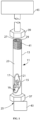
- the at least one wall 17 has first connection means at or about the entrance opening 25 and a second connection means at or about the exit opening 27.
- the first connection means comprises a fitting nut 37 held to the at least wall 17 by cooperating threads [not shown].
- the second connection means comprises a second fitting nut 39 held to the at least one wall 17 by cooperating threads 41.
- First and second connection means may comprise cooperating fittings, clamps, interlocking grooves and the like [not shown].
- First connection means and second connection means may also comprise ferrules, seals, O-rings and the like [not shown] which have been omitted from the drawing for simplicity.
- particles and the device 11 are capable of operating pressures of greater than 3 MPa (500 psi); greater than 7 MPa (1,000 psi); greater than 14 MPa (2,000 psi); greater than 20 MPa (3,000 psi); greater than 30 MPa (4,000 psi); greater than 30 MPa (5,000 psi); greater than 40 MPa (6,000 psi); greater than 50 MPa (7,000 psi); greater than 60 MPa (8,000 psi); greater than 60 MPa (9,000 psi); or greater than 70 MPa (10,000 psi).
- the source of fluid and sample is an ACQUITY ® UPLC ® separation module (Waters Corporation, Milford, Mass., USA).
- the exit opening 27 of chamber 17 is in fluid communication with a detector 45.
- detector 45 Numerous detectors are available; however, a specific detector is a Waters ACQUITY ® UPLC ® Tunable UV Detector (Waters Corporation, Milford, Mass., USA).
- the devices and methods of the invention utilize a stationary phase material.
- Such material can be composed of one or more particles, one or more spherical particles, or one or more pellicular particles.
- the particles generally have a size distribution in which the average diameter is less than 2 micron (e.g., 2 microns or 1 micron). In some embodiments, the particles have a size distribution in which the average diameter is about 1.7 microns. In some embodiments, the particles have a size distribution in which the average diameter is about 1.5 microns. In some embodiments, the particles have a size distribution in which the average diameter is between about 1 micron and about 2 microns.
- the stationary phase material has a pore volume of 0.1 to 1.7 cm 3 /g; 0.2 to 1.6 cm 3 /g; 1.0 to 1.5 cm 3 /g or 1.1 to 1.5 cm 3 /g.
- X is silica, titanium oxide, aluminum oxide or an organic-inorganic hybrid core comprising an aliphatic bridged silane.
- the core material, X may be cerium oxide, zirconium oxides, or a ceramic material.
- the core material, X may have a chromatographically enhancing pore geometry (CEPG).
- CEPG includes the geometry, which has been found to enhance the chromatographic separation ability of the material, e.g., as distinguished from other chromatographic media in the art.
- a geometry can be formed, selected or constructed, and various properties and/or factors can be used to determine whether the chromatographic separations ability of the material has been "enhanced", e.g., as compared to a geometry known or conventionally used in the art.
- the chromatographically-enhancing pore geometry of the present porous inorganic/organic hybrid particles is distinguished from the prior art particles by the absence of "ink bottle” or "shell shaped" pore geometry or morphology, both of which are undesirable because they, e.g., reduce mass transfer rates, leading to lower efficiencies. Chromatographically-enhancing pore geometry is found in hybrid materials containing only a small population of micropores.
- micropore surface area is defined as the surface area in pores with diameters less than or equal to 34 ⁇ , determined by multipoint nitrogen sorption analysis from the adsorption leg of the isotherm using the BJH method.
- MSA micropore surface area
- the core material, X may be surface modified by coating with a polymer.
- the surface modifier is selected from the group consisting of octyltrichlorosilane, octadecyltrichlorosilane, octyldimethylchlorosilane and octadecyldimethylchlorosilane.
- the surface modifier is selected from the group consisting of octyltrichlorosilane and octadecyltrichlorosilane. In other embodiments, the surface modifier is selected from the group consisting of an isocyanate or 1,1'-carbonyldiimidazole (particularly when the hybrid group contains a (CH 2 ) 3 OH group).
- the material has been surface modified by a combination of organic group and silanol group modification.
- the material has been surface modified by a combination of organic group modification and coating with a polymer.
- the organic group comprises a chiral moiety.
- the material has been surface modified by a combination of silanol group modification and coating with a polymer.
- the material has been surface modified by a combination of organic group modification, silanol group modification and coating with a polymer.
- the material has been surface modified by silanol group modification.
- the surface modified layer may be porous or nonporous.
- Q is a hydrophilic group, a hydrophobic group or absent.
- Q is an aliphatic group.
- said aliphatic group is an aliphatic diol.
- Q is represented by Formula 2 wherein
- n 1 an integer from 2-18, or from 2-6.
- Q is an aliphatic diol of Formula 2 n 2 an integer from 0-18 or from 0-6.
- Q is an aliphatic diol of Formula 2
- n 1 an integer from 2-18 and n 2 an integer from 0-18, n 1 an integer from 2-6 and wherein n 2 an integer from 0-18, n 1 an integer from 2-18 and n 2 an integer from 0-6, or n 1 an integer from 2-6 and n 2 an integer from 0-6.
- A represents i) a hydrophilic terminal group and said hydrophilic terminal group is a protected or deprotected forms of an alcohol, diol, glycidyl ether, epoxy, triol, polyol, pentaerythritol, pentaerythritol ethoxylate, 1,3-dioxane-5,5-dimethanol, tris(hydroxymethyl)aminomethane, tris(hydroxymethyl)aminomethane polyglycol ether, ethylene glycol, propylene glycol, poly(ethylene glycol), poly(propylene glycol), a mono-valent, divalent, or polyvalent carbohydrate group, a multi-antennary carbohydrate, a dendrimer containing peripheral hydrophilic groups, a dendrigraph containing peripheral hydrophilic groups, or a zwitterion group.
- A represents ii.) hydrogen, fluoro, methyl, ethyl, n-butyl, t-butyl, i-propyl, lower alkyl, or group Z.
- A represents iii.) a functionalizable group, and said functionalizable group is a protected or deprotected form of an amine, alcohol, silane, alkene, thiol, azide, or alkyne.
- said functionalizable group can give rise to a new surface group in a subsequent reaction step wherein said reaction step is coupling, metathesis, radical addition, hydrosilylation, condensation, click, or polymerization.
- the group Q can be a surface modifier.
- surface modifiers that can be employed for these materials include:
- Z represents an attachment to a surface organofunctional hybrid group through a direct carbon-carbon bond formation or through a heteroatom, ester, ether, thioether, amine, amide, imide, urea, carbonate, carbamate, heterocycle, triazole, or urethane linkage.
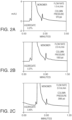
- Formulated infliximab (Remicade, 10 mg/mL, Janssen) was diluted to 2 mg/mL and injected onto a 7.8 x 50 mm column packed with 1.7 ⁇ m 200 ⁇ diol bonded organosilica particles with a 5 ⁇ L injection volume. Separations were performed using a UHPLC chromatograph (ACQUITY ® Arc, Waters, Milford, MA), a temperature of 30°C, a range of flow rates from 1.0 to 3.0 mL/min, and a pH 6.8 mobile phase comprised of 100mM sodium phosphate and 200 mM sodium chloride.
- FIG. 2 presents chromatograms obtained using this prototype SEC apparatus. Details of the experimental parameters can be found below. See FIGs. 2A-2C .
Landscapes
- Chemical & Material Sciences (AREA)
- Analytical Chemistry (AREA)
- Chemical Kinetics & Catalysis (AREA)
- Organic Chemistry (AREA)
- General Health & Medical Sciences (AREA)
- Biochemistry (AREA)
- Physics & Mathematics (AREA)
- General Physics & Mathematics (AREA)
- Immunology (AREA)
- Pathology (AREA)
- Life Sciences & Earth Sciences (AREA)
- Health & Medical Sciences (AREA)
- Inorganic Chemistry (AREA)
- Treatment Of Liquids With Adsorbents In General (AREA)
- Solid-Sorbent Or Filter-Aiding Compositions (AREA)
Claims (12)
- Verfahren zum Durchführen einer Größenausschlusschromatographie, umfassend die Schrittea) Bereitstellen eines Gehäuses (13), das mindestens eine Wand (17) aufweist, die eine Kammer (19) definiert, die einen Eingang (25) und einen Ausgang (27) aufweist; und ein Material einer stationären Phase, umfassend eine Kern- und Oberflächenzusammensetzung, die in der Kammer (19) gehalten wird; wobei das Material der stationären Phase Partikel umfasst, die eine mittlere Größe, d. h. einen Durchmesser, von weniger als 2,0 Mikrometer aufweisen, und wobei das Gehäuse (13) eine Wide-Bore-Säule und eine Bore-Größe von 7,8 mm Innendurchmesser oder mehr umfasst;b) Laden einer Probe auf das Material einer stationären Phase in der Kammer (19) bei einem Säuleneneinlassdruck von mehr als 3 MPa (500 psi) und Strömen der Probe durch das Material einer stationären Phase; undc) Trennen der Probe in einen oder mehrere Biomolekülanalyten nach Größe, wobei das Strömen der Probe durch das Material einer stationären Phase mit einer Strömungsrate von etwa 1 ml/min oder mehr vorgenommen wird
- Verfahren nach Anspruch 1, wobei die Länge der Kammer (19) weniger als etwa 50 mm beträgt.
- Verfahren nach Anspruch 1, wobei die Dauer des Verfahrens weniger als 60 Minuten, 50 Minuten, 40 Minuten, 30 Minuten, 20 Minuten, 10 Minuten, 5 Minuten, 4 Minuten, 3 Minuten, 2 Minuten oder 1 Minute beträgt.
- Verfahren nach Anspruch 1, wobei das Strömen der Probe über die stationäre Phase bei einem Eingangsdruck von mehr als 7 MPa (1.000 psi) vorgenommen wird.
- Verfahren nach Anspruch 1, wobei das Strömen der Probe über die stationäre Phase mit einer Strömungsrate von etwa 1 ml/min bis etwa 3 ml/min vorgenommen wird.
- Verfahren nach Anspruch 1, wobei das Strömen der Probe über die stationäre Phase mit einer Strömungsrate von mehr als 3 ml/min vorgenommen wird.
- Verfahren nach Anspruch 1, wobei das Material der stationären Phase Partikel umfasst, die eine mittlere Größe, d. h. Durchmesser, von etwa 1,7 Mikrometern aufweisen.
- Verfahren nach Anspruch 1, wobei die Probe einen oder mehrere Biomolekülanalyten umfasst, wobei der Biomolekülanalyt eine Nukleinsäure (z. B. RNA, DNA, Oligonukleotid), ein Protein (z. B. Fusionsprotein), ein Peptid, ein Antikörper (z. B. monoklonaler Antikörper (mAb)), ein Antikörper-Arzneimittel-Konjugat (ADC), Polysaccharide, ein Virus, ein virusähnliches Partikel, ein viraler Vektor (z. B. viraler Vektor für die Gentherapie, adeno-assoziierter viraler Vektor), ein Biosimilar oder eine beliebige Kombination davon ist.
- Verfahren nach Anspruch 1, wobei die Länge der Kammer (19) etwa 50 mm, etwa 30 mm, etwa 20 mm, etwa 10 mm, weniger als etwa 30 mm, 20 mm oder 10 mm beträgt.
- Verfahren nach Anspruch 1, wobei das Verfahren ferner einen zusätzlichen Trenn- oder Auflösungsschritt umfasst.
- Verfahren nach Anspruch 1, wobei das Verfahren ferner einen Schritt einer Umkehrphasenchromatographie, Affinitätschromatographie oder Ionenaustauschchromatographie umfasst.
- Verfahren nach Anspruch 10 oder 11, wobei der zusätzliche Trennschritt eine Verwendung einer immobilisierten Enzymsäule umfasst.
Applications Claiming Priority (2)
| Application Number | Priority Date | Filing Date | Title |
|---|---|---|---|
| US201862683942P | 2018-06-12 | 2018-06-12 | |
| PCT/IB2019/054880 WO2019239329A1 (en) | 2018-06-12 | 2019-06-11 | Size exclusion chromatography of biological molecules |
Publications (2)
| Publication Number | Publication Date |
|---|---|
| EP3806972A1 EP3806972A1 (de) | 2021-04-21 |
| EP3806972B1 true EP3806972B1 (de) | 2025-02-26 |
Family
ID=67551578
Family Applications (1)
| Application Number | Title | Priority Date | Filing Date |
|---|---|---|---|
| EP19752251.9A Active EP3806972B1 (de) | 2018-06-12 | 2019-06-11 | Verfahren zur durchführung einer grössenausschlusschromatografie von biologischen molekülen |
Country Status (4)
| Country | Link |
|---|---|
| US (1) | US20190376933A1 (de) |
| EP (1) | EP3806972B1 (de) |
| CN (1) | CN112261976A (de) |
| WO (1) | WO2019239329A1 (de) |
Families Citing this family (6)
| Publication number | Priority date | Publication date | Assignee | Title |
|---|---|---|---|---|
| US12332224B2 (en) | 2020-04-15 | 2025-06-17 | Waters Technolgies Corporation | Guard column configurations for size exclusion chromatography separations |
| WO2022061035A1 (en) * | 2020-09-16 | 2022-03-24 | Waters Technologies Corporation | Improved size exclusion chromatography utilizing low concentration amino acids in size exclusion chromatography mobile phase |
| JP7674703B2 (ja) * | 2021-10-07 | 2025-05-12 | 株式会社島津製作所 | 複数試料分析方法 |
| EP4479156A1 (de) * | 2022-02-19 | 2024-12-25 | Waters Technologies Corporation | Neuartige grössenausschlusschromatografiesäulentechnologien zur analyse von crispr-molekülen |
| US12434218B2 (en) * | 2023-11-28 | 2025-10-07 | Phenomenex, Inc. | Pore structure for separation of adeno-associated viruses (AAVS) from their aggregates |
| US20250332526A1 (en) | 2024-04-26 | 2025-10-30 | Waters Technologies Corporation | Direct affinity to size-exclusion chromatography methods and systems thereof |
Family Cites Families (5)
| Publication number | Priority date | Publication date | Assignee | Title |
|---|---|---|---|---|
| DE2357184A1 (de) | 1973-11-16 | 1975-05-22 | Merck Patent Gmbh | Verfahren zur herstellung von organisch modifizierten siliciumdioxiden |
| US6686035B2 (en) | 1999-02-05 | 2004-02-03 | Waters Investments Limited | Porous inorganic/organic hybrid particles for chromatographic separations and process for their preparation |
| US6528167B2 (en) | 2001-01-31 | 2003-03-04 | Waters Investments Limited | Porous hybrid particles with organic groups removed from the surface |
| CN109078626A (zh) * | 2009-12-15 | 2018-12-25 | 沃特世科技公司 | 实施体积排阻色谱的设备和方法 |
| CN106404946B (zh) * | 2016-08-30 | 2019-04-16 | 广东省药品检验所 | 一种合成抗原的分子量检测方法及应用 |
-
2019
- 2019-06-11 WO PCT/IB2019/054880 patent/WO2019239329A1/en not_active Ceased
- 2019-06-11 CN CN201980039229.7A patent/CN112261976A/zh active Pending
- 2019-06-11 US US16/437,894 patent/US20190376933A1/en not_active Abandoned
- 2019-06-11 EP EP19752251.9A patent/EP3806972B1/de active Active
Also Published As
| Publication number | Publication date |
|---|---|
| EP3806972A1 (de) | 2021-04-21 |
| WO2019239329A1 (en) | 2019-12-19 |
| US20190376933A1 (en) | 2019-12-12 |
| CN112261976A (zh) | 2021-01-22 |
Similar Documents
| Publication | Publication Date | Title |
|---|---|---|
| EP3806972B1 (de) | Verfahren zur durchführung einer grössenausschlusschromatografie von biologischen molekülen | |
| US20250052727A1 (en) | Device and methods for performing size exclusion chromatography | |
| Buszewski et al. | Survey and trends in the preparation of chemically bonded silica phases for liquid chromatographic analysis | |
| US11905548B2 (en) | Immobilized enzymatic reactor | |
| EP2152403B1 (de) | Trennmedien und vorrichtung | |
| Bakry et al. | Recent applications of organic monoliths in capillary liquid chromatographic separation of biomolecules | |
| Kumazawa et al. | New and unique methods of solid-phase extraction for use before instrumental analysis of xenobiotics in human specimens | |
| Guo et al. | Methoxy terminated poly dimethylsiloxane bonded stationary phase for reversed-phase liquid chromatography | |
| Xie et al. | Polar stationary phases for capillary electrochromatography | |
| Gu et al. | Fabrication of a poly (styrene–octadecene–divinylbenzene) monolithic column and its comparison with a poly (styrene–divinylbenzene) monolithic column for the separation of proteins | |
| Pesek et al. | Silica hydride--chemistry and applications. | |
| Majorsand et al. | The Chromatography and Sample Preparation Terminology Guide. | |
| RAO et al. | METHOD DEVELOPMENT AND VALIDATION FOR TRIPROLIDINE AND PHENYLEPHERINE IN BULK AND ITS PHARMACEUTICAL DOSAGE FORMS BY USING RP-HPLC | |
| Majors | New Chromatography Columns and Accessories | |
| Collins et al. | Enhanced Stability Stationary Phases for HPLC | |
| Yang | Development of polar chromatography phases | |
| Xu | Development of Fluorous Solid-Phase Extraction (FSPE) on a Microchip and its Application to Proteomics | |
| Ji | Use of cyclodextrin bonded columns for the liquid chromatographic separation of styrene polymers and peptides | |
| HK1179202A (en) | Device and methods of performing size exclusion chromatography |
Legal Events
| Date | Code | Title | Description |
|---|---|---|---|
| STAA | Information on the status of an ep patent application or granted ep patent |
Free format text: STATUS: UNKNOWN |
|
| STAA | Information on the status of an ep patent application or granted ep patent |
Free format text: STATUS: THE INTERNATIONAL PUBLICATION HAS BEEN MADE |
|
| PUAI | Public reference made under article 153(3) epc to a published international application that has entered the european phase |
Free format text: ORIGINAL CODE: 0009012 |
|
| STAA | Information on the status of an ep patent application or granted ep patent |
Free format text: STATUS: REQUEST FOR EXAMINATION WAS MADE |
|
| 17P | Request for examination filed |
Effective date: 20200916 |
|
| AK | Designated contracting states |
Kind code of ref document: A1 Designated state(s): AL AT BE BG CH CY CZ DE DK EE ES FI FR GB GR HR HU IE IS IT LI LT LU LV MC MK MT NL NO PL PT RO RS SE SI SK SM TR |
|
| AX | Request for extension of the european patent |
Extension state: BA ME |
|
| DAV | Request for validation of the european patent (deleted) | ||
| DAX | Request for extension of the european patent (deleted) | ||
| STAA | Information on the status of an ep patent application or granted ep patent |
Free format text: STATUS: EXAMINATION IS IN PROGRESS |
|
| 17Q | First examination report despatched |
Effective date: 20230302 |
|
| GRAP | Despatch of communication of intention to grant a patent |
Free format text: ORIGINAL CODE: EPIDOSNIGR1 |
|
| STAA | Information on the status of an ep patent application or granted ep patent |
Free format text: STATUS: GRANT OF PATENT IS INTENDED |
|
| RIC1 | Information provided on ipc code assigned before grant |
Ipc: G01N 30/60 20060101ALN20240327BHEP Ipc: G01N 30/32 20060101ALN20240327BHEP Ipc: B01J 20/32 20060101ALI20240327BHEP Ipc: B01J 20/28 20060101ALI20240327BHEP Ipc: B01D 15/34 20060101AFI20240327BHEP |
|
| RIC1 | Information provided on ipc code assigned before grant |
Ipc: G01N 30/60 20060101ALN20240409BHEP Ipc: G01N 30/32 20060101ALN20240409BHEP Ipc: B01J 20/32 20060101ALI20240409BHEP Ipc: B01J 20/28 20060101ALI20240409BHEP Ipc: B01D 15/34 20060101AFI20240409BHEP |
|
| INTG | Intention to grant announced |
Effective date: 20240422 |
|
| GRAJ | Information related to disapproval of communication of intention to grant by the applicant or resumption of examination proceedings by the epo deleted |
Free format text: ORIGINAL CODE: EPIDOSDIGR1 |
|
| STAA | Information on the status of an ep patent application or granted ep patent |
Free format text: STATUS: EXAMINATION IS IN PROGRESS |
|
| GRAP | Despatch of communication of intention to grant a patent |
Free format text: ORIGINAL CODE: EPIDOSNIGR1 |
|
| STAA | Information on the status of an ep patent application or granted ep patent |
Free format text: STATUS: GRANT OF PATENT IS INTENDED |
|
| INTC | Intention to grant announced (deleted) | ||
| RIC1 | Information provided on ipc code assigned before grant |
Ipc: G01N 30/60 20060101ALN20240827BHEP Ipc: G01N 30/32 20060101ALN20240827BHEP Ipc: B01J 20/32 20060101ALI20240827BHEP Ipc: B01J 20/28 20060101ALI20240827BHEP Ipc: B01D 15/34 20060101AFI20240827BHEP |
|
| INTG | Intention to grant announced |
Effective date: 20240916 |
|
| P01 | Opt-out of the competence of the unified patent court (upc) registered |
Free format text: CASE NUMBER: APP_52503/2024 Effective date: 20240919 |
|
| GRAS | Grant fee paid |
Free format text: ORIGINAL CODE: EPIDOSNIGR3 |
|
| GRAA | (expected) grant |
Free format text: ORIGINAL CODE: 0009210 |
|
| STAA | Information on the status of an ep patent application or granted ep patent |
Free format text: STATUS: THE PATENT HAS BEEN GRANTED |
|
| AK | Designated contracting states |
Kind code of ref document: B1 Designated state(s): AL AT BE BG CH CY CZ DE DK EE ES FI FR GB GR HR HU IE IS IT LI LT LU LV MC MK MT NL NO PL PT RO RS SE SI SK SM TR |
|
| REG | Reference to a national code |
Ref country code: GB Ref legal event code: FG4D |
|
| REG | Reference to a national code |
Ref country code: CH Ref legal event code: EP |
|
| REG | Reference to a national code |
Ref country code: DE Ref legal event code: R096 Ref document number: 602019066510 Country of ref document: DE |
|
| REG | Reference to a national code |
Ref country code: IE Ref legal event code: FG4D |
|
| REG | Reference to a national code |
Ref country code: NL Ref legal event code: MP Effective date: 20250226 |
|
| PG25 | Lapsed in a contracting state [announced via postgrant information from national office to epo] |
Ref country code: RS Free format text: LAPSE BECAUSE OF FAILURE TO SUBMIT A TRANSLATION OF THE DESCRIPTION OR TO PAY THE FEE WITHIN THE PRESCRIBED TIME-LIMIT Effective date: 20250526 |
|
| PG25 | Lapsed in a contracting state [announced via postgrant information from national office to epo] |
Ref country code: FI Free format text: LAPSE BECAUSE OF FAILURE TO SUBMIT A TRANSLATION OF THE DESCRIPTION OR TO PAY THE FEE WITHIN THE PRESCRIBED TIME-LIMIT Effective date: 20250226 |
|
| PG25 | Lapsed in a contracting state [announced via postgrant information from national office to epo] |
Ref country code: PL Free format text: LAPSE BECAUSE OF FAILURE TO SUBMIT A TRANSLATION OF THE DESCRIPTION OR TO PAY THE FEE WITHIN THE PRESCRIBED TIME-LIMIT Effective date: 20250226 |
|
| PGFP | Annual fee paid to national office [announced via postgrant information from national office to epo] |
Ref country code: DE Payment date: 20250520 Year of fee payment: 7 |
|
| PG25 | Lapsed in a contracting state [announced via postgrant information from national office to epo] |
Ref country code: ES Free format text: LAPSE BECAUSE OF FAILURE TO SUBMIT A TRANSLATION OF THE DESCRIPTION OR TO PAY THE FEE WITHIN THE PRESCRIBED TIME-LIMIT Effective date: 20250226 |
|
| PGFP | Annual fee paid to national office [announced via postgrant information from national office to epo] |
Ref country code: GB Payment date: 20250520 Year of fee payment: 7 |
|
| REG | Reference to a national code |
Ref country code: LT Ref legal event code: MG9D |
|
| PG25 | Lapsed in a contracting state [announced via postgrant information from national office to epo] |
Ref country code: NO Free format text: LAPSE BECAUSE OF FAILURE TO SUBMIT A TRANSLATION OF THE DESCRIPTION OR TO PAY THE FEE WITHIN THE PRESCRIBED TIME-LIMIT Effective date: 20250526 Ref country code: IS Free format text: LAPSE BECAUSE OF FAILURE TO SUBMIT A TRANSLATION OF THE DESCRIPTION OR TO PAY THE FEE WITHIN THE PRESCRIBED TIME-LIMIT Effective date: 20250626 |
|
| PG25 | Lapsed in a contracting state [announced via postgrant information from national office to epo] |
Ref country code: NL Free format text: LAPSE BECAUSE OF FAILURE TO SUBMIT A TRANSLATION OF THE DESCRIPTION OR TO PAY THE FEE WITHIN THE PRESCRIBED TIME-LIMIT Effective date: 20250226 |
|
| PG25 | Lapsed in a contracting state [announced via postgrant information from national office to epo] |
Ref country code: HR Free format text: LAPSE BECAUSE OF FAILURE TO SUBMIT A TRANSLATION OF THE DESCRIPTION OR TO PAY THE FEE WITHIN THE PRESCRIBED TIME-LIMIT Effective date: 20250226 |
|
| PG25 | Lapsed in a contracting state [announced via postgrant information from national office to epo] |
Ref country code: LV Free format text: LAPSE BECAUSE OF FAILURE TO SUBMIT A TRANSLATION OF THE DESCRIPTION OR TO PAY THE FEE WITHIN THE PRESCRIBED TIME-LIMIT Effective date: 20250226 Ref country code: PT Free format text: LAPSE BECAUSE OF FAILURE TO SUBMIT A TRANSLATION OF THE DESCRIPTION OR TO PAY THE FEE WITHIN THE PRESCRIBED TIME-LIMIT Effective date: 20250626 |
|
| PG25 | Lapsed in a contracting state [announced via postgrant information from national office to epo] |
Ref country code: BG Free format text: LAPSE BECAUSE OF FAILURE TO SUBMIT A TRANSLATION OF THE DESCRIPTION OR TO PAY THE FEE WITHIN THE PRESCRIBED TIME-LIMIT Effective date: 20250226 Ref country code: GR Free format text: LAPSE BECAUSE OF FAILURE TO SUBMIT A TRANSLATION OF THE DESCRIPTION OR TO PAY THE FEE WITHIN THE PRESCRIBED TIME-LIMIT Effective date: 20250527 |
|
| REG | Reference to a national code |
Ref country code: AT Ref legal event code: MK05 Ref document number: 1770099 Country of ref document: AT Kind code of ref document: T Effective date: 20250226 |
|
| PG25 | Lapsed in a contracting state [announced via postgrant information from national office to epo] |
Ref country code: SE Free format text: LAPSE BECAUSE OF FAILURE TO SUBMIT A TRANSLATION OF THE DESCRIPTION OR TO PAY THE FEE WITHIN THE PRESCRIBED TIME-LIMIT Effective date: 20250226 |
|
| PG25 | Lapsed in a contracting state [announced via postgrant information from national office to epo] |
Ref country code: SM Free format text: LAPSE BECAUSE OF FAILURE TO SUBMIT A TRANSLATION OF THE DESCRIPTION OR TO PAY THE FEE WITHIN THE PRESCRIBED TIME-LIMIT Effective date: 20250226 |
|
| PG25 | Lapsed in a contracting state [announced via postgrant information from national office to epo] |
Ref country code: DK Free format text: LAPSE BECAUSE OF FAILURE TO SUBMIT A TRANSLATION OF THE DESCRIPTION OR TO PAY THE FEE WITHIN THE PRESCRIBED TIME-LIMIT Effective date: 20250226 |
|
| PG25 | Lapsed in a contracting state [announced via postgrant information from national office to epo] |
Ref country code: IT Free format text: LAPSE BECAUSE OF FAILURE TO SUBMIT A TRANSLATION OF THE DESCRIPTION OR TO PAY THE FEE WITHIN THE PRESCRIBED TIME-LIMIT Effective date: 20250226 |
|
| PG25 | Lapsed in a contracting state [announced via postgrant information from national office to epo] |
Ref country code: AT Free format text: LAPSE BECAUSE OF FAILURE TO SUBMIT A TRANSLATION OF THE DESCRIPTION OR TO PAY THE FEE WITHIN THE PRESCRIBED TIME-LIMIT Effective date: 20250226 |
|
| PG25 | Lapsed in a contracting state [announced via postgrant information from national office to epo] |
Ref country code: CZ Free format text: LAPSE BECAUSE OF FAILURE TO SUBMIT A TRANSLATION OF THE DESCRIPTION OR TO PAY THE FEE WITHIN THE PRESCRIBED TIME-LIMIT Effective date: 20250226 Ref country code: EE Free format text: LAPSE BECAUSE OF FAILURE TO SUBMIT A TRANSLATION OF THE DESCRIPTION OR TO PAY THE FEE WITHIN THE PRESCRIBED TIME-LIMIT Effective date: 20250226 |
|
| PG25 | Lapsed in a contracting state [announced via postgrant information from national office to epo] |
Ref country code: RO Free format text: LAPSE BECAUSE OF FAILURE TO SUBMIT A TRANSLATION OF THE DESCRIPTION OR TO PAY THE FEE WITHIN THE PRESCRIBED TIME-LIMIT Effective date: 20250226 |
|
| PG25 | Lapsed in a contracting state [announced via postgrant information from national office to epo] |
Ref country code: SK Free format text: LAPSE BECAUSE OF FAILURE TO SUBMIT A TRANSLATION OF THE DESCRIPTION OR TO PAY THE FEE WITHIN THE PRESCRIBED TIME-LIMIT Effective date: 20250226 |