EP3801643B1 - Nahinfrarot-aktivierbare fluoreszierende kleine moleküle mit dualen zytotoxizitätsmodi - Google Patents
Nahinfrarot-aktivierbare fluoreszierende kleine moleküle mit dualen zytotoxizitätsmodi Download PDFInfo
- Publication number
- EP3801643B1 EP3801643B1 EP19798928.8A EP19798928A EP3801643B1 EP 3801643 B1 EP3801643 B1 EP 3801643B1 EP 19798928 A EP19798928 A EP 19798928A EP 3801643 B1 EP3801643 B1 EP 3801643B1
- Authority
- EP
- European Patent Office
- Prior art keywords
- molecule
- light
- cancer
- pharmaceutical composition
- cells
- Prior art date
- Legal status (The legal status is an assumption and is not a legal conclusion. Google has not performed a legal analysis and makes no representation as to the accuracy of the status listed.)
- Active
Links
Images





Classifications
-
- C—CHEMISTRY; METALLURGY
- C07—ORGANIC CHEMISTRY
- C07F—ACYCLIC, CARBOCYCLIC OR HETEROCYCLIC COMPOUNDS CONTAINING ELEMENTS OTHER THAN CARBON, HYDROGEN, HALOGEN, OXYGEN, NITROGEN, SULFUR, SELENIUM OR TELLURIUM
- C07F15/00—Compounds containing elements of Groups 8, 9, 10 or 18 of the Periodic Table
- C07F15/0006—Compounds containing elements of Groups 8, 9, 10 or 18 of the Periodic Table compounds of the platinum group
- C07F15/0086—Platinum compounds
- C07F15/0093—Platinum compounds without a metal-carbon linkage
-
- A—HUMAN NECESSITIES
- A61—MEDICAL OR VETERINARY SCIENCE; HYGIENE
- A61K—PREPARATIONS FOR MEDICAL, DENTAL OR TOILETRY PURPOSES
- A61K31/00—Medicinal preparations containing organic active ingredients
- A61K31/28—Compounds containing heavy metals
- A61K31/282—Platinum compounds
-
- A—HUMAN NECESSITIES
- A61—MEDICAL OR VETERINARY SCIENCE; HYGIENE
- A61K—PREPARATIONS FOR MEDICAL, DENTAL OR TOILETRY PURPOSES
- A61K41/00—Medicinal preparations obtained by treating materials with wave energy or particle radiation ; Therapies using these preparations
- A61K41/0042—Photocleavage of drugs in vivo, e.g. cleavage of photolabile linkers in vivo by UV radiation for releasing the pharmacologically-active agent from the administered agent; photothrombosis or photoocclusion
-
- A—HUMAN NECESSITIES
- A61—MEDICAL OR VETERINARY SCIENCE; HYGIENE
- A61K—PREPARATIONS FOR MEDICAL, DENTAL OR TOILETRY PURPOSES
- A61K41/00—Medicinal preparations obtained by treating materials with wave energy or particle radiation ; Therapies using these preparations
- A61K41/0057—Photodynamic therapy with a photosensitizer, i.e. agent able to produce reactive oxygen species upon exposure to light or radiation, e.g. UV or visible light; photocleavage of nucleic acids with an agent
-
- C—CHEMISTRY; METALLURGY
- C09—DYES; PAINTS; POLISHES; NATURAL RESINS; ADHESIVES; COMPOSITIONS NOT OTHERWISE PROVIDED FOR; APPLICATIONS OF MATERIALS NOT OTHERWISE PROVIDED FOR
- C09B—ORGANIC DYES OR CLOSELY-RELATED COMPOUNDS FOR PRODUCING DYES, e.g. PIGMENTS; MORDANTS; LAKES
- C09B23/00—Methine or polymethine dyes, e.g. cyanine dyes
- C09B23/0066—Methine or polymethine dyes, e.g. cyanine dyes the polymethine chain being part of a carbocyclic ring,(e.g. benzene, naphtalene, cyclohexene, cyclobutenene-quadratic acid)
Definitions
- the invention is generally related to near-infrared activatable fluorescent small molecules for the photo-initiated chemotherapeutic treatment of cancer.
- the anarchic hydrolytic behavior of these drugs leads to undesired systemic toxicity and limits the administration of higher drug-dosage levels.
- an ideal Pt(II) based photo-initiated chemotherapeutic agent should be activated in the "biological window" of 650-850 nm which has improved tissue compatibility and penetrating properties.
- An aspect of the present disclosure provides a molecule comprising a cyanine scaffolded Pt(II) complex formed from a platinum-based anticancer agent and a heptamethine or pentamethine cyanine dye.
- the anticancer agent may be cisplatin, carboplatin, oxaliplatin, nedaplatin, picoplatin, or lobaplatin.
- the dye may be IR-797, IR-780, IR-783, IR-808, or MHI-148.
- the molecule may release a cytotoxic active platinum species and a reactive oxygen species when exposed to near-infrared (IR) light.
- the molecule is linked to a tumor-targeting molecule.
- the tumor-targeting molecule is an antibody directed against a cell-surface protein of a tumor cell.
- compositions comprising a molecule as described herein and a pharmaceutically acceptable carrier.
- Additional aspects of the present disclosure provide a method of treating a cancer in a subject in need thereof, comprising the steps of contacting a plurality of cells of the cancer with a therapeutically effective amount of a molecule as described herein and directing a near-IR light to said molecule for an amount of time sufficient to induce release of the active platinum species and a reactive oxygen species.
- the cancer is selected from the group consisting of skin, head and neck, oral, esophageal, bladder, breast, and lung cancer, or any other types of cancer accessible with a near-IR light.
- the reactive oxygen species is singlet oxygen.
- a source of said near IR light is a superficial, endoscopic or bronchoscopic light source.
- a wavelength of said near-IR light is in the range of 720-800 nm.
- the terms “compound,” “analog,” and “molecule” stand equally well for the inventive compounds described herein, be they photodynamic or not, including all enantiomeric forms, diastereomeric forms, salts, and the like.
- Compounds described herein can contain an asymmetric atom (also referred as a chiral center), and some of the compounds can contain one or more asymmetric atoms or centers, which can thus give rise to optical isomers (enantiomers) and diastereomers.
- the present teachings and compounds disclosed herein include such enantiomers and diastereomers, as well as the racemic and resolved, enantiomerically pure R and S stereoisomers, as well as other mixtures of the R and S stereoisomers and pharmaceutically acceptable salts thereof.
- Optical isomers can be obtained in pure form by standard procedures known to those skilled in the art, which include, but are not limited to, diastereomeric salt formation, kinetic resolution, and asymmetric synthesis.
- the present teachings also encompass cis and trans isomers of compounds containing alkenyl moieties (e.g., alkenes and imines).
- present teachings encompass all possible regioisomers, and mixtures thereof, which can be obtained in pure form by standard separation procedures known to those skilled in the art, and include, but are not limited to, column chromatography, thin-layer chromatography, and high-performance liquid chromatography.
- Embodiments of the disclosure provide a molecule comprising a heptamethine or pentamethine cyanine scaffolded Pt(II) complex having the formula of wherein X and Y are the same or different and are an unsubstituted amine or substituted amine group R 1 and R 2 are the same or different and are selected from the group consisting of H, OH, SH, amine, alkyl, alkoxyl, halogen, alkenyl, alkynyl, aryl, cyano, nitro, and Z is a heptamethine or pentamethine cyanine dye moiety, whereby Z is linked to the meso carbon of the heptamethine or pentamethine cyanine dye moiety. Dashed lines indicate the presence or absence of a bond.
- the complex comprises one of the following structures:
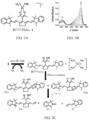
- the theranostic molecules describe herein comprise a platinum-based anticancer agent linked to a cyanine dye. Such molecules are activated by irradiation with near-infrared (IR) light ( Figure 1 ). The cyanine dye portion of the molecule fluoresces when exposed to near-IR light, thus allowing for deep tissue imaging.
- IR near-infrared
- cyclic refers to having an aromatic ring structure,such as pyridine, which may or may not be substituted, and may or may not include one or more heteroatoms. Cyclic structures include monocyclic structures, bicyclic structures, and polycyclic structures.
- sulfanyl refers to the group -SR a , where R a is substituted alkyl, substituted carbocycle, aryl, heteroaryl or heterocyclic.
- amine refers to nitrogen-containing groups, such as NH 3 , NH 2 , and NR 1 R 2 , wherein R 1 and R 2 can each be independently hydrogen, alkyl, substituted alkyl, aryl, substituted aryl, and aralkyl, alkylene, arylene, aralkylene.
- ammine/ amine as used herein can refer to a primary amine, a secondary amine, or a tertiary amine.
- alkyl refers to a monoradical branched or unbranched saturated hydrocarbon chain preferably having from 1 to 40 carbon atoms, more preferably to 10 carbon atoms, and even more preferably 1 to 6 carbon atoms. This term is exemplified by groups such as methyl, ethyl, n-propyl, iso-propyl, n-butyl, iso-butyl, n-hexyl, n-decyl, tetradecyl, and the like.
- alkoxyl refers to a radical of -O-alkyl.
- halogen refers to, e.g. fluorine, chlorine, bromine and iodine.
- alkenyl refers to straight or branched chain hydrocarbon groups of about 2 to about 20 carbon atoms, preferably about 2 to about 15 carbon atoms, and most preferably 2 to 8 carbon atoms, having, for example, about one to about four double bonds.
- alkynyl refers to straight or branched chain hydrocarbon groups of about 2 to about 20 carbon atoms, preferably about 2 to about 15 carbon atoms, and most preferably about 2 to about 8 carbon atoms, having, for example, about one to about four triple bonds.
- aryl refers to compounds which contain an aromatic group, e.g. a monocyclic or polycyclic aromatic compound.
- Monocyclic aryls generally have about 4 to about 7 carbon atoms
- bicyclic aryls may have e.g. from about 7 to about 11 carbon atoms
- tricyclic aryls may contain from about 10 to about 15 or more carbon atoms.
- Exemplary aryls are or comprise groups that include but are not limited to: phenyl, naphthyl, biphenyl (diphenyl), thienyl, indolyl, etc.
- Aryls may be substituted or unsubstituted, and may or may not include one or more heteroatoms (e.g. S, N, etc.) in one or more ring structures (heteroaryls).
- cyano refers to the group -CN.
- nitro refers to the group -NO 2 .
- carboxyl refers to the group -COOH or salts thereof.
- carbonyl refers to a divalent group of formula -(CO)-.
- sulfone refers to a group -S(O) 2 R, in which R is alkyl, aryl, or heteroaryl.
- sulfoxide refers to a group -S(O)R, in which R is alkyl, aryl, or heteroaryl.
- the molecules disclosed herein may provide two modes of cell-killing generated by exposure to near-IR light.
- the first is creation of singlet oxygen (a cytotoxic reactive oxygen species), and the second is release of a cytotoxic active platinum species.
- Singlet oxygen rapidly attacks any organic compounds it encounters while exemplary platinum species, such as cisplatin, act by crosslinking DNA in various different ways, in a manner that is not cell cycle specific, making it impossible for rapidly dividing cells (such as cancer cells) to duplicate their DNA for mitosis.
- the damaged DNA sets off DNA repair mechanisms, which activate apoptosis when repair proves impossible.
- the molecules described herein do not require nanoparticle materials, such as those used for encapsulation or as carriers.
- nanoparticle materials such as those used for encapsulation or as carriers.
- near-IR light rather than damaging UVA or blue light, is used and the cytotoxins are released in a reaction that is oxygen-independent.
- Any platinum compound used for anti-cancer therapy may be incorporated into a molecule as described herein as long as the leaving ligands in the final molecule include platinum-oxygen bonds ( Figure 1 ).
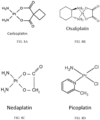
- Suitable platinum compounds include, but are not limited to, cisplatin, carboplatin, oxaliplatin, nedaplatin, picoplatin, lobaplatin, satraplatin, ormaplatin, aroplatin, enloplatin, zeniplatin, sebriplatin, miboplatin, and iproplatin.
- a description of some of these and other suitable platinum compounds may be found in Ndagi et al. (Drug Des Devel Ther. 2017; 11:5990616 ). Structures of some suitable compounds are provided in Figures 8A-D .
- Heptamethine cyanine dyes are a subclass of chemical compounds within the cyanine dye family having an absorption and fluorescence spectrum in the near-IR region.
- Near-IR light generally refers to light having wavelengths from 650-2500 nm.
- Pentamethine cyanine dyes absorb at generally shorter wavelengths, e.g. from about 650-900 nm.
- the molecule disclosed herein is activated in the range of 650-2500 nm, e.g. 650-850 nm, 700-800 nm, or 720-740 nm.
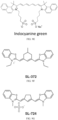
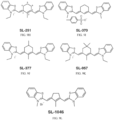
- Suitable cyanine dyes include, but are not limited to, IR-797, IR-780, IR-783, IR-808, MHI-148, indocyanine dyes such as indocyanine green, Quat-Cy, SL-251, SL-1041, SL-1046, SL-372, SL-724, SL-370, SL-377, and SL-957.
- Other suitable dyes include those described in US 8,889,887 , US 2014/0348746 , US 5,973,158 , and US 7,504,089 .
- the chemical structures of some exemplary dyes are shown in Figures 9A-L .
- the dye is such that an acetylacetone (Hacac) derivative of the dye may be synthesized from a chloro cyanine precursor.
- chelating groups other than acetylacetone may be used, such as malonate, fluorinated or other derivatives of acac, lactol, etc.
- the compounds of the disclosure may be modified to improve properties such as water solubility.
- SO 3 - groups may be incorporated on the backbone of the heptamethine cyanine to improve water solubility, decrease dark toxicity, and/or to make the compound cell impermeable.
- the compounds of the disclosure are attached or linked to a cell- or tumor-targeting agent, such as a peptide or antibody.
- a cell- or tumor-targeting agent such as a peptide or antibody.
- the cyanine scaffold may be attached to various cell targeting moieties, such as biotin, folic acid, hyaluronic acid, etc. or to an antibody which will improve uptake and accumulation in cancer cells over normal cells.
- the targeting agent can be specific for a tumor cell-surface antigen, a stromal component of a tumor, an intracellular antigen or an intranuclear antigen.
- the targeting agent binds to a tumor antigen selected from the group consisting of HER2/neu, EGFR, hepsin, Tie2, 11-6 receptor, GRP78, CD4, CD21, CD25, melanin, neuropilin, CTLA4, EphA, MMP-9, and N-cadherin.
- a tumor antigen selected from the group consisting of HER2/neu, EGFR, hepsin, Tie2, 11-6 receptor, GRP78, CD4, CD21, CD25, melanin, neuropilin, CTLA4, EphA, MMP-9, and N-cadherin.
- the present disclosure further provides methods for preparing the compounds as described herein.
- Compounds of the present teachings can be prepared in accordance with the procedures outlined herein, from commercially available starting materials, compounds known in the literature, or readily prepared intermediates, by employing standard synthetic methods and procedures known to those skilled in the art. Standard synthetic methods and procedures for the preparation of organic molecules and coordination complexes and functional group transformations and manipulations can be readily obtained from the relevant scientific literature or from standard textbooks in the field. It will be appreciated that where typical or preferred process conditions (i.e., reaction temperatures, times, mole ratios of reactants, solvents, pressures, etc.) are given, other process conditions can also be used unless otherwise stated.
- Optimum reaction conditions can vary with the particular reactants or solvent used, but such conditions can be determined by one skilled in the art by routine optimization procedures. Those skilled in the art of organic and inorganic synthesis will recognize that the nature and order of the synthetic steps presented can be varied for the purpose of optimizing the formation of the compounds described herein.
- product formation can be monitored by spectroscopic means, such as nuclear magnetic resonance spectroscopy (e.g., 1H or 13C), infrared spectroscopy, spectrophotometry (e.g., UV-visible), mass spectrometry, or by chromatography such as high pressure liquid chromatography (HPLC), gas chromatography (GC), gel-permeation chromatography (GPC), or thin layer chromatography (TLC).
- spectroscopic means such as nuclear magnetic resonance spectroscopy (e.g., 1H or 13C), infrared spectroscopy, spectrophotometry (e.g., UV-visible), mass spectrometry, or by chromatography such as high pressure liquid chromatography (HPLC), gas chromatography (GC), gel-permeation chromatography (GPC), or thin layer chromatography (TLC).
- HPLC high pressure liquid chromatography
- GC gas chromatography
- GPC gel-permeation chromatography
- TLC thin layer chromatography
- the present disclosure further provides the claimed compounds for use in photodynamic or photo-initiated methods for treating cancer.
- a plurality of cancer cells may be contacted with a therapeutically effective amount of a molecule as described herein and a near-IR light may be directed to the molecule for an amount of time sufficient to induce release of the active platinum species and a reactive oxygen species.
- the molecules may be use to treat light-accessible, generally non-metastatic tumors, such as skin, oral, esophageal, bladder, breast, head and neck, and lung cancer. Treatment of other types of skin diseases is also contemplated.
- the molecule may be used to treat any type of cancer which the platinum-based anticancer agent incorporated into the molecule is capable of treating alone.
- molecules incorporating cisplatin may be used to treat testicular cancer, ovarian cancer, cervical cancer, breast cancer, bladder cancer, head and neck cancer, esophageal cancer, lung cancer, mesothelioma, brain tumors, and neuroblastoma.
- treating means reversing, alleviating, inhibiting the progress of, or preventing the disorder or condition to which such term applies, or one or more symptoms of such disorder or condition.
- photodynamic or “photo-initiated” treatment or therapy refers to a treatment for destroying cells or modulating immune function, including immune response, of cells and tissue through use of a drug that can be activated by light of a certain wavelength and dose.
- a “therapeutically effective amount” is intended for a minimal amount of active agent which is necessary to impart therapeutic benefit to a subject.
- a “therapeutically effective amount” to a mammal is such an amount which induces, ameliorates or otherwise causes an improvement in the pathological symptoms, disease progression or physiological conditions associated with or resistance to succumbing to a disorder.
- subject or “patient” are used interchangeably and refer to mammals such as human patients and non-human primates, as well as experimental animals such as rabbits, rats, and mice, and other animals. Accordingly, the term “subject” or “patient” as used herein means any mammalian patient or subject to which the compounds of the disclosure can be administered.
- “Pharmaceutically” or “pharmaceutically acceptable” refer to molecular entities and compositions that do not produce an adverse, allergic or other untoward reaction when administered to a mammal, especially a human, as appropriate.
- a pharmaceutically acceptable carrier or excipient refers to a non-toxic solid, semi-solid or liquid filler, diluent, encapsulating material or formulation auxiliary of any type.
- compositions comprising at least one (i.e. one or more) of the compounds disclosed herein to a patient in need thereof.
- the present disclosure thus also provides compositions which comprise the compounds as described herein, usually together with a pharmacologically suitable carrier or diluent.
- pharmacologically suitable compositions for use as medicaments is well known to those of skill in the art. Typically, such compositions are prepared either as liquid solutions or suspensions, however solid dry forms such as tablets, pills, powders and the like are also contemplated.
- the liquid may be an aqueous liquid. Solid forms suitable for solution in, or suspension in, liquids prior to administration may also be prepared. The preparation may also be emulsified.
- the active ingredients may be mixed with excipients which are pharmaceutically acceptable and compatible with the active ingredients. Suitable excipients are, for example, water, saline, dextrose, glycerol, ethanol and the like, or combinations thereof.
- the composition may contain minor amounts of auxiliary substances such as wetting or emulsifying agents, pH buffering agents, and the like. If it is desired to administer an oral form of the composition, various thickeners, flavorings, diluents, emulsifiers, dispersing aids or binders and the like may be added.
- the composition of the present invention may contain any such additional ingredients so as to provide the composition in a form suitable for administration.
- the final amount of compound in the formulations may vary. However, in general, the amount in the formulations will be from about 1% to about 99%.
- compositions (preparations) of the present disclosure may be administered by any of the many suitable means which are well known to those of skill in the art, including but not limited to: by injection, inhalation, orally, intravaginally, intranasally, by ingestion of a food or product containing the molecule, topically, as eye drops, via sprays, etc.
- the compositions may be administered in conjunction with other treatment modalities such as other agents or procedures which are used to treat cancer or the conditions which cause cancer in the patient, examples of which include but are not limited to surgical procedures, chemotherapeutic agents, radiation, immunotherapies, antibiotics, and agents that boost the immune system.
- the compounds may be injected intravenously into the diseased area or applied to the skin.
- a light source is applied to the area to be treated.
- the source of light may be superficial, endoscopic, or bronchoscopic.
- the light energy is applied externally, e.g. over or at the skin of the subject being treated, and wavelengths capable of penetrating the skin are transmitted there through and thus used to photocleave the prodrug molecules under or in proximity to the skin.
- light sources may be inserted into or through a cavity of the body (mouth, urethra, esophagus, vagina, threaded through a blood vessel, etc.) or via a surgical incision in order to access tissue and/or cells that are targeted for irradiation.
- the light source is a light-emitting diode (LED).
- LED light-emitting diode
- miniature LED arrays may be implanted into tissue, or placed on catheters, and moved through the body.
- LED dice are fixed to a flexible, compact substrate.
- Light exposure is generally performed from a period of time ranging from about 1 minute to several (e.g. 1, 2, 3, 4, or 5) hours, and may generally be in the range of from about 5 to about 60 minutes. Delivery of light may be continuous during the period, or may be pulsed at short intervals (e.g. a few milliseconds per pulse). Light energy in the range from about 50 to about 1000 J/cm 2 of light array fluence in the range from about 5 to about 50 mW/cm of light array may be delivered to the treatment site (e.g. see U.S. Pat. No. 8,235,975 to Chen et al. A single exposure may suffice or multiple exposures may be warranted.
- the molecule may remain in circulation (e.g. over a period of several hours or longer), and multiple exposures may occur at timed, spaced apart intervals during that time, e.g. hourly, every few hours, etc.
- light exposure may be undertaken at various time intervals after additional steps of administration, e.g. daily, weekly, biweekly, etc., over a period of months.
- Guidance may be found, for example, in: Morton et al., British Journal of Dermatology 2008 159:1245-1266 ; and Panjehpour and Overholt, Lasers in Surgery and Medicine 2006 38:390-395 .
- the amount of compound that is administered is generally in the range of from about 1 to about 20 mg/kg, and preferably in the range of from about 5 to about 10 mg/kg, although as one of skill in the art will recognize, the precise amount may vary depending on one or more attributes of the drug recipient, including but not limited to: weight, overall health, gender, age, nationality, genetic history, other conditions being treated, etc.
- IR797-Platin 1
- Complex 1 also displayed significant singlet oxygen quantum yield thereby qualifying as a near-IR photodynamic therapeutic agent.
- Complex 1 showed 30-60 fold enhancements of cytotoxicity in near-IR light in various cancer cell lines.
- the cellular imaging properties of 1 were also leveraged to observe its significant co-localization in cytoplasmic organelles. This is the first demonstration of a near-IR light-initiated therapy involving the cytotoxic effects of both active cisplatin and singlet oxygen.
- High performance liquid chromatography (HPLC) purification was carried out using a Shimadzu Prominence system using Vydac (218TP C18 5 ⁇ ) column using acetonitrile and water as eluents (10-100% gradient) and was monitored at 770 and 430 nm. Excited state lifetimes were measured using Zeiss 780 multiphoton microscopy equipped with a Becker & Hickl FLIM hybrid detector (HPM-100-40). The decay curves were obtained using a biexponential fitting model with software SPCI. All experiments were performed using HPLC purified samples which were aliquoted in DMSO and stored at -80 °C. MTT assay readings were taken using a BioTek Synergy H1 hybrid 96-well plate reader.
- Canto - BD FACSCanto TM II Analyzer instrument equipped with BD FACS carousel loader and 2 lasers (blue: 488 nm, red: 633 nm) helped with FACS (Fluorescence activated cell sorting) data recording.
- FACSDIVA and FCSExpress 5 flow software were used for data analysis. Confocal images were acquired using LSM710 Zeiss instrument (63X magnification using oil-immersion objective). Image processing was conducted with Zen and ImageJ software.
- IR797-acac IR797 chloride (250 mg, 0.49 mmol), acetylacetone (245 ⁇ l, 2.45 mmol) and N,N-diisopropylethylamine (90 ⁇ l, 0.49 mmol) were dissolved in acetonitrile (10 mL) in a sealed vial. The dark green colored solution was heated at 70°C on a microwave apparatus (Discover, CEM, 60 W) for 15 mins. The progress of the reaction was monitored via TLC and stopped only after full consumption of the starting dye. The reaction mixture was allowed to cool down to room temperature and dichloromethane (50 mL) was added.
- IR797-Platin ( 1 ) Cisplatin (25 mg, 0.08 mmol) and silver nitrate (27 mg, 0.1625 mmol) were dissolved in dimethylformamide (2 mL) and stirred at room temperature in the dark. After 24 h, the solution was centrifuged and filtered to remove the white precipitate (silver chloride). To this pale yellow colored filtrate, IR797acac (50 mg, 0.08 mmol) and N,N-Diisopropylethylamine (100 ⁇ L) was added. The solution was stirred at room temperature for 6 h in the dark.
- High performance liquid chromatography For verifying purity, samples (25 ⁇ l in 2.5% DMSO-H 2 O) were loaded on an analytical C18 column and gradient was maintained at 10-100 percent of MeCN-H 2 O from 10-50 min. The absorbance was measured at different wavelengths within the range of 200-800 nm.
- solution of 1 (30 ⁇ l of 100 nM in 0.01% of DMSO-PBS, irradiated for 1 min) was injected on the column and eluted using the same gradient as above. The photoproducts were observed at 770 nm and/or 430 nm and assigned by recording the mass spectra of the collected fractions.
- Liquid-chromatography mass spectral experiments Solutions of 1 and IR797-acac (100 nM in 0.01 % DMSO-PBS) were used to carry out LC-MS studies. Samples were injected on a self-packed fused silica (polymicro technologies) trap column (360 micron o.d. X 100 micron i.d.) with a Kasil frit packed with 5-15 micron irregular phenyl C-18 YMC packing. The trap column is connected to an analytical column (360 micron X 50 micron) with a fritted tip at 5 micron or less (New Objective) packed with 5 ⁇ m phenyl C-18 YMC packing.
- DNA bound Pt content A 1X-PBS solution containing ctDNA (500 ⁇ M) and 1 (50 ⁇ M in 0.1% DMSO-PBS) was irradiated with near-IR light (720-740 nm) for 15, 30 and 60 mins. Another identical set was incubated in dark for comparison. After treatment, the DNA was precipitated from the solutions using 10 mL of cooled ethanol, vortexed, and collected by centrifugation. The precipitate was washed twice with cooled ethanol (5 mL) to remove soluble platinum complexes. The white fibrous precipitate was dissolved using 200 ⁇ l of conc. HNO 3 for 12 h and diluted with distilled water to 2% HNO 3 -water solutions.
- Platinum content was measured by ICP-MS instrument. Untreated samples (DNA alone, complex alone) were kept for control. Platinum standards were made by dissolving K 2 PtCl 4 in 98% aq. HNO 3 and used for calibration. The data along with the deviation is reported based on experiments performed in duplicate.
- Theoretical calculations The coordinates for cationic 1 and the dioxetane intermediates (P1a and P1b) were obtained from Chemcraft software by drawing the molecules. These coordinates were then optimized by density functional theory (DFT) calculations using B3LYP/ LanL2DZ (for Pt atom) and 6-31+G (for C, H, N and O) and executed with G09 systems. These energy-minimized structures were computed using linear response time dependent density functional theory (TDDFT) to evaluate the electronic transitions and the spin density of the orbitals.
- DFT density functional theory
- MTT assay Cytotoxic profiles of the compounds were assessed in the following cell lines (passage number not exceeding 15): MCF-7 (human breast cancer) C-33 A (human cervical carcinoma) and HEK293T (transformed human kidney). Around 6000 cells were seeded in 96 well transparent flat-bottom tissue-culture plate in 200 ⁇ l of Dulbecco's Modified Eagle Medium (DMEM) containing 10% FBS (Fetal Bovine Serum) and were incubated for 24 h at 37 °C and 5% CO 2 . We performed an initial control experiment with vehicle alone (0.1 % DMSO-DMEM) on cells with different dosages of near-IR light and compared it to unexposed counterparts.
- DMEM Dulbecco's Modified Eagle Medium
- the cells were unharmed by light and vehicle alone up to 45 min of photoirradiation. Cells were treated with various concentrations of 1, 2, IR797-acac, cisplatin and an equimolar mixture of IR797-acac and cisplatin in 0.1 % DMSO-DMEM for 4 h or 48 h in the dark.
- One such plate was exposed to near-IR light for 45 min in phenol-red free DMEM (200 ⁇ l) and room temperature was maintained using a cooling system. Another identical plate was kept in dark. The plates were incubated for another 24 h in dark.
- MTT [3-(4,5-dimethylthiazole-2-yl)-2,5-diphenyltetrazolium bromide] (25 ⁇ l of 5 mg/ml solution in PBS) was added and incubated for 3-4 h.
- the absorbance of the precipitated formazan was recorded at 550 nm in DMSO.
- the half-growth inhibitory concentration (IC 50 ) values were calculated by nonlinear regression analysis using GraphPad Prism5. The data is represented from two independent set of experiments, each of which was performed in triplicate.
- ROS detection Reactive oxygen species (ROS) can be quantified by measuring fluorescence intensity at 525 nm of DCF (2,7-dichlorofluorescein) which is an oxidized product of DCFDA, the diacetate analog of DCF.
- DCF 2,7-dichlorofluorescein
- Human cervical cancer cells, C-33 A seeding density ⁇ 10 5 cells
- Cells were treated with complex 1 (1 ⁇ M in 0.05% DMSO-DMEM) for 4 h in dark.
- DMEM was replaced with phenol-red free DMEM and cells were either irradiated (near-IR light, 45 min) or kept in dark. Cells were then treated with 0.05% trypsin for 10 min and centrifuged.
- the pellets were re-suspended in PBS and incubated with 1 ⁇ M DCFDA 15 min at room temperature in dark. Unstained and stained cells treated only with 0.05% DMSO were kept as control. The data were collected by FACS instrument and represented as histograms or bar diagrams from experiments done in duplicate.
- Apoptosis assay Early apoptotic cells show selective cellular internalization of AnnexinV- fluorescein isothiocyanate (FITC) dye and late apoptotic/necrotic cells are permeable to both AnnexinV-FITC and propidium iodide (PI). Dead cells are selectively stained by PI. Therefore, measuring the uptake of the dyes can quantify the amount of the cells showing an apoptotic mode of cell death.
- Human cervical cancer cells, C-33 A ( ⁇ 10 5 cells) were incubated with 1 (1 ⁇ M in 0.05% DMSO-DMEM) for 4 h in dark.
- Cells were either irradiated with near-IR light for 45 min or kept in the dark in phenol-red free DMEM. Cells were incubated overnight in 10%-DMEM-FBS, after which they were precipitated by 0.05% trypsin treatment for 10 min and collected by subsequent centrifugation.
- Annexin V-FITC apoptosis detection kit (Sigma Aldrich, APOAF-20T ST was used for this assay. 500 ⁇ L of 1X binding buffer was used to re-suspend the cell pellets which were then stained using Annexin V-FITC (1 ⁇ L) and PI (0.5 ⁇ L) for 10 min in dark. The fluorescence intensities were determined with FACS instrument.
- Confocal microscopic experiments Confocal microscopic images were recorded using LSM710 Zeiss instrument at 63X magnification. Human cervical cancer cells, C-33 A were plated on cover slips in a 12-well tissue-culture plate and allowed to attach for 24 h. They were treated with complex 1 (1 ⁇ M in 0.05% DMSO) for 4 h in the dark.
- the cells were washed with PBS and treated with 4,6-diamidino-2-phenylindole, dihydrochloride (DAPI, nuclear stain, 300 nM), Mito-Tracker ® Green (50 nM) and Lyso Tracker ® Red DND-99 (50 nM) in a stepwise protocol and washed properly to avoid non-specific staining.
- DAPI 4,6-diamidino-2-phenylindole, dihydrochloride
- the cover slips were mounted on slides with a drop of Antifade Gold reagent and attached by coating the periphery using transparent nail-enamel.
- Cells treated with 0.05% of DMSO and stained with the dyes alone were used as control for parameter optimization and to avoid auto-fluorescence and false background signals. Multiple images were taken from duplicate samples to confirm the homogeneity in obtained results.
- Pt Content in whole cells and nuclear / cytosolic fractions Approximately, 10 6 cells (MDA-MB-231 and C-33 A) were plated in 100 mm tissue culture treated petri dishes and allowed to attach for 24 h. Cells were then treated with complex 1 (50 ⁇ M in 0.1% DMSO-DMEM) and incubated for 4 h in C-33 A and 24 h in MDA-MB-231 in dark. Dishes were either exposed to light (720-740 nm, 15 min) or kept in dark. The cells were then allowed to incubate in dark for an additional 6 h. The cells were washed with PBS and collected as pellets by centrifugation.
- the untreated controls were utilized to determine the total number of cells by trypan blue method (deviation is within ⁇ 10%).
- the pellets were simply dissolved overnight in conc. HNO 3 .
- the cellular fractionation was done using Thermo Fisher Scientific NE-PER TM nuclear and cytoplasmic extraction reagents following the protocol with CER-I and CER-II buffer only as specified in the kit.
- the obtained nuclear and cytosolic fractions were dissolved overnight in conc. HNO 3 and diluted to 98% aq. HNO 3 solutions and measured for Pt content by ICP-MS instrument along with standards.
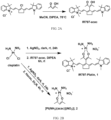
- IR797-acac The new acetylacetone (Hacac) derivative of heptamethine cyanine, IR797-acac was successfully synthesized in one step from a chloro cyanine precursor ( Figure 2A ).
- IR797-Platin, 1 was prepared by reacting this ligand with cisplatin after pre-activation with AgNO 3 ( Figure 2B ).
- the newly synthesized compounds were characterized by analytical and spectroscopic techniques.
- the half-lives ( t 1 / 2 L ) of photodecomposition were found to be ⁇ 40 secs and 2 min for IR797-acac and 1 respectively. They exhibited considerable stability in dark conditions with t 1 / 2 D of ⁇ 10 h and 20 h respectively.
- ICP-MS measurements revealed enhanced platination of isolated ctDNA (2-7 ng of Pt/ ⁇ M of ctDNA) when complex 1 (50 ⁇ M) was exposed to near-IR light compared to controls in the dark. As expected, we did observe slow incorporation of Pt(II) into DNA upon extended incubation of ctDNA with 1 or 2 in the dark. The DNA melting experiments and Hoechst displacement assays revealed 1 and IR797-acac interact with the minor groove of ctDNA in the dark. [17a]
- IC 50 values ( ⁇ M) of compounds in light and dark [a] Compound C-33 A MCF-7 Light [b] Dark Light [b] Dark Complex 1 0.14 ⁇ 0.05 8.4 ⁇ 1.4 0.65 ⁇ 0.23 18.2 ⁇ 3.2 IR797-acac 0.30 ⁇ 0.07 1.2 ⁇ 0.1 4.7 ⁇ 0.8 5.9 ⁇ 0.3 CP [c] 16.1 ⁇ 1.5 17.7 ⁇ 1.5 22.5 ⁇ 3.2 25.0 ⁇ 2.2 CP + IR797-acac 0.25 ⁇ 0.15 1.4 ⁇ 0.8 0.88 ⁇ 0.17 2.6 ⁇ 1.4 [a] Cells treated with compounds for 4 h in the dark.
- mice were injected 0.7 mg/kg of IR797-Platin in 6 mice alongside mice lacking tumors, for a total of 12 mice (8 male and 4 female, because the incidence in men is 2x vs. women) in a shorter time course (e.g. 0-8 h) to determine the time in which tumor uptake is maximized relative to normal oral tissue.
- IR797-Platin The efficacy of IR797-Platin was measured in vivo.
- Tumor-bearing mice (AB12 mesothelioma model) were administered 6 mg/kg IR797-Platin via tail vein injection on day zero.
- laser light illumination (730 nm) was applied to the tumors for 30 minutes at a fluence of 135 J/cm 2 and a fluence rate of 75 mW/cm 2 (circles, solid lines) while control mice were maintained in ambient light (squares, dashed lines).
- the tumor volume for each mouse was measured over subsequent days.
- the administration and light activation of IR797-Platin controlled tumor growth for at least 7 days after injection.
Landscapes
- Health & Medical Sciences (AREA)
- Chemical & Material Sciences (AREA)
- Life Sciences & Earth Sciences (AREA)
- Veterinary Medicine (AREA)
- Medicinal Chemistry (AREA)
- Pharmacology & Pharmacy (AREA)
- Epidemiology (AREA)
- Animal Behavior & Ethology (AREA)
- General Health & Medical Sciences (AREA)
- Public Health (AREA)
- Organic Chemistry (AREA)
- Molecular Biology (AREA)
- Engineering & Computer Science (AREA)
- Bioinformatics & Cheminformatics (AREA)
- Biochemistry (AREA)
- Pharmaceuticals Containing Other Organic And Inorganic Compounds (AREA)
Claims (12)
- Ein Molekül umfassend einen Pt(II) Gerüstkomplex mit Cyanin mit der Formel
 wobei X und Y gleich oder verschieden sind und eine unsubstituierte Amin- oder substituierte Amingruppe sind,R1 und R2 sind gleich oder verschieden und ausgewählt aus der Gruppe bestehend aus H, OH, SH, Amin, Alkyl, Alkoxyl, Halogen, Alkenyl, Alkinyl, Aryl, Cyano, Nitround Z ist ein Heptamethin- oder Pentamethin-Cyaninfarbstoffrest, wobei Z zu dem Kohlenstoff an der Mesoposition des Heptamethin- oder Pentamethin-Cyaninfarbstoffrestes gebunden ist.
 - Das Molekül nach Anspruch 1, wobei X und Y eine unsubstituierte Aminogruppe sind.
- Das Molekül nach Anspruch 1, wobei Z ausgewählt ist aus der Gruppe bestehend aus IR-797, IR-783, IR-808 und MHI-148.
- Das Molekül nach Anspruch 1, wobei das Molekül die folgende Struktur aufweist

- Das Molekül nach Anspruch 1, wobei das Molekül mit einem Tumor-Zielmolekül verbunden ist, wobei das Tumor-Zielmolekül ein Antikörper ist, der gegen ein Zelloberflächenprotein einer Tumorzelle gerichtet ist.
- Das Molekül nach Anspruch 1, wobei das Molekül eine zytotoxisch aktive Platinspezies und/oder eine reaktive Sauerstoffspezies freisetzt, wenn es Licht mit einer Wellenlänge im Bereich von 650-2500 nm ausgesetzt wird.
- Eine pharmazeutische Zusammensetzung, umfassend das Molekül nach einem der Ansprüche 1 bis 6 und einen pharmazeutisch annehmbaren Träger.
- Das Molekül nach einem der Ansprüche 1 bis 5 oder die pharmazeutische Zusammensetzung nach Anspruch 7 zur Verwendung in einem Verfahren zur Behandlung eines Krebses bei einem Patienten, der dessen bedarf, umfassend das In-Kontakt-Bringen einer Vielzahl von Zellen dieses Krebses mit einer therapeutisch wirksamen Menge eines Moleküls nach einem der Ansprüche 1 bis 5 oder der pharmazeutischen Zusammensetzung nach Anspruch 7 und das Richten eines Lichts mit einer Wellenlänge im Bereich von 650-2500 nm auf das Molekül für einen Zeitraum ausreichend, um die Freisetzung der aktiven Platinspezies und/oder einer reaktiven Sauerstoffspezies zu induzieren.
- Das Molekül nach einem der Ansprüche 1 bis 5 oder die pharmazeutische Zusammensetzung nach Anspruch 7 zur Verwendung in einem Verfahren zur Behandlung eines Krebses in einem Patienten, der dieses benötigt, nach Anspruch 8, wobei dieser Krebs ausgewählt ist aus der Gruppe bestehend aus Haut-, Mund-, Kopf- und Hals-, Speiseröhren-, Blasen-, Brust- und Lungenkrebs.
- Das Molekül nach einem der Ansprüche 1 bis 5 oder die pharmazeutische Zusammensetzung nach Anspruch 7 zur Verwendung in einem Verfahren zur Behandlung eines Krebses in einem Patienten, der dieses benötigt, gemäß Anspruch 8, wobei die reaktive Sauerstoffspezies Singulett-Sauerstoff ist.
- Das Molekül nach einem der Ansprüche 1 bis 5 oder die pharmazeutische Zusammensetzung nach Anspruch 7 zur Verwendung in einem Verfahren zur Behandlung von Krebs bei einer Person, die dessen bedarf, nach Anspruch 8, wobei eine Quelle des Lichts eine oberflächliche, endoskopische oder bronchoskopische Lichtquelle ist.
- Das Molekül nach einem der Ansprüche 1 bis 5 oder die pharmazeutische Zusammensetzung nach Anspruch 7 zur Verwendung in einem Verfahren zur Behandlung von Krebs bei einer Person, die dessen bedarf, nach Anspruch 8, wobei eine Wellenlänge des Lichts im Bereich von 720-800 nm liegt.
Applications Claiming Priority (2)
| Application Number | Priority Date | Filing Date | Title |
|---|---|---|---|
| US201862668967P | 2018-05-09 | 2018-05-09 | |
| PCT/US2019/031403 WO2019217606A1 (en) | 2018-05-09 | 2019-05-09 | Near-ir activatable fluorescent small molecules with dual modes of cytotoxicity |
Publications (4)
| Publication Number | Publication Date |
|---|---|
| EP3801643A1 EP3801643A1 (de) | 2021-04-14 |
| EP3801643A4 EP3801643A4 (de) | 2022-04-20 |
| EP3801643C0 EP3801643C0 (de) | 2025-04-30 |
| EP3801643B1 true EP3801643B1 (de) | 2025-04-30 |
Family
ID=68468458
Family Applications (1)
| Application Number | Title | Priority Date | Filing Date |
|---|---|---|---|
| EP19798928.8A Active EP3801643B1 (de) | 2018-05-09 | 2019-05-09 | Nahinfrarot-aktivierbare fluoreszierende kleine moleküle mit dualen zytotoxizitätsmodi |
Country Status (3)
| Country | Link |
|---|---|
| US (1) | US11661433B2 (de) |
| EP (1) | EP3801643B1 (de) |
| WO (1) | WO2019217606A1 (de) |
Families Citing this family (1)
| Publication number | Priority date | Publication date | Assignee | Title |
|---|---|---|---|---|
| CN115105594B (zh) * | 2022-06-27 | 2025-02-11 | 温州医科大学附属第二医院(温州医科大学附属育英儿童医院) | 一种mhi-148化学修饰的白蛋白结合型索拉非尼纳米制剂制备方法及应用 |
Family Cites Families (6)
| Publication number | Priority date | Publication date | Assignee | Title |
|---|---|---|---|---|
| US7087214B2 (en) | 2002-02-01 | 2006-08-08 | Zentaris Gmbh | Water-soluble porphyrin platinum compounds with high tumor selectivity and their use for the treatment of benign and malignant tumor diseases |
| US8770203B2 (en) | 2008-07-14 | 2014-07-08 | Immunolight, Llc. | Advanced methods and systems for treating cell proliferation disorders |
| CN103096935B (zh) | 2010-08-23 | 2017-06-16 | 株式会社岛津制作所 | 开关型荧光纳米颗粒探针及使用其的荧光分子成像法 |
| WO2012086857A1 (ko) * | 2010-12-21 | 2012-06-28 | (주)파낙스이엠 | 광역학 진단 또는 치료를 위한 결합체 및 이의 제조방법 |
| WO2013016580A2 (en) * | 2011-07-26 | 2013-01-31 | University Of Southern California | Monoamine oxidase inhibitors and methods for treatment and diagnosis of prostate cancer |
| US10307489B2 (en) * | 2014-12-22 | 2019-06-04 | Da Zen Theranostics, Inc. | Organic anion transporting peptide-based cancer imaging and therapy |
-
2019
- 2019-05-09 WO PCT/US2019/031403 patent/WO2019217606A1/en not_active Ceased
- 2019-05-09 US US17/053,837 patent/US11661433B2/en active Active
- 2019-05-09 EP EP19798928.8A patent/EP3801643B1/de active Active
Also Published As
| Publication number | Publication date |
|---|---|
| EP3801643A4 (de) | 2022-04-20 |
| US20210238211A1 (en) | 2021-08-05 |
| US11661433B2 (en) | 2023-05-30 |
| EP3801643C0 (de) | 2025-04-30 |
| WO2019217606A1 (en) | 2019-11-14 |
| EP3801643A1 (de) | 2021-04-14 |
Similar Documents
| Publication | Publication Date | Title |
|---|---|---|
| Karges et al. | Polymeric encapsulation of a ruthenium polypyridine complex for tumor targeted one-and two-photon photodynamic therapy | |
| Ortega-Forte et al. | A near-infrared light-activatable Ru (II)-coumarin photosensitizer active under hypoxic conditions | |
| Munteanu et al. | Synthesis, characterization, cytotoxic activity, and metabolic studies of ruthenium (II) polypyridyl complexes containing flavonoid ligands | |
| Karges et al. | Polymeric encapsulation of a Ru (II)-based photosensitizer for folate-targeted photodynamic therapy of drug resistant cancers | |
| AU2020356793B2 (en) | PH/glutathione-responsive β-carbolines/cycloketene derivatives and their preparation and application | |
| Toubia et al. | Synthesis and anticancer activity of gold porphyrin linked to malonate diamine platinum complexes | |
| Pan et al. | Near-infrared AIE-active phosphorescent iridium (III) complex for mitochondria-targeted photodynamic therapy | |
| Rovira et al. | Exploring structure–activity relationships in photodynamic therapy anticancer agents based on Ir (III)-COUPY conjugates | |
| KR102412203B1 (ko) | 백금 내성을 극복하는데 이용하기 위한 텍사피린-pt(iv) 접합체 및 조성물 | |
| Vinck et al. | Red-absorbing Ru (II) polypyridyl complexes with biotin targeting spontaneously assemble into nanoparticles in biological media | |
| Wu et al. | Uridine-modified ruthenium (II) complex as lysosomal LIMP-2 targeting photodynamic therapy photosensitizer for the treatment of triple-negative breast cancer | |
| Das et al. | Tuning the Organelle-Specific Imaging and Photodynamic Therapeutic Efficacy of Theranostic Mono-and Trinuclear Organometallic Iridium (III) Complexes | |
| US20050090478A1 (en) | Platinum complexes and their use in cancer treatment | |
| Denison et al. | Ruthenium-Cathepsin Inhibitor Conjugates for Green Light-Activated Photodynamic Therapy and Photochemotherapy | |
| Zhu et al. | Cyclometalated Ir (III) complexes as lysosome-targeted photodynamic anticancer agents | |
| Sanz-Villafruela et al. | Towards efficient Ir (III) anticancer photodynamic therapy agents by extending π-conjugation on N^ N ligands | |
| EP3801643B1 (de) | Nahinfrarot-aktivierbare fluoreszierende kleine moleküle mit dualen zytotoxizitätsmodi | |
| Hao et al. | Theranostic Rhenium (I)-Based ER-Phagy Retardant Promotes Immunogenic Cell Death | |
| US20220409727A1 (en) | Metal Complexes Bearing Bisstyryl-Bipyridine Ligand and Their Use as Photosensitizer Agent in One and Two-Photon Photodynamic Therapy | |
| US11191835B2 (en) | Chlorin-vitamin conjugates | |
| CN115521341A (zh) | 铂(iv)络合物、其制造方法、包含其的组合物及其使用方法 | |
| US12617812B2 (en) | Platinum(IV) complexes, methods of manufacture, compositions containing, and methods of use thereof | |
| US10899781B2 (en) | Platinum complex, its preparation and therapeutic use | |
| EP4700034A1 (de) | Metallkomplexverbindungen, konjugate und konjugierbare verbindungen daraus sowie verwendungen davon und verfahren zur herstellung davon | |
| Murugaperumal et al. | Macrocyclic Metal Complexes as Potential Tools for Anticancer Applications |
Legal Events
| Date | Code | Title | Description |
|---|---|---|---|
| STAA | Information on the status of an ep patent application or granted ep patent |
Free format text: STATUS: THE INTERNATIONAL PUBLICATION HAS BEEN MADE |
|
| PUAI | Public reference made under article 153(3) epc to a published international application that has entered the european phase |
Free format text: ORIGINAL CODE: 0009012 |
|
| STAA | Information on the status of an ep patent application or granted ep patent |
Free format text: STATUS: REQUEST FOR EXAMINATION WAS MADE |
|
| 17P | Request for examination filed |
Effective date: 20201211 |
|
| AK | Designated contracting states |
Kind code of ref document: A1 Designated state(s): AL AT BE BG CH CY CZ DE DK EE ES FI FR GB GR HR HU IE IS IT LI LT LU LV MC MK MT NL NO PL PT RO RS SE SI SK SM TR |
|
| AX | Request for extension of the european patent |
Extension state: BA ME |
|
| DAV | Request for validation of the european patent (deleted) | ||
| DAX | Request for extension of the european patent (deleted) | ||
| A4 | Supplementary search report drawn up and despatched |
Effective date: 20220321 |
|
| RIC1 | Information provided on ipc code assigned before grant |
Ipc: C09B 23/01 20060101ALI20220315BHEP Ipc: A61K 41/00 20200101ALI20220315BHEP Ipc: C07F 15/00 20060101ALI20220315BHEP Ipc: C09B 23/08 20060101ALI20220315BHEP Ipc: A61K 49/00 20060101AFI20220315BHEP |
|
| GRAP | Despatch of communication of intention to grant a patent |
Free format text: ORIGINAL CODE: EPIDOSNIGR1 |
|
| STAA | Information on the status of an ep patent application or granted ep patent |
Free format text: STATUS: GRANT OF PATENT IS INTENDED |
|
| INTG | Intention to grant announced |
Effective date: 20241126 |
|
| GRAS | Grant fee paid |
Free format text: ORIGINAL CODE: EPIDOSNIGR3 |
|
| GRAA | (expected) grant |
Free format text: ORIGINAL CODE: 0009210 |
|
| STAA | Information on the status of an ep patent application or granted ep patent |
Free format text: STATUS: THE PATENT HAS BEEN GRANTED |
|
| AK | Designated contracting states |
Kind code of ref document: B1 Designated state(s): AL AT BE BG CH CY CZ DE DK EE ES FI FR GB GR HR HU IE IS IT LI LT LU LV MC MK MT NL NO PL PT RO RS SE SI SK SM TR |
|
| REG | Reference to a national code |
Ref country code: CH Ref legal event code: EP Ref country code: GB Ref legal event code: FG4D |
|
| REG | Reference to a national code |
Ref country code: DE Ref legal event code: R096 Ref document number: 602019069382 Country of ref document: DE |
|
| REG | Reference to a national code |
Ref country code: IE Ref legal event code: FG4D |
|
| U01 | Request for unitary effect filed |
Effective date: 20250430 |
|
| U07 | Unitary effect registered |
Designated state(s): AT BE BG DE DK EE FI FR IT LT LU LV MT NL PT RO SE SI Effective date: 20250508 |
|
| U20 | Renewal fee for the european patent with unitary effect paid |
Year of fee payment: 7 Effective date: 20250430 |
|
| PGFP | Annual fee paid to national office [announced via postgrant information from national office to epo] |
Ref country code: GB Payment date: 20250507 Year of fee payment: 7 |
|
| PGFP | Annual fee paid to national office [announced via postgrant information from national office to epo] |
Ref country code: CH Payment date: 20250604 Year of fee payment: 7 |
|
| PG25 | Lapsed in a contracting state [announced via postgrant information from national office to epo] |
Ref country code: ES Free format text: LAPSE BECAUSE OF FAILURE TO SUBMIT A TRANSLATION OF THE DESCRIPTION OR TO PAY THE FEE WITHIN THE PRESCRIBED TIME-LIMIT Effective date: 20250430 |
|
| PG25 | Lapsed in a contracting state [announced via postgrant information from national office to epo] |
Ref country code: NO Free format text: LAPSE BECAUSE OF FAILURE TO SUBMIT A TRANSLATION OF THE DESCRIPTION OR TO PAY THE FEE WITHIN THE PRESCRIBED TIME-LIMIT Effective date: 20250730 Ref country code: GR Free format text: LAPSE BECAUSE OF FAILURE TO SUBMIT A TRANSLATION OF THE DESCRIPTION OR TO PAY THE FEE WITHIN THE PRESCRIBED TIME-LIMIT Effective date: 20250731 |
|
| PG25 | Lapsed in a contracting state [announced via postgrant information from national office to epo] |
Ref country code: PL Free format text: LAPSE BECAUSE OF FAILURE TO SUBMIT A TRANSLATION OF THE DESCRIPTION OR TO PAY THE FEE WITHIN THE PRESCRIBED TIME-LIMIT Effective date: 20250430 |
|
| PG25 | Lapsed in a contracting state [announced via postgrant information from national office to epo] |
Ref country code: HR Free format text: LAPSE BECAUSE OF FAILURE TO SUBMIT A TRANSLATION OF THE DESCRIPTION OR TO PAY THE FEE WITHIN THE PRESCRIBED TIME-LIMIT Effective date: 20250430 |
|
| PG25 | Lapsed in a contracting state [announced via postgrant information from national office to epo] |
Ref country code: RS Free format text: LAPSE BECAUSE OF FAILURE TO SUBMIT A TRANSLATION OF THE DESCRIPTION OR TO PAY THE FEE WITHIN THE PRESCRIBED TIME-LIMIT Effective date: 20250731 |
|
| PG25 | Lapsed in a contracting state [announced via postgrant information from national office to epo] |
Ref country code: IS Free format text: LAPSE BECAUSE OF FAILURE TO SUBMIT A TRANSLATION OF THE DESCRIPTION OR TO PAY THE FEE WITHIN THE PRESCRIBED TIME-LIMIT Effective date: 20250830 |
|
| PG25 | Lapsed in a contracting state [announced via postgrant information from national office to epo] |
Ref country code: SM Free format text: LAPSE BECAUSE OF FAILURE TO SUBMIT A TRANSLATION OF THE DESCRIPTION OR TO PAY THE FEE WITHIN THE PRESCRIBED TIME-LIMIT Effective date: 20250430 |
|
| PG25 | Lapsed in a contracting state [announced via postgrant information from national office to epo] |
Ref country code: CZ Free format text: LAPSE BECAUSE OF FAILURE TO SUBMIT A TRANSLATION OF THE DESCRIPTION OR TO PAY THE FEE WITHIN THE PRESCRIBED TIME-LIMIT Effective date: 20250430 |
|
| PG25 | Lapsed in a contracting state [announced via postgrant information from national office to epo] |
Ref country code: SK Free format text: LAPSE BECAUSE OF FAILURE TO SUBMIT A TRANSLATION OF THE DESCRIPTION OR TO PAY THE FEE WITHIN THE PRESCRIBED TIME-LIMIT Effective date: 20250430 |
|
| PG25 | Lapsed in a contracting state [announced via postgrant information from national office to epo] |
Ref country code: MC Free format text: LAPSE BECAUSE OF FAILURE TO SUBMIT A TRANSLATION OF THE DESCRIPTION OR TO PAY THE FEE WITHIN THE PRESCRIBED TIME-LIMIT Effective date: 20250430 |
|
| PLBE | No opposition filed within time limit |
Free format text: ORIGINAL CODE: 0009261 |
|
| STAA | Information on the status of an ep patent application or granted ep patent |
Free format text: STATUS: NO OPPOSITION FILED WITHIN TIME LIMIT |
|
| REG | Reference to a national code |
Ref country code: CH Ref legal event code: L10 Free format text: ST27 STATUS EVENT CODE: U-0-0-L10-L00 (AS PROVIDED BY THE NATIONAL OFFICE) Effective date: 20260311 |
|
| 26N | No opposition filed |
Effective date: 20260202 |
|
| PG25 | Lapsed in a contracting state [announced via postgrant information from national office to epo] |
Ref country code: IE Free format text: LAPSE BECAUSE OF NON-PAYMENT OF DUE FEES Effective date: 20250509 |