EP3800640B1 - Verfahren, vorrichtung und chip zur sprachdetektion - Google Patents
Verfahren, vorrichtung und chip zur sprachdetektion Download PDFInfo
- Publication number
- EP3800640B1 EP3800640B1 EP19933225.5A EP19933225A EP3800640B1 EP 3800640 B1 EP3800640 B1 EP 3800640B1 EP 19933225 A EP19933225 A EP 19933225A EP 3800640 B1 EP3800640 B1 EP 3800640B1
- Authority
- EP
- European Patent Office
- Prior art keywords
- domain
- sub
- current time
- signal
- signal frame
- Prior art date
- Legal status (The legal status is an assumption and is not a legal conclusion. Google has not performed a legal analysis and makes no representation as to the accuracy of the status listed.)
- Active
Links
Images


Classifications
-
- G—PHYSICS
- G10—MUSICAL INSTRUMENTS; ACOUSTICS
- G10L—SPEECH ANALYSIS TECHNIQUES OR SPEECH SYNTHESIS; SPEECH RECOGNITION; SPEECH OR VOICE PROCESSING TECHNIQUES; SPEECH OR AUDIO CODING OR DECODING
- G10L25/00—Speech or voice analysis techniques not restricted to a single one of groups G10L15/00 - G10L21/00
- G10L25/78—Detection of presence or absence of voice signals
-
- G—PHYSICS
- G10—MUSICAL INSTRUMENTS; ACOUSTICS
- G10L—SPEECH ANALYSIS TECHNIQUES OR SPEECH SYNTHESIS; SPEECH RECOGNITION; SPEECH OR VOICE PROCESSING TECHNIQUES; SPEECH OR AUDIO CODING OR DECODING
- G10L25/00—Speech or voice analysis techniques not restricted to a single one of groups G10L15/00 - G10L21/00
- G10L25/78—Detection of presence or absence of voice signals
- G10L25/87—Detection of discrete points within a voice signal
-
- G—PHYSICS
- G10—MUSICAL INSTRUMENTS; ACOUSTICS
- G10L—SPEECH ANALYSIS TECHNIQUES OR SPEECH SYNTHESIS; SPEECH RECOGNITION; SPEECH OR VOICE PROCESSING TECHNIQUES; SPEECH OR AUDIO CODING OR DECODING
- G10L21/00—Speech or voice signal processing techniques to produce another audible or non-audible signal, e.g. visual or tactile, in order to modify its quality or its intelligibility
- G10L21/02—Speech enhancement, e.g. noise reduction or echo cancellation
- G10L21/0316—Speech enhancement, e.g. noise reduction or echo cancellation by changing the amplitude
-
- G—PHYSICS
- G10—MUSICAL INSTRUMENTS; ACOUSTICS
- G10L—SPEECH ANALYSIS TECHNIQUES OR SPEECH SYNTHESIS; SPEECH RECOGNITION; SPEECH OR VOICE PROCESSING TECHNIQUES; SPEECH OR AUDIO CODING OR DECODING
- G10L25/00—Speech or voice analysis techniques not restricted to a single one of groups G10L15/00 - G10L21/00
- G10L25/03—Speech or voice analysis techniques not restricted to a single one of groups G10L15/00 - G10L21/00 characterised by the type of extracted parameters
-
- G—PHYSICS
- G10—MUSICAL INSTRUMENTS; ACOUSTICS
- G10L—SPEECH ANALYSIS TECHNIQUES OR SPEECH SYNTHESIS; SPEECH RECOGNITION; SPEECH OR VOICE PROCESSING TECHNIQUES; SPEECH OR AUDIO CODING OR DECODING
- G10L25/00—Speech or voice analysis techniques not restricted to a single one of groups G10L15/00 - G10L21/00
- G10L25/27—Speech or voice analysis techniques not restricted to a single one of groups G10L15/00 - G10L21/00 characterised by the analysis technique
-
- G—PHYSICS
- G10—MUSICAL INSTRUMENTS; ACOUSTICS
- G10L—SPEECH ANALYSIS TECHNIQUES OR SPEECH SYNTHESIS; SPEECH RECOGNITION; SPEECH OR VOICE PROCESSING TECHNIQUES; SPEECH OR AUDIO CODING OR DECODING
- G10L25/00—Speech or voice analysis techniques not restricted to a single one of groups G10L15/00 - G10L21/00
- G10L25/45—Speech or voice analysis techniques not restricted to a single one of groups G10L15/00 - G10L21/00 characterised by the type of analysis window
-
- G—PHYSICS
- G10—MUSICAL INSTRUMENTS; ACOUSTICS
- G10L—SPEECH ANALYSIS TECHNIQUES OR SPEECH SYNTHESIS; SPEECH RECOGNITION; SPEECH OR VOICE PROCESSING TECHNIQUES; SPEECH OR AUDIO CODING OR DECODING
- G10L25/00—Speech or voice analysis techniques not restricted to a single one of groups G10L15/00 - G10L21/00
- G10L25/48—Speech or voice analysis techniques not restricted to a single one of groups G10L15/00 - G10L21/00 specially adapted for particular use
- G10L25/51—Speech or voice analysis techniques not restricted to a single one of groups G10L15/00 - G10L21/00 specially adapted for particular use for comparison or discrimination
-
- G—PHYSICS
- G10—MUSICAL INSTRUMENTS; ACOUSTICS
- G10L—SPEECH ANALYSIS TECHNIQUES OR SPEECH SYNTHESIS; SPEECH RECOGNITION; SPEECH OR VOICE PROCESSING TECHNIQUES; SPEECH OR AUDIO CODING OR DECODING
- G10L25/00—Speech or voice analysis techniques not restricted to a single one of groups G10L15/00 - G10L21/00
- G10L25/78—Detection of presence or absence of voice signals
- G10L25/84—Detection of presence or absence of voice signals for discriminating voice from noise
-
- G—PHYSICS
- G10—MUSICAL INSTRUMENTS; ACOUSTICS
- G10L—SPEECH ANALYSIS TECHNIQUES OR SPEECH SYNTHESIS; SPEECH RECOGNITION; SPEECH OR VOICE PROCESSING TECHNIQUES; SPEECH OR AUDIO CODING OR DECODING
- G10L25/00—Speech or voice analysis techniques not restricted to a single one of groups G10L15/00 - G10L21/00
- G10L25/93—Discriminating between voiced and unvoiced parts of speech signals
- G10L2025/937—Signal energy in various frequency bands
-
- G—PHYSICS
- G10—MUSICAL INSTRUMENTS; ACOUSTICS
- G10L—SPEECH ANALYSIS TECHNIQUES OR SPEECH SYNTHESIS; SPEECH RECOGNITION; SPEECH OR VOICE PROCESSING TECHNIQUES; SPEECH OR AUDIO CODING OR DECODING
- G10L25/00—Speech or voice analysis techniques not restricted to a single one of groups G10L15/00 - G10L21/00
- G10L25/03—Speech or voice analysis techniques not restricted to a single one of groups G10L15/00 - G10L21/00 characterised by the type of extracted parameters
- G10L25/18—Speech or voice analysis techniques not restricted to a single one of groups G10L15/00 - G10L21/00 characterised by the type of extracted parameters the extracted parameters being spectral information of each sub-band
Definitions
- Embodiments of the present disclosure relate to the technical field of signal processing, and in particular, relate to a method for detecting voice, an apparatus for detecting voice, a chip for processing voice, and an electronic device.
- Voice wakeup is widely applied, for example, in robots, mobile phones, wearable devices, smart homes, vehicle-mounted devices, and the like.
- the voice wakeup technology needs to be mounted as a start and portal for man-to-machine interactions, which causes a dormant device to directly enter a standby state where the device is ready to operate to start voice interactions.
- Different products are configured with different wakeup words. When a user needs to wake up a device, the user only needs to speak aloud the corresponding wakeup word.
- the voice wakeup words are practiced mainly depending on voice activity detection algorithms.
- the voice activity detection algorithms are all based on frequency domain. As a result, the algorithms are complex, and power consumption is increased. Examples of voice activity detection algorithms can be found in US 2013/073285 A1 and CN103903634A .
- embodiments of the present invention are intended to provide a method for detecting voice, a chip for processing voice, and an electronic device according to appended claims 1, 6 and 12 to address the above technical defects in the related art.
- a current time-domain signal frame is processed to obtain sub-band time-domain signals; and whether the current time-domain signal frame is an effective voice signal is determined according to amplitudes of the sub-band time-domain signals in the current time-domain signal frame.
- the solutions may be practiced in a time domain, such that complexity of algorithms is lowered, and power consumption is reduced.
- a current time-domain signal frame is processed to obtain sub-band time-domain signals; and whether the current time-domain signal frame is an effective voice signal is determined according to amplitudes of the sub-band time-domain signals in the current time-domain signal frame.
- the solution may be practiced in a time domain, such that complexity of algorithms is lowered, and power consumption is reduced.
- a high voice detection accuracy is achieved.
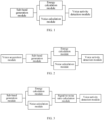
- FIG. 1 is a schematic structural diagram of an apparatus for detecting voice according to a first embodiment of the present disclosure.
- the apparatus includes: a sub-band generation module, an energy calculation module, a noise calculation module, a voice activity detection (VAD) module.
- the sub-band generation module is configured to process a current time-domain signal frame to obtain sub-band time-domain signals.
- the energy calculation module is configured to calculate signal amplitudes of the sub-band time-domain signals in the current time-domain signal frame according to amplitudes of the sub-band time-domain signals in the current time-domain signal frame.
- the noise calculation module is configured to calculate noise amplitudes of the sub-band time-domain signals according to the amplitudes of the sub-band time-domain signals in the current time-domain signal frame.
- the voice activity detection module is configured to determine, according to the amplitudes of the sub-band time-domain signals in the current time-domain signal frame, whether the current time-domain signal frame is an effective voice signal. Specifically, the voice activity detection module is configured to determine whether the current time-domain signal frame is an effective voice signal according to the noise amplitudes and the signal amplitudes of the sub-band time-domain signals.
- the current time-domain signal frame is from a voice acquisition module.
- the voice acquisition module acquires a voice signal, which may practically include time-domain signal frames. Therefore, whether the voice signals are from a user, that is, whether the voice signal is an effective voice signal, is determined in the unit of frame. That is, each of the time-domain signal frames is subjected to packet processing, energy calculation processing, noise calculation processing, and voice activity detection to determine whether a corresponding timing signal frame is an effective voice signal.
- the voice acquisition module may be a microphone.
- the sub-band generation module is a filter bank.
- the filter bank processes the current time-domain signal frame according to a predefined frequency threshold to obtain sub-band time-domain signals.
- the filter bank may include a plurality of filters. Each of the filters has a predetermined frequency threshold. The plurality of filters respectively filter the current time-domain signal frame to obtain the sub-band time-domain signals.
- Each of the sub-band time-domain signals is assigned a corresponding sub-band identifier.
- a number of sub-filters in the filter bank is defined according to actual needs. That is, the number of sub-filters is defined according to a number of sub-bands into which the current time-domain signal frame is split.
- performance and complexity need to be balanced in defining the number of filters. For example, in consideration of power consumption and the like factors, two to three filters are configured. Nevertheless, herein, the number of filters is only an example, instead of causing any limitation.
- the filter may be, for example, a finite impulse response (FIR) filter, or an infinite impulse response (IIR) filter.
- FIR finite impulse response
- IIR infinite impulse response
- the filter may be a bandpass filter.
- the filter may be specifically a cascaded biquad IIR bandpass filter.
- the energy calculation module includes: an average amplitude calculation unit, configured to calculate average amplitudes of the sub-band time-domain signals in the current time-domain signal frame; and an energy calculation unit, configured to calculate the signal amplitudes of the sub-band time-domain signals in the current time-domain signal frame according to the average amplitudes of the sub-band time-domain signals in the current time-domain signal frame.
- the energy calculation unit is further configured to use the average amplitudes of the sub-band time-domain signals in the current time-domain signal frame to characterize the signal amplitudes of the sub-band time-domain signals.
- the acquired voice signal may include voice signal frames
- the current time-domain signal frame refers to a voice signal frame involved in voice signal detection.
- sub-band time-domain signals are obtained by filtering one voice signal frame.
- the energy calculation module calculates energy in the unit of sub-band time-domain signal. That is, the signal amplitude of each sub-band time-domain signal is calculated. It should be noted herein that the calculation herein may be considered as estimation.
- the corresponding signal amplitude of each sub-band time-domain signal is specifically represented by an estimated amplitude thereof.
- the amplitude may be represented by a root mean square or an average value of absolute values of amplitudes of all sampling points in one sub-band time-domain signal.
- the energy calculation unit further calculates the signal amplitudes of the sub-band time-domain signals in the current time-domain signal frame according to an amplitude smooth value and the average amplitudes of the sub-band time-domain signals in the current time-domain signal frame.
- the energy calculation module is further configured to determine the amplitude smooth values according to an amplitude smooth coefficient and signal amplitudes in a previous time-domain signal frame.
- the magnitude of the amplitude smooth coefficient may be flexibly defined according to the application scenarios.
- the signal amplitudes in the previous time-domain signal frame are practically signal amplitudes obtained by performing the voice signal detection by taking the previous time-domain signal frame as the current time-domain signal frame.
- the noise calculation module is further configured to calculate the noise amplitudes of the sub-band time-domain signals according to the signal amplitudes of the sub-band time-domain signals in the current time-domain signal frame.
- the signal amplitudes may be effectively used as a reference to determine the noise amplitudes in the current time-domain signal frame.
- the noise amplitudes in the current time-domain signal frame may be determined according to a relationship between the signal amplitudes of the sub-band time-domain signals in the current time-domain signal frame and the signal amplitudes of the sub-band time-domain signals in the previous time-domain signal frame having the same sub-band identifiers in the current time-domain signal frame. Accordingly, the following cases may be caused:
- the noise calculation module is further configured to: calculate the noise amplitude of the Nth sub-band time-domain signal according to a noise smooth value and the signal amplitude of the Nth sub-band time-domain signal in the current time-domain signal frame , wherein the Nth sub-band time-domain signal is any of the sub-band time-domain signals, and N is an integer greater than 0.
- the noise calculation module is further configured to determine the noise smooth value according to the noise smooth coefficient and the noise amplitudes and the signal amplitudes in the previous time-domain signal frame.
- the noise calculation module is further configured to directly take the signal amplitude of the Nth sub-band time-domain signal in the current time-domain signal frame as a noise amplitude of the Nth sub-band time-domain signal, wherein the Nth sub-band time-domain signal is any of the sub-band time-domain signals, and N is an integer greater than 0.
- FIG. 2 is a schematic structural diagram of an apparatus for detecting voice according to a second embodiment of the present disclosure.
- the apparatus in addition to the sub-band generation module, the energy calculation module, the noise calculation module, and the voice activity detection module, the apparatus further includes a voice acquisition module.
- the voice acquisition module may be understood as a component of the apparatus for detecting voice.
- the voice acquisition module is independent of the apparatus for detecting voice, instead of a component of the apparatus for detecting voice.
- the signal amplitudes of the sub-band time-domain signals included in the current time-domain signal frame are calculated, such that a total signal amplitude and a total noise amplitude in the current time-domain signal frame may be further calculated.
- the energy calculation module is further configured to calculate the total signal amplitude in the current time-domain signal frame according to the signal amplitudes of the sub-band time-domain signals in the current time-domain signal frame
- the noise calculation module is further configured to calculate the total noise amplitude in the current time-domain signal frame according to the noise amplitudes of the sub-band time-domain signals in the current time-domain signal frame
- the voice activity detection module is further configured to determine, according to the total noise amplitude and the total signal amplitude, whether the current time-domain signal frame is an effective voice signal.
- whether the current time-domain signal frame is an effective voice signal is determined according to the total noise amplitude and the total signal amplitude in the current time-domain signal frame, such that technical complexity is effectively lowered, and resource consumption is reduced, or the requirements on the resources are lowered.
- a plurality of noise energy levels is defined.
- a minimum noise energy level is referred to as a lower limit of the noise energy levels, and a maximum noise energy level is referred to as an upper limit of the noise energy levels. Therefore, in judgment on whether the current time-domain signal frame is an effective voice signal, the total noise amplitude and the total signal amplitude are respectively compared with the plurality of noise energy levels. If the total noise amplitude and the total signal amplitude are both less than the lower limit of the noise energy levels, the voice activity detection module identifies that the current time-domain signal frame is a non-effective voice signal.
- whether the current time-domain signal frame is an effective voice signal is determined according to a default configuration.
- the default configuration herein may be flexibly defined according to the application scenarios. If the configuration item is that the current time-domain signal frame may be identified as an effective voice signal if the total noise amplitude is greater than or equal to the upper limit of the noise energy levels, the voice activity detection module identifies that the current time-domain signal frame is an effective voice signal if the total noise amplitude is greater than or equal to the upper limit of the noise energy levels.
- the voice activity detection module identifies that the current time-domain signal frame is a non-effective voice signal if the total noise amplitude is greater than or equal to the upper limit of the noise energy levels.
- FIG. 3 is a schematic structural diagram of an apparatus for detecting voice according to a third embodiment of the present disclosure.
- the apparatus in addition to the sub-band generation module, the energy calculation module, the noise calculation module, and the voice activity detection module, the apparatus further includes: a signal-to-noise ratio calculation module, configured to calculate signal-to-noise ratios of the sub-band time-domain signals according to the noise amplitudes and the signal amplitudes of the sub-band time-domain signals in the current time-domain signal frame; and the voice activity detection module is further configured to determine, according to the total noise amplitude in the current time-domain signal frame and the signal-to-noise ratios of the sub-band time-domain signals in the current time-domain signal frame, whether the current time-domain signal frame is an effective voice signal.
- a signal-to-noise ratio calculation module configured to calculate signal-to-noise ratios of the sub-band time-domain signals according to the noise amplitudes and the signal amplitudes of the sub
- a plurality of signal-to-noise ratio levels is defined, and whether the current time-domain signal frame is an effective voice signal is determined according to the signal-to-noise ratios of the sub-band time-domain signals in the current time-domain signal frame and the signal-to-noise ratio levels.
- a plurality of signal-to-noise ratio levels may be correspondingly defined according to the plurality of noise energy levels of the sub-band time-domain signals.
- the apparatus for detecting voice includes the energy calculation module and the noise calculation module as an example.
- the energy calculation module and the noise calculation are not necessarily indispensable modules for practicing the present disclosure.
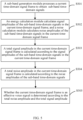
- FIG. 4 is a schematic flowchart of a method for detecting voice according to a fourth embodiment of the present disclosure. As illustrated in FIG. 4 , the method includes the following steps:
- a sub-band generation module processes a current time-domain signal frame to obtain sub-band time-domain signals.
- a filter bank is taken as the sub-band generation module to filter the current time-domain signal frame to obtain the sub-band time-domain signals.
- the current time-domain signal frame is from a voice acquisition module.
- the voice acquisition module obtains current voice signals by sampling at a current sampling time i and analog-to-digital conversion.
- Each N current voice signals x(i) form a time-domain signal frame, wherein an nth time-domain signal frame is marked as x(n), and taken as the current time-domain signal frame.
- an mth sub-band time-domain signal therein is marked as x m (n), wherein m is in the range of 1 to m.
- an energy calculation module calculates signal amplitudes of the sub-band time-domain signals in the current time-domain signal frame according to the amplitudes of the sub-band time-domain signals in the current time-domain signal frame; and a noise calculation module calculates noise amplitudes of the sub-band time-domain signals.
- the signal amplitudes of the sub-band time-domain signals in the current time-domain signal frame are calculated according to average amplitudes of the sub-band time-domain signals in the current time-domain signal frame.
- the signal amplitudes of the sub-band time-domain signals in the current time-domain signal frame are calculated according to the amplitude smooth values and the average amplitudes of the sub-band time-domain signals in the current time-domain signal frame, reference may be made to formula (1).
- an average amplitude calculation unit calculates an average amplitude of each of the sub-band time-domain signals in the current time-domain signal frame according to formula (1).
- x m, i (n) represents an mth sub-band time-domain signal in an nth time-domain signal frame
- E m (n) represents an average amplitude of the mth sub-band time-domain signal in the nth time-domain signal frame
- the nth time-domain signal frame is the current time-domain signal frame
- i represents a sampling point
- N represents the number of sampling points.
- the energy calculation unit calculates the signal amplitudes of the sub-band time-domain signals in the current time-domain signal frame according to formula (2), wherein the signal amplitudes are intended to characterize the corresponding signal amplitudes of the sub-band time-domain signals.
- S m n ⁇ 1 ⁇ S m n ⁇ 1 + 1 ⁇ ⁇ 1 ⁇ E m n
- S m (n) represents a signal amplitude of the mth sub-band time-domain signal in the nth time-domain signal frame
- S m (n - 1) represents a signal amplitude of an mth sub-band time-domain signal in an (n-1)th time-domain signal frame
- E m (n) represents the average amplitude of the mth sub-band time-domain signal in the nth time-domain signal frame
- ⁇ 1 represents a strength smooth coefficient, 0 ⁇ 1 ⁇ 1.
- the signal amplitude S m (n - 1) of the mth sub-band time-domain signal in the (n-1)th time-domain signal frame may be an amplitude subjected to smoothing, wherein n is greater than or equal to 1.
- the amplitude smooth value ⁇ 1 * S m (n - 1) is determined according to an amplitude smooth coefficient ⁇ 1 and signal amplitudes S m (n - 1) in a previous time-domain signal frame.
- step S402 in calculation of the noise amplitudes of the sub-band time-domain signals, the noise calculation module calculates the noise amplitudes in the current time-domain signal frame according to a relationship between the signal amplitudes of the sub-band time-domain signals in the current time-domain signal frame and the signal amplitudes of the sub-band time-domain signals in the previous time-domain signal frame having the same sub-band identifiers in the current time-domain signal frame. Accordingly, the following cases may be caused:
- N m n ⁇ ⁇ N m n ⁇ 1 + 1 ⁇ ⁇ 1 ⁇ ⁇ ⁇ S m n ⁇ ⁇ ⁇ S m n ⁇ 1
- N m (n) represents a noise amplitude of the mth sub-band time-domain signal in the nth time-domain signal frame and is intended to characterize a corresponding noise amplitude
- N m (n - 1) represents a noise amplitude of the mth sub-band time-domain signal in the (n-1)th time-domain signal frame
- S m (n) represents a signal amplitude of the mth sub-band time-domain signal in the nth time-domain signal frame
- S m (n- 1) represents a signal amplitude of the mth sub-band time-domain signal in the (n-1)th time-domain signal frame
- ⁇ and ⁇ represent noise smooth coefficient, wherein 0 ⁇ ⁇ ⁇ 1, 0 ⁇ ⁇ ⁇ 1, and n is greater than or equal to 1.
- N m (n - 1) and S m (n - 1) in the above formula according to the application scenario, to represent N m (n - 1).
- the initial amplitudes of N m (n - 1) and S m (n - 1) may be directly 0.
- N m (n - 1) and S m (n - 1) respectively represent corresponding amplitudes subject to smoothing.
- the noise smooth value is determined according to a noise smooth coefficient and the noise amplitudes and the signal amplitudes in the previous time-domain signal frame.
- ⁇ * N m (n - 1) represents one noise smooth value
- 1 ⁇ ⁇ 1 ⁇ ⁇ ⁇ ⁇ ⁇ S m n ⁇ 1 represents another noise smooth value.
- a first noise smooth coefficient and a second noise smooth coefficient are defined, a first noise smooth value is determined according to the first noise smooth coefficient and the noise amplitudes in the previous time-domain signal frame, and a second noise smooth value is determined according to the first noise smooth coefficient and the second noise smooth coefficient and the signal amplitudes in the previous time-domain signal frame.
- the noise calculation module is further configured to directly take the signal amplitude of the Nth sub-band time-domain signal in the current time-domain signal frame as the noise amplitude of the Nth sub-band time-domain signal, wherein the Nth sub-band time-domain signal is any of the sub-band time-domain signals, and N is an integer greater than 0.
- the noise amplitude of the mth sub-band time-domain signal in the nth time-domain signal frame is calculated according to formula (4).
- N m n S m n
- N m (n) represents a noise amplitude of the mth sub-band time-domain signal in the nth time-domain signal frame
- S m (n) represents a signal amplitude of the mth sub-band time-domain signal in the nth time-domain signal frame
- S m (n - 1) represents a signal amplitude of the mth sub-band time-domain signal in the (n-1)th time-domain signal frame, which may be an amplitude subjected to smoothing.
- the noise amplitudes of the sub-band time-domain signals are calculated according to the signal amplitudes of the sub-band time-domain signals in the current time-domain signal frame. Further, when the signal amplitudes of the sub-band time-domain signals in the current time-domain signal frame are greater than the noise amplitudes of the sub-band time-domain signals in the previous time-domain signal frame having the same sub-band identifiers in the current time-domain signal frame, the noise amplitudes of the sub-band time-domain signals in the current time-domain signal frame are calculated according to the signal amplitudes of the sub-band time-domain signals in the current time-domain signal frame and the noise smooth value.
- step S402 in calculation of the signal amplitudes of the sub-band time-domain signals in the current time-domain signal frame, first, the average amplitudes of the sub-band time-domain signals in the current time-domain signal frame is calculated, and then the signal amplitudes of the sub-band time-domain signals in the current time-domain signal frame is calculated according to the average amplitudes of the sub-band time-domain signals in the current time-domain signal frame.
- the signal amplitudes of the sub-band time-domain signals in the current time-domain signal frame are less than or equal to the noise amplitudes of the sub-band time-domain signals in the previous time-domain signal frame having the same sub-band identifiers in the current time-domain signal frame, the signal amplitudes of the sub-band time-domain signals in the current time-domain signal frame are directly taken as the noise amplitudes of the sub-band time-domain signals in the current time-domain signal frame.
- a voice activity detection module determines, according to the noise amplitudes and the signal amplitudes of the sub-band time-domain signals in the current time-domain signal frame, whether the current time-domain signal frame is an effective voice signal.
- a plurality of noise energy levels and energy levels are defined for the sub-band time-domain signals, and the voice activity detection module may specifically compare the noise amplitudes and the signal amplitudes of the sub-band time-domain signals with the noise energy levels and the energy levels, to determine whether the nth time-domain signal frame in the current voice signal x ( i ) is an effective voice signal.
- FIG. 5 is a schematic flowchart of a method for detecting voice according to a fifth embodiment of the present disclosure. As illustrated in FIG. 5 , the method includes the following steps:
- a sub-band generation module processes a current time-domain signal frame to obtain sub-band time-domain signals.
- an energy calculation module calculates signal amplitudes of the sub-band time-domain signals in the current time-domain signal frame; and a noise calculation module calculates noise amplitudes of the sub-band time-domain signals in the current time-domain signal frame.
- step S501 and step S502 are respectively similar to step S401 and step S402 in the embodiment as illustrated in FIG. 4 .
- a total signal amplitude in the current time-domain signal frame is calculated according to the signal amplitudes of the sub-band time-domain signals in the current time-domain signal frame.
- S t (n) represents a total signal amplitude in the nth time-domain signal frame.
- S t (n) actually represents a sum of the signal amplitudes of M sub-band time-domain signals in an nth time-domain signal frame.
- a total noise amplitude in the current time-domain signal frame is calculated according to the noise amplitudes of the sub-band time-domain signals.
- N t (n) represents a total signal amplitude in the nth time-domain signal frame and is intended to characterize a total noise amplitude.
- N t (n) actually represents a sum of the noise amplitudes of the M sub-band time-domain signals in the nth time-domain signal frame.
- the current time-domain signal is an effective voice signal in step S505, as described above, since a plurality of noise energy levels are defined, if the total noise amplitude and the total signal amplitude are both less than a lower limit of the noise energy levels, the current time-domain signal frame is identified as a non-effective voice signal.
- the number K of noise energy levels may be defined according to the requirement on judgment accuracy.
- the total signal amplitude and the total noise amplitude in the nth time-domain signal frame in the current voice signal x ( i ) are both less than the lower limit of the noise energy levels. In this case, the noise strength is extremely low, and no voice is generated. Therefore, the nth time-domain signal frame is identified as a non-effective voice signal.
- the current time-domain signal frame is an effective voice signal. Therefore, whether the current time-domain signal frame is an effective voice signal is determined according to a default configuration.
- N t (n) > thn ( K ) that is, the total noise amplitude in the nth time-domain signal frame is greater than the upper limit of the noise energy levels, the noise strength is higher, and it is difficult to make a judgment.
- FIG. 6 is a schematic flowchart of a method for detecting voice according to a sixth embodiment of the present disclosure. As illustrated in FIG. 6 , the method includes the following steps:
- a sub-band generation module processes a current time-domain signal frame to obtain sub-band time-domain signals.
- an energy calculation module calculates signal amplitudes of the sub-band time-domain signals in the current time-domain signal frame; and a noise calculation module calculates noise amplitudes of the sub-band time-domain signals in the current time-domain signal frame.
- signal-to-noise ratios of the sub-band time-domain signals in the current time-domain signal frame are calculated according to the noise amplitudes and the signal amplitudes of the sub-band time-domain signals in the current time-domain signal frame.
- the signal-to-noise ratios are calculated according to formula (7).
- SNR m n S m n N m n
- SNR m (n) represents a signal-to-noise ratio in the nth time-domain signal frame.
- whether the current time-domain signal frame is an effective voice signal is determined according to the total noise amplitude in the current time-domain signal frame and the signal-to-noise ratios of the sub-band time-domain signals.
- step S604 may specifically include: determining, according to the signal-to-noise ratios of the sub-band time-domain signals in the current time-domain signal frame and signal-to-noise ratio levels, whether the current time-domain signal frame is an effective voice signal.
- the signal-to-noise ratios therein are closely related to the total noise amplitude.
- a plurality of noise energy levels are defined with respect to the noise amplitudes.
- a plurality of signal-to-noise ratio levels may also be defined.
- the noise energy levels are mapped to the signal-to-noise ratio levels. In this way, whether the nth time-domain signal frame is an effective voice signal is determined.
- the noise energy levels correspond to the signal-to-noise ratio levels.
- the noise energy levels thn(1) to thn(K) are ranked from a minimum value to a maximum value, wherein thn(1) represents a lower limit of the noise energy levels, and thn(K) represents a upper limit of the noise energy levels.
- the signal-to-noise ratio levels thsnr(1) to thsnr(K) are ranked from a maximum value to a minimum value, wherein thsnr(1) represents a upper limit of the signal-to-noise ratio levels , and thsnr(K) represents a lower limit of the signal-to-noise ratio levels .
- a lower noise energy level corresponds to a higher signal-to-noise ratio level, and a higher noise energy level corresponds to a lower signal-to-noise ratio level.
- the number of noise energy levels is equal to the number of signal-to-noise ratio levels.
- the value of the signal-to-noise ratio level may be flexibly defined according to actual application scenarios, such that misjudgment of the effective voice signal is prevented. Specifically, the following cases may be caused:
- the current time-domain signal frame is identified as an effective voice signal when the signal-to-noise ratios of the sub-band time-domain signals in the current time-domain signal frame are greater than or equal to the upper limit of the signal-to-noise ratio levels , and the current time-domain signal frame is identified as a non-effective voice signal when the signal-to-noise ratios of the sub-band time-domain signals in the current time-domain signal frame are less than the upper limit of the signal-to-noise ratio levels .
- N t (n) ⁇ thn (1) whether the signal-to-noise ratios of the sub-band time-domain signals in the current time-domain signal frame are greater than or equal to the upper limit of the signal-to-noise ratio levels is determined; and the current time-domain signal frame is identified as an effective voice signal when the signal-to-noise ratio SNR m (n) in the nth time-domain signal frame is greater than or equal to thsnr(1), and the current time-domain signal frame is identified as a non-effective voice signal when the signal-to-noise ratio SNR m (n) in the nth time-domain signal frame is less than thsnr(1).
- the current time-domain signal frame is identified as an effective voice signal when the signal-to-noise ratios of the sub-band time-domain signals in the current time-domain signal frame are greater than or equal to the lower limit of the signal-to-noise ratio levels , and the current time-domain signal frame is identified as a non-effective voice signal when the signal-to-noise ratios of the sub-band time-domain signals in the current time-domain signal frame are less than the lower limit of the signal-to-noise ratio levels .
- N t (n) > thn (K) whether the signal-to-noise ratios of the sub-band time-domain signals in the current time-domain signal frame are greater than or equal to the lower limit of the signal-to-noise ratio levels is determined; and the current time-domain signal frame is identified as an effective voice signal when the signal-to-noise ratio SNR m (n) in the nth time-domain signal frame is greater than or equal to thsnr(K), and the current time-domain signal frame is identified as a non-effective voice signal when the signal-to-noise ratio SNR m (n) in the nth time-domain signal frame is less thanthsnr(K).
- the current time-domain signal frame is identified an effective voice signal when the signal-to-noise ratios of the sub-band time-domain signals in the current time-domain signal frame are greater than or equal to the signal-to-noise ratio level intermediate threshold, and the current time-domain signal frame is identified as a non-effective voice signal when the signal-to-noise ratios of the sub-band time-domain signals in the current time-domain signal frame are less than the signal-to-noise ratio level intermediate threshold.
- the noise energy level intermediate threshold is thn(q), wherein 1 ⁇ q ⁇ K , and thn(q) may be any one noise energy level of thn(1) and thn(1) .
- thn(q - 1) ⁇ N t (n) ⁇ thn(q)
- 1 ⁇ q ⁇ K whether the signal-to-noise ratios of the sub-band time-domain signals in the current time-domain signal frame are greater than or equal to a corresponding signal-to-noise ratio level intermediate threshold thsnr(q - 1), and the signal-to-noise ratio level intermediate threshold thsnr(q - 1) corresponds to a noise energy level thn(q - 1).
- the noise energy level intermediate threshold may be considered as any threshold in the noise energy levels.
- a higher signal-to-noise ratio level is selected to compare with the signal-to-noise ratios; and where the noise is greater, a lower signal-to-noise ratio level is selected to compare with the signal-to-noise ratios. In this way, whether the current time-domain signal frame is an effective voice signal may be more accurately determined.
- the noise energy level corresponding to N t (n) is determined, then the signal-to-noise ratio level thsnr(q) corresponding to the noise energy level is determined according to a result of comparison with the noise energy level, and the signal-to-noise ratio SNR m (n) corresponding to N t (n) is compared with the signal-to-noise ratio level thsnr(q).
- the signal-to-noise ratio SNR m (n) of any sub-band time-domain signals in the nth time-domain signal frame is greater than the corresponding signal-to-noise ratio level thsnr(q)
- the nth time-domain signal frame is identified as an effective voice signal.
- an effective voice signal starts to be detected.
- the acquired voice signal may be transmitted.
- a part of history voice signals may be buffered.
- the history voice signals may be acquired from a buffer region and then transmitted, such that voice detection is advanced, and voice signal having smaller amplitudes upon start of voice may not be missed.
- the size of the buffer region may be flexibly configured according to application scenarios. That is, detected effective voice is buffered after it is identified that an effective voice signal is detected.
- FIG. 5 is a schematic structural diagram of a chip for processing voice according to a fifth embodiment of the present disclosure.
- the chip includes: an apparatus for detecting voice and a processor.
- the apparatus includes: a sub-band generation module, an energy calculation module, a noise calculation module, a voice activity detection module.
- the sub-band generation module is configured to process a current time-domain signal frame to obtain sub-band time-domain signals.
- the energy calculation module is configured to calculate signal amplitudes of the sub-band time-domain signals in the current time-domain signal frame.
- the noise calculation module is configured to calculate noise amplitudes of the sub-band time-domain signals.
- the voice activity detection module is configured to determine, according to the amplitudes of the sub-band time-domain signals in the current time-domain signal frame, whether the current time-domain signal frame is an effective voice signal. Specifically, the voice activity detection module is configured to determine whether the current time-domain signal frame is an effective voice signal according to the noise amplitudes and the signal amplitudes of the sub-band time-domain signals.
- the processor is configured to identify the effective voice signal to perform voice control according to an identification result. In this embodiment, for other exemplary interpretations of the apparatus for detecting voice, reference may be made to the above embodiment.
- the judgment on whether the current time-domain signal frame is an effective voice signal according to the total signal amplitude and the total noise amplitude if the judgment may be carried out according to the total signal amplitude and the total noise amplitude, the judgment is directly made; and if the judgment may not carried out according to the total signal amplitude and the total noise amplitude, the process directly skips to process a next time-domain signal frame; or the signal frame is simply processed according to the default configuration, to reduce power consumption and lower technical complexity.
- the current time-domain signal frame when the current time-domain signal frame is identified as an effective voice signal, a voice signal originated from a desired signal source is present; and when the current time-domain signal frame is identified as a non-effective voice signal, no voice signal originated from the desired signal source is present.
- An embodiment of the present disclosure further provides an electronic device.
- the electronic device includes the chip for processing voice according to any embodiment of the present disclosure.
- the technical solutions according to the embodiments of the present disclosure may be applicable to various types of electronic devices.
- the electronic device is practiced in various forms, including, but not limited to:
- Systems, apparatuses, modules, or units illustrated in the above embodiments may be specifically implemented with computer core or entity, or may be implemented with products having specific functions.
- a typical device for practicing the technical solutions of the present disclosure is a computer.
- the computer may be specifically a personal computer, a laptop computer, a cellular phone, a camera phone, a smart phone, a personal digital assistant, a medium player, a navigation device, an electronic mail receiving and sending device, a game console, a tablet computer, a wearable device or any combination of these devices.
- the apparatuses are divided into various units according to function for separate description. Nevertheless, the function of each unit is implemented in the same or a plurality of software and/hardware when the present disclosure is practiced.
- the embodiments of the present disclosure may be described as illustrating methods, systems, or computer program products. Therefore, hardware embodiments, software embodiments, or hardware-plus-software embodiments may be used to illustrate the present disclosure.
- the present disclosure may further employ a computer program product which may be implemented by at least one non-transitory computer-readable storage medium with an executable program code stored thereon.
- the non-transitory computer-readable storage medium includes but not limited to a disk memory, a CD-ROM, and an optical memory.
- These computer program instructions may also be stored in a computer-readable memory capable of causing a computer or other programmable data processing devices to work in a specific mode, such that the instructions stored on the non-transitory computer-readable memory implement a product including an instruction apparatus.
- the instruction apparatus implements specific functions in at least one process in the flowcharts and/or at least one block in the block diagrams.
- These computer program instructions may also be stored on a computer or other programmable data processing devices, such that the computer or the other programmable data processing devices execute a series of operations or steps to implement processing of the computer.
- the instructions when executed on the computer or the other programmable data processing devices, implement the specific functions in at least one process in the flowcharts and/or at least one block in the block diagrams.
- the embodiments of the present disclosure may be described as illustrating methods, systems, or computer program products. Therefore, hardware embodiments, software embodiments, or hardware-plus-software embodiments may be used to illustrate the present disclosure.
- the present disclosure may further employ a computer program product which may be implemented by at least one non-transitory computer-readable storage medium with an executable program code stored thereon.
- the non-transitory computer-readable storage medium includes but not limited to a disk memory, a CD-ROM, and an optical memory.
- the present disclosure may be described in the general context of the computer-executable instructions executed by the computer, for example, a program module.
- the program module includes a routine, program, object, component or data structure for executing specific tasks or implementing specific abstract data types.
- the present disclosure may also be practiced in the distributed computer environments. In such distributed computer environments, the tasks are executed by a remote device connected via a communication network.
- the program module may be located in the native and remote computer storage medium including the storage device.
Landscapes
- Engineering & Computer Science (AREA)
- Computational Linguistics (AREA)
- Signal Processing (AREA)
- Health & Medical Sciences (AREA)
- Audiology, Speech & Language Pathology (AREA)
- Human Computer Interaction (AREA)
- Physics & Mathematics (AREA)
- Acoustics & Sound (AREA)
- Multimedia (AREA)
- Quality & Reliability (AREA)
- Telephone Function (AREA)
Claims (12)
- Verfahren zur Sprachenerfassung, umfassend:(a) Verarbeiten eines aktuellen Zeitdomänensignalrahmens, um Unterband-Zeitdomänensignale zu erhalten; und(b) Bestimmen, basierend auf Amplituden der Unterband-Zeitdomänensignale in dem aktuellen Zeitdomänensignalrahmen, ob der aktuelle Zeitdomänensignalrahmen ein effektives Sprachsignal ist;wobei das (b) Bestimmen, basierend auf Amplituden der Unterband-Zeitdomänensignale in dem aktuellen Zeitdomänensignalrahmen, ob der aktuelle Zeitdomänensignalrahmen ein effektives Sprachsignal ist, umfasst:(b1) Berechnen von Signalamplituden und Rauschamplituden der Unterband-Zeitdomänensignale in dem aktuellen Zeitdomänensignalrahmen basierend auf den Amplituden der Unterband-Zeitdomänensignale in dem aktuellen Zeitdomänensignalrahmen; und(b2) Bestimmen, basierend auf den Rauschamplituden und den Signalamplituden der Unterband-Zeitdomänensignale in dem aktuellen Zeitdomänensignalrahmen, ob der aktuelle Zeitdomänensignalrahmen das effektive Sprachsignal ist;wobei das (b2) Bestimmen, basierend auf den Rauschamplituden und den Signalamplituden der Unterband-Zeitdomänensignale in dem aktuellen Zeitdomänensignalrahmen, ob der aktuelle Zeitdomänensignalrahmen das effektive Sprachsignal ist, umfasst:(b21) Berechnen von Signal-Rausch-Verhältnissen der Unterband-Zeitdomänensignale in dem aktuellen Zeitdomänensignalrahmen basierend auf den Rauschamplituden und den Signalamplituden der Unterband-Zeitdomänensignale in dem aktuellen Zeitdomänensignalrahmen;(b22) Bestimmen, basierend auf einer Gesamtrauschamplitude in dem aktuellen Zeitdomänensignalrahmen und den Signal-Rausch-Verhältnissen der Unterband-Zeitdomänensignale in dem aktuellen Zeitdomänensignalrahmen, ob der aktuelle Zeitdomänensignalrahmen das effektive Sprachsignal ist, wobei die Gesamtrauschamplitude basierend auf der Rauschamplituden der Unterband-Zeitdomänensignale in dem aktuellen Zeitdomänensignalrahmen berechnet wird;wobei das Berechnen der Rauschamplituden der Unterband-Zeitdomänensignale umfasst:wenn eine Signalamplitude eines N-ten Unterband-Zeitdomänensignals in dem aktuellen Zeitdomänensignalrahmen größer ist als eine Rauschamplitude eines N-ten Unterband-Zeitdomänensignals in dem vorherigen Zeitdomänensignalrahmen, Berechnen der Rauschamplitude des N-ten Unterband-Zeitdomänensignals in dem aktuellen Zeitdomänensignalrahmen basierend auf einem Rauschglättungswert und der Signalamplitude des N-ten Unterband-Zeitdomänensignals in dem aktuellen Zeitdomänensignalrahmen, wobei das N-te Unterband-Zeitdomänensignal irgendeines der Unterband-Zeitdomänensignale ist, und N eine ganze Zahl größer als 0 ist; undwenn eine Signalamplitude eines N-ten Unterband-Zeitdomänensignals in dem aktuellen Zeitdomänensignalrahmen kleiner oder gleich einer Rauschamplitude eines N-ten Unterband-Zeitdomänensignals in dem vorherigen Zeitdomänensignalrahmen ist, direktes Verwenden der Signalamplitude des N-ten Unterband-Zeitdomänensignals in dem aktuellen Zeitdomänensignalrahmen als eine Rauschamplitude des N-te Unterband-Zeitdomänensignals in dem aktuellen Zeitdomänensignalrahmen, wobei das N-te Unterband-Zeitdomänensignal irgendeines der Unterband-Zeitdomänensignale ist, und N eine ganze Zahl größer als 0 ist.
- Verfahren nach Anspruch 1, wobei das Berechnen der Signalamplituden der Unterband-Zeitdomänensignale in dem aktuellen Zeitdomänensignalrahmen basierend auf den Amplituden der Unterband-Zeitdomänensignale in dem aktuellen Zeitdomänensignalrahmen umfasst:Berechnen einer durchschnittlichen Amplitude jedes der Unterband-Zeitdomänensignale in dem aktuellen Zeitdomänensignalrahmen basierend auf jedem der Unterband-Zeitdomänensignale in dem aktuellen Zeitdomänensignalrahmen, um die durchschnittlichen Amplituden der Unterband-Zeitdomänensignale in dem aktuellen Zeitdomänensignalrahmen zu erhalten; undBerechnen der Signalamplituden der Unterband-Zeitdomänensignale in dem aktuellen Zeitdomänensignalrahmen basierend auf den durchschnittlichen Amplituden der Unterband-Zeitdomänensignale in dem aktuellen Zeitdomänensignalrahmen.
- Verfahren nach Anspruch 2, wobei das Berechnen der Signalamplituden der Unterband-Zeitdomänensignale in dem aktuellen Zeitdomänensignalrahmen basierend auf den durchschnittlichen Amplituden der Unterband-Zeitdomänensignale in dem aktuellen Zeitdomänensignalrahmen umfasst:Verwenden der durchschnittlichen Amplituden der Unterband-Zeitdomänensignale in dem aktuellen Zeitdomänensignalrahmen, um die Signalamplituden der Unterband-Zeitdomänensignale zu charakterisieren; oderBerechnen der Signalamplituden der Unterband-Zeitdomänensignale in dem aktuellen Zeitdomänensignalrahmen basierend auf Amplitudenglättungswerten und den durchschnittlichen Amplituden der Unterband-Zeitdomänensignale in dem aktuellen Zeitdomänensignalrahmen.
- Verfahren nach einem der Ansprüche 2-3, wobeidas Berechnen der Signalamplituden der Unterband-Zeitdomänensignale in dem aktuellen Zeitdomänensignalrahmen umfasst: Berechnen einer Gesamtsignalamplitude in dem aktuellen Zeitdomänensignalrahmen basierend auf den Signalamplituden der Unterband-Zeitdomänensignale in dem aktuellen Zeitdomänensignalrahmen;das Berechnen der Rauschamplituden der Unterband-Zeitdomänensignale umfasst: Berechnen der Gesamtrauschamplitude in dem aktuellen Zeitdomänensignalrahmen basierend auf den Rauschamplituden der Unterband-Zeitdomänensignale; unddas (b2) Bestimmen, basierend auf den Rauschamplituden und den Signalamplituden der Unterband-Zeitdomänensignale in dem aktuellen Zeitdomänensignalrahmen, ob der aktuelle Zeitdomänensignalrahmen das effektive Sprachsignal ist, ferner umfasst:(b23) wenn die Gesamtrauschamplitude und die Gesamtsignalamplitude beide kleiner sind als ein unterer Grenzwert von Geräuschenergiepegel, Bestimmen, dass der aktuelle Zeitdomänensignalrahmen ein nicht-effektives Sprachsignal ist; oder(b24) wenn die Gesamtrauschamplitude größer oder gleich einer Obergrenze der Geräuschenergiepegel ist, Bestimmen, basierend auf einer Standardkonfiguration, ob der aktuelle Zeitdomänensignalrahmen das effektive Sprachsignal ist, wobei die Standardkonfiguration eine der folgenden Konfigurationen umfasst: der aktuelle Zeitdomänensignalrahmen ist das effektive Sprachsignal, wenn die Gesamtrauschamplitude größer oder gleich der Obergrenze der Geräuschenergiepegel ist; und der aktuelle Zeitdomänensignalrahmen ist ein nicht-effektives Sprachsignal, wenn die Gesamtrauschamplitude größer oder gleich der oberen Grenze der Geräuschenergiepegel ist.
- Verfahren nach Anspruch 1, wobei das (b22) Bestimmen, basierend auf der Gesamtrauschamplitude in dem aktuellen Zeitdomänensignalrahmen und den Signal-Rausch-Verhältnissen der Unterband-Zeitdomänensignale in dem aktuellen Zeitdomänensignalrahmen, ob der aktuelle Zeitdomänensignalrahmen das effektive Sprachsignal ist, umfasst:wenn die Gesamtrauschamplitude in dem aktuellen Zeitdomänensignalrahmen kleiner oder gleich einer unteren Grenze von Rauschenergiepegel ist, Bestimmen, ob die Signal-Rausch-Verhältnisse der Unterband-Zeitdomänensignale in dem aktuellen Zeitdomänensignalrahmen größer oder gleich einer oberen Grenze der Signal-Rausch-Verhältnispegel sind, und Bestimmen, dass der aktuelle Zeitdomänensignalrahmen das effektive Sprachsignal ist, wenn die Signal-Rausch-Verhältnisse der Unterband-Zeitdomänensignale in dem aktuellen Zeitdomänensignalrahmen größer oder gleich der oberen Grenze der Signal-Rausch-Verhältnispegel sind, und Bestimmen, dass der aktuelle Zeitdomänensignalrahmen ein nicht-effektives Sprachsignal ist, wenn die Signal-Rausch-Verhältnisse der Unterband-Zeitdomänensignale in dem aktuellen Zeitdomänensignalrahmen kleiner als die obere Grenze der Signal-Rausch-Verhältnispegel sind; oderwenn die Gesamtrauschamplitude in dem aktuellen Zeitdomänensignalrahmen größer oder gleich einer oberen Grenze der Rauschenergiepegel ist, Bestimmen, ob die Signal-Rausch-Verhältnisse der Unterband-Zeitdomänensignale in dem aktuellen Zeitdomänensignalrahmen größer oder gleich einer unteren Grenze der Signal-Rausch-Verhältnispegel sind, und Bestimmen, dass der aktuelle Zeitdomänensignalrahmen ein effektives Sprachsignal ist, wenn die Signal-Rausch-Verhältnisse der Unterband-Zeitdomänensignale in dem aktuellen Zeitdomänensignalrahmen größer als oder gleich der unteren Grenze der Signal-Rausch-Verhältnispegel sind, und Bestimmen, dass der aktuelle Zeitdomänensignalrahmen ein nicht-effektives Sprachsignal ist, wenn die Signal-Rausch-Verhältnisse der Unterband-Zeitdomänensignale in dem aktuellen Zeitdomänensignalrahmen kleiner als die untere Grenze der Signal-Rausch-Verhältnispegel sind; oderwenn die Gesamtrauschamplitude in dem aktuellen Zeitdomänensignalrahmen größer als oder gleich einem Zwischenschwellenwert der Rauschenergiepegel ist, Bestimmen, ob die Signal-Rausch-Verhältnisse der Unterband-Zeitdomänensignale in dem aktuellen Zeitdomänensignalrahmen größer als oder gleich einem entsprechenden Zwischenschwellenwert der Signal-Rausch-Verhältnispegel sind und Bestimmen, dass der aktuelle Zeitdomänensignalrahmen das effektive Sprachsignal ist, wenn die Signal-Rausch-Verhältnisse der Unterband-Zeitdomänensignale in dem aktuellen Zeitdomänensignalrahmen größer oder gleich dem Zwischenschwellenwert der Signal-Rausch-Verhältnispegel sind, und Bestimmen, dass der aktuelle Zeitdomänensignalrahmen ein nicht-effektives Sprachsignal ist, wenn die Signal-Rausch-Verhältnisse der Unterband-Zeitdomänensignale in dem aktuellen Zeitdomänensignalrahmen kleiner als der Zwischenschwellenwert der Signal-Rausch-Verhältnispegel sind.
- Chip zur Sprachverarbeitung, umfassend: ein Unterband-Erzeugungsmodul und ein Sprachaktivitäts-Erfassungsmodul; wobei das Unterband-Erzeugungsmodul konfiguriert ist, um einen aktuellen Zeitdomänensignalrahmen zu verarbeiten, um Unterband-Zeitdomänensignale zu erhalten, und das Sprachaktivitäts-Erfassungsmodul konfiguriert ist, um basierend auf den Amplituden der Unterband-Zeitdomänensignale in dem aktuellen Zeitdomänensignalrahmen zu bestimmen, ob der aktuelle Zeitdomänensignalrahmen ein effektives Sprachsignal ist;wobei der Chip ferner ein Energieberechnungsmodul und ein Rauschberechnungsmodul umfasst, und das Energieberechnungsmodul ferner konfiguriert ist, um die Signalamplituden der Unterband-Zeitdomänensignale in dem aktuellen Zeitdomänensignalrahmen basierend auf den Amplituden der Unterband-Zeitdomänensignale in dem aktuellen Zeitdomänensignalrahmen zu berechnen, und das Rauschberechnungsmodul ist ferner konfiguriert, um Rauschamplituden der Unterband-Zeitdomänensignale in dem aktuellen Zeitdomänensignalrahmen basierend auf den Amplituden der Unterband-Zeitdomänensignale in dem aktuellen Zeitdomänensignalrahmen zu berechnen, um basierend auf den Rauschamplituden und den Signalamplituden der Unterband-Zeitdomänensignale in dem aktuellen Zeitdomänensignalrahmen zu bestimmen, ob der aktuelle Zeitdomänensignalrahmen das effektive Sprachsignal ist; unddas Sprachaktivitäts-Erfassungsmodul ist ferner konfiguriert, um: basierend auf den Rauschamplituden und den Signalamplituden der Unterband-Zeitdomänensignale in dem aktuellen Zeitdomänensignalrahmen, Signal-Rausch-Verhältnisse der Unterband-Zeitdomänensignale in dem aktuellen Zeitdomänensignalrahmen zu berechnen; und, basierend auf einer Gesamtrauschamplitude in dem aktuellen Zeitdomänensignalrahmen und den Signal-Rausch-Verhältnissen der Unterband-Zeitdomänensignale in dem aktuellen Zeitdomänensignalrahmen, zu bestimmen, ob der aktuelle Zeitdomänensignalrahmen das effektive Sprachsignal ist, wobei die Gesamtrauschamplitude basierend auf den Rauschamplituden der Unterband-Zeitdomänensignale in dem aktuellen Zeitdomänensignalrahmen berechnet wird; undwobei das Rauschberechnungsmodul ferner konfiguriert ist, um:wenn eine Signalamplitude eines N-ten Unterband-Zeitdomänensignals in dem aktuellen Zeitdomänensignalrahmen größer ist als eine Rauschamplitude eines N-ten Unterband-Zeitdomänensignals in dem vorherigen Zeitdomänensignalrahmen, die Rauschamplitude des N-ten Unterband-Zeitdomänensignals in dem aktuellen Zeitdomänensignalrahmen basierend auf einem Rauschglättungswert und die Signalamplitude des N-ten Unterband-Zeitdomänensignals in dem aktuellen Zeitdomänensignalrahmen zu berechnen, wobei das N-te Unterband-Zeitdomänensignal irgendeines der Unterband-Zeitdomänensignale ist, und N eine ganze Zahl größer als 0 ist; undwenn eine Signalamplitude eines N-ten Unterband-Zeitdomänensignals in dem aktuellen Zeitdomänensignalrahmen kleiner oder gleich einer Rauschamplitude eines N-ten Unterband-Zeitdomänensignals in dem vorherigen Zeitdomänensignalrahmen ist, die Signalamplitude des N-ten Unterband-Zeitdomänensignals in dem aktuellen Zeitdomänensignalrahmen direkt als eine Rauschamplitude des N-ten Unterband-Zeitdomänensignals in dem aktuellen Zeitdomänensignalrahmen zu nehmen, wobei das N-te Unterband-Zeitdomänensignal irgendeines der Unterband-Zeitdomänensignale ist, und N eine ganze Zahl größer als 0 ist.
- Chip zur Sprachverarbeitung nach Anspruch 6, wobei das Energieberechnungsmodul Folgendes umfasst: eine Energieberechnungseinheit; wobei die Energieberechnungseinheit konfiguriert ist, um eine durchschnittliche Amplitude jedes der Unterband-Zeitdomänensignale in dem aktuellen Zeitdomänensignalrahmen basierend auf jedem der Unterband-Zeitdomänensignale in dem aktuellen Zeitdomänensignalrahmen zu berechnen, um die durchschnittlichen Amplituden der Unterband-Zeitdomänensignale in dem aktuellen Zeitdomänensignalrahmen zu erhalten, und die Signalamplituden der Unterband-Zeitdomänensignale in dem aktuellen Zeitdomänensignalrahmen basierend auf den durchschnittlichen Amplituden der Unterband-Zeitdomänensignale in dem aktuellen Zeitdomänensignalrahmen zu berechnen.
- Chip zur Sprachverarbeitung nach Anspruch 7, wobei die Energieberechnungseinheit ferner konfiguriert ist, um:die durchschnittlichen Amplituden der Unterband-Zeitdomänensignale in dem aktuellen Zeitdomänensignalrahmen zu verwenden, um die Signalamplituden der Unterband-Zeitdomänensignale zu charakterisieren;die Signalamplituden der Unterband-Zeitdomänensignale in dem aktuellen Zeitdomänensignalrahmen basierend auf Amplitudenglättungswerten und den durchschnittlichen Amplituden der Unterband-Zeitdomänensignale in dem aktuellen Zeitdomänensignalrahmen zu berechnen; oderden Amplitudenglättungswert basierend auf einem Amplitudenglättungskoeffizienten und der Signalamplituden in einem vorherigen Zeitdomänensignalrahmen zu bestimmen.
- Chip zur Sprachverarbeitung nach Anspruch 7, wobeidas Energieberechnungsmodul ist ferner konfiguriert, um eine Gesamtsignalamplitude in dem aktuellen Zeitdomänensignalrahmen basierend auf den Signalamplituden der Unterband-Zeitdomänensignale in dem aktuellen Zeitdomänensignalrahmen zu berechnen, das Rauschberechnungsmodul ist ferner konfiguriert, um die Gesamtrauschamplitude in dem aktuellen Zeitdomänensignalrahmen basierend auf den Rauschamplituden der Unterband-Zeitdomänensignale zu berechnen; unddas Sprachaktivitäts-Erfassungsmodul ist ferner konfiguriert, um:basierend auf der Gesamtrauschamplitude und der Gesamtsignalamplitude zu bestimmen, ob der aktuelle Zeitdomänensignalrahmen das effektive Sprachsignal ist; und zu bestimmen, dass der aktuelle Zeitdomänensignalrahmen ein nicht-effektives Sprachsignal ist, wenn die Gesamtrauschamplitude und die Gesamtsignalamplitude beide kleiner als eine untere Grenze der Geräuschenergiepegel sind; oderbasierend auf einer Standardkonfiguration zu bestimmen, ob der aktuelle Zeitdomänensignalrahmen das effektive Sprachsignal ist, wenn die Gesamtrauschamplitude größer oder gleich einer Obergrenze der Geräuschenergiepegel ist, wobei die Standardkonfiguration eine der folgenden Konfigurationen umfasst: der aktuelle Zeitdomänensignalrahmen ist das effektive Sprachsignal, wenn die Gesamtrauschamplitude größer oder gleich der Obergrenze der Geräuschenergiepegel ist; und der aktuelle Zeitdomänensignalrahmen ist ein nicht-effektives Sprachsignal, wenn die Gesamtrauschamplitude größer oder gleich der oberen Grenze der Geräuschenergiepegel ist.
- Chip zur Sprachverarbeitung nach Anspruch 6, wobei das Sprachaktivitäts-Erfassungsmodul ferner konfiguriert ist, um:zu bestimmen, ob die Signal-Rausch-Verhältnisse der Unterband-Zeitdomänensignale in dem aktuellen Zeitdomänensignalrahmen größer oder gleich einer oberen Grenze der Signal-Rausch-Verhältnispegel sind, wenn die Gesamtrauschamplitude in dem aktuellen Zeitdomänensignalrahmen kleiner oder gleich einer unteren Grenze der Rauschenergiepegel ist, und zu bestimmen, dass der aktuelle Zeitdomänensignalrahmen ein effektives Sprachsignal ist, wenn die Signal-Rausch-Verhältnisse der Unterband-Zeitdomänensignale in dem aktuellen Zeitdomänensignalrahmen größer oder gleich der oberen Grenze der Signal-Rausch-Verhältnispegel sind, und zu bestimmen, dass der aktuelle Zeitdomänensignalrahmen ein nicht-effektives Sprachsignal ist, wenn die Signal-Rausch-Verhältnisse der Unterband-Zeitdomänensignale in dem aktuellen Zeitdomänensignalrahmen kleiner als die obere Grenze der Signal-Rausch-Verhältnispegel sind;zu bestimmen, ob die Signal-Rausch-Verhältnisse der Unterband-Zeitdomänensignale in dem aktuellen Zeitdomänensignalrahmen größer oder gleich einer unteren Grenze der Signal-Rausch-Verhältnispegel sind, wenn die Gesamtrauschamplitude in dem aktuellen Zeitdomänensignalrahmen größer oder gleich einer oberen Grenze der Rauschenergiepegel ist, und zu bestimmen, dass der aktuelle Zeitdomänensignalrahmen ein effektives Sprachsignal ist, wenn die Signal-Rausch-Verhältnisse der Unterband-Zeitdomänensignale in dem aktuellen Zeitdomänensignalrahmen größer oder gleich der unteren Grenze der Signal-Rausch-Verhältnispegel sind, und zu bestimmen, dass der aktuelle Zeitdomänensignalrahmen ein nicht-effektives Sprachsignal ist, wenn die Signal-Rausch-Verhältnisse der Unterband-Zeitdomänensignale in dem aktuellen Zeitdomänensignalrahmen kleiner als die untere Grenze der Signal-Rausch-Verhältnispegel sind; oderzu bestimmen, ob die Signal-Rausch-Verhältnisse der Unterband-Zeitdomänensignale in dem aktuellen Zeitdomänensignalrahmen größer oder gleich einem entsprechenden Zwischenschwellenwert der Signal-Rausch-Verhältnispegel sind, wenn die Gesamtrauschamplitude in dem aktuellen Zeitdomänensignalrahmen größer oder gleich einem Zwischenschwellenwert der Rauschenergiepegel ist; und zu bestimmen, dass der aktuelle Zeitdomänensignalrahmen das effektive Sprachsignal ist, wenn die Signal-Rausch-Verhältnisse der Unterband-Zeitdomänensignale in dem aktuellen Zeitdomänensignalrahmen größer oder gleich dem Zwischenschwellenwert der Signal-Rausch-Verhältnispegel sind, und zu bestimmen, dass der aktuelle Zeitdomänensignalrahmen ein nicht-effektives Sprachsignal ist, wenn die Signal-Rausch-Verhältnisse der Unterband-Zeitdomänensignale in dem aktuellen Zeitdomänensignalrahmen kleiner als der Zwischenschwellenwert der Signal-Rausch-Verhältnispegel sind.
- Der Chip zur Sprachverarbeitung nach einem der Ansprüche 6 bis 10, das ferne Folgende umfasst: einen Prozessor, und der Prozessor ist konfiguriert, um das effektive Sprachsignal zu identifizieren, um die Sprachsteuerung basierend auf einem Identifikationsergebnis durchzuführen.
- Elektronisches Gerät, das den Chip zur Sprachverarbeitung nach einem der Ansprüche 6-11 enthält.
Applications Claiming Priority (1)
| Application Number | Priority Date | Filing Date | Title |
|---|---|---|---|
| PCT/CN2019/092361 WO2020252782A1 (zh) | 2019-06-21 | 2019-06-21 | 语音检测方法、语音检测装置、语音处理芯片以及电子设备 |
Publications (3)
| Publication Number | Publication Date |
|---|---|
| EP3800640A1 EP3800640A1 (de) | 2021-04-07 |
| EP3800640A4 EP3800640A4 (de) | 2021-09-29 |
| EP3800640B1 true EP3800640B1 (de) | 2024-10-16 |
Family
ID=68419103
Family Applications (1)
| Application Number | Title | Priority Date | Filing Date |
|---|---|---|---|
| EP19933225.5A Active EP3800640B1 (de) | 2019-06-21 | 2019-06-21 | Verfahren, vorrichtung und chip zur sprachdetektion |
Country Status (4)
| Country | Link |
|---|---|
| US (1) | US11322174B2 (de) |
| EP (1) | EP3800640B1 (de) |
| CN (1) | CN110431625B (de) |
| WO (1) | WO2020252782A1 (de) |
Family Cites Families (21)
| Publication number | Priority date | Publication date | Assignee | Title |
|---|---|---|---|---|
| DE19716862A1 (de) * | 1997-04-22 | 1998-10-29 | Deutsche Telekom Ag | Sprachaktivitätserkennung |
| US6718301B1 (en) * | 1998-11-11 | 2004-04-06 | Starkey Laboratories, Inc. | System for measuring speech content in sound |
| EP1748426A3 (de) * | 1999-01-07 | 2007-02-21 | Tellabs Operations, Inc. | Verfahren und Vorrichtung zur adaptiven Rauschunterdrückung |
| US6453291B1 (en) * | 1999-02-04 | 2002-09-17 | Motorola, Inc. | Apparatus and method for voice activity detection in a communication system |
| KR20110008333A (ko) * | 2002-03-05 | 2011-01-26 | 앨리프컴 | 음성 활동 감지(vad) 장치 및 잡음 억제 시스템을 함께 이용하기 위한 방법 |
| US8326620B2 (en) * | 2008-04-30 | 2012-12-04 | Qnx Software Systems Limited | Robust downlink speech and noise detector |
| KR101437830B1 (ko) * | 2007-11-13 | 2014-11-03 | 삼성전자주식회사 | 음성 구간 검출 방법 및 장치 |
| CN101599269B (zh) * | 2009-07-02 | 2011-07-20 | 中国农业大学 | 语音端点检测方法及装置 |
| CN102117618B (zh) * | 2009-12-30 | 2012-09-05 | 华为技术有限公司 | 一种消除音乐噪声的方法、装置及系统 |
| EP2561508A1 (de) * | 2010-04-22 | 2013-02-27 | Qualcomm Incorporated | Sprachaktivitätserkennung |
| JP5874344B2 (ja) * | 2010-11-24 | 2016-03-02 | 株式会社Jvcケンウッド | 音声判定装置、音声判定方法、および音声判定プログラム |
| US20120265526A1 (en) * | 2011-04-13 | 2012-10-18 | Continental Automotive Systems, Inc. | Apparatus and method for voice activity detection |
| CN109119096B (zh) * | 2012-12-25 | 2021-01-22 | 中兴通讯股份有限公司 | 一种vad判决中当前激活音保持帧数的修正方法及装置 |
| CN104424956B9 (zh) * | 2013-08-30 | 2022-11-25 | 中兴通讯股份有限公司 | 激活音检测方法和装置 |
| US9524735B2 (en) * | 2014-01-31 | 2016-12-20 | Apple Inc. | Threshold adaptation in two-channel noise estimation and voice activity detection |
| WO2016007528A1 (en) * | 2014-07-10 | 2016-01-14 | Analog Devices Global | Low-complexity voice activity detection |
| CN105261375B (zh) * | 2014-07-18 | 2018-08-31 | 中兴通讯股份有限公司 | 激活音检测的方法及装置 |
| US10049678B2 (en) * | 2014-10-06 | 2018-08-14 | Synaptics Incorporated | System and method for suppressing transient noise in a multichannel system |
| US9672841B2 (en) * | 2015-06-30 | 2017-06-06 | Zte Corporation | Voice activity detection method and method used for voice activity detection and apparatus thereof |
| US10090005B2 (en) * | 2016-03-10 | 2018-10-02 | Aspinity, Inc. | Analog voice activity detection |
| CN106098076B (zh) * | 2016-06-06 | 2019-05-21 | 成都启英泰伦科技有限公司 | 一种基于动态噪声估计时频域自适应语音检测方法 |
-
2019
- 2019-06-21 EP EP19933225.5A patent/EP3800640B1/de active Active
- 2019-06-21 WO PCT/CN2019/092361 patent/WO2020252782A1/zh not_active Ceased
- 2019-06-21 CN CN201980001072.9A patent/CN110431625B/zh active Active
-
2020
- 2020-09-28 US US17/034,096 patent/US11322174B2/en active Active
Also Published As
| Publication number | Publication date |
|---|---|
| US20210012792A1 (en) | 2021-01-14 |
| WO2020252782A1 (zh) | 2020-12-24 |
| EP3800640A4 (de) | 2021-09-29 |
| EP3800640A1 (de) | 2021-04-07 |
| CN110431625A (zh) | 2019-11-08 |
| US11322174B2 (en) | 2022-05-03 |
| CN110431625B (zh) | 2023-06-23 |
Similar Documents
| Publication | Publication Date | Title |
|---|---|---|
| CN110335620B (zh) | 一种噪声抑制方法、装置和移动终端 | |
| US10629226B1 (en) | Acoustic signal processing with voice activity detector having processor in an idle state | |
| CN107731223B (zh) | 语音活性检测方法、相关装置和设备 | |
| EP3703052A1 (de) | Verfahren und vorrichtung zur echounterdrückung auf der grundlage einer zeitverzögerungsschätzung | |
| CN108470571B (zh) | 一种音频检测方法、装置及存储介质 | |
| CN107742523B (zh) | 语音信号处理方法、装置以及移动终端 | |
| CN107548564A (zh) | 一种语音输入异常的确定方法、装置、终端以及存储介质 | |
| CN106782613B (zh) | 信号检测方法及装置 | |
| CN109817241B (zh) | 音频处理方法、装置及存储介质 | |
| CN111477243A (zh) | 音频信号处理方法及电子设备 | |
| CN110648680B (zh) | 语音数据的处理方法、装置、电子设备及可读存储介质 | |
| CN108806713B (zh) | 一种双讲状态检测方法及装置 | |
| CN113113038B (zh) | 回声消除方法、装置及电子设备 | |
| US11930331B2 (en) | Method, apparatus and device for processing sound signals | |
| CN106940997B (zh) | 一种向语音识别系统发送语音信号的方法和装置 | |
| CN112969130A (zh) | 音频信号处理方法、装置和电子设备 | |
| CN108492837B (zh) | 音频突发白噪声的检测方法、装置及存储介质 | |
| CN113674752B (zh) | 音频信号的降噪方法、装置、可读介质和电子设备 | |
| CN106356071A (zh) | 一种噪声检测方法,及装置 | |
| CN112289336A (zh) | 音频信号处理方法和装置 | |
| EP3800640B1 (de) | Verfahren, vorrichtung und chip zur sprachdetektion | |
| CN114694676B (zh) | 语音检测方法、装置、存储介质及电子设备 | |
| CN109495418B (zh) | Ofdm信号同步方法、装置和计算机可读存储介质 | |
| CN115699173B (zh) | 语音活动检测方法和装置 | |
| CN111736797B (zh) | 负延时时间的检测方法、装置、电子设备及存储介质 |
Legal Events
| Date | Code | Title | Description |
|---|---|---|---|
| STAA | Information on the status of an ep patent application or granted ep patent |
Free format text: STATUS: UNKNOWN |
|
| STAA | Information on the status of an ep patent application or granted ep patent |
Free format text: STATUS: THE INTERNATIONAL PUBLICATION HAS BEEN MADE |
|
| PUAI | Public reference made under article 153(3) epc to a published international application that has entered the european phase |
Free format text: ORIGINAL CODE: 0009012 |
|
| STAA | Information on the status of an ep patent application or granted ep patent |
Free format text: STATUS: REQUEST FOR EXAMINATION WAS MADE |
|
| 17P | Request for examination filed |
Effective date: 20201223 |
|
| AK | Designated contracting states |
Kind code of ref document: A1 Designated state(s): AL AT BE BG CH CY CZ DE DK EE ES FI FR GB GR HR HU IE IS IT LI LT LU LV MC MK MT NL NO PL PT RO RS SE SI SK SM TR |
|
| AX | Request for extension of the european patent |
Extension state: BA ME |
|
| REG | Reference to a national code |
Ref legal event code: R079 Free format text: PREVIOUS MAIN CLASS: G10L0025270000 Ipc: G10L0025780000 Ref country code: DE Ref legal event code: R079 Ref document number: 602019060661 Country of ref document: DE Free format text: PREVIOUS MAIN CLASS: G10L0025270000 Ipc: G10L0025780000 |
|
| A4 | Supplementary search report drawn up and despatched |
Effective date: 20210901 |
|
| RIC1 | Information provided on ipc code assigned before grant |
Ipc: G10L 25/18 20130101ALN20210826BHEP Ipc: G10L 25/78 20130101AFI20210826BHEP |
|
| DAV | Request for validation of the european patent (deleted) | ||
| DAX | Request for extension of the european patent (deleted) | ||
| STAA | Information on the status of an ep patent application or granted ep patent |
Free format text: STATUS: EXAMINATION IS IN PROGRESS |
|
| 17Q | First examination report despatched |
Effective date: 20230516 |
|
| GRAP | Despatch of communication of intention to grant a patent |
Free format text: ORIGINAL CODE: EPIDOSNIGR1 |
|
| GRAP | Despatch of communication of intention to grant a patent |
Free format text: ORIGINAL CODE: EPIDOSNIGR1 |
|
| STAA | Information on the status of an ep patent application or granted ep patent |
Free format text: STATUS: GRANT OF PATENT IS INTENDED |
|
| RIC1 | Information provided on ipc code assigned before grant |
Ipc: G10L 25/18 20130101ALN20240529BHEP Ipc: G10L 25/78 20130101AFI20240529BHEP |
|
| INTG | Intention to grant announced |
Effective date: 20240614 |
|
| GRAJ | Information related to disapproval of communication of intention to grant by the applicant or resumption of examination proceedings by the epo deleted |
Free format text: ORIGINAL CODE: EPIDOSDIGR1 |
|
| STAA | Information on the status of an ep patent application or granted ep patent |
Free format text: STATUS: EXAMINATION IS IN PROGRESS |
|
| GRAS | Grant fee paid |
Free format text: ORIGINAL CODE: EPIDOSNIGR3 |
|
| STAA | Information on the status of an ep patent application or granted ep patent |
Free format text: STATUS: GRANT OF PATENT IS INTENDED |
|
| GRAP | Despatch of communication of intention to grant a patent |
Free format text: ORIGINAL CODE: EPIDOSNIGR1 |
|
| INTC | Intention to grant announced (deleted) | ||
| RIC1 | Information provided on ipc code assigned before grant |
Ipc: G10L 25/18 20130101ALN20240808BHEP Ipc: G10L 25/78 20130101AFI20240808BHEP |
|
| GRAA | (expected) grant |
Free format text: ORIGINAL CODE: 0009210 |
|
| STAA | Information on the status of an ep patent application or granted ep patent |
Free format text: STATUS: THE PATENT HAS BEEN GRANTED |
|
| INTG | Intention to grant announced |
Effective date: 20240814 |
|
| AK | Designated contracting states |
Kind code of ref document: B1 Designated state(s): AL AT BE BG CH CY CZ DE DK EE ES FI FR GB GR HR HU IE IS IT LI LT LU LV MC MK MT NL NO PL PT RO RS SE SI SK SM TR |
|
| REG | Reference to a national code |
Ref country code: GB Ref legal event code: FG4D |
|
| REG | Reference to a national code |
Ref country code: DE Ref legal event code: R096 Ref document number: 602019060661 Country of ref document: DE Ref country code: CH Ref legal event code: EP |
|
| REG | Reference to a national code |
Ref country code: IE Ref legal event code: FG4D |
|
| REG | Reference to a national code |
Ref country code: LT Ref legal event code: MG9D |
|
| REG | Reference to a national code |
Ref country code: NL Ref legal event code: MP Effective date: 20241016 |
|
| REG | Reference to a national code |
Ref country code: AT Ref legal event code: MK05 Ref document number: 1733614 Country of ref document: AT Kind code of ref document: T Effective date: 20241016 |
|
| PG25 | Lapsed in a contracting state [announced via postgrant information from national office to epo] |
Ref country code: NL Free format text: LAPSE BECAUSE OF FAILURE TO SUBMIT A TRANSLATION OF THE DESCRIPTION OR TO PAY THE FEE WITHIN THE PRESCRIBED TIME-LIMIT Effective date: 20241016 |
|
| PG25 | Lapsed in a contracting state [announced via postgrant information from national office to epo] |
Ref country code: NL Free format text: LAPSE BECAUSE OF FAILURE TO SUBMIT A TRANSLATION OF THE DESCRIPTION OR TO PAY THE FEE WITHIN THE PRESCRIBED TIME-LIMIT Effective date: 20241016 |
|
| PG25 | Lapsed in a contracting state [announced via postgrant information from national office to epo] |
Ref country code: HR Free format text: LAPSE BECAUSE OF FAILURE TO SUBMIT A TRANSLATION OF THE DESCRIPTION OR TO PAY THE FEE WITHIN THE PRESCRIBED TIME-LIMIT Effective date: 20241016 Ref country code: PT Free format text: LAPSE BECAUSE OF FAILURE TO SUBMIT A TRANSLATION OF THE DESCRIPTION OR TO PAY THE FEE WITHIN THE PRESCRIBED TIME-LIMIT Effective date: 20250217 Ref country code: IS Free format text: LAPSE BECAUSE OF FAILURE TO SUBMIT A TRANSLATION OF THE DESCRIPTION OR TO PAY THE FEE WITHIN THE PRESCRIBED TIME-LIMIT Effective date: 20250216 |
|
| PG25 | Lapsed in a contracting state [announced via postgrant information from national office to epo] |
Ref country code: FI Free format text: LAPSE BECAUSE OF FAILURE TO SUBMIT A TRANSLATION OF THE DESCRIPTION OR TO PAY THE FEE WITHIN THE PRESCRIBED TIME-LIMIT Effective date: 20241016 |
|
| PG25 | Lapsed in a contracting state [announced via postgrant information from national office to epo] |
Ref country code: BG Free format text: LAPSE BECAUSE OF FAILURE TO SUBMIT A TRANSLATION OF THE DESCRIPTION OR TO PAY THE FEE WITHIN THE PRESCRIBED TIME-LIMIT Effective date: 20241016 |
|
| PG25 | Lapsed in a contracting state [announced via postgrant information from national office to epo] |
Ref country code: ES Free format text: LAPSE BECAUSE OF FAILURE TO SUBMIT A TRANSLATION OF THE DESCRIPTION OR TO PAY THE FEE WITHIN THE PRESCRIBED TIME-LIMIT Effective date: 20241016 |
|
| PG25 | Lapsed in a contracting state [announced via postgrant information from national office to epo] |
Ref country code: NO Free format text: LAPSE BECAUSE OF FAILURE TO SUBMIT A TRANSLATION OF THE DESCRIPTION OR TO PAY THE FEE WITHIN THE PRESCRIBED TIME-LIMIT Effective date: 20250116 |
|
| PG25 | Lapsed in a contracting state [announced via postgrant information from national office to epo] |
Ref country code: LV Free format text: LAPSE BECAUSE OF FAILURE TO SUBMIT A TRANSLATION OF THE DESCRIPTION OR TO PAY THE FEE WITHIN THE PRESCRIBED TIME-LIMIT Effective date: 20241016 Ref country code: AT Free format text: LAPSE BECAUSE OF FAILURE TO SUBMIT A TRANSLATION OF THE DESCRIPTION OR TO PAY THE FEE WITHIN THE PRESCRIBED TIME-LIMIT Effective date: 20241016 Ref country code: GR Free format text: LAPSE BECAUSE OF FAILURE TO SUBMIT A TRANSLATION OF THE DESCRIPTION OR TO PAY THE FEE WITHIN THE PRESCRIBED TIME-LIMIT Effective date: 20250117 |
|
| PG25 | Lapsed in a contracting state [announced via postgrant information from national office to epo] |
Ref country code: PL Free format text: LAPSE BECAUSE OF FAILURE TO SUBMIT A TRANSLATION OF THE DESCRIPTION OR TO PAY THE FEE WITHIN THE PRESCRIBED TIME-LIMIT Effective date: 20241016 |
|
| PG25 | Lapsed in a contracting state [announced via postgrant information from national office to epo] |
Ref country code: RS Free format text: LAPSE BECAUSE OF FAILURE TO SUBMIT A TRANSLATION OF THE DESCRIPTION OR TO PAY THE FEE WITHIN THE PRESCRIBED TIME-LIMIT Effective date: 20250116 |
|
| PG25 | Lapsed in a contracting state [announced via postgrant information from national office to epo] |
Ref country code: SM Free format text: LAPSE BECAUSE OF FAILURE TO SUBMIT A TRANSLATION OF THE DESCRIPTION OR TO PAY THE FEE WITHIN THE PRESCRIBED TIME-LIMIT Effective date: 20241016 |
|
| PGFP | Annual fee paid to national office [announced via postgrant information from national office to epo] |
Ref country code: DE Payment date: 20250624 Year of fee payment: 7 |
|
| PG25 | Lapsed in a contracting state [announced via postgrant information from national office to epo] |
Ref country code: DK Free format text: LAPSE BECAUSE OF FAILURE TO SUBMIT A TRANSLATION OF THE DESCRIPTION OR TO PAY THE FEE WITHIN THE PRESCRIBED TIME-LIMIT Effective date: 20241016 |
|
| REG | Reference to a national code |
Ref country code: DE Ref legal event code: R097 Ref document number: 602019060661 Country of ref document: DE |
|
| PG25 | Lapsed in a contracting state [announced via postgrant information from national office to epo] |
Ref country code: EE Free format text: LAPSE BECAUSE OF FAILURE TO SUBMIT A TRANSLATION OF THE DESCRIPTION OR TO PAY THE FEE WITHIN THE PRESCRIBED TIME-LIMIT Effective date: 20241016 |
|
| PG25 | Lapsed in a contracting state [announced via postgrant information from national office to epo] |
Ref country code: RO Free format text: LAPSE BECAUSE OF FAILURE TO SUBMIT A TRANSLATION OF THE DESCRIPTION OR TO PAY THE FEE WITHIN THE PRESCRIBED TIME-LIMIT Effective date: 20241016 |
|
| PG25 | Lapsed in a contracting state [announced via postgrant information from national office to epo] |
Ref country code: SK Free format text: LAPSE BECAUSE OF FAILURE TO SUBMIT A TRANSLATION OF THE DESCRIPTION OR TO PAY THE FEE WITHIN THE PRESCRIBED TIME-LIMIT Effective date: 20241016 |
|
| PG25 | Lapsed in a contracting state [announced via postgrant information from national office to epo] |
Ref country code: CZ Free format text: LAPSE BECAUSE OF FAILURE TO SUBMIT A TRANSLATION OF THE DESCRIPTION OR TO PAY THE FEE WITHIN THE PRESCRIBED TIME-LIMIT Effective date: 20241016 |
|
| PG25 | Lapsed in a contracting state [announced via postgrant information from national office to epo] |
Ref country code: IT Free format text: LAPSE BECAUSE OF FAILURE TO SUBMIT A TRANSLATION OF THE DESCRIPTION OR TO PAY THE FEE WITHIN THE PRESCRIBED TIME-LIMIT Effective date: 20241016 |
|
| PLBE | No opposition filed within time limit |
Free format text: ORIGINAL CODE: 0009261 |
|
| STAA | Information on the status of an ep patent application or granted ep patent |
Free format text: STATUS: NO OPPOSITION FILED WITHIN TIME LIMIT |
|
| PG25 | Lapsed in a contracting state [announced via postgrant information from national office to epo] |
Ref country code: SE Free format text: LAPSE BECAUSE OF FAILURE TO SUBMIT A TRANSLATION OF THE DESCRIPTION OR TO PAY THE FEE WITHIN THE PRESCRIBED TIME-LIMIT Effective date: 20241016 |
|
| 26N | No opposition filed |
Effective date: 20250717 |
|
| REG | Reference to a national code |
Ref country code: CH Ref legal event code: H13 Free format text: ST27 STATUS EVENT CODE: U-0-0-H10-H13 (AS PROVIDED BY THE NATIONAL OFFICE) Effective date: 20260127 |
|
| PG25 | Lapsed in a contracting state [announced via postgrant information from national office to epo] |
Ref country code: MC Free format text: LAPSE BECAUSE OF FAILURE TO SUBMIT A TRANSLATION OF THE DESCRIPTION OR TO PAY THE FEE WITHIN THE PRESCRIBED TIME-LIMIT Effective date: 20241016 |