EP3800530B1 - Procédés et systèmes pour un casque à réalité virtuelle pour la mise à jour d'un modèle de suivi de l'oeil - Google Patents
Procédés et systèmes pour un casque à réalité virtuelle pour la mise à jour d'un modèle de suivi de l'oeil Download PDFInfo
- Publication number
- EP3800530B1 EP3800530B1 EP20198158.6A EP20198158A EP3800530B1 EP 3800530 B1 EP3800530 B1 EP 3800530B1 EP 20198158 A EP20198158 A EP 20198158A EP 3800530 B1 EP3800530 B1 EP 3800530B1
- Authority
- EP
- European Patent Office
- Prior art keywords
- eye
- eye tracking
- relation
- sensor
- head
- Prior art date
- Legal status (The legal status is an assumption and is not a legal conclusion. Google has not performed a legal analysis and makes no representation as to the accuracy of the status listed.)
- Active
Links
Images

Classifications
-
- A—HUMAN NECESSITIES
- A61—MEDICAL OR VETERINARY SCIENCE; HYGIENE
- A61B—DIAGNOSIS; SURGERY; IDENTIFICATION
- A61B3/00—Apparatus for testing the eyes; Instruments for examining the eyes
- A61B3/10—Objective types, i.e. instruments for examining the eyes independent of the patients' perceptions or reactions
- A61B3/113—Objective types, i.e. instruments for examining the eyes independent of the patients' perceptions or reactions for determining or recording eye movement
-
- G—PHYSICS
- G02—OPTICS
- G02B—OPTICAL ELEMENTS, SYSTEMS OR APPARATUS
- G02B27/00—Optical systems or apparatus not provided for by any of the groups G02B1/00 - G02B26/00, G02B30/00
- G02B27/01—Head-up displays
- G02B27/017—Head mounted
-
- G—PHYSICS
- G02—OPTICS
- G02B—OPTICAL ELEMENTS, SYSTEMS OR APPARATUS
- G02B27/00—Optical systems or apparatus not provided for by any of the groups G02B1/00 - G02B26/00, G02B30/00
- G02B27/01—Head-up displays
- G02B27/017—Head mounted
- G02B27/0172—Head mounted characterised by optical features
-
- G—PHYSICS
- G06—COMPUTING OR CALCULATING; COUNTING
- G06F—ELECTRIC DIGITAL DATA PROCESSING
- G06F3/00—Input arrangements for transferring data to be processed into a form capable of being handled by the computer; Output arrangements for transferring data from processing unit to output unit, e.g. interface arrangements
- G06F3/01—Input arrangements or combined input and output arrangements for interaction between user and computer
- G06F3/011—Arrangements for interaction with the human body, e.g. for user immersion in virtual reality
- G06F3/013—Eye tracking input arrangements
-
- G—PHYSICS
- G06—COMPUTING OR CALCULATING; COUNTING
- G06T—IMAGE DATA PROCESSING OR GENERATION, IN GENERAL
- G06T7/00—Image analysis
- G06T7/50—Depth or shape recovery
-
- G—PHYSICS
- G06—COMPUTING OR CALCULATING; COUNTING
- G06T—IMAGE DATA PROCESSING OR GENERATION, IN GENERAL
- G06T7/00—Image analysis
- G06T7/70—Determining position or orientation of objects or cameras
-
- G—PHYSICS
- G06—COMPUTING OR CALCULATING; COUNTING
- G06T—IMAGE DATA PROCESSING OR GENERATION, IN GENERAL
- G06T7/00—Image analysis
- G06T7/70—Determining position or orientation of objects or cameras
- G06T7/73—Determining position or orientation of objects or cameras using feature-based methods
-
- G—PHYSICS
- G06—COMPUTING OR CALCULATING; COUNTING
- G06T—IMAGE DATA PROCESSING OR GENERATION, IN GENERAL
- G06T7/00—Image analysis
- G06T7/80—Analysis of captured images to determine intrinsic or extrinsic camera parameters, i.e. camera calibration
-
- G—PHYSICS
- G06—COMPUTING OR CALCULATING; COUNTING
- G06V—IMAGE OR VIDEO RECOGNITION OR UNDERSTANDING
- G06V40/00—Recognition of biometric, human-related or animal-related patterns in image or video data
- G06V40/10—Human or animal bodies, e.g. vehicle occupants or pedestrians; Body parts, e.g. hands
- G06V40/18—Eye characteristics, e.g. of the iris
-
- G—PHYSICS
- G02—OPTICS
- G02B—OPTICAL ELEMENTS, SYSTEMS OR APPARATUS
- G02B27/00—Optical systems or apparatus not provided for by any of the groups G02B1/00 - G02B26/00, G02B30/00
- G02B27/01—Head-up displays
- G02B27/0101—Head-up displays characterised by optical features
- G02B2027/0138—Head-up displays characterised by optical features comprising image capture systems, e.g. camera
-
- G—PHYSICS
- G02—OPTICS
- G02B—OPTICAL ELEMENTS, SYSTEMS OR APPARATUS
- G02B27/00—Optical systems or apparatus not provided for by any of the groups G02B1/00 - G02B26/00, G02B30/00
- G02B27/0093—Optical systems or apparatus not provided for by any of the groups G02B1/00 - G02B26/00, G02B30/00 with means for monitoring data relating to the user, e.g. head-tracking, eye-tracking
-
- G—PHYSICS
- G06—COMPUTING OR CALCULATING; COUNTING
- G06T—IMAGE DATA PROCESSING OR GENERATION, IN GENERAL
- G06T2207/00—Indexing scheme for image analysis or image enhancement
- G06T2207/30—Subject of image; Context of image processing
- G06T2207/30196—Human being; Person
- G06T2207/30201—Face
-
- G—PHYSICS
- G06—COMPUTING OR CALCULATING; COUNTING
- G06V—IMAGE OR VIDEO RECOGNITION OR UNDERSTANDING
- G06V40/00—Recognition of biometric, human-related or animal-related patterns in image or video data
- G06V40/10—Human or animal bodies, e.g. vehicle occupants or pedestrians; Body parts, e.g. hands
- G06V40/18—Eye characteristics, e.g. of the iris
- G06V40/19—Sensors therefor
-
- G—PHYSICS
- G06—COMPUTING OR CALCULATING; COUNTING
- G06V—IMAGE OR VIDEO RECOGNITION OR UNDERSTANDING
- G06V40/00—Recognition of biometric, human-related or animal-related patterns in image or video data
- G06V40/10—Human or animal bodies, e.g. vehicle occupants or pedestrians; Body parts, e.g. hands
- G06V40/18—Eye characteristics, e.g. of the iris
- G06V40/193—Preprocessing; Feature extraction
-
- H—ELECTRICITY
- H04—ELECTRIC COMMUNICATION TECHNIQUE
- H04N—PICTORIAL COMMUNICATION, e.g. TELEVISION
- H04N13/00—Stereoscopic video systems; Multi-view video systems; Details thereof
- H04N13/30—Image reproducers
- H04N13/366—Image reproducers using viewer tracking
- H04N13/383—Image reproducers using viewer tracking for tracking with gaze detection, i.e. detecting the lines of sight of the viewer's eyes
Definitions
- the present disclosure relates to the field of eye tracking.
- the present disclosure relates to methods and systems for updating an eye tracking model in relation to an eye for a head-mounted device.
- Head-mounted devices may advantageously be provided with eye tracking functionality.
- the eye tracking functionality is generally based on inclusion of an eye tracking system comprising one or more eye tracking sensors for receiving sensor data for each eye, e.g. in the form of images of each eye.
- gaze data comprising a gaze ray, i.e. a gaze direction and a gaze origin, and/or a gaze position on a plane/display, of each eye
- the eye tracking model generally relates to a position of the eye tracking sensor and other parts and portions of the eye tracking system in relation to the eye and a model of the eye for each of the eyes.
- US2019258314A1 discloses a gaze-tracking system for use in a head-mounted display apparatus.
- the gaze-tracking system includes at least one illuminator to emit light pulses for illuminating a user's eye; at least one camera to capture image of reflections of the light pulses; at least one reflective element arranged on an optical path of the reflections of the light pulses, such that when incident upon the at least one reflective element, the reflections of the light pulses are reflected towards the at least one camera; at least one actuator associated with the at least one reflective element, wherein the at least one actuator moves the at least one reflective element; and a processor configured to: process the at least one image to detect a gaze direction of user; and control the at least one actuator to adjust, based upon the detected gaze direction, position of the at least one reflective element.
- An object of the present disclosure is to mitigate, alleviate, or eliminate one or more of the above-identified issues in the art and disadvantages singly or in any combination.
- a processing system comprising a head-mounted device comprising an eye tracking sensor.
- the processing system comprises a processor and a memory.
- the memory contains instructions executable by the processor, whereby the processing system is operative to perform the method according to the first aspect.
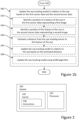
- the eye tracking sensor is moved 120 in relation to the eye.
- the eye tracking sensor may be immovably arranged in the head-mounted device or movably arranged in the head-mounted device.
- the movement of the eye tracking sensor in relation to the eye may be a known movement 122.
- the movement may be completely known such that both distance and direction of the movement is known.
- the known movement may be used to perform exact calculations in later steps of the method.
- the movement is only know to some extent, such as for example only the direction of movement is known and not the exact distance of the movement.
- the partly known movement may be used to make approximate calculations in later steps of the method. Even if the movement is completely unknown, there are approximate algorithms such as simultaneous localization and mapping (SLAM) that may be applied over a series of alternating obtaining of sensor data and movement of the eye tracking sensor.
- SLAM simultaneous localization and mapping
- the movement of the eye tracking sensor is a translational movement 124 in relation to the eye.
- the eye tracking sensor is movably arranged in the head-mounted device
- the eye tracking sensor is arranged in relation to a display (or lens cup or other), which display is movably arranged in the head-mounted device.
- the eye tracking sensor is then moved in relation to the eye by moving 126 the display (or lens cup or other) in the head-mounted device in relation to the eye.
- Such movably arranged (or lens cup or other) may for example be provided in a head-mounted device where the display (or lens cup or other) should be movably arranged also for another purpose.
- such arranging may be necessary in order to calibrate a virtual retina display in relation to interpupillary distance of a user and for supporting a mechanism for continuous adjustment of a display in relation to interpupillary distance based on a current gaze convergence distance of a user.
- the movement of the display then typically horizontal and translational in relation to the eye.
- second sensor data in relation to the eye are obtained 130 by means of the eye tracking sensor.
- the second sensor data are typically of the same type as the first sensor data.
- the eye tracking sensor may be further moved 140 in relation to the eye after the second sensor data have been obtained 130.
- This further movement 140 may be of the same type as the movement 120 after the first sensor data have been obtained 110.
- SLAM simultaneous localization and mapping
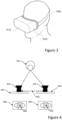
- FIG 3 shows a head-mounted device 1010 according to one or more embodiments.
- the head-mounted device 1010 is a device which may optionally be adapted to be mounted (or arranged) at the head of a user 1000, as shown in Figure 4 .
- the head-mounted device 1010 may e.g. comprise and/or be comprised in a head-mounted display, HMD, such as a VR headset, an AR headset or an MR headset.
- the head-mounted device 1010 or HMD comprises a displaying device 1015, which is able to visualize a plurality of objects in response to a control signal received from a computer.
- the displaying device 1015 may be transparent for real world experiences and non-transparent for virtual world experience.
- the displaying device 1015 may for example be 3D display, such as a stereoscopic display.
- the 3D display may for example be comprised glasses equipped with AR functionality.
- the 3D display may be a volumetric 3D display, being either autostereoscopic or automultiscopic, which may indicate that they create 3D imagery visible to an unaided eye, without requiring stereo goggles or stereo head-mounted displays. Consequently, the 3D display may be part of the head-mounted device 1010.
- the display (lens cup or other) is horizontally moveable in relation to the eye, e.g. in order to enable centralisation in respect to a pupil.
- the eye tracking sensor will also be horizontally moveable and hence the method embodiments of the method of the present disclosure can be performed.
- transflective/reflective optics are used to reflect scanned light from a light source, e.g. using an RGB light engine and a MEMS scanning mirror which can be tilted is already arranged to be horizontally moveable in relation to the eye in order to be able to be adjusted to align with the position of the pupil of the eye.
- head-mounted device illustrated in Figure 3 is only an example. Head-mounted devices according to the present disclosure are not tied to a specific design. Other designs, such as a design more similar to regular glasses typically used for smart glasses, are encompassed.
- Figure 4 is a schematic view of a user's eye 410 in relation to embodiments of a method, processing system and head-mounted device according to the present disclosure.
- a movable part 420 of a head-mounted device such as a movable display 420 is provided.
- an eye tracking sensor in the form of a camera 430 is arranged such that the camera 430 is moved when the display 420 is moved.
- First sensor data in the form of a first image 440 are obtained and after a known movement 450 of the display 420 and the camera 430, second sensor data in the form of a second image 460 are obtained.
- the movement 450 is a translational movement 450 in relation to the eye 410.
- the size of the movement 450 is exaggerated in relation to the distance from the camera 430 to the eye 410 in Figure 4 for illustrative purposes.
- the movement is generally in the order of millimetres.
- a position 470 of a feature of the eye, such as a pupil, in the first image 440 is identified and a position 480 of the feature in the second image 460 is identified.
- the position 470 of the feature of the eye in the first image 440, the position 480 of the feature of the eye in the second image 460 a distance from the camera 430 to the feature of the eye can be determined.
- the eye tracking sensor is arranged in relation to an optical system of the head-mounted device 1010, such that the eye tracking sensor is moved 450 in relation to the eye 410 by moving the optical system in relation to the eye 410.
- the eye tracking sensor may be arranged on the optical system, e.g. on the glass, screen, lens cup, frame, display etc. and the eye tracking sensor may be moved by moving the optical system or at least the part of the optical system on which the eye tracking sensor is arranged.
- the optical system, or at least the part of the optical system on which the eye tracking sensor is arranged may either be movably or immovably arranged in the head-mounted device 1010.
- a computer program may be stored/distributed on a suitable non-transitory medium, such as an optical storage medium or a solid-state medium supplied together with or as part of other hardware, but may also be distributed in other forms, such as via the Internet or other wired or wireless telecommunication systems.
- a suitable non-transitory medium such as an optical storage medium or a solid-state medium supplied together with or as part of other hardware, but may also be distributed in other forms, such as via the Internet or other wired or wireless telecommunication systems.
Landscapes
- Engineering & Computer Science (AREA)
- Physics & Mathematics (AREA)
- General Physics & Mathematics (AREA)
- Theoretical Computer Science (AREA)
- General Engineering & Computer Science (AREA)
- Human Computer Interaction (AREA)
- Optics & Photonics (AREA)
- Computer Vision & Pattern Recognition (AREA)
- Health & Medical Sciences (AREA)
- Life Sciences & Earth Sciences (AREA)
- General Health & Medical Sciences (AREA)
- Ophthalmology & Optometry (AREA)
- Medical Informatics (AREA)
- Biophysics (AREA)
- Biomedical Technology (AREA)
- Heart & Thoracic Surgery (AREA)
- Multimedia (AREA)
- Molecular Biology (AREA)
- Surgery (AREA)
- Animal Behavior & Ethology (AREA)
- Public Health (AREA)
- Veterinary Medicine (AREA)
- Position Input By Displaying (AREA)
- Eye Examination Apparatus (AREA)
- User Interface Of Digital Computer (AREA)
Claims (14)
- Procédé (100) destiné à un dispositif monté sur la tête (1010) permettant de mettre à jour un modèle de suivi oculaire par rapport à un œil (410), le procédé étant mis en œuvre par un système de traitement (200), dans lequel le dispositif monté sur la tête comprend un capteur de suivi oculaire, le procédé comprenant :l'obtention (110), au moyen du capteur de suivi oculaire, de premières données de capteur par rapport à l'œil ;caractérisé parle déplacement (120), au moyen du système de traitement, du capteur de suivi oculaire par rapport à l'œil, dans lequel le capteur de suivi oculaire est déplacé après obtention des premières données de capteur, dans lequel le déplacement du capteur de suivi oculaire est un déplacement par translation (124) par rapport à l'œil ;l'obtention (130), au moyen du capteur de suivi oculaire, de deuxièmes données de capteur par rapport à l'œil, dans lequel les deuxièmes données de capteur sont obtenues après le déplacement du capteur de suivi oculaire ; etla mise à jour (160), au moyen du système de traitement, du modèle de suivi oculaire par rapport à l'œil en fonction des premières données de capteur et des deuxièmes données de capteur.
- Procédé selon la revendication 1, dans lequel le capteur de suivi oculaire est agencé de manière déplaçable dans le dispositif monté sur la tête.
- Procédé selon la revendication 1 ou la revendication 2, dans lequel le capteur de suivi oculaire est agencé par rapport à un système de traitement optique du dispositif monté sur la tête, de telle sorte que le capteur de suivi oculaire est déplacé par rapport à l'œil en déplaçant le système de traitement optique par rapport à l'œil.
- Procédé selon la revendication 1 ou la revendication 2, dans lequel le capteur de suivi oculaire est agencé par rapport à un affichage (420) agencé de manière déplaçable dans le dispositif monté sur la tête, de telle sorte que le capteur de suivi oculaire est déplacé par rapport à l'œil en déplaçant (126) l'affichage dans le dispositif monté sur la tête par rapport à l'œil.
- Procédé selon l'une quelconque des revendications 1 à 4, dans lequel les premières données de capteur représentent (112) une première image (440) de l'œil et les deuxièmes données de capteur représentent (132) une seconde image (460) de l'œil, dans lequel le déplacement est tel qu'un angle entre le capteur de suivi oculaire et l'œil est changé, et dans lequel la mise à jour du modèle de suivi oculaire comprend en outre :l'identification (162), au moyen du système de traitement, d'une position (470) d'une caractéristique de l'œil dans la première image ;l'identification (163), au moyen du système de traitement, d'une position (480) de la caractéristique de l'œil dans la seconde image ;la détermination (164), au moyen du système de traitement, d'une distance allant du capteur de suivi oculaire à la caractéristique de l'œil en fonction de la position de la caractéristique de l'œil dans la première image, de la position de la caractéristique de l'œil dans la seconde image, et du déplacement du capteur de suivi oculaire ; etla mise à jour (165), au moyen du système de traitement, du modèle de suivi oculaire par rapport à l'œil en fonction de la distance déterminée.
- Procédé selon l'une quelconque des revendications 1 à 5, comprenant en outre :un déplacement supplémentaire (140), au moyen du système de traitement, du capteur de suivi oculaire par rapport à l'œil, dans lequel le capteur de suivi oculaire est déplacé davantage après l'obtention des deuxièmes données de capteur ; etl'obtention (150), au moyen du capteur de suivi oculaire, de troisièmes données de capteur par rapport à l'œil, dans lequel les troisièmes données de capteur sont obtenues après le déplacement supplémentaire du capteur de suivi oculaire,dans lequel la mise à jour du modèle de suivi oculaire par rapport à l'œil est en fonction en outre des troisièmes données de capteur.
- Procédé selon l'une quelconque des revendications 1 à 6, dans lequel le déplacement du capteur de suivi oculaire est un déplacement connu (122).
- Procédé selon l'une quelconque des revendications 1 à 7, dans lequel le modèle de suivi oculaire est mis à jour (168) à l'aide d'un algorithme de localisation et cartographie simultanées, SLAM.
- Procédé selon l'une quelconque des revendications 1 à 8, dans lequel le modèle de suivi oculaire est paramétré par un paramètre de cornée indiquant un rayon de courbure d'une cornée de l'œil de l'utilisateur, et dans lequel la mise à jour du modèle de suivi oculaire comprend la mise à jour d'une valeur du paramètre de cornée.
- Procédé selon l'une quelconque des revendications 1 à 9, dans lequel le modèle de suivi oculaire est paramétré par un paramètre de position de pupille indiquant une position de pupille de l'œil de l'utilisateur, et dans lequel la mise à jour du modèle de suivi oculaire comprend la mise à jour d'une valeur du paramètre de position de pupille.
- Système de traitement (200) destiné à un dispositif monté sur la tête (1010) permettant de mettre à jour un modèle de suivi oculaire par rapport à un œil (410), dans lequel le dispositif monté sur la tête comprend un capteur de suivi oculaire, le système de traitement comprenant un processeur (210), et une mémoire, ladite mémoire contenant des instructions exécutables par ledit processeur (210), moyennant quoi ledit système de traitement est fonctionnel pour :obtenir, par le capteur de suivi oculaire, des premières données de capteur par rapport à l'œil ;caractérisé en ce que ledit système de traitement est fonctionnel en outre pour :déplacer le capteur de suivi oculaire par rapport à l'œil, dans lequel le capteur de suivi oculaire est déplacé après l'obtention des premières données de capteur et le déplacement du capteur de suivi oculaire est un déplacement par translation (124) par rapport à l'œil ;obtenir, par le capteur de suivi oculaire, des deuxièmes données de capteur par rapport à l'œil, dans lequel les deuxièmes données de capteur sont obtenues après le déplacement du capteur de suivi oculaire ; etmettre à jour le modèle de suivi oculaire par rapport à l'œil en fonction des premières données de capteur et des deuxièmes données de capteur.
- Dispositif monté sur la tête (1010) comprenant le système de traitement selon la revendication 11.
- Programme informatique dans un système de traitement (200) comprenant un dispositif monté sur la tête (1010) permettant de mettre à jour un modèle de suivi oculaire par rapport à un œil (410), dans lequel le dispositif monté sur la tête comprend un capteur de suivi oculaire, le programme informatique comprenant des instructions (230) qui, lorsqu'elles sont exécutées par un processeur (210) du système de traitement, amènent le processeur (210) à :obtenir, par le capteur de suivi oculaire, des premières données de capteur par rapport à l'œil ;caractérisé en ce que le programme informatique comprend en outre des instructions qui, lorsqu'ellessont exécutées par le processeur (210), amènent le processeur (210) à :déplacer le capteur de suivi oculaire par rapport à l'œil, dans lequel le capteur de suivi oculaire est déplacé après l'obtention des premières données de capteur et le déplacement du capteur de suivi oculaire est un déplacement par translation (124) par rapport à l'œil ;obtenir, par le capteur de suivi oculaire, des deuxièmes données de capteur par rapport à l'œil, dans lequel les deuxièmes données de capteur sont obtenues après le déplacement du capteur de suivi oculaire ; etmettre à jour le modèle de suivi oculaire par rapport à l'œil en fonction des premières données de capteur et des deuxièmes données de capteur.
- Porteuse (220) comprenant un programme informatique selon la revendication 13, dans laquelle la porteuse est l'un parmi un signal électronique, un signal optique, un signal radio et un support de stockage lisible par ordinateur.
Applications Claiming Priority (1)
| Application Number | Priority Date | Filing Date | Title |
|---|---|---|---|
| SE1951103A SE543354C2 (en) | 2019-09-30 | 2019-09-30 | Methods and systems for a head-mounted device for updating an eye tracking model |
Publications (2)
| Publication Number | Publication Date |
|---|---|
| EP3800530A1 EP3800530A1 (fr) | 2021-04-07 |
| EP3800530B1 true EP3800530B1 (fr) | 2025-06-25 |
Family
ID=72659028
Family Applications (1)
| Application Number | Title | Priority Date | Filing Date |
|---|---|---|---|
| EP20198158.6A Active EP3800530B1 (fr) | 2019-09-30 | 2020-09-24 | Procédés et systèmes pour un casque à réalité virtuelle pour la mise à jour d'un modèle de suivi de l'oeil |
Country Status (5)
| Country | Link |
|---|---|
| US (1) | US11934571B2 (fr) |
| EP (1) | EP3800530B1 (fr) |
| CN (2) | CN112578558B (fr) |
| ES (1) | ES3036037T3 (fr) |
| SE (1) | SE543354C2 (fr) |
Families Citing this family (3)
| Publication number | Priority date | Publication date | Assignee | Title |
|---|---|---|---|---|
| GB202010326D0 (en) * | 2020-07-06 | 2020-08-19 | Palakollu Vamsee Krishna | A virtual reality headset |
| US20240393872A1 (en) * | 2021-09-24 | 2024-11-28 | Apple Inc. | Avatar generation |
| US12204689B2 (en) | 2022-09-27 | 2025-01-21 | Tobii Dynavox Ab | Method, system, and computer program product for drawing and fine-tuned motor controls |
Citations (1)
| Publication number | Priority date | Publication date | Assignee | Title |
|---|---|---|---|---|
| CN108732764A (zh) * | 2018-06-06 | 2018-11-02 | 北京七鑫易维信息技术有限公司 | 一种智能眼镜、眼球轨迹的追踪方法、装置及存储介质 |
Family Cites Families (15)
| Publication number | Priority date | Publication date | Assignee | Title |
|---|---|---|---|---|
| US6943754B2 (en) * | 2002-09-27 | 2005-09-13 | The Boeing Company | Gaze tracking system, eye-tracking assembly and an associated method of calibration |
| US7747068B1 (en) * | 2006-01-20 | 2010-06-29 | Andrew Paul Smyth | Systems and methods for tracking the eye |
| US9244529B2 (en) * | 2013-01-27 | 2016-01-26 | Dmitri Model | Point-of-gaze estimation robust to head rotations and/or device rotations |
| US10686972B2 (en) * | 2013-09-03 | 2020-06-16 | Tobii Ab | Gaze assisted field of view control |
| US20150145977A1 (en) * | 2013-11-22 | 2015-05-28 | Samsung Display Co., Ltd. | Compensation technique for viewer position in autostereoscopic displays |
| US20180068449A1 (en) * | 2016-09-07 | 2018-03-08 | Valve Corporation | Sensor fusion systems and methods for eye-tracking applications |
| IL265734B (en) * | 2016-10-05 | 2022-09-01 | Magic Leap Inc | Multi-eye test for mixed reality calibration |
| ES3023338T3 (en) * | 2017-09-08 | 2025-05-30 | Tobii Ab | Eye tracking using eyeball center position |
| US10311584B1 (en) * | 2017-11-09 | 2019-06-04 | Facebook Technologies, Llc | Estimation of absolute depth from polarization measurements |
| US20190253700A1 (en) * | 2018-02-15 | 2019-08-15 | Tobii Ab | Systems and methods for calibrating image sensors in wearable apparatuses |
| US10488917B2 (en) * | 2018-02-17 | 2019-11-26 | Varjo Technologies Oy | Gaze-tracking system and method of tracking user's gaze using reflective element |
| KR102094953B1 (ko) * | 2018-03-28 | 2020-03-30 | 주식회사 비주얼캠프 | 시선 추적 방법 및 이를 수행하기 위한 단말 |
| US10884492B2 (en) | 2018-07-20 | 2021-01-05 | Avegant Corp. | Relative position based eye-tracking system |
| US11347056B2 (en) * | 2018-08-22 | 2022-05-31 | Microsoft Technology Licensing, Llc | Foveated color correction to improve color uniformity of head-mounted displays |
| US10901502B2 (en) * | 2019-06-27 | 2021-01-26 | Facebook, Inc. | Reducing head mounted display power consumption and heat generation through predictive rendering of content |
-
2019
- 2019-09-30 SE SE1951103A patent/SE543354C2/en unknown
-
2020
- 2020-09-24 ES ES20198158T patent/ES3036037T3/es active Active
- 2020-09-24 EP EP20198158.6A patent/EP3800530B1/fr active Active
- 2020-09-25 CN CN202011025043.7A patent/CN112578558B/zh active Active
- 2020-09-25 CN CN202210522764.1A patent/CN114994910A/zh active Pending
- 2020-09-30 US US17/039,918 patent/US11934571B2/en active Active
Patent Citations (2)
| Publication number | Priority date | Publication date | Assignee | Title |
|---|---|---|---|---|
| CN108732764A (zh) * | 2018-06-06 | 2018-11-02 | 北京七鑫易维信息技术有限公司 | 一种智能眼镜、眼球轨迹的追踪方法、装置及存储介质 |
| EP3805845A1 (fr) * | 2018-06-06 | 2021-04-14 | Beijing 7Invensun Technology Co., Ltd. | Lunettes intelligentes, procédé et appareil de poursuite de trajectoire de globe oculaire et support d'enregistrement |
Also Published As
| Publication number | Publication date |
|---|---|
| EP3800530A1 (fr) | 2021-04-07 |
| CN112578558A (zh) | 2021-03-30 |
| ES3036037T3 (en) | 2025-09-12 |
| SE1951103A1 (en) | 2020-12-15 |
| US11934571B2 (en) | 2024-03-19 |
| CN112578558B (zh) | 2022-06-03 |
| US20210255698A1 (en) | 2021-08-19 |
| SE543354C2 (en) | 2020-12-15 |
| CN114994910A (zh) | 2022-09-02 |
Similar Documents
| Publication | Publication Date | Title |
|---|---|---|
| EP3330771B1 (fr) | Afficheur et procédé d'affichage à l'aide d'un foyer et affichages de contexte | |
| EP3330772B1 (fr) | Appareil d'affichage et procédé d'affichage faisant appel à des projecteurs | |
| CN110325895B (zh) | 聚焦调整多平面头戴式显示器 | |
| US10382699B2 (en) | Imaging system and method of producing images for display apparatus | |
| CN108369325B (zh) | 焦点调整虚拟现实耳机 | |
| US20160173864A1 (en) | Pickup of objects in three-dimensional display | |
| US20150312558A1 (en) | Stereoscopic rendering to eye positions | |
| HK1245897A1 (en) | Display apparatus and method of displaying using the display apparatus | |
| CN114945853A (zh) | 用于头戴式显示系统中的变形的补偿 | |
| US10602033B2 (en) | Display apparatus and method using image renderers and optical combiners | |
| EP3800530B1 (fr) | Procédés et systèmes pour un casque à réalité virtuelle pour la mise à jour d'un modèle de suivi de l'oeil | |
| JP2022514631A (ja) | 光学システムにより仮想オブジェクトを生成および表示するための方法 | |
| US12235523B2 (en) | Device and method for correcting user's vision and performing calibration | |
| US20160247322A1 (en) | Electronic apparatus, method and storage medium | |
| EP4321923A1 (fr) | Dispositif de réalité augmentée et procédé de détection du regard d'un utilisateur | |
| WO2019046803A1 (fr) | Système de traçage de rayons pour casques optiques | |
| US20230084541A1 (en) | Compact imaging optics using spatially located, free form optical components for distortion compensation and image clarity enhancement | |
| KR101817436B1 (ko) | 안구 전위 센서를 이용한 영상 표시 장치 및 제어 방법 | |
| EP4434439A1 (fr) | Système de suivi oculaire et procédés d'utilisation d'un système de suivi oculaire | |
| CN117730271A (zh) | 用于检测用户注视的增强现实装置和方法 | |
| WO2016203844A1 (fr) | Dispositif de traitement d'informations, procédé de traitement d'informations, et programme | |
| US20250173888A1 (en) | Identifying an object for object recognition based on a user's gaze determined by a headset | |
| WO2023014185A1 (fr) | Dispositif de réalité augmentée et procédé de détection du regard d'un utilisateur | |
| KR20230021551A (ko) | 사용자의 시선을 검출하는 증강 현실 장치 및 방법 | |
| CN117597622A (zh) | 用于提供视力测量和视力校正的增强现实设备和方法 |
Legal Events
| Date | Code | Title | Description |
|---|---|---|---|
| PUAI | Public reference made under article 153(3) epc to a published international application that has entered the european phase |
Free format text: ORIGINAL CODE: 0009012 |
|
| STAA | Information on the status of an ep patent application or granted ep patent |
Free format text: STATUS: THE APPLICATION HAS BEEN PUBLISHED |
|
| AK | Designated contracting states |
Kind code of ref document: A1 Designated state(s): AL AT BE BG CH CY CZ DE DK EE ES FI FR GB GR HR HU IE IS IT LI LT LU LV MC MK MT NL NO PL PT RO RS SE SI SK SM TR |
|
| AX | Request for extension of the european patent |
Extension state: BA ME |
|
| STAA | Information on the status of an ep patent application or granted ep patent |
Free format text: STATUS: REQUEST FOR EXAMINATION WAS MADE |
|
| 17P | Request for examination filed |
Effective date: 20211006 |
|
| RBV | Designated contracting states (corrected) |
Designated state(s): AL AT BE BG CH CY CZ DE DK EE ES FI FR GB GR HR HU IE IS IT LI LT LU LV MC MK MT NL NO PL PT RO RS SE SI SK SM TR |
|
| STAA | Information on the status of an ep patent application or granted ep patent |
Free format text: STATUS: EXAMINATION IS IN PROGRESS |
|
| RAP3 | Party data changed (applicant data changed or rights of an application transferred) |
Owner name: TOBII AB |
|
| 17Q | First examination report despatched |
Effective date: 20220524 |
|
| RIC1 | Information provided on ipc code assigned before grant |
Ipc: G06V 40/18 20220101ALI20231018BHEP Ipc: G02B 27/01 20060101ALI20231018BHEP Ipc: G02B 27/00 20060101ALI20231018BHEP Ipc: G06F 3/01 20060101AFI20231018BHEP |
|
| GRAP | Despatch of communication of intention to grant a patent |
Free format text: ORIGINAL CODE: EPIDOSNIGR1 |
|
| STAA | Information on the status of an ep patent application or granted ep patent |
Free format text: STATUS: GRANT OF PATENT IS INTENDED |
|
| INTG | Intention to grant announced |
Effective date: 20250212 |
|
| GRAS | Grant fee paid |
Free format text: ORIGINAL CODE: EPIDOSNIGR3 |
|
| GRAA | (expected) grant |
Free format text: ORIGINAL CODE: 0009210 |
|
| STAA | Information on the status of an ep patent application or granted ep patent |
Free format text: STATUS: THE PATENT HAS BEEN GRANTED |
|
| P01 | Opt-out of the competence of the unified patent court (upc) registered |
Free format text: CASE NUMBER: APP_21620/2025 Effective date: 20250507 |
|
| AK | Designated contracting states |
Kind code of ref document: B1 Designated state(s): AL AT BE BG CH CY CZ DE DK EE ES FI FR GB GR HR HU IE IS IT LI LT LU LV MC MK MT NL NO PL PT RO RS SE SI SK SM TR |
|
| REG | Reference to a national code |
Ref country code: GB Ref legal event code: FG4D |
|
| REG | Reference to a national code |
Ref country code: CH Ref legal event code: EP |
|
| REG | Reference to a national code |
Ref country code: DE Ref legal event code: R096 Ref document number: 602020053209 Country of ref document: DE |
|
| REG | Reference to a national code |
Ref country code: CH Ref legal event code: EP |
|
| REG | Reference to a national code |
Ref country code: IE Ref legal event code: FG4D |
|
| REG | Reference to a national code |
Ref country code: ES Ref legal event code: FG2A Ref document number: 3036037 Country of ref document: ES Kind code of ref document: T3 Effective date: 20250912 |
|
| PG25 | Lapsed in a contracting state [announced via postgrant information from national office to epo] |
Ref country code: FI Free format text: LAPSE BECAUSE OF FAILURE TO SUBMIT A TRANSLATION OF THE DESCRIPTION OR TO PAY THE FEE WITHIN THE PRESCRIBED TIME-LIMIT Effective date: 20250625 |
|
| PGFP | Annual fee paid to national office [announced via postgrant information from national office to epo] |
Ref country code: DE Payment date: 20250918 Year of fee payment: 6 |
|
| REG | Reference to a national code |
Ref country code: LT Ref legal event code: MG9D |
|
| PG25 | Lapsed in a contracting state [announced via postgrant information from national office to epo] |
Ref country code: NO Free format text: LAPSE BECAUSE OF FAILURE TO SUBMIT A TRANSLATION OF THE DESCRIPTION OR TO PAY THE FEE WITHIN THE PRESCRIBED TIME-LIMIT Effective date: 20250925 Ref country code: GR Free format text: LAPSE BECAUSE OF FAILURE TO SUBMIT A TRANSLATION OF THE DESCRIPTION OR TO PAY THE FEE WITHIN THE PRESCRIBED TIME-LIMIT Effective date: 20250926 |
|
| PG25 | Lapsed in a contracting state [announced via postgrant information from national office to epo] |
Ref country code: BG Free format text: LAPSE BECAUSE OF FAILURE TO SUBMIT A TRANSLATION OF THE DESCRIPTION OR TO PAY THE FEE WITHIN THE PRESCRIBED TIME-LIMIT Effective date: 20250625 |
|
| PGFP | Annual fee paid to national office [announced via postgrant information from national office to epo] |
Ref country code: GB Payment date: 20250919 Year of fee payment: 6 |
|
| PG25 | Lapsed in a contracting state [announced via postgrant information from national office to epo] |
Ref country code: HR Free format text: LAPSE BECAUSE OF FAILURE TO SUBMIT A TRANSLATION OF THE DESCRIPTION OR TO PAY THE FEE WITHIN THE PRESCRIBED TIME-LIMIT Effective date: 20250625 |
|
| PGFP | Annual fee paid to national office [announced via postgrant information from national office to epo] |
Ref country code: FR Payment date: 20250917 Year of fee payment: 6 |
|
| PG25 | Lapsed in a contracting state [announced via postgrant information from national office to epo] |
Ref country code: RS Free format text: LAPSE BECAUSE OF FAILURE TO SUBMIT A TRANSLATION OF THE DESCRIPTION OR TO PAY THE FEE WITHIN THE PRESCRIBED TIME-LIMIT Effective date: 20250925 |
|
| PG25 | Lapsed in a contracting state [announced via postgrant information from national office to epo] |
Ref country code: LV Free format text: LAPSE BECAUSE OF FAILURE TO SUBMIT A TRANSLATION OF THE DESCRIPTION OR TO PAY THE FEE WITHIN THE PRESCRIBED TIME-LIMIT Effective date: 20250625 |
|
| REG | Reference to a national code |
Ref country code: NL Ref legal event code: MP Effective date: 20250625 |
|
| PG25 | Lapsed in a contracting state [announced via postgrant information from national office to epo] |
Ref country code: NL Free format text: LAPSE BECAUSE OF FAILURE TO SUBMIT A TRANSLATION OF THE DESCRIPTION OR TO PAY THE FEE WITHIN THE PRESCRIBED TIME-LIMIT Effective date: 20250625 |
|
| PG25 | Lapsed in a contracting state [announced via postgrant information from national office to epo] |
Ref country code: PT Free format text: LAPSE BECAUSE OF FAILURE TO SUBMIT A TRANSLATION OF THE DESCRIPTION OR TO PAY THE FEE WITHIN THE PRESCRIBED TIME-LIMIT Effective date: 20251027 |
|
| REG | Reference to a national code |
Ref country code: AT Ref legal event code: MK05 Ref document number: 1807139 Country of ref document: AT Kind code of ref document: T Effective date: 20250625 |