EP3791409B1 - Gammastrahlenabschwächer und gammastrahlenschild für die gammastrahlenspektroskopie - Google Patents
Gammastrahlenabschwächer und gammastrahlenschild für die gammastrahlenspektroskopie Download PDFInfo
- Publication number
- EP3791409B1 EP3791409B1 EP19798925.4A EP19798925A EP3791409B1 EP 3791409 B1 EP3791409 B1 EP 3791409B1 EP 19798925 A EP19798925 A EP 19798925A EP 3791409 B1 EP3791409 B1 EP 3791409B1
- Authority
- EP
- European Patent Office
- Prior art keywords
- gamma
- millimeters
- insert
- thickness
- ray
- Prior art date
- Legal status (The legal status is an assumption and is not a legal conclusion. Google has not performed a legal analysis and makes no representation as to the accuracy of the status listed.)
- Active
Links
Images








Classifications
-
- G—PHYSICS
- G01—MEASURING; TESTING
- G01T—MEASUREMENT OF NUCLEAR OR X-RADIATION
- G01T7/00—Details of radiation-measuring instruments
- G01T7/02—Collecting means for receiving or storing samples to be investigated and possibly directly transporting the samples to the measuring arrangement; particularly for investigating radioactive fluids
-
- G—PHYSICS
- G01—MEASURING; TESTING
- G01V—GEOPHYSICS; GRAVITATIONAL MEASUREMENTS; DETECTING MASSES OR OBJECTS; TAGS
- G01V5/00—Prospecting or detecting by the use of ionising radiation, e.g. of natural or induced radioactivity
- G01V5/04—Prospecting or detecting by the use of ionising radiation, e.g. of natural or induced radioactivity specially adapted for well-logging
- G01V5/08—Prospecting or detecting by the use of ionising radiation, e.g. of natural or induced radioactivity specially adapted for well-logging using primary nuclear radiation sources or X-rays
- G01V5/12—Prospecting or detecting by the use of ionising radiation, e.g. of natural or induced radioactivity specially adapted for well-logging using primary nuclear radiation sources or X-rays using gamma or X-ray sources
-
- G—PHYSICS
- G01—MEASURING; TESTING
- G01T—MEASUREMENT OF NUCLEAR OR X-RADIATION
- G01T1/00—Measuring X-radiation, gamma radiation, corpuscular radiation, or cosmic radiation
- G01T1/16—Measuring radiation intensity
- G01T1/1603—Measuring radiation intensity with a combination of at least two different types of detectors
-
- G—PHYSICS
- G01—MEASURING; TESTING
- G01T—MEASUREMENT OF NUCLEAR OR X-RADIATION
- G01T1/00—Measuring X-radiation, gamma radiation, corpuscular radiation, or cosmic radiation
- G01T1/16—Measuring radiation intensity
- G01T1/161—Applications in the field of nuclear medicine, e.g. in vivo counting
- G01T1/163—Whole-body counters
-
- G—PHYSICS
- G01—MEASURING; TESTING
- G01V—GEOPHYSICS; GRAVITATIONAL MEASUREMENTS; DETECTING MASSES OR OBJECTS; TAGS
- G01V5/00—Prospecting or detecting by the use of ionising radiation, e.g. of natural or induced radioactivity
- G01V5/04—Prospecting or detecting by the use of ionising radiation, e.g. of natural or induced radioactivity specially adapted for well-logging
- G01V5/08—Prospecting or detecting by the use of ionising radiation, e.g. of natural or induced radioactivity specially adapted for well-logging using primary nuclear radiation sources or X-rays
- G01V5/085—Prospecting or detecting by the use of ionising radiation, e.g. of natural or induced radioactivity specially adapted for well-logging using primary nuclear radiation sources or X-rays using another radioactive source
-
- G—PHYSICS
- G21—NUCLEAR PHYSICS; NUCLEAR ENGINEERING
- G21F—PROTECTION AGAINST X-RADIATION, GAMMA RADIATION, CORPUSCULAR RADIATION OR PARTICLE BOMBARDMENT; TREATING RADIOACTIVELY CONTAMINATED MATERIAL; DECONTAMINATION ARRANGEMENTS THEREFOR
- G21F1/00—Shielding characterised by the composition of the materials
- G21F1/12—Laminated shielding materials
- G21F1/125—Laminated shielding materials comprising metals
-
- G—PHYSICS
- G21—NUCLEAR PHYSICS; NUCLEAR ENGINEERING
- G21F—PROTECTION AGAINST X-RADIATION, GAMMA RADIATION, CORPUSCULAR RADIATION OR PARTICLE BOMBARDMENT; TREATING RADIOACTIVELY CONTAMINATED MATERIAL; DECONTAMINATION ARRANGEMENTS THEREFOR
- G21F5/00—Transportable or portable shielded containers
- G21F5/015—Transportable or portable shielded containers for storing radioactive sources, e.g. source carriers for irradiation units; Radioisotope containers
-
- G—PHYSICS
- G21—NUCLEAR PHYSICS; NUCLEAR ENGINEERING
- G21H—OBTAINING ENERGY FROM RADIOACTIVE SOURCES; APPLICATIONS OF RADIATION FROM RADIOACTIVE SOURCES, NOT OTHERWISE PROVIDED FOR; UTILISING COSMIC RADIATION
- G21H5/00—Applications of radiation from radioactive sources or arrangements therefor, not otherwise provided for
-
- G—PHYSICS
- G21—NUCLEAR PHYSICS; NUCLEAR ENGINEERING
- G21K—HANDLING OF PARTICLES OR IONISING RADIATION NOT OTHERWISE PROVIDED FOR; IRRADIATION DEVICES; GAMMA RAY OR X-RAY MICROSCOPES
- G21K1/00—Arrangements for handling particles or ionising radiation, e.g. focusing or moderating
- G21K1/10—Scattering devices; Absorbing devices; Ionising radiation filters
Definitions
- the gamma rays of interest can be measured more easily if lower energy gamma rays can be absorbed before they reach the detector.
- the rate of gamma rays incident on the gamma ray spectrometer should be reasonably low. Selective removal of lower energy gamma rays, for example by a gamma-ray attenuator, can prevent significant count-related losses in the detector and spectral distortion, which would otherwise negatively impact the identification and measurement of radionuclides in a sample.
- a gamma-ray attenuator routinely used in the art since 1984 is the gamma attenuator pack No. 3 produced by the U.S. Department of Commerce's National Bureau of Standards.
- the pack consists of a stack of foils - 3 gold foils, 1 copper foil, and 1 cadmium foil. The foils are epoxied together and enclosed in a heat sealed polyethylene bag.
- CZ 20 061 U1 discloses a measuring chamber having a shielding against gamma and X-radiation arising outside the measuring chamber.
- shielding materials are lead tin and copper in this order from the outside of the chamber. Tungsten is mentioned as an alternative to lead.
- the present disclosure is directed to a gamma-ray attenuator and a gamma-ray shield for use in gamma-ray spectroscopy, in particular radionuclide identification and radionuclidic purity measurements.
- a gamma-ray shield of the present disclosure are discussed in detail below. While specific implementations are discussed, it should be understood that this is done for illustration purposes only. A person skilled in the relevant art will recognize that other components and configurations may be used without parting from the spirit and scope of the disclosure. Additional features and advantages of the disclosure will be set forth in the description which follows, and in part will be obvious from the description, or can be learned by practice of the herein disclosed principles. The invention is defined by the appended claims.
- Coupled refers to the linking or connection of two objects.
- the coupling can be direct or indirect.
- An indirect coupling includes connecting two objects through one or more intermediary objects.
- Coupling can also refer to electrical or mechanical connections.
- Coupling can also include magnetic linking without physical contact.
- comprising means “including, but not necessarily limited to”; it specifically indicates open-ended inclusion or membership in a so-described combination, group, series and the like.
- the terms “comprising” and “including” as used herein are inclusive and/or open-ended and do not exclude additional, unrecited elements or method processes.
- substantially cylindrical means that the object resembles a cylinder, but can have one or more deviations from a true cylinder.
- "about” refers to numeric values, including whole numbers, fractions, percentages, etc., whether or not explicitly indicated.
- the term “about” generally refers to a range of numerical values, for instance, ⁇ 0.5-1%, ⁇ 1-5% or ⁇ 5-10% of the recited value, that one would consider equivalent to the recited value, for example, having the same function or result.
- the term “about” may include numerical values that are rounded to the nearest significant figure.
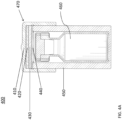
- proximal end 416 of sleeve 410 fits over the proximal end 456 of safe 450.
- sleeve 410 fits firmly over radiation safe 450 to prevent container 460 from falling out when radiation safe 450 is inverted.
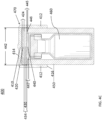
- Container 460 is a 2 ml vial that has a height 461 of 34.40 millimeters, though alternative containers can also be used (for example, a bottle, a jar, a flask, etc. of various sizes and shapes), provided the alternatively shaped container does not alter the fit of sleeve 410 over proximal end 456 of radiation safe 450.
- distal end 454 has a thickness 451 of about 0.9 millimeters to about 1.1 millimeters. In at least one example, distal end 454 has an average thickness 451 of about 0.9 millimeters and, optionally, a thickness measured at the midpoint of radiation safe 460 of about 1 millimeter. In at least one example, distal end 454 has an average thickness 451 of about 0.9 millimeters and, optionally, a thickness measured at the midpoint of radiation safe 460 of about 1 millimeter. In at least one example, distal end 454 has an average thickness 451 of about 0.93 millimeters and, optionally, a thickness measured at the midpoint of radiation safe 460 of 1.00 millimeter to 1.02 millimeters.
- a composition comprises (a) a minimum 99.9% as radioxenons (Xe-133, Xe-133m, and Xe-131m) with Xe-133m less than or equal to 0.3% and Xe-131m less than or equal to 1.5%, and (b) all detected radioactive impurities (Kr-85, I-131, and any others) cannot exceed 0.1%, with limitations of Kr-85 less than or equal to 0.06%, I-131 less than or equal to 0.01%, and all other impurities less than or equal to 0.03%.
- the method includes positioning the distal end of the gamma-ray attenuator of the gamma-ray shield relative to a gamma-ray spectrometry detector.
- suitable gamma-ray spectrometry detectors include scintillation detectors and HPGe detectors.
- the distance between the distal end of the radiation safe and the gamma spectrometry detector's surface may vary depending upon the amount or radiation reaching the detector's surface. In one example, a suitable distance between an HPGe detector's surface and the distal end of a gamma-ray attenuator of FIG. 4 is about 10 cm.
- the method includes counting the radioactivity emitted from the sample.
- the method can include counting the radioactivity emitted from the sample for a sufficient amount of time or until a sufficient number of counts are obtained. In one example, counting occurs until spectrum gamma peaks at 31 keV and 81 keV are significantly above background. "Significantly above background" may be 3 standard deviations above background.
- the sufficient amount of time can be a predetermined amount of time.
- the predetermined amount of time can be according to a standard.
- the predetermined amount of time for a composition comprising about 4,000 ⁇ Ci to about 20,000 ⁇ Ci of total radioactivity can be for at least about 5 minutes, at least about 10 minutes, or at least about 15 minutes, or more.
- the method includes identifying Xe-133.
- the identification of Xe-133 is performed by analyzing major photo peaks at about 31.0 keV and about 81.0 keV. In at least one example, these peaks should be found within about 1.0 keV of these energies.
- a composition comprises about 4,000 ⁇ Ci to about 10,000 ⁇ Ci of total radioactivity. In other examples, a composition comprises about 10,000 ⁇ Ci to about 20,000 ⁇ Ci of total radioactivity. In each of the above examples, the radionuclidic impurity in the composition can be about 5% or less, about 1% or less, about 0.5% or less, or about 0.1% or less.
- a composition comprises (a) a minimum 99.9% as radioxenons (Xe-133, Xe-133m, and Xe-131m) with Xe-133m less than or equal to 0.3% and Xe-131m less than or equal to 1.5%, and (b) all detected radioactive impurities (Kr-85, I-131, and any others) cannot exceed 0.1%, with limitations of Kr-85 less than or equal to 0.06%, I-131 less than or equal to 0.01%, and all other impurities less than or equal to 0.03%.
- the method includes counting the radioactivity emitted from the sample for a sufficient amount of time.
- the method can include counting the radioactivity emitted from the sample for a sufficient amount of time or until a sufficient number of counts are obtained. In one example, counting occurs until spectrum gamma peaks are significantly above background. "Significantly above background" may be 3 standard deviations above background.
- the sufficient amount of time can be a predetermined amount of time. The predetermined amount of time can be according to a standard.
- the sufficient amount of counts can be a predetermined number of counts. The predetermined number of counts can be according to a standard.
- the method includes calculating a radionuclidic purity measurement.
- radionuclidic purity is calculated as the ratio, expressed as a percentage, of the radioactivity of the desired radionuclide to the total radioactivity of the composition.
- radionuclidic impurity is calculated as the ratio, expressed as a percentage, of the total radioactivity for all radionuclidic impurities to the total radioactivity of the composition.
- radionuclidic impurity is calculated as the ratio, expressed as a percentage, of the total radioactivity for a specific radionuclidic impurity, or a subset of radionuclidic impurities, to the total radioactivity of the composition.
- the specific radionuclidic impurity can be Xe-133m, Xe-131m, Kr-85, or I-131. In another example, the specific radionuclidic impurity can be Kr-85, Xe-131m, Xe-133m, I-131, Cs-137, Ba-140, or Zr-95.
- the subset of radionuclidic impurities can include all detected radioxenon impurities. In another example, the subset of radionuclidic impurities can include all detected radioactive impurities excluding radioxenon impurities. In another example, the subset of radionuclidic impurities can include all detected radioactive impurities excluding Xe-133m, Xe-131m, Kr-85, and I-131.
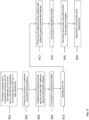
- FIG. 8 illustrates a flowchart for radionuclidic purity measurement.
- a flowchart is presented in accordance with an example.
- the example method 800 is provided by way of example, as there are a variety of ways to carry out the method.
- the method 800 described below can be carried out using the configurations illustrated in FIGs. 1-4 , for example, and various elements of these figures are referenced in explaining example method 800.
- Each block shown in FIG. 8 represents one or more processes, methods or subroutines, carried out in the example method 800.
- the illustrated order of blocks is illustrative only and the order of the blocks can change according to the present disclosure. Additional blocks may be added or fewer blocks may be utilized, without departing from this disclosure.
- the example method 800 can begin at block 802.
- the method includes counting the radioactivity emitted from the sample for a sufficient amount of time.
- the method can include counting the radioactivity emitted from the sample for a sufficient amount of time or until a sufficient number of counts are obtained. In one example, counting occurs until spectrum gamma peaks are significantly above background. "Significantly above background" may be 3 standard deviations above background.
- the sufficient amount of time can be a predetermined amount of time.
- the predetermined amount of time can be according to a standard.
- the predetermined amount of time for a composition comprising about 4,000 ⁇ Ci to about 20,000 ⁇ Ci of total radioactivity can be for at least about 20 minutes, at least about 30 minutes, at least about 45 minutes, at least about 60 minutes, or more.
- the sufficient amount of counts can be a predetermined number of counts. The predetermined number of counts can be according to a standard.
- the method includes identifying radionuclidic impurities by their known gamma energies.
- method 900 illustrates performing radionuclide identification before radionuclidic purity measurement, radionuclidic purity measurement may occur first. Additional blocks may be added or fewer blocks may be utilized, without departing from this disclosure.
- the example method 900 can begin at block 902.
- a composition comprises (a) a minimum 99.9% as radioxenons (Xe-133, Xe-133m, and Xe-131m) with Xe-133m less than or equal to 0.3% and Xe-131m less than or equal to 1.5%, and (b) all detected radioactive impurities (Kr-85, I-131, and any others) cannot exceed 0.1%, with limitations of Kr-85 less than or equal to 0.06%, I-131 less than or equal to 0.01%, and all other impurities less than or equal to 0.03%.
- the method includes counting the radioactivity emitted from the sample.
- the method can include counting the radioactivity emitted from the sample for a sufficient amount of time or until a sufficient number of counts are obtained. In one example, counting occurs until spectrum gamma peaks are significantly above background. "Significantly above background" may be 3 standard deviations above background.
- the sufficient amount of time can be a predetermined amount of time. The predetermined amount of time can be according to a standard. The predetermined amount of time for a composition comprising about 4,000 ⁇ Ci to about 20,000 ⁇ Ci of total radioactivity can be for at least about 5 minutes, at least about 10 minutes, at least about 15 minutes, or more.
- the sufficient amount of counts can be a predetermined number of counts. The predetermined number of counts can be according to a standard.
- the method includes identifying Xe-133.
- the identification of Xe-133 is performed by analyzing major photo peaks at about 31.0 keV and about 81.0 keV. In at least one example, these peaks should be found within about 1.0 keV of these energies.
- the method includes positioning the distal end of a radiation safe of a gamma-ray shield relative to a gamma-ray spectrometry detector.
- suitable gamma-ray spectrometry detectors include scintillation detectors and HPGe detectors.
- the distance between the distal end of the radiation safe and the gamma spectrometry detector's surface may vary depending upon the amount or radiation reaching the detector's surface. In one example, a suitable distance between an HPGe detector's surface and the distal end of a radiation shield of FIG. 4 is about 10 cm.
- the distance may be decreased as needed if a composition comprises less than about 4,000 ⁇ Ci of total radioactivity, and increased if a composition comprises more than about 20,000 ⁇ Ci of total radioactivity.
- the distance may be similarly adjusted if a gamma-ray shield provides less or more attenuation than the gamma ray shield of FIG. 4 .
- the method includes counting the radioactivity emitted from the sample for a sufficient amount of time.
- the method can include counting the radioactivity emitted from the sample for a sufficient amount of time or until a sufficient number of counts are obtained.
- the sufficient amount of time can be a predetermined amount of time.
- the predetermined amount of time can be according to a standard.
- the predetermined amount of time for a composition comprising about 4,000 ⁇ Ci to about 20,000 ⁇ Ci of total radioactivity can be for at least about 20 minutes, at least about 30 minutes, at least about 45 minutes, at least about 60 minutes, or more.
- the sufficient amount of counts can be a predetermined number of counts.
- the predetermined number of counts can be according to a standard.
- the method includes identifying radionuclidic impurities by their known gamma energies.
- the method includes calculating a radionuclidic purity measurement.
- radionuclidic purity is calculated as the ratio, expressed as a percentage, of the radioactivity of the desired radionuclide to the total radioactivity of the composition.
- radionuclidic impurity is calculated as the ratio, expressed as a percentage, of the total radioactivity for all radionuclidic impurities to the total radioactivity of the composition.
- radionuclidic impurity is calculated as the ratio, expressed as a percentage, of the total radioactivity for a specific radionuclidic impurity, or a subset of radionuclidic impurities, to the total radioactivity of the composition.
- the specific radionuclidic impurity can be Xe-133m, Xe-131m, Kr-85, or I-131. In another example, the specific radionuclidic impurity can be Kr-85, Xe-131m, Xe-133m, I-131, Cs-137, Ba-140, or Zr-95.
- the subset of radionuclidic impurities can include all detected radioxenon impurities. In another example, the subset of radionuclidic impurities can include all detected radioactive impurities excluding radioxenon impurities. In another example, the subset of radionuclidic impurities can include all detected radioactive impurities excluding Xe-133m, Xe-131m, Kr-85, and I-131.
- FIG. 10 is schematic cross-sectional view of a gamma-ray detector platform according to the present disclosure.
- Removable plexiglass platform attachment 1030 sits on plexiglass platform 1040.
- plexiglass platform attachment 1030 has two pieces, each about 6.35mm thick; and
- plexiglass platform 1040 is a hollow plexiglass tube with an outer diameter of about 89 mm, an inner diameter of about 83 mm, and a wall that is about 3.2 mm.
- Plexiglass platform 1040 sits in a depression in platform base 1050.
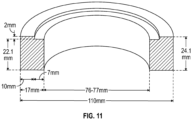
- platform base 1050 is a Delron ring that has a center hole adjustable from about 76 mm to about 77 mm and a thickness of about 17 mm.
- FIG. 11 is a schematic partial cross-sectional view of a gamma-ray detector platform base according to the present disclosure.
- the gamma-ray detector platform base can be a part of the gamma-ray detector platform of FIG. 10 .
- FIG. 12A is a picture of a bottom view of a gamma-ray detector platform base according to the present disclosure.
- the bottom of the gamma-ray detector platform base is configured to be substantially flat so that it can rest on a surface.
- FIG. 12B is a picture of a side elevation view of a gamma-ray detector platform base according to the present disclosure.
- the gamma-ray detector platform base includes a fastener.
- the fastener as illustrated can be a screw or bolt.
- the fastener can allow the gamma-ray detector platform to be secured and adjusted.
- FIG. 12C is a picture of another side elevation view of a gamma-ray detector platform base according to the present disclosure. As illustrated in FIG. 12C , the fastener is a bolt and a nut.
- FIG. 12D is a picture of top view of a gamma-ray detector platform base according to the present disclosure.
- the gamma-ray detector platform can include a recess that is formed therein.
- the recess can be in the form of a groove that is configured to receive the platform as further illustrated in FIG. 11 .
- Radionuclide identification was performed using a Canberra Extended Range High Purity Germanium detector coupled with a DSA1000 Multichannel Analyzer.
- a gamma-ray shield of FIG. 4 , a sample platform attachment, and a Xe-133 sample 4-20 mCi of total radioactivity was obtained.
- a sample platform attachment is placed over the surface of the sample platform ( FIG. 3D ).
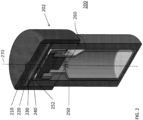
- the Xe-133 sample is placed into the tungsten safe and the gamma-ray attenuator is fitted over safe ( FIG. 3C ).
- the gamma-ray shield is positioned on the gamma detector sample platform such that the gamma-ray attenuator fits into the center hole of the platform attachment ( FIG. 3A ).
- the sample is counted for a minimum of 500 seconds and analyzed using the Apex Gamma software (Canberra). Identification of Xe-133 is confirmed by its major photo peaks at 31.0 and 81.0 keV.
- Radionuclidic purity was measured using a Canberra Extended Range High Purity Germanium detector coupled with a DSA1000 Multichannel Analyzer.
- a gamma-ray shield of FIG. 4 , a sample platform attachment, and a Xe-133 sample 4-20 mCi of total radioactivity was obtained.
- a sample platform attachment is placed over the surface of the sample platform ( FIG. 3D ).
- the Xe-133 sample is placed into the tungsten safe and the gamma-ray attenuator is fitted over safe ( FIG. 3C ).
- the gamma-ray shield is positioned on the gamma detector sample platform such that the safe bottom rests directly on the sample platform surface ( FIG. 3B ).
- % Impurity (radionuclide impurity ⁇ Ci/vial / counting vial activity mCi/vial) x (1 mCi/1000 ⁇ Ci) x 100%.
- the sample is counted for a minimum of 500 seconds and analyzed using the Apex Gamma software (Canberra). Identification of Xe-133 is confirmed by its major photo peaks at 31.0 and 81.0 keV. The gamma-ray shield is then inverted such that the safe bottom rests directly on the sample platform surface ( FIG. 3B ). The sample is counted for a minimum of 1800 seconds and analyzed using the Apex Gamma software (Canberra).
- % Impurity (radionuclide impurity ⁇ Ci/vial / counting vial activity mCi/vial) x (1 mCi/1000 ⁇ Ci) x 100%.
Landscapes
- Physics & Mathematics (AREA)
- High Energy & Nuclear Physics (AREA)
- Life Sciences & Earth Sciences (AREA)
- General Physics & Mathematics (AREA)
- Engineering & Computer Science (AREA)
- Health & Medical Sciences (AREA)
- Spectroscopy & Molecular Physics (AREA)
- General Engineering & Computer Science (AREA)
- Molecular Biology (AREA)
- General Life Sciences & Earth Sciences (AREA)
- Geophysics (AREA)
- General Health & Medical Sciences (AREA)
- Medical Informatics (AREA)
- Nuclear Medicine, Radiotherapy & Molecular Imaging (AREA)
- Optics & Photonics (AREA)
- Biomedical Technology (AREA)
- Chemical & Material Sciences (AREA)
- Analytical Chemistry (AREA)
- Measurement Of Radiation (AREA)
Claims (15)
- Gammastrahlenabschwächer (202), umfassend:- eine Hülse (210, 410) mit einer Wand (412), einem distalen Ende (414) und einem proximalen Ende (416), wobei das distale Ende geschlossen ist und das proximale Ende eine Öffnung (418) bildet,- einen Kupfereinsatz (420), der im Wesentlichen an das distale Ende der Hülse angrenzt und sich bis zur Wand der Hülse erstreckt, wobei der Kupfereinsatz eine im Wesentlichen gleichmäßige Dicke, gemessen in axialer Richtung der Hülse, aufweist,- einen Zinneinsatz (430), der im Wesentlichen an den Kupfereinsatz an dessen der Hülse gegenüberliegenden Seite angrenzt und sich bis zur Wand der Hülse erstreckt, wobei der Zinneinsatz eine im Wesentlichen gleichmäßige Dicke, gemessen in axialer Richtung der Hülse, aufweist,- einen Wolframeinsatz (440), der im Wesentlichen an den Zinneinsatz angrenzt und sich bis zur Wand der Hülse erstreckt, wobei der Wolframeinsatz eine im Wesentlichen gleichmäßige Dicke oder eine Dicke aufweist, die am Rand dünner ist als am Mittelpunkt, gemessen in axialer Richtung der zylindrischen Hülse,- wobei der Kupfereinsatz, der Zinneinsatz und der Wolframeinsatz jeweils mindestens eine durch sie hindurch ausgebildete Durchgangsbohrung aufweisen, die mit den anderen ausgerichtet ist.
- Gammastrahlenabschwächer nach Anspruch 1, wobei der Kupfereinsatz eine Dicke von etwa 0,9 Millimeter bis etwa 1,1 Millimeter hat und die Durchgangsbohrung(en) einen Gesamtdurchmesser von etwa 1 Millimeter bis etwa 2 Millimeter hat (haben), oder der Kupfereinsatz eine Dicke von etwa 0,95 Millimeter bis etwa 1,05 Millimeter und die Durchgangsbohrung(en) einen Gesamtdurchmesser von etwa 1 Millimeter bis etwa 2 Millimeter haben, oder der Kupfereinsatz eine Dicke von etwa 1,0 Millimeter hat und die Durchgangsbohrung(en) einen Gesamtdurchmesser von etwa 1 Millimeter bis etwa 2 Millimeter haben, und wobei der Zinneinsatz eine Dicke von etwa 1,0 Millimeter bis etwa 1,7 Millimeter hat und die Durchgangsbohrung(en) einen Gesamtdurchmesser von etwa 1 Millimeter bis etwa 2 Millimeter haben, oder der Zinneinsatz eine Dicke von etwa 1,5 bis etwa 1,6 Millimeter hat und die Durchgangsbohrung(en) einen Gesamtdurchmesser von etwa 1 Millimeter bis etwa 2 Millimeter haben, oder der Zinneinsatz eine Dicke von etwa 1,55 Millimeter hat und die Durchgangsbohrung(en) einen Gesamtdurchmesser von etwa 1 Millimeter bis etwa 2 Millimeter haben, und wobei der Wolframeinsatz eine Dicke von etwa 0,9 Millimeter bis etwa 1,1 Millimeter hat und die Durchgangsbohrung(en) einen Gesamtdurchmesser von etwa 1 Millimeter bis etwa 2 Millimeter haben, oder der Wolframeinsatz eine Dicke von etwa 0,95 bis etwa 1,05 Millimeter hat und die Durchgangsbohrung(en) einen Gesamtdurchmesser von etwa 1 Millimeter bis etwa 2 Millimeter haben, oder der Wolframeinsatz eine Dicke von etwa 1,0 Millimeter hat und die Durchgangsbohrung(en) einen Gesamtdurchmesser von etwa 1 Millimeter bis etwa 2 Millimeter haben.
- Gammastrahlenabschwächer nach einem der vorangehenden Ansprüche, wobei die Durchgangsbohrung(en) für jeden Einsatz einen Gesamtdurchmesser von etwa 1,2 Millimeter bis etwa 1,6 Millimeter hat (haben), und wobei die Wand der Hülse eine Höhe von etwa 4 Millimeter bis etwa 16 Millimeter, gemessen in der axialen Richtung der Hülse, hat, und wobei die Dicke der Wand der Hülse etwa 0,5 Millimeter bis etwa 5,0 Millimeter beträgt, und wobei der Durchmesser jedes Einsatzes gleich dem Innendurchmesser der Hülse oder um etwa 0,5 Millimeter größer als der Innendurchmesser der Hülse ist.
- Gammastrahlenabschwächer nach einem der vorangehenden Ansprüche, wobei die Hülse aus einem Kautschuk besteht, wobei der Kautschuk optional ein Naturkautschuk ist, und wobei das geschlossene distale Ende der Hülse einstückig mit der Wand ausgebildet ist, und wobei einer oder mehrere aus Kupfereinsatz, Zinneinsatz oder Wolframeinsatz aus der Hülse entfernbar sind.
- Gammastrahlenabschirmung (200), umfassend:- einen Strahlenschutzbehälter (450), der eine Wand (452), ein distales Ende (454), ein proximales Ende (456) und eine Bohrung (458) umfasst, wobei das proximale Ende eine Öffnung zur Bohrung bildet, die Bohrung sich in axialer Richtung des Strahlenschutzbehälters zum distalen Ende des Strahlenschutzbehälters erstreckt und das distale Ende des Strahlenschutzbehälters verschlossen ist, und- einen Gammastrahlenabschwächer nach einem der vorhergehenden Ansprüche, wobei der Gammastrahlenabschwächer funktionsfähig zur Aufnahme des Strahlenschutzbehälters ist,- wobei die Gammastrahlenabschirmung optional ferner einen Behälter (460) in der Bohrung des Strahlenschutzbehälters umfasst.
- Gammastrahlenabschirmung nach Anspruch 5, wobei das geschlossene distale Ende des Strahlenschutzbehälters eine Dicke von etwa 0,9 Millimeter bis etwa 1,1 Millimeter aufweist und/oder wobei das geschlossene distale Ende des Strahlenschutzbehälters eine am Mittelpunkt gemessene Dicke von etwa 1 Millimeter aufweist, und wobei die Wand des Strahlenschutzbehälters eine Dicke von etwa 2 Millimeter bis etwa 3 Millimeter aufweist und/oder wobei der Strahlenschutzbehälter reines Wolfram ist und/oder wobei der Strahlenschutzbehälter funktionsfähig zur Aufnahme eines Behälters im Schacht ist.
- Gammastrahlenabschirmung nach Anspruch 5 oder 6, wobei der Innendurchmesser des Strahlenschutzbehälters etwa 10 Millimeter bis etwa 20 Millimeter beträgt und die Wand des Strahlenschutzbehälters eine Höhe, gemessen in axialer Richtung des Strahlenschutzbehälters, von etwa 30 Millimeter bis etwa 40 Millimeter hat.
- System, umfassend:- eine Gammastrahlenabschirmung nach Anspruch 5 und- einen Gammaspektroskopiedetektor,- wobei die Gammastrahlenabschirmung in einem Abstand von etwa 10 cm von der Detektoroberfläche positioniert ist, entweder gemessen vom distalen Ende des Gammastrahlenabschwächers mit auf den Detektor ausgerichteten Durchgangslöchern der Einsätze aus Kupfer, Zinn und Wolfram oder gemessen vom distalen Ende des Strahlenschutzbehälters, und- wobei der Behälter in der Bohrung des Strahlenschutzbehälters eine Zusammensetzung enthält, die ein Radionuklid umfasst.
- System nach Anspruch 8, wobei der Gammaspektroskopiedetektor ein Szintillationsdetektor oder ein Detektor mit hochreinem Germanium ist und wobei die Zusammensetzung Xenon-133 und optional ein oder mehrere Verdünnungsmittel umfasst, wobei die Zusammensetzung optional mindestens etwa 2 Mikrocurie Gesamtradioaktivität umfasst.
- System nach Anspruch 9, wobei die Zusammensetzung ferner mindestens eine Radionuklid-Verunreinigung umfasst, wobei die Radionuklid-Verunreinigung gegebenenfalls Xenon-133m, Xenon-131m, Krypton-85, Jod-131, Cäsium-137, Barium-140 und Zirkonium-95 oder eine beliebige Kombination davon ist, wobei die Radionuklid-Verunreinigung in der Zusammensetzung gegebenenfalls 2 % oder weniger beträgt und wobei alle Nicht-Radioxenon-Verunreinigungen in der Zusammensetzung 0.1 % oder weniger betragen, wie zum Beispiel wobei weniger als oder gleich 0,03 % Kr-85, weniger als oder gleich 0,01 % J-131 und weniger als oder gleich 0,06 % an allen anderen Verunreinigungen vorhanden sind.
- Verwendung einer Gammastrahlenabschirmung gemäß einem der Ansprüche 5 bis 7 oder Verwendung eines Systems gemäß einem der Ansprüche 8 bis 10, um eine oder mehrere Radionuklid-Verunreinigungen in einer Xenon-133 enthaltenden Zusammensetzung zu identifizieren, wobei die Radionuklid-Verunreinigung Xenon-133m, Xenon-131m, Krypton-85, Jod-131, Cäsium-137, Barium-140 und Zirkonium-95 oder eine beliebige Kombination davon ist.
- Verfahren zur Radionuklid-Identifizierung, umfassend:a) Bereitstellen eines Behälters, der eine Zusammensetzung enthält, die Xe-133 und wahlweise ein oder mehrere Verdünnungsmittel enthält,b) Einsetzen des Behälters in eine Gammastrahlenabschirmung nach einem der Ansprüche 5 bis 7,c) Positionieren der Gammastrahlenabschirmung, so dass das distale Ende des Gammastrahlenabschwächers in einem vorbestimmten Abstand von der Oberfläche eines Gammaspektrometriedetektors liegt, wobei der Detektor optional ein Detektor mit hochreinem Germanium ist,d) Zählen der von der Zusammensetzung emittierten Radioaktivität über eine ausreichende Zeitspanne oder eine ausreichende Anzahl von Zählimpulsen,e) Identifizieren von Xe-133 durch seine Hauptphotopeaks bei etwa 31,0 keV und etwa 81,0 keV.
- Verfahren zur Messung der radionuklidischen Reinheit, umfassend:a) Bereitstellen eines Behälters, der eine Zusammensetzung mit einer bekannten Menge an Radioaktivität enthält, wobei die Zusammensetzung Xe-133 und gegebenenfalls ein oder mehrere Verdünnungsmittel umfasst,b) Einsetzen des Behälters in eine Gammastrahlenabschirmung nach einem der Ansprüche 5 bis 7,c) Positionieren der Gammastrahlenabschirmung, so dass das distale Ende des Strahlenschutzbehälters einen vorbestimmten Abstand von der Oberfläche eines Gammaspektrometriedetektors hat, wobei der Detektor optional ein Detektor mit hochreinem Germanium-ist,d) Zählen der von der Zusammensetzung emittierten Radioaktivität über eine ausreichende Zeitspanne oder eine ausreichende Anzahl von Zählimpulsen,e) Identifizieren von Radionuklid-Verunreinigungen anhand ihrer bekannten Gamma-Energien undf) Berechnung der Messung der radionuklidischen Reinheit.
- Verfahren zur Identifizierung von Radionukliden und zur Messung der radionuklidischen Reinheit unter Verwendung einer Gammastrahlenabschirmung nach einem der Ansprüche 5 bis 7, wobei das Verfahren umfasst:- Bereitstellen eines Behälters mit einer Zusammensetzung, die Xe-133 und gegebenenfalls ein oder mehrere Verdünnungsmittel enthält, wobei die Zusammensetzung etwa 4.000 bis etwa 20.000 µCi Gesamtradioaktivität enthält,- Einsetzen des Behälters in die Gammastrahlenabschirmung,- Positionieren der Gammastrahlenabschirmung, so dass das distale Ende des Gammastrahlenabschwächers etwa 10 cm von der Oberfläche eines Gammaspektrometriedetektors entfernt ist, wobei der Detektor optional ein Detektor mit hochreinem Germanium ist,- Zählen der von der Zusammensetzung emittierten Radioaktivität über eine ausreichende Zeitspanne oder eine ausreichende Anzahl von Zählimpulsen,- Identifizieren von Xe-133 durch seine Hauptphotopeaks bei etwa 31,0 keV und etwa 81,0 keV,- Neupositionieren der Gammastrahlenabschirmung, so dass das distale Ende des Strahlenschutzbehälters etwa 10 cm von der Oberfläche des Gammaspektrometriedetektors entfernt ist,- Zählen der von der Zusammensetzung emittierten Radioaktivität über eine ausreichende Zeitspanne oder eine ausreichende Anzahl von Zählimpulsen,- Identifizieren von Radionuklid-Verunreinigungen anhand ihrer bekannten Gamma-Energien und Berechnung der Messung der radionuklidischen Reinheit.
- Verfahren nach einem der Ansprüche 12 bis 14, wobei:- der Kupfereinsatz der Gammastrahlenabschirmung eine Dicke von etwa 1,0 Millimeter hat,- der Zinneinsatz der Gammastrahlenabschirmung eine Dicke von etwa 1,6 Millimeter hat,- der Wolframeinsatz der Gammastrahlenabschirmung eine Dicke von etwa 1,0 Millimeter hat,- die Durchgangsbohrung(en) für jeden der Einsätze aus Kupfer, Zinn und Wolfram einen Gesamtdurchmesser von etwa 1,2 Millimeter bis etwa 1,6 Millimeter hat (haben),- das geschlossene distale Ende des Strahlenschutzbehälters der Gammastrahlenabschirmung eine am Mittelpunkt gemessene Dicke von etwa 1 Millimeter hat und- die Wand des Strahlenschutzbehälters der Gammastrahlenabschirmung optional eine Dicke von etwa 2 Millimeter bis etwa 3 Millimeter hat.
Applications Claiming Priority (2)
| Application Number | Priority Date | Filing Date | Title |
|---|---|---|---|
| US201862668669P | 2018-05-08 | 2018-05-08 | |
| PCT/US2019/031299 WO2019217542A1 (en) | 2018-05-08 | 2019-05-08 | Gamma-ray attenuator and gamma-ray shield for gamma-ray spectroscopy |
Publications (4)
| Publication Number | Publication Date |
|---|---|
| EP3791409A1 EP3791409A1 (de) | 2021-03-17 |
| EP3791409A4 EP3791409A4 (de) | 2022-02-09 |
| EP3791409B1 true EP3791409B1 (de) | 2024-07-03 |
| EP3791409C0 EP3791409C0 (de) | 2024-07-03 |
Family
ID=68464579
Family Applications (1)
| Application Number | Title | Priority Date | Filing Date |
|---|---|---|---|
| EP19798925.4A Active EP3791409B1 (de) | 2018-05-08 | 2019-05-08 | Gammastrahlenabschwächer und gammastrahlenschild für die gammastrahlenspektroskopie |
Country Status (6)
| Country | Link |
|---|---|
| US (1) | US10928545B2 (de) |
| EP (1) | EP3791409B1 (de) |
| CA (1) | CA3098677A1 (de) |
| ES (1) | ES2986820T3 (de) |
| PL (1) | PL3791409T3 (de) |
| WO (1) | WO2019217542A1 (de) |
Family Cites Families (6)
| Publication number | Priority date | Publication date | Assignee | Title |
|---|---|---|---|---|
| US3955088A (en) * | 1974-10-02 | 1976-05-04 | G. D. Searle & Co. | Positron imaging device with plural coincidence channels and graded radiation absorption |
| US7049602B2 (en) * | 2002-07-31 | 2006-05-23 | Eugene Tokhtuev | Radiation sensor |
| CZ20061U1 (cs) * | 2009-08-06 | 2009-09-14 | Kovár@Petr | Zařízení pro měření aktivity radionuklidů pevných, kapalných a plynných zdrojů |
| WO2013067637A1 (en) * | 2011-10-27 | 2013-05-16 | Atomic Energy Of Canada Limited/ Énergie Atomique Du Canada Limitée | Portable detection apparatus and method |
| US9651680B2 (en) * | 2012-11-15 | 2017-05-16 | Bwxt Technical Services Group, Inc. | Gamma ray spectroscopy monitoring method and apparatus |
| GB2530254A (en) | 2014-09-12 | 2016-03-23 | Xstrahl Ltd | X-Ray system |
-
2019
- 2019-05-08 WO PCT/US2019/031299 patent/WO2019217542A1/en not_active Ceased
- 2019-05-08 PL PL19798925.4T patent/PL3791409T3/pl unknown
- 2019-05-08 ES ES19798925T patent/ES2986820T3/es active Active
- 2019-05-08 US US16/406,680 patent/US10928545B2/en active Active
- 2019-05-08 EP EP19798925.4A patent/EP3791409B1/de active Active
- 2019-05-08 CA CA3098677A patent/CA3098677A1/en active Pending
Also Published As
| Publication number | Publication date |
|---|---|
| EP3791409A1 (de) | 2021-03-17 |
| US10928545B2 (en) | 2021-02-23 |
| EP3791409C0 (de) | 2024-07-03 |
| PL3791409T3 (pl) | 2024-11-04 |
| CA3098677A1 (en) | 2019-11-14 |
| WO2019217542A1 (en) | 2019-11-14 |
| ES2986820T3 (es) | 2024-11-12 |
| EP3791409A4 (de) | 2022-02-09 |
| US20190346587A1 (en) | 2019-11-14 |
Similar Documents
| Publication | Publication Date | Title |
|---|---|---|
| Huh | Dependence of the decay rate of 7Be on chemical forms | |
| CN106291658A (zh) | 一种现场快速测量环境样品的固定支架 | |
| JPH0434115B2 (de) | ||
| CN118112632B (zh) | 一种基于γ能谱探测器的正电子放射性药物活度测量方法 | |
| Aguilar-Arevalo et al. | Characterization of germanium detectors for the first underground laboratory in Mexico | |
| KR100957116B1 (ko) | 시간 적분형 라돈검출기를 이용한 지하수내 간이 라돈함량 분석장치 및 방법 | |
| EP3791409B1 (de) | Gammastrahlenabschwächer und gammastrahlenschild für die gammastrahlenspektroskopie | |
| Suzuki et al. | Analysis of a radioisotope calibrator | |
| Tamashiro et al. | 239pu fission spectrum cumulative fission product yield measurement using godiva iv critical assembly | |
| Ramadhanti et al. | Verification on Molybdenum-99 (99Mo) Breakthrough from Non-Fission 99Mo/99mTc Generator to Produce Technetium-99m (99mTc) Medical Radionuclide | |
| Caridi et al. | A methodological approach to a radioactive sample analysis with low-level γ-ray spectrometry | |
| de Almeida et al. | Radionuclides measurements by the relative method using a germanium detector | |
| Saat et al. | Experimental determination of the HPGe spectrometer efficiency calibration curves for various sample geometry for gamma energy from 50 KeV to 2000 KeV | |
| Nishiyama et al. | Low-level internal radionuclide contamination: use of gamma camera for detection. | |
| Al-Anezi et al. | Non-imaging and Radiopharmacy Instrumentation in Nuclear Medicine | |
| Turhan | Efficiency calibration of an HPGe detector in the 0.1–2.5 MeV energy range for Am-Be neutron source-based PGAA applications | |
| Holm et al. | t− t elastic scattering from 1.6 to 2.0 MeV | |
| Unni et al. | Determination of bromine in silicate rocks by epithermal neutron activation analysis | |
| Gudelis et al. | A long-term performance evaluation of the gamma-ray activity measurement laboratory in CPST, Lithuania | |
| de Almeida et al. | Radionuclides measurements by the relative method through the germanium detector | |
| Febriana et al. | Relative method of 99Mo activity measurement from medical 99Mo/99mTc generator | |
| Orlic et al. | Calibration of nuclear medicine gamma counters | |
| Weishou et al. | Study on self-absorption correction of HPGe gamma spectrometer in radioactivity measurement | |
| Cadieux et al. | An alpha–gamma coincidence spectrometer based on the photon–electron rejecting alpha liquid scintillation (PERALS®) system | |
| Furnari et al. | 141Ce source as mock standard for 99mTc |
Legal Events
| Date | Code | Title | Description |
|---|---|---|---|
| STAA | Information on the status of an ep patent application or granted ep patent |
Free format text: STATUS: THE INTERNATIONAL PUBLICATION HAS BEEN MADE |
|
| PUAI | Public reference made under article 153(3) epc to a published international application that has entered the european phase |
Free format text: ORIGINAL CODE: 0009012 |
|
| STAA | Information on the status of an ep patent application or granted ep patent |
Free format text: STATUS: REQUEST FOR EXAMINATION WAS MADE |
|
| 17P | Request for examination filed |
Effective date: 20201123 |
|
| AK | Designated contracting states |
Kind code of ref document: A1 Designated state(s): AL AT BE BG CH CY CZ DE DK EE ES FI FR GB GR HR HU IE IS IT LI LT LU LV MC MK MT NL NO PL PT RO RS SE SI SK SM TR |
|
| AX | Request for extension of the european patent |
Extension state: BA ME |
|
| DAV | Request for validation of the european patent (deleted) | ||
| DAX | Request for extension of the european patent (deleted) | ||
| A4 | Supplementary search report drawn up and despatched |
Effective date: 20220111 |
|
| RIC1 | Information provided on ipc code assigned before grant |
Ipc: G01T 7/02 20060101ALI20220104BHEP Ipc: A61N 5/10 20060101ALI20220104BHEP Ipc: G21F 1/08 20060101ALI20220104BHEP Ipc: G21F 1/12 20060101ALI20220104BHEP Ipc: G21K 1/10 20060101AFI20220104BHEP |
|
| GRAP | Despatch of communication of intention to grant a patent |
Free format text: ORIGINAL CODE: EPIDOSNIGR1 |
|
| STAA | Information on the status of an ep patent application or granted ep patent |
Free format text: STATUS: GRANT OF PATENT IS INTENDED |
|
| INTG | Intention to grant announced |
Effective date: 20240124 |
|
| GRAS | Grant fee paid |
Free format text: ORIGINAL CODE: EPIDOSNIGR3 |
|
| GRAA | (expected) grant |
Free format text: ORIGINAL CODE: 0009210 |
|
| STAA | Information on the status of an ep patent application or granted ep patent |
Free format text: STATUS: THE PATENT HAS BEEN GRANTED |
|
| AK | Designated contracting states |
Kind code of ref document: B1 Designated state(s): AL AT BE BG CH CY CZ DE DK EE ES FI FR GB GR HR HU IE IS IT LI LT LU LV MC MK MT NL NO PL PT RO RS SE SI SK SM TR |
|
| REG | Reference to a national code |
Ref country code: CH Ref legal event code: EP |
|
| REG | Reference to a national code |
Ref country code: DE Ref legal event code: R096 Ref document number: 602019054672 Country of ref document: DE |
|
| U01 | Request for unitary effect filed |
Effective date: 20240730 |
|
| RAP4 | Party data changed (patent owner data changed or rights of a patent transferred) |
Owner name: CURIUM US LLC |
|
| REG | Reference to a national code |
Ref country code: GB Ref legal event code: S117 Free format text: REQUEST FILED; REQUEST FOR CORRECTION UNDER SECTION 117 FILED ON 23 AUGUST 2024 |
|
| U07 | Unitary effect registered |
Designated state(s): AT BE BG DE DK EE FI FR IT LT LU LV MT NL PT RO SE SI Effective date: 20240902 |
|
| REG | Reference to a national code |
Ref country code: GB Ref legal event code: S117 Free format text: CORRECTIONS ALLOWED; REQUEST FOR CORRECTION UNDER SECTION 117 FILED ON 23 AUGUST 2024 WAS ALLOWED ON 30 SEPTEMBER 2024 |
|
| REG | Reference to a national code |
Ref country code: ES Ref legal event code: FG2A Ref document number: 2986820 Country of ref document: ES Kind code of ref document: T3 Effective date: 20241112 |
|
| PG25 | Lapsed in a contracting state [announced via postgrant information from national office to epo] |
Ref country code: NO Free format text: LAPSE BECAUSE OF FAILURE TO SUBMIT A TRANSLATION OF THE DESCRIPTION OR TO PAY THE FEE WITHIN THE PRESCRIBED TIME-LIMIT Effective date: 20241003 |
|
| PG25 | Lapsed in a contracting state [announced via postgrant information from national office to epo] |
Ref country code: GR Free format text: LAPSE BECAUSE OF FAILURE TO SUBMIT A TRANSLATION OF THE DESCRIPTION OR TO PAY THE FEE WITHIN THE PRESCRIBED TIME-LIMIT Effective date: 20241004 |
|
| PG25 | Lapsed in a contracting state [announced via postgrant information from national office to epo] |
Ref country code: IS Free format text: LAPSE BECAUSE OF FAILURE TO SUBMIT A TRANSLATION OF THE DESCRIPTION OR TO PAY THE FEE WITHIN THE PRESCRIBED TIME-LIMIT Effective date: 20241103 |
|
| PG25 | Lapsed in a contracting state [announced via postgrant information from national office to epo] |
Ref country code: CZ Free format text: LAPSE BECAUSE OF FAILURE TO SUBMIT A TRANSLATION OF THE DESCRIPTION OR TO PAY THE FEE WITHIN THE PRESCRIBED TIME-LIMIT Effective date: 20240703 Ref country code: HR Free format text: LAPSE BECAUSE OF FAILURE TO SUBMIT A TRANSLATION OF THE DESCRIPTION OR TO PAY THE FEE WITHIN THE PRESCRIBED TIME-LIMIT Effective date: 20240703 |
|
| PG25 | Lapsed in a contracting state [announced via postgrant information from national office to epo] |
Ref country code: RS Free format text: LAPSE BECAUSE OF FAILURE TO SUBMIT A TRANSLATION OF THE DESCRIPTION OR TO PAY THE FEE WITHIN THE PRESCRIBED TIME-LIMIT Effective date: 20241003 |
|
| PG25 | Lapsed in a contracting state [announced via postgrant information from national office to epo] |
Ref country code: RS Free format text: LAPSE BECAUSE OF FAILURE TO SUBMIT A TRANSLATION OF THE DESCRIPTION OR TO PAY THE FEE WITHIN THE PRESCRIBED TIME-LIMIT Effective date: 20241003 Ref country code: NO Free format text: LAPSE BECAUSE OF FAILURE TO SUBMIT A TRANSLATION OF THE DESCRIPTION OR TO PAY THE FEE WITHIN THE PRESCRIBED TIME-LIMIT Effective date: 20241003 Ref country code: IS Free format text: LAPSE BECAUSE OF FAILURE TO SUBMIT A TRANSLATION OF THE DESCRIPTION OR TO PAY THE FEE WITHIN THE PRESCRIBED TIME-LIMIT Effective date: 20241103 Ref country code: HR Free format text: LAPSE BECAUSE OF FAILURE TO SUBMIT A TRANSLATION OF THE DESCRIPTION OR TO PAY THE FEE WITHIN THE PRESCRIBED TIME-LIMIT Effective date: 20240703 Ref country code: GR Free format text: LAPSE BECAUSE OF FAILURE TO SUBMIT A TRANSLATION OF THE DESCRIPTION OR TO PAY THE FEE WITHIN THE PRESCRIBED TIME-LIMIT Effective date: 20241004 Ref country code: CZ Free format text: LAPSE BECAUSE OF FAILURE TO SUBMIT A TRANSLATION OF THE DESCRIPTION OR TO PAY THE FEE WITHIN THE PRESCRIBED TIME-LIMIT Effective date: 20240703 |
|
| PG25 | Lapsed in a contracting state [announced via postgrant information from national office to epo] |
Ref country code: SM Free format text: LAPSE BECAUSE OF FAILURE TO SUBMIT A TRANSLATION OF THE DESCRIPTION OR TO PAY THE FEE WITHIN THE PRESCRIBED TIME-LIMIT Effective date: 20240703 |
|
| PG25 | Lapsed in a contracting state [announced via postgrant information from national office to epo] |
Ref country code: SK Free format text: LAPSE BECAUSE OF FAILURE TO SUBMIT A TRANSLATION OF THE DESCRIPTION OR TO PAY THE FEE WITHIN THE PRESCRIBED TIME-LIMIT Effective date: 20240703 |
|
| PLBE | No opposition filed within time limit |
Free format text: ORIGINAL CODE: 0009261 |
|
| STAA | Information on the status of an ep patent application or granted ep patent |
Free format text: STATUS: NO OPPOSITION FILED WITHIN TIME LIMIT |
|
| 26N | No opposition filed |
Effective date: 20250404 |
|
| U20 | Renewal fee for the european patent with unitary effect paid |
Year of fee payment: 7 Effective date: 20250527 |
|
| PGFP | Annual fee paid to national office [announced via postgrant information from national office to epo] |
Ref country code: PL Payment date: 20250422 Year of fee payment: 7 |
|
| PGFP | Annual fee paid to national office [announced via postgrant information from national office to epo] |
Ref country code: GB Payment date: 20250527 Year of fee payment: 7 Ref country code: ES Payment date: 20250602 Year of fee payment: 7 |
|
| REG | Reference to a national code |
Ref country code: CH Ref legal event code: H13 Free format text: ST27 STATUS EVENT CODE: U-0-0-H10-H13 (AS PROVIDED BY THE NATIONAL OFFICE) Effective date: 20251223 |
|
| PG25 | Lapsed in a contracting state [announced via postgrant information from national office to epo] |
Ref country code: CH Free format text: LAPSE BECAUSE OF NON-PAYMENT OF DUE FEES Effective date: 20250531 |
|
| PG25 | Lapsed in a contracting state [announced via postgrant information from national office to epo] |
Ref country code: MC Free format text: LAPSE BECAUSE OF FAILURE TO SUBMIT A TRANSLATION OF THE DESCRIPTION OR TO PAY THE FEE WITHIN THE PRESCRIBED TIME-LIMIT Effective date: 20240703 |
|
| PG25 | Lapsed in a contracting state [announced via postgrant information from national office to epo] |
Ref country code: IE Free format text: LAPSE BECAUSE OF NON-PAYMENT OF DUE FEES Effective date: 20250508 |