EP3791163B1 - A kitchen device comprising a food processing device or food storage device - Google Patents
A kitchen device comprising a food processing device or food storage device Download PDFInfo
- Publication number
- EP3791163B1 EP3791163B1 EP19720898.6A EP19720898A EP3791163B1 EP 3791163 B1 EP3791163 B1 EP 3791163B1 EP 19720898 A EP19720898 A EP 19720898A EP 3791163 B1 EP3791163 B1 EP 3791163B1
- Authority
- EP
- European Patent Office
- Prior art keywords
- detector
- food
- electromagnetic radiation
- radiation
- output
- Prior art date
- Legal status (The legal status is an assumption and is not a legal conclusion. Google has not performed a legal analysis and makes no representation as to the accuracy of the status listed.)
- Active
Links
Images


Classifications
-
- G—PHYSICS
- G01—MEASURING; TESTING
- G01N—INVESTIGATING OR ANALYSING MATERIALS BY DETERMINING THEIR CHEMICAL OR PHYSICAL PROPERTIES
- G01N33/00—Investigating or analysing materials by specific methods not covered by groups G01N1/00 - G01N31/00
- G01N33/02—Food
-
- A—HUMAN NECESSITIES
- A23—FOODS OR FOODSTUFFS; TREATMENT THEREOF, NOT COVERED BY OTHER CLASSES
- A23L—FOODS, FOODSTUFFS OR NON-ALCOHOLIC BEVERAGES, NOT OTHERWISE PROVIDED FOR; PREPARATION OR TREATMENT THEREOF
- A23L5/00—Preparation or treatment of foods or foodstuffs, in general; Food or foodstuffs obtained thereby; Materials therefor
-
- A—HUMAN NECESSITIES
- A23—FOODS OR FOODSTUFFS; TREATMENT THEREOF, NOT COVERED BY OTHER CLASSES
- A23N—MACHINES OR APPARATUS FOR TREATING HARVESTED FRUIT, VEGETABLES OR FLOWER BULBS IN BULK, NOT OTHERWISE PROVIDED FOR; PEELING VEGETABLES OR FRUIT IN BULK; APPARATUS FOR PREPARING ANIMAL FEEDING- STUFFS
- A23N1/00—Machines or apparatus for extracting juice
-
- G—PHYSICS
- G01—MEASURING; TESTING
- G01N—INVESTIGATING OR ANALYSING MATERIALS BY DETERMINING THEIR CHEMICAL OR PHYSICAL PROPERTIES
- G01N21/00—Investigating or analysing materials by the use of optical means, i.e. using sub-millimetre waves, infrared, visible or ultraviolet light
- G01N21/17—Systems in which incident light is modified in accordance with the properties of the material investigated
- G01N21/25—Colour; Spectral properties, i.e. comparison of effect of material on the light at two or more different wavelengths or wavelength bands
- G01N21/31—Investigating relative effect of material at wavelengths characteristic of specific elements or molecules, e.g. atomic absorption spectrometry
- G01N21/35—Investigating relative effect of material at wavelengths characteristic of specific elements or molecules, e.g. atomic absorption spectrometry using infrared light
- G01N21/3577—Investigating relative effect of material at wavelengths characteristic of specific elements or molecules, e.g. atomic absorption spectrometry using infrared light for analysing liquids, e.g. polluted water
-
- G—PHYSICS
- G01—MEASURING; TESTING
- G01N—INVESTIGATING OR ANALYSING MATERIALS BY DETERMINING THEIR CHEMICAL OR PHYSICAL PROPERTIES
- G01N21/00—Investigating or analysing materials by the use of optical means, i.e. using sub-millimetre waves, infrared, visible or ultraviolet light
- G01N21/17—Systems in which incident light is modified in accordance with the properties of the material investigated
- G01N21/55—Specular reflectivity
- G01N21/552—Attenuated total reflection
-
- G—PHYSICS
- G01—MEASURING; TESTING
- G01N—INVESTIGATING OR ANALYSING MATERIALS BY DETERMINING THEIR CHEMICAL OR PHYSICAL PROPERTIES
- G01N21/00—Investigating or analysing materials by the use of optical means, i.e. using sub-millimetre waves, infrared, visible or ultraviolet light
- G01N21/17—Systems in which incident light is modified in accordance with the properties of the material investigated
- G01N21/25—Colour; Spectral properties, i.e. comparison of effect of material on the light at two or more different wavelengths or wavelength bands
- G01N21/31—Investigating relative effect of material at wavelengths characteristic of specific elements or molecules, e.g. atomic absorption spectrometry
- G01N2021/3129—Determining multicomponents by multiwavelength light
- G01N2021/3137—Determining multicomponents by multiwavelength light with selection of wavelengths after the sample
Definitions
- This invention relates to nutrition analysis of food which is being stored or processed.
- this invention relates to a kitchen device comprising a food processing device or food storage device.
- EP2846160A1 discloses A method for beer fermentation, comprising the steps of: inserting wort and yeast into a vessel to initiate a fermentation process, the wort and yeast forming a vessel content; measuring, with an on-line measuring device, a first extract value that is representative of an extract level of the vessel content; automatically controlling a mixing device dependent on the first extract value, to withdraw vessel content from the vessel and reinject it into the vessel(t)for effecting mixing of the vessel content.
- US20130275052A1 discloses that the CO 2 content in a liquid, in particular a beverage, is to be tested.
- Three absorption measurements of the liquid are carried out respectively at a wavelength within a first wavelength range between 4200 and 4300 nm to measure a first absorption value with attenuated total reflectance, at a second wavelength within a second wavelength range between 3950 and 4050 nm and a second absorption value with attenuated total reflectance, and at a third wavelength within a third wavelength range between 3300 and 3900 nm and a third absorption value with attenuated total reflectance.
- a pre-defined model function is used for determining the CO 2 content based on the first, second and third absorption values. The model function is applied to the absorption values and the result of the evaluation is kept available as the CO 2 content of the liquid to be tested.
- JP H0856565A discloses that to accurately control the state of the fermentation by measuring infrared absorption, etc., of the fermentation broth at a specific infrared absorption frequency of a component whose concentration changes in the course of the fermentation by microorganism. .
- Infrared attenuated total reflection spectroscopy enables the easy separation of absorption of water from that of the material to be measured and the amount of the material is qualitatively measured without receiving the influence of water.
- JP H07239300A discloses that to simultaneously calculate the concentrations of a plurality of substances dissolved in an aqueous solution only by performing the measurement of the aqueous solution by an infrared attenuation total reflection method (infrared ATR method) by preliminarily calculating absorptivity at every component in an arbitrary wave number by an infrared ATR method.
- An absorption wave number peculiar to a substance can be calculated by performing the absorption spectrum analaysis of infrared absorptiometric analysis.
- a wave number region of 900-1200 cm -1 is an absorption wave common to saccharides, alcohol or org. acids and different from the absorption wave number of water as the fingerprint region of a substance.
- NIR near-infrared
- IR infrared
- NIR spectroscope devices which are able to detect different nutritional components of a sample with a desired accuracy. These devices generally make use of a handheld device, which the user aims at a sample of the foodstuff to be analyzed.
- the device sends out an infrared light signal and a detector inside the device receives the reflected infrared spectrum.
- the spectrum data is sent wirelessly (e.g. via Bluetooth TM ) to a mobile device or generally uploaded to a server e.g. over the internet.
- the mobile device sends the spectrum data via the internet to a server system which analyzes the spectrum.
- the analysis outcome information is sent back to the mobile device which shows the outcome to the user.
- the user is then informed which kind of nutritional components are in the scanned food.
- the spectroscopic information in the NIR wavelength region comprises the 2 nd to 4 th harmonics of the fundamental vibrations in the IR wavelength region.
- FR 2 737 571 A1 discloses an ATR system for the analysis of powdery products or liquids in pipes or in tanks, such as milk, wine or beer and other products undergoing gradual transformation over time.
- JP S58 151542 A discloses analysis of a sample in a vessel, and in particular a vessel in which a reaction is taking place under pressure such as a pressure cooker. It realtes to the monitoring of the reaction
- a kitchen device comprising a food processing device or food storage device, the kitchen device comprising:
- the chamber may house the foodstuff in a static manner, or it may be part of an in-line food processing system in which the foodstuff is only temporarily present.
- the filter arrangement enables multiple different nutrient targets to be analyzed.
- the device may be a food storage device in the form of a storage jar or storage bottle, the storage jar or storage bottle being configured for keeping food warm or cold, or it may be a food processing device such as a blender or juicer.
- the electromagnetic radiation source for example comprises an infrared or near infrared radiation source with a wavelength in the range 0.2 to 20 ⁇ m, for example in the range 8 to 10 ⁇ m. Wavelengths in the near infrared and infrared band are able to be used to identify particular nutrients, such as glucose or fructose.
- the radiation guide may comprise a crystal. It may have a high refractive index to provide total internal reflection of the electromagnetic radiation. It may for example comprise germanium, diamond, KRS-5, zinc selenide, silicon or a combination of (layered) materials.
- a focusing lens or a reflector may also or instead be used at the input to the detector. This may be used to ensure that all of the radiation emitted from the guide efficiently reaches the detector.
- a data communication system may be provided for wirelessly transferring data based on the detector output to a remote device. This enables the nutritional information to be provided to a user in a most convenient way, for example by connecting to an app hosted on a smart phone.
- a wired system is also possible, or else the device may have the required output device to function as a user interface, such as a screen.
- the chamber is for containing a liquid foodstuff.
- the analysis of liquid foodstuffs has previously been particularly problematic.
- the invention provides a reliable and low cost solution, by relying on the full contact between the liquid (because it can flow) and the sensing surface, which gives fully repeatable sensing results.
- the detector may be adapted to detect in at least two wavelength ranges, a relatively narrow measurement range and relatively broad reference range.
- the invention provides a kitchen device comprising a food processing device or food storage device in which a foodstuff stored or processed in a chamber is analyzed by an integrated nutrition analysis system which uses attenuated total reflection (ATR) with nutrient/ingredient selectivity, for example by means of one or more discrete filters.
- ATR attenuated total reflection
- the collimating lens 12 and/or the focusing lens 18 are needed to guide the infrared light correctly.
- Some detector types may need the chopper element 20 to provide an AC signal for detection.
- the frequency is typically in the range 1 to 10Hz. Signal modulation at the light source may be used instead of providing a chopper further downstream.
- the electromagnetic radiation source 32 comprises an infrared or near infrared radiation source with a wavelength in the range 1 to 20 ⁇ m, for example in the range 8 to 10 ⁇ m. Wavelengths in the near infrared and infrared band are able to be used to identify particular nutrients, such as glucose.
- the radiation guide 34 comprises a crystal. It has a high refractive index to provide total internal reflection of the electromagnetic radiation. It may for example comprise germanium, diamond, KRS-5, zinc selenide, silicon or a combination of (layered) materials.
- the filter arrangement 46 comprises at least one optical bandpass filter.
- a bandpass filter is able to select a narrow frequency band which is of interest for a particular nutrient target.
- the use of one or more discrete bandpass filters avoids the need for a full spectrometer. This gives a cost-efficient implementation which may be suitable for integration into a consumer product.
- the analysis is based on evanescent absorbance which takes place in conjunction with total internal reflections, when the radiation travels along the radiation guide.
- the absorption characteristics of the foodstuff influence the power loss caused by this evanescent absorption, which in turn correlates with the attenuation of the electromagnetic radiation before it is detected by the detector.
- ATR attenuated total reflectance
- the analysis system 30 is on one side only of the foodstuff 42 and thus does not rely on transmission through the foodstuff. It also gives more repeatable results since the direct contact with the foodstuff avoids manual positioning differences.
- Figure 2 also shows the optional use of the collimating lens or reflector arrangement 12 of Figure 1 , the focusing lens or reflector arrangement 18 of Figure 1 and the chopper 20 of Figure 1 .
- Figure 3 shows a first example, based on two detectors 44a, 44b each with their own respective filter 46a, 46b.
- the detector signals are provided to a processor 50, which drives a user interface 52 as well as providing transmission of data over a wireless connection module 54.
- the output voltages or currents of each detector represent different ingredients.
- Figure 5 shows a second example, based on a single detector 44 and a movable filter arrangement of two filters 46a, 46b.
- the detector signals are again provided to a processor 50, which drives a user interface 52 as well as providing transmission of data over a wireless connection module 54. Only one detector output is measured.
- filter 46a may be mechanically switched in front of the detector so that the output voltage or current of the detector represents one specific ingredient.
- filter 46b is switched in front of the detector then the output voltage or current of the detector is represents another specific ingredient.
Landscapes
- Chemical & Material Sciences (AREA)
- Life Sciences & Earth Sciences (AREA)
- Physics & Mathematics (AREA)
- Health & Medical Sciences (AREA)
- Engineering & Computer Science (AREA)
- Food Science & Technology (AREA)
- Immunology (AREA)
- Analytical Chemistry (AREA)
- Biochemistry (AREA)
- General Health & Medical Sciences (AREA)
- General Physics & Mathematics (AREA)
- Pathology (AREA)
- Spectroscopy & Molecular Physics (AREA)
- Polymers & Plastics (AREA)
- Medicinal Chemistry (AREA)
- Nutrition Science (AREA)
- Investigating Or Analysing Materials By Optical Means (AREA)
Description
- This invention relates to nutrition analysis of food which is being stored or processed. In particular, this invention relates to a kitchen device comprising a food processing device or food storage device.
-
EP2846160A1 discloses A method for beer fermentation, comprising the steps of: inserting wort and yeast into a vessel to initiate a fermentation process, the wort and yeast forming a vessel content; measuring, with an on-line measuring device, a first extract value that is representative of an extract level of the vessel content; automatically controlling a mixing device dependent on the first extract value, to withdraw vessel content from the vessel and reinject it into the vessel(t)for effecting mixing of the vessel content. -
US20130275052A1 discloses that the CO2 content in a liquid, in particular a beverage, is to be tested. Three absorption measurements of the liquid are carried out respectively at a wavelength within a first wavelength range between 4200 and 4300 nm to measure a first absorption value with attenuated total reflectance, at a second wavelength within a second wavelength range between 3950 and 4050 nm and a second absorption value with attenuated total reflectance, and at a third wavelength within a third wavelength range between 3300 and 3900 nm and a third absorption value with attenuated total reflectance. A pre-defined model function is used for determining the CO2 content based on the first, second and third absorption values. The model function is applied to the absorption values and the result of the evaluation is kept available as the CO2 content of the liquid to be tested. -
US2015276588A1 discloses that a fluid analyzer includes an optical source and an optical detector defining an optical beam path through an interrogation region of a fluid flow cell. Flow-control devices conduct analyte and reference fluids through a channel and the interrogation region, and manipulate fluid flow in response to control signals to move a fluid boundary separating the analyte and reference fluids across the interrogation region. A controller generates control signals to (1) cause the fluid boundary to be moved across the interrogation region accordingly, (2) sample an output signal from the optical detector at a first interval during which the interrogation region contains more analyte fluid than reference fluid and at a second interval during which the interrogation region contains more reference fluid than analyte fluid, and (3) determine from samples of the output signal a measurement value indicative of an optically measured characteristic of the analyte fluid. -
JP H0856565A -
JP H07239300A -
DE10352924A1 discloses a method and an apparatus for qualitative and / or quantitative analysis of substances in liquids, especially in process fluids and / or in alcoholic and non-alcoholic beverages that are in open containers or in closed or sealed containers or containers, on which applied a pressure which is greater than, equal to or less than the atmospheric pressure, wherein the container or containers can be pierced. -
US 3 902 807 A discloses an attenuated total reflection infrared system for use in analysing a process stream. - Different nutrition measurement technologies based on near-infrared (NIR) and infrared (IR) light (with or without inclusion of bordering wavelength bands) are in widespread use in laboratories as well as industrial applications.
- Miniaturization and cost reduction of the components needed for these technologies bring their application within the reach of consumer applications. Amongst other applications, the determination of the type or composition of some food ingredients is of particular interest, for example the amount of the different macronutrients (carbohydrates, fat, proteins, fibers, water) and micronutrients (vitamins, minerals).
- The limitations of miniaturized IR and NIR spectroscopy technology in terms of the spectral resolution (due to size and cost reasons) are addressed by novel mathematical material models and by using cloud-based computation services.
- There are thus commercially available NIR spectroscope devices which are able to detect different nutritional components of a sample with a desired accuracy. These devices generally make use of a handheld device, which the user aims at a sample of the foodstuff to be analyzed. The device sends out an infrared light signal and a detector inside the device receives the reflected infrared spectrum. The spectrum data is sent wirelessly (e.g. via Bluetooth™) to a mobile device or generally uploaded to a server e.g. over the internet. The mobile device sends the spectrum data via the internet to a server system which analyzes the spectrum. The analysis outcome information is sent back to the mobile device which shows the outcome to the user.
- The user is then informed which kind of nutritional components are in the scanned food.
- This arrangement works for solid foodstuff samples but it needs special adaptations to be usable with liquid foods like blended or juiced fruits or vegetables. Because the device is handheld, the investigated food item will be scanned in a different way each time so that the received spectra will be different for the same food type, giving a limitation to the accuracy. The spectroscopic information in the NIR wavelength region comprises the 2nd to 4th harmonics of the fundamental vibrations in the IR wavelength region.
- The analysis is also very complex, requiring a large amount of data processing, such that the analysis needs to be performed on an external server. The broad and overlapping features in the NIR spectrum require complex mathematical pattern recognition algorithms, usually executed on servers and accessed via the internet. A measurement approach using the fundamental vibrations in the IR spectrum allow easier processing and analyses without cloud computation and more precise and selective analysis results. The data has to be transferred to a server and a lot of data has to be transferred back and interpreted so that the user can read the information. Some foodstuffs also cannot be analyzed reliably, such as cloudy juices.
-
DE 10 2016 008885 A1 discloses an ATR analysis system which is incorporated into a piece of jewellery. It has a contact surface on which a sample is placed for analysis. -
US 2017/029761 A1 discloses an enzymatic pre-treatment process, in particular an enzymatic mashing process which precedes fermentation in a brewing process. -
FR 2 737 571 A1 -
JP S58 151542 A - There remains a need for an analysis system for food being stored or processed, which enables accurate results for a liquid foodstuff and which can be implemented with low cost and complexity, operable without complex algorithms requiring cloud computing.
- The invention is defined by the claims.
- According to examples in accordance with an aspect of the invention, there is provided a kitchen device comprising a food processing device or food storage device, the kitchen device comprising:
- a chamber for housing a liquid foodstuff to be processed or stored; and
- a nutrition analysis system, comprising:
- an electromagnetic radiation source;
- a radiation guide for guiding the electromagnetic radiation based on total internal reflection, wherein the radiation guide comprises an input coupled to the electromagnetic radiation source, an output, and a sensing surface between the input and output for placing against a liquid foodstuff to be analyzed, wherein the sensing surface is placed for direct or full contact with the liquid foodstuff, wherein the sensing surface is integrated into a wall of the chamber of the food processing device or food storage device, or wherein the sensing surface is arranged at a location along a food processing path of the food processing device;
- a detector for detecting guided electromagnetic radiation at the output of the radiation guide; and
- a filter arrangement for wavelength filtering the guided electromagnetic radiation reaching the detector, wherein the filter arrangement comprises a plurality of optical bandpass filters, and the plurality of optical bandpass filters are selectively movable into the path of the detector or there is a respective detector for each optical bandpass filter,
- wherein the kitchen device comprises:
- (i) a blender or juicer, or
- (ii) a storage jar or storage bottle, wherein the storage jar or storage bottle are configured for keeping food warm or cold and the nutrition analysis system is configured for determining when the liquid foodstuff is becoming perished.
- References to a foodstuff in this description intend to refer only to a liquid foodstuff. The analysis method implemented by this device is based on evanescent absorbance which takes place in conjunction with total internal reflections, when the radiation travels along the radiation guide. The absorption characteristics of the foodstuff influence the power loss caused by this evanescent absorption, which in turn correlates with the attenuation of the electromagnetic radiation before it is detected by the detector. Thus, the system operates using attenuated total reflectance (ATR). The level of detected guided electromagnetic radiation is dependent on the nature of the foodstuff. In this way, the analysis system may be implemented on one side only of a foodstuff, instead of requiring radiation generation on one side and detection on the other side. It also creates more repeatable results, since manual relative positioning between the analysis system and the foodstuff is avoided. The ATR approach avoids the need for narrow cavities, as are required by conventional IR sensing due to the high absorption coefficient of water.
- The chamber may house the foodstuff in a static manner, or it may be part of an in-line food processing system in which the foodstuff is only temporarily present.
- The sensor surface is placed for direct contact with the foodstuff to be analyzed. In this way, the foodstuff directly influences the evanescent field, thus giving optimum sensitivity of the system to the constituents of the foodstuff. By using a sensing surface, an average of the volume of the foodstuff influencing the evanescent field is used for the measurement. This gives more stable measurement than a point like measurement area.
- The detection process implements wavelength selectivity using the filter arrangement for wavelength filtering the guided electromagnetic radiation reaching the detector. Various detector and filter combinations are possible such as two or more detectors with discrete filters, one detector with a (spatially) moving filter or a tunable filter, or two or more filters and a spatially moving detector.
- The detection is based on the absorption of the foodstuff at a particular wavelength (or a multitude or range of wavelengths). The imaginary part of the refractive index of the foodstuff describes the wavelength-dependent absorption. ATR may require the real part of the refractive index of the sensing surface material to be in a specific range.
- The filter arrangement comprises a plurality of optical bandpass filters. A bandpass filter is able to select a narrow frequency band which is of interest for a particular nutrient target.
- The filter arrangement enables multiple different nutrient targets to be analyzed.
- More generally, a filter may be used with any suitable specific characteristic, for which a bandpass filter is one example. Some applications may need more complex filter characteristics or for cost reasons this could be preferable instead of having several bandpass filters.
- The use of discrete filters avoids the need for a full spectrometer. This gives a cost-efficient implementation which may be suitable for integration into a consumer product.
- The device may be a food storage device in the form of a storage jar or storage bottle, the storage jar or storage bottle being configured for keeping food warm or cold, or it may be a food processing device such as a blender or juicer.
- The sensing surface is integrated into a wall of the chamber. By integrating the system into a chamber wall, a low cost and compact sensing system is provided. It may be used to identify nutritional information for dietary purposes, or identification of food types, or for the purposes of identifying whether a foodstuff is fresh or perished.
- Alternatively, the sensing surface is arranged at any location which comes into contact with the foodstuff, for example at any location along a food processing path for a food processing device.
- The electromagnetic radiation source for example comprises an infrared or near infrared radiation source with a wavelength in the range 0.2 to 20µm, for example in the range 8 to 10µm. Wavelengths in the near infrared and infrared band are able to be used to identify particular nutrients, such as glucose or fructose.
- The radiation guide may comprise a crystal. It may have a high refractive index to provide total internal reflection of the electromagnetic radiation. It may for example comprise germanium, diamond, KRS-5, zinc selenide, silicon or a combination of (layered) materials.
- The device may further comprise a collimating lens or a reflector at the output of the electromagnetic radiation source for controlling the angular spread of radiation provided to the radiation guide.
- This may be used to ensure that all of the radiation provided to the radiation guide undergoes total internal reflection and hence propagates efficiently to the detector.
- A focusing lens or a reflector may also or instead be used at the input to the detector. This may be used to ensure that all of the radiation emitted from the guide efficiently reaches the detector.
- A chopper may also be provided (for example at the input to the detector). Many cost-effective detectors cannot detect DC signals so a chopper (mechanical or electrical) may be used to create an AC signal (or the source may instead be electrically modulated/pulsed). The frequency is typically in the
range 1 to 10Hz. Some detectors are able to detect DC signals so the chopper/modulation is a requirement only for some detectors. - A data communication system may be provided for wirelessly transferring data based on the detector output to a remote device. This enables the nutritional information to be provided to a user in a most convenient way, for example by connecting to an app hosted on a smart phone. Of course, a wired system is also possible, or else the device may have the required output device to function as a user interface, such as a screen.
- The chamber is for containing a liquid foodstuff. The analysis of liquid foodstuffs has previously been particularly problematic. The invention provides a reliable and low cost solution, by relying on the full contact between the liquid (because it can flow) and the sensing surface, which gives fully repeatable sensing results.
- The device may comprise a blender or juicer. These are examples of food processing devices which may incorporate the analysis system. A juice extraction device for example comprises a masticator. The device in general could be any kitchen appliance or food processing device, which falls within the scope of the appended claims.
- Alternatively, the device may comprise a storage jar or storage bottle, wherein the storage jar or storage bottle are configured for keeping food warm or cold.
- The storage jar or storage bottle may be for long term storage or for short term transportation (for example a flask) For long-term storage, the analysis may then be used to determine when the contained foodstuff is becoming perished.
- The detector may be adapted to detect in at least two wavelength ranges, a relatively narrow measurement range and relatively broad reference range.
- In principle a setup with just one wavelength is possible if a calibration is performed prior to each measurement. However, using two ranges mitigates aging and long-term drifting effects. A factory calibration may then be used.
- These and other aspects of the invention, defined by the appended claims, will be apparent from and elucidated with reference to the embodiment(s) described hereinafter.
- Examples of the invention will now be described in detail with reference to the accompanying drawings, in which:
-
Figure 1 shows how transmission through a liquid may be used for nutrient analysis; -
Figure 2 shows the principle of operation of a nutrient analysis system of an example of the invention; -
Figure 3 shows a first example of detector and filter combination; -
Figure 4 how the example ofFigure 3 may be implemented; -
Figure 5 shows a second example of detector and filter combination; -
Figure 6 how the example ofFigure 5 may be implemented; and -
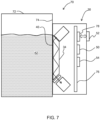
Figure 7 shows an example of a device having a chamber and a nutrient analysis system. - The invention will be described with reference to the Figures.
- It should be understood that the detailed description and specific examples, while indicating exemplary embodiments of the apparatus, systems and methods, are intended for purposes of illustration only and are not intended to limit the scope of the invention. The scope of the invention is solely restricted as defined by the appended claims.
- These and other features, aspects, and advantages of the apparatus, systems and methods of the present invention will become better understood from the following description, appended claims, and accompanying drawings. It should be understood that the Figures are merely schematic and are not drawn to scale. It should also be understood that the same reference numerals are used throughout the Figures to indicate the same or similar parts.
- The invention provides a kitchen device comprising a food processing device or food storage device in which a foodstuff stored or processed in a chamber is analyzed by an integrated nutrition analysis system which uses attenuated total reflection (ATR) with nutrient/ingredient selectivity, for example by means of one or more discrete filters.
-
Figure 1 shows how transmission through a liquid may be used for nutrient analysis. Theanalysis system 1 shown inFigure 1 comprises aninfrared source 10, a collimatinglens 12, afilter 14, theliquid sample 16, a focusinglens 18, achopper 20 and adetector 22. - The infrared
light source 10 sends out infrared light with a specific wavelength range. The infrared light penetrates the prepared foodstuff (e.g. fruit juice). Specific ingredients absorb infrared light at specific wavelengths. Depending which kind of ingredient is to be analyzed or detected, aspecific wavelength filter 14 is used. Theinfrared detector 22 measures the absolute value of the specific wavelength after the filter. For some ingredients it may be necessary to measure more than one wavelength. - Depending how much IR light in this specific wavelength (band) is absorbed, more or less IR light reaches the detector. A voltage or current level is detected for recording the light reaching the detector. Note that the
filter 14 can also be located at the detector side instead of the source side. - To detect more different ingredients, more filters have to be used. For example, distinguishing between two ingredients requires two different filters, and the ingredients absorb the infrared light in different bands.
- Depending of the mechanical integration the
collimating lens 12 and/or the focusinglens 18 are needed to guide the infrared light correctly. There may be multiple lenses. Some detector types may need thechopper element 20 to provide an AC signal for detection. The frequency is typically in therange 1 to 10Hz. Signal modulation at the light source may be used instead of providing a chopper further downstream. - The main disadvantage of this measurement setup is that the cloudiness of some liquid samples, for example caused by fibers and other particles, falsifies the optical measurement result. The natural liquids extracted from fruits and vegetables are generally cloudy and contain suspended particles. Furthermore, this arrangement is for use in the NIR range, where the features are broad and overlapping and hence less selective than in the IR range.
-
Figure 2 shows the principle of operation of a nutrient analysis system of the invention, which is to be integrated into a kitchen device, and operates based on attenuated total reflection (ATR). - The
nutrition analysis system 30 comprises anelectromagnetic radiation source 32, aradiation guide 34 for guiding the electromagnetic radiation based on total internal reflection, wherein the radiation guide comprises aninput 36 coupled to theelectromagnetic radiation source 32, anoutput 38, and asensing surface 40 between the input and output for placing against a foodstuff to be analyzed. Thesensing surface 40 is for contact with afoodstuff 42 to be analyzed. - The
electromagnetic radiation source 32 comprises an infrared or near infrared radiation source with a wavelength in therange 1 to 20µm, for example in the range 8 to 10µm. Wavelengths in the near infrared and infrared band are able to be used to identify particular nutrients, such as glucose. - The
radiation guide 34 comprises a crystal. It has a high refractive index to provide total internal reflection of the electromagnetic radiation. It may for example comprise germanium, diamond, KRS-5, zinc selenide, silicon or a combination of (layered) materials. - Suitable materials for ATR spectroscopy will be known to those skilled in the art.
- A
detector 44 is for detecting guided electromagnetic radiation at the output of theradiation guide 34. Afilter arrangement 46 is used for wavelength filtering the guided electromagnetic radiation reaching the detector. It may be at the input side or the output side of theguide 34. - The
filter arrangement 46 comprises at least one optical bandpass filter. A bandpass filter is able to select a narrow frequency band which is of interest for a particular nutrient target. The use of one or more discrete bandpass filters avoids the need for a full spectrometer. This gives a cost-efficient implementation which may be suitable for integration into a consumer product. - The analysis is based on evanescent absorbance which takes place in conjunction with total internal reflections, when the radiation travels along the radiation guide. The absorption characteristics of the foodstuff influence the power loss caused by this evanescent absorption, which in turn correlates with the attenuation of the electromagnetic radiation before it is detected by the detector. Thus, the system operates using attenuated total reflectance (ATR).
- The
analysis system 30 is on one side only of thefoodstuff 42 and thus does not rely on transmission through the foodstuff. It also gives more repeatable results since the direct contact with the foodstuff avoids manual positioning differences. -
Figure 2 also shows the optional use of the collimating lens orreflector arrangement 12 ofFigure 1 , the focusing lens orreflector arrangement 18 ofFigure 1 and thechopper 20 ofFigure 1 . -
Various detector 44 and filter 46 combinations are possible, so that multiple wavelengths may be detected. -
Figure 3 shows a first example, based on twodetectors respective filter processor 50, which drives auser interface 52 as well as providing transmission of data over awireless connection module 54. There may be two or more detectors. The output voltages or currents of each detector represent different ingredients. -
Figure 4 how the example ofFigure 3 may be implemented. The two filters and detector share theoutput 38 of theguide 34. -
Figure 5 shows a second example, based on asingle detector 44 and a movable filter arrangement of twofilters processor 50, which drives auser interface 52 as well as providing transmission of data over awireless connection module 54. Only one detector output is measured. For example,filter 46a may be mechanically switched in front of the detector so that the output voltage or current of the detector represents one specific ingredient. Whenfilter 46b is switched in front of the detector then the output voltage or current of the detector is represents another specific ingredient. -
Figure 6 how the example ofFigure 5 may be implemented. The twofilters rotating filter arrangement 60. The variable filter function may be established in different ways, for example a linear reciprocating filter may be used. An alternative is a mirror or lens arrangement which is used to reflect the optical path from one detector to the other. The filters can also be part of a sensor module, and one or more sensors as well as one ore more filters can be packaged into such a sensor module. - The invention is based on the integration of the nutrition analysis system described above into a kitchen device, and in particular a kitchen device in the form of a food processing device or food storage device, comprising a chamber for housing a foodstuff to be processed or stored.
-
Figure 7 shows an example of adevice 70 having achamber 72 and anutrient analysis system 30 as described above. Thechamber 72 may house the liquid foodstuff in a static manner, as may be the case for a storage jar or storage bottle, or it may be part of an in-line food processing system of a kitchen device in which the foodstuff is only temporarily present. Thus, the chamber may be part of a blender or juicer. - The
sensor surface 40 is placed for direct contact with the liquid foodstuff to be analyzed. For example, an exposed internal portion of awall 74 of the chamber may be defined by thesensing surface 40 of theradiation guide 34. This enables the desired direct contact between theliquid foodstuff 42 and the radiation guide of the analysis system. In this way, the foodstuff directly influences the evanescent field, thus giving optimum sensitivity of the system to the constituents of the liquid foodstuff. By using a sensing surface, an average of the volume of the liquid foodstuff influencing the evanescent field is used for the measurement. This gives more stable measurement than a point like measurement area. - The
sensing surface 40 may however be at any location which comes into contact with the liquid foodstuff, for example at any location along a food processing path for a food processing device. The geometry of the crystal may be optimized to work preferably in terms of selectivity/signal strength with selected detector/source combinations. - The
device 70 further comprises acircuit board 76 which carries theprocessor 50,wireless connection module 54 and auser interface circuit 78 for controlling the external user interface 52 (e.g. touch screen, control buttons etc.). The analysis module is typically battery operated. - The invention may be used to provide immediate nutrient information for processed food (such as juiced food) or to provide nutrient information over time for a storage jar or storage bottle. According to the invention, the information is then used to determine when the foodstuff is becoming perished.
- In addition to operating at different wavelengths for different food nutrients, a wavelength range may be used as a calibration reference. A broad reference frequency range may be used to compensate for aging and long-term drifting effects. A factory calibration may then be used.
- Examples of nutrients which may be detected and their associated wavelengths are sugars: glucose 9.67µm, fructose 9.39µm.
- Other candidates are saccharose, lactose, fats/lipids, starch, etc. Any nutrition relevant molecule with a reasonably distinct IR-spectrum (and hence selectable with affordable filters) could be measured. It may be necessary to determine potential overlaps with other constituents in the foodstuff.
- The sensing surface for example has an area of tens to thousands of mm2, and a thickness of 1 mm order of magnitude. A miniaturized integrated combination of detector, crystal and source (e.g. in one package) may have considerable smaller mechanical dimensions (for example formed as a wafer-level package).
- As explained above, the arrangement of
Figure 2 (as used in the device ofFigure 7 ) may include the collimating lens orreflector arrangement 12 ofFigure 1 and/or the focusing lens orreflector arrangement 18 ofFigure 1 and/or thechopper 20 ofFigure 1 . These components are not shown inFigures 3 to 7 to keep the figures simple. - Within the scope defined by the appended claims, other variations to the disclosed embodiments can be understood and effected by those skilled in the art in practicing the claimed invention, from a study of the drawings, the disclosure, and the appended claims. In the claims, the word "comprising" does not exclude other elements or steps, and the indefinite article "a" or "an" does not exclude a plurality. The mere fact that certain measures are recited in mutually different dependent claims does not indicate that a combination of these measures cannot be used to advantage. Any reference signs in the claims should not be construed as limiting the scope.
Claims (8)
- A kitchen device comprising a food processing device or food storage device (70), the kitchen device comprising:a chamber (72) for housing a liquid foodstuff (42) to be processed or stored; anda nutrition analysis system (30), comprising:an electromagnetic radiation source (32);a radiation guide (34) for guiding the electromagnetic radiation based on total internal reflection, wherein the radiation guide comprises an input (36) coupled to the electromagnetic radiation source (32), an output (38), and a sensing surface (40) between the input and output for placing against a liquid foodstuff (42) to be analyzed, wherein the sensing surface (40) is placed for direct or full contact with the liquid foodstuff (42), wherein the sensing surface (40) is integrated into a wall of the chamber (72) of the food processing device or food storage device (70), or wherein the sensing surface (40) is arranged at a location along a food processing path of the food fudd processing device (70);a detector (44) for detecting guided electromagnetic radiation at the output of the radiation guide; anda filter arrangement (46) for wavelength filtering the guided electromagnetic radiation reaching the detector (44), wherein the filter arrangement (46) comprises a plurality of optical bandpass filters (46a, 46b), and the plurality of optical bandpass filters are selectively movable into the path of the detector (44) or there is a respective detector (44a, 44b) for each optical bandpass filter,wherein the kitchen device comprises(i) a blender or juicer, or(ii) a storage jar or storage bottle, wherein the storage jar or storage bottle are configured for keeping food warm or cold and the nutrition analysis system is configured for determining when the liquid foodstuff is becoming perished.
- A kitchen device as claimed in claim 1, wherein the electromagnetic radiation source (32) comprises an infrared or near infrared radiation source with a wavelength in the range 0.2 to 20µm, for example in the range 8 to 10µm.
- A kitchen device as claimed in any one of claims 1 to 2, wherein the radiation guide (34) comprises:a crystal; ora layer structure.
- A kitchen device as claimed in any one of claims 1 to 3, further comprising a collimating lens (12) or collimating reflector at the output of the electromagnetic radiation source for controlling the angular spread of radiation provided to the radiation guide.
- A kitchen device as claimed in any one of claims 1 to 4, further comprising a focusing lens (18) or focusing reflector at the output of the radiation guide for focusing radiation to the detector.
- A kitchen device as claimed in any one of claims 1 to 5, further comprising a signal chopper (20) for creating an AC signal for detection by the detector (44).
- A kitchen device as claimed in any one of claims 1 to 6, further comprising a data communication system (54) for wirelessly transferring data based on the detector output to a remote device.
- A kitchen device as claimed in any one of claims 1 to 7, wherein the detector (44) is adapted to detect in at least two wavelength ranges, a relatively narrow measurement range and relatively broad reference range.
Applications Claiming Priority (2)
| Application Number | Priority Date | Filing Date | Title |
|---|---|---|---|
| EP18171242.3A EP3567366A1 (en) | 2018-05-08 | 2018-05-08 | A nutrition analysis module for a food processing device or food storage device |
| PCT/EP2019/061473 WO2019215057A1 (en) | 2018-05-08 | 2019-05-05 | A nutrition analysis module for a food processing device or food storage device |
Publications (2)
| Publication Number | Publication Date |
|---|---|
| EP3791163A1 EP3791163A1 (en) | 2021-03-17 |
| EP3791163B1 true EP3791163B1 (en) | 2024-07-24 |
Family
ID=62143000
Family Applications (2)
| Application Number | Title | Priority Date | Filing Date |
|---|---|---|---|
| EP18171242.3A Withdrawn EP3567366A1 (en) | 2018-05-08 | 2018-05-08 | A nutrition analysis module for a food processing device or food storage device |
| EP19720898.6A Active EP3791163B1 (en) | 2018-05-08 | 2019-05-05 | A kitchen device comprising a food processing device or food storage device |
Family Applications Before (1)
| Application Number | Title | Priority Date | Filing Date |
|---|---|---|---|
| EP18171242.3A Withdrawn EP3567366A1 (en) | 2018-05-08 | 2018-05-08 | A nutrition analysis module for a food processing device or food storage device |
Country Status (5)
| Country | Link |
|---|---|
| US (1) | US11940434B2 (en) |
| EP (2) | EP3567366A1 (en) |
| CN (1) | CN112088301A (en) |
| PL (1) | PL3791163T3 (en) |
| WO (1) | WO2019215057A1 (en) |
Families Citing this family (1)
| Publication number | Priority date | Publication date | Assignee | Title |
|---|---|---|---|---|
| EP3964820A1 (en) * | 2020-09-07 | 2022-03-09 | Koninklijke Philips N.V. | Nutrient content determination in a liquid food product |
Citations (4)
| Publication number | Priority date | Publication date | Assignee | Title |
|---|---|---|---|---|
| JPS58151542A (en) * | 1982-03-05 | 1983-09-08 | Jeol Ltd | Infrared analyzing apparatus |
| FR2737571A1 (en) * | 1995-08-04 | 1997-02-07 | Telecommunications Sa | Optical probe for spectroscopic analysis of materials - using a rod formed of transparent material connected to an inlet-outlet coupling |
| US20170029761A1 (en) * | 2014-04-11 | 2017-02-02 | Specshell Aps | Method for Online Monitoring of Mashing Processes Using Infrared Spectroscopy |
| DE102016008885A1 (en) * | 2016-07-20 | 2018-01-25 | Spectrolytic GmbH | Trinket with ATR spectrometer and kit with the jewel |
Family Cites Families (24)
| Publication number | Priority date | Publication date | Assignee | Title |
|---|---|---|---|---|
| US3902807A (en) | 1973-10-25 | 1975-09-02 | Du Pont | Method for operating an attenuated total reflection infrared system |
| US4286327A (en) * | 1979-09-10 | 1981-08-25 | Trebor Industries, Inc. | Apparatus for near infrared quantitative analysis |
| JP2803016B2 (en) * | 1994-02-28 | 1998-09-24 | 雪印乳業株式会社 | Multi-component simultaneous measurement method |
| JP2900979B2 (en) * | 1994-08-17 | 1999-06-02 | 雪印乳業株式会社 | Lactic acidity measurement method of lactic acid fermentation broth using infrared ATR method |
| EP1509753A2 (en) | 2002-05-09 | 2005-03-02 | Euro-Celtique, S.A. | Spectroscopic analyzer for blender |
| US7288768B2 (en) * | 2002-07-18 | 2007-10-30 | Purdue Research Foundation | Method for measuring the amount of an organic substance in a food product with infrared electromagnetic radiation |
| DE10352924A1 (en) * | 2003-11-11 | 2005-07-14 | Johann Wolfgang Goethe-Universität Frankfurt am Main | Apparatus and method for the qualitative and / or quantitative analysis of ingredients in liquids, especially in beverage and process fluids |
| US10687391B2 (en) * | 2004-12-03 | 2020-06-16 | Pressco Ip Llc | Method and system for digital narrowband, wavelength specific cooking, curing, food preparation, and processing |
| DE102005017893A1 (en) * | 2005-04-19 | 2006-10-26 | Bayer Materialscience Ag | Preparation of a polycarbonate comprises providing reaction contents in Raman spectra, determining concentration of function starting group relevant for polycarbonate production by means of spectrum evaluation and dismantling reaction |
| WO2007143047A1 (en) * | 2006-06-01 | 2007-12-13 | Ecolab Inc. | Uv fluorometric sensor and method for using the same |
| US7840360B1 (en) * | 2006-10-26 | 2010-11-23 | Micheels Ronald H | Optical system and method for inspection and characterization of liquids in vessels |
| WO2010042455A1 (en) | 2008-10-08 | 2010-04-15 | George Howell Coffee Company, Llc | Method and apparatus for brewing coffee via universal coffee brewing chart generation |
| CN104040309B (en) | 2011-11-03 | 2019-06-07 | 威利食品有限公司 | Inexpensive spectrometric system for end user's food analysis |
| AT512291B1 (en) * | 2012-02-20 | 2013-07-15 | Anton Paar Gmbh | METHOD AND DEVICE FOR DETERMINING THE CO2 LEVEL IN A LIQUID |
| GB2543655B (en) | 2013-08-02 | 2017-11-01 | Verifood Ltd | Compact spectrometer comprising a diffuser, filter matrix, lens array and multiple sensor detector |
| ES2563184T3 (en) * | 2013-09-09 | 2016-03-11 | Alfa Laval Corporate Ab | Beer fermentation method and apparatus |
| RU2743044C1 (en) * | 2014-02-20 | 2021-02-12 | Марк ОЛЕЙНИК | Robotic kitchen system |
| US10054258B2 (en) | 2014-03-14 | 2018-08-21 | Sz Dji Osmo Technology Co., Ltd. | Method and system for controlling a gimbal |
| US9625378B2 (en) * | 2014-03-31 | 2017-04-18 | Redshift Bioanalytics, Inc. | Fluid analyzer with modulation for liquids and gases |
| WO2015171146A1 (en) * | 2014-05-08 | 2015-11-12 | Halliburton Energy Services, Inc. | Optical computing devices with multiple bandpass filters |
| WO2016070094A1 (en) * | 2014-10-31 | 2016-05-06 | Muldoon Cecilia | Non-invasive wine taint detector |
| SG11201706777QA (en) | 2015-02-19 | 2017-09-28 | Premium Genetics (Uk) Ltd | Scanning infrared measurement system |
| WO2017051424A1 (en) | 2015-09-25 | 2017-03-30 | Verifood Ltd. | Spectral blender |
| US10705017B2 (en) * | 2017-06-09 | 2020-07-07 | Verivin Ltd. | Characterization of liquids in sealed containers |
-
2018
- 2018-05-08 EP EP18171242.3A patent/EP3567366A1/en not_active Withdrawn
-
2019
- 2019-05-05 EP EP19720898.6A patent/EP3791163B1/en active Active
- 2019-05-05 WO PCT/EP2019/061473 patent/WO2019215057A1/en not_active Ceased
- 2019-05-05 CN CN201980030759.5A patent/CN112088301A/en active Pending
- 2019-05-05 PL PL19720898.6T patent/PL3791163T3/en unknown
- 2019-05-05 US US17/051,199 patent/US11940434B2/en active Active
Patent Citations (4)
| Publication number | Priority date | Publication date | Assignee | Title |
|---|---|---|---|---|
| JPS58151542A (en) * | 1982-03-05 | 1983-09-08 | Jeol Ltd | Infrared analyzing apparatus |
| FR2737571A1 (en) * | 1995-08-04 | 1997-02-07 | Telecommunications Sa | Optical probe for spectroscopic analysis of materials - using a rod formed of transparent material connected to an inlet-outlet coupling |
| US20170029761A1 (en) * | 2014-04-11 | 2017-02-02 | Specshell Aps | Method for Online Monitoring of Mashing Processes Using Infrared Spectroscopy |
| DE102016008885A1 (en) * | 2016-07-20 | 2018-01-25 | Spectrolytic GmbH | Trinket with ATR spectrometer and kit with the jewel |
Also Published As
| Publication number | Publication date |
|---|---|
| EP3791163A1 (en) | 2021-03-17 |
| US11940434B2 (en) | 2024-03-26 |
| WO2019215057A1 (en) | 2019-11-14 |
| EP3567366A1 (en) | 2019-11-13 |
| CN112088301A (en) | 2020-12-15 |
| US20210364488A1 (en) | 2021-11-25 |
| PL3791163T3 (en) | 2024-10-07 |
Similar Documents
| Publication | Publication Date | Title |
|---|---|---|
| Mauer | Moisture and total solids analysis | |
| Bradley Jr | Moisture and total solids analysis | |
| Davies et al. | Near infra‐red analysis of food | |
| US9540701B2 (en) | Apparatus and method for automated process monitoring and control with near infrared spectroscopy | |
| Kong et al. | Advances in instrumental methods to determine food quality deterioration | |
| WO2017051424A1 (en) | Spectral blender | |
| US20020106716A1 (en) | Device and method for the spectrophotometric analysis of fluids | |
| CN104316489B (en) | A kind of adulterated method of near infrared spectrum detection Ganoderma extract | |
| CN103983606B (en) | Portable near infrared edible oil quality fast detector | |
| US20190277757A1 (en) | Food analysis device | |
| Karoui | Spectroscopic technique: Mid-infrared (MIR) and Fourier transform mid-infrared (FT-MIR) spectroscopies | |
| Clark | Fast determination by Fourier-transform infrared spectroscopy of sugar–acid composition of citrus juices for determination of industry maturity standards | |
| Cozzolino | State-of-the-art advantages and drawbacks on the application of vibrational spectroscopy to monitor alcoholic fermentation (beer and wine) | |
| CN104520692A (en) | Calorie calculation device | |
| US11940434B2 (en) | Nutrition analysis module for a food processing device or food storage device | |
| US20190250099A1 (en) | Determination of a constituent related property of a multi-constituent sample | |
| Teerasong et al. | A reagent-free SIA module for monitoring of sugar, color and dissolved CO2 content in soft drinks | |
| Klein et al. | The good vibrations of beer. The use of infrared and UV/Vis spectroscopy and chemometry for the quantitative analysis of beverages | |
| Mehrotra | Infrared spectroscopy, gas chromatography/Infrared in food analysis | |
| Nair et al. | Rapid estimation and quantification of sucrose content in fruit juices using Fourier transform infrared–attenuated total reflectance (FTIR–ATR) spectroscopy | |
| CN103454238A (en) | Method and device for measuring accurate contents of core components of liquid beverage in situ in production process | |
| Guggenbichler et al. | Near infrared spectroscopy, cluster and multivariate analysis-contributions to wine analysis | |
| WO2004044558A2 (en) | A method and apparatus for determining a property of a sample | |
| Bellon et al. | Remote Near Infrared Spectrometry In The Food Industry With The Use Of Silica And Fluoride Glasses Fibers | |
| Hemachandra et al. | Application of optical spectroscopy techniques in fruit juice analysis: A review |
Legal Events
| Date | Code | Title | Description |
|---|---|---|---|
| STAA | Information on the status of an ep patent application or granted ep patent |
Free format text: STATUS: UNKNOWN |
|
| STAA | Information on the status of an ep patent application or granted ep patent |
Free format text: STATUS: THE INTERNATIONAL PUBLICATION HAS BEEN MADE |
|
| PUAI | Public reference made under article 153(3) epc to a published international application that has entered the european phase |
Free format text: ORIGINAL CODE: 0009012 |
|
| STAA | Information on the status of an ep patent application or granted ep patent |
Free format text: STATUS: REQUEST FOR EXAMINATION WAS MADE |
|
| 17P | Request for examination filed |
Effective date: 20201208 |
|
| AK | Designated contracting states |
Kind code of ref document: A1 Designated state(s): AL AT BE BG CH CY CZ DE DK EE ES FI FR GB GR HR HU IE IS IT LI LT LU LV MC MK MT NL NO PL PT RO RS SE SI SK SM TR |
|
| AX | Request for extension of the european patent |
Extension state: BA ME |
|
| STAA | Information on the status of an ep patent application or granted ep patent |
Free format text: STATUS: EXAMINATION IS IN PROGRESS |
|
| 17Q | First examination report despatched |
Effective date: 20210318 |
|
| DAV | Request for validation of the european patent (deleted) | ||
| DAX | Request for extension of the european patent (deleted) | ||
| GRAP | Despatch of communication of intention to grant a patent |
Free format text: ORIGINAL CODE: EPIDOSNIGR1 |
|
| STAA | Information on the status of an ep patent application or granted ep patent |
Free format text: STATUS: GRANT OF PATENT IS INTENDED |
|
| RAP1 | Party data changed (applicant data changed or rights of an application transferred) |
Owner name: VERSUNI HOLDING B.V. |
|
| RIC1 | Information provided on ipc code assigned before grant |
Ipc: G01N 21/31 20060101ALN20240209BHEP Ipc: A23N 1/00 20060101ALI20240209BHEP Ipc: G01N 21/3577 20140101ALI20240209BHEP Ipc: G01N 21/552 20140101AFI20240209BHEP |
|
| INTG | Intention to grant announced |
Effective date: 20240227 |
|
| GRAS | Grant fee paid |
Free format text: ORIGINAL CODE: EPIDOSNIGR3 |
|
| GRAA | (expected) grant |
Free format text: ORIGINAL CODE: 0009210 |
|
| STAA | Information on the status of an ep patent application or granted ep patent |
Free format text: STATUS: THE PATENT HAS BEEN GRANTED |
|
| AK | Designated contracting states |
Kind code of ref document: B1 Designated state(s): AL AT BE BG CH CY CZ DE DK EE ES FI FR GB GR HR HU IE IS IT LI LT LU LV MC MK MT NL NO PL PT RO RS SE SI SK SM TR |
|
| REG | Reference to a national code |
Ref country code: GB Ref legal event code: FG4D |
|
| REG | Reference to a national code |
Ref country code: CH Ref legal event code: EP |
|
| REG | Reference to a national code |
Ref country code: IE Ref legal event code: FG4D Ref country code: DE Ref legal event code: R096 Ref document number: 602019055676 Country of ref document: DE |
|
| REG | Reference to a national code |
Ref country code: NL Ref legal event code: FP |
|
| REG | Reference to a national code |
Ref country code: LT Ref legal event code: MG9D |
|
| P01 | Opt-out of the competence of the unified patent court (upc) registered |
Free format text: CASE NUMBER: APP_54567/2024 Effective date: 20241003 |
|
| PG25 | Lapsed in a contracting state [announced via postgrant information from national office to epo] |
Ref country code: PT Free format text: LAPSE BECAUSE OF FAILURE TO SUBMIT A TRANSLATION OF THE DESCRIPTION OR TO PAY THE FEE WITHIN THE PRESCRIBED TIME-LIMIT Effective date: 20241125 |
|
| REG | Reference to a national code |
Ref country code: AT Ref legal event code: MK05 Ref document number: 1706723 Country of ref document: AT Kind code of ref document: T Effective date: 20240724 |
|
| PG25 | Lapsed in a contracting state [announced via postgrant information from national office to epo] |
Ref country code: PT Free format text: LAPSE BECAUSE OF FAILURE TO SUBMIT A TRANSLATION OF THE DESCRIPTION OR TO PAY THE FEE WITHIN THE PRESCRIBED TIME-LIMIT Effective date: 20241125 |
|
| PG25 | Lapsed in a contracting state [announced via postgrant information from national office to epo] |
Ref country code: NO Free format text: LAPSE BECAUSE OF FAILURE TO SUBMIT A TRANSLATION OF THE DESCRIPTION OR TO PAY THE FEE WITHIN THE PRESCRIBED TIME-LIMIT Effective date: 20241024 |
|
| PG25 | Lapsed in a contracting state [announced via postgrant information from national office to epo] |
Ref country code: GR Free format text: LAPSE BECAUSE OF FAILURE TO SUBMIT A TRANSLATION OF THE DESCRIPTION OR TO PAY THE FEE WITHIN THE PRESCRIBED TIME-LIMIT Effective date: 20241025 Ref country code: FI Free format text: LAPSE BECAUSE OF FAILURE TO SUBMIT A TRANSLATION OF THE DESCRIPTION OR TO PAY THE FEE WITHIN THE PRESCRIBED TIME-LIMIT Effective date: 20240724 |
|
| PG25 | Lapsed in a contracting state [announced via postgrant information from national office to epo] |
Ref country code: BG Free format text: LAPSE BECAUSE OF FAILURE TO SUBMIT A TRANSLATION OF THE DESCRIPTION OR TO PAY THE FEE WITHIN THE PRESCRIBED TIME-LIMIT Effective date: 20240724 |
|
| PG25 | Lapsed in a contracting state [announced via postgrant information from national office to epo] |
Ref country code: LV Free format text: LAPSE BECAUSE OF FAILURE TO SUBMIT A TRANSLATION OF THE DESCRIPTION OR TO PAY THE FEE WITHIN THE PRESCRIBED TIME-LIMIT Effective date: 20240724 |
|
| PG25 | Lapsed in a contracting state [announced via postgrant information from national office to epo] |
Ref country code: AT Free format text: LAPSE BECAUSE OF FAILURE TO SUBMIT A TRANSLATION OF THE DESCRIPTION OR TO PAY THE FEE WITHIN THE PRESCRIBED TIME-LIMIT Effective date: 20240724 Ref country code: IS Free format text: LAPSE BECAUSE OF FAILURE TO SUBMIT A TRANSLATION OF THE DESCRIPTION OR TO PAY THE FEE WITHIN THE PRESCRIBED TIME-LIMIT Effective date: 20241124 |
|
| PG25 | Lapsed in a contracting state [announced via postgrant information from national office to epo] |
Ref country code: HR Free format text: LAPSE BECAUSE OF FAILURE TO SUBMIT A TRANSLATION OF THE DESCRIPTION OR TO PAY THE FEE WITHIN THE PRESCRIBED TIME-LIMIT Effective date: 20240724 |
|
| PG25 | Lapsed in a contracting state [announced via postgrant information from national office to epo] |
Ref country code: RS Free format text: LAPSE BECAUSE OF FAILURE TO SUBMIT A TRANSLATION OF THE DESCRIPTION OR TO PAY THE FEE WITHIN THE PRESCRIBED TIME-LIMIT Effective date: 20241024 Ref country code: ES Free format text: LAPSE BECAUSE OF FAILURE TO SUBMIT A TRANSLATION OF THE DESCRIPTION OR TO PAY THE FEE WITHIN THE PRESCRIBED TIME-LIMIT Effective date: 20240724 |
|
| PG25 | Lapsed in a contracting state [announced via postgrant information from national office to epo] |
Ref country code: RS Free format text: LAPSE BECAUSE OF FAILURE TO SUBMIT A TRANSLATION OF THE DESCRIPTION OR TO PAY THE FEE WITHIN THE PRESCRIBED TIME-LIMIT Effective date: 20241024 Ref country code: NO Free format text: LAPSE BECAUSE OF FAILURE TO SUBMIT A TRANSLATION OF THE DESCRIPTION OR TO PAY THE FEE WITHIN THE PRESCRIBED TIME-LIMIT Effective date: 20241024 Ref country code: LV Free format text: LAPSE BECAUSE OF FAILURE TO SUBMIT A TRANSLATION OF THE DESCRIPTION OR TO PAY THE FEE WITHIN THE PRESCRIBED TIME-LIMIT Effective date: 20240724 Ref country code: IS Free format text: LAPSE BECAUSE OF FAILURE TO SUBMIT A TRANSLATION OF THE DESCRIPTION OR TO PAY THE FEE WITHIN THE PRESCRIBED TIME-LIMIT Effective date: 20241124 Ref country code: HR Free format text: LAPSE BECAUSE OF FAILURE TO SUBMIT A TRANSLATION OF THE DESCRIPTION OR TO PAY THE FEE WITHIN THE PRESCRIBED TIME-LIMIT Effective date: 20240724 Ref country code: GR Free format text: LAPSE BECAUSE OF FAILURE TO SUBMIT A TRANSLATION OF THE DESCRIPTION OR TO PAY THE FEE WITHIN THE PRESCRIBED TIME-LIMIT Effective date: 20241025 Ref country code: FI Free format text: LAPSE BECAUSE OF FAILURE TO SUBMIT A TRANSLATION OF THE DESCRIPTION OR TO PAY THE FEE WITHIN THE PRESCRIBED TIME-LIMIT Effective date: 20240724 Ref country code: ES Free format text: LAPSE BECAUSE OF FAILURE TO SUBMIT A TRANSLATION OF THE DESCRIPTION OR TO PAY THE FEE WITHIN THE PRESCRIBED TIME-LIMIT Effective date: 20240724 Ref country code: BG Free format text: LAPSE BECAUSE OF FAILURE TO SUBMIT A TRANSLATION OF THE DESCRIPTION OR TO PAY THE FEE WITHIN THE PRESCRIBED TIME-LIMIT Effective date: 20240724 Ref country code: AT Free format text: LAPSE BECAUSE OF FAILURE TO SUBMIT A TRANSLATION OF THE DESCRIPTION OR TO PAY THE FEE WITHIN THE PRESCRIBED TIME-LIMIT Effective date: 20240724 |
|
| PG25 | Lapsed in a contracting state [announced via postgrant information from national office to epo] |
Ref country code: DK Free format text: LAPSE BECAUSE OF FAILURE TO SUBMIT A TRANSLATION OF THE DESCRIPTION OR TO PAY THE FEE WITHIN THE PRESCRIBED TIME-LIMIT Effective date: 20240724 Ref country code: SM Free format text: LAPSE BECAUSE OF FAILURE TO SUBMIT A TRANSLATION OF THE DESCRIPTION OR TO PAY THE FEE WITHIN THE PRESCRIBED TIME-LIMIT Effective date: 20240724 Ref country code: RO Free format text: LAPSE BECAUSE OF FAILURE TO SUBMIT A TRANSLATION OF THE DESCRIPTION OR TO PAY THE FEE WITHIN THE PRESCRIBED TIME-LIMIT Effective date: 20240724 |
|
| PG25 | Lapsed in a contracting state [announced via postgrant information from national office to epo] |
Ref country code: EE Free format text: LAPSE BECAUSE OF FAILURE TO SUBMIT A TRANSLATION OF THE DESCRIPTION OR TO PAY THE FEE WITHIN THE PRESCRIBED TIME-LIMIT Effective date: 20240724 |
|
| PG25 | Lapsed in a contracting state [announced via postgrant information from national office to epo] |
Ref country code: CZ Free format text: LAPSE BECAUSE OF FAILURE TO SUBMIT A TRANSLATION OF THE DESCRIPTION OR TO PAY THE FEE WITHIN THE PRESCRIBED TIME-LIMIT Effective date: 20240724 |
|
| REG | Reference to a national code |
Ref country code: DE Ref legal event code: R097 Ref document number: 602019055676 Country of ref document: DE |
|
| PG25 | Lapsed in a contracting state [announced via postgrant information from national office to epo] |
Ref country code: IT Free format text: LAPSE BECAUSE OF FAILURE TO SUBMIT A TRANSLATION OF THE DESCRIPTION OR TO PAY THE FEE WITHIN THE PRESCRIBED TIME-LIMIT Effective date: 20240724 Ref country code: SK Free format text: LAPSE BECAUSE OF FAILURE TO SUBMIT A TRANSLATION OF THE DESCRIPTION OR TO PAY THE FEE WITHIN THE PRESCRIBED TIME-LIMIT Effective date: 20240724 |
|
| PLBE | No opposition filed within time limit |
Free format text: ORIGINAL CODE: 0009261 |
|
| STAA | Information on the status of an ep patent application or granted ep patent |
Free format text: STATUS: NO OPPOSITION FILED WITHIN TIME LIMIT |
|
| PGFP | Annual fee paid to national office [announced via postgrant information from national office to epo] |
Ref country code: NL Payment date: 20250526 Year of fee payment: 7 |
|
| 26N | No opposition filed |
Effective date: 20250425 |
|
| PGFP | Annual fee paid to national office [announced via postgrant information from national office to epo] |
Ref country code: PL Payment date: 20250424 Year of fee payment: 7 Ref country code: DE Payment date: 20250528 Year of fee payment: 7 |
|
| PGFP | Annual fee paid to national office [announced via postgrant information from national office to epo] |
Ref country code: TR Payment date: 20250424 Year of fee payment: 7 |
|
| PG25 | Lapsed in a contracting state [announced via postgrant information from national office to epo] |
Ref country code: SE Free format text: LAPSE BECAUSE OF FAILURE TO SUBMIT A TRANSLATION OF THE DESCRIPTION OR TO PAY THE FEE WITHIN THE PRESCRIBED TIME-LIMIT Effective date: 20240724 |
|
| REG | Reference to a national code |
Ref country code: CH Ref legal event code: H13 Free format text: ST27 STATUS EVENT CODE: U-0-0-H10-H13 (AS PROVIDED BY THE NATIONAL OFFICE) Effective date: 20251223 |
|
| PG25 | Lapsed in a contracting state [announced via postgrant information from national office to epo] |
Ref country code: LU Free format text: LAPSE BECAUSE OF NON-PAYMENT OF DUE FEES Effective date: 20250505 |
|
| PG25 | Lapsed in a contracting state [announced via postgrant information from national office to epo] |
Ref country code: CH Free format text: LAPSE BECAUSE OF NON-PAYMENT OF DUE FEES Effective date: 20250531 |
|
| GBPC | Gb: european patent ceased through non-payment of renewal fee |
Effective date: 20250505 |
|
| REG | Reference to a national code |
Ref country code: BE Ref legal event code: MM Effective date: 20250531 |
|
| PG25 | Lapsed in a contracting state [announced via postgrant information from national office to epo] |
Ref country code: MC Free format text: LAPSE BECAUSE OF FAILURE TO SUBMIT A TRANSLATION OF THE DESCRIPTION OR TO PAY THE FEE WITHIN THE PRESCRIBED TIME-LIMIT Effective date: 20240724 |
|
| PG25 | Lapsed in a contracting state [announced via postgrant information from national office to epo] |
Ref country code: GB Free format text: LAPSE BECAUSE OF NON-PAYMENT OF DUE FEES Effective date: 20250505 |
|
| PG25 | Lapsed in a contracting state [announced via postgrant information from national office to epo] |
Ref country code: IE Free format text: LAPSE BECAUSE OF NON-PAYMENT OF DUE FEES Effective date: 20250505 |
|
| PG25 | Lapsed in a contracting state [announced via postgrant information from national office to epo] |
Ref country code: BE Free format text: LAPSE BECAUSE OF NON-PAYMENT OF DUE FEES Effective date: 20250531 |
|
| PG25 | Lapsed in a contracting state [announced via postgrant information from national office to epo] |
Ref country code: FR Free format text: LAPSE BECAUSE OF NON-PAYMENT OF DUE FEES Effective date: 20250531 |