EP3786023B1 - Rail vehicle having an improved cooling system and method for its internal combustion engine - Google Patents
Rail vehicle having an improved cooling system and method for its internal combustion engine Download PDFInfo
- Publication number
- EP3786023B1 EP3786023B1 EP20193179.7A EP20193179A EP3786023B1 EP 3786023 B1 EP3786023 B1 EP 3786023B1 EP 20193179 A EP20193179 A EP 20193179A EP 3786023 B1 EP3786023 B1 EP 3786023B1
- Authority
- EP
- European Patent Office
- Prior art keywords
- heat exchanger
- air
- fan
- underfloor space
- rail vehicle
- Prior art date
- Legal status (The legal status is an assumption and is not a legal conclusion. Google has not performed a legal analysis and makes no representation as to the accuracy of the status listed.)
- Active
Links
Images


Classifications
-
- F—MECHANICAL ENGINEERING; LIGHTING; HEATING; WEAPONS; BLASTING
- F01—MACHINES OR ENGINES IN GENERAL; ENGINE PLANTS IN GENERAL; STEAM ENGINES
- F01P—COOLING OF MACHINES OR ENGINES IN GENERAL; COOLING OF INTERNAL-COMBUSTION ENGINES
- F01P11/00—Component parts, details, or accessories not provided for in, or of interest apart from, groups F01P1/00 - F01P9/00
-
- B—PERFORMING OPERATIONS; TRANSPORTING
- B61—RAILWAYS
- B61C—LOCOMOTIVES; MOTOR RAILCARS
- B61C5/00—Locomotives or motor railcars with IC engines or gas turbines
- B61C5/02—Arrangement or disposition of intakes and apparatus for supplying, circulating, and filtering air for combustion and engine-cooling purposes
-
- B—PERFORMING OPERATIONS; TRANSPORTING
- B60—VEHICLES IN GENERAL
- B60K—ARRANGEMENT OR MOUNTING OF PROPULSION UNITS OR OF TRANSMISSIONS IN VEHICLES; ARRANGEMENT OR MOUNTING OF PLURAL DIVERSE PRIME-MOVERS IN VEHICLES; AUXILIARY DRIVES FOR VEHICLES; INSTRUMENTATION OR DASHBOARDS FOR VEHICLES; ARRANGEMENTS IN CONNECTION WITH COOLING, AIR INTAKE, GAS EXHAUST OR FUEL SUPPLY OF PROPULSION UNITS IN VEHICLES
- B60K11/00—Arrangement in connection with cooling of propulsion units
- B60K11/06—Arrangement in connection with cooling of propulsion units with air cooling
-
- B—PERFORMING OPERATIONS; TRANSPORTING
- B61—RAILWAYS
- B61C—LOCOMOTIVES; MOTOR RAILCARS
- B61C17/00—Arrangement or disposition of parts; Details or accessories not otherwise provided for; Use of control gear and control systems
- B61C17/04—Arrangement or disposition of driving cabins, footplates or engine rooms; Ventilation thereof
-
- B—PERFORMING OPERATIONS; TRANSPORTING
- B61—RAILWAYS
- B61F—RAIL VEHICLE SUSPENSIONS, e.g. UNDERFRAMES, BOGIES OR ARRANGEMENTS OF WHEEL AXLES; RAIL VEHICLES FOR USE ON TRACKS OF DIFFERENT WIDTH; PREVENTING DERAILING OF RAIL VEHICLES; WHEEL GUARDS, OBSTRUCTION REMOVERS OR THE LIKE FOR RAIL VEHICLES
- B61F1/00—Underframes
-
- F—MECHANICAL ENGINEERING; LIGHTING; HEATING; WEAPONS; BLASTING
- F01—MACHINES OR ENGINES IN GENERAL; ENGINE PLANTS IN GENERAL; STEAM ENGINES
- F01P—COOLING OF MACHINES OR ENGINES IN GENERAL; COOLING OF INTERNAL-COMBUSTION ENGINES
- F01P3/00—Liquid cooling
- F01P3/18—Arrangements or mounting of liquid-to-air heat-exchangers
-
- F—MECHANICAL ENGINEERING; LIGHTING; HEATING; WEAPONS; BLASTING
- F01—MACHINES OR ENGINES IN GENERAL; ENGINE PLANTS IN GENERAL; STEAM ENGINES
- F01P—COOLING OF MACHINES OR ENGINES IN GENERAL; COOLING OF INTERNAL-COMBUSTION ENGINES
- F01P5/00—Pumping cooling-air or liquid coolants
- F01P5/02—Pumping cooling-air; Arrangements of cooling-air pumps, e.g. fans or blowers
- F01P5/04—Pump-driving arrangements
-
- F—MECHANICAL ENGINEERING; LIGHTING; HEATING; WEAPONS; BLASTING
- F01—MACHINES OR ENGINES IN GENERAL; ENGINE PLANTS IN GENERAL; STEAM ENGINES
- F01P—COOLING OF MACHINES OR ENGINES IN GENERAL; COOLING OF INTERNAL-COMBUSTION ENGINES
- F01P5/00—Pumping cooling-air or liquid coolants
- F01P5/02—Pumping cooling-air; Arrangements of cooling-air pumps, e.g. fans or blowers
- F01P5/04—Pump-driving arrangements
- F01P2005/046—Pump-driving arrangements with electrical pump drive
-
- Y—GENERAL TAGGING OF NEW TECHNOLOGICAL DEVELOPMENTS; GENERAL TAGGING OF CROSS-SECTIONAL TECHNOLOGIES SPANNING OVER SEVERAL SECTIONS OF THE IPC; TECHNICAL SUBJECTS COVERED BY FORMER USPC CROSS-REFERENCE ART COLLECTIONS [XRACs] AND DIGESTS
- Y02—TECHNOLOGIES OR APPLICATIONS FOR MITIGATION OR ADAPTATION AGAINST CLIMATE CHANGE
- Y02T—CLIMATE CHANGE MITIGATION TECHNOLOGIES RELATED TO TRANSPORTATION
- Y02T30/00—Transportation of goods or passengers via railways, e.g. energy recovery or reducing air resistance
Definitions
- the present invention generally relates to the field of diesel-electric rail vehicles. More specifically, the invention relates to an improved cooling system and a method for evacuating heat generated by a diesel engine of the diesel-electric rail vehicle.
- Diesel-electric rail vehicles such as locomotives, power cars, or diesel electric multiple units (DEMU) use a diesel engine to generate electricity to power electric motors connected to the wheels of the vehicles.
- Diesel engines typically have an efficiency ranging approximately between 40% and 60%, which means that about 40% to 60% is wasted in large quantities of heat which must be evacuated.
- cooling units used to cool the diesel engine of a railcar under its floor where fresh air may be ingested from the sides of the vehicle, circulated through the cooling units and evacuated as hot air within the underfloor of the vehicle, as disclosed e.g. in EP 3 130 517 A1 , which discloses the features of the preamble of claim 1. It is thought that, as the rail vehicle circulates, hot air is somewhat naturally evacuated from the underfloor.
- the invention provides the advantages of evacuating hot air from an underfloor of the rail vehicle and thereby avoiding subjecting other undercar pieces of equipment to unnecessarily high temperatures.
- a rail vehicle comprising a body, a first and a second side skirts, two bogies supporting a different end of the body, an internal combustion engine, a motor, and a cooling system for cooling the engine.
- the body has a floor and lateral side walls projecting upwardly from the floor.
- the first and the second side skirts project downwardly below the floor and at least partially along a respective one of the side walls.
- At least one of the side skirts is provided with an exhaust, such as the first side skirt.
- Each bogie is provided with wheels.
- the floor, the first and second side skirts and the bogies define an inner, or underfloor, space there in between.
- the internal combustion engine is adapted to generate electricity to be supplied to the electric motor.
- the cooling system is operative to exchange heat between a cooling fluid circulating in a cooling circuit connected to the internal combustion engine and air located in the underfloor space.
- the cooling system has a heat exchanger and a fan adjacent the heat exchanger, both being installed under the floor and within the underfloor space.
- the heat exchanger and the fan are fluidly connected to the exhaust.
- the fan is operative to force air from the underfloor space through the heat exchanger and through the exhaust to an ambient space located on an external side of the first side skirt.
- the heat exchanger may be placed adjacent to the first side skirt and the fan may be placed adjacent an inner face of the heat exchanger, the fan being operative to push air located within the underfloor space through the heat exchanger, through the adjacent first side skirt and into the ambient space.
- the fan may be placed adjacent to the first side skirt and the heat exchanger may be located on an inner face of the fan.
- the fan is operative to draw air located within the underfloor space through the heat exchanger, and push this air through the adjacent first side skirt and into the ambient space.
- An air intake for directing fresh air into the underfloor space may be provided in one or both of the side skirts. This air intake may be located on either or both of the side skirts, closer to a front of the body than the exhaust.
- the air intake may be a scoop located at a lower portion of the underfloor space.
- the cooling system may further comprise a second heat exchanger and a second fan, which are also located under the floor and within the underfloor space.
- the second fan is adjacent to the second heat exchanger.
- the second heat exchanger and the second fan are fluidly connected to a second exhaust located in the second side skirt.
- the second fan is operative to force air from the underfloor space through the second heat exchanger, through the second exhaust and into the ambient space located on an external side of the second side skirt.
- Both fans comprise an impeller which is oriented so as to draw air from the underfloor space to the ambient space. If the fan is powered by DC current, the voltage has its polarity such that the impeller spins in a direction to draw air from the underfloor space and into the ambient space. If the fan is powered by AC current, the phases must be adapted so that the impeller spins in a direction that draws air from the underfloor space into the ambient space.
- the motor is connected to one of the wheels.
- a train comprising the rail vehicle as described above connected to an adjacent second rail vehicle wherein the motor is installed on a third bogie supporting the adjacent second rail vehicle.
- the method may comprise locating the fan of the cooling system adjacent an internal side of the first side skirt.
- the method comprises spinning an impeller of the fan so as to draw air from the underfloor space to the ambient space.
- the method may comprise using side skirts to create an underfloor space in substantially relatively close proximity to a ground on which the rail vehicle is travelling.
- Air located in the underfloor space may be circulated through a fan prior to circulating the air through the heat exchanger.
- the air located in the underfloor space may be circulated through the heat exchanger prior to circulating it through the fan.
- the circulating through the heat exchanger may further comprise transferring heat to the air to create hot air.
- the circulating air through the exhaust may also comprise exhausting the hot air towards the ambient space.
- the present invention relates to a rail vehicle having a cooling system and using a cooling method that evacuates hot air away from an underfloor space of a rail vehicle in order to prevent negatively affecting the performance of other pieces of equipment located within the underfloor space.
- a rail vehicle 10 comprises a body 12, side skirts 14 and two bogies 16 supporting a different end of the body 12.
- the body 12 has a floor 18 and side walls 20 projecting upwardly from the floor 18.
- Each bogie 16 is provided with wheels 22, sometimes independent, but usually installed on a wheel-axle 24.
- One electric motor 26 powers at least one wheel 22, and usually a single wheel-axle 24, per bogie 16.
- each bogie 16 is provided with one electric motor 26 per wheel-axle 24.
- Both side skirts 14 depend from the floor 18 and project at least partially along, or substantially along, a respective one of the side walls 20, or a respective one of the longitudinal sides of the floor 18. Each side skirt 14 is provided with an air exhaust 21 for exhausting hot air, as will be described later.
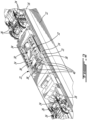
- the floor 18, the two side skirts 14 and the two bogies 16 define the limits of an underfloor space 28, best represented in Figure 3 , now concurrently referred to.
- the side skirts 14 are therefore used to create the underfloor space 28 in substantially close proximity to a ground 29 on which the rail vehicle 10 is travelling, which, up to a certain point, prevents mixing air from the underfloor space 28 with ambient air on each lateral side of the rail vehicle 10.
- the rail vehicle 10 is provided with a power pack 30 comprising an internal combustion engine (ICE) 32, usually a diesel engine, mechanically connected to a generator 34 for generating electrical power for the electric motors 26 located on the bogies 16.
- the power pack 30 also comprises a cooling system 36 for cooling the ICE 32.
- the cooling system 36 is a closed loop system circulating a cooling fluid between heat exchangers 38 and the ICE 32, thereby exchanging heat between the cooling fluid and air located in the underfloor space 28.
- the cooling system 36 may use one or more heat exchanger 38, depending on operating conditions and on the quantity of heat to be dissipated.
- Each heat exchanger 38 is provided with one or more fans 40. When one heat exchanger 38 is used, it is placed on either one side of the body 12. When two heat exchangers 38 are required, they usually are located symmetrically on each side of the body 12. All heat exchangers 38 are similarly connected to the ICE 32.
- One or more fans 40 are placed adjacently to each heat exchangers 38.
- the heat exchangers 38 are placed between the fans 40 and the side skirts 14.
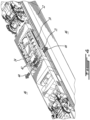
- Figure 4 is now concurrently referred to.
- fresh air 42 in the underfloor space 28 is drawn by the fans 40, thereby creating an outwardly flow of air.
- This fresh air 42 is then pushed through the heat exchangers 38 to cool the cooling fluid running in the heat exchangers 38 and then expelled as hot air 44 through the air exhaust 21 in the adjacent side skirts 14 into ambient space 46 on each lateral sides of the rail vehicle 10.
- Each stack of fans 40, heat exchanger 38 and exhaust 21 may be ducted to ensure all hot air 44 is expelled from the underfloor space 28.
- Ambient space 46 is here understood to be the surrounding space on each lateral side of the rail vehicle 10, but not underneath the rail vehicle 10 as the space below the rail vehicle 10 is relatively small and is influenced by the proximity between the side skirts 14 and the ground 29 on which the rail vehicle 10 travels.
- the fans 40 are placed between the side skirts 14 and the heat exchangers 38, adjacently to the side skirts 14, and in fluid communication with the air exhaust 21.
- the heat exchangers 38 are placed adjacently to the fans 40, on the opposite side of the side skirts 14.
- fresh air 42 present in the underfloor space 28 is drawn by the fans 40, thereby creating an outwardly flow of air.
- This fresh air 42 first passes through the heat exchangers 38 where it picks up heat from the cooling fluid, through the fans 40 themselves, and then pushed outside as hot air 44 through the air exhaust 21 and into the ambient space 46.
- electric motors used by the fans 40 have a tendency to get warm under load, this configuration may be preferable as it avoids the fans' electric motors from warming fresh air 42 before it circulates through the heat exchangers 38.
- each fan 40 is equipped with an impeller. Blades of this impeller are oriented so as to draw air in a predetermined direction. Hence, the fans 40 need to be installed in the right direction to make air from the underfloor 28 circulate towards the ambient space 46. If the fan 40 is powered by DC current, the polarity of the voltage is set such that the impeller spins in a direction to draw air from the underfloor space 28 and into the ambient space 46. If the fan 40 is powered by AC current, the phases must be adapted so that its impeller spins in a direction that draws air from the underfloor space 28 into the ambient space 46.
- the air exhaust 21 may be designed so that it creates a venturi effect when the rail vehicle 10 is circulating at speed. Indeed, when the rail vehicle 10 is in motion, the air velocity is much greater on each lateral sides of the rail vehicle 10 than it is within the underfloor space 28, resulting in even more efficient extraction of air from the underfloor space 28 to the ambient air if that venturi effect is taken advantage of.
- the side skirts 14 are important in benefitting from the venturi effect as they reduce mixing of air between the underfloor space 28 and the ambient space 46.
- the air drawn by the fans 40 is simply air filling the underfloor space 28.
- an air intake may be used to direct fresh air 42 into the underfloor space 28.
- Such air intake may be provided in one or both of the side skirts, preferably located closer to a front 48 of the body 12 than the air exhaust 21 so that hot air 44 is not picked up by the air intake.
- Another possible design is to add a scoop or deflector at a lower portion of the underfloor space 28 to direct air coming from under the rail vehicle at speed into the underfloor space 28.
- the whole power pack 30 is completely located in the underfloor space 28.
- This is typical of rail vehicles known as Diesel Multiple Units (DMU).
- DMU Diesel Multiple Units
- the power pack may be split: the ICE 32 and the generator 34 may be located above the floor 18 while heat exchangers 38 may be located either above the floor 18 or below the floor 18, in the underfloor space 28.
- the whole power pack 30 may be located above the floor 18.
- the present invention is solely concerned with the specific case where at least the heat exchangers 38 are located within the underfloor space 28. This is because the relatively close proximity of the ground 29 to the side skirts 14 and to the floor 18 create a confined area limiting the escape of hot air 44 from the underfloor 28. This is however not a problem when the heat exchangers 38 may be placed above the floor 18 since this proximity with the ground 29 is of no influence with this later design.
- Air from the underfloor space 28 is circulated following the flow shown in Figure 4 .
- Air from the underfloor space 28 is circulated by the fans 40 in sequence 1) through their respective adjacent heat exchanger 38; then 2) through the exhaust 21 of the respective side skirt 14 the heat exchanger 38 is adjacent to; and finally 3) to the ambient space 46 surrounding the rail vehicle 10.
- a flow of air may be created either by positioning the fan 40 between the side skirt 14 and the heat exchanger 38 or by positioning the heat exchanger 38 between the side skirt 14 and the fan 40.
- fresh air 42 from the underfloor space 28 flows through the heat exchanger 38 first, then through the fan 40, and finally exits as hot air 44 to the ambient space 46 through the exhaust 21.
- fresh air 42 from the underfloor space 28 flows through the fan 40 first, then through the heat exchanger 38 and finally exits as hot air 44 to the ambient space 46 through the exhaust 21.
- the flow of air is created by spinning the impeller of the fan 40 in a direction allowing to draw fresh air 42 from the underfloor space 28 to the ambient space 46.
Landscapes
- Engineering & Computer Science (AREA)
- Mechanical Engineering (AREA)
- Chemical & Material Sciences (AREA)
- Combustion & Propulsion (AREA)
- General Engineering & Computer Science (AREA)
- Transportation (AREA)
- Automation & Control Theory (AREA)
- Cooling, Air Intake And Gas Exhaust, And Fuel Tank Arrangements In Propulsion Units (AREA)
Description
- The present invention generally relates to the field of diesel-electric rail vehicles. More specifically, the invention relates to an improved cooling system and a method for evacuating heat generated by a diesel engine of the diesel-electric rail vehicle.
- Diesel-electric rail vehicles, such as locomotives, power cars, or diesel electric multiple units (DEMU) use a diesel engine to generate electricity to power electric motors connected to the wheels of the vehicles. These diesel engines typically have an efficiency ranging approximately between 40% and 60%, which means that about 40% to 60% is wasted in large quantities of heat which must be evacuated.
- It is common to arrange the cooling units used to cool the diesel engine of a railcar under its floor where fresh air may be ingested from the sides of the vehicle, circulated through the cooling units and evacuated as hot air within the underfloor of the vehicle, as disclosed e.g. in
EP 3 130 517 A1 , which discloses the features of the preamble of claim 1. It is thought that, as the rail vehicle circulates, hot air is somewhat naturally evacuated from the underfloor. - It has however been found that this type of arrangement may in fact lead to substantial increase in air temperatures within the underfloor, which may in turn compromise the operation of other pieces of equipment also located within the underfloor of the vehicle. In trains where propulsion and diesel engines are distributed, heat may even accumulate within the underfloor towards the rear of the train, exacerbating this problem.
- There is therefore a need for an improved cooling system and method.
- It is an object of the present invention to provide a cooling system for a rail vehicle and a method of cooling a diesel engine of a rail vehicle that overcomes or mitigates one or more disadvantages of known cooling systems and methods, or at least provides a useful alternative.
- The invention provides the advantages of evacuating hot air from an underfloor of the rail vehicle and thereby avoiding subjecting other undercar pieces of equipment to unnecessarily high temperatures.
- In accordance with an embodiment of the present invention, there is provided a rail vehicle comprising a body, a first and a second side skirts, two bogies supporting a different end of the body, an internal combustion engine, a motor, and a cooling system for cooling the engine. The body has a floor and lateral side walls projecting upwardly from the floor. The first and the second side skirts project downwardly below the floor and at least partially along a respective one of the side walls. At least one of the side skirts is provided with an exhaust, such as the first side skirt. Each bogie is provided with wheels. The floor, the first and second side skirts and the bogies define an inner, or underfloor, space there in between. The internal combustion engine is adapted to generate electricity to be supplied to the electric motor. The cooling system is operative to exchange heat between a cooling fluid circulating in a cooling circuit connected to the internal combustion engine and air located in the underfloor space. The cooling system has a heat exchanger and a fan adjacent the heat exchanger, both being installed under the floor and within the underfloor space. The heat exchanger and the fan are fluidly connected to the exhaust. The fan is operative to force air from the underfloor space through the heat exchanger and through the exhaust to an ambient space located on an external side of the first side skirt.
- Optionally, the heat exchanger may be placed adjacent to the first side skirt and the fan may be placed adjacent an inner face of the heat exchanger, the fan being operative to push air located within the underfloor space through the heat exchanger, through the adjacent first side skirt and into the ambient space.
- Alternatively, the fan may be placed adjacent to the first side skirt and the heat exchanger may be located on an inner face of the fan. The fan is operative to draw air located within the underfloor space through the heat exchanger, and push this air through the adjacent first side skirt and into the ambient space.
- An air intake for directing fresh air into the underfloor space may be provided in one or both of the side skirts. This air intake may be located on either or both of the side skirts, closer to a front of the body than the exhaust. The air intake may be a scoop located at a lower portion of the underfloor space.
- The cooling system may further comprise a second heat exchanger and a second fan, which are also located under the floor and within the underfloor space. The second fan is adjacent to the second heat exchanger. The second heat exchanger and the second fan are fluidly connected to a second exhaust located in the second side skirt. The second fan is operative to force air from the underfloor space through the second heat exchanger, through the second exhaust and into the ambient space located on an external side of the second side skirt.
- Both fans comprise an impeller which is oriented so as to draw air from the underfloor space to the ambient space. If the fan is powered by DC current, the voltage has its polarity such that the impeller spins in a direction to draw air from the underfloor space and into the ambient space. If the fan is powered by AC current, the phases must be adapted so that the impeller spins in a direction that draws air from the underfloor space into the ambient space.
- Optionally, the motor is connected to one of the wheels.
- In accordance with another embodiment of the present invention, there is provided a train comprising the rail vehicle as described above connected to an adjacent second rail vehicle wherein the motor is installed on a third bogie supporting the adjacent second rail vehicle.
- In accordance with another embodiment of the present invention there is provided a method for cooling the internal combustion engine of a rail vehicle according to claim 9.
- Optionally, the method may comprise locating the fan of the cooling system adjacent an internal side of the first side skirt.
- Preferably, the method comprises spinning an impeller of the fan so as to draw air from the underfloor space to the ambient space.
- The method may comprise using side skirts to create an underfloor space in substantially relatively close proximity to a ground on which the rail vehicle is travelling.
- Air located in the underfloor space may be circulated through a fan prior to circulating the air through the heat exchanger.
- Alternatively, the air located in the underfloor space may be circulated through the heat exchanger prior to circulating it through the fan.
- The circulating through the heat exchanger may further comprise transferring heat to the air to create hot air. The circulating air through the exhaust may also comprise exhausting the hot air towards the ambient space.
- These and other features of the present invention will become more apparent from the following description in which reference is made to the appended drawings wherein:
-
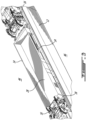
Figure 1 is a perspective view of a rail vehicle in accordance with an embodiment of the present invention; -
Figure 2 is a partial perspective view from underneath of the rail vehicle ofFigure 1 ; -
Figure 3 is a partial perspective view from underneath of the rail vehicle ofFigure 1 showing the underfloor space.; -
Figure 4 is a partial perspective view from underneath of the rail vehicle ofFigure 1 showing the flow of air in accordance with an embodiment of the present invention; -
Figure 5 is a partial perspective view from underneath of a rail vehicle showing the flow of air in accordance with another embodiment of the present invention. - The present invention relates to a rail vehicle having a cooling system and using a cooling method that evacuates hot air away from an underfloor space of a rail vehicle in order to prevent negatively affecting the performance of other pieces of equipment located within the underfloor space.
-
Figures 1 and2 are concurrently referred to. A rail vehicle 10 comprises abody 12,side skirts 14 and twobogies 16 supporting a different end of thebody 12. Thebody 12 has afloor 18 and side walls 20 projecting upwardly from thefloor 18. Eachbogie 16 is provided with wheels 22, sometimes independent, but usually installed on a wheel-axle 24. Oneelectric motor 26 powers at least one wheel 22, and usually a single wheel-axle 24, perbogie 16. Often, eachbogie 16 is provided with oneelectric motor 26 per wheel-axle 24. - Both
side skirts 14 depend from thefloor 18 and project at least partially along, or substantially along, a respective one of the side walls 20, or a respective one of the longitudinal sides of thefloor 18. Eachside skirt 14 is provided with anair exhaust 21 for exhausting hot air, as will be described later. Thefloor 18, the twoside skirts 14 and the twobogies 16 define the limits of anunderfloor space 28, best represented inFigure 3 , now concurrently referred to. The side skirts 14 are therefore used to create theunderfloor space 28 in substantially close proximity to a ground 29 on which the rail vehicle 10 is travelling, which, up to a certain point, prevents mixing air from theunderfloor space 28 with ambient air on each lateral side of the rail vehicle 10. - The rail vehicle 10 is provided with a
power pack 30 comprising an internal combustion engine (ICE) 32, usually a diesel engine, mechanically connected to agenerator 34 for generating electrical power for theelectric motors 26 located on thebogies 16. Thepower pack 30 also comprises acooling system 36 for cooling theICE 32. - The
cooling system 36 is a closed loop system circulating a cooling fluid betweenheat exchangers 38 and theICE 32, thereby exchanging heat between the cooling fluid and air located in theunderfloor space 28. Thecooling system 36 may use one ormore heat exchanger 38, depending on operating conditions and on the quantity of heat to be dissipated. Eachheat exchanger 38 is provided with one ormore fans 40. When oneheat exchanger 38 is used, it is placed on either one side of thebody 12. When twoheat exchangers 38 are required, they usually are located symmetrically on each side of thebody 12. Allheat exchangers 38 are similarly connected to theICE 32. - One or
more fans 40 are placed adjacently to eachheat exchangers 38. Infigure 2 , theheat exchangers 38 are placed between thefans 40 and the side skirts 14.Figure 4 is now concurrently referred to. In this configuration,fresh air 42 in theunderfloor space 28 is drawn by thefans 40, thereby creating an outwardly flow of air. Thisfresh air 42 is then pushed through theheat exchangers 38 to cool the cooling fluid running in theheat exchangers 38 and then expelled ashot air 44 through theair exhaust 21 in the adjacent side skirts 14 intoambient space 46 on each lateral sides of the rail vehicle 10. Each stack offans 40,heat exchanger 38 andexhaust 21 may be ducted to ensure allhot air 44 is expelled from theunderfloor space 28.Ambient space 46 is here understood to be the surrounding space on each lateral side of the rail vehicle 10, but not underneath the rail vehicle 10 as the space below the rail vehicle 10 is relatively small and is influenced by the proximity between the side skirts 14 and the ground 29 on which the rail vehicle 10 travels. - In an alternate configuration depicted in
Figure 5 , now concurrently referred to, thefans 40 are placed between the side skirts 14 and theheat exchangers 38, adjacently to the side skirts 14, and in fluid communication with theair exhaust 21. Theheat exchangers 38 are placed adjacently to thefans 40, on the opposite side of the side skirts 14. In this configuration,fresh air 42 present in theunderfloor space 28 is drawn by thefans 40, thereby creating an outwardly flow of air. Thisfresh air 42 first passes through theheat exchangers 38 where it picks up heat from the cooling fluid, through thefans 40 themselves, and then pushed outside ashot air 44 through theair exhaust 21 and into theambient space 46. If electric motors used by thefans 40 have a tendency to get warm under load, this configuration may be preferable as it avoids the fans' electric motors from warmingfresh air 42 before it circulates through theheat exchangers 38. - There are different ways the
fan 40 may be made to draw air from theunderfloor space 28 to theambient space 46. Eachfan 40 is equipped with an impeller. Blades of this impeller are oriented so as to draw air in a predetermined direction. Hence, thefans 40 need to be installed in the right direction to make air from the underfloor 28 circulate towards theambient space 46. If thefan 40 is powered by DC current, the polarity of the voltage is set such that the impeller spins in a direction to draw air from theunderfloor space 28 and into theambient space 46. If thefan 40 is powered by AC current, the phases must be adapted so that its impeller spins in a direction that draws air from theunderfloor space 28 into theambient space 46. - The
air exhaust 21 may be designed so that it creates a venturi effect when the rail vehicle 10 is circulating at speed. Indeed, when the rail vehicle 10 is in motion, the air velocity is much greater on each lateral sides of the rail vehicle 10 than it is within theunderfloor space 28, resulting in even more efficient extraction of air from theunderfloor space 28 to the ambient air if that venturi effect is taken advantage of. The side skirts 14 are important in benefitting from the venturi effect as they reduce mixing of air between theunderfloor space 28 and theambient space 46. - In its most basic form, the air drawn by the
fans 40 is simply air filling theunderfloor space 28. Alternatively, an air intake may be used to directfresh air 42 into theunderfloor space 28. Such air intake may be provided in one or both of the side skirts, preferably located closer to afront 48 of thebody 12 than theair exhaust 21 so thathot air 44 is not picked up by the air intake. Another possible design is to add a scoop or deflector at a lower portion of theunderfloor space 28 to direct air coming from under the rail vehicle at speed into theunderfloor space 28. - In the present example, the
whole power pack 30 is completely located in theunderfloor space 28. This is typical of rail vehicles known as Diesel Multiple Units (DMU). However, in some rail vehicles such as large locomotives, the power pack may be split: theICE 32 and thegenerator 34 may be located above thefloor 18 whileheat exchangers 38 may be located either above thefloor 18 or below thefloor 18, in theunderfloor space 28. In other vehicles, thewhole power pack 30 may be located above thefloor 18. The present invention is solely concerned with the specific case where at least theheat exchangers 38 are located within theunderfloor space 28. This is because the relatively close proximity of the ground 29 to the side skirts 14 and to thefloor 18 create a confined area limiting the escape ofhot air 44 from the underfloor 28. This is however not a problem when theheat exchangers 38 may be placed above thefloor 18 since this proximity with the ground 29 is of no influence with this later design. - In use, air from the
underfloor space 28 is circulated following the flow shown inFigure 4 . Air from theunderfloor space 28 is circulated by thefans 40 in sequence 1) through their respectiveadjacent heat exchanger 38; then 2) through theexhaust 21 of therespective side skirt 14 theheat exchanger 38 is adjacent to; and finally 3) to theambient space 46 surrounding the rail vehicle 10. - Optionally, a flow of air may be created either by positioning the
fan 40 between theside skirt 14 and theheat exchanger 38 or by positioning theheat exchanger 38 between theside skirt 14 and thefan 40. In the first case,fresh air 42 from theunderfloor space 28 flows through theheat exchanger 38 first, then through thefan 40, and finally exits ashot air 44 to theambient space 46 through theexhaust 21. In the second case,fresh air 42 from theunderfloor space 28 flows through thefan 40 first, then through theheat exchanger 38 and finally exits ashot air 44 to theambient space 46 through theexhaust 21. The flow of air is created by spinning the impeller of thefan 40 in a direction allowing to drawfresh air 42 from theunderfloor space 28 to theambient space 46. - The present invention has been described with regard to preferred embodiments. The description as much as the drawings were intended to help the understanding of the invention, rather than to limit its scope. It will be apparent to one skilled in the art that various modifications may be made to the invention without departing from the scope of the invention as defined by the claims. The invention is defined by the claims that follow.
Claims (15)
- A rail vehicle (10) comprising:a body (12) having a floor (18) and side walls (20) projecting upwardly from said floor (18);a first and a second side skirts (14) projecting downwardly below said floor (18) and along a portion of a respective one of said side walls (20),;two bogies (16) having wheels (22) and operative to support a different end of said body (12), said floor (18), said first and second side skirts (14) and said bogies (16) defining an underfloor space (28) there in between with an exhaust (21);an internal combustion engine (32) for generating power to be supplied to an electric motor (26);a cooling system (36) operative to exchange heat between a cooling fluid circulating in a cooling circuit connected to said internal combustion engine (32) and air located in said underfloor space (28), said cooling system (36) having:a heat exchanger (38) located under said floor (18) and within said underfloor space (28), said heat exchanger (38) being fluidly connected to said underfloor space (28) on a first side of said heat exchanger (38) and to said exhaust (21) on a second side of said heat exchanger (38);a fan (40) adjacent said heat exchanger (38) and fluidly connected to said exhaust (21),characterized in that said first side skirt (14) is provided with said exhaust (21) and said fan (40) is operative to sequentially force air (42, 44) from said underfloor space (28) through said first side of said heat exchanger (38), through said second side of said heat exchanger (38) and through said exhaust (21) to an ambient space (46) located on an external side of said first side skirt (14).
- The rail vehicle (10) of claim 1 wherein said heat exchanger (38) is adjacent said first side skirt (14) and wherein said fan (40) is adjacent an inner face of said heat exchanger (38), said fan (40) being operative to push air located within said underfloor space (28) through said heat exchanger (38), through said exhaust (21) of said first side skirt (14) and into the ambient space (46).
- The rail vehicle (10) of claim 1 wherein said fan (40) is adjacent said first side skirt (14) and wherein said heat exchanger (38) is located on an inner face of said fan (40), said fan (40) being operative to draw air located within said underfloor space (28) through said heat exchanger (38) and push the air through said exhaust (21) of said first side skirt (14) into the ambient space (46).
- The rail vehicle (10) of any one of claims 2 and 3 further comprising an air intake for directing fresh air into said underfloor space (28), wherein, preferably, one of the following conditions is met:- said air intake is located on one of said side skirts (14), preferably closer to a front of said body (12) than said exhaust (21), or- said air intake is a deflector located at a lower portion of said underfloor space (28) for directing fresh air into said underfloor space (28).
- The rail vehicle (10) of any one of the preceding claims wherein said cooling system (36) further comprises a second heat exchanger (38) located under said floor (18) and within said underfloor space (28) and a second fan (40) adjacent said second heat exchanger (38), said second heat exchanger (38) and said second fan (40) being fluidly connected to a second exhaust (21) located in said second side skirt (14), said second fan (40) being operative to force air from said underfloor space (28) through said second heat exchanger (38) and through said second exhaust (21) to said ambient space (46) located on an external side of said second side skirt (14).
- The rail vehicle (10) of any one of the preceding claims wherein said fan (40) comprises an impeller, said impeller being oriented so as to draw air from said underfloor space (28) to said ambient space (46), wherein said fan (40) is preferably powered either by DC voltage having a polarity so that said impeller spins in a direction so as to draw air from said underfloor space (28) to said ambient space (46), or by AC current having a phase adapted so that said impeller spins in a direction so as to draw air from said underfloor space (28) to said ambient space (46).
- The rail vehicle (10) of any one of the preceding claims wherein said motor (26) is connected to one of said wheels (22).
- A train comprising the rail vehicle (10) of claim any one of claims 1 to 11 connected to an adjacent second rail vehicle wherein said motor (26) is installed on a third bogie supporting said adjacent second rail vehicle.
- A method for cooling an internal combustion engine (32) of a rail vehicle (10), said rail vehicle (10) having a body (12), two bogies (16) supporting said body (12) and a cooling system (36) having a heat exchanger (38) for cooling said internal combustion engine (32) and a fan (40) adjacent said heat exchanger (38), said body (12) having a floor (18) and two side skirts (14) depending from said floor (18) and substantially aligned along a respective longitudinal side (20) of said floor (14), said two side skirts, said two bogies (16) and said floor (18) defining an underfloor space (28) there in between, said heat exchanger (38) being fluidly connected to said underfloor space (28) on a first side of said heat exchanger (38) and to an exhaust (21) on a second side of said heat exchanger, said fan (40) being fluidly connected to said exhaust (21) the method comprising operating said fan (40) such as to sequentially force air:from said underfloor space (28); thenthrough said first side and then through said second side of said heat exchanger (38) located within said underfloor space; thenthrough said exhaust (21) located in a first one of said two side skirts (14); andto an ambient space (46) located on an external side of said first side skirt (14).
- The method of claim 9 comprising locating said fan (40) of said cooling system (36) adjacent an internal side of said first side skirt (14).
- The method of claim 10 comprising spinning an impeller of said fan so as to draw air from said underfloor space (28) to said ambient space (46).
- The method of any one of claims 9 to 11 further comprising creating an underfloor space (28) in substantially close proximity to a ground on which the rail vehicle (10) is travelling using said two side skirts (14).
- The method of any one of claims 9 to 12 further comprising circulating air located in said underfloor space (28) through said fan (40) prior to circulating said air through said heat exchanger (38).
- The method of any one of claims 9 to 12 further comprising circulating air located in said underfloor space (28) through said heat exchanger (40) prior to circulating said air through said fan (40) placed between said heat exchanger (38) and said first side skirt (14).
- The method of any one of the claims 9 to 14 wherein said circulating through said heat exchanger (38) comprises transferring heat to said air to create hot air, said circulating through said exhaust (21) comprising exhausting said hot air towards said ambient space (46).
Applications Claiming Priority (1)
| Application Number | Priority Date | Filing Date | Title |
|---|---|---|---|
| CA3053689A CA3053689C (en) | 2019-08-30 | 2019-08-30 | Rail vehicle having an improved cooling system and method for its internal combustion engine |
Publications (2)
| Publication Number | Publication Date |
|---|---|
| EP3786023A1 EP3786023A1 (en) | 2021-03-03 |
| EP3786023B1 true EP3786023B1 (en) | 2023-04-12 |
Family
ID=68465384
Family Applications (1)
| Application Number | Title | Priority Date | Filing Date |
|---|---|---|---|
| EP20193179.7A Active EP3786023B1 (en) | 2019-08-30 | 2020-08-27 | Rail vehicle having an improved cooling system and method for its internal combustion engine |
Country Status (5)
| Country | Link |
|---|---|
| US (1) | US11173928B2 (en) |
| EP (1) | EP3786023B1 (en) |
| CN (1) | CN112443386B (en) |
| CA (1) | CA3053689C (en) |
| PL (1) | PL3786023T3 (en) |
Families Citing this family (2)
| Publication number | Priority date | Publication date | Assignee | Title |
|---|---|---|---|---|
| US12215612B2 (en) * | 2020-12-03 | 2025-02-04 | Transportation Ip Holdings, Llc | System and method for a cab-mounted muffler assembly |
| CN113353107B (en) * | 2021-06-23 | 2025-04-22 | 中车大连机车研究所有限公司 | A mounting chassis for arranging an internal combustion power integrated system on a vehicle |
Family Cites Families (13)
| Publication number | Priority date | Publication date | Assignee | Title |
|---|---|---|---|---|
| JP3225200B2 (en) * | 1996-09-13 | 2001-11-05 | 財団法人鉄道総合技術研究所 | Cooling system for power unit for railway vehicles |
| US20020036076A1 (en) * | 2000-01-10 | 2002-03-28 | Eastman G. Yale | Loop heat pipe for equipment cooling |
| JP2005307599A (en) * | 2004-04-22 | 2005-11-04 | Hitachi Constr Mach Co Ltd | Cooling device disposition structure of construction machine |
| US7431073B2 (en) * | 2004-12-06 | 2008-10-07 | Deere & Company | Cooling system with active debris separation |
| US20070007061A1 (en) | 2005-07-06 | 2007-01-11 | Deere & Company | Plenum cooling system |
| DE202008017331U1 (en) * | 2008-02-27 | 2009-06-04 | Bombardier Transportation Gmbh | Rail vehicles with emission control |
| DE102011114354B3 (en) * | 2011-09-27 | 2012-11-22 | Voith Patent Gmbh | Underfloor cooling system for a rail vehicle |
| CA2779475C (en) * | 2012-05-29 | 2015-04-07 | Macdon Industries Ltd. | Windrower tractor with parallel heat exchangers for cooling of engine and associated fluids |
| US9796244B2 (en) * | 2014-01-17 | 2017-10-24 | Honda Motor Co., Ltd. | Thermal management system for a vehicle and method |
| WO2015155832A1 (en) * | 2014-04-08 | 2015-10-15 | 株式会社日立製作所 | Moving vehicle |
| CA2913473A1 (en) * | 2015-11-27 | 2017-05-27 | Christer Gotmalm | Method and apparatus for cooling and heating in vehicles |
| CN106246324A (en) * | 2016-08-23 | 2016-12-21 | 北汽福田汽车股份有限公司 | Engine coolant heat-exchange system, engineering machinery and hydraulic leg |
| CN206522199U (en) * | 2016-12-05 | 2017-09-26 | 湖北鹰牌动力科技有限公司 | A kind of afterheat utilizing system of engine |
-
2019
- 2019-08-30 CA CA3053689A patent/CA3053689C/en active Active
-
2020
- 2020-07-09 CN CN202010654656.0A patent/CN112443386B/en active Active
- 2020-08-27 PL PL20193179.7T patent/PL3786023T3/en unknown
- 2020-08-27 EP EP20193179.7A patent/EP3786023B1/en active Active
- 2020-08-28 US US17/005,409 patent/US11173928B2/en active Active
Also Published As
| Publication number | Publication date |
|---|---|
| PL3786023T3 (en) | 2023-09-04 |
| US20210061317A1 (en) | 2021-03-04 |
| US11173928B2 (en) | 2021-11-16 |
| EP3786023A1 (en) | 2021-03-03 |
| CA3053689A1 (en) | 2019-11-05 |
| CN112443386B (en) | 2022-02-01 |
| CN112443386A (en) | 2021-03-05 |
| CA3053689C (en) | 2021-01-19 |
Similar Documents
| Publication | Publication Date | Title |
|---|---|---|
| US8006626B2 (en) | System and method for cooling a battery | |
| EP3634792B1 (en) | Hybrid power conversion system for a refrigerated transport vehicle and method | |
| US7565867B2 (en) | Multiple engine locomotive configuration | |
| CN203937673U (en) | systems for vehicles | |
| US20140138077A1 (en) | Vehicle cooling device | |
| EP3786023B1 (en) | Rail vehicle having an improved cooling system and method for its internal combustion engine | |
| JP2005029152A (en) | Vertical airflow engine cooling device | |
| JP2014092160A (en) | Integrated cooling system and method for engine-powered unit | |
| CN114502403B (en) | Cooling equipment for motor vehicles | |
| JP5672493B2 (en) | Electric vehicle cooling system | |
| KR20070036092A (en) | Cooling apparatus of a fuel cell vehicle | |
| JP6609467B2 (en) | Cooling aeroric device for railway vehicle elements and corresponding railway vehicle | |
| Kondo | Application of permanent magnet synchronous motor to driving railway vehicles. | |
| CN115702605A (en) | Cooling system for electric vehicle | |
| US10225961B2 (en) | System and method for cooling power electronics | |
| US7059278B2 (en) | Locomotive engine charge air cooling system and method for cooling the engine | |
| CN105922861A (en) | Heat dissipation device for vehicle and vehicle with same | |
| RU171286U1 (en) | Diesel Locomotive Section | |
| US20250167622A1 (en) | Air-Outlet-Hood for Self-Ventilated Traction Motors for Rolling Stock | |
| CN107472294A (en) | A kind of multicomputer internal combustion is shunt and control method | |
| RU172325U1 (en) | Diesel locomotive shunting | |
| CN109955705A (en) | A plug-in hybrid power device layout structure and vehicle | |
| CN215804799U (en) | Modularized rapid cooling device for diesel locomotive | |
| RU134503U1 (en) | Diesel Locomotive Section | |
| RU2718596C1 (en) | Locomotive |
Legal Events
| Date | Code | Title | Description |
|---|---|---|---|
| PUAI | Public reference made under article 153(3) epc to a published international application that has entered the european phase |
Free format text: ORIGINAL CODE: 0009012 |
|
| STAA | Information on the status of an ep patent application or granted ep patent |
Free format text: STATUS: REQUEST FOR EXAMINATION WAS MADE |
|
| 17P | Request for examination filed |
Effective date: 20200827 |
|
| AK | Designated contracting states |
Kind code of ref document: A1 Designated state(s): AL AT BE BG CH CY CZ DE DK EE ES FI FR GB GR HR HU IE IS IT LI LT LU LV MC MK MT NL NO PL PT RO RS SE SI SK SM TR |
|
| AX | Request for extension of the european patent |
Extension state: BA ME |
|
| GRAP | Despatch of communication of intention to grant a patent |
Free format text: ORIGINAL CODE: EPIDOSNIGR1 |
|
| STAA | Information on the status of an ep patent application or granted ep patent |
Free format text: STATUS: GRANT OF PATENT IS INTENDED |
|
| INTG | Intention to grant announced |
Effective date: 20211207 |
|
| GRAJ | Information related to disapproval of communication of intention to grant by the applicant or resumption of examination proceedings by the epo deleted |
Free format text: ORIGINAL CODE: EPIDOSDIGR1 |
|
| STAA | Information on the status of an ep patent application or granted ep patent |
Free format text: STATUS: REQUEST FOR EXAMINATION WAS MADE |
|
| INTC | Intention to grant announced (deleted) | ||
| GRAP | Despatch of communication of intention to grant a patent |
Free format text: ORIGINAL CODE: EPIDOSNIGR1 |
|
| STAA | Information on the status of an ep patent application or granted ep patent |
Free format text: STATUS: GRANT OF PATENT IS INTENDED |
|
| INTG | Intention to grant announced |
Effective date: 20220516 |
|
| GRAJ | Information related to disapproval of communication of intention to grant by the applicant or resumption of examination proceedings by the epo deleted |
Free format text: ORIGINAL CODE: EPIDOSDIGR1 |
|
| STAA | Information on the status of an ep patent application or granted ep patent |
Free format text: STATUS: REQUEST FOR EXAMINATION WAS MADE |
|
| INTC | Intention to grant announced (deleted) | ||
| GRAP | Despatch of communication of intention to grant a patent |
Free format text: ORIGINAL CODE: EPIDOSNIGR1 |
|
| STAA | Information on the status of an ep patent application or granted ep patent |
Free format text: STATUS: GRANT OF PATENT IS INTENDED |
|
| INTG | Intention to grant announced |
Effective date: 20221025 |
|
| GRAS | Grant fee paid |
Free format text: ORIGINAL CODE: EPIDOSNIGR3 |
|
| GRAA | (expected) grant |
Free format text: ORIGINAL CODE: 0009210 |
|
| STAA | Information on the status of an ep patent application or granted ep patent |
Free format text: STATUS: THE PATENT HAS BEEN GRANTED |
|
| AK | Designated contracting states |
Kind code of ref document: B1 Designated state(s): AL AT BE BG CH CY CZ DE DK EE ES FI FR GB GR HR HU IE IS IT LI LT LU LV MC MK MT NL NO PL PT RO RS SE SI SK SM TR |
|
| REG | Reference to a national code |
Ref country code: GB Ref legal event code: FG4D |
|
| REG | Reference to a national code |
Ref country code: CH Ref legal event code: EP |
|
| REG | Reference to a national code |
Ref country code: DE Ref legal event code: R096 Ref document number: 602020009648 Country of ref document: DE |
|
| REG | Reference to a national code |
Ref country code: IE Ref legal event code: FG4D |
|
| REG | Reference to a national code |
Ref country code: AT Ref legal event code: REF Ref document number: 1559627 Country of ref document: AT Kind code of ref document: T Effective date: 20230515 |
|
| REG | Reference to a national code |
Ref country code: LT Ref legal event code: MG9D |
|
| REG | Reference to a national code |
Ref country code: NL Ref legal event code: MP Effective date: 20230412 |
|
| RAP2 | Party data changed (patent owner data changed or rights of a patent transferred) |
Owner name: ALSTOM HOLDINGS |
|
| REG | Reference to a national code |
Ref country code: AT Ref legal event code: MK05 Ref document number: 1559627 Country of ref document: AT Kind code of ref document: T Effective date: 20230412 |
|
| P01 | Opt-out of the competence of the unified patent court (upc) registered |
Effective date: 20230822 |
|
| PG25 | Lapsed in a contracting state [announced via postgrant information from national office to epo] |
Ref country code: NL Free format text: LAPSE BECAUSE OF FAILURE TO SUBMIT A TRANSLATION OF THE DESCRIPTION OR TO PAY THE FEE WITHIN THE PRESCRIBED TIME-LIMIT Effective date: 20230412 |
|
| PG25 | Lapsed in a contracting state [announced via postgrant information from national office to epo] |
Ref country code: SE Free format text: LAPSE BECAUSE OF FAILURE TO SUBMIT A TRANSLATION OF THE DESCRIPTION OR TO PAY THE FEE WITHIN THE PRESCRIBED TIME-LIMIT Effective date: 20230412 Ref country code: PT Free format text: LAPSE BECAUSE OF FAILURE TO SUBMIT A TRANSLATION OF THE DESCRIPTION OR TO PAY THE FEE WITHIN THE PRESCRIBED TIME-LIMIT Effective date: 20230814 Ref country code: NO Free format text: LAPSE BECAUSE OF FAILURE TO SUBMIT A TRANSLATION OF THE DESCRIPTION OR TO PAY THE FEE WITHIN THE PRESCRIBED TIME-LIMIT Effective date: 20230712 Ref country code: ES Free format text: LAPSE BECAUSE OF FAILURE TO SUBMIT A TRANSLATION OF THE DESCRIPTION OR TO PAY THE FEE WITHIN THE PRESCRIBED TIME-LIMIT Effective date: 20230412 Ref country code: AT Free format text: LAPSE BECAUSE OF FAILURE TO SUBMIT A TRANSLATION OF THE DESCRIPTION OR TO PAY THE FEE WITHIN THE PRESCRIBED TIME-LIMIT Effective date: 20230412 |
|
| PG25 | Lapsed in a contracting state [announced via postgrant information from national office to epo] |
Ref country code: RS Free format text: LAPSE BECAUSE OF FAILURE TO SUBMIT A TRANSLATION OF THE DESCRIPTION OR TO PAY THE FEE WITHIN THE PRESCRIBED TIME-LIMIT Effective date: 20230412 Ref country code: LV Free format text: LAPSE BECAUSE OF FAILURE TO SUBMIT A TRANSLATION OF THE DESCRIPTION OR TO PAY THE FEE WITHIN THE PRESCRIBED TIME-LIMIT Effective date: 20230412 Ref country code: LT Free format text: LAPSE BECAUSE OF FAILURE TO SUBMIT A TRANSLATION OF THE DESCRIPTION OR TO PAY THE FEE WITHIN THE PRESCRIBED TIME-LIMIT Effective date: 20230412 Ref country code: IS Free format text: LAPSE BECAUSE OF FAILURE TO SUBMIT A TRANSLATION OF THE DESCRIPTION OR TO PAY THE FEE WITHIN THE PRESCRIBED TIME-LIMIT Effective date: 20230812 Ref country code: HR Free format text: LAPSE BECAUSE OF FAILURE TO SUBMIT A TRANSLATION OF THE DESCRIPTION OR TO PAY THE FEE WITHIN THE PRESCRIBED TIME-LIMIT Effective date: 20230412 Ref country code: GR Free format text: LAPSE BECAUSE OF FAILURE TO SUBMIT A TRANSLATION OF THE DESCRIPTION OR TO PAY THE FEE WITHIN THE PRESCRIBED TIME-LIMIT Effective date: 20230713 Ref country code: AL Free format text: LAPSE BECAUSE OF FAILURE TO SUBMIT A TRANSLATION OF THE DESCRIPTION OR TO PAY THE FEE WITHIN THE PRESCRIBED TIME-LIMIT Effective date: 20230412 |
|
| PG25 | Lapsed in a contracting state [announced via postgrant information from national office to epo] |
Ref country code: FI Free format text: LAPSE BECAUSE OF FAILURE TO SUBMIT A TRANSLATION OF THE DESCRIPTION OR TO PAY THE FEE WITHIN THE PRESCRIBED TIME-LIMIT Effective date: 20230412 |
|
| REG | Reference to a national code |
Ref country code: DE Ref legal event code: R097 Ref document number: 602020009648 Country of ref document: DE |
|
| PG25 | Lapsed in a contracting state [announced via postgrant information from national office to epo] |
Ref country code: SK Free format text: LAPSE BECAUSE OF FAILURE TO SUBMIT A TRANSLATION OF THE DESCRIPTION OR TO PAY THE FEE WITHIN THE PRESCRIBED TIME-LIMIT Effective date: 20230412 |
|
| PG25 | Lapsed in a contracting state [announced via postgrant information from national office to epo] |
Ref country code: SM Free format text: LAPSE BECAUSE OF FAILURE TO SUBMIT A TRANSLATION OF THE DESCRIPTION OR TO PAY THE FEE WITHIN THE PRESCRIBED TIME-LIMIT Effective date: 20230412 Ref country code: SK Free format text: LAPSE BECAUSE OF FAILURE TO SUBMIT A TRANSLATION OF THE DESCRIPTION OR TO PAY THE FEE WITHIN THE PRESCRIBED TIME-LIMIT Effective date: 20230412 Ref country code: RO Free format text: LAPSE BECAUSE OF FAILURE TO SUBMIT A TRANSLATION OF THE DESCRIPTION OR TO PAY THE FEE WITHIN THE PRESCRIBED TIME-LIMIT Effective date: 20230412 Ref country code: EE Free format text: LAPSE BECAUSE OF FAILURE TO SUBMIT A TRANSLATION OF THE DESCRIPTION OR TO PAY THE FEE WITHIN THE PRESCRIBED TIME-LIMIT Effective date: 20230412 Ref country code: DK Free format text: LAPSE BECAUSE OF FAILURE TO SUBMIT A TRANSLATION OF THE DESCRIPTION OR TO PAY THE FEE WITHIN THE PRESCRIBED TIME-LIMIT Effective date: 20230412 Ref country code: CZ Free format text: LAPSE BECAUSE OF FAILURE TO SUBMIT A TRANSLATION OF THE DESCRIPTION OR TO PAY THE FEE WITHIN THE PRESCRIBED TIME-LIMIT Effective date: 20230412 |
|
| PLBE | No opposition filed within time limit |
Free format text: ORIGINAL CODE: 0009261 |
|
| STAA | Information on the status of an ep patent application or granted ep patent |
Free format text: STATUS: NO OPPOSITION FILED WITHIN TIME LIMIT |
|
| REG | Reference to a national code |
Ref country code: DE Ref legal event code: R119 Ref document number: 602020009648 Country of ref document: DE |
|
| PG25 | Lapsed in a contracting state [announced via postgrant information from national office to epo] |
Ref country code: MC Free format text: LAPSE BECAUSE OF FAILURE TO SUBMIT A TRANSLATION OF THE DESCRIPTION OR TO PAY THE FEE WITHIN THE PRESCRIBED TIME-LIMIT Effective date: 20230412 |
|
| 26N | No opposition filed |
Effective date: 20240115 |
|
| REG | Reference to a national code |
Ref country code: CH Ref legal event code: PL |
|
| PG25 | Lapsed in a contracting state [announced via postgrant information from national office to epo] |
Ref country code: MC Free format text: LAPSE BECAUSE OF FAILURE TO SUBMIT A TRANSLATION OF THE DESCRIPTION OR TO PAY THE FEE WITHIN THE PRESCRIBED TIME-LIMIT Effective date: 20230412 |
|
| PG25 | Lapsed in a contracting state [announced via postgrant information from national office to epo] |
Ref country code: LU Free format text: LAPSE BECAUSE OF NON-PAYMENT OF DUE FEES Effective date: 20230827 |
|
| PG25 | Lapsed in a contracting state [announced via postgrant information from national office to epo] |
Ref country code: LU Free format text: LAPSE BECAUSE OF NON-PAYMENT OF DUE FEES Effective date: 20230827 Ref country code: CH Free format text: LAPSE BECAUSE OF NON-PAYMENT OF DUE FEES Effective date: 20230831 |
|
| PG25 | Lapsed in a contracting state [announced via postgrant information from national office to epo] |
Ref country code: SI Free format text: LAPSE BECAUSE OF FAILURE TO SUBMIT A TRANSLATION OF THE DESCRIPTION OR TO PAY THE FEE WITHIN THE PRESCRIBED TIME-LIMIT Effective date: 20230412 |
|
| REG | Reference to a national code |
Ref country code: BE Ref legal event code: MM Effective date: 20230831 |
|
| REG | Reference to a national code |
Ref country code: IE Ref legal event code: MM4A |
|
| PG25 | Lapsed in a contracting state [announced via postgrant information from national office to epo] |
Ref country code: SI Free format text: LAPSE BECAUSE OF FAILURE TO SUBMIT A TRANSLATION OF THE DESCRIPTION OR TO PAY THE FEE WITHIN THE PRESCRIBED TIME-LIMIT Effective date: 20230412 Ref country code: IT Free format text: LAPSE BECAUSE OF FAILURE TO SUBMIT A TRANSLATION OF THE DESCRIPTION OR TO PAY THE FEE WITHIN THE PRESCRIBED TIME-LIMIT Effective date: 20230412 |
|
| PG25 | Lapsed in a contracting state [announced via postgrant information from national office to epo] |
Ref country code: IE Free format text: LAPSE BECAUSE OF NON-PAYMENT OF DUE FEES Effective date: 20230827 |
|
| PG25 | Lapsed in a contracting state [announced via postgrant information from national office to epo] |
Ref country code: IE Free format text: LAPSE BECAUSE OF NON-PAYMENT OF DUE FEES Effective date: 20230827 Ref country code: FR Free format text: LAPSE BECAUSE OF NON-PAYMENT OF DUE FEES Effective date: 20230831 Ref country code: DE Free format text: LAPSE BECAUSE OF NON-PAYMENT OF DUE FEES Effective date: 20240301 |
|
| PG25 | Lapsed in a contracting state [announced via postgrant information from national office to epo] |
Ref country code: BE Free format text: LAPSE BECAUSE OF NON-PAYMENT OF DUE FEES Effective date: 20230831 |
|
| PG25 | Lapsed in a contracting state [announced via postgrant information from national office to epo] |
Ref country code: BG Free format text: LAPSE BECAUSE OF FAILURE TO SUBMIT A TRANSLATION OF THE DESCRIPTION OR TO PAY THE FEE WITHIN THE PRESCRIBED TIME-LIMIT Effective date: 20230412 |
|
| PG25 | Lapsed in a contracting state [announced via postgrant information from national office to epo] |
Ref country code: BG Free format text: LAPSE BECAUSE OF FAILURE TO SUBMIT A TRANSLATION OF THE DESCRIPTION OR TO PAY THE FEE WITHIN THE PRESCRIBED TIME-LIMIT Effective date: 20230412 |
|
| PG25 | Lapsed in a contracting state [announced via postgrant information from national office to epo] |
Ref country code: CY Free format text: LAPSE BECAUSE OF FAILURE TO SUBMIT A TRANSLATION OF THE DESCRIPTION OR TO PAY THE FEE WITHIN THE PRESCRIBED TIME-LIMIT; INVALID AB INITIO Effective date: 20200827 |
|
| PG25 | Lapsed in a contracting state [announced via postgrant information from national office to epo] |
Ref country code: HU Free format text: LAPSE BECAUSE OF FAILURE TO SUBMIT A TRANSLATION OF THE DESCRIPTION OR TO PAY THE FEE WITHIN THE PRESCRIBED TIME-LIMIT; INVALID AB INITIO Effective date: 20200827 |
|
| PGFP | Annual fee paid to national office [announced via postgrant information from national office to epo] |
Ref country code: PL Payment date: 20250816 Year of fee payment: 6 |
|
| PGFP | Annual fee paid to national office [announced via postgrant information from national office to epo] |
Ref country code: GB Payment date: 20250820 Year of fee payment: 6 |
|
| PG25 | Lapsed in a contracting state [announced via postgrant information from national office to epo] |
Ref country code: TR Free format text: LAPSE BECAUSE OF FAILURE TO SUBMIT A TRANSLATION OF THE DESCRIPTION OR TO PAY THE FEE WITHIN THE PRESCRIBED TIME-LIMIT Effective date: 20230412 |