EP3785820A1 - Binder, method for manufacturing same and method for manufacturing casting sand mold - Google Patents
Binder, method for manufacturing same and method for manufacturing casting sand mold Download PDFInfo
- Publication number
- EP3785820A1 EP3785820A1 EP19791752.9A EP19791752A EP3785820A1 EP 3785820 A1 EP3785820 A1 EP 3785820A1 EP 19791752 A EP19791752 A EP 19791752A EP 3785820 A1 EP3785820 A1 EP 3785820A1
- Authority
- EP
- European Patent Office
- Prior art keywords
- phenolic resin
- binder
- resol
- type phenolic
- sand mold
- Prior art date
- Legal status (The legal status is an assumption and is not a legal conclusion. Google has not performed a legal analysis and makes no representation as to the accuracy of the status listed.)
- Pending
Links
Images


Classifications
-
- C—CHEMISTRY; METALLURGY
- C08—ORGANIC MACROMOLECULAR COMPOUNDS; THEIR PREPARATION OR CHEMICAL WORKING-UP; COMPOSITIONS BASED THEREON
- C08G—MACROMOLECULAR COMPOUNDS OBTAINED OTHERWISE THAN BY REACTIONS ONLY INVOLVING UNSATURATED CARBON-TO-CARBON BONDS
- C08G8/00—Condensation polymers of aldehydes or ketones with phenols only
- C08G8/04—Condensation polymers of aldehydes or ketones with phenols only of aldehydes
- C08G8/08—Condensation polymers of aldehydes or ketones with phenols only of aldehydes of formaldehyde, e.g. of formaldehyde formed in situ
-
- B—PERFORMING OPERATIONS; TRANSPORTING
- B29—WORKING OF PLASTICS; WORKING OF SUBSTANCES IN A PLASTIC STATE IN GENERAL
- B29C—SHAPING OR JOINING OF PLASTICS; SHAPING OF MATERIAL IN A PLASTIC STATE, NOT OTHERWISE PROVIDED FOR; AFTER-TREATMENT OF THE SHAPED PRODUCTS, e.g. REPAIRING
- B29C64/00—Additive manufacturing, i.e. manufacturing of three-dimensional [3D] objects by additive deposition, additive agglomeration or additive layering, e.g. by 3D printing, stereolithography or selective laser sintering
- B29C64/10—Processes of additive manufacturing
- B29C64/165—Processes of additive manufacturing using a combination of solid and fluid materials, e.g. a powder selectively bound by a liquid binder, catalyst, inhibitor or energy absorber
-
- B—PERFORMING OPERATIONS; TRANSPORTING
- B22—CASTING; POWDER METALLURGY
- B22C—FOUNDRY MOULDING
- B22C1/00—Compositions of refractory mould or core materials; Grain structures thereof; Chemical or physical features in the formation or manufacture of moulds
- B22C1/16—Compositions of refractory mould or core materials; Grain structures thereof; Chemical or physical features in the formation or manufacture of moulds characterised by the use of binding agents; Mixtures of binding agents
- B22C1/20—Compositions of refractory mould or core materials; Grain structures thereof; Chemical or physical features in the formation or manufacture of moulds characterised by the use of binding agents; Mixtures of binding agents of organic agents
- B22C1/22—Compositions of refractory mould or core materials; Grain structures thereof; Chemical or physical features in the formation or manufacture of moulds characterised by the use of binding agents; Mixtures of binding agents of organic agents of resins or rosins
- B22C1/2233—Compositions of refractory mould or core materials; Grain structures thereof; Chemical or physical features in the formation or manufacture of moulds characterised by the use of binding agents; Mixtures of binding agents of organic agents of resins or rosins obtained otherwise than by reactions only involving carbon-to-carbon unsaturated bonds
- B22C1/2246—Condensation polymers of aldehydes and ketones
- B22C1/2253—Condensation polymers of aldehydes and ketones with phenols
-
- B—PERFORMING OPERATIONS; TRANSPORTING
- B22—CASTING; POWDER METALLURGY
- B22C—FOUNDRY MOULDING
- B22C9/00—Moulds or cores; Moulding processes
- B22C9/02—Sand moulds or like moulds for shaped castings
-
- B—PERFORMING OPERATIONS; TRANSPORTING
- B33—ADDITIVE MANUFACTURING TECHNOLOGY
- B33Y—ADDITIVE MANUFACTURING, i.e. MANUFACTURING OF THREE-DIMENSIONAL [3D] OBJECTS BY ADDITIVE DEPOSITION, ADDITIVE AGGLOMERATION OR ADDITIVE LAYERING, e.g. BY 3D PRINTING, STEREOLITHOGRAPHY OR SELECTIVE LASER SINTERING
- B33Y10/00—Processes of additive manufacturing
-
- B—PERFORMING OPERATIONS; TRANSPORTING
- B33—ADDITIVE MANUFACTURING TECHNOLOGY
- B33Y—ADDITIVE MANUFACTURING, i.e. MANUFACTURING OF THREE-DIMENSIONAL [3D] OBJECTS BY ADDITIVE DEPOSITION, ADDITIVE AGGLOMERATION OR ADDITIVE LAYERING, e.g. BY 3D PRINTING, STEREOLITHOGRAPHY OR SELECTIVE LASER SINTERING
- B33Y30/00—Apparatus for additive manufacturing; Details thereof or accessories therefor
-
- B—PERFORMING OPERATIONS; TRANSPORTING
- B33—ADDITIVE MANUFACTURING TECHNOLOGY
- B33Y—ADDITIVE MANUFACTURING, i.e. MANUFACTURING OF THREE-DIMENSIONAL [3D] OBJECTS BY ADDITIVE DEPOSITION, ADDITIVE AGGLOMERATION OR ADDITIVE LAYERING, e.g. BY 3D PRINTING, STEREOLITHOGRAPHY OR SELECTIVE LASER SINTERING
- B33Y70/00—Materials specially adapted for additive manufacturing
-
- C—CHEMISTRY; METALLURGY
- C04—CEMENTS; CONCRETE; ARTIFICIAL STONE; CERAMICS; REFRACTORIES
- C04B—LIME, MAGNESIA; SLAG; CEMENTS; COMPOSITIONS THEREOF, e.g. MORTARS, CONCRETE OR LIKE BUILDING MATERIALS; ARTIFICIAL STONE; CERAMICS; REFRACTORIES; TREATMENT OF NATURAL STONE
- C04B26/00—Compositions of mortars, concrete or artificial stone, containing only organic binders, e.g. polymer or resin concrete
- C04B26/02—Macromolecular compounds
- C04B26/10—Macromolecular compounds obtained otherwise than by reactions only involving carbon-to-carbon unsaturated bonds
- C04B26/12—Condensation polymers of aldehydes or ketones
- C04B26/122—Phenol-formaldehyde condensation polymers
-
- C—CHEMISTRY; METALLURGY
- C08—ORGANIC MACROMOLECULAR COMPOUNDS; THEIR PREPARATION OR CHEMICAL WORKING-UP; COMPOSITIONS BASED THEREON
- C08G—MACROMOLECULAR COMPOUNDS OBTAINED OTHERWISE THAN BY REACTIONS ONLY INVOLVING UNSATURATED CARBON-TO-CARBON BONDS
- C08G8/00—Condensation polymers of aldehydes or ketones with phenols only
- C08G8/04—Condensation polymers of aldehydes or ketones with phenols only of aldehydes
- C08G8/08—Condensation polymers of aldehydes or ketones with phenols only of aldehydes of formaldehyde, e.g. of formaldehyde formed in situ
- C08G8/10—Condensation polymers of aldehydes or ketones with phenols only of aldehydes of formaldehyde, e.g. of formaldehyde formed in situ with phenol
-
- C—CHEMISTRY; METALLURGY
- C08—ORGANIC MACROMOLECULAR COMPOUNDS; THEIR PREPARATION OR CHEMICAL WORKING-UP; COMPOSITIONS BASED THEREON
- C08G—MACROMOLECULAR COMPOUNDS OBTAINED OTHERWISE THAN BY REACTIONS ONLY INVOLVING UNSATURATED CARBON-TO-CARBON BONDS
- C08G8/00—Condensation polymers of aldehydes or ketones with phenols only
- C08G8/04—Condensation polymers of aldehydes or ketones with phenols only of aldehydes
- C08G8/08—Condensation polymers of aldehydes or ketones with phenols only of aldehydes of formaldehyde, e.g. of formaldehyde formed in situ
- C08G8/20—Condensation polymers of aldehydes or ketones with phenols only of aldehydes of formaldehyde, e.g. of formaldehyde formed in situ with polyhydric phenols
-
- C—CHEMISTRY; METALLURGY
- C08—ORGANIC MACROMOLECULAR COMPOUNDS; THEIR PREPARATION OR CHEMICAL WORKING-UP; COMPOSITIONS BASED THEREON
- C08L—COMPOSITIONS OF MACROMOLECULAR COMPOUNDS
- C08L61/00—Compositions of condensation polymers of aldehydes or ketones; Compositions of derivatives of such polymers
- C08L61/04—Condensation polymers of aldehydes or ketones with phenols only
- C08L61/06—Condensation polymers of aldehydes or ketones with phenols only of aldehydes with phenols
-
- C—CHEMISTRY; METALLURGY
- C04—CEMENTS; CONCRETE; ARTIFICIAL STONE; CERAMICS; REFRACTORIES
- C04B—LIME, MAGNESIA; SLAG; CEMENTS; COMPOSITIONS THEREOF, e.g. MORTARS, CONCRETE OR LIKE BUILDING MATERIALS; ARTIFICIAL STONE; CERAMICS; REFRACTORIES; TREATMENT OF NATURAL STONE
- C04B2111/00—Mortars, concrete or artificial stone or mixtures to prepare them, characterised by specific function, property or use
- C04B2111/00034—Physico-chemical characteristics of the mixtures
- C04B2111/00181—Mixtures specially adapted for three-dimensional printing (3DP), stereo-lithography or prototyping
-
- C—CHEMISTRY; METALLURGY
- C04—CEMENTS; CONCRETE; ARTIFICIAL STONE; CERAMICS; REFRACTORIES
- C04B—LIME, MAGNESIA; SLAG; CEMENTS; COMPOSITIONS THEREOF, e.g. MORTARS, CONCRETE OR LIKE BUILDING MATERIALS; ARTIFICIAL STONE; CERAMICS; REFRACTORIES; TREATMENT OF NATURAL STONE
- C04B2111/00—Mortars, concrete or artificial stone or mixtures to prepare them, characterised by specific function, property or use
- C04B2111/00474—Uses not provided for elsewhere in C04B2111/00
- C04B2111/0087—Uses not provided for elsewhere in C04B2111/00 for metallurgical applications
-
- C—CHEMISTRY; METALLURGY
- C04—CEMENTS; CONCRETE; ARTIFICIAL STONE; CERAMICS; REFRACTORIES
- C04B—LIME, MAGNESIA; SLAG; CEMENTS; COMPOSITIONS THEREOF, e.g. MORTARS, CONCRETE OR LIKE BUILDING MATERIALS; ARTIFICIAL STONE; CERAMICS; REFRACTORIES; TREATMENT OF NATURAL STONE
- C04B2111/00—Mortars, concrete or artificial stone or mixtures to prepare them, characterised by specific function, property or use
- C04B2111/00474—Uses not provided for elsewhere in C04B2111/00
- C04B2111/00939—Uses not provided for elsewhere in C04B2111/00 for the fabrication of moulds or cores
-
- Y—GENERAL TAGGING OF NEW TECHNOLOGICAL DEVELOPMENTS; GENERAL TAGGING OF CROSS-SECTIONAL TECHNOLOGIES SPANNING OVER SEVERAL SECTIONS OF THE IPC; TECHNICAL SUBJECTS COVERED BY FORMER USPC CROSS-REFERENCE ART COLLECTIONS [XRACs] AND DIGESTS
- Y02—TECHNOLOGIES OR APPLICATIONS FOR MITIGATION OR ADAPTATION AGAINST CLIMATE CHANGE
- Y02P—CLIMATE CHANGE MITIGATION TECHNOLOGIES IN THE PRODUCTION OR PROCESSING OF GOODS
- Y02P10/00—Technologies related to metal processing
- Y02P10/25—Process efficiency
Definitions
- the present invention relates to a method for producing a casting sand mold according to an ink jet type lamination shaping method in which a binder is printed with respect to sand, the binder used therein, and a method for producing the binder.
- a product having a complicated shape that was difficult to cast in the related art can be cast by preparing a sand mold that can be removed by being crushed after being poured, in accordance with a rapid prototyping (RP) shaping method in which a dimension accuracy is excellent and a draft angle is not required, that is, a lamination shaping method.
- RP rapid prototyping
- an ink jet type lamination shaping method in which a curable resin is used as a binder and is printed with respect to sand kneaded with a curing agent is capable of promptly shaping a large shaped object by using a large-size printer head, and thus, can also be applied to a large-size product, and is capable of advantageously producing a high-melting-point metal cast product having a large size and a complicated internal shape, such as a cylinder head for a large-size diesel engine can.
- a method for producing a casting sand mold has been proposed in which kneaded sand of a region to which a binder is not printed in a lamination printing step (hereinafter, may be simply referred to as a "non-printing region") is collected in a collecting step, and is reused by being roasted in a recycling step (PTL 1).
- a method has also been proposed in which a binder is printed to laminated sand to be a laminated object, and then, the binder is cured by being aerated with a gas curing agent (PTL 2).
- a sand mold before curing that was produced (hereinafter, may be referred to as a "sand mold before curing”) was taken out from the lamination shaping apparatus and was move into a curing device, and the sand mold was damaged or collapsed even with a light impact, and thus, a cautious operation was required, and a decrease in productivity such as the complication of productive facility or an extension in a production time occurred, and therefore, there was room for improvement in handleability.
- a resin content rate in the binder in order to increase the hardness of the sand mold before curing, clogging easily occurred in an ink jet nozzle head, and discharge properties were impaired.
- an object of the invention is to provide a binder that exhibits excellent discharge properties in an ink jet nozzle head in the producing of a casting sand mold according to an ink jet type lamination shaping method in which a binder is printed with respect to sand, and that is capable of providing a sand mold before curing which is excellent in handleability, a method for producing the binder, and a method for producing a casting sand mold using the binder.
- a binder has excellent discharge properties in an ink jet nozzle head and is capable of providing sand mold before curing having a high hardness and excellent handleability, by using a resol-type phenolic resin having a specific dispersion degree and a reduced unreacted phenolic monomer, as a binder, and thus, the object described has been attained.
- the invention relates to a binder useful for a casting sand mold according to an ink jet type lamination shaping method, the binder containing:
- the invention relates to a method for producing a binder that is useful for a casting sand mold according to an ink jet type lamination shaping method and that contains a resol-type phenolic resin (R) having a ratio (Mw/Mn) of mass average molecular weight (Mw) to number average molecular weight (Mn) in a range of 1.0 or more and 3.5 or less, with the content of a phenolic monomer contained therein being in a range of 5% or less, the method including:
- the invention relates to a method for producing a casting sand mold according to an ink jet type lamination shaping method in which a binder is printed, the method including:
- a binder capable of providing a casting sand mold before curing having a high hardness and excellent handleability, in the producing of a casting sand mold according to an ink jet type lamination shaping method in which a binder is printed with respect to sand, a method for producing the binder, and a method for producing a casting sand mold using the binder.
- a binder of the invention is a binder useful in producing a casting sand mold according to an ink jet type lamination shaping method in which a binder is printed, in which the binder contains a resol-type phenolic resin (R) having a ratio (Mw/Mn) of mass average molecular weight (Mw) to number average molecular weight (Mn) in a range of 1.0 or more and 3.5 or less, with the content of a phenolic monomer contained therein being in a range of 5% or less.
- R resol-type phenolic resin
- Examples of the sand to be used in the invention include natural sand that is a granular material having fire resistance, such as silica sand, olivine sand, zircon sand, chromite sand, alumina sand, and mullite sand, and artificial sand obtained by treating bauxite as a raw material with any method of a sintering method, a fusing method, a flame fusing method.
- sand obtained by collecting the used natural sand or artificial sand, sand obtained by performing a recycling treatment with respect to the used natural sand or artificial sand, or the like can be used.
- a particle diameter of the sand is not particularly limited, but in order to obtain a three-dimensional lamination shaping casting mold having small surface roughness, an average particle diameter is preferably in a range of 50 to 300 ⁇ m, and is more preferably in a range of 75 to 150 ⁇ m.
- Sand that is removed from a sand mold may be collected and reused.
- the sand is kneaded with a curing agent to be used as kneaded sand, and thus, sand that is removed by a plate mechanism before printing can be reused without being subjected to a recycled sand treatment such as roasting.
- sand in a non-printing region after printing may contain the binder, and thus, is not reused, or in a case where the sand is reused, it is preferable that the sand is subjected to the recycled sand treatment such as roasting.
- the same may be kneaded with various additives or a curing agent, as an arbitrary component, to be used as the kneaded sand.
- various additives include an inorganic material such as calcium carbonate, calcium hydroxide, silicon oxide, magnesium oxide, calcium sulfate, barium sulfate, an aluminum powder, an iron powder, a copper powder, and a silver powder; and an organic material such as wheat flour, rice powder, wood powder, walnut kernel flour, apricot kernel flour, olive kernel flour, and carbon.
- Such additives are an arbitrary component.
- the curing agent causes gas generation at the time of heating and curing, and thus, it is preferable that the curing agent is not used, but in the case of using the curing agent, the curing agent is used preferably in a range of 1 part by mass or less, more preferably in a range of 0.2 parts by mass or more and 0.8 parts by mass or less, with respect to 100 parts by mass of the sand.
- Known curing agents may be used as the curing agent, within a range not impairing the effects of the invention, and examples thereof include a sulfuric acid, a phosphoric acid, a sulfonic acid such as a paratoluene sulfonic acid, a xylene sulfonic acid, a benzene sulfonic acid, and a methane sulfonic acid, and carboxylic acids such as a lactic acid, a citric acid, a malic acid, a tartaric acid, a malonic acid, a maleic acid, an oxalic acid, and a benzoic acid.
- One type of the curing agents may be used, or two or more types thereof may be used together.
- the binder of the invention contains the resol-type phenolic resin (R) with the content of a phenolic monomer being in a range of 5% or less.
- a resol-type phenolic resin (R) for example, can be obtained by reacting aldehydes (A1), phenols (P1), and a compound (N) having two or more phenolic hydroxyl groups in one molecule in the presence of an alkali catalyst (B1).
- aldehydes (A1) examples include a compound having an aldehyde group in the molecules, such as formaldehyde, paraformaldehyde, trioxane, acetaldehyde, and urotropine. Among them, formaldehyde is preferable from the viewpoint of performance and economic efficiency.
- One type of the aldehydes (A) may be used, or two or more types thereof may be used together.
- phenols (P1) examples include phenol and a compound in which a hydrogen atom to be bonded to an aromatic ring is substituted with a hydroxyl group, for example, alkyl phenol such as cresol, xylenol, ethyl phenol, butyl phenol, and octyl phenol, polyhydric phenols such as resorcine and catechol, halogenated phenol, phenyl phenol, and aminophenol.
- alkyl phenol such as cresol, xylenol, ethyl phenol, butyl phenol, and octyl phenol
- polyhydric phenols such as resorcine and catechol
- halogenated phenol phenyl phenol
- aminophenol aminophenol.
- phenol is preferable since a resol-type phenolic resin having excellent curing properties and water-solubility can be obtained and economic efficiency is also excellent.
- One type of the phenols may
- Examples of the compound (N) having two or more phenolic hydroxyl groups in one molecule include a novolac-type phenolic resin (N1) or a bisphenol (N2).
- the novolac-type phenolic resin (N1) is not particularly limited unless the effects of the invention are impaired and known novolac-type phenolic resins can be used.
- a method for producing a novolac-type phenolic resin is not particularly limited insofar as the method is a known method for reacting aldehydes (A2) and phenols (P2) in the presence of an acid catalyst (B2), and for example, the novolac-type phenolic resin can be produced through the following steps.
- a ratio of the aldehydes (A2) to the phenols (P2) is preferably in a range of 0.3 to 1.0, and is more preferably in a range of 0.5 to 0.8, in terms of a molar ratio (A2/P2).
- Examples of the aldehydes (A2) and the phenols (P2) include the same examples as those of the aldehydes (A1) and the phenols (P1), respectively.
- an acid that is generally used in producing a novolac resin can be used as the acid catalyst (B2), and examples thereof include an oxalic acid, a hydrochloric acid, a phosphoric acid, a sulfuric acid, a paratoluene sulfonic acid, a phenol sulfonic acid, and zinc acetate or zinc octylate that is a catalyst of a high ortho-novolac resin.
- a reaction may be performed in a range of 60 to 100°C for 1 to 5 hours.
- the phenolic monomer remaining in the novolac resin is removed at a temperature of 180 to 230°C through an atmospheric-pressure dewatering step and a reduced-pressure dewatering step.
- a removing operation the content of the phenolic monomer remaining in the novolac resin is minimized, and practically, it is preferable that the content is in a range of 1.0% by mass or less, and it is particularly preferable that the content is reduced to a range of 0.01% by mass or less.
- a compound in which one molecule of aldehyde or ketone and two molecules of phenols such as phenol are condensed, such as bisphenol A and bisphenol F, can be used as the bisphenol (N2) .
- An alkali catalyst that is generally used at the time of producing the resol-type phenolic resin may be used as the alkali catalyst (B1), and examples thereof include a hydroxide of an alkali metal, a hydroxide of an alkali earth metal, primary amine, secondary amine, and tertiary amine.
- examples of the hydroxide of the alkali metal include lithium hydroxide, sodium hydroxide, and potassium hydroxide.
- Examples of the hydroxide of the alkali earth metal include magnesium hydroxide, calcium hydroxide, and barium hydroxide.
- Examples of the primary amine include ammonia and monoethanol amine.
- Examples of the secondary amine include diethanol amine.
- tertiary amine examples include trimethyl amine, triethyl amine, triethanol amine, and diazabicycloundecene. Note that, one type of the alkali catalysts may be used, or two or more types thereof may be used together.
- a used amount of the aldehydes (A1) and the phenols (P1) is in a range of preferably 1.4 or more, more preferably 1.6 or more and preferably 2.8 or less, more preferably 2.6 or less, in terms of a molar ratio (A/P), from the viewpoint of reducing the amount of remaining phenolic monomer and of excellent heat resistance after curing and excellent mechanical strength.
- a used amount of the compound (N) is not particularly limited unless the effects of the invention are impaired, and is in a range of preferably 0.05 or more, more preferably 0.1 or more, even more preferably 0.2 or more and preferably 1.0 or less, more preferably 0.5 or less, with respect to the phenols (P1), in terms of a molar ratio (N/P1).
- a reaction temperature may be suitably adjusted generally in a range of 50 to 90°C.
- a timing for adding the compound (N) having two or more phenolic hydroxyl groups in one molecule is not particularly limited, and the compound (N) having two or more phenolic hydroxyl groups in one molecule may be added along with the aldehydes (A1) and the phenols (P1) (Method 1) or the compound (N) having two or more phenolic hydroxyl groups in one molecule can also be added after the reaction between the aldehydes (A1) and the phenols (P1) (Method 2).
- a timing for adding the compound (N) is not particularly limited, but it is preferable that 1 to 4 hours elapse after the reaction between the aldehydes (A1) and the phenols (P1).
- a used amount of the alkali catalyst (B1) is in a range of 0.01 or more, preferably 0.05 or more and less than 0.4, preferably 0.35 or less, more preferably 0.2 or less, in terms of a molar ratio (B1/P1), from the viewpoint of reducing the amount of remaining phenolic monomer and of excellent heat resistance after curing and excellent mechanical strength.
- the used amount is not particularly limited unless the effects of the invention are impaired, but is in a range of 0.01 or more, more preferably 0.05 or more and less than 0.4, more preferably 0.35 or less, even more preferably 0.2 or less, from the viewpoint of reducing the amount of remaining phenolic monomer and of excellent heat resistance after curing and excellent mechanical strength.
- the resol-type phenolic resin (R) used in the invention may be produced by reacting the aldehydes (A1) and the novolac-type phenolic resin (N1) in the presence of the alkali catalyst (B1).
- a reaction temperature may be suitably adjusted generally in a range of 50 to 90°C.
- the used amount of the alkali catalyst (B1) is the same as that in (Method 1).
- a ratio (Mw/Mn) of mass average molecular weight (Mw) to number average molecular weight (Mn) (hereinafter, may be referred to as a dispersion degree) is in a range of 3.5 or less, preferably 2.5 or less, more preferably 2.0 or less, even more preferably 1.8 or less to 1.0 or more, preferably 1.1 or more, more preferably 1.2 or more, even more preferably 1.3 or more, from the viewpoint of a high hardness and excellent handleability of a sand mold before curing, and excellent discharge properties from an ink jet nozzle.
- the dispersion degree to be obtained is different in accordance with the object, the application, or the like, and thus, it is not possible to uniformly define the number average molecular weight and the mass average molecular weight of the resol-type phenolic resin (R), but the number average molecular weight (Mn) is in a range of preferably 150 or more, more preferably 200 or more, even more preferably 300 or more and preferably 1000 or less, more preferably 800 or less, even more preferably 700 or less, particularly preferably 600 or less.
- the number average molecular weight and the mass average molecular weight were measured by a gel permeation chromatography (GPC), in the following conditions.
- the ratio of the phenolic monomer in the resin is in a range of 5% by mass or less, preferably 3% by mass or less, more preferably 1% by mass or less. It is preferable that the phenolic monomer is small, and a lower limit value (a measurable limit value) is not set, but in general, the ratio is in a range of 0.001% by mass or more, more preferably 0.01% by mass or more. In the range described above, the sand mold before curing using the binder of the invention has a high hardness and excellent handleability.
- the "phenolic monomer” indicates the compound in which a hydrogen atom to be bonded to an aromatic ring is substituted with a hydroxyl group, and is mainly derived from the phenols (P1) or the phenols (P2) existing as an unreacted monomer.
- viscosity at 25°C that measured by a B-type viscometer is preferably in a range of 2 to 30 mPa ⁇ S, and is more preferably in a range of 4 to 20 mPa ⁇ S, from the viewpoint of excellent discharge properties from the ink jet nozzle.
- the binder of the invention contains the resol-type phenolic resin (R) of the invention as an essential component, and it is preferable that the binder, for example, contains an organic solvent, various additives, and the like, in accordance with a using method or the application, after water is suitably removed from the resol-type phenolic resin (R) obtained in the step described above.
- organic solvents can be used as the organic solvent insofar as the organic solvent is capable of dissolving the resol-type phenolic resin (R), and examples thereof include alcohols such as methanol, ethanol, n-propanol, and isopropanol; ketones such as acetone and methyl ethyl ketone; glycols such as ethylene glycol, propylene glycol, and hexylene glycol; ethers such as dimethoxyethane, tetrahydrofuran, dioxane, ethylene glycol dimethyl ether, ethylene glycol dibutyl ether, diethylene glycol dimethyl ether, and diethylene glycol dibutyl ether; and acetates such as butyl carbitol acetate and propylene glycol monomethyl acetate. Note that, one type of the organic solvents may be used, or two or more types thereof may be used together.
- the content of the resol-type phenolic resin (R) in the binder is 5 to 200 parts by mass with respect to 100 parts by mass of the organic solvent.
- examples of the various additives include a coupling agent.
- the coupling agent include a silane coupling agent such as N- ⁇ (aminoethyl) ⁇ -aminopropyl methyl dimethoxysilane, ⁇ -aminopropyl triethoxysilane, ⁇ -(2-aminoethyl) aminopropyl trimethoxysilane, and ⁇ -glycidoxypropyl trimethoxysilane.
- a method for producing a casting sand mold of the invention is a method for producing a casting sand mold according to an ink jet type lamination shaping method in which a binder is printed, in which the binder contains at least a resol-type phenolic resin (R) that is obtained through a step of reacting aldehydes (A1) and phenols (P1) in the presence of an alkali catalyst (B1), and then, a step of performing a reaction by adding a compound (N) having two or more phenolic hydroxyl groups in one molecule, with the content of a phenolic monomer contained therein being in a range of 5% or less.
- R resol-type phenolic resin
- a device including a blade mechanism, a printing nozzle head (an ink jet nozzle head), a support table mechanism, and a control mechanism and a driving mechanism of the operation of each of the mechanisms (hereinafter, may be simply referred to as a "lamination shaping device") is mainly used in the lamination shaping method used in the invention.
- a lamination shaping device include an ink jet type three-dimensional lamination shaping apparatus (for example, Ex One S-MAX (Trademark), Distribution Source: ExOne Company).
- the lamination shaping method used in the invention is a method for shaping a casting sand mold by printing the binder of the invention while laminating the sand one layer by one layer.
- the printing of each layer is performed by a method including a step of homogeneously spreading a layer of sand having a predetermined thickness onto a flat surface with blade mechanism such as a roller or a recoater, and a step of scanning the printing nozzle head (the ink jet nozzle head) with respect to a predetermined region in the layer, on the basis of data obtained by designing the shape of the sand mold in 3DCAD and of discharging the binder from the printing nozzle head to be attached to the sand.
- a coating amount at the time of printing the binder is not particularly limited, and when the sand is set to 100 parts by mass, a coating amount in a printing region for one layer is in a range of preferably 0.4 parts by mass or more, more preferably 0.8 parts by mass or more and preferably 10 parts by mass or less, more preferably 5 parts by mass or less.
- the thickness of each layer is not particularly limited within a range not impairing the effects of the invention, and is in a range of preferably 10 ⁇ m or more, more preferably 100 ⁇ m or more, even more preferably 200 mm or more and preferably 10 mm or less, more preferably 1 mm or less, even more preferably 500 ⁇ m or less.
- the method includes a step of moving the support table mechanism to a height by the distance of one layer in a case where the shaping of one layer is completed, and after that, as necessary, the printing of the next layer can be performed.
- the layer of the binder in the printing region is in a junction state, and in a case where there is a lower layer that is formed in advance, the layer is also bonded to the lower layer.
- a step of printing the binder by sequentially forming the layer on the upper portion until the entire sand mold is completed is repeated. It is preferable that a plurality of sand molds, a plurality of types of sand molds are laid out and the maximum number of sand molds are collectively subjected to lamination shaping when the lamination shaping apparatus is activated.
- the sand mold obtained as described above may include a step of drying a solvent contained in the binder within a range in which the resol-type phenolic resin (R) in the binder contained in the sand mold is not cured (hereinafter, simply referred to as a "drying step"), before the sand in the non-printing region of the binder is removed.
- the drying step may be performed for each single layer, or may be performed after laminating two or more layers, and it is preferable that the drying step is performed after the entire sand mold is completed, from the viewpoint of interlayer bonding strength or productivity.
- the drying step is not particularly limited insofar as the solvent in the binder is removed and the temperature is in a range in which the binder is not cured, and is in a range of preferably 1°C or higher, more preferably a room temperature (23°C) or higher and preferably 100°C or lower, more preferably 60°C or lower.
- a method for placing the sand mold under the aeration or spray of the air or inert gas in the temperature range described above and/or under the reduced-pressure or for performing the drying step by spraying the air or the inert gas is exemplified.
- the binder of the invention is capable of retaining a high hardness of the sand mold in the printing region even before being cured, and thus, the occurrence of the collapse or the damage of the region can be suppressed, and excellent handleability is obtained.
- the sand mold through the drying step as described above includes a step of curing the resol-type phenolic resin (R) in the binder (hereinafter, simply referred to as a "curing step").
- the curing step include a method for heating and curing the sand mold with a heating treatment such as microwave heating or infrared ray heating.
- the sand mold through the curing step includes a step of removing the sand in the non-printing region of the binder from the sand mold (hereinafter, may be simply referred to as a "removing step") .
- the sand can be removed by using the air or a brush.
- the sand in the non-printing region of the binder is in a non-bonding state, and thus, can be easily removed from the sand mold.
- the sand mold obtained as described above can be independently used or a plurality of sand molds can be used by being combined and subjected to mold matching, as a casting mold, and a cast can be produced by inpouring a fusing metal, by performing mold shaking, and then, as necessary, by performing a finishing treatment.
- Mass average molecular weight (Mw) of the resin solid content was 538, number average molecular weight (Mn) of the resin solid content was 339, a dispersion degree (Mw/Mn) was 1.587, and the content of a phenolic monomer was 2% with respect to the solid content in the solution (1).
- Mass average molecular weight (Mw) of the resin solid content was 723, number average molecular weight (Mn) of the resin solid content was 426, a dispersion degree (Mw/Mn) was 1.697, and the content of a phenolic monomer was 0.7% with respect to the solid content in the solution (2).
- Mass average molecular weight (Mw) of the resin solid content was 1174, number average molecular weight (Mn) of the resin solid content was 575, a dispersion degree (Mw/Mn) was 2.042, and the content of a phenolic monomer was not detected.
- a solution (5) containing a resol-type phenolic resin having a resin solid content of 38% was obtained by the same operation as that in Synthesis Example 3, except that "adding IPA after the reaction was completed” was changed to "adding methanol after the reaction was completed”.
- Mass average molecular weight (Mw) of the resin solid content was 848, number average molecular weight (Mn) of the resin solid content was 455, a dispersion degree (Mw/Mn) was 1.865, and the content of a phenolic monomer was 1% with respect to the solid content in the solution (5).
- a solution (6) containing a resol-type phenolic resin having a resin solid content of 30% was obtained by the same operation as that in Synthesis Example 2, except that "adding IPA after the reaction was completed” was changed to "adding ethanol after the reaction was completed”.
- Mass average molecular weight (Mw) of the resin solid content was 773
- number average molecular weight (Mn) of the resin solid content was 431
- a dispersion degree (Mw/Mn) was 1.792
- the content of a phenolic monomer was 0.8% with respect to the solid content in the solution (6).
- Mass average molecular weight (Mw) of the resin solid content was 629
- number average molecular weight (Mn) of the resin solid content was 386
- a dispersion degree (Mw/Mn) was 1.631
- the content of a phenolic monomer was 0.8% with respect to the solid content in the solution (7).
- Mass average molecular weight (Mw) of the resin solid content was 470, number average molecular weight (Mn) of the resin solid content was 356, a dispersion degree (Mw/Mn) was 1.320, and the content of a phenolic monomer was 1% with respect to the solid content in the solution (8).
- Mass average molecular weight (Mw) of the resin solid content was 467, number average molecular weight (Mn) of the resin solid content was 341, a dispersion degree (Mw/Mn) was 1.373, and the content of a phenolic monomer was 1% with respect to the solid content in the solution (9).
- Mass average molecular weight (Mw) of the resin solid content was 376
- number average molecular weight (Mn) of the resin solid content was 240
- a dispersion degree (Mw/Mn) was 1.564
- the content of a phenolic monomer was 4.5% with respect to the solid content in the solution (c1).
- Mass average molecular weight (Mw) of the resin solid content was 288, number average molecular weight (Mn) of the resin solid content was 194, a dispersion degree (Mw/Mn) was 1.486, and the content of a phenolic monomer was 9% with respect to the solid content in the solution (c2).
- Mass average molecular weight (Mw) of the resin solid content was 416, number average molecular weight (Mn) of the resin solid content was 237, a dispersion degree (Mw/Mn) was 1.753, and the content of a phenolic monomer was 5.5% with respect to the solid content in the solution (c3).
- Mass average molecular weight (Mw) of the resin solid content was 1183, number average molecular weight (Mn) of the resin solid content was 282, a dispersion degree (Mw/Mn) was 4.196, and the content of a phenolic monomer was 4.9% with respect to the solid content in the solution (c4).
- Measurement was performed in the following device and measurement conditions by using GPC (a polystyrene standard method).
- GPC polystyrene standard method
- 20 mg of the resins of Comparative Examples and Synthesis Examples was weighed, and the mass thereof was increased to 10 ml in THF.
- GPC was measured, and the amount of unreacted phenol in the solution was calculated from the height of a peak corresponding to the phenolic monomer and the standard curve.
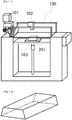
- the binders (1) to (10) and (c1) to (c3) produced in Synthesis Examples 1 to 11 and Comparative Synthesis Examples 1 to 3 were printed by scanning a printing nozzle head (102) on a fire-resistant granular material that was laminated, on the basis of data obtained by designing the shape of a three-dimensional lamination shaping casting mold in 3DCAD, such that a discharge amount of the binder with respect to the sand in a printing region of the binder was 2.3 parts by mass with respect to 100 parts by mass of the laminated sand.
- the bottom surface of the metal case (a shaping table (103)) was lowered by one layer (280 ⁇ m), the sand was laminated as described above, and the binder was printed thereon as described above.
- a step including the lamination and the printing was repeated, and finally, preparation was performed such that a sand mold (201) having an upper surface of 30 mm, a lower surface of 36 mm, a length of 76 mm, and a height of 15 mm, as illustrated in Fig. 1-2 , was obtained.
- the sand mold was exposed to an atmospheric temperature for a time shown in Tables 1 to 3, and then, was taken out from the metal case, and the hardness of a mold before curing was measured. Measurement values are shown in Tables 1 to 3.
- the sand in a non-printing portion of the binder was removed with a brush, and the sand mold was taken out. After that, the sand mold was moved into a heating furnace, and was subjected to microwave heating such that the resin content was cured, and thus, the sand mold was produced.
- the body portion of the sand mold before curing was vertically pressed with a push/pull tester "MP-100", manufactured by ATTONIC ltd., to which an attachment "S-4" was attached, and a force necessary for breaking the sand mold was measured. The measurement was performed 10 times, and evaluation was performed by using the average value.
Landscapes
- Chemical & Material Sciences (AREA)
- Engineering & Computer Science (AREA)
- Materials Engineering (AREA)
- Chemical Kinetics & Catalysis (AREA)
- Mechanical Engineering (AREA)
- Manufacturing & Machinery (AREA)
- Organic Chemistry (AREA)
- Health & Medical Sciences (AREA)
- Medicinal Chemistry (AREA)
- Polymers & Plastics (AREA)
- Ceramic Engineering (AREA)
- Structural Engineering (AREA)
- Physics & Mathematics (AREA)
- Optics & Photonics (AREA)
- Phenolic Resins Or Amino Resins (AREA)
- Mold Materials And Core Materials (AREA)
- Casting Devices For Molds (AREA)
Abstract
Description
- The present invention relates to a method for producing a casting sand mold according to an ink jet type lamination shaping method in which a binder is printed with respect to sand, the binder used therein, and a method for producing the binder.
- Recently, a product having a complicated shape that was difficult to cast in the related art can be cast by preparing a sand mold that can be removed by being crushed after being poured, in accordance with a rapid prototyping (RP) shaping method in which a dimension accuracy is excellent and a draft angle is not required, that is, a lamination shaping method. Among the lamination shaping methods, an ink jet type lamination shaping method in which a curable resin is used as a binder and is printed with respect to sand kneaded with a curing agent is capable of promptly shaping a large shaped object by using a large-size printer head, and thus, can also be applied to a large-size product, and is capable of advantageously producing a high-melting-point metal cast product having a large size and a complicated internal shape, such as a cylinder head for a large-size diesel engine can.
- However, in such an ink jet type lamination shaping method, in a case where even a slight amount of impurities are mixed into sand used in the lamination shaping, shaping quality may be affected or a shaping apparatus may break down, and thus, expensive sand having a narrow particle size distribution has been used, and a technology for enabling the reuse of sand has been expected.
- Therefore, in a method for producing a casting sand mold according to an ink jet type lamination shaping method, a method for producing a casting sand mold has been proposed in which kneaded sand of a region to which a binder is not printed in a lamination printing step (hereinafter, may be simply referred to as a "non-printing region") is collected in a collecting step, and is reused by being roasted in a recycling step (PTL 1). In addition, a method has also been proposed in which a binder is printed to laminated sand to be a laminated object, and then, the binder is cured by being aerated with a gas curing agent (PTL 2). However, in any methods, it was necessary that a sand mold before curing that was produced (hereinafter, may be referred to as a "sand mold before curing") was taken out from the lamination shaping apparatus and was move into a curing device, and the sand mold was damaged or collapsed even with a light impact, and thus, a cautious operation was required, and a decrease in productivity such as the complication of productive facility or an extension in a production time occurred, and therefore, there was room for improvement in handleability. In addition, in the case of increasing a resin content rate in the binder in order to increase the hardness of the sand mold before curing, clogging easily occurred in an ink jet nozzle head, and discharge properties were impaired.
-
- PTL 1:
JP-A-2015-205337 - PTL 2:
JP-A-2015-193035 - Therefore, an object of the invention is to provide a binder that exhibits excellent discharge properties in an ink jet nozzle head in the producing of a casting sand mold according to an ink jet type lamination shaping method in which a binder is printed with respect to sand, and that is capable of providing a sand mold before curing which is excellent in handleability, a method for producing the binder, and a method for producing a casting sand mold using the binder.
- As a result of intensive studies of the present inventors, it has been found that a binder has excellent discharge properties in an ink jet nozzle head and is capable of providing sand mold before curing having a high hardness and excellent handleability, by using a resol-type phenolic resin having a specific dispersion degree and a reduced unreacted phenolic monomer, as a binder, and thus, the object described has been attained.
- That is, the invention relates to a binder useful for a casting sand mold according to an ink jet type lamination shaping method, the binder containing:
- a resol-type phenolic resin (R) having a ratio (Mw/Mn) of mass average molecular weight (Mw) to number average molecular weight (Mn) in a range of 1.0 or more and 3.5 or less, with the content of a phenolic monomer contained therein being in a range of 5% or less,
- in which the resol-type phenolic resin (R) is obtained by reacting aldehydes (A1), phenols (P1), and a compound (N) having two or more phenolic hydroxyl groups in one molecule in the presence of an alkali catalyst (B1) or by reacting the aldehydes (A1) and a novolac-type phenolic resin (N1) in the presence of the alkali catalyst (B1).
- In addition, the invention relates to a method for producing a binder that is useful for a casting sand mold according to an ink jet type lamination shaping method and that contains a resol-type phenolic resin (R) having a ratio (Mw/Mn) of mass average molecular weight (Mw) to number average molecular weight (Mn) in a range of 1.0 or more and 3.5 or less, with the content of a phenolic monomer contained therein being in a range of 5% or less, the method including:
- a step of obtaining the resol-type phenolic resin (R) by reacting aldehydes (A1), phenols (P1), and a compound (N) having two or more phenolic hydroxyl groups in one molecule in the presence of an alkali catalyst (B1); or
- a step of obtaining the resol-type phenolic resin (R) by reacting the aldehydes (A1) and a novolac-type phenolic resin (N1) in the presence of the alkali catalyst (B1).
- In addition, the invention relates to a method for producing a casting sand mold according to an ink jet type lamination shaping method in which a binder is printed, the method including:
- a step of printing the binder to the casting sand mold,
- in which the binder contains a resol-type phenolic resin (R) having a ratio (Mw/Mn) of mass average molecular weight (Mw) to number average molecular weight (Mn) in a range of 1.0 or more and 3.5 or less, with the content of a phenolic monomer contained therein being in a range of 5% or less, and
- the resol-type phenolic resin (R) is obtained by reacting aldehydes (A1), phenols (P1), and a compound (N) having two or more phenolic hydroxyl groups in one molecule in the presence of an alkali catalyst (B1) or by reacting the aldehydes (A1) and a novolac-type phenolic resin (N1) in the presence of the alkali catalyst (B1).
- According to the invention, it is possible to provide a binder capable of providing a casting sand mold before curing having a high hardness and excellent handleability, in the producing of a casting sand mold according to an ink jet type lamination shaping method in which a binder is printed with respect to sand, a method for producing the binder, and a method for producing a casting sand mold using the binder.
-
-
Fig. 1-1 is a schematic view of a producing apparatus of a casting sand mold according to one embodiment of the invention, which is produced in Examples and Comparative Examples. -
Fig. 1-2 is a schematic view of the casting sand mold according to one embodiment of the invention, which is produced in Examples and Comparative Examples. -
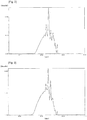
Fig. 2 is a GPC chart relevant to a solution containing a resol-type phenolic resin, which is obtained in Synthesis Example 2. -
Fig. 3 is a GPC chart relevant to a solution containing a resol-type phenolic resin, which is obtained in Synthesis Example 3. -
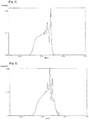
Fig. 4 is a GPC chart relevant to a solution containing a resol-type phenolic resin, which is obtained in Synthesis Example 4. -
Fig. 5 is a GPC chart relevant to a solution containing a resol-type phenolic resin, which is obtained in Synthesis Example 5. -
Fig. 6 is a GPC chart relevant to a solution containing a resol-type phenolic resin, which is obtained in Synthesis Example 6. -
Fig. 7 is a GPC chart relevant to a solution containing a resol-type phenolic resin, which is obtained in Synthesis Example 7. -
Fig. 8 is a GPC chart relevant to a solution containing a resol-type phenolic resin, which is obtained in Synthesis Example 8. -
Fig. 9 is a GPC chart relevant to a solution containing a resol-type phenolic resin, which is obtained in Synthesis Example 9. -
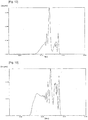
Fig. 10 is a GPC chart relevant to a solution containing a resol-type phenolic resin, which is obtained in Comparative Synthesis Example 1. -
Fig. 11 is a GPC chart relevant to a solution containing a resol-type phenolic resin, which is obtained in Comparative Synthesis Example 2. -
Fig. 12 is a GPC chart relevant to a solution containing a resol-type phenolic resin, which is obtained in Comparative Synthesis Example 3. -
Fig. 13 is a GPC chart relevant to a solution containing a resol-type phenolic resin, which is obtained in Comparative Synthesis Example 4. - A binder of the invention is a binder useful in producing a casting sand mold according to an ink jet type lamination shaping method in which a binder is printed,
in which the binder contains a resol-type phenolic resin (R) having a ratio (Mw/Mn) of mass average molecular weight (Mw) to number average molecular weight (Mn) in a range of 1.0 or more and 3.5 or less, with the content of a phenolic monomer contained therein being in a range of 5% or less. - Examples of the sand to be used in the invention include natural sand that is a granular material having fire resistance, such as silica sand, olivine sand, zircon sand, chromite sand, alumina sand, and mullite sand, and artificial sand obtained by treating bauxite as a raw material with any method of a sintering method, a fusing method, a flame fusing method. In addition, sand obtained by collecting the used natural sand or artificial sand, sand obtained by performing a recycling treatment with respect to the used natural sand or artificial sand, or the like can be used.
- A particle diameter of the sand is not particularly limited, but in order to obtain a three-dimensional lamination shaping casting mold having small surface roughness, an average particle diameter is preferably in a range of 50 to 300 µm, and is more preferably in a range of 75 to 150 µm.
- Sand that is removed from a sand mold may be collected and reused. In the invention, it is not essential that the sand is kneaded with a curing agent to be used as kneaded sand, and thus, sand that is removed by a plate mechanism before printing can be reused without being subjected to a recycled sand treatment such as roasting. On the other hand, sand in a non-printing region after printing may contain the binder, and thus, is not reused, or in a case where the sand is reused, it is preferable that the sand is subjected to the recycled sand treatment such as roasting.
- In addition, the same may be kneaded with various additives or a curing agent, as an arbitrary component, to be used as the kneaded sand. Examples of such various additives include an inorganic material such as calcium carbonate, calcium hydroxide, silicon oxide, magnesium oxide, calcium sulfate, barium sulfate, an aluminum powder, an iron powder, a copper powder, and a silver powder; and an organic material such as wheat flour, rice powder, wood powder, walnut kernel flour, apricot kernel flour, olive kernel flour, and carbon. Such additives are an arbitrary component. In addition, the curing agent causes gas generation at the time of heating and curing, and thus, it is preferable that the curing agent is not used, but in the case of using the curing agent, the curing agent is used preferably in a range of 1 part by mass or less, more preferably in a range of 0.2 parts by mass or more and 0.8 parts by mass or less, with respect to 100 parts by mass of the sand. Known curing agents may be used as the curing agent, within a range not impairing the effects of the invention, and examples thereof include a sulfuric acid, a phosphoric acid, a sulfonic acid such as a paratoluene sulfonic acid, a xylene sulfonic acid, a benzene sulfonic acid, and a methane sulfonic acid, and carboxylic acids such as a lactic acid, a citric acid, a malic acid, a tartaric acid, a malonic acid, a maleic acid, an oxalic acid, and a benzoic acid. One type of the curing agents may be used, or two or more types thereof may be used together.
- The binder of the invention contains the resol-type phenolic resin (R) with the content of a phenolic monomer being in a range of 5% or less. Such a resol-type phenolic resin (R), for example, can be obtained by reacting aldehydes (A1), phenols (P1), and a compound (N) having two or more phenolic hydroxyl groups in one molecule in the presence of an alkali catalyst (B1).
- Examples of the aldehydes (A1) include a compound having an aldehyde group in the molecules, such as formaldehyde, paraformaldehyde, trioxane, acetaldehyde, and urotropine. Among them, formaldehyde is preferable from the viewpoint of performance and economic efficiency. One type of the aldehydes (A) may be used, or two or more types thereof may be used together.
- Examples of the phenols (P1) include phenol and a compound in which a hydrogen atom to be bonded to an aromatic ring is substituted with a hydroxyl group, for example, alkyl phenol such as cresol, xylenol, ethyl phenol, butyl phenol, and octyl phenol, polyhydric phenols such as resorcine and catechol, halogenated phenol, phenyl phenol, and aminophenol. Among them, phenol is preferable since a resol-type phenolic resin having excellent curing properties and water-solubility can be obtained and economic efficiency is also excellent. One type of the phenols may be used, or two or more types thereof may be used together.
- Examples of the compound (N) having two or more phenolic hydroxyl groups in one molecule include a novolac-type phenolic resin (N1) or a bisphenol (N2). The novolac-type phenolic resin (N1) is not particularly limited unless the effects of the invention are impaired and known novolac-type phenolic resins can be used.
- A method for producing a novolac-type phenolic resin is not particularly limited insofar as the method is a known method for reacting aldehydes (A2) and phenols (P2) in the presence of an acid catalyst (B2), and for example, the novolac-type phenolic resin can be produced through the following steps.
- A ratio of the aldehydes (A2) to the phenols (P2) is preferably in a range of 0.3 to 1.0, and is more preferably in a range of 0.5 to 0.8, in terms of a molar ratio (A2/P2). Examples of the aldehydes (A2) and the phenols (P2) include the same examples as those of the aldehydes (A1) and the phenols (P1), respectively. In addition, an acid that is generally used in producing a novolac resin can be used as the acid catalyst (B2), and examples thereof include an oxalic acid, a hydrochloric acid, a phosphoric acid, a sulfuric acid, a paratoluene sulfonic acid, a phenol sulfonic acid, and zinc acetate or zinc octylate that is a catalyst of a high ortho-novolac resin.
- In a reaction condition at the time of producing the novolac-type phenolic resin, a reaction may be performed in a range of 60 to 100°C for 1 to 5 hours. After that, the phenolic monomer remaining in the novolac resin is removed at a temperature of 180 to 230°C through an atmospheric-pressure dewatering step and a reduced-pressure dewatering step. In such it is preferable that a removing operation, the content of the phenolic monomer remaining in the novolac resin is minimized, and practically, it is preferable that the content is in a range of 1.0% by mass or less, and it is particularly preferable that the content is reduced to a range of 0.01% by mass or less.
- A compound in which one molecule of aldehyde or ketone and two molecules of phenols such as phenol are condensed, such as bisphenol A and bisphenol F, can be used as the bisphenol (N2) .
- An alkali catalyst that is generally used at the time of producing the resol-type phenolic resin may be used as the alkali catalyst (B1), and examples thereof include a hydroxide of an alkali metal, a hydroxide of an alkali earth metal, primary amine, secondary amine, and tertiary amine. Examples of the hydroxide of the alkali metal include lithium hydroxide, sodium hydroxide, and potassium hydroxide. Examples of the hydroxide of the alkali earth metal include magnesium hydroxide, calcium hydroxide, and barium hydroxide. Examples of the primary amine include ammonia and monoethanol amine. Examples of the secondary amine include diethanol amine. Examples of the tertiary amine include trimethyl amine, triethyl amine, triethanol amine, and diazabicycloundecene. Note that, one type of the alkali catalysts may be used, or two or more types thereof may be used together.
- A used amount of the aldehydes (A1) and the phenols (P1) is in a range of preferably 1.4 or more, more preferably 1.6 or more and preferably 2.8 or less, more preferably 2.6 or less, in terms of a molar ratio (A/P), from the viewpoint of reducing the amount of remaining phenolic monomer and of excellent heat resistance after curing and excellent mechanical strength.
- A used amount of the compound (N) is not particularly limited unless the effects of the invention are impaired, and is in a range of preferably 0.05 or more, more preferably 0.1 or more, even more preferably 0.2 or more and preferably 1.0 or less, more preferably 0.5 or less, with respect to the phenols (P1), in terms of a molar ratio (N/P1).
- In a step of reacting at least the aldehydes (A1) and the phenols (P1) in the presence of the alkali catalyst (B1), a reaction temperature may be suitably adjusted generally in a range of 50 to 90°C. A timing for adding the compound (N) having two or more phenolic hydroxyl groups in one molecule is not particularly limited, and the compound (N) having two or more phenolic hydroxyl groups in one molecule may be added along with the aldehydes (A1) and the phenols (P1) (Method 1) or the compound (N) having two or more phenolic hydroxyl groups in one molecule can also be added after the reaction between the aldehydes (A1) and the phenols (P1) (Method 2). In (Method 2), a timing for adding the compound (N) is not particularly limited, but it is preferable that 1 to 4 hours elapse after the reaction between the aldehydes (A1) and the phenols (P1).
- In (Method 1), a used amount of the alkali catalyst (B1) is in a range of 0.01 or more, preferably 0.05 or more and less than 0.4, preferably 0.35 or less, more preferably 0.2 or less, in terms of a molar ratio (B1/P1), from the viewpoint of reducing the amount of remaining phenolic monomer and of excellent heat resistance after curing and excellent mechanical strength. In contrast, in (Method 2), the used amount is not particularly limited unless the effects of the invention are impaired, but is in a range of 0.01 or more, more preferably 0.05 or more and less than 0.4, more preferably 0.35 or less, even more preferably 0.2 or less, from the viewpoint of reducing the amount of remaining phenolic monomer and of excellent heat resistance after curing and excellent mechanical strength.
- In addition, the resol-type phenolic resin (R) used in the invention may be produced by reacting the aldehydes (A1) and the novolac-type phenolic resin (N1) in the presence of the alkali catalyst (B1). Note that, a reaction temperature may be suitably adjusted generally in a range of 50 to 90°C. In addition, the used amount of the alkali catalyst (B1) is the same as that in (Method 1).
- In the resol-type phenolic resin (R) obtained as described above, a ratio (Mw/Mn) of mass average molecular weight (Mw) to number average molecular weight (Mn) (hereinafter, may be referred to as a dispersion degree) is in a range of 3.5 or less, preferably 2.5 or less, more preferably 2.0 or less, even more preferably 1.8 or less to 1.0 or more, preferably 1.1 or more, more preferably 1.2 or more, even more preferably 1.3 or more, from the viewpoint of a high hardness and excellent handleability of a sand mold before curing, and excellent discharge properties from an ink jet nozzle. The dispersion degree to be obtained is different in accordance with the object, the application, or the like, and thus, it is not possible to uniformly define the number average molecular weight and the mass average molecular weight of the resol-type phenolic resin (R), but the number average molecular weight (Mn) is in a range of preferably 150 or more, more preferably 200 or more, even more preferably 300 or more and preferably 1000 or less, more preferably 800 or less, even more preferably 700 or less, particularly preferably 600 or less.
- Note that, in the invention, the number average molecular weight and the mass average molecular weight were measured by a gel permeation chromatography (GPC), in the following conditions.
- Measurement Device: HLC-8220GPC, Manufactured by TOSOH CORPORATION
- Column: G2000HXLx2, G3000HXL, and G4000HXL of 7.8 mmφ × 300 mm, Manufactured by TOSOH CORPORATION
- Detector: RI (Differential Refractometer)
- Measurement Condition: Column Temperature 40°C
- Solvent THF
- Flow Rate 1.0 ml/min
- Standard: Prepare Standard Curve in Polystyrene Standard Specimen
- Specimen: Solution Obtained by Weighing 20 mg of Sample, by Increasing Mass of Sample to 10 ml in THF, and by Filtering Sample with Microfilter (Injected Amount: 200 µl)
- In the resol-type phenolic resin (R) obtained as described above, the ratio of the phenolic monomer in the resin is in a range of 5% by mass or less, preferably 3% by mass or less, more preferably 1% by mass or less. It is preferable that the phenolic monomer is small, and a lower limit value (a measurable limit value) is not set, but in general, the ratio is in a range of 0.001% by mass or more, more preferably 0.01% by mass or more. In the range described above, the sand mold before curing using the binder of the invention has a high hardness and excellent handleability. Note that, the "phenolic monomer" indicates the compound in which a hydrogen atom to be bonded to an aromatic ring is substituted with a hydroxyl group, and is mainly derived from the phenols (P1) or the phenols (P2) existing as an unreacted monomer.
- Further, in the resol-type phenolic resin (R) used in the invention, viscosity at 25°C that measured by a B-type viscometer (JISZ8803) is preferably in a range of 2 to 30 mPa·S, and is more preferably in a range of 4 to 20 mPa·S, from the viewpoint of excellent discharge properties from the ink jet nozzle.
- The binder of the invention contains the resol-type phenolic resin (R) of the invention as an essential component, and it is preferable that the binder, for example, contains an organic solvent, various additives, and the like, in accordance with a using method or the application, after water is suitably removed from the resol-type phenolic resin (R) obtained in the step described above.
- Various organic solvents can be used as the organic solvent insofar as the organic solvent is capable of dissolving the resol-type phenolic resin (R), and examples thereof include alcohols such as methanol, ethanol, n-propanol, and isopropanol; ketones such as acetone and methyl ethyl ketone; glycols such as ethylene glycol, propylene glycol, and hexylene glycol; ethers such as dimethoxyethane, tetrahydrofuran, dioxane, ethylene glycol dimethyl ether, ethylene glycol dibutyl ether, diethylene glycol dimethyl ether, and diethylene glycol dibutyl ether; and acetates such as butyl carbitol acetate and propylene glycol monomethyl acetate. Note that, one type of the organic solvents may be used, or two or more types thereof may be used together.
- Among them, it is preferable that the content of the resol-type phenolic resin (R) in the binder is 5 to 200 parts by mass with respect to 100 parts by mass of the organic solvent.
- In addition, examples of the various additives include a coupling agent. Examples of the coupling agent include a silane coupling agent such as N-β(aminoethyl)γ-aminopropyl methyl dimethoxysilane, γ-aminopropyl triethoxysilane, γ-(2-aminoethyl) aminopropyl trimethoxysilane, and γ-glycidoxypropyl trimethoxysilane.
- A method for producing a casting sand mold of the invention is a method for producing a casting sand mold according to an ink jet type lamination shaping method in which a binder is printed,
in which the binder contains at least a resol-type phenolic resin (R) that is obtained through a step of reacting aldehydes (A1) and phenols (P1) in the presence of an alkali catalyst (B1), and then, a step of performing a reaction by adding a compound (N) having two or more phenolic hydroxyl groups in one molecule, with the content of a phenolic monomer contained therein being in a range of 5% or less. - It is preferable that a device including a blade mechanism, a printing nozzle head (an ink jet nozzle head), a support table mechanism, and a control mechanism and a driving mechanism of the operation of each of the mechanisms (hereinafter, may be simply referred to as a "lamination shaping device") is mainly used in the lamination shaping method used in the invention. Examples of such a device include an ink jet type three-dimensional lamination shaping apparatus (for example, Ex One S-MAX (Trademark), Distribution Source: ExOne Company).
- The lamination shaping method used in the invention is a method for shaping a casting sand mold by printing the binder of the invention while laminating the sand one layer by one layer.
- The printing of each layer is performed by a method including a step of homogeneously spreading a layer of sand having a predetermined thickness onto a flat surface with blade mechanism such as a roller or a recoater, and a step of scanning the printing nozzle head (the ink jet nozzle head) with respect to a predetermined region in the layer, on the basis of data obtained by designing the shape of the sand mold in 3DCAD and of discharging the binder from the printing nozzle head to be attached to the sand. A coating amount at the time of printing the binder is not particularly limited, and when the sand is set to 100 parts by mass, a coating amount in a printing region for one layer is in a range of preferably 0.4 parts by mass or more, more preferably 0.8 parts by mass or more and preferably 10 parts by mass or less, more preferably 5 parts by mass or less. The thickness of each layer is not particularly limited within a range not impairing the effects of the invention, and is in a range of preferably 10 µm or more, more preferably 100 µm or more, even more preferably 200 mm or more and preferably 10 mm or less, more preferably 1 mm or less, even more preferably 500 µm or less.
- The method includes a step of moving the support table mechanism to a height by the distance of one layer in a case where the shaping of one layer is completed, and after that, as necessary, the printing of the next layer can be performed. The layer of the binder in the printing region is in a junction state, and in a case where there is a lower layer that is formed in advance, the layer is also bonded to the lower layer. Then, a step of printing the binder by sequentially forming the layer on the upper portion until the entire sand mold is completed is repeated. It is preferable that a plurality of sand molds, a plurality of types of sand molds are laid out and the maximum number of sand molds are collectively subjected to lamination shaping when the lamination shaping apparatus is activated.
- The sand mold obtained as described above may include a step of drying a solvent contained in the binder within a range in which the resol-type phenolic resin (R) in the binder contained in the sand mold is not cured (hereinafter, simply referred to as a "drying step"), before the sand in the non-printing region of the binder is removed. The drying step may be performed for each single layer, or may be performed after laminating two or more layers, and it is preferable that the drying step is performed after the entire sand mold is completed, from the viewpoint of interlayer bonding strength or productivity. The drying step is not particularly limited insofar as the solvent in the binder is removed and the temperature is in a range in which the binder is not cured, and is in a range of preferably 1°C or higher, more preferably a room temperature (23°C) or higher and preferably 100°C or lower, more preferably 60°C or lower. A method for placing the sand mold under the aeration or spray of the air or inert gas in the temperature range described above and/or under the reduced-pressure or for performing the drying step by spraying the air or the inert gas is exemplified.
- The binder of the invention is capable of retaining a high hardness of the sand mold in the printing region even before being cured, and thus, the occurrence of the collapse or the damage of the region can be suppressed, and excellent handleability is obtained.
- Subsequently, the sand mold through the drying step as described above includes a step of curing the resol-type phenolic resin (R) in the binder (hereinafter, simply referred to as a "curing step"). Examples of the curing step include a method for heating and curing the sand mold with a heating treatment such as microwave heating or infrared ray heating.
- Further, the sand mold through the curing step includes a step of removing the sand in the non-printing region of the binder from the sand mold (hereinafter, may be simply referred to as a "removing step") . In the removing step, the sand can be removed by using the air or a brush. The sand in the non-printing region of the binder is in a non-bonding state, and thus, can be easily removed from the sand mold.
- The sand mold obtained as described above can be independently used or a plurality of sand molds can be used by being combined and subjected to mold matching, as a casting mold, and a cast can be produced by inpouring a fusing metal, by performing mold shaking, and then, as necessary, by performing a finishing treatment.
- Next, the invention will be described in more detail by Examples and Comparative Examples, but the invention is not limited thereto. In addition, hereinafter, "parts" and "%" are on a mass basis, unless otherwise noted.
- 941 parts by mass of phenol and 360 parts by mass of formalin of 50% by mass were put in a flask to which a thermometer, a dropping funnel, a cooling tube, a fractionating tube, and a stirrer were attached, stirring was started, and then, 1.88 parts by mass of an oxalic acid was added, and the temperature was raised to 100°C. A reaction was performed at 100°C for 3 hours, and then, dewatering was performed at the atmospheric-pressure until the temperature reached 150°C. Next, phenol removal was performed at -0.094 MPa for 2 hours. After that, 100 parts by mass of methanol was gradually dropped while being careful of bumping, and thus, a novolac-type phenolic resin (1) having a solid content of 90% by mass and viscosity of 90000 mPa·s/25°C was obtained.
- 94 parts by mass of phenol, 108.7 parts by mass of formalin (50.2%), and 4.3 parts by mass of sodium hydroxide of 48% were put in a flask to which a thermometer, a dropping funnel, a cooling tube, a fractionating tube, and a stirrer were attached, and a reaction was performed at 75°C for 3 hours. Next, 52.3 parts by mass of the novolac resin methanol solution of Synthesis Example 1 was put, and a reaction was further performed at 75°C for 2 hours. After the reaction was completed, methanol was added, and a solution (1) containing a resol-type phenolic resin having a resin solid content of 38% was obtained. Mass average molecular weight (Mw) of the resin solid content was 538, number average molecular weight (Mn) of the resin solid content was 339, a dispersion degree (Mw/Mn) was 1.587, and the content of a phenolic monomer was 2% with respect to the solid content in the solution (1).
- 94 parts by mass of phenol, 129.0 parts by mass of formalin (50.2%), and 5.6 parts by mass of sodium hydroxide of 48% were put in a flask to which a thermometer, a dropping funnel, a cooling tube, a fractionating tube, and a stirrer were attached, and a reaction was performed at 75°C for 3 hours. Next, 104.6 parts by mass of the novolac resin methanol solution of Synthesis Example 1 was put, and a reaction was further performed at 75°C for 2 hours. After the reaction was completed, IPA was added, and thus, a solution (2) containing a resol-type phenolic resin having a resin solid content of 30% was obtained. Mass average molecular weight (Mw) of the resin solid content was 723, number average molecular weight (Mn) of the resin solid content was 426, a dispersion degree (Mw/Mn) was 1.697, and the content of a phenolic monomer was 0.7% with respect to the solid content in the solution (2).
- 156 parts by mass of the novolac resin methanol solution of Synthesis Example 1, 63.0 parts by mass of formalin (50.2%), and 4.2 parts by mass of sodium hydroxide of 48% were put in a flask to which a thermometer, a dropping funnel, a cooling tube, a fractionating tube, and a stirrer were attached, and a reaction was performed at 75°C for 2 hours. After the reaction was completed, methanol was added, and thus, a solution (4) containing a resol-type phenolic resin having a resin solid content of 38% was obtained. Mass average molecular weight (Mw) of the resin solid content was 1174, number average molecular weight (Mn) of the resin solid content was 575, a dispersion degree (Mw/Mn) was 2.042, and the content of a phenolic monomer was not detected.
- A solution (5) containing a resol-type phenolic resin having a resin solid content of 38% was obtained by the same operation as that in Synthesis Example 3, except that "adding IPA after the reaction was completed" was changed to "adding methanol after the reaction was completed". Mass average molecular weight (Mw) of the resin solid content was 848, number average molecular weight (Mn) of the resin solid content was 455, a dispersion degree (Mw/Mn) was 1.865, and the content of a phenolic monomer was 1% with respect to the solid content in the solution (5).
- A solution (6) containing a resol-type phenolic resin having a resin solid content of 30% was obtained by the same operation as that in Synthesis Example 2, except that "adding IPA after the reaction was completed" was changed to "adding ethanol after the reaction was completed". Mass average molecular weight (Mw) of the resin solid content was 773, number average molecular weight (Mn) of the resin solid content was 431, a dispersion degree (Mw/Mn) was 1.792, and the content of a phenolic monomer was 0.8% with respect to the solid content in the solution (6).
- A solution (7) containing a resol-type phenolic resin having a resin solid content of 30% was obtained by the same operation as that in Synthesis Example 2, except that "adding IPA after the reaction was completed" was changed to "adding a mixed solvent of Water/Methoxy Propanol = 1/1". Mass average molecular weight (Mw) of the resin solid content was 629, number average molecular weight (Mn) of the resin solid content was 386, a dispersion degree (Mw/Mn) was 1.631, and the content of a phenolic monomer was 0.8% with respect to the solid content in the solution (7).
- 94 parts by mass of phenol, 114.1 parts by mass of formalin (50.2%), and 5.6 parts by mass of sodium hydroxide of 48% were put in a flask to which a thermometer, a dropping funnel, a cooling tube, a fractionating tube, and a stirrer were attached, and a reaction was performed at 75°C for 3 hours. Next, 94.1 parts by mass of bisphenol A and 10.5 parts by mass of methanol were put, and a reaction was further performed at 75°C for 2 hours. After the reaction was completed, methanol was added, and thus, a solution (8) containing a resol-type phenolic resin having a resin solid content of 38% was obtained. Mass average molecular weight (Mw) of the resin solid content was 470, number average molecular weight (Mn) of the resin solid content was 356, a dispersion degree (Mw/Mn) was 1.320, and the content of a phenolic monomer was 1% with respect to the solid content in the solution (8).
- 94 parts by mass of phenol, 97.0 parts by mass of formalin (50.2%), and 5.6 parts by mass of sodium hydroxide of 48% were put in a flask to which a thermometer, a dropping funnel, a cooling tube, a fractionating tube, and a stirrer were attached, and a reaction was performed at 75°C for 3 hours. Next, 94.1 parts by mass of bisphenol F and 10.5 parts by mass of methanol were put, and a reaction was further performed at 75°C for 2 hours. After the reaction was completed, methanol was added, and thus, a solution (9) containing a resol-type phenolic resin having a resin solid content of 38% was obtained. Mass average molecular weight (Mw) of the resin solid content was 467, number average molecular weight (Mn) of the resin solid content was 341, a dispersion degree (Mw/Mn) was 1.373, and the content of a phenolic monomer was 1% with respect to the solid content in the solution (9).
- 94 parts by mass of phenol, 89.7 parts by mass of formalin (50.2%), and 1.4 parts by mass of sodium hydroxide of 48% were put in a flask to which a thermometer, a dropping funnel, a cooling tube, a fractionating tube, and a stirrer were attached, and a reaction was performed at 75°C for 8 hours. Next, neutralization was performed with a p-toluene sulfonic acid, pH was adjusted to 5.1, and then, a solution (c1) containing a resol-type phenolic resin having a resin solid content of 38% was obtained. Mass average molecular weight (Mw) of the resin solid content was 376, number average molecular weight (Mn) of the resin solid content was 240, a dispersion degree (Mw/Mn) was 1.564, and the content of a phenolic monomer was 4.5% with respect to the solid content in the solution (c1).
- 94 parts by mass of phenol, 71.8 parts by mass of formalin (50.2%), and 1.4 parts by mass of sodium hydroxide of 48% were put in a flask to which a thermometer, a dropping funnel, a cooling tube, a fractionating tube, and a stirrer were attached, and a reaction was performed at 75°C for 8 hours. Next, neutralization was performed with a p-toluene sulfonic acid, pH was adjusted to 5.1, and then, a solution (c2) containing a resol-type phenolic resin having a resin solid content of 38% was obtained. Mass average molecular weight (Mw) of the resin solid content was 288, number average molecular weight (Mn) of the resin solid content was 194, a dispersion degree (Mw/Mn) was 1.486, and the content of a phenolic monomer was 9% with respect to the solid content in the solution (c2).
- 94 g of phenol, 114.1 g of formalin (50.2%), 94.1 g of bisphenol A, 10.5 g of methanol, and 5.6 g of sodium hydroxide of 48% were put in a flask to which a thermometer, a dropping funnel, a cooling tube, a fractionating tube, and a stirrer were attached, and a reaction was performed at 75°C for 5 hours. After the reaction was completed, methanol was added, and thus, a solution (c3) containing a resol-type phenolic resin having a resin solid content of 38% was obtained. Mass average molecular weight (Mw) of the resin solid content was 416, number average molecular weight (Mn) of the resin solid content was 237, a dispersion degree (Mw/Mn) was 1.753, and the content of a phenolic monomer was 5.5% with respect to the solid content in the solution (c3).
- 94 parts by mass of phenol, 108.7 parts by mass of formalin (50.2%), 52.3 parts by mass of the novolac resin methanol solution of Synthesis Example 1, and 4.3 parts by mass of sodium hydroxide of 48% were put in a flask to which a thermometer, a dropping funnel, a cooling tube, a fractionating tube, and a stirrer were attached, and a reaction was performed at 75°C for 5 hours. After the reaction was completed, methanol was added, and thus, a solution (c4) containing a resol-type phenolic resin having a resin solid content of 38% was obtained. Mass average molecular weight (Mw) of the resin solid content was 1183, number average molecular weight (Mn) of the resin solid content was 282, a dispersion degree (Mw/Mn) was 4.196, and the content of a phenolic monomer was 4.9% with respect to the solid content in the solution (c4).
- Measurement was performed in the following device and measurement conditions by using GPC (a polystyrene standard method). First, in order to prepare a standard curve, GPC of a sample obtained by weighing 0.1 mg, 0.2 mg, 0.3 mg, 0.5 mg, 1 mg, 1.5 mg, and 2 mg of the phenolic monomer, and by increasing the mass of each phenolic monomer to 10 ml in THF was measured in a device having the following configuration. Next, 20 mg of the resins of Comparative Examples and Synthesis Examples was weighed, and the mass thereof was increased to 10 ml in THF. In the device having the following configuration, GPC was measured, and the amount of unreacted phenol in the solution was calculated from the height of a peak corresponding to the phenolic monomer and the standard curve.
- Device: "HLC-8220GPC", Manufactured by TOSOH CORPORATION
- Column: G2000HXLx2, G3000HXL, and G4000HXL of 7.8 mmφ × 300 mm
- Column Temperature: 40°C
- Detector: RI
- Carrier Solvent: Tetrahydrofuran
- Flow Rate: 1.0 ml/minute
- A three-dimensional laminating apparatus (100) using a printing shaping method, illustrated in
Fig. 1-1 , was used, and sand (Thera Beads) was laminated on the bottom surface of a metal case provided in the three-dimensional laminating apparatus by a blade mechanism (101) including a recoater. - Subsequently, the binders (1) to (10) and (c1) to (c3) produced in Synthesis Examples 1 to 11 and Comparative Synthesis Examples 1 to 3 were printed by scanning a printing nozzle head (102) on a fire-resistant granular material that was laminated, on the basis of data obtained by designing the shape of a three-dimensional lamination shaping casting mold in 3DCAD, such that a discharge amount of the binder with respect to the sand in a printing region of the binder was 2.3 parts by mass with respect to 100 parts by mass of the laminated sand. After that, the bottom surface of the metal case (a shaping table (103)) was lowered by one layer (280 µm), the sand was laminated as described above, and the binder was printed thereon as described above. A step including the lamination and the printing was repeated, and finally, preparation was performed such that a sand mold (201) having an upper surface of 30 mm, a lower surface of 36 mm, a length of 76 mm, and a height of 15 mm, as illustrated in
Fig. 1-2 , was obtained. - As a drying step, the sand mold was exposed to an atmospheric temperature for a time shown in Tables 1 to 3, and then, was taken out from the metal case, and the hardness of a mold before curing was measured. Measurement values are shown in Tables 1 to 3.
- Subsequently, the sand in a non-printing portion of the binder was removed with a brush, and the sand mold was taken out. After that, the sand mold was moved into a heating furnace, and was subjected to microwave heating such that the resin content was cured, and thus, the sand mold was produced.
- The body portion of the sand mold before curing was vertically pressed with a push/pull tester "MP-100", manufactured by ATTONIC ltd., to which an attachment "S-4" was attached, and a force necessary for breaking the sand mold was measured. The measurement was performed 10 times, and evaluation was performed by using the average value.
- When the sand mold was produced by using the three-dimensional laminating apparatus described above, a discharge state at the time of continuously discharging a liquid droplet from the printing nozzle head was observed.
- A: In the observation of the continuous discharge for 1 hour, clogging did not occur in all nozzles.
- B: In the observation of the continuous discharge for 1 hour, clogging occurred in 1 to 3 nozzles after the discharge, but was immediately recovered by the suction of the ink.
- C: In the observation of the continuous discharge for 1 hour, clogging occurred in 4 to 10 nozzles after the discharge, but was immediately recovered by the suction of the ink.
- D: In the observation of the continuous discharge for 1 hour, clogging occurred in 11 or more nozzles after the discharge.
- E: In the observation of the continuous discharge for 1 hour, one or more nozzles that were not recovered by the suction of the ink occurred after the discharge.
-
- 100:
- Three-dimensional laminating apparatus
- 101:
- Blade mechanism
- 102:
- Printing nozzle head
- 103:
- Shaping table
- 201:
- Sand mold
| Example 1 | Example 2 | Example 3 | Example 4 | Example 5 | |
| Solution (No) | 1 | 2 | 3 | 4 | 5 |
| Drying temperature (°C) | 23 | 23 | 23 | 23 | 50 |
| Drying time (hours) | 2 | 2 | 2 | 2 | 24 |
| Compression hardness of sand mold after drying (N) | 79 | 94 | >100 | 93 | 80 |
| Discharge properties | A | A | A | A | A |
| Example 6 | Example 7 | Example 8 | Example 9 | |
| Solution (No) | 6 | 7 | 8 | 9 |
| Drying temperature (°C) | 23 | 23 | 23 | 23 |
| Drying time (hours) | 2 | 2 | 2 | 23 |
| Compression hardness of sand mold after drying (N) | >100 | 95 | >100 | 96 |
| Discharge properties | A | A | A | A |
| Comparative Example 1 | Comparative Example 2 | Comparative Example 3 | Comparative Example 4 | |
| Solution (No) | c1 | c2 | c3 | c4 |
| Drying temperature (°C) | 23 | 23 | 23 | 23 |
| Drying time (hours) | 24 | 24 | 2 | 2 |
| Compression hardness of sand mold after drying (N) | 5 | 5 | 40 | 65 |
| Discharge properties | A | A | A | D |
Claims (11)
- A binder that is useful for a casting sand mold according to an ink jet type lamination shaping method, the binder comprising:a resol-type phenolic resin (R) having a ratio (Mw/Mn) of mass average molecular weight (Mw) to number average molecular weight (Mn) in a range of 1.0 or more and 3.5 or less, with a content of a phenolic monomer contained therein being in a range of 5% or less,wherein the resol-type phenolic resin (R) is obtained by reacting aldehydes (A1), phenols (P1), and a compound (N) having two or more phenolic hydroxyl groups in one molecule in the presence of an alkali catalyst (B1) or by reacting the aldehydes (A1) and a novolac-type phenolic resin (N1) in the presence of the alkali catalyst (B1).
- The binder according to claim 1,
wherein the resol-type phenolic resin (R) is obtained by reacting the aldehydes (A1), the phenols (P1), and the compound (N) having two or more phenolic hydroxyl groups in one molecule in the presence of the alkali catalyst (B1), and the compound (N) is the novolac-type phenolic resin (N1) or a bisphenol (N2). - The binder according to claim 1,
wherein the resol-type phenolic resin (R) is obtained by reacting the aldehydes (A1), the phenols (P1), and the compound (N) having two or more phenolic hydroxyl groups in one molecule in the presence of the alkali catalyst (B1), and a molar ratio (B1/P1) of the alkali catalyst (B1) to the phenolic resin (P1) is in a range of 0.01 or more and less than 0.4. - The binder according to claim 1,
wherein the resol-type phenolic resin (R) is obtained by reacting the aldehydes (A1) and the novolac-type phenolic resin (N1) in the presence of the alkali catalyst (B1), and
a molar ratio (B1/N1) the alkali catalyst (B1) to the novolac-type phenolic resin (N1) is in a range of 0.01 or more and less than 0.4. - The binder according to any one of claims 1 to 4, further comprising:
an organic solvent in addition to the resol-type phenolic resin (R). - A method for producing a binder that is useful for a casting sand mold according to an ink jet type lamination shaping method and contains a resol-type phenolic resin (R) having a ratio (Mw/Mn) of mass average molecular weight (Mw) to number average molecular weight (Mn) in a range of 1.0 or more and 3.5 or less, with a content of a phenolic monomer contained therein being in a range of 5% or less, the method comprising:a step of obtaining the resol-type phenolic resin (R) by reacting aldehydes (A1), phenols (P1), and a compound (N) having two or more phenolic hydroxyl groups in one molecule in the presence of an alkali catalyst (B1); ora step of obtaining the resol-type phenolic resin (R) by reacting the aldehydes (A1) and a novolac-type phenolic resin (N1) in the presence of the alkali catalyst (B1).
- The method for producing a binder according to claim 6,
wherein in a case of including the step of obtaining the resol-type phenolic resin (R) by reacting the aldehydes (A1), the phenols (P1), and the compound (N) having two or more phenolic hydroxyl groups in one molecule in the presence of the alkali catalyst (B1), and the compound (N) is the novolac-type phenolic resin (N1) or a bisphenol (N2). - The method for producing a binder according to claim 6,
wherein in a case of including the step of obtaining the resol-type phenolic resin (R) by reacting the aldehydes (A1), the phenols (P1), and the compound (N) having two or more phenolic hydroxyl groups in one molecule in the presence of the alkali catalyst (B1), a molar ratio (B1/P1) of the alkali catalyst (B1) to the phenolic resin (P1) is in a range of 0.01 or more and less than 0.4. - The method for producing a binder according to claim 6,
wherein in a case of including the step of obtaining the resol-type phenolic resin (R) by reacting the aldehydes (A1) and the novolac-type phenolic resin (N1) in the presence of the alkali catalyst (B1), a molar ratio (B1/N1) of the alkali catalyst (B1) to the novolac-type phenolic resin (N1) is in a range of 0.01 or more and less than 0.4. - The method for producing a binder according to claim 6, further comprising:
a step of further adding an organic solvent to the resol-type phenolic resin (R). - A method for producing a casting sand mold according to an ink jet type lamination shaping method in which a binder is printed, the method comprising:a step of printing the binder to the casting sand mold,wherein the binder contains a resol-type phenolic resin (R) having a ratio (Mw/Mn) of mass average molecular weight (Mw) to number average molecular weight (Mn) in a range of 1.0 or more and 3.5 or less, with a content of a phenolic monomer contained therein being in a range of 5% or less, andthe resol-type phenolic resin (R) is obtained by reacting aldehydes (A1), phenols (P1), and a compound (N) having two or more phenolic hydroxyl groups in one molecule in the presence of an alkali catalyst (B1) or by reacting the aldehydes (A1) and a novolac-type phenolic resin (N1) in the presence of the alkali catalyst (B1).
Applications Claiming Priority (2)
| Application Number | Priority Date | Filing Date | Title |
|---|---|---|---|
| JP2018085172 | 2018-04-26 | ||
| PCT/JP2019/016273 WO2019208322A1 (en) | 2018-04-26 | 2019-04-16 | Binder, method for manufacturing same and method for manufacturing casting sand mold |
Publications (2)
| Publication Number | Publication Date |
|---|---|
| EP3785820A1 true EP3785820A1 (en) | 2021-03-03 |
| EP3785820A4 EP3785820A4 (en) | 2022-01-19 |
Family
ID=68295299
Family Applications (1)
| Application Number | Title | Priority Date | Filing Date |
|---|---|---|---|
| EP19791752.9A Pending EP3785820A4 (en) | 2018-04-26 | 2019-04-16 | BINDER, METHOD FOR MAKING IT AND METHOD FOR MANUFACTURING A CASTING SAND MOLD |
Country Status (6)
| Country | Link |
|---|---|
| US (1) | US11932732B2 (en) |
| EP (1) | EP3785820A4 (en) |
| JP (1) | JP6813131B2 (en) |
| KR (1) | KR102577052B1 (en) |
| CN (1) | CN112041101B (en) |
| WO (1) | WO2019208322A1 (en) |
Families Citing this family (4)
| Publication number | Priority date | Publication date | Assignee | Title |
|---|---|---|---|---|
| DE102020131492A1 (en) * | 2020-11-27 | 2022-06-02 | Chemex Foundry Solutions Gmbh | Manufacturing process, casting moulds, cores or feeders as well as kit and process for producing a metal casting. |
| TWI774165B (en) * | 2020-12-24 | 2022-08-11 | 金隆化學工業股份有限公司 | A method for binder and additive manufacturing. |
| CN114669718B (en) * | 2020-12-24 | 2024-08-30 | 金隆化学工业股份有限公司 | Method for manufacturing adhesive material lamination |
| CN117259668B (en) * | 2023-09-14 | 2025-07-22 | 南京航空航天大学 | Precise forming method and device for multi-material multi-process collaborative additive manufacturing |
Family Cites Families (16)
| Publication number | Priority date | Publication date | Assignee | Title |
|---|---|---|---|---|
| JP3197973B2 (en) * | 1993-03-16 | 2001-08-13 | 神戸理化學工業株式會社 | Composition for foundry sand |
| JP2002226535A (en) * | 2001-02-05 | 2002-08-14 | Showa Highpolymer Co Ltd | Phenolic resin composition |
| DE60226766D1 (en) * | 2001-11-16 | 2008-07-03 | Asahi Organic Chem Ind | METHOD FOR THE PRODUCTION OF PHENOLIC NOVOLAKES |
| JP4428997B2 (en) * | 2003-12-09 | 2010-03-10 | 旭有機材工業株式会社 | Resin coated sand for laminated molds |
| JP4398299B2 (en) * | 2004-05-19 | 2010-01-13 | 旭有機材工業株式会社 | Organic binder for mold, foundry sand composition obtained using the same, and mold |
| JP2007169457A (en) * | 2005-12-22 | 2007-07-05 | Asahi Organic Chem Ind Co Ltd | Phenolic resin for sheet molding compound and method for producing the same and sheet molding compound obtained from the same |
| CN101104671A (en) * | 2006-07-13 | 2008-01-16 | 长春人造树脂厂股份有限公司 | Novel phenolic resins, processes for their preparation and uses thereof |
| CN101580669B (en) * | 2008-05-16 | 2011-11-09 | 东洋油墨制造株式会社 | Paint composition and coating tank using the paint composition |
| JP6062715B2 (en) * | 2012-10-31 | 2017-01-18 | 花王株式会社 | Binder composition for mold making |
| JP2015193035A (en) | 2014-03-19 | 2015-11-05 | 群栄化学工業株式会社 | Method of manufacturing three-dimensional laminated formed object |
| WO2015156094A1 (en) * | 2014-04-10 | 2015-10-15 | Dic株式会社 | Alkoxylated resol-type phenol resin manufacturing method, alkoxylated resol-type phenol resin, resin composition, and coating |
| JP5916789B2 (en) | 2014-04-23 | 2016-05-11 | 株式会社木村鋳造所 | Method for producing casting sand mold |
| DE102014106178A1 (en) * | 2014-05-02 | 2015-11-05 | Ask Chemicals Gmbh | Process for the layered construction of bodies comprising refractory base molding material and resoles and molds or cores produced by this process |
| JP6590193B2 (en) * | 2015-08-18 | 2019-10-16 | Dic株式会社 | Resol type phenol resin, resol type phenol resin composition, cured product thereof, and method for producing resol type phenol resin |
| JP2017048349A (en) * | 2015-09-04 | 2017-03-09 | Dic株式会社 | Bisphenol f-modified resol type phenol resin for fiber-reinforced composite material, resin composition and cured product thereof, fiber-reinforced composite material, fiber-reinforced composite molded product, and method for producing bisphenol f-modified resol type phenol resin for fiber-reinforced composite material |
| CN107127292B (en) * | 2017-06-28 | 2019-12-27 | 济南圣泉集团股份有限公司 | Binder for 3D printing and preparation method and application thereof |
-
2019
- 2019-04-16 CN CN201980028063.9A patent/CN112041101B/en active Active
- 2019-04-16 EP EP19791752.9A patent/EP3785820A4/en active Pending
- 2019-04-16 WO PCT/JP2019/016273 patent/WO2019208322A1/en not_active Ceased
- 2019-04-16 KR KR1020207030065A patent/KR102577052B1/en active Active
- 2019-04-16 US US17/048,801 patent/US11932732B2/en active Active
- 2019-04-16 JP JP2020516251A patent/JP6813131B2/en active Active
Also Published As
| Publication number | Publication date |
|---|---|
| US20210147605A1 (en) | 2021-05-20 |
| WO2019208322A1 (en) | 2019-10-31 |
| US11932732B2 (en) | 2024-03-19 |
| KR102577052B1 (en) | 2023-09-12 |
| CN112041101B (en) | 2022-05-31 |
| CN112041101A (en) | 2020-12-04 |
| JP6813131B2 (en) | 2021-01-13 |
| EP3785820A4 (en) | 2022-01-19 |
| JPWO2019208322A1 (en) | 2020-07-16 |
| KR20210003106A (en) | 2021-01-11 |
Similar Documents
| Publication | Publication Date | Title |
|---|---|---|
| US11932732B2 (en) | Binder, method for manufacturing same and method for manufacturing casting sand mold | |
| CN110719838B (en) | Method for producing a three-dimensional layered mold body | |
| TWI458761B (en) | Method for producing phenolic novolak resin and resin coated with phenolic novolak resin | |
| TWI774165B (en) | A method for binder and additive manufacturing. | |
| CN106457362B (en) | Making molds adhesive composition | |
| EP2581148B1 (en) | Process for production of molds | |
| US20120029113A1 (en) | Phenolic resin composition for shell molding, resin coated sand for shell molding, and shell mold formed of the same | |
| JP6411082B2 (en) | Binder composition for mold making | |
| JPWO2020035922A1 (en) | Binder composition for molding | |
| JP5472711B2 (en) | Method for producing phenolic resin | |
| JP5541783B2 (en) | Method for producing water-soluble phenol resin composition | |
| CN108348986A (en) | Making molds external member | |
| JP5549830B2 (en) | Resin coated sand using phenolic novolac resin | |
| CN114669718A (en) | Method for manufacturing adhesive laminate | |
| US20250367723A1 (en) | Process for layer-by-layer production of building structures with a viscosity-modified binder | |
| JP5387299B2 (en) | Method for producing phenolic resin | |
| JPH07308732A (en) | Binder for production of casting mold and production of casting mold for casting by using the same | |
| JP2003292556A (en) | Refractory binder | |
| CN114829034A (en) | Method for the layered construction of an object comprising a fire-resistant moulding base material and a resol resin, three-dimensional object produced by the method and binder for three-dimensional construction of an object |
Legal Events
| Date | Code | Title | Description |
|---|---|---|---|
| STAA | Information on the status of an ep patent application or granted ep patent |
Free format text: STATUS: THE INTERNATIONAL PUBLICATION HAS BEEN MADE |
|
| PUAI | Public reference made under article 153(3) epc to a published international application that has entered the european phase |
Free format text: ORIGINAL CODE: 0009012 |
|
| STAA | Information on the status of an ep patent application or granted ep patent |
Free format text: STATUS: REQUEST FOR EXAMINATION WAS MADE |
|
| 17P | Request for examination filed |
Effective date: 20201023 |
|
| AK | Designated contracting states |
Kind code of ref document: A1 Designated state(s): AL AT BE BG CH CY CZ DE DK EE ES FI FR GB GR HR HU IE IS IT LI LT LU LV MC MK MT NL NO PL PT RO RS SE SI SK SM TR |
|
| AX | Request for extension of the european patent |
Extension state: BA ME |
|
| DAV | Request for validation of the european patent (deleted) | ||
| DAX | Request for extension of the european patent (deleted) | ||
| A4 | Supplementary search report drawn up and despatched |
Effective date: 20211220 |
|
| RIC1 | Information provided on ipc code assigned before grant |
Ipc: C04B 111/00 20060101ALN20211214BHEP Ipc: C08G 8/20 20060101ALI20211214BHEP Ipc: C08G 8/10 20060101ALI20211214BHEP Ipc: B33Y 30/00 20150101ALI20211214BHEP Ipc: B33Y 10/00 20150101ALI20211214BHEP Ipc: B29C 64/165 20170101ALI20211214BHEP Ipc: C08L 61/06 20060101ALI20211214BHEP Ipc: C04B 26/12 20060101ALI20211214BHEP Ipc: C08G 8/08 20060101ALI20211214BHEP Ipc: B33Y 70/00 20200101ALI20211214BHEP Ipc: B22C 9/02 20060101ALI20211214BHEP Ipc: B22C 1/22 20060101AFI20211214BHEP |