EP3785530A1 - Method and system for homogenizing a liquid food product - Google Patents
Method and system for homogenizing a liquid food product Download PDFInfo
- Publication number
- EP3785530A1 EP3785530A1 EP20188436.8A EP20188436A EP3785530A1 EP 3785530 A1 EP3785530 A1 EP 3785530A1 EP 20188436 A EP20188436 A EP 20188436A EP 3785530 A1 EP3785530 A1 EP 3785530A1
- Authority
- EP
- European Patent Office
- Prior art keywords
- food component
- food
- pressure
- component
- gap
- Prior art date
- Legal status (The legal status is an assumption and is not a legal conclusion. Google has not performed a legal analysis and makes no representation as to the accuracy of the status listed.)
- Granted
Links
Images

Classifications
-
- A—HUMAN NECESSITIES
- A01—AGRICULTURE; FORESTRY; ANIMAL HUSBANDRY; HUNTING; TRAPPING; FISHING
- A01J—MANUFACTURE OF DAIRY PRODUCTS
- A01J11/00—Apparatus for treating milk
- A01J11/16—Homogenising milk
-
- A—HUMAN NECESSITIES
- A23—FOODS OR FOODSTUFFS; TREATMENT THEREOF, NOT COVERED BY OTHER CLASSES
- A23C—DAIRY PRODUCTS, e.g. MILK, BUTTER OR CHEESE; MILK OR CHEESE SUBSTITUTES; PREPARATION THEREOF
- A23C9/00—Milk preparations; Milk powder or milk powder preparations
- A23C9/15—Reconstituted or recombined milk products containing neither non-milk fat nor non-milk proteins
-
- A—HUMAN NECESSITIES
- A23—FOODS OR FOODSTUFFS; TREATMENT THEREOF, NOT COVERED BY OTHER CLASSES
- A23C—DAIRY PRODUCTS, e.g. MILK, BUTTER OR CHEESE; MILK OR CHEESE SUBSTITUTES; PREPARATION THEREOF
- A23C9/00—Milk preparations; Milk powder or milk powder preparations
- A23C9/15—Reconstituted or recombined milk products containing neither non-milk fat nor non-milk proteins
- A23C9/1508—Dissolving or reconstituting milk powder; Reconstitution of milk concentrate with water; Standardisation of fat content of milk
Definitions
- the invention relates to the field of liquid food product processing. More particularly, the invention relates to standardization with partial homogenization.
- the liquid food may be milk or some milk product, or another food product that contains fat, such as coconut based food products.
- a method for processing liquid food product comprising: providing a flow of a first food component having a first fat content; providing a flow of a second food component having a second fat content that is higher than the first fat content; increasing, by means of a pump, a pressure of the second food component; forcing the second food component through a first gap such that the second food component is homogenized and the pressure of the second food component thereby decreases; combining the first food component and the homogenized second food component to form a liquid food product that obtains a predetermined fat content; and forcing the liquid food product through a second gap such that the liquid food product is homogenized and the pressure of the liquid food product thereby decreases.
- the step of increasing the pressure of the second food component may be preceded by combining the first food component and the second food component such that the second food component has a fat content of 8-22 wt%, or has a fat content of 12-20 wt%, or has a fat content of 18-20 wt%.
- wt% means mass percent or weight percent.
- the step of combining the first food component and the homogenized second food component to form the liquid food component may be preceded by forcing the second food component through a third gap such that the second food component may be further homogenized and the pressure of the second food component may thereby further decrease.
- the method may further comprise, after the step of forcing the liquid food product through the second gap, combining the first food component and the liquid food product such that the liquid food product obtains a fat content of 1-5 wt%, alternatively obtains a fat content of 1,5-4 wt%.
- the method may further comprise feeding the liquid food product into a heat treatment apparatus after the step of forcing the liquid food product through the second gap.
- the step of feeding the liquid food product into the heat treatment apparatus may be performed after the step of combining the first food component and the liquid food product.
- the first food component may have a fat content of 0.03-1 wt%.
- the predetermined fat content may be 1-5 wt%, more preferably 1.5-4 wt%.
- the step of increasing, by means of the pump, the pressure of the second food component may comprise increasing the pressure to at least 80 bar.
- the forcing of the second food component through the first gap may decrease the pressure of the second food component by 15-30 %, or by around 20%, or by at least 15-30%.
- the forcing of the liquid food product through the second gap may decrease the pressure of the liquid food product to a pressure value that is less than 15 bar.
- the forcing of the liquid food component through the third gap may decrease the pressure of the second food component by 15-30%.
- a pressure of the second food component may be increased to a pressure of at least 80 bar only once, and a pressure of the liquid food product may never be increased to a pressure above 30 bar.
- a system for processing liquid food product comprises: a first fluid line for providing a flow of a first food component having a first fat content, and a second fluid line for providing a flow of a second food component having a second fat content that is higher than the first fat content, a pump arranged to increase a pressure of the second food component.
- the system has a first gap arranged receive the second food component, such that the second food component may be forced through the first gap and thereby become homogenized and cause the pressure of the second food component to decrease, a combiner arranged to combine the first food component and the homogenized second food component to form a liquid food product that has a predetermined fat content, and a second gap arranged receive the liquid food product, such that the liquid food product may be forced through the second gap and thereby become homogenized and cause the pressure of the liquid food product to decrease.
- the system may further comprise a second combiner arranged to combine the first food component and the second food component such that the second food component may obtain a fat content of 8-22 wt%, or 10-16 wt%, 12-14 wt%.
- the system may comprise a third gap arranged to receive the second food component, such that the second food component may be forced through the third gap and thereby become homogenized and cause the pressure of the second food component to decrease.
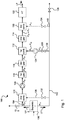
- the processing of the liquid food product LF comprises standardization and partial homogenization.
- the system 100 may comprise a homogenizer and a standardizing unit.
- the homogenizer may comprise a first pump 108, a first gap 110 and a second gap 114.
- the homogenizer may comprise a third gap 118.
- the first pump 108, the first gap 110, the second gap 114 and the third gap 118 are not limited to be arranged in one and the same unit but can be arranged separately in the system 100.
- the gaps are conventional gaps, sometimes referred to as homogenization devices, found in commercially available homogenizers.
- the pump may be any conventional pump used for homogenization apparatuses.
- the standardizing unit may comprise a first combiner 112.
- the standardizing unit may comprise also a second combiner 116.
- the standardizing unit may comprise a third combiner 120.
- the first combiner 112, the second combiner 116 and the third combiner 118 are not limited to be arranged in one and the same unit but can be arranged separately in the system 100.
- a combiner may basically have the form of two pipes joining each other so that fluids flowing in these two pipes are joined and mixed, i.e. combined, with each other.
- the system 100 is arranged to homogenize and standardize a first food component LF1 and a second food component LF2 in order to form the liquid food product LF.
- the first food component LF1 can be fed into the system 100 in a first food component line 102.
- the first food component LF1 has a first fat content.
- the first fat content may preferably be 0.1-1 wt%.
- the first food component LF1 may have a pressure P 11 , meaning that the pressure of the first food component LF1 in the first food component line 102 is P 11 .
- the first food component LF1 may be skim milk.
- the first food component LF1 may comprise water and skim milk powder.
- the first food component LF1 may comprise water and whole milk powder, wherein it may be proportionally more water.
- the second food component LF2 can be fed into the system 100 in a second food component line 104.
- the second food component may comprise a second fat content.
- the second fat content is higher than the first fat content.
- the second fat content, i.e. the fat content of the second food component LF2 may be at least 25 wt%.
- the second food component LF2 may have a pressure P 21 .
- the pressure P 11 of the first food component LF1 can be approximately the same as the pressure P 21 of the second food component LF2.
- the second food component LF2 may be cream.
- the second food component LF2 may comprise a combination of oil, water, and milk powder, as well as optionally a stabilizer.
- the second food component LF2 may comprise water and whole milk powder, as well as optionally a stabilizer.
- the first food component LF1 and the second food component LF2 may be fed into the system 100 via a separator 106.
- the separator 106 may be arranged to separate milk into the first food component LF1 having the form of skim milk, and into the second food component LF2 having the form of cream.
- the separator 106 may be any separator commonly used for dairy and/or food applications.
- the first food component LF1 may be added to the second food component LF2, for instance in that the first food component LF1 and the second food component LF2 is combined in the second combiner 116.
- the second combiner 112 may be arranged to combine the first food component LF1 and the second food component LF2 in order to obtain a preferred fat content.
- the preferred fat content may be 8-22 wt%.
- the second combiner 116 is arranged in the second food component line 104. A part of the first food component LF1 may be fed to the second combiner 116 in a second combiner line 138, in order to obtain the preferred fat content.
- the second food component LF2 is fed to the second combiner 116 in the second food component line 104.
- a control valve 132 may be arranged in the second combiner line 138 to provide for that the first food component LF1, e.g. skim milk, can be fed into the second food component line 104 in the right amounts such that the desired fat content of the second food component LF2 is obtained before reaching the first pump 108.
- the control valve 132 may be arranged to regulate a flow of the first food component LF1 fed in the second combiner line 138.
- the first pump 108 is arranged in the second food component line 104.
- the first pump 108 this increases the pressure of the second food component LF2 to a homogenization pressure P 22 .
- the system 100 is not limited to use the first pump 108 for increasing the pressure of the second food component LF2 but can use any device arranged for increasing a pressure of a food component in the system 100.
- Pressure P 22 may be referred to as a homogenization pressure.
- the homogenization pressure is typically at least 80 bar.
- the first gap 110 is arranged to homogenize the second food component LF2.
- the gap is a conventional homogenization device that provides a small opening through which the second food component LF2 is forced. When this is done fat globes that are present in the second food component LF2 are broken up, i.e. the second food component LF2 becomes homogenized.
- the first gap 110 causes a sudden drop of the second food component LF2, from pressure P 22 to pressure P 23 .
- the gap 110 can be any kind of homogenizing device arranged to homogenize a food product.
- the pressure P 23 of the second food component LF2 after the first gap 110 is typically 15-30% lower than the pressure P 22 .
- the pressure P 23 may be 50-60 bar.
- the second food component LF2 can be forced through the third gap 118 that is arranged directly after the first gap.
- the third gap 118 may be arranged in the same way as the first gap 110.
- the pressure P 24 of the second food component LF2 after the pressure drop may be 15-30% lower than the pressure P 23 prior to entering the third gap 118.
- the homogenizer device is called single-stage homogenization. In the single-stage homogenization, the whole pressure drop may be used over the first gap 110. If the system 100 comprises both the first gap 110 and the third gap 118, the homogenization is called a two-stage homogenization. In the two-stage homogenization the pressure drop is divided over two pressure drops.
- the pressure of the second food component LF2 after the single-stage homogenization and the pressure of the second food component LF2 after the two-stage homogenization may be the same but obtained in different ways.
- the pressure P 23 may be equal to the pressure P 24 .
- the homogenized second food component LF2 and all or a part of the first food component LF1 are fed to the first combiner 112.
- the first combiner 112 is arranged to combine the first food component LF1 and the homogenized second food component LF2 into the liquid food product LF such that it obtains a predetermined fat content.
- the predetermined fat content may be 1-5 wt%.
- the first food component LF1 may be fed to the first combiner 112 in a first combiner line 136.
- the first food component LF1 and the second food component LF2 may have to have the same pressure in order to be able to combine the two food components.
- the pressure of the first food component LF1 may be increased to obtain the same pressure as the pressure of the second food component LF2.
- a second pump 124 may be arranged in the first combiner line 136.
- a control valve 126 is be arranged in the first combiner line 136 to provide for that the first food component LF1 can be fed into the second food component line 104 in the right amount so as to obtain the predetermined fat content (standardization) for the liquid food product LF.
- the control valve 126 may thus be arranged to regulate the flow of the first food component LF1 fed in the first combiner line 136 in order to obtain the desired fat content.
- the system 100 is not limited to use the second pump 124 for increasing the pressure of the first food component LF1 but can use any device arranged to increase a pressure in a food component. After the first food component LF1 and the homogenized second food component LF2 have been combined into the liquid food product LF, fat in the liquid food product LF may agglomerate.
- the liquid food product LF is forced through the second gap 114 arranged in the second food component line 104.
- the pressure P 25 of the liquid food product LF that has been forced through the second gap 114 can be as low as less than 15 bar.
- the liquid food product LF can be combined with the first food component LF1 in a third combiner 120.
- the third combiner 120 may be arranged in the second food component line 104.
- the first food component LF1 may be fed to the third combiner 120 in a third combiner line 140.
- the final fat content may be between 1 and 5 wt%.
- a third control valve 134 may be arranged in the third combiner line 140.
- the third control valve 134 may be arranged to regulate a flow of the first food component LF1 feed through the third combiner line 140.
- the liquid food product may be fed to a heat treatment apparatus 122.
- the heat treatment apparatus 122 may be an ultra-high temperature processing unit.
- system 100 can also comprise valves 128, 130 arranged to regulate the output flow of the first food component LF1, the second food component LF2 and the liquid food product LF from the system 100.
- An advantage obtained by using the homogenizer and the standardizing unit within the same system, wherein the homogenizer comprises at least two gaps separated by the combiner, is that homogenization may be efficiently obtained while avoiding using too much energy.
- liquid first passes the pump 108, thereafter the first gap 110, then the first combiner 112 and thereafter the second gap 114. If the optional, second combiner 116 is used this one is passed before the pump 108. If the optional third gap 118 is used this one is passed after the first gap 110, before the first combiner 112. If the optional third combiner 120 is used, this one is passed after the second gap 114.
- first”, “second” and “third” used for denoting the components of the system 100 do not necessarily denote the order by which fluid pass the respective component, but instead indicates that the components are different form each other.
- Fig. 2 is a flow chart illustrating steps of a method 200 for processing liquid food product LF. The method may be performed by using a system like the system 100 described in connection with Fig. 1 .
- a flow of the first food component LF1 is provided, wherein the first food component LF1 has a first fat content.
- the first fat content may be in the range of 0.03-1 wt%.
- a flow of the second food component LF2 is provided, wherein the second food component LF2 has a second fat content.
- the second fat content is higher than the first fat content.
- the second fat content may be in the range of 1-5 wt%.
- the flow of the first food component LF1 and the flow of the second food component LF2 are provided by using the separator 106.
- a third step 206 the pressure of the second food component LF2 is increased. This may be made by using means of the first pump 108.
- the pressure of the second food component LF2 may be increased to a pressure of at least 80.
- the pressure of the second food component LF2 is increased only once to a pressure of at least 80 bar.
- a forth step 208 the second food component LF2 is forced through the first gap 110 such that the second food component LF2 is homogenized.
- the pressure of the second food component LF2 decreases.
- the pressure of the second food component LF2 may be decreased by 15-30%, or to 50-60 bar.
- a fifth step 210 the first food component LF1 and the homogenized second food component LF2 are combined to form the liquid food product LF.
- This step may be referred to as standardization.
- the liquid food product then obtains a predetermined fat content.
- the predetermined fat content may be 1-5%, more preferably 1.5-4%.
- To obtain the predetermined fat content the first and second food components are mixed at such amounts, taking their respective fat content into account, that that the predetermined fat content is reached. Typically, this involves using commonly known techniques for performing fat standardization of food products, including dairy products.
- the liquid food product LF is forced through the second gap 114 such that the liquid food product LF is homogenized.
- the pressure of the liquid food product LF again decreases.
- the pressure of the liquid food component LF may be decreased by 15-30%, or to a pressure value that is less than 15 bar.
- the pressure of the second food component LF2 and the liquid food product LF is only once increased to a homogenization pressure of at least 80 bar.
- step 205 the first food component LF1 is combined with the second food component LF2 such that the second food component LF2 obtains a fat content of 8-22 wt%, more preferably 18-20 wt%.
- the homogenized second food component LF2 may be forced through the third gap 118 such that the second food component can be further homogenized. As a consequence of the second food component LF2 being further homogenized, the pressure of the second food component LF2 is further decreased.
- the first food component LF1 may be combined with the liquid food product LF such that the liquid food product LF may obtain a fat content of 1-5 wt%, or 1.5-4 wt%.
- the liquid food product LF may be feed through a heat treatment apparatus 122, such that it becomes pasteurized or sterilized.
- the steps of the method 200 may follow the order illustrated in Fig. 2 .
Landscapes
- Life Sciences & Earth Sciences (AREA)
- Chemical & Material Sciences (AREA)
- Engineering & Computer Science (AREA)
- Food Science & Technology (AREA)
- Polymers & Plastics (AREA)
- Animal Husbandry (AREA)
- Environmental Sciences (AREA)
- General Preparation And Processing Of Foods (AREA)
- Dairy Products (AREA)
Abstract
Description
- The invention relates to the field of liquid food product processing. More particularly, the invention relates to standardization with partial homogenization.
- Today it is well known to break up fat globules in liquid food products by using a homogenizer. This is called homogenization, which can be divided into three homogenization techniques; traditional homogenization - double, one-step homogenization, and partial homogenization. The traditional homogenization and the one-step homogenization require a homogenizer of large capacity, while the partial homogenization can use a homogenizer of a smaller size due to that only the part of the food product with higher fat content is homogenized. This enables large savings in energy but also in investment cost for the food producer. The liquid food may be milk or some milk product, or another food product that contains fat, such as coconut based food products.
- Even though partial homogenization provides energy savings, it is still a process that requires high pressures, i.e. a lot of energy. Also, when mixing the homogenized high-fat part of the food with the non-homogenized low-fat part of the food, it has been seen that that some agglomeration of fat globules sometimes occur, resulting in a food product that appears insufficiently homogenized.
- For these reasons, there is a demand for a processing system that is capable of performing partial homogenization of liquid food products, in particular milk products, with increased energy efficiency and while reducing the risk that fat globules agglomerate after the homogenization.
- It is an object to at least partly overcome one or more of the above-identified limitations of the prior art.
- According to a first aspect it is therefore provided a method for processing liquid food product, the method comprising: providing a flow of a first food component having a first fat content; providing a flow of a second food component having a second fat content that is higher than the first fat content; increasing, by means of a pump, a pressure of the second food component; forcing the second food component through a first gap such that the second food component is homogenized and the pressure of the second food component thereby decreases; combining the first food component and the homogenized second food component to form a liquid food product that obtains a predetermined fat content; and forcing the liquid food product through a second gap such that the liquid food product is homogenized and the pressure of the liquid food product thereby decreases.
- The step of increasing the pressure of the second food component may be preceded by combining the first food component and the second food component such that the second food component has a fat content of 8-22 wt%, or has a fat content of 12-20 wt%, or has a fat content of 18-20 wt%. Herein, wt% means mass percent or weight percent.
- The step of combining the first food component and the homogenized second food component to form the liquid food component may be preceded by forcing the second food component through a third gap such that the second food component may be further homogenized and the pressure of the second food component may thereby further decrease.
- The method may further comprise, after the step of forcing the liquid food product through the second gap, combining the first food component and the liquid food product such that the liquid food product obtains a fat content of 1-5 wt%, alternatively obtains a fat content of 1,5-4 wt%.
- The method may further comprise feeding the liquid food product into a heat treatment apparatus after the step of forcing the liquid food product through the second gap. Optionally, the step of feeding the liquid food product into the heat treatment apparatus may be performed after the step of combining the first food component and the liquid food product.
- The first food component may have a fat content of 0.03-1 wt%. The predetermined fat content may be 1-5 wt%, more preferably 1.5-4 wt%.
- The step of increasing, by means of the pump, the pressure of the second food component may comprise increasing the pressure to at least 80 bar.
- The forcing of the second food component through the first gap may decrease the pressure of the second food component by 15-30 %, or by around 20%, or by at least 15-30%.
- The forcing of the liquid food product through the second gap may decrease the pressure of the liquid food product to a pressure value that is less than 15 bar.
- The forcing of the liquid food component through the third gap may decrease the pressure of the second food component by 15-30%.
- For the method a pressure of the second food component may be increased to a pressure of at least 80 bar only once, and a pressure of the liquid food product may never be increased to a pressure above 30 bar.
- According to a second aspect it is provided a system for processing liquid food product. The system comprises: a first fluid line for providing a flow of a first food component having a first fat content, and a second fluid line for providing a flow of a second food component having a second fat content that is higher than the first fat content, a pump arranged to increase a pressure of the second food component. The system has a first gap arranged receive the second food component, such that the second food component may be forced through the first gap and thereby become homogenized and cause the pressure of the second food component to decrease, a combiner arranged to combine the first food component and the homogenized second food component to form a liquid food product that has a predetermined fat content, and a second gap arranged receive the liquid food product, such that the liquid food product may be forced through the second gap and thereby become homogenized and cause the pressure of the liquid food product to decrease.
- The system may further comprise a second combiner arranged to combine the first food component and the second food component such that the second food component may obtain a fat content of 8-22 wt%, or 10-16 wt%, 12-14 wt%.
- The system may comprise a third gap arranged to receive the second food component, such that the second food component may be forced through the third gap and thereby become homogenized and cause the pressure of the second food component to decrease.
- Still other objectives, features, aspects and advantages of the invention will appear from the following detailed description as well as from the drawings.
- Embodiments will now be described, by way of example, with reference to the accompanying schematic drawings, in which
-
Fig. 1 schematically illustrates a system for processing liquid food product. -
Fig. 2 is a flow chart illustrating steps of a method for processing liquid food product. - With reference to
Fig. 1 asystem 100 for processing liquid food product LF is illustrated by way of example. The processing of the liquid food product LF comprises standardization and partial homogenization. Thesystem 100 may comprise a homogenizer and a standardizing unit. The homogenizer may comprise afirst pump 108, afirst gap 110 and asecond gap 114. Optionally, the homogenizer may comprise athird gap 118. Thefirst pump 108, thefirst gap 110, thesecond gap 114 and thethird gap 118 are not limited to be arranged in one and the same unit but can be arranged separately in thesystem 100. Basically, the gaps are conventional gaps, sometimes referred to as homogenization devices, found in commercially available homogenizers. The pump may be any conventional pump used for homogenization apparatuses. - The standardizing unit may comprise a
first combiner 112. Optionally, the standardizing unit may comprise also asecond combiner 116. Optionally, the standardizing unit may comprise athird combiner 120. Thefirst combiner 112, thesecond combiner 116 and thethird combiner 118 are not limited to be arranged in one and the same unit but can be arranged separately in thesystem 100. A combiner may basically have the form of two pipes joining each other so that fluids flowing in these two pipes are joined and mixed, i.e. combined, with each other. - The
system 100 is arranged to homogenize and standardize a first food component LF1 and a second food component LF2 in order to form the liquid food product LF. - The first food component LF1 can be fed into the
system 100 in a firstfood component line 102. The first food component LF1 has a first fat content. The first fat content may preferably be 0.1-1 wt%. The first food component LF1 may have a pressure P11, meaning that the pressure of the first food component LF1 in the firstfood component line 102 is P11. The first food component LF1 may be skim milk. Alternatively, the first food component LF1 may comprise water and skim milk powder. Alternatively, the first food component LF1 may comprise water and whole milk powder, wherein it may be proportionally more water. - The second food component LF2 can be fed into the
system 100 in a secondfood component line 104. The second food component may comprise a second fat content. The second fat content is higher than the first fat content. The second fat content, i.e. the fat content of the second food component LF2, may be at least 25 wt%. The second food component LF2 may have a pressure P21. The pressure P11 of the first food component LF1 can be approximately the same as the pressure P21 of the second food component LF2. The second food component LF2 may be cream. Alternatively, the second food component LF2 may comprise a combination of oil, water, and milk powder, as well as optionally a stabilizer. Alternatively, the second food component LF2 may comprise water and whole milk powder, as well as optionally a stabilizer. - Optionally, the first food component LF1 and the second food component LF2 may be fed into the
system 100 via aseparator 106. Theseparator 106 may be arranged to separate milk into the first food component LF1 having the form of skim milk, and into the second food component LF2 having the form of cream. Theseparator 106 may be any separator commonly used for dairy and/or food applications. - In order to adjust the fat content of the second food component LF2, the first food component LF1 may be added to the second food component LF2, for instance in that the first food component LF1 and the second food component LF2 is combined in the
second combiner 116. Thesecond combiner 112 may be arranged to combine the first food component LF1 and the second food component LF2 in order to obtain a preferred fat content. The preferred fat content may be 8-22 wt%. Thesecond combiner 116 is arranged in the secondfood component line 104. A part of the first food component LF1 may be fed to thesecond combiner 116 in asecond combiner line 138, in order to obtain the preferred fat content. - The second food component LF2 is fed to the
second combiner 116 in the secondfood component line 104. Acontrol valve 132 may be arranged in thesecond combiner line 138 to provide for that the first food component LF1, e.g. skim milk, can be fed into the secondfood component line 104 in the right amounts such that the desired fat content of the second food component LF2 is obtained before reaching thefirst pump 108. Thecontrol valve 132 may be arranged to regulate a flow of the first food component LF1 fed in thesecond combiner line 138. - In order to increase the pressure of the second food component LF2 from P21 to P22 the
first pump 108 is arranged in the secondfood component line 104. Thefirst pump 108 this increases the pressure of the second food component LF2 to a homogenization pressure P22. Thesystem 100 is not limited to use thefirst pump 108 for increasing the pressure of the second food component LF2 but can use any device arranged for increasing a pressure of a food component in thesystem 100. Pressure P22 may be referred to as a homogenization pressure. The homogenization pressure is typically at least 80 bar. - The
first gap 110 is arranged to homogenize the second food component LF2. Basically, the gap is a conventional homogenization device that provides a small opening through which the second food component LF2 is forced. When this is done fat globes that are present in the second food component LF2 are broken up, i.e. the second food component LF2 becomes homogenized. Thefirst gap 110 causes a sudden drop of the second food component LF2, from pressure P22 to pressure P23. Thegap 110 can be any kind of homogenizing device arranged to homogenize a food product. The pressure P23 of the second food component LF2 after thefirst gap 110 is typically 15-30% lower than the pressure P22. The pressure P23 may be 50-60 bar. - Optionally, since clusters of fat globules may be formed in the second food component LF2 due to the high fat content downstream the
first gap 110, to further homogenize the second food component LF2, the second food component LF2 can be forced through thethird gap 118 that is arranged directly after the first gap. - The
third gap 118 may be arranged in the same way as thefirst gap 110. The pressure P24 of the second food component LF2 after the pressure drop may be 15-30% lower than the pressure P23 prior to entering thethird gap 118. If thesystem 100 comprises thefirst gap 110, the homogenizer device is called single-stage homogenization. In the single-stage homogenization, the whole pressure drop may be used over thefirst gap 110. If thesystem 100 comprises both thefirst gap 110 and thethird gap 118, the homogenization is called a two-stage homogenization. In the two-stage homogenization the pressure drop is divided over two pressure drops. Thus, the pressure of the second food component LF2 after the single-stage homogenization and the pressure of the second food component LF2 after the two-stage homogenization may be the same but obtained in different ways. Hence, in the single-stage homogenization, the pressure P23 may be equal to the pressure P24. - The homogenized second food component LF2 and all or a part of the first food component LF1 are fed to the
first combiner 112. Thefirst combiner 112 is arranged to combine the first food component LF1 and the homogenized second food component LF2 into the liquid food product LF such that it obtains a predetermined fat content. The predetermined fat content may be 1-5 wt%. The first food component LF1 may be fed to thefirst combiner 112 in afirst combiner line 136. The first food component LF1 and the second food component LF2 may have to have the same pressure in order to be able to combine the two food components. The pressure of the first food component LF1 may be increased to obtain the same pressure as the pressure of the second food component LF2. In order to increase the pressure of the first food component from P11 to P12, wherein P12 is approximately the same as P24, asecond pump 124 may be arranged in thefirst combiner line 136. Optionally, acontrol valve 126 is be arranged in thefirst combiner line 136 to provide for that the first food component LF1 can be fed into the secondfood component line 104 in the right amount so as to obtain the predetermined fat content (standardization) for the liquid food product LF. Thecontrol valve 126 may thus be arranged to regulate the flow of the first food component LF1 fed in thefirst combiner line 136 in order to obtain the desired fat content. Thesystem 100 is not limited to use thesecond pump 124 for increasing the pressure of the first food component LF1 but can use any device arranged to increase a pressure in a food component. After the first food component LF1 and the homogenized second food component LF2 have been combined into the liquid food product LF, fat in the liquid food product LF may agglomerate. - In order to break any newly formed fat agglomerations the liquid food product LF is forced through the
second gap 114 arranged in the secondfood component line 104. The pressure P25 of the liquid food product LF that has been forced through thesecond gap 114 can be as low as less than 15 bar. - Optionally, in order to obtain a final fat content of the liquid food product LF, the liquid food product LF can be combined with the first food component LF1 in a
third combiner 120. Thethird combiner 120 may be arranged in the secondfood component line 104. The first food component LF1 may be fed to thethird combiner 120 in athird combiner line 140. The final fat content may be between 1 and 5 wt%. In order to obtain the final fat content, athird control valve 134 may be arranged in thethird combiner line 140. Thethird control valve 134 may be arranged to regulate a flow of the first food component LF1 feed through thethird combiner line 140. - Optionally, in order to sterilize the liquid food product LF, the liquid food product may be fed to a
heat treatment apparatus 122. According to one example, theheat treatment apparatus 122 may be an ultra-high temperature processing unit. - In addition to what have been discussed above, the
system 100 can also comprisevalves 128, 130 arranged to regulate the output flow of the first food component LF1, the second food component LF2 and the liquid food product LF from thesystem 100. - An advantage obtained by using the homogenizer and the standardizing unit within the same system, wherein the homogenizer comprises at least two gaps separated by the combiner, is that homogenization may be efficiently obtained while avoiding using too much energy.
- The order by which the food components and liquid food product pass the various parts of the system is shown in
Fig. 1 . Thus, in the most general embodiment, inline 104 liquid first passes thepump 108, thereafter thefirst gap 110, then thefirst combiner 112 and thereafter thesecond gap 114. If the optional,second combiner 116 is used this one is passed before thepump 108. If the optionalthird gap 118 is used this one is passed after thefirst gap 110, before thefirst combiner 112. If the optionalthird combiner 120 is used, this one is passed after thesecond gap 114. Thus, "first", "second" and "third" used for denoting the components of thesystem 100 do not necessarily denote the order by which fluid pass the respective component, but instead indicates that the components are different form each other. -
Fig. 2 is a flow chart illustrating steps of amethod 200 for processing liquid food product LF. The method may be performed by using a system like thesystem 100 described in connection withFig. 1 . - In a
first step 202 of themethod 200, a flow of the first food component LF1 is provided, wherein the first food component LF1 has a first fat content. Preferably, the first fat content may be in the range of 0.03-1 wt%. - In a
second step 204, a flow of the second food component LF2 is provided, wherein the second food component LF2 has a second fat content. The second fat content is higher than the first fat content. Preferably, the second fat content may be in the range of 1-5 wt%. - Optionally, the flow of the first food component LF1 and the flow of the second food component LF2 are provided by using the
separator 106. - In a
third step 206, the pressure of the second food component LF2 is increased. This may be made by using means of thefirst pump 108. The pressure of the second food component LF2 may be increased to a pressure of at least 80. Optionally, the pressure of the second food component LF2 is increased only once to a pressure of at least 80 bar. - In a
forth step 208, the second food component LF2 is forced through thefirst gap 110 such that the second food component LF2 is homogenized. As a consequence of the second food component LF2 being homogenized, the pressure of the second food component LF2 decreases. The pressure of the second food component LF2 may be decreased by 15-30%, or to 50-60 bar. - In a
fifth step 210, the first food component LF1 and the homogenized second food component LF2 are combined to form the liquid food product LF. This step may be referred to as standardization. The liquid food product then obtains a predetermined fat content. The predetermined fat content may be 1-5%, more preferably 1.5-4%. To obtain the predetermined fat content the first and second food components are mixed at such amounts, taking their respective fat content into account, that that the predetermined fat content is reached. Typically, this involves using commonly known techniques for performing fat standardization of food products, including dairy products. - In a
sixth step 212, the liquid food product LF is forced through thesecond gap 114 such that the liquid food product LF is homogenized. As a consequence of the liquid food product LF being homogenized, the pressure of the liquid food product LF again decreases. The pressure of the liquid food component LF may be decreased by 15-30%, or to a pressure value that is less than 15 bar. Preferably, the pressure of the second food component LF2 and the liquid food product LF is only once increased to a homogenization pressure of at least 80 bar. - In a seventh,
optional step 205 the first food component LF1 is combined with the second food component LF2 such that the second food component LF2 obtains a fat content of 8-22 wt%, more preferably 18-20 wt%. - In an eighth, optional step 209, the homogenized second food component LF2 may be forced through the
third gap 118 such that the second food component can be further homogenized. As a consequence of the second food component LF2 being further homogenized, the pressure of the second food component LF2 is further decreased. - In a ninth,
optional step 218, the first food component LF1 may be combined with the liquid food product LF such that the liquid food product LF may obtain a fat content of 1-5 wt%, or 1.5-4 wt%. - In a tenth,
optional step 220, the liquid food product LF may be feed through aheat treatment apparatus 122, such that it becomes pasteurized or sterilized. The steps of themethod 200 may follow the order illustrated inFig. 2 . - From the description above follows that, although various embodiments of the invention have been described and shown, the invention is not restricted thereto, but may also be embodied in other ways within the scope of the subject-matter defined in the following claims.
Claims (15)
- A method (200) for processing liquid food product (LF), the method (200) comprising:providing (202) a flow of a first food component (LF1) having a first fat content,providing (204) a flow of a second food component (LF2) having a second fat content that is higher than the first fat content,increasing (206), by means of a pump (108), a pressure of the second food component (LF2),forcing (208) the second food component (LF2) through a first gap (110) such that the second food component (LF2) is homogenized and the pressure of the second food component (LF2) thereby decreases,combining (210) the first food component (LF1) and the homogenized second food component (LF2) to form a liquid food product (LF) that has a predetermined fat content, andforcing (212) the liquid food product (LF) through a second gap (114) such that the liquid food product (LF) is homogenized and the pressure of the liquid food product (LF) thereby decreases.
- The method according to claim 1, wherein the step of increasing (206) the pressure of the second food component (LF2) is preceded by combining (205) the first food component (LF1) and the second food component (LF2) such that the second food component (LF2) has a fat content of 8-22 wt%.
- The method according to any one of the preceding claims, wherein the step of combining (210) the first food component (LF1) and the homogenized second food component (LF2) to form the liquid food component (LF) is preceded by forcing (209) the second food component (LF2) through a third gap (118) such that the second food component (LF2) is further homogenized and the pressure of the second food component (LF2) is thereby further decreased.
- The method according to any one of the preceding claims, comprising, after the step of forcing (212) the liquid food product (LF) through the second gap (114), combining (218) the first food component (LF1) and the liquid food product (LF) such that the liquid food product (LF) has a fat content of 1-5 wt%.
- The method (200) according to any one of the preceding claims, comprising feeding (220) the liquid food product (LF) into a heat treatment apparatus (122) after the step of forcing (212) the liquid food product (LF) through the second gap (114).
- The method (200) according to any one of the preceding claims, wherein the first food component (LF1) has a fat content of 0.03-1 wt%.
- The method (200) according to any one of the preceding claims, wherein the predetermined fat content is 1-5 wt%, or is 1.5-4 wt%.
- The method (200) according to any one of the preceding claims, wherein the step of increasing (206), by means of the pump (108), the pressure of the second food component (LF2) comprises increasing the pressure to at least 80 bar.
- The method (200) according to any one of the preceding claims, wherein the forcing (208) of the second food component (LF2) through the first gap (110) decreases the pressure of the second food component (LF2) by 15-30%.
- The method (200) according to any one of the preceding claims, wherein the forcing (212) of the liquid food product (LF) through the second gap (114) decreases the pressure of the liquid food product (LF) to a pressure value that is less than 15 bar.
- The method (200) according to claim 3, wherein the forcing (205) of the liquid food component (LF) through the third gap (118) decreases the pressure of the second food component (LF2) by 15-30%.
- The method (200) according to any one of the preceding claims, wherein
a pressure of the second food component (LF2) is increased only once to a pressure of at least 80 bar only once, and
a pressure of the liquid food product (LF) is never increased to a pressure above 30 bar. - A system (100) for processing liquid food product (LF), the system (100) comprising:a first fluid line for providing a flow of a first food component (LF1) having a first fat content,a second fluid line for providing a flow of a second food component (LF2) having a second fat content that is higher than the first fat content,a pump (108) arranged to increase a pressure of the second food component (LF2),a first gap (110) arranged receive the second food component (LF2), such that the second food component (LF2) may be forced through the first gap (110) and thereby become homogenized and cause the pressure of the second food component (LF2) to decrease,a combiner (112) arranged to combine the first food component (LF1) and the homogenized second food component (LF2) to form a liquid food product (LF) that has a predetermined fat content, anda second gap (114) arranged receive the liquid food product (LF), such that the liquid food product (LF) may be forced through the second gap (114) and thereby become homogenized and cause the pressure of the liquid food product (LF) to decrease.
- The system (100) according to claim 13, comprising a second combiner (116) arranged to combine the first food component (LF1) and the second food component (LF2) such that the second food component (LF2) has a fat content of 8-22 wt%.
- The system (100) according to any one of the preceding claims, comprising a third gap (118) arranged to receive the second food component (LF2), such that the second food component (LF2) may be forced through the third gap (118) and thereby become homogenized and cause the pressure of the second food component (LF2) to decrease.
Applications Claiming Priority (1)
| Application Number | Priority Date | Filing Date | Title |
|---|---|---|---|
| EP19191728 | 2019-08-14 |
Publications (2)
| Publication Number | Publication Date |
|---|---|
| EP3785530A1 true EP3785530A1 (en) | 2021-03-03 |
| EP3785530B1 EP3785530B1 (en) | 2022-06-22 |
Family
ID=67658819
Family Applications (1)
| Application Number | Title | Priority Date | Filing Date |
|---|---|---|---|
| EP20188436.8A Active EP3785530B1 (en) | 2019-08-14 | 2020-07-29 | Method and system for homogenizing a liquid food product |
Country Status (4)
| Country | Link |
|---|---|
| EP (1) | EP3785530B1 (en) |
| CN (1) | CN114222497B (en) |
| ES (1) | ES2926322T3 (en) |
| WO (1) | WO2021028226A1 (en) |
Citations (5)
| Publication number | Priority date | Publication date | Assignee | Title |
|---|---|---|---|---|
| US1912073A (en) * | 1931-05-06 | 1933-05-30 | S M A Corp | Process for preseriving milk products |
| US4144804A (en) * | 1976-10-12 | 1979-03-20 | On-Line Instrumentation, Inc. | Apparatus for continuously controlling butterfat content of reconstituted milk |
| US5498075A (en) * | 1994-04-11 | 1996-03-12 | Apv Gaulin Gmbh | Premix homogenizing system |
| US6358551B1 (en) * | 2000-12-20 | 2002-03-19 | Kraft Foods Holdings, Inc. | Method of manufacture of natural cheese |
| WO2014095896A1 (en) * | 2012-12-21 | 2014-06-26 | Tetra Laval Holdings & Finance S.A. | A piston pump arrangement for hygienic processing applications |
Family Cites Families (5)
| Publication number | Priority date | Publication date | Assignee | Title |
|---|---|---|---|---|
| DE19838387C5 (en) * | 1998-08-24 | 2006-08-10 | Cpc Deutschland Gmbh | Process for the preparation of bouillon cubes |
| US20030211217A1 (en) * | 2002-05-07 | 2003-11-13 | Franco Milani | Product and process for delivering flavoring agents to food products |
| US7687095B2 (en) * | 2005-09-30 | 2010-03-30 | Kraft Foods Global Brands Llc | High moisture, low fat cream cheese with maintained product quality and method for making same |
| FR2953686B1 (en) * | 2009-12-14 | 2012-11-02 | Agronomique Inst Nat Rech | PROCESS FOR REDUCING THE BACTERIAL CONTENT OF A FOOD AND / OR BIOLOGICAL MEDIA OF INTEREST CONTAINING LIPID DROPLETS |
| RU2677131C2 (en) * | 2013-12-20 | 2019-01-15 | Бонгрэн Са | Dry cheese or dairy food product of snack type and method for production thereof |
-
2020
- 2020-07-29 WO PCT/EP2020/071430 patent/WO2021028226A1/en not_active Ceased
- 2020-07-29 CN CN202080057275.2A patent/CN114222497B/en active Active
- 2020-07-29 ES ES20188436T patent/ES2926322T3/en active Active
- 2020-07-29 EP EP20188436.8A patent/EP3785530B1/en active Active
Patent Citations (5)
| Publication number | Priority date | Publication date | Assignee | Title |
|---|---|---|---|---|
| US1912073A (en) * | 1931-05-06 | 1933-05-30 | S M A Corp | Process for preseriving milk products |
| US4144804A (en) * | 1976-10-12 | 1979-03-20 | On-Line Instrumentation, Inc. | Apparatus for continuously controlling butterfat content of reconstituted milk |
| US5498075A (en) * | 1994-04-11 | 1996-03-12 | Apv Gaulin Gmbh | Premix homogenizing system |
| US6358551B1 (en) * | 2000-12-20 | 2002-03-19 | Kraft Foods Holdings, Inc. | Method of manufacture of natural cheese |
| WO2014095896A1 (en) * | 2012-12-21 | 2014-06-26 | Tetra Laval Holdings & Finance S.A. | A piston pump arrangement for hygienic processing applications |
Also Published As
| Publication number | Publication date |
|---|---|
| CN114222497B (en) | 2023-04-28 |
| EP3785530B1 (en) | 2022-06-22 |
| CN114222497A (en) | 2022-03-22 |
| ES2926322T3 (en) | 2022-10-25 |
| WO2021028226A1 (en) | 2021-02-18 |
Similar Documents
| Publication | Publication Date | Title |
|---|---|---|
| AU2007322410B2 (en) | A method of treating a whey protein concentrate by microparticulation | |
| JP6754766B2 (en) | Whey protein concentrate, acidified dairy products containing the concentrate and methods for producing them | |
| Trujillo et al. | High-pressure homogenization for structure modification | |
| EP3785530B1 (en) | Method and system for homogenizing a liquid food product | |
| SE443282B (en) | FAT PRODUCT FRIENDLY AT REFRIGERATOR TEMPERATURE AND PROCEDURE FOR PRODUCING THEREOF | |
| AU2012300701B2 (en) | Product and process for its manufacture | |
| CN101065020B (en) | Method for producing fermented milk and fermented milk produced by the method | |
| KR20110036003A (en) | System and method for manufacturing cholesterol lowering dairy products | |
| US20160128374A1 (en) | A method and system for providing a heat treated liquid product | |
| US20110097455A1 (en) | System and method to mix, homogenize, and emulsify a fluid using sonication | |
| CN116268091A (en) | Dairy product of secondary fermentation of cheese and preparation method thereof | |
| US8110235B2 (en) | Methods for reducing cholesterol in a milk product | |
| CN218337633U (en) | Yoghourt processing system | |
| JP5877569B2 (en) | Process for producing denatured whey protein | |
| CN120052447A (en) | Ice cream and preparation method | |
| US12016346B2 (en) | Method for producing fat standardized milk products and a system thereof | |
| US1912073A (en) | Process for preseriving milk products | |
| US11707079B2 (en) | Process for manufacturing an infant formula product with hydrolysed protein | |
| CN111511213A (en) | Concentrated fermented dairy products | |
| AU2023348166A1 (en) | Novel method of producing butter-like products and the obtainable butter-like products | |
| CN111685231A (en) | Liquid feed and preparation method thereof | |
| CN110313522A (en) | A kind of reproduced cheese and preparation method thereof |
Legal Events
| Date | Code | Title | Description |
|---|---|---|---|
| PUAI | Public reference made under article 153(3) epc to a published international application that has entered the european phase |
Free format text: ORIGINAL CODE: 0009012 |
|
| STAA | Information on the status of an ep patent application or granted ep patent |
Free format text: STATUS: THE APPLICATION HAS BEEN PUBLISHED |
|
| AK | Designated contracting states |
Kind code of ref document: A1 Designated state(s): AL AT BE BG CH CY CZ DE DK EE ES FI FR GB GR HR HU IE IS IT LI LT LU LV MC MK MT NL NO PL PT RO RS SE SI SK SM TR |
|
| AX | Request for extension of the european patent |
Extension state: BA ME |
|
| STAA | Information on the status of an ep patent application or granted ep patent |
Free format text: STATUS: REQUEST FOR EXAMINATION WAS MADE |
|
| 17P | Request for examination filed |
Effective date: 20210903 |
|
| RBV | Designated contracting states (corrected) |
Designated state(s): AL AT BE BG CH CY CZ DE DK EE ES FI FR GB GR HR HU IE IS IT LI LT LU LV MC MK MT NL NO PL PT RO RS SE SI SK SM TR |
|
| GRAP | Despatch of communication of intention to grant a patent |
Free format text: ORIGINAL CODE: EPIDOSNIGR1 |
|
| STAA | Information on the status of an ep patent application or granted ep patent |
Free format text: STATUS: GRANT OF PATENT IS INTENDED |
|
| RIC1 | Information provided on ipc code assigned before grant |
Ipc: A23C 9/15 20060101ALI20220127BHEP Ipc: A01J 11/16 20060101AFI20220127BHEP |
|
| INTG | Intention to grant announced |
Effective date: 20220210 |
|
| GRAS | Grant fee paid |
Free format text: ORIGINAL CODE: EPIDOSNIGR3 |
|
| GRAA | (expected) grant |
Free format text: ORIGINAL CODE: 0009210 |
|
| STAA | Information on the status of an ep patent application or granted ep patent |
Free format text: STATUS: THE PATENT HAS BEEN GRANTED |
|
| AK | Designated contracting states |
Kind code of ref document: B1 Designated state(s): AL AT BE BG CH CY CZ DE DK EE ES FI FR GB GR HR HU IE IS IT LI LT LU LV MC MK MT NL NO PL PT RO RS SE SI SK SM TR |
|
| REG | Reference to a national code |
Ref country code: GB Ref legal event code: FG4D |
|
| REG | Reference to a national code |
Ref country code: CH Ref legal event code: EP |
|
| REG | Reference to a national code |
Ref country code: DE Ref legal event code: R096 Ref document number: 602020003640 Country of ref document: DE |
|
| REG | Reference to a national code |
Ref country code: AT Ref legal event code: REF Ref document number: 1499195 Country of ref document: AT Kind code of ref document: T Effective date: 20220715 |
|
| REG | Reference to a national code |
Ref country code: IE Ref legal event code: FG4D |
|
| REG | Reference to a national code |
Ref country code: LT Ref legal event code: MG9D |
|
| REG | Reference to a national code |
Ref country code: ES Ref legal event code: FG2A Ref document number: 2926322 Country of ref document: ES Kind code of ref document: T3 Effective date: 20221025 |
|
| REG | Reference to a national code |
Ref country code: NL Ref legal event code: MP Effective date: 20220622 |
|
| PG25 | Lapsed in a contracting state [announced via postgrant information from national office to epo] |
Ref country code: SE Free format text: LAPSE BECAUSE OF FAILURE TO SUBMIT A TRANSLATION OF THE DESCRIPTION OR TO PAY THE FEE WITHIN THE PRESCRIBED TIME-LIMIT Effective date: 20220622 Ref country code: NO Free format text: LAPSE BECAUSE OF FAILURE TO SUBMIT A TRANSLATION OF THE DESCRIPTION OR TO PAY THE FEE WITHIN THE PRESCRIBED TIME-LIMIT Effective date: 20220922 Ref country code: LT Free format text: LAPSE BECAUSE OF FAILURE TO SUBMIT A TRANSLATION OF THE DESCRIPTION OR TO PAY THE FEE WITHIN THE PRESCRIBED TIME-LIMIT Effective date: 20220622 Ref country code: HR Free format text: LAPSE BECAUSE OF FAILURE TO SUBMIT A TRANSLATION OF THE DESCRIPTION OR TO PAY THE FEE WITHIN THE PRESCRIBED TIME-LIMIT Effective date: 20220622 Ref country code: GR Free format text: LAPSE BECAUSE OF FAILURE TO SUBMIT A TRANSLATION OF THE DESCRIPTION OR TO PAY THE FEE WITHIN THE PRESCRIBED TIME-LIMIT Effective date: 20220923 Ref country code: FI Free format text: LAPSE BECAUSE OF FAILURE TO SUBMIT A TRANSLATION OF THE DESCRIPTION OR TO PAY THE FEE WITHIN THE PRESCRIBED TIME-LIMIT Effective date: 20220622 Ref country code: BG Free format text: LAPSE BECAUSE OF FAILURE TO SUBMIT A TRANSLATION OF THE DESCRIPTION OR TO PAY THE FEE WITHIN THE PRESCRIBED TIME-LIMIT Effective date: 20220922 |
|
| REG | Reference to a national code |
Ref country code: AT Ref legal event code: MK05 Ref document number: 1499195 Country of ref document: AT Kind code of ref document: T Effective date: 20220622 |
|
| PG25 | Lapsed in a contracting state [announced via postgrant information from national office to epo] |
Ref country code: RS Free format text: LAPSE BECAUSE OF FAILURE TO SUBMIT A TRANSLATION OF THE DESCRIPTION OR TO PAY THE FEE WITHIN THE PRESCRIBED TIME-LIMIT Effective date: 20220622 Ref country code: LV Free format text: LAPSE BECAUSE OF FAILURE TO SUBMIT A TRANSLATION OF THE DESCRIPTION OR TO PAY THE FEE WITHIN THE PRESCRIBED TIME-LIMIT Effective date: 20220622 |
|
| PG25 | Lapsed in a contracting state [announced via postgrant information from national office to epo] |
Ref country code: NL Free format text: LAPSE BECAUSE OF FAILURE TO SUBMIT A TRANSLATION OF THE DESCRIPTION OR TO PAY THE FEE WITHIN THE PRESCRIBED TIME-LIMIT Effective date: 20220622 |
|
| PG25 | Lapsed in a contracting state [announced via postgrant information from national office to epo] |
Ref country code: SM Free format text: LAPSE BECAUSE OF FAILURE TO SUBMIT A TRANSLATION OF THE DESCRIPTION OR TO PAY THE FEE WITHIN THE PRESCRIBED TIME-LIMIT Effective date: 20220622 Ref country code: SK Free format text: LAPSE BECAUSE OF FAILURE TO SUBMIT A TRANSLATION OF THE DESCRIPTION OR TO PAY THE FEE WITHIN THE PRESCRIBED TIME-LIMIT Effective date: 20220622 Ref country code: RO Free format text: LAPSE BECAUSE OF FAILURE TO SUBMIT A TRANSLATION OF THE DESCRIPTION OR TO PAY THE FEE WITHIN THE PRESCRIBED TIME-LIMIT Effective date: 20220622 Ref country code: PT Free format text: LAPSE BECAUSE OF FAILURE TO SUBMIT A TRANSLATION OF THE DESCRIPTION OR TO PAY THE FEE WITHIN THE PRESCRIBED TIME-LIMIT Effective date: 20221024 Ref country code: EE Free format text: LAPSE BECAUSE OF FAILURE TO SUBMIT A TRANSLATION OF THE DESCRIPTION OR TO PAY THE FEE WITHIN THE PRESCRIBED TIME-LIMIT Effective date: 20220622 Ref country code: CZ Free format text: LAPSE BECAUSE OF FAILURE TO SUBMIT A TRANSLATION OF THE DESCRIPTION OR TO PAY THE FEE WITHIN THE PRESCRIBED TIME-LIMIT Effective date: 20220622 Ref country code: AT Free format text: LAPSE BECAUSE OF FAILURE TO SUBMIT A TRANSLATION OF THE DESCRIPTION OR TO PAY THE FEE WITHIN THE PRESCRIBED TIME-LIMIT Effective date: 20220622 |
|
| PG25 | Lapsed in a contracting state [announced via postgrant information from national office to epo] |
Ref country code: PL Free format text: LAPSE BECAUSE OF FAILURE TO SUBMIT A TRANSLATION OF THE DESCRIPTION OR TO PAY THE FEE WITHIN THE PRESCRIBED TIME-LIMIT Effective date: 20220622 Ref country code: IS Free format text: LAPSE BECAUSE OF FAILURE TO SUBMIT A TRANSLATION OF THE DESCRIPTION OR TO PAY THE FEE WITHIN THE PRESCRIBED TIME-LIMIT Effective date: 20221022 |
|
| REG | Reference to a national code |
Ref country code: DE Ref legal event code: R097 Ref document number: 602020003640 Country of ref document: DE |
|
| REG | Reference to a national code |
Ref country code: BE Ref legal event code: MM Effective date: 20220731 |
|
| PG25 | Lapsed in a contracting state [announced via postgrant information from national office to epo] |
Ref country code: MC Free format text: LAPSE BECAUSE OF FAILURE TO SUBMIT A TRANSLATION OF THE DESCRIPTION OR TO PAY THE FEE WITHIN THE PRESCRIBED TIME-LIMIT Effective date: 20220622 Ref country code: AL Free format text: LAPSE BECAUSE OF FAILURE TO SUBMIT A TRANSLATION OF THE DESCRIPTION OR TO PAY THE FEE WITHIN THE PRESCRIBED TIME-LIMIT Effective date: 20220622 |
|
| PG25 | Lapsed in a contracting state [announced via postgrant information from national office to epo] |
Ref country code: LU Free format text: LAPSE BECAUSE OF NON-PAYMENT OF DUE FEES Effective date: 20220729 Ref country code: DK Free format text: LAPSE BECAUSE OF FAILURE TO SUBMIT A TRANSLATION OF THE DESCRIPTION OR TO PAY THE FEE WITHIN THE PRESCRIBED TIME-LIMIT Effective date: 20220622 |
|
| PLBE | No opposition filed within time limit |
Free format text: ORIGINAL CODE: 0009261 |
|
| STAA | Information on the status of an ep patent application or granted ep patent |
Free format text: STATUS: NO OPPOSITION FILED WITHIN TIME LIMIT |
|
| 26N | No opposition filed |
Effective date: 20230323 |
|
| PG25 | Lapsed in a contracting state [announced via postgrant information from national office to epo] |
Ref country code: BE Free format text: LAPSE BECAUSE OF NON-PAYMENT OF DUE FEES Effective date: 20220731 |
|
| P01 | Opt-out of the competence of the unified patent court (upc) registered |
Effective date: 20230426 |
|
| PG25 | Lapsed in a contracting state [announced via postgrant information from national office to epo] |
Ref country code: IE Free format text: LAPSE BECAUSE OF NON-PAYMENT OF DUE FEES Effective date: 20220729 |
|
| PG25 | Lapsed in a contracting state [announced via postgrant information from national office to epo] |
Ref country code: SI Free format text: LAPSE BECAUSE OF FAILURE TO SUBMIT A TRANSLATION OF THE DESCRIPTION OR TO PAY THE FEE WITHIN THE PRESCRIBED TIME-LIMIT Effective date: 20220622 |
|
| PG25 | Lapsed in a contracting state [announced via postgrant information from national office to epo] |
Ref country code: IT Free format text: LAPSE BECAUSE OF FAILURE TO SUBMIT A TRANSLATION OF THE DESCRIPTION OR TO PAY THE FEE WITHIN THE PRESCRIBED TIME-LIMIT Effective date: 20220622 |
|
| REG | Reference to a national code |
Ref country code: CH Ref legal event code: PL |
|
| PG25 | Lapsed in a contracting state [announced via postgrant information from national office to epo] |
Ref country code: MK Free format text: LAPSE BECAUSE OF FAILURE TO SUBMIT A TRANSLATION OF THE DESCRIPTION OR TO PAY THE FEE WITHIN THE PRESCRIBED TIME-LIMIT Effective date: 20220622 Ref country code: CY Free format text: LAPSE BECAUSE OF FAILURE TO SUBMIT A TRANSLATION OF THE DESCRIPTION OR TO PAY THE FEE WITHIN THE PRESCRIBED TIME-LIMIT Effective date: 20220622 Ref country code: CH Free format text: LAPSE BECAUSE OF NON-PAYMENT OF DUE FEES Effective date: 20230731 |
|
| PG25 | Lapsed in a contracting state [announced via postgrant information from national office to epo] |
Ref country code: HU Free format text: LAPSE BECAUSE OF FAILURE TO SUBMIT A TRANSLATION OF THE DESCRIPTION OR TO PAY THE FEE WITHIN THE PRESCRIBED TIME-LIMIT; INVALID AB INITIO Effective date: 20200729 |
|
| PG25 | Lapsed in a contracting state [announced via postgrant information from national office to epo] |
Ref country code: TR Free format text: LAPSE BECAUSE OF FAILURE TO SUBMIT A TRANSLATION OF THE DESCRIPTION OR TO PAY THE FEE WITHIN THE PRESCRIBED TIME-LIMIT Effective date: 20220622 |
|
| PG25 | Lapsed in a contracting state [announced via postgrant information from national office to epo] |
Ref country code: MT Free format text: LAPSE BECAUSE OF FAILURE TO SUBMIT A TRANSLATION OF THE DESCRIPTION OR TO PAY THE FEE WITHIN THE PRESCRIBED TIME-LIMIT Effective date: 20220622 |
|
| PG25 | Lapsed in a contracting state [announced via postgrant information from national office to epo] |
Ref country code: BG Free format text: LAPSE BECAUSE OF FAILURE TO SUBMIT A TRANSLATION OF THE DESCRIPTION OR TO PAY THE FEE WITHIN THE PRESCRIBED TIME-LIMIT Effective date: 20220622 |
|
| PG25 | Lapsed in a contracting state [announced via postgrant information from national office to epo] |
Ref country code: BG Free format text: LAPSE BECAUSE OF FAILURE TO SUBMIT A TRANSLATION OF THE DESCRIPTION OR TO PAY THE FEE WITHIN THE PRESCRIBED TIME-LIMIT Effective date: 20220622 |
|
| GBPC | Gb: european patent ceased through non-payment of renewal fee |
Effective date: 20240729 |
|
| PG25 | Lapsed in a contracting state [announced via postgrant information from national office to epo] |
Ref country code: GB Free format text: LAPSE BECAUSE OF NON-PAYMENT OF DUE FEES Effective date: 20240729 |
|
| PGFP | Annual fee paid to national office [announced via postgrant information from national office to epo] |
Ref country code: ES Payment date: 20250811 Year of fee payment: 6 |
|
| PGFP | Annual fee paid to national office [announced via postgrant information from national office to epo] |
Ref country code: DE Payment date: 20250728 Year of fee payment: 6 |
|
| PGFP | Annual fee paid to national office [announced via postgrant information from national office to epo] |
Ref country code: FR Payment date: 20250725 Year of fee payment: 6 |