EP3785405B1 - Ressourcenreservierung und wartung für bevorzugte pfadrouten in einem netzwerk - Google Patents
Ressourcenreservierung und wartung für bevorzugte pfadrouten in einem netzwerk Download PDFInfo
- Publication number
- EP3785405B1 EP3785405B1 EP19722318.3A EP19722318A EP3785405B1 EP 3785405 B1 EP3785405 B1 EP 3785405B1 EP 19722318 A EP19722318 A EP 19722318A EP 3785405 B1 EP3785405 B1 EP 3785405B1
- Authority
- EP
- European Patent Office
- Prior art keywords
- ppr
- network
- resource
- reserved
- information
- Prior art date
- Legal status (The legal status is an assumption and is not a legal conclusion. Google has not performed a legal analysis and makes no representation as to the accuracy of the status listed.)
- Active
Links
Images





Classifications
-
- H—ELECTRICITY
- H04—ELECTRIC COMMUNICATION TECHNIQUE
- H04L—TRANSMISSION OF DIGITAL INFORMATION, e.g. TELEGRAPHIC COMMUNICATION
- H04L45/00—Routing or path finding of packets in data switching networks
- H04L45/34—Source routing
-
- H—ELECTRICITY
- H04—ELECTRIC COMMUNICATION TECHNIQUE
- H04L—TRANSMISSION OF DIGITAL INFORMATION, e.g. TELEGRAPHIC COMMUNICATION
- H04L45/00—Routing or path finding of packets in data switching networks
- H04L45/02—Topology update or discovery
-
- H—ELECTRICITY
- H04—ELECTRIC COMMUNICATION TECHNIQUE
- H04L—TRANSMISSION OF DIGITAL INFORMATION, e.g. TELEGRAPHIC COMMUNICATION
- H04L45/00—Routing or path finding of packets in data switching networks
- H04L45/02—Topology update or discovery
- H04L45/04—Interdomain routing, e.g. hierarchical routing
-
- H—ELECTRICITY
- H04—ELECTRIC COMMUNICATION TECHNIQUE
- H04L—TRANSMISSION OF DIGITAL INFORMATION, e.g. TELEGRAPHIC COMMUNICATION
- H04L45/00—Routing or path finding of packets in data switching networks
- H04L45/12—Shortest path evaluation
-
- H—ELECTRICITY
- H04—ELECTRIC COMMUNICATION TECHNIQUE
- H04L—TRANSMISSION OF DIGITAL INFORMATION, e.g. TELEGRAPHIC COMMUNICATION
- H04L45/00—Routing or path finding of packets in data switching networks
- H04L45/44—Distributed routing
-
- H—ELECTRICITY
- H04—ELECTRIC COMMUNICATION TECHNIQUE
- H04L—TRANSMISSION OF DIGITAL INFORMATION, e.g. TELEGRAPHIC COMMUNICATION
- H04L47/00—Traffic control in data switching networks
- H04L47/70—Admission control; Resource allocation
- H04L47/72—Admission control; Resource allocation using reservation actions during connection setup
Definitions
- the present disclosure pertains to the field of preferred path routing.
- the present disclosure relates to advertising resources that should be reserved along a preferred path route (PPR) and monitoring usage statistics of the resources that are reserved on the PPR.
- PPR preferred path route
- a controller that has knowledge of a complete topology of the underlying network and can program an ingress node of the network with a custom path that certain traffic has to travel to reach a destination.
- This custom path may not necessarily be the shortest path between the ingress node and egress node.
- An ingress node in the network may use a separate flow classification technique ((e.g., a source and/or destination addresses or transport port numbers) to associate certain traffic flow with a custom path.
- SIDs segment identifiers
- a segment may include one or more nodes, interfaces, and links between two nodes in the network.
- the SIDs are typically carried in the header of the packet.
- SR-MPLS network - Segment Routing Multi-Protocol Label Switching
- IPv6 SR-Internet Protocol Version 6
- SR-MPLS each segment is encoded as a label, and an ordered list of segments are encoded as a stack of labels in the header of the packet.
- SR-IPv6 each segment is encoded as an IPv6 address within a segment routing header (SRH).
- Document US 7,751,405 B1 discloses an automatic configuration of label switched path tunnels using Broader Gateway Protocol (BGP) attributes. The techniques for automatically establishing network tunnels among a set of routers are described therein.
- Document US 9,660,897 B1 discloses BGP link-state extensions for segment routing. Mechanisms by which link-state path information can be collected from networks and shared with external components are described therein.
- Source routing mechanisms such as segment routing
- TE traffic engineering
- QoS Quality of Service
- existing path provisioning protocols do not include mechanisms by which to monitor the usage of various resources on the provisioned path such that the path can be re-provisioned if the path no longer satisfies the QoS parameters.
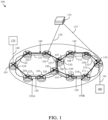
- the central entity 175 may be substantially similar to a Software Defined Network Controller (SDNC), which is further described in the IETF RFC 8402 entitled “Segment Routing Architecture,” by C. Filsfils, dated July 2018 .
- SDNC Software Defined Network Controller
- the central entity 175 may be substantially similar to an Application Layer Traffic Optimization (ALTO) server, which is further described in the IETF RFC 7285, entitled “Application Layer Traffic Optimization (ALTO) Protocol," by R. Alimi, dated September 2014 .
- ATO Application Layer Traffic Optimization
- the links 122-135 may be wired or wireless links or interfaces interconnecting the NEs 101-112 together.
- the central entity-to-area links 136-137 are also wired or wireless links or interfaces interconnecting at least one of the NEs 101-112 within an area 150A-B to the central entity 175.
- the source 170 is connected to network 100 via a source-to-domain link 140
- the destination is connected to network 100 via a destination-to-domain link 141.
- the source-to-domain link 140 and the destination-to-domain link 141 may be wired or wireless links or interfaces interconnecting each of the source 170 and the destination 180 to an NE 101 and NE 110, respectively, of the network 100.
- the central entity 175 is configured to determine the PPR 120 based on attributes specified for the PPR 120.
- an attribute specified for the PPR 120 may be one or more TE parameters, network characteristics, or service requirements that are associated with a resource to be reserved on the PPR 120.
- the attribute may include a bandwidth requirement, a maximum burst size, a latency requirement, a minimum jitter, a minimum error rate, a required throughput, etc.
- reserving resources on the NEs 101-112 and links 122-135 of the PPR 120 according to the attributes specified for the PPR 120 ensures that data packets being transmitted along the PPR 120 satisfy a certain QoS parameter set by the source 170 of the PPR 120 or an operator of the network 100.
- the PPRs 120 and the shortest paths 145 may each comprise a sequential ordering of one or more elements 101-112 and 122-135 (e.g., NEs 101-112 and links 122-135) in the network 100.
- the shortest path 145 between ingress NE 101 and egress NE 110 includes the following elements: NE 101, link 122, NE 102, link 123, NE 103, link 127, NE 107, link 130, NE 108, link 131, NE 109, link 132, and NE 110.
- the shortest path 145 between ingress NE 101 and egress NE 110 is based on metrics of each of the elements 101-112 and 122-135 in the network 100.
- the PPR 120 between ingress NE 101 and egress NE 110 includes the following elements: NE 101, link 124, NE 104, link 125, NE 105, link 126, NE 106, link 135, NE 112, link 134, NE 111, link 133, and NE 110.
- the central entity 175 determines the elements on the PPR 120 based on an attribute, such as, bandwidth, latency, or burst size, of each of one or more of the elements (NE 101, link 124, NE 104, link 125, NE 105, link 126, NE 106, link 135, NE 112, link 134, NE 111, link 133, and NE 110) on PPR 120.
- the central entity 175 After the central entity 175 determines the PPR 120 based on the attribute, the central entity 175 transmits PPR information describing the PPR 120 to a headend or ingress NE 101-112 in each area 150A-B of network 100. For example, the central entity 175 transmits PPR information describing the PPR 120 implemented in area 150A to NE 103 via central entity-to-area link 136. Similarly, the central entity 175 transmits PPR information describing the PPR 120 implemented in area 150B to NE 110 via link 137.
- the PPR information also includes multiple PPR-path description elements (PDEs) describing one or more elements (NE 101, link 124, NE 104, link 125, NE 105, link 126, NE 106, link 135, NE 112, link 134, NE 111, link 133, and NE 110) or segments including one or more of the elements on the PPR 120.
- PDEs PPR-path description elements
- each of the PPR-PDEs includes a label, address, or identifier of one or more of the elements 101, 124, 104, 125, 105, 126, 106, 135, 112, 134, 111, 133, and 110 or segments including one or more of the elements on the PPR 120.
- the PPR-PDEs include a sequential ordering of MPLS labels, IPV6 addresses, or IPv4 addresses that specify the actual path (e.g., one or more of the elements 101, 124, 104, 125, 105, 126, 106, 135, 112, 134, 111, 133, and 110 on the PPR 120) toward a destination address of the egress NE 110 or the destination 180 (also referred to herein as a "prefix").
- each of the PPR-PDEs may also define whether the element being described is a topological NE or a non-topological NE.
- two types of PPRs 120 may be described by the PPR-PDEs, a strict PPR 120 and a loose PPR 120.
- a strict PPR 120 every single NE (NE 101, NE 104, NE 105, NE 106, NE 112, NE 111, and NE 110) along the PPR 120 is specified or described in its own PPR-PDE.
- a loose PPR 120 certain elements 101, 124, 104, 125, 105, 126, 106, 135, 112, 134, 111, 133, and 110 (also referred to herein as "hops") along a PPR 120 may be skipped such that only a subset of the elements 101, 124, 104, 125, 105, 126, 106, 135, 112, 134, 111, 133, and 110 along a PPR 120 is specified or described in its own PPR-PDE.
- the NEs along the path use shortest path routing in between elements that are not explicitly specified in a PPR-PDE (i.e., to reach the next topological PDE of the loose PPR 120).
- the PPR information may include several other descriptive elements, which are further described in Patent Cooperation Treaty (PCT) Application No. PCT/US2019/015419, entitled “Advertising and Programming Preferred Path Routes using Interior Gateway Protocols," by Uma Chunduri , et. al. , and filed on January 28, 2019 (hereinafter referred to as the "PPR Patent").
- the PPR information may include a PPR type, defining an encoding scheme used to encode the PPR-ID. For example, when the PPR-ID is an IPv4 address, then the PPR type is a value indicating that the PPR-ID is an IPv4 address.
- the PPR type is a value indicating that the PPR-ID is an IPv6 address or an MPLS label.
- the PPR information may also include various flags. For example, one bit may indicate whether all the NEs in the network 100 downloads the PPR information or only a subset of the NEs identified in the PPR-PDEs downloads the PPR information.
- the PPR information may also include one or more attributes associated with a resource to be reserved on the PPR 120.
- the attribute refers to a TE parameter network characteristic that should be satisfied when reserving a resource on the PPR 120.
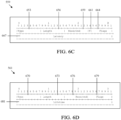
- attributes specified for a PPR 120 may include bandwidth, burst size, latency, and lifetime, which will be further described below with reference to FIGS. 5A-B and 6A-D .
- NEs 103 and 110 After receiving the PPR information, NEs 103 and 110 first determine whether the NEs 103 and 110 are identified in a PPR-PDE of the PPR information. When a PPR-PDE does not identify the NE 103 or 110, NEs 103 and 110 ignore the PPR information. In contrast, when a PPR-PDE identifies the NE 103 or 110, the NE 103 or 110 updates a local forwarding database to include an entry including the PPR information for a destination address corresponding to the egress NE 110 or the destination 180.
- NEs 103 and 110 are configured to update the local forwarding database to include the PPR information relative to a destination address of the egress NE 110 or the destination 180 regardless of whether the NE 103 or 110 is identified in a PPR-PDE of the PPR information.
- the NEs 103 and 110 After receiving the PPR information and updating a local forwarding database, the NEs 103 and 110 send (or flood) an advertisement including the PPR information to all of the other NEs 101-112 in the respective area 150A-B of network 100 using the underlying Interior Gateway Protocol (IGP) of the respective area 150A-B.
- IGP Interior Gateway Protocol
- the advertisement including the PPR information may be encoded and flooded through the respective area 150A-B using an IGP, such as, for example, Open Shortest Path First (OSPF) Version 2 (OSPFv2), OSPF Version 3 (OSPFv3), Intermediate System - Intermediate System (IS-IS), or direct SDN.
- OSPF Open Shortest Path First
- OSPFv2 Open Shortest Path First
- OSPFv3 OSPF Version 3
- IS-IS Intermediate System - Intermediate System
- the NE 103 transmits (or floods) the PPR information to NEs 101-102 and 104-107 in area 150A according to the IGP implemented by area 150A.
- NE 110 transmits (or floods) the PPR information to NEs 106-109 and 111-112 in area 150B according to the IGP implemented by area 150B.
- each of the receiving NEs 101-102, 104-107, 106-109, and 111-112 determines whether the receiving NE 101-102, 104-107, 106-109, or 111-112 is identified in a PPR-PDE of the PPR information.
- a PPR-PDE identifies the receiving NE 101-102, 104-107, 106-109, or 111-112
- the receiving NE 101-102, 104-107, 106-109, or 111-112 updates a local forwarding database to include an entry including the PPR information for a destination address corresponding to the egress NE 110 or the destination 180.
- each of the receiving NEs 101-102, 104-107, 106-109, and 111-112 updates a local forwarding database to include an entry including the PPR information regardless of whether the NE is identified in a PPR-PDE.
- the embodiments disclosed herein are directed to advertising and programming one or more attributes defining network characteristics related to a resource to be reserved on the PPR 120 along with the basic PPR information (e.g., PPR-ID and PPR-PDEs).
- the NEs 101-112 receive the PPR information including the PPR-ID, PPR-PDEs, and the attributes, the NEs 101-112 update the local forwarding databases and thereby become programmed to construct the PPR 120 based on the attributes defined by the PPR information. In this way, the PPR 120 is constructed to ensure that the PPR 120 satisfies QoS parameters defined using the attributes included in the PPR information.
- preferred path routing is extended to indicate the resources (e.g., attributes) to be reserved along the PPR.
- the resources indicated are not only for providing a committed bandwidth or deterministic latency, but also for assuring an overall service level guarantee on the network 100.
- reservations are included in the PPR information in terms of required resources (bandwidth), traffic characteristics (burst size), and service level parameters (expected maximum latency at each hop) based on the capabilities of each element on the PPR 120.
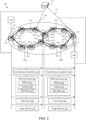
- FIG. 2 is a diagram illustrating the network 100 configured to implement preferred path routing according to various embodiments of the disclosure.
- the NEs 101-112 within the areas 150A-B of the network 100 exchange data with another to reserve resources along a PPR 120 and monitor the resources along the PPR 120.
- the data that can be exchanged includes a node resource capability 203, PPR information 210, a node status 220, and usage statistics 215. It should be appreciated that other data relevant to the PPR 120 may be exchanged among NEs 101-112 within the areas 150A-B of the network 100 for the purpose of reserving and monitoring resources along the PPR 120.
- each NE 101-112 within the network 100 advertises a node resource capability 203 to all of the other NEs 101-112 within a respective area 150A-B to indicate that the NE 101-112 is located using the underlying IGP.
- NE 101 sends a node resource capability 203 to NEs 102-107 in area 150A
- NE 106 sends a node resource capability 203 to NEs 107-112 in area 150B.
- the node resource capability 203 is flooded to other NEs 101-112 in the network 100 before the PPR information 210 is flooded to other NEs 101-112 in the network 100.
- the node resource capability 203 is sent to the central entity 175 via central entity-to-area links 136-137 periodically or through any other offline mechanism. For example, supposing that NE 103 is a Border Gateway Protocol (BGP) Link State (BGP-LS) speaker, NE 103 may transmit the node resource capability 203 to the central entity 175.
- BGP Border Gateway Protocol
- BGP-LS Border Gateway State
- the node resource capability 203 is encoded according to BGP-LS Prefix Network Layer Reachability Information (NLRI) when the node resource capability 203 is transmitted to the central entity 175.
- NLRI BGP-LS Prefix Network Layer Reachability Information
- a node resource capability 203 is a message sent by each NE 101-112 within a network 100 that indicates various capabilities of the NE 101-112 sending the node resource capability 203.
- the node resource capability 203 is provisioned by a central entity 175 and flooded to other NEs 101-112 in the network 100 before the PPR information 210 is flooded to other NEs 101-112 in the network 100.
- the node resource capability 203 indicates various different capabilities of, or features supported by, the NE 101-112 sending the node resource capability 203.
- the node resource capability 203 indicates whether the NE 101-112 sending the node resource capability 203 is capable of implementing preferred path routing.
- the node resource capability 203 indicates one or more attributes that are supported by sending the node resource capability 203.
- the node resource capability 203 indicates whether the NE 101-112 sending the node resource capability 203 is capable of reserving a resource on the PPR 120 according to one or more different attributes.
- the node resource capability 203 indicates whether the NE 101-112 sending the node resource capability 203 is capable of monitoring usage statistics 215 related to the resources reserved for the PPR 120.
- the node resource capability 203 includes one or more flags indicating whether the NE 101-112 sending the node resource capability 203 is capable of implementing preferred path routing.
- the node resource capability 203 also includes one or more flags indicating each of the attributes that the NE 101-112 is capable of supporting to reserve a resource on a PPR 120.
- the node resource capability 203 also includes one or more flags indicating each of the usage statistics that NE 101-112 is capable of monitoring.
- the NE transmits node resource capabilities including one or more flags indicating usage statistics, which the NE is capable of monitoring for the resource reserved in the network to a central entity of the PPR.
- the node resource capability 203 is a new message defined by the preferred path routing protocol.
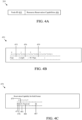
- the node resource capability 203 is a sub Type-Length-Value (TLV) within a body of an IS-IS capable TLV, as further described in IETF RFC 7981, entitled "IS-IS Extension for Advertising Router Information," by L. Ginsberg, dated October 2016. Additional detail regarding the node resource capability 203 is further described below with reference to FIGS. 4A-C .
- one or more NEs 101-112 within the network 100 may transmit usage statistics 215 to the central entity 175 periodically or through any other offline mechanism such as gRPC, KAFKA or through streaming telemetry.
- the PPR information 210 After receiving the PPR information 210 from the central entity 175 or locally provisioned by the operator at one or more NEs 101-112 advertises the PPR information 210 describing PPR 120 to all of the other NEs 101-112 within a respective area 150A-B that the NE 101-112 is located using the underlying IGP.
- the PPR information 210 may be included with an advertisement or a PPR-TLV, as described in the PPR Patent.
- the NE 103 receives the PPR information 210 describing the PPR 120 from the central entity 175 (or otherwise an external entity or operator of the network 100)
- the NE 103 transmits the PPR information 210 to the other NEs 101-102 and 104-107 in area 150A of the network 100.
- the NE 110 receives the PPR information 210 describing the PPR 120 from the central entity 175 (or otherwise an external entity or operator of the network 100)
- the NE 103 transmits the PPR information 210 to the other NEs 106-109 and 111-112 in area 150B of the network 100.
- the PPR information 210 may include information describing the PPR 120, such as, for example, the PPR-ID 230 identifying the PPR 120.
- the PPR information 210 may also include one or more PPR-PDEs 245 describing one or more elements on the PPR 120. Each PPR-PDE 245 may include an address, label, or ID of an element on the PPR 120.
- the PPR information 210 may also include one or more attributes 240 associated with a resource to be reserved on the PPR 120.
- the PPR-ID 230 is a label, address, or ID that uniquely identifies the PPR 120
- the attributes 240 refer to network characteristics or TE parameters by which a certain resource on the PPR 120 is reserved.
- the attributes 240 are enforced by one or more elements 101, 124, 104, 125, 105, 126, 106, 135, 112, 134, 111, 133, and 110 on the PPR 120 to ensure that the PPR 120 satisfies certain QoS parameters.
- the attributes 240 specify a bandwidth, a burst size, a per-hop queueing latency, or a lifetime of the PPR 120.
- the attributes 240 for a PPR 120 may specify a minimum bandwidth or a maximum bandwidth required to transmit a data packet along a link 122-135 of the PPR 120.
- the attributes 240 for a PPR 120 may specify a required or maximum burst size of a burst transmitted along a link 122-126 and 133-135 of the PPR 120.
- the attributes 240 for a PPR 120 may specify a per-hop queuing latency, which indicates a bounded latency for each NE 101, 104, 105, 106, 112, 111, 110 or hop on the PPR 120.
- the attributes 240 may also specify a lifetime of the reservations made for the PPR 120 such that the reservations are torn down upon expiration of the lifetime, unless the NE 101, 104, 105, 106, 112, 111, 110 receives a state refresh of the PPR 120, which will be further described below. Additional details and examples of the attributes 240 are further described below with regard to FIGS. 5A-B and 6A-D . Although only these four examples of attributes 240 are described herein, it should be appreciated that attributes 240 include any other TE parameter or network characteristic that may be used to provide a certain QoS to clients transmitting and receiving data packets along the PPR 120.
- the receiving NEs 101-112 are configured to program the PPR 120 according to the PPR information 210.
- Programming the PPR 120 according to the PPR information 210 includes updating a local forwarding database stored at the NE 101-112 to include the PPR information 210 in association with a destination address corresponding to the egress NE 110 of the PPR 120 or the destination 180.
- the NE 101-112 updates the local forwarding database to include the attributes 240 along with the PPR-ID 230 and the PPR-PDEs specified by the PPR information 210.
- the local forwarding database is updated only when the PPR-PDEs include the NE 101-112 that received the PPR information 210, and in another embodiment, the local forwarding database is updated regardless of whether the PPR-PDEs include the NE 101-112 received the PPR information 210.
- each of the NEs 101-112 transmits (or floods) a node status 220 to the other NEs 101-112 in a respective area 150A-B of the network 100 using the underlying IGP.
- the NE 103 transmits a node status 220 to NEs 101-102 and 104-107 within area 150A.
- the NE 110 transmits a node status 220 to NEs 106-109 and 111-112 within area 150B.
- a node status 220 indicates whether a resource for the PPR 120 has been successfully reserved according to the attribute 240 included in the PPR information 210.
- the node status 220 indicates a successful reservation of the resource for the PPR 120 when the local forwarding database of the NE 101-112 sending the node status 220 has been successfully updated to include the PPR information 210, including the attribute 240.
- the node status 220 indicates a failure to reserve one or more resources for the PPR 120 when the local forwarding database of the NE 101-112 sending the node status 220 has not been successfully updated to include the PPR information 210, including the attribute 240. Additional details regarding the node status 220 are further described below with regard to FIGS. 7A-D .
- data packets may be forwarded along the PPR 120 in the data plane.
- data packets that include the PPR-ID 230 are forwarded along the PPR 120.
- the NE 101 performs a lookup at the local forwarding database using the PPR-ID 230 to determine a next hop (e.g., next element 101, 124, 104, 125, 105, 126, 106, 135, 112, 134, 111, 133, and 110 or next segment).
- the forwarding database includes entries corresponding to destination addresses and PPR-IDs 230 indicating the next hop or element toward which to forward a data packet.
- the lookup may be performed at the local database by searching the forwarding database for the entry corresponding to the destination address and PPR-ID 230 included in the data packet.
- the data packet is then forwarded toward the next hop based on the PPR-PDEs stored in association with the PPR-ID 230 in the entry of the forwarding database.
- the NE 101 is also configured to perform the lookup at the local forwarding database to determine an attribute 240 associated with a resource reserved for this PPR 120 and then determines whether the path to the next hop on the PPR 120 satisfies the attribute 240. When the determined next hop on the PPR 120 satisfies the attribute 240, the NE 101 forwards to the data packet to the next hop on the PPR 120 (e.g., along link 124 to NE 104).
- each of the NEs 101, 104, 105, 106, 112, and 111 on the PPR 120 to the egress NE 110 determines whether a next hop on the PPR 120 satisfies the attribute 240 and forwards the data packet to the next hop only when the next hop satisfies the attribute 240.
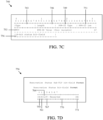
- FIGS. 7A-D are diagrams illustrating an example of a node status 220, and fields within the node status 200, sent by NEs 101, 104, 105, 106, 112, 111, and 110 on the PPR 120 to every other NE 101-112 in the area 150A-B or the network 100 and the central entity 175 according to various embodiments of the disclosure.
- a node status 220 is a message indicating whether a resource for the PPR 120 has been successfully reserved according to the attribute 240A-N included in the PPR information 210.
- the node status 220 also includes a resource reservation status 706.
- the resource reservation status 706 may include one or sub-TLVs and one or more flags indicating a status of certain resources that have been reserved according to an attribute 240A-N (also referred to herein as "attribute 240") specified for the PPR 120.
- An example of a sub-TLV that may be included in the resource reservation status 706 is shown and described below with reference to FIGS. 7B-C .
- Examples of flags that may be included in the resource reservation status 706 is shown and described below with reference to FIG. 7D .
- FIG. 7B shows an example of a node status TLV 725 that may be included in the resource reservation status 706 according to various embodiments of the disclosure.
- the node status TLV 725 may be a new top level IS-IS TLV, OSPFv2 TLV, or OSPFv3 TLV defined to indicate the status of PPR TE resource reservation by each NE 101, 104, 105, 106, 112, 111, and 110 on the PPR 120.
- the node status TLV 725 is generated by an NE 101, 104, 105, 106, 112, 111, and 110 on the PPR 120 which performs the reservation of resources.
- the node status TLV 725 is an entirely new message, or can be encoded into another protocol by which NEs 101, 104, 105, 106, 112, 111, and 110 are configured to transmit data.
- the sub-TLV 740 includes a type field 743, a length field 746, a PPR-ID type field 749, a PPR-ID length field 751 (shown as PPR-ID Len in FIG. 7C ), a PPR-ID value field 753, and a 16-bit status bit-field 756.
- the type field 743 carries a value assigned by the IANA indicating that the sub-TLV 740 includes data regarding a status of resources reserved for a PPR 120.
- the length field 746 includes a value indicating a total length of the sub-TLV 740 in bytes.
- the PPR-ID type field 749 carries a value indicating a type of PPR-ID 230 carried in the PPR-ID value field 753 (e.g., whether the PPR-ID 230 is an MPLS label, an IPV4 address, an IPv6 address, etc.).
- the PPR-ID length field 751 carries a length of the PPR-ID value field 753.
- the PPR-ID value field 753 carries the PPR-ID 230 identifying the PPR 120.
- the 16-bit status bit-field 756 includes various flags describing the status of resources reserved on the PPR 120 and is further described below with reference to FIG. 7D .
- the B flag 759 also referred to as Bit-0 or the B Bit, indicates whether bandwidth requirement 543 (defined as either the minimum or maximum bandwidth reservation for a resource on the PPR 120) has been reserved by the NE 101, 104, 105, 106, 112, 111, or 110 sending the node status 220.
- the S flag 761 also referred to as Bit-1 or the S Bit, is set to indicate whether the burst size 546 handling on the PPR 120 has been set by the NE 101, 104, 105, 106, 112, 111, or 110 sending the node status 220.
- the L flag 764 also referred to as Bit-2 or the L Bit, is set to indicate whether a bounded latency 549 defined as a per-hop maximum queuing for the PPR 120 has been set by the NE 101, 104, 105, 106, 112, 111, or 110 sending the node status 220.
- the T flag 767 also referred to as Bit-3 or the T Bit, is set to indicate whether a lifetime 551 or expiration timer for the PPR 120 has been set by the NE 101, 104, 105, 106, 112, 111, or 110 sending the node status 220.
- the reserved bits 770 are empty and reserved for future use.
- the E flag 773 also referred to as Bit-15 or the E Bit, is set to indicate that one more 16 bit status field(s) follows the E flag 773.
- one of the NEs 101, 104, 105, 106, 112, 111, or 110 on the PPR 120 may identify that one of the elements 101, 124, 104, 125, 105, 126, 106, 135, 112, 134, 111, 133, or 110 on the PPR 120 is unavailable or failed.
- an NE 101, 104, 105, 106, 112, 111, or 110 adjacent to or attached to the unavailable element 101, 124, 104, 125, 105, 126, 106, 135, 112, 134, 111, 133, or 110 may notify the headend NE 101-112 that sent the original advertisement 500 of the unavailable element 101, 124, 104, 125, 105, 126, 106, 135, 112, 134, 111, 133, or 110.
- the NE 101-112 adjacent to or attached to the unavailable element 101, 104, 105, 106, 112, 111, or 110 may notify the NE 101-112 in the network 100 acting as the BGP-LS speaker, such that the BGP-LS speaker notifies the central entity 175 of the unavailable element 101, 124, 104, 125, 105, 126, 106, 135, 112, 134, 111, 133, or 110.
- the headend NE 101-112 again floods the area 150A-B or the network 100 with the PPR information 210 describing the newly determined PPR 120.
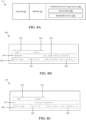
- FIGS. 8A-C are diagrams illustrating an example of usage statistics 215 collected by NEs 101, 104, 105, 106, 112, 111, and 110 on the PPR 120, and fields within the usage statistics 215, according to various embodiments of the disclosure.
- usage statistics 215 refers to statistics regarding the usage of various resources along the PPR 120.
- the usage statistics 215 may be flooded through the respective area 150A-B or network 100 until the usage statistics 215 reaches a BGP-LS speaker within the respective area 150A-B or network 100.
- the BGP-LS speaker then transmits the usage statistics 215 to the central entity 175, such that the central entity 175 may modify the PPR 120 if necessary.
- the NE 101-112 may directly send the usage statistics 215 to the central entity 175, such that the central entity 175 may modify the PPR 120 if necessary.
- the usage statistics 215 may include a node ID 403 identifying the NE 101, 104, 105, 106, 112, 111, and 110 on the PPR 120 sending the usage statistics 215.
- the node ID 403 may be a label, address, or ID that uniquely identifies the NE 101, 104, 105, 106, 112, 111, or 110 sending the usage statistics 215.
- the usage statistics 215 also includes a PPR-ID 230 identifying the PPR 120 being monitored and described by the usage statistics 215.
- the usage statistics 215 also includes collected network usage statistics 803, which may include a queue delay 806 and a bandwidth statistics 809.
- the queue delay 806 indicates a queuing or transmission delay occurring at an NE 101, 104, 105, 106, 112, 111, and 110 on the PPR 120.
- the bandwidth statistics 809 includes bandwidth related statistics of the PPR 120, such as utilized bandwidth along a link 124-126 and 133-135 of the PPR 120, unutilized bandwidth along a link 124-126 and 133-135 of the PPR 120, or a bandwidth violation along a link 124-126 and 133-135 of the PPR 120.
- a bandwidth violation can occur because of local failures or due to resource exhaustion set aside for a PPR 120. Examples of TLVs or sub-TLVs carrying collected network usage statistics 803 included in the usage statistics 215 is shown and described below with reference to FIGS. 8B-C .
- the per-PPR queueing delay sub-TLV 850 may be included in the usage statistics 215 according to various embodiments of the disclosure.
- the per-PPR queueing delay sub-TLV 850 may be a new sub-TLV included in the IETF RFC 7810, entitled " IS-IS Traffic Engineering (TE) Metric Extensions," by S. Previdi, et. al., dated May 2016 .
- the per-PPR queueing delay sub-TLV 850 may be a new message for an existing protocol or a new protocol.
- the per-PPR queueing delay sub-TLV 850 includes a type field 853, a length field 856, reserved bits 859, an average queue delay variation field 861, a PPR-ID type field 864, a PPR-ID length field 867 (shown as PPR-ID Len in FIG. 8B ), and a PPR-ID value field 869.
- the type field 853 carries a value assigned by the IANA indicating that the per-PPR queueing delay sub-TLV 850 includes data regarding the queue delay 806 occurring at NEs 101, 104, 105, 106, 112, 111, or 110 along a PPR 120.
- the length field 856 includes a value indicating a total length of the per-PPR queueing delay sub-TLV 850 in bytes.
- the reserved bits 859 are set to 0 and reserved for future use.
- the average queue delay variation field 861 is a 24 bit field that carries the queue delay 806, which is an average PPR queue delay variation over a configurable interval in microseconds.
- the average PPR queue delay variation is encoded into the average queue delay variation field 861 as an integer value.
- the NE 101, 104, 105, 106, 112, 111, or 110 sending the usage statistics 215 has not measured the average queue delay variation.
- the PPR-ID type field 864, the PPR-ID length field 867, and the PPR-ID value field 869 are similar to the PPR-ID type field 749, the PPR-ID length field 751, and the PPR-ID value field 753, respectively.
- the unidirectional utilized PPR bandwidth sub-TLV 870 may be a new sub-TLV included in the IETF RFC 7810, entitled " IS-IS Traffic Engineering (TE) Metric Extensions," by S. Previdi, et. al., dated May 2016 .
- the unidirectional utilized PPR bandwidth sub-TLV 870 may be a new message for an existing protocol or a new protocol.
- the unidirectional utilized PPR bandwidth sub-TLV 870 includes a type field 873, a length field 876, a utilized bandwidth field 879, a PPR-ID type field 881, a PPR-ID length field 882 (shown as PPR-ID Len in FIG. 8C ), and a PPR-ID value field 883.
- the type field 873 carries a value assigned by the IANA indicating that the unidirectional utilized PPR bandwidth sub-TLV 870 includes bandwidth statistics 809 regarding a utilized bandwidth of a link 124-126 and 133-135 reserved along a PPR 120.
- the length field 876 includes a value indicating a total length of the unidirectional utilized PPR bandwidth sub-TLV 870 in bytes.
- the utilized bandwidth field 879 is a field that carries the bandwidth statistic 809, which may be bandwidth utilization per PPR 120 (or per PPR-ID 230) on a link link 124-126 and 133-135 along a PPR 120, forwarding adjacency, or bundled link floating-point format with units of bytes per second.
- the PPR-ID type field 881, the PPR-ID length field 882, and the PPR-ID value field 883 are similar to the PPR-ID type field 749, the PPR-ID length field 751, and the PPR-ID value field 753, respectively.
- FIG. 9 is a method 900 for implementing resource reservation and maintenance on a PPR 120 according various embodiments of the disclosure.
- method 900 may be performed by a headend or ingress NE 101-112 in a network 100.
- method 900 may be performed after a central entity 175 obtains and transmits PPR information 210 to an NE 101-112 in the network 100.
- an advertisement 500 comprising PPR information 210 describing a path from a source to a destination is received.
- Rx 320 receives the PPR information 210 from the central entity 175 or another NE 101-112.
- the PPR information 210 includes a PPR-ID 230 and an attribute 240 associated with a resource to be reserved on the PPR 120.
- the source may refer to the source 170 or an ingress NE 101 on the PPR 120.
- the destination may refer to the destination 180 or the egress NE 110 on the PPR 120.
- the advertisement 500 comprising the PPR-ID 230 and the attributes 240 specified for a PPR 120 are transmitted to another NE in the network 100.
- Tx 340 transmits the advertisement 500 comprising the PPR-ID 230 and the attributes 240 specified for a PPR 120 that are transmitted to another NE in the network 100.
- a local forwarding database 343 is updated to include the PPR information 210 in association with the destination in response to the NE 101-112 being identified in the PPR information 210.
- local forwarding database 343 is updated in the memory 360 to include the attributes 240 in association with the PPR-ID 230.
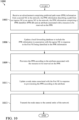
- FIG. 10 is a method 1000 for implementing resource reservation and maintenance on a PPR 120 according various embodiments of the disclosure.
- method 1000 may be performed by an intermediate NE 101-112 (referred to with reference to this method 1000 as the first NE 101-112) in a network 100.
- an advertisement 500 comprising PPR information 210 describing a path from a source to a destination is received from another NE 101-112.
- Rx 320 receives the PPR information 210 from the central entity 175 or another NE 101-112.
- the PPR information 210 includes a PPR-ID 230 and an attribute 240 associated with a resource to be reserved on the PPR 120.
- the source may refer to the source 170 or an ingress NE 101 on the PPR 120.
- the destination may refer to the destination 180 or the egress NE 110 on the PPR 120.
- a local forwarding database 343 is updated to include the PPR information 210 in association with the destination or egress NE in response to the first NE 101-112 being identified in the PPR information 210.
- local forwarding database 343 is updated in the memory 360 to include the attributes 240 in association with the PPR-ID 230.
- the PPR 120 is provisioned at the first NE 101-112 based on the attribute 240 in the PPR information 210.
- the resource associated with the attribute 240 is reserved for the PPR 120 by the first NE 101-112.
- a node status 220 of the first NE 101-112 is updated to indicate whether the resource for the PPR 120 has been successfully reserved according to the attribute 240 included in the PPR information 220.
- the network configuration module 335 is executed by the processor 330 to update the node status 220 of the first NE 101-112 to indicate whether the resource for the PPR 120 has been successfully reserved according to the attribute 240 included in the PPR information 220.
- the node status 220 is transmitted to the central entity 175.
- Tx 340 transmits the node status 220 to the central entity 175.
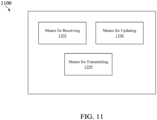
- FIG. 11 shows an apparatus 1100 for implementing resource reservation and maintenance on a PPR 120 according various embodiments of the disclosure.
- the apparatus 1100 comprises a means for receiving 1103, a means for updating 1106, and a means for transmitting 1109.
- the means for receiving 1103 comprises a means to receive an advertisement 500 comprising PPR information 210 describing a path from a source to a destination.
- the PPR information 210 includes a PPR-ID 230 and an attribute 240 associated with a resource to be reserved on the PPR 120.
- the source may refer to the source 170 or an ingress NE 101 on the PPR 120.
- the destination may refer to the destination 180 or the egress NE 110 on the PPR 120.
- the means for updating 1106 comprises a means to update a local forwarding database 343 to include the PPR information 210 in association with the destination.
- the means for transmitting 1109 comprises a means to transmit the advertisement 500 comprising the PPR-ID 230 and the attributes 240 specified for a PPR 120 to another NE 101-112 in the network 100.
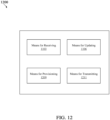
- the destination may refer to the destination 180 or the egress NE 110 on the PPR 120.
- the means for updating 1206 comprises a means to update a local forwarding database 343 to include the PPR information 210 in association with the destination in response to the apparatus 1200 being identified in the PPR information 210.
- the means for provisioning 1209 comprises a means to provision the PPR 120 based on the attribute 240 included in the PPR information 210.
- the means for updating 1206 further comprises a means to update a node status 220 of the apparatus 1200 to indicate whether the resource for the PPR 120 has been successfully reserved according to the attribute 240 included in the PPR information 220.
- the means for transmitting 1211 comprises a means to transmit the node status 220 to the central entity 175.
Landscapes
- Engineering & Computer Science (AREA)
- Computer Networks & Wireless Communication (AREA)
- Signal Processing (AREA)
- Data Exchanges In Wide-Area Networks (AREA)
- Environmental & Geological Engineering (AREA)
Claims (15)
- Verfahren, das durch ein Netzwerkelement, NE, (101, 102, 103, 104, 105, 106, 107, 108, 109, 110, 111, 112, 110, 111, 112) in einem Netzwerk (100) implementiert wird, umfassend:Empfangen (903), durch das NE (101-112), einer Werbung (500), die Informationen (210) einer bevorzugten Pfadroute, PPR, umfasst, welche einen Pfad von einem Eingangs-NE (101) zu einem Ausgangs-NE (110) in dem Netzwerk (100) beschreiben, wobei die PPR-Informationen (210) eine PPR-Kennung, eine PPR-ID (230) und ein Attribut (240), das einer auf der PPR (120) zu reservierenden Ressource zugeordnet ist, umfassen;Senden (906), durch das NE (101-112), der Werbung (500), die die PPR-ID (230) und das Attribut (240), das der auf der PPR (120) zu reservierenden Ressource zugeordnet ist, umfasst, an ein anderes NE (101-112) in dem Netzwerk (100); Überwachen, durch das NE (101-112), von Nutzungsstatistiken (215), die sich auf die für die PPR (120) reservierte Ressource beziehen, nachdem die Ressource erfolgreich auf der PPR (120) reserviert wurde;Senden, durch das NE (101-112), von Knotenressourcenfähigkeiten (203), einschließlich eines oder mehrerer Flags, die Nutzungsstatistiken (215) angeben, für die das NE (101-112) in der Lage ist, diese für die in dem Netzwerk (100) reservierte Ressource zu überwachen, an eine zentrale Entität (175) der PPR (120); und Aktualisieren (909), durch das NE (101-112), einer lokalen Weiterleitungsdatenbank (343), um die PPR-Informationen (210) in Verbindung mit dem Ausgangs-NE (110) als Reaktion darauf, dass das NE (101-112) in den PPR-Informationen (210) identifiziert wurde, einzubeziehen.
- Verfahren nach Anspruch 1, wobei das Attribut (240) mindestens eines von einer Bandbreite, die zum Senden eines Datenpakets entlang der PPR (120) erforderlich ist, einer Burst-Größe (546), die entlang des PPR (120) gesendet werden darf, einer begrenzten Latenz (549), die auf einem NE (101-112) entlang der PPR (120) auftreten darf, oder einer Lebensdauer (551), die einen Zeitraum, während dem die Ressource auf jedem NE (101-112) zu reservieren ist, und/oder eine Verknüpfung der PPR (120) angibt, beinhaltet.
- Verfahren nach Anspruch 2, ferner umfassend:Löschen, durch das NE (101-112), der PPR-Informationen (210) aus der Weiterleitungsdatenbank (343) als Reaktion auf Bestimmen, dass eine Zustandsaktualisierung, die die PPR-Informationen (210) beinhaltet, nicht innerhalb des Zeitraums, während dem die Ressource reserviert ist, durch das NE (101-112) empfangen wurde; undEntfernen, durch das NE (101-112), einer Reservierung der Ressource auf einem oder mehreren der NEs oder von Verknüpfungen auf der PPR (120) als Reaktion auf Bestimmen, dass die Zustandsaktualisierung, die die PPR-Informationen (210) beinhaltet, nicht innerhalb der Lebensdauer durch das NE (101-112) empfangen wurde.
- Verfahren nach einem der Ansprüche 1 bis 2, ferner umfassend Empfangen einer Zustandsaktualisierung von mindestens einem von der zentralen Entität (175) des Netzwerks (100) oder einem zweiten NE (101-112) in dem Netzwerk (100), wobei die Zustandsaktualisierung die PPR-Informationen (210) umfasst.
- Verfahren nach einem der Ansprüche 1 bis 4, ferner umfassend:Empfangen, durch das NE (101-112), einer Modifikation des Attributs (240), das der auf der PPR (120) reservierten Ressource zugeordnet ist, von mindestens einem von einer zentralen Entität (175) des Netzwerks (100) oder einem zweiten NE (101-112) in dem Netzwerk (100); undAktualisieren, durch das NE (101-112) der lokalen Weiterleitungsdatenbank (343) basierend auf der Modifikation des empfangenen Attributs (240).
- Verfahren nach einem der Ansprüche 1 bis 5, ferner umfassend Bestimmen, durch das NE, dass mindestens ein NE (101-112) oder eine Verknüpfung auf der PPR (120) das durch die PPR-Informationen (210) definierte Attribut (240) nicht erfüllt.
- Verfahren nach einem der Ansprüche 1 bis 6, ferner umfassend Senden eines Knotenstatus (220) an mindestens ein anderes NE (101-112) in dem Netzwerk (100) unter Verwendung eines zugrunde liegenden Interior Gateway Protocol, IGP, des Netzwerks (100), wobei der Knotenstatus (220) angibt, ob die Ressource basierend auf dem in den PPR-Informationen (210) beinhalteten Attribut (240) erfolgreich reserviert wurde.
- Verfahren nach einem der Ansprüche 1 bis 6, ferner umfassend Senden eines Knotenstatus (220) an eine zentrale Entität (175) des Netzwerks (100), wobei der Reservierungsstatus angibt, ob die Ressource basierend auf dem in den PPR-Informationen (210) beinhalteten Attribut (240) erfolgreich reserviert wurde.
- Verfahren nach einem der Ansprüche 1 bis 8, wobei die Nutzungsstatistiken (215) mindestens eines von einer Warteschlangenverzögerung (806), die auftritt, wenn eine Vielzahl von Datenpaketen von dem NE (101-112) an das andere NE (101-112) auf der PPR (120) gesendet wird, oder Bandbreitenstatistiken (809) bezüglich mindestens einer an das NE (101-112) gekoppelten Verknüpfung umfassen.
- Verfahren nach Anspruch 9, wobei die Bandbreitenstatistiken (809) mindestens eine von einer genutzten Bandbreite und einer nicht genutzten Bandbreite oder eine Bandbreitenverletzung umfassen.
- Verfahren nach einem der Ansprüche 1 bis 10, wobei die PPR (120) ein kürzester Pfad (145) zwischen einer Quelle (170) und einem Ziel (180) ist und wobei die PPR-Informationen (210) nur das Attribut (240) beinhalten, das der auf der PPR (120) zu einem anderen NE (101-112) in dem Netzwerk (100) zu reservierenden Ressource zugeordnet ist.
- Verfahren nach Anspruch 1, ferner umfassend:Bereitstellen (1009), durch das erste NE (101-112), der PPR (120) gemäß dem Attribut (240), das der auf der PPR (120) zu reservierenden Ressource zugeordnet ist;Aktualisieren (1011), durch das erste NE (101-112) eines Knotenstatus (220), der dem ersten NE (101-112) zugeordnet ist, als Reaktion auf das Bereitstellen der PPR (120) gemäß dem Attribut (240); undSenden (1013), durch das erste NE (101-112), des Knotenstatus (220) an die zentrale Entität (175) des Netzwerks (100).
- Netzwerkelement, NE, (101-112), das in einem Netzwerk (100) implementiert ist, umfassend:einen Empfänger (320), der dazu konfiguriert ist, eine Werbung (500) zu empfangen, die Informationen (210) einer bevorzugten Pfadroute, PPR, umfasst, welche einen Pfad von einem Eingangs-NE (101) zu einem Ausgangs-NE (110) in dem Netzwerk (100) beschreiben, wobei die PPR-Informationen (210) eine PPR-Kennung, eine PPR-ID (230) und ein Attribut (240), das einer auf der PPR (120) zu reservierenden Ressource zugeordnet ist, umfassen;einen Sender (340), der an den Prozessor (330) gekoppelt und dazu konfiguriert ist, die Werbung (500), die die PPR-ID (230) und das Attribut (240), das mit der auf der PPR (120) zu reservierenden Ressource verknüpft ist, umfasst, an ein anderes NE (101-112) in dem Netzwerk (100) zu senden;einen Überwachungsmechanismus, der dazu konfiguriert ist, Nutzungsstatistiken (215), die sich auf die für die PPR (120) reservierte Ressource beziehen, zu überwachen, nachdem die Ressource erfolgreich auf der PPR (120) reserviert wurde;wobei der Sender (340) dazu konfiguriert ist, Knotenressourcenfähigkeiten (203), einschließlich eines oder mehrerer Flags, die Nutzungsstatistiken (215) angeben, für die das NE (101-112) in der Lage ist, diese für die in dem Netzwerk (100) reservierte Ressource zu überwachen, an eine zentrale Entität (175) der PPR (120) zu senden; undeinen Prozessor (330), der an den Empfänger (320) gekoppelt und dazu konfiguriert ist, eine lokale Weiterleitungsdatenbank (343) zu aktualisieren, um die PPR-Informationen (210) in Verbindung mit dem Ausgangs-NE (110) einzubeziehen.
- Nichttransitorisches Medium, das dazu konfiguriert ist, ein Computerprogrammprodukt zu speichern, welches computerausführbare Anweisungen umfasst, die bei Ausführung durch einen Prozessor (330) eines Netzwerkelements, NE, (101-112), das in einem Netzwerk (100) implementiert ist, den Prozessor (330) zu Folgendem veranlassen:Empfangen (903) einer Werbung (500), die Informationen (210) einer bevorzugten Pfadroute, PPR, umfasst, welche einen Pfad von einem Eingangs-NE (101-112) zu einem Ausgangs-NE (110) in dem Netzwerk (100) beschreiben, wobei die PPR-Informationen (210) eine PPR-Kennung, eine PPR-ID (230) und ein Attribut (240), das einer auf der PPR (120) zu reservierenden Ressource zugeordnet ist, umfassen;Senden (906) der Werbung (500), die die PPR-ID (230) und das Attribut (240), das der auf der PPR (120) zu reservierenden Ressource zugeordnet ist, umfasst, an ein anderes NE (101-112) in dem Netzwerk (100);Überwachen von Nutzungsstatistiken (215), die sich auf die für die PPR (120) reservierte Ressource beziehen, nachdem die Ressource erfolgreich auf der PPR (120) reserviert wurde;Senden von Knotenressourcenfähigkeiten (203), einschließlich eines oder mehrerer Flags, die Nutzungsstatistiken (215) angeben, für die das NE (101-112) in der Lage ist, diese für die in dem Netzwerk (100) reservierte Ressource zu überwachen, an eine zentrale Entität (175) der PPR (120); undAktualisieren (909) einer lokalen Weiterleitungsdatenbank (343), um die PPR-Informationen (210) in Verbindung mit einem Ziel (180) einzubeziehen, als Reaktion darauf, dass das NE (101-112) in den PPR-Informationen (210) identifiziert wurde.
- Vorrichtung (1100), umfassend:ein Mittel zum Empfangen (1103) einer Werbung (500), die Informationen (210) einer bevorzugten Pfadroute, PPR, umfasst, welche einen Pfad von einem Eingangs-NE (101-112) zu einem Ausgangs-NE (110) in dem Netzwerk (100) beschreiben, wobei die PPR-Informationen (210) eine PPR-Kennung, eine PPR-ID (230) und ein Attribut (240), das einer auf der PPR (120) zu reservierenden Ressource zugeordnet ist, umfassen;ein Mittel zum Senden (1109) der Werbung (500), die die PPR-ID (230) und das Attribut (240), das der auf der PPR (120) zu reservierenden Ressource zugeordnet ist, umfasst, an ein anderes NE (101-112) in dem Netzwerk (100);ein Mittel zum Überwachen von Nutzungsstatistiken (215), die sich auf für die PPR (120) reservierte Ressourcen beziehen, nachdem die Ressource erfolgreich auf der PPR (120) reserviert wurde;ein Mittel zum Senden (1109) von Knotenressourcenfähigkeiten (203), einschließlich eines oder mehrerer Flags, die Nutzungsstatistiken (215) angeben, für die das NE (101-112) in der Lage ist, diese für die in dem Netzwerk (100) reservierte Ressource zu überwachen, an eine zentrale Entität (175) der PPR (120); undein Mittel zum Aktualisieren (1106) einer lokalen Weiterleitungsdatenbank (343), um die PPR-Informationen (210) in Verbindung mit einem Ziel (180) einzubeziehen.
Applications Claiming Priority (2)
| Application Number | Priority Date | Filing Date | Title |
|---|---|---|---|
| US201862663115P | 2018-04-26 | 2018-04-26 | |
| PCT/US2019/025643 WO2019209480A1 (en) | 2018-04-26 | 2019-04-03 | Resource reservation and maintenance for preferred path routes in a network |
Publications (2)
| Publication Number | Publication Date |
|---|---|
| EP3785405A1 EP3785405A1 (de) | 2021-03-03 |
| EP3785405B1 true EP3785405B1 (de) | 2025-02-26 |
Family
ID=66429543
Family Applications (1)
| Application Number | Title | Priority Date | Filing Date |
|---|---|---|---|
| EP19722318.3A Active EP3785405B1 (de) | 2018-04-26 | 2019-04-03 | Ressourcenreservierung und wartung für bevorzugte pfadrouten in einem netzwerk |
Country Status (4)
| Country | Link |
|---|---|
| US (1) | US11496388B2 (de) |
| EP (1) | EP3785405B1 (de) |
| CN (1) | CN112055954B (de) |
| WO (1) | WO2019209480A1 (de) |
Families Citing this family (2)
| Publication number | Priority date | Publication date | Assignee | Title |
|---|---|---|---|---|
| CN114338503B (zh) * | 2022-01-04 | 2022-11-22 | 武汉烽火技术服务有限公司 | 一种通信网中的分域资源调整方法和装置 |
| US12493673B2 (en) * | 2023-01-19 | 2025-12-09 | Ca, Inc. | Systems of and methods for managing tenant and user identity information in a multi-tenant environment |
Family Cites Families (58)
| Publication number | Priority date | Publication date | Assignee | Title |
|---|---|---|---|---|
| US5502816A (en) | 1994-03-25 | 1996-03-26 | At&T Corp. | Method of routing a request for a virtual circuit based on information from concurrent requests |
| US10326798B2 (en) | 1998-07-16 | 2019-06-18 | Grid7, LLC | System and method for secure data transmission and storage |
| US7035937B2 (en) | 2001-04-25 | 2006-04-25 | Cornell Research Foundation, Inc. | Independent-tree ad hoc multicast routing |
| US7831733B2 (en) | 2001-07-06 | 2010-11-09 | Avaya Holdings Limited | Policy-based forwarding in open shortest path first (OSPF) networks |
| GB0308736D0 (en) | 2003-04-15 | 2003-05-21 | Hewlett Packard Development Co | Providing a node of a peer-to-peer network with access to a resource |
| US8549176B2 (en) | 2004-12-01 | 2013-10-01 | Cisco Technology, Inc. | Propagation of routing information in RSVP-TE for inter-domain TE-LSPs |
| US8589573B2 (en) | 2006-03-08 | 2013-11-19 | Cisco Technology, Inc. | Technique for preventing routing loops by disseminating BGP attribute information in an OSPF-configured network |
| US8199755B2 (en) | 2006-09-22 | 2012-06-12 | Rockstar Bidco Llp | Method and apparatus establishing forwarding state using path state advertisements |
| CN101212420B (zh) | 2006-12-27 | 2010-09-29 | 华为技术有限公司 | 重定向器、中继、路由信息配置系统及更新方法 |
| US7751405B1 (en) * | 2007-09-26 | 2010-07-06 | Juniper Networks, Inc. | Automatic configuration of label switched path tunnels using BGP attributes |
| US8428072B2 (en) * | 2008-05-20 | 2013-04-23 | Telefonaktiebolaget Lm Ericsson (Publ) | Methods and apparatus for advertising a route for transmitting data packets |
| US8320361B2 (en) | 2009-02-27 | 2012-11-27 | Cisco Technology, Inc. | Advertising alternate paths at border gateway protocol route reflectors |
| US8503329B2 (en) | 2009-08-05 | 2013-08-06 | Cisco Technology, Inc. | Signaling of attachment circuit status and automatic discovery of inter-chassis communication peers |
| US8830826B2 (en) | 2010-10-15 | 2014-09-09 | Futurewei Technologies, Inc. | System and method for computing a backup egress of a point-to-multi-point label switched path |
| US9019865B2 (en) * | 2011-03-04 | 2015-04-28 | Juniper Networks, Inc. | Advertising traffic engineering information with the border gateway protocol |
| US8755383B2 (en) | 2011-03-21 | 2014-06-17 | Avaya, Inc. | Usage of masked ethernet addresses between transparent interconnect of lots of links (TRILL) routing bridges |
| DE112012003840T5 (de) | 2011-09-15 | 2014-08-14 | Fisher-Rosemount Systems, Inc. | Kommunikation von Datenframes über Kommunikationsnetzwerke hinweg, die inkompatible Netzwerk-Routingprotokolle verwenden |
| US20130103739A1 (en) * | 2011-10-21 | 2013-04-25 | Cisco Technology, Inc. | Obtaining Dynamic Connected-Network Topology Via any Node in Network |
| AT512805A1 (de) * | 2012-04-19 | 2013-11-15 | Fts Computertechnik Gmbh | Selbstorganisierendes Verfahren zum Aufbau von deterministischen Routen in einem großen Computernetzwerk |
| US9071541B2 (en) * | 2012-04-25 | 2015-06-30 | Juniper Networks, Inc. | Path weighted equal-cost multipath |
| US9369371B2 (en) | 2012-10-05 | 2016-06-14 | Cisco Technologies, Inc. | Method and system for path monitoring using segment routing |
| US9450817B1 (en) | 2013-03-15 | 2016-09-20 | Juniper Networks, Inc. | Software defined network controller |
| US9391915B2 (en) * | 2013-06-20 | 2016-07-12 | Microsoft Technology Licensing, Llc | Controlling bandwidth across multiple users for interactive services |
| US9325609B2 (en) | 2013-08-23 | 2016-04-26 | Futurewei Technologies, Inc. | Segmented source routing in a network |
| US9660897B1 (en) * | 2013-12-04 | 2017-05-23 | Juniper Networks, Inc. | BGP link-state extensions for segment routing |
| US20150229618A1 (en) | 2014-02-11 | 2015-08-13 | Futurewei Technologies, Inc. | System and Method for Securing Source Routing Using Public Key based Digital Signature |
| US9749214B2 (en) | 2014-02-26 | 2017-08-29 | Futurewei Technologies, Inc. | Software defined networking (SDN) specific topology information discovery |
| US10142220B2 (en) | 2014-04-29 | 2018-11-27 | Hewlett Packard Enterprise Development Lp | Efficient routing in software defined networks |
| CN105337785B (zh) | 2014-07-18 | 2018-10-02 | 华为技术有限公司 | 一种路径连通性检测方法及装置 |
| WO2016012043A1 (en) | 2014-07-24 | 2016-01-28 | Telefonaktiebolaget L M Ericsson (Publ) | Segment routing in a multi-domain network |
| US9838246B1 (en) | 2014-09-30 | 2017-12-05 | Juniper Networks, Inc. | Micro-loop prevention using source packet routing |
| US9686181B2 (en) | 2014-10-07 | 2017-06-20 | Cisco Technology, Inc. | Selective service bypass in service function chaining |
| US9769536B2 (en) * | 2014-12-26 | 2017-09-19 | System73, Inc. | Method and system for adaptive virtual broadcasting of digital content |
| US10341221B2 (en) | 2015-02-26 | 2019-07-02 | Cisco Technology, Inc. | Traffic engineering for bit indexed explicit replication |
| US9749225B2 (en) | 2015-04-17 | 2017-08-29 | Huawei Technologies Co., Ltd. | Software defined network (SDN) control signaling for traffic engineering to enable multi-type transport in a data plane |
| US10412019B2 (en) * | 2015-07-06 | 2019-09-10 | Futurewei Technologies, Inc. | Path computation element central controllers (PCECCs) for network services |
| US10250484B2 (en) | 2015-10-13 | 2019-04-02 | Fujitsu Limited | Network service computation system |
| US10003519B2 (en) | 2015-11-13 | 2018-06-19 | Nanning Fugui Precision Industrial Co., Ltd. | Data delivery method based on software defined networking and software defined networking controller using the method |
| US10498654B2 (en) | 2015-12-28 | 2019-12-03 | Amazon Technologies, Inc. | Multi-path transport design |
| US10158568B2 (en) | 2016-02-12 | 2018-12-18 | Huawei Technologies Co., Ltd. | Method and apparatus for service function forwarding in a service domain |
| WO2017141078A1 (en) * | 2016-02-15 | 2017-08-24 | Telefonaktiebolaget Lm Ericsson (Publ) | Ospf extensions for flexible path stitching and selection for traffic transiting segment routing and mpls networks |
| CN107171977B (zh) | 2016-03-08 | 2021-08-17 | 中兴通讯股份有限公司 | 报文转发方法及装置 |
| US10277505B2 (en) | 2016-03-30 | 2019-04-30 | Juniper Networks, Inc. | Routing inter-AS LSPs with centralized controller |
| US10178029B2 (en) | 2016-05-11 | 2019-01-08 | Mellanox Technologies Tlv Ltd. | Forwarding of adaptive routing notifications |
| US10263881B2 (en) | 2016-05-26 | 2019-04-16 | Cisco Technology, Inc. | Enforcing strict shortest path forwarding using strict segment identifiers |
| CN107579838A (zh) | 2016-07-05 | 2018-01-12 | 中兴通讯股份有限公司 | 数据处理方法及装置 |
| US11032197B2 (en) | 2016-09-15 | 2021-06-08 | Cisco Technology, Inc. | Reroute detection in segment routing data plane |
| CN106301952A (zh) | 2016-09-18 | 2017-01-04 | 北京邮电大学 | 一种sdn数据平面链路备份方法及装置 |
| US20180102965A1 (en) | 2016-10-07 | 2018-04-12 | Alcatel-Lucent Usa Inc. | Unicast branching based multicast |
| US20200021515A1 (en) * | 2017-01-31 | 2020-01-16 | The Mode Group | High performance software-defined core network |
| US10389635B2 (en) * | 2017-05-31 | 2019-08-20 | Juniper Networks, Inc. | Advertising selected fabric paths for service routes in virtual nodes |
| CN111901235B (zh) | 2017-12-01 | 2025-07-04 | 华为技术有限公司 | 处理路由的方法和装置、以及数据传输的方法和装置 |
| US20190182155A1 (en) | 2017-12-07 | 2019-06-13 | Mingtai Chang | Distributed Network Sharing And Traffic Isolation |
| US10775801B2 (en) | 2018-03-08 | 2020-09-15 | Baidu Usa Llc | Determining speeds along a path for autonomous driving vehicles |
| WO2019210769A1 (en) | 2018-05-03 | 2019-11-07 | Huawei Technologies Co., Ltd. | Explicit routing with network function encoding |
| US10855572B2 (en) | 2018-06-20 | 2020-12-01 | Arista Networks, Inc. | Area abstraction extensions to routing protocols |
| WO2020036827A1 (en) | 2018-08-17 | 2020-02-20 | Futurewei Technologies, Inc. | Advanced preferred path route graph features in a network |
| US10979347B2 (en) | 2018-10-27 | 2021-04-13 | Cisco Technology, Inc. | Software version aware networking |
-
2019
- 2019-04-03 EP EP19722318.3A patent/EP3785405B1/de active Active
- 2019-04-03 WO PCT/US2019/025643 patent/WO2019209480A1/en not_active Ceased
- 2019-04-03 CN CN201980028280.8A patent/CN112055954B/zh active Active
-
2020
- 2020-10-23 US US17/078,838 patent/US11496388B2/en active Active
Also Published As
| Publication number | Publication date |
|---|---|
| US20210044537A1 (en) | 2021-02-11 |
| CN112055954B (zh) | 2022-08-26 |
| EP3785405A1 (de) | 2021-03-03 |
| US11496388B2 (en) | 2022-11-08 |
| CN112055954A (zh) | 2020-12-08 |
| WO2019209480A1 (en) | 2019-10-31 |
Similar Documents
| Publication | Publication Date | Title |
|---|---|---|
| US8072901B1 (en) | Technique for efficient probing to verify policy conformance | |
| EP4027613B1 (de) | Grenz-gateway-protokoll zur kommunikation zwischen softwaredefinierten netzwerksteuergeräten | |
| US11943136B2 (en) | Advanced preferred path route graph features in a network | |
| US9071541B2 (en) | Path weighted equal-cost multipath | |
| US7619982B2 (en) | Active probe path management | |
| US9800507B2 (en) | Application-based path computation | |
| EP2549703B1 (de) | Auslösung einer Neuoptimierung durch Pfadberechnungselemente | |
| CN103873378B (zh) | 具有集中控制的聚合网络 | |
| US11240063B2 (en) | Methods, nodes and computer readable media for tunnel establishment per slice | |
| CN109314663B (zh) | Pcep扩展用于支持分布式计算、多项服务和域间路由的pcecc | |
| US10623302B2 (en) | X channel to zone in zone routing | |
| EP4293982A1 (de) | Paketverarbeitungsverfahren, netzwerkvorrichtung und steuerung | |
| EP2741546B1 (de) | Leistungsbasiertes routingverfahren und vorrichtung | |
| US7623461B2 (en) | Trigger for packing path computation requests | |
| US11296983B1 (en) | Stateless multicasting over traffic engineered unicast tunnels | |
| EP3985941B1 (de) | Pfadumschaltungsverfahren, -vorrichtung und -system | |
| US11502940B2 (en) | Explicit backups and fast re-route mechanisms for preferred path routes in a network | |
| ITTO20060149A1 (it) | Tecnica per l'instradamento ottimizzato di flussi di dati su una dorsale ip in una rete di computer. | |
| KR20140088206A (ko) | 네트워크 측정 트리거들을 사용하는 서비스 보장 | |
| WO2009140997A1 (en) | Methods and apparatus for advertising a route for transmitting data packets | |
| US11496388B2 (en) | Resource reservation and maintenance for preferred path routes in a network | |
| EP4123988A1 (de) | Unterstützung zustandsabhängiger expliziter pfade | |
| Paolucci et al. | Interoperable multi-domain delay-aware provisioning using segment routing monitoring and BGP-LS advertisement | |
| US20250039057A1 (en) | Synthetic path tracing of segment routed networks |
Legal Events
| Date | Code | Title | Description |
|---|---|---|---|
| STAA | Information on the status of an ep patent application or granted ep patent |
Free format text: STATUS: UNKNOWN |
|
| STAA | Information on the status of an ep patent application or granted ep patent |
Free format text: STATUS: THE INTERNATIONAL PUBLICATION HAS BEEN MADE |
|
| PUAI | Public reference made under article 153(3) epc to a published international application that has entered the european phase |
Free format text: ORIGINAL CODE: 0009012 |
|
| STAA | Information on the status of an ep patent application or granted ep patent |
Free format text: STATUS: REQUEST FOR EXAMINATION WAS MADE |
|
| 17P | Request for examination filed |
Effective date: 20201126 |
|
| AK | Designated contracting states |
Kind code of ref document: A1 Designated state(s): AL AT BE BG CH CY CZ DE DK EE ES FI FR GB GR HR HU IE IS IT LI LT LU LV MC MK MT NL NO PL PT RO RS SE SI SK SM TR |
|
| AX | Request for extension of the european patent |
Extension state: BA ME |
|
| DAV | Request for validation of the european patent (deleted) | ||
| DAX | Request for extension of the european patent (deleted) | ||
| STAA | Information on the status of an ep patent application or granted ep patent |
Free format text: STATUS: EXAMINATION IS IN PROGRESS |
|
| 17Q | First examination report despatched |
Effective date: 20230201 |
|
| REG | Reference to a national code |
Ref country code: DE Ref legal event code: R079 Free format text: PREVIOUS MAIN CLASS: H04L0012721000 Ipc: H04L0045000000 Ref document number: 602019066471 Country of ref document: DE |
|
| GRAP | Despatch of communication of intention to grant a patent |
Free format text: ORIGINAL CODE: EPIDOSNIGR1 |
|
| STAA | Information on the status of an ep patent application or granted ep patent |
Free format text: STATUS: GRANT OF PATENT IS INTENDED |
|
| RIC1 | Information provided on ipc code assigned before grant |
Ipc: H04L 45/02 20220101ALI20240826BHEP Ipc: H04L 45/12 20220101ALI20240826BHEP Ipc: H04L 45/00 20220101AFI20240826BHEP |
|
| INTG | Intention to grant announced |
Effective date: 20240916 |
|
| GRAS | Grant fee paid |
Free format text: ORIGINAL CODE: EPIDOSNIGR3 |
|
| GRAA | (expected) grant |
Free format text: ORIGINAL CODE: 0009210 |
|
| STAA | Information on the status of an ep patent application or granted ep patent |
Free format text: STATUS: THE PATENT HAS BEEN GRANTED |
|
| AK | Designated contracting states |
Kind code of ref document: B1 Designated state(s): AL AT BE BG CH CY CZ DE DK EE ES FI FR GB GR HR HU IE IS IT LI LT LU LV MC MK MT NL NO PL PT RO RS SE SI SK SM TR |
|
| REG | Reference to a national code |
Ref country code: GB Ref legal event code: FG4D |
|
| REG | Reference to a national code |
Ref country code: CH Ref legal event code: EP |
|
| REG | Reference to a national code |
Ref country code: DE Ref legal event code: R096 Ref document number: 602019066471 Country of ref document: DE |
|
| REG | Reference to a national code |
Ref country code: IE Ref legal event code: FG4D |
|
| REG | Reference to a national code |
Ref country code: NL Ref legal event code: MP Effective date: 20250226 |
|
| PG25 | Lapsed in a contracting state [announced via postgrant information from national office to epo] |
Ref country code: RS Free format text: LAPSE BECAUSE OF FAILURE TO SUBMIT A TRANSLATION OF THE DESCRIPTION OR TO PAY THE FEE WITHIN THE PRESCRIBED TIME-LIMIT Effective date: 20250526 |
|
| PG25 | Lapsed in a contracting state [announced via postgrant information from national office to epo] |
Ref country code: FI Free format text: LAPSE BECAUSE OF FAILURE TO SUBMIT A TRANSLATION OF THE DESCRIPTION OR TO PAY THE FEE WITHIN THE PRESCRIBED TIME-LIMIT Effective date: 20250226 |
|
| PG25 | Lapsed in a contracting state [announced via postgrant information from national office to epo] |
Ref country code: PL Free format text: LAPSE BECAUSE OF FAILURE TO SUBMIT A TRANSLATION OF THE DESCRIPTION OR TO PAY THE FEE WITHIN THE PRESCRIBED TIME-LIMIT Effective date: 20250226 |
|
| PGFP | Annual fee paid to national office [announced via postgrant information from national office to epo] |
Ref country code: DE Payment date: 20250305 Year of fee payment: 7 |
|
| PG25 | Lapsed in a contracting state [announced via postgrant information from national office to epo] |
Ref country code: ES Free format text: LAPSE BECAUSE OF FAILURE TO SUBMIT A TRANSLATION OF THE DESCRIPTION OR TO PAY THE FEE WITHIN THE PRESCRIBED TIME-LIMIT Effective date: 20250226 |
|
| REG | Reference to a national code |
Ref country code: LT Ref legal event code: MG9D |
|
| PG25 | Lapsed in a contracting state [announced via postgrant information from national office to epo] |
Ref country code: IS Free format text: LAPSE BECAUSE OF FAILURE TO SUBMIT A TRANSLATION OF THE DESCRIPTION OR TO PAY THE FEE WITHIN THE PRESCRIBED TIME-LIMIT Effective date: 20250626 Ref country code: NO Free format text: LAPSE BECAUSE OF FAILURE TO SUBMIT A TRANSLATION OF THE DESCRIPTION OR TO PAY THE FEE WITHIN THE PRESCRIBED TIME-LIMIT Effective date: 20250526 |
|
| PG25 | Lapsed in a contracting state [announced via postgrant information from national office to epo] |
Ref country code: NL Free format text: LAPSE BECAUSE OF FAILURE TO SUBMIT A TRANSLATION OF THE DESCRIPTION OR TO PAY THE FEE WITHIN THE PRESCRIBED TIME-LIMIT Effective date: 20250226 |
|
| PG25 | Lapsed in a contracting state [announced via postgrant information from national office to epo] |
Ref country code: HR Free format text: LAPSE BECAUSE OF FAILURE TO SUBMIT A TRANSLATION OF THE DESCRIPTION OR TO PAY THE FEE WITHIN THE PRESCRIBED TIME-LIMIT Effective date: 20250226 |
|
| PG25 | Lapsed in a contracting state [announced via postgrant information from national office to epo] |
Ref country code: LV Free format text: LAPSE BECAUSE OF FAILURE TO SUBMIT A TRANSLATION OF THE DESCRIPTION OR TO PAY THE FEE WITHIN THE PRESCRIBED TIME-LIMIT Effective date: 20250226 Ref country code: PT Free format text: LAPSE BECAUSE OF FAILURE TO SUBMIT A TRANSLATION OF THE DESCRIPTION OR TO PAY THE FEE WITHIN THE PRESCRIBED TIME-LIMIT Effective date: 20250626 |
|
| PG25 | Lapsed in a contracting state [announced via postgrant information from national office to epo] |
Ref country code: GR Free format text: LAPSE BECAUSE OF FAILURE TO SUBMIT A TRANSLATION OF THE DESCRIPTION OR TO PAY THE FEE WITHIN THE PRESCRIBED TIME-LIMIT Effective date: 20250527 Ref country code: BG Free format text: LAPSE BECAUSE OF FAILURE TO SUBMIT A TRANSLATION OF THE DESCRIPTION OR TO PAY THE FEE WITHIN THE PRESCRIBED TIME-LIMIT Effective date: 20250226 |
|
| REG | Reference to a national code |
Ref country code: AT Ref legal event code: MK05 Ref document number: 1771781 Country of ref document: AT Kind code of ref document: T Effective date: 20250226 |
|
| PG25 | Lapsed in a contracting state [announced via postgrant information from national office to epo] |
Ref country code: SE Free format text: LAPSE BECAUSE OF FAILURE TO SUBMIT A TRANSLATION OF THE DESCRIPTION OR TO PAY THE FEE WITHIN THE PRESCRIBED TIME-LIMIT Effective date: 20250226 |
|
| PG25 | Lapsed in a contracting state [announced via postgrant information from national office to epo] |
Ref country code: SM Free format text: LAPSE BECAUSE OF FAILURE TO SUBMIT A TRANSLATION OF THE DESCRIPTION OR TO PAY THE FEE WITHIN THE PRESCRIBED TIME-LIMIT Effective date: 20250226 |
|
| PG25 | Lapsed in a contracting state [announced via postgrant information from national office to epo] |
Ref country code: DK Free format text: LAPSE BECAUSE OF FAILURE TO SUBMIT A TRANSLATION OF THE DESCRIPTION OR TO PAY THE FEE WITHIN THE PRESCRIBED TIME-LIMIT Effective date: 20250226 |
|
| PG25 | Lapsed in a contracting state [announced via postgrant information from national office to epo] |
Ref country code: IT Free format text: LAPSE BECAUSE OF FAILURE TO SUBMIT A TRANSLATION OF THE DESCRIPTION OR TO PAY THE FEE WITHIN THE PRESCRIBED TIME-LIMIT Effective date: 20250226 |
|
| PG25 | Lapsed in a contracting state [announced via postgrant information from national office to epo] |
Ref country code: AT Free format text: LAPSE BECAUSE OF FAILURE TO SUBMIT A TRANSLATION OF THE DESCRIPTION OR TO PAY THE FEE WITHIN THE PRESCRIBED TIME-LIMIT Effective date: 20250226 |
|
| PG25 | Lapsed in a contracting state [announced via postgrant information from national office to epo] |
Ref country code: CZ Free format text: LAPSE BECAUSE OF FAILURE TO SUBMIT A TRANSLATION OF THE DESCRIPTION OR TO PAY THE FEE WITHIN THE PRESCRIBED TIME-LIMIT Effective date: 20250226 Ref country code: EE Free format text: LAPSE BECAUSE OF FAILURE TO SUBMIT A TRANSLATION OF THE DESCRIPTION OR TO PAY THE FEE WITHIN THE PRESCRIBED TIME-LIMIT Effective date: 20250226 |
|
| PG25 | Lapsed in a contracting state [announced via postgrant information from national office to epo] |
Ref country code: RO Free format text: LAPSE BECAUSE OF FAILURE TO SUBMIT A TRANSLATION OF THE DESCRIPTION OR TO PAY THE FEE WITHIN THE PRESCRIBED TIME-LIMIT Effective date: 20250226 |
|
| PG25 | Lapsed in a contracting state [announced via postgrant information from national office to epo] |
Ref country code: SK Free format text: LAPSE BECAUSE OF FAILURE TO SUBMIT A TRANSLATION OF THE DESCRIPTION OR TO PAY THE FEE WITHIN THE PRESCRIBED TIME-LIMIT Effective date: 20250226 |
|
| REG | Reference to a national code |
Ref country code: CH Ref legal event code: H13 Free format text: ST27 STATUS EVENT CODE: U-0-0-H10-H13 (AS PROVIDED BY THE NATIONAL OFFICE) Effective date: 20251125 |
|
| REG | Reference to a national code |
Ref country code: DE Ref legal event code: R097 Ref document number: 602019066471 Country of ref document: DE |
|
| PG25 | Lapsed in a contracting state [announced via postgrant information from national office to epo] |
Ref country code: LU Free format text: LAPSE BECAUSE OF NON-PAYMENT OF DUE FEES Effective date: 20250403 |
|
| PG25 | Lapsed in a contracting state [announced via postgrant information from national office to epo] |
Ref country code: MC Free format text: LAPSE BECAUSE OF FAILURE TO SUBMIT A TRANSLATION OF THE DESCRIPTION OR TO PAY THE FEE WITHIN THE PRESCRIBED TIME-LIMIT Effective date: 20250226 |
|
| REG | Reference to a national code |
Ref country code: BE Ref legal event code: MM Effective date: 20250430 |
|
| PLBE | No opposition filed within time limit |
Free format text: ORIGINAL CODE: 0009261 |
|
| STAA | Information on the status of an ep patent application or granted ep patent |
Free format text: STATUS: NO OPPOSITION FILED WITHIN TIME LIMIT |
|
| PG25 | Lapsed in a contracting state [announced via postgrant information from national office to epo] |
Ref country code: FR Free format text: LAPSE BECAUSE OF NON-PAYMENT OF DUE FEES Effective date: 20250426 |
|
| PG25 | Lapsed in a contracting state [announced via postgrant information from national office to epo] |
Ref country code: BE Free format text: LAPSE BECAUSE OF NON-PAYMENT OF DUE FEES Effective date: 20250430 |
|
| PG25 | Lapsed in a contracting state [announced via postgrant information from national office to epo] |
Ref country code: CH Free format text: LAPSE BECAUSE OF NON-PAYMENT OF DUE FEES Effective date: 20250430 |
|
| GBPC | Gb: european patent ceased through non-payment of renewal fee |
Effective date: 20250526 |
|
| 26N | No opposition filed |
Effective date: 20251127 |