EP3784516B1 - Battery charging and discharging of multiple packs at different states of charge - Google Patents
Battery charging and discharging of multiple packs at different states of charge Download PDFInfo
- Publication number
- EP3784516B1 EP3784516B1 EP19876332.8A EP19876332A EP3784516B1 EP 3784516 B1 EP3784516 B1 EP 3784516B1 EP 19876332 A EP19876332 A EP 19876332A EP 3784516 B1 EP3784516 B1 EP 3784516B1
- Authority
- EP
- European Patent Office
- Prior art keywords
- battery pack
- voltage
- battery
- packs
- battery packs
- Prior art date
- Legal status (The legal status is an assumption and is not a legal conclusion. Google has not performed a legal analysis and makes no representation as to the accuracy of the status listed.)
- Active
Links
Images





Classifications
-
- H—ELECTRICITY
- H01—ELECTRIC ELEMENTS
- H01M—PROCESSES OR MEANS, e.g. BATTERIES, FOR THE DIRECT CONVERSION OF CHEMICAL ENERGY INTO ELECTRICAL ENERGY
- H01M10/00—Secondary cells; Manufacture thereof
- H01M10/42—Methods or arrangements for servicing or maintenance of secondary cells or secondary half-cells
- H01M10/44—Methods for charging or discharging
- H01M10/441—Methods for charging or discharging for several batteries or cells simultaneously or sequentially
-
- B—PERFORMING OPERATIONS; TRANSPORTING
- B60—VEHICLES IN GENERAL
- B60L—PROPULSION OF ELECTRICALLY-PROPELLED VEHICLES; SUPPLYING ELECTRIC POWER FOR AUXILIARY EQUIPMENT OF ELECTRICALLY-PROPELLED VEHICLES; ELECTRODYNAMIC BRAKE SYSTEMS FOR VEHICLES IN GENERAL; MAGNETIC SUSPENSION OR LEVITATION FOR VEHICLES; MONITORING OPERATING VARIABLES OF ELECTRICALLY-PROPELLED VEHICLES; ELECTRIC SAFETY DEVICES FOR ELECTRICALLY-PROPELLED VEHICLES
- B60L53/00—Methods of charging batteries, specially adapted for electric vehicles; Charging stations or on-board charging equipment therefor; Exchange of energy storage elements in electric vehicles
- B60L53/60—Monitoring or controlling charging stations
- B60L53/62—Monitoring or controlling charging stations in response to charging parameters, e.g. current, voltage or electrical charge
-
- G—PHYSICS
- G01—MEASURING; TESTING
- G01R—MEASURING ELECTRIC VARIABLES; MEASURING MAGNETIC VARIABLES
- G01R31/00—Arrangements for testing electric properties; Arrangements for locating electric faults; Arrangements for electrical testing characterised by what is being tested not provided for elsewhere
- G01R31/36—Arrangements for testing, measuring or monitoring the electrical condition of accumulators or electric batteries, e.g. capacity or state of charge [SoC]
- G01R31/382—Arrangements for monitoring battery or accumulator variables, e.g. SoC
-
- H—ELECTRICITY
- H02—GENERATION; CONVERSION OR DISTRIBUTION OF ELECTRIC POWER
- H02J—ELECTRIC POWER NETWORKS; CIRCUIT ARRANGEMENTS OR SYSTEMS FOR SUPPLYING OR DISTRIBUTING ELECTRIC POWER; SYSTEMS FOR STORING ELECTRIC ENERGY
- H02J7/00—Circuit arrangements for charging or discharging batteries or for supplying loads from batteries
- H02J7/14—Circuit arrangements for charging or discharging batteries or for supplying loads from batteries for charging batteries from dynamo-electric generators driven at varying speed, e.g. on vehicle
-
- H—ELECTRICITY
- H02—GENERATION; CONVERSION OR DISTRIBUTION OF ELECTRIC POWER
- H02J—ELECTRIC POWER NETWORKS; CIRCUIT ARRANGEMENTS OR SYSTEMS FOR SUPPLYING OR DISTRIBUTING ELECTRIC POWER; SYSTEMS FOR STORING ELECTRIC ENERGY
- H02J7/00—Circuit arrangements for charging or discharging batteries or for supplying loads from batteries
- H02J7/50—Circuit arrangements for charging or discharging batteries or for supplying loads from batteries acting upon multiple batteries simultaneously or sequentially
- H02J7/52—Circuit arrangements for charging or discharging batteries or for supplying loads from batteries acting upon multiple batteries simultaneously or sequentially for charge balancing, e.g. equalisation of charge between batteries
- H02J7/56—Active balancing, e.g. using capacitor-based, inductor-based or DC-DC converters
-
- H—ELECTRICITY
- H02—GENERATION; CONVERSION OR DISTRIBUTION OF ELECTRIC POWER
- H02J—ELECTRIC POWER NETWORKS; CIRCUIT ARRANGEMENTS OR SYSTEMS FOR SUPPLYING OR DISTRIBUTING ELECTRIC POWER; SYSTEMS FOR STORING ELECTRIC ENERGY
- H02J7/00—Circuit arrangements for charging or discharging batteries or for supplying loads from batteries
- H02J7/80—Circuit arrangements for charging or discharging batteries or for supplying loads from batteries including monitoring or indicating arrangements
- H02J7/82—Control of state of charge [SOC]
-
- H—ELECTRICITY
- H02—GENERATION; CONVERSION OR DISTRIBUTION OF ELECTRIC POWER
- H02J—ELECTRIC POWER NETWORKS; CIRCUIT ARRANGEMENTS OR SYSTEMS FOR SUPPLYING OR DISTRIBUTING ELECTRIC POWER; SYSTEMS FOR STORING ELECTRIC ENERGY
- H02J2105/00—Networks for supplying or distributing electric power characterised by their spatial reach or by the load
- H02J2105/30—Networks for supplying or distributing electric power characterised by their spatial reach or by the load the load networks being external to vehicles, i.e. exchanging power with vehicles
- H02J2105/33—Networks for supplying or distributing electric power characterised by their spatial reach or by the load the load networks being external to vehicles, i.e. exchanging power with vehicles exchanging power with road vehicles
- H02J2105/37—Networks for supplying or distributing electric power characterised by their spatial reach or by the load the load networks being external to vehicles, i.e. exchanging power with vehicles exchanging power with road vehicles exchanging power with electric vehicles [EV] or with hybrid electric vehicles [HEV]
-
- Y—GENERAL TAGGING OF NEW TECHNOLOGICAL DEVELOPMENTS; GENERAL TAGGING OF CROSS-SECTIONAL TECHNOLOGIES SPANNING OVER SEVERAL SECTIONS OF THE IPC; TECHNICAL SUBJECTS COVERED BY FORMER USPC CROSS-REFERENCE ART COLLECTIONS [XRACs] AND DIGESTS
- Y02—TECHNOLOGIES OR APPLICATIONS FOR MITIGATION OR ADAPTATION AGAINST CLIMATE CHANGE
- Y02E—REDUCTION OF GREENHOUSE GAS [GHG] EMISSIONS, RELATED TO ENERGY GENERATION, TRANSMISSION OR DISTRIBUTION
- Y02E60/00—Enabling technologies; Technologies with a potential or indirect contribution to GHG emissions mitigation
- Y02E60/10—Energy storage using batteries
-
- Y—GENERAL TAGGING OF NEW TECHNOLOGICAL DEVELOPMENTS; GENERAL TAGGING OF CROSS-SECTIONAL TECHNOLOGIES SPANNING OVER SEVERAL SECTIONS OF THE IPC; TECHNICAL SUBJECTS COVERED BY FORMER USPC CROSS-REFERENCE ART COLLECTIONS [XRACs] AND DIGESTS
- Y02—TECHNOLOGIES OR APPLICATIONS FOR MITIGATION OR ADAPTATION AGAINST CLIMATE CHANGE
- Y02T—CLIMATE CHANGE MITIGATION TECHNOLOGIES RELATED TO TRANSPORTATION
- Y02T10/00—Road transport of goods or passengers
- Y02T10/60—Other road transportation technologies with climate change mitigation effect
- Y02T10/70—Energy storage systems for electromobility, e.g. batteries
-
- Y—GENERAL TAGGING OF NEW TECHNOLOGICAL DEVELOPMENTS; GENERAL TAGGING OF CROSS-SECTIONAL TECHNOLOGIES SPANNING OVER SEVERAL SECTIONS OF THE IPC; TECHNICAL SUBJECTS COVERED BY FORMER USPC CROSS-REFERENCE ART COLLECTIONS [XRACs] AND DIGESTS
- Y02—TECHNOLOGIES OR APPLICATIONS FOR MITIGATION OR ADAPTATION AGAINST CLIMATE CHANGE
- Y02T—CLIMATE CHANGE MITIGATION TECHNOLOGIES RELATED TO TRANSPORTATION
- Y02T10/00—Road transport of goods or passengers
- Y02T10/60—Other road transportation technologies with climate change mitigation effect
- Y02T10/7072—Electromobility specific charging systems or methods for batteries, ultracapacitors, supercapacitors or double-layer capacitors
-
- Y—GENERAL TAGGING OF NEW TECHNOLOGICAL DEVELOPMENTS; GENERAL TAGGING OF CROSS-SECTIONAL TECHNOLOGIES SPANNING OVER SEVERAL SECTIONS OF THE IPC; TECHNICAL SUBJECTS COVERED BY FORMER USPC CROSS-REFERENCE ART COLLECTIONS [XRACs] AND DIGESTS
- Y02—TECHNOLOGIES OR APPLICATIONS FOR MITIGATION OR ADAPTATION AGAINST CLIMATE CHANGE
- Y02T—CLIMATE CHANGE MITIGATION TECHNOLOGIES RELATED TO TRANSPORTATION
- Y02T90/00—Enabling technologies or technologies with a potential or indirect contribution to GHG emissions mitigation
- Y02T90/10—Technologies relating to charging of electric vehicles
- Y02T90/12—Electric charging stations
-
- Y—GENERAL TAGGING OF NEW TECHNOLOGICAL DEVELOPMENTS; GENERAL TAGGING OF CROSS-SECTIONAL TECHNOLOGIES SPANNING OVER SEVERAL SECTIONS OF THE IPC; TECHNICAL SUBJECTS COVERED BY FORMER USPC CROSS-REFERENCE ART COLLECTIONS [XRACs] AND DIGESTS
- Y02—TECHNOLOGIES OR APPLICATIONS FOR MITIGATION OR ADAPTATION AGAINST CLIMATE CHANGE
- Y02T—CLIMATE CHANGE MITIGATION TECHNOLOGIES RELATED TO TRANSPORTATION
- Y02T90/00—Enabling technologies or technologies with a potential or indirect contribution to GHG emissions mitigation
- Y02T90/10—Technologies relating to charging of electric vehicles
- Y02T90/14—Plug-in electric vehicles
Definitions
- the present invention generally relates to battery charging and discharging methods for electric vehicles, and more particularly, to a battery charging and discharging method for multiple packs at different states of charge.
- Battery packs in electric vehicles (EV) or hybrid electric vehicles (HEV) can be connected in series or parallel.
- EV electric vehicles
- HEV hybrid electric vehicles
- significant differences in battery pack voltages can lead to high voltage equalizing currents, and high equalizing currents may result in a difficult and/or time-consuming process to connect a battery pack to the configuration.
- the voltage equalizing current may exceed the maximum battery current limits causing pack shutdown or damage.
- WO 2014/155986 discloses a power storage device including a plurality of modules each including secondary batteries, a charging switch that controls charging to the secondary batteries, a discharging switch that controls discharging of the secondary batteries, a voltage measuring unit that measures a voltage of the module, and a switch control unit that controls one or both of the charging switch and the discharging switch.
- the modules are connected in parallel.
- the switch control unit maintains an on state of the discharging switch for at least one of the modules for a predetermined period, and controls the charging switch of the module in which a maximum module charging current estimated based on the voltage of the module is a predetermined value or less, to be in an on state.
- US 2016/276846 discloses a storage battery system including a plurality of battery units having a plurality of battery cells and a power adjustment device connected to the battery units via respective contactors and connected to a main circuit.
- a storage battery management device includes a minimum value determination unit and a controller.
- the minimum value determination unit determines a minimum value of the minimum cell voltage.
- the controller controls a cell balance process of the battery unit managed by itself, by using the minimum value of the minimum cell voltage determined by the minimum value determination unit as a cell balance target voltage.
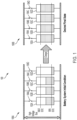
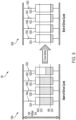
- the battery pack configuration 100A includes battery packs 102A, 102B, 102C, and 102D with corresponding contactors 104A, 104B, 104C, and 104D in the open position where the battery circuits are open and inactive (i.e., current cannot flow to or from the battery packs within the circuit).
- the contactors 104A-D function to switch an electrical power circuit between a closed circuit and an open circuit for the corresponding battery packs 102A-D.
- the battery pack configuration 100A shows an initial condition of the battery pack system 100 where the battery pack 102D has a state of charge (SOC) that is substantially equal to the minimum SOC as indicated in FIG.
- SOC state of charge
- the battery pack configuration 100A transitions to the battery pack configuration 100B via a charging method disclosed further herein.
- the battery pack configuration 100B includes the battery packs 102A-D each having the maximum SOC (as indicated in FIG. 1 ) and the contactors 104A-D in the closed position.
- the battery packs at region B may be connected to the previously charging pack with an acceptable equalizing current, and all packs begin to charge until the battery packs reach the maximum voltage and SOC at region C along the curve 106.
- FIG. 2B shows an alternate configuration of battery packs where multiple battery packs at region B have a substantially lower battery pack voltage and SOC than the battery pack at region A.
- the multiple battery packs at region B are charged first until their respective SOCs and voltages are within a predetermined range of or substantially equal to the battery pack at region A.
- all the battery packs are charged until the battery packs reach the maximum voltage and SOC at region C along the curve 106.
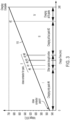
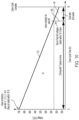
- FIG. 3 illustrates a charging profile 110 and also illustrates a charging method (discussed further herein) of an embodiment of the battery system 100.
- a battery pack #4 has a voltage associated with position I and has the lowest voltage.
- the voltage of the battery pack #4 increases along the charging profile 110 toward battery packs #6, #1, #5, #3, #7, and #8.
- the voltage of the battery pack #4 is within a predetermined range of or substantially equal to the voltage of the battery pack #6, the two packs are connected and the battery pack #6 begins to charge in addition to the battery pack #4.
- a similar pattern follows for battery packs #1, #5, #3, #7, and #8 as these battery packs are brought online to charge at various later times or simultaneously with the other battery packs depending on the predetermined voltage range as denoted in region II.
- the battery packs #1 and #3-#8 continue to charge.
- the battery pack #2 is brought online and begins to charge in conjunction with the battery packs #1, #3-8 through region IV until charging of the battery packs is complete as indicated.
- the electrical power and/or current between battery packs may not be constant, and therefore voltage may not climb at a constant rate as illustrated.
- the current and/or electrical power between battery packs will increase at a roughly proportional rate with the number of battery packs that are online, while charging at a constant current will see voltage increasing at a decreasing rate as additional battery packs are brought online.
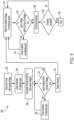
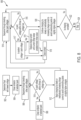
- the method 200 begins at block 202 where a battery pack with the lowest voltage is determined and selected. This can be done by an electronic control module (ECM) in one embodiment. Then, at block 204, the contactor of the selected pack is closed. The method 200 then proceeds to block 206 where the battery pack system 100 iteratively sequences through and checks the voltages of the other battery packs as discussed further herein and is shown at blocks 208 and 210.
- ECM electronice control module
- one of the remaining battery packs is selected and the voltage of the selected battery pack is measured. Then, at block 210, the absolute value of the difference in voltages is calculated and compared to a predetermined dVmax value, wherein the dVmax value is the maximum acceptable voltage differential to safely connect the battery packs.
- the dVmax value is selected with consideration to the continuous charging current capability of the battery packs, as well as the internal resistance of the battery packs. The voltages of the respective battery packs are measured at no load and with no compensation for battery internal resistance voltage drop.
- the method 200 proceeds to block 208 where the contactor of the selected pack is closed. The method 200 then proceeds back to block 206, where another battery pack is selected and compared with the voltage threshold as outlined above. Conversely, if the absolute voltage difference between the lowest voltage battery pack and the selected battery packs is greater than the dVmax value, then method 200 does not close the contactor of the selected battery pack and returns to block 206, where another battery pack is selected and compared with the dVmax value as outlined above. It is contemplated that in alternate embodiments, the dVmax value may vary depending on the vehicle operating parameters or engine configuration. The sequencing process iteratively cycles through the remaining battery packs as outlined in blocks 206, 208, and 210 until all the battery packs in the battery pack system 100 are checked.
- the method 200 then proceeds to block 212 where the battery packs (selected from the process of blocks 206, 208, and 210) with closed contactors begin to charge. After a predetermined period of time allotted for charging the selected battery packs at block 212, the battery pack system 100 then sequences through the remaining battery packs via blocks 214, 216, and 218 in a similar iterative process as outlined above with respect to blocks 206, 208, and 210.
- one of the remaining packs is selected and the voltage is measured. Then, at block 216, the absolute value of the difference in voltage between the selected battery pack and the voltage of the charging battery pack(s) from block 212 is calculated. The absolute voltage difference is then compared with the dVmax value. As shown in block 216, if the voltage difference is less or equal to than the dVmax value, then the method 200 proceeds to block 218 where the contactor of the selected pack is closed. The method 200 then proceeds back to block 214, where another battery pack of the remaining battery packs is selected and compared with the dVmax value as outlined above.
- the method 200 does not close the contactor of the selected battery pack and returns to block 214 where another battery pack is selected and compared with the dVmax value as outlined above. It is contemplated that in alternate embodiments, the dVmax value may vary depending on the vehicle operating parameters or engine configuration.
- the sequencing process iteratively cycles through the remaining battery packs as outlined in blocks 214, 216, and 218 until all the battery packs in the battery pack system 100 are checked.
- the method 200 then proceeds to block 220 where the selected packs and the previously charging packs are charged. After a predetermined time period of charging, the method 200 proceeds to block 222 where the battery pack system 100 determines whether charging is complete. In one embodiment, charging is complete when all of the battery packs of the battery pack system 100 are at the pre-established maximum SOC setting and the pre-established maximum voltage setting. If charging is complete, then the method 200 moves to block 224 where the method 200 is stopped. If charging is not complete; however, the method 200 returns to block 214 to iteratively check the remaining battery packs as outlined above.
- Method 300 is similar to the method 200 discussed above, where the difference between the methods is described further herein.
- the battery pack system 100 After a predetermined amount of time of charging for the selected battery pack (selected from blocks 306-310) at block 312, the battery pack system 100 cycles through and checks the voltages of the remaining battery packs and selects the battery pack having the lowest voltage. Once the lowest voltage battery pack is selected, the method 300 then proceeds to block 316 where, similar to block 216, the absolute voltage difference of the selected battery pack is and the charging battery pack(s) is calculated and compared to a predetermined dVmax value. If the voltage difference is less than or equal to the dVmax value, then the contactor of the selected pack is closed at block 318, and the method 300 returns to block 314 where the battery pack with the next lowest voltage is selected, if applicable.
- the method 300 does not close the contactor of the selected battery pack and returns to block 314 where the battery pack with the next lowest voltage of the remaining battery packs is selected, and the absolute voltage difference is calculated and compared with the dVmax value as outlined above.
- the sequencing process iteratively cycles through the remaining battery packs as outlined in blocks 314, 316, and 318 until all the battery packs in the battery pack system 100 are checked.
- the method 300 then proceeds to block 320 where the selected packs and the previously charging packs are charged. After a predetermined period of time allotted for charging the batteries, the method 300 proceeds to block 322 where the battery pack system 100 determines whether charging is complete. As mentioned previously, charging is complete when all the battery packs of the battery pack system 100 are at the pre-established maximum SOC setting and the pre-established maximum voltage setting. If the condition at block 322 is met, then the method 300 moves to block 324 where the method 300 is stopped. If the condition at block 322 is not met, however, the method 300 returns to block 314 to check the voltages of the remaining battery packs as outlined above.
- the charging method disclosed herein will automatically accommodate such new battery pack 102d by charging the new pack 102d without any manual intervention. Similarly, if any individual battery pack 102 fails, or an anomaly during use of a battery pack 102 causes the corresponding contactor 104 to open so that the battery pack 102 is not used for the remainder of the vehicle mission, the charging method disclosed herein will automatically bring all battery packs 102 to the same SOC without any manual intervention.
- the voltage of the batteries is measured according to a bus voltage rather than an open circuit voltage of the individual battery.
- battery voltage may vary depending on the amount of current being charged to or discharged from the battery, and the open circuit voltage cannot be easily and accurately calculated due to a significant amount of current inflow.
- a subsequent battery pack is brought online, it will likely not be at equilibrium with a previous pack or packs which have already undergone charging, i.e. will likely have a much higher open circuit voltage that is substantially equal to the bus voltage of the previous pack or packs.
- the new pack when charging resumes, the new pack will already be at a higher potential than the previous packs, causing the new pack to receive a disproportionately low amount of a charging current and the previous packs receiving a disproportionately high amount of the charging current.
- the higher current may cause damage to the previous packs.
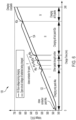
- a charging profile 120 is illustrated in FIG. 6 , including a charging method (discussed further herein) of an embodiment of the battery system 100 to avoid disproportionate allocation of a charging current.
- the charging profile 120 includes a measured bus voltage line 122 and an open circuit voltage line 124.
- a battery pack #4a has an open circuit voltage associated with position I, which is the lowest voltage among the battery packs shown. The battery pack #4a therefore receives the charging current to begin charging.
- a bus voltage is generated according to the line 122, which creates a significant disparity between the measured bus voltage and the actual open circuit voltage according to line 124.
- the voltages of the battery pack #4a increase along the charging profile 120 toward battery packs #6a, #1a, #5a, #3a, #7a, and #8a.
- the charging current is reduced, lowering the measured bus voltage of the battery pack #4a.
- the bus voltage approaches the open circuit voltage of battery pack #4a.
- the two packs are connected and the battery pack #6a begins to charge in addition to the battery pack #4a.
- a similar pattern follows for battery packs #1a, #5a, #3a, #7a, and #8a as these battery packs are brought online to charge at various later times or simultaneously with the other battery packs depending on the predetermined voltage range as denoted in region II.
- the battery packs #1a and #3a-#8a continue to charge.
- the battery pack #2a is brought online and begins to charge in conjunction with the battery packs #1a and #3-#8 through region IV until charging of the battery packs is complete as indicated.
- the battery pack system 130 includes four battery packs 132A-D with corresponding contactors 134A-D in an open position where the battery circuits are open and inactive (i.e., current cannot flow to or from the battery packs within the circuit) and in a closed position where the battery circuits are closed.
- the contactors 134A-D function to switch an electrical power circuit between a closed circuit and an open circuit for the corresponding battery packs 132A-D.
- FIG. 7A shows an initial condition of the battery pack system 130 where the battery packs 132A, 132B, and 132C have a state of charge (SOC) of approximately 40%; the contactors 134A-C of the corresponding battery packs 132A-C are closed so that the battery packs 132A-C are charging with a maximum charge current value allowed as determined by the battery pack system 130.
- the battery pack 132D has an SOC of approximately 80% and an open contactor 134D, so that the battery pack 132D is not charging.
- the charge current is reduced in steps until the charge current reaches a low voltage.
- the charging process then continues at a low charge current until the desired target voltage is reached in each of the battery packs 132A-C.
- the contactor 134D of the battery pack 132D is then closed, and the charging process continues with the battery packs 132A-D.
- Method 900 is similar to the method 200 discussed above, where the difference between the methods is described further herein.
- the charging process begins by slowly or methodically increasing the voltage value of the charge current to avoid overshooting any remaining packs that may have slightly higher voltages, until the charge current is at a predetermined maximum charge current value allowed by the system.
- the battery pack system 100 selects one of the remaining battery packs at block 914 and measures the voltage of the selected battery pack.
- the battery pack system 100 may identify and select the remaining battery pack with the lowest voltage. The absolute voltage difference between the selected battery pack and the charging battery pack(s) is calculated.
- the difference is then compared with a predetermined dVmax value. As shown in block 916, if the absolute voltage difference is greater than the dVmax value, the method 950 returns to block 914 to select another battery pack, if applicable. If the absolute voltage difference is less than or equal to the dVmax value, then the method 900 proceeds to block 917, where it is determined whether the system voltage, or the average measured voltage of the charging battery packs, is greater than the voltage of the selected pack. If the system voltage is greater, then the charge current is reduced at block 919 until the charge current inflow is below a predetermined inflow value. The contactors on the selected pack are then closed at block 918, and the process begins again at block 914.
- the contactor on the selected pack is closed at block 918 and the process begins again at block 914.
- the sequencing process iteratively cycles through the remaining battery packs as outlined in blocks 914, 916, 917, 919, and 918 until all the remaining battery packs in the battery pack system 100 are checked.
- the method 900 then proceeds to block 920, where the selected packs and the previously charging pack(s) begin charging by slowly or methodically increasing the voltage value of the charge current to avoid overshooting any remaining packs that may have slightly higher voltages, until the charge current is at the maximum charge current value allowed by the system.
- the method 900 proceeds to block 922, where the battery pack system 100 determines whether charging is complete. In one embodiment, charging is complete when all of the battery packs of the battery pack system 100 are at the pre-established maximum SOC setting and the pre-established maximum voltage setting. If charging is complete, then the method 900 moves to block 924 where the method is stopped. If charging is not complete, however, the method 900 returns to block 914 to iteratively check the remaining battery packs as outlined above.
- battery pack(s) with the largest voltage(s) have closed contactors within the battery pack system 100 and are used first in the operation of the vehicle.
- the voltage of the other disconnected battery pack(s) are monitored to determine if the voltage of the disconnected battery pack(s) are within a voltage threshold of the discharging battery packs. Once the voltage(s) of the disconnected battery pack(s) is within a predetermined range of or substantially equal to the discharging battery pack(s), the contactors of the disconnected battery pack(s) are closed and the battery packs are used in conjunction with the prior discharging battery pack(s).
- the battery pack system 100 in battery pack configurations 150A and 150B is provided. Similar to the battery pack configuration 100A, the battery pack configurations 150A and 150B include battery packs 102A-D with corresponding contactors 104A-D in the open position where the battery circuits are open and inactive (i.e., current cannot flow to or from the battery packs within the circuit).
- the contactors 104A-D function to switch an electrical power circuit between a closed circuit and an open circuit for the corresponding battery packs 102A-D.
- the battery pack configuration 150A shows an initial condition of the battery pack system 100 where the battery pack 102D has a state of charge (SOC) that is between the shown minimum SOC and the maximum SOC, while the states of charge (SOCs) of the battery packs 102A-C are substantially equal to the maximum SOC.
- SOC state of charge
- the battery pack configuration 150A transitions to the battery pack configuration 150B when the vehicle is driven via a method disclosed further herein.
- the battery pack configuration 150B includes the battery packs 102A-D each having the minimum shown SOC and the contactors 104A-D in the closed position.
- FIG. 10 illustrates a discharging profile 112 of a general discharging method (as discussed in greater detail herein) of an embodiment of the battery pack system 100.
- battery packs #4, #6, #1, #5, #3, #7, and #8 have substantially the same voltage and are substantially greater than the voltage of battery pack #2.
- the contactors for battery packs #4, #6, #1, #5, #3, #7, and #8 are closed and these battery packs are used during operation of the vehicle throughout region IA of FIG. 7 .
- the voltages of the battery packs diminish, and at a time denoted by IIIA, the voltage difference between battery packs #4, #6, #1, #5, #3, #7, and #8 and battery pack #2 is within a pre-determined voltage range of or substantially equal to battery packs #4, #6, #1, #5, #3, #7, and #8.
- the contactor for battery pack #2 is then closed thereby bringing battery pack #2 online for use during operation of the vehicle.
- time IIIA all the battery packs are used during operation of the vehicle until the drive cycle is completed.
- the electrical power and/or current between battery packs may not be constant, and therefore voltage may not fall at a constant rate as illustrated.
- the current and/or electrical power between battery packs will decrease at a roughly proportional rate with the number of battery packs that are online, while discharging at a constant current will see voltage decreasing at an increasing rate as additional battery packs are brought online.
- the method 400 begins at block 402 where a battery pack with the highest voltage is determined and selected. Then, at block 404, a contactor of the selected pack is closed bringing the selected pack online. The method 400 then proceeds to block 406 where the battery pack system 100 iteratively checks the voltages of the other battery packs as discussed further herein.
- one of the remaining packs is selected and the voltage is measured. Then, at block 410, the voltage of the selected battery pack is compared with the voltage of the lowest battery pack selected at block 402, and the absolute difference in voltage between the packs is measured and compared to the predetermined dVmax value, wherein the dVmax value is the maximum acceptable voltage differential to safely connect the battery packs.
- the dVmax is selected with consideration to the continuous charging current capability of the battery packs, as well as the internal resistance of the battery packs. The voltages of the respective battery packs are measured at no load and with no compensation for battery internal resistance voltage drop.
- the method 400 proceeds to block 408 where the contactor of the selected pack is closed. The method 400 then proceeds back to block 406, where another battery pack is selected and compared with the lowest voltage battery pack as outlined above. Conversely, if the absolute voltage difference between the lowest voltage battery pack and the selected battery packs is greater than the dVmax value, then the method 400 returns to block 406, and another battery pack is selected and compared with the lowest voltage battery pack as outlined above. It is contemplated that in alternate embodiments, the dVmax value may vary depending on the vehicle operating parameters or engine configuration. The sequencing process cycles through the remaining battery packs as outlined in blocks 406, 408, and 410 iteratively until all the battery packs in the battery pack system 100 are checked.
- the method 400 then proceeds to block 412 where the drive cycle of the vehicle begins and, correspondingly, the battery packs begin to discharge. After a predetermined period of time, to allow the selected batteries to charge at block 412, the battery pack system 100 then sequences through the remaining battery packs via blocks 414, 416, and 418 in a similar iterative process as outlined above with respect to blocks 406, 408, and 410.
- the voltage of the selected battery pack is compared with the voltage of the discharging battery pack(s) from block 412 at block 416, and then the absolute voltage difference between the packs is calculated and compared to the predetermined dVmax value. As shown in block 416, if the absolute voltage difference is less or equal to than the dVmax value, then the method 400 proceeds to block 418 where the contactor of the selected pack is closed. The method 400 then returns to block 414, where another battery pack is selected and compared with the voltage of the discharging battery pack(s) as outlined above.
- the method 400 returns to block 414, and another battery pack is selected and compared with the voltage of the discharging battery pack as outlined above. It is contemplated that in alternate embodiments, the dVmax value may vary depending on the vehicle operating parameters or engine configuration.
- the sequencing process cycles through the remaining battery packs as outlined in blocks 414, 416, and 418 iteratively until all the battery packs in the battery pack system 100 are checked.
- the method 400 then proceeds to block 420 where the selected packs in combination with the previously discharging packs are discharging or continued to discharge during the drive cycle of the vehicle. After a predetermined time period of discharging, the method 400 proceeds to block 422 where the battery pack system 100 determines whether the drive cycle of the vehicle is complete. In one embodiment, the drive cycle is complete when the drive cycle of the vehicle ends (e.g., when the mission of the vehicle is complete) or when all the battery packs of the battery pack system 100 are at the pre-established minimum SOC setting and the pre-established minimum voltage setting and are no longer capable of powering the vehicle. If the drive cycle is complete, then the method 400 moves to block 424 where the method 400 is stopped. If the drive cycle is not complete; however, the method 400 returns to block 414 to iteratively check the remaining battery packs as outlined above.
- the drive cycle is complete when the drive cycle of the vehicle ends (e.g., when the mission of the vehicle is complete) or when all the battery packs of the battery pack system 100 are at the pre-established minimum
- FIG. 12 an alternative discharging method 500 is shown.
- the method 500 is similar to the method 400 discussed above. The difference between the methods is described further herein.
- the battery pack system 100 After a predetermined amount of discharging time from when the selected batteries from blocks 506-510 begin discharging at block 512, the battery pack system 100 checks the remaining battery packs (i.e., those with open contactors) and determines the battery pack having the highest voltage. Once this is completed, the method 500 then proceeds to block 516, where similar to block 416, the voltage of the selected battery pack is compared with the voltage of the charging battery pack(s), and the absolute voltage difference is calculated. The absolute voltage difference is then compared to a predetermined dVmax value.
- the contactor of the selected pack is closed at block 518, and the method 500 returns to block 514 where the battery pack with the next highest voltage is selected, if applicable. Conversely, if the absolute voltage difference between the selected battery pack and the voltage of the discharging battery pack(s) is greater than the dVmax value, then the method 500 does not close the contactor of the selected battery pack and returns to block 514 where the battery pack with the next highest voltage of the remaining battery packs is selected, and the absolute voltage difference is calculated and compared with the dVmax value as outlined above.
- the sequencing process iteratively cycles through the remaining battery packs as outlined in blocks 514, 516, and 518 until all the battery packs in the battery pack system 100 are checked.
- the method 500 proceeds to block 522 where the battery pack system 100 determines whether the drive cycle is complete. As mentioned previously, the drive cycle is complete when the drive cycle of the vehicle ends (e.g., when the mission is complete) or when all of the battery packs of the battery pack system 100 are at the pre-established minimum SOC setting and the pre-established minimum voltage setting and are no longer capable of powering the vehicle. If the drive cycle is complete, then the method 500 moves to block 524 where the method 500 is stopped. If the drive cycle is not complete; however, the method 500 returns to block 514 to check the remaining battery packs as outlined above.
- the voltage of the batteries is measured according to a bus voltage rather than an open circuit voltage of the individual battery.
- battery voltage may vary depending on the amount of current being discharged from the battery, and the open circuit voltage cannot be easily and accurately calculated due to a significant amount of current inflow.
- a subsequent battery pack is brought online, it will likely not be at equilibrium with a previous pack or packs which have already undergone charging, i.e. will likely have a much higher open circuit voltage that is substantially equal to the bus voltage of the previous pack or packs. Therefore, when discharging resumes, the new pack will already be at a higher potential than the previous packs, causing a disproportionate allocation of current, which may cause damage to the battery packs.
- an alternative method 950 for discharging a battery pack system 100 is disclosed.
- the method 950 is similar to the method 400 described above. The difference between the methods is described further herein.
- the drive cycle of the vehicle begins, and, correspondingly, the battery packs begin to discharge, by slowly or methodically increasing the voltage value of the discharge current to avoid overshooting any remaining packs that may have slightly higher voltages, until the discharge current is at a predetermined maximum discharge current value allowed by the system.
- the battery pack system 100 selects one of the remaining battery packs at block 964 and measures the voltage of the selected battery pack. In another embodiment, similar to the method 500 discussed above, the battery pack system 100 may identify and select the remaining battery pack with the highest voltage.
- the absolute voltage difference between the selected battery pack and the charging battery pack(s) is calculated. The difference is then compared with a predetermined dVmax value. As shown in block 966, if the absolute voltage difference is greater than the dVmax value, then the method returns to block 964 to repeat the process with a different battery pack. If the absolute voltage difference is less than the dVmax value, then the method 950 proceeds to block 967, where it is determined whether the system voltage, or the average measured voltage of the discharging battery packs, is greater than the voltage of the selected pack. If the system voltage is greater, then the discharge current is reduced at block 969 until the discharge current inflow is below a predetermined inflow value.
- the contactors on the selected pack are then closed at block 968, and the selection process begins again at block 964. If the system voltage is not greater, then the contactor on the selected pack is closed at block 968 and the process begins again at block 964.
- the sequencing process iteratively cycles through the remaining battery packs as outlined in blocks 964, 966, 967, 969, and 968 until all the remaining battery packs in the battery pack system 100 are checked.
- the method 950 then proceeds to block 970, where the drive cycle of the vehicle begins, and, correspondingly, the selected packs and the previously discharging pack(s) begin discharging by slowly or methodically increasing the voltage value of the discharge current to avoid overshooting any remaining packs that may have slightly higher voltages, until the discharge current is at the maximum discharge current value allowed by the system.
- the method 950 proceeds to block 972, where the battery pack system 100 determines whether drive cycle of the vehicle is complete.
- the drive cycle is complete when the drive cycle of the vehicle ends (e.g., when the mission of the vehicle is complete) or when all the battery packs of the battery pack system 100 are at the pre-established minimum SOC setting and the pre-established minimum voltage setting and are no longer capable of powering the vehicle. If the drive cycle is complete, then the method 950 moves to block 974 where the method 950 is stopped. If the drive cycle is not complete; however, the method 950 returns to block 964 to iteratively check the remaining battery packs as outlined above.
- FIG. 14 shows two battery packs 601, 603 connected in parallel. It is within the scope of the present disclosure that the configuration is applicable to multiple battery pack systems including more than two battery packs.
- the configuration 600 may be applied to battery pack systems including four battery packs as shown in FIGS. 1 , 7A-7C , and 9 ; eight battery packs as shown in FIGS. 2A-2B , 3 , 6 , and 10 ; or battery pack systems including any number of battery packs operable.
- the battery pack 601 includes a battery management system 602 and a solid state switch, or high current contactor 604.
- the contactor 604 is operably connected to a resistor 610 and another solid state switch, or low current contactor 612.
- the battery pack 601 may optionally further include a second high current contactor 605.
- the battery pack 603 includes a battery management system 608 and a solid state switch, or high current contactor 606.
- the contactor 606 is operably connected to a resistor 614 and another solid state switch, or low current contactor 616.
- the battery pack 603 may optionally further include a second high current contactor 607.
- the battery pack 601 further includes a first main battery system contactor 609 positioned on a positive terminal and a second main battery system contactor 611 positioned on a negative terminal that facilitate the operative coupling of the battery pack 601 with the battery pack 603 in a parallel configuration.
- the main battery system contactors 609, 611 are operably coupled to the high current contactors 604, 605, 606, and 607 and the low current contactors 612 and 616 of the battery packs 601, 603. That is, when the main battery system contactors 609, 611 are closed, the high current contactors 604, 605, 606, and 607 and the low current contactors 612 and 616 are correspondingly closed, operably coupling the battery pack 601 and the battery pack 603 to each other in parallel.
- the main battery system contactors 609, 611 provide safety to the user by isolating high internal voltages from the external environment where such voltages could cause damage or injury.
- the main battery system contactors 609, 611 also provide the means by which the batteries, wired in parallel, may be connected or disconnected to fulfill the procedures discussed herein.
- the method 700 illustratively describes a method for a system with two battery packs; however, it is within the scope of the present disclosure that the method 700 can be expanded to systems with greater than two battery packs.
- the method 700 may be applied to battery pack systems including four battery packs as discussed above, eight battery packs as discussed above, or battery pack systems including any number of battery packs operable.
- the method 700 begins at starting block 702 and moves to block 704 to assess whether a first battery pack (e.g., battery pack 601 of FIG. 14 ) has failed. If the first battery pack has failed, the method 700 then determines whether the second battery pack (e.g., battery pack 603) has failed at block 712. If the second battery pack has also failed, the method 700 has detected a battery pack system failure and prompts a system shutdown at block 716 in which all contactors and/or switches are opened (for example, configuration 100A or 150A of FIGS. 1 and 9 , respectively). If, at block 712, the method 700 determines that the second battery pack has not failed, the system is prompted to utilize the second battery pack in a single pack operation at block 714. For example, referring to FIG.
- the high current contactor 606 of the second battery pack 603 is closed for single pack operation, and low current contactor 612 of the first battery pack 601 is opened.
- the failure of the first battery pack is also reported at block 714, after which the method returns to the starting block 702 to reassess the status of the first and second battery packs.
- the method 700 determines that the first battery pack (e.g., battery pack 601 of FIG. 14 ) has not failed, then the method 700 proceeds to block 706 to assess whether the second battery pack (e.g., battery pack 603 of FIG. 14 ) has failed. If the second battery pack has failed, the system is prompted to utilize the first battery pack in a single pack operation at block 718. For example, referring to FIG. 14 , the high current contactor 604 of the first battery pack 601 is closed for single pack operation, and the low current contactor 616 is opened. The method then returns to the starting block 702 to reassess the status of the first and second battery packs.
- the first battery pack e.g., battery pack 601 of FIG. 14
- the method 700 proceeds to block 706 to assess whether the second battery pack (e.g., battery pack 603 of FIG. 14 ) has failed. If the second battery pack has failed, the system is prompted to utilize the first battery pack in a single pack operation at block 718. For example,
- the method 700 moves to block 708, where the voltage of the first battery pack (Vbatt1) is measured, the voltage of the second battery pack (Vbatt2) is measured, and the absolute value of the difference in voltages is calculated and compared to the predetermined dVmax value, wherein the dVmax value is the maximum acceptable voltage differential to safely connect the battery packs.
- the dVmax is selected with consideration to the continuous charging current capability of the battery packs, as well as the internal resistance of the battery packs. The voltages of the respective battery packs are measured at no load and with no compensation for battery internal resistance voltage drop.
- the method 700 moves to block 710 and all the contactors associated with the first battery pack and the second battery pack are closed and the vehicle operates under normal multi-pack operation according to at least one of the appropriate methods discussed above according to boxes 730A, 730B, 730C, 730D, 730E, or 730F.
- the method 700 moves to block 720 to determine whether the voltage of the first battery pack is greater than the voltage of the second battery pack. If the voltage of the first battery pack is greater than the voltage of the second battery pack, then the method 700 moves to block 724 where the vehicles operates with the first battery pack as the single operational battery pack. For example, referring to FIG. 10 , the high current contactor 604 of the first battery pack 601 is closed for operation of the first battery pack 601, and the low current contactor 616 of the second battery pack 603 is closed to close the charging circuit, enabling charging of the second battery pack 603 during operation of the first battery pack 601.
- the first battery pack 601 charges the second battery pack 603 through the resistor 614 until the voltage differential between the first battery pack 601 and the second battery pack 603 is less than or equal to the predetermined dVmax value, after which the method 700 returns to starting block 702 to reassess the status of the first and second battery packs.
- the method 700 moves to block 722 where the vehicles operates with the second battery pack as the single operational battery pack. For example, referring to FIG. 10 , the high current contactor 606 of the second battery pack 603 is closed for operation of the second battery pack 603, and the low current contactor 612 of the first battery pack 601 is closed to close the charging circuit, enabling charging of the first battery pack 601 during operation of the second battery pack 601.
- the second battery pack 603 charges the first battery pack 601 through the resistor 610 until the voltage differential between the first battery pack 601 and the second battery pack 603 is less than or equal to the predetermined dVmax value, after which the method 700 returns to starting block 702 to reassess the status of the first and second battery packs.
- the method 700 enhances the safety of the system by providing full redundancies such that batteries of great imbalance are not fully activated within the system.
- the difference in voltage between the batteries is large (greater than a predetermined voltage threshold)
- the lower voltage battery pack is inactive for operation of the vehicle but is actively charged until the difference in voltage is reduced below the predetermined voltage threshold.
- vehicles can continue their mission even when some battery packs in a multi-pack system are not online, as the offline battery pack is disconnected by static or solid switches and/or contactors.
- an alternate battery configuration 800 for connecting two battery packs 651, 653 in parallel is shown; however, it is within the scope of the present disclosure that the configuration 800 can be expanded to systems with greater than two battery packs.
- the configuration 800 may be applied to battery pack systems including four battery packs as discussed herein, eight battery packs as discussed herein, or battery pack systems including any number of battery packs operable.
- the first battery pack 651 includes a battery management system 652 and a solid state switch, or contactor 654 installed on a positive terminal and operably coupled to a converter 660.
- a second solid state switch, or contactor 655 is installed on a negative terminal.
- This configuration provides a safety measure in case one of the contactors fails while it is in the closed position, relative to the battery pack 651. In such a case, a user can still isolate the battery by opening the other contactor, preventing completion of the circuit.
- the second battery pack 653 also includes a battery management system 658 and a solid state switch, or contactor 656 installed on a positive terminal and operably coupled to a converter 662.
- a second solid state switch, or contactor 657 is installed on a negative terminal, providing the same safety measure discussed above.
- each of the converters 660 and 662 comprise a buck boost converter; however, it is within the scope of the present disclosure that alternate converters may be used.
- Each of the converters 660 and 662 are configured to balance voltages between the first battery pack 651 and the second battery pack 653. For example, when the positive terminal contactor 654 of the first battery pack 651 is open, the converter 660 operates in place of the resistor 610 discussed above in relation to the first battery pack 601 of FIG. 14 .
- the converter 660 may transfer a fraction of the total battery pack current to balance the first battery pack 651 and the second battery pack 653.
- the converter 662 operates in place of the resistor 614 discussed above in relation to the first battery pack 603 of FIG. 14 .
- the converter 662 may transfer a fraction of the total battery pack current to balance the first battery pack 651 and the second battery pack 653.
- the converter 660 of the first battery pack 651 may draw an input voltage from the first battery pack 651 and output a different voltage that is controlled to match the voltage of the second battery pack 653.
- the converter 662 of the second battery pack 653 may draw an input voltage from the second battery pack 653 and output a different voltage that is controlled to match the voltage of the first battery pack 651. If the output voltage is greater than the input voltage, then the corresponding converter 660 or 662 is in a "boost" state. Conversely, if the output voltage is less than the input voltage, the corresponding converter 660 or 662 is in a "buck" state.
- the illustrative buck boost converters comprising converters 660 and 662 may output voltages that are greater than or less than the input voltage depending on the need of the vehicle.
- the converters 660 and 662 may also modulate current flow between the battery packs such that the battery packs are within operable operating limits.
- FIG. 17 an embodiment of a buck-boost converter 660 is shown. It is within the scope of the present disclosure that FIG. 17 also discloses the components of the converter 662 ( FIG. 16 ). As shown in FIG. 17 , a four-switch topology is used with switches 664, 666, 668, and 670. In the illustrated embodiment, switches 664 and 666 make up a first pair 665 and switches 668 and 670 make up a second pair 669. However, it is contemplated that in alternate embodiments, other topologies may be used. As further shown, batteries 672 and 674 are connected at opposite ends of the converter 660.
- Each of the batteries 672 and 674 is connected to one of the pairs of power electronic switches 665, 669 connected in series across the batteries 672, 674, respectively (otherwise known as half-bridges 676, 678 as shown in FIG. 17 ).
- Each of the pairs of switches 665, 669 comprise a semiconductor transistor and an anti-parallel diode.
- the semiconductor transistor permits current flow from the top terminal of the switch to the bottom terminal of the switch when turned ON, and the anti-parallel diode permits current flow from the bottom terminal of the switch to the top terminal of the switch whenever the diode is forward biased.
- the mid-points of half-bridges 676, 678 are connected via an inductor 680.
- the operation of the switches 664, 666, 668, and 670 is coordinated by a digital or analog controller to facilitate controlled energy flow from either battery 672, 674 to the other, irrespective of whether the voltage difference is positive or not.
- the inductor 680 is utilized as an energy storage device, and the controller alternates the buck boost converter 660 between circuit operating modes where in a first mode, the inductor 680 is charged by one of the voltage sources/batteries 672, 674 by turning on two switches positioned diagonally from each other (e.g., switches 664 and 670 or 666 and 668) with the remaining two switches turned off, and discharges into the other voltage source/battery 672, 674 to provide the desired direction of current or energy flow.
- the inductor 680 is charged by the other voltage source/battery 672, 674 by turning on the other two switches positioned diagonally from each other (e.g., switches 664 and 670 or 666 and 668) with the remaining two switches turned off and discharges into the other voltage source/battery to provide the desired direction of current or energy flow.
- the configurations shown in FIGS. 16 and 17 reduce power losses during battery pack balancing or pre-charging.
Landscapes
- Engineering & Computer Science (AREA)
- Power Engineering (AREA)
- Transportation (AREA)
- Mechanical Engineering (AREA)
- Manufacturing & Machinery (AREA)
- Chemical & Material Sciences (AREA)
- Chemical Kinetics & Catalysis (AREA)
- Electrochemistry (AREA)
- General Chemical & Material Sciences (AREA)
- Physics & Mathematics (AREA)
- General Physics & Mathematics (AREA)
- Secondary Cells (AREA)
- Charge And Discharge Circuits For Batteries Or The Like (AREA)
Description
- The present invention generally relates to battery charging and discharging methods for electric vehicles, and more particularly, to a battery charging and discharging method for multiple packs at different states of charge.
- Battery packs in electric vehicles (EV) or hybrid electric vehicles (HEV) can be connected in series or parallel. When battery packs are connected in parallel, significant differences in battery pack voltages can lead to high voltage equalizing currents, and high equalizing currents may result in a difficult and/or time-consuming process to connect a battery pack to the configuration. Moreover, the voltage equalizing current may exceed the maximum battery current limits causing pack shutdown or damage.
WO 2014/155986 discloses a power storage device including a plurality of modules each including secondary batteries, a charging switch that controls charging to the secondary batteries, a discharging switch that controls discharging of the secondary batteries, a voltage measuring unit that measures a voltage of the module, and a switch control unit that controls one or both of the charging switch and the discharging switch. The modules are connected in parallel. The switch control unit maintains an on state of the discharging switch for at least one of the modules for a predetermined period, and controls the charging switch of the module in which a maximum module charging current estimated based on the voltage of the module is a predetermined value or less, to be in an on state.
US 2016/276846 discloses a storage battery system including a plurality of battery units having a plurality of battery cells and a power adjustment device connected to the battery units via respective contactors and connected to a main circuit. A storage battery management device includes a minimum value determination unit and a controller. The minimum value determination unit, from the battery units in which a difference between a maximum cell voltage and a minimum cell voltage of the battery cells forming each of the battery units is equal to or less than a certain value, determines a minimum value of the minimum cell voltage. The controller controls a cell balance process of the battery unit managed by itself, by using the minimum value of the minimum cell voltage determined by the minimum value determination unit as a cell balance target voltage.
According to one aspect of the present invention there is provided a method of charging or discharging a plurality of battery packs as defined inclaim 1.
According to another aspect of the invention there is provided a battery pack system as defined inclaim 5.
Preferred features of the invention are recited in the dependent claims. - The invention is set out in the appended claims.
-
-
FIG. 1 is a diagram illustrating a charging process for a parallel battery configuration set forth in the present disclosure; -
FIG. 2A is a graph illustrating a battery pack configuration in which one battery pack of the battery pack configuration is at an outlier voltage and state of charge (SOC) below the other battery packs in the battery pack configuration; -
FIG. 2B is a graph illustrating a battery pack configuration in which one battery pack of the battery pack configuration is at an outlier voltage and state of charge (SOC) above the other battery packs in the battery pack configuration; -
FIG. 3 is a graph illustrating embodiments of charging methods for the parallel battery pack configuration ofFIG. 1 ; -
FIG. 4 is a flowchart illustrating one embodiment of a charging method for the parallel battery pack configuration ofFIG. 1 ; -
FIG. 5 is a flowchart illustrating another embodiment of a charging method for the parallel battery pack configuration ofFIG. 1 ; -
FIG. 6 is a graph illustrating an embodiment of charging methods for the parallel battery pack configuration ofFIG. 1 to avoid disproportionate allocation of a charging current; -
FIG. 7A is a graph illustrating a battery pack configuration in which one battery of the battery pack configuration is at an outlier voltage and state of charge (SOC) above the other battery packs in the battery configuration; -
FIG. 7B is a graph illustrating a battery pack configuration in which all of the battery packs in the battery configuration have substantially the same state of charge (SOC), but one of the battery packs in the battery pack configuration has a slightly lower state of charge (SOC) compared to the other battery packs in the battery configuration; -
FIG. 7C is a graph illustrating a plurality of battery packs in a battery pack configuration, wherein all of the battery packs in the battery pack configuration are charging and have substantially the same state of charge (SOC); -
FIG. 8 is a flowchart illustrating yet another embodiment of a charging method for the parallel battery pack configuration ofFIG. 1 ; -
FIG. 9 is a diagram illustrating a discharging process for a parallel battery configuration; -
FIG. 10 is a graph illustrating embodiments of discharging methods for the parallel battery pack configuration ofFIG. 1 ; -
FIG. 11 is a flowchart illustrating one embodiment of a discharging method for the parallel battery pack configuration ofFIG. 1 ; -
FIG. 12 is a flowchart illustrating another embodiment of a discharging method for the parallel battery pack configuration ofFIG. 1 ; -
FIG. 13 is a flowchart illustrating yet another embodiment of a discharging method for the parallel battery pack configuration ofFIG. 1 ; -
FIG. 14 is a schematic of the parallel battery configuration of the present disclosure, including a portrayal of where battery components are located within the configuration; -
FIG. 15 is a flowchart illustrating a method for operating particular battery packs of the parallel battery configurations ofFIGS. 1 and10 depending on the respective states of the battery packs; -
FIG. 16 is a schematic of another embodiment of the parallel battery configuration of the present disclosure; and -
FIG. 17 is a schematic of the converter used inFIG. 12 . - Referring first to
FIG. 1 , abattery pack system 100 showing abattery pack configuration 100A is provided. Thebattery pack configuration 100A includesbattery packs corresponding contactors contactors 104A-D function to switch an electrical power circuit between a closed circuit and an open circuit for thecorresponding battery packs 102A-D. Thebattery pack configuration 100A shows an initial condition of thebattery pack system 100 where thebattery pack 102D has a state of charge (SOC) that is substantially equal to the minimum SOC as indicated inFIG. 1 while the states of charge (SOCs) of thebattery packs 102A-C are between the shown minimum SOC and the maximum SOC ofFIG. 1 and are substantially equal to each other. As also shown inFIG. 1 , thebattery pack configuration 100A transitions to thebattery pack configuration 100B via a charging method disclosed further herein. Thebattery pack configuration 100B includes thebattery packs 102A-D each having the maximum SOC (as indicated inFIG. 1 ) and thecontactors 104A-D in the closed position. - Referring now to
FIGS. 2A, 2B , and3 , a graphical representation of the charging method further described herein is shown. As shown inFIG. 2A , abattery voltage curve 106 in terms of battery SOC is provided where a battery pack (as denoted by an asterisk) is provided at region A. The battery pack has a substantially lower SOC and battery voltage as compared to the voltages and SOCs of the battery packs at region B. According to the method described herein in further detail, when charging the batteries, the battery pack at region A is charged first. As the battery pack is charged, the SOC and the voltage of the battery pack increase and move along acurve 106 towards the battery packs at region B. Once the battery pack's SOC and voltage are within a predetermined range of or substantially equal to the batteries at region B, the battery packs at region B may be connected to the previously charging pack with an acceptable equalizing current, and all packs begin to charge until the battery packs reach the maximum voltage and SOC at region C along thecurve 106. -
FIG. 2B shows an alternate configuration of battery packs where multiple battery packs at region B have a substantially lower battery pack voltage and SOC than the battery pack at region A. In this instance, the multiple battery packs at region B are charged first until their respective SOCs and voltages are within a predetermined range of or substantially equal to the battery pack at region A. At which point, all the battery packs are charged until the battery packs reach the maximum voltage and SOC at region C along thecurve 106. -
FIG. 3 illustrates acharging profile 110 and also illustrates a charging method (discussed further herein) of an embodiment of thebattery system 100. As shown at time zero, abattery pack # 4 has a voltage associated with position I and has the lowest voltage. As thebattery pack # 4 is charged, the voltage of thebattery pack # 4 increases along thecharging profile 110 towardbattery packs # 6, #1, #5, #3, #7, and #8. When the voltage of thebattery pack # 4 is within a predetermined range of or substantially equal to the voltage of thebattery pack # 6, the two packs are connected and thebattery pack # 6 begins to charge in addition to thebattery pack # 4. A similar pattern follows forbattery packs # 1, #5, #3, #7, and #8 as these battery packs are brought online to charge at various later times or simultaneously with the other battery packs depending on the predetermined voltage range as denoted in region II. - As charging continues through region III, the
battery packs # 1 and #3-#8 continue to charge. When the voltage of the battery packs #1 and #3-#8 are within a predetermined range or substantially equal to the voltage of thebattery pack # 2, thebattery pack # 2 is brought online and begins to charge in conjunction with the battery packs #1, #3-8 through region IV until charging of the battery packs is complete as indicated. Because the number of battery packs being charged at any one time may vary, the electrical power and/or current between battery packs may not be constant, and therefore voltage may not climb at a constant rate as illustrated. The current and/or electrical power between battery packs will increase at a roughly proportional rate with the number of battery packs that are online, while charging at a constant current will see voltage increasing at a decreasing rate as additional battery packs are brought online. - Referring now to
FIG. 4 , amethod 200 of charging thebattery pack system 100 is shown. Themethod 200 begins atblock 202 where a battery pack with the lowest voltage is determined and selected. This can be done by an electronic control module (ECM) in one embodiment. Then, atblock 204, the contactor of the selected pack is closed. Themethod 200 then proceeds to block 206 where thebattery pack system 100 iteratively sequences through and checks the voltages of the other battery packs as discussed further herein and is shown atblocks - To check the voltages of the remaining battery packs (at block 206), one of the remaining battery packs is selected and the voltage of the selected battery pack is measured. Then, at
block 210, the absolute value of the difference in voltages is calculated and compared to a predetermined dVmax value, wherein the dVmax value is the maximum acceptable voltage differential to safely connect the battery packs. The dVmax value is selected with consideration to the continuous charging current capability of the battery packs, as well as the internal resistance of the battery packs. The voltages of the respective battery packs are measured at no load and with no compensation for battery internal resistance voltage drop. - As shown in
block 210, if the absolute voltage difference is less than or equal to the dVmax value, then themethod 200 proceeds to block 208 where the contactor of the selected pack is closed. Themethod 200 then proceeds back to block 206, where another battery pack is selected and compared with the voltage threshold as outlined above. Conversely, if the absolute voltage difference between the lowest voltage battery pack and the selected battery packs is greater than the dVmax value, thenmethod 200 does not close the contactor of the selected battery pack and returns to block 206, where another battery pack is selected and compared with the dVmax value as outlined above. It is contemplated that in alternate embodiments, the dVmax value may vary depending on the vehicle operating parameters or engine configuration. The sequencing process iteratively cycles through the remaining battery packs as outlined inblocks battery pack system 100 are checked. - The
method 200 then proceeds to block 212 where the battery packs (selected from the process ofblocks block 212, thebattery pack system 100 then sequences through the remaining battery packs viablocks blocks - To check the voltages of the remaining battery packs at
block 214, one of the remaining packs is selected and the voltage is measured. Then, atblock 216, the absolute value of the difference in voltage between the selected battery pack and the voltage of the charging battery pack(s) fromblock 212 is calculated. The absolute voltage difference is then compared with the dVmax value. As shown inblock 216, if the voltage difference is less or equal to than the dVmax value, then themethod 200 proceeds to block 218 where the contactor of the selected pack is closed. Themethod 200 then proceeds back to block 214, where another battery pack of the remaining battery packs is selected and compared with the dVmax value as outlined above. Conversely, if the voltage difference between the charging battery pack(s) and the selected battery packs is greater than the dVmax value, then themethod 200 does not close the contactor of the selected battery pack and returns to block 214 where another battery pack is selected and compared with the dVmax value as outlined above. It is contemplated that in alternate embodiments, the dVmax value may vary depending on the vehicle operating parameters or engine configuration. The sequencing process iteratively cycles through the remaining battery packs as outlined inblocks battery pack system 100 are checked. - The
method 200 then proceeds to block 220 where the selected packs and the previously charging packs are charged. After a predetermined time period of charging, themethod 200 proceeds to block 222 where thebattery pack system 100 determines whether charging is complete. In one embodiment, charging is complete when all of the battery packs of thebattery pack system 100 are at the pre-established maximum SOC setting and the pre-established maximum voltage setting. If charging is complete, then themethod 200 moves to block 224 where themethod 200 is stopped. If charging is not complete; however, themethod 200 returns to block 214 to iteratively check the remaining battery packs as outlined above. - Referring now to
FIG. 5 , analternative charging method 300 is shown.Method 300 is similar to themethod 200 discussed above, where the difference between the methods is described further herein. - After a predetermined amount of time of charging for the selected battery pack (selected from blocks 306-310) at
block 312, thebattery pack system 100 cycles through and checks the voltages of the remaining battery packs and selects the battery pack having the lowest voltage. Once the lowest voltage battery pack is selected, themethod 300 then proceeds to block 316 where, similar to block 216, the absolute voltage difference of the selected battery pack is and the charging battery pack(s) is calculated and compared to a predetermined dVmax value. If the voltage difference is less than or equal to the dVmax value, then the contactor of the selected pack is closed atblock 318, and themethod 300 returns to block 314 where the battery pack with the next lowest voltage is selected, if applicable. Conversely, if the absolute voltage difference between the selected battery pack and the voltage of the charging battery pack(s) is greater than the dVmax value, then themethod 300 does not close the contactor of the selected battery pack and returns to block 314 where the battery pack with the next lowest voltage of the remaining battery packs is selected, and the absolute voltage difference is calculated and compared with the dVmax value as outlined above. The sequencing process iteratively cycles through the remaining battery packs as outlined inblocks battery pack system 100 are checked. - The
method 300 then proceeds to block 320 where the selected packs and the previously charging packs are charged. After a predetermined period of time allotted for charging the batteries, themethod 300 proceeds to block 322 where thebattery pack system 100 determines whether charging is complete. As mentioned previously, charging is complete when all the battery packs of thebattery pack system 100 are at the pre-established maximum SOC setting and the pre-established maximum voltage setting. If the condition atblock 322 is met, then themethod 300 moves to block 324 where themethod 300 is stopped. If the condition atblock 322 is not met, however, themethod 300 returns to block 314 to check the voltages of the remaining battery packs as outlined above. - Referring again briefly to
FIG. 1 , if a new battery pack 102d is installed with a large SOC disparity from the pre-existing packs 102a-102c, the charging method disclosed herein will automatically accommodate such new battery pack 102d by charging the new pack 102d without any manual intervention. Similarly, if any individual battery pack 102 fails, or an anomaly during use of a battery pack 102 causes the corresponding contactor 104 to open so that the battery pack 102 is not used for the remainder of the vehicle mission, the charging method disclosed herein will automatically bring all battery packs 102 to the same SOC without any manual intervention. - Referring to
FIG. 6 , in some embodiments, the voltage of the batteries is measured according to a bus voltage rather than an open circuit voltage of the individual battery. In such embodiments, battery voltage may vary depending on the amount of current being charged to or discharged from the battery, and the open circuit voltage cannot be easily and accurately calculated due to a significant amount of current inflow. In such a case, when a subsequent battery pack is brought online, it will likely not be at equilibrium with a previous pack or packs which have already undergone charging, i.e. will likely have a much higher open circuit voltage that is substantially equal to the bus voltage of the previous pack or packs. Therefore, when charging resumes, the new pack will already be at a higher potential than the previous packs, causing the new pack to receive a disproportionately low amount of a charging current and the previous packs receiving a disproportionately high amount of the charging current. The higher current may cause damage to the previous packs. - A charging
profile 120 is illustrated inFIG. 6 , including a charging method (discussed further herein) of an embodiment of thebattery system 100 to avoid disproportionate allocation of a charging current. The chargingprofile 120 includes a measuredbus voltage line 122 and an opencircuit voltage line 124. As shown at time zero, abattery pack # 4a has an open circuit voltage associated with position I, which is the lowest voltage among the battery packs shown. Thebattery pack # 4a therefore receives the charging current to begin charging. A bus voltage is generated according to theline 122, which creates a significant disparity between the measured bus voltage and the actual open circuit voltage according toline 124. As thebattery pack # 4a is charged, the voltages of thebattery pack # 4a increase along the chargingprofile 120 towardbattery packs # 6a, #1a, #5a, #3a, #7a, and #8a. - As the measured bus voltage of the
battery pack # 4a approaches the voltage of thebattery pack # 6a, the charging current is reduced, lowering the measured bus voltage of thebattery pack # 4a. As the charging current approaches zero, the bus voltage approaches the open circuit voltage ofbattery pack # 4a. When the charging current is low and the bus voltage of thebattery pack # 4a is within a predetermined range of or substantially equal to the voltage of thebattery pack # 6a, the two packs are connected and thebattery pack # 6a begins to charge in addition to thebattery pack # 4a. A similar pattern follows forbattery packs # 1a, #5a, #3a, #7a, and #8a as these battery packs are brought online to charge at various later times or simultaneously with the other battery packs depending on the predetermined voltage range as denoted in region II. - As charging continues through region III, the battery packs #1a and #3a-#8a continue to charge. As described above, when the measured bus voltage of the battery packs #1a and #3a-#8a are within a predetermined range or substantially equal to the voltage of the
battery pack # 2a, thebattery pack # 2a is brought online and begins to charge in conjunction with the battery packs #1a and #3-#8 through region IV until charging of the battery packs is complete as indicated. - For example, now referring to
FIGS. 7A-7C , the charging method of abattery pack system 130 is shown. Thebattery pack system 130 includes fourbattery packs 132A-D withcorresponding contactors 134A-D in an open position where the battery circuits are open and inactive (i.e., current cannot flow to or from the battery packs within the circuit) and in a closed position where the battery circuits are closed. Thecontactors 134A-D function to switch an electrical power circuit between a closed circuit and an open circuit for the corresponding battery packs 132A-D.FIG. 7A shows an initial condition of thebattery pack system 130 where the battery packs 132A, 132B, and 132C have a state of charge (SOC) of approximately 40%; thecontactors 134A-C of the corresponding battery packs 132A-C are closed so that the battery packs 132A-C are charging with a maximum charge current value allowed as determined by thebattery pack system 130. Thebattery pack 132D has an SOC of approximately 80% and anopen contactor 134D, so that thebattery pack 132D is not charging. - As the voltages of the battery packs 132A-C approach and slightly exceed the voltage of the
battery pack 132D as shown inFIG. 7B , the charge current is reduced in steps until the charge current reaches a low voltage. The charging process then continues at a low charge current until the desired target voltage is reached in each of the battery packs 132A-C. As shown inFIG. 7C , thecontactor 134D of thebattery pack 132D is then closed, and the charging process continues with the battery packs 132A-D. - Referring now to
FIG. 8 , analternative method 900 of charging thebattery pack system 100 is shown.Method 900 is similar to themethod 200 discussed above, where the difference between the methods is described further herein. - As the battery pack or battery packs selected from
blocks 902 and 906-910 begin to charge atblock 912, the charging process begins by slowly or methodically increasing the voltage value of the charge current to avoid overshooting any remaining packs that may have slightly higher voltages, until the charge current is at a predetermined maximum charge current value allowed by the system. After a predetermined period of time allotted for charging the selected battery pack(s) atblock 912, thebattery pack system 100 selects one of the remaining battery packs atblock 914 and measures the voltage of the selected battery pack. In another embodiment, similar to themethod 300 discussed above, thebattery pack system 100 may identify and select the remaining battery pack with the lowest voltage. The absolute voltage difference between the selected battery pack and the charging battery pack(s) is calculated. The difference is then compared with a predetermined dVmax value. As shown inblock 916, if the absolute voltage difference is greater than the dVmax value, themethod 950 returns to block 914 to select another battery pack, if applicable. If the absolute voltage difference is less than or equal to the dVmax value, then themethod 900 proceeds to block 917, where it is determined whether the system voltage, or the average measured voltage of the charging battery packs, is greater than the voltage of the selected pack. If the system voltage is greater, then the charge current is reduced atblock 919 until the charge current inflow is below a predetermined inflow value. The contactors on the selected pack are then closed atblock 918, and the process begins again atblock 914. If the system voltage is not greater, then the contactor on the selected pack is closed atblock 918 and the process begins again atblock 914. The sequencing process iteratively cycles through the remaining battery packs as outlined inblocks battery pack system 100 are checked. - The
method 900 then proceeds to block 920, where the selected packs and the previously charging pack(s) begin charging by slowly or methodically increasing the voltage value of the charge current to avoid overshooting any remaining packs that may have slightly higher voltages, until the charge current is at the maximum charge current value allowed by the system. After a predetermined time period of charging, themethod 900 proceeds to block 922, where thebattery pack system 100 determines whether charging is complete. In one embodiment, charging is complete when all of the battery packs of thebattery pack system 100 are at the pre-established maximum SOC setting and the pre-established maximum voltage setting. If charging is complete, then themethod 900 moves to block 924 where the method is stopped. If charging is not complete, however, themethod 900 returns to block 914 to iteratively check the remaining battery packs as outlined above. - Generally, when discharging battery packs (e.g., during a drive cycle of a vehicle), battery pack(s) with the largest voltage(s) have closed contactors within the
battery pack system 100 and are used first in the operation of the vehicle. As the voltage(s) of the battery pack(s) decrease during use, the voltage of the other disconnected battery pack(s), if any, are monitored to determine if the voltage of the disconnected battery pack(s) are within a voltage threshold of the discharging battery packs. Once the voltage(s) of the disconnected battery pack(s) is within a predetermined range of or substantially equal to the discharging battery pack(s), the contactors of the disconnected battery pack(s) are closed and the battery packs are used in conjunction with the prior discharging battery pack(s). - Referring to
FIG. 9 , thebattery pack system 100 inbattery pack configurations battery pack configuration 100A, thebattery pack configurations corresponding contactors 104A-D in the open position where the battery circuits are open and inactive (i.e., current cannot flow to or from the battery packs within the circuit). Thecontactors 104A-D function to switch an electrical power circuit between a closed circuit and an open circuit for the corresponding battery packs 102A-D. Thebattery pack configuration 150A shows an initial condition of thebattery pack system 100 where thebattery pack 102D has a state of charge (SOC) that is between the shown minimum SOC and the maximum SOC, while the states of charge (SOCs) of the battery packs 102A-C are substantially equal to the maximum SOC. Thebattery pack configuration 150A transitions to thebattery pack configuration 150B when the vehicle is driven via a method disclosed further herein. Thebattery pack configuration 150B includes the battery packs 102A-D each having the minimum shown SOC and thecontactors 104A-D in the closed position. -
FIG. 10 illustrates a dischargingprofile 112 of a general discharging method (as discussed in greater detail herein) of an embodiment of thebattery pack system 100. As shown, at time zero, battery packs #4, #6, #1, #5, #3, #7, and #8 have substantially the same voltage and are substantially greater than the voltage ofbattery pack # 2. As such, the contactors forbattery packs # 4, #6, #1, #5, #3, #7, and #8 are closed and these battery packs are used during operation of the vehicle throughout region IA ofFIG. 7 . During use, the voltages of the battery packs diminish, and at a time denoted by IIIA, the voltage difference betweenbattery packs # 4, #6, #1, #5, #3, #7, and #8 andbattery pack # 2 is within a pre-determined voltage range of or substantially equal tobattery packs # 4, #6, #1, #5, #3, #7, and #8. The contactor forbattery pack # 2 is then closed thereby bringingbattery pack # 2 online for use during operation of the vehicle. After time IIIA, all the battery packs are used during operation of the vehicle until the drive cycle is completed. - Because the number of battery packs being discharged at any one time may vary, the electrical power and/or current between battery packs may not be constant, and therefore voltage may not fall at a constant rate as illustrated. The current and/or electrical power between battery packs will decrease at a roughly proportional rate with the number of battery packs that are online, while discharging at a constant current will see voltage decreasing at an increasing rate as additional battery packs are brought online.
- Referring now to
FIG. 11 , amethod 400 of discharging abattery pack system 100 is shown. Themethod 400 begins atblock 402 where a battery pack with the highest voltage is determined and selected. Then, atblock 404, a contactor of the selected pack is closed bringing the selected pack online. Themethod 400 then proceeds to block 406 where thebattery pack system 100 iteratively checks the voltages of the other battery packs as discussed further herein. - In checking the voltages of the remaining battery packs at
block 406, one of the remaining packs is selected and the voltage is measured. Then, atblock 410, the voltage of the selected battery pack is compared with the voltage of the lowest battery pack selected atblock 402, and the absolute difference in voltage between the packs is measured and compared to the predetermined dVmax value, wherein the dVmax value is the maximum acceptable voltage differential to safely connect the battery packs. The dVmax is selected with consideration to the continuous charging current capability of the battery packs, as well as the internal resistance of the battery packs. The voltages of the respective battery packs are measured at no load and with no compensation for battery internal resistance voltage drop. - As shown in
block 410, if the voltage difference is less or equal to than the dVmax value, then themethod 400 proceeds to block 408 where the contactor of the selected pack is closed. Themethod 400 then proceeds back to block 406, where another battery pack is selected and compared with the lowest voltage battery pack as outlined above. Conversely, if the absolute voltage difference between the lowest voltage battery pack and the selected battery packs is greater than the dVmax value, then themethod 400 returns to block 406, and another battery pack is selected and compared with the lowest voltage battery pack as outlined above. It is contemplated that in alternate embodiments, the dVmax value may vary depending on the vehicle operating parameters or engine configuration. The sequencing process cycles through the remaining battery packs as outlined inblocks battery pack system 100 are checked. - The
method 400 then proceeds to block 412 where the drive cycle of the vehicle begins and, correspondingly, the battery packs begin to discharge. After a predetermined period of time, to allow the selected batteries to charge atblock 412, thebattery pack system 100 then sequences through the remaining battery packs viablocks blocks - To check the voltages of the remaining battery packs at
block 414, one of the remaining packs is selected, the voltage of the selected battery pack is compared with the voltage of the discharging battery pack(s) fromblock 412 atblock 416, and then the absolute voltage difference between the packs is calculated and compared to the predetermined dVmax value.. As shown inblock 416, if the absolute voltage difference is less or equal to than the dVmax value, then themethod 400 proceeds to block 418 where the contactor of the selected pack is closed. Themethod 400 then returns to block 414, where another battery pack is selected and compared with the voltage of the discharging battery pack(s) as outlined above. Conversely, if the absolute voltage difference between the discharging battery pack(s) and the selected battery packs is greater than the dVmax value, then themethod 400 returns to block 414, and another battery pack is selected and compared with the voltage of the discharging battery pack as outlined above. It is contemplated that in alternate embodiments, the dVmax value may vary depending on the vehicle operating parameters or engine configuration. The sequencing process cycles through the remaining battery packs as outlined inblocks battery pack system 100 are checked. - The
method 400 then proceeds to block 420 where the selected packs in combination with the previously discharging packs are discharging or continued to discharge during the drive cycle of the vehicle. After a predetermined time period of discharging, themethod 400 proceeds to block 422 where thebattery pack system 100 determines whether the drive cycle of the vehicle is complete. In one embodiment, the drive cycle is complete when the drive cycle of the vehicle ends (e.g., when the mission of the vehicle is complete) or when all the battery packs of thebattery pack system 100 are at the pre-established minimum SOC setting and the pre-established minimum voltage setting and are no longer capable of powering the vehicle. If the drive cycle is complete, then themethod 400 moves to block 424 where themethod 400 is stopped. If the drive cycle is not complete; however, themethod 400 returns to block 414 to iteratively check the remaining battery packs as outlined above. - Referring now to
FIG. 12 , analternative discharging method 500 is shown. Themethod 500 is similar to themethod 400 discussed above. The difference between the methods is described further herein. - After a predetermined amount of discharging time from when the selected batteries from blocks 506-510 begin discharging at
block 512, thebattery pack system 100 checks the remaining battery packs (i.e., those with open contactors) and determines the battery pack having the highest voltage. Once this is completed, themethod 500 then proceeds to block 516, where similar to block 416, the voltage of the selected battery pack is compared with the voltage of the charging battery pack(s), and the absolute voltage difference is calculated. The absolute voltage difference is then compared to a predetermined dVmax value. If the absolute voltage difference is less than or equal to the dVmax value, then the contactor of the selected pack is closed atblock 518, and themethod 500 returns to block 514 where the battery pack with the next highest voltage is selected, if applicable. Conversely, if the absolute voltage difference between the selected battery pack and the voltage of the discharging battery pack(s) is greater than the dVmax value, then themethod 500 does not close the contactor of the selected battery pack and returns to block 514 where the battery pack with the next highest voltage of the remaining battery packs is selected, and the absolute voltage difference is calculated and compared with the dVmax value as outlined above. The sequencing process iteratively cycles through the remaining battery packs as outlined inblocks battery pack system 100 are checked. - After a predetermined period of time, the
method 500 proceeds to block 522 where thebattery pack system 100 determines whether the drive cycle is complete. As mentioned previously, the drive cycle is complete when the drive cycle of the vehicle ends (e.g., when the mission is complete) or when all of the battery packs of thebattery pack system 100 are at the pre-established minimum SOC setting and the pre-established minimum voltage setting and are no longer capable of powering the vehicle. If the drive cycle is complete, then themethod 500 moves to block 524 where themethod 500 is stopped. If the drive cycle is not complete; however, themethod 500 returns to block 514 to check the remaining battery packs as outlined above. - As discussed above in reference to
FIG. 6 , in some embodiments, the voltage of the batteries is measured according to a bus voltage rather than an open circuit voltage of the individual battery. In such embodiments, battery voltage may vary depending on the amount of current being discharged from the battery, and the open circuit voltage cannot be easily and accurately calculated due to a significant amount of current inflow. In such a case, when a subsequent battery pack is brought online, it will likely not be at equilibrium with a previous pack or packs which have already undergone charging, i.e. will likely have a much higher open circuit voltage that is substantially equal to the bus voltage of the previous pack or packs. Therefore, when discharging resumes, the new pack will already be at a higher potential than the previous packs, causing a disproportionate allocation of current, which may cause damage to the battery packs. - Referring to
FIG. 13 , analternative method 950 for discharging abattery pack system 100 is disclosed. Themethod 950 is similar to themethod 400 described above. The difference between the methods is described further herein. - As the battery pack or battery packs selected from
blocks 952 and 956-960 begin to discharge atblock 962, the drive cycle of the vehicle begins, and, correspondingly, the battery packs begin to discharge, by slowly or methodically increasing the voltage value of the discharge current to avoid overshooting any remaining packs that may have slightly higher voltages, until the discharge current is at a predetermined maximum discharge current value allowed by the system. After a predetermined period of time allotted for charging the selected battery pack(s) atblock 962, thebattery pack system 100 selects one of the remaining battery packs atblock 964 and measures the voltage of the selected battery pack. In another embodiment, similar to themethod 500 discussed above, thebattery pack system 100 may identify and select the remaining battery pack with the highest voltage. The absolute voltage difference between the selected battery pack and the charging battery pack(s) is calculated. The difference is then compared with a predetermined dVmax value. As shown inblock 966, if the absolute voltage difference is greater than the dVmax value, then the method returns to block 964 to repeat the process with a different battery pack. If the absolute voltage difference is less than the dVmax value, then themethod 950 proceeds to block 967, where it is determined whether the system voltage, or the average measured voltage of the discharging battery packs, is greater than the voltage of the selected pack. If the system voltage is greater, then the discharge current is reduced atblock 969 until the discharge current inflow is below a predetermined inflow value. The contactors on the selected pack are then closed atblock 968, and the selection process begins again atblock 964. If the system voltage is not greater, then the contactor on the selected pack is closed atblock 968 and the process begins again atblock 964. The sequencing process iteratively cycles through the remaining battery packs as outlined inblocks battery pack system 100 are checked. - The
method 950 then proceeds to block 970, where the drive cycle of the vehicle begins, and, correspondingly, the selected packs and the previously discharging pack(s) begin discharging by slowly or methodically increasing the voltage value of the discharge current to avoid overshooting any remaining packs that may have slightly higher voltages, until the discharge current is at the maximum discharge current value allowed by the system. After a predetermined time period of discharging, themethod 950 proceeds to block 972, where thebattery pack system 100 determines whether drive cycle of the vehicle is complete. In one embodiment, the drive cycle is complete when the drive cycle of the vehicle ends (e.g., when the mission of the vehicle is complete) or when all the battery packs of thebattery pack system 100 are at the pre-established minimum SOC setting and the pre-established minimum voltage setting and are no longer capable of powering the vehicle. If the drive cycle is complete, then themethod 950 moves to block 974 where themethod 950 is stopped. If the drive cycle is not complete; however, themethod 950 returns to block 964 to iteratively check the remaining battery packs as outlined above. - Referring now to
FIG. 14 , an alternativeparallel battery configuration 600 is shown.FIG. 14 shows twobattery packs configuration 600 may be applied to battery pack systems including four battery packs as shown inFIGS. 1 ,7A-7C , and9 ; eight battery packs as shown inFIGS. 2A-2B ,3 ,6 , and10 ; or battery pack systems including any number of battery packs operable. - The
battery pack 601 includes abattery management system 602 and a solid state switch, or highcurrent contactor 604. Thecontactor 604 is operably connected to aresistor 610 and another solid state switch, or lowcurrent contactor 612. In a high voltage system, thebattery pack 601 may optionally further include a second highcurrent contactor 605. Similarly, thebattery pack 603 includes abattery management system 608 and a solid state switch, or highcurrent contactor 606. Thecontactor 606 is operably connected to aresistor 614 and another solid state switch, or lowcurrent contactor 616. In a high voltage system, thebattery pack 603 may optionally further include a second highcurrent contactor 607. - The
battery pack 601 further includes a first main battery system contactor 609 positioned on a positive terminal and a second main battery system contactor 611 positioned on a negative terminal that facilitate the operative coupling of thebattery pack 601 with thebattery pack 603 in a parallel configuration. The main battery system contactors 609, 611 are operably coupled to the highcurrent contactors current contactors current contactors current contactors battery pack 601 and thebattery pack 603 to each other in parallel. The main battery system contactors 609, 611 provide safety to the user by isolating high internal voltages from the external environment where such voltages could cause damage or injury. The main battery system contactors 609, 611 also provide the means by which the batteries, wired in parallel, may be connected or disconnected to fulfill the procedures discussed herein. - Referring now to
FIG. 15 , amethod 700 to utilize battery packs without balanced voltages is disclosed. Themethod 700 illustratively describes a method for a system with two battery packs; however, it is within the scope of the present disclosure that themethod 700 can be expanded to systems with greater than two battery packs. For example, themethod 700 may be applied to battery pack systems including four battery packs as discussed above, eight battery packs as discussed above, or battery pack systems including any number of battery packs operable. - The
method 700 begins at startingblock 702 and moves to block 704 to assess whether a first battery pack (e.g.,battery pack 601 ofFIG. 14 ) has failed. If the first battery pack has failed, themethod 700 then determines whether the second battery pack (e.g., battery pack 603) has failed atblock 712. If the second battery pack has also failed, themethod 700 has detected a battery pack system failure and prompts a system shutdown atblock 716 in which all contactors and/or switches are opened (for example,configuration FIGS. 1 and9 , respectively). If, atblock 712, themethod 700 determines that the second battery pack has not failed, the system is prompted to utilize the second battery pack in a single pack operation at block 714. For example, referring toFIG. 14 , the highcurrent contactor 606 of thesecond battery pack 603 is closed for single pack operation, and lowcurrent contactor 612 of thefirst battery pack 601 is opened. The failure of the first battery pack is also reported at block 714, after which the method returns to thestarting block 702 to reassess the status of the first and second battery packs. - Returning to block 704, if the
method 700 determines that the first battery pack (e.g.,battery pack 601 ofFIG. 14 ) has not failed, then themethod 700 proceeds to block 706 to assess whether the second battery pack (e.g.,battery pack 603 ofFIG. 14 ) has failed. If the second battery pack has failed, the system is prompted to utilize the first battery pack in a single pack operation atblock 718. For example, referring toFIG. 14 , the highcurrent contactor 604 of thefirst battery pack 601 is closed for single pack operation, and the lowcurrent contactor 616 is opened. The method then returns to thestarting block 702 to reassess the status of the first and second battery packs. - If, at
block 706, the second battery pack is found to be active (i.e., has not failed), then themethod 700 moves to block 708, where the voltage of the first battery pack (Vbatt1) is measured, the voltage of the second battery pack (Vbatt2) is measured, and the absolute value of the difference in voltages is calculated and compared to the predetermined dVmax value, wherein the dVmax value is the maximum acceptable voltage differential to safely connect the battery packs. The dVmax is selected with consideration to the continuous charging current capability of the battery packs, as well as the internal resistance of the battery packs. The voltages of the respective battery packs are measured at no load and with no compensation for battery internal resistance voltage drop. - If the measured absolute voltage difference is less than the predetermined dVmax value, then the
method 700 moves to block 710 and all the contactors associated with the first battery pack and the second battery pack are closed and the vehicle operates under normal multi-pack operation according to at least one of the appropriate methods discussed above according toboxes - However, if the measured absolute voltage difference is greater than the predetermined dVmax value, then the
method 700 moves to block 720 to determine whether the voltage of the first battery pack is greater than the voltage of the second battery pack. If the voltage of the first battery pack is greater than the voltage of the second battery pack, then themethod 700 moves to block 724 where the vehicles operates with the first battery pack as the single operational battery pack. For example, referring toFIG. 10 , the highcurrent contactor 604 of thefirst battery pack 601 is closed for operation of thefirst battery pack 601, and the lowcurrent contactor 616 of thesecond battery pack 603 is closed to close the charging circuit, enabling charging of thesecond battery pack 603 during operation of thefirst battery pack 601. Thefirst battery pack 601 charges thesecond battery pack 603 through theresistor 614 until the voltage differential between thefirst battery pack 601 and thesecond battery pack 603 is less than or equal to the predetermined dVmax value, after which themethod 700 returns to startingblock 702 to reassess the status of the first and second battery packs. - If the voltage of the first battery pack is not greater than the voltage of the second battery pack (i.e., the voltage of the second battery pack is greater), then the
method 700 moves to block 722 where the vehicles operates with the second battery pack as the single operational battery pack. For example, referring toFIG. 10 , the highcurrent contactor 606 of thesecond battery pack 603 is closed for operation of thesecond battery pack 603, and the lowcurrent contactor 612 of thefirst battery pack 601 is closed to close the charging circuit, enabling charging of thefirst battery pack 601 during operation of thesecond battery pack 601. Thesecond battery pack 603 charges thefirst battery pack 601 through theresistor 610 until the voltage differential between thefirst battery pack 601 and thesecond battery pack 603 is less than or equal to the predetermined dVmax value, after which themethod 700 returns to startingblock 702 to reassess the status of the first and second battery packs. - The
method 700 enhances the safety of the system by providing full redundancies such that batteries of great imbalance are not fully activated within the system. In general, when the difference in voltage between the batteries is large (greater than a predetermined voltage threshold), the lower voltage battery pack is inactive for operation of the vehicle but is actively charged until the difference in voltage is reduced below the predetermined voltage threshold. In this way, vehicles can continue their mission even when some battery packs in a multi-pack system are not online, as the offline battery pack is disconnected by static or solid switches and/or contactors. - Referring now to
FIG. 16 , an alternate battery configuration 800 for connecting twobattery packs - The
first battery pack 651 includes abattery management system 652 and a solid state switch, orcontactor 654 installed on a positive terminal and operably coupled to aconverter 660. A second solid state switch, orcontactor 655 is installed on a negative terminal. This configuration provides a safety measure in case one of the contactors fails while it is in the closed position, relative to thebattery pack 651. In such a case, a user can still isolate the battery by opening the other contactor, preventing completion of the circuit. Thesecond battery pack 653 also includes abattery management system 658 and a solid state switch, orcontactor 656 installed on a positive terminal and operably coupled to aconverter 662. A second solid state switch, orcontactor 657 is installed on a negative terminal, providing the same safety measure discussed above. - In the illustrated embodiment, each of the
converters converters first battery pack 651 and thesecond battery pack 653. For example, when the positiveterminal contactor 654 of thefirst battery pack 651 is open, theconverter 660 operates in place of theresistor 610 discussed above in relation to thefirst battery pack 601 ofFIG. 14 . Theconverter 660 may transfer a fraction of the total battery pack current to balance thefirst battery pack 651 and thesecond battery pack 653. Similarly, when positiveterminal connector 656 of thesecond battery pack 653 is open, theconverter 662 operates in place of theresistor 614 discussed above in relation to thefirst battery pack 603 ofFIG. 14 . Theconverter 662 may transfer a fraction of the total battery pack current to balance thefirst battery pack 651 and thesecond battery pack 653. - The
converter 660 of thefirst battery pack 651 may draw an input voltage from thefirst battery pack 651 and output a different voltage that is controlled to match the voltage of thesecond battery pack 653. Similarly, theconverter 662 of thesecond battery pack 653 may draw an input voltage from thesecond battery pack 653 and output a different voltage that is controlled to match the voltage of thefirst battery pack 651. If the output voltage is greater than the input voltage, then thecorresponding converter converter converters comprising converters converters - Now referring to
FIG. 17 , an embodiment of a buck-boost converter 660 is shown. It is within the scope of the present disclosure thatFIG. 17 also discloses the components of the converter 662 (FIG. 16 ). As shown inFIG. 17 , a four-switch topology is used withswitches switches batteries converter 660. Each of thebatteries batteries bridges FIG. 17 ). Each of the pairs of switches 665, 669 comprise a semiconductor transistor and an anti-parallel diode. The semiconductor transistor permits current flow from the top terminal of the switch to the bottom terminal of the switch when turned ON, and the anti-parallel diode permits current flow from the bottom terminal of the switch to the top terminal of the switch whenever the diode is forward biased. Further, the mid-points of half-bridges inductor 680. - The operation of the
switches battery inductor 680 is utilized as an energy storage device, and the controller alternates thebuck boost converter 660 between circuit operating modes where in a first mode, theinductor 680 is charged by one of the voltage sources/batteries battery inductor 680 is charged by the other voltage source/battery FIGS. 16 and17 reduce power losses during battery pack balancing or pre-charging. - While the invention has been described by reference to various specific embodiments it should be understood that numerous changes may be made within the scope of the inventive concepts described, accordingly, it is intended that the invention not be limited to the described embodiments but will have full scope defined by the language of the following claims.
Claims (5)
- A method of charging or discharging a plurality of battery packs, each connectable in parallel to a bus by a respective contactor (104), the method comprising:a. identifying a battery pack (102) having a lowest or highest voltage of the plurality of battery packs;b. closing the contactor (104) of the lowest or highest voltage battery pack (102);c. measuring a voltage of a battery pack (102) selected from the plurality of battery packs;d. determining a difference between the voltage of the lowest or highest voltage battery pack (102) and the voltage of the selected battery pack (102);e. comparing the difference to a predetermined maximum acceptable voltage differential value;f. closing the contactor (104) of the selected battery pack (102) if the difference is less than or equal to the maximum acceptable voltage differential value;g. repeating steps c. through f. until each of the battery packs has been compared to the lowest or highest voltage battery pack (102);h. charging or discharging the battery packs (102) with closed contactors (104) by providing a charge or discharge current;i. selecting a battery pack (102) with an open contactor from the plurality of battery packs;j. determining a difference between a voltage of the selected battery pack (102) with an open contactor (104) and a voltage of a battery pack (102) that was charged or discharged in step h.;k. comparing the difference to the predetermined maximum acceptable voltage differential value;l. closing the contactor (104) of the selected battery pack (102) if the difference is less than or equal to the maximum acceptable voltage differential value;m. repeating steps i. through 1. until a voltage of each battery pack (102) with an open contactor (104) has been compared to the voltage of the battery pack (102) that was charged or discharged in step h.;n. charging or discharging the battery packs (102) with closed contactors (104) by providing a charge or discharge current; ando. stopping charging or discharging once all battery packs (102) in the plurality of battery packs (102) are completely charged or discharged.
- The method of claim 1, the method comprising charging the battery packs (102) with closed contactors (104) by providing a charge current, wherein the charge current is provided by methodically increasing a voltage value of the charge current until the charge current reaches a predetermined maximum charge current value.
- The method of claim 1, the method comprising discharging the battery packs (102) with closed contactors (104) by providing a discharge current, wherein the discharge current is provided by methodically increasing a voltage value of the discharge current until the voltage value current reaches a predetermined maximum discharge current value.
- The method of any of the preceding claims, wherein charging or discharging in step h. is for a predetermined amount of time.
- A battery pack system (100) comprising a plurality of battery packs (102) and corresponding contactors (104), and an electronic control module, wherein the electronic control module is configured to carry out a method according to any of the preceding claims.
Applications Claiming Priority (2)
| Application Number | Priority Date | Filing Date | Title |
|---|---|---|---|
| US201862751023P | 2018-10-26 | 2018-10-26 | |
| PCT/US2019/058087 WO2020086973A1 (en) | 2018-10-26 | 2019-10-25 | BATTERY CHARGING AND DISCHARGING OF MULTIPLE PACKS AT DIFFERENT STATES OF CHARGE (SOCs) |
Publications (3)
| Publication Number | Publication Date |
|---|---|
| EP3784516A1 EP3784516A1 (en) | 2021-03-03 |
| EP3784516A4 EP3784516A4 (en) | 2022-04-27 |
| EP3784516B1 true EP3784516B1 (en) | 2024-09-11 |
Family
ID=70330554
Family Applications (1)
| Application Number | Title | Priority Date | Filing Date |
|---|---|---|---|
| EP19876332.8A Active EP3784516B1 (en) | 2018-10-26 | 2019-10-25 | Battery charging and discharging of multiple packs at different states of charge |
Country Status (4)
| Country | Link |
|---|---|
| US (1) | US12040460B2 (en) |
| EP (1) | EP3784516B1 (en) |
| CN (1) | CN112533788B (en) |
| WO (1) | WO2020086973A1 (en) |
Families Citing this family (30)
| Publication number | Priority date | Publication date | Assignee | Title |
|---|---|---|---|---|
| CN110474395A (en) * | 2019-08-27 | 2019-11-19 | 常州格力博有限公司 | Power Systems |
| KR102847214B1 (en) * | 2019-10-17 | 2025-08-14 | 삼성에스디아이 주식회사 | Battery system |
| EP4110648A4 (en) * | 2020-02-27 | 2023-11-22 | Cummins, Inc. | Battery pack selection for pre-charging of dc bus |
| US20230147651A1 (en) * | 2020-03-23 | 2023-05-11 | Techtronic Cordless Gp | Multi-battery management for a portable device |
| CN111431228B (en) * | 2020-03-27 | 2023-06-20 | 东莞新能安科技有限公司 | Parallel battery charge and discharge management method and electronic device |
| EP4175117A4 (en) * | 2020-06-26 | 2023-08-02 | Terawatt Technology K.K. | BATTERY SYSTEM, CONTROL DEVICE AND CONTROL METHOD |
| EP3985781A4 (en) * | 2020-08-19 | 2023-04-19 | Microvast GmbH | PARALLEL BATTERY MANAGEMENT METHOD |
| CN115916575B (en) * | 2020-09-29 | 2024-05-14 | 松下知识产权经营株式会社 | Management devices and power systems |
| CN114379382B (en) * | 2020-10-16 | 2023-05-23 | 宇通客车股份有限公司 | Double-power-system passenger car and charging method thereof |
| US12441210B2 (en) | 2021-06-25 | 2025-10-14 | Zoox, Inc. | Fleet charging station architecture |
| CN113682481B (en) * | 2021-08-03 | 2023-06-30 | 深圳市道通智能航空技术股份有限公司 | Battery management method and device and unmanned aerial vehicle |
| CN114274841B (en) * | 2021-08-09 | 2023-05-23 | 中车资阳机车有限公司 | Parallel direct-hanging control method for multi-branch power battery system |
| JP7643253B2 (en) * | 2021-08-18 | 2025-03-11 | トヨタ自動車株式会社 | Battery Management Unit |
| KR102880427B1 (en) * | 2021-10-21 | 2025-11-04 | 컨템포러리 엠퍼렉스 테크놀로지 (홍콩) 리미티드 | Discharge control method and charge control method of battery pack control system |
| DE102021212023A1 (en) * | 2021-10-26 | 2023-04-27 | Robert Bosch Gesellschaft mit beschränkter Haftung | Method for operating a battery system, battery system |
| KR20230066957A (en) * | 2021-11-08 | 2023-05-16 | 주식회사 엘지에너지솔루션 | Battery charging method and battery system providing the same |
| KR20230089409A (en) * | 2021-12-13 | 2023-06-20 | 현대자동차주식회사 | Apparatus and method for balancing parallel connected batterys |
| CN114228514A (en) * | 2021-12-16 | 2022-03-25 | 江苏爱玛车业科技有限公司 | Cruising system and method of electric vehicle |
| WO2023211381A1 (en) * | 2022-04-25 | 2023-11-02 | Sun Mobility Pte Ltd | A charger for charging multiple battery packs and methods for operating the same |
| EP4290648A4 (en) * | 2022-04-28 | 2024-06-19 | Contemporary Amperex Technology Co., Limited | CHARGE CONTROL METHOD AND CHARGE CONTROL DEVICE FOR A BATTERY SYSTEM |
| DE102022116264A1 (en) * | 2022-06-29 | 2024-01-04 | Webasto SE | Method for electrically connecting a set of battery packs in parallel, an electronic control device, a computer program, a computer-readable storage medium, a battery system and a motor vehicle |
| CN117674336A (en) * | 2022-08-30 | 2024-03-08 | 比亚迪股份有限公司 | Charging control method, system, vehicle and medium for vehicle-mounted multi-storage batteries |
| KR20260039811A (en) | 2022-11-14 | 2026-03-20 | 아처 에비에이션 인크. | High voltage battery architecture |
| US20240204524A1 (en) * | 2022-12-14 | 2024-06-20 | Inventus Holdings, Llc | Battery bank power system |
| US20240208365A1 (en) * | 2022-12-21 | 2024-06-27 | GM Global Technology Operations LLC | Battery pack balancing controls for multiple battery pack systems |
| CN116207824A (en) * | 2023-03-21 | 2023-06-02 | 阳光电源股份有限公司 | Control method and device of multi-battery charging system and multi-battery charging device |
| US12330524B2 (en) | 2023-10-16 | 2025-06-17 | Archer Aviation, Inc. | Systems and methods for high voltage battery charging and vertiport operations |
| WO2025207889A1 (en) * | 2024-03-29 | 2025-10-02 | Karma Automotive, Inc. | Multi-string high-voltage battery packs for vehicles and methods of controlling the same |
| WO2026019638A1 (en) * | 2024-07-15 | 2026-01-22 | EnerVenue Holdings, Ltd. | Activation of metal hydrogen batteries |
| CN119628165A (en) * | 2024-12-16 | 2025-03-14 | 南昌济铃新能源科技有限责任公司 | A DC fast charging device for a motorhome dual-pack energy storage system and a control method thereof |
Family Cites Families (19)
| Publication number | Priority date | Publication date | Assignee | Title |
|---|---|---|---|---|
| US4424491A (en) * | 1981-05-20 | 1984-01-03 | The United States Of America As Represented By The United States Department Of Energy | Automatic voltage imbalance detector |
| US5175531A (en) | 1990-09-25 | 1992-12-29 | Whitmire Warren T | Battery condition monitoring system for batteries connected in parallel |
| JP5448408B2 (en) * | 2008-10-15 | 2014-03-19 | 三菱重工業株式会社 | Secondary battery control system |
| US8823323B2 (en) * | 2009-04-16 | 2014-09-02 | Valence Technology, Inc. | Batteries, battery systems, battery submodules, battery operational methods, battery system operational methods, battery charging methods, and battery system charging methods |
| JP5537913B2 (en) * | 2009-11-30 | 2014-07-02 | 三洋電機株式会社 | Equalizing device, battery system including the same, and electric vehicle |
| JP5143185B2 (en) * | 2010-02-08 | 2013-02-13 | 三洋電機株式会社 | Power supply |
| EP2355229A1 (en) | 2010-02-08 | 2011-08-10 | Fortu Intellectual Property AG | High voltage battery system and method for controlling same |
| US20110140662A1 (en) | 2010-03-31 | 2011-06-16 | Guoxing Li | Balancing system for a battery pack |
| US9866050B2 (en) | 2010-05-21 | 2018-01-09 | The Boeing Company | Battery cell charge equalization |
| US8532854B2 (en) | 2010-10-01 | 2013-09-10 | GM Global Technology Operations LLC | Method and apparatus for managing multiple battery packs in a hybrid or electric vehicle |
| US8089249B2 (en) | 2010-11-08 | 2012-01-03 | O2Micro, Inc. | Battery management systems and methods |
| US8598847B2 (en) | 2010-12-07 | 2013-12-03 | Volkswagen Ag | Balancing voltage for a multi-cell battery system |
| KR101367875B1 (en) | 2011-03-21 | 2014-02-26 | 주식회사 엘지화학 | Apparatus for controlling connection of battery pack |
| EP2980954B1 (en) * | 2013-03-28 | 2019-12-18 | Murata Manufacturing Co., Ltd. | Power storage device, power storage system, and power storage device control method |
| US9236749B2 (en) | 2013-04-08 | 2016-01-12 | GM Global Technology Operations LLC | Vehicle battery system balancing systems and methods |
| JP6119516B2 (en) | 2013-09-02 | 2017-04-26 | ソニー株式会社 | Battery pack and electric vehicle |
| US9859721B2 (en) * | 2015-03-16 | 2018-01-02 | Kabushiki Kaisha Toshiba | Storage battery management device, method, and computer program product |
| DE102015218416A1 (en) | 2015-09-24 | 2017-03-30 | Continental Automotive Gmbh | Vehicle-side power circuit for power supply in an electrically driven vehicle |
| TWI662756B (en) * | 2017-03-16 | 2019-06-11 | 黃家怡 | Electrical connector |
-
2019
- 2019-10-25 WO PCT/US2019/058087 patent/WO2020086973A1/en not_active Ceased
- 2019-10-25 CN CN201980042314.9A patent/CN112533788B/en active Active
- 2019-10-25 EP EP19876332.8A patent/EP3784516B1/en active Active
- 2019-10-25 US US17/059,095 patent/US12040460B2/en active Active
Also Published As
| Publication number | Publication date |
|---|---|
| EP3784516A4 (en) | 2022-04-27 |
| US12040460B2 (en) | 2024-07-16 |
| US20210226267A1 (en) | 2021-07-22 |
| WO2020086973A1 (en) | 2020-04-30 |
| CN112533788A (en) | 2021-03-19 |
| EP3784516A1 (en) | 2021-03-03 |
| CN112533788B (en) | 2023-12-01 |
Similar Documents
| Publication | Publication Date | Title |
|---|---|---|
| EP3784516B1 (en) | Battery charging and discharging of multiple packs at different states of charge | |
| JP6813614B2 (en) | DC charging of intelligent batteries | |
| EP3621172B1 (en) | Distributed battery, battery control method, and electric automobile | |
| US8581557B2 (en) | Direct-current power source apparatus | |
| EP3518374B1 (en) | Power supply system | |
| US8288992B2 (en) | Cell management system | |
| CN103081280B (en) | Power-supply system | |
| US20020195994A1 (en) | Method of balancing an electrical battery subjected to discontinuous charging, and a battery management system for implementing the method | |
| US20160043579A1 (en) | High-efficiency battery equalization for charging and discharging | |
| US11269392B2 (en) | System and method for maintaining power source | |
| US12401206B2 (en) | Battery balancing system | |
| JP4096261B2 (en) | Battery protection system | |
| KR20160107173A (en) | Electrochemical energy accumulator and balancing method | |
| KR101702379B1 (en) | Modular active cell balancing apparatus, modular battery block, battery pack, and energy storage system | |
| JP2008092656A (en) | Power supply for vehicle | |
| WO2015017896A1 (en) | Battery balancing system and method | |
| US20210151994A1 (en) | Method for charging batteries for an aircraft and system for storing electrical energy | |
| KR20190071459A (en) | Battery charging system, and method for controlling maximum capacity charging in battery module using the same | |
| US7612540B2 (en) | Lithium-ion battery diagnostic and prognostic techniques | |
| US20250260245A1 (en) | Battery string pre-charge operation | |
| Muflih et al. | Parallel Balancing Battery using Adaptive Power Sharing and ANN SOC Estimator | |
| WO2026018376A1 (en) | Power supply control device and power supply control method | |
| JP2005143201A (en) | Battery floating charge control system | |
| CN121712665A (en) | Partial pre-charging of the high-voltage system | |
| CN120130007A (en) | Battery control device and power storage system |
Legal Events
| Date | Code | Title | Description |
|---|---|---|---|
| STAA | Information on the status of an ep patent application or granted ep patent |
Free format text: STATUS: THE INTERNATIONAL PUBLICATION HAS BEEN MADE |
|
| PUAI | Public reference made under article 153(3) epc to a published international application that has entered the european phase |
Free format text: ORIGINAL CODE: 0009012 |
|
| STAA | Information on the status of an ep patent application or granted ep patent |
Free format text: STATUS: REQUEST FOR EXAMINATION WAS MADE |
|
| 17P | Request for examination filed |
Effective date: 20201127 |
|
| AK | Designated contracting states |
Kind code of ref document: A1 Designated state(s): AL AT BE BG CH CY CZ DE DK EE ES FI FR GB GR HR HU IE IS IT LI LT LU LV MC MK MT NL NO PL PT RO RS SE SI SK SM TR |
|
| AX | Request for extension of the european patent |
Extension state: BA ME |
|
| DAV | Request for validation of the european patent (deleted) | ||
| DAX | Request for extension of the european patent (deleted) | ||
| A4 | Supplementary search report drawn up and despatched |
Effective date: 20220325 |
|
| RIC1 | Information provided on ipc code assigned before grant |
Ipc: H02J 7/04 20060101ALI20220321BHEP Ipc: H02J 7/00 20060101ALI20220321BHEP Ipc: B60L 53/62 20190101ALI20220321BHEP Ipc: B60L 53/00 20190101AFI20220321BHEP |
|
| P01 | Opt-out of the competence of the unified patent court (upc) registered |
Effective date: 20230510 |
|
| GRAP | Despatch of communication of intention to grant a patent |
Free format text: ORIGINAL CODE: EPIDOSNIGR1 |
|
| STAA | Information on the status of an ep patent application or granted ep patent |
Free format text: STATUS: GRANT OF PATENT IS INTENDED |
|
| INTG | Intention to grant announced |
Effective date: 20240410 |
|
| GRAS | Grant fee paid |
Free format text: ORIGINAL CODE: EPIDOSNIGR3 |
|
| GRAA | (expected) grant |
Free format text: ORIGINAL CODE: 0009210 |
|
| STAA | Information on the status of an ep patent application or granted ep patent |
Free format text: STATUS: THE PATENT HAS BEEN GRANTED |
|
| AK | Designated contracting states |
Kind code of ref document: B1 Designated state(s): AL AT BE BG CH CY CZ DE DK EE ES FI FR GB GR HR HU IE IS IT LI LT LU LV MC MK MT NL NO PL PT RO RS SE SI SK SM TR |
|
| REG | Reference to a national code |
Ref country code: GB Ref legal event code: FG4D |
|
| REG | Reference to a national code |
Ref country code: CH Ref legal event code: EP |
|
| REG | Reference to a national code |
Ref country code: DE Ref legal event code: R096 Ref document number: 602019058891 Country of ref document: DE |
|
| REG | Reference to a national code |
Ref country code: IE Ref legal event code: FG4D |
|
| REG | Reference to a national code |
Ref country code: LT Ref legal event code: MG9D |
|
| PG25 | Lapsed in a contracting state [announced via postgrant information from national office to epo] |
Ref country code: NO Free format text: LAPSE BECAUSE OF FAILURE TO SUBMIT A TRANSLATION OF THE DESCRIPTION OR TO PAY THE FEE WITHIN THE PRESCRIBED TIME-LIMIT Effective date: 20241211 |
|
| REG | Reference to a national code |
Ref country code: NL Ref legal event code: MP Effective date: 20240911 |
|
| PG25 | Lapsed in a contracting state [announced via postgrant information from national office to epo] |
Ref country code: GR Free format text: LAPSE BECAUSE OF FAILURE TO SUBMIT A TRANSLATION OF THE DESCRIPTION OR TO PAY THE FEE WITHIN THE PRESCRIBED TIME-LIMIT Effective date: 20241212 Ref country code: FI Free format text: LAPSE BECAUSE OF FAILURE TO SUBMIT A TRANSLATION OF THE DESCRIPTION OR TO PAY THE FEE WITHIN THE PRESCRIBED TIME-LIMIT Effective date: 20240911 |
|
| PG25 | Lapsed in a contracting state [announced via postgrant information from national office to epo] |
Ref country code: BG Free format text: LAPSE BECAUSE OF FAILURE TO SUBMIT A TRANSLATION OF THE DESCRIPTION OR TO PAY THE FEE WITHIN THE PRESCRIBED TIME-LIMIT Effective date: 20240911 |
|
| PG25 | Lapsed in a contracting state [announced via postgrant information from national office to epo] |
Ref country code: LV Free format text: LAPSE BECAUSE OF FAILURE TO SUBMIT A TRANSLATION OF THE DESCRIPTION OR TO PAY THE FEE WITHIN THE PRESCRIBED TIME-LIMIT Effective date: 20240911 |
|
| PG25 | Lapsed in a contracting state [announced via postgrant information from national office to epo] |
Ref country code: HR Free format text: LAPSE BECAUSE OF FAILURE TO SUBMIT A TRANSLATION OF THE DESCRIPTION OR TO PAY THE FEE WITHIN THE PRESCRIBED TIME-LIMIT Effective date: 20240911 |
|
| PG25 | Lapsed in a contracting state [announced via postgrant information from national office to epo] |
Ref country code: RS Free format text: LAPSE BECAUSE OF FAILURE TO SUBMIT A TRANSLATION OF THE DESCRIPTION OR TO PAY THE FEE WITHIN THE PRESCRIBED TIME-LIMIT Effective date: 20241211 Ref country code: ES Free format text: LAPSE BECAUSE OF FAILURE TO SUBMIT A TRANSLATION OF THE DESCRIPTION OR TO PAY THE FEE WITHIN THE PRESCRIBED TIME-LIMIT Effective date: 20240911 |
|
| PG25 | Lapsed in a contracting state [announced via postgrant information from national office to epo] |
Ref country code: RS Free format text: LAPSE BECAUSE OF FAILURE TO SUBMIT A TRANSLATION OF THE DESCRIPTION OR TO PAY THE FEE WITHIN THE PRESCRIBED TIME-LIMIT Effective date: 20241211 Ref country code: NO Free format text: LAPSE BECAUSE OF FAILURE TO SUBMIT A TRANSLATION OF THE DESCRIPTION OR TO PAY THE FEE WITHIN THE PRESCRIBED TIME-LIMIT Effective date: 20241211 Ref country code: LV Free format text: LAPSE BECAUSE OF FAILURE TO SUBMIT A TRANSLATION OF THE DESCRIPTION OR TO PAY THE FEE WITHIN THE PRESCRIBED TIME-LIMIT Effective date: 20240911 Ref country code: HR Free format text: LAPSE BECAUSE OF FAILURE TO SUBMIT A TRANSLATION OF THE DESCRIPTION OR TO PAY THE FEE WITHIN THE PRESCRIBED TIME-LIMIT Effective date: 20240911 Ref country code: GR Free format text: LAPSE BECAUSE OF FAILURE TO SUBMIT A TRANSLATION OF THE DESCRIPTION OR TO PAY THE FEE WITHIN THE PRESCRIBED TIME-LIMIT Effective date: 20241212 Ref country code: FI Free format text: LAPSE BECAUSE OF FAILURE TO SUBMIT A TRANSLATION OF THE DESCRIPTION OR TO PAY THE FEE WITHIN THE PRESCRIBED TIME-LIMIT Effective date: 20240911 Ref country code: ES Free format text: LAPSE BECAUSE OF FAILURE TO SUBMIT A TRANSLATION OF THE DESCRIPTION OR TO PAY THE FEE WITHIN THE PRESCRIBED TIME-LIMIT Effective date: 20240911 Ref country code: BG Free format text: LAPSE BECAUSE OF FAILURE TO SUBMIT A TRANSLATION OF THE DESCRIPTION OR TO PAY THE FEE WITHIN THE PRESCRIBED TIME-LIMIT Effective date: 20240911 |
|
| REG | Reference to a national code |
Ref country code: AT Ref legal event code: MK05 Ref document number: 1722419 Country of ref document: AT Kind code of ref document: T Effective date: 20240911 |
|
| PG25 | Lapsed in a contracting state [announced via postgrant information from national office to epo] |
Ref country code: NL Free format text: LAPSE BECAUSE OF FAILURE TO SUBMIT A TRANSLATION OF THE DESCRIPTION OR TO PAY THE FEE WITHIN THE PRESCRIBED TIME-LIMIT Effective date: 20240911 |
|
| PG25 | Lapsed in a contracting state [announced via postgrant information from national office to epo] |
Ref country code: PT Free format text: LAPSE BECAUSE OF FAILURE TO SUBMIT A TRANSLATION OF THE DESCRIPTION OR TO PAY THE FEE WITHIN THE PRESCRIBED TIME-LIMIT Effective date: 20250113 Ref country code: IS Free format text: LAPSE BECAUSE OF FAILURE TO SUBMIT A TRANSLATION OF THE DESCRIPTION OR TO PAY THE FEE WITHIN THE PRESCRIBED TIME-LIMIT Effective date: 20250111 |
|
| PG25 | Lapsed in a contracting state [announced via postgrant information from national office to epo] |
Ref country code: RO Free format text: LAPSE BECAUSE OF FAILURE TO SUBMIT A TRANSLATION OF THE DESCRIPTION OR TO PAY THE FEE WITHIN THE PRESCRIBED TIME-LIMIT Effective date: 20240911 Ref country code: SM Free format text: LAPSE BECAUSE OF FAILURE TO SUBMIT A TRANSLATION OF THE DESCRIPTION OR TO PAY THE FEE WITHIN THE PRESCRIBED TIME-LIMIT Effective date: 20240911 |
|
| PG25 | Lapsed in a contracting state [announced via postgrant information from national office to epo] |
Ref country code: AT Free format text: LAPSE BECAUSE OF FAILURE TO SUBMIT A TRANSLATION OF THE DESCRIPTION OR TO PAY THE FEE WITHIN THE PRESCRIBED TIME-LIMIT Effective date: 20240911 Ref country code: EE Free format text: LAPSE BECAUSE OF FAILURE TO SUBMIT A TRANSLATION OF THE DESCRIPTION OR TO PAY THE FEE WITHIN THE PRESCRIBED TIME-LIMIT Effective date: 20240911 |
|
| PG25 | Lapsed in a contracting state [announced via postgrant information from national office to epo] |
Ref country code: PL Free format text: LAPSE BECAUSE OF FAILURE TO SUBMIT A TRANSLATION OF THE DESCRIPTION OR TO PAY THE FEE WITHIN THE PRESCRIBED TIME-LIMIT Effective date: 20240911 Ref country code: CZ Free format text: LAPSE BECAUSE OF FAILURE TO SUBMIT A TRANSLATION OF THE DESCRIPTION OR TO PAY THE FEE WITHIN THE PRESCRIBED TIME-LIMIT Effective date: 20240911 |
|
| PG25 | Lapsed in a contracting state [announced via postgrant information from national office to epo] |
Ref country code: IT Free format text: LAPSE BECAUSE OF FAILURE TO SUBMIT A TRANSLATION OF THE DESCRIPTION OR TO PAY THE FEE WITHIN THE PRESCRIBED TIME-LIMIT Effective date: 20240911 Ref country code: SK Free format text: LAPSE BECAUSE OF FAILURE TO SUBMIT A TRANSLATION OF THE DESCRIPTION OR TO PAY THE FEE WITHIN THE PRESCRIBED TIME-LIMIT Effective date: 20240911 |
|
| REG | Reference to a national code |
Ref country code: CH Ref legal event code: PL |
|
| REG | Reference to a national code |
Ref country code: DE Ref legal event code: R097 Ref document number: 602019058891 Country of ref document: DE |
|
| PG25 | Lapsed in a contracting state [announced via postgrant information from national office to epo] |
Ref country code: MC Free format text: LAPSE BECAUSE OF FAILURE TO SUBMIT A TRANSLATION OF THE DESCRIPTION OR TO PAY THE FEE WITHIN THE PRESCRIBED TIME-LIMIT Effective date: 20240911 |
|
| PG25 | Lapsed in a contracting state [announced via postgrant information from national office to epo] |
Ref country code: DK Free format text: LAPSE BECAUSE OF FAILURE TO SUBMIT A TRANSLATION OF THE DESCRIPTION OR TO PAY THE FEE WITHIN THE PRESCRIBED TIME-LIMIT Effective date: 20240911 |
|
| PG25 | Lapsed in a contracting state [announced via postgrant information from national office to epo] |
Ref country code: BE Free format text: LAPSE BECAUSE OF NON-PAYMENT OF DUE FEES Effective date: 20241031 Ref country code: LU Free format text: LAPSE BECAUSE OF NON-PAYMENT OF DUE FEES Effective date: 20241025 |
|
| PLBE | No opposition filed within time limit |
Free format text: ORIGINAL CODE: 0009261 |
|
| STAA | Information on the status of an ep patent application or granted ep patent |
Free format text: STATUS: NO OPPOSITION FILED WITHIN TIME LIMIT |
|
| PG25 | Lapsed in a contracting state [announced via postgrant information from national office to epo] |
Ref country code: CH Free format text: LAPSE BECAUSE OF NON-PAYMENT OF DUE FEES Effective date: 20241031 |
|
| REG | Reference to a national code |
Ref country code: BE Ref legal event code: MM Effective date: 20241031 |
|
| 26N | No opposition filed |
Effective date: 20250612 |
|
| PG25 | Lapsed in a contracting state [announced via postgrant information from national office to epo] |
Ref country code: SE Free format text: LAPSE BECAUSE OF FAILURE TO SUBMIT A TRANSLATION OF THE DESCRIPTION OR TO PAY THE FEE WITHIN THE PRESCRIBED TIME-LIMIT Effective date: 20240911 |
|
| PG25 | Lapsed in a contracting state [announced via postgrant information from national office to epo] |
Ref country code: FR Free format text: LAPSE BECAUSE OF NON-PAYMENT OF DUE FEES Effective date: 20241111 |
|
| PG25 | Lapsed in a contracting state [announced via postgrant information from national office to epo] |
Ref country code: IE Free format text: LAPSE BECAUSE OF NON-PAYMENT OF DUE FEES Effective date: 20241025 |
|
| PGFP | Annual fee paid to national office [announced via postgrant information from national office to epo] |
Ref country code: DE Payment date: 20251029 Year of fee payment: 7 |
|
| PGFP | Annual fee paid to national office [announced via postgrant information from national office to epo] |
Ref country code: GB Payment date: 20251027 Year of fee payment: 7 |
|
| PG25 | Lapsed in a contracting state [announced via postgrant information from national office to epo] |
Ref country code: CY Free format text: LAPSE BECAUSE OF FAILURE TO SUBMIT A TRANSLATION OF THE DESCRIPTION OR TO PAY THE FEE WITHIN THE PRESCRIBED TIME-LIMIT; INVALID AB INITIO Effective date: 20191025 |
|
| PG25 | Lapsed in a contracting state [announced via postgrant information from national office to epo] |
Ref country code: HU Free format text: LAPSE BECAUSE OF FAILURE TO SUBMIT A TRANSLATION OF THE DESCRIPTION OR TO PAY THE FEE WITHIN THE PRESCRIBED TIME-LIMIT; INVALID AB INITIO Effective date: 20191025 |