EP3782254B1 - A method and system for power balancing - Google Patents
A method and system for power balancing Download PDFInfo
- Publication number
- EP3782254B1 EP3782254B1 EP19719640.5A EP19719640A EP3782254B1 EP 3782254 B1 EP3782254 B1 EP 3782254B1 EP 19719640 A EP19719640 A EP 19719640A EP 3782254 B1 EP3782254 B1 EP 3782254B1
- Authority
- EP
- European Patent Office
- Prior art keywords
- power
- power grid
- load
- grid
- energy storage
- Prior art date
- Legal status (The legal status is an assumption and is not a legal conclusion. Google has not performed a legal analysis and makes no representation as to the accuracy of the status listed.)
- Active
Links
Images


Classifications
-
- H—ELECTRICITY
- H02—GENERATION; CONVERSION OR DISTRIBUTION OF ELECTRIC POWER
- H02J—ELECTRIC POWER NETWORKS; CIRCUIT ARRANGEMENTS OR SYSTEMS FOR SUPPLYING OR DISTRIBUTING ELECTRIC POWER; SYSTEMS FOR STORING ELECTRIC ENERGY
- H02J3/00—Circuit arrangements for AC mains or AC distribution networks
- H02J3/26—Arrangements for eliminating or reducing asymmetry in polyphase networks
-
- G—PHYSICS
- G05—CONTROLLING; REGULATING
- G05B—CONTROL OR REGULATING SYSTEMS IN GENERAL; FUNCTIONAL ELEMENTS OF SUCH SYSTEMS; MONITORING OR TESTING ARRANGEMENTS FOR SUCH SYSTEMS OR ELEMENTS
- G05B19/00—Program-control systems
- G05B19/02—Program-control systems electric
- G05B19/04—Program control other than numerical control, i.e. in sequence controllers or logic controllers
- G05B19/042—Program control other than numerical control, i.e. in sequence controllers or logic controllers using digital processors
-
- H—ELECTRICITY
- H02—GENERATION; CONVERSION OR DISTRIBUTION OF ELECTRIC POWER
- H02J—ELECTRIC POWER NETWORKS; CIRCUIT ARRANGEMENTS OR SYSTEMS FOR SUPPLYING OR DISTRIBUTING ELECTRIC POWER; SYSTEMS FOR STORING ELECTRIC ENERGY
- H02J13/00—Circuit arrangements for providing remote monitoring or remote control of equipment in a power distribution network
- H02J13/12—Monitoring network conditions, e.g. electrical magnitudes or operational status
-
- H—ELECTRICITY
- H02—GENERATION; CONVERSION OR DISTRIBUTION OF ELECTRIC POWER
- H02J—ELECTRIC POWER NETWORKS; CIRCUIT ARRANGEMENTS OR SYSTEMS FOR SUPPLYING OR DISTRIBUTING ELECTRIC POWER; SYSTEMS FOR STORING ELECTRIC ENERGY
- H02J3/00—Circuit arrangements for AC mains or AC distribution networks
- H02J3/12—Arrangements for adjusting voltage in AC networks by changing a characteristic of the network load
- H02J3/14—Arrangements for adjusting voltage in AC networks by changing a characteristic of the network load by switching loads on to, or off from, the networks, e.g. progressively balanced loading
-
- H—ELECTRICITY
- H02—GENERATION; CONVERSION OR DISTRIBUTION OF ELECTRIC POWER
- H02J—ELECTRIC POWER NETWORKS; CIRCUIT ARRANGEMENTS OR SYSTEMS FOR SUPPLYING OR DISTRIBUTING ELECTRIC POWER; SYSTEMS FOR STORING ELECTRIC ENERGY
- H02J3/00—Circuit arrangements for AC mains or AC distribution networks
- H02J3/17—Demand-responsive operation of AC power transmission or distribution networks
-
- H—ELECTRICITY
- H02—GENERATION; CONVERSION OR DISTRIBUTION OF ELECTRIC POWER
- H02J—ELECTRIC POWER NETWORKS; CIRCUIT ARRANGEMENTS OR SYSTEMS FOR SUPPLYING OR DISTRIBUTING ELECTRIC POWER; SYSTEMS FOR STORING ELECTRIC ENERGY
- H02J3/00—Circuit arrangements for AC mains or AC distribution networks
- H02J3/38—Arrangements for feeding a single network from two or more generators or sources in parallel; Arrangements for feeding already energised networks from additional generators or sources in parallel
- H02J3/381—Dispersed generators
-
- H—ELECTRICITY
- H02—GENERATION; CONVERSION OR DISTRIBUTION OF ELECTRIC POWER
- H02J—ELECTRIC POWER NETWORKS; CIRCUIT ARRANGEMENTS OR SYSTEMS FOR SUPPLYING OR DISTRIBUTING ELECTRIC POWER; SYSTEMS FOR STORING ELECTRIC ENERGY
- H02J7/00—Circuit arrangements for charging or discharging batteries or for supplying loads from batteries
- H02J7/80—Circuit arrangements for charging or discharging batteries or for supplying loads from batteries including monitoring or indicating arrangements
- H02J7/82—Control of state of charge [SOC]
-
- G—PHYSICS
- G01—MEASURING; TESTING
- G01R—MEASURING ELECTRIC VARIABLES; MEASURING MAGNETIC VARIABLES
- G01R29/00—Arrangements for measuring or indicating electric quantities not covered by groups G01R19/00 - G01R27/00
- G01R29/16—Measuring asymmetry of polyphase networks
-
- G—PHYSICS
- G05—CONTROLLING; REGULATING
- G05B—CONTROL OR REGULATING SYSTEMS IN GENERAL; FUNCTIONAL ELEMENTS OF SUCH SYSTEMS; MONITORING OR TESTING ARRANGEMENTS FOR SUCH SYSTEMS OR ELEMENTS
- G05B2219/00—Program-control systems
- G05B2219/20—Pc systems
- G05B2219/26—Pc applications
- G05B2219/2639—Energy management, use maximum of cheap power, keep peak load low
-
- H—ELECTRICITY
- H02—GENERATION; CONVERSION OR DISTRIBUTION OF ELECTRIC POWER
- H02J—ELECTRIC POWER NETWORKS; CIRCUIT ARRANGEMENTS OR SYSTEMS FOR SUPPLYING OR DISTRIBUTING ELECTRIC POWER; SYSTEMS FOR STORING ELECTRIC ENERGY
- H02J2101/00—Supply or distribution of decentralised, dispersed or local electric power generation
- H02J2101/20—Dispersed power generation using renewable energy sources
- H02J2101/22—Solar energy
-
- H—ELECTRICITY
- H02—GENERATION; CONVERSION OR DISTRIBUTION OF ELECTRIC POWER
- H02J—ELECTRIC POWER NETWORKS; CIRCUIT ARRANGEMENTS OR SYSTEMS FOR SUPPLYING OR DISTRIBUTING ELECTRIC POWER; SYSTEMS FOR STORING ELECTRIC ENERGY
- H02J2101/00—Supply or distribution of decentralised, dispersed or local electric power generation
- H02J2101/20—Dispersed power generation using renewable energy sources
- H02J2101/28—Wind energy
-
- H—ELECTRICITY
- H02—GENERATION; CONVERSION OR DISTRIBUTION OF ELECTRIC POWER
- H02J—ELECTRIC POWER NETWORKS; CIRCUIT ARRANGEMENTS OR SYSTEMS FOR SUPPLYING OR DISTRIBUTING ELECTRIC POWER; SYSTEMS FOR STORING ELECTRIC ENERGY
- H02J2105/00—Networks for supplying or distributing electric power characterised by their spatial reach or by the load
- H02J2105/10—Local stationary networks having a local or delimited stationary reach
- H02J2105/12—Local stationary networks having a local or delimited stationary reach supplying households or buildings
Definitions
- the present disclosure pertains to the field of power balancing between phases in a power grid. More particularly, the invention pertains to compensate for loads having a non-uniform power consumption between phases in the power grid.
- Local power grid such as households, often experience power balancing issues causing the main fuse situated between the local power net and the main power grid to break. This is mainly due to loads having a non-uniform impact on the phases in the local power grid.
- a typical example of such a load is a single phase car charger to an electric car.
- the local power grid is provided with an energy producing unit, such as solar panels, wind mill, etc., the energy units may introduce a power balancing problem.
- Controllable loads such as electric cars, also affects the power distribution in local power grids and adds to balancing issues in local power grids.
- US2014/0070617A1 discloses method and apparatus for stabilizing power on an electric grid using networked distributed energy storage systems.
- WO2014165938A1 discloses an inverter energy system supplying power to a site with energy generation and load compensation.
- US 2017/104362 A1 describes a polyphaser power dispatching system that can dynamically connect an electricity storage module to one of power transmission lines according to a transmission status of each of the polyphaser power transmission lines to improve a load unbalance situation occurring among polyphaser power. All the features present in the preamble of each of the independent claims are disclosed therein in combination.
- US 2016/013646 A1 describes a load management system for monitoring and controlling of loads in an electrical power system using a load management and advanced metering device.
- An object of the present disclosure is to provide a method and controller, which seeks to mitigate, alleviate, or eliminate one or more of the above-identified deficiencies in the art and disadvantages singly or in any combination.
- the present invention exclusively defined by the appended claims, aims at obtaining this object by providing, in a first aspect, the method of independent claim 1 and, in a second aspect, the controller of independent claim 7.
- said first aspect corresponds to the method for power balancing a power grid having multiple phases and a common ground, the power grid being connected to at least one load causing a non-uniform power consumption between the multiple phases of the power grid, and wherein the power grid is connectable to an external power grid.
- Said at least one load comprises at least one controllable load and the method comprises the steps of:
- the processor is configured to:
- An advantage with the present invention is that controllable loads causing a difference in power distribution between the phases may be controlled in order to avoid over-discharge of the energy storage when sufficient power in the power grid is not available.
- a further advantage with the present invention is that the maximum power provided from an external power grid may be controlled in order to prevent fuses to break due to high load on a specific phase on the power grid.
- Uneven power distributions within a power grid may cause fuses to break or even more severe damage to appliances in a household. Furthermore, in order to accommodate for occasional access to the main grid during peak hours, with unusual high power consumption, it is necessary to purchase access to the main grid using high power fuses. This is unnecessary expensive. Elimination of non-uniform power consumption within a grid has many beneficial advantages, one of them is that the marking on the fuses may be reduced and thus the cost for access to the main grid will be reduced. Another advantage is that fuses will not break as often as when not power balancing the power grid.
- Figure 1 discloses a power balancing system for a power grid 10 provided with a controller 18.
- the power grid 10 has multiple phases 12, each phase denoted 1, 2 and 3, and a common ground, denoted 0, and is connected to at least one load 13, 17 causing a non-uniform power consumption between the multiple phases 12 of the power grid 10.
- the controller 18 comprises a processor 15; an energy storage 16 configured to store available energy in the power grid 10, and inverters I1, I2 and I3, provided between the power grid 10 and the energy storage 16. Each inverter is connected between the energy storage 16 and each phase 12 of the power grid 10.
- the processor 15 is configured to: monitor power provided to the power grid 10, determine the charge status of the energy storage 16, and redistribute power between phases based on charge status of the energy storage (16) by controlling power flow through the inverters I1-I3)based on the non-uniform power consumption.
- Power provided to the power grid may be monitored by a meter in a fuse box connected to an external grid (if applicable) and/or a meter provided in an energy producer 14) (wind and/or solar).
- the charge status of the energy storage is State-of-Health, SOC of a battery storage.
- the power grid 10 is connectable to an external powergrid (not shown), and the processor further is configured to monitor powerflow between the power grid and the external power grid, as described below.
- the processor 15 is further configured to monitor power flow between the power grid 10 and the at least one energy producing system 14.
- the at least one energy producing system may be a solar power system and/or a wind power system.
- Figure 2 discloses a power balancing system for a power grid 10 provided with another controller 21.
- the features indicated by dashed lines are optional features, and the dash-dotted lines illustrates data communication between different components of the system.
- figure 2 discloses a power grid 10 connected to an external power grid 20, and the processor 22 further is configured to monitor power flow between the power grid 10 and the external power grid 20, using the meter 23, which monitors the flow into the power grid 10, but may also comprises functionality to monitor power flow from the power grid to the external grid.
- the fuses here indicated as maximum 10 Ampere current AC will limit the power flow between the external power grid 20 and the power grid.
- the processor 22 is configured to redistribute power between phases 1-3 to limit the power flow via the meter 23.
- the processor 22 is configured to redistribute power between phases to limit the power flow between the external power grid 20 and the power grid 10.
- Figure 3 is yet another controller 30 for power balancing provided with car chargers 31 and 32
- the controller 30 comprises a processor 33, inverters 11-13 and energy storage 16.
- the controller 33 is further connectable to at least one controllable load 35 and 35 via interfaces 31 and 32.
- the processor 33 is further configured to adapt the power consumption of the at least one controllable load 31, 32 based on the power provided to the power grid (either from a main grid or from energy produced within the power grid) and the charge status of the energy storage 16. If necessary, the power to the controllable loads is reduced to a suitable level to prevent unbalancing within the power grid, and also to prevent fuses to break.
- the interfaces 31 and 32 is provided with a separate meter, to see charge current when charging your vehicle.
- the energy storage is further provided with an extra energy storage 34 that may be used to maintain a base level in case needed.
- the at least one controllable load is a single phase controllable load 31 and/or a three phase controllable load 32. These are typically car chargers for electric vehicles, or plugin- hybrid electric vehicles.
- the power flowing through the inverters 11-13 may be in both directions and the processor is configured to control each inverter and to monitor the power flowing through each inverters, as illustrates in figure 3 .
- Figure 4 is schematic view of a local power grid 10, similar to that disclosed in connection with figure 2 , connected to an external grid 20.
- the processor 22 in the controller 21 is configured to communicate with an external controller 41 handling the external power grid 20 and to provide power or load to the external power grid 20 on demand, e.g. for power balancing purposes in the external power grid, based on the charge status of the energy storage 16.
- the communication between the controller 21 and the controller of the external power grid may be wired or wireless and use any suitable type of communication protocol.
- Figure 5 is a power grid 10 with yet another embodiment of a controller 51 for power balancing.
- the power grid is connected to an external power grid 20 via fuses and power meter 23 configured to measure power flowing between the power grid 10 and the external power grid 20.
- the controller 51 comprises inverters 11-13 connected between each phase of the power grid and an energy storage 16, as explained above.
- a single phase controllable load 35 is attached to the interface 31, and the processor 56 is configured to monitor all relevant values to balance the power within the power grid depending on the charge status of the energy storage.
- the processor 56 is further configured to provide emergency power 54 to selected loads 55 connected to the power grid 10 when no power is provided to the power grid 10. This may occur during a power failure simultaneous with not power produced by the local energy producers (e.g. during night).
- the emergency power may be seen as an energy extender and certain key functions in the household may be dedicated to be served by the energy extender.
- the selected loads 55 may be powered by a DC voltage to avoid losses included when converting between DC to AC from the emergency power pack 54.
- the processor is configured to control a switch 53, which redirects the power from the emergency power to the selected loads 55 when the processor indicate that this is necessary.
- selected AC loads 59 may be prioritized and a secondary AC source 57 is provided, which is charged via the switch 53.
- an AC switch 58 is configured to provide AC power from the grid. However, if no power is provided to the power grid 10, the AC switch 58 is configured to provide AC power from the secondary AC source 57.
- the processor 56 is configured to control the AC switch 58 and to monitor the charge status of the secondary AC source 57.
- FIG. 6 is a power grid 10 with a controller 60 with integrated power fuses 65.
- the controller 60 comprises single phase inverters 11-13 (as described above), an energy storage 16, a processor 61 and an interface 32 for a controllable load (not shown).
- each of the at least one load 13 (only one is illustrated for illustration purposes) is provided with a communication device 63.
- the controller 60 is further configured to communicate 62 with each of the at least one load 13 to monitor a power consumption level thereof, and to redistribute power based on the power consumption level of each of the at least one load.
- the communication between the processor 61 and each load 13 may be performed via Bluetooth MESH.
- a suitable type of inverters is a 12A(DC)/8A(AC).
- sensors are provided in suitable positions for monitoring purposes.
- the interface intended to be used together with a car charger may have the functionality to measure current, voltage, phase and a communication port often provided in electric vehicles to optimize the charging process.
- Figures 1-6 discloses power balancing systems comprising a power grid 10 having multiple phases and a common ground, at least one load 13, 14, 17; 31, 32 causing a non-uniform power consumption between the multiple phases 12 of the power grid 10 and a controller as described above.
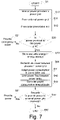
- Figure 7 is a flow chart for balancing power in a power grid having multiple phases and a common ground, the power grid being connected to at least one load causing a non-uniform power consumption between the multiple phases of the power grid.
- the at least one load may include controllable and non-controllable loads. Examples of loads are heat pump, stove, washing machine, tumble dryer, car chargers, etc.
- the flow starts at step S1, and proceeds to step S10 to monitor power provided to the power grid in a controller.
- This may be achieved by an external power grid and/or local energy producers of solar power systems, windmill systems.
- the power grid is connectable to an external power grid 20, and the step of monitoring power further comprises monitoring S11 power flow between the power grid 10 and the external power grid 20.
- the power grid 10 is connectable to at least one energy producing system 14, and the step of monitoring power further comprises monitoring S12 power flow between the power grid 10 and the at least one energy producing system 14.
- step S20 it is investigated if power is provided to the power grid 10, and if not emergency power is provided which powers selected loads S21. If power is provided the flow continues to step S30, wherein available energy is stored in the power grid 10 in an energy storage using multiple inverters, each inverter being connected between the energy storage and each phase of the power grid.
- the state-of-charge, SOC of the energy storage e.g., NiMH batteries provided from Nilar ® International AB in Sweden
- the next step S40 comprises redistributing power between phases based on charge status of the energy storage 16 by controlling power flow through the inverters by the controller based on the non-uniform power consumption.
- At least one load comprises at least one controllable load, and the method further comprising adapting S41 the power consumption of the at least one controllable load based on the power provided to the power grid and charge status of the energy storage.
- the at least one controllable load is selected to be a single phase controllable load and/or a three phase controllable load.
- the method must further comprise limiting S42 the power flow between the external power grid and the power grid when redistributing power between phases in the power grid to prevent that the fuses break.
- Each of the at least one load may be provided with a communication device, the method further comprising monitoring power consumption level of each of the at least one load and communicating the power consumption level to the controller and considering S43 the power consumption level of each of the at least one load when redistributing power.
- the method may further comprise communicating with an external controller handling the external power grid and providing power and/or load S51 to the external power grid on demand based on charge status of the energy storage, e.g. to provide power balancing in the external power grid.
- the disclosure also comprises a computer program for balancing a power grid, comprising instructions which, when executed on at least one processor, cause the at least one processor to carry out the method according to the features disclosed in connection with figure 7 .
- the disclosure also comprises a computer-readable storage medium carrying a computer program for balancing a power grid.
Landscapes
- Engineering & Computer Science (AREA)
- Power Engineering (AREA)
- Physics & Mathematics (AREA)
- General Physics & Mathematics (AREA)
- Automation & Control Theory (AREA)
- Supply And Distribution Of Alternating Current (AREA)
- Charge And Discharge Circuits For Batteries Or The Like (AREA)
Description
- The present disclosure pertains to the field of power balancing between phases in a power grid. More particularly, the invention pertains to compensate for loads having a non-uniform power consumption between phases in the power grid.
- Local power grid, such as households, often experience power balancing issues causing the main fuse situated between the local power net and the main power grid to break. This is mainly due to loads having a non-uniform impact on the phases in the local power grid. A typical example of such a load is a single phase car charger to an electric car. Furthermore, if the local power grid is provided with an energy producing unit, such as solar panels, wind mill, etc., the energy units may introduce a power balancing problem. Controllable loads, such as electric cars, also affects the power distribution in local power grids and adds to balancing issues in local power grids.
-
US2014/0070617A1 discloses method and apparatus for stabilizing power on an electric grid using networked distributed energy storage systems. -
WO2014165938A1 discloses an inverter energy system supplying power to a site with energy generation and load compensation. -
US 2017/104362 A1 describes a polyphaser power dispatching system that can dynamically connect an electricity storage module to one of power transmission lines according to a transmission status of each of the polyphaser power transmission lines to improve a load unbalance situation occurring among polyphaser power. All the features present in the preamble of each of the independent claims are disclosed therein in combination. -
US 2016/013646 A1 describes a load management system for monitoring and controlling of loads in an electrical power system using a load management and advanced metering device. - An object of the present disclosure is to provide a method and controller, which seeks to mitigate, alleviate, or eliminate one or more of the above-identified deficiencies in the art and disadvantages singly or in any combination. The present invention, exclusively defined by the appended claims, aims at obtaining this object by providing, in a first aspect, the method of
independent claim 1 and, in a second aspect, the controller of independent claim 7. - In particular, said first aspect corresponds to the method for power balancing a power grid having multiple phases and a common ground, the power grid being connected to at least one load causing a non-uniform power consumption between the multiple phases of the power grid, and wherein the power grid is connectable to an external power grid. Said at least one load comprises at least one controllable load and the method comprises the steps of:
- monitoring power provided to the power grid in a controller and monitoring power flow between the power grid and the external power grid,
- storing available energy in the power grid in an energy storage using multiple inverters, each inverter being connected between the energy storage and each phase of the power grid, and determining a charge status of the energy storage,
- redistributing power between phases based on the charge status of the energy storage by controlling power flow through the inverters by the controller based on the non-uniform power consumption,
- adapting the power consumption of the at least one controllable load based on the power provided to the power grid and the charge status of the energy storage, and
- limiting the power flow between the external power grid and the power grid when redistributing power between phases in the power grid. In particular, said second aspect corresponds to the controller for power balancing a power grid having multiple phases and a common ground, the power grid being connectable to at least one load causing a non-uniform power consumption between the multiple phases of the power grid and wherein said power grid is connectable to an external power grid. Said at least one load comprises at least one controllable load and the controller comprises:
- a processor,
- an energy storage configured to store available energy in the power grid, and
- inverters, each inverter connected to the energy storage and connectable to each phase of the power grid.
- The processor is configured to:
- monitor power provided to the power grid and power flow between the power grid and the external power grid,
- determine a charge status of the energy storage,
- redistribute power between phases based on the charge status of the energy storage by controlling power flow through the inverters based on the non-uniform power consumption, and
- adapt the power consumption of the at least one controllable load based on the power provided to the power grid and the charge status of the energy storage, to redistribute power between phases to limit the power flow between the external power grid and the power grid.
- An advantage with the present invention is that controllable loads causing a difference in power distribution between the phases may be controlled in order to avoid over-discharge of the energy storage when sufficient power in the power grid is not available.
- A further advantage with the present invention is that the maximum power provided from an external power grid may be controlled in order to prevent fuses to break due to high load on a specific phase on the power grid.
- Further objects and advantages are described in detailed description.
- The foregoing will be apparent from the following detailed description, as illustrated in the accompanying drawings in which like reference characters refer to the same parts throughout the different views. The drawings are not necessarily to scale, emphasis instead being placed upon illustrating the teachings of the present disclosure.
-
Figure 1 is a power grid provided with a controller for power balancing. -
Figure 2 is a power grid provided with another controller for power balancing. -
Figure 3 is a controller for power balancing provided with car chargers. -
Figure 4 is schematic view of a local power grid connected to an external grid. -
Figure 5 is a power grid with a yet another controller for power balancing. -
Figure 6 is a power grid with a controller with integrated power fuses. -
Figure 7 is a flow chart for balancing power in a power grid. - A detailed description is provided hereinafter with reference to the accompanying drawings. The apparatus and method disclosed herein can, however, be realized in many different forms and should not be construed as being limited to the details set forth herein, said different forms being covered by the present invention when they do not contradict the appended claims.
- Like numbers in the drawings refer to like elements throughout.
- The terminology used herein is for the purpose of describing particular aspects of the disclosure only, and is not intended to limit the invention. As used herein, the singular forms "a", "an" and "the" are intended to include the plural forms as well, unless the context clearly indicates otherwise.
- The detailed description presented herein is directed towards a method and controller for power balancing a power grid having multiple phases. As part of the development of the teachings presented herein, a problem will first be identified and discussed.
- Uneven power distributions within a power grid may cause fuses to break or even more severe damage to appliances in a household. Furthermore, in order to accommodate for occasional access to the main grid during peak hours, with unusual high power consumption, it is necessary to purchase access to the main grid using high power fuses. This is unnecessary expensive. Elimination of non-uniform power consumption within a grid has many beneficial advantages, one of them is that the marking on the fuses may be reduced and thus the cost for access to the main grid will be reduced. Another advantage is that fuses will not break as often as when not power balancing the power grid.
-
Figure 1 discloses a power balancing system for apower grid 10 provided with acontroller 18. Thepower grid 10 hasmultiple phases 12, each phase denoted 1, 2 and 3, and a common ground, denoted 0, and is connected to at least oneload multiple phases 12 of thepower grid 10. Thecontroller 18 comprises aprocessor 15; anenergy storage 16 configured to store available energy in thepower grid 10, and inverters I1, I2 and I3, provided between thepower grid 10 and theenergy storage 16. Each inverter is connected between theenergy storage 16 and eachphase 12 of thepower grid 10. - The
processor 15 is configured to: monitor power provided to thepower grid 10, determine the charge status of theenergy storage 16, and redistribute power between phases based on charge status of the energy storage (16) by controlling power flow through the inverters I1-I3)based on the non-uniform power consumption. Power provided to the power grid may be monitored by a meter in a fuse box connected to an external grid (if applicable) and/or a meter provided in an energy producer 14) (wind and/or solar). According to some aspects, the charge status of the energy storage is State-of-Health, SOC of a battery storage. - The
power grid 10 is connectable to an external powergrid (not shown), and the processor further is configured to monitor powerflow between the power grid and the external power grid, as described below. Theprocessor 15 is further configured to monitor power flow between thepower grid 10 and the at least oneenergy producing system 14. As an example, the at least one energy producing system may be a solar power system and/or a wind power system. -
Figure 2 discloses a power balancing system for apower grid 10 provided with anothercontroller 21. The features indicated by dashed lines are optional features, and the dash-dotted lines illustrates data communication between different components of the system. In addition to the system described in connection withfigure 1, figure 2 discloses apower grid 10 connected to anexternal power grid 20, and theprocessor 22 further is configured to monitor power flow between thepower grid 10 and theexternal power grid 20, using themeter 23, which monitors the flow into thepower grid 10, but may also comprises functionality to monitor power flow from the power grid to the external grid. The fuses (here indicated as maximum 10 Ampere current AC will limit the power flow between theexternal power grid 20 and the power grid. As indicated infigure 2 , theprocessor 22 is configured to redistribute power between phases 1-3 to limit the power flow via themeter 23. - In order to be able to benefit from the disclosed system, it is necessary to store energy in an energy storage if there is excess power available at one or more phases of the
power grid 10. The stored energy in the energy storage may be directed as power via one or more of the inverters I1 - I3 to boost the available power for theloads processor 22 is configured to redistribute power between phases to limit the power flow between theexternal power grid 20 and thepower grid 10. -
Figure 3 is yet anothercontroller 30 for power balancing provided withcar chargers controller 30 comprises aprocessor 33, inverters 11-13 andenergy storage 16. In addition, thecontroller 33 is further connectable to at least onecontrollable load interfaces processor 33 is further configured to adapt the power consumption of the at least onecontrollable load energy storage 16. If necessary, the power to the controllable loads is reduced to a suitable level to prevent unbalancing within the power grid, and also to prevent fuses to break. Theinterfaces extra energy storage 34 that may be used to maintain a base level in case needed. - The at least one controllable load is a single phase
controllable load 31 and/or a three phasecontrollable load 32. These are typically car chargers for electric vehicles, or plugin- hybrid electric vehicles. - It should also be noted that the power flowing through the inverters 11-13 may be in both directions and the processor is configured to control each inverter and to monitor the power flowing through each inverters, as illustrates in
figure 3 . -
Figure 4 is schematic view of alocal power grid 10, similar to that disclosed in connection withfigure 2 , connected to anexternal grid 20. In this example, theprocessor 22 in thecontroller 21 is configured to communicate with anexternal controller 41 handling theexternal power grid 20 and to provide power or load to theexternal power grid 20 on demand, e.g. for power balancing purposes in the external power grid, based on the charge status of theenergy storage 16. - The communication between the
controller 21 and the controller of the external power grid may be wired or wireless and use any suitable type of communication protocol. -
Figure 5 is apower grid 10 with yet another embodiment of acontroller 51 for power balancing. As mentioned before, the power grid is connected to anexternal power grid 20 via fuses andpower meter 23 configured to measure power flowing between thepower grid 10 and theexternal power grid 20. Thecontroller 51 comprises inverters 11-13 connected between each phase of the power grid and anenergy storage 16, as explained above. A single phasecontrollable load 35 is attached to theinterface 31, and theprocessor 56 is configured to monitor all relevant values to balance the power within the power grid depending on the charge status of the energy storage. - In addition, the
processor 56 is further configured to provideemergency power 54 to selectedloads 55 connected to thepower grid 10 when no power is provided to thepower grid 10. This may occur during a power failure simultaneous with not power produced by the local energy producers (e.g. during night). The emergency power may be seen as an energy extender and certain key functions in the household may be dedicated to be served by the energy extender. - The selected loads 55 may be powered by a DC voltage to avoid losses included when converting between DC to AC from the
emergency power pack 54. The processor is configured to control aswitch 53, which redirects the power from the emergency power to the selected loads 55 when the processor indicate that this is necessary. - In addition, selected AC loads 59 may be prioritized and a
secondary AC source 57 is provided, which is charged via theswitch 53. When the power grid is operational, anAC switch 58 is configured to provide AC power from the grid. However, if no power is provided to thepower grid 10, theAC switch 58 is configured to provide AC power from thesecondary AC source 57. Theprocessor 56 is configured to control theAC switch 58 and to monitor the charge status of thesecondary AC source 57. -
Figure 6 is apower grid 10 with acontroller 60 with integrated power fuses 65. Thecontroller 60 comprises single phase inverters 11-13 (as described above), anenergy storage 16, aprocessor 61 and aninterface 32 for a controllable load (not shown). In addition, each of the at least one load 13 (only one is illustrated for illustration purposes) is provided with acommunication device 63. Thecontroller 60 is further configured to communicate 62 with each of the at least oneload 13 to monitor a power consumption level thereof, and to redistribute power based on the power consumption level of each of the at least one load. - The communication between the
processor 61 and eachload 13 may be performed via Bluetooth MESH. A suitable type of inverters is a 12A(DC)/8A(AC). Furthermore, sensors are provided in suitable positions for monitoring purposes. The interface intended to be used together with a car charger may have the functionality to measure current, voltage, phase and a communication port often provided in electric vehicles to optimize the charging process. -
Figures 1-6 discloses power balancing systems comprising apower grid 10 having multiple phases and a common ground, at least oneload multiple phases 12 of thepower grid 10 and a controller as described above. -
Figure 7 is a flow chart for balancing power in a power grid having multiple phases and a common ground, the power grid being connected to at least one load causing a non-uniform power consumption between the multiple phases of the power grid. The at least one load may include controllable and non-controllable loads. Examples of loads are heat pump, stove, washing machine, tumble dryer, car chargers, etc. - The flow starts at step S1, and proceeds to step S10 to monitor power provided to the power grid in a controller. This may be achieved by an external power grid and/or local energy producers of solar power systems, windmill systems. The power grid is connectable to an
external power grid 20, and the step of monitoring power further comprises monitoring S11 power flow between thepower grid 10 and theexternal power grid 20. According to other another alternatives not covered by the present invention, wherein thepower grid 10 is connectable to at least oneenergy producing system 14, and the step of monitoring power further comprises monitoring S12 power flow between thepower grid 10 and the at least oneenergy producing system 14. - In an optional step S20, it is investigated if power is provided to the
power grid 10, and if not emergency power is provided which powers selected loads S21. If power is provided the flow continues to step S30, wherein available energy is stored in thepower grid 10 in an energy storage using multiple inverters, each inverter being connected between the energy storage and each phase of the power grid. The state-of-charge, SOC of the energy storage (e.g., NiMH batteries provided from Nilar® International AB in Sweden) has to be over a certain lower level, e.g. 20% SOC, and does not normally exceed an SOC of 80%. - The next step S40 comprises redistributing power between phases based on charge status of the
energy storage 16 by controlling power flow through the inverters by the controller based on the non-uniform power consumption. - At least one load comprises at least one controllable load, and the method further comprising adapting S41 the power consumption of the at least one controllable load based on the power provided to the power grid and charge status of the energy storage. The at least one controllable load is selected to be a single phase controllable load and/or a three phase controllable load.
- The method must further comprise limiting S42 the power flow between the external power grid and the power grid when redistributing power between phases in the power grid to prevent that the fuses break.
- Each of the at least one load may be provided with a communication device, the method further comprising monitoring power consumption level of each of the at least one load and communicating the power consumption level to the controller and considering S43 the power consumption level of each of the at least one load when redistributing power.
- When the power grid is connected to an
external power grid 20, the method may further comprise communicating with an external controller handling the external power grid and providing power and/or load S51 to the external power grid on demand based on charge status of the energy storage, e.g. to provide power balancing in the external power grid. Furthermore, the disclosure also comprises a computer program for balancing a power grid, comprising instructions which, when executed on at least one processor, cause the at least one processor to carry out the method according to the features disclosed in connection withfigure 7 . - In addition, the disclosure also comprises a computer-readable storage medium carrying a computer program for balancing a power grid.
- In the drawings and specification, a detailed descipriton has been provided. However, many variations and modifications can be made to the entities and methods described therein, said variations and modifications being covered by the present invention provided that they do not contradict the appended claims. Accordingly, although specific terms are employed, they are used in a generic and descriptive sense only and not for purposes of limitation, the scope of the invention being defined by the following claims.
Claims (15)
- A method for power balancing a power grid having multiple phases and a common ground, the power grid being connected to at least one load causing a non-uniform power consumption between the multiple phases of the power grid, and the power grid is connectable to an external power grid, wherein the method comprises:- monitoring (S10) power provided to the power grid in a controller and monitoring (S11) power flow between the power grid and the external power grid,- storing (S30) available energy in the power grid in an energy storage using multiple inverters, each inverter being connected between the energy storage and each phase of the power grid, and determining a charge status of the energy storage, and- redistributing (S40) power between phases based on the charge status of the energy storage by controlling power flow through the inverters by the controller based on the non-uniform power consumption,characterized in that the at least one load comprises at least one controllable load, and the method further comprising:- adapting (S41) the power consumption of the at least one controllable load based on the power provided to the power grid and the charge status of the energy storage, and- limiting (S42) the power flow between the external power grid and the power grid when redistributing power between phases in the power grid.
- The method according to claim 1, further comprising communicating with an external controller handling the external power grid and providing power and/or load (S51) to the external power grid on demand based on the charge status of the energy storage.
- The method according to any of claims 1-2, wherein the at least one controllable load is selected to be a single phase controllable load and/or a three phase controllable load.
- The method according to any of claims 1-3, wherein the power grid is connectable to at least one energy producing system, and the step of monitoring power further comprises monitoring (S12) power flow between the power grid and the at least one energy producing system.
- The method according to any of claims 1-4, further comprising providing (S21) emergency power to selected loads connected to the power grid when no power is provided to the power grid.
- The method according to any of claims 1-5, wherein each of the at least one load is provided with a communication device, the method further comprising monitoring power consumption level of each of the at least one load and communicating the power consumption level to the controller and considering (S43) the power consumption level of each of the at least one load when redistributing power.
- A controller (18; 21; 30; 51; 60) for power balancing a power grid (10) having multiple phases (12) and a common ground, the power grid (10) being connectable to at least one load (13; 31) causing a non-uniform power consumption between the multiple phases (12) of the power grid (10) and the power grid (10) is connectable to an external power grid (20), wherein the controller comprises:- a processor (15;22; 33; 56; 61)- an energy storage (16) configured to store available energy in the power grid, and- inverters (11-13), each inverter connected to the energy storage (16) and connectable to each phase (12) of the power grid (10),wherein the processor is configured to:- monitor power provided to the power grid (10) and power flow between the power grid and the external power grid,- determine a charge status of the energy storage (16), and- redistribute power between phases based on the charge status of the energy storage (16) by controlling power flow through the inverters (11-13) based on the non-uniform power consumption,characterized in that the at least one load comprises at least one controllable load (31), and the processor (33; 56; 61) is further configured to:- adapt the power consumption of the at least one controllable load (31, 32) based on the power provided to the power grid and the charge status of the energy storage (16), to redistribute power between phases to limit the power flow between the external power grid (20) and the power grid (10).
- The controller according to claim 7, wherein the processor is further configured to communicate with an external controller (41) handling the external power grid (20) and to provide power and/or load to the external power grid (20) on demand based on the charge status of the energy storage (16).
- The controller according to any of claims 7-8, wherein the power grid is connectable to at least one energy producing system (14; 52), and the processor (15; 22; 56) is further configured to monitor power flow between the power grid (10) and the at least one energy producing system (14; 52).
- The controller according to any of claims 7-9, wherein the processor is further configured to provide emergency power (54) to selected loads(55) being connectable to the power grid when no power is provided to the power grid (10).
- The controller according to any of claims 7-10, wherein each of the at least one connectable load (13) is provided with a communication device (63), the controller (60) is further configured to communicate (62) with each of the at least one load (13) to monitor a power consumption level thereof, and to redistribute power based on the power consumption level of each of the at least one load.
- A power balancing system comprising a power grid (10) having multiple phases and a common ground being connectable to an external power grid (20), at least one load (13, 14, 17; 31, 32) causing a non-uniform power consumption between the multiple phases (12) of the power grid (10) and a controller according to any of claims 7-11.
- The power balancing system according to claim 12, wherein the at least one load is a single phase controllable load (31) and/or a three phase controllable load (32).
- A computer program for balancing a power grid, comprising instructions which, when executed on at least one processor, cause the at least one processor to carry out the method according to any of claims 1-6.
- A computer-readable storage medium carrying the computer program for balancing a power grid according to claim 14.
Applications Claiming Priority (2)
| Application Number | Priority Date | Filing Date | Title |
|---|---|---|---|
| SE1850473 | 2018-04-20 | ||
| PCT/SE2019/050355 WO2019203719A1 (en) | 2018-04-20 | 2019-04-17 | A method and system for power balancing |
Publications (2)
| Publication Number | Publication Date |
|---|---|
| EP3782254A1 EP3782254A1 (en) | 2021-02-24 |
| EP3782254B1 true EP3782254B1 (en) | 2022-07-27 |
Family
ID=66286934
Family Applications (1)
| Application Number | Title | Priority Date | Filing Date |
|---|---|---|---|
| EP19719640.5A Active EP3782254B1 (en) | 2018-04-20 | 2019-04-17 | A method and system for power balancing |
Country Status (5)
| Country | Link |
|---|---|
| US (1) | US11552473B2 (en) |
| EP (1) | EP3782254B1 (en) |
| DE (1) | DE212019000262U1 (en) |
| ES (1) | ES2927924T3 (en) |
| WO (1) | WO2019203719A1 (en) |
Families Citing this family (1)
| Publication number | Priority date | Publication date | Assignee | Title |
|---|---|---|---|---|
| CN114123213B (en) * | 2022-01-24 | 2022-04-26 | 武汉大学 | A method and system for power balance in time and space of power grid |
Family Cites Families (9)
| Publication number | Priority date | Publication date | Assignee | Title |
|---|---|---|---|---|
| US8618692B2 (en) * | 2007-12-04 | 2013-12-31 | Solaredge Technologies Ltd. | Distributed power system using direct current power sources |
| JP5702000B2 (en) | 2012-01-06 | 2015-04-15 | 株式会社日立製作所 | Power system stabilization system and power system stabilization method |
| US10756543B2 (en) | 2012-09-13 | 2020-08-25 | Stem, Inc. | Method and apparatus for stabalizing power on an electrical grid using networked distributed energy storage systems |
| SG11201508487XA (en) | 2013-04-13 | 2015-11-27 | Honey Badger Internat Pty Ltd | Energy generation load compensation |
| US20160013646A1 (en) * | 2014-07-14 | 2016-01-14 | Heart Transverter, S.A. | Load management, metering, and demand response module |
| US20160033986A1 (en) * | 2014-07-30 | 2016-02-04 | Melrok, Llc | Systems and methods to manage renewable energy on the electric grid |
| US10263430B2 (en) * | 2015-08-14 | 2019-04-16 | Solarcity Corporation | Multi-phase inverter power control systems in an energy generation system |
| TWI560968B (en) * | 2015-10-13 | 2016-12-01 | Ind Tech Res Inst | Polyphase power dispatching system and method |
| US10139847B2 (en) * | 2016-05-18 | 2018-11-27 | Solarcity Corporation | Systems and methods for controlling PV production within energy export constraints |
-
2019
- 2019-04-17 WO PCT/SE2019/050355 patent/WO2019203719A1/en not_active Ceased
- 2019-04-17 DE DE212019000262.5U patent/DE212019000262U1/en active Active
- 2019-04-17 US US17/048,908 patent/US11552473B2/en active Active
- 2019-04-17 EP EP19719640.5A patent/EP3782254B1/en active Active
- 2019-04-17 ES ES19719640T patent/ES2927924T3/en active Active
Also Published As
| Publication number | Publication date |
|---|---|
| US20210376611A1 (en) | 2021-12-02 |
| WO2019203719A1 (en) | 2019-10-24 |
| US11552473B2 (en) | 2023-01-10 |
| DE212019000262U1 (en) | 2020-11-26 |
| ES2927924T3 (en) | 2022-11-11 |
| EP3782254A1 (en) | 2021-02-24 |
Similar Documents
| Publication | Publication Date | Title |
|---|---|---|
| US10756546B2 (en) | Methods of advanced grid and microgrid support functionalities through hybrid fuel cell systems | |
| JP7684222B2 (en) | EV charger with adaptive charging protocol | |
| US11031794B2 (en) | Autonomous charge balancing of distributed AC coupled batteries with droop offset | |
| JP5265639B2 (en) | Apartment house energy storage system, integrated power management system and control method therefor | |
| EP3550315B1 (en) | Load test system | |
| CN108964007B (en) | A direct current power distribution method, device and system | |
| CN109786866B (en) | Plug-and-play battery module and battery energy storage system | |
| US10554164B2 (en) | Modular extra low voltage electric vehicle power system | |
| AU2016368287A1 (en) | Renewable energy system with integrated home power supply system | |
| CN102667144A (en) | Output control method and output control device for wind-powered electricity generating facility | |
| US11358487B2 (en) | Method for charging electric consumers | |
| CN112821457A (en) | Storage and charging integrated power system | |
| CN112803483A (en) | Control method and device of storage and charging integrated power system based on echelon utilization | |
| CN108173324A (en) | For running the method for charging unit, charging unit and motor vehicle | |
| US20230378757A1 (en) | Electrical energy storage system and energy storage system | |
| KR102061308B1 (en) | Control power supplying apparatus and method for battery management and energy stock system using the same | |
| EP3782254B1 (en) | A method and system for power balancing | |
| CN117691644A (en) | A light storage system, energy conversion system, inverter and power balancing method | |
| JP5981632B1 (en) | Energy storage system monitoring system | |
| CN119341095A (en) | Optical storage system | |
| KR102500179B1 (en) | Method and device for early warning of hazardous situation in energy storage system | |
| KR20130123851A (en) | Mass energy storage system | |
| KR101698267B1 (en) | Method of Controlling Energy Storage System | |
| US20230369861A1 (en) | Storage system configured for use with an energy management system | |
| CN120546099B (en) | Opposite-dragging system and control method and device thereof |
Legal Events
| Date | Code | Title | Description |
|---|---|---|---|
| STAA | Information on the status of an ep patent application or granted ep patent |
Free format text: STATUS: UNKNOWN |
|
| STAA | Information on the status of an ep patent application or granted ep patent |
Free format text: STATUS: THE INTERNATIONAL PUBLICATION HAS BEEN MADE |
|
| PUAI | Public reference made under article 153(3) epc to a published international application that has entered the european phase |
Free format text: ORIGINAL CODE: 0009012 |
|
| STAA | Information on the status of an ep patent application or granted ep patent |
Free format text: STATUS: REQUEST FOR EXAMINATION WAS MADE |
|
| 17P | Request for examination filed |
Effective date: 20201009 |
|
| AK | Designated contracting states |
Kind code of ref document: A1 Designated state(s): AL AT BE BG CH CY CZ DE DK EE ES FI FR GB GR HR HU IE IS IT LI LT LU LV MC MK MT NL NO PL PT RO RS SE SI SK SM TR |
|
| AX | Request for extension of the european patent |
Extension state: BA ME |
|
| DAV | Request for validation of the european patent (deleted) | ||
| DAX | Request for extension of the european patent (deleted) | ||
| GRAP | Despatch of communication of intention to grant a patent |
Free format text: ORIGINAL CODE: EPIDOSNIGR1 |
|
| STAA | Information on the status of an ep patent application or granted ep patent |
Free format text: STATUS: GRANT OF PATENT IS INTENDED |
|
| INTG | Intention to grant announced |
Effective date: 20220221 |
|
| GRAS | Grant fee paid |
Free format text: ORIGINAL CODE: EPIDOSNIGR3 |
|
| GRAA | (expected) grant |
Free format text: ORIGINAL CODE: 0009210 |
|
| STAA | Information on the status of an ep patent application or granted ep patent |
Free format text: STATUS: THE PATENT HAS BEEN GRANTED |
|
| AK | Designated contracting states |
Kind code of ref document: B1 Designated state(s): AL AT BE BG CH CY CZ DE DK EE ES FI FR GB GR HR HU IE IS IT LI LT LU LV MC MK MT NL NO PL PT RO RS SE SI SK SM TR |
|
| REG | Reference to a national code |
Ref country code: CH Ref legal event code: EP |
|
| REG | Reference to a national code |
Ref country code: AT Ref legal event code: REF Ref document number: 1507729 Country of ref document: AT Kind code of ref document: T Effective date: 20220815 |
|
| REG | Reference to a national code |
Ref country code: DE Ref legal event code: R096 Ref document number: 602019017488 Country of ref document: DE |
|
| REG | Reference to a national code |
Ref country code: IE Ref legal event code: FG4D |
|
| REG | Reference to a national code |
Ref country code: LT Ref legal event code: MG9D |
|
| REG | Reference to a national code |
Ref country code: ES Ref legal event code: FG2A Ref document number: 2927924 Country of ref document: ES Kind code of ref document: T3 Effective date: 20221111 |
|
| REG | Reference to a national code |
Ref country code: NL Ref legal event code: MP Effective date: 20220727 |
|
| PG25 | Lapsed in a contracting state [announced via postgrant information from national office to epo] |
Ref country code: SE Free format text: LAPSE BECAUSE OF FAILURE TO SUBMIT A TRANSLATION OF THE DESCRIPTION OR TO PAY THE FEE WITHIN THE PRESCRIBED TIME-LIMIT Effective date: 20220727 Ref country code: RS Free format text: LAPSE BECAUSE OF FAILURE TO SUBMIT A TRANSLATION OF THE DESCRIPTION OR TO PAY THE FEE WITHIN THE PRESCRIBED TIME-LIMIT Effective date: 20220727 Ref country code: PT Free format text: LAPSE BECAUSE OF FAILURE TO SUBMIT A TRANSLATION OF THE DESCRIPTION OR TO PAY THE FEE WITHIN THE PRESCRIBED TIME-LIMIT Effective date: 20221128 Ref country code: NO Free format text: LAPSE BECAUSE OF FAILURE TO SUBMIT A TRANSLATION OF THE DESCRIPTION OR TO PAY THE FEE WITHIN THE PRESCRIBED TIME-LIMIT Effective date: 20221027 Ref country code: NL Free format text: LAPSE BECAUSE OF FAILURE TO SUBMIT A TRANSLATION OF THE DESCRIPTION OR TO PAY THE FEE WITHIN THE PRESCRIBED TIME-LIMIT Effective date: 20220727 Ref country code: LV Free format text: LAPSE BECAUSE OF FAILURE TO SUBMIT A TRANSLATION OF THE DESCRIPTION OR TO PAY THE FEE WITHIN THE PRESCRIBED TIME-LIMIT Effective date: 20220727 Ref country code: LT Free format text: LAPSE BECAUSE OF FAILURE TO SUBMIT A TRANSLATION OF THE DESCRIPTION OR TO PAY THE FEE WITHIN THE PRESCRIBED TIME-LIMIT Effective date: 20220727 Ref country code: FI Free format text: LAPSE BECAUSE OF FAILURE TO SUBMIT A TRANSLATION OF THE DESCRIPTION OR TO PAY THE FEE WITHIN THE PRESCRIBED TIME-LIMIT Effective date: 20220727 |
|
| REG | Reference to a national code |
Ref country code: AT Ref legal event code: MK05 Ref document number: 1507729 Country of ref document: AT Kind code of ref document: T Effective date: 20220727 |
|
| PG25 | Lapsed in a contracting state [announced via postgrant information from national office to epo] |
Ref country code: PL Free format text: LAPSE BECAUSE OF FAILURE TO SUBMIT A TRANSLATION OF THE DESCRIPTION OR TO PAY THE FEE WITHIN THE PRESCRIBED TIME-LIMIT Effective date: 20220727 Ref country code: IS Free format text: LAPSE BECAUSE OF FAILURE TO SUBMIT A TRANSLATION OF THE DESCRIPTION OR TO PAY THE FEE WITHIN THE PRESCRIBED TIME-LIMIT Effective date: 20221127 Ref country code: HR Free format text: LAPSE BECAUSE OF FAILURE TO SUBMIT A TRANSLATION OF THE DESCRIPTION OR TO PAY THE FEE WITHIN THE PRESCRIBED TIME-LIMIT Effective date: 20220727 Ref country code: GR Free format text: LAPSE BECAUSE OF FAILURE TO SUBMIT A TRANSLATION OF THE DESCRIPTION OR TO PAY THE FEE WITHIN THE PRESCRIBED TIME-LIMIT Effective date: 20221028 |
|
| PG25 | Lapsed in a contracting state [announced via postgrant information from national office to epo] |
Ref country code: SM Free format text: LAPSE BECAUSE OF FAILURE TO SUBMIT A TRANSLATION OF THE DESCRIPTION OR TO PAY THE FEE WITHIN THE PRESCRIBED TIME-LIMIT Effective date: 20220727 Ref country code: RO Free format text: LAPSE BECAUSE OF FAILURE TO SUBMIT A TRANSLATION OF THE DESCRIPTION OR TO PAY THE FEE WITHIN THE PRESCRIBED TIME-LIMIT Effective date: 20220727 Ref country code: DK Free format text: LAPSE BECAUSE OF FAILURE TO SUBMIT A TRANSLATION OF THE DESCRIPTION OR TO PAY THE FEE WITHIN THE PRESCRIBED TIME-LIMIT Effective date: 20220727 Ref country code: CZ Free format text: LAPSE BECAUSE OF FAILURE TO SUBMIT A TRANSLATION OF THE DESCRIPTION OR TO PAY THE FEE WITHIN THE PRESCRIBED TIME-LIMIT Effective date: 20220727 Ref country code: AT Free format text: LAPSE BECAUSE OF FAILURE TO SUBMIT A TRANSLATION OF THE DESCRIPTION OR TO PAY THE FEE WITHIN THE PRESCRIBED TIME-LIMIT Effective date: 20220727 |
|
| REG | Reference to a national code |
Ref country code: DE Ref legal event code: R097 Ref document number: 602019017488 Country of ref document: DE |
|
| PG25 | Lapsed in a contracting state [announced via postgrant information from national office to epo] |
Ref country code: SK Free format text: LAPSE BECAUSE OF FAILURE TO SUBMIT A TRANSLATION OF THE DESCRIPTION OR TO PAY THE FEE WITHIN THE PRESCRIBED TIME-LIMIT Effective date: 20220727 Ref country code: EE Free format text: LAPSE BECAUSE OF FAILURE TO SUBMIT A TRANSLATION OF THE DESCRIPTION OR TO PAY THE FEE WITHIN THE PRESCRIBED TIME-LIMIT Effective date: 20220727 |
|
| PLBE | No opposition filed within time limit |
Free format text: ORIGINAL CODE: 0009261 |
|
| STAA | Information on the status of an ep patent application or granted ep patent |
Free format text: STATUS: NO OPPOSITION FILED WITHIN TIME LIMIT |
|
| PG25 | Lapsed in a contracting state [announced via postgrant information from national office to epo] |
Ref country code: AL Free format text: LAPSE BECAUSE OF FAILURE TO SUBMIT A TRANSLATION OF THE DESCRIPTION OR TO PAY THE FEE WITHIN THE PRESCRIBED TIME-LIMIT Effective date: 20220727 |
|
| 26N | No opposition filed |
Effective date: 20230502 |
|
| PG25 | Lapsed in a contracting state [announced via postgrant information from national office to epo] |
Ref country code: SI Free format text: LAPSE BECAUSE OF FAILURE TO SUBMIT A TRANSLATION OF THE DESCRIPTION OR TO PAY THE FEE WITHIN THE PRESCRIBED TIME-LIMIT Effective date: 20220727 |
|
| REG | Reference to a national code |
Ref country code: CH Ref legal event code: PL |
|
| PG25 | Lapsed in a contracting state [announced via postgrant information from national office to epo] |
Ref country code: LU Free format text: LAPSE BECAUSE OF NON-PAYMENT OF DUE FEES Effective date: 20230417 |
|
| REG | Reference to a national code |
Ref country code: BE Ref legal event code: MM Effective date: 20230430 |
|
| PG25 | Lapsed in a contracting state [announced via postgrant information from national office to epo] |
Ref country code: MC Free format text: LAPSE BECAUSE OF FAILURE TO SUBMIT A TRANSLATION OF THE DESCRIPTION OR TO PAY THE FEE WITHIN THE PRESCRIBED TIME-LIMIT Effective date: 20220727 |
|
| PG25 | Lapsed in a contracting state [announced via postgrant information from national office to epo] |
Ref country code: MC Free format text: LAPSE BECAUSE OF FAILURE TO SUBMIT A TRANSLATION OF THE DESCRIPTION OR TO PAY THE FEE WITHIN THE PRESCRIBED TIME-LIMIT Effective date: 20220727 Ref country code: LI Free format text: LAPSE BECAUSE OF NON-PAYMENT OF DUE FEES Effective date: 20230430 Ref country code: CH Free format text: LAPSE BECAUSE OF NON-PAYMENT OF DUE FEES Effective date: 20230430 |
|
| REG | Reference to a national code |
Ref country code: IE Ref legal event code: MM4A |
|
| PG25 | Lapsed in a contracting state [announced via postgrant information from national office to epo] |
Ref country code: BE Free format text: LAPSE BECAUSE OF NON-PAYMENT OF DUE FEES Effective date: 20230430 |
|
| PG25 | Lapsed in a contracting state [announced via postgrant information from national office to epo] |
Ref country code: IE Free format text: LAPSE BECAUSE OF NON-PAYMENT OF DUE FEES Effective date: 20230417 |
|
| PG25 | Lapsed in a contracting state [announced via postgrant information from national office to epo] |
Ref country code: IE Free format text: LAPSE BECAUSE OF NON-PAYMENT OF DUE FEES Effective date: 20230417 |
|
| PG25 | Lapsed in a contracting state [announced via postgrant information from national office to epo] |
Ref country code: BG Free format text: LAPSE BECAUSE OF FAILURE TO SUBMIT A TRANSLATION OF THE DESCRIPTION OR TO PAY THE FEE WITHIN THE PRESCRIBED TIME-LIMIT Effective date: 20220727 |
|
| PG25 | Lapsed in a contracting state [announced via postgrant information from national office to epo] |
Ref country code: BG Free format text: LAPSE BECAUSE OF FAILURE TO SUBMIT A TRANSLATION OF THE DESCRIPTION OR TO PAY THE FEE WITHIN THE PRESCRIBED TIME-LIMIT Effective date: 20220727 |
|
| PGFP | Annual fee paid to national office [announced via postgrant information from national office to epo] |
Ref country code: DE Payment date: 20250321 Year of fee payment: 7 |
|
| PGFP | Annual fee paid to national office [announced via postgrant information from national office to epo] |
Ref country code: ES Payment date: 20250623 Year of fee payment: 7 |
|
| PGFP | Annual fee paid to national office [announced via postgrant information from national office to epo] |
Ref country code: IT Payment date: 20250317 Year of fee payment: 7 |
|
| PG25 | Lapsed in a contracting state [announced via postgrant information from national office to epo] |
Ref country code: CY Free format text: LAPSE BECAUSE OF FAILURE TO SUBMIT A TRANSLATION OF THE DESCRIPTION OR TO PAY THE FEE WITHIN THE PRESCRIBED TIME-LIMIT; INVALID AB INITIO Effective date: 20190417 |
|
| PG25 | Lapsed in a contracting state [announced via postgrant information from national office to epo] |
Ref country code: HU Free format text: LAPSE BECAUSE OF FAILURE TO SUBMIT A TRANSLATION OF THE DESCRIPTION OR TO PAY THE FEE WITHIN THE PRESCRIBED TIME-LIMIT; INVALID AB INITIO Effective date: 20190417 |
|
| PG25 | Lapsed in a contracting state [announced via postgrant information from national office to epo] |
Ref country code: TR Free format text: LAPSE BECAUSE OF FAILURE TO SUBMIT A TRANSLATION OF THE DESCRIPTION OR TO PAY THE FEE WITHIN THE PRESCRIBED TIME-LIMIT Effective date: 20220727 |
|
| PGFP | Annual fee paid to national office [announced via postgrant information from national office to epo] |
Ref country code: GB Payment date: 20260217 Year of fee payment: 8 |
|
| PGFP | Annual fee paid to national office [announced via postgrant information from national office to epo] |
Ref country code: FR Payment date: 20260223 Year of fee payment: 8 |