EP3780869A1 - Method and user equipment of performing resource switching in unlicensed spectrum - Google Patents
Method and user equipment of performing resource switching in unlicensed spectrum Download PDFInfo
- Publication number
- EP3780869A1 EP3780869A1 EP20190617.9A EP20190617A EP3780869A1 EP 3780869 A1 EP3780869 A1 EP 3780869A1 EP 20190617 A EP20190617 A EP 20190617A EP 3780869 A1 EP3780869 A1 EP 3780869A1
- Authority
- EP
- European Patent Office
- Prior art keywords
- resources
- current
- lbt
- current set
- over
- Prior art date
- Legal status (The legal status is an assumption and is not a legal conclusion. Google has not performed a legal analysis and makes no representation as to the accuracy of the status listed.)
- Granted
Links
Images




Classifications
-
- H—ELECTRICITY
- H04—ELECTRIC COMMUNICATION TECHNIQUE
- H04W—WIRELESS COMMUNICATION NETWORKS
- H04W74/00—Wireless channel access
- H04W74/08—Non-scheduled access, e.g. ALOHA
- H04W74/0808—Non-scheduled access, e.g. ALOHA using carrier sensing, e.g. carrier sense multiple access [CSMA]
-
- H—ELECTRICITY
- H04—ELECTRIC COMMUNICATION TECHNIQUE
- H04W—WIRELESS COMMUNICATION NETWORKS
- H04W74/00—Wireless channel access
- H04W74/002—Transmission of channel access control information
- H04W74/004—Transmission of channel access control information in the uplink, i.e. towards network
-
- H—ELECTRICITY
- H04—ELECTRIC COMMUNICATION TECHNIQUE
- H04W—WIRELESS COMMUNICATION NETWORKS
- H04W36/00—Hand-off or reselection arrangements
- H04W36/0005—Control or signalling for completing the hand-off
-
- H—ELECTRICITY
- H04—ELECTRIC COMMUNICATION TECHNIQUE
- H04W—WIRELESS COMMUNICATION NETWORKS
- H04W74/00—Wireless channel access
- H04W74/08—Non-scheduled access, e.g. ALOHA
- H04W74/0833—Random access procedures, e.g. with 4-step access
-
- H—ELECTRICITY
- H04—ELECTRIC COMMUNICATION TECHNIQUE
- H04W—WIRELESS COMMUNICATION NETWORKS
- H04W76/00—Connection management
- H04W76/10—Connection setup
- H04W76/18—Management of setup rejection or failure
-
- H—ELECTRICITY
- H04—ELECTRIC COMMUNICATION TECHNIQUE
- H04W—WIRELESS COMMUNICATION NETWORKS
- H04W72/00—Local resource management
- H04W72/02—Selection of wireless resources by user or terminal
-
- H—ELECTRICITY
- H04—ELECTRIC COMMUNICATION TECHNIQUE
- H04W—WIRELESS COMMUNICATION NETWORKS
- H04W74/00—Wireless channel access
- H04W74/08—Non-scheduled access, e.g. ALOHA
- H04W74/0833—Random access procedures, e.g. with 4-step access
- H04W74/0838—Random access procedures, e.g. with 4-step access using contention-free random access [CFRA]
Definitions
- the present application relates to resource switching in an unlicensed spectrum.
- LBT Listen Before Talk
- LBT is a technique used in radio communications where a radio transmitter first senses its radio environment before it starts a transmission. LBT can be used by a radio device to find a free radio channel. In the 5G unlicensed spectrum, a successful LBT is needed before each transmission between the user equipment (UE) and the base station. For example, in the 5G unlicensed spectrum, if LBT fails, the transmission of a random access channel (RACH) message (e.g., preamble) cannot be performed. In addition, during the handover procedure, LBT failure before the UE synchronizes with the target base station (i.e., RACH preamble transmission) may lead to unsuccessful handover. Therefore, how to reduce the impact of LBT failure on transmissions between the UE and the base station in the unlicensed spectrum becomes an issue to address.
- RACH random access channel
- a method of performing resource switching in an unlicensed spectrum wherein a current set of resources in the unlicensed spectrum is utilized by a UE for performing LBT attempts for transmission of an RACH message to a base station.
- the method includes: performing one or more LBT attempts for transmissions from the UE to the base station over the current set of resources during a current RACH procedure; and switching from the current set of resources to a new set of resources in the unlicensed spectrum to be utilized by the UE in a new RACH procedure after a count of LBT failure over the current set of resources reaches a pre-configured threshold during the current RACH procedure, wherein the count of LBT failure is increased by one (1) when a current LBT attempt over the current set of resources fails during the current RACH procedure.
- a method of performing resource switching in an unlicensed spectrum wherein a current set of resources in the unlicensed spectrum is utilized by a UE for performing LBT attempts for transmission of an RACH message to a base station.
- the method includes: performing one or more LBT attempts for transmissions from the UE to the base station over the current set of resources during a current RACH procedure; and performing a reference signal received power (RSRP) check over the current set of resources either after a current LBT attempt over the current set of resources passes, or before performing the current LBT attempt over the current set of resources, switching from the current set of resources to a new set of resources in the unlicensed spectrum to be utilized by the UE in a new RACH procedure after a failure count over the current set of resources reaches a pre-configured threshold during the current RACH procedure, wherein the failure count is increased by one (1) when either of the current LBT attempt and the RSRP check over the current set of resources fails during the current RACH procedure.
- RSRP reference signal received power
- the method further including: initializing the failure count to zero (0) before performing any of a first LBT attempt and a first RSRP check over the current set of resources during the current RACH procedure.
- the RSRP check is performed over the current set of resources only after the current LBT attempt over the current set of resources passes
- the step of performing the RSRP check over the current set of resources during the current RACH procedure includes: performing the RSRP check over the resource(s) of the current set of resources that pass(es) the current LBT attempt, and wherein the method further includes: when the RSRP check over the resource(s) of the current set of resources that pass(es) the current LBT attempt fails, increasing the failure count by one (1); and not transmitting the RACH message using the resource(s) of the current set of resources that pass(es) the current LBT attempt but fail(s) to pass the RSRP check; and when the RSRP check over the resource(s) of the current set of resources that pass(es) the current LBT attempt passes, using one of the resource(s) of the current set of resources that passes both the current LBT attempt and the RSRP check to transmit the RACH message.
- the RSRP check is performed over the current set of resources only before performing the current LBT attempt over the current set of resources, wherein when the RSRP check over the resource(s) of the current set of resources passes, the step of performing the LBT attempt over the current set of resources includes: performing the current LBT attempt over the resource(s) of the current set of resources that pass(es) the RSRP check, wherein the method further includes: when the current LBT attempt over the resource(s) of the current set of resources that pass(es) the RSRP check fails, increasing the failure count by one (1); and not transmitting the RACH message using the resource(s) of the current set of resources that pass(es) the RSRP check but fail(s) to pass the current LBT attempt; and when the current LBT attempt over the resource(s) of the current set of resources that pass(es) the RSRP check passes, using one of the resource(s) of the current set of resources that passes both the RSRP check and the current LBT attempt to transmit
- the method further including: declaring handover failure when a count for handover failure declaration reaches a pre-configured handover failure threshold; and initializing the count for handover failure declaration to zero (0) before performing any of a first LBT attempt and a first RSRP check over the current set of resources during a first current RACH procedure in a handover procedure, wherein the count for handover failure declaration is not reset before performing any of a first LBT attempt and a first RSRP check over any subsequent current set of resources during any subsequent current RACH procedure(s) in the handover procedure, and the count for handover failure declaration is increased by one (1) when the failure count is increased by one (1).
- the pre-configured handover failure threshold is N times of the pre-configured threshold for the failure count, and wherein N is a total number of sets of resources that are configured to be utilized by the UE for performing the LBT attempts and the RSRP checks for transmission of the RACH message to the base station.
- the handover failure is caused by occurrence of a combination of a consistent LBT failure and RSRP failure.
- the method further including: stopping the current RACH procedure after the failure count reaches the pre-configured threshold but before switching from the current set of resources to the new set of resources.
- the method further including: after stopping the current RACH procedure and switching from the current set of resources to the new set of resources, resetting the failure count to zero (0); and performing the steps of claim 12 using the new set of resources as the current set of resources in the new RACH procedure being the current RACH procedure.
- a UE wherein a current set of resources in the unlicensed spectrum is utilized by the UE for performing LBT attempts for transmission of an RACH message to a base station.
- the UE includes a transceiver configured to transmit signals to the base station and receive signals from the base station; and a processor coupled to the transceiver and configured to: perform one or more LBT attempts for transmissions from the UE to the base station over the current set of resources during a current RACH procedure; and switch from the current set of resources to a new set of resources in the unlicensed spectrum to be utilized by the UE in a new RACH procedure after a failure count reaches a pre-configured threshold during the current RACH procedure, wherein the failure count is calculated at least based on a count of LBT failure over the current set of resources during the current RACH procedure.
- a UE wherein a current set of resources in the unlicensed spectrum is utilized by the UE for performing LBT attempts for transmission of an RACH message to a base station.
- the UE includes a transceiver configured to transmit signals to the base station and receive signals from the base station; and a processor coupled to the transceiver and configured to: perform one or more LBT attempts for transmissions from the UE to the base station over the current set of resources during a current RACH procedure; switch from the current set of resources to a new set of resources in the unlicensed spectrum to be utilized by the UE in a new RACH procedure after a count of LBT failure over the current set of resources reaches a pre-configured threshold during the current RACH procedure; and increase the count of LBT failure by one (1) when a current LBT attempt over the current set of resources fails during the current RACH procedure.
- a UE wherein a current set of resources in the unlicensed spectrum is utilized by the UE for performing LBT attempts for transmission of an RACH message to a base station.
- the UE includes a transceiver configured to transmit signals to the base station and receive signals from the base station; and a processor coupled to the transceiver and configured to: perform one or more LBT attempts for transmissions from the UE to the base station over the current set of resources during a current RACH procedure; perform a reference signal received power (RSRP) check over the current set of resources either after a current LBT attempt over the current set of resources passes, or before performing the current LBT attempt over the current set of resources; switch from the current set of resources to a new set of resources in the unlicensed spectrum to be utilized by the UE in a new RACH procedure after a failure count over the current set of resources reaches a pre-configured threshold during the current RACH procedure; and increase the failure count by one (1) when either of the
- the processor is further configured to: initialize the failure count to zero (0) before performing any of a first LBT attempt and a first RSRP check over the current set of resources during the current RACH procedure.
- the processor is further configured to: perform the RSRP check over the current set of resources only after the current LBT attempt over the current set of resources passes, by performing the RSRP check over the resource(s) of the current set of resources that pass(es) the current LBT attempt; when the RSRP check over the resource(s) of the current set of resources that pass(es) the current LBT attempt fails, increase the failure count by one (1); and not transmit the RACH message using the resource(s) of the current set of resources that pass(es) the current LBT attempt but fail(s) to pass the RSRP check; and when the RSRP check over the resource(s) of the current set of resources that pass(es) the current LBT attempt passes, control the transceiver to use one of the resource(s) of the current set of resources that passes both the current LBT attempt and the RSRP check to transmit the RACH message.
- the processor is further configured to: perform the RSRP check over the current set of resources only before performing the current LBT attempt over the current set of resources; when the RSRP check over the resource(s) of the current set of resources passes, the processor is further configured to perform the LBT attempt over the current set of resources by performing the current LBT attempt over the resource(s) of the current set of resources that pass(es) the RSRP check; when the current LBT attempt over the resource(s) of the current set of resources that pass(es) the RSRP check fails, increase the failure count by one (1); and not transmit the RACH message using the resource(s) of the current set of resources that pass(es) the RSRP check but fail(s) to pass the current LBT attempt; and when the current LBT attempt over the resource(s) of the current set of resources that pass(es) the RSRP check passes, control the transceiver to use one of the resource(s) of the current set of resources that passes both the RSRP check and the current
- the processor is further configured to: declare handover failure when a count for handover failure declaration reaches a pre-configured handover failure threshold; initialize the count for handover failure declaration to zero (0) before performing any of a first LBT attempt and a first RSRP check over the current set of resources during a first current RACH procedure in a handover procedure; not reset the count for handover failure declaration before performing any of a first LBT attempt and a first RSRP check over any subsequent current set of resources during any subsequent current RACH procedure(s) in the handover procedure; and increase the count for handover failure declaration by one (1) when the failure count is increased by one (1).
- the pre-configured handover failure threshold is N times of the pre-configured threshold for the failure count, and wherein N is a total number of sets of resources that are configured to be utilized by the UE for performing the LBT attempts and the RSRP checks for transmission of the RACH message to the base station.
- the handover failure is caused by occurrence of a combination of a consistent LBT failure and RSRP failure.
- the processor is further configured to: stop the current RACH procedure after the failure count reaches the pre-configured threshold but before switching from the current set of resources to the new set of resources.
- the processor is further configured to: after stopping the current RACH procedure and switching from the current set of resources to the new set of resources, reset the failure count to zero (0); and use the new set of resources as the current set of resources in the new RACH procedure being the current RACH procedure.
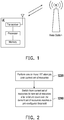
- FIG. 1 illustrates a systemic view of a UE and a base station in accordance with an embodiment of the present application.
- a UE includes a transceiver configured to transmit signals to a base station and/or receive signals from the base station, a processor coupled, e.g. directly connected or indirectly connected, to the transceiver, and a memory embedded in the processor or external to but coupled, e.g. directly connected or indirectly connected, to the processor for storing data and application to be used/saved/executed by the processor.
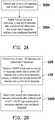
- FIG. 2 illustrates a process of performing resource switching in an unlicensed spectrum in accordance with an embodiment of the present application.
- a current set of resources in the unlicensed spectrum is utilized by a UE for performing LBT attempts for transmission of an RACH message to a base station.
- one or more LBT attempts for transmissions from the UE to the base station over the current set of resources are performed during a current RACH procedure (S220), and the current set of resources is switched to a new set of resources in the unlicensed spectrum to be utilized by the UE in a new RACH procedure after a failure count reaches a pre-configured threshold during the current RACH procedure (S280).
- the failure count is calculated at least based on a count of LBT failure over the current set of resources during the current RACH procedure.
- a plurality of sets of resources are configured to be utilized by the UE for performing the LBT attempts for transmission of the RACH message to the base station.
- each set of resources may include the following set or subset of resources: one or more RACH resources from dedicated RACH resources, one or more RACH resources from common RACH resources, one or more RACH resources from dedicated RACH resources and common RACH resources, one or more physical random access channel (PRACH) occasions (ROs), one or more sub-bands, one or more bandwidth parts (BWPs), etc. Therefore, in an embodiment, the resource switching from the current set to the new set can be made by switching from any one of the above-noted sets or subsets of resources to another one of the above-noted sets or subsets of resources, as long as the unit of the resources in the current set and the unit of the resources in the new set are compatible with each other.
- PRACH physical random access channel
- the resource switching from the current set to the new set can be made by switching from one or more RACH resources from the dedicated RACH resources (the current set) to a different one or a different combination of RACH resources from the dedicated RACH resources (the new set), or to one or more RACH resources from the common RACH resources (the new set), or to one or more RACH resources from the dedicated RACH resources and common RACH resources (the new set), switching from one or more RACH resources from the common RACH resources (the current set) to a different one or a different combination of RACH resources from the common RACH resources (the new set), or to one or more RACH resources from the dedicated RACH resources (the new set), or to one or more RACH resources from the dedicated RACH resources and common RACH resources (the new set), switching from one or more RACH resources from the dedicated RACH resources and common RACH resources (the current set) to a different one or a different combination of RACH resources from the dedicated RACH resources and common RACH resources (the new set), switching from one or more ROs (the)
- dedicated RACH resources are contention-free random access resources associated with synchronization signal blocks (SSBs) and/or channel state information reference signals (CSI-RSs); common RACH resources are contention-based random access resources associated with SSBs; ROs are time-frequency resources configured to UE as preamble transmission opportunities; a BWP may include one or more sub-bands.
- SSBs synchronization signal blocks
- CSI-RSs channel state information reference signals
- common RACH resources are contention-based random access resources associated with SSBs
- ROs are time-frequency resources configured to UE as preamble transmission opportunities
- a BWP may include one or more sub-bands.
- FIG. 2A illustrates an embodiment of a process of performing resource switching in an unlicensed spectrum as shown in FIG. 2 .
- one or more LBT attempts for transmissions from the UE to the base station over the current set of resources are performed during a current RACH procedure ( S220A) , and the current set of resources is switched to a new set of resources in the unlicensed spectrum to be utilized by the UE in a new RACH procedure after a count of LBT failure over the current set of resources reaches a pre-configured threshold during the current RACH procedure ( S280A) .
- the count of LBT failure is increased by one (1) when a current LBT attempt over the current set of resources fails during the current RACH procedure.
- the current set of resources is a BWP consisting of several sub-bands, and an LBT attempt over the current set of resources passes if the BWP does not encounter LBT failure; i.e. all sub-bands in the BWP pass LBT. Otherwise, the LBT attempt over the current set of resources fails. For example, if the current set of resource is BWP1 consisting of sub-bands SB1, SB2 and SB3, the LBT attempt over the current set of resources is deemed to pass only if all of the sub-bands SB1, SB2 and SB3 pass LBT.
- the LBT attempt over the current set of resources is deemed to fail.
- the current set of resources include a plurality of sub-bands in several BWPs, and an LBT attempt over the current set of resources passes if there exists at least one BWP which is (partially) contained in the current set of resources does not encounter LBT failure. Otherwise, the LBT attempt over the current set of resources fails. It should be noted that these are embodiments of how to determine whether the LBT attempt over the current set of resources passes or fails.
- an LBT attempt over the current set of resources may be deemed to pass as long as any one of the resources (e.g., sub-bands) in the current set of resources passes LBT, and it does not consider the resources in the same group (e.g., the same BWP) as a whole when determining whether the LBT attempt passes or fails.
- the resources e.g., sub-bands
- the count of LBT failure is initialized to zero (0) before performing a first LBT attempt over the current set of resources during the current RACH procedure.
- the current RACH procedure is stopped after the count of LBT failure reaches the pre-configured threshold but before switching from the current set of resources to the new set of resources.
- the count of LBT failure is reset to zero (0), and the new set of resources is used as the new current set of resources to be utilized by the UE for performing the LBT attempts for transmission of a random access channel (RACH) message to the base station in the new RACH procedure (which becomes the new current RACH procedure).
- RACH random access channel
- FIG. 2B illustrates another embodiment of a process of performing resource switching in an unlicensed spectrum as shown in FIG. 2 .
- one or more LBT attempts for transmissions from the UE to the base station over the current set of resources are performed during a current RACH procedure (S220B), and a reference signal received power (RSRP) check over the current set of resources is performed either after a current LBT attempt over the current set of resources passes, or before performing the current LBT attempt over the current set of resources (S230B), and the current set of resources is switched to a new set of resources in the unlicensed spectrum to be utilized by the UE in a new RACH procedure after a failure count over the current set of resources reaches a pre-configured threshold during the current RACH procedure (S280B).
- RSRP reference signal received power
- the failure count is calculated at least based on either of the current LBT attempt and the RSRP check over the current set of resources fails during the current RACH procedure. In an embodiment, the failure count is increased by one (1) when either of the current LBT attempt and the RSRP check over the current set of resources fails during the current RACH procedure.
- the current set of resources is a BWP consisting of several sub-bands, and an LBT attempt over the current set of resources passes if the BWP does not encounter LBT failure; i.e. all sub-bands in the BWP pass LBT. Otherwise, the LBT attempt over the current set of resources fails. For example, if the current set of resource is BWP1 consisting of sub-bands SB1, SB2 and SB3, the LBT attempt over the current set of resources is deemed to pass only if all of the sub-bands SB1, SB2 and SB3 pass LBT.
- the LBT attempt over the current set of resources is deemed to fail.
- the current set of resources include a plurality of sub-bands in several BWPs, and an LBT attempt over the current set of resources passes if there exists at least one BWP which is (partially) contained in the current set of resources does not encounter LBT failure. Otherwise, the LBT attempt over the current set of resources fails. It should be noted that these are embodiments of how to determine whether the LBT attempt over the current set of resources passes or fails.
- an LBT attempt over the current set of resources may be deemed to pass as long as any one of the resources (e.g., sub-bands) in the current set of resources passes LBT, and it does not consider the resources in the same group (e.g., the same BWP) as a whole when determining whether the LBT attempt passes or fails.
- the resources e.g., sub-bands
- the current set of resources is a BWP configured with RACH resources associated with reference signals, i.e. synchronization signal blocks (SSBs) or channel state information reference signals (CSI-RSs), and an RSRP check over the current set of resources passes if at least one reference signal with RSRP above a pre-configured RSRP threshold amongst the associated reference signals is available. Otherwise, the RSRP check over the current set of resources fails.
- the current set of resources include a plurality of sub-bands containing RACH resources associated with reference signals, and an RSRP check over the current set of resources passes if at least one reference signal with RSRP above a pre-configured RSRP threshold amongst the associated reference signals is available. Otherwise, the RSRP check over the current set of resources fails.
- the failure count is initialized to zero (0) before performing any of a first LBT attempt and a first RSRP check over the current set of resources during the current RACH procedure.
- the current RACH procedure is stopped after the failure count reaches the pre-configured threshold but before switching from the current set of resources to the new set of resources.
- the failure count is reset to zero (0), and the new set of resources is used as the new current set of resources to be utilized by the UE for performing the LBT attempts for transmission of a random access channel (RACH) message to the base station in the new RACH procedure (which becomes the new current RACH procedure).
- RACH random access channel
- FIG. 3A illustrates an embodiment of performing resource switching in an unlicensed spectrum as shown in FIG. 2A .
- the count of LBT failure COUNT LBT is initialized to zero (0) (S310A) before performing a first LBT attempt over the current set of resources during the current RACH procedure (S320A) .
- one or more LBT attempts for transmissions from the UE to the base station over the current set of resources are performed during a current RACH procedure ( S320A) .
- a current RACH procedure S320A
- the current LBT attempt over the current set of resources passes ( S321A, YES) during the current RACH procedure and before the count of LBT failure COUNT LBT over the current set of resources reaches a pre-configured threshold TH_Switch
- one of the resource(s) of the current set of resources that passes the current LBT attempt is used to transmit the RACH message ( S390A) .
- the current set of resources is switched to a new set of resources in the unlicensed spectrum to be utilized by the UE in a new RACH procedure (S380A).
- the current set of resources is switched to the new set of resources in the unlicensed spectrum to be utilized by the UE in a new RACH procedure after the count of LBT failure COUNT LBT over the current set of resources reaches the pre-configured threshold TH_Switch during the current RACH procedure.
- a new RACH procedure is initiated, and the count of LBT failure COUNT LBT will be reset/initialized to zero (0)(e.g., S310A in FIG. 3A ).
- the new set of resources is utilized by the UE for performing LBT attempts for transmission of an RACH message to the base station.
- the new set of resources will become the new "current" set of resources in the new "current” RACH procedure.
- the UE will run the same process shown in FIG. 3A for the new "current" RACH procedure (the feedback path in FIG. 3A ).
- the UE will run a different process shown in any one of FIGs. 3B-3E (explained below) for the new "current" RACH procedure.
- FIG. 3A shows a feedback path from S380A back to the start point of the same process, the feedback path can also go to the start point of any of the processes in FIGs. 3A-3E for the subsequent "current" RACH procedure.
- the resource switching from a current set of resources (utilized in the current RACH procedure) to a new set of resources (to be utilized in a subsequent current RACH procedure) can be performed for more than once. For example, after switching from the current set of resources to a new set of resource, the new set of resources is utilized as the new "current" set of resources in a new "current" RACH procedure (and the count of LBT failure COUNT LBT will be reset/initialized to zero (0)).
- the new "current" set of resources currently utilized in the new "current” RACH procedure will be again switched to another set of resources to be utilized by the UE in a subsequent "current” RACH procedure.
- an LBT attempt passes before the count of LBT failure COUNT LBT reaches the pre-configured threshold TH_Switch during the new "current” RACH procedure, one of the resource(s) of the new "current" set of resources that passes the current LBT attempt is used to transmit the RACH message.
- a dynamic resource switching scheme based on the count of LBT failure is utilized to change the resources used by the UE for performing LBT attempts for transmission of the RACH message to the base station, so as to reduce the impact of the LBT failure onto the RACH procedures between the UE and the base station, thereby increasing the chance of completing RACH procedure and/or handover procedure.
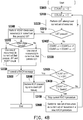
- FIG. 3B illustrates another embodiment of performing resource switching in an unlicensed spectrum as shown in FIG. 2A .
- the count of LBT failure COUNT LBT is initialized to zero (0) (S310B) before performing a first LBT attempt over the current set of resources during the current RACH procedure (S320B).
- one or more LBT attempts for transmissions from the UE to the base station over the current set of resources are performed during a current RACH procedure (S320B).
- a current RACH procedure S320B
- a reference signal received power (RSRP) check is performed over the resource(s) of the current set of resources that pass(es) the current LBT attempt (S330B).
- the current set of resources is switched to a new set of resources in the unlicensed spectrum to be utilized by the UE in a new RACH procedure (S380B).
- the current set of resources is switched to the new set of resources in the unlicensed spectrum to be utilized by the UE in a new RACH procedure after the count of LBT failure COUNT LBT over the current set of resources reaches the pre-configured threshold TH_Switch during the current RACH procedure.
- a new RACH procedure is initiated, and the count of LBT failure COUNT LBT will be reset/initialized to zero (0)(e.g., S310B in FIG. 3B ).
- the new set of resources is utilized by the UE for performing LBT attempts for transmission of an RACH message to the base station.
- the new set of resources will become the new "current" set of resources in the new "current” RACH procedure.
- the UE will run the same process shown in FIG. 3B for the new "current" RACH procedure (the feedback path in FIG. 3B ).
- the UE will run a different process shown in any one of FIGs. 3A (explained above) and 3C-3E (explained below) for the new "current" RACH procedure.
- FIG. 3B shows a feedback path from S380B back to the start point of the same process, the feedback path can also go to the start point of any of the processes in FIGs. 3A-3E for the subsequent "current" RACH procedure.
- the resource switching from a current set of resources (utilized in the current RACH procedure) to a new set of resources (to be utilized in a subsequent current RACH procedure) can be performed for more than once. For example, after switching from the current set of resources to a new set of resource, the new set of resources is utilized as the new "current" set of resources in a new "current" RACH procedure (and the count of LBT failure COUNT LBT will be reset/initialized to zero (0)).
- the new "current" set of resources currently utilized in the new "current” RACH procedure will be again switched to another set of resources to be utilized by the UE in a subsequent "current” RACH procedure.
- an LBT attempt passes before the count of LBT failure COUNT LBT reaches the pre-configured threshold TH_Switch during the new "current” RACH procedure, one of the resource(s) of the new "current" set of resources that passes the current LBT attempt is used to transmit the RACH message.
- a dynamic resource switching scheme based on the count of LBT failure is utilized to change the resources used by the UE for performing LBT attempts for transmission of the RACH message to the base station, so as to reduce the impact of the LBT failure onto the RACH procedures between the UE and the base station, thereby increasing the chance of completing RACH procedure and/or handover procedure.
- the result of the RSRP check is further considered to choose a better resource to transmit the RACH message.
- the UE will choose one of the resource(s) that pass(es) both the LBT attempt and the RSRP check (because these resources have stronger signal strength than those who fail to pass the RSRP check), if such resource(s) is/are available, to transmit the RACH message; if such resource(s) is/are not available, then the UE will choose one of the resource(s) that pass(es) the LBT attempt to transmit the RACH message. This would allow the UE to use the resources with stronger signal strength to transmit the RACH message.
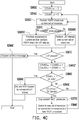
- FIG. 3C illustrates another embodiment of performing resource switching in an unlicensed spectrum as shown in FIG. 2A .
- the count of LBT failure COUNT LBT is initialized to zero (0) (S310C) before performing a first LBT attempt over the current set of resources during the current RACH procedure (S3201C & S3202C) (and before performing an RSRP check over the current set of resources during the current RACH procedure (S330C) ).
- an RSRP check is performed over the current set of resources (S330C).
- a current LBT attempt is performed over the resource(s) of the current set of resources that pass(es) the RSRP check (S3201C).
- the current LBT attempt over the resource(s) of the current set of resources that pass(es) the RSRP check passes (S321C, YES)
- one of the resource(s) of the current set of resources that passes both the RSRP check and the current LBT attempt is used to transmit the RACH message (S390C).
- the current LBT attempt is then further performed over the resource(s) of the current set of resources that fail(s) to pass the RSRP check (S3201C).
- the current LBT attempt over the resource(s) of the current set of resources that pass(es) the RSRP check fails, but the current LBT attempt over the resource(s) of the current set of resources that fail(s) to pass the RSRP check passes (S321C, YES)
- one of the resource(s) of the current set of resources that fails to pass the RSRP check but passes the current LBT attempt is used to transmit the RACH message (S390C).
- the current set of resources is switched to a new set of resources in the unlicensed spectrum to be utilized by the UE in a new RACH procedure.
- the current set of resources is switched to the new set of resources in the unlicensed spectrum to be utilized by the UE in a new RACH procedure after the count of LBT failure COUNT LBT over the current set of resources reaches the pre-configured threshold TH_Switch during the current RACH procedure.
- a new RACH procedure is initiated, and the count of LBT failure COUNT LBT will be reset/initialized to zero (0)(e.g., S310C in FIG. 3C ).
- the new set of resources is utilized by the UE for performing LBT attempts for transmission of an RACH message to the base station (S380C). In other words, the new set of resources will become the new "current" set of resources in the new "current" RACH procedure.
- the UE will run the same process shown in FIG. 3C for the new "current" RACH procedure (the feedback path in FIG. 3C ).
- the UE will run a different process shown in any one of FIGs. 3A , 3B (explained above), 3D and 3E (explained below) for the new "current" RACH procedure.
- FIG. 3C shows a feedback path from S380C back to the start point of the same process, the feedback path can also go to the start point of any of the processes in FIGs. 3A-3E for the subsequent "current" RACH procedure.
- the resource switching from a current set of resources (utilized in the current RACH procedure) to a new set of resources (to be utilized in a subsequent current RACH procedure) can be performed for more than once. For example, after switching from the current set of resources to a new set of resource, the new set of resources is utilized as the new "current" set of resources in a new "current" RACH procedure (and the count of LBT failure COUNT LBT will be reset/initialized to zero (0)).
- the new "current" set of resources currently utilized in the new "current” RACH procedure will be again switched to another set of resources to be utilized by the UE in a subsequent "current” RACH procedure.
- an LBT attempt passes before the count of LBT failure COUNT LBT reaches the pre-configured threshold TH_Switch during the new "current” RACH procedure, one of the resource(s) of the new "current" set of resources that passes the current LBT attempt is used to transmit the RACH message.
- a dynamic resource switching scheme based on the count of LBT failure is utilized to change the resources used by the UE for performing LBT attempts for transmission of the RACH message to the base station, so as to reduce the impact of the LBT failure onto the RACH procedures between the UE and the base station, thereby increasing the chance of completing RACH procedure and/or handover procedure.
- the RSRP check is performed before the LBT attempt, and the result of the RSRP check is used to prioritize the order of the resources for performing the LBT attempt thereover.
- the LBT attempt is performed over the resources passing the RSRP check (i.e., the resources with stronger signal strength) prior to over the resources failing the RSRP check (i.e., the resources with weaker signal strength). If the LBT attempt over the resources passing the RSRP check passes, one of the resource(s) passing both the RSRP check and the LBT attempt will be used to transmit the RACH message, and there is no need to perform the LBT attempt over the resources failing the RSRP check.
- the LBT attempt over the resources passing the RSRP check fails, then the LBT attempt is performed over the resources failing the RSRP check, and if the LBT attempt over the resources failing the RSRP check passes, one of the resource(s) failing the RSRP check but passing the LBT attempt will be used to transmit the RACH message. However, if the RSRP check over the current set of resources fails, then the LBT attempt is still performed over the current set of resources (i.e., the resources failing the RSRP check), and if the LBT attempt over the current set of resources passes, one of the resource(s) failing the RSRP check but passing the LBT attempt will be used to transmit the RACH message.
- the uses of the result of the RSRP check to prioritize the order of the resources for performing the LBT attempt thereover makes the process more efficient, because it may not be necessary to perform the LBT attempt over some of the resources when some other resources with higher priority are qualified for transmitting the RACH message.
- FIG. 3D illustrates an embodiment of performing resource switching in an unlicensed spectrum as shown in FIG. 2B .
- the failure count COUNT F is initialized to zero (0) ( S310D ) before performing a first LBT attempt over the current set of resources during the current RACH procedure (S320D).
- one or more LBT attempts for transmissions from the UE to the base station over the current set of resources are performed during a current RACH procedure (S320D).
- S320D a current RACH procedure
- an RSRP check is performed over the resource(s) of the current set of resources that pass(es) the current LBT attempt (S330D).
- the failure count is increase by one (1) (S340D). If the failure count COUNT F has not reached the pre-configured threshold TH_Switch (S360D, NO), the process goes back to S320D to perform a subsequent LBT attempt over the current set of resources. If the failure count COUNT F reaches the pre-configured threshold TH_Switch (S360D, YES), then the current RACH procedure is stopped (S370D).
- the current set of resources is switched to a new set of resources in the unlicensed spectrum to be utilized by the UE in a new RACH procedure (S380D).
- the current set of resources is switched to the new set of resources in the unlicensed spectrum to be utilized by the UE in a new RACH procedure after the failure count COUNT F over the current set of resources reaches the pre-configured threshold TH_Switch during the current RACH procedure.
- a new RACH procedure is initiated, and the failure count COUNT F will be reset/initialized to zero (0)(e.g., S310D in FIG. 3D ).
- the new set of resources is utilized by the UE for performing LBT attempts for transmission of an RACH message to the base station.
- the new set of resources will become the new "current" set of resources in the new "current” RACH procedure.
- the UE will run the same process shown in FIG. 3D for the new "current" RACH procedure (the feedback path in FIG. 3D ).
- the UE will run a different process shown in any one of FIGs. 3A-3C (explained above) and 3E (explained below) for the new "current" RACH procedure.
- FIG. 3D shows a feedback path from S380D back to the start point of the same process, the feedback path can also go to the start point of any of the processes in FIGs. 3A-3E for the subsequent "current" RACH procedure.
- the resource switching from a current set of resources (utilized in the current RACH procedure) to a new set of resources (to be utilized in a subsequent current RACH procedure) can be performed for more than once. For example, after switching from the current set of resources to a new set of resource, the new set of resources is utilized as the new "current" set of resources in a new "current" RACH procedure (and the failure count COUNT F will be reset/initialized to zero (0)).
- the new "current" set of resources currently utilized in the new "current” RACH procedure will be again switched to another set of resources to be utilized by the UE in a subsequent "current” RACH procedure.
- both an LBT attempt and an RSRP check pass before the failure count COUNT F reaches the pre-configured threshold TH_Switch during the new "current” RACH procedure, one of the resource(s) of the new "current" set of resources that passes both the current LBT attempt and RSRP check is used to transmit the RACH message.
- a dynamic resource switching scheme based on the failure count is utilized to change the resources used by the UE for performing LBT attempts for transmission of the RACH message to the base station, so as to reduce the impact of the LBT failure onto the RACH procedures between the UE and the base station, thereby increasing the chance of completing RACH procedure and/or handover procedure.
- the failure count is increased by one (1) when either of the current LBT attempt and the RSRP check over the current set of resources fails during the current RACH procedure.
- the UE will transmits the RACH message only when both the current LBT attempt and the RSRP check over the current set of resources pass, and one of the resource(s) of the current set of resources that passes both the current LBT attempt and RSRP check is used to transmit the RACH message. This would enhance transmission quality of the RACH message by using a resource that passes the LBT attempt and also has stronger signal strength (i.e., passing the RSRP check).
- FIG. 3E illustrates another embodiment of performing resource switching in an unlicensed spectrum as shown in FIG. 2B .
- the failure count COUNT F is initialized to zero (0) ( S310E ) before performing a first LBT attempt over the current set of resources during the current RACH procedure (S320E) (and before performing an RSRP check over the current set of resources during the current RACH procedure (S330E)).
- an RSRP check is performed over the current set of resources (S330E) before performing the current LBT attempt over the current set of resources.
- the current LBT attempt is then performed over the resource(s) of the current set of resources that pass(es) the RSRP check (S320E).
- failure count COUNT F has not reached the pre-configured threshold TH_Switch (S360E, NO)
- the process goes back to S330E to perform a subsequent RSRP check over the current set of resources. If the failure count COUNT F reaches the pre-configured threshold TH_Switch (S360E, YES), then the current RACH procedure is stopped (S370E).
- the failure count is increase by one (1) (S340E). If the failure count COUNT F has not reached the pre-configured threshold TH_Switch (S360E, NO), the process goes back to S320E to perform a subsequent RSRP check over the current set of resources. If the failure count COUNT F reaches the pre-configured threshold TH_Switch (S360E, YES), then the current RACH procedure is stopped (S370E).
- the current set of resources is switched to a new set of resources in the unlicensed spectrum to be utilized by the UE in a new RACH procedure (S320E).
- the current set of resources is switched to the new set of resources in the unlicensed spectrum to be utilized by the UE in a new RACH procedure after the failure count COUNT F over the current set of resources reaches the pre-configured threshold TH_Switch during the current RACH procedure.
- a new RACH procedure is initiated, and the failure count COUNT F will be reset/initialized to zero (0)(e.g., S310E in FIG. 3E ).
- the new set of resources is utilized by the UE for performing LBT attempts for transmission of an RACH message to the base station.
- the new set of resources will become the new "current" set of resources in the new "current” RACH procedure.
- the UE will run the same process shown in FIG. 3E for the new "current" RACH procedure (the feedback path in FIG. 3E ). In another embodiment, the UE will run a different process shown in any one of FIGs. 3A-3D (explained above) for the new "current" RACH procedure. In other words, although FIG. 3E shows a feedback path from S380E back to the start point of the same process, the feedback path can also go to the start point of any of the processes in FIGs. 3A-3E for the subsequent "current" RACH procedure.
- the resource switching from a current set of resources (utilized in the current RACH procedure) to a new set of resources (to be utilized in a subsequent current RACH procedure) can be performed for more than once. For example, after switching from the current set of resources to a new set of resource, the new set of resources is utilized as the new "current" set of resources in a new "current" RACH procedure (and the failure count COUNT F will be reset/initialized to zero (0)).
- the new "current" set of resources currently utilized in the new "current” RACH procedure will be again switched to another set of resources to be utilized by the UE in a subsequent "current” RACH procedure.
- both an RSRP check and an LBT attempt pass before the failure count COUNT F reaches the pre-configured threshold TH_Switch during the new "current” RACH procedure, one of the resource(s) of the new "current" set of resources that passes both the RSRP check and the current LBT attempt is used to transmit the RACH message.
- a dynamic resource switching scheme based on the failure count is utilized to change the resources used by the UE for performing LBT attempts for transmission of the RACH message to the base station, so as to reduce the impact of the LBT failure onto the RACH procedures between the UE and the base station, thereby increasing the chance of completing RACH procedure and/or handover procedure.
- the failure count is increased by one (1) when either of the current LBT attempt and the RSRP check over the current set of resources fails during the current RACH procedure.
- the UE will transmits the RACH message only when both the current LBT attempt and the RSRP check over the current set of resources pass, and one of the resource(s) of the current set of resources that passes both the current LBT attempt and RSRP check is used to transmit the RACH message. This would enhance transmission quality of the RACH message by using a resource that has stronger signal strength (i.e., passing the RSRP check) and also passes the LBT attempt.
- the processes for the plurality of "current” RACH procedures can be any combination of the processes shown in FIGs. 3A-3E .
- the process for the first "current” RACH procedure can be any one of the processes in FIGs. 3A-3E
- the process for the second "current” RACH procedure can be any one of the processes in FIGs. 3A-3E
- the process for the third "current” RACH procedure can be any one of the processes in FIGs. 3A-3E .
- the process for any "current” RACH procedures can be the same as or different from the previous "current” RACH procedure and the subsequent "current” RACH procedure.
- the process for the first "current" RACH procedures can be more strict to require the current set of resources passing both the LBT attempt and RSRP check (e.g., FIG. 3D or 3E ), and the process for the second "current” RACH procedures can be less strict to require the current set of resources passing the LBT attempt only but further consider the result of the RSRP check to choose/prioritize the resources to transmit the RACH message (e.g., FIG. 3B or 3C ), and the process for the third "current" RACH procedures can be least strict to require the current set of resources passing the LBT attempt only without further considering the result of the RSRP check to choose/prioritize the resources to transmit the RACH message (e.g., FIG. 3A ).
- the processes for the plurality of "current" RACH procedures can be selected based on the type of the current set of resources. For example, for the current set of resources that requires better transmission quality, the process for the corresponding RACH procedure can be more strict to require the current set of resources passing both the LBT attempt and RSRP check (e.g., FIG. 3D or 3E ) in order to transmit the RACH message.
- the process for the corresponding RACH procedure can be more strict to require the current set of resources passing both the LBT attempt and RSRP check (e.g., FIG. 3D or 3E ) in order to transmit the RACH message.
- the process for the corresponding RACH procedure can be less strict to require the current set of resources passing the LBT attempt only but further considering the result of the RSRP check over the current set of resources to choose/prioritize the resources to transmit the RACH message (e.g., FIG. 3B or 3C ).
- the process for the corresponding RACH procedure can be least strict to require the current set of resources passing the LBT attempt only without further considering the result of the RSRP check over the current set of resources to choose/prioritize the resources to transmit the RACH message (e.g., FIG. 3A ).
- the processes of performing resource switching in an unlicensed spectrum shown in FIGs. 3A-3E can also be applied to a handover procedure to declare a handover failure.
- the handover failure is caused by occurrence of a consistent LBT failure or by occurrence of a combination of a consistent LBT failure and RSRP failure.
- FIGs. 4A-4C illustrate embodiments of applying the processes of performing resource switching in an unlicensed spectrum in FIGs. 3A-3C to a handover procedure to declare a handover failure.
- the handover failure is caused by occurrence of a consistent LBT failure.
- FIGs. 4D-4E illustrate embodiments of applying the processes of performing resource switching in an unlicensed spectrum in FIGs. 3D-3E to a handover procedure to declare a handover failure.
- the handover failure is caused by a combination of a consistent LBT failure and RSRP failure.
- a count for handover failure declaration COUNT HOF and a pre-configured handover failure threshold TH_HOF are further used to determine whether to declare a handover failure.
- the count for handover failure declaration COUNT HOF is initialized to zero (0) before performing a first LBT attempt over the current set of resources during a first current RACH procedure in a handover procedure (S300A/S300B/S300C/S300D/S300E in FIG. 4A / 4B / 4C / 4D / 4E ).
- the count for handover failure declaration COUNT HOF in the current RACH procedure is not reset before performing a first LBT attempt over any subsequent current set of resources during any subsequent current RACH procedure(s) in the handover procedure (after stopping the current RACH procedure and switching from the current set of resources to the new set of resources), and the count for handover failure declaration COUNT HOF is increased by one (1) with the same or similar condition with the count of LBT failure COUNT LBT or the failure count COUNT F increased by one (1).
- the count for handover failure declaration COUNT HOF is increased by one (1) when the count of LBT failure COUNT LBT is increased by one (1) ( S340A'/S340B'/S340C' in FIG.
- the handover failure is declared.
- the handover failure is caused by occurrence of a consistent LBT failure ( S399A/S399B/S399C in FIG. 4A / 4B / 4C ) or by occurrence of a combination of a consistent LBT failure and RSRP failure ( S399D/S399E in FIG. 4D / 4E ).
- the pre-configured handover failure threshold TH_HOF is N times of the pre-configured threshold TH_Switch for the count of LBT failure or the failure count, and N is a total number of sets of resources that are configured to be utilized by the UE for performing the LBT attempts for transmission of the RACH message to the base station.
- the pre-configured handover failure threshold TH_HOF is N times of the pre-configured threshold TH_Switch for the count of LBT failure or the failure count, and N is a total number of sets of resources that are configured to be utilized by the UE for performing the LBT attempts and RSRP checks for transmission of the RACH message to the base station.
- the UE will run the same process shown in FIG. 4A for the new "current" RACH procedure (the feedback path in FIG. 4A / 4B / 4C / 4D / 4E ) after stopping the current RACH procedure and switching from the current set of resources to the new set of resources.
- the UE will run a different process shown in any one of FIGs. 4A-4E for the new "current" RACH procedure. In other words, although each of FIGs.
- 4A-4E shows a feedback path from S380A/S380B/S380C/S380D/S380E back to S310A/S310B/S310C/S310D/S310E, the feedback path can also go to any of S310A/S310B/S310C/S310D/S310E in FIG. 4A / 4B / 4C / 4D / 4E for the subsequent "current" RACH procedure in the handover procedure.
- the count for handover failure declaration COUNT HOF in the current RACH procedure is not reset before performing a first LBT attempt over any subsequent current set of resources during any subsequent current RACH procedure(s) in the handover procedure (after stopping the current RACH procedure and switching from the current set of resources to the new set of resources), the count of LBT failure COUNT LBT will be reset/initialized to zero (0) after stopping the current RACH procedure and switching from the current set of resources to the new set of resources ( S310A/S310B/S310C/S310D/S310E in FIG. 4A / 4B / 4C / 4D / 4E ) for resource switching purpose in each subsequent current RACH procedure.
- the processor of the UE is configured to perform the operations shown in FIGs. 2, 2A-2B, 3A-3E and/or 4A-4E , and to control the transceiver to use one of the resource(s) of the current set of resources to transmit the RACH message.
- the count of LBT failure is used as a factor to determine whether to perform the resource switching for LBT attempts for transmission of an RACH message from the UE to a base station. Therefore, the impact of LBT failure on RACH procedure and/or handover in the unlicensed spectrum can be reduced.
- the result of the RSRP check may be further considered for selecting the resources to transmit the RACH message, which allows the use of the resources with stronger signal strength to transmit the RACH message.
- the result of the RSRP check may also be used to prioritize the order of the resources for performing the LBT attempt thereover, which makes the process more efficient, because it may not be necessary to perform the LBT attempt over some of the resources when some other resources with higher priority pass the LBT attempt.
- the count of RSRP check failure may also be used as an additional factor to determine whether to perform the resource switching, which would enhance transmission quality of the RACH message by using a resource that passes the LBT attempt and also has stronger signal strength (i.e., passing the RSRP check).
- applying the processes of performing resource switching in an unlicensed spectrum with a count for handover failure declaration can effectively identify and declare a handover failure.
- the proposed dynamic resource switching schemes can effectively reduce the impact of the LBT failure onto the RACH procedures between the UE and the base station, thereby increasing the chance of completing RACH procedure and/or handover procedure.
- a method of performing resource switching in an unlicensed spectrum wherein a current set of resources in the unlicensed spectrum is utilized by a UE for performing LBT attempts for transmission of an RACH message to a base station.
- the method includes: performing one or more LBT attempts for transmissions from the UE to the base station over the current set of resources during a current RACH procedure; and performing a reference signal received power (RSRP) check over the current set of resources either after a current LBT attempt over the current set of resources passes, or before performing the current LBT attempt over the current set of resources, switching from the current set of resources to a new set of resources in the unlicensed spectrum to be utilized by the UE in a new RACH procedure after a failure count over the current set of resources reaches a pre-configured threshold during the current RACH procedure, wherein the failure count is increased by one (1) when either of the current LBT attempt and the RSRP check over the current set of resources fails during the current RACH procedure.
- RSRP reference signal received power
- the method further including: initializing the failure count to zero (0) before performing any of a first LBT attempt and a first RSRP check over the current set of resources during the current RACH procedure.
- the RSRP check is performed over the current set of resources only after the current LBT attempt over the current set of resources passes
- the step of performing the RSRP check over the current set of resources during the current RACH procedure includes: performing the RSRP check over the resource(s) of the current set of resources that pass(es) the current LBT attempt, and wherein the method further includes: when the RSRP check over the resource(s) of the current set of resources that pass(es) the current LBT attempt fails, increasing the failure count by one (1); and not transmitting the RACH message using the resource(s) of the current set of resources that pass(es) the current LBT attempt but fail(s) to pass the RSRP check; and when the RSRP check over the resource(s) of the current set of resources that pass(es) the current LBT attempt passes, using one of the resource(s) of the current set of resources that passes both the current LBT attempt and the RSRP check to transmit the RACH message.
- the RSRP check is performed over the current set of resources only before performing the current LBT attempt over the current set of resources, wherein when the RSRP check over the resource(s) of the current set of resources passes, the step of performing the LBT attempt over the current set of resources includes: performing the current LBT attempt over the resource(s) of the current set of resources that pass(es) the RSRP check, wherein the method further includes: when the current LBT attempt over the resource(s) of the current set of resources that pass(es) the RSRP check fails, increasing the failure count by one (1); and not transmitting the RACH message using the resource(s) of the current set of resources that pass(es) the RSRP check but fail(s) to pass the current LBT attempt; and when the current LBT attempt over the resource(s) of the current set of resources that pass(es) the RSRP check passes, using one of the resource(s) of the current set of resources that passes both the RSRP check and the current LBT attempt to transmit
- the method further including: declaring handover failure when a count for handover failure declaration reaches a pre-configured handover failure threshold; and initializing the count for handover failure declaration to zero (0) before performing any of a first LBT attempt and a first RSRP check over the current set of resources during a first current RACH procedure in a handover procedure, wherein the count for handover failure declaration is not reset before performing any of a first LBT attempt and a first RSRP check over any subsequent current set of resources during any subsequent current RACH procedure(s) in the handover procedure, and the count for handover failure declaration is increased by one (1) when the failure count is increased by one (1).
- the pre-configured handover failure threshold is N times of the pre-configured threshold for the failure count, and wherein N is a total number of sets of resources that are configured to be utilized by the UE for performing the LBT attempts and the RSRP checks for transmission of the RACH message to the base station.
- the handover failure is caused by occurrence of a combination of a consistent LBT failure and RSRP failure.
- the method further including: stopping the current RACH procedure after the failure count reaches the pre-configured threshold but before switching from the current set of resources to the new set of resources.
- the method further including: after stopping the current RACH procedure and switching from the current set of resources to the new set of resources, resetting the failure count to zero (0); and performing the steps of claim 12 using the new set of resources as the current set of resources in the new RACH procedure being the current RACH procedure.
- a UE wherein a current set of resources in the unlicensed spectrum is utilized by the UE for performing LBT attempts for transmission of an RACH message to a base station.
- the UE includes a transceiver configured to transmit signals to the base station and receive signals from the base station; and a processor coupled to the transceiver and configured to: perform one or more LBT attempts for transmissions from the UE to the base station over the current set of resources during a current RACH procedure; perform a reference signal received power (RSRP) check over the current set of resources either after a current LBT attempt over the current set of resources passes, or before performing the current LBT attempt over the current set of resources; switch from the current set of resources to a new set of resources in the unlicensed spectrum to be utilized by the UE in a new RACH procedure after a failure count over the current set of resources reaches a pre-configured threshold during the current RACH procedure; and increase the failure count by one (1) when either of the current LBT attempt and the RS
- RSRP reference signal
- the processor is further configured to: initialize the failure count to zero (0) before performing any of a first LBT attempt and a first RSRP check over the current set of resources during the current RACH procedure.
- the processor is further configured to: perform the RSRP check over the current set of resources only after the current LBT attempt over the current set of resources passes, by performing the RSRP check over the resource(s) of the current set of resources that pass(es) the current LBT attempt; when the RSRP check over the resource(s) of the current set of resources that pass(es) the current LBT attempt fails, increase the failure count by one (1); and not transmit the RACH message using the resource(s) of the current set of resources that pass(es) the current LBT attempt but fail(s) to pass the RSRP check; and when the RSRP check over the resource(s) of the current set of resources that pass(es) the current LBT attempt passes, control the transceiver to use one of the resource(s) of the current set of resources that passes both the current LBT attempt and the RSRP check to transmit the RACH message.
- the processor is further configured to: perform the RSRP check over the current set of resources only before performing the current LBT attempt over the current set of resources; when the RSRP check over the resource(s) of the current set of resources passes, the processor is further configured to perform the LBT attempt over the current set of resources by performing the current LBT attempt over the resource(s) of the current set of resources that pass(es) the RSRP check; when the current LBT attempt over the resource(s) of the current set of resources that pass(es) the RSRP check fails, increase the failure count by one (1); and not transmit the RACH message using the resource(s) of the current set of resources that pass(es) the RSRP check but fail(s) to pass the current LBT attempt; and when the current LBT attempt over the resource(s) of the current set of resources that pass(es) the RSRP check passes, control the transceiver to use one of the resource(s) of the current set of resources that passes both the RSRP check and the current
- the processor is further configured to: declare handover failure when a count for handover failure declaration reaches a pre-configured handover failure threshold; initialize the count for handover failure declaration to zero (0) before performing any of a first LBT attempt and a first RSRP check over the current set of resources during a first current RACH procedure in a handover procedure; not reset the count for handover failure declaration before performing any of a first LBT attempt and a first RSRP check over any subsequent current set of resources during any subsequent current RACH procedure(s) in the handover procedure; and increase the count for handover failure declaration by one (1) when the failure count is increased by one (1).
- the pre-configured handover failure threshold is N times of the pre-configured threshold for the failure count, and wherein N is a total number of sets of resources that are configured to be utilized by the UE for performing the LBT attempts and the RSRP checks for transmission of the RACH message to the base station.
- the handover failure is caused by occurrence of a combination of a consistent LBT failure and RSRP failure.
- the processor is further configured to: stop the current RACH procedure after the failure count reaches the pre-configured threshold but before switching from the current set of resources to the new set of resources.
- the processor is further configured to: after stopping the current RACH procedure and switching from the current set of resources to the new set of resources, reset the failure count to zero (0); and use the new set of resources as the current set of resources in the new RACH procedure being the current RACH procedure.
Landscapes
- Engineering & Computer Science (AREA)
- Computer Networks & Wireless Communication (AREA)
- Signal Processing (AREA)
- Mobile Radio Communication Systems (AREA)
- Quality & Reliability (AREA)
- Physics & Mathematics (AREA)
- Electromagnetism (AREA)
Abstract
Description
- The present application relates to resource switching in an unlicensed spectrum.
- Insufficient wireless frequency bands arise with the increase in mobile traffic demand, which results in increased cost of the licensed spectrum. Therefore, an unlicensed spectrum presents a potential opportunity for mobile services. However, interference caused by existing wireless transmissions, such as Wi-Fi in the unlicensed spectrum, is a serious issue in the effective utilization of the unlicensed spectrum. Listen Before Talk (LBT) was proposed as a promising method to ensure the coexistence of Wi-Fi and commercial mobile services such as LTE or 5G network.
- LBT is a technique used in radio communications where a radio transmitter first senses its radio environment before it starts a transmission. LBT can be used by a radio device to find a free radio channel. In the 5G unlicensed spectrum, a successful LBT is needed before each transmission between the user equipment (UE) and the base station. For example, in the 5G unlicensed spectrum, if LBT fails, the transmission of a random access channel (RACH) message (e.g., preamble) cannot be performed. In addition, during the handover procedure, LBT failure before the UE synchronizes with the target base station (i.e., RACH preamble transmission) may lead to unsuccessful handover. Therefore, how to reduce the impact of LBT failure on transmissions between the UE and the base station in the unlicensed spectrum becomes an issue to address.
- According to a first aspect of the present application, a method of performing resource switching in an unlicensed spectrum is provided, wherein a current set of resources in the unlicensed spectrum is utilized by a UE for performing LBT attempts for transmission of an RACH message to a base station. The method includes: performing one or more LBT attempts for transmissions from the UE to the base station over the current set of resources during a current RACH procedure; and switching from the current set of resources to a new set of resources in the unlicensed spectrum to be utilized by the UE in a new RACH procedure after a failure count reaches a pre-configured threshold during the current RACH procedure, wherein the failure count is calculated at least based on a count of LBT failure over the current set of resources during the current RACH procedure.
- Furthermore, according to a second aspect of the present application, a method of performing resource switching in an unlicensed spectrum is provided, wherein a current set of resources in the unlicensed spectrum is utilized by a UE for performing LBT attempts for transmission of an RACH message to a base station. The method includes: performing one or more LBT attempts for transmissions from the UE to the base station over the current set of resources during a current RACH procedure; and switching from the current set of resources to a new set of resources in the unlicensed spectrum to be utilized by the UE in a new RACH procedure after a count of LBT failure over the current set of resources reaches a pre-configured threshold during the current RACH procedure, wherein the count of LBT failure is increased by one (1) when a current LBT attempt over the current set of resources fails during the current RACH procedure.
- Still furthermore, according to a third aspect of the present application, a method of performing resource switching in an unlicensed spectrum is provided, wherein a current set of resources in the unlicensed spectrum is utilized by a UE for performing LBT attempts for transmission of an RACH message to a base station. The method includes: performing one or more LBT attempts for transmissions from the UE to the base station over the current set of resources during a current RACH procedure; and performing a reference signal received power (RSRP) check over the current set of resources either after a current LBT attempt over the current set of resources passes, or before performing the current LBT attempt over the current set of resources, switching from the current set of resources to a new set of resources in the unlicensed spectrum to be utilized by the UE in a new RACH procedure after a failure count over the current set of resources reaches a pre-configured threshold during the current RACH procedure, wherein the failure count is increased by one (1) when either of the current LBT attempt and the RSRP check over the current set of resources fails during the current RACH procedure.
- In one embodiment of the invention, the method further including: initializing the failure count to zero (0) before performing any of a first LBT attempt and a first RSRP check over the current set of resources during the current RACH procedure.
- In one embodiment of the invention, the RSRP check is performed over the current set of resources only after the current LBT attempt over the current set of resources passes, wherein the step of performing the RSRP check over the current set of resources during the current RACH procedure includes: performing the RSRP check over the resource(s) of the current set of resources that pass(es) the current LBT attempt, and wherein the method further includes: when the RSRP check over the resource(s) of the current set of resources that pass(es) the current LBT attempt fails, increasing the failure count by one (1); and not transmitting the RACH message using the resource(s) of the current set of resources that pass(es) the current LBT attempt but fail(s) to pass the RSRP check; and when the RSRP check over the resource(s) of the current set of resources that pass(es) the current LBT attempt passes, using one of the resource(s) of the current set of resources that passes both the current LBT attempt and the RSRP check to transmit the RACH message.
- In one embodiment of the invention, the RSRP check is performed over the current set of resources only before performing the current LBT attempt over the current set of resources, wherein when the RSRP check over the resource(s) of the current set of resources passes, the step of performing the LBT attempt over the current set of resources includes: performing the current LBT attempt over the resource(s) of the current set of resources that pass(es) the RSRP check, wherein the method further includes: when the current LBT attempt over the resource(s) of the current set of resources that pass(es) the RSRP check fails, increasing the failure count by one (1); and not transmitting the RACH message using the resource(s) of the current set of resources that pass(es) the RSRP check but fail(s) to pass the current LBT attempt; and when the current LBT attempt over the resource(s) of the current set of resources that pass(es) the RSRP check passes, using one of the resource(s) of the current set of resources that passes both the RSRP check and the current LBT attempt to transmit the RACH message.
- In one embodiment of the invention, the method further including: declaring handover failure when a count for handover failure declaration reaches a pre-configured handover failure threshold; and initializing the count for handover failure declaration to zero (0) before performing any of a first LBT attempt and a first RSRP check over the current set of resources during a first current RACH procedure in a handover procedure, wherein the count for handover failure declaration is not reset before performing any of a first LBT attempt and a first RSRP check over any subsequent current set of resources during any subsequent current RACH procedure(s) in the handover procedure, and the count for handover failure declaration is increased by one (1) when the failure count is increased by one (1).
- In one embodiment of the invention, the pre-configured handover failure threshold is N times of the pre-configured threshold for the failure count, and wherein N is a total number of sets of resources that are configured to be utilized by the UE for performing the LBT attempts and the RSRP checks for transmission of the RACH message to the base station.
- In one embodiment of the invention, the handover failure is caused by occurrence of a combination of a consistent LBT failure and RSRP failure.
- In one embodiment of the invention, the method further including: stopping the current RACH procedure after the failure count reaches the pre-configured threshold but before switching from the current set of resources to the new set of resources.
- In one embodiment of the invention, the method further including: after stopping the current RACH procedure and switching from the current set of resources to the new set of resources, resetting the failure count to zero (0); and performing the steps of claim 12 using the new set of resources as the current set of resources in the new RACH procedure being the current RACH procedure.
- Still furthermore, according to a fourth aspect of the present application, a UE is provided, wherein a current set of resources in the unlicensed spectrum is utilized by the UE for performing LBT attempts for transmission of an RACH message to a base station. The UE includes a transceiver configured to transmit signals to the base station and receive signals from the base station; and a processor coupled to the transceiver and configured to: perform one or more LBT attempts for transmissions from the UE to the base station over the current set of resources during a current RACH procedure; and switch from the current set of resources to a new set of resources in the unlicensed spectrum to be utilized by the UE in a new RACH procedure after a failure count reaches a pre-configured threshold during the current RACH procedure, wherein the failure count is calculated at least based on a count of LBT failure over the current set of resources during the current RACH procedure.
- Still furthermore, according to a fifth aspect of the present application, a UE is provided, wherein a current set of resources in the unlicensed spectrum is utilized by the UE for performing LBT attempts for transmission of an RACH message to a base station. The UE includes a transceiver configured to transmit signals to the base station and receive signals from the base station; and a processor coupled to the transceiver and configured to: perform one or more LBT attempts for transmissions from the UE to the base station over the current set of resources during a current RACH procedure; switch from the current set of resources to a new set of resources in the unlicensed spectrum to be utilized by the UE in a new RACH procedure after a count of LBT failure over the current set of resources reaches a pre-configured threshold during the current RACH procedure; and increase the count of LBT failure by one (1) when a current LBT attempt over the current set of resources fails during the current RACH procedure.
- Still furthermore, according to a sixth aspect of the present application, a UE is provided, wherein a current set of resources in the unlicensed spectrum is utilized by the UE for performing LBT attempts for transmission of an RACH message to a base station. The UE includes a transceiver configured to transmit signals to the base station and receive signals from the base station; and a processor coupled to the transceiver and configured to: perform one or more LBT attempts for transmissions from the UE to the base station over the current set of resources during a current RACH procedure; perform a reference signal received power (RSRP) check over the current set of resources either after a current LBT attempt over the current set of resources passes, or before performing the current LBT attempt over the current set of resources; switch from the current set of resources to a new set of resources in the unlicensed spectrum to be utilized by the UE in a new RACH procedure after a failure count over the current set of resources reaches a pre-configured threshold during the current RACH procedure; and increase the failure count by one (1) when either of the current LBT attempt and the RSRP check over the current set of resources fails during the current RACH procedure.
- In one embodiment of the invention, the processor is further configured to: initialize the failure count to zero (0) before performing any of a first LBT attempt and a first RSRP check over the current set of resources during the current RACH procedure.
- In one embodiment of the invention, the processor is further configured to: perform the RSRP check over the current set of resources only after the current LBT attempt over the current set of resources passes, by performing the RSRP check over the resource(s) of the current set of resources that pass(es) the current LBT attempt; when the RSRP check over the resource(s) of the current set of resources that pass(es) the current LBT attempt fails, increase the failure count by one (1); and not transmit the RACH message using the resource(s) of the current set of resources that pass(es) the current LBT attempt but fail(s) to pass the RSRP check; and when the RSRP check over the resource(s) of the current set of resources that pass(es) the current LBT attempt passes, control the transceiver to use one of the resource(s) of the current set of resources that passes both the current LBT attempt and the RSRP check to transmit the RACH message.
- In one embodiment of the invention, the processor is further configured to: perform the RSRP check over the current set of resources only before performing the current LBT attempt over the current set of resources; when the RSRP check over the resource(s) of the current set of resources passes, the processor is further configured to perform the LBT attempt over the current set of resources by performing the current LBT attempt over the resource(s) of the current set of resources that pass(es) the RSRP check; when the current LBT attempt over the resource(s) of the current set of resources that pass(es) the RSRP check fails, increase the failure count by one (1); and not transmit the RACH message using the resource(s) of the current set of resources that pass(es) the RSRP check but fail(s) to pass the current LBT attempt; and when the current LBT attempt over the resource(s) of the current set of resources that pass(es) the RSRP check passes, control the transceiver to use one of the resource(s) of the current set of resources that passes both the RSRP check and the current LBT attempt to transmit the RACH message.
- In one embodiment of the invention, the processor is further configured to: declare handover failure when a count for handover failure declaration reaches a pre-configured handover failure threshold; initialize the count for handover failure declaration to zero (0) before performing any of a first LBT attempt and a first RSRP check over the current set of resources during a first current RACH procedure in a handover procedure; not reset the count for handover failure declaration before performing any of a first LBT attempt and a first RSRP check over any subsequent current set of resources during any subsequent current RACH procedure(s) in the handover procedure; and increase the count for handover failure declaration by one (1) when the failure count is increased by one (1).
- In one embodiment of the invention, the pre-configured handover failure threshold is N times of the pre-configured threshold for the failure count, and wherein N is a total number of sets of resources that are configured to be utilized by the UE for performing the LBT attempts and the RSRP checks for transmission of the RACH message to the base station.
- In one embodiment of the invention, the handover failure is caused by occurrence of a combination of a consistent LBT failure and RSRP failure.
- In one embodiment of the invention, the processor is further configured to: stop the current RACH procedure after the failure count reaches the pre-configured threshold but before switching from the current set of resources to the new set of resources.
- In one embodiment of the invention, the processor is further configured to: after stopping the current RACH procedure and switching from the current set of resources to the new set of resources, reset the failure count to zero (0); and use the new set of resources as the current set of resources in the new RACH procedure being the current RACH procedure.
- Further scope of applicability of the present application will become apparent from the detailed description given hereinafter. However, it should be understood that the detailed description and specific examples, while indicating preferred embodiments of the application, are given by way of illustration only, since various changes and modifications within the spirit and scope of the invention will become apparent to those skilled in the art from this detailed description.
- The present application will become more fully understood from the detailed description given hereinbelow and the accompanying drawings which are given by way of illustration only, and thus are not limitative of the present application, and wherein:
-
FIG. 1 illustrates a systemic view of a UE and a base station in accordance with an embodiment of the present application; -
FIG. 2 illustrates a process of performing resource switching in an unlicensed spectrum in accordance with an embodiment of the present application; -
FIG. 2A illustrates an embodiment of a process of performing resource switching in an unlicensed spectrum as shown inFIG. 2 ; -
FIG. 2B illustrates another embodiment of a process of performing resource switching in an unlicensed spectrum as shown inFIG. 2 ; -
FIGs. 3A-3C illustrate embodiments of a process of performing resource switching in an unlicensed spectrum as shown inFIG. 2A ; -
FIGs. 3D-3E illustrate embodiments of a process of performing resource switching in an unlicensed spectrum as shown inFIG. 2B ; -
FIGs. 4A-4C illustrate embodiments of applying the processes of performing resource switching in an unlicensed spectrum inFIGs. 3A-3C to a handover procedure; and -
FIGs. 4D-4E illustrate embodiments of applying the processes of performing resource switching in an unlicensed spectrum inFIGs. 3D-3E to a handover procedure. - The present application will now be described in detail with reference to the accompanying drawings, wherein the same reference numerals will be used to identify the same or similar elements throughout the several views. It should be noted that the drawings should be viewed in the direction of orientation of the reference numerals.
-
FIG. 1 illustrates a systemic view of a UE and a base station in accordance with an embodiment of the present application. As shown inFIG. 1 , a UE includes a transceiver configured to transmit signals to a base station and/or receive signals from the base station, a processor coupled, e.g. directly connected or indirectly connected, to the transceiver, and a memory embedded in the processor or external to but coupled, e.g. directly connected or indirectly connected, to the processor for storing data and application to be used/saved/executed by the processor. -
FIG. 2 illustrates a process of performing resource switching in an unlicensed spectrum in accordance with an embodiment of the present application. In an embodiment, a current set of resources in the unlicensed spectrum is utilized by a UE for performing LBT attempts for transmission of an RACH message to a base station. As shown inFIG. 2 , one or more LBT attempts for transmissions from the UE to the base station over the current set of resources are performed during a current RACH procedure (S220), and the current set of resources is switched to a new set of resources in the unlicensed spectrum to be utilized by the UE in a new RACH procedure after a failure count reaches a pre-configured threshold during the current RACH procedure (S280). In an embodiment, the failure count is calculated at least based on a count of LBT failure over the current set of resources during the current RACH procedure. - In an embodiment, a plurality of sets of resources (including the current set and the new set) are configured to be utilized by the UE for performing the LBT attempts for transmission of the RACH message to the base station.
- In an embodiment, each set of resources may include the following set or subset of resources: one or more RACH resources from dedicated RACH resources, one or more RACH resources from common RACH resources, one or more RACH resources from dedicated RACH resources and common RACH resources, one or more physical random access channel (PRACH) occasions (ROs), one or more sub-bands, one or more bandwidth parts (BWPs), etc. Therefore, in an embodiment, the resource switching from the current set to the new set can be made by switching from any one of the above-noted sets or subsets of resources to another one of the above-noted sets or subsets of resources, as long as the unit of the resources in the current set and the unit of the resources in the new set are compatible with each other. For example, the resource switching from the current set to the new set can be made by switching from one or more RACH resources from the dedicated RACH resources (the current set) to a different one or a different combination of RACH resources from the dedicated RACH resources (the new set), or to one or more RACH resources from the common RACH resources (the new set), or to one or more RACH resources from the dedicated RACH resources and common RACH resources (the new set), switching from one or more RACH resources from the common RACH resources (the current set) to a different one or a different combination of RACH resources from the common RACH resources (the new set), or to one or more RACH resources from the dedicated RACH resources (the new set), or to one or more RACH resources from the dedicated RACH resources and common RACH resources (the new set), switching from one or more RACH resources from the dedicated RACH resources and common RACH resources (the current set) to a different one or a different combination of RACH resources from the dedicated RACH resources and common RACH resources (the new set), switching from one or more ROs (the current set) to a different one or a different combination of ROs (the new set), switching from one or more BWPs (the current set) to a different one or a different combination of BWPs (the new set), or switching from one or more sub-bands (the current set) to a different one or a different combination of sub-bands (the new set), etc. In addition, as long as a set of resources has a different combination of resources from another set of resources, they are considered as different sets of resources (even if some of the resources in both sets are common).
- In addition, dedicated RACH resources are contention-free random access resources associated with synchronization signal blocks (SSBs) and/or channel state information reference signals (CSI-RSs); common RACH resources are contention-based random access resources associated with SSBs; ROs are time-frequency resources configured to UE as preamble transmission opportunities; a BWP may include one or more sub-bands.
-
FIG. 2A illustrates an embodiment of a process of performing resource switching in an unlicensed spectrum as shown inFIG. 2 . - As shown in
FIG. 2A , one or more LBT attempts for transmissions from the UE to the base station over the current set of resources are performed during a current RACH procedure (S220A), and the current set of resources is switched to a new set of resources in the unlicensed spectrum to be utilized by the UE in a new RACH procedure after a count of LBT failure over the current set of resources reaches a pre-configured threshold during the current RACH procedure (S280A). In an embodiment, the count of LBT failure is increased by one (1) when a current LBT attempt over the current set of resources fails during the current RACH procedure. - In an embodiment, the current set of resources is a BWP consisting of several sub-bands, and an LBT attempt over the current set of resources passes if the BWP does not encounter LBT failure; i.e. all sub-bands in the BWP pass LBT. Otherwise, the LBT attempt over the current set of resources fails. For example, if the current set of resource is BWP1 consisting of sub-bands SB1, SB2 and SB3, the LBT attempt over the current set of resources is deemed to pass only if all of the sub-bands SB1, SB2 and SB3 pass LBT. However, if the sub-band SB1 fails LBT (no matter whether the sub-bands SB2 and SB3 pass or not), then the LBT attempt over the current set of resources is deemed to fail. In another embodiment, the current set of resources include a plurality of sub-bands in several BWPs, and an LBT attempt over the current set of resources passes if there exists at least one BWP which is (partially) contained in the current set of resources does not encounter LBT failure. Otherwise, the LBT attempt over the current set of resources fails. It should be noted that these are embodiments of how to determine whether the LBT attempt over the current set of resources passes or fails. In another embodiment, an LBT attempt over the current set of resources may be deemed to pass as long as any one of the resources (e.g., sub-bands) in the current set of resources passes LBT, and it does not consider the resources in the same group (e.g., the same BWP) as a whole when determining whether the LBT attempt passes or fails.
- In an embodiment, the count of LBT failure is initialized to zero (0) before performing a first LBT attempt over the current set of resources during the current RACH procedure.
- In an embodiment, the current RACH procedure is stopped after the count of LBT failure reaches the pre-configured threshold but before switching from the current set of resources to the new set of resources.
- In an embodiment, after stopping the current RACH procedure and switching from the current set of resources to the new set of resources, the count of LBT failure is reset to zero (0), and the new set of resources is used as the new current set of resources to be utilized by the UE for performing the LBT attempts for transmission of a random access channel (RACH) message to the base station in the new RACH procedure (which becomes the new current RACH procedure).
-
FIG. 2B illustrates another embodiment of a process of performing resource switching in an unlicensed spectrum as shown inFIG. 2 . - As shown in
FIG. 2B , one or more LBT attempts for transmissions from the UE to the base station over the current set of resources are performed during a current RACH procedure (S220B), and a reference signal received power (RSRP) check over the current set of resources is performed either after a current LBT attempt over the current set of resources passes, or before performing the current LBT attempt over the current set of resources (S230B), and the current set of resources is switched to a new set of resources in the unlicensed spectrum to be utilized by the UE in a new RACH procedure after a failure count over the current set of resources reaches a pre-configured threshold during the current RACH procedure (S280B). In an embodiment, the failure count is calculated at least based on either of the current LBT attempt and the RSRP check over the current set of resources fails during the current RACH procedure. In an embodiment, the failure count is increased by one (1) when either of the current LBT attempt and the RSRP check over the current set of resources fails during the current RACH procedure. - In an embodiment, the current set of resources is a BWP consisting of several sub-bands, and an LBT attempt over the current set of resources passes if the BWP does not encounter LBT failure; i.e. all sub-bands in the BWP pass LBT. Otherwise, the LBT attempt over the current set of resources fails. For example, if the current set of resource is BWP1 consisting of sub-bands SB1, SB2 and SB3, the LBT attempt over the current set of resources is deemed to pass only if all of the sub-bands SB1, SB2 and SB3 pass LBT. However, if the sub-band SB1 fails LBT (no matter whether the sub-bands SB2 and SB3 pass or not), then the LBT attempt over the current set of resources is deemed to fail. In another embodiment, the current set of resources include a plurality of sub-bands in several BWPs, and an LBT attempt over the current set of resources passes if there exists at least one BWP which is (partially) contained in the current set of resources does not encounter LBT failure. Otherwise, the LBT attempt over the current set of resources fails. It should be noted that these are embodiments of how to determine whether the LBT attempt over the current set of resources passes or fails. In another embodiment, an LBT attempt over the current set of resources may be deemed to pass as long as any one of the resources (e.g., sub-bands) in the current set of resources passes LBT, and it does not consider the resources in the same group (e.g., the same BWP) as a whole when determining whether the LBT attempt passes or fails.
- In an embodiment, the current set of resources is a BWP configured with RACH resources associated with reference signals, i.e. synchronization signal blocks (SSBs) or channel state information reference signals (CSI-RSs), and an RSRP check over the current set of resources passes if at least one reference signal with RSRP above a pre-configured RSRP threshold amongst the associated reference signals is available. Otherwise, the RSRP check over the current set of resources fails. In another embodiment, the current set of resources include a plurality of sub-bands containing RACH resources associated with reference signals, and an RSRP check over the current set of resources passes if at least one reference signal with RSRP above a pre-configured RSRP threshold amongst the associated reference signals is available. Otherwise, the RSRP check over the current set of resources fails.
- In an embodiment, the failure count is initialized to zero (0) before performing any of a first LBT attempt and a first RSRP check over the current set of resources during the current RACH procedure.
- In an embodiment, the current RACH procedure is stopped after the failure count reaches the pre-configured threshold but before switching from the current set of resources to the new set of resources.
- In an embodiment, after stopping the current RACH procedure and switching from the current set of resources to the new set of resources, the failure count is reset to zero (0), and the new set of resources is used as the new current set of resources to be utilized by the UE for performing the LBT attempts for transmission of a random access channel (RACH) message to the base station in the new RACH procedure (which becomes the new current RACH procedure).
-
FIG. 3A illustrates an embodiment of performing resource switching in an unlicensed spectrum as shown inFIG. 2A . - In an embodiment shown in
FIG. 3A , the count of LBT failure COUNTLBT is initialized to zero (0) (S310A) before performing a first LBT attempt over the current set of resources during the current RACH procedure (S320A). - After initializing the count of LBT failure COUNTLBT to zero (0), one or more LBT attempts for transmissions from the UE to the base station over the current set of resources are performed during a current RACH procedure (S320A). When the current LBT attempt over the current set of resources passes (S321A, YES) during the current RACH procedure and before the count of LBT failure COUNTLBT over the current set of resources reaches a pre-configured threshold TH_Switch, one of the resource(s) of the current set of resources that passes the current LBT attempt is used to transmit the RACH message (S390A).
- However, when a current LBT attempt over the current set of resources fails during the current RACH procedure (S321A, NO), the count of LBT failure COUNTLBT is increased by one (1) (S340A). If the count of LBT failure COUNTLBT has not reached the pre-configured threshold TH_Switch (S360A, NO), the process goes back to S320A to perform a subsequent LBT attempt over the current set of resources. If the count of LBT failure COUNTLBT reaches the pre-configured threshold TH_Switch (S360A, YES), then the current RACH procedure is stopped (S370A, YES). After stopping the current RACH procedure, the current set of resources is switched to a new set of resources in the unlicensed spectrum to be utilized by the UE in a new RACH procedure (S380A). In other words, the current set of resources is switched to the new set of resources in the unlicensed spectrum to be utilized by the UE in a new RACH procedure after the count of LBT failure COUNTLBT over the current set of resources reaches the pre-configured threshold TH_Switch during the current RACH procedure.
- After stopping the current RACH procedure and switching from the current set of resources to the new set of resources, a new RACH procedure is initiated, and the count of LBT failure COUNTLBT will be reset/initialized to zero (0)(e.g., S310A in
FIG. 3A ). In the new RACH procedure, the new set of resources is utilized by the UE for performing LBT attempts for transmission of an RACH message to the base station. In other words, the new set of resources will become the new "current" set of resources in the new "current" RACH procedure. - In an embodiment, the UE will run the same process shown in
FIG. 3A for the new "current" RACH procedure (the feedback path inFIG. 3A ). In another embodiment, the UE will run a different process shown in any one ofFIGs. 3B-3E (explained below) for the new "current" RACH procedure. In other words, althoughFIG. 3A shows a feedback path from S380A back to the start point of the same process, the feedback path can also go to the start point of any of the processes inFIGs. 3A-3E for the subsequent "current" RACH procedure. - In an embodiment, the resource switching from a current set of resources (utilized in the current RACH procedure) to a new set of resources (to be utilized in a subsequent current RACH procedure) can be performed for more than once. For example, after switching from the current set of resources to a new set of resource, the new set of resources is utilized as the new "current" set of resources in a new "current" RACH procedure (and the count of LBT failure COUNTLBT will be reset/initialized to zero (0)). If the count of LBT failure COUNTLBT again reaches the pre-configured threshold TH_Switch during the new "current" RACH procedure, the new "current" set of resources currently utilized in the new "current" RACH procedure will be again switched to another set of resources to be utilized by the UE in a subsequent "current" RACH procedure. On the other hand, if an LBT attempt passes before the count of LBT failure COUNTLBT reaches the pre-configured threshold TH_Switch during the new "current" RACH procedure, one of the resource(s) of the new "current" set of resources that passes the current LBT attempt is used to transmit the RACH message.
- In this embodiment, a dynamic resource switching scheme based on the count of LBT failure is utilized to change the resources used by the UE for performing LBT attempts for transmission of the RACH message to the base station, so as to reduce the impact of the LBT failure onto the RACH procedures between the UE and the base station, thereby increasing the chance of completing RACH procedure and/or handover procedure.
-
FIG. 3B illustrates another embodiment of performing resource switching in an unlicensed spectrum as shown inFIG. 2A . - In an embodiment shown in
FIG. 3B , the count of LBT failure COUNTLBT is initialized to zero (0) (S310B) before performing a first LBT attempt over the current set of resources during the current RACH procedure (S320B). - After initializing the count of LBT failure COUNTLBT to zero (0), one or more LBT attempts for transmissions from the UE to the base station over the current set of resources are performed during a current RACH procedure (S320B). When the current LBT attempt over the current set of resources passes (S321B, YES) during the current RACH procedure and before the count of LBT failure COUNTLBT over the current set of resources reaches a pre-configured threshold TH_Switch, a reference signal received power (RSRP) check is performed over the resource(s) of the current set of resources that pass(es) the current LBT attempt (S330B).
- When the RSRP check over the resource(s) of the current set of resources that pass(es) the current LBT attempt passes (S331B, YES), one of the resource(s) of the current set of resources that passes both the current LBT attempt and the RSRP check is used to transmit the RACH message (S332B & S390B). When the RSRP check over the resource(s) of the current set of resources that pass(es) the current LBT attempt fails (S331B, NO), one of the resource(s) of the current set of resources that passes the current LBT attempt is used to transmit the RACH message (S333B & 390B).
- However, when a current LBT attempt over the current set of resources fails during the current RACH procedure (S321B, NO), the count of LBT failure COUNTLBT is increased by one (1) (S340B). If the count of LBT failure COUNTLBT has not reached the pre-configured threshold TH_Switch (S360B, NO), the process goes back to S320B to perform a subsequent LBT attempt over the current set of resources. If the count of LBT failure COUNTLBT reaches the pre-configured threshold TH_Switch (S360B, YES), then the current RACH procedure is stopped (S370B). After stopping the current RACH procedure, the current set of resources is switched to a new set of resources in the unlicensed spectrum to be utilized by the UE in a new RACH procedure (S380B). In other words, the current set of resources is switched to the new set of resources in the unlicensed spectrum to be utilized by the UE in a new RACH procedure after the count of LBT failure COUNTLBT over the current set of resources reaches the pre-configured threshold TH_Switch during the current RACH procedure.
- After stopping the current RACH procedure and switching from the current set of resources to the new set of resources, a new RACH procedure is initiated, and the count of LBT failure COUNTLBT will be reset/initialized to zero (0)(e.g., S310B in
FIG. 3B ). In the new RACH procedure, the new set of resources is utilized by the UE for performing LBT attempts for transmission of an RACH message to the base station. In other words, the new set of resources will become the new "current" set of resources in the new "current" RACH procedure. - In an embodiment, the UE will run the same process shown in
FIG. 3B for the new "current" RACH procedure (the feedback path inFIG. 3B ). In another embodiment, the UE will run a different process shown in any one ofFIGs. 3A (explained above) and 3C-3E (explained below) for the new "current" RACH procedure. In other words, althoughFIG. 3B shows a feedback path from S380B back to the start point of the same process, the feedback path can also go to the start point of any of the processes inFIGs. 3A-3E for the subsequent "current" RACH procedure. - In an embodiment, the resource switching from a current set of resources (utilized in the current RACH procedure) to a new set of resources (to be utilized in a subsequent current RACH procedure) can be performed for more than once. For example, after switching from the current set of resources to a new set of resource, the new set of resources is utilized as the new "current" set of resources in a new "current" RACH procedure (and the count of LBT failure COUNTLBT will be reset/initialized to zero (0)). If the count of LBT failure COUNTLBT again reaches the pre-configured threshold TH_Switch during the new "current" RACH procedure, the new "current" set of resources currently utilized in the new "current" RACH procedure will be again switched to another set of resources to be utilized by the UE in a subsequent "current" RACH procedure. On the other hand, if an LBT attempt passes before the count of LBT failure COUNTLBT reaches the pre-configured threshold TH_Switch during the new "current" RACH procedure, one of the resource(s) of the new "current" set of resources that passes the current LBT attempt is used to transmit the RACH message.
- In this embodiment, a dynamic resource switching scheme based on the count of LBT failure is utilized to change the resources used by the UE for performing LBT attempts for transmission of the RACH message to the base station, so as to reduce the impact of the LBT failure onto the RACH procedures between the UE and the base station, thereby increasing the chance of completing RACH procedure and/or handover procedure. In addition, in this embodiment, the result of the RSRP check is further considered to choose a better resource to transmit the RACH message. In particular, the UE will choose one of the resource(s) that pass(es) both the LBT attempt and the RSRP check (because these resources have stronger signal strength than those who fail to pass the RSRP check), if such resource(s) is/are available, to transmit the RACH message; if such resource(s) is/are not available, then the UE will choose one of the resource(s) that pass(es) the LBT attempt to transmit the RACH message. This would allow the UE to use the resources with stronger signal strength to transmit the RACH message.
-
FIG. 3C illustrates another embodiment of performing resource switching in an unlicensed spectrum as shown inFIG. 2A . - In an embodiment shown in
FIG. 3C , the count of LBT failure COUNTLBT is initialized to zero (0) (S310C) before performing a first LBT attempt over the current set of resources during the current RACH procedure (S3201C & S3202C) (and before performing an RSRP check over the current set of resources during the current RACH procedure (S330C)). - After initializing the count of LBT failure COUNTLBT to zero (0), and before performing each of the one or more LBT attempts over the current set of resources, an RSRP check is performed over the current set of resources (S330C).
- When the RSRP check over the current set of resources passes (S331C, YES), a current LBT attempt is performed over the resource(s) of the current set of resources that pass(es) the RSRP check (S3201C). When the current LBT attempt over the resource(s) of the current set of resources that pass(es) the RSRP check passes (S321C, YES), one of the resource(s) of the current set of resources that passes both the RSRP check and the current LBT attempt is used to transmit the RACH message (S390C).
- However, when the current LBT attempt over the resource(s) of the current set of resources that pass(es) the RSRP check fails (S3201C), the current LBT attempt is then further performed over the resource(s) of the current set of resources that fail(s) to pass the RSRP check (S3201C). When the current LBT attempt over the resource(s) of the current set of resources that pass(es) the RSRP check fails, but the current LBT attempt over the resource(s) of the current set of resources that fail(s) to pass the RSRP check passes (S321C, YES), one of the resource(s) of the current set of resources that fails to pass the RSRP check but passes the current LBT attempt is used to transmit the RACH message (S390C).
- On the other hand, when the RSRP check over the current set of resources fails (S331C, NO), a current LBT attempt is performed over the resource(s) of the current set of resources (that fail(s) the RSRP check)(S3202C). When the RSRP check over the current set of resources fails (S331C, NO), but the current LBT attempt over the resource(s) of the current set of resources passes (S321C, YES), one of the resource(s) of the current set of resources that passes the current LBT attempt is used to transmit the RACH message (S390C).
- However, when a current LBT attempt over the current set of resources fails during the current RACH procedure (S321C, NO), the count of LBT failure COUNTLBT is increased by one (1) (S340C). If the count of LBT failure COUNTLBT has not reached the pre-configured threshold TH_Switch (S360C, NO), the process goes back to S330C to perform a subsequent RSRP check over the current set of resources. If the count of LBT failure COUNTLBT reaches the pre-configured threshold TH_Switch (S360C, YES), then the current RACH procedure is stopped (S370C, YES). After stopping the current RACH procedure, the current set of resources is switched to a new set of resources in the unlicensed spectrum to be utilized by the UE in a new RACH procedure. In other words, the current set of resources is switched to the new set of resources in the unlicensed spectrum to be utilized by the UE in a new RACH procedure after the count of LBT failure COUNTLBT over the current set of resources reaches the pre-configured threshold TH_Switch during the current RACH procedure.
- After stopping the current RACH procedure and switching from the current set of resources to the new set of resources, a new RACH procedure is initiated, and the count of LBT failure COUNTLBT will be reset/initialized to zero (0)(e.g., S310C in
FIG. 3C ). In the new RACH procedure, the new set of resources is utilized by the UE for performing LBT attempts for transmission of an RACH message to the base station (S380C). In other words, the new set of resources will become the new "current" set of resources in the new "current" RACH procedure. - In an embodiment, the UE will run the same process shown in
FIG. 3C for the new "current" RACH procedure (the feedback path inFIG. 3C ). In another embodiment, the UE will run a different process shown in any one ofFIGs. 3A ,3B (explained above), 3D and 3E (explained below) for the new "current" RACH procedure. In other words, althoughFIG. 3C shows a feedback path from S380C back to the start point of the same process, the feedback path can also go to the start point of any of the processes inFIGs. 3A-3E for the subsequent "current" RACH procedure. - In an embodiment, the resource switching from a current set of resources (utilized in the current RACH procedure) to a new set of resources (to be utilized in a subsequent current RACH procedure) can be performed for more than once. For example, after switching from the current set of resources to a new set of resource, the new set of resources is utilized as the new "current" set of resources in a new "current" RACH procedure (and the count of LBT failure COUNTLBT will be reset/initialized to zero (0)). If the count of LBT failure COUNTLBT again reaches the pre-configured threshold TH_Switch during the new "current" RACH procedure, the new "current" set of resources currently utilized in the new "current" RACH procedure will be again switched to another set of resources to be utilized by the UE in a subsequent "current" RACH procedure. On the other hand, if an LBT attempt passes before the count of LBT failure COUNTLBT reaches the pre-configured threshold TH_Switch during the new "current" RACH procedure, one of the resource(s) of the new "current" set of resources that passes the current LBT attempt is used to transmit the RACH message.
- In this embodiment, a dynamic resource switching scheme based on the count of LBT failure is utilized to change the resources used by the UE for performing LBT attempts for transmission of the RACH message to the base station, so as to reduce the impact of the LBT failure onto the RACH procedures between the UE and the base station, thereby increasing the chance of completing RACH procedure and/or handover procedure. In addition, in this embodiment, the RSRP check is performed before the LBT attempt, and the result of the RSRP check is used to prioritize the order of the resources for performing the LBT attempt thereover. In particular, the LBT attempt is performed over the resources passing the RSRP check (i.e., the resources with stronger signal strength) prior to over the resources failing the RSRP check (i.e., the resources with weaker signal strength). If the LBT attempt over the resources passing the RSRP check passes, one of the resource(s) passing both the RSRP check and the LBT attempt will be used to transmit the RACH message, and there is no need to perform the LBT attempt over the resources failing the RSRP check. If the LBT attempt over the resources passing the RSRP check fails, then the LBT attempt is performed over the resources failing the RSRP check, and if the LBT attempt over the resources failing the RSRP check passes, one of the resource(s) failing the RSRP check but passing the LBT attempt will be used to transmit the RACH message. However, if the RSRP check over the current set of resources fails, then the LBT attempt is still performed over the current set of resources (i.e., the resources failing the RSRP check), and if the LBT attempt over the current set of resources passes, one of the resource(s) failing the RSRP check but passing the LBT attempt will be used to transmit the RACH message. The uses of the result of the RSRP check to prioritize the order of the resources for performing the LBT attempt thereover makes the process more efficient, because it may not be necessary to perform the LBT attempt over some of the resources when some other resources with higher priority are qualified for transmitting the RACH message.
-
FIG. 3D illustrates an embodiment of performing resource switching in an unlicensed spectrum as shown inFIG. 2B . - In an embodiment shown in
FIG. 3D , the failure count COUNTF is initialized to zero (0) (S310D) before performing a first LBT attempt over the current set of resources during the current RACH procedure (S320D). - After initializing the failure count COUNTF to zero (0), one or more LBT attempts for transmissions from the UE to the base station over the current set of resources are performed during a current RACH procedure (S320D). When the current LBT attempt over the current set of resources passes (S321D, YES) during the current RACH procedure, an RSRP check is performed over the resource(s) of the current set of resources that pass(es) the current LBT attempt (S330D).
- When the RSRP check over the resource(s) of the current set of resources that pass(es) the current LBT attempt passes (S331D, YES), one of the resource(s) of the current set of resources that passes both the current LBT attempt and the RSRP check is used to transmit the RACH message (S390D). When the RSRP check over the resource(s) of the current set of resources that pass(es) the current LBT attempt fails (S331B, NO), the failure count is increase by one (1)(S340D), and no RACH message will be transmitted using the resource(s) of the current set of resources that pass(es) the current LBT attempt but fail(s) to pass the RSRP check, although there is/are resource(s) of the current set of resources that pass(es) the current LBT attempt. If the failure count COUNTF has not reached the pre-configured threshold TH_Switch (S360D, NO), the process goes back to S320D to perform a subsequent LBT attempt over the current set of resources. If the failure count COUNTF reaches the pre-configured threshold TH_Switch (S360D, YES), then the current RACH procedure is stopped (S370D).
- On the other hand, when the current LBT attempt over the current set of resources fails (S321D, NO) during the current RACH procedure, the failure count is increase by one (1)(S340D). If the failure count COUNTF has not reached the pre-configured threshold TH_Switch (S360D, NO), the process goes back to S320D to perform a subsequent LBT attempt over the current set of resources. If the failure count COUNTF reaches the pre-configured threshold TH_Switch (S360D, YES), then the current RACH procedure is stopped (S370D).
- After stopping the current RACH procedure, the current set of resources is switched to a new set of resources in the unlicensed spectrum to be utilized by the UE in a new RACH procedure(S380D). In other words, the current set of resources is switched to the new set of resources in the unlicensed spectrum to be utilized by the UE in a new RACH procedure after the failure count COUNTF over the current set of resources reaches the pre-configured threshold TH_Switch during the current RACH procedure.
- After stopping the current RACH procedure and switching from the current set of resources to the new set of resources, a new RACH procedure is initiated, and the failure count COUNTF will be reset/initialized to zero (0)(e.g., S310D in
FIG. 3D ). In the new RACH procedure, the new set of resources is utilized by the UE for performing LBT attempts for transmission of an RACH message to the base station. In other words, the new set of resources will become the new "current" set of resources in the new "current" RACH procedure. - In an embodiment, the UE will run the same process shown in
FIG. 3D for the new "current" RACH procedure (the feedback path inFIG. 3D ). In another embodiment, the UE will run a different process shown in any one ofFIGs. 3A-3C (explained above) and 3E (explained below) for the new "current" RACH procedure. In other words, althoughFIG. 3D shows a feedback path from S380D back to the start point of the same process, the feedback path can also go to the start point of any of the processes inFIGs. 3A-3E for the subsequent "current" RACH procedure. - In an embodiment, the resource switching from a current set of resources (utilized in the current RACH procedure) to a new set of resources (to be utilized in a subsequent current RACH procedure) can be performed for more than once. For example, after switching from the current set of resources to a new set of resource, the new set of resources is utilized as the new "current" set of resources in a new "current" RACH procedure (and the failure count COUNTF will be reset/initialized to zero (0)). If the failure count COUNTF again reaches the pre-configured threshold TH_Switch during the new "current" RACH procedure, the new "current" set of resources currently utilized in the new "current" RACH procedure will be again switched to another set of resources to be utilized by the UE in a subsequent "current" RACH procedure. On the other hand, if both an LBT attempt and an RSRP check pass before the failure count COUNTF reaches the pre-configured threshold TH_Switch during the new "current" RACH procedure, one of the resource(s) of the new "current" set of resources that passes both the current LBT attempt and RSRP check is used to transmit the RACH message.
- In this embodiment, a dynamic resource switching scheme based on the failure count is utilized to change the resources used by the UE for performing LBT attempts for transmission of the RACH message to the base station, so as to reduce the impact of the LBT failure onto the RACH procedures between the UE and the base station, thereby increasing the chance of completing RACH procedure and/or handover procedure. In this embodiment, not only the LBT failure but also the RSRP failure will be counted toward the failure count COUNTF for resource switching. In other words, the failure count is increased by one (1) when either of the current LBT attempt and the RSRP check over the current set of resources fails during the current RACH procedure. In this embodiment, the UE will transmits the RACH message only when both the current LBT attempt and the RSRP check over the current set of resources pass, and one of the resource(s) of the current set of resources that passes both the current LBT attempt and RSRP check is used to transmit the RACH message. This would enhance transmission quality of the RACH message by using a resource that passes the LBT attempt and also has stronger signal strength (i.e., passing the RSRP check).
-
FIG. 3E illustrates another embodiment of performing resource switching in an unlicensed spectrum as shown inFIG. 2B . - In an embodiment shown in
FIG. 3E , the failure count COUNTF is initialized to zero (0) (S310E) before performing a first LBT attempt over the current set of resources during the current RACH procedure (S320E) (and before performing an RSRP check over the current set of resources during the current RACH procedure (S330E)). - After initializing the failure count COUNTF to zero (0), an RSRP check is performed over the current set of resources (S330E) before performing the current LBT attempt over the current set of resources. When the RSRP check over the current set of resources passes (S331E, YES), the current LBT attempt is then performed over the resource(s) of the current set of resources that pass(es) the RSRP check (S320E).
- When the current LBT attempt over the resource(s) of the current set of resources that pass(es) the RSRP check passes (S321E, YES), one of the resource(s) of the current set of resources that passes both thee RSRP check and the current LBT attempt is used to transmit the RACH message (S390E). When the current LBT attempt over the resource(s) of the current set of resources that pass(es) the RSRP check fails (S321E, NO), the failure count is increase by one (1) (S340E), and no RACH message will be transmitted using the resource(s) of the current set of resources that pass(es) the RSRP check but fail(s) to pass the current LBT attempt. If the failure count COUNTF has not reached the pre-configured threshold TH_Switch (S360E, NO), the process goes back to S330E to perform a subsequent RSRP check over the current set of resources. If the failure count COUNTF reaches the pre-configured threshold TH_Switch (S360E, YES), then the current RACH procedure is stopped (S370E).
- On the other hand, when the RSRP check over the current set of resources fails (S331E, NO) during the current RACH procedure, the failure count is increase by one (1)(S340E). If the failure count COUNTF has not reached the pre-configured threshold TH_Switch (S360E, NO), the process goes back to S320E to perform a subsequent RSRP check over the current set of resources. If the failure count COUNTF reaches the pre-configured threshold TH_Switch (S360E, YES), then the current RACH procedure is stopped (S370E).
- After stopping the current RACH procedure, the current set of resources is switched to a new set of resources in the unlicensed spectrum to be utilized by the UE in a new RACH procedure (S320E). In other words, the current set of resources is switched to the new set of resources in the unlicensed spectrum to be utilized by the UE in a new RACH procedure after the failure count COUNTF over the current set of resources reaches the pre-configured threshold TH_Switch during the current RACH procedure.
- After stopping the current RACH procedure and switching from the current set of resources to the new set of resources, a new RACH procedure is initiated, and the failure count COUNTF will be reset/initialized to zero (0)(e.g., S310E in
FIG. 3E ). In the new RACH procedure, the new set of resources is utilized by the UE for performing LBT attempts for transmission of an RACH message to the base station. In other words, the new set of resources will become the new "current" set of resources in the new "current" RACH procedure. - In an embodiment, the UE will run the same process shown in
FIG. 3E for the new "current" RACH procedure (the feedback path inFIG. 3E ). In another embodiment, the UE will run a different process shown in any one ofFIGs. 3A-3D (explained above) for the new "current" RACH procedure. In other words, althoughFIG. 3E shows a feedback path from S380E back to the start point of the same process, the feedback path can also go to the start point of any of the processes inFIGs. 3A-3E for the subsequent "current" RACH procedure. - In an embodiment, the resource switching from a current set of resources (utilized in the current RACH procedure) to a new set of resources (to be utilized in a subsequent current RACH procedure) can be performed for more than once. For example, after switching from the current set of resources to a new set of resource, the new set of resources is utilized as the new "current" set of resources in a new "current" RACH procedure (and the failure count COUNTF will be reset/initialized to zero (0)). If the failure count COUNTF again reaches the pre-configured threshold TH_Switch during the new "current" RACH procedure, the new "current" set of resources currently utilized in the new "current" RACH procedure will be again switched to another set of resources to be utilized by the UE in a subsequent "current" RACH procedure. On the other hand, if both an RSRP check and an LBT attempt pass before the failure count COUNTF reaches the pre-configured threshold TH_Switch during the new "current" RACH procedure, one of the resource(s) of the new "current" set of resources that passes both the RSRP check and the current LBT attempt is used to transmit the RACH message.
- In this embodiment, a dynamic resource switching scheme based on the failure count is utilized to change the resources used by the UE for performing LBT attempts for transmission of the RACH message to the base station, so as to reduce the impact of the LBT failure onto the RACH procedures between the UE and the base station, thereby increasing the chance of completing RACH procedure and/or handover procedure. Similar to the embodiment in
FIG. 3D , in the embodiment shown inFIG. 3E , not only the LBT failure but also the RSRP failure will be counted toward the failure count COUNTF for resource switching. In other words, the failure count is increased by one (1) when either of the current LBT attempt and the RSRP check over the current set of resources fails during the current RACH procedure. In this embodiment, the UE will transmits the RACH message only when both the current LBT attempt and the RSRP check over the current set of resources pass, and one of the resource(s) of the current set of resources that passes both the current LBT attempt and RSRP check is used to transmit the RACH message. This would enhance transmission quality of the RACH message by using a resource that has stronger signal strength (i.e., passing the RSRP check) and also passes the LBT attempt. - In an embodiment, when the resource switching is performed for more than once, the processes for the plurality of "current" RACH procedures can be any combination of the processes shown in
FIGs. 3A-3E . For example, if the resource switching is performed for three times, then the process for the first "current" RACH procedure can be any one of the processes inFIGs. 3A-3E , the process for the second "current" RACH procedure can be any one of the processes inFIGs. 3A-3E , and the process for the third "current" RACH procedure can be any one of the processes inFIGs. 3A-3E . In other words, the process for any "current" RACH procedures can be the same as or different from the previous "current" RACH procedure and the subsequent "current" RACH procedure. For example, the process for the first "current" RACH procedures can be more strict to require the current set of resources passing both the LBT attempt and RSRP check (e.g.,FIG. 3D or3E ), and the process for the second "current" RACH procedures can be less strict to require the current set of resources passing the LBT attempt only but further consider the result of the RSRP check to choose/prioritize the resources to transmit the RACH message (e.g.,FIG. 3B or3C ), and the process for the third "current" RACH procedures can be least strict to require the current set of resources passing the LBT attempt only without further considering the result of the RSRP check to choose/prioritize the resources to transmit the RACH message (e.g.,FIG. 3A ). - In another embodiment, the processes for the plurality of "current" RACH procedures can be selected based on the type of the current set of resources. For example, for the current set of resources that requires better transmission quality, the process for the corresponding RACH procedure can be more strict to require the current set of resources passing both the LBT attempt and RSRP check (e.g.,
FIG. 3D or3E ) in order to transmit the RACH message. For the current set of resources that prefers to use a resource with stronger signal strength to transmit the RACH message, the process for the corresponding RACH procedure can be less strict to require the current set of resources passing the LBT attempt only but further considering the result of the RSRP check over the current set of resources to choose/prioritize the resources to transmit the RACH message (e.g.,FIG. 3B or3C ). For the current set of resources that can use a resource that passes the LBT attempt without the need to stronger signal strength to transmit the RACH message, the process for the corresponding RACH procedure can be least strict to require the current set of resources passing the LBT attempt only without further considering the result of the RSRP check over the current set of resources to choose/prioritize the resources to transmit the RACH message (e.g.,FIG. 3A ). - In an embodiment, the processes of performing resource switching in an unlicensed spectrum shown in
FIGs. 3A-3E can also be applied to a handover procedure to declare a handover failure. In an embodiment, the handover failure is caused by occurrence of a consistent LBT failure or by occurrence of a combination of a consistent LBT failure and RSRP failure. -
FIGs. 4A-4C illustrate embodiments of applying the processes of performing resource switching in an unlicensed spectrum inFIGs. 3A-3C to a handover procedure to declare a handover failure. In an embodiment, the handover failure is caused by occurrence of a consistent LBT failure.FIGs. 4D-4E illustrate embodiments of applying the processes of performing resource switching in an unlicensed spectrum inFIGs. 3D-3E to a handover procedure to declare a handover failure. In an embodiment, the handover failure is caused by a combination of a consistent LBT failure and RSRP failure. - In the embodiments shown in
FIGs. 4A-4E , some of the steps are the same or similar as shown inFIGs. 3A-3E (and the same reference numerals are used for the same or similar steps inFIGs. 3A-3E and 4A-4E , and therefore the description of the same or similar operations of these steps mentioned inFIGs. 3A-3E will be omitted). A count for handover failure declaration COUNTHOF and a pre-configured handover failure threshold TH_HOF are further used to determine whether to declare a handover failure. - In embodiments shown in
FIGs. 4A-4E , the count for handover failure declaration COUNTHOF is initialized to zero (0) before performing a first LBT attempt over the current set of resources during a first current RACH procedure in a handover procedure (S300A/S300B/S300C/S300D/S300E inFIG. 4A /4B /4C /4D /4E ). In addition, the count for handover failure declaration COUNTHOF in the current RACH procedure is not reset before performing a first LBT attempt over any subsequent current set of resources during any subsequent current RACH procedure(s) in the handover procedure (after stopping the current RACH procedure and switching from the current set of resources to the new set of resources), and the count for handover failure declaration COUNTHOF is increased by one (1) with the same or similar condition with the count of LBT failure COUNTLBT or the failure count COUNTF increased by one (1). For example, the count for handover failure declaration COUNTHOF is increased by one (1) when the count of LBT failure COUNTLBT is increased by one (1) (S340A'/S340B'/S340C' inFIG. 4A /4B /4C ) or when the failure count COUNTF (S340D'/S340E' inFIG. 4D/4E ) is increased by one (1). When the count for handover failure declaration COUNTHOF reaches the pre-configured handover failure threshold TH_HOF (S350A/S350B/S350C/S350D/S350E inFIG. 4A /4B /4C /4D /4E , YES), a handover failure is declared (S399A/S399B/S399C/S399D/S399E inFIG. 4A /4B /4C /4D /4E ). - In an embodiment, the handover failure is declared. In an embodiment, the handover failure is caused by occurrence of a consistent LBT failure (S399A/S399B/S399C in
FIG. 4A /4B /4C ) or by occurrence of a combination of a consistent LBT failure and RSRP failure (S399D/S399E inFIG. 4D /4E ). - In an embodiment, the pre-configured handover failure threshold TH_HOF is N times of the pre-configured threshold TH_Switch for the count of LBT failure or the failure count, and N is a total number of sets of resources that are configured to be utilized by the UE for performing the LBT attempts for transmission of the RACH message to the base station.
- In an embodiment, the pre-configured handover failure threshold TH_HOF is N times of the pre-configured threshold TH_Switch for the count of LBT failure or the failure count, and N is a total number of sets of resources that are configured to be utilized by the UE for performing the LBT attempts and RSRP checks for transmission of the RACH message to the base station.
- In addition, similar to or same as the processes shown in
FIGs. 3A-3E , the UE will run the same process shown inFIG. 4A for the new "current" RACH procedure (the feedback path inFIG. 4A /4B /4C /4D /4E ) after stopping the current RACH procedure and switching from the current set of resources to the new set of resources. In another embodiment, the UE will run a different process shown in any one ofFIGs. 4A-4E for the new "current" RACH procedure. In other words, although each ofFIGs. 4A-4E shows a feedback path from S380A/S380B/S380C/S380D/S380E back to S310A/S310B/S310C/S310D/S310E, the feedback path can also go to any of S310A/S310B/S310C/S310D/S310E inFIG. 4A /4B /4C /4D /4E for the subsequent "current" RACH procedure in the handover procedure. - In an embodiment, the count for handover failure declaration COUNTHOF in the current RACH procedure is not reset before performing a first LBT attempt over any subsequent current set of resources during any subsequent current RACH procedure(s) in the handover procedure (after stopping the current RACH procedure and switching from the current set of resources to the new set of resources), the count of LBT failure COUNTLBT will be reset/initialized to zero (0) after stopping the current RACH procedure and switching from the current set of resources to the new set of resources (S310A/S310B/S310C/S310D/S310E in
FIG. 4A /4B /4C /4D /4E ) for resource switching purpose in each subsequent current RACH procedure. - In an embodiment, the processor of the UE is configured to perform the operations shown in
FIGs. 2, 2A-2B, 3A-3E and/or 4A-4E , and to control the transceiver to use one of the resource(s) of the current set of resources to transmit the RACH message. - As shown in the illustrated embodiments, the count of LBT failure is used as a factor to determine whether to perform the resource switching for LBT attempts for transmission of an RACH message from the UE to a base station. Therefore, the impact of LBT failure on RACH procedure and/or handover in the unlicensed spectrum can be reduced. In addition, the result of the RSRP check may be further considered for selecting the resources to transmit the RACH message, which allows the use of the resources with stronger signal strength to transmit the RACH message. Furthermore, the result of the RSRP check may also be used to prioritize the order of the resources for performing the LBT attempt thereover, which makes the process more efficient, because it may not be necessary to perform the LBT attempt over some of the resources when some other resources with higher priority pass the LBT attempt. Moreover, in some embodiments, the count of RSRP check failure may also be used as an additional factor to determine whether to perform the resource switching, which would enhance transmission quality of the RACH message by using a resource that passes the LBT attempt and also has stronger signal strength (i.e., passing the RSRP check). Also, applying the processes of performing resource switching in an unlicensed spectrum with a count for handover failure declaration can effectively identify and declare a handover failure. As a result, the proposed dynamic resource switching schemes can effectively reduce the impact of the LBT failure onto the RACH procedures between the UE and the base station, thereby increasing the chance of completing RACH procedure and/or handover procedure.
- In one embodiment of the invention, a method of performing resource switching in an unlicensed spectrum is provided, wherein a current set of resources in the unlicensed spectrum is utilized by a UE for performing LBT attempts for transmission of an RACH message to a base station. The method includes: performing one or more LBT attempts for transmissions from the UE to the base station over the current set of resources during a current RACH procedure; and performing a reference signal received power (RSRP) check over the current set of resources either after a current LBT attempt over the current set of resources passes, or before performing the current LBT attempt over the current set of resources, switching from the current set of resources to a new set of resources in the unlicensed spectrum to be utilized by the UE in a new RACH procedure after a failure count over the current set of resources reaches a pre-configured threshold during the current RACH procedure, wherein the failure count is increased by one (1) when either of the current LBT attempt and the RSRP check over the current set of resources fails during the current RACH procedure.
- In one embodiment of the invention, the method further including: initializing the failure count to zero (0) before performing any of a first LBT attempt and a first RSRP check over the current set of resources during the current RACH procedure.
- In one embodiment of the invention, the RSRP check is performed over the current set of resources only after the current LBT attempt over the current set of resources passes, wherein the step of performing the RSRP check over the current set of resources during the current RACH procedure includes: performing the RSRP check over the resource(s) of the current set of resources that pass(es) the current LBT attempt, and wherein the method further includes: when the RSRP check over the resource(s) of the current set of resources that pass(es) the current LBT attempt fails, increasing the failure count by one (1); and not transmitting the RACH message using the resource(s) of the current set of resources that pass(es) the current LBT attempt but fail(s) to pass the RSRP check; and when the RSRP check over the resource(s) of the current set of resources that pass(es) the current LBT attempt passes, using one of the resource(s) of the current set of resources that passes both the current LBT attempt and the RSRP check to transmit the RACH message.
- In one embodiment of the invention, the RSRP check is performed over the current set of resources only before performing the current LBT attempt over the current set of resources, wherein when the RSRP check over the resource(s) of the current set of resources passes, the step of performing the LBT attempt over the current set of resources includes: performing the current LBT attempt over the resource(s) of the current set of resources that pass(es) the RSRP check, wherein the method further includes: when the current LBT attempt over the resource(s) of the current set of resources that pass(es) the RSRP check fails, increasing the failure count by one (1); and not transmitting the RACH message using the resource(s) of the current set of resources that pass(es) the RSRP check but fail(s) to pass the current LBT attempt; and when the current LBT attempt over the resource(s) of the current set of resources that pass(es) the RSRP check passes, using one of the resource(s) of the current set of resources that passes both the RSRP check and the current LBT attempt to transmit the RACH message.
- In one embodiment of the invention, the method further including: declaring handover failure when a count for handover failure declaration reaches a pre-configured handover failure threshold; and initializing the count for handover failure declaration to zero (0) before performing any of a first LBT attempt and a first RSRP check over the current set of resources during a first current RACH procedure in a handover procedure, wherein the count for handover failure declaration is not reset before performing any of a first LBT attempt and a first RSRP check over any subsequent current set of resources during any subsequent current RACH procedure(s) in the handover procedure, and the count for handover failure declaration is increased by one (1) when the failure count is increased by one (1).
- In one embodiment of the invention, the pre-configured handover failure threshold is N times of the pre-configured threshold for the failure count, and wherein N is a total number of sets of resources that are configured to be utilized by the UE for performing the LBT attempts and the RSRP checks for transmission of the RACH message to the base station.
- In one embodiment of the invention, the handover failure is caused by occurrence of a combination of a consistent LBT failure and RSRP failure.
- In one embodiment of the invention, the method further including: stopping the current RACH procedure after the failure count reaches the pre-configured threshold but before switching from the current set of resources to the new set of resources.
- In one embodiment of the invention, the method further including: after stopping the current RACH procedure and switching from the current set of resources to the new set of resources, resetting the failure count to zero (0); and performing the steps of claim 12 using the new set of resources as the current set of resources in the new RACH procedure being the current RACH procedure.
- In one embodiment of the invention, a UE is provided, wherein a current set of resources in the unlicensed spectrum is utilized by the UE for performing LBT attempts for transmission of an RACH message to a base station. The UE includes a transceiver configured to transmit signals to the base station and receive signals from the base station; and a processor coupled to the transceiver and configured to: perform one or more LBT attempts for transmissions from the UE to the base station over the current set of resources during a current RACH procedure; perform a reference signal received power (RSRP) check over the current set of resources either after a current LBT attempt over the current set of resources passes, or before performing the current LBT attempt over the current set of resources; switch from the current set of resources to a new set of resources in the unlicensed spectrum to be utilized by the UE in a new RACH procedure after a failure count over the current set of resources reaches a pre-configured threshold during the current RACH procedure; and increase the failure count by one (1) when either of the current LBT attempt and the RSRP check over the current set of resources fails during the current RACH procedure.
- In one embodiment of the invention, the processor is further configured to: initialize the failure count to zero (0) before performing any of a first LBT attempt and a first RSRP check over the current set of resources during the current RACH procedure.
- In one embodiment of the invention, the processor is further configured to: perform the RSRP check over the current set of resources only after the current LBT attempt over the current set of resources passes, by performing the RSRP check over the resource(s) of the current set of resources that pass(es) the current LBT attempt; when the RSRP check over the resource(s) of the current set of resources that pass(es) the current LBT attempt fails, increase the failure count by one (1); and not transmit the RACH message using the resource(s) of the current set of resources that pass(es) the current LBT attempt but fail(s) to pass the RSRP check; and when the RSRP check over the resource(s) of the current set of resources that pass(es) the current LBT attempt passes, control the transceiver to use one of the resource(s) of the current set of resources that passes both the current LBT attempt and the RSRP check to transmit the RACH message.
- In one embodiment of the invention, the processor is further configured to: perform the RSRP check over the current set of resources only before performing the current LBT attempt over the current set of resources; when the RSRP check over the resource(s) of the current set of resources passes, the processor is further configured to perform the LBT attempt over the current set of resources by performing the current LBT attempt over the resource(s) of the current set of resources that pass(es) the RSRP check; when the current LBT attempt over the resource(s) of the current set of resources that pass(es) the RSRP check fails, increase the failure count by one (1); and not transmit the RACH message using the resource(s) of the current set of resources that pass(es) the RSRP check but fail(s) to pass the current LBT attempt; and when the current LBT attempt over the resource(s) of the current set of resources that pass(es) the RSRP check passes, control the transceiver to use one of the resource(s) of the current set of resources that passes both the RSRP check and the current LBT attempt to transmit the RACH message.
- In one embodiment of the invention, the processor is further configured to: declare handover failure when a count for handover failure declaration reaches a pre-configured handover failure threshold; initialize the count for handover failure declaration to zero (0) before performing any of a first LBT attempt and a first RSRP check over the current set of resources during a first current RACH procedure in a handover procedure; not reset the count for handover failure declaration before performing any of a first LBT attempt and a first RSRP check over any subsequent current set of resources during any subsequent current RACH procedure(s) in the handover procedure; and increase the count for handover failure declaration by one (1) when the failure count is increased by one (1).
- In one embodiment of the invention, the pre-configured handover failure threshold is N times of the pre-configured threshold for the failure count, and wherein N is a total number of sets of resources that are configured to be utilized by the UE for performing the LBT attempts and the RSRP checks for transmission of the RACH message to the base station.
- In one embodiment of the invention, the handover failure is caused by occurrence of a combination of a consistent LBT failure and RSRP failure.
- In one embodiment of the invention, the processor is further configured to: stop the current RACH procedure after the failure count reaches the pre-configured threshold but before switching from the current set of resources to the new set of resources.
- In one embodiment of the invention, the processor is further configured to: after stopping the current RACH procedure and switching from the current set of resources to the new set of resources, reset the failure count to zero (0); and use the new set of resources as the current set of resources in the new RACH procedure being the current RACH procedure.
Claims (20)
- A method of performing resource switching in an unlicensed spectrum, a current set of resources in the unlicensed spectrum being utilized by a user equipment, UE, for performing listen-before-talk, LBT, attempts for transmission of a random access channel, RACH, message to a base station, characterised in that, the method comprising:performing (S220A, S320A, S320B, S3201C, S3202C) one or more LBT attempts for transmissions from the UE to the base station over the current set of resources during a current RACH procedure; andswitching (S280A, S380A, S380B, S380C) from the current set of resources to a new set of resources in the unlicensed spectrum to be utilized by the UE in a new RACH procedure after a count of LBT failure over the current set of resources reaches a pre-configured threshold during the current RACH procedure,wherein the count of LBT failure is increased by one when a current LBT attempt over the current set of resources fails during the current RACH procedure (S340A, S340B, S340C).
- The method of claim 1, further comprising:
initializing (S310A, S310B, S310C) the count of LBT failure to zero before performing a first LBT attempt over the current set of resources during the current RACH procedure. - The method of claim 2, during the current RACH procedure and before the count of LBT failure over the current set of resources reaches the pre-configured threshold, further comprising:
when the current LBT attempt over the current set of resources passes, using (S390A) one of the resources of the current set of resources that passes the current LBT attempt to transmit the RACH message. - The method of claim 2, during the current RACH procedure and before the count of LBT failure over the current set of resources reaches the pre-configured threshold, further comprising:when the current LBT attempt over the current set of resources passes, performing (S330B) a reference signal received power, RSRP, check over the resources of the current set of resources that pass the current LBT attempt;when the RSRP check over the resources of the current set of resources that pass the current LBT attempt passes, using (S332B) one of the resources of the current set of resources that passes both the current LBT attempt and the RSRP check to transmit (S390B) the RACH message; andwhen the RSRP check over the resources of the current set of resources that pass the current LBT attempt fails, using (S333B) one of the resources of the current set of resources that passes the current LBT attempt to transmit (S390B) the RACH message.
- The method of claim 2, during the current RACH procedure and before the count of LBT failure over the current set of resources reaches the pre-configured threshold, further comprising:before performing each of the one or more LBT attempts over the current set of resources, performing (S331C) an RSRP check over the current set of resources;wherein when the RSRP check over the current set of resources passes, the step of performing the one or more LBT attempts over the current set of resources comprises:performing (S3201C) the current LBT attempt over the resources of the current set of resources that pass the RSRP check; andwhen the current LBT attempt over the resources of the current set of resources that pass the RSRP check fails, performing (S3201C) the current LBT attempt over the resources of the current set of resources that fail to pass the RSRP check; andwherein when the RSRP check over the current set of resources fails, the step of performing the one or more LBT attempts over the current set of resources comprises:
performing (S3202C) the current LBT attempt over the resources of the current set of resources. - The method of claim 5, during the current RACH procedure and after performing the current LBT attempt over the current set of resources, further comprising:when the current LBT attempt over the resources of the current set of resources that pass the RSRP check passes, using (S390C) one of the resources of the current set of resources that passes both the RSRP check and the current LBT attempt to transmit the RACH message;when the current LBT attempt over the resources of the current set of resources that pass the RSRP check fails, but the current LBT attempt over the resources of the current set of resources that fail to pass the RSRP check passes, using (S390C) one of the resources of the current set of resources that fails to pass the RSRP check but passes the current LBT attempt to transmit the RACH message; andwhen the RSRP check over the current set of resources fails, but the current LBT attempt over the resources of the current set of resources passes, using (S390C) one of the resources of the current set of resources that passes the current LBT attempt to transmit the RACH message.
- The method of claim 2, further comprising:declaring (S399A, S399B, S399C) a handover failure when a count for handover failure declaration reaches a pre-configured handover failure threshold; andinitializing (S300A, S300B, S300C) the count for handover failure declaration to zero before performing a first LBT attempt over the current set of resources during a first current RACH procedure in a handover procedure,wherein the count for handover failure declaration is not reset before performing a first LBT attempt over any subsequent current set of resources during any subsequent current RACH procedures in the handover procedure, and the count for handover failure declaration is increased by one when the count of LBT failure is increased by one (S340A', S340B', S340C').
- The method of claim 7,
wherein the pre-configured handover failure threshold is N times of the pre-configured threshold for the count of LBT failure, and
wherein N is a total number of sets of resources that are configured to be utilized by the UE for performing the LBT attempts for transmission of the RACH message to the base station. - The method of claim 7, wherein the handover failure is caused by occurrence of a consistent LBT failure.
- The method of claim 2, further comprising:stopping (S370A, S370B, S370C) the current RACH procedure after the count of LBT failure reaches the pre-configured threshold but before switching from the current set of resources to the new set of resources;after stopping the current RACH procedure and switching from the current set of resources to the new set of resources,resetting the count of LBT failure to zero (S310A, S310B, S310C); andperforming the steps of claim 1 using the new set of resources as the current set of resources in the new RACH procedure being the current RACH procedure.
- A user equipment, UE, a current set of resources in an unlicensed spectrum being utilized by the UE for performing listen-before-talk, LBT, attempts for transmission of a random access channel, RACH, message to a base station, characterised in that, the UE comprising:a transceiver configured to transmit signals to the base station and receive signals from the base station; anda processor coupled to the transceiver and configured to:perform (S220A, S320A, S320B, S3201C, S3202C) one or more LBT attempts for transmissions from the UE to the base station over the current set of resources during a current RACH procedure;switch (S280A, S380A, S380B, S380C) from the current set of resources to a new set of resources in the unlicensed spectrum to be utilized by the UE in a new RACH procedure after a count of LBT failure over the current set of resources reaches a pre-configured threshold during the current RACH procedure; andincrease (S340A, S340B, S340C) the count of LBT failure by one when a current LBT attempt over the current set of resources fails during the current RACH procedure.
- The user equipment of claim 11, wherein the processor is further configured to:
initialize (S310A, S310B, S310C) the count of LBT failure to zero before performing a first LBT attempt over the current set of resources during the current RACH procedure. - The user equipment of claim 12, wherein the processor, during the current RACH procedure and before the count of LBT failure over the current set of resources reaches the pre-configured threshold, is further configured to:
when the current LBT attempt over the current set of resources passes, control the transceiver to use (S390A) one of the resources of the current set of resources that passes the current LBT attempt to transmit the RACH message. - The user equipment of claim 12, wherein the processor, during the current RACH procedure and before the count of LBT failure over the current set of resources reaches the pre-configured threshold, is further configured to:when the current LBT attempt over the current set of resources passes, perform (S330B) a reference signal received power, RSRP, check over the resources of the current set of resources that pass the current LBT attempt;when the RSRP check over the resources of the current set of resources that pass the current LBT attempt passes, control the transceiver to use (S332B) one of the resources of the current set of resources that passes both the current LBT attempt and the RSRP check to transmit (S390B) the RACH message; andwhen the RSRP check over the resources of the current set of resources that pass the current LBT attempt fails, control the transceiver to use (S333B) one of the resources of the current set of resources that passes the current LBT attempt to transmit (S390B) the RACH message.
- The user equipment of claim 12, wherein the processor, during the current RACH procedure and before the count of LBT failure over the current set of resources reaches the pre-configured threshold, is further configured to:before performing each of the one or more LBT attempts over the current set of resources, perform (S331C) an RSRP check over the current set of resources;wherein when the RSRP check over the current set of resources passes, the processor is configured to perform the one or more LBT attempts over the current set of resources by:performing (S3201C) the current LBT attempt over the resources of the current set of resources that pass the RSRP check; andwhen the current LBT attempt over the resources of the current set of resources that pass the RSRP check fails, performing (S3201C) the current LBT attempt over the resources of the current set of resources that fail to pass the RSRP check; andwherein when the RSRP check over the current set of resources fails, the processor is configured to perform the one or more LBT attempts over the current set of resources by:
performing (S3202C) the current LBT attempt over the resources of the current set of resources. - The user equipment of claim 15, wherein the processor, during the current RACH procedure and after performing the current LBT attempt over the current set of resources, is further configured to:when the current LBT attempt over the resources of the current set of resources that pass the RSRP check passes, control the transceiver to use (S390C) one of the resources of the current set of resources that passes both the RSRP check and the current LBT attempt to transmit the RACH message;when the current LBT attempt over the resources of the current set of resources that pass the RSRP check fails, but the current LBT attempt over the resources of the current set of resources that fail to pass the RSRP check passes, control the transceiver to use (S390C) one of the resources of the current set of resources that fails to pass the RSRP check but passes the current LBT attempt to transmit the RACH message; andwhen the RSRP check over the current set of resources fails, but the current LBT attempt over the resources of the current set of resources passes, control the transceiver to use (S390C) one of the resources of the current set of resources that passes the current LBT attempt to transmit the RACH message.
- The user equipment of claim 12, wherein the processor is further configured to:declare (S399A, S399B, S399C) a handover failure when a count for handover failure declaration reaches a pre-configured handover failure threshold;initialize (S300A, S300B, S300C) the count for handover failure declaration to zero before performing a first LBT attempt over the current set of resources during a first current RACH procedure in a handover procedure;not reset the count for handover failure declaration before performing a first LBT attempt over any subsequent current set of resources during any subsequent current RACH procedures in the handover procedure; andincrease (S340A', S340B', S340C') the count for handover failure declaration by one when the count of LBT failure is increased by one.
- The user equipment of claim 17,
wherein the pre-configured handover failure threshold is N times of the pre-configured threshold for the count of LBT failure, and
wherein N is a total number of sets of resources that are configured to be utilized by the UE for performing the LBT attempts for transmission of the RACH message to the base station. - The user equipment of claim 17, wherein the handover failure is caused by occurrence of a consistent LBT failure.
- The user equipment of claim 12, wherein the processor is further configured to:stop (S370A, S370B, S370C) the current RACH procedure after the count of LBT failure reaches the pre-configured threshold but before switching from the current set of resources to the new set of resources;after stopping the current RACH procedure and switching from the current set of resources to the new set of resources,reset the count of LBT failure to zero (S310A, S310B, S310C); anduse the new set of resources as the current set of resources in the new RACH procedure being the current RACH procedure.
Applications Claiming Priority (2)
| Application Number | Priority Date | Filing Date | Title |
|---|---|---|---|
| US201962886971P | 2019-08-15 | 2019-08-15 | |
| US16/934,554 US11558899B2 (en) | 2019-08-15 | 2020-07-21 | Method and user equipment of performing resource switching in unlicensed spectrum |
Publications (2)
| Publication Number | Publication Date |
|---|---|
| EP3780869A1 true EP3780869A1 (en) | 2021-02-17 |
| EP3780869B1 EP3780869B1 (en) | 2023-03-22 |
Family
ID=72050680
Family Applications (1)
| Application Number | Title | Priority Date | Filing Date |
|---|---|---|---|
| EP20190617.9A Active EP3780869B1 (en) | 2019-08-15 | 2020-08-12 | Method and user equipment of performing resource switching in unlicensed spectrum |
Country Status (4)
| Country | Link |
|---|---|
| US (1) | US11558899B2 (en) |
| EP (1) | EP3780869B1 (en) |
| CN (1) | CN112399629B (en) |
| TW (1) | TWI755024B (en) |
Families Citing this family (5)
| Publication number | Priority date | Publication date | Assignee | Title |
|---|---|---|---|---|
| US11388636B2 (en) * | 2019-12-06 | 2022-07-12 | Qualcomm Incorporated | Mobility enhancements for unlicensed operation |
| US11558899B2 (en) * | 2019-08-15 | 2023-01-17 | Industrial Technology Research Institute | Method and user equipment of performing resource switching in unlicensed spectrum |
| US20220386362A1 (en) * | 2019-11-15 | 2022-12-01 | Qualcomm Incorporated | Transmission of uplink control information (uci) based on priority rules |
| WO2023055268A1 (en) * | 2021-09-30 | 2023-04-06 | Telefonaktiebolaget Lm Ericsson (Publ) | Radio network node, user equipment and methods performed therein |
| US20250126650A1 (en) * | 2023-10-16 | 2025-04-17 | Qualcomm Incorporated | Random access occasion skipping and switching |
Citations (3)
| Publication number | Priority date | Publication date | Assignee | Title |
|---|---|---|---|---|
| WO2017161314A1 (en) * | 2016-03-18 | 2017-09-21 | Qualcomm Incorporated | Contention-based random access in unlicensed spectrum |
| WO2019031796A1 (en) * | 2017-08-11 | 2019-02-14 | Lg Electronics Inc. | Method for handling pre-configured ul resources based on lbt procedure in wireless communication system and a device therefor |
| CN109863777A (en) * | 2019-01-16 | 2019-06-07 | 北京小米移动软件有限公司 | LBT failure processing method and LBT failure processing device |
Family Cites Families (56)
| Publication number | Priority date | Publication date | Assignee | Title |
|---|---|---|---|---|
| KR102658360B1 (en) | 2015-04-09 | 2024-04-17 | 삼성전자주식회사 | Method and apparatus for resource assignment for cellular network using unlicensed band |
| US20160302230A1 (en) * | 2015-04-10 | 2016-10-13 | Samsung Electronics Co., Ltd | Methods and apparatus for rrm measurement on unlicensed spectrum |
| US10021573B2 (en) | 2015-04-13 | 2018-07-10 | Industrial Technology Research Institute | Method and device for uplink transmission by using unlicensed spectrum |
| US10420147B2 (en) | 2015-07-05 | 2019-09-17 | Ofinno, Llc | Random access process in carrier aggregation |
| EP3406096A1 (en) * | 2016-01-21 | 2018-11-28 | Nokia Solutions and Networks Oy | Hybrid solution for network controlled handover and ue autonomous handover |
| WO2017136458A2 (en) | 2016-02-02 | 2017-08-10 | Intel IP Corporation | Listen-before-talk (lbt) failure during a random access procedure |
| US10575338B2 (en) * | 2016-02-04 | 2020-02-25 | Samsung Electronics Co., Ltd. | Method and apparatus for UE signal transmission in 5G cellular communications |
| CN107371273B (en) | 2016-05-13 | 2023-05-30 | 中兴通讯股份有限公司 | Random access method, device and user equipment |
| JP2018026662A (en) * | 2016-08-09 | 2018-02-15 | ソニー株式会社 | Communication device, communication method, and program |
| US10492107B2 (en) | 2016-11-03 | 2019-11-26 | Ofinno, Llc | SPS configuration during handover |
| US10681738B2 (en) * | 2016-12-16 | 2020-06-09 | Ofinno, Llc | Random access in a wireless device and wireless network |
| SE542634C2 (en) | 2016-12-20 | 2020-06-23 | Telia Co Ab | Methods and apparatuses for user distribution over multiple mobile networks |
| WO2019160967A1 (en) | 2018-02-14 | 2019-08-22 | Idac Holdings, Inc. | Co-existence for new radio (nr) operation in unlicensed bands |
| CN112154706B (en) * | 2018-04-03 | 2024-04-16 | 交互数字专利控股公司 | Method for channel access management |
| EP4340521A3 (en) * | 2018-04-04 | 2024-05-29 | ZTE Corporation | Method and apparatus for performing multiple rach procedures |
| US11219061B2 (en) | 2018-07-24 | 2022-01-04 | Qualcomm Incorporated | Listen-before-talk (LBT) modes for random access procedures |
| EP4068896A1 (en) * | 2018-08-06 | 2022-10-05 | Samsung Electronics Co., Ltd. | Cell and bandwidth part operations in unlicensed bands |
| US11848718B2 (en) * | 2018-08-07 | 2023-12-19 | Interdigital Patent Holdings, Inc. | Radio resource management in wireless systems |
| EP3818768B1 (en) * | 2018-08-08 | 2023-10-04 | Samsung Electronics Co., Ltd. | Method and user equipment for performing random access channel procedure for unlicensed operation |
| KR102921119B1 (en) * | 2018-08-09 | 2026-02-02 | 인터디지탈 패튼 홀딩스, 인크 | Resource Management for 5G EV2X |
| EP3609277B1 (en) * | 2018-08-09 | 2022-12-28 | Comcast Cable Communications, LLC | Supplementary uplink for random access procedures |
| US11219062B2 (en) * | 2018-08-09 | 2022-01-04 | Comcast Cable Communications, Llc | Channel selection using a listen before talk procedure |
| US11153913B2 (en) * | 2018-09-21 | 2021-10-19 | FG Innovation Company Limited | Random access procedure in next generation wireless networks |
| US12082115B2 (en) * | 2018-09-26 | 2024-09-03 | Interdigital Patent Holdings, Inc. | NR-U LBT MAC procedures |
| CA3111692A1 (en) * | 2018-09-26 | 2020-04-02 | Telefonaktiebolaget Lm Ericsson (Publ) | Wireless channel switching |
| US11259331B2 (en) * | 2018-09-27 | 2022-02-22 | Ofinno, Llc | RACH type switching |
| CA3056971A1 (en) * | 2018-09-27 | 2020-03-27 | Comcast Cable Communications, Llc | Power control for retransmissions |
| US11375548B2 (en) * | 2018-10-08 | 2022-06-28 | Idac Holdings, Inc. | Physical random access channel preamble based on hidden node detection |
| US11445549B2 (en) * | 2018-10-10 | 2022-09-13 | Qualcomm Incorporated | Two-step random access channel (RACH) procedure to four-step RACH procedure fallback |
| CN111132365B (en) | 2018-10-31 | 2022-07-12 | 展讯通信(上海)有限公司 | Uplink transmission method, device, computer readable storage medium and terminal |
| CA3060828C (en) * | 2018-11-01 | 2025-09-23 | Comcast Cable Communications, Llc | Random access response reception |
| US11019659B2 (en) * | 2018-11-01 | 2021-05-25 | Ofinno, Llc | Radio link monitoring for unlicensed carriers in a radio system |
| WO2020132284A1 (en) * | 2018-12-21 | 2020-06-25 | Idac Holdings, Inc. | Procedures for enabling simultaneous transmission of different types |
| CA3066439A1 (en) * | 2019-01-03 | 2020-07-03 | Comcast Cable Communications, Llc | Access procedures in wireless communications |
| CN113303021B (en) * | 2019-01-04 | 2023-04-04 | 北京小米移动软件有限公司 | Two-step random access procedure in unlicensed frequency bands |
| US20200221309A1 (en) * | 2019-01-07 | 2020-07-09 | Qualcomm Incorporated | Handling of channel access problems |
| US11399393B2 (en) * | 2019-01-09 | 2022-07-26 | Ofinno, Llc | Random access backoff indicator |
| CN118055466A (en) * | 2019-01-09 | 2024-05-17 | 汉尼拔Ip有限责任公司 | Method and apparatus for LBT failure detection |
| US12052760B2 (en) * | 2019-01-10 | 2024-07-30 | Comcast Cable Communications, Llc | Access procedures in wireless communications |
| US11057809B2 (en) * | 2019-02-01 | 2021-07-06 | Qualcomm Incorporated | Handover and cell change due to channel access problems |
| US12016051B2 (en) * | 2019-02-05 | 2024-06-18 | Qualcomm Incorporated | Techniques for configuring random access transmissions |
| CA3077214A1 (en) * | 2019-03-28 | 2020-09-28 | Comcast Cable Communications, Llc | Access procedures for wireless communications |
| US11228990B2 (en) * | 2019-03-28 | 2022-01-18 | Ofinno, Llc | Random access power control |
| KR102784342B1 (en) * | 2019-04-24 | 2025-03-21 | 삼성전자 주식회사 | Method and device for switching and contention resolution between 2-step and 4-step random access (RA) procedures |
| BR112021021974A2 (en) * | 2019-05-02 | 2021-12-21 | Ericsson Telefon Ab L M | Method carried out by a wireless device, wireless device, network node, computer program, and carrier |
| CN119997254A (en) * | 2019-07-02 | 2025-05-13 | 三星电子株式会社 | Method for random access procedure supporting large random access response (RAR) window size |
| WO2021013256A1 (en) * | 2019-07-25 | 2021-01-28 | FG Innovation Company Limited | Method and apparatus for handling lbt failure |
| US11252765B2 (en) * | 2019-08-15 | 2022-02-15 | Ofinno, Llc | Reception of split random access response |
| US11558899B2 (en) * | 2019-08-15 | 2023-01-17 | Industrial Technology Research Institute | Method and user equipment of performing resource switching in unlicensed spectrum |
| US11337266B2 (en) * | 2019-08-23 | 2022-05-17 | Qualcomm Incorporated | Multi-transmission and reception point (TRP) link failure procedures |
| US20210092763A1 (en) * | 2019-09-20 | 2021-03-25 | Samsung Electronics Co., Ltd. | Method and apparatus for uci multiplexing in wireless communication systems |
| US11751208B2 (en) * | 2019-10-03 | 2023-09-05 | Ofinno, Llc | Uplink control information in unlicensed bands in a wireless network |
| EP3973741B1 (en) * | 2019-11-18 | 2023-07-12 | Guangdong Oppo Mobile Telecommunications Corp., Ltd. | Lbt failure recovery |
| US11632786B2 (en) * | 2019-12-13 | 2023-04-18 | Qualcomm Incorporated | Channel access contention management for ultra-reliable low-latency communication (URLLC) |
| US11930532B2 (en) * | 2020-10-16 | 2024-03-12 | Samsung Electronics Co., Ltd | Beam management and beam failure recovery in new radio-unlicensed at 60 Gigahertz |
| US12143187B2 (en) * | 2021-02-01 | 2024-11-12 | Qualcomm Incorporated | Mitigating non-transmitted beam failure detection reference signal due to listen-before-talk failure |
-
2020
- 2020-07-21 US US16/934,554 patent/US11558899B2/en active Active
- 2020-08-12 EP EP20190617.9A patent/EP3780869B1/en active Active
- 2020-08-14 CN CN202010816971.9A patent/CN112399629B/en active Active
- 2020-08-14 TW TW109127650A patent/TWI755024B/en active
Patent Citations (3)
| Publication number | Priority date | Publication date | Assignee | Title |
|---|---|---|---|---|
| WO2017161314A1 (en) * | 2016-03-18 | 2017-09-21 | Qualcomm Incorporated | Contention-based random access in unlicensed spectrum |
| WO2019031796A1 (en) * | 2017-08-11 | 2019-02-14 | Lg Electronics Inc. | Method for handling pre-configured ul resources based on lbt procedure in wireless communication system and a device therefor |
| CN109863777A (en) * | 2019-01-16 | 2019-06-07 | 北京小米移动软件有限公司 | LBT failure processing method and LBT failure processing device |
Non-Patent Citations (1)
| Title |
|---|
| LG ELECTRONICS INC: "A mechanism to handle the consistent uplink LBT", vol. RAN WG2, no. Reno, USA; 20190513 - 20190517, 13 May 2019 (2019-05-13), XP051731311, Retrieved from the Internet <URL:http://www.3gpp.org/ftp/Meetings%5F3GPP%5FSYNC/RAN2/Docs/R2%2D1907885%2Ezip> [retrieved on 20190513] * |
Also Published As
| Publication number | Publication date |
|---|---|
| US11558899B2 (en) | 2023-01-17 |
| CN112399629B (en) | 2023-01-10 |
| CN112399629A (en) | 2021-02-23 |
| EP3780869B1 (en) | 2023-03-22 |
| US20210051715A1 (en) | 2021-02-18 |
| TWI755024B (en) | 2022-02-11 |
| TW202110264A (en) | 2021-03-01 |
Similar Documents
| Publication | Publication Date | Title |
|---|---|---|
| US11558899B2 (en) | Method and user equipment of performing resource switching in unlicensed spectrum | |
| US20240057169A1 (en) | Method and apparatus for performing multiple rach procedures | |
| US10772079B2 (en) | Method and system for signalling resource allocation information in an asymmetric multicarrier communication network | |
| CN107079455B (en) | Method and apparatus for communication using an unlicensed frequency band in a mobile communication system | |
| KR20210021030A (en) | Data transmission method and terminal device during sidelink | |
| WO2021223240A1 (en) | Resource selection method and apparatus, and device and storage medium | |
| EP4224957A1 (en) | Methods and apparatus for sidelink communications on unlicensed frequency bands | |
| EP3349524A1 (en) | Physical downlink control channel transmission method and apparatus | |
| US12193068B2 (en) | Access control method and device | |
| US12108449B2 (en) | System and method for multiple parallel messaging indication | |
| US12160886B2 (en) | Channel access method, terminal device, and network device | |
| EP3914003B1 (en) | Method and device for resource allocation | |
| US10631338B2 (en) | Communication method in unlicensed band and device using same | |
| CN116210324B (en) | Method and apparatus for coordinating uplink grants | |
| CN118104344A (en) | Communication method, device, equipment, chip, storage medium, product and program | |
| EP3993542A1 (en) | Downlink transmission detection method and apparatus, device, and storage medium | |
| CN108174454A (en) | A kind of method and device of information processing | |
| CN110337794B (en) | Detection method, device and equipment of control signaling and storage medium | |
| CN116567835A (en) | Sidelink communication method and device in unlicensed frequency band | |
| US11997714B2 (en) | Transmission method with LBT access to a channel, corresponding device and program | |
| WO2023151664A1 (en) | Methods and apparatus for sidelink communications on unlicensed spectrum | |
| WO2021213334A1 (en) | Information transmission method and device | |
| US20250008489A1 (en) | Method for resource reselection and device | |
| WO2024031610A1 (en) | Methods and apparatuses for determining size of transport block | |
| CN119422435A (en) | Method for transmitting a signal through a side link channel in an unlicensed radio band of a radio access network |
Legal Events
| Date | Code | Title | Description |
|---|---|---|---|
| PUAI | Public reference made under article 153(3) epc to a published international application that has entered the european phase |
Free format text: ORIGINAL CODE: 0009012 |
|
| STAA | Information on the status of an ep patent application or granted ep patent |
Free format text: STATUS: REQUEST FOR EXAMINATION WAS MADE |
|
| 17P | Request for examination filed |
Effective date: 20200812 |
|
| AK | Designated contracting states |
Kind code of ref document: A1 Designated state(s): AL AT BE BG CH CY CZ DE DK EE ES FI FR GB GR HR HU IE IS IT LI LT LU LV MC MK MT NL NO PL PT RO RS SE SI SK SM TR |
|
| AX | Request for extension of the european patent |
Extension state: BA ME |
|
| RBV | Designated contracting states (corrected) |
Designated state(s): AL AT BE BG CH CY CZ DE DK EE ES FI FR GB GR HR HU IE IS IT LI LT LU LV MC MK MT NL NO PL PT RO RS SE SI SK SM TR |
|
| GRAP | Despatch of communication of intention to grant a patent |
Free format text: ORIGINAL CODE: EPIDOSNIGR1 |
|
| RIC1 | Information provided on ipc code assigned before grant |
Ipc: H04W 72/02 20090101ALN20221103BHEP Ipc: H04W 74/08 20090101AFI20221103BHEP |
|
| STAA | Information on the status of an ep patent application or granted ep patent |
Free format text: STATUS: GRANT OF PATENT IS INTENDED |
|
| INTG | Intention to grant announced |
Effective date: 20221208 |
|
| GRAS | Grant fee paid |
Free format text: ORIGINAL CODE: EPIDOSNIGR3 |
|
| GRAA | (expected) grant |
Free format text: ORIGINAL CODE: 0009210 |
|
| STAA | Information on the status of an ep patent application or granted ep patent |
Free format text: STATUS: THE PATENT HAS BEEN GRANTED |
|
| AK | Designated contracting states |
Kind code of ref document: B1 Designated state(s): AL AT BE BG CH CY CZ DE DK EE ES FI FR GB GR HR HU IE IS IT LI LT LU LV MC MK MT NL NO PL PT RO RS SE SI SK SM TR |
|
| REG | Reference to a national code |
Ref country code: GB Ref legal event code: FG4D |
|
| REG | Reference to a national code |
Ref country code: CH Ref legal event code: EP |
|
| REG | Reference to a national code |
Ref country code: DE Ref legal event code: R096 Ref document number: 602020008981 Country of ref document: DE |
|
| REG | Reference to a national code |
Ref country code: IE Ref legal event code: FG4D |
|
| REG | Reference to a national code |
Ref country code: AT Ref legal event code: REF Ref document number: 1556018 Country of ref document: AT Kind code of ref document: T Effective date: 20230415 |
|
| REG | Reference to a national code |
Ref country code: LT Ref legal event code: MG9D |
|
| REG | Reference to a national code |
Ref country code: NL Ref legal event code: MP Effective date: 20230322 |
|
| PG25 | Lapsed in a contracting state [announced via postgrant information from national office to epo] |
Ref country code: RS Free format text: LAPSE BECAUSE OF FAILURE TO SUBMIT A TRANSLATION OF THE DESCRIPTION OR TO PAY THE FEE WITHIN THE PRESCRIBED TIME-LIMIT Effective date: 20230322 Ref country code: NO Free format text: LAPSE BECAUSE OF FAILURE TO SUBMIT A TRANSLATION OF THE DESCRIPTION OR TO PAY THE FEE WITHIN THE PRESCRIBED TIME-LIMIT Effective date: 20230622 Ref country code: LV Free format text: LAPSE BECAUSE OF FAILURE TO SUBMIT A TRANSLATION OF THE DESCRIPTION OR TO PAY THE FEE WITHIN THE PRESCRIBED TIME-LIMIT Effective date: 20230322 Ref country code: LT Free format text: LAPSE BECAUSE OF FAILURE TO SUBMIT A TRANSLATION OF THE DESCRIPTION OR TO PAY THE FEE WITHIN THE PRESCRIBED TIME-LIMIT Effective date: 20230322 Ref country code: HR Free format text: LAPSE BECAUSE OF FAILURE TO SUBMIT A TRANSLATION OF THE DESCRIPTION OR TO PAY THE FEE WITHIN THE PRESCRIBED TIME-LIMIT Effective date: 20230322 |
|
| REG | Reference to a national code |
Ref country code: AT Ref legal event code: MK05 Ref document number: 1556018 Country of ref document: AT Kind code of ref document: T Effective date: 20230322 |
|
| PG25 | Lapsed in a contracting state [announced via postgrant information from national office to epo] |
Ref country code: SE Free format text: LAPSE BECAUSE OF FAILURE TO SUBMIT A TRANSLATION OF THE DESCRIPTION OR TO PAY THE FEE WITHIN THE PRESCRIBED TIME-LIMIT Effective date: 20230322 Ref country code: NL Free format text: LAPSE BECAUSE OF FAILURE TO SUBMIT A TRANSLATION OF THE DESCRIPTION OR TO PAY THE FEE WITHIN THE PRESCRIBED TIME-LIMIT Effective date: 20230322 Ref country code: GR Free format text: LAPSE BECAUSE OF FAILURE TO SUBMIT A TRANSLATION OF THE DESCRIPTION OR TO PAY THE FEE WITHIN THE PRESCRIBED TIME-LIMIT Effective date: 20230623 Ref country code: FI Free format text: LAPSE BECAUSE OF FAILURE TO SUBMIT A TRANSLATION OF THE DESCRIPTION OR TO PAY THE FEE WITHIN THE PRESCRIBED TIME-LIMIT Effective date: 20230322 |
|
| PG25 | Lapsed in a contracting state [announced via postgrant information from national office to epo] |
Ref country code: SM Free format text: LAPSE BECAUSE OF FAILURE TO SUBMIT A TRANSLATION OF THE DESCRIPTION OR TO PAY THE FEE WITHIN THE PRESCRIBED TIME-LIMIT Effective date: 20230322 Ref country code: RO Free format text: LAPSE BECAUSE OF FAILURE TO SUBMIT A TRANSLATION OF THE DESCRIPTION OR TO PAY THE FEE WITHIN THE PRESCRIBED TIME-LIMIT Effective date: 20230322 Ref country code: PT Free format text: LAPSE BECAUSE OF FAILURE TO SUBMIT A TRANSLATION OF THE DESCRIPTION OR TO PAY THE FEE WITHIN THE PRESCRIBED TIME-LIMIT Effective date: 20230724 Ref country code: ES Free format text: LAPSE BECAUSE OF FAILURE TO SUBMIT A TRANSLATION OF THE DESCRIPTION OR TO PAY THE FEE WITHIN THE PRESCRIBED TIME-LIMIT Effective date: 20230322 Ref country code: EE Free format text: LAPSE BECAUSE OF FAILURE TO SUBMIT A TRANSLATION OF THE DESCRIPTION OR TO PAY THE FEE WITHIN THE PRESCRIBED TIME-LIMIT Effective date: 20230322 Ref country code: AT Free format text: LAPSE BECAUSE OF FAILURE TO SUBMIT A TRANSLATION OF THE DESCRIPTION OR TO PAY THE FEE WITHIN THE PRESCRIBED TIME-LIMIT Effective date: 20230322 |
|
| PG25 | Lapsed in a contracting state [announced via postgrant information from national office to epo] |
Ref country code: SK Free format text: LAPSE BECAUSE OF FAILURE TO SUBMIT A TRANSLATION OF THE DESCRIPTION OR TO PAY THE FEE WITHIN THE PRESCRIBED TIME-LIMIT Effective date: 20230322 Ref country code: PL Free format text: LAPSE BECAUSE OF FAILURE TO SUBMIT A TRANSLATION OF THE DESCRIPTION OR TO PAY THE FEE WITHIN THE PRESCRIBED TIME-LIMIT Effective date: 20230322 Ref country code: IS Free format text: LAPSE BECAUSE OF FAILURE TO SUBMIT A TRANSLATION OF THE DESCRIPTION OR TO PAY THE FEE WITHIN THE PRESCRIBED TIME-LIMIT Effective date: 20230722 |
|
| REG | Reference to a national code |
Ref country code: DE Ref legal event code: R097 Ref document number: 602020008981 Country of ref document: DE |
|
| PLBE | No opposition filed within time limit |
Free format text: ORIGINAL CODE: 0009261 |
|
| STAA | Information on the status of an ep patent application or granted ep patent |
Free format text: STATUS: NO OPPOSITION FILED WITHIN TIME LIMIT |
|
| PG25 | Lapsed in a contracting state [announced via postgrant information from national office to epo] |
Ref country code: SI Free format text: LAPSE BECAUSE OF FAILURE TO SUBMIT A TRANSLATION OF THE DESCRIPTION OR TO PAY THE FEE WITHIN THE PRESCRIBED TIME-LIMIT Effective date: 20230322 Ref country code: DK Free format text: LAPSE BECAUSE OF FAILURE TO SUBMIT A TRANSLATION OF THE DESCRIPTION OR TO PAY THE FEE WITHIN THE PRESCRIBED TIME-LIMIT Effective date: 20230322 Ref country code: CZ Free format text: LAPSE BECAUSE OF FAILURE TO SUBMIT A TRANSLATION OF THE DESCRIPTION OR TO PAY THE FEE WITHIN THE PRESCRIBED TIME-LIMIT Effective date: 20230322 |
|
| 26N | No opposition filed |
Effective date: 20240102 |
|
| PG25 | Lapsed in a contracting state [announced via postgrant information from national office to epo] |
Ref country code: MC Free format text: LAPSE BECAUSE OF FAILURE TO SUBMIT A TRANSLATION OF THE DESCRIPTION OR TO PAY THE FEE WITHIN THE PRESCRIBED TIME-LIMIT Effective date: 20230322 |
|
| REG | Reference to a national code |
Ref country code: CH Ref legal event code: PL |
|
| PG25 | Lapsed in a contracting state [announced via postgrant information from national office to epo] |
Ref country code: MC Free format text: LAPSE BECAUSE OF FAILURE TO SUBMIT A TRANSLATION OF THE DESCRIPTION OR TO PAY THE FEE WITHIN THE PRESCRIBED TIME-LIMIT Effective date: 20230322 |
|
| PG25 | Lapsed in a contracting state [announced via postgrant information from national office to epo] |
Ref country code: LU Free format text: LAPSE BECAUSE OF NON-PAYMENT OF DUE FEES Effective date: 20230812 |
|
| PG25 | Lapsed in a contracting state [announced via postgrant information from national office to epo] |
Ref country code: LU Free format text: LAPSE BECAUSE OF NON-PAYMENT OF DUE FEES Effective date: 20230812 Ref country code: CH Free format text: LAPSE BECAUSE OF NON-PAYMENT OF DUE FEES Effective date: 20230831 |
|
| REG | Reference to a national code |
Ref country code: BE Ref legal event code: MM Effective date: 20230831 |
|
| REG | Reference to a national code |
Ref country code: IE Ref legal event code: MM4A |
|
| PG25 | Lapsed in a contracting state [announced via postgrant information from national office to epo] |
Ref country code: IT Free format text: LAPSE BECAUSE OF FAILURE TO SUBMIT A TRANSLATION OF THE DESCRIPTION OR TO PAY THE FEE WITHIN THE PRESCRIBED TIME-LIMIT Effective date: 20230322 |
|
| PG25 | Lapsed in a contracting state [announced via postgrant information from national office to epo] |
Ref country code: IE Free format text: LAPSE BECAUSE OF NON-PAYMENT OF DUE FEES Effective date: 20230812 |
|
| PG25 | Lapsed in a contracting state [announced via postgrant information from national office to epo] |
Ref country code: IE Free format text: LAPSE BECAUSE OF NON-PAYMENT OF DUE FEES Effective date: 20230812 |
|
| PG25 | Lapsed in a contracting state [announced via postgrant information from national office to epo] |
Ref country code: BE Free format text: LAPSE BECAUSE OF NON-PAYMENT OF DUE FEES Effective date: 20230831 |
|
| PG25 | Lapsed in a contracting state [announced via postgrant information from national office to epo] |
Ref country code: BG Free format text: LAPSE BECAUSE OF FAILURE TO SUBMIT A TRANSLATION OF THE DESCRIPTION OR TO PAY THE FEE WITHIN THE PRESCRIBED TIME-LIMIT Effective date: 20230322 |
|
| PG25 | Lapsed in a contracting state [announced via postgrant information from national office to epo] |
Ref country code: BG Free format text: LAPSE BECAUSE OF FAILURE TO SUBMIT A TRANSLATION OF THE DESCRIPTION OR TO PAY THE FEE WITHIN THE PRESCRIBED TIME-LIMIT Effective date: 20230322 |
|
| PG25 | Lapsed in a contracting state [announced via postgrant information from national office to epo] |
Ref country code: CY Free format text: LAPSE BECAUSE OF FAILURE TO SUBMIT A TRANSLATION OF THE DESCRIPTION OR TO PAY THE FEE WITHIN THE PRESCRIBED TIME-LIMIT; INVALID AB INITIO Effective date: 20200812 |
|
| PG25 | Lapsed in a contracting state [announced via postgrant information from national office to epo] |
Ref country code: HU Free format text: LAPSE BECAUSE OF FAILURE TO SUBMIT A TRANSLATION OF THE DESCRIPTION OR TO PAY THE FEE WITHIN THE PRESCRIBED TIME-LIMIT; INVALID AB INITIO Effective date: 20200812 |
|
| PGFP | Annual fee paid to national office [announced via postgrant information from national office to epo] |
Ref country code: DE Payment date: 20250827 Year of fee payment: 6 |
|
| PGFP | Annual fee paid to national office [announced via postgrant information from national office to epo] |
Ref country code: GB Payment date: 20250827 Year of fee payment: 6 |
|
| PGFP | Annual fee paid to national office [announced via postgrant information from national office to epo] |
Ref country code: FR Payment date: 20250825 Year of fee payment: 6 |
|
| PG25 | Lapsed in a contracting state [announced via postgrant information from national office to epo] |
Ref country code: TR Free format text: LAPSE BECAUSE OF FAILURE TO SUBMIT A TRANSLATION OF THE DESCRIPTION OR TO PAY THE FEE WITHIN THE PRESCRIBED TIME-LIMIT Effective date: 20230322 |