EP3780834B1 - Scheduling request transmission method and scheduling request transmission apparatus - Google Patents
Scheduling request transmission method and scheduling request transmission apparatus Download PDFInfo
- Publication number
- EP3780834B1 EP3780834B1 EP18913239.2A EP18913239A EP3780834B1 EP 3780834 B1 EP3780834 B1 EP 3780834B1 EP 18913239 A EP18913239 A EP 18913239A EP 3780834 B1 EP3780834 B1 EP 3780834B1
- Authority
- EP
- European Patent Office
- Prior art keywords
- logical channel
- scheduling request
- channel
- user equipment
- uplink control
- Prior art date
- Legal status (The legal status is an assumption and is not a legal conclusion. Google has not performed a legal analysis and makes no representation as to the accuracy of the status listed.)
- Active
Links
Images







Classifications
-
- H—ELECTRICITY
- H04—ELECTRIC COMMUNICATION TECHNIQUE
- H04W—WIRELESS COMMUNICATION NETWORKS
- H04W72/00—Local resource management
- H04W72/12—Wireless traffic scheduling
- H04W72/1263—Mapping of traffic onto schedule, e.g. scheduled allocation or multiplexing of flows
- H04W72/1268—Mapping of traffic onto schedule, e.g. scheduled allocation or multiplexing of flows of uplink data flows
-
- H—ELECTRICITY
- H04—ELECTRIC COMMUNICATION TECHNIQUE
- H04W—WIRELESS COMMUNICATION NETWORKS
- H04W24/00—Supervisory, monitoring or testing arrangements
- H04W24/08—Testing, supervising or monitoring using real traffic
-
- H—ELECTRICITY
- H04—ELECTRIC COMMUNICATION TECHNIQUE
- H04W—WIRELESS COMMUNICATION NETWORKS
- H04W72/00—Local resource management
- H04W72/20—Control channels or signalling for resource management
- H04W72/21—Control channels or signalling for resource management in the uplink direction of a wireless link, i.e. towards the network
-
- H—ELECTRICITY
- H04—ELECTRIC COMMUNICATION TECHNIQUE
- H04W—WIRELESS COMMUNICATION NETWORKS
- H04W24/00—Supervisory, monitoring or testing arrangements
- H04W24/10—Scheduling measurement reports ; Arrangements for measurement reports
-
- H—ELECTRICITY
- H04—ELECTRIC COMMUNICATION TECHNIQUE
- H04W—WIRELESS COMMUNICATION NETWORKS
- H04W72/00—Local resource management
- H04W72/04—Wireless resource allocation
- H04W72/044—Wireless resource allocation based on the type of the allocated resource
- H04W72/0446—Resources in time domain, e.g. slots or frames
-
- H—ELECTRICITY
- H04—ELECTRIC COMMUNICATION TECHNIQUE
- H04W—WIRELESS COMMUNICATION NETWORKS
- H04W72/00—Local resource management
- H04W72/50—Allocation or scheduling criteria for wireless resources
- H04W72/56—Allocation or scheduling criteria for wireless resources based on priority criteria
- H04W72/566—Allocation or scheduling criteria for wireless resources based on priority criteria of the information or information source or recipient
- H04W72/569—Allocation or scheduling criteria for wireless resources based on priority criteria of the information or information source or recipient of the traffic information
Definitions
- the present invention relates to the field of communication technology, and in particular, relates to a method and an apparatus for transmitting a scheduling request.
- a buffer status report When user equipment is to transmit new uplink data, a buffer status report (BSR) is triggered. However, if there are no available uplink resources for transmitting the BSR, a scheduling request (SR) may be triggered and transmitted to a base station through a physical uplink control channel (PUCCH) resource to request the uplink resources.
- SR scheduling request
- PUCCH physical uplink control channel
- the user equipment also transmits data to the base station through an uplink shared channel (UL-SCH) resource. Moreover, the user equipment in a current serving cell keeps monitoring the frequencies of other cell(s) for a period of time, also referred to as a measurement gap.
- UL-SCH uplink shared channel
- the SR is not transmitted through the PUCCH resource until data has been transmitted through the UL-SCH resource, or until the measurement gap is over.
- the SR is triggered by a service requiring a low delay.
- the SR since the SR is not transmitted through the PUCCH resource until data has been transmitted through the UL-SCH resource or until the measurement gap is over, it takes a long time from triggering the SR to transmitting the SR, and thus cannot meet the delay requirement of the service that triggers the SR.
- US2011/092201A1 discloses a method and an arrangement for priority handling between a measurement gap procedure and an uplink data transmission procedure in an evolved UTRAN.
- the user equipment (UE) detects an active measurement gap.
- the UE receives data into the transmission buffer the received data triggers an uplink data transmission procedure such as a scheduling request procedure or a random access procedure.
- An evaluation on characteristics information associated with the received data is performed and based on the performed evaluation the UE proceeds with the uplink data transmission procedure or the measurement gap procedure.
- the characteristics information associated with the received data is of high priority, the UE proceeds with the uplink data transmission procedure and cancels the measurement gap procedure.
- the characteristics information associated with the received data is of low priority, it proceeds with the measurement gap procedure and postpones the uplink data transmission procedure to a later occasion.
- HUAWEI ET AL "SR procedure in NR", R2-1710109, XP051354203 discloses that if the PUCCH SR resource of the corresponding SR configuration is overlapped with a UL-SCH resource, but the UL-SCH resource cannot be used to transmit the data of LCH(s) that are mapped to the SR configuration with pending SR, the UE shall transmit the SR on the PUCCH SR resource.
- one of the objectives of the present invention is to provide a method and an apparatus for transmitting a scheduling request.
- the other operation is suspended and the scheduling request corresponding to the first logical channel is transmitted through the physical uplink control channel, so that uplink resources requested by the scheduling request is obtained as soon as possible to transmit a buffer status report, thereby ensuring a lower delay required by a service corresponding to the first logical channel.
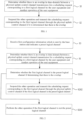
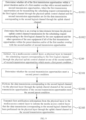
- FIG. 1 is a schematic flowchart illustrating a part of a method of transmitting a scheduling request according to an embodiment of the present invention.
- the part of the method of transmitting a scheduling request shown in this embodiment is applicable to user equipment, such as a mobile phone, a tablet computer, and the like.
- a user may apply LTE communication or NR communication.
- the part of the method of transmitting a scheduling request includes the following steps.
- step S1 it is determined whether there is an overlap in time-domain between a physical uplink control channel transmission for a scheduling request corresponding to a first logical channel by the user equipment and another operation of the user equipment, where said other operation includes data transmission, corresponding to a second logical channel, that is performed through an uplink shared channel by the user equipment.
- the first logical channel may be any logical channel. Moreover, the first logical channel may be correlated with a certain service and transmit data and signaling of its corresponding service. For transmitting data of the service corresponding to the first logical channel to a base station, the user equipment may trigger a BSR. When there are no available uplink resources for transmitting the BSR, an SR, i.e., a scheduling request, may be triggered as the scheduling request corresponding to the first logical channel.
- the user equipment after triggering the scheduling request, transmits the scheduling request to the base station through a physical uplink control channel (PUCCH).
- PUCCH physical uplink control channel
- the user equipment determines whether there is an overlap in time-domain between the physical uplink control channel transmission for the scheduling request corresponding to the first logical channel by the user equipment and the other operation of the user equipment.
- the user equipment may determine a first transmission opportunity available for transmitting the scheduling request through the physical uplink control channel after the current moment, and determine a time period for performing the other operation. Then, the user equipment may determine whether there is an overlap between the first transmission opportunity and the time period for performing the other operation.
- the specific way to determine an overlap may be set as required.
- a situation that all the first transmission opportunities overlap with the time periods for performing the other operation may include a situation that a part of the first transmission opportunities are contained by one or more time periods for performing the other operation in time-domain, and may also include a situation that a part of the first transmission opportunities overlap partly with one or more time periods for performing the other operation in time-domain.
- step S2 if it is determined that there is the overlap, the other operation is suspended, and the scheduling request corresponding to the first logical channel is transmitted through the physical uplink control channel.
- the other operation is suspended and the scheduling request corresponding to the first logical channel is transmitted through the physical uplink control channel, so that uplink resources requested by the scheduling request is obtained as soon as possible to transmit a buffer status report, thereby ensuring a lower delay required by a service corresponding to the first logical channel.
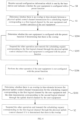
- FIG. 2 is a schematic flowchart illustrating another part of a method of transmitting a scheduling request according to an embodiment of the present invention. As shown in FIG. 2 , on the basis of the embodiment shown in FIG. 1 , the method further includes the following steps.
- first configuration information sent by the base station is received.
- the first configuration information indicates a preset logical channel.
- the step that the other operation is suspended and the scheduling request corresponding to the first logical channel is transmitted through the physical uplink control channel if it is determined that there is the overlap includes the following steps.
- step S201 if determining that there is the overlap, it is determined whether the first logical channel is the preset logical channel.
- step S202 if the first logical channel is the preset logical channel, the other operation is suspended and the scheduling request corresponding to the first logical channel is transmitted through the physical uplink control channel.
- step S203 if the first logical channel is not the preset logical channel, the other operation is performed.
- the first configuration information may be sent from the base station to the user equipment, so as to instruct the user equipment to transmit the scheduling request corresponding to the first logical channel through the physical uplink control channel only when the first logical channel is the preset logical channel, to suspend the other operation and transmit the scheduling request corresponding to the first logical channel through the physical uplink control channel when, further, there is the overlap in time-domain with the other operation, and to keep performing the other operation if the first logical channel is not the preset logical channel.
- FIG. 3 is a schematic flowchart illustrating another part of a method of transmitting a scheduling request according to an embodiment of the present invention. As shown in FIG. 3 , on the basis of the embodiment shown in FIG. 1 , the method further includes the following steps.
- step S4 before determining whether there is an overlap in time-domain between the physical uplink control channel transmission for the scheduling request corresponding to the first logical channel by the user equipment and the other operation of the user equipment, second configuration information sent by the base station is received.
- the second configuration information indicates whether the user equipment is configured with a preset function.
- the step that the other operation is suspended and the scheduling request corresponding to the first logical channel is transmitted through the physical uplink control channel if it is determined that there is the overlap includes the following steps.
- step S204 if determining that there is the overlap, it is determined whether the user equipment is configured with the preset function.
- step S205 if the user equipment is configured with the preset function, the other operation is suspended and the scheduling request corresponding to the first logical channel is transmitted through the physical uplink control channel.
- step S206 if the user equipment is not configured with the preset function, the other operation is performed.
- the second configuration information may be sent from the base station to the user equipment, so as to instruct the user equipment to transmit the scheduling request corresponding to the first logical channel through the physical uplink control channel only when the user equipment is configured with the preset function, to suspend the other operation and transmit the scheduling request corresponding to the first logical channel through the physical uplink control channel when, further, there is the overlap in time-domain with the other operation, and to keep performing the other operation if the preset function is not configured.
- the preset function may be such a function: suspending the other operation and transmitting the scheduling request corresponding to the first logical channel through the physical uplink control channel when there is the overlap in time-domain between the physical uplink control channel transmission for the scheduling request corresponding to the first logical channel and the other operation.
- the other operation further includes: monitoring, by the user equipment, a frequency of another cell than a current cell during a measurement gap.
- the measurement gap is a lasting duration of monitoring the frequency of the other cell by the user equipment every time.
- the base station may indicate the preset logical channel or indicate whether the user equipment is configured with the preset function when the other operation is that the user equipment performs the data transmission corresponding to the second logical channel through the uplink shared channel.
- the base station may also indicate the preset logical channel or indicate whether the user equipment is configured with the preset function when the other operation is that the user equipment monitors the frequency of the other cell than the current cell during the measurement gap.
- the second logical channel may be any logical channel but differ from the first logical channel. Moreover, the second logical channel may be correlated with a certain service and transmit data and signaling of the corresponding service.
- FIG. 4 is a schematic flowchart illustrating another part of a method of transmitting a scheduling request according to an embodiment of the present invention.
- the step that it is determined whether there is an overlap in time-domain between the physical uplink control channel transmission for the scheduling request corresponding to the first logical channel by the user equipment and the other operation of the user equipment, includes the following step.
- step S101 it is determined whether there is an overlap in time-domain between the physical uplink control channel transmission for the scheduling request corresponding to the first logical channel by the user equipment and the data transmission corresponding to a second logical channel through the uplink shared channel by the user equipment.
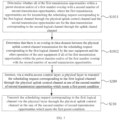
- FIG. 5 is a schematic flowchart illustrating a method of transmitting a scheduling request according to an embodiment of the present invention.
- the step that the other operation is suspended and the scheduling request corresponding to the first logical channel is transmitted through the physical uplink control channel, includes the following steps.
- step S207 it is determined whether a priority of the first logical channel is higher than a priority of the second logical channel.
- step S208 if the priority of the first logical channel is higher than the priority of the second logical channel, the data transmission corresponding to the second logical channel through the uplink shared channel is suspended and the scheduling request corresponding to the first logical channel is transmitted through the physical uplink control channel.
- the priority of the logical channel is set in advance. Therefore, when determining that there is the overlap in time-domain between the physical uplink control channel transmission for the scheduling request corresponding to the first logical channel and the data transmission corresponding to the second logical channel through the uplink shared channel by the user equipment, it is further determined whether the priority of the first logical channel is higher than the priority of the second logical channel. If the priority of the first logical channel is higher than the priority of the second logical channel, the data transmission corresponding to the second logical channel through the uplink shared channel is suspended and the scheduling request corresponding to the first logical channel is transmitted through the physical uplink control channel, thereby ensuring a lower delay required by a service corresponding to the logical channel with higher priority.
- the priority of the first logical channel is inversely proportional to the delay required by the first service corresponding to the first logical channel; and, the priority of the second logical channel is inversely proportional to the delay required by the second service corresponding to the second logical channel.
- the priority of the logical channel may be set in accordance with the delay required by the service corresponding to the logical channel.
- the first service corresponding to the first logical channel is an ultra-reliable & low-delay communication (URLLC) service requiring a lower delay
- the second service corresponding to the second logical channel is an enhance mobile broadband (eMBB) service requiring a higher delay than the URLLC service. Therefore, it may be set a higher priority for the first logical channel corresponding to the URLLC service and a lower priority for the second logical channel corresponding to the eMBB service.
- URLLC ultra-reliable & low-delay communication
- eMBB enhance mobile broadband
- the data transmission corresponding to the second logical channel through the uplink shared channel may be suspended and the scheduling request corresponding to the first logical channel may be transmitted through the physical uplink control channel, so that uplink resources requested by the scheduling request can be obtained as soon as possible to transmit a buffer status report, which meets the lower delay requirement of the URLLC service by ensuring the lower delay from receiving to uploading the data of the URLLC service.
- FIG. 6 is a schematic flowchart illustrating another part of a method of transmitting a scheduling request according to an embodiment of the present invention.
- the step that it is determined whether there is an overlap in time-domain between the physical uplink control channel transmission for the scheduling request corresponding to the first logical channel by the user equipment and the data transmission corresponding to the second logical channel through the uplink shared channel by the user equipment, includes the following steps.
- step S1011 it is determined whether all of the first transmission opportunities within a preset duration and/or of a first number overlap with a second number of second transmission opportunities, where the first transmission opportunities are for transmitting the scheduling request corresponding to the first logical channel through the physical uplink control channel and the second transmission opportunities are for the data transmission corresponding to the second logical channel through the uplink shared channel.
- step S1012 if all of the first transmission opportunities within the preset duration and/or of the first number overlap with the second number of second transmission opportunities, it is determined that there is an overlap in time-domain between the physical uplink control channel transmission for the scheduling request corresponding to the first logical channel by the user equipment and the other operation of the user equipment.
- the scheduling request may be transmitted through the physical uplink control channel at these first transmission opportunities. Therefore, in this case, the data transmission corresponding to the second logical channel through the uplink shared channel is not necessary to be suspended, which can ensure a lower delay for the service corresponding to the second logical channel at the expense of a higher delay of the service corresponding to the first logical channel to a restricted degree.
- the data transmission corresponding to the second logical channel through the uplink shared channel is to be suspended and the scheduling request corresponding to the first logical channel is transmitted through the physical uplink control channel, so as to ensure that the scheduling request can be uploaded to the base station through the physical uplink control channel.
- the first transmission opportunities and the second transmission opportunities may be indicated by the base station.
- the base station may indicate the first transmission opportunities by sending uplink indication information, e.g., a LTL grant, to the user equipment.
- the preset duration, the first number, and the second number above-mentioned may be set as required, for example, they may be set through configuration information that the base station sends to the user equipment.
- the first number of first transmission opportunities may means the first number of successive first transmission opportunities
- the second number of second transmission opportunities may means the second number of successive second transmission opportunities.
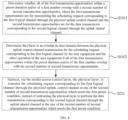
- FIG. 7 is a schematic flowchart illustrating another part of a method of transmitting a scheduling request according to an embodiment of the present invention. As shown in FIG. 7 , based on the embodiment shown in FIG. 6 , the step, that the other operation is suspended, includes the following steps.
- a physical layer is instructed, via a media access control (MAC) layer, to transmit the scheduling request corresponding to the first logical channel through the physical uplink control channel at one of the second number of second transmission opportunities which meets a first preset condition.
- MAC media access control
- the scheduling request corresponding to the first logical channel is transmitted via the physical layer through the physical uplink control channel at the one of the second number of second transmission opportunities which meets the first preset condition.
- the user equipment may indicate, via the media access control layer, the physical layer to transmit the scheduling request corresponding to the first logical channel through the physical uplink control channel at the one of the second number of second transmission opportunities which meets the first preset condition.
- the physical layer may transmit, based on the instruction from the media access control layer, the scheduling request corresponding to the first logical channel through the physical uplink control channel at the one of the second number of second transmission opportunities which meets the first preset condition.
- the media access control layer in the above case may instruct the physical layer to transmit the scheduling request corresponding to the first logical channel through the physical uplink control channel at the one of the second number of second transmission opportunities which meets the first preset condition, as well as instruct the physical layer to perform the data transmission corresponding to the second logical channel through the uplink shared channel at the second transmission opportunities.
- the physical layer may determine, according to the actual situation, to transmit the scheduling request corresponding to the first logical channel through the physical uplink control channel at the one of the second number of second transmission opportunities which meets the first preset condition or to perform the data transmission corresponding to the second logical channel through the uplink shared channel at the second transmission opportunities.
- FIG. 8 is a schematic flowchart illustrating another part of a method of transmitting a scheduling request according to an embodiment of the present invention.
- the step that the other operation is suspended and the scheduling request corresponding to the first logical channel is transmitted through the physical uplink control channel, includes the following step.
- step S211 it is to instruct, via the media access control layer, the physical layer to transmit the scheduling request corresponding to the first logical channel through the physical uplink control channel at one of the second number of second transmission opportunities which meets the first preset condition, instead of instructing the physical layer to perform the data transmission corresponding to the second logical channel through the uplink shared channel at the one of the second number of second transmission opportunities which meets the first preset condition.
- the user equipment may instruct, via the media access control layer, the physical layer to transmit the scheduling request corresponding to the first logical channel through the physical uplink control channel at the one of the second number of second transmission opportunities which meets the first preset condition, instead of instructing the physical layer to perform the data transmission corresponding to the second logical channel through the uplink shared channel at the one of the second number of second transmission opportunities which meets the first preset condition.
- the scheduling request corresponding to the first logical channel may be transmitted through the physical uplink control channel at the one of the second number of second transmission opportunities which meets the first preset condition.
- the one of second transmission opportunities which meets the first preset condition includes:
- the scheduling request corresponding to the first logical channel may be transmitted through the physical uplink control channel at the one of multiple second transmission opportunities which meets a first preset condition.
- the second transmission opportunity corresponding to the second logical channel with the lowest priority may be selected as the transmission opportunity for transmitting the scheduling request corresponding to the first logical channel through the physical uplink control channel.
- the second transmission opportunities may be for different logical channels, and thus different second transmission opportunities may have different priorities. Accordingly, when the scheduling request corresponding to the first logical channel is transmitted through the physical uplink control channel by occupying the second transmission opportunity, since the occupied second transmission opportunity has the lowest priority, which, for example, can tolerate the highest delay, the interference for the logical channel corresponding to the occupied second transmission opportunity is relatively small.
- the scheduling request corresponding to the first logical channel can be transmitted through the physical uplink control channel as soon as possible, so as to ensure that the low delay required by the service corresponding to the first logical channel can be satisfied.
- FIG. 9 is a schematic flowchart illustrating another part of a method of transmitting a scheduling request according to an embodiment of the present invention.
- the step that the scheduling request corresponding to the first logical channel is transmitted via the physical layer through the physical uplink control channel at the one of the second number of second transmission opportunities which meets the first preset condition, includes the following steps.
- step S2101 when determining that there is the overlap, it is determined whether the second transmission opportunities meet a second preset condition.
- step S2102 if the second transmission opportunities meet the second preset condition, the data transmission corresponding to the second logical channel is performed via the physical layer through the uplink shared channel at the second transmission opportunities.
- first notification information is transmitted from the physical layer to the media access control layer.
- the first notification information informs the media access control layer that the data transmission corresponding to the second logical channel has been performed via the physical layer through the uplink shared channel at the second transmission opportunities.
- the physical layer may determine which operation to be performed according to the actual situation.
- the second transmission opportunities may be determined whether the second transmission opportunities meet the second preset condition, for example, whether a number of the second transmission opportunities is less than a preset number.
- the second transmission opportunities may be to perform the data transmission corresponding to the second logical channel via the physical layer through the uplink shared channel at the second transmission opportunities, instead of transmitting the scheduling request corresponding to the first logical channel through the physical uplink control channel at the one of the second number of second transmission opportunities which meets the first preset condition.
- the first notification information is to be sent to the media access control layer, so that the media access control layer can determine which operation is performed via the physical layer and thus provide subsequent instructions.
- the second preset condition is that the number of the second transmission opportunities is equal to 1.
- the second transmission opportunity may be utilized to perform the data transmission corresponding to the second logical channel through the uplink shared channel instead of transmitting the scheduling request corresponding to the first logical channel through the physical uplink control channel, which ensures that data of the second logical channel can be successfully uploaded.
- the method further includes the following step.
- third configuration information sent by the base station is received and the second logical channel is determined based on the third configuration information.
- the third configuration information may be sent from the base station to the user equipment and indicate the user equipment to transmit the scheduling request corresponding to the first logical channel through the physical uplink control channel only when the second logical channel is the preset logical channel, to suspend the other operation and transmit the scheduling request corresponding to the first logical channel through the physical uplink control channel when, further, there is the overlap in time-domain with the other operation, and to perform the other operation if the second logical channel is not the preset logical channel.
- FIG. 10 is a schematic flowchart illustrating another method of transmitting a scheduling request.
- the step that it is determined whether there is an overlap in time-domain between the physical uplink control channel transmission for the scheduling request corresponding to the first logical channel by the user equipment and the other operation of the user equipment, includes the following step.
- step S102 it is determined whether there is an overlap in time-domain between the physical uplink control channel transmission for the scheduling request corresponding to the first logical channel by the user equipment and monitoring a frequency of another cell than a current cell during a measurement gap by the user equipment.
- the measurement gap is a lasting duration of monitoring the frequency of the other cell by the user equipment every time.
- the other operation is that the user equipment monitors the frequency of the other cell than the current cell during the measurement gap
- FIG. 11 is a schematic flowchart illustrating another method of transmitting a scheduling request.
- the step that the other operation is suspended and the scheduling request corresponding to the first logical channel is transmitted through the physical uplink control channel, includes the following step.
- step S212 monitoring the frequency of the other cell than the current cell during the measurement gap is suspended, and the scheduling request corresponding to the first logical channel is transmitted through the physical uplink control channel.
- the other operation is that the frequency of the other cell than the current cell is monitored during the measurement gap
- monitoring the frequency of the other cell than the current cell during the measurement gap may be suspended, and the scheduling request corresponding to the first logical channel may be transmitted through the physical uplink control channel.
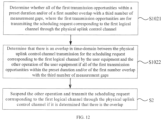
- FIG. 12 is a schematic flowchart illustrating another part of a method of transmitting a scheduling request.
- the step that it is determined whether there is an overlap in time-domain between the physical uplink control channel transmission for the scheduling request corresponding to the first logical channel by the user equipment and monitoring the frequency of the other cell than the current cell during the measurement gap by the user equipment, includes the following steps.
- step S 1021 it is determined whether all of the first transmission opportunities within a preset duration and/or of a first number overlap with a third number of measurement gaps, where the first transmission opportunities are for transmitting the scheduling request corresponding to the first logical channel through the physical uplink control channel.
- step S1022 if all of the first transmission opportunities within the preset duration and/or of the first number overlap with the third number of measurement gaps, it is determined that there is an overlap in time-domain between the physical uplink control channel transmission for the scheduling request corresponding to the first logical channel by the user equipment and the other operation of the user equipment.
- first transmission opportunities There may be one or more first transmission opportunities, and one or more measurement gaps. Therefore, it is possible that the first transmission opportunities overlap with the measurement gaps in part, or that all the first transmission opportunities overlap with the measurement gaps.
- monitoring the frequency of the other cell during the measurement gap is to be suspended and the scheduling request corresponding to the first logical channel is transmitted through the physical uplink control channel, so as to ensure that the scheduling request can be uploaded to the base station through the physical uplink control channel.
- the preset duration, the first number, and the third number above-mentioned may be set as required.
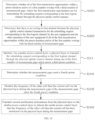
- FIG. 13 is a schematic flowchart illustrating another part of a method of transmitting a scheduling request. As shown in FIG. 13 , on the basis of the embodiment shown in FIG. 12 , the step, that the other operation is suspended, includes the following steps.
- a physical layer is instructed, via a media access control layer, to transmit the scheduling request corresponding to the first logical channel through the physical uplink control channel during one of the third number of measurement gaps which meets a third preset condition.
- the scheduling request corresponding to the first logical channel is transmitted via the physical layer through the physical uplink control channel during the one of the third number of measurement gaps which meets the third preset condition.
- the user equipment may indicate, via the media access control layer, the physical layer to transmit the scheduling request corresponding to the first logical channel through the physical uplink control channel during the one of the third number of measurement gaps which meets the third preset condition.
- the physical layer may transmit, based on the instruction from the media access control layer, the scheduling request corresponding to the first logical channel through the physical uplink control channel during the one of the third number of measurement gaps which meets the third preset condition.
- the media access control layer in the above cases may instruct the physical layer to transmit the scheduling request corresponding to the first logical channel through the physical uplink control channel during the one of the third number of measurement gaps which meets the third preset condition, as well as instruct the physical layer to monitor the frequency of the other cell during the measurement gaps.
- the physical layer may determine to transmit the scheduling request corresponding to the first logical channel through the physical uplink control channel during the one of the third number of measurement gaps which meets the third preset condition, or to monitor the frequency of the other cell during the measurement gaps.
- the measurement gap meeting the third preset condition is one of the measurement gaps which overlaps in time-domain with an earliest one of the first transmission opportunities.
- the scheduling request corresponding to the first logical channel may be transmitted through the physical uplink control channel during the measurement gap which meets the third preset condition.
- the one of the measurement gaps which overlaps in time-domain with the earliest one of the first transmission opportunities may be selected as the transmission opportunity for transmitting the scheduling request corresponding to the first logical channel through the physical uplink control channel. Accordingly, the scheduling request corresponding to the first logical channel can be transmitted through the physical uplink control channel as soon as possible, so as to ensure that the low delay required by the service corresponding to the first logical channel can be satisfied.
- FIG. 14 is a schematic flowchart illustrating another part of a method of transmitting a scheduling request.
- the step that the scheduling request corresponding to the first logical channel is transmitted via the physical layer through the physical uplink control channel during the one of the third number of measurement gaps which meets the third preset condition, includes the following steps.
- step S2141 when determining that there is the overlap, it is determined whether the measurement gaps meet a fourth preset condition.
- step S2142 if the measurement gaps meet the fourth preset condition, the frequency of the other cell than the current cell is monitored via the physical layer during the measurement gaps.
- second notification information is transmitted from the physical layer to the media access control layer to inform the media access control layer that the frequency of the other cell than the current cell has been monitored via the physical layer during the measurement gaps.
- the physical layer may determine which operation to be performed according to the actual situation.
- the measurement gaps may be determined whether the measurement gaps meet the fourth preset condition, for example, whether the number of the measurement gaps is less than a preset number.
- the measurement gaps may be via the physical layer to monitor the frequency of the other cell during the measurement gaps, instead of transmitting the scheduling request corresponding to the first logical channel through the physical uplink control channel during the one of the measurement gaps which meets the third preset condition.
- the second notification information is to be transmitted to the media access control layer, so that the media access control layer can determine which operation is performed via the physical layer and thus provide subsequent instructions.
- the fourth preset condition is that the number of the measurement gaps is 1.
- the measurement gap may be utilized to monitor the frequency of the other cell than the current cell instead of transmitting the scheduling request corresponding to the first logical channel through the physical uplink control channel, which ensures that the user equipment can successfully monitor the frequency of the other cell.
- FIG. 15 is a schematic flowchart illustrating another part of a method of transmitting a scheduling request.
- the step that the scheduling request corresponding to the first logical channel is transmitted through the physical uplink control channel, includes the following steps.
- step S215 a moment at which the user equipment switches from monitoring the frequency of the other cell to monitoring the frequency of the current cell is determined.
- the scheduling request corresponding to the first logical channel is transmitted through the physical uplink control channel at a transmission opportunity capable of transmitting the scheduling request immediately after the moment.
- the moment at which the user equipment switches back to monitoring the frequency of the current cell from monitoring the frequency of the other cell may be determined firstly, and then a transmission opportunity immediately after this moment may be selected to transmit the scheduling request corresponding to the first logical channel. Thereby, the selected transmission opportunity is after the moment when the user equipment switches back to the frequency of the current cell, which ensures the selected transmission opportunity available.
- the present invention also provides apparatus embodiments for transmitting a scheduling request.
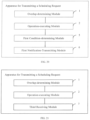
- FIG. 16 is a schematic block diagram illustrating an apparatus for transmitting a scheduling request.
- the apparatus for transmitting a scheduling request is applicable to user equipment, such as a mobile phone, a tablet computer, and the like.
- a user may apply LTE communication or NR communication.
- the apparatus for transmitting a scheduling request includes the following modules.
- An overlap-determining module 1 is configured to determine whether there is an overlap in time-domain between a physical uplink control channel transmission for a scheduling request corresponding to a first logical channel of the user equipment and another operation of the user equipment.
- An operation-executing module 2 is configured to if it is determined that there is the overlap, suspend the other operation and transmit the scheduling request corresponding to the first logical channel through the physical uplink control channel.
- FIG. 17 is a schematic block diagram illustrating another apparatus for transmitting a scheduling request. As shown in FIG. 17 , on the basis of FIG. 16 , the apparatus further includes the following module.
- a first receiving module 3 is configured to receive first configuration information sent by a base station.
- the first configuration information indicates a preset logical channel.
- the operation-executing module 2 includes the following submodules.
- a first determining submodule 201 is configured to if it is determined that there is the overlap, determine whether the first logical channel is the preset logical channel.
- a first executing submodule 202 is configured to suspend the other operation and transmit the scheduling request corresponding to the first logical channel through the physical uplink control channel if the first logical channel is the preset logical channel, and perform the other operation if the first logical channel is not the preset logical channel.
- FIG. 18 is a schematic block diagram illustrating another apparatus for transmitting a scheduling request. As shown in FIG. 18 , on the basis of FIG. 16 , the apparatus further includes the following module.
- a second receiving module 4 is configured to receive second configuration information sent by the base station.
- the second configuration information indicates whether the user equipment is configured with a preset function.
- the operation-executing module 2 includes the following submodules.
- a second determining submodule 203 is configured to determine whether the user equipment is configured with the preset function if it is determined that there is the overlap.
- a second executing submodule 204 is configured to suspend the other operation and transmit the scheduling request corresponding to the first logical channel through the physical uplink control channel if the user equipment is configured with the preset function, and perform the other operation if the user equipment is not configured with the preset function.
- the other operation includes:
- the overlap-determining module is configured to determine whether there is an overlap in time-domain between the physical uplink control channel transmission for the scheduling request corresponding to the first logical channel of the user equipment and the data transmission corresponding to the second logical channel, that is performed through the uplink shared channel by the user equipment.
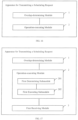
- FIG. 19 is a schematic block diagram illustrating an operation-executing module. As shown in FIG. 19 , the operation-executing module 2 includes the following submodules.
- a priority submodule 205 is configured to determine whether a priority of the first logical channel is higher than a priority of the second logical channel.
- a third executing submodule 206 is configured to suspend the data transmission corresponding to the second logical channel through the uplink shared channel and transmit the scheduling request corresponding to the first logical channel through the physical uplink control channel if the priority of the first logical channel is higher than the priority of the second logical channel.
- the priority of the first logical channel is inversely proportional to a delay required by a first service corresponding to the first logical channel; and, the priority of the second logical channel is inversely proportional to a delay required by a second service corresponding to the second logical channel.
- the overlap-determining module is configured to determine whether all of first transmission opportunities within a preset duration and/or of a first number overlap with a second number of second transmission opportunities, where the first transmission opportunities are for transmitting the scheduling request corresponding to the first logical channel through the physical uplink control channel and the second transmission opportunities are for the data transmission corresponding to the second logical channel through the uplink shared channel.
- the overlap-determining module is also configured to determine that there is an overlap in time-domain between the physical uplink control channel transmission for the scheduling request corresponding to the first logical channel of the user equipment and the other operation of the user equipment if all of the first transmission opportunities within the preset duration and/or of the first number overlap with the second number of second transmission opportunities.
- the third executing submodule is configured to instruct, via a media access control layer, a physical layer to transmit the scheduling request corresponding to the first logical channel through the physical uplink control channel at one of the second number of second transmission opportunities which meets a first preset condition. Accordingly, the scheduling request corresponding to the first logical channel is transmitted, via the physical layer, through the physical uplink control channel at the one of the second number of second transmission opportunities which meets the first preset condition.
- the third executing submodule is configured to instruct, via the media access control layer, the physical layer to transmit the scheduling request corresponding to the first logical channel through the physical uplink control channel at the one of the second number of second transmission opportunities which meets the first preset condition, instead of instructing the physical layer to perform the data transmission corresponding to the second logical channel through the uplink shared channel at the one of the second number of second transmission opportunities which meets the first preset condition.
- the one of the second transmission opportunities which meets the first preset condition includes:
- FIG. 20 is a schematic block diagram illustrating another apparatus for transmitting a scheduling request. As shown in FIG. 20 , the apparatus further includes the following module.
- a first condition-determining module 5 is configured to determine whether the second transmission opportunities meet a second preset condition if it is determined that there is the overlap.
- the operation-executing module 2 is further configured to perform the data transmission corresponding to the second logical channel via the physical layer through the uplink shared channel at the second transmission opportunities if the second transmission opportunities meet the second preset condition.
- a first notification-transmitting module 6 is configured to transmit, via the physical layer, first notification information to the media access control layer.
- the first notification information informs the media access control layer that the data transmission corresponding to the second logical channel has been performed via the physical layer through the uplink shared channel at the second transmission opportunities.
- the second preset condition is that the number of the second transmission opportunities is equal to 1.
- FIG. 21 is a schematic block diagram illustrating another apparatus for transmitting a scheduling request. As shown in FIG. 21 , the apparatus further includes the following module.
- a third receiving module 7 is configured to receive third configuration information sent by the base station and determine the second logical channel based on the third configuration information.
- the overlap-determining module is configured to determine whether there is an overlap in time-domain between the physical uplink control channel transmission for the scheduling request corresponding to the first logical channel of the user equipment and monitoring frequency of the other cell than a current cell during a measurement gap by the user equipment.
- the measurement gap is a lasting duration of monitoring the frequency of the other cell by the user equipment every time.
- the operation-executing module is configured to suspend monitoring the frequency of the other cell than the current cell during the measurement gap, and transmit the scheduling request corresponding to the first logical channel through the physical uplink control channel.
- the overlap-determining module is configured to determine whether all of the first transmission opportunities within a preset duration and/or of a first number overlap with a third number of measurement gaps, where the first transmission opportunities are for transmitting the scheduling request corresponding to the first logical channel through the physical uplink control channel.
- the overlap-determining module is also configured to determine that there is an overlap in time-domain between the physical uplink control channel transmission for the scheduling request corresponding to the first logical channel of the user equipment and the other operation of the user equipment if all of the first transmission opportunities within the preset duration and/or of the first number overlap with the third number of measurement gaps.
- the operation-executing module is configured to instruct, via the media access control layer, the physical layer to transmit the scheduling request corresponding to the first logical channel through the physical uplink control channel at one of the third number of measurement gaps which meets a third preset condition.
- the scheduling request corresponding to the first logical channel is transmitted, via the physical layer, through the physical uplink control channel during the one of the third number of measurement gaps which meets the third preset condition.
- the measurement gap meeting the third preset condition is one of the measurement gaps which overlaps in time-domain with an earliest one of the first transmission opportunities.
- FIG. 22 is a schematic block diagram illustrating another apparatus for transmitting a scheduling request. As shown in FIG. 22 , the apparatus further includes the following modules.
- a second condition-determining module 8 is configured to determine whether the measurement gaps meet a fourth preset condition if it is determined that there is the overlap.
- the operation-executing module is further configured to monitor the frequency of the other cell than the current cell via the physical layer during the measurement gaps if the measurement gaps meet the fourth preset condition.
- a second notification-transmitting module 9 is configured to transmit, via the physical layer, second notification information to the media access control layer.
- the second notification information informs the media access control layer that the frequency of the other cell than the current cell has been monitored via the physical layer during the measurement gaps.
- the fourth preset condition is that the number of the measurement gaps is 1.
- FIG. 23 is a schematic block diagram illustrating another apparatus for transmitting a scheduling request. As shown in FIG. 23 , the operation-executing module includes the following submodule.
- a moment-determining submodule 10 is configured to determine a moment at which the user equipment switches from monitoring the frequency of the other cell to monitoring the frequency of the current cell.
- the operation-executing module 2 is configured to transmit the scheduling request corresponding to the first logical channel through the physical uplink control channel at a transmission opportunity capable of transmitting the scheduling request immediately after the moment.
- the apparatuses correspond to the method embodiments, reference may be made to the description of related parts of the method embodiments.
- the apparatuses described above are merely illustrative, wherein the modules described as separate components may or may not be physically separated, and the components displayed as modules may or may not be physical units, that is, may be located in one place or distributed to multiple units in a network. Some or all of the modules may be selected according to actual needs to achieve the objectives of the implementations of the apparatuses. It can be understood and implemented by those of ordinary skill in the art without any creative effort.
- An embodiment of the present invention also provides an apparatus for transmitting a scheduling request, applied to user equipment, includes:
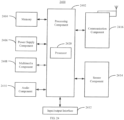
- FIG. 24 is a schematic block diagram showing an apparatus 2400 applicable to transmitting a scheduling request according to an exemplary embodiment.
- the apparatus 2400 may be a mobile phone, a computer, a digital broadcasting terminal, a messaging device, a game console, a tablet device, a medical device, a fitness device, a personal digital assistant, and the like.
- the apparatus 2400 may include one or more of the following components: a processing component 2402, a memory 2404, a power supply component 2406, a multimedia component 2408, an audio component 2410, an input/output (I/O) interface 2412, a sensor component 2414, and a communication component 2416.
- a processing component 2402 may include one or more of the following components: a processing component 2402, a memory 2404, a power supply component 2406, a multimedia component 2408, an audio component 2410, an input/output (I/O) interface 2412, a sensor component 2414, and a communication component 2416.
- the processing component 2402 generally controls overall operations of the apparatus 2400, such as operations associated with display, phone calls, data communications, camera operations, and recording operations.
- the processing element 2402 may include one or more processors 2420 to execute instructions to complete all or part of the steps of the above method.
- the processing component 2402 may include one or more modules which facilitate the interaction between the processing component 2402 and other components.
- the processing component 2402 may include a multimedia module to facilitate the interaction between the multimedia component 2408 and the processing component 2402.
- the memory 2404 is configured to store various types of data to support the operation of the apparatus 2400. Examples of such data include instructions for any application or method operating on the apparatus 2400, contact data, phone book data, messages, pictures, videos, and the like.
- the memory 2404 may be implemented by any type of volatile or non-volatile storage devices or a combination thereof, such as a Static Random Access Memory (SRAM), an Electrically Erasable Programmable Read-Only Memory (EEPROM), an Erasable Programmable Read-Only Memory (EPROM), a Programmable Read-Only Memory (PROM), a Read-Only Memory (ROM), a magnetic memory, a flash memory, a magnetic or compact disk.
- SRAM Static Random Access Memory
- EEPROM Electrically Erasable Programmable Read-Only Memory
- EPROM Erasable Programmable Read-Only Memory
- PROM Programmable Read-Only Memory
- ROM Read-Only Memory
- the power supply component 2406 supplies power for different components of the apparatus 2400.
- the power supply component 2406 may include a power supply management system, one or more power supplies, and other components associated with generating, managing and distributing power for the apparatus 2400.
- the multimedia component 2408 includes a screen providing an output interface between the apparatus 2400 and a user.
- the screen may include a Liquid Crystal Display (LCD) and a Touch Panel (TP). If the screen includes the TP, the screen may be implemented as a touch screen to receive input signals from the user.
- the TP may include one or more touch sensors to sense touches, swipes, and gestures on the TP. The touch sensors may not only sense a boundary of a touch or swipe, but also sense a lasting time and a pressure associated with the touch or swipe.
- the multimedia component 2408 may include a front camera and/or a rear camera. The front camera and/or rear camera may receive external multimedia data when the apparatus 2400 is in an operating mode, such as a photographing mode or a video mode. Each front camera and rear camera may be a fixed optical lens system or have focal length and optical zooming capability.
- the audio component 2410 is configured to output and/or input an audio signal.
- the audio component 2410 includes a microphone (MIC).
- the microphone When the apparatus 2400 is in an operating mode, such as a call mode, a record mode and a voice recognition mode, the microphone is configured to receive an external audio signal.
- the received audio signal may be further stored in the memory 2404 or sent via the communication component 2416.
- the audio component 2410 further includes a speaker for outputting an audio signal.
- the I/O interface 2412 provides an interface between the processing component 2402 and a peripheral interface module.
- the above peripheral interface module may be a keyboard, a click wheel, buttons, or the like. These buttons may include but not limited to, a home button, a volume button, a start button and a lock button.
- the sensor component 2414 includes one or more sensors to provide status assessments of various aspects for the apparatus 2400.
- the sensor component 2414 can detect an open/closed state of the apparatus 2400 and a relative positioning of components such as the display and keypad of the apparatus 2400, and the sensor component 2414 can also detect a change in position of the apparatus 2400 or a component of the apparatus 2400, the presence or absence of user contact with the apparatus 2400, orientation or acceleration/deceleration of the apparatus 2400, and temperature change of the apparatus 2400.
- the sensor component 2414 may include a proximity sensor configured to detect the presence of nearby objects without any physical contact.
- the sensor component 2414 may also include a light sensor, such as a Complementary Metal-Oxide-Semiconductor (CMOS) or Charged Coupled Device (CCD) image sensor, for use in imaging applications.
- CMOS Complementary Metal-Oxide-Semiconductor
- CCD Charged Coupled Device
- the sensor component 2414 may further include an acceleration sensor, a gyroscope sensor, a magnetic sensor, a pressure sensor, or a temperature sensor.
- the communication component 2416 is configured to facilitate wired or wireless communication between the apparatus 2400 and other devices.
- the apparatus 2400 may access a wireless network based on a communication standard, such as Wi-Fi, 2G or 3G, or a combination thereof.
- the communication component 2416 receives broadcast signals or broadcast related information from an external broadcast management system via a broadcast channel.
- the communication component 2416 also includes a near field communication (NFC) module to facilitate short-range communication.
- the NFC module can be implemented based on a radio frequency identification (RFID) technology, an infrared data association (IrDA) technology, an ultra-wideband (UWB) technology, a Bluetooth ® (BT) technology and other technologies.
- RFID radio frequency identification
- IrDA infrared data association
- UWB ultra-wideband
- BT Bluetooth ®
- the apparatus 2400 may be implemented by one or more Application Specific Integrated Circuits (ASICs), Digital Signal Processors (DSPs), Digital Signal Processing Devices (DSPDs), Programmable Logic Devices (PLDs), Field Programmable Gate Arrays (FPGAs), controllers, microcontrollers, microprocessors, or other electronic components for performing the method for transmitting a scheduling request described in any of the above embodiments.
- ASICs Application Specific Integrated Circuits
- DSPs Digital Signal Processors
- DSPDs Digital Signal Processing Devices
- PLDs Programmable Logic Devices
- FPGAs Field Programmable Gate Arrays
- controllers microcontrollers, microprocessors, or other electronic components for performing the method for transmitting a scheduling request described in any of the above embodiments.
- non-transitory computer-readable storage medium including instructions, such as the memory 2404 including instructions executable by the processor 2420 of the apparatus 2400 to implement the above methods.
- the non-transitory computer-readable storage medium may be a ROM, a random access memory (RAM), a CD-ROM, a magnetic tape, a floppy disk, and an optical data storage device.
- step S5 it is determined whether a physical uplink control channel (PUCCH) resource for transmitting a scheduling request by the user equipment overlaps with an uplink shared channel (UL-SCH) resource.
- PUCCH physical uplink control channel
- UL-SCH uplink shared channel
- step S6 in response to that the PUCCH resource for transmitting the scheduling request by the user equipment overlaps with the UL-SCH resource, a PUCCH transmission for the scheduling request or an overlapped UL-SCH transmission is performed.
- the method further includes: receiving second configuration information indicating whether the user equipment is configured with a preset function.
- the step S6 includes: in response to determining that the PUCCH resource for transmitting the scheduling request by the user equipment overlaps with the UL-SCH and the user equipment is configured with the preset function, the PUCCH transmission for the scheduling request is performed and the overlapped UL-SCH transmission is suspended.
- the step S6 includes: in response to determining that the PUCCH resource for transmitting the scheduling request by the user equipment overlaps with the UL-SCH resource and the user equipment is not configured with the preset function, the overlapped UL-SCH transmission is performed and the PUCCH transmission for the scheduling request is suspended.
- step S7 it is determined whether a physical uplink control channel (PUCCH) resource for transmitting a scheduling request by the user equipment overlaps with an uplink shared channel (UL-SCH) resource.
- PUCCH physical uplink control channel
- UL-SCH uplink shared channel
- step S8 in response to that the PUCCH resource for transmitting the scheduling request by the user equipment overlaps with the UL-SCH resource, a PUCCH transmission for the scheduling request or an overlapped UL-SCH transmission is de-prioritized.
- the method further includes: receiving second configuration information indicating whether the user equipment is configured with a preset function.
- the step S8 includes: in response to determining that the PUCCH resource for transmitting the scheduling request by the user equipment overlaps with the UL-SCH resource and the user equipment is configured with the preset function, the overlapped UL-SCH transmission is de-prioritized.
- the step S8 includes: in response to determining that the PUCCH resource for transmitting the scheduling request by the user equipment overlaps with the UL-SCH resource and the user equipment is not configured with the preset function, the PUCCH for transmitting the scheduling request is de-prioritized.
Landscapes
- Engineering & Computer Science (AREA)
- Computer Networks & Wireless Communication (AREA)
- Signal Processing (AREA)
- Mobile Radio Communication Systems (AREA)
- Transmitters (AREA)
Applications Claiming Priority (1)
| Application Number | Priority Date | Filing Date | Title |
|---|---|---|---|
| PCT/CN2018/082005 WO2019191967A1 (zh) | 2018-04-04 | 2018-04-04 | 调度请求传输方法和调度请求传输装置 |
Publications (3)
| Publication Number | Publication Date |
|---|---|
| EP3780834A1 EP3780834A1 (en) | 2021-02-17 |
| EP3780834A4 EP3780834A4 (en) | 2021-03-24 |
| EP3780834B1 true EP3780834B1 (en) | 2023-06-07 |
Family
ID=63404322
Family Applications (1)
| Application Number | Title | Priority Date | Filing Date |
|---|---|---|---|
| EP18913239.2A Active EP3780834B1 (en) | 2018-04-04 | 2018-04-04 | Scheduling request transmission method and scheduling request transmission apparatus |
Country Status (11)
| Country | Link |
|---|---|
| US (1) | US11606804B2 (enExample) |
| EP (1) | EP3780834B1 (enExample) |
| JP (1) | JP7057839B2 (enExample) |
| KR (1) | KR102469003B1 (enExample) |
| CN (2) | CN113518465B (enExample) |
| BR (1) | BR112020020304A2 (enExample) |
| ES (1) | ES2949416T3 (enExample) |
| PL (1) | PL3780834T3 (enExample) |
| RU (1) | RU2763363C1 (enExample) |
| SG (1) | SG11202009811TA (enExample) |
| WO (1) | WO2019191967A1 (enExample) |
Families Citing this family (24)
| Publication number | Priority date | Publication date | Assignee | Title |
|---|---|---|---|---|
| CA3107542A1 (en) * | 2018-07-25 | 2020-01-30 | Sony Corporation | Base station, user equipment, circuitry, mobile telecommunications system and method |
| US11968706B2 (en) | 2018-09-21 | 2024-04-23 | Beijing Xiaomi Mobile Software Co., Ltd. | Uplink data transmission method and apparatus, device, and system |
| US11659587B2 (en) * | 2018-10-30 | 2023-05-23 | Mediatek Singapore Pte. Ltd. | Method and apparatus for handling overlapped transmission opportunities in mobile communications |
| CN111163518B (zh) * | 2018-11-08 | 2023-05-12 | 大唐移动通信设备有限公司 | 一种信息传输方法、配置方法、终端及网络侧设备 |
| CN111372316A (zh) * | 2018-12-25 | 2020-07-03 | 北京展讯高科通信技术有限公司 | 上行资源的发送方法及装置 |
| CN111246518A (zh) * | 2019-01-18 | 2020-06-05 | 维沃软件技术有限公司 | 信息发送方法、数据发送方法、终端配置方法及装置 |
| US12063644B2 (en) | 2019-01-21 | 2024-08-13 | Ntt Docomo, Inc. | User terminal and radio communication method |
| WO2020155069A1 (zh) * | 2019-01-31 | 2020-08-06 | Oppo广东移动通信有限公司 | 一种调度请求处理方法、终端设备及存储介质 |
| CN111757496B (zh) | 2019-03-29 | 2023-07-11 | 华为技术有限公司 | 一种通信方法及装置 |
| CN116321470A (zh) * | 2019-03-29 | 2023-06-23 | 大唐移动通信设备有限公司 | Harq机制的处理方法、指示方法、终端及网络侧设备 |
| CN111615184B (zh) * | 2019-04-22 | 2023-12-22 | 维沃移动通信有限公司 | 处理方法及终端 |
| CN111835476B (zh) * | 2019-04-22 | 2022-12-06 | 华为技术有限公司 | 通信方法与装置 |
| US12245268B2 (en) | 2019-05-13 | 2025-03-04 | Nokia Technologies Oy | Method, apparatus, computer program product and computer program |
| WO2021015455A1 (en) * | 2019-07-19 | 2021-01-28 | Lg Electronics Inc. | Method and apparatus for transmitting a scheduling request related to a deprioritized uplink shared channel resource in wireless communication system |
| EP4161202B1 (en) | 2019-07-26 | 2024-11-27 | Guangdong Oppo Mobile Telecommunications Corp., Ltd. | Wireless communication method and device |
| WO2021120193A1 (zh) * | 2019-12-20 | 2021-06-24 | Oppo广东移动通信有限公司 | 用于传输数据的方法及设备 |
| WO2021146872A1 (zh) * | 2020-01-20 | 2021-07-29 | 北京小米移动软件有限公司 | 数据传输方法、装置、通信设备及存储介质 |
| CN113519192B (zh) | 2020-02-10 | 2024-07-23 | 北京小米移动软件有限公司 | 数据传输方法、装置和通信设备 |
| CN115104367B (zh) * | 2020-02-12 | 2025-10-21 | 三星电子株式会社 | 对多个冲突资源进行优先化的方法和装置 |
| JP7158524B2 (ja) * | 2020-03-31 | 2022-10-21 | 華碩電腦股▲ふん▼有限公司 | 無線通信システムにおける上りリンクデータとスケジューリング要求との間の優先順位付けのための方法および装置 |
| WO2022027672A1 (zh) * | 2020-08-07 | 2022-02-10 | Oppo广东移动通信有限公司 | 通信方法和通信装置 |
| US11576181B2 (en) | 2020-08-10 | 2023-02-07 | International Business Machines Corporation | Logical channel management in a communication system |
| CN116471668B (zh) * | 2020-08-25 | 2025-05-16 | Oppo广东移动通信有限公司 | 无线通信方法和设备 |
| WO2024105645A1 (ko) * | 2022-11-14 | 2024-05-23 | 엘지전자 주식회사 | 하향링크 신호를 수신하는 방법, 사용자기기, 프로세싱 장치, 및 저장 매체, 그리고 하향링크 신호를 전송하는 방법 및 기지국 |
Family Cites Families (21)
| Publication number | Priority date | Publication date | Assignee | Title |
|---|---|---|---|---|
| US9019983B2 (en) * | 2006-10-27 | 2015-04-28 | Mitsubishi Electric Corporation | Data communication method, communication system and mobile terminal |
| CN102084682B (zh) * | 2008-07-03 | 2014-07-30 | 爱立信电话股份有限公司 | 电信系统中的方法和装置 |
| US20100034126A1 (en) * | 2008-08-08 | 2010-02-11 | Qualcomm Incorporated | Method and apparatus for handling measurement gaps in wireless networks |
| KR20120048433A (ko) * | 2010-11-05 | 2012-05-15 | 삼성전자주식회사 | 이동통신 시스템에서 스케줄링 요청 신호를 전송하는 방법 및 장치 |
| US8917679B2 (en) * | 2011-08-16 | 2014-12-23 | Nokia Corporation | Method for signaling the overlap of downlink control and data channels |
| EP2806593B1 (en) * | 2012-01-17 | 2019-03-06 | LG Electronics Inc. | Method and apparatus for transmitting uplink control information in wireless communication system |
| JP5940850B2 (ja) * | 2012-03-19 | 2016-06-29 | 株式会社Nttドコモ | 通信システム、基地局装置、移動端末装置及び通信方法 |
| WO2014051254A1 (ko) * | 2012-09-28 | 2014-04-03 | 엘지전자 주식회사 | 상향링크 전송 방법 및 장치 |
| EP2905985A4 (en) * | 2012-10-03 | 2016-05-25 | Sharp Kk | TERMINAL APPARATUS, BASE STATION APPARATUS, WIRELESS COMMUNICATION SYSTEM, CONTROL METHOD, AND INTEGRATED CIRCUIT |
| WO2014067137A1 (zh) * | 2012-11-02 | 2014-05-08 | 华为技术有限公司 | 确定控制信道资源的方法和用户设备 |
| KR101698952B1 (ko) * | 2013-03-29 | 2017-01-23 | 후아웨이 테크놀러지 컴퍼니 리미티드 | 업링크 인증 자원 요구를 제어하는 방법, 사용자 기기, 및 기지국 |
| CN104661316A (zh) | 2015-01-28 | 2015-05-27 | 中兴通讯股份有限公司 | 一种载波聚合下调度请求的发送方法、装置和终端 |
| CN106160977B (zh) * | 2015-04-09 | 2019-08-16 | 上海诺基亚贝尔股份有限公司 | 用于支持调度请求传输的方法 |
| JP2019125816A (ja) * | 2016-05-12 | 2019-07-25 | シャープ株式会社 | 端末装置および方法 |
| JP6608870B2 (ja) * | 2016-05-12 | 2019-11-20 | 華碩電腦股▲ふん▼有限公司 | 無線通信システム内での異なる送信時間間隔を有する制御チャネルの検出の容易化 |
| EP3471322B1 (en) * | 2017-03-23 | 2024-02-14 | LG Electronics Inc. | Uplink signal transmission or reception method for terminal supporting plurality of transmission time intervals, plurality of sub-carrier intervals, or plurality of processing times in wireless communication system, and device therefor |
| WO2018232259A1 (en) * | 2017-06-15 | 2018-12-20 | Convida Wireless, Llc | Scheduling requests, status reports, and logical channel prioritization |
| EP3682700B1 (en) * | 2017-09-11 | 2023-08-23 | Telefonaktiebolaget LM Ericsson (publ) | Fast transmission of scheduling request |
| CN109802819B (zh) * | 2017-11-16 | 2024-03-05 | 北京三星通信技术研究有限公司 | 上行控制信息处理方法及终端 |
| US10973038B2 (en) * | 2018-01-19 | 2021-04-06 | Qualcomm Incorporated | UCI transmission for overlapping uplink resource assignments with repetition |
| US10966223B2 (en) * | 2018-01-22 | 2021-03-30 | Apple Inc. | Handling overlapping of PUCCH and PUSCH for new radio systems |
-
2018
- 2018-04-04 SG SG11202009811TA patent/SG11202009811TA/en unknown
- 2018-04-04 JP JP2020554241A patent/JP7057839B2/ja active Active
- 2018-04-04 CN CN202110857373.0A patent/CN113518465B/zh active Active
- 2018-04-04 WO PCT/CN2018/082005 patent/WO2019191967A1/zh not_active Ceased
- 2018-04-04 KR KR1020207031740A patent/KR102469003B1/ko active Active
- 2018-04-04 RU RU2020134899A patent/RU2763363C1/ru active
- 2018-04-04 BR BR112020020304-1A patent/BR112020020304A2/pt unknown
- 2018-04-04 CN CN201880000377.3A patent/CN108513735B/zh active Active
- 2018-04-04 PL PL18913239.2T patent/PL3780834T3/pl unknown
- 2018-04-04 EP EP18913239.2A patent/EP3780834B1/en active Active
- 2018-04-04 ES ES18913239T patent/ES2949416T3/es active Active
-
2020
- 2020-09-30 US US17/039,019 patent/US11606804B2/en active Active
Also Published As
| Publication number | Publication date |
|---|---|
| RU2763363C1 (ru) | 2021-12-28 |
| WO2019191967A1 (zh) | 2019-10-10 |
| KR102469003B1 (ko) | 2022-11-21 |
| US20210014880A1 (en) | 2021-01-14 |
| CN113518465B (zh) | 2024-03-26 |
| CN113518465A (zh) | 2021-10-19 |
| KR20200139772A (ko) | 2020-12-14 |
| EP3780834A1 (en) | 2021-02-17 |
| JP7057839B2 (ja) | 2022-04-20 |
| US11606804B2 (en) | 2023-03-14 |
| CN108513735B (zh) | 2021-08-24 |
| ES2949416T3 (es) | 2023-09-28 |
| CN108513735A (zh) | 2018-09-07 |
| BR112020020304A2 (pt) | 2021-01-12 |
| EP3780834A4 (en) | 2021-03-24 |
| JP2021517441A (ja) | 2021-07-15 |
| SG11202009811TA (en) | 2020-11-27 |
| PL3780834T3 (pl) | 2023-10-09 |
Similar Documents
| Publication | Publication Date | Title |
|---|---|---|
| EP3780834B1 (en) | Scheduling request transmission method and scheduling request transmission apparatus | |
| US11877280B2 (en) | Buffer status report transmission and device | |
| EP3606148B1 (en) | Method and device for reporting buffer state | |
| US11956809B2 (en) | Resource determining methods and apparatuses | |
| EP3716678B1 (en) | Method and device for requesting uplink transmission resource | |
| US11546082B2 (en) | Methods and apparatuses for setting buffer status report format | |
| US20180192319A1 (en) | Method and apparatus for triggering reporting buffer status report and user equipment | |
| US20210314992A1 (en) | Method and apparatus for sending uplink scheduling request, device and storage medium | |
| EP3793245A1 (en) | Preamble and scheduling request transmitting method and device | |
| EP4387354A1 (en) | Configuration information sending method and apparatus, configuration information obtaining method and apparatus, communication apparatus, and storage medium | |
| KR102450669B1 (ko) | 트리거 유지 방법, 트리거 유지 장치, 전자 기기 및 컴퓨터 판독 가능한 저장 매체 | |
| US11570693B2 (en) | Method and apparatus for sending and receiving system information, and user equipment and base station | |
| EP3796734B1 (en) | Message sending method and device and resource allocation method and device | |
| EP4564996A1 (en) | Inactive multicast service receiving method and device, and inactive multicast service configuration sending method and device | |
| US11076367B2 (en) | Power headroom report transmission method and apparatus | |
| CN108476432B (zh) | 缓存状态报告传输和装置 | |
| EP3955664A1 (en) | Data transmission mode configuration method and apparatus, and data transmission method and apparatus | |
| CN117044325A (zh) | 一种确定唤醒信号周期的方法、装置、设备及存储介质 |
Legal Events
| Date | Code | Title | Description |
|---|---|---|---|
| STAA | Information on the status of an ep patent application or granted ep patent |
Free format text: STATUS: THE INTERNATIONAL PUBLICATION HAS BEEN MADE |
|
| PUAI | Public reference made under article 153(3) epc to a published international application that has entered the european phase |
Free format text: ORIGINAL CODE: 0009012 |
|
| STAA | Information on the status of an ep patent application or granted ep patent |
Free format text: STATUS: REQUEST FOR EXAMINATION WAS MADE |
|
| 17P | Request for examination filed |
Effective date: 20201030 |
|
| AK | Designated contracting states |
Kind code of ref document: A1 Designated state(s): AL AT BE BG CH CY CZ DE DK EE ES FI FR GB GR HR HU IE IS IT LI LT LU LV MC MK MT NL NO PL PT RO RS SE SI SK SM TR |
|
| AX | Request for extension of the european patent |
Extension state: BA ME |
|
| A4 | Supplementary search report drawn up and despatched |
Effective date: 20210218 |
|
| RIC1 | Information provided on ipc code assigned before grant |
Ipc: H04W 72/12 20090101AFI20210212BHEP |
|
| DAV | Request for validation of the european patent (deleted) | ||
| DAX | Request for extension of the european patent (deleted) | ||
| STAA | Information on the status of an ep patent application or granted ep patent |
Free format text: STATUS: EXAMINATION IS IN PROGRESS |
|
| 17Q | First examination report despatched |
Effective date: 20220421 |
|
| RIC1 | Information provided on ipc code assigned before grant |
Ipc: H04W 72/04 20090101ALN20221101BHEP Ipc: H04W 24/08 20090101ALI20221101BHEP Ipc: H04W 72/12 20090101AFI20221101BHEP |
|
| GRAP | Despatch of communication of intention to grant a patent |
Free format text: ORIGINAL CODE: EPIDOSNIGR1 |
|
| STAA | Information on the status of an ep patent application or granted ep patent |
Free format text: STATUS: GRANT OF PATENT IS INTENDED |
|
| RIC1 | Information provided on ipc code assigned before grant |
Ipc: H04W 72/04 20090101ALN20221113BHEP Ipc: H04W 24/08 20090101ALI20221113BHEP Ipc: H04W 72/12 20090101AFI20221113BHEP |
|
| INTG | Intention to grant announced |
Effective date: 20221212 |
|
| GRAS | Grant fee paid |
Free format text: ORIGINAL CODE: EPIDOSNIGR3 |
|
| GRAA | (expected) grant |
Free format text: ORIGINAL CODE: 0009210 |
|
| STAA | Information on the status of an ep patent application or granted ep patent |
Free format text: STATUS: THE PATENT HAS BEEN GRANTED |
|
| AK | Designated contracting states |
Kind code of ref document: B1 Designated state(s): AL AT BE BG CH CY CZ DE DK EE ES FI FR GB GR HR HU IE IS IT LI LT LU LV MC MK MT NL NO PL PT RO RS SE SI SK SM TR |
|
| REG | Reference to a national code |
Ref country code: GB Ref legal event code: FG4D |
|
| REG | Reference to a national code |
Ref country code: CH Ref legal event code: EP Ref country code: AT Ref legal event code: REF Ref document number: 1578391 Country of ref document: AT Kind code of ref document: T Effective date: 20230615 Ref country code: DE Ref legal event code: R096 Ref document number: 602018051679 Country of ref document: DE |
|
| P01 | Opt-out of the competence of the unified patent court (upc) registered |
Effective date: 20230614 |
|
| REG | Reference to a national code |
Ref country code: NL Ref legal event code: FP |
|
| REG | Reference to a national code |
Ref country code: LT Ref legal event code: MG9D |
|
| REG | Reference to a national code |
Ref country code: ES Ref legal event code: FG2A Ref document number: 2949416 Country of ref document: ES Kind code of ref document: T3 Effective date: 20230928 |
|
| PG25 | Lapsed in a contracting state [announced via postgrant information from national office to epo] |
Ref country code: SE Free format text: LAPSE BECAUSE OF FAILURE TO SUBMIT A TRANSLATION OF THE DESCRIPTION OR TO PAY THE FEE WITHIN THE PRESCRIBED TIME-LIMIT Effective date: 20230607 Ref country code: NO Free format text: LAPSE BECAUSE OF FAILURE TO SUBMIT A TRANSLATION OF THE DESCRIPTION OR TO PAY THE FEE WITHIN THE PRESCRIBED TIME-LIMIT Effective date: 20230907 |
|
| REG | Reference to a national code |
Ref country code: AT Ref legal event code: MK05 Ref document number: 1578391 Country of ref document: AT Kind code of ref document: T Effective date: 20230607 |
|
| PG25 | Lapsed in a contracting state [announced via postgrant information from national office to epo] |
Ref country code: RS Free format text: LAPSE BECAUSE OF FAILURE TO SUBMIT A TRANSLATION OF THE DESCRIPTION OR TO PAY THE FEE WITHIN THE PRESCRIBED TIME-LIMIT Effective date: 20230607 Ref country code: LV Free format text: LAPSE BECAUSE OF FAILURE TO SUBMIT A TRANSLATION OF THE DESCRIPTION OR TO PAY THE FEE WITHIN THE PRESCRIBED TIME-LIMIT Effective date: 20230607 Ref country code: LT Free format text: LAPSE BECAUSE OF FAILURE TO SUBMIT A TRANSLATION OF THE DESCRIPTION OR TO PAY THE FEE WITHIN THE PRESCRIBED TIME-LIMIT Effective date: 20230607 Ref country code: HR Free format text: LAPSE BECAUSE OF FAILURE TO SUBMIT A TRANSLATION OF THE DESCRIPTION OR TO PAY THE FEE WITHIN THE PRESCRIBED TIME-LIMIT Effective date: 20230607 Ref country code: GR Free format text: LAPSE BECAUSE OF FAILURE TO SUBMIT A TRANSLATION OF THE DESCRIPTION OR TO PAY THE FEE WITHIN THE PRESCRIBED TIME-LIMIT Effective date: 20230908 |
|
| PG25 | Lapsed in a contracting state [announced via postgrant information from national office to epo] |
Ref country code: FI Free format text: LAPSE BECAUSE OF FAILURE TO SUBMIT A TRANSLATION OF THE DESCRIPTION OR TO PAY THE FEE WITHIN THE PRESCRIBED TIME-LIMIT Effective date: 20230607 |
|
| PG25 | Lapsed in a contracting state [announced via postgrant information from national office to epo] |
Ref country code: SK Free format text: LAPSE BECAUSE OF FAILURE TO SUBMIT A TRANSLATION OF THE DESCRIPTION OR TO PAY THE FEE WITHIN THE PRESCRIBED TIME-LIMIT Effective date: 20230607 |
|
| PG25 | Lapsed in a contracting state [announced via postgrant information from national office to epo] |
Ref country code: IS Free format text: LAPSE BECAUSE OF FAILURE TO SUBMIT A TRANSLATION OF THE DESCRIPTION OR TO PAY THE FEE WITHIN THE PRESCRIBED TIME-LIMIT Effective date: 20231007 |
|
| PG25 | Lapsed in a contracting state [announced via postgrant information from national office to epo] |
Ref country code: SM Free format text: LAPSE BECAUSE OF FAILURE TO SUBMIT A TRANSLATION OF THE DESCRIPTION OR TO PAY THE FEE WITHIN THE PRESCRIBED TIME-LIMIT Effective date: 20230607 Ref country code: SK Free format text: LAPSE BECAUSE OF FAILURE TO SUBMIT A TRANSLATION OF THE DESCRIPTION OR TO PAY THE FEE WITHIN THE PRESCRIBED TIME-LIMIT Effective date: 20230607 Ref country code: PT Free format text: LAPSE BECAUSE OF FAILURE TO SUBMIT A TRANSLATION OF THE DESCRIPTION OR TO PAY THE FEE WITHIN THE PRESCRIBED TIME-LIMIT Effective date: 20231009 Ref country code: IS Free format text: LAPSE BECAUSE OF FAILURE TO SUBMIT A TRANSLATION OF THE DESCRIPTION OR TO PAY THE FEE WITHIN THE PRESCRIBED TIME-LIMIT Effective date: 20231007 Ref country code: EE Free format text: LAPSE BECAUSE OF FAILURE TO SUBMIT A TRANSLATION OF THE DESCRIPTION OR TO PAY THE FEE WITHIN THE PRESCRIBED TIME-LIMIT Effective date: 20230607 Ref country code: CZ Free format text: LAPSE BECAUSE OF FAILURE TO SUBMIT A TRANSLATION OF THE DESCRIPTION OR TO PAY THE FEE WITHIN THE PRESCRIBED TIME-LIMIT Effective date: 20230607 Ref country code: AT Free format text: LAPSE BECAUSE OF FAILURE TO SUBMIT A TRANSLATION OF THE DESCRIPTION OR TO PAY THE FEE WITHIN THE PRESCRIBED TIME-LIMIT Effective date: 20230607 |
|
| REG | Reference to a national code |
Ref country code: DE Ref legal event code: R097 Ref document number: 602018051679 Country of ref document: DE |
|
| PLBE | No opposition filed within time limit |
Free format text: ORIGINAL CODE: 0009261 |
|
| STAA | Information on the status of an ep patent application or granted ep patent |
Free format text: STATUS: NO OPPOSITION FILED WITHIN TIME LIMIT |
|
| PG25 | Lapsed in a contracting state [announced via postgrant information from national office to epo] |
Ref country code: DK Free format text: LAPSE BECAUSE OF FAILURE TO SUBMIT A TRANSLATION OF THE DESCRIPTION OR TO PAY THE FEE WITHIN THE PRESCRIBED TIME-LIMIT Effective date: 20230607 |
|
| PG25 | Lapsed in a contracting state [announced via postgrant information from national office to epo] |
Ref country code: SI Free format text: LAPSE BECAUSE OF FAILURE TO SUBMIT A TRANSLATION OF THE DESCRIPTION OR TO PAY THE FEE WITHIN THE PRESCRIBED TIME-LIMIT Effective date: 20230607 |
|
| 26N | No opposition filed |
Effective date: 20240308 |
|
| PG25 | Lapsed in a contracting state [announced via postgrant information from national office to epo] |
Ref country code: SI Free format text: LAPSE BECAUSE OF FAILURE TO SUBMIT A TRANSLATION OF THE DESCRIPTION OR TO PAY THE FEE WITHIN THE PRESCRIBED TIME-LIMIT Effective date: 20230607 |
|
| PG25 | Lapsed in a contracting state [announced via postgrant information from national office to epo] |
Ref country code: BG Free format text: LAPSE BECAUSE OF FAILURE TO SUBMIT A TRANSLATION OF THE DESCRIPTION OR TO PAY THE FEE WITHIN THE PRESCRIBED TIME-LIMIT Effective date: 20230607 |
|
| PG25 | Lapsed in a contracting state [announced via postgrant information from national office to epo] |
Ref country code: MC Free format text: LAPSE BECAUSE OF FAILURE TO SUBMIT A TRANSLATION OF THE DESCRIPTION OR TO PAY THE FEE WITHIN THE PRESCRIBED TIME-LIMIT Effective date: 20230607 |
|
| PG25 | Lapsed in a contracting state [announced via postgrant information from national office to epo] |
Ref country code: MC Free format text: LAPSE BECAUSE OF FAILURE TO SUBMIT A TRANSLATION OF THE DESCRIPTION OR TO PAY THE FEE WITHIN THE PRESCRIBED TIME-LIMIT Effective date: 20230607 Ref country code: BG Free format text: LAPSE BECAUSE OF FAILURE TO SUBMIT A TRANSLATION OF THE DESCRIPTION OR TO PAY THE FEE WITHIN THE PRESCRIBED TIME-LIMIT Effective date: 20230607 |
|
| REG | Reference to a national code |
Ref country code: CH Ref legal event code: PL |
|
| PG25 | Lapsed in a contracting state [announced via postgrant information from national office to epo] |
Ref country code: LU Free format text: LAPSE BECAUSE OF NON-PAYMENT OF DUE FEES Effective date: 20240404 |
|
| REG | Reference to a national code |
Ref country code: BE Ref legal event code: MM Effective date: 20240430 |
|
| PG25 | Lapsed in a contracting state [announced via postgrant information from national office to epo] |
Ref country code: LU Free format text: LAPSE BECAUSE OF NON-PAYMENT OF DUE FEES Effective date: 20240404 |
|
| PG25 | Lapsed in a contracting state [announced via postgrant information from national office to epo] |
Ref country code: BE Free format text: LAPSE BECAUSE OF NON-PAYMENT OF DUE FEES Effective date: 20240430 |
|
| PG25 | Lapsed in a contracting state [announced via postgrant information from national office to epo] |
Ref country code: BE Free format text: LAPSE BECAUSE OF NON-PAYMENT OF DUE FEES Effective date: 20240430 Ref country code: CH Free format text: LAPSE BECAUSE OF NON-PAYMENT OF DUE FEES Effective date: 20240430 |
|
| PGFP | Annual fee paid to national office [announced via postgrant information from national office to epo] |
Ref country code: RO Payment date: 20250331 Year of fee payment: 8 |
|
| PG25 | Lapsed in a contracting state [announced via postgrant information from national office to epo] |
Ref country code: IE Free format text: LAPSE BECAUSE OF NON-PAYMENT OF DUE FEES Effective date: 20240404 |
|
| PGFP | Annual fee paid to national office [announced via postgrant information from national office to epo] |
Ref country code: PL Payment date: 20250328 Year of fee payment: 8 |
|
| PGFP | Annual fee paid to national office [announced via postgrant information from national office to epo] |
Ref country code: NL Payment date: 20250418 Year of fee payment: 8 |
|
| PGFP | Annual fee paid to national office [announced via postgrant information from national office to epo] |
Ref country code: DE Payment date: 20250422 Year of fee payment: 8 |
|
| PGFP | Annual fee paid to national office [announced via postgrant information from national office to epo] |
Ref country code: ES Payment date: 20250530 Year of fee payment: 8 Ref country code: GB Payment date: 20250423 Year of fee payment: 8 |
|
| PGFP | Annual fee paid to national office [announced via postgrant information from national office to epo] |
Ref country code: IT Payment date: 20250424 Year of fee payment: 8 |
|
| PGFP | Annual fee paid to national office [announced via postgrant information from national office to epo] |
Ref country code: FR Payment date: 20250425 Year of fee payment: 8 |
|
| PG25 | Lapsed in a contracting state [announced via postgrant information from national office to epo] |
Ref country code: CY Free format text: LAPSE BECAUSE OF FAILURE TO SUBMIT A TRANSLATION OF THE DESCRIPTION OR TO PAY THE FEE WITHIN THE PRESCRIBED TIME-LIMIT; INVALID AB INITIO Effective date: 20180404 |
|
| PG25 | Lapsed in a contracting state [announced via postgrant information from national office to epo] |
Ref country code: HU Free format text: LAPSE BECAUSE OF FAILURE TO SUBMIT A TRANSLATION OF THE DESCRIPTION OR TO PAY THE FEE WITHIN THE PRESCRIBED TIME-LIMIT; INVALID AB INITIO Effective date: 20180404 |