EP3779863B1 - Techniques for upscaling images generated with undetermined downscaling kernels - Google Patents
Techniques for upscaling images generated with undetermined downscaling kernels Download PDFInfo
- Publication number
- EP3779863B1 EP3779863B1 EP20189699.0A EP20189699A EP3779863B1 EP 3779863 B1 EP3779863 B1 EP 3779863B1 EP 20189699 A EP20189699 A EP 20189699A EP 3779863 B1 EP3779863 B1 EP 3779863B1
- Authority
- EP
- European Patent Office
- Prior art keywords
- image
- kernel
- downscaling
- downscaled
- downscaling kernel
- Prior art date
- Legal status (The legal status is an assumption and is not a legal conclusion. Google has not performed a legal analysis and makes no representation as to the accuracy of the status listed.)
- Active
Links
Images


Classifications
-
- G—PHYSICS
- G06—COMPUTING OR CALCULATING; COUNTING
- G06T—IMAGE DATA PROCESSING OR GENERATION, IN GENERAL
- G06T3/00—Geometric image transformations in the plane of the image
- G06T3/40—Scaling of whole images or parts thereof, e.g. expanding or contracting
- G06T3/4046—Scaling of whole images or parts thereof, e.g. expanding or contracting using neural networks
-
- G—PHYSICS
- G06—COMPUTING OR CALCULATING; COUNTING
- G06T—IMAGE DATA PROCESSING OR GENERATION, IN GENERAL
- G06T3/00—Geometric image transformations in the plane of the image
- G06T3/40—Scaling of whole images or parts thereof, e.g. expanding or contracting
-
- G—PHYSICS
- G06—COMPUTING OR CALCULATING; COUNTING
- G06N—COMPUTING ARRANGEMENTS BASED ON SPECIFIC COMPUTATIONAL MODELS
- G06N3/00—Computing arrangements based on biological models
- G06N3/02—Neural networks
- G06N3/04—Architecture, e.g. interconnection topology
- G06N3/045—Combinations of networks
-
- G—PHYSICS
- G06—COMPUTING OR CALCULATING; COUNTING
- G06T—IMAGE DATA PROCESSING OR GENERATION, IN GENERAL
- G06T1/00—General purpose image data processing
- G06T1/20—Processor architectures; Processor configuration, e.g. pipelining
-
- G—PHYSICS
- G06—COMPUTING OR CALCULATING; COUNTING
- G06T—IMAGE DATA PROCESSING OR GENERATION, IN GENERAL
- G06T2207/00—Indexing scheme for image analysis or image enhancement
- G06T2207/10—Image acquisition modality
- G06T2207/10016—Video; Image sequence
-
- G—PHYSICS
- G06—COMPUTING OR CALCULATING; COUNTING
- G06T—IMAGE DATA PROCESSING OR GENERATION, IN GENERAL
- G06T2207/00—Indexing scheme for image analysis or image enhancement
- G06T2207/20—Special algorithmic details
- G06T2207/20081—Training; Learning
-
- G—PHYSICS
- G06—COMPUTING OR CALCULATING; COUNTING
- G06T—IMAGE DATA PROCESSING OR GENERATION, IN GENERAL
- G06T2207/00—Indexing scheme for image analysis or image enhancement
- G06T2207/20—Special algorithmic details
- G06T2207/20084—Artificial neural networks [ANN]
-
- G—PHYSICS
- G06—COMPUTING OR CALCULATING; COUNTING
- G06T—IMAGE DATA PROCESSING OR GENERATION, IN GENERAL
- G06T2211/00—Image generation
- G06T2211/40—Computed tomography
- G06T2211/416—Exact reconstruction
Definitions
- the present disclosure relates to techniques for upscaling images generated with undetermined downscaling kernels.
- a typical media production pipeline includes one or more media processing stages where the resolution of the media content being processed is increased and/or decreased for various reasons.
- the media content being processed could have been captured initially at a relatively higher resolution, such as an 8K resolution.
- This higher-resolution version of the media content could then be downscaled, using a known downscaling kernel, to a relatively lower resolution, such as an HD (high-definition) resolution, that is more suitable for downstream production processing operations.
- this lower-resolution version of the media content could be composited with additional rendered content to generate a lower-resolution composite version of the media content.
- the lower-resolution composite version of the media content could be upscaled, using the known downscaling kernel, to a relatively higher resolution that is more suitable for viewing, such as a 4K resolution.
- One drawback of the above approach is that media content usually can be downscaled to a relatively lower resolution and then upscaled to a relatively high resolution without introducing visual artifacts only if the downscaling kernel used for the downscaling and upscaling operations is known.
- the downscaling kernel is unknown and therefore cannot be used to upscale the lower-resolution version of the media content without introducing substantial visual artifacts into the resulting upscaled version of the media content.
- Visual artifacts are undesirable because visual artifacts can degrade the overall visual quality of the media content, leading to poor viewing experiences.
- At least one technological advantage of the disclosed techniques relative to the prior art is that low-resolution images downscaled using an unknown downscaling kernel can be upscaled to higher resolutions without introducing significant visual artifacts. Accordingly, the disclosed techniques can be applied in media production pipelines and other media processing contexts where media content needs to be downscaled for various reasons and then subsequently upscaled to some relatively higher resolution that is more suitable for display.
- a typical media production pipeline includes one or more media processing stages where the resolution of media content is increased and/or decreased for various reasons.
- the media content could initially be captured at a higher resolution, such as an 8k resolution.
- the higher resolution version of the media content could then be downscaled, based on a known downscaling kernel, to a lower resolution that is suitable for production processing operations, such as an HD resolution.
- the lower resolution version of the media content could be composited with rendered content to generate a lower resolution composite version of the media content.
- the lower resolution composite version of the media content could be upscaled, based on the known downscaling kernel, to a higher resolution that is suitable for viewing, such as a 4k resolution.
- the lower resolution version of the media content can be effectively upscaled to a higher resolution, based on the known downscaling kernel, without introducing significant visual artifacts.
- the downscaling kernel is unknown and therefore cannot be used to upscale the lower resolution version of the media content. Consequently, the lower resolution version of the media content usually cannot be upscaled to a higher resolution without introducing significant visual artifacts. These visual artifacts degrade the overall appearance of the media content and can lead to a poor viewer experience.
- various embodiments include a scaling application that estimates a downscaling kernel used to generate a downscaled image.
- the scaling application then upscales the downscaled image based on the estimated downscaling kernel, thereby generating a higher resolution version of the downscaled image with minimal visual artifacts.
- the scaling application includes various networks that perform the above operations.
- a kernel mapping network generates a degradation map based on the estimated downscaling kernel.
- a degradation-aware generator network generates a reconstructed image based on the downscaled image and the degradation map.
- a kernel discriminator network generates an image delta that reflects visual artifacts present in the reconstructed image.
- the scaling application further includes a parameter optimizer that iteratively modifies the estimated downscaling kernel in order to reduce visual artifacts indicated in the image delta. Via one or more iterations, the scaling application generates an increasingly accurate estimation of the downscaling kernel that can be used to upscale the downscaled image with reduced visual artifacts.
- At least one technological advantage of the disclosed techniques relative to the prior art is that low-resolution images downscaled using an unknown downscaling kernel can be upscaled to higher resolutions without introducing significant visual artifacts. Accordingly, the disclosed techniques can be applied to media production pipelines where media content needs to be downscaled for various reasons and then subsequently upscaled to some relatively higher resolution that is more suitable for display.
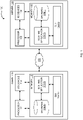
- Figure 1 illustrates a system configured to implement one or more aspects of the various embodiments.
- a system 100 includes a client 110 and a server 130 coupled together via a network 150.
- Client 110 or server 130 may be any technically feasible type of computer system, including a desktop computer, a laptop computer, a mobile device, a virtualized instance of a computing device, a distributed and/or cloud-based computer system, and so forth.
- Network 150 may be any technically feasible set of interconnected communication links, including a local area network (LAN), wide area network (WAN), the World Wide Web, or the Internet, among others.
- client 110 includes a processor 112, input/output (I/O) devices 114, and a memory 116, coupled together.
- processor 112 includes any technically feasible set of hardware units configured to process data and execute software applications.
- processor 112 could include one or more central processing units (CPUs).
- I/O devices 114 include any technically feasible set of devices configured to perform input and/or output operations, including, for example, a display device, a keyboard, and a touchscreen, among others.
- Memory 116 includes any technically feasible storage media configured to store data and software applications, such as, for example, a hard disk, a random-access memory (RAM) module, and a read-only memory (ROM).
- Memory 116 includes a database 118(0), a scaling application 120(0), and a graphical user interface (GUI) 122(0).
- Database 118(0) stores various data that is processed by scaling application 120(0).
- Scaling application 120(0) is a software application that, when executed by processor 112, interoperates with a corresponding software application executing on server 130.
- GUI 122(0) is an interface through which scaling application 120(0) can receive input and provide output.
- Server 130 includes a processor 132, I/O devices 134, and a memory 136, coupled together.
- Processor 132 includes any technically feasible set of hardware units configured to process data and execute software applications, such as one or more CPUs.
- I/O devices 134 include any technically feasible set of devices configured to perform input and/or output operations, such as a display device, a keyboard, or a touchscreen, among others.
- Memory 136 includes any technically feasible storage media configured to store data and software applications, such as, for example, a hard disk, a RAM module, and a ROM.
- Memory 136 includes a database 118(1), a scaling application 120(1), and a GUI 122(1).
- Database 118(1) stores various data that is processed by scaling application 120(1).
- Scaling application 120(1) is a software application that, when executed by processor 112, interoperates with scaling application 120(1) executing on client 110.
- GUI 122(1) is an interface through which scaling application 120(1) can receive input and provide output.
- databases 118(0) and 118(1) represent separate portions of a distributed storage entity.
- databases 118(0) and 118(1) are collectively referred to hereinafter as database 118.
- scaling application 120(0) and scaling application 120(1) represent separate portions of a distributed software entity that is configured to perform any and all of the inventive operations described herein.
- scaling applications 120(0) and 120(1) are collectively referred to hereinafter as scaling application 120.
- GUIs 122(0) and 122(1) likewise represent separate portions of a distributed GUI that is referred to collectively hereinafter as GUI 122.
- scaling application 120 is configured to process downscaled images in order to generate higher resolution versions of those images. In so doing, scaling application 120 estimates a downscaling kernel used to generate the downscaled images and then modifies the estimated downscaling kernel (or an encoded and/or compressed version thereof) to reduce visual artifacts in the higher resolution versions of those images, as described in greater detail below in conjunction with Figures 2A-4 .
- FIG. 2A is a more detailed illustration of the scaling application of Figure 1 , according to various embodiments.
- scaling application 120 includes a kernel mapping network 200, a degradation-aware generator network 210, a kernel discriminator network 220, input data 210, and a parameter optimizer 240.
- Kernel mapping network 200, degradation-aware generator network 210, and kernel discriminator network 220 are artificial neural networks that are trained via an approach described below in conjunction with Figure 2B .
- one or more of the above networks may be convolutional neural networks.
- kernel mapping network 200 obtains or generates a downscaling kernel 202.
- downscaling kernel 202 is pre-determined and therefore known to have been used to generate downscaled image 208.
- the downscaling kernel used to generate downscaled image 208 is not pre-determined and therefore unknown.
- downscaling kernel 202 is randomized or randomly sampled from a kernel space that spans a set of possible downscaling kernels to provide an approximation to the downscaling kernel that may have been used to generate downscaled image 208.
- An exemplary kernel space is described in greater detail below in conjunction with Figure 3 .
- Kernel mapping network 200 encodes downscaling kernel 202 into a latent space to generate latent representation 204.
- Latent representation 204 is a reduced-dimensionality version of downscaling kernel 204.
- kernel mapping network 200 may be a two-layer dense network that analyzes a vector form of downscaling kernel 202 that is obtained via row concatenation. Kernel mapping network 200 may then map the vector form of downscaling kernel 202 to latent representation 204.
- Kernel mapping network 200 assembles one or more instances of latent representation 204 to form a degradation map 206.
- Degradation map 206 is a spatial feature map that indicates various spatially-dependent sources of degradation. Kernel mapping network 200 generates degradation map 204 via one of the following processes. In situations where downscaled image 208 is generated based on a single downscaling kernel that does not vary across regions or pixel locations of a given input image, kernel mapping network 200 assembles degradation map 206 by copying latent representation 204 across those regions or pixel locations.
- kernel mapping network 200 assembles degradation map 206 by generating a different latent representation 204 for each different region or pixel location and combining those different latent representations 204 into degradation map 206.
- kernel mapping network 200 can address downscaling operations that are performed via spatially invariant downscaling kernels as well as those performed via spatially variant downscaling kernels.
- kernel mapping network 200 may initially treat downscaling kernel 202 as spatially invariant and therefore include copies of latent representation 204 within degradation map 206.
- Kernel mapping network 200 may subsequently treat downscaling network 202 as having one or more spatial variations and then modify degradation map 206 to include different versions of latent representation 204 within degradation map 206.
- the spatial variations in downscaling kernel 202 may be encoded into degradation map 206 via a parameter optimization process that is described below in conjunction with Figure 2B .
- Downscaled image 208 and degradation map 206 are included in input 210 and supplied to degradation-aware generator network 220 and kernel discriminator network 230.
- Degradation-aware generator network 220 is a convolutional neural network that analyzes downscaled image 208 and degradation map 206 to generate a reconstructed image 222.
- Reconstructed image 222 is a higher resolution version of downscaled image 206.
- Degradation-aware generator network 220 is trained to generate higher resolution versions of downscaled images via an approach that is described in greater detail below in conjunction with Figure 2B .
- Kernel discriminator network 230 is a convolutional neural network that analyzes downscaled image 208, degradation map 206, and one or more outputs of degradation-aware generator network 230 to generate an image delta 232.
- Image delta 232 generally indicates any artifacts that may be present in reconstructed image 222. Such artifacts can be present when the downscaling kernel is unknown and degradation-aware generator network 220 therefore receives as input a degradation map 206 that is generated based on a randomized or randomly sampled downscaling kernel 202.
- image delta 232 represents the difference between downscaled image 208 and an original, higher-resolution version of downscaled image 208, as predicted by kernel discriminator network 230.
- kernel discriminator network 230 may receive one or more outputs from at least one feature layer included in degradation aware generator network 220.
- Degradation-aware generator network 220 is trained to generate image deltas via an approach that is described in greater detail below in conjunction with Figure 2B .
- Parameter optimizer 240 obtains image delta 232 from kernel generator network 232 and then performs a parameter optimization process with at least one of downscaling kernel 202 and degradation map 206.
- parameter optimizer 240 modifies one or more coefficients that describe the physical configuration of downscaling kernel 202 to minimize image delta 232 following a subsequent processing iteration of kernel mapping network 200, degradation-aware generator network 220, and kernel discriminator network 230.
- kernel discriminator network 230 optimizes the one or more coefficients of downscaling kernel 202 to cause image delta 232 to approach zero, indicating that some or all artifacts included in reconstructed image 222 have been eliminated.
- the described approach can be implemented when downscaling kernel 202 is spatially invariant.
- parameter optimizer 240 modifies one or more versions of latent representation 204 included in degradation map 206 to minimize image delta 232 following a subsequent processing iteration of kernel mapping network 200, degradation-aware generator network 220, and kernel discriminator network 230.
- kernel discriminator network 230 performs one or more spatially-varying modifications to degradation map 206 to cause image delta 232 to approach zero, indicating that some or all artifacts included in reconstructed image 222 have been eliminated.
- the described approach can be implemented when downscaling kernel 202 is spatially invariant and also when downscaling kernel 202 varies across different regions or pixel locations in a given input image.
- reconstructed image 222 can be generated that has a higher resolution than downscaled image 208 but has few, if any, visual artifacts.
- the disclosed approach can be implemented when downscaling kernel 202 is pre-determined and therefore known to have been used to generate downscaled image 208 and also when the downscaling kernel used to generated downscaled image 208 is unknown and/or spatially variant.
- the various networks described above can be trained using the techniques described below in conjunction with Figure 2B .
- FIG. 2B illustrates a training engine that can be included in the scaling application of Figure 2A , according to various other embodiments.
- a training engine 250 includes a convolutional operator 252 that is configured to perform a downscaling operation with one or more original images 254 based on one or more downscaling kernels 202 to generate one or more downscaled images 208.
- Original image(s) 254 can include, for example, one or more random images that generally span a variety of different image types.
- Training engine 250 is configured to use original image(s) 254, downscaling kernel(s) 202, and downscaled image(s) 208 as training data during two training phases described below.
- training engine 250 performs a backpropagation operation with various sets of weights included in kernel mapping network 200 and/or degradation-aware generator network 220 with inputs that are derived from downscaling kernel(s) 202 and downscaled image(s) 208 and target outputs that are derived from original image(s) 254. In so doing, training engine 250 modifies the sets of weights included in kernel mapping network 200 and/or degradation-aware generator network 220 until one or more reconstructed image(s) 222 match corresponding original image(s) 254 with less than a threshold error. Training engine 250 then ceases training of kernel mapping network 200 and/or degradation-aware generator network 220 to perform a second training phase.
- training engine 250 performs a backpropagation operation with various sets of weights included in kernel discriminator network 230 using inputs that include pairs of reconstructed images 222 generated using correct and incorrect versions of a given downscaling kernel 202.
- the inputs provided to kernel discriminator network 230 during the second training phase can also include at least one output of one or more convolutional layers of degradation-aware generator network 220.
- Training engine 250 modifies the sets of weights included in discriminator network 230 in order to encode a mapping between variations of downscaling kernels 202 and visual artifacts that occur in image deltas 232 based on those variations. With this approach, kernel discriminator network 230 is trained to predict image deltas 232 to indicate these visual artifacts.
- parameter optimizer 240 operates in the manner previously described to optimize downscaling kernel 202 and/or degradation map 206 to minimize image delta 232, thereby approximating the downscaling kernel used to generate downscaled images 208 (or approximate a derivative degradation map).
- downscaling kernel 202 can be implemented via one or more randomized kernels and/or one or more random samplings of downscaling kernels 202, as mentioned above.
- downscaling kernels can be randomly selected from a kernel space that includes a range of possible downscaling kernels, as described in greater detail below in conjunction with Figure 3 .
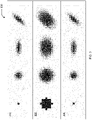
- Figure 3 illustrates a kernel space that includes a variety of different downscaling kernels, according to various embodiments.
- kernel space 300 includes different types of downscaling kernels, such as impulse kernels 310, disc kernels 320, and bicubic kernels 330.
- kernel space 300 includes different spatial variations of the given type of kernel, including stretched and/or scaled versions of the given type of kernel.
- kernel mapping network 200 described above in conjunction with Figures 2A-2B may initially select N downscaling kernels from kernel space 300 and then compute N images deltas 232 based on these N downscaling kernels. Depending on the degree and/or severity of visual artifacts found in the resultant N image deltas 232, kernel mapping network 200 may then determine that a subset of those N downscaling kernels is more likely to include the correct downscaling kernel compared to the other downscaling kernels sampled from kernel space 300. The disclosed approach can more effectively identify the correct downscaling kernel by avoiding local minima associated with any given downscaling kernel.
- GUI 122 may be configured to receive user input that reflects specific portions of downscaled images that should be upscaled with varying parameters. For example, GUI 122 could receive a brush stroke from the user emphasizing a particular region of a given downscaled image. The brush stroke could indicate that one or more parameters of downscaling kernel 202, such as the standard deviation, should be modified within that particular region.
- one advantage of the disclosed techniques is that higher resolution versions of downscaled images can be generated under circumstances where the downscaling kernel used to generate those images is unavailable or unknown. Further, the disclosed techniques can be applied to situations where different portions of an image are subjected to degradations caused by different downscaling kernels. For example, when background content is superimposed with rendered content, the different types of content could have different types of visual artifacts that can be attributed to different downscaling kernels. The disclosed techniques can effectively upscale such content to produce a high-resolution version of the content with few, if any, noticeable visual artifacts.
- the disclosed techniques may be applied to upscale lower resolution images that have not been downscaled but instead have been initially generated at a low resolution.
- the downscaling kernel is generally considered to be "unavailable" since no initial downscaling operation is performed.
- the disclosed techniques are applicable to any technically feasible situation where a lower resolution image needs to be upscaled to a higher resolution. The disclosed techniques are described in greater detail below in conjunction with Figure 4 .
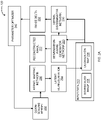
- Figure 4 is a flow diagram of method steps for upscaling an image that has been downscaled using an unknown downscaling kernel, according to various embodiments.
- the method steps are described in conjunction with the systems of Figures 1-3 , persons skilled in the art will understand that any system configured to perform the method steps in any order falls within the scope of the present embodiments.
- a method 400 begins at step 402, where scaling application 120 of Figure 1 receives a downscaled image.
- the downscaled image can be generated in a number of different scenarios. For example, media content could be captured at a high resolution and then downscaled to a lower "working" resolution in order to perform post-production operations, such as visual effects rendering.
- the downscaled image may simply be a low resolution image that is initially captured and/or rendered at a low resolution but needs to be upscaled to a higher resolution for display.
- scaling application 120 generates a downscaling kernel.
- the downscaling may be pre-determined, although typically the downscaling kernel is unknown and scaling engine 120 initially generates the downscaling kernel via a random sampling of a kernel space, such as that shown in Figure 3 .
- scaling application 120 may initially generate multiple downscaling kernels and subsequently select one such downscaling kernel that best facilitates image upscaling.
- kernel mapping network 200 within scaling application 120 encodes the downscaling kernel generated at step 404 into a latent space to generate a latent representation of the downscaling kernel.
- the latent representation is a compressed version of the downscaling kernel that has a reduced dimensionality compared to the original version of the downscaling kernel.
- kernel mapping network 200 generates a degradation map based on the latent representation generated at step 406.
- the degradation map is a spatial feature map that indicates various spatially-dependent sources of degradation.
- Kernel mapping network 200 can generate the degradation map by copying the latent representation across regions or pixel locations associated with an image having a target upscaled resolution or by generating a different latent representation for each different region or pixel location and combining those different latent representations.
- kernel mapping network 200 may be a convolutional neural network that is trained to generate the latent representation based on training data that includes one or more downscaling kernels, a set of images, and a set of downscaled images that are generated by downscaling the set of images using the one or more downscaling kernels.
- degradation-aware generator network 220 within scaling application 120 generates a reconstructed image based on the downscaled image received at step 402 and the degradation map generated at step 408.
- the reconstructed image has a target set of dimensions and/or resolution that, in some cases, corresponds to an original image that is downscaled to produce the downscaled image received at step 402.
- degradation-aware generator network 420 may be a convolutional neural network that is trained to generate the latent representation based on training data that includes one or more degradation maps, a set of images, and a set of downscaled images associated with the one or more degradation maps.
- kernel discriminator network 230 generates an image delta based on the downscaled image received at step 402, the degradation map generated at step 408, and a set of outputs drawn from degradation-aware generator network 420.
- the set of outputs may be derived from a final convolutional layer included in degradation-aware generator network 420.
- Kernel discriminator network 230 generates the image delta to indicate a set of artifacts that may be present within the reconstructed image generated at step 410.
- kernel discriminator network 430 may be a convolutional neural network that is trained to generate image deltas based on training data that includes any of the inputs to and/or outputs from degradation-aware generator network 420.
- parameter optimizer 250 within scaling application 120 modifies the downscaling kernel generated at step 404 and/or the degradation map generated at step 408 to reduce the image delta over one or more processing iterations.
- parameter optimizer 250 iteratively modifies one or more parameters that define the downscaling kernel and/or modifies the degradation map directly and then recomputes the reconstructed image and image delta in an iterative manner until the image delta indicates less than a threshold amount of visual artifacts.
- scaling engine 120 outputs the reconstructed image with a higher resolution than the downscaled image. Because scaling engine 120 optimizes the downscaling kernel and/or the degradation map to reduce image delta, the reconstructed image output at step 416 may have minimal visual artifacts, if any.
- a scaling application estimates a downscaling kernel used to generate a downscaled image.
- the scaling application then upscales the downscaled image based on the estimated downscaling kernel, thereby generating a higher resolution version of the downscaled image with minimal visual artifacts.
- the scaling application includes various networks that perform the above operations.
- a kernel mapping network generates a degradation map based on the estimated downscaling kernel.
- a degradation-aware generator network generates a reconstructed image based on the downscaled image and the degradation map.
- a kernel discriminator network generates an image delta that reflects visual artifacts present in the reconstructed image.
- the scaling application further includes a parameter optimizer that iteratively modifies the estimated downscaling kernel in order to reduce visual artifacts indicated in the image delta. Via one or more iterations, the scaling application generates a reasonably accurate estimation of the downscaling kernel and can then upscale the downscaled image with reduced visual artifacts.
- At least one technological advantage of the disclosed techniques relative to the prior art is that low-resolution images downscaled using an unknown downscaling kernel can be upscaled to higher resolutions without introducing significant visual artifacts. Accordingly, the disclosed techniques can be applied to media production pipelines where media content needs to be downscaled for various reasons and then subsequently upscaled to some relatively higher resolution that is more suitable for display.
- aspects of the present embodiments may be embodied as a system, method or computer program product. Accordingly, aspects of the present disclosure may take the form of an entirely hardware embodiment, an entirely software embodiment (including firmware, resident software, micro-code, etc.) or an embodiment combining software and hardware aspects that may all generally be referred to herein as a "module” or "system.” Furthermore, aspects of the present disclosure may take the form of a computer program product embodied in one or more computer readable medium(s) having computer readable program code embodied thereon.
- the computer readable medium may be a computer readable signal medium or a computer readable storage medium.
- a computer readable storage medium may be, for example, but not limited to, an electronic, magnetic, optical, electromagnetic, infrared, or semiconductor system, apparatus, or device, or any suitable combination of the foregoing.
- a computer readable storage medium may be any tangible medium that can contain, or store a program for use by or in connection with an instruction execution system, apparatus, or device.
- each block in the flowchart or block diagrams may represent a module, segment, or portion of code, which comprises one or more executable instructions for implementing the specified logical function(s).
- the functions noted in the block may occur out of the order noted in the figures. For example, two blocks shown in succession may, in fact, be executed substantially concurrently, or the blocks may sometimes be executed in the reverse order, depending upon the functionality involved.
Landscapes
- Engineering & Computer Science (AREA)
- Physics & Mathematics (AREA)
- Theoretical Computer Science (AREA)
- General Physics & Mathematics (AREA)
- Artificial Intelligence (AREA)
- Evolutionary Computation (AREA)
- Biomedical Technology (AREA)
- Life Sciences & Earth Sciences (AREA)
- Health & Medical Sciences (AREA)
- Biophysics (AREA)
- Computational Linguistics (AREA)
- Data Mining & Analysis (AREA)
- General Health & Medical Sciences (AREA)
- Molecular Biology (AREA)
- Computing Systems (AREA)
- General Engineering & Computer Science (AREA)
- Mathematical Physics (AREA)
- Software Systems (AREA)
- Image Processing (AREA)
Applications Claiming Priority (1)
| Application Number | Priority Date | Filing Date | Title |
|---|---|---|---|
| US16/542,227 US11080824B2 (en) | 2019-08-15 | 2019-08-15 | Techniques for upscaling images generated with undetermined downscaling kernels |
Publications (2)
| Publication Number | Publication Date |
|---|---|
| EP3779863A1 EP3779863A1 (en) | 2021-02-17 |
| EP3779863B1 true EP3779863B1 (en) | 2022-04-27 |
Family
ID=71950572
Family Applications (1)
| Application Number | Title | Priority Date | Filing Date |
|---|---|---|---|
| EP20189699.0A Active EP3779863B1 (en) | 2019-08-15 | 2020-08-05 | Techniques for upscaling images generated with undetermined downscaling kernels |
Country Status (4)
| Country | Link |
|---|---|
| US (1) | US11080824B2 (enExample) |
| EP (1) | EP3779863B1 (enExample) |
| JP (1) | JP7303783B2 (enExample) |
| KR (1) | KR102512507B1 (enExample) |
Families Citing this family (6)
| Publication number | Priority date | Publication date | Assignee | Title |
|---|---|---|---|---|
| US11126895B2 (en) * | 2019-05-22 | 2021-09-21 | Lawrence Livermore National Security, Llc | Mimicking of corruption in images |
| US12217386B2 (en) * | 2020-10-01 | 2025-02-04 | Nvidia Corporation | Image generation using one or more neural networks |
| US11769227B2 (en) * | 2021-08-12 | 2023-09-26 | Adobe Inc. | Generating synthesized digital images utilizing a multi-resolution generator neural network |
| US12062152B2 (en) | 2021-08-27 | 2024-08-13 | Disney Enterprises, Inc. | Re-noising and neural network based image enhancement |
| US12493927B2 (en) * | 2021-09-30 | 2025-12-09 | Baidu Usa Llc | Robust and efficient blind super-resolution using variational kernel autoencoder |
| US20230144735A1 (en) * | 2021-11-09 | 2023-05-11 | Netflix, Inc. | Techniques for jointly training a downscaler and an upscaler for video streaming |
Family Cites Families (4)
| Publication number | Priority date | Publication date | Assignee | Title |
|---|---|---|---|---|
| US10970819B2 (en) * | 2017-05-26 | 2021-04-06 | Rakuten, Inc. | Image processing device, image processing method, and image processing program |
| US10885608B2 (en) * | 2018-06-06 | 2021-01-05 | Adobe Inc. | Super-resolution with reference images |
| US11107205B2 (en) * | 2019-02-18 | 2021-08-31 | Samsung Electronics Co., Ltd. | Techniques for convolutional neural network-based multi-exposure fusion of multiple image frames and for deblurring multiple image frames |
| US10977524B2 (en) * | 2019-04-11 | 2021-04-13 | Open Text Sa Ulc | Classification with segmentation neural network for image-based content capture |
-
2019
- 2019-08-15 US US16/542,227 patent/US11080824B2/en active Active
-
2020
- 2020-08-05 EP EP20189699.0A patent/EP3779863B1/en active Active
- 2020-08-06 JP JP2020133682A patent/JP7303783B2/ja active Active
- 2020-08-12 KR KR1020200101045A patent/KR102512507B1/ko active Active
Also Published As
| Publication number | Publication date |
|---|---|
| JP2021034038A (ja) | 2021-03-01 |
| KR102512507B1 (ko) | 2023-03-22 |
| EP3779863A1 (en) | 2021-02-17 |
| JP7303783B2 (ja) | 2023-07-05 |
| US20210049739A1 (en) | 2021-02-18 |
| KR20210021272A (ko) | 2021-02-25 |
| US11080824B2 (en) | 2021-08-03 |
Similar Documents
| Publication | Publication Date | Title |
|---|---|---|
| EP3779863B1 (en) | Techniques for upscaling images generated with undetermined downscaling kernels | |
| Wang et al. | Real-esrgan: Training real-world blind super-resolution with pure synthetic data | |
| US10552944B2 (en) | Image upscaling with controllable noise reduction using a neural network | |
| US12175641B2 (en) | Restoring degraded digital images through a deep learning framework | |
| KR20220124622A (ko) | 이미지 압축 방법 및 이미지 압축 장치 | |
| WO2023050258A1 (en) | Robust and efficient blind super-resolution using variational kernel autoencoder | |
| US12211178B2 (en) | Transferring faces between digital images by combining latent codes utilizing a blending network | |
| US11871145B2 (en) | Optimization of adaptive convolutions for video frame interpolation | |
| WO2024188008A1 (zh) | 图像修复模型训练方法、图像修复方法、装置和电子设备 | |
| US20240233076A1 (en) | Machine learning techniques for video downsampling | |
| WO2018225133A1 (ja) | 画像処理装置、画像処理方法、および画像処理プログラム | |
| US20230377093A1 (en) | Techniques for resampling images | |
| US12079957B2 (en) | Modeling continuous kernels to generate an enhanced digital image from a burst of digital images | |
| US11842463B2 (en) | Deblurring motion in videos | |
| US20240394834A1 (en) | Increasing resolution of digital images using self-supervised burst super-resolution | |
| EP3591608A1 (en) | Method and system for image reconstruction using deep dictionary learning (ddl) | |
| KR20200066485A (ko) | 블러된 영상 복원을 위한 장치 및 방법 | |
| CN114612680A (zh) | 图像的处理方法、装置、电子设备及计算机存储介质 | |
| Zhou et al. | Alternating direction projections onto convex sets for super-resolution image reconstruction | |
| Xu et al. | Discarding jagged artefacts in image upscaling with total variation regularisation | |
| CN115880144A (zh) | 图像处理方法、装置、电子设备及计算机可读存储介质 | |
| Ogawa et al. | Adaptive subspace-based inverse projections via division into multiple sub-problems for missing image data restoration | |
| CN118446894B (zh) | 图像处理方法、装置、电子设备及存储介质 | |
| CN112581362A (zh) | 用于调整图像细节的图像处理方法和装置 | |
| US12506890B2 (en) | Techniques for reconstructing downscaled video content |
Legal Events
| Date | Code | Title | Description |
|---|---|---|---|
| PUAI | Public reference made under article 153(3) epc to a published international application that has entered the european phase |
Free format text: ORIGINAL CODE: 0009012 |
|
| STAA | Information on the status of an ep patent application or granted ep patent |
Free format text: STATUS: REQUEST FOR EXAMINATION WAS MADE |
|
| 17P | Request for examination filed |
Effective date: 20200805 |
|
| AK | Designated contracting states |
Kind code of ref document: A1 Designated state(s): AL AT BE BG CH CY CZ DE DK EE ES FI FR GB GR HR HU IE IS IT LI LT LU LV MC MK MT NL NO PL PT RO RS SE SI SK SM TR |
|
| AX | Request for extension of the european patent |
Extension state: BA ME |
|
| RBV | Designated contracting states (corrected) |
Designated state(s): AL AT BE BG CH CY CZ DE DK EE ES FI FR GB GR HR HU IE IS IT LI LT LU LV MC MK MT NL NO PL PT RO RS SE SI SK SM TR |
|
| GRAP | Despatch of communication of intention to grant a patent |
Free format text: ORIGINAL CODE: EPIDOSNIGR1 |
|
| STAA | Information on the status of an ep patent application or granted ep patent |
Free format text: STATUS: GRANT OF PATENT IS INTENDED |
|
| INTG | Intention to grant announced |
Effective date: 20211110 |
|
| GRAS | Grant fee paid |
Free format text: ORIGINAL CODE: EPIDOSNIGR3 |
|
| GRAA | (expected) grant |
Free format text: ORIGINAL CODE: 0009210 |
|
| STAA | Information on the status of an ep patent application or granted ep patent |
Free format text: STATUS: THE PATENT HAS BEEN GRANTED |
|
| AK | Designated contracting states |
Kind code of ref document: B1 Designated state(s): AL AT BE BG CH CY CZ DE DK EE ES FI FR GB GR HR HU IE IS IT LI LT LU LV MC MK MT NL NO PL PT RO RS SE SI SK SM TR |
|
| REG | Reference to a national code |
Ref country code: GB Ref legal event code: FG4D |
|
| REG | Reference to a national code |
Ref country code: CH Ref legal event code: EP |
|
| REG | Reference to a national code |
Ref country code: AT Ref legal event code: REF Ref document number: 1487528 Country of ref document: AT Kind code of ref document: T Effective date: 20220515 |
|
| REG | Reference to a national code |
Ref country code: DE Ref legal event code: R096 Ref document number: 602020002828 Country of ref document: DE |
|
| REG | Reference to a national code |
Ref country code: IE Ref legal event code: FG4D |
|
| REG | Reference to a national code |
Ref country code: LT Ref legal event code: MG9D |
|
| REG | Reference to a national code |
Ref country code: NL Ref legal event code: MP Effective date: 20220427 |
|
| REG | Reference to a national code |
Ref country code: AT Ref legal event code: MK05 Ref document number: 1487528 Country of ref document: AT Kind code of ref document: T Effective date: 20220427 |
|
| PG25 | Lapsed in a contracting state [announced via postgrant information from national office to epo] |
Ref country code: NL Free format text: LAPSE BECAUSE OF FAILURE TO SUBMIT A TRANSLATION OF THE DESCRIPTION OR TO PAY THE FEE WITHIN THE PRESCRIBED TIME-LIMIT Effective date: 20220427 |
|
| PG25 | Lapsed in a contracting state [announced via postgrant information from national office to epo] |
Ref country code: SE Free format text: LAPSE BECAUSE OF FAILURE TO SUBMIT A TRANSLATION OF THE DESCRIPTION OR TO PAY THE FEE WITHIN THE PRESCRIBED TIME-LIMIT Effective date: 20220427 Ref country code: PT Free format text: LAPSE BECAUSE OF FAILURE TO SUBMIT A TRANSLATION OF THE DESCRIPTION OR TO PAY THE FEE WITHIN THE PRESCRIBED TIME-LIMIT Effective date: 20220829 Ref country code: NO Free format text: LAPSE BECAUSE OF FAILURE TO SUBMIT A TRANSLATION OF THE DESCRIPTION OR TO PAY THE FEE WITHIN THE PRESCRIBED TIME-LIMIT Effective date: 20220727 Ref country code: LT Free format text: LAPSE BECAUSE OF FAILURE TO SUBMIT A TRANSLATION OF THE DESCRIPTION OR TO PAY THE FEE WITHIN THE PRESCRIBED TIME-LIMIT Effective date: 20220427 Ref country code: HR Free format text: LAPSE BECAUSE OF FAILURE TO SUBMIT A TRANSLATION OF THE DESCRIPTION OR TO PAY THE FEE WITHIN THE PRESCRIBED TIME-LIMIT Effective date: 20220427 Ref country code: GR Free format text: LAPSE BECAUSE OF FAILURE TO SUBMIT A TRANSLATION OF THE DESCRIPTION OR TO PAY THE FEE WITHIN THE PRESCRIBED TIME-LIMIT Effective date: 20220728 Ref country code: FI Free format text: LAPSE BECAUSE OF FAILURE TO SUBMIT A TRANSLATION OF THE DESCRIPTION OR TO PAY THE FEE WITHIN THE PRESCRIBED TIME-LIMIT Effective date: 20220427 Ref country code: BG Free format text: LAPSE BECAUSE OF FAILURE TO SUBMIT A TRANSLATION OF THE DESCRIPTION OR TO PAY THE FEE WITHIN THE PRESCRIBED TIME-LIMIT Effective date: 20220727 Ref country code: AT Free format text: LAPSE BECAUSE OF FAILURE TO SUBMIT A TRANSLATION OF THE DESCRIPTION OR TO PAY THE FEE WITHIN THE PRESCRIBED TIME-LIMIT Effective date: 20220427 |
|
| PG25 | Lapsed in a contracting state [announced via postgrant information from national office to epo] |
Ref country code: RS Free format text: LAPSE BECAUSE OF FAILURE TO SUBMIT A TRANSLATION OF THE DESCRIPTION OR TO PAY THE FEE WITHIN THE PRESCRIBED TIME-LIMIT Effective date: 20220427 Ref country code: PL Free format text: LAPSE BECAUSE OF FAILURE TO SUBMIT A TRANSLATION OF THE DESCRIPTION OR TO PAY THE FEE WITHIN THE PRESCRIBED TIME-LIMIT Effective date: 20220427 Ref country code: LV Free format text: LAPSE BECAUSE OF FAILURE TO SUBMIT A TRANSLATION OF THE DESCRIPTION OR TO PAY THE FEE WITHIN THE PRESCRIBED TIME-LIMIT Effective date: 20220427 Ref country code: IS Free format text: LAPSE BECAUSE OF FAILURE TO SUBMIT A TRANSLATION OF THE DESCRIPTION OR TO PAY THE FEE WITHIN THE PRESCRIBED TIME-LIMIT Effective date: 20220827 |
|
| REG | Reference to a national code |
Ref country code: DE Ref legal event code: R097 Ref document number: 602020002828 Country of ref document: DE |
|
| PG25 | Lapsed in a contracting state [announced via postgrant information from national office to epo] |
Ref country code: SM Free format text: LAPSE BECAUSE OF FAILURE TO SUBMIT A TRANSLATION OF THE DESCRIPTION OR TO PAY THE FEE WITHIN THE PRESCRIBED TIME-LIMIT Effective date: 20220427 Ref country code: SK Free format text: LAPSE BECAUSE OF FAILURE TO SUBMIT A TRANSLATION OF THE DESCRIPTION OR TO PAY THE FEE WITHIN THE PRESCRIBED TIME-LIMIT Effective date: 20220427 Ref country code: RO Free format text: LAPSE BECAUSE OF FAILURE TO SUBMIT A TRANSLATION OF THE DESCRIPTION OR TO PAY THE FEE WITHIN THE PRESCRIBED TIME-LIMIT Effective date: 20220427 Ref country code: ES Free format text: LAPSE BECAUSE OF FAILURE TO SUBMIT A TRANSLATION OF THE DESCRIPTION OR TO PAY THE FEE WITHIN THE PRESCRIBED TIME-LIMIT Effective date: 20220427 Ref country code: EE Free format text: LAPSE BECAUSE OF FAILURE TO SUBMIT A TRANSLATION OF THE DESCRIPTION OR TO PAY THE FEE WITHIN THE PRESCRIBED TIME-LIMIT Effective date: 20220427 Ref country code: DK Free format text: LAPSE BECAUSE OF FAILURE TO SUBMIT A TRANSLATION OF THE DESCRIPTION OR TO PAY THE FEE WITHIN THE PRESCRIBED TIME-LIMIT Effective date: 20220427 Ref country code: CZ Free format text: LAPSE BECAUSE OF FAILURE TO SUBMIT A TRANSLATION OF THE DESCRIPTION OR TO PAY THE FEE WITHIN THE PRESCRIBED TIME-LIMIT Effective date: 20220427 |
|
| PLBE | No opposition filed within time limit |
Free format text: ORIGINAL CODE: 0009261 |
|
| STAA | Information on the status of an ep patent application or granted ep patent |
Free format text: STATUS: NO OPPOSITION FILED WITHIN TIME LIMIT |
|
| PG25 | Lapsed in a contracting state [announced via postgrant information from national office to epo] |
Ref country code: MC Free format text: LAPSE BECAUSE OF FAILURE TO SUBMIT A TRANSLATION OF THE DESCRIPTION OR TO PAY THE FEE WITHIN THE PRESCRIBED TIME-LIMIT Effective date: 20220427 Ref country code: AL Free format text: LAPSE BECAUSE OF FAILURE TO SUBMIT A TRANSLATION OF THE DESCRIPTION OR TO PAY THE FEE WITHIN THE PRESCRIBED TIME-LIMIT Effective date: 20220427 |
|
| 26N | No opposition filed |
Effective date: 20230130 |
|
| PG25 | Lapsed in a contracting state [announced via postgrant information from national office to epo] |
Ref country code: LU Free format text: LAPSE BECAUSE OF NON-PAYMENT OF DUE FEES Effective date: 20220805 |
|
| REG | Reference to a national code |
Ref country code: BE Ref legal event code: MM Effective date: 20220831 |
|
| PG25 | Lapsed in a contracting state [announced via postgrant information from national office to epo] |
Ref country code: SI Free format text: LAPSE BECAUSE OF FAILURE TO SUBMIT A TRANSLATION OF THE DESCRIPTION OR TO PAY THE FEE WITHIN THE PRESCRIBED TIME-LIMIT Effective date: 20220427 |
|
| P01 | Opt-out of the competence of the unified patent court (upc) registered |
Effective date: 20230509 |
|
| PG25 | Lapsed in a contracting state [announced via postgrant information from national office to epo] |
Ref country code: IE Free format text: LAPSE BECAUSE OF NON-PAYMENT OF DUE FEES Effective date: 20220805 Ref country code: FR Free format text: LAPSE BECAUSE OF NON-PAYMENT OF DUE FEES Effective date: 20220831 |
|
| PG25 | Lapsed in a contracting state [announced via postgrant information from national office to epo] |
Ref country code: BE Free format text: LAPSE BECAUSE OF NON-PAYMENT OF DUE FEES Effective date: 20220831 |
|
| PG25 | Lapsed in a contracting state [announced via postgrant information from national office to epo] |
Ref country code: IT Free format text: LAPSE BECAUSE OF FAILURE TO SUBMIT A TRANSLATION OF THE DESCRIPTION OR TO PAY THE FEE WITHIN THE PRESCRIBED TIME-LIMIT Effective date: 20220427 |
|
| REG | Reference to a national code |
Ref country code: CH Ref legal event code: PL |
|
| PG25 | Lapsed in a contracting state [announced via postgrant information from national office to epo] |
Ref country code: CY Free format text: LAPSE BECAUSE OF FAILURE TO SUBMIT A TRANSLATION OF THE DESCRIPTION OR TO PAY THE FEE WITHIN THE PRESCRIBED TIME-LIMIT Effective date: 20220427 Ref country code: CH Free format text: LAPSE BECAUSE OF NON-PAYMENT OF DUE FEES Effective date: 20230831 |
|
| PG25 | Lapsed in a contracting state [announced via postgrant information from national office to epo] |
Ref country code: MK Free format text: LAPSE BECAUSE OF FAILURE TO SUBMIT A TRANSLATION OF THE DESCRIPTION OR TO PAY THE FEE WITHIN THE PRESCRIBED TIME-LIMIT Effective date: 20220427 Ref country code: HU Free format text: LAPSE BECAUSE OF FAILURE TO SUBMIT A TRANSLATION OF THE DESCRIPTION OR TO PAY THE FEE WITHIN THE PRESCRIBED TIME-LIMIT; INVALID AB INITIO Effective date: 20200805 |
|
| PG25 | Lapsed in a contracting state [announced via postgrant information from national office to epo] |
Ref country code: TR Free format text: LAPSE BECAUSE OF FAILURE TO SUBMIT A TRANSLATION OF THE DESCRIPTION OR TO PAY THE FEE WITHIN THE PRESCRIBED TIME-LIMIT Effective date: 20220427 |
|
| PG25 | Lapsed in a contracting state [announced via postgrant information from national office to epo] |
Ref country code: MT Free format text: LAPSE BECAUSE OF FAILURE TO SUBMIT A TRANSLATION OF THE DESCRIPTION OR TO PAY THE FEE WITHIN THE PRESCRIBED TIME-LIMIT Effective date: 20220427 |
|
| PG25 | Lapsed in a contracting state [announced via postgrant information from national office to epo] |
Ref country code: BG Free format text: LAPSE BECAUSE OF FAILURE TO SUBMIT A TRANSLATION OF THE DESCRIPTION OR TO PAY THE FEE WITHIN THE PRESCRIBED TIME-LIMIT Effective date: 20220427 |
|
| PG25 | Lapsed in a contracting state [announced via postgrant information from national office to epo] |
Ref country code: BG Free format text: LAPSE BECAUSE OF FAILURE TO SUBMIT A TRANSLATION OF THE DESCRIPTION OR TO PAY THE FEE WITHIN THE PRESCRIBED TIME-LIMIT Effective date: 20220427 |
|
| PGFP | Annual fee paid to national office [announced via postgrant information from national office to epo] |
Ref country code: DE Payment date: 20250724 Year of fee payment: 6 |
|
| PGFP | Annual fee paid to national office [announced via postgrant information from national office to epo] |
Ref country code: GB Payment date: 20250725 Year of fee payment: 6 |