EP3779844A1 - Method and system for certifying block-chain-based copyright event proxy - Google Patents
Method and system for certifying block-chain-based copyright event proxy Download PDFInfo
- Publication number
- EP3779844A1 EP3779844A1 EP19859967.2A EP19859967A EP3779844A1 EP 3779844 A1 EP3779844 A1 EP 3779844A1 EP 19859967 A EP19859967 A EP 19859967A EP 3779844 A1 EP3779844 A1 EP 3779844A1
- Authority
- EP
- European Patent Office
- Prior art keywords
- node
- member node
- work
- target
- copyright event
- Prior art date
- Legal status (The legal status is an assumption and is not a legal conclusion. Google has not performed a legal analysis and makes no representation as to the accuracy of the status listed.)
- Granted
Links
Images


Classifications
-
- G—PHYSICS
- G06—COMPUTING OR CALCULATING; COUNTING
- G06Q—INFORMATION AND COMMUNICATION TECHNOLOGY [ICT] SPECIALLY ADAPTED FOR ADMINISTRATIVE, COMMERCIAL, FINANCIAL, MANAGERIAL OR SUPERVISORY PURPOSES; SYSTEMS OR METHODS SPECIALLY ADAPTED FOR ADMINISTRATIVE, COMMERCIAL, FINANCIAL, MANAGERIAL OR SUPERVISORY PURPOSES, NOT OTHERWISE PROVIDED FOR
- G06Q30/00—Commerce
- G06Q30/06—Buying, selling or leasing transactions
-
- H—ELECTRICITY
- H04—ELECTRIC COMMUNICATION TECHNIQUE
- H04L—TRANSMISSION OF DIGITAL INFORMATION, e.g. TELEGRAPHIC COMMUNICATION
- H04L9/00—Cryptographic mechanisms or cryptographic arrangements for secret or secure communications; Network security protocols
- H04L9/32—Cryptographic mechanisms or cryptographic arrangements for secret or secure communications; Network security protocols including means for verifying the identity or authority of a user of the system or for message authentication, e.g. authorization, entity authentication, data integrity or data verification, non-repudiation, key authentication or verification of credentials
- H04L9/3236—Cryptographic mechanisms or cryptographic arrangements for secret or secure communications; Network security protocols including means for verifying the identity or authority of a user of the system or for message authentication, e.g. authorization, entity authentication, data integrity or data verification, non-repudiation, key authentication or verification of credentials using cryptographic hash functions
-
- G—PHYSICS
- G06—COMPUTING OR CALCULATING; COUNTING
- G06Q—INFORMATION AND COMMUNICATION TECHNOLOGY [ICT] SPECIALLY ADAPTED FOR ADMINISTRATIVE, COMMERCIAL, FINANCIAL, MANAGERIAL OR SUPERVISORY PURPOSES; SYSTEMS OR METHODS SPECIALLY ADAPTED FOR ADMINISTRATIVE, COMMERCIAL, FINANCIAL, MANAGERIAL OR SUPERVISORY PURPOSES, NOT OTHERWISE PROVIDED FOR
- G06Q10/00—Administration; Management
- G06Q10/10—Office automation; Time management
-
- G—PHYSICS
- G06—COMPUTING OR CALCULATING; COUNTING
- G06Q—INFORMATION AND COMMUNICATION TECHNOLOGY [ICT] SPECIALLY ADAPTED FOR ADMINISTRATIVE, COMMERCIAL, FINANCIAL, MANAGERIAL OR SUPERVISORY PURPOSES; SYSTEMS OR METHODS SPECIALLY ADAPTED FOR ADMINISTRATIVE, COMMERCIAL, FINANCIAL, MANAGERIAL OR SUPERVISORY PURPOSES, NOT OTHERWISE PROVIDED FOR
- G06Q20/00—Payment architectures, schemes or protocols
- G06Q20/02—Payment architectures, schemes or protocols involving a neutral party, e.g. certification authority, notary or trusted third party [TTP]
-
- G—PHYSICS
- G06—COMPUTING OR CALCULATING; COUNTING
- G06Q—INFORMATION AND COMMUNICATION TECHNOLOGY [ICT] SPECIALLY ADAPTED FOR ADMINISTRATIVE, COMMERCIAL, FINANCIAL, MANAGERIAL OR SUPERVISORY PURPOSES; SYSTEMS OR METHODS SPECIALLY ADAPTED FOR ADMINISTRATIVE, COMMERCIAL, FINANCIAL, MANAGERIAL OR SUPERVISORY PURPOSES, NOT OTHERWISE PROVIDED FOR
- G06Q20/00—Payment architectures, schemes or protocols
- G06Q20/04—Payment circuits
- G06Q20/06—Private payment circuits, e.g. involving electronic currency used among participants of a common payment scheme
- G06Q20/065—Private payment circuits, e.g. involving electronic currency used among participants of a common payment scheme using e-cash
- G06Q20/0655—Private payment circuits, e.g. involving electronic currency used among participants of a common payment scheme using e-cash e-cash managed centrally
-
- G—PHYSICS
- G06—COMPUTING OR CALCULATING; COUNTING
- G06Q—INFORMATION AND COMMUNICATION TECHNOLOGY [ICT] SPECIALLY ADAPTED FOR ADMINISTRATIVE, COMMERCIAL, FINANCIAL, MANAGERIAL OR SUPERVISORY PURPOSES; SYSTEMS OR METHODS SPECIALLY ADAPTED FOR ADMINISTRATIVE, COMMERCIAL, FINANCIAL, MANAGERIAL OR SUPERVISORY PURPOSES, NOT OTHERWISE PROVIDED FOR
- G06Q50/00—Information and communication technology [ICT] specially adapted for implementation of business processes of specific business sectors, e.g. utilities or tourism
- G06Q50/10—Services
- G06Q50/18—Legal services
- G06Q50/184—Intellectual property management
-
- H—ELECTRICITY
- H04—ELECTRIC COMMUNICATION TECHNIQUE
- H04L—TRANSMISSION OF DIGITAL INFORMATION, e.g. TELEGRAPHIC COMMUNICATION
- H04L9/00—Cryptographic mechanisms or cryptographic arrangements for secret or secure communications; Network security protocols
- H04L9/08—Key distribution or management, e.g. generation, sharing or updating, of cryptographic keys or passwords
- H04L9/0816—Key establishment, i.e. cryptographic processes or cryptographic protocols whereby a shared secret becomes available to two or more parties, for subsequent use
- H04L9/0819—Key transport or distribution, i.e. key establishment techniques where one party creates or otherwise obtains a secret value, and securely transfers it to the other(s)
- H04L9/0825—Key transport or distribution, i.e. key establishment techniques where one party creates or otherwise obtains a secret value, and securely transfers it to the other(s) using asymmetric-key encryption or public key infrastructure [PKI], e.g. key signature or public key certificates
-
- H—ELECTRICITY
- H04—ELECTRIC COMMUNICATION TECHNIQUE
- H04L—TRANSMISSION OF DIGITAL INFORMATION, e.g. TELEGRAPHIC COMMUNICATION
- H04L9/00—Cryptographic mechanisms or cryptographic arrangements for secret or secure communications; Network security protocols
- H04L9/32—Cryptographic mechanisms or cryptographic arrangements for secret or secure communications; Network security protocols including means for verifying the identity or authority of a user of the system or for message authentication, e.g. authorization, entity authentication, data integrity or data verification, non-repudiation, key authentication or verification of credentials
- H04L9/3236—Cryptographic mechanisms or cryptographic arrangements for secret or secure communications; Network security protocols including means for verifying the identity or authority of a user of the system or for message authentication, e.g. authorization, entity authentication, data integrity or data verification, non-repudiation, key authentication or verification of credentials using cryptographic hash functions
- H04L9/3239—Cryptographic mechanisms or cryptographic arrangements for secret or secure communications; Network security protocols including means for verifying the identity or authority of a user of the system or for message authentication, e.g. authorization, entity authentication, data integrity or data verification, non-repudiation, key authentication or verification of credentials using cryptographic hash functions involving non-keyed hash functions, e.g. modification detection codes [MDCs], MD5, SHA or RIPEMD
-
- H—ELECTRICITY
- H04—ELECTRIC COMMUNICATION TECHNIQUE
- H04L—TRANSMISSION OF DIGITAL INFORMATION, e.g. TELEGRAPHIC COMMUNICATION
- H04L9/00—Cryptographic mechanisms or cryptographic arrangements for secret or secure communications; Network security protocols
- H04L9/50—Cryptographic mechanisms or cryptographic arrangements for secret or secure communications; Network security protocols using hash chains, e.g. blockchains or hash trees
-
- H—ELECTRICITY
- H04—ELECTRIC COMMUNICATION TECHNIQUE
- H04L—TRANSMISSION OF DIGITAL INFORMATION, e.g. TELEGRAPHIC COMMUNICATION
- H04L2209/00—Additional information or applications relating to cryptographic mechanisms or cryptographic arrangements for secret or secure communication H04L9/00
- H04L2209/46—Secure multiparty computation, e.g. millionaire problem
- H04L2209/463—Electronic voting
-
- H—ELECTRICITY
- H04—ELECTRIC COMMUNICATION TECHNIQUE
- H04L—TRANSMISSION OF DIGITAL INFORMATION, e.g. TELEGRAPHIC COMMUNICATION
- H04L2209/00—Additional information or applications relating to cryptographic mechanisms or cryptographic arrangements for secret or secure communication H04L9/00
- H04L2209/60—Digital content management, e.g. content distribution
- H04L2209/603—Digital right managament [DRM]
Definitions
- Implementations of the present specification relate to the field of information technology, and particularly, to a method and system of storing a record of a copyright event in a blockchain through an agent.
- the copyright event record-storing service refers to the timely recording of a generated copyright event and the endorsement of the authenticity of the copyright event.
- music platform A operates music-related work services (e.g., allowing users to create an original music work online/adapting a music work, and allowing a user to pay for listening to a music work online) and accumulates a certain quantity of registered users. Therefore, music platform A further provides a copyright event record-storing service for its registered users. Specifically, user A of music platform A can upload music work X created by user A to music platform A at 12:00 on September 01, 2018, and the server of music platform A stores the copyright event "User A created music work X at 12:00 on September 01, 2018".
- music-related work services e.g., allowing users to create an original music work online/adapting a music work, and allowing a user to pay for listening to a music work online
- music platform A further provides a copyright event record-storing service for its registered users.
- user A of music platform A can upload music work X created by user A to music platform A at 12:00 on September 01, 2018, and the server of music platform A stores the copyright event "Us
- User A can also sell the copyright of music work X held by user A to user B through music platform A at 12:00 on September 02, 2018, and the server of music platform A records the copyright event "User A sold the copyright of music work X to user B at 12:00 on September 02, 2018.
- implementations of the present specification provide a method and system of storing a record of a copyright event in a blockchain through an agent.
- the technical solutions are as follows:
- a method of storing a record of a copyright event in a blockchain through an agent includes a plurality of member nodes, and the plurality of member nodes include at least one agenting member node; each agenting member node has a right to agent copyright event record storage for a non-member node corresponding to the agenting member node; and the method includes: receiving, by a target agenting member node, a copyright event record-storing request initiated by a target non-member node corresponding to the target agenting member node for storing a record for a target copyright event, the target copyright event being generated based on a work-related service of the target non-member node, and the work-related service of the target non-member node being a work-related service performed by a server of a work service provider that controls the target non-member node; constructing a copyright event-related transaction based on the copyright event
- an apparatus of storing a record of a copyright event in a blockchain through an agent a consortium blockchain network of the blockchain including a plurality of member nodes, where the plurality of member nodes include at least one apparatus, and the apparatus has a right to agent copyright event record storage for a non-member node of the apparatus; and the apparatus includes: a receiving module, configured to receive a copyright event record-storing request initiated by a target non-member node of the apparatus, a target copyright event being generated based on a work-related service of the target non-member node, and the work-related service of the target non-member node being a work-related service performed by a server of a work service provider that controls the target non-member node; a transaction construction module, configured to construct a copyright event-related transaction based on the copyright event record-storing request; and a broadcasting module, configured to broadcast the copyright event-related transaction to the consortium blockchain network for each member
- a system of storing a record of a copyright event in a blockchain through an agent includes a consortium blockchain network and a plurality of member nodes;
- the consortium blockchain network of the blockchain includes a plurality of member nodes, and the plurality of member nodes include at least one agenting member node;
- each agenting member node has a right to agent copyright event record storage for a non-member node corresponding to the agenting member node;
- a target agenting member node receives a copyright event record-storing request initiated by a target non-member node corresponding to the target agenting member node for storing a record for a target copyright event, where the target copyright event is generated based on a work-related service of the target non-member node, and the work-related service of the target non-member node is a work-related service performed by the server of the work service provider that controls the target non-member node; constructs a copyright event-related transaction
- a computer device includes a memory, a processor, and a computer program that is stored in the memory and that can run on the processor.
- the processor executes the copyright event agenting storage method.
- devices of some work service providers operating work-related services can serve as member nodes to form a consortium blockchain network.
- Each work service provider broadcasts copyright events generated based on its work-related services to the consortium blockchain network, so all the work service providers perform blockchain-based distributed storage.
- the plurality of member nodes include at least one agenting member node; each agenting member node has a right to agent copyright event record storage for a non-member node corresponding to the agenting member node. Because data on the blockchain cannot be tampered with or destroyed, the security and credibility of a storage record obtained after a copyright event is stored can be ensured after the storage record is added to the blockchain.
- recording a copyright event by the server of a single work service provider is actually a centralized data storage method, and the centralized data storage method naturally has the drawback that the data is easily tampered with or destroyed.
- devices of several work service providers serve as member nodes to form a consortium blockchain network.
- a work service provider corresponding to a member node in the consortium blockchain network can timely upload to the blockchain network for storing the event-related information of a copyright event monitored by the work service provider.
- data in the blockchain has the characteristics of tamper-resistance and destroying-resistance
- storage records of copyright events are also tamper-resistant and destroying-resistant.
- copyright events monitored by work service providers are usually generated based on work-related services operated by the work service providers. That is, copyright events that need to be stored by a certain work service provider are usually initiated by a certain user of the work service provider when using the work-related service provided by the service provider. For example, when user A of music platform A shares original music work X on music platform A, user A can further request music platform A to store the copyright event "User A created music work X".
- a work service provider enables its own device to connect to a consortium blockchain network
- the device of the work service provider can directly pack event-related information of a copyright event initiated by a user into a transaction, and broadcast the transaction to the consortium blockchain network for distributed storage.
- the entire storage process does not involve the user, and causes little disturbance to the user.
- FIG. 1 is a schematic flowchart illustrating a method of storing a record of a copyright event in a blockchain according to an implementation of the present specification. The method includes the following steps: S100: A target member node receives a copyright event record-storing request.
- some work service providers can be specified to form a consortium blockchain network by using devices of these work service providers as member nodes.
- the devices of the work service providers that serve as the member nodes can be specifically servers of the work service providers that are used to perform work-related services, or can be other devices of the work service providers.
- the target member node is a member node in the consortium blockchain network.
- the target member node can be specifically a server(s) of the work service provider that controls the target member node, or can be another device of the work service provider that controls the target member node.
- step S100 when the target member node is the server of the work service provider that controls the target member node, the copyright event record-storing request received by the target member node can be sent by a user who has registered with the target member node.
- the target member node is another device of the work service provider that controls the target member node, the copyright event record-storing request received by the target member node can be sent, in response to a user request, by the server of the work service provider that controls the target member node.
- the copyright event record-storing request includes event-related information of a target copyright event.
- the target copyright event is generated based on a work-related service of the target member node, and the work-related service of the target member node is actually a work-related service performed by the server of the work service provider that controls the target member node.
- the work-related service performed by the server of music platform A is to receive and publish the original music work uploaded by the user. Assume that user A uploaded original music work X to the server of music platform A on September 10, 2018, the server stores the original music work and publishes it to other users. Then, a copyright event generated based on the work-related service can be "User A created original music work X at 12:00 on September 10, 2018." Based on this copyright event, the server can construct and send a copyright event record-storing request to member nodes controlled by music platform A.
- the event-related information can specifically include information such as the occurrence time of the target copyright event, specific content of the target copyright event, and the user identifier of a user who initiates the target copyright event.
- S102 Construct a copyright event-related transaction based on the copyright event record-storing request.
- the transaction described in the present specification refers to a piece of data that is created by a user by using a blockchain client and that needs to be finally added to a distributed database of the blockchain.
- transactions in the blockchain include a transaction in a narrow sense and a transaction in a broad sense.
- a transaction in a narrow sense refers to a value transfer added by a user to the blockchain.
- a transaction can be a transfer initiated by a user in the blockchain.
- a transaction in a broad sense refers to service data that is added by a user to the blockchain and that has a service or business intention.
- an operator can establish a consortium blockchain based on actual service needs, and deploy some other types of online services (for example, a rental service, a vehicle scheduling service, an insurance claim service, a credit service, and a medical service) that are not related to value transfer in the consortium blockchain.
- a transaction can be a service message or a service request that is added by a user to the consortium blockchain and that has a service or business intention.
- step S102 the target member node constructs the copyright event-related transaction actually by assembling the event-related information by using a data structure agreed upon in advance in the consortium blockchain network.
- S104 Broadcast the copyright event-related transaction to the consortium blockchain network.
- each member node After obtaining the copyright event-related transaction, each member node adds the copyright event-related transaction to the blockchain based on a consensus mechanism. That is, each member node stores the copyright event-related transaction in its own copy of the blockchain, which is equivalent to keeping a record of the target copyright event.
- devices of some work service providers operating work-related services can serve as member nodes to form a consortium blockchain network.
- Each work service provider of the consortium blockchain network broadcasts copyright events generated based on its work-related services to the consortium blockchain network, so all the work service providers of the consortium blockchain network perform blockchain-based distributed storage. Because data on the blockchain cannot be tampered with or destroyed, the security and credibility of a storage record obtained after a copyright event is stored can be ensured after the storage record is added to the blockchain.
- the present disclosure provides a method for constructing a consortium blockchain network as follows:
- the to-be-connected node is a device that requests to connect to the consortium blockchain network as a member node.
- members of the consortium blockchain network are usually selected through screening, and the screening rules usually form a smart contract.
- a node needs to deploy the smart contract and then invoke the deployed smart contract to enter the network connecting process.
- the related logic executed can be specified based on actual scenarios of the implementations. For example, assume that the consortium blockchain network needs to avoid business interest conflicts between members (for example, work-related services of two or more member nodes are highly overlapped), the smart contract should be compiled such that the smart contract can realize that in the consortium blockchain network, there are a relatively small number of member nodes whose work-related services are highly overlapped in scope.
- the smart contract provides a plurality of work types, and for each work type of the plurality of work types, the smart contract further provides a threshold and a cumulative value corresponding to a type identifier of the work type.
- Different work types can be divided according to actual needs. For example, music works, literary works, painting works, and movie and television works; or compilation works, adaptation works, and translation works; or original music works, adapted music works, compiled music works, original literary works, adapted literary works, compiled literary works, and translated literary works can be set.
- a connection request sent by the to-be-connected node through the smart contract needs to include at least one specified type identifier and a weight value corresponding to each specified type identifier, and a work type corresponding to each specified type identifier matches a work-related service of the to-be-connected node.
- the work type corresponding to the specified type identifier is a music work
- the work-related service of the to-be-connected node should also include the music work-related service.
- the to-be-connected node needs to indicate, in the connection request, the work type involved in the work-related service it operates. For example, if the to-be-connected node is a server of video adaptation platform B, an execution type identifier in the connection request sent by the to-be-connected node is the type identifier of a video adaptation work.
- the weight value corresponding to each specified type identifier can be considered as a share of interest, required by the to-be-connected node, in a service area related to the work type of the specified type identifier after the to-be-connected node becomes a member node.
- the cumulative value corresponding to each type identifier is actually a sum of weight values of all member nodes having the work-related service of the work type specified by the type identifier.
- the threshold corresponding to the type identifier is actually the upper limit of the sum of the weight values of all the member nodes having the work-related service of the work type of the type identifier in the consortium blockchain network.
- connection conditions there can be specifically two kinds of connection conditions.
- connection condition 1 is as follows: For each specified type identifier included in the connection request, a sum of a requested weight value corresponding to the specified type identifier and a cumulative value of weight values of the existing member nodes of the specified type identifier is not greater than a threshold corresponding to the specified type identifier.
- the interest proportion required by the to-be-connected node in a service area related to a work type of the specified type identifier must not exceed the currently remaining interest proportion, in the consortium blockchain network, in the service area related to the work type of the specified type identifier.
- the to-be-connected node can connect to the consortium blockchain network to become a member node.
- each member node also determines, through the smart contract, a difference between a threshold and a cumulative value of the existing member nodes of the specified type identifier; and determines, through the smart contract, whether a requested weight value corresponding to the specified type identifier is greater than the difference; in response to that the requested weight value corresponding to the specified type identifier is greater than the difference, obtains, through the smart contract, an updated cumulative value to be a sum of the difference and the existing cumulative value corresponding to the specified type identifier; in response to that the requested weight value corresponding to the specified type identifier is not greater than the difference, obtains, through the smart contract, an updated cumulative value to be a sum of the requested weight value corresponding to the specified type identifier and the existing cumulative value corresponding to the specified type identifier.
- Connection condition 2 is as follows: For each specified type identifier included in the connection request, a sum of cumulative values corresponding to the specified type identifier is less than a threshold corresponding to the specified type identifier.
- the to-be-connected node can connect to the consortium blockchain network to become a member node.
- a weight value requested by the to-be-connected node and corresponding to the specified type identifier is not necessarily accumulated fully into the cumulative value corresponding to the specified type identifier.
- each member node also determines, through the smart contract, a difference between a threshold and a cumulative value corresponding to each specified type identifier included in the connection request; and determines, through the smart contract, whether a requested weight value corresponding to the specified type identifier is greater than the difference; in response to that the requested weight value corresponding to the specified type identifier is greater than the difference, obtains, through the smart contract, a sum of the difference and the existing cumulative value corresponding to the specified type identifier as an updated cumulative value corresponding to the specified type identifier; in response to that the requested weight value corresponding to the specified type identifier is not greater than the difference, obtains, through the smart contract, a sum of the requested weight value corresponding to the specified type identifier and the existing cumulative value corresponding to the specified type identifier as the updated cumulative value corresponding to the specified type identifier.
- connection condition 1 or connection condition 2 the quantity of member nodes in the service area involved in each work type can be controlled.
- FIG. 2 schematically shows a system of storing a record of a copyright event in a blockchain, including a consortium blockchain network which includes a plurality of member nodes; a target member node receives a copyright event record-storing request, a target copyright event is generated based on a work-related service of the target member node, and the work-related service of the target member node is a work-related service performed by a server of a work service provider that controls the target member node; constructs a copyright event-related transaction based on the copyright event record-storing request; and broadcasts the copyright event-related transaction to the consortium blockchain network; and each member node adds the copyright event-related transaction to the blockchain based on a consensus mechanism.
- a work service provider that controls each member node in the consortium blockchain network can operate different work-related services.
- a member node controlled by each work service provider is usually responsible for accepting record-storing requests for copyright events of a work type that matches a work-related service the work service provider operates.
- FIG. 3 shows a method of storing a record of a copyright event in a blockchain through an agent according to implementations of the present specification.
- the method includes the following steps: S300: A target agenting member node receives a copyright event record-storing request initiated by a target non-member node corresponding to the target agenting member node for storing a record for a target copyright event.
- the member nodes of a consortium blockchain network include at least one agenting member node; each agenting member node has a right to provide agenting for a non-member node corresponding to the agenting member node on recording copyright events.
- the non-member node corresponding to the agenting member node can be a non-root node in a tree structure of nodes, in which the agenting member node is the root node.
- tree structure described herein mainly refers to a tree structure relationship, but does not mean that multiple nodes are distributed in a tree structure.
- an agenting member node can be connected to multi-level non-member nodes, and agent copyright event record storage events initiated by the connected non-member nodes.
- FIG. 4 is a schematic structural diagram illustrating a system of storing a record of a copyright event in a blockchain through an agent according to an implementation of the present specification.
- a member node controlled by literature compilation service provider A is an agenting member node.
- Member node A correspond to non-member nodes B, C, D and E, which are respectively non-member nodes controlled by literature compilation service providers B, C, D and E.
- Non-member node D controlled by literature compilation service provider D can receive a record-storing request sent by the server of the literature compilation service provider, and then non-member D can first send the record-storing request to non-member node B. Then non-member node B sends the record-storing request to member node A.
- member node A constructs a copyright-related transaction based on the record-storing request for broadcasting.
- the copyright event record-storing request includes event-related information of a target copyright event. It should be noted that the copyright event record-storing request is transmitted through a target path between the target non-member node and the target agenting member node in the tree structure. Referring to FIG. 4 , the path between target non-member node D and member node A is D-B-A through which the copyright event record-storing request is transmitted to member node A.
- the target copyright event is generated based on a work-related service of the target non-member node, and the work-related service of the target non-member node is a work-related service performed by the server of the work service provider that controls the target non-member node.
- the copyright event record-storing request is actually sent by the server of the work service provider that controls target non-member node D.
- a parent node on the target path receives a copyright event record-storing request transmitted by a specified child node based on a pre-configured storage permission type corresponding to the specified child node, the specified child node being a child node of the parent node on the target path.
- each parent node performs storage permission control on its child nodes.
- a certain parent node has three child nodes, and a storage permission control type of each child node in the parent node can be pre-configured as shown in Table 1 below: Table 1 Child node A Storage allowed The acceptance priority is medium Child node B Storage not allowed Null Child node C Storage allowed The acceptance priority is high
- child node B transmits a copyright event record-storing request to the parent node, which is rejected by the parent node, resulting in a storage failure. If both child node A and child node C transmit the copyright event record-storing request to the parent node, the parent node preferentially accepts the copyright event record-storing request of child node C.
- S302 Construct a copyright event-related transaction based on the copyright event record-storing request.
- S304 Broadcast the copyright event-related transaction to the consortium blockchain network.
- steps S302-S304 please refer to the previous description. Details are omitted herein for simplicity.
- a work-related service of the agenting member node can be set to be consistent with a work-related service of a non-member node corresponding to the agenting member node. That is, the work-related service of the non-member node corresponding to the agenting member node should also belong to the work-related service of the agenting member node.
- the target agenting member node can further receive a copyright event record query request initiated by the target non-member node, where the copyright event record query request is transmitted via the target path. Then the target agenting member node can return a query result based on the copyright event record query request to transmit the query result to the target non-member node via the target path. It should be noted herein that the copyright event record query request is actually a request to query a copyright event record on the blockchain.
- a parent node on the target path receives a copyright event record query request transmitted by a specified child node based on a pre-configured query permission type corresponding to the specified child node, the specified child node being a child node of the parent node on the target path.
- each parent node performs query permission control on its child nodes.
- a certain parent node has three child nodes, and a query permission control type of each child node in the parent node can be pre-configured as shown in Table 2 below: Table 2 Child node A Query allowed The acceptance priority is medium Child node B Query not allowed Null Child node C Query allowed The acceptance priority is high
- child node B transmits a copyright event record query request to the parent node, which is rejected by the parent node, resulting in a query failure. If both child node A and child node C transmit the copyright event record query request to the parent node, the parent node preferentially accepts the copyright event record query request of child node C.
- a work service provider of a certain agenting member node can agree on some cooperation rules with a work service provider of a non-member node corresponding to the agenting member node.
- literature compilation service provider A agents copyright event record storage for literature compilation service provider D, and thereby can charge a certain agency fee.
- the copyright event agenting storage system includes a consortium blockchain network and a plurality of non-member nodes.
- the consortium blockchain network includes a plurality of member nodes, and the plurality of member nodes include at least one agenting member node; each agenting member node has a right to agent copyright event record storage for a non-member node corresponding to the agenting member node.
- a target agenting member node receives a copyright event record-storing request initiated by a target non-member node corresponding to the target agenting member node for storing a record for a target copyright event, where the target copyright event is generated based on a work-related service of the target non-member node, and the work-related service of the target non-member node is a work-related service performed by the server of the work service provider that controls the target non-member node; constructs a copyright event-related transaction based on the copyright event record-storing request; and broadcasts the copyright event-related transaction to the consortium blockchain network; and each member node adds the copyright event-related transaction to the blockchain based on a consensus mechanism.
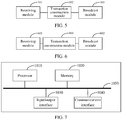
- a consortium blockchain network includes a plurality of member nodes, the apparatus is a member node, and the apparatus includes: a receiving module 501, configured to receive a copyright event record-storing request, a target copyright event being generated based on a work-related service of the target member node, and the work-related service of the target member node being a work-related service performed by a server of a work service provider that controls the target member node; a transaction construction module 502, configured to construct a copyright event-related transaction based on the copyright event record-storing request; and a broadcasting module 503, configured to broadcast the copyright event-related transaction to the consortium blockchain network for each member node to add the copyright event-related transaction to the blockchain based on a consensus mechanism.
- a consortium blockchain network includes a plurality of member nodes, the plurality of member nodes include at least one apparatus, and the apparatus has a right to agent copyright event record storage for a non-member node of the apparatus.
- the apparatus includes: a receiving module 601, configured to receive a copyright event record-storing request initiated by a target non-member node of the apparatus, a target copyright event being generated based on a work-related service of the target non-member node, and the work-related service of the target non-member node being a work-related service performed by a server of a work service provider that controls the target non-member node; a transaction construction module 602, configured to construct a copyright event-related transaction based on the copyright event record-storing request; and a broadcasting module 603, configured to broadcast the copyright event-related transaction to the consortium blockchain network for each member node to add the copyright event-related transaction to the blockchain based on a consensus mechanism.
- a receiving module 601 configured to receive a copyright event record-storing request initiated by a target non-member node of the apparatus, a target copyright event being generated based on a work-related service of the target non-member node, and the work-related service of the target non-member
- An implementation of the present specification further provides a computer device.
- the computer device includes at least a memory, a processor, and a computer program that is stored in the memory and that can run on the processor.
- the processor executes the program, implements the functions of the methods in one or more of FIG. 1 and FIG. 3 .
- FIG. 7 is a more detailed schematic diagram illustrating a hardware structure of a computing device according to an implementation of the present specification.
- the device can include a processor 1010, a memory 1020, an input/output interface 1030, a communications interface 1040, and a bus 1050.
- the processor 1010, the memory 1020, the input/output interface 1030, and the communications interface 1040 are communicatively connected to each other inside the device by using the bus 1050.
- the processor 1010 can be implemented by using a general central processing unit (CPU), a microprocessor, an application-specific integrated circuit (ASIC), one or more integrated circuits, etc., and is configured to execute a related program, to implement the technical solutions provided in the implementations of the present specification.
- CPU central processing unit
- ASIC application-specific integrated circuit
- the memory 1020 can be implemented by using a read-only memory (ROM), a random access memory (RAM), a static storage device, a dynamic storage device, etc.
- the memory 1020 can store an operating system and another application program.
- related program code is stored in the memory 1020, and is invoked and executed by the processor 1010.
- the input/output interface 1030 is configured to be connected to an input/output module, to input or output information.
- the input/output module (not shown in the figure) can be used as a component and configured in the device, or can be externally connected to the device to provide a corresponding function.
- the input device can include a keyboard, a mouse, a touchscreen, a microphone, various sensors, etc.
- the output device can include a monitor, a speaker, a vibrator, an indicator, etc.
- the communications interface 1040 is configured to be connected to a communications module (not shown in the figure), to implement a communication interaction between the device and another device.
- the communications module can perform communication in a wired method (for example, USB or a network cable), or can perform communication in a wireless method (for example, a mobile network, Wi-Fi, or Bluetooth).
- the bus 1050 includes one channel, used to transmit information between components (for example, the processor 1010, the memory 1020, the input/output interface 1030, and the communications interface 1040) of the device.
- the device can further include other components needed for implementing normal running.
- the device can include only components necessary for implementing the solutions in the implementations of the present specification, but does not necessarily include all components shown in the figure.
- An implementation of the present specification further provides a computer readable storage medium.
- the computer readable storage medium stores a computer program.
- a processor implements the functions of the methods in one or more of FIG. 1 and FIG. 3 .
- the computer readable medium includes persistent, non-persistent, movable, and unmovable media that can store information by using any method or technology.
- the information can be a computer readable instruction, a data structure, a program module, or other data.
- Examples of the computer storage medium include but are not limited to a phase change random access memory (PRAM), a static random access memory (SRAM), a dynamic random access memory (DRAM), another type of RAM, a ROM, an electrically erasable programmable read-only memory (EEPROM), a flash memory or another memory technology, a compact disc read-only memory (CD-ROM), a digital versatile disc (DVD) or another optical storage, a cassette magnetic tape, a magnetic tape/magnetic disk storage, another magnetic storage device, or any other non-transmission medium.
- the computer storage medium can be used to store information accessible by a computing device. Based on the definition in the present specification, the computer readable medium does not include transitory media such as a modulated data signal and carrier.
- the computer software product can be stored in a storage medium, such as a ROM/RAM, a magnetic disk, or an optical disc, and includes several instructions for instructing a computer device (which can be a personal computer, a server, a network device, etc.) to execute the method described in the implementations of the present specification or in some parts of the implementations of the present specification.
- a computer device which can be a personal computer, a server, a network device, etc.
- a typical implementation device is a computer in the form of a personal computer, a laptop computer, a cellular phone, a camera phone, a smart phone, a personal digital assistant, a media player, a navigation device, an e-mail transceiver, a game console, a tablet computer, a wearable device, or any combination of at least two of these devices.
Landscapes
- Engineering & Computer Science (AREA)
- Business, Economics & Management (AREA)
- Computer Security & Cryptography (AREA)
- Strategic Management (AREA)
- Physics & Mathematics (AREA)
- General Business, Economics & Management (AREA)
- General Physics & Mathematics (AREA)
- Theoretical Computer Science (AREA)
- Accounting & Taxation (AREA)
- Tourism & Hospitality (AREA)
- Signal Processing (AREA)
- Computer Networks & Wireless Communication (AREA)
- Economics (AREA)
- Entrepreneurship & Innovation (AREA)
- Marketing (AREA)
- Technology Law (AREA)
- Human Resources & Organizations (AREA)
- Finance (AREA)
- Operations Research (AREA)
- General Health & Medical Sciences (AREA)
- Health & Medical Sciences (AREA)
- Primary Health Care (AREA)
- Data Mining & Analysis (AREA)
- Quality & Reliability (AREA)
- Development Economics (AREA)
- Management, Administration, Business Operations System, And Electronic Commerce (AREA)
- Information Retrieval, Db Structures And Fs Structures Therefor (AREA)
Abstract
Description
- Implementations of the present specification relate to the field of information technology, and particularly, to a method and system of storing a record of a copyright event in a blockchain through an agent.
- At present, some providers of work-related services in the market further provide copyright event record-storing service to registered users. The copyright event record-storing service refers to the timely recording of a generated copyright event and the endorsement of the authenticity of the copyright event.
- For example, music platform A operates music-related work services (e.g., allowing users to create an original music work online/adapting a music work, and allowing a user to pay for listening to a music work online) and accumulates a certain quantity of registered users. Therefore, music platform A further provides a copyright event record-storing service for its registered users. Specifically, user A of music platform A can upload music work X created by user A to music platform A at 12:00 on September 01, 2018, and the server of music platform A stores the copyright event "User A created music work X at 12:00 on September 01, 2018". User A can also sell the copyright of music work X held by user A to user B through music platform A at 12:00 on September 02, 2018, and the server of music platform A records the copyright event "User A sold the copyright of music work X to user B at 12:00 on September 02, 2018.
- However, it is easy to tamper with or destroy a storage record obtained by a certain work service provider in respect of a copyright event.
- In order to solve the above-mentioned problem, implementations of the present specification provide a method and system of storing a record of a copyright event in a blockchain through an agent. The technical solutions are as follows:
- According to a first aspect of the implementations of the present specification, a method of storing a record of a copyright event in a blockchain through an agent is provided, a consortium blockchain network of the blockchain includes a plurality of member nodes, and the plurality of member nodes include at least one agenting member node; each agenting member node has a right to agent copyright event record storage for a non-member node corresponding to the agenting member node; and the method includes: receiving, by a target agenting member node, a copyright event record-storing request initiated by a target non-member node corresponding to the target agenting member node for storing a record for a target copyright event, the target copyright event being generated based on a work-related service of the target non-member node, and the work-related service of the target non-member node being a work-related service performed by a server of a work service provider that controls the target non-member node; constructing a copyright event-related transaction based on the copyright event record-storing request; and broadcasting the copyright event-related transaction to the consortium blockchain network for each member node to add the copyright event-related transaction to the blockchain based on a consensus mechanism.
- According to a second aspect of the implementations of the present specification, an apparatus of storing a record of a copyright event in a blockchain through an agent is provided, a consortium blockchain network of the blockchain including a plurality of member nodes, where the plurality of member nodes include at least one apparatus, and the apparatus has a right to agent copyright event record storage for a non-member node of the apparatus; and the apparatus includes: a receiving module, configured to receive a copyright event record-storing request initiated by a target non-member node of the apparatus, a target copyright event being generated based on a work-related service of the target non-member node, and the work-related service of the target non-member node being a work-related service performed by a server of a work service provider that controls the target non-member node; a transaction construction module, configured to construct a copyright event-related transaction based on the copyright event record-storing request; and a broadcasting module, configured to broadcast the copyright event-related transaction to the consortium blockchain network for each member node to add the copyright event-related transaction to the blockchain based on a consensus mechanism.
- According to a third aspect of the implementations of the present specification, a system of storing a record of a copyright event in a blockchain through an agent is provided and includes a consortium blockchain network and a plurality of member nodes; the consortium blockchain network of the blockchain includes a plurality of member nodes, and the plurality of member nodes include at least one agenting member node; each agenting member node has a right to agent copyright event record storage for a non-member node corresponding to the agenting member node; a target agenting member node receives a copyright event record-storing request initiated by a target non-member node corresponding to the target agenting member node for storing a record for a target copyright event, where the target copyright event is generated based on a work-related service of the target non-member node, and the work-related service of the target non-member node is a work-related service performed by the server of the work service provider that controls the target non-member node; constructs a copyright event-related transaction based on the copyright event record-storing request; and broadcasts the copyright event-related transaction to the consortium blockchain network; and each member node adds the copyright event-related transaction to the blockchain based on a consensus mechanism.
- According to a fourth aspect of the implementations of the present specification, a computer device is provided. The computer device includes a memory, a processor, and a computer program that is stored in the memory and that can run on the processor. When executing the program, the processor implements the copyright event agenting storage method.
- According to the technical solutions provided in the implementations of the present specification, devices of some work service providers operating work-related services can serve as member nodes to form a consortium blockchain network. Each work service provider broadcasts copyright events generated based on its work-related services to the consortium blockchain network, so all the work service providers perform blockchain-based distributed storage. In addition, the plurality of member nodes include at least one agenting member node; each agenting member node has a right to agent copyright event record storage for a non-member node corresponding to the agenting member node. Because data on the blockchain cannot be tampered with or destroyed, the security and credibility of a storage record obtained after a copyright event is stored can be ensured after the storage record is added to the blockchain.
- It should be understood that the general descriptions above and the detailed descriptions below are merely examples and illustrative, and cannot limit the implementations of the present specification.
- In addition, any one of the implementations of the present specification does not need to achieve all the effects above.
- To describe the technical solutions in the implementations of the present specification or in the existing technologies more clearly, the following briefly describes the accompanying drawings needed for describing the implementations or the existing technologies. Clearly, the accompanying drawings in the following descriptions merely show some implementations of the present specification, and a person of ordinary skill in the art can still derive other drawings from these accompanying drawings.
-
FIG. 1 is a schematic flowchart illustrating a method of storing a record of a copyright event in a blockchain according to an implementation of the present specification; -
FIG. 2 is a schematic structural diagram illustrating a system of storing a record of a copyright event in a blockchain according to an implementation of the present specification; -
FIG. 3 is a schematic flowchart illustrating a method of storing a record of a copyright event in a blockchain through an agent according to an implementation of the present specification; -
FIG. 4 is a schematic structural diagram illustrating a system of storing a record of a copyright event in a blockchain through an agent according to an implementation of the present specification; -
FIG. 5 is a schematic structural diagram illustrating an apparatus of storing a record of a copyright event in a blockchain according to an implementation of the present specification; -
FIG. 6 is a schematic structural diagram illustrating an apparatus of storing a record of a copyright event in a blockchain through an agent according to an implementation of the present specification; and -
FIG. 7 is a schematic structural diagram illustrating a computer device used to configure a method in an implementation of the present specification. - As mentioned above, recording a copyright event by the server of a single work service provider is actually a centralized data storage method, and the centralized data storage method naturally has the drawback that the data is easily tampered with or destroyed.
- To cope with this drawback, in one or more implementations of the present specification, devices of several work service providers serve as member nodes to form a consortium blockchain network. As such, a work service provider corresponding to a member node in the consortium blockchain network can timely upload to the blockchain network for storing the event-related information of a copyright event monitored by the work service provider. Because data in the blockchain has the characteristics of tamper-resistance and destroying-resistance, storage records of copyright events are also tamper-resistant and destroying-resistant.
- In addition, in practice, copyright events monitored by work service providers are usually generated based on work-related services operated by the work service providers. That is, copyright events that need to be stored by a certain work service provider are usually initiated by a certain user of the work service provider when using the work-related service provided by the service provider. For example, when user A of music platform A shares original music work X on music platform A, user A can further request music platform A to store the copyright event "User A created music work X".
- In the implementations of the present specification, because a work service provider enables its own device to connect to a consortium blockchain network, the device of the work service provider can directly pack event-related information of a copyright event initiated by a user into a transaction, and broadcast the transaction to the consortium blockchain network for distributed storage. The entire storage process does not involve the user, and causes little disturbance to the user.
- To make a person skilled in the art better understand the technical solutions in the implementations of the present specification, the following describes in detail the technical solutions in the implementations of the present specification with reference to the accompanying drawings in the implementations of the present specification. Clearly, the described implementations are merely some but not all of the implementations of the present specification. All other implementations obtained by a person of ordinary skill in the art based on the implementations of the present specification shall fall within the protection scope of the present specification.
- The following describes in detail the implementations of the present specification.
-
FIG. 1 is a schematic flowchart illustrating a method of storing a record of a copyright event in a blockchain according to an implementation of the present specification. The method includes the following steps:
S100: A target member node receives a copyright event record-storing request. - In the implementations of the present specification, some work service providers can be specified to form a consortium blockchain network by using devices of these work service providers as member nodes. The devices of the work service providers that serve as the member nodes can be specifically servers of the work service providers that are used to perform work-related services, or can be other devices of the work service providers.
- The target member node is a member node in the consortium blockchain network. The target member node can be specifically a server(s) of the work service provider that controls the target member node, or can be another device of the work service provider that controls the target member node.
- In step S100, when the target member node is the server of the work service provider that controls the target member node, the copyright event record-storing request received by the target member node can be sent by a user who has registered with the target member node. When the target member node is another device of the work service provider that controls the target member node, the copyright event record-storing request received by the target member node can be sent, in response to a user request, by the server of the work service provider that controls the target member node.
- The copyright event record-storing request includes event-related information of a target copyright event. The target copyright event is generated based on a work-related service of the target member node, and the work-related service of the target member node is actually a work-related service performed by the server of the work service provider that controls the target member node.
- For example, the work-related service performed by the server of music platform A is to receive and publish the original music work uploaded by the user. Assume that user A uploaded original music work X to the server of music platform A on September 10, 2018, the server stores the original music work and publishes it to other users. Then, a copyright event generated based on the work-related service can be "User A created original music work X at 12:00 on September 10, 2018." Based on this copyright event, the server can construct and send a copyright event record-storing request to member nodes controlled by music platform A.
- In the implementations of the present specification, the event-related information can specifically include information such as the occurrence time of the target copyright event, specific content of the target copyright event, and the user identifier of a user who initiates the target copyright event.
- S102: Construct a copyright event-related transaction based on the copyright event record-storing request.
- It should be noted that the transaction described in the present specification refers to a piece of data that is created by a user by using a blockchain client and that needs to be finally added to a distributed database of the blockchain.
- That is, transactions in the blockchain include a transaction in a narrow sense and a transaction in a broad sense. A transaction in a narrow sense refers to a value transfer added by a user to the blockchain. For example, in a conventional Bitcoin blockchain network, a transaction can be a transfer initiated by a user in the blockchain. A transaction in a broad sense refers to service data that is added by a user to the blockchain and that has a service or business intention. For example, an operator can establish a consortium blockchain based on actual service needs, and deploy some other types of online services (for example, a rental service, a vehicle scheduling service, an insurance claim service, a credit service, and a medical service) that are not related to value transfer in the consortium blockchain. In such consortium blockchain, a transaction can be a service message or a service request that is added by a user to the consortium blockchain and that has a service or business intention.
- Therefore, in step S102, the target member node constructs the copyright event-related transaction actually by assembling the event-related information by using a data structure agreed upon in advance in the consortium blockchain network.
- S104: Broadcast the copyright event-related transaction to the consortium blockchain network.
- After obtaining the copyright event-related transaction, each member node adds the copyright event-related transaction to the blockchain based on a consensus mechanism. That is, each member node stores the copyright event-related transaction in its own copy of the blockchain, which is equivalent to keeping a record of the target copyright event.
- According to the copyright event record storage method shown in
FIG. 1 , devices of some work service providers operating work-related services can serve as member nodes to form a consortium blockchain network. Each work service provider of the consortium blockchain network broadcasts copyright events generated based on its work-related services to the consortium blockchain network, so all the work service providers of the consortium blockchain network perform blockchain-based distributed storage. Because data on the blockchain cannot be tampered with or destroyed, the security and credibility of a storage record obtained after a copyright event is stored can be ensured after the storage record is added to the blockchain. - In addition, the present disclosure provides a method for constructing a consortium blockchain network as follows:
- 1. A to-be-connected node invokes a deployed smart contract, the smart contract being configured to execute node connection-related logic;
- 2. The to-be-connected node determines, through the smart contract, whether a member node exists in the consortium blockchain network; performs step 3 and ends the procedure in response to that no member node exists in the consortium blockchain network; or jumps to step 4 in response to that a member node exists in the consortium blockchain network;
- 3. The to-be-connected node activates its member right through the smart contract to become a member node of the consortium blockchain network;
- 4. The to-be-connected node sends a connection request to the member node in the consortium blockchain network by using the smart contract;
- 5. Each member node in the consortium blockchain network invokes the deployed smart contract, determines, through the smart contract, whether a connection condition in the smart contract is satisfied, and returns a determining result to the to-be-connected node; and
- 6. In response to determining, through the smart contract, that each member node reaches a consensus that the connection condition is satisfied, the to-be-connected node activates its member right to become a member node of the consortium blockchain network.
- The to-be-connected node is a device that requests to connect to the consortium blockchain network as a member node. In practice, members of the consortium blockchain network are usually selected through screening, and the screening rules usually form a smart contract. To become a member of the consortium blockchain network, a node needs to deploy the smart contract and then invoke the deployed smart contract to enter the network connecting process.
- The related logic executed can be specified based on actual scenarios of the implementations. For example, assume that the consortium blockchain network needs to avoid business interest conflicts between members (for example, work-related services of two or more member nodes are highly overlapped), the smart contract should be compiled such that the smart contract can realize that in the consortium blockchain network, there are a relatively small number of member nodes whose work-related services are highly overlapped in scope.
- Specifically, the smart contract provides a plurality of work types, and for each work type of the plurality of work types, the smart contract further provides a threshold and a cumulative value corresponding to a type identifier of the work type.
- Different work types can be divided according to actual needs. For example, music works, literary works, painting works, and movie and television works; or compilation works, adaptation works, and translation works; or original music works, adapted music works, compiled music works, original literary works, adapted literary works, compiled literary works, and translated literary works can be set.
- A connection request sent by the to-be-connected node through the smart contract needs to include at least one specified type identifier and a weight value corresponding to each specified type identifier, and a work type corresponding to each specified type identifier matches a work-related service of the to-be-connected node. For example, the work type corresponding to the specified type identifier is a music work, and the work-related service of the to-be-connected node should also include the music work-related service.
- That is, the to-be-connected node needs to indicate, in the connection request, the work type involved in the work-related service it operates. For example, if the to-be-connected node is a server of video adaptation platform B, an execution type identifier in the connection request sent by the to-be-connected node is the type identifier of a video adaptation work.
- The weight value corresponding to each specified type identifier can be considered as a share of interest, required by the to-be-connected node, in a service area related to the work type of the specified type identifier after the to-be-connected node becomes a member node.
- As can be seen from this, the cumulative value corresponding to each type identifier is actually a sum of weight values of all member nodes having the work-related service of the work type specified by the type identifier. The threshold corresponding to the type identifier is actually the upper limit of the sum of the weight values of all the member nodes having the work-related service of the work type of the type identifier in the consortium blockchain network.
- Therefore, to avoid a large commercial interest conflict between member nodes, there can be specifically two kinds of connection conditions.
- Specifically, connection condition 1 is as follows: For each specified type identifier included in the connection request, a sum of a requested weight value corresponding to the specified type identifier and a cumulative value of weight values of the existing member nodes of the specified type identifier is not greater than a threshold corresponding to the specified type identifier.
- This means that if it is desired to permit the to-be-connected node to become a member node, for each specified type identifier, the interest proportion required by the to-be-connected node in a service area related to a work type of the specified type identifier must not exceed the currently remaining interest proportion, in the consortium blockchain network, in the service area related to the work type of the specified type identifier.
- If the above connection condition 1 is satisfied, the to-be-connected node can connect to the consortium blockchain network to become a member node.
- In addition, regarding each specified type identifier included in the connection request, each member node also determines, through the smart contract, a difference between a threshold and a cumulative value of the existing member nodes of the specified type identifier; and determines, through the smart contract, whether a requested weight value corresponding to the specified type identifier is greater than the difference; in response to that the requested weight value corresponding to the specified type identifier is greater than the difference, obtains, through the smart contract, an updated cumulative value to be a sum of the difference and the existing cumulative value corresponding to the specified type identifier; in response to that the requested weight value corresponding to the specified type identifier is not greater than the difference, obtains, through the smart contract, an updated cumulative value to be a sum of the requested weight value corresponding to the specified type identifier and the existing cumulative value corresponding to the specified type identifier.
- Connection condition 2 is as follows: For each specified type identifier included in the connection request, a sum of cumulative values corresponding to the specified type identifier is less than a threshold corresponding to the specified type identifier.
- This means that if it is desired to permit the to-be-connected node to become a member node, for each specified type identifier, there is still a remaining interest proportion, in the consortium blockchain network, in a service area related to a work type of the specified type identifier.
- If the above connection condition 2 is satisfied, the to-be-connected node can connect to the consortium blockchain network to become a member node. However, for each specified type identifier, a weight value requested by the to-be-connected node and corresponding to the specified type identifier is not necessarily accumulated fully into the cumulative value corresponding to the specified type identifier.
- Specifically, each member node also determines, through the smart contract, a difference between a threshold and a cumulative value corresponding to each specified type identifier included in the connection request; and determines, through the smart contract, whether a requested weight value corresponding to the specified type identifier is greater than the difference; in response to that the requested weight value corresponding to the specified type identifier is greater than the difference, obtains, through the smart contract, a sum of the difference and the existing cumulative value corresponding to the specified type identifier as an updated cumulative value corresponding to the specified type identifier; in response to that the requested weight value corresponding to the specified type identifier is not greater than the difference, obtains, through the smart contract, a sum of the requested weight value corresponding to the specified type identifier and the existing cumulative value corresponding to the specified type identifier as the updated cumulative value corresponding to the specified type identifier.
- By using the above connection condition 1 or connection condition 2, the quantity of member nodes in the service area involved in each work type can be controlled.
-
FIG. 2 schematically shows a system of storing a record of a copyright event in a blockchain, including a consortium blockchain network which includes a plurality of member nodes; a target member node receives a copyright event record-storing request, a target copyright event is generated based on a work-related service of the target member node, and the work-related service of the target member node is a work-related service performed by a server of a work service provider that controls the target member node; constructs a copyright event-related transaction based on the copyright event record-storing request; and broadcasts the copyright event-related transaction to the consortium blockchain network; and each member node adds the copyright event-related transaction to the blockchain based on a consensus mechanism. - As shown in
FIG. 2 , a work service provider that controls each member node in the consortium blockchain network can operate different work-related services. A member node controlled by each work service provider is usually responsible for accepting record-storing requests for copyright events of a work type that matches a work-related service the work service provider operates. -
FIG. 3 shows a method of storing a record of a copyright event in a blockchain through an agent according to implementations of the present specification. The method includes the following steps:
S300: A target agenting member node receives a copyright event record-storing request initiated by a target non-member node corresponding to the target agenting member node for storing a record for a target copyright event. - In the implementations of the present specification, the member nodes of a consortium blockchain network include at least one agenting member node; each agenting member node has a right to provide agenting for a non-member node corresponding to the agenting member node on recording copyright events.
- The non-member node corresponding to the agenting member node can be a non-root node in a tree structure of nodes, in which the agenting member node is the root node.
- It should be noted that the tree structure described herein mainly refers to a tree structure relationship, but does not mean that multiple nodes are distributed in a tree structure.
- That is, an agenting member node can be connected to multi-level non-member nodes, and agent copyright event record storage events initiated by the connected non-member nodes.
-
FIG. 4 is a schematic structural diagram illustrating a system of storing a record of a copyright event in a blockchain through an agent according to an implementation of the present specification. As shown inFIG. 4 , a member node controlled by literature compilation service provider A is an agenting member node. Member node A correspond to non-member nodes B, C, D and E, which are respectively non-member nodes controlled by literature compilation service providers B, C, D and E. Non-member node D controlled by literature compilation service provider D can receive a record-storing request sent by the server of the literature compilation service provider, and then non-member D can first send the record-storing request to non-member node B. Then non-member node B sends the record-storing request to member node A. Then member node A constructs a copyright-related transaction based on the record-storing request for broadcasting. - In step S200, the copyright event record-storing request includes event-related information of a target copyright event. It should be noted that the copyright event record-storing request is transmitted through a target path between the target non-member node and the target agenting member node in the tree structure. Referring to
FIG. 4 , the path between target non-member node D and member node A is D-B-A through which the copyright event record-storing request is transmitted to member node A. - The target copyright event is generated based on a work-related service of the target non-member node, and the work-related service of the target non-member node is a work-related service performed by the server of the work service provider that controls the target non-member node. Referring to
FIG. 4 , the copyright event record-storing request is actually sent by the server of the work service provider that controls target non-member node D. - Further, a parent node on the target path receives a copyright event record-storing request transmitted by a specified child node based on a pre-configured storage permission type corresponding to the specified child node, the specified child node being a child node of the parent node on the target path.
- That is, on the target path, each parent node performs storage permission control on its child nodes.
- For example, a certain parent node has three child nodes, and a storage permission control type of each child node in the parent node can be pre-configured as shown in Table 1 below:
Table 1 Child node A Storage allowed The acceptance priority is medium Child node B Storage not allowed Null Child node C Storage allowed The acceptance priority is high - As shown in Table 1, child node B transmits a copyright event record-storing request to the parent node, which is rejected by the parent node, resulting in a storage failure. If both child node A and child node C transmit the copyright event record-storing request to the parent node, the parent node preferentially accepts the copyright event record-storing request of child node C.
- S302: Construct a copyright event-related transaction based on the copyright event record-storing request.
- S304: Broadcast the copyright event-related transaction to the consortium blockchain network.
- For steps S302-S304, please refer to the previous description. Details are omitted herein for simplicity.
- In addition, in the implementations of the present specification, for each agenting member, a work-related service of the agenting member node can be set to be consistent with a work-related service of a non-member node corresponding to the agenting member node. That is, the work-related service of the non-member node corresponding to the agenting member node should also belong to the work-related service of the agenting member node.
- In addition, in the implementations of the present specification, the target agenting member node can further receive a copyright event record query request initiated by the target non-member node, where the copyright event record query request is transmitted via the target path. Then the target agenting member node can return a query result based on the copyright event record query request to transmit the query result to the target non-member node via the target path. It should be noted herein that the copyright event record query request is actually a request to query a copyright event record on the blockchain.
- Further, a parent node on the target path receives a copyright event record query request transmitted by a specified child node based on a pre-configured query permission type corresponding to the specified child node, the specified child node being a child node of the parent node on the target path.
- That is, on the target path, each parent node performs query permission control on its child nodes.
- For example, a certain parent node has three child nodes, and a query permission control type of each child node in the parent node can be pre-configured as shown in Table 2 below:
Table 2 Child node A Query allowed The acceptance priority is medium Child node B Query not allowed Null Child node C Query allowed The acceptance priority is high - As shown in Table 2, child node B transmits a copyright event record query request to the parent node, which is rejected by the parent node, resulting in a query failure. If both child node A and child node C transmit the copyright event record query request to the parent node, the parent node preferentially accepts the copyright event record query request of child node C.
- In addition, in the implementations of the present specification, a work service provider of a certain agenting member node can agree on some cooperation rules with a work service provider of a non-member node corresponding to the agenting member node. For example, as shown in
FIG. 4 , literature compilation service provider A agents copyright event record storage for literature compilation service provider D, and thereby can charge a certain agency fee. - In addition, the structure of the system of storing a record of a copyright event in a blockchain through an agent shown in
FIG. 4 needs to be described. - The copyright event agenting storage system includes a consortium blockchain network and a plurality of non-member nodes. The consortium blockchain network includes a plurality of member nodes, and the plurality of member nodes include at least one agenting member node; each agenting member node has a right to agent copyright event record storage for a non-member node corresponding to the agenting member node.
- A target agenting member node receives a copyright event record-storing request initiated by a target non-member node corresponding to the target agenting member node for storing a record for a target copyright event, where the target copyright event is generated based on a work-related service of the target non-member node, and the work-related service of the target non-member node is a work-related service performed by the server of the work service provider that controls the target non-member node; constructs a copyright event-related transaction based on the copyright event record-storing request; and broadcasts the copyright event-related transaction to the consortium blockchain network; and each member node adds the copyright event-related transaction to the blockchain based on a consensus mechanism.
- Based on the method of storing a record of a copyright event in a blockchain shown in
FIG. 1 , an implementation of the present specification further correspondingly provides an apparatus of storing a record of a copyright event in a blockchain. As shown inFIG. 5 , a consortium blockchain network includes a plurality of member nodes, the apparatus is a member node, and the apparatus includes: a receivingmodule 501, configured to receive a copyright event record-storing request, a target copyright event being generated based on a work-related service of the target member node, and the work-related service of the target member node being a work-related service performed by a server of a work service provider that controls the target member node; a transaction construction module 502, configured to construct a copyright event-related transaction based on the copyright event record-storing request; and abroadcasting module 503, configured to broadcast the copyright event-related transaction to the consortium blockchain network for each member node to add the copyright event-related transaction to the blockchain based on a consensus mechanism. - Based on the method of storing a record of a copyright event in a blockchain through an agent shown in
FIG. 3 , an implementation of the present specification further correspondingly provides an apparatus of storing a record of a copyright event in a blockchain through an agent. As shown inFIG. 6 , a consortium blockchain network includes a plurality of member nodes, the plurality of member nodes include at least one apparatus, and the apparatus has a right to agent copyright event record storage for a non-member node of the apparatus. - The apparatus includes: a receiving
module 601, configured to receive a copyright event record-storing request initiated by a target non-member node of the apparatus, a target copyright event being generated based on a work-related service of the target non-member node, and the work-related service of the target non-member node being a work-related service performed by a server of a work service provider that controls the target non-member node; atransaction construction module 602, configured to construct a copyright event-related transaction based on the copyright event record-storing request; and a broadcasting module 603, configured to broadcast the copyright event-related transaction to the consortium blockchain network for each member node to add the copyright event-related transaction to the blockchain based on a consensus mechanism. - An implementation of the present specification further provides a computer device. The computer device includes at least a memory, a processor, and a computer program that is stored in the memory and that can run on the processor. When executing the program, the processor implements the functions of the methods in one or more of
FIG. 1 andFIG. 3 . -
FIG. 7 is a more detailed schematic diagram illustrating a hardware structure of a computing device according to an implementation of the present specification. The device can include aprocessor 1010, amemory 1020, an input/output interface 1030, acommunications interface 1040, and abus 1050. Theprocessor 1010, thememory 1020, the input/output interface 1030, and thecommunications interface 1040 are communicatively connected to each other inside the device by using thebus 1050. - The
processor 1010 can be implemented by using a general central processing unit (CPU), a microprocessor, an application-specific integrated circuit (ASIC), one or more integrated circuits, etc., and is configured to execute a related program, to implement the technical solutions provided in the implementations of the present specification. - The
memory 1020 can be implemented by using a read-only memory (ROM), a random access memory (RAM), a static storage device, a dynamic storage device, etc. Thememory 1020 can store an operating system and another application program. When the technical solutions provided in the implementations of the present specification are implemented by using software or firmware, related program code is stored in thememory 1020, and is invoked and executed by theprocessor 1010. - The input/
output interface 1030 is configured to be connected to an input/output module, to input or output information. The input/output module (not shown in the figure) can be used as a component and configured in the device, or can be externally connected to the device to provide a corresponding function. The input device can include a keyboard, a mouse, a touchscreen, a microphone, various sensors, etc. The output device can include a monitor, a speaker, a vibrator, an indicator, etc. - The
communications interface 1040 is configured to be connected to a communications module (not shown in the figure), to implement a communication interaction between the device and another device. The communications module can perform communication in a wired method (for example, USB or a network cable), or can perform communication in a wireless method (for example, a mobile network, Wi-Fi, or Bluetooth). - The
bus 1050 includes one channel, used to transmit information between components (for example, theprocessor 1010, thememory 1020, the input/output interface 1030, and the communications interface 1040) of the device. - It should be noted that although only the
processor 1010, thememory 1020, the input/output interface 1030, thecommunications interface 1040, and thebus 1050 of the device are shown, during specific implementation, the device can further include other components needed for implementing normal running. In addition, a person skilled in the art can understand that the device can include only components necessary for implementing the solutions in the implementations of the present specification, but does not necessarily include all components shown in the figure. - An implementation of the present specification further provides a computer readable storage medium. The computer readable storage medium stores a computer program. When executing the program, a processor implements the functions of the methods in one or more of
FIG. 1 andFIG. 3 . - The computer readable medium includes persistent, non-persistent, movable, and unmovable media that can store information by using any method or technology. The information can be a computer readable instruction, a data structure, a program module, or other data. Examples of the computer storage medium include but are not limited to a phase change random access memory (PRAM), a static random access memory (SRAM), a dynamic random access memory (DRAM), another type of RAM, a ROM, an electrically erasable programmable read-only memory (EEPROM), a flash memory or another memory technology, a compact disc read-only memory (CD-ROM), a digital versatile disc (DVD) or another optical storage, a cassette magnetic tape, a magnetic tape/magnetic disk storage, another magnetic storage device, or any other non-transmission medium. The computer storage medium can be used to store information accessible by a computing device. Based on the definition in the present specification, the computer readable medium does not include transitory media such as a modulated data signal and carrier.
- It can be understood from the descriptions of the implementations that, a person skilled in the art can clearly understand that the implementations of the present specification can be implemented by using software and a necessary general hardware platform. Based on such an understanding, the technical solutions in the implementations of the present specification essentially or the part contributing to the existing technology can be implemented in a form of a software product. The computer software product can be stored in a storage medium, such as a ROM/RAM, a magnetic disk, or an optical disc, and includes several instructions for instructing a computer device (which can be a personal computer, a server, a network device, etc.) to execute the method described in the implementations of the present specification or in some parts of the implementations of the present specification.
- The system, method, module, or unit illustrated in the previous implementations can be implemented by using a computer chip or an entity, or can be implemented by using a product having a certain function. A typical implementation device is a computer in the form of a personal computer, a laptop computer, a cellular phone, a camera phone, a smart phone, a personal digital assistant, a media player, a navigation device, an e-mail transceiver, a game console, a tablet computer, a wearable device, or any combination of at least two of these devices.
- The implementations of the present specification are described in a progressive method. For same or similar parts of the implementations, references can be made to the implementations. Each implementation focuses on a difference from other implementations. Particularly, the apparatus and device implementations are similar to the method implementation, and therefore are described briefly. For related parts, references can be made to the descriptions in the method implementation. The method implementation described above is merely an example. The modules described as separate parts can or cannot be physically separate. During implementation of the solutions in the implementations of the present application, functions of the modules can be implemented in one or more pieces of software and/or hardware. Some or all of the modules can be selected based on an actual need to implement the solutions in the implementations. A person of ordinary skill in the art can understand and implement the implementations of the present application without creative efforts.
- The previous descriptions are merely specific implementations of the implementations of the present application. It should be noted that a person of ordinary skill in the art can further make several improvements or polishing without departing from the principles of the implementations of the present specification, and the improvements or polishing shall fall within the protection scope of the implementations of the present specification.
Claims (12)
- A method of storing a record of a copyright event in a blockchain through an agent, a consortium blockchain network of the blockchain including a plurality of member nodes, the plurality of member nodes including at least one agenting member node, and each agenting member node having a right to agent copyright event record storage for a non-member node corresponding to the agenting member node; and
the method comprising:receiving, by a target agenting member node, a copyright event record-storing request initiated by a target non-member node corresponding to the target agenting member node for storing a record for a target copyright event, the target copyright event being generated based on a work-related service of the target non-member node, and the work-related service of the target non-member node being a work-related service performed by a server of a work service provider that controls the target non-member node;constructing a copyright event-related transaction based on the copyright event record-storing request; andbroadcasting the copyright event-related transaction to the consortium blockchain network for each member node to add the copyright event-related transaction to the blockchain based on a consensus mechanism. - The method according to claim 1, wherein the target non-member node corresponding to the target agenting member node is a non-root node in a tree structure in which the target agenting member node is a root node; and
the copyright event record-storing request is transmitted through a target path between the target non-member node and the target agenting member node in the tree structure. - The method according to claim 1, wherein the consortium blockchain network is constructed as follows:invoking, by a to-be-connected node, a deployed smart contract, the smart contract being configured to execute node connection-related logic;determining, by the to-be-connected node, through the smart contract, whether a member node exists in the consortium blockchain network;in response to no member node existing in the consortium blockchain network, activating, by the to-be-connected node, membership right of the to-be-connected node through the smart contract to become a member node of the consortium blockchain network;in response to at least one member node existing in the consortium blockchain network, sending, by the to-be-connected node, a connection request to the at least one existing member node in the consortium blockchain network by using the smart contract;invoking, by each of the at least one existing member node in the consortium blockchain network, the deployed smart contract, to determine, through the smart contract, whether a connection condition in the smart contract is satisfied with respect to the to-be-connected node; andin response to determining, through the smart contract, that each of the at least one existing member node reaches a consensus that the connection condition is satisfied, activating, by the to-be-connected node, the membership right of the to-be-connected node to become a member node of the consortium blockchain network.
- The method according to claim 3, wherein,
the smart contract provides a plurality of work types, and for each work type of the plurality of work types, the smart contract provides a type identifier and a threshold and a cumulative value corresponding to the type identifier;
the connection request includes at least one specified type identifier and a weight value corresponding to each specified type identifier, and a work type corresponding to each specified type identifier matches a work-related service of the to-be-connected node;
the connection condition specifically includes:for each specified type identifier included in the connection request, a sum of a weight value corresponding to the specified type identifier and a cumulative value corresponding to the specified type identifier is not greater than a threshold corresponding to the specified type identifier; andin response to that the connection condition is satisfied, the method further comprises:
for each specified type identifier included in the connection request, obtaining, by each member node through the smart contract, the sum of the weight value corresponding to the specified type identifier and the cumulative value corresponding to the specified type identifier as an updated cumulative value corresponding to the specified type identifier. - The method according to claim 3, wherein,
the smart contract provides a plurality of work types, and for each work type, the smart contract provides a type identifier and a threshold and a cumulative value corresponding to the type identifier of the work type;
the connection request includes at least one specified type identifier and a weight value corresponding to each specified type identifier, and a work type corresponding to each specified type identifier matches a work-related service of the to-be-connected node;
the connection condition specifically includes:
for each specified type identifier included in the connection request, a cumulative value corresponding to the specified type identifier is less than a threshold corresponding to the specified type identifier; and
in response to that the connection condition is satisfied, the construction method further includes:for each specified type identifier included in the connection request, determining, by each member node through the smart contract, a difference between the threshold and the cumulative value corresponding to the specified type identifier;determining, through the smart contract, whether a weight value corresponding to the specified type identifier is greater than the difference;in response to that the weight value corresponding to the specified type identifier is greater than the difference, obtaining, through the smart contract, a sum of the difference and the cumulative value corresponding to the specified type identifier as an updated cumulative value corresponding to the specified type identifier; orin response to that the weight value corresponding to the specified type identifier is not greater than the difference, obtaining, through the smart contract, the sum of the weight value corresponding to the specified type identifier and the cumulative value corresponding to the specified type identifier as the updated cumulative value corresponding to the specified type identifier. - The method according to claim 1, wherein for each agenting member, a work-related service of the agenting member node is consistent with a work-related service of a non-member node corresponding to the agenting member node.
- The method according to claim 2, further comprising:receiving, by the target agenting member node, a copyright event record query request initiated by the target non-member node, the copyright event record query request being transmitted via the target path; andreturning a query result based on the copyright event record query request to the target non-member node via the target path.
- The method according to claim 2, wherein a parent node on the target path receives a copyright event record-storing request transmitted by a specified child node based on a pre-configured storage permission type corresponding to the specified child node, the specified child node being a child node of the parent node on the target path.
- The method according to claim 7, wherein a parent node on the target path receives a copyright event record query request transmitted by a specified child node based on a pre-configured query permission type corresponding to the specified child node, the specified child node being a child node of the parent node on the target path.
- An apparatus of storing a record of a copyright event in a blockchain through an agent, a consortium blockchain network of the blockchain including a plurality of member nodes, the plurality of member nodes including at least one apparatus, and the apparatus having a right to agent copyright event record storage for a non-member node of the apparatus; and
the apparatus comprising:a receiving module, configured to receive a copyright event record-storing request initiated by a target non-member node of the apparatus, a target copyright event being generated based on a work-related service of the target non-member node, and the work-related service of the target non-member node being a work-related service performed by a server of a work service provider that controls the target non-member node;a transaction construction module, configured to construct a copyright event-related transaction based on the copyright event record-storing request; anda broadcasting module, configured to broadcast the copyright event-related transaction to the consortium blockchain network for each member node to add the copyright event-related transaction to the blockchain based on a consensus mechanism. - A system of storing a record of a copyright event in a blockchain through an agent, comprising a consortium blockchain network and a plurality of non-member nodes; wherein
the consortium blockchain network of the blockchain includes a plurality of member nodes, and the plurality of member nodes include at least one agenting member node; each agenting member node has a right to agent copyright event record storage for a non-member node corresponding to the agenting member node;
a target agenting member node receives a copyright event record-storing request initiated by a target non-member node corresponding to the target agenting member node for storing a record for a target copyright event, the target copyright event being generated based on a work-related service of the target non-member node, and the work-related service of the target non-member node being a work-related service performed by the server of the work service provider that controls the target non-member node; constructs a copyright event-related transaction based on the copyright event record-storing request; and broadcasts the copyright event-related transaction to the consortium blockchain network; and
each member node adds the copyright event-related transaction to the blockchain based on a consensus mechanism. - A computer device, comprising a memory, a processor, and a computer program that is stored in the memory and that can run on the processor, and the processor implementing the method according to any one of claims 1 to 9 when executing the program.
Applications Claiming Priority (2)
| Application Number | Priority Date | Filing Date | Title |
|---|---|---|---|
| CN201811076671.0A CN109272385B (en) | 2018-09-14 | 2018-09-14 | A blockchain-based copyright event proxy storage method and system |
| PCT/CN2019/099644 WO2020052382A1 (en) | 2018-09-14 | 2019-08-07 | Method and system for certifying block-chain-based copyright event proxy |
Publications (3)
| Publication Number | Publication Date |
|---|---|
| EP3779844A1 true EP3779844A1 (en) | 2021-02-17 |
| EP3779844A4 EP3779844A4 (en) | 2021-10-27 |
| EP3779844B1 EP3779844B1 (en) | 2024-10-02 |
Family
ID=65189210
Family Applications (1)
| Application Number | Title | Priority Date | Filing Date |
|---|---|---|---|
| EP19859967.2A Active EP3779844B1 (en) | 2018-09-14 | 2019-08-07 | Method and system for certifying block-chain-based copyright event proxy |
Country Status (6)
| Country | Link |
|---|---|
| US (1) | US11032082B2 (en) |
| EP (1) | EP3779844B1 (en) |
| CN (1) | CN109272385B (en) |
| SG (1) | SG11202010509SA (en) |
| TW (1) | TWI700600B (en) |
| WO (1) | WO2020052382A1 (en) |
Families Citing this family (18)
| Publication number | Priority date | Publication date | Assignee | Title |
|---|---|---|---|---|
| CN109274667B (en) | 2018-09-14 | 2020-06-23 | 阿里巴巴集团控股有限公司 | Copyright event evidence storing method and system based on block chain |
| CN109272385B (en) | 2018-09-14 | 2021-03-23 | 创新先进技术有限公司 | A blockchain-based copyright event proxy storage method and system |
| CN109857810B (en) * | 2019-02-02 | 2023-06-23 | 立旃(上海)科技有限公司 | Data synchronization device and method based on block chain |
| CN110046480A (en) * | 2019-03-29 | 2019-07-23 | 阿里巴巴集团控股有限公司 | Works copyright distribution method and device based on block chain |
| CN110110498A (en) * | 2019-05-10 | 2019-08-09 | 中南大学 | A kind of digital publishing rights based on alliance's chain really weigh method and system |
| CN110245188B (en) * | 2019-05-24 | 2023-10-13 | 创新先进技术有限公司 | A blockchain-based work list storage method, device and system |
| CN110888941B (en) * | 2019-10-23 | 2023-08-11 | 贝壳技术有限公司 | Processing method and processing system for link relation event in business scene |
| CN111625779B (en) * | 2020-05-29 | 2023-03-28 | 河南科技大学 | Block chain-based social network digital content copyright protection method |
| CN111526219B (en) | 2020-07-03 | 2021-02-09 | 支付宝(杭州)信息技术有限公司 | Alliance chain consensus method and alliance chain system |
| CN112434040B (en) * | 2020-11-30 | 2023-09-22 | 泰康保险集团股份有限公司 | Data storage method, data acquisition method, device, system and equipment |
| CN114760325A (en) * | 2020-12-25 | 2022-07-15 | 中移动信息技术有限公司 | Business data processing method, device, storage medium and sharing platform |
| US11244032B1 (en) | 2021-03-24 | 2022-02-08 | Oraichain Pte. Ltd. | System and method for the creation and the exchange of a copyright for each AI-generated multimedia via a blockchain |
| CN113094232B (en) * | 2021-04-09 | 2024-07-16 | 中国工商银行股份有限公司 | Block chain-based energy consumption data processing method and device |
| US20230086106A1 (en) * | 2021-09-17 | 2023-03-23 | Aon Risk Services, Inc. Of Maryland | Intellectual-property analysis platform |
| CN113626850B (en) * | 2021-10-13 | 2022-03-11 | 北京百度网讯科技有限公司 | Request processing method, device, equipment and storage medium based on alliance chain |
| CN114860743B (en) * | 2022-04-29 | 2025-09-16 | 国网安徽省电力有限公司电力科学研究院 | High-speed uplink proxy service method, system and storage medium for terminal of Internet of things |
| CN115150092B (en) * | 2022-05-23 | 2024-09-06 | 网易(杭州)网络有限公司 | Method and device for creating service sub-chain, electronic equipment and computer storage medium |
| CN120145335B (en) * | 2024-06-06 | 2025-11-21 | 乐清市风杰电子科技有限公司 | Digital copyright management system based on blockchain technology |
Family Cites Families (48)
| Publication number | Priority date | Publication date | Assignee | Title |
|---|---|---|---|---|
| US20180232828A1 (en) * | 2014-01-09 | 2018-08-16 | Raymond Anthony Joao | Apparatus and method for providing and/or for processing information for, regarding, and/or for facilitating, the commercialization, development, marketing, sale, transfer, licensing, and/or monetization, of intellectual property |
| US20170116693A1 (en) * | 2015-10-27 | 2017-04-27 | Verimatrix, Inc. | Systems and Methods for Decentralizing Commerce and Rights Management for Digital Assets Using a Blockchain Rights Ledger |
| US11494761B2 (en) * | 2015-11-06 | 2022-11-08 | Cable Television Laboratories, Inc. | Systems and methods for digital asset security ecosystems |
| CN107145768B (en) * | 2016-03-01 | 2021-02-12 | 华为技术有限公司 | Copyright management method and system |
| RU2018145156A (en) * | 2016-05-19 | 2020-06-19 | Крауд Венчурс Пти Лтд | METHOD AND SYSTEM OF EXAMINATION OF BLOCKCHAIN INTELLECTUAL PROPERTY |
| US10592639B2 (en) * | 2016-09-06 | 2020-03-17 | Intel Corporation | Blockchain-based shadow images to facilitate copyright protection of digital content |
| CN107967416B (en) * | 2016-10-19 | 2021-07-09 | 华为技术有限公司 | Method, device and system for detection of copyright protection |
| CN106779805A (en) | 2016-11-24 | 2017-05-31 | 中国银行股份有限公司 | Integration circulation method and device between a kind of different businessmans based on block chain |
| US20180225661A1 (en) * | 2017-02-07 | 2018-08-09 | Microsoft Technology Licensing, Llc | Consortium blockchain network with verified blockchain and consensus protocols |
| CN106878000B (en) | 2017-03-06 | 2020-02-21 | 中钞信用卡产业发展有限公司杭州区块链技术研究院 | A Consortium Chain Consensus Method and System |
| CN110603557B (en) * | 2017-03-16 | 2024-04-12 | 香港物流及供应链管理应用技术研发中心 | System and method for controlling transaction ledger |
| US20180285996A1 (en) * | 2017-04-03 | 2018-10-04 | FutureLab Consulting Inc. | Methods and system for managing intellectual property using a blockchain |
| WO2018187634A1 (en) * | 2017-04-05 | 2018-10-11 | Tbcasoft, Inc. | Digital property remittance via telephone numbers through telecom carriers |
| JP6340107B1 (en) | 2017-04-10 | 2018-06-06 | アイビーシー株式会社 | Electronic certification system |
| CN110582793B (en) * | 2017-04-18 | 2024-04-19 | 电信区块链联盟软件公司 | Anonymity and traceability of digital property transactions on a distributed transaction consensus network |
| US20190130484A1 (en) * | 2017-05-10 | 2019-05-02 | Responsible Gold Operations Ltd. | Asset cards for tracking divisible assets in a distributed ledger |
| CN107222303A (en) * | 2017-05-11 | 2017-09-29 | 暨南大学 | Digital publishing rights traceability system building method based on block chain and cloud platform |
| CN107171785A (en) | 2017-05-18 | 2017-09-15 | 电子科技大学 | A kind of digital copyright management method based on block chain technology |
| US10740733B2 (en) * | 2017-05-25 | 2020-08-11 | Oracle International Corporaton | Sharded permissioned distributed ledgers |
| CN107169325A (en) * | 2017-06-12 | 2017-09-15 | 物链(北京)科技有限公司 | Copyright information protection, really power method, device, system and content editing device |
| JP6570768B2 (en) * | 2017-06-28 | 2019-09-04 | 特定非営利活動法人サイバー・キャンパス・コンソーシアムTies | Content distribution program, content management system using the same, and content providing method |
| CN107330694A (en) * | 2017-07-03 | 2017-11-07 | 重庆小犀智能科技有限公司 | Copyright trading system and method for commerce based on block chain |
| CN112865982A (en) * | 2017-07-26 | 2021-05-28 | 创新先进技术有限公司 | Digital certificate management method and device and electronic equipment |
| CN107659610B (en) * | 2017-08-02 | 2020-08-21 | 北京瑞卓喜投科技发展有限公司 | Copyright protection method, device and system based on block chain technology |
| KR102573977B1 (en) * | 2017-08-31 | 2023-09-01 | 제네럴 일렉트릭 컴퍼니 | Intellectual property exchange ecosystem for further production |
| US11077617B2 (en) * | 2017-08-31 | 2021-08-03 | General Electric Company | Encoding volumetric data to support trusted transaction delivery |
| US12511641B2 (en) * | 2017-09-10 | 2025-12-30 | Tbcasoft, Inc. | Selection of digital properties for transactions |
| CN107657554B (en) * | 2017-09-22 | 2020-10-02 | 朱志文 | Copyright registration transaction and right confirmation method and system |
| CN107784604A (en) | 2017-10-28 | 2018-03-09 | 北京安妮全版权科技发展有限公司 | Copyright deposits card method, apparatus, storage medium and electronic equipment |
| US12488069B2 (en) * | 2017-11-17 | 2025-12-02 | Datavault Ai Inc. | Content licensing platform, system, and method |
| US20190188698A1 (en) * | 2017-12-19 | 2019-06-20 | Tbcasoft, Inc. | Computer apparatus for cross-ledger transfers between distributed ledgers |
| CN108334753B (en) * | 2018-01-04 | 2020-09-11 | 中国银行股份有限公司 | Pirate application verification method and distributed server node |
| TWM561279U (en) * | 2018-02-12 | 2018-06-01 | 林俊良 | Blockchain system and node server for processing strategy model scripts of financial assets |
| US10250381B1 (en) * | 2018-02-22 | 2019-04-02 | Capital One Services, Llc | Content validation using blockchain |
| CN108389059A (en) * | 2018-02-26 | 2018-08-10 | 成都大学 | Digital copyrighted work protection, transaction and distributing method based on ownership and system |
| US11475422B2 (en) * | 2018-03-28 | 2022-10-18 | Bank Of America Corporation | Blockchain-based property management |
| US10498808B2 (en) * | 2018-03-28 | 2019-12-03 | Bank Of America Corporation | Blockchain-based property management |
| CN108520462B (en) * | 2018-03-30 | 2020-07-24 | 阿里巴巴集团控股有限公司 | Service execution method and device based on block chain and electronic equipment |
| CN108510412A (en) * | 2018-04-04 | 2018-09-07 | 广州科创空间科技服务有限公司 | Intellectual property transfer management method, electronic equipment and storage medium based on alliance's chain |
| US12217255B2 (en) * | 2018-04-13 | 2025-02-04 | Dubset Media Holdings, Inc. | Media licensing method and system using blockchain |
| US11563557B2 (en) * | 2018-04-24 | 2023-01-24 | International Business Machines Corporation | Document transfer processing for blockchains |
| KR101897032B1 (en) | 2018-04-26 | 2018-09-10 | 이준엽 | Apparatus and method for digital rights management using block chain |
| US10796022B2 (en) * | 2018-05-16 | 2020-10-06 | Ebay Inc. | Weighted source data secured on blockchains |
| US10885159B2 (en) * | 2018-07-09 | 2021-01-05 | Dish Network L.L.C. | Content anti-piracy management system and method |
| US11018851B2 (en) * | 2018-08-23 | 2021-05-25 | Paypal, Inc. | Multi-blockchain digital transaction information segregation system |
| CN109272385B (en) * | 2018-09-14 | 2021-03-23 | 创新先进技术有限公司 | A blockchain-based copyright event proxy storage method and system |
| CN109274667B (en) * | 2018-09-14 | 2020-06-23 | 阿里巴巴集团控股有限公司 | Copyright event evidence storing method and system based on block chain |
| CN109391480A (en) * | 2018-10-19 | 2019-02-26 | 微梦创科网络科技(中国)有限公司 | A data storage method, device and electronic device |
-
2018
- 2018-09-14 CN CN201811076671.0A patent/CN109272385B/en active Active
-
2019
- 2019-03-15 TW TW108108889A patent/TWI700600B/en active
- 2019-08-07 EP EP19859967.2A patent/EP3779844B1/en active Active
- 2019-08-07 SG SG11202010509SA patent/SG11202010509SA/en unknown
- 2019-08-07 WO PCT/CN2019/099644 patent/WO2020052382A1/en not_active Ceased
-
2020
- 2020-10-23 US US17/079,368 patent/US11032082B2/en active Active
Also Published As
| Publication number | Publication date |
|---|---|
| US20210044439A1 (en) | 2021-02-11 |
| CN109272385A (en) | 2019-01-25 |
| TWI700600B (en) | 2020-08-01 |
| WO2020052382A1 (en) | 2020-03-19 |
| TW202011240A (en) | 2020-03-16 |
| US11032082B2 (en) | 2021-06-08 |
| EP3779844A4 (en) | 2021-10-27 |
| EP3779844B1 (en) | 2024-10-02 |
| SG11202010509SA (en) | 2020-11-27 |
| CN109272385B (en) | 2021-03-23 |
Similar Documents
| Publication | Publication Date | Title |
|---|---|---|
| EP3779844B1 (en) | Method and system for certifying block-chain-based copyright event proxy | |
| EP3780544B1 (en) | Blockchain-based method and system for preserving evidence of copyright-generating event | |
| US11042876B2 (en) | Transaction method and system based on centralized settlement and blockchain deposit certificates | |
| TWI705346B (en) | Transaction method and system based on centralized settlement and blockchain deposit certificate | |
| US10909491B2 (en) | Open market content distribution | |
| RU2586866C2 (en) | Differentiation of set of features of participant of leased medium and user | |
| US20210049595A1 (en) | Transaction method and system based on centralized settlement and block chain storage | |
| EP3812921A1 (en) | Data structure reading method and device, data structure updating method and device, and electronic apparatus | |
| US11050550B2 (en) | Methods and systems for reading data based on plurality of blockchain networks | |
| EP3812994A1 (en) | Data evidence preservation method and system based on multiple blockchain networks | |
| EP3812998B1 (en) | Data storage and attestation method and system based on multiple blockchain networks | |
| US11223692B2 (en) | Service execution methods and apparatuses | |
| CN111125246A (en) | Article transfer and certificate storage method and device | |
| US11086849B2 (en) | Methods and systems for reading data based on plurality of blockchain networks | |
| US20090151001A1 (en) | Method and apparatus for operating rights | |
| CN110191141B (en) | Service calling information processing method and device and computer system | |
| KR20250060422A (en) | A method and system for providing Telepresence service performed by a server | |
| CN116827925A (en) | Application management method and device, storage media and electronic equipment | |
| CN119722178A (en) | Rule processing method, electronic device and computer program product | |
| CN119474207A (en) | Cross-chain calling method, device, equipment, storage medium and program product | |
| JP2005284939A (en) | Directory system |
Legal Events
| Date | Code | Title | Description |
|---|---|---|---|
| STAA | Information on the status of an ep patent application or granted ep patent |
Free format text: STATUS: THE INTERNATIONAL PUBLICATION HAS BEEN MADE |
|
| PUAI | Public reference made under article 153(3) epc to a published international application that has entered the european phase |
Free format text: ORIGINAL CODE: 0009012 |
|
| STAA | Information on the status of an ep patent application or granted ep patent |
Free format text: STATUS: REQUEST FOR EXAMINATION WAS MADE |
|
| 17P | Request for examination filed |
Effective date: 20201028 |
|
| AK | Designated contracting states |
Kind code of ref document: A1 Designated state(s): AL AT BE BG CH CY CZ DE DK EE ES FI FR GB GR HR HU IE IS IT LI LT LU LV MC MK MT NL NO PL PT RO RS SE SI SK SM TR |
|
| AX | Request for extension of the european patent |
Extension state: BA ME |
|
| A4 | Supplementary search report drawn up and despatched |
Effective date: 20210924 |
|
| RIC1 | Information provided on ipc code assigned before grant |
Ipc: H04L 29/08 20060101ALI20210920BHEP Ipc: G06Q 30/06 20120101ALI20210920BHEP Ipc: G06Q 20/02 20120101ALI20210920BHEP Ipc: G06Q 50/18 20120101AFI20210920BHEP |
|
| DAV | Request for validation of the european patent (deleted) | ||
| DAX | Request for extension of the european patent (deleted) | ||
| REG | Reference to a national code |
Ref country code: DE Ref legal event code: R079 Free format text: PREVIOUS MAIN CLASS: G06Q0030060000 Ipc: G06Q0050180000 Ref document number: 602019059847 Country of ref document: DE |
|
| GRAP | Despatch of communication of intention to grant a patent |
Free format text: ORIGINAL CODE: EPIDOSNIGR1 |
|
| STAA | Information on the status of an ep patent application or granted ep patent |
Free format text: STATUS: GRANT OF PATENT IS INTENDED |
|
| RIC1 | Information provided on ipc code assigned before grant |
Ipc: H04L 9/28 20060101ALI20240306BHEP Ipc: G06Q 30/06 20120101ALI20240306BHEP Ipc: G06Q 20/02 20120101ALI20240306BHEP Ipc: G06Q 50/18 20120101AFI20240306BHEP |
|
| INTG | Intention to grant announced |
Effective date: 20240320 |
|
| GRAS | Grant fee paid |
Free format text: ORIGINAL CODE: EPIDOSNIGR3 |
|
| P01 | Opt-out of the competence of the unified patent court (upc) registered |
Free format text: CASE NUMBER: APP_41621/2024 Effective date: 20240715 |
|
| GRAA | (expected) grant |
Free format text: ORIGINAL CODE: 0009210 |
|
| STAA | Information on the status of an ep patent application or granted ep patent |
Free format text: STATUS: THE PATENT HAS BEEN GRANTED |
|
| AK | Designated contracting states |
Kind code of ref document: B1 Designated state(s): AL AT BE BG CH CY CZ DE DK EE ES FI FR GB GR HR HU IE IS IT LI LT LU LV MC MK MT NL NO PL PT RO RS SE SI SK SM TR |
|
| REG | Reference to a national code |
Ref country code: GB Ref legal event code: FG4D |
|
| REG | Reference to a national code |
Ref country code: CH Ref legal event code: EP |
|
| REG | Reference to a national code |
Ref country code: DE Ref legal event code: R096 Ref document number: 602019059847 Country of ref document: DE |
|
| REG | Reference to a national code |
Ref country code: IE Ref legal event code: FG4D |
|
| REG | Reference to a national code |
Ref country code: LT Ref legal event code: MG9D |
|
| REG | Reference to a national code |
Ref country code: NL Ref legal event code: MP Effective date: 20241002 |
|
| REG | Reference to a national code |
Ref country code: DE Ref legal event code: R081 Ref document number: 602019059847 Country of ref document: DE Owner name: ANTCHAIN TECHNOLOGY PTE. LTD., SG Free format text: FORMER OWNER: ADVANCED NEW TECHNOLOGIES CO., LTD., GEORGE TOWN, GRAND CAYMAN, KY |
|
| RAP2 | Party data changed (patent owner data changed or rights of a patent transferred) |
Owner name: ANTCHAIN TECHNOLOGY PTE. LTD. |
|
| REG | Reference to a national code |
Ref country code: AT Ref legal event code: MK05 Ref document number: 1729017 Country of ref document: AT Kind code of ref document: T Effective date: 20241002 |
|
| PG25 | Lapsed in a contracting state [announced via postgrant information from national office to epo] |
Ref country code: NL Free format text: LAPSE BECAUSE OF FAILURE TO SUBMIT A TRANSLATION OF THE DESCRIPTION OR TO PAY THE FEE WITHIN THE PRESCRIBED TIME-LIMIT Effective date: 20241002 |
|
| PG25 | Lapsed in a contracting state [announced via postgrant information from national office to epo] |
Ref country code: NL Free format text: LAPSE BECAUSE OF FAILURE TO SUBMIT A TRANSLATION OF THE DESCRIPTION OR TO PAY THE FEE WITHIN THE PRESCRIBED TIME-LIMIT Effective date: 20241002 |
|
| REG | Reference to a national code |
Ref country code: GB Ref legal event code: 732E Free format text: REGISTERED BETWEEN 20250313 AND 20250319 |
|
| PG25 | Lapsed in a contracting state [announced via postgrant information from national office to epo] |
Ref country code: PT Free format text: LAPSE BECAUSE OF FAILURE TO SUBMIT A TRANSLATION OF THE DESCRIPTION OR TO PAY THE FEE WITHIN THE PRESCRIBED TIME-LIMIT Effective date: 20250203 Ref country code: HR Free format text: LAPSE BECAUSE OF FAILURE TO SUBMIT A TRANSLATION OF THE DESCRIPTION OR TO PAY THE FEE WITHIN THE PRESCRIBED TIME-LIMIT Effective date: 20241002 Ref country code: IS Free format text: LAPSE BECAUSE OF FAILURE TO SUBMIT A TRANSLATION OF THE DESCRIPTION OR TO PAY THE FEE WITHIN THE PRESCRIBED TIME-LIMIT Effective date: 20250202 |
|
| PG25 | Lapsed in a contracting state [announced via postgrant information from national office to epo] |
Ref country code: FI Free format text: LAPSE BECAUSE OF FAILURE TO SUBMIT A TRANSLATION OF THE DESCRIPTION OR TO PAY THE FEE WITHIN THE PRESCRIBED TIME-LIMIT Effective date: 20241002 |
|
| PG25 | Lapsed in a contracting state [announced via postgrant information from national office to epo] |
Ref country code: BG Free format text: LAPSE BECAUSE OF FAILURE TO SUBMIT A TRANSLATION OF THE DESCRIPTION OR TO PAY THE FEE WITHIN THE PRESCRIBED TIME-LIMIT Effective date: 20241002 |
|
| PG25 | Lapsed in a contracting state [announced via postgrant information from national office to epo] |
Ref country code: ES Free format text: LAPSE BECAUSE OF FAILURE TO SUBMIT A TRANSLATION OF THE DESCRIPTION OR TO PAY THE FEE WITHIN THE PRESCRIBED TIME-LIMIT Effective date: 20241002 |
|
| PG25 | Lapsed in a contracting state [announced via postgrant information from national office to epo] |
Ref country code: NO Free format text: LAPSE BECAUSE OF FAILURE TO SUBMIT A TRANSLATION OF THE DESCRIPTION OR TO PAY THE FEE WITHIN THE PRESCRIBED TIME-LIMIT Effective date: 20250102 |
|
| PG25 | Lapsed in a contracting state [announced via postgrant information from national office to epo] |
Ref country code: AT Free format text: LAPSE BECAUSE OF FAILURE TO SUBMIT A TRANSLATION OF THE DESCRIPTION OR TO PAY THE FEE WITHIN THE PRESCRIBED TIME-LIMIT Effective date: 20241002 Ref country code: LV Free format text: LAPSE BECAUSE OF FAILURE TO SUBMIT A TRANSLATION OF THE DESCRIPTION OR TO PAY THE FEE WITHIN THE PRESCRIBED TIME-LIMIT Effective date: 20241002 Ref country code: GR Free format text: LAPSE BECAUSE OF FAILURE TO SUBMIT A TRANSLATION OF THE DESCRIPTION OR TO PAY THE FEE WITHIN THE PRESCRIBED TIME-LIMIT Effective date: 20250103 |
|
| PG25 | Lapsed in a contracting state [announced via postgrant information from national office to epo] |
Ref country code: CZ Free format text: LAPSE BECAUSE OF FAILURE TO SUBMIT A TRANSLATION OF THE DESCRIPTION OR TO PAY THE FEE WITHIN THE PRESCRIBED TIME-LIMIT Effective date: 20241002 Ref country code: PL Free format text: LAPSE BECAUSE OF FAILURE TO SUBMIT A TRANSLATION OF THE DESCRIPTION OR TO PAY THE FEE WITHIN THE PRESCRIBED TIME-LIMIT Effective date: 20241002 |
|
| PG25 | Lapsed in a contracting state [announced via postgrant information from national office to epo] |
Ref country code: RS Free format text: LAPSE BECAUSE OF FAILURE TO SUBMIT A TRANSLATION OF THE DESCRIPTION OR TO PAY THE FEE WITHIN THE PRESCRIBED TIME-LIMIT Effective date: 20250102 |
|
| PG25 | Lapsed in a contracting state [announced via postgrant information from national office to epo] |
Ref country code: SM Free format text: LAPSE BECAUSE OF FAILURE TO SUBMIT A TRANSLATION OF THE DESCRIPTION OR TO PAY THE FEE WITHIN THE PRESCRIBED TIME-LIMIT Effective date: 20241002 |
|
| REG | Reference to a national code |
Ref country code: DE Ref legal event code: R097 Ref document number: 602019059847 Country of ref document: DE |
|
| PG25 | Lapsed in a contracting state [announced via postgrant information from national office to epo] |
Ref country code: DK Free format text: LAPSE BECAUSE OF FAILURE TO SUBMIT A TRANSLATION OF THE DESCRIPTION OR TO PAY THE FEE WITHIN THE PRESCRIBED TIME-LIMIT Effective date: 20241002 |
|
| PGFP | Annual fee paid to national office [announced via postgrant information from national office to epo] |
Ref country code: GB Payment date: 20250619 Year of fee payment: 7 |
|
| PG25 | Lapsed in a contracting state [announced via postgrant information from national office to epo] |
Ref country code: EE Free format text: LAPSE BECAUSE OF FAILURE TO SUBMIT A TRANSLATION OF THE DESCRIPTION OR TO PAY THE FEE WITHIN THE PRESCRIBED TIME-LIMIT Effective date: 20241002 |
|
| PGFP | Annual fee paid to national office [announced via postgrant information from national office to epo] |
Ref country code: FR Payment date: 20250610 Year of fee payment: 7 |
|
| PG25 | Lapsed in a contracting state [announced via postgrant information from national office to epo] |
Ref country code: RO Free format text: LAPSE BECAUSE OF FAILURE TO SUBMIT A TRANSLATION OF THE DESCRIPTION OR TO PAY THE FEE WITHIN THE PRESCRIBED TIME-LIMIT Effective date: 20241002 |
|
| PG25 | Lapsed in a contracting state [announced via postgrant information from national office to epo] |
Ref country code: SK Free format text: LAPSE BECAUSE OF FAILURE TO SUBMIT A TRANSLATION OF THE DESCRIPTION OR TO PAY THE FEE WITHIN THE PRESCRIBED TIME-LIMIT Effective date: 20241002 |
|
| PG25 | Lapsed in a contracting state [announced via postgrant information from national office to epo] |
Ref country code: IT Free format text: LAPSE BECAUSE OF FAILURE TO SUBMIT A TRANSLATION OF THE DESCRIPTION OR TO PAY THE FEE WITHIN THE PRESCRIBED TIME-LIMIT Effective date: 20241002 |
|
| PLBE | No opposition filed within time limit |
Free format text: ORIGINAL CODE: 0009261 |
|
| STAA | Information on the status of an ep patent application or granted ep patent |
Free format text: STATUS: NO OPPOSITION FILED WITHIN TIME LIMIT |
|
| PG25 | Lapsed in a contracting state [announced via postgrant information from national office to epo] |
Ref country code: SE Free format text: LAPSE BECAUSE OF FAILURE TO SUBMIT A TRANSLATION OF THE DESCRIPTION OR TO PAY THE FEE WITHIN THE PRESCRIBED TIME-LIMIT Effective date: 20241002 |
|
| 26N | No opposition filed |
Effective date: 20250703 |
|
| PGFP | Annual fee paid to national office [announced via postgrant information from national office to epo] |
Ref country code: DE Payment date: 20250611 Year of fee payment: 7 |
|
| PGFP | Annual fee paid to national office [announced via postgrant information from national office to epo] |
Ref country code: CH Payment date: 20250901 Year of fee payment: 7 |
|
| PG25 | Lapsed in a contracting state [announced via postgrant information from national office to epo] |
Ref country code: MC Free format text: LAPSE BECAUSE OF FAILURE TO SUBMIT A TRANSLATION OF THE DESCRIPTION OR TO PAY THE FEE WITHIN THE PRESCRIBED TIME-LIMIT Effective date: 20241002 |
|
| PG25 | Lapsed in a contracting state [announced via postgrant information from national office to epo] |
Ref country code: LU Free format text: LAPSE BECAUSE OF NON-PAYMENT OF DUE FEES Effective date: 20250807 |